XGBoost vs. Random Forest for Caco-2 Permeability Prediction: A Comprehensive Comparison for Drug Discovery
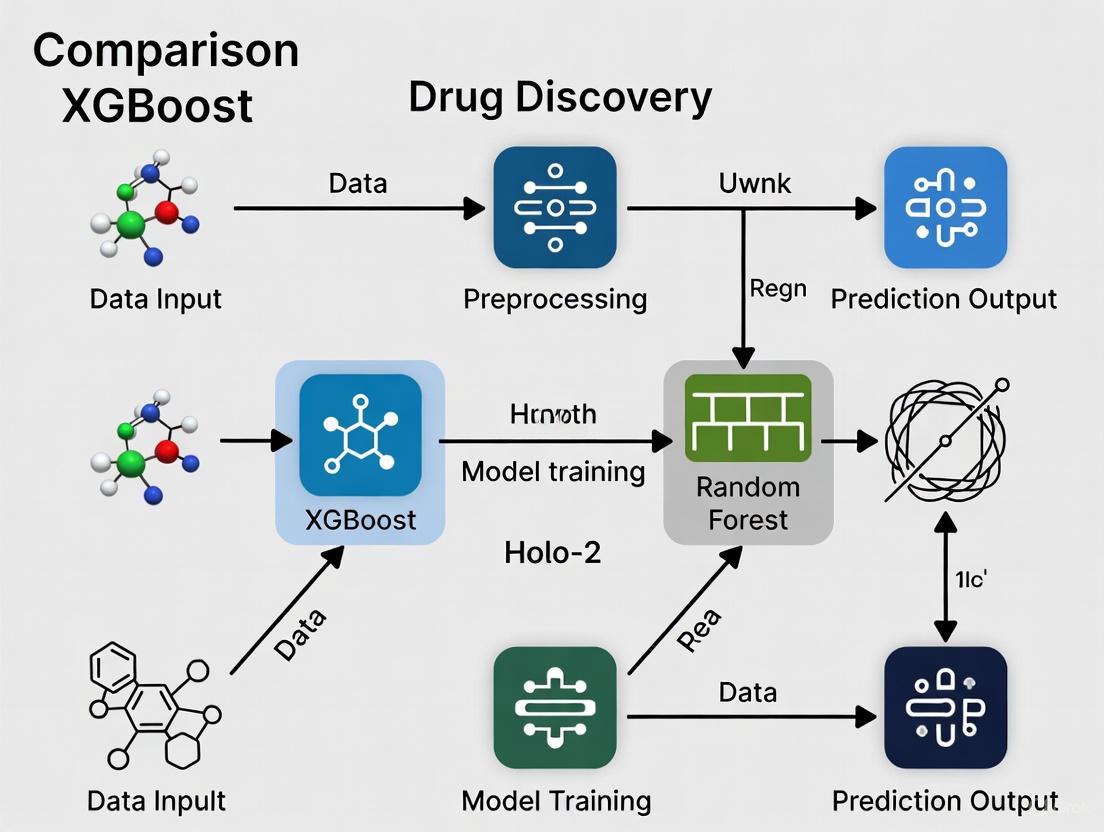
Accurately predicting Caco-2 permeability is crucial for assessing intestinal absorption and oral bioavailability of drug candidates.
XGBoost vs. Random Forest for Caco-2 Permeability Prediction: A Comprehensive Comparison for Drug Discovery
Abstract
Accurately predicting Caco-2 permeability is crucial for assessing intestinal absorption and oral bioavailability of drug candidates. This article provides a detailed comparison of two prominent machine learning algorithms, XGBoost and Random Forest, for this task. Drawing on the latest research, including 2025 studies, we explore the foundational principles, methodological applications, and optimization strategies for both models. We delve into performance validation on industrial datasets, address common challenges like data variability and class imbalance, and synthesize evidence on their comparative predictive power and real-world applicability. Aimed at researchers and drug development professionals, this review offers actionable insights for selecting and implementing the right model to enhance efficiency in early-stage drug discovery.
Caco-2 Permeability and Machine Learning: Establishing the Foundation for Oral Drug Development
The Critical Role of Caco-2 Assays as the 'Gold Standard' for Intestinal Permeability
For decades, the Caco-2 cell model has maintained its status as the gold standard in vitro tool for predicting intestinal drug permeability and absorption. This human colon adenocarcinoma cell line, when cultured on permeable Transwell inserts, spontaneously differentiates into enterocyte-like cells that form polarized monolayers with tight junctions and brush border enzymes, functionally resembling human intestinal epithelium [1] [2]. The model's widespread adoption in pharmaceutical research stems from its well-documented ability to provide reliable permeability data with good correlation to human fraction absorbed values, making it indispensable for Biopharmaceutics Classification System (BCS) categorization and regulatory submissions [2] [3]. Despite the emergence of innovative technologies, Caco-2 assays continue to serve as the benchmark against which new permeability models are validated.
However, this gold standard status exists alongside recognized limitations. Caco-2 cells require extended differentiation periods (7-21 days), exhibit inter-laboratory variability, and lack the full cellular diversity and metabolic competence of the human intestine [2] [3]. These shortcomings have driven both methodological enhancements to the traditional model and the development of complementary approaches, including advanced machine learning algorithms like XGBoost and Random Forest that can predict Caco-2 permeability from chemical structure alone [3] [4].
Caco-2 Model Fundamentals: Strengths and Recognized Limitations
Core Strengths Supporting Gold Standard Status
The Caco-2 model's enduring value lies in several key attributes that make it particularly suitable for drug permeability assessment:
- Predictive Power for Passive Permeability: The model demonstrates exceptional correlation with human intestinal absorption for passively diffused compounds, with compounds having Papp values >1 × 10⁻⁶ cm/s typically showing complete absorption in humans, while those <1 × 10⁻⁷ cm/s are poorly absorbed [2].
- Functional Biological Relevance: Differentiated Caco-2 cells express tight junctions, microvilli, and various transport systems (influx and efflux transporters) that allow investigation of multiple absorption pathways, including passive transcellular/paracellular diffusion and carrier-mediated transport [2].
- Regulatory Acceptance: The model is recognized by regulatory agencies including the FDA as a validated tool for permeability assessment supporting BCS classification and biowaiver requests [2] [3].
- Reproducibility and Standardization: Despite inter-laboratory variability, standardized protocols enable consistent and reproducible results crucial for comparative studies [1].
Established Limitations and Challenges
Despite these strengths, researchers must contend with several well-characterized limitations:
- Limited Metabolic Capability: Caco-2 cells have restricted expression of Phase 1 and Phase 2 metabolic enzymes, particularly cytochrome P450 (CYP) enzymes like CYP3A4, and non-physiological expression of carboxylesterases (CES1/2), leading to incomplete understanding of a drug's metabolic profile [1].
- Lack of Cellular Diversity: The model lacks the diversity of cell types found in native intestine (goblet cells, M-cells, enteroendocrine cells), and does not secrete mucus, which can impact drug absorption predictions [1] [2].
- Extended Culture Time: The required 7-21 day differentiation period creates practical challenges for high-throughput screening and increases contamination risks [5] [3].
- Variable Expression of Transporters: Caco-2 cells may overexpress or underexpress certain transporters compared to human intestine, potentially leading to misprediction of transporter-mediated drug absorption [1] [2].
Table 1: Key Limitations of Conventional Caco-2 Models and Their Implications
| Limitation | Impact on Drug Permeability Assessment | Experimental Consequences |
|---|---|---|
| Limited metabolic enzyme expression | Incomplete understanding of drug metabolism | Underestimation of first-pass metabolism; prodrug activation issues |
| Lack of cellular diversity | Non-physiological barrier environment | Altered absorption for mucus-interacting compounds |
| Extended culture time (7-21 days) | Reduced throughput and increased costs | Limitations in early discovery screening |
| Variable transporter expression | Misclassification of transporter substrates | Potential false positives/negatives in efflux assays |
| Inter-laboratory variability | Challenges in data comparison | Need for internal standards and controls |
Experimental Approaches: From Traditional Assays to Machine Learning
Standard Caco-2 Permeability Assay Protocol
The conventional Caco-2 permeability assay follows a well-established methodology that has been refined over decades of use:
Cell Culture and Seeding: Caco-2 cells are seeded onto porous Transwell inserts at high density (typically 50,000-100,000 cells/cm²) and allowed to differentiate for 7-21 days [2] [3].
Quality Control Checks: Barrier integrity is verified by measuring Transepithelial Electrical Resistance (TEER) values (>300 Ω·cm²) and using paracellular markers like mannitol to ensure monolayer integrity before experiments [5].
Permeability Experimentation: Test compounds are applied to either the apical (for A-B transport) or basolateral (for B-A transport) compartment, with samples taken from the opposite compartment at predetermined time points [2].
Analytical Quantification: Compound concentration in samples is determined using analytical methods (HPLC, LC-MS/MS), and apparent permeability (Papp) is calculated using the standard formula: Papp = (dQ/dt)/(A × C₀), where dQ/dt is the transport rate, A is the membrane surface area, and C₀ is the initial donor concentration [2].
Data Interpretation: Compounds are classified based on permeability thresholds, with Papp >10 × 10⁻⁶ cm/s typically indicating high permeability, and Papp <1 × 10⁻⁶ cm/s indicating low permeability [2].
Enhanced Caco-2 Models and Modifications
To address limitations of the conventional model, several enhanced approaches have been developed:
- Co-culture Models: Incorporating goblet cells (HT29-MTX) or other intestinal cell types to create more physiologically relevant barriers with mucus production [1] [2].
- Microfluidic Gut-on-Chip Systems: Culturing Caco-2 cells under flow conditions that improve differentiation and barrier function, with some studies showing better correlation to native tissue than traditional Transwells [6].
- Multi-Organ Systems: Fluidically linking Caco-2 models with hepatocyte systems to simulate first-pass metabolism, providing more accurate bioavailability predictions [1].
A 2024 validation study of a Caco-2 microfluidic chip model demonstrated comparable predictive performance to traditional Transwell systems (r² = 0.41-0.79 for chip vs. r² = 0.59-0.83 for Transwell) while offering advantages in physiological relevance [6].
Machine Learning in Caco-2 Permeability Prediction: XGBoost vs. Random Forest
The Shift Toward In Silico Prediction
The pharmaceutical industry increasingly complements experimental approaches with computational models to accelerate early-stage drug discovery. Machine learning algorithms can predict Caco-2 permeability from chemical structure alone, bypassing the time and resource constraints of biological assays [3] [4]. This capability is particularly valuable for virtual screening of large compound libraries before synthesis and experimental testing.
The critical challenge lies in selecting the optimal algorithm and molecular representations for these predictions. Recent research has systematically evaluated various approaches, with XGBoost and Random Forest emerging as two of the most effective algorithms for this task [3] [4].
Performance Comparison: Experimental Data
Multiple recent studies have directly compared XGBoost and Random Forest for Caco-2 permeability prediction:
Table 2: Performance Comparison of XGBoost vs. Random Forest for Caco-2 Permeability Prediction
| Study Context | Dataset Size | XGBoost Performance | Random Forest Performance | Key Findings |
|---|---|---|---|---|
| Industrial validation study [3] | 5,654 compounds | Generally provided better predictions than comparable models | Competitive performance but slightly inferior to XGBoost | XGBoost showed superior predictive power on test sets |
| AutoML benchmarking [4] | 906 compounds (TDC) 9,402 compounds (OCHEM) | Best MAE performance with AutoML framework | Not specified in detail | AutoML-based models outperformed standard implementations |
| Feature representation study [4] | Multiple datasets | Effective with PaDEL, Mordred, and RDKit descriptors | Comparable performance with selected feature sets | 3D descriptors reduced MAE by 15.73% vs. 2D alone |
A comprehensive 2025 study evaluating multiple machine learning algorithms on a large dataset of 5,654 Caco-2 permeability measurements found that XGBoost generally provided better predictions than Random Forest and other comparable models for test sets [3]. The study employed diverse molecular representations including Morgan fingerprints, RDKit 2D descriptors, and molecular graphs, with XGBoost demonstrating consistent advantage across representations.
Another 2025 systematic investigation of molecular representations found that ensemble methods including both XGBoost and Random Forest consistently outperformed deep learning approaches on Caco-2 permeability prediction tasks, particularly with small to medium-sized datasets [4]. This study highlighted the importance of feature selection, with 3D molecular descriptors providing significant performance improvements over 2D representations alone.
Machine Learning Experimental Protocol
For researchers implementing these algorithms, the standard workflow involves:
Data Collection and Curation: Compiling experimental Caco-2 Papp values from public databases (e.g., TDC benchmark with 906 compounds) or proprietary sources [3] [4].
Molecular Featurization: Converting chemical structures into machine-readable features using:
- Fingerprints: Morgan (ECFP), Avalon, ErG, MACCS keys
- Molecular Descriptors: RDKit 2D, PaDEL, Mordred (including 3D descriptors)
- Deep Learning Embeddings: CDDD and other learned representations [4]
Model Training and Validation: Implementing algorithms with appropriate validation strategies (scaffold splitting, cross-validation) to assess generalizability to novel chemical structures [3] [4].
Performance Evaluation: Using metrics including Mean Absolute Error (MAE), Root Mean Square Error (RMSE), R², and Pearson correlation to quantify predictive accuracy [3] [4].
Research Toolkit: Essential Materials and Methods
Table 3: Essential Research Reagents and Tools for Caco-2 and Computational Permeability Studies
| Tool Category | Specific Examples | Function and Application |
|---|---|---|
| Cell Culture Systems | Caco-2 cell line (ATCC HTB-37), Transwell inserts, TEER measurement equipment | Creating biological barrier models for experimental permeability assessment |
| Analytical Instruments | HPLC, LC-MS/MS systems | Quantifying drug concentrations in permeability samples |
| Molecular Featurization Tools | RDKit, PaDEL, Mordred software | Generating molecular descriptors and fingerprints from chemical structures |
| Machine Learning Frameworks | XGBoost, Scikit-learn (Random Forest), AutoGluon | Implementing predictive algorithms for permeability estimation |
| Benchmark Datasets | TDC Caco2_Wang (906 compounds), OCHEM dataset (9,402 compounds) | Training and validating computational models with experimental data |
| Validation Tools | SHAP analysis, applicability domain assessment, y-randomization | Evaluating model robustness and interpretability |
The Caco-2 permeability assay maintains its gold standard status through decades of validation and regulatory acceptance, despite recognized limitations. While traditional experimental approaches continue to evolve with enhanced models and protocols, machine learning methods—particularly XGBoost and Random Forest—offer powerful complementary approaches for high-throughput prediction.
Current evidence suggests that XGBoost holds a slight performance advantage for Caco-2 permeability prediction tasks, particularly when combined with comprehensive molecular descriptors including 3D features [3] [4]. However, both algorithms significantly outperform deep learning approaches on small to medium-sized datasets typical in pharmaceutical research.
The most effective strategy for modern drug development involves integrating experimental and computational approaches—using machine learning for rapid screening of virtual compound libraries, followed by experimental validation using enhanced Caco-2 models that address specific physiological limitations of the traditional assay. This integrated approach maximizes efficiency while maintaining the physiological relevance necessary for accurate permeability assessment.
The Caco-2 cell model stands as the "gold standard" in vitro tool for predicting the intestinal permeability and absorption of orally administered drug candidates. This human colon adenocarcinoma cell line is favored because, upon differentiation, it exhibits morphological and functional similarities to human enterocytes, forming a monolayer with tight junctions and a brush border that mimics the intestinal epithelial barrier. [7] [8] Its use is recommended by regulatory bodies like the FDA and EMA for classifying compounds under the Biopharmaceutics Classification System (BCS). [3] [9]
Despite its widespread adoption and regulatory endorsement, the traditional Caco-2 permeability assay is fraught with significant challenges that can impede the rapid pace of modern drug discovery. Three core limitations are its prolonged experimental timeline, substantial resource costs, and inherent experimental variability. This guide objectively compares the performance of traditional experimental protocols against a modern computational alternative: machine learning models, with a specific focus on the comparative strengths of XGBoost and Random Forest algorithms.
Quantifying the Traditional Workflow and Its Limitations
The standard Caco-2 assay is a multi-stage, labor-intensive process. A detailed breakdown of its protocol and associated challenges is provided below.
Detailed Experimental Protocol
The following workflow outlines the key steps in a standard Caco-2 permeability assay, highlighting the points that contribute to its time-consuming nature and variability. [8]
Key Challenges in the Wet-Lab Protocol
- Extended Timelines: The most pronounced bottleneck is the 21-day cultivation period required for Caco-2 cells to fully differentiate into an enterocyte-like phenotype. This extended timeline drastically reduces throughput and slows down decision-making in early drug discovery. [3] [7]
- High Costs and Resource Use: The assay requires specialized cell culture facilities, consumables like Transwell inserts, and sophisticated analytical equipment (e.g., LC-MS/MS). Furthermore, it consumes significant quantities of test compounds, which may be scarce in the early stages of development. [8]
- Experimental Variability: The heterogeneity of the Caco-2 cell line itself and differences in laboratory-specific protocols (e.g., passage number, culture conditions) can lead to high variability in permeability measurements. This lack of standardization can compromise the reproducibility and reliability of data across different studies. [10] Ensuring monolayer integrity is critical, and failure to maintain tight junctions (with TEER values typically requiring 300-500 Ω·cm²) can yield unreliable data. [8]
Machine Learning as a Strategic Alternative
In silico methods, particularly machine learning (ML) models, have emerged as powerful tools to overcome the limitations of the biological assay. By leveraging existing chemical data, these models can predict Caco-2 permeability directly from molecular structure, offering a rapid and cost-effective solution for initial compound prioritization.
The In Silico Workflow for Permeability Prediction
The process of building and applying ML models for Caco-2 prediction involves a structured pipeline from data collection to model deployment, as visualized below.
Performance Comparison: XGBoost vs. Random Forest
Extensive research has been conducted to evaluate the performance of various ML algorithms for Caco-2 permeability prediction. Below, we summarize quantitative data and methodological details that allow for a direct comparison between two of the most prominent ensemble methods: XGBoost and Random Forest (RF).
Table 1: Comparative Performance Metrics of XGBoost and Random Forest Models
| Study Context | Algorithm | Dataset | Key Performance Metrics | Experimental Notes |
|---|---|---|---|---|
| Industrial Validation [3] | XGBoost | Large public dataset (5,654 compounds) & internal validation | Generally provided better predictions than comparable models (RF, GBM, SVM) on test sets. | Combined Morgan fingerprints + RDKit 2D descriptors. Models retained predictive efficacy on internal pharmaceutical industry data. |
| Multiclass Classification [11] | XGBoost | Imbalanced permeability dataset | Best Model Performance: Accuracy: 0.717 MCC: 0.512 | Used ADASYN oversampling to handle class imbalance. SHAP analysis provided model interpretability. |
| Systematic Benchmarking [4] | XGBoost (CaliciBoost) | TDC (906 compounds) & OCHEM (9,402 compounds) | Achieved the best MAE performance among tested models. | AutoML framework (AutoGluon). PaDEL, Mordred, and RDKit descriptors were most effective. Incorporation of 3D descriptors reduced MAE by ~15.7%. |
| Systematic Benchmarking [4] | RF / Other Ensembles | TDC benchmark | Consistently outperformed deep learning models (CNN, GNN) on this medium-sized dataset. | Classical ensemble methods like RF and XGBoost are noted to generalize better than deep learning on small-to-medium-sized Caco-2 datasets. |
| Supervised Recursive Model [10] | Random Forest | Structurally diverse dataset (>4,900 molecules) | Conditional Consensus RF Model: RMSE: 0.43 - 0.51 for all validation sets. | Used supervised recursive algorithms for feature selection. Model was validated for BCS/BDDCS class estimation on 32 ICH drugs. |
- Predictive Accuracy: Across multiple studies and dataset sizes, XGBoost consistently demonstrates a slight edge in predictive accuracy, as evidenced by superior metrics (MAE, Accuracy, MCC) in head-to-head comparisons. [3] [11] [4]
- Handling Data Complexity: XGBoost's built-in regularization techniques make it particularly adept at handling complex, non-linear relationships in permeability data and mitigating overfitting, especially when using high-dimensional molecular descriptors. [4]
- Robustness and Interpretability: Random Forest remains a highly robust and interpretable algorithm. Its ability to provide feature importance and its strong performance, as shown in the development of validated consensus models, make it a reliable and trustworthy choice for many applications. [10]
- Performance on Smaller Datasets: Both algorithms, as classical ensemble methods, have been shown to generalize more effectively than complex deep learning models (e.g., Graph Neural Networks) on the small-to-medium-sized datasets typical of Caco-2 permeability studies. [4]
The Scientist's Toolkit: Essential Research Reagents and Solutions
Table 2: Key Materials and Tools for Caco-2 and In Silico Research
| Item / Solution | Function / Application | Relevance |
|---|---|---|
| Caco-2 Cell Line | Differentiates into enterocyte-like cells to form the intestinal barrier model for permeability testing. | Essential for all in vitro Caco-2 assays. [7] |
| Transwell Inserts | Semi-permeable supports for growing cell monolayers, creating apical and basolateral compartments. | Critical for the experimental setup of the assay. [8] |
| TEER Measurement System | Measures Transepithelial Electrical Resistance to quantitatively assess monolayer integrity. | Quality control for ensuring valid assay results. [8] |
| P-gp Inhibitors (e.g., Verapamil) | Inhibits P-glycoprotein efflux transporter to investigate active transport mechanisms. | For mechanistic studies of transporter-mediated permeability. [8] |
| RDKit | Open-source cheminformatics toolkit for calculating molecular descriptors and fingerprints. | Core component for featurizing molecules in ML workflows. [3] [4] |
| PaDEL/Mordred Descriptors | Software for calculating a comprehensive set of 2D and 3D molecular descriptors. | Provides critical input features for high-performing models. [4] [9] |
| KNIME Analytics Platform | Open-platform for creating automated data science workflows, including QSPR models. | Enables building and deploying reproducible in silico prediction pipelines. [10] |
| SHAP Analysis | Method for interpreting ML model output and understanding feature importance. | Provides critical interpretability for black-box models like XGBoost and RF. [11] [4] |
The challenges of time, cost, and variability associated with the traditional Caco-2 assay are substantial. Machine learning models, particularly advanced ensemble methods like XGBoost and Random Forest, offer a validated and strategic alternative for high-throughput permeability prediction in early drug discovery.
While XGBoost often holds a slight performance advantage in direct comparisons, Random Forest remains a highly robust and interpretable choice. The decision between them may depend on specific project needs: prioritizing maximum predictive power (favoring XGBoost) or valuing extreme robustness and straightforward interpretability (favoring Random Forest).
A synergistic approach is recommended for optimal efficiency: using in silico models as a rapid filter for virtual compound screening and prioritization, followed by targeted in vitro Caco-2 assays for final validation and mechanistic studies of lead compounds. This integrated strategy maximizes the strengths of both worlds, accelerating the drug development pipeline while maintaining scientific rigor.
In drug discovery, predicting intestinal absorption is crucial for assessing oral bioavailability. The Caco-2 cell model, derived from human colon adenocarcinoma cells, has emerged as the gold standard for evaluating drug permeability in vitro due to its morphological and functional similarity to human intestinal enterocytes [3]. This assay measures the apparent permeability (Papp) of compounds across a cell monolayer, providing critical data for the Biopharmaceutics Classification System (BCS) [3]. However, the traditional Caco-2 assay is time-consuming and resource-intensive, requiring 7-21 days for cell differentiation before experimentation can even begin [3]. These practical limitations have driven the development of computational models that can accurately predict Caco-2 permeability, enabling rapid screening of compound libraries during early drug discovery stages.
Quantitative Structure-Property Relationship (QSPR) modeling represents the foundational approach for predicting Caco-2 permeability, establishing mathematical relationships between molecular descriptors and experimental permeability values [12]. With advances in computational power and algorithms, machine learning has dramatically enhanced QSPR capabilities, with XGBoost and Random Forest emerging as particularly effective algorithms for handling the complex, non-linear relationships inherent in permeability data [3] [12] [4]. These models have demonstrated robust predictive performance across diverse chemical spaces, including natural products and novel therapeutic modalities like targeted protein degraders [12] [13].
Key Machine Learning Algorithms
Machine learning algorithms for Caco-2 permeability prediction span traditional methods to advanced deep learning architectures. The selection of an appropriate algorithm depends on dataset size, molecular representation, and specific project requirements. Below is a comprehensive comparison of the primary algorithms used in the field.
Table 1: Key Machine Learning Algorithms for Caco-2 Permeability Prediction
| Algorithm | Model Type | Key Advantages | Performance Highlights | Best Applications |
|---|---|---|---|---|
| XGBoost | Ensemble (Gradient Boosting) | Handles class imbalance well; high predictive accuracy | Accuracy: 0.717; MCC: 0.512 (multiclass) [11]; Superior for industrial validation [3] | Multiclass permeability; Imbalanced datasets |
| Random Forest | Ensemble (Bagging) | Robust to overfitting; provides feature importance | R²: 0.73-0.74; RMSE: 0.39-0.40 [12]; Accuracy: 81-91% for PAMPA [14] | General permeability prediction; Feature selection |
| Support Vector Machines | Kernel-based | Effective in high-dimensional spaces | R²: 0.73-0.74; RMSE: 0.39-0.40 [12] | Small to medium datasets |
| Message Passing Neural Networks | Deep Learning (Graph-based) | Learns directly from molecular structure | Benefits from multi-task learning [15] [16] | Large datasets; Transfer learning |
| Molecular Attention Transformer | Deep Learning (Attention-based) | Interpretable; captures long-range dependencies | R²: 0.62-0.75 for cyclic peptides [17] | Complex molecules; Interpretability needs |
XGBoost versus Random Forest: A Detailed Comparison
The comparison between XGBoost and Random Forest represents a central consideration in modern Caco-2 permeability prediction. Both are ensemble methods but employ fundamentally different approaches. Random Forest utilizes bagging (bootstrap aggregating) to create multiple decision trees from random subsets of the training data and features, then averages their predictions [12]. This approach reduces variance and minimizes overfitting. In contrast, XGBoost employs gradient boosting, which builds trees sequentially where each new tree corrects errors made by previous trees [11] [3]. This often results in higher accuracy but requires more careful parameter tuning.
Experimental evidence demonstrates that XGBoost frequently achieves slightly superior predictive performance for Caco-2 permeability tasks. In a comprehensive industrial validation study, XGBoost generally provided better predictions than comparable models for test sets [3]. Similarly, for challenging multiclass classification of Caco-2 permeability, XGBoost combined with ADASYN oversampling achieved the best performance with an accuracy of 0.717 and Matthews Correlation Coefficient (MCC) of 0.512 [11]. The algorithm's effectiveness in handling class-imbalanced datasets through its built-in regularization and customized loss functions makes it particularly valuable for permeability prediction where extreme permeability classes are naturally underrepresented.
Random Forest remains highly competitive, especially in scenarios with limited data or when model interpretability is prioritized. Studies have shown Random Forest achieving R² values of 0.73-0.74 and RMSE of 0.39-0.40 for Caco-2 permeability prediction [12]. Its inherent parallelization capability also provides advantages for rapid prototyping. For permeability prediction tasks beyond Caco-2, such as PAMPA, Random Forest demonstrated remarkable accuracy between 86-91% on external test sets [14], highlighting its general robustness for permeability prediction applications.
Experimental Data and Performance Comparison
Quantitative Performance Metrics
Rigorous evaluation of machine learning models requires multiple performance metrics to assess different aspects of predictive accuracy. The following table summarizes key performance indicators for Caco-2 permeability prediction models across notable studies.
Table 2: Comparative Performance Metrics for Caco-2 Permeability Prediction Models
| Study | Algorithm | Dataset Size | Key Metrics | Evaluation Method |
|---|---|---|---|---|
| Dasgupta et al. 2025 [11] | XGBoost (ADASYN) | Multiclass dataset | Accuracy: 0.717; MCC: 0.512 | Test set validation |
| San Marcos University 2024 [12] | SVM-RF-GBM Ensemble | 1,817 compounds | R²: 0.76; RMSE: 0.38 | Test set validation |
| San Marcos University 2024 [12] | Random Forest | 1,817 compounds | R²: 0.73-0.74; RMSE: 0.39-0.40 | Test set validation |
| CaliciBoost 2025 [4] | AutoML (PaDEL + Mordred 3D) | 9,402 compounds (OCHEM) | MAE: 0.291 (15.73% reduction vs 2D) | Scaffold split |
| CaliciBoost 2025 [4] | AutoML (PaDEL 2D) | 9,402 compounds (OCHEM) | MAE: 0.345 | Scaffold split |
| CPMP Model 2025 [17] | Molecular Attention Transformer | 1,310 compounds | R²: 0.62-0.75 | Test set validation |
Beyond these standard metrics, the Matthews Correlation Coefficient (MCC) is particularly valuable for imbalanced datasets as it provides a more reliable measure of predictive quality than accuracy alone [11]. For regression tasks, the Mean Absolute Error (MAE) and Root Mean Square Error (RMSE) offer complementary insights, with MAE being more robust to outliers while RMSE penalizes larger errors more heavily [12] [4].
Impact of Dataset Characteristics on Model Performance
Dataset size and diversity significantly influence model performance and generalizability. Larger datasets like the OCHEM collection (9,402 compounds) enable more robust model training and validation through proper scaffold splitting [4]. The Therapeutics Data Commons (TDC) benchmark, while smaller (906 compounds), provides a standardized evaluation framework with scaffold splits that test model generalization to novel chemical structures [4]. For specialized applications like cyclic peptide permeability prediction, targeted datasets (1,310 compounds for Caco-2) coupled with transfer learning approaches have proven effective [17].
Industrial validation studies reveal that models trained on public data can maintain predictive performance when applied to proprietary pharmaceutical company datasets, though some performance degradation is expected due to domain shift [3]. The incorporation of multi-task learning, where models are trained simultaneously on multiple permeability endpoints (Caco-2, PAMPA, MDCK), has demonstrated improved accuracy by leveraging shared information across related tasks [15] [13]. This approach is particularly valuable for targeted protein degraders and other novel therapeutic modalities where data scarcity presents modeling challenges [13].
Experimental Protocols and Methodologies
Standardized Model Development Workflow
The development of robust machine learning models for Caco-2 permeability prediction follows a systematic workflow encompassing data collection, preprocessing, feature engineering, model training, and validation.
Diagram 1: Experimental workflow for ML model development
Data Collection and Curation: Experimental Caco-2 permeability values are gathered from public databases like OCHEM, TDC, or literature compilations [3] [4]. Permeability measurements are typically converted to logarithmic scale (logPapp) and standardized using tools like RDKit's MolStandardize to achieve consistent tautomer states and neutral forms [3]. Critical curation steps include removing duplicates, handling out-of-bound measurements, and ensuring measurement consistency across different experimental conditions [3] [15].
Feature Engineering and Selection: Molecular representations include (1) 2D/3D descriptors (RDKit, PaDEL, Mordred) capturing physicochemical properties, (2) structural fingerprints (Morgan, MACCS, Avalon) encoding molecular substructures, and (3) learned representations from deep learning models [3] [4]. Feature selection techniques like Recursive Feature Elimination (RFE) and Genetic Algorithms (GA) identify optimal descriptor subsets, typically reducing feature sets from 523 to 41 descriptors while preserving predictive performance [12].
Model Training and Validation: Data splitting employs scaffold-based approaches to evaluate generalization to novel chemotypes [4]. Hyperparameter optimization uses cross-validation, with Bayesian optimization emerging as an efficient strategy [4]. Validation includes both internal (cross-validation, Y-randomization) and external testing (temporal validation, independent test sets) [3] [17].
Advanced Modeling Techniques
Handling Class Imbalance: For multiclass permeability classification, addressing class imbalance is crucial. Strategies include oversampling (ADASYN), undersampling, and hybrid approaches, with ADASYN oversampling combined with XGBoost demonstrating superior performance for imbalanced multiclass datasets [11].
Multi-Task Learning: Training single models on multiple permeability endpoints (Caco-2, PAMPA, MDCK) and efflux ratios leverages shared information, improving accuracy compared to single-task models [15] [13]. This approach is particularly effective when augmented with predicted physicochemical properties like pKa and LogD [15].
Transfer Learning and Self-Supervised Learning: For data-scarce scenarios like cyclic peptide permeability, pre-training on large molecular datasets followed by fine-tuning on target tasks improves performance [16] [17]. Contrastive learning with graph neural networks using atom masking augmentation creates robust molecular representations that enhance prediction accuracy [16].
Visualization and Interpretability
Model Interpretation Using SHAP Analysis
Interpretability is crucial for building trust in machine learning predictions and gaining mechanistic insights. SHAP (SHapley Additive exPlanations) analysis has emerged as the standard approach for explaining permeability predictions.
Diagram 2: Model interpretation workflow using SHAP
SHAP analysis quantifies the contribution of each molecular feature to individual predictions, enabling both local and global interpretation [11] [14]. Studies have consistently identified lipophilicity (LogP/LogD), topological polar surface area (TPSA), molecular weight, and hydrogen bonding capacity as key determinants of Caco-2 permeability [11] [4]. For complex models like graph neural networks, atom-attention mechanisms highlight specific molecular substructures influencing permeability, providing structural insights for medicinal chemistry optimization [16].
Applicability Domain Analysis
Defining the applicability domain is essential for establishing model reliability and identifying when predictions may be unreliable. Methods like Local Outlier Factor (LOF) analysis assess whether new compounds fall within the chemical space represented in the training data [14]. This is particularly important for novel therapeutic modalities like targeted protein degraders, which often occupy distinct regions of chemical space compared to traditional small molecules [13]. Model performance typically degrades for compounds with high molecular weight (>900 Da) and complex structural features that are underrepresented in training data [13].
Table 3: Essential Research Resources for Caco-2 Permeability Prediction
| Resource Category | Specific Tools/Services | Key Applications | Performance Considerations |
|---|---|---|---|
| Molecular Descriptors | RDKit, PaDEL, Mordred | Feature calculation for traditional ML | PaDEL & Mordred with 3D descriptors reduce MAE by 15.73% vs 2D [4] |
| Structural Fingerprints | Morgan (ECFP), MACCS, Avalon | Substructure-based representation | Morgan fingerprints widely used with tree-based models [3] [4] |
| Deep Learning Frameworks | ChemProp, D-MPNN, MAT | Graph-based molecular representation | Effective for large datasets; benefit from transfer learning [3] [17] |
| Benchmark Datasets | TDC, OCHEM | Model training and evaluation | OCHEM (9,402 compounds) provides greater statistical power [4] |
| AutoML Platforms | AutoGluon, CaliciBoost | Automated model development | Effective for high-dimensional tabular data [4] |
| Interpretability Tools | SHAP, Atom-Attention Mechanisms | Model explanation and insight generation | Identify dominant molecular features [11] [14] |
The comparison between XGBoost and Random Forest for Caco-2 permeability prediction reveals a nuanced landscape where both algorithms offer distinct advantages. XGBoost demonstrates superior performance for complex modeling scenarios including multiclass classification and imbalanced datasets [11] [3], while Random Forest provides robust performance with less extensive hyperparameter tuning [14] [12]. The optimal algorithm selection depends on specific project requirements, dataset characteristics, and computational resources.
Future directions in Caco-2 permeability prediction include increased integration of multi-task learning across related ADMET endpoints [15] [13], advancement in explainable AI for model interpretation [11] [16], and development of specialized approaches for challenging molecular classes like cyclic peptides and targeted protein degraders [17] [13]. As these methodologies continue to evolve, machine learning models will play an increasingly central role in accelerating drug discovery by providing rapid, accurate predictions of intestinal permeability.
In the field of cheminformatics, the accurate prediction of molecular properties is a critical component of drug discovery and development. Among the various properties assessed, Caco-2 permeability serves as a vital in vitro indicator for estimating the intestinal absorption potential of drug candidates, directly influencing their oral bioavailability [3] [4]. The development of robust computational models to predict this property can significantly enhance the efficiency of the early-stage drug discovery pipeline. For such predictive tasks, ensemble learning algorithms have demonstrated remarkable performance. Two of the most prominent and powerful ensemble methods are Random Forest and XGBoost. This guide provides an objective comparison of these two algorithms, detailing their core principles, relative strengths, and experimental performance specifically within the context of Caco-2 permeability prediction, empowering researchers to make informed methodological choices.
Core Algorithmic Principles
Random Forest: The Power of Bagging
Random Forest is an ensemble learning method that operates on the principle of "bagging" (Bootstrap Aggregating). It constructs a multitude of decision trees during training, introducing randomness in two key ways to ensure the trees are de-correlated and robust [18] [19].
- Bootstrap Sampling: Each tree in the forest is trained on a different random subset of the original training data, sampled with replacement. This means some data points may be repeated, while others may be omitted in any given sample [19] [20].
- Feature Randomness: When splitting a node during the construction of a tree, the algorithm considers only a random subset of the available features (e.g., √p features for classification, where p is the total number of features) [19]. This prevents any single dominant feature from being used in every tree.
For a classification task, the final prediction is determined by a majority vote from all the individual trees. For regression, the final output is the average prediction of all the trees [18] [19] [20]. This aggregation process reduces variance and mitigates the risk of overfitting, which is common with a single decision tree.
XGBoost: The Precision of Boosting
XGBoost (eXtreme Gradient Boosting) is an advanced implementation of the gradient boosting framework. Unlike the bagging approach of Random Forest, boosting is a sequential process where each new model is trained to correct the errors made by the previous ones [21] [22].
- Sequential Correction: The algorithm starts with a simple initial prediction (e.g., the mean of the target variable for regression). It then iteratively adds new decision trees, where each new tree is trained on the residual errors—the differences between the current predictions and the actual target values—of the existing ensemble [21] [22].
- Regularized Objective: A key innovation of XGBoost is its use of a regularized objective function [22] [23]. This function combines a differentiable loss function (e.g., mean squared error) with a regularization term that penalizes the complexity of the trees. The regularization term, defined as
Ω(ft) = γT + ½λ∑wj², controls the number of leaves (T) and the magnitude of the leaf weights (wj), thus preventing overfitting and promoting simpler models [22]. - Efficiency Optimizations: XGBoost incorporates several computational optimizations, including support for parallel processing, a sparsity-aware algorithm for handling missing data, and a cache-aware access pattern to speed up tree construction [21] [22].
The following diagram illustrates the fundamental difference in how the two algorithms build their ensembles.
Head-to-Head Algorithmic Comparison
The table below summarizes the fundamental characteristics of Random Forest and XGBoost.
Table 1: Core Algorithmic Comparison
| Feature | Random Forest | XGBoost |
|---|---|---|
| Ensemble Method | Bagging (Bootstrap Aggregating) | Boosting (Gradient Boosting) |
| Tree Relationship | Trees built independently & in parallel | Trees built sequentially, correcting previous errors |
| Training Speed | Generally faster to train (parallelization) | Can be slower due to sequential nature, but optimized |
| Key Strength | Robust against overfitting, handles noisy data | High predictive accuracy, model precision |
| Hyperparameters | Number of trees, features per split, tree depth | Learning rate, number of trees, regularization terms (γ, λ) |
| Handling Missing Data | Can handle missing values without pre-processing | Uses sparsity-aware split finding algorithm [22] |
Performance in Caco-2 Permeability Prediction
Caco-2 permeability prediction is a classic quantitative structure-activity relationship (QSAR) problem in cheminformatics. Researchers typically represent molecules using various feature sets, such as molecular descriptors (e.g., from RDKit, PaDEL, Mordred) or structural fingerprints (e.g., Morgan, MACCS), and then train machine learning models to predict the experimental permeability values [3] [4].
Key Experimental Protocols
To ensure a fair and rigorous comparison, benchmarking studies in the literature generally adhere to the following protocol:
- Data Collection and Curation: A large dataset of compounds with experimentally measured Caco-2 permeability (e.g., apparent permeability, Papp) is collected from public sources like the Therapeutics Data Commons (TDC) or OCHEM [3] [4]. The data is standardized, and duplicates are removed.
- Data Splitting: The dataset is split into training, validation, and test sets. A common robust approach is to use a scaffold split, which ensures that molecules with different core structures are in different splits, thus testing the model's ability to generalize to novel chemotypes [4].
- Molecular Featurization: Multiple molecular representation methods are employed, including:
- Model Training and Hyperparameter Optimization: Both Random Forest and XGBoost models are trained. Their hyperparameters are extensively optimized using techniques like grid search or Bayesian optimization to ensure a fair performance comparison [23].
- Evaluation: Model performance is evaluated on the held-out test set using standard regression metrics, including Mean Absolute Error (MAE), Root Mean Square Error (RMSE), and the coefficient of determination (R²).
Comparative Performance Data
Recent, rigorous studies provide quantitative evidence for the performance of both algorithms in this domain.
Table 2: Experimental Performance in Caco-2 Permeability Modeling
| Study Context | Algorithm | Reported Performance | Key Finding |
|---|---|---|---|
| Industrial Validation (2025) [3] | XGBoost | Generally provided better predictions for the test sets. | Boosting models (including XGBoost) retained predictive efficacy when applied to internal pharmaceutical industry data. |
| Random Forest | Competitive but generally lower than XGBoost. | ||
| Large-Scale QSAR Benchmark (2023) [23] | XGBoost | Generally the best predictive performance across 16 datasets and 94 endpoints. | XGBoost's regularized objective function provides superior generalization. |
| Random Forest | Strong and robust performance. | ||
| ADMET Prediction (2022) [24] | XGBoost | Prediction accuracy for Caco-2: 94.0% (Highest among tested methods). | Outperformed SVM, RF, KNN, LDA, and NB in predicting ADMET properties. |
| Random Forest | Lower accuracy than XGBoost. |
The experimental data consistently shows that XGBoost often holds a slight edge in predictive accuracy for Caco-2 permeability tasks. This is attributed to its ability to sequentially correct errors and its built-in regularization, which allows it to capture complex, non-linear relationships in the data without overfitting. However, it is crucial to note that Random Forest remains a highly robust and competitive algorithm, and its performance is often very close to that of XGBoost.
The Scientist's Toolkit: Essential Research Reagents
Building a predictive model for Caco-2 permeability requires a suite of computational "reagents." The table below lists key resources and their functions.
Table 3: Essential Tools and Resources for Caco-2 Model Development
| Tool / Resource | Type | Primary Function | Relevance to Caco-2 Research |
|---|---|---|---|
| RDKit [3] [4] | Cheminformatics Library | Calculates 2D molecular descriptors and fingerprints. | Extracts features like molecular weight, TPSA, and LogP, critical for permeability prediction. |
| PaDEL & Mordred [4] | Molecular Descriptor Software | Generates comprehensive sets of 2D and 3D molecular descriptors. | Provides a large feature space for models to learn from; 3D descriptors can improve performance. |
| Therapeutics Data Commons (TDC) [4] | Data Repository | Provides curated datasets for drug discovery, including Caco-2 permeability. | Offers a standardized benchmark dataset for model training and comparison. |
| AutoGluon [4] | AutoML Framework | Automates model selection, hyperparameter tuning, and ensemble creation. | Streamlines the development of high-performance models by combining algorithms like XGBoost, RF, etc. |
| XGBoost / scikit-learn RF | Algorithm Library | Provides optimized implementations of the ML algorithms. | Core libraries for building and training the predictive models. |
Both Random Forest and XGBoost are powerful, ensemble-based algorithms that are well-suited for the challenges of cheminformatics, including Caco-2 permeability prediction. Random Forest, with its bagging approach, is a remarkably robust and straightforward method that is less prone to overfitting and faster to train. XGBoost, through its sequential boosting and sophisticated regularization, often achieves marginally higher predictive accuracy at the cost of increased computational complexity and the need for more careful hyperparameter tuning.
The choice between them is not always straightforward. For a quick, robust baseline model, Random Forest is an excellent choice. For pushing the boundaries of predictive performance and winning a benchmarking study, the evidence suggests that investing the time to properly tune an XGBoost model is often rewarded. Ultimately, the specific nature of the dataset and the strategic goals of the research project should guide the selection.
Building Predictive Models: A Practical Guide to Implementing XGBoost and Random Forest
In the field of drug discovery, predicting the intestinal permeability of potential drug candidates is a critical step in assessing their oral bioavailability. The Caco-2 cell line, derived from human colon adenocarcinoma, has emerged as the "gold standard" in vitro model for this purpose due to its morphological and functional similarity to human intestinal epithelial cells [3]. However, experimental assessment of Caco-2 permeability is time-consuming, requiring extended culturing periods of 7-21 days for full differentiation, which increases costs and risks of contamination [3]. These challenges have accelerated the adoption of in silico approaches, particularly machine learning (ML) models, for reliable permeability prediction in the early stages of drug development.
Among various ML algorithms, XGBoost and Random Forest (RF) have demonstrated particularly promising results in cheminformatics and drug discovery applications. These ensemble methods offer robust performance in handling complex, high-dimensional chemical data and can effectively model non-linear relationships between molecular structures and permeability properties. The performance of these algorithms, however, is highly dependent on the quality and composition of the training data, making proper data curation and preparation essential components of successful model development [3] [11] [4].
This guide provides a comprehensive comparison of XGBoost and Random Forest for Caco-2 permeability prediction, with particular emphasis on data curation strategies and preparation methodologies for handling large, augmented datasets from public sources. We summarize quantitative performance metrics across multiple studies, detail experimental protocols for dataset construction, and provide practical resources for researchers developing predictive models in this domain.
Performance Comparison: XGBoost vs. Random Forest
Evaluation across multiple independent studies reveals a consistent performance trend between XGBoost and Random Forest algorithms for Caco-2 permeability prediction. The table below summarizes key quantitative metrics from recent investigations:
Table 1: Performance comparison of XGBoost and Random Forest across recent Caco-2 permeability studies
| Study & Context | Best Algorithm | Key Performance Metrics | Dataset Size & Type | Data Curation Approach |
|---|---|---|---|---|
| Dasgupta et al. (2025) Multiclass Classification [11] | XGBoost | Accuracy: 0.717, MCC: 0.512 | Not specified; Multiclass | ADASYN oversampling for class imbalance |
| CaliciBoost (2025) Systematic Benchmarking [4] | XGBoost (via AutoML) | Best MAE performance | TDC: 906 compounds; OCHEM: 9,402 compounds | Standardization, scaffold splitting |
| Jiang et al. (2025) Cyclic Peptides [17] | MAT Deep Learning Model (XGBoost not tested) | R²: 0.62-0.75 for cell permeability | Caco-2: 1,310 cyclic peptides | Train/validation/test split (8:1:1) |
| Permeability Prediction with Molecular Representations [3] | XGBoost | Superior predictions on test sets | Combined dataset: 5,654 compounds | Duplicate removal (SD ≤ 0.3), train/validation/test split (8:1:1) |
| Interpretable PAMPA Prediction [14] | Random Forest | Accuracy: 0.91 on external test set | 5,447 compounds | Random splitting, applicability domain analysis |
The consistent outperformance of XGBoost across multiple studies suggests its particular strength for Caco-2 permeability prediction tasks. In one comprehensive validation study, XGBoost generally provided better predictions than comparable models, including Random Forest, for test sets [3]. Similarly, in multiclass classification tasks addressing class imbalance, XGBoost achieved the best performance when combined with appropriate balancing strategies like ADASYN oversampling [11].
Random Forest, while consistently demonstrating strong performance, typically ranked slightly below XGBoost in head-to-head comparisons. However, it remains a highly competitive algorithm, particularly valued for its robustness and interpretability. In one study focused on PAMPA permeability (a related assay), Random Forest achieved the highest accuracy (91%) on an external test set among all compared models [14].
Data Curation and Preparation Protocols
Data Collection and Augmentation Strategies
The foundation of any reliable predictive model is a comprehensive, high-quality dataset. Researchers have employed various strategies for assembling Caco-2 permeability datasets:
Multi-source Data Integration: One prominent approach combines data from multiple publicly available sources to create large, augmented datasets. One study integrated data from three public datasets, resulting in an initial collection of 7,861 compounds [3]. After rigorous curation, this was refined to 5,654 non-redundant Caco-2 permeability records.
Standardized Permeability Values: To ensure consistency across different sources, researchers convert permeability measurements to standardized units (cm/s × 10^(-6)) and apply logarithmic transformation (base 10) for modeling [3].
Industrial Dataset Validation: To assess real-world applicability, some studies incorporate proprietary industrial datasets as external validation sets. For example, one study used Shanghai Qilu's in-house collection of 67 compounds to test model transferability from public to proprietary data [3].
Data Cleaning and Standardization
Robust data cleaning protocols are essential for handling aggregated datasets:
Duplicate Handling: For duplicate entries, researchers typically calculate mean values and standard deviations, retaining only entries with standard deviation ≤ 0.3 and using mean values as standards for model training [3].
Molecular Standardization: The RDKit module MolStandardize is commonly employed for molecular standardization to achieve consistent tautomer canonical states and final neutral forms while preserving stereochemistry [3].
Outlier Removal: In some workflows, out-of-bound measurements (e.g., values exceeding the quantifiable range indicated as "lower than X" or "greater than X") are excluded after removing the qualifiers [15].
Dataset Splitting Strategies
The method used to split data into training, validation, and test sets significantly impacts model performance evaluation:
Random Splitting: Simple random splitting is commonly used, with one study employing an 8:1:1 ratio for training, validation, and test sets respectively [3]. To enhance robustness against partitioning variability, the dataset may undergo multiple splits using different random seeds, with model assessment based on average performance across independent runs [3].
Scaffold Splitting: This approach groups compounds based on their molecular scaffolds, ensuring that structurally similar molecules are kept together in splits. This provides a more challenging and realistic assessment of a model's ability to generalize to novel chemotypes [4].
Temporal Splitting: Some studies implement time-based splits where earlier data is used for training and later data for testing, simulating real-world deployment scenarios where models predict properties for newly synthesized compounds [15].
Table 2: Essential data preparation tools and their applications in Caco-2 permeability prediction
| Tool/Resource | Primary Function | Application in Caco-2 Research | Key Features |
|---|---|---|---|
| RDKit | Cheminformatics toolkit | Molecular standardization, fingerprint generation, descriptor calculation | Open-source, MolStandardize module, Morgan fingerprints |
| PaDEL | Molecular descriptor calculation | Generation of 2D and 3D molecular descriptors | Extensible, includes fingerprint patterns, command-line interface |
| Mordred | Molecular descriptor calculator | Comprehensive descriptor calculation (1D, 2D, 3D) | 1,826 descriptors, parallel computation, Python API |
| AutoGluon | Automated Machine Learning | Model selection and hyperparameter optimization | Automatic feature preprocessing, ensemble construction, neural architecture search |
| ChEMBL Structure Pipeline | Molecular standardization | Standardizing SMILES representations | Standardized representation, salt stripping, canonicalization |
Experimental Workflows
The typical workflow for developing Caco-2 permeability prediction models involves multiple interconnected stages, as illustrated in the following diagram:
Molecular Representation Strategies
The choice of molecular representation significantly impacts model performance, with different approaches offering complementary advantages:
Fingerprint-Based Representations: Extended Connectivity Fingerprints (ECFP) like Morgan fingerprints with a radius of 2 and 1024 bits are widely used for capturing molecular substructures [3]. Additional fingerprint types include Avalon, ErG, and MACCS keys, each providing different representations of molecular features [4].
Molecular Descriptors: RDKit 2D descriptors, PaDEL, and Mordred descriptors capture physicochemical properties such as molecular weight, topological polar surface area (TPSA), logP, and hydrogen bond donors/acceptors [3] [4]. Recent studies indicate that incorporating 3D descriptors can reduce MAE by up to 15.73% compared to using 2D features alone [4].
Graph-Based Representations: For deep learning approaches, molecular graphs G=(V,E) serve as foundational representations, where V represents atoms (nodes) and E represents bonds (edges) [3]. The Directed Message Passing Neural Network (D-MPNN) employs a mixed representation combining molecular convolution encoding with traditional descriptors [16].
Advanced Modeling Techniques
Multitask Learning: Recent approaches have explored multitask learning (MTL) to leverage shared information across related permeability endpoints. MTL models trained on combined Caco-2 and MDCK cell line data have demonstrated higher accuracy than single-task approaches by leveraging correlations between different permeability measurements [15].
Handling Class Imbalance: For classification tasks, addressing class imbalance is crucial. Studies have successfully employed balancing strategies including oversampling, undersampling, and hybrid approaches, with ADASYN oversampling combined with XGBoost achieving the best performance in multiclass classification [11].
Automated Machine Learning: AutoML approaches like AutoGluon have shown promising results by automatically selecting optimal algorithms, preprocessing steps, and hyperparameters. These methods are particularly valuable in data-limited prediction tasks and have demonstrated superior performance in systematic benchmarking studies [4].
The Scientist's Toolkit
Table 3: Essential research reagents and computational tools for Caco-2 permeability prediction
| Tool/Resource | Type | Primary Function | Application Example |
|---|---|---|---|
| RDKit | Software Library | Cheminformatics & ML | Molecular standardization, fingerprint generation [3] |
| PaDEL Descriptors | Molecular Descriptors | Feature Extraction | 2D/3D descriptor calculation for QSAR [4] |
| Mordred Descriptors | Molecular Descriptors | Feature Extraction | Comprehensive 1D/2D/3D descriptor calculation [4] |
| AutoGluon | AutoML Framework | Model Selection & Optimization | Automated pipeline creation for Caco-2 prediction [4] |
| Chemprop | Deep Learning Library | Message Passing Neural Networks | Graph-based property prediction [15] |
| SHAP | Interpretation Tool | Model Explainability | Feature importance analysis [11] [4] |
| OCHEM Database | Data Repository | Experimental Permeability Data | Source of curated Caco-2 measurements [4] |
| TDC Benchmark | Benchmarking Suite | Dataset & Evaluation | Standardized performance assessment [4] |
The comprehensive comparison of XGBoost and Random Forest for Caco-2 permeability prediction reveals XGBoost's consistent performance advantage across multiple studies and dataset configurations. However, both algorithms demonstrate robust predictive capabilities when paired with appropriate data curation protocols and molecular representations. The effectiveness of both algorithms is fundamentally dependent on rigorous data preparation, including multi-source dataset integration, careful handling of duplicates, molecular standardization, and appropriate dataset splitting strategies.
Future directions in the field point toward increased use of multitask learning to leverage information across related permeability assays, enhanced model interpretability through SHAP analysis and similar methods, and the development of more sophisticated deep learning architectures that effectively integrate diverse molecular representations. As these computational approaches continue to evolve, they offer the promise of significantly accelerating early-stage drug discovery by providing rapid, reliable predictions of intestinal permeability, ultimately contributing to more efficient development of orally bioavailable therapeutics.
The accurate prediction of Caco-2 permeability represents a critical challenge in modern drug discovery, serving as a key indicator for estimating oral absorption and bioavailability of potential drug candidates. Within this field, the selection of molecular representation—how chemical structures are converted into computationally readable data—has emerged as a factor equally as important as the choice of machine learning algorithm itself. Molecular representations form the fundamental input that machine learning models use to learn the complex relationships between chemical structure and permeability behavior. Despite the emergence of sophisticated deep learning approaches, traditional expert-based representations continue to demonstrate remarkable effectiveness, with recent comprehensive studies showing that several molecular feature representations work similarly well across benchmark datasets, though each carries distinct advantages and limitations [25].
This comparative analysis examines the predominant molecular representation strategies used in Caco-2 permeability prediction, with a specific focus on their performance when employed with two of the most prevalent algorithms in cheminformatics: XGBoost and Random Forest. The representations evaluated span structural fingerprints, traditional molecular descriptors (1D, 2D, and 3D), and molecular graphs used with graph neural networks. By synthesizing evidence from recent benchmarking studies, this guide provides researchers with evidence-based recommendations for selecting optimal molecular representations for permeability modeling tasks, with particular attention to the interplay between representation choice and algorithm performance.
Comparative Performance Analysis of Molecular Representations
Quantitative Performance Metrics Across Representations
Table 1: Performance comparison of molecular representations with different machine learning algorithms for Caco-2 permeability prediction
| Molecular Representation | Best-Performing Algorithm | Reported Performance Metrics | Key Advantages | Limitations |
|---|---|---|---|---|
| Morgan Fingerprints (ECFP) | XGBoost | AUROC: 0.828 [26]; Competitive MAE in Caco-2 prediction [27] | Captures topological patterns; Excellent with tree-based models; Computational efficiency | Limited 3D structural information; May miss physicochemical properties |
| 2D Molecular Descriptors | XGBoost | Superior to fingerprints for ADME-Tox targets [28]; Well-suited for physical properties [25] | Direct encoding of physicochemical properties; Interpretability; Comprehensive molecular characterization | Feature selection often required; May not capture complex structural patterns |
| 3D Molecular Descriptors | Neural Networks/XGBoost | 15.73% MAE reduction vs. 2D alone [27]; Superior generalizability across scaffolds [29] | Captures stereochemistry and conformation; Meaningful feature extraction for permeability [29] | Conformational dependence; Computational intensity; Sensitivity to alignment |
| Molecular Graphs (MPNN) | Graph Neural Networks | Competitive with literature models [29] [16]; Enhanced by multitask learning [15] | No predefined features needed; Direct structure learning; Captures atomic interactions | Data hunger; Computational intensity; Limited interpretability |
| MACCS Fingerprints | Random Forest/XGBoost | Strong overall performance [25]; Good baseline representation | Simplicity; Interpretability; Computational efficiency | Limited resolution; Less discriminative power |
Algorithm-Specific Performance Patterns
The interaction between molecular representation and algorithm choice reveals consistent patterns across studies. For tree-based methods like XGBoost and Random Forest, traditional 2D descriptors and structural fingerprints typically deliver superior performance. In comprehensive comparisons of descriptor- and fingerprint-sets for ADME-Tox targets, traditional 1D, 2D, and 3D descriptors showed clear superiority when used with XGBoost, with 2D descriptors producing better models for almost every dataset than the combination of all examined descriptor sets [28]. This advantage extends to Caco-2 prediction, where XGBoost generally provided better predictions than comparable models across different molecular representations [30].
For neural network architectures, molecular graphs and learned representations demonstrate increasing competitiveness. The atom-attention Message Passing Neural Network (AA-MPNN) combined with contrastive learning has shown significant improvements in predicting BBB and Caco-2 permeability by focusing on critical substructures within the molecular graph [16]. Similarly, 3D neural networks (3D-NN) can independently extract more meaningful features for permeability tasks, achieving superior generalizability across scaffolds and performing competitively with task-specific literature models [29].
Representation Combinations and Complementarity
A notable finding across multiple studies is that combining different molecular feature representations typically does not yield significant improvements compared to individual representations. Research has shown that the information contained in different molecular features is largely complementary rather than redundant [25]. However, strategic combinations can be beneficial in specific contexts. The incorporation of 3D descriptors with 2D features resulted in a 15.73% reduction in Mean Absolute Error (MAE) for Caco-2 prediction compared to using 2D features alone [27]. Similarly, augmenting graph neural networks with physicochemical features like pKa and LogD has been shown to improve the accuracy of both permeability and efflux endpoints [15].
Experimental Protocols and Methodologies
Standardized Workflow for Representation Comparison
Table 2: Key research reagents and computational tools for molecular representation
| Research Reagent/Tool | Function | Application Context |
|---|---|---|
| RDKit | Open-source cheminformatics; Fingerprint and descriptor generation | Standardized molecular representation; Feature calculation [28] [30] [26] |
| PaDEL Descriptors | Molecular descriptor calculation | Comprehensive 1D-3D descriptor generation [27] [25] |
| Mordred Descriptors | Molecular descriptor calculation | High-dimensional descriptor generation [27] |
| ChemProp | Message Passing Neural Networks | Molecular graph implementation [30] [15] |
| Schrödinger Suite | Molecular modeling and geometry optimization | 3D structure preparation [28] |
| OpenBabel | Format conversion and charge assignment | Molecular file preparation [31] |
Diagram 1: Experimental workflow for comparing molecular representations in Caco-2 permeability prediction
Dataset Curation and Preparation Standards
High-quality dataset curation forms the foundation of reliable permeability prediction models. The standard protocol involves collecting Caco-2 permeability measurements from public databases such as DrugBank, followed by rigorous standardization. This process includes: (1) converting permeability measurements to consistent units (cm/s × 10⁻⁶) and applying logarithmic transformation (base 10); (2) removing entries with missing permeability values; (3) calculating mean values and standard deviations for duplicate entries, retaining only entries with standard deviation ≤ 0.3; and (4) employing RDKit's MolStandardize for molecular standardization to achieve consistent tautomer canonical states and final neutral forms while preserving stereochemistry [30]. After curation, datasets are typically randomly divided into training, validation, and test sets in an 8:1:1 ratio, ensuring identical distribution across datasets. To enhance robustness against data partitioning variability, the experimental dataset often undergoes multiple splits using different random seeds, with model assessment based on average performance across independent runs [30].
Model Training and Evaluation Framework
The evaluation of molecular representations follows a standardized benchmarking approach. Studies typically employ stratified five-fold cross-validation on an 80:20 train-test split, maintaining the positive-negative ratio within each fold [26]. Within each fold, models are fitted on four subsets and evaluated on the held-out subset, yielding mean metrics across folds. Common performance metrics include Accuracy, Area Under the Receiver Operating Characteristic Curve (AUROC), Area Under the Precision-Recall Curve (AUPRC), Specificity, Precision, and Recall for classification tasks, and Mean Absolute Error (MAE) and Root Mean Square Error (RMSE) for regression tasks [30] [26]. For Caco-2 permeability prediction, which is often framed as a regression problem, R² values are also frequently reported [30]. To assess model robustness, Y-randomization tests and applicability domain analysis are commonly employed, while Matched Molecular Pair Analysis (MMPA) may be used to extract chemical transformation rules that provide insights for optimizing Caco-2 permeability [30].
Specialist Discussion and Research Applications
Representation Selection Guidance for Specific Research Scenarios
The optimal choice of molecular representation depends significantly on specific research goals and constraints. For high-throughput virtual screening scenarios requiring rapid predictions, Morgan fingerprints with XGBoost provide an excellent balance of computational efficiency and predictive performance, with demonstrated AUROC values of 0.828 in multi-label prediction tasks [26]. For mechanistic studies requiring interpretability, 2D molecular descriptors offer superior insights into structure-property relationships, with PaDEL and RDKit descriptors being particularly effective for predicting physical properties [27] [25]. When investigating complex transport phenomena involving stereochemistry or transporter interactions, 3D representations become increasingly valuable, with 3D-NN demonstrating superior generalizability across molecular scaffolds [29]. For data-rich environments with large, diverse compound libraries, molecular graphs with MPNNs show promising performance, particularly when augmented with contrastive learning techniques [16].
Emerging Trends and Future Directions
The field of molecular representation for permeability prediction is evolving toward hybrid approaches that leverage the strengths of multiple representation strategies. The integration of atom-attention mechanisms with message-passing neural networks represents a significant advancement, allowing models to focus on critical substructures within molecular graphs [16]. Similarly, the combination of 3D molecular representations with neural networks (3D-NN) has shown promise in extracting more meaningful features for permeability tasks, achieving competitive performance with task-specific literature models [29]. Multitask learning approaches that jointly predict multiple permeability-related endpoints (e.g., Caco-2 Papp, MDCK-MDR1 efflux ratios) demonstrate that shared information across endpoints can enhance model accuracy [15]. Furthermore, the incorporation of predicted physicochemical properties such as pKa and LogD as additional descriptors has been shown to improve the accuracy of both permeability and efflux predictions in graph neural networks [15].
Practical Implementation Considerations
When implementing molecular representations for permeability prediction, several practical considerations emerge. For low-data scenarios, traditional descriptors and fingerprints generally outperform more complex representations, with MACCS fingerprints providing surprisingly competitive performance despite their simplicity [25]. For industrial applications requiring transferability across diverse chemical spaces, models trained on public data may retain predictive efficacy when applied to proprietary datasets, though performance should be validated on internal compounds [30]. For multi-class permeability classification tasks, addressing class imbalance through techniques like ADASYN oversampling can significantly improve predictive performance, with XGBoost classifiers achieving accuracy of 0.717 and MCC of 0.512 on test sets [32]. Finally, for applications requiring model interpretability, SHAP analysis applied to descriptor-based models can elucidate feature importance and provide explainability for permeability predictions [32].
This guide provides an objective comparison of XGBoost and Random Forest, focusing on their application in predicting Caco-2 permeability—a critical task in drug development for assessing intestinal absorption. We present performance data, detailed tuning methodologies, and practical protocols to inform model selection and implementation.
Performance Comparison: XGBoost vs. Random Forest in Caco-2 Permeability Prediction
In a 2025 study that conducted an in-depth evaluation of various machine learning algorithms for Caco-2 permeability prediction, the performance of several models was directly compared on a large, curated dataset. The results, summarized in the table below, indicate that XGBoost generally provided better predictions than comparable models for the test sets [3].
Table 1: Comparative Performance of Machine Learning Models on Caco-2 Permeability Data
| Model | Reported Performance (Test Set) | Key Strengths |
|---|---|---|
| XGBoost | Generally provided better predictions [3] | High predictive accuracy, handles complex, non-linear relationships effectively. |
| Random Forest (RF) | Slightly lower accuracy than XGBoost [3] | Robust, less prone to overfitting, provides feature importance. |
| Support Vector Machine (SVM) | Performance not explicitly ranked above RF or XGBoost [3] | Effective in high-dimensional spaces. |
| Deep Learning Models(DMPNN, CombinedNet) | Performance not explicitly ranked above RF or XGBoost [3] | Can capture complex patterns from raw molecular graphs. |
The study also highlighted the practical value of tree-based models in an industrial setting, finding that boosting models retained a degree of predictive efficacy when applied to an internal pharmaceutical industry dataset [3]. This demonstrates their transferability and robustness beyond publicly available benchmark data.
Detailed Hyperparameter Tuning & Training Protocols
The performance of any machine learning model is heavily dependent on its hyperparameter configuration. Below are detailed tuning strategies for both Random Forest and XGBoost.
Random Forest Tuning Protocol
Random Forest is considered "robust" but can yield significantly better accuracy and stability with proper tuning [33]. The key is a compact, sensible grid search.
Table 2: Key Random Forest Hyperparameters and Tuning Ranges
| Hyperparameter | Description | Typical Tuning Range / Values [33] [34] |
|---|---|---|
n_estimators |
Number of trees in the forest. More trees reduce variance with diminishing returns. | 200, 400, 600, 800, 1000 |
max_features |
Number of features to consider for the best split at each node. Smaller values decorrelate trees. | floor(sqrt(n_features)), floor(n_features/3), floor(n_features/2), n_features |
max_leaf_nodes |
The maximum number of terminal nodes (leaves) per tree. Controls global tree complexity. | None (unlimited), 32, 64, 128, 256 |
min_samples_split |
The minimum number of samples required to split an internal node [34]. | 2, 5, 10 |
min_samples_leaf |
The minimum number of samples required to be at a leaf node [34]. | 1, 2, 4 |
Evaluation Protocol: Use a single holdout train/test split (e.g., 50/50) for consistent comparisons. While Out-of-Bag (OOB) error can serve as an internal guide, the final model selection should be based on a metric like Test RMSE on the holdout set [33]. When multiple hyperparameter sets perform similarly, choose the simpler configuration (e.g., fewer trees, smaller leaf budget) for computational efficiency and easier interpretability [33].
XGBoost Tuning Protocol
XGBoost has a more extensive set of parameters, allowing for fine-grained control but requiring a more strategic tuning approach [35] [36].
Table 3: Key XGBoost Hyperparameters and Tuning Ranges
| Hyperparameter | Description | Typical Tuning Range / Values [35] [36] |
|---|---|---|
n_estimators / num_boosting_rounds |
Number of boosting rounds (trees). | 100 to 1000 (Use early stopping to find the optimum) |
learning_rate (eta) |
Shrinks the feature weights to make the boosting process more conservative. | 0.01, 0.05, 0.1, 0.2 |
max_depth |
Maximum depth of a tree. Used to control over-fitting. | 3, 5, 7, 9 |
subsample |
Fraction of observations to be randomly sampled for each tree. | 0.7, 0.8, 0.9, 1.0 |
colsample_bytree |
Fraction of columns to be randomly sampled for each tree. | 0.7, 0.8, 0.9, 1.0 |
min_child_weight |
Minimum sum of instance weight (hessian) needed in a child. | 1, 3, 5, 7 |
gamma |
Minimum loss reduction required to make a further partition on a leaf node. | 0, 0.1, 0.5, 1.0 |
reg_alpha (alpha) |
L1 regularization term on weights. | Explore for high dimensionality |
reg_lambda (lambda) |
L2 regularization term on weights. | Explore for reducing overfitting |
Advanced Tuning Strategies:
- Early Stopping: Crucially interrupt training after a specified number of rounds (
early_stopping_rounds=50) without improvement on a validation set to prevent overfitting and save time [37]. - GPU Acceleration: For extensive tuning, use
tree_method='gpu_hist'andpredictor='gpu_predictor'which can provide 10-50x speedups, transforming an 8-hour search into a 45-minute one [36]. - Bayesian Optimization: For high-dimensional parameter spaces, tools like
hyperoptusing Tree-Structured Parzen Estimators (TPE) can be more efficient than grid search by modeling the performance landscape [38].
Experimental Workflow for Model Construction
The following diagram illustrates the standard machine learning workflow for building and evaluating predictive models in this context, from data preparation to model deployment.
The Scientist's Toolkit: Essential Research Reagents & Materials
This table details key computational tools and data resources essential for replicating experiments in computational ADMET (Absorption, Distribution, Metabolism, Excretion, and Toxicity) modeling.
Table 4: Key Research Reagents and Computational Tools
| Item / Resource | Function / Purpose | Application in Caco-2 Modeling |
|---|---|---|
| Caco-2 Permeability Dataset | Collection of compounds with experimentally measured apparent permeability (Papp) values. | Serves as the labeled training and testing data for supervised machine learning. A large, curated dataset of 5,654 compounds was used in the cited study [3]. |
| Molecular Descriptors & Fingerprints(e.g., RDKit 2D, Morgan Fingerprints) | Numerical representations of chemical structures that encode molecular properties and features. | Used as input features (X) for the model. Different representations can impact model performance [3]. |
| Hyperparameter Optimization Library(e.g., Scikit-learn's GridSearchCV, Hyperopt) | Automated tools to systematically search for the best hyperparameter combinations. | Critical for maximizing model performance without manual trial and error. GridSearchCV is straightforward; Hyperopt is efficient for large spaces [39] [38]. |
| GPU Hardware(with CUDA support) | Specialized processing units for parallel computation. | Drastically accelerates the training and tuning of computationally intensive models like XGBoost [36]. |
| Model Interpretation Tool(e.g., SHAP - SHapley Additive exPlanations) | Explains the output of any machine learning model, showing feature importance. | Identifies which molecular features most influence the permeability prediction, adding interpretability to the "black box" model [14]. |
In early-stage drug discovery, accurately predicting intestinal permeability using Caco-2 cell models is crucial for prioritizing compounds with favorable absorption properties. However, researchers face significant challenges due to the scarcity of high-quality experimental data, which directly impacts the performance of computational models. The selection between powerful ensemble algorithms like XGBoost and Random Forest must be carefully considered within this context of data limitation. While both methods can predict Caco-2 permeability, their relative performance exhibits notable differences depending on dataset size and quality, requiring evidence-based selection for optimal results in data-constrained environments.
Algorithmic Face-Off: XGBoost vs. Random Forest
Fundamental Architectural Differences
The core distinction between these algorithms lies in their ensemble approach:
- Random Forest employs bagging (Bootstrap Aggregating), building multiple decision trees independently on random data subsets and combining their predictions through averaging or majority voting. This parallelism reduces variance and overfitting through inherent randomness in both data and feature selection [40].
- XGBoost utilizes gradient boosting, constructing trees sequentially where each new tree corrects errors made by previous ones. This sequential optimization minimizes a loss function through gradient descent, incrementally improving model accuracy [40].
Comparative Performance with Limited Data
Experimental evidence reveals how these architectural differences translate to performance in data-scarce scenarios:
Table: Comparative Performance of Random Forest vs. XGBoost in Caco-2 Permeability Modeling
| Performance Metric | Random Forest | XGBoost | Contextual Notes |
|---|---|---|---|
| Small Dataset Performance | More robust and stable [41] | Prone to overfitting without careful tuning [41] | RF's feature randomness provides natural regularization |
| Data Efficiency | Performs better with limited data volumes [41] | Data-hungry; requires substantial examples [41] | RF can yield usable models with just hundreds of compounds |
| Handling Experimental Variability | Robust against noise through feature randomness [42] | Sensitive to label noise and measurement errors | Caco-2 data often exhibits high experimental variability [42] |
| Predictive Accuracy on Benchmark Data | Good, but not always the most precise [40] | Superior accuracy in favorable conditions [40] | XGBoost excels with sufficient, clean data |
| Implementation Considerations | Less parameter tuning required [41] | Extensive tuning needed to prevent overfitting [41] | RF offers "out-of-the-box" reliability for initial screening |
Experimental Evidence in Caco-2 Permeability Modeling
Systematic Benchmarking Studies
Recent comprehensive studies provide empirical validation of algorithm performance for Caco-2 prediction:
- A 2025 study systematically evaluating molecular representations found that AutoML frameworks (which often leverage gradient boosting variants) achieved the best mean absolute error (MAE) performance when combined with optimal feature sets including PaDEL and Mordred descriptors [4]. This demonstrates the potential performance ceiling of advanced boosting implementations.
- Another 2025 study comparing multiple machine learning algorithms reported that XGBoost generally provided better predictions than comparable models on their test sets, highlighting its predictive advantage when data conditions are favorable [3].
- Research on dataset size effects indicates that well-specified machine learning models (including Random Forest) maintain performance better with limited data compared to more complex alternatives, making them suitable for smaller Caco-2 datasets [43].
Impact of Data Volume on Model Performance
The relationship between dataset size and model performance follows distinct patterns for each algorithm:
The diagram illustrates that Random Forest demonstrates more consistent performance under data scarcity, making it preferable for smaller Caco-2 datasets (typically <1000 compounds). In contrast, XGBoost achieves higher accuracy ceilings with sufficient data but requires larger, well-curated datasets to realize this advantage without overfitting.
Research Protocols for Caco-2 Permeability Modeling
Standardized Experimental Workflow
Table: Essential Research Reagents and Computational Tools for Caco-2 Modeling
| Resource Category | Specific Tools/Components | Function in Research Pipeline |
|---|---|---|
| Molecular Representation | RDKit 2D descriptors [3], PaDEL descriptors [4], Mordred descriptors [4], Morgan fingerprints [4] [3] | Encodes chemical structures as machine-readable features for model training |
| Modeling Frameworks | XGBoost [3] [24], Random Forest [3], AutoGluon [4], KNIME Analytics Platform [42] | Provides algorithmic implementation and workflow automation for model development |
| Data Curation Tools | RDKit MolStandardize [3], Custom duplicate removal scripts [42] | Standardizes molecular structures and handles experimental variability in Caco-2 data |
| Validation Methods | Y-randomization testing [3], Applicability Domain analysis [3], Scaffold splitting [4] | Ensures model robustness and evaluates generalization to novel chemical structures |
Implementing a rigorous experimental protocol is essential for meaningful algorithm comparison. The following workflow represents best practices derived from recent literature:
Step 1: Data Collection and Curation Collect Caco-2 permeability data from public sources (e.g., TDC benchmark: 906 compounds [4] or curated OCHEM data: 9,402 compounds [4]) or proprietary in-house datasets. Apply rigorous curation: standardize molecular structures using RDKit's MolStandardize, handle duplicates by calculating mean values for compounds with standard deviation ≤0.3, and convert permeability measurements to consistent units (log10 cm/s × 10⁻⁶) [3] [42].
Step 2: Molecular Featurization Generate multiple molecular representations including (1) 2D descriptors (RDKit, PaDEL, Mordred), (2) structural fingerprints (Morgan, MACCS, Avalon), and (3) deep learning embeddings (CDDD) [4]. Studies indicate PaDEL and Mordred descriptors combined with 3D features can reduce MAE by 15.73% compared to 2D features alone [4].
Step 3: Data Splitting Employ scaffold-based splitting to separate compounds by fundamental molecular frameworks, ensuring models are evaluated on structurally novel compounds rather than simple random splits [4]. This approach better simulates real-world discovery scenarios where models predict permeability for entirely new chemotypes.
Step 4: Model Training and Tuning For Random Forest, focus on key parameters: number of trees (nestimators), maximum features per split (maxfeatures), and maximum tree depth (max_depth). For XGBoost, optimize learning rate, maximum depth, regularization parameters (L1/L2), and early stopping rounds [40]. With limited data, use Bayesian optimization for efficient hyperparameter search rather than exhaustive grid search [4].
Step 5: Model Evaluation Apply multiple validation strategies: (1) Standard metrics (MAE, RMSE, R²) on test sets, (2) Y-randomization to confirm models learn real structure-activity relationships rather than noise, and (3) applicability domain analysis to identify compounds outside the model's reliable prediction scope [3].
Step 6: Interpretation and Deployment Use SHAP analysis for model interpretation to identify critical molecular features driving permeability predictions [4]. Implement matched molecular pair analysis to extract chemical transformation rules that systematically improve permeability [3].
Practical Recommendations for Drug Discovery Teams
Algorithm Selection Guidelines
Based on experimental evidence and practical considerations:
- Choose Random Forest when: Working with small datasets (<1000 compounds), seeking robust baseline performance without extensive tuning, requiring model interpretability for interdisciplinary teams, or dealing with noisy Caco-2 data from multiple experimental sources [40] [41].
- Choose XGBoost when: Possessing larger, high-quality datasets (>1000 compounds), pursuing maximum predictive accuracy for virtual screening, and having computational resources for careful parameter optimization [3] [40].
Mitigating Data Scarcity Challenges
When Caco-2 data is limited, employ these strategies to enhance model performance:
- Feature Selection: Use recursive feature elimination with Random Forest or XGBoost's built-in importance metrics to identify the most predictive molecular descriptors, reducing dimensionality and overfitting risk [42].
- Data Augmentation: Apply Matched Molecular Pair analysis to identify permeability-enhancing chemical transformations, effectively expanding the informative content of limited datasets [3].
- Transfer Learning: Explore models pre-trained on related ADMET properties then fine-tuned on available Caco-2 data, though this approach requires validation for specific discovery contexts [3].
- Automated Machine Learning: Consider AutoML frameworks like AutoGluon, which have demonstrated superior performance in Caco-2 prediction by automatically optimizing the full modeling pipeline [4].
In addressing data scarcity and quality challenges for Caco-2 permeability prediction, both Random Forest and XGBoost offer distinct advantages. Random Forest provides greater robustness with limited data and higher experimental variability, making it suitable for early-stage projects with constrained resources. XGBoost delivers superior accuracy when sufficient high-quality data exists and computational resources permit careful optimization. The optimal selection depends on specific dataset characteristics and project goals, with the experimental protocols and comparative insights provided here serving as guidelines for informed algorithm selection in drug discovery workflows.
Overcoming Common Pitfalls: Strategies for Optimizing Model Performance and Robustness
In the field of drug discovery, accurately predicting Caco-2 permeability is a critical step in evaluating the intestinal absorption potential of oral drug candidates. This in vitro model, considered the "gold standard" for assessing intestinal permeability due to its morphological and functional similarity to human enterocytes, plays a crucial role in the Biopharmaceutics Classification System (BCS) [3]. However, the development of machine learning models for this task, particularly within industrial pharmaceutical settings, frequently encounters the significant challenge of class imbalance and complex regression requirements [3] [44]. Imbalanced datasets, where one class of data significantly outnumbers others (or where critical regions of continuous data are sparsely represented), can severely skew model performance, leading to poor generalization and unreliable predictions for the minority classes or critical value ranges.
This challenge is particularly acute in Caco-2 permeability research, where the experimental process is time-consuming, requiring extended culturing periods of 7-21 days for full differentiation, which increases costs and risks of contamination [3]. This limitation inherently restricts the volume of high-quality data available, especially for compounds with undesirable permeability profiles, creating a natural imbalance that complicates model development. The application of resampling techniques such as oversampling, undersampling, and their hybrid forms becomes essential to mitigate these biases and build more robust predictive models.
Framed within the broader thesis of comparing XGBoost versus Random Forest for Caco-2 permeability research, this guide provides an objective comparison of these algorithms when integrated with various data balancing techniques. We present supporting experimental data and detailed methodologies to help researchers and drug development professionals select optimal strategies for handling imbalanced data in this critical domain.
Algorithm Fundamentals: Random Forest vs. XGBoost
Random Forest and XGBoost represent two distinct yet powerful ensemble learning approaches, each with unique characteristics that influence their performance on imbalanced data.
Algorithmic Approaches and Handling of Imbalance
Random Forest: This algorithm employs bagging (Bootstrap Aggregating), building multiple decision trees independently on random subsets of the data and features, then combining their predictions through averaging or majority voting [40]. This randomness helps reduce overfitting compared to single decision trees. For imbalanced datasets, its primary strategy involves using balanced class weights or stratified sampling to increase penalties for minority class misclassification [45]. However, it can sometimes struggle with severe imbalances without explicit intervention [46] [40].
XGBoost (Extreme Gradient Boosting): As a gradient boosting algorithm, XGBoost builds trees sequentially, with each new tree correcting errors made by previous ones [40]. It incorporates specific mechanisms for handling imbalance, most notably the
scale_pos_weightparameter, which is typically set to the ratio of negative to positive samples (n_negative / n_positive) [45]. This built-in capability, combined with regularization (L1 and L2) to prevent overfitting, often gives XGBoost an advantage in imbalanced scenarios [45] [40].
Table 1: Fundamental Differences Between Random Forest and XGBoost
| Feature | Random Forest | XGBoost |
|---|---|---|
| Ensemble Method | Bagging (Parallel) | Boosting (Sequential) |
| Core Principle | Averages multiple independent trees | Sequentially corrects errors of previous trees |
| Overfitting Control | Feature/data subset randomness | Regularization, tree depth constraints, early stopping |
| Native Imbalance Handling | Class weight adjustment | scale_pos_weight parameter |
| Computational Speed | Slower training, faster prediction | Optimized, faster training, can use distributed computing |
| Interpretability | Higher (feature importance) | Lower (though SHAP values can help) |
Addressing dataset imbalance typically involves various resampling techniques applied before model training. These methods can be categorized into three main groups.
Oversampling Techniques
Oversampling increases the number of instances in the minority class to balance the class distribution.
- SMOTE (Synthetic Minority Oversampling Technique): Generates synthetic minority class examples by interpolating between existing minority instances that are close in feature space [46]. This creates new, plausible data points rather than simply duplicating existing ones.
- ADASYN (Adaptive Synthetic Sampling): Similar to SMOTE but uses a density distribution to adaptively generate more synthetic data for minority class examples that are harder to learn, thereby focusing on boundary cases [46].
- GNUS (Gaussian Noise Upsampling): A technique that introduces Gaussian noise to minority class samples to create new, slightly varied instances, thereby expanding the minority class representation [46].
Undersampling Techniques
Undersampling reduces the number of instances in the majority class to achieve balance.
- Random Undersampling: Randomly removes examples from the majority class until the desired class balance is achieved. While simple, this approach risks discarding potentially useful majority class information [46].
- Tomek Links: Identifies and removes borderline majority class instances that are close to minority class instances in the feature space, effectively "cleaning" the decision boundary [46].
- Edited Nearest Neighbors (ENNs): Removes majority class instances whose class label differs from most of its k-nearest neighbors, focusing on eliminating potentially noisy or ambiguous majority examples [46].
Hybrid Techniques
Hybrid methods combine both oversampling and undersampling approaches to leverage the benefits of both while mitigating their individual drawbacks.
- SMOTE + Tomek Links: Applies SMOTE to generate synthetic minority samples, then uses Tomek Links to clean the resulting dataset by removing difficult boundary pairs between classes [46].
- SMOTE + ENN (Edited Nearest Neighbors): Similar to the above but uses ENN for the cleaning phase, potentially removing more ambiguous examples from both classes [46].
Experimental Comparison in Caco-2 Permeability Prediction
Performance Metrics for Imbalanced Data
When evaluating models on imbalanced data, standard accuracy metrics can be misleading. More appropriate metrics include [45]:
- Precision & Recall: Balance false positives and false negatives, with recall being particularly important for detecting minority classes.
- F1-score: The harmonic mean of precision and recall, providing a single metric that balances both concerns.
- AUC-ROC: Measures the ranking quality between classes, showing the model's ability to distinguish between positive and negative classes across threshold variations.
- Precision-Recall AUC (PR AUC): Often more informative than ROC AUC when classes are highly imbalanced, as it focuses specifically on the performance for the positive (minority) class [46] [45].
- Matthews Correlation Coefficient (MCC): A balanced measure that considers true and false positives and negatives, reliable for imbalanced datasets [46].
Comparative Performance Data
Recent studies provide quantitative comparisons of Random Forest and XGBoost when combined with various resampling techniques. The following tables summarize key findings from research relevant to Caco-2 permeability prediction and similar pharmacological applications.
Table 2: Algorithm Performance with Resampling Techniques (Telecom Churn Data - Highly Imbalanced Scenarios)
| Algorithm & Technique | F1 Score | PR AUC | MCC | Cohen's Kappa |
|---|---|---|---|---|
| Tuned XGBoost + SMOTE | Highest | Robust | High | High |
| Random Forest + SMOTE | Moderate | Moderate | Fluctuating | Fluctuating |
| XGBoost + ADASYN | Moderate | Moderate | Moderate | Moderate |
| Random Forest + ADASYN | Low | Low | Low | Low |
| XGBoost + GNUS | Inconsistent | Inconsistent | Inconsistent | Inconsistent |
| Random Forest + GNUS | Poor | Poor | Poor | Poor |
Source: Adapted from Comprehensive Analysis of Random Forest and XGBoost Performance with SMOTE, ADASYN, and GNUS [46]
Table 3: Direct Algorithm Comparison on Imbalanced Data (General Classification Tasks)
| Criteria | Logistic Regression | Random Forest | XGBoost |
|---|---|---|---|
| Interpretability | High | Medium | Low |
| Computational Cost | Very Low | Moderate | High |
| Nonlinear Capability | Poor | Good | Excellent |
| Handling Imbalance | Class weights | Class weights, resampling | scale_pos_weight, resampling |
| Recall (Minority Class) | Low–Moderate | Moderate–High | High |
| PR-AUC (Minority Focus) | Low | Medium | High |
Source: Adapted from Algorithm Showdown: Logistic Regression vs. Random Forest vs. XGBoost on Imbalanced Data [45]
In a specific Caco-2 permeability prediction study evaluating various machine learning algorithms with different molecular representations, the results indicated that XGBoost generally provided better predictions than comparable models for the test sets [3]. This aligns with broader findings that tuned XGBoost paired with SMOTE consistently achieves the highest F1 scores and robust performance across varying imbalance levels [46].
Experimental Protocols and Methodologies
Standardized Experimental Workflow
The following diagram illustrates a comprehensive workflow for comparing Random Forest and XGBoost with resampling techniques in Caco-2 permeability prediction:
Experimental Workflow for Imbalance Studies
Detailed Methodological Framework
Based on established experimental designs from recent literature, the following protocols provide a roadmap for conducting rigorous comparisons:
Data Preparation and Imbalance Simulation
Dataset Curation: Collect and standardize Caco-2 permeability measurements from public databases and internal industry datasets. Follow rigorous curation procedures including measurement unit conversion, removal of entries with missing values, handling of duplicates, and molecular standardization using tools like RDKit's MolStandardize to achieve consistent tautomer canonical states [3].
Feature Representation: Employ multiple molecular representations to capture comprehensive chemical information:
- Morgan Fingerprints: Use RDKit implementation with radius of 2 and 1024 bits for substructure information [3].
- 2D Molecular Descriptors: Calculate normalized descriptors using packages like descriptastorus [3].
- Molecular Graphs: Represent molecules as graphs with atoms as nodes and bonds as edges for graph neural network approaches [3].
Imbalance Scenario Creation: Systematically create datasets with varying imbalance levels to simulate real-world challenges. Studies suggest testing across a spectrum from moderate (e.g., 15% positive class) to extreme imbalance (e.g., 1% positive class) [46]. This can be achieved through random undersampling of the minority class or more sophisticated approaches.
Resampling Implementation
Technique Application: Apply multiple resampling techniques to each imbalance scenario:
- SMOTE: Implement with standard k-nearest neighbors (typically k=5) for synthetic sample generation.
- ADASYN: Use adaptive synthesis focusing on difficult-to-learn minority class examples.
- GNUS: Apply Gaussian noise with appropriate variance to minority samples.
- Hybrid Methods: Combine SMOTE with cleaning techniques like Tomek Links or ENN.
Data Splitting: Employ rigorous train/validation/test splits, typically in ratios like 8:1:1, ensuring consistent distribution across splits. To enhance robustness against partitioning variability, perform multiple splits (e.g., 10 iterations) with different random seeds and report average performance [3].
Model Training and Evaluation
Algorithm Configuration:
- Random Forest: Utilize class_weight="balanced" to adjust for imbalance. Employ hyperparameter optimization focusing on number of trees, maximum depth, and minimum samples per split [45].
- XGBoost: Set
scale_pos_weightto the approximate ratio of negative to positive samples. Tune parameters including learning rate, maximum depth, and regularization terms (L1/L2) [45].
Hyperparameter Optimization: Implement systematic tuning using methods such as Grid Search or Random Search, with appropriate cross-validation strategies that account for the imbalance [46].
Performance Assessment: Evaluate models using comprehensive metrics suited for imbalance: F1 score, PR AUC, ROC AUC, MCC, and Cohen's Kappa. Conduct statistical validation using appropriate tests like the Friedman test with Nemenyi post-hoc comparisons to confirm significance of observed differences [46].
Table 4: Key Research Reagent Solutions for Caco-2 Permeability and Imbalance Studies
| Tool/Resource | Type | Function/Application | Example Sources/Implementations |
|---|---|---|---|
| Caco-2 Cell Lines | Biological | In vitro model for intestinal permeability assessment | ATCC, ECACC, commercial suppliers |
| RDKit | Software | Cheminformatics and molecular standardization | Open-source cheminformatics toolkit |
| descriptastorus | Software | Normalized molecular descriptor calculation | GitHub repository (bp-kelley/descriptastorus) |
| SMOTE/ADASYN | Algorithm | Synthetic oversampling of minority classes | Imbalanced-learn (Python library) |
| XGBoost | Algorithm | Gradient boosting with native imbalance handling | Python package (xgboost) |
| Random Forest | Algorithm | Bagging ensemble with class weight adjustment | Scikit-learn (Python library) |
| Morgan Fingerprints | Representation | Molecular structure representation for ML | RDKit implementation |
| Molecular Graphs | Representation | Graph-based molecular representation | ChemProp package, DMPNN implementations |
Based on the comprehensive analysis of experimental data and methodologies, we can derive the following evidence-based recommendations for tackling dataset imbalance in Caco-2 permeability prediction:
Algorithm Selection: XGBoost demonstrates superior performance for imbalanced Caco-2 permeability datasets, particularly when combined with appropriate resampling techniques. Its native handling of imbalance through
scale_pos_weightand sequential error-correction approach gives it a distinct advantage over Random Forest in most scenarios [46] [3] [45].Resampling Strategy: SMOTE emerges as the most effective oversampling technique when paired with XGBoost, consistently achieving the highest F1 scores across varying imbalance levels [46]. While ADASYN shows moderate effectiveness with XGBoost, it generally underperforms with Random Forest. GNUS produces inconsistent results and should be approached with caution [46].
Evaluation Protocol: Move beyond traditional metrics like accuracy, focusing instead on PR AUC, F1-score, and MCC for comprehensive performance assessment in imbalanced scenarios [46] [45]. Implement rigorous statistical validation, such as Friedman tests with Nemenyi post-hoc comparisons, to confirm the significance of performance differences [46].
Industrial Application: When transferring models trained on public data to internal pharmaceutical industry datasets, boosting models like XGBoost retain a greater degree of predictive efficacy, making them preferable for real-world drug discovery applications [3].
For researchers and drug development professionals working on Caco-2 permeability prediction, the evidence strongly supports a strategy centered on XGBoost in combination with SMOTE oversampling, with comprehensive evaluation using multiple imbalance-aware metrics and rigorous statistical validation. This approach provides the most robust framework for developing reliable predictive models that can effectively handle the class imbalance challenges inherent in this critical ADME property prediction task.
In vitro assessment of intestinal permeability is a critical step in the early stages of oral drug development. Among various models, the Caco-2 cell line has emerged as the "gold standard" for drug permeability due to its ability to closely mimic the human intestinal epithelium, and has even been endorsed by the US FDA for compounds categorized under the Biopharmaceutics Classification System (BCS) [3]. However, a significant challenge persists: the high variability and inherent noise in Caco-2 permeability measurements. This variability stems from multiple factors, including the extended culturing period required for full differentiation (7-21 days), heterogeneity of the Caco-2 cell line itself, and differences in experimental protocols across laboratories [3] [10].
This experimental noise directly impacts the development of robust computational models, limiting their accuracy and reliability for virtual screening. Within this context, machine learning approaches, particularly ensemble methods like XGBoost and Random Forest (RF), have shown promising capabilities in managing data variability. This guide provides an objective comparison of these algorithms, supported by experimental data, to help researchers select appropriate strategies for handling noisy Caco-2 data.
Performance Comparison: XGBoost vs. Random Forest for Caco-2 Prediction
Multiple recent studies have systematically evaluated machine learning algorithms for predicting Caco-2 permeability. The table below summarizes quantitative performance metrics from key investigations, enabling direct comparison between XGBoost and Random Forest.
Table 1: Performance comparison of XGBoost and Random Forest models for Caco-2 permeability prediction
| Study & Dataset | Algorithm | Key Metrics (Test Set) | Molecular Representations | Industrial/External Validation |
|---|---|---|---|---|
| Wang et al. (2025) [3] | XGBoost | Generally better predictions than comparable models | Morgan fingerprints + RDKit2D descriptors | Retained predictive efficacy on Shanghai Qilu's in-house dataset (67 compounds) |
| Dataset: 5,654 compounds | Random Forest | Competitive but generally outperformed by XGBoost | Morgan fingerprints + RDKit2D descriptors | Retained predictive efficacy on industrial dataset |
| Falcón-Cano et al. (2022) [10] | Random Forest (Consensus) | RMSE: 0.43-0.51 for validation sets | NR | Accurate blind prediction of 32 ICH drugs for BCS/BDDCS classification |
| Dataset: >4,900 compounds | ||||
| Wang et al. (2020) [47] | XGBoost | Part of model comparison | PaDEL descriptors | NR |
| Dataset: 1,827 compounds | Dual-RBF (Best) | R²: 0.77 | PaDEL descriptors | NR |
| CaliciBoost (2025) [4] | AutoGluon (XGBoost included) | Best MAE performance | PaDEL, Mordred, RDKit descriptors (2D & 3D) | NR |
| Dataset: TDC (906) & OCHEM (9,402) |
Abbreviations: NR = Not Reported; R² = Coefficient of Determination; RMSE = Root Mean Square Error; MAE = Mean Absolute Error
The comparative data reveals that XGBoost consistently demonstrates a performance advantage across multiple studies and dataset sizes. The 2025 study by Wang et al. specifically notes that "XGBoost generally provided better predictions than comparable models for the test sets" [3]. This trend is further supported by the CaliciBoost study, which found that automated machine learning approaches leveraging XGBoost as part of their ensemble achieved the best MAE performance [4].
However, Random Forest maintains strong competitiveness, particularly in specific contexts. The consensus Random Forest model developed by Falcón-Cano et al. demonstrated sufficient reliability for blind prediction of drugs recommended by the International Council for Harmonisation and for estimating BCS/BDDCS classification [10].
Experimental Protocols for Managing Data Variability
Data Curation and Preprocessing Strategies
Handling noisy Caco-2 data begins with rigorous data curation protocols. The following workflow illustrates a comprehensive approach to data preparation, synthesized from multiple studies:
Diagram 1: Data curation workflow for handling noisy Caco-2 data
Key methodological steps from recent studies include:
- Molecular Standardization: Using RDKit MolStandardize for consistent tautomer canonical states and final neutral forms while preserving stereochemistry [3].
- Duplicate Handling: Calculating mean values and standard deviations for duplicate entries, retaining only entries with standard deviation ≤ 0.3 to minimize uncertainty [3].
- Outlier Removal: Filtering compounds with Papp values greater than 10−3.5 cm s−1 or less than 10−8 cm s−1 due to potential unreliability [47].
- Data Splitting: Implementing both random splits (8:1:1 ratio for training/validation/test) and scaffold-based splits to evaluate generalization to structurally novel compounds [3] [4].
- Applicability Domain (AD) Analysis: Employing importance-weighted and distance-based (IWD) methods to define the model's applicability domain and identify outliers [47].
Advanced Modeling Approaches for Noisy Data
Beyond basic data curation, researchers have developed sophisticated modeling strategies specifically designed to handle Caco-2 data variability:
Consensus Modeling: Falcón-Cano et al. developed a conditional consensus model composed of individual regression random forests, which demonstrated improved reliability with RMSE values between 0.43-0.51 across validation sets [10].
Hybrid Representation Learning: Recent approaches combine atom-attention Message Passing Neural Networks (AA-MPNN) with contrastive learning to enhance molecular representations and improve predictive accuracy for Caco-2 permeability, particularly beneficial when dealing with limited or noisy data [16].
Automated Machine Learning (AutoML): The CaliciBoost study employed AutoGluon to automate key components of the machine learning pipeline, including feature selection, preprocessing, algorithm choice, and hyperparameter optimization, resulting in optimal performance with minimal manual intervention [4].
Dual Learning Approaches: Wang et al. (2020) implemented dual-RBF neural networks that achieved superior performance (R² = 0.77 for test set) by leveraging both primal and dual spaces of the learning problem [47].
Table 2: Essential tools and resources for Caco-2 permeability prediction research
| Category | Tool/Resource | Specific Function | Application in Caco-2 Research |
|---|---|---|---|
| Molecular Representations | RDKit | Molecular standardization and descriptor calculation | Morgan fingerprints, RDKit2D descriptors [3] |
| PaDEL | Molecular descriptor calculation | 2D and 3D descriptor computation [47] [4] | |
| Mordred | Molecular descriptor calculation | Comprehensive descriptor set (2D & 3D) [4] | |
| Machine Learning Algorithms | XGBoost | Gradient boosting framework | Primary prediction algorithm [3] [47] |
| Random Forest | Ensemble learning method | Consensus modeling [10] | |
| AutoGluon | Automated machine learning | Automated pipeline optimization [4] | |
| Model Validation | Applicability Domain (AD) | Define model's reliable prediction space | Importance-Weighted Distance method [47] |
| Y-randomization test | Assess model robustness | Validate against chance correlations [3] | |
| Scaffold Split | Evaluate generalization capability | Test performance on novel chemotypes [4] | |
| Platforms & Workflows | KNIME Analytics Platform | Workflow automation | Data preprocessing and model deployment [10] |
| Enalos Cloud Platform | Web-based prediction service | Accessible prediction of Caco-2 permeability [16] |
The comprehensive analysis of strategies for handling noisy Caco-2 data reveals several key insights for drug development professionals. First, while both algorithms perform robustly, XGBoost maintains a consistent, though slight, performance advantage over Random Forest across diverse datasets and evaluation metrics. Second, the effectiveness of either algorithm is significantly enhanced by rigorous data curation protocols, particularly duplicate handling with standard deviation thresholds and comprehensive applicability domain analysis. Third, emerging approaches including AutoML, consensus modeling, and hybrid representation learning offer promising avenues for further improving model robustness against experimental variability.
For researchers selecting computational strategies for Caco-2 permeability prediction, the evidence supports XGBoost as the primary algorithm, particularly when integrated within systematic data curation pipelines. Random Forest remains a strong alternative, especially for consensus approaches or when model interpretability is prioritized. As both experimental protocols and computational methods continue to evolve, the integration of these complementary approaches will be essential for maximizing prediction accuracy in early-stage drug discovery.
In the field of drug discovery, predicting intestinal permeability is a critical step in assessing the potential bioavailability of oral drug candidates. The Caco-2 cell model has emerged as the "gold standard" for in vitro human intestinal permeability assessment due to its morphological and functional similarity to human enterocytes [3]. However, traditional Caco-2 cell assays are time-consuming, requiring 7-21 days for full cell differentiation, and present challenges for high-throughput screening [47] [3]. Quantitative Structure-Property Relationship (QSPR) modeling using machine learning approaches offers an efficient alternative, with feature selection and engineering serving as fundamental components for developing accurate and interpretable models.
The selection of appropriate molecular descriptors is particularly crucial when comparing machine learning algorithms like XGBoost and Random Forest for permeability prediction. Molecular descriptors are numerical representations of chemical characteristics that define molecular structure and properties [48]. These descriptors capture essential information about lipophilicity, partial charge, hydrogen bonding, and other structural features that significantly influence a compound's ability to permeate biological membranes [49]. Effective feature selection not only improves model performance but also enhances interpretability, providing valuable insights into the structural determinants of permeability [48] [50].
Molecular Descriptors and Feature Selection Methods
Categories of Molecular Descriptors
Molecular descriptors used in permeability prediction can be broadly categorized into several types, each capturing different aspects of molecular structure and properties:
2D Descriptors: These include topological indices, constitutional descriptors, and connectivity indices that can be derived directly from molecular structure without three-dimensional coordinates [48]. Common 2D descriptors include molecular weight, atom counts, bond counts, and topological polar surface area (TPSA).
3D Descriptors: These descriptors incorporate spatial molecular geometry and are typically calculated from the three-dimensional structure of molecules [4]. Studies have shown that incorporating 3D descriptors can lead to a 15.73% reduction in Mean Absolute Error (MAE) compared to using 2D features alone [4].
Fingerprints: Structural fingerprints like Morgan fingerprints (also known as Extended Connectivity Fingerprints or ECFP), Avalon, ErG, and MACCS keys represent molecular substructures and patterns [4]. These are typically binary vectors indicating the presence or absence of specific structural features.
The computational tools commonly used for descriptor calculation include PaDEL, Mordred, RDKit, and Dragon software, each offering comprehensive sets of molecular descriptors [47] [50] [4].
Feature Selection Techniques
Given the high dimensionality of molecular descriptor spaces (often thousands of descriptors), feature selection becomes essential for building robust and interpretable models. Key feature selection methods include:
Filter Methods: These include correlation-based filtering, which removes highly correlated descriptors to reduce redundancy [49]. The Pearson Correlation method has been shown to improve performance for tree-based models like XGBoost and Random Forest [51].
Wrapper Methods: Techniques like Hybrid Quantum Particle Swarm Optimization (HQPSO) evaluate subsets of features using a specific machine learning model's performance as the selection criterion [47].
Embedded Methods: These leverage the built-in feature importance measures of algorithms, such as Mean Decrease Impurity (MDI) in tree-based models [47] [3]. The MDI method evaluates feature importance based on how much each feature reduces impurity in decision trees.
Hybrid Approaches: Some studies have successfully combined feature selection with feature learning methods, where molecular descriptors are generated directly from chemical structures using approaches like neural computing [50].
Comparative Analysis of XGBoost and Random Forest
Algorithmic Fundamentals
Random Forest is an ensemble learning method that constructs multiple decision trees during training and outputs the average prediction of the individual trees [3]. It introduces randomness through bagging (bootstrap aggregating) and random feature selection, which helps prevent overfitting and increases model robustness.
XGBoost (Extreme Gradient Boosting) is also an ensemble method, but it uses a gradient boosting framework where trees are built sequentially, with each new tree correcting errors made by previous trees [3] [4]. XGBoost incorporates regularization techniques to control model complexity and prevent overfitting.
Performance Comparison for Caco-2 Permeability
Recent comprehensive studies have directly compared the performance of XGBoost and Random Forest for Caco-2 permeability prediction. The table below summarizes key performance metrics from recent studies:
Table 1: Performance Comparison of XGBoost vs. Random Forest for Caco-2 Permeability Prediction
| Study Context | Algorithm | R² Score | RMSE | MAE | Key Findings |
|---|---|---|---|---|---|
| ADMET Evaluation (2025) [3] | XGBoost | 0.81 | 0.31 | - | Superior performance on test sets |
| ADMET Evaluation (2025) [3] | Random Forest | 0.78 | 0.34 | - | Strong performance, slightly below XGBoost |
| Multiclass Classification (2025) [11] | XGBoost | - | - | - | Accuracy: 0.717, MCC: 0.512 with ADASYN oversampling |
| Air Quality Study [51] | XGBoost | - | - | - | Accuracy: 98.91% with Pearson feature selection |
| Air Quality Study [51] | Random Forest | - | - | - | Accuracy: 97.08% with Pearson feature selection |
The consistency of XGBoost's superior performance across different domains and datasets suggests its inherent advantages for QSPR modeling tasks, though Random Forest remains a highly competitive alternative.
Feature Selection Interactions
The performance of both algorithms is significantly influenced by feature selection strategies:
XGBoost demonstrates particular sensitivity to feature selection, with studies showing that appropriate descriptor selection (such as Pearson Correlation) can lead to accuracy improvements [51]. XGBoost's built-in feature importance scoring can also guide subsequent feature selection iterations.
Random Forest shows robust performance with various feature selection methods and is particularly effective with the Mean Decrease Impurity (MDI) method for descriptor selection [47]. Its inherent feature randomization makes it less prone to overfitting with high-dimensional data.
Both algorithms benefit from recursive feature elimination approaches, where the least important features are iteratively removed based on model-derived importance metrics [10].
Experimental Protocols and Workflows
Standardized QSPR Modeling Workflow
The following diagram illustrates the comprehensive workflow for Caco-2 permeability prediction incorporating feature selection and engineering:
Diagram 1: QSPR Workflow for Caco-2 Permeability Prediction
Data Collection and Preparation
The initial phase involves compiling a comprehensive dataset of compounds with experimentally measured Caco-2 permeability values:
Data Sources: Public databases such as ChEMBL, OCHEM, and literature compilations provide experimental Caco-2 permeability values [47] [4]. The largest curated datasets contain between 1,827 to 9,402 compounds [47] [4].
Data Curation: This includes removing compounds without clear permeability values or SMILES codes, handling duplicates by calculating mean values, and filtering outliers (typically values beyond 10⁻³·⁵ cm/s or below 10⁻⁸ cm/s) [47].
Standardization: Molecular structures are standardized using tools like RDKit's MolStandardize to achieve consistent tautomer canonical states and final neutral forms while preserving stereochemistry [3].
Descriptor Calculation and Pruning
After data preparation, molecular descriptors are calculated and preprocessed:
Descriptor Calculation: Tools like PaDEL, Mordred, or RDKit calculate comprehensive descriptor sets, typically generating thousands of initial descriptors [47] [4].
Descriptor Pruning: Initial pruning removes constant descriptors, highly correlated descriptors (typically with correlation coefficient >0.95), and descriptors with minimal variance [49]. This reduces the descriptor set to a more manageable size before formal feature selection.
Feature Selection Implementation
The refined descriptor set undergoes systematic feature selection:
Preliminary Filtering: The Mean Decrease Impurity (MDI) method or correlation analysis provides an initial ranking of descriptor importance [47].
Advanced Selection: Optimization algorithms like Hybrid Quantum Particle Swarm Optimization (HQPSO) select optimal descriptor subsets by evaluating model performance with different feature combinations [47].
Validation: Selected features are validated through Y-randomization tests and applicability domain analysis to ensure model robustness [3].
Model Training and Validation
The final phase involves building and validating prediction models:
Data Splitting: Datasets are typically split into training (80%), validation (10%), and test (10%) sets using stratified sampling to maintain distribution of permeability values [3]. Scaffold-based splitting ensures evaluation of generalization to structurally novel compounds [4].
Model Training: Both XGBoost and Random Forest are trained with hyperparameter optimization using techniques like Bayesian optimization or grid search [4].
Validation: Models undergo rigorous internal validation (cross-validation) and external validation using completely held-out test sets. Additional validation may include predicting proprietary industry compounds to assess real-world applicability [3].
Key Molecular Descriptors for Caco-2 Permeability
Physicochemically Significant Descriptors
Research has consistently identified several key molecular descriptors that significantly influence Caco-2 permeability predictions:
Table 2: Key Molecular Descriptors for Caco-2 Permeability Prediction
| Descriptor Category | Specific Descriptors | Physicochemical Interpretation | Importance in Models |
|---|---|---|---|
| Lipophilicity | LogP, LogD | Hydrophobicity/Hydrophilicity balance | High - Determines passive transcellular diffusion [48] [49] |
| Hydrogen Bonding | H-bond donors/acceptors, H E-state | Hydrogen bonding capacity | High - Inverse relationship with permeability [47] [49] |
| Molecular Size/Shape | Molecular weight, TPSA, molecular volume | Steric properties and membrane interaction | Medium-High - Affects diffusion rates [48] |
| Polarity | Topological Polar Surface Area (TPSA) | Polar surface area | High - Critical for passive transport prediction [4] |
| Charge Properties | Partial atomic charges, ionization potential | Electronic distribution and ionization | Medium - Influences interaction with membrane [49] |
Interpretation of Descriptor Importance
The "H E-state" descriptor, related to hydrogen bonding potential, has been specifically identified as a crucial factor affecting drug permeability through Caco-2 cells [47]. descriptors encoding hydrogen bonding capacity typically show an inverse relationship with permeability, as increased hydrogen bonding potential generally reduces passive transcellular diffusion [47].
Lipophilicity descriptors like LogP exhibit a well-characterized nonlinear relationship with permeability, where moderate LogP values typically correlate with optimal permeability, while extremely high or low values reduce membrane penetration [48] [49]. Molecular size descriptors also demonstrate an inverse relationship with diffusion rates, reflecting the physical constraints of membrane passage [48].
Research Reagent Solutions and Computational Tools
Table 3: Essential Tools for Permeability Prediction Research
| Tool Category | Specific Tools | Primary Function | Application in Research |
|---|---|---|---|
| Descriptor Calculation | PaDEL, Mordred, RDKit, Dragon | Compute molecular descriptors & fingerprints | Generate 2D/3D molecular features for QSPR models [47] [4] |
| Workflow Platforms | KNIME, Python Data Stack | Data pipelining and analysis | Automate QSPR modeling workflows [10] |
| Machine Learning Libraries | XGBoost, Scikit-learn, AutoGluon | Implement ML algorithms | Build and optimize predictive models [3] [4] |
| Cheminformatics | RDKit, OpenBabel | Molecular manipulation & standardization | Process chemical structures and formats [3] |
| Visualization & Analysis | SHAP, Matplotlib, Seaborn | Model interpretation & results visualization | Explain model predictions and descriptor importance [11] [4] |
The comparative analysis of XGBoost and Random Forest for Caco-2 permeability prediction reveals that both algorithms offer robust performance, with XGBoost holding a slight advantage in predictive accuracy across multiple studies [3] [51]. However, the choice of feature selection strategy often proves equally important as algorithm selection, with methods like MDI, HQPSO, and correlation-based filtering significantly impacting model performance [47] [51].
The most effective approaches combine appropriate molecular descriptors (particularly those encoding lipophilicity, hydrogen bonding, and polar surface properties) with optimized machine learning pipelines [48] [47] [49]. As research in this field advances, the integration of automated machine learning (AutoML) approaches promises to further streamline model development and enhance predictive performance [4].
For researchers implementing these methods, the key recommendations include: utilizing comprehensive descriptor sets that include both 2D and 3D features; implementing recursive feature selection based on model-specific importance metrics; employing rigorous validation procedures including external test sets; and prioritizing model interpretability through tools like SHAP analysis to extract chemically meaningful insights [11] [3] [4]. These practices ensure the development of predictive models that not only achieve statistical accuracy but also provide actionable insights for molecular design in drug discovery pipelines.
In modern drug discovery, predicting intestinal permeability using Caco-2 cell models is essential for prioritizing candidate compounds with favorable absorption properties. Machine learning models, particularly ensemble methods like XGBoost and Random Forest, have demonstrated significant capability in predicting Caco-2 permeability from molecular structure. However, as these models grow in complexity, a critical challenge emerges: balancing predictive performance with interpretability. Researchers and drug development professionals require not just accurate predictions but actionable insights that can guide molecular optimization. This comparison guide objectively evaluates how XGBoost and Random Forest address this challenge through two powerful interpretability frameworks—SHAP (SHapley Additive exPlanations) and MPA (Matched Molecular Pair Analysis)—within the specific context of Caco-2 permeability research.
Model Performance Comparison: Quantitative Benchmarking
Predictive Accuracy and Robustness
Independent studies have systematically evaluated the performance of XGBoost and Random Forest for Caco-2 permeability prediction using large, curated datasets. The table below summarizes key performance metrics from recent investigations:
Table 1: Performance Comparison of XGBoost and Random Forest for Caco-2 Permeability Prediction
| Model | Dataset Size | Key Metrics | Interpretability Approach | Application Domain |
|---|---|---|---|---|
| XGBoost | 5,654 compounds [3] | Generally provided better predictions than comparable models [3] | SHAP analysis for descriptor importance and explainability [32] | Multiclass permeability classification [32] |
| Random Forest | >4,900 compounds [42] | RMSE: 0.43-0.51 for all validation sets [42] | Supervised recursive algorithms for feature selection [42] | Regression models for permeability rate [42] |
| XGBoost | 1827 compounds [47] [52] | R² = 0.77 for test set in dual-RBF model [47] [52] | MDI method for descriptor importance [47] [52] | QSPR models with wide application domain [47] [52] |
Recent industrial validation studies indicate that XGBoost generally provided better predictions than comparable models for test sets, demonstrating particular strength in classification tasks [3]. In one comprehensive analysis using 5,654 compounds, boosting models retained a degree of predictive efficacy when applied to industry data, showing better transferability from public to proprietary datasets [3].
Random Forest implementations have also demonstrated robust performance, with one study reporting RMSE values between 0.43-0.51 across all validation sets using a curated dataset of over 4,900 molecules [42]. The model demonstrated particular utility for regression tasks with reliable estimation of permeability rates for BDDCS (Biopharmaceutics Drug Disposition Classification System) classification [42].
Handling of Data Challenges
Both algorithms exhibit distinct strengths in addressing common data challenges in Caco-2 permeability prediction:
Class Imbalance: For multiclass classification tasks, XGBoost combined with ADASYN oversampling achieved accuracy of 0.717 and MCC (Matthew's Correlation Coefficient) of 0.512 on test sets, significantly outperforming other balancing strategies [32].
Experimental Variability: Random Forest implementations have incorporated sophisticated data cleaning approaches to address high experimental variability in Caco-2 measurements, using standard deviation thresholds (≤0.5) to create reliable validation sets [42].
Dataset Scale: XGBoost has demonstrated effective performance across dataset sizes, from smaller benchmarks (906 compounds) [4] to larger collections (5,654 compounds) [3], while Random Forest has shown particular strength with larger datasets (>4,900 compounds) [42].
Interpretability Frameworks: SHAP and MPA Methodologies
SHAP (SHapley Additive exPlanations) Implementation
SHAP analysis provides a unified approach to interpret model predictions by quantifying the contribution of each feature to individual predictions. The implementation typically follows these steps:
Table 2: Key Research Reagent Solutions for Caco-2 Permeability Modeling
| Reagent/Resource | Type | Function | Example Applications |
|---|---|---|---|
| PaDEL Descriptors | Molecular Descriptors | Calculates 2D/3D molecular features | Key descriptor selection in QSPR models [47] [52] |
| RDKit | Cheminformatics Toolkit | Generates molecular fingerprints and descriptors | Morgan fingerprints with radius of 2 and 1024 bits [3] |
| KNIME Analytics Platform | Workflow Platform | Develops automated QSPR workflows | Data cleaning, feature selection, and model building [42] |
| SHAP Python Library | Interpretability Framework | Explains model predictions using game theory | Feature importance analysis in XGBoost models [32] [4] |
| AutoGluon | AutoML Framework | Automates machine learning pipeline | Feature selection and hyperparameter optimization [4] |
The SHAP workflow for Caco-2 permeability model interpretation can be visualized as follows:
In practice, SHAP analysis of Caco-2 permeability models has identified hydrogen bond-related descriptors and E-state parameters as critical determinants of permeability [47] [32] [52]. For example, one study utilizing XGBoost with SHAP interpretation found that "H E-state" descriptors, which reflect electronic influences on hydrogen bonding ability, were among the most significant predictors of permeability [47] [52].
Matched Molecular Pair Analysis (MPA)
MPA provides a complementary approach to model interpretation by identifying specific structural transformations that influence permeability. The methodology typically involves:
Recent studies have applied MMPA to Caco-2 permeability data, extracting chemical transformation rules that provide direct, actionable guidance for medicinal chemists [3]. These rules identify specific structural modifications that consistently increase or decrease permeability, offering a transparent link between molecular structure and model predictions.
Experimental Protocols: Methodological Details
Data Curation and Preprocessing
High-quality data curation is essential for developing reliable Caco-2 permeability models. Based on published studies, the following standardized protocol has emerged:
Data Collection: Compile Caco-2 permeability measurements from multiple public sources (e.g., TDC benchmark, OCHEM database, ChEMBL) and proprietary datasets [42] [3] [4]. One recent study combined three publicly available datasets to create an initial collection of 7,861 compounds [3].
Unit Standardization: Convert all permeability measurements to consistent units (typically cm/s × 10⁻⁶) and apply base-10 logarithmic transformation [42] [3].
Data Cleaning:
- Remove entries with missing permeability values [42] [3]
- Calculate mean values and standard deviations for duplicate entries
- Retain only entries with standard deviation ≤ 0.3 to ensure data quality [3]
- Filter out compounds with Papp values > 10⁻³·⁵ cm/s or < 10⁻⁸ cm/s due to potential unreliability [47] [52]
Molecular Standardization: Use tools like RDKit's MolStandardize to achieve consistent tautomer canonical states and final neutral forms while preserving stereochemistry [3].
Feature Engineering and Selection
The selection of molecular representations significantly impacts model performance:
Descriptor Calculation: Compute comprehensive molecular descriptors using PaDEL, Mordred, or RDKit [47] [4] [52]. Recent evidence suggests that incorporating 3D descriptors can reduce MAE by up to 15.73% compared to using 2D features alone [4].
Feature Selection:
Representation Diversity: Employ multiple representation types including:
Model Training and Validation
Robust model evaluation requires careful validation strategies:
Data Splitting: Implement scaffold-based splits to evaluate generalization to structurally novel compounds [4]. One common approach uses 8:1:1 ratio for training, validation, and test sets with multiple random splits to assess performance variability [3].
Model Training: Apply appropriate sampling techniques (oversampling, undersampling, hybrid approaches) for imbalanced datasets [32].
Validation Framework:
Actionable Insights for Drug Development
Molecular Design Guidelines
Interpretability frameworks applied to XGBoost and Random Forest models have yielded concrete molecular design guidelines:
Hydrogen Bonding: SHAP analysis consistently identifies hydrogen bond donors and acceptors as critical determinants of permeability, with optimal ranges typically around 2-5 hydrogen bond acceptors and 0-3 hydrogen bond donors for high permeability [47] [52].
Molecular Size and Shape: Both SHAP and MPA indicate that molecular weight and topological polar surface area (TPSA) exhibit non-linear relationships with permeability, with optimal permeability typically observed in mid-range values (MW 200-500 Da, TPSA 50-100 Ų) [42] [3].
Specific Structural Transformations: MMPA has identified specific chemical transformations that consistently improve permeability, such as:
Model Selection Guidelines
Based on comparative performance:
Choose XGBoost when:
Choose Random Forest when:
The integration of SHAP and MPA with ensemble machine learning models represents a significant advance in Caco-2 permeability prediction. These interpretability frameworks transform black-box predictions into actionable insights that directly inform molecular design. While both XGBoost and Random Forest demonstrate strong predictive performance, their relative advantages depend on specific research contexts: XGBoost excels in classification tasks and complex feature relationships, while Random Forest provides robust performance for regression problems and large datasets. By leveraging the complementary strengths of these algorithms alongside SHAP and MPA, researchers can accelerate the design of compounds with optimal intestinal permeability properties, ultimately improving the efficiency of oral drug development.
Benchmarking Performance: A Head-to-Head Validation of XGBoost and Random Forest
Within early-stage drug discovery, predicting the intestinal permeability of potential drug candidates is a critical step in assessing their likelihood of successful oral administration. The Caco-2 cell permeability assay has emerged as a widely accepted in vitro model for this purpose. The application of machine learning (ML) to predict Caco-2 permeability can significantly reduce the time and cost associated with experimental screening. Among the various ML algorithms, Random Forest (RF) and Extreme Gradient Boosting (XGBoost) are two powerful ensemble methods frequently employed. This guide provides an objective, data-driven comparison of these two algorithms within the context of Caco-2 permeability prediction, equipping researchers with the evidence needed to select an appropriate model for their work.
Performance Comparison Tables
Quantitative Performance Metrics on Caco-2 and Related Permeability Tasks
The following table synthesizes performance data for RF and XGBoost from recent studies on permeability prediction, including direct Caco-2 models and closely related parallel artificial membrane permeability assay (PAMPA) tasks.
Table 1: Comparative Model Performance on Permeability Prediction
| Task/Dataset | Algorithm | Performance Metrics | Citation |
|---|---|---|---|
| Caco-2 Permeability (Regression) | XGBoost | Generally provided better predictions than comparable models [30]. | |
| Caco-2 Permeability (Multiclass) | XGBoost | Best Model (ADASYN oversampling): Accuracy = 0.717, MCC = 0.512 [11]. | |
| PAMPA Permeability (Classification) | Random Forest | Validation Accuracy = 81%, External Test Accuracy = 91% [14]. | |
| PAMPA Permeability (Classification) | XGBoost | Not directly reported; Histogram Gradient Boosting was explored in related PAMPA-BBB QSAR [14]. | |
| Cyclic Peptide Membrane Permeability | XGBoost | One of several benchmarked models; outperformed by a novel deep learning model (MSF-CPMP) [53]. | |
| Caco-2 Permeability (Systematic Benchmark) | AutoML (XGBoost-based) | Achieved the best MAE performance among tested representations and algorithms [4]. |
Key Findings from Comparative Studies
- Performance on Caco-2: A comprehensive 2025 study evaluating a diverse range of machine learning algorithms concluded that XGBoost generally provided better predictions than comparable models for Caco-2 permeability test sets [30].
- Robustness on PAMPA: For the related task of PAMPA permeability classification, a 2024 study found that Random Forest demonstrated high accuracy and robustness, achieving 81% validation accuracy and 91% on an external test set, slightly outperforming Explainable Boosting Machine (EBM) and significantly outperforming a Graph Attention Network (GAT) [14].
- Model Stability: A systematic benchmarking study for Caco-2 prediction reported that the AutoML-based model CaliciBoost (which leverages XGBoost) achieved the best MAE performance. The study also highlighted that incorporating 3D molecular descriptors led to a significant performance improvement [4].
Experimental Protocols
The validity of any performance comparison is contingent on the rigor of the underlying experimental methodology. Below are the detailed protocols common to the cited studies.
Data Curation and Preprocessing
The foundation of a reliable model is a high-quality, curated dataset.
- Data Sourcing: Datasets are typically curated from public sources such as the Therapeutics Data Commons (TDC) and Online Chemical Modeling Environment (OCHEM), or from internal pharmaceutical company data [30] [4]. For instance, one benchmark study used the TDC
Caco2_Wangdataset containing 906 compounds and a larger, curated OCHEM dataset with 9,402 entries [4]. - Standardization: Molecular structures, provided as SMILES strings, are standardized using toolkits like RDKit. This includes neutralizing charges, generating canonical tautomers, and preserving stereochemistry [30].
- Deduplication: Redundant compounds are removed to ensure a non-redundant dataset [14] [30].
- Label Definition: For classification tasks, permeability scores (e.g., apparent permeability, Papp) are binned into discrete classes (e.g., low, moderate, high). The definition of these classes and the handling of class imbalance via techniques like ADASYN oversampling are critical steps [11].
Molecular Feature Representation (Featurization)
The choice of how to numerically represent a molecule profoundly impacts model performance.
- Descriptors: 2D and 3D molecular descriptors computed by software such as RDKit, PaDEL, and Mordred are widely used. These capture physicochemical properties (e.g., molecular weight, logP, topological polar surface area) [14] [4].
- Fingerprints: Structural fingerprints like Morgan (ECFP), Avalon, and MACCS keys are common, encoding the presence of specific molecular substructures [4].
- Deep Learning Representations: Learned embeddings from neural networks (e.g., CDDD) or molecular graphs can also be used as feature inputs [30] [4].
Model Training, Validation, and Evaluation
A robust validation strategy is essential to avoid over-optimistic performance estimates and to assess model generalizability.
- Data Splitting: Data is typically split into training, validation, and test sets. Common splits are 80/10/10 or similar. To evaluate generalization to structurally novel compounds, a scaffold split is often used, which groups molecules by their core Bemis-Murcko scaffold and places different scaffolds in the training and test sets [4].
- k-Fold Cross-Validation (CV): This is a standard technique for model selection and hyperparameter tuning. The dataset is randomly split into k disjoint folds (commonly k=5 or 10). The model is trained on k-1 folds and validated on the remaining fold, a process repeated k times [54] [55]. The performance across all k folds is then averaged. For a more reliable estimate of performance, 5x2-fold CV or repeated CV with different random seeds can be used [56].
- External Validation: The gold standard for evaluating a model's predictive power is testing it on a completely held-out external dataset not used in any part of the model development process [14] [30].
- Statistical Significance Testing: Simply comparing mean performance metrics is insufficient. Statistical tests like the 5x2-fold CV paired t-test or McNemar's test should be employed to determine if performance differences between models are statistically significant [56]. Proper correction for multiple comparisons (e.g., Bonferroni correction) is also necessary [56].
- Evaluation Metrics: Common metrics for regression tasks include Mean Absolute Error (MAE), Root Mean Squared Error (RMSE), and R². For classification, Area Under the Receiver Operating Characteristic Curve (AUROC), Accuracy, and Matthews Correlation Coefficient (MCC) are widely reported [14] [11] [4].
Figure 1: Experimental workflow for the comparative analysis of XGBoost and Random Forest models.
The Scientist's Toolkit
Table 2: Essential Research Reagents and Computational Tools
| Tool/Reagent | Type | Function in Workflow | Key Features |
|---|---|---|---|
| RDKit | Software Library | Cheminformatics and molecular descriptor calculation. | Open-source; provides 2D and 3D molecular descriptors and fingerprints; used for molecular standardization [30] [4]. |
| PaDEL & Mordred | Software Descriptor Calculators | Generate comprehensive sets of molecular descriptors. | Provide large sets of 1D, 2D, and 3D molecular descriptors; critical for feature engineering [4]. |
| Therapeutics Data Commons (TDC) | Data Repository | Source of curated, benchmark datasets for Caco-2 and other ADMET properties. | Provides pre-processed datasets with scaffold splits for realistic model evaluation [4]. |
| AutoGluon (AutoML) | Machine Learning Framework | Automates the process of model selection and hyperparameter tuning. | Creates ensembles of models (incl. XGBoost, RF); efficient for high-dimensional tabular data [4]. |
| SHAP (SHapley Additive exPlanations) | Software Library | Model interpretation and explainability. | Explains the output of any ML model; identifies dominant molecular features driving predictions [14] [4]. |
In the field of computational drug discovery, a model's performance on public benchmark datasets is no longer a sufficient indicator of its real-world utility. The ultimate test lies in its industrial validation—the ability to maintain predictive accuracy when applied to a pharmaceutical company's proprietary compound collections. This is particularly true for predicting Caco-2 permeability, a critical parameter for estimating oral absorption. Within this context, the debate between using XGBoost and Random Forest algorithms is not merely academic but has direct practical implications for the efficiency and success of drug development pipelines. This guide objectively compares the industrial performance of these two popular algorithms, providing a detailed analysis of their transferability to internal pharmaceutical datasets to inform selection for deployment.
Performance Comparison: XGBoost vs. Random Forest on Industrial Data
Direct evidence of model performance on proprietary industrial data provides the most relevant insights for decision-making. The following table summarizes key findings from a study that explicitly tested the transferability of models trained on public data to an industrial setting.
Table 1: Industrial Validation Performance on Shanghai Qilu's In-House Dataset
| Algorithm | Validation Type | Key Performance Findings | Study |
|---|---|---|---|
| XGBoost | External industrial validation | Generally provided better predictions than comparable models for the test sets; Boosting models retained a degree of predictive efficacy on the internal pharmaceutical industry dataset. [3] | Wang et al. |
| Random Forest | External industrial validation | Part of the boosting models that retained predictive efficacy; Performance was confirmed but was generally outperformed by XGBoost in the study's test sets. [3] | Wang et al. |
This comparative analysis indicates that while both ensemble methods demonstrate a degree of robustness upon transfer, XGBoost held a performance advantage in this specific industrial validation scenario. [3]
Experimental Protocols for Industrial Validation
The reliability of industrial validation data hinges on the rigor of the underlying experimental methodology. The following workflow and detailed breakdown outline the standard protocols used to generate the comparative data presented in this guide.
Industrial Model Validation Workflow
Data Sourcing and Curation
The foundation of any robust model is a high-quality, diverse dataset. The referenced study aggregated 7,861 Caco-2 permeability records from three publicly available datasets. [3] The curation process is critical for minimizing uncertainty and involves:
- Unit Conversion and Transformation: All permeability measurements were converted to a standardized unit (cm/s × 10–⁶) and transformed to a base-10 logarithmic scale (logPapp) for modeling. [3] [42]
- Duplicate Handling: For compounds with multiple measurements, the mean value was used as the standard value only if the standard deviation of the replicates was ≤ 0.3, ensuring data consistency. [3]
- Molecular Standardization: Using tools like RDKit's MolStandardize, structures were standardized to achieve consistent tautomer and neutral forms, preserving stereochemistry. [3] After this rigorous curation, a final dataset of 5,654 non-redundant compounds was established for model training. [3]
Model Training on Public Data
The curated public dataset was randomly split into training, validation, and test sets in an 8:1:1 ratio. [3] Models were built using a diverse range of machine learning algorithms, including XGBoost and Random Forest. To incorporate comprehensive chemical information, these models were typically trained using a combination of:
- Morgan Fingerprints: A circular fingerprint that encodes the presence of molecular substructures. [3]
- 2D Molecular Descriptors: A set of physicochemical and topological features (e.g., molecular weight, logP, TPSA) calculated from the 2D structure. [3]
External Validation on Industrial Data
The core of industrial validation is testing the models on a completely external and proprietary dataset. In the cited study, this was performed using 67 compounds from Shanghai Qilu’s in-house collection. [3] This set acts as a true test of generalizability, simulating the real-world scenario of applying a public model to a company's unique chemical space.
The Scientist's Toolkit: Essential Research Reagents & Materials
Successfully replicating or building upon this research requires a specific set of computational tools and reagents.
Table 2: Key Research Reagents and Computational Tools
| Item Name | Function / Description | Relevance to Experimental Protocol |
|---|---|---|
| Caco-2 Cell Line | Human colon adenocarcinoma cell line that differentiates into enterocyte-like cells, serving as the in vitro gold standard for permeability assessment. [3] [42] | Source of experimental training and validation data. |
| Public Caco-2 Datasets | Curated collections from literature (e.g., Wang et al. 2016, 2020; Wang & Cheng). Used for initial model training. [3] [42] | Foundation for building the initial predictive model. |
| Proprietary Industrial Dataset | A company's internal collection of compounds with experimentally measured Caco-2 permeability (e.g., Shanghai Qilu's 67 compounds). [3] | Critical for the final step of external validation and testing model transferability. |
| RDKit | An open-source cheminformatics toolkit. | Used for molecular standardization, descriptor calculation (RDKit 2D descriptors), and fingerprint generation (Morgan FP). [3] [42] |
| XGBoost & Random Forest | Advanced machine learning algorithms implemented in libraries like scikit-learn. | The core comparative models for building the regression predictors for Caco-2 permeability. [3] |
The industrial validation study clearly demonstrates that XGBoost can achieve superior predictive performance compared to Random Forest when models trained on public Caco-2 data are transferred to an industrial setting. [3] This finding is significant for research scientists and drug development professionals, as it provides data-driven guidance for algorithm selection in real-world projects.
The rigorous experimental protocol—encompassing meticulous data curation, the use of combined molecular representations, and, most importantly, validation on a held-out industrial dataset—is a blueprint for assessing the true utility of any predictive model in drug discovery. While both algorithms are powerful, the evidence suggests that XGBoost offers a marginal but valuable advantage for predicting Caco-2 permeability in the challenging context of proprietary drug development pipelines.
In the field of computer-aided drug design, the predictive performance of a model is only one aspect of its utility. For a model to be truly valuable in a research or industrial setting, it must also be robust—not the result of chance correlations in the training data—and generalizable—able to make reliable predictions for new, unseen compounds that may differ from those it was trained on [3] [57]. This comparative guide evaluates two prominent machine learning algorithms, XGBoost and Random Forest, within the specific context of predicting Caco-2 intestinal permeability, a critical property in oral drug development [3]. We focus on two key analytical techniques for assessing these characteristics: Y-randomization and Applicability Domain (AD) analysis.
Analytical Techniques: A Primer
Y-Randomization
Y-randomization, also known as label scrambling, is a crucial test to validate that a model has learned genuine structure-property relationships and is not merely overfitting to noise [3]. In this procedure, the experimental values of the target variable (e.g., Caco-2 permeability coefficients) are randomly shuffled among the compounds in the training set, while their molecular structures and descriptors remain unchanged. A new model is then trained on this permuted data. This process is typically repeated multiple times. A robust model will show significantly worse performance on the scrambled datasets than on the original one. If the models built on randomized data perform nearly as well, it indicates that the original model's apparent predictive ability was likely fortuitous.
Applicability Domain (AD) Analysis
The Applicability Domain (AD) defines the chemical space region where a model's predictions are considered reliable [3]. A model is an empirical approximation, and extrapolating far beyond the structural and property space of its training data leads to high uncertainty. AD analysis provides a measure of this uncertainty for each new prediction. Compounds falling within the AD are expected to have more reliable predictions, while those outside it should be treated with caution. Common methods for defining the AD include ranges of molecular descriptors, similarity measures to the training set compounds, and leverage-based approaches.
Comparative Experimental Framework
To objectively compare the robustness and generalizability of XGBoost and Random Forest, we reconstruct the experimental framework from a recent, comprehensive study on Caco-2 permeability prediction [3].
Dataset and Model Training
A large, curated dataset of 5,654 non-redundant Caco-2 permeability measurements was compiled from public sources [3]. The data was standardized, and duplicates were removed to ensure high quality. The dataset was randomly split into training, validation, and test sets in an 8:1:1 ratio. To ensure robustness against data partitioning, this process was repeated with 10 different random seeds, and model performance was averaged over these runs.
- Molecular Representations: Three representation types were evaluated to capture comprehensive chemical information:
- Morgan Fingerprints: A circular fingerprint with a radius of 2 and 1,024 bits.
- RDKit 2D Descriptors: A set of normalized physicochemical descriptors.
- Molecular Graphs: A graph representation where atoms are nodes and bonds are edges, used specifically for graph neural networks.
- Algorithms: The study compared multiple algorithms, including Random Forest (RF), eXtreme Gradient Boosting (XGBoost), Support Vector Machine (SVM), and two deep learning models (DMPNN and CombinedNet) [3]. For this guide, we focus on the tree-based ensemble methods, RF and XGBoost.
The following workflow diagram illustrates the key stages of this experimental process, from data preparation to final model validation.
The Scientist's Toolkit: Essential Research Reagents
Table 1: Key computational tools and their roles in Caco-2 permeability modeling.
| Tool/Resource | Function/Role in the Workflow | Relevance to Robustness Assessment |
|---|---|---|
| RDKit | Cheminformatics toolkit for molecular standardization, descriptor calculation (RDKit 2D), and fingerprint generation (Morgan). | Ensures consistent molecular representation, a foundation for reliable models and a well-defined Applicability Domain [3]. |
| XGBoost Library | Implementation of the Extreme Gradient Boosting algorithm. | Its built-in L1/L2 regularization helps control model complexity, directly contributing to robustness and reducing overfitting [40] [58]. |
| Scikit-learn | Machine learning library providing implementations of Random Forest and other algorithms, plus utilities for model validation. | Facilitates the implementation of Y-randomization tests and train/test splits crucial for evaluating model robustness [3]. |
| KNIME Analytics Platform | An open platform for data analytics, used in related studies for building automated QSPR workflows [57]. | Supports recursive feature selection and consensus modeling, which can improve model interpretability and generalizability [57]. |
| Caco-2 Permeability Dataset | A large, curated public dataset of Caco-2 permeability measurements [3] [57]. | The quality and size of this dataset are prerequisites for training robust and generalizable models. |
Results: XGBoost vs. Random Forest
Predictive Performance and Robustness
The study found that both algorithms performed well on the regression task of predicting Caco-2 permeability. However, a consistent trend emerged: XGBoost generally provided better predictions than comparable models for the test sets [3]. The Y-randomization test confirmed the robustness of both methods, as their performance significantly degraded when trained on scrambled data, confirming that the original models captured real structure-property relationships.
Table 2: Comparative analysis of XGBoost and Random Forest characteristics.
| Feature | Random Forest | XGBoost |
|---|---|---|
| Algorithmic Approach | Bagging (Bootstrap Aggregating). Builds trees independently. | Boosting. Builds trees sequentially, correcting errors from previous ones [40]. |
| Handling Overfitting | Controls overfitting through ensemble averaging and random feature subsets [40]. | Controls overfitting via built-in L1/L2 regularization and more complex pruning [40] [58]. |
| Predictive Accuracy | Good, and often a strong baseline model [40] [58]. | Superior accuracy, particularly on structured/tabular data, as seen in Caco-2 studies [3] [40]. |
| Handling Imbalanced Data | Can struggle without balanced subsamples [40] [58]. | Handles it effectively with parameters like scale_pos_weight [58]. |
| Industrial Validation | Shows good performance and is highly interpretable [58]. | Retains a degree of predictive efficacy when applied to internal pharmaceutical industry datasets [3]. |
Generalizability and Applicability Domain
A critical test of generalizability is a model's performance on an external validation set from a different source. The study tested models trained on public data on Shanghai Qilu’s in-house dataset [3]. The results demonstrated that the boosting models (a category that includes XGBoost) retained a degree of predictive efficacy when applied to this industry data.
Furthermore, the Applicability Domain analysis provided a framework to understand the reliability of these external predictions. By defining the chemical space of the training set, the model could identify which compounds in the external set were within its domain and thus likely to have more accurate predictions. This is crucial for industrial application, as it provides a confidence measure for each prediction on new compound libraries.
The following diagram conceptualizes the process of defining the Applicability Domain and using it to screen new compounds, a key step in ensuring reliable virtual screening.
Interpretation of Findings
The superior predictive accuracy of XGBoost, as evidenced in the Caco-2 permeability study, can be attributed to its boosting mechanism and built-in regularization [3] [40]. By sequentially building trees that focus on the errors of their predecessors, XGBoost creates a powerful ensemble model that is highly effective at capturing complex, non-linear relationships in data. The regularization terms penalize model complexity, which inherently aids in building a more robust model that generalizes better.
While Random Forest is an exceptionally robust and interpretable algorithm that is less prone to overfitting than a single decision tree, its bagging approach can, in some cases, make it less adept than boosting at achieving the highest possible predictive accuracy on challenging regression tasks like permeability prediction [40] [58].
Best Practices and Recommendations
Based on the experimental data and algorithmic comparisons, we propose the following guidelines for researchers:
- For Maximizing Predictive Accuracy: When the primary goal is to achieve the highest possible predictive performance for Caco-2 permeability, XGBoost is often the preferred choice. Its performance in benchmark studies and ability to handle complex data patterns make it well-suited for this task [3] [58].
- For Robustness and Interpretability: When model interpretability and a lower risk of overfitting on noisy data are the highest priorities, Random Forest remains an excellent option. Its feature importance scores are straightforward to interpret, and it often requires less hyperparameter tuning to achieve good performance [40] [58].
- For Industrial Application: The ability of XGBoost models trained on public data to retain predictive power on an internal industrial dataset is a strong argument for its use in drug development pipelines [3]. Coupling its predictions with a rigorous Applicability Domain analysis is essential for flagging uncertain predictions and building trust among project teams.
In conclusion, both XGBoost and Random Forest are capable of producing robust and generalizable models for Caco-2 permeability prediction, as validated by Y-randomization and AD analysis. The choice between them should be guided by the specific project needs: XGBoost for pushing the boundaries of predictive accuracy, and Random Forest for speed, simplicity, and high interpretability. Integrating these models into automated workflows, alongside rigorous validation techniques, will provide the most reliable tool for accelerating oral drug discovery.
In the field of drug discovery, predicting the intestinal permeability of potential drug compounds is a critical step in assessing their likelihood of being successfully absorbed when administered orally. The Caco-2 cell permeability assay has emerged as the "gold standard" in vitro model for this purpose due to its morphological and functional similarity to human enterocytes. [3] However, this biological assay is characterized by being time-consuming, taking 7–21 days for full cell differentiation, which imposes significant costs and delays in high-throughput screening environments. [3] This has created an urgent need for robust in silico models that can accurately predict Caco-2 permeability, thereby enhancing the efficiency of oral drug development.
Machine learning approaches, particularly ensemble methods, have shown remarkable success in building predictive models for Caco-2 permeability and other ADMET (Absorption, Distribution, Metabolism, Excretion, and Toxicity) properties. Among these, Random Forest and XGBoost have emerged as two of the most prominent algorithms. [24] [11] [4] Random Forest is a bagging algorithm that builds multiple decision trees in parallel and aggregates their predictions, while XGBoost is a boosting algorithm that constructs trees sequentially, with each new tree correcting errors made by previous ones. [59] [40] Understanding their comparative strengths and weaknesses is essential for researchers aiming to select the most appropriate algorithm for their specific Caco-2 permeability research context.
Head-to-Head Algorithmic Comparison
Architectural Differences and Performance Characteristics
The fundamental architectural differences between Random Forest and XGBoost lead to distinct performance characteristics that become particularly relevant in cheminformatics applications like Caco-2 permeability prediction.
Table 1: Fundamental Algorithmic Differences
| Characteristic | Random Forest | XGBoost |
|---|---|---|
| Ensemble Method | Bagging (Bootstrap Aggregating) | Gradient Boosting |
| Tree Construction | Parallel, independent trees | Sequential, dependent trees |
| Overfitting Control | Feature & row randomness, tree averaging | Regularization (L1/L2), tree pruning, early stopping |
| Handling of Unbalanced Data | Can struggle without sampling adjustments | Built-in mechanism through iterative weight adjustment |
| Computational Efficiency | Efficient for parallel training; can be memory-intensive | Optimized with cache awareness, out-of-core computation |
Random Forest operates by building multiple decision trees independently, each trained on a random subset of the training data and using a random subset of features for making splits. [59] [40] The final prediction is determined by averaging the outputs from all individual trees for regression tasks, or through majority voting for classification. This parallelizable architecture makes Random Forest robust against overfitting, especially with noisy data, and generally performs well across a wide range of applications without extensive hyperparameter tuning. [40]
In contrast, XGBoost builds trees sequentially, with each new tree specifically trained to correct the errors made by the previous ones. [59] [40] A key differentiator is XGBoost's incorporation of regularization terms (L1 and L2) directly into its loss function, which actively prevents overfitting—a feature not typically present in Random Forest. [59] [40] This regularization, combined with advanced techniques like tree pruning and handling of missing values, often gives XGBoost a predictive accuracy advantage, particularly on structured, tabular data common in scientific datasets. [40]
Empirical Performance in Caco-2 Permeability Prediction
Recent studies specifically evaluating machine learning algorithms for Caco-2 permeability prediction provide compelling empirical evidence for algorithm selection.
Table 2: Algorithm Performance in ADMET and Caco-2 Prediction Tasks
| Study Context | Random Forest Performance | XGBoost Performance | Key Findings |
|---|---|---|---|
| Caco-2 Permeability Prediction [3] | Strong performance | Generally better predictions | XGBoost generally provided better predictions than comparable models for test sets |
| ADMET Properties Classification [24] | High accuracy (89.4% for hERG) | Highest accuracy (94.0% for Caco-2) | XGBoost had the highest prediction accuracy and AUC value compared to SVM, RF, KNN, LDA, and NB |
| Multiclass Caco-2 Classification [11] | Competitive performance | Best performance (accuracy: 0.717; MCC: 0.512) | XGBoost classifier trained with ADASYN oversampling achieved the best performance |
| PAMPA Permeability Prediction [14] | High accuracy (81-91% across datasets) | Not directly reported | RF and Explainable Boosting Machine gave promising results compared to graph attention networks |
A comprehensive 2025 study on ADMET evaluation in drug discovery conducted an in-depth analysis of machine learning algorithms for Caco-2 permeability prediction, concluding that "XGBoost generally provided better predictions than comparable models for the test sets." [3] This finding is particularly significant as the study evaluated a diverse range of algorithms in combination with different molecular representations and employed robust validation methods, including Y-randomization tests and applicability domain analysis.
Further supporting this trend, a study on screening models for pharmaceutical products reported that XGBoost achieved 94.0% prediction accuracy for Caco-2 permeability classification, outperforming other commonly used methods including Random Forest. [24] The authors noted that "XGBoost in this paper has the highest prediction accuracy and AUC value, which has better guiding significance and can help screen pharmaceutical product candidates." [24]
For multiclass classification of Caco-2 permeability—a particularly challenging task—XGBoost demonstrated superior performance when combined with appropriate data balancing strategies. A 2025 study reported that "the XGBoost multiclass classifier trained with ADASYN oversampling achieved the best performance (accuracy, 0.717; MCC, 0.512 on the test set)." [11]
Decision Framework for Caco-2 Permeability Research
When to Prefer Random Forest
Despite XGBoost's strong performance in many benchmarks, Random Forest remains a valuable algorithm for specific scenarios in Caco-2 research:
Model Interpretability and Feature Analysis: When understanding feature contributions is paramount, Random Forest's inherent interpretability through feature importance scores provides valuable insights. [40] This is particularly useful in early-stage drug discovery when researchers need to identify which molecular descriptors most significantly impact permeability.
Limited Computational Resources or Need for Rapid Prototyping: For research environments with constrained computational resources or when a robust baseline model is needed quickly without extensive hyperparameter tuning, Random Forest's simpler parameter space and parallelizable training offer practical advantages. [40]
Noisy or High-Dimensional Data: Random Forest's inherent randomness makes it particularly robust to noisy datasets and irrelevant features, which can occur in molecular descriptor data where not all computed features may be biologically relevant. [40]
General Purpose Applications: For general screening applications where the primary requirement is a strong, reliable baseline model without extensive optimization, Random Forest often provides sufficient performance with less complexity. [40]
When to Prefer XGBoost
XGBoost should be strongly considered in the following Caco-2 research scenarios:
Predictive Performance Maximization: When the research goal is achieving the highest possible predictive accuracy for Caco-2 permeability, particularly in late-stage drug candidate screening where false positives carry high costs, XGBoost's demonstrated performance advantages make it the preferred choice. [3] [24] [40]
Class Imbalance Challenges: In situations where the dataset contains significant class imbalance—common in pharmaceutical screening where high-permeability compounds may be underrepresented—XGBoost's built-in handling of imbalanced data through iterative weight adjustment provides a significant advantage. [59] [11] [40]
Large-Scale Datasets and Feature-Rich Environments: For projects involving large compound libraries or extensive molecular descriptor sets (e.g., combining 2D/3D descriptors with multiple fingerprint types), XGBoost's computational efficiency and handling of sparse data make it more scalable. [40] [4]
Sequential Learning and Optimization: In iterative screening environments where models are regularly updated with new experimental data, XGBoost's sequential learning approach can more effectively incorporate new information to refine predictions. [59] [40]
Implementation Considerations and Workflow
Successfully implementing either algorithm for Caco-2 permeability prediction requires careful attention to experimental design and model validation. The following workflow represents a standardized approach derived from multiple recent studies:
Caco-2 Model Development Workflow
Essential Research Reagents and Computational Tools
Building effective Caco-2 permeability prediction models requires both computational tools and experimental data resources. The following table outlines key resources mentioned in recent studies:
Table 3: Essential Research Resources for Caco-2 Permeability Modeling
| Resource Category | Specific Tools/Resources | Function in Research |
|---|---|---|
| Molecular Representation | RDKit, PaDEL, Mordred Descriptors | Compute 2D/3D molecular descriptors and fingerprints for model features [3] [4] |
| Algorithm Implementation | Scikit-learn, XGBoost Library, AutoGluon | Provide optimized implementations of Random Forest, XGBoost, and other ML algorithms [3] [4] |
| Experimental Data Sources | TDC Benchmark, OCHEM Database | Supply curated Caco-2 permeability measurements for training and validation [4] |
| Model Interpretation | SHAP Analysis, Permutation Importance | Enable explanation of model predictions and feature contributions [14] [11] [4] |
| Validation Methods | Applicability Domain Analysis, Y-Randomization | Assess model robustness, generalizability, and chance correlation [3] |
The comparative analysis between XGBoost and Random Forest for Caco-2 permeability prediction reveals a nuanced landscape where algorithm selection should be guided by specific research objectives and constraints. XGBoost demonstrates a consistent performance advantage in scenarios requiring maximum predictive accuracy, handling of class imbalances, and efficient processing of large, structured datasets. Its sequential error-correction approach and built-in regularization make it particularly well-suited for late-stage drug screening where prediction reliability is paramount.
Conversely, Random Forest remains a valuable choice for research contexts prioritizing model interpretability, rapid prototyping, and robustness to noisy features. Its parallelizable architecture and simpler parameter space make it accessible for researchers with limited machine learning expertise or computational resources.
Emerging approaches like Automated Machine Learning (AutoML) frameworks are showing promise in streamlining algorithm selection and hyperparameter optimization. Recent studies indicate that "AutoML-based model CaliciBoost achieved the best MAE performance" in Caco-2 prediction tasks, potentially reducing the need for manual algorithm selection in the future. [4] As the field advances, the integration of these algorithms with explainable AI techniques and robust validation frameworks will continue to enhance their utility in accelerating drug discovery and development.
Conclusion
Synthesizing the evidence from foundational principles to industrial validation, it is clear that both XGBoost and Random Forest are powerful tools for predicting Caco-2 permeability. Recent studies, including 2025 publications, consistently indicate that XGBoost often holds a slight performance edge, demonstrating superior predictive accuracy and robust transferability to proprietary industry datasets. However, Random Forest remains a highly reliable and interpretable alternative. The choice between them may depend on specific project needs regarding interpretability, data size, and computational resources. Future directions should focus on standardizing benchmarks, integrating multi-objective optimization for other ADMET properties, and strengthening the collaboration between computational scientists and experimental biologists. The continued evolution of these models promises to further de-risk oral drug development and accelerate the discovery of viable therapeutic candidates.
References
- 1. Should Caco-2 cells retain gold-standard status? [https://cn-bio.com/evaluating-caco-2-cells-gold-standard-status-in-absorption-permeability-and-bioavailability/]
- 2. The Caco-2 Model: Modifications and enhancements to ... [https://www.sciencedirect.com/science/article/abs/pii/S0378517322005592]
- 3. ADMET evaluation in drug discovery: 21. Application and ... [https://jcheminf.biomedcentral.com/articles/10.1186/s13321-025-00947-z]
- 4. CaliciBoost: Performance-Driven Evaluation of Molecular ... [https://arxiv.org/html/2506.08059v1]
- 5. 7 Ways Caco-2 Cells Can Make or Break Your Intestinal ... [https://www.mimetas.com/en/blogs/168/7-ways-caco-2-cells-can-make-or-break-your-intestinal-permeability-models.html]
- 6. Validation of a Caco-2 microfluidic Chip model for ... [https://pubmed.ncbi.nlm.nih.gov/38599444/]
- 7. Advancements in techniques for analyzing cell permeability [https://www.sciencedirect.com/science/article/pii/S2405844025022236]
- 8. Caco-2 permeability assay [https://www.creative-bioarray.com/Services/caco-2-permeability-assay.htm]
- 9. Artificial Intelligence-Based Quantitative Structure–Property ... [https://pmc.ncbi.nlm.nih.gov/articles/PMC10155205/]
- 10. Reliable Prediction of Caco-2 Permeability by Supervised ... [https://www.pikairos.eu/reliable-prediction-of-caco-2-permeability-by-supervised-recursive-machine-learning-approaches/]
- 11. First report on machine learning based multiclass ... [https://pubmed.ncbi.nlm.nih.gov/40916732/]
- 12. A Machine Learning Approach for Predicting Caco-2 Cell ... [https://www.mdpi.com/1424-8247/17/6/750]
- 13. Application of machine learning models for property ... [https://www.nature.com/articles/s41467-024-49979-3]
- 14. Interpretable machine learning and graph attention ... [https://www.sciencedirect.com/science/article/abs/pii/S109332632500110X]
- 15. Prediction of Permeability and Efflux Using Multitask ... [https://pmc.ncbi.nlm.nih.gov/articles/PMC12631307/]
- 16. Prediction of blood–brain barrier and Caco-2 permeability ... [https://jcheminf.biomedcentral.com/articles/10.1186/s13321-025-01007-2]
- 17. Cyclic peptide membrane permeability prediction using ... [https://www.frontiersin.org/journals/bioinformatics/articles/10.3389/fbinf.2025.1566174/full]
- 18. What Is Random Forest? | IBM [https://www.ibm.com/think/topics/random-forest]
- 19. Random forest [https://en.wikipedia.org/wiki/Random_forest]
- 20. Random Forest In-Depth [https://medium.com/@fraidoonomarzai99/random-forest-in-depth-f0556817c40b]
- 21. XGBoost Explained: A Beginner's Guide [https://medium.com/low-code-for-advanced-data-science/xgboost-explained-a-beginners-guide-095464ad418f]
- 22. XGBoost [https://www.geeksforgeeks.org/machine-learning/xgboost/]
- 23. Practical guidelines for the use of gradient boosting for ... [https://jcheminf.biomedcentral.com/articles/10.1186/s13321-023-00743-7]
- 24. Prediction and Screening Model for Products Based on Fusion ... [https://pmc.ncbi.nlm.nih.gov/articles/PMC9357736/]
- 25. A comprehensive comparison of molecular feature ... [https://www.sciencedirect.com/science/article/abs/pii/S001048252030528X]
- 26. A comparative study of machine learning models on ... [https://www.nature.com/articles/s42004-025-01651-7]
- 27. CaliciBoost: Performance-Driven Evaluation of Molecular ... [https://arxiv.org/abs/2506.08059]
- 28. Comparison of Descriptor- and Fingerprint Sets in Machine ... [https://www.frontiersin.org/journals/chemistry/articles/10.3389/fchem.2022.852893/full]
- 29. Exploring the Effectiveness of Three-Dimensional ... [https://pubmed.ncbi.nlm.nih.gov/41082781/?utm_source=FeedFetcher&utm_medium=rss&utm_campaign=None&utm_content=0ZLDNl9Ox8hgwBFkwa7jL7z6kr55RwsdPfG4_MoIflE&fc=None&ff=20251029043613&v=2.18.0.post22+67771e2]
- 30. ADMET evaluation in drug discovery: 21. Application and ... [https://pmc.ncbi.nlm.nih.gov/articles/PMC11724520/]
- 31. Comparison of ultra-fast 2D and 3D ligand and target ... [https://pmc.ncbi.nlm.nih.gov/articles/PMC3791994/]
- 32. First report on machine learning based multiclass ... [https://ui.adsabs.harvard.edu/abs/2025SQER...36..701D/abstract]
- 33. Random Forest Hyperparameters and Practical Grid Search [https://www.kyuminkim.com/technical-showcases/hyperparameter-tuning/]
- 34. Tuning Random Forest with Grid Search [https://www.blog.trainindata.com/random-forest-with-grid-search/]
- 35. XGBoost Parameters Tuning [https://www.analyticsvidhya.com/blog/2016/03/complete-guide-parameter-tuning-xgboost-with-codes-python/]
- 36. XGBoost Hyper-parameter Tuning with GPU: The Ultimate ... [https://medium.com/@juanc.olamendy/xgboost-hyper-parameter-tuning-with-gpu-the-ultimate-performance-guide-7aadd99f5bc0]
- 37. 3 Ways to Speed Up and Improve Your XGBoost Models [https://machinelearningmastery.com/3-ways-to-speed-up-and-improve-your-xgboost-models/]
- 38. Marginal Effect of Hyperparameter Tuning with XGBoost [https://towardsdatascience.com/marginal-effect-of-hyperparameter-tuning-with-xgboost/]
- 39. Employing Automated Machine Learning (AutoML) Methods to ... [https://pmc.ncbi.nlm.nih.gov/articles/PMC12004515/]
- 40. Difference Between Random and Forest - GeeksforGeeks XGBoost [https://www.geeksforgeeks.org/machine-learning/difference-between-random-forest-vs-xgboost/]
- 41. machine learning - Gradient Boosting vs Random forest [https://stackoverflow.com/questions/46190046/gradient-boosting-vs-random-forest]
- 42. Reliable Prediction of Caco-2 Permeability by Supervised ... [https://pmc.ncbi.nlm.nih.gov/articles/PMC9610902/]
- 43. Effects of dataset size and interactions on the prediction ... [https://www.sciencedirect.com/science/article/pii/S0169260721005782]
- 44. QCS-ADME: Quantum Circuit Search for Drug Property ... [https://arxiv.org/html/2503.01927v1]
- 45. Algorithm Showdown: Logistic Regression vs. Random Forest vs. XGBoost on Imbalanced Data - MachineLearningMastery.com [https://machinelearningmastery.com/algorithm-showdown-logistic-regression-vs-random-forest-vs-xgboost-on-imbalanced-data/]
- 46. Comprehensive Analysis of Random Forest and XGBoost Performance with SMOTE, ADASYN, and GNUS Under Varying Imbalance Levels [https://www.mdpi.com/2227-7080/13/3/88]
- 47. QSPR model for Caco-2 cell permeability prediction using ... [https://pmc.ncbi.nlm.nih.gov/articles/PMC9058322/]
- 48. Descriptors and their selection methods in QSAR analysis [https://www.sciencedirect.com/science/article/abs/pii/S1359644616302318]
- 49. Development of a Gaussian Process - feature selection ... [https://pubmed.ncbi.nlm.nih.gov/32246470/]
- 50. Hybridizing Feature Selection and ... [https://www.nature.com/articles/s41598-017-02114-3]
- 51. Comparative Analysis of XGBoost, Random Forest, and ... [https://www.sciencedirect.com/science/article/pii/S1877050925026092]
- 52. QSPR model for Caco-2 cell permeability prediction using a ... [https://pubs.rsc.org/en/content/articlehtml/2020/ra/d0ra08209k]
- 53. MSF-CPMP: A Novel Multi-Source Feature Fusion Model ... [https://www.sciencedirect.com/science/article/pii/S2001037025005100]
- 54. Assessing the Validity of k-Fold Cross-Validation for Model ... [https://www.mdpi.com/2079-3197/13/5/127]
- 55. My First XGBoost Algorithm | by Douglas Rocha [https://medium.com/@douglas.rochedo/xgboost-with-used-car-predictions-a466803d6a1]
- 56. Some Thoughts on Comparing Classification Models [http://practicalcheminformatics.blogspot.com/2020/05/some-thoughts-on-comparing.html]
- 57. Reliable Prediction of Caco-2 Permeability by Supervised Recursive Machine Learning Approaches [https://www.mdpi.com/1999-4923/14/10/1998]
- 58. XGBoost vs. Random Forest [https://medium.com/@whyamit404/xgboost-vs-random-forest-a685206d76b7]
- 59. XGBoost versus Random Forest | JFrog ML [https://www.qwak.com/post/xgboost-versus-random-forest]