Unlocking Nature's Pharmacy: How In Silico ADMET is Revolutionizing Natural Product Research
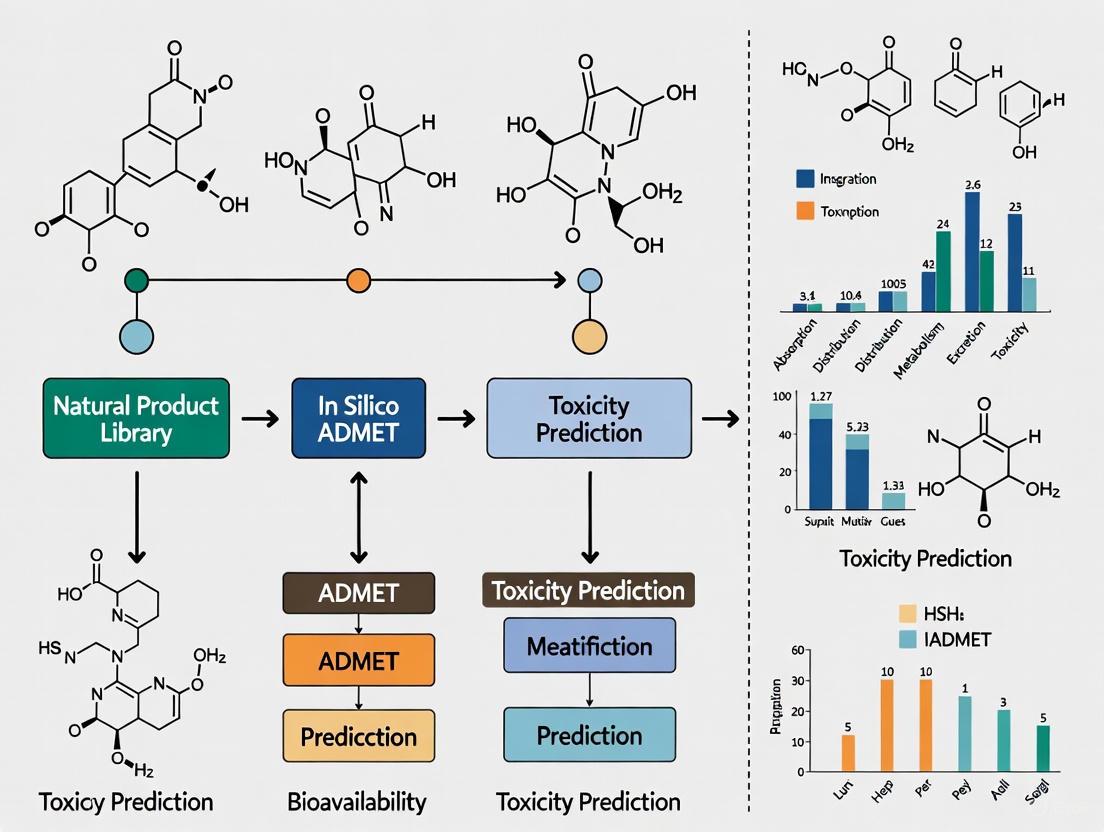
This article explores the transformative role of in silico ADMET (Absorption, Distribution, Metabolism, Excretion, and Toxicity) profiling in natural product-based drug discovery.
Unlocking Nature's Pharmacy: How In Silico ADMET is Revolutionizing Natural Product Research
Abstract
This article explores the transformative role of in silico ADMET (Absorption, Distribution, Metabolism, Excretion, and Toxicity) profiling in natural product-based drug discovery. Aimed at researchers and drug development professionals, it details how computational methods overcome historical bottlenecks such as limited compound availability, complex mixtures, and costly experimental testing. The discussion spans foundational concepts, key methodologies like machine learning and molecular dynamics, practical strategies for troubleshooting, and rigorous validation techniques. By providing a comprehensive roadmap, this article demonstrates how integrating computational predictions early in the research pipeline de-risks development and accelerates the identification of viable natural product-derived therapeutics.
The In Silico Advantage: Overcoming Fundamental Challenges in Natural Product Research
Why Natural Products Are Problematic for Traditional ADMET Testing
In pharmaceutical development, the failure of drug candidates due to unfavorable Absorption, Distribution, Metabolism, Excretion, and Toxicity (ADMET) properties remains a primary cause of clinical attrition. Approximately 40–45% of clinical failures are attributed to poor ADMET characteristics, representing enormous financial losses and inefficiencies in the drug development pipeline [1]. While this problem affects all drug candidates, natural products present unique and formidable challenges for traditional ADMET testing methodologies. These challenges have prompted a significant shift toward in silico approaches that can overcome the limitations of conventional experimental protocols.
Natural products have long been recognized as invaluable sources of therapeutic agents, with approximately 40-50% of approved drugs originating from or inspired by natural compounds [2]. Their chemical diversity and structural complexity offer tremendous therapeutic potential, yet these very characteristics create substantial obstacles for systematic ADMET evaluation using traditional methods. This technical guide examines the fundamental challenges natural products pose to conventional ADMET testing and explores how computational approaches are revolutionizing this critical phase of drug development.
Distinctive Characteristics of Natural Products
Natural products differ significantly from synthetic molecules in their structural and physicochemical properties, which directly impact their behavior in biological systems. Understanding these differences is essential for appreciating why they complicate traditional ADMET testing protocols.
Structural Complexity and Diversity
Compared to synthetic compounds, natural products exhibit greater structural complexity with more chiral centers, increased oxygen content, and less aromatic character [3] [4]. They tend to be larger molecular weight compounds with higher numbers of rotatable bonds and more diverse functional group arrangements. This complexity stems from their evolutionary biosynthesis in biological systems, resulting in three-dimensional architectures that are often difficult to characterize fully and expensive to synthesize in sufficient quantities for comprehensive testing.
Physicochemical Properties
Natural products frequently violate conventional drug-likeness rules such as Lipinski's Rule of Five, yet many demonstrate favorable bioavailability and therapeutic effects through alternative absorption mechanisms [3]. They typically contain greater oxygen content and less nitrogen, sulfur, and halogens than synthetic molecules, contributing to their distinct pharmacokinetic profiles [4]. This deviation from established pharmaceutical norms complicates prediction using traditional models calibrated primarily for synthetic compound libraries.
Table 1: Key Characteristics of Natural Products vs. Synthetic Compounds
| Property | Natural Products | Synthetic Compounds |
|---|---|---|
| Structural Complexity | High (more chiral centers, complex stereochemistry) | Generally lower |
| Molecular Weight | Often higher | Typically optimized for drug-likeness |
| Oxygen Content | Higher | Lower |
| Nitrogen/Sulfur Content | Lower | Higher |
| Compliance with Rule of Five | Often violated | Typically compliant |
| Chemical Stability | Often lower (sensitive to environment) | Generally higher |
Fundamental Challenges for Traditional ADMET Testing
Material Availability and Complexity
The limited availability of many natural products represents a primary constraint for experimental ADMET assessment. Numerous plant-derived compounds can only be isolated in milligram quantities insufficient for comprehensive testing [3]. This scarcity is compounded by the fact that natural products often exist as complex mixtures where multiple constituents may interact synergistically or antagonistically, making it difficult to attribute ADMET properties to individual components [5].
Experimental assessment of natural products is further complicated by their chemical instability. Many natural compounds are highly sensitive to environmental factors including temperature, moisture, oxygen, and pH variations, resulting in limited shelf-life and difficulties in developing stable commercial products [3] [4]. This instability introduces significant variability into experimental results and requires specialized handling conditions that increase the cost and complexity of testing.
Technical and Methodological Limitations
Traditional ADMET testing relies heavily on in vitro models that may inadequately capture the complex behavior of natural products in human systems. For example, cell models like Caco-2 (for intestinal absorption prediction) and MDCK (for blood-brain barrier penetration) provide useful but simplified representations of biological barriers [5]. These systems often fail to account for the metabolic transformations and transporter interactions that significantly influence natural product disposition [5].
The growing imperative to reduce animal use in medical research further limits traditional testing approaches [3] [4]. While in vivo models provide the most physiologically relevant ADMET data, ethical concerns and regulatory restrictions have substantially constrained their application. This reduction in animal testing capacity has created a critical gap in experimental ADMET assessment that computational approaches are increasingly filling.
Economic and Temporal Constraints
Traditional experimental ADMET evaluation is both time-consuming and expensive, with comprehensive profiling of a single compound often requiring weeks to months and costing tens of thousands of dollars [3]. The high-throughput screening used for synthetic compound libraries is rarely feasible for natural products due to their structural complexity, limited availability, and specialized handling requirements [2].
The typical drug discovery and development timeline spans 10-15 years, with ADMET complications representing a major contributor to this extended timeframe [6]. The pharmaceutical industry has consequently shifted toward earlier ADMET screening to identify and eliminate problematic compounds before significant resources are invested, creating demand for rapid, cost-effective predictive methods suitable for natural products [6].
In Silico Solutions for Natural Product ADMET Challenges
Computational ADMET prediction methods have emerged as powerful alternatives to traditional experimental approaches, offering particular advantages for natural products research. These methods can effectively address many of the challenges associated with natural product complexity, scarcity, and instability.
Key Computational Methodologies
Quantum Mechanics and Molecular Mechanics Methods
Quantum mechanics (QM) and molecular mechanics (MM) calculations provide insights into molecular interactions, reactivity, and metabolic transformations at the atomic level [3] [4]. QM/MM simulations have been successfully applied to study enzyme-mediated metabolism of natural compounds, such as cytochrome P450-catalyzed transformations, providing mechanistic understanding of metabolic stability and regioselectivity [4]. These methods are particularly valuable for predicting metabolic soft spots and understanding the molecular basis of ADMET properties.
Molecular Docking and Dynamics
Molecular docking predicts interactions between natural products and biological targets such as metabolic enzymes and transporters [7] [4]. Molecular dynamics simulations extend these predictions by modeling the time-dependent behavior of these complexes, providing insights into binding stability and conformational changes [4]. These approaches have been widely applied to natural products, as exemplified by studies of acetylcholinesterase inhibitors from traditional medicines [7].
QSAR and Machine Learning Models
Quantitative Structure-Activity Relationship (QSAR) models correlate structural features of natural products with specific ADMET endpoints [6]. With advances in machine learning, these approaches have evolved into sophisticated predictive tools using algorithms such as random forests, support vector machines, and neural networks [8] [6]. These models can identify patterns across diverse chemical structures, making them particularly suitable for natural product libraries with broad structural diversity.
Table 2: Computational Approaches for Natural Product ADMET Prediction
| Methodology | Primary Applications | Advantages for Natural Products |
|---|---|---|
| Quantum Mechanics/Molecular Mechanics | Metabolic prediction, reactivity assessment | Atomic-level insight into metabolic transformations |
| Molecular Docking | Protein-ligand interactions, transporter effects | Identification of binding modes without physical samples |
| Molecular Dynamics | Binding stability, conformational changes | Time-dependent behavior of molecular complexes |
| QSAR/Machine Learning | Property prediction from structural features | Pattern recognition across diverse chemical space |
| PBPK Modeling | Whole-body pharmacokinetic simulation | Integration of multiple ADME processes |
| Federated Learning | Multi-institutional model training | Expands chemical space without data sharing |
Federated Learning for Expanded Chemical Coverage
A particularly innovative approach to addressing the data limitations of natural product ADMET prediction is federated learning, which enables collaborative model training across multiple institutions without centralizing sensitive proprietary data [1]. This method systematically alters the geometry of chemical space that a model can learn from, improving coverage and reducing discontinuities in the learned representation [1].
Federated learning has demonstrated significant advantages for natural product research, with studies showing that federated models systematically outperform local baselines, and performance improvements scale with the number and diversity of participants [1]. This approach is especially valuable for natural products research, where chemical space is vast but data for individual compounds is often limited across multiple research groups.
Experimental Protocols and Workflows
Standardized In Silico ADMET Profiling Protocol
A robust workflow for computational ADMET assessment of natural products involves multiple stages of analysis and validation:
Data Collection and Curation: Compound structures are obtained from natural product databases (e.g., BIOFACQUIM, NuBBEDB, TCM Database) or experimental characterization [2]. Structures undergo cleaning, standardization, and format conversion (e.g., to SMILES notation) for computational analysis.
Descriptor Calculation: Molecular descriptors representing structural and physicochemical properties are calculated using tools such as SwissADME or pkCSM [2] [9]. These include constitutional descriptors, topological indices, electronic properties, and quantum chemical parameters.
Model Application: Predictive models are applied to estimate specific ADMET endpoints. This may involve consensus predictions from multiple algorithms to improve reliability [2].
Result Interpretation and Validation: Predictions are interpreted in the context of established drug-likeness criteria (e.g., Lipinski, Veber rules) and compared to available experimental data for validation [2] [9].
The following workflow diagram illustrates the standard protocol for in silico ADMET profiling of natural products:
Machine Learning Model Development Workflow
For novel natural product libraries without established predictive models, a comprehensive machine learning workflow can be implemented:
Data Preprocessing: Cleaning, normalization, and feature selection to improve data quality and reduce irrelevant information [6].
Model Selection and Training: Application of appropriate algorithms (e.g., random forests, support vector machines, neural networks) using training datasets [6].
Validation and Optimization: Cross-validation techniques (e.g., k-fold validation) and hyperparameter optimization to enhance model accuracy and generalizability [6].
Independent Testing: Evaluation of optimized models using independent datasets to assess performance based on classification and regression metrics [6].
Successful implementation of in silico ADMET prediction for natural products requires familiarity with key software tools and databases. The following table summarizes essential resources for computational natural products research:
Table 3: Essential Computational Resources for Natural Product ADMET Research
| Resource Category | Examples | Primary Function |
|---|---|---|
| Natural Product Databases | BIOFACQUIM, AfroDB, NuBBEDB, TCM Database | Source of natural product structures and metadata [2] |
| ADMET Prediction Platforms | SwissADME, pkCSM | Comprehensive ADMET property prediction [2] [9] |
| Molecular Descriptor Software | PaDEL, RDKit, Dragon | Calculation of structural and physicochemical descriptors [6] |
| Docking and Simulation Tools | AutoDock, GROMACS, AMBER | Protein-ligand interaction modeling and molecular dynamics [3] [4] |
| Cheminformatics Workflows | KNIME, Orange | Data preprocessing, model building, and visualization [2] |
| Federated Learning Frameworks | kMoL, Apheris Platform | Collaborative model training without data sharing [1] |
Natural products present formidable challenges for traditional ADMET testing methodologies due to their structural complexity, limited availability, chemical instability, and deviation from conventional drug-like properties. These limitations have accelerated the adoption of computational approaches that can effectively predict ADMET properties without physical samples or extensive laboratory infrastructure.
In silico methods represent a paradigm shift in natural product ADMET assessment, offering rapid, cost-effective alternatives to traditional experimental approaches while avoiding many of their inherent limitations [3]. As computational power increases and algorithms become more sophisticated, these approaches will play an increasingly central role in harnessing the therapeutic potential of natural products while minimizing the resource investments and ethical concerns associated with conventional testing methodologies.
The integration of computational ADMET prediction early in the natural product drug discovery pipeline promises to reduce late-stage attrition rates, accelerate development timelines, and ultimately bring promising natural product-derived therapies to patients more efficiently. For researchers working with natural products, familiarity with these computational approaches has become an essential component of modern drug discovery expertise.
The drug discovery landscape for natural products is fraught with unique challenges, including the limited availability of rare compounds, their inherent chemical instability, and the profound costs associated with experimental pharmacokinetic profiling [3] [10]. In silico ADME (Absorption, Distribution, Metabolism, and Excretion) methods have emerged as a transformative solution, offering a paradigm shift in how researchers evaluate the developmental potential of natural compounds [11]. These computational approaches provide compelling advantages that align with the core needs of modern research and development: significant cost reduction, accelerated timelines, and the conservation of precious samples [3]. By leveraging computational power, scientists can now bypass many traditional bottlenecks, performing critical early-stage assessments without the need for physical substance, laboratory infrastructure, or animal models [3] [12]. This technical guide details the quantitative benefits of these methods and provides actionable protocols for their implementation within natural product research.
Quantitative Advantages of In Silico ADME
The benefits of integrating in silico methods into the natural product research workflow are substantial and measurable. The tables below summarize the core advantages and specific methodological comparisons.
Table 1: Core Benefits of In Silico vs. Experimental ADME for Natural Products
| Benefit Dimension | Traditional Experimental Approach | In Silico Approach | Impact on Natural Product Research |
|---|---|---|---|
| Cost | High (costly materials, reagents, laboratory operations) [3] | Very low (requires only computational resources) [3] [10] | Enables screening of rare/expensive compounds without financial risk |
| Speed | Weeks to months for data generation [3] | Minutes to hours for predictions [3] | Dramatically compresses early discovery timelines |
| Sample Conservation | Requires milligrams to grams of pure compound [3] | Requires zero physical sample (only structural formula) [3] | Permits study of compounds available in minuscule quantities |
| Throughput | Low to moderate (limited by assay capacity) | Very high (can screen thousands of compounds virtually) [13] | Ideal for profiling complex natural product libraries |
Table 2: In Silico ADME Methodologies and Their Applications
| Computational Method | Key Function in ADME Prediction | Example Application in Natural Products |
|---|---|---|
| Quantum Mechanics (QM) | Predicts chemical reactivity, stability, and metabolic pathways [3] [10] | Studying regioselectivity of CYP-mediated metabolism of estrone and equilenin [3] |
| Molecular Docking | Models binding affinity and interactions with enzymes (e.g., CYPs) and transporters [11] [14] | Virtual screening of 80,617 natural compounds to identify BACE1 inhibitors for Alzheimer's disease [14] |
| QSAR & Machine Learning | Builds predictive models linking molecular structures to ADME properties [15] [16] | Bayer's in-house ADMET platform uses ML to guide lead selection and optimization [15] |
| Molecular Dynamics (MD) | Simulates dynamic behavior of molecule-protein complexes over time [11] [14] | Assessing stability of a natural product-BACE1 inhibitor complex over a 100 ns simulation [14] |
| PBPK Modeling | Predicts compound concentration-time profiles in whole organisms [3] | - |
Detailed Experimental Protocols for Key In Silico Workflows
Protocol 1: Virtual Screening and Molecular Docking for Natural Product Prioritization
This protocol is designed to identify potential hit compounds from large libraries of natural products based on their predicted binding affinity to a target of interest.
Target Protein Preparation
- Source: Obtain the 3D crystal structure of the target protein (e.g., BACE1, PDB ID: 6ej3) from the RCSB Protein Data Bank [14].
- Preparation: Using software like Schrödinger's Protein Preparation Wizard, process the protein by adding hydrogen atoms, assigning bond orders, correcting for missing residues, and optimizing the hydrogen-bonding network.
- Energy Minimization: Refine the structure by performing energy minimization using a force field (e.g., OPLS 2005) to relieve steric clashes and ensure geometric stability [14].
Natural Product Library Preparation
- Compound Sourcing: Curate a library of natural product structures from databases such as ZINC.
- Ligand Preparation: Use a tool like Schrödinger's LigPrep to generate 3D structures, assign protonation states at biological pH, generate possible tautomers, and perform energy minimization [14].
- Drug-Likeness Filtering: Apply filters like Lipinski's Rule of Five to focus on compounds with higher probability of oral bioavailability [14].
Molecular Docking Execution
- Grid Generation: Define the active site of the target protein by generating a grid around the co-crystallized ligand or known binding residues [14].
- Docking Run: Perform flexible ligand docking using a tool like GLIDE. A standard workflow often employs a multi-stage approach:
- High-Throughput Virtual Screening (HTVS): Rapidly screen the entire library.
- Standard Precision (SP): Re-dock the top-ranking hits from HTVS for more accuracy.
- Extra Precision (XP): Apply a rigorous scoring function to the best SP compounds to identify the most promising leads [14].
- Analysis: Analyze the binding poses, focusing on docking scores (reported in kcal/mol) and specific interactions (hydrogen bonds, hydrophobic contacts, pi-pi stacking) with key amino acid residues [14].
Protocol 2: Machine Learning-Based ADMET Property Prediction
This protocol leverages machine learning models to predict key pharmacokinetic and toxicity endpoints for natural product candidates.
Data Collection and Curation
- Dataset Assembly: Compile a dataset of molecules with experimentally determined ADMET properties. This can be sourced from public databases or internal assays. The dataset must include the chemical structure (e.g., SMILES notation) and the corresponding experimental endpoint value (e.g., solubility, CYP inhibition) [15] [16].
- Data Preprocessing: Handle missing data, remove duplicates, and address data imbalance. Crucially, ensure high data quality, as this is foundational for model performance [15].
Molecular Featurization
- Descriptor Calculation: Convert molecular structures into numerical descriptors (e.g., molecular weight, logP, topological surface area) or more advanced representations like molecular fingerprints [15].
- Graph Representations: For deep learning models like Graph Neural Networks (GNNs), represent molecules as graphs where atoms are nodes and bonds are edges [16].
Model Training and Validation
- Algorithm Selection: Choose appropriate ML algorithms (e.g., Random Forest, Support Vector Machines, or Deep Neural Networks) based on the dataset size and problem type (classification or regression) [15] [17].
- Training: Train the model on a subset of the data to learn the relationship between molecular features and the ADMET endpoint.
- Validation: Evaluate the model's performance on a held-out test set using metrics like accuracy, precision, recall, or R² to ensure its predictive reliability [15].
Prediction and Interpretation
- Deployment: Use the trained model to predict ADMET properties for novel natural products.
- Explainability: Employ model interpretation techniques (e.g., attention mechanisms in models like OmniMol) to understand which structural features of the molecule contribute most to the prediction, providing valuable insights for chemists [16].
Diagram 1: In Silico-Enabled Research Workflow
The Scientist's Toolkit: Essential Research Reagent Solutions
The following table outlines key computational tools and resources that function as the essential "reagents" for conducting in silico ADME research on natural products.
Table 3: Essential Research Tools for In Silico ADME
| Tool / Resource Name | Type | Primary Function in Research |
|---|---|---|
| ZINC Database [14] | Compound Library | A freely accessible repository of commercially available compounds, including a vast collection of natural products for virtual screening. |
| Schrödinger Suite [14] | Software Platform | Provides an integrated environment for protein preparation (Protein Prep Wizard), ligand preparation (LigPrep), molecular docking (GLIDE), and molecular dynamics (Desmond). |
| SwissADME [18] [14] | Web Tool | Allows for the rapid prediction of key physicochemical properties, pharmacokinetics, and drug-likeness of small molecules. |
| ADMETlab 2.0 [16] [14] | Web Tool | A comprehensive platform for predicting a wide array of ADMET and physicochemical properties using robust machine learning models. |
| Gaussian [18] | Software | Performs quantum mechanical calculations (e.g., DFT) to predict electronic properties, reactivity, and stability of natural compounds. |
| AutoDock [18] [13] | Software | A widely used, open-source package for molecular docking simulations to predict protein-ligand binding. |
| OmniMol [16] | AI Framework | A unified molecular representation learning framework for predicting multiple molecular properties from imperfectly annotated data. |
Diagram 2: In Silico ADME Method Taxonomy
The adoption of in silico ADME methods represents a strategic imperative for advancing natural product research. The quantifiable benefits of radical cost reduction, unparalleled speed, and complete sample conservation directly address the most pressing constraints in the field [3] [10]. As computational power and artificial intelligence continue to evolve, platforms like OmniMol and Bayer's in-house ADMET system are demonstrating that these methods are not merely alternatives but are becoming the foundational tools for lead identification and optimization [15] [16]. By integrating the protocols and tools outlined in this guide, researchers can build more efficient and predictive workflows, de-risking the development of natural products and accelerating the delivery of novel therapeutics from nature.
The development of natural products into viable therapeutics is frequently hampered by a trio of significant pharmacokinetic challenges: poor aqueous solubility, chemical instability, and extensive first-pass metabolism. These properties often result in low oral bioavailability, undermining the promising biological activities observed in initial screening. Traditionally, identifying these issues relied on late-stage experimental testing, leading to high attrition rates and substantial financial losses when promising candidates failed during development [4]. The pharmaceutical industry has consequently shifted toward early and extensive screening of Absorption, Distribution, Metabolism, Excretion, and Toxicity (ADMET) properties [4].
Within this framework, in silico (computational) methods have emerged as a powerful, cost-effective strategy to overcome these hurdles. These approaches eliminate the need for physical samples in the early stages, require no laboratory infrastructure, and provide rapid insights before synthetic or isolation efforts begin [4]. For natural products, which are often structurally complex, available in limited quantities, and sensitive to environmental factors, the advantages of computational tools are particularly pronounced [4] [19]. This technical guide details how modern in silico methodologies are being deployed to predict, understand, and optimize the solubility, stability, and metabolic fate of natural products, thereby de-risking their development path.
In Silico Strategies for Solubility Prediction
Aqueous solubility is a critical determinant of a compound's bioavailability. Poor solubility can limit absorption and efficacy, making it one of the most common failure points in drug development [20]. Computational prediction of solubility has evolved from traditional empirical parameters to sophisticated machine learning and physics-based models.
Traditional and Physics-Based Modeling Approaches
Traditional methods often operate on the principle of "like dissolves like," using empirically derived parameters to predict miscibility.
- Hildebrand Solubility Parameter (δ): This single-parameter model is derived from the cohesive energy density of a substance. It is most effective for predicting the solubility of non-polar and slightly polar molecules in similarly characterized solvents but fails to account for strong specific interactions like hydrogen bonding [21].
- Hansen Solubility Parameters (HSP): An extension of the Hildebrand parameter, HSP partitions the total solubility parameter into three components: dispersion forces (δd), dipolar interactions (δp), and hydrogen bonding (δh). A solute's solubility in a solvent is determined by the proximity of their respective HSP coordinates in this three-dimensional space. HSP is particularly popular in polymer science but can struggle with very small, strongly hydrogen-bonding molecules like water and methanol [21].
- Physics-Based Methods: These approaches leverage fundamental thermodynamics to compute solubility from first principles, requiring no parametrization against experimental solubility data. They involve separately calculating the free energy of the solid crystalline phase (lattice energy) and the solvation free energy of the dissolved molecule. While highly accurate and providing rich thermodynamic data, these methods are computationally intensive and must account for factors such as crystalline polymorphic form [20].
Data-Driven Machine Learning Models
Machine learning (ML) models represent the state-of-the-art in solubility prediction, offering speed and high accuracy across a wide range of chemical spaces.
- Descriptor-Based ML Models: These models use a small set of rationally selected molecular descriptors that capture key physicochemical aspects of the dissolution process. These may include molecular weight, solvation energy, dipole moment, molecular volume, and solvent-accessible surface area. Various ML algorithms, including Random Forest (RF), Support Vector Machines (SVM), and Artificial Neural Networks (ANN), are then trained on these descriptors. This approach has been shown to achieve an accuracy close to the expected level of noise in experimental training data (LogS ± 0.7) [22].
- The
fastsolvModel: A prominent example of a deep-learning model,fastsolvis trained on the large experimental BigSolDB dataset. It can predict not just categorical solubility but the actual log10(Solubility) value across a range of temperatures and for a wide variety of organic solvents. It can also predict non-linear temperature effects and report uncertainty estimates for its predictions, providing crucial information for experimental planning [21].
Table 1: Comparison of Solubility Prediction Methods
| Method | Basis of Prediction | Key Advantages | Key Limitations |
|---|---|---|---|
| Hildebrand Parameter | Cohesive energy density | Simple, fast calculation | Only suitable for non-polar systems; low accuracy |
| Hansen Solubility Parameters (HSP) | Dispersion, polarity, hydrogen bonding | Useful for solvent mixtures; widely used for polymers | Struggles with strong H-bonders; requires experimental data for fitting |
| Physics-Based Methods | First-principles thermodynamics | High accuracy; no empirical solubility data needed; provides thermodynamic insights | Computationally very expensive; requires knowledge of crystal structure |
Machine Learning (e.g., fastsolv) |
Statistical learning on large datasets | High accuracy; predicts exact solubility & temperature dependence; fast | Requires large, high-quality training data; "black box" nature can limit interpretability |
Computational Forecasting of Chemical Stability
Chemical instability in natural products can lead to loss of potency, formation of impurities, and limited shelf-life. Stability can be compromised by environmental factors like temperature, pH, and light. In silico tools help predict both intrinsic chemical reactivity and long-term stability under various conditions.
Quantum Mechanics for Reactivity Assessment
Quantum mechanical (QM) calculations can be used to explore the electronic structure of a molecule to evaluate its intrinsic stability and reactivity.
- Application Example: Semiempirical QM methods (e.g., PM3, PM6, MNDO) have been employed to characterize the chemical stability and reactivity of natural compounds. For instance, studies on alternamide-A and uncinatine-A used these methods to conclude that these compounds possess high reactivity and limited stability, flagging them as potential liabilities [4].
- Methodology: The molecular structure is optimized using appropriate levels of theory (e.g., B3LYP/6-311+G*). Analyses of molecular orbitals, such as the energy and shape of the Highest Occupied Molecular Orbital (HOMO) and Lowest Unoccupied Molecular Orbital (LUMO), can reveal sites susceptible to nucleophilic or electrophilic attack, respectively. Calculations of bond dissociation energies can also predict susceptibility to oxidative degradation [4].
Advanced Kinetic Modeling for Shelf-Life Prediction
For forecasting long-term stability under storage conditions, Advanced Kinetic Modeling (AKM) provides a powerful solution that moves beyond simple zero- or first-order models.
- Principle: AKM uses data from short-term accelerated stability studies (e.g., at 5°C, 25°C, and 37°C/40°C) to build phenomenological kinetic models based on the Arrhenius equation. These models can describe complex degradation pathways, including multi-step reactions with an initial rapid drop followed by a slower phase [23].
- Protocol:
- Data Collection: Generate stability data for the critical quality attribute (e.g., potency, purity) at a minimum of three temperatures, ensuring significant degradation (e.g., 20%) is reached at the highest temperature.
- Model Screening: Fit the experimental data to a suite of kinetic models, from simple to complex multi-step models.
- Model Selection: Identify the optimal model using statistical parameters like the Akaike Information Criterion (AIC) and Bayesian Information Criterion (BIC).
- Prediction and Validation: Use the selected model to simulate degradation under recommended storage conditions (e.g., 2-8°C) over the desired shelf-life (e.g., 24-36 months) and establish prediction intervals. This methodology has been successfully validated for predicting stability up to 3 years for various biotherapeutics and vaccines [23].
Table 2: Key Computational Tools for Stability Assessment
| Tool Category | Specific Example / Reagent | Primary Function |
|---|---|---|
| Quantum Mechanics Software | Gaussian, GAMESS, ORCA | Calculates electronic structure, molecular orbitals, and bond energies to predict intrinsic chemical reactivity. |
| Semi-Empirical Methods | MOPAC (with PM6, PM3, MNDO) | Provides faster, approximate QM calculations for initial reactivity screening of large compound sets. |
| Kinetic Modeling Software | AKTS-Thermokinetics Software | Fits accelerated stability data to complex kinetic models and predicts shelf-life under various temperature profiles. |
| Statistical Software | SAS, JMP | Performs statistical analysis and linear regression for traditional ICH-based stability modeling. |
Predicting and Modulating First-Pass Metabolism
First-pass metabolism, primarily by cytochrome P450 (CYP) enzymes in the liver and gut and efflux by transporters like P-glycoprotein (P-gp), can drastically reduce the systemic exposure of an orally administered natural product.
Molecular Docking to Predict Enzyme and Transporter Interactions
Molecular docking is a cornerstone technique for predicting how a small molecule (ligand) will interact with a biological macromolecule (target), such as a CYP enzyme or P-gp.
- Target Preparation: The 3D structure of the target protein (e.g., CYP3A4, CYP2D6, P-gp) is obtained from the Protein Data Bank (PDB). Water molecules and heteroatoms are removed, and hydrogen atoms are added.
- Ligand Preparation: The 3D structure of the natural product is drawn or imported, and its geometry is optimized and energy-minimized.
- Docking Simulation: Software like AutoDock Vina is used to simulate the binding of the ligand into the target's active site. The algorithm searches for the optimal binding conformation and scores it based on a scoring function, which estimates the binding affinity (often reported in kcal/mol) [24] [25].
- Interpretation: A more negative binding energy suggests stronger binding. If a natural product shows a strong binding affinity to a major CYP enzyme's active site, it can be predicted as a substrate for metabolism. Conversely, strong binding without being metabolized might suggest inhibitory potential.
Modeling Metabolism with Quantum Mechanics/Molecular Mechanics
For a deeper understanding of the metabolic process itself, hybrid Quantum Mechanics/Molecular Mechanics (QM/MM) simulations can be employed.
- Application: This method is used to study the detailed molecular mechanism of enzymatic reactions. For example, QM/MM simulations on the bacterial P450cam enzyme have been used to explore the controversial mechanisms of camphor hydroxylation, providing atom-level insight into the reactivity of the enzyme's catalytic center [4].
- Methodology: In a QM/MM setup, the enzyme's active site (including the heme and bound substrate) is treated with high-accuracy QM, while the surrounding protein environment is handled with faster, classical MM. This allows researchers to simulate the electronic rearrangements involved in the breaking and forming of bonds during metabolism [4].
Integrated ADME and Target Prediction Platforms
Web servers and software suites provide integrated platforms for efficiently screening natural products.
- SwissADME: This freely available tool allows for the rapid prediction of key pharmacokinetic properties, including gastrointestinal absorption, blood-brain barrier penetration, and interactions with CYP enzymes. It provides a simple interface for inputting chemical structures and returns easy-to-interpret reports [24].
- SwissTargetPrediction: This tool predicts the most likely protein targets of a small molecule based on its 2D and 3D similarity to known ligands. This can help identify off-target interactions, including unintended binding to metabolic enzymes or transporters [24].
Integrated Workflow and Experimental Reagents for Validation
Bridging in silico predictions with experimental validation is crucial for building confidence in computational models. The following workflow and toolkit outline this integrated approach.
A Unified In Silico Protocol
A comprehensive in silico assessment of a natural product can be conducted as follows, integrating the methods described above:
- Input: Obtain or draw the 2D/3D structure of the natural product.
- Solubility Screening: Run the structure through a machine learning predictor like
fastsolvto estimate aqueous solubility (LogS) and its temperature dependence. - Stability Triage: Perform a QM calculation to identify potentially unstable functional groups (e.g., hydrolyzable esters, oxidizable catechols).
- Metabolism and Transport Prediction:
- Use molecular docking against major CYP isoforms (3A4, 2D6, 2C9, 2C19) and P-gp.
- Use SwissADME to get a rapid profile of CYP inhibition and passive absorption.
- Data Integration and Decision: Synthesize all predictions to profile the compound. A candidate with poor predicted solubility, high reactivity, and high affinity for CYP3A4 would be flagged for structural modification or deprioritized.
Research Reagent Solutions for Experimental Validation
Table 3: Essential Experimental Tools for Validating In Silico Predictions
| Research Reagent / Tool | Function in Experimental Validation |
|---|---|
| Caco-2 Cell Line | An in vitro model of human intestinal permeability used to assess absorption and P-gp mediated efflux. |
| Human Liver Microsomes (HLM) | A subcellular fraction containing CYP enzymes, used to measure metabolic stability and identify metabolites. |
| Recombinant CYP Enzymes | Individual CYP isoforms used to determine which specific enzyme is responsible for metabolizing a compound. |
| P-glycoprotein Assay Kits | Cell-based or membrane-based kits (e.g., from Solvo Biotechnology) to definitively determine P-gp substrate or inhibitor status. |
| Forced Degradation Studies | Exposure of the compound to stress conditions (acid, base, oxidants, light, heat) to validate predicted instability and identify degradation products. |
| Stability Chambers | Controlled environmental chambers to conduct accelerated stability studies for validating AKM shelf-life predictions. |
The integration of in silico methods into the natural product development pipeline represents a paradigm shift. By proactively addressing the critical hurdles of solubility, stability, and first-pass metabolism, computational tools empower researchers to make data-driven decisions earlier in the process, saving time and resources. The ability to screen virtual libraries of natural products or to rationally modify lead compounds based on predicted structure-property relationships significantly de-risks the path from bioactivity hit to viable drug candidate. As these computational models continue to improve in accuracy and scope, fueled by larger datasets and more powerful algorithms like AI, their role in unlocking the full therapeutic potential of natural products will only become more central. The future of natural product drug discovery lies in the strategic synergy between predictive in silico models and targeted experimental validation.
The Shift to Early-Stage Screening in the Drug Discovery Pipeline
The traditional drug discovery pipeline is a notoriously long and costly endeavor, taking an average of 12–15 years and costing in excess of $1 billion to bring a new drug to market [26]. A significant contributor to this high cost and lengthy timeline is the late-stage attrition of drug candidates, often due to unforeseen adverse effects or suboptimal pharmacokinetic profiles. Historically, promising compounds failed in clinical development for two main reasons: they were either ineffective or unsafe [26]. In response, the pharmaceutical industry has undergone a strategic pivot, moving critical safety and pharmacokinetic assessments earlier in the discovery process. This paradigm shift aims to identify and eliminate problematic compounds before substantial resources are invested in their development.
This shift is particularly pertinent for research involving natural products. Natural compounds often possess unique chemical structures with promising biological activities, but they also present distinct challenges, including complex chemical instability, low aqueous solubility, and limited availability from natural sources [4]. Furthermore, they may be degraded by stomach acid or undergo extensive first-pass metabolism in the liver before reaching their target [4]. Early-stage screening provides a framework to evaluate these properties at the outset, de-risking the development of natural products. The integration of in silico (computational) tools has been a cornerstone of this transformation, offering a rapid, cost-effective, and animal-free method to profile compounds based solely on their structural information, thus perfectly aligning with the needs of modern natural products research [4] [11].
The Core Components of Early-Stage Screening
Early-stage screening is a multi-faceted strategy that integrates computational and advanced in vitro and in vivo models to build a comprehensive profile of a candidate compound as quickly as possible.
1In SilicoADMET Profiling
In silico methods leverage computational power to predict the Absorption, Distribution, Metabolism, Excretion, and Toxicity (ADMET) properties of molecules, eliminating the need for a physical sample [4].
Key Methods and Tools: A range of computational approaches is employed for ADMET prediction.
- Quantum Mechanics/Molecular Mechanics (QM/MM) is used to explore enzyme-inhibitor interactions and predict metabolic pathways, such as those involving the Cytochrome P450 (CYP) enzyme family responsible for metabolizing most drugs [4].
- Molecular Docking and Pharmacophore Modeling help identify potential biological targets and understand how a compound might interact with proteins, a process known as "target fishing" [27] [11].
- Quantitative Structure-Activity Relationship (QSAR) Analysis and machine learning models are used to predict toxicity and physicochemical properties based on the compound's structural features [4] [11].
- Physiologically-Based Pharmacokinetic (PBPK) Modeling provides a more holistic, system-wide simulation of a drug's journey through the body [4].
- Popular software tools and web servers like SwissADME and admetSAR are routinely used to compute key parameters such as gastrointestinal absorption, blood-brain barrier permeability, and drug-likeness [27] [28].
Application to Natural Products: In silico profiling is exceptionally valuable for natural products research. For example, a study on phytochemicals from Ethiopian indigenous aloes used these tools to evaluate drug-likeness, predict human targets, and elucidate associated biological pathways, demonstrating the polypharmacology of these compounds [27]. Similarly, an ADMET analysis of 308 phytochemicals from the genus Dracaena identified 12 compounds with favorable profiles, prioritizing them for further investigation [28].
Table 1: Key ADMET Properties and Their Ideal Ranges for Natural Compounds
| Property | Description | Ideal Range for Drug-Likeness |
|---|---|---|
| Lipinski's Rule of Five | Predicts oral bioavailability based on molecular weight, Log P, H-bond donors/acceptors | ≤ 2 violations is common for natural products [27] |
| Veber's Rules | Assesses oral bioavailability based on polar surface area and rotatable bonds | TPSA ≤ 140 Ų, ≤ 10 rotatable bonds [27] |
| Water Solubility (Log S) | Aqueous solubility | Ideally > -4 log mol/L [27] |
| Gastrointestinal (GI) Absorption | Likelihood of oral absorption | High [27] [28] |
| BBB Permeability | Ability to cross the blood-brain barrier | Dependent on therapeutic intent (CNS vs. peripheral) [27] |
| CYP Inhibition | Potential for drug-drug interactions | Non-inhibitor of key enzymes (e.g., CYP3A4, 2D6) [4] |
| hERG Inhibition | Indicator of cardiotoxicity risk | Non-inhibitor [28] [29] |
AdvancedIn Vitroand Cellular Models
While in silico tools provide an excellent starting point, experimental validation in biologically relevant systems is crucial. Technological advances have led to more predictive in vitro models.
- Primary Human Hepatocytes: The liver is the primary site of drug metabolism. The use of primary human hepatocytes in formats like the sandwich culture or as 3D spheroids provides a more physiologically relevant model for assessing metabolic stability, drug-drug interactions, and mechanisms of toxicity than traditional cell lines. These advanced cultures can maintain metabolic function for more than 14 days, allowing for the detection of metabolites from slowly metabolized drugs [30].
- Organoid Technology: Patient-derived organoids (PDOs) are 3D cell cultures that closely mimic the genetic and morphological characteristics of their tissue of origin. They are superior to traditional 2D cell lines for drug screening because they maintain a high degree of similarity to the original tissue, including gene expression and drug response. They can be scaled for high-throughput screening, with assays demonstrating high robustness (Z-factors ~0.7) and reproducibility [31].
- Cellular Target Engagement Assays: Technologies like the Cellular Thermal Shift Assay (CETSA) provide direct, quantitative evidence of intracellular target engagement in intact, living cells. This confirms that a compound not only is active in a simplified biochemical assay but actually binds to its intended target in a physiological environment, helping to triage false positives early [32].
IntegrativeIn VivoModels
Bridging the gap between in vitro assays and mammalian testing, certain in vivo models offer a balance of physiological relevance and scalability.
- Zebrafish Models: Zebrafish have become a powerful platform for the hit-to-lead (H2L) optimization phase. Their small size, rapid development, and genetic similarity to humans make them ideal for early in vivo toxicity and efficacy screening. They serve as a cost-effective filter, reducing the number of compounds that need to be tested in more expensive rodent models, potentially saving 10 months and reducing costs by 60% in some cases [33]. Real-world successes include the identification of Clemizol for Dravet syndrome, which advanced to phase II clinical trials based on zebrafish screening [33].
Experimental Protocols for Key Screening Methodologies
Protocol:In SilicoADMET and Drug-Likeness Profiling
This protocol outlines the steps for computationally profiling a natural compound.
- Compound Structure Preparation: Obtain or draw the 2D chemical structure of the natural compound. Convert it into a standardized format like SMILES (Simplified Molecular Input Line-Entry System) or SDF.
- Physicochemical Property Calculation: Input the structure into a tool like the SwissADME webserver. Calculate key descriptors:
- Drug-Likeness Evaluation: Apply established rules like Lipinski's Rule of Five and Veber's Rules to assess the compound's potential for oral bioavailability. Note that natural products often have 2-3 violations but may still be successful drugs [27].
- ADMET Prediction: Use servers like admetSAR or SwissADME to predict:
- Absorption: Gastrointestinal absorption (high/low)
- Distribution: Blood-Brain Barrier (BBB) permeability (yes/no)
- Metabolism: Inhibition of major Cytochrome P450 enzymes (e.g., CYP3A4, 2D6)
- Excretion: Substrate status for P-glycoprotein (P-gp)
- Toxicity: AMES mutagenicity, hERG inhibition, and hepatotoxicity [27] [28]
- Data Integration and Prioritization: Compile results. Prioritize compounds that show a favorable balance of potency (from separate assays) and drug-like ADMET properties for further experimental validation.
Protocol: Off-Target Pharmacological Profiling
This protocol describes the use of a focused assay panel to identify unintended compound activities.
- Panel Selection: Select a pre-configured panel of 50-70 pharmacologically relevant targets (e.g., GPCRs, ion channels, kinases) known to be associated with adverse effects. This panel can be optimized to maximize diversity and minimize redundancy [29].
- Screening: Test the compound at a single concentration (typically 10 µM) in radioligand binding or enzyme activity assays for each target in the panel.
- Hit Identification: Identify an assay "hit" as a compound demonstrating significant inhibition or binding (e.g., ≥50% inhibition at 10 µM, or an IC50 ≤ 1 µM) [29].
- Data Analysis: Calculate a "panel hit score" (the number of targets hit). A high score indicates promiscuity, which is often correlated with poor in vivo tolerability. This score can be used to select safer compounds for animal studies [29].
Diagram 1: Integrated early-stage screening workflow for natural products.
The Scientist's Toolkit: Essential Research Reagents and Solutions
Table 2: Key Reagents and Platforms for Early-Stage Screening
| Tool / Reagent | Function in Screening | Application in Natural Product Research |
|---|---|---|
| Primary Human Hepatocytes | Models human drug metabolism and clearance. | Predicts metabolic stability and identifies metabolites of natural compounds [30]. |
| 3D Spheroid & Organoid Cultures | Provides physiologically relevant tissue architecture for efficacy/toxicity testing. | Used in high-throughput panels (e.g., OrganoidXplore) to test natural compounds across many cancer types [31]. |
| CETSA (Cellular Thermal Shift Assay) | Measures direct target engagement of compounds in intact cells. | Validates hypothesized mechanism of action for natural products in a native cellular environment [32]. |
| Zebrafish Embryos/Larvae | Whole-organism in vivo model for phenotypic and toxicity screening. | Allows rapid assessment of natural product effects on complex biological processes (e.g., neuropharmacology, cardiotoxicity) [33]. |
| SwissADME / admetSAR | In silico platforms for predicting pharmacokinetic and toxicity properties. | First-pass evaluation of natural product drug-likeness and ADMET properties before any wet-lab experimentation [27] [28]. |
| Optimized Off-Target Panel | A curated set of binding assays to identify promiscuous compounds. | Flags natural products with potential for mechanism-based side effects early in development [29]. |
The strategic shift to early-stage screening represents a fundamental evolution in drug discovery, prioritizing the rapid collection of critical pharmacokinetic and safety data to de-risk the development pipeline. For the field of natural products research, this paradigm is transformative. By leveraging a synergistic combination of in silico predictions, physiologically relevant in vitro models, and efficient in vivo systems, researchers can confidently navigate the unique challenges posed by natural compounds. This integrated approach enables the identification of high-quality lead candidates with a greater probability of clinical success, unlocking the immense therapeutic potential of nature's chemical diversity in a more efficient and cost-effective manner.
A Practical Toolkit: Key In Silico Methods and Their Application to Natural Compounds
Machine Learning and Deep Learning for Predictive ADMET Profiling
The evaluation of Absorption, Distribution, Metabolism, Excretion, and Toxicity (ADMET) properties remains a critical bottleneck in drug discovery, contributing significantly to the high attrition rate of drug candidates [6]. Traditional experimental approaches are often time-consuming, cost-intensive, and limited in scalability [4]. The pharmaceutical industry has significantly changed its strategy in recent decades, performing extensive ADMET screening earlier in the drug discovery process to identify and eliminate problematic compounds before they enter costly development phases [4]. For natural products, which are characterized by greater structural diversity and complexity than synthetic molecules, these challenges are even more pronounced [4] [3]. Fortunately, recent advances in machine learning (ML) and deep learning (DL) have revolutionized ADMET prediction by enhancing accuracy, reducing experimental burden, and accelerating decision-making during early-stage drug development [6] [34]. This transformation is particularly valuable for natural product research, where ML tools accelerate discovery in oncology, infection, inflammation, and neuroprotection by enabling activity prediction, mechanism inference, and compound prioritization [35].
Fundamentals of Machine Learning in ADMET Prediction
Core Concepts and Workflow
Machine learning refers to a method of data analysis involving the development of new algorithms and models capable of interpreting a multitude of data [6]. In the context of ADMET prediction, ML techniques leverage large-scale compound databases to enable high-throughput predictions with improved efficiency [34]. The standard methodology begins with obtaining a suitable dataset, often from publicly available repositories tailored for drug discovery. The quality of this data is crucial, as it directly impacts model performance [6].
The development of a robust ML model follows a systematic workflow that includes multiple critical stages, as visualized below.
Machine Learning Algorithms for ADMET
ML methods are generally divided into supervised and unsupervised approaches [6]. In supervised learning, models are trained using labeled data to make predictions, such as predicting pharmacokinetic properties based on input attributes like chemical descriptors of new compounds. Unsupervised learning aims to find patterns, structures, or relationships within a dataset without using labeled or predefined outputs [6].
Table 1: Common Machine Learning Algorithms Used in ADMET Prediction
| Algorithm Category | Specific Methods | Key Applications in ADMET | Advantages |
|---|---|---|---|
| Tree-Based Methods | Random Forests, Decision Trees, LightGBM, CatBoost [6] [36] | Classification and regression tasks for solubility, permeability, toxicity [36] | Handles non-linear relationships, robust to outliers |
| Deep Learning | Graph Neural Networks, Message Passing Neural Networks, Deep Neural Networks [35] [34] [36] | Complex endpoint prediction, molecular property learning [34] | Automates feature extraction, models intricate patterns |
| Support Vector Machines | SVM with various kernels [6] [36] | Binary classification tasks | Effective in high-dimensional spaces |
| Ensemble Methods | Gradient Boosting Frameworks [6] [36] | Improving prediction accuracy across multiple endpoints | Combines multiple weak learners for better performance |
Key Methodologies and Molecular Representations
Molecular Descriptors and Feature Engineering
Molecular descriptors are numerical representations that convey the structural and physicochemical attributes of compounds based on their 1D, 2D, or 3D structures [6]. These descriptors form the foundation upon which ML models are built. Feature engineering plays a crucial role in improving ADMET prediction accuracy [6]. Traditional approaches rely on fixed fingerprint representations, but recent advancements involve learning task-specific features by representing molecules as graphs, where atoms are nodes and bonds are edges [6].
Several feature selection methods are employed to determine relevant properties for specific classification or regression tasks [6]:
- Filter Methods: Applied during pre-processing to select features without relying on any specific ML algorithm, efficiently eliminating duplicated, correlated, and redundant features.
- Wrapper Methods: Iteratively train the algorithm using subsets of features, dynamically adding and removing features based on insights gained during previous model training iterations.
- Embedded Methods: Integrate the feature selection algorithm into the learning algorithm, combining the strengths of filter and wrapper techniques while mitigating their respective drawbacks.
Advanced Deep Learning Architectures
Graph Neural Networks (GNNs) have emerged as particularly powerful tools for ADMET prediction because they naturally operate on molecular graph structures, with atoms as nodes and bonds as edges [34]. These approaches have achieved unprecedented accuracy in ADMET property prediction by explicitly modeling the topological structure of molecules [6]. Message Passing Neural Networks (MPNNs), as implemented in tools like Chemprop, have shown strong performance across multiple ADMET benchmarks [36].
Multitask learning frameworks represent another significant advancement, where models are trained simultaneously on multiple related ADMET endpoints [34]. This approach leverages shared information across tasks, often leading to improved generalization and reduced overfitting, especially when data for individual endpoints may be limited.
Experimental Protocols and Implementation
Data Collection and Preprocessing
The first critical step in developing ML models for ADMET prediction involves data collection from publicly available or proprietary databases. Key data sources include:
- Therapeutics Data Commons (TDC): Provides curated benchmarks for ADMET-associated properties [36]
- ChEMBL: A manually curated database of bioactive molecules with drug-like properties [6]
- PubChem: Provides access to chemical property data, including kinetic solubility measurements [36]
Data cleaning is essential to ensure model reliability and involves several standardized steps [36]:
- Remove inorganic salts and organometallic compounds from datasets
- Extract organic parent compounds from their salt forms
- Adjust tautomers to have consistent functional group representation
- Canonicalize SMILES strings to ensure consistent molecular representation
- De-duplicate entries, keeping the first entry if target values are consistent, or removing the entire group if inconsistent
Model Training and Validation Protocol
A robust methodology for model development includes the following steps [6] [36]:
Data Splitting: Divide the dataset into training, validation, and test sets using scaffold-based splitting to ensure that structurally similar molecules are grouped together, providing a more challenging and realistic evaluation scenario.
Feature Representation: Select appropriate molecular representations, which may include:
- Molecular descriptors (e.g., RDKit descriptors)
- Fingerprints (e.g., Morgan fingerprints)
- Learned representations (e.g., graph embeddings)
Model Selection and Training: Choose appropriate algorithms based on dataset size and complexity, then train multiple models using the training set.
Hyperparameter Optimization: Tune model-specific parameters using the validation set through methods like grid search or Bayesian optimization.
Model Evaluation: Assess performance on the held-out test set using appropriate metrics:
- For classification tasks: AUC-ROC, accuracy, precision, recall
- For regression tasks: RMSE, MAE, R²
Statistical Validation: Employ cross-validation with statistical hypothesis testing to compare model performance robustly [36].
Special Considerations for Natural Products
When applying these methods to natural products, several additional factors must be considered [35] [4]:
- Data Imbalance: Natural product datasets are often small and imbalanced, requiring techniques like data augmentation or specialized sampling approaches
- Structural Complexity: Natural compounds tend to be larger, contain more chiral centers, and have greater structural diversity than synthetic molecules
- Provenance and Variability: Issues of mixture and batch variability, incomplete provenance, and domain shift must be addressed through appropriate model regularization and validation strategies
Applications in Natural Product Research
Case Studies and Validation
ML-driven ADMET prediction has demonstrated significant success in natural product research. In oncology, infection, inflammation, and neuroprotection, AI tools have accelerated natural product discovery by enabling activity prediction, mechanism inference, and prioritization [35]. These approaches include tree ensembles, graph neural networks, and self-supervised molecular embeddings for mixtures, isolated metabolites, and peptide analogs [35].
Network pharmacology models have been particularly valuable for natural products, creating herb-ingredient-target-pathway graphs to propose synergistic effects [35]. For example, in a study examining phytoconstituents from Tulipa gesneriana L., SwissADME computational tools were used to evaluate the ADME properties of 31 phytocompounds [9]. The analysis identified quercetin as a promising candidate due to its favorable bioavailability and pharmacokinetic profile, while coumarin demonstrated potential for blood-brain barrier penetration [9].
Another study aimed at identifying natural analgesic compounds through molecular docking-virtual screening, molecular dynamics simulation, and ADMET computations found that three compounds—apigenin, kaempferol, and quercetin—demonstrated the highest affinity for the cyclooxygenase-2 (COX-2) receptor [37]. Pharmacokinetic and toxicity assessments indicated favorable oral bioavailability and an overall acceptable safety profile for these compounds [37].
Quantitative Performance Benchmarks
Table 2: Performance Benchmarks of ML Models on ADMET Prediction Tasks
| ADMET Endpoint | Best Performing Algorithm | Key Molecular Representation | Performance Metric |
|---|---|---|---|
| Caco-2 Permeability | Random Forest | RDKit Descriptors + FCFP4 | Accuracy: >80% [6] |
| Bioavailability | Logistic Algorithm | 47 selected molecular descriptors | Predictive Accuracy: >71% [6] |
| Solubility | Message Passing Neural Networks | Morgan Fingerprints | RMSE: <0.8 log units [36] |
| PPBR (Plasma Protein Binding) | Gradient Boosting | Combined Descriptors + Fingerprints | R²: >0.7 [36] |
| hERG Toxicity | Graph Neural Networks | Molecular Graph Representation | AUC-ROC: >0.85 [34] |
Implementing ML approaches for ADMET prediction requires a suite of computational tools and resources. The following table summarizes key platforms and their applications in natural product research.
Table 3: Essential Computational Tools for ML-based ADMET Prediction
| Tool/Resource | Type | Key Functionality | Application in Natural Products |
|---|---|---|---|
| SwissADME [9] | Web Tool | Predicts pharmacokinetics, drug-likeness, medicinal chemistry properties | Free accessibility for screening phytochemicals |
| Schrödinger Suite [14] | Commercial Software | Molecular docking, dynamics simulations, ADMET predictions | Structure-based drug design for natural compounds |
| RDKit [36] | Cheminformatics Library | Calculates molecular descriptors and fingerprints | Feature generation for natural product datasets |
| Chemprop [36] | Deep Learning Framework | Message Passing Neural Networks for molecular property prediction | Modeling complex natural product structures |
| ZINC Database [14] | Compound Library | Natural product structures for virtual screening | Source of natural compounds for screening campaigns |
| Therapeutics Data Commons (TDC) [36] | Benchmarking Platform | Curated ADMET datasets and model evaluation | Benchmarking natural product ADMET prediction |
Integrated Workflow for Natural Product ADMET Profiling
The application of ML for ADMET prediction in natural products research follows a comprehensive workflow that integrates multiple computational approaches, from initial screening to advanced validation, as depicted below.
This integrated approach leverages the strengths of multiple computational methods: machine learning models for rapid ADMET profiling, molecular docking for binding mode analysis, and molecular dynamics simulations for assessing complex stability over time. For natural products, this workflow is particularly valuable as it helps prioritize the most promising candidates from large phytochemical libraries before committing to resource-intensive experimental validation [37] [14].
Machine learning and deep learning have emerged as transformative technologies in ADMET prediction, offering new opportunities for early risk assessment and compound prioritization in natural product research [6]. These approaches provide rapid, cost-effective, and reproducible alternatives that integrate seamlessly with existing drug discovery pipelines [6]. While challenges such as data quality, algorithm transparency, and regulatory acceptance persist, continued integration of ML with experimental pharmacology holds the potential to substantially improve drug development efficiency and reduce late-stage failures [6] [34]. For natural products specifically, these computational methods help address unique challenges including structural complexity, data scarcity, and mixture variability [35]. As these technologies continue to evolve, they promise to accelerate the discovery of novel therapeutic agents from natural sources while providing deeper insights into their mechanisms of action and pharmacokinetic profiles.
Molecular Docking and Dynamics for Mechanistic Insights
Molecular docking and dynamics simulations have emerged as indispensable tools in modern computational drug discovery, providing unprecedented insights into molecular interactions at an atomic level. These techniques are particularly transformative for researching natural products, where the complex chemical space presents both extraordinary opportunities and significant challenges. When framed within the context of in silico Absorption, Distribution, Metabolism, Excretion, and Toxicity (ADMET) prediction, these computational approaches offer a powerful strategy for de-risking natural product development by identifying promising candidates with favorable pharmacological profiles early in the discovery pipeline [38] [39].
The integration of molecular docking and dynamics addresses a critical bottleneck in natural product research. While natural products have a long history of use in treating various diseases, particularly in developing countries, traditional discovery efforts have mostly involved the use of crude extracts in in-vitro and/or in-vivo assays with limited efforts at isolating active principles for structure elucidation studies [38]. Molecular docking serves as a computational technique that predicts the binding affinity and orientation of ligands (such as natural compounds) to receptor proteins, enabling researchers to study the behavior of small molecules within the binding site of a target protein and understand the fundamental biochemical processes underlying these interactions [39]. This approach is structure-based and requires a high-resolution three-dimensional representation of the target protein, typically obtained through techniques like X-ray crystallography, Nuclear Magnetic Resonance Spectroscopy, or Cryo-Electron Microscopy [39].
The combination of these computational methods with ADMET prediction creates a powerful framework for prioritizing which natural products to investigate experimentally, potentially saving substantial time and resources [38] [34]. This review provides an in-depth technical examination of molecular docking and dynamics methodologies, with special emphasis on their application to natural products research and integration with ADMET profiling to facilitate more efficient and targeted drug discovery efforts.
Technical Foundations of Molecular Docking
Fundamental Principles and Algorithms
Molecular docking aims to predict the optimal binding orientation and conformation of a small molecule (ligand) within a protein's binding site to form a stable complex [39]. The process involves two fundamental steps: sampling plausible ligand conformations within the protein's active site and ranking these conformations using scoring functions to identify the most likely binding mode [39]. The sampling algorithms systematically explore the rotational, translational, and conformational degrees of freedom of the ligand relative to the protein target.
Search algorithms in molecular docking are broadly classified into systematic methods, stochastic approaches, and deterministic techniques. Systematic or direct methods include:
- Conformational search: Gradually changes torsional (dihedral), translational, and rotational degrees of freedom of the ligand's structural parameters [39].
- Fragmentation: Docks multiple fragments either by forming bonds between them or building outward from an initially docked fragment using tools like FlexX, DOCK, and LUDI [39].
- Database search: Generates numerous reasonable conformations of small molecules already recorded in databases and docks them as rigid bodies using tools like FLOG [39].
Stochastic methods incorporate randomness in the search process and include:
- Monte Carlo algorithms: Randomly place ligands in the receptor binding site, score them, and generate new configurations using tools like MCDOCK and ICM [39].
- Genetic algorithms: Begin with a population of poses where each "gene" describes the configuration and location relative to the receptor, with the score representing "fitness." Subsequent generations are created through transformations and hybrids of the fittest individuals, implemented in programs like GOLD and AutoDock [39].
- Tabu search: Operates by implementing constraints that prevent re-examination of previously explored areas of the ligands' conformational space using tools like PRO LEADS and Molegro Virtual Docker (MVD) [39].
Scoring Functions for Binding Affinity Prediction
Scoring functions are mathematical procedures used to predict the binding affinity of protein-ligand complexes generated by docking simulations. These functions are typically classified into four main categories:
- Force field-based: Calculate binding affinity by summing contributions from non-bonded interactions including van der Waals forces, hydrogen bonding, and Coulombic electrostatics, along with bond angle and torsional deviation terms. Tools implementing this approach include AutoDock, DOCK, and GoldScore [39].
- Empirical functions: Utilize multiple linear regression analysis on trained sets of protein-ligand complexes with known binding affinities, parameterizing functional groups and specific interaction types like hydrogen bonds and aromatic ring stacking. Examples include LUDI score, ChemScore, and AutoDock scoring [39].
- Knowledge-based: Statistically assess collections of complex structures to derive potentials of mean force for atom pairs or functional groups, implemented in tools like PMF and DrugScore [39].
- Consensus scoring: Combine evaluations or classifications obtained through multiple scoring methods in various arrangements to improve prediction reliability [39].
Table 1: Major Categories of Scoring Functions in Molecular Docking
| Type | Basis of Function | Advantages | Limitations | Representative Tools |
|---|---|---|---|---|
| Force Field-based | Molecular mechanics principles; sums non-bonded interaction energies | Strong theoretical foundation; physically meaningful parameters | Doesn't explicitly account for solvation/entropy; computationally intensive | AutoDock, DOCK, GoldScore |
| Empirical | Linear regression of known binding energies using interaction terms | Fast calculation; good correlation with experimental data | Parameterized for specific systems; limited transferability | LUDI, ChemScore, AutoDock scoring |
| Knowledge-based | Statistical potentials derived from structural databases | Implicitly accounts for complex effects; no parameter fitting | Dependent on database quality and size; less interpretable | PMF, DrugScore |
| Consensus | Combination of multiple scoring functions | Improved reliability and robustness; reduced method bias | Computationally expensive; implementation complexity | Multiple implementations |
Molecular Dynamics for Binding Stability Assessment
Principles and Methodologies
While molecular docking provides static snapshots of protein-ligand interactions, molecular dynamics (MD) simulations offer a dynamic perspective by simulating the physical movements of atoms and molecules over time, typically following Newton's laws of motion. This approach is crucial for understanding the stability and evolution of binding interactions under more physiologically realistic conditions [40]. MD simulations can capture conformational changes, ligand dissociation pathways, and binding mode stability that are inaccessible through static docking approaches.
A typical MD simulation protocol involves several key steps. First, the system is prepared by placing the docked protein-ligand complex in a solvation box filled with water molecules, followed by system neutralization through the addition of ions and setting ionic strength to physiological levels (e.g., 0.15 M NaCl) [40]. The simulation then proceeds through a careful equilibration protocol before production runs:
- Initial stage: 100 ps Brownian dynamics NVT simulation at 10 K with constraints on protein's heavy atoms [40]
- Second stage: 12 ps NVT simulation at 10 K with restrictions on solute heavy atoms [40]
- Third stage: 12 ps NPT simulation at 10 K, retaining restrictions on solute heavy atoms [40]
- Final relaxation stage: Increasing temperature from 10 K to 300 K in 12 ps of NPT ensemble [40]
- Production simulation: Continued for the desired duration (e.g., 100 ns) in NPT ensemble at 300 K with no restraints [40]
The OPLS_2005 force field parameters are commonly used in such simulations, providing accurate parameterization for proteins and small molecules [40].
Analysis Methods for MD Trajectories
Following MD simulations, trajectories are analyzed using various parameters to assess system stability and interaction patterns. Key analysis methods include:
- Root Mean Square Deviation (RMSD): Measures structural stability by calculating the average distance between atoms of superimposed structures, with lower values indicating more stable complexes [40].
- Root Mean Square Fluctuation (RMSF): Assesses flexibility of specific protein regions during simulation, helping identify dynamic binding site residues [40].
- Binding free energy calculations: Methods like MM-GBSA (Molecular Mechanics Generalized Born Surface Area) combine molecular mechanics calculations with implicit solvation models to estimate binding affinities from simulation trajectories [40].
- Hydrogen bond analysis: Tracks formation and persistence of specific hydrogen bonds between ligand and protein throughout the simulation.
- Interaction fingerprints: Characterize and visualize specific molecular interactions (hydrophobic contacts, π-π stacking, salt bridges) over time.
These analyses provide critical insights into the stability and quality of binding interactions that complement the static pictures obtained from docking studies, offering a more comprehensive understanding of natural product-target interactions.
Integrated Workflow for Natural Product Research
The combination of molecular docking and dynamics within a comprehensive screening workflow represents a powerful strategy for identifying and validating bioactive natural products. This integrated approach is particularly valuable for navigating the complex chemical space of natural products while simultaneously addressing ADMET considerations early in the discovery process.
Diagram 1: Integrated screening workflow for natural products
This integrated workflow enables the efficient prioritization of natural product candidates by sequentially applying filters of increasing computational intensity and experimental validation. The process begins with large virtual libraries of natural products, such as the collection of 152,056 molecules from twelve different natural product databases described in one study [40]. Initial filtering stages rapidly reduce the candidate pool using rules-based approaches, followed by more computationally intensive structure-based methods for the most promising candidates.
A key advantage of this workflow is the integration of ADMET prediction early in the process, which helps eliminate compounds with unfavorable pharmacokinetic or toxicity profiles before investing significant computational resources. As noted in recent research, "approximately 40–45% of clinical attrition continues to be attributed to ADMET liabilities" [1], highlighting the importance of these considerations in natural product development. The sequential application of machine learning classification, molecular docking, and molecular dynamics creates a multi-stage screening system that increases the probability of identifying viable lead compounds.
Case Study: Discovery of JNK1 Inhibitors from Natural Products
Experimental Design and Implementation
A recent study demonstrating the integration of artificial intelligence with structure-based virtual screening for discovering novel c-Jun N-terminal kinase 1 (JNK1) inhibitors from natural products provides an excellent case study of this workflow in action [41]. JNK1 is a critical therapeutic target for type-2 diabetes, and natural products represent a valuable source for new active chemicals against this target.
The research employed a multi-stage virtual screening system beginning with data collection and machine learning model building. JNK1 inhibitors data was retrieved from the ChEMBL database, preprocessed, and divided into training and test sets [41]. Molecular descriptors were calculated for all compounds, with redundant and irrelevant descriptors removed in a three-step process. The researchers constructed three individual machine learning models (Random Forest, Support Vector Machine, and Artificial Neural Network) and two integrated models (Voting and Stacking), with hyperparameters tuned using the Bayesian optimization algorithm with 10-fold cross-validation [41].
Following model development, the screening process involved:
- Activity prediction: Natural products in the ZINC database were screened using the integrated models [41]
- ADMET property prediction and filtering: Resulted in 22 drug-like molecules [41]
- Molecular docking verification: Thirteen candidate compounds had high scores [41]
- Focus on three promising candidates: Lariciresinol, Tricin, and 4′-Demethylepipodophyllotoxin [41]
- Binding mode analysis and molecular dynamics simulations: Showed stability of systems [41]
- Binding free energy calculation: For complexes [41]
- In vitro validation: Tricin showed significant inhibition of JNK1 (IC₅₀ = 17.68 μM) [41]
The integrated models using Voting and Stacking strategies outperformed single models, achieving AUC values of 0.906 and 0.908, respectively [41]. This case demonstrates how machine learning algorithms combined with computer-aided drug design techniques can improve virtual screening outcomes for natural products.
Key Findings and Implications
The study successfully identified Tricin as a natural product with acceptable inhibitory activity against JNK1, demonstrating the practical utility of the integrated computational approach. The binding free energy calculations and molecular dynamics simulations revealed that the identified compounds had comparable binding energy to native ligands and formed stable complexes with the target protein [41].
The authors noted that using machine learning models helped overcome the drawbacks of molecular docking-based screening alone, which often suffers from high false-positive rates [41]. However, they also acknowledged limitations, including insufficient compounds for optimal machine learning modeling and the 'black box' problem of machine learning techniques [41]. Despite these challenges, the study provides a theoretical basis for JNK1 inhibitor drug design and a template for future natural product screening campaigns.
In Silico ADMET Prediction for Natural Products
Methodological Advances in ADMET Prediction
The integration of in silico ADMET prediction represents a crucial component in modern natural product research, enabling early assessment of pharmacokinetic and safety profiles before costly experimental work. Recent advances in machine learning have transformed ADMET prediction by deciphering complex structure-property relationships, providing scalable, efficient alternatives to traditional experimental methods [34].
State-of-the-art methodologies in ADMET modeling include:
- Graph Neural Networks (GNNs): Directly learn from molecular structures by representing compounds as graphs with atoms as nodes and bonds as edges, capturing complex topological features [34].
- Ensemble Learning: Combines multiple machine learning models to improve predictive accuracy and robustness, with techniques like bagging, boosting, and stacking [34].
- Multitask Frameworks: Simultaneously predict multiple ADMET endpoints by sharing representations across related tasks, leveraging common underlying features and regularizing models [34].
- Federated Learning: Enables model training across distributed proprietary datasets without centralizing sensitive data, addressing limitations of isolated modeling efforts while preserving data confidentiality [1].
Table 2: Machine Learning Approaches for ADMET Prediction of Natural Products
| Method | Key Principle | Advantages for Natural Products | Reported Performance Gains |
|---|---|---|---|
| Graph Neural Networks | Direct learning from molecular graph representation | Captures complex structural features of natural products | Up to 40-60% reductions in prediction error for some endpoints [1] |
| Ensemble Methods | Combination of multiple base models | Improved robustness to diverse natural product scaffolds | Consistent outperformance of single models [34] |
| Multitask Learning | Shared representation across related tasks | Leverages limited data more efficiently for diverse natural products | Enhanced accuracy, especially for low-data endpoints [34] |
| Federated Learning | Collaborative training without data sharing | Expands chemical space coverage across organizations | Systematic extension of model's effective domain [1] |
Benchmarking studies have revealed that model performance in ADMET prediction is increasingly limited by data quality and diversity rather than algorithms [36]. The Polaris ADMET Challenge demonstrated that multi-task architectures trained on broader and better-curated data consistently outperformed single-task or non-ADMET pre-trained models, achieving substantial reductions in prediction error across endpoints including human and mouse liver microsomal clearance, solubility, and permeability [1].
Integration with Docking and Dynamics
The true power of in silico ADMET prediction emerges when integrated with molecular docking and dynamics within a cohesive workflow. This integration enables simultaneous optimization of both binding characteristics (efficacy) and pharmacokinetic properties (drug-likeness), addressing two critical aspects of drug development in a coordinated manner.
In practice, this integration can be implemented through:
- Parallel screening streams: Conducting ADMET prediction alongside molecular docking to evaluate both target engagement and drug-likeness simultaneously.
- Sequential filtering: Applying rapid ADMET filters before more computationally intensive docking and dynamics simulations.
- Multi-objective optimization: Designing scoring functions that balance binding affinity with ADMET properties during virtual screening.
- Retrospective analysis: Using ADMET predictions to explain unexpected experimental results from binding assays.
This integrated approach is particularly valuable for natural products, which often exhibit complex chemical structures that may present both opportunities and challenges for drug development. By identifying potential ADMET issues early, researchers can prioritize natural product analogs with improved pharmacological profiles or plan appropriate formulation strategies to address specific limitations.
Research Reagent Solutions
Implementing molecular docking, dynamics, and ADMET prediction requires a suite of computational tools and resources. The table below summarizes key software solutions commonly used in natural product research.
Table 3: Essential Computational Tools for Molecular Docking, Dynamics, and ADMET Prediction
| Tool Category | Representative Software | Primary Function | Application in Natural Product Research |
|---|---|---|---|
| Molecular Docking | AutoDock Vina, Glide, GOLD, FlexX | Protein-ligand docking and virtual screening | Predicting binding modes of natural products to target proteins [39] |
| Molecular Dynamics | Desmond, GROMACS, AMBER, NAMD | Simulating temporal evolution of molecular systems | Assessing stability of natural product-protein complexes [40] |
| ADMET Prediction | SeeSAR, SwissADME, pkCSM, admetSAR | Predicting pharmacokinetic and toxicity properties | Early filtering of natural products with poor drug-likeness [40] [42] |
| Cheminformatics | RDKit, OpenBabel, ChemAxon | Molecular descriptor calculation and manipulation | Processing natural product libraries and calculating features [36] |
| Workflow Integration | Knime, Pipeline Pilot, Nextflow | Orchestrating multi-step computational pipelines | Automating natural product screening workflows [41] |
The selection of appropriate tools depends on multiple factors including the specific research question, available computational resources, and required level of accuracy. For molecular docking, AutoDock Vina offers a good balance of speed and accuracy and is widely used in natural product studies [39]. For more sophisticated docking challenges, commercial packages like Glide may provide improved performance but require licensing. For molecular dynamics, Desmond provides user-friendly interfaces and integration with docking tools, while GROMACS offers excellent performance for large systems [40].
Recent advances have also seen the development of specialized tools for natural product research. For example, MONA is a cheminformatic application designed to process large small-molecule datasets and was used in one study to check the physicochemical properties of 145,628 natural product molecules [40]. Similarly, specialized ADMET prediction tools like SeeSAR incorporate visual analysis with binding free energy calculations using methods like HYDE assessment, which relies on ligands' physicochemical properties (hydrogen bonding and desolvation energy) to estimate binding affinity to proteins [40].
Molecular docking and dynamics simulations have evolved into indispensable methodologies for obtaining mechanistic insights into natural product interactions with biological targets. When integrated with in silico ADMET prediction within a comprehensive screening workflow, these computational approaches provide a powerful framework for accelerating natural product-based drug discovery while reducing late-stage attrition due to unfavorable pharmacokinetic or safety profiles.
The continuing evolution of machine learning approaches promises to further enhance ADMET prediction capabilities. Emerging techniques including graph neural networks, ensemble methods, and federated learning are addressing critical challenges in data diversity and model generalizability [1] [34]. Particularly for natural products research, where structural complexity and limited experimental data present persistent challenges, these advances in computational methodology offer new opportunities to navigate the complex chemical space more efficiently.
Future developments will likely focus on improving model interpretability, integrating multimodal data sources, and developing more accurate simulation methods that balance computational efficiency with physical accuracy. As these computational methodologies continue to mature, their integration into natural product research workflows will play an increasingly vital role in bridging the gap between traditional medicine and modern drug development, ultimately facilitating the discovery of novel therapeutics from nature's chemical diversity.
Quantum Mechanics for Predicting Reactivity and Metabolic Pathways
The pharmaceutical industry faces significant challenges when promising drug candidates fail during development due to suboptimal ADME (absorption, distribution, metabolism, excretion) properties or toxicity concerns. This problem is particularly acute for natural products, which possess unique structural complexity but often present challenges related to bioavailability, metabolic stability, and chemical reactivity [4]. In silico approaches offer a compelling advantage by eliminating the need for physical samples and laboratory facilities while providing rapid and cost-effective alternatives to expensive and time-consuming experimental testing [4]. Within this computational landscape, quantum mechanical (QM) methods have emerged as powerful tools for predicting biochemical reactivity and metabolic pathways with unprecedented accuracy.
Quantum mechanics provides pharmaceutical scientists the opportunity to investigate pharmacokinetic problems at the molecular level prior to laboratory preparation and testing [43]. The ability to model electron distribution and movement allows researchers to simulate how natural compounds interact with metabolic enzymes, predict potential reactive metabolites, and understand regioselectivity in biotransformation processes. For natural products research, where compound availability is often limited and chemical instability presents significant challenges [4], QM methods offer particular value by generating critical ADMET information from structural data alone.
This technical guide examines the theoretical foundations, methodological approaches, and practical applications of quantum mechanical calculations for predicting metabolic pathways and chemical reactivity of natural products within the broader context of in silico ADMET profiling.
Theoretical Foundations of Quantum Mechanical Methods in Metabolism Prediction
Fundamental Quantum Mechanical Approaches
Quantum mechanical methods applied to ADMET prediction span a hierarchy of computational approaches, each with distinct advantages and computational requirements:
Density Functional Theory (DFT) has become the workhorse for quantum mechanical calculations in metabolic prediction due to its favorable balance between accuracy and computational cost. DFT methods approximate the complex many-electron wavefunction with the electron density, significantly reducing computational complexity while maintaining chemical accuracy [44]. Popular exchange-correlation functionals include:
- B3LYP: A hybrid functional that combines Hartree-Fock exchange with DFT exchange-correlation
- PBE/PBE0: Generalized gradient approximation functionals and their hybrid counterparts
- M06 family: Meta-GGA functionals parameterized for diverse chemical applications
- SCAN/SCAN0: Strongly constrained and appropriately normed functionals satisfying multiple physical constraints [44]
Quantum Mechanics/Molecular Mechanics (QM/MM) methods combine the accuracy of QM for modeling the reactive center with the computational efficiency of MM for the protein environment. This approach is particularly valuable for studying enzyme-catalyzed metabolism, such as cytochrome P450-mediated oxidations [4].
Semi-empirical Methods (e.g., MNDO, PM6, PM7) offer significantly reduced computational cost by parameterizing certain integrals based on experimental data. While less accurate than DFT, these methods enable rapid screening of metabolic transformations for large compound libraries [4].
Table 1: Comparison of Quantum Mechanical Methods for Metabolic Prediction
| Method | Theoretical Basis | Accuracy | Computational Cost | Primary Applications |
|---|---|---|---|---|
| Semi-empirical | Parameterized quantum chemistry | Low to Moderate | Low | High-throughput screening, initial geometry optimization |
| Density Functional Theory | Electron density functionals | High | Moderate | Reaction barrier prediction, regioselectivity assessment |
| Hybrid DFT | Mix of Hartree-Fock and DFT | High | Moderate to High | Metabolic site prediction, transition state modeling |
| QM/MM | QM for active site, MM for protein | High for local processes | High | Enzyme-substrate interactions, detailed mechanistic studies |
| Double Hybrid DFT | DFT with perturbative correlation | Very High | Very High | Benchmark calculations, calibration |
Key Theoretical Concepts for Reactivity Prediction
Several quantum chemically derived properties serve as valuable predictors of chemical reactivity and metabolic susceptibility:
Frontier Molecular Orbital Theory explains reactivity through the interaction between the highest occupied molecular orbital (HOMO) and lowest unoccupied molecular orbital (LUMO). The HOMO-LUMO gap provides insight into compound stability and susceptibility to metabolic oxidation [4].
Fukui Functions describe how the electron density of a molecule changes upon electron addition or removal, identifying nucleophilic and electrophilic sites prone to metabolic attack [4].
Reaction Energy Profiles including transition state energies and activation barriers determine the feasibility of specific metabolic transformations. Calculating these profiles allows researchers to predict both metabolic pathways and rates [45].
Methodological Protocols for Predicting Metabolic Pathways
Workflow for Metabolic Site Prediction
Accurate prediction of metabolic pathways requires a systematic computational workflow. The following protocol outlines a comprehensive approach for natural products:
Step 1: Molecular System Preparation
- Obtain 3D molecular structures from databases or generate via molecular mechanics optimization
- Perform conformational analysis to identify low-energy conformers
- Generate major microspecies at physiological pH (7.4) using tools like Chemaxon [44]
Step 2: Initial Geometry Optimization
- Optimize molecular geometry using semi-empirical methods (PM6, PM7) or low-level DFT
- Confirm stable conformers through frequency calculations (no imaginary frequencies)
Step 3: High-Level Quantum Chemical Calculation
- Refine geometry using DFT methods with moderate basis sets (6-31G*)
- Perform single-point energy calculations with larger basis sets (6-311++G)
- Include implicit solvation models (SMD, COSMO) to simulate aqueous environment [44]
Step 4: Chemical Reactivity Analysis
- Calculate molecular orbitals (HOMO, LUMO) and their energies
- Compute Fukui functions and molecular electrostatic potentials
- Identify potential metabolic soft spots based on atomic reactivity indices
Step 5: Metabolic Transformation Modeling
- Model potential metabolic reactions (oxidations, reductions, hydrolyses)
- Locate transition states and calculate activation energies
- Compare relative energies of possible metabolic pathways
Diagram 1: Quantum Mechanics Workflow for Metabolic Pathway Prediction
Protocol for Cytochrome P450 Metabolism Prediction
Cytochrome P450 enzymes mediate approximately 75% of drug metabolism, making them critical targets for prediction. The following specialized protocol addresses CYP-mediated metabolism:
System Setup
- Extract crystal structure of relevant CYP isoform (e.g., CYP3A4, CYP2D6) from Protein Data Bank
- Prepare protein structure: add hydrogens, assign protonation states, optimize hydrogen bonding network
- Dock substrate into active site using molecular docking software
- Create QM/MM partitioning with QM region including heme, substrate, and key catalytic residues
QM/MM Calculation
- Employ QM/MM geometry optimization with DFT (B3LYP) for QM region and molecular mechanics for protein environment
- Calculate potential energy surface for hydrogen abstraction or oxygen addition pathways
- Locate and characterize transition states (one imaginary frequency)
- Verify reaction pathways through intrinsic reaction coordinate (IRC) calculations
Metabolite Prediction
- Calculate activation energies for competing metabolic pathways
- Predict regioselectivity based on relative activation energies
- Estimate metabolic rates using transition state theory
Quantitative Performance of QM Methods in ADMET Prediction
Accuracy Benchmarks for Quantum Chemical Predictions
Recent benchmarking studies have quantified the performance of quantum mechanical methods in predicting biochemical properties relevant to ADMET. The accuracy of these methods has improved significantly with advances in computational power and theoretical methods.
Table 2: Accuracy of QM Methods for Thermodynamic and Metabolic Predictions
| Prediction Type | QM Method | Basis Set | Mean Absolute Error | Reference Data |
|---|---|---|---|---|
| Reaction Free Energy | B3LYP-D3 | 6-31G* | 2.27 kcal/mol | NIST Experimental [44] |
| Reaction Free Energy | SCAN | 6-31G* | 1.60 kcal/mol | NIST Experimental [44] |
| Reaction Free Energy | PBE0 | 6-311++G | 1.72 kcal/mol | NIST Experimental [44] |
| CYP Regioselectivity | QM/MM (B3LYP) | 6-31G* | ~85% accuracy | Experimental Metabolism [4] |
| Redox Potential | B3LYP | 6-311+G* | ~0.1-0.2 V | Experimental Electrochemistry [4] |
These benchmarks demonstrate that properly calibrated QM methods can achieve chemical accuracy (1-2 kcal/mol) for thermodynamic predictions, making them sufficiently reliable for practical applications in drug discovery.
Application to Natural Product Reactivity Prediction
Quantum mechanical methods have been successfully applied to predict the reactivity and stability of various natural compounds:
Uncinatine-A, an acetylcholinesterase inhibitor from Delphinium uncinatum, was analyzed using B3LYP/6-31G(p) calculations, revealing strong reactivity but limited stability [4].
Alternamide A was characterized using PM3 semi-empirical methods, which predicted high reactivity consistent with experimental observations [4].
Coriandrin from Coriandrum sativum L. was found to possess high molecular stability based on PM6 calculations [4].
Estrone, equilin, and equilenin metabolism regioselectivity in humans was correctly predicted using B3LYP/6-311+G* calculations, which identified C4 as more susceptible to CYP oxidation due to increased electron delocalization between rings A and B [4].
Implementing quantum mechanical methods for metabolic prediction requires specialized software tools and computational resources. The following table summarizes key components of the QM researcher's toolkit.
Table 3: Essential Research Reagent Solutions for QM-based Metabolic Prediction
| Tool Category | Specific Solutions | Function in QM Workflow |
|---|---|---|
| Quantum Chemistry Software | NWChem, Gaussian, ORCA, GAMESS | Perform QM calculations, geometry optimization, frequency analysis, reaction pathway mapping |
| Molecular Modeling Suites | Schrödinger Suite, OpenEye Toolkits | Structure preparation, conformational analysis, molecular mechanics, docking |
| QM/MM Frameworks | QSite, CHARMM, AMBER | Combined quantum-mechanical/molecular-mechanical simulations for enzyme systems |
| Automation & Workflow | KNIME, Python/RDKit, Jupyter | Automate repetitive calculations, data processing, and analysis pipelines |
| Visualization & Analysis | GaussView, VMD, PyMOL, Chimera | Visualize molecular orbitals, electron densities, reaction pathways, and protein-ligand interactions |
| Specialized Databases | NIST Thermodynamics, TDC ADMET Group, PharmaBench | Access experimental reference data for method validation and calibration |
Case Study: Quantum Mechanical Prediction of Natural Product Metabolism
Application to 1,4-Naphthoquinone Derivatives
A comprehensive study of natural-product-tethered 1,4-naphthoquinones demonstrates the integrated application of QM methods in natural product ADMET profiling [46]. Researchers developed QSAR models using molecular descriptors calculated through quantum chemical methods to predict antibacterial activity against Staphylococcus aureus. The workflow included:
Descriptor Calculation: Quantum chemically derived descriptors including ALogP, MATS5e, VR2DzZ, and VE2Dzs were computed for a series of 46 naphthoquinone derivatives [46].
Activity Prediction: These descriptors were used to build predictive QSAR models that showed high correlation (R² = 0.8955) with experimental minimum inhibitory concentration values [46].
Metabolic Stability Assessment: The developed models were applied to virtual libraries of natural product derivatives to prioritize compounds with optimal ADMET profiles before synthesis [46].
This case exemplifies how QM-derived parameters can enhance the prediction of biological activity and metabolic stability for natural product-inspired compounds.
Cytochrome P450cam Catalysis Mechanism
Quantum mechanical investigations have provided crucial insights into the reaction mechanisms of metabolic enzymes. Studies of P450cam, a bacterial cytochrome P450 that catalyzes the metabolism of camphor through 5-exo-hydroxylation, initially yielded controversial mechanisms [4]. QM/MM simulations by Zurek et al. demonstrated that heme propionates are not involved in the catalytic process, resolving inconsistencies between earlier theoretical and experimental data [4].
Diagram 2: Metabolic Pathway Prediction for Natural Products
Integration with Machine Learning and High-Throughput Screening
The integration of quantum mechanical predictions with modern machine learning approaches represents the cutting edge of in silico ADMET profiling. Recent benchmarking studies have demonstrated that combining QM-derived molecular descriptors with machine learning algorithms can significantly enhance prediction accuracy for various ADMET endpoints [36].
The Therapeutics Data Commons (TDC) ADMET benchmark group includes 22 standardized datasets for evaluating prediction models, covering critical properties like Caco-2 permeability, human intestinal absorption, P-glycoprotein inhibition, lipophilicity, aqueous solubility, blood-brain barrier penetration, plasma protein binding, volume of distribution, cytochrome P450 inhibition/substrate status, half-life, clearance, and toxicity parameters [47].
Emerging benchmarks like PharmaBench further expand these resources, incorporating large-scale data mining approaches to compile comprehensive ADMET datasets specifically designed for natural product research [48]. These resources enable researchers to validate and refine QM-based prediction methods against standardized experimental data.
Quantum mechanical methods have matured into indispensable tools for predicting metabolic pathways and chemical reactivity in natural products research. The ability to accurately simulate electron behavior and reaction energetics provides fundamental insights that complement experimental ADMET profiling. As computational power increases and theoretical methods advance, QM-based approaches will play an increasingly central role in the early stages of natural product drug discovery, helping researchers identify promising candidates with optimal metabolic stability and minimal toxicity risks before committing to resource-intensive synthesis and testing.
The integration of quantum mechanical predictions with machine learning, high-throughput screening, and standardized benchmarking datasets represents the future of in silico ADMET profiling, offering unprecedented opportunities to accelerate the development of natural product-based therapeutics while reducing experimental costs and animal testing.
Pharmacophore Modeling and QSAR for Target Identification and Property Prediction
The pharmaceutical industry faces significant challenges when promising drug candidates fail during development due to suboptimal ADME (absorption, distribution, metabolism, excretion) properties or toxicity concerns [4]. Natural compounds are subject to the same pharmacokinetic considerations but present unique obstacles for research, including chemical instability, poor solubility, limited availability, and complex extraction processes [4]. In silico approaches offer a compelling advantage by eliminating the need for physical samples and laboratory facilities while providing rapid and cost-effective alternatives to expensive and time-consuming experimental testing [4]. Pharmacophore modeling and Quantitative Structure-Activity Relationship (QSAR) analysis represent two foundational computational techniques that have transformed modern drug discovery, particularly for investigating natural products with therapeutic potential [49] [50].
These computational methods enable researchers to identify bioactive compounds from medicinal plants, understand their mechanism of action at the molecular level, and predict their pharmacokinetic profiles before undertaking laborious experimental work [37]. For natural products research, this computational prioritization is particularly valuable, as it helps focus limited resources on the most promising candidates, thereby accelerating the discovery of novel therapeutic agents from nature's chemical diversity [4] [37].
Theoretical Foundations of Pharmacophore Modeling
Historical Development and Basic Concepts
The concept of a pharmacophore was coined in the 19th century when Langley first suggested that certain drug molecules might act on particular receptors [49]. This was later supported by Emil Fisher's "Lock & Key" concept in 1894, which proposed that a ligand and its receptor fit like a key with its lock to interact with each other through a chemical bond [49]. The modern understanding of a pharmacophore is defined by the International Union of Pure and Applied Chemistry (IUPAC) as "the ensemble of steric and electronic features that is necessary to ensure the optimal supramolecular interactions with a specific biological target structure and to trigger (or to block) its biological response" [49].
Pharmacophore modeling is based on the theory that having common chemical functionalities and maintaining a similar spatial arrangement leads to biological activity on the same target [49]. The chemical characteristics of a molecule capable of creating interactions with its ligand are represented in the pharmacophoric model as geometric entities such as spheres, planes, and vectors [49]. The most important pharmacophoric feature types include: hydrogen bond acceptors (HBAs); hydrogen bond donors (HBDs); hydrophobic areas (H); positively and negatively ionizable groups (PI/NI); aromatic groups (AR); and metal coordinating areas [49].
Pharmacophore Modeling Approaches
Pharmacophore models can be generated using two different approaches depending on the input data employed for model construction: structure-based and ligand-based pharmacophore modeling [49].
Structure-based pharmacophore modeling uses the structural information of target proteins like enzymes or receptors to identify compounds that can potentially be used as drugs [49]. The essential prerequisite is the three-dimensional structure of a macromolecule target, which provides significant details at the atomic level useful for drug design [49]. The workflow typically consists of protein preparation, identification or prediction of ligand binding site, pharmacophore features generation, and selection of relevant features for ligand activity [49].
Ligand-based pharmacophore modeling consists of the development of 3D pharmacophore models and modeling quantitative structure-activity relationship (QSAR) using only the physicochemical properties of known ligand molecules for drug development [49]. This approach is particularly valuable when the three-dimensional structure of the biological target is unknown [49].
Table 1: Comparison of Pharmacophore Modeling Approaches
| Aspect | Structure-Based Approach | Ligand-Based Approach |
|---|---|---|
| Required Data | 3D structure of target protein | Set of known active ligands |
| Key Steps | Protein preparation, binding site detection, feature generation | Conformational analysis, molecular alignment, common feature identification |
| Advantages | Direct incorporation of target structural information; identification of all possible interaction points | No need for target structure; can work with limited data |
| Limitations | Dependent on quality of protein structure; may generate excessive features | Requires diverse set of active ligands; alignment challenges |
| Best Suited For | Targets with known 3D structures; novel binding site exploration | Established target classes with known actives; scaffold hopping |
Quantitative Structure-Activity Relationship (QSAR) Methodologies
Historical Development and Fundamental Principles
QSAR formally began in the early 1960s with the works of Hansch and Fujita and Free and Wilson [50]. Hansch and Fujita extended Hammett's equation by incorporating the electronic properties of substituents as follows: log1/C = b₀ + b₁σ + b₂logP [50]. The Free-Wilson method quantifies the observation that changing a substituent at one position of a molecule often has an effect independent of substituent changes at other positions [50].
The fundamental principle underlying QSAR is that the biological activity of a compound can be correlated with its measurable or calculable chemical and structural properties, known as descriptors [50]. This relationship is then quantified using statistical or machine learning methods to create a predictive model that can estimate the activity of new, untested compounds [51].
Modern QSAR Approaches and Machine Learning Integration
Early QSAR technologies had unsatisfactory versatility and accuracy in fields such as drug discovery because they were based on traditional machine learning and interpretive expert features [51]. The development of Big Data and deep learning technologies has significantly improved the processing of unstructured data and unleashed the great potential of QSAR [51]. Modern QSAR approaches now integrate wet experiments (which provide experimental data and reliable verification), molecular dynamics simulation (which provides mechanistic interpretation at the atomic/molecular levels), and machine learning techniques to improve model performance [51].
Advanced artificial intelligence technologies have motivated their application to drug design and target identification [52]. One of the fundamental challenges is how to learn molecular representation from chemical structures [52]. Previous molecular representations were based on hand-crafted features, such as fingerprint-based features, physiochemical descriptors, and pharmacophore-based features [52]. Compared with traditional representation methods, automatic molecular representation learning models perform better on most drug discovery tasks [52].
Table 2: QSAR Modeling Types and Applications
| QSAR Type | Key Descriptors | Common Applications | Notable Advances |
|---|---|---|---|
| 2D-QSAR | Topological indices, electronic parameters, hydrophobic constants | Preliminary activity prediction, large library screening | Machine learning integration, deep neural networks |
| 3D-QSAR | Steric and electrostatic fields, molecular shape | Lead optimization, binding mode analysis | Comparative Molecular Field Analysis (CoMFA) |
| QPHAR | Pharmacophoric features, interaction patterns | Scaffold hopping, virtual screening | Direct use of pharmacophores as input for quantitative models [53] |
| HQSAR | Molecular fragments, holographic fingerprints | Rapid screening, fragment-based design | Fragment contribution mapping |
Integrated Workflows: Combining Pharmacophore Modeling and QSAR
Sequential Application for Virtual Screening
Pharmacophore and QSAR methods are frequently employed in sequential workflows for efficient virtual screening. A typical workflow begins with pharmacophore-based screening to reduce the chemical space, followed by QSAR analysis to prioritize hits based on predicted potency [49] [54]. This integrated approach was demonstrated in a study aiming to identify potential natural analgesic compounds, where researchers performed cross-docking analyses of phytochemical components against receptors implicated in pain and inflammation pathways [37].
Based on binding energies, interaction profiles, and key amino acid residues within the receptor active sites, three compounds—apigenin, kaempferol, and quercetin—demonstrated the highest affinity for the cyclooxygenase-2 (COX-2) receptor [37]. Notably, these compounds share similar structural scaffolds and exhibit analogous interactions with critical receptor residues [37]. The integrated computational approach enabled the efficient identification of these potential bioactive compounds from hundreds of candidates.
Quantitative Pharmacophore Activity Relationship (QPHAR)
A novel approach called QPHAR (quantitative pharmacophore activity relationship) has been developed to construct quantitative pharmacophore models directly from pharmacophoric features rather than molecular structures [53]. This method offers several advantages: due to the abstract nature of pharmacophores, they are less influenced by small spatial perturbations of molecular features characteristic for such interactions [53]. For example, bioisosteres are often highly similar in their interaction profile but might cover entirely different functional groups and substructures [53].
Building a QSAR model on such data inevitably introduces a bias toward the predominant bioisosteric form occurring in the dataset [53]. Pharmacophores, on the other hand, transform different functional groups with the same interaction profile into an abstract chemical feature representation associated with a particular non-bonding interaction type, such as a π-stacking interaction or H-bond donor/acceptor interaction [53]. This generalization makes quantitative models more robust and less dependent on the dataset being used [53].
Integrated Pharmacophore-QSAR Workflow
Experimental Protocols and Methodologies
Structure-Based Pharmacophore Modeling Protocol
The workflow for structure-based pharmacophore modeling consists of several critical steps that directly influence model quality [49]:
Protein Preparation: The 3D structure of the target or the ligand-target complex is the required starting point, typically obtained from the RCSB Protein Data Bank (PDB) [49]. The protein structure preparation involves evaluating residues' protonation states, the position of hydrogen atoms, the presence of non-protein groups, and eventual missing residues or atoms [49]. The stereochemical and energetic parameters accounting for the general quality and biological-chemical sense of the investigated target must be critically assessed [49].
Ligand-Binding Site Detection: This crucial step can be manually inferred by analyzing the area including residues suggested to have a key role from experimental data, or using bioinformatics tools based on different methods which inspect the protein surface to search for potential ligand-binding sites [49]. Examples of computer programs developed for this purpose are GRID and LUDI [49].
Pharmacophore Features Generation and Selection: The characterization of the ligand-binding site is used to derive a map of interaction and to build accordingly one or more pharmacophore hypotheses describing the type and spatial arrangement of chemical features [49]. Initially, many features are detected with this approach, and only those that are essential for ligand bioactivity should be selected and incorporated into the final model [49].
3D-QSAR-Based Pharmacophore Modeling Protocol
A comprehensive protocol for developing 3D-QSAR-based pharmacophore models was demonstrated in a study involving sixty-two cytotoxic quinolines as anticancer agents with tubulin inhibitory activity [54]:
Data Set and Ligand Preparation: A set of sixty-two quinolines with cytotoxic activity against the A2780 cell line was selected, and pIC₅₀ values were calculated [54]. The 3D structures of ligands were generated using the builder panel in Maestro and successively optimized using the LigPrep module [54]. Energy minimization was performed using OPLS_2005 with an implicit distance-dependent dielectric solvation treatment [54].
Pharmacophore Model Generation: The data set ligands were categorized into active (pIC₅₀ > 5.5) and inactive (pIC₅₀ < 4.7) for the generation of common pharmacophore hypotheses [54]. Default settings were used to generate acceptable conformations, with a maximum of 100 conformers generated [54]. Alignment was performed, and a maximum of one conformer was retained for every ligand [54].
Model Validation: The generated hypotheses were scored and ranked by their vector, volume, site scores, survival scores, and survival actives [54]. A six-point pharmacophore model (AAARRR.1061) consisting of three hydrogen bond acceptors (A) and three aromatic ring (R) features was identified as the best model [54]. The model showed a high correlation coefficient (R² = 0.865), cross-validation coefficient (Q² = 0.718), and F value (72.3) [54].
QPHAR Modeling Methodology
The QPHAR methodology represents a novel approach for generating quantitative pharmacophore models [53]:
Consensus Pharmacophore Generation: The algorithm first finds a consensus pharmacophore (merged-pharmacophore) from all training samples [53].
Pharmacophore Alignment: Input pharmacophores, or pharmacophores generated from input molecules, are aligned to the merged-pharmacophore [53].
Feature Position Extraction: For each aligned pharmacophore, information regarding its position relative to the merged-pharmacophore is extracted [53].
Machine Learning Application: This information is used as input to a simple machine learning algorithm which derives a quantitative relationship of the merged-pharmacophores' features with biological activities [53].
This method has demonstrated robust performance, with fivefold cross-validation on more than 250 diverse datasets yielding an average RMSE of 0.62, with an average standard deviation of 0.18 [53].
Applications in Natural Products Research and ADMET Prediction
Identification of Bioactive Natural Compounds
Pharmacophore modeling and QSAR have proven particularly valuable in natural product research, where they enable the efficient screening of complex phytochemical mixtures for bioactive compounds. In a comprehensive study aimed at identifying potential natural analgesic compounds, researchers employed molecular docking-virtual screening, molecular dynamics simulation, and ADMET computations to evaluate 300 phytochemicals from twelve medicinal plants known for their analgesic and anti-inflammatory properties [37].
The cross-docking analyses against receptors implicated in pain and inflammation pathways identified three compounds—apigenin, kaempferol, and quercetin—with the highest affinity for the cyclooxygenase-2 (COX-2) receptor [37]. Pharmacokinetic and toxicity assessments of the selected compounds indicated favorable oral bioavailability and an overall acceptable safety profile [37]. This study highlights how computational approaches can rapidly identify pharmacologically active compounds potentially contributing to the therapeutic effects of medicinal plants.
ADMET Property Prediction for Natural Compounds
The application of in silico ADME methods to natural products research has gained significant importance due to the unique challenges associated with experimental testing of natural compounds [4]. Many natural compounds are highly sensitive to environmental factors, may be degraded by stomach acid, undergo extensive metabolism in the liver, or have low aqueous solubility—all of which complicate experimental ADME assessment [4].
Computational methods for ADMET prediction include fundamental approaches like quantum mechanics calculations, molecular docking, and pharmacophore modeling, as well as more complex techniques such as QSAR analysis, molecular dynamics simulations, and PBPK modeling [4]. These methods have been successfully applied to predict crucial ADME properties including CYP450 metabolism, blood-brain barrier penetration, solubility, and toxicity profiles [4] [52].
Table 3: Key Software Tools for Pharmacophore Modeling and QSAR Analysis
| Tool Name | Primary Function | Key Features | Application in Natural Products |
|---|---|---|---|
| PHASE | Pharmacophore modeling and 3D-QSAR | Pharmacophore perception, activity prediction, alignment | Virtual screening of natural compound libraries [53] |
| LigandScout | Structure-based pharmacophore modeling | Automated pharmacophore creation, virtual screening | Identification of key interactions with protein targets [53] |
| Hypogen | Quantitative pharmacophore modeling | 3D QSAR, hypothesis generation | Activity prediction for natural product analogs [53] |
| ImageMol | Deep learning for molecular properties | Self-supervised learning, molecular image processing | ADMET prediction for natural compounds [52] |
| SwissADME | ADME prediction | Web-based, multiple parameter calculation | Rapid screening of natural product pharmacokinetics [55] |
Advanced Computational Techniques and Emerging Trends
Integration with Molecular Dynamics and Machine Learning
The integration of pharmacophore modeling and QSAR with advanced computational techniques has significantly enhanced their predictive power and reliability. Molecular dynamics (MD) simulations provide complementary information about the dynamic behavior of ligand-receptor complexes, validating and refining static pharmacophore models [37]. In the study of natural analgesic compounds, MD simulations of apigenin, kaempferol, quercetin, and the reference drug diclofenac complexed with COX-2 were performed over 100 ns [37]. Analyses of root mean square deviation (RMSD), radius of gyration (Rg), root mean square fluctuation (RMSF), and ligand-protein interactions confirmed the stability of these complexes [37].
Machine learning approaches have revolutionized QSAR modeling by enabling the analysis of complex, non-linear relationships in large chemical datasets [51] [52]. Deep learning frameworks like ImageMol demonstrate how unsupervised pretraining on molecular images can achieve high accuracy in predicting molecular properties and drug targets across multiple benchmark datasets [52]. For natural products research, these advanced approaches help overcome limitations associated with small dataset sizes and structural complexity of natural compounds.
Best Practices and Validation Strategies
The reliability of pharmacophore and QSAR models depends critically on rigorous validation and adherence to best practices [56]. Key considerations include:
Applicability Domain: Defining the chemical space represented by the training set to identify when models are making extrapolations beyond their domain of validity [56].
External Validation: Testing models on compounds not used in training, preferably from different sources or time periods than the training set [56].
Avoidance of False Hits: Recognizing that virtual screening approaches typically yield a high percentage of false positives (approximately 90%) and designing follow-up experiments accordingly [56].
Consensus Approaches: Combining multiple computational methods to increase confidence in predictions, as demonstrated in studies that integrate pharmacophore modeling, QSAR, molecular docking, and molecular dynamics simulations [37] [56].
Computational Ecosystem for Natural Products Research
Pharmacophore modeling and QSAR represent powerful computational approaches that have transformed the landscape of drug discovery, particularly in the field of natural products research. These methods provide efficient strategies for identifying bioactive natural compounds, elucidating their mechanisms of action, and predicting their ADMET properties at early stages of investigation [49] [4] [37]. The integration of these traditional computational methods with advanced techniques such as molecular dynamics simulations and machine learning has further enhanced their predictive accuracy and reliability [51] [52].
For natural products research, where experimental resources are often limited and chemical complexity presents unique challenges, pharmacophore modeling and QSAR offer invaluable tools for prioritizing candidates for further investigation [4] [37]. By leveraging these computational approaches within a comprehensive framework that includes rigorous validation and experimental verification, researchers can accelerate the discovery of novel therapeutic agents from nature's chemical diversity while optimizing resource allocation [56]. As computational power continues to grow and algorithms become increasingly sophisticated, the role of pharmacophore modeling and QSAR in natural product-based drug discovery is poised to expand further, potentially unlocking new opportunities for addressing unmet medical needs through nature-inspired solutions.
The high failure rate of drug candidates, particularly those derived from natural products, due to unfavorable pharmacokinetics and toxicity presents a major challenge in pharmaceutical development [4] [3]. For natural compounds, which exhibit unique structural complexity and diversity, the experimental assessment of Absorption, Distribution, Metabolism, Excretion, and Toxicity (ADMET) properties is often hampered by limited compound availability, chemical instability, and the high costs of laboratory testing [4] [3]. In silico methods have emerged as a transformative solution, enabling rapid, cost-effective prediction of critical properties early in the discovery pipeline [4]. This technical guide outlines integrated computational workflows that seamlessly connect virtual screening of compound libraries with comprehensive ADMET risk assessment, with a specific focus on applications within natural product research. By framing these methodologies within the broader context of a thesis on the benefits of in silico ADMET for natural products, this review highlights how such integrated approaches can de-risk the development of natural product-based therapeutics, accelerate lead optimization, and provide mechanistically grounded insights into their pharmacokinetic and safety profiles.
The modern drug discovery pipeline for natural products leverages a sequential, multi-tiered computational strategy to efficiently identify and optimize promising candidates. This workflow begins with the screening of ultra-large chemical libraries and progressively applies more refined filters and evaluations, ensuring that only compounds with the highest potential advance to experimental validation.
The following diagram illustrates the key stages and decision points in this integrated workflow:
This workflow is highly iterative. Insights from later stages, especially from molecular dynamics and experimental validation, often inform the refinement of the initial virtual screening models and ADMET filters, creating a cycle of continuous improvement [57] [58]. For natural products, this is particularly valuable for learning the complex structure-property relationships that often deviate from synthetic compounds.
Core Methodologies and Protocols
Virtual Screening and Molecular Docking
Virtual screening serves as the critical entry point for identifying hit compounds from massive libraries. Physics-based molecular docking remains a cornerstone technique, predicting how a small molecule binds to a protein target and estimating the binding affinity.
Detailed Protocol: RosettaVS for Structure-Based Virtual Screening [57]
System Preparation:
- Protein: Obtain the 3D structure of the target protein (e.g., from PDB). Remove water molecules and cofactors not essential for binding. Add hydrogen atoms, assign protonation states, and optimize side-chain conformations.
- Ligand Library: Prepare a library of natural compounds in a suitable format (e.g., SDF, MOL2). Generate 3D conformers and minimize their energy using tools like Open Babel or RDKit.
Active Learning-Driven Docking:
- Employ the OpenVS platform, which integrates an active learning loop.
- Initially, dock a diverse subset of the library (e.g., 0.1%).
- A target-specific neural network is trained on-the-fly using the docking scores and structural features from this initial set.
- The trained model then prioritizes the remaining library, selecting the most promising compounds for full docking calculations, drastically reducing computational time.
Pose Prediction and Scoring:
- Run the VSX (Virtual Screening Express) mode for rapid initial sampling of ligand poses, treating the receptor as largely rigid.
- For the top-ranking hits from VSX, execute the VSH (Virtual Screening High-precision) mode, which allows for full side-chain and limited backbone flexibility in the receptor to model induced fit.
- The improved scoring function,
RosettaGenFF-VS, is used, which combines enthalpy (ΔH) calculations with a model for entropy changes (ΔS) upon binding, providing a more accurate ranking.
Analysis:
- Compounds are ranked based on their predicted binding affinity (typically as a score or estimated ΔG).
- Analyze the binding poses of top hits to identify key protein-ligand interactions (hydrogen bonds, hydrophobic contacts, pi-stacking).
Table 1: Benchmarking Performance of Virtual Screening Tools (CASF-2016) [57]
| Method | Docking Power (Success Rate) | Screening Power (EF1%) | Key Features |
|---|---|---|---|
| RosettaVS | ~80% | 16.72 | Models receptor flexibility, active learning integration, physics-based force field |
| Schrödinger Glide | High | ~12.0 | Robust algorithm, high accuracy, commercial software |
| AutoDock Vina | Moderate | ~8.0 | Fast, widely used, open-source |
| Deep Learning Models | Variable | Variable (Generalizability concerns) | Very fast, suitable for blind docking |
AI-Powered ADMET Prediction
Following virtual screening, advanced AI models provide a multi-parameter assessment of the pharmacokinetic and safety profiles of the hit compounds.
Detailed Protocol: Utilizing MSformer-ADMET for Prediction [58]
Input Generation:
- Convert the 2D structure (e.g., SMILES) of the hit compound into a set of chemically meaningful molecular fragments (meta-structures). This fragment-based approach is particularly adept at capturing the complex scaffolds of natural products.
Model Execution:
- Input the fragment set into the pretrained MSformer-ADMET model. The model uses a Transformer-based architecture to capture long-range dependencies and context between the fragments, generating a holistic molecular representation.
- The model is fine-tuned on 22 distinct ADMET-related tasks from the Therapeutics Data Commons (TDC), allowing for simultaneous multi-task prediction.
Output and Interpretation:
- The model outputs predictions for the specified ADMET endpoints, which can be regression values (e.g., Caco-2 permeability) or classification labels (e.g., hERG inhibitor: Yes/No).
- Leverage the model's inherent interpretability: the attention mechanisms highlight which structural fragments contribute most to a specific prediction (e.g., a specific substructure flagged for potential hepatotoxicity).
Table 2: Key ADMET Endpoints and Predictive Models [59] [58]
| ADMET Property | Common Assay/Model | AI Model Application | Significance for Natural Products |
|---|---|---|---|
| Absorption (Caco-2) | Cell-based permeability | Regression prediction of apparent permeability (Papp) | Predicts intestinal absorption for oral bioavailability. |
| Solubility | Kinetic solubility assay | Regression prediction of logS | Addresses the common low solubility issue of natural compounds [4]. |
| CYP Inhibition | Fluorescent / LC-MS assay | Classification (Inhibitor/Non-Inhibitor) for CYP3A4, 2D6, etc. | Critical for assessing drug-drug interaction potential [4] [60]. |
| hERG Inhibition | Patch-clamp assay | Classification (Risk/No Risk) | Flags potential cardiotoxicity, a key avoidome target [60]. |
| Hepatotoxicity | Cell-based assay (e.g., DILI) | Classification (Toxic/Non-Toxic) | Identifies potential liver damage. |
| AMES Toxicity | Bacterial reverse mutation | Classification (Mutagenic/Non-Mutagenic) | Assesses genotoxic risk. |
Molecular Dynamics and Binding Affinity Validation
For the final, refined list of candidates, molecular dynamics (MD) simulations provide a dynamic and more rigorous assessment of binding stability and affinity.
Detailed Protocol: MD Simulation and Free Energy Calculation [17] [25]
System Setup:
- Place the protein-ligand complex (from docking) in a simulation box filled with water molecules (e.g., TIP3P model).
- Add ions (e.g., Na+, Cl-) to neutralize the system's charge and mimic physiological salt concentration.
Simulation Run:
- Use a molecular dynamics engine (e.g., GROMACS, AMBER, Desmond).
- Energy minimize the system to remove steric clashes.
- Gradually heat the system to 310 K (body temperature) and apply a pressure of 1 bar over a few hundred picoseconds.
- Run a production simulation for a sufficient time (typically 100 ns to 1 µs) to capture relevant conformational changes and ensure the stability of the protein-ligand complex.
Trajectory Analysis:
- Stability: Calculate the Root Mean Square Deviation (RMSD) of the protein backbone and ligand to confirm the complex has reached equilibrium.
- Interactions: Analyze hydrogen bonding, hydrophobic contacts, and salt bridges over the simulation time to identify key binding interactions.
- Binding Affinity: Employ methods like Molecular Mechanics with Generalized Born and Surface Area solvation (MM/GBSA) or free energy perturbation (FEP) on simulation snapshots to calculate a more accurate binding free energy than docking scores alone.
The Scientist's Toolkit: Key Research Reagents & Databases
Successful implementation of the integrated workflow relies on access to high-quality chemical, biological, and computational resources.
Table 3: Essential Resources for Integrated Virtual Screening and ADMET Workflows
| Resource Name | Type | Primary Function in Workflow | Relevance to Natural Products |
|---|---|---|---|
| ZINC, PubChem | Public Compound Database | Source of commercially available and virtual compounds for screening [61]. | Contains subsets of natural products and derivatives. |
| ChEMBL, DrugBank | Bioactivity Database | Source of data on known active compounds and drugs for model training and validation [61]. | Contains bioactivity data for many natural products. |
| UNPD, SuperNatural II | Natural Product Database | Specialized libraries of natural product structures for focused screening [25]. | Dedicated to natural product space. |
| Therapeutics Data Commons (TDC) | Benchmarking Platform | Curated datasets for training and benchmarking ADMET prediction models [58]. | Provides standardized evaluation. |
| OpenVS, RosettaVS | Virtual Screening Platform | Open-source tools for high-throughput, physics-based docking of ultra-large libraries [57]. | Models receptor flexibility crucial for complex NPs. |
| MSformer-ADMET | AI Prediction Model | Deep learning framework for multi-endpoint ADMET prediction with interpretable fragments [58]. | Fragment-based approach suits complex NP scaffolds. |
| OpenADMET Initiative | Data & Model Repository | Initiative generating high-quality, consistent ADMET data and models for community use [60]. | Aims to solve data quality issues for all compounds. |
The Role of AI and Future Directions
Artificial Intelligence is revolutionizing every stage of the integrated workflow. Machine Learning (ML) and Deep Learning (DL) models are now central to accelerating virtual screening [35] [57], improving the accuracy of scoring functions [17], and powering robust ADMET predictors [59] [58]. Graph Neural Networks (GNNs) and Transformer-based models like MSformer-ADMET excel at learning complex structure-activity relationships directly from molecular structures [58].
Future developments are focused on several key areas:
- Hybrid AI-Physics Models: Combining the speed of AI with the mechanistic accuracy of physics-based simulations [17].
- Generative AI: De novo design of novel natural product-like compounds with optimized ADMET properties from the outset [35] [17].
- Improved Data Quality: Initiatives like OpenADMET are crucial for generating high-quality, standardized experimental data to train more reliable models, moving beyond noisy, literature-curated data [60].
- Enhanced Interpretability: Developing models that not only predict but also explain the structural features driving ADMET outcomes, which is vital for guiding medicinal chemistry optimization [58].
The integration of these advanced computational techniques into a seamless workflow represents a paradigm shift in natural product drug discovery. It provides a powerful, proactive strategy to navigate the "avoidome" and prioritize the most promising, developable natural product leads, thereby fully realizing the therapeutic potential of nature's chemical diversity.
Navigating Pitfalls: Strategies for Optimizing Predictions and Workflows
Tackling Data Quality and Curating Natural Product Databases
The application of in silico methods for predicting the absorption, distribution, metabolism, excretion, and toxicity (ADMET) of natural products represents a paradigm shift in drug discovery. These computational approaches offer compelling advantages by eliminating the need for physical samples and laboratory facilities while providing rapid, cost-effective alternatives to expensive and time-consuming experimental testing [4]. However, the predictive accuracy of any in silico model is fundamentally constrained by the quality of the underlying chemical data on which it is trained. The familiar adage "garbage in, garbage out" is particularly pertinent in this domain. For natural products, which exhibit greater structural diversity and complexity compared to synthetic molecules, ensuring data quality presents unique challenges [4] [62]. This technical guide examines the core data quality challenges specific to natural product databases and provides detailed methodologies for curating high-quality datasets that enable reliable in silico ADMET predictions.
Data Quality Challenges Specific to Natural Products
Natural products possess unique chemical properties that distinguish them from synthetic compounds and introduce specific data curation challenges. They are typically more structurally diverse and complex, tend to be larger, contain more oxygen atoms and chiral centers, and have fewer aromatic rings [4]. These characteristics, which contribute to their distinctive potential as drugs, also complicate their digital representation.
Stereochemical Complexity: A significant challenge in curating natural product databases is the accurate representation of chiral centers. Many natural compounds contain multiple stereocenters, and their absolute configuration is crucial for biological activity. Manual curation remains necessary for the proper database entry of the 3D-configurations of chiral atoms, a problem frequently encountered among natural products [62]. Automated conversion from 2D to 3D structures often fails to correctly interpret stereochemical information from literature descriptions.
Structural Heterogeneity and Tautomerism: Natural products often exist as tautomers—constitutional isomers that readily interconvert. This tautomerism presents challenges for database curation because different tautomeric forms may be reported as distinct entities. International Chemical Identifier (InChI) strings are designed to regard tautomeric conformers as the same, which can obscure important biological differences where specific tautomers are the active form [62].
Inconsistencies in Literature Reporting: An investigation of literature reporting newly isolated natural products revealed that approximately 18.3% of compounds required confirmation due to various issues. These problems included unclear drawings of defined chiral atoms (63.02%), missing compound names (17.39%), correct names but wrong structures (3.71%), and discrepancies between reported structures and experimental NMR data (0.40%) [62]. The manual curation process for the 3DMET database highlighted that structure drawings in documents often contain inaccuracies in stereochemical representation that must be corrected by skilled curators [62].
Table 1: Common Data Quality Issues in Natural Product Literature
| Issue Category | Specific Problem | Frequency (%) | Impact on ADMET Prediction |
|---|---|---|---|
| Shortage of Information | Unclear drawing of defined chiral atoms | 63.02% | High - Affects binding affinity predictions |
| Lacked compound name | 17.39% | Low - Primarily organizational issue | |
| Correspondence Error | Correct name but wrong structure | 3.71% | Critical - Leads to completely wrong predictions |
| Inverted drawing of sugar | 3.07% | High - Affects metabolic fate predictions | |
| Wrong name but correct structure | 1.72% | Low - Primarily organizational issue | |
| Experimental Discrepancy | To NMR spectrum | 0.40% | Critical - Indicates fundamental structural errors |
Fundamental Data Quality Dimensions and Metrics
To systematically address data quality, it is essential to understand and measure key quality dimensions. These dimensions provide a framework for assessing and improving natural product databases specifically for in silico ADMET applications.
Accuracy: High-quality data must accurately represent the real-world chemical structures. For natural products, this extends beyond atomic connectivity to include stereochemical configuration and conformational properties. In molecular docking programs, conformation sampling is the most essential part, and stereochemistry of the input structure is critical because the resulting conformation reflects the initial stereochemistry [62].
Completeness: Data completeness ensures that all relevant data points are available. For ADMET prediction, this includes not only the chemical structure but also experimental assay results, spectroscopic data, and physicochemical properties. Gaps in this information limit the ability to develop robust predictive models [63].
Consistency: Consistency ensures uniformity across datasets, preventing contradictions that can compromise data reliability. In the context of multi-source natural product databases, this includes consistent structure representation, nomenclature, and assay protocols. Inconsistent data reporting is a significant challenge when aggregating natural product information from diverse literature sources [63] [62].
Uniqueness: Data uniqueness prevents duplication by ensuring each data point reflects a distinct chemical entity. This is particularly challenging for natural products due to tautomerism and stereoisomerism. The 3DMET database employs both InChI and canonical SMILES to detect duplicated structures, but some cases of stereoisomerism still require manual curation [62].
Table 2: Key Data Quality Metrics for Natural Product Databases
| Quality Dimension | Quantitative Metrics | Target Threshold | Measurement Method |
|---|---|---|---|
| Accuracy | Structure-to-assay concordance | >95% | Cross-validation with experimental data |
| Stereochemical correctness | >98% | Manual curator verification | |
| Completeness | Missing critical data fields | <2% | Automated field completion checks |
| Assay data gaps | <5% | Comparison against minimal information standards | |
| Consistency | Cross-source representation variance | <3% | InChI/SMILES comparison across sources |
| Nomenclature conflicts | <1% | Automated vocabulary checking | |
| Uniqueness | Duplicate entries | <0.5% | InChI key collision detection |
Experimental Protocols for Data Curation
Manual Curation Workflow for 3D Structure Validation
The 3DMET database has implemented a rigorous manual curation process to ensure the accuracy of 3D structures of natural products, which is essential for reliable molecular docking studies. The protocol involves these critical stages:
Literature Identification and Compound Selection: Resources such as Natural Product Updates (RSC) are used to identify newly reported natural compounds. Articles reporting newly isolated or structurally revised natural products are selected for curation [62].
Structure Verification and Digitization: Chemical structures from publications are converted to digital formats using optical chemical structure recognition tools, followed by 2D-to-3D conversion and energy minimization. The resulting structures undergo thorough manual verification by chemical curators with expertise in stereochemistry and natural product chemistry [62].
Redundancy Check and Duplicate Detection: Molecular specification strings are compared using InChI (version 1.04) and SMILES Tool Kit (version 4.95). A set of compounds with identical strings are considered duplicates, but these are confirmed by curators due to rare cases where different compounds may have the same identifier [62].
Stereochemical Validation: Curators pay special attention to chiral centers, ensuring that the configuration (R/S) matches experimental data from the source literature. This step is crucial as errors in chirality significantly impact docking results and ADMET predictions [62].
Cross-Reference with Experimental Data: Where available, curated structures are validated against experimental NMR, X-ray crystallography, or other spectroscopic data to ensure the digital representation matches physical reality [62].
Modern Database Curation Framework: NP-MRD Approach
The Natural Products Magnetic Resonance Database (NP-MRD) represents a contemporary approach to natural product data curation, emphasizing FAIR principles (Findable, Accessible, Interoperable, Reusable). Its curation protocol includes:
Comprehensive Data Capture: NP-MRD accepts raw NMR data (time domain data, processed spectra), assigned chemical shifts, J-couplings, and associated metadata (structures, sources, methods, taxonomy) from natural products ranging from purified substances to crude extracts [64].
Automated Validation and Reporting: The database generates structure and assignment validation reports within 5 minutes of deposition. Value-added data reports are provided to users within 24 hours, including high-quality density functional theory (DFT) calculations of chemical shifts for deposited structures [64].
Quality Ranking System: All deposited data are objectively ranked using a quality scale, ensuring users can quickly assess the reliability of each entry. Data integrity is maintained through extensive curation efforts and automated checks [64].
Format Standardization: NP-MRD accepts, converts, and stores all major vendor NMR formats and NMR data exchange formats, ensuring broad compatibility and consistency across datasets [64].
Table 3: Essential Research Reagents and Computational Tools for Natural Product Data Curation
| Tool/Resource | Type | Primary Function | Application in Curation |
|---|---|---|---|
| InChI (v1.04) | Algorithm | Standardized chemical identifier | Detecting duplicate structures and ensuring representation consistency [62] |
| SMILES Tool Kit | Software Library | Structure representation | Complementary to InChI for tautomer discrimination and unique identifier generation [62] |
| 3DMET | Database | Manually curated 3D structures | Reference database for validated natural product structures with correct stereochemistry [62] |
| NP-MRD | Database | NMR data repository | Spectral validation of natural product structures and assignments [64] |
| BIOPEP-UWM | Software | Bioactive peptide analysis | Identifying and characterizing bioactive peptides from natural sources [11] |
| ExPASy | Web Portal | Proteomics & sequence analysis | Simulating protein digestion and analyzing proteomic sequences [11] |
| PubChem-3D | Database | 3D chemical structures | Reference for comparative structure analysis and validation [62] |
| ZINC Database | Database | Commercially available compounds | Reference for natural product analogs and derivatives [25] |
Impact of Data Quality on ADMET Prediction Performance
The critical relationship between data quality and predictive model performance is increasingly recognized in ADMET prediction. Several studies and initiatives highlight this connection:
Federated Learning Advances: Recent studies demonstrate that data diversity and representativeness, rather than model architecture alone, are the dominant factors driving predictive accuracy and generalization in ADMET models. Multi-task architectures trained on broader and better-curated data consistently outperformed single-task models, achieving 40-60% reductions in prediction error across endpoints including human and mouse liver microsomal clearance, solubility, and permeability [1].
Experimental Data Consistency Challenges: A significant challenge in ADMET prediction is the inconsistency in experimental data from different sources. Comparisons of cases where the same compounds were tested in the "same" assay by different groups revealed almost no correlation between the reported values from different papers [60]. This underscores the need for consistently generated data from relevant assays with compounds similar to those synthesized in drug discovery projects.
OpenADMET Initiative: This open science initiative addresses data quality challenges by combining high-throughput experimentation, computation, and structural biology to enhance ADMET understanding and prediction. The initiative emphasizes generating consistent, high-quality experimental data specifically for model development, moving beyond reliance on potentially inconsistent literature data [60].
Implementation Framework for Quality Management
Establishing a systematic approach to data quality management requires integration throughout the data lifecycle. The Environmental Data Management Best Practices team outlines a framework that can be adapted for natural product databases [65]:
Planning Phase: Define Data Quality Objectives (DQOs) specific to natural product ADMET prediction. Identify critical data elements and establish quality thresholds based on intended use cases. Develop a Data Management Plan (DMP) that specifies curation protocols, responsibility assignments, and quality control checkpoints [65].
Acquisition Phase: Implement standardized procedures for data collection from literature, experimental measurements, and other sources. Establish protocols for handling stereochemical information and structural representations consistently across all data sources [65].
Processing and Maintenance Phase: Apply the curation methodologies outlined in Section 4.1, including manual verification, redundancy checks, and stereochemical validation. Implement both automated and manual quality checks at this stage [65].
Publication and Sharing Phase: Ensure curated data is accessible in standardized formats with appropriate metadata and quality indicators. NP-MRD's approach of providing quality rankings with each structure exemplifies best practice in this phase [64].
Retention Phase: Maintain data integrity over time through version control, periodic quality reassessments, and documentation of changes. Establish archiving procedures that preserve both the raw and curated data [65].
This framework emphasizes that data quality is not a one-time activity but a continuous process that must be integrated throughout the data lifecycle. Adaptive management—adjusting protocols based on feedback and new requirements—is essential for maintaining and improving quality over time [65].
The curation of high-quality natural product databases is not merely an administrative task but a fundamental scientific requirement for advancing in silico ADMET prediction. The structural complexity and diversity of natural products demand specialized curation approaches that address stereochemical accuracy, tautomerism, and literature inconsistencies. By implementing the rigorous methodologies, quality metrics, and frameworks outlined in this guide, researchers can develop natural product databases with the accuracy, completeness, and consistency required for reliable ADMET prediction. As initiatives like OpenADMET and NP-MRD demonstrate, the future of natural product drug discovery depends on our ability to create and maintain high-quality, well-curated data resources that support the development of predictive models with truly generalizable power across the chemical diversity of natural compounds.
Feature Engineering and Selecting Optimal Molecular Descriptors
In the field of natural products research, the early and accurate prediction of Absorption, Distribution, Metabolism, Excretion, and Toxicity (ADMET) properties is crucial for identifying viable drug candidates. promising natural compounds often face significant development challenges due to suboptimal pharmacokinetic properties or toxicity concerns [4]. In silico methods provide a compelling solution by eliminating the need for physical samples and laboratory facilities, offering rapid and cost-effective alternatives to expensive and time-consuming experimental testing [4]. These computational approaches are particularly valuable for natural compounds, which often present unique challenges such as chemical instability, poor solubility, and limited availability from natural sources [4].
At the heart of these in silico ADMET prediction models lies the critical process of feature engineering and molecular descriptor selection. Molecular descriptors are numerical representations of chemical structures that encode essential information about molecular properties and characteristics. The selection and engineering of these descriptors directly impact the performance, interpretability, and reliability of predictive models in drug discovery pipelines [66]. This technical guide examines advanced descriptor strategies within the context of natural product research, providing researchers with methodologies to enhance their ADMET prediction capabilities and accelerate the development of natural compound-based therapeutics.
Molecular Descriptors: Fundamental Concepts and Typologies
Molecular descriptors are mathematical representations of molecular structures and properties that serve as input features for machine learning models in cheminformatics and drug discovery. These descriptors transform complex chemical information into quantitative numerical values that algorithms can process to establish structure-property and structure-activity relationships (QSAR/QSPR) [67] [66]. For natural products, which exhibit greater structural diversity and complexity compared to synthetic molecules, appropriate descriptor selection is particularly crucial for building robust predictive models [4].
The process of feature engineering for variable-sized molecular structures typically follows a three-step workflow: (1) describing the atomic structure with an encoding algorithm or descriptor, often represented as a matrix or vector; (2) transforming the variable-length descriptor into a fixed-length representation consistent across all structures in a dataset; and (3) applying machine learning models to predict properties based on the transformed descriptors [66]. This structured approach ensures that molecular information is effectively captured and standardized for computational analysis.
Classical Physicochemical Descriptors
Classical descriptors include straightforward molecular properties that can be directly calculated from chemical structure. These descriptors have demonstrated particular utility in natural product research for initial screening and prioritization.
Table 1: Classical Physicochemical Descriptors for Natural Products
| Descriptor Category | Key Examples | Application in Natural Product ADMET | Computational Method |
|---|---|---|---|
| Size-Related | Molecular Weight (MW), Atom Count | Influences membrane permeability, bioavailability | Constitutional descriptor calculation |
| Lipophilicity | LogP, LogD | Predicts absorption, distribution | Atomic contribution methods |
| Polarity | Topological Polar Surface Area (TPSA), Hydrogen Bond Donors/Acceptors | Affects solubility, transport mechanisms | Surface area computation |
| Flexibility | Rotatable Bond Count, Ring Statistics | Impacts metabolic stability, binding affinity | Structural fragment analysis |
| Electronic | Partial Charges, Dipole Moment | Influences reactivity, metabolic transformations | Quantum mechanical calculations |
For natural compounds, which tend to be larger and contain more oxygen atoms and chiral centers than synthetic molecules, these classical descriptors provide crucial insights into their distinctive pharmacokinetic behavior, even when they deviate from conventional drug-like properties such as Lipinski's Rule of Five [4].
Topological and Structural Descriptors
Topological descriptors capture molecular connectivity patterns and structural features, providing information about molecular shape and complexity. These include:
- Molecular fingerprints: Binary vectors representing the presence or absence of specific structural patterns or substructures
- Graph-based descriptors: Representations that treat atoms as nodes and bonds as edges in molecular graphs
- Path-based descriptors: Encodings of molecular connectivity through various bond paths and sequences
Recent advances in graph neural networks have enhanced the capability of these descriptors to capture complex structural relationships, making them particularly valuable for representing the diverse scaffolds found in natural products [17] [66].
Quantum Chemical Descriptors
Quantum chemical descriptors are derived from electronic structure calculations and provide detailed information about molecular reactivity, stability, and electronic characteristics. These include:
- Frontier molecular orbitals (HOMO/LUMO energies and gaps)
- Partial atomic charges and electrostatic potentials
- Molecular polarizability and dipole moments
- Bond dissociation energies
For natural products research, quantum mechanics calculations at levels such as B3LYP/6-311+G* have been employed to understand metabolic regioselectivity in CYP-mediated transformations and to evaluate chemical stability of compounds like uncinatine-A [4]. Semi-empirical methods (MNDO, PM6) offer a balance between accuracy and computational efficiency for larger natural product datasets [4].
Advanced Descriptor Engineering Strategies
Feature Transformation for Variable-Sized Structures
A significant challenge in molecular descriptor engineering arises from the variable sizes of molecular structures. Advanced transformation techniques address this issue:
- Averaging: Computing the mean descriptor values across all atoms or fragments in a molecule
- Distribution analysis: Representing descriptors as probability density functions or histograms
- Proportion-based transforms: Calculating the relative abundances of specific structural features
- Cluster-based reduction: Applying clustering algorithms to group similar molecular environments
These transformation methods enable consistent representation of diverse natural product structures, from small flavonoids to complex macrocyclic compounds, facilitating direct comparison and analysis [66].
Combinatorial and Mixture Descriptors
Natural products often function in complex mixtures, as found in traditional medicine preparations. CombinatorixPy represents an innovative approach for deriving numerical representations of multi-component systems using combinatorial mathematics [67]. This method:
- Calculates all possible interactions between different components using Cartesian products over sets of constituent descriptors
- Models materials as mixture systems rather than isolated pure compounds
- Enables mixture-based QSAR/QSPR modeling through combinatorial mixture descriptors
- Is particularly relevant for studying synergistic effects in natural product formulations [67]
Machine Learning-Optimized Descriptors
Modern descriptor engineering increasingly leverages machine learning to generate optimized representations:
- Smooth Overlap of Atomic Positions (SOAP): A physics-inspired descriptor that captures atomic environments with sensitivity to chemical similarities [66]
- Atomic Cluster Expansion (ACE): Provides a systematic approach to representing atomic structures with high predictive accuracy [66]
- Graph-based embeddings: Techniques like graph2vec learn continuous vector representations of molecular graphs
- Neural fingerprinting: Using deep learning to automatically generate optimized molecular representations
Table 2: Performance Comparison of Selected Descriptors for Property Prediction
| Descriptor Type | Prediction Accuracy (MAE) | R² Value | Optimal Transform Method | Best-Fit ML Algorithm |
|---|---|---|---|---|
| SOAP | 3.89 mJ/m² | 0.99 | Average | Linear Regression |
| Atomic Cluster Expansion (ACE) | 4.12 mJ/m² | 0.98 | Average | MLP Regression |
| Atom Centered Symmetry Functions (ACSF) | 12.45 mJ/m² | 0.87 | Average | Linear Regression |
| Strain Functional (SF) | 5.23 mJ/m² | 0.97 | Average | MLP Regression |
| Graph2Vec | 25.67 mJ/m² | 0.52 | N/A | Random Forest |
| Centrosymmetry Parameter (CSP) | 31.42 mJ/m² | 0.38 | Histogram | MLP Regression |
Performance data adapted from grain boundary energy prediction studies demonstrating relative descriptor effectiveness [66].
Experimental Protocols for Descriptor Evaluation and Selection
Protocol 1: Comprehensive Descriptor Screening Framework
This protocol provides a systematic approach for evaluating descriptor performance in ADMET prediction for natural products.
Materials and Data Requirements:
- Curated dataset of natural compounds with experimental ADMET properties (e.g., PharmaBench [48])
- Chemical structure standardization tools (RDKit, OpenBabel)
- Descriptor calculation software (Dragon, RDKit, in-house tools)
- Machine learning environment (Python with scikit-learn, TensorFlow/PyTorch)
Methodology:
- Data Curation and Preprocessing:
- Collect natural product structures from databases (ChEMBL, PubChem, NPASS)
- Standardize structures: neutralize charges, remove duplicates, generate canonical tautomers
- Apply drug-likeness filters relevant to natural products (beyond Rule of Five)
Descriptor Calculation:
- Compute diverse descriptor types (classical, topological, quantum chemical)
- Apply dimensionality reduction (PCA, UMAP) to identify correlated descriptor sets
- Generate combinatorial descriptors for mixture-based studies where applicable
Model Training and Validation:
- Implement multiple machine learning algorithms (Random Forest, Gradient Boosting, Neural Networks)
- Apply nested cross-validation to prevent overfitting
- Use scaffold splitting to assess model generalization across structural classes
Performance Evaluation:
- Assess predictive accuracy using MAE, RMSE, R² for regression tasks
- Evaluate classification performance using ROC-AUC, precision-recall curves
- Analyze feature importance scores to identify most relevant descriptors
Interpretation Guidelines:
- Prioritize descriptors that maintain performance across validation splits
- Favor interpretable descriptors that provide chemical insights
- Consider computational efficiency for large-scale virtual screening
Protocol 2: Emergent Objective Discovery with AMODO-EO
The AMODO-EO framework enables adaptive discovery of novel descriptor relationships during multi-objective optimization [68].
Materials:
- AMODO-EO computational framework
- Molecular descriptor sets
- Multi-objective optimization environment
Methodology:
- Initial Optimization Setup:
- Define initial objectives (binding affinity, drug-likeness, synthetic accessibility)
- Establish baseline Pareto fronts using NSGA-II or similar algorithms
Emergent Objective Discovery:
- Generate candidate objective functions from molecular descriptors using mathematical transformations (ratios, products, differences)
- Evaluate candidates for statistical independence from existing objectives
- Apply variance thresholds and interpretability filters
Adaptive Integration:
- Incorporate validated emergent objectives into optimization process
- Implement adaptive weighting and conflict resolution mechanisms
- Monitor hypervolume indicators to assess optimization performance
Output Interpretation:
- Chemically meaningful emergent objectives (e.g., HBA/RTB ratio, MW/TPSA)
- Expanded Pareto fronts revealing new solution clusters
- Insight into molecular trade-offs not captured by conventional descriptors [68]
Visualization of Descriptor Engineering Workflows
Diagram 1: Molecular Descriptor Engineering Pipeline
Molecular Descriptor Engineering Pipeline
Diagram 2: Multi-Agent LLM System for Experimental Data Extraction
LLM System for ADMET Data Extraction
Table 3: Essential Computational Tools for Descriptor Engineering in Natural Products Research
| Tool Category | Specific Tools/Platforms | Primary Function | Application in Natural Product ADMET |
|---|---|---|---|
| Descriptor Calculation | RDKit, Dragon, PaDEL-Descriptor | Compute molecular descriptors and fingerprints | Generate structural representations for diverse natural products |
| Quantum Chemistry | Gaussian, ORCA, PSI4 | Calculate quantum chemical descriptors | Predict reactivity, metabolic stability of natural compounds |
| Mixture Modeling | CombinatorixPy | Compute combinatorial descriptors for multi-component systems | Study synergistic effects in natural product mixtures [67] |
| Data Curation | PharmaBench, ChEMBL, PubChem | Provide curated ADMET datasets for natural products | Benchmark model performance with relevant chemical space [48] |
| Multi-Objective Optimization | AMODO-EO Framework | Discover emergent objectives and descriptor relationships | Identify novel molecular trade-offs in natural product optimization [68] |
| Machine Learning | scikit-learn, TensorFlow, PyTorch | Build predictive models from molecular descriptors | Develop QSAR models for ADMET properties of natural products |
| Visualization | Matplotlib, RDKit, Graphviz | Visualize molecular structures and descriptor relationships | Interpret model predictions and chemical patterns |
Feature engineering and optimal molecular descriptor selection represent critical components in advancing in silico ADMET prediction for natural products research. By leveraging appropriate descriptor strategies—from classical physicochemical properties to advanced graph-based representations and quantum chemical descriptors—researchers can build more accurate and interpretable predictive models. The integration of emerging technologies, including multi-agent LLM systems for data curation [48] and adaptive objective discovery frameworks like AMODO-EO [68], further enhances our capability to navigate the complex chemical space of natural products. As these computational methods continue to evolve, they will play an increasingly vital role in accelerating the discovery and development of natural product-based therapeutics with optimal pharmacokinetic and safety profiles.
The application of in silico models for predicting the Absorption, Distribution, Metabolism, Excretion, and Toxicity (ADMET) of natural products has revolutionized early-stage drug discovery [4] [3]. These computational approaches offer a compelling advantage by eliminating the need for physical samples and laboratory facilities, providing rapid and cost-effective alternatives to expensive and time-consuming experimental testing [4]. This is particularly valuable for natural compounds, which often present unique challenges such as chemical instability, poor solubility, and limited availability from source organisms [3].
However, the increasing sophistication of these models, especially with the adoption of machine learning (ML) and deep learning (DL) algorithms, introduces a significant challenge: the "black box" problem [34] [17]. Many advanced models, despite demonstrating remarkable predictive accuracy for key ADMET endpoints like permeability, metabolic stability, and toxicity, operate without transparent reasoning [34]. For researchers and drug development professionals, this lack of interpretability hinders trust, validation, and the extraction of meaningful chemical insights that are crucial for optimizing natural product leads [34] [69]. Model interpretability is therefore not a luxury but a necessity, ensuring that these powerful tools can be reliably integrated into the scientific and decision-making processes for natural products research.
The Interpretability Challenge in Modern AI-Driven ADMET
The field of in silico ADMET prediction is transitioning from traditional statistical methods to complex artificial intelligence (AI) models [34] [69]. While methods like Quantitative Structure-Activity Relationship (QSAR) analysis have a long history, newer approaches leveraging graph neural networks (GNNs), ensemble learning, and multitask frameworks offer improved accuracy and scalability [34]. A primary driver for this shift is the need to model the complex, high-dimensional, and non-linear relationships between the intricate chemical structures of natural products and their pharmacokinetic behaviors [34] [17].
Despite their power, these DL architectures often function as 'black boxes' [34]. The internal logic that leads a model to predict a particular natural compound as a hepatotoxin or a P-glycoprotein substrate can be obscured, impeding mechanistic interpretability [34] [69]. This opacity presents several critical barriers for research scientists:
- Erosion of Trust: It is difficult to trust and act upon a prediction without understanding the structural or physicochemical rationale behind it.
- Impeded Optimization: When a model flags a compound for poor metabolic stability, the lack of a clear explanation makes it challenging for medicinal chemists to design improved analogs.
- Regulatory Hurdles: Regulatory agencies are increasingly skeptical of non-transparent models, potentially delaying the adoption of in silico tools in formal drug development pipelines [34] [69].
Consequently, there is a growing emphasis within the field on developing and applying strategies that enhance model transparency without sacrificing predictive performance [34].
Key Methodologies for Interpretable Model Design
Achieving interpretability requires a multi-faceted approach, combining inherently transparent models with techniques that explain complex ones. The following methodologies are central to this effort.
Integrated Pharmacophore-Guided Frameworks
Integrating pharmacophore—a conceptual map of structural features essential for molecular recognition—directly into the model design provides an intrinsically interpretable foundation. The Pharmacophore-Guided deep learning approach for bioactive Molecule Generation (PGMG) is a prime example [70]. PGMG uses a graph neural network to encode a pharmacophore, defined by spatially distributed chemical features, and a transformer decoder to generate molecules. This approach provides a direct, biochemically meaningful link between the model's input (the pharmacophore hypothesis) and its output (the generated molecule), making the generation process controllable and understandable [70].
Post-Hoc Explanation Techniques
For pre-existing complex models, post-hoc explanation methods are vital. A prominent technique is SHAP (SHapley Additive exPlanations), which is derived from cooperative game theory to quantify the contribution of each input feature (e.g., a specific molecular descriptor) to a final prediction [69]. When predicting properties like CYP450 metabolism or hERG inhibition for a natural compound, SHAP can identify which molecular fragments or physicochemical properties most influenced the model's output, effectively "opening the black box" [69].
Hybrid QSAR-ML Modeling
Leveraging well-established QSAR principles within modern ML frameworks offers a balanced path. In this approach, a model is built using a curated set of molecular descriptors known to have physicochemical or pharmacological relevance (e.g., LogP, topological polar surface area, hydrogen bond donors/acceptors) [4] [55]. A Random Forest algorithm, which provides feature importance rankings, can then be applied. This allows researchers to see not only the prediction—for instance, a low predicted LD₅₀ (acute toxicity)—but also which specific descriptors were most influential, facilitating scientific interpretation and hypothesis generation [55].
Table 1: Summary of Key Model Interpretability Methods
| Method | Core Principle | Advantages | Common Applications in ADMET |
|---|---|---|---|
| Pharmacophore Integration [70] | Guides model with biochemically meaningful features. | Intrinsically interpretable; provides structural rationale. | De novo molecular generation; binding affinity prediction. |
| SHAP Analysis [69] | Computes feature contribution to a single prediction. | Model-agnostic; provides local explanations. | Toxicity risk assessment (e.g., hepatotoxicity); metabolism site prediction. |
| Random Forest with Feature Importance [55] | Ranks input variables by predictive power. | Provides global model insights; uses familiar descriptors. | Acute toxicity (LD₅₀) prediction; permeability modeling. |
| Attention Mechanisms | Weights the importance of input segments. | Reveals which parts of the input the model "focuses on". | Protein-ligand interaction prediction; analysis of complex molecular graphs. |
Experimental Protocols for Implementing Interpretability
To ensure model interpretability in practice, researchers can follow structured experimental protocols. The workflows below detail the steps for two key approaches.
Protocol for a Hybrid QSAR-ML Model with Full Interpretability
This protocol is designed for creating a transparent model to predict a specific ADMET property [55].
Workflow Overview:
- Descriptor Calculation & Data Preparation: Calculate a relevant set of physicochemical descriptors (e.g., LogP, molecular weight, TPSA, number of rotatable bonds) for a library of compounds with known experimental ADMET data. Split the data into training and test sets.
- Model Training with a Random Forest Algorithm: Train a Random Forest regressor or classifier on the training data. Optimize hyperparameters using cross-validation.
- Model Interpretation via Feature Importance: Extract and plot the feature importance scores generated by the trained Random Forest model. This identifies the molecular descriptors that drive the predictions.
- Validation and Chemical Sense-Checking: Validate the model's predictive performance on the held-out test set. Crucially, a domain expert should review the top features to ensure they align with established chemical and biological principles.
Protocol for Explaining a Complex Model with SHAP
This protocol is used when you need to explain predictions from a pre-trained "black box" model, such as a deep neural network [69].
Workflow Overview:
- Model and Data Setup: Select a pre-trained complex model (e.g., a GNN) and a dataset of natural compounds for which you want explanations.
- SHAP Value Calculation: For a single compound prediction or the entire dataset, compute SHAP values. This process involves creating many permutations of the input and observing the change in the output.
- Result Visualization and Analysis: Use visualization tools like force plots or summary plots to display the SHAP values. These plots show how each feature pushed the model's output from the base value to the final prediction, making the decision logic transparent.
The Scientist's Toolkit: Essential Reagents for Interpretable Research
Implementing interpretable in silico ADMET models requires a suite of software tools and databases. The following table details key resources.
Table 2: Essential Research Reagents and Tools for Interpretable In Silico ADMET
| Tool / Resource | Type | Primary Function in Interpretable Research |
|---|---|---|
| RDKit [69] | Cheminformatics Library | Calculates fundamental molecular descriptors and fingerprints; handles pharmacophore feature identification and molecular graph operations. |
| SwissADME [55] | Web-based Platform | Provides fast calculation of key pharmacokinetic descriptors (e.g., LogP, TPSA, drug-likeness) for initial profiling and descriptor dataset creation. |
| SHAP Library [69] | Python Library | Implements post-hoc explanation algorithms to compute and visualize feature contributions for any ML model. |
| ChEMBL [70] | Bioactivity Database | Provides a large, structured source of experimental bioactivity and ADMET data for model training and validation. |
| Random Forest (scikit-learn) [55] | ML Algorithm | Serves as a powerful yet interpretable modeling algorithm that provides native feature importance rankings. |
| PyRx / AutoDock [55] | Molecular Docking Suite | Validates pharmacophore hypotheses and model predictions by simulating atomic-level interactions between a natural compound and a protein target. |
Overcoming the "black box" phenomenon is a critical step towards the mature integration of AI in natural product drug discovery. By systematically employing methodologies such as pharmacophore guidance, SHAP analysis, and hybrid QSAR-ML models, researchers can transform opaque predictions into interpretable, actionable insights. This commitment to model interpretability will not only build necessary trust and facilitate regulatory acceptance but will also accelerate the rational design of safer and more effective therapeutics derived from nature's chemical treasury. The future of in silico ADMET lies in powerful yet transparent models that empower scientists to make informed decisions throughout the drug development pipeline.
Managing Structural Complexity and Novel Scaffolds
The discovery and development of therapeutics from natural products (NPs) present a unique paradox: their unparalleled structural diversity offers immense therapeutic potential, while their complex molecular architectures challenge conventional drug development paradigms. These compounds, including phenylpropanoids, flavonoids, and terpenoids, exhibit structural features that distinguish them from synthetic small molecules, such as increased oxygen content, more chiral centers, and greater molecular complexity [71] [3]. This very complexity, which underpins their bioactivity, also creates significant hurdles in predicting their absorption, distribution, metabolism, excretion, and toxicity (ADMET) properties through traditional experimental approaches [19] [3].
In silico ADMET prediction methods have emerged as transformative tools for addressing these challenges, offering strategies to navigate the structural complexity of natural scaffolds without requiring physical samples [3]. The integration of computational approaches enables researchers to deconvolute intricate structure-activity relationships, optimize pharmacokinetic profiles virtually, and prioritize the most promising candidates for experimental validation [72]. This technical guide examines current methodologies, protocols, and computational frameworks that facilitate the management of structural complexity and novel scaffolds in natural product research, positioning these approaches within the broader thesis that in silico ADMET tools are revolutionizing NP-based drug discovery.
Molecular Representations for Complex Structures
Effectively representing the intricate structures of natural products is the foundational step in computational ADMET prediction. Traditional molecular descriptors often struggle to capture the stereochemical complexity and three-dimensional arrangements characteristic of NPs [19]. Advanced representations that transcend conventional fingerprint-based approaches are essential for accurate property prediction.
Table 1: Molecular Representation Approaches for Complex Natural Product Scaffolds
| Representation Type | Key Characteristics | Advantages for NPs | Common Tools/Implementations |
|---|---|---|---|
| Graph-Based Representations | Atoms as nodes, bonds as edges; preserves connectivity | Captures molecular topology without simplification; handles stereochemistry | GCNs, GATs, Message Passing Neural Networks [73] |
| 3D Pharmacophore Features | Spatial arrangement of steric and electronic features | Represents essential interaction patterns with biological targets | Pharmacophore modeling software [71] |
| Molecular Descriptor Hybrids | Combines multiple 1D/2D descriptor types | Provides comprehensive coverage of molecular properties | Mordred, RDKit descriptors (187+ types) [74] |
| Learned Embeddings | Neural network-generated molecular vectors | Captures latent structural patterns; endpoint-agnostic | Mol2Vec, Word2Vec-inspired encoders [74] |
Graph-based modeling has emerged as particularly powerful for natural product representation because it preserves the complete topological information of complex molecules [73]. By representing atoms as nodes and bonds as edges, graph convolutional networks (GCNs) and graph attention networks (GATs) can directly process molecular structures without requiring predefined feature sets, allowing the models to learn relevant structural patterns directly from data [73]. This approach effectively captures the stereochemical complexity and unique structural motifs found in natural products that often challenge traditional descriptor-based methods.
Computational Workflows and Experimental Protocols
Integrated Workflow for ADMET Evaluation of Complex Scaffolds
The following diagram illustrates the comprehensive computational workflow for evaluating natural products with complex scaffolds, integrating multiple in silico methodologies:
Detailed Methodological Protocols
Structure Preparation and Optimization Protocol
Natural products often require careful structure preparation to account for their complex stereochemistry and conformational flexibility:
- Initial Structure Acquisition: Source 2D structures from specialized NP databases (UNPD, SuperNatural II, DNP). Convert to 3D using structure generation algorithms with proper chirality assignment [71].
- Conformational Sampling: Perform systematic or stochastic conformational search to identify low-energy conformers using molecular mechanics force fields (MMFF94, OPLS4). Retain conformers within 10 kcal/mol of global minimum for further analysis [3].
- Quantum Chemical Optimization: Select lowest-energy molecular mechanics conformers for geometry optimization at DFT level (B3LYP/6-31G* basis set). Frequency calculations confirm local minima (no imaginary frequencies) [3].
- Partial Charge Assignment: Calculate electrostatic potential-derived charges (Merz-Kollman, CHELPG) for accurate representation of electron distribution [3].
Multi-Task ADMET Prediction Protocol
Comprehensive ADMET profiling requires evaluation across multiple endpoints:
- Molecular Featurization: Generate graph-based embeddings using Mol2Vec or similar approaches, supplemented with curated molecular descriptors (Mordred, RDKit) [74].
- Endpoint-Specific Modeling: Employ multi-task neural networks to predict key ADMET properties simultaneously:
- Model Validation: Apply strict train-test splits (80-20) with temporal validation to assess temporal generalizability. Use k-fold cross-validation (k=5-10) with different random seeds [6].
- Uncertainty Quantification: Implement conformal prediction or Bayesian deep learning to estimate prediction uncertainty, particularly important for novel scaffolds [74].
Binding Affinity and Selectivity Assessment
For target-directed natural product optimization:
- Molecular Docking: Perform flexible docking using optimized NP structures against target protein structures (from PDB). Use docking programs (AutoDock Vina, Glide) with specific settings for NP complexity [71].
- Binding Mode Analysis: Cluster docking poses by root-mean-square deviation (RMSD < 2.0Å). Identify key interactions (hydrogen bonds, hydrophobic contacts, π-stacking) [71].
- MM-GBSA/PBSA Refinement: Calculate binding free energies for top poses using molecular mechanics with generalized Born/surface area solvation. Use 2-5ns MD simulation for ensemble generation [71].
- Selectivity Screening: Perform parallel docking against anti-targets (e.g., hERG, CYP450s) to assess potential off-target interactions [74].
Table 2: Essential Computational Tools for Managing Structural Complexity in Natural Products
| Tool/Category | Specific Examples | Function in Workflow | Application to NPs |
|---|---|---|---|
| Natural Product Databases | UNPD, SuperNatural II, DNP | Source structurally diverse and annotated NP libraries | Provide curated starting points with known biological activities [71] |
| Cheminformatics Toolkits | RDKit, CDK, OpenBabel | Calculate molecular descriptors, handle stereochemistry | Process complex NP structures and generate predictive features [72] |
| Graph Neural Network Frameworks | Chemprop, DGL, PyTorch Geometric | Implement graph-based learning for ADMET prediction | Capture topological complexity of NPs without manual feature engineering [73] |
| Molecular Dynamics Engines | GROMACS, AMBER, Desmond | Simulate NP-protein interactions and conformational dynamics | Model flexibility and binding mechanisms of complex scaffolds [71] |
| Multi-Task Learning Platforms | Receptor.AI, ADMETlab 3.0 | Predict multiple ADMET endpoints simultaneously | Comprehensive profiling despite limited NP experimental data [74] |
| Quantum Chemistry Packages | Gaussian, ORCA, PySCF | Optimize geometries and calculate electronic properties | Address unusual bonding and reactivity in novel NP scaffolds [3] |
Machine Learning Approaches for Complex Structure-Activity Relationships
Machine learning, particularly deep learning, has revolutionized the ability to model complex structure-activity relationships in natural products. These approaches can identify patterns in high-dimensional chemical space that escape traditional quantitative structure-activity relationship (QSAR) methods [72].
Graph neural networks (GNNs) have demonstrated remarkable performance in predicting ADMET properties for complex natural scaffolds by learning directly from molecular structure [73]. The message-passing mechanism in GNNs allows information to propagate between connected atoms, effectively capturing the complex topological features of natural products. This approach has shown particular utility in modeling CYP450 metabolism, where subtle structural features dramatically influence metabolic stability [73].
Multi-task learning frameworks represent another significant advancement, enabling simultaneous prediction of multiple ADMET endpoints from a shared molecular representation [74]. This approach is particularly valuable for natural products, where experimental data may be sparse across many endpoints but collectively informative. By sharing representations across related tasks, these models improve generalization and prediction accuracy for novel scaffolds [74].
Interpretable artificial intelligence (XAI) methods, including attention mechanisms and saliency mapping, help elucidate which structural components of complex natural products contribute most significantly to specific ADMET properties [72]. This capability is crucial for guiding the rational optimization of natural product leads, as it directs chemical modifications to regions most likely to improve pharmacokinetic profiles while maintaining therapeutic activity.
Future Directions and Concluding Remarks
The field of in silico ADMET prediction for natural products continues to evolve rapidly, with several emerging trends poised to address current limitations in managing structural complexity. Hybrid modeling approaches that combine quantum mechanical calculations with machine learning show promise for more accurately capturing the electronic properties and reactivity of novel scaffolds [3]. Similarly, the integration of multi-omics data with structural information may enable more comprehensive ADMET profiling, connecting metabolic fate to biosynthetic origins [72].
The development of specialized foundation models for natural products represents a particularly promising direction. Such models, pre-trained on extensive NP databases, could capture the unique structural and property distributions of natural products, enabling more accurate predictions and generation of optimized analogs with improved ADMET profiles [72].
As these computational methods mature, their integration into iterative experimental-computational workflows will be crucial for accelerating the development of natural product-based therapeutics. By effectively managing structural complexity and enabling predictive ADMET assessment of novel scaffolds, in silico methods are transforming natural product research from a discovery-driven to a design-driven endeavor, ultimately enhancing the efficiency and success rate of NP-based drug development.
Best Practices for Integrating In Silico and Experimental Data
The integration of in silico methodologies with experimental data represents a transformative approach in natural product drug discovery. This paradigm addresses the unique challenges posed by natural compounds, including structural complexity, limited availability, and instability, which often hinder experimental characterization. By implementing a synergistic framework that combines computational predictions with targeted experimental validation, researchers can significantly accelerate the evaluation of Absorption, Distribution, Metabolism, Excretion, and Toxicity (ADMET) properties. This guide outlines established, effective strategies for this integration, enabling more efficient prioritization of promising natural product leads, reduction of late-stage attrition, and conservation of valuable research resources.
Natural products possess exceptional structural diversity and have historically been a prolific source of therapeutic agents. However, their development is frequently hampered by suboptimal pharmacokinetic properties and complex characterization requirements [3]. Traditional experimental ADMET assessment is often costly, time-consuming, and requires substantial quantities of material, which can be prohibitively difficult to obtain for rare natural compounds [3] [75]. The pharmaceutical industry's adoption of a "fail early, fail cheap" strategy underscores the necessity of evaluating ADMET properties early in the discovery pipeline [75].
In silico methods provide a powerful solution to these challenges by eliminating the need for physical samples and enabling high-throughput screening of virtual compound libraries [3] [6]. These computational approaches include fundamental methods like quantum mechanics calculations, molecular docking, and pharmacophore modeling, as well as more advanced techniques such as Quantitative Structure-Activity Relationship (QSAR) analysis, molecular dynamics simulations, and physiologically-based pharmacokinetic (PBPK) modeling [3]. For natural products, which often violate conventional drug-like rules such as Lipinski's Rule of Five, these tools offer invaluable insights into their unique pharmacokinetic behavior [3]. The ultimate goal is not to replace experimental data but to create a complementary, iterative workflow where computational models guide experimental design and experimental results, in turn, refine and validate computational predictions.
A Framework for Integrated Workflows
Successful integration follows a cyclical process of prediction, validation, and refinement. The core of this framework is the continuous feedback between computational and experimental efforts, ensuring that each informs and improves the other.
The Iterative Cycle of Prediction and Validation
The following diagram illustrates the core iterative workflow for integrating in silico and experimental data.
This workflow begins with a virtual library of natural products. In silico models screen this library to predict key ADMET endpoints, prioritizing a subset of compounds for synthesis or isolation. These prioritized hits then undergo focused experimental validation. The resulting experimental data is critical; it not only confirms the compound's properties but also serves as a validation set for the computational models. Discrepancies between prediction and experiment are analyzed, and this analysis feeds back into the refinement of the models, enhancing their accuracy for future screening cycles [75] [6]. This iterative loop progressively improves prediction reliability and experimental efficiency.
Strategic Tiered Screening for Resource Management
A tiered screening strategy is recommended to optimally allocate resources. The first tier involves applying rapid, low-cost computational filters (e.g., simple QSAR or rule-based models) to vast virtual libraries, potentially encompassing billions of compounds, to eliminate candidates with clear ADMET liabilities [76]. The second tier employs more sophisticated and computationally intensive methods—such as molecular dynamics simulations or AI-based models—on the shortened list to generate high-fidelity predictions on critical parameters like metabolic stability or membrane permeability [3] [17]. This prioritized, data-supported list then progresses to the third tier: streamlined experimental testing. This staged approach ensures that costly and time-consuming wet-lab experiments are reserved for the most promising candidates [6].
Essential In Silico Methods and Their Experimental Correlates
Selecting the appropriate computational method is key, and each must be paired with relevant experimental assays for validation. The table below summarizes the primary in silico techniques and their corresponding experimental validation methods.
Table 1: Key In Silico Methods and Corresponding Experimental Validation Techniques
| In Silico Method | Primary ADMET Applications | Recommended Experimental Validation |
|---|---|---|
| QSAR/ML Models [75] [6] | Prediction of physicochemical properties (e.g., solubility, log P), toxicity endpoints, metabolic stability. | Experimental Correlate: High-throughput solubility assays, Caco-2 permeability studies, microsomal stability assays, cytotoxicity testing. |
| Molecular Docking [3] [75] | Predicting binding to metabolic enzymes (e.g., CYPs), transporters, and off-target receptors. | Experimental Correlate: Enzyme inhibition assays (e.g., CYP450), transporter inhibition studies, binding affinity measurements (SPR, ITC). |
| Pharmacophore Modeling [75] | Identification of structural features critical for absorption or metabolic recognition. | Experimental Correlate: Synthetic analog testing to validate critical pharmacophore features. |
| Molecular Dynamics (MD) [3] | Simulating membrane permeation, binding stability, and detailed enzyme-substrate interactions. | Experimental Correlate: Parallel Artificial Membrane Permeability Assay (PAMPA), crystal structure analysis of complexes, detailed enzyme kinetics. |
| PBPK Modeling [3] [75] | Predicting systemic exposure, tissue distribution, and human pharmacokinetic profiles. | Experimental Correlate: In vivo pharmacokinetic studies in preclinical species to validate predicted concentration-time profiles. |
Data Modeling: QSAR and Machine Learning
Methodology: Quantitative Structure-Activity Relationship (QSAR) and machine learning (ML) models correlate molecular descriptors—numerical representations of a compound's structural and physicochemical properties—with biological activities or ADMET endpoints [6]. Supervised learning algorithms, including random forests, support vector machines, and graph neural networks, are trained on curated experimental datasets to build predictive models [6] [17].
Integration Protocol:
- Model Training & Prediction: Train a model on a high-quality dataset (e.g., from PubChem or ChEMBL) for a specific endpoint like aqueous solubility. Use the model to predict solubility for a virtual library of natural products [6].
- Experimental Validation: Select a representative subset of compounds spanning the predicted solubility range (high, medium, low). Validate predictions using a standardized shake-flask method or HPLC-based solubility assay [6].
- Model Refinement: Incorporate the new experimental data into the training set to retrain and improve the model's accuracy and applicability domain, particularly for the unique chemical space of natural products [6].
Structure-Based Modeling: Molecular Docking and Dynamics
Methodology: Molecular docking predicts the preferred orientation and binding affinity of a small molecule (ligand) within a protein's binding site (e.g., a metabolic enzyme like CYP3A4). Molecular dynamics (MD) simulations then model the physical movements of atoms and molecules over time, providing a dynamic view of the ligand-protein interaction and stability [3] [75].
Integration Protocol:
- Virtual Screening: Dock a library of natural product structures against the crystal structure of a key metabolic enzyme to predict potential inhibitors.
- Experimental Validation: Test the top-ranked docking hits in vitro using human liver microsomes or recombinant CYP enzyme assays to measure half-life and intrinsic clearance.
- Analysis & Refinement: Compare experimental metabolic stability data with docking scores and MD-derived interaction energies. Use this analysis to refine docking protocols and identify key structural motifs in natural products that confer metabolic resistance or susceptibility [3].
The Scientist's Toolkit: Key Research Reagents and Solutions
Successful integration relies on a suite of computational and experimental tools. The following table details essential resources for conducting integrated in silico and experimental ADMET studies.
Table 2: Essential Research Reagents and Tools for Integrated ADMET Studies
| Category | Tool/Reagent | Function & Application |
|---|---|---|
| Computational Software & Platforms | ADMET Prediction Software (e.g., Schrodinger, OpenADMET) [75] | Provides integrated suites for predicting a wide range of ADMET properties from molecular structure. |
| Molecular Descriptor Calculators (e.g., Dragon, PaDEL) [6] | Generates numerical representations of molecular structures for use in QSAR and ML models. | |
| Docking & MD Software (e.g., AutoDock Vina, GROMACS) [3] [75] | Performs structure-based virtual screening and simulates the dynamic behavior of biomolecular systems. | |
| Experimental Assay Systems | Caco-2 Cell Line [6] | An in vitro model of the human intestinal epithelium used to predict oral absorption and permeability. |
| Human Liver Microsomes/CYP450 Enzymes [3] [6] | Key reagents for evaluating phase I metabolic stability and identifying specific enzyme liabilities. | |
| PAMPA Kit [3] | A non-cell-based, high-throughput assay for predicting passive transcellular permeability. | |
| Data Resources | Public Databases (e.g., PubChem, ChEMBL, ZINC) [6] [76] | Provide large-scale bioactivity and property data essential for training and validating computational models. |
Visualizing Multi-Model Data Integration
Integrating data from various computational and experimental sources provides a comprehensive profile for each compound. The following diagram outlines this data synthesis process.
This synthesized profile supports robust decision-making. For instance, a natural product predicted by QSAR to have good solubility, shown by docking to not inhibit major CYP enzymes, and confirmed by experimental PAMPA and microsomal stability assays to have adequate permeability and low clearance, presents a strong candidate for further development.
The seamless integration of in silico and experimental data is no longer optional but a cornerstone of modern natural product research. By adopting the best practices outlined—implementing iterative workflows, applying tiered screening strategies, and systematically validating computational predictions—researchers can de-risk the drug discovery process. This synergistic approach maximizes the potential of precious natural products, guiding the efficient allocation of resources toward the development of safe and effective therapeutics derived from nature's chemical treasury. As artificial intelligence and computational power continue to advance, the fidelity and scope of these integrations will only deepen, further revolutionizing the field [17] [35].
Benchmarking Success: Validating Predictive Models Against Experimental Data
The pharmaceutical industry increasingly relies on in silico methods to overcome high failure rates of drug candidates, particularly those stemming from suboptimal absorption, distribution, metabolism, and excretion (ADME) properties [3]. This approach is especially transformative for natural product research, where unique challenges such as limited compound availability, chemical instability, and the structural complexity of natural molecules often hinder conventional drug discovery efforts [3]. Computational methods provide a rapid, cost-effective, and animal-free alternative to expensive experimental testing, allowing for the early evaluation of pharmacokinetic and safety profiles [3] [11].
This case study details a successful implementation of a multi-tiered in silico protocol to identify natural analgesic compounds from medicinal plants. The research exemplifies how computational tools can be harnessed to efficiently navigate the vast chemical space of natural products and prioritize promising leads for further development [37].
Experimental Protocol & Workflow
The investigation employed an integrated computational workflow to screen 300 phytochemicals from twelve medicinal plants against a panel of pain- and inflammation-related receptors [37]. The following diagram illustrates the key stages of this analytical process.
Virtual Screening and Molecular Docking
- Objective: To predict the binding affinity and orientation of the 300 natural compounds against eight target receptors implicated in pain and inflammation pathways, including COX-2, COX-1, µ-opioid, and κ-opioid receptors [37].
- Protocol:
- Protein Preparation: The 3D crystal structures of the target receptors (e.g., PDB: 1pxx for COX-2) were obtained from the Protein Data Bank. The structures were prepared by removing water molecules, adding hydrogen atoms, and optimizing hydrogen bonds [37].
- Ligand Preparation: The 3D structures of the phytochemicals were energy-minimized and their geometries were optimized [37].
- Grid Generation & Docking: A grid box was defined around the active site of each receptor. Molecular docking was performed using AutoDock Vina, and the protocol was validated by re-docking the native crystallized ligand and confirming a low root mean square deviation (RMSD < 2.0 Å) [37].
- Analysis: Compounds were prioritized based on binding free energy (cutoff: ≥ -6.0 kcal/mol for most targets) and critical interactions with key amino acid residues in the active site [37].
Density Functional Theory (DFT) Calculations
- Objective: To evaluate the chemical reactivity and stability of the top-ranked compounds by analyzing their electronic properties [37] [77].
- Protocol: DFT calculations were performed using the B3LYP/6-31++G(d,p) basis set in Gaussian software. Key quantum chemical parameters were derived [77]:
- HOMO-LUMO Gap: The energy difference between the Highest Occupied and Lowest Unoccupied Molecular Orbitals, indicating chemical hardness/softness and reactivity.
- Electronegativity (X): The tendency of a molecule to attract electrons.
Molecular Dynamics (MD) Simulations and MM/GBSA
- Objective: To assess the stability and dynamics of the protein-ligand complexes under simulated biological conditions over time [37].
- Protocol:
- Simulation Setup: The top complexes (e.g., COX-2 with apigenin, kaempferol, quercetin, and the reference drug diclofenac) were solvated in a water box and neutralized with ions [37].
- Production Run: MD simulations were run for 100 nanoseconds [37].
- Trajectory Analysis: Stability was evaluated by calculating:
- Root Mean Square Deviation (RMSD) of the protein backbone.
- Root Mean Square Fluctuation (RMSF) of individual amino acid residues.
- Radius of Gyration (Rg) to monitor compactness.
- MM/GBSA Calculation: The Molecular Mechanics/Generalized Born Surface Area method was used to estimate the binding free energy of the complexes, providing a more rigorous measure of affinity than docking scores alone [37].
ADMET and Drug-likeness Prediction
- Objective: To predict the pharmacokinetics, safety, and oral bioavailability of the hit compounds [37] [77].
- Protocol: In silico tools were used to predict key ADMET properties, including:
- Human Intestinal Absorption (HIA)
- Topological Polar Surface Area (TPSA)
- Lipophilicity
- Toxicity risks
- Compliance with Lipinski's Rule of Five to evaluate drug-likeness [77].
Key Findings & Data Analysis
| Compound Name | Docking Score (kcal/mol) | Key Interacting Residues (e.g., in COX-2) | MM/GBSA Binding Free Energy (kcal/mol) |
|---|---|---|---|
| Apigenin | -8.9 | Similar interaction profiles with critical residues | Most favorable (comparable to Diclofenac) |
| Kaempferol | -8.7 | Similar interaction profiles with critical residues | Favorable |
| Quercetin | -8.5 | Similar interaction profiles with critical residues | Favorable |
| Diclofenac | -8.2 (Reference) | - | Most favorable (comparable to Apigenin) |
| Compound Name | HOMO-LUMO Gap (eV) | Electronegativity (X) | Predicted Oral Bioavailability | Rule of Five Compliance | Key ADMET Predictions |
|---|---|---|---|---|---|
| Apigenin | Relatively High Softness | Moderate | Favorable | Yes | Favorable safety profile, wide therapeutic index |
| Kaempferol | Relatively High Softness | Moderate | Favorable | Yes | Favorable safety profile, wide therapeutic index |
| Quercetin | Relatively High Softness | Moderate | Favorable | Yes | Favorable safety profile, wide therapeutic index |
The molecular dynamics simulations confirmed the stability of the complexes, with RMSD, Rg, and RMSF analyses showing that the protein-ligand complexes remained stable throughout the 100 ns simulation, similar to the reference drug diclofenac [37].
The Scientist's Toolkit: Essential Research Reagents & Software
Table 3: Key Computational Tools and Databases for In Silico Natural Product Research
| Tool / Resource Name | Function / Application | Use Case in the Case Study |
|---|---|---|
| AutoDock Vina | Molecular Docking Software | Predicting binding affinity and pose of natural compounds against pain targets [37]. |
| Gaussian 09W / GaussView | Quantum Chemistry Software | Performing DFT calculations to determine chemical reactivity and stability [77]. |
| GROMACS / Desmond | Molecular Dynamics Simulator | Running 100 ns MD simulations to assess complex stability in a solvated environment [37]. |
| ZINC Database | Public Repository of Compounds | Sourcing a library of ~60,000 purchasable natural product structures for virtual screening [77]. |
| Protein Data Bank (PDB) | Database of 3D Protein Structures | Providing the crystallographic structures of target receptors (e.g., 1pxx for COX-2) [37]. |
| Schrödinger Suite | Integrated Drug Discovery Platform | Used for protein and ligand preparation, grid generation, and advanced docking protocols [77]. |
Discussion: Implications for Drug Discovery
This case study underscores the power of integrated in silico workflows to accelerate the discovery of bioactive natural products. The identification of apigenin, kaempferol, and quercetin as multi-target analgesics with favorable ADMET profiles demonstrates that computational methods can effectively prioritize candidates for subsequent experimental validation, saving significant time and resources [37].
The broader implication for natural products research is profound. In silico ADME analysis directly addresses the field's key bottlenecks: the need for physical samples is eliminated, instability issues during testing are circumvented, and animal use is reduced [3]. By frontloading these assessments, researchers can focus their laboratory efforts on the most promising, drug-like natural compounds, thereby de-risking the development pipeline and enhancing the likelihood of clinical success [3] [11]. This approach is poised to revitalize natural product-based drug discovery, leveraging their unique chemical diversity to develop safer and more effective therapeutics.
For researchers in natural products, accurately predicting the Absorption, Distribution, Metabolism, Excretion, and Toxicity (ADMET) of complex natural compounds is a critical challenge. The performance of in silico ADMET models directly determines their utility in prioritizing lead compounds from complex mixtures and overcoming the high attrition rates in drug development. This whitepaper details the quantitative performance metrics, experimental protocols, and validation frameworks that define the predictive accuracy of modern computational ADMET tools. By providing a detailed guide to model evaluation, we empower scientists to effectively leverage these models for natural products research, where traditional experimental testing is often hindered by limited compound availability, chemical instability, and low aqueous solubility [4].
Quantitative Performance of ADMET Models
The accuracy of in silico ADMET models varies significantly across different pharmacokinetic properties. The following tables summarize the typical performance ranges for regression and classification tasks, based on large-scale benchmarking studies.
Table 1: Performance Metrics for Regression-Type ADMET Properties This table summarizes the predictive accuracy for continuous properties, such as concentration values and partition coefficients. The R² (Coefficient of Determination) is a key metric, indicating the proportion of variance in the experimental data explained by the model [78] [79].
| Property | Description | Typical R² (External Validation) | Common Benchmark Metrics |
|---|---|---|---|
| Aqueous Solubility (LogS) | Solubility in water (log mol/L) [79] | ~0.6 - 0.8 [48] | MAE: ~0.5-1.0 log units [78] |
| Lipophilicity (LogP) | Octanol/water partition coefficient [78] [79] | ~0.7 - 0.9 [79] | MAE, RMSE [78] |
| Blood-Brain Barrier Penetration (LogBB) | Brain/plasma concentration ratio [48] | Varies by model & dataset | RMSE, Q² (cross-validation R²) [78] |
| Fraction Unbound (FUB) | Plasma protein unbound fraction [79] | ~0.6 - 0.7 [79] | MAE, RMSE [78] |
| Caco-2 Permeability | Apparent permeability (log cm/s) [79] | Varies by model & dataset | MAE, RMSE [78] |
Overall, models predicting physicochemical (PC) properties generally achieve higher accuracy (R² average = 0.717) than those for toxicokinetic (TK) properties (R² average = 0.639 for regression) [79].
Table 2: Performance Metrics for Classification-Type ADMET Properties This table summarizes the predictive accuracy for binary or categorical properties, such as substrate/inhibitor status. Balanced Accuracy is a crucial metric for datasets with uneven class distribution [78] [79].
| Property | Description | Typical Balanced Accuracy | Other Key Metrics |
|---|---|---|---|
| hERG Inhibition | Blockage of potassium channel (cardiotoxicity risk) [80] [28] | ~0.75 - 0.85 | Precision, Recall, F1, ROC-AUC [78] |
| P-glycoprotein Substrate | Efflux pump substrate [79] [28] | Varies by model & dataset | Precision, Recall, F1, ROC-AUC [78] |
| Human Intestinal Absorption (HIA) | Categorical (HIA > 30% or < 30%) [79] | ~0.75 - 0.85 [79] | Precision, Recall, F1, ROC-AUC [78] |
| Oral Bioavailability 30% | Categorical (F > 30% or < 30%) [79] | Varies by model & dataset | Precision, Recall, F1, ROC-AUC [78] |
| Hepatotoxicity | Drug-induced liver injury [28] | Varies by model & dataset | Precision, Recall, F1, ROC-AUC [78] |
For classification models, the average balanced accuracy across various TK properties is approximately 0.780 [79]. State-of-the-art models, particularly those using graph neural networks and trained on large, diverse datasets (e.g., the Polaris ADMET Challenge), have demonstrated 40–60% reductions in prediction error for key endpoints like metabolic clearance, solubility, and permeability compared to older models [1].
Methodologies for Model Development and Validation
Robust ADMET model development follows a rigorous, multi-stage workflow. The diagram below illustrates the key phases from data collection to final model deployment.
Diagram 1: ADMET Model Development Workflow
Data Collection and Curation Protocols
The foundation of any predictive model is high-quality, curated data. Best practices include:
- Data Sourcing: Aggregation of experimental results from public databases like ChEMBL, PubChem, and BindingDB [48]. For natural products, specialized databases and literature mining are essential [4].
- Automated Curation with LLMs: Advanced workflows use multi-agent Large Language Model (LLM) systems to extract and standardize complex experimental conditions from assay descriptions (e.g., buffer type, pH, procedure), which are critical for merging data from different sources [48]. This system involves a Keyword Extraction Agent (KEA), an Example Forming Agent (EFA), and a Data Mining Agent (DMA) working in sequence [48].
- Structural and Data Standardization: This involves:
- Converting structures to standardized SMILES notation [79] [80].
- Neutralizing salts and removing duplicates [79].
- Identifying and removing response outliers (e.g., using Z-score > 3) and compounds with inconsistent values across different datasets ("inter-outliers") [79].
- Converting experimental values to consistent units (e.g., µg/mL to nM, activity to pMIC) [81] [79].
Model Training and Architectural Approaches
Different algorithmic approaches offer distinct advantages for ADMET prediction:
- Quantitative Structure-Activity Relationship (QSAR) Models: These traditional models correlate molecular descriptors or fingerprints with biological activity. 3D-QSAR techniques like CoMFA (Comparative Molecular Field Analysis) and CoMSIA (Comparative Molecular Similarity Indices Analysis) use steric and electrostatic fields around molecules to build predictive models with reported cross-validated R² (Q²) values of 0.73-0.88 [81].
- Machine Learning (ML) Models: Models such as Random Forest (RF) and Support Vector Machines (SVM) are widely used for both classification and regression tasks on structured molecular data [78].
- Graph Neural Networks (GNNs): Modern graph-based deep learning architectures, such as Chemprop-RDKit, directly learn from molecular graphs (atoms as nodes, bonds as edges), often achieving state-of-the-art performance [78] [80]. For example, the ADMET-AI platform, which uses a GNN architecture, holds the highest average rank on the Therapeutics Data Commons (TDC) ADMET Benchmark Group leaderboard [80].
- Federated Learning: This approach allows multiple pharmaceutical organizations to collaboratively train models on their distributed, proprietary datasets without sharing the raw data. This significantly expands the chemical space covered by the model, leading to systematic performance improvements and broader applicability domains, especially for novel scaffolds [1].
Validation and Benchmarking Protocols
Robust validation is critical for assessing real-world predictive power.
- Internal Validation: Cross-validation (e.g., 5-fold or 10-fold) is used to estimate performance during training. The cross-validated R², denoted Q², is a key metric [78] [81].
- External Validation: The gold standard is to evaluate the model on a completely held-out external test set that was not used in any phase of training. Performance metrics (R², MAE, Balanced Accuracy) on this set reflect true predictive accuracy [79].
- Scaffold Split: A critical validation technique where the external test set contains molecular scaffolds not present in the training data. This tests the model's ability to generalize to truly novel chemotypes, which is essential for natural product research with unique scaffolds [48] [1].
- Applicability Domain (AD) Analysis: This defines the chemical space where the model's predictions are reliable. Predictions for compounds outside the model's AD (e.g., with unusual functional groups or descriptors) should be treated with caution [79].
Table 3: Essential Computational Tools and Resources for ADMET Prediction
| Tool/Resource Name | Type | Key Function | Relevance to Natural Products |
|---|---|---|---|
| SwissADME [78] [28] | Web Server / Open Access | Predicts key PC properties, drug-likeness, and pharmacokinetics. | Free access is crucial for academic researchers; used in profiling natural compounds from Dracaena [28]. |
| pkCSM [78] [28] | Web Server / Open Access | Predicts a wide range of ADMET properties, including absorption and toxicity parameters. | Used in tandem with SwissADME for comprehensive in silico profiling of natural products [28]. |
| ADMET-AI [80] | Web Server / Open Access | Fast prediction of 41 ADMET properties using a graph neural network; benchmarks results against DrugBank. | Provides context by comparing natural compounds to approved drugs; high-throughput for screening large libraries. |
| OCHEM [78] | Web Platform / Open Access | Online chemical database with modeling environment for building and sharing QSAR models. | Enables academia to build custom models, potentially tailored to natural product chemotypes. |
| PharmaBench [48] | Benchmark Dataset | A large, curated benchmark of 11 ADMET properties designed for robust model evaluation. | Provides a standard for testing model performance on drug-like compounds, informing tool selection. |
| Federated ADMET Network [1] | Collaborative Framework | Enables cross-institutional model training on diverse, private datasets without data sharing. | Potentially expands model coverage to include more natural product-like chemical space, improving predictions. |
Performance Considerations for Natural Products
The unique structural characteristics of natural products present specific challenges and considerations for ADMET prediction [4]:
- Structural Complexity: Natural compounds are often larger, have more chiral centers, and greater oxygen content than synthetic drugs. This can place them outside the applicability domain of models trained predominantly on synthetic, "drug-like" molecules [4].
- Data Scarcity: Limited availability of pure compounds often means scarce experimental ADMET data for training and validating models on natural product scaffolds [4].
- Overcoming Limitations: The use of federated learning, which increases the diversity and size of training data, and graph neural networks, which can better capture complex structural patterns, are promising approaches to improve predictions for natural products [1]. Despite the challenges, studies have successfully applied tools like SwissADME and pkCSM to identify natural compounds with favorable ADMET profiles, demonstrating the practical utility of these models in academic drug discovery [28].
The accuracy of in silico ADMET models has reached a level of maturity that makes them indispensable for natural product research. While performance varies, best-in-class models for key physicochemical properties show high reliability (R² > 0.7), and classification models for toxicity endpoints like hERG inhibition achieve balanced accuracy over 80%. The ongoing advancements in model architectures like GNNs, coupled with rigorous benchmarking and collaborative training paradigms like federated learning, are systematically addressing the historical challenge of generalizing predictions to novel scaffolds. For researchers exploring the vast chemical space of natural products, a critical understanding of these performance metrics and validation protocols is no longer optional but a fundamental requirement for efficiently translating nature's complexity into safe and effective medicines.
The integration of in silico methodologies into the drug discovery pipeline, particularly for natural products, represents a paradigm shift in how researchers evaluate Absorption, Distribution, Metabolism, Excretion, and Toxicity (ADMET) properties. Natural compounds present unique challenges, including structural complexity, limited availability, and instability, which complicate traditional experimental assessment. This whitepaper provides a comparative analysis of in silico, in vitro, and in vivo approaches, demonstrating that computational methods offer a rapid, cost-effective, and ethically advantageous strategy for early-stage screening. By examining quantitative performance data, detailing experimental protocols, and presenting integrated workflows, this analysis establishes that a synergistic combination of these methodologies significantly enhances the efficiency and success rate of developing natural product-based therapeutics.
The pharmaceutical industry faces significant challenges when promising drug candidates fail during development due to suboptimal ADMET properties or toxicity concerns [12]. Natural compounds are subject to the same pharmacokinetic considerations as synthetic molecules but possess unique properties that influence their drug discovery trajectory [12] [3]. They tend to exhibit greater structural diversity and complexity, contain more oxygen atoms and chiral centers, and have higher water solubility compared to synthetic compounds [3]. This provides them with distinctive potential as drugs, even when they do not adhere to conventional drug-like property rules such as Lipinski's Rule of Five [3].
However, the discovery and development of natural product-based drugs are hindered by several obstacles: the difficulty of testing complex natural extracts, identifying active constituents, obtaining sufficient material from nature, and addressing chemical instability and poor solubility [12] [3]. These challenges are particularly pronounced in ADMET studies, where the available quantities of natural products are often limited [4]. In this context, in silico approaches offer a compelling advantage—they eliminate the need for physical samples and laboratory facilities while providing rapid and cost-effective alternatives to expensive and time-consuming experimental testing [12] [4].
The strategic integration of ADMET screening earlier in the drug discovery process has become increasingly common, helping to identify and eliminate problematic compounds before they enter costly development phases [3]. This review provides a comprehensive technical comparison of in silico, in vitro, and in vivo methodologies, with a specific focus on their application in natural product research, to guide researchers in selecting optimal strategies for their investigative needs.
Methodological Approaches: Principles and Protocols
In Silico Methods
In silico methods encompass computational techniques used to explore scientific questions in the absence of physical experimentation [3]. These tools simulate, analyze, and predict the behavior of biological, chemical, and physical systems based on molecular structure information [3].
Key Methodologies:
Quantum Mechanics (QM) and Molecular Mechanics (MM): These methods are used to study drug-receptor interactions, predict reactivity and stability, and elucidate biotransformation routes [4] [3]. For instance, QM/MM simulations have been applied to understand the metabolic hydroxylation of camphor by bacterial P450 enzymes and to examine the regioselectivity of estrone metabolism by human CYP enzymes [4] [3]. Semi-empirical methods (e.g., PM6, MNDO) characterize chemical stability and reactivity of natural compounds like alternamide and coriandrin [4].
Molecular Docking: This structure-based approach predicts the preferred orientation of a small molecule (ligand) when bound to its target macromolecule (e.g., protein) [14] [11]. Docking helps understand binding mechanisms and identify potential bioactive compounds by screening large molecular libraries against target proteins like BACE1 for Alzheimer's disease or SARS-CoV-2 Mpro for COVID-19 [14] [82].
Quantitative Structure-Activity Relationship (QSAR): QSAR models correlate molecular descriptors or structural features of compounds with their biological activity or ADMET properties [12] [69]. These statistical models can predict various pharmacokinetic and toxicity endpoints, facilitating the virtual screening of natural product libraries [69].
Molecular Dynamics (MD) Simulations: MD simulations analyze the physical movements of atoms and molecules over time, providing insights into the stability and conformational changes of protein-ligand complexes [14]. Simulations typically run for 50-100 nanoseconds in solvated systems to assess complex stability and interaction dynamics [14].
Physiologically Based Pharmacokinetic (PBPK) Modeling: PBPK models are multiscale, mechanism-based tools that simulate the absorption, distribution, metabolism, and excretion of compounds in whole organisms by incorporating physiological parameters and biochemical data [12].
In Vitro Methods
In vitro models simulate specific biological environments outside living organisms and are crucial for medium-throughput screening and mechanistic studies [83] [84].
Key Experimental Models:
Cell-Based Absorption Models:
- Caco-2 Cell Model: Derived from human colon adenocarcinoma, this model forms polarized monolayers with tight junctions and expresses various transporters, mimicking the intestinal epithelium [84]. It is widely used to study the absorption and transport mechanisms of natural compounds like flavonoid components from Buyang Huanwu soup and andrographolide [84].
- MDCK and MDCK-MDR1 Models: Madin-Darby canine kidney cells, particularly the MDR1-transfected variant expressing high levels of P-glycoprotein, are used for permeability assessment and blood-brain barrier penetration studies [84].
- HT29-MTX Model: This goblet cell model produces mucus and is often co-cultured with Caco-2 cells to create a more physiologically relevant intestinal barrier model with improved absorption capacity for lipophilic compounds [84].
Metabolism Models: Liver microsomes, hepatocytes, and recombinant CYP enzymes are employed to study phase I and II metabolism, metabolic stability, and metabolite identification [84].
Everted Intestinal Sac Model: This ex vivo model uses everted segments of rodent intestine to study drug absorption kinetics and mechanisms, with improvements including specialized tissue culture media and bilateral oxygen ventilation to maintain tissue viability [84].
Using Chamber System: This system measures the transmembrane permeability of compounds across intact intestinal tissue mounted between two chambers, allowing for the assessment of active and passive transport mechanisms [84].
In Vivo Methods
In vivo studies involve whole living organisms, typically rodents (mice, rats), and occasionally non-human primates. These studies are conducted in later stages of drug development to evaluate comprehensive ADMET profiles, systemic effects, and toxicity in a complex physiological environment [85]. They provide critical data on bioavailability, tissue distribution, and chronic toxicity that cannot be fully replicated in lower-fidelity systems [85]. However, they are associated with high costs, long durations, ethical concerns regarding animal use, and challenges in extrapolating results to humans due to interspecies differences [69] [85].
Comparative Performance Analysis
The following tables summarize the comparative advantages, limitations, and performance metrics of each methodological approach in the context of natural product ADMET screening.
Table 1: Qualitative Comparison of Methodological Approaches
| Aspect | In Silico | In Vitro | In Vivo |
|---|---|---|---|
| Primary Application | Early-stage high-throughput screening, mechanism prediction, lead optimization [12] [82] | Medium-throughput screening, mechanistic studies, permeability/ metabolism assessment [84] | Comprehensive systemic ADMET and efficacy profiling [85] |
| Throughput | Very High (1,000 - 1,000,000+ compounds) [69] [82] | Medium (10s - 100s of compounds) [83] | Low (1 - 10s of compounds) [85] |
| Cost per Compound | Very Low [4] | Moderate [85] | Very High [85] |
| Time Requirements | Minutes to Days [82] | Days to Weeks [83] | Months to Years [85] |
| Sample Requirement | None (only structural formula) [4] | Micrograms to Milligrams [83] | Milligrams to Grams |
| Physiological Relevance | Low to Moderate (mechanistic insights but simplified system) [85] | Moderate (human cells but lacks full organism complexity) [84] [85] | High (whole organism with integrated physiology) [85] |
| Regulatory Acceptance | Supportive data (FDA encourages under specific frameworks) [85] | Well-established for specific endpoints [84] | Gold standard for safety and efficacy [85] |
| Ethical Considerations | No ethical concerns [4] | Low (cell cultures) [4] | Significant (animal use) [69] [85] |
Table 2: Quantitative Performance Metrics in Natural Product Research
| Performance Metric | In Silico | In Vitro | In Vivo |
|---|---|---|---|
| Typical Attrition Rate | High (identifies ~90% of poor candidates early) [85] | Medium (filters 50-70% of candidates) | Low (final stage testing) |
| Accuracy (vs. Clinical) | Variable (50-80% depending on endpoint and model) [82] | Moderate to High (70-90% for specific mechanisms) [85] | High but not perfect (limited by species differences) [85] |
| Case Study: SARS-CoV-2 Mpro Inhibitors | Virtual screening of 406,747 NPs → 20 top candidates → 7 tested → 4 confirmed active (57% success rate) [82] | Protease inhibition assay confirmed 4/7 computationally predicted hits [82] | Not performed in this study, but typically follows successful in vitro confirmation |
| Case Study: BACE1 Inhibitors for Alzheimer's | 80,617 NPs screened → 1,200 filtered by Rule of 5 → 50 via HTVS → 7 via SP/XP docking → L2 identified with binding affinity of -7.626 kcal/mol [14] | N/A (MD simulation used for validation) | N/A |
| Cost per Data Point | ~$1 - $100 [85] | ~$1,000 - $10,000 [85] | ~$1M - $2.6B (total cost through clinical development) [85] |
Integrated Workflows and Experimental Protocols
The most effective natural product research employs integrated workflows that leverage the strengths of each methodological tier. The following diagram illustrates a prototypical integrated screening workflow.
Diagram 1: An integrated ADMET screening workflow for natural products, showing the progressive filtering of compounds through computational and experimental stages.
Detailed Experimental Protocol: Virtual Screening and Validation
The following protocol is adapted from a study identifying SARS-CoV-2 Mpro inhibitors from natural products [82] and a BACE1 inhibitor discovery study [14].
Aim: To identify and validate natural product inhibitors of a target enzyme using an integrated in silico and in vitro approach.
I. In Silico Screening Phase
Compound Library Preparation:
- Source a natural product library (e.g., ZINC database, ~400,000 compounds) [14] [82].
- Prepare ligand structures using tools like Schrödinger's LigPrep: generate 3D structures, optimize geometry, determine correct ionization states at physiological pH (e.g., 7.0 ± 2.0), and generate possible tautomers and stereoisomers [14].
Initial Filtering:
- Apply drug-likeness filters such as Lipinski's Rule of Five (MW < 500, LogP < 5, H-bond donors < 5, H-bond acceptors < 10) to reduce the library size to a more manageable number (e.g., 1,200 compounds) [14].
Molecular Docking:
- Protein Preparation: Obtain the 3D crystal structure of the target protein (e.g., PDB ID: 6lu7 for SARS-CoV-2 Mpro or 6ej3 for BACE1). Remove water molecules, add hydrogen atoms, assign bond orders, and optimize the protein structure using a force field (e.g., OPLS 2005) [14].
- Grid Generation: Define the active site for docking by creating a grid box centered on the co-crystallized ligand or known catalytic residues [14].
- Docking Execution: Perform multi-level docking:
- High-Throughput Virtual Screening (HTVS): Screen the entire filtered library to identify top-ranking compounds (e.g., 50) based on docking score [14].
- Standard Precision (SP) and Extra Precision (XP) Docking: Re-dock the top hits with more rigorous scoring functions to refine pose prediction and affinity estimation, identifying the most promising candidates (e.g., 7-20 compounds) [14] [82].
In Silico ADMET Prediction:
II. In Vitro Validation Phase
- Protease Inhibition Assay:
- Principle: Measure the ability of the selected natural products to inhibit the proteolytic activity of the target enzyme.
- Protocol:
- Prepare the enzyme and a fluorogenic or colorimetric peptide substrate in an appropriate assay buffer.
- Pre-incubate the enzyme with a range of concentrations of the natural product (dissolved in DMSO, final concentration <1%) for 15-30 minutes.
- Initiate the reaction by adding the substrate.
- Monitor the reaction kinetics (e.g., fluorescence or absorbance) in real-time using a plate reader.
- Calculate the percentage inhibition and determine the half-maximal inhibitory concentration (IC50) using nonlinear regression analysis [82].
The Scientist's Toolkit: Essential Research Reagents and Platforms
Table 3: Key Research Reagents and Computational Platforms for ADMET Research
| Tool/Reagent Name | Type | Primary Function in Research | Example Application |
|---|---|---|---|
| ZINC Database | Database | A freely accessible repository of commercially available and natural compounds for virtual screening [14]. | Source of 80,617 natural products for BACE1 inhibitor screening [14]. |
| Schrödinger Suite | Software Platform | Integrated software for molecular modeling, simulation, and drug discovery, including modules for LigPrep, Glide (docking), and Desmond (MD) [14]. | Used for ligand preparation, molecular docking, and molecular dynamics simulations of BACE1 inhibitors [14]. |
| Caco-2 Cell Line | In Vitro Model | Human colon adenocarcinoma cell line that differentiates into enterocyte-like monolayers, used to predict intestinal absorption [84]. | Study absorption and transport mechanism of andrographolide and flavonoids [84]. |
| SwissADME / ADMETlab 2.0 | Web Tool / Platform | Online tools for predicting physicochemical properties, pharmacokinetics, drug-likeness, and ADMET endpoints from molecular structure [69] [14]. | Used to evaluate drug-likeness and ADMET properties of potential BACE1 and SARS-CoV-2 Mpro inhibitors [14] [82]. |
| MDCK-MDR1 Cell Line | In Vitro Model | Canine kidney cells transfected with the human MDR1 gene, expressing high levels of P-glycoprotein, used to study efflux transport and blood-brain barrier penetration [84]. | Verified inhibition of P-gp by IMP, enhancing absorption of puerarin [84]. |
| Human Liver Microsomes | In Vitro Model | Subcellular fractions containing CYP enzymes and other drug-metabolizing enzymes, used to assess metabolic stability and metabolite identification [84]. | Key tool for studying Phase I metabolism of natural compounds. |
| OPLS 2005 Force Field | Computational Parameter Set | A set of molecular mechanics parameters used for energy minimization and molecular dynamics simulations to model biomolecular interactions accurately [14]. | Used for energy minimization of the BACE1 protein and ligands during docking preparation [14]. |
The comparative analysis presented in this whitepaper unequivocally demonstrates that in silico methods are not a replacement for in vitro and in vivo experimentation, but rather a powerful complementary set of tools that can dramatically increase the efficiency of natural product-based drug discovery. The integration of computational approaches at the earliest stages of research allows for the intelligent prioritization of scarce natural products, conserving valuable resources and accelerating the identification of truly promising leads.
The future of ADMET prediction for natural products lies in the continued development and refinement of integrated, intelligent workflows. Key trends shaping this future include the increased application of artificial intelligence and machine learning to improve predictive accuracy across complex endpoints [69] [85], the development of more sophisticated in vitro models like organ-on-a-chip and 3D organoids that better mimic human physiology [84] [85], and the growing emphasis on data quality and standardization to build more reliable computational models [69] [85]. As these technologies mature, the synergy between in silico, in vitro, and in vivo methods will undoubtedly solidify, establishing a more predictive, efficient, and successful paradigm for unlocking the vast therapeutic potential of natural products.
Regulatory Landscape and the Path Toward Acceptance
The discovery and development of drugs derived from natural products face unique challenges, including structural complexity, limited availability of raw materials, and chemical instability [4]. These hurdles make traditional experimental assessment of Absorption, Distribution, Metabolism, Excretion, and Toxicity (ADMET) properties particularly difficult and resource-intensive for natural compounds. In silico ADMET methodologies offer a transformative approach by eliminating the need for physical samples and providing rapid, cost-effective alternatives to expensive and time-consuming experimental testing [4]. The pharmaceutical industry's strategic shift toward early ADMET screening to reduce late-stage failures aligns perfectly with the needs of natural product research, enabling researchers to prioritize promising compounds before committing to complex isolation and synthesis processes [86]. This technical guide examines the evolving regulatory landscape for in silico ADMET methods and provides a pathway toward their acceptance, with specific consideration of applications in natural product research.
The Evolving Regulatory Framework for In Silico Methods
Global regulatory agencies have developed increasingly sophisticated frameworks to evaluate and accept computational modeling and simulation evidence in drug development and medical product evaluation.
Agency-Specific Guidelines and Initiatives
Table 1: Regulatory Framework for In Silico Methods and ISCTs
| Regulatory Agency | Key Initiatives/Guidelines | Focus Areas | Relevance to Natural Products |
|---|---|---|---|
| U.S. Food and Drug Administration (FDA) | Model Informed Drug Development (MIDD) Pilot Program, Digital Health Center of Excellence, Model Credibility Framework [87] [88] | Drug development, medical device evaluation, digital biomarker qualification | Framework applicable to natural product-derived compounds; growing acceptance for pharmacokinetic modeling |
| European Medicines Agency (EMA) | 3R Guidelines (Replacement, Reduction, Refinement), Quality Innovation Group - Pharmaceutical Process Models [88] [89] | Vaccine biomanufacturing, pharmaceutical process models, animal testing alternatives | Particularly relevant for complex natural product formulations and manufacturing |
| Japan's Pharmaceuticals and Medical Devices Agency (PMDA) | Structured approach to digital evidence, Computational Validation Subcommittees [87] [88] | Hybrid clinical modeling, medical device simulation | Emerging pathway for natural product research in Asian markets |
Regulatory acceptance has been gaining momentum, with agencies increasingly encouraging Model-Informed Drug Development (MIDD), digital biocompatibility studies, and virtual bioequivalence assessments [87]. This shift is particularly significant for natural products research, where traditional clinical trials face additional challenges related to standardization and complex mixture characterization.
Regulatory Acceptance in Clinical Trial Applications
The use of in-silico clinical trials (ISCTs) represents the most advanced application of computational methods in the regulatory context. ISCTs employ computational modeling and simulation techniques—including finite element analysis, computational fluid dynamics, and agent-based modeling—to simulate medical device performance and generate synthetic patient cohorts [88]. This approach reduces costs, addresses ethical concerns, and enables the simulation of rare disease outcomes and population variability that might be particularly challenging for natural product studies [87].
The regulatory use of ISCTs represented a $474 million market segment in 2024, with submissions growing 19% year-over-year from 2023–2024 [87]. This growth reflects increasing regulatory comfort with these approaches. For natural products researchers, this trend indicates a pathway toward incorporating computational evidence into regulatory submissions, particularly for establishing preliminary safety and pharmacokinetic profiles.
Establishing Model Credibility for Regulatory Acceptance
The foundation of regulatory acceptance rests on establishing model credibility through rigorous verification, validation, and uncertainty quantification.
Core Principles of Model Credibility
Regulatory agencies evaluate computational models based on three fundamental criteria [88]:
- Verification: Ensuring the computational model correctly implements the intended mathematical representation and that numerical solutions are accurate
- Validation: Determining how well the computational model represents reality by comparing predictions with experimental or clinical data
- Uncertainty Quantification: Characterizing and documenting uncertainties in model inputs, parameters, and predictions
The level of validation required depends on the model's risk classification within the overall control strategy [89]. For natural products research, models used for early prioritization and screening may require less extensive validation than those used for definitive safety claims.
Risk-Based Classification of Models
Regulators apply a risk-based approach to computational models, where requirements for validation and dossier content are linked to the intended use and overall role in the control strategy [89]. Downstream models associated with monitoring or controlling critical quality attributes are typically classified as high-risk, whereas upstream models further from the final product may have lower validation requirements [89].
Table 2: Model Credibility Framework for In Silico ADMET
| Credibility Component | Documentation Requirements | Application to Natural Product ADMET |
|---|---|---|
| Model Verification | Code verification, numerical accuracy assessment, software validation | Particularly important for novel algorithms applied to complex natural product scaffolds |
| Model Validation | Comparison with experimental data, statistical measures of agreement, domain of validity assessment | Challenge for rare natural products with limited experimental data; may require surrogate compounds |
| Uncertainty Quantification | Sensitivity analysis, uncertainty propagation, confidence intervals | Essential for natural products with batch-to-batch variability |
| Model Management | Version control, change management, documentation practices | Critical for establishing reproducibility across research teams |
Methodological Framework for In Silico ADMET of Natural Products
Implementing robust in silico ADMET prediction for natural products requires specialized methodologies that account for their unique structural and chemical properties.
Computational Workflow for Natural Product ADMET
The following diagram illustrates the integrated workflow for predicting ADMET properties of natural products, from data collection to regulatory application:
Key Methodologies and Their Applications
Quantum Mechanics and Molecular Mechanics (QM/MM) Methods
Quantum mechanical calculations have become increasingly common in studying ADMET properties, particularly for understanding metabolic pathways and reactivity [4]. These methods are especially valuable for natural products with unique structural features that may undergo unusual metabolic transformations. For example, QM/MM simulations on P450cam have elucidated controversial statements about the enzyme's reactivity and mechanisms when metabolizing camphor, a well-known natural compound [4]. The B3LYP/6-311+G* level of theory has been used to examine factors influencing the regioselectivity of estrone, equilin, and equilenin metabolism in humans, revealing how electron delocalization affects susceptibility to oxidation by CYP enzymes [4].
Machine Learning and AI-Driven Approaches
Machine learning has transformed ADMET prediction over the past two decades, moving from traditional quantitative structure-activity relationship (QSAR) models to sophisticated deep learning platforms [86] [15] [6]. The standard ML methodology begins with obtaining suitable datasets, often from publicly available repositories tailored for drug discovery, followed by data preprocessing, feature selection, and model training [6].
For natural products research, the "triad of machine learning" consisting of data, descriptors, and algorithms is particularly important [15]. High-quality internal data and tailored descriptors, combined with a thorough understanding of experimental endpoints, are essential for developing useful models [15]. Recent advancements involve learning task-specific features by representing molecules as graphs, where atoms are nodes and bonds are edges, achieving unprecedented accuracy in ADMET property prediction [6].
Experimental Protocols for In Silico ADMET
Protocol 1: Pharmacophore-Based Profiling of Natural Products
This protocol is adapted from studies on phytochemicals from Ethiopian indigenous aloes [27]:
Compound Collection and Preparation: Compile natural product structures from databases such as PubChem and normalize structures using tools like Discovery Studio or OpenBabel.
Drug-Likeness Evaluation: Assess physicochemical properties (molecular weight, Log P, topological polar surface area) using SwissADME or similar tools. Apply Lipinski's Rule of Five and Veber's rule, noting that 2-3 violations are common for successful natural product-derived drugs [27].
ADMET Property Prediction: Use admetSAR or similar platforms to predict key properties including:
- AMES mutagenicity
- Carcinogenicity
- hERG inhibition
- Human intestinal absorption
- Blood-brain barrier permeability
Pharmacophore Model Development: Generate pharmacophore models based on known active compounds, identifying hydrogen bond donors/acceptors, hydrophobic regions, and other key molecular features.
Virtual Screening: Screen natural product libraries against pharmacophore models to identify compounds with potential activity against specific targets.
Pathway and Network Analysis: Use KEGG pathway analysis and gene ontology enrichment to identify therapeutic targets and mechanisms of action.
Protocol 2: Machine Learning Model Development for ADMET Prediction
This protocol follows the workflow established in recent ML-based ADMET platforms [15] [6]:
Data Collection and Curation: Gather experimental ADMET data from public databases (ChEMBL, PubChem, BindingDB) and proprietary sources. For natural products, special attention should be paid to structural standardization and stereochemistry.
Data Preprocessing:
- Clean and normalize data
- Address data imbalance using sampling techniques
- Split data into training, validation, and test sets using both random and scaffold splitting to assess model generalizability
Feature Engineering:
- Calculate molecular descriptors using tools like RDKit or Dragon
- Generate molecular fingerprints
- Apply feature selection methods (filter, wrapper, or embedded approaches) to identify the most relevant descriptors
Model Training:
- Select appropriate algorithms (Random Forest, Support Vector Machines, Neural Networks)
- Perform hyperparameter optimization
- Implement cross-validation (e.g., k-fold) to avoid overfitting
Model Validation:
- Assess performance using appropriate metrics (accuracy, AUC, RMSE)
- Test on external validation sets
- Apply domain of applicability analysis to identify reliable prediction boundaries
Model Interpretation:
- Use explainable AI techniques to interpret model predictions
- Identify structural features contributing to ADMET properties
Table 3: Essential Research Reagent Solutions for In Silico ADMET
| Tool/Resource | Type | Function | Application to Natural Products |
|---|---|---|---|
| SwissADME | Web Tool | Predicts physicochemical properties, drug-likeness, and ADME parameters | Rapid screening of natural product libraries for lead-like properties |
| admetSAR | Database/Predictor | Curated database with predictive models for various ADMET endpoints | Identifies potential toxicity risks for novel natural scaffolds |
| PharmaBench | Benchmark Dataset | Comprehensive ADMET dataset with standardized experimental conditions | Model training and validation specifically for drug-like compounds |
| RDKit | Cheminformatics Library | Calculates molecular descriptors, fingerprints, and structural manipulations | Handles complex stereochemistry common in natural products |
| BIOVIA Discovery Studio | Modeling Suite | Provides comprehensive environment for pharmacophore modeling, molecular docking, and ADMET prediction | Advanced modeling of natural product-target interactions |
| SIMULIA | Simulation Platform | Mechanistic biological modeling and virtual device testing | PBPK modeling for natural product disposition |
| OpenAI GPT-4 | Large Language Model | Extracts experimental conditions from unstructured text in scientific literature | Data mining for natural product ADMET information from diverse sources |
Implementation Pathway: From Research to Regulatory Acceptance
Successfully integrating in silico ADMET into natural product development requires a strategic approach to regulatory engagement and evidence generation.
Strategies for Successful Regulatory Submission
Early and Proactive Engagement: Engage regulators through existing pathways like the FDA's MIDD pilot program early in development. Present pre-submission packages that include quality data to validate models specific to natural product compounds [89].
Context-Appropriate Validation: Tailor validation strategies to model risk classification. For high-impact models (e.g., those used for safety decisions), include extensive external validation with compounds structurally diverse from training data.
Comprehensive Documentation: Maintain detailed records of model development, including data sources, preprocessing steps, feature selection rationale, hyperparameter optimization, and validation results.
Hybrid Approach: Combine in silico predictions with targeted experimental data to build confidence in computational approaches. For natural products, this might include in silico predictions followed by focused in vitro validation for top candidates.
Addressing Natural Product-Specific Challenges
The path to regulatory acceptance for in silico ADMET methods applied to natural products requires addressing several unique challenges:
Data Scarcity: Many natural products have limited experimental ADMET data. Transfer learning approaches, where models are pre-trained on larger synthetic compound datasets and fine-tuned on natural products, can help address this limitation.
Structural Complexity: Natural products often contain structural features under-represented in standard ADMET datasets. Domain of applicability analysis is crucial to identify when predictions may be unreliable.
Standardization: Natural product extracts may contain variable mixtures. Modeling approaches should account for this complexity through appropriate representation of mixture components.
The regulatory landscape for in silico ADMET methods is rapidly evolving, creating unprecedented opportunities for natural product research. Global regulatory agencies have developed sophisticated frameworks to evaluate computational evidence, with acceptance growing significantly in recent years. For researchers studying natural products, success in navigating this landscape depends on implementing robust model development practices, establishing credibility through rigorous validation, and engaging regulators early in the development process. By adopting the methodologies and strategies outlined in this guide, natural product researchers can leverage in silico ADMET tools to accelerate the discovery and development of valuable therapeutic compounds from nature while building the evidence base needed for regulatory acceptance.
Limitations and the Critical Role of Experimental Validation
The integration of in silico Absorption, Distribution, Metabolism, Excretion, and Toxicity (ADMET) prediction tools represents a transformative advancement in natural products research. These computational methods offer a compelling advantage by eliminating the need for physical samples during initial screening, thereby providing rapid and cost-effective alternatives to expensive and time-consuming experimental testing [4]. For natural products, which are often characterized by structural complexity and limited availability, in silico tools enable early assessment of pharmacokinetic properties before committing scarce resources to laboratory investigation [4].
However, this reliance on computational prediction introduces significant challenges. The pharmaceutical industry faces substantial losses when promising drug candidates fail during development due to suboptimal ADME properties or toxicity concerns discovered late in the process [4] [58]. Despite rigorous selection, over 90% of candidates fail in clinical trials, with many failures attributable to poor ADMET properties [58]. This review examines the fundamental limitations of in silico ADMET tools and establishes why experimental validation remains an indispensable component of rigorous scientific research for natural product development.
Fundamental Limitations ofIn SilicoADMET Tools
Data Quality and Contextual Limitations
In silico ADMET tools are fundamentally constrained by the quality and scope of the data upon which they are trained, leading to several critical shortcomings:
Limited and Non-Representative Training Data: Many benchmark datasets include only a small fraction of publicly available bioassay data and often contain compounds that differ substantially from those used in industrial drug discovery pipelines [48]. For instance, the mean molecular weight of compounds in common benchmark sets like ESOL is only 203.9 Dalton, whereas compounds in drug discovery projects typically range from 300 to 800 Dalton [48]. This discrepancy severely limits the predictive accuracy for complex natural products.
Experimental Variability and Data Inconsistency: Experimental results for identical compounds can vary significantly under different conditions, even within the same type of experiment [48]. Factors such as buffer composition, pH levels, and experimental procedures can dramatically influence results like aqueous solubility measurements, creating challenges for model training and validation [48].
Inadequate Representation of Natural Product Complexity: Natural products possess unique properties that distinguish them from synthetic molecules; they exhibit greater structural diversity, contain more chiral centers, and frequently violate conventional drug-like property rules such as Lipinski's Rule of Five [4]. Most ADMET prediction tools were developed for conventional drug discovery and are not specifically optimized for these unique characteristics [4].
Technical and Methodological Constraints
The computational methodologies themselves introduce significant limitations that researchers must acknowledge:
Inability to Model Complex Biological Systems Accurately: ADMET properties are influenced by numerous factors including genetic diversity, disease states, and drug interactions, making it difficult to predict compound behavior based solely on computational models [90]. Biological systems exhibit complexity that cannot be fully captured by current in silico approaches.
Over-reliance on Structural Simplifications: Many deep learning models rely heavily on atom-level encodings (e.g., SMILES or molecular graphs) that lack structural interpretability and generalization across heterogeneous tasks [58]. These simplifications fail to capture fragment-level information crucial for understanding how molecules dissociate, metabolize, and undergo structural rearrangement in biological environments [58].
Algorithmic Transparency and Interpretability Challenges: Many machine learning models function as "black boxes" with limited capacity for mechanistic insight [58]. While newer approaches like MSformer-ADMET attempt to address this through attention distributions and fragment-to-atom mappings, interpretability remains a significant hurdle [58].
Table 1: Quantitative Limitations of Current ADMET Prediction Tools
| Limitation Category | Specific Challenge | Impact on Prediction Accuracy |
|---|---|---|
| Data Quality | Limited molecular diversity in training sets | Reduced accuracy for complex natural products |
| Data Quality | Experimental variability in source data | Inconsistent prediction benchmarks |
| Technical Methodology | Inadequate representation of global molecular context | Failure to capture long-range dependencies in molecules |
| Technical Methodology | Poor fragment-level representation | Limited prediction of metabolic pathways |
| Biological Complexity | Inability to model genetic polymorphisms | Poor prediction of population variability |
| Biological Complexity | Limited simulation of protein-ligand interactions | Inaccurate metabolism and toxicity forecasting |
Domain-Specific Challenges for Natural Products
Natural products present unique challenges that exacerbate the limitations of in silico tools:
Chemical Instability and Reactivity: Many natural compounds are highly sensitive to environmental factors such as temperature, moisture, light, oxygen, and pH variations [4]. Some may be volatile or react with other substances, leading to stability issues that are difficult to predict computationally. For example, quantum mechanics calculations have identified strong reactivity and limited stability in certain natural compounds like uncinatine-A [4].
Bioavailability Challenges: Natural compounds often face significant barriers to bioavailability, including degradation by stomach acid, extensive first-pass metabolism in the liver, and low aqueous solubility [4]. These complex, multi-factorial processes resist accurate computational modeling without experimental validation.
Metabolic Pathway Complexity: Natural products frequently undergo complex biotransformation pathways that are poorly understood and difficult to predict. While quantum mechanics/molecular mechanics (QM/MM) approaches have been used to study CYP enzyme metabolism, these simulations have sometimes resulted in controversial findings about enzymatic reactivity and reaction mechanisms [4].
Critical Experimental Validation Methodologies
Integrated Workflow for Validation
Robust validation of in silico ADMET predictions requires a multi-faceted experimental approach. The following workflow illustrates the essential process for correlating computational predictions with experimental data:
Experimental Validation Workflow for ADMET Predictions
Key Experimental Protocols
Target Engagement Validation Using CETSA
The Cellular Thermal Shift Assay (CETSA) has emerged as a powerful method for validating direct drug-target interactions in intact cells and tissues, addressing a critical limitation of purely computational predictions [13].
Protocol Details:
- Experimental Principle: CETSA detects thermal stabilization of protein targets upon ligand binding in biologically relevant environments [13].
- Methodology: Intact cells or tissue samples are treated with the natural compound of interest, heated to different temperatures, and the remaining soluble protein is quantified [13].
- Technical Application: As demonstrated in a 2024 study, CETSA combined with high-resolution mass spectrometry can quantify drug-target engagement of specific proteins like DPP9 in rat tissue, confirming dose- and temperature-dependent stabilization ex vivo and in vivo [13].
- Validation Significance: This approach provides direct evidence of pharmacological activity in biologically relevant systems, closing the gap between computational predictions of binding and actual cellular efficacy [13].
Physiologically Based Pharmacokinetic (PBPK) Modeling Validation
PBPK modeling combines in silico predictions with experimental data to create comprehensive models of drug disposition [91].
Protocol Details:
- Experimental Principle: Integrates in vitro absorption, metabolism, and distribution data with physiological parameters to predict in vivo pharmacokinetics [91].
- Case Study Application: In the development of Risdiplam, a small molecule for spinal muscular atrophy, conventional in vitro metabolism assays failed to predict human response [91]. Researchers used a PBPK modeling approach combining in silico predictions, in vitro data, and early clinical studies to elucidate a comprehensive ADME profile [91].
- Validation Significance: This "combination approach" provides greater insights when investigating small molecule drugs with complex ADME properties that conventional preclinical approaches alone cannot adequately predict [91].
Bioavailability Assessment Using Microphysiological Systems
Advanced in vitro models such as microphysiological systems (MPS) or organ-on-a-chip technology address signifcant limitations of traditional assays and animal models for bioavailability prediction [91].
Protocol Details:
- Experimental Principle: MPS recapitulate structural and functional biomarkers of human cells and tissues in a physiologically relevant manner through culture of primary human cells on perfused scaffolds [91].
- Methodology: Multiple organs, such as gut and liver, are fluidically linked to simulate integrated physiological processes like drug absorption and first-pass metabolism [91].
- Validation Significance: Traditional Caco-2 cell assays for estimating drug absorption have limitations as some cytochrome P450 enzymes are missing and expressed CYP levels are generally lower than in human intestine [91]. MPS utilizing primary human intestinal cells fluidically linked to human liver models provide more accurate estimation of first-pass metabolism and bioavailability in humans [91].
Table 2: Experimental Validation Methods for Key ADMET Properties
| ADMET Property | Primary Validation Methods | Key Experimental Metrics | Addresses In Silico Limitations |
|---|---|---|---|
| Absorption | Caco-2 assays, Gut/Liver MPS models | Apparent permeability (Papp), First-pass metabolism | Accounts for intestinal metabolism and transport not in models |
| Distribution | Plasma protein binding assays, Tissue distribution studies | Fraction unbound (fu), Volume of distribution (Vd) | Measures actual tissue binding and partitioning |
| Metabolism | Liver microsome assays, Hepatocyte incubation, CYP phenotyping | Intrinsic clearance (CLint), Metabolite identification | Confirms predicted metabolic pathways and rates |
| Excretion | Bile cannulation studies, Renal clearance measurements | Biliary and renal clearance | Verifies elimination routes and rates |
| Toxicity | Cytotoxicity assays, Genotoxicity testing, Organ-specific toxicity models | IC50 values, Mutagenicity, Histopathological findings | Identifies unpredicted toxicities from metabolites |
The Scientist's Toolkit: Essential Research Reagents and Platforms
Table 3: Essential Research Reagents and Platforms for ADMET Validation
| Tool/Platform | Type | Primary Function | Key Applications in Validation |
|---|---|---|---|
| CETSA | Assay Platform | Validate target engagement in intact cells and tissues | Confirms computational binding predictions in physiologically relevant environments [13] |
| PhysioMimix Gut/Liver MPS | Microphysiological System | Model human oral absorption and first-pass metabolism | Provides human-relevant bioavailability data beyond animal models [91] |
| Primary Human Hepatocytes | Cell System | Study human-specific metabolism and toxicity | Generates human metabolic data addressing species differences [91] |
| ADMETlab 2.0 | Software Platform | Predict over 30 ADMET endpoints | Initial screening before experimental validation [92] |
| LC-MS/MS Systems | Analytical Instrument | Identify and quantify compounds and metabolites | Provides definitive analytical data for compound stability and metabolism [93] |
| SwissADME | Software Platform | Predict key physicochemical and pharmacokinetic properties | Rapid assessment during early design stages [90] |
| MSformer-ADMET | AI Platform | Predict ADMET properties using fragment-based learning | Advanced prediction with interpretable structural insights [58] |
Case Studies: Consequences of Inadequate Validation
Drug Failure Due to Inadequate ADMET Prediction
Several high-profile drug failures demonstrate the critical consequences of over-relying on computational predictions without sufficient experimental validation:
- Posicor (Mibefradil): Withdrawn from the market due to dangerous drug-drug interactions affecting liver metabolism that were not adequately predicted [90].
- Terfenadine: An antihistamine withdrawn due to cardiac toxicity when taken with certain other drugs that inhibited its metabolism [90].
- Trovafloxacin: An antibiotic withdrawn due to unforeseen severe liver damage [90].
- Fialuridine (FIAU): Removed from development due to severe mitochondrial toxicity in the liver that resulted in multiple patient deaths [90].
These examples underscore how unforeseen ADMET issues can emerge despite extensive computational analysis, highlighting the non-negotiable requirement for robust experimental validation throughout the drug development pipeline.
Successful Integration ofIn Silicoand Experimental Approaches
Recent advances demonstrate the power of combining computational and experimental methods:
MSformer-ADMET Implementation: This novel molecular representation framework uses interpretable fragments as fundamental modeling units, then validates predictions against experimental data from the Therapeutics Data Commons covering 22 ADMET tasks [58]. The model's attention distributions and fragment-to-atom mappings provide structural interpretability, enabling identification of key structural fragments associated with molecular properties [58].
Natural Product Anti-Inflammatory Discovery: A 2024 study on Diospyros batokana metabolites used in silico molecular docking to predict COX-2 inhibition, followed by experimental validation of bioavailability and physicochemical properties [93]. This integrated approach identified promising anti-inflammatory drug candidates while demonstrating that computational predictions alone were insufficient to determine true drug potential [93].
Emerging Technologies and Methodologies
The field of ADMET prediction is rapidly evolving with several promising approaches to current limitations:
AI and Advanced Machine Learning: Sophisticated models are increasingly capable of analyzing vast datasets to identify complex patterns and relationships between chemical structures and ADMET properties [90] [92]. The integration of large language models (LLMs) like GPT-4 in systems such as PharmaBench demonstrates potential for extracting experimental conditions from biomedical literature to enhance dataset quality [48].
Multimodal Deep Learning Frameworks: New approaches like the DPSP framework, which integrates five-dimensional drug features with neural networks, show improved predictive performance for toxicity and other ADMET endpoints [58]. These models confirm that pathway-level features are critical for identifying toxicity mechanisms [58].
Enhanced Biomimetic Systems: Continued development of MPS technology that more accurately recapitulates human physiology addresses the significant limitations of traditional in vitro assays and animal models [91].
In silico ADMET tools provide invaluable capabilities for early screening and prioritization of natural products in drug discovery pipelines. However, their fundamental limitations necessitate rigorous experimental validation at multiple stages of development. The structural complexity of natural products, combined with gaps in training data and methodological constraints of current computational approaches, creates significant prediction uncertainties that can only be resolved through empirical investigation.
The most effective research strategy integrates computational and experimental methods, using in silico predictions for initial guidance while relying on robust validation techniques—including target engagement studies, microphysiological systems, and PBPK modeling—to confirm predictions and identify unanticipated ADMET issues. This integrated approach maximizes efficiency while minimizing the risk of costly late-stage failures, ultimately advancing the development of safe and effective therapeutics from natural products.
Conclusion
The integration of in silico ADMET profiling marks a paradigm shift in natural product research, effectively addressing long-standing challenges of cost, time, and material requirements. By leveraging a suite of computational methods—from machine learning to molecular dynamics—researchers can now prioritize the most promising natural compounds with favorable pharmacokinetic profiles early in the discovery process. This not only de-risks development but also aligns with the growing regulatory and ethical push to reduce animal testing. Future progress hinges on enhancing model interpretability, expanding high-quality natural product datasets, and fostering a synergistic loop between computational predictions and wet-lab experiments. Embracing this integrated approach will undoubtedly unlock the vast, untapped potential of nature's chemical library, paving the way for a new generation of effective and safe therapeutics.
References
- 1. Federated Learning for ADMET Prediction [https://www.apheris.com/resources/blog/federated-learning-for-admet-prediction-expanding-model-applicability]
- 2. In Silico ADME/Tox Profiling of Natural Products [https://pmc.ncbi.nlm.nih.gov/articles/PMC7346235/]
- 3. In Silico ADME Methods Used in the Evaluation of Natural ... [https://www.mdpi.com/1999-4923/17/8/1002]
- 4. In Silico ADME Methods Used in the Evaluation of Natural ... [https://pmc.ncbi.nlm.nih.gov/articles/PMC12389637/]
- 5. In vitro technology and ADMET research in traditional Chinese ... [https://pmc.ncbi.nlm.nih.gov/articles/PMC12283783/]
- 6. Leveraging machine learning models in evaluating ADMET ... [https://pmc.ncbi.nlm.nih.gov/articles/PMC12205928/]
- 7. Utilizing ADMET Analysis and Molecular Docking to ... [https://www.mdpi.com/1422-0067/26/7/3189]
- 8. Computational approaches to predict the toxicity of ... [https://pmc.ncbi.nlm.nih.gov/articles/PMC11811359/]
- 9. In-silico Pharmacokinetic study of phytoconstituents ... [https://www.sciencedirect.com/science/article/abs/pii/S2950199725001399]
- 10. In Silico ADME Methods Used in the Evaluation of Natural ... [https://www.preprints.org/manuscript/202501.2308]
- 11. In Silico strategies for drug discovery: optimizing natural ... [https://link.springer.com/article/10.1007/s44371-025-00201-3]
- 12. In Silico ADME Methods Used in the Evaluation of Natural ... [https://pubmed.ncbi.nlm.nih.gov/40871023/]
- 13. Top 5 Drug Discovery Trends 2025 Driving Breakthroughs [https://www.pelagobio.com/cetsa-drug-discovery-resources/blog/drug-discovery-trends-2025/]
- 14. Virtual screening, ADMET prediction, molecular docking ... [https://www.nature.com/articles/s41598-024-75292-6]
- 15. Bayer's in silico ADMET platform: a journey of machine ... [https://www.sciencedirect.com/science/article/pii/S1359644620302609]
- 16. Unified and explainable molecular representation learning ... [https://www.nature.com/articles/s41467-025-63730-6]
- 17. Revolutionizing pharmacology: AI-powered approaches in ... [https://www.sciencedirect.com/science/article/pii/S259009862500020X]
- 18. In silico DFT study, molecular docking, and ADMET ... [https://pmc.ncbi.nlm.nih.gov/articles/PMC8260667/]
- 19. Informatics and Computational Methods in Natural Product ... [https://pmc.ncbi.nlm.nih.gov/articles/PMC6503039/]
- 20. Physics-Based Solubility Prediction for Organic Molecules [https://pmc.ncbi.nlm.nih.gov/articles/PMC12355698/]
- 21. The Evolution of Solubility Prediction Methods - Rowan Scientific [https://rowansci.com/blog/solubility-prediction-methods]
- 22. solubility prediction in organic solvents and water [https://www.nature.com/articles/s41467-020-19594-z]
- 23. A universal tool for stability predictions of biotherapeutics ... [https://www.nature.com/articles/s41598-023-35870-6]
- 24. In Silico Investigation of First-Pass Effect on Selected Small ... [https://pmc.ncbi.nlm.nih.gov/articles/PMC7385845/]
- 25. Potential Benefits of In Silico Methods: A Promising ... [https://www.mdpi.com/1424-8247/18/3/419]
- 26. Principles of early drug discovery - PMC - PubMed Central [https://pmc.ncbi.nlm.nih.gov/articles/PMC3058157/]
- 27. In silico activity and ADMET profiling of phytochemicals ... [https://www.nature.com/articles/s41598-022-26446-x]
- 28. In-silico pharmacokinetics ADME/Tox analysis of ... [https://www.sciencedirect.com/science/article/pii/S2468227625002650]
- 29. Safety screening in early drug discovery: An optimized ... [https://www.sciencedirect.com/science/article/pii/S1056871919300188]
- 30. Advancing the Drug Discovery Pipeline with Early Stage In ... [https://www.ddw-online.com/advancing-the-drug-discovery-pipeline-with-early-stage-in-vitro-adme-and-toxicity-testing-1625-201708/]
- 31. Why Organoids Are Superior for Drug Screening [https://blog.crownbio.com/why-organoids-are-superior-for-drug-screening]
- 32. High Quality Hits in Drug Discovery: Confident Screening [https://www.pelagobio.com/cetsa-drug-discovery-resources/blog/high-quality-hits-in-drug-discovery/]
- 33. Hit-to-Lead Optimization with Zebrafish: Early Drug ... [https://www.zeclinics.com/blog/hit-to-lead-zebrafish-early-drug-development]
- 34. Machine learning approaches for next-generation ADMET ... [https://www.sciencedirect.com/science/article/abs/pii/S1359644625002004]
- 35. Artificial intelligence for natural product drug discovery and ... [https://www.sciencedirect.com/science/article/pii/S2666521225001206]
- 36. Benchmarking ML in ADMET predictions: the practical impact ... [https://jcheminf.biomedcentral.com/articles/10.1186/s13321-025-01041-0]
- 37. Identification of potential natural analgesic compounds ... [https://www.nature.com/articles/s41598-025-23655-y]
- 38. Applications of molecular docking in natural products-based drug discovery - ScienceDirect [https://www.sciencedirect.com/science/article/pii/S2468227623000510]
- 39. Molecular docking as a tool for the discovery of molecular targets of nutraceuticals in diseases management | Scientific Reports [https://www.nature.com/articles/s41598-023-40160-2]
- 40. Computational identification of natural inhibitors against... product [https://pmc.ncbi.nlm.nih.gov/articles/PMC9170516/]
- 41. Discovery of Novel c-Jun N-Terminal Kinase 1 Inhibitors from Natural ... [https://www.bohrium.com/paper-details/discovery-of-novel-c-jun-n-terminal-kinase-1-inhibitors-from-natural-products-integrating-artificial-intelligence-with-structure-based-virtual-screening-and-biological-evaluation/817403143305297920-3450]
- 42. In silico ADMET prediction: recent advances, current ... [https://pubmed.ncbi.nlm.nih.gov/23675935/]
- 43. A perspective on quantum mechanics calculations in ... [https://pubmed.ncbi.nlm.nih.gov/23675934/]
- 44. Quantum Mechanical Methods Predict Accurate ... [https://pmc.ncbi.nlm.nih.gov/articles/PMC8047721/]
- 45. Quantum chemical calculations for reaction prediction in the ... [https://pubs.rsc.org/en/content/articlehtml/2023/sc/d3sc03319h]
- 46. In silico investigations of natural-product tethered 1,4 ... [https://www.sciencedirect.com/science/article/abs/pii/S0006291X25010484]
- 47. ADMET Benchmark Group - TDC [https://tdcommons.ai/benchmark/admet_group/overview/]
- 48. PharmaBench: Enhancing ADMET benchmarks with large ... [https://www.nature.com/articles/s41597-024-03793-0]
- 49. Drug Design by Pharmacophore and Virtual Screening ... [https://pmc.ncbi.nlm.nih.gov/articles/PMC9145410/]
- 50. A (Comprehensive) Review of the Application ... [https://www.mdpi.com/2076-3417/15/3/1206]
- 51. Comprehensive strategies of machine-learning-based ... [https://www.sciencedirect.com/science/article/pii/S2589004221010208]
- 52. Accurate prediction of molecular properties and drug ... [https://www.nature.com/articles/s42256-022-00557-6]
- 53. QPHAR: quantitative pharmacophore activity relationship [https://jcheminf.biomedcentral.com/articles/10.1186/s13321-021-00537-9]
- 54. 3D-QSAR-Based Pharmacophore Modeling, Virtual ... [https://pmc.ncbi.nlm.nih.gov/articles/PMC8410400/]
- 55. In silico evaluation of pharmacokinetic properties and ... [https://www.sciencedirect.com/science/article/pii/S1476927125002877]
- 56. The importance of good practices and false hits for QSAR ... [https://www.frontiersin.org/journals/drug-discovery/articles/10.3389/fddsv.2023.1237655/full]
- 57. An artificial intelligence accelerated virtual screening ... [https://www.nature.com/articles/s41467-024-52061-7]
- 58. Advancing ADMET prediction through multiscale fragment ... [https://pmc.ncbi.nlm.nih.gov/articles/PMC12478026/]
- 59. Computational toxicology in drug discovery: applications of ... [https://pubmed.ncbi.nlm.nih.gov/41052279/?utm_source=WordPress&utm_medium=rss&utm_campaign=pubmed-2&utm_content=1xy-1_DjTDyd-wB9jZEeBbNC7P9XerP1w4IuKVF68u4vGBZgJ8&fc=20230802115945&ff=20251014052634&v=2.18.0.post9+e462414]
- 60. Time For a New Adventure - Practical Cheminformatics [https://patwalters.github.io/Time-For-a-New-Adventure/]
- 61. Exploiting PubChem and other public databases for virtual ... [https://pubmed.ncbi.nlm.nih.gov/40908921/]
- 62. Chemical curation to improve data accuracy [https://pmc.ncbi.nlm.nih.gov/articles/PMC5992871/]
- 63. 12 Data Quality Metrics to Measure Data Quality in 2025 [https://lakefs.io/data-quality/data-quality-metrics/]
- 64. NP-MRD [https://np-mrd.org/]
- 65. Data Quality Overview - EDM - ITRC [https://edm-1.itrcweb.org/data-quality-overview/]
- 66. Feature engineering descriptors, transforms, and machine ... [https://www.nature.com/articles/s41524-024-01509-x]
- 67. Advancing mixture descriptors for computational chemistry [https://www.sciencedirect.com/science/article/pii/S2352711025000275]
- 68. AMODO-EO: A Practical Framework for Adaptive Objective ... [https://chemrxiv.org/engage/chemrxiv/article-details/68a1e064a94eede1542c01e6]
- 69. Computational toxicology in drug discovery: applications of ... [https://pmc.ncbi.nlm.nih.gov/articles/PMC12499773/]
- 70. A pharmacophore-guided deep learning approach for ... [https://www.nature.com/articles/s41467-023-41454-9]
- 71. Potential Benefits of In Silico Methods: A Promising Alternative in Natural Compound’s Drug Discovery and Repurposing for HBV Therapy - PMC [https://pmc.ncbi.nlm.nih.gov/articles/PMC11944881/]
- 72. Advances, opportunities, and challenges in methods for ... [https://www.sciencedirect.com/org/science/article/pii/S0265056824000606]
- 73. Advancing ADMET prediction for major CYP450 isoforms [https://biomedical-engineering-online.biomedcentral.com/articles/10.1186/s12938-025-01412-6]
- 74. Advanced ADMET Modeling Using Deep Learning and AI [https://www.technologynetworks.com/drug-discovery/blog/beyond-black-box-models-advances-in-data-driven-admet-modeling-403114]
- 75. Computational Approaches in Preclinical Studies on Drug ... [https://pmc.ncbi.nlm.nih.gov/articles/PMC7517894/]
- 76. Computational approaches streamlining drug discovery [https://www.nature.com/articles/s41586-023-05905-z]
- 77. Identification of natural compounds as potential inhibitors ... [https://www.frontiersin.org/journals/drug-discovery/articles/10.3389/fddsv.2025.1525533/full]
- 78. The Trends and Future Prospective of In Silico Models from ... [https://pmc.ncbi.nlm.nih.gov/articles/PMC10675155/]
- 79. Comprehensive benchmarking of computational tools for ... [https://pmc.ncbi.nlm.nih.gov/articles/PMC11674477/]
- 80. ADMET-AI [https://admet.ai.greenstonebio.com/]
- 81. 3D-QSAR, ADMET, and molecular docking studies of ... [https://pmc.ncbi.nlm.nih.gov/articles/PMC11350533/]
- 82. Virtual and In Vitro Screening of Natural Products Identifies ... [https://www.mdpi.com/2079-7737/12/4/519]
- 83. In Vitro Screening - an overview [https://www.sciencedirect.com/topics/chemistry/in-vitro-screening]
- 84. In vitro technology and ADMET research in traditional ... [https://www.frontiersin.org/journals/pharmacology/articles/10.3389/fphar.2025.1605330/full]
- 85. Advancing predictive toxicology: overcoming hurdles and ... [https://pubs.rsc.org/en/content/articlehtml/2025/dd/d4dd00257a]
- 86. Advancements in In Silico ADMET Modeling: A 20-Year ... [https://www.drugpatentwatch.com/blog/advancements-in-in-silico-admet-modeling-a-20-year-journey-of-machine-learning-in-drug-discovery-at-bayer-pharma/?srsltid=AfmBOorcZ7gwIJIESqxXMmVz0tR_VbBZs1RHdpK_srI7KcvEh31lLWGy]
- 87. In-Silico Clinical Trials Market Set to Reach USD 6.39 ... [https://www.prnewswire.com/news-releases/in-silico-clinical-trials-market-set-to-reach-usd-6-39-billion-by-2033-as-pharma-and-medtech-accelerate-digital-first-validation-ai-modeling--virtual-patient-simulations-302627526.html]
- 88. Regulatory Adoption of AI, ML, Computational Modeling & ... [https://pubmed.ncbi.nlm.nih.gov/41055689/]
- 89. Advancing regulatory dialogue: In silico models for ... [https://www.sciencedirect.com/science/article/pii/S0264410X25004670]
- 90. ADMET-S Evaluation in Modern Drug Design and Discovery [https://www.metrotechinstitute.org/post/admet-s-evaluation-in-modern-drug-design-and-discovery]
- 91. Addressing 6 Major Challenges in ADME Drug Development [https://cn-bio.com/6-challenges-in-adme-drug-development/]
- 92. Leveraging machine learning models in evaluating ADMET ... [https://pubmed.ncbi.nlm.nih.gov/40585410/]
- 93. In silico and ADMET molecular analysis targeted to ... [https://www.sciencedirect.com/science/article/pii/S2405580824001225]