The Molecular LEGO®: Building the Future of Medicine One Tiny Block at a Time
How self-assembling peptide scaffolds with multivalent chemical signals are revolutionizing medicine, from cancer immunotherapy to tissue regeneration.
Introduction: Nature's Master Builders
Imagine a world where we could design medicines that don't just float aimlessly through the body, but actively seek out and assemble at the precise location of disease, delivering a powerful, coordinated cure. This isn't science fiction; it's the promise of a cutting-edge field of science that treats molecules like LEGO® bricks. Scientists are learning to use self-assembling peptides—tiny protein fragments—as molecular scaffolds. By decorating these scaffolds with specific chemical signals, they are creating powerful new tools to fight cancer, regenerate tissues, and understand the very language of our cells . This is the world of multivalent display, where the whole is truly greater than the sum of its parts.
Self-Assembly
Peptides spontaneously organize into predictable nanostructures, much like LEGO® bricks snapping together.
Chemical Signals
Specific molecules that send messages to biological systems, like antibodies or growth factors.
Multivalent Display
Densely packing signals on scaffolds creates powerful "teams" that bind with dramatically higher strength.
Key Concepts: Scaffolds, Signals, and the Power of Multivalency
Self-Assembling Peptides
Peptides are short chains of amino acids, the building blocks of proteins. Certain peptides are designed to spontaneously organize themselves into predictable, nanoscale structures like fibers, tubes, or sheets. This process is "self-assembly"—just like pouring water into a ice cube tray and getting perfect cubes, but on a billion-times-smaller scale .
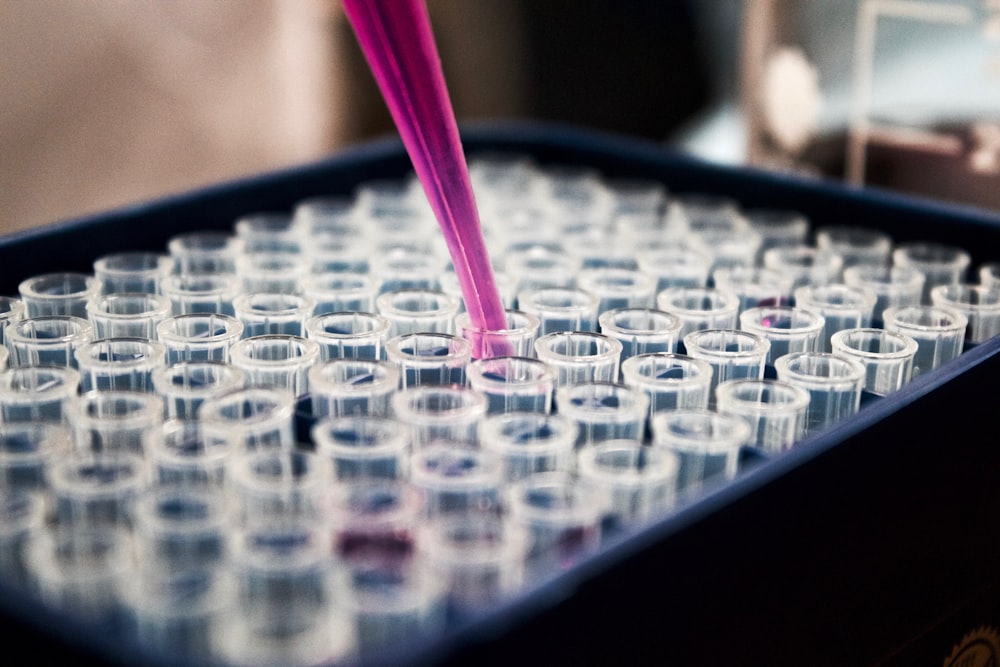
Chemical Signals
These are molecules that can send a specific message to a biological system. Think of an antibody that recognizes a virus, or a growth factor that tells a stem cell to become a bone cell. Alone, these signals can be powerful, but they lack direction and efficiency when acting individually.

Multivalent Display
This is the game-changer. "Valent" refers to binding power, and "multi" means many. Instead of presenting one single signal molecule, scientists can densely pack hundreds or thousands of them onto the surface of a self-assembled peptide scaffold. This creates a powerful "team" of signals that can bind to their target with dramatically higher strength and specificity than a single signal ever could . It's the difference between a single person trying to push a car (weak, monovalent interaction) and a whole team pushing in unison (strong, multivalent interaction).
Multivalent vs Monovalent Binding
Binding Strength: 1x
Adjust the slider to see how increasing valency exponentially increases binding strength.
A Deep Dive: Programming a Nanoscaffold to Fight Cancer
One of the most exciting applications of this technology is in cancer immunotherapy, which aims to harness the body's own immune system to destroy tumors. A key player in this process is the T-cell, a type of immune cell that needs a precise "double signal" to become activated and attack .
A landmark experiment demonstrated how a self-assembling peptide scaffold could be used to achieve this activation with stunning efficiency.
The Mission
To create a synthetic environment that mimics the natural process of T-cell activation, potentially leading to more effective cancer vaccines.
The Methodology: A Step-by-Step Blueprint
Step 1: Design the Peptide "Brick"
They designed a short peptide sequence with two key regions:
- A "tail" that self-assembles into a nanofiber scaffold when in a salt solution.
- A "head" that can be chemically linked to signal molecules.
Step 2: Attach the Signals
They chemically attached two different crucial signals to the peptide heads:
- Signal 1: An antigen peptide (a fragment of a cancer cell's protein).
- Signal 2: An immune-stimulating molecule (a cytokine).
Step 3: Initiate Assembly
The modified peptides were placed in a solution that triggered self-assembly. This resulted in long, nanoscale fibers, each densely decorated with both Signal 1 and Signal 2, presented in a multivalent fashion.
Step 4: Test the System
They introduced these engineered nanofibers to T-cells in a lab dish and compared the results to T-cells exposed to:
- The signals floating freely in solution.
- The signals attached to non-assembling, single peptides.
The Results and Analysis: Proof of a Powerful Principle
The results were striking. The T-cells exposed to the multivalent nanofiber scaffolds showed a massive and sustained activation response, far exceeding the response from the other control conditions.
Why is this so important?
The experiment proved that the spatial organization of signals is just as critical as the signals themselves. By presenting both signals in a dense, organized array on a scaffold, the scientists created a "molecular command center" that the T-cell could engage with efficiently, much like it would with a real enemy cell. This "multivalent effect" dramatically amplified the immune response, opening the door to designing potent, synthetic vaccines that can be tailored to specific cancers .
Data Visualization: The Power of Multivalency in Numbers
T-Cell Activation Levels
Relative level of T-cell activation, measured by a standard marker (IL-2 production), 48 hours after exposure.
The multivalent scaffold produced a tenfold greater immune response than the soluble signals and a dramatic boost over the monovalent control, highlighting the critical importance of signal density and presentation.
Impact of Signal Density on Binding Strength
How increasing the number of signals on a scaffold (valency) exponentially increases its binding strength (avidity) to a target cell.
Binding strength does not increase linearly; it increases exponentially with valency. This "avidity effect" is why multivalent display is so powerful, allowing weak individual interactions to become an unbreakable collective bond.
Specificity of a Targeted Nanoscaffold
This data demonstrates how a scaffold can be designed to bind only to cells with a specific surface marker (e.g., a cancer cell marker).
By decorating the scaffold with a signal that recognizes a specific cell marker, scientists can achieve highly targeted binding. This ensures the therapeutic effect is delivered precisely where it's needed, minimizing side effects.
The Scientist's Toolkit: Essential Reagents for Building Nanoscaffolds
To bring these molecular marvels to life, researchers rely on a suite of specialized tools and reagents.
Synthetic Peptides
The fundamental building blocks. Their sequence is carefully designed to control both self-assembly and the display of functional signals.
Bioconjugation Reagents
These are the "molecular glues" (e.g., click chemistry reagents like DBCO) that chemically link the signal molecules to the peptide scaffolds.
Fluorescent Tags/Dyes
Molecules that glow under specific light. Attached to the scaffold or signals, they allow scientists to track where the scaffolds go and how much binds to cells.
Cell Culture Media & Cells
The "test environment." Provides the nutrients and conditions to keep T-cells or other target cells alive and healthy during the experiment.
Analytical Instruments (HPLC, Mass Spec)
High-Performance Liquid Chromatography and Mass Spectrometry are used to purify the peptides and confirm their precise chemical structure and purity before assembly.
Conclusion: A New Era of Precision Medicine
The ability to design molecular scaffolds and decorate them with precise chemical signals represents a paradigm shift in biotechnology. It moves us from simply administering drugs to orchestrating biological processes.
By speaking the language of cells in their own terms—through dense, organized patterns of information—we are developing a new generation of smarter, more effective, and highly targeted therapies. The humble peptide, a fragment of life itself, is being transformed into a versatile toolkit, allowing us to build, piece by tiny piece, a healthier future.