The AI Revolution in Health Risk Assessment
How Artificial Intelligence is Reshaping the Future of Drug Safety and Predictive Toxicology
From Reactive to Predictive
Imagine a world where your doctor can predict your risk of developing not just one, but thousands of diseases over the coming decade, and prescribe personalized preventative measures specifically tailored to your unique biology, lifestyle, and medical history.
This is not science fiction—it's the promising future of health risk assessment, powered by artificial intelligence (AI). For decades, understanding the safety of drugs and chemicals has relied heavily on animal testing, slow laboratory experiments, and reactive approaches that often identify problems only after they occur.
Today, a profound metamorphosis is underway as AI technologies rapidly transform the pharmaco-toxicological sciences, creating a new paradigm that is more predictive, personalized, and powerful than ever before.
Predictive Power
AI enables proactive health risk assessment years before diseases manifest
The Building Blocks of Smarter Safety Assessment
What is AI and Machine Learning in Toxicology?
At its core, artificial intelligence in pharmaco-toxicology involves using computer algorithms to perform tasks that typically require human intelligence—specifically, recognizing complex patterns in data to predict biological outcomes. Machine learning (ML), a subset of AI, enables systems to automatically learn and improve from experience without being explicitly programmed for every scenario 2 .
Traditional vs AI Approach
AI addresses species differences that often compromise traditional animal testing results 4
Machine Learning Approaches in Toxicology
The Transformative Applications
Drug Development
AI models screen thousands of compounds early, flagging potential toxicity before significant resources are invested, addressing adverse drug reactions that contribute to high attrition rates 4 .
Clinical Toxicology
AI tools identify poisonous substances from symptoms, predict clinical trajectories, and recommend treatments. In emergencies, AI analyzes ECG data to detect specific poisonings with accuracy rivaling clinicians 7 .
Personalized Health Forecasting
Tools like Delphi-2M analyze medical history, lifestyle, and health status to generate personalized disease risk profiles for over 1,000 conditions simultaneously across decades 1 .
A Closer Look: The Delphi-2M Experiment
Predicting Your Health Future with Generative AI
Methodology and Approach
One of the most comprehensive demonstrations of AI's potential comes from a groundbreaking study that developed Delphi-2M, a generative AI tool custom-built by experts from leading European research institutions 1 .
Data Integration
The system analyzed "medical events" in patient histories alongside lifestyle factors such as obesity, smoking, alcohol consumption, age and sex.
Pattern Recognition
The AI learned predictable patterns that medical events follow, similar to how language models learn grammatical structures.
Trajectory Forecasting
The trained model generated synthetic future health trajectories, estimating probability and timing of future diseases.
Validation
The model's predictions were tested against actual patient outcomes to verify accuracy using data from 400,000 UK Biobank participants and 1.9 million Danish patients 1 .
Delphi-2M Predictive Performance (AUC Score)
AUC (Area Under the Curve) measures prediction accuracy where 0.5 = random guessing and 1.0 = perfect prediction
Results and Analysis
The performance of Delphi-2M marked a significant advancement in predictive health analytics. The system achieved an average AUC of 0.76 across more than 1,000 diseases, with performance for mortality prediction reaching an impressive AUC of 0.97 8 .
| Condition Category | Predictive Accuracy (AUC) | Time Horizon | Key Insight |
|---|---|---|---|
| Overall performance | 0.76 | Up to 20 years | Simultaneous prediction for 1,000+ conditions |
| Mortality | 0.97 | Up to 20 years | Near-perfect prediction accuracy |
| Pancreatic cancer risk | High | Up to 20 years | In patients with prior digestive diseases 8 |
| Heart disease | Comparable to existing models | Up to 10 years | Matches single-disease models like Qrisk 1 |
"The model's generative nature enabled it to sample possible future health trajectories, providing meaningful estimates of potential disease burden for up to 20 years. Its ability to capture multimorbidity patterns—how multiple conditions interrelate and evolve over time—represents one of the most significant advances over traditional single-disease models."
AI in Predictive Toxicology
The Tox21 Initiative and Deep Learning for Chemical Safety
Revolutionizing Chemical Safety Assessment
While Delphi-2M focuses on clinical disease prediction, another transformative application of AI emerges in fundamental toxicology—predicting the potential toxicity of chemical compounds before they're ever tested in humans.
The Tox21 Program, launched in 2008 as a multi-agency federal partnership, represents one of the most ambitious efforts in this domain 9 .
Tox21 aims to shift toxicity evaluation from traditional animal testing to mechanism-based toxicity prediction using high-throughput screening assays. The program has created a publicly available dataset containing detailed information on the biological effects of approximately 12,000 environmental chemicals and pharmaceuticals across 12 different assays targeting distinct toxicological pathways 9 .
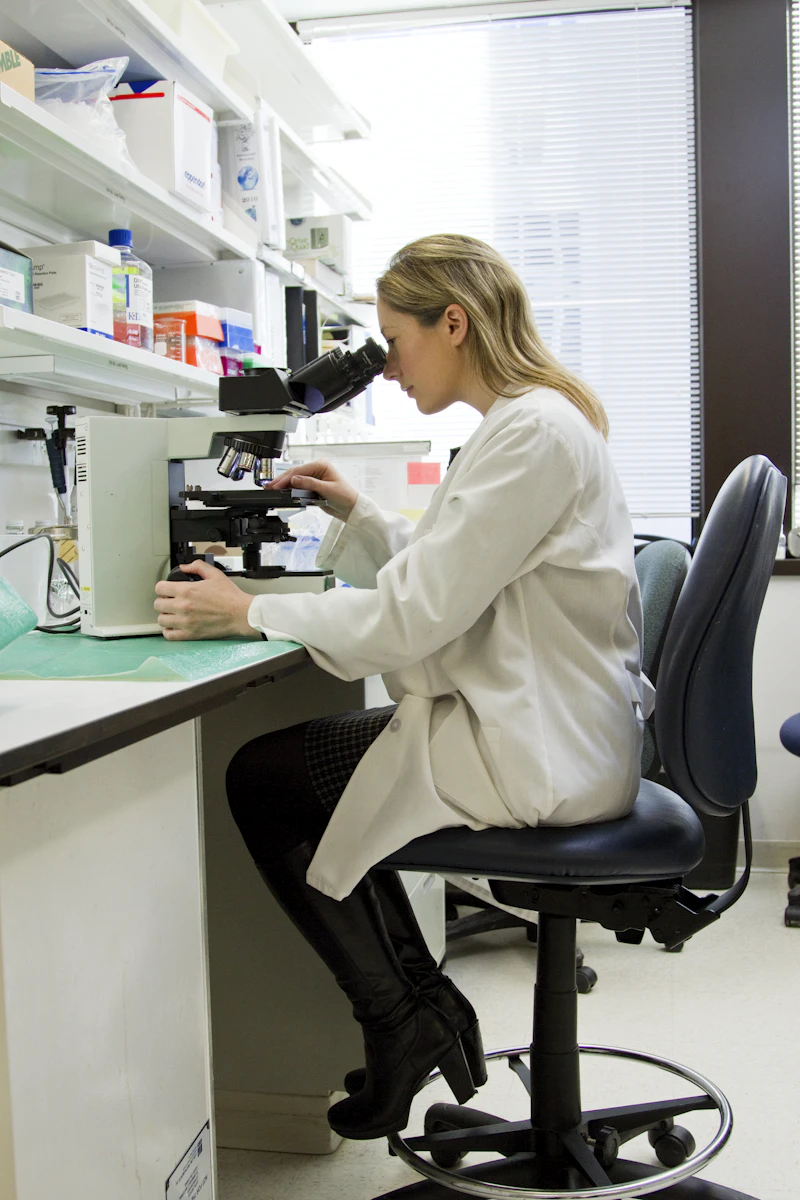
AI models analyze chemical structures to predict toxicity, reducing reliance on animal testing
Deep Learning for Toxicity Prediction
Researchers have developed sophisticated AI approaches to predict chemical toxicity using the Tox21 dataset. One innovative method introduced a novel image-based pipeline using DenseNet121, a deep convolutional neural network architecture, to process 2D graphical representations of chemical structures 9 .
Molecular Representation
Converting chemical structures into 2D images
Feature Extraction
Using DenseNet121 to identify relevant features
Classification
Employing XGBoost to predict toxicity
Interpretation
Applying explainable AI techniques
| Assay Name | Biological Target Description |
|---|---|
| NR-AR | Androgen receptor |
| NR-AhR | Aryl hydrocarbon receptor |
| NR-ER | Estrogen receptor |
| SR-ARE | Antioxidant response element |
| SR-ATAD5 | DNA damage response |
| SR-HSE | Heat shock response element |
| SR-p53 | p53 gene activation |
Key Finding
This image-based approach yielded competitive results compared to traditional models, demonstrating the potential of deep convolutional networks in chemical toxicology 9 .
The integration of explainable AI methods helped address the "black box" problem, making predictions more transparent and interpretable for researchers.
The Scientist's Toolkit
Essential AI Research Reagents in Predictive Toxicology
| Tool/Resource | Function | Real-World Example |
|---|---|---|
| Tox21 Dataset | Provides benchmark data for training and validating AI toxicity models | Public dataset of ~12,000 chemicals tested across 12 toxicological assays 9 |
| Molecular Fingerprints | Convert chemical structures into numerical representations for machine learning | Extended-Connectivity Fingerprints (ECFP4) capture structural features for classification 9 |
| Graph Neural Networks (GNNs) | Model molecules as graphs (atoms as nodes, bonds as edges) to learn structure-toxicity relationships | Graph Convolutional Networks (GCNs) perform message passing between atoms to predict toxicity 9 |
| Deep Learning Architectures | Process complex data types (images, sequences) to identify patterns imperceptible to humans | DenseNet121 convolutional networks analyze 2D chemical structure images 9 |
| Explainable AI (XAI) Methods | Interpret AI predictions to build trust and provide biological insights | Grad-CAM visualizations highlight molecular regions contributing to toxicity classification 9 |
| Electronic Health Records (EHRs) | Provide real-world clinical data for training predictive models | UK Biobank and Danish patient registry data used to train Delphi-2M 1 |
The Future of Predictive Health and Ethical Considerations
Expanding Horizons
Emergency Toxicology
AI systems identify poisonous snakes and plants through image recognition, guiding appropriate treatment when experts aren't available 7 .
Remote Patient Monitoring
AI algorithms detect early signs of health deterioration by analyzing data from wearable devices, enabling timely interventions 6 .
Medication Adherence
AI-driven tools predict non-adherence risks and deliver personalized reminders, addressing factors that compromise treatment efficacy 6 .
The integration of generative AI and large language models presents exciting possibilities for processing unstructured clinical notes and assisting in clinical decision-making, though significant validation and regulatory oversight will be essential 6 .
Navigating the Ethical Landscape
As with any transformative technology, the integration of AI into health risk assessment comes with important ethical considerations that must be addressed proactively 5 .
Algorithmic Bias
If AI models are trained on datasets that don't adequately represent diverse populations, they may perpetuate or even amplify existing health disparities 5 .
Data Privacy
Robust security measures and clear governance frameworks are essential to maintain patient confidentiality while enabling data sharing for AI advancement 5 .
"Black Box" Problem
AI decisions that are difficult to interpret pose challenges for regulatory approval. Explainable AI methods that make model reasoning transparent are crucial for building trust 9 .
Liability and Oversight
Clear guidelines are needed regarding responsibility when AI systems provide inaccurate recommendations, and human oversight remains essential for high-stakes medical decisions 5 .
A Transformative Partnership
The metamorphosis of human health risk assessment through artificial intelligence represents one of the most significant shifts in pharmaco-toxicological sciences in decades. We are moving from a world of reactive, generalized safety assessments to one of predictive, personalized risk forecasting.
Tools like Delphi-2M for disease trajectory prediction and deep learning models for chemical toxicity screening are not merely incremental improvements but fundamental changes to how we approach health protection.
"You walk into the doctor's surgery and the clinician is very used to using these tools, and they are able to say: 'Here's four major risks that are in your future and here's two things you could do to really change that.'" — Ewan Birney, EMBL interim executive director 1
This future—where healthcare becomes genuinely predictive and preventive—is rapidly taking shape through advances in AI. While challenges around ethics, validation, and implementation remain, the careful integration of AI as a partner in health risk assessment promises to enhance human expertise rather than replace it. This collaborative approach—combining the pattern recognition power of AI with the clinical judgment and ethical reasoning of healthcare professionals—offers our best hope for a future with safer medicines, more personalized preventive care, and better health outcomes for all.