Structure-Based vs. Ligand-Based Drug Design: A Strategic Guide for Effective Virtual Screening
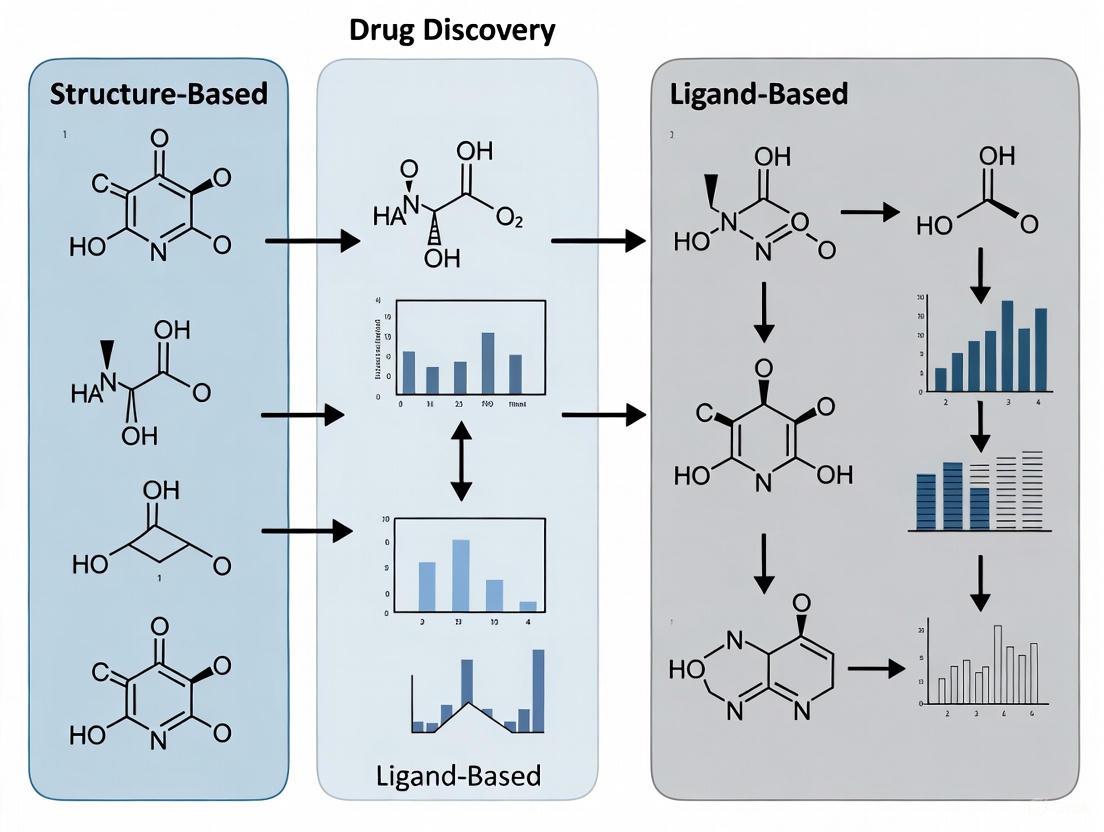
This article provides a comprehensive guide for researchers and drug development professionals on strategically choosing between structure-based and ligand-based virtual screening approaches.
Structure-Based vs. Ligand-Based Drug Design: A Strategic Guide for Effective Virtual Screening
Abstract
This article provides a comprehensive guide for researchers and drug development professionals on strategically choosing between structure-based and ligand-based virtual screening approaches. It covers the foundational principles of both methods, detailing their respective applications, strengths, and limitations. Readers will find practical guidance on implementing these techniques, optimizing workflows through hybrid strategies, and validating results with real-world case studies, including insights from the CACHE challenge and the impact of AI tools like AlphaFold.
Core Principles: Understanding the Basis of Structure-Based and Ligand-Based Design
Structure-Based Drug Design (SBDD) is a rational drug discovery approach that utilizes the three-dimensional structure of a biological target to guide the design and optimization of therapeutic molecules [1] [2]. This methodology stands in contrast to ligand-based approaches, which rely on knowledge of known active molecules rather than the target structure itself [2] [3]. The foundational principle of SBDD is that detailed structural knowledge of the target's binding site enables the precise design of molecules for optimal interaction, thereby improving drug efficacy and selectivity [4]. This technical guide explores the core principles, methodologies, and applications of SBDD, framing its utility within the broader context of modern drug discovery pipelines and clarifying when it should be prioritized over alternative strategies.
Core Principles and Definitions
Structure-Based Drug Design is a paradigm in medicinal chemistry that leverages the atomic-resolution three-dimensional structure of a biological target—typically a protein—to discover and optimize drug candidates [1] [5]. The central tenet of SBDD is molecular recognition; the designed small molecule (ligand) must complement the target's binding site both geometrically and chemically, forming favorable interactions such as hydrogen bonds, ionic interactions, and hydrophobic contacts [2] [4]. This process is inherently rational and target-centric, moving beyond the trial-and-error approach of traditional screening.
The success of SBDD is fundamentally dependent on the availability and quality of the target's 3D structure [6]. This structural information allows researchers to visually analyze the binding pocket, understand key interaction residues, and computationally simulate how potential drug molecules might bind [4]. The entire SBDD process is iterative, involving multiple cycles of molecular design, synthesis, biological testing, and structural validation, each time using the accumulated structural insights to refine the drug candidate further [5].
SBDD within the Broader Drug Discovery Context
In the landscape of computational drug discovery, SBDD serves a distinct and complementary role to Ligand-Based Drug Design (LBDD). The decision to employ SBDD is primarily contingent on the availability of a reliable 3D structure of the target protein, obtained through experimental methods like X-ray crystallography or Cryo-EM, or increasingly, via high-confidence computational models like AlphaFold2 [6] [7]. When such structural data is unavailable or of poor quality, LBDD approaches, which deduce requirements for binding from the physicochemical properties of known active ligands, become the necessary alternative [2] [8].
The integration of SBDD into drug discovery projects offers several compelling advantages. It enables direct targeting of specific residues in a binding pocket, potentially leading to higher potency and selectivity, which in turn can reduce off-target effects and associated side effects [2]. Furthermore, by providing an atomic-level rationale for binding, SBDD can significantly accelerate the lead optimization process, reducing the number of compounds that need to be synthesized and tested experimentally [6] [5].
Key Methodologies and Experimental Protocols in SBDD
The SBDD workflow employs a suite of sophisticated computational and experimental techniques, each providing critical insights for the drug design process.
Target Structure Determination
The initial and most critical step in SBDD is obtaining a high-quality 3D structure of the target protein.
- X-ray Crystallography: This is the most common method for providing high-resolution protein structures for SBDD [2]. The protocol involves purifying the target protein, growing a well-ordered crystal, and then exposing it to an X-ray beam. The resulting diffraction pattern is analyzed using mathematical algorithms like the Fourier transform to reconstruct the electron density map and, subsequently, the atomic coordinates of the protein [2]. Structures obtained through crystallography are particularly valuable for identifying precise drug binding sites.
- Cryo-Electron Microscopy (Cryo-EM): This technique is rapidly gaining prominence, especially for large protein complexes or membrane proteins that are difficult to crystallize [2]. The protocol involves flash-freezing the protein sample in vitreous ice and then using an electron microscope to collect thousands of 2D images. These images are computationally combined to generate a 3D reconstruction at near-atomic resolution [2]. Cryo-EM has proven invaluable for studying targets like G protein-coupled receptors (GPCRs).
- Nuclear Magnetic Resonance (NMR) Spectroscopy: NMR provides structural and dynamic information about proteins in solution, which can be more physiologically relevant than the crystalline state [2]. It works by measuring the magnetic reactions of atomic nuclei in a strong magnetic field, providing data on inter-atomic distances and torsional angles that can be used to calculate the protein's 3D structure. NMR is particularly suited for studying flexible proteins and conformational changes [2].
- Computational Homology Modeling and AI-Based Prediction: When an experimental structure is unavailable, the 3D structure can be predicted computationally. Homology modeling creates a model based on the known structure of a related protein (a template) [5]. More recently, AI-based tools like AlphaFold2 and AlphaFold3 have revolutionized the field by providing highly accurate protein structure predictions from amino acid sequences alone, dramatically expanding the scope of targets accessible to SBDD [7].
Computational Docking and Virtual Screening
Once a target structure is available, computational docking is used to predict how small molecules from vast virtual libraries bind to the target.
- Molecular Docking Protocol: Docking involves two main components: conformational sampling of the ligand within the binding site and scoring the predicted poses based on estimated binding affinity [6]. The standard workflow is as follows:
- System Preparation: The protein structure is prepared by adding hydrogen atoms, assigning partial charges, and defining the search space (the binding site).
- Ligand Preparation: Small molecules from a virtual library are energy-minimized and their conformational flexibility is considered.
- Pose Generation and Scoring: The algorithm generates millions of potential binding poses and ranks them using a scoring function. This function approximates the binding energy by considering terms like van der Waals forces, electrostatics, hydrogen bonding, and desolvation penalties [6] [5].
- Addressing Limitations: A key limitation of standard docking is treating the protein as rigid. Ensemble docking, which uses multiple protein conformations, and molecular dynamics (MD) simulations are advanced techniques used to account for protein flexibility and provide a more dynamic view of binding [4] [6].
Molecular Dynamics Simulations
MD simulations provide a dynamic view of the ligand-protein complex, going beyond the static picture offered by crystallography or docking.
- Protocol and Workflow:
- A starting structure (e.g., a docked complex) is placed in a simulated solvated box with ions to mimic physiological conditions.
- Newton's equations of motion are numerically integrated for all atoms over time, typically for nanoseconds to microseconds, using software like GROMACS [7].
- The resulting trajectory is analyzed to assess pose stability, identify transient binding pockets, quantify interaction frequencies (e.g., hydrogen bonds), and calculate binding free energies [4] [7].
- Advanced MD Techniques: Methods like steered MD and umbrella sampling can be used to study the unbinding pathways of ligands and to calculate the thermodynamics and kinetics of binding, providing deeper insights for optimizing drug residence time [4].
Table 1: Core Techniques in Structure-Based Drug Design
| Technique | Primary Function | Key Outputs | Common Tools/Examples |
|---|---|---|---|
| X-ray Crystallography | Determine atomic 3D structure of crystallized protein | High-resolution static structure, ligand binding mode | X-ray diffractometers |
| Cryo-EM | Determine 3D structure of large/complex proteins | Near-atomic resolution structure, conformational states | Cryo-electron microscopes |
| Molecular Docking | Predict binding pose and affinity of a ligand | Ranked list of compounds, predicted binding orientation | AutoDock, GOLD, Glide |
| Molecular Dynamics (MD) | Simulate dynamic behavior of ligand-protein complex | Trajectory of atomic motions, binding stability, cryptic pockets | GROMACS, AMBER, NAMD |
| Free Energy Perturbation (FEP) | Calculate relative binding free energies with high accuracy | ΔΔG for congeneric series | Schrödinger FEP+, OpenFE |
The Scientist's Toolkit: Essential Research Reagents and Solutions
Table 2: Key Research Reagents and Materials for SBDD
| Item | Function/Description | Application in SBDD Workflow |
|---|---|---|
| Purified Target Protein | A high-purity, functional, and stable preparation of the recombinant protein. | Essential for experimental structure determination (Crystallography, Cryo-EM, NMR) and biochemical assays. |
| Crystallization Screening Kits | Sparse-matrix kits containing various buffers, salts, and precipitants. | To identify initial conditions for growing diffraction-quality protein crystals. |
| Virtual Compound Libraries | Large, annotated databases of purchasable or virtual small molecules (e.g., ZINC, Enamine REAL). | Serves as the source of candidates for virtual screening and molecular docking. |
| Homology Modeling Software | Software that models a protein's 3D structure based on a related template (e.g., MODELLER, SWISS-MODEL). | Generates a working structural model when no experimental structure is available. |
| Cloud Computing/ HPC Resources | Scalable computational power for running docking, MD, and other resource-intensive calculations. | Enables high-throughput virtual screening and long-timescale molecular dynamics simulations. |
Diagram 1: The Iterative SBDD Workflow. The process is cyclical, with insights from complex structures and dynamics simulations directly informing the next round of chemical optimization.
SBDD vs. LBDD: A Comparative Analysis for Strategic Decision-Making
Choosing between SBDD and LBDD is a critical strategic decision in a drug discovery project. The two approaches are not mutually exclusive and are often combined for greater effectiveness [6] [9].
Foundational Data and Core Techniques
The most fundamental distinction lies in the primary source of information.
- SBDD is predicated on the target's 3D structure. Its core techniques, as detailed in Section 2, include molecular docking, structure-based pharmacophore modeling, and MD simulations, all of which directly analyze the ligand's interaction with the target protein [2] [4].
- LBDD is driven by knowledge of known active ligands. When the target structure is unknown, LBDD infers the characteristics of a binding site indirectly by analyzing a set of active and inactive compounds [2] [3]. Key techniques include:
- Quantitative Structure-Activity Relationship (QSAR): Builds a mathematical model correlating molecular descriptors (e.g., hydrophobicity, electronic properties) with biological activity to predict the activity of new compounds [2] [8].
- Pharmacophore Modeling: Identifies the essential steric and electronic features (e.g., hydrogen bond donors/acceptors, hydrophobic regions) necessary for molecular recognition [8].
- Similarity Searching: Screens compound libraries based on 2D or 3D structural similarity to a known active molecule [6].
Advantages, Limitations, and Decision Framework
Table 3: Strategic Comparison: SBDD vs. LBDD
| Aspect | Structure-Based Drug Design (SBDD) | Ligand-Based Drug Design (LBDD) |
|---|---|---|
| Primary Requirement | 3D structure of the target protein [2] [6] | Set of known active (and inactive) ligands [3] [8] |
| Key Advantage | Enables rational design of novel scaffolds; high potential for selectivity and novelty [2] [5] | Can be applied without target structure; fast and resource-efficient for screening [2] [6] |
| Main Limitation | Dependent on availability/quality of protein structure; can be computationally expensive [2] [6] | Limited by chemical bias of known ligands; difficult to design truly novel scaffolds [6] |
| Ideal Use Case | Target with a known, high-resolution structure; designing for a specific binding pocket or allosteric site [4] | Target structure unknown; project has many known actives for training models; initial fast screening [2] [9] |
The decision framework for a medicinal chemist is therefore straightforward:
- Is a reliable 3D structure of the target available? If yes, SBDD becomes immediately applicable and should be leveraged.
- Is there a sufficient amount of high-quality ligand activity data? If a structure is unavailable, but many active compounds are known, LBDD is the primary path forward.
- Can both data types be accessed? An integrated approach, using LBDD for rapid initial filtering and SBDD for detailed analysis of top candidates, is often the most powerful strategy [6] [9]. This hybrid approach mitigates the limitations of each individual method.
Structure-Based Drug Design represents a pinnacle of rational drug discovery, transforming the process from one of empirical screening to one of informed molecular design. By relying on the detailed 3D structure of biological targets, SBDD provides an unparalleled atomic-level perspective for optimizing drug candidates, leading to improved affinity, selectivity, and ultimately, clinical success. While challenges remain in dealing with highly flexible targets and accurately predicting binding energetics, continuous advancements in structural biology techniques like Cryo-EM and computational methods like AI-based structure prediction and machine learning-enhanced scoring are rapidly expanding the frontiers of SBDD [7] [5] [9].
For the modern drug development professional, the choice between SBDD and LBDD is not a binary one but a strategic decision based on available data. SBDD is the method of choice when a high-quality target structure is available, enabling direct and rational intervention in the design process. When structural data is lacking, LBDD provides a powerful alternative. However, the most effective drug discovery pipelines will strategically integrate both approaches, harnessing their complementary strengths to navigate the complex journey from target identification to clinical candidate with greater speed, precision, and confidence.
Ligand-Based Drug Design (LBDD) constitutes a fundamental pillar of computer-aided drug discovery, employed specifically when the three-dimensional structure of the biological target is unknown or unavailable [3] [2]. This approach operates on the central principle that similar molecules tend to exhibit similar biological activities—a concept that allows researchers to infer the structural requirements for bioactivity by analyzing a set of known active compounds [8]. Unlike structure-based methods that rely on target protein structures, LBDD leverages the chemical information of active and inactive compounds to correlate biological activity with chemical structure, establishing Structure-Activity Relationships (SAR) to guide the optimization process [3] [2]. This methodology has proven particularly valuable for targets resistant to structural characterization, such as certain membrane proteins and complex multi-component systems, making it an indispensable tool in the medicinal chemist's arsenal.
Within the broader context of structure-based versus ligand-based approaches, LBDD offers a complementary strategy that accelerates early drug discovery when structural information is limited [6]. While structure-based drug design (SBDD) provides atomic-level insights into binding interactions when target structures are available, LBDD enables progress even when such detailed structural knowledge is lacking [2] [10]. The integration of both approaches has become increasingly common in modern drug discovery, with ligand-based methods often providing initial leads that are subsequently refined using structural insights as they become available [6] [10]. This synergistic relationship maximizes the utility of available chemical and biological data, ultimately enhancing the efficiency of the drug discovery pipeline.
Theoretical Foundations of LBDD
Core Principles and Key Assumptions
The conceptual framework of LBDD rests upon several foundational principles that guide its application and methodology. The most fundamental of these is the similarity principle, which posits that structurally similar molecules are likely to share similar biological properties and activities [8] [11]. This principle enables researchers to extrapolate from known active compounds to predict the activity of untested molecules, providing a rational basis for compound selection and optimization. A second critical assumption is the existence of a pharmacophore—an abstract representation of the steric and electronic features necessary for molecular recognition at a biological target [8]. This pharmacophore concept allows researchers to transcend specific chemical scaffolds and identify common patterns responsible for biological activity across diverse chemical classes.
The theoretical underpinnings of LBDD also acknowledge that biological activity correlates with physicochemical properties such as lipophilicity, electronic characteristics, and steric bulk [8] [11]. These properties can be quantified as molecular descriptors, enabling the development of mathematical models that predict activity based on chemical structure. Furthermore, LBDD operates on the principle that molecular similarity can be quantified using various metrics and representations, from simple 2D fingerprints to complex 3D shape descriptors [11]. Each of these principles contributes to a cohesive framework that supports the diverse methodologies employed in ligand-based design, from quantitative modeling to similarity searching and pharmacophore elucidation.
Comparative Analysis: LBDD vs. Structure-Based Approaches
Table 1: Comparison of Ligand-Based and Structure-Based Drug Design Approaches
| Feature | Ligand-Based Drug Design (LBDD) | Structure-Based Drug Design (SBDD) |
|---|---|---|
| Required Information | Known active ligands (agonists/antagonists) | 3D structure of the target protein |
| Key Methodologies | QSAR, pharmacophore modeling, similarity searching | Molecular docking, de novo design, structure-based virtual screening |
| Target Flexibility | Implicitly accounted for through diverse ligand structures | Explicit modeling often limited without advanced MD simulations |
| Data Requirements | Set of compounds with measured activity | High-resolution protein structure (X-ray, Cryo-EM, NMR, or AlphaFold) |
| Primary Applications | Lead optimization, scaffold hopping, virtual screening | Binding mode prediction, structure-based optimization |
| Computational Demand | Generally lower, suitable for high-throughput screening | Higher, especially with flexible receptor treatments |
| Key Limitations | Dependent on quality and diversity of known actives | Limited by accuracy and relevance of protein structures |
The distinction between LBDD and SBDD represents a fundamental dichotomy in computational drug discovery [2] [6]. While SBDD requires explicit knowledge of the target protein's three-dimensional structure, LBDD operates indirectly through the information embedded in known ligand molecules [2] [12]. This fundamental difference in required inputs leads to divergent applications throughout the drug discovery pipeline. SBDD excels when detailed structural information is available, enabling precise optimization of ligand-receptor interactions [2]. In contrast, LBDD provides a powerful alternative when structural data is lacking or incomplete, allowing research to progress based on chemical information alone [3] [6].
Each approach presents distinct advantages and limitations. SBDD offers atomic-level insights into binding interactions but requires high-quality structural data that may not always be available or biologically relevant [2] [12]. LBDD leverages existing structure-activity relationship data but is constrained by the chemical diversity and quality of known actives [8] [11]. The selection between these approaches often depends on available resources and information, though increasingly, integrated strategies that combine both methodologies are proving most effective [6] [10].
Key Methodologies and Techniques in LBDD
Quantitative Structure-Activity Relationships (QSAR)
QSAR represents one of the most established and widely used methodologies in LBDD, employing mathematical models to correlate quantitative measures of chemical structure with biological activity [8] [11]. The fundamental premise of QSAR is that variations in biological activity can be correlated with changes in quantitative molecular descriptors representing structural or physicochemical properties [8]. This approach transforms qualitative chemical intuition into predictive quantitative models, enabling more efficient lead optimization.
The QSAR modeling process follows a well-defined workflow comprising several critical stages [8]. First, a congeneric series of compounds with experimentally measured biological activities is assembled. Next, molecular descriptors capturing relevant structural and physicochemical properties are calculated for each compound. Statistical or machine learning methods are then employed to derive a mathematical relationship between the descriptors and biological activity. Finally, the resulting model must be rigorously validated to assess its predictive power and domain of applicability [8].
Table 2: Key QSAR Methodologies and Their Applications
| Method Type | Key Descriptors | Representative Techniques | Primary Applications |
|---|---|---|---|
| 2D QSAR | Substituent constants, topological indices, electronic parameters | Hansch analysis, Free-Wilson analysis | Lead optimization, property prediction |
| 3D QSAR | Steric and electrostatic fields, molecular shape | CoMFA (Comparative Molecular Field Analysis), CoMSIA (Comparative Molecular Similarity Indices Analysis) | Binding mode prediction, scaffold hopping |
| Machine Learning QSAR | Diverse descriptor sets including fingerprints, graph-based features | Random Forest, Support Vector Machines, Neural Networks | High-throughput virtual screening, multi-parameter optimization |
Recent advances in QSAR methodology have expanded beyond traditional linear regression approaches to incorporate more sophisticated machine learning techniques [13] [11]. These include support vector machines, random forests, and neural networks capable of capturing complex nonlinear relationships between structure and activity [13]. Additionally, the integration of molecular dynamics simulations has led to the development of conformationally sampled pharmacophore approaches that account for ligand flexibility, enhancing model robustness and predictive accuracy [8].
Pharmacophore Modeling
Pharmacophore modeling represents another cornerstone methodology in LBDD, focusing on the identification of essential molecular features necessary for biological activity [8] [11]. A pharmacophore is defined as an abstract representation of steric and electronic features that a molecule must possess to interact effectively with a biological target [8]. This approach distills complex molecular structures into their functionally critical components, enabling researchers to transcend specific chemical scaffolds and identify novel active compounds through scaffold hopping.
The pharmacophore development process typically involves analyzing a set of known active compounds to identify common structural features and their spatial arrangement [11]. These features may include hydrogen bond donors and acceptors, charged or ionizable groups, hydrophobic regions, and aromatic rings. The resulting pharmacophore model serves as a three-dimensional query for virtual screening, allowing researchers to identify potential hits from large compound libraries based on feature complementarity rather than structural similarity [8] [11].
Figure 1: Pharmacophore Modeling Workflow
Pharmacophore models can be developed through various approaches depending on available information [11]. Ligand-based pharmacophore models are derived exclusively from a set of known active compounds, while structure-based pharmacophores incorporate information from target-ligand complex structures when available [11]. Consensus approaches that combine multiple models often demonstrate enhanced robustness and predictive power. Successful applications of pharmacophore-based virtual screening have led to the discovery of novel bioactive compounds for various therapeutic targets, including HIV protease inhibitors and kinase inhibitors [11].
Molecular Similarity Analysis and Machine Learning Approaches
Molecular similarity analysis represents a more recent but increasingly important methodology in LBDD, leveraging the concept that structurally similar molecules tend to exhibit similar biological activities [11]. This approach employs computational techniques to quantify molecular resemblance, enabling efficient screening of large compound libraries based on similarity to known actives [6] [11]. Similarity can be assessed using various representations, including 2D fingerprints that encode molecular substructures, 3D shape descriptors that capture molecular volume and topography, and pharmacophore fingerprints that represent feature distributions [11].
Machine learning has dramatically transformed LBDD methodologies in recent years, enhancing both predictive accuracy and applicability [13] [11]. Supervised learning algorithms such as random forests and support vector machines can identify complex patterns in structure-activity data that may elude traditional statistical approaches [13]. Deep learning architectures, including graph neural networks that operate directly on molecular graph representations, have shown remarkable performance in activity prediction and molecular generation tasks [13] [14]. These methods can automatically learn relevant features from raw molecular data, reducing reliance on manual descriptor selection and potentially capturing previously overlooked structure-activity relationships [13].
The integration of machine learning with traditional LBDD approaches has expanded the scope and power of ligand-based methods [13] [11]. For instance, deep learning models can now generate novel molecular structures with desired activity profiles using chemical language models trained on known bioactive compounds [14]. These models learn the "grammar" of bioactive molecules and can propose new compounds that satisfy multiple constraints, including predicted activity, synthesizability, and desirable physicochemical properties [14]. Such advances are progressively blurring the boundaries between ligand-based and structure-based approaches, enabling more efficient exploration of chemical space.
Experimental Protocols and Methodological Details
QSAR Model Development and Validation Protocol
The development of robust QSAR models requires careful attention to each step of the modeling process, from data collection to validation [8]. Below is a detailed protocol for QSAR model development:
Data Curation and Preparation
- Collect a series of compounds with consistent, reliably measured biological activity data (e.g., IC50, Ki values)
- Ensure chemical structures are accurately represented and standardized
- Apply appropriate criteria for chemical diversity and activity range
- Divide compounds into training (~70-80%) and test sets (20-30%) using rational methods such as Kennard-Stone or sphere exclusion algorithms
Molecular Descriptor Calculation and Selection
- Compute relevant molecular descriptors using software such as DRAGON, PaDEL, or RDKit
- Perform descriptor preprocessing to remove constant or near-constant variables
- Apply feature selection techniques (genetic algorithms, recursive feature elimination) to identify the most relevant descriptors
- Address multicollinearity through variance inflation factor analysis or principal component analysis
Model Building and Optimization
- Select appropriate machine learning algorithms based on dataset size and characteristics
- Optimize model hyperparameters using cross-validation or grid search approaches
- Build multiple models using different algorithms or descriptor sets for comparison
- Apply techniques to address overfitting, such as regularization or ensemble methods
Model Validation and Applicability Domain Assessment
- Perform internal validation using cross-validation (leave-one-out or k-fold) to calculate Q²
- Conduct external validation using the test set to assess predictive performance
- Calculate relevant metrics: R², Q², RMSE, MAE
- Define the applicability domain to identify where models can reliably predict
This protocol emphasizes the critical importance of validation in QSAR modeling [8]. Without rigorous validation, QSAR models may appear deceptively accurate while lacking true predictive power for novel compounds. The applicability domain definition is particularly crucial, as it establishes the boundaries within which the model can be reliably applied [8] [11].
Pharmacophore Model Generation Protocol
The generation of pharmacophore models follows a systematic process that varies slightly depending on whether ligand-based or structure-based approaches are employed [11]. The following protocol outlines the key steps for ligand-based pharmacophore generation:
Compound Selection and Preparation
- Select a training set of known active compounds with diverse chemical structures but common mechanism of action
- Include known inactive compounds if available to improve model selectivity
- Generate representative conformational ensembles for each compound using methods such as molecular dynamics or systematic searching
- Optimize molecular geometries using appropriate force fields or semi-empirical methods
Pharmacophore Feature Identification and Model Generation
- Define relevant pharmacophore features: hydrogen bond donors/acceptors, hydrophobic regions, aromatic rings, charged groups
- Perform molecular alignment based on pharmacophore features or molecular fields
- Identify common features present across active compounds using algorithms such as HipHop or HypoGen
- Generate multiple pharmacophore hypotheses with varying feature compositions and configurations
Model Validation and Refinement
- Validate models using test set compounds with known activity
- Assess model ability to discriminate between active and inactive compounds
- Optimize model parameters based on validation results
- Select the best-performing model for virtual screening applications
For structure-based pharmacophore generation, the process begins with analysis of target-ligand complex structures [11]. Key interactions are identified from the complex, translated into pharmacophore features, and the spatial relationships between these features are defined based on the binding site geometry. This approach benefits from direct structural insights but is limited to targets with available structural information.
Table 3: Key Research Reagents and Computational Tools for LBDD
| Category | Specific Tools/Reagents | Function/Application | Key Features |
|---|---|---|---|
| Chemical Databases | ChEMBL, PubChem, ZINC | Source of chemical structures and bioactivity data | Annotated bioactivities, commercial availability, structural diversity |
| Descriptor Calculation | RDKit, PaDEL, Dragon | Compute molecular descriptors for QSAR | Comprehensive descriptor sets, open-source options, batch processing |
| Pharmacophore Modeling | Catalyst, Phase, MOE | Develop and validate pharmacophore models | Feature identification, conformational analysis, virtual screening |
| QSAR Modeling | WEKA, KNIME, Orange | Build and validate machine learning QSAR models | Multiple algorithms, user-friendly interfaces, model interpretation |
| Similarity Searching | OpenBabel, ChemAxon | Calculate molecular similarity | Multiple fingerprint types, similarity metrics, high-throughput screening |
| Cheminformatics Libraries | RDKit, CDK, ChemPy | Programmatic chemical informatics | Open-source, Python/R interfaces, integration with machine learning |
Successful implementation of LBDD methodologies requires access to specialized computational tools and chemical databases [8] [11]. The resources listed in Table 3 represent essential components of the LBDD toolkit, enabling each stage of the ligand-based design process from data collection to model application. Open-source tools such as RDKit and CDK provide programmable platforms for custom workflow development, while commercial software like Catalyst and MOE offer integrated environments with user-friendly interfaces [11].
Beyond software tools, chemical databases represent critical resources for LBDD [11]. Publicly available databases such as ChEMBL and PubChem provide vast repositories of chemical structures and associated bioactivity data, enabling researchers to access structure-activity relationships for diverse targets [11]. Commercial compound libraries complement these public resources, offering physically available compounds for experimental testing. The careful selection and curation of these data sources significantly impacts the quality and success of LBDD efforts.
Advanced Applications and Future Directions
Integration with Structure-Based Methods
The distinction between ligand-based and structure-based approaches is increasingly blurring as integrated methodologies emerge that leverage the strengths of both paradigms [6] [10]. Sequential workflows that apply ligand-based methods for initial filtering followed by structure-based analysis represent a powerful strategy for efficient virtual screening [6] [10]. This approach uses fast ligand-based techniques such as similarity searching or pharmacophore screening to reduce large compound libraries to manageable sizes, after which more computationally intensive structure-based methods like molecular docking can be applied to the pre-filtered sets [10].
Parallel screening approaches represent another integration strategy, where both ligand-based and structure-based methods are applied independently to the same compound library [10]. The results are then combined using consensus scoring techniques, either by selecting compounds ranked highly by both methods or by multiplying scores to create a unified ranking [10]. This strategy helps mitigate the limitations inherent in each approach—if docking scores are compromised by inaccurate pose prediction, ligand-based similarity methods may still identify active compounds based on known ligand features [10].
The DRAGONFLY framework exemplifies the advanced integration of ligand- and structure-based approaches through deep learning [14]. This method utilizes a drug-target interactome—a graph representation capturing connections between ligands and their targets—to enable both ligand-based and structure-based molecular design within a unified architecture [14]. By leveraging graph neural networks and chemical language models, DRAGONFLY can generate novel molecules conditioned on either known ligand templates or 3D protein binding site information, effectively bridging the gap between ligand-based and structure-based paradigms [14].
AI-Driven De Novo Molecular Design
Recent advances in artificial intelligence have transformed LBDD, particularly in the area of de novo molecular design [13] [14]. Deep learning models can now generate novel molecular structures with desired properties, moving beyond simple similarity searching to truly innovative design [14]. Chemical language models trained on SMILES representations of known bioactive compounds can learn the "grammar" and "syntax" of drug-like molecules, enabling them to generate novel structures that satisfy multiple constraints including predicted activity, synthesizability, and favorable physicochemical properties [14].
Interaction-aware generative models represent another significant advancement, particularly for structure-based design applications [15]. These models incorporate explicit information about protein-ligand interactions—such as hydrogen bonds, hydrophobic interactions, and π-stacking—as conditional constraints during molecular generation [15]. For example, the DeepICL framework sequentially generates ligand atoms based on both the 3D context of a binding pocket and specific interaction conditions, enabling the design of ligands that form predetermined interactions with key residues [15]. This approach demonstrates how prior knowledge of interaction patterns can guide molecular generation even for targets with limited experimental data.
Figure 2: AI-Driven Molecular Design Workflow
These AI-driven approaches are particularly valuable for addressing targets with limited chemical data, where traditional QSAR methods struggle due to insufficient training examples [14] [15]. By leveraging transfer learning and pre-training on large-scale bioactivity datasets, these models can extract generalizable patterns of bioactivity that extend to novel targets with limited data [14]. The continued development of these methodologies promises to further enhance the power and applicability of LBDD, potentially reducing the dependency on extensive structure-activity data for effective molecular design.
Ligand-Based Drug Design represents a sophisticated and evolving discipline that leverages known active compounds to guide the discovery and optimization of novel therapeutic agents [3] [8]. Through methodologies such as QSAR, pharmacophore modeling, and molecular similarity analysis, LBDD enables progress even when structural information about the biological target is limited or unavailable [2] [6]. The fundamental principles underlying these approaches—particularly the similarity principle and the pharmacophore concept—provide a rational foundation for extracting structure-activity relationships from chemical data alone [8] [11].
The ongoing integration of machine learning and artificial intelligence is significantly expanding the capabilities of LBDD [13] [14]. Advanced deep learning models can now generate novel molecular structures with desired activity profiles, while interaction-aware generative approaches incorporate explicit constraints derived from protein-ligand interactions [14] [15]. These developments are progressively blurring the historical distinction between ligand-based and structure-based approaches, enabling more sophisticated and effective drug design strategies that leverage all available chemical and structural information [6] [10].
Within the broader context of structure-based versus ligand-based approaches, LBDD remains an essential component of the drug discovery toolkit [2] [12]. Its particular strength lies in situations where structural information is limited, during early stages of project development, or when pursuing scaffold-hopping strategies to identify novel chemotypes [11]. As computational methodologies continue to advance, the integration of ligand-based and structure-based approaches will likely become increasingly seamless, ultimately accelerating the discovery of novel therapeutic agents through more efficient exploration of chemical space.
The choice between structure-based drug design (SBDD) and ligand-based drug design (LBDD) represents a fundamental strategic decision in computational drug discovery. This decision is primarily constrained by one critical factor: the type and volume of data available to researchers [2]. SBDD relies on the three-dimensional structural information of the target protein, typically obtained through methods such as X-ray crystallography, NMR spectroscopy, or cryo-electron microscopy [1] [2]. In contrast, LBDD utilizes information from known active small molecules (ligands) that interact with the target, employing techniques such as quantitative structure-activity relationship (QSAR) modeling and pharmacophore mapping [2] [16]. The implications of this choice are significant, affecting the novelty of resulting compounds, resource allocation, and ultimate project success [17]. This technical guide provides a comprehensive decision framework based on data availability, enabling researchers to systematically select the optimal computational approach for their specific drug discovery context.
Theoretical Foundations: SBDD and LBDD
Structure-Based Drug Design (SBDD)
SBDD is a computational approach that leverages the three-dimensional structure of biological targets, typically proteins, to design therapeutic molecules [1]. The core principle of SBDD is molecular recognition - designing compounds that exhibit structural and chemical complementarity to the target's binding site [2]. This approach requires high-resolution structural data, which can originate from experimental methods like X-ray crystallography, NMR spectroscopy, or cryo-electron microscopy (cryo-EM), or from computational predictions such as homology modeling [18] [2].
Key Techniques in SBDD:
- Molecular Docking: Simulates the interaction between potential drug candidates and the target protein, predicting binding poses and affinity scores [17] [1].
- Molecular Dynamics (MD) Simulations: Models the dynamic behavior of protein-ligand complexes over time, providing insights into binding stability and conformational changes [18] [19].
- Virtual Screening: Rapidly evaluates large compound libraries against a target structure to identify potential hits [18] [1].
Ligand-Based Drug Design (LBDD)
LBDD approaches are employed when the three-dimensional structure of the target protein is unavailable [2] [16]. Instead, these methods rely on the chemical information from known active ligands to infer requirements for biological activity and design new compounds [20]. The fundamental principle underlying LBDD is the "molecular similarity principle," which states that structurally similar molecules are likely to exhibit similar biological activities [20].
Key Techniques in LBDD:
- Quantitative Structure-Activity Relationship (QSAR): Mathematical models that correlate quantitative molecular descriptors with biological activity [2] [16].
- Pharmacophore Modeling: Identifies and maps the essential steric and electronic features necessary for molecular recognition [2].
- Similarity Searching: Screens compound databases using molecular fingerprints or descriptors to identify structurally similar compounds to known actives [20].
Decision Framework: Selecting Approaches Based on Data Availability
The following framework provides a systematic approach for selecting between SBDD, LBDD, or hybrid methods based on available data resources. This decision matrix enables researchers to optimize their computational strategy according to their specific context.
Table 1: Decision Framework for Selecting Between SBDD and LBDD Approaches
| Data Availability Scenario | Recommended Primary Approach | Key Techniques | Advantages | Limitations |
|---|---|---|---|---|
| High-resolution protein structure available (e.g., from X-ray crystallography, cryo-EM, or high-quality homology models) [2] | Structure-Based Drug Design (SBDD) | Molecular docking [17], Structure-based virtual screening [18], Molecular dynamics simulations [19] | Direct visualization of binding interactions [2]; Potential for novel chemotype discovery beyond known ligand space [17]; Identification of key residue interactions [17] | Dependency on structure quality and resolution [2]; Limited by protein flexibility and solvent effects in simulations [2]; Computational intensity of methods like MD [1] |
| Adequate known active ligands (typically 20+ compounds with activity data) [16] | Ligand-Based Drug Design (LBDD) | QSAR modeling [2] [16], Pharmacophore modeling [2], Similarity searching [20] | No requirement for protein structural data [2]; Generally faster and less computationally demanding [2]; Excellent for optimizing within established chemical series [17] | Limited ability to discover novel chemotypes beyond training data [17]; Bias toward existing chemical space [17]; Model applicability domain restrictions [17] |
| Both protein structure and ligand data available | Hybrid SBDD/LBDD Approaches [20] | Sequential filtering (e.g., LB pre-screening followed by SB docking) [20], Parallel screening with rank fusion [20], Integrated scoring functions [20] | Complementary strengths mitigate individual limitations [20]; Enhanced enrichment and reduced false positives [20]; Increased robustness across diverse chemical classes [20] | Increased computational complexity [20]; Implementation challenges in workflow integration [20]; Requires expertise in both methodologies [20] |
| Limited structural and ligand data ("data-poor" targets) | Fragment-Based Methods or Generative AI with transfer learning | Fragment-based screening [21], Generative models with physics-based scoring [17], Protein-ligand interaction fingerprints [22] | Maximizes information from limited data [17]; Focus on fundamental molecular interactions [21]; Potential for novel scaffold discovery [17] | High uncertainty in predictions; Requires experimental validation; Limited guidance for optimization |
Framework Application Guidance
The decision framework above provides a foundational starting point, but real-world application requires additional considerations:
1. Assessing Data Quality and Quantity:
- For SBDD, structural resolution below 2.5Å is generally preferred, with careful attention to binding site completeness and residue resolution [2].
- For LBDD, the quality and diversity of active ligands are as important as quantity. A dataset of 20 highly similar compounds provides less information than 10 structurally diverse actives with measured potencies [17].
2. Target Flexibility Considerations:
- For highly flexible targets with multiple conformational states, SBDD approaches may require ensemble docking or extensive molecular dynamics simulations, increasing computational demands [20] [2].
- In such cases, LBDD approaches may provide more consistent results despite their limitations in novel chemotype discovery [17].
3. Project Objectives Alignment:
- For projects prioritizing novelty and intellectual property generation, SBDD offers advantages in exploring unprecedented chemotypes beyond known ligand space [17].
- For lead optimization projects within established chemical series, LBDD often provides more efficient guidance for potency and property refinement [2].
The following workflow diagram illustrates the decision process based on data availability:
Experimental Protocols and Methodologies
Structure-Based Protocol: Molecular Docking with Glide
The following protocol outlines the methodology used in the GPCR case study for structure-based scoring with generative models [17]:
1. Protein Preparation:
- Obtain the target protein structure (e.g., DRD2 with Risperidone, PDB ID: 6CM4) [17].
- Remove crystallographic water molecules, except those involved in key bridging interactions.
- Add hydrogen atoms and optimize protonation states of residues at physiological pH.
- Perform restrained energy minimization to relieve steric clashes while maintaining the overall structure.
2. Binding Site Definition:
- Define the binding site using the co-crystallized ligand or through binding site detection algorithms.
- Create a receptor grid with coordinates centered on the binding site (typically 10-20Å box size).
- Set up constraints based on key protein-ligand interactions observed in the crystal structure.
3. Ligand Preparation:
- Generate 3D structures of query ligands from SMILES strings.
- Assign proper bond orders and formal charges.
- Generate stereoisomers and tautomers where applicable.
- Perform conformational sampling to generate multiple low-energy conformers.
4. Docking Execution:
- Use Glide SP or XP precision modes for balance between accuracy and computational cost [17].
- Apply post-docking minimization to refine poses.
- Score poses using the GlideScore function, which combines empirical and force-field-based terms.
5. Result Analysis:
- Cluster poses based on RMSD to identify consensus binding modes.
- Analyze key protein-ligand interactions (hydrogen bonds, hydrophobic contacts, π-stacking).
- Use docking scores for comparative assessment and ranking of compounds.
Ligand-Based Protocol: QSAR Modeling Workflow
This protocol details the development of a QSAR model for ligand-based screening, as referenced in the machine learning applications [16]:
1. Dataset Curation:
- Collect a diverse set of compounds with consistent biological activity measurements (e.g., IC50, Ki).
- Apply rigorous curation: remove duplicates, correct structures, and standardize activity values.
- Divide data into training (70-80%), validation (10-15%), and test sets (10-15%) using rational splitting methods.
2. Molecular Descriptor Calculation:
- Generate comprehensive molecular descriptors using software like PaDEL-Descriptor [18].
- Calculate 1D, 2D, and 3D descriptors encoding structural, topological, and physicochemical properties.
- Apply feature selection techniques (e.g., correlation analysis, random forest importance) to reduce dimensionality.
3. Model Building:
- Train multiple machine learning algorithms (SVM, Random Forest, Neural Networks) [16].
- Optimize hyperparameters using cross-validation on the training set.
- Apply ensemble methods to combine predictions from multiple models for improved robustness.
4. Model Validation:
- Assess internal performance using cross-validation metrics (Q², RMSE).
- Evaluate external predictive power on the test set (R²pred, RMSEext).
- Apply strict applicability domain definition to identify reliable prediction boundaries.
5. Model Application:
- Use the validated model to screen virtual compound libraries.
- Apply applicability domain filters to flag unreliable predictions.
- Interpret descriptor contributions to guide structural optimization.
Table 2: Research Reagent Solutions for Computational Drug Design
| Tool/Category | Specific Examples | Primary Function | Application Context |
|---|---|---|---|
| Molecular Docking Software | Glide [17], AutoDock Vina [18], GOLD | Predict protein-ligand binding geometry and affinity | SBDD when protein structure is available |
| Molecular Dynamics Engines | GROMACS [19], AMBER, CHARMM | Simulate dynamic behavior of biomolecular systems | Refining docking poses; studying protein flexibility |
| Cheminformatics Toolkits | RDKit, PaDEL-Descriptor [18], Open Babel [18] | Calculate molecular descriptors and fingerprints | LBDD for QSAR and similarity searching |
| QSAR Modeling Platforms | KNIME, Orange, DataWarrior | Build and validate machine learning QSAR models | LBDD when ligand data is available |
| Structure Preparation Tools | PyMOL [18], Schrodinger Protein Prep Wizard, MOE | Process and optimize protein structures for computation | Essential preprocessing for SBDD |
| Virtual Screening Suites | Schrodinger Suite, OpenEye ROCS, SeeSAR | High-throughput screening of compound libraries | Both SBDD and LBDD for hit identification |
| Generative AI Platforms | REINVENT [17], DeepChem, GuacaMol | De novo molecular generation with objective guidance | Both approaches (structure- or ligand-based scoring) |
Case Studies and Applications
Structure-Based Generative Design for DRD2
A compelling case study demonstrates the application of SBDD in generative molecular design for the dopamine receptor DRD2 [17]. Researchers used the REINVENT algorithm with molecular docking scores from Glide as the optimization objective, rather than traditional ligand-based predictors. This structure-based approach generated molecules with predicted affinity beyond known DRD2 active compounds while exploring novel physicochemical space not represented in existing ligand data [17]. Critically, the model learned to satisfy key residue interactions visible only from the protein structure, demonstrating the unique advantage of SBDD in capturing structural determinants of binding that are inaccessible to ligand-based methods [17].
Hybrid Virtual Screening for Tubulin Inhibitors
A recent study on identifying natural inhibitors of the human αβIII tubulin isotype exemplifies the power of hybrid approaches [18]. Researchers began with structure-based virtual screening of 89,399 natural compounds using AutoDock Vina, selecting the top 1,000 hits based on binding energy. These candidates were then refined using machine learning classifiers trained on known Taxol-site binders versus non-binders [18]. This sequential hybrid strategy identified four promising natural compounds with exceptional binding properties and ADME-T profiles, demonstrating how SBDD and LBDD can be integrated to leverage their complementary strengths while mitigating individual limitations [18].
Implementation Roadmap and Future Directions
Practical Implementation Considerations
Successfully implementing the decision framework requires attention to several practical aspects:
Data Quality Assessment:
- For protein structures, evaluate resolution, completeness of binding sites, and conformational relevance to the biological context.
- For ligand data, assess data consistency, measurement accuracy, and structural diversity of actives and inactives.
Computational Resource Planning:
- SBDD approaches typically require greater computational resources, especially for molecular dynamics or high-precision docking.
- LBDD methods are generally less computationally intensive but require careful model validation and maintenance.
Validation Strategies:
- Always include experimental validation cycles where possible, using biochemical or cellular assays.
- Implement rigorous computational validation, including blinded test sets and prospective prediction tracking.
Emerging Trends and Future Outlook
The field of computational drug design is rapidly evolving, with several trends shaping future applications:
Integration of Artificial Intelligence:
- Deep learning models are increasingly being applied to both protein structure prediction (e.g., AlphaFold) and molecular generation [19] [16].
- AI approaches are bridging SBDD and LBDD through unified architectures that simultaneously leverage structural and ligand data [22] [16].
Data as Strategic Asset:
- Organizations are increasingly treating curated structural and chemical data as valuable products rather than research byproducts [21].
- High-quality, integrated datasets are becoming competitive advantages, particularly for training machine learning models [21].
Federated Data Ecosystems:
- Collaborative platforms are emerging that enable organizations to share structural information while protecting proprietary interests [21].
- These ecosystems accelerate discovery while preserving competitive differentiation.
The decision framework presented in this guide provides a systematic approach for selecting between structure-based and ligand-based drug design strategies based on data availability. By aligning computational approaches with available data resources and project objectives, researchers can optimize their drug discovery efficiency and success rates in this rapidly evolving landscape.
Key Strengths and Inherent Limitations of Each Approach
Structure-Based Drug Design (SBDD) and Ligand-Based Drug Design (LBDD) represent the two foundational computational approaches in modern drug discovery. SBDD relies on the three-dimensional structural information of the target protein, typically obtained through experimental methods like X-ray crystallography, nuclear magnetic resonance (NMR), or cryo-electron microscopy (cryo-EM), or predicted using AI methods such as AlphaFold [6] [2]. Conversely, LBDD strategies are employed when the target structure is unknown, instead leveraging information from known active molecules that bind and modulate the target's function [6]. Both methodologies aim to identify and optimize promising drug candidates while reducing the number of compounds requiring synthesis and biological testing, thereby saving substantial time and resources [6]. This technical guide provides an in-depth examination of both approaches, framing their application within the critical decision framework of when to use SBDD versus LBDD in research projects.
Core Principles and Methodologies
Structure-Based Drug Design (SBDD)
SBDD operates on the principle of "structure-centric" rational design, where a detailed understanding of protein-ligand interactions guides molecular modifications [6]. The core process involves analyzing the spatial configuration and physicochemical properties of the target's binding site to design or optimize small molecules that can bind with high affinity and specificity [2].
Key Techniques:
- Molecular Docking: Predicts the bound poses (orientation and conformation) of ligand molecules within the target's binding pocket and ranks their binding potential based on a scoring function that incorporates various interaction energies [6].
- Free Energy Pertigation (FEP): A highly accurate but computationally expensive method that estimates binding free energies using thermodynamic cycles, primarily used during lead optimization to quantitatively evaluate small structural changes [6].
- Molecular Dynamics (MD) Simulations: Used to refine docking predictions by exploring the dynamic behavior of protein-ligand complexes, accounting for flexibility in both molecules and providing insights into binding stability [6].
Ligand-Based Drug Design (LBDD)
LBDD is grounded in the "similarity-property principle," which states that structurally similar molecules are likely to exhibit similar biological activities [6] [9]. This approach infers critical binding features indirectly from the chemical characteristics of known active molecules.
Key Techniques:
- Similarity-Based Virtual Screening: Identifies new hits from large compound libraries by comparing candidate molecules against known actives using 2D (molecular fingerprints) or 3D (shape, electrostatic properties) descriptors [6].
- Quantitative Structure-Activity Relationship (QSAR) Modeling: Uses statistical and machine learning methods to relate molecular descriptors to biological activity, enabling prediction of new compounds' activity [6].
- Pharmacophore Modeling: Identifies the essential geometric and chemical features responsible for biological activity by analyzing a set of active compounds, creating a template for screening new molecules [23] [2].
Experimental Workflows
Protocol 1: Structure-Based Virtual Screening (SBVS)
- Target Preparation: Obtain high-resolution 3D protein structure through X-ray crystallography, NMR, cryo-EM, or computational prediction [2] [18].
- Binding Site Analysis: Identify and characterize the binding pocket using spatial and physicochemical descriptors [2].
- Library Preparation: Prepare compound libraries in suitable formats (e.g., PDBQT), generating relevant tautomers, stereoisomers, and protonation states [18].
- Molecular Docking: Perform flexible ligand docking against the binding site using programs like AutoDock Vina or DOCK [23] [18].
- Pose Scoring and Ranking: Evaluate and rank compounds based on docking scores and interaction analysis [6].
- Post-Processing: Refine top hits using MD simulations or FEP calculations [6].
- Experimental Validation: Synthesize and test top-ranked compounds in biological assays [18].
Protocol 2: Ligand-Based Virtual Screening (LBVS)
- Active Ligand Compilation: Curate a set of known active compounds with robust biological data [6].
- Molecular Description: Calculate molecular descriptors or fingerprints for all active and database compounds [18].
- Model Development:
- Database Screening: Screen compound libraries using similarity searches or pharmacophore mapping [6].
- Hit Prioritization: Rank compounds based on similarity scores or predicted activity [6].
- Experimental Validation: Select top candidates for synthesis and biological testing [6].
Table 1: Key Research Reagent Solutions in Computational Drug Design
| Reagent/Resource | Function/Application | Examples/Tools |
|---|---|---|
| Protein Structure Databases | Source of experimental structures for SBDD | Protein Data Bank (PDB) [23] |
| Compound Libraries | Collections of molecules for virtual screening | ZINC database [18], Enamine REAL [9] |
| Docking Software | Predict ligand binding poses and affinities | AutoDock Vina [18], DOCK [23], PLANTS [24] |
| Pharmacophore Modeling Tools | Create and screen pharmacophore models | LigandScout [23], PHASE [23], O-LAP [24] |
| Molecular Descriptor Packages | Calculate chemical features for QSAR/LBVS | PaDEL-Descriptor [18], RDKit [25] |
| Benchmarking Sets | Validate virtual screening methods | DUD-E [23], DUDE-Z [24] |
Diagram 1: Decision workflow for selecting between SBDD and LBDD approaches
Comparative Analysis: Strengths and Limitations
Structure-Based Drug Design
Table 2: Strengths and Limitations of Structure-Based Drug Design
| Aspect | Strengths | Limitations |
|---|---|---|
| Data Requirements | Provides atomic-level insight into specific protein-ligand interactions [6] | Dependent on availability and quality of target structures [6] |
| Chemical Space Exploration | Enables scaffold hopping and novel chemotype identification through rational design [6] | Limited by accuracy of scoring functions and conformational sampling [26] |
| Target Specificity | Direct optimization for selectivity possible through explicit interaction design [27] | Challenging for highly conserved binding sites across target families [26] |
| Computational Resources | High-throughput docking possible for library screening [6] | Advanced methods (FEP, MD) require substantial computational resources [6] |
| Accuracy & Prediction | Physically grounded in molecular recognition principles [6] | Protein flexibility and solvent effects often inadequately captured [26] |
Ligand-Based Drug Design
Table 3: Strengths and Limitations of Ligand-Based Drug Design
| Aspect | Strengths | Limitations |
|---|---|---|
| Data Requirements | Applicable when target structure is unknown [6] | Requires sufficient known active compounds with robust activity data [6] |
| Chemical Space Exploration | Excellent at finding analogs and exploring local chemical space [6] | Limited ability to identify novel scaffolds distant from known chemotypes [6] |
| Target Specificity | Implicitly captures selectivity through known ligand profiles [6] | Difficult to rationally design for selectivity without structural context [6] |
| Computational Resources | Generally faster and more scalable than structure-based methods [6] | 3D methods and machine learning approaches can be computationally intensive [6] |
| Accuracy & Prediction | Strong predictive power within applicability domain of training data [6] | Struggles with extrapolation to novel chemical space [6] |
Integrated Approaches and Advanced Applications
Combined Methodologies
Recognizing the complementary nature of SBDD and LBDD, researchers increasingly employ integrated approaches that leverage the strengths of both methodologies [6] [9]. These integrated strategies can be implemented in sequential, parallel, or hybrid configurations.
Sequential Integration applies different techniques in a consecutive fashion, typically using faster ligand-based methods to narrow the chemical space before applying more computationally intensive structure-based techniques [6] [9]. A common workflow involves rapidly filtering large compound libraries with ligand-based screening (similarity searching or QSAR models), then subjecting the most promising subset to structure-based techniques like molecular docking [6]. This approach improves overall efficiency by applying resource-intensive methods only to a pre-filtered set of candidates.
Parallel or Hybrid Screening employs both structure-based and ligand-based methods simultaneously on the same compound library, then compares or combines results in a consensus scoring framework [6]. Advanced implementations may use hybrid scoring that multiplies compound ranks from each method to yield a unified rank order, favoring compounds ranked highly by both approaches [6]. This strategy helps mitigate limitations inherent in each individual method - for instance, when docking scores are compromised by inaccurate pose prediction, similarity-based methods may still recover true actives based on known ligand features [6].
Diagram 2: Integrated SBDD and LBDD screening strategies
Emerging Trends and Machine Learning Integration
The field of computational drug discovery is being transformed by the integration of machine learning (ML) and artificial intelligence (AI), which enhances both SBDD and LBDD approaches [9] [25].
ML-Enhanced SBDD has seen developments including deep learning-based scoring functions that more accurately predict binding affinities, generative models for de novo molecular design within binding pockets, and improved handling of protein flexibility through conformational ensemble generation [9] [27]. For instance, deep generative models like CMD-GEN utilize coarse-grained pharmacophore points sampled from diffusion models to bridge ligand-protein complexes with drug-like molecules, effectively addressing data scarcity issues [27].
Advanced LBDD benefits from chemical language models that learn meaningful molecular representations, graph neural networks that capture complex structure-activity relationships, and reinforcement learning approaches for multi-parameter optimization [9] [25]. The PGMG (Pharmacophore-Guided deep learning approach for bioactive Molecule Generation) model uses pharmacophore hypotheses as a bridge to connect different types of activity data, enabling flexible generation without further fine-tuning across different drug design scenarios [25].
AI-Based Structure Prediction tools like AlphaFold have dramatically expanded the structural information available for drug targets, even those without experimental structures [6] [26]. However, caution must be exercised as inaccuracies in predicted structures can impact the reliability of subsequent SBDD methods [6]. Recent evaluations suggest that while AlphaFold structures may be sufficient for initial screening, experimental structures generally yield better results for detailed optimization work [26].
Strategic Selection Guidelines
The choice between SBDD and LBDD depends on multiple factors, including data availability, project stage, resource constraints, and specific project goals. The following decision framework provides guidance for selecting the most appropriate approach:
When to Prefer Structure-Based Approaches:
- High-quality experimental or predicted structures of the target are available [6] [2]
- Designing for selectivity against closely related targets is required [26]
- Scaffold hopping to novel chemotypes is desired [6]
- Structural insights are needed to rationalize structure-activity relationships [6]
- Computational resources for docking and molecular dynamics are available [6]
When to Prefer Ligand-Based Approaches:
- Target structure is unavailable and difficult to predict accurately [6] [2]
- Substantial structure-activity data exists for known active compounds [6]
- Rapid screening of large compound libraries is needed [6]
- Analog searching and lead optimization within established series is the goal [6]
- Computational resources are limited [6]
When Integrated Approaches Are Recommended:
- Both structural information and ligand activity data are available [6] [9]
- Maximizing confidence in virtual screening hits is critical [6]
- Balancing novelty (SBDD) with drug-likeness (LBDD) is important [9]
- Resources permit a multi-stage screening approach [6]
SBDD and LBDD represent complementary paradigms in computational drug discovery, each with distinct strengths and limitations. SBDD provides atomic-level insights into binding interactions and enables rational design of novel chemotypes, but depends heavily on the availability and quality of structural information. LBDD offers speed, scalability, and applicability when structural data is lacking, but is constrained by the chemical diversity of known actives and limited ability to design truly novel scaffolds.
The most effective modern drug discovery pipelines increasingly leverage integrated approaches that combine the strengths of both methodologies, often enhanced by machine learning and AI technologies. By understanding the specific capabilities and limitations of each approach, drug discovery researchers can make informed decisions about methodology selection and implementation, ultimately accelerating the identification and optimization of novel therapeutic agents.
Practical Applications: Techniques and Workflows for Effective Implementation
Structure-Based Drug Design (SBDD) represents a foundational pillar of modern computational drug discovery, enabling researchers to rationally design and optimize therapeutic compounds based on the three-dimensional structure of biological targets. This approach stands in complementary contrast to Ligand-Based Drug Design (LBDD), which relies on knowledge of known active compounds when target structural information is unavailable [2]. The completion of the human genome project and subsequent advances in structural biology techniques—including X-ray crystallography, cryo-electron microscopy (cryo-EM), and nuclear magnetic resonance (NMR)—have dramatically expanded the library of available protein structures [28] [12]. More recently, artificial intelligence-based prediction tools like AlphaFold have further revolutionized the field by providing reliable protein structural models, making SBDD applicable to an unprecedented range of therapeutic targets [29] [12].
SBDD techniques permeate all aspects of drug discovery today, from initial hit identification to lead optimization [28]. Compared to traditional experimental high-throughput screening (HTS), virtual screening using SBDD methods offers a more direct, rational, and cost-effective approach to identifying promising drug candidates [28]. This technical guide provides an in-depth examination of three core SBDD techniques—molecular docking, Free Energy Perturbation (FEP), and molecular dynamics (MD) simulations—detailing their theoretical foundations, methodological considerations, implementation protocols, and strategic applications within the broader context of drug discovery workflows.
Molecular Docking: Predicting Ligand-Receptor Interactions
Theoretical Foundations and Methodological Approaches
Molecular docking serves as a cornerstone SBDD technique for predicting the optimal binding conformation and orientation of small molecule ligands within a protein's binding site [28] [6]. The docking process addresses two fundamental questions: what is the preferred binding pose of the ligand within the target site, and how strongly does it bind? These questions correspond to the two fundamental components of any docking algorithm: sampling methods (conformational search) and scoring functions [28].
The earliest understanding of ligand-receptor binding followed Fischer's "lock-and-key" theory, which treated both partners as rigid bodies [28]. This was subsequently refined by Koshland's "induced-fit" theory, which recognizes that both the ligand and receptor adjust their conformations to achieve optimal binding [28]. Modern docking methods attempt to balance computational efficiency with this biological reality, typically treating the ligand as flexible while often keeping the receptor rigid, though advanced methods can incorporate limited receptor flexibility [28] [6].
Table 1: Key Sampling Algorithms in Molecular Docking
| Algorithm | Key Characteristics | Representative Software |
|---|---|---|
| Matching Algorithms | Geometry-based; high speed; uses pharmacophore features | DOCK, FLOG, LibDock [28] |
| Incremental Construction | Fragment-based; docks incrementally; reduces complexity | FlexX, DOCK 4.0 [28] [30] |
| Monte Carlo Methods | Stochastic search; random modifications; can cross energy barriers | AutoDock, ICM, QXP [28] [30] |
| Genetic Algorithms | Evolution-inspired; mutation and crossover operations | AutoDock, GOLD, DIVALI [28] [30] |
| Systematic Search | Exhaustive exploration of torsional space; computationally demanding | Glide, FRED [30] |
Scoring Functions and Accuracy Considerations
Scoring functions are designed to reproduce binding thermodynamics by estimating the enthalpy (ΔH) and entropy (ΔS) components of binding free energy (ΔG) [30]. These functions typically employ physics-based, empirical, or knowledge-based approaches to rank predicted poses and prioritize compounds during virtual screening. Despite advances, accurately predicting absolute binding affinities remains challenging, though docking excels at relative ranking of similar compounds [28] [6].
A critical methodological consideration is validation through "non-cognate" docking, where ligands structurally different from those used in experimental structure determination are docked, as this better represents real-world docking applications than simple re-docking experiments [6]. Docking performance can be compromised when proteins undergo significant conformational changes upon ligand binding, highlighting the need for incorporating flexibility in receptor structures [28] [12].
Diagram 1: Molecular Docking Workflow
Practical Implementation and Protocol Guidelines
Successful molecular docking requires careful attention to multiple preparatory steps. Protein structures must be properly prepared by adding hydrogen atoms, correcting residue protonation states, and optimizing hydrogen bonding networks [31]. When known, water molecules should be maintained in the structure as they may mediate important ligand-protein interactions [31].
For virtual screening applications, library diversity is critical for identifying novel chemical scaffolds [12]. Ultra-large virtual libraries like Enamine's REAL database (containing billions of compounds) have demonstrated successful identification of nanomolar and sub-nanomolar binders in recent screening campaigns [12]. The dramatic expansion of accessible chemical space through such libraries represents a key advancement driving modern SBDD.
Table 2: Molecular Docking Software and Key Features
| Software | Sampling Algorithm | Scoring Function Type | Key Features/Applications |
|---|---|---|---|
| AutoDock | Genetic Algorithm, Monte Carlo | Empirical, Force Field | Flexible ligand docking; user-selectable algorithms [28] [30] |
| GOLD | Genetic Algorithm | Empirical, Knowledge-based | Protein flexibility; high accuracy for pose prediction [28] [30] |
| Glide | Systematic Search, Monte Carlo | Empirical | Hierarchical filtering; accurate for diverse compound classes [30] [31] |
| DOCK | Matching, Incremental Construction | Force Field | Spherical site points; early docking program with continuous development [28] |
| FlexX | Incremental Construction | Empirical | Fragment-based; efficient for medium-sized libraries [28] [30] |
Free Energy Perturbation (FEP): Quantitative Binding Affinity Prediction
Theoretical Basis and Methodological Framework
Free Energy Perturbation represents a more advanced SBDD technique that provides quantitative predictions of binding affinity, typically used during lead optimization stages [29] [32]. FEP calculations are based on statistical mechanics and thermodynamic cycles that compute the free energy difference between related ligands by gradually "morphing" one molecule into another through a series of non-physical, alchemical transformations [32]. These transformations occur in discrete steps called lambda windows, with sufficient overlap between adjacent windows to ensure proper convergence [32].
There are two primary types of FEP calculations: Absolute Free Energy Perturbation, which calculates the binding event of a solvated ligand into a protein target, and Relative Free Energy of binding (RFEB), which calculates the relative free energy of binding between two ligands and the target [32]. For pharmaceutical lead optimization, RFEB is particularly valuable as it enables computational and medicinal chemists to prioritize compounds for synthesis by predicting how structural modifications will impact binding affinity [32].
The accuracy of FEP has improved significantly in recent years, with modern implementations like FEP+ achieving average errors of approximately 1 kcal/mol [31]. This accuracy stems from advances in several areas: improved force field parameters, enhanced sampling algorithms, and the application of GPU computing resources that make these computationally demanding simulations feasible for drug discovery timelines [32] [31].
System Requirements and Practical Considerations
Successful FEP applications require careful system preparation and specific conditions. The technique is ideally suited to targets with well-defined binding pockets where ligands remain stably bound during simulations [32]. Shallow binding sites, such as those in many protein-protein interactions, are less amenable to FEP, as are weakly binding fragments [32]. Additionally, FEP works best with congeneric series where structural changes between ligands are limited (typically <10 atoms), making it ideal for lead optimization but not for screening diverse compound collections [32].
A significant challenge involves handling changes in formal charge between ligands. Transforming a neutral group to a charged moiety (e.g., cyclohexyl to protonated piperidine) introduces numerical instabilities that compromise result reliability [32]. Therefore, all ligands in an FEP series should maintain the same formal charge. The technique also assumes knowledge of the correct binding mode, as incorrect starting poses will lead to inaccurate free energy predictions [31].
Diagram 2: FEP+ Calculation Workflow
Advanced FEP+ Protocol with Enhanced Sampling
Recent methodological advances have led to improved FEP protocols that address sampling limitations. The FEP/REST (Replica Exchange with Solute Tempering) approach enhances conformational sampling by applying elevated temperatures specifically to the ligand and selected protein residues [31]. Research has demonstrated that extending the pre-REST sampling time from the default 0.24 ns/λ to 5 ns/λ significantly improves predictions for systems with flexible loop motions, while more substantial structural changes may require 2 × 10 ns/λ pre-REST sampling [31].
Further improvements can be achieved by extending REST simulations from 5 ns to 8 ns per lambda window to ensure proper free energy convergence [31]. Additionally, applying the REST region to the entire ligand (rather than just the perturbed region) and including key flexible protein residues (pREST) in the ligand binding domain substantially enhances results for most cases [31]. Preliminary molecular dynamics simulations (typically 100-300 ns) are recommended to verify binding mode stability and identify appropriate starting configurations for FEP calculations [31].
Table 3: FEP Sampling Protocols for Different Scenarios
| Scenario | Pre-REST Sampling | REST Sampling | Key Considerations |
|---|---|---|---|
| Rigid Protein Structure | 5 ns/λ | 8 ns/λ | Suitable when high-quality X-ray structure available [31] |
| Flexible Loops | 5 ns/λ | 8 ns/λ | Accommodates minor side-chain and loop motions [31] |
| Significant Structural Changes | 2 × 10 ns/λ | 8 ns/λ | Independent runs help sample transitions between minima [31] |
| Backbone Flexibility | 2 × 10 ns/λ + pREST | 8 ns/λ | Include key flexible residues in REST region [31] |
Molecular Dynamics: Incorporating Flexibility and Dynamics
Theoretical Foundations and Relationship to Docking and FEP
Molecular Dynamics simulations complement docking and FEP by explicitly modeling the time-dependent behavior of biomolecular systems [12]. Unlike docking, which typically treats proteins as static entities, MD simulations model the full flexibility of both ligand and receptor by numerically solving Newton's equations of motion for all atoms in the system [28] [12]. This approach captures the essential dynamics of drug-target interactions, including conformational changes, binding and unbinding events, and solvation effects [12].
MD addresses a fundamental limitation of most docking approaches: the inability to adequately model receptor flexibility and associated induced-fit effects [12]. Proteins and ligands possess high flexibility in solution and undergo frequent conformational changes that influence binding. Standard docking tools typically allow high flexibility for the ligand but keep the protein fixed or provide limited flexibility only to residues near the active site, due to the exponential increase in computational complexity with full flexibility [12].
The relationship between MD, docking, and FEP is synergistic. MD can serve as a pre-docking step to generate multiple receptor conformations for ensemble docking, or as a post-docking step to refine docked poses and account for induced-fit effects [30]. For FEP calculations, preliminary MD simulations (typically 100-300 ns) help verify binding mode stability and system equilibration before commencing the more computationally intensive free energy calculations [31].
Advanced Sampling Methods and the Relaxed Complex Scheme
Normal MD simulations face limitations in crossing substantial energy barriers within practical simulation timeframes, restricting their ability to thoroughly explore the biomolecular energy landscape [12]. Accelerated MD (aMD) methods address this limitation by adding a boost potential to smooth the system's potential energy surface, thereby decreasing energy barriers and accelerating transitions between different low-energy states [12]. This enhanced sampling capability makes aMD particularly valuable for studying conformational changes associated with ligand binding and for identifying cryptic pockets not apparent in static crystal structures [12].
The Relaxed Complex Method (RCM) represents a powerful MD-based strategy for drug discovery that explicitly accounts for receptor flexibility [12]. This approach involves: (1) running extended MD simulations of the target protein to sample its conformational landscape, (2) identifying representative receptor conformations from the simulation trajectory, including potential cryptic binding pockets, and (3) docking compounds against these multiple receptor conformations [12]. The RCM has proven effective in several applications, including the development of HIV integrase inhibitors, where MD simulations revealed flexibility in the active site region that informed inhibitor design [12].
Diagram 3: Molecular Dynamics in Drug Discovery
Practical Implementation and Integration with Other Methods
Implementing MD simulations in drug discovery requires careful consideration of several parameters. Simulation timescales must be sufficient to capture relevant biological processes, with typical modern simulations ranging from nanoseconds to microseconds depending on the system and research question [31]. Force field selection critically impacts result accuracy, with ongoing developments improving the description of non-classical hydrogen bonds and π-π interactions [32]. System setup must include proper solvation, ion concentration, and physiological conditions to yield biologically relevant insights [31].
MD serves as a valuable bridging methodology between lower-resolution docking studies and higher-accuracy FEP calculations. For docking applications, MD-generated ensembles significantly improve virtual screening enrichment compared to single-structure docking [12]. For FEP, preliminary MD simulations ensure system stability and proper equilibration, which are prerequisites for obtaining reliable free energy estimates [31]. This integrative approach exemplifies the power of combining multiple SBDD techniques to address different aspects of the drug optimization process.
Integrated Workflows and Strategic Application
Hybrid SBDD-LBDD Approaches for Enhanced Hit Identification
The strategic integration of structure-based and ligand-based methods creates synergistic workflows that leverage the complementary strengths of each approach [29] [6]. Sequential integration typically begins with rapid ligand-based filtering of large compound libraries based on similarity to known actives or quantitative structure-activity relationship (QSAR) models, followed by structure-based refinement of the most promising subset [29] [6]. This approach conserves computational resources by applying more expensive structure-based methods only to compounds likely to succeed, while the initial ligand-based screen can identify novel scaffolds through "scaffold hopping" [29].
Parallel screening involves running both structure-based and ligand-based methods independently on the same compound library, then comparing or combining results through consensus scoring frameworks [29]. This strategy offers two distinct advantages: parallel scoring selects top candidates from both approaches without requiring consensus, increasing the likelihood of recovering potential actives, while hybrid consensus scoring creates a unified ranking that favors compounds performing well across both methods, increasing confidence in selecting true positives [29].
Evidence strongly supports that hybrid approaches outperform individual methods by reducing prediction errors and increasing hit identification confidence [29]. In a collaboration with Bristol Myers Squibb on LFA-1 inhibitor optimization, a hybrid model averaging predictions from both ligand-based (QuanSA) and structure-based (FEP+) methods performed better than either method alone, with significant reduction in mean unsigned error (MUE) through partial cancellation of errors [29].
Table 4: Key Research Reagent Solutions for SBDD Techniques
| Reagent/Resource | Function/Application | Technical Considerations |
|---|---|---|
| Protein Structure Databases | Source of experimental protein structures | PDB (>200,000 structures); AlphaFold Database (>214 million models) [12] |
| Compound Libraries | Virtual screening starting points | REAL database (6.7B compounds); SAVI library; fragment libraries [12] |
| Force Fields | Molecular mechanics parameters | AMBER, CHARMM, OPLS; Parsley for improved ligand parameters [32] [31] |
| GPU Computing Resources | Accelerate MD/FEP calculations | Cloud-based solutions enable scalable resources [12] [32] |
| Structure Preparation Tools | Add hydrogens, optimize H-bond networks | Protein Preparation Wizard; specialized tools for membrane proteins [31] |
Multi-Parameter Optimization and Decision Framework
Beyond predicting binding affinity, successful drug discovery requires multi-parameter optimization (MPO) to identify compounds with the best overall drug-like properties and highest probability of clinical success [29]. MPO methods incorporate multiple objectives including potency, selectivity, ADME (Absorption, Distribution, Metabolism, Excretion), and safety profiles, ensuring that optimized compounds advance beyond in vitro efficacy to become viable therapeutics [29].
The choice of SBDD technique should be guided by specific research objectives, available data, and computational resources. Ligand-based methods provide faster, less costly alternatives valuable for filtering large, chemically diverse libraries or when structural data is limited [29]. Structure-based approaches excel when high-quality protein structures are available, offering better library enrichment but requiring greater computational investment [29]. For quantitative affinity prediction during lead optimization, FEP provides high accuracy for congeneric series, while 3D-QSAR methods can generalize across more diverse chemotypes [29] [6].
Recent advances in artificial intelligence are further enhancing SBDD methodologies. AI techniques improve traditional molecular docking through network-based sampling and unsupervised pre-training, mitigating issues like over-fitting and annotation imbalance [30]. Models like IGModel leverage geometric graph neural networks to incorporate spatial features of interacting atoms, improving binding pocket descriptions [30]. These AI-driven approaches significantly improve the accuracy and generalization of predicting protein-ligand interactions, representing the next evolutionary stage in structure-based drug discovery [30].
Ligand-Based Drug Design (LBDD) encompasses a suite of computational techniques used to discover and optimize novel drug compounds when the three-dimensional structure of the biological target is unknown. The central paradigm of LBDD is the "molecular similarity principle", which posits that structurally similar molecules are likely to exhibit similar biological activities [33] [20]. This approach is indispensable in modern drug discovery, particularly for targets where obtaining a high-quality protein structure is challenging, such as for membrane proteins like G Protein-Coupled Receptors (GPCRs) [2]. LBDD methods leverage the structural and physicochemical information from known active and inactive ligands to predict the activity of new compounds, thereby guiding the design of more effective drugs [2] [34]. By avoiding the dependency on target structure, LBDD significantly saves time and resources, making it a powerful tool for hit identification and lead optimization [2] [34].
The role of LBDD is best understood when contrasted with Structure-Based Drug Design (SBDD). SBDD relies on the 3D structure of the target protein, obtained through techniques like X-ray crystallography or cryo-electron microscopy, to design molecules that fit into a binding site [2]. While highly effective, SBDD is not always feasible. LBDD serves as a powerful alternative or complementary approach when structural data is unavailable, the target is structurally flexible, or the primary goal is to explore novel chemical scaffolds based on existing active compounds [2] [35]. In practice, many successful drug discovery campaigns adopt a holistic strategy, merging LBDD and SBDD methods to leverage their respective strengths and mitigate their limitations [20].
Core LBDD Techniques and Methodologies
Pharmacophore Modeling
A pharmacophore is defined by the International Union of Pure and Applied Chemistry (IUPAC) as "the ensemble of steric and electronic features that is necessary to ensure the optimal supra-molecular interactions with a specific biological target structure and to trigger (or to block) its biological response" [36]. In simpler terms, it is an abstract model of the essential functional groups a molecule must possess to bind effectively to a target, devoid of any specific molecular scaffold [36].
Key Features and Generation: The most critical pharmacophore features include [36]:
- Hydrogen Bond Acceptor (HBA)
- Hydrogen Bond Donor (HBD)
- Hydrophobic (H) area
- Positively/Negatively Ionizable (PI/NI) group
- Aromatic ring (AR)
Pharmacophore models can be generated via two primary approaches:
- Ligand-based pharmacophore modeling relies on the structural alignment and common chemical features of a set of known active molecules. If activity data (IC50, Ki) is available, a 3D-QSAR pharmacophore can be developed, which correlates the spatial arrangement of features with the degree of biological activity [37] [36].
- Structure-based pharmacophore modeling is constructed from the 3D structure of a protein target, often in complex with a ligand. It directly maps the interaction points (e.g., hydrogen bonds, hydrophobic contacts) within the binding site [36].
The following diagram illustrates the typical workflow for developing and applying a pharmacophore model in a virtual screening campaign.
Quantitative Structure-Activity Relationship (QSAR)
Quantitative Structure-Activity Relationship (QSAR) modeling is a computational technique that builds mathematical models to find a statistically significant correlation between the chemical structures of compounds and their biological activity [34]. Developed over 50 years ago, QSAR has evolved to handle large, diverse chemical datasets using advanced machine learning techniques [34].
The QSAR Modeling Workflow:
- Data Curation and Preparation: This is a critical first step. Chemical and biological data must be curated to remove errors, standardize structures, and handle duplicates [34].
- Molecular Descriptor Calculation: Numerical representations (descriptors) of the molecular structures are computed. These can range from simple 1D descriptors (e.g., molecular weight) to complex 3D descriptors representing molecular shape and fields [34].
- Model Building and Validation: A machine learning algorithm is used to correlate the descriptors with the biological activity. The model must be rigorously validated using OECD principles, which mandate a defined endpoint, unambiguous algorithm, applicability domain, and measures of goodness-of-fit and predictivity [34].
The following table summarizes the key aspects of the QSAR-based virtual screening workflow.
Table 1: Key Stages and Best Practices in QSAR-Based Virtual Screening
| Stage | Description | Best Practices & Considerations |
|---|---|---|
| Data Collection | Gathering chemical structures and corresponding biological activity data from literature and databases. | Use reliable data sources (e.g., ChEMBL, PubChem); collect data generated from consistent bioassays [37] [34]. |
| Data Curation | Standardizing and cleaning chemical structures and biological data. | Mandatory step to remove errors; includes normalization of chemotypes, handling tautomers, and removing duplicates [34]. |
| Descriptor Calculation & Model Building | Translating structures into numerical descriptors and applying statistical/machine learning methods. | Use a variety of descriptors (1D to nD); employ robust algorithms; follow OECD guidelines for model development [34]. |
| Virtual Screening & Experimental Validation | Applying the validated model to screen large chemical libraries and testing computational hits. | VS acts as a "funnel" to prioritize compounds; experimental testing is the ultimate validation of the model's success [34]. |
2D and 3D Ligand-Based Similarity Screening
Similarity screening is a fundamental LBVS technique that directly applies the molecular similarity principle to search large databases for compounds structurally similar to known actives [33].
- 2D Similarity Screening: This method uses 2D molecular fingerprints, which are binary bit strings encoding the presence or absence of specific molecular substructures or topological features. Similarity is typically quantified using the Tanimoto coefficient (T2D), where a value of 1 indicates identical fingerprints and 0 indicates no similarity [33]. It is computationally efficient and ideal for rapidly searching multi-million compound databases [33].
- 3D Similarity Screening: This approach assesses similarity based on the three-dimensional shape and conformation of molecules. Methods like flexible alignment compare dynamic 3D structures by aligning them in a way that maximizes their steric and chemical complementarity, producing a 3D Tanimoto coefficient (T3D) [33]. It more closely reflects the potential bioactive similarity but is computationally more intensive.
Synergistic Application: 2D and 3D screening are often used together. A common strategy is to use fast 2D screening to narrow down a large database, followed by more precise 3D similarity screening to refine the results and increase the hit rate [33]. For instance, a study on PDE4 inhibitors used an initial 2D search (T2D ≥ 0.8) followed by 3D filtering (T3D ≥ 0.3), which increased the hit rate from 8.5% to 28.5% [33].
Experimental Protocols and Case Studies
Case Study 1: Identification of SYK Inhibitors using 3D-QSAR Pharmacophore Modeling
Spleen tyrosine kinase (SYK) is a therapeutic target for autoimmune diseases and cancers. This study aimed to discover novel SYK inhibitors with improved properties over the known inhibitor fostamatinib [37].
Detailed Methodology:
- Dataset Compilation: 180 SYK inhibitors with reported IC50 values were collected from literature. After removing duplicates, the compounds were divided into training and test sets [37].
- Pharmacophore Model Generation: The
3D QSAR Pharmacophore Generationmodule in Discovery Studio was used. TheFeature Mappingmodule identified important chemical features in the training set. TheHypoGenalgorithm then generated 10 quantitative pharmacophore models [37]. - Model Selection and Validation: The best hypothesis was selected based on the highest correlation coefficient (R²), lowest total cost, and root mean square deviation (RMSD). It was validated using:
- Fischer's Randomization Test: A 95% confidence level was used to generate 19 random spreadsheets; the selected model had a significantly lower cost than the random ones, confirming its statistical significance [37].
- Test Set Prediction: The model successfully predicted the activity of an external test set of compounds [37].
- Virtual Screening and Molecular Docking: The validated model was used as a 3D query to screen the ZINC database of drug-like compounds. The retrieved hits were subjected to molecular docking to predict their binding affinity and mode within the SYK binding site [37].
- Post-Docking Validation: The top-ranking compounds from docking were further evaluated using molecular dynamics (MD) simulations (e.g., 100 ns) and binding free energy (ΔG) calculations using methods like MM/PBSA or MM/GBSA [37].
Outcome: The study identified four novel hit compounds (e.g., ZINC98363745) with predicted binding affinities superior to fostamatinib. These hits formed key interactions with hinge region residue Ala451 and the DFG motif Asp512 [37].
Case Study 2: Combining 2D/3D Similarity for PDE4/5 Inhibitor Discovery
This study demonstrated the power of fusing 2D and 3D similarity scores to enhance the success of a virtual screening campaign for phosphodiesterase (PDE) inhibitors [33].
Detailed Methodology:
- 2D Similarity Search: A focused library was generated by screening a commercial database using 2D fingerprints (Tanimoto coefficient, T2D) with known active PDE inhibitors as reference.
- 3D Similarity Refinement: The initial hits were then scored using a flexible 3D alignment method (Screen3D software), which calculates a 3D Tanimoto coefficient (T3D) without needing a pre-defined set of conformers [33].
- Data Fusion and Analysis: The correlation between T2D and T3D scores was analyzed. A fusion score combining both 2D and 3D metrics was proposed and applied to select the final compounds for biological testing [33].
Outcome: For PDE4, the application of the fused 2D/3D similarity measure increased the hit rate from 8.5% in the first round to 28.5% in the second round. The two best hits exhibited inhibitory activities in the nanomolar range (53 nM) [33].
The Scientist's Toolkit: Essential Research Reagents and Software
Table 2: Key Computational Tools and Resources for LBDD
| Tool/Resource Name | Type/Function | Brief Description of Role in LBDD |
|---|---|---|
| ZINC Database | Compound Database | A curated collection of commercially available compounds, often used as a source for virtual screening [37] [33]. |
| ChEMBL / PubChem | Bioactivity Database | Public databases containing bioactivity data for small molecules, essential for gathering training sets for QSAR and pharmacophore modeling [34] [33]. |
| Discovery Studio (DS) | Software Suite | A comprehensive modeling environment; used for generating 3D-QSAR pharmacophore models, molecular docking, and simulation [37]. |
| Screen3D | Software Module | A tool for flexible 3D alignment and calculation of 3D molecular similarity (3D Tanimoto coefficient) [33]. |
| GASP | Software Algorithm | Genetic Algorithm Similarity Program, used for generating pharmacophore models by aligning flexible ligands [38]. |
| Molecular Fingerprints | Computational Descriptor | Binary bit strings representing 2D molecular structure, used for rapid similarity searching in large databases [33]. |
| Molecular Descriptors | Computational Descriptor | Numerical representations of molecular properties (1D to nD) that serve as input variables for QSAR models [34]. |
Integrated Workflows and Decision Framework
The most powerful modern applications of LBDD involve its integration with SBDD or the combination of multiple LBDD techniques. Hybrid strategies can be categorized as follows [20]:
- Sequential Workflows: A typical pipeline involves using fast, cost-effective LBDD methods (e.g., 2D similarity, pharmacophore screening) for initial filtering of large libraries, followed by more computationally demanding SB methods (e.g., molecular docking) for final prioritization [20].
- Parallel Workflows: LB and SB methods are run independently on the same chemical library. The resulting ranked lists are then combined using data fusion techniques to produce a consensus ranking, which often proves more robust and performant than either method alone [20].
- Hybrid Workflows: These fully integrate LB and SB information into a single model, for instance, by using a structure-based pharmacophore model enriched with features from ligand-based activity data [20].
The decision to use LBDD, SBDD, or an integrated approach depends on the available information and the stage of the drug discovery project. The following diagram outlines a decision framework to guide researchers in selecting the most appropriate computational strategy.
Ligand-Based Drug Design techniques like pharmacophore modeling, QSAR, and 2D/3D similarity screening are cornerstone methodologies in computational drug discovery. Their utility is greatest when structural information on the biological target is absent, limited, or difficult to obtain. These methods provide powerful, cost-effective means to identify novel hit compounds and optimize lead series by leveraging the rich information contained in the chemical structures of known bioactive molecules.
As the field advances, the integration of LBDD with SBDD into cohesive hybrid workflows represents the most promising and robust path forward. Furthermore, the incorporation of machine learning and big data analytics is continuously enhancing the accuracy and predictive power of traditional LBDD methods like QSAR [34] [39]. By understanding the principles, applications, and relative strengths of these core LBDD techniques, researchers and drug development professionals can make informed decisions to efficiently navigate the complex landscape of modern drug discovery.
The Role of AI and Machine Learning in Enhancing Both Methods
The two pillars of computational drug discovery are Structure-Based Drug Design (SBDD) and Ligand-Based Drug Design (LBDD). The fundamental distinction between them lies in their starting point: SBDD relies on the three-dimensional (3D) structure of the target protein, while LBDD leverages the known chemical structures and properties of active molecules (ligands) that bind to the target [6] [2]. The choice between these approaches has traditionally been dictated by data availability—whether a protein structure is known or a set of active compounds is available [6].
Artificial Intelligence (AI) and Machine Learning (ML) are now profoundly transforming both paradigms. They are not merely accelerating existing workflows but are enabling entirely new capabilities, from predicting protein structures with near-experimental accuracy to generating novel, drug-like molecules from scratch [40] [41]. This technical guide explores how AI/ML enhances both SBDD and LBDD, providing a framework for researchers to decide when and how to apply these powerful integrated approaches.
Core Methodologies and AI-Driven Enhancements
AI-Enhanced Structure-Based Drug Design (SBDD)
SBDD involves designing molecules that complement the 3D structure of a target's binding site. Core techniques include molecular docking and molecular dynamics simulations [6] [2]. AI is revolutionizing every phase of this process.
- AI for Protein Structure Prediction: The most transformative breakthrough is AI-based protein structure prediction. Tools like AlphaFold2 and RoseTTAFold have overcome a critical bottleneck for SBDD, especially for historically challenging targets like G Protein-Coupled Receptors (GPCRs) [40]. These models can generate high-confidence structures for thousands of proteins whose structures were previously unknown, dramatically expanding the applicability of SBDD [40]. However, a key limitation is that these initial models often represent a single, static conformation and may struggle with modeling key flexible regions like extracellular loops or distinct activation states [40].
- AI-Driven Docking and Pose Prediction: Traditional molecular docking faces challenges with scoring function accuracy and protein flexibility. AI models, particularly deep learning networks, are now being trained to predict protein-ligand complex geometries with higher accuracy by learning from the growing repository of crystal structures in the Protein Data Bank (PDB) [40] [9]. These models can improve the ranking of correct ligand poses (orientations) within a binding pocket.
- Generative AI for De Novo Design: Instead of just screening existing libraries, generative AI models can now design new molecules directly within a protein pocket. Frameworks like CMD-GEN exemplify this trend by using a hierarchical process: first, a diffusion model samples coarse-grained "pharmacophore points" within the binding site; then, a chemical structure is generated to match those points; finally, a 3D conformation is aligned [41]. This approach ensures the generated molecules are not just chemically valid but are also structurally predisposed to bind the target.
AI-Enhanced Ligand-Based Drug Design (LBDD)
LBDD is applied when the target structure is unknown but a set of active ligands is available. It operates on the principle that structurally similar molecules are likely to have similar biological activities [6] [2].
- Quantitative Structure-Activity Relationship (QSAR) Modeling: Traditional QSAR relates molecular descriptors to biological activity using statistical models. ML has supercharged QSAR, with algorithms like LightGBM and XGBoost providing superior predictive performance over linear models [42]. Deep learning models can automatically learn relevant molecular features from raw data (e.g., SMILES strings or graphs), reducing the reliance on hand-crafted descriptors [9] [42].
- Pharmacophore Modeling with AI: A pharmacophore model defines the essential steric and electronic features responsible for a ligand's biological activity. AI can help refine these models and use them more effectively in virtual screening. For instance, integrating pharmacophoric features with protein-ligand interaction data has been shown to boost hit enrichment rates by more than 50-fold compared to traditional methods [43].
- Chemical Language Models: Inspired by natural language processing, models can now treat molecular structures (e.g., SMILES strings) as a "language" [9]. These models can be pre-trained on vast chemical databases like ChEMBL to learn the grammar of chemistry, and then fine-tuned for specific tasks like generating novel active compounds or predicting activity [41] [9].
Quantitative Comparison of AI-Enhanced Method Performance
The table below summarizes key performance data for AI-enhanced methods, highlighting their impact on virtual screening and molecular design.
Table 1: Performance Metrics of AI-Enhanced Drug Design Methods
| Method Category | Example Technique | Reported Performance / Impact | Key Metric |
|---|---|---|---|
| AI-Augmented Screening | Integrated Pharmacophore & Interaction Data | >50-fold increase in hit enrichment rate [43] | Enrichment Factor |
| Generative AI (SBDD) | CMD-GEN Framework | Effective control of drug-likeness & success in selective inhibitor design (e.g., PARP1/2) [41] | Experimental Validation |
| Structural Novelty (AI-Designed Molecules) | Structure-Based Generative Models | 17.9% of cases produced molecules with high similarity (Tcmax > 0.4) to known actives [44] | Structural Novelty (Tcmax) |
| Structural Novelty (AI-Designed Molecules) | Ligand-Based Generative Models | 58.1% of cases produced molecules with high similarity (Tcmax > 0.4) to known actives [44] | Structural Novelty (Tcmax) |
| Protein Structure Prediction | AlphaFold2 (AF2) | ~1 Å Cα RMSD accuracy for GPCR transmembrane domains [40] | Geometric Accuracy |
Integrated Workflows and Experimental Protocols
The most powerful modern applications combine LBDD and SBDD in integrated workflows, leveraging AI to bridge the two approaches [6] [9].
Sequential Combination Workflow
This is a funnel-based strategy that applies methods consecutively to efficiently narrow down large chemical libraries [6] [9].
- Step 1: Ligand-Based Filtering. A large virtual library (often containing billions of compounds) is first screened using fast LBDD methods. This typically involves:
- Step 2: Structure-Based Prioritization. The thousands of compounds that pass the first filter are then subjected to more computationally intensive SBDD methods:
- Molecular Docking: Compounds are docked into the target's binding site. AI-refined scoring functions can be used here for more accurate affinity estimation [9].
- Binding Affinity Prediction: Highly accurate but computationally expensive methods like Free Energy Perturbation (FEP) or AI-based affinity predictors (e.g., PIGNet) are applied to the top-ranked compounds from docking to generate a final, high-confidence priority list for synthesis and testing [6] [9].
Protocol for a Hybrid AI-Driven Screening Campaign
The following protocol is inspired by successful approaches in competitions like CACHE (Critical Assessment of Computational Hit-finding Experiments) [9].
- Objective: Identify novel hit compounds for a target (e.g., a kinase) with a known AlphaFold2-predicted structure but few known ligands.
- Materials & Computational Tools:
- Ultra-Large Virtual Library: (e.g., Enamine REAL, containing billions of purchasable compounds) [9].
- AI-Based QSAR Model: A model pre-trained on bioactivity data from related targets.
- Molecular Docking Suite: (e.g., AutoDock, Glide, or a deep learning-based docking tool) [43].
- AI-Based Binding Affinity Predictor: A physics-informed deep learning model (e.g., PIGNet) for final ranking [9].
- Procedure:
- Library Preparation: Standardize the virtual library and generate credible 3D conformers for each compound.
- Ligand-Based Triage: Apply the QSAR model to score all compounds. Select the top 1-5% for further analysis.
- Structure-Based Docking: Dock the ~1 million compounds from Step 2 into the AF2-predicted structure. Use consensus scoring from multiple scoring functions if possible. Retain the top 10,000 compounds.
- Affinity Refinement and Clustering: Apply the AI-based affinity predictor to the top 10,000 compounds. Cluster the top 1000 compounds by structural scaffold to ensure chemical diversity.
- Final Selection: Manually inspect the top-ranked compounds from diverse clusters, considering not just predicted affinity but also synthetic accessibility and drug-likeness. Select 50-100 compounds for experimental purchase and testing.
Visualization of Integrated AI-Driven Drug Discovery Workflow
The following diagram illustrates the synergistic relationship between LBDD and SBDD methods within an AI-enhanced framework.
Integrated AI-Driven Drug Discovery Workflow
The Scientist's Toolkit: Essential Reagents & Computational Solutions
The following table details key computational tools and resources that form the modern toolkit for AI-driven drug discovery.
Table 2: Key Research Reagent Solutions for AI-Enhanced Drug Discovery
| Item / Resource | Function / Role in the Workflow |
|---|---|
| AlphaFold2 Protein Structure Database | Provides high-confidence predicted 3D structures for targets lacking experimental structures, enabling SBDD for previously intractable targets [40]. |
| Ultra-Large Make-on-Demand Chemical Libraries | Virtual libraries (e.g., Enamine REAL) provide access to billions of synthesizable compounds, vastly expanding the explorable chemical space for virtual screening [9]. |
| Pre-Trained Chemical Language Models | Models pre-trained on large corpora of chemical structures (e.g., from ChEMBL) can be fine-tuned for specific tasks like activity prediction or molecular generation, reducing the need for massive private datasets [41] [9]. |
| CETSA (Cellular Thermal Shift Assay) | An experimental method for validating direct target engagement of predicted hits in intact cells, providing critical functional validation that bridges in silico predictions and cellular efficacy [43]. |
| AI-Based Binding Affinity Predictors | Tools like PIGNet that use deep learning to predict protein-ligand binding affinity, offering a balance between speed and the accuracy of more rigorous physics-based methods [9]. |
Decision Framework: When to Use Which Approach
Choosing the optimal computational strategy depends on the available data and the project's goals. The following decision tree provides a practical guide.
Decision Framework for SBDD and LBDD
Guidelines for Method Selection
- Prioritize SBDD when a high-quality structure is available, especially for optimizing binding affinity and achieving selectivity against closely related targets (e.g., designing selective kinase or PARP inhibitors) [40] [41]. AI-generated structures require careful validation, particularly of the binding site side chains and flexible loops [40].
- Prioritize LBDD when the target structure is unknown and difficult to predict, but sufficient ligand activity data exists. This approach is highly efficient for scaffold hopping and finding structurally similar analogs [6] [44].
- Adopt a Combined Approach as a best practice whenever possible. The sequential workflow (LBDD followed by SBDD) is a highly efficient and resource-conscious strategy for screening ultra-large libraries [6] [9]. A combined approach mitigates the individual weaknesses of each method.
The integration of AI and ML into SBDD and LBDD has moved these computational methods from supportive roles to frontline tools in drug discovery. AI has not only enhanced the precision and speed of traditional techniques but has also enabled fundamentally new capabilities like deep learning-powered protein structure prediction and generative molecular design [40] [41]. The future lies in the sophisticated combination of these approaches, creating hybrid models that leverage both ligand information and structural biology to navigate chemical space more intelligently. As these technologies mature, focusing on rigorous benchmarking [45] [42], prospective validation, and seamless integration with experimental data will be critical for realizing their full potential to deliver novel therapeutics.
In the realm of computational drug discovery, the strategic selection between structure-based drug design (SBDD) and ligand-based drug design (LBDD) is often dictated by the availability of target structural information and known active compounds. SBDD relies on the three-dimensional structural information of the target protein, typically obtained through X-ray crystallography, nuclear magnetic resonance (NMR), or cryo-electron microscopy (cryo-EM), to design molecules that can bind to the protein's active site [2]. In contrast, LBDD utilizes information from known active small molecules (ligands) to predict and design new compounds with similar activity, employing techniques such as quantitative structure-activity relationship (QSAR) modeling and pharmacophore modeling, particularly when the target protein structure is unknown [2]. However, both approaches face a fundamental challenge: the dynamic nature of biological systems. Molecular flexibility and protein dynamics significantly influence binding events, yet they are often oversimplified in computational models, leading to inaccurate predictions and high failure rates in drug development campaigns.
The inherent flexibility of both ligands and protein targets presents a multi-dimensional challenge in computational drug discovery. Ligands, especially large and flexible molecules like macrocycles, possess numerous rotational bonds leading to exponential growth in possible conformations [6]. Simultaneously, proteins are not static entities but exist as dynamic ensembles of conformations that undergo structural rearrangements upon ligand binding—a phenomenon known as induced fit [46]. This whitepaper examines these interconnected challenges within the strategic context of choosing between structure-based and ligand-based approaches, providing technical guidance and advanced methodologies to address flexibility at multiple scales, from ligand conformations to protein backbone dynamics.
Addressing Ligand Flexibility in Computational Methods
The Conformational Sampling Challenge
Ligand flexibility represents a fundamental challenge in molecular docking, a cornerstone technique of SBDD. As the size and flexibility of a molecule increase, the number of accessible conformers grows exponentially due to the increased degrees of freedom [6]. This makes exhaustive conformational sampling not only challenging but computationally demanding. For example, with macrocyclic peptides such as Aureobasidin A, the conformational complexity makes thorough sampling critical for accurate docking predictions [6].
Traditional docking approaches often address ligand flexibility while treating proteins as rigid bodies—a simplification that balances computational efficiency with accuracy [46] [6]. Most docking tools perform flexible ligand docking through various algorithms that explore rotational bonds while maintaining molecular geometry. However, the effectiveness of these methods depends heavily on both comprehensive conformational sampling and accurate scoring functions to identify correct binding poses [6].
Table 1: Computational Approaches for Addressing Ligand Flexibility
| Method | Key Principle | Advantages | Limitations |
|---|---|---|---|
| Flexible Docking | Explores rotational bonds while keeping ligand topology | Computationally efficient; Suitable for high-throughput screening | Struggles with macrocycles and highly flexible molecules |
| Molecular Dynamics (MD) | Simulates physical movements over time | Accounts for full flexibility and solvation effects; Can refine docking poses | Computationally expensive; Limited timescales |
| Advanced Sampling Algorithms | Uses enhanced techniques to explore energy landscape | Better conformational coverage; Identifies low-energy states | Implementation complexity; Parameter sensitivity |
| Deep Learning Conformation Generation | Learns conformational distributions from data | Rapid sampling; Data-driven approach | Training data dependence; Physical plausibility challenges |
Advanced Techniques for Complex Ligands
For particularly challenging flexible molecules like macrocycles and peptides, advanced sampling techniques become necessary. Molecular dynamics (MD) simulations are frequently employed to refine docking predictions by exploring the dynamic behavior of protein-ligand complexes [6]. This approach accounts for flexibility in both the ligand and the target protein, providing insights into binding stability beyond static docking poses.
Recent advances in deep learning have introduced new paradigms for addressing ligand flexibility. Methods such as DiffDock leverage diffusion models to predict ligand binding poses, demonstrating state-of-the-art accuracy on benchmark datasets while operating at a fraction of the computational cost of traditional methods [46]. These approaches progressively add noise to the ligand's degrees of freedom (translation, rotation, and torsion angles), then learn a denoising function to iteratively refine the ligand's pose back to a plausible binding configuration [46].
Figure 1: Workflow for handling ligand flexibility in structure-based approaches
Protein Dynamics and Flexibility in Drug Design
The Critical Role of Protein Flexibility
While ligand flexibility presents significant challenges, protein dynamics introduce even greater complexity to accurate binding predictions. Proteins are inherently flexible and can undergo substantial conformational changes upon ligand binding—the induced fit effect [46]. This fundamental aspect of molecular recognition creates substantial challenges for docking methods trained primarily on ligand-bound (holo) structures, as they often struggle to accurately predict binding poses when docking to unbound (apo) conformations [46].
The spectrum of protein flexibility ranges from minor sidechain adjustments to major backbone rearrangements and the emergence of cryptic pockets—transient binding sites not evident in static structures [46]. These different scales of motion require distinct computational approaches:
Table 2: Classification of Protein Flexibility in Drug Design
| Flexibility Type | Scale of Motion | Computational Impact | Recommended Methods |
|---|---|---|---|
| Sidechain Rotations | Local atomic movements | Affects binding site complementarity | Ensemble docking; Rotamer libraries |
| Loop Movements | Local backbone rearrangements | Can open/close binding sites | MD simulations; Enhanced sampling |
| Domain Motions | Large-scale structural changes | Major impact on binding accessibility | Multi-structure docking; Normal mode analysis |
| Cryptic Pockets | Transient cavity formation | Reveals novel binding sites | DynamicBind; Advanced MD simulations |
Experimental and Computational Approaches for Capturing Protein Dynamics
Experimental structural biology techniques provide diverse avenues for capturing protein dynamics. X-ray crystallography offers high-resolution structures but may miss dynamic regions [2]. NMR spectroscopy captures solution-state dynamics and conformational ensembles [2], while cryo-EM enables visualization of large complexes and flexible systems without crystallization [2]. Integrating multiple experimental approaches provides a more comprehensive view of protein dynamics.
Computational methods have emerged to systematically analyze conformational heterogeneity from experimentally determined structure ensembles. Tools like EnsembleFlex enable dual-scale flexibility analysis (backbone and side-chain) via optimized superposition, dimension reduction techniques, and clustering to identify distinct conformational states [47]. These approaches help bridge the gap between static structures and dynamic behavior in native environments.
Advanced deep learning methods are increasingly addressing protein flexibility challenges. FlexPose enables end-to-end flexible modeling of 3D protein-ligand complexes irrespective of input protein conformation (apo or holo) [46]. Similarly, DynamicBind uses equivariant geometric diffusion networks to model protein backbone and sidechain flexibility, revealing cryptic pockets that emerge through protein dynamics [46].
Integrated Methodologies and Experimental Protocols
Molecular Dynamics Refinement Protocol
Molecular dynamics simulations provide a powerful approach to account for both ligand and protein flexibility. The following protocol outlines a typical MD refinement procedure for docking poses:
System Preparation:
Simulation Setup:
Production Simulation:
- Run simulations for sufficient duration to capture relevant motions (typically 100ns-1μs)
- Maintain constant temperature and pressure using appropriate thermostats and barostats
- Apply restraints judiciously to prevent system drift while allowing functional flexibility [48]
Analysis:
- Calculate RMSD, RMSF, and radius of gyration to assess stability [18]
- Identify persistent hydrogen bonds and hydrophobic interactions
- Cluster trajectories to identify predominant binding modes
Steered Molecular Dynamics for Unbinding Pathways
Steered molecular dynamics (SMD) simulates forced unbinding of ligands from proteins, providing insights into dissociation pathways and key interactions. A critical consideration is the appropriate restraint of protein backbone atoms to prevent system drift while allowing natural flexibility:
Figure 2: Steered MD workflow for studying unbinding pathways
Research indicates that restraining all heavy atoms or all Cα atoms oversimplifies protein flexibility, while restraining too few atoms may not prevent system drift [48]. An effective approach involves restraining Cα atoms at a distance larger than 1.2 nm from the ligand, creating a balance that allows natural ligand release while maintaining system integrity [48].
Research Reagent Solutions for Flexibility Studies
Table 3: Essential Computational Tools for Studying Molecular Flexibility
| Tool/Category | Specific Examples | Primary Function | Application Context |
|---|---|---|---|
| Molecular Dynamics Packages | GROMACS, AMBER, NAMD | Simulate molecular movements over time | Refining docking poses; Studying unbinding pathways |
| Docking Software | AutoDock Vina, Glide, TankBind | Predict binding poses and affinities | Virtual screening; Pose prediction |
| Deep Learning Docking | DiffDock, EquiBind, FlexPose | AI-powered pose prediction | Handling flexible systems; Blind docking |
| Ensemble Analysis | EnsembleFlex | Analyze conformational heterogeneity | Identifying functional states; Dynamic allostery |
| Binding Site Detection | LABind | Predict ligand-aware binding sites | Identifying novel binding sites |
| Structure Prediction | AlphaFold2, ESMFold | Predict protein 3D structures | When experimental structures unavailable |
Strategic Integration and Decision Framework
Combined SBDD and LBDD Approaches
The complementary strengths of structure-based and ligand-based approaches can be leveraged through integrated workflows that mitigate the limitations of each method individually. Sequential integration applies rapid ligand-based screening to narrow chemical space before more computationally intensive structure-based methods [6]. This approach is particularly valuable when time and resources are constrained or when protein structural information emerges progressively.
Parallel or hybrid screening approaches run both structure-based and ligand-based methods independently on the same compound library, then compare or combine results in a consensus framework [6]. Advanced pipelines employ hybrid scoring that multiplies compound ranks from each method to yield a unified rank order, favoring compounds ranked highly by both approaches and increasing confidence in selecting true positives [6].
Decision Framework for Method Selection
Choosing the appropriate computational strategy depends on available structural and ligand information, computational resources, and the specific biological target:
Figure 3: Decision framework for selecting computational approaches
Validation Strategies for Predictive Models
Robust validation is essential for any computational approach addressing molecular flexibility. For docking protocols, validation should extend beyond re-docking ligands into their cognate protein pockets (re-docking) to include more realistic scenarios [6]:
- Cross-docking: Docking ligands to alternative receptor conformations from different ligand complexes
- Apo-docking: Using unbound receptor structures to simulate real-world scenarios
- Blind docking: Predicting both ligand pose and binding site location without prior knowledge
These validation strategies help assess model performance under conditions more representative of actual drug discovery applications, where binding sites may not be known and proteins may exist in various conformational states.
Addressing the dual challenges of ligand flexibility and protein dynamics requires a sophisticated toolkit that leverages both traditional physics-based methods and emerging deep learning approaches. The strategic integration of structure-based and ligand-based methods provides a powerful framework for handling these complexities, with each approach offering complementary strengths. As computational power increases and algorithms become more refined, the field is moving toward increasingly accurate representations of biomolecular flexibility.
Future advancements will likely include more sophisticated multi-scale modeling approaches that combine coarse-grained and all-atom representations, broader incorporation of experimental data from diverse sources, and continued development of deep learning methods that can predict dynamic behavior from static structures. Tools like CMD-GEN, which bridges ligand-protein complexes with drug-like molecules through coarse-grained pharmacophore points [41], and LABind, which predicts binding sites in a ligand-aware manner [49], represent the next generation of flexibility-aware drug design tools.
By understanding both the capabilities and limitations of current approaches for handling molecular flexibility, researchers can make informed decisions about method selection and implementation, ultimately leading to more accurate predictions and successful drug discovery outcomes. The strategic framework presented here provides guidance for selecting and combining computational approaches based on available data, target characteristics, and project goals, enabling researchers to effectively navigate the complex landscape of molecular flexibility in drug design.
Advanced Strategies: Combining Approaches for Superior Results
The escalating complexity of drug discovery, characterized by high costs and protracted development timelines, has necessitated the evolution of computational approaches. Structure-based drug design (SBDD) and ligand-based drug design (LBDD) have emerged as the two principal computational paradigms. While each possesses distinct strengths and limitations, the integration of these approaches into hybrid and consensus models represents a transformative strategy for leveraging their complementary advantages. This whitepaper provides an in-depth technical examination of SBDD and LBDD methodologies, delineates the framework for their synergistic combination, and presents a detailed protocol for implementing a hybrid workflow. Within the broader thesis on selecting computational approaches, this review contends that hybrid models are not merely an alternative but are often essential for addressing the multifaceted challenges of modern drug development, particularly when targeting novel or dynamically complex biological systems.
Computer-aided drug design (CADD) has become an indispensable discipline in modern pharmacology, significantly reducing the cost and time of drug discovery [12]. CADD methodologies are broadly categorized into two paradigms: structure-based drug design (SBDD) and ligand-based drug design (LBDD). The fundamental distinction lies in their starting point and requisite data. SBDD relies on the three-dimensional structural information of the target protein, designing molecules to complementarily fit into a binding site [2] [5]. Conversely, LBDD is employed when the target structure is unknown, leveraging information from known active small molecules (ligands) to infer the structural requirements for biological activity and to design new compounds [2] [8] [3].
The choice between these approaches has traditionally been dictated by data availability. However, the increasing availability of protein structures through experimental methods and powerful predictive tools like AlphaFold, which has generated over 214 million unique protein structures, is shifting this paradigm [12]. Simultaneously, the expansion of chemical databases to billions of compounds has enriched the potential for ligand-based approaches [12]. This wealth of data, rather than simplifying the choice, underscores the necessity of a more nuanced strategy. A consensus approach that intelligently integrates SBDD and LBDD can mitigate the inherent limitations of each method when used in isolation, leading to more robust and successful outcomes in hit identification and lead optimization.
Core Methodologies: A Technical Deep Dive
Structure-Based Drug Design (SBDD)
SBDD is a direct approach that uses the 3D structure of a biological target to identify and optimize novel ligands. Its application is contingent upon the availability of a reliable protein structure, obtained through X-ray crystallography, Nuclear Magnetic Resonance (NMR), or cryo-electron microscopy (cryo-EM) [2] [5].
Key Techniques and Workflow:
Target Identification and Structure Preparation: The process initiates with the acquisition and validation of a high-resolution 3D structure of the target protein. Critical steps include:
- Structure Determination/Sourcing: Utilizing experimental data or AlphaFold predictions [12].
- Binding Site Identification: Tools like Q-SiteFinder use interaction energy calculations with molecular probes to map potential binding cavities [5].
- Protein Preparation: This involves adding hydrogen atoms, assigning protonation states, and optimizing the structure for subsequent computations.
Molecular Docking: This is a cornerstone technique of SBDD where libraries of small molecules are computationally posed and scored within the target's binding site.
- Process: It involves sampling conformational orientations (poses) of the ligand within the binding site and ranking these poses using a scoring function [5] [17].
- Scoring Functions: These are mathematical models that estimate the binding affinity based on factors like van der Waals forces, electrostatic interactions, and desolvation penalties. A key challenge is balancing accuracy with computational speed [12] [17].
Structure-Based Virtual Screening (SBVS): This involves the high-throughput docking of vast virtual libraries (often encompassing billions of compounds) to identify potential hit molecules [5] [12]. Successful SBVS campaigns can achieve hit rates of 10-40% with potencies in the 0.1–10-μM range [12].
Ligand-Based Drug Design (LBDD)
LBDD is an indirect approach applied when 3D structural data of the target is unavailable. It deduces the properties of the target's binding site from the characteristics of known active ligands [8] [3].
Key Techniques and Workflow:
Quantitative Structure-Activity Relationship (QSAR): This method builds a mathematical model that correlates quantitatively measured molecular descriptors of a set of compounds with their biological activity [8].
- Workflow: The standard workflow involves: (1) identifying ligands with experimental activity data; (2) calculating molecular descriptors; (3) developing a correlation model using statistical tools like MLR, PCA, or PLS; and (4) rigorously validating the model [8].
- Model Validation: Internal validation (e.g., leave-one-out cross-validation) and external validation using a test set are crucial to ensure the model's robustness and predictive power [8].
Pharmacophore Modeling: A pharmacophore is an abstract model that defines the essential steric and electronic features necessary for molecular recognition by a target. Pharmacophore models are generated from a set of known active molecules and can be used for 3D database screening [2] [8].
Ligand-Based Virtual Screening: Using QSAR models or pharmacophore hypotheses, large compound databases can be screened to identify new molecules that match the required chemical features for activity [2].
Table 1: Core Techniques in Structure-Based and Ligand-Based Drug Design.
| Aspect | Structure-Based Drug Design (SBDD) | Ligand-Based Drug Design (LBDD) |
|---|---|---|
| Fundamental Principle | Direct design based on target's 3D structure | Indirect inference based on known active ligands |
| Prerequisite Data | Protein 3D structure (Experimental or predicted) | Bioactivity data for a series of compounds |
| Primary Techniques | Molecular Docking, Molecular Dynamics (MD) Simulations, SBVS | QSAR, Pharmacophore Modeling, Ligand-based VS |
| Key Advantage | Can identify novel chemotypes beyond known ligand space [17] | Applicable without target structure; resource-efficient |
| Major Limitation | Dependent on quality and relevance of the protein structure; target flexibility is a challenge [12] | Limited by the quality and diversity of known actives; struggles with novel chemotypes [17] |
The Hybrid and Consensus Paradigm: Integrating Complementary Strengths
The limitations of purely structure-based or ligand-based methods can be effectively addressed through a hybrid consensus approach. This paradigm leverages the unique advantages of each method to create a more robust and predictive discovery pipeline.
Rationale for Integration
- Mitigating SBDD Limitations: Standard molecular docking often treats the protein as a rigid entity, a significant simplification given inherent protein flexibility. Hybrid methods can incorporate dynamics and ligand information to select more relevant protein conformations or to weight docking results [12].
- Overcoming LBDD Bias: Ligand-based models are inherently biased toward the chemical space of their training data, limiting their ability to identify truly novel chemotypes [17]. Integrating structure-based methods can push exploration into uncharted chemical territory.
- Enhanced Confidence: A compound prioritized by both SBDD (e.g., high docking score) and LBDD (e.g., high predicted activity from QSAR) methods has a higher probability of being a true active, reducing the rate of false positives.
Frameworks for Hybridization
- Structure-Based Priors for Ligand-Based Models: A structure-based analysis can inform the design of more relevant descriptors for QSAR models or guide the selection of a more structurally diverse training set for a pharmacophore model.
- Ligand-Informed Structure-Based Screening: Docking results can be post-processed or re-ranked using ligand-based predictions. For instance, a consensus score combining docking energy and QSAR-predicted activity can be used for final compound selection.
- Dynamic and Iterative Workflows: The most powerful applications involve iterative cycles. For example, initial hits from a high-throughput SBVS can be used to build a preliminary QSAR model. This model can then be used to filter or enrich subsequent, more computationally intensive structure-based screens (e.g., using molecular dynamics), creating a self-improving discovery loop.
Experimental Protocol: Implementing a Hybrid Workflow for a Novel Target
This protocol outlines a detailed methodology for a hybrid SBDD/LBDD campaign, using the Dopamine Receptor D2 (DRD2) as a case study, adaptable to other targets [17].
Aim: To identify novel, potent hit compounds against DRD2.
Stage 1: Preliminary Data Preparation and Modeling
Target Preparation:
- Obtain the crystal structure of DRD2 (e.g., PDB ID: 6CM4).
- Prepare the protein structure using standard software: remove water molecules (except structurally important ones), add hydrogens, assign bond orders, and optimize side-chain conformations.
- Identify the orthosteric binding site using the co-crystallized ligand or a binding site detection algorithm.
Ligand Set Curation:
- Collect a diverse set of known DRD2 active and inactive compounds from public databases (e.g., ChEMBL).
- Prepare the ligands: generate 3D conformations, minimize energy, and assign correct protonation states at physiological pH.
Stage 2: Parallel SBDD and LBDD Tracks
SBDD Track - Molecular Docking:
- Perform molecular docking of a large virtual library (e.g., Enamine REAL database) into the prepared DRD2 binding site using software like Glide or Smina [17].
- Output: A ranked list of ~1,000 top-scoring virtual hits (SBDD_Hits).
LBDD Track - QSAR Model Development:
- Using the curated ligand set, calculate a comprehensive set of molecular descriptors.
- Split the data into a training set (80%) and a test set (20%).
- Develop a QSAR model using a machine learning algorithm (e.g., Support Vector Machine) on the training set.
- Validate the model internally via cross-validation and externally using the test set. Ensure the model meets acceptable statistical thresholds (e.g., Q² > 0.6 for cross-validation).
- Output: A validated QSAR model for DRD2 activity.
Stage 3: Consensus Model Integration and Hit Selection
Consensus Scoring:
- Apply the validated QSAR model to predict the activity of the SBDD_Hits.
- Create a consensus score for each compound. A simple normalized formula could be:
Consensus_Score = α * (Normalized_Docking_Score) + β * (Normalized_QSAR_Prediction), where α and β are weighting factors (e.g., both 0.5). - Re-rank the SBDDHits list based on the ConsensusScore.
Interaction Analysis:
- Visually inspect the docking poses of the top 50-100 consensus-ranked hits.
- Prioritize compounds that form key interactions observed in the native DRD2-ligand complex (e.g., salt bridge with Asp114).
Final Selection and Triage:
- Select the top 50 consensus compounds for experimental testing.
- Apply additional filters based on drug-likeness (e.g., Lipinski's Rule of Five), synthetic accessibility, and structural novelty compared to known DRD2 ligands.
The following workflow diagram visualizes this multi-stage protocol:
Successful implementation of a hybrid drug discovery campaign relies on a suite of specialized software tools, databases, and computational resources.
Table 2: Key Research Reagent Solutions for Hybrid Drug Design.
| Tool/Resource Name | Type | Primary Function in Hybrid Workflow | Relevance |
|---|---|---|---|
| AlphaFold Database [12] | Database | Provides high-accuracy predicted protein structures for targets without experimental data. | Enables SBDD for previously intractable targets, forming one pillar of the hybrid approach. |
| Enamine REAL Database [12] | Compound Library | An ultra-large, synthetically accessible virtual library for virtual screening (>>1 billion compounds). | Serves as the primary source for chemical matter in large-scale SBDD and LBDD screening. |
| Molecular Docking Software (e.g., Glide [17], AutoDock) | Software Suite | Predicts the binding pose and affinity of a small molecule within a protein's binding site. | Core component of the SBDD track for generating initial structural hypotheses and scores. |
| QSAR Modeling Software (e.g., KNIME, Python/R with RDKit) | Software Suite/Platform | Used to calculate molecular descriptors and build statistical/machine learning models linking structure to activity. | Core component of the LBDD track for generating predictive activity scores. |
| MD Simulation Software (e.g., GROMACS, NAMD) | Software Suite | Models the dynamic behavior of proteins and protein-ligand complexes over time. | Used in advanced workflows to refine protein structures for docking or to validate binding stability. |
| REINVENT [17] | Generative Software | A deep generative model that can be guided by structure- or ligand-based scoring functions for de novo molecular design. | Embodies the hybrid paradigm by using multiple scoring functions to optimize generated molecules. |
The dichotomy between structure-based and ligand-based drug design is increasingly giving way to a more powerful integrative philosophy. As this whitepaper has detailed, SBDD provides a direct, physics-based window into molecular recognition, capable of uncovering novel chemotypes, while LBDD offers an efficient, data-driven approach grounded in experimental observations. The hybrid and consensus paradigm synthesizes these strengths, using each method to validate and refine the outputs of the other, thereby creating a discovery process that is more robust, predictive, and innovative. For the modern drug development professional, the critical question is no longer whether to use SBDD or LBDD, but how to best integrate them. The frameworks and protocols outlined herein provide a roadmap for deploying these consensus strategies to accelerate the delivery of new therapeutics.
In modern drug discovery, virtual screening serves as a critical pillar for identifying promising hit compounds from vast chemical libraries. The two fundamental computational approaches—structure-based virtual screening (SBVS) and ligand-based virtual screening (LBVS)—offer distinct advantages and limitations. SBVS relies on three-dimensional protein structures to predict ligand binding through docking and scoring, while LBVS leverages known active ligands to identify structurally or pharmacophorically similar compounds [29]. The strategic integration of these methods through sequential or parallel workflows presents researchers with a critical strategic decision: whether to prioritize a funnel-based approach that maximizes efficiency or a consensus-based approach that enhances comprehensiveness.
This technical guide examines the operational frameworks, comparative advantages, and implementation protocols for sequential and parallel screening workflows. Designed for researchers, scientists, and drug development professionals, this analysis situates the screening workflow decision within the broader context of structure-based versus ligand-based methodological selection. By synthesizing current literature and case study evidence, we provide a structured framework for designing screening pipelines that optimally balance computational efficiency with hit identification confidence.
Core Screening Methodologies: SBVS and LBVS
Structure-Based Virtual Screening (SBVS)
SBVS methods require the three-dimensional structure of the target protein, obtained experimentally via X-ray crystallography or cryo-electron microscopy, or computationally through homology modeling or AI-based prediction tools like AlphaFold [29] [50]. These methods provide atomic-level insights into protein-ligand interactions, including hydrogen bonds, hydrophobic contacts, and electrostatic complementarity.
- Molecular Docking: A core SBVS technique that predicts the bound orientation and conformation of ligands within a defined binding pocket. Docking algorithms typically employ flexible ligand sampling while often treating the protein as rigid, though advanced implementations may incorporate limited protein flexibility [50]. The primary challenge lies in scoring function accuracy for reliably ranking compound binding affinities.
- Free Energy Perturbation (FEP): A more computationally intensive approach that provides quantitative binding affinity predictions through thermodynamic cycle analysis. FEP offers high accuracy for small structural modifications around a reference compound but remains limited in application to chemically diverse compounds due to significant computational demands [51].
Ligand-Based Virtual Screening (LBVS)
LBVS methodologies operate without requiring the target protein structure, instead leveraging known active ligands to infer binding characteristics through pattern recognition [29] [50]. These approaches excel in speed and scalability, particularly valuable during early discovery phases when structural information may be limited or unavailable.
- Similarity-Based Screening: Identifies potential hits using molecular descriptors comparing new candidates to known active compounds. While 2D fingerprint-based methods offer computational efficiency, 3D similarity methods incorporating molecular shape, electrostatics, and pharmacophore alignment can identify structurally diverse compounds with similar binding capabilities [29] [50].
- Quantitative Structure-Activity Relationship (QSAR) Modeling: Uses statistical and machine learning methods to correlate molecular descriptors with biological activity. Recent advances in 3D-QSAR methodologies, particularly those incorporating physics-based interaction representations, have improved predictive accuracy across chemically diverse ligand sets, even with limited training data [29] [9].
Table 1: Comparative Analysis of Virtual Screening Methodologies
| Feature | Structure-Based (SBVS) | Ligand-Based (LBVS) |
|---|---|---|
| Requirement | 3D protein structure | Known active ligands |
| Computational Demand | High (especially for FEP, MD) | Low to Moderate |
| Key Strengths | Atomic-level interaction insights, explicit binding pocket consideration | Speed, scalability, pattern recognition across diverse chemistries |
| Primary Limitations | Structure quality dependency, computational cost, limited library size | Bias toward known chemotypes, limited novelty |
| Enrichment Performance | Often superior when high-quality structures available | Excellent for target classes with known actives |
Sequential Screening Workflows
Operational Framework
The sequential screening approach implements a funnel strategy where large compound libraries undergo progressive filtering through consecutive computational stages [9]. This methodology typically applies rapid LBVS methods initially to reduce library size, followed by more computationally intensive SBVS techniques on the pre-filtered compound subset [29] [50].
The fundamental premise of sequential screening is computational economy—applying resource-intensive structure-based methods only to compounds already demonstrating promise through ligand-based filters. This tiered approach efficiently navigates the chemical space of ultra-large libraries containing billions of compounds [9].
Implementation Protocol
A typical sequential screening protocol implements the following stages:
Library Preparation: Curate compound libraries from commercial or proprietary sources. Apply standard preprocessing: structure standardization, tautomer enumeration, protonation state assignment at physiological pH, and removal of undesirable compounds based on medicinal chemistry filters [9].
Initial Ligand-Based Filtering:
- Perform 2D similarity searching using molecular fingerprints (ECFP, FCFP) against known active reference compounds.
- Apply 3D pharmacophore screening if known active ligands with defined binding orientations are available.
- Utilize QSAR models trained on existing structure-activity relationship data to score and prioritize compounds [50].
- Select top-ranking compounds (typically 1-5% of library) for structure-based analysis.
Structure-Based Screening:
- Prepare protein structure through binding site definition, protonation state assignment, and structural refinement if necessary.
- Perform molecular docking of pre-filtered compound subset using appropriate docking software (AutoDock, Glide, GOLD).
- Analyze binding poses for key protein-ligand interactions and consensus scoring.
- Select final hit compounds based on docking scores, interaction quality, and chemical diversity [29].
Experimental Validation: Prioritize top-ranked compounds for biochemical assay testing to confirm activity.
Strategic Applications and Limitations
Sequential workflows offer particular advantage in resource-constrained environments or when screening ultra-large chemical libraries (>1 million compounds) [9]. The approach efficiently narrows the chemical space before applying more discerning structure-based methods. However, this methodology risks eliminating true positives during the initial filtering stages, particularly for novel scaffolds that differ significantly from known actives [29]. The sequential approach adheres to single-objective optimization, potentially missing compounds that excel in complementary metrics across different methodologies [9].
Parallel Screening Workflows
Operational Framework
Parallel screening executes LBVS and SBVS methodologies independently but simultaneously on the same compound library [29] [9]. Each approach generates its own compound ranking, with final hit selection occurring through either parallel selection or hybrid consensus scoring.
This methodology capitalizes on the complementary strengths of both approaches—LBVS for pattern recognition and scaffold hopping, SBVS for atomic-level interaction analysis and binding pocket specificity. The parallel approach mitigates the limitations inherent in each method when used individually [29].
Implementation Protocol
Parallel screening implementation requires coordinated execution of complementary methodologies:
Parallel Execution Setup:
- Prepare unified compound library with standardized structures and descriptors.
- Configure LBVS pipelines: 2D/3D similarity searching, pharmacophore screening, and QSAR prediction.
- Configure SBVS pipelines: protein structure preparation, docking parameter optimization, and scoring function selection.
- Establish computational infrastructure for simultaneous execution [9].
Results Integration Strategies:
- Parallel Selection: Independently select top-ranked compounds from each method (e.g., top 5% from LBVS, top 5% from SBVS). This approach maximizes sensitivity and chemical diversity at the expense of specificity [29].
- Hybrid Consensus Scoring: Combine rankings through data fusion algorithms:
- Rank-based multiplication: Multiply individual ranks to generate unified scores
- Z-score normalization: Normalize scores from different methods before averaging
- Machine learning integration: Train models on combined descriptors from both approaches [9]
- Consensus scoring increases confidence in selected hits by favoring compounds that perform well across orthogonal methodologies [29].
Case Study Evidence: In a collaboration with Bristol Myers Squibb on LFA-1 inhibitor optimization, a hybrid model averaging predictions from both QuanSA (ligand-based) and FEP+ (structure-based) approaches performed significantly better than either method alone. Through partial cancellation of errors, the mean unsigned error dropped substantially, achieving high correlation between experimental and predicted affinities [29].
Strategic Applications and Limitations
Parallel workflows prove particularly valuable when pursuing novel scaffold identification or when both high-quality protein structures and known active ligands are available [50]. The methodology reduces false negatives that might occur in sequential filtering and provides complementary insights for hit prioritization. The primary limitations include increased computational resource requirements and the challenge of integrating heterogeneous data types from different methodologies [9]. Data fusion algorithms must address normalization of differing units, scales, and offsets between LBVS and SBVS scoring outputs [9].
Workflow Comparison and Decision Framework
Quantitative Performance Metrics
Table 2: Workflow Comparison and Performance Characteristics
| Characteristic | Sequential Workflow | Parallel Workflow |
|---|---|---|
| Computational Efficiency | High (applies expensive methods selectively) | Moderate (runs all methods regardless) |
| Hit Sensitivity | Lower (risk of early false negatives) | Higher (recovers more true positives) |
| Chemical Diversity | Limited by initial LBVS filter | Enhanced through complementary approaches |
| Implementation Complexity | Low to Moderate | Moderate to High |
| Optimal Application | Ultra-large libraries, resource constraints | Novel scaffold identification, balanced approach |
Strategic Selection Guidelines
The choice between sequential and parallel screening workflows depends on multiple project-specific factors:
- Chemical Library Size: Sequential workflows better suit ultra-large libraries (>1 million compounds), while parallel approaches become more feasible with small to medium libraries (<500,000 compounds) [9].
- Structural Data Quality: When high-confidence protein structures are available, parallel workflows leverage this information more comprehensively throughout the screening process.
- Known Active Ligands: The number and diversity of known active compounds influence LBVS reliability—limited known actives favor structure-heavy approaches.
- Project Objectives: Scaffold-hopping initiatives benefit from parallel approaches, while lead optimization campaigns may employ sequential strategies focused on specific chemical series.
- Computational Resources: Sequential workflows offer practical advantages when computational resources are constrained.
Emerging Trends and Integration with AI
Machine learning, particularly deep learning, increasingly transforms both LBVS and SBVS methodologies [9]. Chemical language models advance LBVS through improved molecular representation learning, while geometric deep learning architectures enhance SBVS through more accurate binding affinity prediction [9]. These advancements increasingly blur the distinction between traditional LBVS and SBVS, facilitating more sophisticated hybrid approaches.
Active learning frameworks represent a promising future direction, where FEP simulations provide accurate binding predictions for a subset of compounds, while QSAR methods rapidly extrapolate to larger chemical spaces. This iterative process continuously refines predictions through selective FEP calculations on the most promising compounds identified through ligand-based methods [51].
The Scientist's Toolkit: Essential Research Reagents and Computational Solutions
Table 3: Key Research Reagent Solutions for Virtual Screening
| Tool/Category | Representative Examples | Function and Application |
|---|---|---|
| Structure Prediction | AlphaFold, Rosetta, MODELLER | Generate 3D protein structures when experimental structures unavailable |
| Molecular Docking | AutoDock, Glide, GOLD, FRED | Predict ligand binding poses and scores within protein binding sites |
| Free Energy Calculations | FEP+, YANK, GROMACS | Calculate binding free energies with high accuracy for lead optimization |
| Ligand-Based Screening | ROCS, EON, Phase, Optibrium eSim | Identify compounds similar to known actives using shape and electrostatic similarity |
| QSAR Modeling | KNIME, Orange, SciKit-Learn | Build predictive models correlating molecular features with biological activity |
| Compound Libraries | ZINC, Enamine REAL, ChemBridge | Provide commercially available screening compounds with diverse chemotypes |
| Workflow Management | Schrodinger Suite, OpenEye Toolkits | Integrate multiple screening methodologies into automated pipelines |
The strategic selection between sequential and parallel screening workflows represents a critical decision point in virtual screening campaign design. Sequential workflows offer computational efficiency through progressive filtering, making them ideal for navigating ultra-large chemical spaces with limited resources. Parallel workflows provide comprehensive screening through methodological complementarity, reducing false negatives and enhancing scaffold diversity at greater computational expense.
The evolving landscape of virtual screening increasingly favors integrated approaches that leverage the synergistic potential of both structure-based and ligand-based methodologies. As artificial intelligence and machine learning continue to advance both screening paradigms, the distinction between sequential and parallel implementation may gradually yield to more adaptive, iterative frameworks that dynamically optimize the balance between efficiency and comprehensiveness based on project-specific requirements and emerging screening data.
Integrating Predictive Models like QuanSA and FEP+ for Improved Affinity Prediction
Virtual screening is a cornerstone of modern drug discovery, providing a fast and cost-effective method for identifying promising hit compounds from vast chemical libraries. These computational methods broadly fall into two categories: ligand-based and structure-based approaches, each with distinct advantages and limitations. Ligand-based methods, such as Quantitative Surface-field Analysis (QuanSA), leverage known active compounds to identify new hits through pattern recognition of structural or pharmacophoric features without requiring target protein structures. They excel at screening ultra-large chemical spaces and identifying novel scaffolds, offering speed and computational efficiency [29]. In contrast, structure-based methods, including Free Energy Perturbation (FEP+), utilize three-dimensional protein structures to dock compounds and estimate binding affinities based on atomic-level interactions. While often providing better library enrichment, these approaches are computationally demanding and typically limited to smaller chemical spaces [29].
The integration of these complementary approaches represents a paradigm shift in affinity prediction. By combining the physical realism of structure-based methods with the pattern recognition capabilities and speed of ligand-based approaches, researchers can achieve more reliable and accurate predictions than either method can provide alone. This whitepaper examines the strategic integration of QuanSA and FEP+ methodologies, demonstrating through quantitative data and case studies how hybrid approaches yield superior results in virtual screening and lead optimization workflows.
Quantitative Surface-field Analysis (QuanSA)
QuanSA is an advanced ligand-based method that induces physically meaningful, field-based models of ligand binding pockets directly from structure-activity relationship (SAR) data. Unlike traditional QSAR methods that rely on correlative descriptors, QuanSA constructs a "pocket-field" that mimics the actual binding environment through a multiple-instance machine learning framework [52]. The algorithm addresses several key challenges in affinity prediction:
- Pose Flexibility: The method automatically generates multiple alignments and conformational poses for each training ligand, avoiding manual alignment assumptions [52].
- Physical Congruence: It represents molecular surfaces and their properties (shape, electrostatics, hydrogen bonding) rather than relying on symbolic atom-bond representations [53].
- Strain Accounting: The scoring function directly incorporates ligand strain energy, reflecting the deviation of bound poses from global energy minima [52].
The QuanSA workflow begins with generating low-energy conformational ensembles for all training compounds. The system then constructs multiple mutual alignment hypotheses, with each containing one optimal pose per ligand. Through iterative refinement, the method learns a pocket-field model composed of response functions at observer points surrounding the molecular alignment. These functions quantitatively capture the relationship between molecular surface properties and binding affinity across six dimensions: surface distance, hydrogen bond donor/acceptor distance and directionality, and electrostatic potential [52]. This physical model induction enables QuanSA to accurately predict binding affinities for structurally diverse compounds, supporting effective scaffold hopping.
Free Energy Perturbation (FEP+)
FEP+ represents the state-of-the-art in structure-based affinity prediction, utilizing molecular dynamics simulations to calculate relative binding free energies between similar compounds. The method works by gradually transforming one ligand into another through a series of non-physical intermediate states, computing the energy differences along each transformation path [29]. Key aspects include:
- Physics-Based Foundation: FEP+ employs explicit solvent models and advanced force fields to capture essential physics of protein-ligand interactions [29].
- High Precision: For small structural modifications (typically involving changes of a few atoms), FEP+ can achieve impressive accuracy in predicting binding free energy differences [52].
- Perturbation Graphs: Modern implementations use automated design of perturbation graphs to efficiently explore chemical space around lead compounds [29].
Despite its accuracy, FEP+ remains computationally intensive, typically requiring specialized hardware and significant time investments. Additionally, its application is generally restricted to close analogs of known binders, limiting utility in early-stage discovery where structural novelty is prioritized [29].
Key Technical Comparisons
Table 1: Comparative Analysis of QuanSA and FEP+ Methodologies
| Feature | QuanSA | FEP+ |
|---|---|---|
| Required Input | Ligand structures and activity data | Protein structure and ligand structures |
| Computational Speed | ~Seconds per compound for prediction | ~Days for typical perturbation graphs |
| Domain Applicability | Broad, including scaffold hopping | Limited to close analogs of reference compounds |
| Output Information | Affinity, pose, strain, novelty metrics | Binding free energy differences |
| Physical Basis | Induced physical model from SAR data | Explicit physics-based simulation |
| Typical Use Case | Lead identification and optimization | Fine-grained lead optimization |
Synergistic Integration: Methodological Framework
Hybrid Workflow Strategies
Integrating QuanSA and FEP+ can be implemented through sequential or parallel approaches, each offering distinct advantages depending on project goals and resources:
Sequential Integration: This two-stage workflow begins with rapid ligand-based screening of large compound libraries using QuanSA to identify promising scaffolds and reduce the candidate pool. The top-ranked compounds then undergo structure-based refinement through FEP+ calculations. This approach conserves computational resources by applying expensive physics-based simulations only to compounds with high potential, significantly increasing efficiency while maintaining precision [29].
Parallel Screening with Consensus Scoring: Both methods are applied independently to the same compound library, generating separate rankings that are combined through consensus frameworks. Multiplicative or averaging strategies create unified compound scores, favoring molecules that rank highly across both methods. This approach reduces false positives and increases confidence in selected hits by mitigating limitations inherent to each individual method [29].
Error Cancellation Mechanism
The synergistic effect of combining QuanSA and FEP+ stems from their orthogonal error profiles. While both methods demonstrate similar absolute accuracy, their prediction errors are largely uncorrelated. When predictions are averaged, these independent errors partially cancel, resulting in significantly improved overall accuracy compared to either method alone [53]. This error cancellation effect was quantitatively demonstrated in a collaboration with Bristol Myers Squibb, where a hybrid model averaging predictions from both approaches achieved better accuracy than either method individually for LFA-1 inhibitor optimization [29].
Workflow Visualization
Diagram 1: Hybrid screening workflow integrating QuanSA and FEP+.
Quantitative Benchmarking and Performance Data
Accuracy Comparison Across Multiple Targets
Rigorous benchmarking across sixteen pharmaceutically relevant targets demonstrates the complementary performance profiles of QuanSA and FEP+. In temporally segregated tests—where models were built on earlier compounds and tested on subsequently designed molecules—both methods showed similar accuracy levels, with Pearson correlation coefficients between experimental and predicted pKi values typically ranging from 0.6-0.8 for well-behaved targets [53]. However, the critical finding was that prediction errors between the methods were largely uncorrelated, enabling significant performance gains through hybrid approaches.
Table 2: Performance Comparison of QuanSA, FEP+, and Hybrid Approach
| Method | Mean Unsigned Error (pKi) | Computational Speed | Scaffold Hopping Capability |
|---|---|---|---|
| QuanSA | 0.7-1.0 | ~1000 compounds/day | Excellent |
| FEP+ | 0.7-1.0 | ~1-10 compounds/day | Limited |
| Hybrid | 0.5-0.7 | ~100 compounds/day | Good |
The hybrid approach demonstrated particularly strong performance in a lead optimization project for LFA-1 inhibitors conducted in collaboration with Bristol Myers Squibb. When predictions from QuanSA and FEP+ were averaged, the mean unsigned error (MUE) dropped significantly compared to either method alone, achieving higher correlation between experimental and predicted affinities through partial cancellation of errors [29].
Case Study: Natural Product Mimic Identification
An active learning application exemplifies the power of iterative QuanSA modeling in scaffold replacement. Using a dataset of approximately 1,100 time-stamped compounds, researchers applied QuanSA to identify a non-macrocyclic synthetic mimic of UK-2A, a macrocyclic natural product with fungicidal activity [53]. The iterative procedure involved:
- Initial Model Induction: Building a preliminary QuanSA model using the macrocyclic lead compound and early analogs.
- Iterative Refinement: Successively updating the model with new experimental data from each design cycle.
- Scaffold Hopping: Identifying a fully synthetic, non-macrocyclic compound (FPX) with maintained activity.
The FPX candidate was identified in the fifth design round as one of the most active predicted molecules, demonstrating the model's ability to learn non-macrocyclic scaffold requirements. This approach achieved a 10x improvement in efficiency, with only 100 molecules selected for synthesis versus over 1,000 in the original project [53].
Experimental Protocols and Implementation
Detailed QuanSA Methodology
The QuanSA protocol involves several meticulously optimized steps:
Conformational Sampling: Generate comprehensive low-energy conformational ensembles for each compound using the ForceGen approach with MMFF94s force field parameters. This ensures coverage of relevant biological poses while maintaining reasonable computational efficiency [52].
Multiple Alignment Generation: Construct mutually consistent alignments of training compounds through similarity-based clique detection. Each alignment hypothesis contains a single pose per molecule that maximizes structural and field similarity across the set [52].
Pocket-Field Induction: Initialize observer points around the molecular alignment and learn optimal parameters for the six response functions (shape, donor/acceptor distance/direction, electrostatics) using multiple-instance machine learning. The objective function maximizes the correlation between model scores and experimental activities across the training set [52].
Pose Refinement: Iteratively refine ligand poses against the evolving pocket-field model, allowing compounds to adopt new orientations that improve both alignment consistency and affinity prediction [52].
Model Validation: Employ rigorous temporal splitting or leave-cluster-out cross-validation to assess model performance on structurally novel compounds, avoiding overoptimistic assessments from random splits [53].
FEP+ Implementation Protocol
Successful FEP+ calculations require careful system preparation and validation:
Protein Preparation: Add missing hydrogen atoms, assign protonation states for ionizable residues, and optimize side-chain orientations for residues not in direct contact with ligands [29].
Ligand Parameterization: Generate accurate force field parameters for all compounds using appropriate parameterization tools, with special attention to partial atomic charges and torsion profiles [29].
Perturbation Map Design: Create optimal graphs of molecular transformations that maximize coverage of chemical space while maintaining numerical stability through overlapping perturbations [29].
Simulation Protocol: Perform sufficient equilibration (typically 5-10 ns) followed by production runs (20-50 ns) for each perturbation, using replica exchange with solute tempering (REST) to enhance conformational sampling [29].
Error Analysis: Monitor convergence and estimate statistical uncertainty through block averaging or bootstrap methods, identifying potentially unreliable predictions [29].
Hybrid Implementation Workflow
Diagram 2: Sequential screening workflow for large compound libraries.
Research Reagent Solutions and Computational Tools
Essential Software and Platforms
Table 3: Key Computational Tools for Hybrid Affinity Prediction
| Tool/Platform | Function | Vendor/Provider |
|---|---|---|
| QuanSA/Surflex Platform | Ligand-based 3D-QSAR with pocket-field induction | Optibrium |
| FEP+ | Physics-based binding free energy calculations | Schrödinger |
| ROCS | Rapid shape-based screening and scaffold hopping | OpenEye Scientific |
| infiniSee | Ultra-large library screening of synthetically accessible chemical space | BioSolveIT |
| FieldAlign | 3D ligand alignment and field-based similarity | Cresset |
The availability of high-quality protein structures remains crucial for structure-based methods. While experimental structures from X-ray crystallography or cryo-EM provide the most reliable foundations, computational models offer alternatives when experimental data is unavailable:
AlphaFold Models: The AlphaFold database provides extensive coverage of the proteome, though important limitations exist for docking applications. Predicted structures typically represent single static conformations and may miss ligand-induced fit effects. Careful refinement of binding site residues, particularly side chains, is essential before using AlphaFold models for FEP+ calculations [29].
Co-folding Methods: Emerging approaches like AlphaFold3 and Boltz-2 generate ligand-bound protein structures through co-folding simulations. While promising, these methods currently face generalizability challenges, particularly for allosteric binding sites or compounds structurally distinct from training examples [29].
The integration of QuanSA and FEP+ represents a significant advancement in binding affinity prediction, leveraging the complementary strengths of ligand-based and structure-based approaches. The hybrid framework delivers superior accuracy compared to either method alone while balancing computational efficiency with predictive power.
Strategic implementation recommendations include:
- Lead Identification Phase: Employ QuanSA for initial screening of large chemical spaces to identify novel scaffolds, then apply FEP+ for focused optimization of top candidates [29] [53].
- Resource Allocation: Reserve computationally intensive FEP+ calculations for late-stage optimization where precise affinity predictions for close analogs provide maximum impact [29].
- Model Validation: Always validate hybrid models using temporal splits rather than random cross-validation to better simulate real-world performance on future compounds [53].
- Multi-Parameter Optimization: Combine affinity predictions with ADMET and physicochemical property profiling to identify compounds with the best overall drug-like characteristics [29].
This hybrid approach effectively bridges the gap between the pattern recognition capabilities of ligand-based methods and the physical realism of structure-based simulations, offering drug discovery researchers a powerful strategy for accelerating lead identification and optimization campaigns.
In modern drug discovery, researchers face a fundamental strategic decision: when to utilize structure-based versus ligand-based virtual screening approaches. Structure-based methods rely on target protein structural information to dock compounds into known binding pockets, providing atomic-level interaction insights but requiring high-quality structural data. Ligand-based approaches leverage known active ligands to identify hits with similar features, excelling at pattern recognition across diverse chemistries without requiring protein structures [29]. This case study examines how Bristol Myers Squibb (BMS) successfully integrated both approaches in the optimization of LFA-1 inhibitors, demonstrating that a hybrid methodology can overcome the limitations of either approach used in isolation.
The intercellular adhesion molecule-1 (ICAM-1)/leukocyte function-associated antigen-1 (LFA-1) interaction represents a compelling therapeutic target for immune modulation. LFA-1, a transmembrane cell surface glycoprotein belonging to the integrin superfamily, contains an α-subunit (CD11a) featuring a critical inserted domain (I-domain) that mediates binding to ICAM-1 through a unique metal ion-dependent adhesion site (MIDAS) [54]. Inhibiting this protein-protein interaction offers potential for treating autoimmune disorders such as rheumatoid arthritis and multiple sclerosis, where ICAM-1 expression is elevated on activated T-cells [54].
Experimental Background and Methodologies
Biological Target: LFA-1/ICAM-1 Interaction
The LFA-1 I-domain possesses a distinctive structure characterized by a central five-stranded parallel β-sheet surrounded by seven α-helices, with two functionally critical sites: the MIDAS domain requiring divalent cations (Mg²⁺ or Ca²⁺) for binding, and the I-domain allosteric site (IDAS) that serves as a binding site for small molecule inhibitors [54]. This structural understanding provided the foundation for both structure-based and ligand-based screening approaches.
Computational Methodologies
Ligand-Based Approach: Quantitative Surface-Area Analysis (QuanSA)
The ligand-based method employed Quantitative Surface-area Analysis (QuanSA), which constructs physically interpretable binding-site models based on ligand structure and affinity data using multiple-instance machine learning. Unlike traditional 3D ligand-based methods that only provide ranking scores, QuanSA predicts both ligand binding pose and quantitative affinity (pKi), even across chemically diverse compounds [29]. This approach leverages known active ligands to create a binding hypothesis that quantifies how well virtual compounds align by maximizing similarity across pharmacophoric features including shape, electrostatics, and hydrogen bonding interactions.
Structure-Based Approach: Free Energy Perturbation (FEP)
The structure-based method utilized Free Energy Perturbation (FEP+) calculations, which represent the state-of-the-art in structure-based affinity prediction. FEP provides accurate binding affinity predictions but is computationally demanding, typically limiting its application to small structural modifications around known reference compounds [29]. This method uses target protein structural information to provide insights into atomic-level interactions including hydrogen bonds and hydrophobic contacts.
Hybrid Model Implementation
The hybrid model averaged predictions from both QuanSA and FEP+ approaches, leveraging a cancellation of errors principle where overprediction by one method could be balanced by underprediction from the other [29]. This integration was applied to compounds generated to identify orally available small molecules targeting the LFA-1/ICAM-1 interaction for immune response modulation.
Table 1: Key Characteristics of Computational Methods Used in LFA-1 Inhibitor Optimization
| Method Feature | QuanSA (Ligand-Based) | FEP+ (Structure-Based) | Hybrid Model |
|---|---|---|---|
| Data Requirement | Known active ligands and affinity data | High-quality protein structure | Both ligand and structure data |
| Computational Demand | Moderate | High (limiting for large libraries) | High (sequential application) |
| Key Strength | Pattern recognition across diverse chemistries | Atomic-level interaction analysis | Error cancellation between methods |
| Affinity Prediction | Quantitative pKi across diverse compounds | Accurate for congeneric series | Improved accuracy over individual methods |
| Application Scope | Library enrichment & compound design | Lead optimization | Lead optimization |
Results and Performance Analysis
Predictive Accuracy of Individual and Hybrid Methods
In the BMS collaboration, structure-activity data from LFA-1 inhibitor compounds were split into chronological training and test datasets for evaluating QuanSA and FEP+ affinity predictions. Initially, each individual method demonstrated similar levels of high accuracy in predicting pKi values, suggesting either approach could be effective in isolation [29].
However, the hybrid model averaging predictions from both approaches performed significantly better than either method alone. Through partial cancellation of errors between the two methods, the mean unsigned error (MUE) dropped substantially, achieving high correlation between experimental and predicted affinities [29]. This error reduction demonstrated the synergistic value of combining complementary approaches.
Table 2: Key Research Reagents and Experimental Materials for LFA-1/ICAM-1 Studies
| Research Reagent | Function/Application | Experimental Role |
|---|---|---|
| Recombinant I-domain protein | LFA-1 binding domain | Primary binding partner for ICAM-1 interaction studies |
| FITC-I-domain conjugate | Fluorescently labeled I-domain | Tracking cellular binding and uptake via flow cytometry |
| Raji cells | ICAM-1 expressing B-lymphocyte cell line | Cellular model for binding and endocytosis studies |
| Anti-ICAM-1 mAb (clone 15.2) | Domain D1 specific antibody | Binding competition and epitope mapping studies |
| Anti-LFA-1 CD11a (clone 38) | I-domain specific antibody | Binding modulation and validation studies |
| Mg²⁺/Ca²⁺ ions | Divalent cations | MIDAS domain coordination essential for binding |
Experimental Validation of Target Engagement
Cellular studies using FITC-labeled I-domain demonstrated specific binding to ICAM-1 on Raji cells via receptor-mediated endocytosis, with uptake blocked by anti-I-domain monoclonal antibodies but not by isotype controls [54]. Antibodies to ICAM-1 were found to enhance I-domain binding to ICAM-1, suggesting binding at different sites than the antibodies themselves—a finding with important implications for allosteric inhibitor development [54]. These experimental validations confirmed that fluorophore modification did not alter binding and uptake properties, supporting the utility of I-domain based targeting strategies.
Decision Framework: Structure-Based vs. Ligand-Based Approaches
The successful LFA-1 inhibitor optimization case study provides a framework for selecting virtual screening approaches based on available data and project goals:
When to Prefer Ligand-Based Methods
Ligand-based virtual screening approaches are particularly advantageous when:
- Limited structural data: High-quality protein structures are unavailable or unreliable
- Early discovery phases: Rapid filtering of very large, chemically diverse libraries is required
- Scaffold identification: Novel chemotypes are sought through pattern recognition across diverse chemistries
- Resource constraints: Computational efficiency is prioritized for library enrichment [29]
Advanced ligand-based methods like QuanSA extend beyond simple similarity searching to provide quantitative affinity predictions, bridging the gap between initial enrichment and lead optimization.
When to Prefer Structure-Based Methods
Structure-based approaches excel when:
- High-quality structures: Experimental (X-ray crystallography, cryo-EM) or reliable computational models are available
- Atomic-level insights: Detailed understanding of binding interactions is needed for optimization
- Pocket specificity: Enrichment based on explicit binding pocket shape and volume is required
- Lead optimization: Focused libraries of structurally related compounds are being evaluated [29]
While docking methods effectively eliminate compounds that won't fit the binding pocket, more sophisticated approaches like FEP provide quantitative affinity predictions for congeneric series.
When to Implement Hybrid Approaches
The LFA-1 case study demonstrates that hybrid approaches are particularly valuable for:
- Error reduction: Cancelling systematic errors through consensus scoring
- Confidence building: Increasing confidence in predictions through methodological triangulation
- Lead optimization: Quantitative affinity prediction for critical compound progression decisions
- Resource-intensive projects: Justifying computational investment for high-value targets [29]
The sequential integration of rapid ligand-based filtering followed by structure-based refinement of promising subsets represents a particularly efficient workflow that conserves computational resources while maximizing predictive accuracy.
Visualization of Workflows and Biological Mechanisms
Diagram 1: Hybrid virtual screening workflow for LFA-1 inhibitor optimization
Diagram 2: LFA-1/ICAM-1 interaction and inhibition mechanism
The successful application of a hybrid structure-based/ligand-based approach to LFA-1 inhibitor optimization demonstrates the synergistic potential of combining complementary virtual screening methodologies. The BMS case study provides compelling evidence that hybrid models can achieve predictive accuracy superior to either approach in isolation, particularly through partial cancellation of errors between methods [29].
This case study underscores the importance of strategic approach selection in virtual screening, with hybrid methodologies offering particular value for challenging targets like protein-protein interactions where both structural insights and chemometric pattern recognition provide complementary information. As computational power and methodological sophistication continue to advance, hybrid approaches are likely to become increasingly central to efficient drug discovery workflows, especially for high-value targets where optimization efficiency critically impacts development timelines and success rates.
Future developments in protein structure prediction, particularly AlphaFold and co-folding methods, may further enhance structure-based approaches, though important quality considerations about side-chain positioning and conformational flexibility remain to be fully addressed [29]. Nevertheless, the integration of these advances with sophisticated ligand-based methods will continue to expand the scope and impact of hybrid virtual screening strategies across therapeutic areas.
Validation and Future Outlook: Assessing Performance and Embracing New Technologies
The Critical Assessment of Computational Hit-finding Experiments (CACHE) represents a transformative public benchmarking initiative designed to rigorously evaluate and advance computational methods for identifying small molecule protein binders [55] [56]. Modeled after successful community-driven benchmarks like CASP for protein structure prediction, CACHE provides an unbiased, experimental platform to determine which computational approaches most effectively discover novel chemical starting points for drug discovery [56].
This initiative addresses a critical technological gap at the intersection of structure-based and ligand-based drug design methodologies. As computational hit-finding advances through improvements in computational power, expansion of accessible chemical space, and maturation of machine learning algorithms, the field lacks standardized experimental validation to guide methodological progress [55] [56]. CACHE establishes a framework for head-to-head comparison of diverse computational approaches through prospective experimental testing, generating publicly available data unencumbered by intellectual property restrictions [56].
This whitepaper examines the CACHE Challenge within the broader context of determining when to apply structure-based versus ligand-based approaches in drug discovery research. By analyzing the experimental frameworks, target scenarios, and validation methodologies employed by CACHE, we provide researchers with strategic insights for selecting and optimizing computational hit-finding strategies based on available structural and ligand information.
The CACHE Framework: Objectives and Governance
Core Mission and Operational Structure
CACHE operates as a public-private partnership with the primary goal of benchmarking computational hit-finding algorithms through cycles of prediction and experimental testing [56]. The initiative aims to accelerate early drug discovery by providing high-quality experimental feedback on computational predictions, thereby helping define the state-of-the-art in molecular design and addressing areas of market failure in the current drug discovery system [55].
The governance structure includes specialized committees for target selection, virtual library curation, and experimental evaluation. CACHE launches new hit-finding benchmarking exercises every four months, with each challenge focusing on a novel protein target representing specific scenarios encountered in real-world drug discovery [55]. In 2024, stewardship of CACHE Challenges transitioned to Conscience, which maintains the initiative's mission of addressing market failures in drug discovery [55].
Experimental Workflow and Validation Standards
The CACHE experimental workflow implements rigorous, standardized procedures to ensure unbiased evaluation of computational predictions:
- Prediction Submission: Participants submit compound predictions using their computational methods within specified timelines [55].
- Compound Procurement: CACHE procures predicted compounds from commercial vendors or participants (for de novo designs) [55] [56].
- Experimental Testing: An experimental hub tests compounds using two orthogonal binding assays to minimize false positives [56]. Compounds are initially screened at a single concentration in duplicate, with actives advancing to dose-response evaluation [56].
- Iterative Refinement: Participants receive experimental feedback and may submit improved predictions in a second round [55].
- Data Release: All chemical structures and associated activity data are made publicly available without intellectual property restrictions [55] [56].
Table 1: Key Performance Metrics in CACHE Evaluation
| Metric Category | Specific Measures | Evaluation Purpose |
|---|---|---|
| Experimental Hit Rate | Primary screening hit rate, confirmed hit rate | Measures prediction accuracy and false positive rate |
| Binding Affinity | IC50/Kd values from dose-response curves | Quantifies binding strength of identified hits |
| Physicochemical Properties | cLogP, polar surface area, Fsp3 | Assesses drug-likeness and developability |
| Expert Medicinal Chemistry Assessment | Synthetic tractability, structural novelty | Evaluates practical potential for lead optimization |
CACHE Challenge Scenarios: Structure-Based vs. Ligand-Based Contexts
CACHE challenges are strategically designed to represent five distinct scenarios that computational chemists encounter in hit-finding campaigns. These scenarios determine whether structure-based, ligand-based, or integrated approaches are most appropriate, based on available target information [55].
Figure 1: CACHE Challenge Scenarios and Method Selection. The five CACHE scenarios determine appropriate computational approaches based on available structural and ligand information.
Structure-Based Dominant Scenarios
Scenario 1: Protein structure in complex with a small molecule, some SAR available This scenario provides the richest foundation for structure-based drug design (SBDD). Researchers can leverage detailed structural information about binding interactions combined with structure-activity relationship (SAR) data to guide molecular optimization [55]. Techniques like molecular docking and free energy perturbation (FEP) calculations can be highly effective in this context [6].
Scenario 2: Protein structure in complex with a small molecule, no SAR available While this scenario provides structural information, the absence of SAR data limits the ability to understand how structural changes affect activity. Structure-based methods like molecular docking remain primary, but may benefit from integration with ligand-based similarity searching to expand chemical diversity [6].
Ligand-Based Dominant Scenarios
Scenario 5: No experimentally determined protein structure, no SAR available This most challenging scenario necessitates ligand-based drug design (LBDD) approaches [55]. Without structural information or known active compounds, researchers might employ chemical genomics or phenotypic screening strategies. The advent of AlphaFold-predicted structures may provide partial structural insights, though caution is warranted due to potential inaccuracies in binding site prediction [6] [12].
Hybrid Approach Scenarios
Scenario 3: Apo protein structure available The apo protein structure (without bound ligand) provides structural information but may not accurately represent the binding-competent conformation. Molecular dynamics simulations can help sample relevant conformational states through methods like the Relaxed Complex Scheme [12]. This scenario often benefits from combining SBDD with LBDD approaches.
Scenario 4: No experimentally determined protein structure, some SAR available This scenario is ideally suited for ligand-based methods like quantitative structure-activity relationship (QSAR) modeling and pharmacophore modeling [6]. If predicted structures are available (e.g., from AlphaFold), they can provide supplemental guidance for understanding binding motifs, though the primary approach remains ligand-based [12].
Table 2: Computational Method Selection Based on CACHE Scenarios
| CACHE Scenario | Recommended Primary Methods | Complementary Methods | Key Limitations |
|---|---|---|---|
| Scenario 1 | Molecular docking, FEP | QSAR, similarity search | Potential binding site flexibility |
| Scenario 2 | Molecular docking, de novo design | Pharmacophore modeling, scaffold hopping | Limited activity data for validation |
| Scenario 3 | MD simulations, ensemble docking | Pharmacophore modeling, shape matching | Uncertainty in binding-competent conformation |
| Scenario 4 | QSAR, pharmacophore modeling | Predicted structure docking | Extrapolation beyond known chemical space |
| Scenario 5 | Chemical similarity, phenotypic screening | AlphaFold structure prediction (cautious) | No direct structural or activity guidance |
Methodological Approaches in Computational Hit-Finding
Structure-Based Drug Design (SBDD) Techniques
Structure-based methods rely on three-dimensional structural information of the target protein, typically obtained through X-ray crystallography, NMR, cryo-EM, or computational prediction [6] [2].
Molecular Docking remains a cornerstone SBDD technique, predicting the binding orientation and conformation of small molecules within target binding sites and scoring their complementarity [6]. Docking approaches face challenges with highly flexible molecules and accurate scoring function development [26]. Free Energy Perturbation (FEP) calculations provide more rigorous binding affinity predictions but are computationally intensive and typically limited to small structural modifications around known binders [6] [26].
Advanced SBDD approaches address protein flexibility through molecular dynamics simulations and ensemble docking [12]. The Relaxed Complex Method incorporates receptor flexibility by docking against multiple conformational snapshots from MD simulations, potentially revealing cryptic binding pockets not evident in static structures [12].
Ligand-Based Drug Design (LBDD) Techniques
When structural information is unavailable or limited, ligand-based methods leverage known active compounds to identify new hits [6] [2].
Similarity-Based Virtual Screening operates on the principle that structurally similar molecules exhibit similar biological activities [6]. This approach uses molecular descriptors (2D fingerprints or 3D shape/electrostatic properties) to identify novel compounds resembling known actives.
Quantitative Structure-Activity Relationship (QSAR) modeling establishes statistical relationships between molecular descriptors and biological activity using machine learning methods [6]. While traditional QSAR requires substantial activity data, modern 3D-QSAR methods can generalize well across chemically diverse ligands even with limited data [6].
Pharmacophore Modeling identifies essential molecular features responsible for biological activity—such as hydrogen bond donors/acceptors, hydrophobic regions, and charged groups—creating a 3D query for database screening [2].
Integrated and Emerging Approaches
Combining SBDD and LBDD leverages their complementary strengths [6]. Common integration strategies include:
- Sequential Filtering: Rapid ligand-based screening to narrow chemical space followed by more computationally intensive structure-based methods [6].
- Consensus Scoring: Independent structure-based and ligand-based rankings combined to improve hit identification confidence [6].
- Hybrid Models: Methods that simultaneously incorporate structural and ligand information, such as interaction fingerprints combined with chemical descriptors.
Emerging approaches include deep generative models for de novo molecular design and frameworks that combine structural precision of 3D-SBDD with chemical reasoning of large language models (LLMs) [57] [41]. The CIDD framework demonstrates how collaboration between different model types can significantly improve success rates in generating drug-like candidates [57].
Experimental Protocols and Methodologies
CACHE Experimental Validation Framework
The CACHE experimental hub implements standardized protocols to ensure consistent, high-quality data generation across all challenges:
Compound Procurement and Quality Control
- Predicted compounds are sourced from commercial vendors (e.g., Enamine REAL library) or synthesized for de novo designs [56].
- All compounds undergo purity verification (typically ≥90% by HPLC) and solubility assessment [55].
- Compounds failing quality control are excluded from biological testing.
Primary Binding Assay
- Each compound is tested at a single concentration in duplicate [56].
- Assay conditions are optimized for each target protein to ensure robustness (Z' factor >0.5).
- Positive controls (known binders) and negative controls (DMSO vehicle) are included on each plate.
Confirmatory Binding Assay
- Compounds showing activity in primary screening advance to dose-response testing [56].
- Eight-point dilution series (typically 3-fold dilutions) determine IC50/Kd values.
- Orthogonal biophysical assay (e.g., SPR, ITC, thermal shift) validates binding [55] [56].
Data Analysis and Reporting
- Hit confirmation requires dose-dependent response in primary assay and activity in orthogonal assay.
- False positive rates are calculated for each participant's submission.
- All data—including chemical structures of tested compounds and binding results—are made publicly available [56].
Research Reagent Solutions
Table 3: Essential Research Reagents and Resources in CACHE Challenges
| Reagent/Resource | Specification | Function in CACHE Workflow |
|---|---|---|
| Target Proteins | ≥90% purity, biophysically characterized | Primary binding partner for screening assays |
| Enamine REAL Library | 6.7+ billion make-on-demand compounds | Source library for commercially accessible compounds |
| ZINC Database | 750+ million purchasable compounds | Complementary source of screening compounds |
| Binding Assay Reagents | Fluorescent probes, substrates, buffers | Enable high-throughput binding quantification |
| Orthogonal Assay Platform | SPR, ITC, or thermal shift instrumentation | Confirm binding and determine affinity |
| Analytical HPLC | Reverse-phase C18 columns, UV detection | Verify compound purity and identity |
Current Challenges and Future Directions
Despite technological advances, significant challenges persist in computational hit-finding:
Target Flexibility remains a fundamental limitation, as proteins sample multiple conformational states that affect binding site topography [26] [12]. Most docking tools treat proteins as rigid or partially flexible, potentially missing relevant binding modes [12].
Scoring Function Accuracy continues to challenge both structure-based and ligand-based methods. Accurate prediction of binding affinities, particularly for diverse chemical scaffolds, remains elusive with current scoring functions [26].
Chemical Space Coverage presents both opportunity and challenge. While ultra-large libraries (billions of compounds) offer unprecedented diversity, they also complicate comprehensive screening and require efficient filtering strategies [12].
AlphaFold Integration introduces new possibilities for targets without experimental structures, but predicted structures may contain inaccuracies in binding site geometry that limit SBDD reliability [6] [12].
Future directions include increased integration of machine learning with both SBDD and LBDD, more sophisticated dynamics-based approaches, and frameworks like CMD-GEN that combine coarse-grained pharmacophore sampling with generative models to optimize molecular properties and binding interactions [12] [41].
The CACHE Challenge establishes a critical experimental framework for benchmarking computational hit-finding methods, providing much-needed standardization and validation in the field. By defining specific scenarios with varying levels of structural and ligand information, CACHE offers researchers a structured approach to selecting appropriate computational strategies.
The choice between structure-based and ligand-based approaches depends fundamentally on available data. Structure-based methods excel when reliable target structures exist, particularly when complemented by SAR data. Ligand-based approaches provide powerful alternatives when structural information is limited or unavailable. Integrated methods that combine both approaches often deliver superior performance by leveraging complementary strengths.
As computational hit-finding continues to evolve through advances in AI, molecular simulations, and chemical library design, initiatives like CACHE will play an increasingly vital role in validating claims of technological progress and guiding the field toward more reliable, effective approaches to early drug discovery.
The Impact of AlphaFold and AI-Predicted Protein Structures on SBDD
The field of structural biology has undergone a revolutionary transformation with the advent of advanced artificial intelligence (AI) systems for protein structure prediction. At the forefront of this revolution is AlphaFold, a deep learning technology developed by DeepMind that can predict protein three-dimensional structures with unprecedented accuracy from amino acid sequences alone [58] [59]. This breakthrough has profound implications for structure-based drug design (SBDD), a discipline that relies on detailed three-dimensional structural knowledge of therapeutic targets to guide the discovery and optimization of drug molecules.
The traditional drug discovery process is notoriously lengthy and expensive, often taking 10-14 years and costing more than $1 billion from target identification to marketed therapeutic [12]. Structure-based approaches have increasingly become central to streamlining this process, with computational methods reducing discovery costs by up to 50% [12]. Before AlphaFold, SBDD depended primarily on experimental structures determined by X-ray crystallography, NMR, or cryo-electron microscopy (cryo-EM)—methods that are time-consuming, expensive, and not always successful, particularly for challenging targets like membrane proteins [5] [12].
The AlphaFold database, hosted at EMBL-EBI, now provides free access to over 200 million protein structure predictions, dramatically expanding the structural coverage of the proteome [58] [59]. This vast repository offers unprecedented opportunities for drug discovery, particularly for targets that have previously been intractable to experimental structure determination. However, the integration of these AI-predicted models into established SBDD workflows also presents new challenges and requires careful validation [26] [60]. This technical guide examines the current capabilities, limitations, and best practices for leveraging AlphaFold and related AI-predicted structures in structure-based drug design, while contextualizing their role within the broader decision framework of structure-based versus ligand-based approaches.
AlphaFold's Technical Revolution in Structural Biology
AlphaFold Methodology and Accuracy Assessment
AlphaFold employs a sophisticated deep learning framework that utilizes multiple neural networks to interpret sequence information and translate it into spatial structural information [61]. Unlike physical simulation approaches that attempt to model the folding process based on biophysical principles, AlphaFold is trained to recognize complex patterns linking sequence to structure using the vast corpus of data in the Protein Data Bank (PDB) [62]. The system leverages co-evolutionary information derived from multiple sequence alignments to infer spatial relationships between amino acid residues [62].
The accuracy of AlphaFold predictions is quantified through several metrics, most notably the predicted Local Distance Difference Test (pLDDT), which provides a per-residue estimate of model confidence on a scale from 0 to 100 [58] [59]. This reliability metric allows researchers to assess which regions of a predicted structure are likely to be accurate and which may be disordered or uncertain. As a general rule, pLDDT scores above 90 indicate very high confidence (comparable to experimental structures), scores between 70 and 90 indicate confident predictions, while scores below 70 suggest lower reliability [58].
Comparative analyses have demonstrated that AlphaFold can reproduce protein backbones with remarkable fidelity. For proteins without suitable homology templates in the PDB (≤40% identity), the median backbone accuracy (Cα root-mean-square deviation at 95% residue coverage) between AlphaFold predictions and experimental structures is 1.46 Å, with the first-quartile accuracy at 0.79 Å [62]. However, all-atom accuracy (essential for SBDD applications) is more variable, with only 52% and 17% of predictions in the template-reduced set achieving within 2 Å and 1 Å accuracy, respectively [62].
Table 1: AlphaFold Prediction Quality Based on pLDDT Scores
| pLDDT Range | Prediction Quality | Utility for SBDD | Remarks |
|---|---|---|---|
| >90 | Very high | High | Comparable to experimental structures; suitable for most SBDD applications |
| 70-90 | Confident | Moderate to high | Generally suitable for SBDD with verification |
| 50-70 | Low | Limited | Use with caution; requires experimental validation |
| <50 | Very low | Minimal | Unreliable for SBDD; indicates disordered regions |
The AlphaFold Database and Structural Coverage
The scale of structural coverage provided by the AlphaFold database is unprecedented in structural biology. While the PDB contains approximately 200,000 structures corresponding to about 60,000 unique protein sequences, the AlphaFold database has released over 214 million unique protein structures, nearly covering the complete UniProt database [12]. Furthermore, AlphaFold models typically cover the entire length of protein sequences, unlike the often fragmented coverage available in the PDB [12].
This comprehensive structural coverage has particular significance for drug discovery, as it provides access to models for many proteins that are potential therapeutic targets but have resisted experimental structure determination. The database includes structures from human pathogens, human proteins, and model organisms, facilitating drug discovery for infectious diseases, cancer, and other conditions [58].
Applications in Structure-Based Drug Design
Target Identification and Validation
The initial stage of drug discovery involves identifying and validating potential therapeutic targets. AlphaFold models have significantly accelerated this process by providing structural information for thousands of proteins that were previously structurally uncharacterized [58] [59]. When assessing potential targets using AlphaFold predictions, researchers should consider several factors:
- pLDDT confidence scores: Prioritize targets with high confidence (pLDDT >80) in regions of functional interest, particularly binding sites and active sites [58] [59]
- Binding pocket characteristics: Analyze the size, accessibility, and physicochemical properties of potential binding pockets [58]
- Structural similarity to known drug targets: Compare predicted folds to proteins with known ligand-binding sites to assess druggability [58]
- Unique structural features: For selectivity objectives, identify unique folds that differ from related proteins [58]
A representative example is the use of AlphaFold to model the replicase polyprotein of the Hepatitis E virus, which predicted five non-structural proteins with varying confidence levels, enabling prioritization for drug targeting based on structural criteria [58] [59].
Hit Identification through Virtual Screening
Structure-based virtual screening (SBVS) involves computationally docking large libraries of small molecules into target structures to identify potential "hit" compounds. AlphaFold models can serve as templates for SBVS, particularly for targets lacking experimental structures [58] [59]. However, several considerations are essential for success:
- Structure refinement: Raw AlphaFold models typically require refinement before use in virtual screening, as they do not incorporate ligand-induced conformational changes [60]
- Binding site definition: Carefully define binding sites based on conservation, known mutagenesis data, or similarity to homologous proteins
- Model quality assessment: Focus on regions with high pLDDT scores for docking studies
Retrospective studies have shown that while raw AlphaFold structures can provide some utility for hit identification, their performance significantly improves when refined using molecular dynamics-based induced fit docking (IFD-MD) with known hit molecules [60]. This refinement process helps reorganize the protein structure to accommodate binding ligands, addressing one of the key limitations of static AlphaFold models.
Table 2: Comparison of Structure Resources for Virtual Screening
| Structure Resource | Advantages | Limitations | Best Use Cases |
|---|---|---|---|
| Experimental Structures (X-ray, cryo-EM) | High accuracy; often include ligands, solvents; capture specific conformational states | Limited availability for some targets; may not represent all relevant states; time-consuming to produce | Lead optimization; when high precision is required; available complexes with relevant ligands |
| AlphaFold Models | Broad coverage; rapid access; complete sequences; confidence metrics | Static structures; no ligands/solvents; may not capture functional conformations | Targets without experimental structures; initial assessment; guiding experimental design |
| MD-Refined Structures | Capture flexibility; multiple conformations; reveal cryptic pockets | Computationally intensive; requires expertise | Understanding binding mechanisms; identifying allosteric sites; difficult targets |
Lead Optimization with Advanced Computational Methods
Beyond initial hit identification, AlphaFold models can contribute to lead optimization through more computationally intensive methods like molecular dynamics (MD) simulations and free energy perturbation (FEP) calculations [58] [12]. These approaches provide insights into protein-ligand interactions and binding affinities, guiding chemical modifications to improve potency, selectivity, and drug-like properties.
The integration of AlphaFold models with FEP calculations has shown promise, though careful validation is essential. In one case study involving the MALT1 program, researchers used an AlphaFold-predicted loop to resolve uncertainty in an experimental structure, resulting in improved FEP performance for predicting compound activity [60]. However, challenges remain in the routine application of FEP with AlphaFold models, including sensitivity to initial protein preparation and the need for expert intervention to achieve reliable results [26].
Special Applications: GPCRs and Protein-Protein Interactions
G protein-coupled receptors (GPCRs) represent particularly important drug targets, with approximately 26.8% of approved drugs targeting rhodopsin-like GPCRs [63]. The complexity and inherent plasticity of GPCR binding sites pose unique challenges for structure-based design. AlphaFold models of GPCRs generally require significant refinement using physics-based tools like IFD-MD to achieve accuracy suitable for prospective drug design [60]. With proper refinement, these models can show strong correlation between predicted and experimental ligand activity, approaching the accuracy of crystal structures [60].
Protein-protein interactions (PPIs) represent another promising application area for AlphaFold, particularly with the development of AlphaFold-Multimer and AlphaFold3 that can model protein complexes [61]. The ability to predict the structure of protein complexes facilitates the design of inhibitors targeting PPIs, which have traditionally been challenging for SBDD due to the often large and shallow interaction interfaces.
Experimental Protocols and Validation Frameworks
Protocol for AlphaFold Model Evaluation and Selection
- Retrieve predictions from the AlphaFold database or generate custom predictions using open-source AlphaFold code
- Assess global quality through pLDDT scores and predicted aligned error (PAE) plots
- Identify functional regions (active sites, binding pockets) through homology to characterized proteins or computational prediction tools
- Evaluate local confidence of functional regions using per-residue pLDDT scores
- Select models with pLDDT >80 in key functional regions for further refinement and analysis
- Compare with available experimental data (mutagenesis, functional studies) to validate biological relevance
Protocol for Structure Refinement for SBDD Applications
- Prepare the initial AlphaFold model by adding hydrogen atoms, optimizing protonation states, and repairing any obvious structural anomalies
- Perform molecular dynamics relaxation to relieve steric clashes and improve local geometry
- Employ induced-fit docking with known binders (if available) to refine binding site conformation
- Validate refined models through:
- Comparison to homologous experimental structures
- Assessment of residue conservation in binding site
- Verification that known active compounds dock appropriately
- Experimental testing of predictions when possible
Protocol for Virtual Screening with AlphaFold Models
- Prepare the refined protein structure by assigning partial charges and identifying the binding site
- Curate compound libraries focusing on drug-like chemical space, such as the REAL database or ZINC database [12]
- Perform molecular docking using established software (AutoDock Vina, Glide, GOLD, or DOCK)
- Score and rank compounds based on predicted binding affinity and complementarity
- Select top candidates for experimental testing, considering chemical diversity and synthetic accessibility
- Iteratively refine the screening approach based on experimental results
Critical Assessment of Limitations and Challenges
Despite the transformative potential of AlphaFold for SBDD, several significant limitations must be acknowledged:
Static Structures and Conformational Dynamics
AlphaFold predicts static structures that represent a single conformational state, whereas proteins are dynamic entities that sample multiple conformations relevant to their function [60] [12]. This limitation is particularly significant for SBDD because:
- Proteins frequently undergo ligand-induced conformational changes (induced fit) that are not captured in apo structures [60]
- Many drugs target specific conformational states of proteins
- Cryptic binding pockets that emerge during dynamics may not be evident in static predictions [12]
Advanced sampling methods like molecular dynamics simulations can help address this limitation by exploring the conformational landscape around the AlphaFold-predicted structure [12].
Limited Accuracy in Functional Regions
While AlphaFold achieves high overall accuracy for many proteins, critical functional regions like active sites sometimes show lower confidence scores [62]. This is particularly problematic for SBDD, where precise geometry of binding sites is essential for accurate pose prediction and affinity estimation.
Absence of Ligands, Cofactors, and Solvent
AlphaFold predictions generally do not include ligands, cofactors, ions, or solvent molecules, all of which can significantly influence protein structure and function [58] [59]. This limitation complicates the direct use of AlphaFold models for studying drug-binding sites that involve coordinated metal ions or structured water networks.
Membrane Protein Challenges
Although AlphaFold has demonstrated improved performance for membrane proteins compared to previous methods, challenges remain in accurately modeling their complex interactions with lipid bilayers and capturing functionally relevant conformational states [58].
AlphaFold SBDD Workflow and Limitations
Structure-Based vs. Ligand-Based Approaches: A Decision Framework
The integration of AlphaFold into drug discovery necessitates a clear understanding of when structure-based approaches are preferable to ligand-based methods. Ligand-based drug design (LBDD) relies on known active compounds to identify new leads through similarity searching, pharmacophore modeling, or quantitative structure-activity relationship (QSAR) analysis, without requiring target structural information [12] [64].
Table 3: Structure-Based vs. Ligand-Based Approach Selection Guide
| Scenario | Recommended Approach | Rationale | Key Tools/Methods |
|---|---|---|---|
| High-confidence AF model with clear binding site | Structure-based | Direct exploitation of structural information; novel scaffold discovery | Molecular docking, FEP, de novo design |
| Low-confidence AF model or uncertain binding site | Ligand-based or hybrid | Avoid reliance on potentially inaccurate structural details | Pharmacophore modeling, QSAR, similarity searching |
| Multiple known active compounds | Ligand-based or hybrid | Leverage established structure-activity relationships | eSim3D, shape-based screening, machine learning |
| Completely novel target with no known ligands | Structure-based (if good model) | Enable first ligand identification when no prior chemical matter exists | Virtual screening, binding site analysis |
| Rapid scaffold hopping | Ligand-based | Efficient identification of structurally diverse analogs with similar properties | 3D similarity, pharmacophore alignment |
| Membrane proteins with moderate-confidence models | Hybrid approach | Balance structural insights with experimental activity data | Docking followed by ligand-based optimization |
The Hybrid Approach: Integrating Structure and Ligand Information
In practice, the most successful drug discovery campaigns often integrate both structure-based and ligand-based approaches:
- Use AlphaFold models to guide initial compound selection through virtual screening
- Apply ligand-based methods to optimize initial hits based on emerging structure-activity relationships
- Iteratively refine the structural model as new experimental data becomes available
- Employ molecular dynamics simulations to understand conformational flexibility and improve binding predictions
This integrated approach leverages the complementary strengths of both methodologies while mitigating their individual limitations.
Essential Research Reagents and Computational Tools
Table 4: Research Reagent Solutions for AlphaFold-Enabled SBDD
| Resource Category | Specific Tools/Databases | Function | Key Features |
|---|---|---|---|
| Structure Databases | AlphaFold Database, PDB | Provide protein structures for SBDD | 200M+ predictions; confidence metrics; experimental structures |
| Virtual Screening Libraries | ZINC, REAL Database, eMolecules | Source compounds for virtual screening | Billions of synthesizable compounds; drug-like chemical space |
| Molecular Docking Software | AutoDock Vina, Glide, GOLD, DOCK | Predict ligand binding modes and affinity | Sampling algorithms; scoring functions; handling flexibility |
| Structure Refinement Tools | IFD-MD, FEP+, Molecular Dynamics | Improve AlphaFold models for SBDD | Induced fit; binding site optimization; free energy calculations |
| Ligand-Based Design Tools | eSim3D, ForceGen, Phase | Enable ligand-focused design when structures limited | 3D similarity; pharmacophore modeling; conformer generation |
| Commercial Platforms | Schrödinger Suite, OpenEye | Integrated computational drug discovery | Workflow management; multiple methods in unified environment |
The rapid evolution of AlphaFold and related AI structure prediction tools continues to open new possibilities for SBDD. Several emerging trends are particularly noteworthy:
- Improved modeling of complexes: AlphaFold3 and similar tools show enhanced capability for predicting protein-ligand and protein-protein complexes, directly addressing one of the key limitations for SBDD [61]
- Incorporation of dynamics: Methods that combine AlphaFold with molecular dynamics simulations offer pathways to model conformational flexibility and identify cryptic binding pockets [12]
- Integration with experimental data: Hybrid approaches that refine AlphaFold models using experimental data from cryo-EM, X-ray crystallography, or spectroscopic methods are becoming increasingly powerful [58]
- Generative chemistry AI: Combining structural insights from AlphaFold with generative AI for compound design promises to accelerate the discovery of novel chemical matter [61]
In conclusion, AlphaFold has fundamentally expanded the scope and accessibility of structure-based drug design by providing high-quality structural models for virtually any protein target. However, the effective use of these models requires careful assessment of their limitations, appropriate refinement protocols, and strategic integration with complementary ligand-based approaches. As the technology continues to evolve and integrate with other computational and experimental methods, AI-predicted protein structures are poised to become increasingly central to drug discovery, potentially transforming the pace and success of therapeutic development.
Researchers should view AlphaFold structures not as finished products for immediate application, but as valuable starting points that require careful validation and refinement within the context of specific drug discovery objectives. When used judiciously and in combination with other computational and experimental approaches, these AI-predicted structures offer powerful tools for accelerating the discovery of new medicines across a wide range of therapeutic areas.
Within the modern drug discovery pipeline, virtual screening (VS) stands as a critical, fast, and cost-effective technology for identifying promising hit compounds from vast chemical libraries [29] [65]. The core challenge for researchers lies in selecting the most effective computational strategy, a decision often framed as a choice between two primary approaches: structure-based virtual screening (SBVS) and ligand-based virtual screening (LBVS). This choice is inherently governed by a trade-off between enrichment performance—the ability to identify true active compounds—and computational cost [29] [6].
This whitepaper provides a comparative analysis of SBVS and LBVS, framing their use within a broader thesis on strategic selection in drug discovery projects. We will dissect the enrichment capabilities and resource demands of each method, explore powerful hybrid protocols, and provide a detailed toolkit to guide research planning.
Core Methodologies: Principles and Performance
Virtual screening methods are broadly classified into two categories based on the available structural information [20] [65].
Structure-Based Virtual Screening (SBVS)
Principle: SBVS relies on the three-dimensional structure of the target protein, obtained through experimental methods like X-ray crystallography or computational models like AlphaFold [29] [6]. The most common technique is molecular docking, which predicts the binding pose of a ligand within a protein's binding pocket and scores it based on interaction energies [6] [9].
- Enrichment Performance: SBVS often provides better library enrichment by explicitly accounting for the shape and chemical complementarity of the binding pocket [29]. It excels at identifying novel chemotypes that ligand-based methods might miss.
- Computational Cost: Docking is computationally expensive, particularly for flexible ligands and large libraries. Free Energy Perturbation (FEP) calculations offer high accuracy in affinity prediction but are exceptionally demanding, typically limiting their use to small-scale lead optimization [29] [6].
Ligand-Based Virtual Screening (LBVS)
Principle: LBVS does not require the target structure. Instead, it leverages the principle of "molecular similarity," using known active ligands to identify new hits through 2D or 3D similarity comparisons, pharmacophore models, or Quantitative Structure-Activity Relationship (QSAR) models [20] [6].
- Enrichment Performance: LBVS excels at pattern recognition and can rapidly prioritize compounds with high similarity to known actives. However, its results can be biased toward the chemical space of the input ligands, potentially limiting scaffold hopping [29] [9].
- Computational Cost: LBVS methods are generally faster and less computationally expensive than SBVS, making them suitable for screening ultra-large chemical spaces containing billions of compounds in the early discovery phases [29] [66].
Table 1: Comparative Overview of LBVS and SBVS Core Methodologies
| Feature | Ligand-Based (LBVS) | Structure-Based (SBVS) |
|---|---|---|
| Required Data | Known active/inactive ligands | 3D Structure of the target protein |
| Key Methods | 2D/3D similarity, Pharmacophore modeling, QSAR | Molecular Docking, Free Energy Perturbation (FEP) |
| Typical Enrichment | Good, but can be biased by input ligands | Often better, can identify novel scaffolds |
| Computational Cost | Lower; suitable for gigascale libraries | Higher; can be prohibitive for ultra-large libraries |
| Best Use Case | No protein structure available; early library filtering | High-quality protein structure available; detailed interaction analysis needed |
Strategic Integration: Hybrid and Sequential Workflows
Given the complementary strengths of LBVS and SBVS, combined approaches often yield more reliable results than either method alone [29] [20]. Two predominant integrative strategies are sequential and parallel screening.
Sequential Workflows
This funnel-based strategy applies computational filters consecutively to progressively narrow down a large compound library [20] [6]. A typical protocol involves:
- Step 1 - LBVS Pre-filtering: Rapidly screen an ultra-large library (e.g., billions of compounds) using 2D fingerprint similarity or a fast 3D pharmacophore model to reduce the set to a few thousand top-ranking candidates [29] [9].
- Step 2 - SBVS Refinement: Subject the pre-filtered compound set to more computationally intensive molecular docking against the target protein structure to evaluate binding poses and interactions.
- Step 3 - Experimental Validation: Select the top-ranked compounds from docking for synthesis and experimental testing in biochemical or cell-based assays.
Diagram 1: Sequential VS workflow
Parallel and Hybrid Screening
In parallel screening, LBVS and SBVS are run independently on the same compound library. Results are then fused to select final candidates [20]. Two main data fusion strategies exist:
- Parallel Scoring: Selects top candidates from each method's independent ranking, increasing the likelihood of recovering potential actives and mitigating the limitations of each approach [29].
- Consensus Scoring: Creates a unified ranking by combining scores from both methods (e.g., via multiplicative or averaging strategies). This favors compounds that rank highly by both techniques, increasing confidence in selecting true positives while potentially reducing the number of candidates [29] [6].
Quantitative Data and Experimental Evidence
Performance and Cost Benchmarking
The performance of virtual screening is often measured by its enrichment factor—the increase in the hit rate compared to random selection. Computational cost is a function of the library size and the expense of the algorithm.
Table 2: Quantitative Comparison of Virtual Screening Methods
| Method | Typical Library Size | Key Performance Metrics | Relative Computational Cost | Key Tools & Technologies |
|---|---|---|---|---|
| LBVS (2D Similarity) | Billions of compounds [66] | Hit rate, Enrichment Factor | Low | ECFP4/Morgan Fingerprints, Tanimoto Similarity [67] |
| LBVS (3D Similarity) | Millions to Billions [29] | Scaffold hopping rate, Enrichment | Low to Medium | ROCS, FieldAlign, eSim [29] |
| SBVS (Molecular Docking) | Thousands to Millions [66] | Docking Score, Enrichment Factor, Pose Accuracy | Medium to High | Glide, GOLD, AutoDock Vina |
| SBVS (FEP) | Tens of compounds [29] [6] | Mean Unsigned Error (MUE) in affinity prediction (< 1 kcal/mol) | Very High | FEP+, FEP+ (Schrödinger) |
| Hybrid (LB+SB) | Millions to Billions | Improved Enrichment, Lower MUE | Medium (depends on workflow) | Custom pipelines, QuanSA & FEP+ [29] |
Case Study: LFA-1 Inhibitor Development
A collaboration between Optibrium and Bristol Myers Squibb on LFA-1 inhibitor optimization provides a compelling experimental validation of the hybrid approach [29].
- Experimental Protocol: Chronological structure-activity data was split into training and test sets. Predictions were made using the ligand-based QuanSA method and the structure-based FEP+ method, both individually and in a hybrid model where predictions were averaged.
- Results: The individual methods showed similar high accuracy. However, the hybrid model that averaged predictions from both approaches performed superiorly, achieving a higher correlation with experimental affinities and a significantly lower Mean Unsigned Error (MUE) through partial cancellation of errors from each method [29]. This demonstrates that a hybrid approach can deliver greater predictive power and confidence in lead optimization.
The Scientist's Toolkit: Essential Research Reagents and Solutions
Implementing an effective virtual screening campaign requires a suite of computational tools and data resources.
Table 3: Key Research Reagent Solutions for Virtual Screening
| Item / Resource | Function / Application | Examples / Notes |
|---|---|---|
| Protein Data Bank (PDB) | Source of experimentally-determined 3D protein structures for SBVS. | Critical for obtaining reliable target structures for docking. |
| AlphaFold Protein Structure Database | Source of computationally predicted protein structures when experimental ones are unavailable. | Quality can vary; may require post-modeling refinement for docking [29]. |
| ChEMBL Database | Curated database of bioactive molecules with drug-like properties; used for LBVS model training and validation. | Contains bioactivity data (e.g., IC₅₀, Ki) for building QSAR models and similarity searches [67]. |
| Virtual Compound Libraries | Large collections of purchasable or synthesizable compounds for screening. | Examples: ZINC, Enamine REAL (billions of compounds) [66] [9]. |
| LBVS Software | Performs similarity searches, pharmacophore modeling, and QSAR predictions. | Optibrium's eSim, OpenEye's ROCS, Cresset's FieldAlign [29]. |
| SBVS Software | Docks small molecules into protein binding sites and scores their complementarity. | Schrödinger's Glide, OpenEye's FRED, AutoDock Vina. |
| Free Energy Calculation Tools | Provides high-accuracy binding affinity predictions for lead optimization. | Schrödinger's FEP+, OpenFreeEnergy. Computationally intensive [29] [6]. |
The choice between ligand-based and structure-based virtual screening is not a matter of which is universally superior, but which is contextually appropriate. The following decision logic can guide researchers in selecting and integrating these powerful methods:
Diagram 2: VS Method Selection Framework
In summary, LBVS offers speed and is indispensable when structural data is absent, while SBVS provides atomic-level insights for rational design when a structure is available. Evidence strongly supports that hybrid approaches, whether through sequential workflows or parallel consensus scoring, can outperform individual methods by reducing prediction errors and increasing confidence in hit identification [29] [20] [9]. By strategically leveraging these complementary tools, researchers can dramatically streamline the early drug discovery process.
The traditional drug discovery process is notoriously lengthy, expensive, and complex, often taking 10-15 years and exceeding $2-3 billion to bring a new drug to market [13]. This process involves screening thousands of candidates and requires substantial resources before a viable therapeutic candidate emerges. In recent years, artificial intelligence (AI), particularly deep learning (DL) and multi-parameter optimization (MPO), has begun to revolutionize this model by seamlessly integrating data, computational power, and algorithms to enhance efficiency, accuracy, and success rates [68]. Deep learning, a subset of machine learning that utilizes multiple layers of neural networks, mimics the human brain's decision-making processes and excels at automatically extracting complex patterns from large, raw datasets without the need for manual feature engineering [69] [13]. Concurrently, MPO provides the critical framework for balancing the often-conflicting requirements of a successful drug—such as potency against its intended target, appropriate ADME (absorption, distribution, metabolism, and excretion) properties, and an acceptable safety profile [70]. The convergence of these technologies is creating a new paradigm in which cutting-edge computational platforms work together to accelerate and optimize drug development, with 2025 poised as an inflection point for hybrid AI and quantum computing-driven discovery [71]. This whitepaper explores the growing role of DL and MPO within the critical context of choosing between structure-based and ligand-based drug design approaches, providing researchers with a technical guide to navigating the future of pharmaceutical development.
Foundational Approaches: Structure-Based vs. Ligand-Based Drug Design
Computational drug discovery primarily relies on two foundational methodologies: structure-based drug design (SBDD) and ligand-based drug design (LBDD). The choice between them is fundamentally determined by the availability of structural and ligand data, and each offers distinct advantages and limitations [6].
Structure-Based Drug Design (SBDD)
SBDD is applicable when the three-dimensional (3D) structure of the biological target, typically a protein, is available. This structure can be obtained experimentally through X-ray crystallography or cryo-electron microscopy, or predicted computationally using AI methods like AlphaFold or conventional homology modelling [6] [13].
- Core Techniques: A core technique in SBDD is molecular docking, which predicts the bound orientation and conformation (pose) of a ligand within a target's binding pocket and scores its binding potential. More advanced and computationally intensive methods like free-energy perturbation (FEP) provide quantitative estimates of binding free energies and are largely used during lead optimization [6].
- Challenges: SBDD's effectiveness is heavily dependent on the quality and accuracy of the target structure. Predicted structures can contain inaccuracies that impact reliability. Furthermore, docking algorithms can struggle with large, flexible molecules like macrocycles and often treat proteins as rigid bodies, a simplification that does not account for binding site flexibility [6].
Ligand-Based Drug Design (LBDD)
LBDD is employed when the 3D structure of the target is unavailable, which is common in early-stage discovery. Instead, this approach infers binding characteristics from a set of known active molecules [6] [13].
- Core Techniques:
- Similarity-Based Virtual Screening: This operates on the principle that structurally similar molecules exhibit similar activities. It compares candidate molecules from large libraries against known actives using 2D (e.g., molecular fingerprints) or 3D descriptors (e.g., molecular shape) [6].
- Quantitative Structure-Activity Relationship (QSAR) Modeling: This uses statistical and machine learning methods to relate molecular descriptors to biological activity. While traditional 2D QSAR models require large datasets, advanced 3D QSAR methods grounded in physics-based representations have improved predictive ability even with limited data [6].
- Challenges: LBDD relies on the availability and quality of known active compounds. This can introduce bias and limit the generalizability of models to novel chemical space [6].
Table 1: Comparison of Structure-Based and Ligand-Based Drug Design Approaches
| Feature | Structure-Based Drug Design (SBDD) | Ligand-Based Drug Design (LBDD) |
|---|---|---|
| Prerequisite | 3D structure of the target protein [6] [13] | Set of known active ligands [6] [13] |
| Primary Data Used | Protein atomic coordinates, protein-ligand complexes [6] | Ligand structures and their associated bioactivities [6] |
| Common Techniques | Molecular docking, Free-Energy Perturbation (FEP), Molecular Dynamics (MD) [6] | Similarity search, QSAR modeling, Pharmacophore modeling [6] [13] |
| Key Advantages | Provides atomic-level insight into interactions; enables rational design [6] | Fast, scalable; applicable when no structural data exists [6] |
| Key Limitations | Dependent on quality of protein structure; can be computationally intensive [6] | Limited by known chemical space; may miss novel scaffolds [6] |
The Integration of Deep Learning in Drug Design
Deep learning has breathed new vitality into both SBDD and LBDD by introducing models that learn from pharmaceutical data to make independent design decisions [27]. These models are broadly divided into discriminative models, used for classification and prediction, and generative models, which create novel molecular structures from scratch.
Deep Generative Models forDe NovoDesign
Deep generative models for de novo drug design aim to automatically generate novel, drug-like molecules with specific desired properties from scratch [72] [14]. These can be ligand-based, learning from known actives, or structure-based, incorporating target pocket information.
Recent Advanced Frameworks:
- CMD-GEN (Coarse-grained and Multi-dimensional Data-driven molecular generation): This innovative SBDD framework addresses common limitations like suboptimal molecular properties and unstable conformations. It uses a hierarchical architecture that decomposes 3D molecule generation into sub-tasks:
- Coarse-grained pharmacophore sampling from a diffusion model to define key interaction points within the pocket.
- Chemical structure generation based on the sampled pharmacophore points.
- Conformation alignment to produce the final 3D molecule. This approach has demonstrated success in designing selective inhibitors, with wet-lab validation for PARP1/2 inhibitors confirming its potential [27].
- DRAGONFLY (Drug-target interActome-based GeneratiON oF noveL biologicallY active molecules): This framework utilizes deep interactome learning, combining a graph transformer neural network (GTNN) with a chemical language model (LSTM). Its key innovation is leveraging a drug-target interactome—a graph network of ligands, targets, and their bioactivities—instead of relying on application-specific fine-tuning. DRAGONFLY supports both ligand- and structure-based design and has been prospectively validated by generating potent partial agonists for PPARγ, with crystal structures confirming the predicted binding modes [14].
Experimental Workflow for a Deep Learning-Driven Discovery Campaign
The following diagram outlines a generalized, integrated workflow for a structure-based de novo design campaign using a framework like CMD-GEN or DRAGONFLY.
Diagram: Workflow for AI-Driven Drug Design
Detailed Methodological Steps:
- Input Preparation: The process begins with a high-quality 3D structure of the target protein (e.g., from PDB). For models like CMD-GEN, the binding pocket is described using all atoms or alpha carbon atoms of the residues [27].
- Molecular Generation: The deep generative model is invoked to produce a large virtual library of molecules. For instance:
- CMD-GEN first samples a coarse-grained pharmacophore point cloud conditioned on the pocket, then generates the chemical structure matching these pharmacophores [27].
- DRAGONFLY processes the binding site as a 3D graph through its graph transformer network, which is then translated into novel SMILES strings via its LSTM network [14].
- In Silico Screening and MPO: The generated library (often containing billions of molecules) is filtered and prioritized using MPO. This involves predicting key properties like bioactivity (pIC50), synthesizability (using metrics like RAScore), and drug-likeness (QED, SA, LogP, etc.) to identify a manageable number of top-ranking candidates (e.g., a few dozen) for synthesis [71] [14].
- Chemical Synthesis and Experimental Validation: The top-ranking virtual candidates are chemically synthesized. Their biological activity is then assessed through a series of in vitro assays (e.g., binding affinity, cellular potency). Successful outcomes, such as a compound demonstrating nanomolar potency and a crystal structure confirming the predicted binding mode, validate the entire computational workflow [27] [14].
Multi-Parameter Optimization (MPO) for Balanced Compound Design
A successful drug must achieve a balance of multiple, often competing, properties. MPO comprises the methods used to simultaneously optimize these many factors in a compound design [70].
MPO Methodologies
MPO has evolved from simple rules to sophisticated computational frameworks:
- Rules of Thumb: Simple, heuristic filters like Lipinski's Rule of Five provide a basic, binary assessment of drug-likeness [70].
- Desirability Functions: These functions map the value of each individual property (e.g., potency, LogP, solubility) to a 0-1 desirability score. An overall desirability is then computed, often as a geometric mean, allowing compounds to be ranked on their overall balance [70].
- Probabilistic Approaches: These advanced methods, such as Bayesian optimization, incorporate the uncertainty inherent in predictive models and experimental data. They guide the search for optimal compounds by evaluating the probability of success, making them particularly powerful for navigating complex, multi-dimensional chemical space [70].
Quantitative Assessment of AI-Generated Compounds
The performance of AI-driven discovery is quantified using a standard set of metrics, as demonstrated by recent pioneering studies.
Table 2: Performance Metrics from Recent AI-Driven Drug Discovery Campaigns
| Study / Framework | Generated / Screened | Synthesized | Experimental Hit Rate | Key Achievement |
|---|---|---|---|---|
| Quantum-Enhanced (Insilico Medicine) [71] | 100 million screened | 15 compounds | ~13% (2 active compounds) | Identified binders to KRAS-G12D, a difficult cancer target |
| GALILEO (Model Medicines) [71] | 1 billion inference library | 12 compounds | 100% (12 active compounds) | All synthesized compounds showed antiviral activity |
| DRAGONFLY [14] | N/A (Zero-shot generation) | Top-ranking designs | Potent PPARγ agonists identified | Crystal structure confirmed predicted binding mode |
| CMD-GEN [27] | N/A (Benchmark tests) | PARP1/2 inhibitors | Wet-lab validation successful | Designed selective inhibitors with confirmed activity |
The following table details key resources and computational tools essential for implementing modern DL and MPO strategies.
Table 3: Essential Research Reagents and Computational Tools for AI-Driven Drug Discovery
| Item / Resource | Type | Function and Application |
|---|---|---|
| Protein Data Bank (PDB) | Database | Primary repository for experimentally determined 3D structures of proteins and nucleic acids, essential for SBDD [27]. |
| ChEMBL Database | Database | A manually curated database of bioactive molecules with drug-like properties, containing binding affinities and ADMET data; used for training LBDD and QSAR models [27] [14]. |
| Molecular Descriptors (ECFP4, CATS, USRCAT) | Computational Tool | Molecular fingerprints and descriptors used to represent chemical structures for similarity searching, QSAR modeling, and machine learning [14]. |
| Docking Software | Software | Tools like AutoDock Vina used to predict ligand binding poses and affinities within a protein binding site [6]. |
| Graph Transformer Neural Network (GTNN) | Algorithm | A type of neural network that operates on graph-structured data, used by frameworks like DRAGONFLY to process protein binding sites or molecular graphs [14]. |
| Chemical Language Model (CLM) | Algorithm | A model (e.g., LSTM) trained on SMILES strings to understand the "language" of chemistry, enabling generation and optimization of novel molecules [14]. |
| Retrosynthetic Accessibility Score (RAScore) | Metric | A computational metric used to assess the synthesizability of a proposed molecule, crucial for prioritizing designs for synthesis [14]. |
The future of drug discovery lies in the sophisticated hybridization of computational approaches. Key trends shaping this future include:
- Hybrid AI Models: The combination of generative AI, quantum computing, and machine learning is creating a new paradigm. Quantum-enhanced pipelines, as demonstrated in oncology targets, show potential for better probabilistic modeling and exploring molecular spaces beyond classical AI capabilities [71].
- Explainable AI (XAI): As models become more complex, there is a growing need for interpretability. Techniques like SHAP analysis are being integrated to provide decision transparency, helping chemists understand and trust model predictions [73].
- Interactome-Based Learning: Moving beyond single-target design, frameworks like DRAGONFLY that learn from complex drug-target interaction networks will enable the design of compounds with specific polypharmacology or selectivity profiles from the outset [14].
In conclusion, the growing role of deep learning and multi-parameter optimization is fundamentally transforming drug discovery from a largely empirical process to a more rational and predictive science. The choice between structure-based and ligand-based approaches is no longer binary; instead, the most powerful modern frameworks integrate the strengths of both. By leveraging the pattern recognition power of DL to navigate the vast chemical space and the balancing power of MPO to ensure real-world viability, researchers can now design higher-quality, balanced drug candidates with a greater probability of success. As these technologies continue to mature and converge, they promise to significantly shorten development timelines, reduce costs, and deliver life-saving therapies to patients faster than ever before.
Conclusion
The choice between structure-based and ligand-based approaches is not a binary one but a strategic decision based on available data, project stage, and resources. Structure-based methods provide atomic-level insights when a reliable protein structure is available, while ligand-based approaches offer speed and pattern recognition from known actives. The most powerful and reliable strategy, evidenced by multiple case studies, is a hybrid approach that combines both to mitigate individual limitations and leverage their complementary strengths. Future drug discovery will be increasingly driven by the integration of AI, deep learning, and multi-parameter optimization into these computational frameworks, enabling more efficient navigation of ultra-large chemical spaces and the design of highly specific therapeutics.
References
- 1. Structure-Based Drug Design - Rowan Scientific [https://rowansci.com/topics/structure-based-drug-design]
- 2. Structure-Based vs Ligand-Based Drug Design [https://www.iaanalysis.com/structure-based-vs-ligand-based-drug-design.html]
- 3. Ligand-based drug design [https://revive.gardp.org/resource/ligand-based-drug-design/?cf=encyclopaedia]
- 4. Structure-Based Drug Design [https://selvita.com/drug-discovery/small-molecules/expertise-areas/cadd/structure-based-drug-design]
- 5. A Structure-Based Drug Discovery Paradigm - PMC [https://pmc.ncbi.nlm.nih.gov/articles/PMC6601033/]
- 6. Leveraging ligand-based and structure-based approaches ... [https://www.iptonline.com/articles/leveraging-ligand-based-and-structure-based-approaches-for-advan]
- 7. Unlocking the Potential of Bioinformatics and ... [https://www.desertsci.com/2025/05/19/unlocking-the-potential-of-bioinformatics-and-cheminformatics-in-structure-based-drug-design/]
- 8. Recent Advances in Ligand-Based Drug Design [https://pmc.ncbi.nlm.nih.gov/articles/PMC2975775/]
- 9. Combined usage of ligand- and structure-based virtual ... [https://www.sciencedirect.com/science/article/abs/pii/S0223523424010444]
- 10. Structure-based and ligand-based drug discovery [https://optibrium.com/knowledge-base/leveraging-structure-based-and-ligand-based-drug-discovery/]
- 11. 7.2 Ligand-based drug design - Medicinal Chemistry [https://fiveable.me/medicinal-chemistry/unit-7/ligand-based-drug-design/study-guide/Hw6bzoj7iN3SbL6p]
- 12. Structure and dynamics in drug discovery [https://www.nature.com/articles/s44386-024-00001-2]
- 13. Transforming modern drug discovery with machine learning [https://www.sciencedirect.com/science/article/pii/S0065774325000016]
- 14. Prospective de novo drug design with deep interactome ... [https://www.nature.com/articles/s41467-024-47613-w]
- 15. 3D molecular generative framework for interaction-guided ... [https://www.nature.com/articles/s41467-024-47011-2]
- 16. Transforming modern drug discovery with machine learning [https://www.sciencedirect.com/science/article/abs/pii/S0065774325000016]
- 17. Comparison of structure- and ligand-based scoring functions ... [https://jcheminf.biomedcentral.com/articles/10.1186/s13321-021-00516-0]
- 18. Structure based drug design and machine learning ... [https://www.nature.com/articles/s41598-025-17708-5]
- 19. Removing friction in Structure-Based Drug Design through ... [https://www.desertsci.com/2025/03/19/removing-friction-in-structure-based-drug-design-through-advanced-molecular-dynamics/]
- 20. Merging Ligand-Based and Structure-Based Methods in ... [https://pmc.ncbi.nlm.nih.gov/articles/PMC7587536/]
- 21. Data as a Product for Structure-Based Drug Design (SBDD) [https://www.desertsci.com/2025/04/17/data-as-a-product-for-structure-based-drug-design-sbdd/]
- 22. Integrating structure-based approaches in generative ... [https://www.sciencedirect.com/science/article/pii/S0959440X23000337]
- 23. Pharmacophore-Based Similarity Scoring for DOCK - PMC [https://pmc.ncbi.nlm.nih.gov/articles/PMC4306494/]
- 24. Building shape-focused pharmacophore models for effective ... [https://jcheminf.biomedcentral.com/articles/10.1186/s13321-024-00857-6]
- 25. A pharmacophore-guided deep learning approach for ... [https://www.nature.com/articles/s41467-023-41454-9]
- 26. current challenges in structure-based drug design [https://www.sciencedirect.com/science/article/abs/pii/S1359644624002319]
- 27. A structure-based framework for selective inhibitor design ... [https://www.nature.com/articles/s42003-025-07840-3]
- 28. Molecular Docking: A powerful approach for structure-based ... [https://pmc.ncbi.nlm.nih.gov/articles/PMC3151162/]
- 29. Combining Ligand- and Structure-Based Methods for More ... [https://www.genengnews.com/topics/drug-discovery/combining-ligand-and-structure-based-methods-for-more-effective-virtual-screening/]
- 30. Ten quick tips to perform meaningful and reproducible ... [https://pmc.ncbi.nlm.nih.gov/articles/PMC12064015/]
- 31. An Improved Free Energy Perturbation FEP+ Sampling ... [https://www.nature.com/articles/s41598-019-53133-1]
- 32. Free Energy Perturbation (FEP): Another technique in the drug ... [https://cresset-group.com/about/news/fep-drug-discovery-toolbox/]
- 33. Combination of 2D/3D Ligand-Based Similarity Search in ... [https://pmc.ncbi.nlm.nih.gov/articles/PMC6270928/]
- 34. QSAR-Based Virtual Screening: Advances and ... [https://www.frontiersin.org/journals/pharmacology/articles/10.3389/fphar.2018.01275/full]
- 35. Structure-based Drug Design vs. Ligand ... - Extrapolations [https://extrapolations.com/structure-based-drug-design-vs-ligand-based-drug-design/]
- 36. Drug Design by Pharmacophore and Virtual Screening ... [https://pmc.ncbi.nlm.nih.gov/articles/PMC9145410/]
- 37. 3D-QSAR-Based Pharmacophore Modeling, Virtual ... [https://pmc.ncbi.nlm.nih.gov/articles/PMC9280624/]
- 38. Pharmacophore modeling, virtual screening and 3D-QSAR ... [https://www.sciencedirect.com/science/article/abs/pii/S0960894X12004519]
- 39. Applications and Limitations of Pharmacophore Modeling [https://drugdiscoverypro.com/applications-and-limitations-of-pharmacophore-modeling/]
- 40. AI meets physics in computational structure-based drug ... [https://www.nature.com/articles/s44386-025-00019-0]
- 41. A structure-based framework for selective inhibitor design ... [https://pmc.ncbi.nlm.nih.gov/articles/PMC11903766/]
- 42. Even More Thoughts on ML Method Comparisons [http://practicalcheminformatics.blogspot.com/2025/03/even-more-thoughts-on-ml-method.html]
- 43. Top 5 Drug Discovery Trends 2025 Driving Breakthroughs [https://www.pelagobio.com/cetsa-drug-discovery-resources/blog/drug-discovery-trends-2025/]
- 44. AI-Designed Molecules in Drug Discovery, Structural ... [https://pubmed.ncbi.nlm.nih.gov/40820734/]
- 45. Practically Significant Method Comparison Protocols for ... [https://pubmed.ncbi.nlm.nih.gov/40932128/]
- 46. Beyond rigid docking: deep learning approaches for fully ... [https://pmc.ncbi.nlm.nih.gov/articles/PMC12406700/]
- 47. EnsembleFlex: Protein structure ensemble analysis made ... [https://www.sciencedirect.com/science/article/pii/S0969212625002497]
- 48. Treatment of flexibility of protein backbone in simulations ... [https://www.nature.com/articles/s41598-024-59899-3]
- 49. LABind: identifying protein binding ligand-aware sites via ... [https://www.nature.com/articles/s41467-025-62899-0]
- 50. Leveraging ligand-based and structure-based approaches ... [https://www.iptonline.com/collections/ipt-summer-2025/leveraging-ligand-based-and-structure-based-approaches-for-advan]
- 51. FEP in 2025: We're Going to Need a Bigger Drug Discovery ... [https://cresset-group.com/science/science-resources/fep-in-2025/]
- 52. learning causal models to predict ligand binding affinity and ... [https://pmc.ncbi.nlm.nih.gov/articles/PMC6096883/]
- 53. Physical model induction with QuanSA [https://optibrium.com/knowledge-base/physical-model-induction-with-quansa/]
- 54. Utilization of I-domain of LFA-1 to Target Drug and Marker ... [https://pmc.ncbi.nlm.nih.gov/articles/PMC3100608/]
- 55. WHAT IS CACHE | CACHE [https://cache-challenge.org/what-cache]
- 56. CACHE (Critical Assessment of Computational Hit-finding ... [https://pmc.ncbi.nlm.nih.gov/articles/PMC9246350/]
- 57. Pushing the boundaries of Structure-Based Drug Design ... [https://arxiv.org/abs/2503.01376]
- 58. Alphafold2 protein structure prediction : Implications for ... [https://pmc.ncbi.nlm.nih.gov/articles/PMC7614146/]
- 59. AlphaFold2 protein structure prediction: Implications for ... [https://www.sciencedirect.com/science/article/abs/pii/S0959440X22002056]
- 60. Can AlphaFold Models be Used for Structure-Based Drug ... [https://extrapolations.com/can-alphafold-models-be-used-for-structure-based-drug-design-a-perspective-two-years-in/]
- 61. The rise of AlphaFold in drug design [https://www.sciencedirect.com/science/article/abs/pii/S0079646825000025]
- 62. Could AlphaFold revolutionize chemical therapeutics? - PMC [https://pmc.ncbi.nlm.nih.gov/articles/PMC12571032/]
- 63. Challenges, Applications, and Recent Advances of Protein ... [https://pmc.ncbi.nlm.nih.gov/articles/PMC6270832/]
- 64. Challenges and approaches in 3D ligand-based drug design [https://optibrium.com/webinars/challenges-and-approaches-in-3d-ligand-based-drug-design/]
- 65. Computational Methods in Drug Discovery - PMC [https://pmc.ncbi.nlm.nih.gov/articles/PMC3880464/]
- 66. Computational approaches streamlining drug discovery [https://www.nature.com/articles/s41586-023-05905-z]
- 67. A precise comparison of molecular target prediction methods [https://pubs.rsc.org/en/content/articlehtml/2025/dd/d5dd00199d]
- 68. The future of pharmaceuticals: Artificial intelligence in drug ... [https://www.sciencedirect.com/science/article/pii/S2095177925000656]
- 69. Strategic innovations and future directions in deep learning ... [https://www.frontiersin.org/journals/education/articles/10.3389/feduc.2025.1583404/full]
- 70. Multi-parameter optimization: identifying high quality ... [https://pubmed.ncbi.nlm.nih.gov/22316157/]
- 71. The Future of Drug Discovery: 2025 as the Inflection Year ... [https://modelmedicines.com/newsroom/the-future-of-drug-discovery-2025-as-the-inflection-year-for-hybrid-ai-and-quantum-computing]
- 72. Deep Learning Applied to Ligand-Based De Novo Drug ... [https://pubmed.ncbi.nlm.nih.gov/34731474/]
- 73. Deep learning and multi-objective optimization for real-time ... [https://www.nature.com/articles/s41598-025-23134-4]