QSAR and Pharmacophore Modeling: Advanced Techniques for Modern Drug Discovery
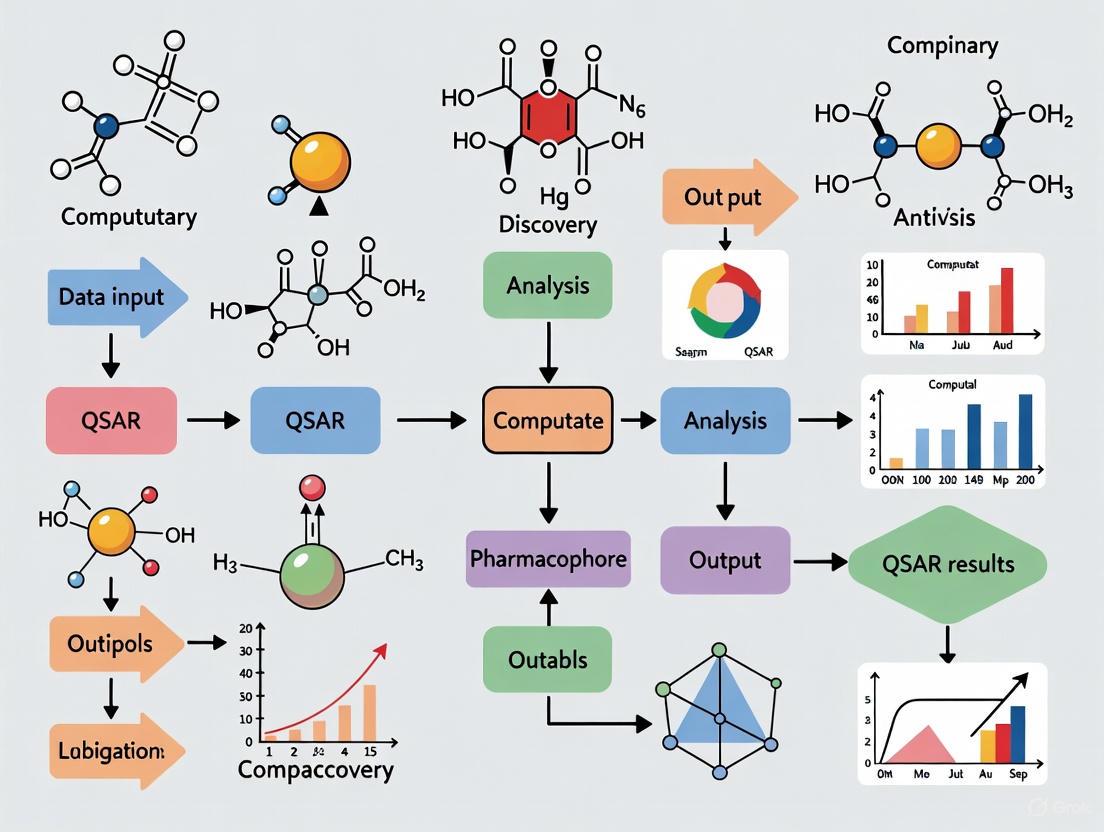
This article provides a comprehensive overview of Quantitative Structure-Activity Relationship (QSAR) and pharmacophore modeling, two indispensable pillars of computer-aided drug design.
QSAR and Pharmacophore Modeling: Advanced Techniques for Modern Drug Discovery
Abstract
This article provides a comprehensive overview of Quantitative Structure-Activity Relationship (QSAR) and pharmacophore modeling, two indispensable pillars of computer-aided drug design. Tailored for researchers, scientists, and drug development professionals, it explores the foundational concepts defining these fields, details the methodologies for building robust models (including structure-based and ligand-based approaches), and addresses critical challenges in data quality and model overfitting. Further, it delves into rigorous validation protocols and comparative analyses of different techniques. By synthesizing the latest advancements and practical applications—from virtual screening to ADME-tox prediction—this resource aims to equip practitioners with the knowledge to effectively leverage these computational tools for accelerating the identification and optimization of novel therapeutic agents.
The Essential Guide to QSAR and Pharmacophore Concepts in Drug Design
The pharmacophore concept stands as a fundamental pillar in modern computer-aided drug design (CADD), providing an abstract representation of the molecular interactions essential for biological activity. This concept has evolved significantly from its early formulations to its current rigorous definition by the International Union of Pure and Applied Chemistry (IUPAC). In contemporary drug discovery, pharmacophore modeling serves as a powerful tool for bridging the gap between structural information and biological response, enabling researchers to identify novel bioactive compounds through virtual screening and rational drug design approaches. The pharmacophore's utility extends across the entire drug discovery pipeline, from initial lead identification to ADME-tox prediction and optimization of drug candidates [1].
The evolution of the pharmacophore mirrors advances in both medicinal chemistry and computational methods. Initially a qualitative concept describing common functional groups among active compounds, it has matured into a quantitative, three-dimensional model that captures the essential steric and electronic features required for molecular recognition. This transformation has positioned pharmacophore modeling as an indispensable component in the toolkit of drug development professionals, particularly valuable for its ability to facilitate "scaffold hopping" – identifying structurally diverse compounds that share key pharmacological properties through common interaction patterns with biological targets [2].
Historical Foundations: From Ehrlich to IUPAC
The conceptual foundation of the pharmacophore dates back to the late 19th century when Paul Ehrlich proposed that specific chemical groups within molecules are responsible for their biological effects [3]. Although historical analysis reveals that Ehrlich himself never used the term "pharmacophore," his work established the fundamental idea that molecular components could be correlated with biological activity [4]. The term "pharmacophore" was eventually coined by Schueler in his 1960 book Chemobiodynamics and Drug Design, where he defined it as "a molecular framework that carries (phoros) the essential features responsible for a drug's (pharmacon) biological activity" [1]. This definition marked a critical shift from thinking about specific "chemical groups" to more abstract "patterns of features" responsible for biological activity.
The modern conceptualization was popularized by Lemont Kier, who mentioned the concept in 1967 and used the term explicitly in a 1971 publication [4]. Throughout the late 20th century, as computational methods gained prominence in drug discovery, the need for a standardized definition became apparent. This culminated in the 1998 IUPAC formalization, which defined a pharmacophore as "the ensemble of steric and electronic features that is necessary to ensure the optimal supramolecular interactions with a specific biological target structure and to trigger (or to block) its biological response" [4] [5]. This definition established the pharmacophore as an abstract description of molecular interactions rather than a specific chemical structure, emphasizing the essential features required for biological recognition and activity [2].
The IUPAC Definition and Core Components
The IUPAC definition represents the current gold standard for understanding pharmacophores in both academic and industrial drug discovery settings. According to this definition, a pharmacophore does not represent a real molecule or specific chemical groups, but rather the largest common denominator of molecular interaction features shared by active molecules [1]. This abstract nature allows pharmacophores to transcend specific chemical scaffolds and facilitate the identification of structurally diverse compounds with similar biological activities.
Essential Pharmacophore Features
Pharmacophore models are composed of distinct chemical features that represent key interaction points between a ligand and its biological target. These features include:
- Hydrogen bond acceptors (HBA): Atoms or groups that can accept hydrogen bonds, typically represented as vectors or spheres [2]
- Hydrogen bond donors (HBD): Atoms or groups that can donate hydrogen bonds, represented as vectors or spheres [2]
- Hydrophobic regions (H): Non-polar areas that participate in hydrophobic interactions, represented as spheres [4] [2]
- Aromatic rings (AR): Planar ring systems that enable π-π stacking or cation-π interactions, represented as planes or spheres [2]
- Positive ionizable groups (PI): Features that can carry positive charges, facilitating ionic interactions [2]
- Negative ionizable groups (NI): Features that can carry negative charges, enabling ionic interactions [2]
Table 1: Core Pharmacophore Features and Their Properties
| Feature Type | Geometric Representation | Interaction Type | Structural Examples |
|---|---|---|---|
| Hydrogen Bond Acceptor | Vector or Sphere | Hydrogen Bonding | Amines, Carboxylates, Ketones, Alcoholes |
| Hydrogen Bond Donor | Vector or Sphere | Hydrogen Bonding | Amines, Amides, Alcoholes |
| Hydrophobic | Sphere | Hydrophobic Contact | Alkyl Groups, Alicycles, non-polar aromatic rings |
| Aromatic | Plane or Sphere | π-Stacking, Cation-π | Any aromatic ring |
| Positive Ionizable | Sphere | Ionic, Cation-π | Ammonium Ions |
| Negative Ionizable | Sphere | Ionic | Carboxylates, Phosphates |
Exclusion Volumes and Shape Constraints
Beyond the chemical features, pharmacophore models often incorporate exclusion volumes to represent steric constraints imposed by the binding site geometry [2]. These volumes define regions in space where ligand atoms cannot be positioned without encountering steric clashes with the target protein. Exclusion volumes are particularly important for structure-based pharmacophore models derived from protein-ligand complexes, as they accurately capture the spatial restrictions of the binding pocket [3]. The inclusion of shape constraints significantly enhances the selectivity of pharmacophore models by eliminating compounds that satisfy the chemical feature requirements but would be sterically incompatible with the target.
Pharmacophore Modeling Approaches: Structure-Based and Ligand-Based Methods
The generation of pharmacophore models follows two principal methodologies, each with distinct requirements and applications. The choice between these approaches depends primarily on the available structural and biological data.
Structure-Based Pharmacophore Modeling
Structure-based pharmacophore modeling derives features directly from the three-dimensional structure of a target protein in complex with a ligand. This approach requires experimentally determined structures from X-ray crystallography, NMR spectroscopy, or in some cases, computationally generated homology models [3] [2]. The process involves analyzing the interaction pattern between the ligand and the binding site to identify key molecular features responsible for binding affinity and specificity.
Software tools such as LigandScout [3] [6] and Discovery Studio [3] automate the extraction of pharmacophore features from protein-ligand complexes. These programs identify potential hydrogen bonding interactions, hydrophobic contacts, ionic interactions, and other binding features, converting them into corresponding pharmacophore elements. When only the apo structure (unbound form) of the target is available, some programs can generate pharmacophore models based solely on the binding site topology, though these models typically require more extensive validation and refinement [3].
Ligand-Based Pharmacophore Modeling
When three-dimensional structural information of the target is unavailable, ligand-based pharmacophore modeling offers a powerful alternative. This approach derives common pharmacophore features from a set of known active ligands that bind to the same biological target at the same site [5] [2]. The fundamental assumption is that these compounds share a common binding mode and therefore common interaction features with the target.
The ligand-based pharmacophore development process typically involves:
- Training set selection: Curating a structurally diverse set of molecules with confirmed biological activity and, ideally, including inactive compounds to define activity boundaries [4] [3]
- Conformational analysis: Generating a set of low-energy conformations for each compound that likely contains the bioactive conformation [4]
- Molecular alignment: Superimposing the compounds to identify common spatial arrangements of chemical features [4]
- Feature abstraction: Transforming the aligned functional groups into abstract pharmacophore elements [4]
- Model validation: Testing the model's ability to discriminate between known active and inactive compounds [4]
Table 2: Comparison of Structure-Based vs. Ligand-Based Pharmacophore Modeling
| Aspect | Structure-Based Approach | Ligand-Based Approach |
|---|---|---|
| Required Data | 3D Structure of protein-ligand complex | Set of known active ligands |
| Key Advantage | Direct incorporation of binding site constraints | No need for target structure |
| Limitations | Dependent on quality and relevance of the structure | Assumes common binding mode for all ligands |
| Exclusion Volumes | Directly derived from binding site | Estimated from molecular shapes of aligned ligands |
| Common Software | LigandScout, Discovery Studio | PHASE, Catalyst, PharmaGist |
| Best Application | Targets with well-characterized binding sites | Targets with multiple known ligands but no structure |
Experimental Protocols in Pharmacophore Modeling
Protocol 1: Structure-Based Pharmacophore Generation using LigandScout
Purpose: To create a structure-based pharmacophore model from a protein-ligand complex for virtual screening applications.
Materials and Methods:
- Software Requirement: LigandScout v4.4 or higher [7]
- Input Data: Protein-ligand complex structure in PDB format [3]
- Processing Steps:
- Load the protein-ligand complex structure into LigandScout
- Automatically detect interaction patterns between the ligand and binding site residues
- Convert identified interactions into pharmacophore features:
- Hydrogen bonds → HBA/HBD features with directionality vectors
- Hydrophobic contacts → Hydrophobic features
- Aromatic interactions → Aromatic ring features
- Ionic interactions → Positive/Negative ionizable features
- Generate exclusion volumes based on the protein's binding site geometry
- Optimize feature tolerances and weights based on interaction strength and conservation
- Validate the model using known active and inactive compounds [3]
Validation Metrics:
- Enrichment factor (EF) - measure of active compound enrichment in virtual screening [3]
- Yield of actives - percentage of active compounds in virtual hit list [3]
- Sensitivity and specificity - ability to identify actives and exclude inactives [7]
- ROC-AUC - overall model performance [3]
Protocol 2: Ligand-Based Pharmacophore Development for Flavonoid Analysis
Purpose: To develop a ligand-based pharmacophore model for identifying anti-HBV flavonols using a set of known active compounds.
Materials and Methods:
- Training Set: Nine flavonols with experimentally confirmed anti-HBV activity (Kaempferol, Isorhamnetin, Icaritin, etc.) [7]
- Software: LigandScout v4.4 for model generation [7]
- Conformational Analysis:
- Generate up to 200 low-energy conformers per molecule
- Set energy window of 20.0 kcal/mol
- Maximum pool size of 4000 conformers [7]
- Model Generation:
- Align molecules based on common chemical features
- Use pharmacophore fit and atom overlap scoring function
- Apply merged feature pharmacophore type to ensure features match all input molecules [7]
- Virtual Screening:
- Screen using PharmIt server against natural product databases
- Apply high-throughput screening protocols [7]
Validation Approach:
- Test model with external compound sets including flavones, flavanones, and other polyphenols [7]
- Evaluate sensitivity and specificity using FDA-approved chemicals [7]
- Apply QSAR analysis with predictors (x4a and qed) to validate bioactivity predictions [7]
Advanced Applications in Drug Discovery
Virtual Screening and Lead Identification
Pharmacophore-based virtual screening represents one of the most successful applications of the pharmacophore concept in drug discovery. By screening large compound databases against a well-validated pharmacophore model, researchers can significantly enrich hit rates compared to random screening approaches. Reported hit rates from prospective pharmacophore-based virtual screening typically range from 5% to 40%, substantially higher than the <1% hit rates often observed in traditional high-throughput screening [3]. This approach is particularly valuable for identifying novel scaffold hops – compounds with structurally distinct backbones that maintain the essential features required for binding – thereby expanding intellectual property opportunities and providing starting points for medicinal chemistry optimization.
The virtual screening process typically involves:
- Preparing a database of compounds with generated low-energy conformations
- Screening each compound against the pharmacophore query
- Identifying molecules that match the essential features within spatial tolerances
- Ranking hits based on fit quality and additional criteria such as drug-likeness
- Experimental validation of top-ranking hits [5]
Integration with Other CADD Methods
Pharmacophore modeling rarely operates in isolation within modern drug discovery workflows. Instead, it frequently integrates with other computational approaches to enhance success rates:
- Pharmacophore-Docking Hybrid Approaches: Combining pharmacophore screening with molecular docking can improve virtual screening efficiency by using pharmacophores as a pre-filter to reduce the number of compounds subjected to more computationally intensive docking simulations [1].
- QSAR Integration: Pharmacophore features can serve as descriptors in quantitative structure-activity relationship (QSAR) models, helping to correlate spatial arrangement of chemical features with biological activity levels [7] [1].
- ADME-tox Prediction: Pharmacophore models have been successfully applied to predict absorption, distribution, metabolism, excretion, and toxicity (ADME-tox) properties, enabling early elimination of compounds with unfavorable pharmacokinetic profiles [1].
Research Reagents and Computational Tools
Table 3: Essential Software Tools for Pharmacophore Modeling and Analysis
| Tool Name | Type | Primary Application | Key Features |
|---|---|---|---|
| LigandScout | Software Suite | Structure & ligand-based modeling | Advanced pharmacophore feature detection, virtual screening [7] [3] |
| PharmIt | Online Platform | Virtual screening | High-throughput screening, public compound databases [7] [6] |
| PHASE | Software Module | Ligand-based modeling | Comprehensive pharmacophore perception, QSAR integration [6] |
| DruGUI | Computational Tool | Druggability assessment | MD simulation analysis, binding site characterization [6] |
| Pharmmaker | Online Tool | Target-based discovery | Automated PM construction from druggability simulations [6] |
| RDKit | Open-Source Cheminformatics | Pharmacophore fingerprinting | Molecular descriptor calculation, similarity screening [5] |
Current Trends and Future Perspectives
Pharmacophore modeling continues to evolve with advancements in computational power and algorithmic sophistication. Several emerging trends are shaping the future of this field:
- Dynamic Pharmacophores: Incorporation of protein flexibility and binding site dynamics through molecular dynamics simulations, providing more realistic representations of molecular recognition events [6].
- Machine Learning Integration: Combining traditional pharmacophore approaches with machine learning algorithms to enhance model accuracy and predictive power [1].
- Application to Challenging Targets: Expansion of pharmacophore methods to difficult target classes such as protein-protein interactions, ion channels, and allosteric modulators [6] [1].
- Natural Product Exploration: Increased application of pharmacophore models to explore the diverse chemical space of natural products, facilitating the identification of novel bioactive scaffolds [2].
The integration of pharmacophore modeling with structural biology, cheminformatics, and experimental screening continues to solidify its position as a cornerstone technique in rational drug design. As these methods become more sophisticated and accessible, their impact on accelerating drug discovery and optimizing therapeutic agents is expected to grow substantially.
Quantitative Structure-Activity Relationship (QSAR) is a computational methodology that establishes mathematical relationships between the chemical structure of compounds and their biological activity [8]. These models are built on the fundamental principle that the biological activity of a compound is a function of its physicochemical properties and structural features [9]. The general QSAR equation is expressed as:
Biological Activity = f(physicochemical properties, structural properties) + error [8]
QSAR finds extensive application in drug discovery and development, enabling researchers to predict the biological activity, toxicity, and physicochemical properties of novel compounds before synthesis, thereby reducing reliance on expensive and time-consuming experimental procedures [9]. The core assumption is that similar molecules exhibit similar activities, though this leads to the "SAR paradox" where minor structural changes can sometimes result in significant activity differences [8].
Molecular Descriptors and Their Significance
Molecular descriptors are numerical representations of a molecule's structural and physicochemical features that serve as the independent variables in QSAR models. The table below summarizes the major categories of molecular descriptors and their roles in biological interactions.
Table 1: Fundamental Molecular Descriptors in QSAR Studies
| Molecular Property | Corresponding Interaction Type | Common Parameters/Descriptors |
|---|---|---|
| Lipophilicity | Hydrophobic interactions | log P, π (pi), f (hydrophobic fragmental constant), RM [10] |
| Polarizability | van der Waals interactions | Molar Refractivity (MR), parachor, Molar Volume (MV) [10] |
| Electron Density | Ionic bonds, dipole-dipole interactions, hydrogen bonds | σ (Hammett constant), R, F, κ, quantum chemical indices [10] |
| Topology | Steric hindrance, geometric fit | Es (Taft's steric constant), rv, L, B, distances, volumes [10] |
Key Descriptor Categories
- Lipophilicity and the Partition Coefficient (log P): Lipophilicity, often quantified by log P (the partition coefficient in an n-octanol/water system), measures a compound's tendency to dissolve in non-polar versus polar solvents [10]. It is a critical parameter in the Hansch model, one of the most established QSAR approaches, which relates biological activity to a combination of log P, electronic, and steric parameters [10] [8]. The hydrophobic fragmental constant (f) allows for the calculation of log P based on additive molecular fragments [10].
- Electronic Parameters: The Hammett constant (σ) quantifies the electron-withdrawing or donating effect of a substituent, influencing ionization and reactivity [10].
- Steric Parameters: Parameters like Taft's steric constant (Es) and Molar Refractivity (MR) describe the spatial occupancy and bulkiness of atoms or groups, which affects a molecule's ability to fit into a binding site [10].
- Quantum Mechanical Descriptors: These include atom partial charges, dipole moments, and frontier orbital energies (HOMO/LUMO), providing detailed insight into a molecule's electronic structure and reactivity [10].
Experimental Protocols in QSAR Modeling
The development of a robust and predictive QSAR model follows a systematic workflow involving distinct stages.
General QSAR Workflow
The following diagram outlines the standard protocol for developing a QSAR model.
Protocol 1: Developing a 2D-QSAR Model Using the Hansch Approach
This protocol is ideal for a congeneric series of compounds where the core scaffold remains constant and substituents vary.
1. Data Set Curation
- Select a series of compounds (typically 20-50) with a common molecular scaffold and known biological activity (e.g., IC₅₀, Ki) [11] [9].
- Ensure all compounds act via the same mechanism of action [10].
- Convert biological activity values to a logarithmic scale (e.g., log(1/C), where C is the molar concentration producing the effect) to linearize the relationship.
- Divide the data set into a training set (~70-80%) for model building and a test set (~20-30%) for external validation [8].
2. Descriptor Calculation
- For each compound, calculate relevant physicochemical parameters.
- Lipophilicity: Calculate the substituent constant π for each substituent, where πₓ = log P₍R−X₎ - log P₍R−H₎, or use the overall log P of the molecule [10].
- Electronic Effects: Calculate the Hammett constant (σ) for each substituent [10].
- Steric Effects: Calculate molar refractivity (MR) or Taft's steric constant (Es) for substituents [10].
3. Model Construction using Multiple Linear Regression (MLR)
- Use statistical software to perform MLR, correlating the biological activity (log(1/C)) with the calculated descriptors.
- A general linear Hansch equation takes the form: log(1/C) = a(log P) + b(σ) + c(MR) + k [10] where a, b, c are coefficients, and k is a constant.
4. Model Validation
- Internal Validation: Perform cross-validation (e.g., leave-one-out) to check robustness. The cross-validated R² (q²) should be > 0.5 [8] [11].
- External Validation: Use the test set to assess predictive power. The predicted R² for the test set should be high [8].
- Y-Scrambling: Randomize the response variable to ensure the model is not a result of chance correlation [8].
Protocol 2: 3D-QSAR using Comparative Molecular Field Analysis (CoMFA)
3D-QSAR techniques like CoMFA consider the three-dimensional properties of molecules and are applicable to non-congeneric series.
1. Preparation and Alignment
- Obtain or generate the 3D structures of all molecules.
- Identify the bioactive conformation and a common pharmacophore for molecular superposition.
- Align all molecules according to the pharmacophore hypothesis [10].
2. Field Calculation
- Place the aligned molecules in a 3D grid with a typical spacing of 2.0 Å.
- Use a probe atom (e.g., sp³ carbon with a +1 charge) to calculate steric (Lennard-Jones) and electrostatic (Coulombic) interaction energies at each grid point [10] [8].
3. Data Analysis with Partial Least Squares (PLS)
- The calculated interaction energies form a large data table, which is analyzed using PLS regression to correlate the field values with biological activity [10].
- The output is a 3D contour map visualizing regions where specific steric or electrostatic features enhance or diminish biological activity.
Table 2: Essential Research Reagents and Tools for QSAR Modeling
| Item/Tool | Function in QSAR Protocol |
|---|---|
| Congeneric Compound Series | A set of molecules with a common scaffold and varying substituents; the foundational requirement for classical 2D-QSAR [10]. |
| n-Octanol/Water System | Standard solvent system for experimentally determining the partition coefficient (log P), a key descriptor of lipophilicity [10]. |
| Molecular Modeling Software | Software capable of energy minimization, conformational analysis, and 3D structure generation for 3D-QSAR studies. |
| Descriptor Calculation Software | Tools (e.g., GUSAR software) for computing 2D and 3D molecular descriptors from chemical structures [11]. |
| Statistical Analysis Package | Software with MLR, PLS, and PCA capabilities for constructing and validating the mathematical QSAR model [10] [9]. |
Applications of QSAR in Drug Discovery and Toxicology
QSAR models have become indispensable tools across various scientific disciplines.
- Lead Optimization: QSAR guides medicinal chemists by identifying which structural features and physicochemical properties contribute positively to biological activity, enabling the rational design of more potent analogs [9].
- Toxicity and Environmental Risk Assessment: Quantitative Structure-Toxicity Relationship (QSTR) models predict the toxicological profiles of chemicals, including their carcinogenicity and ecotoxicity, which is vital for regulatory decisions and environmental health [8] [12] [9].
- Prediction of Antitarget Interactions: QSAR models can predict unintended interactions of drug candidates with "antitargets" (e.g., hERG channel, specific metabolizing enzymes), helping to avoid adverse drug reactions (ADRs) early in development [11].
- Property Prediction: Quantitative Structure-Property Relationships (QSPR) are used to predict physicochemical properties such as boiling points, solubility, and absorption, which are critical for drug-likeness [8].
Integration with Modern Computational Approaches
The field of QSAR is evolving through integration with advanced computational techniques.
Pharmacophore Modeling is closely related to QSAR. While QSAR correlates descriptors with activity, a pharmacophore represents the essential spatial arrangement of molecular features necessary for biological activity [13]. Modern methods like PharmacoForge use diffusion models to generate 3D pharmacophores conditioned on a protein pocket, which can then be used for ultra-fast virtual screening of commercially available compounds [14].
Machine Learning and AI are now widely employed in QSAR. Instead of traditional regression, methods like Support Vector Machines (SVM), Decision Trees, and Neural Networks are used to handle large descriptor sets and uncover complex, non-linear relationships [8].
The integration of QSAR with read-across techniques has led to the development of hybrid methods like q-RASAR, which can offer improved predictive performance [8].
The Synergy of QSAR and Pharmacophore Modeling in CADD
Computer-Aided Drug Design (CADD) has become an indispensable component of modern pharmaceutical research, significantly reducing the time and costs associated with drug discovery [15]. Within the CADD toolkit, Quantitative Structure-Activity Relationship (QSAR) and pharmacophore modeling represent two powerful techniques that, when used synergistically, enhance the efficiency of hit identification and lead optimization processes [16]. QSAR models mathematically correlate structural descriptors of compounds with their biological activity, while pharmacophore models abstractly represent the steric and electronic features necessary for molecular recognition [1] [17]. This application note explores the integrated application of these methodologies, providing detailed protocols and case studies within the context of advanced drug discovery research.
Theoretical Foundation and Synergistic Benefits
Fundamental Concepts
A pharmacophore is defined by the International Union of Pure and Applied Chemistry (IUPAC) as "the ensemble of steric and electronic features that is necessary to ensure the optimal supramolecular interactions with a specific biological target structure and to trigger (or to block) its biological response" [1]. It is not a specific molecular structure, but rather an abstract pattern of features including hydrogen bond donors/acceptors (HBD/HBA), hydrophobic areas (H), positively/negatively ionizable groups (PI/NI), and aromatic rings (AR) [16].
QSAR establishes a mathematical relationship between chemical structure descriptors and biological activity using various machine learning techniques [18] [15]. The core principle is that biological activity can be quantitatively predicted from molecular structure, reducing the need for extensive experimental screening.
Synergistic Advantages
The integration of pharmacophore and QSAR methodologies creates a powerful workflow that leverages the strengths of both approaches:
- Enhanced Interpretability: Pharmacophore models provide visual and intuitive understanding of key molecular interactions, while QSAR adds quantitative predictive power [19] [17].
- Scaffold Hopping Capability: The abstract nature of pharmacophore features enables identification of structurally diverse compounds sharing essential interaction capabilities, which QSAR can then quantitatively prioritize [17].
- Improved Model Robustness: Combining these approaches helps overcome limitations of individual methods, particularly regarding activity prediction for novel chemotypes [17].
The following diagram illustrates the synergistic workflow between these approaches:
Integrated Methodologies and Protocols
Structure-Based Protocol
When the target protein structure is available, a structure-based approach can be employed:
Protocol 1: Structure-Based Pharmacophore Generation and QSAR Modeling
Protein Preparation
- Retrieve 3D structure from PDB (www.rcsb.org) [16]
- Add hydrogen atoms, assign proper protonation states, and remove structural artifacts
- Energy minimization using appropriate force fields (CHARMM, AMBER)
Binding Site Analysis
- Identify binding pocket using tools like GRID or LUDI [16]
- Analyze key interacting residues and map potential interaction points
Pharmacophore Generation
Conformation Generation and Alignment
- Generate low-energy conformers for training set compounds
- Align compounds to pharmacophore model
3D-QSAR Model Development
- Calculate molecular interaction fields (steric, electrostatic)
- Apply Partial Least Squares (PLS) regression to build CoMFA/CoMSIA models [19]
- Validate using cross-validation and external test sets
Ligand-Based Protocol
When structural information of the target is unavailable, ligand-based approaches are employed:
Protocol 2: Ligand-Based Pharmacophore and QSAR Modeling
Data Set Curation
- Collect compounds with known biological activities spanning a wide potency range
- Categorize into highly active, active, moderately active, and inactive [20]
- Divide into training and test sets maintaining activity distribution
Pharmacophore Model Generation
Pharmacophore-Based Alignment
- Use best pharmacophore model as template for molecular alignment
- Ensure consistent orientation of key functional groups
QSAR Model Construction
- Calculate 3D molecular descriptors and fields
- Develop predictive model using PLS or other machine learning algorithms
- Validate model using test set compounds and applicability domain assessment [18]
Case Studies and Applications
Aurora Kinase B Inhibitors
A recent study demonstrated the successful application of integrated QSAR-pharmacophore modeling for Aurora Kinase B (AKB) inhibitors, a promising cancer therapeutic target [18].
Experimental Protocol:
- Data Set: 561 structurally diverse AKB inhibitors
- QSAR Model: 7-variable GA-MLR model following OECD guidelines
- Key Descriptors: fringNplaN4B, fsp3Csp2N5B, NH2B, fsp2Osp2C5B, dalipo5B, fOringC6B, fringNC6B
- Validation: R²tr = 0.815, Q²LMO = 0.808, R²ex = 0.814, CCCex = 0.899
Key Findings:
- Model identified critical pharmacophoric features including lipophilic and polar groups at specific distances
- Ring nitrogen and carbon atoms play crucial roles in determining inhibitory activity
- The balanced model demonstrated high predictive ability and mechanistic interpretability [18]
UPPS Inhibitors for Antibacterial Development
Another study targeted Undecaprenyl Pyrophosphate Synthase (UPPS) for treating Methicillin-Resistant Staphylococcus aureus (MRSA) [20].
Experimental Protocol:
- Data Set: 34 UPPS inhibitors with IC₅₀ values from 0.04 to 58 μM
- Pharmacophore Generation: HypoGen algorithm with one HBA, two hydrophobic, and one aromatic feature
- Validation: Correlation coefficient of 0.86 for training set, Fisher's randomization at 95% confidence level
- Virtual Screening: Applied to ZINC15, Drug-Like Diverse, and Mini Maybridge databases
Key Findings:
- Identified 70 hits with superior docking affinities than reference compound
- Discovered five promising novel UPPS inhibitors through molecular dynamics simulations [20]
Quantitative Pharmacophore Activity Relationship (QPHAR)
The novel QPHAR method represents a direct integration of pharmacophore and QSAR approaches, operating directly on pharmacophore features rather than molecular structures [17].
Experimental Protocol:
- Data Sets: 250+ diverse datasets from ChEMBL
- Method: Aligns input pharmacophores to a consensus (merged) pharmacophore
- Machine Learning: Uses relative position information to build quantitative models
- Validation: Fivefold cross-validation with average RMSE of 0.62
Key Findings:
- Robust models obtained with small datasets (15-20 training samples)
- Abstract pharmacophore representation reduces bias toward overrepresented functional groups
- Enables scaffold hopping by focusing on interaction patterns rather than specific structural motifs [17]
Table 1: Key Software Tools for Integrated QSAR-Pharmacophore Modeling
| Software | Type | Key Features | Application in Integrated Workflows |
|---|---|---|---|
| Dockamon [21] | Commercial | Pharmacophore modeling, 3D/4D-QSAR, molecular docking | Integrated structure-based and ligand-based design in unified platform |
| PHASE [17] | Commercial | Pharmacophore field-based QSAR, PLS regression | Creates predictive models from pharmacophore fields derived from aligned ligands |
| Discovery Studio [20] | Commercial | HypoGen algorithm, 3D QSAR pharmacophore, molecular docking | Ligand-based pharmacophore generation and validation |
| GALAHAD [19] | Commercial | Pharmacophore generation from ligand sets, Pareto ranking | Creates models with multiple tradeoffs between steric and energy constraints |
| LigandScout [7] | Commercial | Structure-based and ligand-based pharmacophore modeling | Advanced pharmacophore model creation with high-throughput screening capabilities |
Table 2: Summary of Key Performance Metrics from Case Studies
| Case Study | Target | Dataset Size | Model Type | Key Statistical Parameters |
|---|---|---|---|---|
| Aurora Kinase B [18] | AKB | 561 compounds | 7-descriptor GA-MLR QSAR | R²tr=0.815, Q²LMO=0.808, R²ex=0.814, CCCex=0.899 |
| UPPS Inhibitors [20] | UPPS | 34 compounds | 4-feature 3D QSAR Pharmacophore | Correlation=0.86, Null cost difference=191.39 |
| B-Raf Inhibitors [19] | B-Raf kinase | 39 compounds | CoMSIA with pharmacophore alignment | q²=0.621, r²pred=0.885 |
| QPHAR Validation [17] | Multiple targets | 250+ datasets | Quantitative pharmacophore modeling | Average RMSE=0.62 (±0.18) |
Essential Research Reagent Solutions
Table 3: Key Research Reagents and Computational Tools for Integrated Workflows
| Reagent/Software | Function/Purpose | Application Context |
|---|---|---|
| Chemical Databases (ZINC15, ChEMBL, PubChem) [7] [20] | Source of compounds for virtual screening and model building | Provides structural and activity data for training and test sets |
| Conformation Generation Tools (iConfGen, DS Conformers) [7] [20] | Generate bioactive conformations for pharmacophore modeling | Creates low-energy 3D conformers representing potential binding states |
| Molecular Descriptors (PyDescriptor) [18] | Calculate structural descriptors for QSAR analysis | Quantifies structural features correlated with biological activity |
| Validation Tools (Applicability Domain, Y-scrambling) [18] | Assess model robustness and predictive reliability | Ensures models are not overfitted and have true predictive power |
| Docking Software (AutoDock Vina, CDOCKER) [20] [21] | Structure-based validation of pharmacophore hits | Confirms binding mode and interactions predicted by pharmacophore models |
The synergistic integration of QSAR and pharmacophore modeling represents a powerful paradigm in modern computer-aided drug design. This approach leverages the complementary strengths of both methodologies: the abstract, feature-based pattern recognition of pharmacophore modeling combined with the quantitative predictive power of QSAR analysis. As demonstrated through the case studies and protocols presented herein, this integrated framework enhances the efficiency of virtual screening, enables scaffold hopping to novel chemical series, and provides deeper mechanistic insights into structure-activity relationships. The continued development of methods like QPHAR that directly operate on pharmacophore features further strengthens this synergy, promising enhanced efficiency in future drug discovery campaigns.
Quantitative Structure-Activity Relationship (QSAR) modeling represents a cornerstone of modern computational drug discovery, establishing mathematical relationships between the chemical structures of compounds and their biological activities [8]. These models are regression or classification systems that use predictor variables consisting of physico-chemical properties or theoretical molecular descriptors to forecast the potency of a biological response [8]. The fundamental hypothesis underlying all QSAR approaches is that similar molecules exhibit similar activities, a principle known as the Structure-Activity Relationship (SAR), though this comes with the recognized SAR paradox where not all similar molecules share similar activities [8]. The evolution of QSAR methodologies has progressed from simple 2D descriptor-based approaches to sophisticated 3D-dimensional analyses and fragment-based decomposition strategies, enabling more accurate predictions of biological activity and molecular properties critical for drug development [22] [8].
In contemporary drug discovery, QSAR techniques have become indispensable tools for predicting biological activity, optimizing lead compounds, and reducing experimental costs [23] [24]. The ability to predict activities in silico before synthesis allows researchers to prioritize the most promising candidates from vast chemical spaces, significantly accelerating the drug discovery pipeline [25]. This article explores three advanced QSAR methodologies—3D-QSAR, GQSAR, and Fragment-Based QSAR—detailing their theoretical foundations, practical applications, and implementation protocols to provide researchers with a comprehensive toolkit for rational drug design.
3D-QSAR: Three-Dimensional Quantitative Structure-Activity Relationships
Theoretical Foundations and Methodological Principles
3D-QSAR represents a significant advancement over traditional 2D-QSAR methods by incorporating the three-dimensional structural properties of molecules and their spatial orientations [26] [8]. Unlike descriptor-based approaches that compute properties from scalar quantities, 3D-QSAR methodologies utilize force field calculations requiring three-dimensional structures of small molecules with known activities [8]. The fundamental premise of 3D-QSAR is that biological activity correlates not just with chemical composition but with steric and electrostatic fields distributed around the molecules in three-dimensional space [26] [27]. This approach examines the overall molecule rather than single substituents, capturing conformational aspects critical for molecular recognition and biological activity [26].
The first and most established 3D-QSAR technique is Comparative Molecular Field Analysis (CoMFA), which systematically analyzes steric (shape) and electrostatic fields around a set of aligned molecules and correlates these fields with biological activity using partial least squares (PLS) regression [26] [8]. The CoMFA methodology operates on the principle that the biological activity of a compound is dependent on its intermolecular interactions with the receptor, which are governed by the shape of the molecule and the distribution of electrostatic potentials on its surface [26]. Another popular 3D-QSAR approach is Comparative Molecular Similarity Indices Analysis (COMSIA), which extends beyond steric and electrostatic fields to include additional similarity descriptors such as hydrophobic and hydrogen-bonding properties [23]. Modern implementations often combine multiple models with different similarity descriptors and machine learning techniques, with final predictions generated as a consensus of individual model predictions to enhance robustness and accuracy [27].
Applications and Case Studies in Drug Discovery
3D-QSAR has demonstrated significant utility across various stages of drug discovery, particularly in lead optimization where understanding the three-dimensional structural requirements for activity is crucial. A recent application involved the development of novel 6-hydroxybenzothiazole-2-carboxamide derivatives as potent and selective monoamine oxidase B (MAO-B) inhibitors for neurodegenerative diseases [23]. In this study, researchers constructed a 3D-QSAR model using the COMSIA method, which exhibited excellent predictive capability with a q² value of 0.569 and r² value of 0.915 [23]. The model successfully guided the design of new derivatives with predicted IC₅₀ values, with compound 31.j3 emerging as the most promising candidate based on both QSAR predictions and subsequent molecular docking studies [23].
Another significant application of 3D-QSAR appears in safety pharmacology screening, where it has been used to identify off-target interactions against the adenosine receptor A2A [24]. In this case study, researchers developed 3D-QSAR models based on in vitro antagonistic activity data and applied them to screen 1,897 chemically distinct drugs, successfully identifying compounds with potential A2A antagonistic activity even from chemotypes drastically different from the training compounds [24]. This demonstrates the value of 3D-QSAR in safety profiling, where it can prioritize compounds for experimental testing and provide mechanistic insights into distinguishing between agonists and antagonists [24]. The interpretability of 3D-QSAR models also provides visual guidance for medicinal chemists, indicating favorable regions for specific functional groups within the active site, thereby inspiring new design ideas in a generative design cycle [27].
Table 1: Key 3D-QSAR Techniques and Their Applications
| Technique | Descriptors Analyzed | Statistical Method | Common Applications |
|---|---|---|---|
| CoMFA (Comparative Molecular Field Analysis) | Steric and electrostatic fields | Partial Least Squares (PLS) | Lead optimization, Activity prediction [26] [8] |
| COMSIA (Comparative Molecular Similarity Indices Analysis) | Steric, electrostatic, hydrophobic, hydrogen-bonding | Partial Least Squares (PLS) | Scaffold hopping, Multi-parameter optimization [23] |
| Consensus 3D-QSAR | Multiple shape and electrostatic similarity descriptors | Machine learning consensus | Binding affinity prediction, Virtual screening [27] |
Experimental Protocol: Implementing 3D-QSAR with COMSIA
Protocol Title: 3D-QSAR Model Development Using COMSIA Methodology
Objective: To develop a predictive 3D-QSAR model for a series of novel 6-hydroxybenzothiazole-2-carboxamide derivatives as MAO-B inhibitors.
Materials and Software:
- Chemical Modeling Software: Sybyl-X or similar molecular modeling suite
- Structure Drawing: ChemDraw for compound construction and optimization
- Computational Resources: Workstation with sufficient processing power for conformational analysis
Procedure:
Compound Selection and Preparation:
- Select a training set of compounds with known biological activities (IC₅₀ values)
- Construct and optimize 2D structures of all compounds using ChemDraw
- Convert 2D structures to 3D conformers using molecular modeling software
- Perform geometry optimization using appropriate force fields [23]
Molecular Alignment:
- Identify a common scaffold or pharmacophore for structural alignment
- Align all molecules to a reference compound using atom-based or field-based methods
- Verify alignment quality through visual inspection and statistical measures
Descriptor Calculation and Model Building:
- Calculate COMSIA descriptors (steric, electrostatic, hydrophobic, hydrogen-bond donor/acceptor)
- Set the attenuation factor to 0.3 for the Gaussian distance function
- Use partial least squares (PLS) regression to build the QSAR model
- Apply region focusing to improve model quality if necessary [23]
Model Validation:
- Perform leave-one-out cross-validation to determine q² value
- Calculate non-cross-validated correlation coefficient (r²)
- Determine standard error of estimate (SEE) and F-value
- Validate model with an external test set not used in model building [23]
Model Application and Interpretation:
- Use the model to predict activities of new designed compounds
- Interpret coefficient contour maps to identify favorable/unfavorable regions
- Guide structural modifications based on model insights [23]
GQSAR: Group-Based Quantitative Structure-Activity Relationships
Fundamental Concepts and Advantages
Group-Based QSAR (GQSAR) represents a novel approach that focuses on the contributions of molecular fragments or substituents at specific sites rather than considering the molecule as a whole [8]. This methodology offers significant advantages in drug discovery, particularly when dealing with structurally diverse compounds or when seeking to understand the specific contributions of substituent modifications to biological activity [8]. Unlike traditional QSAR that utilizes global molecular descriptors, GQSAR allows researchers to study various molecular fragments of interest in relation to the variation in biological response, providing more targeted insights for structural optimization [8].
The GQSAR approach is particularly valuable in fragment-based drug design (FBDD), where it accelerates lead optimization and plays a crucial role in diminishing high attrition rates in drug development [22]. By quantifying the contributions of individual fragments, GQSAR enables a more systematic approach to molecular optimization, allowing medicinal chemists to make informed decisions about which fragments to retain, modify, or replace [8]. Additionally, GQSAR considers cross-terms fragment descriptors, which help identify key fragment interactions that determine activity variation—a feature particularly useful when optimizing complex molecules with multiple substituents [8]. This fragment-centric approach also aligns well with modern drug discovery paradigms that emphasize molecular efficiency and the assembly of optimal fragments into lead compounds with desired properties [22].
Implementation and Practical Applications
The implementation of GQSAR begins with the decomposition of molecules into relevant fragments, which could be substituents at various substitution sites in congeneric series of molecules or predefined chemical rules in non-congeneric sets [8]. These fragments are then encoded using appropriate descriptors, and their relationships with biological activity are modeled using statistical or machine learning techniques [22]. An advanced extension of this approach is the Pharmacophore-Similarity-based QSAR (PS-QSAR), which uses topological pharmacophoric descriptors to develop QSAR models and assesses the contribution of certain pharmacophore features encoded by respective fragments toward activity improvement or detrimental effects [8].
GQSAR has found particular utility in multi-target inhibitor design and scaffold hopping applications, where researchers need to understand how specific fragment modifications affect activity profiles across different biological targets [22]. The methodology enables the virtual generation of target inhibitors from fragment databases and supports multi-scale modeling that integrates diverse chemical and biological data [22]. By focusing on fragment contributions rather than whole-molecule properties, GQSAR facilitates a more modular approach to drug design, allowing researchers to mix and match fragments with known activity contributions to optimize multiple properties simultaneously [8]. This approach is especially valuable in the context of polypharmacology, where drugs need to interact with multiple targets with specific activity ratios, and fragment contributions can be tuned to achieve the desired selectivity profile [22].
Table 2: GQSAR Fragment Descriptors and Their Significance
| Descriptor Type | Description | Structural Interpretation | Application Context |
|---|---|---|---|
| Substituent Parameters | Electronic, steric, and hydrophobic parameters of substituents | Quantifies fragment contributions to molecular properties | Congeneric series optimization [8] |
| Fragment Fingerprints | Binary representation of fragment presence/absence | Identifies key fragments associated with activity | Scaffold hopping, virtual screening [8] |
| Cross-Term Fragments | Descriptors capturing interactions between fragments | Reveals synergistic or antagonistic fragment effects | Multi-parameter optimization [8] |
| Pharmacophore Fragments | Topological pharmacophoric features | Relates fragments to molecular recognition patterns | Activity cliff analysis, lead optimization [8] |
Experimental Protocol: GQSAR Model Development
Protocol Title: Group-Based QSAR Analysis for Lead Optimization
Objective: To develop a GQSAR model that quantifies the contributions of molecular fragments to biological activity for a series of congeneric compounds.
Materials and Software:
- Cheminformatics Toolkit: Python/R with appropriate chemical libraries (RDKit, ChemPy)
- Molecular Descriptor Software: Tools for calculating fragment-based descriptors
- Statistical Analysis Package: Software for regression analysis and model validation
Procedure:
Dataset Curation and Fragment Definition:
- Compile a dataset of compounds with measured biological activities
- Define the molecular scaffold common to all compounds
- Identify variable substitution sites and their corresponding fragments
- Classify fragments based on chemical characteristics and properties [8]
Fragment Descriptor Calculation:
- Calculate physicochemical properties for each fragment (hydrophobicity, steric bulk, electronic effects)
- Generate binary fingerprint descriptors for fragment presence
- Compute cross-term descriptors for fragment interactions where applicable
- Apply dimensionality reduction if needed to address multicollinearity [8]
Model Building and Validation:
- Split dataset into training and test sets (typically 70-80% for training)
- Use multiple linear regression or machine learning algorithms to build models
- Apply variable selection techniques to identify significant fragment descriptors
- Validate models using internal (cross-validation) and external validation methods [8]
Model Interpretation and Application:
- Analyze regression coefficients to quantify fragment contributions
- Identify favorable and unfavorable fragment properties for activity
- Design new compounds by combining fragments with positive contributions
- Predict activities of proposed compounds using the developed model [8]
Fragment-Based QSAR Methods
Theoretical Framework and Methodological Approaches
Fragment-Based QSAR methods represent a specialized category of QSAR modeling that focuses on the contributions of individual molecular fragments to biological activity, typically using group contribution methods or fragment descriptors [8]. The fundamental premise of these approaches is that the biological activity and physicochemical properties of a compound can be determined by the sum of the contributions of its constituent fragments, with each fragment making additive and consistent contributions regardless of the overall molecular scaffold [8]. This paradigm has established itself as a promising approach in modern drug discovery, playing a crucial role in accelerating lead optimization and reducing attrition rates in the drug development process [22].
The most established fragment-based QSAR approach is the group contribution method, where fragmentary values are determined statistically based on empirical data for known molecular properties [8]. For example, the prediction of partition coefficients (logP) can be accomplished through fragment methods (known as "CLogP" and variations), which are generally accepted as better predictors than atomic-based methods [8]. More advanced implementations include the FragOPT workflow, which uses machine learning to identify advantageous and disadvantageous fragments of molecules to be optimized by combining classification models for bioactive molecules with model interpretability methods like SHAP [25]. These fragments are then sampled within the 3D pocket of the target protein, and disadvantageous fragments are redesigned using deep learning models, followed by recombination with advantageous fragments to generate new molecules with enhanced binding affinity [25].
Applications in Contemporary Drug Discovery
Fragment-Based QSAR methods have demonstrated significant utility in various aspects of drug discovery, particularly in the early stages of lead identification and optimization. The FragOPT approach, for instance, has been successfully validated on protein targets associated with solid tumors and the SARS-CoV-2 virus, generating molecules with superior synthesizability and enhanced binding affinity compared to other fragment-based drug discovery methods [25]. This ML-driven workflow exemplifies how fragment-based approaches can optimize the initial drug discovery process, providing a more precise and efficient pathway for developing new therapeutics [25].
Another significant application of Fragment-Based QSAR is in the realm of multi-scale modeling, where different datasets based on target inhibition can be simultaneously integrated and predicted alongside other relevant endpoints such as biological activity against non-biomolecular targets, as well as in vitro and in vivo toxicity and pharmacokinetic properties [22]. This holistic approach acknowledges that drug discovery must be viewed as a multi-scale optimization process, integrating diverse chemical and biological data to serve as a knowledge generator that enables the design of potentially optimal therapeutic agents [22]. Fragment-based methods are particularly amenable to this integrated approach because their modular nature allows for the systematic optimization of multiple properties through rational fragment selection and combination [8] [25].
Comparative Analysis and Integration of QSAR Methodologies
Strategic Selection of QSAR Approaches
Each QSAR methodology offers distinct advantages and is suited to specific scenarios in the drug discovery pipeline. 3D-QSAR approaches like CoMFA and COMSIA are particularly valuable when the three-dimensional alignment of molecules is known or can be reliably predicted, and when researchers need visual guidance for structural modifications [26] [27]. These methods excel in lead optimization stages where understanding the spatial requirements for activity is crucial. GQSAR methods shine when working with structurally diverse compounds or when researchers need to understand the specific contributions of substituents at multiple sites [8]. This approach is particularly useful in library design and scaffold hopping applications. Fragment-Based QSAR methods are most appropriate for early discovery stages when exploring large chemical spaces or when applying multi-parameter optimization across diverse endpoints [22] [25].
The integration of these methodologies often yields superior results compared to relying on any single approach. For instance, 3D-QSAR models can inform fragment selection in FBDD by identifying favorable chemical features in specific spatial regions, while GQSAR can optimize substituents on scaffolds identified through fragment screening [8] [27]. Recent advances also demonstrate the value of combining these traditional QSAR approaches with modern machine learning techniques and molecular dynamics simulations to enhance predictive accuracy and account for protein flexibility [23] [25]. This integrated perspective acknowledges that drug discovery is inherently a multi-scale problem requiring insights from multiple computational approaches tailored to specific decision points in the pipeline.
Table 3: Comparative Analysis of QSAR Methodologies
| Feature | 3D-QSAR | GQSAR | Fragment-Based QSAR |
|---|---|---|---|
| Primary Strength | Captures 3D steric and electrostatic effects | Quantifies substituent contributions | Explores large chemical spaces efficiently |
| Data Requirements | 3D structures and molecular alignment | Congeneric series with defined substituents | Diverse compounds with fragment mappings |
| Interpretability | Visual contour maps | Fragment contribution coefficients | Fragment activity rankings |
| Optimal Application Stage | Lead optimization | SAR exploration | Hit identification and early optimization |
| Complementary Techniques | Molecular docking, MD simulations | Matched molecular pair analysis | Machine learning, Free energy calculations |
Table 4: Essential Resources for QSAR Research
| Resource Category | Specific Tools/Software | Primary Function | Application Context |
|---|---|---|---|
| Molecular Modeling | Sybyl-X, ChemDraw | Compound construction and optimization | 3D-QSAR model development [23] |
| Cheminformatics | Schrödinger Canvas, RDKit | Molecular descriptor calculation | Chemical similarity analysis [24] |
| 3D-QSAR Specialized | OpenEye's 3D-QSAR | Binding affinity prediction using shape/electrostatics | Consensus 3D-QSAR modeling [27] |
| Fragment-Based Design | FragOPT | Fragment identification and optimization | Machine learning-driven fragment optimization [25] |
| Statistical Analysis | R, Python with scikit-learn | Model building and validation | Statistical QSAR model development [8] |
Workflow Visualization: Integrated QSAR Implementation Strategy
The following diagram illustrates a comprehensive workflow for implementing an integrated QSAR strategy in drug discovery:
Integrated QSAR Implementation Workflow
The exploration of 3D-QSAR, GQSAR, and Fragment-Based QSAR methodologies reveals a rich landscape of computational tools for modern drug discovery. Each approach offers unique strengths—3D-QSAR provides spatial understanding of steric and electrostatic requirements, GQSAR quantifies substituent contributions, and Fragment-Based methods enable efficient exploration of chemical space. The integration of these methodologies, complemented by advances in machine learning and molecular dynamics simulations, creates a powerful framework for rational drug design. As these computational approaches continue to evolve, they will play an increasingly vital role in addressing the challenges of efficiency, cost, and predictive accuracy in pharmaceutical development, ultimately contributing to the discovery of novel therapeutic agents for unmet medical needs.
Building and Applying Predictive Models: A Step-by-Step Methodology
Structure-based pharmacophore modeling is a fundamental technique in computer-aided drug design (CADD) that derives interaction features directly from the three-dimensional structure of a macromolecular target or a protein-ligand complex. According to the International Union of Pure and Applied Chemistry (IUPAC), a pharmacophore is defined as "the ensemble of steric and electronic features that is necessary to ensure the optimal supramolecular interactions with a specific biological target and to trigger (or block) its biological response" [1] [28]. This approach contrasts with ligand-based methods, as it utilizes structural insights from the target protein itself to identify complementary chemical features that a ligand must possess for effective binding and biological activity [16]. The primary advantage of structure-based pharmacophore modeling lies in its ability to identify novel chemotypes without dependence on known active ligands, making it particularly valuable for targets with limited ligand information [28].
The historical development of the pharmacophore concept dates back to Paul Ehrlich in 1909, who first introduced the idea as "a molecular framework that carries the essential features responsible for a drug's biological activity" [28]. Over a century of development has expanded its meaning and applications considerably, with structure-based approaches emerging as powerful tools for rational drug design. These models abstract specific atomic arrangements into generalized chemical features, providing a template for virtual screening and ligand optimization that focuses on the essential recognition elements between a ligand and its target [1] [16].
Fundamental Principles and Workflow
Core Pharmacophore Features
Structure-based pharmacophore models represent key protein-ligand interaction patterns as a collection of abstract chemical features with defined spatial relationships. The most commonly recognized pharmacophore feature types include [16] [29]:
- Hydrogen Bond Acceptor (HBA): Represents regions where a ligand can accept hydrogen bonds from protein donors.
- Hydrogen Bond Donor (HBD): Represents regions where a ligand can donate hydrogen bonds to protein acceptors.
- Hydrophobic (H): Represents aliphatic or aromatic carbon chains that participate in hydrophobic interactions.
- Positively Ionizable (PI) / Negatively Ionizable (NI): Represent groups that can become charged under physiological conditions, facilitating electrostatic interactions.
- Aromatic (AR): Represent aromatic rings capable of π-π or cation-π interactions.
- Metal Coordinating (MB): Represent atoms that can coordinate with metal ions in the binding site.
Additional feature types identified in recent advanced implementations include covalent bond (CV), cation-π interaction (CR), and halogen bond (XB) features [29]. These features are typically represented as spheres in 3D space with tolerances, and for directional features like HBA and HBD, vectors indicating the optimal interaction geometry may also be included [1].
General Workflow
The structure-based pharmacophore modeling process follows a systematic workflow that transforms protein structural information into a query for virtual screening. The key steps are illustrated below and detailed in the subsequent sections:
Detailed Experimental Protocols
Protocol 1: Structure-Based Model Development from a Protein-Ligand Complex
This protocol details the generation of a pharmacophore model when an experimental structure of the target protein in complex with a ligand is available, which represents the ideal scenario for obtaining highly accurate models [16].
Step 1: Protein Structure Preparation
- Source: Obtain the 3D structure of the protein-ligand complex from the Protein Data Bank (PDB) or through computational methods like homology modeling [16]. The quality of the input structure directly influences the quality of the resulting pharmacophore model [16].
- Preparation Tasks:
- Add hydrogen atoms appropriate for physiological pH.
- Assign correct protonation states to residues, especially those in the binding site.
- Repair missing side chains or loops if necessary.
- Optimize the structure using energy minimization to relieve steric clashes.
- Software Tools: Molecular operating environment (MOE), Discovery Studio, Schrodinger's Protein Preparation Wizard.
Step 2: Binding Site Analysis
- Definition: The binding site is typically defined by the spatial coordinates of the co-crystallized ligand.
- Characterization: Analyze the chemical environment of the binding pocket, identifying key residues involved in:
- Hydrogen bonding networks
- Hydrophobic patches
- Charged or polar regions
- Metal coordination sites
- Software Tools: Tools like GRID [16] can be used to generate molecular interaction fields (MIFs) that map favorable interaction sites for different probe types.
Step 3: Pharmacophore Feature Generation
- Ligand-Based Guidance: The bioactive conformation of the co-crystallized ligand provides direct spatial reference for positioning pharmacophore features [16].
- Feature Mapping: Convert observed protein-ligand interactions into corresponding pharmacophore features:
- Hydrogen bonds → HBA or HBD features
- Hydrophobic contacts → Hydrophobic features
- Ionic interactions → PI or NI features
- Aromatic stacking → Aromatic features
- Exclusion Volumes: Add exclusion spheres (XVOL) to represent regions occupied by protein atoms where ligand atoms cannot penetrate [16]. These are crucial for representing the shape complementarity of the binding pocket.
Step 4: Feature Selection and Model Assembly
- Selection Criteria: From the initially generated features, select those that are:
- Evolutionarily conserved across related proteins
- Critical for binding energy based on mutagenesis studies
- Consistently observed in multiple complex structures if available
- Spatial Constraints: Define distance and angle tolerances between features based on the observed interactions.
Step 5: Model Validation
- Internal Validation: Ensure the model can recognize the native ligand from which it was derived.
- External Validation: Screen a small database of known actives and inactives to determine the model's enrichment factor.
- Refinement: Adjust feature definitions and tolerances based on validation results to optimize selectivity and sensitivity.
Protocol 2: Structure-Based Model Development from an Apo Protein Structure
This protocol applies when only the structure of the unliganded protein (apo form) is available, requiring prediction of potential interaction sites [16].
Step 1: Protein Preparation
- Follow the same preparation steps as in Protocol 1, with particular attention to:
- Modeling flexible side chains in the putative binding site
- Considering multiple rotameric states for binding site residues
Step 2: Binding Site Prediction
- Identification: Use computational tools to identify potential binding pockets based on:
- Geometric criteria (pocket size, depth, etc.)
- Energetic considerations (favorable interaction energy)
- Evolutionary conservation
- Software Tools: Use programs like GRID [16], LUDI [16], or other binding site detection algorithms.
Step 3: Interaction Site Analysis
- Probe Mapping: Use small molecular fragments or functional groups as probes to sample the binding pocket and identify favorable interaction sites [16].
- Feature Generation: Translate favorable interaction points into pharmacophore features:
- Hydrogen bond acceptor sites → HBD features (complementary)
- Hydrogen bond donor sites → HBA features (complementary)
- Hydrophobic regions → Hydrophobic features
- Charged regions → Opposite charge features
Step 4: Model Assembly and Refinement
- Spatial Organization: Arrange features based on their relative positions in the binding site.
- Selectivity Optimization: Compare with binding sites of anti-targets (e.g., related proteins with undesired activity) to incorporate discriminatory features.
- Consensus Modeling: If multiple binding site conformations are available, generate separate models or create a merged consensus model.
Key Research Reagents and Computational Tools
Successful implementation of structure-based pharmacophore modeling requires access to specialized software tools and databases. The table below summarizes essential resources for conducting these studies:
Table 1: Essential Research Reagents and Computational Tools for Structure-Based Pharmacophore Modeling
| Resource Type | Examples | Key Functionality | Availability |
|---|---|---|---|
| Protein Structure Databases | RCSB Protein Data Bank (PDB) [16] | Repository of experimental 3D structures of proteins and complexes | Public |
| Pharmacophore Modeling Software | Catalyst [30], LigandScout [30], PHASE [28], MOE | Model generation, visualization, and virtual screening | Commercial |
| Binding Site Detection Tools | GRID [16], LUDI [16] | Identification and characterization of ligand binding sites | Commercial/Academic |
| Virtual Screening Platforms | ZINCPharmer [30], Pharmer [30] | Large-scale screening of compound libraries using pharmacophore queries | Public/Commercial |
| Compound Libraries | ZINC [31] [29] | Curated databases of commercially available compounds for virtual screening | Public |
Recent Advances and Integration with Artificial Intelligence
The field of structure-based pharmacophore modeling has evolved significantly with the integration of artificial intelligence and machine learning techniques, addressing traditional limitations and expanding applications.
AI-Enhanced Pharmacophore Modeling
Recent approaches have leveraged deep learning to create more sophisticated pharmacophore models that account for protein flexibility and complex interaction patterns:
- DiffPhore Framework: A knowledge-guided diffusion model for 3D ligand-pharmacophore mapping that utilizes ligand-pharmacophore matching knowledge to guide ligand conformation generation. This approach has demonstrated state-of-the-art performance in predicting ligand binding conformations, surpassing traditional pharmacophore tools and several advanced docking methods [29].
- dyphAI: An innovative approach integrating machine learning models with ligand-based and complex-based pharmacophore models into a pharmacophore model ensemble. This method captures key protein-ligand interactions and has been successfully applied to identify novel acetylcholinesterase inhibitors with experimental validation [31].
- BCL Toolkit Enhancements: The BioChemical Library has incorporated structure-based scoring functions that can be decomposed into human-interpretable pharmacophore maps, bridging the gap between complex machine learning predictions and medicinal chemistry intuition [32].
Addressing Protein Flexibility
Traditional structure-based pharmacophore models often neglected the dynamic nature of protein structures. Recent advances address this limitation through:
- Ensemble Pharmacophore Modeling: Generating multiple pharmacophore models from different conformational states of the target protein obtained through molecular dynamics simulations [31].
- Dynamic Pharmacophores: Incorporating protein flexibility by tracing the evolution of pharmacophore features during molecular dynamics simulations, creating time-dependent pharmacophore models [28].
The integration of these advanced computational approaches has significantly expanded the applications of structure-based pharmacophore modeling in modern drug discovery, particularly for challenging targets like protein-protein interactions and allosteric sites [1].
Applications in Drug Discovery
Structure-based pharmacophore modeling serves as a versatile tool with multiple applications throughout the drug discovery pipeline, significantly enhancing the efficiency of lead identification and optimization processes.
Table 2: Key Applications of Structure-Based Pharmacophore Modeling in Drug Discovery
| Application | Description | Key Benefits |
|---|---|---|
| Virtual Screening | Using pharmacophore queries to search large chemical databases and identify potential hit compounds [1] [16] [28] | Reduces chemical space to be screened experimentally; identifies diverse chemotypes |
| Lead Optimization | Analyzing structure-activity relationships to guide chemical modifications [1] [28] | Rationalizes potency and selectivity changes; suggests favorable modifications |
| Scaffold Hopping | Identifying novel molecular frameworks that maintain key interactions [16] | Expands intellectual property space; overcomes toxicity or bioavailability issues |
| De Novo Design | Generating completely novel chemical structures that match the pharmacophore [28] | Creates patentable novel chemotypes with optimized properties |
| Multi-Target Drug Design | Designing compounds that match pharmacophores of multiple targets [28] | Enables polypharmacology; designs drugs for complex diseases |
Application Workflow in Virtual Screening
The typical workflow for applying structure-based pharmacophore models in virtual screening involves multiple steps that integrate various computational approaches, as illustrated below:
Success Stories
Recent studies demonstrate the successful application of structure-based pharmacophore modeling in various drug discovery campaigns:
- Acetylcholinesterase Inhibitors: The dyphAI approach identified 18 novel AChE inhibitor candidates from the ZINC database. Experimental validation confirmed that several compounds exhibited IC₅₀ values lower than or equal to the control drug galantamine, demonstrating the power of integrated pharmacophore approaches for target-specific inhibitor discovery [31].
- Kinase Inhibitors: Structure-based pharmacophore models have been successfully developed for various kinase targets, including spleen tyrosine kinase and transforming growth factor-β type I receptor (ALK5), leading to the identification of novel inhibitor chemotypes with confirmed activity [28].
- GPCR Targets: Advanced pharmacophore modeling techniques have been applied to G-protein coupled receptors, successfully identifying allosteric modulators despite the challenges of structural flexibility and limited structural information [32].
Challenges and Future Perspectives
Despite significant advances, structure-based pharmacophore modeling faces several challenges that represent opportunities for future methodological development. A primary limitation is the accurate representation of protein flexibility and the induced-fit effects that occur upon ligand binding [28]. While molecular dynamics simulations can generate multiple receptor conformations, this approach remains computationally demanding and may not capture all relevant conformational states. Additionally, the abstraction of specific atomic interactions into generalized features inevitably results in some loss of chemical information, which can affect model precision [1].
Future advancements are likely to focus on several key areas. The integration of artificial intelligence and deep learning will continue to enhance model generation and validation, with techniques like the DiffPhore framework representing the vanguard of this trend [29]. Improved handling of solvation effects and explicit water molecules in pharmacophore models will increase their accuracy, as water-mediated interactions play crucial roles in molecular recognition. Furthermore, the development of standardized validation metrics and benchmarks will facilitate more rigorous comparison between different pharmacophore modeling approaches and their integration with other structure-based drug design methods [28] [32].
As these computational techniques mature, structure-based pharmacophore modeling is poised to become increasingly central to drug discovery efforts, particularly for challenging target classes where traditional methods have shown limited success. The continued synergy between computational predictions and experimental validation will ensure the ongoing refinement and application of these powerful tools in rational drug design [31].
Ligand-based pharmacophore modeling is a foundational technique in computer-aided drug design used when the three-dimensional structure of a biological target is unavailable [33] [34]. A pharmacophore is defined as "an abstract description of molecular features which are necessary for molecular recognition of a ligand by a biological macromolecule" [34]. These models capture the essential steric and electronic features responsible for optimal molecular interactions with a specific target [35]. The core premise of ligand-based approaches involves identifying common chemical features from a set of known active compounds while excluding those present in inactive molecules [33] [36].
This methodology has become indispensable in modern drug discovery, particularly for targets lacking experimental 3D structures. By abstracting key interaction patterns, pharmacophore models enable virtual screening of large compound databases, lead optimization, and de novo drug design [34]. The technique is especially valuable for facilitating "scaffold hopping" – identifying structurally diverse compounds that share the same pharmacophoric features, thereby opening avenues for novel chemical entity discovery [17].
Theoretical Foundations
Key Pharmacophore Features and Definitions
Pharmacophore models represent molecular interactions through abstract chemical features rather than specific atomic structures. The fundamental features include [34]:
- Hydrogen Bond Acceptors (HBA): Atoms that can accept hydrogen bonds
- Hydrogen Bond Donors (HBD): Atoms that can donate hydrogen bonds
- Hydrophobic Groups (HY): Non-polar regions that participate in hydrophobic interactions
- Aromatic Rings (AR): Planar ring systems enabling π-π interactions
- Positive/Negative Ionizable Groups: Functional groups that can become charged
- Exclusion Volumes: Spatial regions occupied by the target protein
Methodological Approaches
Two primary computational approaches exist for pharmacophore modeling [34]:
Ligand-based methods utilize 3D alignment of active compounds to identify common chemical features without requiring target structure information.
Structure-based methods derive pharmacophores from analyzed protein-ligand complexes, requiring experimentally elucidated target structures.
This protocol focuses exclusively on ligand-based approaches, which remain particularly valuable for targets with extensive ligand data but unavailable 3D structures [33].
Experimental Protocols
Compound Selection and Preparation
The initial critical step involves curating a high-quality dataset of active and inactive compounds with consistent experimental activity measurements [33] [37].
Protocol:
- Data Curation: Collect compounds from reliable databases such as ChEMBL, categorizing them as active or inactive based on consistent activity thresholds (e.g., pIC50 ≥ 7 for actives, pIC50 ≤ 5 for inactives) [33].
- Structural Preparation:
- Conformational Generation: Generate multiple low-energy conformers for each compound (e.g., 255 conformations within 20 kcal/mol of global minimum) using poling algorithms to ensure comprehensive coverage of conformational space [36].
Pharmacophore Model Generation
Protocol for 3D QSAR Pharmacophore Modeling (HypoGen Algorithm):
- Training Set Selection: Choose 15-50 diverse compounds representing active, moderately active, and inactive molecules with activity values spanning at least 3-4 orders of magnitude [37] [36].
- Feature Mapping: Identify potential pharmacophoric features present in training compounds using feature mapping protocols [36].
- Hypothesis Generation: Employ the HypoGen algorithm, which operates in three phases [36]:
- Constructive Phase: Identifies hypotheses common to the most active compounds
- Subtractive Phase: Removes hypotheses present in inactive compounds
- Optimization Phase: Optimizes hypotheses through simulated annealing
- Model Selection: Evaluate generated models based on cost parameters, correlation coefficients, and statistical significance [36].
Advanced 3D Pharmacophore Representation
Novel approaches have been developed to address limitations of traditional alignment-dependent methods:
Protocol for Alignment-Free 3D Pharmacophore Modeling:
- Feature Labeling: Label compound conformers with pharmacophore features using SMARTS pattern definitions [33].
- Distance Calculation: Calculate all inter-feature distances and convert to binned distances (e.g., 1 Å steps) [33].
- Quadruplet Analysis: Analyze all combinations of four features (quadruplets) as minimal stereoconfiguration units [33].
- Canonical Signature Generation: Create canonical signatures encoding content, topology, and stereoconfiguration for each quadruplet [33].
- Model Optimization: Select pharmacophores that preferentially match active compounds while minimizing matches with inactives [33].
Visualization of Workflows
Ligand-Based Pharmacophore Modeling Workflow
Quantitative Pharmacophore Activity Relationship (QPhAR) Workflow
Research Reagent Solutions
Table 1: Essential Computational Tools for Ligand-Based Pharmacophore Modeling
| Tool Name | Type/Availability | Key Features | Application Context |
|---|---|---|---|
| Discovery Studio | Commercial | HypoGen algorithm, 3D QSAR pharmacophore generation | Comprehensive pharmacophore modeling, validation, and screening [37] [36] |
| LigandScout | Commercial | Structure-based and ligand-based pharmacophore modeling | Advanced pharmacophore modeling with intuitive visualization [33] [17] |
| PharmaGist | Free | Alignment-based pharmacophore generation | Ligand-based modeling with active compound alignment [33] [38] |
| ZINCPharmer | Web server | Pharmacophore-based screening of ZINC database | Rapid virtual screening with pharmacophore queries [38] [39] |
| Pharmit | Free web server | Interactive pharmacophore screening | Online virtual screening with pharmacophore models [35] [34] |
| ConPhar | Open source | Consensus pharmacophore generation | Integrating features from multiple ligand complexes [35] |
| PMapper | Open source | Novel 3D pharmacophore representation | Alignment-free pharmacophore modeling and screening [33] |
| DiffPhore | Open source | Deep learning-based pharmacophore mapping | AI-powered ligand-pharmacophore alignment [40] |
Validation and Application
Model Validation Techniques
Protocol for Pharmacophore Model Validation:
- Test Set Prediction: Use a separate test set of compounds (not in training) to evaluate predictive power [36].
- Fischer Randomization: Apply statistical validation by randomizing activity data and confirming original model superiority [36].
- Leave-One-Out Cross-Validation: Systematically exclude each training compound and rebuild models to assess robustness [36].
- Virtual Screening Assessment: Evaluate model performance in retrieving active compounds from decoy databases [41].
- ROC Analysis: Calculate receiver operating characteristic curves to quantify screening efficiency [41].
Success Metrics and Quantitative Assessment
Table 2: Key Statistical Parameters for Pharmacophore Model Evaluation
| Parameter | Formula/Definition | Optimal Range | Interpretation |
|---|---|---|---|
| Correlation Coefficient (R) | Pearson correlation between predicted and experimental activities | >0.8 | Strong linear relationship indicates good predictive ability [36] |
| Root Mean Square Error (RMSE) | √[Σ(predicted - experimental)²/n] | As low as possible | Measures average prediction error [17] |
| Fisher's Value (F-Test) | Ratio of model variance to error variance | Higher values preferred | Indicates statistical significance of the model [38] |
| Cross-Validated R² (Q²) | 1 - PRESS/SSY | >0.5 | Measures model predictability on unseen data [38] |
| Cost Difference | Null cost - Fixed cost | >70 bits | Significant model better than random [36] |
| Fβ-Score | (1+β²) × (precision×recall)/(β²×precision+recall) | >0.7 | Balanced metric for virtual screening performance [41] |
Case Studies and Applications
Dengue Virus NS2B-NS3 Protease Inhibitors
Protocol Application:
- Objective: Identify novel dengue protease inhibitors through ligand-based modeling [38]
- Training Set: 80 compounds with reported IC50 values against NS3 protease [38]
- Methodology:
- Generated pharmacophore model from top 3 active compounds using PharmaGist
- Screened ZINC database using ZINCPharmer
- Developed 2D QSAR model for activity prediction
- Validated hits through molecular docking and MD simulations [38]
- Results: Identified ZINC36596404 and ZINC22973642 as promising hits with predicted pIC50 values of 6.477 and 7.872, respectively [38]
DNA Topoisomerase I Inhibitors
Protocol Application:
- Objective: Discover novel Top1 poisons with improved efficacy over camptothecin derivatives [37]
- Training Set: 29 CPT derivatives with activity against A549 cancer cell lines [37]
- Methodology:
- Developed 3D QSAR pharmacophore model using HypoGen
- Screened 1,087,724 drug-like molecules from ZINC database
- Applied Lipinski's Rule of Five, SMART filtration, and activity filters
- Conducted molecular docking, toxicity assessment, and MD simulations [37]
- Results: Identified three potential hit molecules (ZINC68997780, ZINC15018994, ZINC38550809) with stable binding modes and favorable toxicity profiles [37]
Antibiotic Resistance Research
Protocol Application:
- Objective: Identify potential lead compounds against drug-resistant bacteria [39]
- Training Set: Four fluoroquinolone antibiotics (Ciprofloxacin, Delafloxacin, Levofloxacin, Ofloxacin) [39]
- Methodology:
- Created shared feature pharmacophore (SFP) map
- Screened 160,000 compounds from ZINCPharmer
- Performed molecular docking against DNA gyrase subunit A (4DDQ)
- Evaluated drug-likeness using Lipinski's rule [39]
- Results: Identified ZINC26740199 as most promising lead with docking score of -7.4 kcal/mol and similar scaffold features to Ciprofloxacin [39]
Advanced Methodologies
Consensus Pharmacophore Modeling
Protocol for Consensus Model Generation:
- Complex Preparation: Align multiple protein-ligand complexes using PyMOL [35]
- Feature Extraction: Extract pharmacophore features from each complex using tools like Pharmit [35]
- Feature Clustering: Cluster similar pharmacophoric features across multiple ligands using ConPhar [35]
- Consensus Generation: Integrate clustered features into a unified consensus model [35]
- Parameter Optimization: Tune feature tolerances and weights based on prevalence across ligand set [35]
Machine Learning-Enhanced Approaches
Recent advances integrate machine learning with traditional pharmacophore modeling:
QPhAR (Quantitative Pharmacophore Activity Relationship) Protocol:
- Data Preparation: Curate dataset with continuous activity values (IC50/Ki) [41] [17]
- Consensus Pharmacophore Generation: Derive merged pharmacophore from all training samples [17]
- Feature Alignment: Align input pharmacophores to consensus model [17]
- Machine Learning Model: Build quantitative model using spatial relationships between features and activity values [17]
- Automated Optimization: Implement SAR-driven feature selection to enhance model discriminatory power [41]
Deep Learning Approaches
DiffPhore Protocol for AI-Powered Pharmacophore Mapping:
- Data Preparation: Utilize 3D ligand-pharmacophore pair datasets (CpxPhoreSet, LigPhoreSet) [40]
- Knowledge-Guided Encoding: Incorporate pharmacophore type and direction matching rules into graph representations [40]
- Diffusion-Based Generation: Employ score-based diffusion model for conformation generation guided by pharmacophore constraints [40]
- Calibrated Sampling: Adjust conformation perturbation strategy to reduce training-inference discrepancy [40]
- Validation: Evaluate binding conformation predictions and virtual screening performance [40]
Ligand-based pharmacophore modeling represents a powerful methodology for drug discovery, particularly when structural information about the biological target is limited. The protocols outlined provide comprehensive guidance for researchers to implement these techniques effectively, from basic feature identification to advanced machine learning-enhanced approaches. The integration of quantitative methods and artificial intelligence is pushing the boundaries of pharmacophore modeling, enabling more accurate predictions and efficient lead identification. As these methodologies continue to evolve, they will undoubtedly play an increasingly vital role in addressing challenging drug discovery targets and accelerating the development of novel therapeutic agents.
Quantitative Structure-Activity Relationship (QSAR) modeling is a computational approach that correlates chemical structures with biological activities using mathematical models [8]. These models play a central role in drug discovery by enabling preliminary in silico evaluation of crucial properties related to the activity, selectivity, and toxicity of candidate molecules, achieving significant savings in terms of money and time [42]. The construction of robust QSAR models follows a systematic workflow encompassing several critical stages: data curation, feature (molecular descriptor) generation, and variable selection [8] [43]. When properly constructed and validated, QSAR models serve as powerful tools for predicting the activities of new chemical entities, thereby accelerating the drug discovery process [44] [45].
The fundamental principle underlying QSAR is that the biological activity of a compound can be expressed as a mathematical function of its physicochemical properties and/or structural features [8] [43]. This relationship can be represented by the equation: Activity = f(physicochemical properties and/or structural properties) + error, where the error term includes both model bias and observational variability [8]. The accuracy and predictive power of this function depend heavily on the quality of input data, the relevance of selected molecular descriptors, and the statistical methods employed for model building and validation [8] [45].
Data Curation Protocols
The Importance of Data Quality
Data curation constitutes the foundational step in QSAR modeling, as the performance and reliability of the resulting models are directly dependent on the quality of the input data [46]. Many molecular databases contain inaccuracies such as invalid structures, duplicates, and inconsistent annotations that compromise model performance and reproducibility [46]. The adage "garbage in, garbage out" is particularly applicable to QSAR modeling, where even sophisticated algorithms cannot compensate for fundamentally flawed input data.
Recent advancements have addressed these challenges through the development of automated curation workflows. For instance, the MEHC-curation framework implements a standardized three-stage pipeline for molecular dataset preparation, significantly enhancing subsequent model performance [46]. This Python-based tool simplifies the curation process, making it accessible to researchers without extensive domain expertise while ensuring comprehensive data quality assessment.
Experimental Protocol: Molecular Data Curation
Objective: To prepare a high-quality, standardized dataset of chemical structures and associated biological activities suitable for QSAR modeling.
Materials and Reagents:
- Raw compound data with associated biological activities (e.g., IC₅₀, Ki, EC₅₀)
- MEHC-curation Python framework or equivalent curation tool [46]
- Computational environment with adequate processing capabilities
Procedure:
- Data Collection: Gather molecular structures in SMILES (Simplified Molecular Input Line Entry System) format and corresponding biological activity values from reliable public databases (e.g., ChEMBL, PubChem) or experimental data.
- Structure Validation: Validate all SMILES strings for syntactic and chemical correctness, identifying and excluding structures with atomic valency violations or other chemical impossibilities.
- Standardization:
- Remove counterions and salts to isolate the parent structure.
- Standardize tautomeric and ionization states to ensure consistent molecular representation.
- Generate canonical SMILES to facilitate duplicate identification.
- Duplicate Removal: Identify and merge duplicate structures, resolving conflicts in associated activity values through predefined rules (e.g., averaging, selecting the most reliable measurement).
- Activity Verification: Confirm that biological activity values fall within realistic ranges and apply consistent units across all compounds.
- Structural Diversity Assessment: Evaluate the chemical space coverage using principal component analysis (PCA) or similar techniques to identify potential biases or coverage gaps.
Troubleshooting Tips:
- For large datasets (>10,000 compounds), implement parallel processing to reduce computation time [46].
- When activity values show significant variability for the same compound, consult original literature sources to resolve discrepancies.
- For specialized endpoints (e.g., toxicity), verify that activity measurements come from consistent experimental protocols.
Feature Generation and Molecular Descriptors
Types of Molecular Descriptors
Molecular descriptors are numerical representations that encode specific chemical information about molecular structures, serving as the independent variables in QSAR models [43]. These descriptors quantitatively capture structural, topological, electronic, and physicochemical properties that potentially influence biological activity [45]. The selection of appropriate descriptors is critical, as they must capture relevant chemical information while maintaining computational efficiency.
Table 1: Classification of Molecular Descriptors in QSAR Modeling
| Descriptor Dimension | Description | Examples | Applications |
|---|---|---|---|
| 0D | Descriptors derived from molecular formula | Molecular weight, atom counts, bond counts | Preliminary screening, simple properties |
| 1D | Fragment-based descriptors | Functional groups, substructure fingerprints | Lipophilicity prediction (CLogP) |
| 2D | Topological descriptors based on molecular graph | Molecular connectivity indices, path counts, electro-topological state indices | Most common QSAR studies, toxicity prediction |
| 3D | Geometrical descriptors from 3D structure | Molecular volume, surface area, steric/electrostatic fields | 3D-QSAR methods like CoMFA |
| 4D | Conformational ensemble descriptors | Multiple conformation properties | Handling molecular flexibility |
| Quantum Chemical | Electronic structure descriptors | HOMO/LUMO energies, dipole moment, electrostatic potential | Modeling charge-transfer interactions |
Experimental Protocol: Molecular Descriptor Calculation
Objective: To compute a comprehensive set of molecular descriptors that effectively encode structural features relevant to the target biological activity.
Materials and Reagents:
- Curated molecular dataset in SMILES or SDF format
- Descriptor calculation software: DRAGON [42], PaDEL [45], RDKit [45], or CODES [42]
- Computational resources: Adequate RAM and processing power for handling descriptor matrices
Procedure:
- Structure Preparation: Convert all curated SMILES strings to 2D or 3D molecular structures using appropriate cheminformatics tools.
- Descriptor Selection: Choose descriptor classes relevant to the target property:
- For general drug-like properties: Include 2D descriptors (topological, connectivity) and physicochemical descriptors (LogP, polar surface area).
- For specific target interactions: Incorporate 3D descriptors (steric, electrostatic) or quantum chemical descriptors (HOMO-LUMO energies).
- Descriptor Calculation:
- Execute descriptor calculation software with standardized parameters.
- For 3D descriptors, perform conformational analysis to generate representative low-energy conformers.
- Validate descriptor values for numerical stability and physical meaning.
- Descriptor Matrix Assembly: Compile all calculated descriptors into a structured data matrix with compounds as rows and descriptors as columns.
- Initial Filtering: Remove descriptors with zero variance, excessive missing values, or obvious redundancy.
Troubleshooting Tips:
- If using 3D descriptors, ensure consistent conformation generation protocols across all molecules.
- For large descriptor sets (>5,000 descriptors), employ batch processing to manage computational load.
- Verify that calculated descriptor values align with known chemical principles (e.g., LogP values within expected ranges for compound classes).
Variable Selection Methods
Approaches to Feature Selection
Variable selection represents a critical step in QSAR model construction, as it identifies the most informative molecular descriptors from a potentially large pool of calculated features [47] [48]. This process improves model performance and transparency while reducing the computational cost of model fitting and predictions [49]. Effective variable selection helps mitigate the curse of dimensionality, minimizes overfitting, and enhances the interpretability of the resulting models by focusing on the most chemically relevant descriptors [42] [45].
Two primary philosophical approaches exist for handling molecular descriptors in QSAR modeling: feature selection and feature learning [42]. Feature selection methods identify informative subsets from traditional molecular descriptors calculated by software tools like Dragon, while feature learning approaches extract molecular representations directly from chemical structures without relying on pre-defined descriptors [42]. Hybrid strategies that combine both approaches have demonstrated improved model performance in some cases, suggesting these methods can provide complementary information [42].
Table 2: Comparison of Variable Selection Methods in QSAR
| Method Category | Specific Methods | Advantages | Limitations | Implementation Tools |
|---|---|---|---|---|
| Univariate Filter Methods | Correlation-based, Chi-square | Fast computation, simple implementation | Ignore feature interactions | WEKA, Scikit-learn |
| Wrapper Methods | Forward/backward selection, Evolutionary algorithms | Consider feature interactions, model-specific | Computationally intensive, risk of overfitting | DELPHOS [42] |
| Embedded Methods | LASSO, Random Forest feature importance, MARS | Model-integrated selection, computational efficiency | Method-dependent biases | WEKA, R packages |
| Feature Learning | CODES, Neural networks, Autoencoders | No pre-defined descriptors needed, data-driven | Limited chemical interpretability | CODES-TSAR [42] |
Experimental Protocol: Variable Selection for QSAR
Objective: To identify an optimal subset of molecular descriptors that maximizes predictive performance while maintaining model interpretability.
Materials and Reagents:
- Descriptor matrix from the feature generation step
- Biological activity data for all compounds
- Variable selection software: WEKA [42], KNIME [50], or custom scripts in R/Python
Procedure:
- Data Preprocessing:
- Address missing values through imputation or removal of problematic descriptors.
- Standardize descriptor values to zero mean and unit variance to avoid scale-dependent biases.
- Initial Feature Filtering:
- Remove descriptors with near-zero variance.
- Eliminate highly correlated descriptors (e.g., correlation coefficient >0.95) to reduce redundancy.
- Multivariate Variable Selection:
- Apply multivariate methods such as MARS (Multivariate Adaptive Regression Splines) or forward selection, which have demonstrated superior performance in QSAR settings [49].
- For high-dimensional datasets, consider embedded methods like LASSO or elastic nets that incorporate regularization.
- Hybrid Approach Evaluation:
- Compare descriptor sets obtained from both traditional feature selection (e.g., DELPHOS) and feature learning (e.g., CODES-TSAR) [42].
- Explore combined descriptor sets when complementary information is present.
- Final Subset Validation:
- Assess the chemical interpretability of selected descriptors.
- Ensure the final descriptor subset aligns with known structure-activity relationships for the target property.
Troubleshooting Tips:
- If selection results appear unstable, apply multiple methods and identify consensus descriptors.
- When using wrapper methods, employ internal cross-validation to avoid overfitting to the training set.
- For large descriptor pools (>1,000), employ a two-stage approach: initial filtering followed by refined selection.
Integrated QSAR Workflow
The individual components of QSAR modeling—data curation, feature generation, and variable selection—must be integrated into a coherent, reproducible workflow to ensure robust model development. Automated workflows, such as those implemented in KNIME, provide structured environments for executing these steps in sequence while maintaining detailed records of all processing decisions [50]. The synergy between these stages ultimately determines the success of the QSAR modeling endeavor.
Figure 1: Integrated QSAR Modeling Workflow. This diagram illustrates the sequential phases of QSAR model construction, from initial data preparation through final prediction capabilities.
Table 3: Essential Resources for QSAR Implementation
| Resource Category | Specific Tools/Platforms | Key Functionality | Application Context |
|---|---|---|---|
| Data Curation Tools | MEHC-curation [46], KNIME workflows [50] | Structure validation, duplicate removal, standardization | Preparing high-quality datasets from raw chemical data |
| Descriptor Calculation | DRAGON [42], PaDEL [45], RDKit [45] | Computation of 0D-3D molecular descriptors | Feature generation for traditional QSAR |
| Feature Learning | CODES-TSAR [42], Graph Neural Networks [45] | Automated feature extraction from molecular structure | Alternative to predefined descriptors |
| Variable Selection | DELPHOS [42], WEKA [42], MARS [49] | Identification of optimal descriptor subsets | Dimensionality reduction and model optimization |
| Modeling Environments | WEKA [42], KNIME [50], Scikit-learn | Machine learning algorithm implementation | QSAR model building and testing |
| Validation Frameworks | QSARINS, Build QSAR [45] | Model validation and applicability domain assessment | Ensuring model robustness and predictive power |
Model Validation and Best Practices
Validation Protocols
Model validation constitutes the final critical phase in QSAR construction, determining the reliability and applicability of the developed models [8] [43]. Without rigorous validation, QSAR models may demonstrate excellent performance on training data but fail to generalize to new compounds. The OECD (Organization for Economic Co-operation and Development) has established principles for QSAR validation, including the use of internal and external validation techniques alongside defined applicability domains [44].
Internal validation typically employs cross-validation methods such as leave-one-out (LOO) or leave-many-out (LMO) to assess model robustness [43]. However, these methods can sometimes overestimate predictive capacity, particularly with small datasets [8]. External validation through splitting the available data into training and test sets provides a more rigorous assessment of model predictivity [8]. Additionally, data randomization (Y-scrambling) tests help verify the absence of chance correlations between the response variable and molecular descriptors [8].
Experimental Protocol: QSAR Model Validation
Objective: To comprehensively evaluate the predictive performance, robustness, and applicability domain of developed QSAR models.
Materials and Reagents:
- Final QSAR model with selected descriptors
- Training and test sets of compounds with experimental activity data
- Validation software: QSARINS, Build QSAR, or custom validation scripts [45]
Procedure:
- Data Splitting:
- Divide the curated dataset into training (70-80%) and external test (20-30%) sets using stratified sampling to maintain activity distribution.
- Ensure structural diversity in both sets through clustering or dissimilarity-based selection.
- Internal Validation:
- Perform k-fold cross-validation (typically 5-10 folds) on the training set.
- Calculate cross-validated R² (Q²) and other performance metrics.
- External Validation:
- Apply the model trained on the full training set to predict activities in the external test set.
- Calculate predictive R², root mean square error, and other relevant metrics.
- Y-Scrambling:
- Randomly shuffle activity values while maintaining descriptor matrices.
- Rebuild models using scrambled activities and confirm significantly worse performance.
- Applicability Domain Assessment:
- Define the chemical space region where the model provides reliable predictions.
- Use leverage approaches, distance-based methods, or PCA-based boundaries.
Troubleshooting Tips:
- If internal and external validation metrics show significant discrepancies, reconsider the training/test split or model complexity.
- When Y-scrambling produces apparently significant models, investigate potential data preprocessing artifacts.
- For narrow applicability domains, clearly communicate limitations regarding predicted compounds.
The construction of reliable QSAR models requires meticulous attention to each step of the workflow: comprehensive data curation, appropriate feature generation, and strategic variable selection. When implemented according to the protocols outlined in this document, researchers can develop models with enhanced predictive power and interpretability. The integrated workflow approach ensures that decisions at each stage inform subsequent steps, creating a cohesive modeling pipeline. As QSAR methodologies continue to evolve with advances in machine learning and artificial intelligence [44] [45], the fundamental principles of careful data preparation and rigorous validation remain essential for producing chemically meaningful and predictive models that can effectively accelerate drug discovery and development.
Virtual screening (VS) has become a cornerstone of modern drug discovery, providing a computational strategy to identify novel therapeutic agents from vast chemical libraries in a resource-efficient manner. By filtering large virtual compound libraries using computational methods such as molecular docking, ligand-based similarity searches, and pharmacophore-based screening, researchers can rapidly reduce the number of candidate molecules to a smaller set of promising candidates for biological testing [51]. This rational approach makes the drug discovery process more goal-oriented and saves significant resources in terms of time and money [51]. Within the broader context of QSAR and pharmacophore modeling research, VS serves as a critical application that translates theoretical molecular descriptions into practical discovery outcomes. This article examines the concrete application of VS through case studies in antiviral and anticancer drug discovery, providing detailed protocols and resources for research professionals.
Virtual Screening Methods in Drug Discovery
Virtual screening methodologies can be broadly categorized into structure-based and ligand-based approaches, each with distinct applications and requirements. The selection of appropriate method depends on the available structural and ligand information for the target of interest.
Table 1: Virtual Screening Methods and Applications
| Method Category | Specific Techniques | Data Requirements | Key Applications |
|---|---|---|---|
| Structure-Based | Molecular Docking, Structure-Based Pharmacophores | 3D Protein Structure | Target identification, lead optimization, binding mode prediction |
| Ligand-Based | Ligand-Based Pharmacophores, Shape-Based Similarity, QSAR | Set of Active Ligands | Lead hopping, scaffold identification, activity prediction |
| 2D Methods | Descriptor-based Screening, 2D Similarity | Molecular Properties/Descriptors | Initial library filtering, rapid similarity assessment |
Structure-based VS methods rely on the three-dimensional structure of a biological target, typically obtained through X-ray crystallography, NMR spectroscopy, or cryo-electron microscopy [51] [52]. The Protein Data Bank (PDB) serves as the primary repository for such structural information [51]. Molecular docking, the most prominent structure-based approach, aims to predict the binding mode and affinity of small molecules within a target's binding site [51]. Various docking tools employ different algorithms for ligand placement and scoring, including genetic algorithms (GOLD, AutoDock), systematic search (Glide), and molecular shape-based algorithms (DOCK) [51].
Ligand-based methods are employed when the 3D structure of the target is unavailable but known active ligands exist. Pharmacophore modeling represents one of the most successful ligand-based approaches, identifying the essential three-dimensional arrangement of chemical features responsible for biological activity [51] [53]. These features typically include hydrogen bond donors and acceptors, charged or ionizable groups, and hydrophobic regions. Shape-based similarity screening, implemented in tools such as ROCS, identifies compounds with similar three-dimensional shape and chemical features to known active molecules [51].
Case Studies in Antiviral Drug Discovery
Influenza Neuraminidase Inhibitors
Influenza virus remains a significant global health threat, with neuraminidase (NA) representing a well-established drug target. Kirchmair et al. demonstrated the application of ligand-based virtual screening to identify novel NA inhibitors [51]. The researchers performed a shape and chemical feature-based search for analogs of katsumadain A (a validated NA inhibitor) against the National Cancer Institute (NCI) compound database. This approach identified several flavonoid compounds with strong inhibitory activities against oseltamivir-susceptible H1N1 influenza strains in the micromolar range [51].
Experimental Protocol: Shape-Based Screening for Influenza Inhibitors
- Query Compound Preparation: Obtain or generate the 3D structure of katsumadain A. Ensure proper conformational sampling and energy minimization.
- Database Preparation: Download and curate the NCI compound database (http://cactus.nci.nih.gov/download/nci/). Standardize structures, generate tautomers, and compute 3D conformations.
- Shape Similarity Screening: Execute shape-based screening using ROCS or similar software with the prepared katsumadain A structure as the query.
- Hit Selection and Analysis: Rank compounds based on shape similarity scores (Tanimoto Combo). Visually inspect top-ranking hits for reasonable chemical features and binding pose.
- Biological Evaluation: Select top candidates (e.g., 10-20 compounds) for in vitro testing against influenza neuraminidase and antiviral activity in cell-based assays.
HIV-1 Reverse Transcriptase Inhibitors
HIV-1 reverse transcriptase (RT) plays a crucial role in the viral replication cycle and represents a major target for antiretroviral therapy. Bustanji et al. applied structure-based virtual screening to identify novel RT inhibitors from a library of 2800 fragment-like compounds from the NCI database [51]. The researchers performed high-throughput docking and selected the six best hits based on consensus docking scores. Biological testing confirmed that four of these six hits demonstrated inhibitory activity against RT [51]. This case study highlights the effectiveness of structure-based approaches for identifying novel scaffolds against well-characterized viral targets.
Diagram 1: Workflow for HIV-1 Reverse Transcriptase Inhibitor Screening
Case Studies in Anticancer Drug Discovery
Drug Repurposing for Ovarian Cancer
The Australian Program for Drug Repurposing for Treatment Resistant Ovarian Cancer implemented a comprehensive virtual screening pipeline to identify approved drugs with potential activity against treatment-resistant high-grade serous (HGS) ovarian cancer [54]. After identifying four druggable targets specific to ovarian cancer through AI analysis of published literature, the research team collaborated with Cresset Discovery to perform structure-based virtual screening of approximately 7500 FDA-approved drugs and compounds in clinical trials [54].
Table 2: Virtual Screening Results in Ovarian Cancer Drug Repurposing
| Stage | Parameter | Result |
|---|---|---|
| Initial Screening | Compounds Screened | ~7,500 FDA-approved/clinical trial drugs |
| After Virtual Screening | Plausible Candidates Identified | ~50 drugs |
| After Pharmacological Filtering | Candidates for in vitro Testing | 2 antiviral drugs |
| Final Outcome | Clinically Achievable Dose | 1 drug proceeding to clinical trial concept |
The virtual screening protocol employed two independent approaches: ligand-based screening using templates derived from known binding sites and structure-based docking with scoring based on protein-ligand electrostatic complementarity [54]. This multi-faceted approach led to the identification of two antiviral drugs with anti-proliferative activity against ovarian cancer cells, one of which demonstrated efficacy at clinically achievable doses and advanced to economic pre-modeling and clinical trial concept development [54].
Experimental Protocol: Drug Repurposing for Cancer Therapeutics
- Target Identification: Use AI-based literature analysis to identify well-defined, druggable targets specific to the cancer type of interest.
- Binding Site Analysis: Conduct thorough analysis of target structures to identify potential binding sites and create ligand-based templates.
- Library Curation: Compile databases of approved drugs (e.g., FDA-approved compounds) and drugs in clinical trials.
- Multi-Method Virtual Screening: Execute both ligand-based and structure-based virtual screening in parallel.
- Consensus Scoring: Combine independent scores from different methods (docking ranks, electrostatic complementarity) to generate a prioritized hit list.
- Expert Review: Visually inspect top candidates to assess binding plausibility and chemical tractability.
- Pharmacological Filtering: Apply additional filters based on known indications, toxicity profiles, and pharmacological properties.
- Experimental Validation: Proceed to in vitro testing in relevant cancer cell models.
VEGFR-2 Inhibitors from Natural Flavonoids
Angiogenesis, the formation of new blood vessels, represents a critical therapeutic target in oncology, with VEGFR-2 playing a central role in this process. A recent study performed virtual screening of 314 natural flavonoids from the NPACT database to identify novel VEGFR-2 inhibitors [55]. The research employed a multi-step computational workflow including molecular docking, drug-likeness filtering, ADME/T prediction, and density functional theory (DFT) calculations [55].
The virtual screening protocol began with molecular docking of all flavonoids against the VEGFR-2 binding site. Twenty-seven compounds achieved better docking scores than the standard drug Axitinib [55]. These hits underwent more accurate docking refinement followed by evaluation of drug-likeness properties and ADME/T (Absorption, Distribution, Metabolism, Excretion, and Toxicity) characteristics. Subsequent DFT calculations provided insights into the electronic properties of the top candidates. The integrated computational approach identified four flavonoids (NPACT00700, NPACT00745, NPACT00560, and NPACT01318) as promising VEGFR-2 inhibitors for further experimental evaluation [55].
Diagram 2: Multi-Step Virtual Screening Workflow for VEGFR-2 Inhibitors
Successful implementation of virtual screening protocols requires access to specialized databases, software tools, and computational resources. The following table summarizes key resources mentioned in the case studies and their applications in antiviral and anticancer drug discovery.
Table 3: Research Reagent Solutions for Virtual Screening
| Resource Category | Specific Tools/Databases | Function | Access |
|---|---|---|---|
| Compound Libraries | ZINC [51], NCI Database [51], NPACT [55] | Source of small molecules for screening | Publicly Available |
| Protein Structure Database | Protein Data Bank (PDB) [51] | Repository of 3D macromolecular structures | Publicly Available |
| Docking Software | AutoDock [51], GOLD [51], Glide [51], Lead Finder [54] | Structure-based virtual screening | Commercial & Free |
| Pharmacophore Modeling | LigandScout [51], Catalyst [51], MOE [51] | Create and screen pharmacophore models | Commercial |
| Shape-Based Screening | ROCS [51] | 3D shape and chemical similarity screening | Commercial |
| Web Tools & Platforms | Caver Web [56] [52], SwissDock [57] | Web-based docking and tunnel analysis | Freely Accessible |
Advanced Applications and Future Perspectives
The integration of artificial intelligence and machine learning with traditional virtual screening methods represents the cutting edge of computational drug discovery. AI/ML approaches can model complex compound effects that cannot be simulated with physics-based methods alone, potentially predicting phenotypic responses and ADMET properties more accurately [58]. However, the application of AI/ML in infectious disease drug discovery faces challenges due to limited available data compared to non-communicable diseases like cancer [58].
Emerging initiatives in low-resource settings demonstrate the potential for democratizing antiviral drug discovery through computational approaches. One such center in Cameroon is developing AI/ML-based methods and tools to promote local, independent drug discovery against infectious diseases prevalent in the region [58]. These efforts highlight how virtual screening and computational approaches can reduce barriers to drug discovery in settings where traditional experimental methods may be prohibitively expensive.
For both antiviral and anticancer applications, natural products continue to provide valuable chemical starting points for virtual screening campaigns. The structural diversity of natural compounds, particularly those derived from microbial sources and medicinal plants, offers unique opportunities for identifying novel chemotypes with therapeutic potential [59] [52]. As virtual screening methodologies continue to evolve alongside improvements in computational power and algorithm development, their impact on accelerating drug discovery for both infectious diseases and cancer is expected to grow significantly.
Integrating Pharmacophore Screening with Molecular Docking for Enhanced Hit Identification
In the contemporary landscape of computer-aided drug discovery (CADD), the integration of complementary computational techniques has emerged as a powerful strategy for improving the efficiency and success rate of hit identification [16]. Virtual screening (VS) represents a fundamental in silico approach for screening libraries of chemical compounds to identify those most likely to bind to a specific biological target [16]. Among the various VS methodologies, pharmacophore-based screening and molecular docking have established themselves as particularly valuable tools. While each technique possesses distinct strengths and limitations, their strategic integration creates a synergistic workflow that enhances the overall effectiveness of virtual screening campaigns [60] [61].
This protocol details a comprehensive framework for integrating structure-based pharmacophore modeling with molecular docking to identify potential hit compounds against therapeutic targets. The integrated approach leverages the high-throughput filtering capability of pharmacophore models with the atomic-level interaction analysis provided by molecular docking, resulting in a more efficient and enriched hit identification pipeline [60] [16] [61]. We illustrate this workflow through a case study on identifying dual-target inhibitors for VEGFR-2 and c-Met, critical targets in cancer therapy [60].
Theoretical Background and Definitions
Pharmacophore Modeling
The International Union of Pure and Applied Chemistry (IUPAC) defines a pharmacophore as "the ensemble of steric and electronic features that is necessary to ensure the optimal supramolecular interactions with a specific biological target structure and to trigger (or to block) its biological response" [16] [62]. In practical terms, a pharmacophore model abstractly represents key molecular interactions as chemical features such as hydrogen bond acceptors (HBA), hydrogen bond donors (HBD), hydrophobic areas (H), positively and negatively ionizable groups (PI/NI), and aromatic rings (AR) [16] [62].
Structure-based pharmacophore modeling utilizes the three-dimensional structure of a macromolecular target, often obtained from the Protein Data Bank (PDB), to identify essential interaction points within the binding site [16] [62]. This approach extracts critical chemical features from protein-ligand complexes, creating a pharmacophore hypothesis that reflects the complementarity between the ligand and receptor [60] [62].
Molecular Docking
Molecular docking is a computational method that predicts the preferred orientation and conformation of a small molecule (ligand) when bound to a macromolecular target (receptor) [63] [64] [65]. The docking process involves two fundamental components: search algorithms that explore possible ligand poses within the binding site, and scoring functions that evaluate and rank these poses based on predicted binding affinity [63] [64].
Docking algorithms employ various search strategies, including systematic methods (incremental construction, conformational search), stochastic methods (Monte Carlo, genetic algorithms), and molecular dynamics simulations [64] [65]. Scoring functions typically fall into several categories: force field-based, empirical, knowledge-based, and consensus scoring approaches [63] [65].
Integrated Workflow: Protocol and Application
The integrated pharmacophore-docking workflow comprises sequential steps that systematically filter large compound libraries to identify promising hit candidates. The following diagram illustrates this comprehensive workflow:
Phase 1: System Preparation
Protein Structure Preparation
Objective: To obtain and optimize high-quality three-dimensional structures of the target protein for pharmacophore modeling and docking studies.
Protocol:
- Retrieve protein structures from the Protein Data Bank (PDB) with preferred characteristics:
- Resolution < 2.0 Å
- Co-crystallized with active ligands
- Diversity in ligand structures [60]
- Prepare protein structures using molecular modeling software (e.g., Discovery Studio, Maestro):
- Remove water molecules and extraneous ligands
- Add hydrogen atoms and correct protonation states at physiological pH (7.0-7.4)
- Complete missing amino acid residues and side chains
- Assign appropriate atomic charges and optimize hydrogen-bonding networks
- Perform energy minimization using force fields (e.g., CHARMM, OPLS_2005) [60] [61]
Ligand/Compound Library Preparation
Objective: To curate and prepare a database of compounds for virtual screening.
Protocol:
- Source compound libraries from commercial or public databases (e.g., ChemDiv, ZINC, PubChem) [60] [61]
- Prepare ligand structures:
Pharmacophore Model Generation
Objective: To develop validated structure-based pharmacophore models for initial virtual screening.
Protocol:
- Identify critical interaction features from protein-ligand complexes:
- Generate pharmacophore hypotheses using software tools (e.g., Discovery Studio, Phase):
- Set minimum and maximum features (typically 4-6 features)
- Consider all six common pharmacophore features: HBA, HBD, HI, H, PI, NI [60]
- Define feature tolerances and spatial constraints
- Validate pharmacophore models using decoy sets (e.g., DUD-E):
- Calculate enrichment factors (EF) and area under ROC curve (AUC)
- Select models with AUC > 0.7 and EF > 2 for virtual screening [60]
Table 1: Validation Metrics for Pharmacophore Model Selection
| Model ID | Number of Features | AUC Value | Enrichment Factor | Sensitivity | Specificity |
|---|---|---|---|---|---|
| VEGFR-2-M01 | 5 | 0.85 | 3.2 | 0.80 | 0.79 |
| VEGFR-2-M02 | 4 | 0.78 | 2.8 | 0.75 | 0.76 |
| c-Met-M01 | 6 | 0.82 | 3.5 | 0.78 | 0.81 |
| c-Met-M02 | 5 | 0.79 | 3.1 | 0.76 | 0.78 |
Phase 2: Virtual Screening Cascade
Pharmacophore-Based Screening
Objective: To rapidly filter large compound libraries using validated pharmacophore models.
Protocol:
- Screen compound libraries against selected pharmacophore models:
- Apply drug-likeness filters:
- Implement Lipinski's Rule of Five (MW < 500, HBD < 5, HBA < 10, logP < 5)
- Apply Veber's rules (rotatable bonds < 10, polar surface area < 140 Ų) [60]
- Predict ADMET properties:
Table 2: ADMET Property Predictions for Hit Compounds
| Compound ID | Molecular Weight | HBD | HBA | logP | Solubility | Caco-2 Permeability | Hepatotoxicity | BBB Penetration |
|---|---|---|---|---|---|---|---|---|
| Compound17924 | 432.5 | 2 | 6 | 3.2 | -4.8 | 152.6 | Low | Moderate |
| Compound4312 | 398.4 | 3 | 5 | 2.8 | -5.2 | 89.3 | Low | Low |
| Positive Control | 405.3 | 2 | 7 | 3.5 | -4.5 | 135.2 | Low | Moderate |
Molecular Docking
Objective: To evaluate binding modes and affinities of pharmacophore-matched compounds.
Protocol:
- Prepare protein for docking:
- Perform molecular docking:
- Analyze docking results:
Phase 3: Validation and Hit Selection
Molecular Dynamics Simulations
Objective: To assess the stability of protein-ligand complexes and validate binding modes.
Protocol:
- Set up MD simulation systems:
- Run MD simulations:
- Analyze simulation trajectories:
- Calculate root-mean-square deviation (RMSD) of protein and ligand
- Determine root-mean-square fluctuation (RMSF) of residues
- Analyze hydrogen bond occupancy and interaction persistence
- Compute binding free energies using MM/PBSA or MM/GBSA methods [60]
Case Study: Identification of VEGFR-2/c-Met Dual Inhibitors
Background and Rationale
VEGFR-2 and c-Met are critically involved in tumor angiogenesis and progression, with synergistic effects observed in various cancers [60]. Developing dual-target inhibitors represents a promising strategy to overcome resistance mechanisms associated with single-target agents [60].
Application of Integrated Protocol
Researchers applied the integrated pharmacophore-docking workflow to identify novel VEGFR-2/c-Met dual inhibitors [60]:
- Structure Preparation: 10 VEGFR-2 and 8 c-Met crystal structures were selected from PDB based on resolution (<2Å) and biological activity [60]
- Pharmacophore Modeling: Structure-based pharmacophore models were generated and validated using decoy sets, with models showing AUC >0.7 and EF >2 selected for screening [60]
- Virtual Screening: ~1.28 million compounds from ChemDiv database were screened, resulting in 18 hit compounds with potential dual inhibitory activity [60]
- Molecular Docking: The 18 hits were docked against both targets, with compound17924 and compound4312 showing superior binding affinities [60]
- MD Validation: 100 ns MD simulations confirmed complex stability, with binding free energy calculations (MM/PBSA) indicating superior energies compared to positive controls [60]
Key Findings
The integrated approach successfully identified two promising hit compounds (compound17924 and compound4312) with predicted nanomolar activity against both VEGFR-2 and c-Met [60]. The MD simulations demonstrated stable binding modes and persistent key interactions throughout the simulation period [60]. This case study validates the integrated pharmacophore-docking approach as an efficient strategy for identifying multi-target inhibitors.
Table 3: Essential Computational Tools for Integrated Pharmacophore and Docking Studies
| Tool Category | Software/Resource | Key Functionality | Availability |
|---|---|---|---|
| Molecular Modeling Suites | Discovery Studio | Pharmacophore modeling, docking, ADMET prediction | Commercial |
| Schrödinger Suite | Protein preparation, pharmacophore modeling, Glide docking, QikProp ADMET | Commercial | |
| MOE (Molecular Operating Environment) | Comprehensive drug discovery platform with pharmacophore and docking capabilities | Commercial | |
| Specialized Docking Software | AutoDock Vina | Molecular docking with efficient optimization algorithm | Open Source |
| GOLD | Genetic algorithm-based docking with multiple scoring functions | Commercial | |
| DOCK | Shape-based molecular docking algorithm | Academic | |
| Pharmacophore Tools | Pharmit | Online pharmacophore screening and modeling | Web-based |
| LigandScout | Advanced pharmacophore modeling and validation | Commercial | |
| Molecular Dynamics | Desmond | MD simulations with trajectory analysis | Commercial |
| GROMACS | High-performance MD simulation package | Open Source | |
| AMBER | MD simulations with advanced sampling | Commercial/Academic | |
| Compound Databases | ZINC | Publicly available database of commercially compounds | Free |
| PubChem | Database of chemical molecules and their activities | Free | |
| ChemDiv | Commercial compound library for screening | Commercial |
The integration of pharmacophore screening with molecular docking represents a powerful computational strategy for enhancing hit identification in drug discovery. This synergistic approach leverages the high-throughput filtering capability of pharmacophore models with the detailed binding mode analysis provided by molecular docking, resulting in a more efficient and effective virtual screening pipeline [60] [16] [61].
The protocol outlined in this application note provides a comprehensive framework for implementing this integrated approach, from initial system preparation through final validation. The case study on VEGFR-2/c-Met dual inhibitors demonstrates the practical application and success of this methodology in identifying promising hit compounds with potential therapeutic value [60].
As computational resources continue to advance and algorithms become more sophisticated, the integration of complementary virtual screening techniques will play an increasingly important role in accelerating the drug discovery process and improving the quality of identified hit compounds.
Overcoming Common Challenges and Optimizing Model Performance
In the fields of Quantitative Structure-Activity Relationship (QSAR) and pharmacophore modeling, the reliability of any predictive model is fundamentally constrained by the quality of the data from which it is derived. Pharmacophore modeling is a successful subfield of computer-aided drug design that involves representing key elements of molecular recognition as an ensemble of steric and electronic features necessary for optimal supramolecular interactions with a specific biological target [1]. Similarly, QSAR analysis aims to construct predictive models that relate the physicochemical properties of a set of inhibitors to their biological activity [1]. Both methodologies depend critically on robust, well-curated datasets to generate meaningful predictions that can guide drug discovery efforts. This application note provides detailed protocols for ensuring data quality and curation, framed within the broader context of building reliable QSAR and pharmacophore models for drug development.
Data Quality Assessment Framework
A systematic approach to data quality assessment is essential before initiating any modeling efforts. The following criteria should be evaluated for each dataset under consideration:
Table 1: Data Quality Assessment Criteria for QSAR and Pharmacophore Modeling
| Quality Dimension | Assessment Criteria | Impact on Model Reliability |
|---|---|---|
| Completeness | Percentage of missing values for critical descriptors | Gaps >5% significantly compromise statistical power and introduce bias |
| Accuracy | Consistency with original experimental data and published literature | Inaccurate activity values lead to incorrect structure-activity relationships |
| Consistency | Uniform measurement units, consistent experimental conditions | Enables valid comparison across different compounds and studies |
| Relevance | Direct relationship between molecular structures and target biological activity | Irrelevant features increase noise and decrease predictive performance |
| Standardization | Adherence to chemical structure representation standards (e.g., SMILES, InChI) | Ensures interoperability across different software platforms and databases |
Experimental Protocols for Data Curation
Protocol: Chemical Structure Standardization
Purpose: To ensure consistent, accurate representation of molecular structures across the dataset.
Materials:
- Chemical structures in any supported format (SDF, MOL, SMILES)
- Structure standardization software (e.g., OpenBabel, RDKit)
- Curated list of common chemical transformations
Procedure:
- Structure Input: Load chemical structures from source databases (e.g., PubChem, ChEMBL) [7].
- Validity Check: Verify structural integrity and correct any valency violations.
- Normalization: Apply consistent representation for tautomers, resonance structures, and stereochemistry.
- Descriptor Calculation: Generate molecular descriptors using standardized algorithms [7].
- Output: Export standardized structures in consistent file format for subsequent analysis.
Quality Control:
- Manually inspect a random subset (≥5%) of standardized structures
- Verify that molecular weights and formulas match original structures
- Confirm preservation of stereochemical information where relevant
Protocol: Biological Activity Data Verification
Purpose: To establish a reliable, comparable set of biological activity measurements.
Materials:
- Source literature or experimental data reports
- Activity data extraction templates
- Unit conversion calculators
Procedure:
- Data Extraction: Record half-maximal inhibitory concentration (IC₅₀), half-maximal effective concentration (EC₅₀), or inhibition percentage values from source materials [7].
- Unit Standardization: Convert all activity values to consistent units (e.g., nM for potency measurements).
- Experimental Condition Annotation: Document key experimental parameters (e.g., assay type, cell line, incubation time).
- Outlier Identification: Apply statistical methods (e.g., Z-score analysis) to detect potential anomalous values.
- Data Integration: Compile verified activity data with corresponding standardized structures.
Quality Control:
- Cross-reference activity values across multiple sources where available
- Confirm unit conversions using independent calculations
- Document all assumptions made during data interpretation
Protocol: Applicability Domain Definition
Purpose: To establish the boundaries within which the QSAR model provides reliable predictions.
Materials:
- Standardized molecular structures
- Calculated molecular descriptors
- Euclidean distance calculation software [7]
Procedure:
- Descriptor Space Mapping: Generate molecular descriptors for all compounds in the training set [7].
- Distance Calculation: Compute Euclidean distances between compounds in the descriptor space [7].
- Boundary Definition: Establish thresholds based on the maximum distance observed in the training set.
- Domain Verification: Test domain boundaries using internal validation compounds.
- Documentation: Clearly define applicability domain for future model use.
Quality Control:
- Ensure applicability domain encompasses chemical space of interest
- Verify that domain boundaries don't unnecessarily exclude relevant compounds
- Test domain definition with known inactive compounds
Data Curation Workflow Implementation
The following diagram illustrates the complete data curation workflow from initial collection to model-ready datasets:
Diagram 1: Comprehensive Data Quality and Curation Workflow
Case Study: Implementing QSAR and Pharmacophore Modeling with Curated Data
Experimental Protocol: Anti-HBV Flavonol Modeling
Purpose: To demonstrate the application of rigorous data curation in developing predictive models for anti-hepatitis B virus (HBV) flavonols [7].
Materials and Reagents: Table 2: Research Reagent Solutions for Pharmacophore Modeling
| Reagent/Resource | Function/Purpose | Specifications |
|---|---|---|
| LigandScout v4.4 | Pharmacophore model generation | Software for creating 3D pharmacophore models from molecular structures [7] |
| PharmIt Server | High-throughput virtual screening | Online platform for screening chemical databases using pharmacophore queries [7] |
| PubChem Database | Source of 3D chemical structures | Public repository of chemical molecules and their activities [7] |
| ChEMBL Database | Bioactivity data resource | Manually curated database of bioactive molecules with drug-like properties [7] |
| IC50/EC50 Values | Quantitative activity measurements | Standardized potency measurements for flavonol anti-HBV activity [7] |
Procedure:
- Data Retrieval: Retrieve flavonoid structures with experimentally confirmed anti-HBV activities from PubChem and ChEMBL databases [7].
- Activity Data Curation: Compile half-maximal inhibitory concentration (IC₅₀) values and other potency measurements from literature [7].
- Structure-Activity Alignment: Map curated activity data to corresponding standardized chemical structures.
- Pharmacophore Model Generation: Use LigandScout v4.4 to develop flavonol-based pharmacophore model with 57 features [7].
- Model Validation: Validate model accuracy using FDA-approved chemicals, demonstrating 71% sensitivity and 100% specificity [7].
- QSAR Model Development: Construct QSAR model with predictors X4A and qed, achieving adjusted-R² value of 0.85 and Q² of 0.90 [7].
Results Interpretation:
- The high specificity (100%) indicates excellent ability to identify truly inactive compounds [7]
- Q² value >0.9 demonstrates strong predictive performance of the QSAR model [7]
- Principal component analysis (PCA) showed the first two components explained nearly 98% of total variance [7]
Model Validation and Application Workflow
The following diagram illustrates the model validation and application process following data curation:
Diagram 2: Model Validation and Application Process
Implementation Framework for Data Quality Management
Quantitative Metrics for Data Quality Evaluation
Table 3: Data Quality Metrics for Model Reliability Assessment
| Quality Metric | Calculation Method | Target Threshold | Corrective Action if Threshold Not Met |
|---|---|---|---|
| Structure Integrity | Percentage of structures passing standardization | ≥98% | Review source data quality and parsing algorithms |
| Activity Data Consistency | Coefficient of variation for replicate measurements | ≤15% | Investigate experimental conditions and outliers |
| Descriptor Reliability | Correlation between descriptor calculation methods | R² ≥ 0.95 | Standardize descriptor calculation protocols |
| Applicability Domain Coverage | Percentage of test set within applicability domain | ≥90% | Expand training set chemical diversity |
| Model Performance | Q² value for validated QSAR model | ≥0.7 | Review descriptor selection and data quality |
Documentation and Reporting Standards
Comprehensive documentation is essential for reproducing data curation processes and validating model reliability. The following elements should be systematically recorded:
- Data Provenance: Complete traceability of all data elements to their original sources
- Transformation Logs: Detailed records of all data standardization procedures applied
- Quality Control Results: Documentation of all quality assessments and corrective actions
- Model Validation Reports: Complete results of internal and external validation studies
- Applicability Domain Specification: Clear definition of the chemical space where the model is valid
Robust data quality assessment and meticulous curation form the indispensable foundation for reliable QSAR and pharmacophore models in drug discovery. By implementing the protocols and frameworks outlined in this application note, researchers can significantly enhance the predictive power and translational value of their computational models. The case study on anti-HBV flavonols demonstrates how rigorous data curation enables the development of models with high predictive accuracy (Q² = 0.90) and specificity (100%) [7]. As pharmacophore modeling continues to evolve, particularly in challenging areas like protein-protein interaction inhibitors, maintaining the highest standards of data quality will remain paramount to success in computer-aided drug design [1].
Navigating the Applicability Domain to Avoid Erroneous Predictions
The reliability of any Quantitative Structure-Activity Relationship (QSAR) or pharmacophore model is intrinsically linked to its scope and limitations, a concept formally recognized as the Applicability Domain (AD) [66]. The AD defines the chemical space encompassing the model's training set—based on molecular structures, response values, and features—within which predictions are considered reliable [67]. The fundamental principle is that a model is an empirical approximation valid only for compounds structurally similar to those used in its construction. Predictions for compounds outside the AD are considered extrapolations and carry a high risk of being erroneous [68]. Navigating the AD is therefore not optional but a mandatory step for the responsible application of (Q)SAR models in regulatory decisions and drug discovery pipelines [66].
The need for a rigorously defined AD is underscored by international guidelines. The Organisation for Economic Co-operation and Development (OECD) principles for the validation of (Q)SAR models mandate "a defined domain of applicability" as one of the five essential criteria for model credibility [67]. Furthermore, regulatory frameworks like the European Union's REACH legislation encourage the use of QSARs to reduce animal testing, contingent upon the use of strictly validated models, for which defining the AD is crucial [66] [67]. This application note provides a detailed protocol for researchers to define, visualize, and utilize the AD to ensure the reliability of their QSAR and pharmacophore predictions.
Core Concepts and the Imperative of the Applicability Domain
The "Garbage In, Garbage Out" Principle and the AD
The performance of a QSAR model is contingent on the quality and representativeness of its training data. Models built from a non-representative or biased set of compounds will inevitably perform poorly on new chemicals that occupy underrepresented regions of the chemical space [68]. The AD acts as a crucial diagnostic tool to identify such situations. It helps answer the critical question: "Is my new compound sufficiently similar to the compounds the model was built on for me to trust the prediction?"
Formal Definitions and Regulatory Context
The AD is formally defined as the "physicochemical, structural, or biological space, knowledge or information on which the training set of the model has been developed, and for which it is applicable to make predictions for new compounds" [66]. The 2004 ECVAM workshop and subsequent OECD guidance crystallized this concept, leading to its adoption as a core tenet of model validation [66] [67]. The strategic importance of the AD is magnified in regulatory contexts, where an unreliable prediction could lead to incorrect risk assessments. Proper use of the AD mitigates this risk by providing a transparent and quantifiable measure of a prediction's reliability.
Quantitative Assessment of Model Validity and Reliability
Robust model validation extends beyond the AD and involves multiple metrics that collectively attest to a model's predictive power. The following table summarizes the key statistical parameters and their acceptable thresholds used in QSAR model validation.
Table 1: Key Statistical Parameters for QSAR Model Validation
| Parameter | Description | Acceptable Threshold | Interpretation |
|---|---|---|---|
| R² (Coefficient of Determination) | Goodness-of-fit for the training set [69]. | > 0.6 [69] | Proportion of variance in the response explained by the model. |
| Q² (Cross-validated R²) | Measure of model robustness and internal predictive ability [69]. | > 0.5 [69] | Assessed via procedures like leave-one-out or fivefold cross-validation. |
| RMSE (Root Mean Square Error) | Average magnitude of prediction errors [17]. | Lower values indicate better performance; context-dependent [17]. | Reported for both training and test sets. |
| Adj R² (Adjusted R²) | R² adjusted for the number of descriptors in the model [69]. | Close to R² [69] | Penalizes model overfitting. |
| Method Accuracy | Sensitivity/Specificity in classification models. | Sensitivity: ~71%, Specificity: ~100% [69] | Performance metrics from independent validation sets. |
Modern QSAR implementations demonstrate the attainability of these standards. For instance, the QPHAR method for quantitative pharmacophore modeling reported an average RMSE of 0.62 with a standard deviation of 0.18 across more than 250 diverse datasets using fivefold cross-validation, confirming its robustness [17]. Furthermore, a pharmacophore-based QSAR study on anti-HBV flavonols achieved an adjusted R² of 0.85 and a Q² of 0.90, with high sensitivity and specificity upon external validation [69].
Experimental Protocol: Implementing a k-NN-Based Applicability Domain
This protocol details the implementation of a novel, descriptor-based AD method that leverages the k-Nearest Neighbours (k-NN) principle. This method is adaptive to local data density and effective in high-dimensional spaces, providing a heuristic rule to judge prediction reliability [67].
Research Reagent Solutions
Table 2: Essential Materials and Software for k-NN AD Implementation
| Item/Category | Specific Examples / Functions | Role in the AD Protocol |
|---|---|---|
| Chemical Dataset | Curated set of molecules with experimental activity values (e.g., IC50, Ki) [17] [69]. | Provides the structural and response space for the training set. |
| Molecular Descriptors | 2D/3D molecular descriptors (e.g., topological, electronic, geometric) or pharmacophore fingerprints [8] [1]. | Quantifies chemical structures into a numerical vector space for similarity calculations. |
| Computational Software | Cheminformatics toolkits (e.g., RDKit, OpenBabel); Statistical environments (e.g., R, Python with scikit-learn) [5]. | Performs descriptor calculation, distance matrix computation, and statistical analysis. |
| k-NN Algorithm | Custom script or function implementing the logic below [67]. | The core engine for calculating sample densities and defining the local AD. |
| Distance Metric | Euclidean distance (common), Manhattan, or Mahalanobis distance [67]. | Measures the similarity between molecules in the descriptor space. |
Step-by-Step Procedure
Stage 1: Data Preparation and Preprocessing
- Calculate Molecular Descriptors: For each compound in the training set (
ncompounds), compute a set of relevant molecular descriptors. Standardize (scale and center) the descriptors to ensure equal weighting. - Compute Distance Matrix: Calculate the pairwise distance (e.g., Euclidean) between all training compounds, resulting in an
n x nsymmetric matrix.
Stage 2: Define Individual Thresholds for Training Samples This stage assigns a unique threshold to each training sample, reflecting local data density [67].
- Rank Distances: For each
i-th training sample, rank its distances to the othern-1samples in increasing order, creating a neighbour tableD. - Calculate Average k-Distance: For a chosen value of
k, compute the average distanced_i(k)of thei-th sample to itsknearest neighbours (Equation 1).d_i(k) = (Σ_{j=1 to k} D_ij) / k - Determine Reference Value: Calculate the reference value
d~(k)(a dispersion measure) from the vector of alld_i(k)values (Equation 2).d~(k) = Q3(d_i(k)) + 1.5 * [Q3(d_i(k)) - Q1(d_i(k))]whereQ1andQ3are the 25th and 75th percentiles, respectively [67]. - Find Neighbour Count (
K_i): For eachi-th sample, count how many of its distances to other training samples are ≤d~(k). This count,K_i, represents the local sample density. - Calculate Individual Threshold (
t_i): The threshold for thei-th sample is the average distance to itsK_iqualified neighbours (Equation 4). IfK_i = 0, sett_ito the smallest non-zero threshold in the training set.t_i = (Σ_{j=1 to K_i} D_ij) / K_i
Stage 3: Evaluate AD for a New Test Sample
- Calculate Test Distances: For a new test compound, calculate its distance to every sample in the training set.
- Identify Nearest Training Neighbour: Find the training sample that is the closest to the test compound.
- Apply Decision Rule: The test compound is considered within the AD only if its distance to its nearest training neighbour is less than or equal to that neighbour's individual threshold (
t_nearest).
Stage 4: Optimize the Smoothing Parameter k
The value of k can be optimized via a procedure such as Monte Carlo cross-validation to find the value that yields the most robust AD with the highest prediction accuracy for the internal validation sets [67].
Workflow Visualization
The following diagram illustrates the logical flow and decision-making process for defining the AD and assessing new compounds.
AD Assessment with k-NN Logic
Integrated Application in Drug Discovery: A Pharmacophore Case Study
The integration of AD assessment with advanced modeling techniques like pharmacophores is critical for success. The following workflow demonstrates how pharmacophore modeling and AD definition are combined in a real-world drug discovery application, such as identifying novel anti-HBV flavonols [69] or anti-tubercular fluoroquinolones [70].
Pharmacophore Modeling with AD Screening
In this integrated workflow [69] [5] [70]:
- Pharmacophore Model Generation: A set of active ligands is used to derive a common pharmacophore hypothesis using software like LigandScout [5]. This model abstracts key interaction features (e.g., hydrogen bond donors/acceptors, hydrophobic areas).
- Quantitative Model and AD Construction: A QSAR model is built based on the pharmacophore alignment or descriptors, and its AD is rigorously defined using methods like the k-NN approach described above [17] [69].
- Virtual Screening with AD Filtering: The pharmacophore model screens large compound libraries. Crucially, hits from this screening are then evaluated against the model's AD. Only compounds falling within the AD are considered reliable hits and prioritized for experimental testing, effectively mitigating the risk of pursuing false positives [69] [1].
Navigating the Applicability Domain is a fundamental, non-negotiable practice in modern computational drug design. It transforms QSAR and pharmacophore models from black-box predictors into transparent, critically evaluated tools. By implementing robust AD methods like the k-NN approach outlined in this protocol, researchers can confidently identify the boundaries of their models, flag unreliable predictions, and ultimately make more informed decisions in the lead optimization process. This disciplined approach ensures that computational predictions are not only generated but are also properly contextualized, thereby increasing the efficiency and success rate of drug discovery campaigns.
In the field of computational drug discovery, particularly in Quantitative Structure-Activity Relationship (QSAR) and pharmacophore modeling, overfitting presents a fundamental challenge that can compromise the predictive utility of models and lead to misleading conclusions. Overfitting occurs when a model learns not only the underlying patterns in the training data but also the random noise and specific idiosyncrasies, resulting in excellent performance on training data but poor generalization to new, unseen datasets [71] [72]. This problem is particularly acute in chemoinformatics, where datasets are often characterized by high-dimensional descriptor spaces, limited compound numbers, and significant experimental noise [73] [74]. The consequences of overfitting extend beyond academic concerns—they can misdirect medicinal chemistry efforts, waste valuable resources, and ultimately contribute to compound attrition in later stages of drug development.
The abstract nature of pharmacophore representations, which describe molecular interactions through features like hydrogen bond donors/acceptors and hydrophobic contacts, provides inherent advantages for building robust models by reducing bias toward overrepresented functional groups in small datasets [5] [17]. Similarly, QSAR models attempt to establish relationships between structural properties and biological activities, but their reliability depends critically on proper validation and avoidance of overfitting [75] [74]. This application note provides comprehensive strategies and detailed protocols to identify, prevent, and mitigate overfitting, ensuring the development of QSAR and pharmacophore models with superior generalization capability for drug discovery applications.
Understanding and Diagnosing Overfitting
Fundamental Concepts and Manifestations
At its core, overfitting represents a mismatch between model complexity and the available data. A model that is too complex relative to the amount and quality of training data will tend to memorize noise rather than learn generalizable patterns [71] [72]. In QSAR modeling, this often manifests as models with perfect or near-perfect performance on training compounds but significantly degraded performance on test compounds or external validation sets. The bias-variance tradeoff provides a useful framework for understanding this phenomenon: overly simple models suffer from high bias (underfitting), while overly complex models suffer from high variance (overfitting) [71].
Activity cliffs (ACs)—pairs of structurally similar compounds with large differences in biological activity—represent a particularly challenging scenario for QSAR models and often serve as indicators of potential overfitting [74]. Models that fail to predict ACs typically lack the nuanced understanding of structure-activity relationships necessary for genuine predictive power. Research has demonstrated that QSAR models frequently struggle with AC prediction, with one study reporting low AC-sensitivity when the activities of both compounds are unknown [74].
Diagnostic Techniques and Validation Strategies
Robust diagnostic approaches are essential for identifying overfitting in QSAR and pharmacophore models:
Train-Test Performance Discrepancy: A significant difference between training and testing error rates represents the most straightforward indicator of overfitting. For example, a model with 99% accuracy on training data but only 55% on test data clearly signals overfitting [71].
Cross-Validation: This technique involves partitioning the available data into multiple subsets and iteratively using different combinations for training and validation. k-fold cross-validation, where the data is divided into k subsets and each is used as a holdout set while training on the remaining k-1 sets, provides a more reliable estimate of model generalizability than a single train-test split [71] [75].
Learning Curves: Visualizing model performance on both training and validation sets across increasing training sizes can help identify overfitting. A continuing decrease in training error coupled with a plateau or increase in validation error indicates overfitting [72].
The following workflow illustrates the comprehensive process for diagnosing and addressing overfitting:
Figure 1: Comprehensive workflow for diagnosing and addressing overfitting in QSAR and pharmacophore models
Core Strategies for Preventing Overfitting
Regularization Techniques
Regularization methods introduce penalty terms to the model's cost function to discourage overcomplexity and prevent coefficients from taking extreme values. The table below summarizes the primary regularization approaches applicable to QSAR and pharmacophore modeling:
Table 1: Regularization Techniques for Preventing Overfitting
| Technique | Mechanism | Advantages | Common Applications |
|---|---|---|---|
| L1 (LASSO) | Adds penalty proportional to absolute value of coefficients | Performs feature selection by driving coefficients to zero | Feature-rich QSAR with sparse descriptors [76] |
| L2 (Ridge) | Adds penalty proportional to squared value of coefficients | Distributes coefficient values across all features | General QSAR regression models [76] |
| ElasticNet | Combines L1 and L2 penalties | Balances feature selection and coefficient distribution | High-dimensional fingerprint data [76] |
| Dropout | Randomly omits units during training | Prevents co-adaptation of features in neural networks | Deep learning QSAR models [77] |
The mathematical formulation for regularization adds a penalty term to the standard loss function. For a linear model, the regularized objective function becomes:
[ \text{Cost} = \frac{1}{n} \sum{i=1}^{n} L(yi, f(x_i)) + \lambda R(w) ]
Where (L) is the loss function, (n) is the number of samples, (yi) and (f(xi)) are the actual and predicted values, (w) represents the model coefficients, (\lambda) controls regularization strength, and (R(w)) is the regularization term ((\|w\|1) for L1, (\|w\|2^2) for L2) [76] [72].
Ensemble Methods
Ensemble methods combine multiple models to produce a single, more robust prediction, effectively reducing variance and mitigating overfitting. In QSAR modeling, comprehensive ensemble approaches that diversify across multiple subjects (e.g., different algorithms, descriptor types, and data representations) have demonstrated superior performance compared to individual models or limited ensembles [75]. One study evaluating 19 bioassay datasets found that a comprehensive ensemble method achieved an average AUC of 0.814, outperforming individual models like ECFP-RF (0.798) and PubChem-RF (0.794) [75].
Table 2: Ensemble Methods for Robust QSAR Modeling
| Ensemble Type | Mechanism | Key Characteristics | Implementation Example |
|---|---|---|---|
| Bagging | Parallel training of multiple strong learners on bootstrap samples | Reduces variance by "averaging" predictions | Random Forest with molecular fingerprints [75] |
| Boosting | Sequential training of weak learners focusing on previous errors | Reduces bias and variance by creating strong learner from weak ones | Gradient Boosting Machines (GBM) [75] |
| Comprehensive Ensemble | Combines models diversified across algorithms and representations | Multi-subject diversity through second-level meta-learning | Combining RF, SVM, GBM, NN with different fingerprints [75] |
Data-Centric Strategies
The quality and quantity of training data fundamentally influence a model's susceptibility to overfitting:
Data Augmentation: In QSAR modeling, this may include generating stereoisomers, tautomers, or conformers to increase structural diversity, though care must be taken to avoid introducing unrealistic structures [72].
Scaffold-Based Splitting: Ensuring that structurally distinct compounds are represented in both training and test sets provides a more realistic assessment of model generalizability, particularly for identifying activity cliffs [74].
Data Preprocessing: Techniques such as normalization, feature scaling, and handling of missing values can significantly improve model stability and reduce overfitting risk [72].
Applicability Domain Definition: Establishing the chemical space boundaries within which the model can make reliable predictions helps prevent extrapolation beyond the model's valid domain [73].
Experimental Protocols for Robust QSAR/Pharmacophore Modeling
Protocol 1: Comprehensive Ensemble QSAR Modeling
Objective: To develop a robust QSAR model using ensemble approaches that resist overfitting and generalize well to external compounds.
Materials and Reagents:
- Dataset: Curated chemical structures with associated biological activities (e.g., from ChEMBL or PubChem)
- Fingerprints: ECFP4, PubChem, MACCS fingerprints (calculated via RDKit)
- Software: Python with scikit-learn, RDKit, TensorFlow/Keras for neural networks
Procedure:
- Data Preparation:
- Standardize molecular structures using RDKit's MolVS implementation [78]
- Remove duplicates and compounds with conflicting activity measurements
- Generate multiple fingerprint representations (ECFP4, PubChem, MACCS)
Model Diversification:
- Train multiple base learners including Random Forest (RF), Support Vector Machine (SVM), Gradient Boosting Machine (GBM), and Neural Networks (NN) on each fingerprint type
- Implement 5-fold cross-validation for hyperparameter tuning for each algorithm
Ensemble Construction:
- Use second-level meta-learning (stacking) to combine predictions from diverse base models
- Train meta-learner on out-of-fold predictions from base models
Validation:
- Evaluate ensemble performance on hold-out test set not used during training
- Compare ensemble performance against individual base models
- Assess performance on activity cliff compounds specifically [74]
Expected Outcomes: The comprehensive ensemble should demonstrate superior performance on test data compared to individual models, with improved accuracy in predicting activity cliffs and reduced performance gap between training and test sets.
Protocol 2: Quantitative Pharmacophore Activity Relationship (QPHAR) Modeling
Objective: To create robust quantitative pharmacophore models that generalize well across diverse chemical scaffolds, minimizing overfitting through pharmacophore abstraction.
Materials and Reagents:
- Dataset: Molecular structures with associated 3D conformations and activity data
- Software: LigandScout for pharmacophore feature identification, RDKit for molecular processing
- Platform: Python with scikit-learn for machine learning components
Procedure:
- Pharmacophore Generation:
- Generate multiple conformers for each compound using iConfGen or similar tools [17]
- Identify key pharmacophoric features (hydrogen bond donors/acceptors, hydrophobic regions, charged groups) for each compound
Consensus Pharmacophore Development:
- Create merged-pharmacophore representing common features across active compounds
- Align individual compound pharmacophores to the consensus model
Feature Vectorization:
- Encode aligned pharmacophores as feature vectors describing spatial relationships to consensus model
- Include information on feature types, distances, and angles
Model Training with Regularization:
- Apply regularized regression (Ridge or LASSO) to establish quantitative relationship between pharmacophore features and activity
- Use cross-validation to optimize regularization strength parameter (λ)
Validation:
- Assess model performance on test set compounds with different molecular scaffolds
- Evaluate scaffold-hopping capability by examining performance on structurally novel compounds [17]
Expected Outcomes: QPHAR models should demonstrate robust predictive performance across diverse chemical scaffolds, with minimal performance degradation on test compounds that are structurally distinct from training examples, indicating reduced overfitting to specific molecular frameworks.
The following diagram illustrates the integrated QPHAR workflow:
Figure 2: QPHAR workflow for robust quantitative pharmacophore modeling
Protocol 3: Combined ML-Pharmacophore Screening Approach
Objective: To implement a layered virtual screening protocol combining machine learning and pharmacophore models to identify active compounds while minimizing false positives.
Materials and Reagents:
- Dataset: Known active compounds and decoys from databases like ChEMBL and DUD-E
- Descriptors: ECFP4, RDKit, MACCS fingerprints
- Software: Python with RDKit, TensorFlow, structure-based pharmacophore modeling software
Procedure:
- Data Curation:
- Collect confirmed active compounds (e.g., IC50 ≤ 1000 nM) from ChEMBL
- Retrieve decoy molecules from DUD-E database to represent inactives [77]
- Calculate multiple molecular fingerprints (ECFP4, RDKit, MACCS) using RDKit
Machine Learning Model Development:
- Train Deep Neural Network (DNN) classifiers with dropout regularization on each fingerprint type
- Implement multiple algorithms (SVM, KNN, LR, DT) for comparison
- Apply k-fold cross-validation for hyperparameter optimization
Pharmacophore Model Construction:
- Develop structure-based pharmacophore hypotheses using HipHop algorithm
- Create receptor-ligand pharmacophore models based on protein-ligand complexes
Layered Screening:
- Apply best-performing ML model as initial filter to large compound database
- Subject ML-selected compounds to pharmacophore-based screening
- Perform molecular docking on compounds passing both filters
Experimental Validation:
- Select top-ranked compounds for in vitro testing
- Compare hit rates with traditional screening approaches [77]
Expected Outcomes: The integrated approach should yield higher enrichment rates and more structurally diverse hits compared to single-method approaches, with reduced false positive rates indicating better generalization beyond the training data.
Table 3: Essential Resources for Robust QSAR and Pharmacophore Modeling
| Resource Category | Specific Tools/Software | Key Functionality | Application Context |
|---|---|---|---|
| Cheminformatics Libraries | RDKit [5] [78] | Molecular fingerprint calculation, descriptor generation, pharmacophore feature identification | General QSAR, descriptor calculation, molecular processing |
| Machine Learning Frameworks | Scikit-learn [75] [77] | Implementation of RF, SVM, GBM with regularization options | Building classification and regression models with cross-validation |
| Deep Learning Platforms | TensorFlow/Keras [75] [77] | DNN implementation with dropout regularization | Complex QSAR with automatic feature learning |
| Pharmacophore Modeling | LigandScout [17] | Structure-based and ligand-based pharmacophore modeling | 3D pharmacophore development and analysis |
| Data Sources | ChEMBL [74] [77] | Curated bioactivity data for model training and validation | Access to quality-controlled structure-activity data |
| Validation Tools | Cross-validation in scikit-learn | k-fold, stratified, and leave-one-out cross-validation | Robust model evaluation and hyperparameter tuning |
Preventing overfitting is not merely a technical consideration but a fundamental requirement for developing reliable QSAR and pharmacophore models that can genuinely advance drug discovery efforts. The strategies outlined in this application note—including regularization techniques, comprehensive ensemble methods, data-centric approaches, and integrated modeling protocols—provide a multifaceted framework for building models that maintain predictive power when applied to novel chemical entities. The abstraction inherent in pharmacophore representations offers particular advantages for generalization across diverse chemical scaffolds [17], while ensemble methods leverage diversity in algorithms and representations to enhance robustness [75]. By implementing these protocols and maintaining rigorous validation practices, researchers can develop computational models that not only explain known data but also reliably predict new biological activities, ultimately accelerating the discovery of novel therapeutic agents.
The Impact of Conformational Sampling and Molecular Alignment in 3D-QSAR
In the realm of computer-aided drug design, three-dimensional quantitative structure-activity relationship (3D-QSAR) modeling serves as a pivotal technique for elucidating the correlation between the spatial attributes of molecules and their biological efficacy [79]. Unlike traditional 2D-QSAR that utilizes physicochemical descriptors, 3D-QSAR methodologies incorporate the three-dimensional structural features of ligands, providing a more physiologically relevant perspective on ligand-target interactions [79] [80]. The reliability and predictive power of these models are fundamentally dependent on two critical computational procedures: conformational sampling, which generates biologically relevant three-dimensional structures, and molecular alignment, which superimposes molecules based on their postulated bioactive orientation [81] [82]. Within the context of pharmacophore modeling and QSAR techniques research, this application note delineates detailed protocols and comparative analyses to optimize these crucial steps, thereby enhancing the accuracy of virtual screening and activity prediction in drug development pipelines.
Conformational Sampling Protocols
Conformational sampling refers to the computational procedure for generating a representative ensemble of a molecule's three-dimensional structures that encompasses its accessible spatial configurations [82]. The primary objective is to identify bioactive conformations that facilitate molecular recognition and binding to the biological target [79]. The efficacy of sampling is paramount, as it directly influences the quality of subsequent 3D-QSAR models and virtual screening outcomes [81].
Table 1: Comparative Analysis of Conformational Sampling Methods
| Method | Algorithmic Approach | Relative Computational Efficiency | Best Use Cases | Key Limitations |
|---|---|---|---|---|
| Systematic Search | Explores all rotatable bonds through predefined increments [82] | Low | Small molecules with limited rotatable bonds | Combinatorial explosion with increasing rotatable bonds |
| Stochastic Methods (Monte Carlo, Genetic Algorithms) | Utilizes random changes and selection criteria [82] | Medium to High | Medium to large flexible molecules | May miss energy minima; requires careful parameter tuning |
| Molecular Dynamics | Simulates physical movements based on Newtonian mechanics [82] | Very Low | Detailed study of flexibility and dynamics | Extremely computationally intensive |
| Simulation-Based (SPE) | Stochastic proximity embedding with conformational boosting [83] | High | Comprehensive coverage of conformational space | Specialized implementation required |
Protocol 1: Systematic Conformational Search using ConfGen
Principle: This approach systematically explores the rotational space of all flexible bonds to generate a comprehensive set of conformers [81] [82].
Procedure:
- Input Preparation: Prepare the ligand structure using a molecular building tool such as Maestro (Schrödinger). Ensure proper atom typing and formal charges [84].
- Energy Minimization: Perform preliminary geometry optimization using the OPLS-2005 force field to establish a stable starting conformation [84].
- Torsional Sampling: Employ a systematic rotational search for all non-terminal, non-amide rotatable bonds, typically using 10-30° increments [82].
- Conformer Generation & Filtering: Generate conformers and filter through a relative energy window of 50 kJ/mol and a redundancy check of 2.0 Å heavy atom root-mean-square deviation (RMSD) [84].
- Output: Retain a user-defined maximum number of low-energy conformers (e.g., 100-1000) for subsequent alignment and modeling [81] [84].
Application Note: For virtual screening, faster protocols generating fewer conformers can be optimal for efficiency, whereas for 3D-QSAR model building, more thorough sampling tends to yield better predictive models [81].
Protocol 2: Stochastic Sampling using SPE with Conformational Boosting
Principle: Stochastic Proximity Embedding (SPE) with conformational boosting is a robust method that effectively samples the full range of conformational space without bias toward extended or compact geometries [83].
Procedure:
- Parameter Initialization: Set parameters for atomic distances and learning rate within the SPE algorithm.
- Conformational Boosting: Apply a heuristic that biases the search toward either more extended or more compact geometries to ensure comprehensive coverage.
- Iterative Optimization: Refine conformations through iterative adjustments that minimize the error between embedded and actual distances.
- Cluster Analysis: Group similar conformations using RMSD-based clustering to eliminate redundancy.
- Selection: Select the lowest energy conformation from each cluster to represent the conformational diversity of the molecule.
Application Note: This method has demonstrated superior performance in sampling the full conformational space compared to many commercially available alternatives [83].
Diagram 1: Conformational sampling workflow for 3D-QSAR.
Molecular Alignment Strategies
Molecular alignment establishes a hypothetical common orientation for a set of molecules, representing their presumed binding mode within the target's active site [82]. This step is crucial for 3D-QSAR techniques like CoMFA and CoMSIA, where biological activity is correlated with molecular interaction fields computed in 3D space [80]. The choice of alignment strategy significantly impacts the statistical quality and predictive capability of the resulting models [85] [82].
Table 2: Molecular Alignment Techniques in 3D-QSAR
| Technique | Fundamental Principle | Requirements | Advantages | Disadvantages |
|---|---|---|---|---|
| Rigid-Body Fit | Superposition based on atom/centroid RMS fitting to a template [82] | A suitable template conformation | Simple, fast | Highly dependent on template selection |
| Pharmacophore-Based | Aligns molecules based on common chemical features [86] [84] | A validated pharmacophore hypothesis | Intuitive, based on ligand properties | Quality depends on pharmacophore accuracy |
| Receptor-Based | Docks molecules into the protein active site [82] | 3D Structure of the target protein | Theoretically most accurate | Requires structural data, computationally intensive |
| Common Scaffold Alignment | Superimposes the maximum common scaffold [81] | A common core structure among ligands | Minimizes noise from analogous parts | Limited to congeneric series |
| Alignment-Independent (3D-QSDAR) | Uses internal molecular coordinates without superposition [85] | Molecular structure and atomic properties | Bypasses alignment subjectivity | Different descriptor interpretation |
Protocol 3: Common Scaffold Alignment
Principle: This advanced method automatically identifies the maximum common scaffold between each screening molecule and the query, ensuring identical coordinates for the common core to minimize conformational noise [81].
Procedure:
- Scaffold Identification: For each molecule in the dataset, computationally identify the maximum common substructure (MCS) shared with the reference compound.
- Conformational Sampling: Focus conformational sampling specifically on the non-scaffold, flexible regions of the molecules.
- Core Superposition: Superimpose the identified common scaffold of each molecule onto the reference scaffold using RMSD minimization.
- Model Building: Proceed with 3D-QSAR model development using the aligned molecule set.
Application Note: Significant improvements in QSAR predictions are obtained with this protocol, as it focuses conformational sampling on parts of the molecules that are not part of the common scaffold [81].
Protocol 4: Pharmacophore-Based Alignment
Principle: This strategy aligns molecules based on a common pharmacophore hypothesis, which represents an ensemble of steric and electronic features necessary for optimal supramolecular interactions with a specific biological target [86] [84].
Procedure:
- Feature Identification: For a set of active ligands, identify common pharmacophoric features (e.g., hydrogen bond acceptors (A), donors (D), hydrophobic groups (H), aromatic rings (R)) using software like PHASE [84].
- Hypothesis Generation: Generate a common pharmacophore hypothesis (e.g., a five-point hypothesis AAAHR) that is present across the active ligands [84].
- Conformer Alignment: For each molecule, select the conformer that best fits the pharmacophore hypothesis and superimpose it based on the feature points.
- Validation: Validate the alignment by examining the RMSD of the pharmacophore features and its ability to predict the activity of a test set.
Application Note: A study on adenosine receptor A2A antagonists demonstrated that pharmacophore-based 3D-QSAR models could effectively identify antagonistic activities even for chemotypes drastically different from the training compounds [86].
Diagram 2: Molecular alignment strategies for 3D-QSAR.
Integrated Workflow and Impact on 3D-QSAR Performance
The integration of robust conformational sampling and accurate molecular alignment culminates in the development of predictive 3D-QSAR models. Techniques such as Comparative Molecular Field Analysis (CoMFA) and Comparative Molecular Similarity Index Analysis (CoMSIA) rely on the calculation of interaction fields around spatially aligned molecules [80]. The quality of this alignment directly affects the resulting contour maps, which are used to elucidate structural features critical for biological activity and to guide the rational design of novel compounds [84].
Case Study: Protocol for 3D-QSAR on Pyridopyridazin-6-ones as p38-α MAPK Inhibitors
Background: A series of 63 pyridopyridazin-6-one derivatives were investigated as p38-α MAPK inhibitors for developing anti-inflammatory agents [84].
Integrated Procedure:
- Ligand Preparation: Structures were built in Maestro and prepared using LigPrep. Conformers were generated with ConfGen applying the OPLS-2005 force field, with a maximum of 1000 conformers per structure and filtering through a relative energy window of 50 kJ/mol [84].
- Pharmacophore Generation: A five-point pharmacophore hypothesis (AAAHR) comprising three hydrogen bond acceptors (A), one hydrophobic group (H), and one aromatic ring (R) was developed from active compounds using PHASE [84].
- Molecular Alignment: Molecules were aligned based on the AAAHR pharmacophore hypothesis.
- 3D-QSAR Model Building: An atom-based 3D-QSAR model was developed, yielding a statistically significant model with a correlation coefficient (R²) of 0.91 for the training set and a cross-validated correlation coefficient (q²) of 0.80 for the test set [84].
- Validation: The model was validated by predicting an external test set of 16 compounds, confirming its high predictive power [84].
Impact: The study successfully identified key structural features and their spatial relationships responsible for p38-α MAPK inhibition, providing a rational basis for designing more potent inhibitors [84].
The Scientist's Toolkit: Essential Research Reagents and Software
Table 3: Key Research Reagent Solutions for 3D-QSAR Studies
| Tool/Software | Type | Primary Function in 3D-QSAR | Application Context |
|---|---|---|---|
| Schrödinger Suite (Maestro, LigPrep, ConfGen, PHASE) [84] | Commercial Software Package | Comprehensive platform for ligand preparation, conformational sampling, pharmacophore modeling, and QSAR | Integrated workflow for drug discovery; used in the p38-α MAPK inhibitor study [84] |
| OPLS-2005 Force Field [84] | Molecular Mechanics Force Field | Energy minimization and conformational optimization during ligand preparation | Provides accurate energy calculations for organic molecules; used for initial geometry optimization [84] |
| SYBYL | Commercial Software Package | Molecular modeling and analysis; includes CoMFA and CoMSIA modules [80] | Traditional platform for performing 3D-QSAR field analyses |
| ROC-AUC Analysis [87] | Statistical Validation Metric | Assesses the predictive performance and classification accuracy of a pharmacophore or QSAR model | Used to validate the ability of a model to distinguish active from inactive compounds [87] |
| ZINC Database [84] | Public/Commercial Compound Database | Source of compounds for virtual screening against generated pharmacophore/QSAR models | "Clean drug-like" subset used for virtual screening in the p38-α MAPK study [84] |
Conformational sampling and molecular alignment are not merely preliminary steps but are foundational processes that dictate the success of 3D-QSAR endeavors. The choice of protocol involves a strategic balance between computational efficiency and model accuracy, influenced by the specific research context. For virtual screening of large compound libraries, faster conformational sampling generating fewer conformers may be optimal [81]. In contrast, for building highly predictive 3D-QSAR models during lead optimization, more thorough conformational sampling and sophisticated alignment strategies—such as common scaffold or pharmacophore-based alignment—yield superior results [81] [84]. Furthermore, alignment-independent techniques like 3D-QSDAR offer a valuable alternative for specific applications, such as modeling interactions with rigid substrates [85]. By adhering to the detailed protocols and considerations outlined in this application note, researchers can systematically enhance the reliability and predictive power of their 3D-QSAR models, thereby accelerating the rational design of novel therapeutic agents.
Optimizing Feature Selection in Pharmacophore Model Generation
Pharmacophore modeling is an established concept for modeling ligand-receptor interactions based on abstract representations of stereoelectronic molecular features, defined as "the ensemble of steric and electronic features that is necessary to ensure the optimal supramolecular interactions with a specific biological target structure and to trigger (or to block) its biological response" [5] [1]. These models have become integral to computer-aided drug design, widely employed as filters for rapid virtual screening of large compound libraries [41] [16]. The core value of pharmacophores lies in their ability to abstract molecular interactions beyond specific chemical scaffolds, enabling identification of structurally diverse compounds sharing essential interaction capabilities.
Feature selection represents the most critical and challenging aspect of pharmacophore model generation. This process identifies which stereoelectronic features—such as hydrogen bond donors/acceptors, hydrophobic regions, and charged groups—and their spatial arrangements are essential for biological activity. Optimal feature selection directly impacts model quality, influencing virtual screening hit rates, scaffold-hopping potential, and quantitative predictive power [41] [1]. Within quantitative structure-activity relationship (QSAR) research, optimizing feature selection addresses fundamental limitations of traditional modeling approaches, particularly their bias toward overrepresented functional groups in small datasets [17].
This application note details advanced methodologies and protocols for optimizing feature selection in pharmacophore generation, emphasizing automated approaches that leverage structure-activity relationship (SAR) information and machine learning to enhance model robustness and predictive capability.
Theoretical Foundation and Significance
Pharmacophore Feature Types and Geometric Representation
Pharmacophore models abstract molecular interactions into discrete, three-dimensionally arranged features. The most essential feature types include hydrogen bond acceptors (HBA), hydrogen bond donors (HBD), hydrophobic areas (H), positively and negatively ionizable groups (PI/NI), aromatic rings (AR), and exclusion volumes (XVOL) representing forbidden regions of the binding pocket [16] [1]. Each feature is typically represented geometrically as a sphere with a radius determining tolerance for positional deviation, though some implementations include vectors to represent interaction directions [1].
The abstract nature of this representation enables pharmacophores to capture essential molecular recognition patterns while accommodating structural diversity, making them particularly valuable for scaffold hopping in lead optimization [17].
The Critical Role of Feature Selection
Traditional pharmacophore modeling often relies on manual feature selection by domain experts, introducing subjectivity and potential bias. Common heuristics like selecting features only from highly active compounds may discard valuable information from moderately active or inactive molecules [41]. Furthermore, establishing activity cutoffs for classifying compounds as "active" or "inactive" is inherently arbitrary and can significantly impact model performance [41].
Optimized feature selection addresses these limitations by systematically identifying features that maximize discriminatory power while maintaining biological relevance. This process is particularly crucial for quantitative pharmacophore activity relationship (QPhAR) models, where feature selection directly influences predictive accuracy and generalizability [41] [17].
Table 1: Common Pharmacophore Features and Their Chemical Significance
| Feature Type | Chemical Groups Represented | Role in Molecular Recognition |
|---|---|---|
| Hydrogen Bond Acceptor (HBA) | Carbonyl oxygen, ether oxygen, nitrogen in heterocycles | Forms directional interactions with hydrogen bond donors in protein |
| Hydrogen Bond Donor (HBD) | Amine groups, hydroxyl groups, amide NH | Donates hydrogen for directional bonding with acceptors |
| Hydrophobic (H) | Alkyl chains, aromatic rings, steroid skeletons | Engages in van der Waals interactions and desolvation effects |
| Positively Ionizable (PI) | Primary, secondary, tertiary amines; guanidinium groups | Forms salt bridges with acidic residues; often crucial for binding affinity |
| Negatively Ionizable (NI) | Carboxylic acids, tetrazoles, phosphates, sulfates | Forms salt bridges with basic residues |
| Aromatic (AR) | Phenyl, pyridine, other aromatic rings | Participates in π-π stacking, cation-π, and hydrophobic interactions |
| Exclusion Volume (XVOL) | N/A (represents protein atoms) | Defines sterically forbidden regions to improve model selectivity |
Automated Feature Selection Algorithm
The QPhAR algorithm represents a novel approach for automated feature selection that leverages SAR information to optimize pharmacophore models toward higher discriminatory power [41]. This method addresses the traditional reliance on manual optimization by human experts.
Algorithm Workflow and Implementation
The automated feature selection process follows a systematic workflow that transforms input data into refined pharmacophore models. The key stages include data preparation, consensus pharmacophore generation, feature evaluation, and model selection based on quantitative performance metrics.
Protocol: QPhAR Feature Selection
Materials and Software Requirements
- Chemical structures of compounds with associated activity data (IC₅₀ or Kᵢ values recommended)
- QPhAR software platform or compatible pharmacophore modeling environment
- Conformer generation tool (e.g., iConfGen [17])
- Machine learning libraries for regression analysis
Procedure
- Input Data Preparation
- Curate a dataset of 15-50 compounds with reliable biological activity measurements [41]
- Generate representative 3D conformations for each compound using conformer generation software with default settings and a maximum of 25 output conformations [17]
- Split dataset into training and test sets using appropriate stratification methods
QPhAR Model Training
- Train initial QPhAR model using the training set compounds and their activity values
- Validate model performance using cross-validation or leave-one-out analysis
- Ensure model meets minimum performance thresholds (e.g., R² > 0.5) before proceeding [41]
Consensus Pharmacophore Generation
- Generate a merged pharmacophore representing all features present across the training set
- Align individual compound pharmacophores to this consensus model
- Extract positional information for all features relative to the consensus framework
Feature Importance Evaluation
- Apply machine learning regression to quantify the relationship between feature presence/arrangement and biological activity
- Rank features by their contribution to activity prediction
- Select features that demonstrate statistically significant impact on model performance
Model Validation
- Evaluate the refined pharmacophore on the withheld test set
- Assess performance using appropriate metrics (Fβ-score, FComposite-score) [41]
- Compare against baseline models to quantify improvement
Troubleshooting Notes
- Low QPhAR model performance may indicate insufficient training data or high experimental noise
- Poor feature discrimination suggests the need for additional conformational sampling
- Overly complex models with many features may indicate overfitting; apply feature reduction
Experimental Validation and Performance Metrics
Case Study: hERG Potassium Channel Inhibition
The QPhAR automated feature selection method was validated on a dataset of hERG K+ channel inhibitors from Garg et al. [41]. The performance was compared against traditional baseline methods that generate shared pharmacophores from the most active compounds.
Table 2: Performance Comparison of Automated vs. Baseline Feature Selection Methods
| Data Source | FComposite-Score (Baseline) | FComposite-Score (QPhAR) | QPhAR Model R² | QPhAR Model RMSE |
|---|---|---|---|---|
| Ece et al. [41] | 0.38 | 0.58 | 0.88 | 0.41 |
| Garg et al. [41] | 0.00 | 0.40 | 0.67 | 0.56 |
| Ma et al. [41] | 0.57 | 0.73 | 0.58 | 0.44 |
| Wang et al. [41] | 0.69 | 0.58 | 0.56 | 0.46 |
| Krovat et al. [41] | 0.94 | 0.56 | 0.50 | 0.70 |
Protocol: Performance Evaluation of Feature Selection Methods
Materials
- Validated pharmacophore models with optimized feature sets
- Benchmark dataset with known active and inactive compounds
- Virtual screening platform (e.g., PharmIt server [7])
- Statistical analysis software
Procedure
- Dataset Curation
- Compile a diverse set of known active compounds and decoy molecules
- Ensure appropriate chemical space coverage and avoid bias in decoy selection
- Divide dataset into training and validation subsets
Virtual Screening Execution
- Screen compound database using both automated and baseline pharmacophore models
- Apply consistent screening parameters and hardware resources across all models
- Record hit lists and computation time for each model
Performance Metric Calculation
- Calculate standard virtual screening metrics: sensitivity, specificity, enrichment factors
- Compute composite scores that balance early recognition and false positive rates
- Generate receiver operating characteristic (ROC) curves and calculate area under curve (AUC) values
Statistical Analysis
- Perform significance testing on performance differences between methods
- Assess robustness through cross-validation or bootstrapping
- Evaluate scaffold-hopping potential by analyzing structural diversity of hits
Validation Criteria
- Successful models should demonstrate FComposite-score improvements >0.15 over baseline [41]
- Good quantitative pharmacophore models typically achieve RMSE values of 0.62±0.18 in cross-validation [17]
- Optimal models balance complexity (number of features) with performance
Integrated Workflow for Virtual Screening
The optimized feature selection process integrates into a comprehensive virtual screening workflow that extends from initial dataset preparation to hit prioritization.
Application Notes for Integrated Screening
Key Advantages
- The end-to-end workflow enables fully automated pharmacophore generation and screening requiring only a small set of ligands with known activity values [41]
- Quantitative predictions facilitate hit prioritization beyond binary active/inactive classification
- The abstract nature of pharmacophore features promotes scaffold hopping and structural diversity in screening hits
Implementation Considerations
- For targets with limited structural data, ligand-based approaches provide viable alternatives to structure-based methods [16]
- Integration of exclusion volumes can improve model selectivity by representing steric constraints of the binding pocket [1]
- The optimal number of features depends on target complexity but typically ranges from 4-6 for most applications
The Scientist's Toolkit: Essential Research Reagents and Software
Table 3: Key Resources for Pharmacophore Feature Selection and Validation
| Resource | Type | Function in Feature Selection | Example Applications |
|---|---|---|---|
| LigandScout [7] [17] | Software | Structure- and ligand-based pharmacophore generation; feature perception and model optimization | Anti-HBV flavonol pharmacophore modeling [7]; CYP11B1/B2 inhibitor identification [88] |
| PharmIt [7] | Online Server | High-throughput virtual screening using pharmacophore queries | Screening of natural product databases for anti-HBV compounds [7] |
| QPhAR [41] [17] | Algorithm | Automated feature selection using SAR information and machine learning | Optimization of hERG inhibition models; quantitative activity prediction [41] |
| iConfGen [17] | Conformer Generator | Generation of bioactive conformations for pharmacophore modeling | Preparation of training sets for QPhAR modeling [17] |
| RDKit [5] | Cheminformatics Toolkit | Molecular feature perception, pharmacophore fingerprint calculation, and clustering | Ligand-based ensemble pharmacophore generation [5] |
| Crystallographic Structures (PDB) [16] | Data Resource | Source of structural information for structure-based pharmacophore modeling | Identification of key interaction points in protein binding sites [16] |
Optimizing feature selection represents a crucial advancement in pharmacophore modeling that bridges traditional qualitative approaches with quantitative predictive methods. The automated algorithms presented here, particularly the QPhAR method, demonstrate significant improvements over manual expert-driven approaches and heuristic methods that rely solely on highly active compounds. By systematically leveraging SAR information from entire compound datasets and applying machine learning to identify features with the greatest discriminatory power, researchers can generate pharmacophore models with enhanced virtual screening performance and predictive capability.
The integrated workflow combining optimized feature selection with virtual screening and quantitative hit prioritization provides a robust framework for efficient lead identification and optimization in drug discovery projects. As pharmacophore modeling continues to evolve, further integration with structural biology data, machine learning, and high-throughput screening technologies will likely enhance the precision and applicability of these methods across diverse target classes.
Ensuring Reliability: Validation Protocols and Technique Comparison
Within the disciplines of computational chemistry and drug discovery, Quantitative Structure-Activity Relationship (QSAR) models are indispensable for predicting the biological activity and properties of chemical compounds. The fundamental principle of QSAR is that a quantifiable relationship exists between the chemical structure of a molecule and its biological activity, which can be captured by a mathematical model [8] [9]. The reliability and utility of these models, however, are entirely contingent upon rigorous and critical validation. A model that performs well on its training data but fails to predict new compounds accurately is not only useless but can also be misleading, wasting valuable resources in subsequent experimental testing [89] [90].
This document outlines the essential validation paradigms that must be adhered to ensure the development of robust, predictive, and trustworthy QSAR models. These procedures are discussed in the context of a broader thesis on QSAR and pharmacophore modeling, framing validation as the cornerstone of the model-building lifecycle. The validation process is multi-faceted, encompassing internal validation to ensure robustness, external validation to prove predictive power, and Y-scrambling to rule out chance correlations [89] [8] [91]. For regulatory acceptance and reliable application in drug discovery, these steps, along with a defined applicability domain, are not merely best practices but mandatory requirements [89] [90].
Internal Validation
Concept and Rationale
Internal validation, also known as cross-validation, is the first and fundamental step in assessing the robustness of a QSAR model. It evaluates the model's stability and predictive performance within the training set by systematically holding out parts of the data during the model-building process [89] [92]. The primary goal is to ensure that the model is not overfitted—that is, it has not simply memorized the training data but has learned a generalizable relationship that holds for different subsets of that data.
Standard Protocols and Methodologies
The most common internal validation techniques involve partitioning the training dataset. The model is trained on one subset and its predictive performance is evaluated on the remaining, unseen subset. This process is repeated multiple times to obtain a statistically sound assessment [92] [75].
- Leave-One-Out (LOO) Cross-Validation: In this method, a single compound is removed from the training set, and the model is rebuilt using the remaining compounds. The activity of the left-out compound is then predicted. This process is repeated until every compound in the dataset has been left out once [91]. The predictive ability of the model is summarized by the cross-validated correlation coefficient, ( Q^2 ) or ( Q^2{LOO} ), and the cross-validated root mean square error (RMSE{CV}).
- Leave-Many-Out (LMO) or k-Fold Cross-Validation: This approach involves removing a larger portion (e.g., 10-20%) of the data as a test set, building the model with the remainder, and predicting the held-out set. This is repeated multiple times (k-folds), often 5 or 10, and the results are averaged [91] [75]. This method provides a more rigorous assessment of robustness compared to LOO, especially for larger datasets.
Key Statistical Parameters and Interpretation
A model is generally considered robust and predictive based on internal validation if the ( Q^2 ) value exceeds 0.5, though a higher threshold (e.g., > 0.6) is often required for regulatory purposes [91]. It is crucial to compare ( Q^2 ) with the fitted correlation coefficient (( R^2 )); a high ( R^2 ) with a low ( Q^2 ) is a classic indicator of overfitting.
Table 1: Key Statistical Parameters for Internal Validation
| Parameter | Symbol/Formula | Interpretation & Acceptance Criterion |
|---|---|---|
| Leave-One-Out Q² | ( Q^2{LOO} = 1 - \frac{\sum (Y{obs} - Y{pred})^2}{\sum (Y{obs} - \bar{Y}_{train})^2} ) | > 0.5 (acceptable); > 0.6 (good). Measures model robustness. |
| Leave-Many-Out Q² | ( Q^2_{LMO} ) (similar formula) | > 0.5. A more stringent test of robustness than LOO. |
| Cross-Validated RMSE | ( RMSE{CV} = \sqrt{\frac{\sum (Y{obs} - Y_{pred})^2}{n}} ) | Should be as low as possible; indicates prediction error. |
The following workflow diagram illustrates the iterative process of k-fold cross-validation, a common internal validation method.
External Validation
The Gold Standard for Predictive Assessment
While internal validation checks for robustness, external validation is the ultimate test of a model's real-world predictive power. This process involves using a completely independent dataset that was not used in any part of the model-building process, including descriptor selection or model training [89] [8] [90]. This test set should be representative of the chemical space for which the model is intended to be used.
Protocol for External Validation
The protocol for a rigorous external validation is straightforward but must be meticulously followed.
- Data Splitting: Before any model development begins, the full dataset is divided into a training set (typically 70-80%) and a test set (20-30%). The splitting should be random but can also be stratified to ensure both sets cover similar chemical and activity spaces [90] [75].
- Model Development: The QSAR model is built exclusively using the training set. This includes all steps of descriptor calculation, feature selection, and application of the learning algorithm.
- Prediction and Evaluation: The finalized model, without any further adjustment, is used to predict the biological activities of the compounds in the external test set. The observed versus predicted activities are then compared using stringent statistical metrics [91].
Key Statistical Parameters for External Validation
Several metrics beyond the simple coefficient of determination (( R^2_{ext} )) have been proposed to rigorously evaluate external predictive performance. The model should satisfy a majority of these criteria to be deemed truly predictive [91].
Table 2: Key Statistical Parameters for External Validation
| Parameter | Formula | Acceptance Criterion |
|---|---|---|
| External R² | ( R^2{ext} = 1 - \frac{\sum (Y{obs(test)} - Y{pred(test)})^2}{\sum (Y{obs(test)} - \bar{Y}_{train})^2} ) | > 0.6 [91] |
| Q²F1, Q²F2, Q²F3 | Variants of predictive ( R^2 ) with different denominators [91] | > 0.7 [91] |
| Concordance Correlation Coefficient (CCC) | ( CCC = \frac{2 \sum (Y{obs} - \bar{Y}{obs})(Y{pred} - \bar{Y}{pred})}{\sum (Y{obs} - \bar{Y}{obs})^2 + \sum (Y{pred} - \bar{Y}{pred})^2 + n(\bar{Y}{obs} - \bar{Y}{pred})^2} ) | > 0.85 [91] |
| RMSE₍ext₎ | ( RMSE{ext} = \sqrt{\frac{\sum (Y{obs(test)} - Y{pred(test)})^2}{n{test}}} ) | As low as possible; compare to RMSE of training. |
Y-Scrambling
Testing for Chance Correlation
Y-scrambling (also known as response randomization) is a crucial validation test designed to rule out the possibility that a model's apparent performance is the result of a chance correlation between the descriptors and the biological activity. This is a significant risk in QSAR modeling, especially when the number of descriptors is large relative to the number of compounds [8] [93] [91].
Experimental Protocol
The Y-scrambling procedure is as follows:
- The original response variable (biological activity, Y) is randomly shuffled, thereby breaking any real structure-activity relationship.
- Using the scrambled Y-values and the original descriptor matrix (X), a new QSAR model is built and validated (using internal validation, e.g., LOO).
- Steps 1 and 2 are repeated many times (e.g., 100-1000 iterations) to generate a population of models based on randomized data.
- The statistical parameters (e.g., ( R^2 ) and ( Q^2 )) of the scrambled models are compared to those of the original, non-scrambled model.
Interpretation of Results
For the original model to be considered valid and not due to chance, its performance metrics must be significantly better than those obtained from the scrambled data. A common rule of thumb is that the average ( R^2 ) and ( Q^2 ) from all scrambled models should be less than 0.2-0.3, and the original model's parameters should be clear outliers in the distribution of scrambled parameters [93] [91]. A high ( R^2 ) or ( Q^2 ) for any of the scrambled models indicates that the original model is likely a product of chance.
The following diagram illustrates the iterative workflow of the Y-scrambling validation test.
The Scientist's Toolkit: Essential Reagents and Software
The following table details key software tools and resources that are essential for conducting rigorous QSAR model validation, as referenced in the studies analyzed.
Table 3: Research Reagent Solutions for QSAR Validation
| Tool / Resource Name | Type | Primary Function in Validation |
|---|---|---|
| KNIME [90] | Workflow Platform | An open-source platform for building automated, reproducible QSAR workflows, including data curation, feature selection, model building, and validation. |
| Dragon [93] | Software | Calculates a vast array of molecular descriptors necessary for model building. Feature selection is often performed on these descriptors. |
| Python (Scikit-learn) [75] | Programming Library | Provides extensive implementations of machine learning algorithms (RF, SVM, GBM) and validation methods (k-fold CV, metrics calculation). |
| R | Programming Language | Offers comprehensive statistical packages for linear regression, PLS, and robust calculation of validation metrics. |
| OCHEM [90] | Online Platform | A web-based platform for building QSAR models, though noted to be less suitable for private data due to its online nature. |
| PubChem [75] | Database | A public repository for chemical compounds and their bioactivity data, used as a source for building and testing QSAR models. |
The path to a reliable and regulatory-ready QSAR model is paved with stringent validation. Internal validation provides the first check for model robustness and guards against overfitting. External validation is the non-negotiable proof of a model's predictive power on new, unseen chemicals. Finally, Y-scrambling acts as a critical safeguard, ensuring the model's performance is based on a real structure-activity relationship and not a statistical artifact.
These three pillars of validation, supported by a clear definition of the model's applicability domain—the chemical space within which it can make reliable predictions—form an interdependent framework [89]. Neglecting any one of them undermines the entire QSAR endeavor. As the field advances with more automated workflows [90] and sophisticated ensemble methods [75], the fundamental necessity for these critical validation steps remains constant. They are the definitive practices that separate scientifically sound computational predictions from mere numerical coincidence.
Within the disciplines of Quantitative Structure-Activity Relationship (QSAR) modeling and pharmacophore modeling, the rigorous validation of predictive models is a cornerstone of reliable computer-aided drug design. Validation metrics are not merely abstract statistics; they are essential tools for assessing a model's ability to generalize to new data and provide confidence in its use for virtual screening and lead optimization [94]. The core challenge these metrics address is ensuring that a model captures the true underlying structure-activity relationship rather than memorizing the training data. Key metrics such as Q² (cross-validated correlation coefficient), R² (coefficient of determination), and RMSE (Root Mean Square Error) provide a quantitative framework for this assessment. These metrics are particularly crucial when considering the ultimate application of these models, such as virtual screening of ultra-large chemical libraries, where the cost of false positives is high [95]. Furthermore, the emergence of complex "black box" models, including modern neural networks, has intensified the need for robust benchmarks and interpretation methods to validate model decisions [96] [97]. This document outlines the key metrics, detailed experimental protocols for model validation, and their critical role in the broader context of QSAR and pharmacophore-based research.
Core Performance Metrics and Their Interpretation
Definition and Mathematical Basis
The performance of QSAR models, particularly for continuous endpoints, is primarily evaluated using a suite of correlation and error metrics. Each metric provides a distinct perspective on model quality.
- R² (Coefficient of Determination): This metric measures the proportion of variance in the dependent variable (e.g., biological activity) that is predictable from the independent variables (structural descriptors). It is calculated on the training set and indicates the goodness-of-fit. An R² value close to 1.0 suggests the model explains most of the variance in the training data.
- Q² (Cross-validated R²): Often considered the more important metric for predictive ability, Q² is derived from procedures such as leave-one-out or k-fold cross-validation. It provides an estimate of a model's ability to predict new, unseen data. A high Q² value is a strong indicator of a robust and predictive model [94].
- RMSE (Root Mean Square Error): This is a measure of the differences between values predicted by a model and the values observed. It is an absolute measure of fit, with lower values indicating better predictive performance. RMSE can be calculated for both the training set (RMSEtraining) and the test set (RMSEtest) [98].
- MAE (Mean Absolute Error): Similar to RMSE, it measures the average magnitude of the errors in a set of predictions, without considering their direction. It is less sensitive to large outliers than RMSE.
Table 1: Summary of Key Validation Metrics for Continuous QSAR Models
| Metric | Full Name | Interpretation | Ideal Value | Calculation Basis |
|---|---|---|---|---|
| R² | Coefficient of Determination | Goodness-of-fit of the model | Closer to 1.0 | Training set data |
| Q² | Cross-validated R² | Predictive ability and robustness | > 0.5 is generally acceptable | Internal cross-validation |
| RMSE | Root Mean Square Error | Average prediction error | Closer to 0 | Training or test set data |
| MAE | Mean Absolute Error | Average absolute prediction error | Closer to 0 | Training or test set data |
| COD | Coefficient of Determination | Goodness-of-fit for external test set | Closer to 1.0 | External validation set [99] |
Metrics for Classification and Virtual Screening
For classification models, where compounds are categorized as "active" or "inactive," different metrics are employed, often derived from the confusion matrix (counts of True Positives, False Positives, True Negatives, and False Negatives).
- Balanced Accuracy (BA): The average of sensitivity and specificity. It is a standard metric, especially for balanced datasets, as it accounts for both the correct identification of actives and inactives [95].
- Positive Predictive Value (PPV) / Precision: The proportion of predicted actives that are truly active. Recent studies strongly advocate for the use of PPV when models are used for virtual screening of ultra-large libraries, as it directly measures the hit rate expected in experimental testing and helps minimize costly false positives [95].
- Area Under the ROC Curve (AUC-ROC): Measures the overall ability of the model to discriminate between active and inactive compounds across all possible classification thresholds.
- Enrichment Factor (EF): Measures the concentration of active compounds found in a top fraction of the screened database compared to a random selection.
Table 2: Key Metrics for Classification QSAR Models and Virtual Screening
| Metric | Interpretation | Focus | Utility in Virtual Screening |
|---|---|---|---|
| Balanced Accuracy (BA) | Overall classification accuracy across both classes | Balanced performance | Useful for general assessment, but may not reflect practical screening utility [95] |
| Positive Predictive Value (PPV) | Hit rate; proportion of top-ranked compounds that are true actives | Early enrichment; practical utility | Critical for prioritizing compounds for experimental testing due to plate-based constraints [95] |
| Sensitivity (Recall) | Ability to identify all true actives | Comprehensive active retrieval | Important, but can be secondary to PPV in hit identification |
| Specificity | Ability to exclude inactives | Reducing false positives | Important for cost reduction in experimental follow-up |
| AUC-ROC | Overall ranking performance across all thresholds | Global model performance | Good for overall assessment, but not a direct measure of early enrichment [95] |
| BEDROC | Emphasizes early recognition of actives in a ranked list | Early enrichment | More relevant than AUC for screening, but requires parameter tuning [95] |
Experimental Protocols for Benchmarking QSAR Models
Protocol 1: Validation of a Continuous QSAR Model using Internal and External Validation
This protocol describes the steps to build and validate a QSAR model for a continuous endpoint (e.g., pIC50), following best practices.
Objective: To develop a robust QSAR model and evaluate its predictive performance using internal (Q²) and external (R²ext, RMSEext) validation metrics.
Materials:
- A dataset of chemical structures and associated biological activities.
- Cheminformatics software (e.g., Knime, Python/R with RDKit, or commercial packages).
- Molecular descriptor calculation software.
- Machine learning algorithm (e.g., Random Forest, Partial Least Squares, Support Vector Machine).
Procedure:
- Data Curation: Standardize chemical structures (e.g., neutralize charges, remove duplicates). Check for and correct any errors in the activity data.
- Dataset Division: Randomly split the curated dataset into a training set (typically 70-80%) and an external test set (20-30%). The external test set must be set aside and not used in any model building or parameter tuning.
- Descriptor Calculation and Selection: Calculate a wide range of molecular descriptors for all compounds. Reduce descriptor dimensionality to avoid overfitting using methods like correlation analysis or genetic algorithms, using the training set only.
- Model Training: Train the chosen machine learning algorithm using the training set and the selected descriptors.
- Internal Validation - Cross-Validation: a. Perform k-fold cross-validation (e.g., 5-fold or 10-fold) on the training set. b. For each fold, calculate the squared error between predicted and observed activities. c. Calculate the Predictive Sum of Squares (PRESS) from these errors. d. Calculate the Total Sum of Squares (TSS) of the activity values in the training set. e. Compute Q² as: Q² = 1 - (PRESS/TSS).
- External Validation: a. Use the final model trained on the entire training set to predict the activities of the external test set. b. Calculate R²ext (the squared correlation between predicted and observed activities for the test set). c. Calculate RMSEext (the root mean square error of the test set predictions).
- Model Acceptance Criteria: A robust model should have Q² > 0.5 and R²ext > 0.6, with R²ext being close to the training set R². The RMSEext should be low and comparable to the experimental error of the endpoint.
Protocol 2: Benchmarking Interpretation Methods using Synthetic Datasets
This protocol leverages recently developed benchmark datasets to evaluate whether a QSAR model's interpretation method (e.g., atom contribution maps) correctly identifies the structural features driving the activity [96] [98] [97].
Objective: To quantitatively assess the performance of a QSAR interpretation method using benchmarks where the "ground truth" atom contributions are known.
Materials:
- The
iBenchmarkdataset suite, available from the associated GitHub repository [98]. This includes datasets such as:- N dataset: End-point is the count of nitrogen atoms.
- N-O dataset: End-point is (count of N) - (count of O).
- Amide_class dataset: Classification based on the presence of an amide group.
- Pharmacophore dataset: Classification based on a 3D pharmacophore (e.g., HBD and HBA 9-10 Å apart) [97].
- A QSAR model interpretation tool (e.g., similarity maps, integrated gradients, or universal structural interpretation methods).
- The
metrics.pyscript from theiBenchmarkpackage [98].
Procedure:
- Data Preparation: Download and install the
iBenchmarkpackage. Select the appropriate benchmark dataset(s) for your interpretation task (e.g., simple additive vs. pharmacophore-based). - Model Building and Interpretation: Train a QSAR model on the chosen benchmark dataset. Then, apply your interpretation method to calculate atomic contributions for each molecule in the test set.
- Performance Calculation:
a. Use the
metrics.pyscript to compare the calculated atom contributions against the known "ground truth" contributions. b. Calculate quantitative performance metrics, including: - ROC-AUC: Treats the interpretation as a binary classifier for finding positive or negative contributing atoms [98] [97]. - Top_n: The fraction of correctly identified positive atoms within the top n atoms ranked by their calculated contribution [98]. - RMSE: The root mean squared error between the calculated and expected contributions across all atoms [98]. - Benchmarking: Compare the metrics obtained from your interpretation method against those from other interpretation approaches to determine relative performance.
Workflow Visualization of QSAR Benchmarking
The following diagram illustrates the logical sequence and decision points in the model benchmarking workflow.
Model Benchmarking Workflow
Essential Research Reagents and Tools
Table 3: Key Research Reagents and Computational Tools for QSAR Benchmarking
| Tool / Resource | Type | Primary Function in Benchmarking | Access / Reference |
|---|---|---|---|
| iBenchmark Datasets | Synthetic Data | Provides "ground truth" for validating QSAR model interpretation methods. Includes simple additive, group-based, and pharmacophore datasets. | GitHub: ci-lab-cz/ibenchmark [98] |
| Sutherland Datasets | Experimental Data | Standard benchmark for comparing 3D-QSAR methods (e.g., CoMFA, CoMSIA). Includes ACE, ACHE, COX2, etc. | Publicly available [99] |
| BACE-1 Dataset | Experimental Data | Benchmark for modeling β‐Secretase 1 inhibitors; used for comparative performance studies of various 3D-QSAR software. | Publicly available [99] |
| ChEMBL Database | Chemical/Biological Data | Large-scale source of bioactive molecules with curated bioactivity data for training and testing QSAR models. | https://www.ebi.ac.uk/chembl/ [96] [97] |
| DUD-E | Database | Directory of Useful Decoys: Enhanced; provides decoy molecules for rigorous virtual screening benchmarking. | http://dude.docking.org [3] |
| RDKit | Software | Open-source cheminformatics toolkit for descriptor calculation, fingerprinting, and molecular operations. | https://www.rdkit.org |
| metrics.py | Software | Python script for calculating interpretation performance metrics (e.g., ROC-AUC, Top_n, RMSE for atom contributions). | Part of iBenchmark package [98] |
Within the framework of research on Quantitative Structure-Activity Relationship (QSAR) and pharmacophore modeling techniques, the selection of an appropriate algorithm is a critical determinant of model predictive power and interpretability. QSAR models are regression or classification models that relate the physico-chemical properties or theoretical molecular descriptors of chemicals to their biological activity [8]. This article provides a comparative analysis of four foundational and contemporary approaches: the traditional Partial Least Squares (PLS) regression, the three-dimensional field-based methods Comparative Molecular Field Analysis (CoMFA) and Comparative Molecular Similarity Indices Analysis (CoMSIA), and modern Machine Learning (ML) algorithms. The integration of machine learning with established QSAR methodologies represents a paradigm shift, enabling researchers to uncover complex, non-linear relationships in data and thereby accelerating the discovery and optimization of novel bioactive compounds, including kinase inhibitors [100], anticancer agents [101], and antiviral drugs [102] [7].
Core Algorithm Definitions
- Partial Least Squares (PLS): A linear regression technique fundamental to traditional 3D-QSAR. It is adept at handling the high-dimensional, collinear, and noisy descriptor spaces generated by methods like CoMFA and CoMSIA, compressing the data into latent variables that maximize the covariance with the biological activity [8] [103].
- Comparative Molecular Field Analysis (CoMFA): A seminal 3D-QSAR method that computes steric (Lennard-Jones) and electrostatic (Coulombic) potentials for a set of aligned molecules on a 3D grid. The resulting interaction fields are analyzed, typically with PLS, to correlate spatial regions of favorable or unfavorable interactions with changes in biological potency [99] [104] [105].
- Comparative Molecular Similarity Indices Analysis (CoMSIA): An extension of CoMFA that introduces similarity indices and probes for additional physicochemical properties, including hydrophobic, hydrogen bond donor, and hydrogen bond acceptor fields. This often results in more interpretative models and is less sensitive to molecular alignment than CoMFA [104] [103].
- Machine Learning (ML) in QSAR: Encompasses a range of non-linear algorithms (e.g., Random Forest, Support Vector Machines, Gradient Boosting, Neural Networks) that autonomously learn complex patterns from chemical data. ML-QSAR can be applied to traditional 2D molecular descriptors or the high-dimensional field descriptors from 3D-QSAR, significantly enhancing predictive performance for many datasets [101] [100] [103].
Quantitative Performance Benchmarking
The performance of these algorithms can be evaluated through standardized benchmarks and real-world case studies. Key metrics for comparison include the Coefficient of Determination (R²) for model fit, cross-validated R² (Q²) for robustness, and the predictive R² on an external test set.
Table 1: Benchmark Performance on Sutherland Datasets (Average COD)
| Model/Software | Average COD (Standard Deviation) | Key Characteristics |
|---|---|---|
| CoMFA (Sybyl) | 0.43 (0.20) | Classical steric/electrostatic fields; alignment-sensitive. |
| CoMSIA basic (Sybyl) | 0.37 (0.20) | Additional similarity fields; improved interpretability. |
| 3D (this work) | 0.52 (0.16) | Represents a modern implementation of 3D-QSAR methods. |
| Open3DQSAR | 0.52 (0.19) | An open-source platform for 3D-QSAR analysis. |
| Machine Learning (Representative Case) | R²: 0.820-0.835, Q²: 0.744-0.770 [101] | Handles non-linear relationships; superior predictive power. |
Table 2: Performance on Specific Drug Discovery Applications
| Application | Algorithm | Performance Metrics | Reference |
|---|---|---|---|
| BACE-1 Inhibitors | CoMFA (Sybyl) | Kendall's τ: 0.45, r²: 0.47, COD: 0.33 | [99] |
| BACE-1 Inhibitors | 3D Model (this work) | Kendall's τ: 0.49, r²: 0.53, COD: 0.46 | [99] |
| Anticancer Flavones | Random Forest (ML) | R²: 0.820-0.835, Q²: 0.744-0.770 | [101] |
| SARS-CoV-2 Mpro | 3D-QSAR with ML | R²Training: 0.9897, Q²: 0.5017 | [102] |
| Lipid Antioxidant Peptides | PLS (on CoMSIA) | R²: 0.755, R²Test: 0.575, R²CV: 0.653 | [103] |
| Lipid Antioxidant Peptides | GBR with GB-RFE (ML) | R²: 0.872, R²Test: 0.759, R²CV: 0.690 | [103] |
Detailed Experimental Protocols
Protocol 1: Developing a Traditional 3D-QSAR Model using CoMFA/CoMSIA with PLS
This protocol outlines the steps for creating a standard 3D-QSAR model, commonly used for congeneric series where molecular alignment is well-defined.
Workflow Overview
Step-by-Step Procedure
Data Set Curation and Conformer Generation
- Collect a homogeneous set of compounds with consistent experimental biological activity data (e.g., IC₅₀, Ki). A typical training set should contain 20-50 molecules for initial modeling [104].
- Generate low-energy 3D conformers for each molecule. For a training set of 20 molecules, use a conformational search algorithm (e.g., in SYBYL or Open3DQSAR) with a maximum of 200 conformers per molecule, an energy window of 20 kcal/mol, and a maximum pool size of 4000 conformers to ensure adequate coverage [105] [7].
Molecular Alignment (Structural Superimposition)
- Align all molecules based on a common scaffold or pharmacophore hypothesis. This is a critical step for CoMFA/CoMSIA.
- Protocol Note: The alignment can be based on:
- The crystallographic structure of a ligand bound to the target protein.
- A putative pharmacophore pattern common to all active molecules.
- A rigid, common substructure shared by all molecules in the data set.
Field Calculation
- Place the aligned molecules into a 3D grid with a typical grid spacing of 2.0 Å, extending 4.0 Å beyond the dimensions of all molecules.
- Calculate interaction energies between a probe atom and each molecule at every grid point.
PLS Regression and Model Validation
- Analyze the computed field descriptors using PLS regression to build a linear model correlating the fields with biological activity.
- Validation is critical: Perform leave-one-out (LOO) or leave-many-out cross-validation to determine the optimal number of components and calculate Q². A model is considered predictive if Q² > 0.5 [102] [105].
- Validate the model further using an external test set of compounds not used in model building. Report the conventional R² and predictive R² for the test set.
Contour Map Analysis and Interpretation
- Visualize the results as 3D contour maps. These maps highlight regions in space where specific physicochemical properties favorably or unfavorably influence biological activity, providing a powerful tool for lead optimization [104].
Protocol 2: Building a Machine Learning-Enhanced QSAR Model
This protocol leverages ML algorithms to handle high-dimensional descriptor spaces and capture non-linear structure-activity relationships, often leading to superior predictive models.
Workflow Overview
Step-by-Step Procedure
Descriptor Calculation and Data Preprocessing
- Calculate a diverse set of molecular descriptors. These can be 2D (e.g., topological indices), 3D, or even the thousands of field descriptors generated from a CoMSIA analysis [103] [106].
- Standardize the biological activity data (e.g., pIC₅₀) and preprocess the descriptors by removing near-zero variance descriptors and scaling the data.
Feature Selection
- Apply feature selection techniques to reduce dimensionality and mitigate overfitting. This is crucial when the number of descriptors far exceeds the number of compounds.
- Protocol Recommendation: Use Recursive Feature Elimination (RFE) or SelectFromModel coupled with tree-based algorithms. In a study on antioxidant peptides, GB-RFE (Gradient Boosting-Recursive Feature Elimination) effectively selected the most relevant CoMSIA descriptors, significantly improving model predictivity [103].
Model Training with Non-Linear ML Algorithms
- Partition the data into a training set (typically 70-80%) and a hold-out test set (20-30%).
- Train multiple ML algorithms on the training set. Common choices include:
- Random Forest (RF): An ensemble of decision trees, known for robustness and good performance with default parameters [101].
- Gradient Boosting Regression (GBR): A powerful sequential ensemble method that often achieves state-of-the-art results [103].
- Support Vector Machines (SVM): Effective in high-dimensional spaces [103].
Hyperparameter Tuning and Cross-Validation
- Optimize model performance by tuning hyperparameters (e.g.,
n_estimators,learning_ratefor GBR;C,gammafor SVM) using a cross-validated grid search (e.g.,GridSearchCVin Python) on the training set. - Example from Literature: For a GBR model on CoMSIA data, optimal hyperparameters were:
learning_rate=0.01,max_depth=2,n_estimators=500, andsubsample=0.5. This combination successfully mitigated overfitting [103].
- Optimize model performance by tuning hyperparameters (e.g.,
External Validation and Defining the Applicability Domain
- Use the hold-out test set for a final, unbiased evaluation of the model's predictive power. Report key metrics like R²_test and Root Mean Square Error (RMSE).
- Define the model's Applicability Domain (AD) using methods like Euclidean distance or leverage to identify for which new compounds the model's predictions can be considered reliable [7].
The Scientist's Toolkit: Essential Research Reagents and Software
Table 3: Key Research Reagents and Software for QSAR Modeling
| Item Name | Function/Application | Specific Examples/Notes |
|---|---|---|
| Chemical Databases | Source of molecular structures and bioactivity data for model building and validation. | PubChem, ChEMBL [7] |
| Molecular Modeling Suites | Software for 3D structure generation, energy minimization, conformational analysis, and molecular alignment. | SYBYL (Tripos Force Field), QUANTA, Open3DQSAR [105] [103] |
| Pharmacophore Modeling Tools | Used to generate and validate ligand-based pharmacophore models for molecular alignment or virtual screening. | LigandScout [7] |
| Machine Learning Libraries | Programming libraries that provide implementations of various ML algorithms for model building and feature selection. | Python Scikit-learn (for RF, GBR, SVM), XGBoost [103] |
| Validation and Analysis Scripts | Custom or published scripts for rigorous model validation, including y-scrambling and applicability domain assessment. | Critical for avoiding overfitting and establishing model reliability [8] [103] |
The comparative analysis of QSAR algorithms reveals a clear evolutionary trajectory from traditional linear methods like PLS-based CoMFA/CoMSIA towards more flexible and powerful machine learning approaches. While 3D-QSAR methods provide unparalleled visual interpretability through contour maps, integrated ML techniques consistently demonstrate superior predictive accuracy by effectively handling high-dimensional descriptor spaces and capturing non-linear relationships. The optimal algorithm choice depends on the specific research question, dataset characteristics, and the desired balance between model interpretability and predictive power. As the field progresses, the integration of ML with structural bioinformatics and experimental data will undoubtedly continue to refine the precision and accelerate the pace of rational drug design.
Evaluating Pharmacophore Model Performance in Virtual Screening Campaigns
Pharmacophore modeling has evolved into one of the most successful tools in computer-aided drug design, providing an abstract representation of the steric and electronic features essential for molecular recognition by a biological target [1]. In modern drug discovery, 3D pharmacophore models are routinely deployed in virtual screening (VS) campaigns to efficiently identify novel hit compounds from extensive molecular databases [107]. The performance evaluation of these models is critical, as it determines their ability to discriminate between active and inactive molecules, ultimately influencing the success and cost-effectiveness of lead identification efforts [108] [109]. This application note details established protocols for assessing pharmacophore model performance, leveraging key metrics, validation strategies, and benchmark comparisons to optimize virtual screening workflows for researchers and drug development professionals.
Key Performance Metrics for Pharmacophore Models
Evaluating a pharmacophore model's effectiveness in virtual screening involves quantifying its ability to enrich active compounds early in a ranked database. The following metrics, derived from confusion matrix analysis, are essential for this assessment.
Enrichment Factor (EF): Measures the concentration of active compounds found in a selected top fraction of the screened database compared to a random distribution. For example, an EF of 10 at the 1% level means the model identifies active compounds ten times more efficiently than random chance. It is calculated as: ( EF = \frac{\text{(HitsafterVS / TotalcompoundsinVS)}}{\text{(Totalactives / Totaldatabase)}} )
Güner-Henry (GH) Score: A composite metric that balances the model's ability to recover active compounds (recall) with its precision in selecting them. A perfect model achieves a GH score of 1.0. Model 8 in a recent Bcl-2 inhibitor study demonstrated a solid GH score of 0.58, indicating good practical utility [110].
Hit Rate (HR): Defined as the percentage of experimentally tested virtual screening hits that confirm biological activity. Virtual screening is recognized for enriching hit rates by a hundred to a thousand-fold over random high-throughput screening [109].
Area Under the Curve (AUC) of ROC: The Area Under the Receiver Operating Characteristic (ROC) Curve evaluates the model's overall ability to distinguish active from inactive compounds across all classification thresholds. An AUC value of 0.83, as reported for a validated Bcl-2 pharmacophore model, indicates good discriminatory power [110].
Sensitivity and Specificity: Sensitivity reflects the model's ability to correctly identify active compounds, while specificity indicates its ability to correctly reject inactives. A robust pharmacophore model for anti-HBV flavonols demonstrated a sensitivity of 71% and a specificity of 100%, highlighting its precision in excluding false positives [7].
Table 1: Key Performance Metrics for Pharmacophore Model Evaluation
| Metric | Definition | Interpretation | Ideal Value |
|---|---|---|---|
| Enrichment Factor (EF) | Concentration of actives in a top fraction vs. random screening. | Higher values indicate better early enrichment. | >10 (at 1% of database) |
| Güner-Henry (GH) Score | Composite metric balancing recall and precision. | Closer to 1.0 indicates better model performance. | 1.0 |
| Hit Rate (HR) | Percentage of tested VS hits that are experimentally confirmed. | Measures the real-world success and cost-saving potential. | Context-dependent; higher is better. |
| AUC of ROC | Overall measure of discriminative power between actives and inactives. | 0.5 = random; 1.0 = perfect discrimination. | >0.8 |
| Sensitivity | Proportion of true actives correctly identified by the model. | High value ensures most actives are not missed. | High |
| Specificity | Proportion of true inactives correctly rejected by the model. | High value reduces false positives and experimental cost. | High |
Benchmarking Performance: Pharmacophore-Based vs. Docking-Based Virtual Screening
A critical benchmark study compared Pharmacophore-Based Virtual Screening (PBVS) and Docking-Based Virtual Screening (DBVS) across eight diverse protein targets, including angiotensin-converting enzyme (ACE) and acetylcholinesterase (AChE) [108] [109]. The study utilized the LigandScout program for pharmacophore model construction and Catalyst for PBVS, while employing three different docking programs (DOCK, GOLD, Glide) for DBVS [109].
The results demonstrated that PBVS outperformed DBVS in the majority of cases. In 14 out of 16 virtual screening scenarios, PBVS achieved higher enrichment factors than the docking methods [109]. When analyzing the top 2% and 5% of ranked database compounds, the average hit rate for PBVS was significantly higher than that for all DBVS methods, establishing it as a powerful and efficient tool for early hit discovery [108] [109].
Table 2: Benchmark Comparison: PBVS vs. DBVS across Multiple Targets
| Target | Number of Actives | Relative Performance (PBVS vs. DBVS) | Key Findings |
|---|---|---|---|
| Angiotensin Converting Enzyme (ACE) | 14 | PBVS > DBVS | PBVS showed superior early enrichment. |
| Acetylcholinesterase (AChE) | 22 | PBVS > DBVS | Higher hit rate for PBVS at the top 5% of the database. |
| Androgen Receptor (AR) | 16 | PBVS > DBVS | Consistently better enrichment factors for pharmacophore screening. |
| Dihydrofolate Reductase (DHFR) | 8 | PBVS > DBVS | Effective identification of actives from decoy sets. |
| HIV-1 Protease (HIV-pr) | 26 | PBVS > DBVS | PBVS outperformed all three docking programs. |
| Overall Average (8 targets) | - | PBVS > DBVS | PBVS achieved higher average hit rates at 2% and 5% database levels. |
Experimental Protocols for Model Validation
Protocol 1: Model Validation using Receiver Operating Characteristic (ROC) Curves
This protocol outlines the steps for validating a pharmacophore model's discriminatory power using ROC curves and calculating the Area Under the Curve (AUC).
- Dataset Preparation: Curate a test set containing known active compounds and inactive molecules or decoys. The actives should be diverse, and decoys should be drug-like but chemically distinct from the actives to avoid bias [107]. A study on Bcl-2 inhibitors used a test set with 24 active compounds and 1309 decoys for this purpose [110].
- Virtual Screening Run: Screen the prepared test set against the pharmacophore model using software such as Catalyst or PHASE. The output should be a ranked list of compounds based on their fit value to the pharmacophore hypothesis.
- ROC Curve Generation: Systematically calculate the true positive rate (sensitivity) and false positive rate (1-specificity) at various thresholds of the ranking. Plot these values to generate the ROC curve.
- AUC Calculation: Calculate the Area Under the ROC Curve. An AUC value of 0.83, as demonstrated in a Bcl-2 study, indicates a model with good predictive ability and a high chance of correctly ranking a random active compound above a random decoy [110].
Protocol 2: Calculation of Enrichment Factor (EF) and GH Score
This protocol details the procedure for calculating early enrichment metrics, which are crucial for assessing a model's practical utility in screening large databases.
- Virtual Screening & Hit List Generation: Perform a virtual screen of a database containing a known number of active compounds. From the ranked results, select a top fraction (e.g., the top 1% or 5%) of the database for analysis.
- Count Active Compounds in Hit List: Identify the number of known active compounds present within the selected top fraction. This is your number of "true positives."
- Calculate Enrichment Factor (EF): Apply the EF formula using the number of true positives, the total number of actives in the database, and the size of the selected fraction. For example, a model with an EF at 1% of 3.66 provides a significant enrichment over random screening [110].
- Calculate Güner-Henry (GH) Score: The GH score incorporates the EF, the hit rate in the top fraction, and the yield of actives. It is calculated as: ( GH = \frac{(H{a}/H{t}) \times ( (3A + H{t})/(4A H{t}) )}{ } ) Where (H{a}) is the number of active hits in the top fraction, (H{t}) is the total hits in the top fraction, and (A) is the number of active compounds in the database. A score closer to 1.0, such as the 0.58 achieved in the Bcl-2 study, indicates a high-quality model [110].
Workflow for Performance Evaluation
The following diagram illustrates the logical workflow for a comprehensive pharmacophore model performance evaluation, integrating the protocols and metrics described in this document.
The Scientist's Toolkit: Essential Research Reagents and Software
Table 3: Key Software and Resources for Pharmacophore Modeling and Validation
| Tool Name | Type/Category | Primary Function in Evaluation |
|---|---|---|
| LigandScout | Software Platform | Used to create sophisticated 3D pharmacophore models from protein-ligand complexes or a set of active ligands [7] [109]. |
| Catalyst (CATALYST) | Software Platform | Performs pharmacophore-based virtual screening and is a standard tool for validating model performance against compound databases [108] [109]. |
| PharmIt | Online Server | Enables high-throughput pharmacophore-based screening of large public and commercial compound databases [7]. |
| Decoy Datasets (e.g., DUD-E) | Chemical Database | Provides sets of chemically and physically matched decoy molecules to act as inactives for rigorous model validation and to avoid bias [40]. |
| ZINC Database | Chemical Database | A publicly accessible repository of commercially available compounds, used as a source for virtual screening libraries [31]. |
| RDKit | Cheminformatics Toolkit | An open-source toolkit used for cheminformatics and molecular informatics tasks, including pharmacophore feature identification and molecular descriptor calculation [111]. |
Within the broader context of advanced quantitative structure-activity relationship (QSAR) and pharmacophore modeling research, this application note details the protocol for developing and validating a predictive model for flavonol derivatives active against the Hepatitis B Virus (HBV). Flavonoids, a class of polyphenolic compounds found in plants, have demonstrated promising anti-HBV activities by interfering with multiple stages of the viral life cycle, including viral entry, replication, and assembly [112]. The case study herein is based on a published research effort that established a robust flavonol-based pharmacophore model and a concomitant QSAR equation to identify and optimize novel anti-HBV compounds [7]. This document provides a detailed methodological framework for reconstructing and applying this validated model, with a specific emphasis on defining its Applicability Domain (AD) to ensure reliable predictions for new chemical entities.
Experimental Design and Workflow
The overall process for validating the QSAR model and establishing its application domain integrates both ligand-based pharmacophore modeling and quantitative regression analysis, culminating in a rigorous assessment of model reliability. The workflow, illustrated in the diagram below, provides a coherent visual guide to the procedural sequence.
Materials and Methods
Research Reagent Solutions and Essential Materials
The following table catalogues the key computational and data resources required to execute the protocols described in this application note.
Table 1: Key Research Reagents and Computational Tools
| Item Name | Type/Provider | Brief Description of Function |
|---|---|---|
| LigandScout v4.4 | Software | Advanced software for creating structure- and ligand-based pharmacophore models and performing virtual screening [7]. |
| PharmIt Server | Online Platform | Publicly accessible server for high-throughput pharmacophore-based screening of large chemical databases [7]. |
| PubChem Database | Chemical Database | A public repository of chemical molecules and their activities, used for retrieving 2D/3D structures of known active compounds [7]. |
| ChEMBL Database | Bioactivity Database | A manually curated database of bioactive molecules with drug-like properties, providing experimental activity data (e.g., IC₅₀) [7]. |
| iCon | Conformer Generator | A component within LigandScout used to generate representative 3D conformations for each molecule within a defined energy window [7]. |
| Euclidean Distance Metric | Mathematical Tool | A measure of molecular similarity in descriptor space, used to define the Applicability Domain of the QSAR model [7]. |
Protocol 1: Pharmacophore Model Generation and Virtual Screening
This protocol outlines the steps for creating a flavonol-specific pharmacophore hypothesis and using it for virtual screening.
Step 1: Data Curation and Conformer Generation
- Retrieve the 3D chemical structures of flavonols with experimentally confirmed anti-HBV activity from public databases such as PubChem and ChEMBL [7]. The training set for the referenced model included nine flavonols: Kaempferol, Isorhamnetin, Icaritin, Hexamethoxyflavone, Hyperoside, and others.
- Input these structures into LigandScout v4.4. Use the built-in conformer generator (iCon with "best" settings) to generate a representative set of conformers for each molecule. Recommended parameters are a maximum of 200 conformers per molecule, an energy window of 20.0 kcal/mol, and a maximum pool size of 4000 [7].
Step 2: Pharmacophore Model Creation
- In LigandScout, use the "Merged Feature Pharmacophore" type to create a consensus model from the training set of active flavonols.
- The algorithm will identify and score common chemical features (e.g., hydrogen bond donors/acceptors, hydrophobic regions, aromatic rings) across the input molecules. Select the highest-scoring hypothesis for subsequent screening [7].
Step 3: High-Throughput Virtual Screening
- Use the validated pharmacophore model as a query in the PharmIt server.
- Screen against built-in libraries of natural products and drug-like compounds. The model successfully identified 509 unique hits from a database of over 1.6 million compounds, demonstrating its utility for scaffold hopping [7].
Protocol 2: QSAR Model Development and Validation
This protocol details the construction and statistical validation of the quantitative model used to predict anti-HBV activity.
Step 1: Descriptor Calculation and Model Formulation
- Calculate molecular descriptors for all compounds in the dataset with known anti-HBV activities (pIC₅₀ or similar potency measure).
- The referenced study employed variable selection to arrive at a robust model based on two key predictors: X4A (a spatial descriptor) and qed (Quantitative Estimate of Drug-likeness) [7].
- Construct the QSAR model using multiple linear regression or partial least squares (PLS) regression. The resulting equation takes the form:
Predicted Activity = f(X4A, qed)
Step 2: Statistical Validation of the Model
- Validate the model's predictive power using internal validation techniques like leave-one-out (LOO) cross-validation.
- The published model for anti-HBV flavonols showed excellent performance, with an adjusted R² value of 0.85 and a cross-validated Q² value of 0.90, indicating high robustness and predictive capability [7].
- The following table summarizes the key performance metrics as reported in the original study.
Table 2: QSAR Model Performance Metrics
| Metric | Value | Interpretation |
|---|---|---|
| Adjusted R² | 0.85 | Indicates the model explains 85% of the variance in the training data. |
| Q² (Cross-validated) | 0.90 | Suggests excellent predictive robustness upon internal validation. |
| Sensitivity | 71% | Ability to correctly identify active compounds. |
| Specificity | 100% | Ability to correctly reject inactive compounds. |
Protocol 3: Defining the Applicability Domain (AD)
The Applicability Domain defines the chemical space in which the QSAR model can make reliable predictions. This is critical for assessing the reliability of predictions for new compounds.
Step 1: Calculate the Domain
- Use the same descriptors employed in the QSAR model (X4A and qed) to define the chemical space.
- For the anti-HBV flavonol model, the Euclidean distance of a compound from the centroid of the training set data in this descriptor space is calculated [7].
Step 2: Set a Distance Threshold
- Establish a threshold distance based on the distribution of distances within the training set. A common method is to use the maximum distance observed in the training set or a defined percentile.
- Compounds with a Euclidean distance falling within this threshold are considered within the model's Applicability Domain, and their predictions are deemed reliable. Predictions for compounds falling outside this domain should be treated with caution [7].
Results and Data Analysis
The integrated pharmacophore and QSAR approach yielded a highly predictive and interpretable model. Principal Component Analysis (PCA) of the dataset revealed that the first two components explained nearly 98% of the total variance, indicating that the chemical space of the active flavonols is well-captured by the model's descriptors [7]. The key molecular descriptors in the final QSAR equation and their implications are summarized below.
Table 3: Key Descriptors in the Anti-HBV Flavonol QSAR Model
| Descriptor | Type | Putative Role in Anti-HBV Activity |
|---|---|---|
| X4A | Spatial / 3D Descriptor | Likely related to the molecular shape and steric fit in the viral target binding pocket. |
| qed | Drug-likeness Metric | Encodes a compound's overall similarity to known drugs, potentially correlating with optimal bioavailability and safety profiles. |
Discussion on Utility and Limitations
The validated model presents a powerful tool for scaffold hopping, successfully identifying 509 unique hits from a large database, demonstrating its ability to recognize anti-HBV activity across diverse chemical skeletons beyond the original flavonol training set [7]. The high specificity (100%) ensures a low false-positive rate, making it efficient for prioritizing compounds for costly experimental testing.
A primary limitation, common to many QSAR studies, is the dependency on the training data's chemical space. The model's predictive accuracy is highest for compounds structurally similar to the flavonols used in its development. Furthermore, while the model predicts activity, the precise molecular target within the HBV lifecycle for these compounds requires further experimental elucidation [7] [112]. The following diagram conceptualizes how a new compound is evaluated against the defined workflows and its prediction reliability is assessed.
This application note provides a detailed protocol for leveraging a validated QSAR model for anti-HBV flavonols. By integrating pharmacophore-based virtual screening with a robust QSAR equation and a clearly defined Applicability Domain, researchers can efficiently prioritize novel compounds for experimental testing against HBV. The model demonstrates high predictive power and specificity, offering a valuable resource for medicinal chemists working to expand the arsenal of natural product-derived antiviral therapies. Future work should focus on the experimental validation of model-predicted hits and the refinement of the model with new data to broaden its applicability domain.
Conclusion
QSAR and pharmacophore modeling have firmly established themselves as powerful, predictive tools that significantly enhance the efficiency and rationality of the drug discovery process. The key takeaways underscore the necessity of a rigorous, multi-step workflow—from meticulous data preparation and appropriate method selection to comprehensive validation and a clear definition of the model's applicability domain. The synergy between these methods allows for a more complete rationalization of structure-activity relationships, facilitating vital tasks like virtual screening and scaffold hopping. Future directions point toward greater integration with artificial intelligence and machine learning to handle increasingly complex datasets, a stronger focus on predicting ADME-tox and off-target effects early in development, and the application of these techniques to challenging new frontiers such as modulating protein-protein interactions and designing multi-target therapeutics. For biomedical research, the continued evolution of these computational strategies promises to accelerate the delivery of safer and more effective treatments to patients.
References
- 1. : advances, limitations, and Pharmacophore utility in modeling current [https://www.dovepress.com/pharmacophore-modeling-advances-limitations-and-current-utility-in-dru-peer-reviewed-fulltext-article-JRLCR]
- 2. Applications of the Pharmacophore Concept in Natural Product inspired Drug Design - PMC [https://pmc.ncbi.nlm.nih.gov/articles/PMC7685156/]
- 3. Pharmacophore Models and Pharmacophore-Based Virtual Screening: Concepts and Applications Exemplified on Hydroxysteroid Dehydrogenases - PMC [https://pmc.ncbi.nlm.nih.gov/articles/PMC6332202/]
- 4. - Wikipedia Pharmacophore [https://en.wikipedia.org/wiki/Pharmacophore]
- 5. T009 · Ligand-based pharmacophores — TeachOpenCADD... [https://projects.volkamerlab.org/teachopencadd/talktorials/T009_compound_ensemble_pharmacophores.html]
- 6. Pharmmaker: Pharmacophore modeling and hit identification based on druggability simulations - PMC [https://pmc.ncbi.nlm.nih.gov/articles/PMC6933858/]
- 7. and Pharmacophore analysis of... | PLOS One modeling QSAR [https://journals.plos.org/plosone/article?id=10.1371/journal.pone.0316765]
- 8. Quantitative structure–activity relationship - Wikipedia [https://en.wikipedia.org/wiki/Quantitative_structure%E2%80%93activity_relationship]
- 9. Quantitative structure–activity relationship-based computational approaches - PMC [https://pmc.ncbi.nlm.nih.gov/articles/PMC9300454/]
- 10. .pptx Quantitative Structure Activity Relationship [https://www.slideshare.net/slideshow/quantitative-structure-activity-relationshippptx/257287279]
- 11. Comparison of Quantitative and Qualitative (Q)SAR Models Created for the Prediction of Ki and IC50 Values of Antitarget Inhibitors - PMC [https://pmc.ncbi.nlm.nih.gov/articles/PMC6192375/]
- 12. Dataset for the quantitative structure-activity relationship (QSAR) modeling of the toxicity equivalency factors (TEFs) of PAHs and transformed PAH products - PMC [https://pmc.ncbi.nlm.nih.gov/articles/PMC6909136/]
- 13. Papers - Academia.edu Pharmacophore Modeling Research [https://www.academia.edu/Documents/in/Pharmacophore_Modeling]
- 14. Frontiers | PharmacoForge: pharmacophore generation with diffusion... [https://www.frontiersin.org/journals/bioinformatics/articles/10.3389/fbinf.2025.1628800/full]
- 15. Computer-Aided Drug Design in Modern Pharmaceutical Research: An... [https://www.ijsrtjournal.com/article/ComputerAided+Drug+Design+in+Modern+Pharmaceutical+Research+An+InSilico+Perspective]
- 16. Drug Design by Pharmacophore and Virtual Screening Approach - PMC [https://pmc.ncbi.nlm.nih.gov/articles/PMC9145410/]
- 17. QPHAR: quantitative pharmacophore activity relationship: method and validation | Journal of Cheminformatics | Full Text [https://jcheminf.biomedcentral.com/articles/10.1186/s13321-021-00537-9]
- 18. in Diverse Scaffold Clinches in Aurora... Pharmacophore Synergism [https://pmc.ncbi.nlm.nih.gov/articles/PMC9739353/]
- 19. A Combined Pharmacophore Modeling, 3D QSAR and Virtual Screening Studies on Imidazopyridines as B-Raf Inhibitors [https://www.mdpi.com/1422-0067/16/6/12307]
- 20. Lead generation of UPPS inhibitors targeting MRSA: Using 3D- QSAR ... [https://pmc.ncbi.nlm.nih.gov/articles/PMC10800075/]
- 21. Dockamon — Pharmacophore, QSAR & Docking Software [https://crescent-silico.com/pages/dockamon.html]
- 22. The QSAR Paradigm in Fragment-Based Drug Discovery: From the Virtual Generation of Target Inhibitors to Multi-Scale Modeling - PubMed [https://pubmed.ncbi.nlm.nih.gov/32013845/]
- 23. Frontiers | 3 - D , design, molecular docking and dynamics... QSAR [https://www.frontiersin.org/journals/pharmacology/articles/10.3389/fphar.2025.1545791/full]
- 24. The integration of pharmacophore-based 3D QSAR modeling and virtual screening in safety profiling: A case study to identify antagonistic activities against adenosine receptor, A2A, using 1,897 known drugs - PMC [https://www.ncbi.nlm.nih.gov/pmc/articles/PMC6317804/]
- 25. FragOPT: An ML-Driven Computational Workflow for Rational Fragments Optimization Toward Lead Compounds - PubMed [https://pubmed.ncbi.nlm.nih.gov/41077811/]
- 26. - 3 approaches in D design: perspectives to generate... QSAR drug [https://pubmed.ncbi.nlm.nih.gov/24724896/]
- 27. Lead Optimization in Orion® - 3 - D QSAR [https://www.eyesopen.com/3d-qsar]
- 28. Pharmacophore modeling and applications in drug discovery: challenges and recent advances - ScienceDirect [https://www.sciencedirect.com/science/article/abs/pii/S135964461000111X]
- 29. Knowledge- guided diffusion model for 3D ligand- pharmacophore ... [https://pmc.ncbi.nlm.nih.gov/articles/PMC11885826/]
- 30. Directory of in silico Drug Design tools [https://www.click2drug.org/directory_LigandBasedScreening.php]
- 31. Frontiers | dyphAI dynamic pharmacophore with AI: a tool... modeling [https://www.frontiersin.org/journals/chemistry/articles/10.3389/fchem.2025.1479763/full]
- 32. General Purpose Structure - Based Drug Discovery Neural Network... [https://pmc.ncbi.nlm.nih.gov/articles/PMC7903419/]
- 33. Ligand-Based Pharmacophore Modeling Using Novel 3D ... [https://pmc.ncbi.nlm.nih.gov/articles/PMC6321403/]
- 34. Ligand-Based and Structure-Based Pharmacophore ... [https://bio-protocol.org/exchange/minidetail?id=9587520&type=30]
- 35. Pharmacophore Modeling for Targets with Extensive ... [https://www.jove.com/t/68933/pharmacophore-modeling-for-targets-with-extensive-ligand-libraries]
- 36. Development, evaluation and application of 3D QSAR ... [https://bmcbioinformatics.biomedcentral.com/articles/10.1186/1471-2105-12-S14-S4]
- 37. Ligand-based Pharmacophore Modeling, Virtual Screening ... [https://pmc.ncbi.nlm.nih.gov/articles/PMC6396084/]
- 38. Ligand-based pharmacophore modeling and QSAR ... [https://www.frontiersin.org/journals/molecular-biosciences/articles/10.3389/fmolb.2023.1106128/full]
- 39. Ligand-based pharmacophore modeling targeting the ... [https://www.sciencedirect.com/science/article/pii/S2950363924000218]
- 40. Knowledge-guided diffusion model for 3D ligand ... [https://www.nature.com/articles/s41467-025-57485-3]
- 41. Applications of the Novel Quantitative Pharmacophore Activity ... [https://pmc.ncbi.nlm.nih.gov/articles/PMC9504690/]
- 42. Hybridizing Feature Selection and Feature Learning Approaches in QSAR Modeling for Drug Discovery | Scientific Reports [https://www.nature.com/articles/s41598-017-02114-3]
- 43. | PDF QSAR quantitative structure activity relationship [https://www.slideshare.net/slideshow/qsar-quantitative-structure-activity-relationship/245605642]
- 44. How Quantitative - Structure ( Activity ) Works... Relationship QSAR [https://www.linkedin.com/pulse/how-quantitative-structure-activity-relationship-qsar-ipvne]
- 45. AI-Integrated QSAR Modeling for Enhanced Drug Discovery: From Classical Approaches to Deep Learning and Structural Insight [https://www.mdpi.com/1422-0067/26/19/9384]
- 46. MEHC- Curation : A Python Framework for High-Quality Molecular... [https://chemrxiv.org/engage/chemrxiv/article-details/69119f7cef936fb4a266439e]
- 47. Variable selection methods in QSAR: an overview - PubMed [https://pubmed.ncbi.nlm.nih.gov/19075770/]
- 48. Choosing feature selection and learning algorithms in QSAR - PubMed [https://pubmed.ncbi.nlm.nih.gov/24460242/]
- 49. Benchmarking Variable Selection in QSAR - PubMed [https://pubmed.ncbi.nlm.nih.gov/27476962/]
- 50. Automated Workflows for Data and Machine Learning to... Curation [https://pubmed.ncbi.nlm.nih.gov/39312162/]
- 51. In silico virtual approaches for screening - anti ... viral drug discovery [https://pmc.ncbi.nlm.nih.gov/articles/PMC7105918/]
- 52. Virtual screening of potential anticancer drugs based on microbial products - ScienceDirect [https://www.sciencedirect.com/science/article/abs/pii/S1044579X21002078]
- 53. Pharmacophore modeling, 3D-QSAR, docking study and ADME prediction of acyl 1,3,4-thiadiazole amides and sulfonamides as antitubulin agents - ScienceDirect [https://www.sciencedirect.com/science/article/pii/S1878535216302131]
- 54. Fast-tracking drug repurposing research with virtual ... screening [https://cresset-group.com/discovery/specific/fast-tracking-drug-repurposing-virtual-screening/]
- 55. , Molecular Docking Virtual and DFT Calculations... Screening Studies [https://link.springer.com/article/10.1007/s42250-023-00611-9]
- 56. of potential Virtual based on microbial... screening anticancer drugs [https://pubmed.ncbi.nlm.nih.gov/34298109/]
- 57. of SARS-CoV-2 Discovery Through... | SpringerLink Antiviral Drugs [https://link.springer.com/chapter/10.1007/978-981-99-9195-2_12]
- 58. Frontiers | Artificial intelligence for antiviral drug discovery ... [https://frontiersin.org/articles/10.3389/fddsv.2022.1013285/full]
- 59. Anticancer Drug Discovery Based on Natural Products: From Computational Approaches to Clinical Studies - PMC [https://pmc.ncbi.nlm.nih.gov/articles/PMC10813144/]
- 60. Frontiers | Pharmacophore , screening , and MD... molecular docking [https://www.frontiersin.org/journals/pharmacology/articles/10.3389/fphar.2025.1534707/full]
- 61. of Integration -based virtual pharmacophore , screening ... molecular [https://pmc.ncbi.nlm.nih.gov/articles/PMC11627428/]
- 62. : Pharmacophore and Applications | SpringerLink Modeling Methods [https://link.springer.com/protocol/10.1007/7653_2015_46]
- 63. Key Topics in Molecular Docking for Drug Design - PMC [https://pmc.ncbi.nlm.nih.gov/articles/PMC6769580/]
- 64. Molecular Docking: A powerful approach for structure-based drug discovery - PMC [https://pmc.ncbi.nlm.nih.gov/articles/PMC3151162/]
- 65. Molecular docking as a tool for the discovery of molecular targets of nutraceuticals in diseases management | Scientific Reports [https://www.nature.com/articles/s41598-023-40160-2]
- 66. (PDF) Current Status of Methods for Defining the Applicability Domain of (Quantitative) Structure-Activity Relationships | Paola Gramatica - Academia.edu [https://www.academia.edu/86177886/Current_Status_of_Methods_for_Defining_the_Applicability_Domain_of_Quantitative_Structure_Activity_Relationships]
- 67. Defining a novel k-nearest neighbours approach to assess the... [https://pmc.ncbi.nlm.nih.gov/articles/PMC3679843/]
- 68. The importance of outlier detection and training set selection for reliable environmental QSAR predictions - PubMed [https://pubmed.ncbi.nlm.nih.gov/16153688/]
- 69. and Pharmacophore analysis of anti-HBV flavonols modeling QSAR [https://pubmed.ncbi.nlm.nih.gov/39804828/]
- 70. and QSAR of anti-tubercular... pharmacophore modeling [https://link.springer.com/article/10.1007/s00044-017-1882-1]
- 71. Overfitting in Machine Learning: What It Is and How to Prevent It [https://elitedatascience.com/overfitting-in-machine-learning]
- 72. Mastering Overfitting in Quantitative Research [https://www.numberanalytics.com/blog/ultimate-guide-overfitting-quantitative-research-methods]
- 73. Critical assessment of QSAR models of environmental toxicity against... [https://pubmed.ncbi.nlm.nih.gov/18729318/]
- 74. Exploring QSAR models for activity -cliff prediction | Journal of... [https://jcheminf.biomedcentral.com/articles/10.1186/s13321-023-00708-w]
- 75. Comprehensive ensemble in QSAR prediction for drug discovery [https://bmcbioinformatics.biomedcentral.com/articles/10.1186/s12859-019-3135-4]
- 76. Using Regularization Techniques | Analytics Vidhya Prevent Overfitting [https://www.analyticsvidhya.com/blog/2021/07/prevent-overfitting-using-regularization-techniques/]
- 77. Discovery of novel JAK1 inhibitors through combining machine learning... [https://translational-medicine.biomedcentral.com/articles/10.1186/s12967-023-04443-6]
- 78. Pharmacophore Modeling Using Machine Learning for Screening the Blood–Brain Barrier Permeation of Xenobiotics - PMC [https://pmc.ncbi.nlm.nih.gov/articles/PMC9602466/]
- 79. Computational ligand-based rational design: Role of conformational sampling and force fields in model development - PMC [https://pmc.ncbi.nlm.nih.gov/articles/PMC3123535/]
- 80. Predicting Biological Activities through QSAR Analysis and Docking-based Scoring - PMC [https://pmc.ncbi.nlm.nih.gov/articles/PMC3445294/]
- 81. Exploring conformational search protocols for ligand-based virtual... [https://pubmed.ncbi.nlm.nih.gov/25408244/]
- 82. analysis – Conformational of Alignment in molecules 3 D QSAR [https://www.slideshare.net/slideshow/conformational-analysis-alignment-of-molecules-in-3d-qsar/249966530]
- 83. Conformational sampling of bioactive molecules: a comparative study - PubMed [https://pubmed.ncbi.nlm.nih.gov/17411028/]
- 84. generation, atom-based Pharmacophore - 3 , docking, and... D QSAR [https://www.dovepress.com/pharmacophore-generation-atom-based-3d-qsar-docking-and-virtual-screen-peer-reviewed-fulltext-article-RRMC]
- 85. Alignment-independent technique for 3D QSAR analysis - PMC [https://www.ncbi.nlm.nih.gov/pmc/articles/PMC4833814/]
- 86. The integration of pharmacophore -based 3 and... D QSAR modeling [https://journals.plos.org/plosone/article?id=10.1371/journal.pone.0204378]
- 87. - 3 -Based D , Virtual Screening, and... QSAR Pharmacophore Modeling [https://pubmed.ncbi.nlm.nih.gov/34485522/]
- 88. Frontiers | Pharmacophore Modeling and in Silico/in Vitro Screening ... [https://www.frontiersin.org/articles/10.3389/fchem.2017.00104/full]
- 89. On the development and validation of QSAR models [https://pubmed.ncbi.nlm.nih.gov/23086855/]
- 90. An automated framework for QSAR model building | Journal of... [https://jcheminf.biomedcentral.com/articles/10.1186/s13321-017-0256-5]
- 91. Predictive QSAR Models for the Toxicity of Disinfection Byproducts... [https://pmc.ncbi.nlm.nih.gov/articles/PMC6151816/]
- 92. Unlocking QSAR for Senior Chemistry Projects [https://www.numberanalytics.com/blog/ultimate-guide-to-qsar-in-senior-research-project-in-chemistry]
- 93. modeling for predicting the larvicidal QSAR ... | Research Square activity [https://www.researchsquare.com/article/rs-2272165/v1]
- 94. Concepts and Experimental Protocols of Modelling and Informatics in Drug Design | ScienceDirect [https://www.sciencedirect.com/book/9780128205464/concepts-and-experimental-protocols-of-modelling-and-informatics-in-drug-design]
- 95. One size does not fit all: revising traditional paradigms for assessing... [https://jcheminf.biomedcentral.com/articles/10.1186/s13321-025-00948-y]
- 96. for interpretation of Benchmarks | Journal of... QSAR models [https://jcheminf.biomedcentral.com/articles/10.1186/s13321-021-00519-x]
- 97. for interpretation of Benchmarks - PMC QSAR models [https://pmc.ncbi.nlm.nih.gov/articles/PMC8157407/]
- 98. ci-lab-cz/ibenchmark: Benchmark interpretation of QSAR models [https://github.com/ci-lab-cz/ibenchmark]
- 99. Comparison to 3rd-party Software — Orion Workflows... [https://docs.eyesopen.com/floe/modules/models_3dqsar/docs/source/benchmarks/results.html]
- 100. Tracking protein kinase targeting advances: integrating QSAR into machine learning for kinase-targeted drug discovery - PMC [https://pmc.ncbi.nlm.nih.gov/articles/PMC11980485/]
- 101. -Driven Machine of Anticancer Learning ... QSAR Modeling Activity [https://pubmed.ncbi.nlm.nih.gov/40447459/]
- 102. for the Identification of SARS-CoV-2 Main... Machine Learning Models [https://asianpubs.org/index.php/ajchem/article/view/37_10_18]
- 103. Integration of machine learning in 3D-QSAR CoMSIA models for the identification of lipid antioxidant peptides - PMC [https://pmc.ncbi.nlm.nih.gov/articles/PMC10654693/]
- 104. 3D- QSAR and CoMFA studies on a set of diverse... CoMSIA [https://link.springer.com/article/10.1007/s00044-010-9379-1]
- 105. A CoMFA analysis with conformational propensity: An attempt to analyze the SAR of a set of molecules with different conformational flexibility using a 3D-QSAR method | Journal of Computer-Aided Molecular Design [https://link.springer.com/article/10.1023/A:1008193217627]
- 106. qsar analysis methods: Topics by Science.gov [https://www.science.gov/topicpages/q/qsar+analysis+methods]
- 107. Assessing the performance of 3D pharmacophore in models ... virtual [https://pubmed.ncbi.nlm.nih.gov/23651486/]
- 108. Pharmacophore-based virtual screening versus docking-based virtual screening: a benchmark comparison against eight targets | Acta Pharmacologica Sinica [https://www.nature.com/articles/aps2009159]
- 109. Pharmacophore-based virtual screening versus docking-based virtual screening: a benchmark comparison against eight targets - PMC [https://pmc.ncbi.nlm.nih.gov/articles/PMC4007494/]
- 110. RJPT - Pharmacophore , Modeling and in Silico... Virtual Screening [https://rjptonline.org/AbstractView.aspx?PID=2025-18-8-61]
- 111. A pharmacophore-guided deep learning approach for bioactive molecular generation | Nature Communications [https://www.nature.com/articles/s41467-023-41454-9]
- 112. An overview of anti-Hepatitis B virus flavonoids and their mechanisms of action - PubMed [https://pubmed.ncbi.nlm.nih.gov/38487354/]