Protein Structure Determination for Drug Design: From Experimental Methods to AI-Driven Breakthroughs
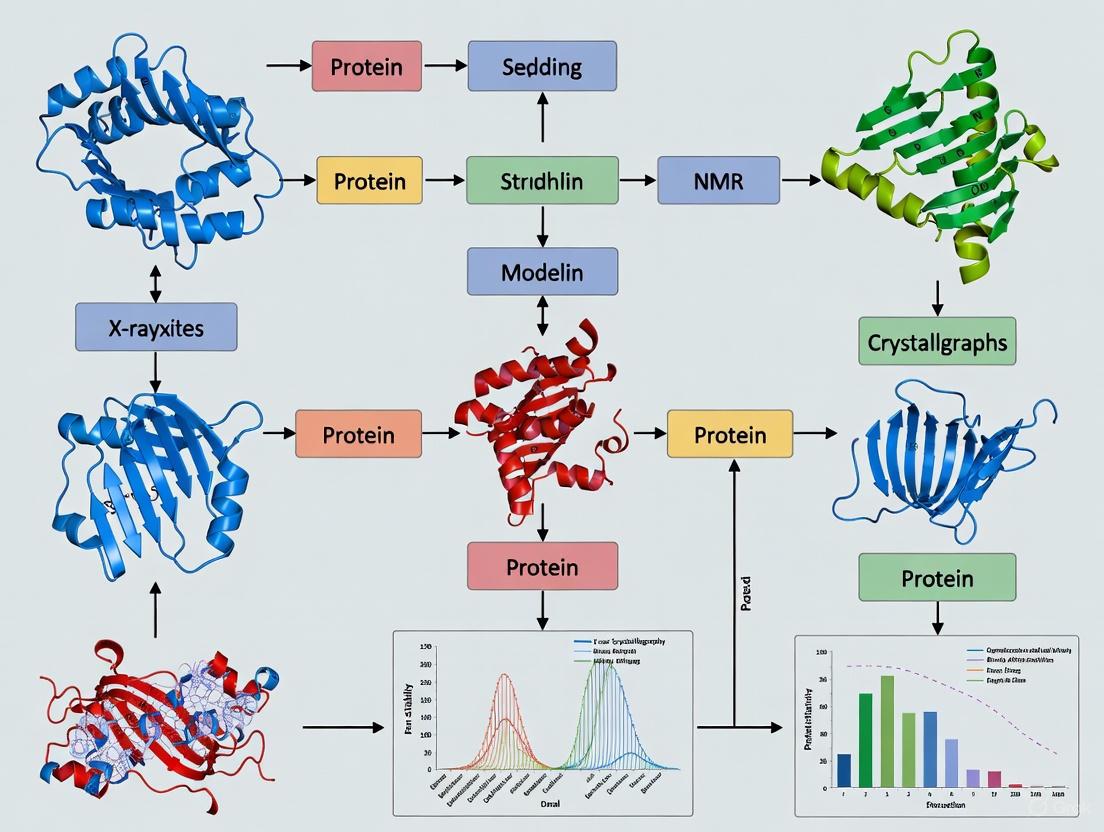
This article provides a comprehensive overview of protein structure determination methods and their pivotal role in modern drug design.
Protein Structure Determination for Drug Design: From Experimental Methods to AI-Driven Breakthroughs
Abstract
This article provides a comprehensive overview of protein structure determination methods and their pivotal role in modern drug design. It explores the foundational principles of structural biology, details the mechanisms and applications of key experimental and computational techniques—including X-ray crystallography, Cryo-EM, NMR, and AI-based predictors like AlphaFold—and addresses common challenges and optimization strategies. Aimed at researchers and drug development professionals, the content also covers validation protocols and comparative analyses to guide method selection, ultimately illustrating how structural insights are revolutionizing the discovery of high-affinity, specific therapeutics.
The Structural Blueprint of Life: Why Protein Structures are Fundamental to Modern Drug Discovery
The Critical Link Between Protein Structure and Biological Function
The three-dimensional structure of a protein is the fundamental determinant of its biological activity. This relationship, often summarized by the principle that "sequence dictates structure, and structure dictates function," is the cornerstone of molecular biology and a critical element in modern drug discovery. Proteins achieve their diverse functions—from catalyzing biochemical reactions as enzymes to facilitating cellular communication as receptors—through their unique, folded conformations. The precise spatial arrangement of amino acids creates specific binding pockets, enzymatic active sites, and interaction surfaces that enable proteins to recognize and interact with their molecular partners with exquisite specificity. Understanding this structure-function relationship is particularly vital in pharmaceutical research, where modulating protein activity through targeted molecular interventions represents a primary strategy for therapeutic development. The high failure rate of drug candidates in late-stage clinical trials, often due to insufficient efficacy or safety concerns stemming from off-target binding, underscores the necessity of incorporating detailed structural information early in the drug design process [1].
Recent advances in structural biology and computational prediction have dramatically enhanced our understanding of protein structures, yet significant challenges remain. The inherent flexibility of proteins, the influence of cellular environment on conformation, and the limitations of static structural models continue to complicate the straightforward translation of structural information to functional understanding. This technical guide examines the critical relationship between protein structure and biological function within the context of modern drug design research, providing researchers with a comprehensive framework for leveraging structural insights to advance therapeutic development.
Quantitative Measures for Protein Structure Comparison
Accurately quantifying structural similarities and differences is essential for classifying proteins, assessing computational models, and understanding functional variations. Multiple methodologies have been developed, each with distinct advantages and limitations for specific applications in drug discovery research.
Distance-Based Measures
Root Mean Square Deviation (RMSD) is the most widely used quantitative measure for comparing superimposed atomic coordinates. Calculated as RMSD = √[Σdi²/n], where di is the distance between equivalent atoms in the two structures and n is the number of atom pairs, RMSD provides a single value (in Ångströms) representing the average deviation between structures [2]. However, RMSD has a significant limitation: it is dominated by the most significant errors. Structures that are largely identical except for a flexible loop or terminal region can exhibit high global RMSD values, potentially misleading researchers about the overall similarity. This sensitivity to local variations makes RMSD less ideal for comparing proteins with flexible regions or domain movements, which are common in many drug targets [2].
Contact-Based Measures
To address the limitations of distance-based measures, contact-based methods evaluate structural similarity based on patterns of atomic or residue contacts rather than positional deviations. These methods define contacts between residues based on spatial proximity (typically Cβ atoms within a threshold distance, often 8Å) and compare the contact maps between two structures [2]. Contact-based measures are generally more robust to structural variations in flexible regions and provide a more biologically relevant assessment of similarity, as protein folding and interaction determinants are largely governed by contact patterns. They are particularly valuable for identifying similar structural folds even when overall sequence similarity is low, making them useful for functional annotation of proteins with distant evolutionary relationships [2].
Integrated Scoring Systems
Comprehensive structural comparison often benefits from combined approaches that incorporate multiple metrics. The Protein Structural Distance (PSD) represents one such integrated measure, combining structural alignment using double dynamic programming to align secondary structure elements with iterative rigid body superposition to minimize Cα atom RMSD [3]. This approach aims to provide a quantitative measure applicable across the spectrum of structural similarity, from nearly identical structures to highly divergent folds. The continuous nature of the PSD score makes it particularly valuable for large-scale structural comparisons and classification, complementing discrete categorization systems such as SCOP and CATH [3].
Table 1: Key Metrics for Protein Structure Comparison
| Metric | Calculation Basis | Strengths | Limitations | Typical Applications |
|---|---|---|---|---|
| Root Mean Square Deviation (RMSD) | Average distance between equivalent atoms after superposition | Simple calculation; intuitive interpretation | Dominated by largest errors; sensitive to flexible regions | Assessing model accuracy; comparing highly similar structures |
| Contact-Based Measures | Patterns of residue or atomic contacts within defined distance thresholds | Robust to flexible regions; biologically relevant | Less intuitive numerical output; distance threshold selection affects results | Fold recognition; identifying functionally similar structures |
| Protein Structural Distance (PSD) | Combined secondary structure alignment and iterative superposition | Continuous quantitative measure; works across similarity spectrum | Computationally intensive for large-scale comparisons | Structural classification; quantitative relationship analysis |
Experimental Methods for Protein Structure Characterization
Biophysical Approaches for Structural Analysis
Determining protein structures requires sophisticated experimental techniques that can resolve atomic-level details. X-ray crystallography has been the workhorse of structural biology, providing high-resolution structures by analyzing diffraction patterns from protein crystals. While powerful, this method requires high-quality crystals and may capture conformations influenced by crystal packing. Nuclear Magnetic Resonance (NMR) spectroscopy offers solution-state structures and insights into protein dynamics, making it ideal for studying flexible systems, though it faces limitations with larger proteins. Cryo-Electron Microscopy (cryo-EM) has emerged as a transformative technique, particularly for large complexes and membrane proteins that are difficult to crystallize. Recent technical advances have pushed cryo-EM resolution to near-atomic levels, revolutionizing structural biology of challenging targets [4] [5].
Table 2: Experimental Methods for Protein Structure and Interaction Analysis
| Method | Principle | Resolution/Information | Sample Requirements | Typical Applications in Drug Discovery |
|---|---|---|---|---|
| X-ray Crystallography | X-ray diffraction from protein crystals | Atomic resolution (1-3 Å) | High-quality crystals | Detailed binding site mapping; ligand complex structures |
| NMR Spectroscopy | Magnetic properties of atomic nuclei | Atomic resolution; dynamics information | Concentrated solution; size limitations | Intrinsically disordered proteins; protein dynamics |
| Cryo-EM | Electron imaging of frozen-hydrated samples | Near-atomic to atomic resolution (3-5 Å) | Complex purification; size advantages | Large complexes; membrane proteins; conformational heterogeneity |
| Surface Plasmon Resonance (SPR) | Mass change at sensor surface | Kinetic parameters (kon, koff, KD) | Immobilized binding partner | Binding affinity measurements; compound screening |
| Isothermal Titration Calorimetry (ITC) | Heat change during binding | Thermodynamic parameters (ΔH, ΔS, KD) | Soluble proteins and ligands | Binding mechanism studies; fragment screening |
In Vivo Structural Proteomics
Traditional structural methods typically require purified proteins removed from their native environments, potentially altering conformations. Recent innovations address this limitation through in vivo structural proteomics approaches that probe protein structures within living systems. Covalent Protein Painting (CPP) represents one such advance, using whole-animal perfusion of labeling reagents to dimethylate exposed lysine residues on intact proteins within their native cellular contexts [6]. This method provides a quantitative measure of lysine accessibility, revealing conformational changes during disease progression. When applied to an Alzheimer's disease mouse model, CPP identified 433 proteins undergoing structural changes attributed to disease progression across seven tissues, with alterations often preceding detectable expression changes [6]. This approach demonstrates the value of preserving native conformations for understanding disease mechanisms and identifying early structural biomarkers.
Diagram 1: In Vivo Protein Footprinting Workflow
Protein Structure in Drug Discovery Applications
Structure-Based Drug Design (SBDD)
Structure-Based Drug Design (SBDD) leverages three-dimensional structural information of biological targets to guide the discovery and optimization of therapeutic compounds. This approach contrasts with ligand-based methods that infer target properties indirectly from known active compounds. The direct structural information enables rational design of molecules with enhanced binding affinity and specificity, potentially reducing late-stage failures due to insufficient efficacy [1]. SBDD has been particularly valuable for challenging target classes such as membrane proteins, which constitute over 50% of modern drug targets but represent only a small fraction of structures in the Protein Data Bank due to experimental difficulties in their structural characterization [1].
The SBDD process typically begins with target identification and validation, followed by structural characterization of the binding site. Lead compounds are then designed or optimized to complement the structural and chemical features of the binding site, with iterative cycles of synthesis, testing, and structural analysis driving improvement. The availability of high-resolution target structures enables computational methods to screen virtual compound libraries and predict binding modes, accelerating the early stages of drug discovery.
AI and Deep Learning in Structure-Based Design
Recent advances in artificial intelligence have transformed structure-based drug discovery. Deep learning methods can now incorporate protein structural information directly into the generative process, designing novel molecules tailored to specific binding sites [1]. These approaches range from early shape-based methods to recent co-folding models that predict protein and ligand structures as a unified task. By learning from large datasets of protein-ligand complexes, these models capture the fundamental principles of molecular recognition and binding interactions, generating chemically valid compounds with enhanced binding potential [1].
However, significant challenges remain in ensuring the chemical plausibility of generated compounds, achieving generalizability across diverse protein targets, and accounting for protein flexibility in binding interactions. The dynamic nature of proteins means that single static structures may not adequately represent the conformational ensembles relevant for binding. Despite these limitations, AI-based approaches have demonstrated considerable promise in expanding the available chemical space for drug discovery and increasing the efficiency of lead compound identification.
Research Reagent Solutions for Protein Structure Studies
Table 3: Essential Research Reagents for Protein Structure Analysis
| Reagent/Category | Specific Examples | Function in Structural Biology | Application Context |
|---|---|---|---|
| Isotopic Labeling Reagents | ¹⁵N-ammonium chloride, ¹³C-glucose | Incorporation of NMR-active isotopes into proteins | NMR spectroscopy for structure determination |
| Crystallization Reagents | Polyethylene glycols, ammonium sulfate, various salts | Precipitating agents for protein crystallization | X-ray crystallography screen optimization |
| Cryo-EM Reagents | Graphene oxide grids, gold grids with ultrathin carbon | Sample supports for frozen-hydrated electron microscopy | Cryo-EM sample preparation |
| Chemical Crosslinkers | DSS, BS³, formaldehyde | Stabilizing protein complexes and interactions | Structural mass spectrometry; interaction mapping |
| Footprinting Reagents | Formaldehyde, cyanoborohydride | Labeling solvent-accessible residues | In vivo footprinting (e.g., CPP) studies |
| Fluorescent Dyes | Fluorescein, rhodamine, BODIPY, Cy5 | Molecular tags for binding assays | Fluorescence polarization binding studies |
Challenges and Future Perspectives
Fundamental Limitations in Protein Structure Prediction
Despite remarkable advances in AI-based protein structure prediction, recognized by the 2024 Nobel Prize in Chemistry, fundamental challenges remain. The Levinthal paradox highlights the conceptual problem of how proteins efficiently find their native folds among astronomically possible conformations through directed pathways rather than random search [5]. While Anfinsen's dogma established that sequence determines structure, its interpretation has limitations—protein conformations are influenced by their thermodynamic environment, and the functional, native state may not represent the absolute energy minimum under all conditions [5].
Current AI approaches, including AlphaFold, have demonstrated impressive accuracy in predicting static structures but face inherent limitations in capturing protein dynamics. The millions of possible conformations that proteins can adopt, especially those with flexible regions or intrinsic disorders, cannot be adequately represented by single static models derived from crystallographic databases [5]. This is particularly relevant for drug discovery, where binding often involves conformational selection from pre-existing ensembles rather than simple lock-and-key mechanisms.
Emerging Approaches and Future Directions
Future advances in linking protein structure to function will likely focus on ensemble representations that capture conformational dynamics rather than single static structures. Methods that incorporate environmental dependencies and cellular contexts will provide more physiologically relevant structural information [5]. Integrated approaches combining computational prediction with experimental validation across multiple scales will be essential for advancing our understanding of structure-function relationships.
For drug discovery, the increasing recognition of protein-protein interactions (PPIs) as therapeutic targets presents both challenges and opportunities. PPIs often involve large, relatively flat interfaces with affinities in the low nanomolar to micromolar range, making them difficult to target with small molecules [4]. However, advances in structural characterization of these complexes, combined with innovative therapeutic modalities, are opening new avenues for intervention. The continued development of methods to study proteins in their native environments, such as in vivo footprinting and cellular structural biology, will enhance our ability to relate structural information to biological function in physiologically relevant contexts.
Diagram 2: Structure-Function Relationship in Drug Discovery
Drug development is notoriously plagued by high attrition rates, with industry analyses indicating that approximately 90% of drug candidates that enter clinical trials fail to reach the market [7]. The financial implications are staggering, with the average cost to bring a new drug to market estimated at $2.6 billion over a timeline of 10-15 years [7]. A fundamental analysis of dynamic clinical trial success rates (ClinSR) reveals that this problem has been worsening since the early 21st century, though recent plateaus and slight increases suggest emerging strategies may be beginning to have a positive impact [8].
The primary drivers of this attrition are insufficient efficacy (approximately 40-50% of failures) and unacceptable safety profiles [7] [9]. These failures often originate in the earliest stages of drug discovery, where incomplete understanding of target biology and compound-target interactions leads to suboptimal candidate selection. Structure-based drug design (SBDD) has emerged as a powerful approach to address these challenges by enabling researchers to visualize and optimize drug-target interactions at the atomic level before compounds ever enter the clinic [10]. By leveraging the three-dimensional structures of biological targets, SBDD facilitates the rational design of therapeutic agents with enhanced precision, potentially reducing late-stage failures and revolutionizing the efficiency of pharmaceutical development.
The Structural Basis of Drug Action
Protein Structure Fundamentals
Proteins exhibit a hierarchical architecture that is critical to their function and, consequently, to drug design. The primary structure represents the linear amino acid sequence, while secondary structures include local folding patterns such as α-helices and β-sheets stabilized by hydrogen bonding. The tertiary structure describes the overall three-dimensional arrangement of a single polypeptide chain, and quaternary structure involves the spatial coordination of multiple polypeptide subunits [10].
For a protein to be "druggable," it must possess specific characteristics that enable effective therapeutic intervention. These include a well-defined binding pocket where small molecules can physically bind with high affinity and specificity, sufficient structural stability to maintain a suitable conformation for drug binding, and accessibility for therapeutic compounds [7]. Proteins involved in large protein-protein interactions often present flat, featureless surfaces that are difficult to target with conventional small molecules, earning them classification as "undruggable" targets that require specialized approaches [7].
Key Structural Biology Techniques
Accurately determining the 3D structures of target proteins is pivotal for structure-based drug design. The major experimental techniques each offer distinct advantages and limitations as detailed in Table 1.
Table 1: Comparison of Major Protein Structure Determination Techniques
| Aspect | X-ray Crystallography | Cryo-Electron Microscopy (Cryo-EM) | NMR Spectroscopy |
|---|---|---|---|
| Resolution | High (typically 1.5-3.5 Å) | Variable (often ~3.5 Å, challenging <3 Å) | Medium to High (2.5-4.0 Å) |
| Sample Requirements | Large amounts, high-quality crystals | Small amounts, no crystallization needed | Moderate amounts, soluble proteins |
| Sample State | Crystalline solid | Vitreous ice (near-native) | Solution (native conditions) |
| Advantages | Atomic detail, well-established | Handles large complexes, captures multiple conformations | Studies dynamics & flexibility, non-destructive |
| Limitations | Difficult membrane proteins, static snapshot | Challenging for small proteins, computationally intensive | Limited to smaller proteins, complex data interpretation |
| Best For | Detailed atomic structures of soluble proteins | Large complexes, membrane proteins, flexible systems | Protein dynamics, folding, ligand interactions |
X-ray crystallography has been the workhorse of structural biology, responsible for the majority of structures in the Protein Data Bank. However, its requirement for high-quality crystals presents significant challenges for membrane proteins and dynamic systems [10]. Cryo-EM has recently transformed the field by enabling structure determination of complex macromolecular assemblies that defy crystallization, with technical advances pushing resolutions to atomic levels (1.25 Å) [10]. NMR spectroscopy provides unique insights into protein dynamics and flexibility in solution under physiological conditions, offering complementary information to the static snapshots provided by other methods [10].
The following workflow illustrates how these techniques integrate into the broader drug discovery pipeline:
Mitigating Efficacy Failures Through Structural Insights
Structure-Based Hit Identification and Optimization
Traditional drug discovery relied heavily on high-throughput screening (HTS) of large compound libraries, an approach that is both time-consuming and expensive [7]. Structure-based methods transform this process by enabling virtual screening of compound libraries against target structures, significantly accelerating hit identification. Once initial hits are identified, researchers can use iterative cycles of structural analysis and chemical modification to optimize binding affinity and specificity [10].
The integration of artificial intelligence with structural biology has further revolutionized this field. Deep learning methods such as CMD-GEN (Coarse-grained and Multi-dimensional Data-driven molecular generation) bridge ligand-protein complexes with drug-like molecules by utilizing coarse-grained pharmacophore points sampled from diffusion models [11]. This approach decomposes the complex problem of three-dimensional molecule generation into more manageable sub-tasks: pharmacophore point sampling, chemical structure generation, and conformation alignment, resulting in molecules with enhanced binding potential while maintaining chemical plausibility [11].
Targeting Selective Inhibition
A critical challenge in drug development is achieving sufficient selectivity for the intended target to minimize off-target effects. Structural biology provides the foundation for understanding the subtle differences between related proteins in the same family. For example, the CMD-GEN framework has demonstrated success in designing selective inhibitors for synthetic lethal targets, with wet-lab validation confirming its potential in generating highly effective PARP1/2 selective inhibitors [11].
By analyzing structural variations in binding sites across protein families, researchers can design compounds that exploit subtle differences in residue composition, pocket shapes, and water network structures. This approach is particularly valuable for tackling the "undruggable" targets that have historically resisted conventional drug discovery approaches, including transcription factors and scaffolding proteins [7].
Table 2: Quantitative Impact of Structure-Based Approaches on Key Drug Discovery Metrics
| Metric | Traditional Approaches | Structure-Based Approaches | Improvement |
|---|---|---|---|
| Clinical Trial Success Rate | 7-20% (varying by study) [8] | Emerging positive impact [8] | Recent plateau and increase after decline |
| Typical Discovery Timeline | 3-6 years (preclinical) [9] | Significantly accelerated [12] | Reduced by AI and structure-based optimization |
| Attrition due to Efficacy | ~40-50% of clinical failures [9] | Addressed via targeted design [10] | Substantial reduction potential |
| Selective Inhibitor Design | Challenging for similar targets | Enabled by precise structural differences [11] | Successful PARP1/2 validation [11] |
Addressing Safety Failures Through Structural Design
Predicting and Minimizing Off-Target Binding
Drug safety failures often result from unanticipated interactions with off-target proteins. Structural bioinformatics enables proactive assessment of these risks through computational profiling of candidate compounds against known protein structures. Methods such as molecular docking and binding site similarity analysis allow researchers to predict potential off-target interactions early in the discovery process [13].
The integration of 3D structural similarity analyses into safety assessment frameworks represents a significant advancement over traditional sequence-based approaches. As noted in refined safety assessment protocols for newly expressed proteins, these structural comparisons provide more accurate functional predictions when evaluating potential toxicity and allergenicity [14]. This approach is particularly valuable for identifying cross-reactivity with proteins that share structural features but have low sequence similarity.
Enhancing Selectivity Through Rational Design
Structural insights enable the deliberate design of compounds with improved safety profiles. By analyzing the atomic-level interactions between drugs and their targets, medicinal chemists can modify compound structures to enhance selectivity and reduce promiscuity. The framework of pharmacophore point alignment allows for precise control over molecular interactions, ensuring that generated compounds maintain specificity for the intended target [11].
This approach is exemplified by the development of ML323, a selective inhibitor of USP1 that interacts allosterically with its target. Structural analysis through cryo-electron microscopy revealed the precise binding mode of this inhibitor, providing insights that can guide the design of other selective therapeutic agents [11].
Experimental Protocols in Structure-Based Drug Design
Integrated Workflow for Structure-Based Molecule Generation
The CMD-GEN framework demonstrates a modern approach to structure-based drug design that combines multiple computational techniques:
Coarse-grained pharmacophore sampling: A diffusion model generates 3D pharmacophore points conditioned on protein pocket constraints, capturing essential interaction features without atomic-level detail [11].
Chemical structure generation: A gating condition mechanism and pharmacophore-constrained module (GCPG) converts sampled pharmacophore point clouds into chemical structures with controlled properties including molecular weight, LogP, QED, and synthetic accessibility [11].
Conformation prediction and alignment: A specialized module aligns the generated chemical structures with the sampled pharmacophore points in three dimensions, ensuring physical plausibility and binding compatibility [11].
This hierarchical approach effectively bridges the gap between a limited number of available 3D protein-ligand complex structures and the vast space of potential drug molecules, enabling the generation of novel compounds with optimized properties for specific targets.
Experimental Validation of Computational Predictions
Computational predictions require experimental validation to confirm biological activity and safety profiles. Key experimental protocols include:
Binding Affinity Assays:
- Surface Plasmon Resonance (SPR) to measure binding kinetics
- Isothermal Titration Calorimetry (ITC) to quantify binding thermodynamics
- Fluorescence polarization assays for rapid screening of compound libraries
Functional Activity Assessments:
- Enzyme inhibition assays for enzymatic targets
- Cell-based reporter assays for signaling pathways
- High-content imaging for phenotypic screening
Safety Profiling:
- Counter-screening against known off-targets (e.g., hERG channel for cardiac safety)
- Cytotoxicity assays in multiple cell lines
- Metabolic stability studies in liver microsomes
The continuous iteration between computational prediction and experimental validation creates a virtuous cycle of improvement, refining both the compounds and the predictive models themselves.
Essential Research Reagent Solutions
Table 3: Key Research Reagents and Materials for Structure-Based Drug Discovery
| Reagent/Material | Function | Application Examples |
|---|---|---|
| Protein Expression Systems | Production of recombinant target proteins | E. coli, insect cell, mammalian expression systems |
| Crystallization Kits | Screening conditions for protein crystallization | Sparse matrix screens, optimization kits |
| Cryo-EM Grids | Sample support for electron microscopy | UltrAuFoil, Quantifoil grids with various hole sizes |
| NMR Isotope Labels | Isotopic labeling for structure determination | ^15^N, ^13^C-labeled compounds for protein NMR |
| Fragment Libraries | Collections of small molecules for screening | Diverse chemical fragments for initial binding studies |
| Computational Software | Molecular modeling and simulation | Schrödinger Suite, MOE, Rosetta, AutoDock |
| AI Modeling Platforms | Deep learning for molecular generation | CMD-GEN framework, GraphBP, DiffSBDD [11] |
Emerging Technologies and Approaches
The field of structure-based drug design continues to evolve rapidly, with several emerging technologies poised to further address drug attrition:
Artificial Intelligence Integration: AI is transforming structure-based approaches by enabling the analysis of complex biological data that exceeds human capability. Deep learning models facilitate target identification through multiomics data analysis, protein structure prediction with tools like AlphaFold, and de novo drug design with optimized molecular structures [7] [12]. These approaches demonstrate exceptional ability to extract meaningful features from noisy, high-dimensional datasets, capturing non-linear relationships that traditional methods miss [7].
Advanced Clinical Trial Designs: AI supports improved trial design through predictive modeling and protocol optimization. Innovations like synthetic control arms and digital twins can reduce logistical and ethical challenges by simulating outcomes using real-world or virtual patient data [7]. These approaches enable more efficient patient recruitment and trial execution, potentially accelerating the translation of structurally-designed compounds into approved therapies.
Structural Systems Pharmacology: Moving beyond single-target drug design, the future lies in understanding polypharmacology – how drugs interact with multiple targets simultaneously. Structural insights across entire protein families will enable the rational design of compounds with optimal multi-target profiles, balancing efficacy against potential side effects [13].
Structural insights provide a powerful framework for addressing the persistent challenge of drug attrition. By enabling rational drug design grounded in atomic-level understanding of target interactions, structure-based approaches directly combat the primary causes of failure in clinical development. The integration of advanced computational methods, particularly artificial intelligence and deep learning, with experimental structural biology creates a virtuous cycle of innovation that continues to enhance the precision and efficiency of drug discovery.
As structural techniques advance in resolution and throughput, and computational methods grow in sophistication and predictive power, the pharmaceutical industry is positioned to significantly improve success rates in drug development. This progress promises to deliver more effective and safer therapies to patients in a more timely and cost-effective manner, ultimately addressing one of the most significant challenges in modern medicine. The continued refinement of structure-based strategies, coupled with their thoughtful integration into the drug development pipeline, represents the most promising path toward reducing attrition and realizing the full potential of precision medicine.
The "protein folding problem" is one of the most significant challenges in modern molecular biology. It refers to the mystery of how a linear amino acid sequence spontaneously folds into a unique, biologically active three-dimensional structure in a matter of milliseconds to seconds. This process is fundamental to life itself, as a protein's specific three-dimensional architecture determines its cellular function. The implications of solving this problem extend across biotechnology, with particularly transformative potential in structure-based drug design, where precise knowledge of a target protein's structure enables the rational development of therapeutic agents [10].
The process of protein folding is governed by four hierarchical levels of structural organization. The primary structure is the linear sequence of amino acids linked by peptide bonds. Local folding patterns, such as alpha-helices and beta-sheets, stabilized by hydrogen bonds, form the secondary structure. The tertiary structure describes the overall three-dimensional conformation of a single polypeptide chain, resulting from interactions between distant side chains. Finally, the quaternary structure arises when multiple folded polypeptide chains (subunits) assemble into a functional protein complex [15] [10]. Understanding the transition from a one-dimensional sequence to a complex three-dimensional structure is crucial for leveraging protein science in therapeutic development.
Experimental Methods for Protein Structure Determination
Before the rise of computational prediction, experimental methods were the sole means of determining protein structures at high resolution. The three primary techniques—X-ray crystallography, cryo-electron microscopy (cryo-EM), and nuclear magnetic resonance (NMR) spectroscopy—each have distinct strengths, limitations, and ideal use cases in drug discovery.
Table 1: Comparison of Major Experimental Structure Determination Techniques
| Aspect | X-ray Crystallography | Cryo-Electron Microscopy (Cryo-EM) | NMR Spectroscopy |
|---|---|---|---|
| Resolution | High, often < 2.5 Å [10] | Variable, often ~3.5 Å, can reach 1.25 Å [10] | Medium to High (2.5 – 4.0 Å) [10] |
| Sample State | Crystalline solid | Vitreous ice (near-native) | Solution (native) |
| Sample Requirement | Large amounts, high purity [10] | Small amounts [10] | Moderate concentration, high purity |
| Ideal Protein Size | Wide range, but crystallization challenging for large complexes | Excellent for large complexes and membrane proteins [10] | Smaller proteins (< 50 kDa) [10] |
| Key Advantage | Atomic-level detail, well-established | Handles difficult-to-crystallize targets, captures multiple states [10] | Studies dynamics and flexibility in solution [10] |
| Key Limitation | Requires crystallization; static snapshot [10] | Challenging for small proteins (< 100 kDa); high cost [10] | Low throughput; size limitation [10] |
| Primary Role in Drug Design | High-resolution ligand binding sites | Structure of large drug targets (e.g., receptors, channels) | Protein dynamics, ligand interaction mapping |
X-ray Crystallography
X-ray crystallography has been the dominant workhorse of structural biology, accounting for the majority of structures in the Protein Data Bank (PDB) [16]. The technique is based on Bragg's Law (nλ = 2d sinϑ), where the diffraction of X-rays by a crystalline sample produces a pattern that can be transformed into an electron density map, revealing the atomic structure [16].
Experimental Protocol:
- Crystallization: The target protein is purified and induced to form highly ordered three-dimensional crystals. This is often the most challenging and time-consuming step, requiring screening hundreds to thousands of conditions [16] [10].
- Data Collection: A crystal is exposed to an intense X-ray beam (often from a synchrotron source). The angles and intensities of the diffracted beams are recorded by a detector [16].
- Data Processing: The diffraction patterns are processed to determine the amplitude of the scattered waves. The phase information, which is lost in measurement, must be solved using methods like molecular replacement or experimental phasing (e.g., SAD/MAD) [16].
- Model Building and Refinement: An atomic model is built into the experimental electron density map and iteratively refined to fit the data while maintaining realistic stereochemistry [16].
Cryo-Electron Microscopy (Cryo-EM)
Cryo-EM has undergone a "resolution revolution," making it a powerful alternative for structures that are difficult to crystallize, such as large macromolecular complexes and membrane proteins [17] [10]. The method involves rapidly freezing a thin layer of protein solution in vitreous ice, preserving the particles in a near-native state.
Experimental Protocol:
- Vitrification: A purified protein sample is applied to a grid and rapidly plunged into a cryogen (like liquid ethane), freezing it so quickly that water molecules do not have time to crystallize, forming a glass-like state [17].
- Data Acquisition: The frozen grid is imaged in a transmission electron microscope under low-dose conditions to minimize radiation damage. Thousands to millions of 2D projection images are collected automatically [17] [10].
- Image Processing: Computational algorithms perform several steps:
- Particle Picking: Individual protein particles are identified within the micrographs.
- 2D Classification: Particles are grouped into classes representing similar views.
- 3D Reconstruction: 2D class averages are combined to generate an initial 3D model, which is then iteratively refined to produce a final 3D electron density map (a "cryo-EM map") [17].
- Model Building: An atomic model is built de novo or by docking and refining a known structure into the cryo-EM map [17].
Synergistic Use of X-ray and Cryo-EM Data
These techniques are often complementary. A common integrative approach is to dock high-resolution X-ray structures of individual subunits or domains into a lower-resolution cryo-EM map of a larger complex. This hybrid method reveals how the components interact and assemble, providing critical insights for drug design that targets specific protein-protein interfaces [17].
Computational Approaches to Protein Structure Prediction
The slow and costly nature of experimental methods created a massive gap between the billions of known protein sequences and the hundreds of thousands of solved structures. Computational prediction aims to bridge this gap and is categorized into three main paradigms.
Table 2: Categories of Computational Protein Structure Prediction
| Category | Principle | Key Tools / Examples | Typical Use Case |
|---|---|---|---|
| Template-Based Modeling (TBM) | Uses known structures of homologous proteins as templates to model the target. | MODELLER [15], Swiss-PDBViewer [15] | High-accuracy modeling when a close homolog (>30% identity) exists. |
| Template-Free Modeling (TFM) | Uses AI and deep learning on multiple sequence alignments (MSAs) to predict structure without a single global template. | AlphaFold2 [18], RoseTTAFold [19], ESMFold [19] | De novo prediction for proteins with no close structural homologs. |
| Ab Initio Modeling | Relies purely on physical principles and force fields without using evolutionary information or known structures. | Traditional physics-based simulations | Small proteins or studying folding pathways; lower accuracy. |
Homology Modeling (A Template-Based Method)
Homology modeling, also known as comparative modeling, is based on the observation that protein tertiary structure is more conserved than amino acid sequence [20]. If a protein with a known structure (the "template") shares significant sequence similarity with the target protein, a reliable model can often be built.
Methodology:
- Template Selection and Alignment: Identify a suitable template via sequence database searches (e.g., BLAST, PSI-BLAST). Create a sequence alignment between the target and template [20].
- Model Construction: Copy the coordinates of conserved regions from the template. For variable regions, especially loops, use specialized loop modeling techniques. Model side chains considering rotamer libraries and steric clashes [20].
- Model Assessment: Evaluate the final model using statistical potential functions and stereochemical checks (e.g., Ramachandran plot) [20].
The AI Revolution: AlphaFold and Deep Learning
The field was transformed by the development of AlphaFold2 by DeepMind, which demonstrated accuracy competitive with experimental structures in the CASP14 assessment [18]. This deep learning system can regularly predict protein structures with atomic accuracy even without a known homologous structure.
Architecture and Workflow: The AlphaFold2 network takes as input the amino acid sequence and a multiple sequence alignment (MSA) of homologous sequences. Its core innovation lies in two components [18]:
- The Evoformer: A novel neural network block that processes the input MSA and residue-pair information. It reasons about the spatial and evolutionary relationships between residues, effectively inferring a "structural hypothesis" by analyzing co-evolutionary patterns [18].
- The Structure Module: This module takes the output of the Evoformer and directly predicts the 3D coordinates of all heavy atoms. It represents the protein as a set of rigid body frames and uses an equivariant transformer to ensure the predicted structure is physically plausible [18]. The process involves iterative refinement ("recycling") where the initial prediction is fed back into the network for improvement.
AlphaFold's output includes a per-residue confidence score (pLDDT) that reliably indicates the local accuracy of the model, allowing researchers to gauge which regions are highly trustworthy [18]. The AlphaFold Protein Structure Database, developed in partnership with EMBL-EBI, provides open access to over 200 million predicted structures, dramatically expanding the structural coverage of known protein sequences [21].
Table 3: Essential Research Reagents and Resources
| Resource / Tool | Type | Primary Function | Relevance to Drug Design |
|---|---|---|---|
| Protein Data Bank (PDB) | Database | Central repository for experimentally determined 3D structures of proteins and nucleic acids. | Gold-standard source of target structures for docking and lead optimization. |
| AlphaFold Database | Database | Provides >200 million AI-predicted protein structures [21]. | Enables rapid access to structural models for targets with no experimental structure. |
| PyMOL | Software | Molecular visualization and analysis tool; a pivotal platform for structural bioinformatics [22]. | Visualization of binding sites, protein-ligand interactions, and creation of publication-quality images. |
| MODELLER | Software | Implements spatial restraint-based homology modeling for comparative protein structure modeling [20]. | Generate models for protein variants or close homologs of a known target. |
| trRosetta | Software | A deep learning-based de novo protein structure prediction algorithm [22]. | Predict structures and study the impact of mutations (e.g., in SARS-CoV-2 variants) [22]. |
| ProteinMPNN | Software | An "inverse folding" neural network that designs sequences for a given protein backbone [19]. | De novo design of binders, enzymes, and oligomers for therapeutic applications. |
The solution to the protein folding problem, particularly through AI systems like AlphaFold, is already transforming structure-based drug design (SBDD). By providing highly accurate structural models for previously uncharacterized drug targets, these tools are accelerating the early stages of drug discovery, from target identification and validation to lead compound screening [22]. For instance, predicting structures of viral protein variants (e.g., SARS-CoV-2, Influenza) has been instrumental in understanding immune evasion and designing broad-spectrum therapeutics [22].
Despite this progress, challenges remain. Current AI models primarily provide static snapshots and can struggle to predict the conformational dynamics and multiple states that are often critical for protein function and drug binding [19] [10]. Furthermore, the accuracy of predictions for proteins lacking evolutionary information (i.e., shallow MSAs) is still limited [19]. The next frontier involves developing models that can fully characterize the energy landscapes of proteins, predicting not just a single structure but the ensemble of conformations a protein can adopt. Such advances will move us from static structures to dynamic simulations, ultimately enabling the design of proteins and small molecules with specified conformational dynamics, thereby unlocking a new era in rational therapeutic design [19].
Structure-Based Drug Design (SBDD) is a foundational paradigm in modern rational drug discovery, focused on developing and interpreting three-dimensional atomic models of protein-ligand interactions to guide the development of therapeutic molecules [23]. This approach has become "an integral part of most industrial drug discovery programs" and relies on detailed structural knowledge of biological targets to design compounds with optimal binding characteristics [23] [24]. The fundamental premise of SBDD is that understanding the precise molecular interactions between a drug candidate and its protein target enables more efficient optimization of potency, selectivity, and other drug-like properties.
The SBDD pipeline has been transformed by complementary advances in both experimental structural biology and computational prediction methods. While traditional SBDD relied heavily on high-resolution techniques like X-ray crystallography, recent years have seen the emergence of cryogenic electron microscopy (cryoEM) as a powerful alternative for targets resistant to crystallization [25]. Simultaneously, the revolutionary development of machine learning-based structure prediction tools like AlphaFold2 and RoseTTAFold has dramatically expanded the structural universe available to drug designers [22]. This guide examines the integrated SBDD pipeline, from target selection to clinical candidate identification, within the context of these evolving structural determination methods.
Foundational Principles and Methods in SBDD
Experimental Structure Determination Methods
Experimental structure determination provides the empirical foundation for SBDD, with each technique offering distinct advantages for specific target classes and research questions.
X-ray Crystallography: As the workhorse of structural biology, X-ray crystallography constitutes greater than 85% of structures in the Protein Data Bank (PDB) [25]. This method involves growing protein crystals, introducing ligands through co-crystallization or soaking, and collecting diffraction patterns typically under cryogenic conditions to mitigate radiation damage. The primary limitation remains the often challenging and empirical process of protein crystallization, particularly for membrane proteins and large complexes [25]. Recent innovations like serial room-temperature crystallography at XFELs (X-ray Free Electron Lasers) and synchrotrons have enabled studies of structural dynamics and the detection of previously hidden allosteric sites by overcoming cryo-trapped conformational states [25].
Cryogenic Electron Microscopy (cryoEM): CryoEM has emerged as a powerful alternative for determining structures of proteins and protein complexes that are difficult to crystallize [25]. This technique involves flash-freezing protein samples in vitreous ice and collecting images with electron microscopes, followed by computational reconstruction to generate three-dimensional density maps. While historically limited to lower resolutions, technological advances have dramatically improved cryoEM capabilities, with approximately 55% of cryoEM maps deposited in the PDB in 2021 achieving resolutions better than 3.5Å [25].
Complementary Biophysical Techniques: Additional methods provide structural information under solution conditions. Small Angle X-ray Scattering (SAXS) offers low-resolution structural data and can monitor ligand-induced conformational changes and oligomerization states, potentially serving as a high-throughput screening tool [25]. NMR spectroscopy, though not heavily featured in the current search results, remains valuable for studying protein dynamics and ligand binding in solution.
Table 1: Comparison of Major Experimental Structure Determination Methods in SBDD
| Method | Resolution Range | Sample Requirements | Key Advantages | Primary Limitations |
|---|---|---|---|---|
| X-ray Crystallography | Typically <2.5Å | Large, single crystals (~100μm) | High resolution, well-established workflow, high-throughput at synchrotrons | Crystallization bottleneck, cryo-trapping of conformations |
| Serial Room-Temperature Crystallography | <2.0Å achievable | Microcrystals (~10μm) | Captures protein dynamics, identifies hidden allosteric sites | Limited access to XFELs, complex data processing |
| CryoEM | ~3.5Å (55% of maps in 2021) | Small amount of purified protein | Avoids crystallization, suitable for large complexes | Lower resolution than crystallography for many targets, access limitations |
| SAXS | Low resolution (~10-100Å) | Solution sample | Studies proteins in solution, monitors conformational changes | Low resolution, complex data interpretation |
Computational Structure Prediction and Analysis
Computational methods have dramatically expanded the structural toolkit available for SBDD, particularly with recent advances in machine learning-based approaches.
Protein Structure Prediction: The development of AlphaFold2, RoseTTAFold, and subsequent models like AlphaFold3 and HelixFold3 has revolutionized protein structure prediction by achieving accuracy comparable to many experimental methods [23] [22]. These tools can generate 3D structures of targets purely in silico from sequence data, enabling SBDD for proteins that have resisted experimental structure determination [23]. However, limitations remain regarding the accuracy of residue conformations at active sites and the inability to reliably predict which conformational state these tools will generate [22].
Molecular Docking and Binding Pose Prediction: Docking algorithms predict how small molecules bind to protein targets. These include conventional scoring function-based methods like AutoDock Vina and newer approaches using diffusion models like DiffDock [23]. Recently, protein-ligand co-folding models such as AlphaFold3 can simultaneously predict protein structure and protein-ligand binding modes, though accuracy may be lower than crystallographic methods [23].
Specialized Computational Workflows: For challenging targets, specialized workflows have been developed to identify novel binding sites. For allosteric drug discovery, mixed solvent molecular dynamics (MxMD) simulations combined with SiteMap analysis can reveal potential binding sites not accessible in apo protein structures, achieving >80% success rate in identifying known allosteric binding sites [26].
The SBDD Pipeline: From Target to Candidate
The SBDD pipeline represents a systematic, iterative process that transforms structural information into optimized drug candidates through cycles of design, synthesis, and testing.
Diagram 1: The core SBDD workflow shows the iterative nature of lead optimization
Target Identification and Validation
The initial phase focuses on identifying and validating a disease-relevant biological target, typically a protein whose modulation would produce therapeutic benefit [27]. During this stage, structural bioinformatics tools support detailed analysis of potential targets to assess druggability – the likelihood that a target can be effectively modulated by a small molecule [27]. This involves identifying functional regions such as active sites, co-factor binding sites, allosteric sites, or surfaces involved in protein-protein interactions (PPI) [27]. Analyzing sequence-structure relationships can elucidate the effects of mutations on protein activity and inform understanding of evolutionary conservation [27].
Hit Identification and Lead Generation
Once a validated target structure is available, the hit identification phase seeks compounds that bind to the target and produce a desired biological effect [27]. This stage employs multiple complementary approaches:
High-Throughput Screening (HTS): Large compound libraries are screened using biochemical, biophysical, or cell-based assays to identify initial hit compounds [27]. For structure-based design, promising hit compounds are crystallized in complex with the protein target, providing detailed views of molecular interactions within the binding site [27].
Virtual Screening: Computational methods screen virtual libraries containing millions of compounds in silico [27]. The advantage lies in synthesizing or purchasing only those compounds demonstrating promising binding efficiency in computer simulations. Modern virtual screening pipelines combine ligand-based screening with molecular docking and advanced water-based scoring methods [26].
Fragment-Based Drug Design (FBDD): This approach screens smaller, simpler molecular fragments, which typically have lower affinity but higher ligand efficiency. Structural information guides the elaboration and linking of fragments into higher-affinity compounds.
Throughout hit identification, computational tools with enhanced AI capabilities help prioritize compounds with favorable properties, while ADME prediction tools help prioritize compounds with desirable pharmacokinetic profiles [27].
Lead Optimization to Candidate Drug
Using lead series obtained from hit identification, teams engage in iterative cycles of computational modeling, chemical modification, biological testing, and structure-based design to identify a candidate drug – an optimized lead molecule suitable for Phase I clinical trials [27]. During this intensive phase, multiple compound properties are optimized simultaneously:
Table 2: Key Optimization Parameters in Lead Optimization Phase
| Parameter | Optimization Goal | Structural Guidance Methods |
|---|---|---|
| Potency | Low nM to μM activity against target | Structure-activity relationship (SAR) analysis, interaction optimization |
| Selectivity | Minimal off-target effects | Structural comparison with anti-target binding sites, docking panels |
| ADMET Profile | Optimal pharmacokinetics and low toxicity | In silico ADMET prediction, structural modifications to reduce metabolic liabilities |
| Efficacy | Demonstrated activity in disease models | Maintenance of target engagement while optimizing physicochemical properties |
| Synthetic Feasibility | Cost-effective synthesis | Structural simplification, retrosynthetic analysis guided by binding requirements |
Throughout lead optimization, structural biologists and medicinal chemists work in close collaboration, with many cycles of compound optimization, co-crystallization, and structure determination required to transform an initial hit into a clinical candidate [27]. The significance of three-dimensional structural data throughout this process cannot be overestimated, as it provides the fundamental blueprint informing each design iteration [27].
Advanced Applications and Future Directions
Specialized SBDD Applications
Allosteric Modulation: Allosteric modulators target sites distinct from a protein's active site, offering potential advantages in selectivity and the ability to target proteins deemed "undruggable" by conventional approaches [26]. For example, inhibitors targeting KRAS(G12C) mutants identified a previously unappreciated binding pocket between the switch II region and nucleotide binding site, leading to clinical candidates for previously untreatable cancers [25].
Targeting Protein-Protein Interactions (PPIs): SBDD approaches are increasingly targeting large, shallow interfaces involved in PPIs, which represent a growing class of therapeutic targets, particularly in oncology and immunology.
Overcoming Antimicrobial Resistance: SBDD facilitates the design of new-generation antibiotics targeting conserved regions of resistant pathogens, as demonstrated by work on HIV-1 capsid proteins across different clades and influenza A NS1 proteins [22].
Data Management and Emerging Technologies
Modern SBDD generates enormous volumes of heterogeneous structural and chemical data, creating data management challenges that new approaches are addressing:
Data Mesh Architecture: Some organizations are adopting decentralized data mesh architectures to manage complex SBDD data landscapes [28]. This approach applies four fundamental principles: domain-oriented ownership, data-as-a-product, self-service data platform, and federated governance [28]. This architecture aligns with the multidisciplinary nature of drug discovery, where computational chemists, structural biologists, medicinal chemists, and pharmacologists must collaborate effectively as both data producers and consumers [28].
AI and Machine Learning Integration: As pharmaceutical companies increasingly turn to AI and machine learning to drive drug discovery, having well-organized, contextual, accessible structural data becomes essential for training accurate models [28]. AI methods are being integrated throughout the SBDD pipeline, from structure prediction to compound optimization and ADMET prediction [27].
Table 3: Essential Research Reagent Solutions and Computational Tools for SBDD
| Resource Category | Specific Examples | Function in SBDD |
|---|---|---|
| Structural Biology Platforms | PyMOL, Coot, Phenix | Visualization, model building, and refinement of protein-ligand structures [22] |
| Molecular Docking Software | AutoDock Vina, Glide, DiffDock | Predicting binding poses and affinity of small molecules to protein targets [23] [26] |
| Protein Structure Prediction | AlphaFold2/3, RoseTTAFold, trRosetta | Generating 3D structural models from amino acid sequences [23] [22] |
| Molecular Dynamics | Mixed Solvent MD (MxMD), GROMACS, AMBER | Simulating protein flexibility, hydration, and binding site identification [26] |
| Chemical Databases | PubChem, ChEMBL, PDBe Chemical Components Library | Sources of compound structures, bioactivity data, and known inhibitors [29] [27] |
| Binding Site Analysis | SiteMap, p2rank | Identifying and characterizing potential binding pockets [26] |
| Virtual Screening Workflows | Schrödinger Suite, QuickShape, WaterMap | Streamlined compound screening and prioritization [26] |
Structure-Based Drug Design has evolved from a specialized approach to a central paradigm in modern drug discovery, integrated throughout the pipeline from target validation to candidate optimization. The continued advancement of both experimental structural biology methods and computational prediction tools is dramatically expanding the range of targets accessible to SBDD approaches. The most successful SBDD campaigns combine rigorous structural analysis with medicinal chemistry expertise and translational biology, leveraging the growing toolkit of resources available to today's drug discovery scientists. As structural methods continue to advance in resolution, throughput, and accessibility, SBDD promises to play an increasingly central role in addressing unmet medical needs through rational therapeutic design.
The determination of protein structures represents a cornerstone of modern drug discovery and development. For researchers and drug development professionals, structural databases provide the essential foundation for understanding disease mechanisms at a molecular level, identifying potential drug targets, and rationalizing the design of small-molecule therapeutics, biologics, and other therapeutic modalities. The ability to access and navigate these repositories of three-dimensional structural information has transformed the drug discovery pipeline, enabling structure-based drug design (SBDD) and significantly reducing the time and cost associated with bringing new medicines to market. This technical guide provides an in-depth examination of the core structural databases, with particular emphasis on the Protein Data Bank (PDB) ecosystem, and delineates methodologies for their effective utilization within the context of contemporary drug design research.
The rise of structural biology over the past decades, accelerated recently by artificial intelligence approaches, has created an expansive landscape of structural data resources. Navigating this landscape requires an understanding of the scope, strengths, and limitations of each resource, as well as the experimental and computational methods used to generate the structural models they contain. This guide frames these resources within the practical workflow of a drug discovery researcher, from target identification and validation to lead optimization and beyond, providing the technical knowledge necessary to leverage structural data for advancing therapeutic programs.
The Protein Data Bank (PDB) Ecosystem
The Protein Data Bank (PDB) is the single global archive for experimental three-dimensional structural data of biological macromolecules [30]. Established in 1971 and currently managed by the Worldwide Protein Data Bank (wwPDB) consortium, the PDB has grown to contain over 244,000 structures as of November 2025 [30]. The wwPDB consortium includes member organizations that act as deposition, data processing, and distribution centers: RCSB PDB (USA), PDBe (Europe), PDBj (Japan), and specialized archives for nuclear magnetic resonance data (BMRB) and electron microscopy maps (EMDB) [30].
The core PDB archive contains structures determined primarily by three experimental methods: X-ray crystallography, Nuclear Magnetic Resonance (NMR) spectroscopy, and Electron Microscopy (3DEM), along with structures determined by integrative/hybrid methods (I/HM) that combine data from multiple techniques [31] [30]. The distribution of structures in the PDB by experimental method is detailed in Table 1.
Table 1: Distribution of Structures in the PDB by Experimental Method (as of November 2025) [30]
| Experimental Method | Proteins Only | Proteins with Oligosaccharides | Protein/Nucleic Acid Complexes | Nucleic Acids Only | Other | Oligosaccharides Only | Total |
|---|---|---|---|---|---|---|---|
| X-ray Crystallography | 176,378 | 10,284 | 9,007 | 3,077 | 174 | 11 | 198,931 |
| Electron Microscopy | 20,438 | 3,396 | 5,931 | 200 | 13 | 0 | 29,978 |
| NMR Spectroscopy | 12,709 | 34 | 287 | 1,554 | 33 | 6 | 14,623 |
| Integrative/Hybrid Methods | 342 | 8 | 24 | 2 | 3 | 0 | 379 |
| Multiple Methods | 221 | 11 | 7 | 15 | 0 | 1 | 255 |
| Neutron Diffraction | 83 | 1 | 0 | 3 | 0 | 0 | 87 |
| Other Methods | 32 | 0 | 0 | 1 | 0 | 4 | 37 |
| Total | 210,203 | 13,734 | 15,256 | 4,852 | 223 | 22 | 244,290 |
Specialized and Derived Databases
Beyond the core PDB archive, several specialized databases have been developed to address specific research needs in drug design:
- AlphaFold DB: A database of protein structure predictions from Google DeepMind's AlphaFold2 AI system, containing hundreds of millions of predicted structures covering almost all known proteins [32]. The availability of reliable structural predictions for virtually any protein sequence has dramatically accelerated target identification and validation phases in drug discovery.
- ModelArchive: A repository for computed structure models (CSMs) from various research groups, providing alternative models and specialized predictions not found in other databases [33].
- PDBsum: A derived database that provides graphic overviews of PDB entries with information integrated from other bioinformatics resources, including structural analyses, molecular interactions, and schematic diagrams [30].
- SCOP and CATH: Structural classification databases that organize protein structures hierarchically based on their folding patterns and evolutionary relationships, invaluable for understanding target proteins within broader structural families [30].
The integration of these resources through the RCSB PDB portal enables researchers to seamlessly transition between experimental structures, computational predictions, and structural classifications, creating a powerful unified platform for structural analysis in drug discovery.
The RCSB PDB Interface: A Technical Guide for Researchers
The Structure Summary page on RCSB PDB provides a comprehensive overview of individual structures and serves as the central hub for accessing associated data and analytical tools [34]. For drug discovery researchers, several key sections of this page are particularly critical for assessing the relevance and reliability of structural information for their projects.
The Header section contains essential metadata including the PDB identifier, structure title, source organisms, deposition dates, and most importantly, quality assessment metrics [34]. The wwPDB Validation Slider provides a quick visual assessment of structure quality, with percentile rankings comparing the current structure to others in the archive solved by similar methods [34]. For structures determined by X-ray crystallography that contain bound ligands, the Ligand Structure Quality Assessment slider indicates the goodness of fit of the ligand to the experimental electron density, a crucial metric for evaluating ligand-binding interactions in structure-based drug design [34].
The Snapshot section provides a 3D visualization of the structure, with options to view different biological assemblies, the asymmetric unit, or (for NMR structures) the structural ensemble [34]. The "Find Similar Assemblies" hyperlink enables researchers to quickly identify structurally similar complexes, which can be valuable for understanding conserved binding motifs or protein-protein interactions across different systems [34].
The Literature section connects the structure to its primary citation and related publications, providing context for the structural determination and potential insights into the biological significance of the observed conformations or complexes [34]. For drug discovery researchers, this literature connection is essential for understanding the pharmacological relevance of the structural data.
Accessing and Visualizing Structures with Mol*
The Mol* (MolStar) viewer integrated into the RCSB PDB interface provides powerful capabilities for visualizing and analyzing structural data directly in a web browser [35]. For drug design applications, several specific features are particularly valuable:
- Structure Panel: Allows researchers to toggle between different representations of the structure, including the deposited model, biological assembly, unit cell (for crystalline structures), and symmetry-related molecules [35]. Understanding the biological assembly is critical for evaluating protein-protein interfaces that might be targeted by therapeutic biologics or small molecules.
- Components Panel: Provides control over the visual representation of different molecular components (proteins, nucleic acids, ligands, ions, etc.) [35]. The "Polymer & Ligand" preset is particularly useful for drug discovery as it displays proteins in cartoon representation while showing bound ligands in ball-and-stick format, facilitating analysis of binding interactions.
- Measurements Panel: Enables precise quantification of molecular geometries, including distances between atoms, bond angles, and dihedral angles [35]. These measurements are essential for analyzing ligand-binding geometries, assessing complementarity between drugs and their targets, and designing optimized compounds with improved binding affinity.
- Structure Motif Search Panel: Allows researchers to select specific residues or structural elements and search for similar motifs across the entire PDB archive [35]. This capability is invaluable for identifying conserved binding sites or structural features that might be targeted with designed therapeutics.
Diagram: Experimental Structure Determination Workflow for Drug Design
Experimental Methodologies for Structure Determination
Understanding the methodologies behind structural determination is essential for drug discovery researchers to critically evaluate the quality and appropriate applications of structural data. Each major experimental technique has distinct advantages, limitations, and considerations for drug design applications.
X-ray Crystallography
X-ray crystallography remains the most common method for structure determination in the PDB, comprising approximately 81% of all structures [30]. The technique involves purifying the target protein, forming crystalline lattices, and subjecting these crystals to intense X-ray beams. The resulting diffraction patterns are analyzed to determine the electron density distribution, which is then interpreted to build atomic models [31].
Key Advantages for Drug Design:
- Provides highly detailed atomic resolution information for proteins, nucleic acids, ligands, inhibitors, ions, and cofactors [31]
- Enables precise characterization of ligand-binding geometries and protein-ligand interactions
- Can resolve ordered water molecules involved in binding interactions, informing medicinal chemistry strategies
Limitations and Considerations:
- The crystallization process may trap proteins in non-physiological conformations or introduce crystal packing artifacts [36]
- Flexible protein regions may be poorly resolved or missing from electron density maps, limiting information on dynamic regions [31]
- Resolution and R-value metrics are critical for assessing model quality and reliability for drug design applications [31]
Recent advances in X-ray free electron lasers (XFELs) and serial femtosecond crystallography have enabled the study of molecular processes at very short timescales, allowing researchers to capture intermediate states in enzymatic reactions or ligand-binding events that may inform the design of mechanism-based inhibitors [31].
Cryo-Electron Microscopy (Cryo-EM)
Cryo-electron microscopy, particularly single-particle analysis, has emerged as a transformative technique for structural biology, with its use growing rapidly in recent years [31] [36]. The method involves flash-freezing protein samples in thin vitreous ice and imaging individual particles using electron microscopes. Computational methods then combine thousands of particle images to reconstruct three-dimensional density maps [31].
Key Advantages for Drug Design:
- Enables structure determination of large macromolecular complexes that are difficult to crystallize, such as membrane proteins, viruses, and molecular machines [36]
- Requires relatively small sample amounts and can capture multiple conformational states from a single preparation
- Technological advances have pushed resolutions to near-atomic level, allowing detailed analysis of drug-binding sites [31]
Limitations and Considerations:
- Resolution may be heterogeneous within a structure, with flexible regions remaining poorly resolved
- Smaller proteins (<50-100 kDa) remain challenging for current Cryo-EM approaches [36]
The dramatic advances in Cryo-EM have been driven by convergence of multiple technologies, including improved electron optics, direct electron detectors, better sample preparation methods, and enhanced computational processing software [31].
Nuclear Magnetic Resonance (NMR) Spectroscopy
NMR spectroscopy analyzes proteins in solution by measuring the responses of atomic nuclei to strong magnetic fields and radiofrequency pulses. The resulting spectra provide information on interatomic distances and local conformations, which are used as restraints to calculate three-dimensional structures [31].
Key Advantages for Drug Design:
- Provides unique insights into protein dynamics and flexibility under physiological solution conditions [36]
- Can characterize conformational ensembles and transient states that may be relevant for drug binding
- Enables direct observation of binding events and measurement of binding affinities through chemical shift perturbations
Limitations and Considerations:
- Currently limited to small and medium-sized proteins due to spectral complexity, though techniques for larger proteins continue to advance [31] [36]
- Typically produces an ensemble of structures rather than a single model, reflecting the dynamic nature of proteins in solution [31]
For drug discovery, NMR is particularly valuable for studying intrinsically disordered proteins, characterizing protein-ligand interactions, and identifying cryptic binding pockets that might not be evident in static crystal structures [36].
Integrative/Hybrid Methods (I/HM)
Integrative or hybrid methods combine data from multiple experimental and computational approaches to determine structures of complex biological systems that are challenging for any single technique [31]. This approach may incorporate data from X-ray crystallography, NMR, Cryo-EM, mass spectrometry, chemical cross-linking, fluorescence resonance energy transfer (FRET), and other biophysical techniques [31].
Key Advantages for Drug Design:
- Enables modeling of large, flexible assemblies such as ribosomes, molecular chaperones, and signal transduction complexes [31]
- Can characterize multiple conformational states and dynamic processes relevant to drug action
- Provides frameworks for integrating sparse experimental data with computational models to generate testable structural hypotheses
Table 2: Comparison of Key Structure Determination Methods for Drug Design Applications
| Parameter | X-ray Crystallography | Cryo-EM | NMR Spectroscopy | Integrative/Hybrid Methods |
|---|---|---|---|---|
| Typical Resolution | Atomic (0.8-3.5 Å) | Near-atomic to Intermediate (2-8 Å) | Atomic to residue-level | Variable (atomic to low resolution) |
| Sample Requirements | High purity, crystals | Moderate purity, sample homogeneity | High purity, isotopic labeling | Variable based on techniques used |
| Sample State | Crystalline solid | Vitreous ice | Solution | Multiple states possible |
| Information on Dynamics | Limited (from B-factors, multiple conformations) | Limited (from heterogeneous reconstruction) | Extensive (time-resolved data) | Model-dependent |
| Throughput | High for routine structures | Moderate to high | Moderate | Low to moderate |
| Key Applications in Drug Design | High-resolution ligand binding sites, precise atomic interactions | Large complexes, membrane proteins, flexible systems | Protein dynamics, binding affinity, disordered regions | Multi-domain complexes, multi-state systems |
| Key Quality Metrics | Resolution, R-value, R-free, electron density fit | Resolution, map quality, model-map correlation | Restraint violations, ensemble precision | Cross-validation between methods |
Computed Structure Models and the AI Revolution
AlphaFold and the Expansion of Structural Coverage
The introduction of AlphaFold2 in 2020 represented a revolutionary advance in protein structure prediction, with accuracy comparable to experimental methods for many targets [32]. The AI system, developed by Google DeepMind, uses deep learning approaches incorporating evolutionary information, physical constraints, and attention mechanisms to predict protein structures from amino acid sequences with remarkable accuracy.
The impact on structural biology and drug discovery has been profound. The AlphaFold database contains predictions for nearly all cataloged proteins, with over 240 million structures accessible to researchers worldwide [32]. This extensive coverage has particularly benefited early-stage drug discovery, enabling:
- Target Assessment: Rapid evaluation of potential drug targets, even for proteins with no experimental structural information
- Homology Modeling: Improved template-based modeling for proteins with distant evolutionary relationships to experimentally characterized structures
- Function Prediction: Inference of biological function through structural similarity to proteins with known activities
- Experimental Design: Informed planning of mutagenesis studies and biochemical experiments based on predicted structures
Studies have demonstrated that researchers using AlphaFold submitted approximately 50% more protein structures to the PDB compared to non-users, indicating how AI predictions are accelerating experimental structural biology [32].
Accessing and Evaluating Computed Structure Models
The RCSB PDB portal now integrates computed structure models (CSMs) from AlphaFold DB and ModelArchive alongside experimental structures [33]. For CSMs, the Structure Summary page provides critical confidence metrics, most notably the per-residue pLDDT score, which ranges from 0-100 and indicates the reliability of the local structure prediction [34]. Regions with pLDDT > 90 are considered high confidence, while scores < 50 indicate very low confidence that should be interpreted with caution [34].
For drug discovery applications, CSMs are particularly valuable for:
- Target Identification: Assessing the "druggability" of potential targets based on predicted binding pockets and surface features
- Comparative Analysis: Understanding structural impacts of genetic variations or designed mutations
- Template Generation: Providing starting models for molecular docking and virtual screening campaigns
However, important limitations remain, particularly regarding protein-ligand interactions, conformational flexibility, and protein complexes. CSMs typically represent static, unbound conformations and may not capture ligand-induced conformational changes critical for drug binding.
Research Reagent Solutions for Structural Biology
Table 3: Essential Research Reagents and Materials for Structural Biology in Drug Discovery
| Reagent/Material | Function in Structural Biology | Application Notes |
|---|---|---|
| Expression Vectors | Production of recombinant proteins in host systems | Selection of appropriate tags (His-tag, GST, etc.) for purification while considering potential structural impacts |
| Host Cell Systems | Protein expression at required quantities and qualities | E. coli, insect cell, and mammalian expression systems each with advantages for different protein classes |
| Purification Resins | Isolation of target proteins from complex mixtures | Affinity (Ni-NTA, glutathione), ion exchange, and size exclusion chromatography media |
| Crystallization Kits | Screening conditions for crystal formation | Commercial screens from Hampton Research, Molecular Dimensions, etc., providing diverse chemical conditions |
| Cryo-EM Grids | Sample support for electron microscopy | UltrAuFoil, Quantifoil, and other specialized grids with optimized properties for different sample types |
| NMR Isotope Labels | Enabling detection and assignment in NMR spectroscopy | ^15^N, ^13^C labeling for backbone assignment; specific labeling strategies for large proteins |
| Stabilizing Additives | Maintaining protein stability and function | Ligands, cofactors, lipids, detergents, and buffers that stabilize native conformations |
| Cryoprotectants | Preventing ice crystal formation in cryo-EM and X-ray | Glycerol, ethylene glycol, and commercial cryoprotectants for vitreous ice formation |
The landscape of structural databases continues to evolve rapidly, driven by advances in both experimental methodologies and computational approaches. For drug discovery researchers, effective navigation of these resources requires understanding not only the technical capabilities of each database but also the strengths and limitations of the underlying structure determination methods. The integration of experimental structures with computed models creates unprecedented opportunities for structure-based drug design, while also demanding critical assessment of structural quality and biological relevance.
As structural coverage expands through both experimental determination and AI-based prediction, the challenge shifts from obtaining structural information to interpreting it in biologically and pharmacologically meaningful contexts. The databases and methodologies outlined in this guide provide the foundation for this interpretation, enabling researchers to leverage three-dimensional structural information to accelerate the development of novel therapeutics for human disease.
Diagram: Structural Database Navigation Workflow for Drug Design
A Practical Guide to Key Structural Biology Methods and Their Role in Ligand Design
In the field of structural biology, X-ray crystallography and Nuclear Magnetic Resonance (NMR) spectroscopy have long served as foundational techniques for determining the three-dimensional structures of biological macromolecules. Within drug discovery research, detailed protein structures are indispensable for rational drug design, enabling researchers to understand molecular interactions at an atomic level and guiding the optimization of small-molecule therapeutics [1] [37]. Despite the emergence of complementary techniques like cryo-electron microscopy (cryo-EM), X-ray crystallography continues to solve the majority of structures deposited in the Protein Data Bank (PDB) annually, while NMR provides unique insights into dynamics and solution-state behavior [38] [39]. This technical guide examines the principles, methodologies, and applications of these two established workhorses, with a specific focus on their roles in advancing drug design research.
Technical Principles and Methodologies
X-ray Crystallography
Fundamental Principles
X-ray crystallography determines atomic structure by analyzing how X-rays diffract when passing through a crystalline sample. The technique relies on Bragg's Law (nλ = 2dsinθ), which describes the condition for constructive interference of X-rays reflected from crystal lattice planes [40] [39]. The resulting diffraction pattern, appearing as a series of spots with varying intensities, encodes information about the electron density distribution within the crystal. Through Fourier transformation of both the intensities and phases of these diffracted beams, a three-dimensional electron density map can be reconstructed, serving as the basis for atomic model building [40].
Experimental Workflow
The process of structure determination via X-ray crystallography involves multiple critical stages, as illustrated in Figure 1.
Figure 1. X-ray crystallography workflow for protein structure determination
Protein Crystallization: This initial and often most challenging step requires obtaining high-quality, well-ordered three-dimensional crystals of the purified protein. This typically involves screening thousands of conditions to identify optimal parameters for crystal growth, including pH, temperature, and precipitant concentration [40] [37]. For membrane proteins, this process is particularly difficult due to their inherent instability outside lipid environments [40].
Data Collection and Processing: A crystal is mounted and exposed to an intense X-ray beam (often from a synchrotron source), and the resulting diffraction pattern is captured by a detector. The intensities of the diffraction spots are measured, but the phase information—crucial for calculating the electron density map—must be determined through methods like molecular replacement (using a known homologous structure) or experimental phasing (using anomalous scatterers like selenium in MAD or SAD experiments) [39].
Model Building and Refinement: An atomic model is built into the experimental electron density map and iteratively refined to improve the fit while maintaining realistic geometric parameters [40] [39]. The final refined structure is typically deposited in the Protein Data Bank (PDB).
NMR Spectroscopy
Fundamental Principles
NMR spectroscopy exploits the magnetic properties of atomic nuclei. When placed in a strong magnetic field, nuclei with non-zero spin (such as ¹H, ¹³C, ¹⁵N) align with the field and can be excited by radiofrequency pulses. As these nuclei return to equilibrium, they emit signals at frequencies (chemical shifts) that are exquisitely sensitive to their local chemical environment [40]. This sensitivity allows researchers to probe molecular structure, dynamics, and interactions at atomic resolution in solution.
Experimental Workflow
The NMR structure determination process, outlined in Figure 2, involves distinct steps that differ significantly from crystallographic approaches.
Figure 2. NMR spectroscopy workflow for protein structure determination
Sample Preparation: NMR requires highly pure, soluble protein samples at relatively high concentrations (typically 0.1-3 mM) in aqueous solution [40]. For proteins larger than ~10 kDa, isotopic labeling with ¹⁵N and/or ¹³C is essential for resolving and assigning signals through multidimensional NMR experiments [37] [41].
Data Acquisition and Signal Assignment: A series of multidimensional NMR experiments (e.g., HSQC, NOESY, TROSY) are performed to detect through-bond correlations (for chemical shift assignment) and through-space correlations (for distance constraints) [40]. The resonance assignment process—matching each NMR signal to a specific atom in the protein—has traditionally been time-consuming but is now being accelerated by artificial intelligence approaches [38] [37].
Structure Calculation: Experimental constraints, particularly NOE-derived distances and J-coupling constants, are used in computational methods like distance geometry and molecular dynamics to calculate three-dimensional structures that satisfy all experimental constraints [40]. The result is typically an ensemble of structures that represents the conformational flexibility of the protein in solution.
Comparative Analysis for Drug Discovery Applications
Technical Capabilities and Limitations
Table 1. Comparative analysis of X-ray crystallography and NMR spectroscopy for structure-based drug design
| Parameter | X-ray Crystallography | NMR Spectroscopy |
|---|---|---|
| Sample State | Solid crystal | Solution (near-native conditions) |
| Molecular Weight Limit | Essentially none [40] | Typically < 40-80 kDa [40] [41] |
| Resolution | Atomic (~1 Å) [41] | High (~1-2 Å) [41] |
| Throughput | High (especially with soaking) [37] [41] | Moderate to high [37] [41] |
| Hydrogen Atom Detection | No (except in very high-resolution structures) [37] [41] | Yes (direct detection) [37] [41] |
| Dynamic Information | Limited (static snapshot) [37] | Yes (timescales from ps to ms) [38] [40] |
| Key Limitation | Requires crystallization [40] [37] | Sensitivity and molecular weight constraints [40] |
| Key Strength | High resolution of static structures [40] | Solution dynamics and direct interaction mapping [37] |
Complementarity in Drug Discovery
X-ray crystallography and NMR spectroscopy offer complementary insights that are particularly valuable in structure-based drug design:
Mapping Molecular Interactions: X-ray crystallography provides detailed static pictures of protein-ligand complexes but infers hydrogen bonding and other interactions from atomic proximity [37]. In contrast, NMR can directly detect hydrogen atoms and their involvement in hydrogen bonds through characteristic chemical shifts, providing unambiguous evidence for key molecular interactions that drive binding affinity [37] [41].
Capturing Protein Dynamics: X-ray structures represent single conformational snapshots, potentially biased by crystal packing forces [42] [37]. NMR uniquely characterizes protein dynamics and flexibility across multiple timescales, revealing conformational changes associated with ligand binding, allosteric regulation, and catalytic cycles [38]. This dynamic information is crucial for understanding entropy-enthalpy compensation in drug binding [37].
Studying Challenging Systems: Approximately 75% of proteins that can be expressed and purified fail to produce diffraction-quality crystals [37] [41]. NMR can study many of these recalcitrant proteins in solution, including systems with intrinsic disorder or flexible regions that resist crystallization [38] [37]. This capability is particularly valuable for studying the growing class of intrinsically disordered proteins (IDPs) targeted in therapeutic development [38].
Research Reagent Solutions
Table 2. Essential research reagents and materials for structural biology applications
| Reagent/Material | Function in X-ray Crystallography | Function in NMR Spectroscopy |
|---|---|---|
| Crystallization Screens | Commercial kits (e.g., from Hampton Research) contain diverse conditions to identify initial crystallization hits [40] | Not applicable |
| Cryoprotectants | Compounds (e.g., glycerol, ethylene glycol) that prevent ice formation during crystal cryocooling [40] | Not applicable |
| Isotope-Labeled Nutrients | Not typically required | ¹⁵N-ammonium chloride, ¹³C-glucose, or ²H-water for producing isotopically labeled proteins in bacterial or eukaryotic expression systems [37] [41] |
| Amino Acid Precursors | Not typically required | Specifically ¹³C-labeled amino acid precursors for selective labeling strategies that simplify NMR spectra [37] [41] |
| NMR Tubes | Not applicable | Precision glass tubes (e.g., Shigemi tubes) that optimize sample volume and magnetic field homogeneity |
| Crystallization Plates | Specialized plates (e.g., sitting drop, hanging drop) for vapor diffusion crystallization trials [40] | Not applicable |
X-ray crystallography and NMR spectroscopy remain indispensable tools in modern structural biology and drug discovery research. While X-ray crystallography continues to deliver the majority of high-resolution structures that guide medicinal chemistry efforts, NMR provides unique capabilities for studying protein dynamics, solvation effects, and molecular interactions in solution. The integration of both techniques—along with emerging methods like cryo-EM and AI-based structure prediction—creates a powerful synergistic approach for understanding the structural basis of biological function and accelerating the development of novel therapeutics. As both technologies continue to advance through hardware improvements, novel labeling strategies, and computational integration, their complementary strengths will ensure their ongoing relevance in addressing the complex challenges of modern drug design.
The field of structural biology has been transformed over the past decade by the emergence of cryo-electron microscopy (cryo-EM) as a powerful technique for determining high-resolution structures of biological macromolecules. This revolution has been particularly impactful for studying challenging targets such as large macromolecular complexes and membrane proteins, which were previously intractable to conventional methods like X-ray crystallography and nuclear magnetic resonance (NMR) spectroscopy [43]. For drug discovery research, understanding the three-dimensional architecture of protein targets is fundamental to rational drug design, and cryo-EM has dramatically expanded the range of therapeutic targets accessible to structure-based approaches [44].
Cryo-EM enables near-atomic resolution visualization of proteins in their native states without requiring crystallization, overcoming a significant bottleneck that limited structural studies of membrane proteins and dynamic complexes [45] [46]. The rapid maturation of this technology, coupled with recent advances in artificial intelligence (AI) and automated image processing, has positioned cryo-EM as an indispensable tool in modern structural biology and drug development pipelines [47] [43].
Technical Foundations of Cryo-EM
The Cryo-EM Workflow
The single-particle cryo-EM technique involves several standardized steps that enable structure determination from vitrified protein samples. The process begins with sample preparation, where the protein solution is applied to a grid and rapidly frozen in liquid ethane to form vitreous ice, preserving the native structure of the molecules [48]. This is followed by data collection using advanced electron microscopes equipped with direct electron detectors, which capture multiple images of individual protein particles in random orientations [43].
Table 1: Key Technical Advances Driving the Cryo-EM Revolution
| Innovation Area | Technology | Impact on Cryo-EM |
|---|---|---|
| Detection | Direct electron detectors | Improved signal-to-noise ratio and motion correction enabled near-atomic resolution [43] |
| Image Processing | Advanced algorithms (RELION, cryoSPARC) | Enabled high-resolution reconstruction from thousands of particle images [47] |
| Automation | Automated particle picking | Increased throughput and reduced human bias in data processing [47] |
| AI Integration | Deep learning models | Enhanced particle classification, heterogeneity analysis, and model building [47] [43] |
| Sample Preparation | Improved vitrification methods | Better preservation of native protein structures and complexes [46] |
The subsequent computational steps involve particle picking, 2D classification, 3D reconstruction, and refinement. Recent breakthroughs in AI have significantly automated and enhanced these processes, making cryo-EM more accessible and efficient [47]. Tools like CryoWizard, a fully automated single-particle cryo-EM processing pipeline, now enable resolution of high-resolution structures across diverse samples and effectively mitigate challenges such as preferred orientation [47].
Comparison with Traditional Structural Biology Methods
Cryo-EM has distinct advantages over traditional structural biology methods, particularly for certain classes of biological targets. X-ray crystallography requires high-quality crystals, which is particularly challenging for membrane proteins and large complexes [43]. NMR spectroscopy is limited to smaller proteins and struggles with membrane proteins due to their complexity and size [43].
Table 2: Comparison of Protein Structure Determination Methods
| Method | Optimal Application | Resolution Range | Sample Requirements | Limitations |
|---|---|---|---|---|
| Cryo-EM | Large complexes, membrane proteins, flexible assemblies | 2-4 Å (routinely); near-atomic (achievable) [43] [46] | Purified protein in solution; small amount (μL) | Sample heterogeneity; potential preferred orientation |
| X-ray Crystallography | Small to medium proteins; rigid complexes | 1-3 Å (typically) | High-quality crystals; often large amount (mL) | Difficulty crystallizing membrane proteins and flexible complexes [43] |
| NMR Spectroscopy | Small proteins (<40 kDa); dynamic studies | Atomic resolution (for small proteins) | Highly soluble protein; isotopic labeling | Size limitations; membrane proteins challenging [43] |
The integrative approach combining cryo-EM with computational methods like AlphaFold has proven particularly powerful, allowing researchers to study macromolecules in near-native environments and observe dynamic structural changes [43]. This synergy between experimental and computational approaches has significantly broadened the scope of structural biology.
Methodologies and Protocols
Sample Preparation for Membrane Proteins
Membrane proteins are crucial to cellular functions but notoriously difficult for structural studies due to their instability outside their natural environment and their amphipathic nature with dual hydrophobic and hydrophilic regions [46]. The following protocol outlines key steps for preparing membrane protein samples for cryo-EM analysis:
Protein Extraction and Purification: Extract membrane proteins using suitable detergents or synthetic lipid systems such as nanodiscs that maintain the protein's native lipid environment. Purify using affinity chromatography followed by size-exclusion chromatography to obtain monodisperse samples [46].
Grid Preparation: Apply 3-5 μL of purified protein solution (at 0.5-3 mg/mL concentration) to freshly plasma-cleaned cryo-EM grids. The appropriate grid type (e.g., Quantifoil or UltrAuFoil) should be selected based on the specific protein characteristics [45].
Vitrification: Blot excess sample and rapidly plunge-freeze the grid into liquid ethane cooled by liquid nitrogen using a vitrification device (e.g., Vitrobot). Optimization of blotting time, humidity, and temperature is critical to achieve appropriate ice thickness and particle distribution [45].
Quality Assessment: Screen grids using the electron microscope to assess ice quality, particle concentration, distribution, and orientation. Cryo-EM samples with preferred orientation may require additives such as detergents or lipids, or the use of different grid types to improve particle orientation distribution [45].
Data Collection Strategies
Modern cryo-EM data collection leverages automated procedures and optimized imaging parameters:
Microscope Setup: Use a 200-300 keV transmission electron microscope equipped with a direct electron detector. Set the dose rate to 5-10 e⁻/pixel/sec and the total exposure dose to 40-60 e⁻/Ų to balance signal and beam-induced damage [43].
Image Acquisition: Collect movie stacks of 30-50 frames per exposure area at a nominal magnification corresponding to a pixel size of 0.5-1.5 Å. Use defocus values ranging from -0.5 to -2.5 μm to introduce phase contrast [43].
Automated Data Collection: Implement automated multi-area data collection using software such as SerialEM or EPU to acquire thousands of micrographs systematically, enabling high-throughput structure determination [47].
Computational Processing and Reconstruction
The computational workflow for single-particle analysis involves multiple steps that have been significantly enhanced by AI-based approaches:
Figure 1: Cryo-EM Single-Particle Analysis Workflow. The process begins with raw micrographs and proceeds through multiple processing stages, with AI-enhanced steps particularly improving particle picking, classification, reconstruction, and refinement.
Pre-processing: Perform motion correction and dose weighting using programs like MotionCor2. Estimate the contrast transfer function (CTF) parameters using CTFFIND4 or Gctf [47].
Particle Picking: Extract individual particle images from micrographs using either template-based methods or AI-driven tools such as crYOLO or Topaz, which demonstrate improved accuracy and efficiency [47].
2D Classification and 3D Reconstruction: Classify particles into homogeneous groups using 2D reference-free alignment and clustering. Generate initial 3D models ab initio or using known structures as references, then refine using iterative algorithms in software packages like RELION or cryoSPARC [47].
Heterogeneity Analysis: Address conformational and compositional heterogeneity using advanced computational methods. Techniques like CryoDRGN and Hydra employ neural fields to model diverse structural states from mixed samples, enabling the study of dynamic proteins and complexes [47] [48].
Model Building and Validation: Build atomic models into the cryo-EM density map using programs such as Coot, Phenix, or AI-assisted tools like DeepTracer and ModelAngelo [49]. Validate the final model using metrics such as Fourier shell correlation (FSC) and geometry analysis to ensure accuracy and reliability [45].
Applications in Drug Discovery and Development
Membrane Protein Structural Biology
Cryo-EM has revolutionized the study of membrane proteins, which represent over 60% of current drug targets but were historically challenging for structural analysis. The technique has enabled determination of structures for various medically important membrane protein families, including G protein-coupled receptors (GPCRs), ion channels, and transporters [46].
A notable application is the structural determination of the mycobacterial membrane protein large (MmpL) family of transporters, which are essential for tuberculosis pathogenesis. Using cryo-EM, researchers elucidated the structure and assembly of MmpL transporters, providing critical insights for developing novel therapeutic strategies to combat tuberculosis [45]. This work demonstrated cryo-EM's capability to handle challenging membrane protein systems that resist crystallization.
The TRPV1 ion channel structure determination represented a landmark achievement for cryo-EM, revealing how this protein detects heat and pain at near-atomic resolution [43]. This breakthrough, enabled by direct electron detectors, provided unprecedented insights into the mechanism of thermosensation and pain transduction, opening new avenues for analgesic drug development.
Structure-Based Drug Design
Cryo-EM supports multiple aspects of the drug discovery pipeline, from target identification to lead optimization:
Target Identification and Validation: Cryo-EM enables structural characterization of potential drug targets directly from native tissues or cellular environments. Visual proteomics approaches combine cryo-EM with mass spectrometry and machine learning to identify and characterize molecular structures and complexes de novo from complex cellular milieus [49].
Mechanism of Action Studies: Cryo-EM elucidates drug mechanisms by visualizing how small molecules and biologics interact with their targets at atomic resolution. This provides insights into binding modes, allosteric regulation, and functional consequences of drug binding [44].
Epitope Mapping for Antibody Therapeutics: Cryo-EM delivers rapid, atomic-scale epitope mapping for antibody therapeutics and immune response profiling, supporting the development of biologics with enhanced specificity and efficacy [44].
Table 3: Cryo-EM Applications in Drug Discovery for Various Target Classes
| Target Class | Specific Example | Drug Discovery Application | Impact |
|---|---|---|---|
| Membrane Transporters | MmpL family (Mycobacterium tuberculosis) [45] | Anti-tuberculosis drug development | Enabled structure-based design of inhibitors targeting mycobacterial membrane transport |
| Ion Channels | TRPV1 ion channel [43] | Pain medication development | Revealed structural basis for heat and pain sensation, informing new analgesic approaches |
| Viral Proteins | SARS-CoV-2 spike protein | Vaccine and antiviral development | Accelerated vaccine design during COVID-19 pandemic |
| GPCRs | β2-adrenergic receptor | Drug discovery for various diseases | Facilitated understanding of signaling mechanisms and drug binding |
Integrative Approaches with AI Prediction Tools
The combination of cryo-EM with AI-based structure prediction tools like AlphaFold has created powerful synergies for drug discovery. AlphaFold predictions can provide initial models that facilitate interpretation of cryo-EM maps, especially for regions with lower resolution [43]. Conversely, experimental cryo-EM structures can validate and refine computational predictions, creating a virtuous cycle of improvement.
Integrative approaches have been successfully applied to study conformational diversity in pharmaceutically relevant targets such as cytochrome P450 enzymes, where AlphaFold predictions combined with cryo-EM maps have revealed dynamic structural states important for drug metabolism [43]. Similarly, studies of hemoglobin illustrate both the strengths and current limitations of AI-cryo-EM integration, demonstrating how experimental and computational methods complement each other [43].
The Scientist's Toolkit: Essential Research Reagents and Materials
Successful cryo-EM research requires specialized reagents and materials optimized for preserving native protein structures and enabling high-resolution imaging. The following table details key components of the cryo-EM toolkit:
Table 4: Essential Research Reagent Solutions for Cryo-EM
| Reagent/Material | Function | Application Notes |
|---|---|---|
| Detergents | Solubilize membrane proteins while maintaining stability | Critical for extracting membrane proteins; choice affects protein stability and complex integrity [46] |
| Lipid Systems (Nanodiscs, Liposomes) | Provide native-like membrane environment | Preserve native lipid interactions and protein function; essential for studying membrane protein mechanisms [46] |
| Cryo-EM Grids | Support sample for vitrification and imaging | Grid type (e.g., gold, copper) and surface chemistry affect particle distribution and orientation [45] |
| Vitrification Reagents | Rapid freezing to preserve native structure | Ethane/propane mixture for rapid heat transfer; cryoprotectants may be needed for some samples [48] |
| Direct Electron Detectors | Capture high-resolution images with minimal noise | Enabled the "resolution revolution"; essential for near-atomic resolution structures [43] |
| Image Processing Software | Reconstruct 3D structures from 2D projections | RELION, cryoSPARC, and EMAN2 are widely used; increasingly integrated with AI components [47] |
Future Perspectives and Challenges
Emerging Technologies and Methodologies
The future of cryo-EM in structural biology and drug discovery is shaped by several promising developments:
Automation and Throughput Enhancement: Continued development of automated pipelines like CryoWizard aims to make cryo-EM more accessible to non-specialists, reducing the expertise barrier and increasing throughput [47]. Integrated workflows from sample preparation to structure determination will accelerate drug discovery timelines.
Handling Complex Biological Systems: Advances in processing heterogeneous samples are expanding cryo-EM's applicability to more complex biological questions. Methods like Hydra, which uses mixture of neural fields to model both conformational and compositional heterogeneity, enable study of protein complexes directly from cellular lysates, opening possibilities for visual proteomics [48].
Time-Resolved Cryo-EM: Emerging techniques for time-resolved cryo-EM aim to capture short-lived intermediate states during biochemical reactions, providing dynamic structural information crucial for understanding enzyme mechanisms and drug action [43].
Integrated Structural Biology: Combining cryo-EM with other structural techniques (X-ray crystallography, NMR, mass spectrometry) and computational approaches (molecular dynamics, AI predictions) provides comprehensive insights into protein structure and function [43] [50]. This integrative approach is particularly powerful for studying large, dynamic complexes central to drug action.
Figure 2: AI and Cryo-EM Integration Cycle. The synergistic relationship between experimental cryo-EM data and AI processing enhances structure prediction capabilities, which in turn accelerates drug design and validates targets, creating a virtuous cycle of discovery.
Ongoing Challenges and Limitations
Despite remarkable progress, cryo-EM still faces several challenges that represent opportunities for further development:
Resolution Limitations: While cryo-EM routinely achieves near-atomic resolution for many targets, smaller proteins (<100 kDa) and flexible regions often remain challenging, limiting drug design applications that require precise atomic coordinates [48].
Sample Preparation Artifacts: Preferred orientation, particle adsorption to air-water interfaces, and denaturation during vitrification can still compromise data quality and interpretation [46]. Development of more robust preparation methods is ongoing.
Computational Bottlenecks: Processing large datasets remains computationally intensive, requiring significant resources that may not be accessible to all research groups. Cloud-based solutions and more efficient algorithms are helping to address this limitation [47].
Dynamic Range and Complexity: Analyzing samples with high conformational heterogeneity or multiple components still presents challenges, though AI methods are rapidly improving capabilities in this area [48].
Cryo-electron microscopy has fundamentally transformed structural biology and drug discovery by enabling high-resolution visualization of complex biological systems that were previously inaccessible. Its ability to determine structures of membrane proteins, large complexes, and dynamic assemblies without crystallization has opened new frontiers in understanding cellular mechanisms and developing therapeutic interventions.
The integration of cryo-EM with artificial intelligence has accelerated this transformation, making high-resolution structure determination more automated and accessible. As these technologies continue to mature and integrate with complementary methods, cryo-EM is poised to become an even more powerful tool for unraveling biological complexity and guiding drug design. For researchers in drug development, mastering cryo-EM methodologies and applications provides a critical advantage in the competitive landscape of modern therapeutics development.
The cryo-EM revolution continues to advance, pushing the boundaries of what is possible in structural biology and promising to deliver ever-deeper insights into the molecular machinery of life and disease.
The field of structural biology has been fundamentally transformed by the integration of artificial intelligence (AI) and deep learning. Accurate protein structure prediction is crucial for understanding biological processes and designing effective therapeutics, with profound implications for drug discovery and development [15]. Traditional experimental methods for determining protein structures—including X-ray crystallography, nuclear magnetic resonance (NMR) spectroscopy, and cryo-electron microscopy (cryo-EM)—have historically served as the gold standard [15]. However, these approaches are often characterized by significant limitations: they are typically costly, time-consuming, and inefficient, creating a substantial gap between the number of known protein sequences and experimentally determined structures [15]. As of 2022, while the TrEMBL database contained over 200 million protein sequence entries, the Protein Data Bank (PDB) housed only approximately 200,000 known structures [15]. This growing disparity has necessitated the development of computational approaches to bridge the sequence-structure gap.
The application of deep learning algorithms has emerged as a powerful solution to the protein folding problem, which involves predicting a protein's three-dimensional structure from its amino acid sequence [15]. This challenge is particularly complex considering that proteins can sample an astronomically large number of possible conformations, a conceptual dilemma known as the Levinthal paradox [15]. Deep learning models have demonstrated remarkable capabilities in addressing this challenge, enabling rapid and accurate structure predictions that are accelerating scientific discovery and therapeutic development.
Evolution of Protein Structure Prediction Methods
Protein structure prediction methodologies have evolved significantly, progressing from traditional physics-based computations to sophisticated AI-driven approaches. These methods can be broadly categorized into three distinct paradigms: template-based modeling, template-free modeling, and ab initio prediction.
Traditional Computational Approaches
Template-Based Modeling (TBM) relies on identifying known protein structures as templates, typically through sequence or structural homology [15]. This approach includes:
- Comparative Modeling: Used when the target protein has near-homologous templates in databases, with templates identified through sequence-based comparisons.
- Threading/Fold Recognition: Effective even with minimal sequence similarity, this method identifies similar structural folds by comparing target sequences against known protein structures.
The TBM process involves several standardized steps: identifying a homologous template structure (requiring at least 30% sequence identity), creating a sequence alignment, building a model through amino acid replacement, conducting quality assessments, and performing atomic-level refinement [15]. Popular TBM tools include MODELLER, which implements multi-template modeling, and SwissPDBViewer, which provides comprehensive visualization and analysis capabilities [15].
Template-Free Modeling (TFM) predicts protein structures directly from sequence information without relying on global template information [15]. Instead, TFM methods utilize multiple sequence alignments (MSAs) to gather evolutionary information and discern correlation patterns of sequence changes across different positions.
Ab Initio Methods represent the true "free modeling" approach, based purely on physicochemical principles without dependence on existing structural templates or known structural information [15]. These methods attempt to predict structure by simulating the physical forces and interactions that drive protein folding, though they have historically been limited by computational complexity.
The Deep Learning Revolution
The introduction of deep learning has dramatically reshaped the protein structure prediction landscape. A pivotal moment occurred in 2020 with Google DeepMind's unveiling of AlphaFold2, which delivered unprecedented accuracy in predicting protein structures [32]. This AI tool generated stunningly accurate 3D models that, in many cases, were indistinguishable from experimental maps [32]. The subsequent release of AlphaFold2's code and a rapidly expanding database containing hundreds of millions of predicted structures meant that scientists could now access reliable predictions for almost any protein [32].
The impact of AlphaFold2 has been extraordinary. As of 2025, nearly 40,000 journal articles have cited the original 2021 Nature paper describing AlphaFold2, and the AlphaFold database has been accessed by approximately 3.3 million users across more than 190 countries [32]. In structural biology specifically, researchers using AlphaFold submitted approximately 50% more protein structures to the PDB compared to non-AlphaFold users [32].
Table 1: Key Deep Learning Models in Protein Structure Prediction
| Model Name | Key Capabilities | Innovations | Limitations |
|---|---|---|---|
| AlphaFold2 [32] | Protein structure prediction | Unprecedented accuracy; uses MSAs and evolutionary information | Challenges with proteins lacking evolutionary data; complex molecular interactions |
| BoltzGen [51] | Generative protein design; structure prediction | Unifies prediction and design; physical constraints; handles "undruggable" targets | New technology with ongoing validation |
| Rosetta [52] | De novo protein design; ligand docking; antibody engineering | Versatile modeling suite based on physicochemical principles | Computational intensive; accuracy variable |
Cutting-Edge AI Architectures and Methodologies
Advanced Model Architectures
Recent advancements have produced increasingly sophisticated AI architectures that extend beyond structure prediction to generative design. BoltzGen, developed by MIT scientists, represents a significant breakthrough as the first model capable of generating novel protein binders ready to enter the drug discovery pipeline [51]. Three key innovations enable BoltzGen's capabilities:
- Task Versatility: The model unifies protein design and structure prediction while maintaining state-of-the-art performance across multiple tasks [51].
- Physical Constraints: Built-in constraints, designed with feedback from wet-lab collaborators, ensure the model creates functional proteins that conform to the laws of physics and chemistry [51].
- Rigorous Validation: The model undergoes comprehensive testing on "undruggable" disease targets, pushing the limits of its generative capabilities [51].
Unlike previous models limited to generating specific protein types that bind to easy targets, BoltzGen demonstrates remarkable breadth, successfully generating binders for 26 diverse targets ranging from therapeutically relevant cases to those explicitly chosen for their dissimilarity to training data [51].
Integration of Protein Language Models
Current research is increasingly focused on enhancing AlphaFold2's performance through the integration of protein language models and frameworks that incorporate diverse biomolecular interactions [53]. These approaches leverage the vast information embedded in protein sequences themselves, often surpassing the limitations of traditional multiple sequence alignments, particularly for proteins with limited evolutionary history.
Protein language models, trained on millions of protein sequences, learn fundamental principles of protein biophysics and evolutionary constraints. When integrated with structure prediction systems, these models can provide rich representations of amino acid interactions and structural preferences, enabling more accurate predictions even for novel protein folds with few homologs.
Emphasis on Physicochemical Principles
The next frontier in protein structure prediction involves developing models more firmly grounded in fundamental physicochemical principles [53]. While current deep learning models have achieved remarkable success, their reliance on evolutionary information and patterns in training data can limit performance on atypical proteins or novel folds. Incorporating explicit physical constraints—including molecular mechanics, electrostatics, and thermodynamics—could yield more robust and generalizable predictions across a broader spectrum of biological systems [53].
This shift toward physics-based AI models represents an important direction for the field, potentially offering more accurate predictions for complex molecular interactions and engineered protein systems that lack natural evolutionary counterparts.
Experimental Protocols and Validation Frameworks
Model Training and Implementation
The development of accurate AI models for structure prediction requires sophisticated training protocols and implementation strategies. While specific architectural details vary between models, several common principles underlie most successful approaches:
Data Curation and Preprocessing: Training typically begins with comprehensive data collection from public repositories like the Protein Data Bank (PDB). These datasets undergo rigorous filtering to remove low-quality structures and reduce sequence redundancy. Multiple sequence alignments are often generated using databases such as UniRef to capture evolutionary information.
Architecture Selection: Most state-of-the-art models employ specialized neural network architectures combining convolutional layers for spatial processing, attention mechanisms for long-range interactions, and transformer blocks for sequence modeling. These components work in concert to capture both local structural motifs and global fold characteristics.
Loss Function Design: Training utilizes sophisticated loss functions that incorporate both structural and physical constraints. Common components include distance and dihedral angle losses for backbone accuracy, side-chain packing objectives, and energy-based terms to ensure physical plausibility.
Table 2: Key Research Reagents and Computational Tools
| Resource | Type | Primary Function | Access |
|---|---|---|---|
| Protein Data Bank (PDB) [33] | Database | Repository for experimentally determined 3D structures of proteins and nucleic acids | Public |
| AlphaFold Database [32] | Database | Pre-computed structure predictions for numerous proteins | Public |
| Rosetta Software Suite [52] | Software | Modeling, design, and analysis of protein structures | Academic/Commercial |
| BoltzGen [51] | AI Model | Generative design of novel protein binders | Open-source |
| SwissPDBViewer [15] | Software | Protein structure visualization and analysis | Public |
Validation Methodologies
Robust validation is essential for establishing the reliability of AI-predicted structures. The most effective validation frameworks incorporate multiple complementary approaches:
Computational Validation: This includes quantitative metrics such as Root-Mean-Square Deviation (RMSD) to measure atomic-level differences between predicted and experimental structures, Template Modeling Score (TM-score) for global fold similarity assessment, and MolProbity for steric clash and Ramachandran plot analysis.
Experimental Collaboration: Leading research groups increasingly collaborate with wet-lab laboratories for experimental validation. For BoltzGen, this involved testing generated protein binders across eight different wet labs in both academic and industry settings [51]. These partnerships enable in vitro and in vivo testing of predicted structures and designed proteins.
Challenging Target Selection: To truly assess model capabilities, researchers are increasingly testing on "undruggable" targets explicitly chosen for their dissimilarity to training data [51]. This approach moves beyond convenient benchmarks to evaluate performance on clinically relevant but structurally challenging proteins.
The following diagram illustrates the typical workflow for developing and validating AI-driven protein structure prediction models:
Applications in Drug Design and Development
The integration of AI-driven structure prediction has created transformative opportunities across the drug discovery pipeline, particularly for addressing previously intractable therapeutic targets.
Targeting "Undruggable" Diseases
A primary application of advanced AI models like BoltzGen lies in addressing hard-to-treat diseases by generating novel protein binders for targets that have eluded conventional approaches [51]. These "undruggable" targets often include proteins involved in cancer, neurodegenerative disorders, and infectious diseases that lack conventional binding pockets or have proven resistant to small-molecule therapeutics. By generating custom protein binders from scratch, AI models can create therapeutic candidates for targets previously considered inaccessible.
Accelerating Discovery Timelines
AI-driven structure prediction has dramatically compressed drug discovery timelines. As demonstrated by the zebrafish fertilization research, AlphaFold "speeds up discovery" by providing immediate structural insights that would otherwise require years of experimental effort [32]. The model correctly predicted how a previously mysterious protein called Tmem81 stabilizes a complex of two other sperm proteins, creating a binding pocket for Bouncer—a insight that guided subsequent experimental validation [32]. This acceleration effect is particularly valuable for addressing emerging health threats where rapid therapeutic development is critical.
Enabling Novel Therapeutic Modalities
Beyond small-molecule drugs, AI structure prediction supports the development of novel therapeutic modalities including:
- De Novo Protein Design: Tools like Rosetta enable the design of proteins from scratch, creating novel functions that don't exist in nature [52].
- Antibody Engineering: AI-assisted design of antibodies with improved efficacy and specificity for therapeutic use [52].
- Vaccine Design: Prediction of epitopes and immune response elicitation for vaccine candidate development [52].
- Enzyme Design: Creation of new enzymes or modification of existing enzyme specificity and efficiency for therapeutic and industrial applications [52].
Future Directions and Challenges
Despite remarkable progress, significant challenges and opportunities remain in the field of AI-driven protein structure prediction.
Current Limitations
Even state-of-the-art models like AlphaFold2 face limitations, particularly for proteins with limited evolutionary data or complex molecular interactions [53]. Performance can be suboptimal for proteins with few homologs, intrinsically disordered regions that lack fixed structure, and large macromolecular complexes with dynamic components. Additionally, while prediction accuracy for single protein chains has improved dramatically, modeling transient interactions, allosteric mechanisms, and conformational changes remains challenging.
Emerging Frontiers
Several promising directions are shaping the next generation of protein structure prediction tools:
Integration of Broader Biomolecular Context: Future models will increasingly incorporate diverse biomolecular interactions, including protein-DNA, protein-RNA, and protein-lipid complexes [53]. This expanded context will provide more physiologically relevant predictions for cellular environments.
Dynamics and Conformational Landscapes: Moving beyond static structures, next-generation algorithms are beginning to model protein dynamics, allosteric transitions, and conformational ensembles. These capabilities will be essential for understanding protein function and designing allosteric modulators.
Generative Design Capabilities: The success of models like BoltzGen points toward a future where AI not only predicts structures but actively designs novel proteins with customized functions [51]. This paradigm shift from understanding biology to engineering it opens possibilities for creating entirely new therapeutic modalities.
The following diagram illustrates the key focus areas for next-generation protein structure prediction systems:
The rise of computational power, embodied in AI and deep learning models, has fundamentally transformed protein structure prediction from a challenging computational problem to a practical tool accelerating biomedical research. From AlphaFold2's accurate structure predictions to BoltzGen's generative design capabilities, these technologies are reshaping how researchers approach biological questions and therapeutic development [51] [32]. As the field evolves, the integration of protein language models, physicochemical principles, and broader biomolecular contexts will further enhance prediction accuracy and utility [53].
For drug development professionals, these advances offer unprecedented opportunities to target previously "undruggable" diseases, accelerate discovery timelines, and create novel therapeutic modalities [51]. The open-source release of powerful tools like BoltzGen ensures broad accessibility, enabling researchers worldwide to leverage these capabilities [51]. As one industry collaborator noted, adopting these AI technologies "promises to accelerate our progress to deliver transformational drugs against major human diseases" [51]. The continuing evolution of AI-driven structure prediction represents not merely an incremental improvement but a paradigm shift in how we understand, manipulate, and engineer biological systems for therapeutic benefit.
The accurate prediction of protein-ligand interactions represents a fundamental challenge in computational drug discovery, with traditional methods often suffering from high costs and low productivity. The field has witnessed a dramatic transformation, moving from a reliance on experimental structure determination to computational approaches that can predict molecular interactions with increasing accuracy. Traditional drug development is a marathon process, taking 10-15 years with an operational cost of approximately $2 billion and a 90% failure rate in clinical trials [54]. A primary reason for these failures is insufficient efficacy or off-target binding, highlighting the critical need for better methods to predict how potential drug molecules interact with their protein targets [1].
This whitepaper examines the revolutionary impact of artificial intelligence, from the groundbreaking AlphaFold models to specialized Protein Language Models (PLMs), in predicting protein-ligand interactions. These technologies are reshaping the landscape of structure-based drug design (SBDD) by providing accurate structural insights that were previously inaccessible. Where traditional machine learning approaches built upon physics-based foundations through molecular docking and shape-based ligand generation, modern AI systems now learn to incorporate structural information directly rather than relying on preprocessed features [1]. The ability to accurately model these interactions is particularly valuable for addressing previously "undruggable" targets and designing novel therapeutic strategies such as proteolysis-targeting chimeras (PROTACs) that facilitate targeted protein degradation [55].
Core Technologies Reshaping Interaction Prediction
AlphaFold: From Protein Structures to Complex Biomolecular Assemblies
The AlphaFold ecosystem has evolved substantially from its initial focus on protein structures to encompassing a wide range of biomolecular interactions. AlphaFold 3 (AF3) represents a substantial architectural departure from previous versions, incorporating a diffusion-based approach that operates directly on raw atom coordinates without rotational frames or equivariant processing [56]. This evolution enables AF3 to predict the joint structure of complexes including proteins, nucleic acids, small molecules, ions, and modified residues within a single unified deep-learning framework [56].
A critical innovation in AF3 is its ability to handle the full complexity of general ligands without torsion-based parametrizations or violation losses on the structure. The diffusion module trains the network to receive "noised" atomic coordinates and predict the true coordinates, forcing the model to learn protein structure at multiple length scales—from local stereochemistry at small noise levels to large-scale structure at high noise levels [56]. This approach has demonstrated remarkable performance, substantially outperforming specialized tools across multiple interaction types, including far greater accuracy for protein-ligand interactions compared to state-of-the-art docking tools [56].
Protein Language Models: Learning the Grammar of Protein Function
Concurrently with the development of structure prediction systems like AlphaFold, Protein Language Models (PLMs) have emerged as a powerful alternative paradigm for understanding protein function and interactions. These models apply natural language processing techniques to protein amino acid sequences, uncovering hidden patterns related to protein structure, function, and stability without explicit structural input [57]. PLMs learn the evolutionary "grammar" of proteins by training on massive sequence databases, capturing fundamental principles of biomolecular recognition.
The critical functions of proteins in biological processes often arise through interactions with small molecules, making PLMs particularly valuable for understanding enzymes, receptors, and transporters [57]. These models can be integrated with small molecule information to predict protein-small molecule interactions through various architectures. Recent research has demonstrated that more complex PLMs contain substantial structural information within their embeddings, enabling good predictive performance even without experimental 3D structures [58].
Hybrid Approaches: Integrating Structural and Sequential Information
The most advanced prediction systems now combine structural and sequential information through hybrid architectures. Researchers have developed models that integrate PLMs with Graph Neural Networks (GNNs), creating systems that leverage both the evolutionary information encoded in protein sequences and the spatial relationships within protein structures [58]. In these architectures, pre-trained pLM embeddings serve as node features within residue-level Graph Attention Networks (GATs) based on the protein's 3D structure [58].
Studies have shown that using structural information consistently enhances predictive power, though the relative impact of structure diminishes as more complex PLMs are employed [58]. This suggests that sophisticated PLMs learn to implicitly encode structural information that complements explicit structural inputs. The integration of these paradigms represents a significant advancement toward more accurate and generalizable prediction of protein-ligand interactions across diverse target classes.
Quantitative Performance Comparison of Prediction Methods
Accuracy Metrics and Benchmarking Results
The performance of modern protein-ligand interaction prediction methods has been systematically evaluated across multiple benchmarks, revealing substantial improvements over traditional approaches. On the PoseBusters benchmark set comprising 428 protein-ligand structures released to the PDB in 2021 or later, AlphaFold 3 demonstrated remarkable accuracy, greatly outperforming classical docking tools such as Vina even without using any structural inputs [56].
Table 1: Performance Comparison of Protein-Ligand Interaction Prediction Methods
| Method | Approach Type | Ligand RMSD < 2Å (%) | Key Advantages | Limitations |
|---|---|---|---|---|
| AlphaFold 3 | Unified deep learning | Significantly outperforms docking tools [56] | No structural input required; handles diverse molecules | Limited explicit dynamics representation |
| Boltz-1 | Deep learning | 40.3% of complexes with RMSD < 4Å [55] | High structural accuracy for ternary complexes | Less accurate ligand positioning than AF3 |
| Traditional Docking (Vina) | Physics-inspired | Lower than AF3 (exact % not specified) [56] | Fast sampling; well-established | Requires protein structure; limited accuracy |
| PLM-GNN Hybrid | Sequence-structure integration | Enhanced predictive power over baselines [58] | Leverages evolutionary and structural information | Performance depends on PLM complexity |
In specialized applications such as PROTAC-mediated ternary complexes, both AF3 and Boltz-1 achieve high structural accuracy by integrating ligand input during inference, as measured by RMSD, pTM, and DockQ scores, even for post-2021 structures absent from training data [55]. AF3 demonstrates superior ligand positioning, producing 33 ternary complexes with RMSD < 1 Å and 46 with RMSD < 4 Å, compared to Boltz-1's 25 and 40, respectively [55].
Performance Across Diverse Target Classes
The accuracy of interaction prediction varies significantly across different protein classes and ligand types. Membrane proteins, which account for over 50% of modern drug targets but constitute only a small fraction of structures in the PDB, present particular challenges due to their residence within the lipid membrane [1]. Modern AI methods have shown promising results across various biomedically relevant targets, including cytosolic kinases, G protein-coupled receptors (GPCRs), and solute carriers [59].
Recent evaluations on ten protein-ligand complexes of 400-1200 amino acids resolved to 2.7-3.7 Å demonstrated that ligand models generated in Chai-1 (an open-weights model based on comparable architecture to AF3) fit target cryo-EM density with at least 82% accuracy relative to deposited structures, either directly or after density-guided simulations [59]. This performance across diverse target classes highlights the growing applicability of AI-based methods to pharmaceutically relevant systems.
Experimental Protocols and Methodologies
Predicting PROTAC-Mediated Ternary Complexes
The prediction of PROTAC-mediated ternary complexes presents unique challenges due to the large size, flexibility, and cooperative binding requirements of PROTAC molecules. A systematic protocol for this application involves several key steps:
Input Preparation: Provide the protein sequences of both the target protein and E3 ubiquitin ligase along with the PROTAC molecule specification using molecular string representations or explicit ligand atom positions [55]. Research indicates that explicit atom positions yield more accurate ligand placement compared to string representations alone.
Model Inference: Run inference using AF3 or Boltz-1 with the prepared inputs. For optimal performance, generate multiple predictions (typically 5 models) to account for structural variability and assess prediction confidence.
Structure Refinement: For complexes where initial predictions show moderate accuracy, employ molecular dynamics simulations with flexible fitting to refine the models. This is particularly valuable for improving ligand model-to-map cross-correlation relative to deposited structures from 40-71% to 82-95% [59].
Validation Metrics: Evaluate predictions using RMSD, pTM, and DockQ scores, with particular attention to interface accuracy and ligand positioning. PROTAC-specific metrics should include assessment of cooperative binding effects and ternary complex formation efficiency.
This protocol has been validated on 62 PROTAC complexes from the Protein Data Bank, demonstrating high structural accuracy even for structures not present in training data [55].
Cryo-EM Integration Pipeline for Experimental Validation
The integration of AI prediction with experimental cryo-EM data provides a powerful approach for modeling protein-ligand complexes where neither method alone is sufficient. The following workflow has been validated on biomedically relevant protein-ligand complexes including kinases, GPCRs, and solute transporters:
AI-Based Initial Model Generation:
- Input the protein amino acid sequence and ligand specification using SMILES notation into Chai-1 or similar AF3-like model
- Generate five molecular models to account for prediction variability
- Select the best model based on built-in confidence metrics
Rigid Body Alignment:
- Align the predicted complexes with target cryo-EM maps using tools such as ChimeraX
- Assess initial fit quality through model-to-map cross-correlation
Density-Guided Molecular Dynamics Simulation:
- Apply additional forces to atoms scaled by the gradient of similarity between simulated density and reference cryo-EM map
- Allow conformational adjustments to both protein and ligand during refinement
- Monitor model-to-map cross-correlations, protein-ligand interaction energy, and geometry scores during simulation
This pipeline enables researchers to accurately model protein-ligand interactions even when ligand densities are limited to 3-3.5 Å resolution while the protein is resolved to higher resolution [59].
PLM-GNN Hybrid Model for Binding Site Prediction
For predicting protein-ligand binding residues without full structural information, a hybrid PLM-GNN approach provides state-of-the-art performance:
Feature Extraction:
- Generate residue embeddings using pre-trained protein Language Models (pLMs)
- For structures, extract spatial relationships and residue proximities
Graph Construction:
- Represent the protein as a graph with residues as nodes
- Connect nodes based on spatial proximity (e.g., <8Å distance) or sequence proximity
- Use pLM embeddings as node features in the graph structure
Graph Neural Network Processing:
- Implement Graph Attention Networks (GATs) to process structural relationships
- Allow information propagation through graph edges
- Aggregate node updates through multiple layers
Binding Site Prediction:
- Apply classification heads to predict binding residues for specific ligand types
- Output confidence scores for each residue's involvement in binding
This architecture demonstrates that structural information consistently enhances predictive power, though complex pLMs contain sufficient structural information to achieve good performance even without explicit 3D structure [58].
Table 2: Essential Research Reagents and Computational Resources for Protein-Ligand Interaction Prediction
| Resource | Type | Primary Function | Application Context |
|---|---|---|---|
| AlphaFold 3 | AI Model | Predicts structures of complexes with proteins, nucleic acids, small molecules, ions, and modified residues [56] | General biomolecular interaction prediction |
| Chai-1 | Open-weights AI Model | AF3-like architecture for predicting protein-ligand complexes; useful for academic research [59] | Structure prediction when AF3 access is limited |
| PLINDER Dataset | Benchmark Data | Protein-ligand interactions dataset and evaluation resource for validation [59] | Method benchmarking and performance assessment |
| GROMACS | Molecular Dynamics | Density-guided simulations for flexible fitting of models to experimental maps [59] | Structure refinement and validation |
| PoseBusters | Benchmarking Tool | Validates protein-ligand structures against physical constraints and geometric criteria [56] | Quality control of predicted complexes |
Future Directions and Challenges
Addressing Limitations in Protein Dynamics Representation
Despite substantial advances, current AI approaches face inherent limitations in capturing the dynamic reality of proteins in their native biological environments. The machine learning methods used to create structural ensembles are based on experimentally determined structures of known proteins under conditions that may not fully represent the thermodynamic environment controlling protein conformation at functional sites [5]. The millions of possible conformations that proteins can adopt, especially those with flexible regions or intrinsic disorders, cannot be adequately represented by single static models derived from crystallographic and related databases [5].
Future developments will likely focus on ensemble representation and complementary computational strategies that acknowledge protein dynamics. Methods that integrate AI prediction with molecular dynamics simulations show particular promise, as demonstrated by recent work combining AF3-like models with density-guided simulations to fit ligands into experimental cryo-EM maps [59]. These approaches begin to address the fundamental challenge that protein function often depends on conformational flexibility rather than single rigid structures.
Data Quality and Integration Challenges
The future effectiveness of AI-based drug discovery increasingly depends on data quality and integration. As machine learning algorithms become more advanced in predicting ligand binding modes and protein-ligand interactions, the quality and organization of training data becomes paramount [60]. Organizations maintaining pristine structural data products will gain a competitive edge in developing next-generation AI tools for drug design.
Forward-thinking research organizations are increasingly treating data as a product rather than a byproduct, investing in commercial software systems capable of ensuring data quality, accessibility, and seamless integration [60]. This paradigm shift recognizes that well-curated bioinformatics and cheminformatics datasets have become valuable products themselves because the technological capability to mine and combine data in different ways opens up new possibilities to generate value from raw data.
Federated Data Ecosystems and Collaborative Development
The emergence of federated data ecosystems represents a promising future direction, enabling organizations to share structural information while safeguarding proprietary interests [60]. These collaborative platforms can accelerate discovery across the industry while preserving competitive differentiation. Similarly, the development of open-weights models such as Chai-1 demonstrates the potential for community-driven development of prediction tools that maintain competitive performance while increasing accessibility for academic and nonprofit researchers [59].
As these technologies mature, the integration of experimental and computational methods will likely become increasingly seamless, enabling researchers to leverage the complementary strengths of both approaches. The continued development of specialized PLMs and their integration with structural information promises to further enhance our ability to predict and understand protein-ligand interactions across the diverse range of targets relevant to drug discovery.
Integrative/hybrid modeling (I/HM) has emerged as a powerful paradigm in structural biology, enabling researchers to determine high-resolution protein structures by combining computational predictions with experimental data. This approach leverages complementary techniques—including cryo-electron microscopy (cryo-EM), artificial intelligence (AI)-based structure prediction, molecular dynamics simulations, and evolutionary algorithms—to overcome the limitations of individual methods. By synthesizing multiple data sources, I/HM provides detailed insights into challenging biological targets such as membrane proteins, flexible assemblies, and protein-ligand complexes, thereby accelerating drug discovery and therapeutic development. This technical guide examines core methodologies, experimental protocols, and applications of I/HM in protein structure determination for drug design research, providing researchers with practical frameworks for implementing these approaches in their work.
The determination of accurate three-dimensional protein structures is fundamental to understanding biological function and enabling rational drug design. Traditional structural biology techniques—including X-ray crystallography, nuclear magnetic resonance (NMR) spectroscopy, and electron microscopy—have provided invaluable insights but face inherent limitations when applied to complex, dynamic, or membrane-bound macromolecules [50]. Integrative/hybrid modeling (I/HM) represents a paradigm shift that transcends these limitations by combining multiple experimental and computational approaches into a unified framework.
The convergence of two technological revolutions has propelled I/HM to the forefront of structural biology. First, the resolution revolution in cryo-electron microscopy has enabled near-atomic resolution visualization of biological macromolecules without crystallization [50]. Second, AI-based structure prediction tools, exemplified by AlphaFold 2 and RoseTTAFold, can now generate highly accurate protein models from amino acid sequences alone [50] [61]. These advancements, coupled with sophisticated molecular simulations and experimental data, allow researchers to tackle previously intractable targets in drug discovery.
This technical guide examines the core principles, methodologies, and applications of I/HM in protein structure determination for drug design. By providing detailed experimental protocols, computational workflows, and practical implementation strategies, we aim to equip researchers with the knowledge needed to leverage I/HM in their investigative workflows.
Foundational Methods and Their Integration
Complementary Structural Biology Techniques
Individual structural biology methods provide unique advantages and suffer from characteristic limitations, making them particularly suitable for integration within I/HM frameworks:
X-ray crystallography offers high-resolution structures but requires crystallization, which is challenging for membrane proteins, flexible complexes, and intrinsically disordered regions [50]. Innovations like serial femtosecond crystallography at X-ray free-electron lasers have enabled time-resolved studies of dynamic processes such as enzyme catalysis [50].
Cryo-electron microscopy (cryo-EM) visualizes large macromolecular complexes and membrane proteins at near-atomic resolution without crystallization [50]. The introduction of direct electron detectors has dramatically improved signal-to-noise ratios, enabling structural determination of challenging targets like the TRPV1 ion channel [50].
Nuclear magnetic resonance (NMR) spectroscopy studies macromolecules in solution, providing insights into structural dynamics and conformational changes, though it is generally limited to small and medium-sized proteins (<40 kDa) [50].
AI-based structure prediction tools like AlphaFold 2 and RoseTTAFold can generate accurate protein structures from amino acid sequences, dramatically expanding the structural coverage of the proteome [50] [61].
The Integrative/Hybrid Modeling Paradigm
I/HM strategically combines these complementary approaches, leveraging their respective strengths while mitigating their limitations. The fundamental principle involves using computational methods to generate structural models that are subsequently validated and refined against experimental data. This synergistic approach enables researchers to study complex biological systems that resist characterization by any single method.
Table 1: Core Components of Integrative/Hybrid Modeling Approaches
| Component Type | Specific Technologies | Primary Role in I/HM | Key Applications |
|---|---|---|---|
| Experimental Methods | Cryo-EM, X-ray crystallography, NMR, SAXS | Provide experimental constraints and validation data | High-resolution structure determination, validation of computational models |
| Computational Prediction | AlphaFold 2, RoseTTAFold, ColabFold, Rosetta | Generate initial structural models from sequence data | Rapid structure prediction, modeling of uncharacterized regions |
| Simulation Approaches | Molecular dynamics (GROMACS, NAMD, CHARMm), Gaussian accelerated MD | Model protein dynamics, flexibility, and binding events | Study conformational changes, ligand binding, allosteric regulation |
| Specialized Algorithms | Docking tools (AutoDock Vina, HDOCK), genetic algorithms (EvoPepFold) | Predict protein-ligand and protein-peptide interactions | Drug screening, peptide inhibitor design, interface prediction |
Core Methodologies and Workflows
AI-Guided Experimental Structure Determination
The integration of AI-based prediction with experimental data has emerged as a particularly powerful I/HM strategy. AlphaFold 2 predictions can serve as initial models that are subsequently refined against cryo-EM density maps, combining computational efficiency with experimental accuracy [50]. This approach has proven especially valuable for determining structures of membrane proteins, large complexes, and flexible assemblies that challenge traditional methods.
The workflow typically involves:
- Generating an initial AlphaFold 2 model from the amino acid sequence
- Collecting experimental data (cryo-EM, X-ray, or NMR)
- Flexible fitting of the predicted model into experimental density maps
- Energy refinement and validation of the final hybrid model
This methodology was successfully applied to cytochrome P450 enzymes, where AlphaFold predictions were combined with cryo-EM maps to explore conformational diversity [50].
Evolutionary Algorithms for Peptide Inhibitor Design
Genetic algorithm-based frameworks represent another powerful I/HM approach for therapeutic development. EvoPepFold exemplifies this strategy, combining evolutionary algorithms with structural modeling to design inhibitory peptides [62]. The protocol employs a genetic algorithm to evolve peptide sequences optimized for target binding, with fitness evaluated through molecular docking and structural modeling.
Table 2: Experimental Data Sources for Integrative Modeling Validation
| Data Type | Resolution/Range | Structural Information Provided | Complementary Computational Methods |
|---|---|---|---|
| Cryo-EM Maps | 3-5 Å (near-atomic) | 3D electron density, large complex architecture | AlphaFold 2 model fitting, molecular dynamics flexible fitting |
| X-ray Crystallography | 1-3 Å (atomic) | Atomic coordinates, side-chain conformations | Computational mutagenesis, QM/MM simulations |
| NMR Chemical Shifts | Atomic (in solution) | Local environment, secondary structure, dynamics | MD simulations for ensemble generation, structure refinement |
| SAXS Data | Low resolution (10-50 Å) | Overall shape, dimensions, oligomeric state | Coarse-grained modeling, multi-state ensemble modeling |
| HDX-MS | Peptide level | Solvent accessibility, dynamics, binding interfaces | MD simulation analysis, conformational sampling |
The EvoPepFold methodology for designing peptides targeting the SARS-CoV-2 main protease (Mpro) illustrates this approach [62]:
- Initialization: Generate a diverse population of peptide sequences
- Docking Evaluation: Score peptides using Rosetta molecular docking
- Structural Modeling: Model top candidates with ColabFold
- Selection and Variation: Apply genetic operations (mutation, crossover)
- Iteration: Repeat for multiple generations until convergence
- Validation: Assess top candidates through molecular dynamics simulations
This hybrid approach successfully identified peptides with favorable binding affinities and stable protein-peptide interactions, demonstrating the power of combining evolutionary algorithms with structural modeling [62].
Molecular Dynamics in Integrative Modeling
Molecular dynamics (MD) simulations provide the temporal dimension to structural models, enabling researchers to study protein flexibility, conformational changes, and binding processes. In I/HM frameworks, MD serves multiple critical functions:
- Refining structural models against experimental data
- Validating the stability of predicted complexes
- Sampling conformational space to identify functional states
- Calculating binding free energies for protein-ligand complexes
Tools like GROMACS, NAMD, and CHARMm (available in BIOVIA Discovery Studio) enable researchers to perform explicit solvent MD simulations, while advanced methods like Gaussian accelerated MD (GaMD) facilitate enhanced sampling and free energy calculations [63]. The integration of MD with experimental data creates a powerful cycle of model refinement and validation.
Practical Implementation
Workflow Visualization
The following diagram illustrates the core integrative/hybrid modeling workflow for protein structure determination:
Computational Techniques Diagram
This diagram illustrates the key computational methods employed in integrative modeling:
Successful implementation of I/HM requires leveraging specialized databases, software tools, and computational resources:
Table 3: Essential Research Resources for Integrative/Hybrid Modeling
| Resource Category | Specific Tools/Databases | Key Functionality | Access/Implementation |
|---|---|---|---|
| Protein Structure Databases | Protein Data Bank (PDB), Propedia | Repository of experimentally determined structures, protein-peptide interactions | Public access, reference data for modeling and validation |
| Compound Libraries | ZINC, ChEMBL, DrugBank | Curated collections of commercially available compounds, bioactive molecules | Virtual screening, ligand discovery, purchase compounds |
| Structure Prediction | AlphaFold 2, ColabFold, Rosetta | AI-based protein structure prediction, comparative modeling | Web servers, local installation, cloud-based implementations |
| Molecular Simulation | GROMACS, NAMD, BIOVIA Discovery Studio | Molecular dynamics, free energy calculations, enhanced sampling | Academic licensing, commercial packages, high-performance computing |
| Visualization & Analysis | ChimeraX, VMD, PyMOL | Model building, density fitting, results analysis | Desktop applications, scriptable analysis pipelines |
| Specialized Databases | GPCR-Ligand Association (GLASS), DUD-E | Curated protein-ligand interactions, benchmarking decoys | Method validation, benchmarking, specific target families |
Applications in Drug Design Research
Targeting Challenging Protein Classes
I/HM has proven particularly valuable for studying protein classes that resist characterization by single methods:
Membrane proteins: GPCRs and ion channels represent important drug targets but are challenging to crystallize. The β2-adrenergic receptor structure was determined using lipidic cubic phase crystallization, paving the way for structural characterization of other membrane proteins [50].
Intrinsically disordered proteins: These flexible systems lack stable tertiary structure, making them inaccessible to crystallography. I/HM approaches combining NMR, SAXS, and computational predictions have enabled characterization of their dynamic ensembles.
Large macromolecular complexes: Systems like the nuclear pore complex exceed the size limitations of many traditional methods. Integrative modeling has successfully reconstructed its architecture by combining diverse data sources [50].
Structure-Based Drug Discovery
I/HM directly accelerates structure-based drug design by providing atomic-level insights into target-ligand interactions:
Virtual screening: Structure-based docking against I/HM-derived models enables screening of vast compound libraries to identify potential drug candidates [61]. Tools like AutoDock Vina, Glide, and DOCK facilitate this process by predicting binding orientations and affinities.
Peptide therapeutic development: Frameworks like EvoPepFold demonstrate how hybrid approaches can design inhibitory peptides with favorable binding affinities and stable interactions, as shown for SARS-CoV-2 Mpro inhibitors [62].
Mechanism of action studies: I/HM reveals detailed enzymatic mechanisms and allosteric regulation, informing targeted therapeutic development. Time-resolved studies of the photosynthetic reaction center uncovered electron transfer events, illustrating how dynamics inform function [50].
Future Directions and Emerging Trends
The field of I/HM continues to evolve rapidly, with several promising developments on the horizon:
Enhanced AI integration: Protein language models are increasingly being applied to predict protein-small molecule interactions, offering new opportunities for drug discovery [57].
Quantum computing: Emerging quantum computing capabilities promise to dramatically accelerate molecular simulations, enabling more accurate treatment of electronic effects in drug-target interactions [61].
Automated experimental workflows: Advances in automation and high-throughput data collection are increasing the scale and efficiency of experimental structure determination.
Personalized medicine applications: I/HM approaches are being adapted to study patient-specific protein variants, potentially enabling tailored therapeutic strategies.
Integrative/hybrid modeling represents a transformative approach to protein structure determination that leverages the complementary strengths of multiple experimental and computational methods. By combining AI-based prediction with experimental validation, molecular dynamics with structural data, and evolutionary algorithms with docking studies, I/HM provides unprecedented insights into biological systems of therapeutic relevance. As the field continues to advance, these approaches will play an increasingly central role in drug discovery, enabling researchers to tackle challenging targets and accelerate the development of novel therapeutics. The methodologies, protocols, and resources outlined in this technical guide provide a foundation for researchers to implement I/HM approaches in their drug design workflows.
Navigating Challenges: Strategies for Overcoming Obstacles in Protein Structure Determination
The pursuit of novel therapeutic agents increasingly focuses on biologically significant but structurally challenging protein targets. Membrane proteins, flexible regions, and intrinsically disordered states represent critical yet difficult-to-drug classes that have long resisted conventional structure-based drug design approaches. These targets constitute a substantial portion of therapeutically relevant biomolecules—membrane proteins alone account for over 50% of modern drug targets despite comprising only a small fraction of solved structures in the Protein Data Bank [1] [64]. The traditional drug discovery pipeline suffers from high costs and low productivity, with candidates frequently failing due to insufficient efficacy or off-target binding, often stemming from an incomplete understanding of target structural dynamics [1].
Structure-based drug design (SBDD) has revolutionized pharmaceutical development by enabling rational drug design grounded in the three-dimensional architecture of biological targets. This approach begins with determining the target protein's 3D structure using structural biology techniques or computational methods, followed by computational prediction of drug candidate interactions, compound synthesis, and experimental testing through iterative design-make-test-analyze (DMTA) cycles [10]. However, the static structural snapshots provided by traditional methods often fail to capture the dynamic nature of proteins in physiological conditions, particularly for membrane-embedded and intrinsically disordered systems [1] [65].
This technical guide examines contemporary strategies for tackling these difficult targets, focusing on advances in structural biology, computational modeling, and integrative methods that collectively expand the druggable proteome. By addressing the unique challenges posed by membrane proteins, flexible regions, and disordered states, researchers can potentially reduce late-stage failures in drug development and unlock novel therapeutic interventions for previously undruggable targets.
Membrane Protein Structural Biology: Overcoming Technical Bottlenecks
Unique Challenges in Membrane Protein Structural Studies
Membrane protein structural biology presents distinctive technical hurdles that have historically limited progress in this therapeutically vital area. As integral components of cellular membranes, these proteins contain hydrophobic regions buried within the lipid bilayer and hydrophilic regions exposed to aqueous environments, creating exceptional challenges for isolation and characterization [64]. Their native membrane embedding makes them inherently unstable when extracted, and their typical low abundance in native organisms further complicates structural studies [64]. Additionally, many membrane proteins prove toxic when overexpressed or fail to fold properly in heterologous expression systems, creating persistent bottlenecks from protein expression through structural determination [64].
Methodological Advances Overcoming Historical Limitations
Expression and Purification Strategies
The field has evolved substantially from early reliance on naturally abundant proteins from native sources to sophisticated overexpression systems. Key advancements include:
- Heterologous expression systems: Development of bacterial, yeast, insect, and mammalian cell systems optimized for membrane protein production
- GFP-fusion screening: Utilizing GFP fusions with fluorescence size exclusion chromatography (FSEC) enables rapid, small-scale assessment of solubilized proteins directly from expression cultures, streamlining detergent screening [64]
- Membrane mimetics: Development of novel detergents, amphiphiles, lipidic cubic phases, nanodiscs, and saposin-lipoprotein scaffolds that maintain protein stability outside native membranes [64]
Structural Determination Techniques
Multiple complementary approaches have advanced membrane protein structural biology:
- X-ray crystallography: Historically the dominant method, but requires well-diffracting crystals and struggles with dynamic proteins [64] [10]
- Cryo-electron microscopy (cryo-EM): Revolutionary for membrane proteins, especially large complexes and flexible systems; enables structural determination without crystallization by rapidly freezing proteins in vitreous ice and reconstructing 3D structures from 2D projections [64] [10]
- MicroED: Microcrystal electron diffraction combines crystallography with electron microscopy to obtain atomic-resolution information from nanocrystals [64]
- Computational prediction: AI-based methods like AlphaFold2 now provide reliable models for many membrane protein targets [22]
Table 1: Key Technical Advancements in Membrane Protein Structural Biology
| Challenge Area | Traditional Approach | Advanced Solutions | Impact |
|---|---|---|---|
| Expression | Reliance on native sources | Heterologous expression systems; GFP-fusion screening | Increased yield and applicability |
| Solubilization | Conventional detergents | Novel amphiphiles; nanodiscs; saposin-lipoprotein scaffolds | Enhanced stability and function |
| Structural Analysis | X-ray crystallography | Cryo-EM; MicroED; computational prediction | Expanded target range and resolution |
Conformational Dynamics: Addressing Flexibility and Disorder
The Structural Spectrum from Flexibility to Disorder
Proteins exist along a continuum of structural organization, with many biologically crucial examples exhibiting pronounced flexibility or complete disorder. Intrinsically disordered proteins (IDPs) and intrinsically disordered regions (IDRs) lack stable tertiary structures under physiological conditions yet play vital roles in cellular signaling, transcription, chromatin remodeling, and molecular interactions [66]. These proteins populate conformational ensembles of rapidly interconverting structures rather than single stable states, creating exceptional challenges for structural characterization and drug design [65]. IDPs are implicated in numerous human diseases, including neurodegenerative disorders, cardiovascular conditions, diabetes, cancer, and amyloidosis, making them increasingly attractive therapeutic targets [66] [65].
The functional significance of protein flexibility extends beyond fully disordered systems. Many structured proteins contain flexible loops, hinged domains, or allosteric regions that undergo conformational changes essential to their biological activity. This dynamics enables proteins to interact with multiple binding partners, adapt to environmental changes, and perform mechanical functions [66]. For drug discovery, accounting for this flexibility is crucial as ligands may stabilize specific conformational states or target transient pockets that are absent in static structures.
Experimental and Computational Approaches for Dynamic Systems
Experimental Characterization of Flexible States
No single experimental method fully captures protein structural heterogeneity, necessitating integrative approaches:
- Nuclear Magnetic Resonance (NMR) spectroscopy: Provides atomic-resolution information on protein dynamics in solution under physiological conditions; particularly valuable for studying transient conformations and protein-ligand interactions [65] [10]
- Small-Angle X-Ray Scattering (SAXS): Offers low-resolution information about overall shape and dimensions of flexible proteins in solution [65]
- Cryo-EM single-particle analysis: Capable of resolving multiple conformational states within heterogeneous samples [10]
- Hydrogen-Deuterium Exchange (HDX): Probes protein flexibility and solvent accessibility [65]
Computational Modeling of Conformational Ensembles
Computational methods provide atomistic details of dynamic processes inaccessible to experimental observation:
- Molecular Dynamics (MD) simulations: Generate atomic-resolution trajectories of conformational changes; accuracy depends heavily on force field quality [65]
- Generative deep learning: Models like Internal Coordinate Net (ICoN) learn physical principles of conformational changes from MD data to rapidly identify novel synthetic conformations [67]
- Maximum entropy reweighting: Integrates MD simulations with experimental data from NMR and SAXS to determine accurate conformational ensembles [65]
- FiveFold methodology: Ensemble approach combining predictions from five complementary algorithms (AlphaFold2, RoseTTAFold, OmegaFold, ESMFold, EMBER3D) to model conformational diversity [68]
Table 2: Methodological Comparison for Studying Protein Dynamics and Disorder
| Method | Key Applications | Advantages | Limitations |
|---|---|---|---|
| NMR spectroscopy | IDP characterization; protein dynamics; ligand interactions | Studies proteins in solution at atomic resolution | Limited to smaller proteins (<50 kDa); complex interpretation |
| Cryo-EM | Multiple conformational states; large complexes | Visualizes flexible systems without crystallization | Challenging for small proteins; computationally intensive |
| MD simulations | Atomic-resolution ensemble generation; dynamic processes | Full atomistic detail; temporal information | Force field dependencies; computationally expensive |
| Generative deep learning | Conformational sampling; identifying novel states | Rapid exploration of conformational space | Training data dependencies; validation challenges |
Integrated Methodologies for Structure-Based Drug Design
Structure-Based Drug Design for Challenging Targets
Structure-based drug design (SBDD) leverages three-dimensional structural information to guide the development of therapeutic agents with optimal binding affinity and specificity [10]. For conventional targets with well-defined binding pockets, this approach has produced numerous successful drugs. However, difficult targets require adapted strategies that account for their unique structural properties. The fundamental advantage of SBDD over ligand-based approaches is its direct engagement with the target structure, avoiding biases inherent in existing ligand sets and enabling truly novel therapeutic design [1].
Modern SBDD increasingly utilizes deep learning methods that automatically learn to incorporate structural information rather than relying on manually predefined features [1]. These approaches can design molecules with enhanced binding potential while maintaining chemical and physical plausibility, addressing key failure points in traditional drug discovery [1]. For membrane proteins, SBDD benefits from improved stabilization methods and structural determination techniques. For flexible and disordered targets, SBDD strategies must account for conformational ensembles and target transient structural elements.
Ensemble-Based Drug Discovery Approaches
Ensemble-based drug discovery represents a paradigm shift from targeting single static structures to engaging multiple conformational states. This approach is particularly valuable for:
- Allosteric inhibitor design: Targeting alternative binding sites that emerge in specific conformational states
- Protein-protein interaction inhibitors: Disrupting interfaces that often involve flexible regions
- Conformational selection: Designing compounds that stabilize inactive or less pathogenic states
The FiveFold methodology exemplifies this ensemble approach, generating multiple plausible conformations through its Protein Folding Shape Code (PFSC) and Protein Folding Variation Matrix (PFVM) systems [68]. This enables researchers to screen against diverse conformational states and identify compounds with broader specificity or state-selective properties.
Integrative Structural Biology Workflows
Successful drug discovery for difficult targets increasingly relies on integrative approaches that combine multiple experimental and computational methods:
Workflow for Integrative Drug Discovery
This integrative workflow combines complementary techniques to overcome limitations of individual methods. For example, computational models can guide experimental design, while experimental data validates and refines computational predictions.
Experimental Protocols and Research Toolkit
Key Experimental Protocols for Difficult Targets
Cryo-EM Single Particle Analysis for Membrane Proteins
Sample Preparation
- Express and purify target membrane protein using appropriate detergent or nanodisc system
- Validate monodispersity and function through biochemical assays and FSEC
- Apply 3-4 μL protein solution (0.5-3 mg/mL) to glow-discharged cryo-EM grid
- Blot excess liquid and plunge-freeze in liquid ethane using vitrification device
Data Collection and Processing
- Collect automated dataset using 200-300 keV cryo-electron microscope with direct electron detector
- Acquire 2,000-5,000 micrographs with defocus range of -0.5 to -3.0 μm
- Extract particle images (typically 100,000-1,000,000 particles)
- Perform 2D classification to remove junk particles
- Generate initial model using stochastic gradient descent or ab initio reconstruction
- Refine 3D reconstruction with iterative cycles of classification and refinement
- Sharpen map and build atomic model using Coot and real-space refinement in Phenix [64] [10]
Maximum Entropy Reweighting for IDP Conformational Ensembles
Initial Structure Generation
- Perform long-timescale molecular dynamics simulations (≥30 μs) using multiple state-of-the-art force fields (a99SB-disp, Charmm22*, Charmm36m)
- Extract conformational snapshots at regular intervals (e.g., every 1 ns)
Experimental Data Integration
- Collect experimental NMR data (chemical shifts, J-couplings, NOEs, PREs, RDCs) and SAXS data
- Calculate experimental observables from each MD snapshot using forward models
- Implement maximum entropy reweighting algorithm to determine statistical weights for each conformation that best reproduce experimental data while minimizing deviation from original ensemble
Ensemble Validation
- Assess convergence by comparing reweighted ensembles from different initial force fields
- Validate against experimental data not used in reweighting
- Calculate Kish ratio to ensure ensemble representativeness (target K ≈ 0.10) [65]
The Scientist's Toolkit: Essential Research Reagents and Solutions
Table 3: Key Research Reagent Solutions for Difficult Target Studies
| Reagent/Solution | Function | Application Examples |
|---|---|---|
| Amphiphilic polymers (e.g., amphipols, SMALPs) | Membrane protein stabilization | Solubilizing membrane proteins while maintaining native-like environment |
| Lipidic cubic phase (LCP) | Membrane protein crystallization | Growing well-diffracting crystals for X-ray crystallography |
| Nanodisc technology | Membrane mimic system | Creating discoidal lipid bilayers surrounded by scaffold proteins for studying membrane proteins in near-native environment |
| Deuterated solvents | NMR spectroscopy | Reducing signal overlap in protein NMR studies, especially for IDPs |
| Cryo-EM grids (e.g., ultrafoil, quantifoil) | Sample support for cryo-EM | Providing optimized surface for sample vitrification and data collection |
| Surface plasmon resonance (SPR) chips | Binding affinity measurement | Characterizing ligand-target interactions for membrane proteins and IDPs |
| Isotope-labeled nutrients (>99% ^15^N, ^13^C) | NMR sample preparation | Producing isotopically labeled proteins for advanced NMR experiments |
Future Perspectives and Emerging Technologies
The field of difficult target drug discovery stands at the precipice of transformative advances driven by emerging technologies. In situ structural biology approaches aim to study membrane protein complexes within their native cellular environments using cryo-electron tomography (cryo-ET), potentially revealing functional states inaccessible to purified systems [64]. Artificial intelligence and deep learning methods are rapidly evolving beyond static structure prediction to model conformational dynamics and even predict the effects of mutations on protein flexibility and function [1] [67].
The integration of single-molecule techniques with structural biology offers particular promise for understanding heterogeneous populations and rare conformational states. Methods like single-molecule FRET and optical tweezers can probe dynamic processes in real time, providing complementary information to ensemble-averaged structural data [64]. Additionally, microED continues to advance, potentially enabling structural determination from sub-micron crystals of challenging targets [64].
For drug discovery itself, free energy perturbation (FEP) calculations demonstrate increasing utility in utilizing predicted structures for achieving drug design goals, potentially expanding structure-based approaches to targets without experimentally determined structures [69]. As these technologies mature, they promise to systematically address the unique challenges posed by membrane proteins, flexible regions, and disordered states, ultimately expanding the druggable proteome and enabling novel therapeutic interventions for previously untreatable diseases.
Future Integrative Framework for Difficult Targets
Optimizing Sample Preparation and Crystallization for High-Resolution Results
Within the field of structural biology, high-resolution protein structures are indispensable for understanding biological function and driving structure-based drug discovery [50]. The determination of these structures often relies on techniques like X-ray crystallography, which requires high-quality, well-ordered single crystals [31]. The process of obtaining such crystals frequently represents the most significant bottleneck in the entire structure determination pipeline [70]. This guide details optimized protocols for sample preparation and crystallization, contextualized within modern workflows for drug design research. The ability to reliably produce high-quality crystals enables researchers to visualize drug-target interactions at the atomic level, providing a rational basis for the design of novel therapeutics with improved efficacy and reduced side effects [50] [71].
Foundational Principles of Protein Crystallization
Protein crystallization is the process of inducing a purified protein solution to form a regular, three-dimensional solid lattice. The quality of the resulting crystal directly dictates the resolution limit of the subsequent X-ray diffraction experiment [31]. The fundamental principle underlying crystallization is the careful manipulation of solution conditions to achieve a state of supersaturation, where the protein concentration exceeds its equilibrium solubility [72]. It is within this metastable zone that crystal growth occurs.
Two critical and separate steps govern this process:
- Nucleation: The initial formation of microscopic stable aggregates that serve as templates for crystal growth. Primary nucleation can be homogeneous (occurring spontaneously from the solution) or heterogeneous (catalyzed by a foreign surface or dust particle) [72].
- Crystal Growth: The subsequent, ordered addition of protein molecules to the nucleation sites, expanding them into macroscopic crystals [70].
A key challenge is balancing these two steps. Prolonged time in the nucleation zone typically yields a large number of tiny, unusable microcrystals. In contrast, conditions that favor extended time in the crystal-growth (metastable) zone produce a smaller number of larger, higher-quality crystals [70]. The use of seeding is a critical technique to bypass stochastic primary nucleation and directly control this process by introducing pre-formed crystal seeds into a slightly supersaturated solution, promoting controlled growth [72].
Protein Sample Preparation
The journey to a high-resolution structure begins with the production and purification of a high-quality protein sample. The prerequisite for any crystallization experiment is a pure, monodisperse, and structurally intact protein sample in a suitable buffer.
Purification and Characterization
A multi-step purification strategy is typically employed:
- Affinity Chromatography: This is often the first step, leveraging a genetically engineered tag (such as His-tag) to achieve a rapid and efficient initial purification [73].
- Size-Exclusion Chromatography (SEC): Also known as gel permeation chromatography, SEC is crucial as a final polishing step. It separates molecules based on size, effectively removing protein aggregates and ensuring monodispersity—a uniform population of protein molecules essential for ordered crystal packing [73] [74].
- Ion-Exchange Chromatography: This method separates proteins based on their charge and is highly effective for intermediate purification steps and for separating different isoforms of the protein [73].
Following purification, the protein must be thoroughly characterized. Techniques such as SDS-PAGE and analytical SEC confirm purity and monodispersity [73]. Mass spectrometry can verify the protein's identity and check for post-translational modifications [71] [73].
The Scientist's Toolkit: Key Reagents for Sample Preparation
Table 1: Essential Reagents for Protein Preparation for Crystallization.
| Reagent / Material | Function | Key Considerations |
|---|---|---|
| Affinity Resins (e.g., Ni-NTA, Glutathione Sepharose) | Initial capture and purification of tagged recombinant proteins. | Binding capacity and elution conditions (e.g., imidazole, reduced glutathione) must be optimized. |
| Chromatography Buffers | Maintain pH and ionic strength during purification. | Buffers should be compatible with the protein's stability; use of non-denaturing detergents may be needed for membrane proteins. |
| Size-Exclusion Resins (e.g., Superdex, Sephacryl) | Polishing step to remove aggregates and ensure monodispersity. | Choice of resin matrix and pore size depends on the protein's molecular weight. |
| Concentration Devices (e.g., centrifugal concentrators) | Increase protein concentration to levels suitable for crystallization trials. | Membrane molecular weight cut-off must be appropriate to retain the target protein. |
Practical Crystallization Techniques
Initial Screening and Optimization
Crystallization trials typically begin by screening a wide array of conditions to identify initial "hits." These screens systematically vary parameters such as precipitant type and concentration, pH, temperature, and salt concentration [31].
- Vapor Diffusion (sitting drop or hanging drop) is the most widely used method. A small drop containing a mixture of protein and precipitant solution is equilibrated against a larger reservoir of precipitant solution. Water vapor diffuses from the drop to the reservoir, slowly increasing the concentration of both protein and precipitant in the drop, driving the solution toward supersaturation [31].
- Once a hit is identified, a systematic optimization is performed around the initial condition. This involves fine-tuning the pH, precipitant concentration, and protein:precipitant ratio, as well as incorporating additives like salts or small molecules that can enhance crystal order [70].
Advanced Techniques for Challenging Targets
For proteins that are difficult to crystallize, such as membrane proteins or flexible complexes, advanced methods are required:
- Lipidic Cubic Phase (LCP) Crystallization: Particularly successful for membrane proteins like G protein-coupled receptors (GPCRs), this method uses a lipidic matrix that mimics the native membrane environment, facilitating ordered packing [50].
- Rapid Mixing Crystallization (RaMiC): This emerging technique, used in conjunction with electron diffraction, allows for very fast mixing of protein and precipitant solutions to initiate crystallization directly on cryo-EM grids, enabling the study of transient intermediates [75].
- Seeding: As mentioned previously, introducing micro-seeds from a previous crystallization experiment into a new, slightly supersaturated solution can promote the growth of larger, more ordered crystals and help reproduce successful conditions [72].
The following diagram illustrates a generalized workflow for crystallization, from initial screening to optimized crystals.
Quantitative Aspects of Crystallization
A quantitative understanding of the crystallization process is vital for planning and optimization. The table below summarizes key parameters and calculations.
Table 2: Key Quantitative Parameters for Crystallization and X-ray Analysis.
| Parameter | Typical Range / Value | Explanation & Impact on Experiment |
|---|---|---|
| Ideal Crystal Size | 0.1 - 0.3 mm | Must be large enough to intercept the X-ray beam (approx. 0.3 mm wide). Smaller crystals are usable with modern detectors and synchrotron sources [70]. |
| Sample Amount per Crystal | ~0.05 mg | A crystal of 0.3 mm³ contains only about 0.05 mg of a typical organic compound. However, more material is needed for multiple crystallization trials [70]. |
| Sample Concentration | NMR-like concentration | A good starting point for crystallization trials is a concentration similar to that used for a typical ¹H NMR experiment [70]. |
| Crystallization Resolution | < 3.0 Å | A measure of the detail visible in the experimental data. Lower numbers indicate higher resolution. Crucial for accurate model building [31]. |
| R-value | < 0.2 | Measures how well the atomic model fits the experimental X-ray data. Lower values indicate a better fit and a more reliable model [31]. |
Integration with Modern Structural Biology Workflows
The field of structural biology has been transformed by the integration of complementary techniques. While X-ray crystallography remains a powerhouse, its role is now augmented by other methods:
- Cryo-Electron Microscopy (Cryo-EM): For targets that resist crystallization, particularly large macromolecular complexes and flexible assemblies, cryo-EM allows for structure determination without crystals by flash-freezing proteins in vitreous ice and imaging them with electrons [50] [71]. Recent advances have pushed cryo-EM to near-atomic resolution [50] [31].
- Artificial Intelligence (AI) and Prediction: AI-based systems like AlphaFold can now predict protein structures from amino acid sequences with remarkable accuracy [50] [74]. These predicted models are invaluable for molecular replacement in crystallography—solving the crystallographic phase problem—and for interpreting lower-resolution electron density maps [50].
- Integrative/Hybrid Methods (I/HM): For massive, heterogeneous complexes, researchers combine data from X-ray crystallography, cryo-EM, NMR, mass spectrometry, and other biophysical techniques to build a comprehensive structural model [31].
The following diagram illustrates how crystallization fits into a modern, multi-technique structure determination pipeline for drug discovery.
Mastering the art and science of sample preparation and crystallization is a critical investment for any research program aimed at determining high-resolution protein structures. By adhering to rigorous purification standards, systematically navigating crystallization screens and optimizations, and leveraging advanced techniques like seeding, researchers can overcome the primary bottleneck in structural biology. Furthermore, viewing crystallization not as an isolated endeavor but as one component of a versatile structural biology toolkit—which includes cryo-EM and AI-driven prediction—ensures the highest probability of success. The ability to consistently generate high-quality structural data directly accelerates the rational design of new therapeutics, ultimately bridging the gap between fundamental biological understanding and applied medical research.
The paradigm of protein science has progressively shifted from a static, single-structure view to a dynamic ensemble perspective, fundamentally altering the approach to modern drug design. For decades, drug discovery research relied heavily on static protein structures solved by X-ray crystallography and cryo-electron microscopy, which provided essential but incomplete snapshots of protein architecture. The broader thesis of protein structure determination methods now unequivocally recognizes that proteins exist as dynamic ensembles of interconverting conformations, with rare, transient states often holding the key to fundamental biological processes and therapeutic interventions. This technical guide addresses the critical "dynamics gap" in structural biology—the challenge of capturing these elusive conformational states that are essential for understanding allosteric mechanisms but often inaccessible to conventional structural methods.
Allostery, the process by which biological regulation occurs through binding at sites distal to functional active sites, represents a central mechanism in cellular signaling and metabolic control [76]. While classical models of allostery focused primarily on ligand-induced conformational changes between defined states, contemporary research has revealed that alterations in protein dynamics and thermal fluctuations can drive allosteric regulation even in the absence of major structural rearrangements [77]. This dynamic allostery enables evolution to fine-tune protein function through subtle mutations at distal sites while preserving core structural architecture, creating both opportunities and challenges for drug development professionals seeking to target allosteric mechanisms [77].
The ability to identify, characterize, and target rare conformations and allosteric states has emerged as a frontier in structure-based drug design, particularly for target classes that have historically resisted conventional approaches. This in-depth technical guide provides researchers and scientists with advanced methodologies and conceptual frameworks for addressing the dynamics gap, with specific emphasis on experimental and computational protocols for capturing functionally relevant conformational states that can inform the design of novel therapeutic agents, including emerging modalities such as allosteric antibodies [78].
Theoretical Framework: From Classical Allostery to Dynamic Ensembles
Evolution of Allosteric Models
The conceptual understanding of allosteric regulation has evolved significantly from early mechanistic models to contemporary ensemble-based perspectives:
Monod-Wyman-Changeux (MWC) Model: This seminal model proposed that proteins exist in equilibrium between two discrete conformational states (tensed and relaxed), with allosteric effectors stabilizing one state over another [77]. The model effectively explained positive cooperativity in multi-subunit proteins like hemoglobin through concerted conformational changes.
Koshland-Nemethy-Filmer (KNF) Model: Introducing an induced-fit mechanism, this sequential model allowed for negative cooperativity by permitting intermediate conformations between unbound and ligand-bound states [77]. It provided a framework for understanding how binding events could progressively alter protein conformation through sequential adjustments.
Dynamic Allostery Model: First introduced by Cooper and Dryden, this paradigm-shifting model demonstrated that allosteric regulation could occur through changes in thermal fluctuations and dynamics without substantial conformational shifts [76] [77]. This mechanism, known as entropically driven allostery, involves alterations in the broadness of free energy basins rather than shifts between distinct minima [76].
Ensemble Allostery Model: Building on dynamic allostery, this contemporary framework posits that proteins sample an ensemble of conformations, with allosteric effectors redistributing the populations within this ensemble rather than inducing entirely new states [77]. This model reconciles the existence of rare conformations with thermodynamic regulation of protein function.
The Free Energy Landscape of Protein Conformations
The ensemble model conceptualizes protein function within a multidimensional free energy landscape where native states correspond to local minima separated by energy barriers. Functionally relevant rare conformations represent higher-energy states that are infrequently populated but crucial for biological activity. Allosteric effectors, including therapeutic compounds, modulate protein activity by altering this energy landscape—either by changing the relative energies of different minima (conformational selection) or by modifying the energy barriers between states (affecting transition rates) [76].
Table 1: Characteristics of Allosteric Mechanisms in Protein Regulation
| Mechanism Type | Structural Changes | Dynamic Changes | Energy Landscape Alteration | Experimental Detection |
|---|---|---|---|---|
| Classical (MWC/KNF) | Substantial conformational shifts | Secondary effect | Shift in basin minimum position | X-ray crystallography, Cryo-EM |
| Dynamic Allostery | Minimal or subtle | Primary driver | Change in basin broadness | NMR relaxation, MD simulations |
| Ensemble Allostery | Variable across ensemble | Redistribution of populations | Change in relative basin depths | NMR, SPR, HDX-MS |
Methodological Approaches: Bridging the Dynamics Gap
Computational Structure Prediction and Co-folding Methods
Recent breakthroughs in deep learning have produced algorithms capable of predicting protein structures from amino acid sequences, with these methods now evolving to predict protein-ligand interactions through co-folding approaches [79]. These methods show particular promise for addressing the dynamics gap by computationally exploring conformational space:
- NeuralPLexer: Integzes protein sequence and chemical information to predict protein-ligand complexes, demonstrating capability in modeling structural changes upon binding.
- RoseTTAFold All-Atom: Extends the original RoseTTAFold to model protein-ligand interactions at atomic resolution, enabling pose prediction for both orthosteric and allosteric ligands.
- Boltz-1/Boltz-1x: Implements Boltzmann-based sampling to explore conformational ensembles, with Boltz-1x showing particularly high performance with >90% of predicted ligands passing quality validation checks [79].
A significant challenge in applying these co-folding methods to allosteric mechanisms lies in training biases—these algorithms generally favor orthosteric binding sites due to their overrepresentation in training data, posing limitations for predicting allosteric ligand binding poses [79]. Researchers must therefore implement specialized sampling strategies and validation protocols when using these tools for allosteric site prediction.
Molecular Dynamics Simulations
Molecular dynamics (MD) simulations provide an indispensable tool for sampling protein conformational space and capturing rare states through numerical integration of Newton's equations of motion. Long-timescale simulations (microseconds to milliseconds) have begun to reveal allosteric communication pathways and transient conformational states that are difficult to observe experimentally [76].
Advanced Sampling Protocols:
- Gaussian Accelerated MD (GaMD): Adds a harmonic boost potential to reduce energy barriers, enabling enhanced sampling of rare events while maintaining accurate thermodynamics.
- Metadynamics: Uses history-dependent bias potentials to push the system away from already sampled states, effectively mapping free energy landscapes.
- Replica Exchange MD (REMD): Parallel simulations at different temperatures allow systems to overcome high energy barriers through temperature exchange.
Table 2: Quantitative Metrics for Protein Structure Comparison in Dynamics Studies
| Metric Category | Specific Measures | Application in Dynamics Studies | Advantages | Limitations |
|---|---|---|---|---|
| Positional Distance-Based | Global RMSD [2] | Overall conformational differences | Intuitive, widely used | Dominated by largest errors [2] |
| Distance-dependent RMSD | Refined structural comparison | Attenuates outlier effects | Still superimposition-dependent | |
| Contact-Based | Residue contact maps [2] | Identifying interaction networks | Robust to global movements | Requires definition of contact cutoff |
| Native contacts percentage | Fold preservation during dynamics | Direct relevance to stability | Sensitive to small structural variations | |
| Ensemble-Based | Dynamic Flexibility Index (DFI) [77] | Quantifying position resilience to perturbations | Identifies rigid/flexible regions | Computational cost |
| Dynamic Coupling Index (DCI) [77] | Measuring allosteric coupling between sites | Direct measure of communication | Requires extensive sampling |
NMR Spectroscopy for Dynamics Characterization
Nuclear Magnetic Resonance (NMR) spectroscopy provides unparalleled insights into protein dynamics across multiple timescales, making it particularly valuable for studying allosteric mechanisms and rare conformations [76]. Different NMR relaxation experiments probe distinct dynamic processes:
Picosecond-nanosecond dynamics: Backbone and side-chain motions on fast timescales are probed through longitudinal (R1) and transverse (R2) relaxation rates and heteronuclear Nuclear Overhauser Effects (NOEs) [76]. These motions reflect local flexibility and entropy changes relevant to entropically-driven allostery.
Microsecond-millisecond conformational exchange: Slower processes, often functionally relevant to allosteric transitions, are detected through relaxation dispersion techniques and chemical exchange saturation transfer (CEST) [76]. These methods can characterize the kinetics and thermodynamics of sparsely populated excited states.
Protocol for NMR-Based Dynamics Analysis:
- Isotope Labeling: Express protein in minimal media with 15N-NH4Cl and/or 13C-glucose for uniform isotopic labeling.
- Data Collection: Acquire 2D 1H-15N HSQC spectra as a fingerprint, followed by T1, T2, and heteronuclear NOE measurements.
- Relaxation Analysis: Model-free analysis using Lipari-Szabo formalism to extract order parameters (S2) and correlation times.
- Chemical Exchange: Apply CPMG relaxation dispersion or CEST experiments to detect and characterize millisecond timescale exchange processes.
- Residue-Specific Mapping: Correlate dynamic parameters with structural features to identify allosteric networks and communication pathways.
Vibrational Density of States Analysis
Vibrational Density of States (VDOS) analysis at terahertz frequencies captures thermally activated vibrational modes that provide a dynamic fingerprint of a protein's potential energy surface [77]. This technique reveals how protein dynamics respond to perturbations such as ligand binding or mutations:
Functional Adaptation Signatures: Studies of ancestral β-lactamases reveal that evolution from promiscuous to specialized function involves reorganization of collective motions, manifested as shifts in vibrational spectra [77]. Ancestral enzymes with broad substrate promiscuity show higher mode density at 1.5 THz compared to specialized modern counterparts.
Residue-Level Dynamics: VDOS analysis can be decomposed into contributions from individual residues, revealing evolutionary adaptations where residues that gain flexibility show "red-shifts" in vibrational modes (decreased density at higher frequencies), while residues that become more rigid exhibit "blue-shifts" (reduced low-frequency modes) [77].
Visualization of Allosteric Mechanisms and Workflows
Diagram 1: Allosteric Communication Mechanisms
Diagram 2: Experimental Workflow for Rare State Detection
The Scientist's Toolkit: Essential Research Reagents and Materials
Table 3: Research Reagent Solutions for Protein Dynamics Studies
| Reagent/Material | Function in Dynamics Studies | Specific Applications | Technical Considerations |
|---|---|---|---|
| Isotope-Labeled Compounds (15N-NH4Cl, 13C-glucose, 2H-glucose) | Enables NMR detection of protein signals | Multi-dimensional NMR experiments for dynamics | Requires specialized expression protocols; deuteration improves signal for larger proteins |
| Paramagnetic Relaxation Enhancement (PRE) Agents (MTSL, EDTA-derived tags) | Measures long-range distances and transient states | Mapping low-population conformations and encounter complexes | Requires cysteine mutagenesis; careful handling to maintain reduced state |
| Hydrogen-Deuterium Exchange (HDX) Reagents (D2O, quench solutions) | Probes solvent accessibility and dynamics | HDX mass spectrometry for conformational dynamics | Rapid mixing and low pH quench essential; controls for back-exchange |
| Molecular Biology Kits (Site-directed mutagenesis, Gibson assembly) | Introduces specific mutations for mechanistic studies | Creating dynamic allostery mutants (DARC sites) [77] | Verification by sequencing; biochemical validation of functional effects |
| Stable Isotope Labeling with Amino Acids (SILAC) | Quantitative proteomics and dynamics | Comparative analysis of protein interactions and dynamics | Metabolic incorporation efficiency varies by amino acid |
| Surface Plasmon Resonance (SPR) Chips (CM5, NTA, SA chips) | Measures binding kinetics and affinities | Characterizing allosteric modulator binding | Reference surface essential for accurate measurement; regeneration optimization required |
| Crystallization Screens (Sparse matrix screens, additive screens) | Facilitates structural studies of conformations | Trapping specific allosteric states with ligands | Co-crystallization or soaking approaches; cryoprotection optimization |
Advanced Applications in Drug Discovery Research
Targeting Dynamic Allosteric Residue Couples (DARC Sites)
Recent research has identified that disease-associated variants frequently occur at positions highly coupled to functional sites despite being physically distant, forming what are termed Dynamic Allosteric Residue Couples (DARC sites) [77]. These sites represent particularly promising targets for pharmaceutical intervention because they:
- Enable precise modulation of protein function without disrupting active site architecture
- Provide greater selectivity compared to orthosteric targeting due to higher evolutionary conservation of active sites
- Offer potential for fine-tuning protein activity rather than complete inhibition or activation
- Represent vulnerabilities that can be exploited for therapeutic benefit across diverse disease areas
Allosteric Antibodies as Therapeutic Modalities
The emerging field of allosteric antibodies represents a novel paradigm in drug discovery, combining the specificity of antibody-based therapeutics with the nuanced regulation of allosteric mechanisms [78]. These biologics offer distinct advantages:
- Precise Regulation: Allosteric antibodies can fine-tune protein activity rather than completely inhibiting or activating targets, enabling more subtle pharmacological interventions [78].
- Access to Challenging Targets: Successful discoveries of allosteric antibodies against previously "undruggable" targets like GPCRs and ligand-gated ion channels have opened new therapeutic avenues [78].
- Reduced Toxicity: By targeting allosteric sites with high specificity, these therapeutics may offer improved safety profiles compared to orthosteric inhibitors.
- Integration with Small Molecules: Allosteric antibodies can complement small molecule approaches, potentially enabling combination strategies that target different regulatory mechanisms simultaneously [78].
Computational Design of Allosteric Modulators
The integration of computational biology and artificial intelligence holds particular promise for advancing allosteric drug discovery [78]. Current approaches include:
- De Novo Allosteric Site Detection: Algorithms that identify potential allosteric pockets through analysis of evolutionary conservation, structural dynamics, and energetic properties.
- Allosteric Communication Pathway Mapping: Tools that trace potential allosteric pathways through protein structures using network analysis, perturbation response scanning, and community structure identification.
- Ensemble-Based Docking: Molecular docking approaches that account for protein flexibility by using multiple receptor conformations rather than single static structures.
- Deep Learning for Allosteric Antibody Design: AI-driven methods that integrate allosteric site detection with de novo antibody design, potentially streamlining the discovery of allosteric biologics [78].
Addressing the dynamics gap in protein science requires a multidisciplinary approach that integrates computational predictions, experimental biophysics, and functional assays. No single method can fully capture the complexity of protein conformational ensembles and allosteric mechanisms. Instead, researchers must strategically combine techniques to overcome their individual limitations—using molecular dynamics simulations to generate hypotheses about allosteric pathways, NMR spectroscopy to validate dynamic changes, co-folding algorithms to predict ligand interactions, and functional assays to confirm biological relevance.
The ongoing evolution of protein structure determination methods continues to enhance our ability to characterize rare conformations and allosteric states, with significant implications for drug design research. As computational methods become more sophisticated and experimental techniques increase in resolution and sensitivity, the dynamics gap will progressively narrow, enabling more precise targeting of allosteric mechanisms for therapeutic benefit. For drug development professionals, embracing these advanced methodologies for studying protein dynamics represents not merely a technical specialization but a fundamental requirement for cutting-edge structure-based drug design.
Bridging the Sequence-Structure Gap with Limited Homologous Templates
The rapid expansion of protein sequence databases has far outpaced experimental structure determination, creating a significant sequence-structure gap. While traditional homology modeling techniques have been successful for proteins with clear templates, a substantial proportion of the protein universe lacks homologous structures. This technical guide examines cutting-edge computational strategies that overcome template limitations, focusing on co-evolutionary analysis, deep learning architectures, and integrative modeling approaches. We frame these advancements within the critical context of drug design research, where accurate protein models enable structure-based drug discovery for previously inaccessible targets. The methodologies detailed herein provide researchers with practical frameworks for determining protein structures when conventional template-based methods fail.
The fundamental challenge in structural biology has long been the disparity between the number of known protein sequences and experimentally determined structures. Advances in DNA sequencing techniques have produced an unprecedented avalanche of new sequences, making it impossible to determine all protein structures experimentally [80]. Fortunately, during the last two decades, a paradigm shift has occurred: starting from a situation where the "structure knowledge gap" hampered widespread use of structure-based approaches, today some form of structural information is available for the majority of amino acids encoded by common model organism genomes through computational methods [80].
For drug discovery research, this shift is particularly significant. Structure-based drug design involves designing and optimizing new therapeutic agents based on the 3D structures of their biological targets, primarily proteins [10]. This approach seeks to understand interactions between drug candidates and their targets at the molecular level, allowing for rational design of drugs that precisely fit into target protein binding sites [10]. The disappearance of the structure gap enables these rational approaches across previously inaccessible target classes.
Table 1: Key Protein Structure Levels Relevant to Drug Design
| Structure Level | Description | Role in Drug Design |
|---|---|---|
| Primary Structure | Linear amino acid sequence | Determines folding and intramolecular bonding |
| Secondary Structure | Local folding patterns (α-helices, β-sheets) | Forms structural motifs that may influence binding |
| Tertiary Structure | 3D arrangement of polypeptide chain | Defines binding pockets and active sites |
| Quaternary Structure | Spatial arrangement of multiple polypeptide chains | Critical for targeting protein-complex interactions |
Methodological Approaches Overcoming Template Limitations
Co-evolution Based Contact Prediction
For proteins without homologous templates, residue-residue contacts can be accurately inferred from co-evolution patterns in sequences of related proteins [81]. This approach leverages the principle that pairs of amino acids that interact with each other in the three-dimensional structure tend to 'co-evolve' during natural selection—if one amino acid changes, the second changes to accommodate it [81].
The experimental protocol for this approach involves:
- Sequence Collection: Gather multiple sequence alignments (MSAs) for the target protein from databases like UniRef, with depth critical for accuracy (at least 4× protein length sequences needed for 50% contact accuracy) [81]
- Contact Prediction: Use algorithms like GREMLIN with pseudo-likelihood based approaches to identify co-evolving residue pairs [81]
- Structure Modeling: Implement distance restraints derived from predictions in molecular modeling systems like Rosetta through Monte Carlo + Minimization sampling [81]
- Model Refinement: Employ iterative hybridization protocols like RosettaCM to optimize lowest energy structures [81]
This method demonstrated unprecedented accuracy in CASP11, correctly predicting complex protein structures like the 256-residue T0806 to 3.6 Cα-RMSD from its crystal structure [81].
Deep Learning for Structure Prediction
Deep learning-based models have revolutionized protein structure prediction, achieving unprecedented accuracy even without templates. AlphaFold2 and related architectures demonstrate that computational predictions can rival experimental structures [82]. These methods employ three-track neural networks that simultaneously process sequence information, pairwise distances between residues, and coordinate space [82].
For protein complexes where traditional methods struggle, DeepSCFold represents a recent advancement that uses sequence-based deep learning to predict protein-protein structural similarity and interaction probability [83]. This approach constructs deep paired multiple-sequence alignments (MSAs) for complex structure prediction, achieving 11.6% improvement in TM-score compared to AlphaFold-Multimer on CASP15 targets [83].
The critical innovation in these methods is their ability to learn structural principles from the entire Protein Data Bank rather than relying on explicit templates, enabling accurate predictions for proteins with no structural homologs [82].
Sequence-Structure-Function Meta-learning
The PortalCG framework addresses the challenge of "dark" proteins—those with unknown small-molecule ligands—through an end-to-end sequence-structure-function meta-learning approach [84]. This method is particularly valuable for drug discovery as it predicts ligand binding for proteins with unknown functions or structures.
Key components include:
- 3D ligand binding site enhanced sequence pre-training to encode evolutionary links between binding sites
- End-to-end pretraining-fine-tuning to reduce impact of predicted structure inaccuracies
- Out-of-cluster meta-learning that extracts information from distinct gene families and applies it to dark gene families
- Stress model selection using different gene families in test versus training data [84]
This approach considerably outperforms state-of-the-art techniques of machine learning and protein-ligand docking when applied to dark gene families, demonstrating exceptional generalization power for target identification and compound screening [84].
Research Toolkit for Template-Free Structure Modeling
Table 2: Essential Computational Tools for Template-Free Structure Prediction
| Tool/Resource | Type | Primary Function | Application Context |
|---|---|---|---|
| GREMLIN | Algorithm | Residue-residue contact prediction from co-evolution | Identifying distance restraints for ab initio folding |
| Rosetta | Software Suite | de novo structure prediction with evolutionary constraints | Sampling protein conformational space with co-evolution restraints |
| AlphaFold2 | Deep Learning Model | End-to-end structure prediction from sequence | High-accuracy monomer structure prediction without templates |
| DeepSCFold | Deep Learning Pipeline | Protein complex structure prediction | Modeling quaternary structures using sequence-derived complementarity |
| Phyre2.2 | Web Portal | Template-based modeling with expanded template libraries | Identifying suitable AlphaFold models as templates for query sequences |
| PortalCG | Meta-learning Framework | Predicting protein-ligand interactions for dark proteins | Ligand identification for proteins without known small-molecule binders |
Integration with Drug Design Pipelines
Structure-Based Drug Design Applications
Accurate protein models enable rational drug design by revealing binding sites, conformational dynamics, and interaction surfaces. For the approximately 41% of protein families with no member of known structure, template-free modeling methods open new opportunities for therapeutic development [81]. The PS3N framework exemplifies how protein sequence and structure information can predict drug-drug interactions by capturing functional and structural subtleties of drug targets themselves, improving both predictive accuracy and biological explainability [85].
In one application, researchers used co-evolution based structure prediction to model representatives of 58 large protein families in bacteria with no detectable structural homologs [81]. These models provide structural information for over 400,000 proteins and suggest mechanistic hypotheses for the subset with known functions [81]. Such large-scale structure prediction dramatically expands the druggable proteome.
Addressing Challenges in Therapeutic Target Characterization
Membrane proteins, which represent a substantial fraction of drug targets but are notoriously difficult to crystallize, are particularly amenable to co-evolution approaches [81]. Similarly, intrinsically disordered regions—estimated around 30% of the proteome in higher eukaryotes—can be studied through integrative methods that combine computational modeling with experimental constraints [80].
Recent advances also enable modeling of protein-protein interactions through sequence-based prediction of structural complementarity, critical for targeting pathological interactions in disease [83]. These methods have shown particular success in challenging cases like antibody-antigen complexes, enhancing prediction success rates for binding interfaces by 24.7% over previous methods [83].
The field of template-free protein structure prediction continues to evolve rapidly. Emerging sequence-structure co-generation methods promise more accurate and controllable protein design by modeling both modalities simultaneously [86]. Future developments will likely address current limitations in modeling conformational dynamics, protein-protein interactions, and the effects of post-translational modifications [82].
For drug discovery researchers, these advancements mean that structural information is increasingly available for even the most challenging targets. The integration of computational predictions with experimental techniques creates a powerful pipeline for target validation and drug candidate optimization [10]. As these methods become more accessible through web servers like Phyre2.2—which now incorporates AlphaFold models as potential templates—the barrier to structure-based drug design continues to lower [87].
In conclusion, bridging the sequence-structure gap with limited homologous templates is no longer a theoretical challenge but a practical reality. By leveraging co-evolution principles, deep learning architectures, and integrative modeling approaches, researchers can obtain reliable protein structures for drug design against previously inaccessible targets. These computational advances are transforming structural biology from a predominantly experimental discipline to an integrated computational-experimental science, with profound implications for therapeutic development.
In modern drug discovery, the accuracy of protein structure models is not an academic exercise—it is a fundamental determinant of clinical success. Traditional drug discovery suffers from extremely high costs and low productivity, with compounds frequently failing in late-stage clinical trials due to insufficient efficacy or off-target binding [1]. A 2019 study revealed that lack of efficacy accounts for over 50% of Phase II failures and over 60% of Phase III failures, while safety concerns consistently cause 20-25% of failures across these phases [1]. Structure-based drug design (SBDD) aims to address these challenges by directly incorporating protein target information during molecule design, potentially reducing these late-stage failures [1]. The central premise is simple yet powerful: more accurate structural models enable the design of compounds with enhanced binding potential and selectivity, thereby increasing the probability of clinical success [1].
The emergence of sophisticated AI-based prediction systems like AlphaFold has revolutionized the field, earning the 2024 Nobel Prize in Chemistry and providing researchers with unprecedented access to protein structural information [18] [5]. However, beneath this apparent success lies a fundamental challenge: these computational methods face inherent limitations in capturing the dynamic reality of proteins in their native biological environments [5]. This technical guide provides comprehensive best practices for building, refining, and validating protein structural models to ensure their reliability for drug discovery applications, with a particular focus on navigating both the opportunities and limitations of modern predictive approaches.
Protein Structure Prediction Methods and Assessment
Evolution of Structure Prediction Approaches
The field of protein structure prediction has evolved through two complementary paths: one focusing on physical interactions and another leveraging evolutionary history. Physical approaches integrate understanding of molecular driving forces into thermodynamic or kinetic simulations, but have proven challenging for moderate-sized proteins due to computational intractability and difficulties in producing sufficiently accurate physics models [18]. Evolutionary approaches derive structural constraints from bioinformatics analysis, including homology to solved structures and pairwise evolutionary correlations [18].
AlphaFold represents a transformative synthesis of these approaches, incorporating novel neural network architectures that jointly embed multiple sequence alignments (MSAs) and pairwise features [18]. Its architecture comprises two main stages: the Evoformer block that processes inputs through attention-based mechanisms to produce representations of the MSA and residue pairs, and the structure module that introduces explicit 3D structure through rotations and translations for each residue [18]. This system demonstrated median backbone accuracy of 0.96 Å in CASP14, vastly outperforming other methods and achieving accuracy competitive with experimental structures in most cases [18].
Critical Assessment of Model Accuracy
Rigorous assessment of protein model structures is essential for determining their suitability for drug discovery applications. The Critical Assessment of protein Structure Prediction (CASP) experiments provide blind tests that serve as the gold-standard for evaluating prediction accuracy [18] [88]. In these assessments, multiple metrics evaluate different aspects of model quality:
- Global fold accuracy typically measured by GDT-TS (Global Distance Test Total Score), which assesses the similarity between predicted and experimental structures [88]
- Local environment accuracy evaluated using LDDT (Local Distance Difference Test), which measures the agreement of local distance patterns [88]
- Residue-wise accuracy assessed through measures like ASE (Average S-score Error) and AUC (Area Under the Curve) analyses that evaluate the identification of accurately modeled regions [88]
Table 1: Key Metrics for Assessing Protein Model Accuracy
| Metric | Assessment Focus | Interpretation | Optimal Range |
|---|---|---|---|
| GDT-TS | Global fold similarity | Percentage of Cα atoms within distance cutoff from experimental structure | >70% (High quality) |
| LDDT | Local distance patterns | Agreement of local distance patterns with experimental structure | >80% (High quality) |
| ASE | Residue-wise error | Average error in predicted vs actual residue distances | Lower values preferred |
| AUC | Accurate residue identification | Ability to distinguish accurately from inaccurately modeled residues | >0.8 (Good discrimination) |
The CASP13 assessment revealed that models generated using deep learning for tertiary contact prediction exhibited distinct features, with higher consensus toward models of higher global accuracy, though many high-accuracy models were not well-optimized at the atomic level [88]. This presents new challenges for accuracy estimation methods, which must adapt to these next-generation prediction approaches.
Challenges and Limitations in Current Approaches
Despite remarkable progress, current AI-based prediction systems face fundamental epistemological challenges that researchers must acknowledge when utilizing these models for drug discovery. The Levinthal paradox highlights the conceptual gap between the actual folding process and computational prediction, while limitations in interpreting Anfinsen's dogma create barriers to predicting functional structures through static computational means alone [5].
A central limitation is the environmental dependence of protein conformations. The machine learning methods used to create structural ensembles are trained on experimentally determined structures of known proteins under conditions that may not fully represent the thermodynamic environment controlling protein conformation at functional sites [5]. This is particularly problematic for:
- Proteins with flexible regions or intrinsic disorders that cannot be adequately represented by single static models [5]
- Membrane proteins, which account for over 50% of modern drug targets but constitute only a small fraction of structures in the Protein Data Bank [1]
- Binding site conformations where accuracy of residue conformations remains a key limitation for structure-based drug discovery [22]
The millions of possible conformations that proteins can adopt create an inherent limitation for methods that produce single static models derived from crystallographic and related databases [5]. While technical achievements are impressive, researchers must recognize that current AI approaches cannot fully capture the dynamic reality of proteins in their native biological environments [5].
Model Refinement Methodologies and Protocols
Iterative Refinement Framework
Model refinement requires systematic approaches that address both global fold correctness and local atomic-level accuracy. The AlphaFold system introduced several key innovations in this area, including iterative refinement through "recycling" where outputs are repeatedly fed back into the same modules, contributing markedly to final accuracy [18]. This concept of iterative improvement can be adapted to broader refinement workflows.
A critical refinement focus involves detecting and improving inaccurately modeled regions. The ULR (Unreliable Local Region) analysis introduced in CASP13 identifies stretches of three or more sequential model residues deviating significantly from experimental structures [88]. Accurate detection of these regions enables targeted refinement efforts where they can yield maximum benefit.
Integration with Physics-Based Methods
Complementary computational strategies that focus on functional prediction and ensemble representation offer promising avenues for addressing the limitations of static AI-predicted models [5]. Molecular dynamics simulations can help explore the conformational landscape and identify druggable pockets that remain stable across different sequence variants, as demonstrated in studies of influenza NS1 protein [22].
Free energy perturbation (FEP) calculations provide particularly valuable validation, enabling researchers to utilize predicted structures confidently for drug design goals [69]. By calculating relative binding affinities, FEP can confirm that predicted structures reproduce structure-activity relationships observed experimentally, providing critical validation of model utility for drug discovery.
Table 2: Experimental Protocols for Model Refinement and Validation
| Method | Key Applications | Technical Requirements | Typical Workflow |
|---|---|---|---|
| Molecular Dynamics | Conformational sampling, binding pocket identification | High-performance computing, specialized software | 1. System preparation2. Energy minimization3. Equilibrium simulation4. Production simulation5. Trajectory analysis |
| Free Energy Perturbation | Binding affinity prediction, model validation | Advanced computing resources, FEP software | 1. Ligand parameterization2. System setup3. λ-equilibration4. FEP simulation5. Free energy analysis |
| Druggability Assessment | Binding site evaluation, conservation analysis | Binding site detection algorithms, conservation analysis tools | 1. Binding pocket identification2. Conservation analysis across variants3. Druggability prediction4. Experimental verification |
Application to Drug Discovery Workflows
Structure-Based Drug Design
High-quality predicted structures enable structure-based approaches to an expanding number of drug discovery programs [69]. The fundamental advantage of structure-based methods over ligand-based approaches can be illustrated with a key analogy: ligand-based design is like trying to make a new key by only studying a collection of existing keys for the same lock, while structure-based design is like being given the blueprint of the lock itself [1]. This direct approach avoids biases imposed by known ligand sets and enables truly novel solutions.
Successful applications require careful attention to binding site characterization. Research on influenza NS1 protein demonstrated protocols for verifying druggable pockets across sequence variants, combining molecular dynamics simulations, binding pocket tracking, and druggability prediction [22]. This approach confirmed the presence of a large, highly druggable binding site conserved among different NS1 forms, enabling targeted therapeutic development [22].
Practical Considerations for Drug Discovery Teams
For research teams utilizing predicted structures, several practical considerations maximize the utility of these models:
- Confidence metrics: Utilize built-in confidence measures like pLDDT (predicted local distance difference test) from AlphaFold, which reliably predicts local accuracy [18]
- Consensus approaches: Leverage multiple prediction algorithms when possible to identify regions of consensus and disagreement
- Experimental integration: Combine computational models with experimental data such as cryo-EM, NMR, or mutagenesis studies to validate and refine models
- Focus on binding sites: Pay particular attention to accuracy at functional sites, which may require additional refinement beyond global structure accuracy
The following workflow diagram illustrates a comprehensive approach to utilizing predicted structures in drug discovery:
Workflow for Structure-Based Drug Discovery
The Scientist's Toolkit: Research Reagent Solutions
Table 3: Essential Research Reagents and Tools for Protein Structure Analysis
| Tool/Reagent | Primary Function | Application Context | Key Considerations |
|---|---|---|---|
| AlphaFold2 | Protein structure prediction | Generating initial structural models from sequence | Assess pLDDT confidence scores; be aware of limitations with flexible regions |
| PyMOL | Molecular visualization and analysis | Structure analysis, figure preparation, structural bioinformatics | Extensive plugin ecosystem supports various analytical tasks |
| trRosetta | Computational protein structure prediction | Generating structures for mutagenesis studies and binding analysis | Algorithm used for predicting SARS-CoV-2 RBD structures in mutation studies |
| HADDOCK | Molecular docking | Predicting protein-protein and protein-ligand interactions | Used alongside PRODIGY for binding analysis in mutagenesis studies |
| Molecular Dynamics Software | Simulation of molecular movements | Studying protein flexibility, conformational changes, and binding events | Computationally intensive; requires specialized expertise |
| CASP Assessment Metrics | Model quality evaluation | Standardized assessment of prediction accuracy | GDT-TS and LDDT provide complementary global and local accuracy measures |
Ensuring accuracy in protein model building and refinement requires a multifaceted approach that acknowledges both the impressive capabilities and fundamental limitations of current computational methods. By integrating AI-predicted structures with physics-based simulations, experimental validation, and rigorous assessment protocols, researchers can leverage these powerful tools while mitigating their weaknesses. As the field evolves toward approaches that better capture protein dynamics and environmental influences, the careful application of current best practices will maximize the impact of structure-based methods on drug discovery outcomes, potentially reducing the high failure rates that have long plagued the pharmaceutical development pipeline.
Benchmarking and Validation: Ensuring Structural Accuracy for Confident Drug Design
In the field of structural biology, the accuracy of protein structure models is paramount, especially in drug design research where molecular interactions dictate therapeutic efficacy. The revolutionary advances in artificial intelligence (AI)-based structure prediction, acknowledged by the 2024 Nobel Prize in Chemistry, have made atomic coordinates more accessible than ever [89] [5]. However, these models are accompanied by their own sets of confidence metrics, which exist alongside traditional experimental quality indicators. For professionals in drug development, navigating and interpreting this dual set of metrics—experimental and AI-predicted—is a critical skill. A model's reliability directly influences the success of downstream applications, such as virtual screening and understanding drug resistance mechanisms. This guide provides an in-depth technical examination of the core metrics used to assess the quality of protein structures, framing them within the practical context of modern drug discovery pipelines.
Foundational Quality Metrics from Experimental Methods
Experimental structure determination methods, primarily X-ray crystallography, cryo-electron microscopy (cryo-EM), and NMR spectroscopy, provide physical observations against which computational models are often benchmarked. The quality of these experimental models is quantified using several key parameters.
Resolution in Structural Biology
Resolution is the most fundamental metric for judging the quality of structures determined by X-ray crystallography and cryo-EM. It describes the level of detail visible in the experimental data and is reported in Angstroms (Å).
Table 1: Interpretation of Resolution Ranges
| Resolution (Å) | Model Quality and Detail | Confidence in Atomic Positions |
|---|---|---|
| ≤ 1.5 | Very high; distinct atoms for non-H atoms; alternate conformations visible. | Very high; essential for catalytic mechanism studies and drug optimization. |
| 1.5 - 2.0 | High; clear backbone and side chain trace; well-defined rotamers. | High; suitable for most drug design applications. |
| 2.0 - 2.5 | Medium; backbone well-defined, but some side chains may be poorly oriented. | Medium; cautious interpretation of side-chain conformations is required. |
| 2.5 - 3.0 | Low; chain trace can be followed, but side chain placement is ambiguous. | Low; primarily useful for overall fold and binding site location. |
| ≥ 3.0 | Very low; the chain may be represented as a Ca trace or a ribbon. | Very low; unsuitable for atomic-level drug design. |
For cryo-EM, the "resolution revolution" has been driven by direct electron detectors, enabling the technique to achieve near-atomic resolution for large macromolecular complexes and membrane proteins that are often difficult to crystallize [43] [50]. It is crucial to note that a single structure determined by crystallography might represent a conformation stabilized by the crystal packing environment, which may not fully represent the protein's dynamic state in a physiological, drug-responsive context [5].
R-Values and Refinement in X-Ray Crystallography
R-values are statistical measures that assess how well an atomic model explains the experimental X-ray diffraction data.
- R-work and R-free: The R-work factor measures the agreement between the structure factors calculated from the model and those observed from the experiment. The R-free factor is calculated the same way, but it uses a small subset (~5-10%) of the diffraction data that was excluded from the refinement process. This makes R-free a crucial guard against overfitting [90].
- Interpretation: Lower R-values indicate better agreement. For a high-quality structure at high resolution, both R-work and R-free are expected to be low (typically below 20%). A large gap between R-work and R-free can be a red flag, suggesting the model may be over-refined to the specific working data set. These metrics are integral to the refinement process, where software like REFMAC5 and Phenix iteratively adjust the model to minimize the R-values [91].
B-Factors (Atomic Displacement Parameters)
B-factors, or atomic displacement parameters, quantify the vibrational motion or positional disorder of atoms within a crystal. They are recorded in the B-factor column of every PDB file [90].
- Interpretation: Lower B-factors (e.g., 10-20 Ų) indicate well-ordered atoms, typically found in the core of a protein or a stable secondary structure. Higher B-factors (e.g., 50-100+ Ų) indicate flexible or disordered regions, such as loops, termini, or sometimes side chains on the surface. While B-factors can indicate flexibility, a recent large-scale study suggests that AlphaFold2's pLDDT score can be a more relevant indicator of protein flexibility in a solution-like context than B-factors derived from a crystalline state [92].
Confidence Metrics in AI-Predicted Protein Structures
AI-based prediction tools like AlphaFold2 (AF2) and AlphaFold3 (AF3) provide per-residue and global confidence scores that are fundamentally different from experimental metrics, as they are predictions of accuracy rather than measurements of fit to experimental data.
Predicted Local Distance Difference Test (pLDDT)
The pLDDT is a per-residue estimate of the model's local accuracy, predicting the expected LDDT score when compared to a hypothetical true structure [93]. It is scaled from 0 to 100.
Table 2: Interpretation of pLDDT Scores
| pLDDT Range | Confidence Level | Structural Interpretation | Utility in Drug Design |
|---|---|---|---|
| > 90 | Very high | High backbone and side chain accuracy. | High confidence for binding pocket analysis and docking. |
| 70 - 90 | Confident | Generally correct backbone conformation. | Suitable for most applications; check side chains. |
| 50 - 70 | Low | Potentially disordered in isolation or flexible. | Low confidence for specific interactions; use cautiously. |
| < 50 | Very low | Likely to be intrinsically disordered. | Unreliable for atomic-level analysis. |
It is critical to understand that pLDDT was designed as a confidence metric for the prediction, not a direct measure of flexibility. However, a strong inverse correlation has been observed between pLDDT and protein flexibility as derived from molecular dynamics (MD) simulations [92]. Nevertheless, pLDDT may fail to capture flexibility that arises in the presence of interacting partner molecules, a key consideration for complex structures in drug design [92].
Predicted Aligned Error (PAE)
The PAE is a 2D matrix that estimates the expected positional error (in Angstroms) between any two residues in the predicted model. It is arguably the most important metric for evaluating the relative orientation of domains or subunits [94] [91].
- Interpretation: Low PAE values (e.g., < 5 Å) between two residues indicate high confidence in their relative spatial placement. Sustained regions of low PAE often correspond to well-defined structural domains. High PAE values (e.g., > 15 Å) between domains or chains indicate uncertainty in their relative orientation, even if each domain is individually modeled with high pLDDT [94].
- Relevance to Drug Design: For multi-domain proteins or protein complexes, the PAE plot is essential for assessing whether a predicted interface (e.g., between a drug target and its functional partner) is reliable. A case study on a sponge adhesion molecule (SAML) showed a severe divergence in inter-domain orientation between an AF2 prediction and an experimental structure, despite a PAE plot that suggested only moderate errors [94]. This highlights that PAE should be one of several metrics consulted.
Interface-Specific and Composite Scores for Complexes
Assessing the quality of predicted protein-protein complexes, a common task in drug discovery, requires specialized metrics beyond pLDDT and PAE.
- ipTM and pTM: The predicted Template Modeling Score (pTM) estimates the global accuracy of a monomer, while the interface pTM (ipTM) is specifically designed to assess the quality of a protein-protein interface. These scores are used by ColabFold and are particularly reliable for evaluating complexes [89].
- Model Confidence (AF3): AlphaFold3 outputs a single model confidence score, which integrates information from all predicted components (proteins, nucleic acids, ligands). Benchmarking studies have shown that ipTM and the AF3 model confidence score are among the best discriminators between correct and incorrect predictions of heterodimeric complexes [89].
- pDockQ: This metric is derived from the number of interfacial contacts and the average pLDDT of the interacting residues. Its successor, pDockQ2, was specifically developed for assessing multimeric complexes [89].
- VoroIF-GNN: This is a graph neural network-based method that uses Voronoi tessellation to derive interface graphs and provide a detailed, contact-based accuracy estimate for the entire interface. It was a top-performing method in the CASP15 assessment of model accuracy [89].
Integrated Workflows and Quality Assessment Protocols
Robust quality assessment in a modern research pipeline involves the synergistic use of multiple metrics and, where possible, integration with experimental data.
Workflow for Quality Assessment of Protein Structures
The following diagram illustrates a decision-making workflow for assessing protein structure quality, integrating both experimental and AI-predicted metrics.
Protocol for Using AF2 Models in Molecular Replacement
Molecular replacement (MR) is a common method for solving the phase problem in X-ray crystallography. The following protocol details how to preprocess AlphaFold2 models to maximize the chance of success in MR, a technique directly applicable to drug target structure determination.
- Objective: To use a predicted protein structure as a search model for molecular replacement in X-ray crystallography.
- Background: While AF2 models are highly accurate locally, their global topology, particularly the relative orientation of domains, can be incorrect and prevent successful MR. This protocol uses tools like Slice'N'Dice to address this issue [91].
- Materials:
- AlphaFold2-predicted model in PDB format for your target protein.
- Experimental crystallographic data: An MTZ file containing the structure factor amplitudes (Fobs) from your crystal.
- Software: Slice'N'Dice pipeline within the CCP4 or CCP-EM software suites [91].
- Method:
- Model Truncation: Use Slice'N'Dice to remove low-confidence residues. The default is to truncate residues with a pLDDT < 70, as these are unlikely to match the experimental electron density. The pLDDT scores are stored in the B-factor column of the AF2 output PDB file [91].
- Slicing into Domains: Allow Slice'N'Dice to automatically slice the truncated model into distinct structural units (domains). The software can use the PAE matrix from AF2 or Cα-atom-based clustering algorithms (with BIRCH as the default) to determine optimal cutting points. This step generates multiple search models, each representing a confident domain [91].
- Molecular Replacement (Dice): Run the MR process. Slice'N'Dice can either:
- Provide all domain slices to Phaser simultaneously for placement.
- Use a hybrid mode that places well-defined domains first and then uses their phased information to help locate smaller or more challenging domains via a phased translation function in MOLREP [91].
- Validation: After a solution is found, validate the model using the standard crystallographic workflow (e.g., refinement in REFMAC5 and validation using MolProbity).
Protocol for Assessing a Protein Complex Model
This protocol is designed for researchers using ColabFold or AlphaFold3 to model a protein-protein complex, such as a drug target in complex with a therapeutic antibody or signaling partner.
- Objective: To evaluate the reliability of a predicted model of a protein complex.
- Background: Global scores like pLDDT are insufficient for judging interface quality. Interface-specific scores and composite metrics provide a more reliable assessment [89].
- Materials:
- Predicted complex model from ColabFold or AlphaFold3.
- Access to scoring tools: These may be integrated into the prediction server or available as standalone tools (e.g., VoroIF-GNN, scripts for calculating pDockQ).
- Method:
- Generate Multiple Models: Run the prediction job (e.g., in ColabFold with templates enabled) to generate five models.
- Extract Confidence Metrics: For each model, record the following scores:
- ipTM or the model confidence score (for AF3).
- Interface pLDDT (ipLDDT): The average pLDDT of residues at the predicted interface.
- Interface PAE (iPAE): The average PAE across the interface residue pairs.
- pDockQ2 score.
- Rank and Select: Rank the five models based primarily on the ipTM or model confidence score, as these have been shown to be top discriminators [89].
- Corroborate with Other Scores: Ensure the top-ranked model also has a favorable ipLDDT (high) and iPAE (low). A high pDockQ2 score (e.g., > 0.8) further increases confidence in the interface quality [89].
- Visual Inspection: Finally, visually inspect the predicted interface in molecular graphics software (e.g., ChimeraX) to check for plausible interactions, such as complementary shape and appropriate residue types at the interface.
The Scientist's Toolkit: Essential Research Reagents and Tools
Table 3: Key Software and Resources for Quality Assessment
| Tool / Resource Name | Type/Category | Primary Function in Quality Assessment |
|---|---|---|
| PDB / EMDB [90] | Data Repository | Primary archives for experimentally determined structures and cryo-EM maps. |
| AlphaFold DB | Data Repository | Repository of pre-computed AlphaFold2 predictions for a wide range of proteomes. |
| Phaser [91] | Software Tool | Maximum-likelihood molecular replacement program within the CCP4 suite. |
| Phenix [95] | Software Suite | Comprehensive suite for macromolecular structure determination, including refinement and validation. |
| Slice'N'Dice [91] | Software Pipeline | Preprocesses predicted models for MR or cryo-EM map fitting by truncating low-confidence regions and slicing into domains. |
| ChimeraX / PICKLUSTER [89] | Visualization & Analysis | Molecular graphics and visualization software; the PICKLUSTER plug-in includes the C2Qscore for evaluating complex models. |
| VoroIF-GNN [89] | Software Tool | Graph neural network-based method for assessing the accuracy of protein-protein interfaces. |
| ESMFold [92] | Software Tool | A protein structure prediction method that uses a protein language model, providing a rapid alternative to MSA-based methods. |
The landscape of protein structure determination is now a hybrid ecosystem where experimental and computational models coexist. For drug design researchers, a critical and integrated understanding of resolution, R-values, pLDDT, and PAE is non-negotiable. No single metric is sufficient; confidence is built through a convergent assessment of multiple lines of evidence. The protocols and tools detailed in this guide provide a framework for this essential practice. As AI models continue to evolve, with efforts like EQAFold aiming to produce more accurate self-confidence scores [93], and as integrative methods like MICA combine cryo-EM with AF3 at the input level [95], the potential for accurate structure-based drug discovery will only grow. By rigorously applying these quality assessment principles, researchers can confidently leverage the full power of structural biology to design the next generation of therapeutics.
Comparative Analysis of Experimental vs. Computational Prediction Methods
The determination of protein three-dimensional (3D) structure is a cornerstone of modern biological science and a critical component in structure-based drug discovery (SBDD). For decades, researchers have relied on experimental methods such as X-ray crystallography, nuclear magnetic resonance (NMR) spectroscopy, and cryo-electron microscopy (cryo-EM) to obtain high-resolution protein structures. However, the recent emergence of artificial intelligence (AI)-based computational prediction methods, notably AlphaFold2, has fundamentally transformed the landscape of structural biology [5] [18]. This paradigm shift demands a rigorous comparative analysis of these complementary approaches, particularly within the context of drug design research where accurate structural insights can significantly accelerate therapeutic development.
The fundamental challenge in protein structure determination lies in capturing the dynamic reality of proteins in their native biological environments. While computational methods have made remarkable progress in predicting static structures, they face inherent limitations in representing the conformational ensembles and thermodynamic properties that control protein function at biological interfaces [5]. This review provides a comprehensive technical analysis of both experimental and computational methodologies, examining their respective capabilities, limitations, and optimal applications in the context of modern drug discovery pipelines.
Fundamental Principles and Epistemological Challenges
Theoretical Frameworks and Their Limitations
Protein structure determination is governed by several fundamental theoretical principles that present persistent challenges for both experimental and computational approaches:
The Levinthal Paradox: This paradox highlights the fundamental computational problem of protein folding, noting that proteins cannot possibly sample all possible conformations during the folding process due to combinatorial explosion [5]. This realization has driven the development of both physics-based simulations and knowledge-based prediction methods that incorporate evolutionary constraints.
Limitations of Anfinsen's Dogma: While Anfinsen's hypothesis that a protein's amino acid sequence uniquely determines its 3D structure has guided much research, contemporary understanding recognizes that this represents an oversimplification. Protein conformation is critically dependent on environmental factors including pH, temperature, and molecular crowding, which may not be fully represented in computational predictions trained on static structural databases [5].
Environmental Dependence of Protein Conformations: The functional state of a protein is not a single static structure but rather an ensemble of conformations existing in dynamic equilibrium. This is particularly relevant for drug discovery, as ligands often stabilize specific conformational states that may not correspond to the lowest energy state predicted computationally [5] [36].
The Ensemble Nature of Protein Reality
A critical insight from both experimental and computational studies is that proteins, especially those with flexible regions or intrinsic disorders, adopt multiple conformations rather than single static structures [5] [36]. The conformational landscape of a protein can be described by the Boltzmann distribution, where the probability p(Γ) of observing a particular conformation Γ is given by:
where E is the energy of the conformation, kB is the Boltzmann constant, and T is the temperature [36]. This ensemble representation is crucial for understanding protein function but presents significant challenges for both experimental structure determination and computational prediction, particularly for intrinsically disordered proteins (IDPs) and regions (IDRs) that lack well-defined states [36] [96].
Experimental Methodologies in Protein Structure Determination
High-Resolution Structure Determination Techniques
Experimental structural biology employs three primary high-resolution methods that have revolutionized our understanding of protein architecture:
X-ray Crystallography: As the workhorse of structural biology, X-ray crystallography has determined the majority of protein structures in the Protein Data Bank (PDB). This method involves growing high-quality protein crystals and analyzing the diffraction patterns generated when X-rays interact with the crystalline lattice. Recent advancements include serial femtosecond crystallography using X-ray free-electron lasers (XFELs), which enables time-resolved studies at room temperature [97]. The technique provides atomic-resolution structures (typically 1.5-2.5 Å) but requires protein crystallization, which can be challenging for many therapeutic targets including membrane proteins and flexible complexes [36] [97].
Cryo-Electron Microscopy (cryo-EM): Cryo-EM has emerged as a powerful alternative, particularly for large macromolecular complexes that resist crystallization. This technique involves flash-freezing protein samples in vitreous ice and imaging them using electron microscopy, followed by computational reconstruction of 3D structures. Recent resolution improvements to near-atomic levels (often better than 3 Å) have established cryo-EM as a dominant method in structural biology [36] [97]. The development of microsecond X-ray pulses at 4th generation synchrotrons has further advanced time-resolved structural studies [97].
Nuclear Magnetic Resonance (NMR) Spectroscopy: NMR provides unique insights into protein dynamics and transient structures in solution. Unlike crystallographic methods, NMR can characterize conformational flexibility across multiple timescales (ps-ms) and identify transient secondary structures within intrinsically disordered regions [36] [96]. Recent methodological advances include 13C detection, non-uniform sampling, segmental isotope labeling, and rapid data acquisition methods that address challenges of spectral overcrowding and protein stability [96]. NMR also enables in-cell structural studies, providing insights into protein behavior in native environments [98].
Complementary Techniques for Studying Dynamics and Complexes
Beyond the primary high-resolution methods, several complementary techniques provide crucial information about protein dynamics, interactions, and complex formation:
Hydrogen-Deuterium Exchange Mass Spectrometry (HDX-MS): This method probes protein dynamics by measuring the rate at which backbone amide hydrogens exchange with deuterium in solution, revealing information about solvent accessibility and conformational flexibility [97]. Recent computational approaches like ReX can infer residue-level significance from HDX-MS data, revealing distinct conformational signatures of ligand binding [97].
Cross-linking Mass Spectrometry (XL-MS): XL-MS identifies spatially proximate amino acids by introducing covalent cross-links between them, followed by enzymatic digestion and mass spectrometric analysis. This provides distance restraints that can guide structural prediction of proteins and protein complexes [99].
Small-Angle X-Ray Scattering (SAXS): SAXS provides low-resolution information about the overall shape and dimensions of proteins in solution, making it particularly valuable for studying flexible systems and conformational changes [96].
Single-Molecule Fluorescence Resonance Energy Transfer (smFRET): This technique measures distances between specific sites on proteins in real-time, allowing observation of conformational heterogeneity and dynamics that may be averaged in ensemble measurements [98].
Table 1: Key Experimental Methods for Protein Structure Determination
| Method | Resolution | Timescale | Key Applications | Sample Requirements |
|---|---|---|---|---|
| X-ray Crystallography | 1.5-3.0 Å | Static | High-resolution structure determination, ligand binding | High-quality crystals, stable proteins |
| Cryo-EM | 2.5-4.0 Å (up to ~1.2 Å) | Static | Large complexes, membrane proteins, heterogeneous samples | Medium protein amount (0.1-1 mg), sample homogeneity |
| NMR Spectroscopy | Atomic (distances) | ps-ms | Solution structures, dynamics, disordered proteins | High concentration, isotope labeling, soluble proteins |
| HDX-MS | Residue level | ms-min | Dynamics, folding, binding interfaces | Low concentration, soluble proteins |
| XL-MS | ~5-30 Å (distance constraints) | Static | Protein complexes, interaction networks | Low amount, crosslinking optimization |
Computational Protein Structure Prediction
Evolution of Computational Prediction Methods
Computational protein structure prediction has evolved through several distinct methodological generations:
Threading and Homology Modeling: Early approaches leveraged the observation that proteins with similar sequences adopt similar structures. Threading methods identified homologous proteins with known structures, then "threaded" the target sequence through these backbone templates. While powerful for closely related homologs, accuracy decreased substantially for distant homologs with backbone rearrangements [36].
Fragment-Based Modeling: This approach deconstructed known protein structures into short fragments that were reassembled to predict new structures. Methods like Rosetta demonstrated remarkable success in both structure prediction and protein design, though they eventually reached accuracy limitations [36].
Co-evolution Analysis and Direct Coupling Analysis (DCA): Based on the insight that interacting amino acids co-evolve, DCA methods extracted potential interactions from multiple sequence alignments. This approach significantly improved prediction accuracy, particularly for proteins without close structural homologs [36].
Deep Learning-Based Prediction: The most recent revolution came with deep learning approaches, particularly AlphaFold2, which demonstrated unprecedented accuracy in the CASP14 competition [18]. AlphaFold2 employs a novel neural network architecture that incorporates evolutionary, physical, and geometric constraints of protein structures through an end-to-end deep learning framework [18].
AI-Based Prediction Architectures and Methods
Modern AI-based protein structure prediction methods have achieved remarkable accuracy through several key innovations:
AlphaFold2 Architecture: The AlphaFold2 system comprises two main stages: (1) the Evoformer block processes multiple sequence alignments and residue pair information through attention-based mechanisms, and (2) the structure module generates explicit 3D atomic coordinates through an equivariant transformer architecture [18]. The network employs iterative refinement ("recycling") that significantly enhances accuracy by repeatedly applying the final loss to outputs and feeding them back into the same modules [18].
RoseTTAFold: This alternative deep learning method similarly integrates sequence, distance, and coordinate information in a three-track architecture, though comparative analyses suggest AlphaFold2 tends to achieve slightly higher accuracy [100].
Specialized Extensions: Recent developments address specific limitations of initial AI methods. For example, AlphaFold-MultiState generates state-specific models for proteins like GPCRs by using activation state-annotated template databases [100]. Other approaches modify input multiple sequence alignments to generate conformational ensembles representing functional states [100].
Table 2: Key Computational Protein Structure Prediction Methods
| Method | Approach | Accuracy | Key Applications | Limitations |
|---|---|---|---|---|
| AlphaFold2 | Deep learning with Evoformer and structure module | Near-experimental (backbone: ~0.96 Å RMSD) | Proteome-scale prediction, single-domain proteins | Single conformation, limited dynamics |
| RoseTTAFold | Deep learning with three-track network | High (slightly less than AF2) | Protein structures and complexes | Similar to AF2 |
| trRosetta | Deep learning + Rosetta refinement | High (CASP14) | Fast accurate prediction | Web server dependent |
| I-TASSER-MTD | Deep learning for multi-domain proteins | Variable by domain | Multi-domain proteins, function prediction | Lower accuracy for complex proteins |
| ColabFold | Efficient AF2 implementation with MMSeqs2 | Comparable to AF2 | Accessible prediction, complexes | Computational requirements |
Comparative Analysis of Capabilities and Limitations
Accuracy and Reliability Assessment
The accuracy of computational predictions has improved dramatically, but important distinctions remain between computational and experimental approaches:
AlphaFold2 Accuracy Metrics: In the CASP14 assessment, AlphaFold2 achieved a median backbone accuracy of 0.96 Å RMSD95, compared to 2.8 Å for the next best method [18]. All-atom accuracy was 1.5 Å RMSD95 versus 3.5 Å for alternative methods [18]. The predicted local distance difference test (pLDDT) provides a per-residue confidence metric, with scores >90 indicating high confidence and scores >80 generally considered reliable for most applications [101].
Geometric Accuracy vs. Experimental Structures: Systematic evaluations reveal that for high-confidence residues (pLDDT >90), AlphaFold2 models have a mean prediction error of 0.6 Å Cα RMSD, compared to 0.3 Å for experimental structures [100]. Side chains in moderate-to-high confidence regions (pLDDT >70) show 10% of residues with errors over 2Å, versus 6% in experimental structures [100].
Confidence Metrics and Their Interpretation: The pLDDT score correlates strongly with structural accuracy, enabling informed use of predictions. Regions with low pLDDT often correspond to flexible loops or disordered regions, which can provide valuable biological insights rather than representing prediction failures [101].
Applications in Drug Discovery Pipelines
Both experimental and computational methods play complementary roles throughout the drug discovery process:
Target Identification and Validation: Computational models enable rapid assessment of potential drug targets, particularly for proteins without experimental structures. The AlphaFold database provides models for over 200 million proteins, dramatically expanding the structural coverage of potential therapeutic targets [101]. Models can be used to assess druggability through analysis of binding pocket size, accessibility, and uniqueness of the protein fold [101].
Hit Identification and Lead Optimization: Experimental structures of ligand-bound complexes remain the gold standard for structure-based drug design. While computational models can successfully identify binding pockets, they often lack the precision required for reliable ligand docking, particularly for side chain conformations in binding sites [100]. However, AF2 models can accelerate experimental structure determination through molecular replacement in crystallography or fitting into cryo-EM maps [101].
Addressing Challenging Protein Classes: Both experimental and computational methods face challenges with specific protein classes:
- GPCRs and Membrane Proteins: Experimental determination remains challenging, though cryo-EM has dramatically improved success rates. Computational models show high confidence in transmembrane domains but limitations in extracellular loops and transducer interfaces [100].
- Intrinsically Disordered Proteins: Experimental methods like NMR and smFRET are essential for characterizing disordered proteins, as computational methods typically produce low-confidence predictions for these regions [5] [96].
- Multi-Domain Proteins and Complexes: Integrative modeling approaches that combine computational prediction with experimental data from XL-MS, SAXS, and cryo-EM provide the most comprehensive insights [99] [97].
Integrated Methodologies and Future Directions
Hybrid Approaches for Enhanced Structure Determination
The most powerful modern structural biology approaches integrate computational and experimental methods:
AI-Assisted Experimental Structure Determination: Methods like MICA integrate cryo-EM data with AlphaFold3 predictions to achieve superior accuracy and robustness in automated protein structure determination [97]. Similarly, AF2 models can be used for molecular replacement in crystallography or as initial models for cryo-EM refinement [101].
Integrative Modeling of Biomolecular Complexes: Platforms like HADDOCK enable the integration of diverse experimental data including NMR, XL-MS, cryo-EM, and SAXS with computational modeling to determine structures of flexible or heterogeneous complexes [99]. Assembline provides similar capabilities for combining data from multiple experimental sources [99].
Ensemble Determination from Heterogeneous Data: Methods like cryoDRGN use machine learning to reconstruct heterogeneous ensembles from single-particle cryo-EM data, capturing conformational continua that were previously inaccessible [99].
Emerging Technologies and Methodological Advances
Several emerging technologies promise to further transform the field of protein structure determination:
Advanced AI Architectures: New models like BioEmu aim to generate protein equilibrium ensembles rather than single structures, potentially addressing a fundamental limitation of current predictors [100]. Improved sampling algorithms and incorporation of physics-based constraints may enhance the ability to model conformational changes and dynamics.
Time-Resolved Structural Methods: Both experimental (time-resolved crystallography, cryo-EM) and computational (molecular dynamics simulations) methods are advancing toward the characterization of structural transitions with temporal resolution, providing insights into functional mechanisms rather than static snapshots [97] [98].
In Situ and In Cellulo Structural Biology: Developments in solid-state NMR, in-cell NMR, cryo-electron tomography, and cross-linking mass spectrometry enable structural characterization in native cellular environments, moving beyond purified in vitro systems [97] [96] [98].
Experimental and Computational Workflows
The following diagrams illustrate typical workflows for integrated structure determination approaches:
Workflow Comparison: This diagram illustrates the complementary nature of experimental and computational structure determination workflows, highlighting integration points where these approaches inform and enhance each other.
Table 3: Key Research Reagents and Computational Resources for Protein Structure Determination
| Resource Type | Specific Tools/Reagents | Application/Function | Key Features |
|---|---|---|---|
| Experimental Structure Determination | Crystallization screening kits (commercial) | Identification of initial crystallization conditions | Pre-formulated solutions, sparse matrix designs |
| Cryo-EM grids | Sample preparation for cryo-EM | Various surface properties (carbon, gold) | |
| Isotope-labeled compounds | NMR sample preparation | 15N-, 13C-labeled nutrients for protein expression | |
| Crosslinking reagents | XL-MS sample preparation | MS-cleavable, amine-reactive, photo-activatable | |
| Computational Resources | AlphaFold Database | Pre-computed protein structures | >200 million structures, pLDDT confidence metrics |
| ColabFold | Accessible structure prediction | Google Colab implementation, no local installation | |
| Rosetta Suite | Structure prediction & design | Physics-based scoring, protein design capabilities | |
| HADDOCK | Integrative modeling | Experimental data integration, flexible docking | |
| Specialized Software | CryoSPARC | Cryo-EM processing | User-friendly interface, rapid processing |
| Coot | Model building & validation | Crystallographic model building, real-space refinement | |
| PyMOL | Structure visualization & analysis | Publication-quality images, structural analysis | |
| ChimeraX | Structure visualization | Integration with computational tools, volume data |
The comparative analysis of experimental and computational protein structure prediction methods reveals a rapidly evolving landscape where these approaches are increasingly synergistic rather than competitive. Experimental methods continue to provide the highest-resolution structures and unique insights into dynamics and mechanisms, while computational methods offer unprecedented scale and accessibility. For drug discovery research, the optimal strategy leverages the complementary strengths of both approaches: computational methods for rapid target assessment and preliminary modeling, and experimental methods for definitive structure-based design, particularly for ligand-bound complexes. Future advances will likely focus on integrating these methodologies to capture the full complexity of protein conformational ensembles and dynamics, ultimately accelerating the development of novel therapeutics through enhanced understanding of structure-function relationships in biological systems.
The Role of Community-Wide Assessments like CASP in Driving Progress
The Critical Assessment of protein Structure Prediction (CASP) is a community-wide, blind experiment established to objectively determine the state of the art in protein structure modeling. Since its inception in 1994, CASP has been conducted every two years, providing a rigorous, independent mechanism for assessing computational methods for predicting protein structures from amino acid sequences [102]. In this experiment, participants worldwide submit models for proteins whose experimental structures have been determined but are not yet public. Independent assessors then evaluate the tens of thousands of submitted models against the experimental coordinates as they become available [103]. The primary goals of CASP are to provide an unbiased assessment of computational methods and to drive progress in the field of structural bioinformatics, which has become increasingly crucial for structure-based drug design [103] [102].
Evolution of CASP Modeling Categories
In response to the enormous jumps in accuracy delivered by deep learning methods, CASP has continuously evolved its modeling categories to focus on emerging challenges and applications. The table below summarizes the core categories featured in the latest CASP16 experiment (2024).
Table 1: CASP16 Modeling Categories and Research Focus Areas
| Category | Primary Research Focus | Relevance to Drug Design |
|---|---|---|
| Single Proteins and Domains | Fine-grained accuracy, interdomain relationships, performance of new deep learning/language models [103] | Foundation for understanding target biology and active sites [10] |
| Protein Complexes | Modeling subunit-subunit and protein-protein interactions, stoichiometry prediction [103] | Critical for targeting protein-protein interactions and multimeric drug targets [102] |
| Accuracy Estimation | Reliability of self-reported accuracy estimates (in pLDDT units) for complexes and interfaces [103] | Informs confidence in using models for drug discovery campaigns [103] |
| Nucleic Acid Structures and Complexes | RNA/DNA single structures and complexes with proteins [103] | Enables targeting of RNA and DNA-protein interactions [22] |
| Protein-Organic Ligand Complexes | Modeling interactions with small molecules, including drug design target sets [103] | Directly applicable to predicting drug-target binding and virtual screening [103] [22] |
| Macromolecular Conformational Ensembles | Predicting structure ensembles for proteins and RNA [103] | Essential for understanding allostery, dynamics, and cryptic sites [103] |
| Integrative Modeling | Combining deep learning with sparse experimental data (SAXS, crosslinking) [103] | Useful for modeling large complexes relevant to disease [103] |
Quantitative Assessment of Methodological Progress
CASP provides quantitative, historical tracking of methodological progress through established metrics like the Global Distance Test (GDT_TS) and Interface Contact Score (ICS). The breakthroughs in recent CASP experiments are summarized in the table below.
Table 2: Historical Progress in CASP Accuracy Metrics
| CASP Edition | Key Advance | Quantitative Improvement / Performance Level |
|---|---|---|
| CASP14 (2020) | AlphaFold2 dramatically improved accuracy for single proteins [102] [104]. | Many models competitive with experiment (GDT_TS >90 for ~2/3 of targets; >80 for ~90% of targets) [102]. |
| CASP15 (2022) | Major leap in accuracy of protein complex (assembly) modeling [103] [102]. | Accuracy almost doubled (ICS/F1 score) and increased by 1/3 in overall fold similarity (LDDTo score) [102]. |
| CASP16 (2024) | Continued advancement in complex modeling and new categories (ligands, ensembles) [103]. | Assessment of ~80,000 models on 100+ modeling entities (300 targets) ongoing [103]. |
The CASP Experimental Workflow
The CASP experiment follows a strict, cyclical timeline to ensure a fair blind assessment. The workflow for a single round, such as CASP16, is methodically executed.
CASP's Impact on Drug Discovery and Design
The advances validated by CASP have directly accelerated structure-based drug design (SBDD). The accuracy of models, particularly for single proteins, has reached a level where they are considered competitive with experimental structures for many applications [102] [22]. This has immediate practical implications:
- Aiding Structural Determination: In CASP14, models from AlphaFold2 helped solve four experimental structures and correct a local error in another. These were hard targets with limited homology information, demonstrating the power of new methods for all modeling difficulty classes [102].
- Enabling Drug Discovery on Challenging Targets: Computational strategies using CASP-validated algorithms like trRosetta have been successfully employed to predict mutagenesis effects and understand interactions between the SARS-CoV-2 spike protein and the human ACE2 receptor, guiding therapeutic development [22].
- Identifying Druggable Pockets: Studies on influenza A virus NS1 protein have combined CASP-level models with molecular dynamics to identify and validate conserved druggable pockets across different sequence variants, enabling the design of universal therapeutics [22].
The Scientist's Toolkit for CASP-Informed Research
The methodologies benchmarked in CASP have been translated into widely available tools and resources that form the essential toolkit for modern computational drug discovery.
Table 3: Key Research Reagent Solutions in Protein Structure Prediction
| Tool / Resource | Type | Primary Function in Research |
|---|---|---|
| AlphaFold DB [21] | Database | Provides open access to over 200 million pre-computed protein structure predictions for quick reference. |
| Open-Source AlphaFold [21] | Modeling Software | Allows researchers to generate their own protein structure (including multimer) predictions. |
| RoseTTAFold [22] | Modeling Software | A three-track neural network for accurately predicting protein structures and interactions. |
| PyMOL [22] | Visualization & Analysis | A pivotal platform for visualizing biomolecules and conducting structural bioinformatics analyses. |
| trRosetta [22] | Modeling Software | Algorithm used for transforming residual features into protein structures and assessing mutations. |
| AiZynthFinder [105] | Synthesis Tool | Open-source toolkit for retrosynthetic analysis and synthesis route planning, relevant to the "Make" phase of drug design. |
CASP remains an indispensable engine of progress in structural biology. By establishing rigorous, blind benchmarks and adapting its focus to the field's most pressing challenges—from single chains to complexes, ligands, and conformational ensembles—CASP continues to define the state of the art. The accuracy standards it sets, particularly through the catalytic impact of deep learning, have fundamentally changed the feasibility and scope of structure-based drug design. Predictive models, once unreliable, are now trusted tools that researchers routinely use to solve biological structures, understand pathogen mechanisms, and identify new druggable sites, thereby accelerating the entire drug discovery pipeline.
Utilizing Structure Validation Tools and wwPDB Validation Reports
Within modern drug discovery, the accuracy of a protein structure model directly impacts the efficiency and success of structure-based drug design. This whitepaper provides an in-depth technical guide to utilizing the wwPDB validation reports, which offer a standardized, comprehensive assessment of structural models determined by X-ray crystallography, NMR spectroscopy, and cryo-electron microscopy. We detail the interpretation of key quantitative metrics, outline integrated validation protocols for drug development pipelines, and demonstrate how these tools are critical for evaluating targets in the era of AI-predicted structures, ultimately enabling more reliable identification and optimization of therapeutic candidates.
The process of drug discovery is frequently marked by inefficiency, underscored by rising expenses, prolonged timeframes, and a high frequency of failures, with an overall success rate of only about 10–20% in clinical drug development [106]. A significant contributor to these failures is an incomplete understanding of human biology and disease processes, often rooted in inadequate or inaccurate models of drug targets. High-quality, atomic-level structural models of proteins are therefore not merely informative but essential for understanding disease mechanisms and designing effective therapeutic compounds [106] [36].
The World Wide Protein Data Bank (wwPDB) consortium manages the global PDB archive and, as part of its curation process, provides detailed validation reports for every deposited structure. These reports provide an objective assessment of structure quality using widely accepted standards and criteria, offering a critical checkpoint for researchers relying on these models [107]. For drug development professionals, leveraging these reports is a fundamental step in ensuring that computational predictions, molecular docking experiments, and lead optimization campaigns are based on structurally sound and reliable foundations, thereby de-risking the discovery pipeline.
The wwPDB validation system performs an automated and rigorous evaluation of all structural models submitted to the PDB archive. The primary output is a validation report, provided in PDF and XML formats, which includes the results of both model and experimental data validation [107].
- Availability and Purpose: These reports are date-stamped and are generated as an integral part of the deposition and curation process. The wwPDB partners strongly encourage journal editors and referees to request them during manuscript submission and review to ensure the quality of published structures [107].
- Global Standardization: The reports contain the same information and are presented in a consistent format, regardless of which wwPDB partner site (RCSB PDB, PDBe, or PDBj) processed the entry. This ensures a uniform standard of quality assessment across the global structural biology community [107].
- Content Scope: The reports amalgamate validation results from a suite of specialized tools. They provide an overall assessment and drill down into specific aspects of structural quality, including stereochemistry, geometry, atomic clashes, and the fit between the model and the experimental data [108].
Key Metrics in a Validation Report
Interpreting a wwPDB validation report requires a clear understanding of its key quantitative metrics. The following table summarizes the primary components analyzed in these reports.
Table 1: Core Components of wwPDB Validation Reports
| Validation Component | Description | Key Metrics | Ideal Values/Ranges |
|---|---|---|---|
| Stereochemistry | Assesses the plausibility of bond lengths, angles, and torsion angles against established chemical knowledge. | Ramachandran plot outliers, rotamer outliers, bond length Z-score, angle Z-score. | >90% in favored regions of Ramachandran plot; minimal outliers. |
| Atomic Clashes | Measures steric overlaps between non-bonded atoms, indicating problematic packing. | Clashscore; number of severe clashes per 1000 atoms. | Lower scores indicate better packing; dependent on resolution. |
| Fit to Data | Evaluates how well the atomic model explains the experimental data (e.g., electron density or NMR restraints). | RSRZ scores (for cryo-EM/X-ray), real-space correlation coefficient (RSCC), NMR restraint violations. | RSRZ scores near 0; RSCC close to 1.0; minimal restraint violations. |
Interpretation of Key Metrics
- Ramachandran Plot: This analysis evaluates the phi/psi dihedral angles of the protein backbone. A high-quality model will have over 90% of its residues in the "favored" regions, with few, if any, "outliers." Outliers often indicate regions of strain or potential errors in the model that may require re-examination [106] [108].
- Clashscore: Calculated as the number of serious atomic overlaps per 1000 atoms. A lower Clashscore indicates better steric harmony within the model. The expected Clashscore is highly dependent on the resolution of the experimental data, with tighter tolerances for high-resolution structures [108].
- Real-Space Fit (RSRZ and RSCC): For structures determined by X-ray crystallography or cryo-EM, these metrics assess how well the model fits the experimental electron density at the location of each residue. An RSRZ value close to 0 and an RSCC value close to 1.0 indicate an excellent fit. Systematic poor fit in a binding site region should be a major red flag for drug designers [108].
Integrated Workflow for Structure Validation in Drug Discovery
The use of validation tools should be an integral, non-negotiable step in the structure-based drug design pipeline. The following workflow diagram and protocol outline this integrated process.
Diagram 1: Structure Validation Workflow for Drug Design.
Experimental Protocol for Structure Validation and Utilization
This protocol describes the steps for rigorously validating a protein structure prior to its use in drug discovery applications.
- Step 1: Acquisition of the Validation Report. If the structure is from the PDB, download the official wwPDB validation report directly from the entry page on RCSB PDB, PDBe, or PDBj. For in-house determined structures or AI-predicted models (e.g., from AlphaFold), use the stand-alone wwPDB validation servers to generate a comparable report before publication or use in modeling [107].
- Step 2: Global Quality Assessment. Begin with the report's summary statistics. Check the percentage of residues in the favored regions of the Ramachandran plot (target >90%) and the Clashscore. Compare these values to typical ranges for structures of similar resolution. A global failure here suggests the entire model may be unreliable [108].
- Step 3: Binding Site Interrogation. This is a critical step for drug discovery. Use the real-space correlation coefficient (RSCC) and RSRZ values from the report to scrutinize the region of interest (e.g., the active site or an allosteric pocket). Poor fit (low RSCC, high RSRZ) for key residues or a co-crystallized ligand indicates ambiguity in the binding site geometry, which could severely mislead docking and design efforts [109] [110].
- Step 4: Model Correction and Refinement. If the validation report reveals significant issues, model refinement is necessary. This can be performed using software tools like PrimeX [109] or MolProbity [108] to correct rotamers, resolve clashes, and improve Ramachandran outliers. For AI-generated models, specialized refinement suites like those offered by Schrödinger can be employed to convert initial predictions into design-ready structures [109].
- Step 5: Integration with Drug Design Pipeline. Once the model is validated and refined, it can be reliably used for downstream applications. This includes high-throughput virtual screening with docking tools like Glide or GOLD, more accurate binding affinity predictions using free energy perturbation (FEP+) calculations, and molecular dynamics (MD) simulations to study binding pathways and protein flexibility [109] [110].
Table 2: Key Research Reagent Solutions for Structure Validation and Modeling
| Tool/Resource Name | Function/Brief Explanation | Typical Use Case in Workflow |
|---|---|---|
| wwPDB Validation Server | Stand-alone server to generate validation reports for structures not yet in the PDB. | Pre-deposition validation of experimental or computational models. |
| MolProbity | All-atom structure validation system; integrated into wwPDB reports. | Identifying and correcting steric clashes, rotamer outliers, and Ramachandran outliers. |
| PrimeX | An advanced protein structure refinement tool. | Improving the quality and real-space fit of low-resolution X-ray or cryo-EM structures. |
| AlphaFold DB | Database of pre-computed AI-based protein structure predictions. | Providing initial structural hypotheses for targets with no experimental structure. |
| Glide / GOLD | Industry-standard molecular docking software. | Predicting binding modes and performing virtual screening after target validation. |
| Desmond / FEP+ | High-performance molecular dynamics and free energy calculation tools. | Accurately estimating relative binding affinities of lead compounds. |
Validation in the Context of AI-Predicted Structures and Advanced Applications
The advent of highly accurate AI-based structure prediction tools like AlphaFold2 (AF2) and ESMFold has expanded the universe of potential drug targets. However, these models come with their own unique validation needs.
- Confidence Metrics: AF2 provides a per-residue confidence score (pLDDT), where high scores (e.g., >90) indicate high model confidence, while low scores (<70) often correspond to intrinsically disordered regions. Crucially, the pLDDT score has demonstrated utility beyond model quality; for instance, it has shown a superior ability to predict pathogenicity of missense variants in cancer genes, as low-confidence regions may correlate with functional disorder [106].
- Utility in Drug Discovery: AI-predicted structures can accurately identify potential allosteric binding sites and aid in understanding the structural role of paralogs in disease. For example, AF2 was used to predict the structures of all ten human diacylglycerol kinase (DGK) paralogs, revealing conserved domains and spatial arrangements that informed docking studies [106].
- The Need for Refinement: Despite their power, AF2 models often require refinement for drug design. As highlighted in commercial solutions, "significant refinement and accurate ligand placement is required to use these models in physics-based simulations including docking and free energy perturbation" [109]. This involves optimizing side-chain conformations, loop regions, and the binding site environment against experimental data or known structure-activity relationships (SAR).
Rigorous protein structure validation is not an academic formality but a foundational component of a robust, efficient, and successful drug discovery program. The wwPDB validation reports provide a standardized, comprehensive, and objective framework for assessing the quality and reliability of both experimental and computational structural models. By integrating the systematic use of these reports and associated tools into the drug development workflow—from initial target assessment and virtual screening to lead optimization—researchers can make better-informed decisions, mitigate risks associated with flawed structural data, and ultimately increase the probability of developing successful therapeutic agents. As structural biology continues to evolve with new experimental and AI-driven methods, the role of independent validation will only become more critical.
The escalating crisis of antibiotic resistance, driven by mechanisms such as the expression of New Delhi metallo-β-lactamase-1 (NDM-1), underscores the urgent need for innovative therapeutic agents [111]. As traditional drug discovery paradigms suffer from high costs and low success rates, structure-based computational methods have emerged as powerful tools for accelerating early-stage hit identification [1] [112]. This case study examines the application of structural models in molecular docking and virtual screening, framed within a broader thesis on protein structure determination methods for drug design research. We present a detailed technical guide on an integrated in silico workflow used to identify natural product-derived inhibitors of NDM-1, providing validated protocols, quantitative benchmarks, and resource recommendations for research scientists and drug development professionals.
Integrated Computational Workflow for NDM-1 Inhibitor Discovery
The discovery campaign employed a multi-tiered computational approach to screen a library of 4,561 natural product compounds from ChemDiv against the NDM-1 enzyme [111]. The workflow synergistically combined machine learning-based filtering, molecular docking, and molecular dynamics simulations to prioritize candidates with high potential for experimental validation.
Workflow Visualization
The following diagram illustrates the integrated computational pipeline used for the virtual screening campaign:
Research Reagent Solutions and Essential Materials
The following table details the key computational tools, databases, and resources essential for implementing the described virtual screening workflow.
Table 1: Essential Research Reagents and Computational Tools for Structure-Based Virtual Screening
| Resource Name | Type | Primary Function | Application in Case Study |
|---|---|---|---|
| Protein Data Bank (PDB) | Database | Experimental protein structures | Source of NDM-1 structure (ID: 4EYL) with meropenem [111] |
| ChemDiv Natural Product Library | Compound Library | 4,561 natural product compounds | Screening library for virtual screening [111] |
| ChEMBL Database | Database | Bioactivity data for drug discovery | Source of compounds for QSAR model training [111] |
| AutoDock Vina | Software | Molecular docking | Binding pose prediction and affinity estimation [111] |
| RDKit | Software | Cheminformatics | Chemical descriptor calculation and similarity analysis [111] |
| RosettaVS | Software | Virtual screening platform | Pose prediction and binding affinity calculation (benchmarked) [112] |
| OpenVS | Platform | AI-accelerated screening | Active learning-enabled ultra-large library screening [112] |
| Schrödinger Platform | Software Suite | Comprehensive drug discovery | Molecular modeling, simulation, and property prediction [113] |
| Flare | Software | Ligand and structure-based design | Protein-ligand interaction analysis and visualization [114] |
| Rowan Platform | Software | Molecular design and simulation | Property prediction and protein-ligand complex modeling [115] |
Experimental Protocols and Methodologies
Protein Structure Preparation and Molecular Docking
The crystallographic structure of NDM-1 in complex with meropenem (PDB ID: 4EYL) was obtained from the Protein Data Bank [111]. The control ligand (0RV) was extracted and used as a reference throughout the study.
Grid Generation Protocol:
- Software: AutoDockTools [111]
- Grid Center: x=2.19, y=-40.58, z=2.22
- Grid Dimensions: 20 Å (x-axis), 16 Å (y-axis), 16 Å (z-axis)
- Margin: 6 Å around co-crystallized ligand residues
Ligand Preparation:
- All compound structures were obtained from ChemDiv in ready-to-dock format
- Energy minimization performed using OpenBabel with MMFF94 force field
- Minimization steps: 2,500 for conformational stability [111]
Docking Parameters:
- Software: AutoDock Vina
- Exhaustiveness: 10 (balancing accuracy and computational efficiency)
- Poses Generated: 10 per ligand to capture diverse binding modes
- Ligand Flexibility: Enabled to sample various conformations
- Scoring Function: Empirical free energy model [111]
Machine Learning-Based QSAR Model
A quantitative structure-activity relationship (QSAR) model was developed to predict inhibitory activity against NDM-1 prior to docking studies.
Data Curation:
- Source: ChEMBL database (search term: "New Delhi metallo-β-lactamase-1")
- Initial Compounds: 43,867 target IDs with binding and activity data
- Filtered Set: 26,489 compounds with MIC activity scores in µg/mL
- Data Splitting: 70% training, 30% test set [111]
Algorithm Implementation: Six regression models were evaluated:
- Linear Regression
- Random Forest Regression
- Bayesian Ridge Regression
- Decision Tree Regression
- Support Vector Regression
- Gradient Boosting Regression
Descriptor Calculation:
- Software: RDKit
- Descriptor Type: MACCS (Molecular ACCess System) keys
- Features: 166 structural fingerprints capturing critical molecular characteristics [111]
Activity Prediction:
- MIC values were converted to logarithmic scale (base 10)
- SMILES sequence length incorporated for normalization
- Final predicted MIC calculated using:
finalpredictedMIC = antilog10(seq_len * pred_MIC)[111]
Tanimoto Similarity and Clustering
Compounds exhibiting superior binding energy compared to control were subjected to similarity analysis to ensure structural diversity among hits.
Implementation:
- Software: RDKit with Python sklearn library
- Algorithm: k-means clustering
- Similarity Metric: Tanimoto coefficient
- Visualization: matplotlib for Python [111]
Molecular Dynamics Simulation
The three most promising compounds (S721-1034, S904-0022, and N118-0137) along with the control (0RV) were subjected to 300 ns MD simulations to evaluate complex stability and interaction dynamics.
Simulation Parameters:
- Duration: 300 nanoseconds
- Analysis Metrics:
- Root Mean Square Deviation (RMSD)
- Binding free energy (MM/GBSA)
- Principal Component Analysis (PCA)
- Free Energy Landscape (FEL) [111]
Binding Free Energy Calculation:
- Method: Molecular Mechanics Generalized Born Surface Area (MM/GBSA)
- Comparison: Experimental vs. predicted affinities [111]
Quantitative Results and Performance Metrics
Virtual Screening Performance Benchmarks
The RosettaVS method demonstrated superior performance on standard benchmarks compared to other state-of-the-art virtual screening approaches.
Table 2: Virtual Screening Performance Metrics on CASF-2016 and DUD Benchmarks
| Method | Docking Power (RMSD Å) | Screening Power (EF1%) | Success Rate (Top 1%) | ROC AUC |
|---|---|---|---|---|
| RosettaVS | 1.15 | 16.72 | 85.3% | 0.89 |
| Method B | 1.42 | 11.90 | 76.1% | 0.82 |
| Method C | 1.58 | 9.85 | 70.2% | 0.79 |
| Method D | 1.83 | 8.24 | 65.3% | 0.75 |
| AutoDock Vina | 2.01 | 7.91 | 62.8% | 0.72 |
EF1%: Enrichment Factor at 1% cutoff; ROC AUC: Receiver Operating Characteristic Area Under Curve [112]
NDM-1 Inhibitor Screening Results
The integrated computational workflow identified several promising natural product-derived inhibitors of NDM-1 with superior binding characteristics compared to the control compound.
Table 3: Binding Characteristics of Identified NDM-1 Inhibitor Candidates
| Compound | Docking Score (kcal/mol) | MD Simulation RMSD (Å) | Binding Free Energy (kcal/mol) | Key Interacting Residues |
|---|---|---|---|---|
| S904-0022 | -9.2 | Consistent | -35.77 | Gln123, His250, Trp93, Val73 |
| S721-1034 | -8.7 | Moderate fluctuations | -28.45 | His122, Asp124, Lys211 |
| N118-0137 | -8.5 | Significant fluctuations | -25.91 | Cys208, Gly209, Lys211 |
| Control (0RV) | -7.1 | Baseline | -18.90 | His120, His122, Cys208 |
Discussion
Methodological Advantages and Limitations
The success of this virtual screening campaign demonstrates the power of integrated computational approaches that combine machine learning pre-screening with physics-based molecular docking and dynamics simulations [111]. The multi-stage filtering strategy efficiently reduced the chemical space from 4,561 compounds to three high-priority candidates, with S904-0022 emerging as the most promising inhibitor due to its consistent binding pose, favorable interaction profile, and significantly superior binding free energy (-35.77 kcal/mol) compared to control [111].
The incorporation of receptor flexibility in the RosettaVS protocol proved particularly valuable for targets like NDM-1 that may undergo induced conformational changes upon ligand binding [112]. This addresses a key limitation of rigid docking approaches and may contribute to the method's superior performance on virtual screening benchmarks [112].
However, current computational approaches face inherent challenges in capturing the full complexity of protein dynamics. As noted in recent critical assessments, AI-based structure prediction methods, despite their remarkable advances, struggle to represent the millions of possible conformations that proteins—especially those with flexible regions—can adopt in their native biological environments [5]. This limitation underscores the importance of complementing static structural models with molecular dynamics simulations to approximate thermodynamic behavior.
Future Directions in Structure-Based Drug Design
The field is rapidly evolving toward more sophisticated integration of artificial intelligence with physics-based methods. Deep learning approaches that incorporate targeted protein structure information show particular promise for designing molecules with enhanced binding potential while maintaining chemical plausibility [1] [13]. The emergence of co-folding models that predict protein and ligand structures as a single task represents a significant advancement toward more accurate binding affinity prediction [1].
Furthermore, the treatment of data as a strategic product rather than a research byproduct is transforming SBDD practices. High-value structural data products characterized by rigorous validation, standardized formats, and comprehensive metadata are becoming critical assets that accelerate discovery timelines and reduce clinical failure rates [60]. Organizations that invest in pristine structural data ecosystems will likely gain a competitive edge in developing next-generation AI tools for drug design [60].
This case study demonstrates the successful application of an integrated computational workflow for identifying novel NDM-1 inhibitors from natural product libraries. The combination of machine learning-based QSAR models, molecular docking with flexible receptor handling, and rigorous molecular dynamics simulations enabled the identification of compound S904-0022 as a promising candidate with substantial therapeutic potential against antibiotic-resistant bacteria [111].
The methodologies detailed herein provide a robust framework for structure-based virtual screening that can be adapted to diverse therapeutic targets. As computational power increases and algorithms become more sophisticated, the integration of structural insights with multi-scale modeling approaches will play an increasingly vital role in accelerating drug discovery and addressing unmet medical needs.
Conclusion
The convergence of advanced experimental techniques and revolutionary computational AI, exemplified by AlphaFold, has fundamentally transformed the landscape of protein structure determination. This synergy provides an unprecedented, atomic-level view of drug targets, enabling the rational design of novel therapeutics with enhanced binding affinity and specificity. These methods directly address the high attrition rates in drug development by providing a structural blueprint to improve initial compound efficacy and reduce off-target effects. The future lies in the deeper integration of these methods, particularly in capturing protein dynamics, understanding allosteric mechanisms, and tackling currently 'undruggable' targets. For biomedical and clinical research, this progress promises to significantly accelerate the drug discovery pipeline, lower development costs, and pave the way for more personalized and effective treatments.
References
- 1. Incorporating targeted protein structure in deep learning ... [https://pmc.ncbi.nlm.nih.gov/articles/PMC12560950/]
- 2. Methods of protein structure comparison - PMC [https://pmc.ncbi.nlm.nih.gov/articles/PMC4321859/]
- 3. An integrated approach to the analysis and modeling ... [https://www.sciencedirect.com/science/article/pii/S0022283600939731]
- 4. Current Experimental Methods for Characterizing Protein ... [https://pmc.ncbi.nlm.nih.gov/articles/PMC7162211/]
- 5. Critical assessment of AI-based protein structure prediction [https://www.sciencedirect.com/science/article/pii/S2950363925000353]
- 6. Using in vivo intact structure for system-wide quantitative ... [https://www.nature.com/articles/s41467-024-53582-x]
- 7. Integrating artificial intelligence in drug discovery and early ... [https://pmc.ncbi.nlm.nih.gov/articles/PMC11909971/]
- 8. Dynamic clinical trial success rates for drugs in the 21st ... [https://www.nature.com/articles/s41467-025-64552-2]
- 9. Why Drug Development Takes Decades: Process & ... [https://intuitionlabs.ai/articles/drug-development-timeline-challenges]
- 10. The power of structure-based drug design [https://www.drugdiscoverynews.com/structure-based-drug-design-15997]
- 11. A structure-based framework for selective inhibitor design ... [https://www.nature.com/articles/s42003-025-07840-3]
- 12. The future of pharmaceuticals: Artificial intelligence in drug ... [https://www.sciencedirect.com/science/article/pii/S2095177925000656]
- 13. Incorporating targeted protein structure in deep learning ... [https://pubs.rsc.org/en/content/articlelanding/2025/sc/d5sc05748e]
- 14. Refining the safety assessment of newly expressed ... [https://www.frontiersin.org/journals/toxicology/articles/10.3389/ftox.2025.1679506/full]
- 15. Protein structure prediction via deep learning: an in-depth ... [https://www.frontiersin.org/journals/pharmacology/articles/10.3389/fphar.2025.1498662/full]
- 16. Comparison of X-ray Crystallography, NMR and EM [https://www.creative-biostructure.com/comparison-of-crystallography-nmr-and-em_6.htm?srsltid=AfmBOor6BzivdhaI8kEiSCMQlLKw11OSABca6Q_TJToI6n4xnU4Wty55]
- 17. How cryo‐electron microscopy and X‐ray crystallography ... [https://pmc.ncbi.nlm.nih.gov/articles/PMC5192981/]
- 18. Highly accurate protein structure prediction with AlphaFold [https://www.nature.com/articles/s41586-021-03819-2]
- 19. Artificial intelligence methods for protein folding and design [https://www.sciencedirect.com/science/article/abs/pii/S0959440X25000843]
- 20. Homology modeling [https://en.wikipedia.org/wiki/Homology_modeling]
- 21. AlphaFold Protein Structure Database [https://alphafold.ebi.ac.uk/]
- 22. Protein Structure Prediction in Drug Discovery - PMC [https://pmc.ncbi.nlm.nih.gov/articles/PMC10452104/]
- 23. Structure-Based Drug Design - Rowan Scientific [https://www.rowansci.com/technologies/structure-based-drug-design]
- 24. Quantitative Methods in System-Based Drug Discovery [https://www.intechopen.com/chapters/53186]
- 25. Evolving Experimental Techniques for Structure-Based Drug ... [https://pmc.ncbi.nlm.nih.gov/articles/PMC10161966/]
- 26. EUROPIN Summer School on Drug Design 2025 - Schrödinger [https://www.schrodinger.com/life-science/resources/event/europin-summer-school-on-drug-design-2025/]
- 27. Structure-Based Drug Design: Principles & Methods [https://www.proteinstructures.com/structure-based-drug-design-introduction/]
- 28. Data mesh in structure-based drug design [https://www.desertsci.com/2025/05/23/data-mesh-in-structure-based-drug-design-a-transformative-approach/]
- 29. A Strategic Guide to Chemical Databases in Modern Drug ... [https://www.drugpatentwatch.com/blog/a-comprehensive-review-of-database-resources-in-chemistry/?srsltid=AfmBOoo976l1Ly9ZmJvweeTdy4f0oN-dmjshUFvoe6H19IL5zcQtvGpc]
- 30. Protein Data Bank [https://en.wikipedia.org/wiki/Protein_Data_Bank]
- 31. Methods for Determining Atomic Structures - PDB-101 [https://pdb101.rcsb.org/learn/guide-to-understanding-pdb-data/methods-for-determining-structure]
- 32. AlphaFold is five years old — these charts show how it ... [https://www.nature.com/articles/d41586-025-03886-9]
- 33. RCSB PDB: Homepage [https://www.rcsb.org/]
- 34. Structure Summary Page [https://www.rcsb.org/docs/exploring-a-3d-structure/structure-summary-page]
- 35. Managing the Display [https://www.rcsb.org/docs/3d-viewers/mol*/managing-the-display]
- 36. Experimentally-Driven Protein Structure Modeling - PMC [https://pmc.ncbi.nlm.nih.gov/articles/PMC7214187/]
- 37. NMR-driven structure-based drug discovery by unveiling ... [https://www.nature.com/articles/s42004-025-01542-x]
- 38. NMR in the Age of Modern Biomedical Research and Drug ... [https://www.sciencedirect.com/science/article/abs/pii/S0022283625003687]
- 39. Comparison of X-ray Crystallography, NMR and EM [https://www.creative-biostructure.com/comparison-of-crystallography-nmr-and-em_6.htm?srsltid=AfmBOoogRtHlG25bgi4GqcF3KBuuyoT-7Yu2GVUVU_1sWBgdw56wEeBL]
- 40. Structural Characterization Methods: NMR, X-Ray ... [https://www.kbdna.com/publishinglab/struc-bio]
- 41. NMR-driven structure-based drug discovery by unveiling ... [https://pmc.ncbi.nlm.nih.gov/articles/PMC12126535/]
- 42. Systematic Comparison of Crystal and NMR Protein ... [https://pmc.ncbi.nlm.nih.gov/articles/PMC3032220/]
- 43. Frontiers | High-resolution protein modeling through Cryo - EM and AI... [https://www.frontiersin.org/journals/molecular-biosciences/articles/10.3389/fmolb.2025.1688455/full]
- 44. Discovery | Drug | Thermo Fisher Scientific - US Cryo EM [https://www.thermofisher.com/us/en/home/electron-microscopy/life-sciences/drug-discovery.html]
- 45. Cryo-electron microscopy (Cryo-EM) structural ... [https://pubmed.ncbi.nlm.nih.gov/41309181/]
- 46. Single-particle cryogenic electron microscopy structure ... [https://www.sciencedirect.com/science/article/abs/pii/S0959440X2500065X]
- 47. A comprehensive foundation model for cryo-EM image ... [https://www.nature.com/articles/s41592-025-02916-8]
- 48. Analysis with Revolutionizing - Protein - Simple Science Cryo EM [https://scisimple.com/en/articles/2025-03-16-revolutionizing-protein-analysis-with-cryo-em--a9v0x41]
- 49. Article CryoEM-enabled visual proteomics reveals de novo ... [https://www.sciencedirect.com/science/article/pii/S0969212625002230]
- 50. High-resolution protein modeling through Cryo-EM and AI [https://pmc.ncbi.nlm.nih.gov/articles/PMC12590954/]
- 51. MIT scientists debut a generative AI model that could ... [https://news.mit.edu/2025/mit-scientists-debut-generative-ai-model-that-could-create-molecules-addressing-hard-to-treat-diseases-1125]
- 52. Software – Rosetta Commons [https://rosettacommons.org/software/]
- 53. Advancing protein structure prediction beyond AlphaFold2 [https://www.sciencedirect.com/science/article/abs/pii/S0959440X2500003X]
- 54. How AI Is Revolutionizing Drug Discovery in 2025 - with Alphafold 3 [https://medium.com/@healthfinaiinsights/how-ai-is-revolutionizing-drug-discovery-in-2025-with-alphafold-3-feb7c497e65b]
- 55. PROTAC-mediated ternary complexes with... Predicting [https://pubs.rsc.org/en/content/articlelanding/2025/dd/d5dd00300h]
- 56. Accurate structure prediction of biomolecular interactions ... | Nature [https://www.nature.com/articles/s41586-024-07487-w?error=cookies_not_supported]
- 57. Recent advances and future trends for protein–small ... [https://www.sciencedirect.com/science/article/pii/S0959440X25000880]
- 58. Hybrid protein-ligand binding residue prediction with ... [https://pubmed.ncbi.nlm.nih.gov/40742755/]
- 59. Cryo-EM ligand building using AlphaFold 3-like model and molecular... [https://journals.plos.org/ploscompbiol/article?id=10.1371/journal.pcbi.1013367]
- 60. Data as a Product for Structure-Based Drug Design (SBDD) [https://www.desertsci.com/2025/04/17/data-as-a-product-for-structure-based-drug-design-sbdd/]
- 61. Computer-Aided Drug Design and Drug Discovery [https://pmc.ncbi.nlm.nih.gov/articles/PMC10819513/]
- 62. A hybrid evolutionary and structural method for AI-guided ... [https://www.nature.com/articles/s41598-025-28061-y]
- 63. Molecular Dynamics Simulations | BIOVIA [https://www.3ds.com/products/biovia/discovery-studio/simulations]
- 64. Hurdles and advancements in experimental membrane ... [https://www.sciencedirect.com/science/article/abs/pii/S1047847725000863]
- 65. Determining accurate conformational ensembles of ... [https://www.nature.com/articles/s41467-025-64098-3]
- 66. Expose flexible conformations for intrinsically disordered ... [https://pmc.ncbi.nlm.nih.gov/articles/PMC12270658/]
- 67. Sampling Conformational Ensembles of Highly Dynamic ... [https://pubmed.ncbi.nlm.nih.gov/39984300/]
- 68. A comprehensive application of FiveFold for conformation ... [https://www.nature.com/articles/s41598-025-17022-0]
- 69. Enabling structure-based drug discovery utilizing predicted ... [https://www.sciencedirect.com/science/article/pii/S0092867423014447]
- 70. Getting crystals your crystallographer will treasure [https://pmc.ncbi.nlm.nih.gov/articles/PMC12498048/]
- 71. the-complete-guide-to-advanced-protein-structural ... [https://shuimubio.com/news/the-complete-guide-to-advanced-protein-structural-analysis-methods]
- 72. Crystallization - an overview | ScienceDirect Topics [https://www.sciencedirect.com/topics/chemistry/crystallization]
- 73. Analytical tools in protein structure determination [https://ijpca.org/archive/volume/8/issue/3/article/21969]
- 74. Structural Biology Techniques: Key Methods and Strengths [https://www.proteinstructures.com/experimental-methods-structural-biology/]
- 75. Structure Determination of Proteins and Protein-ligand ... [http://su.diva-portal.org/smash/record.jsf?pid=diva2:1994903]
- 76. Protein Allostery and Conformational Dynamics - PMC [https://pmc.ncbi.nlm.nih.gov/articles/PMC5011433/]
- 77. Dynamic Allostery: Evolution's Double-Edged Sword in ... [https://pmc.ncbi.nlm.nih.gov/articles/PMC12341636/]
- 78. Allosteric antibodies: a novel paradigm in drug discovery [https://www.sciencedirect.com/science/article/pii/S0165614724002189]
- 79. Co-folding, the future of docking – prediction of allosteric ... [https://www.sciencedirect.com/science/article/pii/S2667318525000121]
- 80. Protein Modelling: What Happened to the “Protein Structure ... [https://pmc.ncbi.nlm.nih.gov/articles/PMC3816506/]
- 81. Large-scale determination of previously unsolved protein ... [https://pmc.ncbi.nlm.nih.gov/articles/PMC4602095/]
- 82. A critical address to advancements and challenges in ... [https://www.sciencedirect.com/science/article/abs/pii/S1476927125000908]
- 83. High-accuracy protein complex structure modeling based ... [https://www.nature.com/articles/s41467-025-65090-7]
- 84. End-to-end sequence-structure-function meta-learning ... [https://pmc.ncbi.nlm.nih.gov/articles/PMC9886305/]
- 85. PS3N: leveraging protein sequence-structure similarity for ... [https://www.nature.com/articles/s41598-025-14690-w]
- 86. Toward deep learning sequence–structure co-generation ... [https://www.sciencedirect.com/science/article/abs/pii/S0959440X25000363]
- 87. Phyre2.2: A Community Resource for Template-based ... [https://www.sciencedirect.com/science/article/pii/S0022283625000269]
- 88. Assessment of Protein Model Structure Accuracy ... [https://pmc.ncbi.nlm.nih.gov/articles/PMC6851486/]
- 89. Assessing scoring metrics for AlphaFold2 and AlphaFold3 ... [https://pmc.ncbi.nlm.nih.gov/articles/PMC12516916/]
- 90. Ten rules for a structural bioinformatic analysis [https://journals.plos.org/ploscompbiol/article?id=10.1371/journal.pcbi.1013094]
- 91. (IUCr) Slice'N'Dice: maximizing the value of predicted models ... [https://journals.iucr.org/d/issues/2025/03/00/qe5007/]
- 92. Flexibility or uncertainty? A critical assessment of ... [https://www.sciencedirect.com/science/article/abs/pii/S0969212625003442]
- 93. AlphaFold model quality self‐assessment improvement via ... [https://pmc.ncbi.nlm.nih.gov/articles/PMC12359199/]
- 94. Severe deviation in protein fold prediction by advanced AI [https://www.nature.com/articles/s41598-025-89516-w]
- 95. Multimodal deep learning integration of cryo-EM and ... [https://www.nature.com/articles/s42004-025-01718-5]
- 96. Experimental methods to study the structure and dynamics ... [https://www.sciencedirect.com/science/article/pii/S2665928X24000151]
- 97. Experimental and computational methodology in structural ... [https://www.nature.com/collections/diahdjdbdc]
- 98. Current Opinion in Structural Biology | Biophysical Methods ... [https://www.sciencedirect.com/science/journal/0959440X/vsi/108ZWV6RGTW]
- 99. Computational structure prediction protocols [https://www.nature.com/collections/ijbhaiajfa]
- 100. AI meets physics in computational structure-based drug ... [https://www.nature.com/articles/s44386-025-00019-0]
- 101. Alphafold2 protein structure prediction : Implications for ... [https://pmc.ncbi.nlm.nih.gov/articles/PMC7614146/]
- 102. Home - Prediction Center [https://predictioncenter.org/]
- 103. Home - CASP16 [https://predictioncenter.org/casp16/]
- 104. After AlphaFold, how CASP competition is staying relevant [https://www.statnews.com/2025/01/07/casp-protein-structure-prediction-competition-after-alphafold/]
- 105. Generate what you can make: achieving in-house ... [https://jcheminf.biomedcentral.com/articles/10.1186/s13321-024-00910-4]
- 106. Advances in AI for Protein Structure Prediction [https://pmc.ncbi.nlm.nih.gov/articles/PMC10968151/]
- 107. wwPDB: Validation Reports [https://www.wwpdb.org/validation/validation-reports]
- 108. User guide to the wwPDB NMR validation reports [http://www.wwpdb.org/validation/NMRValidationReportHelp]
- 109. Structure Prediction & Target Enablement - Schrödinger [https://www.schrodinger.com/life-science/solutions/structure-prediction-and-target-enablement/]
- 110. Protein structure-based drug design: from docking to ... [https://www.sciencedirect.com/science/article/abs/pii/S0959440X17301100]
- 111. Structure-based virtual screening, molecular docking, and MD ... [https://pmc.ncbi.nlm.nih.gov/articles/PMC12312920/]
- 112. An artificial intelligence accelerated virtual screening ... [https://www.nature.com/articles/s41467-024-52061-7]
- 113. Computational Platform for Molecular Discovery & Design [https://www.schrodinger.com/platform/]
- 114. Drug Design Software Flare - Cresset Group [https://cresset-group.com/software/flare/]
- 115. Rowan | ML-Powered Molecular Design and Simulation [https://www.rowansci.com/]