Lipophilicity in Drug Development: A Comprehensive Guide to Optimizing Absorption and Distribution
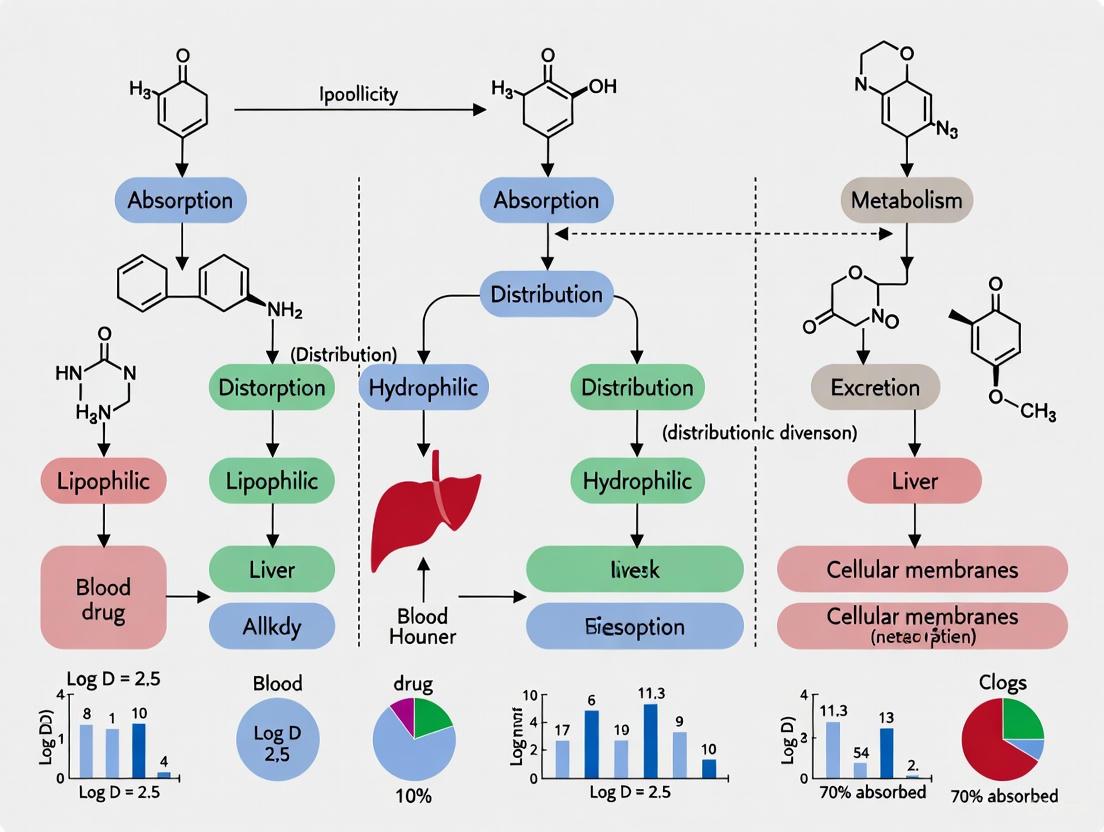
This article provides a comprehensive analysis of the critical role lipophilicity plays in the pharmacokinetics of drug candidates, specifically focusing on absorption and distribution.
Lipophilicity in Drug Development: A Comprehensive Guide to Optimizing Absorption and Distribution
Abstract
This article provides a comprehensive analysis of the critical role lipophilicity plays in the pharmacokinetics of drug candidates, specifically focusing on absorption and distribution. Tailored for researchers, scientists, and drug development professionals, it explores foundational concepts, measurement methodologies, and advanced formulation strategies to overcome challenges associated with poorly soluble compounds. By integrating foundational principles with current optimization techniques and validation frameworks, this review serves as a strategic resource for enhancing drug design and improving therapeutic outcomes.
Lipophilicity Fundamentals: How LogP Governs Drug Membrane Permeation and Absorption
Lipophilicity, a fundamental physicochemical property in pharmaceutical sciences, quantifies a molecule's affinity for a lipophilic (fat-like) environment relative to an aqueous environment. This parameter profoundly influences a drug candidate's behavior in biological systems, impacting its absorption, distribution, metabolism, excretion, and toxicity (ADMET) [1] [2]. The balance between lipophilicity and hydrophilicity is crucial; sufficient lipophilicity enables penetration through lipid membranes, while adequate hydrophilicity ensures dissolution in aqueous biological fluids like blood [3]. For decades, Lipinski's Rule of Five has served as a key guideline for oral drug design, proposing that a compound should have a calculated octanol-water partition coefficient (LogP < 5), among other criteria, to possess good oral bioavailability [4] [5]. However, the modern exploration of chemical space beyond traditional small molecules has led to an increasing number of approved oral drug compounds that go "beyond the Rule of 5" (bRo5), with proposed logP values between -2 and 10, challenging the original norms and necessitating a more nuanced understanding of lipophilicity [4].
Defining LogP and LogD
The Partition Coefficient (LogP)
The partition coefficient, LogP, is a foundational metric that quantifies the intrinsic lipophilicity of a neutral (unionized) molecule. It is defined as the logarithm (base 10) of the ratio of a compound's equilibrium concentrations in a two-phase system of immiscible solvents, typically 1-octanol and water [6] [2]. The formula is expressed as:
LogP = log₁₀ ([Drug]_octanol / [Drug]_water)
where [Drug]_octanol and [Drug]_water represent the concentration of the unionized drug in the octanol and aqueous phases, respectively [6]. A higher LogP value indicates greater lipophilicity, suggesting the compound has a higher affinity for the organic phase. Conversely, a lower LogP value indicates higher hydrophilicity (water solubility) [4]. As LogP is a logarithm, a unit increase signifies a tenfold increase in lipophilicity [1]. LogP is a constant for a given compound under specific temperature conditions, as it only accounts for the neutral species [4].
The Distribution Coefficient (LogD)
The distribution coefficient, LogD, provides a more physiologically relevant measure of lipophilicity for ionizable compounds. Unlike LogP, LogD accounts for the distribution of all species of a compound—ionized, partially ionized, and unionized—between the two phases at a specific pH [4] [3]. Its definition is:
LogD = log₁₀ ([Drug]_octanol / [Drug]_ionized_water + [Drug]_unionized_water)
LogD is therefore pH-dependent and varies with the ionization state of the molecule [4] [6]. For non-ionizable compounds, LogD is equal to LogP across the entire pH range. However, for compounds with ionizable sites, which constitute a large proportion of pharmaceuticals, LogD offers a more accurate picture of a compound's behavior in different biological environments, where pH can differ significantly [4]. The relationship between LogD, LogP, and the acid dissociation constant (pKa) for a monoprotic acid can be described by the equation: LogD = LogP - log₁₀(1 + 10^(pH - pKa)) [6].
Table 1: Key Differences Between LogP and LogD
| Feature | LogP (Partition Coefficient) | LogD (Distribution Coefficient) |
|---|---|---|
| Ionization State | Considers only the unionized form of the compound | Considers all forms (ionized & unionized) |
| pH Dependence | pH-independent (constant for a compound) | pH-dependent (reported at a specific pH) |
| Primary Use | Measure of intrinsic lipophilicity | Measure of practical lipophilicity in physiological contexts |
| Complexity | Simpler model | More complex, but more accurate for ionizable drugs |
Experimental Determination of LogP and LogD
Classic Shake-Flask Method
The shake-flask method is considered the reference standard for measuring LogP and LogD [7]. The experimental workflow involves creating a two-phase system with water and n-octanol, which are mutually saturated to prevent volume changes during mixing. The compound of interest is introduced into this system, which is then shaken to allow partitioning between the phases. After separation, the concentration of the drug in each phase is quantified using analytical techniques such as UV spectrophotometry or high-performance liquid chromatography (HPLC) [7]. The partition or distribution coefficient is then calculated from the concentration ratio. To measure LogD, the aqueous phase is buffered to a specific, physiologically relevant pH. A key challenge, especially for surfactant-like molecules, is the potential for emulsion formation and micellization at high concentrations, which can be mitigated by using slow-stirring methods and working below the compound's critical micelle concentration (CMC) [7].
The following diagram illustrates the core workflow of this method:
Chromatographic Methods
Chromatographic methods offer robust, viable, and resource-sparing alternatives to the shake-flask technique.
- Reverse-Phase High Performance Liquid Chromatography (RP-HPLC): This method correlates a compound's retention time (or capacity factor) on a hydrophobic column (e.g., C18) with its lipophilicity [8] [7]. A calibration curve is constructed using reference standards with well-established LogP values. The LogP of an unknown compound is then estimated by comparing its retention factor to this curve. This method is particularly suitable for high-throughput estimation and can be applied to impure samples or mixtures [8].
- Reverse-Phase Thin-Layer Chromatography (RP-TLC): In this method, the retention factor (Rₘ) of a compound on a TLC plate with a hydrophobic stationary phase is determined. The Rₘ value, which is related to the compound's mobility, can be extrapolated to a zero organic modifier concentration to derive a value (Rₘ⁰) that correlates with LogP [5]. This approach is a simple and cost-effective technique for lipophilicity screening.
Table 2: Key Reagents and Materials for Lipophilicity Measurement
| Reagent/Material | Function in Experiment |
|---|---|
| 1-Octanol | Organic solvent simulating lipid membranes; forms immiscible biphasic system with water [7] [2]. |
| Buffer Solutions (at specific pH) | Aqueous phase mimicking physiological pH (e.g., gastric pH 1.5, intestinal pH 6-7.4, blood pH 7.4) for LogD determination [3] [6]. |
| Reverse-Phase HPLC Column (C8/C18) | Hydrophobic stationary phase that separates compounds based on their lipophilicity [8] [7]. |
| Analytical Standards | Compounds with known LogP values used to create calibration curves for chromatographic methods [8]. |
| LC-MS/Uv-Vis Spectrophotometer | Instrumentation for sensitive and specific quantification of compound concentration in each phase or eluent [9] [7]. |
Trends, Implications, and Applications in Drug Research
The Trend of Increasing Lipophilicity
Analysis of approved drugs from 1990 to 2021 reveals a clear trend of increasing molecular lipophilicity. Over the past two decades, the average and median LogP values of approved drugs have increased by one unit, representing a tenfold increase in the lipophilicity of newer drugs [1]. This shift is largely driven by a decrease in the proportion of highly polar molecules (LogP < 0), many of which were natural products or their derivatives. As drug discovery has moved away from natural product-inspired programs toward more targeted approaches, the complexity and lipophilicity of fully synthetic molecules have grown [1]. This presents a significant challenge, as highly lipophilic drugs often suffer from poor aqueous solubility, which can limit their oral bioavailability and necessitate advanced formulation strategies [1].
Impact on Drug Disposition and Toxicity
Lipophilicity is a key driver of a drug's pharmacokinetic and safety profile. It profoundly influences absorption, distribution, metabolism, and excretion (ADME) properties [1] [5]. While moderate lipophilicity (often cited around LogP = 2) is generally optimal for membrane permeability and target access, excessive lipophilicity (LogP > 5) is associated with several drawbacks [5]. These include:
- Poor aqueous solubility, leading to formulation challenges and limited absorption [1] [2].
- High nonspecific binding to plasma proteins and tissues, reducing free drug concentration available for therapeutic action [5].
- Increased metabolic turnover, potentially shortening half-life [1].
- Greater risk of promiscuity and off-target toxicity due to accumulation in fatty tissues and engagement with unintended targets [1] [5].
Application in Formulation Strategies
Understanding lipophilicity is critical for developing effective drug delivery systems, especially for compounds with poor water solubility. Various formulation strategies are employed to overcome the challenges posed by high lipophilicity:
- Lipid-Based Drug Delivery Systems (LBDDS): These systems dissolve or suspend lipophilic drugs in lipid excipients, which can enhance solubility and absorption [1].
- Drug-Loaded Polymeric Micelles: Amphiphilic block copolymers can self-assemble into micelles in aqueous solution, with the hydrophobic core serving as a reservoir for lipophilic drugs, improving their apparent solubility [1].
- Nanoemulsions and Nanocrystals: For highly hydrophobic drugs, nanoemulsions can be formed and subsequently converted into solid nanoparticles, where drug nanocrystals are uniformly distributed within a polymer matrix like methylcellulose, enhancing dissolution and bioavailability [1].
Advanced Prediction and Computational Methods
Beyond experimental measurement, computational methods are indispensable for predicting LogP and LogD, especially in the early stages of drug discovery.
- Group-Additivity Methods (Fragment-Based Approaches): These methods calculate LogP by summing contributions from constituent atom and fragment types, considering their occurrence and interactions within the molecule [10]. These approaches are highly versatile and can achieve high dependability, with one study reporting a standard deviation of 0.42 log units for a large and diverse dataset [10].
- Molecular Dynamics (MD) Simulations: Advanced computational methods like MD simulations can predict LogP by calculating the solvation free energy of a molecule in water and octanol. A recent study on cyclic peptides used MD simulations to obtain LogP from solvation free energy calculations and then derived LogD by accounting for predicted pKa and ionization states. This method achieved predictions with an average deviation of 1.39 log units from experimental values [9].
- Commercial Software and AI: Numerous commercial software packages provide predictions for LogP and LogD alongside other physicochemical properties [4] [5]. The rising use of artificial intelligence (AI) and deep neural networks (DNNs) shows promise for further improving the accuracy of these predictions [4] [10].
The relationship between computational prediction, experimental measurement, and their role in drug development is summarized below:
LogP and LogD are indispensable physicochemical descriptors in modern drug discovery and development. While LogP defines the intrinsic lipophilicity of a neutral compound, LogD provides the critical pH-dependent perspective necessary for understanding a molecule's behavior in varying physiological environments. A comprehensive approach, utilizing both robust experimental methods (such as shake-flask and chromatography) and increasingly sophisticated computational predictions, is essential for optimizing the lipophilicity of drug candidates. As the chemical landscape evolves towards more complex structures, often with higher lipophilicity, a deep understanding and careful management of this property remain paramount for balancing potency, solubility, and permeability to achieve successful therapeutic outcomes.
Drug absorption represents the critical first step in pharmacokinetics, defining the journey of an unmetabolized drug from its site of administration to the systemic circulation [11]. For researchers and drug development professionals, understanding the fundamental mechanisms governing this process is essential for rational drug design and optimization. Among these mechanisms, passive diffusion stands as the predominant pathway for the majority of therapeutic compounds, heavily influenced by the drug's ability to traverse the lipid barriers of biological membranes [11] [12]. This whitepaper examines the central role of passive diffusion and lipid barriers in drug absorption, framing this knowledge within the broader context of lipophilicity research—a cornerstone parameter in predicting a drug candidate's absorption, distribution, metabolism, excretion, and toxicity (ADMET) profile [13].
Core Mechanisms of Drug Absorption
Passive Diffusion: The Predominant Pathway
Passive diffusion is the most common mechanism for drug absorption, driven by the concentration gradient across cell membranes according to Fick's law of diffusion [11] [12]. In this process, drug molecules move spontaneously from regions of higher concentration (e.g., gastrointestinal fluids) to regions of lower concentration (e.g., blood) without energy expenditure [12]. The rate of transfer is directly proportional to the concentration gradient and depends critically on the molecule's lipid solubility, size, degree of ionization, and the area of absorptive surface [12] [14].
Table 1: Characteristics of Major Drug Transport Mechanisms
| Mechanism | Driving Force | Energy Required | Saturable | Specificity |
|---|---|---|---|---|
| Passive Diffusion | Concentration gradient | No | No | Low |
| Facilitated Passive Diffusion | Concentration gradient | No | Yes | High |
| Active Transport | Carrier system | Yes | Yes | High |
| Pinocytosis | Membrane invagination | Yes | Yes | Moderate |
The Critical Role of Lipid Solubility
Biological membranes are composed primarily of a bimolecular lipid matrix, making lipid solubility a paramount determinant of membrane permeability [12]. The rate of passive diffusion is directly proportional to a drug's lipid-water partition coefficient—a quantitative measure of its lipophilicity [14]. Drugs with greater lipid solubility diffuse more rapidly across cellular barriers, while hydrophilic compounds with low partition coefficients penetrate membranes slowly, if at all [14].
This relationship between lipophilicity and absorption potential makes the partition coefficient (log P) one of the most fundamental parameters in drug design [13]. As noted in recent research on anticancer diquinothiazines, "Lipophilicity is one of the principal parameters that describe the pharmacokinetic behavior of a drug, including its absorption, distribution, metabolism, elimination, and toxicity" [13].
Ionization and the pH-Partition Hypothesis
Most drugs are weak organic acids or bases that exist in both un-ionized and ionized forms in aqueous environments [11] [12]. The un-ionized form is typically lipid-soluble (lipophilic) and readily crosses cell membranes, while the ionized form has low lipid solubility (but high water solubility) and cannot penetrate membranes easily [12].
The distribution between these forms is determined by the environmental pH and the drug's acid dissociation constant (pKa), described by the Henderson-Hasselbalch equation [11]. The pKa represents the pH at which concentrations of ionized and un-ionized forms are equal [12]. For weak acids, the un-ionized form predominates when the environmental pH is lower than the drug's pKa; for weak bases, the ionized form predominates under the same conditions [12].
Table 2: pH-Partition Principles for Drug Absorption
| Drug Type | pKa vs. pH Relationship | Ionization State in Stomach (pH ~1.4) | Ionization State in Intestine (pH ~6-8) | Primary Absorption Site |
|---|---|---|---|---|
| Weak Acid | pH < pKa | Predominantly un-ionized | Predominantly ionized | Stomach |
| Weak Base | pH > pKa | Predominantly ionized | Predominantly un-ionized | Intestine |
Although weakly acidic drugs are theoretically better absorbed in the stomach, most absorption—for both acids and bases—occurs in the small intestine due to its far larger surface area and more permeable membranes [12]. The intestinal mucosa possesses anatomical specializations including villi and microvilli that dramatically increase the surface area available for absorption [11].
Experimental Methodologies for Studying Drug Absorption
Determining Lipophilicity Parameters
Lipophilicity, typically quantified as the partition coefficient (P) or its decimal logarithm (log P), represents the ratio of a drug's concentration in an organic phase (typically n-octanol) to its concentration in an aqueous phase (buffer) at equilibrium [13]. Several experimental approaches are employed to determine this critical parameter:
3.1.1 Shake-Flask Method The classical shake-flask procedure, recommended by the Organization for Economic Co-operation and Development (OECD), involves direct measurement of the partition coefficient between n-octanol and water or buffer solution [13]. This method provides accurate log P values in the range of -2 to 4 but requires relatively large amounts of pure compounds and is time-consuming, with equilibrium typically requiring 1 to 24 hours to establish [13].
3.1.2 Chromatographic Techniques (RP-TLC and RP-HPLC) Reversed-phase thin-layer chromatography (RP-TLC) and reversed-phase high-performance liquid chromatography (RP-HPLC) are widely used indirect methods for determining lipophilicity [13]. These chromatographic approaches require smaller sample amounts and less analysis time compared to the shake-flask method while providing repeatable results with accuracy within ±1 unit relative to shake-flask values [13]. The chromatographic lipophilicity parameter (R₀) obtained through RP-TLC serves as a reliable experimental descriptor of a compound's lipophilic character [13].
3.1.3 In Silico Prediction Methods Computational methods have become increasingly important for rapid lipophilicity prediction during early drug development stages [13]. Various software programs and online platforms (e.g., iLOGP, XLOGP3, WLOGP, MLOGP, SILCOS-IT, SwissADME, and pkCSM) utilize different algorithms to calculate partition coefficients, providing valuable initial estimates that can later be complemented with experimental data [13].
Advanced Modeling Approaches
3.2.1 Physiologically-Based Pharmacokinetic (PBPK) Modeling PBPK models represent a sophisticated approach to predicting drug absorption by simulating human anatomy and physiology through interconnected compartments representing physiological organs or tissues linked by systemic blood circulation [15]. These mathematical models mechanistically predict drug pharmacokinetics (absorption, distribution, metabolism, and excretion) after administration, incorporating drug-specific parameters such as molecular weight, log P, pKa, particle size, aqueous solubility, and metabolic intrinsic clearance [15].
3.2.2 Pattern Recognition in Pharmacokinetic Data Analysis Experienced researchers employ pattern recognition strategies when analyzing concentration-time data to identify kinetic model properties [16]. This process involves dissecting determinants behind concentration-time courses, including the number of phases, baseline behavior, time delays, peak shifts with increasing doses, flip-flop phenomena, and saturation kinetics [16]. The number of potential model parameters (NP) that can be estimated from such data can be guided by the relationship: NP = 2·EX + PE + 2·TS + NL + ABS + TLG + BL + 2·MTB where EX represents exponentials visible in the profile, PE denotes elimination pathways, TS represents tissue spaces, NL indicates nonlinear features, ABS describes absorption characteristics, TLG represents time lags, BL represents baseline parameters, and MTB accounts for metabolite data [16].
The Researcher's Toolkit: Essential Reagents and Materials
Table 3: Key Research Reagents and Materials for Absorption Studies
| Reagent/Material | Function/Application | Experimental Context |
|---|---|---|
| n-Octanol/Buffer Systems | Standard solvent system for shake-flask partition coefficient determination | Direct measurement of lipophilicity (log P) |
| RP-TLC Plates (e.g., RP-18) | Stationary phase for reversed-phase thin-layer chromatography | Chromatographic determination of lipophilicity parameters (R₀) |
| Acetone-TRIS Buffer Mobile Phase | Mobile phase for RP-TLC analysis | Elution of compounds for lipophilicity assessment |
| Caco-2 Cell Lines | Human colon adenocarcinoma cell line forming polarized monolayers | In vitro model for predicting intestinal permeability |
| PAMPA Assay Components | Parallel Artificial Membrane Permeability Assay | High-throughput screening of passive transcellular permeability |
| Simulated Gastrointestinal Fluids | Biorelevant media mimicking gastric and intestinal environments | Assessing dissolution and precipitation in physiologically-relevant conditions |
| LC-MS/MS Systems | Liquid chromatography coupled with tandem mass spectrometry | Sensitive quantification of drug concentrations in absorption studies |
Visualization of Drug Absorption Pathways
Diagram 1: Passive Diffusion Across Lipid Bilayer Membrane
Formulation Strategies to Enhance Absorption
Lipid-Based Formulation Approaches
For lipophilic drugs with poor aqueous solubility, lipid-based formulations (LBFs) present a promising strategy to enhance bioavailability [17]. These systems utilize lipids as carriers to improve solubility, stability, and absorption of challenging drug candidates [17]. By facilitating improved intestinal solubility and selective lymphatic absorption of porously permeable drugs, lipids offer diverse possibilities for drug delivery [17]. This versatile characteristic not only enhances pharmacological efficacy but also contributes to improved therapeutic performance, potentially reducing required dose sizes and associated costs [17].
Key lipid-based delivery systems include:
- Self-emulsifying Drug Delivery Systems (SEDDS): Mixtures of oils, surfactants, and co-solvents that form fine emulsions upon gentle agitation in aqueous media
- Liposomes: Spherical vesicles consisting of one or more phospholipid bilayers capable of encapsulating both hydrophilic and lipophilic drugs
- Solid Lipid Nanoparticles (SLN): Submicron colloidal carriers composed of physiological lipids that remain solid at body temperature
- Nanostructured Lipid Carriers (NLC): Improved generation of lipid nanoparticles containing both solid and liquid lipids for higher drug loading capacity
Controlled-Release Formulations
Controlled-release forms are designed to reduce dosing frequency for drugs with short elimination half-lives while minimizing plasma concentration fluctuations [12]. For oral medications, absorption rate can be slowed by coating drug particles with wax or other water-insoluble materials, embedding drugs in matrices that release them slowly during gastrointestinal transit, or complexing drugs with ion-exchange resins [12]. Transdermal controlled-release forms are designed to release drugs for extended periods, sometimes for several days, but require drugs with suitable skin-penetration characteristics and high potency [12].
Passive diffusion remains the fundamental mechanism governing the absorption of most therapeutic compounds, with lipid solubility serving as the primary determinant of a drug's ability to traverse biological membranes. The interplay between a drug's lipophilicity, ionization characteristics, and formulation approach dictates its absorption efficiency and overall bioavailability. Contemporary drug development strategies must integrate robust assessment of lipophilicity parameters early in the discovery process, employing both computational predictions and experimental validations to optimize compound profiles. As pharmaceutical research advances, innovative formulation technologies—particularly lipid-based systems—continue to emerge, enabling enhanced delivery of challenging drug candidates and underscoring the enduring centrality of passive diffusion and lipid barrier interactions in drug absorption science.
The lipid bilayer represents the fundamental architectural component of all biological membranes, forming a formidable yet essential barrier that drugs must traverse to reach their therapeutic targets. The interplay between a drug's lipophilicity—its affinity for lipid-like, non-polar environments—and its permeability—its ability to cross these biological barriers—is a critical determinant of its absorption and distribution profile within the human body. For drug development professionals, navigating this relationship is paramount for optimizing the pharmacokinetic (PK) and pharmacodynamic (PD) properties of new chemical entities. A deep understanding of these principles allows researchers to predict and enhance a drug's journey from its site of administration to its site of action, thereby improving systemic exposure and therapeutic efficacy [18] [19].
Lipophilicity is frequently quantified using the partition coefficient (log P), which measures how a drug distributes itself between an immiscible organic solvent, typically octanol, and water. A positive log P value indicates higher lipophilicity, meaning the compound prefers the lipid environment over the aqueous one. This characteristic directly influences a drug's behavior when it encounters the lipid bilayer of cell membranes. The bilayer's structure, composed of amphipathic phospholipids, creates a hydrophobic interior that presents a significant energy barrier for the passage of hydrophilic (water-soluble) molecules. Consequently, passive transcellular diffusion, the primary route for drug absorption, is highly dependent on a compound's lipophilicity [17] [19]. However, the relationship is not linear; excessive lipophilicity can be detrimental, leading to poor aqueous solubility, sequestration in cell membranes, or rapid metabolism and clearance. This creates a well-known "lipophilicity-permeability cliff," where permeability increases with lipophilicity only up to an optimal point, after which bioavailability declines [17].
Within the broader context of drug absorption and distribution research, mastering this balance is a cornerstone of pharmaceutical development. The Absorption, Distribution, Metabolism, and Excretion (ADME) processes are all profoundly affected by a drug's lipophilic character [20] [18]. Lipophilicity influences absorption across the gastrointestinal mucosa, distribution into various tissues and organs, interaction with metabolizing enzymes such as cytochrome P450 (CYP), and eventual excretion. Therefore, rational drug design must carefully consider lipophilicity to ensure adequate permeability while avoiding the pitfalls associated with extremes on the hydrophilicity-lipophilicity spectrum [18] [17].
Experimental Methodologies for Permeability Assessment
Accurately quantifying a drug's permeability is essential for predicting its in vivo performance. The following sections detail established and innovative experimental protocols used to characterize the permeability of drug candidates.
In Vitro Oral Cavity Permeability Assessment
For drugs designed for buccal or sublingual administration, specialized in vitro tissue models are employed to mimic the human oral mucosa. These models are particularly relevant for compounds susceptible to significant hepatic first-pass metabolism, as the oral cavity route offers direct access to systemic circulation [21]. The protocol below outlines a standardized approach using human-derived cell lines.
Protocol: Using HO-1-u-1 (Sublingual) and EpiOral (Buccal) Tissue Models
- Objective: To quantitatively assess the intrinsic mucosal permeation properties of active pharmaceutical ingredients (APIs) intended for oral cavity drug products.
- Materials and Reagents:
- HO-1-u-1 cells (human sublingual origin) or pre-assembled EpiOral tissues (buccal model).
- Collagen-coated polyester membrane inserts (e.g., Corning Transwell, 0.4 µm pore size).
- Culture media: DMEM/Ham's F-12 supplemented with fetal bovine serum, penicillin, and streptomycin.
- Transport buffer: Artificial saliva, pH 6.7.
- Test articles: APIs (e.g., naloxone, asenapine, sufentanil) dissolved in artificial saliva.
- Prototypic permeability markers: Propranolol (transcellular marker) and Lucifer Yellow (paracellular marker).
- HPLC system for analytical quantification.
- Methodology:
- Cell Culture and Seeding: HO-1-u-1 cells are seeded onto collagen-coated Transwell inserts at a density of 1.5 × 10^5 cells/well and cultured for two weeks to form a confluent, differentiated epithelium. EpiOral tissues are used upon receipt according to the manufacturer's protocol.
- Assay Standardization: Before API testing, the barrier integrity of each tissue batch is validated. This is done by measuring the apparent permeability (Papp) of propranolol and Lucifer Yellow to confirm the model's ability to distinguish between transcellular and paracellular transport routes.
- Transport Experiment:
- The test API, dissolved in artificial saliva, is added to the apical (donor) compartment.
- The basolateral (receiver) compartment contains blank transport buffer.
- The system is maintained at 37°C with appropriate agitation.
- At predetermined time intervals, samples are withdrawn from the basolateral compartment and replaced with fresh buffer to maintain sink conditions.
- Sample Analysis: The concentration of the API in the basolateral samples is quantified using a validated HPLC method.
- Data Calculation: The apparent permeability coefficient (Papp) is calculated using the formula: Papp (cm/s) = (dQ/dt) / (A × C0) where dQ/dt is the steady-state flux rate (mol/s), A is the surface area of the membrane (cm²), and C0 is the initial concentration in the donor compartment (mol/mL) [21].
Protocol for Liposome-Based Permeability Studies
Liposomes, as biomimetic models of cellular membranes, are invaluable tools for studying passive transcellular diffusion in a controlled environment.
Protocol: Biomimetic Liposome Assay for Passive Permeability
- Objective: To determine the passive permeability coefficient of a drug candidate through a standardized lipid bilayer.
- Materials and Reagents:
- Phospholipids (e.g., phosphatidylcholine, cholesterol).
- Test drug compound.
- Buffer solutions (e.g., HEPES, PBS).
- Dialysis tubing or rapid filtration system.
- Spectrophotometer or HPLC for quantification.
- Methodology:
- Liposome Preparation: Multilamellar vesicles (MLVs) or large unilamellar vesicles (LUVs) are prepared using techniques like thin-film hydration and extrusion. The lipid composition is selected to mimic the target biological membrane (e.g., intestinal epithelium, blood-brain barrier).
- Drug Incubation: The drug solution is incubated with the prepared liposome suspension.
- Separation and Quantification: At specified time points, the liposomes are separated from the external medium using techniques like dialysis, centrifugation, or size-exclusion chromatography. The amount of drug associated with the liposomes or remaining in the external medium is quantified.
- Data Analysis: The permeability coefficient is derived from the kinetics of drug uptake into the liposomes, reflecting the compound's ability to partition into and diffuse across the lipid bilayer. This data is crucial for building in vitro-in vivo correlations (IVIVCs) [17] [19].
Quantitative Data and Current Research Trends
The following tables consolidate key quantitative findings from recent investigations into the lipophilicity-permeability relationship, highlighting how molecular properties translate to experimental and clinical outcomes. *Table 1: Permeability and Molecular Properties of Select APIs in Oral Cavity Models*| Active Pharmaceutical Ingredient (API) | Molecular Weight (Da) | Lipophilicity (logP) | Apparent Permeability (Papp) in Sublingual Model (×10⁻⁵ cm/s) | Apparent Permeability (Papp) in Buccal Model (×10⁻⁵ cm/s) |
|---|---|---|---|---|
| Naloxone | 363.8 | 1.25 | 6.21 ± 2.60 | Data not specified |
| Asenapine | 401.8 | 4.20 | 2.72 ± 0.06 | Data not specified |
| Sufentanil | 578.7 | 3.86 | Data not specified | 2.56 ± 0.68 |
| Acyclovir | 225.3 | -1.37 | Data not specified | 0.000331 ± 0.000083 |
| Formulation Strategy | Key Mechanism of Action | Effect on Bioavailability & Key PK Parameters | Common Lipid Components |
|---|---|---|---|
| Self-Emulsifying Drug Delivery Systems (SEDDS) | Enhances solubility and maintains drug in solubilized state in GI tract | Increases Cmax and AUC; reduces Tmax and food effects | Medium-chain triglycerides (MCT), surfactants |
| Solid Lipid Nanoparticles (SLNs) | Protects drug from degradation; enables controlled release | Modifies distribution profile; can extend half-life (t1/2) | Triglycerides (e.g., tristearin), waxes |
| Liposomes | Encapsulates hydrophilic/hydrophobic drugs; enables fusion with membranes | Improves solubility; enhances tissue targeting via EPR effect; alters Vd and t1/2 | Phosphatidylcholine, cholesterol |
| PEGylated (Stealth) Liposomes | Reduces recognition by the mononuclear phagocyte system | Significantly extends circulation half-life; increases tumor accumulation | PEG-lipid conjugates, phosphatidylcholine, cholesterol |
Visualizing Pathways and Workflows
The following diagrams illustrate the core concepts and experimental workflows central to understanding and investigating the lipophilicity-permeability relationship.*Diagram 1: The central role of lipophilicity in drug development. It directly promotes membrane permeability but often hampers aqueous solubility, creating a critical trade-off that determines the overall ADME profile and therapeutic efficacy.*
*Diagram 2: In vitro permeability workflow. This experiment measures the apparent permeability (Papp) of a drug as it crosses a cultured tissue model from the apical to the basolateral side.*
The Scientist's Toolkit: Essential Research Reagents and Materials
The following table details key reagents and materials essential for conducting research in lipophilicity and permeability. *Table 3: Key Research Reagent Solutions for Permeability Studies*| Item Name | Function & Application | Key Considerations |
|---|---|---|
| HO-1-u-1 Cell Line | Human-derived sublingual epithelial cell line for constructing in vitro permeability models. | Requires long-term culture (e.g., 2 weeks) to form a confluent, differentiated epithelium. |
| EpiOral Tissue Model | Commercially available, reconstructed human buccal epithelium for ready-to-use permeability assays. | Provides high discrimination power between APIs; includes specialized culture inserts. |
| Caco-2 Cell Line | Human colon adenocarcinoma cell line; a standard model for predicting intestinal drug absorption. | Forms a differentiated monolayer with tight junctions and expresses various transporters. |
| Phosphatidylcholine & Cholesterol | Essential lipid components for constructing biomimetic liposomes and lipid nanoparticles. | Ratio of components determines bilayer fluidity, stability, and drug encapsulation efficiency. |
| Polyethylene Glycol (PEG)-Lipid Conjugates | Used to create "stealth" liposomes (PEGylation) to prolong systemic circulation half-life. | Molecular weight and surface density of PEG are critical for stealth performance. |
| Propranolol Hydrochloride | Prototypic transcellular permeability marker for standardizing and validating assay conditions. | High-permeability reference compound. |
| Lucifer Yellow | Prototypic paracellular permeability marker for assessing monolayer integrity and tight junction formation. | Low-permeability reference compound; fluorescent for easy detection. |
| Artificial Saliva, pH 6.7 | Physiologically relevant transport medium for oral cavity permeability studies. | Maintains pH and ionic strength to simulate in vivo conditions during experiments. |
| Transwell Permeable Supports | Cell culture inserts with permeable membranes (e.g., polyester, 0.4 µm pore) for creating a two-chamber system. | Membrane pore size and coating (e.g., collagen) are selected based on the cell type used. |
The relationship between lipophilicity and permeability remains a cornerstone of drug design and development. A nuanced understanding of this dynamic is critical for optimizing a compound's ADME properties and achieving therapeutic success. While fundamental principles like passive diffusion favor lipophilic compounds, the advent of sophisticated lipid-based drug delivery systems has revolutionized our ability to deliver molecules that fall outside the ideal lipophilicity range. The future of navigating the lipid bilayer lies in the continued refinement of these advanced technologies. This includes the development of predictive in silico models trained on robust experimental data, the creation of more sophisticated biomimetic in vitro assays, and the engineering of intelligent, stimuli-responsive nanocarriers capable of precise spatial and temporal control over drug release. For researchers and drug development professionals, integrating these innovative tools with a deep understanding of the core lipophilicity-permeability relationship will be key to unlocking the full potential of new therapeutic agents.
The pH-Partition Hypothesis stands as a foundational concept in pharmaceutical sciences, providing a critical framework for understanding and predicting drug absorption across biological membranes [11] [23]. This principle states that for drug compounds primarily transported via passive diffusion, the absorption process is governed by three key factors: the dissociation constant (pKa) of the drug, the lipid solubility of the unionized drug, and the pH at the absorption site [24] [25]. Within the context of modern drug development, this hypothesis provides the theoretical underpinning for rational drug design aimed at optimizing bioavailability, particularly when framed within broader research on the role of lipophilicity in drug absorption and distribution [26] [27].
The gastrointestinal (GI) tract presents a dynamic pH environment, ranging from highly acidic in the stomach (pH 1-3) to neutral/slightly basic in the intestine (pH 5-8) [23] [25]. According to the pH-partition theory, the fraction of a drug that exists in its unionized form at a specific absorption site is determined by the interplay between the site pH and the drug's pKa, as described by the Henderson-Hasselbalch equation [11] [28]. Since biological membranes are predominantly lipophilic, the unionized form, being more lipid-soluble, can passively diffuse across these membranes much more readily than the ionized form [28] [25]. Consequently, understanding and applying this hypothesis is essential for predicting drug behavior in different physiological compartments and for designing compounds with optimal absorption characteristics.
Core Principles of the pH-Partition Hypothesis
Theoretical Foundation and Governing Equations
The pH-Partition Hypothesis establishes that the absorption of weak electrolytes across biological membranes results from the pH gradient across the membrane and the drug's pKa [11]. The theory posits that only the unionized form of a drug, if sufficiently lipid-soluble, can passively diffuse through the lipoidal biological membranes, while the ionized form is largely impermeable [23] [25]. This fundamental principle allows researchers to predict the directional movement and accumulation of drugs in different body compartments based on pH differences.
The quantitative relationship between the proportion of ionized and unionized drug species at a given pH is described by the Henderson-Hasselbalch equation [23] [25]:
For weak acids:
pH = pKa + log([Ionized Drug]/[Unionized Drug])% Drug Ionized = [10^(pH-pKa)/(1+10^(pH-pKa)] × 100For weak bases:
pH = pKa + log([Unionized Drug]/[Ionized Drug])% Drug Ionized = [10^(pKa-pH)/(1+10^(pKa-pH)] × 100
When the drug concentration on either side of a membrane reaches equilibrium, the theoretical ratio (R) of drug concentration in the GI tract to that in plasma can be calculated as follows [23]:
- For weak acids:
R = C_GIT/C_plasma = [1+10^(pH_GIT-pKa)]/[1+10^(pH_plasma-pKa)] - For weak bases:
R = C_GIT/C_plasma = [1+10^(pKa-pH_GIT)]/[1+10^(pKa-pH_plasma)]
These equations demonstrate the phenomenon of "ion trapping," where a drug can become concentrated on the side of the membrane where it is more highly ionized, preventing its back-diffusion [28].
The Critical Role of Lipophilicity
While the pH-Partition Hypothesis emphasizes the importance of ionization state, the lipophilicity of the unionized drug form is an equally critical determinant of absorption efficiency [27]. Lipophilicity represents the affinity of a molecule for a lipophilic environment and is typically quantified by the partition coefficient (log P) or distribution coefficient (log D) [26] [27]. The GI cell membranes are essentially lipoidal in nature; therefore, highly lipid-soluble drugs are generally well-absorbed, while decidedly lipid-insoluble drugs are typically poorly absorbed, even when present in their unionized form [25].
The relationship between lipophilicity and oral bioavailability follows an optimal range rather than a simple "more is better" pattern. According to Lipinski's Rule of Five, a logP value ≤5 is generally favorable for oral bioavailability [26]. Recent refinements suggest that a logP between 1 and 3 represents the optimal range for most oral drugs, effectively balancing membrane permeability with adequate aqueous solubility [26]. This nuanced understanding of lipophilicity's role is essential for contextualizing the pH-Partition Hypothesis within modern drug design paradigms.
Quantitative Predictions and Drug Absorption Profiles
Absorption Characteristics Across the Gastrointestinal Tract
The pH-Partition Hypothesis enables specific predictions about the absorption behavior of different drug classes throughout the varying pH environments of the gastrointestinal tract [23]. The stomach provides a highly acidic environment (pH 1-3), while the intestinal tract ranges from slightly acidic to slightly basic (pH 5-8) [23] [25]. These pH gradients directly influence the ionization state of drugs with different pKa values and consequently their absorption patterns.
Table 1: Drug Absorption Predictions Based on pH-Partition Hypothesis
| Drug Category | pKa Range | Ionization State in Stomach | Ionization State in Intestine | Primary Absorption Site | Examples |
|---|---|---|---|---|---|
| Very Weak Acids | > 8.0 | Unionized | Unionized | Throughout GIT | Pentobarbital (pKa 8.1), Phenytoin (pKa 8.2) |
| Moderately Weak Acids | 2.5 - 7.5 | Unionized | Ionized | Stomach | Cloxacillin (pKa 2.7), Aspirin (pKa 3.5) |
| Strong Acids | < 2.5 | Ionized | Ionized | Poorly absorbed | Disodium cromoglycate (pKa 2.0) |
| Very Weak Bases | < 5.0 | Unionized | Unionized | Throughout GIT | Theophylline (pKa 0.7), Caffeine (pKa 0.8) |
| Moderately Weak Bases | 5.0 - 11.0 | Ionized | Unionized | Intestine | Reserpine (pKa 6.6), Codeine (pKa 8.2) |
| Strong Bases | > 11.0 | Ionized | Ionized | Poorly absorbed | Guanethidine (pKa 11.7) |
The relationship between drug properties, ionization, and absorption can be visualized as a sequential process:
Limitations and Modern Refinements to the Hypothesis
While the pH-Partition Hypothesis provides a valuable foundational framework, experimental evidence has revealed several significant limitations and deviations from its theoretical predictions [29] [23]. These limitations have prompted refinements that offer a more nuanced understanding of drug absorption processes.
The hypothesis predicts a proportional relationship between the unionized fraction of a drug and its permeability rate, with pH-absorption curves exhibiting a sharp inflection point at a pH equal to the drug's pKa [25]. However, experimentally observed pH-absorption curves are typically less steep than predicted and are often shifted toward higher pH values for acids and lower pH values for bases [29] [25]. Several factors contribute to these deviations:
- Presence of Virtual Membrane pH: A microclimate pH exists at the membrane surface that differs from the bulk luminal pH, affecting the actual ionization state of drugs at the absorption site [23].
- Absorption of Ionized Drugs: Contrary to the hypothesis, ionized forms of some drugs can be absorbed to a limited extent, particularly if they contain large lipophilic groups or utilize active transport mechanisms, ion-pair transport, or convective flow [23].
- Influence of GI Surface Area and Residence Time: Although acidic drugs are predominantly unionized in the stomach, the much larger surface area of the intestine often results in more significant absorption from this site despite less favorable ionization conditions [23].
- Aqueous Unstirred Diffusion Layer: The presence of an aqueous unstirred diffusion layer adjacent to the cell membrane can act as a rate-limiting barrier, particularly for highly lipophilic drugs that rapidly penetrate the lipid membrane but diffuse slowly through this aqueous layer [23] [25].
Recent research has further refined our understanding by demonstrating that aqueous pKa values alone do not accurately predict pH-permeability relationships in biological systems [29]. Studies indicate that the pKa values of drugs can be altered when they partition into the membrane environment due to interactions with phospholipid head groups, leading to enhanced passive permeability for both acids and bases [29]. These distributed pKa models provide more accurate predictions of pH-dependent permeability in experimental systems like Caco-2 cells [29].
Experimental Methodologies and Research Applications
Key Experimental Protocols
Research investigating the pH-Partition Hypothesis and its applications employs several well-established experimental protocols that provide critical data on drug absorption and membrane permeability.
In Situ Brain Perfusion Technique
The in situ brain perfusion method is a sophisticated technique used to estimate blood-brain barrier (BBB) permeability, which can be adapted to study pH-dependent permeability [30]. This method involves perfusing drug solutions directly into the carotid artery of laboratory animals (typically rats) under controlled pH conditions.
Detailed Methodology:
- Perfusate solutions are prepared containing 3-11 µM of the test compound along with control markers such as atenolol (intravascular space marker) and antipyrine (moderate brain permeability marker) [30].
- Krebs Ringer bicarbonate (KRB) buffer is modified to specific pH values (e.g., pH 5.5, 6.5, 8.0, 8.5) using appropriate buffering agents like MES, bicine, or taurine [30].
- The initial uptake clearance (K_in) of drugs perfused into the carotid artery is measured, representing transport at the luminal BBB membrane.
- A pH-dependent Crone-Renkin equation is applied to correct for hydrodynamic flow effects:
P_cS = -F_pf ln (1 - K_in/F_pf), where Pc is flow-corrected luminal permeability, S is endothelial surface area, and Fpf is cerebral perfusion fluid velocity [30]. - Concentrations of all test and control compounds in brain tissue are determined using sensitive analytical methods such as LC-MS/MS [30].
This technique has been successfully applied to study the pH-dependent brain penetration of various lipophilic drugs including amitriptyline, atomoxetine, imipramine, and sertraline [30].
Biphasic Partitioning in Surrogate Membrane Systems
Partitioning studies using biphasic systems provide valuable insights into pH-dependent membrane interactions and pKa shifts in membrane environments [29]. These systems typically employ a phospholipid surrogate such as diacetyl phosphatidylcholine (DAcPC) with n-hexane as the organic phase.
Detailed Methodology:
- A biphasic system is created using buffer-hydrated DAcPC and n-hexane, with a control system consisting of buffer and n-hexane alone [29].
- Probe drugs with known ionization properties (acids, bases, and neutral compounds) are partitioned between the phases at different pH values.
- Following equilibration, drug concentrations in each phase are quantified using analytical techniques such as LC-MS/MS with deuterated internal standards [29].
- Apparent pKa values in the surrogate phospholipid system are calculated from the pH-dependent partitioning data and compared to aqueous pKa values.
- The extent of pKa shift observed in the phospholipid system is correlated with pH-dependent permeability measurements in cellular models like Caco-2 monolayers [29].
This methodology has revealed that pKa values important for passive permeability may not be the aqueous pKa, but rather the pKa of the drug within the membrane environment [29].
The Scientist's Toolkit: Essential Research Reagents and Materials
Table 2: Key Research Reagents and Materials for pH-Partition Studies
| Reagent/Material | Function/Application | Research Context |
|---|---|---|
| Caco-2 Cell Line | Human colon adenocarcinoma cell line used as an in vitro model of intestinal permeability | Studies of pH-dependent drug transport and permeability screening [29] |
| Krebs Ringer Bicarbonate (KRB) Buffer | Physiological buffer system for in situ perfusion studies | Maintains physiological conditions during brain perfusion experiments [30] |
| Diacetyl Phosphatidylcholine (DAcPC) | Phospholipid surrogate for membrane partitioning studies | Models interactions with phospholipid head groups in biphasic systems [29] |
| MES, Bicine, Taurine | Buffering agents for specific pH ranges | pH adjustment in perfusion and partitioning experiments [30] |
| Diazepam | Flow marker in brain perfusion studies | Reference compound for determining cerebral perfusion fluid velocity [30] |
| Atenolol | Intravascular space marker | Controls for vascular volume in perfusion experiments [30] |
| Antipyrine | Moderate brain permeability marker | Reference compound for permeability comparisons [30] |
| LC-MS/MS Systems | Analytical quantification of drug concentrations | Sensitive detection and measurement of drugs in biological samples [30] |
Contemporary Research Context and Future Directions
Integration with Modern Bioavailability Optimization
The pH-Partition Hypothesis remains highly relevant in contemporary drug development, particularly within the broader context of lipophilicity research and bioavailability optimization [26]. Modern approaches recognize that while the hypothesis provides crucial fundamental principles, successful drug development requires integrating these concepts with other critical factors influencing drug absorption and distribution.
Current research emphasizes a multidimensional approach to bioavailability optimization that considers:
- The complex interplay between solubility, lipophilicity, molecular size, and ionization state [26]
- Advanced formulation strategies including salt formation, cocrystals, and amorphous solid dispersions to modulate solubility and dissolution [26]
- Computational modeling and artificial intelligence approaches to predict ADME properties and guide molecular design [26]
- The role of efflux transporters like P-glycoprotein that can actively counter passive diffusion, regardless of ionization state [11] [26]
The relationship between key drug properties and absorption can be visualized as an interconnected system:
Emerging Concepts and Research Frontiers
Recent advances in understanding drug-membrane interactions have revealed that the traditional pH-Partition Hypothesis, while fundamentally correct, requires refinement to account for more complex phenomena [29]. Emerging research directions include:
Distributed pKa Models: Studies indicate that ionizable drugs experience altered pKa values when partitioning into membrane environments due to the local microenvironments within the bilayer, particularly in the polar headgroup region [29]. These distributed pKa models more accurately predict pH-permeability relationships than models based solely on aqueous pKa values.
Membrane Microenvironment Effects: The pKa of an ionizable group is highly dependent on its microenvironment, including local hydrophobicity, proximity to charged species, and the ability to form salt bridges [29]. Conversion of charged forms to uncharged forms within the membrane interface before crossing the bilayer hydrophobic core may explain enhanced passive permeability for many compounds [29].
Advanced Predictive Modeling: Computational approaches including quantitative structure-property relationship (QSPR) models, molecular dynamics simulations, and machine learning are increasingly being employed to predict solubility, lipophilicity, and permeability during early-stage drug design [26]. These methods allow for rapid screening of large compound libraries and guide the selection of candidates with optimal absorption characteristics.
These emerging concepts demonstrate that while the core principles of the pH-Partition Hypothesis remain valid, contemporary research continues to refine our understanding of the complex interplay between ionization, lipophilicity, and drug absorption within biological systems.
The pH-Partition Hypothesis continues to provide an essential conceptual framework for understanding drug absorption through biological membranes, asserting that the unionized form of a drug, if sufficiently lipid-soluble, is preferentially absorbed [11] [23] [25]. When contextualized within broader research on lipophilicity's role in drug absorption and distribution, this hypothesis forms the foundation for rational drug design aimed at optimizing bioavailability [26] [27]. While the fundamental principles established by the hypothesis remain valid, contemporary research has revealed important complexities including the influence of membrane microenvironments on pKa values [29], the limited absorption of ionized drug species under certain conditions [23], and the critical impact of physiological factors such as surface area and unstirred diffusion layers [23] [25].
Modern drug development has moved beyond simplistic application of the pH-Partition Hypothesis toward integrated approaches that consider the multidimensional nature of drug absorption [26]. The hypothesis now serves as a foundational element within a broader understanding that incorporates the roles of active transport systems, efflux transporters, advanced formulation strategies, and sophisticated computational models [11] [26]. As pharmaceutical sciences continue to evolve, the enduring principles of the pH-Partition Hypothesis maintain their relevance while being refined and contextualized through ongoing research into the complex interplay between drug physicochemical properties, biological membrane interactions, and overall absorption kinetics.
Lipophilicity, a compound's affinity for a lipid environment relative to an aqueous one, serves as a fundamental determinant in the pharmacokinetic behavior of drug candidates [31]. Defined experimentally by the partition coefficient (log P) and distribution coefficient (log D), this parameter quantifies the equilibrium distribution of a compound between an organic phase, typically n-octanol, and an aqueous phase, usually water or buffer [32]. The logarithm of the partition coefficient (log P) represents the partition constant for the compound in its neutral form, whereas the distribution coefficient (log D) accounts for both neutral and ionized species at a specific pH, with log D at pH 7.4 (log D7.4) being particularly relevant for mimicking physiological conditions [31] [32]. In the context of drug discovery and development, lipophilicity provides critical insights into a molecule's potential for passive absorption, tissue distribution, and overall bioavailability, thereby establishing an essential bridge between a compound's chemical structure and its biological performance [33] [34].
The significance of lipophilicity extends across the entire spectrum of ADMET properties—Absorption, Distribution, Metabolism, Excretion, and Toxicity. As a key physicochemical parameter, it directly links membrane permeability and drug absorption to the routes of drug clearance, whether metabolic or renal [31]. Medicinal substances exhibiting moderate lipophilicity are generally better absorbed through lipid-rich cell membranes, influencing both the rate and efficiency of absorption from the gastrointestinal tract [33] [34]. Furthermore, lipophilic compounds can more readily penetrate cellular membranes and migrate to lipid-dense tissues, thereby affecting their bodily distribution and potential for accumulation [33] [35]. However, an excessive degree of lipophilicity can precipitate undesirable outcomes, including poor aqueous solubility, heightened metabolic vulnerability in the liver, and tissue accumulation leading to toxicity [33] [34]. Consequently, a meticulous balance of lipophilicity is imperative for optimizing the pharmacokinetic profile and minimizing adverse effects during the early stages of drug development.
Lipophilicity and Its Direct Impact on Pharmacokinetic Parameters
Absorption and Distribution
Lipophilicity exerts a primary influence on a drug's absorption and distribution characteristics. For a drug to be effectively absorbed following oral administration, it must traverse the lipid-rich membranes of the gastrointestinal tract [34]. Lipophilic drugs, being nonpolar in nature, diffuse more readily across the lipid bilayers of cell membranes via passive diffusion, a process that does not require cellular energy [35] [32]. This characteristic enhances membrane permeability and facilitates absorption into the systemic circulation [34]. Nonetheless, a critical balance must be struck; drugs that are excessively lipophilic may demonstrate insufficient solubility in the aqueous environments of the stomach and intestines, potentially leading to poor dissolution and, consequently, diminished bioavailability [34]. This interplay underscores the necessity for an optimal lipophilicity range to ensure both adequate solubility and permeability.
Once absorbed, the distribution of a drug throughout the body is profoundly shaped by its lipophilic character. Lipophilic drugs exhibit a tendency to distribute into areas of high lipid density, such as adipose tissue, and can freely diffuse across critical biological barriers, including the blood-brain barrier [35]. This distribution behavior is formally quantified by the volume of distribution (Vd), a parameter that describes the theoretical volume required to account for the total amount of drug in the body if it were present throughout at the same concentration found in plasma [35]. Furthermore, lipophilicity influences the extent of plasma protein binding, particularly to albumin and other globulins, which in turn determines the fraction of unbound, pharmacologically active drug available to interact with its target receptors [35]. Only the unbound drug fraction can pass from vascular spaces into tissues to elicit a therapeutic effect, making the understanding of lipophilicity-driven protein binding crucial for predicting drug efficacy and safety profiles [35].
Table 1: The Influence of Drug Lipophilicity on Key ADMET Properties
| ADMET Property | Impact of Low Lipophilicity (High Hydrophilicity) | Impact of High Lipophilicity |
|---|---|---|
| Absorption | Poor membrane permeability, limited passive diffusion [34] | Good membrane permeability, but potential for poor aqueous solubility and dissolution [34] |
| Distribution | Limited tissue penetration, low volume of distribution, restricted access to intracellular targets and the CNS [35] | Extensive tissue distribution, high volume of distribution, potential for accumulation in fatty tissues, good CNS penetration [35] |
| Metabolism | Often renal excretion with minimal metabolism; subject to efflux transporters [35] | High susceptibility to hepatic metabolism (Phase I CYP450), potential for drug-drug interactions [33] [35] |
| Excretion | Primarily renal excretion [35] | Biliary excretion; prolonged half-life due to tissue storage and reabsorption [33] [35] |
| Toxicity | Generally lower tissue-based toxicity | Increased risk of tissue accumulation and mechanism-based toxicity due to promiscuous binding [33] |
Metabolism, Excretion, and Toxicity
The metabolic fate of a drug is intimately connected to its lipophilicity. Compounds with increased lipophilicity are often more susceptible to biotransformation in the liver, undergoing Phase I metabolism—such as oxidations, reductions, and hydrolyses mediated by the cytochrome P-450 (CYP) enzyme system—followed by Phase II conjugation reactions that add polar moieties like glucuronic acid or sulfate to enhance water-solility [35]. This heightened metabolic susceptibility can have significant implications for a drug's pharmacological activity and potential for drug-drug interactions, particularly if the drug inhibits or induces specific CYP enzymes [35]. For instance, a lipophilic drug that inhibits CYP3A4 can alter the metabolism of co-administered drugs that are substrates for this enzyme, leading to elevated plasma levels and an increased risk of adverse effects [35].
Regarding excretion, lipophilicity directly influences the route and efficiency of drug elimination from the body. hydrophilic drugs, once metabolized into polar molecules, are typically excreted efficiently by the kidneys [35]. In contrast, highly lipophilic drugs are more likely to be excreted via the biliary duct into the feces and may undergo enterohepatic recirculation [35]. Their affinity for lipid-rich tissues can also lead to storage and a prolonged presence in the body, resulting in an extended elimination half-life [33] [35]. From a toxicological perspective, excessive lipophilicity can be problematic. It may promote nonspecific binding to off-target receptors and accumulation in tissues, thereby elevating the risk of organ-specific toxicity [33]. This relationship is encapsulated by Lipinski's Rule of Five, a pivotal guideline in drug design which stipulates, among other criteria, that a compound's log P should not exceed 5 to avoid poor solubility, impaired absorption, and an increased likelihood of toxicity [34].
Methodologies for Determining Lipophilicity
Experimental Techniques
The experimental determination of lipophilicity is cornerstone for establishing reliable structure-property relationships. The shake-flask method is widely regarded as the reference technique, endorsed by the Organization for Economic Co-operation and Development (OECD) Test Guideline 107 [32]. This method involves dissolving the drug in a two-phase system of water-saturated n-octanol and n-octanol-saturated water. The mixture is shaken vigorously to achieve equilibrium partitioning, after which the phases are separated and the concentration of the analyte in each phase is quantified, typically using UV-Vis spectroscopy or High-Performance Liquid Chromatography (HPLC) [32]. While this method is considered a gold standard due to its direct simulation of the partitioning phenomenon, it can be time-consuming, requires relatively large amounts of pure compound, and is less suited for compounds with extreme log P values [33] [32].
Chromatographic techniques offer robust and efficient alternatives for lipophilicity assessment. Reversed-Phase Thin-Layer Chromatography (RP-TLC) and Reversed-Phase High-Performance Liquid Chromatography (RP-HPLC) are particularly prominent [33]. In RP-TLC, the lipophilicity parameter (R₀) is derived from the compound's migration on a non-polar stationary phase, such as RP-18 plates, using a polar mobile phase [33]. Similarly, RP-HPLC provides a chromatographic lipophilicity parameter (log k₀) [33]. These chromatographic methods present significant advantages, including reduced sample quantity requirements, shorter analysis times, and high reproducibility. The results obtained often show a strong correlation with shake-flask values, typically within ±1 log unit, making them highly valuable for medium- to high-throughput screening in early drug discovery [33].
Table 2: Comparison of Key Experimental Methods for Lipophilicity Determination
| Method | Principle | Key Advantages | Key Limitations |
|---|---|---|---|
| Shake-Flask [32] | Direct measurement of equilibrium concentration in n-octanol/water system. | Considered the reference method; clear relationship to partitioning; simple principle. | Time-consuming; requires moderate amounts of pure compound; not ideal for very high or low log P. |
| RP-TLC [33] | Measures retention (R₀) on a non-polar stationary phase. | Small sample amount; fast; high throughput; good reproducibility. | Indirect measure; requires correlation to reference compounds. |
| RP-HPLC [33] [31] | Measures retention time (log k₀) on a non-polar column. | Automated; highly precise; can be coupled with UV/MS detection; good for impure samples. | Indirect measure; requires calibration; method development needed. |
| Potentiometric Method [32] | Measures the pKa and log P by monitoring pH changes during titration in a two-phase system. | Can determine log P and pKa simultaneously; works well for ionizable compounds. | Limited to ionizable compounds; complex data analysis. |
In Silico and AI-Powered Prediction Tools
The advent of computational chemistry and artificial intelligence (AI) has revolutionized the prediction of lipophilicity, especially during the initial stages of drug development. A multitude of in silico programs are available to calculate partition coefficients, leveraging approaches such as fragment-based methods, molecular size descriptors, and hydrogen-bonding indicators [33] [31]. Commonly used algorithms include iLOGP, XLOGP3, WLOGP, MLOGP, and SILCOS-IT, each employing distinct mathematical models to estimate log P based on molecular structure [33]. These computational tools enable the rapid screening of vast virtual compound libraries, providing invaluable preliminary data that guides the rational design of novel drug candidates with optimized lipophilicity profiles before any chemical synthesis occurs [33] [36].
Recent advances have seen machine learning (ML) and deep learning (DL) models emerge as transformative tools in ADMET prediction, including lipophilicity assessment. These AI-powered approaches, such as graph neural networks and support vector machines, leverage large, curated datasets of molecular structures and their associated properties to build predictive models that can outperform traditional quantitative structure-activity relationship (QSAR) models [37] [36]. Integrated web platforms like SwissADME, pkCSM, and ADMETlab 2.0 provide user-friendly interfaces for scientists to access a wide range of predictive algorithms, offering fast, cost-effective, and reproducible estimates of key pharmacokinetic and toxicity endpoints [33] [36]. The integration of these predictive models into the drug discovery pipeline facilitates early risk assessment and enables more informed compound prioritization, thereby potentially reducing late-stage attrition rates [36].
Figure 1: An integrated workflow for evaluating and optimizing drug candidate lipophilicity, combining in silico predictions with experimental validation in an iterative design-make-test cycle.
Experimental Protocols for Lipophilicity Assessment
Standard Shake-Flask Method (OECD Guideline 107)
The shake-flask method remains a benchmark for experimentally determining the partition coefficient (log P) and distribution coefficient (log D). The following protocol outlines the key steps, adhering to the standard OECD guideline [32].
Materials:
- n-Octanol: Pre-saturated with the aqueous buffer (e.g., TRIS or phosphate buffer, pH 7.4).
- Aqueous Buffer: Pre-saturated with n-octanol. For log D, the buffer should be adjusted to the relevant pH (e.g., 7.4 for physiological conditions).
- Analytical Instrumentation: UV-Vis spectrophotometer or HPLC system with appropriate detection (e.g., UV/Vis or MS).
- Vials/Flasks: Suitable for mixing and phase separation (e.g., glass vials with screw caps).
Procedure:
- Preparation of Phases: Pre-saturate n-octanol and the aqueous buffer by mixing them in a separator funnel, shaking vigorously, and allowing them to equilibrate for several hours until clear phase separation is achieved. The two pre-saturated phases are then separated and stored for use.
- Equilibration: A known quantity of the drug candidate is dissolved in one of the pre-saturated phases (typically the aqueous phase for ionizable compounds at pH 7.4). An appropriate volume of the second phase is added. The ratio of organic to aqueous phase volumes should be selected based on the expected log P to ensure measurable concentrations in both phases. The mixture is then shaken vigorously for a sufficient period (e.g., 1-24 hours) to reach partitioning equilibrium at a constant temperature.
- Phase Separation: After shaking, the mixture is allowed to stand undisturbed until the two phases are completely separated. This may involve centrifugation to aid in achieving a clean separation.
- Concentration Analysis: Aliquots are carefully withdrawn from each phase. The concentration of the drug in the aqueous phase (Cₐq) and the organic phase (Cₒᵣg) is determined using a validated analytical method, such as UV-Vis spectroscopy or HPLC.
- Calculation: The partition coefficient (P) or distribution coefficient (D) is calculated using the formula: P or D = Cₒᵣg / Cₐq The value is typically reported as its logarithm: log P or log D.
Critical Considerations: The selection of drug concentration, volume fractions of the phases, and the ionic strength of the buffer are crucial for obtaining accurate results. Furthermore, the nature of the counterion in a drug salt can significantly influence the measured log D value and must be accounted for during data interpretation [32].
RP-TLC Protocol for Chromatographic Lipophilicity (R₀)
Reversed-Phase Thin-Layer Chromatography offers a high-throughput, low-sample-requirement alternative for determining lipophilicity.
Materials:
- RP-TLC Plates: Commercially available plates with a C18 (octadecylsilane) stationary phase.
- Mobile Phase: A mixture of a water-miscible organic solvent (e.g., acetone or methanol) and an aqueous buffer (e.g., TRIS buffer, pH 7.4). The composition is varied to achieve different modifier concentrations.
- Chromatography Chamber: A standard TLC chamber, saturated with the mobile phase vapor.
- Detection System: UV lamp or other appropriate derivatization agents for visualizing spots.
Procedure:
- Sample Application: Small volumes (1-2 µL) of standard solutions of the test compounds are spotted onto the baseline of the RP-TLC plate.
- Chromatography Development: The spotted plate is placed in a chromatography chamber containing the mobile phase. The development is allowed to proceed until the solvent front has migrated a fixed distance (e.g., 8-10 cm).
- Detection and Measurement: After development and drying, the positions of the compound spots are visualized and detected. The retention factor (Rf) is calculated for each compound as: Rf = Distance traveled by the compound / Distance traveled by the solvent front
- Data Transformation: The Rf value is converted into the RM value using the formula: RM = log ( (1 / Rf) - 1 )
- Extrapolation to 0% Organic Modifier: Chromatography is run using several mobile phases with different volume fractions of the organic modifier (Φ). The RM value for each compound is plotted against Φ. The extrapolated value of RM at Φ = 0 (denoted as R₀) is taken as the chromatographic descriptor of lipophilicity, which can be correlated to log P [33].
Table 3: Key Research Reagent Solutions for Lipophilicity and ADMET Studies
| Tool / Reagent | Function / Application | Key Characteristics |
|---|---|---|
| n-Octanol / Buffer Systems [32] | Standard solvent system for shake-flask log P/log D determination. | Pre-saturated with each other; buffers at physiological pH (7.4) for log D. |
| RP-TLC Plates (C18) [33] | Stationary phase for chromatographic lipophilicity determination. | Hydrophobic, reversed-phase silica gel; enables high-throughput analysis. |
| RP-HPLC Columns (C18) [33] [31] | Stationary phase for high-performance liquid chromatography. | Provides high-resolution separation and accurate retention time (log k) measurement. |
| SwissADME Web Tool [33] [36] | Free online tool for predicting log P, log D, and other drug-likeness parameters. | User-friendly; integrates multiple calculation algorithms (e.g., iLOGP, XLOGP3). |
| pkCSM Platform [33] [36] | Online platform for predicting ADMET properties, including permeability and metabolism. | Provides a wide range of pharmacokinetic and toxicity endpoints from molecular structure. |
| ADMETlab 2.0 [36] | Integrated online platform for comprehensive ADMET property prediction. | Features a large database and multiple ML models for accurate in silico profiling. |
Figure 2: The central role of lipophilicity in governing key ADMET parameters, illustrating its direct impact on absorption, distribution, metabolism, excretion, and toxicity.
Quantifying and Applying Lipophilicity: From Experimental LogP Determination to In Silico Modeling
Lipophilicity, the measure of a molecule's affinity for a lipid environment over an aqueous one, is a critical physicochemical parameter in drug discovery and development. It significantly influences a compound's absorption, distribution, metabolism, and excretion (ADME) properties, thereby directly impacting a drug's efficacy and toxicity profile [38] [39]. Poor characteristics related to lipophilicity are a leading cause of drug failure, underscoring the need for accurate measurement [39]. This technical guide provides an in-depth examination of three core experimental techniques for determining lipophilicity: the traditional shake-flask method, chromatographic approaches (RP-TLC and RP-HPLC), and potentiometric methods. The discussion is framed within the context of a broader thesis on the role of lipophilicity in drug absorption and distribution research, providing detailed methodologies and comparative analysis for scientific professionals.
Core Lipophilicity Parameters and Their Physiological Relevance
Lipophilicity is primarily quantified through two coefficients: the partition coefficient (log P) and the distribution coefficient (log D).
Partition Coefficient (log P): This parameter describes the ratio of the concentrations of a neutral compound in n-octanol and water phases under equilibrium conditions [39]. It is a constant for a given molecule at a specific temperature and pressure, and is independent of pH. Log P is formally defined as:
logP = log (Co / Cw)whereCoandCwrepresent the concentration of the neutral species in the n-octanol and water phases, respectively [39].Distribution Coefficient (log D): For ionizable compounds, the distribution coefficient accounts for all forms of the compound (both ionized and unionized) present at a specific pH. This makes log D pH-dependent and a more relevant descriptor for physiological conditions, particularly pH 7.4 [38]. For weak monoprotic acids and bases, log D is related to log P through the following equations [39]:
- For acids:
log D = log P - log (1 + 10^(pH - pKa)) - For bases:
log D = log P - log (1 + 10^(pKa - pH))
- For acids:
The n-octanol/water system remains the benchmark solvent model because it provides a good approximation of a drug's behavior in biological systems, influencing passive diffusion through lipid membranes, volume of distribution, and plasma protein binding [38] [39]. According to Lipinski's "Rule of Five," an optimal log P value of less than 5 is generally desirable for oral drugs, with a value around 2 being ideal for blood-brain barrier penetration [39].
Shake-Flask Method
Principle and Applications
The shake-flask method is the most direct and historically reference technique for determining partition and distribution coefficients. It involves equilibrating a drug between water-saturated n-octanol and n-octanol-saturated aqueous buffer (e.g., phosphate buffer at pH 7.4) [38]. After shaking and phase separation, the concentration of the analyte is measured in one or both phases, and the log D is calculated using the fundamental formula [38]:
log D = log (Co / Cw)
This method is valued for its simplicity and clear relationship to the partitioning phenomenon, making it the reference method against which other techniques are often validated [38]. Modern adaptations have optimized the procedure to work with low drug amounts, sometimes using DMSO stock solutions, which aligns with the compound storage practices in pharmaceutical companies [38].
Detailed Experimental Protocol
A validated procedure for log D7.4 determination from low drug amounts is as follows [38]:
- Phase Saturation: Pre-saturate phosphate buffer (pH 7.4) with n-octanol and n-octanol with the same buffer.
- Solution Preparation: Dissolve the drug in a suitable solvent (e.g., DMSO) and add it to the aqueous phase. The initial concentration should be within the compound's solubility limit.
- Equilibration: Combine the aqueous phase with an equal volume of organic phase in a vial or flask. Shake vigorously for a sufficient time (e.g., 1-2 hours) to reach equilibrium.
- Phase Separation: Allow the phases to separate completely. Centrifugation may be used to accelerate separation.
- Analysis: Analyze the drug concentration in the aqueous phase using a sensitive technique like UPLC or HPLC with a diode array detector (DAD). To minimize error, the procedure can be designed to avoid measurement in the octanolic phase by using the equation [38]:
log D = log [(A_st / A_w) - 1] * (V_w / V_o)whereA_standA_ware the peak areas of the standard and the aqueous phase after partition, andV_wandV_oare the volumes of water and octanol, respectively. - Calibration: Use a calibration curve of standard solutions for accurate quantification.
Table 1: Key Characteristics of the Shake-Flask Method
| Feature | Description |
|---|---|
| Measured Parameter | log P (for neutral compounds) or log D (pH-dependent) |
| Standard System | n-Octanol / Water (mutually saturated) |
| Analytical Techniques | HPLC, UPLC, UV Spectroscopy |
| Key Advantage | Direct measurement, considered a gold standard |
| Main Challenges | Formation of micro-emulsions, low throughput, requires relatively pure compounds |
Diagram 1: Shake-flask experimental workflow.
Chromatographic Methods (RP-TLC and RP-HPLC)
Principle and Applications
Chromatographic methods simulate the partitioning of a drug between a stationary phase (mimicking the lipid membrane) and a mobile phase (mimicking the aqueous environment) [39]. Reversed-phase techniques, such as RP-TLC and RP-HPLC, are widely used to determine lipophilicity because of their speed, high reproducibility, and reduced sample consumption compared to the shake-flask method [39]. The OECD endorses RP-HPLC as a preferred method for determining log P, especially for compounds that are challenging to analyze using traditional techniques [39]. The retention factor (log k) obtained from chromatography correlates with the log P/log D values.
Detailed Experimental Protocols
RP-HPLC Protocol for Lipophilicity Determination
A typical RP-HPLC method for determining lipophilicity involves the following [39]:
- Column: Use a C18 stationary phase (e.g., 150 mm x 4.6 mm, 5 µm).
- Mobile Phase: Employ a binary mixture of a water-miscible organic modifier (e.g., acetonitrile or methanol) and an aqueous buffer (e.g., phosphate buffer, pH controlled). The pH of the buffer is critical for ionizable compounds.
- Detection: UV detection at an appropriate wavelength (e.g., 230 nm).
- Procedure: Inject the compound at different mobile phase compositions. The retention time is used to calculate the capacity factor (k). The log k value is extrapolated to 0% organic modifier (log k_w), which serves as a chromatographic descriptor of lipophilicity.
RP-HPLC Protocol for Simultaneous Drug Analysis
RP-HPLC is also vital for analyzing drug formulations and degradation products. The following is a summarized protocol for the simultaneous determination of three antidiabetic drugs [40]:
- Column: Phenomenex Luna C18 (250 mm × 4.6 mm, 5 µm).
- Mobile Phase: Acetonitrile and phosphate buffer (pH 6.8, modified with triethylamine) in a 40:60 (v/v) ratio.
- Flow Rate: 0.8 mL/min.
- Detection: UV at 230 nm.
- Validation: The method was validated per ICH guidelines, showing linearity for metformin (20–140 µg/mL), linagliptin (0.2–1.4 µg/mL), and dapagliflozin (0.6–2.8 µg/mL) with correlation coefficients (R²) > 0.995 [40].
RP-TLC Protocol
RP-TLC is an advantageous method in green analytical chemistry due to its minimal solvent consumption [39].
- Stationary Phase: Use C18-modified silica gel plates.
- Mobile Phase: A mixture of a non-polar solvent (e.g., n-octanol) and a polar solvent (e.g., acetone, methanol, or buffer) is used.
- Development: The plate is developed in a saturated chamber.
- Detection: Analyze spots under UV light or using appropriate derivatization agents.
- Calculation: The retention factor (R_M) is calculated and can be related to log P.
Table 2: Comparison of Chromatographic Methods for Lipophilicity Assessment
| Feature | RP-HPLC | RP-TLC |
|---|---|---|
| Principle | Correlates retention time (log k) with lipophilicity | Correlates migration distance (R_M) with lipophilicity |
| Throughput | High | Very High |
| Solvent Consumption | Moderate | Low (Green chemistry advantage) |
| Quantification | Excellent precision and accuracy | Good |
| Data Output | log k_w | R_M |
| Typical Application | High-accuracy log P/D determination, analysis of complex mixtures | High-throughput screening, green analytics |
Potentiometric Methods
Principle and Applications
Potentiometry is an electrochemical technique that measures the potential difference between an ion-selective electrode (ISE) and a reference electrode when negligible current is flowing [41]. This method is particularly useful for determining the pKa values and lipophilicity profiles of ionizable compounds. A key advantage is its applicability to colored and/or turbid solutions, where optical methods might fail [41]. Recent trends include the development of solid-contact ISEs (SC-ISEs), which offer ease of miniaturization, portability, and stability, making them suitable for wearable sensors and therapeutic drug monitoring (TDM) of pharmaceuticals with a narrow therapeutic index [41].
Detailed Experimental Protocol
A general protocol for determining pKa and log P via potentiometry is as follows:
- Equipment Setup: Use a potentiometer connected to a combination electrode (or separate ISE and reference electrodes). A jacketed titration vessel is used to maintain constant temperature.
- Solution Preparation: Dissolve the compound in a mixed water/octanol system or an aqueous solution for pKa determination.
- Titration: Titrate the solution with acid or base while continuously monitoring the pH. The titration is performed both in the absence and presence of the organic phase (for log P).
- Data Analysis: The pKa is determined from the inflection point in the titration curve in the aqueous system. The log P is calculated from the shift in the titration curve when the organic phase is present, as the protonation equilibrium is affected by the partitioning of the different species.
Table 3: Key Characteristics of Potentiometric Methods
| Feature | Description |
|---|---|
| Measured Parameter | pKa, log P (for ionizable compounds) |
| Key Apparatus | Ion-Selective Electrode (ISE), Reference Electrode, Potentiometer |
| Key Advantage | Does not require compound concentration measurement; works with impure samples |
| Recent Trends | Solid-contact ISEs, 3D-printed sensors, paper-based devices, wearable sensors |
| Common Applications | pKa determination, log P profiling, therapeutic drug monitoring, environmental analysis |
Diagram 2: Potentiometric titration workflow.
The Scientist's Toolkit: Essential Research Reagents and Materials
Table 4: Key Research Reagent Solutions for Lipophilicity Studies
| Reagent/Material | Function and Application | Example Usage |
|---|---|---|
| n-Octanol (water-saturated) | Organic phase in shake-flask; simulates lipid membranes [38]. | Standard partitioning solvent in log P/D determination. |
| Phosphate Buffer (pH 7.4) | Aqueous phase simulating physiological pH [38]. | Used in shake-flask and HPLC mobile phases for log D7.4. |
| C18 Stationary Phase | Lipophilic mimic in chromatography; core of RP-HPLC/TPC [40] [39]. | Packing material for HPLC columns (e.g., 250 x 4.6 mm, 5 µm). |
| Ion-Selective Electrode (ISE) | Sensing element in potentiometry; selectively measures ion activity [41]. | Determination of pKa and log P via potentiometric titration. |
| Triethylamine (TEA) | Mobile phase additive in HPLC; silanol blocker to improve peak shape [40]. | Added to phosphate buffer (e.g., 1 mL/L) for analysis of basic drugs. |
| Bentonite Organoclay | Adsorbent for pollutant removal from water; used in environmental fate studies [42]. | Component of organoclay-activated carbon composite for pharmaceutical removal. |
The accurate determination of lipophilicity via shake-flask, chromatographic, and potentiometric methods is indispensable for predicting the absorption and distribution behavior of drug candidates. The shake-flask method remains the foundational standard, while chromatographic techniques offer high-throughput and reproducibility for modern drug discovery pipelines. Potentiometric methods provide a powerful alternative for ionizable compounds without the need for concentration measurement. The choice of technique depends on the specific drug properties, required throughput, and available resources. A robust understanding and application of these methods enable researchers to optimize lead compounds, mitigate pharmacokinetic-related failures, and ultimately contribute to the development of safer and more effective therapeutics.
Lipophilicity, quantified as the logarithm of the n-octanol/water partition coefficient (LogP), is one of the most fundamental physicochemical parameters in drug discovery and development. It describes a compound's affinity for lipid-like environments relative to aqueous environments and serves as a key predictor of a molecule's behavior in biological systems [43]. For neutral compounds, LogP represents the partition coefficient, while for ionizable compounds, the pH-dependent distribution coefficient (LogD) provides a more accurate measure of lipophilicity at specific biological pH values [44] [43]. In the context of drug absorption and distribution, lipophilicity influences virtually all pharmacokinetic processes, including passive membrane permeability, absorption from the gastrointestinal tract, distribution into tissues and organs, binding to plasma proteins and cellular membranes, metabolism by enzymes, and eventual elimination from the body [13] [43].
The experimental determination of LogP through traditional methods like the shake-flask approach, while considered a gold standard, presents significant challenges for high-throughput screening. These methods are time-consuming, require relatively large amounts of pure compound, and struggle with compounds at the extremes of the lipophilicity spectrum [44] [43]. Consequently, in silico prediction models have become indispensable tools for rapid lipophilicity assessment during early drug discovery stages. Among the numerous available approaches, ALOGP, XLOGP, and CLOGP have emerged as widely used models that employ distinct algorithms and theoretical foundations to predict this critical property [45]. These models enable researchers to screen virtual compound libraries, prioritize synthetic targets, and optimize lead compounds with favorable absorption and distribution characteristics before committing resources to synthesis and experimental testing.
Theoretical Foundations of LogP Prediction Models
Algorithmic Approaches and Theoretical Basis
In silico LogP prediction models employ distinct mathematical approaches to estimate lipophilicity from molecular structure. The three prominent models—ALOGP, XLOGP, and CLOGP—utilize different algorithmic strategies and descriptor systems, each with unique strengths and limitations for high-throughput screening applications.
CLOGP operates as a fragment-additive method, one of the earliest and most established approaches for LogP prediction. This model decomposes molecules into predefined structural fragments with associated contribution values. The overall LogP is calculated as the sum of these fragment contributions plus correction factors that account for intramolecular interactions [45]. The original CLOGP algorithm incorporated approximately 58 learned constants, though this has expanded to nearly 400 different fragments in updated versions [45]. This method provides excellent interpretability as researchers can trace which structural components contribute positively or negatively to lipophilicity. However, its accuracy depends heavily on having appropriate fragment parameters in its database, potentially limiting predictions for novel scaffolds not well-represented in the training set.
XLOGP represents a more recent atom-based and fragment-based approach that incorporates explicit knowledge about molecular structure. XLOGP3, the latest iteration in this series, implements a similarity search algorithm where the target molecule is compared to known compounds in a reference database [45] [46]. The experimental LogP value of the most similar compound serves as an initial estimate, which is then refined through correction factors that account for structural differences between the target and reference compound. This method leverages the principle that structurally similar molecules likely exhibit similar physicochemical properties. The accuracy of XLOGP3 improves with the degree of similarity between the target molecule and available reference compounds in the database [45].
ALOGP utilizes an associative neural network (ASNN) approach, falling under the category of molecular simulation models [47] [48]. This method employs electrotopological state (E-state) indices as molecular descriptors, which encode information about both the topological environment and electronic properties of atoms within a molecule [47] [46]. A distinctive feature of ALOGPS is its self-learning capability through the LIBRARY mode, which allows the model to incorporate new experimental data from users without requiring complete retraining of the underlying neural network [49] [47] [48]. When predicting a new compound, the algorithm corrects values calculated by the global model with errors of similar compounds from the expanded training set, effectively adapting to new chemical scaffolds [49].
Performance Characteristics and Accuracy
The predictive performance of these models varies significantly based on chemical space coverage and structural features. A comparative analysis of prediction tools revealed that ALOGPS demonstrated a root mean square error (RMSE) of approximately 1.02 log units when evaluated against experimental measurements [45]. In another independent study, ALOGPS achieved an RMSE of 0.50 on a test dataset of diverse structures [46]. The XLOGP series has shown improved accuracy with each iteration, with XLOGP3 reporting an RMSE of 1.08 log units [45], representing a 40% improvement over the previous XLOGP2 version which had an RMSE of 1.80 [45].
For CLOGP, reported RMSE values typically range around 1.23 log units [45], though performance can vary significantly based on the chemical structures being evaluated. A critical consideration for high-throughput screening is that the average difference between calculated and measured LogP values for commercial drugs can be approximately 1.05 log units [44], highlighting the inherent challenges in accurate prediction even with advanced algorithms.
Table 1: Comparison of LogP Prediction Algorithm Characteristics
| Model | Algorithm Type | Molecular Descriptors | Key Features | Reported RMSE (log units) |
|---|---|---|---|---|
| CLOGP | Fragment-additive | Structural fragments | Interpretable contributions; ~400 fragment parameters | ~1.23 [45] |
| XLOGP3 | Similarity search & atom/fragment-based | Atomic contributions & structural similarity | Uses similar known compounds as reference; correction factors | 1.08 [45] |
| ALOGPS | Associative neural network | E-state indices | Self-learning LIBRARY mode; adapts to new data | 0.50-1.02 [45] [46] |
| MF-LOGP | Random forest | Molecular formula only | No structural information required; low computational cost | 0.77 [45] |
| KOWWIN | Fragment-based | Structural fragments | Included in EPI Suite; environmental applications | >1.02 [49] [45] |
Experimental Methodologies for LogP Determination
Gold Standard Experimental Methods
Experimental validation remains crucial for confirming in silico predictions and developing reliable models. Several established methods exist for empirical LogP determination, each with specific applications and limitations in high-throughput screening contexts.
The shake-flask method is widely regarded as the reference standard for LogP determination, particularly for compounds with LogP values between -2 and 4 [44] [46]. This method involves dissolving the compound in a system of n-octanol and water that has been pre-saturated with the opposite solvent. After vigorous shaking to facilitate partitioning between phases, the mixture is allowed to separate, and analyte concentrations in each phase are quantified using analytical techniques such as UV spectroscopy or chromatography [44]. While accurate, this approach is time-consuming, requires relatively pure compounds in milligram quantities, and can suffer from emulsion formation, especially with hydrophobic compounds [44] [43]. According to the Organization for Economic Co-operation and Development (OECD), the shake-flask method has a minimum standard deviation of 0.3 log units, though in practice with varying conditions, this can range from 0.01 to 0.84 log units [45].
The slow-stirring method addresses limitations for highly hydrophobic compounds (LogP > 5) where emulsion formation becomes problematic in shake-flask approaches [46]. This technique employs gentle stirring over extended periods (up to several days) to minimize emulsion formation while allowing compounds to reach partitioning equilibrium between octanol and water phases [46]. The method extends the measurable LogP range beyond what is feasible with shake-flask but requires specialized equipment and longer experimental duration.
Generator column methods provide an alternative for measuring high LogP values by passing water through a column packed with an inert solid support coated with the compound of interest [46]. The saturated effluent is then analyzed to determine aqueous concentration, while the octanol concentration is calculated by mass balance. This method effectively eliminates emulsion issues but requires careful calibration and validation.
High-Throughput Experimental Approaches
To address the throughput limitations of traditional methods, several automated and miniaturized approaches have been developed that enable rapid LogP screening for large compound libraries.
The automated 96-well shake-flask method adapts the traditional approach to a microplate format using robotic liquid handlers [44]. This system significantly increases throughput while reducing compound requirements to microgram quantities. However, emulsion formation remains a challenge, particularly for hydrophobic compounds, limiting the reliable measurement range to LogP < 4 [44].
Reversed-phase chromatographic techniques (RP-HPLC and RP-TLC) represent the most widely used indirect methods for LogP determination [13] [43]. These approaches correlate compound retention time or retention factor (R₀) with lipophilicity through calibration curves constructed with standards of known LogP values [13]. The Chromatographic Hydrophobicity Index (CHI) derived from these measurements can be mapped to the traditional octanol-water LogP scale using linear equations to produce ChromLogP or ChromLogD values [43]. These methods offer excellent reproducibility, require minimal compound amounts (nanogram to microgram range), and can be fully automated for high-throughput screening [13]. The accuracy of chromatographic approaches is typically within ±1 log unit compared to shake-flask values [13].
Biomimetic chromatography has emerged as a more biologically relevant approach that uses stationary phases designed to mimic specific biological barriers or components, such as immobilized artificial membranes (IAM), human serum albumin (HSA), or α₁-acid glycoprotein (AGP) columns [43]. Retention data from these systems often correlates better with biological distribution and permeability than traditional octanol-water partitioning, providing valuable insights for drug absorption and distribution prediction [43].
Table 2: Experimental Methods for LogP Determination in Drug Research
| Method | Throughput | LogP Range | Sample Requirement | Advantages | Limitations |
|---|---|---|---|---|---|
| Shake-flask | Low | -2 to 4 | Milligram | OECD standard; direct measurement | Emulsion formation; time-consuming [44] |
| Slow-stirring | Low | >5 | Milligram | Extended range; minimal emulsions | Long equilibration time [46] |
| Generator Column | Medium | >5 | Milligram | No emulsion issues | Complex setup; calibration critical [46] |
| RP-HPLC/TLC | High | 0-6 | Nanogram-microgram | High throughput; low sample requirement | Indirect measurement; requires standards [13] |
| 96-well Automated | High | -2 to 4 | Microgram | Medium throughput; reduced samples | Emulsions for hydrophobic compounds [44] |
| Biomimetic Chromatography | High | Varies | Nanogram-microgram | Biologically relevant data | Specialized columns; method development [43] |
Comparative Performance Analysis in Drug-Relevant Contexts
Performance with Drug-like Molecules and Specific Scaffolds
The predictive accuracy of ALOGP, XLOGP, and CLOGP models varies significantly when applied to different chemical classes relevant to pharmaceutical research. Studies evaluating these models against experimental data reveal important patterns and limitations that researchers must consider when implementing them in drug discovery workflows.
A comprehensive evaluation of 70 commercial drugs revealed an average difference of approximately 1.05 log units between calculated and measured LogP values [44], highlighting the challenges in predicting lipophilicity for complex drug-like molecules. In another study investigating novel drug-like compounds featuring the 2H-1,2,6-thiadiazine-1,1-dioxide substructure—a scaffold with relevance as hepatitis C virus polymerase inhibitors, HIV-1 reverse transcriptase inhibitors, analgesics, and smooth muscle relaxants—significant discrepancies were observed between experimental LogP values and various computational predictions [44]. This emphasizes the need for experimental verification, particularly for specialized chemotypes with complex ionization and tautomerism behavior.
For nitrogen-containing heterocycles, which appear in 59% of all unique small-molecule drugs [13], the performance of prediction algorithms can be inconsistent. A study on diquinothiazine hybrids with anticancer activity found that while computational LogP values generally correlated with chromatographically determined lipophilicity parameters (R₀), significant variations existed between different algorithms [13]. Among the tested approaches, iLOGP showed the closest agreement with experimental chromatographic results for certain compounds, suggesting it may be better suited for this particular chemical class [13].
Performance with Challenging Compound Classes
Certain types of compounds present particular challenges for LogP prediction algorithms, leading to larger errors and reduced reliability in high-throughput screening applications.
Zwitterionic compounds with both acidic and basic functional groups often prove difficult to model accurately due to their pH-dependent ionization states and intramolecular interactions [44]. Tautomeric compounds that exist as equilibrium mixtures of structural isomers also present challenges, as many algorithms assume a single predominant structure [46]. Recent approaches that incorporate multiple tautomeric forms through data augmentation have shown improved predictive accuracy for these compounds [46].
Metal complexes represent another problematic category, as evidenced by a study on Pt(II) antitumor complexes, which found generally poor prediction performance across multiple methods [49]. In this evaluation, standard programs like CLOGP, KOWWIN, and ALOGPS demonstrated mean absolute errors between 0.8 and 3 log units when predicting new platinum complexes [49]. However, when ALOGPS was specifically extended with literature data for Pt(II) complexes in its LIBRARY mode, prediction accuracy improved significantly to a mean absolute error of 0.46 log units [49]. This demonstrates the value of domain-specific training data for specialized compound classes.
Highly lipophilic drugs with LogP > 5 present both experimental and computational challenges. A recent sensitivity analysis examining the impact of LogP on volume of distribution predictions found that variations in LogP values significantly influenced the accuracy of pharmacokinetic parameter estimates [50]. The study noted that highly lipophilic drugs often lack experimentally measured LogP values in the literature, forcing reliance on computational estimates of varying quality [50]. This is particularly problematic as many LogP prediction methods become less reliable at the extremes of the lipophilicity spectrum.
Implementation in Drug Discovery Workflows
High-Throughput Screening Applications
In modern drug discovery pipelines, in silico LogP prediction models are integrated at multiple stages to prioritize compounds, interpret biological results, and guide structural optimization. The implementation of these tools varies based on specific screening objectives and resource constraints.
For virtual library screening, where thousands to millions of compounds may be evaluated computationally before synthesis, speed and automation are primary considerations. Models like MF-LOGP, which uses only molecular formula as input without requiring structural information, offer advantages in this context despite somewhat reduced accuracy (RMSE = 0.77) [45]. This approach enables rapid profiling of extremely large chemical spaces with minimal computational requirements, serving as an effective triage tool before applying more sophisticated prediction methods.
In lead optimization campaigns, where accurate predictions for specific chemical series are more valuable than general screening capability, the self-learning capacity of ALOGPS provides significant advantages. By incorporating experimental data for analogous compounds through its LIBRARY mode, ALOGPS can adapt to specific chemical scaffolds and provide increasingly accurate predictions as a project progresses [49] [48]. This approach demonstrated remarkable performance in predicting both LogP and LogD₇.₄ for AstraZeneca's in-house database, achieving a root mean square error of 0.7 for 2,569 neutral LogP values and 8,122 pH-dependent LogD₇.₄ measurements [48].
For specialized screening applications such as central nervous system (CNS) drugs, where blood-brain barrier penetration is critical, models that incorporate biomimetic chromatography data may provide superior predictions compared to standard octanol-water based approaches [43]. The combination of chromatographic retention data from immobilized artificial membrane (IAM) columns with in silico descriptors has shown improved correlation with blood-brain barrier permeability in multiple studies [43].
Emerging Trends and Advanced Approaches
The field of lipophilicity prediction continues to evolve with several emerging trends shaping future development and application of these tools in pharmaceutical research.
Deep learning approaches represent the cutting edge in LogP prediction, with recently developed models demonstrating competitive performance. One study using graph convolutional neural networks trained on a dataset of 13,889 chemicals achieved an RMSE of 0.47 log units on test data, and an even lower RMSE of 0.33 for an external dataset from the SAMPL6 challenge [46]. Importantly, this approach incorporated data augmentation by considering all potential tautomeric forms of chemicals, resulting in more robust predictions across different molecular representations [46].
Hybrid models that combine multiple prediction approaches with experimental descriptors offer another promising direction. Recent research has demonstrated that combining biomimetic chromatography data with molecular descriptors or fingerprints using machine learning algorithms can effectively predict complex pharmacokinetic parameters such as human oral absorption, plasma protein binding, and volume of distribution [43]. These integrated models bridge the gap between high-throughput in vitro data and resource-intensive in vivo studies, providing more biologically relevant predictions for drug disposition.
Uncertainty quantification is increasingly recognized as a critical component of reliable prediction systems. The ALOGPS program incorporates methods to estimate prediction accuracy based on the similarity of the query compound to molecules in its training set [49]. This functionality helps researchers identify when predictions may be less reliable and require experimental verification, addressing a significant limitation of many black-box prediction tools.
Diagram 1: LogP Prediction Model Workflow. This diagram illustrates the process flow from chemical structure input through algorithm application to evaluation and implementation in drug discovery.
Table 3: Research Reagent Solutions for Lipophilicity Screening
| Resource | Type | Function/Application | Key Features |
|---|---|---|---|
| ALOGPS 2.1 | Software | Interactive online prediction of LogP, LogD, and solubility | Neural network with E-state indices; LIBRARY mode for self-learning [47] |
| Polymer Film Phases (PVC/DOS) | Experimental | High-throughput distribution coefficients in 96-well format | Lipophilicity similar to octanol; avoids emulsion issues [44] |
| Biomimetic Chromatography Columns (HSA, AGP, IAM) | Chromatographic | Mimic biological barriers for distribution studies | HSA and AGP columns predict plasma protein binding; IAM predicts membrane permeability [43] |
| RP-TLC/RP-HPLC Systems | Chromatographic | Indirect LogP determination via retention factors | High-throughput; minimal compound requirements [13] |
| DeepChem Library | Software | Deep learning framework for molecular property prediction | Graph convolution networks for LogP prediction [46] |
| 96-well Microplate Systems | Experimental platform | Automated LogP screening | Reduced sample requirements; parallel processing [44] |
In silico prediction models for lipophilicity, particularly ALOGP, XLOGP, and CLOGP, have become indispensable tools in modern drug discovery research. These models enable high-throughput screening of chemical libraries, guiding compound selection and optimization efforts focused on achieving favorable absorption and distribution properties. While each algorithm employs distinct approaches—fragment-based methods for CLOGP, similarity searching for XLOGP3, and associative neural networks for ALOGPS—all provide valuable insights into molecular lipophilicity when applied appropriately to their suitable domains.
The integration of these computational approaches with high-throughput experimental methods such as biomimetic chromatography and automated 96-well systems creates a powerful framework for lipophilicity assessment in early drug discovery. Emerging trends, including deep learning architectures and hybrid models that combine computational predictions with experimental descriptors, promise further improvements in prediction accuracy and biological relevance. However, the persistent discrepancies between calculated and experimental values for certain compound classes underscore the continued importance of experimental verification, particularly for novel chemotypes and development candidates. As these in silico models continue to evolve through expanded training data and advanced algorithms, their role in predicting and optimizing the absorption and distribution characteristics of new chemical entities will undoubtedly expand, accelerating the delivery of novel therapeutics to patients.
The Biopharmaceutics Classification System (BCS) is a fundamental scientific framework in pharmaceutical development that categorizes drug substances based on their aqueous solubility and intestinal permeability [51]. Developed by Amidon et al. in 1995, this system provides a theoretical basis for predicting the in vivo absorption performance of immediate-release (IR) solid oral dosage forms from in vitro measurements [51] [52]. The BCS has evolved into an indispensable tool that guides formulation scientists in designing effective drug delivery systems, streamlining regulatory approval processes, and ultimately enhancing drug bioavailability [53].
Within the broader context of lipophilicity's role in drug absorption and distribution research, the BCS offers a structured approach to understanding how a drug's fundamental physicochemical properties dictate its gastrointestinal absorption behavior. Lipophilicity, typically measured as log P, directly influences both permeability and solubility, creating the critical interplay that forms the basis of BCS classification [54]. This framework allows researchers to predict absorption challenges early in development and implement appropriate formulation strategies to overcome them, thereby optimizing therapeutic outcomes.
Fundamental Principles of the BCS
The BCS rests upon three primary factors that govern the rate and extent of oral drug absorption: dissolution, solubility, and intestinal permeability [51]. These factors correspond to the sequential processes a drug must undergo after oral administration: (1) release from the dosage form and dissolution in gastrointestinal fluids, (2) stability and solubility in the GI environment, and (3) permeation through the intestinal membrane into the systemic circulation [51].
Solubility
According to BCS guidance, a drug substance is considered highly soluble when the highest dose strength is soluble in 250 mL or less of aqueous media over the pH range of 1 to 6.8 at 37°C [51] [55]. This volume estimate is derived from typical bioequivalence study protocols that prescribe drug administration to fasting volunteers with a glass of water (approximately 250 mL). The pH range encompasses the physiological environments encountered throughout the gastrointestinal tract.
Permeability
A drug substance is classified as highly permeable when the extent of absorption in humans is determined to be 90% or more of an administered dose, based on a mass-balance determination or in comparison to an intravenous reference dose [51] [55]. Permeability can be directly measured using human intestinal membrane models or predicted through non-human systems capable of reliably forecasting human absorption, such as in vitro cell cultures or in situ intestinal perfusion models [51].
Dissolution Rate
For immediate-release solid oral dosage forms, a drug product is considered to have rapid dissolution when 85% or more of the labeled amount dissolves within 30 minutes using United States Pharmacopeia (USP) apparatus I (baskets) at 100 rpm or apparatus II (paddles) at 50 rpm in a volume of 900 mL buffer solutions across the pH range of 1.0-6.8 [51].
The Four BCS Classes
Based on the solubility and permeability characteristics, the BCS categorizes drug substances into four distinct classes [51] [55]:
Table 1: The Four Classes of the Biopharmaceutics Classification System
| BCS Class | Solubility | Permeability | Absorption Pattern | Rate-Limiting Step | Example Drugs |
|---|---|---|---|---|---|
| Class I | High | High | Well-absorbed | Gastric emptying | Metoprolol, Paracetamol |
| Class II | Low | High | Absorption limited by solubility | Dissolution rate | Griseofulvin, Carbamazepine |
| Class III | High | Low | Absorption limited by permeability | Permeation rate | Cimetidine, Atenolol |
| Class IV | Low | Low | Poorly absorbed | Both dissolution and permeability | Bifonazole, Hydrochlorothiazide |
Class I: High Solubility, High Permeability
Class I drugs exhibit optimal absorption characteristics with high solubility and high permeability [53]. These compounds are typically well-absorbed throughout the gastrointestinal tract, and their absorption rate often exceeds the excretion rate [55]. For these drugs, formulation development typically focuses on optimizing drug release to ensure consistent and effective absorption, with immediate-release formulations often proving sufficient [53].
Class II: Low Solubility, High Permeability
Class II drugs represent compounds with high permeability but limited solubility [51] [53]. These medications have a high absorption number but a small dissolution number, making in vivo dissolution the rate-limiting step for absorption [51]. These drugs typically exhibit variable bioavailability and require formulation strategies focused on improving solubility or dissolution rate to enhance absorption performance [51] [53].
Class III: High Solubility, Low Permeability
Class III drugs present the opposite challenge of Class II compounds—they have high solubility but low permeability [55] [53]. For these drugs, absorption is limited primarily by the permeation rate rather than dissolution [55]. While these drugs dissolve rapidly in the gastrointestinal environment, their poor membrane permeability restricts systemic absorption, necessitating formulation approaches that enhance permeability or utilize alternative absorption pathways [54] [53].
Class IV: Low Solubility, Low Permeability
Class IV drugs present the most significant formulation challenges due to their poor performance in both solubility and permeability characteristics [55] [53]. These compounds typically demonstrate low and variable bioavailability as they are not well-absorbed across the intestinal mucosa [55]. Developing effective oral formulations for Class IV drugs often requires advanced delivery systems that address both limitations simultaneously [53].
Experimental Determination and Methodologies
Accurate BCS classification requires rigorous experimental assessment of solubility, permeability, and dissolution characteristics. Standardized methodologies have been established to ensure consistent classification across different laboratories and drug development programs.
Solubility Determination Protocol
The equilibrium solubility of a drug substance should be determined in aqueous media within the pH range of 1.0-6.8 at 37±0.5°C [51]. The standard protocol involves:
- Prepare aqueous media including 0.1 N HCl (pH 1.0) and buffers at pH 4.5, and 6.8
- Add an excess of the drug substance to each vessel containing 250 mL of the media
- Maintain constant temperature at 37±0.5°C with continuous stirring
- Sample at appropriate intervals until equilibrium is reached (consecutive measurements vary by <5%)
- Filter samples through a membrane filter (0.45 μm pore size)
- Analyze drug concentration using a validated stability-indicating assay
- Compare solubility to the highest dose strength - if soluble in ≤250 mL across all pH values, classify as highly soluble
Permeability Studies
Permeability classification can be determined through several approaches [51]:
Human Studies:
- Mass balance studies using unlabeled, stable isotopes, or radiolabeled compounds
- Absolute bioavailability studies comparing systemic exposure after oral and intravenous administration
Intestinal Permeability Methods:
- In vivo intestinal perfusion studies in humans
- In vivo or in situ intestinal perfusion studies in animals
- In vitro permeability studies using excised human or animal intestinal tissues
- In vitro permeability studies using epithelial cell monolayers (e.g., Caco-2, MDCK)
Table 2: Key Research Reagent Solutions for BCS Classification Studies
| Research Reagent | Function/Application | Experimental Context |
|---|---|---|
| Caco-2 Cell Lines | Human colon adenocarcinoma cells forming polarized monolayers with intestinal epithelium-like properties | In vitro permeability assessment; predicts human intestinal absorption |
| USP Dissolution Apparatus | Standardized equipment (baskets/apparatus I or paddles/apparatus II) for drug release testing | Dissolution rate determination under standardized hydrodynamic conditions |
| Biorelevant Dissolution Media | Simulated gastric and intestinal fluids with physiological composition | Predicts in vivo dissolution performance for BCS Class II drugs |
| Transport Buffers (e.g., Hanks' Balanced Salt Solution) | Isotonic solutions maintaining cellular viability during permeability assays | Provides physiological environment for in vitro permeability studies |
| Mucoadhesive Polymers (e.g., Carbopol, HPMC, Chitosan) | Enhances residence time and intimacy of contact with absorptive surfaces | Buccal delivery optimization for BCS Class III drugs |
Dissolution Testing
The dissolution profile of immediate-release products should be determined using USP Apparatus I (baskets at 100 rpm) or Apparatus II (paddles at 50 rpm) in 900 mL of three dissolution media: 0.1 N HCl, pH 4.5 buffer, and pH 6.8 buffer at 37±0.5°C [51]. Sampling should occur at appropriate time points (e.g., 10, 15, 20, 30, 45, 60 minutes) until 85% dissolution is reached or a plateau is observed.
Dimensionless Parameters in BCS Classification
The BCS framework correlates drug dissolution and absorption through fundamental dimensionless parameters that help predict in vivo performance [51]. These parameters integrate drug properties with physiological constraints to provide a more comprehensive understanding of absorption limitations.
Table 3: Dimensionless Parameters Governing Drug Absorption
| Parameter | Definition | Equation | Significance |
|---|---|---|---|
| Absorption Number (An) | Ratio of average residence time to average absorption time | An = Tresidence / Tabsorption | Predicts fraction absorbed; An >1 suggests complete absorption |
| Dissolution Number (Dn) | Ratio of average residence time to average dissolution time | Dn = Tresidence / Tdissolution | Predicts dissolution-limited absorption; Dn >1 suggests complete dissolution |
| Dose Number (Do) | Ratio of drug mass in the uptake volume to drug solubility | Do = (Mass/250 mL) × (1/Solubility) | Indicates solubility limitations; Do <1 suggests adequate solubility |
The relationship between these dimensionless parameters helps formulation scientists identify the rate-limiting steps in drug absorption and design appropriate strategies to overcome them.
Formulation Strategies by BCS Class
The BCS classification directly informs formulation development by identifying the specific biopharmaceutical challenges associated with each drug class. Targeted strategies have been developed to address the unique limitations of each category.
Class I Formulation Strategies
For Class I drugs with favorable solubility and permeability characteristics, formulation development typically focuses on:
- Immediate-release formulations that ensure rapid drug availability
- Controlled-release systems designed to maintain therapeutic concentrations over extended periods
- Optimization of excipients to ensure consistent performance without affecting the favorable innate properties
Class II Formulation Strategies
Class II drugs require sophisticated approaches to enhance solubility and dissolution rate [51] [53]:
Physical Modifications:
- Micronization: Reducing particle size to 1-10 microns using jet mills or spray drying to increase surface area [51]
- Nanonization: Creating drug nanocrystals (200-600 nm) using pearl milling, high-pressure homogenization, or non-aqueous medium homogenization [51]
- Sonocrystallization: Applying ultrasound (20 kHz-5 MHz) to induce crystallization and create particles with enhanced dissolution properties [51]
Solid-State Manipulation:
- Utilizing amorphous forms which require less energy for dissolution than crystalline structures [51]
- Developing metastable polymorphs with higher energy states and improved solubility
- Creating eutectic mixtures where the soluble carrier dissolves, leaving the drug in a microcrystalline state [51]
Advanced Formulation Technologies:
- Solid dispersions in hydrophilic matrices (e.g., PVP, PEG) or surfactants prepared by hot-melt or solvent evaporation methods [51]
- Lipid-based systems including microemulsions and self-emulsifying drug delivery systems
- Complexation with cyclodextrins to enhance apparent solubility [51]
Class III Formulation Strategies
Class III drugs require approaches that enhance permeability and protect the drug from degradation [54] [53]:
Permeation Enhancement:
- Permeation enhancers that temporarily disrupt epithelial tight junctions or fluidize membrane lipids
- Ion-pairing agents that improve transcellular permeability of ionized molecules
- Prodrug approaches that create more lipophilic derivatives for enhanced membrane passage
Delivery System Optimization:
- Mucoadhesive systems that prolong residence time at absorption sites [54]
- Site-specific delivery to regions of the GI tract with favorable permeability characteristics
- Buccal delivery systems that bypass gastrointestinal and hepatic metabolism [54]
Class IV Formulation Strategies
Class IV drugs present the most significant challenges, requiring integrated approaches that address both solubility and permeability limitations [53]:
- Combined technologies integrating solubility enhancement with permeation enhancers
- Prodrug strategies that simultaneously improve both solubility and permeability characteristics
- Advanced delivery systems including nanoparticles, liposomes, and polymeric micelles
- Alternative routes of administration that bypass the gastrointestinal barriers entirely
Regulatory Applications and Biowaivers
The BCS has significant regulatory implications, particularly through the concept of biowaivers - exemptions from conducting in vivo bioequivalence studies under certain conditions [51]. Regulatory agencies including the US FDA, WHO, and European Medicines Agency have established guidelines for BCS-based biowaivers [51].
Biowaiver Criteria
According to current regulatory standards, BCS Class I drugs (high solubility, high permeability) in immediate-release formulations with rapid dissolution may qualify for biowaivers [51]. This means that in vivo bioequivalence studies can be replaced by appropriate in vitro dissolution studies, significantly reducing development time and costs while avoiding unnecessary drug exposure in healthy volunteers [51].
Extended Biowaiver Potential
Recent scientific advancements have prompted discussions about extending biowaiver provisions to certain BCS Class III drugs and specific BCS Class II compounds [51] [54]. For BCS Class III drugs, if the formulation does not affect gastrointestinal permeability or transit time, and demonstrates rapid dissolution, similar biowaiver considerations may apply [55]. For BCS Class II drugs, weak acids with pKa values ≤4.5 and intrinsic solubility ≥0.01 mg/mL may demonstrate sufficient solubility at intestinal pH (approximately 6.5) to justify biowaiver extensions, particularly when the small intestinal transit time exceeds gastric residence time [51].
Emerging Trends and Future Perspectives
The BCS framework continues to evolve with scientific advancements, leading to several extensions and complementary classification systems:
Biopharmaceutics Drug Disposition Classification System (BDDCS)
The BDDCS expands upon the BCS framework by incorporating drug metabolism and transporter effects [52]. This system uses extent of metabolism rather than permeability for classification and has proven valuable in predicting drug disposition, including transporter effects, food effects, and drug-drug interactions [52].
Extended Clearance Classification System (ECCS)
The ECCS uses physicochemical properties and membrane permeability to classify compounds based on clearance mechanisms, operating under the assumption that solubility intercorrelates with lipophilicity and may not be directly relevant to elimination pathways [52].
Modeling and Simulation Approaches
Physiologically Based Pharmacokinetic (PBPK) modeling has emerged as a powerful predictive tool for bioavailability assessment, integrating BCS principles with physiological parameters to simulate drug absorption under various conditions [52]. These models incorporate dissolution data from biorelevant media and permeability measurements to predict in vivo performance more accurately.
The Biopharmaceutics Classification System represents a paradigm shift in how pharmaceutical scientists approach formulation development and bioavailability optimization. By categorizing drugs based on fundamental physicochemical properties that govern absorption, the BCS provides a rational framework for selecting appropriate formulation strategies, predicting in vivo performance, and streamlining regulatory submissions.
Within the broader context of lipophilicity research, the BCS elegantly demonstrates how this critical molecular property influences both solubility and permeability—the two key parameters that determine a drug's absorption characteristics. The continuing evolution of the BCS framework through extensions like BDDCS and ECCS, coupled with advances in predictive modeling and novel formulation technologies, ensures that this classification system will remain central to efficient drug development practices.
As pharmaceutical research increasingly focuses on challenging molecules with poor biopharmaceutical properties, the principles embodied in the BCS will continue to guide scientists in developing innovative solutions to overcome absorption barriers and deliver effective therapies to patients.
Lipinski's Rule of Five (Ro5) represents a cornerstone concept in drug discovery, providing a critical framework for predicting the oral bioavailability of biologically active compounds during early development stages. Formulated by Christopher A. Lipinski in 1997 based on the observation that most orally administered drugs are relatively small and moderately lipophilic molecules, this rule evaluates key physicochemical properties that influence a compound's pharmacokinetic behavior in the human body [56]. The Rule of Five has fundamentally shaped modern drug discovery by providing medicinal chemists with practical filters to prioritize compounds with a higher probability of success, thereby reducing costly late-stage attrition due to unfavorable pharmacokinetic properties [57] [56].
The rule's profound significance lies in its direct connection to a compound's absorption, distribution, metabolism, and excretion (ADME) characteristics, with lipophilicity serving as a central parameter in this assessment [58]. Lipophilicity, often described as the "fat-loving" characteristic of a compound, refers to a molecule's ability to dissolve in non-polar solvents such as lipids and oils, directly impacting its ability to cross biological membranes [58] [2]. This property has emerged as a crucial determinant in drug design and pharmacology, significantly influencing both pharmacokinetic and pharmacodynamic behavior within the body [58].
The Core Components of Lipinski's Rule of Five
The Four Fundamental Rules
Lipinski's Rule of Five states that, in general, an orally active drug should exhibit no more than one violation of the following criteria [57] [56]:
- No more than 5 hydrogen bond donors (total of OH and NH groups)
- No more than 10 hydrogen bond acceptors (all nitrogen or oxygen atoms)
- Molecular mass less than 500 Daltons
- Partition coefficient (log P) not greater than 5
The rule's name derives from the fact that each criterion incorporates the number five or a multiple thereof [57]. These specific thresholds were established through retrospective analysis of compounds that had successfully reached Phase II clinical trials, identifying property ranges most commonly associated with satisfactory oral absorption [56].
Molecular Basis and Physicochemical Rationale
The scientific foundation underlying each parameter directly correlates with membrane permeability and solubility considerations:
Hydrogen Bonding Capacity: Excessive hydrogen bond donors and acceptors increase a molecule's energy of desolvation, creating a significant barrier for membrane permeation as these bonds must be broken for the compound to transition from aqueous solution to the lipophilic membrane environment [56].
Molecular Weight: Smaller molecules typically demonstrate better passive diffusion through biological membranes. The 500 Da threshold represents a practical upper limit for satisfactory intestinal absorption via passive transport mechanisms [56].
Lipophilicity (log P): The octanol-water partition coefficient (log P) quantifies the balance between hydrophilicity and lipophilicity. Values greater than 5 indicate excessive lipophilicity, which often leads to poor aqueous solubility, dissolution-limited absorption, and increased metabolic clearance [57] [58].
Table 1: Core Components of Lipinski's Rule of Five
| Parameter | Threshold | Physicochemical Basis | Measurement Method |
|---|---|---|---|
| Hydrogen Bond Donors | ≤5 | High desolvation energy impedes membrane crossing | Sum of OH and NH groups |
| Hydrogen Bond Acceptors | ≤10 | Increased polarity reduces lipid membrane permeability | Sum of all N and O atoms |
| Molecular Weight | <500 Da | Larger molecules have reduced diffusion rates | Mass spectrometry, calculated MW |
| Partition Coefficient (log P) | ≤5 | Balance between aqueous solubility and membrane permeability | Shake-flask method, computational prediction |
Lipophilicity as a Central Parameter in Drug Design
The Dual Nature of Lipophilicity in Pharmacokinetics
Lipophilicity represents a critical double-edged sword in drug design, exerting opposing influences on different ADME properties [58] [2]. On one hand, adequate lipophilicity enhances membrane permeability, enabling efficient transit across the gastrointestinal barrier and cellular membranes to reach intracellular targets [58]. On the other hand, excessive lipophilicity often correlates with poor aqueous solubility, potentially limiting dissolution in gastrointestinal fluids and reducing bioavailability [58] [59].
This delicate balance is evident in the absorption process, where lipophilic drugs more readily diffuse across lipid-rich biological membranes but may encounter solubility challenges in aqueous gastrointestinal fluids [58]. The distribution of drugs throughout the body is similarly affected, with highly lipophilic compounds demonstrating greater penetration into cells and fatty tissues, which may be advantageous for targeting specific tissues but can lead to uneven distribution and sequestration in adipose tissue [59].
Lipophilicity and Metabolic Considerations
The influence of lipophilicity extends profoundly to drug metabolism and elimination. Compounds with higher lipophilicity typically undergo more efficient metabolism by hepatic enzyme systems, potentially leading to shorter half-lives and increased clearance rates [58] [2]. Furthermore, lipophilicity directly impacts drug-target interactions, as many protein binding pockets exhibit hydrophobic characteristics that favor interactions with moderately lipophilic ligands [59]. However, this advantage carries the risk of increased off-target effects and promiscuous binding, highlighting the need for careful optimization [59].
Historical Trends in Drug Lipophilicity
Analysis of approved drugs over recent decades reveals a steady increase in average lipophilicity. Between 1990 and 2021, the average and median log P values of approved drugs increased by approximately one unit, representing a tenfold increase in lipophilicity [59]. This trend reflects the pharmaceutical industry's response to more challenging biological targets, often requiring larger, more complex molecules with increased lipophilic character to achieve sufficient potency and selectivity [59].
Table 2: Impact of Lipophilicity on Key Drug Properties
| Property | Low Lipophilicity | Optimal Lipophilicity | High Lipophilicity |
|---|---|---|---|
| Solubility | High aqueous solubility | Balanced solubility | Poor aqueous solubility |
| Permeability | Limited membrane penetration | Good membrane penetration | Excellent membrane penetration |
| Metabolism | Lower metabolic clearance | Moderate clearance | High metabolic clearance |
| Distribution | Limited tissue penetration | Balanced tissue distribution | Extensive tissue distribution & sequestration |
| Formulation | Generally straightforward | Standard formulation possible | Often requires advanced delivery systems |
Experimental Methodologies for Lipophilicity Assessment
Partition Coefficient (log P) Measurement
The gold standard for experimental lipophilicity assessment remains the shake-flask method for determining the partition coefficient (log P) [58]. This technique involves measuring the equilibrium distribution of a compound between two immiscible phases, typically n-octanol (representing lipid membranes) and water (representing aqueous physiological environments) [58]. The protocol proceeds as follows:
Solution Preparation: Pre-saturate n-octanol with water and water with n-octanol by mixing equal volumes overnight followed by phase separation. Prepare a drug solution of known concentration in water-saturated octanol.
Partitioning: Mix equal volumes (typically 10-20 mL) of the drug solution in octanol and water-saturated octanol in a separation funnel. Shake vigorously for 30-60 minutes to establish partitioning equilibrium.
Phase Separation: Allow the phases to separate completely (approximately 30 minutes), then collect each phase carefully to avoid cross-contamination.
Concentration Analysis: Quantify the drug concentration in both phases using appropriate analytical methods such as UV spectrophotometry or HPLC. Ensure the sum of concentrations in both phases matches the initial concentration to confirm mass balance.
Calculation: Calculate log P as log₁₀([drug]ₒcₜₐₙₒₗ/[drug]wₐₜₑᵣ) [58].
For ionizable compounds, the distribution coefficient (log D) provides a more physiologically relevant measurement by accounting for ionization at specific pH values, typically pH 7.4 for physiological conditions [60].
High-Throughput Screening Methods
To accommodate the rapid assessment required in modern drug discovery, high-throughput screening (HTS) techniques have been developed for lipophilicity measurement [58]. These methods often employ reverse-phase liquid chromatography, where compounds are analyzed based on their retention time, which correlates with their lipophilicity [58]. The chromatographic retention parameters can be calibrated against reference compounds with known log P values to establish quantitative relationships.
Computational Prediction Approaches
Computational methods for lipophilicity prediction have become indispensable tools in early drug discovery [58] [2]. Quantitative Structure-Activity Relationship (QSAR) models and fragment-based approaches correlate molecular descriptors with experimental lipophilicity values, enabling virtual screening of compound libraries before synthesis [58]. These in silico tools include:
Fragment-Based Methods: Calculate log P by summing contributions from molecular fragments and correction factors.
Atom-Based Approaches: Assign contributions based on atom types and their chemical environments.
Machine Learning Models: Utilize neural networks and other pattern recognition algorithms trained on large databases of experimental log P values [2].
These computational approaches allow medicinal chemists to predict how structural modifications will affect lipophilicity, enabling rational design of compounds with optimized properties [58].
Beyond the Basics: Extensions and Refinements to Lipinski's Rule
Ghose, Veber, and Other Complementary Rules
Following Lipinski's pioneering work, several research groups have proposed extensions and refinements to address the rule's limitations:
Ghose Filter: Extends the property ranges to include molar refractivity (40-130), molecular weight (180-480), and atom count (20-70) in addition to log P (-0.4 to +5.6) [56].
Veber's Rule: Questions the exclusive emphasis on molecular weight, proposing that polar surface area (≤140 Ų) and rotatable bond count (≤10) better discriminate compounds with good oral bioavailability [56].
Lead-like Concepts (Rule of Three): For early screening hits, stricter criteria (molecular mass <300, log P ≤3, H-bond donors ≤3, H-bond acceptors ≤3, rotatable bonds ≤3) provide headroom for optimization while maintaining drug-likeness [56].
Limitations and Contemporary Challenges
Despite its widespread adoption, Lipinski's Rule of Five has recognized limitations. The rule implicitly assumes passive diffusion as the primary cellular uptake mechanism, overlooking the role of active transporters that can facilitate the absorption of compounds outside the Ro5 property space [56]. Natural products frequently violate the rule while maintaining good bioavailability, with examples including macrolides and various peptides [56].
Modern drug discovery increasingly targets protein-protein interactions and challenging enzyme classes, often requiring larger, more complex molecules that exceed traditional Ro5 thresholds [56] [59]. Analysis of FDA-approved small molecule protein kinase inhibitors reveals that approximately 42% (20 of 48 drugs) exceed the 500 Da molecular weight criterion, demonstrating the growing acceptance of compounds beyond the Rule of Five [61].
Emerging Data-Driven Approaches
Advanced data-driven methods are now complementing traditional rule-based approaches. The PrOCTOR system integrates both chemical properties and target-based features (including tissue expression patterns and network connectivity) to directly predict clinical toxicity outcomes [62]. This approach demonstrated significantly improved prediction accuracy (AUC of 0.8263) compared to traditional rules-based methods alone [62].
Diagram 1: Integrated Approach for Modern Drug-Likeness Assessment
The Scientist's Toolkit: Essential Reagents and Methods
Table 3: Essential Research Reagents and Methods for Lipophilicity Studies
| Reagent/Method | Function/Application | Key Considerations |
|---|---|---|
| n-Octanol/Water System | Reference solvent system for log P measurement | Pre-saturate both phases to avoid volume changes; maintain temperature control |
| Reverse-Phase HPLC Columns | High-throughput lipophilicity screening | Correlate retention time with known standards; use standardized conditions |
| Phosphate Buffered Saline (PBS) | Physiological pH maintenance for log D measurements | Use pH 7.4 for physiological relevance; consider ionic strength effects |
| Computational Software (e.g., ChemAxon) | In silico prediction of physicochemical properties | Validate with experimental data for specific chemical series |
| Caco-2 Cell Lines | In vitro permeability assessment | Culture for 21 days to ensure full differentiation; confirm TEER values |
| Artificial Membrane Assays (PAMPA) | High-throughput permeability screening | Limited metabolic component; useful for early screening |
Lipophilicity Optimization Workflow in Lead Optimization
The optimization of lipophilicity represents an iterative process throughout lead optimization, requiring careful balance of multiple parameters [59]. The following workflow outlines a systematic approach:
Diagram 2: Lipophilicity Optimization Workflow in Drug Discovery
Strategic Approaches for Lipophilicity Management
When confronted with suboptimal lipophilicity, medicinal chemists employ several strategic approaches:
Molecular Simplification: Reduce molecular complexity and size while maintaining key pharmacophore elements to decrease excessive log P [56].
Bioisosteric Replacement: Substitute lipophilic groups with polar isosteres that maintain target interactions while improving solubility (e.g., replacing phenyl with pyridine) [59].
Prodrug Strategies: Incorporate metabolically labile groups that enhance solubility for administration but cleave in vivo to release active parent compound [59].
Formulation Technologies: Employ advanced delivery systems including lipid-based formulations, nanoemulsions, and nanocrystal technologies to overcome solubility limitations of highly lipophilic compounds [59].
Lipinski's Rule of Five continues to provide an essential foundation for assessing drug-likeness in early discovery, with lipophilicity remaining a central parameter in this evaluation [57] [56] [58]. However, the evolving landscape of drug discovery, targeting increasingly challenging biological systems, necessitates a more nuanced application of these guidelines [56] [59]. The successful development of compounds beyond the Rule of Five property space demonstrates that these guidelines should serve as informative filters rather than absolute constraints [61] [59].
The future of lipophilicity optimization in drug design lies in integrated approaches that combine traditional physicochemical principles with sophisticated biological understanding and advanced predictive models [62] [60]. As drug targets become more complex and delivery technologies continue to advance, the judicious application of lipophilicity guidelines—balanced with consideration of specific target product profiles and available formulation technologies—will remain essential for developing successful therapeutic agents [59] [60].
Betulin, a naturally occurring pentacyclic triterpenoid abundantly found in birch bark, and its derivative betulinic acid have attracted significant scientific interest due to their broad-spectrum biological activities, including demonstrated antiviral effects [63] [64] [65]. However, their therapeutic potential is severely limited by challenging physicochemical properties, primarily poor aqueous solubility and subsequent low bioavailability [66] [64]. This case study, framed within broader research on the role of lipophilicity in drug absorption and distribution, explores strategic chemical modifications and formulation approaches to overcome these barriers, with a specific focus on enhancing antiviral efficacy.
The relationship between lipophilicity, permeability, and drug disposition is fundamental to pharmaceutical development. While optimal lipophilicity can enhance membrane permeability and absorption, excessive hydrophobicity can impair dissolution and reduce systemic exposure [66]. Betulin exemplifies this challenge; its rigid pentacyclic skeleton and functional group arrangement result in very low water solubility, restricting its clinical application [64]. This investigation details the rational design of betulin derivatives with improved drug-like properties and evaluates advanced formulation strategies to augment their antiviral performance.
The Lipophilicity-Permeability Challenge in Betulin Therapeutics
The pharmacokinetic limitations of betulin and betulinic acid are directly linked to their molecular structures. Despite a molecular weight conducive to passive diffusion, their extensive hydrocarbon backbone renders them highly hydrophobic. Studies indicate that the aqueous solubility of betulinic acid is less than 20 μg/mL, which profoundly restricts its absorption from the gastrointestinal tract after oral administration [66]. The intestinal mucus layer, composed of over 95% water, presents a significant barrier to the passage of such lipophilic molecules, hindering their reach to the enterocyte surface for absorption [66].
This poor solubility not only affects permeability but also leads to erratic absorption, sub-therapeutic drug levels, and high inter-individual variability. Furthermore, betulinic acid exhibits a short systemic circulation half-life, further diminishing its therapeutic potential [66]. Therefore, optimization strategies must carefully balance increasing lipophilicity to improve membrane crossing with ensuring sufficient solubility in biological fluids.
Strategic Optimization of Betulin Derivatives
Chemical Modification to Enhance Potency and Properties
Chemical modification of the betulin scaffold represents a primary strategy to improve its pharmacological profile. The betulin molecule contains three key reactive sites: a secondary hydroxyl group at C-3, a primary hydroxyl group at C-28, and a C20-C29 isopropenyl group [64] [67]. Common modifications include esterification, amidation, and introduction of additional functional groups to alter solubility, lipophilicity, and target binding.
Table 1: Key Betulin Derivatives and Their Antiviral Profiles
| Derivative Name/Type | Chemical Modification | Antiviral Target | Key Findings | EC₅₀ / Potency |
|---|---|---|---|---|
| ECH147 [68] | 29-diethoxyphosphoryl-28-propynoylbetulin | Colorectal Cancer (IL-8 pathway) | Most pronounced, time-dependent inhibition of CXCL8; stronger IL-8 binding affinity. | N/A |
| Phosphonate Derivatives [65] | Phosphonate group at C-29 or C-30 | HAdV-5, BEV | Compound 3 (Betulin 29-phosphonate) showed activity against HAdV-5 and BEV. | Active at non-cytotoxic concentrations |
| BA-1, BA-2, BA-3 [69] | Amide formation at C-28 with various amines | (Designed for antitumor activity) | Aims to improve solubility, cytotoxicity, and overcome pharmacokinetic limitations. | N/A |
| Bevirimat (BVM) [70] | 3-O-(3',3'-dimethylsuccinyl)betulinic acid | HIV-1 (Maturation Inhibitor) | First-in-class maturation inhibitor; reached Phase IIb clinical trials. | EC₅₀ 0.065 μM (HIV-1 NL4-3) |
| Dicarboxylic Acid Esters [71] | Esterification with dicarboxylic acids | HHV-1, Enterovirus E | Compound 3c showed best activity against HHV-1. | EC₅₀ 17.2 μM (HHV-1); 10.3 μM (Enterovirus E) |
| 28-Indole-Betulin (EB355A) [67] | 2-(1H-indol-3-yl)acetate at C-28 | (Anticancer focus) | Improved bioactivity profile; good intestinal absorption predicted in silico. | N/A |
The incorporation of specific moieties can dramatically alter the properties and activity of the parent compound. For instance, introducing a propynoyl group at the C-28 position, as in derivative ECH147, was found to enhance the molecular interaction with the pro-inflammatory protein IL-8, which plays a key role in cancer progression, and boost its anti-inflammatory potential [68]. Similarly, the addition of a phosphonate group, inspired by antiviral drugs like cidofovir and tenofovir, has yielded betulin derivatives with activity against human adenovirus type-5 (HAdV-5) and the bovine orphan virus (BEV) [65].
Another significant approach is the synthesis of amide derivatives at the C-28 position of betulinic acid. Using coupling agents like EDC and HOBt, researchers have attached various aromatic and aliphatic amine groups. This strategy aims to optimize the lipophilicity and pharmacokinetic properties of the resulting derivatives, thereby enhancing their cytotoxic potency [69].
Formulation Strategies: Nanoemulsions for Improved Bioavailability
Advanced formulation technologies offer a complementary path to overcoming solubility hurdles without altering the chemical structure of the active compound. Nanoemulsions, oil-in-water dispersions with droplet sizes typically ranging from 20 to 200 nm, have proven highly effective for delivering lipophilic drugs like betulinic acid [66].
Table 2: Impact of Nanoemulsion Formulation on Betulinic Acid (BA) Delivery
| Formulation Parameter | Unformulated BA | BA in Natural PC Nanoemulsion | BA in Modified PC (CLA) Nanoemulsion |
|---|---|---|---|
| Encapsulation Efficiency | Not Applicable | 82.8% ± 4.2% | 93.5% ± 4.3% |
| Droplet Size | Not Applicable | Up to 45 nm | Up to 45 nm |
| Stability | Not Applicable | Maintained for 60 days | Maintained for 60 days |
| Relative Bioavailability | 1x (Baseline) | 20x ± 2.3x | 21.3x ± 1.3x |
A pivotal study demonstrated that stabilizing betulinic acid nanoemulsions with phosphatidylcholine (PC), a natural phospholipid, significantly enhanced the drug's absorption. Furthermore, modifying the phosphatidylcholine by incorporating conjugated linoleic acid (CLA) created a superior surfactant. Nanoemulsions based on this modified PC achieved a higher drug encapsulation rate (93.5%) and improved stability over 60 days at both room temperature and refrigeration, with no signs of instability [66]. Most importantly, in an in vivo model, both nanoemulsion formulations dramatically increased the absorption of betulinic acid, with the modified PC nanoemulsion enhancing absorption by more than 21-fold compared to the free drug [66]. This underscores the profound impact of strategic formulation on overcoming the bioavailability barrier.
Experimental Protocols for Key Assays
Protocol for In Vitro Antiviral Activity Assessment
The evaluation of antiviral efficacy for new derivatives follows standardized cell-based assays [63] [65].
- Cell Culture: Maintain susceptible cell lines (e.g., A549 human lung adenocarcinoma cells) in appropriate media (e.g., DMEM supplemented with 5-10% FBS, antibiotics, and L-glutamine) at 37°C in a 5% CO₂ atmosphere.
- Cytotoxicity Assay (MTT):
- Seed cells in 96-well plates at a density of 2x10⁴ cells/well and incubate for 24 hours.
- Treat cells with serial dilutions of the test compounds for 48 hours.
- Add MTT reagent (3-(4,5-dimethylthiazol-2-yl)-2,5-diphenyltetrazolium bromide) to each well and incubate to allow formazan crystal formation by viable cells.
- Dissolve the crystals and measure the absorbance at a specific wavelength (e.g., 570 nm).
- Calculate the CC₅₀ (50% cytotoxic concentration) value.
- Antiviral Assay:
- Infect cells with a target virus (e.g., Human Herpesvirus 1 (HHV-1), Human Adenovirus 5 (HAdV-5)) at a predetermined multiplicity of infection (MOI).
- Immediately add serial dilutions of the test compounds.
- Incubate until a clear cytopathic effect (CPE) is observed in the virus control wells.
- Quantify viral inhibition using methods like plaque reduction or CPE scoring. The EC₅₀ (50% effective concentration) is calculated from the dose-response curve.
- Selectivity Index (SI) Calculation: The SI is determined as the ratio SI = CC₅₀ / EC₅₀, indicating the compound's window between cytotoxicity and antiviral efficacy.
Protocol for Molecular Docking Analysis
Molecular docking studies help predict and visualize how a derivative might interact with a biological target, guiding rational design [68] [71].
- Protein Preparation:
- Obtain the 3D structure of the target protein (e.g., IL-8, viral polymerase) from a protein data bank (PDB).
- Remove water molecules and co-crystallized ligands.
- Add hydrogen atoms and assign partial charges using molecular mechanics force fields.
- Ligand Preparation:
- Draw or obtain the 3D structure of the betulin derivative.
- Perform energy minimization and optimize the geometry.
- Docking Simulation:
- Define the binding site on the protein, often based on the location of a known native ligand.
- Use docking software (e.g., AutoDock Vina, GOLD) to generate multiple potential binding poses and orientations of the ligand within the binding site.
- Score each pose based on an energy scoring function, which estimates the binding affinity.
- Analysis:
- Analyze the top-scoring poses for key interactions, such as hydrogen bonds, hydrophobic interactions, and van der Waals forces.
- Compare the binding affinity and mode of novel derivatives with those of the parent compound or standard drugs to explain enhanced activity.
Pathway and Workflow Visualizations
Betulin Derivative Optimization Pathway
Antiviral Efficacy Assessment Workflow
The Scientist's Toolkit: Essential Research Reagents
Table 3: Key Reagents for Betulin Derivative Research
| Reagent / Material | Function / Application | Example Use Case |
|---|---|---|
| EDC (1-Ethyl-3-(3-dimethylaminopropyl)carbodiimide) | Carboxyl group activator for amide bond formation. | Coupling amines to the C-28 carboxyl of betulinic acid [69]. |
| HOBt (Hydroxybenzotriazole) | Suppresses racemization and improves yield in EDC coupling. | Used alongside EDC for synthesis of betulinic acid amides [69]. |
| Phospholipase A1 (PLA1) | Enzyme for structural modification of phospholipids. | Used to incorporate Conjugated Linoleic Acid (CLA) into phosphatidylcholine for enhanced nanoemulsions [66]. |
| Phosphatidylcholine (PC) | Natural phospholipid; emulsifier and stabilizer. | Forming stable nanoemulsions to encapsulate betulinic acid [66]. |
| MTT (3-(4,5-Dimethylthiazol-2-yl)-2,5-diphenyltetrazolium bromide) | Tetrazolium salt for cell viability/cytotoxicity assays. | Determining the CC₅₀ of betulin derivatives in mammalian cell lines [65] [67]. |
| DCC (N,N'-Dicyclohexylcarbodiimide) | Coupling agent for ester formation. | Synthesizing 28-indole-betulin derivatives via esterification [67]. |
| DMAP (4-Dimethylaminopyridine) | Acyl transfer catalyst. | Catalyzing esterification reactions of betulin, e.g., with indole acetic acid [67]. |
The optimization of betulin and betulinic acid for antiviral therapy is a multifaceted endeavor that successfully addresses the critical challenge of lipophilicity-driven permeability and absorption. This case study demonstrates that a dual-pronged strategy is most effective: rational chemical modification of the triterpenoid scaffold to enhance target affinity and fine-tune lipophilicity, coupled with advanced nano-formulation to dramatically improve solubility and systemic exposure. The synthesis of novel derivatives, such as C-28 amides and indole conjugates, C-3 esters, and phosphonate-containing analogs, has yielded compounds with potentiated activity against a range of viruses, including HIV, HHV-1, and adenoviruses. Concurrently, the development of stabilized nanoemulsions, particularly using engineered phospholipids, has proven capable of increasing the bioavailability of the parent compound by over 20-fold. Together, these approaches provide a robust framework for transforming promising natural products like betulin into viable drug candidates, underscoring the indispensable role of strategic lipophilicity management in modern drug development.
Solving Solubility Challenges: Advanced Formulation Strategies for Lipophilic Drugs
The pursuit of optimal oral bioavailability represents a central challenge in pharmaceutical sciences, fundamentally governed by a compound's ability to dissolve in aqueous gastrointestinal fluids and permeate lipophilic biological membranes. This creates a critical dilemma: high lipophilicity enhances membrane permeability but typically causes poor aqueous solubility, while excessive hydrophilicity improves solubility but compromises permeability. This inverse relationship dictates that merely optimizing one property often adversely affects the other, establishing a formidable barrier to successful drug development [72] [73].
This whitepaper examines the intricate role of lipophilicity in drug absorption and distribution research, addressing the physicochemical underpinnings of this bioavailability dilemma. We explore advanced experimental methodologies for characterizing key parameters, detail innovative formulation strategies to overcome these challenges, and discuss predictive models that guide candidate optimization. As modern drug discovery increasingly targets hydrophobic binding pockets and ventures into beyond Rule of Five (bRo5) chemical space, mastering this balance has become indispensable for developing viable therapeutic agents [73] [74].
Physicochemical Foundations of the Dilemma
Defining Lipophilicity and Aqueous Solubility
Lipophilicity, quantitatively expressed as the partition coefficient (Log P) or distribution coefficient (Log D), measures a compound's affinity for a lipophilic phase (typically n-octanol) versus an aqueous phase. It is a critical determinant of a drug's ability to cross biological membranes via passive diffusion [72] [75]. Aqueous Solubility refers to the maximum concentration of a compound that dissolves in aqueous solution under equilibrium conditions at a given temperature and pH. For oral absorption, a drug must first dissolve in the gastrointestinal fluid before it can permeate the intestinal wall [72] [73].
The conflict arises because the molecular features that favor one property often disfavor the other. Non-polar, hydrophobic structures that facilitate membrane partitioning typically exhibit poor interactions with polar water molecules, thereby limiting dissolution [72].
Thermodynamic Principles Governing Solubility and Permeability
The dissolution of a crystalline drug is a multi-step process governed by thermodynamics. The Gibbs free energy of dissolution (ΔGsol) must be negative for dissolution to be spontaneous, as defined by the equation: ΔGsol = ΔHsol - TΔSsol, where ΔHsol is the enthalpy change, T is temperature, and ΔSsol is the entropy change [73].
The process involves: 1) Breaking crystal lattice bonds (endothermic, increased entropy), 2) Creating a cavity in water (endothermic, decreased entropy), and 3) Inserting the solute into the cavity (exothermic from solute-solvent interactions, decreased entropy). Strong intermolecular forces in the crystal lattice (high melting point) and poor solvation by water molecules (high hydrophobicity) both contribute negatively to the overall ΔGsol, reducing solubility [73].
Simultaneously, permeability across lipid membranes correlates strongly with lipophilicity up to an optimal point. Excessive lipophilicity (Log P > 3) can diminish bioavailability by reducing solubility to such an extent that the dissolved drug concentration is insufficient for effective absorption, despite favorable membrane partitioning [72].
Table 1: Key Physicochemical Parameters and Their Impact on Bioavailability
| Parameter | Definition | Optimal Range for Oral Bioavailability | Influence on Absorption |
|---|---|---|---|
| Log P | Partition coefficient (octanol/water) for unionized species | 1 - 3 [72] | Governs passive transcellular permeability; values outside the range reduce absorption |
| Log D | Distribution coefficient (octanol/water) at specified pH | Varies with compound ionizability | More accurate predictor at physiological pH (e.g., 6.5 in small intestine) |
| Polar Surface Area (PSA) | Surface area contributed by polar atoms (O, N, attached H) | < 140 Ų [75] | Inverse relationship with passive membrane permeability |
| Dose Number (Do) | Dose / (Solubility × 250 mL) | < 1 for sufficient solubility [73] | Indicates solubility-limited absorption risk |
Quantitative Assessment and Experimental Methodologies
Accurate measurement of solubility, permeability, and lipophilicity is essential for diagnosing absorption limitations and formulating effective mitigation strategies.
Measuring Solubility: Kinetic vs. Thermodynamic
Kinetic Solubility is measured by adding a DMSO stock solution of the compound to an aqueous buffer, detecting precipitation via turbidimetry or UV absorption after a short incubation. This high-throughput method is valuable in early discovery but may overestimate solubility by capturing meta-stable, amorphous states [73].
Protocol for Kinetic Solubility Measurement:
- Prepare a 10-20 mM stock solution of the compound in DMSO.
- Dilute the stock into phosphate buffered saline (PBS) at pH 6.5 or 7.4 to a typical final concentration (e.g., 50-100 µM), ensuring DMSO concentration is ≤1%.
- Incubate the solution for a predetermined period (e.g., 1-24 hours) at 37°C.
- Measure the concentration of the dissolved compound in the supernatant after filtration or centrifugation using a UV plate reader or LC-MS/MS.
- The point at which precipitation is detected (a decrease in dissolved concentration) defines the kinetic solubility [73].
Thermodynamic Solubility measures the equilibrium concentration of the most stable crystalline form of a compound in a specific solvent system. It provides the true, inherent solubility and is critical for later-stage development.
Protocol for Thermodynamic Solubility Measurement:
- Add an excess of the solid, crystalline compound (in its most stable polymorphic form) to the aqueous buffer of interest.
- Agitate the suspension for a sufficient time (typically 24-72 hours) to reach equilibrium at a constant temperature (e.g., 37°C).
- Separate the undissolved solid from the saturated solution by filtration (using a filter with a pore size ≤0.45 µm) or centrifugation.
- Quantify the concentration of the dissolved drug in the supernatant using a validated analytical method (e.g., HPLC-UV).
- Confirm the solid form post-equilibrium (e.g., by powder X-ray diffraction) to ensure no phase transformation occurred [73].
Assessing Lipophilicity and Permeability
Shake-Flask Method for Log P/Log D:
- Saturate n-octanol and aqueous buffer (e.g., PBS at pH 7.4 for Log P, or a physiologically relevant pH for Log D) with each other by pre-mixing and separating.
- Dissolve the compound in a mixture of the pre-saturated solvents and agitate vigorously to reach partition equilibrium (typically 1-24 hours).
- Separate the two phases by centrifugation.
- Quantify the drug concentration in each phase using HPLC-UV or LC-MS.
- Calculate Log P or Log D as log10([Compound]octanol / [Compound]aqueous) [72].
Permeability Assays:
- PAMPA (Parallel Artificial Membrane Permeability Assay): Utilizes a hydrophobic filter coated with a lipid-infused solvent to simulate passive transcellular permeability. It is high-throughput and useful for early-stage screening [73].
- Caco-2 Assay: Employs a human colon adenocarcinoma cell line that differentiates into a monolayer resembling intestinal enterocytes. It measures apparent permeability (Papp) and can identify active transport or efflux mechanisms (e.g., P-glycoprotein) [73].
Table 2: Classification of Apparent Permeability (P_app) Values
| Permeability Class | P_app Value (×10⁻⁶ cm/s) | Interpretation |
|---|---|---|
| Poor | < 1.0 | Low potential for passive intestinal absorption |
| Moderate | 1.0 - 10 | Likely sufficient for absorption |
| Good | > 10 | High potential for complete passive absorption |
Strategic Approaches to Resolve the Dilemma
Medicinal Chemistry Strategies: TheAufhebenConcept
The term Aufheben describes the simultaneous preservation and modification of opposing properties to achieve improvement. In medicinal chemistry, this translates to structural modifications that enhance solubility without disproportionately sacrificing permeability, or vice versa [73].
Key molecular design strategies include:
- Molecular Chameleonicity: Designing flexible molecules that can adopt a "closed," less polar conformation in lipophilic membranes (favoring permeability) and an "open," more polar conformation in aqueous environments (favoring solubility) [73].
- Bioisosteric Replacement: Swapping lipophilic groups (e.g., a phenyl ring) with more polar heterocycles (e.g., pyridine, pyrimidine) to improve solubility and reduce crystallinity while maintaining target binding [73].
- Ionization and pH Modulation: Introducing ionizable groups (e.g., amines, carboxylic acids) to create salts with enhanced solubility. The distribution coefficient (Log D) accounts for the pH-dependent partitioning of ionizable compounds [72] [75].
Formulation and Lipid-Based Drug Delivery Systems (LBDDS)
Lipid-based formulations are a powerful technological solution for overcoming the solubility-limited absorption of lipophilic drugs. They work by maintaining the drug in a dissolved state throughout the gastrointestinal tract and facilitating its absorption via several mechanisms [76] [77].
Table 3: Types of Lipid-Based Formulations (LBFs) and Their Mechanisms
| Formulation Type | Composition | Key Mechanism of Action |
|---|---|---|
| Self-Emulsifying Drug Delivery Systems (SEDDS) | Oils, surfactants, co-surfactants/solvents | Forms fine oil-in-water emulsion in GI tract, increasing surface area for absorption |
| Self-Microemulsifying Drug Delivery Systems (SMEDDS) | Similar to SEDDS, optimized ratios | Forms transparent microemulsion with even smaller droplet size for enhanced solubility |
| Liposomes | Phospholipid bilayers forming vesicles | Encapsulates lipophilic drugs in lipid bilayer, protecting them and enhancing permeability |
| Solid Lipid Nanoparticles (SLNs) | Solid lipid matrix | Encapsulates drug for controlled release and protection, can enhance lymphatic transport |
| Nanoemulsions/Nanosuspensions | Nanoscale drug particles stabilized by surfactants | Increases surface area-to-volume ratio dramatically to enhance dissolution rate |
These systems enhance bioavailability by: 1) Solubilization in the intestinal lumen via mixed micelle formation with endogenous bile salts; 2) Stimulating lymphatic transport, which bypasses first-pass hepatic metabolism; and 3) Inhibiting drug efflux transporters like P-glycoprotein (P-gp) and pre-systemic metabolism by cytochrome P450 enzymes [76] [77].
The Role of the Unstirred Water Layer and Particle Drifting Effect
A critical advancement in understanding the absorption of lipophilic drugs is the particle drifting effect. The permeability of the unstirred water layer (UWL), a ~300 µm thick aqueous boundary on the intestinal wall, can be a rate-limiting step [78].
Microscale and nanoscale drug particles do not remain solely in the bulk intestinal fluid. They can drift into and through the UWL, significantly increasing the local drug concentration near the epithelial membrane and thus the absorption flux. This explains why reducing particle size (e.g., via nanosuspensions) and increasing dose strength can lead to higher-than-predicted absorption for drugs whose absorption is UWL-permeability-limited [78].
The Scientist's Toolkit: Key Reagents and Materials
Table 4: Essential Research Reagent Solutions for Bioavailability Studies
| Reagent/Material | Function and Application |
|---|---|
| n-Octanol / Buffer Systems | Standard solvent system for experimental determination of Log P and Log D [72] |
| Caco-2 Cell Line | In vitro model of human intestinal permeability; assesses P_app and efflux transport [73] |
| PAMPA Lipid | Artificial membrane (e.g., lecithin in dodecane) for high-throughput passive permeability screening [73] |
| Soybean Lecithin / Bile Salts (e.g., Sodium Taurocholate) | Key components of biorelevant dissolution media (e.g., FaSSIF/FeSSIF) to simulate intestinal fluids with micelles [76] |
| Medium-Chain Triglycerides (MCT) & Long-Chain Triglycerides (LCT) | Lipid excipients (e.g., Captex, Miglyol) used in LBDDS to solubilize lipophilic drugs and stimulate lymphatic transport [76] [77] |
| Non-ionic Surfactants (e.g., Cremophor EL, Tween 80) | Emulsifiers in SEDDS/SMEDDS that aid self-emulsification and inhibit P-gp efflux [76] [77] |
Visualizing Workflows and Relationships
Oral Drug Absorption Pathway
LBDDS Mechanism of Action
The bioavailability dilemma posed by high lipophilicity and poor aqueous solubility remains a defining challenge in drug development. Resolving it requires a multidisciplinary strategy integrating sophisticated physicochemical profiling, intelligent molecular design employing the Aufheben principle, and advanced formulation technologies like LBDDS. A deep understanding of the particle drifting effect and the role of the unstirred water layer further refines our predictive models. As the chemical landscape of drug candidates evolves toward greater complexity and lipophilicity, mastering these interdependent factors is paramount for translating potent therapeutic agents into effective and bioavailable medicines.
Lipophilicity, quantified as the partition coefficient (LogP), is a fundamental physicochemical property that profoundly influences the pharmacokinetic and pharmacodynamic behavior of active pharmaceutical ingredients (APIs). It plays a decisive role in processes of absorption, distribution, metabolism, and excretion (ADME), determining a drug's ability to cross biological membranes, interact with targets, and achieve therapeutic concentrations [79] [5]. The well-known Lipinski's Rule of Five suggests that for good oral absorption, a drug's LogP should ideally not exceed 5 [79]. However, a significant trend in modern drug development is the increasing molecular complexity and lipophilicity of new chemical entities. Research indicates that the average LogP of approved drugs has increased by approximately one unit over recent decades, representing a tenfold increase in lipophilicity [79]. This trend presents a major formulation challenge: highly lipophilic drugs typically exhibit very poor aqueous solubility, which severely limits their dissolution in gastrointestinal fluids and consequently, their oral bioavailability [80] [79]. This paradox, where a drug possesses adequate membrane permeability but fails to dissolve, is a primary challenge that Lipid-Based Drug Delivery Systems (LBDDS) are designed to overcome.
Lipid-Based Drug Delivery Systems (LBDDS) are a class of formulations that use lipids and related components to enhance the solubility, stability, and bioavailability of poorly water-soluble drugs [80] [81]. These systems are commercially viable for formulating pharmaceuticals for topical, oral, pulmonary, and parenteral delivery [80]. The primary mechanism by which LBDDS improve bioavailability is by maintaining the drug in a solubilized state throughout its transit in the gastrointestinal tract, thereby facilitating absorption [82] [83]. Additionally, certain lipid formulations can promote intestinal lymphatic transport of drugs, which bypasses hepatic first-pass metabolism and can further enhance systemic availability [83] [81]. The Lipid Formulation Classification System (LFCS) categorizes these formulations into four types based on their composition and dispersion behavior, providing a framework for rational development [80].
Table 1: Lipid Formulation Classification System (LFCS) and Key Characteristics
| Formulation Type | Composition | Characteristics | Key Advantages | Key Disadvantages |
|---|---|---|---|---|
| Type I | Oils without surfactants (e.g., tri-, di-, monoglycerides) | Non-dispersing; requires digestion | Generally Recognized as Safe (GRAS) status; simple; excellent capsule compatibility | Poor solvent capacity unless drug is highly lipophilic |
| Type II | Oils and water-insoluble surfactants | Self-Emulsifying Drug Delivery Systems (SEDDS) form without water-soluble components | Unlikely to lose solvent capacity on dispersion | Turbid oil-in-water dispersion (particle size 0.25–2 μm) |
| Type III | Oils, surfactants, and cosolvents (both water-insoluble and water-soluble) | SEDDS/SMEDDS formed with water-soluble components | Clear or almost clear dispersion; drug absorption without digestion possible | Possible loss of solvent capacity on dispersion; less easily digested |
| Type IV | Water-soluble surfactants and cosolvents | Typically disperses to form a micellar solution | Good solvent capacity for many drugs | Likely loss of solvent capacity on dispersion; may not be digestible |
Self-Emulsifying and Self-Microemulsifying Drug Delivery Systems (SEDDS/SMEDDS)
System Definition and Principles
Self-Emulsifying Drug Delivery Systems (SEDDS) are isotropic mixtures of oils, surfactants, and sometimes cosolvents, which upon mild agitation in an aqueous medium (such as the GI tract), form fine oil-in-water (o/w) emulsions [82]. When the resulting emulsion droplets are in the microemulsion range (typically less than 50 nm for Self-Microemulsifying Drug Delivery Systems, or SMEDDS), the system provides a much larger surface area for drug release and absorption [82] [83]. The small droplet size of SMEDDS significantly increases the interfacial surface area for drug absorption and can enhance transport through the unstirred water layer adjacent to the intestinal membrane [83]. A key advantage over conventional emulsions is that SEDDS are pre-concentrates that are physically stable and avoid common instabilities like creaming, coalescence, and phase inversion [82].
Critical Formulation Considerations
The design of effective SEDDS/SMEDDS requires careful consideration of multiple factors:
- Drug Solubility: The drug must have sufficient solubility in the lipid, surfactant, or cosolvent blend to allow for therapeutic dosing in a reasonable volume [80] [82].
- Lipid Polarity: The polarity of the lipid matrix influences drug release. Factors such as the HLB value, chain length, degree of unsaturation of fatty acids, and molecular weight impact droplet polarity and the ability to inhibit drug crystallization, thereby maintaining a supersaturated state [82].
- Surfactant Selection: Surfactants are critical for successful self-emulsification. They are categorized by their Hydrophilic-Lipophilic Balance (HLB) number. Low HLB (<10) emulsifiers include phosphatidylcholine and sorbitan esters, while high HLB (>10) emulsifiers include polysorbates and polyoxyl castor oil derivatives [80]. Appropriate combinations of low and high HLB surfactants often lead to smaller emulsion droplet sizes [80].
Experimental Protocol: Formulation and Evaluation of SMEDDS
A typical protocol for developing a SMEDDS formulation, as exemplified by a study on a novel antidepressant compound (AJS), involves the following steps [83]:
- Solubility Studies: An excess of the drug is added to various potential vehicles (oils, surfactants, co-surfactants). The mixtures are vortexed, equilibrated in a shake water bath at 25°C for 48 hours, centrifuged, and the supernatant is filtered. The drug concentration in the filtrate is quantified by HPLC to identify excipients with the highest solvent capacity for the drug [83].
- Construction of Pseudo-ternary Phase Diagram: Selected surfactants are mixed at various weight ratios to form bi-surfactant blends. These are then mixed with the selected oil at different weight ratios. A fixed amount of co-surfactant is added. The mixtures are titrated with distilled water under continuous stirring, and the spontaneity of self-microemulsification is observed visually. The region yielding clear, uniform emulsions is identified and used to select potential formulations [83].
- Formulation Preparation and Screening: The drug is dissolved in the optimized mixture of oil, surfactant, and co-surfactant at 25°C to form a clear preconcentrate. Formulations are stored and observed for signs of phase separation or drug precipitation. Emulsification properties (speed, appearance, stability) are assessed by diluting the SMEDDS in distilled water under gentle stirring [83].
- Characterization of the Microemulsion: The droplet size, polydispersity index, and zeta potential of the resulting microemulsion are determined using dynamic light scattering (DLS). The morphology can be confirmed by transmission electron microscopy (TEM) to be spherical and in the nanoscale range [83] [84].
- Stability and In Vitro/In Vivo Evaluation: The physical stability of the preconcentrate is assessed under storage conditions. In vitro drug release studies are performed, often showing significantly higher release from SMEDDS compared to drug suspensions [84]. In vivo pharmacokinetic studies in animal models (e.g., rats) are conducted to demonstrate enhanced bioavailability, calculated from drug concentration in plasma samples assayed by HPLC-MS/MS [83].
Diagram 1: SMEDDS formulation workflow
Solid Lipid Nanoparticles (SLNs) and Nanostructured Lipid Carriers (NLCs)
System Definition and Principles
Solid Lipid Nanoparticles (SLNs) and Nanostructured Lipid Carriers (NLCs) represent a major class of particulate lipid carriers. SLNs are the first generation, composed of solid lipids (at body temperature) stabilized by emulsifiers, forming a drug-lipid matrix with submicron sizes (less than 1000 nm) [85]. They offer advantages such as biocompatibility, biodegradability, ease of large-scale production, and the ability to provide controlled drug release [85]. However, a key limitation of SLNs is their perfect crystalline structure, which can lead to low drug loading efficiency and potential drug expulsion during storage due to lipid crystallization [85]. To overcome these drawbacks, Nanostructured Lipid Carriers (NLCs), the second generation, were developed. NLCs are composed of a blend of solid and liquid lipids, creating an imperfect, amorphous matrix. This unstructured matrix provides higher drug loading capacity, minimizes drug expulsion, and allows for more controllable release profiles [85] [86].
Preparation Methods
Several methods are established for the production of SLNs and NLCs:
- High Pressure Homogenization (HPH): This is the primary method for large-scale production. It can be performed under hot conditions (melted lipids and aqueous phase are homogenized together before cooling) or cold conditions (pre-solidified lipid microparticles are dispersed in a cold surfactant solution and homogenized) [85].
- Solvent Emulsification/Evaporation: The lipid is dissolved in an organic solvent, which is then emulsified in an aqueous surfactant solution. The solvent is subsequently evaporated, and the resulting nanoemulsion is cooled to solidify the nanoparticles [85].
- Microemulsion Formation: A hot microemulsion is formed by mixing melted lipids with a hot aqueous surfactant solution. This hot microemulsion is then dispersed in a large volume of cold water under stirring, leading to the instantaneous solidification of the lipid nanoparticles [85].
- Ultrasonic Solvent Emulsification: The lipid is dissolved in an organic solvent and emulsified with an aqueous phase using ultrasonication. The solvent is evaporated, and the system is cooled to form solid nanoparticles [85].
Experimental Protocol: Preparation of NLCs via Hot High-Pressure Homogenization
A detailed protocol for preparing NLCs using the hot HPH method is as follows [85]:
- Melting of Lipid Phase: The solid lipid (e.g., glyceryl monostearate) and liquid lipid (e.g., oleic acid or medium-chain triglycerides) are accurately weighed and melted together at a temperature approximately 5-10°C above the melting point of the solid lipid (e.g., 80-90°C).
- Drug Incorporation: The lipophilic drug is dissolved into the clear, molten lipid mixture.
- Preparation of Aqueous Phase: The emulsifier(s) (e.g., Tween 80, Poloxamer 188, lecithin) are dissolved in purified water and heated to the same temperature as the lipid phase.
- Pre-emulsification: The hot aqueous phase is added to the hot lipid phase under high-speed stirring (e.g., using an Ultra-Turrax) for several minutes to form a coarse pre-emulsion.
- High-Pressure Homogenization: The coarse pre-emulsion is immediately passed through a high-pressure homogenizer for a predetermined number of cycles (e.g., 3-5 cycles) at a specified pressure (e.g., 500-800 bar) while maintaining the temperature above the lipid's melting point.
- Solidification of NLCs: The obtained hot oil-in-water nanoemulsion is cooled down to room temperature (or below) under mild stirring, leading to the solidification of the lipid droplets and the formation of a solid lipid nanoparticle dispersion.
- Purification and Lyophilization (Optional): The NLC dispersion may be purified by dialysis or ultracentrifugation to remove free drug and excess surfactants. For long-term stability, the dispersion can be lyophilized (freeze-dried) to obtain a solid powder.
Table 2: Comparison between Solid Lipid Nanoparticles (SLNs) and Nanostructured Lipid Carriers (NLCs)
| Parameter | Solid Lipid Nanoparticles (SLNs) | Nanostructured Lipid Carriers (NLCs) |
|---|---|---|
| Matrix Composition | Solid lipid only | Blend of solid and liquid lipids |
| Matrix Structure | Highly ordered, perfect crystalline lattice | Imperfect, amorphous lattice with defects |
| Drug Loading Capacity | Lower | Higher |
| Drug Expulsion During Storage | Likely, due to crystal perfection | Minimized, due to amorphous structure |
| Controlled Release Profile | Possible, but may exhibit initial burst release | More controllable and predictable |
| Industrial Scalability | Excellent (e.g., via HPH) | Excellent (e.g., via HPH) |
Diagram 2: NLC preparation via HPH
The Scientist's Toolkit: Key Reagents and Materials
The development and characterization of LBDDS rely on a specific set of reagents, excipients, and analytical techniques. The table below details essential components for a research laboratory working in this field.
Table 3: Essential Research Reagent Solutions and Materials for LBDDS Development
| Category / Item | Specific Examples | Function / Application |
|---|---|---|
| Lipids (Oils) | Castor oil, Caprylic/Capric Triglyceride (Crodamol GTCC), Maisine 35-1, Peceol, Labrafil M 1944CS | Serve as the primary solvent for the lipophilic drug; form the internal phase of the emulsion or the core of the nanoparticle. |
| Surfactants (Low HLB <10) | Sorbitan monooleate (Span 80), Phosphatidylcholine, Oleoyl macrogolglycerides | Aid emulsification and stabilize the formulation; low HLB surfactants are typically used in Type II SEDDS. |
| Surfactants (High HLB >10) | Polyoxyl 35 Castor Oil (Cremophor EL), Polyoxyl 40 Hydrogenated Castor Oil, Polysorbate 80 (Tween 80), Labrasol (Caprylocaproyl Macrogolglycerides) | Promote formation of fine droplets and stabilize the o/w interface; essential for SMEDDS (Type III/IV) and lipid nanoparticles. |
| Co-surfactants / Cosolvents | Transcutol HP (Diethylene glycol monoethyl ether), PEG 400, Ethanol | Increase solvent capacity for the drug and improve the self-emulsification process by fluidizing the interface. |
| Solid Lipids for SLN/NLC | Glyceryl monostearate, Glyceryl behenate (Compritol), Cetyl palmitate, Stearic acid | Form the solid matrix of SLNs and the solid part of the NLC blend. |
| Liquid Lipids for NLC | Oleic acid, Caprylic/Capric Triglycerides (Miglyol), Squalene, Ethyl oleate | Create imperfections in the solid lipid matrix of NLCs to increase drug loading and prevent expulsion. |
| Critical Characterization Equipment | Dynamic Light Scattering (DLS) / Photon Correlation Spectroscopy (PCS), HPLC-MS/MS, Transmission Electron Microscope (TEM) | Measure droplet/particle size, zeta potential (DLS); quantify drug concentration in bioavailability studies (HPLC-MS/MS); visualize nanoparticle morphology (TEM). |
| In Vitro Digestion Model | pH-Stat Titrator, Pancreatin extract, Bile salts | Simulate the gastrointestinal lipolysis of lipid formulations to predict in vivo performance and assess drug precipitation. |
Lipid-Based Drug Delivery Systems represent a powerful and versatile strategy to overcome the significant challenges posed by the increasing lipophilicity of modern drug candidates. SEDDS and SMEDDS excel in enhancing the oral bioavailability of poorly soluble drugs by maintaining them in a solubilized state and facilitating absorption, with proven commercial success. Simultaneously, SLNs and particularly NLCs offer advanced solutions for controlled drug release, improved stability, and targeted delivery across various administration routes. The rational selection of lipid excipients, surfactants, and preparation methods, guided by frameworks like the LFCS, is critical to designing effective formulations. As the understanding of lipid digestion, absorption pathways, and material science deepens, LBDDS continue to evolve, offering robust and industrially viable platforms to transform promising lipophilic compounds into effective medicines.
The pursuit of optimal pharmacokinetic properties remains a significant challenge in drug development, particularly for compounds with inadequate membrane permeability. The prodrug strategy, which involves the chemical modification of an active drug into a bioreversible, inactive form, has emerged as a powerful tool to overcome this hurdle. This technical guide examines how strategic chemical modifications, primarily aimed at modulating lipophilicity, can significantly enhance drug permeability and oral bioavailability. With approximately 10-13% of all FDA-approved small-molecule drugs being prodrugs, and a significant portion aimed at improving bioavailability, this approach has proven its critical value in modern pharmaceuticals [87] [88]. This review details the fundamental principles, design strategies, and experimental methodologies for developing permeability-enhanced prodrugs, providing a essential resource for researchers and drug development professionals.
The failure of drug candidates is often attributable to suboptimal physicochemical properties, with inadequate permeability being a primary contributor. Membrane permeability is a critical determinant for a drug to reach its intracellular targets, and low permeability directly correlates with diminished therapeutic efficacy [87]. Permeability mechanisms are primarily categorized into passive diffusion and active transport. Passive diffusion is governed by key molecular properties including lipophilicity, polarity, and molecular weight. Compounds with lower polarity, smaller molecular size, and higher lipophilicity (within a defined range) typically demonstrate superior passive permeability [87]. The Biopharmaceutical Classification System (BCS) categorizes drugs based on their solubility and permeability, with BCS Class III (high solubility, low permeability) and Class IV (low solubility, low permeability) compounds being prime candidates for a prodrug approach [87].
The prodrug strategy integrates seamlessly into the broader research on the role of lipophilicity in drug absorption and distribution. By temporarily attaching promoieties, scientists can finely tune a molecule's lipophilicity, thereby facilitating its passage through biological membranes. Following absorption, the prodrug undergoes enzymatic or chemical cleavage to release the active parent drug, thereby reconciling the conflicting needs of membrane transit (requiring lipophilicity) and target interaction (often requiring hydrophilicity) [88] [89]. This approach has evolved from a last-resort tactic to an integral component of early-stage lead optimization programs, significantly reducing attrition rates and accelerating the development of viable drug candidates [90].
Core Strategies for Enhancing Permeability
The strategic design of prodrugs to enhance permeability revolves around two principal approaches: increasing lipophilicity to improve passive diffusion and engineering substrates for active uptake transporters.
Increasing Lipophilicity for Passive Diffusion
This is the most common and traditional prodrug approach. It involves chemically modifying polar or ionizable functional groups to create less polar, more lipid-soluble derivatives. This modification increases the apparent lipophilicity (often measured as log P) of the molecule, enhancing its ability to traverse cellular membranes via passive transcellular diffusion [88] [90].
- Ester Prodrugs: This is the foremost strategy for masking carboxylic acids, phosphates, and other polar groups. The enzymatic versatility of esterases in the body ensures efficient bioreversion. A prominent example is the ethyl ester prodrug of a zwitter-ionic calcium receptor antagonist, which boosted the oral bioavailability of the parent acid by 30-fold in rats [90].
- Modification of Basic Groups: Strongly basic functions, such as amidines and guanidines, are permanently charged at physiological pH, severely limiting their permeability. Prodrugs like N-hydroxyamidines can dramatically lower the pKa of these groups, shifting a significant portion of the molecules to the uncharged, more permeable form at intestinal pH. Ximelagatran, a double prodrug of melagatran, improved human oral bioavailability from 6% to 20% [90]. Recent advances include bis-hydroxylated benzamidines, which show even higher bioavailability (91% in pigs) and reduced pre-systemic conversion [90].
Targeting Influx Transporters
The modern prodrug approach leverages the body's natural nutrient transport systems. By conjugating a drug to a promoiety that is a natural substrate for an influx transporter, the prodrug can be actively shuttled across the intestinal epithelium [88].
- Targeting hPEPT1: The human peptide transporter 1 (hPEPT1) is a high-capacity, broad-specificity transporter in the intestine. It is an ideal target for prodrug design. The classic success story is valacyclovir, the L-valyl ester prodrug of the antiviral acyclovir. Valacyclovir is a good substrate for hPEPT1, leading to a 3 to 5-fold increase in oral bioavailability compared to the parent drug [88]. This represents a "double-targeted" approach: targeted absorption via a transporter, followed by targeted enzymatic activation by human valacyclovirase [88].
- Amino Acid Ester Prodrugs: This strategy has been successfully applied beyond nucleosides. For instance, amino acid ester prodrugs of the flavonoid tricin were designed to target hPEPT1, significantly improving its permeability in cellular models and its anti-viral efficacy [90].
Case Studies of Successful Permeability-Enhancing Prodrugs
Table 1: Marketed Prodrugs Designed to Enhance Permeability
| Prodrug | Active Drug | Therapeutic Use | Key Permeability Strategy | Demonstrated Improvement |
|---|---|---|---|---|
| Valacyclovir [88] | Acyclovir | Herpesvirus infection | Amino acid ester targeting hPEPT1 transporter | 3-5 fold increase in bioavailability |
| Tenofovir Alafenamide [88] | Tenofovir | HIV/Hepatitis B | Lipophilic prodrug reducing charge; enhances cellular uptake | >90% cell uptake vs. <5% for tenofovir (in vitro) |
| Ximelagatran [90] | Melagatran | Anticoagulant | N-hydroxyamidine to mask strong basic group | Bioavailability increased from 6% to 20% in humans |
| SNX-5422 [90] | SNX-2112 | Hsp90 inhibitor | Glycine amide prodrug to mask polar alcohol, reducing polarity | Bioavailability ~80% in mice (vs. low for crystalline parent) |
| Gabapentin Enacarbil [88] | Gabapentin | Restless leg syndrome | Lipophilic prodrug targeting nutrient transporters | Enables dose-proportional oral absorption |
Figure 1: Logical workflow for designing prodrugs to enhance membrane permeability, outlining the key strategic decisions and their associated chemical approaches.
Experimental Protocols for Prodrug Evaluation
A systematic, iterative evaluation cascade is essential for successful prodrug optimization. The process begins with in vitro assessments and progresses to more complex models, as outlined below [90].
Tier 1: Initial In Vitro Characterization
This first tier focuses on high-throughput screening of key physicochemical properties.
Solubility and Lipophilicity Assessment:
- Objective: To confirm that the prodrug modification achieves the intended improvement in lipophilicity and/or solubility.
- Protocol: Determine the apparent partition coefficient (Log P or Log D at pH 7.4) using the shake-flask method or reverse-phase HPLC. Parallel measurement of equilibrium solubility in biologically relevant buffers (e.g., FaSSIF/FeSSIF) is crucial [87] [90].
- Data Interpretation: A successful permeability-targeting prodrug should show a significant increase in lipophilicity (Log P) compared to the parent drug.
Chemical and Enzymatic Stability:
- Objective: To evaluate the prodrug's stability in the gastrointestinal tract and its susceptibility to enzymatic conversion.
- Protocol:
- Chemical Stability: Incubate the prodrug in simulated gastric (SGF, pH ~1.2) and intestinal (SIF, pH ~6.8) fluids at 37°C. Sample at time points (e.g., 0, 15, 30, 60, 120 min) and analyze by HPLC to quantify prodrug degradation and parent drug formation [88] [89].
- Enzymatic Stability: Incubate the prodrug with relevant enzyme preparations (e.g., esterases in liver S9 fraction, pancreatic extracts, or specific enzymes like valacyclovirase) in phosphate buffer (pH 7.4) at 37°C. Monitor conversion to the parent drug over time [88] [90].
Tier 2: Permeability and Transport Studies
This tier assesses the prodrug's ability to cross biological membranes.
Caco-2/MDCK Cell Monolayer Assay:
- Objective: To measure apparent permeability (Papp) and investigate the involvement of transporters.
- Protocol:
- Culture Caco-2 or MDCK cells on semi-permeable membranes for 21 days to ensure full differentiation and transporter expression [90].
- Add the prodrug to the donor compartment (apical for A→B transport study). Sample from the receiver compartment at scheduled intervals (e.g., 30, 60, 90, 120 min).
- Analyze samples by LC-MS/MS to quantify the prodrug and the parent drug.
- To assess transporter involvement, conduct experiments with specific transporter inhibitors (e.g., glycylsarcosine for hPEPT1) or at 4°C to inhibit active processes [88] [90].
- Data Interpretation: Calculate Papp. A significantly higher Papp for the prodrug compared to the parent indicates improved permeability. A reduction in Papp in the presence of an inhibitor suggests transporter-mediated uptake.
In Silico Prediction Tools:
- Objective: To predict permeability and guide prodrug design early in the process.
- Protocol: Use computational models based on molecular descriptors like Log P, molecular weight, hydrogen bond donors/acceptors, and polar surface area. Apply filters such as the "Rule of Five" to identify compounds with potential permeability issues [87]. Machine learning models and molecular dynamics simulations are increasingly used to predict permeability coefficients [87].
Tier 3: In Vivo Pharmacokinetic Studies
- Objective: To validate the performance of the lead prodrug candidate in a living system.
- Protocol: Administer the prodrug and the parent drug to laboratory animals (e.g., rats, dogs) via oral gavage and intravenous injection. Collect serial blood samples. Use HPLC-MS/MS to determine plasma concentrations of both the prodrug and the active parent drug over time [90].
- Data Interpretation: Calculate key pharmacokinetic parameters: AUC (Area Under the Curve), Cmax (maximum concentration), Tmax (time to Cmax), and absolute oral bioavailability (F). A successful prodrug will show a higher AUC and Cmax for the parent drug compared to direct administration of the parent drug itself [88] [90].
Figure 2: A typical multi-tiered experimental workflow for the evaluation and optimization of permeability-enhancing prodrugs, emphasizing an iterative design-test cycle.
The Scientist's Toolkit: Essential Reagents and Materials
The following table details key reagents, cell lines, and materials essential for conducting prodrug permeability research.
Table 2: Key Research Reagent Solutions for Prodrug Permeability Studies
| Category / Item | Specific Examples | Function and Application in Prodrug Research |
|---|---|---|
| Cell Lines for Permeability | Caco-2 (Human colorectal adenocarcinoma), MDCK (Madin-Darby Canine Kidney) | In vitro models of the intestinal epithelium. Used to measure apparent permeability (Papp) and study transporter interactions. 21-day cultures ensure full differentiation [90]. |
| Enzymes for Stability Assays | Esterases (e.g., from porcine liver), Phosphatases, Human Valacyclovirase (recombinant) | Used in enzymatic stability studies to simulate the bioconversion of prodrugs to their active parents. Critical for assessing activation kinetics and site-specific release [88] [90]. |
| Transporters & Inhibitors | hPEPT1 substrate (Gly-Sar), P-glycoprotein inhibitor (Verapamil) | Pharmacological tools to probe the mechanism of permeability. Inhibitors help confirm the involvement of specific influx or efflux transporters in prodrug uptake [88] [90]. |
| Simulated Biological Fluids | Simulated Gastric Fluid (SGF), Simulated Intestinal Fluid (SIF) | Used for chemical stability assays to predict the prodrug's integrity in the GI tract before absorption occurs [88] [89]. |
| Chromatography & Detection | HPLC/UPLC systems with UV/PDA detection, LC-MS/MS | Analytical workhorses for quantifying prodrug and parent drug concentrations in stability, permeability, and pharmacokinetic samples. MS/MS provides superior specificity and sensitivity [90] [91]. |
| In Silico Software | Molecular dynamics simulation software, Log P predictors (e.g., ALOGP, KLOGP) | Computational tools for predicting permeability coefficients (Pe) and lipophilicity during the early design phase, enabling virtual screening of prodrug candidates [87]. |
The strategic application of prodrug technology to enhance membrane permeability is a mature and highly effective component of rational drug design. By systematically modifying a drug's lipophilicity through chemical derivatization—be it via simple esters, pKa-modifying groups, or transporter-targeting promoieties—scientists can overcome one of the most persistent barriers to oral drug delivery. The experimental cascade, from in silico design and in vitro screening to in vivo validation, provides a robust framework for identifying optimal prodrug candidates. As our understanding of molecular transport mechanisms and enzyme specificity deepens, the potential for even more sophisticated, site-specific prodrug strategies continues to grow, solidifying the role of this approach in the development of future therapeutics.
Lipophilicity, quantified as the partition coefficient (LogP), is a fundamental physicochemical property that profoundly influences a drug's fate within the body. It governs key pharmacokinetic processes, including absorption, distribution, metabolism, and excretion (ADME) [92]. For oral administration, a drug must possess sufficient lipophilicity to traverse biological membranes like the gastrointestinal mucosa. However, excessively high lipophilicity (LogP > 5) often leads to poor aqueous solubility, which can severely limit dissolution and absorption, ultimately reducing bioavailability [92] [5]. This creates a significant formulation challenge for modern drug discovery, as trends show a steady increase in the lipophilicity of newly approved small-molecule drugs [92].
Within this context, lipid-based drug delivery systems (LBDDS) have emerged as a powerful strategy to enhance the bioavailability of poorly water-soluble, lipophilic drugs [91] [92]. Among the most promising LBDDS are bile acid-based carriers—bilosomes and biloparticles. These systems leverage the physiological role of bile acids in fat digestion and absorption. Bile salts are naturally involved in the emulsification and transport of dietary lipids, and their incorporation into nanocarriers can significantly improve the solubility, stability, and intestinal absorption of challenging drug molecules [91]. This technical guide provides an in-depth examination of bilosomes and biloparticles, detailing their formulation, characterization, and mechanisms for optimizing intestinal drug delivery.
Bilosomes and Biloparticles: A Primer
Definitions and Rationale
Bilosomes are bile acid-containing vesicles. Structurally similar to liposomes, they are typically composed of phosphatidylcholine (PC), cholesterol (CH), and a bile acid in specific molar ratios (e.g., 4:1:1) [91]. The incorporation of bile acids, such as ursodeoxycholic acid (U), sodium cholate (C), or sodium taurocholate (T), imparts enhanced stability against the harsh gastrointestinal environment and improves drug permeation [91] [93].
Biloparticles are solid or nanostructured lipid carriers (SLNs/NLCs) that incorporate bile acids into their lipid matrix. They are produced from solid lipids (e.g., tristearin), liquid lipids (e.g., Miglyol 812), surfactants (e.g., Poloxamer 188), and bile acids [91].
The fundamental rationale for using these systems is twofold. First, they increase the apparent solubility of lipophilic drugs within the gastrointestinal tract. Second, bile acids can act as permeation enhancers, transiently opening tight junctions between epithelial cells and promoting paracellular transport, or facilitating active transport via specific bile acid receptors and transporters expressed in the gut [91] [94] [93].
The Impact of Bile Acid Selection
The choice of bile acid is critical, as it directly influences the performance of the carrier. Research has demonstrated that the type of bile acid can significantly affect encapsulation efficiency (EE). In biloparticles, for instance, the increase in EE follows the order: ursodeoxycholic acid < sodium cholate < sodium taurocholate [91]. This highlights the need for careful preformulation screening to optimize the carrier composition for a specific drug.
Experimental Protocols and Methodologies
Preparation of Bilosomes
The hot hydration method is a standard protocol for preparing bilosomes [91].
- Formation of Lipid Film: The lipid components (PC, CH, and bile acid in a 4:1:1 molar ratio) and the lipophilic drug (e.g., budesonide) are dissolved in a volatile organic solvent. This solution is placed in a round-bottom flask and subjected to rotary evaporation under reduced pressure (e.g., 70 bar, 200 rpm) to form a thin, dry lipid film on the inner wall of the flask.
- Hydration: The lipid film is hydrated with hot water (60°C) containing a swelling agent if needed.
- Size Reduction: The resulting multilamellar vesicle dispersion is then swirled and subjected to bath sonication for 30 minutes at 40°C to produce small, unilamellar bilosomes with a uniform size distribution.
The following diagram illustrates the bilosome preparation workflow:
Preparation of Biloparticles
Biloparticles are efficiently produced using the hot homogenization-sonication technique [91].
- Melting: The lipid phase (e.g., tristearin, caprylic/capric triglycerides, bile acid, and drug), constituting 5% of the total formulation weight, is melted at 80°C.
- Emulsification: A hot aqueous surfactant solution (e.g., 2.5% w/w Poloxamer 188), constituting the remaining 95%, is rapidly added to the molten lipid phase under continuous stirring. This coarse emulsion is immediately homogenized using a high-speed homogenizer (e.g., 1500 rpm for 1 minute).
- Size Reduction and Solidification: The hot emulsion is then subjected to probe sonication for 15 minutes to reduce droplet size. Finally, the nanoemulsion is cooled to room temperature, leading to the solidification of the lipid droplets and the formation of solid biloparticles.
The following diagram illustrates the biloparticle preparation workflow:
Critical Quality Attribute Assessments
- Dimensional Analysis: Particle size, polydispersity index (PdI), and zeta potential are typically measured by Photon Correlation Spectroscopy (PCS), also known as Dynamic Light Scattering (DLS). Samples are diluted 1:10 with distilled water and analyzed at 25°C. A PdI value of <0.3 indicates a homogenous, monodisperse population [91].
- Encapsulation Efficiency (EE): To determine the EE, the bilosystem dispersion is disrupted using a suitable solvent (e.g., HPLC mobile phase) to release the encapsulated drug. The drug concentration in the resulting solution is quantified after filtration (0.22 µm) using a validated High-Performance Liquid Chromatography (HPLC) method. EE is calculated as the percentage of the total drug that is successfully incorporated into the carrier [91].
- In Vitro Release Studies: Drug release kinetics are evaluated using dialysis methods. The study can be performed under sink conditions using receiving media such as Simulated Gastric Fluid (SGF) and Simulated Intestinal Fluid (SIF). To better mimic the biological barrier, a segment of excised rat small intestine can be used as the dialysis membrane. Samples from the receiving compartment are collected at predetermined time points and analyzed via HPLC to determine the cumulative drug release [91].
Quantitative Data and Performance Metrics
Characterization and Performance of Bilosystems
Table 1: Experimental results for bilosomes and biloparticles loaded with budesonide. [91]
| Formulation Type | Bile Acid Used | Size (nm) | PdI | Encapsulation Efficiency (EE) | Key Finding from Release Study |
|---|---|---|---|---|---|
| Bilosomes | Ursodeoxycholic Acid (U) | ~100-200* | <0.3* | High* | Slower release in SGF/SIF vs. drug solution |
| Bilosomes | Sodium Cholate (C) | ~100-200* | <0.3* | High* | Slower release in SGF/SIF vs. drug solution |
| Bilosomes | Sodium Taurocholate (T) | ~100-200* | <0.3* | High* | Slower release in SGF/SIF vs. drug solution |
| Biloparticles | Ursodeoxycholic Acid (U) | ~100-200* | <0.3* | Lowest in series | Significant improvement in drug passage to aqueous solution |
| Biloparticles | Sodium Cholate (C) | ~100-200* | <0.3* | Intermediate | Significant improvement in drug passage to aqueous solution |
| Biloparticles | Sodium Taurocholate (T) | ~100-200* | <0.3* | Highest in series | Significant improvement in drug passage to aqueous solution |
Note: Specific values for size, PdI, and EE were not provided in the source, which reported "good encapsulation efficiency and dimensional stability" with optimal PdI <0.3. The trends in EE and release are the key quantitative takeaways. [91]
The Lipophilicity Landscape in Drug Design
Table 2: The influence of drug lipophilicity (LogP) on key pharmaceutical properties. [92] [5]
| LogP Range | Impact on Absorption & Solubility | Associated PK/PD Risks | Compliance with Rules for Oral Drugs |
|---|---|---|---|
| < 0 (High Polarity) | Poor membrane permeability, limited absorption | Low bioavailability, restricted distribution | Often violates optimal permeability range |
| 0 - 3 (Moderate) | Favorable balance of solubility and permeability | Optimal for oral bioavailability, good tissue distribution | Generally complies with Lipinski's, Ghose's, and Veber's rules |
| > 5 (High Lipophilicity) | Very poor aqueous solubility, dissolution-limited absorption | High plasma protein binding, rapid metabolic turnover, tissue accumulation | Violates Lipinski's Rule of Five; requires advanced formulation strategies |
Mechanisms of Enhanced Intestinal Absorption
The ability of bilosystems to improve the intestinal absorption of lipophilic drugs is mediated through several interconnected mechanisms, with bile acids playing a central role.
Bile Acid Physiology and Transporter Engagement
Bile acids are actively transported in the ileum by the Apical Sodium-dependent Bile Acid Transporter (ASBT/IBAT) [95] [94]. Carriers incorporating bile acids may potentially exploit this active transport pathway for enhanced uptake. Once inside the enterocyte, bile acids bind to the Ileal Bile Acid Binding Protein (IBABP) and are shuttled to the basolateral membrane, where they are effluxed into the portal circulation via the heteromeric Organic Solute Transporter alpha/beta (OSTα/β) [95] [94]. This natural, efficient transport system provides a mechanism for the targeted delivery of carrier-associated drugs.
Permeation Enhancement and Paracellular Transport
Bile salts are well-known permeation enhancers. Studies on buccal delivery (a similar mucosal barrier) have shown that bilosomes can transiently open cell-cell junctions [93]. This is achieved by modulating desmosomal and tight junctions, thereby promoting paracellular transport of drugs across the intestinal epithelium without causing significant toxicity.
Receptor-Mediated Signaling and Anti-inflammatory Effects
Bile acids are natural ligands for nuclear and G-protein coupled receptors, such as the Farnesoid X Receptor (FXR) and TGR5 [96]. Activation of these receptors can regulate drug metabolism and transport. Furthermore, certain bilosomes have demonstrated pharmacological benefits beyond delivery. For instance, ursodeoxycholic acid bilosomes containing budesonide were effective in reducing the inflammatory response in intestinal cells, suggesting a synergistic effect where the carrier itself contributes to the therapeutic outcome [91].
The following diagram summarizes the key mechanisms by which bilosomes enhance intestinal absorption:
The Scientist's Toolkit: Essential Research Reagents and Materials
Table 3: Key materials and reagents for formulating and evaluating bilosomes and biloparticles. [91]*
| Reagent/Material | Function in Formulation | Specific Examples |
|---|---|---|
| Phosphatidylcholine (PC) | Primary phospholipid; forms the vesicle bilayer structure | Phospholipon 90G [91] |
| Cholesterol (CH) | Modifies membrane fluidity and stability; reduces permeability | Cholesterol [91] |
| Bile Acids | Enhance stability, drug solubilization, and mucosal permeation | Ursodeoxycholic Acid (U), Sodium Cholate (C), Sodium Taurocholate (T) [91] |
| Solid Lipids | Forms the solid matrix of biloparticles | Tristearin [91] |
| Liquid Lipids | Creates imperfect crystals in NLC-type biloparticles to improve drug loading | Caprylic/Capric Triglycerides (Miglyol 812) [91] |
| Surfactants | Stabilizes nano-dispersions during and after production | Pluronic F-68, Poloxamer 188 [91] |
| Model Lipophilic Drug | A challenging compound to test the delivery system | Budesonide [91] |
Bilosomes and biloparticles represent a sophisticated and highly promising strategy for overcoming the pervasive challenge of poor intestinal absorption of lipophilic drugs. By intelligently incorporating bile acids into lipid-based nanocarriers, these systems leverage natural physiological pathways and mechanisms to enhance drug solubility, protect the payload, and promote transport across the intestinal barrier. The detailed methodologies and data presented in this guide provide a robust foundation for researchers to develop and optimize these advanced delivery systems. As the trend towards more complex and lipophilic drug molecules continues, the adoption of such targeted formulation technologies will be crucial for unlocking their full therapeutic potential and bringing effective treatments to patients.
The oral bioavailability of an active pharmaceutical ingredient (API) is a critical determinant of its therapeutic success. For a drug to be effective after oral administration, it must first dissolve in the gastrointestinal fluids and then permeate across the intestinal membrane to reach systemic circulation. This process is profoundly influenced by two key physicochemical properties: aqueous solubility and lipophilicity. A significant number of modern drug candidates, particularly those in Biopharmaceutical Classification System (BCS) Class II, exhibit high lipophilicity but poor aqueous solubility, creating a major formulation challenge for the pharmaceutical industry [97] [98].
Lipophilicity, most commonly measured as the logarithm of the n-octanol/water partition coefficient (Log P), represents a compound's affinity for a lipid environment versus an aqueous environment [2]. This parameter significantly influences various pharmacokinetic properties, including absorption, distribution, membrane permeability, and routes of clearance [5] [2]. While adequate lipophilicity is necessary for membrane permeation, excessive lipophilicity (Log P > 5) is associated with poor aqueous solubility, tissue accumulation, and strong plasma protein binding, which can reduce the fraction of free drug available for therapeutic action [5] [32]. Optimizing this balance is therefore crucial for effective drug delivery.
Within this context, nanotechnological approaches have emerged as powerful strategies to overcome these biopharmaceutical challenges. Nanoemulsions and nanocrystals represent two prominent technological platforms that enhance the dissolution and absorption of poorly soluble drugs through distinct but complementary mechanisms. This whitepaper provides an in-depth examination of these approaches, detailing their formulation principles, experimental methodologies, and measurable impacts on drug performance.
Technological Platform 1: Nanoemulsions
Fundamental Principles and Formulation Considerations
Nanoemulsions are nanometric-sized emulsions, typically between 20 and 200 nanometers, consisting of fine dispersions of two immiscible liquids (oil-in-water or water-in-oil) stabilized by appropriate amphiphilic emulsifiers [97] [99]. Unlike microemulsions, which are thermodynamically stable, nanoemulsions possess kinetic stability, meaning they do not flocculate or aggregate and are resistant to creaming or sedimentation due to their small droplet size and Brownian motion [97]. Their appeal in drug delivery stems from multiple factors: they require lower emulsifier concentrations (3-10%) than microemulsions, create a large interfacial area for drug dissolution, can encapsulate both hydrophilic and hydrophobic drugs, and enhance permeability across biological membranes [97].
The formulation of a stable and effective nanoemulsion requires careful selection of its components, each playing a specific role:
- Oils (e.g., Gelucire 44/14, Myritol 318, corn oil, sunflower oil) serve as the primary carrier for lipophilic drugs and influence the degree of solubilization [100].
- Surfactants (e.g., Tween 80, Tween 20, Cremophor RH40, Span series) reduce interfacial tension and prevent droplet coalescence [97] [100].
- Co-surfactants (e.g., PEG 400, Transcutol HP) further enhance stability and facilitate the formation of smaller droplets [97] [100].
The choice of components and their ratios is critical and is often guided by constructing pseudoternary phase diagrams, which map the regions of stable nanoemulsion formation based on different combinations of oil, surfactant (S), and co-surfactant (CoS) [100].
Key Experimental Workflow and Protocol
The development of a self-nanoemulsifying drug delivery system (SNEDDS) for apigenin provides a robust, illustrative protocol [100].
Protocol: Preparation of Apigenin-Loaded SNEDDS
Solubility Screening: Begin by dissolving an excess of the drug (apigenin) in 0.5 g of various potential oils, surfactants, and co-surfactants. Mix the samples using a vortex mixer and equilibrate in a shaking water bath at 100 rpm and 37 ± 2 °C for 48 hours. After equilibrium, centrifuge the samples at 8000 rpm for 20 minutes and analyze the supernatant via HPLC to determine the drug concentration in each excipient. Select the excipients that demonstrate the highest drug solubility for formulation [100].
Pseudoternary Phase Diagram Construction: Using the selected oil, surfactant, and co-surfactant, construct a phase diagram via the water titration method at room temperature. Prepare different weight ratios of surfactant to co-surfactant (S
mix). For each Smixratio, mix it with the oil in varying weight ratios (e.g., from 10:0 to 0:10). Slowly titrate each mixture with water under gentle stirring. Visually observe and note the combinations that form clear, transparent, and flowable nanoemulsions to identify the stable nanoemulsion zone on the diagram [100].Formulation Preparation: From the established nanoemulsion zone, select a specific S
mixratio and component concentrations. To prepare the blank SNEDDS, mix the oil (e.g., Gelucire 44/14) with the Smix(e.g., Tween 80:PEG 400 at 1:1) according to the chosen formula ratio. For the drug-loaded SNEDDS, add the API (e.g., 0.5% w/w apigenin) to the blank SNEDDS and stir continuously at 40 °C for 30 minutes. Remove any excess undissolved drug to obtain a clear, homogeneous mixture [100].Characterization:
- Droplet Size and Zeta Potential: Dilute the SNEDDS formulation with deionized water (e.g., 1:100 v/v) and measure the mean droplet size, polydispersity index (PDI), and zeta potential using a Zetasizer Nano ZS at 25 °C. A low PDI (<0.3) indicates a narrow size distribution [100].
- Self-Emulsification Time: Determine the time required for the formulation to form a homogeneous nanoemulsion upon gentle agitation in an aqueous medium.
- Percent Transmittance: Measure using a UV-Vis spectrophotometer to confirm the optical clarity and isotropic nature of the formulation. Values exceeding 99% are desirable [100].
- Drug Loading and Encapsulation Efficiency: Determine the actual drug content against the theoretical amount, often requiring HPLC analysis [100].
The following workflow diagram summarizes the key stages of nanoemulsion development.
Impact on Dissolution and Absorption
Nanoemulsions enhance drug performance through several mechanisms. The extremely small droplet size provides a large surface area for rapid drug release and dissolution in aqueous gut fluids [97] [99]. The components, particularly surfactants and co-surfactants, can improve membrane permeability and inhibit efflux transporters like P-glycoprotein, facilitating absorption [97] [101]. Furthermore, for lipophilic drugs, nanoemulsions enable co-transport via the lymphatic system, bypassing hepatic first-pass metabolism and thereby increasing systemic availability [97].
The quantitative success of this approach is demonstrated by the apigenin SNEDDS, which showed a significantly higher dissolution rate across different pH buffers (1.2, 4.5, and 6.8) compared to coarse apigenin powder. This enhanced dissolution directly translated to improved biological efficacy, with the formulation exhibiting markedly higher cellular antioxidant activity (52.25–54.64%) in Caco-2 cells than the raw drug (12.70%) [100].
Technological Platform 2: Nanocrystals
Fundamental Principles and Formulation Considerations
Nanocrystals (NCs) consist of pure active pharmaceutical ingredients (APIs) with a crystalline structure and a particle size ranging from 10 to 1000 nanometers, stabilized by a minimal amount of polymers or surfactants [98]. They represent a "nanosizing" approach that directly addresses the dissolution challenge described by the Noyes-Whitney equation, which states that the dissolution rate is directly proportional to the surface area of the drug particle.
By reducing the drug particle to the nanoscale, nanocrystals achieve a massive increase in the surface-to-volume ratio, which is the primary driver for enhancing the saturation solubility and dissolution velocity of poorly soluble drugs [98]. Key benefits of nanocrystals include:
- High Drug Loading: As they are primarily composed of the API, they are ideal for high-potency drugs requiring low doses [98].
- Reduced Excipient Burden: They require only small amounts of stabilizers, minimizing the risk of excipient-related toxicity [98].
- Versatility: They can be incorporated into various dosage forms, including tablets, capsules, and parenteral formulations [98].
Key Experimental Workflow and Protocol
Nanocrystals can be produced using "top-down" methods (milling larger particles) or "bottom-up" methods (precipitating from solution). The acid-base precipitation method for etoricoxib nanocrystals (ETX-NCs) is a representative bottom-up protocol [98].
Protocol: Preparation of Etoricoxib Nanocrystals via Acid-Base Precipitation
Preparation of Solutions:
- Dissolve a specific amount of the drug (etoricoxib) in a 0.5 M HCl solution under magnetic stirring. This exploits the drug's pH-dependent solubility, as etoricoxib is more soluble in acidic media.
- Dissolve a selected stabilizer (e.g., poloxamer 407, soy lecithin) in a NaOH solution of a specified molarity under magnetic stirring [98].
Precipitation and Homogenization: Slowly add the acidic drug solution to the alkaline stabilizer solution under homogenization. The rapid shift to a basic pH causes the drug to supersaturate and precipitate almost instantaneously. The stabilizer adsorbs onto the newly formed crystal surfaces, controlling growth and preventing aggregation. Critical process parameters like homogenization speed (rpm) and time (minutes) must be optimized [98].
Optimization via Experimental Design: Employ a statistical design, such as a Box-Behnken Design (BBD), to systematically optimize the formulation. For example, a BBD with three factors (amount of drug, homogenization speed, homogenization time) across three levels can be used, with particle size, PDI, and zeta potential as dependent response variables. This approach identifies the optimal conditions with a minimal number of experimental runs [98].
Lyophilization: To convert the nanocrystal suspension into a stable powder for long-term storage and downstream processing, freeze-dry the nanosuspension using a cryoprotectant like mannitol (5% w/v) to prevent crystal growth and aggregation during the freezing process [98].
Characterization:
- Particle Size, PDI, and Zeta Potential: Analyze the diluted nanosuspension using dynamic light scattering (DLS) with a Malvern Zetasizer Nano Series [98].
- Morphology: Use Transmission Electron Microscopy (TEM) to visualize the shape and size of the nanocrystals. For example, etoricoxib nanocrystals appeared as well-defined cubic-shaped nanoparticles [98].
- Crystallinity: Perform X-ray diffraction (XRD) and Differential Scanning Calorimetry (DSC) to confirm the crystalline state of the drug and check for potential polymorphic changes.
- Saturation Solubility: Determine the equilibrium solubility of the nanocrystal powder in an aqueous medium and compare it to the raw API.
- Dissolution Testing: Conduct a dissolution study in a USP apparatus using relevant media to demonstrate the enhanced dissolution rate and extent.
The development and optimization process for nanocrystals is summarized in the following diagram.
Impact on Dissolution and Absorption
The primary mechanism for enhanced absorption is the dramatically increased dissolution rate. The study on etoricoxib nanocrystals provides compelling quantitative evidence: the aqueous solubility of etoricoxib nanocrystals was 137.75 ± 1.34 µg/mL, a significant increase over the solubility of the pure drug, which was 87.70 ± 1.41 µg/mL [98]. More strikingly, the nanocrystals achieved 91.49 ± 0.01% drug release within just 5 minutes during dissolution testing, illustrating the kinetic superiority of the nanocrystalline form [98]. This rapid and complete dissolution ensures a high concentration gradient across the gastrointestinal membrane, the driving force for passive diffusion and improved absorption.
Comparative Analysis of Technological Platforms
The following table provides a structured comparison of nanoemulsions and nanocrystals based on key parameters, aiding in the selection of the appropriate technology for a given API.
Table 1: Comparative Analysis of Nanoemulsions and Nanocrystals
| Parameter | Nanoemulsions | Nanocrystals |
|---|---|---|
| System Composition | Oil, Surfactant, Co-surfactant, Drug | Pure Drug, Stabilizer (minimal) |
| Drug Location | Dissolved/solubilized in oil phase | Solid crystalline particles |
| Primary Mechanism | Increasing solubility & permeability | Increasing surface area & dissolution rate |
| Typical Droplet/Particle Size | 20 - 200 nm [97] | 10 - 1000 nm (e.g., 210 nm for ETX-NCs) [98] |
| Drug Loading Capacity | Moderate (limited by drug solubility in oil) | Very High (mostly pure drug) [98] |
| Key Excipients | Oils (Gelucire), Surfactants (Tween), Co-solvents (PEG) [100] | Stabilizers (Poloxamer 407, Lecithin) [98] |
| Best Suited For | Lipophilic drugs (Log P > 5) | Poorly soluble drugs with some ionizable functionality (for precipitation) [98] |
| Relative Stability | Kinetic stability (long shelf-life) [97] | Physically stable, may require cryoprotectants for lyophilization [98] |
The Scientist's Toolkit: Essential Research Reagents and Materials
Successful formulation development relies on a carefully selected set of excipients and materials. The following table lists key items used in the protocols discussed in this whitepaper.
Table 2: Essential Research Reagents and Materials for Nanoemulsion and Nanocrystal Development
| Category/Item | Specific Examples | Function/Purpose |
|---|---|---|
| Oils & Lipid Matrices | Gelucire 44/14, Myritol 318 (Caprylic/Capric Triglyceride), Corn Oil, Sunflower Oil [100] | Serves as the internal lipophilic phase to solubilize and carry the poorly water-soluble drug. |
| Surfactants | Tween 80 (Polysorbate 80), Tween 20, Cremophor RH40 (PEG-40 Hydrogenated Castor Oil), Span 20, Span 80 [97] [100] | Reduces interfacial tension during emulsification, stabilizes droplets/particles against aggregation. |
| Co-surfactants & Solvents | PEG 400, Transcutol HP (Diethylene Glycol Monoethyl Ether) [97] [100] | Increases solvent capacity for the drug, improves emulsion stability and flexibility of the surfactant film. |
| Stabilizers for Nanocrystals | Poloxamer 407, Soybean Lecithin [98] | Prevents aggregation and Ostwald ripening of drug nanocrystals by providing steric or electrostatic stabilization. |
| Cryoprotectants | Mannitol [98] | Protects nanosuspensions from physical damage (e.g., fusion, crystal growth) during the freeze-drying process. |
| Analytical Tools | Zetasizer Nano ZS (DLS), HPLC System, UV-Vis Spectrophotometer, Transmission Electron Microscope (TEM) [98] [100] | For characterizing particle size, zeta potential, drug content, and morphological properties. |
Nanoemulsions and nanocrystals represent two highly effective, yet distinct, technological solutions to the pervasive challenge of poor solubility and absorption facing modern drug development. The choice between these platforms is guided by the specific physicochemical properties of the API, particularly its lipophilicity and ionizability. Nanoemulsions are ideal for highly lipophilic drugs, leveraging lipid digestion and lymphatic uptake, while nanocrystals offer a powerful, high-loading option for drugs that can be nanosized to unlock their dissolution potential.
Both technologies directly address the critical interplay between lipophilicity and absorption. By providing a means to circumvent the inherent dissolution limitations of lipophilic compounds, they effectively decouple the need for high lipophilicity for membrane permeation from the requirement of adequate solubility for absorption. As the pharmaceutical industry continues to grapple with an increasing number of BCS Class II and IV compounds, the strategic application of nanoemulsion and nanocrystal technologies will be indispensable for translating promising drug candidates into effective and bioavailable medicines.
Benchmarking and Validation: Assessing Lipophilicity's Impact on Clinical Pharmacokinetics
In the realm of drug development, validating a compound's absorption is a critical step in ensuring its therapeutic efficacy. Bioavailability, the fraction of an administered drug that reaches systemic circulation, serves as the primary pharmacokinetic (PK) parameter for this assessment. This guide details the two principal approaches for its quantification: absolute bioavailability, which measures the extent of absorption for a non-intravenous dose against an intravenous benchmark, and relative bioavailability, which compares the absorption of different formulations of the same drug. Lipophilicity, commonly expressed as the partition coefficient (LogP), is a fundamental physicochemical property that governs this absorption process. It profoundly influences a drug's ability to traverse biological membranes, thereby directly impacting its bioavailability and broader ADME (Absorption, Distribution, Metabolism, Excretion) profile [5] [102]. A thorough understanding of these concepts and their associated study methodologies is indispensable for researchers and drug development professionals aiming to optimize candidate compounds and formulate effective dosage forms.
Core Concepts and Mathematical Foundations
Absolute Bioavailability
Absolute bioavailability (denoted as F_abs) directly measures the efficiency of drug absorption from a non-intravenous site (e.g., the gastrointestinal tract). It is defined by comparing the extent of exposure from an extravascular (EV) dose to that of an intravenous (IV) dose, which is presumed to have 100% bioavailability. The comparison must be normalized for dose size [103].
The formula for calculating absolute bioavailability for an orally administered drug is: Fabs = 100 * (AUCpo * Div) / (AUCiv * D_po) Where:
AUC_pois the Area Under the plasma concentration-time curve after oral administration.AUC_ivis the Area Under the Curve after intravenous administration.D_pois the oral dose administered.D_ivis the intravenous dose administered [103].
Relative Bioavailability
Relative bioavailability (denoted as F_rel) is used to compare the bioavailability of a test formulation (A) to a reference formulation (B) of the same drug. The reference can be a standard formulation or a different route of administration. This measure is central to establishing bioequivalence, a requirement for generic drug approval [103].
The formula for calculating relative bioavailability is: Frel = 100 * (AUCA * DB) / (AUCB * D_A) Where:
AUC_Ais the AUC for formulation A.AUC_Bis the AUC for formulation B.D_AandD_Bare the respective doses administered [103].
For generic drug approval by the FDA, the 90% confidence interval for the ratio of the mean AUC and maximum concentration (Cmax) of the test product to the reference product must fall within the range of 80% to 125% [103].
The Critical Role of Lipophilicity (LogP)
Lipophilicity is a key determinant of a drug's absorption and overall bioavailability [5] [102]. It is physically described by the logarithmic n-octanol-water partition coefficient (LogP), which characterizes a molecule's preference for a lipid versus an aqueous environment [5]. The influence of LogP is multifaceted:
- Absorption and Permeability: Sufficient lipophilicity is required for a drug to passively diffuse across lipid-based biological membranes like the gastrointestinal mucosa [102].
- Solubility: There is an inherent trade-off; excessive lipophilicity (LogP > 5) can lead to poor aqueous solubility, hindering dissolution and absorption [5] [102]. According to Lipinski's Rule of Five, a LogP value greater than 5 is associated with poor absorption and bioavailability [5].
- Optimal Range: Literature data indicate that compounds with a moderate lipophilicity, oscillating around a LogP of 2, often show optimal abilities to reach their molecular targets [5].
Table 1: Interpreting Bioavailability Study Outcomes
| Parameter | Typical Target for Oral Drugs | Significance in Drug Development |
|---|---|---|
| Absolute Bioavailability (F_abs) | > 20-30% (varies by target) | Quantifies the complete absorption and first-pass metabolism profile; critical for dose selection. |
| Relative Bioavailability (F_rel) | 80% - 125% (for bioequivalence) | Ensures generic drugs perform similarly to the innovator product; used to compare different formulations. |
| Lipophilicity (LogP) | Ideally ~2, must generally be ≤5 [5] | Governs membrane permeability and solubility; high LogP can lead to tissue accumulation and poor solubility [5] [102]. |
Experimental Protocols for Bioavailability Assessment
Protocol for an Absolute Bioavailability Study
Objective: To determine the absolute bioavailability of a new chemical entity administered orally.
Study Design:
- A single-dose, randomized, two-period, two-treatment crossover study is typically employed.
- Participants receive the drug orally in one period and an intravenous formulation in the other, with a sufficient washout period in between [103].
Key Methodological Steps:
- Formulation:
- Oral Formulation: The drug is administered in a defined solid or liquid dosage form.
- IV Formulation: The drug is formulated for intravenous bolus or infusion. This requires extensive preclinical toxicity testing and ensuring sterility and solubility [103].
- Dosing and Sample Collection:
- Administer doses (Dpo and Div) to healthy volunteers or patients. Dose-normalization is critical if different doses are used [103].
- Collect serial blood samples at predetermined time points (e.g., pre-dose, 0.25, 0.5, 1, 2, 4, 8, 12, 24 hours post-dose) from both periods.
- Bioanalytical Analysis:
- Use validated analytical methods (e.g., LC-MS/MS) to determine plasma drug concentrations in all samples.
- Pharmacokinetic Analysis:
- Calculate the AUC from zero to the last time point (AUC0-t) and extrapolate to infinity (AUC0-∞) for both administrations using non-compartmental analysis.
- Apply the formula for F_abs to calculate the absolute bioavailability [103].
Technical Note: A significant challenge is the necessity for an IV formulation, which can be costly and require additional safety testing. An alternative approach involves administering a very low microdose of an isotopically labelled drug (e.g., 14C) intravenously concomitantly with a therapeutic oral dose. The isotopes are distinguished using Accelerator Mass Spectrometry (AMS), allowing for the simultaneous assessment of IV and oral PK [103].
Protocol for a Relative Bioavailability / Bioequivalence Study
Objective: To demonstrate that a new generic formulation (Test) is bioequivalent to the reference listed drug (Reference).
Study Design:
- A single-dose, randomized, two-period, two-sequence crossover design is the gold standard [103].
Key Methodological Steps:
- Formulation:
- Test (T) and Reference (R) formulations are administered.
- Dosing and Sample Collection:
- Subjects are randomized to receive either T followed by R, or R followed by T.
- Serial blood samples are collected over the dosing interval.
- Bioanalytical & PK Analysis:
- Plasma drug concentrations are analyzed.
- Calculate AUC0-t, AUC0-∞, and Cmax for both T and R.
- Statistical Analysis for Bioequivalence:
- Perform an analysis of variance (ANOVA) on the log-transformed AUC and Cmax values.
- Calculate the 90% confidence interval for the geometric mean ratio (T/R) of AUC and Cmax.
- Bioequivalence is concluded if the 90% CI falls entirely within the 80-125% range [103].
The Scientist's Toolkit: Essential Reagents and Materials
Table 2: Key Reagents and Materials for Pharmacokinetic Studies
| Item | Function & Application |
|---|---|
| IV Formulation | A sterile, soluble formulation of the drug candidate (often as a salt or complexed with a solubilizing agent) used as the reference in absolute bioavailability studies [103]. |
| Test and Reference Oral Formulations | The drug product in its final dosage form (tablet, capsule) for relative bioavailability and bioequivalence studies [103]. |
| HPLC/MS-Grade Solvents | (e.g., Acetonitrile, Methanol). Used in bioanalysis for sample preparation (protein precipitation) and as mobile phases in Liquid Chromatography (LC) systems. |
| Stable Isotope-Labeled Drug | (e.g., 14C, 13C). Used as an internal standard in bioanalytical assays or in innovative microtracer absolute bioavailability studies to circumvent the need for a full IV formulation [103]. |
| Blank Human Plasma | Used for the preparation of calibration standards and quality control (QC) samples during bioanalytical method development and validation. |
| Methylcellulose | An excipient used to enhance the dissolution and bioavailability of hydrophobic drugs by forming nanoemulsions or acting as a suspension stabilizer [102]. |
Visualizing Pharmacokinetic Pathways and Relationships
Diagram 1: The pathway of oral drug absorption and the pivotal role of lipophilicity (LogP) in dissolution and permeation, leading to the calculation of absolute bioavailability. The diagram illustrates how LogP critically balances these competing processes.
Integrating Lipophilicity in ADME Profiling
The relationship between lipophilicity and bioavailability extends beyond absorption. High LogP is correlated with undesirable ADME properties, including increased metabolic turnover, tissue accumulation, and strong plasma protein binding, which can reduce the free fraction of drug available for action [5]. Modern drug discovery employs in silico tools early on to profile these properties.
For instance, a study on 1,9-diazaphenothiazines with anticancer activity used the SwissADME server to calculate lipophilicity and other molecular descriptors. The researchers confirmed that all tested derivatives, with LogP values ranging from ~2.02 to 3.89, complied with Lipinski's Rule of Five, Ghose's, and Veber's rules, predicting good oral bioavailability [5] [104]. Techniques like the BOILED-Egg model provide a quick visual prediction of a compound's likelihood for passive gastrointestinal absorption and brain penetration based on its polarity and lipophilicity [104]. This integrated approach, combining experimental PK studies with computational profiling of lipophilicity, is fundamental to de-risking drug candidates and accelerating the development of effective therapeutics.
Bioequivalence studies serve as the cornerstone for regulatory approval of generic drugs, ensuring that generic formulations demonstrate comparable safety and efficacy profiles to their branded counterparts. For lipophilic drugs, whose absorption and distribution are critically governed by their affinity for lipid environments, these studies present unique challenges and considerations. This whitepaper provides an in-depth technical examination of bioequivalence study design, statistical evaluation, and methodological protocols specifically tailored for lipophilic active pharmaceutical ingredients (APIs). Framed within the broader context of lipophilicity's role in drug absorption and distribution research, this guide equips scientists and drug development professionals with the specialized knowledge required to navigate the complexities of generic formulation development for lipophilic drug substances.
Bioequivalence is defined as the absence of a significant difference in the rate and extent to which the active ingredient in pharmaceutical equivalents becomes available at the site of drug action when administered under similar conditions [105]. For generic drug approval, manufacturers must demonstrate through rigorous studies that their product is bioequivalent to the reference branded drug [106].
Lipophilicity, quantified as a compound's partition coefficient (log P) or distribution coefficient (log D), represents a fundamental physicochemical property with profound implications for drug absorption and distribution. This "fat-loving" characteristic determines a drug's ability to dissolve in non-polar, lipid-like environments rather than in water, directly influencing permeability across biological membranes [34]. In the context of bioequivalence, even pharmaceutically equivalent products (containing the same active ingredient in the same amount and dosage form) may demonstrate differing in vivo performance due to formulation factors that affect the dissolution and liberation of lipophilic compounds [106].
The interplay between a drug's inherent lipophilicity and formulation design creates a critical juncture where bioequivalence must be systematically evaluated. For lipophilic drugs, which generally exhibit better membrane permeability but potential solubility limitations, formulation components can significantly alter absorption kinetics despite identical API content [34] [32].
Lipophilicity Fundamentals in Drug Absorption
Measuring Lipophilicity: Log P and Log D
The partition coefficient (log P) represents the ratio of a compound's concentration in a non-polar solvent (typically n-octanol) to its concentration in water, providing insight into the drug's relative solubility in lipid and aqueous environments [32]. Log P measures the partition constant of the compound exclusively in its neutral form. In contrast, the distribution coefficient (log D) accounts for both neutral and ionized species at a specific pH, with log D₇.₄ being particularly relevant as it resembles real biological and physiological conditions [32].
Experimental Determination Methods:
- Shake-Flask Method: The reference method where an aqueous drug solution is mixed with water-saturated n-octanol in a flask [32]. After shaking to equilibrate the sample between phases and subsequent separation, analyte concentration in both phases is measured via UV-Vis spectroscopy or HPLC [32]. This method requires careful selection of volume fraction, drug concentration, and ionic strength for accurate analysis.
- Chromatographic Methods: Techniques such as reversed-phase HPLC can predict log P values based on retention times.
- Computational Predictions: Quantitative structure-activity relationship (QSAR) modeling and molecular dynamics simulations use molecular structure to predict lipophilic behavior [34].
Lipophilicity in Absorption and Bioequivalence
Lipophilicity plays a central role in the absorption of orally administered drugs. To reach systemic circulation, a drug must traverse the lipid-rich membranes of the gastrointestinal tract [34]. While lipophilic drugs generally permeate cell membranes more efficiently than hydrophilic counterparts, excessively lipophilic compounds may face solubility challenges in aqueous environments like the stomach and intestines, potentially leading to poor bioavailability [34] [32].
This balance creates formulation challenges for generic developers. Inactive ingredients (excipients) such as coatings, stabilizers, fillers, and binders can significantly influence how lipophilic drugs are liberated from the dosage form and absorbed [106]. For bioequivalent products, the formulation must be designed to ensure that the lipophilic drug's release profile matches the reference product despite potential differences in excipient composition.
Table 1: Lipophilicity Impact on Drug Properties
| Log P Range | Absorption Potential | Formulation Considerations | Bioequivalence Concerns |
|---|---|---|---|
| <0 (Hydrophilic) | Poor membrane permeability | Enhancement of permeability may be needed | Dissolution rate limitations |
| 0-3 (Moderate) | Favorable balance | Standard formulation approaches | Minimal excipient sensitivity |
| 3-5 (Lipophilic) | Good permeability, variable solubility | Solubilization enhancement often required | High excipient sensitivity; food effects |
| >5 (Highly lipophilic) | Significant solubility challenges | Advanced delivery systems (lipids, nanoparticles) | Variable absorption; potential for high fast-fed differences |
Regulatory Framework for Bioequivalence
Statistical Standards and Acceptance Criteria
The U.S. Food and Drug Administration (FDA) requires that generic manufacturers conduct bioequivalence studies comparing their product to the reference branded drug [107] [105]. The standard study design is a randomized, two-treatment, two-period, two-sequence crossover trial involving 24-36 healthy adult volunteers [105].
The primary pharmacokinetic parameters assessed are:
- AUC(0-t): Area under the plasma concentration-time curve from zero to last measurable time point, reflecting extent of absorption
- AUC(0-∞): Area under the curve from zero to infinity
- Cmax: Maximum observed concentration, reflecting rate of absorption
For bioequivalence determination, the FDA requires that the 90% confidence interval (CI) of the relative mean AUC and Cmax of the generic to brand-name drug must fall entirely within the range of 80% to 125% [107] [105]. This statistical evaluation uses the two one-sided tests procedure to demonstrate that any difference in bioavailability is not clinically significant [105].
Special Considerations for Lipophilic Drugs
Lipophilic drugs often fall under Biopharmaceutics Classification System (BCS) Class II (low solubility, high permeability) or Class IV (low solubility, low permeability) categories [105]. The BCS provides a framework for predicting drug absorption based on solubility and permeability characteristics.
For certain BCS Class I (high solubility, high permeability) and some Class III (high solubility, low permeability) drugs, the FDA may grant biowaivers - exemptions from conducting in vivo bioequivalence studies when in vitro dissolution profiles demonstrate equivalence [105]. However, most lipophilic drugs (typically BCS Class II) do not qualify for biowaivers and require full in vivo testing.
Additionally, food-effect studies are typically required for lipophilic drugs, as their absorption may be significantly altered by food intake due to solubilization in dietary lipids [105]. These "fed" studies follow the same statistical standards as fasting studies.
Experimental Design and Methodologies
Standard Bioequivalence Study Design
The cornerstone of bioequivalence assessment is the randomized crossover study with adequate washout period between administrations [105]. This design controls for interindividual variability by having each subject serve as their own control.
Key Methodological Components:
- Population: 24-36 healthy volunteers, typically adults 18-55 years
- Design: Single-dose, two-treatment, two-period, two-sequence crossover
- Washout: ≥5 half-lives of the drug to prevent carryover effects
- Administration: Fasting conditions (unless investigating food effects)
- Blood Sampling: Serial sampling over ≥3 elimination half-lives
- Analytical Method: Validated bioanalytical method (typically LC-MS/MS) for drug quantification
For drugs with long half-lives where crossover designs become impractical, parallel study designs may be employed [105].
Specialized Methodologies for Lipophilic Compounds
Shake-Flask Method for Log P/Log D Determination: The reference method for lipophilicity measurement follows OECD Guideline 107 [32]. Key steps include:
- Pre-saturating n-octanol with water and vice versa
- Adding drug substance to the two-phase system
- Vigorous shaking to reach partitioning equilibrium
- Phase separation by centrifugation
- Quantification of drug concentration in both phases using UV-Vis or HPLC
- Calculation: Log P = log₁₀(Concentrationoctanol/Concentrationwater)
Dissolution Testing with Biorelevant Media: For lipophilic drugs, standard dissolution media (e.g., 0.1N HCl) may not predict in vivo performance. Biorelevant media simulating fasted and fed state intestinal conditions provide more meaningful dissolution profiles for bioequivalence assessment.
Table 2: Key Research Reagents and Materials for Lipophilicity and Bioequivalence Studies
| Reagent/Material | Function/Application | Technical Specifications |
|---|---|---|
| n-Octanol (water-saturated) | Organic phase for log P/D determination | HPLC grade, pre-saturated with water |
| Phosphate Buffers (pH 7.4) | Aqueous phase for log D₇.₄ measurement | Precise pH control (±0.1) |
| FaSSIF/FeSSIF Media | Biorelevant dissolution media | Simulates fasted/fed state intestinal fluids |
| Caco-2 Cell Line | In vitro permeability assessment | Standardized cell culture conditions |
| LC-MS/MS System | Bioanalytical quantification | Validated to FDA guidelines |
| USP Dissolution Apparatus | In vitro release testing | Apparatus 1 (baskets) or 2 (paddles) |
Data Analysis and Interpretation
Statistical Analysis of Bioequivalence Data
The two one-sided tests (TOST) procedure is used to demonstrate that the test and reference formulations do not differ by more than ±20% in their extent and rate of absorption [105]. This approach tests two simultaneous hypotheses:
- H₀¹: μT/μR ≤ 0.80
- H₀²: μT/μR ≥ 1.25
- Hₐ¹: μT/μR > 0.80 and Hₐ²: μT/μR < 1.25
Where μT and μR represent the population means for the test and reference formulations, respectively.
Analysis of variance (ANOVA) for crossover designs is performed on logarithmically transformed AUC and Cmax values, with calculation of 90% confidence intervals for the ratio of test/reference geometric means.
Interpreting Results for Lipophilic Drugs
When analyzing bioequivalence studies for lipophilic drugs, several specialized considerations apply:
- Highly Variable Drugs: Some lipophilic drugs exhibit high intrasubject variability (>30%), which may require larger sample sizes or reference-scaled average bioequivalence approaches.
- Food Effects: The fed study may show different absorption profiles compared to fasting conditions, requiring separate bioequivalence assessments.
- Formulation Sensitivity: Differences in lipid-based excipients or solubilizing agents between test and reference products may impact absorption patterns despite similar log P values.
Table 3: Bioequivalence Acceptance Criteria and Implications
| Parameter | Acceptance Range | Statistical Requirement | Clinical Interpretation |
|---|---|---|---|
| AUC(0-t) | 80-125% | 90% CI entirely within range | Equivalent extent of absorption |
| AUC(0-∞) | 80-125% | 90% CI entirely within range | Equivalent total drug exposure |
| Cmax | 80-125% | 90% CI entirely within range | Equivalent rate of absorption |
| Additional for Lipophilic Drugs | |||
| Fed State AUC | 80-125% | 90% CI entirely within range | Consistent food effect |
| Fed State Cmax | 80-125% | 90% CI entirely within range | Consistent postprandial absorption rate |
Implications for Drug Development and Clinical Practice
Therapeutic Interchangeability
FDA therapeutic equivalence ratings determine whether generic products can be automatically substituted at the pharmacy level. A-rated drugs are considered bioequivalent to the reference listed drug and are interchangeable [105]. These ratings include:
- AA: Products without documented bioequivalence problems
- AB: Products meeting necessary bioequivalence requirements
- AO, AN, AP, AT: Various dosage forms demonstrating bioequivalence
For narrow therapeutic index drugs like digoxin (a lipophilic cardiac glycoside), bioequivalence standards are particularly stringent, though the FDA does not formally classify these drugs differently [105] [106]. When small differences in blood concentration can significantly impact efficacy or safety, careful monitoring is recommended when switching between products.
Formulation Optimization Strategies
Successful development of bioequivalent generic formulations for lipophilic drugs often requires specialized approaches:
- Lipid-Based Formulations: Self-emulsifying drug delivery systems (SEDDS) and lipid solutions can enhance solubility and replicate absorption patterns.
- Particle Size Reduction: Micronization or nanosuspension approaches increase surface area and dissolution rate.
- Solid Dispersions: Amorphous dispersions in polymer matrices can maintain supersaturation and improve bioavailability.
- Complexation Agents: Cyclodextrins and other complexing agents can enhance aqueous solubility while maintaining permeability.
These strategies must be carefully balanced against the need to match the reference product's in vivo performance rather than simply maximizing bioavailability.
Bioequivalence assessment for lipophilic drugs represents a sophisticated intersection of pharmaceutical science, regulatory policy, and clinical practice. The inherent physicochemical properties of lipophilic compounds—particularly their solubility-permeability balance—introduce unique challenges in generic formulation development and evaluation. Through rigorous application of pharmacokinetic principles, statistical methodologies, and specialized experimental protocols, researchers can demonstrate bioequivalence between generic and branded formulations of lipophilic drugs, ensuring therapeutic equivalence while facilitating access to cost-effective medications. As research continues to elucidate the complex relationship between lipophilicity, formulation design, and drug absorption, bioequivalence paradigms will continue to evolve, further refining the scientific standards governing generic drug approval.
Lipophilicity, quantified as the partition coefficient (Log P), is a fundamental physicochemical property in drug discovery, defining a compound's affinity for lipid versus aqueous environments. It plays a critical role in determining a drug's absorption, distribution, metabolism, and excretion (ADME) profile, thereby directly influencing its bioavailability and therapeutic efficacy. The well-known Lipinski's Rule of Five, a benchmark for oral drug design, suggests that a compound's Log P should ideally not exceed 5 to avoid poor absorption or permeability. However, the landscape of approved small-molecule drugs is undergoing a significant shift. Recent data reveals a steady increase in the lipophilicity of newly approved drugs, a trend driven by the pursuit of greater potency against more complex biological targets. This whitepaper examines the evidence for this trend, explores its underlying causes, discusses its implications for drug development, and outlines modern experimental protocols for lipophilicity assessment within the broader context of absorption and distribution research.
Quantitative Evidence of the Trend
Data analysis of approved drugs over recent decades confirms a clear trend of increasing molecular lipophilicity.
Table 1: Trend in Lipophilicity (LogP) of Approved Drugs Over Time
| Time Period | Average LogP Change | Key Observations |
|---|---|---|
| 1990 - 2021 | Increase of ~1 unit | A one-unit increase in median/average LogP represents a tenfold increase in lipophilicity [108]. |
| Recent Decades | Consistent upward trend | The proportion of highly polar molecules (LogP < 0) has decreased, driving the overall increase [108]. |
This shift is not attributed to a surge in molecules violating Lipinski's Rule of Five (LogP > 5), the count of which has remained relatively constant. Instead, the primary driver is a marked decrease in the number and proportion of highly polar molecules (LogP < 0) entering the market [108]. This change reflects a strategic evolution in the sources of drug candidates.
Table 2: Comparison of Historical vs. Modern Drug Molecular Characteristics
| Characteristic | Historical Drugs (e.g., pre-1990) | Modern Synthetic Drugs (e.g., post-2010) |
|---|---|---|
| Structural Inspiration | Often natural products or their derivatives [108] | Fully synthetic, designed for specific targets [108] |
| Example Molecules | Gentamicin, Cephaloglycin [108] | Sotorasib (approved 2021) [108] |
| Typical Lipophilicity | More likely to be highly polar (LogP < 0) [108] | Higher median lipophilicity, more complex structures [108] |
Underlying Drivers for Increasing Lipophilicity
The Shift from Natural Products to Synthetic Chemistry
Historically, a significant proportion (approximately 50% from 1981-2010) of approved drugs were derived from natural products or were semisynthetic analogs [108]. These natural compounds, such as the antibiotic gentamicin, often possess highly hydrophilic characteristics necessary for functioning in aqueous cellular environments. However, many pharmaceutical companies scaled back natural product discovery programs in the 1990s and early 2000s due to challenges in synthesis, purification, and off-target toxicity, pivoting towards modern target-based discovery approaches [108]. This transition has resulted in synthetic molecules that are often more complex and lipophilic than their natural counterparts.
Targeting Complex Biology and Optimizing Potency
The increase in lipophilicity is also a consequence of a deeper understanding of disease mechanisms. As drug discovery focuses on more challenging targets, such as protein-protein interactions or specific enzyme isoforms, there is a need for larger, more complex small molecules that can bind effectively and with high specificity [108]. The hydrophobic nature of many protein binding pockets often necessitates incorporating lipophilic groups into a drug candidate to enhance its affinity for the target [108]. While this typically boosts potency, it concomitantly increases the risk of off-target effects and introduces developability challenges.
Implications for Drug Absorption, Distribution, and Development
Pharmacokinetic and Physicochemical Trade-offs
Lipophilicity is a double-edged sword in drug design. While it is crucial for membrane permeability and target affinity, excessive lipophilicity leads to significant drawbacks that impact absorption and distribution [108] [32].
- Absorption and Solubility: Sufficient lipophilicity is required for a drug to cross biological membranes like the gastrointestinal mucosa. However, excessively lipophilic compounds often have low aqueous solubility, which can limit their dissolution and absorption [108] [11].
- Distribution and Metabolism: Higher lipophilicity can lead to uneven distribution in the body, increased sequestration in fatty tissues, and faster metabolism by liver enzymes, potentially reducing the drug's half-life and increasing clearance [108].
The Critical Role of Lipid-Based Formulations
To overcome the solubility and bioavailability challenges posed by lipophilic drugs, lipid-based drug delivery systems (LBDDS) have become indispensable. These formulations leverage lipids as carriers to enhance solubility, stability, and absorption [17]. Key technologies include:
- Self-Emulsifying Drug Delivery Systems (SEDDS): Formulations that form fine oil-in-water emulsions in the GI tract, increasing the surface area for drug dissolution.
- Lipid Nanoparticles (e.g., SLN, NLC): Encapsulate lipophilic drugs, improving their stability and bioavailability.
- Liposomes and Micelles: Amphiphilic structures that solubilize lipophilic drugs in their hydrophobic cores [108] [17].
These systems work by enhancing intestinal solubility and facilitating lymphatic absorption, which can bypass first-pass metabolism, thereby improving the pharmacological efficacy of lipophilic drugs [17].
Experimental Protocols for Lipophilicity Measurement
Reversed-Phase High-Performance Liquid Chromatography (RP-HPLC)
RP-HPLC has become a preferred method for rapid lipophilicity assessment due to its speed, minimal sample requirements, and insensitivity to impurities [109] [110] [111].
Table 3: Key Research Reagent Solutions for Lipophilicity Measurement
| Research Reagent / Material | Function in Experiment |
|---|---|
| n-Octanol and Aqueous Buffer | Organic and aqueous phases for the shake-flask method, simulating biological partitioning [32]. |
| C18 Stationary Phase Column | Hydrocarbon-coated silica column; mimics the lipid environment in RP-HPLC [109]. |
| Immobilized Artificial Membrane (IAM) Column | Stationary phase coated with phospholipids; models drug partitioning into cell membranes [109]. |
| Human Serum Albumin (HSA) Column | Protein-coated stationary phase; predicts plasma protein binding behavior [109]. |
| Acetonitrile / Methanol Gradients | Mobile phase in HPLC; used to create a gradient to elute compounds based on lipophilicity [109] [110]. |
| Polystyrene-divinylbenzene (PRP-1) Column | Alternative polymeric stationary phase; inert and usable over a wide pH range, beneficial for basic compounds [110]. |
Detailed RP-HPLC Methodology (Fast-Gradient) for Log P Determination [109] [110] [111]:
- System Calibration: A set of reference compounds with known Log P values is injected onto the RP-HPLC system. A standard curve is established by plotting the measured retention times (or derived Chromatographic Hydrophobicity Index, CHI) against the known Log P values of the standards.
- Chromatographic Conditions:
- Column: A reversed-phase column (e.g., C18, IAM, or PRP-1).
- Mobile Phase: A gradient from a high-aqueous buffer (e.g., 50 mM ammonium acetate, pH 7.4) to a high-organic solvent (e.g., acetonitrile).
- Detection: UV/VIS or diode array detection.
- Flow Rate: Typically 1 mL/min.
- Sample Analysis: The test compound is injected under identical conditions, and its retention time is recorded.
- Log P Calculation: The retention time of the test compound is interpolated using the pre-established standard curve to determine its Log P value.
This method is rapid, can be automated for high-throughput analysis, and is suitable for a wide range of lipophilicities [111].
Figure 1: HPLC Workflow for Log P Determination - This diagram illustrates the standard experimental workflow for determining lipophilicity using a reverse-phase high-performance liquid chromatography (RP-HPLC) method.
The Shake-Flask Method
The shake-flask method is the traditional reference technique for Log P determination [32].
Detailed Protocol [32]:
- Phase Saturation: Water-saturated n-octanol and n-octanol-saturated aqueous buffer (commonly at pH 7.4 for Log D) are prepared.
- Partitioning: The test compound is dissolved in one phase (usually the aqueous phase), and an equal volume of the other phase is added in a flask.
- Equilibration: The flask is shaken vigorously for a set period to allow the compound to partition between the two phases, followed by centrifugation for phase separation.
- Concentration Analysis: The concentration of the compound in each phase is quantified using a sensitive analytical technique, typically UV spectroscopy or HPLC.
- Calculation: Log P is calculated using the formula: Log P = log₁₀(ConcentrationinOctanol / ConcentrationinWater).
While considered a gold standard, the shake-flask method is labor-intensive, requires high compound purity, and is less suitable for very lipophilic (Log P > 4) or hydrophilic (Log P < -2) compounds [111].
The trend of increasing lipophilicity among approved small-molecule drugs is a well-documented industry phenomenon, largely driven by a move away from natural product-inspired chemistry towards complex synthetic molecules designed for potent and specific engagement with challenging biological targets. While this strategy can enhance target affinity, it introduces significant developability hurdles related to poor solubility and suboptimal absorption. The field has responded by advancing predictive analytical techniques, such as high-throughput RP-HPLC, and robust formulation strategies, particularly lipid-based delivery systems. Success in this evolving landscape requires a balanced approach, where optimizing lipophilicity is integrated with sophisticated formulation technologies from the earliest stages of drug design. This ensures that the pursuit of potent, targeted therapies does not come at the expense of acceptable pharmacokinetic properties, thereby improving the odds of clinical success.
Lipophilicity, quantitatively expressed as the logarithm of the partition coefficient (LogP), is a fundamental physicochemical property that critically governs the absorption, distribution, metabolism, and excretion (ADME) of pharmaceutical compounds. This whitepaper provides an in-depth examination of the correlation between LogP and three pivotal aspects of drug distribution: plasma protein binding (PPB), tissue penetration, and volume of distribution (Vd). Within the context of drug absorption and distribution research, understanding these relationships is indispensable for rational drug design, enabling scientists to optimize the pharmacokinetic profile of lead compounds and mitigate development failures attributable to unfavorable distribution characteristics.
Core Concepts and Definitions
Lipophilicity Descriptors: LogP and LogD
Lipophilicity measures a compound's affinity for a lipophilic environment versus an aqueous environment.
- LogP is the logarithm of the partition coefficient (P) for the unionized form of a compound in a biphasic system, typically n-octanol and water. It is a constant for a given compound and represents its intrinsic lipophilicity [112].
- LogD is the logarithm of the distribution coefficient, which accounts for the ionization state of a compound at a specific pH. LogD describes the apparent lipophilicity at a physiologically relevant pH (e.g., 7.4) and is a more accurate descriptor for ionizable compounds, which represent over 95% of drugs [113] [114]. The relationship between LogP and LogD is defined by the fraction of the neutral form (fN) and is instrumental in metrics like the Fraction Lipophilicity Index (FLI) [114].
Key Distribution Parameters
- Plasma Protein Binding (PPB): The reversible binding of drugs to plasma proteins like albumin and α-acid glycoprotein. It is often expressed as a percentage (%PPB) and significantly impacts a drug's volume of distribution and clearance [115].
- Volume of Distribution (Vd): A pharmacokinetic parameter relating the total amount of drug in the body to its plasma concentration. A high Vd indicates extensive tissue distribution, while a low Vd suggests confinement to the plasma compartment [116].
- Half-life (t½): The time required for the plasma concentration of a drug to reduce by 50%. It is directly proportional to the volume of distribution and inversely proportional to clearance (t½ = 0.693 × Vd / Clearance) [116].
The following tables summarize the key quantitative relationships between lipophilicity and distribution parameters as established in scientific literature.
Table 1: Correlation between Lipophilicity and Plasma Protein Binding (PPB)
| Compound Class | Lipophilicity Descriptor | Correlation Model/Findings | Correlation Coefficient (R²) | Reference |
|---|---|---|---|---|
| Neutral & Basic Drugs | LogD at pH 7.4 | Sigmoidal relationship with PPB% | 0.803 | [117] |
| Acidic Drugs | LogP | Sigmoidal relationship with PPB% | 0.786 | [117] |
| Diverse Drugs | LogP/LogD | Consensus machine learning model | 0.90-0.91 (on test set) | [118] |
Table 2: Experimentally Determined Buccal Permeability and Lipophilicity Relationshipscitation:2]
| Drug | LogP | LogD at pH 6.8 | Buccal Permeability, Kp (x10⁻⁶ cm/s) |
|---|---|---|---|
| Nimesulide | 1.94 | 1.69 | 30.0 ± 6.0 |
| Verapamil | 3.79 | 1.72 | 25.1 ± 3.6 |
| Lidocaine | 2.10 | 1.20 | 17.0 ± 1.8 |
| Propranolol | 3.48 | 1.20 | 14.0 ± 1.7 |
| Amitriptyline | 5.04 | 1.64 | 13.4 ± 1.8 |
| Caffeine | -0.07 | -0.07 | 9.0 ± 0.5 |
| Diltiazem | 2.79 | 1.04 | 7.3 ± 0.7 |
| Naproxen | 3.18 | 0.60 | 3.8 ± 0.3 |
| Warfarin | 2.60 | 0.70 | 1.6 ± 0.2 |
| Metoprolol | 1.95 | -0.56 | 1.3 ± 0.2 |
| Pindolol | 1.83 | -0.90 | 0.12 ± 0.01 |
Table 3: Impact of Drug Properties on Volume of Distribution (Vd)
| Property | Effect on Vd | Underlying Mechanism |
|---|---|---|
| High Lipophilicity | Increases Vd | Enhances partitioning into cellular lipids and tissues [116] [119]. |
| Basic Nature | Increases Vd | Promotes interaction with negatively charged phospholipid membranes in tissues [116]. |
| Acidic Nature | Decreases Vd | Higher affinity for albumin, leading to retention in the plasma compartment [116]. |
| High Plasma Protein Binding | Decreases Vd | Restricts drug movement out of the vascular system [116] [119]. |
Mechanistic Insights and Interrelationships
The Determinants of Volume of Distribution
The volume of distribution is not a physiological volume but a proportionality constant. A mechanistic model shows that Vd is determined by the interplay between a drug's binding to plasma proteins and its partitioning into tissues, which is largely governed by lipophilicity [119]. This relationship can be conceptualized as a dynamic equilibrium.
The diagram illustrates that LogP directly promotes tissue partitioning, increasing Vd, while simultaneously influencing PPB, which typically restricts drug distribution. The steady-state volume of distribution (Vss) can be predicted with high accuracy (~84% variance explained) using a model based on the fraction of drug unbound in plasma (from PPB) and the fraction unbound in microsomes (representing cellular lipid partitioning) [119].
The Interplay of Ionization and Lipophilicity
The acid-base character of a drug modifies the effect of its intrinsic lipophilicity.
- Basic drugs typically have a higher Vd because they exhibit strong electrostatic interactions with negatively charged phospholipid head groups on tissue membranes, facilitating redistribution out of the plasma [116].
- Acidic drugs often have a higher affinity for albumin at lower lipophilicities, favoring retention in the plasma and resulting in a lower Vd [116].
Consequently, for a given LogP, basic drugs will generally have a larger Vd than acidic drugs.
Experimental Protocols and Methodologies
Detailed Protocol: In Vitro Buccal Permeability Assay
This protocol, adapted from the study correlating LogP/LogD with permeability, details the experimental setup for measuring tissue penetration [113].
1. Primary Objective: To determine the apparent permeability coefficient (Kp) of drug compounds across buccal mucosa and correlate it with LogP and LogD values.
2. Materials and Reagents
- Porcine buccal tissue: Sourced freshly from a slaughterhouse, provides a physiologically relevant membrane model.
- Drug compounds: A diverse set of acidic, basic, and neutral molecules (e.g., Lidocaine, Propranolol, Caffeine, Naproxen).
- Side-by-side diffusion cells: Water-jacketed to maintain temperature (37°C), with a defined diffusional area (e.g., 0.68 cm²).
- Buffer solutions: Phosphate buffers at pH 6.8 (simulating salivary pH) and pH 7.4 (simulating plasma pH).
3. Experimental Workflow The experimental procedure for assessing drug permeability follows a standardized sequence.
Step-by-Step Procedure:
- Tissue Preparation: Isolate the buccal epithelium from the underlying connective tissue to a standardized thickness (500 ± 50 μm) [113].
- Mounting and Equilibration: Mount the tissue between the donor and receiver chambers of the diffusion cell. Fill chambers with respective buffers (donor: pH 6.8, receiver: pH 7.4) and equilibrate for 30 minutes with stirring.
- Drug Application: Replace the donor compartment contents with the drug solution prepared in pH 6.8 buffer. Use saturated solutions for poorly soluble drugs.
- Sampling: Withdraw samples from the receiver chamber at predetermined time points over 5-8 hours.
- HPLC Analysis: Analyze receiver samples using a validated HPLC method with a C-18 column and UV detection. Specific mobile phases and detection wavelengths are optimized for each drug [113].
- Permeability Calculation: Calculate the apparent permeability coefficient (Kp) using the equation:
Kp (cm/s) = (Jss) / C_donor- Where
Jssis the steady-state flux (μg h⁻¹ cm⁻²), andC_donoris the initial drug concentration in the donor chamber (μg/mL).
Table 4: Key Research Reagents and Resources for Distribution Studies
| Item / Resource | Function / Application | Specific Example / Note |
|---|---|---|
| Porcine Buccal Tissue | A validated ex vivo model for studying drug permeability across mucosal barriers. | Provides a multilayered squamous epithelium that is a rate-limiting barrier to absorption [113]. |
| Side-by-Side Diffusion Cells | Apparatus for conducting in vitro permeation studies. | Maintains physiological temperature (37°C) and allows for stirring to minimize unstirred water layers [113]. |
| n-Octanol & Buffer Systems | Solvents for the experimental determination of partition (LogP) and distribution (LogD) coefficients. | LogD is measured using an aqueous phase adjusted to physiological pH (e.g., 7.4) [113] [114]. |
| Human Serum Albumin (HSA) | The primary plasma protein for in vitro PPB binding studies. | Used in equilibrium dialysis or ultrafiltration experiments to determine the fraction of drug bound [115]. |
| OCHEM Platform | An online cheminformatics platform for predicting ADME properties. | Hosts a state-of-the-art machine learning model for PPB prediction [118]. |
| CycPeptPPB Software | A deep learning-based tool for predicting PPB of cyclic peptides. | Accounts for residue-level local features and cyclic structure, available on GitHub [115]. |
Advanced Predictive Modeling
The prediction of distribution parameters has been significantly advanced through computational approaches.
- Plasma Protein Binding: Traditional QSAR models for small molecules often use LogP/LogD as key descriptors [117]. For complex molecules like cyclic peptides, novel deep learning methods such as CycPeptPPB have been developed. This model uses 1D convolutional neural networks (CNN) that consider residue-level features and the circularity of the peptide, achieving a high correlation coefficient (R=0.92) [115].
- Volume of Distribution: Machine learning models, including hybrid methods like mixture discriminant analysis-random forest, have been successfully applied to predict human Vd from molecular structure and in vitro data [119]. These models integrate lipophilicity data with other physicochemical properties to generate accurate predictions.
LogP and its pH-dependent counterpart LogD serve as central parameters in predicting and optimizing a drug's distribution profile. Strong, quantifiable relationships exist between these lipophilicity descriptors and critical pharmacokinetic parameters, including plasma protein binding, tissue permeability, and volume of distribution. A deep understanding of these correlations, supported by robust experimental protocols and cutting-edge predictive modeling, is fundamental to guiding the rational design of drug candidates with desired distribution characteristics, thereby increasing the likelihood of success in drug development.
Lipophilicity, a compound's affinity for a lipid environment, is a fundamental physicochemical property that profoundly influences the absorption, distribution, metabolism, and excretion (ADME) of pharmaceutical agents. While its role in facilitating passive diffusion and initial absorption is well-established, this review delves into its critical, and often double-edged, impact on metabolism and toxicity. We explore the mechanistic relationships through which lipophilicity dictates metabolic clearance, influences tissue distribution, and drives specific toxicity risks, including organ-specific damage and promiscuous off-target binding. Supported by contemporary research and quantitative data, this guide provides drug development researchers and scientists with advanced methodologies for measuring and optimizing lipophilicity to mitigate these risks and improve the overall safety profile of drug candidates.
In the context of a broader thesis on the role of lipophilicity in drug absorption and distribution, it is crucial to extend the discussion to its profound effects on downstream processes. Lipophilicity, typically quantified as the logarithm of the partition coefficient (log P) or the distribution coefficient at physiological pH (log D7.4), serves as a primary driver of a molecule's behavior within a biological system [120]. It is one of the most critical parameters in the "Rule of Five" and a key variable in medicinal chemistry for optimizing pharmacokinetics [121].
However, the very property that enhances membrane permeability and oral absorption can also predispose compounds to unfavorable metabolic fate and toxicological outcomes. Higher lipophilicity is correlated with increased metabolic turnover by cytochrome P450 enzymes, a higher volume of distribution that can lead to tissue accumulation, and a greater propensity for off-target interactions [120]. This review synthesizes current evidence to move beyond the simplistic "more lipophilic, more absorbable" paradigm and presents a nuanced framework for evaluating and controlling lipophilicity to manage metabolism and toxicity risks in drug development.
Core Concepts and Quantitative Relationships
Defining Lipophilicity and its Measurement
Lipophilicity is a measure of a molecule's affinity for a nonpolar environment relative to an aqueous one. It is formally expressed as the partition coefficient (P) for the neutral species or the distribution coefficient (D) at a specific pH, which accounts for the ionization state [120]. The most common system for its determination is the n-octanol/water system.
- Experimental Methods: Traditional methods include the shake-flask technique. Chromatographic techniques, such as Reversed-Phase Thin-Layer Chromatography (RP-TLC) and Reversed-Phase High-Performance Liquid Chromatography (RP-HPLC), are widely used for high-throughput measurement, yielding chromatographic parameters (RM0 and logkw*) that correlate with log P [122] [123]. Biomimetic Phospholipid Membrane Chromatography (BPMC) has emerged as a more physiologically relevant technique, simulating drug interactions with cell membranes [123].
- Computational Predictions: Numerous in silico tools are available, including fragment-based methods (e.g., ClogP), atom-based methods (e.g., AlogP), and topological methods (e.g., MlogP) [122]. These are integrated into platforms like SwissADME and pkCSM for early-stage drug candidate profiling [122].
Lipophilicity as a Driver of Metabolism and Toxicity: The Central Relationships
The following diagram synthesizes the core pathways through which lipophilicity influences metabolism and toxicity.
Metabolic Clearance: Cytochrome P450 (CYP) enzymes exhibit a well-documented propensity to metabolize lipophilic compounds, as this is a biological mechanism to increase a compound's aqueous solubility for excretion [120]. A strong correlation exists between the lipophilicity (log POW) of substrates and their affinity for enzymes like CYP2B6, indicated by a lower Michaelis constant (Km) [120].
Tissue Distribution and Toxicity: Lipophilicity directly influences a drug's volume of distribution and its penetration into specific tissues, which can lead to accumulation and organ-specific toxicity. A pivotal study on targeted alpha-particle therapy (TAT) for metastatic melanoma demonstrated that tuning the lipophilicity (log D7.4) of the radiopharmaceutical conjugate directly modulated kidney uptake and toxicity [121]. Lower lipophilicity was associated with increased kidney uptake, acute nephropathy, and death, whereas higher lipophilicity reduced kidney uptake and allowed for long-term survival, albeit with chronic progressive nephropathy [121].
Off-Target Promiscuity: Increased lipophilicity is a recognized risk factor for promiscuous binding to unintended biological targets. This off-target activity elevates the risk of adverse effects, with a well-established link between lipophilicity and inhibition of the hERG potassium channel, which can lead to fatal cardiac arrhythmias [120]. Maximum promiscuity is often observed when cLogP exceeds a threshold of 2.5–3 [120].
Quantitative Impact of Lipophilicity on ADMET Properties
The table below summarizes the generalized impact of log D7.4 on key drug properties, based on empirical observations [120].
Table 1: Correlation between Log D₇.₄ and Drug-Like Properties
| Log D₇.₄ Range | Solubility & Permeability | Metabolic Profile | In Vivo Impact |
|---|---|---|---|
| < 1 | High solubility, Low permeability | Low metabolism | Low volume of distribution; potential for renal clearance; low absorption/bioavailability |
| 1 – 3 | Moderate solubility and permeability | Low metabolism | Balanced volume of distribution; potential for good absorption and bioavailability |
| 3 – 5 | Low solubility, High permeability | Moderate to high metabolism | High volume of distribution; variable oral absorption |
| > 5 | Poor solubility, High permeability | High metabolism | Very high volume of distribution; poor oral absorption; high risk of tissue accumulation |
Experimental and Methodological Approaches
Case Study: Modulating Lipophilicity to Mitigate Nephrotoxicity
A clear example of rationally designing lipophilicity to control toxicity comes from a 2021 study on Targeted Alpha-particle Therapy (TAT) [121].
- Objective: To reduce dose-limiting kidney toxicity of an 225Ac-labeled melanocortin receptor 1 ligand (MC1RL) peptide conjugate.
- Hypothesis: Kidney uptake and toxicity are inversely related to the conjugate's lipophilicity.
- Experimental Protocol:
- Compound Library Synthesis: A library of DOTA-linker-MC1RL conjugates was synthesized with diverse linker moieties to create a range of lipophilicities (log D7.4 values).
- Lipophilicity Measurement: The log D7.4 of each conjugate was determined.
- Biodistribution (BD) Studies: The conjugates were administered to animal models, and uptake in key organs (kidneys, liver, tumors) was measured over time.
- Toxicity Assessment: Animals were monitored for survival and weight loss. Blood urea nitrogen (BUN) and alkaline phosphatase (ALKP) levels were measured as sensitive and specific biomarkers for kidney and liver pathology, respectively. Histopathological analysis of tissues was performed.
- Key Findings: A direct correlation was observed: lower lipophilicity led to higher kidney uptake, increased absorbed radiation dose, and acute nephropathy. Conversely, higher lipophilicity decreased kidney uptake and toxicity, shifting the clearance route and enabling the administration of higher, more therapeutically effective doses [121]. This study underscores that lipophilicity is a tunable parameter to optimize the safety of radiopharmaceuticals and other targeted therapies.
Chromatographic Techniques for Lipophilicity Assessment
Chromatographic methods provide a robust, high-throughput means of determining lipophilicity for structure-activity relationship (QSAR) modeling.
Table 2: Key Chromatographic Methods for Lipophilicity Determination
| Method | Description | Key Application |
|---|---|---|
| RP-TLC (Reverse-Phase TLC) | Uses a non-polar stationary phase (e.g., C-18) and a polar mobile phase. The retention parameter (RM0) is extrapolated to zero organic modifier and correlates with log P. | A straightforward, cost-effective technique for the initial evaluation of many compounds simultaneously; ideal for early-stage screening [122]. |
| RP-HPLC (Reverse-Phase HPLC) | Employs a hydrophobic stationary phase and a polar mobile phase (e.g., water/acetonitrile gradient). The retention factor (log kw*) is used as a lipophilicity descriptor. | Provides high-resolution, reproducible data on lipophilicity and is amenable to automation [123]. |
| BPMC (Biomimetic Phospholipid Membrane Chromat.) | Uses stationary phases impregnated with phospholipids to mimic cell membranes. Retention data predicts drug-membrane interactions and penetration. | Offers a more biologically relevant prediction of tissue distribution and bioavailability by simulating the phospholipid bilayer environment [123]. |
Table 3: Research Reagent Solutions for Lipophilicity and ADMET Studies
| Reagent / Resource | Function and Application |
|---|---|
| n-Octanol/Buffer Systems | The gold-standard solvent system for direct measurement of partition/distribution coefficients via the shake-flask method. |
| C18-Modified TLC/HPLC Plates | The stationary phase for reversed-phase chromatographic determination of lipophilicity parameters (RM0, log kw*). |
| Biomimetic Stationary Phases (e.g., IAM) | Immobilized Artificial Membrane (IAM) columns for HPLC that simulate phospholipid membranes, providing data on drug-membrane permeability. |
| CYP450 Enzyme Assays | Recombinant enzymes or liver microsomes used in high-throughput screening to evaluate the metabolic stability and potential for metabolite-mediated toxicity of lipophilic compounds. |
| In silico Platforms (SwissADME, pkCSM) | Web-based tools that compute predicted log P/log D values and other critical ADMET parameters from molecular structure, enabling virtual screening. |
Lipophilicity is an indispensable determinant that extends far beyond facilitating absorption. As detailed in this review, it is a central parameter that must be strategically optimized to manage metabolism and mitigate toxicity. The evidence demonstrates that unchecked lipophilicity accelerates metabolic clearance, promotes tissue accumulation, and increases off-target promiscuity, thereby elevating safety risks. The successful application of lipophilicity tuning in targeted radiotherapy to spare kidney function serves as a powerful testament to its strategic value [121]. For modern drug developers, a deliberate focus on maintaining optimal lipophilicity—typically in the log D7.4 range of 1–3—is not merely a guideline but a critical necessity for designing safer, more effective therapeutics with a higher probability of clinical success.
Conclusion
Lipophilicity remains a cornerstone parameter in drug development, profoundly influencing a compound's journey from administration to therapeutic action. A nuanced understanding of its role in passive diffusion and membrane permeability is fundamental, but success hinges on the ability to strategically optimize this property. The future lies in the intelligent integration of in silico predictions, advanced lipid-based formulations, and prodrug technologies to overcome the inherent challenges of poorly soluble candidates. As molecular complexity grows in modern drug discovery, a deliberate focus on balancing lipophilicity will be paramount for developing drugs with superior bioavailability, targeted distribution, and enhanced clinical efficacy.
References
- 1. Lipophilicity of Drug [https://www.bocsci.com/blog/lipophilicity-of-drug/?srsltid=AfmBOooLUeuFPkpdBNgSGtU56ai8nHdFctlGF6yfdnf2MH6IKIjhIdtY]
- 2. Lipophilicity - an overview [https://www.sciencedirect.com/topics/pharmacology-toxicology-and-pharmaceutical-science/lipophilicity]
- 3. LogD/LogP [https://enamine.net/biology/services/admet-and-pharmacokinetics/logd-logp]
- 4. LogP vs LogD - What is the Difference? [https://www.acdlabs.com/blog/partitioning-logp-or-logd-are-you-using-measuring-the-right-descriptor/]
- 5. Study of Lipophilicity and ADME Properties of 1,9 ... [https://pmc.ncbi.nlm.nih.gov/articles/PMC10138389/]
- 6. LogP, LogD, pKa and LogS: A Physicists guide to basic ... [https://doktormike.gitlab.io/posts/navigating-logp-logd-pka-and-logs-a-physicists-guide/]
- 7. Practical methods for the measurement of log P ... [https://www.sciencedirect.com/science/article/abs/pii/S0147651310000618]
- 8. A robust, viable, and resource sparing HPLC-based logP ... [https://www.sciencedirect.com/science/article/pii/S0378517323007457]
- 9. Predicting Distribution Coefficients (LogD) of Cyclic ... [https://pubmed.ncbi.nlm.nih.gov/40140127/]
- 10. Calculation of the Three Partition Coefficients logP ow ... [https://www.mdpi.com/2673-8015/4/1/11]
- 11. Drug Absorption - StatPearls - NCBI Bookshelf - NIH [https://www.ncbi.nlm.nih.gov/books/NBK557405/]
- 12. Drug Absorption - Clinical Pharmacology [https://www.merckmanuals.com/professional/clinical-pharmacology/pharmacokinetics/drug-absorption]
- 13. Study of the Lipophilicity and ADMET Parameters of New ... [https://www.mdpi.com/1424-8247/17/6/725]
- 14. Drug Absorption Mechanism: Passive Membrane Transport [https://www.jove.com/science-education/v/14396/drug-absorption-mechanism-passive-membrane-transport]
- 15. Food Effects on Oral Drug Absorption - PubMed Central - NIH [https://pmc.ncbi.nlm.nih.gov/articles/PMC7408216/]
- 16. Pattern Recognition in Pharmacokinetic Data Analysis - PMC [https://pmc.ncbi.nlm.nih.gov/articles/PMC4706292/]
- 17. Exploring LIPIDs for their potential to improves ... [https://www.sciencedirect.com/science/article/pii/S1319016423003651]
- 18. Pharmacokinetics: Definition & Use in Drug Development [https://www.allucent.com/resources/blog/what-pharmacokinetics-and-adme]
- 19. Advances in Liposomal Drug Delivery - PubMed Central - NIH [https://pmc.ncbi.nlm.nih.gov/articles/PMC12298344/]
- 20. Pharmacokinetics - StatPearls - NCBI Bookshelf - NIH [https://www.ncbi.nlm.nih.gov/books/NBK557744/]
- 21. In Vitro Oral Cavity Permeability Assessment to Enable ... [https://pmc.ncbi.nlm.nih.gov/articles/PMC12298201/]
- 22. The future of lipid-based drug delivery systems [https://www.cas.org/resources/cas-insights/future-lipid-drug-delivery]
- 23. pH partition theory of drug absorption | PPTX [https://www.slideshare.net/slideshow/ph-partition-theory-of-drug-absorption/250129911]
- 24. Drug Absorption: pH Partition Theory | PDF [https://www.scribd.com/document/667571549/PH-Partition-Hypothesis]
- 25. P h partition hypothesis | PPTX [https://www.slideshare.net/slideshow/p-h-partition-hypothesis/94602836]
- 26. Overcoming Challenges in Small-Molecule Drug ... [https://www.mdpi.com/1422-0067/25/23/13121]
- 27. Lipophilicity - an overview [https://www.sciencedirect.com/topics/immunology-and-microbiology/lipophilicity]
- 28. Drug Diffusion - an overview [https://www.sciencedirect.com/topics/medicine-and-dentistry/drug-diffusion]
- 29. Impact of the membrane polar headgroup region on pKa [https://www.sciencedirect.com/science/article/abs/pii/S0378517325002194]
- 30. A New In Situ Brain Perfusion Flow Correction Method for ... [https://pmc.ncbi.nlm.nih.gov/articles/PMC3076090/]
- 31. Lipophilicity - an overview [https://www.sciencedirect.com/topics/biochemistry-genetics-and-molecular-biology/lipophilicity]
- 32. Drug Lipophilicity and Absorption: A Continuous Challenge ... [https://emerypharma.com/blog/drug-lipophilicity-and-absorption-a-continuous-challenge-toward-the-goal-of-drug-discovery/]
- 33. Study of the Lipophilicity and ADMET Parameters of New ... [https://pmc.ncbi.nlm.nih.gov/articles/PMC11206290/]
- 34. Journal of Pharmacokinetics & Experimental Therapeutics [https://www.omicsonline.org/open-access/lipophilicity-understanding-the-role-of-lipid-affinity-in-drug-design-and-absorption-135524.html]
- 35. Drug Distribution - StatPearls - NCBI Bookshelf - NIH [https://www.ncbi.nlm.nih.gov/books/NBK567736/]
- 36. Leveraging machine learning models in evaluating ADMET ... [https://pubmed.ncbi.nlm.nih.gov/40585410/]
- 37. Revolutionizing pharmacology: AI-powered approaches in ... [https://www.sciencedirect.com/science/article/pii/S259009862500020X]
- 38. Setup and validation of shake-flask procedures for the ... [https://www.sciencedirect.com/science/article/abs/pii/S0928098715002043]
- 39. Liquid chromatography in determination of ... [https://www.sciencedirect.com/science/article/abs/pii/S1570023225001266]
- 40. A novel RP-HPLC approach for simultaneous determination of ... [https://pmc.ncbi.nlm.nih.gov/articles/PMC12400558/]
- 41. New trends in potentiometric sensors: From design to ... [https://www.sciencedirect.com/science/article/abs/pii/S0039914025001092]
- 42. RP-HPLC method development and validation for the ... [https://pubs.rsc.org/en/content/articlehtml/2025/ra/d5ra00324e]
- 43. Development of Prediction Capabilities for High ... [https://www.mdpi.com/1420-3049/30/23/4528]
- 44. Lipophilicity Screening of Novel Drug-like Compounds and ... [https://pmc.ncbi.nlm.nih.gov/articles/PMC3496770/]
- 45. Dimensionally reduced machine learning model for predicting single... [https://jcheminf.biomedcentral.com/articles/10.1186/s13321-022-00660-1]
- 46. Exploring the octanol–water partition coefficient dataset ... [https://www.nature.com/articles/s42004-021-00528-9]
- 47. On-line Lipophilicity/Aqueous Solubility Calculation Software [https://vcclab.org/lab/alogps/]
- 48. Application of ALOGPS to predict 1‐octanol/water ... [https://www.sciencedirect.com/science/article/abs/pii/S0022354916393133]
- 49. Calculation of lipophilicity for Pt(II) complexes [https://www.sciencedirect.com/science/article/abs/pii/S0162013408000159]
- 50. Relative Performance of Volume of Distribution Prediction ... [https://pmc.ncbi.nlm.nih.gov/articles/PMC11196289/]
- 51. Emerging Role of Biopharmaceutical Classification and ... [https://pmc.ncbi.nlm.nih.gov/articles/PMC9780568/]
- 52. The Biopharmaceutics Classification System (BCS) and ... [https://pubmed.ncbi.nlm.nih.gov/31108154/]
- 53. The Biopharmaceutical Classification System (BCS) and its ... [https://www.hilarispublisher.com/open-access/the-biopharmaceutical-classification-system-bcs-and-its-influence-on-formulation-development-and-bioavailability-108899.html]
- 54. Buccal Absorption of Biopharmaceutics Classification ... [https://www.mdpi.com/1999-4923/16/12/1563]
- 55. Biopharmaceutics Classification System [https://en.wikipedia.org/wiki/Biopharmaceutics_Classification_System]
- 56. Lipinski's rule of five [https://en.wikipedia.org/wiki/Lipinski%27s_rule_of_five]
- 57. Lipinski's rule of five | DrugBank Help Center [https://dev.drugbank.com/guides/terms/lipinski-s-rule-of-five]
- 58. Journal of Pharmacokinetics & Experimental Therapeutics [https://www.omicsonline.org/open-access/lipophilicity-a-crucial-concept-in-drug-design-and-pharmacology-jpet-1000252-135438.html]
- 59. Lipophilicity of Drug [https://www.bocsci.com/blog/lipophilicity-of-drug/?srsltid=AfmBOooH9ZLExjZrqlQlC-SooGehUhSfvPyXSq4JWTMEQLH1LrFR_o2k]
- 60. Eyes on Lipinski's Rule of Five - PubMed Central [https://pmc.ncbi.nlm.nih.gov/articles/PMC8817695/]
- 61. Lipinski's Rule of Five - an overview [https://www.sciencedirect.com/topics/pharmacology-toxicology-and-pharmaceutical-science/lipinskis-rule-of-five]
- 62. A data-driven approach to predicting successes and ... [https://pmc.ncbi.nlm.nih.gov/articles/PMC5074862/]
- 63. Betulinic acid exhibits antiviral effects against dengue virus ... [https://www.sciencedirect.com/science/article/abs/pii/S0166354220303685]
- 64. Synthesis and antimicrobial activity of new betulin derivatives [https://www.nature.com/articles/s41598-025-02769-3]
- 65. Derivatives of Betulin and Betulinic Acid Containing a ... [https://www.mdpi.com/2076-3417/14/4/1452]
- 66. Nanoemulsions of betulinic acid stabilized with modified ... [https://www.sciencedirect.com/science/article/abs/pii/S0927776524005502]
- 67. Synthesis and Anticancer Activity of Indole-Functionalized ... [https://pmc.ncbi.nlm.nih.gov/articles/PMC9694481/]
- 68. Time-Dependent Impact of Betulin and Its Derivatives on IL ... [https://pmc.ncbi.nlm.nih.gov/articles/PMC12250247/]
- 69. Development of New Amide Derivatives of Betulinic Acid [https://www.mdpi.com/1422-8599/2025/4/M2072]
- 70. Design, synthesis, and structure activity relationship ... [https://pmc.ncbi.nlm.nih.gov/articles/PMC8176629/]
- 71. Novel betulin dicarboxylic acid ester derivatives as potent ... [https://www.sciencedirect.com/science/article/pii/S0223523421005870]
- 72. Importance of Solubility and Lipophilicity in Drug Development [https://www.azolifesciences.com/article/Importance-of-Solubility-and-Lipophilicity-in-Drug-Development.aspx]
- 73. Challenges of Aufheben to Promote Druglikeness [https://pmc.ncbi.nlm.nih.gov/articles/PMC12557401/]
- 74. Lipophilicity of Drug [https://www.bocsci.com/blog/lipophilicity-of-drug/?srsltid=AfmBOoo9oPzR1XEyq0SlkKcLOCA4atMCz0X7oZGZtw0VZoDeNUcHczbJ]
- 75. A Comparative Study of Molecular Structure, pKa, Lipophilicity ... [https://pubmed.ncbi.nlm.nih.gov/27007371/]
- 76. Exploring LIPIDs for their potential to improves ... [https://pmc.ncbi.nlm.nih.gov/articles/PMC10694332/]
- 77. Optimizing the Oral Delivery of Lipophilic Drugs - Symmetric [https://www.symmetric.events/blog-lipid-based-formulations-optimizing-the-oral-delivery-of-lipophilic-drugs/?srsltid=AfmBOopDeeqVhsGRhd4UUocGKIRndMaH9rPmyn_Tp8yG3w_uJdaesrKg]
- 78. and predictive modeling Drug absorption [https://www.news-medical.net/news/20250318/Insights-into-drug-absorption-and-predictive-modeling-with-Professor-Kiyohiko-Sugano.aspx]
- 79. Lipophilicity of Drug [https://www.bocsci.com/blog/lipophilicity-of-drug/?srsltid=AfmBOopgimh19ldo9_7OJJnKxqBZA801l9HQPlV09F0UC6A0EVNv4sJh]
- 80. Lipid-Based Drug Delivery Systems - PMC [https://pmc.ncbi.nlm.nih.gov/articles/PMC4590796/]
- 81. Lipid-Based Drug Delivery System - an overview [https://www.sciencedirect.com/topics/medicine-and-dentistry/lipid-based-drug-delivery-system]
- 82. Self-emulsifying drug delivery systems: a novel approach to ... [https://pmc.ncbi.nlm.nih.gov/articles/PMC9176699/]
- 83. A Self-microemulsifying Drug Delivery System (SMEDDS) ... [https://pmc.ncbi.nlm.nih.gov/articles/PMC4674636/]
- 84. A designed self-microemulsifying delivery system: Stability ... [https://www.sciencedirect.com/science/article/pii/S1756464624002688]
- 85. Solid lipid nanoparticles and nanostructured lipid carriers as ... [https://pmc.ncbi.nlm.nih.gov/articles/PMC6040163/]
- 86. Nanostructured lipid carriers as a drug delivery system [https://www.sciencedirect.com/science/article/pii/S2949866X24001023]
- 87. Prodrug Approach as a Strategy to Enhance Drug Permeability [https://pmc.ncbi.nlm.nih.gov/articles/PMC11946379/]
- 88. Prodrugs for Improved Drug Delivery: Lessons Learned ... [https://pmc.ncbi.nlm.nih.gov/articles/PMC7692606/]
- 89. Prodrugs: Harnessing chemical modifications for improved ... [https://www.sciencedirect.com/science/article/abs/pii/S1773224723009553]
- 90. the role of prodrugs for oral drug delivery [https://www.sciencedirect.com/science/article/abs/pii/S1740674912000200]
- 91. Bilosomes and Biloparticles for the Delivery of Lipophilic ... [https://www.mdpi.com/2076-3921/12/12/2025]
- 92. Lipophilicity of Drug [https://www.bocsci.com/blog/lipophilicity-of-drug/?srsltid=AfmBOorPOqSSY9HiUaCkyS0LIskfRxSkgAmWezsA5772VWS1wQOzjwwW]
- 93. Boosting buccal drug absorption: Mechanistic insights into ... [https://www.sciencedirect.com/science/article/pii/S259015672500129X]
- 94. Novel insights into the organic solute transporter alpha ... [https://www.sciencedirect.com/science/article/pii/S016372582030070X]
- 95. Benefits and challenges to therapeutic targeting of bile acid ... [https://pmc.ncbi.nlm.nih.gov/articles/PMC12440292/]
- 96. Bile acid metabolism and signaling in health and disease [https://www.nature.com/articles/s41392-024-01811-6]
- 97. Nanoemulsion: An Emerging Novel Technology for Improving ... [https://pmc.ncbi.nlm.nih.gov/articles/PMC10625491/]
- 98. Nanocrystals as a promising approach for enhancing ... [https://www.nature.com/articles/s41598-025-12837-3]
- 99. Review Nanoemulsions for drug delivery [https://www.sciencedirect.com/science/article/pii/S1674200121001176]
- 100. Dissolution and antioxidant potential of apigenin self ... [https://www.nature.com/articles/s41598-024-59617-z]
- 101. How In Vitro DMPK Studies Can Prevent Late-Stage Drug ... [https://blog.crownbio.com/how-in-vitro-dmpk-studies-can-prevent-late-stage-drug-development-failures]
- 102. Lipophilicity of Drug [https://www.bocsci.com/blog/lipophilicity-of-drug/?srsltid=AfmBOooiCiYoTY-bI5Gr6yx238YyMVzQwX4w3MilcJzyjBmvsK7Yxw7c]
- 103. Bioavailability [https://en.wikipedia.org/wiki/Bioavailability]
- 104. Study of Lipophilicity and ADME Properties of 1,9- ... [https://www.mdpi.com/1422-0067/24/8/6970]
- 105. How Is the Quality of a Generic Drug Evaluated? [https://www.uspharmacist.com/article/how-is-the-quality-of-a-generic-drug-evaluated]
- 106. Bioequivalence and Interchangeability of Generic Drugs [https://www.merckmanuals.com/home/drugs/brand-name-and-generic-drugs/bioequivalence-and-interchangeability-of-generic-drugs]
- 107. Bioequivalence of generic drugs: a simple explanation for a US Food and Drug Administration requirement - PubMed [https://pubmed.ncbi.nlm.nih.gov/26132680/]
- 108. Lipophilicity of Drug [https://www.bocsci.com/blog/lipophilicity-of-drug/?srsltid=AfmBOooNOpSshww4S-EgO2ryfMXvhUC_JMaSEvI_UpYaGAwF0Fl3oAm0]
- 109. HPLC-Based Measurements of Various Lipophilicity ... [https://www.chromatographyonline.com/view/hplc-based-measurements-various-lipophilicity-parameters-aid-drug-design]
- 110. Estimating the Lipophilicity of Natural Products using a ... [https://pmc.ncbi.nlm.nih.gov/articles/PMC3407816/]
- 111. How to Evaluate Lipophilicity Rapidly? The Significance of ... [https://dmpkservice.wuxiapptec.com/blogs/91-how-to-evaluate-lipophilicity-rapidly-the-significance-of-reversed-phase-liquid-chromatography-rp-hplc/]
- 112. Understanding Lipinski's Rule of 5 and the Role of LogP ... [https://www.sailife.com/understanding-lipinskis-rule-of-5-and-the-role-of-logp-value-in-drug-design-and-development/]
- 113. Effect of Drug Lipophilicity and Ionization on Permeability ... [https://pmc.ncbi.nlm.nih.gov/articles/PMC2976956/]
- 114. Drug-like Properties and Fraction Lipophilicity Index as a ... [https://pmc.ncbi.nlm.nih.gov/articles/PMC8920096/]
- 115. Plasma protein binding prediction focusing on residue ... [https://pmc.ncbi.nlm.nih.gov/articles/PMC8796384/]
- 116. Volume of Distribution - StatPearls - NCBI Bookshelf - NIH [https://www.ncbi.nlm.nih.gov/books/NBK545280/]
- 117. Computational prediction of the plasma protein-binding ... [https://pubmed.ncbi.nlm.nih.gov/15124206/]
- 118. The state-of-the-art machine learning model for plasma ... [https://www.sciencedirect.com/science/article/pii/S0928098724002598]
- 119. Drug Distribution Part 2. Predicting Volume of ... [https://link.springer.com/article/10.1007/s11095-016-2086-y]
- 120. Lipophilicity - an overview | ScienceDirect Topics [https://www.sciencedirect.com/topics/chemistry/lipophilicity]
- 121. Lipophilicity Determines Routes of Uptake and Clearance ... [https://pmc.ncbi.nlm.nih.gov/articles/PMC8033749/]
- 122. Study of the Lipophilicity of Tetracyclic Anticancer ... [https://pmc.ncbi.nlm.nih.gov/articles/PMC12384454/]
- 123. Chromatographic Techniques in Lipophilicity and Drug ... [https://www.nature.com/research-intelligence/nri-topic-summaries/chromatographic-techniques-in-lipophilicity-and-drug-discovery-micro-8103]