Lipophilicity Assessment by Liquid Chromatography: Advanced Methods for Drug Discovery and ADME Profiling
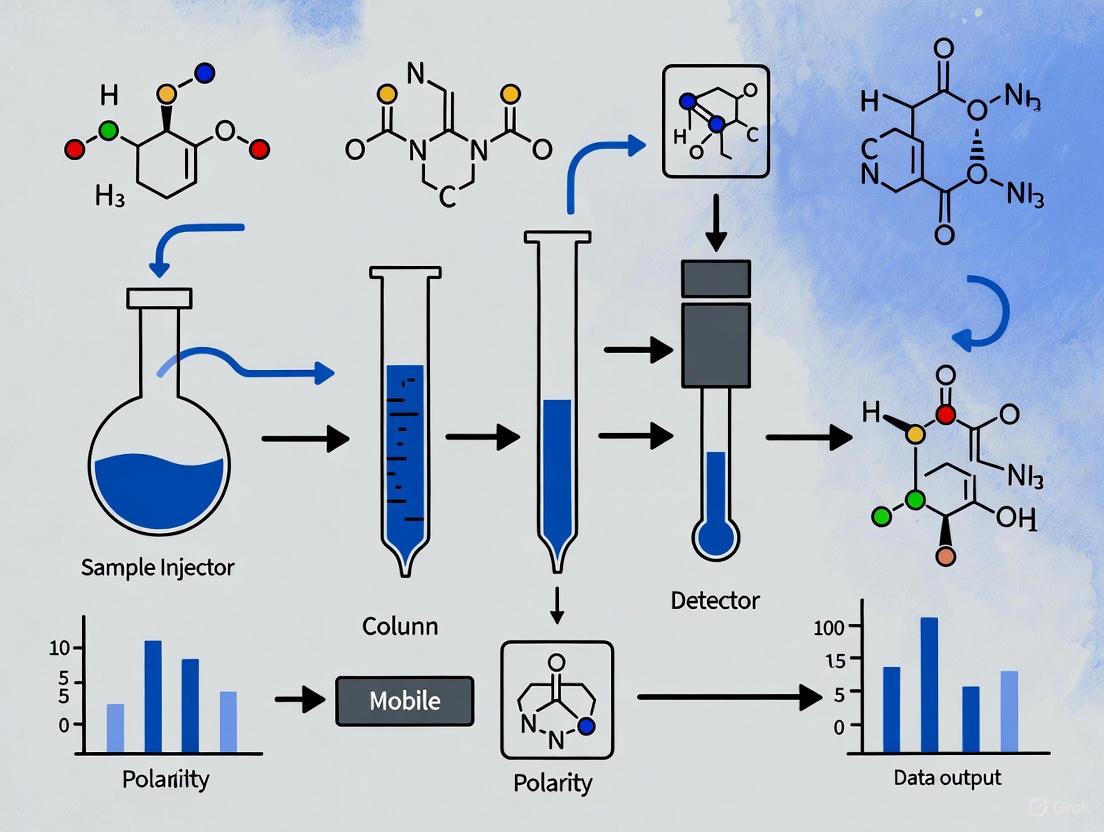
This article provides a comprehensive overview of liquid chromatography (LC) techniques for lipophilicity assessment, a critical parameter in drug discovery and development.
Lipophilicity Assessment by Liquid Chromatography: Advanced Methods for Drug Discovery and ADME Profiling
Abstract
This article provides a comprehensive overview of liquid chromatography (LC) techniques for lipophilicity assessment, a critical parameter in drug discovery and development. It covers the foundational principles of lipophilicity and its impact on pharmacokinetic properties like absorption, distribution, metabolism, and excretion (ADME). The content explores methodological advances in Reversed-Phase HPLC, biomimetic, and UHPLC systems, alongside practical guidance for method optimization and troubleshooting. Furthermore, it details validation strategies according to OECD principles and compares experimental data with in silico predictions. Aimed at researchers and drug development professionals, this review synthesizes modern LC applications to enhance the efficiency of candidate selection and risk assessment.
Lipophilicity Fundamentals: Why This Key Parameter Dictates Drug Fate
Lipophilicity, a key physicochemical property in drug design, is fundamentally expressed through two parameters: the partition coefficient (Log P) and the distribution coefficient (Log D) [1]. These metrics are indispensable in quantitative structure-activity relationship (QSAR) studies and are critical for predicting the absorption, distribution, metabolism, excretion, and toxicity (ADMET) profile of potential drug candidates [2] [3]. In essence, they model a compound's affinity for lipid-like environments versus aqueous surroundings, which directly influences its ability to cross biological membranes via passive diffusion [4] [5].
The standard system for measuring this distribution is the n-octanol/water system, and the logarithm of this partition coefficient is a staple in medicinal chemistry [4] [6]. While Log P and Log D are often used interchangeably, they represent distinct concepts. Log P describes the partitioning of a single, neutral species, whereas Log D accounts for the distribution of all ionized and unionized species of a compound at a specific pH, making it a more physiologically relevant parameter for ionizable molecules [3]. This application note details the definitions, calculation methods, and experimental protocols for Log P and Log D, framing them within liquid chromatography lipophilicity assessment research.
Theoretical Foundations: Log P vs. Log D
Partition Coefficient (Log P)
The partition coefficient, Log P, is defined as the logarithm of the ratio of the concentration of a solely unionized compound in n-octanol to its concentration in water at equilibrium [3] [6]. It is a pH-independent value that reflects the intrinsic lipophilicity of a molecule's neutral form [3].
LogP = log10([Compound]octanol / [Compound]water)
For complex molecules with multiple ionization sites, the partition coefficient can be defined for each individual microspecies, known as the micro partition coefficient (pi), as well as for collective ionization states, known as macro partition coefficients (Pi) [4]. However, the fundamental principle remains that Log P refers only to the uncharged species.
Distribution Coefficient (Log D)
The distribution coefficient, Log D, is the logarithm of the ratio of the sum of the concentrations of all species of a compound (ionized, partially ionized, and unionized) in n-octanol to the sum of the concentrations of all species in water at a specified pH [4] [3]. Unlike Log P, Log D is pH-dependent.
Log DpH = log10( Σ [All species]octanol / Σ [All species]water )
The relationship between Log D and Log P for a monoprotic acid can be derived from this definition, illustrating the profound effect of ionization state and pH on the observed lipophilicity.
The Critical Distinction and Its Physiological Significance
The primary difference between Log P and Log D lies in their accounting of ionization. Log P is a constant for a given compound, while Log D varies with the pH of the environment [3]. This makes Log D particularly valuable in pharmaceutical sciences because it provides a more accurate picture of a compound's behavior under varying biological conditions [3].
For instance, the gastrointestinal (GI) tract presents a spectrum of pH environments, from the highly acidic stomach (pH ~1.5) to the more neutral intestines (pH ~6.5-7.4) [3]. A compound like ibuprofen, an acid with a pKa around 4.4, will be largely unionized in the stomach (high Log D, resembling Log P) but increasingly ionized in the intestine (lower Log D) [4]. Consequently, its permeability and absorption are heavily influenced by the local pH. Relying solely on Log P would overestimate the lipophilicity and potential membrane permeability of ibuprofen at physiologically relevant intestinal pH [3]. Therefore, for any compound with ionizable sites, Log D is the more appropriate and informative descriptor for predicting in vivo behavior.
Experimental Determination Methods
The determination of lipophilicity can be achieved through computational, direct, and indirect methods. The following table summarizes the key approaches.
Table 1: Methods for Determining Lipophilicity
| Method | Principle | Log P Range | Advantages | Disadvantages |
|---|---|---|---|---|
| Shake-Flask (Gold Standard) [7] [1] | Direct partitioning between n-octanol and aqueous buffer, followed by concentration measurement (e.g., via HPLC). | ~ -2 to 4 [2] | Accurate; minimal sample requirement [2] [7] | Labor-intensive; requires high compound purity; limited range [2] |
| Reverse-Phase HPLC (RP-HPLC) [2] [5] | Correlation of compound retention time (as capacity factor, k) with known Log P values of standards. | Can be extended >6 [2] [5] | High-throughput, mild conditions, low purity requirement, broad range [2] [5] | Requires a calibration curve; can be less accurate for charged compounds on silica columns [5] |
| In Silico Prediction [4] [1] | Summation of fragment-based contributions or machine learning models trained on experimental data. | N/A | Fast, cost-effective, no physical sample needed [2] [1] | Can be inaccurate, especially for complex structures; reliability varies [2] [1] |
Detailed Protocol: Shake-Flask Method for Log P and Log D
The shake-flask method is considered the reference standard for direct lipophilicity measurement [1]. The following is a standardized, miniaturized protocol suitable for early drug discovery [7].
Principle: A compound is partitioned between water-saturated n-octanol and n-octanol-saturated water (or buffer, for Log D). After agitation and phase separation, the concentration of the compound in each phase is quantified to calculate the Log P or Log D value [7].
Materials and Reagents:
- n-Octanol: High-purity grade for the organic phase.
- Aqueous Phase: Deionized water (for Log P) or phosphate-buffered saline (PBS), typically at pH 7.4 for Log D₇.₄.
- Saturated Solvents: Pre-saturate n-octanol with the aqueous phase and vice versa by shaking equal volumes together for 24 hours and allowing them to separate before use.
- HPLC System: With a UV or diode-array detector (DAD) for concentration analysis.
- HPLC Vials and Microtubes: For sample preparation and analysis.
Procedure:
- Preparation: Equilibrate the water-saturated n-octanol and octanol-saturated buffer for at least 2 hours at a constant temperature (e.g., 25°C).
- Sample Preparation: Dissolve the test compound in a small volume (< 5 mg required) of the presaturated octanol or aqueous phase [7].
- Partitioning: Combine the compound solution with the appropriate volume of the counter-phase in a vial (e.g., 1:1 ratio). Seal the vial and agitate vigorously on a mechanical shaker for 1-2 hours to reach equilibrium.
- Phase Separation: Centrifuge the vial to achieve complete and clear phase separation.
- Analysis: Carefully sample from both the octanol and aqueous phases. Dilute the octanol phase with a water-miscible organic solvent (e.g., acetonitrile) to prevent phase separation during HPLC analysis. Analyze the concentration of the compound in each phase using a qualified HPLC method.
- Calculation: Determine the Log P or Log D value using the formula:
Log P (or Log D) = log10 (Concentration_octanol / Concentration_water)
Detailed Protocol: RP-HPLC Method for Log P Estimation
RP-HPLC is a widely used high-throughput method for lipophilicity estimation, particularly advantageous for impure samples or compound mixtures [2] [5].
Principle: The retention time of a compound on a reverse-phase column under standardized conditions correlates with its lipophilicity. A calibration curve is constructed using reference compounds with known Log P values, which is then used to interpolate the Log P of unknown test compounds [2].
Materials and Reagents:
- HPLC System: Quaternary pump, autosampler, and DAD or ELSD detector.
- Chromatographic Column: A C18 column is standard, but polystyrene-divinylbenzene (PS-DVB) columns (e.g., Hamilton PRP-1) are advantageous for basic compounds and a wider pH range [5].
- Mobile Phase: Acetonitrile and an aqueous buffer (e.g., 50 mM ammonium acetate, pH adjusted as needed).
- Reference Compounds: A diverse set of 5-10 drugs with known, literature Log P values covering a wide lipophilicity range (e.g., theophylline, acetophenone, propiophenone, etc.) [5].
Procedure:
- System Qualification: Ensure the HPLC system is performing within specified parameters (pressure, baseline noise, etc.).
- Calibration Curve:
- Inject each reference compound and record its retention time (tᵣ).
- Calculate the capacity factor for each reference:
k' = (tᵣ - t₀) / t₀, where t₀ is the column dead time (determined by injecting an unretained compound like sodium nitrate). - Plot the log k' (or the retention time directly in a gradient method) of the reference compounds against their known Log P values.
- Perform linear regression to obtain the standard equation:
Log P = a * log k' + b[2] [5].
- Sample Analysis:
- Inject the test compound under the exact same chromatographic conditions.
- Measure its retention time, calculate log k', and substitute this value into the standard equation to determine its estimated Log P.
Figure 1: RP-HPLC Log P Estimation Workflow. This flowchart outlines the key steps for estimating Log P using a reverse-phase HPLC method, from system calibration with reference compounds to the analysis of the test compound.
Data Interpretation and Application in Drug Design
Lipophilicity Contributions of Common Substituents
Understanding how specific functional groups influence lipophilicity is crucial for rational drug design. The following table, derived from a molecular matched pair analysis of a large, pharmaceutically relevant dataset, provides the median change in Log D₇.₄ (ΔLog D₇.₄) for common substituents [8].
Table 2: Lipophilic Contributions (ΔLog D₇.₄) of Common Functional Groups [8]
| Substituent | ΔLog D₇.₄ (Radius = 0) | ΔLog D₇.₄ (on Phenyl, Radius = 3) | Reported π-Value (Log P) [8] |
|---|---|---|---|
| -CF₃ | +0.92 (n=1043) | +1.06 (n=171) | +0.88 |
| -Cl | +0.68 (n=2082) | +0.75 (n=417) | +0.71 |
| -F | +0.30 (n=2311) | +0.32 (n=573) | +0.14 |
| -OH | -0.55 (n=1579) | -0.32 (n=260) | -0.67 |
| -CN | -0.27 (n=478) | -0.19 (n=92) | -0.57 |
| -COOH | -1.36 (n=648) | -1.11 (n=82) | -1.11 (ionized: -4.36) |
| -NH₂ | -1.38 (n=1383) | -1.40 (n=231) | -1.23 (ionized: -4.30) |
| -CONH₂ | -1.62 (n=539) | -1.50 (n=84) | -1.49 |
| -SO₂NH₂ | -2.07 (n=239) | -1.91 (n=45) | -1.82 |
Note: Radius defines the minimal shared substructure in the matched molecular pair analysis. Radius = 0 is context-independent, while Radius = 3 specifies substitution on a 1,4-disubstituted phenyl ring. n = number of matched pairs.
This data is invaluable for predicting the effects of structural modifications. For example, adding a chlorine atom to a scaffold is expected to increase Log D₇.₄ by approximately 0.7 units, while introducing a carboxylic acid will decrease it by about 1.4 units [8]. The table also highlights bioisosteric replacements; for instance, replacing a phenyl ring with a 3-pyridazine can reduce lipophilicity by ~0.80 units, offering a strategy to fine-tune properties [8].
Lipophilicity in the "Beyond Rule of 5" (bRo5) Space
While Lipinski's Rule of 5 (Ro5) guided drug design for decades, the exploration of "beyond Rule of 5" (bRo5) chemical space for challenging targets is now common [3]. This space includes larger compounds like macrocyclic peptides and PROTACs. The proposed revised parameters for bRo5 space include a molecular weight of < 1000 Da and a calculated Log P between -2 and 10 [3]. For these complex molecules, which can exhibit conformation-dependent lipophilicity, chromatographic methods (e.g., using polystyrene-divinylbenzene columns) have been developed to estimate hydrocarbon-water partition coefficients, providing a better correlation with passive cell permeability than traditional Log P calculations [9].
The Scientist's Toolkit: Essential Research Reagents and Materials
Table 3: Key Reagents and Materials for Lipophilicity Assessment
| Item | Function / Application | Notes |
|---|---|---|
| n-Octanol | Organic phase in shake-flask method. | Must be high-purity and pre-saturated with the aqueous phase. |
| Phosphate Buffered Saline (PBS) | Aqueous phase for Log D determination, typically at pH 7.4. | Mimics physiological pH. Must be pre-saturated with n-octanol. |
| Polystyrene-Divinylbenzene (PS-DVB) HPLC Column | Stationary phase for RP-HPLC lipophilicity estimation. | Chemically inert over wide pH range (1-13); superior for separating basic compounds [5]. |
| C18 Silica HPLC Column | Common stationary phase for RP-HPLC. | Widely available; performance can be affected by residual silanols for basic compounds. |
| Reference Compound Set | For constructing the RP-HPLC calibration curve. | Should cover a wide Log P range (e.g., -0.02 to >3). Theophylline, acetophenone homologues are examples [5]. |
| Acetonitrile (HPLC Grade) | Mobile phase component in RP-HPLC. | Standard organic modifier for reversed-phase chromatography. |
Log P and Log D are foundational parameters in medicinal chemistry and drug discovery. A clear understanding of their definitions—where Log P is a pH-independent constant for the neutral species and Log D is the pH-dependent distribution of all species—is critical for their correct application. The shake-flask method remains the gold standard for direct measurement, while RP-HPLC offers a robust, high-throughput alternative for estimation, especially when using advanced stationary phases like PS-DVB. The quantitative contribution data for common substituents provides a powerful tool for medicinal chemists to rationally design molecules with optimal lipophilicity, thereby improving the likelihood of achieving a successful ADMET profile and developing effective therapeutics.
The Critical Role of Lipophilicity in ADME Properties and Drug Efficacy
Lipophilicity, quantified as the partition coefficient (log P) or distribution coefficient (log D), is a fundamental physicochemical property defining a compound's affinity for lipid versus aqueous environments. It is a critical determinant in drug discovery and development, directly influencing a compound's Absorption, Distribution, Metabolism, and Excretion (ADME) profile, and consequently, its efficacy and toxicity [10] [11]. Lipophilicity governs a drug's ability to passively diffuse through biological membranes, impacting its oral bioavailability, tissue distribution, and penetration to target sites, including the central nervous system [10] [11]. Furthermore, excessive lipophilicity can lead to poor aqueous solubility, non-specific binding, and increased metabolic turnover, presenting significant challenges in drug development [10] [12]. This application note details the pivotal role of lipophilicity in ADME properties and provides standardized chromatographic protocols for its reliable determination within a liquid chromatography-based research framework.
Lipophilicity as a Determinant of ADME Properties and Drug Efficacy
Fundamental Role in Pharmacokinetics
Lipophilicity is a primary driver of a molecule's passive diffusion across cellular barriers. To reach its molecular target, a drug must traverse multiple lipid membranes, a process highly dependent on its lipophilic character [11]. Compounds with log P values below 0 or above 5 often face challenges, including poor intestinal absorption, inadequate CNS penetration, or low aqueous solubility, which can lead to failure in later development stages [5]. Optimal lipophilicity, often cited as a log P around 2, typically balances membrane permeability and aqueous solubility, facilitating efficient transport to molecular targets [10].
Impact on Specific ADME Processes
- Absorption: For orally administered drugs, lipophilicity is a key factor enabling passive diffusion across the gastrointestinal epithelium. According to Lipinski's Rule of Five, a log P value ≤ 5 is a crucial criterion for likely oral bioavailability [10] [13].
- Distribution: Lipophilicity influences a drug's volume of distribution and its ability to cross specialized barriers like the blood-brain barrier (BBB). Highly lipophilic drugs more readily penetrate the BBB but may also exhibit increased plasma protein binding, reducing the free fraction available for pharmacological activity [10] [14] [11].
- Metabolism and Excretion: Increased lipophilicity often correlates with faster metabolic turnover by enzymes such as cytochrome P450, as well as a higher tendency for tissue accumulation, potentially leading to toxicity [10] [11].
Lipophilicity in Drug Design and Optimization
Lipophilicity is a central parameter in Quantitative Structure-Activity Relationship (QSAR) studies, guiding the rational design of new chemical entities with optimal bioavailability [10] [11]. For instance, studies on 1,9-diazaphenothiazines and pseudothiohydantoin derivatives have demonstrated that experimental lipophilicity determination, combined with in silico ADME profiling, effectively identifies compounds with favorable drug-like properties [10] [13]. The strategic manipulation of lipophilicity through structural modifications is a powerful tool for improving a candidate's overall developability profile.
Experimental Determination of Lipophilicity: Chromatographic Approaches
While the traditional shake-flask method is considered a gold standard, chromatographic techniques offer superior speed, require minimal sample, are insensitive to impurities, and are easily automated, making them ideal for modern drug discovery [12] [5].
Reversed-Phase High-Performance Liquid Chromatography (RP-HPLC)
RP-HPLC is a widely adopted and reliable method for determining lipophilicity. The retention time of a compound on a non-polar stationary phase correlates directly with its lipophilicity.
Key Protocols
Protocol 1: Fast Gradient RP-HPLC for Early-Stage Screening This method prioritizes high throughput for rapid compound ranking during early drug screening [12].
- Stationary Phase: C18 column (e.g., 5 µm, 150 mm × 4.6 mm).
- Mobile Phase: Gradient from 0% to 100% acetonitrile in water or buffer over 15-20 minutes.
- Detection: UV or Mass Spectrometry.
- Procedure:
- Inject a set of reference compounds with known log P values (see Table 1) to establish a standard calibration curve.
- Plot the logarithm of the measured capacity factor (log k) or the retention time against the known log P values.
- Inject test compounds under identical conditions and determine their log P values using the calibration curve.
- Application: This method is rapid (under 30 minutes per sample), cost-effective, and suitable for screening large compound libraries [12].
Protocol 2: High-Accuracy RP-HPLC for Late-Stage Development This method provides greater accuracy by accounting for the effect of the organic modifier on retention [12].
- Procedure:
- For each reference and test compound, measure the retention time (log k) at at least three different isocratic concentrations of organic modifier (e.g., methanol).
- Plot log k against the organic modifier concentration (φ) for each compound and extrapolate to 0% organic modifier to obtain log kw.
- Construct a calibration curve by plotting the known log P values of the standards against their determined log kw values.
- The log P of unknown compounds is calculated from their log k_w using this calibration curve.
- Application: This method is more time-consuming (2-2.5 hours per compound) but delivers higher accuracy, making it suitable for characterizing lead compounds in late-stage development [12].
Protocol 3: RP-HPLC with Polystyrene-Divinylbenzene (PRP-1) Columns Polymeric columns like PRP-1 are chemically stable across a wide pH range (1-13) and lack residual silanol groups, minimizing unwanted interactions with basic compounds, which can be a limitation with silica-based C18 columns [5].
- Stationary Phase: Polystyrene-divinylbenzene (e.g., Hamilton PRP-1 column).
- Mobile Phase: Fast gradient from 0% to 100% acetonitrile in ammonium acetate buffer.
- Application: This method is particularly useful for analyzing diverse compound classes, including natural products, peptides, and ionizable molecules [5] [15].
Workflow Diagram: RP-HPLC Lipophilicity Determination
The following diagram illustrates the logical workflow for determining lipophilicity using the RP-HPLC methods described above.
Reversed-Phase Thin-Layer Chromatography (RP-TLC)
RP-TLC is a simple, cost-effective technique that allows for the simultaneous analysis of multiple compounds on a single plate [16] [13].
- Stationary Phase: Silica gel impregnated with a non-polar phase (e.g., RP-18F254).
- Mobile Phase: Mixtures of an organic modifier (e.g., acetone or methanol) and an aqueous buffer (e.g., TRIS buffer).
- Procedure:
- Spot test compounds on the RP-TLC plate.
- Develop the plate in mobile phases with varying ratios of organic modifier to buffer.
- Calculate the retention factor (Rₘ) for each compound at different modifier concentrations.
- Extrapolate the Rₘ values to 0% organic modifier to obtain the lipophilicity parameter Rₘ⁰, which can be correlated to log P [16] [13].
- Application: RP-TLC is ideal for initial lipophilicity screening of newly synthesized compounds due to its low solvent consumption and high throughput [16].
Data Presentation and Analysis
Lipophilicity Measurement Methods Comparison
Table 1: Comparison of different log P measurement methods [12].
| Method | Prediction Range (log P) | Speed of Measurement | Required Sample Volume | Reproducibility | Key Advantage |
|---|---|---|---|---|---|
| Computer Simulation | Broad | Very Fast | None | ★★★ | Cost-effective, instantaneous |
| Shake-Flask Method | -2 to 4 | Slow | Small | ★★ | Considered the gold standard |
| Reversed-Phase Liquid Chromatography | 0 to 6 | Rapid | Small | ★★★ | High throughput, insensitive to impurities |
Experimental Lipophilicity Data for Different Drug Classes
Table 2: Experimentally determined lipophilicity parameters of various bioactive compounds from recent studies.
| Compound Class | Biological Activity | Experimental Method | Lipophilicity Parameter (Range) | Citation |
|---|---|---|---|---|
| 10-substituted 1,9-diazaphenothiazines | Anticancer | RP-TLC / in silico | log P (calcd): 1.51 - 4.75 | [10] |
| Pseudothiohydantoin derivatives | 11β-HSD1 Inhibitors | RP-HPLC (log k_w) | 1.35 - 5.63 | [13] |
| Pseudothiohydantoin derivatives | 11β-HSD1 Inhibitors | RP-TLC (Rₘ⁰) | 0.94 - 3.56 | [13] |
| Tetracyclic azaphenothiazines | Anticancer | RP-TLC / in silico | log P (TLC): Compared with iLOGP, XLOGP3, etc. | [16] |
The Scientist's Toolkit: Research Reagent Solutions
Table 3: Essential materials and reagents for lipophilicity assessment via chromatography.
| Item | Function in Lipophilicity Assessment |
|---|---|
| C18 Chromatography Column | The standard reversed-phase stationary phase for separating compounds based on their hydrophobicity. |
| PRP-1 (Polymeric) Column | A polystyrene-divinylbenzene stationary phase ideal for basic compounds and a wide pH range. |
| RP-18F254 TLC Plates | Stationary phase for thin-layer chromatography lipophilicity screening. |
| Acetonitrile & Methanol | Common organic modifiers for the mobile phase; methanol is often preferred for its similarity to octanol. |
| Buffers (e.g., TRIS, Ammonium Acetate) | Maintain a consistent pH in the mobile phase, which is critical for ionizable compounds (log D measurement). |
| log P Reference Standards | A set of compounds with known log P values (e.g., 4-acetylpyridine, phenanthrene, triphenylamine) for system calibration. |
Lipophilicity remains an indispensable parameter in rational drug design, profoundly influencing a compound's ADME profile and ultimate success as a therapeutic agent. The integration of robust chromatographic methods, such as RP-HPLC and RP-TLC, into the drug discovery workflow provides an efficient and reliable means to experimentally determine this critical property. By employing the standardized protocols and best practices outlined in this application note—from high-throughput screening to high-accuracy characterization—researchers can effectively guide the selection and optimization of drug candidates with desirable pharmacokinetic properties, thereby reducing attrition in later, more costly stages of drug development.
Lipinski's Rule of Five (RO5) stands as a foundational principle in drug discovery, providing a crucial framework for predicting the oral bioavailability of chemical compounds. Formulated by Christopher A. Lipinski in 1997, this rule evaluates drug-likeness based on key physicochemical properties that significantly influence a compound's absorption, distribution, metabolism, and excretion (ADME) profile [17]. The rule derives its name from the fact that all its criteria incorporate multiples of five as determinant conditions, establishing simple, memorable thresholds that have revolutionized early-stage drug development [18]. In the contemporary pharmaceutical landscape, where development pipelines increasingly feature highly lipophilic compounds, the Rule of Five provides an essential screening tool to prioritize lead compounds with a higher probability of clinical success [19] [12].
At the core of the Rule of Five is the recognition that lipophilicity, expressed as the partition coefficient (Log P), serves as a master variable governing a drug's behavior in biological systems. This single property dictates multiple aspects of drug performance, including solubility, absorption from the gastrointestinal tract, membrane permeability, plasma protein binding, and metabolism [20]. The Rule of Five specifically states that poor absorption or permeability is more likely when a compound exhibits more than one of the following characteristics: more than 5 hydrogen bond donors (expressed as the sum of all OH and NH groups); more than 10 hydrogen bond acceptors (expressed as the sum of all nitrogen and oxygen atoms); a molecular weight greater than 500 Da; and a calculated Log P (CLog P) greater than 5 [18] [17]. According to this guideline, an orally active drug should have no more than one violation of these criteria [18].
The enduring relevance of Lipinski's Rule of Five lies in its practical application as an early warning system during drug discovery. When pharmacologically active lead structures are optimized through step-wise chemical modifications, medicinal chemists can use these criteria to maintain drug-like physicochemical properties while enhancing activity and selectivity [17]. This proactive approach helps reduce attrition rates in later, more costly clinical development stages. Studies have demonstrated that candidate drugs conforming to the Rule of Five tend to have lower attrition rates during clinical trials and consequently have an increased chance of reaching the market [17]. However, it is important to recognize that the Rule of Five applies specifically to orally administered drugs and may not be relevant for other administration routes such as injectable formulations or biologics [21].
Lipophilicity Measurement: Fundamental Concepts and Methodologies
Log P and Log D: Defining Lipophilicity Parameters
Lipophilicity represents a compound's ability to dissolve in non-polar solvents relative to aqueous environments, typically assessed by observing its partitioning behavior in a liquid-liquid or liquid-solid two-phase system [12]. In pharmaceutical sciences, this property is quantitatively expressed through two fundamental parameters: the partition coefficient (Log P) and the distribution coefficient (Log D). Log P refers to the partition coefficient logarithm of a compound between an organic phase (typically n-octanol) and an aqueous phase when the compound exists entirely as non-ionized molecules in both phases at a specific pH [12]. This parameter is solely related to the intrinsic properties of the compound, including molecular volume, dipole moment, and hydrogen bond acidity and basicity.
In contrast, Log D represents the distribution coefficient logarithm of a compound between an organic phase and an aqueous phase when the compound exists as both ionized and non-ionized forms at a specific pH [12]. While Log P provides a more direct indication of the overall lipophilicity trend, Log D offers practical relevance for physiological conditions, as most drug compounds exhibit some degree of ionization at biological pH levels. The magnitude of Log D depends not only on the fundamental chemical properties of the compound but also on the pH of the environment in which the compound is present [12]. For drug discovery applications, Log D is typically measured at pH 7.4 to simulate physiological conditions, providing a more accurate prediction of a compound's behavior in biological systems [20].
Table 1: Comparison of Lipophilicity Measurement Methods
| Measurement Method | Prediction Range (log value) | Key Advantages | Key Limitations | Optimal Application Context |
|---|---|---|---|---|
| Computer Simulation | Broad | Cost-effective, rapid | Predictive accuracy depends on software accounting for all substructures | Early screening of virtual compound libraries |
| Shake-Flask Method | -2 to 4 | Considered gold standard, accurate results | Time-consuming, requires high purity, limited range | Regulatory submissions and method validation |
| Reversed-Phase Liquid Chromatography | 0 to 6 | Rapid, mild operating conditions, broad detection range | Limited linear range for charged compounds | High-throughput screening in early drug discovery |
Methodological Approaches for Lipophilicity Determination
The determination of lipophilicity parameters has evolved significantly from traditional methods to more sophisticated chromatographic approaches. The shake-flask method, established by Hansch et al. in 1964, remains the experimental and theoretical gold standard for determining lipophilicity using an octanol-water system [12]. This method involves directly measuring the distribution of a compound between n-octanol and water phases, providing accurate results with minimal sample requirements. However, this technique presents several limitations, including being relatively time-consuming, demanding high compound purity, being unsuitable for unstable compounds, and having a restricted measurement range of -2 < log P < 4 [12].
With the steady increase in drug development pipelines featuring highly lipophilic compounds (log P > 5), reversed-phase liquid chromatography (RP-HPLC) has emerged as a powerful alternative for lipophilicity assessment [12]. This approach has garnered considerable interest among researchers due to several distinct advantages: higher speed of measurement, milder operating conditions, minimal sample volume requirements, low purity requirements, and a broader detection range that can be expanded to compounds with log P > 6 under certain circumstances [12]. The Organisation for Economic Co-operation and Development (OECD) guidelines formally recognize RP-HPLC as having distinct advantages for determining the log P of highly lipophilic compounds [12].
Recent advancements have further refined chromatographic approaches for lipophilicity determination. The development of the AlphaLogD method represents a significant innovation, specifically designed to address the challenges of measuring lipophilicity for neutral and basic compounds across an extensive range (-1 to 7) [22]. This method utilizes superficially porous particles with a high number of equilibriums between solutes and stationary phase, requiring fewer isocratic methods to determine the log k'w at higher throughput [22]. Such methodological improvements have expanded the applicability of lipophilicity measurements to Beyond-Rule-of-5 molecules, which are increasingly common in modern drug discovery pipelines.
Experimental Protocols for Lipophilicity Assessment
RP-HPLC Method 1: Rapid Lipophilicity Screening
For early-stage drug discovery where rapid analysis of numerous compounds is essential, RP-HPLC Method 1 provides an efficient approach for lipophilicity determination. This method, established based on OECD requirements, enables rapid screening of compounds with Log P values below 6 within 30 minutes, making it particularly valuable for ranking screened compounds during initial discovery phases [12].
The protocol begins with selection of reference compounds with known Log P values that cover a broad lipophilicity range. The recommended reference set includes: 4-acetylpyridine (Log P 0.5), acetophenone (Log P 1.7), chlorobenzene (Log P 2.8), ethylbenzene (Log P 3.2), phenanthrene (Log P 4.5), and triphenylamine (Log P 5.7) [12]. These compounds are injected into the chromatography system to obtain retention times for calculating the capacity factor (k). The chromatographic conditions should be optimized, with a Hamilton PRP-1 column (5 μm, 150 mm × 4.6 mm) representing a suitable stationary phase [5]. The mobile phase typically employs a gradient program: 0-1.5 min at 0% acetonitrile; 1.5-16.5 min with a linear gradient from 0-100% acetonitrile; 16.5-18.5 min at 100% acetonitrile; 18.5-23.0 min returning to 0% acetonitrile; and 23.0-25.0 min at 0% acetonitrile [5]. The flow rate should be maintained at 1 mL/min, with detection achieved using a UV diode array detector or ELSD detector.
For each reference compound, the capacity factor (k) is calculated as k = (tR - t0)/t0, where tR represents the retention time of the compound and t0 represents the dead time measured by injecting sodium nitrate [12]. The logarithms of the capacity factors (log k) are then plotted against their respective known Log P values to establish a standard equation (Log P = a × log k + b) through linear regression. This equation should demonstrate a linear correlation coefficient (R²) of at least 0.97 to meet regulatory requirements [12]. For test compounds, the retention time is measured under identical chromatographic conditions, the capacity factor is calculated, and the Log P value is determined by substituting log k into the standard equation.
RP-HPLC Method 2: High-Accuracy Lipophilicity Determination
In later stages of drug development where more accurate Log P values are required to guide subsequent study design, RP-HPLC Method 2 provides enhanced accuracy through a modified approach. This method builds upon Method 1 but addresses potential interference from organic modifiers that can affect the pKa of ionic compounds and retention behavior, thereby improving measurement accuracy [12].
The protocol utilizes the same reference compounds as Method 1 but incorporates a critical modification in the calculation approach. Rather than using log k directly, Method 2 employs log kw, which represents the capacity factor of the compound in the absence of organic modifiers [12]. To determine this parameter, establish an equation relating log k and methanol content (φ) under three different mobile phase gradient conditions using the formula: log k = Sφ + log kw [12]. The intercept of this equation provides the log k_w value for each reference compound.
Once log kw values have been determined for all reference compounds, plot these values against their known Log P values to generate a standard calibration curve using the equation: Log P = a × log kw + b [12]. This approach typically yields a superior correlation coefficient (R² = 0.996) compared to Method 1, indicating enhanced predictive ability [12]. For test compounds, measure retention times under the same chromatographic conditions used for the reference compounds, calculate log kw using the established relationship with organic modifier content, and determine the Log P value by substituting log kw into the standard equation. While this method requires more time (2-2.5 hours per compound) compared to Method 1, it provides substantially improved accuracy for critical development decisions [12].
Diagram 1: Experimental workflow for lipophilicity determination using RP-HPLC methods, highlighting the decision points between rapid screening and high-accuracy approaches.
High-Throughput Shake-Flask Method for Compound Mixtures
While chromatographic methods offer efficiency advantages, the traditional shake-flask approach remains valuable, particularly for validation purposes. A modernized high-throughput shake-flask technique enables simultaneous measurement of distribution coefficients for mixtures of up to 10 compounds using high-performance liquid chromatography and tandem mass spectrometry (LC-MS/MS) [23].
The protocol begins with sample preparation, where compounds are dissolved in a suitable solvent system. For simultaneous analysis of multiple compounds, careful selection of compatible compounds is essential to avoid interactions that could lead to erroneous results through ion pair partitioning [23]. Prepare the n-octanol and water phases by pre-saturating each phase with the other to ensure equilibrium conditions. The partitioning experiment is performed by adding the compound mixture to the pre-saturated n-octanol and water system, followed by vigorous shaking for a predetermined period to establish equilibrium. After phase separation, analyze both phases using LC-MS/MS with appropriate calibration standards.
For LC-MS/MS analysis, employ chromatographic separation on a C18 column using gradient elution. The mobile phase typically consists of water with 0.05% formic acid (solvent A) and acetonitrile (solvent B) with a flow rate of 0.300 mL/min [24]. Use multiple reaction monitoring (MRM) mode via an electrospray ionization source to quantify analytes, with positive ionization mode for lipophilic compounds and negative mode for hydrophilic compounds [24]. Calculate Log P or Log D values from the concentration ratio between octanol and water phases, ensuring proper quality control with reference compounds of known lipophilicity.
Lipophilicity in Drug-Likeness and Beyond-Rule-of-5 Compounds
Optimal Lipophilicity Ranges for Drug Development
Lipophilicity serves as a critical determinant of drug-likeness, with specific Log P ranges associated with successful development candidates for various administration routes and therapeutic targets. According to Lipinski's Rule of 5, an oral drug should generally have a Log P value less than 5 [18] [20]. However, more nuanced analysis reveals that ideal Log P values for good oral and intestinal absorption typically fall between 1.35-1.8 [20]. This range represents a balance between sufficient lipophilicity to cross biological membranes and adequate hydrophilicity to maintain solubility in gastrointestinal fluids.
For drugs targeting the central nervous system (CNS), which must traverse the blood-brain barrier, the optimal Log P value is approximately 2 [20]. This slightly elevated lipophilicity facilitates passive diffusion across the highly selective blood-brain barrier while avoiding excessive sequestration in lipid-rich environments. Conversely, drugs developed for sublingual absorption benefit from higher lipophilicity, with Log P values greater than 5 promoting rapid penetration through the oral mucosa [20]. These specialized ranges demonstrate how lipophilicity requirements must be tailored to specific administration routes and therapeutic objectives.
The relationship between lipophilicity and clinical success extends beyond simple Rule of 5 compliance. Analysis of drug candidates that reached Phase II clinical trials reveals that the Log P values corresponding to the 90th percentile fall between 0 and 5 [5]. This distribution underscores the importance of maintaining lipophilicity within this range to avoid intestinal and CNS permeability problems (at low Log P) or poor solubility and bioavailability issues (at high Log P) [5]. Consequently, consideration of Log P during drug development helps prioritize leads from high-throughput screening and reduces failure rates of drug candidates during advanced development stages.
Table 2: Lipophilicity Guidelines for Different Drug Types and Development Considerations
| Drug Category | Target Log P Range | Rationale | Key Development Considerations |
|---|---|---|---|
| Oral Drugs (General) | <5 (Rule of 5) 1.35-1.8 (Ideal) | Balance between membrane permeability and aqueous solubility | Poor absorption likely when Log P >5; values outside ideal range may require formulation optimization |
| CNS-Targeting Drugs | ~2 | Optimal for blood-brain barrier penetration without excessive CNS retention | Values significantly higher than 2 may lead to undesirable CNS side effects for peripheral drugs |
| Sublingual Drugs | >5 | Enhanced mucosal penetration for rapid onset | May require specialized delivery systems to address potential solubility limitations |
| Natural Products | Variable, often beyond RO5 | Structural complexity frequently violates Rule of 5 | May require proactive solubility enhancement strategies early in development |
Beyond-Rule-of-5 Compounds and Natural Products
While Lipinski's Rule of Five provides valuable guidance, an increasing number of therapeutic compounds fall outside these criteria, particularly in specialized domains such as natural products, macrocyclic compounds, and targeted protein degraders like PROTACs [17] [5]. Analysis of FDA-approved small molecule protein kinase inhibitors reveals that approximately 20 of 48 drugs (42%) fail to conform to the Rule of Five, primarily through molecular weight exceeding 500 Da [19]. This trend reflects the strategic trade-offs in modern drug discovery, where increased molecular complexity and lipophilicity may be accepted to achieve enhanced target affinity and selectivity against challenging biological targets.
Natural products represent a particularly important class of Beyond-Rule-of-5 compounds, with structural complexity that frequently violates Rule of 5 criteria while maintaining favorable biological activity [17] [5]. Studies have demonstrated that some natural products, including macrolides and peptides, consistently break the chemical rules used in Lipinski filters while maintaining oral bioavailability [17]. The integration of physicochemical profiling screens such as Log P into natural products drug discovery programs has emerged as an approach to front-load drug-like properties of natural product libraries for high-throughput screening [5]. This strategy helps optimize the generation of drug-like natural product screening libraries, prioritize leads, and improve the success rate of natural products at later stages of the drug discovery process.
The emergence of novel therapeutic modalities has further expanded the chemical space beyond traditional Rule of 5 boundaries. Proteolysis targeting chimeras (PROTACs), which typically exhibit high molecular weights and lipophilicity, represent a prominent example of beyond-Rule-of-5 compounds with promising therapeutic potential [12]. For such molecules, chromatographic methods for lipophilicity assessment offer particular advantages, as they can accommodate the high lipophilicity (log P > 6) that challenges traditional shake-flask methods [12]. This capability has become increasingly important as drug development pipelines incorporate more beyond-Rule-of-5 compounds to address previously undruggable targets.
Research Reagent Solutions for Lipophilicity Assessment
Table 3: Essential Research Reagents and Materials for Lipophilicity Determination
| Reagent/Material | Specification | Application Function | Method Compatibility |
|---|---|---|---|
| Reference Compounds | 4-Acetylpyridine (Log P 0.5), Acetophenone (Log P 1.7), Chlorobenzene (Log P 2.8), Ethylbenzene (Log P 3.2), Phenanthrene (Log P 4.5), Triphenylamine (Log P 5.7) | Calibration standard for establishing correlation between retention behavior and Log P | RP-HPLC Methods 1 & 2 |
| Chromatography Column | Hamilton PRP-1 column (5 μm, 150 mm × 4.6 mm) or equivalent polymeric stationary phase | Separation matrix; polystyrene-divinylbenzene resin provides pH stability (1-13) and improved separation of basic compounds | RP-HPLC, particularly for natural products and ionizable compounds |
| Mobile Phase Components | HPLC-grade acetonitrile, methanol, ammonium acetate buffer (25-50 mM, pH 4.5-9.8) | Elution solvent system; methanol preferred for mimicking hydrogen bonding effects similar to n-octanol | RP-HPLC, Shake-Flask |
| Mass Spectrometry Internal Standards | Sulfamethoxazole (for negative mode), Simvastatin (for positive mode, with stability limitations) | Quantification reference for correcting instrumental variability and matrix effects | LC-MS/MS methods for high-throughput shake-flask |
| Partitioning Solvents | n-Octanol (water-saturated), Buffer solutions (pH-specific) | Immiscible phases for direct partitioning measurement; pre-saturation prevents volume shifts during equilibrium | Shake-Flask method |
Lipinski's Rule of Five continues to serve as a foundational framework in drug discovery, with lipophilicity (Log P) remaining a central parameter for predicting oral druglikeness. The rule's enduring relevance stems from its ability to identify compounds with a higher probability of satisfactory absorption and bioavailability, thereby reducing attrition in later development stages. While originally developed for traditional small molecules, the principles embodied in the Rule of Five have evolved to accommodate beyond-Rule-of-5 compounds through advanced assessment methodologies and modified interpretation criteria.
The future of lipophilicity assessment in drug discovery will likely involve increased integration of chromatographic methods, particularly for challenging compound classes such as natural products, PROTACs, and other beyond-Rule-of-5 molecules. Methods like AlphaLogD that extend measurement ranges while maintaining accuracy represent important advancements in this direction [22]. Additionally, the growing recognition of transporter effects on drug disposition, as captured in extended frameworks like the Biopharmaceutics Drug Disposition Classification System (BDDCS), provides a more nuanced understanding of how lipophilicity influences drug behavior in biological systems [21]. As drug discovery continues to push the boundaries of chemical space, lipophilicity assessment will remain an essential tool for balancing potency, selectivity, and drug-like properties in the pursuit of novel therapeutics.
Diagram 2: The evolution of Lipinski's Rule of Five from fundamental principles to modern applications and future directions, including recognition of limitations and expansion to beyond-Rule-of-5 compounds.
Lipophilicity, expressed as the logarithm of the n-octanol/water partition coefficient (log P), represents one of the most fundamental physicochemical properties in drug discovery and development [25]. It significantly influences compound solubility, passive transport across biological membranes, drug-receptor interactions, metabolism, and ultimately bioavailability and toxicity [26] [27]. The evolution from traditional shake-flask methods to sophisticated chromatographic techniques represents a paradigm shift in how scientists assess this critical parameter, balancing accuracy, throughput, and applicability across diverse chemical spaces.
This application note details the progression of lipophilicity measurement methodologies, framed within the context of a broader thesis on liquid chromatography-based assessment. We provide a critical comparison of established and emerging techniques, complete with structured experimental protocols designed for implementation by researchers and drug development professionals. The transition to chromatographic methods, particularly reversed-phase high-performance liquid chromatography (RP-HPLC), addresses the need for rapid, reliable profiling of compounds from early discovery through development stages [2].
Methodological Comparison and Evolution
From Shake-Flask to Modern Chromatography
The shake-flask method is the historical gold standard for lipophilicity determination, involving the direct partitioning of a compound between n-octanol and aqueous phases under equilibrium conditions [5]. While accurate, this method is excessively time-consuming, requires high compound purity, is unsuitable for impure or unstable compounds, and has a limited practical measurement range (typically -2 < log P < 4) [28] [2]. These limitations are particularly pronounced in modern drug discovery, where high-throughput screening generates thousands of candidates requiring rapid physicochemical profiling.
Chromatographic methods have emerged as powerful alternatives, overcoming many shake-flask limitations. The underlying principle correlates a compound's retention time or capacity factor in a chromatographic system with its lipophilicity [2] [5]. These methods offer higher speed, milder operating conditions, smaller sample requirements, lower purity demands, and a broader effective detection range, which can extend to compounds with log P > 6 under certain conditions [2].
Table 1: Critical Comparison of Lipophilicity Determination Methods
| Method | Principle | log P Range | Throughput | Key Advantages | Key Limitations |
|---|---|---|---|---|---|
| Shake-Flask | Direct partitioning between n-octanol/water [28] | ~ -2 to 4 [2] | Low | Considered the reference method; accurate for neutral compounds [28] | Time/reagent consuming; requires high purity; prone to emulsion formation [25] |
| Potentiometry | Biphasic titration involving drug neutralization [28] | Varies with compound | Medium | Excellent equivalence with shake-flask; suitable for ionizable substances [28] | Requires acid-base properties and high purity samples [28] |
| RP-HPLC (C18/C8) | Partitioning into alkyl-bonded stationary phase [26] | Can extend >6 [2] | High | High-throughput; small sample amount; low purity requirement; broad range [2] | Less accurate for ionizable compounds; requires pH control [28] |
| IAM-HPLC | Interaction with immobilized phosphatidylcholine [27] [29] | Varies | High | Biomimetic; models cell membrane penetration [29] | More complex retention mechanism; not a direct log P substitute [27] |
| HPTLC | Retention on alkyl-bonded TLC plates [26] | Varies | High | Parallel analysis; cost-effective; various modifiers [26] | Different precision vs. HPLC [26] |
The Rise of Biomimetic and Green Chromatography
The field continues to evolve with two significant trends: the adoption of biomimetic stationary phases and a push toward green chemistry.
- Biomimetic Stationary Phases: Immobilized Artificial Membrane (IAM) phases, which contain chemically bonded phosphatidylcholine, better model biological membranes than standard C18 phases by incorporating hydrophobic, ionic, and hydrogen bonding interactions relevant to passive membrane transport [29]. Cholesterol-modified stationary phases are also gaining traction for their ability to mimic cellular membranes and predict xenobiotic permeability [29].
- Green Solvent Transformation: Ethanol (EtOH) is emerging as a sustainable, less toxic alternative to conventional solvents like acetonitrile (ACN) and methanol (MeOH) [30]. A recent study established isoeluotropic series, finding that the elution strength of MeOH corresponds to 1.46 times that of EtOH (φ MeOH = 1.46 φ EtOH), while ACN’s elution strength is 1.03 times that of EtOH (φ ACN = 1.03 φ EtOH), providing a practical guide for converting existing methods [30].
Detailed Experimental Protocols
Protocol 1: RP-HPLC for log P Determination Using a Calibration Curve
This protocol is ideal for high-throughput log P estimation of neutral compounds and is recognized by IUPAC and OECD [29].
Principle: The logarithm of the capacity factor (log k) of reference compounds with known shake-flask log P values is used to construct a calibration curve. The log P of an unknown compound is then interpolated from this curve based on its measured log k [2].
Materials and Reagents:
- HPLC System: Alliance HPLC system (Waters) or equivalent, with UV/Diode Array Detector [28] [5].
- Column: Octadecyl (C18) or octyl (C8) column, e.g., 150 mm x 4.6 mm, 5 µm [5].
- Mobile Phase: Mixtures of methanol or acetonitrile with aqueous buffer (e.g., 50 mM phosphate or acetate). The aqueous phase should be adjusted to a pH where the analytes are neutral (often pH 7.4 for physiological relevance) [29].
- Reference Compounds: A set of 5-10 compounds covering a wide log P range (e.g., theophylline, acetophenone, propiophenone, butyrophenone, valerophenone) [5].
- Test Compounds: Dissolved in a compatible solvent (e.g., 50% acetonitrile) at ~0.1 mg/mL [5].
Procedure:
- System Preparation: Equilibrate the column with the initial mobile phase (e.g., 60:40 aqueous buffer:organic modifier) at a constant flow rate (e.g., 1.0 mL/min) and temperature (e.g., 25°C).
- Dead Time (t₀) Determination: Inject an unretained compound like sodium nitrate or uracil and record its retention time [5].
- Reference Compound Analysis: For each reference compound, inject the sample and record the retention time (tᵣ). Repeat this process using at least 5 different isocratic mobile phase compositions (e.g., 40%, 50%, 60%, 70%, 80% organic modifier).
- Calibration Curve Construction:
- For each reference compound and each mobile phase, calculate the capacity factor: k = (tᵣ - t₀) / t₀.
- For each compound, plot log k against the volume fraction (φ) of organic modifier in the mobile phase. Extrapolate linearly to 0% organic modifier to obtain the log kw value [26].
- Plot the known log P values of the reference standards against their experimentally derived log kw values.
- Perform linear regression to obtain the standard equation: log P = A(log k_w) + B [29].
- Unknown Compound Analysis: Inject the test compound under the same isocratic conditions used for the references. Calculate its log k_w, and use the standard equation to determine its log P.
Validation: The correlation coefficient (r²) of the standard curve should typically be >0.95 [25].
Protocol 2: Fast-Gradient HPLC for Lipophilicity Index Determination
This protocol is suited for rapid profiling of natural products or compound libraries where speed is critical and an exact log P value is less necessary than a reliable hydrophobicity index [5].
Principle: A fast, linear gradient is applied, and the retention time is correlated to a Chromatographic Hydrophobicity Index (CHI). CHI values can be correlated to log P using a set of standards [5].
Materials and Reagents:
- HPLC System: Quaternary low-pressure gradient system capable of running fast gradients, with DAD and/or ELSD detection [5].
- Column: Polystyrene-divinylbenzene (PRP-1) or C18 column (e.g., 150 mm x 4.6 mm, 5 µm) [5].
- Mobile Phase: A: 50 mM Ammonium acetate buffer (pH 7.2); B: Acetonitrile [5].
- Standards and Samples: As in Protocol 1.
Procedure:
- Gradient Program Setup:
- 0 – 1.5 min: 0% B
- 1.5 – 16.5 min: 0% B to 100% B (linear gradient)
- 16.5 – 18.5 min: 100% B
- 18.5 – 23.0 min: 100% B to 0% B
- 23.0 – 25.0 min: 0% B (re-equilibration)
- Flow rate: 1.0 mL/min [5].
- Standard Curve Creation: Inject each reference standard and record the retention time (tᵣ). Plot the tᵣ of each standard against its known isocratic hydrophobicity index (φ₀) or log P to generate a standard curve and calibration equation [5].
- Sample Analysis: Inject test compounds under the identical gradient method. Use their tᵣ values and the calibration equation to determine their CHI or estimated log P.
Protocol Considerations for Ionizable, Amphoteric, and Zwitterionic Compounds
For ionizable compounds, the pH of the mobile phase must be carefully controlled to ensure the compound is in its neutral form for a valid log P measurement. For zwitterionic and amphoteric compounds, the pH must be accurately selected to ensure the compound is in its neutral form, which often requires working at a pH value between the acidic and basic pKa values [28].
Visualization of Method Selection and Workflow
The following diagram illustrates the logical decision-making process for selecting an appropriate lipophilicity assessment method based on compound characteristics and research objectives.
Figure 1: Lipophilicity Method Selection Workflow
The Scientist's Toolkit: Essential Research Reagents and Materials
Table 2: Key Research Reagent Solutions for Lipophilicity Assessment
| Category | Item | Specifications / Examples | Function / Application Notes |
|---|---|---|---|
| Stationary Phases | C18 / C8 Silica | Octadecyl- or Octyl-silica (e.g., 150 mm x 4.6 mm, 5 µm) [26] | Standard reversed-phase media; hydrophobic interactions; IUPAC/OECD recommended [29]. |
| Immobilized Artificial Membrane (IAM) | Silica with bonded phosphatidylcholine [29] | Biomimetic phase; models passive membrane transport via combined hydrophobic/ionic interactions [27]. | |
| Cholesterol Phase | Silica with bonded cholesterol [29] | Biomimetic phase; useful for predicting permeability across biological membranes [29]. | |
| Polymeric PS-DVB | Hamilton PRP-1 column [5] | Chemically inert; wide pH range (1-13); improved for basic compounds; no silanol effects [5]. | |
| Mobile Phase Modifiers | Methanol (MeOH) | HPLC Grade [30] | Conventional modifier; strong elution strength. Note: φ MeOH = 1.46 φ EtOH [30]. |
| Acetonitrile (ACN) | HPLC Grade [30] | Conventional modifier; low UV cut-off; low viscosity. Note: φ ACN = 1.03 φ EtOH [30]. | |
| Ethanol (EtOH) | HPLC Grade [30] | Green solvent alternative; less toxic; higher viscosity (manage with temperature >35°C) [30]. | |
| Dioxane | HPLC Grade [26] | Useful organic modifier, particularly in HPTLC for lipophilicity estimation [26]. | |
| Buffers & Additives | Ammonium Acetate Buffer | 25-50 mM, pH 4.5, 7.2, 9.8 [5] | Provides pH control; volatile for LC-MS compatibility. |
| Phosphate Buffered Saline | 50 mM, pH 7.4 [29] | For physiological pH conditions, crucial for log D7.4 determination [29]. | |
| Reference Standards | log P Calibration Set | Theophylline (log P ~ -0.1), Acetophenone (log P ~1.6), Propiophenone (log P ~2.2), Butyrophenone (log P ~2.8), Valerophenone (log P ~3.4) [5] | For constructing the standard curve to convert chromatographic retention (log k_w) to log P. |
The evolution from shake-flask to chromatography for lipophilicity assessment marks a significant advancement in pharmaceutical analysis, enabling higher throughput, broader applicability, and more biomimetic profiling. While the shake-flask method remains the reference for validation, chromatographic techniques like RP-HPLC, IAM-HPLC, and fast-gradient methods have become the workhorses of modern drug discovery pipelines.
The presented protocols and data provide a framework for researchers to select and implement the most appropriate method based on their specific compound characteristics and project needs. The ongoing development of green solvent strategies and more sophisticated biomimetic phases promises to further refine these tools, ensuring that lipophilicity assessment continues to be a cornerstone of efficient and successful drug development.
Chromatographic Methods in Action: From Standard RP-HPLC to Biomimetic Systems
Reversed-phase high-performance liquid chromatography (RP-HPLC) stands as the predominant analytical technique for the separation and analysis of small molecules and therapeutic biologics in pharmaceutical research and development. Its robustness, reproducibility, and versatility make it indispensable for assessing critical quality attributes, including lipophilicity—a key physicochemical property influencing a drug's absorption, distribution, metabolism, and excretion (ADME). The selection of an appropriate stationary phase, most commonly C8 or C18 columns, is a fundamental decision that directly impacts the retention, selectivity, and resolution of analytes based on their hydrophobic character. This application note provides a detailed comparison of C8 and C18 columns and outlines standardized protocols for their application in lipophilicity assessment research, providing scientists with practical frameworks for effective method implementation.
The Scientist's Toolkit: Essential Research Reagents and Materials
The following table catalogues the essential materials and reagents required for conducting reversed-phase HPLC analyses focused on lipophilicity assessment.
Table 1: Key Research Reagent Solutions for RP-HPLC Analysis
| Item | Function/Description | Application Notes |
|---|---|---|
| C18 Column (e.g., Waters Cortecs C18+ [31]) | Octadecyl (C18) silane bonded to silica; highly hydrophobic for strong retention of non-polar compounds [32]. | Ideal for separating smaller molecules and less polar substances; the default choice for a wide range of small molecule APIs [32]. |
| C8 Column | Octyl (C8) silane bonded to silica; moderately hydrophobic for faster elution [32]. | Preferred for analyzing macromolecules (e.g., proteins, peptides) or when shorter analysis times are desired [32] [33]. |
| Acetonitrile (HPLC Grade) | Organic modifier in mobile phase; reduces retention time by disrupting hydrophobic interactions [34]. | Offers low viscosity and UV transparency; often provides superior efficiency compared to methanol [34]. |
| Methanol (HPLC Grade) | Alternative organic modifier; can offer different selectivity compared to acetonitrile [34]. | A 10% higher percentage is typically needed to achieve retention comparable to acetonitrile [34]. |
| High-Purity Water (HPLC Grade) | Aqueous component of mobile phase. | Essential for maintaining low background signal and preventing column contamination. |
| Buffer Salts (e.g., Ammonium Formate, Ammonium Acetate) | Control pH and ionic strength of the mobile phase to suppress analyte ionization and ensure reproducible retention [31]. | Volatile buffers are mandatory for LC-MS compatibility. A concentration of 20 mM is common [31]. |
| Acidic Additives (e.g., Formic Acid, Trifluoroacetic Acid) | Ion-pairing agents that improve peak shape for ionizable analytes, particularly bases, by interacting with residual silanols [31]. | Low concentrations (e.g., 0.05-0.1%) are typical. Trifluoroacetic acid offers superior peak shaping but can cause ion suppression in MS [31]. |
| Standard Mixture of Alkylphenones | A set of homologous compounds with incremental lipophilicity used for column performance testing and lipophilicity calibration [31]. | Used to measure peak capacity and validate the gradient performance of the HPLC system. |
Comparative Column Characterization: C8 vs. C18
The core of RP-HPLC separation lies in the hydrophobic interaction between analytes and the alkyl-chain ligands bonded to the silica support. The chain length of these ligands is a primary factor influencing the thermodynamic and kinetic aspects of this interaction.
Chemical and Retention Properties
Table 2: Fundamental Properties of C8 and C18 Stationary Phases
| Characteristic | C8 Column | C18 Column |
|---|---|---|
| Bonded Phase Chemistry | Octylsilane (8-carbon chain) [32] | Octadecylsilane (18-carbon chain) [32] |
| Hydrophobicity / Carbon Load | Lower [32] [35] | Higher [32] [35] |
| Relative Retention Strength | Weaker analyte retention [32] | Stronger analyte retention [32] |
| Typical Retention Time | Shorter for the same analyte [35] | Longer for the same analyte [35] |
| General Polarity | Stronger polarity than C18 [32] | Weaker polarity [32] |
| Ideal Application Scope | Moderate to high polarity analytes, macromolecules (peptides, proteins) [32] | Low to moderate polarity analytes, small organic molecules [32] |
Application-Based Selection Guide
The choice between C8 and C18 is driven by the analyte's properties and the analytical goals.
Table 3: Application-Oriented Selection Guide for C8 and C18 Columns
| Consideration | C8 Column | C18 Column |
|---|---|---|
| Analyte Molecular Size | Better suited for large macromolecules (e.g., proteins, globulins) [32]. | Preferred for smaller molecular weight compounds [32]. |
| Analysis Speed | Generally enables faster run times due to lower retention [33]. | Often requires longer run times; can be mitigated with steep gradients [32]. |
| Peak Shape for Basic Analytes | May exhibit less tailing due to shorter alkyl chains and potentially reduced interaction with residual silanols [33]. | Special bonding and end-capping (e.g., C18+) have minimized this issue, providing excellent peak shape [31]. |
| Separation Mechanism | Hydrophobicity is the primary retention mechanism. | Hydrophobicity is the primary retention mechanism; potential for secondary silanol interactions if not well-endcapped. |
| Mobile Phase Requirements | May require a higher percentage of organic solvent for elution [32]. | Operates effectively with a broader range of mobile phase compositions [32]. |
Experimental Protocols
Protocol 1: Rapid Lipophilicity Screening of Small Molecules
This protocol is designed for high-throughput lipophilicity assessment of drug candidates using a generic, fast gradient.
1. Aim: To rapidly screen and compare the relative lipophilicity of a library of new chemical entities (NCEs). 2. Materials:
- Column: Waters Cortecs C18+ (50 mm x 3.0 mm, 2.7 µm) or equivalent [31].
- Mobile Phase A: 0.05% Formic acid in water [31].
- Mobile Phase B: Acetonitrile (HPLC grade).
- System: UHPLC or HPLC system with low-dispersion, capable of handling high pressures.
- Detection: UV-PDA or Mass Spectrometer. 3. Method:
- Gradient: 5% B to 60% B in 2.0 minutes, then to 95% B in 0.5 minutes, hold for 0.3 minutes [31].
- Flow Rate: 1.0 mL/min [31].
- Column Temperature: 40 °C [31].
- Injection Volume: 1 µL.
- Detection: UV at 220 nm and/or MS in ESI+ mode. 4. Data Analysis:
- The retention time of each analyte can be used as a direct, preliminary indicator of relative lipophilicity.
- For more accurate assessment, plot log retention factor (log k) against known log P values of standards to create a calibration curve.
Protocol 2: Stability-Indicating Method Development for APIs
This protocol describes an AQbD-based approach to develop a robust method for quantifying an Active Pharmaceutical Ingredient (API) and its degradation products.
1. Aim: To develop a validated, stability-indicating RP-HPLC method for an API and its potential degradants. 2. Materials:
- Column: C18 column (e.g., 150 mm x 4.6 mm, 5 µm, such as Hypersil BDS C18) [36].
- Mobile Phase A: Phosphate buffer (e.g., 20 mM, pH 3.0) or 0.1% Ortho-phosphoric acid in water [36].
- Mobile Phase B: Methanol or Acetonitrile [36].
- System: Standard HPLC system. 3. Method Development (DoE Approach):
- Initial Scouting: Follow an optimal experimental design, which may involve 2-3 gradient runs of different durations (e.g., 10% B to 95% B over 10, 20, and 30 minutes) to gather retention data [37].
- Modeling and Optimization: Use chromatographic modeling software (e.g., DryLab) to input the scouting data and build a resolution map. Identify the Method Operable Design Region (MODR) where critical resolution is >2.0 [38].
- Final Method: From the MODR, select a final gradient. Example: 30% B to 100% B in 10 minutes [31].
- Flow Rate: 1.0 mL/min [36].
- Column Temperature: 30-40 °C.
- Detection: UV at a wavelength specific to the API (e.g., 230 nm) [36]. 4. Validation: Validate the method according to ICH guidelines for parameters including accuracy, precision (repeatability, intermediate precision), specificity, linearity, range, and robustness [38] [36].
Figure 1: AQbD Method Development Workflow. This diagram outlines the systematic approach to HPLC method development using Analytical Quality-by-Design principles, from initial column selection to final validation [38].
Data Analysis and Interpretation in Lipophilicity Assessment
In lipophilicity research, the primary goal is to derive quantitative retention parameters that correlate with the partition coefficient (log P). The retention factor (k) is calculated as k = (tR - t0) / t0, where tR is the analyte retention time and t0 is the column dead time. For isocratic methods, a direct correlation exists between log k and log P. In gradient elution, the linear solvent strength model can be applied, where the gradient retention time is inversely related to the analyte's log kw (the extrapolated retention factor in 100% water), a reliable measure of lipophilicity [37]. Modern approaches leverage Bayesian reasoning and multilevel models to incorporate prior knowledge (e.g., analyte structure) to predict retention and optimize separation conditions with minimal experimental effort [37].
Figure 2: Lipophilicity Assessment Logic. This diagram shows the logical relationship between experimental parameters and the final lipophilicity metric derived from RP-HPLC analysis.
Within the broader scope of liquid chromatography lipophilicity assessment research, Immobilized Artificial Membrane (IAM) chromatography has emerged as a superior, biomimetic alternative to classical lipophilicity measurements. Traditional methods, such as the shake-flask technique or reversed-phase (RP) HPLC, often rely on octanol-water partitioning and fail to adequately mimic the complex environment of a biological membrane [39]. In contrast, IAM chromatography utilizes stationary phases where phosphatidylcholine molecules—the primary phospholipids of cell membranes—are covalently bound to a silica support, creating a surface that more accurately replicates the phospholipid bilayer encountered in vivo [39] [40]. This application note details the use of IAM-HPLC, combined with modern Quantitative Structure-Retention Relationship (QSRR) modeling and machine learning, to predict the membrane permeability of small molecules, thereby supporting more efficient drug discovery and development.
Key Principles and Applications in Drug Discovery
The primary metric derived from IAM-HPLC is the Chromatographic Hydrophobicity Index on an IAM column (CHIIAM). This index represents the concentration of organic solvent (typically acetonitrile) required to elute a compound from the IAM column, thereby quantitatively expressing its affinity for phospholipids [39]. Understanding this affinity is crucial because it directly influences a compound's Absorption, Distribution, Metabolism, Excretion, and Toxicity (ADMET) properties.
Research has demonstrated that a molecule's retention on IAM stationary phases is governed by three key physicochemical properties: lipophilicity, charge, and maximum projection area [39] [40]. This triad of factors provides a more mechanistically informed view of membrane interaction than a single hydrophobicity parameter.
The applications of IAM-HPLC data are extensive in pre-clinical research. The technique has been successfully correlated with complex biological phenomena, including [39]:
- Blood-brain barrier (BBB) permeability
- Human intestinal absorption (HIA)
- Volume of distribution
- Skin permeation
- Cardiotoxicity
By integrating IAM-derived data into QSRR models, researchers can predict these critical endpoints in silico, enabling the prioritization of lead compounds with desirable ADMET profiles early in the discovery pipeline [39].
Experimental Protocol: Determining CHIIAM and Building a QSRR Model
The following protocol describes the process for determining analyte affinity to phospholipids using IAM-HPLC and developing a predictive QSRR model.
Materials and Equipment
Table 1: Essential Research Reagent Solutions and Materials
| Item | Function / Description |
|---|---|
| IAM HPLC Column (e.g., IAM.PC.DD2) | Stationary phase with covalently bound phosphatidylcholine groups to mimic the cell membrane. |
| HPLC System with DAD/UV Detector | High-performance liquid chromatography system for analyte separation and detection. |
| Acetonitrile (HPLC Grade) | Organic modifier in the mobile phase. |
| Aqueous Buffer (e.g., Phosphate) | Aqueous component of the mobile phase; pH and ionic strength can be adjusted. |
| Analytical Standards | Compounds of known identity and purity for model training and validation. |
Step-by-Step Procedure
Step 1: Fast Gradient Method Setup
- Establish a fast, linear gradient using two eluents: Eluent A (aqueous buffer) and Eluent B (acetonitrile).
- A typical gradient may run from 0% B to 100% B over a short duration (e.g., 15-20 minutes), followed by a re-equilibration step [39].
- Maintain a constant flow rate and column temperature.
Step 2: System Calibration and CHIIAM Calculation
- Inject a series of certified standards to calibrate the system.
- Record the retention time of each analyte.
- Calculate the CHIIAM value for each compound, which is the percentage of acetonitrile at the moment of elution [39]. This serves as the experimental endpoint for subsequent QSRR modeling.
Step 3: Data Set Compilation
- Compile a data set of CHIIAM values for a diverse set of molecules (ideally >100 compounds). The set used in the foundational study included 402 molecules of pharmaceutical and toxicological significance [39].
- Split the data into a training set (for model building) and a test set (for validation).
Step 4: Molecular Descriptor Calculation
- For each molecule in the data set, calculate relevant molecular descriptors using chemoinformatic software (e.g., Chemicalize) [39].
- Key descriptors identified include:
- Lipophilicity (e.g., log P)
- Charge (at physiological pH)
- Maximum Projection Area (a measure of molecular size and shape)
Step 5: Model Training and Validation
- Input the calculated descriptors and experimental CHIIAM values into a machine learning algorithm.
- The highlighted study successfully employed Locally Weighted Least Squares Kernel Regression (KwLPR), a similarity-based method robust for handling heterogeneous data sets [39].
- Validate the model according to OECD principles. Key validation metrics from the seminal work include [39]:
- Predictive squared correlation coefficient (Q²): 0.812
- Root mean square error of prediction (RMSEP): 6.739
- A defined Applicability Domain to identify reliable predictions.
The workflow below illustrates the logical relationship between the experimental and computational stages of this protocol:
Data Presentation and Model Performance
The predictive performance of the QSRR model is quantified using standard statistical metrics. The table below summarizes the key outcomes from the validated model.
Table 2: Key Validation Metrics for the IAM-HPLC QSRR Model
| Validation Metric | Result | Interpretation |
|---|---|---|
| Predictive Squared Correlation Coefficient (Q²) | 0.812 | Indicates high predictive power, as the model explains over 81% of the variance in the validation data. |
| Root Mean Square Error of Prediction (RMSEP) | 6.739 | A low error value, confirming the model's accuracy. |
| Molecules Outside Applicability Domain (Training Set) | 1.5% | Confirms the model is not over-fitted to the training data. |
| Molecules Outside Applicability Domain (Validation Set) | 2.8% | Demonstrates strong generalizability to new, unseen compounds. |
Complementary Tools for Retention Time Prediction
While IAM-HPLC is powerful, several computational tools have been developed to predict retention times across various chromatographic systems, which can complement IAM-based screening.
Table 3: Computational Tools for Retention Time Prediction
| Tool Name | Key Feature | Application/Utility |
|---|---|---|
| QSRR Automator [41] | Automated software package that creates QSRR models from user data with minimal bioinformatics expertise. | Ideal for core laboratories with multiple LC methods, enabling high-throughput model creation for different conditions. |
| RT-Pred [42] | A web server that allows users to train custom RT prediction models for their specific chromatographic method. | Achieves high accuracy (R²=0.95 training, 0.91 validation) and can classify if a compound will be void-eluted, retained, or eluted. |
| MultiConditionRT [43] | Predicts retention times across 4 chromatographic mechanisms (C18, HILIC, etc.) and 20 different mobile phases. | Useful for non-targeted analysis and for understanding compound behavior under a wide array of chromatographic conditions. |
The relationship between the core concepts, experimental data, and predictive modeling in this field is visualized as follows:
IAM-HPLC represents a significant advancement beyond classical hydrophobicity measurements by providing a biomimetic platform that directly probes drug-phospholipid interactions. When coupled with a rigorously validated QSRR approach enhanced by modern machine learning algorithms, it delivers a powerful, interpretable model for predicting membrane permeability and related ADMET properties. This integrated experimental and computational protocol enables a deeper mechanistic understanding and offers a robust strategy for de-risking and accelerating the drug discovery process.
Leveraging UHPLC for Faster Analysis and Superior Resolution of Complex Mixtures
Ultra-High-Performance Liquid Chromatography (UHPLC) represents a transformative advancement in liquid chromatography, providing unparalleled resolution and speed for the analysis of complex mixtures. This technology is particularly pivotal in lipophilicity assessment research, a critical parameter in drug development that influences a compound's absorption, distribution, metabolism, and excretion (ADME) properties [44]. UHPLC achieves superior analytical performance through the use of sub-2 µm particle columns and systems capable of operating at significantly higher pressures (up to 15,000 psi or approximately 1,000 bar) compared to traditional High-Performance Liquid Chromatography (HPLC) [45] [46]. These advancements enable researchers to achieve faster run times, enhanced resolution, and increased sensitivity, making UHPLC an indispensable tool for modern analytical laboratories focused on characterizing the physicochemical properties of novel bioactive compounds [45] [47]. The application of UHPLC within lipophilicity studies allows for high-throughput, precise determination of chromatographic parameters that correlate strongly with molecular lipophilicity, thereby providing a reliable foundation for predicting biological behavior [44].
UHPLC Technological Advantages for Complex Mixture Analysis
The core advantages of UHPLC that make it ideal for lipophilicity assessment and complex mixture analysis stem from fundamental technological improvements over HPLC. The use of stationary phases with particle sizes less than 2 µm, combined with pumps capable of generating stable flows at ultra-high pressures, results in a dramatic increase in chromatographic efficiency [45] [46]. This manifests in three primary benefits critical for analytical research.
First, enhanced resolution allows for the separation of closely related compounds, which is essential for accurately characterizing complex mixtures such as isomeric compounds or structurally similar derivatives. The finer particle size provides a greater surface area for interactions, enabling more detailed separation of compounds with minimal peak overlap [45]. Second, reduced analysis time significantly increases laboratory throughput. By applying higher pressures to move the mobile phase through densely packed columns, UHPLC markedly shortens the time required for separations, transitioning processes that previously took hours into minutes [45] [46]. This efficiency is invaluable in high-throughput environments like pharmaceutical development where rapid data generation is critical. Third, increased sensitivity enables the detection and quantification of analytes present at low concentrations. Advanced detector technologies coupled with the narrow peaks produced by UHPLC systems allow for the analysis of very small sample sizes (from nanoliters to microliters), which is particularly beneficial when dealing with limited sample availability [45].
Table 1: Key Performance Comparisons Between HPLC and UHPLC [46]
| Feature | HPLC | UHPLC |
|---|---|---|
| Operating Pressure | Up to 6,000 psi | Up to 15,000 psi |
| Particle Size | 3-5 µm | <2 µm |
| Analysis Speed | Slower | Faster (2-3x increase) |
| Resolution | Standard | Higher |
| Sensitivity | Moderate | Enhanced |
| Sample Volume | Larger volumes required | Smaller volumes (nL-µL) |
| Solvent Consumption | Higher | Reduced (up to 80% less) |
Quantitative Lipophilicity Assessment Using UHPLC
Lipophilicity is a crucial physicochemical parameter that significantly influences a compound's behavior in biological systems, including membrane permeability, bioavailability, and drug-receptor interactions [44]. UHPLC provides an excellent platform for rapid and accurate determination of chromatographic lipophilicity through retention parameters. In recent research, capacity factors (logk) derived from UHPLC analyses have shown strong correlation with in silico calculated logP values, validating the experimental approach [44].
The anisotropic lipophilicity of androstane-3-oxime derivatives with significant anticancer activity has been systematically characterized using RP-UHPLC systems with three different stationary phases (C18, C8, and phenyl) and mobile phases containing different organic modifiers (methanol, acetonitrile, and methanol-acetonitrile mixtures) [44]. This multi-condition approach provides a comprehensive lipophilicity profile that reflects not only hydrophobic interactions but also specific molecular interactions such as π-π stacking on phenyl columns. The results demonstrated particularly strong correlations between experimental logk values obtained on C18 columns with methanol as modifier and ConsensusLogP values (R² = 0.9339), indicating high predictive accuracy for biological lipophilicity [44].
Table 2: Correlation Between Experimental logk Values from Different UHPLC Systems and in silico logP for Androstane Derivatives [44]
| Stationary Phase | Mobile Phase Modifier | Correlation Coefficient (R²) with logP |
|---|---|---|
| C18 | Methanol | 0.9339 |
| C18 | Acetonitrile | 0.9256 |
| C18 | Methanol-Acetonitrile Mix | 0.8987 |
| C8 | Methanol | 0.9185 |
| C8 | Acetonitrile | 0.9102 |
| Phenyl | Methanol | 0.8924 |
Detailed UHPLC Protocol for Lipophilicity Screening
Materials and Reagent Solutions
Table 3: Essential Research Reagents and Materials for UHPLC Lipophilicity Assessment [48] [49] [44]
| Item | Specification/Example | Function/Purpose |
|---|---|---|
| UHPLC System | Capable of pressures up to 15,000 psi | System backbone for high-pressure separations |
| Stationary Phases | C18, C8, Phenyl columns (1.7-1.8 µm, 100-150 mm × 2.1 mm) | Provides different selectivity for anisotropic lipophilicity assessment |
| Mobile Phase A | Aqueous buffers (e.g., ammonium bicarbonate, ammonium acetate) | Hydrophilic interaction environment |
| Mobile Phase B | Organic modifiers (methanol, acetonitrile) | Hydrophobic interaction environment; elution strength control |
| Sample Solvent | ACN-DMSO-buffer mixtures (e.g., 6:3:1 v/v/v) | Sample dissolution while maintaining compatibility with UHPLC system |
| Reference Standards | Analytic compounds of known purity | Method calibration and quantitative analysis |
| Internal Standard | Isotopically labeled analogs (e.g., ciprofol-d6) | Monitoring analytical performance and normalization |
Instrumentation and Method Conditions
This protocol utilizes a UHPLC system equipped with a binary pump, autosampler, temperature-controlled column compartment, and detection system (PDA or MS). The specific conditions below are adapted from validated methods for pharmaceutical analysis and lipophilicity assessment [48] [49] [44].
- Column: C18, 1.7 µm, 100 mm × 2.1 mm (e.g., Acquity UPLC CSH C18)
- Guard Column: Appropriate for stationary phase, 1.7 µm
- Mobile Phase A: 5-10 mM ammonium acetate or ammonium bicarbonate (aqueous)
- Mobile Phase B: Methanol or acetonitrile (HPLC grade)
- Flow Rate: 0.4-0.6 mL/min
- Column Temperature: 40-60°C
- Autosampler Temperature: 5-8°C
- Injection Volume: 5 µL
- Detection: UV 220 nm or MS detection
- Gradient Program:
- 0-0.1 min: 25% B
- 0.1-0.5 min: 25-95% B
- 0.5-2.9 min: 95% B
- 2.9-2.95 min: 95-25% B
- 2.95-4.0 min: 25% B (re-equilibration)
UHPLC Lipophilicity Assessment Workflow
Sample Preparation Protocol
- Stock Solution Preparation: Accurately weigh 10.00 mg of analyte and dissolve in 1 mL of appropriate solvent (e.g., methanol, ACN-DMSO-buffer mixture) to obtain approximately 10 mg/mL stock solution [48].
- Working Solution Preparation: Dilute stock solution with methanol-water or mobile phase to obtain appropriate concentration ranges for calibration (e.g., 50-100,000 ng/mL) [48].
- Sample Processing: For biological matrices, employ protein precipitation using 300 µL methanol per 135 µL plasma, vortex vigorously for 3 minutes, and centrifuge at 14,000 rpm for 10 minutes at 4°C [48].
- Filtration: Filter all samples and mobile phases through 0.2 µm filters to prevent column damage from particulates, which is especially critical for UHPLC systems with small particle columns [45].
Method Validation Parameters
For quantitative lipophilicity assessment, method validation should include [50] [48]:
- Linearity: Evaluate across relevant concentration range (r > 0.999)
- Precision: Intra- and inter-batch precision (RSD < 15%)
- Accuracy: Relative deviation within ±15%
- Recovery: Extraction recovery >85%
- Matrix Effects: Matrix effect RSD <15%
Advanced Applications and Chemometric Analysis
UHPLC-derived lipophilicity data can be further processed using chemometric techniques to extract maximum information about compound behavior. Pattern recognition techniques, including both linear methods such as Hierarchical Cluster Analysis (HCA) and Principal Component Analysis (PCA), and non-linear methods such as Clustering based on Artificial Neural Networks (CANN), provide powerful tools for visualizing relationships between compounds and identifying structural groups with similar lipophilicity profiles [44]. These analyses facilitate the understanding of how subtle structural modifications impact lipophilicity and, consequently, biological activity.
In studies of androstane-3-oxime derivatives, chemometric analysis of UHPLC retention parameters revealed distinct clustering patterns based on structural features, particularly the configuration of oxime groups (E/Z isomers) and the presence of specific substituents [44]. This approach enables researchers to rapidly screen compound libraries and prioritize candidates with optimal lipophilicity profiles for further biological testing, significantly accelerating the drug discovery process.
Chemometric Data Analysis Pathway
UHPLC technology provides an powerful analytical platform for rapid, high-resolution lipophilicity assessment of complex mixtures, offering significant advantages over traditional HPLC in terms of speed, resolution, and sensitivity. The implementation of the detailed protocols outlined in this application note enables researchers to obtain reliable, anisotropic lipophilicity parameters that strongly correlate with computational predictions and provide valuable insights for drug design and development. By integrating UHPLC analysis with advanced chemometric tools, research scientists can efficiently characterize compound libraries, elucidate structure-retention relationships, and accelerate the identification of promising drug candidates with optimal physicochemical properties for enhanced bioavailability and therapeutic efficacy.
Lipophilicity, a key physicochemical parameter typically expressed as the logarithm of the partition coefficient (Log P) or the distribution coefficient at a specific pH (Log D), is a critical determinant in the development of bioactive compounds. It profoundly influences absorption, distribution, metabolism, excretion, and toxicity (ADMET) profiles, thereby impacting both pharmacokinetic and pharmacodynamic behavior [1]. In modern drug discovery, controlling lipophilicity within an optimal range is essential for designing compounds with desirable developability properties, including oral absorption, central nervous system penetration, and favorable pharmacokinetic parameters [14]. While in silico methods provide valuable initial estimates, experimental determination remains indispensable for accurate characterization, particularly for complex molecules where computational predictions can vary by up to two log P units [1].
Liquid chromatography (LC) has emerged as a versatile and powerful platform for the direct and indirect determination of lipophilicity. Chromatographic techniques offer significant advantages over the traditional gold-standard shake-flask method, including higher throughput, reduced consumption of compounds and solvents, automated operation, and the ability to separate impurities during analysis [1] [51] [14]. This application note presents detailed case studies and protocols for assessing lipophilicity across diverse chemical domains—pharmaceuticals, pesticides, and new chemical entities—using robust LC methodologies.
Case Study 1: Lipophilicity Determination of Neuroleptic Pharmaceuticals
Background and Objective
Neuroleptics, a chemically diverse group of antipsychotic drugs, are crucial for treating central nervous system disorders. However, their long-term use is often associated with adverse effects. The lipophilicity of these drugs is a fundamental property that influences their brain penetration and overall pharmacokinetic profile [52]. This study aimed to assess and compare the lipophilicity of selected neuroleptics—fluphenazine, triflupromazine, trifluoperazine, flupentixol, and zuclopenthixol—using a hybrid approach that combined computational methods with an experimental reverse-phase thin-layer chromatography (RP-TLC) technique [52].
Experimental Protocol: RP-TLC Method
1. Key Research Reagent Solutions
| Reagent / Material | Function in the Protocol |
|---|---|
| RP-2F${254}$, RP-8F${254}$, RP-18F$_{254}$ TLC Plates | Stationary phases with varying hydrocarbon chain lengths (C2, C8, C18) for reversed-phase separation. |
| Acetone, Acetonitrile, 1,4-Dioxane | Organic modifiers used in the mobile phase to elute compounds based on lipophilicity. |
| Methanol (MeOH) | Solvent for dissolving the neuroleptic drug samples. |
| Standard Neuroleptic Compounds (e.g., Fluphenazine) | Analyte references for method calibration and validation. |
2. Procedure
- Sample Preparation: Dissolve the neuroleptic compounds in methanol to achieve a concentration of approximately 0.5 mg/mL [52] [51].
- Application: Spot 1.0 µL of each sample solution onto the three different TLC plates (RP-2, RP-8, RP-18) [52].
- Chromatographic Development: Develop the plates in a vertical chamber using mobile phases consisting of water and one of the organic modifiers (acetone, acetonitrile, or 1,4-dioxane) in varying volume fractions. Multiple runs with different modifier concentrations are required for each compound and stationary phase combination [52].
- Detection and Analysis: After development, dry the plates and detect the spots under UV light (at 254 nm). Calculate the retardation factor (R$F$) for each spot. The lipophilicity parameter (R$M^0$) is then derived from the relationship between R$_F$ and the concentration of the organic modifier [52].
3. Data Analysis The R$M^0$ value, interpreted as a log P value, is determined by extrapolating the R$M$ values to 0% organic modifier concentration. This experimental value is compared with log P values predicted by various computational platforms (e.g., ALogPs, XlogP3, milogP) [52].
Results and Workflow
The RP-TLC method provided an optimal chromatographic condition for the experimental determination of the neuroleptics' lipophilicity. The study confidently characterized the lipophilicity of both established drugs and their potential new derivatives. The workflow of this hybrid approach is summarized below.
Case Study 2: Multi-Residue Analysis of Pesticides in a Botanical Matrix
Background and Objective
Plant growth regulators (PGRs), a class of pesticides, are widely used in agriculture to manipulate plant growth. Their excessive or improper use can lead to residue accumulation in medicinal plants, posing potential health risks and altering the profile of beneficial secondary metabolites [53]. This case study developed a simple, high-throughput liquid chromatography-tandem mass spectrometry (LC-MS/MS) method for the simultaneous analysis of 62 PGR residues in Codonopsis Radix (CR), a traditional Chinese medicine, and investigated the correlation between PGR residues and changes in the plant's metabolite profile [53].
Experimental Protocol: LC-MS/MS Method for Multi-Residue Analysis
1. Key Research Reagent Solutions
| Reagent / Material | Function in the Protocol |
|---|---|
| Certified Reference Standards of 62 PGRs | Analytical standards for accurate identification and quantification of target analytes. |
| Acetonitrile (LC-MS Grade) | Primary extraction solvent and mobile phase component. |
| EN15662 Extraction Salt | Salt mixture for salting-out extraction, partitioning analytes into the organic phase. |
| d-SPE Sorbent | Dispersive solid-phase extraction material for cleaning up the extract by removing impurities. |
| Ammonium Formate and Formic Acid | Mobile phase additives to control pH and improve ionization efficiency in MS. |
2. Procedure
- Sample Preparation (Salting-Out Extraction):
- Homogenize the dried CR samples.
- Weigh 1.0 g of sample into a centrifuge tube.
- Add 10 mL of acetonitrile-water (1:1, v/v) and the EN15662 extraction salt packet.
- Shake vigorously for 1 minute and then centrifuge.
- The upper acetonitrile layer, containing the extracted PGRs, is then subjected to a clean-up step using d-SPE sorbent [53].
- LC-MS/MS Analysis:
- Chromatography: Use a UPLC system with a C18 column. The mobile phase is a gradient of (A) water and (B) acetonitrile, both containing 5 mmol/L ammonium formate and 0.1% formic acid. The flow rate is 0.3 mL/min, and the column temperature is maintained at 40°C.
- Mass Spectrometry: Operate the triple-quadrupole mass spectrometer in multiple reaction monitoring (MRM) mode with electrospray ionization (ESI), switching between positive and negative modes as required for the different PGRs. Optimize the spectrometric parameters (e.g., capillary voltage, collision energy) for each compound [53].
- Plant Metabolomics: To assess the effect of PGRs on CR quality, analyze control and PGR-exposed samples using untargeted plant metabolomics via LC-MS and process the data with multivariate statistical methods like Partial Least Squares-Discriminant Analysis (PLS-DA) [53].
Results and Workflow
The developed method was successfully validated, with limits of quantification (LOQ) for the 62 PGRs ranging from 0.03 to 82.50 μg/kg. Application to commercial and field-trial CR samples revealed residues of 10 and 7 PGRs, respectively. Metabolomics analysis showed that PGR application significantly altered the secondary metabolite profile of CR, specifically promoting amino acid synthesis and inhibiting alkaloid biosynthesis [53]. The comprehensive workflow is depicted below.
Case Study 3: Profiling New Chemical Entities — Tacrine-Based Cholinesterase Inhibitors
Background and Objective
For new chemical entities (NCEs), a comprehensive understanding of lipophilicity and related properties like plasma protein binding (PPB) is vital for predicting bioavailability and optimizing the drug candidate profile. This case study focused on thirteen potent tacrine-based cholinesterase inhibitors, which are NCEs designed to overcome the hepatotoxicity of the original drug. The objective was to experimentally evaluate their lipophilicity and PPB, parameters that greatly influence drug delivery and bioavailability [51].
Experimental Protocol: A Multi-Technique Chromatographic Approach
1. Key Research Reagent Solutions
| Reagent / Material | Function in the Protocol |
|---|---|
| RP-18W F254s TLC Plates | Stationary phase for the initial reversed-phase TLC lipophilicity screening. |
| Methanol (MeOH) and Acetonitrile (ACN) | Organic modifiers for the TLC mobile phases and the HPAC eluent. |
| Human Serum Albumin (HSA) Stationary Phase | HPAC column with immobilized HSA for predicting plasma protein binding. |
| Phosphate Buffer (pH 7.0) | Aqueous component of the HPAC mobile phase, mimicking physiological pH. |
| 2-Propanol | Organic modifier in the HPAC mobile phase to elute strongly bound compounds. |
2. Procedure
- Lipophilicity by RP-TLC:
- The procedure is similar to that described in Case Study 1. Spot the tacrine derivatives on RP-18 plates and develop them in mobile phases containing MeOH or ACN in varying concentrations with water acidified with formic acid. Calculate the lipophilicity parameters (R$M^0$ and C$0$) from the chromatographic data [51].
- Plasma Protein Binding by High Performance Affinity Chromatography (HPAC):
- Use an HPLC system equipped with a column containing silica particles chemically bonded to HSA.
- The mobile phase is an isocratic or gradient mixture of phosphate buffer (pH = 7.0) and 2-propanol.
- Inject the tacrine derivatives and record their retention times. A stronger affinity for HSA results in a longer retention time. The percentage of plasma protein binding (%PPB) can be calculated based on the retention data compared to reference compounds with known binding values [51].
- Docking Studies: Perform molecular docking analysis to visualize and understand the key interactions (e.g., hydrogen bonding, aromatic interactions) between the tacrine derivatives and the Sudlow site I of HSA [51].
Results and Workflow
The RP-TLC study successfully characterized the lipophilicity of the tacrine derivatives, identifying R$M^0$ and C$0$ values from MeOH-based systems as the most reliable. The HPAC analysis revealed that most compounds bind efficiently but not excessively to plasma proteins, with %PPB values ranging from approximately 82% to 98%. Docking studies confirmed that the compounds bind to the Sudlow site I of HSA, and Principal Component Analysis (PCA) underscored the significant role of lipophilicity in adsorption and distribution processes [51]. The integrated profiling workflow is as follows.
The following tables consolidate key quantitative data and methodological insights from the presented case studies, facilitating cross-domain comparison.
Table 1: Summary of Chromatographic Methods and Key Findings
| Case Study | Analytical Technique | Key Measured Parameters | Primary Stationary Phase(s) | Key Finding / Correlation |
|---|---|---|---|---|
| 1. Neuroleptics [52] | RP-TLC | R$_M^0$ (as log P) | RP-2, RP-8, RP-18 | Optimal chromatographic conditions established; hybrid approach validates computational log P. |
| 2. Pesticides (PGRs) [53] | LC-MS/MS | LOQ: 0.03-82.50 μg/kg | C18 (UPLC) | High-throughput method for 62 PGRs; PGRs alter secondary metabolites (e.g., inhibit alkaloids). |
| 3. Tacrine NCEs [51] | RP-TLC & HPAC | R$M^0$, C$0$, %PPB (82-98%) | RP-18 (TLC), HSA (HPAC) | Lipophilicity and PPB are well-balanced; PCA confirms lipophilicity's role in distribution. |
Table 2: Advantages of Chromatographic Methods for Lipophilicity Assessment
| Method | Throughput | Key Advantages | Ideal Use Case |
|---|---|---|---|
| RP-TLC [52] [51] | Medium | Simplicity, cost-efficiency, low solvent consumption, separation of impurities. | Initial lipophilicity screening and ranking of compound series. |
| RP-HPLC (e.g., CHI) [14] | High (Automated) | High accuracy, reveals acid-base character, high-throughput. | Profiling in lead optimization; modeling volume of distribution. |
| HPAC [51] [14] | High (Automated) | Direct measurement of protein binding, high throughput, excellent for ranking high binders. | Predicting plasma protein binding and constructing structure-binding relationships. |
| LC-MS/MS [53] | High | High sensitivity and specificity, capable of multi-analyte residue analysis in complex matrices. | Analysis of trace-level contaminants or metabolites in biological/environmental samples. |
The detailed case studies presented in this application note demonstrate the critical, practical role of liquid chromatography in determining the lipophilicity and related properties of diverse chemical entities. From classic neuroleptic drugs to modern pesticide residues and innovative tacrine-based NCEs, chromatographic methods provide a versatile, robust, and informative toolkit. Techniques ranging from the simplicity of RP-TLC to the high-resolution power of LC-MS/MS and the biomimetic insights of HPAC enable researchers to obtain accurate, experimentally-derived data that is essential for understanding ADMET profiles. Integrating these experimental results with in silico predictions and structural analysis, as showcased in the workflows, creates a powerful paradigm for guiding the rational design and optimization of safer and more effective bioactive compounds.
Optimizing Your Chromatographic Method: A Guide to Enhanced Performance
In liquid chromatography (LC), the selection of a stationary phase is a pivotal decision that directly dictates the selectivity, efficiency, and success of a separation. This choice becomes critically important in foundational research areas such as lipophilicity assessment, where the goal is to accurately determine a compound's partition equilibrium between aqueous and lipid phases—a key parameter in drug discovery and development [1]. Lipophilicity, most often expressed as log P (for neutral species) or log D (for ions at a specific pH), influences every aspect of a drug's behavior, including its absorption, distribution, metabolism, excretion, and toxicity (ADMET) [1].
The reversed-phase mode, employing non-polar stationary phases, is the cornerstone of lipophilicity determination via LC. While the C18 (Octadecyl) phase is the ubiquitous workhorse for this purpose, a diverse array of alternative phases, such as phenyl, immobilized artificial membrane (IAM), and others, offer unique and complementary selectivity. These alternatives can better mimic biological partitioning or resolve challenging separations that C18 cannot. This application note provides a detailed comparison of these stationary phases, framed within the context of lipophilicity assessment research. It offers structured protocols and data to guide researchers and drug development professionals in selecting the optimal phase for their specific analytical challenges.
Stationary Phase Fundamentals and Lipophilicity Correlation
The Role of the Stationary Phase in Lipophilicity Assessment
Chromatographic methods for determining lipophilicity are indirect, relying on the strong correlation between a compound's retention factor (log k) and its partition coefficient (log P) [54] [1]. The retention factor is a measure of a solute's interaction with the chromatographic system, calculated from retention time data. In reversed-phase LC, a more lipophilic compound will have stronger interactions with the non-polar stationary phase and thus a higher retention factor. By establishing a calibration curve using standards with known log P values, the log k values of unknown compounds can be converted into chromatographically derived log P values [1]. The choice of stationary phase directly influences the nature of these interactions and the quality of the lipophilicity prediction.
Key Stationary Phase Properties
The interaction between an analyte and a stationary phase is governed by several physicochemical properties:
- Hydrophobicity: The dominant force in reversed-phase LC, driven by the aversion of non-polar regions of the analyte and stationary phase to the aqueous mobile phase.
- Steric Selectivity: The ability of the phase to discriminate between molecules based on their shape and size, influenced by the ligand density and pore structure.
- Aromatic Selectivity: The capacity for π-π interactions with analytes containing aromatic rings or conjugated systems.
- Hydrogen-Bonding Capacity: The potential for phases with specific functional groups to engage in hydrogen bonding with analytes.
- Membrane-Mimetic Properties: The ability of certain specialized phases (e.g., IAM) to simulate the environment of a biological membrane, capturing anisotropic lipophilicity.
Comparative Analysis of Stationary Phases
The following section provides a detailed comparison of the most relevant stationary phases for lipophilicity assessment and related separations.
Table 1: Core Characteristics of Common Stationary Phases
| Stationary Phase | Chemical Structure | Primary Interaction Mechanisms | Typical Applications in Lipophilicity/Pharmaceutical Analysis |
|---|---|---|---|
| C18 (ODS) | Dimethyl-octadecylsilane | Hydrophobic (dispersive), Van der Waals | Standard log P determination; broad-spectrum pharmaceutical analysis. |
| Phenyl | Phenylpropylsilane | Hydrophobic, π-π, dipole-dipole | Analysis of compounds with aromatic rings; chiral separations. |
| Biphenyl | Biphenylpropylsilane | Enhanced π-π, hydrophobic | Specific isomer separation; complex mixtures with planar structures. |
| IAM (Immobilized Artificial Membrane) | Phospholipid analogs covalently bound to silica | Electrostatic, hydrogen bonding, anisotropic partitioning | Membrane permeability prediction; anisotropic lipophilicity (log D_mem). |
| Cyano (CN) | Cyanopropylsilane | Dipole-dipole, hydrophobic (weak) | Multi-mode applications; analysis of polar molecules. |
| C8 (Octyl) | Dimethyl-octylsilane | Hydrophobic (weaker than C18) | Analysis of very hydrophobic compounds to reduce retention. |
Performance Data and Selectivity Comparisons
Empirical data is crucial for understanding the practical selectivity differences between these phases. The following table summarizes findings from a study that evaluated the separation performance of phenyl-based phases for chiral amino acid derivatives, a common challenge in metabolomics and pharmaceutical analysis [55].
Table 2: Comparative Separation Performance of Phenyl-Based Phases for FLEC-DL-Amino Acid Diastereomers [55]
| Chromatographic Parameter | Biphenyl Stationary Phase | Diphenyl Stationary Phase |
|---|---|---|
| Baseline Separations Achieved | 17 out of 19 pairs | 15 out of 19 pairs |
| Problematic Analytes | Acidic amino acids (Asp, Glu) | Acidic amino acids (Asp, Glu), and others |
| Influence of Mobile Phase pH | Tremendous impact on resolution | Tremendous impact on resolution |
| Recommended Organic Modifier | Acetonitrile | Acetonitrile |
| Key Advantage | Superior overall selectivity for this class of analytes | Complementary selectivity; useful for specific separations |
This data highlights that even within a single class (phenyl), different ligand structures (biphenyl vs. diphenyl) can yield significantly different performance, underscoring the need for careful selection.
Experimental Protocols for Stationary Phase Evaluation
This section provides a detailed methodology for evaluating and comparing stationary phases for lipophilicity assessment, using the separation of chiral compounds as an exemplar.
Protocol: Screening Stationary Phases for Chiral Separation of Amino Acids
This protocol is adapted from a study that successfully employed phenyl stationary phases to separate amino acid diastereomers, providing an alternative to traditional C18 methods that require tetrahydrofuran (THF) [55].
1. Materials and Reagents
- Analytes: Proteinogenic amino acid standards (e.g., DL-Ala, DL-Arg, DL-Asn, DL-Asp, etc.).
- Derivatization Reagent: (+)- or (-)-1-(9-fluorenyl)ethyl chloroformate (FLEC).
- Mobile Phase Components: High-purity water, acetonitrile (ACN), methanol (MeOH), 2-propanol (IPA), ammonium acetate.
- Stationary Phases: Columns (e.g., 100 mm x 2.1 mm, 1.8 µm particle size) packed with C18, Biphenyl, and Diphenyl phases.
- Instrumentation: UHPLC system coupled to a mass spectrometer (MS).
2. Sample Preparation and Derivatization
- Prepare stock solutions of individual DL-amino acids in a suitable solvent (e.g., water or buffer).
- Derivatization Procedure: a. Mix 100 µL of amino acid solution with 100 µL of borate buffer (0.1 M, pH 8.5). b. Add 100 µL of FLEC solution (1 mM in acetone). c. Vortex the mixture and allow it to react for 5-10 minutes at room temperature. d. Quench the reaction by adding 100 µL of 0.1% formic acid. e. Dilute the mixture with mobile phase prior to injection [55].
3. Instrumental and Chromatographic Conditions
- System: UHPLC-MS.
- Column Temperature: 40 °C.
- Injection Volume: 1-5 µL.
- Mobile Phase: Ammonium acetate (e.g., 10 mM) in water (A) and ACN (B).
- Gradient Elution: Optimize for the phase, e.g., 5-95% B over 15-30 minutes.
- Detection: MS with electrospray ionization (ESI) in positive mode.
4. Method Development and Optimization
- Preliminary Screening: Perform initial gradient runs on all stationary phases using ACN and MeOH as modifiers to assess baseline separation.
- pH Optimization: Systematically vary the pH of the aqueous buffer (within a range of 3.0 to 7.0) to maximize the resolution of critical pairs. The study found pH has a "tremendous influence" [55].
- Design of Experiment (DoE): Use an experimental design (e.g., investigating pH, gradient slope, and initial organic modifier concentration) to find the optimal separation conditions robustly [55].
5. Data Analysis
- Calculate the retention factor (k), selectivity (α), and resolution (Rs) for each enantiomer pair.
- Compare the number of baseline separations achieved on each phase (e.g., Biphenyl: 17/19, Diphenyl: 15/19) [55].
- For lipophilicity assessment, plot log k (or the extrapolated RM0 value) against known log P values of standards to establish a calibration model.
The Scientist's Toolkit: Essential Research Reagents and Materials
Table 3: Key Reagents and Materials for Stationary Phase Evaluation and Lipophilicity Assessment
| Item | Function/Application |
|---|---|
| C18, Biphenyl, and Phenyl UHPLC Columns (e.g., 100-150 mm L, 1.7-1.8 µm) | Core hardware for comparing separation selectivity and efficiency. |
| (+)- or (-)-FLEC (1-(9-fluorenyl)ethyl chloroformate) | Chiral derivatization reagent for amino acids to form separable diastereomers [55]. |
| Ammonium Acetate and Formic Acid | Common mobile phase additives for buffering and pH control in LC-MS. |
| Acetonitrile (ACN) and Methanol (MeOH), LC-MS Grade | Organic modifiers for the mobile phase; ACN was found suitable for phenyl phases [55]. |
| Log P Standard Mixture (e.g., compounds with known log P from -2 to 6) | Essential for constructing the calibration curve to derive log P from retention data. |
A Strategic Workflow for Stationary Phase Selection
The following diagram illustrates a logical decision pathway to guide the selection of an appropriate stationary phase based on the analytical goal and the properties of the analytes.
The selection of a stationary phase is a fundamental step in method development for lipophilicity assessment and pharmaceutical analysis. While the C18 phase remains a robust and versatile starting point, this application note demonstrates that alternative phases like phenyl and IAM provide critical selectivity advantages for specific analytical challenges. The phenyl phase, with its capacity for π-π interactions, is highly suited for separating aromatic compounds and has proven effective for chiral separations where C18 fails or requires undesirable solvents like THF [55]. The IAM phase, by mimicking cell membranes, offers a more biologically relevant measure of lipophilicity for predicting permeability [1].
A structured, experimental approach to screening phases—as outlined in the provided protocols and guided by the strategic workflow—is the most reliable path to achieving optimal resolution, accurate lipophilicity data, and ultimately, more efficient and successful drug development outcomes.
Within the framework of liquid chromatography lipophilicity assessment research, the mobile phase is not merely a carrier for analytes but a dynamic medium whose composition critically governs the retention mechanism, separation efficiency, and ultimately, the accuracy of lipophilicity measurements. Lipophilicity, a key parameter in drug development quantified as log P (partition coefficient) or log D (distribution coefficient), is predominantly determined using Reversed-Phase High-Performance Liquid Chromatography (RP-HPLC or RP-UPLC) [56] [29]. The mastery of mobile phase design—specifically, the synergistic balance of organic modifiers, pH, and buffer systems—is therefore foundational to generating reliable, reproducible, and physiologically relevant data for pharmacokinetic and pharmacodynamic profiling [57] [29]. This Application Note provides detailed protocols and data to guide scientists in optimizing these critical parameters.
Core Principles: The Mobile Phase Trinity
The retention and separation of analytes in RP-HPLC are governed by their differential partitioning between the mobile and stationary phases. For ionizable compounds, which constitute the majority of pharmaceutical substances, this partitioning is a complex function of the mobile phase's properties [58] [57].
Organic Modifiers: Elution Strength and Selectivity
Organic modifiers reduce the elution strength of the aqueous component, decreasing analyte retention times. The choice of modifier significantly impacts selectivity, viscosity, and backpressure.
Table 1: Common Organic Modifiers in RP-HPLC
| Modifier | Elution Strength (Relative to EtOH) | Key Properties | Best Use Cases |
|---|---|---|---|
| Acetonitrile (ACN) | φ ACN = 1.03 φ EtOH [30] | Low viscosity, low UV cutoff (~190 nm), high cost | Fast analyses, low-wavelength UV detection, LC-MS |
| Methanol (MeOH) | φ MeOH = 1.46 φ EtOH [30] | Moderate viscosity, UV cutoff ~205 nm, low cost | Wide applicability, cost-sensitive methods |
| Ethanol (EtOH) | 1.00 (Reference) [30] | "Green" solvent, low toxicity, higher viscosity | Sustainable or green chemistry methods |
Practical Insight: A recent transformation model enables the substitution of MeOH or ACN with greener ethanol (EtOH) in methods for lipophilic acidic compounds. The established isoeluotropic relationships are φ MeOH = 1.46 φ EtOH and φ ACN = 1.03 φ EtOH. For instance, to replace a method using 40% MeOH, the equivalent elution strength is achieved with approximately 40% * 1.46 ≈ 58% EtOH. The higher viscosity of EtOH/water mixtures can be mitigated by increasing the column temperature above 35°C [30].
The Pivotal Role of Mobile Phase pH and Analyte pKa
The pH of the mobile phase is a powerful tool for controlling retention, selectivity, and peak shape for ionizable analytes. Its effect is dictated by the relationship between the mobile phase pH and the analyte's pKa [58] [57].
- Retention Control: The ionization state of an analyte determines its hydrophobicity. For acids, retention is strongest when the mobile phase pH is at least 1.5 units below the pKa (suppressing ionization). For bases, retention is strongest when the pH is at least 1.5 units above the pKa [58] [59].
- Selectivity Manipulation: Since different ionizable compounds have different pKa values, adjusting the pH can selectively alter their ionization states and thus their retention, resolving closely eluting peaks [58] [57].
- Peak Shape Optimization: Operating at a pH too close to an analyte's pKa (typically within ±1 unit) can cause peak tailing, splitting, or broadening due to the analyte existing in two forms (ionized and unionized) during the separation process. A stable, consistent ionic form is key to a symmetric peak [57] [59].
Table 2: Effect of pH on Ionizable Analytes in RP-HPLC
| Analyte Type | Preferred pH for Strong Retention | Preferred pH for Weak Retention | Mechanism |
|---|---|---|---|
| Acidic (e.g., carboxylic acids) | pH << pKa (Acidic conditions) | pH >> pKa (Basic conditions) | Acidic pH suppresses ionization, increasing hydrophobicity. |
| Basic (e.g., amines) | pH >> pKa (Basic conditions) | pH << pKa (Acidic conditions) | Basic pH suppresses ionization, increasing hydrophobicity. |
| Neutral | Unaffected by pH | Unaffected by pH | Retention is governed solely by inherent hydrophobicity. |
The following workflow provides a logical, step-by-step guide for selecting the optimal mobile phase pH during method development.
Buffer Systems: Selection and Optimization
Buffers are essential for maintaining the precise pH required for a robust method. The choice of buffer depends on the desired pH, detection mode, and compatibility with the chromatographic system [60] [59].
Table 3: Common Buffer Systems for RP-HPLC
| Buffer | Effective pH Range | UV Cutoff | LC-MS Compatibility | Notes |
|---|---|---|---|---|
| Phosphate | 2.0 - 7.0 [59] | Low (~190 nm) [61] | No (non-volatile) | High buffering capacity; avoid high organic % to prevent precipitation [60] [61]. |
| Ammonium Acetate | 3.8 - 5.8 [59] | ~210 nm [61] | Yes (volatile) | Good for weak acids/bases; first choice for LC-MS [60] [59]. |
| Ammonium Formate | 2.0 - 4.5 [59] | ~210 nm [61] | Yes (volatile) | Useful for acidic analytes; common in LC-MS [59]. |
| Trifluoroacetic Acid (TFA) | < 4.5 (as additive) | ~210 nm [61] | With caution (ion suppression) | Excellent for peak shape of bases; strong ion-pairing agent [61]. |
Key Considerations:
- Buffer Capacity: Ensure the buffer has adequate capacity (typically 10-50 mM) at the operating pH. The buffer pKa should be within ±1.0 unit of the mobile phase pH for effective control [61].
- Preparation: Always measure and adjust the pH of the aqueous buffer component before adding the organic modifier. pH measurements in mixed solvents are inaccurate [60].
The Scientist's Toolkit: Research Reagent Solutions
Table 4: Essential Reagents for Mobile Phase Preparation
| Reagent / Solution | Function / Purpose |
|---|---|
| HPLC-Grade Water | Polar solvent, dissolves buffers and polar analytes. |
| Acetonitrile (ACN) | Strong organic modifier for eluting non-polar compounds; low viscosity. |
| Methanol (MeOH) | Versatile organic modifier; often provides different selectivity than ACN. |
| Ethanol (EtOH) | Green alternative to MeOH and ACN; less toxic [30]. |
| Phosphate Salts (e.g., KH₂PO₄) | For preparing phosphate buffers in the pH 2-7 range for HPLC-UV. |
| Ammonium Acetate/Formate | For preparing volatile buffers compatible with LC-MS detection. |
| Ion-Pairing Reagents (e.g., TFA) | Improves retention and peak shape of ionizable analytes by masking charge. |
| Chaotropic Reagents (e.g., KPF₆) | Improves peak shape for basic compounds; not MS-compatible [61]. |
Detailed Experimental Protocols
Protocol 1: Rapid scouting of Organic Modifiers and pH
Objective: To quickly identify the optimal combination of organic modifier and pH for separating a mixture of ionizable analytes.
Materials:
- HPLC/UPLC system with DAD or MS detector
- C18 column (e.g., 100 mm x 4.6 mm, 2.7 µm)
- Stock solutions of analytes (e.g., 1 mg/mL in MeOH or ACN)
- HPLC-grade water, ACN, MeOH
- Buffer concentrates: 0.1% Phosphoric acid (pH ~2.2), 20 mM Ammonium Acetate (pH adjusted to 4.5 and 7.0 with acetic acid/ammonia)
Method:
- Mobile Phase Preparation: Prepare four mobile phase systems:
- System A: 0.1% H₃PO₄ / ACN (80:20)
- System B: 0.1% H₃PO₄ / MeOH (80:20)
- System C: 20 mM Ammonium Acetate, pH 4.5 / ACN (80:20)
- System D: 20 mM Ammonium Acetate, pH 7.0 / ACN (80:20)
- Chromatographic Conditions:
- Column Temperature: 35 °C
- Flow Rate: 1.0 mL/min (for 4.6 mm ID column)
- Detection: UV as appropriate for analytes (e.g., 254 nm)
- Injection: 5 µL of analyte mixture
- Use a linear gradient from 5% to 95% organic over 15 minutes for each system.
- Data Analysis: Compare chromatograms for each system. Note the overall retention, resolution of critical pairs, and peak symmetry. The system providing the best compromise of resolution and analysis time is selected for further fine-tuning.
Protocol 2: Determination of Lipophilicity (log kw) by Isocratic RP-HPLC
Objective: To determine the chromatographic hydrophobicity index (log kw) for a series of compounds as a measure of lipophilicity.
Materials:
- HPLC system with UV detector
- C18 column (e.g., 150 mm x 4.6 mm, 5 µm)
- Test compounds and a homologous series of standards (e.g., alkylbenzenes for calibration)
- Mobile phase: Phosphate buffer (pH 7.4) / ACN in varying isocratic ratios (e.g., 60:40, 50:50, 40:60 v/v) [56] [29].
Method:
- System Equilibration: Equilibrate the column with each isocratic mobile phase composition for at least 30 minutes until a stable baseline is achieved.
- Injection: Inject each compound separately and record the retention time (tR). Also, record the void time (t0) using an unretained marker (e.g., uracil or sodium nitrate).
- Calculation: For each compound at each organic modifier percentage (φ), calculate the retention factor: k = (tR - t0) / t0.
- Extrapolation: Plot log k against φ for each compound. Extrapolate linearly to 0% organic modifier (φ = 0) to obtain the log kw value [29].
- Validation (Optional): Create a calibration curve by plotting the known log P values of the standard compounds against their experimentally determined log kw values. Use this curve to convert the log kw of unknown compounds to estimated log P values [29].
Mastery of the mobile phase is a cornerstone of successful chromatographic method development, especially within research focused on lipophilicity assessment. The systematic optimization of organic modifiers, pH, and buffer systems—guided by the physicochemical properties of the analytes—enables researchers to achieve robust, reproducible, and meaningful separations. The protocols and data summarized herein provide a structured framework for scientists to enhance the quality and efficiency of their liquid chromatography analyses, thereby contributing to accelerated and more reliable drug development pipelines.
Strategies for Reducing Analysis Time and Solvent Consumption
This application note provides a detailed examination of practical strategies for minimizing analysis time and solvent consumption in high-performance liquid chromatography (HPLC), with particular emphasis on applications within lipophilicity assessment research. As lipophilicity (quantified as logP/logD) remains a critical parameter in drug discovery and development, optimizing chromatographic efficiency directly supports rapid compound characterization while reducing operational costs and environmental impact. We present validated protocols for column dimension reduction, mobile phase recycling, and method template implementation that collectively enable researchers to achieve significant reductions in solvent usage and analysis time without compromising data quality.
In pharmaceutical research, lipophilicity assessment serves as a fundamental pillar for predicting drug absorption, distribution, metabolism, and toxicity. Chromatographic techniques, particularly reversed-phase HPLC, have emerged as essential tools for determining lipophilicity parameters, offering throughput advantages over traditional shake-flask methods [62]. The growing demand for rapid screening in early drug development necessitates analytical approaches that maximize efficiency while conserving resources.
The relationship between chromatographic retention and lipophilicity is well-established, with HPLC-derived logP/logD values providing reliable correlates to octanol-water partitioning [62]. This methodological foundation enables the implementation of efficiency-focused strategies without sacrificing the scientific rigor required for accurate lipophilicity assessment. This document outlines practical, implementable approaches that laboratory personnel can adopt to streamline chromatographic analyses while maintaining data integrity.
Strategic Approaches and Quantitative Comparisons
Column Dimension Optimization
Reducing column internal diameter (ID) represents one of the most effective approaches for decreasing mobile phase consumption. The relationship between column diameter and flow rate follows a squared dependence, enabling substantial solvent reduction with appropriate system adjustments.
Table 1: Solvent Savings Achievable Through Column Dimension Reduction
| Column Dimension (mm) | Recommended Flow Rate (mL/min) | Solvent Reduction vs. 4.6 mm Column | Recommended Applications |
|---|---|---|---|
| 4.6 × 150 | 2.0 | Baseline | Standard methods, complex separations |
| 3.0 × 150 | 0.8 | 60% | Method development, quality control |
| 2.1 × 150 | 0.4 | 80% | Lipophilicity screening, LC-MS coupling |
| Capillary (<1.0) | 0.05-0.2 | 90-98% | Mass-limited samples, specialized applications |
The flow rate adjustment for different column diameters follows the formula: Flow₂ = Flow₁ × (ID₂/ID₁)² For example, when transitioning from a 4.6 mm to a 2.1 mm ID column: Flow₂ = 2.0 mL/min × (2.1/4.6)² ≈ 0.4 mL/min [63]
This reduction strategy maintains equivalent linear velocity through the column, preserving separation efficiency and retention times while dramatically reducing solvent consumption. When implementing this approach, consider potential instrument limitations regarding extra-column volume and detection cell compatibility.
Mobile Phase Recycling Strategies
For isocratic methods, mobile phase recycling presents significant cost-saving opportunities, particularly when using expensive high-purity solvents or custom mobile phase formulations.
Table 2: Mobile Phase Recycling Approaches
| Strategy | Implementation | Suitability | Limitations |
|---|---|---|---|
| Direct Recycling | Detector waste stream directed to mobile phase reservoir | Isocratic methods only | Gradual background increase; not suitable for trace analysis |
| Fractional Recycling | Automated valve diverts peak-containing fractions to waste | Isocratic and gradient (with modification) | Requires specialized equipment or timed programming |
| Distillation Recovery | Solvent recovery from waste streams via distillation | All method types | Equipment investment; purity verification required |
Direct recycling can be implemented by connecting the detector waste line back to the mobile phase reservoir, preferably with continuous mixing to maintain homogeneity [63]. This approach introduces minimal additional hardware requirements but necessitates careful monitoring of background signal and regular mobile phase replacement (recommended weekly maximum). For laboratories performing multiple isocratic analyses, direct recycling can reduce solvent purchases by 70-90% for methods with minimal peak elution time relative to total run time.
Method Templating for Rapid Development
Implementing standardized method templates accelerates method development while promoting solvent-efficient practices. The three-pronged template approach categorizes methods by complexity, enabling appropriate resource allocation [64].
Table 3: Method Templates for Efficient Chromatography
| Template | Characteristics | Analysis Time | Lipophilicity Assessment Applications |
|---|---|---|---|
| Fast LC Isocratic | Short columns (50 mm); isocratic elution | <2 minutes | High-throughput logK₍w₎ estimation for congeneric series |
| Generic Broad Gradient | Linear gradient (5-100% B); standard columns | 10-20 minutes | Initial logD screening for diverse compound libraries |
| Multi-segment Gradient | Optimized segments for complex mixtures | 20-40 minutes | Stability-indicating methods for degradant resolution |
The fast LC isocratic approach is particularly valuable for rapid lipophilicity estimation of structurally similar compounds, where established correlations between retention factors (logk) and logP enable high-throughput assessment [64]. This template typically employs 50 mm columns with 3-5 µm particles, achieving adequate separation in under two minutes with significantly reduced solvent consumption compared to conventional methods.
Experimental Protocols
Protocol 1: Method Transfer to Reduced Dimension Columns
This protocol enables the transition of existing methods to smaller diameter columns while maintaining separation quality and reducing solvent consumption.
Materials and Equipment:
- HPLC system with low-dispersion capabilities
- Analytical column (current method specification)
- Reduced ID column with identical stationary phase chemistry
- Mobile phase components (identical to original method)
- Reference standard solution
Procedure:
- System Suitability Verification: Execute the original method using the standard column and verify that all system suitability criteria are met (resolution, tailing factor, plate count).
Flow Rate Calculation: Calculate the appropriate flow rate for the reduced ID column using the formula: Flow₂ = Flow₁ × (ID₂/ID₁)² For a transition from 4.6 mm to 2.1 mm ID at original flow of 1.0 mL/min: New flow = 1.0 × (2.1/4.6)² ≈ 0.21 mL/min
Method Parameter Adjustment: Modify the method parameters in the chromatography data system to implement the calculated flow rate while maintaining all other conditions (temperature, gradient profile when applicable, detection settings).
Column Equilibration: Install the reduced dimension column and equilibrate with at least 10 column volumes of mobile phase at the new flow rate.
Performance Verification: Inject the reference standard and assess key chromatographic parameters (retention time, resolution, peak symmetry) against system suitability criteria.
Injection Volume Adjustment (Optional): For concentration-sensitive detection, maintain the same injected mass by adjusting injection volume according to: V₂ = V₁ × (ID₂/ID₁)² Alternatively, maintain injection volume if mass sensitivity is not critical.
Validation Requirements: Verify that the modified method demonstrates equivalent resolution for critical peak pairs, precision (RSD < 2% for retention times), and sensitivity compared to the original method. Document the solvent savings achieved through this conversion.
Protocol 2: Implementation of Mobile Phase Recycling for Isocratic Methods
This protocol establishes procedures for safe and effective mobile phase recycling in isocratic applications, particularly relevant for high-throughput lipophilicity screening.
Materials and Equipment:
- HPLC system with detector equipped with waste outlet
- Magnetic stir plate and stir bar compatible with mobile phase reservoir
- Additional tubing and connectors (solvent-compatible)
- Mobile phase reservoir (1-2 L capacity with lid)
- Backup waste container
Procedure:
- System Configuration: Place the mobile phase reservoir on a stir plate and add a clean stir bar. Connect the detector waste line to additional tubing that returns to the reservoir, ensuring the tubing end is submerged below the mobile phase surface. Maintain the original waste line as a backup with a switching valve if possible.
Recycling Initiation: Begin analysis with a fresh batch of mobile phase. Start the stir plate at a moderate speed to ensure homogeneous mixing without introducing bubbles or vortexing that might draw air into the system.
Monitoring Protocol: Closely monitor the chromatographic baseline during initial recycling. Note any gradual increases in background signal or the appearance of extraneous peaks. For methods with UV detection, track baseline absorbance at multiple wavelengths.
Quality Control Measures: Inject system suitability standards at regular intervals (recommended every 10-15 injections) to detect any performance degradation. Compare retention times, peak areas, and resolution with established criteria.
Mobile Phase Replacement: Replace the recycled mobile phase after a maximum of one week or when any of the following occur:
- Baseline noise increases by >30%
- System suitability criteria fail
- Retention time shifts exceed ±2%
- Visible contamination or microbial growth appears
Documentation: Maintain a recycling log noting mobile phase preparation date, recycling initiation, system performance metrics, and replacement date.
Application Notes: This approach is most suitable for methods where analytes exhibit strong detector response and are sufficiently diluted in the reservoir. Avoid recycling for trace analysis methods where minute contaminants may interfere with quantification. For methods employing buffer salts, monitor for salt precipitation and ensure continuous mixing.
Protocol 3: Rapid logK₍w₎ Determination Using Fast LC Isocratic Template
This protocol describes a streamlined approach for determining the reversed-phase chromatographic hydrophobicity index (logK₍w₎) for congeneric series of compounds using a time- and solvent-efficient isocratic method.
Materials and Equipment:
- HPLC system with photodiode array or UV-Vis detector
- Short column (50 mm × 2.1-4.6 mm) with C18 or similar stationary phase
- Test compounds and reference standards
- Acetonitrile (HPLC grade) and purified water
- Acidic modifiers (trifluoroacetic acid, formic acid, or phosphoric acid)
Procedure:
- Mobile Phase Preparation: Prepare a mobile phase consisting of an optimized ratio of acetonitrile to aqueous phase (typically containing 0.05-0.1% acid modifier). The exact composition should provide a retention factor (k) between 1-3 for the compounds of interest.
Column Equilibration: Install a 50 mm C18 column and equilibrate with the mobile phase at 1.0 mL/min (for 4.6 mm ID) or appropriately scaled flow for other dimensions until a stable baseline is achieved (typically 5-10 minutes).
Chromatographic Conditions:
- Column temperature: 30°C
- Detection: UV at λmax of analytes or 220-280 nm for broad detection
- Injection volume: 1-5 µL
- Run time: 2-3 minutes
Calibration Standard Analysis: Inject a series of reference compounds with known logP values to establish the correlation between logk and literature logP values. Calculate logk using the formula: logk = log[(tᵣ - t₀)/t₀] where tᵣ is the compound retention time and t₀ is the column dead time.
Sample Analysis: Inject test compounds using the same conditions. For each compound, calculate logk and derive the estimated logP value from the established calibration curve.
Data Analysis: Construct a correlation model between chromatographic logk and reference logP values. For a robust model, include at least 10 reference compounds spanning the lipophilicity range of interest.
Validation Parameters:
- Linearity of logk vs. reference logP (R² > 0.90 for congeneric series)
- Precision of retention times (RSD < 2%)
- Repeatability of logk determination (RSD < 3%)
The Scientist's Toolkit: Essential Research Reagents and Materials
Table 4: Key Reagent Solutions for Efficient Lipophilicity Assessment
| Reagent/Material | Function | Application Notes |
|---|---|---|
| C18 Stationary Phases | Hydrophobic interaction with analytes | Multiple bonding chemistries available; select based on pH stability requirements |
| Acetonitrile (HPLC Grade) | Organic mobile phase component | Preferred over methanol for lower viscosity and backpressure |
| Acidic Modifiers (TFA, FA) | Ion pairing and suppression of silanol interactions | TFA (0.05-0.1%) provides excellent peak symmetry; FA compatible with MS detection |
| Buffer Salts (Potassium Phosphate) | Mobile phase pH control | Essential for reproducible retention of ionizable compounds; 0.05 mol·L⁻¹ common |
| Reference Standards | System suitability and calibration | Critical for establishing logk vs. logP correlations; include compounds across logP range |
Workflow Integration and Strategic Implementation
Decision Framework for Method Selection and Optimization
The strategic implementation of these efficiency-enhancing approaches requires systematic assessment of analytical requirements and method objectives. The provided workflow outlines a decision pathway for selecting appropriate method templates and optimization strategies based on specific application needs.
For lipophilicity assessment, the correlation between chromatographic retention and octanol-water partitioning enables careful method optimization without sacrificing predictive accuracy. By aligning method complexity with analytical requirements and implementing solvent-saving configurations, laboratories can achieve significant improvements in throughput and sustainability while maintaining data quality essential for informed decision-making in drug development pipelines.
In the field of liquid chromatography, particularly within lipophilicity assessment research for drug development, data quality is paramount. Lipophilicity, a key physicochemical property defined as the partitioning equilibrium of a solute between water and an immiscible organic solvent, is frequently determined using reversed-phase high-performance liquid chromatography (RP-HPLC) [65]. The reliability of these chromatographic measurements directly impacts the accuracy of lipophilicity indices, such as the chromatographic hydrophobicity index (log k) and the extrapolated retention factor for pure water (log kw), which are crucial for understanding drug absorption, distribution, metabolism, and elimination (ADME) properties [65]. Achieving symmetric, well-resolved, and reproducible peaks is therefore not merely an analytical ideal but a fundamental requirement for generating high-quality research data. This application note addresses three pervasive chromatographic challenges—peak tailing, poor resolution, and irreproducibility—within the specific context of lipophilicity assessment, providing targeted protocols and solutions to enhance data integrity.
Understanding and Diagnosing Common HPLC Challenges
Peak Tailing: Causes and Quantification
Peak tailing, characterized by an asymmetrical peak with a broader trailing edge, is one of the most frequent peak shape distortions in HPLC [66]. It is quantitatively assessed using the Tailing Factor (Tf) or the Asymmetry Factor (As). A perfectly symmetric Gaussian peak has a Tf of 1.0, while values exceeding 1.2 to 1.5 are generally considered indicative of significant tailing, with values above 2.0 often deemed unacceptable for precise quantitative work [67] [66] [68]. The primary cause of tailing, especially for basic compounds, is secondary interaction with ionized residual silanol groups (-Si-OH) on the silica surface of the stationary phase [67]. These interactions create multiple retention mechanisms, causing some analyte molecules to be delayed. Other common causes include column voids or blocked frits, mass overload (injecting too much sample), and excessive system dead volume [66] [68].
Poor Peak Resolution
Baseline resolution (Rs > 1.5) is critical for accurately identifying and quantifying individual analytes in a mixture. Poor resolution arises from inadequate separation between peak pairs, often exacerbated by peak tailing or broadening [69]. The resolution is governed by the interplay of three fundamental chromatographic parameters: efficiency (N), selectivity (α), and retention (k). Co-elution of peaks can be caused by increases in peak tailing, changes in selectivity, and poor sensitivity, ultimately impacting the ability to review data quickly and introducing variability into the analysis [69].
Irreproducibility
Irreproducibility in retention times, peak areas, or peak shapes across injections or between systems poses a significant threat to the reliability of lipophilicity data. This challenge often stems from inconsistent chromatographic conditions or system malfunctions. Key factors include fluctuations in mobile phase composition or pH, column temperature variations, column degradation over time, leaks in the system, and detector performance issues [69]. Maintaining a consistent instrument environment and adhering to a rigorous maintenance schedule are essential for mitigating these issues.
Table 1: Troubleshooting Guide for Common HPLC Challenges
| Symptom | Potential Causes | Diagnostic Steps | Corrective Actions |
|---|---|---|---|
| Peak Tailing | Secondary silanol interactions [67] | Check if tailing affects basic compounds most. | Use a lower pH mobile phase (~2-3) [67] [68] or a highly deactivated/end-capped column [67] [68]. |
| Mass overload [67] [66] | Dilute sample 10-fold; if tailing improves, overload is likely. | Reduce injection volume or sample concentration [67] [68]. | |
| Column void or blocked frit [67] [66] | Substitute the column. If problem resolves, original column is faulty. | Reverse-flush column or replace frit/column [67]. Use guard columns [68]. | |
| Poor Resolution | Insufficient selectivity [69] | Observe if peak elution order changes with method adjustments. | Adjust mobile phase pH [69] or organic solvent ratio [69]; change column chemistry [69] [68]. |
| Low column efficiency [69] | Note broader peaks and decreased theoretical plate count. | Use a column with smaller particles [69]; ensure proper system maintenance. | |
| Inadequate retention [69] | Peaks elute too close to the void volume. | Decrease organic solvent strength in the mobile phase [69] [68]. | |
| Irreproducibility | Fluctuating mobile phase pH/buffer [69] | Check pH meter calibration and buffer preparation logs. | Prepare fresh, buffered mobile phase consistently [69] [68]. |
| Column temperature variance [69] | Monitor column oven temperature stability. | Ensure column thermostat is functioning correctly. | |
| System leaks or carryover [69] | Check system pressure for unusual drops; run blank injections. | Tighten fittings; replace seals; flush autosampler needle [69]. |
The following workflow provides a systematic approach for diagnosing and resolving these common HPLC issues, with a particular focus on peak tailing.
Diagram 1: Diagnostic workflow for common HPLC challenges. This systematic approach helps identify root causes of peak tailing, poor resolution, and irreproducibility.
Experimental Protocols for Lipophilicity Assessment
Protocol 1: Determining Lipophilicity Indices via RP-HPLC
This protocol is adapted from methodologies used to assess the lipophilicity of antioxidant compounds and celecoxib analogues, which is central to the thesis context of liquid chromatography lipophilicity assessment research [70] [65].
3.1.1 Research Reagent Solutions
Table 2: Essential Materials for Lipophilicity Assessment
| Item | Function / Specification | Application Note |
|---|---|---|
| C18 Column | Stationary phase; e.g., 250 mm × 4.6 mm, 5 µm [65]. | The most frequently used column for lipophilicity investigations [65]. |
| Methanol (HPLC Grade) | Organic modifier in mobile phase. | Preferred over acetonitrile for log k modeling in lipophilicity assessment [65]. |
| Water (HPLC Grade) | Aqueous component of mobile phase. | Should be filtered through a 0.45 µm membrane filter [65]. |
| Formic Acid / Buffer | Mobile phase additive to control pH and mask silanols. | 0.1% formic acid is common; buffers like phosphate can be used for precise pH control [70]. |
| Standard Compounds | High-purity analytes for method calibration. | Used to establish the relationship between retention behavior and lipophilicity. |
| Syringe Filters | 0.45 µm, Nylon or Regenerated Cellulose. | For sample filtration prior to injection to prevent column blockage [71]. |
3.1.2 Step-by-Step Procedure
- Instrument Setup: Use an HPLC system equipped with a pump, degasser, autosampler, thermostatted column compartment, and a UV-Vis or diode-array detector (DAD).
- Mobile Phase Preparation: Prepare a series of mobile phases with varying proportions of methanol and water (e.g., 60:40, 70:30, 80:20 v/v). Add an acid modifier like 0.1% formic acid to suppress analyte ionization and silanol interactions [70] [65].
- Column Equilibration: Install a C18 column (e.g., 250 mm × 4.6 mm, 5 µm) and equilibrate it with each mobile phase composition at a constant flow rate (e.g., 1.0-1.2 mL/min) and temperature (e.g., 22°C or 37°C) until a stable baseline is achieved [70] [65].
- Sample Preparation: Dissolve the analyte of interest in a suitable solvent (e.g., methanol) to prepare a stock solution (e.g., 200 µg/mL). Ensure the injection solvent strength does not exceed that of the mobile phase to avoid peak distortion [68].
- Data Acquisition: Inject the sample in duplicate or triplicate for each mobile phase composition. Record the retention time (tR) of the analyte and the void time (t0) of an unretained compound.
- Data Analysis:
- Calculate the retention factor, k, for each methanol concentration using the equation from research: k = (tR - t0)/t0 [65].
- Calculate log k for each measurement.
- Perform linear regression of log k against the volume fraction of organic solvent (φ). The equation is: log k = log kw - Sφ, where the intercept log kw is the chromatographic lipophilicity index, and S is the slope [65].
Protocol 2: Systematic Troubleshooting for Peak Tailing in Lipophilicity Methods
This protocol provides a targeted approach to mitigate peak tailing, which is critical for obtaining accurate and reproducible lipophilicity data.
3.2.1 Step-by-Step Procedure
- Confirm and Quantify Tailing: Calculate the Tailing Factor (Tf) for the analyte peak using the chromatography data system. A value >1.2 indicates a problem that requires intervention [68].
- Initial Column Check:
- Optimize Mobile Phase for Deactivation:
- Evaluate Sample Load:
- Column Chemistry Selection (If method development is flexible):
The following diagram illustrates the logical decision process for optimizing an HPLC method to improve peak shape and resolution, directly supporting the protocols above.
Diagram 2: HPLC method optimization strategy. This chart outlines key parameters to adjust for enhancing peak shape, resolution, and overall method performance.
Effectively addressing peak tailing, poor resolution, and irreproducibility is a cornerstone of robust chromatographic method development, especially in precise scientific work such as lipophilicity assessment. By understanding the root causes and implementing the systematic troubleshooting and optimization strategies outlined in this application note, researchers and scientists can significantly enhance the quality and reliability of their HPLC data. Adherence to detailed experimental protocols, combined with a proactive approach to system maintenance and column selection, will yield more symmetric peaks, superior separation, and highly reproducible results. This, in turn, ensures that derived lipophilicity parameters are accurate and meaningful, thereby strengthening the foundation for subsequent research and drug development decisions.
Ensuring Reliability: Validating Methods and Benchmarking Against In Silico Tools
Adhering to OECD and ICH Guidelines for Robust Method Validation
The development and validation of robust analytical methods are critical in pharmaceutical development and chemical safety assessment. Adherence to internationally recognized guidelines, primarily those established by the International Council for Harmonisation (ICH) and the Organisation for Economic Co-operation and Development (OECD), ensures that generated data is reliable, reproducible, and acceptable across regulatory jurisdictions. For researchers focusing on liquid chromatography (LC) for lipophilicity assessment, a thorough understanding of these frameworks is non-negotiable. These guidelines provide a structured pathway from method development through formal validation, facilitating the transition of innovative methods from research to regulatory acceptance. This is especially pertinent for complex analyses, such as the determination of lipophilic toxins or active pharmaceutical ingredients (APIs), where method robustness directly impacts public health decisions [72] [73].
The Mutual Acceptance of Data (MAD) system by OECD underscores the importance of validated methods, creating a level playing field for chemical safety data and reducing duplicative testing [74]. Similarly, the ICH Q2(R2) guideline on the validation of analytical procedures provides a harmonized framework for the pharmaceutical industry to demonstrate that their methods are fit for purpose [73]. This application note delineates the core principles of these guidelines and provides a detailed protocol for the validation of LC-based methods, framed within lipophilicity assessment research.
Core Principles and Objectives
Validation, under both OECD and ICH paradigms, is the process of establishing, through laboratory studies, that the performance characteristics of a method are suitable and reliable for its intended analytical application. The primary objective is to demonstrate method suitability for its intended purpose and to provide a high degree of confidence that the method will consistently yield accurate and precise results throughout its lifecycle [75] [73].
- OECD Framework: Focused on methods for hazard assessment of chemicals, the OECD guidelines emphasize relevance (the method's ability to accurately measure or predict the effect of interest) and reliability (the method's reproducibility within and between laboratories). Validation is a prerequisite for a method to become an OECD Test Guideline, which is the standard for generating data under the MAD system [75] [74].
- ICH Framework: Centered on pharmaceuticals, the ICH Q2(R2) guideline outlines the performance characteristics required to validate analytical procedures. It promotes a science- and risk-based approach, ensuring the quality, safety, and efficacy of drug substances and products. The complementary ICH Q14 guideline introduces a structured approach to analytical procedure development and lifecycle management [73].
The Importance of Robustness and Ruggedness
A critical aspect of validation is demonstrating that a method is robust and rugged. While these terms are sometimes used interchangeably, they refer to distinct concepts:
- Robustness is defined as "a measure of [the method's] capacity to remain unaffected by small but deliberate variations in procedural parameters listed in the documentation" [76]. In essence, it evaluates the method's resilience to minor, intentional changes in internal parameters (e.g., mobile phase pH, column temperature, flow rate). Robustness is typically investigated during method development.
- Ruggedness refers to the "degree of reproducibility of test results obtained by the analysis of the same samples under a variety of normal, expected conditions," such as different laboratories, analysts, and instruments [76]. The ICH guideline addresses this under the terms intermediate precision (within-laboratory variations) and reproducibility (between-laboratory variations) [76] [73].
A rule of thumb is that if a parameter is written into the method, its variation is a robustness issue. If the parameter is not specified (e.g., which analyst runs the method), it is a ruggedness issue [76].
Core Validation Parameters and Acceptance Criteria
According to ICH Q2(R2), the validation of an analytical method involves assessing several key performance parameters. The table below summarizes these core parameters, their definitions, and typical acceptance criteria for a quantitative LC method like one used for lipophilicity assessment.
Table 1: Core Analytical Method Validation Parameters based on ICH Q2(R2)
| Parameter | Definition | Typical Acceptance Criteria (Quantitative Assay) |
|---|---|---|
| Specificity | Ability to measure the analyte accurately in the presence of other components (impurities, matrix). | No interference at the retention time of the analyte. Demonstrated via resolution from known impurities [73]. |
| Linearity | The ability to obtain results directly proportional to analyte concentration. | Correlation coefficient (R²) > 0.998 [73]. |
| Accuracy | Closeness of agreement between the accepted reference value and the value found. | Percent recovery of 98–102% for APIs [73]. |
| Precision | Repeatability: Precision under the same operating conditions. Intermediate Precision: Precision within the same laboratory (different days, analysts, equipment). | RSD ≤ 2% for repeatability; RSD ≤ 3% for intermediate precision [73]. |
| Detection Limit (LOD) | The lowest amount of analyte that can be detected. | Signal-to-noise ratio of 3:1 is typically acceptable. |
| Quantitation Limit (LOQ) | The lowest amount of analyte that can be quantified with acceptable accuracy and precision. | Signal-to-noise ratio of 10:1; accuracy and precision of ≤10% RSD at the LOQ [73]. |
| Robustness | Reliability of the method under deliberate, small variations in method parameters. | System suitability criteria are met despite variations [76] [73]. |
The following experimental workflow outlines the key stages of the method validation process, from planning to lifecycle management, as discussed in this document.
Detailed Experimental Protocols
Protocol 1: Robustness Testing Using a Screening Design
Robustness should be evaluated using a systematic, multivariate approach rather than a one-variable-at-a-time technique. This allows for the efficient identification of critical factors and potential interactions between them [76].
1. Objective: To identify critical method parameters in an LC method whose variations significantly impact the method's performance (e.g., retention time, resolution, peak area).
2. Experimental Design:
- Select Factors and Ranges: Choose critical method parameters (e.g., mobile phase pH ±0.1 units, flow rate ±5%, column temperature ±2°C, gradient slope ±2%) and define a high (+1) and low (-1) level for each based on expected laboratory variations [76].
- Choose a Screening Design: A Plackett-Burman design is highly efficient for screening a larger number of factors (e.g., 5-11) with a minimal number of runs. For example, up to 11 factors can be screened in only 12 experimental runs [76].
- Execution: Prepare a system suitability standard and a test sample. Run the experiments in the randomized order specified by the design. Record key responses (e.g., retention time, resolution, tailing factor, plate count) for the critical peaks.
3. Data Analysis:
- Use statistical software to perform an analysis of variance (ANOVA).
- Identify factors that have a statistically significant (p-value < 0.05) effect on the critical responses.
- For significant factors, establish system suitability limits to ensure the method remains unaffected by normal variations.
Table 2: Example Factor Selection for an Isocratic LC Robustness Study
| Factor | Nominal Value | Low Level (-1) | High Level (+1) |
|---|---|---|---|
| Mobile Phase pH | 3.10 | 3.00 | 3.20 |
| % Organic Solvent | 45% | 43% | 47% |
| Flow Rate (mL/min) | 1.0 | 0.95 | 1.05 |
| Column Temperature (°C) | 30 | 28 | 32 |
| Wavelength (nm) | 254 | 252 | 256 |
Protocol 2: Single-Laboratory Validation of an LC-MS/MS Method for Lipophilic Compounds
This protocol is adapted from validated methods for determining lipophilic toxins in shellfish [77] [78] [72] and can be contextualized for the assessment of lipophilic drug compounds or metabolites.
1. Sample Preparation:
- Extraction: Weigh 2.0 ± 0.1 g of homogenized sample (e.g., tissue, simulated matrix). Extract with 8.0 mL of methanol by high-speed homogenization for 2 minutes. Centrifuge the extract at 3000 × g for 10 minutes at 4°C. Transfer the supernatant. Repeat the extraction and combine the supernatants [78] [72].
- Hydrolysis (if analyzing ester forms): Treat an aliquot of the combined extract with an equal volume of 1M NaOH at 76°C for 40 minutes to hydrolyze ester derivatives of analytes. Neutralize with an equivalent amount of HCl [78].
- Analysis: The crude extract can often be injected directly without further cleanup, demonstrating the method's ruggedness [78].
2. LC-MS/MS Analysis:
- Chromatography:
- Column: C18 reversed-phase column (e.g., 50 mm x 2.1 mm, 1.8 µm).
- Mobile Phase: (A) Water and (B) Acetonitrile, both containing 2 mM ammonium formate and 50 mM formic acid.
- Gradient: Optimized to separate 12 lipophilic compounds within 23 minutes (or faster on modern "fast" LC systems) [77] [72].
- Temperature: 25°C.
- Flow Rate: 0.3 mL/min.
- Mass Spectrometry:
3. Validation Experiments:
- Linearity: Analyze at least 5 concentration levels in duplicate. Calculate the correlation coefficient and regression line.
- Accuracy & Precision (Repeatability): Spike blank matrix with the analyte at three concentration levels (low, medium, high). Analyze six replicates at each level within one day. Calculate mean recovery (accuracy, target 70-120%) and relative standard deviation (precision, RSD < 15-20%) [78].
- Intermediate Precision: Repeat the accuracy and precision study on a different day, with a different analyst and a different instrument. The combined RSD from both studies should meet predefined criteria (e.g., RSD < 25%) [78].
- Limit of Quantification (LOQ): Establish as the lowest concentration level where the method demonstrates accuracy and precision as defined above. For the lipophilic toxin method, LOQs below 60 µg/kg were achieved [78].
- Specificity: Analyze blank matrix samples from at least six different sources to demonstrate no interference at the retention times of the analytes.
The following diagram illustrates the logical decision process for evaluating key validation parameters, linking experimental results directly to the acceptance criteria outlined in ICH Q2(R2).
The Scientist's Toolkit: Essential Research Reagent Solutions
The following table details key materials and reagents essential for implementing the LC-based validation protocols described herein.
Table 3: Essential Research Reagents and Materials for LC Method Validation
| Item | Function / Application |
|---|---|
| C18 Reversed-Phase LC Columns (e.g., 50-100mm x 2.1mm, sub-2µm) | The stationary phase for high-resolution separation of lipophilic compounds. Different column lots should be tested during robustness studies [76]. |
| MS-Grade Solvents (Acetonitrile, Methanol, Water) | Used in mobile phase and sample preparation. High purity is critical to minimize background noise and ion suppression in LC-MS/MS [78] [72]. |
| Ammonium Formate & Formic Acid | Common volatile buffer additives for LC-MS mobile phases to control pH and improve ionization efficiency [78] [72]. |
| Certified Reference Standards | High-purity analytes are essential for preparing calibration standards and spiking experiments to determine accuracy, linearity, and LOD/LOQ [73]. |
| Tetramethylammonium Hydroxide (TMAH) | A catalyst used in the derivatization of free fatty acids for GC analysis, as an example of an alternative derivatization technique [79]. |
| System Suitability Test Mixtures | A standard mixture of known compounds used to verify that the chromatographic system is performing adequately before and during a validation run [76] [73]. |
Adherence to the structured frameworks provided by the OECD and ICH is the cornerstone of developing and validating robust, reliable, and transferable analytical methods. For researchers in liquid chromatography and lipophilicity assessment, a proactive approach—integrating robustness testing early in development and rigorously validating all performance parameters—is paramount. This not only ensures the generation of high-quality, defensible data but also significantly smooths the path for regulatory acceptance and application within a global context. As analytical technologies and regulatory sciences evolve, a deep understanding of the principles enshrined in ICH Q2(R2), Q14, and OECD guidance documents will remain an indispensable asset for any scientist in drug development or chemical safety.
Establishing the Applicability Domain for QSRR Models
Within the framework of thesis research focused on liquid chromatography for lipophilicity assessment, establishing the Applicability Domain (AD) of a Quantitative Structure-Retention Relationship (QSRR) model is a critical step to ensure reliable predictions for new chemical entities. The AD defines the response and chemical structure space in which the model makes reliable predictions, providing a measure of its uncertainty and limitations [80] [81]. For research aimed at supporting drug development, where predictive accuracy directly impacts candidate selection, neglecting the AD can lead to erroneous conclusions based on extrapolations outside the model's validated scope. This protocol details the theoretical and practical procedures for defining and applying the AD for QSRR models, consistent with the OECD validation principles for (Q)SAR models, which mandate a "defined domain of applicability" [82] [81] [83].
Theoretical Foundation and Regulatory Context
The Role of the Applicability Domain
In QSRR, a model is a surrogate for a chromatographic experiment, predicting a retention time or lipophilicity parameter (e.g., log k, log P) from molecular descriptors. The AD is a self-assessment of the model, signaling when a compound is too dissimilar from those used in the model's training set to warrant a trustworthy prediction [81]. This is paramount in pharmaceutical research for:
- Guiding Compound Prioritization: Predictions for compounds within the AD can be trusted for decision-making in early drug screening [12].
- Identifying Need for Experimental Checks: Compounds outside the AD should be flagged for experimental validation, preventing misdirection of resources.
- Ensuring Regulatory Acceptance: Regulatory bodies emphasize the assessment of the AD to establish confidence in (Q)SAR predictions used for chemical safety assessment, a principle that extends to pharmaceutical R&D [83].
OECD Principles and the QSAR Assessment Framework
The OECD principles for (Q)SAR validation provide the foundation for credible model development. The five principles are:
- A defined endpoint.
- An unambiguous algorithm.
- A defined domain of applicability.
- Appropriate measures of goodness-of-fit, robustness, and predictivity.
- A mechanistic interpretation, if possible [82] [81].
The recently developed (Q)SAR Assessment Framework (QAF) builds upon these principles, offering regulators and scientists detailed guidance for evaluating the confidence in (Q)SAR models and their predictions. The QAF reinforces the need to transparently assess the AD and the uncertainty of individual predictions [83].
Protocol for Establishing the Applicability Domain
This protocol outlines a multi-faceted approach to define the AD, as no single method is universally superior. A composite strategy leveraging multiple techniques is recommended for a robust assessment.
Materials and Software Requirements
- Dataset: The training set of chemical structures and their corresponding experimental retention properties (e.g., log k, log P) used to build the QSRR model.
- Descriptor Data: The calculated molecular descriptor matrix for the training set.
- Software: Statistical software (e.g., R, Python with scikit-learn) or specialized chemometric software capable of calculating leverage, distance measures, and performing Principal Component Analysis (PCA).
Step-by-Step Procedure
Method 1: Leverage-Based Approach (Williams Plot)
The leverage approach identifies compounds that are structurally influential or unusual within the training set.
- Construct the Descriptor Matrix: Compile the n × p matrix X, where n is the number of training compounds and p is the number of molecular descriptors.
- Calculate the Hat Matrix: Compute the hat matrix using the formula: H = X(XᵀX)⁻¹Xᵀ.
- Determine Leverage Values: The leverage of the i-th training compound, hᵢ, is the i-th diagonal element of the hat matrix H.
- Define the Critical Leverage Threshold: The warning leverage, h, is typically set at h = 3p/n, where p is the number of model parameters (descriptors + 1) and n is the number of training compounds.
- Plot the Williams Plot: Create a scatter plot of standardized cross-validated residuals (y-axis) versus leverage values (h, x-axis) for all training compounds.
- Interpretation:
- Compounds with high leverage (hᵢ > h) are considered structurally extreme and exert high influence on the model.
- Compounds with high residual (e.g., |residual| > 2 or 3 standard deviations) are outliers, poorly predicted by the model.
- The AD is defined by the chemical space where hᵢ ≤ h.
Method 2: Distance-Based Approach (PCA and Hotelling's T²)
This method defines the AD based on the multivariate space of the descriptors.
- Perform PCA: Subject the descriptor matrix X of the training set to Principal Component Analysis (PCA) to reduce dimensionality and capture the major trends in variance.
- Calculate Distance for New Compounds: For a new compound, calculate its standardized scores on the significant Principal Components (PCs).
- Define the Domain Boundary: The boundary can be set using:
- Euclidean Distance: Calculate the Euclidean distance of each compound from the center of the training set in the PC space. The threshold is often set as the maximum distance found in the training set or a percentile thereof.
- Hotelling's T²: This is a multivariate generalization of the Student's t-statistic. The T² value for a compound is calculated from the PC scores, and a critical value (T²crit) is derived from the F-distribution. Compounds with T² > T²crit are outside the AD.
Method 3: Ranges of Descriptors
The simplest approach is to define the AD by the minimum and maximum values of each descriptor in the training set.
- Determine Descriptor Ranges: For each of the p descriptors in the model, record its minimum and maximum value from the training set.
- Check New Compounds: A new compound is considered within the AD only if the value for every descriptor in its structure falls within the min-max range of the corresponding descriptor in the training set. This is a necessary but not always sufficient condition.
Logical Workflow for AD Establishment
The following diagram illustrates the logical relationship and process flow for integrating these methods to establish a composite Applicability Domain.
Diagram Title: Workflow for Establishing a Composite Applicability Domain
Data Presentation and Interpretation
The table below compares the key methods for establishing the AD, highlighting their advantages and limitations.
Table 1: Comparison of Key Methods for Establishing the QSRR Applicability Domain
| Method | Key Principle | Advantages | Limitations | Typical Threshold |
|---|---|---|---|---|
| Leverage (Williams Plot) | Identifies influential/extreme compounds based on their position in descriptor space. | Easy to compute and visualize; directly related to the model's regression structure. | Does not consider the response value (prediction error) in the domain definition. | ( h^* = 3p/n ) |
| Distance-Based (PCA/T²) | Defines a boundary in the reduced multivariate space of the principal components. | Captures the overall data distribution and covariance between descriptors. | The choice of number of PCs and distance metric can influence the result. | Percentile of training set distances or critical ( T^2 ) from F-distribution. |
| Descriptor Ranges | A compound is in-domain if all its descriptors are within the min-max range of the training set. | Very simple to implement and interpret. | Can be overly strict; the defined space may be a simple rectangle that doesn't reflect the true data density. | Min and max of each descriptor in the training set. |
The Scientist's Toolkit: Essential Reagents and Materials
Table 2: Key Research Reagent Solutions for QSRR Lipophilicity Assessment
| Item | Function/Description | Application Note |
|---|---|---|
| Reference Compounds | A set of 6-10 compounds with known, precisely measured log P values covering a wide lipophilicity range (e.g., log P 0.5 to 5.7) [12]. | Used to establish the calibration curve (standard equation) for experimental log P determination via RP-HPLC. |
| n-Octanol/Buffer | The two-phase solvent system for the gold-standard shake-flask method of log P determination [12] [23]. | Provides the reference experimental data for validating computational QSRR models. |
| C18-Modified Stationary Phase | The non-polar, hydrophobic stationary phase used in Reversed-Phase HPLC and TLC log P determination methods [12] [84]. | Mimics the n-octanol environment; retention factors correlate with lipophilicity. |
| Molecular Descriptor Software | Computational tools (e.g., DRAGON, PaDEL) that calculate numerical representations of molecular structure from SMILES strings or 2D/3D structures [80] [85]. | Generates the independent variables (descriptors) required to build the QSRR model. |
| Genetic Algorithm-MLR Scripts | Code for feature selection (Genetic Algorithm) and model construction (Multiple Linear Regression) [80] [86]. | Used to select the most informative molecular descriptors and build the final predictive QSRR model. |
Case Study: Application in Plant Bioactive Compound Research
A recent study on plant food bioactive compounds exemplifies the rigorous application of AD assessment. The researchers developed QSRR models using Genetic Algorithm-Multiple Linear Regression (GA-MLR) to predict retention times across three LC systems [80] [86].
- Model Development: A diverse set of plant bioactive compounds was used as the training set. GA was employed to select the most relevant molecular descriptors from a larger pool, ensuring model parsimony and relevance.
- AD Implementation: "Particular attention was paid to measuring the uncertainty of predictions and assessing their reliability based on the model applicability domain" [80]. This step was crucial for interpreting the subsequent predictions.
- Outcome: The validated models, with their defined AD, were used to predict the retention times of a large library of compounds from the FooDB database. This allowed for the confident identification of compounds in untargeted metabolomics studies, as predictions falling within the AD were deemed reliable [80] [86]. This workflow directly supports the principles of Analytical Quality by Design (AQbD) by providing a defined operable region for the chromatographic method [85].
Establishing the Applicability Domain is not an optional step but a core component of developing a scientifically defensible and regulatory-ready QSRR model. By following the protocols outlined herein—leveraging leverage, distance, and range-based methods—researchers can transparently communicate the boundaries of their models. This practice, aligned with OECD principles and the QSAR Assessment Framework, is essential for building trust in predictions that accelerate drug discovery and development, particularly in high-throughput lipophilicity screening [12] [83]. Integrating AD assessment ensures that computational predictions serve as a reliable guide for experimental science, effectively prioritizing resources and mitigating the risk of late-stage attrition due to poor physicochemical properties.
Within drug discovery and development, accurately profiling the lipophilicity of small molecules is a critical determinant of their eventual pharmacokinetic success. Lipophilicity, often characterized by measures such as the logarithm of the partition coefficient (log P) or distribution coefficient (log D), profoundly influences a compound's absorption, distribution, metabolism, excretion, and toxicity (ADMET) [87] [88]. In modern pharmaceutical research, two parallel approaches are employed for lipophilicity assessment: experimental measurement using techniques like reversed-phase high-performance liquid chromatography (RP-HPLC or RPLC), and computational prediction using in silico tools such as SwissADME and pkCSM [87]. This application note provides a detailed protocol for systematically comparing experimental HPLC-derived lipophilicity data with computational predictions, framed within the context of a broader thesis on liquid chromatography lipophilicity assessment. The objective is to equip researchers with a robust, standardized methodology to validate and interpret computational predictions against chromatographic data, thereby enhancing the reliability of early-stage drug candidate profiling.
Theoretical Foundation: Chromatographic Retention and Computational Descriptors
The retention of an analyte in Reversed-Phase Liquid Chromatography (RPLC) is primarily governed by its hydrophobicity, wherein analytes partition between a polar mobile phase (e.g., water-methanol/ acetonitrile mixtures) and a non-polar stationary phase (e.g., C18-bonded silica) [89] [88]. The analyte's retention time (tR) or its derived retention factor (k), serves as a proxy for its lipophilicity. Quantitative Structure-Retention Relationship (QSRR) models leverage molecular descriptors to establish a mathematical correlation between a compound's structure and its chromatographic retention [89] [88]. These models are built using machine learning (ML) algorithms that find patterns in descriptor data to predict retention times.
Molecular descriptors are numerical representations of a molecule's structural and physicochemical features. They are broadly categorized based on the dimensionality of the structural information they encode [89]:
- 0D-Descriptors (Constitutional): Describe molecular composition without information on connectivity (e.g., molecular weight, atom counts).
- 1D-Descriptors: Capture molecular fragments or fingerprints based on atom connectivity in a linear sequence.
- 2D-Descriptors (Topological): Derived from the 2D molecular structure (e.g., topological polar surface area (TPSA), graph invariants).
- 3D-Descriptors: Account for the spatial arrangement of atoms (e.g., quantum chemical descriptors, steric parameters).
Computational tools like SwissADME and pkCSM calculate a suite of these descriptors to predict physicochemical and ADMET properties [87]. The core premise of this protocol is that a strong, system-specific QSRR model can be developed, where chromatographic retention (e.g., log k) serves as the experimental benchmark for lipophilicity, against which computationally generated descriptors and predicted log P/log D values from SwissADME and pkCSM are compared and validated.
The following table summarizes the key characteristics, advantages, and limitations of experimental (HPLC) and computational (SwissADME/pkCSM) approaches to lipophilicity assessment.
Table 1: Comparison of Experimental and Computational Lipophilicity Assessment Methods
| Feature | Experimental (HPLC) | Computational (SwissADME/pkCSM) |
|---|---|---|
| Fundamental Basis | Direct measurement of physicochemical interaction under specific chromatographic conditions [89] | Calculation from molecular structure using pre-defined algorithms and descriptor libraries [87] |
| Primary Output | Retention time (tR), Retention factor (log k), Chrom. Hydrophobicity Index (CHI) [88] | Predicted log P (for neutral species) and log D (at specified pH) [87] |
| Key Strengths | Direct empirical measurement; accounts for all molecular interactions in the system; can differentiate isomers [89] [88] | High-throughput; no compound consumption; provides immediate results for virtual compounds [87] |
| Inherent Limitations | Requires physical compound; method development can be time-consuming; results are system-dependent [88] | Predictions are model-dependent; may struggle with novel scaffolds or complex ionization; limited conformational sampling [87] |
| Typical Application | Benchmarking and validation; generating data for QSRR models; regulatory submissions [90] | Early-stage candidate screening and prioritization; guiding synthetic efforts [87] |
Detailed Protocols
Protocol A: Experimental Determination of Lipophilicity via RP-HPLC
1. Materials and Reagents
- Analytes: Standard solutions of compounds under investigation (e.g., 0.1-1 mg/mL in a suitable solvent like DMSO or methanol).
- Mobile Phases:
- A: Aqueous buffer (e.g., 10-50 mM ammonium formate/acetate, pH-adjusted as needed).
- B: Organic modifier (HPLC-grade methanol or acetonitrile).
- HPLC System: UHPLC or HPLC system with a binary pump, autosampler, and column oven.
- Chromatographic Column: C18 stationary phase (e.g., 50-150 mm x 2.1-4.6 mm, 1.7-5 µm particle size) [91] [90].
- Data Acquisition Software: Vendor-specific software (e.g., Chromeleon, Empower).
2. Instrumental and Chromatographic Conditions
- Column Temperature: 30-45°C [91].
- Flow Rate: 0.2-1.0 mL/min (adjusted based on column dimensions) [91].
- Injection Volume: 1-10 µL.
- Detection: UV-Vis/DAD or MS detection.
- Gradient Elution Program:
- Initial condition: 5% B (for high aqueous content)
- Ramp to 95-100% B over 10-30 minutes [91].
- Hold at 95-100% B for 2-5 minutes.
- Re-equilibrate at initial conditions for at least 5-10 column volumes.
- Void Time (t₀) Determination: Use an unretained compound (e.g., uracil or sodium nitrate).
3. Data Analysis and Lipophilicity Metric Calculation
- Retention Time (tR): Record for each analyte and the void marker.
- Retention Factor (k): Calculate using ( k = (tR - t0) / t_0 ).
- Chromatographic Hydrophobicity Index (CHI): Can be derived from the gradient time and organic modifier percentage [88].
- Log k Conversion: For a more universal measure, calculate the logarithm of the retention factor (log k). The log k value at a specific organic modifier percentage or extrapolated to 0% B (log k_w) can be used as a direct indicator of lipophilicity.
Protocol B: Computational Prediction of Lipophilicity and Descriptor Calculation
1. Input Preparation
- Molecular Structure Representation: Prepare the structure of each analyte in a standard chemical format (e.g., SMILES, SDF). These can be drawn in software like ChemDraw or obtained from databases like PubChem [87].
2. SwissADME Workflow
- Access: Navigate to the SwissADME web tool (http://www.swissadme.ch/).
- Input: Paste the SMILES strings of all analytes into the input box or upload an SDF file.
- Execution: Run the analysis.
- Data Extraction:
- From the main results table, extract the "iLOGP" and "XLOGP3" predicted log P values.
- From the "Physicochemical Properties" section, note key descriptors such as Topological Polar Surface Area (TPSA), Molecular Weight (MW), and hydrogen bond donor/acceptor counts.
3. pkCSM Workflow
- Access: Navigate to the pkCSM web server (https://biosig.lab.uq.edu.au/pkcsm/).
- Input: Enter the SMILES strings of the analytes.
- Execution: Select the "Pharmacokinetics" property prediction and run the analysis.
- Data Extraction: Extract the predicted "Log P (octanol-water)" value.
4. Data Consolidation
- Compile all predicted log P values and molecular descriptors from both platforms into a single spreadsheet for comparative analysis.
Protocol C: Data Integration and Correlation Analysis
1. Data Alignment
- Create a master table listing all analytes, their experimental log k (or CHI) values, and their corresponding computational predictions (log P from SwissADME, pkCSM) and key molecular descriptors (e.g., TPSA, MW).
2. Statistical Correlation
- Using statistical software (e.g., Excel, R, Python), perform linear regression analysis between:
- Experimental log k vs. predicted log P from each computational tool.
- Experimental log k vs. key molecular descriptors (e.g., TPSA).
- Calculate correlation coefficients (R²) and mean absolute error (MAE) to quantify the agreement.
3. Interpretation and Model Building
- Strong Correlation (R² > 0.8): Suggests the computational method or descriptor is a reliable predictor for the chemical space tested.
- Moderate/Weak Correlation (R² < 0.6): Highlights a potential limitation of the computational model for the specific compound series or indicates that the chromatographic system is influenced by molecular interactions beyond simple lipophilicity.
- QSRR Model Development: For advanced analysis, use multiple linear regression (MLR) or machine learning (e.g., partial least squares (PLS), artificial neural networks (ANN)) to build a QSRR model that relates a set of molecular descriptors to the experimental log k [90] [92]. This lab-specific model will often be more accurate than generic log P predictions.
Table 2: Key Research Reagent Solutions for HPLC Lipophilicity Assessment
| Tool / Reagent | Function / Description | Example Use Case |
|---|---|---|
| C18 Chromatographic Column | Non-polar stationary phase for RPLC separations [89]. | The workhorse column for standard lipophilicity measurement; available in various dimensions and particle sizes [91]. |
| Ammonium Formate/Acetate Buffer | Volatile buffer for mobile phase; compatible with MS detection. | Maintaining consistent pH in the aqueous mobile phase to control ionization of analytes [91]. |
| Uracil / Sodium Nitrate | Unretained marker for void time (t₀) determination. | Essential for accurate calculation of the retention factor (k). |
| SwissADME Web Tool | Freely accessible platform for predicting ADME properties and physicochemical descriptors [87]. | Rapid in silico profiling of log P, TPSA, and other key descriptors for a series of compounds. |
| pkCSM Web Server | Freely accessible platform for predicting pharmacokinetic and toxicity properties [87]. | Provides an alternative prediction of log P and other relevant ADMET parameters. |
| Dragon / AlvaDesc Software | Commercial software for calculating thousands of molecular descriptors [89]. | Generating a comprehensive set of 0D-3D molecular descriptors for building advanced QSRR models. |
| QSRR Modeling Software (e.g., Python/R with ML libraries) | Environment for building statistical and machine learning models. | Developing custom, high-accuracy retention time prediction models for a specific laboratory's chromatographic system [90] [92]. |
Workflow Visualization
Diagram 1: Integrated workflow for comparing experimental and computational lipophilicity data.
Concluding Remarks
The synergy between experimental HPLC and computational predictions represents a powerful paradigm in modern lipophilicity assessment. Chromatography provides an empirical, system-specific benchmark, while tools like SwissADME and pkCSM offer high-throughput, resource-efficient screening capabilities. This protocol outlines a rigorous methodology for reconciling data from these two domains, enabling researchers to critically evaluate the performance of computational models within their specific chemical context. By employing this comparative approach, scientists can make more informed decisions during drug candidate selection, improve the predictive power of in silico models for internal use, and ultimately de-risk the drug discovery pipeline. Future work in this area will increasingly leverage machine learning to build more generalized, cross-laboratory QSRR models that incorporate both molecular and chromatographic system parameters [91] [90].
Correlating Chromatographic Lipophilicity with Biological Outcomes and Environmental Fate
Lipophilicity, most frequently expressed as the logarithm of the n-octanol/water partition coefficient (Log P), is a fundamental physicochemical property in chemical and pharmaceutical research. It profoundly influences the absorption, distribution, metabolism, excretion, and toxicity (ADMET) of drug candidates [12] [1]. Furthermore, for agrochemicals and other environmentally relevant compounds, lipophilicity is a key determinant of their environmental mobility, bioavailability, and potential ecotoxicity [93]. While the traditional gold standard for measuring lipophilicity is the shake-flask method, chromatographic techniques, particularly reversed-phase liquid chromatography, have emerged as powerful, high-throughput, and reliable alternatives [12] [5] [1].
This Application Note provides detailed protocols for determining lipophilicity using chromatographic methods and establishes a framework for correlating these parameters with biological activity and environmental fate. By integrating experimental chromatographic data with in silico predictions and chemometric analysis, researchers can effectively profile compounds early in development pipelines, enabling better decision-making for drug design and environmental risk assessment.
Experimental Protocols for Lipophilicity Determination
Reversed-Phase High-Performance Liquid Chromatography (RP-HPLC)
RP-HPLC is a robust and widely applicable method for determining the lipophilicity of compounds, especially suitable for high-throughput screening in early drug discovery [12] [5].
Protocol 1: Fast Gradient Screening Method (Method 1)
This method is optimized for speed and efficiency, ideal for profiling large compound libraries [12].
- Column: Use a reversed-phase C18 column (e.g., 5 µm, 150 mm × 4.6 mm).
- Mobile Phase: Employ a binary gradient.
- Mobile Phase A: Water or aqueous buffer (e.g., 50 mM ammonium acetate, pH 7.4).
- Mobile Phase B: Methanol or acetonitrile.
- Gradient Program: 0-1.5 min (0% B), 1.5-16.5 min (0-100% B), 16.5-18.5 min (100% B), 18.5-23.0 min (100-0% B), 23.0-25.0 min (0% B) [5].
- Flow Rate: 1.0 mL/min.
- Detection: UV-Vis or Diode Array Detector (DAD).
- Sample Preparation: Dissolve reference compounds and test articles in a water-miscible solvent (e.g., 50% acetonitrile) at a concentration of ~0.1 mg/mL [5]. Inject 20 µL.
- System Calibration:
- Inject a set of at least 6 reference compounds with known Log P values covering a broad lipophilicity range (e.g., from 0.5 to 5.7) [12].
- Record the retention time (tR) and the void time (t0, determined by an unretained compound like sodium nitrate).
- Calculate the logarithmic capacity factor (log k) for each reference compound: log k = log[(tR - t0)/t0].
- Plot the known Log P values of the reference compounds against their calculated log k values and perform linear regression to obtain a standard equation: Log P = a × log k + b [12]. A correlation coefficient (R²) > 0.97 is acceptable for screening purposes [12].
- Determination of Unknown Log P: Inject the test compound under identical chromatographic conditions, calculate its log k, and determine its Log P by interpolation using the standard equation.
Protocol 2: High-Accuracy Isocratic Extrapolation Method (Method 2)
This method provides higher accuracy by accounting for the effect of organic modifiers on retention and is recommended for late-stage development candidates [12].
- Column and Mobile Phase: Use the same column and organic modifier (methanol is preferred due to its hydrogen-bonding properties similar to n-octanol) [12].
- Chromatographic Run: For each compound (reference and test), perform a minimum of three isocratic runs using mobile phases with different concentrations of the organic modifier (φ), e.g., 50%, 55%, and 60% methanol.
- Data Analysis:
- For each compound, calculate log k at each organic modifier concentration.
- Plot log k against φ for each compound and perform linear regression to obtain the equation: log k = Sφ + log kw, where the y-intercept (log kw) is the extrapolated capacity factor in a purely aqueous mobile phase [12].
- Plot the known Log P values of the reference compounds against their calculated log kw values to obtain a more accurate standard equation: Log P = a × log kw + b. This typically yields a superior correlation (e.g., R² = 0.996) [12].
- Determination of Unknown Log P: Calculate the log kw for the test compound and determine its Log P using the standard equation derived from log kw.
The following workflow summarizes the two RP-HPLC protocols for lipophilicity determination:
Reversed-Phase Thin-Layer Chromatography (RP-TLC)
RP-TLC is a simple, cost-effective technique suitable for analyzing multiple samples simultaneously, making it valuable for initial lipophilicity screening [52].
- Stationary Phase: Use commercially available RP-TLC plates (e.g., RP-18F254, RP-8F254, or RP-2F254).
- Mobile Phase: Prepare binary mixtures of water and an organic modifier. Common modifiers include acetone, acetonitrile, 1,4-dioxane, methanol, or tetrahydrofuran [52]. Prepare at least 5 different compositions for each modifier.
- Sample Application: Spot 2 µL of ethanolic sample solutions (concentration ~2 mg/mL) onto the TLC plate [93].
- Chromatogram Development: Develop chromatograms in a pre-saturated chamber using the ascending technique at room temperature.
- Detection: Visualize spots under UV light (λ = 254 nm) or using an appropriate derivatization agent.
- Data Analysis:
- Measure the retention factor (Rf) for each compound at different mobile phase compositions.
- Calculate the RM value for each run: RM = log (1/Rf - 1).
- For each compound, plot the RM values against the volume fraction (φ) of the organic modifier in the mobile phase.
- Perform linear regression to obtain the equation: RM = RM0 + mφ.
- The intercept, RM0, is considered a reliable chromatographic lipophilicity index, with higher RM0 values indicating higher lipophilicity [93]. The slope (m) reflects the compound's specific hydrophobic surface area.
Advanced Chromatographic Systems: Multi-Condition RP-UHPLC
For a comprehensive lipophilicity profile, particularly for complex molecules, employing multiple stationary phases and mobile phases is recommended [44].
- Stationary Phases: Utilize a combination of columns with different chemistries:
- C18: For strong hydrophobic interactions.
- C8: For moderately hydrophobic interactions.
- Phenyl: For hydrophobic and π-π interactions with aromatic solutes [44].
- Mobile Phases: Use binary mixtures of water with different modifiers (e.g., methanol, acetonitrile) and a ternary mixture (e.g., methanol/acetonitrile/water) [44].
- Procedure: Follow an isocratic or fast-gradient protocol similar to Protocol 1 or 2 for each combination of stationary and mobile phase.
- Data Output: Obtain a matrix of capacity factors (log k) for all compounds across all chromatographic systems. This anisotropic lipophilicity data can be analyzed using chemometric methods like Principal Component Analysis (PCA) to reveal patterns and relationships not visible in single-system analyses [44].
Table 1: Comparison of Chromatographic Methods for Lipophilicity Determination
| Method | Measured Parameter | Linearity Range (Log P) | Key Advantages | Key Limitations |
|---|---|---|---|---|
| RP-HPLC (Fast Gradient) | log k | 0 - 6 [12] | High throughput, rapid (~30 min/compound), low sample requirement, insensitive to impurities [12] [5] | Lower accuracy than extrapolation methods [12] |
| RP-HPLC (Isocratic Extrapolation) | log kw | 0 - 6 [12] | High accuracy (R² > 0.99), accounts for organic modifier effect [12] | Time-consuming (2-2.5 h/compound), requires multiple runs [12] |
| RP-TLC | RM0 | Varies with system | Very low cost, high parallelism, simple setup [52] | Less precision than HPLC, manual data collection |
| Shake-Flask (Gold Standard) | Direct concentration | -2 to 4 [12] | Direct measurement, reference method | Slow, labor-intensive, requires high purity, limited range [12] |
Correlating Lipophilicity with Biological Outcomes
ADMET and Pharmacokinetics
Chromatographic lipophilicity parameters show strong correlations with critical pharmacokinetic properties.
- Absorption and Permeability: The chromatographic hydrophobicity index (CHI) derived from RP-HPLC and particularly the retention on Immobilized Artificial Membrane (IAM) columns model passive membrane permeability and can predict intestinal absorption and blood-brain barrier (BBB) penetration [14] [1]. For instance, high IAM retention is associated with increased brain uptake [14].
- Volume of Distribution (Vd): A compound's volume of distribution can be modeled using a combination of its IAM binding (mimicking tissue partitioning) and Human Serum Albumin (HSA) binding (reflecting plasma protein binding) [14]. Positively charged, lipophilic compounds often exhibit a larger Vd [14].
- Metabolism and Toxicity: Increased lipophilicity is a known risk factor for toxicity, including cardiotoxicity through inhibition of the hERG potassium channel [1] and drug-induced liver injury (DILI) [94]. Lipophilic compounds are also more likely to be substrates for metabolic enzymes and efflux pumps like P-glycoprotein [1].
Bioactivity and Potency
Lipophilicity is a key variable in Quantitative Structure-Activity Relationship (QSAR) models. For example, studies on androstane-3-oxime derivatives with significant anticancer activity have demonstrated strong correlations between their in silico Log P values and experimental chromatographic retention parameters (log k) across different UHPLC systems (R² values up to 0.93) [44]. This validates the use of chromatographic data to guide the optimization of lead compounds for desired biological activity.
Application in Agrochemical and Environmental Science
For herbicides like chloroacetamides, chromatographic lipophilicity parameters (RM0 and m from RP-TLC) are successfully correlated with in silico ecotoxicity predictors (e.g., EC50 for Algae, Daphnia, and Fish) [93]. Multivariate analysis, such as Principal Component Analysis (PCA), can integrate chromatographic data, lipophilicity, and ecotoxicity endpoints, revealing that the total number of carbon atoms and the type of hydrocarbon substituents are the most important structural factors affecting lipophilicity and, consequently, environmental toxicity [93].
The following diagram illustrates how chromatographic data is processed and linked to biological and environmental endpoints:
The Scientist's Toolkit: Essential Reagents and Materials
Table 2: Key Research Reagent Solutions for Chromatographic Lipophilicity Assessment
| Item | Function / Application | Examples & Notes |
|---|---|---|
| RP-HPLC Columns | Stationary phase for separation based on hydrophobic interactions. | C18: Most common, for broad applicability. C8: Moderate hydrophobicity. Phenyl: For compounds with aromatic rings (π-π interactions). Polymer-based (e.g., PRP-1): Stable across wide pH range, good for basic compounds [44] [5]. |
| Organic Modifiers | Mobile phase component to elute compounds from the stationary phase. | Methanol: Preferred for Log P correlation (hydrogen-bonding similar to n-octanol) [12]. Acetonitrile: Different selectivity, common in fast gradients [5]. |
| Aqueous Buffers | Mobile phase component to control pH and ionic strength. | Ammonium Acetate Buffer (e.g., 50 mM, pH 7.4): Mimics physiological pH [5]. Phosphate buffers are also common. |
| Reference Compounds | For system calibration and constructing the standard Log P vs. retention relationship. | A diverse set covering a wide Log P range (e.g., 4-acetylpyridine (0.5) to triphenylamine (5.7)) [12]. Must have known, reliably measured Log P values. |
| RP-TLC Plates | Planar stationary phase for parallel lipophilicity screening. | RP-18F254, RP-8F254, RP-2F254: Offer different hydrophobicities. F254 indicates UV indicator for spot detection [52]. |
| Software & Databases | For in silico Log P prediction, data analysis, and model building. | Prediction: AlogPs, XlogP3, ConsensusLog P [52]. Chemometrics: Tools for PCA, Cluster Analysis, ANN (e.g., Statistica) [44] [93]. Toxicity Databases: Tox21, ToxCast, DILIrank [94]. |
Chromatographic techniques provide a versatile and powerful platform for the high-throughput determination of lipophilicity. The protocols outlined herein—from fast HPLC screening to multi-conditional UHPLC profiling and simple TLC methods—deliver robust data that can be effectively correlated with a compound's biological activity, pharmacokinetic profile, and environmental fate. Integrating these experimental results with in silico predictions and chemometric analysis creates a comprehensive framework for rational compound design and risk assessment in pharmaceutical and environmental chemistry.
Conclusion
Liquid chromatography stands as an indispensable, versatile, and robust platform for lipophilicity assessment, directly supporting the efficient design and selection of viable drug candidates. The synergy between foundational principles, advanced methodological applications, careful optimization, and rigorous validation creates a powerful framework for predicting ADME behavior and environmental impact. Future directions point toward the deeper integration of LC-based data with AI-driven QSRR models and high-throughput screening workflows. Furthermore, the adoption of green chemistry principles in chromatographic methods and the expanded use of biomimetic phases promise to enhance both the sustainability and predictive power of lipophilicity profiling, ultimately accelerating the development of safer and more effective therapeutics.
References
- 1. Liquid Chromatography on the Different Methods for ... [https://www.mdpi.com/2227-9040/10/8/340]
- 2. How to Evaluate Lipophilicity Rapidly? The Significance of ... [https://dmpkservice.wuxiapptec.com/blogs/91-how-to-evaluate-lipophilicity-rapidly-the-significance-of-reversed-phase-liquid-chromatography-rp-hplc/]
- 3. LogP vs LogD - What is the Difference? [https://www.acdlabs.com/blog/partitioning-logp-or-logd-are-you-using-measuring-the-right-descriptor/]
- 4. LogP and logD calculations | Chemaxon Docs [https://docs.chemaxon.com/display/docs/calculators_logp-and-logd-calculations.md]
- 5. Estimating the Lipophilicity of Natural Products using a ... [https://pmc.ncbi.nlm.nih.gov/articles/PMC3407816/]
- 6. Introduction to log and P in drug development log D [https://www.pion-inc.com/blog/introduction-to-log-p-and-log-d-measurement-using-piont3]
- 7. Determining Partition Coefficient ( Log ), Distribution Coefficient... P [https://pubmed.ncbi.nlm.nih.gov/27137915/]
- 8. LogD Contributions of Substituents Commonly Used in ... [https://pmc.ncbi.nlm.nih.gov/articles/PMC6956358/]
- 9. Chromatographic Determination of Permeability-Relevant ... [https://pmc.ncbi.nlm.nih.gov/articles/PMC11571107/]
- 10. Study of Lipophilicity and ADME Properties of 1,9 ... [https://pmc.ncbi.nlm.nih.gov/articles/PMC10138389/]
- 11. The impact of lipophilicity on environmental processes ... [https://www.sciencedirect.com/science/article/abs/pii/S0026265X18315340]
- 12. Establishment and Application of Reversed-Phase Liquid ... [https://dmpkservice.wuxiapptec.com/articles/36-rapid-determination-of-lipophilicity-establishment-and-application-of-reversed-phase-liquid-chromatography-rp-hplc/]
- 13. Lipophilic Studies and In Silico ADME Profiling of ... [https://www.mdpi.com/1422-0067/24/15/12230]
- 14. HPLC-Based Measurements of Various Lipophilicity ... [https://www.chromatographyonline.com/view/hplc-based-measurements-various-lipophilicity-parameters-aid-drug-design]
- 15. A story of peptides, lipophilicity and chromatography [https://pmc.ncbi.nlm.nih.gov/articles/PMC9215158/]
- 16. Study of the Lipophilicity of Tetracyclic Anticancer ... [https://www.mdpi.com/2218-273X/15/8/1194]
- 17. Lipinski's rule of five [https://en.wikipedia.org/wiki/Lipinski%27s_rule_of_five]
- 18. Lipinski's rule of five | DrugBank Help Center [https://dev.drugbank.com/guides/terms/lipinski-s-rule-of-five]
- 19. Lipinski's Rule of Five - an overview [https://www.sciencedirect.com/topics/pharmacology-toxicology-and-pharmaceutical-science/lipinskis-rule-of-five]
- 20. Understanding Lipinski's Rule of 5 and the Role of LogP ... [https://www.sailife.com/understanding-lipinskis-rule-of-5-and-the-role-of-logp-value-in-drug-design-and-development/]
- 21. BDDCS, the Rule of 5 and Drugability - PMC - PubMed Central [https://pmc.ncbi.nlm.nih.gov/articles/PMC4910824/]
- 22. AlphaLogD determination: An optimized Reversed-Phase ... [https://www.sciencedirect.com/science/article/pii/S0021967322003399]
- 23. A Method for Measuring the Lipophilicity of Compounds in ... [https://www.sciencedirect.com/science/article/pii/S2472555222077619]
- 24. Simultaneous Determination of Seven Lipophilic and ... [https://pmc.ncbi.nlm.nih.gov/articles/PMC8838936/]
- 25. Chromatographic and computational assessment of ... [https://www.sciencedirect.com/science/article/abs/pii/S0021967314020056]
- 26. Comparison of HPLC, HPTLC, and In Silico Lipophilicity ... [https://www.mdpi.com/1420-3049/29/11/2478]
- 27. Accessing Lipophilicity and Biomimetic Chromatography ... [https://pmc.ncbi.nlm.nih.gov/articles/PMC9413514/]
- 28. Critical comparison of shake-flask, potentiometric and ... [https://www.sciencedirect.com/science/article/abs/pii/S0928098718303087]
- 29. In Silico and RP HPLC Studies of Biologically Active 1,3,4 ... [https://pmc.ncbi.nlm.nih.gov/articles/PMC12525849/]
- 30. Transformation model to green HPLC methods for ... [https://www.sciencedirect.com/science/article/abs/pii/S0026265X2501207X]
- 31. A Universal Reversed-Phase HPLC Method for ... [https://www.chromatographyonline.com/view/universal-reversed-phase-hplc-method-pharmaceutical-analysis-2]
- 32. Difference between C18 Column and C8 Column [https://www.hawach.com/news/difference-between-c18-column-and-c8-column.html]
- 33. C8 vs C18 Column: Which Should You Choose? [https://www.sepscience.com/c8-vs-c18-columns-which-should-you-choose-11217]
- 34. Rules of Thumb for Reversed‑Phase LC: What's In Your ... [https://www.chromatographyonline.com/view/rules-of-thumb-for-reversed-phase-lc-what-s-in-your-chromatographic-mind]
- 35. Difference between C8 and C18 Columns Used in HPLC ... [https://www.pharmaguideline.com/2018/05/difference-between-c8-and-c18-columns.html]
- 36. Development and validation of a RP-HPLC method for ... [https://pubmed.ncbi.nlm.nih.gov/40664729/]
- 37. Leveraging prior knowledge for improved retention ... [https://www.sciencedirect.com/science/article/abs/pii/S0021967325001359]
- 38. Development of a generic reversed-phase liquid ... [https://www.sciencedirect.com/science/article/pii/S073170852031298X]
- 39. Modeling of small molecule's affinity to phospholipids using IAM-HPLC and QSRR approach enhanced by similarity-based machine algorithms - ScienceDirect [https://www.sciencedirect.com/science/article/abs/pii/S0021967323007744]
- 40. New QSRR Model for Drug Discovery | LCGC International [https://www.chromatographyonline.com/view/new-qsrr-model-for-drug-discovery]
- 41. QSRR Automator: A Tool for Automating Retention Time ... [https://pmc.ncbi.nlm.nih.gov/articles/PMC7345697/]
- 42. RT-Pred: A web server for accurate, customized liquid ... [https://www.sciencedirect.com/science/article/pii/S0021967325001645]
- 43. MultiConditionRT: a new tool to predict retention times in ... [https://kruvelab.com/multiconditionrt-a-new-tool-to-predict-retention-times-in-a-wide-range-of-chromatographic-conditions/]
- 44. Comprehensive Chemometric and Chromatographic ... [https://www.mdpi.com/1424-8247/18/12/1778]
- 45. : Advancements and Challenges | Danaher Life Sciences UHPLC [https://lifesciences.danaher.com/us/en/products/chromatography-columns/topics/ultra-high-performance-liquid-chromatography-developments.html]
- 46. HPLC vs UHPLC : Key Differences & Applications | Phenomenex [https://www.phenomenex.com/knowledge-center/hplc-knowledge-center/hplc-vs-uhplc]
- 47. LC vs. HPLC vs. UHPLC : Tracing the Evolution of... - MetwareBio [https://www.metwarebio.com/lc-vs-hplc-vs-uhplc-evolution-chromatography/]
- 48. Development and Validation of a UHPLC-MS/MS Method for ... [https://pmc.ncbi.nlm.nih.gov/articles/PMC12255265/]
- 49. 2.3. Ultra High Performance Liquid Chromatography ... [https://bio-protocol.org/exchange/minidetail?id=8400190&type=30]
- 50. Analysis types and quantification methods applied in ... [https://pmc.ncbi.nlm.nih.gov/articles/PMC11306277/]
- 51. Experimental and computational analysis of lipophilicity ... [https://www.sciencedirect.com/science/article/abs/pii/S1570023225000339]
- 52. Use of TLC and Computational Methods to Determine ... [https://pmc.ncbi.nlm.nih.gov/articles/PMC12472637/]
- 53. A quantitative LC-MS/MS method for residues analysis ... [https://www.frontiersin.org/journals/chemistry/articles/10.3389/fchem.2025.1587915/full]
- 54. Assessment of Lipophilicity Descriptors of Selected ... [https://www.mdpi.com/1999-4923/13/4/440]
- 55. Selectivity evaluation of phenyl based stationary phases for ... [https://www.sciencedirect.com/science/article/abs/pii/S0021967318316042]
- 56. Use of TLC and Computational Methods to Determine ... [https://www.mdpi.com/1424-8247/18/9/1255]
- 57. Consider Mobile Phase pH & Analyte pKa [https://www.acdlabs.com/blog/improve-chromatographic-separations-consider-mobile-phase-ph-analyte-pka/]
- 58. Back to Basics: The Role of pH in Retention and Selectivity [https://www.chromatographyonline.com/view/back-basics-role-ph-retention-and-selectivity]
- 59. The Importance Of Mobile Phase PH in Chromatographic ... [https://www.alwsci.com/news/the-importance-of-mobile-phase-ph-in-chromatog-73695240.html]
- 60. Mobile Phase Optimization: A Critical Factor in HPLC [https://www.phenomenex.com/knowledge-center/hplc-knowledge-center/mobile-phase-in-chromatography?srsltid=AfmBOoqWBnb91nJFVaWL3e7xFKIwail3DeroxJsnqL4xgWcZLDXw2Y7p]
- 61. Mobile Phase Selection in Method Development [https://www.welch-us.com/blogs/knowleage-base/mobile-phase-selection-in-method-development-how-to-optimize]
- 62. LogD7.4 prediction enhanced by transferring knowledge from... [https://jcheminf.biomedcentral.com/articles/10.1186/s13321-023-00754-4]
- 63. How to Reduce Mobile-Phase Consumption [https://www.chromatographyonline.com/view/how-reduce-mobile-phase-consumption]
- 64. A Three-Pronged Template Approach for Rapid HPLC ... [https://www.chromatographyonline.com/view/three-pronged-template-approach-rapid-hplc-method-development-0]
- 65. of Assessment of newly synthesized celecoxib analogues... lipophilicity [https://bmcchem.biomedcentral.com/articles/10.1186/s13065-019-0607-6]
- 66. An Introduction to Peak Tailing, Fronting and Splitting in ... [https://www.acdlabs.com/blog/an-introduction-to-peak-tailing-fronting-and-splitting-in-chromatography/]
- 67. Peak Tailing in HPLC [https://www.elementlabsolutions.com/uk/chromatography-blog/post/peak-tailing-in-hplc]
- 68. Tailing Peaks in HPLC: A Practical Guide to Causes ... [https://uhplcs.com/tailing-peaks-in-hplc-a-practical-guide-to-causes-effects-and-solutions/]
- 69. Real Solutions to Improve Your HPLC Peak Resolution [https://www.thermofisher.com/blog/analyteguru/real-solutions-to-improve-your-hplc-peak-resolution/]
- 70. of Assessment Indices Derived from Retention Behavior... Lipophilicity [https://pubmed.ncbi.nlm.nih.gov/28353678/]
- 71. Optimization of HPLC methods for the development of quality ... [https://pmc.ncbi.nlm.nih.gov/articles/PMC12105191/]
- 72. Validation of LC-MS method for determining of lipophilic ... [https://www.food.gov.uk/research/chemical-hazards-in-food-and-feed/validation-of-lc-ms-method-for-determining-of-lipophilic-toxins-in-shellfish-species-typically-tested-in-uk]
- 73. ICH Guidelines for Analytical Method Validation Explained [https://amsbiopharma.com/ich-guidelines-analytical-method/]
- 74. Resources for the Validation of Testing Methods ... [https://www.oecd.org/en/topics/sub-issues/testing-of-chemicals/resources-for-the-validation-of-testing-methods-for-chemicals.html]
- 75. Guidance Document on the Validation and International ... [https://www.oecd.org/en/publications/guidance-document-on-the-validation-and-international-acceptance-of-new-or-updated-test-methods-for-hazard-assessment_e1f1244b-en.html]
- 76. Method Validation and Robustness | LCGC International [https://www.chromatographyonline.com/view/method-validation-and-robustness]
- 77. Validation of LC-MS Method for Determining of Lipophilic ... [https://www.nal.usda.gov/research-tools/food-safety-research-projects/validation-lc-ms-method-determining-lipophilic-toxins]
- 78. Determination of lipophilic toxins by LC/MS/MS [https://pubmed.ncbi.nlm.nih.gov/21797020/]
- 79. Comparison and validation of 2 analytical methods for the ... [https://www.sciencedirect.com/science/article/pii/S0022030216301783]
- 80. Application of QSRR models for predicting the retention ... [https://www.sciencedirect.com/science/article/pii/S0021967325005400]
- 81. Validation of QSAR models for legislative purposes - PMC [https://pmc.ncbi.nlm.nih.gov/articles/PMC2984107/]
- 82. Guidance Document on the Validation of (Quantitative) ... [https://www.oecd.org/en/publications/guidance-document-on-the-validation-of-quantitative-structure-activity-relationship-q-sar-models_9789264085442-en.html]
- 83. The OECD (Q)SAR Assessment Framework: A tool for ... [https://www.sciencedirect.com/science/article/pii/S2468111324000288]
- 84. QSRR modeling of lipophilicity of new spirohydantoin ... [https://pubmed.ncbi.nlm.nih.gov/38919103/]
- 85. Review Recent applications of liquid chromatography ... [https://www.sciencedirect.com/science/article/abs/pii/S0022354925005015]
- 86. Application of QSRR models for predicting the retention ... [https://pubmed.ncbi.nlm.nih.gov/40651059/]
- 87. Prediction of pharmacokinetic/pharmacodynamic ... [https://www.frontiersin.org/journals/pharmacology/articles/10.3389/fphar.2025.1578117/full]
- 88. Retention Time Prediction Based on Molecular Structure in ... [https://www.chromatographyonline.com/view/retention-time-prediction-based-molecular-structure-pharmaceutical-method-development-perspective]
- 89. The role and choice of molecular descriptors for predicting ... [https://www.sciencedirect.com/science/article/abs/pii/S0165993625000755]
- 90. A generalizable methodology for predicting retention time ... [https://pubmed.ncbi.nlm.nih.gov/39798480/]
- 91. Generic and accurate prediction of retention times in liquid ... [https://www.nature.com/articles/s42004-024-01135-0]
- 92. Performance and robustness of small molecule retention ... [https://www.nature.com/articles/s41598-024-59620-4]
- 93. Profiling of Disubstituted Chloroacetamides’ Potential Biological Activity by Liquid Chromatography [https://www.mdpi.com/2673-401X/6/3/35]
- 94. Recent advances in AI-based toxicity prediction for drug ... [https://www.frontiersin.org/journals/chemistry/articles/10.3389/fchem.2025.1632046/full]