Ligand-Based Virtual Screening: A Comprehensive Guide for Drug Discovery
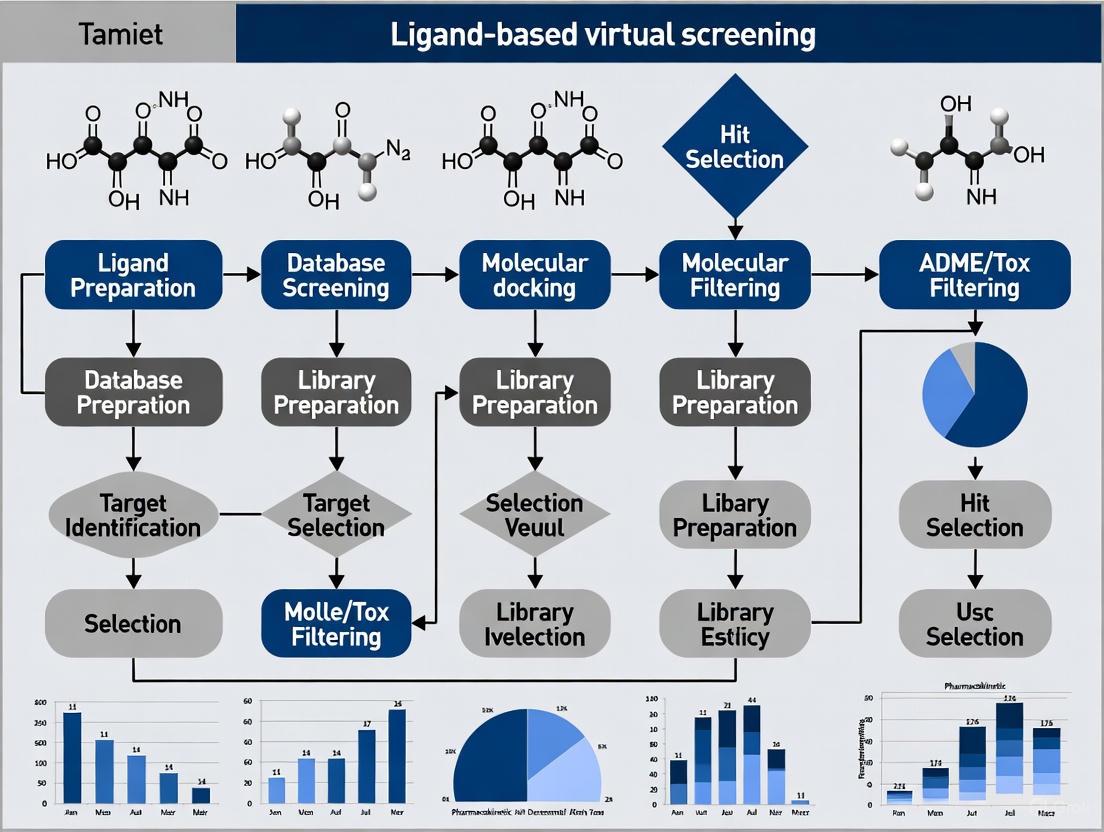
This article provides a comprehensive overview of ligand-based virtual screening (LBVS), a cornerstone computational method in modern drug discovery.
Ligand-Based Virtual Screening: A Comprehensive Guide for Drug Discovery
Abstract
This article provides a comprehensive overview of ligand-based virtual screening (LBVS), a cornerstone computational method in modern drug discovery. Aimed at researchers and drug development professionals, it explores the foundational principles that underpin LBVS, detailing key methodological approaches from traditional shape-based and pharmacophore methods to the latest AI and machine learning integrations. The content addresses common challenges and optimization strategies, offering practical troubleshooting guidance. Furthermore, it presents a comparative analysis of current tools and validation protocols, evaluating performance through established metrics and benchmarks to equip scientists with the knowledge to effectively implement and critically assess LBVS campaigns.
The Core Principles and Evolution of Ligand-Based Virtual Screening
Ligand-based virtual screening (LBVS) represents a cornerstone computational methodology in modern drug discovery, employed to efficiently identify novel candidate compounds by leveraging the known biological activity of existing ligands. This whitepaper provides an in-depth technical examination of LBVS, delineating its fundamental principles, core methodologies, and practical implementation protocols. Within the broader context of virtual screening overview research, we frame LBVS as a knowledge-driven approach that is indispensable when three-dimensional structural data of the biological target is unavailable or incomplete. The document details quantitative performance data, provides visualized experimental workflows, and catalogues essential research tools, serving as a comprehensive resource for researchers and drug development professionals engaged in computational lead identification.
In the modern drug discovery pipeline, virtual screening (VS) stands as a critical computational technique for evaluating extensive libraries of small molecules to pinpoint structures with the highest potential to bind a drug target, typically a protein receptor or enzyme [1]. Virtual screening has been defined as "automatically evaluating very large libraries of compounds" using computer programs, serving to enrich libraries of available compounds and prioritize candidates for synthesis and testing [1]. This approach is broadly categorized into two paradigms: structure-based virtual screening (SBVS), which relies on the 3D structure of the target protein, and ligand-based virtual screening (LBVS), the focus of this document [2].
LBVS is a computational strategy utilized when the three-dimensional structure of the target protein is unknown or uncertain [3]. Instead, it operates on the principle that compounds structurally or physicochemically similar to known active molecules are likely to exhibit similar biological activity [2]. This methodology exploits collective information contained within a set of structurally diverse ligands that bind to a receptor, building a predictive model of receptor activity [1]. Different computational techniques explore the structural, electronic, molecular shape, and physicochemical similarities of different ligands to imply their mode of action [1]. Given that LBVS methods often require only a fraction of a second for a single structure comparison, they allow for the screening of massive chemical databases in a highly time- and cost-efficient manner, even on standard CPU hardware [4]. Consequently, LBVS serves as a valuable tool for identifying close analogues of known active compounds and for conducting initial filtering of ultra-large virtual databases [4].
Core Methodologies in Ligand-Based Virtual Screening
The effectiveness of LBVS hinges on several well-established computational techniques. The choice of method often depends on the quantity and quality of known active ligands and the specific goals of the screening campaign.
Molecular Similarity and Fingerprint-Based Screening
At the heart of many LBVS approaches lies the concept of molecular similarity, typically quantified using molecular fingerprints [4]. Fingerprints are bit vector representations of molecular structure, encoding the presence or absence of specific chemical features or substructures. The similarity between two molecules is then calculated by comparing their fingerprint vectors using a similarity coefficient, with the Tanimoto coefficient being the most common [4]. A widely used fingerprint type is the Morgan fingerprint (often referred to as ECFP - Extended Connectivity Fingerprint), which is a circular fingerprint capturing the molecular environment around each atom up to a specified radius [4]. The VSFlow tool, for instance, supports a wide range of RDKit-generated fingerprints, including Morgan, RDKit, Topological Torsion, and Atom Pairs fingerprints, as well as MACCS keys, and allows for the use of multiple similarity measures such as Tversky, Cosine, Dice, Sokal, Russel, Kulczynski, and McConnaughey similarity [4].
Pharmacophore Modeling
A pharmacophore model represents an ensemble of steric and electronic features that are necessary for optimal supramolecular interactions with a biological target to trigger or block its biological response [1]. In essence, it is an abstract definition of the essential functional groups and their relative spatial arrangement required for activity. Pharmacophore models can be generated from a single active ligand or, more robustly, by exploiting the collective information from a set of structurally diverse active compounds [1]. The model is subsequently used as a 3D query to screen compound databases for molecules that share the same spatial arrangement of critical features, even if their underlying molecular scaffolds differ.
Shape-Based Screening
Shape-based similarity approaches are established as important and popular virtual screening techniques [1]. These methods are based on the premise that a molecule must possess a complementary shape to the bioactive conformation of a known active ligand to fit into the same binding site. Techniques like ROCS (Rapid Overlay of Chemical Structures) use Gaussian functions to define molecular volumes and rapidly overlay and score candidate molecules against a reference shape [1]. The selection of the query conformation is less critical than the selection of the query compound itself, making shape-based screening ideal for ligand-based modeling when a definitive bioactive conformation is unavailable [1]. As an improvement, field-based methods incorporate additional fields influencing ligand-receptor interactions, such as electrostatic potential or hydrophobicity, providing a more comprehensive similarity assessment [1].
Quantitative Structure-Activity Relationship (QSAR)
Quantitative Structure-Activity Relationship (QSAR) modeling constitutes a different approach, focusing on building predictive correlative models [1]. QSAR models use computational statistics to derive a mathematical relationship between quantitative descriptors of molecular structure (e.g., logP, polar surface area, molecular weight, vibrational frequencies) and a defined biological activity [1]. This model can then predict the activity of new, untested compounds. While Structure-Activity Relationships (SARs) treat data qualitatively and can handle structural classes with multiple binding modes, QSAR provides a quantitative framework for prioritizing compounds for lead discovery [1].
Table 1: Core Methodologies in Ligand-Based Virtual Screening
| Method | Fundamental Principle | Key Input Requirements | Common Tools/Examples |
|---|---|---|---|
| Molecular Similarity | Compounds with similar structures have similar activities [2]. | One or more known active ligand(s). | Molecular fingerprints (ECFP, FCFP), Tanimoto coefficient [4]. |
| Pharmacophore Modeling | Essential functional features and their 3D arrangement dictate activity [1]. | Multiple structurally diverse active ligands (preferred). | Pharmacophore query features (donor, acceptor, hydrophobic, etc.) [1]. |
| Shape-Based Screening | Complementary molecular shape is critical for binding [1]. | A 3D conformation of an active ligand. | ROCS, FastROCS, Gaussian molecular volumes [1]. |
| QSAR | A mathematical model correlates molecular descriptors to biological activity [1]. | A set of compounds with known activity values. | ML algorithms, molecular descriptors (logP, PSA, etc.) [1]. |
Experimental Protocols and Workflows
A typical LBVS campaign follows a structured workflow, from data preparation to hit identification. The following protocols detail key stages of this process.
Compound Library Preparation and Standardization
The first step involves preparing the virtual compound library to ensure chemical consistency and integrity, which is crucial for the accuracy of subsequent similarity calculations.
- Data Collection: Gather chemical structures from various sources such as in-house repositories, commercially available compound libraries (e.g., ZINC, Enamine), or public databases (e.g., ChEMBL, PubChem) [5] [6].
- Standardization: Process all molecules through a standardization pipeline to neutralize charges, remove salts and counterions, and generate canonical tautomers. This can be achieved using tools like the MolVS library implemented within open-source toolkits such as RDKit [4]. The
preparedbtool in VSFlow, for example, automates this standardization. - Format Conversion: Ensure all molecular structures are converted into a consistent format for processing (e.g., SMILES, SDF). Tools like RDKit or Open Babel are commonly used for this purpose [5].
- Descriptor/Fingerprint Generation: Calculate molecular descriptors or generate the chosen fingerprint (e.g., Morgan fingerprint with a specified radius and bit length) for every molecule in the standardized database. This pre-computation significantly speeds up the screening process [4].
Protocol for Fingerprint-Based Similarity Screening
This protocol uses a known active compound as a query to find structurally similar molecules in a prepared database.
- Query Definition: Select a known active ligand (the "query") and represent it in an appropriate format (e.g., SMILES).
- Fingerprint Generation: Generate the molecular fingerprint for the query molecule using the same method and parameters (e.g., Morgan fingerprint, radius 2, 2048 bits) applied to the database compounds during the preparation phase.
- Similarity Calculation: For each molecule in the pre-processed database, calculate the similarity between its fingerprint and the query fingerprint. The Tanimoto coefficient is the most widely used metric for this purpose.
- Ranking and Selection: Rank all database compounds based on their calculated similarity score to the query. Compounds exceeding a user-defined similarity threshold are selected as potential hits for further evaluation.
Protocol for Shape-Based Screening with VSFlow
The open-source tool VSFlow provides a integrated workflow for shape-based screening, which combines molecular shape with pharmacophoric features [4].
- Conformer Generation for Query: If starting from a 2D query structure, generate multiple 3D conformers using a method like RDKit's ETKDGv3. Optimize these conformers with a forcefield like MMFF94 [4].
- Pre-screened Database: Utilize a database that has been pre-processed with the
preparedbtool from VSFlow, which includes generating multiple conformers for each database molecule [4]. - Shape Alignment and Scoring: Align conformers of the query molecule to all conformers of each database molecule using the RDKit Open3DAlign functionality. For every conformer pair, calculate the shape similarity using a metric like TanimotoDist or ProtrudeDist. The most similar conformer pair for each query/database molecule pair is selected [4].
- Pharmacophore Fingerprint Similarity: For the selected most similar conformer pair, generate a 3D pharmacophore fingerprint and calculate its similarity [4].
- Combined Scoring: Calculate a final combo score, typically the average of the shape similarity and the 3D fingerprint similarity, to rank the database molecules. This combined score provides a more robust ranking than shape alone [4].
Diagram 1: Ligand-Based Virtual Screening Workflow. This flowchart outlines the generalized protocol for conducting an LBVS campaign, from data preparation through to hit identification for experimental validation.
Machine Learning-Based Protocol using SVM
Machine learning algorithms, particularly Support Vector Machines (SVM), can be used for classification to distinguish between active and inactive compounds.
- Training Set Construction: Compile a labeled dataset from bioassay data, containing molecular structures and their corresponding class labels (active or inactive). Each molecule is represented as a vector of molecular descriptors or fingerprints [3].
- Feature Selection: Identify and select the most relevant molecular descriptors that contribute to the predictive power of the model, improving performance and reducing overfitting [3].
- Model Training: Train an SVM model using the training set. The algorithm finds the optimal hyperplane that separates the active and inactive compounds with a maximum margin. Non-linear kernels like the Radial Basis Function (RBF) can be used to handle complex, non-linearly separable data [3].
- Virtual Screening: Use the trained SVM model to predict the activity class (active/inactive) or a probability score for each molecule in the virtual screening database.
- Parallelization for Performance: Given the computational intensity of training on large datasets, parallelized versions of SVM algorithms (e.g., on GPUs) can be employed to drastically reduce processing time, making it feasible to screen billions of molecules [3].
Diagram 2: Machine Learning-Based LBVS Protocol. This diagram details the workflow for a machine learning-driven screening campaign, which relies on a trained model to predict compound activity.
Essential Research Reagents and Computational Tools
The practical application of LBVS requires a suite of software tools and access to chemical databases. The table below catalogs key resources that constitute the modern computational chemist's toolkit for LBVS.
Table 2: The Scientist's Toolkit for LBVS: Key Research Reagents and Resources
| Tool/Resource Name | Type | Primary Function in LBVS | Access/Examples |
|---|---|---|---|
| RDKit | Open-Source Cheminformatics Library | Core cheminformatics operations: molecule standardization, fingerprint generation, descriptor calculation, pharmacophore perception, and shape alignment [4] [5]. | Python-based, widely used in tools like VSFlow [4]. |
| VSFlow | Open-Source Command-Line Tool | Integrated workflow for substructure, fingerprint, and shape-based virtual screening. Fully relies on RDKit and supports quick visualization of results [4]. | Available on GitHub under MIT license [4]. |
| ZINC Database | Commercial Compound Library | A publicly available database of over 21 million commercially available compounds for virtual screening [6]. Used as a standard screening library. | Publicly accessible database [6]. |
| Enamine REAL Space | Ultra-Large Virtual Chemical Library | A make-on-demand virtual chemical library exceeding 75 billion compounds, expanding the accessible chemical space for virtual screening [5]. | Accessible via vendor platforms. |
| ROCS (Rapid Overlay of Chemical Structures) | Software for Shape-Based Screening | Industry-standard tool for rapid shape-based overlay and scoring of small molecules, used for ligand-centric virtual screening [1]. | Commercial software (OpenEye) [7]. |
| GpuSVMScreen | GPU-Accelerated Screening Tool | A tool that uses Support Vector Machines (SVM) for classification, parallelized on GPUs to enable the screening of billions of molecules in a short time frame [3]. | Source code available online [3]. |
| SwissSimilarity | Web Server | Public web tool that allows for 2D fingerprint and 3D shape screening of common public databases and commercial vendor libraries [4]. | Freely accessible web server [4]. |
Performance Metrics and Benchmarking
The accuracy and utility of any LBVS method must be rigorously evaluated using standardized metrics and benchmarks. In retrospective studies, a virtual screening technique is tested on its ability to retrieve a small set of known active molecules from a much larger library of assumed inactive compounds or decoys [1].
Key metrics include:
- Enrichment Factor (EF): Measures the ability of a method to enrich true active compounds in the top X% of the ranked list compared to a random selection. For example, an EF1% of 16.72 indicates that the top 1% of the list is 16.72 times richer in actives than a random 1% of the entire library [8].
- Hit Rate: The percentage of compounds identified as hits out of the total number screened. Hit rates for virtual screening are generally low, often ranging from 0.1% to 5%, but can be significantly improved with high-quality methods and data [2].
- Area Under the Curve (AUC) of ROC Curve: The Receiver Operating Characteristic (ROC) curve plots the true positive rate against the false positive rate. The AUC provides a single measure of overall screening performance, where a value of 1.0 represents a perfect classifier and 0.5 represents a random classifier [8].
It is critical to note that retrospective benchmarks are not perfect predictors of prospective performance, where the goal is to find novel active scaffolds. Consequently, only prospective studies with experimental validation constitute conclusive proof of a method's effectiveness [1].
Ligand-based virtual screening remains a powerful, knowledge-driven paradigm in computational drug discovery. Its reliance on the chemical information of known actives makes it uniquely valuable when structural target data is lacking. As detailed in this whitepaper, the core methodologies—ranging from straightforward fingerprint similarity to advanced 3D shape alignment and machine learning models—provide a versatile toolkit for lead identification. The continuous development of open-source tools like VSFlow and the advent of GPU-accelerated algorithms are making the screening of billion-member libraries increasingly feasible. When integrated with careful experimental design and validation, LBVS significantly streamlines the early drug discovery pipeline, enhancing the efficiency and reducing the cost of bringing new therapeutics to the forefront.
The Similarity-Potency Principle in Chemical Space
The Similarity-Potency Principle stands as a cornerstone of modern drug discovery, positing that structurally similar molecules are more likely to exhibit similar biological activities and binding affinities. This principle permeates much of our understanding and rationalization of chemistry, having become particularly evident in the current data-intensive era of chemical research [9]. The principle provides the foundational justification for ligand-based virtual screening (LBVS) approaches, which capitalize on the fact that ligands similar to an active ligand are more likely to be active than random ligands [10]. In practical terms, this means that when researchers know a set of ligands is active against a target of interest but lack the protein structure, they can employ LBVS to find new ligands by evaluating similarity between candidate ligands and known active compounds [10].
The Similarity-Potency Principle operates within a conceptual framework known as chemical space—a multidimensional descriptor space where molecules are positioned based on their structural and physicochemical properties [9]. In this space, similar molecules cluster together, creating neighborhoods with comparable bioactivity profiles. However, this principle has important exceptions, most notably "activity cliffs" where structurally similar compounds exhibit dramatically different potencies [11]. These exceptions highlight the complexity of molecular interactions and the nuanced application of the similarity principle in predictive modeling.
Theoretical Foundation: Molecular Representations and Similarity Quantification
Molecular Representations: From Structure to Fingerprints
Converting chemical structures into computable representations is essential for applying the Similarity-Potency Principle. The most widely used approaches transform molecular structures into molecular fingerprints—binary or count-based vectors that enable rapid comparison of large compound libraries [11].
Table 1: Major Molecular Fingerprint Types Used in Similarity-Potency Applications
| Fingerprint Type | Representation Method | Structural Features Encoded | Common Applications |
|---|---|---|---|
| Path-Based | Linear paths through molecular graphs | Sequences of atoms and bonds up to predefined length | Molecular similarity searching, substructure matching |
| Circular | Local atomic environments | Atom-centered substructures with defined radius | Separating actives from inactives in virtual screening |
| Atom-Pair | Atom pairs with distances | Atom types with topological separation | Medium-range structural features, 3D similarity |
| 2D Pharmacophore | Annotated paths | Pharmacophoric features and distances | Feature-based similarity, scaffold hopping |
| 3D Pharmacophore | Spatial arrangements | 3D distribution of pharmacophoric features | Shape-based screening, binding mode prediction |
These fingerprinting methods transform complex molecular structures into simplified numerical representations that can be efficiently processed by similarity algorithms. Path-based fingerprints count linear paths through molecular graphs, while circular fingerprints capture local atomic environments around each atom [11]. Atom-pair fingerprints incorporate topological distances between atoms, providing information about medium-range structural features [11].
Quantifying Similarity: Metrics and Algorithms
The Tanimoto coefficient emerges as the most prevalent method for quantifying molecular similarity, particularly with binary fingerprints. This coefficient measures the overlap between two fingerprint vectors by comparing the number of shared features to the total number of unique features, producing a similarity score ranging from 0 (no similarity) to 1 (identical) [11]. The Tanimoto coefficient is defined as:
[ T = \frac{N{AB}}{NA + NB - N{AB}} ]
Where (NA) and (NB) represent the number of features in molecules A and B, respectively, and (N_{AB}) represents the number of features common to both molecules.
For shape-based similarity approaches, which consider the three-dimensional arrangement of molecules, the similarity calculation incorporates volumetric overlap. The Tanimoto-like shape similarity is calculated as [10]:
[ T{shape} = \frac{V{A \cap B}}{V_{A \cup B}} ]
Where (V{A \cap B}) represents the common occupied volume between molecules A and B, and (V{A \cup B}) represents their total combined volume.
Experimental Validation: Assessing the Similarity-Potency Relationship
Benchmarking Databases and Validation Methodologies
Experimental validation of the Similarity-Potency Principle requires carefully designed benchmarks and standardized databases. The Directory of Useful Decoys (DUD) database has emerged as a critical resource for this purpose, consisting of 40 pharmaceutically relevant protein targets with over 100,000 small molecules [10] [8]. This database enables researchers to systematically evaluate whether similarity-based methods can successfully distinguish active compounds from decoys with similar physical properties but dissimilar biological activity.
The Database of Useful Decoys (DUD) provides a rigorous testing ground for similarity-based approaches by including decoy molecules that are physically similar but chemically different from active compounds, creating a challenging discrimination task [10]. When using such benchmarks, virtual screening performance is typically evaluated using several key metrics:
- Area Under the ROC Curve (AUC): Measures the overall ability to rank active compounds higher than inactives
- Enrichment Factor (EF): Quantifies the concentration of active compounds in the top fraction of ranked results
- Hit Rate (HR): Measures the percentage of active compounds identified at specific thresholds [10]
Performance Benchmarks for Similarity-Based Screening
Rigorous validation studies have demonstrated the effectiveness of properly implemented similarity-based methods. A comprehensive evaluation of shape-based screening against the 40 targets in the DUD database achieved an average AUC value of 0.84 with a 95% confidence interval of ±0.02 [10]. This study also reported impressive early enrichment capabilities, with average hit rates of 46.3% at the top 1% of active compounds and 59.2% at the top 10% of active compounds [10].
Table 2: Performance Metrics for Similarity-Based Virtual Screening
| Performance Metric | Average Value | Confidence Interval | Interpretation |
|---|---|---|---|
| Area Under Curve (AUC) | 0.84 | ±0.02 (95% CI) | Excellent overall discrimination |
| Hit Rate at 1% | 46.3% | ±6.7% (95% CI) | Strong early enrichment |
| Hit Rate at 10% | 59.2% | ±4.7% (95% CI) | Good mid-range performance |
| Enrichment Factor | Varies by target | Target-dependent | Measure of early recognition |
These quantitative results provide compelling evidence for the practical utility of the Similarity-Potency Principle in drug discovery campaigns. The consistency across diverse protein targets demonstrates the generalizability of the approach, though performance naturally varies depending on the specific characteristics of each target and its corresponding active compounds.
Computational Protocols: Implementing Similarity-Based Screening
Workflow for Ligand-Based Virtual Screening
Implementing the Similarity-Potency Principle in practical drug discovery follows a structured workflow that transforms chemical structures into predicted activities. The following diagram illustrates the complete LBVS process:
Molecular Similarity Assessment Protocol
The core similarity assessment follows a standardized two-step process that can be implemented using open-source tools like VSFlow, which relies on the RDKit cheminformatics framework [4]:
Step 1: Molecular Representation
- Generate molecular fingerprints for both query and database compounds
- For 3D similarity: Generate multiple conformers using RDKit ETKDGv3 method
- Optimize conformers with MMFF94 forcefield
- Standardize structures using MolVS rules (charge neutralization, salt removal)
Step 2: Similarity Calculation
- For 2D similarity: Calculate Tanimoto coefficient between fingerprint vectors
- For 3D shape similarity: Align conformers with Open3DAlign functionality
- Calculate shape similarity (TanimotoDist) and 3D pharmacophore fingerprint similarity
- Compute combined score as average of shape and fingerprint similarities [4]
Practical Implementation with Open-Source Tools
The VSFlow toolkit provides a comprehensive implementation of similarity screening protocols with five specialized tools [4]:
- preparedb: Standardizes molecules, removes salts, generates fingerprints and multiple conformers
- substructure: Performs substructure search using RDKit's GetSubstructMatches()
- fpsim: Calculates fingerprint similarity with multiple similarity measures
- shape: Performs shape-based screening with combined shape and pharmacophore scoring
- managedb: Manages compound databases for virtual screening
For researchers, a typical similarity screening command using VSFlow would be:
This command screens database.vsdb using query compounds in query.smi, outputs results to results.sdf, and generates a similarity map visualization [4].
Computational Tools and Databases
Table 3: Essential Research Resources for Similarity-Potency Studies
| Resource Name | Type | Function | Access |
|---|---|---|---|
| RDKit | Cheminformatics Library | Molecular representation, fingerprint generation | Open-source |
| VSFlow | Screening Tool | Substructure, fingerprint, and shape-based screening | Open-source |
| ZINC Database | Compound Library | Commercially available compounds for screening | Public |
| ChEMBL Database | Bioactivity Database | Known active compounds and bioactivities | Public |
| DUD Database | Benchmark Set | Active compounds and decoys for validation | Public |
| ROCS | Shape Similarity | Molecular shape comparison and overlay | Commercial |
| SwissSimilarity | Web Server | 2D fingerprint and 3D shape screening | Web-based |
For experimental confirmation of similarity-based predictions, researchers employ relative potency assays that measure how much more or less potent a test sample is compared to a reference standard under the same conditions [12]. These assays typically use parallel-line or parallel-curve models to assess similarity through equivalence testing, as recommended by USP guidelines [13].
The Critical Assessment of Computational Hit-finding Experiments (CACHE) initiative provides a modern framework for evaluating virtual screening methods, including similarity-based approaches [14]. In recent challenges, participants screened ultra-large libraries like the Enamine REAL space containing 36 billion purchasable compounds, with successful hits requiring measurable binding affinity (KD < 150 μM) confirmed by surface plasmon resonance assays [14].
Case Study: Application to SARS-CoV-2 Main Protease Inhibitors
A recent application demonstrates the power of the Similarity-Potency Principle in drug discovery. Researchers performed ligand-based virtual screening of approximately 16 million compounds from various small molecule databases using boceprevir as the reference compound [15]. Boceprevir, an HCV drug repurposed as a SARS-CoV-2 main protease (Mpro) inhibitor with IC50 = 4.13 ± 0.61 μM, served as the similarity query [15].
The screening identified several lead compounds exhibiting higher binding affinities (-9.9 to -8.0 kcal mol⁻¹) than the original boceprevir reference (-7.5 kcal mol⁻¹) [15]. Further analysis using molecular mechanics Poisson-Boltzmann surface area (MM-PBSA) identified specific compounds (ChEMBL144205/C3, ZINC000091755358/C5, and ZINC000092066113/C9) as high-affinity binders to Mpro with binding affinities of -65.2 ± 6.5, -66.1 ± 7.1, and -67.3 ± 5.8 kcal mol⁻¹, respectively [15].
This case study exemplifies the complete workflow from similarity-based screening to experimental validation, with molecular dynamics simulations revealing higher structural stability and reduced residue-level fluctuations in Mpro upon binding of the identified compounds compared to apo-Mpro and Mpro-boceprevir complexes [15].
Current Challenges and Future Perspectives
Despite its established utility, the Similarity-Potency Principle faces several significant challenges. Activity cliffs—where structurally similar compounds exhibit dramatically different potencies—remain difficult to predict and represent exceptions to the general principle [11]. The field also grapples with the fundamental question of what constitutes a "meaningful" similarity difference, as a Tanimoto similarity of 0.85 versus 0.75 may correspond to substantial activity changes in some contexts but not others [11].
Future directions focus on integrating artificial intelligence with similarity-based methods. New platforms like RosettaVS incorporate active learning techniques to efficiently triage and select promising compounds for expensive docking calculations, enabling screening of multi-billion compound libraries in less than seven days [8]. The emerging trend of hybrid approaches combines ligand-based and structure-based methods to leverage their complementary strengths, with machine learning models helping to integrate similarity information with interaction patterns from structural data [14].
The diagram below illustrates this integrated future approach:
As chemical libraries continue to grow into the billions of compounds, the Similarity-Potency Principle remains foundational for navigating this expansive chemical space efficiently. By combining traditional similarity concepts with modern AI acceleration, researchers can continue to leverage this fundamental principle to accelerate drug discovery while developing more nuanced understandings of its limitations and exceptions.
Ligand-based virtual screening (LBVS) is a cornerstone computational technique in modern drug discovery, enabling the rapid identification of potential drug candidates from vast chemical libraries. Its strategic value is anchored in three fundamental advantages: superior computational speed, significant cost-efficiency, and valuable independence from protein structural data. This whitepaper provides an in-depth technical examination of these core advantages, framing them within the broader context of a virtual screening overview for researchers and drug development professionals. We detail the underlying methodologies, present curated experimental data, and provide protocols for implementing these techniques, thereby offering a comprehensive resource for leveraging LBVS in early-stage drug discovery campaigns.
Core Advantage 1: Unparalleled Speed and Operational Workflow
The velocity of LBVS stems from its reliance on computationally lightweight comparisons of molecular descriptors, bypassing the complex physics-based simulations of structure-based methods.
Quantitative Speed Comparisons
The following table summarizes the typical operational speeds of various LBVS methodologies compared to a common structure-based method, molecular docking.
Table 1: Speed Comparison of Virtual Screening Methodologies
| Methodology | Representative Tool | Approximate Speed (molecules/second/core) | Key Computational Basis |
|---|---|---|---|
| 2D Fingerprint Similarity | VSFlow (fpsim) [4] | 1,000 - 100,000 | Tanimoto coefficient calculation on bit vectors |
| 3D Shape-Based Screening | VSFlow (shape) [4] | 10 - 100 | Molecular shape overlay and comparison |
| Graph Neural Network (GNN) | EquiVS [16] | 100 - 1,000* | High-order representation learning from molecular graphs |
| Structure-Based Docking | AutoDock Vina [8] | 0.1 - 10 | Pose sampling and physics-based energy scoring |
Note: Speed is highly dependent on model complexity and hardware (e.g., GPU acceleration).
As evidenced in Table 1, 2D fingerprint methods offer the highest throughput, capable of screening millions to billions of compounds in a feasible timeframe [4]. This makes them ideal for initial ultra-large library triaging. While 3D shape-based methods are slower, they remain significantly faster than molecular docking.
Workflow for High-Speed Fingerprint Screening
The following diagram illustrates a standardized workflow for a high-speed, fingerprint-based screening campaign using a tool like VSFlow.
Protocol: High-Throughput Fingerprint Screening with VSFlow
Database Preparation (
preparedb):- Input: A compound library in SDF or SMILES format.
- Standardization: Execute
vsflow preparedb -s -cto standardize molecules, neutralize charges, and remove salts using MolVS rules [4]. - Fingerprint Generation: Use the
-fand-rarguments to generate and store the desired fingerprint (e.g., ECFP4) for every molecule in an optimized.vsdbdatabase file.
Similarity Search (
fpsim):- Input: The prepared
.vsdbdatabase and a query molecule (SMILES or structure file). - Execution: Run
vsflow fpsim -q <query.smi> -db <database.vsdb> -o results.xlsxto perform the similarity search. - Parameters: The default fingerprint is a 2048-bit Morgan fingerprint (FCFP4-like) with a radius of 2, using the Tanimoto coefficient for similarity scoring. These parameters can be customized.
- Input: The prepared
Hit Identification: The tool outputs a ranked list of compounds based on similarity score, allowing for rapid prioritization of the top hits for further experimental validation [4].
Core Advantage 2: Significant Cost-Efficiency
LBVS drastically reduces the financial burden of early drug discovery by minimizing the need for expensive experimental protein structures and replacing a substantial portion of costly high-throughput screening (HTS) with computational filtering.
Economic Impact Analysis
Table 2: Cost-Benefit Analysis of Hit Identification Strategies
| Factor | High-Throughput Screening (HTS) | Ligand-Based Virtual Screening (LBVS) | Structure-Based Virtual Screening (SBVS) |
|---|---|---|---|
| Primary Costs | Experimental reagents, assay plates, liquid handlers, and extensive personnel time. | Computational infrastructure (CPUs/GPUs) and software. | Protein crystallization/X-ray crystallography, cryo-EM, or NMR; high-performance computing (HPC) for docking. |
| Typical Library Size | 100,000 - 1,000,000 compounds | 1,000,000 - 1,000,000,000+ compounds [8] | 1,000,000 - 10,000,000+ compounds (ultra-large docking is resource-intensive) [14] |
| Hit Rate | Often low (0.001% - 0.1%) | Can be significantly enriched (e.g., 14-44% reported in one study [8]) | Varies with target and method accuracy; can be highly enriched. |
| Resource Demand | Very high (specialized lab) | Low to moderate (standard compute cluster) | Moderate to very high (HPC for large-scale docking) |
The data in Table 2 highlights that LBVS leverages low-cost computational resources to intelligently guide experimental efforts, focusing synthesis and assay resources on a much smaller, higher-probability set of compounds, thereby offering an outstanding return on investment [8].
Core Advantage 3: Independence from Protein Structure
A pivotal advantage of LBVS is its applicability when the 3D structure of the target protein is unknown, unavailable, or of poor quality.
LBVS operates on the "similarity principle" – that structurally similar molecules are likely to have similar biological activities [16] [17]. This allows it to use known active ligands as templates to find new ones, entirely bypassing the need for the protein structure. The following table classifies key LBVS methodologies that operate without structural data.
Table 3: Key Structure-Independent LBVS Methodologies and Performance
| Methodology | Description | Representative Tool / Study | Reported Performance (AUC/EF) |
|---|---|---|---|
| 2D Fingerprint Similarity | Compares molecular topological patterns using bit-string fingerprints. | VSFlow [4] | Average AUC: 0.84 on DUD dataset [10] |
| 3D Shape/Pharmacophore | Aligns and scores molecules based on 3D shape and chemical feature overlap. | HWZ Score [10] | Average Hit Rate @ 1%: 46.3% on DUD [10] |
| Graph Edit Distance (GED) | Computes distance between molecular graphs representing pharmacophoric features. | Learned GED Costs [17] | Improved classification vs. baseline costs on multiple datasets [17] |
| Graph Neural Networks (GNN) | Learns complex molecular representations directly from graph structures. | EquiVS [16] | Outperformed 10 baseline methods on a large benchmark [16] |
Protocol for Structure-Independent Screening with a GNN
For targets with sufficient bioactivity data, deep learning models like GNNs can achieve state-of-the-art performance without structural information.
Protocol: Implementing a GNN for LBVS
Data Curation and Featurization:
- Input: Collect a set of known active and inactive compounds for the target.
- Featurization: Represent each molecule as a graph where nodes are atoms (featurized with atom type, degree, etc.) and edges are bonds (featurized with bond type) [18] [16]. Alternatively, use a SMILES string as input for a chemical language model.
Model Training and Fusion:
- Architecture Selection: Choose a GNN architecture such as a Graph Convolutional Network (GCN) or Graph Attention Network (GAT). Studies show that simpler GNNs, when combined with expert-crafted molecular descriptors (e.g., molecular weight, logP), can perform on par with more complex models [18].
- Training: Train the model to classify compounds as active/inactive or predict a binding affinity value. Use the curated dataset, ensuring a rigorous train/test split to avoid overfitting.
Virtual Screening:
- Deployment: Use the trained model to predict the bioactivity of every molecule in a large virtual library.
- Output: The output is a ranked list of compounds based on the predicted activity, ready for experimental confirmation [16].
The Scientist's Toolkit: Essential Research Reagents & Solutions
The following table details key computational "reagents" and tools essential for executing a successful LBVS campaign.
Table 4: Key Research Reagent Solutions for LBVS
| Item / Tool | Function / Description | Use Case in LBVS |
|---|---|---|
| VSFlow [4] | An open-source command-line tool that integrates substructure, fingerprint, and shape-based screening in one package. | A versatile all-in-one solution for running various LBVS methodologies, from simple 2D searches to 3D shape comparisons. |
| RDKit [4] | An open-source cheminformatics toolkit written in C++ and Python. | The computational engine behind many tools (like VSFlow) for molecule standardization, fingerprint generation, and conformer generation. |
| CURATED Benchmark Datasets (e.g., DUD-E, LIT-PCBA [17]) | Publicly available datasets containing known active and decoy molecules for validated targets. | Essential for training, validating, and benchmarking new LBVS models and protocols to ensure performance and generalizability. |
| Molecular Descriptors (e.g., ECFP4, Physicochemical Properties [18]) | Numerical representations of molecular structure and properties. | Used as input features for machine learning models. Expert-crafted descriptors can significantly boost model performance [18]. |
| Graph Neural Network (GNN) Architectures (e.g., GCN, SphereNet [18] [16]) | Deep learning models designed to operate directly on graph-structured data. | Used to learn complex, high-order molecular representations from data, often leading to state-of-the-art prediction accuracy. |
| Pre-computed Molecular Libraries (e.g., ZINC, ChEMBL [4] [16]) | Large, annotated databases of commercially available or published compounds. | The source "haystack" in which to search for new "needles" (hits). Often pre-processed for virtual screening. |
The field of drug discovery has undergone a revolutionary transformation over recent decades, shifting from traditional trial-and-error approaches to sophisticated computational and automated methodologies. Ligand-based virtual screening (LBVS) stands as a pivotal component in this evolution, operating on the fundamental principle that chemically similar compounds are likely to exhibit similar biological activities [19]. This principle, first qualitatively applied by medicinal chemists "in cerebro," has been systematically quantified and operationalized through computational means, creating a discipline now essential to modern pharmaceutical research [20] [21]. The journey from early similarity concepts to contemporary high-throughput platforms represents more than just technological advancement; it signifies a fundamental restructuring of the drug discovery workflow, enabling researchers to navigate the expansive chemical universe of potential drug candidates with unprecedented speed and precision.
The historical development of LBVS is characterized by key transitions: from one-dimensional descriptors to complex graph-based representations, from manual calculations to artificial intelligence-accelerated platforms, and from targeted small-scale screening to the exploration of ultra-large chemical libraries. This whitepaper examines this technical evolution, documenting how foundational similarity principles have been adapted and enhanced through successive technological innovations to address the growing complexity and demands of contemporary drug discovery, particularly for challenging therapeutic areas such as neurodegenerative diseases [22].
Historical Foundations of Ligand-Based Screening
Early Theoretical and Methodological Origins
The conceptual roots of ligand-based screening extend back to the 19th century with early recognitions of relationships between chemical structure and biological activity. Pioneering work by Meyer (1899) and Overton (1901) established the "Lipoid theory of cellular depression," formally recognizing lipophilicity as a key determinant of pharmacological activity [20]. This period marked the crucial transition from purely descriptive observations to quantitative relationships, laying the groundwork for systematic drug design.
The 1960s witnessed the formal birth of quantitative structure-activity relationships (QSAR) through the groundbreaking work of Corwin Hansch, who utilized computational statistics to establish mathematical relationships between molecular descriptors and biological effects [20]. This represented the infancy of in silico pharmacology, moving beyond qualitative assessment to predictive computational modeling. Early QSAR approaches primarily focused on one-dimensional molecular properties such as size, molecular weight, logP, and dipole moment [19]. Concurrently, the evolution from two-dimensional to three-dimensional molecular recognition, advanced by researchers like Cushny (1926), introduced the critical importance of stereochemistry and molecular conformation in biological activity [20].
Key Technological Transitions
The 1980s and 1990s marked a period of rapid methodological expansion, with several complementary approaches emerging to enrich the ligand-based screening toolkit:
- Molecular fingerprinting enabled efficient similarity searching through binary structural representations [23]
- Pharmacophore modeling allowed for three-dimensional database searching based on essential functional group arrangements [23]
- Compound clustering algorithms facilitated the organization of chemical libraries based on structural similarity [23]
- Whole-molecule similarity assessment gained formal recognition as an indicator of similar biological activity [23]
During this period, the term "chemoinformatics" first appeared in the literature (1998), providing an umbrella for the growing collection of computational methods being applied to chemical problems [23]. The field was further stimulated by the advent of combinatorial chemistry and high-throughput screening (HTS), which generated unprecedented volumes of compounds and data requiring computational management and analysis [23].
Methodological Evolution and Technical Approaches
Molecular Representation and Descriptor Development
The evolution of molecular representation has progressed through increasing levels of abstraction and sophistication, directly enabling more nuanced and effective virtual screening approaches.
Table 1: Evolution of Molecular Descriptors in Virtual Screening
| Descriptor Dimension | Representation Type | Key Examples | Applications |
|---|---|---|---|
| 1D Descriptors | Global molecular properties | Molecular weight, logP, dipole moment, BCUT parameters | Initial screening, property prediction |
| 2D Descriptors | Structural fingerprints | Topological fingerprints, path-based fingerprints | High-throughput similarity searching |
| 3D Descriptors | Spatial representations | Molecular volume, steric and electronic fields | Shape-based similarity, pharmacophore mapping |
| Graph-Based Descriptors | Attributed graphs | Reduced graphs, extended reduced graphs (ErGs) | Complex similarity assessment, scaffold hopping |
The transition to graph-based representations represents one of the most significant advances in molecular similarity assessment. In these models, compounds are represented as attributed graphs where nodes represent pharmacophoric features or structural components and edges represent chemical bonds or spatial relationships [19]. This representation enables the application of sophisticated graph theory algorithms, including the Graph Edit Distance (GED), which defines molecular similarity as the minimum cost required to transform one graph into another through a series of edit operations (node/edge insertion, deletion, or substitution) [19]. The critical challenge in implementing GED lies in properly tuning the transformation costs to reflect biologically meaningful similarities, which has led to the development of machine learning approaches to optimize these parameters for specific screening applications [19].
Quantitative Methodologies and Similarity Assessment
The computational core of LBVS has evolved through several generations of quantitative methodologies:
Bayesian Methods: Probabilistic virtual screening approaches based on Bayesian statistics have emerged as widely used ligand-based methods, offering a robust statistical framework for compound prioritization [23]. These methods utilize molecular descriptors to calculate the probability of activity given a compound's structural features, allowing for effective ranking of screening libraries.
Shape-Based Similarity: Going beyond two-dimensional structural similarity, shape-based approaches assess the three-dimensional volume overlap between molecules, recognizing that similar molecular shapes often interact with biological targets in similar ways [19].
Pharmacophore Mapping: This technique abstracts molecules into their essential functional components (hydrogen bond donors/acceptors, hydrophobic regions, charged groups) and evaluates similarity based on the spatial arrangement of these features [19].
Table 2: Core Ligand-Based Virtual Screening Methodologies
| Methodology | Fundamental Principle | Technical Implementation | Strengths |
|---|---|---|---|
| 2D Similarity Searching | Structural resemblance in 2D space | Molecular fingerprints, Tanimoto coefficient | High speed, well-established |
| 3D Shape Similarity | Complementary molecular volumes | Volume overlap algorithms | Identification of scaffold hops |
| Pharmacophore Modeling | Essential feature alignment | 3D pharmacophore perception and mapping | Incorporates chemical functionality |
| Graph-Based Similarity | Topological structure matching | Graph Edit Distance, reduced graphs | Balanced detail and abstraction |
| Bayesian Methods | Probabilistic activity prediction | Machine learning classifiers, statistical models | Robust statistical foundation |
Modern High-Throughput Screening Platforms
The Rise of Automated Screening Technologies
The emergence of high-throughput screening (HTS) in the mid-1980s, pioneered by pharmaceutical companies like Pfizer using 96-well plates, marked a transformative moment in drug discovery [24]. This technological shift replaced months of manual work with days of automated testing, fundamentally changing the scale and pace of compound evaluation. A screen is formally considered "high throughput" when it conducts over 10,000 assays per day, with ultra-high-throughput screening reaching 100,000+ daily assays [24].
Modern HTS platforms integrate multiple advanced components:
- Automation systems with robotic liquid handlers and plate stackers
- Miniaturized assay formats (384-well and 1536-well microtiter plates)
- High-sensitivity detection methods (fluorescence, luminescence, absorbance)
- Sophisticated data management systems (LIMS, ELNs) [25]
The typical HTS workflow encompasses target selection, assay development, plate formatting, screen execution, data acquisition, and hit validation—a process that can be completed in 4-6 weeks in well-established platforms [25].
Experimental Protocols for High-Throughput Screening
Protocol 1: Cell-Based HTS Assay for Neurodegenerative Disease Targets
- Target Identification: Focus on proteins implicated in neurodegenerative disease mechanisms, such as tau in Alzheimer's disease or α-synuclein in Parkinson's disease [22]
- Assay Design: Develop cell-based assays using neuronal cell lines or primary neurons to capture complex disease phenotypes [22]
- Plate Preparation: Dispense compounds into 384-well or 1536-well plates using acoustic dispensing or pin tools
- Cell Seeding and Compound Treatment: Seed cells at appropriate density and treat with compound libraries
- Incubation and Stimulation: Incubate under physiological conditions and apply disease-relevant stressors if required
- Endpoint Measurement: Utilize fluorescence-based readouts (e.g., calcium flux, cell viability dyes) or luminescence assays
- Data Acquisition: Employ high-content imaging or plate readers for signal detection
- Hit Identification: Apply statistical thresholds (e.g., 3 standard deviations from DMSO control) to identify initial hits [22]
Protocol 2: Quantitative High-Throughput Screening (qHTS)
- Compound Titration: Prepare compound plates with concentration gradients across multiple wells
- Dose-Response Testing: Test each compound at multiple concentrations in parallel
- Curve Fitting: Generate dose-response curves for all library compounds
- Quality Control: Assess assay performance using Z'-factor calculations
- Hit Confirmation: Prioritize compounds with robust concentration-dependent effects [24]
AI-Accelerated Virtual Screening Platforms
The most recent evolution in screening technology comes from the integration of artificial intelligence with physical screening methods. Platforms like RosettaVS incorporate active learning techniques to efficiently triage and select promising compounds from ultra-large libraries for expensive docking calculations [8]. These systems employ a two-tiered docking approach:
- Virtual Screening Express (VSX): Rapid initial screening mode
- Virtual Screening High-Precision (VSH): More accurate method for final ranking of top hits [8]
This hierarchical approach, combined with improved force fields (RosettaGenFF-VS) that incorporate both enthalpy (ΔH) and entropy (ΔS) components, has demonstrated state-of-the-art performance on standard benchmarks, achieving an enrichment factor of 16.72 in the top 1% of screened compounds—significantly outperforming previous methods [8]. The platform has successfully identified hit compounds with single-digit micromolar binding affinities for challenging targets like the human voltage-gated sodium channel NaV1.7, completing screening of billion-compound libraries in under seven days using 3000 CPUs and one GPU [8].
Essential Research Reagents and Materials
The experimental workflows in modern screening platforms depend on carefully curated research reagents and materials that ensure reproducibility and biological relevance.
Table 3: Essential Research Reagent Solutions for Screening Platforms
| Reagent/Material | Specification | Function in Screening Workflow |
|---|---|---|
| Compound Libraries | 100,000 to millions of diverse chemical structures | Source of potential drug candidates for screening |
| Cell Lines | Genetically engineered or disease-relevant cell types | Provide biological context for target engagement |
| Assay Reagents | Fluorescent dyes, luminescent substrates, antibodies | Enable detection of biological activity |
| Microtiter Plates | 384-well or 1536-well format with specialized coatings | Miniaturized platform for parallel compound testing |
| Liquid Handling Reagents | Buffers, diluents, detergent solutions | Ensure accurate compound transfer and dispensing |
For specialized applications such as neurodegenerative disease research, primary neuronal cultures are increasingly used despite their technical challenges, as they offer enhanced biological and clinical relevance for capturing critical cellular events in disease states [22]. Advanced platforms like the Bioelectrochemical Crossbar Architecture Screening Platform (BiCASP) enable real-time electrochemical characterization of cellular responses, providing minute-scale signal stability for functional screening [26].
Visualization of Screening Workflows and Methodologies
Historical Evolution of Ligand-Based Screening Approaches
Modern AI-Accelerated Virtual Screening Workflow
The journey from early similarity searches to modern high-throughput platforms represents a remarkable technological evolution that has fundamentally transformed drug discovery. What began as qualitative observations of structure-activity relationships has matured into a sophisticated computational discipline capable of navigating chemical spaces containing billions of compounds. The historical development of ligand-based virtual screening has been characterized by continuous methodological innovation—from QSAR to molecular fingerprints, from graph-based similarity to Bayesian statistics, and finally to the integration of artificial intelligence with high-throughput experimental platforms.
Contemporary screening paradigms successfully combine the strengths of computational and experimental approaches, using virtual screening to prioritize compounds for experimental validation in an iterative feedback loop that continuously improves predictive models. This synergy has proven particularly valuable for challenging therapeutic areas like neurodegenerative diseases, where the complexity of biological systems demands sophisticated screening approaches [22]. As the field continues to evolve, the integration of multi-omics data, advanced biomimetic assay systems, and increasingly accurate AI models promises to further enhance the efficiency and effectiveness of ligand-based screening, continuing the historical trajectory of innovation that has characterized this critical domain of pharmaceutical research.
The essential principle that "similar compounds have similar activities" continues to guide methodological development, even as the techniques for quantifying similarity and assessing activity grow increasingly sophisticated. This enduring foundation, combined with relentless technological innovation, ensures that ligand-based virtual screening will remain a cornerstone of drug discovery for the foreseeable future.
In the field of computer-aided drug design, ligand-based virtual screening (LBVS) is a fundamental strategy for identifying novel bioactive compounds when the three-dimensional structure of the target protein is unavailable or limited [14]. This approach operates on the Similarity-Property Principle, which posits that structurally similar molecules are likely to exhibit similar biological activities and properties [27]. The effectiveness of LBVS hinges on three interconnected computational concepts: molecular representations, which translate chemical structures into computer-readable formats; similarity measures, which quantify the structural or functional resemblance between molecules; and scoring functions, which rank compounds based on their predicted activity or complementarity to a target [28] [27]. This technical guide provides an in-depth examination of these core concepts, framing them within the context of a comprehensive LBVS overview research thesis, and is intended for researchers, scientists, and professionals engaged in drug development.
Molecular Representations
Molecular representation serves as the foundational step in any chemoinformatics or virtual screening pipeline, bridging the gap between chemical structures and their biological, chemical, or physical properties [28]. It involves converting molecules into mathematical or computational formats that algorithms can process to model, analyze, and predict molecular behavior [28].
Traditional Molecular Representations
Traditional methods rely on explicit, rule-based feature extraction or string-based formats to describe molecules [28].
- String-Based Representations: The Simplified Molecular Input Line Entry System (SMILES) is a compact and efficient string-based method to encode chemical structures and remains a mainstream molecular representation method [28]. The International Union of Pure and Applied Chemistry (IUPAC) name and the International Chemical Identifier (InChI) are other standardized string representations [28].
- Molecular Descriptors: These are numerical values that quantify the physical or chemical properties of a molecule (e.g., molecular weight, hydrophobicity) or its topological characteristics (e.g., topological indices) [28].
- Molecular Fingerprints: These typically encode substructural information as binary strings or numerical vectors, enabling efficient comparison of molecules [28]. They can be broadly categorized as substructure-preserving or feature-based fingerprints [27].
Modern AI-Driven Representations
Advances in artificial intelligence have ushered in data-driven learning paradigms that move beyond predefined rules [28]. These methods leverage deep learning models to directly extract and learn intricate features from molecular data [28].
- Language Model-Based Representations: Inspired by natural language processing (NLP), models such as Transformers have been adapted for molecular representation by treating molecular sequences (e.g., SMILES) as a specialized chemical language [28].
- Graph-Based Representations: These methods represent a molecule as a graph, with atoms as nodes and bonds as edges. Graph Neural Networks (GNNs) can then learn continuous, high-dimensional feature embeddings that capture both local and global molecular features [28].
- Multimodal and Contrastive Learning: Recently, frameworks that combine multiple representation types (e.g., SMILES and graphs) or that use contrastive learning to enhance the quality of learned embeddings have gained popularity for their ability to capture more robust molecular features [28].
Table 1: Classification and Characteristics of Molecular Representations
| Category | Type | Key Examples | Key Characteristics | Primary Applications |
|---|---|---|---|---|
| Traditional | String-Based | SMILES, InChI [28] | Human-readable, compact string format; may not fully capture structural complexity. | Data storage, exchange, simple parsing. |
| Molecular Descriptors | AlvaDesc, RDKit Descriptors [29] | Numeric values quantifying physico-chemical or topological properties. | QSAR, QSPR, machine learning model input. | |
| Fingerprints | Extended Connectivity Fingerprint (ECFP) [28], MACCS Keys [30], Chemical Hashed Fingerprint (CFP) [27] | Binary or count-based vectors encoding substructures or features; computationally efficient. | Similarity search, clustering, virtual screening. | |
| Modern AI-Driven | Language Model-Based | SMILES-BERT, Transformer-based models [28] | Treats molecules as sequential data; learns contextual embeddings via self-supervised tasks. | Molecular property prediction, generation. |
| Graph-Based | Graph Neural Networks (GNNs) [28] | Represents atoms/bonds as nodes/edges; captures topological structure inherently. | Activity prediction, binding affinity estimation. | |
| Multimodal & Contrastive Learning | Multimodal frameworks, Contrastive loss models [28] | Combines multiple data views (e.g., graph + SMILES); improves feature robustness. | Scaffold hopping, lead optimization. |
Similarity Measures
Once molecules are represented as vectors or embeddings, similarity measures are used to quantify the degree of resemblance between two molecules, which is the core of ligand-based virtual screening.
Molecular Fingerprints and Similarity Expressions
Molecular fingerprints are one of the most systematic and broadly used molecular representation methodologies for computational chemistry workflows [27]. They are descriptors of structural features and/or properties within molecules, determined either by predefined features or mathematical descriptors [27]. The choice of fingerprint has a significant influence on quantitative similarity [27].
- Substructure-Preserving Fingerprints: These use a predefined library of structural patterns or exhaustive path identification. They are suitable for substructure search and similarity assessments where specific structural motifs are critical. Examples include:
- Feature Fingerprints: These represent characteristics within a molecule that correspond to key structure-activity properties and are often more suitable for activity-based virtual screening. They are non-substructure preserving. Examples include:
- Radial (Circular) Fingerprints: The Extended Connectivity Fingerprint (ECFP) is the most common, which starts from each atom and expands out to a given diameter [27]. Others include Functional-Class FingerPrints (FCFPs) and MiniHashFingerpint (MHFP) [27].
- Topological Fingerprints: These represent graph distance within a molecule. Examples include Atom pair fingerprints, Topological Torsion (TT), and MAP4 fingerprints [27].
- 3D- and Interaction-Based Fingerprints: These include pharmacophore fingerprints (e.g., PLIF, SPLIF), and shape-based fingerprints (e.g., ROCS, USR) that describe the 3D surface of a molecule [27].
Similarity and distance functions are used to quantitatively determine the similarity between two structures represented by fingerprints [27]. For a binary fingerprint, the following symbols are used:
a= number of on bits in molecule Ab= number of on bits in molecule Bc= number of bits that are on in both moleculesd= number of common off bitsn= bit length of the fingerprint (n = a + b - c + d) [27]
Table 2: Common Similarity and Distance Measures for Molecular Fingerprints
| Measure Name | Formula | Key Properties and Use Cases |
|---|---|---|
| Tanimoto Coefficient | ( S_{Tanimoto} = \frac{c}{a + b - c} ) | The most widely used similarity metric for binary fingerprints; symmetric and intuitive [27]. |
| Soergel Distance | ( D{Soergel} = 1 - S{Tanimoto} ) | Tanimoto dissimilarity; a proper distance metric [27]. |
| Dice Coefficient | ( S_{Dice} = \frac{2c}{a + b} ) | Similar to Tanimoto but gives more weight to common on-bits [27]. |
| Tversky Index | ( S_{Tversky} = \frac{c}{\alpha(a - c) + \beta(b - c) + c} ) | An asymmetric similarity measure; useful when one molecule is a reference query [27]. |
| Cosine Similarity | ( S_{Cosine} = \frac{c}{\sqrt{a} \cdot \sqrt{b}} ) | Measures the angle between feature vectors; common in continuous-valued descriptor spaces [27]. |
| Euclidean Distance | ( D_{Euclidean} = \sqrt{(a - c) + (b - c)} ) | Straight-line distance between vectors; sensitive to vector magnitude [27]. |
| Manhattan Distance | ( D_{Manhattan} = (a - c) + (b - c) ) | Sum of absolute differences; less sensitive to outliers than Euclidean distance [27]. |
Performance and Benchmarking
The performance of similarity measures is significantly influenced by the applied molecular descriptors, the chosen similarity measure, and the specific biological target [30]. For instance, a benchmark study on nucleic acid-targeted ligands demonstrated that classification performance varied across targets and that a consensus method that combines the best-performing algorithms of distinct nature outperformed all other tested single methods [30]. This highlights the importance of method selection and benchmarking for specific virtual screening campaigns.
Scoring Functions
Scoring functions are computational procedures used to rank-order compounds based on their predicted activity, binding affinity, or complementarity to a target. They are the final critical step in a virtual screening workflow that enables prioritization of compounds for experimental testing.
Classical and Consensus Scoring
- Structure-Based Scoring: In molecular docking, which is a structure-based virtual screening (SBVS) technique, scoring functions estimate the binding affinity of a protein-ligand complex. Terms often include nonbonded van der Waals, electrostatic interactions, hydrogen-bonding, and desolvation penalties [31]. The Pharmacophore Matching Similarity (FMS) scoring function is an example that encodes useful chemical features (e.g., hydrogen bond acceptors/donors, hydrophobic groups) and scores based on the overlap between a reference ligand pharmacophore and candidate pharmacophores [31].
- Ligand-Based Scoring: This includes predicted activity values from Quantitative Structure-Activity Relationship (QSAR) models, which establish a statistical correlation between molecular descriptors and biological activity [32]. Similarity scores from ligand-based methods also serve as scoring functions.
- Consensus Scoring: This approach combines multiple scoring functions to improve the robustness and enrichment of virtual screening. It mitigates the limitations of individual scoring functions by approximating the true value more closely through repeated samplings [29]. Methods include:
- Mean, Median, Min, Max: Simple statistical aggregations of normalized scores from different methods [29].
- Machine Learning-Based Consensus: A novel pipeline employs machine learning models to amalgamate various conventional screening methods (e.g., QSAR, Pharmacophore, docking, 2D shape similarity) into a single consensus score, which has been shown to outperform individual methods [29].
Machine Learning-Accelerated Scoring
Machine learning has revolutionized scoring functions by enabling faster predictions and leveraging large datasets.
- QSAR Models: ML-based QSAR uses regression models (e.g., random forest, support vector regression, gradient boosting) to predict activity values like IC50 or binding affinity based on molecular fingerprints and descriptors [33] [32].
- Docking Score Prediction: ML models can be trained to predict docking scores directly from 2D molecular structures, bypassing the need for time-consuming molecular docking procedures. This approach can be 1000 times faster than classical docking-based screening, enabling the rapid evaluation of ultra-large chemical libraries [32].
- Hybrid and Parallel Combination: The integration of LBVS and SBVS can be achieved through sequential, hybrid, or parallel combinations [14]. Hybrid methods integrate both into a unified framework, such as interaction-based methods that use interaction fingerprints, while parallel combinations run LBVS and SBVS simultaneously and fuse the results using data fusion algorithms [14].
Experimental Protocols and Workflows
Detailed Methodology for a Consensus Virtual Screening Workflow
The following protocol, adapted from a recent study on consensus holistic virtual screening, provides a detailed template for running a multi-method virtual screening campaign [29].
Dataset Curation:
- Obtain active compounds and corresponding decoys from public databases like PubChem and the Directory of Useful Decoys: Enhanced (DUD-E) [29].
- Standardize molecular structures: neutralize charges, remove duplicates, salt ions, and small fragments. Convert activity values (e.g., IC50) to pIC50 [pIC50 = -log10(IC50)] [29].
- Assess and mitigate dataset bias by analyzing the distribution of physicochemical properties between actives and decoys to ensure a realistic screening scenario [29].
Calculation of Fingerprints and Descriptors:
- Use cheminformatics toolkits like RDKit to compute a wide range of molecular fingerprints (e.g., ECFP, MACCS, Topological Torsions) and molecular descriptors for all compounds [29].
Multi-Method Scoring:
- Score the dataset using four distinct methods [29]:
- QSAR: Train a machine learning model (e.g., Random Forest, XGBoost) on active/decoy data to predict activity scores.
- Pharmacophore: Perform a pharmacophore screening using a tool like Pharaho or LiSiCA to get a fit score.
- Docking: Conduct molecular docking (e.g., with AutoDock Vina) for all compounds to obtain a binding energy score.
- 2D Shape Similarity: Calculate the Tanimoto similarity based on a fingerprint like ECFP4 against a known active reference.
- Score the dataset using four distinct methods [29]:
Model Training and Consensus Score Calculation:
- Fine-tune the machine learning models used in the QSAR step. Rank the performance of all models (across all four methods) using a robust metric (e.g., a novel formula like "w_new" that integrates coefficients of determination and error metrics) [29].
- Calculate a Z-score for each compound from each of the four screening methodologies.
- Compute the final consensus score for each compound as a weighted average of the Z-scores, where the weights are determined by the performance ranking of the respective models [29].
Validation:
- Perform an enrichment study (e.g., calculate AUC-ROC values) to evaluate the ability of the consensus score to rank active compounds earlier than decoys compared to individual methods [29].
- Externally validate the model's predictive performance using a hold-out test set not seen during training [29].
The Scientist's Toolkit: Essential Research Reagents and Materials
Table 3: Key Software, Databases, and Resources for Virtual Screening
| Item Name | Type | Function in Workflow | Reference/Source |
|---|---|---|---|
| RDKit | Open-source Cheminformatics Toolkit | Calculation of molecular fingerprints, descriptors, structure standardization, and basic molecular operations. | [29] [33] |
| ChEMBL | Bioactivity Database | Source of known active ligands and their activity data (e.g., IC50, Ki) for model training and validation. | [32] |
| DUD-E | Database | Repository of known active compounds and matched decoys for specific protein targets; used for benchmarking virtual screening methods. | [29] |
| ZINC | Commercial Compound Library | Large database of purchasable compounds for virtual screening to identify potential hit compounds. | [32] |
| AutoDock Vina | Docking Software | Structure-based virtual screening by predicting the binding pose and affinity of ligands to a protein target. | [33] |
| Smina | Docking Software | A variant of Vina with a focus on scoring function customization, used for generating docking scores for training ML models. | [32] |
| Python & scikit-learn | Programming Language & ML Library | Environment for building and training machine learning models (e.g., Random Forest, SVM) for QSAR and score prediction. | [33] [32] |
| KNIME | Analytics Platform | Graphical platform for building and executing data pipelines, including cheminformatics nodes for fingerprint calculation and data processing. | [30] |
Workflow and Relationship Visualizations
Figure 1: A generalized workflow for ligand-based virtual screening, depicting the sequential stages of molecular representation, similarity measurement, and scoring, culminating in a ranked hit list.
Figure 2: A comprehensive virtual screening strategy illustrating the combined usage of ligand-based and structure-based methods, culminating in data fusion and consensus scoring for hit prioritization.
Implementing LBVS: From Traditional Methods to AI-Driven Workflows
In the face of high costs and protracted timelines associated with traditional drug development, Ligand-Based Virtual Screening (LBVS) has emerged as a cornerstone of modern computational drug discovery. LBVS methods are employed when the 3D structure of the target protein is unknown or unavailable, relying instead on the principle that molecules with similar structural or physicochemical properties are likely to exhibit similar biological activities—a concept formally known as the Similar Property Principle (SPP) [34]. Among the most robust and widely used techniques within the LBVS paradigm are two-dimensional (2D) methods, which utilize the abstract topological structure of a molecule, treating it as a graph where atoms are nodes and bonds are edges. This review provides an in-depth technical guide to three foundational 2D approaches: molecular fingerprints, substructure searches, and Quantitative Structure-Activity Relationship (QSAR) modeling, framing them within a comprehensive LBVS workflow designed for researchers and drug development professionals.
Molecular Fingerprints: Encoding Molecules as Vectors
Concepts and Generation
Molecular fingerprints are computational representations that transform a chemical structure into a fixed-length bit string or numerical vector, enabling rapid similarity comparison and machine learning-ready data generation [35]. They serve as a bridge to correlate molecular structures with physicochemical properties and biological activities. A quality fingerprint is characterized by its ability to represent local molecular structures, be efficiently combined and decoded, and maintain feature independence [35].
The generation process typically involves fragmenting the molecule according to a specific algorithm and then hashing these fragments into a fixed-length vector. The following diagram illustrates the general workflow for generating a molecular fingerprint.
Types of Molecular Fingerprints
Molecular fingerprints can be classified into several distinct types based on the algorithmic approach used to generate the molecular features. The table below summarizes the key categories, their operating principles, and representative examples.
Table 1: Classification and Characteristics of Major Molecular Fingerprint Types
| Fingerprint Type | Core Principle | Representative Examples | Key Characteristics |
|---|---|---|---|
| Dictionary-Based (Structural Keys) [36] [35] | Predefined list of structural fragments; each bit represents the presence/absence of a specific substructure. | MACCS, PubChem Fingerprints | Fast substructure screening; interpretable but limited to known fragments. |
| Circular Fingerprints [36] [35] | Dynamically generates circular atom neighborhoods of a given radius from each atom. | ECFP (Extended Connectivity Fingerprint), FCFP (Functional Class Fingerprint) | Captures novel fragments; not predefined; ECFP uses atom features, FCFP uses pharmacophore features. |
| Path-Based (Topological) [36] [35] | Enumerates all linear paths of bonds between atoms in the molecular graph. | Daylight Fingerprint, Atom Pairs (AP), Topological Torsions (TT) | Encodes overall molecular topology; good for similarity searching. |
| Pharmacophore Fingerprints [36] | Encodes the spatial arrangement of functional features critical for molecular recognition. | Pharmacophore Pairs (PH2), Triplets (PH3) | Represents potential interaction patterns rather than pure structure. |
| String-Based Fingerprints [36] | Operates directly on the SMILES string representation of the molecule. | LINGO, MinHashed Fingerprints (MHFP) | Avoids need for molecular graph perception; can be very rapid. |
Benchmarking Fingerprint Performance
The effectiveness of a fingerprint is highly context-dependent, varying with the chemical space under investigation and the specific task, such as similarity searching or bioactivity prediction. For instance, research on natural products—which often have broader molecular weight distributions, more stereocenters, and higher fractions of sp³-hybridized carbons than typical drug-like molecules—has shown that while Extended Connectivity Fingerprints (ECFPs) are the de-facto standard for drug-like compounds, other fingerprints can match or outperform them for bioactivity prediction in this specific chemical space [36].
However, it is critical to understand the limitations of fingerprint similarity. A 2024 study demonstrated that while fingerprint-based similarity searching can provide some enrichment for active molecules in a virtual screen, the screened dataset is still dominated by inactive molecules, with high-similarity actives often sharing a common scaffold with the query [34]. Furthermore, fingerprint similarity values do not reliably correlate with compound potency, even when limited to only active molecules [34].
Quantitative Structure-Activity Relationship (QSAR) Modeling
Foundations and Workflow
QSAR modeling is a computational methodology that establishes a quantitative correlation between the chemical structures of a set of compounds and their known biological activity, enabling the prediction of activities for new, untested compounds [37]. The core assumption is that a molecule's biological activity is a function of its chemical structure, which can be represented numerically using molecular descriptors, with fingerprints being one of the most common types [35].
The standard workflow for developing a QSAR model is methodical and involves several critical steps to ensure the resulting model is predictive and reliable, as illustrated below.
Protocol for Building a Fingerprint-Based QSAR Model
The following protocol outlines the key steps for constructing a robust, fingerprint-based QSAR model, adaptable for both continuous (e.g., IC₅₀, Kᵢ) and classification (e.g., active/inactive) endpoints.
Dataset Curation and Preparation
- Source Bioactivity Data: Obtain consistent bioactivity data (e.g., IC₅₀, Kᵢ) from public databases like ChEMBL or proprietary sources. Ensure the data is derived from a uniform experimental assay to minimize noise [38].
- Chemical Standardization: Process all chemical structures to remove salts, neutralize charges, and generate canonical tautomers using toolkits like RDKit or the ChEMBL structure curation package. This ensures all molecules are represented consistently [36].
- Define Endpoint: For a continuous model, use the negative logarithm of the activity concentration (e.g., pIC₅₀ = -log₁₀IC₅₀). For a classification model, define a meaningful activity threshold (e.g., IC₅₀ < 1 μM = "active") [38].
Descriptor Calculation and Fingerprint Generation
- Select Fingerprints: Choose one or more fingerprint types relevant to your chemical space and problem. Common choices include ECFP4/6, MACCS, and FP2 [37] [35].
- Generate Vectors: Use cheminformatics software (e.g., RDKit, OpenBabel, ChemAxon) to compute the fingerprint vectors for every compound in the dataset. The output is typically a matrix where rows are compounds and columns are fingerprint bits [37].
Data Splitting and Model Training
- Split Data: Partition the standardized dataset into a training set (~70-80%), a validation set (~10-15%), and a hold-out test set (~10-15%). The validation set is used for parameter tuning during training, while the test set is reserved for a final, unbiased evaluation of the model's predictive power [37].
- Address Class Imbalance (for classification): If building a classification model with imbalanced classes, apply techniques like oversampling (e.g., SMOTE) or undersampling to the training set only to prevent model bias. A study on PfDHODH inhibitors found that balanced oversampling yielded superior results, with Matthews Correlation Coefficient (MCC) test values exceeding 0.65 [38].
- Train Model: Feed the training set fingerprints and activity data into a machine learning algorithm. The Random Forest algorithm is often a strong starting point due to its robustness, ability to handle high-dimensional data, and inherent feature importance estimation [38]. Alternatively, Artificial Neural Networks (ANNs) can be highly effective for capturing non-linear relationships, leading to so-called FANN-QSAR models [37].
Model Validation and Interpretation
- Statistical Validation: Evaluate model performance using the hold-out test set. Key metrics include:
- For Regression: R² (coefficient of determination), Mean Absolute Error (MAE).
- For Classification: Accuracy, Sensitivity, Specificity, and most importantly, the Matthews Correlation Coefficient (MCC), which is robust for imbalanced datasets [38].
- Feature Interpretation (e.g., for Random Forest): Analyze the model's feature importance (e.g., via the Gini index) to identify which fingerprint bits (and by extension, which chemical features) are most predictive of activity. This can provide crucial insights for lead optimization, such as identifying the significance of nitrogenous groups, fluorine atoms, or aromatic moieties [38].
- Statistical Validation: Evaluate model performance using the hold-out test set. Key metrics include:
Integrating Methods in a Virtual Screening workflow
In practice, molecular fingerprints, substructure searches, and QSAR models are not used in isolation but are integrated into a cohesive LBVS pipeline. This pipeline can be deployed sequentially or in parallel with structure-based methods for enhanced effectiveness [39].
A typical sequential workflow might begin with a substructure search to filter a large virtual library for compounds containing key pharmacophoric features or to remove undesirable structural alerts. Subsequently, fingerprint-based similarity searching can identify compounds structurally related to a known active probe. Finally, a pre-trained, predictive QSAR model can score and prioritize the remaining compounds based on their predicted potency, yielding a focused, high-priority hit list for experimental testing [39].
This ligand-based pipeline can also be run in parallel with structure-based methods like molecular docking. The results can be combined using consensus scoring frameworks, where compounds ranking highly across both methodologies are assigned the highest priority. This hybrid approach leverages the strengths of both paradigms, mitigating the limitations inherent in each and increasing confidence in the final selection [39].
The Scientist's Toolkit: Essential Research Reagents and Software
Table 2: Key Software and Resources for Implementing 2D LBVS Methods
| Tool/Resource Name | Type | Primary Function in LBVS | Access/Reference |
|---|---|---|---|
| RDKit | Open-Source Cheminformatics Library | Core functionality for reading molecules, generating fingerprints (ECFP, etc.), and calculating descriptors. | https://www.rdkit.org |
| OpenBabel | Open-Source Chemical Toolbox | Chemical file format conversion and generation of fingerprints like FP2 and MACCS. | http://openbabel.org |
| ChEMBL Database | Public Bioactivity Database | Source of curated, standardized bioactivity data for training QSAR models. | https://www.ebi.ac.uk/chembl |
| COCONUT & CMNPD | Natural Product Databases | Specialized chemical spaces for benchmarking fingerprints and building NP-focused models [36]. | COCONUT, CMNPD |
| Python (with scikit-learn) | Programming Language & ML Library | Environment for building, training, and validating machine learning-based QSAR models. | https://scikit-learn.org |
| MATLAB | Numerical Computing Platform | Platform for developing advanced models like Fingerprint-based ANN QSAR (FANN-QSAR) [37]. | MathWorks |
| ROC Curve & MCC | Statistical Metrics | Used for evaluating the performance of virtual screening and classification QSAR models [34] [38]. | Standard metrics |
In ligand-based virtual screening (LBVS), where the structure of the biological target may be unknown or poorly characterized, methods that leverage three-dimensional molecular information are indispensable for identifying novel bioactive compounds. Among these, molecular shape overlap and pharmacophore mapping have emerged as powerful, complementary techniques. Both methods operate on the fundamental principle that molecules with similar three-dimensional features—whether overall shape or specific chemical functionalities—are likely to exhibit similar biological activities. Molecular shape overlap quantifies the steric and volumetric similarity between a reference active compound and database molecules, enabling the identification of potential hits even in the absence of obvious two-dimensional (2D) structural similarity [40]. Pharmacophore mapping extends this concept by defining the essential, abstract features responsible for a molecule's biological activity—such as hydrogen bond donors, acceptors, hydrophobic regions, and charged groups—and their optimal spatial arrangement [41] [42]. When integrated into a virtual screening pipeline, these 3D methods significantly expand the explorable chemical space, facilitating the discovery of structurally diverse compounds with desired biological effects, a process central to scaffold hopping in modern drug discovery [28].
This technical guide provides an in-depth examination of molecular shape overlap and pharmacophore mapping. It covers their core principles, detailed methodologies, practical implementation protocols, and performance benchmarks, framed within the context of a comprehensive LBVS strategy.
Core Principles and Methodologies
Molecular Shape Overlap
Molecular shape overlap techniques are predicated on the concept that the biological activity of a ligand is intimately tied to its ability to fit complementarily within a three-dimensional binding pocket. The core objective is to quantify the degree of spatial overlap between a reference molecule (a known active) and a candidate molecule from a database.
- Shape Representation and Comparison: Molecules are typically represented as 3D fields, either as explicit atomic volumes or as continuous Gaussian functions, which offer computational advantages for overlap calculations. The alignment and comparison are often achieved through algorithms that maximize the Volume Overlap Score. One widely used metric is the Tanimoto Combo Score, which combines a shape similarity measure (often based on overlapping volumes) with a color force field that accounts for chemical feature matching (e.g., hydrogen bonds, hydrophobes) [40] [43]. This dual consideration ensures that identified molecules not only have a similar shape but also place key chemical features in analogous spatial positions.
- Negative Image-Based (NIB) Screening: A powerful extension of traditional shape matching is the use of negative images of the target protein's binding cavity. Instead of using another ligand as a reference, this method generates a pseudo-ligand or negative image that fills the protein's binding site. This negative image, composed of neutral, positively, and negatively charged spheres representing the cavity's shape and electrostatic potential, serves as the template for shape comparison [40]. Screening compounds are then aligned to this negative image, and their complementarity to the actual binding site is evaluated directly. This approach bridges the gap between purely ligand-based and structure-based methods.
Pharmacophore Mapping
A pharmacophore is an abstract model that defines the spatial arrangement of steric and electronic features necessary for a molecule to interact effectively with a biological target. It is not a specific molecule but a pattern of features that can be present in many different chemical structures.
- Feature Definition and Model Generation: Common pharmacophore features include Hydrogen Bond Donor (HBD), Hydrogen Bond Acceptor (HBA), Positive and Negative Ionizable regions, Hydrophobic areas, and Aromatic rings. A pharmacophore model can be generated in several ways:
- Ligand-Based: By aligning multiple known active molecules and extracting the common spatial arrangement of their key functional groups [41].
- Structure-Based: If the 3D structure of the protein target is available, the model can be derived by analyzing the binding site to identify regions that favor specific interactions (e.g., a hydrogen bond acceptor feature placed near a backbone NH group in the protein) [42].
- Complex-Based: Advanced methods, such as the O-LAP algorithm, generate shape-focused pharmacophore models by clustering overlapping atoms from multiple docked poses of active ligands within the protein cavity. This creates a model that encapsulates both the essential chemical features and the overall shape of the binding site [40].
- Screening and Querying: Once a model is built, it is used as a 3D query to screen compound databases. Each candidate molecule is flexibly aligned to the model, and a fit score is calculated based on how well its features and conformation match the pharmacophore constraints.
The following diagram illustrates the logical progression from a protein's binding cavity to the generation of a shape-focused pharmacophore model, integrating concepts from shape overlap and pharmacophore mapping.
Practical Implementation and Workflows
Molecular Shape Overlap Screening Protocol
Implementing a shape-based screening campaign involves a series of defined steps, from library and reference preparation to the final selection of hits.
- Reference Ligand Preparation: Select a known potent ligand with confirmed biological activity. Generate a low-energy, bioactive-like 3D conformation using tools like CONFGEN [43] or by extracting a co-crystallized structure from a protein-ligand complex (e.g., from the PDB).
- Screening Library Preparation: Convert the database of small molecules (in SMILES or similar formats) into 3D conformers. For ultra-large libraries (exceeding 1 billion compounds), this is a non-trivial step that requires efficient conformational sampling tools and significant storage resources [43].
- Shape-Based Alignment and Scoring: Align each conformer of each database molecule to the reference ligand. This can be achieved using algorithms like ROCS (Rapid Overlay of Chemical Structures) or Schrödinger's Shape Screening [40] [43]. Score the alignments using a combined metric like the Tanimoto Combo Score.
- Hit Triage and Analysis: Rank the screened compounds based on their shape similarity scores. Visually inspect the top-ranking alignments to validate the quality of the shape overlap and chemical feature matching before proceeding to experimental validation.
Shape-Focused Pharmacophore Model Generation (O-LAP Protocol)
The O-LAP algorithm provides a robust method for creating pharmacophore models that explicitly incorporate binding site shape and multiple ligand information [40].
- Input Preparation:
- Perform flexible molecular docking (e.g., using PLANTS) of 50-100 known active ligands into the target protein's binding site.
- Extract the top-ranked pose for each ligand and merge them into a single file, removing non-polar hydrogen atoms and covalent bonding information. The result is a cloud of atoms filling the protein cavity.
- Graph Clustering:
- Apply the O-LAP algorithm, which uses pairwise distance-based graph clustering. Overlapping atoms with matching types are grouped into representative centroids.
- The clustering uses atom-type-specific radii, and the resulting centroids form the core of the shape-focused pharmacophore model.
- Model Optimization (Optional):
- If a training set with active and inactive/decoy compounds is available, perform a greedy search optimization (e.g., BR-NiB) to iteratively refine the model's atom composition for maximum enrichment [40].
- Application in Virtual Screening:
- The final model can be used in two primary ways:
- Rigid Docking: Use the model as a fixed template for aligning compounds in a rigid docking protocol.
- Docking Rescoring (R-NiB): Flexibly dock a library of compounds, then re-score and re-rank the generated poses by calculating their shape/electrostatic similarity to the optimized O-LAP model.
- The final model can be used in two primary ways:
The workflow for this process, from data preparation to screening, is shown below.
Performance Benchmarks
The effectiveness of these 3D methods is well-documented. The following table summarizes benchmark results for shape-based pharmacophore screening (O-LAP) and a state-of-the-art AI-accelerated virtual screening platform (OpenVS) across several challenging drug targets.
Table 1: Performance Benchmarks of 3D Virtual Screening Methods
| Method / Target | Benchmark / Target | Performance Metric | Result |
|---|---|---|---|
| O-LAP (Shape Pharmacophore) [40] | DUDE-Z: Neuraminidase (NEU) | Enrichment Factor (EF₁%) | 52.4 |
| O-LAP (Shape Pharmacophore) [40] | DUDE-Z: A2A Adenosine Receptor (AA2AR) | Enrichment Factor (EF₁%) | 41.5 |
| O-LAP (Shape Pharmacophore) [40] | DUDE-Z: Heat Shock Protein 90 (HSP90) | Enrichment Factor (EF₁%) | 33.3 |
| OpenVS (RosettaVS) [8] | CASF-2016 (285 Diverse Complexes) | Top 1% Enrichment Factor (EF₁%) | 16.72 |
| OpenVS (RosettaVS) [8] | DUD (40 Targets) | AUC & ROC Enrichment | Outperformed other physics-based methods |
EF₁%: Enrichment Factor at the top 1% of the screened library, indicating how many more true actives are found in the top 1% compared to a random selection.
Case Studies in Drug Discovery
Case Study 1: Discovery of KHK-C Inhibitors
A comprehensive virtual screening campaign was conducted to identify inhibitors of ketohexokinase-C (KHK-C), a key enzyme in fructose metabolism implicated in metabolic disorders. The workflow integrated multiple computational techniques [41]:
- Pharmacophore-Based Screening: As an initial filter, a pharmacophore model was used to screen 460,000 compounds from the National Cancer Institute library.
- Multi-Level Docking: The resulting hits were subjected to rigorous molecular docking to predict binding poses and affinities.
- Binding Affinity and ADMET Profiling: The top compounds underwent binding free energy calculations (MM-PBSA) and pharmacokinetic/toxicity profiling. This multi-step approach identified ten compounds with superior predicted binding affinities compared to clinical candidates. Subsequent molecular dynamics simulations highlighted one compound as a particularly stable and promising candidate for further development [41].
Case Study 2: Ultra-Large Library Screening with Shape and AI
A study screening multi-billion compound libraries against two unrelated targets—the ubiquitin ligase KLHDC2 and the sodium channel NaV1.7—showcases the power of modern, integrated platforms [8].
- Platform: The open-source OpenVS platform was used, which incorporates active learning and a physics-based docking method (RosettaVS) that models receptor flexibility.
- Process: The AI-accelerated platform screened the vast libraries in under seven days.
- Results: The campaign discovered seven hit compounds for KLHDC2 (a 14% hit rate) and four for NaV1.7 (a 44% hit rate), all with single-digit micromolar affinity. A high-resolution X-ray crystal structure confirmed the predicted binding pose for a KLHDC2 ligand, validating the method's accuracy [8].
The Scientist's Toolkit: Essential Reagents and Software
Successful implementation of 3D methods relies on a suite of specialized software tools and prepared compound libraries.
Table 2: Key Research Reagent Solutions for 3D Virtual Screening
| Tool / Resource | Type | Primary Function | Application in 3D Methods |
|---|---|---|---|
| ROCS (OpenEye) [40] | Software | Rapid 3D Shape & Feature Overlay | Core engine for molecular shape overlap screening. |
| Schrödinger Shape Screening [43] | Software Workflow | GPU/CPU-Accelerated Shape Screening | High-throughput shape-based screening of ultra-large libraries (millions to billions of compounds). |
| O-LAP [40] | Open-Source Software (C++/Qt5) | Shape-Focused Pharmacophore Modeling | Generates cavity-filling pharmacophore models via graph clustering of docked ligands. |
| Phase (Schrödinger) [43] | Software | Pharmacophore Modeling & Development | Creates and validates structure- and ligand-based pharmacophore models for virtual screening. |
| PLANTS [40] | Software | Flexible Molecular Docking | Generates input poses of active ligands for O-LAP model generation. |
| Prepared Commercial Libraries [43] | Compound Database | Curated, Synthesizable Compounds | Provides readily available, pre-prepared 3D compound libraries from vendors (e.g., Enamine, Mcule) for screening. |
| ShaEP [40] | Software | Shape/Electrostatic Potential Similarity | Used in negative image-based (R-NiB) rescoring of docking poses. |
| ConfGen [43] | Software | Conformational Sampling | Generates accurate, low-energy 3D conformers for reference ligands and screening libraries. |
Ligand-based virtual screening (LBVS) is a cornerstone of modern computational drug discovery, particularly when 3D structural information for the target protein is unavailable or limited. This methodology relies on using known active compounds as templates to identify structurally similar molecules from large chemical databases, operating on the principle that structurally similar compounds are likely to exhibit similar biological activities [4]. While numerous commercial LBVS tools exist, the availability of comprehensive, open-source command-line solutions has been limited. VSFlow (Virtual Screening WorkFlow) addresses this gap as an open-source, Python-based command-line tool specifically designed for the ligand-based virtual screening of large compound libraries [4] [44].
Built entirely on top of the RDKit cheminformatics framework, VSFlow integrates multiple virtual screening paradigms—substructure searching, fingerprint similarity, and shape-based comparison—into a single, cohesive application [4]. This integration is particularly valuable for researchers seeking to implement reproducible, scriptable screening pipelines without relying on commercial software or graphical interfaces. The tool's design philosophy emphasizes practicality, offering high customizability, support for parallel processing, and compatibility with numerous chemical file formats [4] [45]. For the research community, VSFlow represents a significant advancement by providing a transparent, modifiable platform that leverages RDKit's robust cheminformatics capabilities while adding specialized functionality for end-to-end virtual screening workflows.
Technical Architecture and RDKit Integration
Core Components and Workflow
VSFlow is architecturally organized around five specialized tools, each serving a distinct function within the virtual screening pipeline. These components are designed to operate both independently and in sequence, providing researchers with flexibility in constructing their workflows [4] [45]:
- preparedb: Handles the critical preprocessing steps of compound library standardization, fingerprint generation, and 3D conformer enumeration. This tool ensures database compounds are properly formatted and optimized for subsequent screening operations.
- substructure: Performs substructure searches using RDKit's GetSubstructMatches() functionality, identifying database molecules containing specific molecular frameworks or pharmacophoric patterns.
- fpsim: Conducts 2D similarity searches using molecular fingerprints and various similarity metrics, enabling the rapid identification of compounds structurally analogous to query molecules.
- shape: Executes 3D shape-based similarity screening by aligning conformers of database compounds to query molecules and calculating shape and pharmacophore complementarity.
- managedb: Provides database management utilities for updating and maintaining compound libraries integrated with VSFlow.
The following diagram illustrates the relationships between these components and their position in a typical VSFlow screening workflow:
Deep Integration with RDKit
VSFlow's functionality is deeply intertwined with RDKit, leveraging this foundational toolkit for virtually all its cheminformatics operations [4]. This dependency relationship is not merely superficial; VSFlow strategically builds upon RDKit's well-established algorithms while adding workflow automation, parallelization, and specialized scoring functions. The integration spans multiple computational domains:
For 2D cheminformatics, VSFlow directly utilizes RDKit's molecular standardization routines (via MolVS), fingerprint algorithms, and substructure matching capabilities [4] [45]. The fingerprint similarity module incorporates all fingerprint types implemented in RDKit, including Morgan fingerprints (equivalent to ECFP/FCFP), RDKit topological fingerprints, Atom Pairs, Topological Torsion, and MACCS keys [46]. Similarly, the substructure search functionality employs RDKit's SMARTS pattern matching engine without modifications, benefiting from its robustness and performance.
For 3D molecular modeling, VSFlow combines several RDKit components to enable shape-based screening [4]. The conformer generation relies on RDKit's ETKDGv3 implementation, which uses a knowledge-based approach to produce biologically relevant conformations. Molecular alignment is performed using RDKit's Open3DAlign functionality, which optimizes spatial overlap between query and database molecules. Finally, shape similarity calculations utilize RDKit's rdShapeHelpers module to quantify molecular volume overlap using metrics such as TanimotoDist and ProtrudeDist [4].
This strategic architecture means VSFlow inherits RDKit's reliability while specializing in the specific application domain of virtual screening. The result is a tool that combines the algorithmic robustness of a mature cheminformatics toolkit with the practical usability of an application-focused workflow system.
Practical Implementation and Experimental Protocols
Database Preparation and Standardization
Proper database preparation is a critical prerequisite for successful virtual screening campaigns. VSFlow's preparedb tool addresses this need through comprehensive molecular standardization and preprocessing. A typical database preparation protocol follows these steps:
Protocol 1: Database Preparation and Standardization
Input Preparation: Gather compound libraries in supported formats (SDF, CSV, SMILES, etc.). For public databases, VSFlow can directly download and process ChEMBL or PDB ligand collections using the
-dflag [45].Molecular Standardization: Execute the standardization process to ensure consistent molecular representation:
The
-sflag triggers MolVS-based standardization including charge neutralization, salt removal, and metal disconnection [45]. The-canoption generates canonical tautomers for each molecule.Fingerprint Generation: Calculate molecular fingerprints for subsequent similarity searches:
This command generates ECFP-like fingerprints with radius 2 and 2048 bits, utilizing 8 processor cores for parallelization [45].
Conformer Generation (for shape screening): Generate multiple 3D conformers for each database compound:
This produces up to 20 conformers per molecule, retaining only those with RMSD > 0.3 Å for diversity, and utilizes all available CPU threads [45].
The resulting prepared database is stored in VSFlow's optimized .vsdb format, which uses Python pickle serialization for rapid loading during screening operations [4].
Virtual Screening Methodologies
Protocol 2: Substructure-Based Screening
Substructure searches identify compounds containing specific molecular frameworks or pharmacophore patterns [4]:
Query Definition: Define the search query as a SMARTS pattern or molecular structure file.
Search Execution:
This command identifies all compounds containing a thiazole ring and generates both an SDF results file and a PDF visualization with matched substructures highlighted [4] [45].
Result Analysis: Examine the PDF report to visually verify substructure matches, with highlighted atoms facilitating rapid manual verification.
Protocol 3: Fingerprint Similarity Screening
2D similarity searching using molecular fingerprints represents the most common LBVS approach [4]:
Query and Parameter Selection: Select a query molecule and define fingerprint parameters:
This identifies the 50 most similar compounds using ECFP4 fingerprints and Tanimoto similarity [4] [45].
Result Generation: The
--pdfflag produces a visual report with structures and similarity scores, while--excelcreates a spreadsheet with numerical results for further analysis.
Protocol 4: Shape-Based Screening
Shape screening identifies compounds with similar 3D molecular morphology [4]:
Query Conformation Preparation: Ensure the query molecule has a biologically relevant 3D conformation, preferably from crystal structures or docking poses.
Shape Screening Execution:
This command identifies the top 100 shape-similar compounds using the default combo score (average of shape and pharmacophore similarity) [4].
Result Validation: Examine aligned structures in the output PyMOL session files to visually assess shape complementarity.
The following workflow diagram illustrates the strategic application of these different screening methodologies:
Performance and Application Benchmarks
Case Study: FDA-Approved Drug Repurposing
To demonstrate VSFlow's practical utility, consider a published case study screening an FDA-approved drug database using dasatinib (a tyrosine kinase inhibitor) as the query [4]. This example illustrates how different screening approaches yield complementary results:
In the substructure search, using a thiazole SMARTS pattern identified 36 approved drugs containing this ring system, with three compounds (cefditoren, cobicistat, and ritonavir) containing two thiazole rings each [4]. The automated PDF report generation enabled rapid visual confirmation of these matches, with the thiazole rings highlighted in red for immediate recognition.
For fingerprint similarity screening with default parameters (Morgan fingerprint, radius 2, 2048 bits, Tanimoto similarity), VSFlow successfully identified kinase inhibitors structurally related to dasatinib among the top hits, demonstrating the method's effectiveness for scaffold hopping and analog identification [4].
The following table summarizes the key fingerprint types available in VSFlow and their appropriate applications:
Table 1: Molecular Fingerprints Available in VSFlow for Similarity Screening
| Fingerprint | RDKit Implementation | Typical Use Cases | Key Parameters |
|---|---|---|---|
| ECFP | Morgan circular fingerprint | General similarity, scaffold hopping | Radius (default=2), nBits (default=2048) |
| FCFP | Feature-based Morgan fingerprint | Pharmacophore similarity | Radius (default=2), nBits (default=2048) |
| RDKit | Daylight-like path-based fingerprint | Substructure similarity | minPath=1, maxPath=7, nBits=2048 |
| Atom Pairs | Atom pair fingerprints | Distance-based similarity | nBits=2048 |
| Topological Torsion | Topological torsion fingerprints | Conformation-independent 3D similarity | nBits=2048 |
| MACCS | SMARTS-based keys | Broad structural classification | 166 predefined keys |
Integration in Broader Drug Discovery Workflows
VSFlow's value extends beyond standalone virtual screening to integration within comprehensive drug discovery pipelines. In a recent schistosomiasis drug discovery project, researchers combined ligand-based virtual screening with QSAR modeling, molecular docking, and molecular dynamics simulations to identify novel SmHDAC8 inhibitors [47]. In such integrated workflows, VSFlow typically serves as the initial enrichment step, rapidly filtering large compound libraries to manageable sizes for more computationally intensive structure-based methods.
The tool's support for parallel processing via Python's multiprocessing module significantly enhances its practicality for large-scale screening campaigns [4] [45]. By distributing computational workload across multiple CPU cores, VSFlow enables researchers to screen ultra-large libraries containing millions of compounds in feasible timeframes using standard laboratory computing resources.
Essential Research Reagent Solutions
The following table catalogues the fundamental computational tools and resources that constitute the essential "research reagents" for implementing VSFlow-based virtual screening campaigns:
Table 2: Essential Research Reagent Solutions for VSFlow-Based Screening
| Tool/Resource | Function | Role in VSFlow Workflow |
|---|---|---|
| RDKit | Cheminformatics toolkit | Provides foundational algorithms for all molecular operations [4] |
| VSFlow | Virtual screening workflow | Orchestrates screening protocols and result management [4] [44] |
| PyMOL | Molecular visualization | Generates 3D structural visualizations of shape screening results [45] |
| MolVS | Molecular standardization | Provides structure normalization and validation rules [45] |
| Open3DAlign | Molecular alignment | Performs 3D shape alignment in shape-based screening [4] |
| VSDB Database Format | Optimized storage | Accelerates compound library loading during screening [4] |
| Public Compound Databases | Chemical library sources | Provides screening content (ChEMBL, ZINC, PDB ligands) [45] |
VSFlow represents a significant contribution to the open-source computational drug discovery toolkit, providing researchers with a comprehensive, accessible platform for ligand-based virtual screening. Its tight integration with RDKit leverages the robustness and performance of this established cheminformatics framework while adding specialized functionality tailored to virtual screening workflows. The tool's support for multiple screening modalities—substructure, 2D similarity, and 3D shape-based approaches—enables researchers to address diverse drug discovery scenarios from analog identification to scaffold hopping.
The practical value of VSFlow is further enhanced by its batch processing capabilities, support for parallel computation, and versatile output formats including visual reports and PyMOL sessions [4]. These features make it particularly suitable for both exploratory research and larger-scale screening campaigns where reproducibility and documentation are essential. As the field moves toward increasingly integrated virtual screening approaches that combine ligand-based and structure-based methods [48] [49], tools like VSFlow that provide solid, automated foundations for ligand-based screening will continue to grow in importance.
Looking forward, the expanding adoption of machine learning in drug discovery [50] presents natural integration opportunities for VSFlow. The molecular fingerprints and descriptors generated by VSFlow could serve as features for machine learning models, creating hybrid workflows that combine traditional similarity-based screening with predictive modeling. Similarly, the growing ecosystem of open-source screening tools, such as Lig3DLens with its electrostatics similarity capabilities [51], suggests a future where specialized tools interoperate to provide increasingly sophisticated screening solutions. Within this evolving landscape, VSFlow's modular architecture and open-source nature position it as a valuable component in the computational chemist's toolkit.
The field of drug discovery is undergoing a profound transformation, driven by the integration of artificial intelligence. Traditional virtual screening methods, while valuable, often face limitations in speed, accuracy, and ability to generalize to novel chemical space. The synergistic combination of Graph Neural Networks and Large Language Models is creating a revolutionary approach to ligand-based virtual screening that transcends these limitations. This technical guide examines the core architectures, methodologies, and applications of these technologies, with particular focus on their implementation for enhanced predictive accuracy in drug discovery pipelines.
GNNs have emerged as particularly suited for molecular representation learning because they naturally model the fundamental structure of chemical compounds—atoms as nodes and bonds as edges. This intrinsic compatibility enables GNNs to capture complex molecular patterns that traditional fingerprint-based methods might miss. Meanwhile, LLMs contribute powerful semantic understanding and pattern recognition capabilities that can interpret biological context, scientific literature, and complex assay data. Together, these technologies form a complementary framework for advancing virtual screening methodologies beyond conventional approaches.
Core Architectural Foundations
Graph Neural Networks for Molecular Representation
Graph Neural Networks represent a class of deep learning architectures specifically designed to operate on graph-structured data. In the context of molecular informatics, GNNs process chemical structures by treating atoms as nodes and chemical bonds as edges, creating an abstract representation that preserves structural relationships critical to chemical properties [52] [53]. The fundamental operation of GNNs is message passing, where information is iteratively exchanged between connected nodes, allowing each atom to accumulate contextual information from its molecular neighborhood.
The key advantage of GNNs over traditional molecular representation methods lies in their ability to learn task-specific representations directly from molecular topology without relying on human-engineered features. Early GNN implementations for molecules utilized basic Graph Convolutional Networks, but the field has rapidly advanced to include more sophisticated architectures such as Graph Attention Networks (GATs) that incorporate attention mechanisms to weight the importance of different neighbors, and SphereNet, which captures geometric molecular properties [18]. These architectures enable the model to learn which atomic interactions are most significant for a particular prediction task, leading to more accurate and interpretable results.
Large Language Models in Chemical Space
While traditionally associated with natural language processing, LLMs are increasingly applied to chemical data by treating molecular representations (such as SMILES strings) as a specialized language with its own syntax and grammar. When trained on extensive chemical databases, these models develop an understanding of chemical "semantics"—the relationship between structural patterns and biological activity [54]. This approach allows researchers to leverage powerful transformer architectures that have revolutionized natural language processing for molecular property prediction and generation.
The application of LLMs in drug discovery extends beyond processing SMILES strings. Recent systems like MADD (Multi-Agent Drug Discovery Orchestra) employ multiple coordinated AI agents that handle specialized subtasks in de novo compound generation and screening, demonstrating how LLMs can orchestrate complex drug discovery workflows through natural language queries [54]. This multi-agent approach combines the interpretability of LLMs with the precision of specialized models, making advanced virtual screening more accessible to wet-lab researchers who may not possess deep computational expertise.
Methodologies and Experimental Protocols
Synergistic Integration of GNNs and Chemical Descriptors
A significant advancement in molecular property prediction involves the strategic combination of learned GNN representations with expert-crafted chemical descriptors. Research by Liu et al. demonstrates that this hybrid approach can achieve performance comparable to sophisticated GNN architectures while using simpler, more computationally efficient models [18] [55].
Experimental Protocol: GNN-Descriptor Integration
- Molecular Representation: Generate molecular graphs with atoms as nodes and bonds as edges
- GNN Processing: Process graphs through GNN layers (GCN, SchNet, or SphereNet) to produce learned embeddings
- Descriptor Calculation: Compute traditional chemical descriptors (e.g., molecular weight, logP, topological indices)
- Feature Concatenation: Combine GNN embeddings with chemical descriptors into a unified representation
- Prediction Head: Process the combined representation through fully connected layers for final prediction
The researchers found that while GCN and SchNet showed pronounced improvements (15-20% in some benchmarks) when augmented with descriptors, SphereNet exhibited only marginal gains, suggesting that more sophisticated GNNs may already capture much of the information contained in traditional descriptors. Importantly, when using this hybrid approach, all three GNN architectures achieved comparable performance, indicating that simpler models can match complex ones when properly augmented with chemical knowledge [18].
Contrastive Learning for Atomic Interaction Prediction
The Simpatico framework introduces a novel approach to virtual screening using contrastive learning to predict atomic-level interactions between proteins and ligands [56]. This method represents a significant departure from traditional docking, focusing instead on learning a semantic embedding space where interacting atoms are positioned proximally.
Experimental Protocol: Contrastive Learning for Binding Prediction
- Data Preparation: Curate protein-ligand complexes from PDBBind, ensuring high-quality structures with resolved atomic coordinates
- Positive Pair Identification: Identify protein and ligand atoms within 4Å as interacting pairs (positive examples)
- Negative Sampling: Generate non-interacting pairs through random sampling from different complexes or distant atoms within the same complex
- Graph Encoding: Process protein pockets and ligands through separate GNN encoders to generate atomic embeddings
- Contrastive Optimization: Train models using a contrastive loss function that minimizes distance between interacting atoms while maximizing separation between non-interacting pairs
- Interaction Scoring: Calculate binding potential by aggregating proximity scores between protein and ligand atomic embeddings
This approach enables remarkably rapid screening—approximately 14 seconds per million compounds for a typical protein target—while maintaining competitive accuracy with state-of-the-art docking methods [56]. The method demonstrates particular strength in enrichment factors, achieving values of several thousand fold in some targets during large-scale virtual screens.
Multi-Agent Orchestration for Virtual Screening
The MADD framework demonstrates how multi-agent systems can coordinate complex virtual screening pipelines through natural language interfaces [54]. This approach divides the virtual screening process into specialized subtasks handled by distinct AI agents:
Experimental Protocol: Multi-Agent Screening Pipeline
- Query Interpretation: An analysis agent processes natural language queries to define screening parameters and objectives
- Compound Generation: A generation agent creates novel molecular structures based on specified constraints
- Property Prediction: Specialized prediction agents estimate ADMET properties, binding affinity, and synthetic accessibility
- Decision Integration: A coordination agent synthesizes outputs from all specialized agents to prioritize candidate molecules
This architecture was evaluated across seven drug discovery cases, demonstrating superior performance compared to existing LLM-based solutions while providing greater interpretability and accessibility for domain experts without deep computational backgrounds [54].
Quantitative Performance Analysis
Table 1: Performance Comparison of Virtual Screening Methods
| Method | Screening Speed | Enrichment Factor | Key Advantages | Limitations |
|---|---|---|---|---|
| Simpatico (GNN) | 14 sec/million compounds [56] | Several thousand fold in some targets [56] | Ultra-high speed, scalable to billion-compound libraries | Requires specialized training for each target type |
| Traditional Docking | Seconds to minutes per compound [57] | Typically 10-100x [57] | Well-established, physical interaction modeling | Computationally intensive, pose generation challenges |
| GNN-Descriptor Hybrid | Variable based on model complexity | 15-20% improvement over GNN-only [18] | Combines learned and expert features, robust performance | Descriptor calculation bottleneck for very large libraries |
| Multi-Agent Systems (MADD) | Pipeline-dependent | Superior to LLM-based solutions [54] | Interpretable, accessible to non-experts, customizable | System complexity, integration overhead |
Table 2: Target Prediction Method Performance Benchmark
| Method | Type | Algorithm | Key Findings |
|---|---|---|---|
| MolTarPred | Ligand-centric | 2D similarity with MACCS fingerprints | Most effective method in benchmark study [58] |
| RF-QSAR | Target-centric | Random forest with ECFP4 | Performance depends on bioactivity data availability [58] |
| TargetNet | Target-centric | Naïve Bayes with multiple fingerprints | Limited by structural data requirements [58] |
| CMTNN | Target-centric | ONNX runtime with Morgan fingerprints | Benefits from multi-task learning approach [58] |
Implementation Toolkit
Table 3: Essential Research Reagents and Computational Tools
| Resource | Type | Function | Access |
|---|---|---|---|
| ChEMBL Database | Chemical Database | Curated bioactivity data, drug-target interactions [58] | https://www.ebi.ac.uk/chembl/ |
| PDBBind | Structural Database | Protein-ligand complexes for training interaction models [56] | http://www.pdbbind.org.cn/ |
| Morgan Fingerprints | Molecular Representation | Circular topological fingerprints for similarity searching [58] | RDKit implementation |
| Expert-Crafted Descriptors | Feature Set | Traditional chemical descriptors (e.g., logP, polar surface area) [18] | Various cheminformatics packages |
| DEKOIS/DUD-E | Benchmark Sets | Validation datasets for virtual screening methods [56] | Publicly available |
| GNN-Descriptor Integration Code | Software | Reference implementation for hybrid models [18] | https://github.com/meilerlab/gnn-descriptor |
| Simpatico | Software | GNN-based ultra-fast screening tool [56] | https://github.com/TravisWheelerLab/Simpatico |
Workflow Visualization
AI-Enhanced Virtual Screening Workflow
GNN-Descriptor Hybrid Architecture
Future Directions and Implementation Challenges
While GNNs and LLMs show tremendous promise for revolutionizing virtual screening, several challenges remain for widespread adoption. Current research indicates that scaffold generalization—the ability to predict activity for novel molecular scaffolds not represented in training data—remains a significant hurdle. Studies show that traditional expert-crafted descriptors sometimes outperform GNNs in scaffold-split scenarios that better mimic real-world discovery contexts [18]. This suggests a need for continued innovation in GNN architectures to improve out-of-distribution generalization.
Another critical challenge is interpretability—while these models often achieve high predictive accuracy, understanding the structural basis for their predictions remains difficult. Future developments may focus on explainable AI techniques tailored to molecular graphs, enabling researchers to not only predict activity but understand which molecular features drive those predictions. Additionally, the integration of 3D structural information and conformational dynamics represents a frontier for next-generation models, moving beyond 2D connectivity to capture the flexible nature of molecular interactions.
The integration of multi-modal data—combining structural information with bioassay results, literature mining, and high-throughput screening data—presents both a challenge and opportunity. Systems like MADD point toward a future where multiple specialized AI agents collaborate to solve complex drug discovery problems, each contributing unique capabilities while remaining accessible to domain experts through natural language interfaces [54]. As these technologies mature, they promise to significantly accelerate the drug discovery process while reducing late-stage failures through more accurate prediction of compound behavior across multiple biological endpoints.
Virtual screening has become a cornerstone of modern drug discovery, enabling the rapid identification of hit compounds from vast chemical libraries. Within this computational arsenal, ligand-based virtual screening (LBVS) leverages known active molecules to discover new chemical entities with similar biological activity, based on the molecular similarity principle. This whitepaper provides an in-depth technical examination of how LBVS and related computational approaches are being successfully applied to two critical therapeutic areas: protein kinase inhibition and anti-infective drug development. For researchers and drug development professionals, understanding these real-world applications is essential for navigating the current landscape of computer-aided drug design. The following sections detail specific case studies, experimental protocols, and the key reagents that facilitate this innovative research.
Ligand-based virtual screening (LBVS) encompasses computational methods that rely on the structural information and physicochemical properties of known active ligands to identify new hit compounds [59]. Unlike structure-based methods that require 3D target structures, LBVS operates under the "similarity principle"—the concept that structurally similar molecules are likely to exhibit similar biological activities [59].
The primary LBVS strategies include:
- Molecular Similarity Searching: Uses 1D, 2D, or 3D molecular descriptors to compute similarity between compounds in a database and reference active molecules.
- Pharmacophore Modeling: Develops abstract models of steric and electronic features necessary for molecular recognition.
- Quantitative Structure-Activity Relationship (QSAR) Modeling: Correlates molecular descriptors or features with biological activity to predict new actives.
A major advantage of LBVS is its applicability when 3D structural data for the target protein is unavailable or limited. However, its success is inherently dependent on the quality and diversity of known active compounds used as references [59]. The molecular descriptors employed can range from simple 2D fingerprints encoding molecular topology to complex 3D fields representing shape and electrostatic potentials.
Table 1: Common Molecular Descriptors in LBVS
| Descriptor Type | Description | Common Algorithms | Applications |
|---|---|---|---|
| 1D Descriptors | Bulk properties (e.g., molecular weight, logP) | Linear regression | Initial filtering, ADMET prediction |
| 2D Descriptors | Structural fingerprints based on molecular connectivity | ECFP, FCFP, MACCS keys | High-throughput similarity searching |
| 3D Descriptors | Molecular shape, pharmacophores, field points | ROCS, Phase | Scaffold hopping, conformation-sensitive activity |
Case Studies: Kinase-Targeted Drug Discovery
Kinases as Therapeutic Targets
Protein kinases represent one of the most successful target families for targeted cancer therapy, with the FDA having approved over 100 small-molecule kinase inhibitors by 2025 [60]. These enzymes catalyze protein phosphorylation, acting as master regulators of cellular signaling pathways that control growth, differentiation, and survival [61]. Their dysregulation is a hallmark of numerous cancers, inflammatory diseases, and neurodegenerative disorders [61]. The clinical success of kinase inhibitors like imatinib for chronic myeloid leukemia (CML) has cemented their importance in modern pharmacology [61] [60].
LBVS Applications in Kinase Inhibitor Discovery
Kinase inhibitor discovery has been particularly amenable to LBVS approaches due to the wealth of known active compounds and well-characterized chemical scaffolds. The following case studies illustrate successful applications:
Case Study 1: Discovery of Novel 17β-HSD1 Inhibitors Spadaro et al. employed a combined LBVS and structure-based approach to identify novel inhibitors of 17β-hydroxysteroid dehydrogenase type 1 (17β-HSD1) [59]. The protocol began with a pharmacophore model derived from X-ray crystallographic data of known inhibitors. This model was used to screen virtual compound libraries, followed by molecular docking studies. The workflow culminated in the identification of a keto-derivative compound with nanomolar inhibitory potency, demonstrating the power of combining ligand and structure-based methods [59].
Case Study 2: Identification of Selective HDAC8 Inhibitors Debnath et al. implemented a multi-stage virtual screening protocol to discover selective non-hydroxamate histone deacetylase 8 (HDAC8) inhibitors [59]. The process began with pharmacophore-based screening of over 4.3 million compounds, followed by ADMET filtering to remove compounds with unfavorable pharmacokinetic profiles. The top candidates then underwent molecular docking studies. This integrated approach identified compounds SD-01 and SD-02, which demonstrated impressive IC50 values of 9.0 and 2.7 nM, respectively, against HDAC8 [59].
Table 2: Experimentally Validated Kinase Inhibitors Discovered Through Virtual Screening
| Kinase Target | Cellular Function & Disease Role | Identified Inhibitor | Potency (IC50/Ki) | Screening Approach |
|---|---|---|---|---|
| FLT3 kinase | Essential for hematopoiesis; mutated in AML | Gilteritinib, Quizartinib | Nanomolar range | Structure-based optimization from known scaffolds |
| c-Src kinase | Modulates cell migration, invasion, angiogenesis | Dasatinib, Bosutinib | Nanomolar range | Similarity searching and scaffold modification |
| c-Met receptor | Regulates tumor growth and metastasis | Crizotinib, Cabozantinib | Nanomolar range | Pharmacophore-based screening |
| BCR-ABL fusion | Constitutive tyrosine kinase activity in CML | Imatinib, Nilotinib, Ponatinib | Nanomolar range | Structure-based design from lead compounds |
Experimental Protocol: Typical LBVS Workflow for Kinase Targets
The following detailed methodology outlines a typical combined LBVS workflow for kinase targets:
Ligand Set Preparation
- Curate a diverse set of known active kinase inhibitors from public databases (e.g., ChEMBL, BindingDB)
- Prepare 3D structures with correct protonation states using tools like OpenBabel or MOE
- Perform molecular alignment to identify common pharmacophoric features
Pharmacophore Model Generation
- Use software such as Phase or MOE to develop quantitative pharmacophore hypotheses
- Validate model robustness using active and decoy compounds
Virtual Screening
- Screen multi-million compound libraries (e.g., ZINC, Enamine) using the validated pharmacophore model
- Apply drug-likeness filters (Lipinski's Rule of Five, Veber's parameters)
Molecular Docking
- Prepare kinase structure (e.g., from Protein Data Bank) by adding hydrogens and optimizing hydrogen bonding
- Perform docking studies with selected compounds using Glide, GOLD, or AutoDock
- Analyze binding poses and interaction patterns with key kinase residues
In Vitro Validation
- Select top-ranked compounds for biochemical kinase inhibition assays
- Evaluate cellular efficacy and selectivity in relevant disease models
Kinase Inhibitor Screening Workflow
Case Studies: Infectious Disease Targets
The Challenge of Antimicrobial Resistance
The global threat of antimicrobial resistance (AMR) has reached crisis proportions, with drug-resistant infections causing millions of deaths annually [62]. By 2050, projections suggest AMR could cause up to 10 million deaths yearly without effective interventions [63]. This urgent health challenge has accelerated the application of computational approaches, including LBVS, to discover novel anti-infective agents, particularly against priority pathogens like Acinetobacter baumannii, Mycobacterium tuberculosis, and ESKAPE pathogens [62].
LBVS Applications in Anti-Infective Discovery
Case Study 1: AI-Driven Discovery of Abaucin Against A. baumannii Researchers utilized machine learning models trained on known antibacterial compounds to identify abaucin, a potent antibiotic specifically targeting Acinetobacter baumannii [64]. The LBVS approach analyzed chemical structures and features associated with anti-bacterial activity, enabling prediction of novel active compounds. Subsequent experimental validation confirmed abaucin's efficacy, demonstrating how AI-enhanced LBVS can accelerate antibiotic discovery [64].
Case Study 2: Explainable AI for Antimicrobial Peptide Optimization A recent study employed an explainable deep learning model to identify and optimize antimicrobial peptides (AMPs) from the oral microbiome [64]. The model learned structural features and patterns associated with antimicrobial activity from known AMPs, then virtually screened for novel sequences with enhanced properties. The optimized AMPs demonstrated efficacy against ESKAPE pathogens and in a mouse wound infection model, showcasing the power of LBVS in peptide therapeutic development [64].
Case Study 3: Anti-Malarial Drug Discovery Using Generative Models Generative machine learning methods have been applied to discover novel candidates for malaria treatment [64]. These models learned from known antimalarial compounds to generate novel molecular structures with predicted activity against drug-resistant malaria strains. The approach demonstrates how LBVS principles can be extended to generative AI for expanding chemical space exploration in infectious disease drug discovery [64].
Experimental Protocol: Typical LBVS Workflow for Anti-Infective Targets
The following detailed methodology outlines a typical LBVS workflow for anti-infective targets:
Training Set Curation
- Collect known active and inactive compounds against specific pathogens from public databases
- Calculate molecular descriptors (e.g., ECFP fingerprints, molecular properties)
- Apply data preprocessing and normalization
Machine Learning Model Training
- Train classification or regression models (e.g., Random Forest, Deep Neural Networks) to predict anti-infective activity
- Validate models using cross-validation and external test sets
- Apply model interpretation techniques to identify important molecular features
Virtual Screening & Hit Identification
- Apply trained models to screen large virtual compound libraries
- Rank compounds by predicted activity and chemical novelty
- Apply additional filters for lead-like properties and synthetic accessibility
Experimental Validation
- Test selected compounds in microbiological assays (e.g., minimum inhibitory concentration determination)
- Evaluate cytotoxicity against mammalian cells
- Assess efficacy in relevant infection models
Anti-Infective Screening Workflow
The Scientist's Toolkit: Essential Research Reagents and Platforms
Successful implementation of LBVS for kinase and infectious disease targets requires specialized computational tools and experimental reagents. The following table details key resources used in the featured case studies and broader field applications.
Table 3: Key Research Reagent Solutions for Virtual Screening and Validation
| Reagent/Platform | Type | Function in Research | Example Applications |
|---|---|---|---|
| Molecular Databases (ZINC, ChEMBL) | Computational Resource | Source of compounds for virtual screening and known bioactivities | Library preparation for kinase & antimicrobial screening [59] |
| Pharmacophore Modeling (Phase, MOE) | Software | Identifies essential steric/electronic features for biological activity | 17β-HSD1 & HDAC8 inhibitor discovery [59] |
| Machine Learning (Random Forest, DNN) | Algorithm | Predicts compound activity from molecular features | Anti-infective compound discovery [62] [64] |
| Kinase Inhibition Assay Kits | Biochemical Reagent | Measures kinase inhibitor potency and selectivity | Validation of virtual screening hits for kinase targets [61] |
| Antimicrobial Susceptibility Testing | Microbiological Reagent | Determines minimum inhibitory concentrations (MIC) | Validation of predicted anti-infective compounds [62] |
| AI-Driven Discovery Platforms | Integrated Software | End-to-end drug discovery using generative AI | Insilico Medicine's ISM001-055 for pulmonary fibrosis [65] |
Ligand-based virtual screening has evolved from a niche computational approach to an indispensable tool in modern drug discovery, particularly for well-characterized target families like protein kinases and infectious disease targets. The case studies presented demonstrate how LBVS strategies—from traditional pharmacophore modeling to contemporary AI-driven approaches—are delivering tangible results in the form of novel therapeutic candidates advancing through preclinical and clinical development. For researchers targeting kinase-driven pathologies or antimicrobial-resistant infections, LBVS offers powerful methodologies for hit identification and optimization. As public compound databases expand and machine learning algorithms become more sophisticated, the integration of LBVS into standard drug discovery workflows promises to further accelerate the delivery of novel therapies for these critical therapeutic areas.
Scaffold hopping, also known as lead hopping, is a fundamental strategy in modern medicinal chemistry and drug discovery aimed at identifying novel chemical compounds that retain the biological activity of a known active molecule but possess a significantly different core structure, or scaffold [66] [67]. First introduced by Schneider and colleagues in 1999, the technique is defined by its goal to discover "isofunctional molecular structures with significantly different molecular backbones" [66] [28]. This approach has become an indispensable tool for addressing multiple challenges in the drug development pipeline, including overcoming intellectual property constraints, improving poor physicochemical properties, enhancing metabolic stability, and reducing toxicity issues associated with existing lead compounds [68] [28].
The practice of scaffold hopping, while formally defined relatively recently, has historical precedents in drug discovery. Many marketed drugs were derived from natural products, natural hormones, and other drugs through scaffold modification [66] [67]. For instance, the transformation from the natural product morphine to the synthetic analog tramadol represents one of the earliest examples of scaffold hopping, where the opening of three fused rings resulted in a molecule with reduced side effects and improved oral absorption while maintaining analgesic activity through conservation of key pharmacophore features [66] [67].
Scaffold hopping operates within the framework of the similarity property principle, which states that structurally similar compounds tend to have similar biological activities [66] [67]. While this principle might seem to conflict with the goal of identifying structurally diverse active compounds, scaffold hopping successfully navigates this apparent contradiction by focusing on preserving the essential three-dimensional spatial arrangement of pharmacophoric features rather than the two-dimensional molecular backbone [66]. This allows for the identification of structurally novel compounds that can still fit into the same biological target pocket and elicit similar therapeutic effects [66] [67].
Table 1: Primary Objectives of Scaffold Hopping in Drug Discovery
| Objective | Description | Impact on Drug Discovery |
|---|---|---|
| Intellectual Property Expansion | Create novel chemotypes outside existing patent space | Enables development of follow-on drugs with freedom to operate |
| Property Optimization | Improve ADMET (Absorption, Distribution, Metabolism, Excretion, Toxicity) profiles | Addresses pharmacokinetic limitations of existing leads |
| Lead Diversification | Generate structurally distinct backup compounds | Mitigates project risk if initial lead fails in development |
| Activity Improvement | Enhance potency or selectivity through scaffold modification | Potentially discovers superior clinical candidates |
Classification of Scaffold Hopping Approaches
Scaffold hopping strategies can be systematically classified into distinct categories based on the nature and extent of structural modification applied to the original scaffold. A comprehensive framework proposed by Sun et al. organizes these approaches into four primary categories of increasing structural departure from the original molecule [66] [67] [28]. Understanding this classification system provides medicinal chemists with a structured methodology for planning scaffold hopping campaigns.
First-Degree Hop: Heterocycle Replacements
The most conservative scaffold hopping approach involves the replacement of heterocycles within the core structure while maintaining the overall molecular shape and vectorial orientation of substituents [66] [67]. This strategy typically includes swapping carbon and nitrogen atoms in aromatic rings or replacing carbon with other heteroatoms in a ring system [66]. These modifications result in a low degree of structural novelty but have a high probability of maintaining biological activity due to the preservation of key molecular interactions [66]. A classic example can be found in the development of PDE5 inhibitors, where the swap of a carbon atom and a nitrogen atom in the 5-6 fused ring system between Sildenafil and Vardenafil was sufficient to establish novel intellectual property while maintaining pharmacological activity [66].
Second-Degree Hop: Ring Opening and Closure
Ring opening and closure strategies involve more extensive modifications to the ring systems within a molecule, directly manipulating molecular flexibility by controlling the number of rotatable bonds [66] [67]. Ring closure, or rigidification, often increases potency by reducing the entropy penalty upon binding to the biological target, as demonstrated in the evolution from Pheniramine to Cyproheptadine in antihistamine development [66] [67]. Conversely, ring opening can enhance absorption and bioavailability, as seen in the morphine to tramadol transformation [66] [67]. These approaches represent a medium degree of structural novelty with a moderate success rate for maintaining activity [66].
Third-Degree Hop: Peptidomimetics
Peptidomimetics focuses on replacing peptide backbones with non-peptide moieties to address the inherent limitations of native peptides, such as poor metabolic stability and low oral bioavailability [66] [67]. This approach aims to mimic the spatial arrangement of key pharmacophoric elements of biologically active peptides while constructing these features on a more drug-like scaffold [66]. Successful implementation of peptidomimetics can transform promising peptide leads into clinically viable small molecule drugs, representing a significant departure from the original structure with a correspondingly higher risk of losing activity [66].
Fourth-Degree Hop: Topology-Based Hopping
Topology-based scaffold hopping represents the most adventurous approach, resulting in the highest degree of structural novelty [66] [67]. This method identifies novel scaffolds based on their ability to present key pharmacophoric elements in similar three-dimensional orientations despite having completely different two-dimensional connectivity [66] [28]. While this approach offers the greatest potential for discovering truly novel chemotypes, it also carries the highest risk of losing biological activity due to the extensive structural modifications [66]. Successful examples of topology-based hopping are relatively rare in the literature but can provide significant intellectual property advantages when successful [66].
Table 2: Scaffold Hopping Classification by Structural Modification
| Hop Degree | Structural Change | Novelty Level | Success Probability | Example |
|---|---|---|---|---|
| 1° (Heterocycle Replacement) | Atom or heterocycle swap | Low | High | Sildenafil to Vardenafil [66] |
| 2° (Ring Opening/Closure) | Change ring count/size | Medium | Medium | Pheniramine to Cyproheptadine [66] |
| 3° (Peptidomimetics) | Peptide to non-peptide | High | Medium | Various peptide hormone mimetics [66] |
| 4° (Topology-Based) | Complete core redesign | Very High | Low | Structural analogs with different connectivity [66] |
Ligand-Based Virtual Screening (LBVS) Approaches for Scaffold Hopping
Ligand-Based Virtual Screening (LBVS) encompasses a range of computational techniques that leverage the structural and physicochemical properties of known active compounds to identify novel bioactive molecules without requiring three-dimensional structural information of the biological target [69]. These methods are particularly valuable for scaffold hopping applications, as they focus on the essential features responsible for biological activity rather than the specific molecular framework.
Molecular Representation and Similarity Searching
The foundation of all LBVS approaches lies in effective molecular representation, which translates chemical structures into computational formats that enable similarity comparison and machine learning applications [28]. Traditional representation methods include molecular descriptors that quantify physical or chemical properties and molecular fingerprints that encode substructural information as binary strings or numerical values [28]. Among these, extended-connectivity fingerprints (ECFP) have emerged as a widely used standard for similarity-based virtual screening due to their effective representation of local atomic environments in a compact and efficient manner [28].
Similarity searching employing these representations typically uses metrics such as the Tanimoto coefficient to quantify structural similarity between molecules [68] [70]. While 2D similarity methods are computationally efficient and effective for identifying close analogs, their utility for scaffold hopping is somewhat limited due to their dependence on structural similarity [69]. For this reason, more advanced 3D similarity methods have been developed specifically to facilitate the identification of structurally diverse compounds with similar bioactivity profiles [69].
3D Similarity and Pharmacophore-Based Methods
Three-dimensional similarity methods significantly enhance scaffold hopping capabilities by focusing on the spatial arrangement of pharmacophoric features rather than structural connectivity [69]. These approaches recognize that molecules with different two-dimensional structures may share similar three-dimensional shapes and electrostatic properties, enabling them to interact with the same biological target [69].
Tools such as LigCSRre implement a 3D maximum common substructure search algorithm that identifies three-dimensional matches between query compounds and database molecules independent of atom ordering [69]. This method incorporates tunable descriptions of atomic compatibilities to increase the physico-chemical relevance of the search, demonstrating superior performance in recovering active compounds with diverse scaffolds compared to 2D methods [69]. In validation studies, LigCSRre was able to recover on average 52% of co-actives in the top 1% of the ranked list, outperforming several commercial tools [69].
Pharmacophore modeling represents another powerful LBVS approach for scaffold hopping, defining the essential steric and electronic features necessary for molecular recognition at a biological target [68]. By abstracting the molecular recognition process to a set of fundamental features (hydrogen bond donors/acceptors, hydrophobic regions, charged groups, etc.), pharmacophore models enable the identification of structurally diverse compounds that maintain these critical interactions [68].
Shape-Based Similarity Methods
Shape-based similarity methods focus on the overall molecular shape and volume as primary criteria for identifying potential bioactive compounds [68] [69]. These approaches are particularly valuable for scaffold hopping, as molecules with different atomic connectivity may share similar shapes that enable binding to the same protein pocket [69].
The ElectroShape method, implemented in tools like ChemBounce, extends beyond simple molecular volume to include consideration of charge distribution, providing a more comprehensive representation of molecular similarity that correlates better with biological activity [68]. Validation studies have demonstrated that shape-based methods can successfully identify diverse scaffolds that maintain binding activity, with performance often superior to traditional 2D fingerprint methods, especially for targets where molecular shape complementarity plays a critical role in binding [68] [69].
LBVS Scaffold Hopping Workflow: This diagram illustrates the sequential process of scaffold hopping using ligand-based virtual screening approaches, from input through screening to evaluation phases.
Experimental Protocols and Methodologies
Successful implementation of scaffold hopping requires well-defined experimental protocols and methodologies. This section provides detailed procedures for key computational approaches and validation strategies used in scaffold hopping campaigns.
3D Similarity Screening with LigCSRre
The LigCSRre protocol represents a robust methodology for identifying novel scaffolds through 3D similarity screening [69]. The step-by-step procedure includes:
Query Preparation: Select known active compounds with demonstrated potency against the target. Obtain or generate low-energy 3D conformations, preferably bioactive conformations if available from crystallographic data [69].
Chemical Library Curation: Compile a diverse screening collection containing drug-like molecules. Ensure appropriate molecular diversity to maximize scaffold hopping potential [69].
Conformational Sampling: Generate multiple conformers for each database molecule to account for flexibility. Use tools such as OMEGA or CONFIRM to create representative conformational ensembles [69].
Similarity Search Execution: Run LigCSRre with optimized parameters. The algorithm identifies 3D maximum common substructures using atom-type compatibility rules defined through regular expressions [69].
Result Analysis and Validation: Examine top-ranking compounds for structural diversity and predicted activity. Select candidates for experimental testing based on similarity scores and chemical novelty [69].
In validation studies, this approach demonstrated the ability to recover 52% of known actives in the top 1% of ranked lists when using single compound queries, with performance improving significantly when combining results from multiple query compounds [69].
Fragment-Based Scaffold Replacement with ChemBounce
ChemBounce implements a fragment-based scaffold hopping approach that systematically replaces core scaffolds while preserving critical pharmacophoric elements [68]. The protocol includes:
Input Preparation: Provide input structure as a SMILES string. The algorithm fragments the molecule using the HierS methodology, which decomposes molecules into ring systems, side chains, and linkers [68].
Scaffold Identification: Identify all possible scaffolds through recursive fragmentation, systematically removing each ring system to generate all possible combinations until no smaller scaffolds exist [68].
Scaffold Library Searching: Query a curated library of over 3 million synthesis-validated fragments derived from the ChEMBL database. Identify candidate scaffolds using Tanimoto similarity based on molecular fingerprints [68].
Molecular Generation: Replace the query scaffold with candidate scaffolds from the library to generate novel molecular structures [68].
Similarity Filtering: Screen generated compounds using both Tanimoto and electron shape similarities (ElectroShape) to ensure retention of pharmacophores and potential biological activity [68].
Performance validation across diverse molecule types, including peptides, macrocyclic compounds, and small molecules, demonstrates processing times ranging from 4 seconds for smaller compounds to 21 minutes for complex structures [68].
Validation and Benchmarking Strategies
Robust validation is essential for assessing scaffold hopping performance and avoiding bias in virtual screening campaigns [71]. The Maximal Unbiased Benchmarking Data Sets (MUBD) methodology provides a framework for evaluating scaffold hopping approaches:
Ligand Collection and Curation: Collect known active compounds from databases such as ChEMBL, applying confidence scores (≥4) and activity thresholds (IC50 ≤ 1 μM) to ensure data quality [71].
Decoy Set Generation: Use tools such as MUBD-DecoyMaker to generate maximal unbiased decoy sets that minimize "artificial enrichment" and "analogue bias" while ensuring physicochemical similarity to active compounds [71].
Enrichment Assessment: Evaluate screening performance using enrichment metrics, particularly early enrichment (e.g., top 1%) which is critical when experimental screening capacity is limited [71].
Statistical Validation: Apply rigorous statistical measures to ensure the benchmarking set does not favor particular screening methods and provides fair evaluation across both structure-based and ligand-based approaches [71].
This methodology has been successfully applied to chemokine receptors, creating benchmarking sets encompassing 13 subtypes with 404 ligands and 15,756 decoys, demonstrating applicability to important drug target families [71].
Table 3: Key Experimental Metrics for Scaffold Hopping Validation
| Validation Metric | Calculation Method | Optimal Range | Interpretation |
|---|---|---|---|
| Early Enrichment Factor (EEF) | % actives in top 1% of ranked list | >20% | Recovers actives early in screening [69] |
| Scaffold Diversity | Tanimoto similarity of novel vs query scaffolds | 0.2-0.7 | Balanced novelty-activity relationship [68] |
| Success Rate | % scaffold hops with maintained activity | Varies by hop degree | Practical utility of approach [66] |
| Shape Similarity | ElectroShape comparison | >0.5 | Maintains 3D pharmacophore [68] |
Case Study: Scaffold Hopping for Novel GlyT1 Inhibitors
A practical application of scaffold hopping in drug discovery is illustrated by the development of novel GlyT1 inhibitors for the treatment of schizophrenia [70]. This case study demonstrates the integration of multiple LBVS approaches to generate novel chemotypes with robust intellectual property positions.
Background and Rationale
Glycine transporter type 1 (GlyT1) inhibition represents a promising non-dopaminergic strategy for addressing negative symptoms in schizophrenia, which are largely unmet by existing antipsychotic agents [70]. With multiple pharmaceutical companies actively pursuing GlyT1 inhibitors, the intellectual property landscape was crowded, necessitating novel chemotypes for a fast-follower program [70]. The research team applied scaffold hopping to generate novel chemical space, leveraging known GlyT1 inhibitors from Merck (compounds 1 and 2, piperidine-based) and Pfizer (compound 3, [3.1.0] bicyclic ring system-based) as starting points [70].
Scaffold Hopping Strategy and Synthesis
The initial design strategy focused on replacing the central piperidine core of the Merck inhibitors with the [3.1.0] bicyclic ring system found in Pfizer's compound 3 [70]. This hybrid approach led to analogs represented by compound 4, synthesized via a seven-step route starting from commercially available (1R,5S,6r)-3-tert-butyl 6-ethyl 3-azabicyclo[3.1.0]hexane-3,6-dicarboxylate [70].
The synthetic pathway involved:
- Two-step conversion to primary carboxamide 6
- Treatment with cyanuric chloride to afford nitrile 7
- Deprotonation with KHMDS and alkylation with cyclopropyl methylbromide
- TFA-mediated Boc removal followed by sulfonylation
- 'Raney' Ni reduction of the nitrile and acylation [70]
Initial biological evaluation revealed unexpected structure-activity relationships, with significant potency reduction (50-150 fold) compared to the original piperidine-based inhibitors [70].
Optimization Through Bioisosteric Replacement
To address the potency issues, the research team employed bioisosteric replacement strategies, focusing on the N-methyl imidazole moiety from Pfizer's compound 3 [70]. Molecular modeling suggested that this moiety could occupy similar spatial positions as the alkyl sulfonamides in the initial hybrid compounds [70].
This hypothesis-driven approach led to the development of compounds 10, 11, and ultimately a focused library of analogs 12 incorporating the N-methyl imidazole sulfonamide [70]. This modification dramatically improved GlyT1 potency, with compound 12d emerging as the optimal candidate with excellent potency (GlyT1 IC50 = 5 nM), selectivity over GlyT2 (>30 μM), favorable physicochemical properties (clogP = 2.5), and promising pharmacokinetic profile (7% free fraction in human plasma, brain-to-plasma ratio of 0.8 in rats) [70].
Key Findings and Implications
This scaffold hopping campaign successfully generated novel GlyT1 inhibitor chemotypes with robust intellectual property potential [70]. The research demonstrates several critical aspects of successful scaffold hopping:
- The combination of structural elements from different chemotypes can yield novel scaffolds
- Initial potency loss in scaffold hops may be addressed through strategic bioisosteric replacements
- Three-dimensional molecular similarity and pharmacophore conservation are crucial for maintaining activity despite significant two-dimensional structural changes [70]
The resulting lead compound (12d) showed a favorable balance of potency, selectivity, and drug-like properties, advancing to further profiling where it demonstrated clean ancillary pharmacology and excellent potential for development [70].
Implementation of scaffold hopping campaigns requires access to specialized computational tools, compound libraries, and data resources. The following table summarizes key resources mentioned in this review that are essential for successful LBVS-driven scaffold hopping.
Table 4: Essential Research Resources for Scaffold Hopping
| Resource Name | Type | Key Features | Application in Scaffold Hopping |
|---|---|---|---|
| ChEMBL Database | Chemical Database | Bioactivity data, drug-like compounds, target annotations [71] [68] | Source of known actives for query generation; scaffold library construction |
| ChemBounce | Open-Source Tool | Fragment-based scaffold replacement; ElectroShape similarity [68] | Generating novel scaffolds with high synthetic accessibility |
| LigCSRre | 3D Similarity Tool | Maximum common substructure search; tunable atomic compatibilities [69] | 3D similarity screening for scaffold hopping |
| MUBD-DecoyMaker | Benchmarking Tool | Generation of maximal unbiased decoy sets [71] | Validation and benchmarking of scaffold hopping methods |
| Molecular Operating Environment (MOE) | Modeling Suite | Flexible alignment; 3D pharmacophore modeling [66] | 3D superposition and pharmacophore analysis |
| Pipeline Pilot | Data Science Platform | Cheminformatics workflows; data curation [71] | Ligand preparation and dataset curation |
| ROCS | 3D Shape Tool | Shape-based similarity; color force field [69] | Shape-based scaffold hopping |
| ECFP Fingerprints | Molecular Representation | Extended-connectivity circular fingerprints [28] | 2D similarity assessment and machine learning |
Scaffold Hopping Strategy Map: This diagram illustrates the relationship between different scaffold hopping strategies, corresponding LBVS methods, and associated risk levels for maintaining biological activity.
Scaffold hopping using LBVS approaches has evolved into a sophisticated and indispensable strategy in modern drug discovery, enabling the efficient exploration of chemical space to identify novel chemotypes with retained biological activity. The systematic classification of scaffold hopping into distinct categories—heterocycle replacements, ring opening/closure, peptidomimetics, and topology-based hopping—provides medicinal chemists with a structured framework for planning molecular design campaigns [66] [67] [28].
The continued advancement of LBVS methodologies, particularly 3D similarity searching, shape-based approaches, and pharmacophore modeling, has significantly enhanced our ability to identify structurally diverse compounds that maintain key interactions with biological targets [68] [69]. Tools such as ChemBounce and LigCSRre represent the current state-of-the-art in open-source and commercially available platforms for scaffold hopping, offering robust performance validated across diverse target classes and compound types [68] [69].
Looking forward, several emerging trends are poised to further transform scaffold hopping practices. Artificial intelligence and deep learning approaches are increasingly being applied to molecular representation and generation, enabling more sophisticated exploration of chemical space [28]. Methods such as graph neural networks (GNNs), variational autoencoders (VAEs), and transformer models demonstrate potential to identify novel scaffolds that traditional approaches might overlook [28]. The integration of active learning approaches that combine accurate but computationally expensive methods like free energy perturbation (FEP) with rapid ligand-based screening represents another promising direction for enhancing the efficiency and success rates of scaffold hopping campaigns [72].
As these computational methodologies continue to evolve, scaffold hopping will remain a cornerstone strategy for addressing the persistent challenges in drug discovery—navigating intellectual property landscapes, optimizing drug-like properties, and ultimately delivering novel therapeutic agents to patients.
Overcoming Challenges and Maximizing LBVS Performance
In ligand-based virtual screening (LBVS), the accuracy and reliability of predictive models are fundamentally constrained by the challenges of false positives, false negatives, and inherent decoy bias. These pitfalls can significantly skew performance metrics, leading to wasted resources and missed opportunities during drug discovery campaigns. This technical guide delves into the origins and impacts of these issues, synthesizing recent advancements in machine learning (ML) and cheminformatics that offer robust solutions. By providing a detailed examination of refined decoy selection strategies, innovative ML architectures that enhance screening precision, and standardized benchmarking practices, this review equips researchers with the methodologies to develop more generalizable and trustworthy LBVS models, thereby improving the efficiency of early-stage drug discovery.
Ligand-based virtual screening is an indispensable tool in modern computer-aided drug design, primarily employed to identify novel hit compounds by leveraging the chemical similarity principle—the concept that structurally similar molecules are likely to exhibit similar biological activities. However, the practical application and evaluation of LBVS methods are perpetually hampered by three interconnected pitfalls: false positives, false negatives, and decoy bias.
- False Positives occur when a model incorrectly classifies an inactive compound as a hit. In a real-world screening campaign, this leads to the costly procurement and experimental validation of compounds that ultimately show no activity, consuming valuable time and reagents [73].
- False Negatives are true active compounds that the model fails to identify, representing missed opportunities for potential lead compounds and limiting the exploration of valuable chemical space [74].
- Decoy Bias arises from the use of poorly constructed sets of presumed inactive compounds during model training and validation. If these "decoys" are not sufficiently challenging or are chemically unrealistic, they can create an artificial impression of model performance that does not translate to real-world screening scenarios [75] [76].
The persistence of these issues is often rooted in the quality and composition of the underlying data, particularly the selection of decoy molecules used to represent non-binders. The reliance on simplistic decoy generation methods or activity cut-offs from bioactivity databases can introduce systematic biases, as these databases often contain more data on binders than non-binders [75]. Consequently, a nuanced understanding and rigorous management of these pitfalls is paramount for advancing the field. This guide provides an in-depth analysis of their sources and presents a contemporary toolkit of strategies and experimental protocols to mitigate them, thereby enhancing the predictive power and reliability of LBVS workflows.
The generation and selection of decoy molecules are foundational steps in building and validating any LBVS model. Decoys are putative inactive molecules designed to be chemically similar to active compounds in terms of physicochemical properties (e.g., molecular weight, logP) but topologically distinct enough to not bind the target. Their primary purpose is to challenge the model during training and provide a realistic backdrop for retrospective virtual screening benchmarks. However, the strategies employed in decoy selection can inadvertently introduce severe biases.
A common but flawed approach is to use a simple activity value cutoff from a database like ChEMBL to designate non-binders. The significant drawback of this method is the introduction of database bias, where the resulting "inactive" set may contain uncharacterized binders or be non-representative of a true screening library, ultimately leading to an overoptimistic assessment of model performance [75]. Similarly, sampling random molecules from large databases like ZINC as decoys is computationally efficient but increases the risk of including false negatives—molecules that are actually active but are not annotated as such—which corrupts the training process [75] [74].
The performance of a model is intrinsically linked to the nature of the decoys it was trained on. Models trained on decoys that are too easy to distinguish from actives will not develop the discriminative power needed for real-world screening, where the distinction is often more subtle. This can mask a model's poor generalizability and lead to disappointing results when applied to external compound libraries or new chemical series [76].
Table 1: Common Decoy Selection Strategies and Their Associated Biases
| Strategy | Description | Potential Biases |
|---|---|---|
| Activity Cut-off | Uses a bioactivity threshold (e.g., IC50 > 10,000 nM) from databases like ChEMBL to define non-binders. | Database bias; inclusion of uncharacterized or promiscuous binders. |
| Random Selection | Selects molecules at random from large chemical databases (e.g., ZINC). | High risk of including false negatives; decoys may be too trivial to distinguish. |
| Dark Chemical Matter | Uses recurrent non-binders from High-Throughput Screening (HTS) assays. | May represent compounds with undesirable properties or aggregation issues. |
| Docked Conformations | Uses diverse, low-scoring conformations from docking results as decoys for data augmentation. | Bias towards the specific limitations and scoring function of the docking program used. |
Mitigating False Positives: Advanced Classification and Explainable AI
False positives represent a direct cost to drug discovery projects, making their minimization a primary goal in model optimization. Recent machine learning advancements have shown significant promise in addressing this challenge.
The core of the problem lies in the inability of traditional similarity methods or scoring functions to capture the complex, non-linear relationships that determine true binding. To tackle this, tools like vScreenML 2.0 have been developed. This machine learning classifier is specifically trained to distinguish structures of active complexes from carefully curated decoys that would otherwise represent likely false positives. By incorporating a wide array of features—including ligand potential energy, buried unsatisfied atoms for polar groups, and comprehensive characterization of interface interactions—vScreenML 2.0 achieves a high degree of discrimination. In one application, it prioritized 23 compounds for experimental testing against acetylcholinesterase (AChE), with the majority confirming activity, demonstrating a dramatic reduction in false positives compared to standard approaches [73].
Beyond mere classification, understanding why a model makes a particular prediction is crucial for trusting its output and refining the screening process. Explainable AI (XAI) techniques address this by highlighting the chemical substructures that contribute most to a model's decision. For instance, a Graph Convolutional Network augmented with an Artificial Neural Network (GCN-ANN) has been developed that uses trainable, graph-based fingerprints. This architecture not only predicts binding affinity but also allows researchers to visualize the specific atoms and substructures that the model deems important for binding. This "explainability" provides a mechanistic insight, helping chemists rationally select or prioritize compounds rather than relying on a black-box score, thereby reducing the likelihood of selecting compounds for the wrong reasons [74].
Table 2: Machine Learning Approaches for Reducing False Positives
| Method / Tool | Core Principle | Key Features | Reported Outcome |
|---|---|---|---|
| vScreenML 2.0 [73] | ML classifier trained on active complexes vs. curated decoys. | Ligand potential energy, buried unsatisfied polar atoms, interface interactions. | High precision and recall; successfully identified novel AChE inhibitors with low false positive rate. |
| GCN-ANN with Explainable AI [74] | Graph neural network with trainable molecular fingerprints. | Highlights important chemical substructures and atoms for prediction. | Superior efficiency in screening; retains top-hit molecules while filtering non-binders at a higher rate. |
| Alpha-Pharm3D [77] | Deep learning using 3D pharmacophore fingerprints with geometric constraints. | Explicitly incorporates conformational ensembles of ligands and receptor constraints. | Achieves ~90% AUROC; improves screening power and retrieves true positives with high recall. |
Experimental Protocol: Implementing a vScreenML-like Workflow
The following protocol outlines a general workflow for training a classifier to reduce false positives, inspired by the methodology of vScreenML 2.0 [73].
Data Curation and Complex Preparation:
- Collect a set of known active protein-ligand complexes from the PDB for your target of interest.
- Generate a set of decoy complexes. This can be done by docking known inactive molecules or molecules randomly selected from a library like ZINC into the target's binding site. Ensure the decoys are topologically distinct from the actives to avoid doppelgangers [76].
- Pre-process all structures: remove water molecules and ions, add hydrogens, and assign partial charges using a consistent forcefield.
Feature Extraction:
- For each protein-ligand complex (both active and decoy), calculate a comprehensive set of features. These should describe:
- Ligand Properties: Molecular weight, logP, topological polar surface area (TPSA), number of rotatable bonds, and 2D molecular fingerprints.
- Protein-Ligand Interactions: Hydrogen bonds, ionic interactions, hydrophobic contacts, π-stacking, and interaction fingerprints.
- Energetic and Structural Features: Ligand potential energy, the number of buried unsatisfied hydrogen bond donors/acceptors, and shape complementarity metrics.
- For each protein-ligand complex (both active and decoy), calculate a comprehensive set of features. These should describe:
Model Training and Feature Selection:
- Split the dataset of complexes (with their extracted features and labels: 'active' or 'decoy') into training, validation, and test sets. Use a stratified split to maintain class balance.
- Train a machine learning classifier (e.g., Random Forest, Gradient Boosting) on the training set.
- Perform feature importance analysis on the trained model to identify the top ~50 most discriminative features. Retrain the model using only these selected features to prevent overfitting and improve model generalizability.
Validation and Application:
- Evaluate the final model on the held-out test set, using metrics such as Matthews Correlation Coefficient (MCC), precision-recall curves, and AUC-ROC.
- Apply the trained model to score new docked complexes or virtual screening hits. Compounds classified as 'active' with high confidence are prioritized for experimental testing.
Addressing False Negatives and Expanding Chemical Space
While minimizing false positives is critical, a robust screening campaign must also avoid an overabundance of false negatives, which stifles innovation by overlooking valuable chemotypes. False negatives often arise from models that are overly conservative or trained on data that lacks chemical diversity, causing them to miss active compounds with novel scaffolds.
A powerful strategy to combat this is scaffold hopping—the ability to identify active molecules that are structurally distinct from the training data. Methods that leverage 3D pharmacophore information have proven particularly effective in this regard. For example, Alpha-Pharm3D is a deep learning method that uses 3D pharmacophore (PH4) fingerprints which explicitly incorporate geometric constraints of the binding pocket. This representation captures the essential interaction patterns required for binding rather than relying solely on 2D structural similarity. This approach allows the model to generalize better and recognize functionally similar molecules that are structurally diverse, thereby recovering active compounds that would be missed by more rigid, similarity-based methods [77].
Furthermore, the architecture of the machine learning model itself can influence its sensitivity. Models that use trainable neural fingerprints, such as the Graph Convolutional Network (GCN) approach, have demonstrated a superior ability to retain the best-binding ligands during screening compared to those using static fingerprints like ECFP [74]. These trainable fingerprints adapt during the learning process to represent molecular features that are most relevant for the specific prediction task, leading to a more nuanced understanding of the chemical space and a reduced rate of false negatives.
Technical Solutions and Best Practices for Decoy Selection
To build a model that performs reliably in practice, the decoy set must be both challenging and biologically relevant. Best practices have evolved to address the limitations of earlier methods.
The LIDEB's Useful Decoys (LUDe) tool represents a modern, open-source approach to decoy generation. Inspired by the well-known DUD-E method, LUDe is specifically designed to reduce the probability of generating decoys that are topologically similar to known active compounds (so-called "doppelgangers"). In a benchmarking exercise across 102 pharmacological targets, LUDe decoys achieved better DOE (Directory of Easy and Difficult decoys) scores than DUD-E, indicating a lower risk of artificial enrichment and a more realistic challenge for virtual screening methods [76].
Alternative decoy selection strategies are also gaining traction. One effective approach involves leveraging recurrent non-binders from high-throughput screening (HTS) assays, often stored as "dark chemical matter." These are compounds that have been tested multiple times across different assays but never show activity, providing high confidence that they are true negatives. Another strategy is data augmentation using diverse conformations from docking results, which can help models learn to distinguish correct binding modes from incorrect ones [75]. The key is to recognize that no single strategy is perfect; the choice depends on the target and the available data.
Table 3: Comparison of Modern Decoy Generation Tools and Strategies
| Tool / Strategy | Availability | Key Principle | Advantage |
|---|---|---|---|
| LUDe [76] | Open-source (Python code & Web App) | Generates decoys that are physiochemically similar but topologically distinct from actives. | Reduces doppelgangers; better DOE scores; suitable for validating ligand-based models. |
| Dark Chemical Matter [75] | Dependent on in-house HTS data | Uses compounds that consistently show no activity across numerous HTS campaigns. | High confidence in being true negatives; experimentally validated non-binders. |
| Docked Conformation Augmentation [75] | Can be implemented with any docking software | Uses multiple, non-native low-scoring poses from docking as negative examples. | Teaches the model to recognize incorrect binding modes; enriches feature space. |
Experimental Protocol: Generating a Benchmark Dataset with LUDe
This protocol describes the steps for generating a high-quality decoy set using the LUDe tool for model training and validation [76].
Input Preparation:
- Prepare a file containing the canonical SMILES strings and a unique identifier for each known active compound for your target.
Tool Configuration and Execution:
- Access LUDe either via its web application (https://lideb.biol.unlp.edu.ar/?page_id=1076) or by downloading the standalone Python code from GitHub (https://github.com/LIDeB/LUDe.v1.0).
- Configure the generation parameters. The default parameters are typically robust, but you may adjust the following:
- Number of decoys per active: A ratio of 50-100 decoys per active is common for retrospective benchmarking.
- Similarity and property matching: LUDe will automatically match decoys to actives based on molecular weight, logP, and other descriptors while minimizing topological similarity.
- Run the LUDe algorithm. The tool will query its internal database or a specified compound library (e.g., ZINC) to select matching decoys.
Output and Quality Control:
- The output will be a set of decoy molecules in SMILES or SDF format, mapped to each active compound.
- Perform quality control checks. Calculate the Doppelganger Score to ensure the decoys are not unacceptably similar to the actives or to each other. Visually inspect a chemical space map (e.g., using UMAP or t-SNE) to confirm that the decoys surround the actives in physicochemical space but are separable in interaction fingerprint space [75] [76].
Dataset Finalization:
- Combine the active compounds and the generated decoys into a single, annotated dataset ready for model training and benchmarking.
Successful implementation of the strategies discussed in this guide relies on a suite of software tools, databases, and computational resources. The following table details key components of the modern virtual screening toolkit.
Table 4: Essential Resources for Robust LBVS Experiments
| Category | Item | Function and Application |
|---|---|---|
| Software & Algorithms | RDKit [78] [74] | Open-source cheminformatics toolkit for manipulating molecules, calculating descriptors, and generating fingerprints. |
| PyTorch Geometric [78] | Library for building and training graph neural networks on molecular structures. | |
| scikit-learn [74] | Python library providing a wide array of machine learning algorithms and evaluation metrics. | |
| Databases & Libraries | ChEMBL [58] [77] | Manually curated database of bioactive molecules with drug-like properties, containing bioactivity data. |
| ZINC [75] [74] | Freely available database of commercially available compounds for virtual screening. | |
| DUD-E / LIT-PCBA [74] | Standardized benchmark datasets for validating virtual screening methods. | |
| Decoy Generation | LUDe [76] | Open-source tool for generating challenging and unbiased decoy sets. |
| Specialized Tools | vScreenML 2.0 [73] | Standalone ML classifier for reducing false positives in structure-based virtual screening. |
| Alpha-Pharm3D [77] | Deep learning method using 3D pharmacophore fingerprints for scaffold hopping and activity prediction. |
The field of ligand-based virtual screening is undergoing a rapid transformation, driven by the integration of more sophisticated machine learning techniques and a deeper understanding of data-related pitfalls. The challenges of false positives, false negatives, and decoy bias are not insurmountable. As we have detailed, solutions are emerging in the form of specialized ML classifiers like vScreenML, explainable AI models that provide structural insights, robust decoy generation tools like LUDe, and powerful scaffold-hopping methods like Alpha-Pharm3D.
Looking forward, the convergence of LBVS with structure-based methods in hybrid workflows presents a promising avenue [14]. Furthermore, the ability to accurately screen ultra-large libraries, as demonstrated by platforms like OpenVS and VirtuDockDL, will continue to push the boundaries of explorable chemical space [78] [8]. However, the foundational principle remains: the predictive power of any model is intrinsically linked to the quality and bias-awareness of its training data. By adopting the rigorous practices outlined in this guide—thoughtful decoy selection, model evaluation with realistic benchmarks, and a focus on interpretability—researchers can significantly mitigate common pitfalls. This will lead to more efficient and successful virtual screening campaigns, ultimately accelerating the discovery of novel therapeutic agents.
In ligand-based virtual screening (LBVS), the biological activity of a query compound is inferred by comparing it to a set of known active molecules, making the composition and quality of this reference set the fundamental determinant of success [79]. The core premise of LBVS is the "similarity principle," which posits that structurally similar molecules are likely to exhibit similar biological activities. Consequently, the screening output is intrinsically tied to the ligand set used as an input. Despite advancements in machine learning and artificial intelligence, the performance of virtual screening platforms is often constrained not by the sophistication of the algorithms but by a lack of understanding and erroneous use of chemical data [80]. This article dissects the critical challenges of data quality, quantity, and curation that constitute the central data hurdle in LBVS and provides a systematic framework for overcoming them to enhance the predictive accuracy of screening campaigns.
The Pillars of High-Quality Ligand Data
The development of a robust LBVS model rests on four essential pillars of cheminformatics data: data representation, data quality, data quantity, and data composition. A systematic assessment of these properties is a prerequisite for a successful data-centric AI approach [80].
Data Quality and Composition: The Impact of Inactives and Decoys
A common practice in LBVS is to compile a set of "inactive" compounds to train models to distinguish between binders and non-binders. However, the source and definition of these inactives significantly impact model performance. Using a newly curated benchmark dataset of BRAF ligands, research has demonstrated that the use of decoys, such as those from the DUD-E database, as presumed inactives can introduce hidden biases. This practice leads to high false positive rates and results in an over-optimistic estimation of a model's predictive performance during testing [80]. Furthermore, defining compounds that are merely above a certain pharmacological threshold as inactives can lower a model's sensitivity and recall. The composition of the training set, specifically the ratio of actives to inactives, also plays a critical role; an imbalance where inactives vastly outnumber actives typically leads to a decrease in recall but an increase in precision, ultimately reducing the model's overall accuracy [80].
Data Quantity and Sparsity: Leveraging Implicit Descriptors
The ability of traditional machine learning algorithms to predict binding affinities reliably depends on a substantial number of training examples for a specific target. This presents a significant challenge for understudied targets with sparse assay data [79]. To mitigate this, implicit-descriptor methods based on collaborative filtering have been developed. Unlike traditional methods that require explicit featurization of a ligand's structural and physicochemical properties, collaborative filtering uses the results of recorded assays to model implicit similarity between ligands [79]. This approach allows for the prediction of a ligand's binding affinity to a target with far fewer training examples per target by leveraging the sheer volume of other assay examples available in large databases like ChEMBL. These methods have been shown to be particularly resilient to target-ligand sparsity and outperform traditional methods when the number of training assays for a given target is relatively low [79].
Data Representation: The Power of Merged Molecular Fingerprints
The choice of how a molecule is represented numerically—its molecular fingerprint—is a key driver of model performance. Studies systematically comparing standalone and merged fingerprints have shown that no single fingerprint is universally superior. However, merged molecular representations constitute a form of multi-view learning and can significantly enhance performance [80]. For instance, a model using a Support Vector Machine (SVM) algorithm with a merged representation of Extended and ECFP6 fingerprints achieved an unprecedented accuracy of 99% in screening for BRAF ligands, far surpassing the performance of sophisticated deep learning methods with suboptimal representations [80]. This underscores that conventional machine learning can perform exceptionally well when provided with the right data representation.
Table 1: Key Molecular Fingerprint Types and Their Characteristics
| Fingerprint Family | Description | Examples |
|---|---|---|
| Dictionary-Based | Predefined list of structural fragments; vector indicates presence/absence. | MACCS Keys (166 bits), PubChem Keys (883 bits) [79] |
| Circular/Radial | Encodes atomic environments within N bonds from each atom. | Extended-Connectivity Fingerprints (ECFP) [79] |
| Topological | Encodes atom types and paths between them. | Atom pair-based, Torsional fingerprints [79] |
Experimental Protocols for Robust LBVS
Protocol 1: Building a High-Quality Benchmark Dataset
This protocol outlines the steps for curating a reliable dataset for a specific target (e.g., BRAF), as validated by recent research [80].
- Active Compound Curation: Collect known active compounds from well-curated databases such as ChEMBL [58] [80]. Use precise bioactivity filters (e.g., IC50, Ki, or EC50 < 10,000 nM) and prioritize interactions with high confidence scores (e.g., a score of 7 or above in ChEMBL, indicating a direct single protein target assignment) [58].
- Inactive Compound Selection: Avoid the automatic use of decoys as inactives due to potential hidden bias. Instead, use experimentally confirmed inactive compounds where available. If such data is scarce, exercise extreme caution and consider the limitations this imposes on model evaluation [80].
- Data Deduplication and Consolidation: Remove duplicate compound-target pairs to prevent redundancy. For targets with multiple related subunits, consolidate data to simplify analysis [58].
- Stratified Data Splitting: Partition the data into training and test sets using a strategy that maintains data independence and avoids over-optimistic performance estimates. UniProt-based partitioning, which ensures proteins in the test set are not present in the training set, is a more rigorous method compared to random splitting, though it may result in lower apparent accuracy [81].
Protocol 2: A QSAR Modelling and Optimization Workflow
This protocol details a ligand-based workflow for identifying and optimizing inhibitors, as demonstrated for SmHDAC8 inhibitors [47].
- Dataset Preparation: Assemble a dataset of known inhibitors (e.g., 48 compounds) with their experimental activity values (e.g., IC50).
- QSAR Model Development:
- Compute molecular descriptors or fingerprints for all compounds.
- Use algorithms like Random Forest or Support Vector Machines to build a quantitative structure-activity relationship (QSAR) model that correlates structural features with biological activity.
- Validate the model using cross-validation (e.g., Q²cv) and an external test set (R²pred) to ensure robust predictive capability. A well-validated model should show strong statistical parameters (e.g., R² > 0.79, Q²cv > 0.69) [47].
- Lead Identification and Optimization: Identify the most active compound from the dataset as the lead structure. Design novel derivatives through rational structural modifications.
- In Silico Validation:
- Molecular Docking: Perform docking simulations to predict the binding poses of the designed derivatives and analyze key interactions (e.g., hydrogen bonds, hydrophobic contacts).
- Molecular Dynamics (MD) Simulations: Run MD simulations (e.g., for 200 nanoseconds) to confirm the stability of the ligand-receptor complex and calculate binding free energies using methods like MM-GBSA.
- ADMET Prediction: Evaluate the drug-likeness, absorption, distribution, metabolism, excretion, and toxicity (ADMET) properties of the optimized leads in silico to prioritize safe and effective candidates [47].
Figure 1: A high-level workflow for a ligand-based virtual screening campaign, highlighting the foundational role of data curation.
Table 2: Key Research Reagents and Computational Tools for LBVS
| Item/Resource | Function in LBVS | Key Features / Examples |
|---|---|---|
| ChEMBL Database | A manually curated database of bioactive molecules with drug-like properties. Provides annotated ligand-target interactions for training models. [58] [79] | Contains over 2.4 million compounds and 20 million bioactivity data points; confidence scores for interactions. |
| Molecular Fingerprints | Numerical representation of molecular structure for computational analysis and machine learning. | ECFP4, MACCS Keys; merged representations (e.g., Extended+ECFP6) can boost performance. [79] [80] |
| Structure-Activity Relationship Matrices (SARMs) | Organizes active compounds into series to help understand structure-activity relationships with limited data. [82] | Compounds in each row form a matching molecular series; useful for early hit-to-lead stages. |
| Collaborative Filtering Algorithms | A machine learning technique that predicts activity based on assay outcomes of similar ligands, without explicit structural featurization. [79] | Resilient to sparse data; generates implicit "fingerprints" from bioactivity patterns. |
| PLIP (Protein-Ligand Interaction Profiler) | A tool for analyzing non-covalent interactions in protein-ligand complexes. Can be used to prioritize candidates from docking. [83] | Detects hydrogen bonds, hydrophobic contacts, etc.; available as a web server and command-line tool. |
Overcoming the data hurdle in ligand-based virtual screening requires a deliberate shift from a purely model-centric to a data-centric paradigm. As evidenced by recent studies, exceptional predictive accuracy is achievable not necessarily through algorithmic complexity, but through meticulous attention to the four pillars of cheminformatics data: rigorous curation to ensure quality, strategic methods to overcome scarcity of quantity, balanced composition of active and inactive sets, and intelligent selection of molecular representations. By adopting the systematic protocols and tools outlined in this guide—from the careful construction of benchmark datasets to the application of robust QSAR and implicit-descriptor models—researchers can transform data from a primary obstacle into a powerful engine for driving successful and efficient drug discovery campaigns.
In the realm of computer-aided drug design and ligand-based virtual screening, the three-dimensional shape of a bioactive molecule often dictates its ability to interact with a biological target and elicit a therapeutic response. Conformational sampling encompasses the computational strategies and algorithms designed to generate and analyze the three-dimensional shapes accessible to a molecule under physiological conditions. The core challenge lies in the fact that molecules are not static entities; they exist as dynamic ensembles of interconverting structures. The success of virtual screening campaigns, particularly those based on ligand similarity, depends critically on the quality and diversity of the generated conformers [84]. Without effective sampling that captures the true conformational space of bioactive molecules, even the most sophisticated screening algorithms may fail to identify promising drug candidates, as they might overlook the specific conformation required for productive binding. This technical guide explores the foundational strategies, advanced methodologies, and practical protocols for effective conformational sampling, framed within the context of modern ligand-based virtual screening pipelines.
Theoretical Foundations: Conceptual Models of Molecular Recognition
The physicochemical imperative for thorough conformational sampling is rooted in the fundamental models of molecular recognition. The process by which a ligand binds to its protein target is governed by a complex interplay of non-covalent interactions, including hydrogen bonds, ionic interactions, van der Waals forces, and hydrophobic effects [85]. The stability of the resulting complex is quantified by the Gibbs free energy of binding (ΔGbind = ΔH - TΔS), which is influenced by both the complementarity of the interacting surfaces and the conformational changes undergone by both molecules [85].
Three primary models describe this process:
- Lock-and-Key Model: This early model theorizes that the binding partners are pre-organized in complementary shapes, like a key fitting into a lock. It represents an entropy-dominated process where minimal conformational change occurs upon binding [85].
- Induced-Fit Model: This model proposes that the binding partners undergo conformational adjustments to achieve optimal complementarity, adding flexibility to the original lock-and-key hypothesis [85].
- Conformational Selection Model: This model suggests that proteins exist in an equilibrium of multiple conformational states. Ligands selectively bind to and stabilize the most complementary pre-existing conformation, potentially followed by further conformational adjustments [85].
These models collectively establish that effective virtual screening must account for the dynamic nature of molecular shapes, making comprehensive conformational sampling not merely beneficial but essential for success.
Strategic Approaches and Algorithmic Comparisons
The necessity to generate conformations that sample the entire accessible conformational space is ubiquitous in computer-aided drug design [84]. Various algorithmic strategies have been developed to address this challenge, each with distinct strengths and operational characteristics.
Systematic and Stochastic Methods
Systematic approaches, such as grid-based searches, methodically explore dihedral angles within molecules at predefined intervals. While thorough, they suffer from the curse of dimensionality, becoming computationally prohibitive for molecules with many rotatable bonds. Stochastic methods, including Monte Carlo (MC) algorithms, introduce randomness to traverse conformational space, often combined with energy minimization (MCM) or simulated annealing to escape local minima and explore globally favorable regions [86]. The performance of these searches should be evaluated not solely by convergence to the lowest-energy structure, but by the ability to visit a maximum number of different local energy minima within a relevant energy range [86].
Knowledge-Based and Data-Driven Methods
These algorithms leverage existing structural data to guide conformational generation. They often incorporate rotamer libraries—statistical distributions of side-chain conformations observed in experimental structures—to bias sampling toward energetically favorable states. However, constraining sampling exclusively to optimal rotamers on every step may sometimes reduce, rather than improve, overall search efficiency by limiting exploration [86].
Performance and Benchmarking
A comparative study of algorithms implemented in widely used molecular modeling packages (e.g., Catalyst, MOE, Omega) found significant differences in their sampling effectiveness. Methods like Stochastic Proximity Embedding (SPE) with conformational boosting, and Catalyst, were significantly more effective at sampling the full range of conformational space compared to others, which often showed distinct preferences for either more extended or more compact geometries [84]. This underscores the importance of selecting a sampling method appropriate for the specific scientific question and molecular system under investigation.
Table 1: Key Conformational Sampling Algorithms and Their Characteristics
| Algorithm Type | Representative Examples | Key Principles | Advantages | Limitations |
|---|---|---|---|---|
| Systematic | Grid Search, Build-up | Explores dihedral angles at fixed intervals | Complete coverage of defined space | Computationally intractable for flexible molecules |
| Stochastic | Monte Carlo (MC), MCM | Random moves with Metropolis criterion | Can escape local minima; good for global search | Sampling may be inefficient; result quality depends on run time |
| Molecular Dynamics | AMBER, CHARMM | Numerical integration of Newton's laws | Physically realistic trajectories; includes kinetics | Computationally expensive; limited by simulation timescale |
| Knowledge-Based | Rotamer Libraries, SPE | Biased by statistical data from known structures | Computationally efficient; biologically relevant | Potentially limited novelty; dependent on database quality |
Advanced Technical Implementation: From Dynamics to Network Visualization
Molecular Dynamics Simulations
Molecular Dynamics (MD) simulation is a powerful technique for investigating biomolecular dynamics with explicit physical realism. It calculates the time-dependent evolution of a molecular system by numerically solving Newton's equations of motion, providing insights into conformational changes, binding events, and thermodynamic properties [87]. The analysis of MD trajectories, which can contain hundreds of thousands of frames, presents a significant data reduction challenge. Clustering algorithms are commonly used to group similar structures from the trajectory, reducing the dataset to a manageable number of representative conformations based on a similarity metric like the Root-Mean-Square Deviation (RMSD) of atomic coordinates [87].
Network Analysis for Conformational Visualization
Network analysis provides a powerful alternative to traditional clustering for visualizing conformational ensembles. In this approach, each simulation frame is treated as a node in a network. An edge connects two nodes if their structures are sufficiently similar (e.g., their RMSD is below a defined cutoff) [87]. This methodology offers several advantages:
- It reveals the connectivity and relationships between conformational sub-states, which may not be apparent from discrete clustering.
- The application of network layout algorithms (e.g., force-directed placement) creates intuitive visual maps of conformational space.
- The resulting graph can be annotated with additional data, such as temporal information or population densities, to enrich the interpretation [87].
A critical parameter in constructing these networks is the RMSD cutoff, which determines the connectivity between nodes. If the cutoff is too large, the network collapses into a single, uninformative cluster; if too small, the network becomes fragmented into isolated nodes, obscuring the relationships between conformational families [87]. The following workflow diagram illustrates the process of analyzing an MD trajectory using network visualization.
Practical Protocols and Experimental Guidance
Protocol for a Monte Carlo Conformational Search
This protocol, adapted from foundational work, outlines steps for an effective Monte Carlo (MC) search with energy minimization (MCM) [86].
- Initialization: Define the molecular system and its movable degrees of freedom (e.g., torsion angles). Set the initial temperature and step size for variable modification.
- Iteration: a. Generate a new conformation by applying random changes to the selected variables. b. Perform a local energy minimization on the new conformation. c. Calculate the energy difference (ΔE) between the new minimized conformation and the previous one. d. Apply the Metropolis criterion: If ΔE ≤ 0, accept the new conformation. If ΔE > 0, accept it with a probability P = exp(-ΔE / kT), where k is the Boltzmann constant and T is the current temperature.
- Tracking: Maintain a "stack" or list of low-energy conformations encountered during the search, ensuring it contains unique representatives from different conformational families.
- Termination: Conclude the search after a predefined number of iterations or when no new low-energy minima are discovered for a significant period.
Performance Consideration: The efficiency of the search is measured by the number of distinct low-energy minima found, not just the identification of the global minimum [86].
Protocol for MD-Based Conformational Analysis via Networks
This protocol describes how to analyze an MD trajectory using network visualization [87].
- Trajectory Preparation: Align the MD trajectory to a reference structure to remove global rotation and translation. Extract frames at a consistent interval.
- Similarity Matrix Calculation: Compute the all-pairs RMSD matrix for the selected frames (e.g., using Cα atoms for global changes or heavy atoms for local dynamics).
- Network Construction: a. Define each trajectory frame as a node. b. Connect two nodes with an edge if their pairwise RMSD is below a chosen cutoff. The cutoff is typically selected from the distribution of all pairwise RMSDs to balance connectivity and fragmentation.
- Network Layout and Visualization: Import the node-edge data into a visualization tool like Cytoscape. Use a layout algorithm (e.g., force-directed) to arrange the nodes in a way that reflects their conformational similarity.
- Annotation and Analysis: Color nodes by properties such as cluster membership, time in the trajectory, or potential energy. Identify hub conformations and analyze the connectivity between different conformational basins.
Integration with Ligand-Based Virtual Screening
Conformational sampling is a foundational step in ligand-based virtual screening (LBVS). The core assumption of LBVS is that molecules with similar shapes or physicochemical properties are likely to share similar biological activities [10] [14]. The performance of LBVS is therefore intrinsically linked to the quality of the conformational models used to represent molecular shape.
Modern LBVS approaches often use rapid shape-overlapping procedures to compare candidate molecules from a database to one or more active query structures [10]. The scoring functions used to rank these candidates, such as the Tanimoto score or the more advanced HWZ score, directly measure the volume overlap between the candidate and query molecules [10]. If the conformational ensemble generated for the query or candidate molecules does not include the bioactive shape, the screening process will likely fail to identify true positives, leading to a high false-negative rate.
Recent advancements seek to synergistically combine traditional chemical knowledge with modern machine learning. For instance, integrating Graph Neural Networks (GNNs) with expert-crafted molecular descriptors has shown promise in improving virtual screening accuracy [18]. Furthermore, the combined usage of LBVS and structure-based virtual screening (SBVS) in sequential, parallel, or hybrid workflows is a growing trend to mitigate the limitations of any single approach [14]. In all these integrated frameworks, accurate conformational sampling of bioactive molecules remains a critical prerequisite for success.
The Scientist's Toolkit: Essential Research Reagents and Software
Table 2: Key Computational Tools for Conformational Sampling and Analysis
| Tool Name | Type/Category | Primary Function in Sampling | Application Context |
|---|---|---|---|
| ROCS [10] | Ligand-based Screening | Rapid 3D shape similarity search and overlay using Gaussian molecular representations. | Virtual screening, scaffold hopping. |
| Catalyst [84] | Conformational Search | Generates diverse conformers using a systematic torsional approach. | 3D QSAR, pharmacophore modeling. |
| MOE | Molecular Modeling | Implements multiple conformational search algorithms within a comprehensive drug design suite. | General purpose modeling, docking. |
| Omega [84] | Conformational Generation | Rule-based and knowledge-based generation of conformer ensembles. | High-throughput virtual screening preparation. |
| Cytoscape [87] | Network Visualization | Visualizes complex relationships; used for MD trajectory analysis as conformational networks. | Analysis of conformational landscapes from simulation data. |
| RosettaVS [8] | Structure-based Screening | Physics-based docking and scoring platform that models receptor flexibility. | High-precision virtual screening. |
| AutoDock Vina [88] | Molecular Docking | Performs flexible ligand docking into a rigid protein binding site. | Structure-based virtual screening, pose prediction. |
The effective handling of bioactive molecular shapes through robust conformational sampling strategies is a cornerstone of modern computational drug discovery. As virtual screening continues to evolve with the integration of machine learning and the capacity to navigate ultra-large chemical libraries, the demand for efficient, comprehensive, and physiologically relevant conformational sampling will only intensify. The methodologies outlined in this guide—from fundamental stochastic searches to advanced network-based visualization of MD trajectories—provide a framework for researchers to generate meaningful conformational ensembles. By thoughtfully applying these strategies and understanding their strengths and limitations, scientists can significantly enhance the predictive power of their ligand-based virtual screening campaigns, ultimately accelerating the identification of novel therapeutic agents.
The exploration of chemical space, estimated to contain 10⁶⁰ to 10¹⁰⁰ synthetically feasible molecules, presents a formidable challenge in modern drug discovery [89]. While artificial intelligence (AI) and machine learning (ML) have revolutionized virtual screening (VS) by enabling the rapid computational assessment of vast compound libraries, these technologies face inherent limitations that prevent full autonomy. AI methods, particularly deep learning, often require large amounts of high-quality data and struggle to operate effectively outside their knowledge base, making them susceptible to missing novel chemical insights that fall beyond their training data [89]. Within this framework, expert chemical intuition—the heuristics and pattern recognition capabilities developed by medicinal chemists over years of experience—remains an indispensable component of successful drug discovery campaigns.
This whitepaper examines the quantifiable limits of automation in ligand-based virtual screening (LBVS) and demonstrates how the integration of human expertise with computational methods creates a synergistic relationship that outperforms either approach alone. We present evidence that robot-human teams achieve higher prediction accuracy (75.6 ± 1.8%) than either algorithms (71.8 ± 0.3%) or human experts (66.3 ± 1.8%) working independently [89]. By exploring innovative methodologies for capturing and quantifying chemical intuition, along with practical protocols for its integration with ML-driven workflows, we provide researchers with a framework for optimizing virtual screening outcomes through effective human-AI collaboration.
Quantitative Evidence: Measuring Intuition's Impact
The value of chemical intuition is not merely theoretical but can be quantitatively demonstrated through controlled studies comparing human, machine, and collaborative performance.
Table 1: Quantitative Performance Comparison of Human, Algorithm, and Collaborative Approaches
| Approach | Prediction Accuracy | Key Strengths | Limitations |
|---|---|---|---|
| Human Experts Alone | 66.3 ± 1.8% [89] | Adaptability to novel patterns; Contextual reasoning | Limited processing capacity; Subjective biases |
| Algorithm Alone | 71.8 ± 0.3% [89] | High-throughput processing; Consistency | Limited extrapolation capability; Data hunger |
| Human-Robot Teams | 75.6 ± 1.8% [89] | Synergistic effect; Balanced perspective | Implementation complexity; Communication barriers |
Recent research has made significant strides in quantifying chemical intuition through structured experimental designs. In one notable study, researchers applied preference learning techniques to capture the tacit knowledge of medicinal chemists, collecting over 5000 pairwise compound comparisons from 35 chemists at Novartis over several months [90]. The resulting machine learning model achieved an AUROC of 0.74 in predicting chemist preferences, demonstrating that intuition can be systematically learned and encoded. Interestingly, the learned scoring function showed low correlation with traditional chemoinformatics metrics (Pearson correlation <0.4 for all computed properties), indicating that chemists utilize criteria beyond standard molecular descriptors when evaluating compounds [90].
The consistency of chemical intuition has been quantitatively assessed through inter-rater agreement metrics. In preliminary rounds of preference learning studies, researchers observed Fleiss' κ coefficients of 0.4 and 0.32, indicating moderate agreement between different chemists' preferences [90]. Meanwhile, intra-rater agreement measured by Cohen's κ coefficients of 0.6 and 0.59 demonstrated fair consistency in individual chemist decisions over time [90]. These findings suggest that while chemical intuition contains subjective elements, it also embodies a learnable, consistent pattern that can enhance computational approaches.
Methodological Frameworks: Capturing and Encoding Intuition
Preference Learning for Medicinal Chemistry Intuition
The process of capturing and quantifying chemical intuition requires specialized methodologies that move beyond traditional rating systems. Preference learning through pairwise comparisons has emerged as a powerful framework for this purpose, overcoming psychological biases like anchoring that plagued earlier approaches using Likert-type scales [90].
Table 2: Key Methodological Components for Capturing Chemical Intuition
| Methodological Component | Implementation | Purpose |
|---|---|---|
| Pairwise Comparison Design | Presenting chemists with two compounds for selection | Eliminates anchoring bias; Forces relative judgment |
| Active Learning Framework | Iterative batch selection based on model uncertainty | Optimizes learning efficiency; Targets informative examples |
| Neural Network Architecture | Simple neural networks processing molecular representations | Learns implicit scoring functions from preferences |
| Diverse Molecular Representations | Morgan fingerprints, graph neural networks, molecular descriptors | Captures different aspects of chemical intuition |
The implementation follows a structured workflow: First, chemists are presented with pairwise molecular comparisons and select their preferred compound based on their expert intuition. These decisions are recorded as preference labels. Next, an active learning loop selects the most informative pairs for subsequent annotation, maximizing learning efficiency. The collected preferences then train machine learning models, typically using neural network architectures, to learn an implicit scoring function that approximates the chemists' intuitive rankings [90]. Finally, the trained model can be deployed to prioritize compounds in virtual screening libraries, effectively scaling the expert intuition across much larger chemical spaces.
This methodology was successfully implemented in the MolSkill framework, which has been made available through a permissive open-source license, providing production-ready models and anonymized response data for research use [90]. The resulting models have demonstrated utility in routine tasks including compound prioritization, motif rationalization, and biased de novo drug design, effectively bottling the medicinal chemistry intuition of experienced practitioners.
Integrated Human-Machine Workflow for LBVS
The most effective virtual screening approaches combine the scalability of machine learning with the nuanced judgment of human experts through structured workflows.
Diagram 1: Integrated human-machine screening workflow. This 76-character title describes the core concept.
This workflow leverages the complementary strengths of humans and machines: the ML models excel at rapidly processing ultra-large chemical libraries (>1 billion compounds) and identifying patterns based on known active compounds, while human experts provide critical oversight for navigating uncertain predictions, assessing synthetic feasibility, and applying broader biological context that may be absent from the model's training data [14] [91]. The feedback loop enables continuous improvement, where human decisions refine the AI models, creating a virtuous cycle of enhanced performance.
Practical Applications and Experimental Protocols
TAME-VS Platform Implementation
The TArget-driven Machine learning-Enabled Virtual Screening (TAME-VS) platform exemplifies how human expertise can be systematically integrated into ML-driven screening workflows. This platform leverages existing chemical databases of bioactive molecules to facilitate hit identification through a structured, user-defined process [91].
The TAME-VS workflow implements seven modular steps: First, Target Expansion performs a global protein sequence homology search using BLAST to identify proteins with high sequence similarities (>40% identity) to the query target. Second, Compound Retrieval extracts corresponding compounds with activity against the expanded protein list from databases like ChEMBL, applying user-defined activity cutoffs (typically 1,000 nM for biochemical activity). Third, Vectorization computes molecular fingerprints (Morgan, AtomPair, Topological Torsion, or MACCS) using RDKit to represent compounds in machine-readable formats. Fourth, ML Model Training develops supervised classifiers (Random Forest or MLP) using the calculated fingerprints and activity labels. Fifth, Virtual Screening applies the trained models to screen user-defined compound collections. Sixth, Post-VS Analysis evaluates quantitative drug-likeness (QED) and key physicochemical properties. Finally, Data Processing generates a comprehensive summary report of virtual hits and library evaluation [91].
This platform demonstrates how human-defined biological rationale (through target selection and expansion parameters) guides the ML process, ensuring that the massive scale of computational screening remains focused on biologically relevant chemical space. The flexibility to incorporate custom target lists or compound collections based on expert knowledge makes this approach particularly valuable for novel targets with limited known ligands.
Consensus Holistic Virtual Screening
Another powerful approach combines multiple virtual screening methods with human intuition through consensus scoring. Recent research presents a novel pipeline that amalgamates QSAR, pharmacophore, docking, and 2D shape similarity scoring into a single consensus score using machine learning models [29].
The experimental protocol involves: First, curating diverse datasets of active compounds and decoys from PubChem and DUD-E repositories, typically maintaining a challenging 1:125 active-to-decoy ratio to ensure rigorous model validation. Second, conducting bias assessment through physicochemical property analysis, fragment fingerprints, and 2D PCA to visualize positioning of active compounds relative to decoys. Third, calculating fingerprints and descriptors using RDKit to generate Atom-pairs, Avalon, ECFP4/6, MACCS, and Topological Torsions fingerprints alongside ~211 chemical descriptors. Fourth, training machine learning models with weights assigned based on individual performance using a novel "w_new" metric that integrates five coefficients of determination and error metrics. Finally, retrospective scoring of each dataset through a weighted average Z-score across the four screening methodologies [29].
This consensus approach demonstrated superior performance compared to individual methods, achieving AUC values of 0.90 and 0.84 for specific protein targets PPARG and DPP4, respectively, and consistently prioritizing compounds with higher experimental PIC₅₀ values [29]. The methodology showcases how human expertise in method selection and weight assignment can guide the integration of multiple computational approaches for enhanced outcomes.
Table 3: Key Research Reagent Solutions for Intuition-Enhanced Virtual Screening
| Tool/Resource | Type | Function in Research | Application Context |
|---|---|---|---|
| RDKit | Cheminformatics Library | Calculates molecular fingerprints and descriptors | Feature generation for ML models [29] [91] |
| ChEMBL | Chemical Database | Provides bioactive molecules with reported activities | Training data for LBVS models [91] |
| DUD-E | Database | Provides active compounds and matched decoys | Benchmarking virtual screening methods [29] [92] |
| MolSkill | Preference Learning Model | Encodes medicinal chemist intuition from pairwise comparisons | Compound prioritization based on learned preferences [90] |
| TAME-VS Platform | ML-enabled VS Platform | Modular target-driven virtual screening | Early-stage hit identification [91] |
| Enamine REAL | Compound Library | Ultra-large library of purchasable compounds | Prospective screening applications [14] |
These tools collectively enable the implementation of intuition-enhanced virtual screening workflows. RDKit serves as the foundational cheminformatics toolkit, enabling the computation of essential molecular descriptors and fingerprints that form the feature basis for machine learning models. The ChEMBL database provides the critical bioactivity data necessary for training ligand-based models, while DUD-E offers rigorously curated benchmark datasets for method validation. The MolSkill framework represents a specialized tool for explicitly capturing and applying medicinal chemistry intuition through learned preferences. For end-to-end workflow implementation, the TAME-VS platform provides a modular framework for target-driven screening, and the Enamine REAL library offers an unprecedented resource of purchasable compounds for prospective screening applications.
The evidence consistently demonstrates that the most effective virtual screening strategies emerge from the strategic integration of artificial intelligence and human chemical intuition, rather than relying exclusively on either approach. While AI and ML provide unprecedented scalability in processing ultra-large chemical libraries, they remain constrained by their training data and algorithmic limitations. Conversely, human experts bring invaluable contextual reasoning, pattern recognition capabilities, and adaptability to novel chemical scaffolds, but cannot hope to manually evaluate billions of compounds.
The future of virtual screening lies in developing more sophisticated interfaces and methodologies for capturing and scaling expert intuition. As one study concludes, "the interaction with experimental scientists is important in order to assess these predictions, and in the end, it is chemical intuition that determines which outcomes are valuable and which may be ignored" [89]. By continuing to refine frameworks for human-AI collaboration, such as preference learning and consensus holistic screening, the drug discovery community can accelerate the identification of novel therapeutic agents while leveraging the irreplaceable expertise of seasoned medicinal chemists.
This balanced approach—harnessing computational power while respecting the enduring role of chemical intuition—represents the most promising path forward for navigating the vast complexity of chemical space and addressing the formidable challenges of modern drug discovery.
Ligand-based virtual screening (LBVS) is a cornerstone of modern computational drug discovery, employed to identify novel bioactive compounds by comparing them against known active ligands. Its utility is particularly pronounced when the three-dimensional structure of the target protein is unavailable. The core premise of LBVS rests on the Similar Property Principle, which states that structurally similar molecules are likely to exhibit similar biological activities [93]. The performance of LBVS campaigns is, however, highly dependent on the strategies used to configure and enhance the screening process. This guide details three pivotal optimization strategies—multi-query screening, advanced conformer generation, and data augmentation—which, when implemented, can significantly boost the enrichment, reliability, and generalizability of screening results. These methodologies address key challenges such as the limited perspective of single-reference compounds, the critical importance of bioactive 3D conformations, and the inherent biases in many benchmark datasets.
Multi-Query Screening: Leveraging Collective Information
Using a single query compound for virtual screening can limit the diversity and robustness of the resulting hit list. Multi-query screening leverages multiple known actives to create a more comprehensive representation of the essential features required for binding, leading to substantial performance gains.
Quantitative Performance Advantages
Large-scale benchmarking studies across 50 pharmaceutically relevant protein targets demonstrate that merging hit lists from multiple query compounds using a single screening method provides a clear advantage. The most significant boost is observed when this is combined with the parallel use of 2D and 3D screening methods in an integrated approach [93].
Table 1: Virtual Screening Performance of Single-Query vs. Multi-Query Integrated Strategies
| Screening Method | Number of Query Molecules | Average AUC | Average EF1% | Average SRR1% |
|---|---|---|---|---|
| 2D Fingerprints (Morgan) | Single | 0.68 | 19.96 | 0.20 |
| 3D Shape-Based (ROCS) | Single | 0.54 | 17.52 | 0.17 |
| Integrated 2D & 3D | Five (Multi-Query) | 0.84 | 53.82 | 0.50 |
AUC: Area Under the ROC Curve; EF1%: Enrichment Factor in the top 1% of the ranked list; SRR1%: Scaffold Recovery Rate in the top 1% [93].
Consensus Query Methodologies and Experimental Protocols
The implementation of multi-query screening can be achieved through several consensus policies. The most effective methods involve fusing the similarity scores or rankings obtained from screening with individual query molecules [94].
- Maximum Score Consensus: This is often the best-performing method. Each candidate molecule in the screening database is assigned a final score equal to the highest Tanimoto similarity (or other similarity metric) it achieves against any of the known active query molecules. The candidate molecules are then ranked based on this maximum score [94].
- Averaging Score Consensus: The final score for a candidate molecule is the average of all its similarity scores against each of the query molecules.
- Consensus Fingerprint: A single virtual query fingerprint is created by combining the fingerprints of multiple known actives. Common techniques include:
- Modal Fingerprint: A bit is set in the consensus fingerprint if it is set in a specified percentage (e.g., 70%) of the known active molecules [94].
- Bit Silencing or Scaling: Specific bits in the fingerprint are weighted or silenced based on their occurrence across the set of active compounds to create a compound-class-directed similarity metric [94].
Protocol: Implementing a Maximum Score Consensus Search
- Input: A set of
nknown active molecules (queries) and a screening database. - Fingerprint Calculation: For each of the
nquery molecules and every molecule in the screening database, compute the chosen 2D fingerprint (e.g., ECFP4, Morgan). - Similarity Calculation: Perform
nseparate similarity searches. For each queryi, calculate the Tanimoto similarity between queryiand every molecule in the database, resulting in a similarity score vectorS_i. - Score Fusion: For each database molecule, determine its final consensus score:
Final_Score = max(S_1, S_2, ..., S_n). - Ranking: Rank all database molecules in descending order based on their
Final_Score.
This protocol can be extended to 3D shape-based screening by using shape similarity scores (e.g., from ROCS) and can also be applied in a parallel selection strategy that combines 2D and 3D results [93] [94].
Conformer Generation: Capturing Bioactive 3D Shapes
The accuracy of 3D ligand-based methods, such as shape-based screening and 3D pharmacophore mapping, is critically dependent on the quality and relevance of the generated molecular conformations. The goal is to efficiently sample the conformational space to include the bioactive conformation—the one a molecule adopts when bound to its protein target.
Algorithms and Best Practices
Modern conformer generators use sophisticated algorithms to balance computational speed with the accurate reproduction of bioactive conformations.
- Knowledge-Based Algorithms (e.g., CSD Conformer Generator): These tools leverage experimental data from structural databases like the Cambridge Structural Database (CSD) to inform the generation of low-energy, plausible conformations. They use observed distributions of bond lengths, angles, and torsion angles from small-molecule crystal structures to guide conformer generation [95].
- Energy-Based Algorithms (e.g., ConfGen, RDKit ETKDG): These are more common and rely on molecular mechanics force fields.
- Divide-and-Conquer Strategy (ConfGen): The molecule is fragmented by breaking exo-cyclic rotatable bonds. Conformations are generated for each fragment from a pre-computed library or on the fly, and the molecule is systematically rebuilt by reconnecting fragments. This approach is fast and avoids combinatorial explosion [96].
- Experimental-Torsion Knowledge Distance Geometry (ETKDG): The method used in RDKit, it combines distance geometry with empirical torsion angle preferences to generate diverse conformer ensembles. It is a widely used open-source option [4].
Protocol: Generating a Conformer Ensemble with RDKit's ETKDGv3
- Input Preparation: Provide the input molecule as a SMILES string or a 2D structure and ensure proper protonation states and tautomers.
- Parameter Configuration: Initialize the
ETKDGv3parameters in RDKit. Key parameters include:numConfs: The number of conformers to generate (e.g., 50). A higher number is needed for more flexible molecules.randomSeed: A seed for reproducible results.useRandomCoords: Set toTrueto start from random coordinates for better diversity.useBasicKnowledge: Set toTrueto apply basic chemical knowledge constraints.
- Conformer Generation: Call the
EmbedMultipleConfsfunction with the molecule object and the configured parameters. - Force Field Optimization (Optional but Recommended): To refine the geometries and improve energy rankings, optimize the generated conformers using a force field like MMFF94 or UFF via the
MMFFOptimizeMoleculeConfsfunction. - Output and Filtering: The output is an ensemble of 3D conformers. Optionally, filter conformers based on energy or root-mean-square deviation (RMSD) to reduce redundancy.
Without minimization of output conformers, modern algorithms can find the bioactive conformation (RMSD < 1.5 Å) in nearly 90% of cases, a significant improvement over older methods [96].
Data Augmentation: Combating Bias and Improving Generalization
Machine learning (ML) models for LBVS are prone to learning dataset biases rather than the underlying physics of ligand-target interactions. A model might achieve high performance on a test set from the same distribution as its training data but fail miserably on novel chemotypes or different targets. Data augmentation techniques artificially expand and diversify training datasets to force models to learn more generalizable features [97] [98].
Key Augmentation Strategies for LBVS
- Pose Augmentation for Structure-Based Models: When training ML scoring functions, the dataset can be augmented by generating multiple docked poses for each ligand. Poses with a low Root Mean Square Deviation (RMSD) from a known experimental pose (e.g., < 2 Å) can be labeled "active," while poses with high RMSD (e.g., > 4 Å) can be labeled "inactive." This creates more positive and negative examples from the same set of molecules [98].
- Ligand and Receptor Conformation Sampling: To account for flexibility, augmentation can involve docking multiple conformations of a ligand into multiple conformations of the target protein. For example, generating 30 conformations per ligand and docking them into 10 different protein conformations creates 300 data points per molecule, dramatically enriching the dataset and making the model robust to structural variations [98].
- Property-Matched Decoy Augmentation: For benchmarking, using tools like DeepCoy to generate decoys that are matched to active molecules based on key physicochemical properties but are topologically distinct helps create more challenging and realistic evaluation sets, preventing models from exploiting simple property-based biases [98].
Protocol: Augmenting a Dataset with Multiple Ligand and Protein Conformations
- Define Actives and Inactives: Curate a set of known active and inactive molecules for a specific target from databases like ChEMBL or BindingDB.
- Generate Multiple Ligand Conformations: For each active and inactive molecule, use a conformer generator (see Section 3) to produce an ensemble of low-energy 3D conformations (e.g., 30 conformers per molecule).
- Prepare Multiple Protein Conformations: Collect multiple experimental structures (e.g., from different PDB entries) or generate computational models (e.g., using molecular dynamics) of the target protein to represent its flexibility.
- Cross-Docking: Dock every conformer of every ligand into every protein conformation using a molecular docking program. This results in
N_ligands * N_ligand_confs * N_protein_confscomplexes. - Label Complexes: Assign a label (active/inactive) to each resulting protein-ligand complex based on the ligand's ground-truth activity and, if possible, the quality of the pose (as in pose augmentation).
- Model Training: Use this augmented dataset of complexes to train a machine learning model, such as a convolutional neural network (CNN) or an artificial neural network with protein-ligand fingerprints (ANN-PLEC). This approach has been shown to lead to models that are more generalizable and assign more meaningful importance to protein-ligand interactions [97] [98].
The Scientist's Toolkit: Essential Research Reagents and Software
Table 2: Key Software Tools for Implementing LBVS Optimization Strategies
| Tool Name | Primary Function | Application in Optimization Strategies | Notes |
|---|---|---|---|
| RDKit | Cheminformatics Toolkit | Fingerprint calculation (2D), conformer generation (ETKDG), substructure search [4]. | Open-source; the foundation for many custom pipelines and tools like VSFlow. |
| ROCS | 3D Shape-Based Screening | Used in multi-query, integrated 2D/3D screening for molecular shape and "color" (chemistry) overlap [93]. | Industry-leading commercial tool. |
| ConfGen | Conformer Generation | Generates diverse, low-energy 3D conformations using a divide-and-conquer algorithm [96]. | Commercial (Schrödinger); high speed and accuracy in bioactive conformation recovery. |
| CSD Conformer Generator | Conformer Generation | Knowledge-based conformer generation using data from the Cambridge Structural Database [95]. | Part of the Cambridge Crystallographic Data Centre (CCDC) suite. |
| VSFlow | LBVS Workflow Tool | Integrated open-source tool for substructure, fingerprint, and shape-based screening [4]. | Command-line tool; relies on RDKit; supports parallel processing. |
| DeepCoy | Decoy Generation | Creates property-matched decoys for realistic benchmarking and data augmentation [98]. | Helps build unbiased training and test sets. |
The integration of multi-query screening, robust conformer generation, and sophisticated data augmentation represents the current frontier in optimizing ligand-based virtual screening. Moving beyond single-query searches to a consensus-based approach harnesses collective chemical information for superior enrichment. Employing modern, knowledge- or energy-informed conformer generators ensures that 3D methods sample biologically relevant molecular shapes. Finally, data augmentation techniques directly address the critical challenge of model generalizability, forcing machine learning algorithms to learn the fundamental principles of molecular recognition rather than dataset-specific artifacts. By systematically implementing these three strategies, computational researchers and drug discovery scientists can significantly increase the probability of identifying novel, structurally diverse, and potent hit compounds in their virtual screening campaigns.
Benchmarking LBVS Tools: Metrics, Performance, and Best Practices
In the field of computational drug discovery, the development and rigorous evaluation of virtual screening (VS) methods rely heavily on standardized benchmarks. These benchmarks provide a common ground for comparing the performance of diverse methodologies, from traditional ligand-similarity approaches to modern artificial intelligence-driven models. The core challenge in VS is to develop computational models that can accurately identify active compounds for a protein target from vast chemical libraries, a task fundamentally rooted in predicting protein-ligand interactions. For years, the Directory of Useful Decoys: Enhanced (DUD-E) has served as a cornerstone benchmark in this domain. More recently, the Literature-derived PubChem BioAssay (LIT-PCBA) dataset was introduced to address perceived limitations in earlier benchmarks by incorporating experimentally validated compounds from PubChem bioassays and employing strategies to reduce spurious correlations [99] [100]. A proper understanding of these benchmarks' construction, proper application, and inherent limitations is therefore paramount for researchers aiming to make genuine contributions to the field. This guide provides an in-depth technical examination of both benchmarks, detailing their structures, recommended experimental protocols, and critical considerations for their use in fair and informative evaluations of virtual screening methods.
The DUD-E Benchmark
Design and Composition
The Directory of Useful Decoys: Enhanced (DUD-E) is a widely adopted benchmark designed to eliminate certain biases that plagued its predecessor, DUD. Its primary innovation lies in its decoy selection strategy. For each active compound in a target set, DUD-E generates decoys that are physically similar but chemically distinct. Specifically, decoys are matched to actives by molecular weight, number of rotatable bonds, and estimated logP, yet they are topologically different to minimize the chance that they are actual binders [76]. This approach aims to create a challenging benchmark that prevents methods from succeeding through the mere recognition of simple physicochemical patterns.
Scope and Application
DUD-E comprises 102 pharmaceutical-relevant protein targets, encompassing a broad range of target classes common in drug discovery. Each target is associated with a set of known active compounds and a much larger set of decoy molecules. This architecture is designed to simulate a realistic virtual screening scenario where the goal is to identify a small number of true actives dispersed among a vast pool of non-binders [8]. The benchmark is predominantly used for structure-based virtual screening, such as molecular docking, where a protein structure is available. However, it is also applicable to ligand-based methods when a known active is used as a query for similarity searching.
Known Challenges and Considerations
Despite its careful design, DUD-E is not without limitations. Subsequent analyses have revealed that the decoy set may still contain biases, such as the "artificial enrichment" effect, where certain types of molecules are systematically favored [76]. This has led to the development of alternative decoy sets, such as those generated by the LUDe tool, which aims to further reduce the probability of generating decoys topologically similar to known actives [76]. When using DUD-E, it is critical to be aware of these potential biases and to interpret results with caution, ideally by complementing DUD-E evaluation with other benchmarks or experimental validation.
The LIT-PCBA Benchmark
Design and Composition
The LIT-PCBA benchmark was introduced as a response to the documented biases in earlier datasets like DUD-E and MUV [100]. Its goal was to provide a more realistic and unbiased platform for evaluating machine learning and virtual screening methods. Unlike DUD-E, which relies on computationally generated decoys, LIT-PCBA is built from experimentally confirmed active and inactive compounds from 149 dose-response PubChem bioassays [100]. The data was rigorously processed to remove false positives and assay artifacts, ensuring a high level of confidence in the activity labels. To make the dataset suitable for both ligand-based and structure-based screening, target sets were restricted to single protein targets with at least one available X-ray co-crystal structure.
The final curated LIT-PCBA dataset consists of 15 protein targets with a total of 7,844 confirmed active and 407,381 confirmed inactive compounds, mimicking the low hit rates typical of experimental high-throughput screening decks [100]. A key feature of its design is the use of the Asymmetric Validation Embedding (AVE) procedure to partition compounds into training and validation sets, which aims to reduce the influence of analog bias [99].
Table 1: LIT-PCBA Dataset Composition by Target
| Target | Number of Actives | Number of Inactives | Number of Query PDBs |
|---|---|---|---|
| ADRB2 | 17 | 311,748 | 8 |
| ALDH1 | 5,363 | 101,874 | 8 |
| ESR1 (agonist) | 13 | 4,378 | 15 |
| ESR1 (antagonist) | 88 | 3,820 | 15 |
| FEN1 | 360 | 350,718 | 1 |
| GBA | 163 | 291,241 | 6 |
| IDH1 | 39 | 358,757 | 14 |
| KAT2A | 194 | 342,729 | 3 |
| MAPK1 | 308 | 61,567 | 15 |
| MTORC1 | 97 | 32,972 | 11 |
| OPRK1 | 24 | 269,475 | 1 |
| PKM2 | 546 | 244,679 | 9 |
| PPARG | 24 | 4,071 | 15 |
| TP53 | 64 | 3,345 | 6 |
| VDR | 655 | 262,648 | 2 |
A Critical Reevaluation: Data Integrity Flaws
Despite its rigorous design intentions and subsequent widespread adoption, a recent and comprehensive audit has revealed that the LIT-PCBA benchmark is fundamentally compromised by severe data integrity issues [99] [101]. These flaws are not minor oversights but are so egregious that they invalidate the benchmark for fair model evaluation. The primary issues identified include:
- Severe Data Leakage: The audit identified 2,491 2D-identical inactive molecules that are duplicated across the training and validation splits. Furthermore, thousands of additional duplicates were found within individual splits (2,945 in training, 789 in validation) [99]. Most critically, three ligands in the query set—which are meant to represent entirely unseen test cases—were found to be leaked, with two appearing in the training set and one in the validation set [99].
- Pervasive Analog Redundancy: Beyond exact duplicates, there is rampant structural redundancy. For example, in the ALDH1 target alone, 323 highly similar active pairs (with ECFP4 Tanimoto ≥ 0.6) were found between the training and validation sets [101]. For some targets, over 80% of the query ligands are near duplicates of molecules in the training data, with Tanimoto similarities ≥ 0.9 [99].
- Inflated Performance Metrics: These flaws allow models to succeed through memorization and scaffold recognition rather than genuine generalization. The consequences are profound: a trivial, non-learnable memorization-based baseline—devoid of any chemical or biophysical insights—can be constructed to match or even exceed the reported performance of state-of-the-art deep learning models on LIT-PCBA simply by exploiting these artifacts [99] [101].
These findings necessitate a drastic reevaluation of all published results on LIT-PCBA. Any claim of state-of-the-art performance on this benchmark must be treated with extreme skepticism, as reported enrichment factors and AUROC scores are likely significantly inflated [101].
Experimental Protocols for Benchmarking
Standard Virtual Screening Workflow
A rigorous virtual screening evaluation, whether on DUD-E, LIT-PCBA, or another benchmark, follows a structured workflow designed to prevent over-optimism and ensure fair comparison. The protocol can be visualized as follows:
Ligand-Based Screening Protocol
For ligand-based virtual screening using a query ligand from a co-crystal structure, the process is as follows [101]:
- Query Preparation: Extract the ligand from a co-crystallized PDB structure and prepare its structure (e.g., generate a canonical SMILES, compute 3D conformers). It is critical to verify that the query ligand is not leaked into the training or validation sets.
- Model Training and Selection (if applicable): Use the query to score all molecules in the training set. Compute ranking metrics (e.g., nEF1%, AUROC) to guide model development and hyperparameter tuning. Best practice is to perform an internal train/validation split on the official training set.
- Final Evaluation: Using the fully trained model and the fixed query, score all compounds in the held-out test set (the official validation split in LIT-PCBA terminology) without any further modification or retraining. Report final metrics only on this set.
Evaluation is typically done in two modes:
- Single-Ligand Evaluation: Ranks the library using one query at a time. Performance across multiple available queries is reported as the mean or maximum.
- Multi-Ligand Evaluation: Combines similarity scores from multiple query ligands before ranking the library, which can often improve performance [101].
Performance Metrics
The following metrics are essential for quantifying virtual screening performance:
- Enrichment Factor (EF): Measures the ability to concentrate true actives at the top of a ranked list. EF1% is the ratio of the fraction of actives found in the top 1% of the ranked list compared to the fraction expected by random selection [8].
- Area Under the ROC Curve (AUROC): A measure of the overall ability to discriminate between active and inactive compounds across all possible threshold levels.
- Receiver Operating Characteristic (ROC) Enrichment: Similar to EF but derived from the ROC curve, often reported at low false positive rates (e.g., 1%) [8].
- Success Rate: The percentage of targets for which the true best binder is ranked within the top 1%, 5%, or 10% of the list [8].
The Scientist's Toolkit
Table 2: Essential Research Reagents and Computational Tools
| Item/Tool | Type | Primary Function in VS Benchmarking |
|---|---|---|
| DUD-E Dataset | Benchmark Dataset | Provides targets, known actives, and property-matched decoys for structure-based VS evaluation. |
| LIT-PCBA Dataset | Benchmark Dataset | Provides targets with experimentally validated actives and inactives; use requires caution due to data integrity flaws. |
| LUDe Tool | Software Tool | Open-source decoy generation tool designed to reduce topological similarity to actives, offering an alternative to DUD-E decoys [76]. |
| ROCS / Phase | Software Tool | Commercial 3D molecular similarity tools for ligand-based VS using shape and chemical features [102]. |
| SHAFTS / LS-align | Software Tool | Academic 3D molecular similarity tools noted for strong screening and scaffold-hopping power [102]. |
| Autodock Vina | Software Tool | A widely used, open-source molecular docking program for structure-based screening [8]. |
| RosettaVS | Software Tool | A physics-based docking and VS method that allows for receptor flexibility, showing state-of-the-art performance [8]. |
| RDKit | Software Library | An open-source cheminformatics toolkit used for molecule manipulation, fingerprint generation, and analysis [99]. |
| PADIF Fingerprint | Descriptor | A protein-ligand interaction fingerprint used to train target-specific machine learning scoring functions [75]. |
| Confirmed Non-Binders | Data | Experimentally determined inactive compounds (e.g., from HTS as "dark chemical matter") crucial for training unbiased ML models [75]. |
Best Practices and Recommendations
Navigating Current Benchmark Limitations
Given the critical flaws identified in LIT-PCBA, researchers must adopt a more cautious and informed approach to benchmarking. The following recommendations are proposed:
- Audit and Disclose: When using existing benchmarks like LIT-PCBA, researchers should proactively audit the data splits for their specific targets to quantify the level of duplication and analog bias. The findings of such an audit should be disclosed alongside performance results [99] [101].
- Focus on Generalization: Design models and evaluation strategies that prioritize generalization to novel chemotypes, not just high scores on a compromised benchmark. This includes using rigorous scaffold splits and reporting performance on the most structurally unique test compounds.
- Use Multiple Benchmarks: No single benchmark is perfect. Relying on a consensus from multiple datasets, including DUD-E, LIT-PCBA (with caveats), and others, provides a more robust assessment of a model's true capabilities.
- Embrace New Standards: The field should move towards the development and adoption of new, more rigorously constructed benchmarks that incorporate learnings from the audits of DUD-E and LIT-PCBA. Tools and protocols for analog-aware data splitting, such as those suggested in the LIT-PCBA audit, should be mandatory [99].
Future Outlook
The discovery of fundamental flaws in widely trusted benchmarks like LIT-PCBA is a pivotal moment for the field of computational drug discovery. It underscores that the community's priority must shift from achieving top scores on potentially flawed leaderboards to ensuring the scientific rigor, reliability, and real-world applicability of our methods. The path forward involves developing next-generation benchmarks with unprecedented levels of data integrity, perhaps leveraging even larger-scale experimental data and more sophisticated splitting algorithms that explicitly control for structural redundancy and data leakage at both the 2D and 3D levels. Furthermore, the integration of AI-accelerated screening platforms [8] and foundation models that learn unified representations of pockets and ligands [103] holds great promise, but their evaluation must be conducted on grounds that truly measure generalization, not memorization.
In the field of computer-aided drug discovery, virtual screening serves as a cornerstone methodology for efficiently identifying potential hit compounds from vast chemical libraries. Ligand-based virtual screening (LBVS) operates without requiring the 3D structure of the target protein, relying instead on the principle that molecules structurally similar to known active compounds are themselves likely to exhibit biological activity [10]. The performance and utility of any LBVS approach hinges critically on robust evaluation metrics that accurately quantify its ability to discriminate between active and inactive compounds. Without standardized, interpretable metrics, comparing different virtual screening methods becomes problematic, and assessing their real-world predictive power remains challenging.
This technical guide provides an in-depth examination of the three fundamental performance metrics used to evaluate ligand-based virtual screening campaigns: the Area Under the Receiver Operating Characteristic Curve (AUC), the Enrichment Factor (EF), and the Hit Rate (HR). These metrics collectively provide complementary insights into virtual screening performance, addressing different aspects of model quality from overall discriminative ability to early enrichment and practical success rates. Understanding their calculation, interpretation, strengths, and limitations empowers researchers to make informed decisions about method selection and implementation within their drug discovery pipelines.
Metric Definitions and Theoretical Foundations
Area Under the Curve (AUC)
The Area Under the Receiver Operating Characteristic Curve (AUC) is a performance metric that measures the ability of a model to distinguish between classes, quantifying the overall accuracy of a classification model with higher values indicating better performance [104]. The AUC is derived from the Receiver Operating Characteristic (ROC) curve, which is a visual representation of model performance across all classification thresholds [105]. The ROC curve plots the True Positive Rate (TPR, or sensitivity) against the False Positive Rate (FPR, or 1-specificity) at every possible threshold [105] [106].
The AUC represents the probability that the model will rank a randomly chosen positive instance higher than a randomly chosen negative instance [105]. Mathematically, this is equivalent to the area under the ROC curve, with values ranging from 0 to 1. An AUC of 0.5 indicates no discrimination capability (equivalent to random guessing), while an AUC of 1.0 represents perfect discrimination [105] [104] [106]. In virtual screening, the "positive class" typically represents active compounds, while the "negative class" represents inactive compounds or decoys.
Enrichment Factor (EF)
The Enrichment Factor (EF) is a metric specifically designed to measure early recognition capability in virtual screening. It quantifies how much a virtual screening method enriches the fraction of active compounds at a specific early fraction of the screened database compared to a random selection [8] [107]. The standard EF formula is defined as:
EF = (Number of actives found in top X% of ranked list / Total number of actives in library) / (X%)
EFχ is parameterized by a selection fraction χ (e.g., 1% or 5%) [107]. This metric is easily interpreted as the success rate of the model relative to the expected success rate of random selection. For example, an EF1% value of 10 means the method identifies active compounds at 10 times the rate of random selection within the top 1% of the ranked database [8]. A fundamental limitation of the traditional EF formula is that its maximum achievable value is limited by the ratio of inactive to active compounds in the benchmark set [107].
Hit Rate (HR)
Hit Rate (HR), also known as sensitivity or recall in machine learning contexts, measures the proportion of actual positives correctly identified by the model [108]. In virtual screening, HR typically refers to the fraction of known active compounds successfully recovered within a specified top fraction of the ranked database. Hit Rate is defined as:
HR@K = (Number of active compounds found in top K% of ranked list) / (Total number of active compounds in library)
HR can be calculated at different thresholds, commonly reported at the top 1% and 10% of the ranked list [10] [109]. In a broader recommendation system context, Hit Rate @ K measures the fraction of user interactions for which at least one relevant item was present in the top K recommended items [110]. However, in virtual screening, it typically refers to the proportion of actual active compounds successfully recovered.
Quantitative Performance Benchmarks
Performance Benchmarking in Virtual Screening Studies
Table 1: Performance Metrics from Representative Virtual Screening Studies
| Study Description | AUC | EF1% | HR@1% | HR@10% | Dataset |
|---|---|---|---|---|---|
| HWZ score-based LBVS [10] [109] | 0.84 ± 0.02 (95% CI) | N/R | 46.3% ± 6.7% | 59.2% ± 4.7% | DUD (40 targets) |
| RosettaGenFF-VS [8] | N/R | 16.72 | N/R | N/R | CASF-2016 |
| SARS-CoV-2 Mpro LBVS [15] | N/R | N/R | N/R | N/R | ~16 million compounds |
Table 2: AUC Value Interpretation Guidelines
| AUC Value | Interpretation | Clinical/Utility Assessment |
|---|---|---|
| 0.9 - 1.0 | Excellent | Very good diagnostic performance |
| 0.8 - 0.9 | Considerable | Clinically useful |
| 0.7 - 0.8 | Fair | Limited clinical utility |
| 0.6 - 0.7 | Poor | Limited clinical utility |
| 0.5 - 0.6 | Fail | No better than chance |
Metric Interpretation Guidelines
The AUC value provides a single scalar value summarizing model performance across all classification thresholds [104]. As shown in Table 2, AUC values above 0.8 are generally considered clinically useful, while values below 0.8 are considered of limited clinical utility [106]. It's important to note that AUC values should always be considered alongside their confidence intervals, as a wide confidence interval indicates less reliable performance [106].
For enrichment factors, the EF1% metric is particularly valuable in virtual screening as it reflects early enrichment - a critical consideration when only a small fraction of top-ranking compounds can be experimentally tested. The HWZ scoring function demonstrated an average AUC of 0.84 across 40 targets in the DUD database, indicating considerable discriminative ability, with hit rates of 46.3% and 59.2% at the top 1% and 10% respectively [10] [109].
Experimental Protocols and Methodologies
Standard Virtual Screening Workflow
Virtual Screening Workflow
HWZ Score-Based Virtual Screening Protocol
The HWZ score-based virtual screening approach employs a specific methodology that combines an effective shape-overlapping procedure with a robust scoring function [10]. The protocol involves these key steps:
Query Preparation: Known active compounds (queries) are selected and their chemical groups are identified to create a reference list (ListA).
Database Preprocessing: For each candidate structure in the screening database, chemical groups are identified (ListB). If chemical groups in ListB are not present in ListA, they are removed from the candidate structure, creating a "reduced" candidate structure for initial alignment [10].
Shape Alignment: The shape overlapping procedure begins by overlapping the center of mass of the reduced candidate structure with that of the query structure, then aligning their principal moments of inertia. This approach explores the 3D space with minimal iterations, reducing computational time [10].
Pose Optimization: The candidate ligand is replaced by its full structure and moved as a rigid body through translation and rotation to produce a quasi-optimal shape-density overlap with the query structure. The position and orientation are refined using the steepest descent method [10].
Scoring: The HWZ scoring function is applied to the optimized pose, evaluating both shape overlap and chemical complementarity. This scoring function addresses limitations of traditional Tanimoto scoring, which can be inadequate for some targets [10].
Ranking and Evaluation: Compounds are ranked by their HWZ scores, and performance is evaluated using AUC, EF, and HR metrics against known active and decoy compounds [10] [109].
Performance Evaluation Methodology
The standard protocol for evaluating virtual screening performance involves:
Dataset Preparation: Using benchmark datasets like DUD (Directory of Useful Decoys) containing known active compounds and carefully selected decoys [10] [8].
Metric Calculation:
- AUC: Generating the ROC curve by calculating true positive rate and false positive rate at various thresholds, then computing the area under this curve [105] [104].
- EF: Calculating the enrichment of active compounds at specific early fractions (typically 1% or 5%) of the ranked database [8] [107].
- HR: Determining the fraction of known active compounds recovered within the top 1% and 10% of the ranked list [10] [109].
Statistical Validation: Repeating evaluations across multiple targets and reporting results with confidence intervals to ensure robustness [10] [106].
Table 3: Virtual Screening Research Reagent Solutions
| Resource Category | Specific Tools/Platforms | Function/Purpose |
|---|---|---|
| Ligand-Based Screening Tools | ROCS (Rapid Overlay of Chemical Structures) [10] | Shape-based screening using 3D Gaussian functions |
| Ultrafast Shape Recognition (USR) [10] | Non-superposition comparison algorithm for molecular shapes | |
| HWZ Score-Based Approach [10] [109] | Custom shape-overlapping procedure with robust scoring | |
| Benchmark Datasets | DUD (Directory of Useful Decoys) [10] [8] | Standard dataset with 40 protein targets for method validation |
| CASF-2016 [8] | Benchmark for scoring function evaluation with 285 complexes | |
| LIT-PCBA [107] | Dataset with experimentally validated inactives | |
| Specialized Software Platforms | RosettaVS [8] | Physics-based virtual screening with receptor flexibility |
| OpenVS [8] | Open-source AI-accelerated virtual screening platform | |
| Schrödinger Glide [8] | Commercial docking and virtual screening suite | |
| AutoDock Vina [8] | Widely used free docking program |
Metric Interrelationships and Strategic Implementation
Metric Relationships and Use Cases
Complementary Metric Relationships
AUC, EF, and HR provide complementary insights into virtual screening performance, with each addressing different aspects of method quality:
AUC represents the overall discriminative ability of a virtual screening method across all threshold values, providing a comprehensive assessment of model quality [105] [104]. It is particularly valuable for comparing different methods and assessing general performance, but may not fully capture early enrichment behavior that is critical in practical screening scenarios.
EF specifically measures early enrichment capability, reflecting how well a method performs in the critical early portion of the ranked list where practical screening resources are allocated [8] [107]. This metric directly impacts cost-efficiency in experimental follow-up.
HR quantifies the practical success rate by measuring the recovery of known active compounds within a specified top fraction of the ranked database [10] [109]. This provides a straightforward assessment of method utility in real-world discovery campaigns.
Strategic Implementation Guidelines
When implementing these metrics in virtual screening evaluation:
Comprehensive Assessment: Utilize all three metrics together for a complete performance picture. A method with high AUC but low EF1% may have good overall discrimination but poor early enrichment.
Contextual Interpretation: Consider the specific screening context when weighting metric importance. For ultra-large library screens, EF1% may be more relevant than AUC for cost-efficient hit identification.
Statistical Robustness: Report confidence intervals and results across multiple targets, as performance can vary significantly depending on the target and benchmark dataset [10] [106].
Benchmark Selection: Use appropriate benchmark datasets with proper train/test splits to avoid data leakage, particularly when evaluating machine learning approaches [107].
Advanced Considerations and Future Directions
Metric Limitations and Enhancements
Each standard metric has limitations that researchers should consider:
AUC can be misleading with imbalanced datasets and does not account for the costs associated with false positives and false negatives [104]. In virtual screening, where active compounds are extremely rare compared to inactives, this limitation becomes particularly relevant.
Traditional EF calculation has a fundamental limitation where the maximum achievable value is constrained by the ratio of inactive to active compounds in the benchmark set [107]. This becomes problematic when evaluating performance for real-world screens with extremely high inactive-to-active ratios.
HR provides a coarse measure that treats finding one relevant item the same as finding multiple relevant items and ignores ranking order [110]. Once a single active compound is found in the top K, additional active compounds do not improve the score.
To address these limitations, researchers have proposed enhanced metrics such as the Bayes Enrichment Factor (EFB), which uses random compounds instead of presumed inactives and avoids the ratio limitation of traditional EF [107]. Additionally, metrics like ROC enrichment and weighted metrics that account for cost functions provide more nuanced evaluation approaches.
Emerging Trends
The field of virtual screening evaluation continues to evolve with several emerging trends:
AI-Accelerated Platforms: New virtual screening platforms incorporate active learning techniques to efficiently triage and select promising compounds for expensive docking calculations [8].
Ultra-Large Library Screening: With libraries now containing billions of compounds, evaluation metrics must adapt to assess performance in this challenging context [8].
Rigorous Benchmarking: Increasing emphasis on proper dataset splitting and benchmarking protocols to prevent data leakage and overoptimistic performance estimates in machine learning approaches [107].
As virtual screening continues to evolve with larger libraries and more sophisticated algorithms, the fundamental metrics of AUC, EF, and HR remain essential for rigorous method evaluation and comparison, providing complementary insights that collectively enable informed decision-making in computational drug discovery.
The landscape of virtual screening (VS) in drug discovery is rapidly evolving, characterized by a diverse array of methodologies from traditional ligand-based approaches to cutting-edge artificial intelligence (AI) platforms. This whitepaper provides a comparative assessment of three pivotal categories: the established commercial tool ROCS, emerging open-source software, and modern AI-mounted platforms. The analysis is framed within the context of a broader thesis on ligand-based virtual screening, focusing on performance metrics, operational workflows, and practical applicability for researchers and drug development professionals. By synthesizing current benchmarking data and experimental protocols, this guide aims to equip scientists with the knowledge to select and implement the most effective virtual screening strategies for their specific projects.
Virtual screening is an indispensable computational technique in early drug discovery, employed to identify promising bioactive compounds from extensive molecular libraries. Methodologies are broadly classified into structure-based approaches, such as molecular docking which requires a known 3D protein structure, and ligand-based methods, which rely on the known active compounds to find new ones through similarity principles [111]. Ligand-based virtual screening (LBVS) itself encompasses several techniques, including substructure searching, molecular fingerprint similarity, and 3D shape and feature comparison [4]. The choice of methodology is often dictated by the available data—specifically, the presence or absence of a known protein structure or a set of confirmed active ligands.
The evolution of computing power and the advent of artificial intelligence have significantly transformed this field. AI-mounted technologies now enable rapid de novo molecular generation, ultra-large-scale virtual screening, and predictive modeling of Absorption, Distribution, Metabolism, Excretion, and Toxicity (ADMET) properties [112]. This whitepaper delves into a technical comparison of three distinct yet sometimes overlapping categories of tools: ROCS, a industry-leading commercial LBVS tool; open-source tools like VSFlow, which offer transparency and customizability; and AI platforms that leverage machine learning to accelerate and enhance screening accuracy. Understanding their relative strengths, weaknesses, and optimal use cases is critical for modern pharmaceutical research and development.
In-Depth Tool Analysis
ROCS (Rapid Overlay of Chemical Structures)
ROCS is a powerful, commercial ligand-based virtual screening application renowned for its speed and effectiveness in identifying active leads by comparing molecules based on their 3D shape and the distribution of chemical features, termed "color" [113]. Its core algorithm uses a smooth Gaussian function to represent molecular volume, allowing it to find the best global match between molecules. ROCS is capable of screening hundreds of molecules per second on a single CPU, making it highly efficient for rapid analysis of large compound collections. Its alignments are not only useful for virtual screening but also for applications in 3D-QSAR, SAR analysis, and pose prediction in the absence of a protein structure [113].
A key advancement in the ROCS methodology is the decomposition of its color force field into individual color components and color atom overlaps. These novel features provide a more granular understanding of chemical similarity and can be weighted by machine learning algorithms for system-specific optimization. Cross-validation experiments have demonstrated that these additional features significantly improve virtual screening performance compared to the standard, unweighted ROCS approach [114]. This highlights a pathway for enhancing an already robust tool through integration with modern machine-learning techniques.
Open-Source Tools (e.g., VSFlow)
Open-source tools provide a flexible and cost-effective alternative for virtual screening. VSFlow is a prominent example, an open-source command-line tool written in Python that encompasses substructure-based, fingerprint-based, and shape-based screening modes within a single package [4]. Its heavy reliance on the RDKit cheminformatics framework ensures transparency and allows for high customizability. A significant advantage of tools like VSFlow is their support for a wide range of input file formats and the ability to be run in parallel on multiple cores, enhancing their processing capability.
The intended use case for the shape screening mode in VSFlow involves screening a database of compounds with multiple pre-generated conformers against a query ligand in a single, bioactive conformation (e.g., from a PDB structure). The tool calculates a combined score (combo score) derived from the average of the shape similarity (calculated via RDKit's rdShapeHelpers) and a 3D pharmacophore fingerprint similarity (calculated via RDKit's Pharm2D) to rank database molecules [4]. While offering tremendous value, the performance of such open-source tools in large-scale benchmarks against established commercial software like ROCS is an area of active development and validation.
AI-Accelerated Virtual Screening Platforms
AI-mounted platforms represent the frontier of virtual screening, leveraging machine learning to tackle the challenges of screening ultra-large chemical libraries containing billions of compounds. These platforms often use active learning techniques, where a target-specific neural network is trained during the docking computations to intelligently select the most promising compounds for more expensive, physics-based docking calculations [8]. This approach drastically reduces the computational resources and time required, enabling the screening of gargantuan chemical spaces in days rather than years.
These platforms integrate multiple components. For instance, the OpenVS platform combines an improved physics-based force field (RosettaGenFF-VS) with a flexible docking protocol (RosettaVS) and an AI-driven active learning system [8]. Benchmarking on standard datasets like CASF-2016 and DUD has demonstrated state-of-the-art performance. RosettaGenFF-VS achieved a top 1% enrichment factor (EF1%) of 16.72, significantly outperforming other physics-based methods and showcasing its superior ability to identify true binders early in the ranking process [8]. The success of these platforms is also evident in real-world applications, such as the discovery of single-digit micromolar hits for the challenging targets KLHDC2 and NaV1.7 from multi-billion compound libraries in less than seven days [8].
Comparative Performance Benchmarking
A critical evaluation of virtual screening tools requires a standardized assessment of their performance using defined metrics. The table below summarizes key quantitative data from recent benchmarking studies for different tool categories.
Table 1: Performance Benchmarking of Virtual Screening Tools
| Tool / Platform | Category | Benchmark Dataset | Key Performance Metric | Result |
|---|---|---|---|---|
| ROCS | Commercial LBVS | Not Specified in Sources | Performance vs. Structure-Based | Competitive with, often superior to structure-based docking [113] |
| ROCS with ML Features | Commercial LBVS (Enhanced) | Cross-Validation Sets | Virtual Screening Performance | Significant improvement over standard ROCS [114] |
| RosettaVS (OpenVS) | AI-Accelerated Platform | CASF-2016 | Enrichment Factor at 1% (EF1%) | 16.72 [8] |
| RosettaVS (OpenVS) | AI-Accelerated Platform | DUD Dataset | AUC & ROC Enrichment | State-of-the-art performance [8] |
| FRED + CNN-Score | Docking with ML Re-scoring | DEKOIS 2.0 (PfDHFR Q-mutant) | Enrichment Factor at 1% (EF1%) | 31.0 [115] |
| PLANTS + CNN-Score | Docking with ML Re-scoring | DEKOIS 2.0 (PfDHFR Wild-Type) | Enrichment Factor at 1% (EF1%) | 28.0 [115] |
The data reveals several key insights. First, the combination of classical methods (docking or shape-based) with machine learning re-scoring consistently yields superior results. For example, re-scoring docking outputs from tools like FRED and PLANTS with CNN-Score dramatically improved enrichment for both wild-type and resistant variants of PfDHFR, a critical antimalarial target [115]. Second, modern AI platforms like RosettaVS have achieved benchmark performance that surpasses many traditional physics-based scoring functions, in part due to their ability to model receptor flexibility and incorporate entropy estimates [8]. Finally, the enhancement of established tools like ROCS with machine-learning-weighted features demonstrates a fruitful hybrid approach, leveraging the strengths of both paradigms.
Experimental Protocols and Workflows
Typical Ligand-Based Virtual Screening Workflow
A robust virtual screening campaign, whether ligand-based or structure-based, typically follows a hierarchical workflow that sequentially applies different methods as filters. This process systematically enriches the candidate pool while managing computational cost [111]. The initial steps are universally crucial and involve thorough bibliographic research on the target, collection of known active compounds from databases like ChEMBL or BindingDB, and careful preparation of the virtual screening library itself. Library preparation includes standardizing molecular structures, generating plausible 3D conformations (e.g., using OMEGA or RDKit's ETKDG method), and calculating molecular descriptors or fingerprints [111] [4].
Diagram Title: Hierarchical Virtual Screening Workflow
Protocol for AI-Accelerated Ultra-Large Screening
The protocol for screening multi-billion compound libraries using an AI-accelerated platform like OpenVS involves a distinct, iterative process that integrates active learning [8].
- Initial Sampling and Docking: A small, diverse subset (e.g., 1 million compounds) is randomly selected from the multi-billion compound library. This subset is docked against the target protein using a fast, express docking mode (e.g., RosettaVS VSX) to generate initial protein-ligand complex structures and binding scores.
- Model Training and Prediction: The structures and scores from the initial docking are used to train a target-specific neural network model. This model learns to predict the binding score of a compound based on its chemical structure, without performing expensive docking simulations.
- Active Learning Cycle: The trained model then predicts the binding scores for a much larger portion of the library (e.g., hundreds of millions of compounds). The compounds predicted to be the most promising are selected for actual docking with the express mode. Their results are then fed back into the training set, and the model is retrained. This "train-predict-dock-retrain" cycle repeats, continuously improving the model's accuracy and focusing computational resources on the most relevant chemical space.
- Final High-Precision Docking: The top-ranked compounds identified through the active learning process are subjected to a final, high-precision docking calculation (e.g., RosettaVS VSH), which includes full receptor side-chain flexibility and more rigorous scoring, to produce a final ranked list of hits for experimental testing.
The Scientist's Toolkit: Essential Research Reagents and Software
A successful virtual screening campaign relies on a suite of software tools and data resources. The following table details key "research reagent" solutions commonly used in the field.
Table 2: Key Virtual Screening Research Reagents and Software
| Item Name | Category | Function / Application | License/Type |
|---|---|---|---|
| ROCS [113] | Ligand-Based VS | 3D shape and chemical feature similarity screening | Commercial |
| VSFlow [4] | Ligand-Based VS | Integrated substructure, fingerprint, and shape-based screening | Open-Source |
| RDKit [4] | Cheminformatics | Core library for molecule handling, fingerprinting, and conformer generation | Open-Source |
| OpenVS [8] | AI-Accelerated Platform | Ultra-large library screening with active learning and flexible docking | Open-Source |
| OMEGA [111] | Conformer Generation | Rapid generation of low-energy 3D molecular conformations | Commercial |
| ChEMBL [111] [116] | Bioactivity Database | Public repository of curated bioactive molecules for model training | Public Database |
| ZINC [111] [4] | Compound Library | Public database of commercially available compounds for screening | Public Database |
| DEKOIS 2.0 [115] | Benchmarking Set | Curated sets of actives and decoys for evaluating VS method performance | Public Benchmark |
The comparative assessment of ROCS, open-source tools, and AI platforms reveals a dynamic and synergistic ecosystem in virtual screening. ROCS remains a powerful, high-performance option for 3D shape-based screening, with its efficacy further enhanced by machine-learning-derived features. Open-source tools like VSFlow offer an accessible, transparent, and highly customizable alternative, lowering the barrier to entry and facilitating method development and integration. The rise of AI-accelerated platforms represents a paradigm shift, enabling the practical exploration of previously inaccessible chemical spaces with remarkable speed and accuracy, as evidenced by successful real-world applications.
No single tool is universally superior; the optimal choice is dictated by the specific research context. Factors such as available data (known actives vs. protein structure), computational resources, required screening scale, and project timeline must all be considered. The prevailing trend points toward the convergence of these methodologies. The future of virtual screening lies in intelligent, hybrid workflows that leverage the computational efficiency of ligand-based methods, the physical insights of structure-based docking, and the predictive power of artificial intelligence to systematically accelerate the discovery of next-generation therapeutics.
Scaffold-hopping power represents a critical performance metric for evaluating virtual screening methods in computer-aided drug design. It measures a method's ability to identify active compounds with diverse molecular frameworks while maintaining similar biological activity to known reference ligands. This capability is particularly valuable in medicinal chemistry for circumventing existing patents, improving drug-like properties, and exploring novel regions of chemical space when known scaffolds present toxicity, metabolic instability, or other undesirable characteristics [28].
The concept, formally introduced in 1999, has evolved into a sophisticated computational approach that Sun et al. classified into four main categories of increasing complexity: heterocyclic substitutions, open-or-closed rings, peptide mimicry, and topology-based hops [28]. Assessing scaffold-hopping power requires specialized benchmarking protocols that quantify both the structural novelty of identified hits and their preservation of biological activity, creating a crucial bridge between computational prediction and practical drug discovery applications.
Methodologies for Assessing Scaffold-Hopping Power
Benchmarking Datasets and Experimental Design
Rigorous assessment of scaffold-hopping power requires carefully curated benchmarking datasets that contain known active compounds with validated biological activity against specific targets alongside experimentally confirmed inactive molecules. The Directory of Useful Decoys, Enhanced (DUD-E) has emerged as a gold standard for this purpose, providing a structured framework for virtual screening evaluation [117] [102]. Additionally, the LIT-PCBA dataset offers another valuable resource for validating screening methods under realistic conditions [102].
Proper experimental design for assessing scaffold-hopping power involves:
- Multiple query compounds representing different chemotypes for each target protein
- Structurally diverse active compounds with confirmed biological activity
- Carefully matched decoy molecules with similar physicochemical properties but dissimilar backbone structures to actives
- Blinded validation protocols to prevent overfitting and ensure objective assessment
A comprehensive comparative study assessed 15 different 3D molecular similarity tools using these established datasets, providing valuable benchmarking data for the research community [102].
Key Performance Metrics and Statistical Measures
Several quantitative metrics have been developed to objectively evaluate scaffold-hopping performance:
Table 1: Key Metrics for Assessing Scaffold-Hopping Power
| Metric | Calculation | Interpretation | Optimal Range |
|---|---|---|---|
| Enrichment Factor (EF) | (Hitssampled/Nsampled)/(Hitstotal/Ntotal) | Measures concentration of actives in top ranks | Higher values preferred |
| Scaffold Hopping Rate | Number of unique scaffolds identified/Total actives found | Quantifies structural diversity of hits | Higher values indicate better hopping power |
| Mean Pairwise Similarity (MPS) | Mean Tanimoto similarity between all pairs of active compounds | Measures chemical diversity across hit set | Lower values indicate greater scaffold diversity |
| Early Enrichment (EF1%) | EF calculated within the top 1% of ranked database | Assesses ability to prioritize diverse actives early | Critical for practical applications |
These metrics collectively evaluate both the screening power (ability to find actives) and scaffold-hopping power (ability to find structurally diverse actives) of virtual screening methods [102]. The MPS metric, which uses MDL Public Keys and Tanimoto coefficients to calculate similarity between compound pairs, provides a quantitative measure of chemical diversity across a set of active compounds, with lower values indicating a more diverse set of scaffolds [118].
Experimental Protocols for Scaffold-Hopping Assessment
Ligand-Based Virtual Screening Workflow
The experimental workflow for assessing scaffold-hopping power follows a structured protocol that integrates both computational and experimental validation components. For ligand-based approaches, the process begins with careful query compound selection and conformer generation using tools such as OMEGA, which typically generates 20-50 conformers per compound to ensure adequate coverage of conformational space [118]. The 3D similarity search phase employs specialized algorithms like the maximum common substructure search implemented in LigCSRre or shape-based methods like ROCS to identify potential hits [69].
Following similarity searching, compounds are ranked by similarity scores and subjected to scaffold diversity analysis using level 1 scaffold trees to classify identified hits by their core molecular frameworks [118]. This systematic decomposition of molecules into hierarchical scaffolds enables objective assessment of structural novelty. Finally, experimental validation through biochemical assays confirms both the activity and scaffold-hopping potential of identified compounds, completing the assessment cycle.
Structure-Based Assessment Approaches
Structure-based methods provide complementary assessment protocols that leverage protein structural information:
Molecular Docking Protocols:
- Protein structure preparation and binding site definition
- Library docking using tools such as Glide, AutoDock, or Surflex
- Pose clustering and scoring to identify diverse binding modes
- Binding free energy calculations using FEP/MM-GBSA methods
Free Energy Perturbation (FEP) methods have shown significant advances in recent years, with improved force fields and sampling protocols enhancing their ability to predict binding affinities for diverse chemotypes. Modern FEP implementations can now handle challenging transformations, including charge changes, through advanced neutralization schemes and extended simulation protocols [72].
Performance Comparison of 3D Molecular Similarity Tools
Comprehensive Tool Evaluation
Table 2: Performance Comparison of 3D Molecular Similarity Tools in Scaffold Hopping
| Tool Name | Screening Power | Scaffold-Hopping Power | Key Strengths | Accessibility |
|---|---|---|---|---|
| SHAFTS | High | High | Excellent balance of shape and chemical features | Academic |
| LS-align | High | High | Superior performance on diverse chemotypes | Academic |
| Phase Shape_Pharm | High | High | Integrated pharmacophore features | Commercial |
| LIGSIFT | High | Medium-High | Efficient large-scale screening | Academic |
| ROCS | Medium-High | Medium | Gold standard for shape-based screening | Commercial |
| LigCSRre | Medium-High | Medium-High | Customizable atom pairing rules | Academic |
A comprehensive assessment of 15 different 3D molecular similarity tools revealed significant variation in scaffold-hopping capabilities [102]. The study demonstrated that several academic tools can yield comparable or even better virtual screening performance than established commercial software like ROCS and Phase. Importantly, most 3D similarity tools exhibited considerable scaffold-hopping ability, successfully identifying active compounds with new chemotypes across multiple target classes.
The research also highlighted that multiple conformer representations generally improve virtual screening performance compared to single conformation approaches, with particularly notable improvements in early enrichment metrics (EF1%) and hit rates in the top 1% of ranked compounds [102]. This underscores the importance of adequate conformational sampling in scaffold-hopping applications.
Hybrid and Combination Strategies
Evidence suggests that combination strategies integrating multiple similarity tools or query compounds significantly enhance scaffold-hopping performance. Redundancy and complementarity analyses demonstrate that different 3D similarity tools often retrieve distinct subsets of active compounds [102]. This complementary nature enables researchers to discover more diverse active molecules by:
- Combining results from different similarity tools using data fusion algorithms
- Using multiple query compounds representing different chemotypes for the same target
- Integrating 2D and 3D similarity methods in parallel or sequential workflows
The hybrid combination of ligand-based and structure-based approaches represents a particularly promising direction, leveraging synergistic effects between methods. Interaction-based approaches that identify ligand-target interaction patterns and docking-based methods each contribute unique strengths to scaffold-hopping campaigns [14].
Case Studies and Experimental Validation
Prospective Application to Kinase Targets
A prospective validation study applied scaffold-focused virtual screening to TTK (MPS1), a mitotic kinase target, demonstrating the practical utility of these approaches [118]. The researchers employed level 1 scaffold trees to perform both 2D and 3D similarity searches between a query scaffold and a library derived from over 2 million compounds. This scaffold-focused approach identified eight confirmed active compounds with structures differentiated from the query compound, while a conventional whole-molecule similarity search identified twelve actives that were structurally similar to the query.
The study demonstrated that the scaffold-focused method identified active compounds that were more structurally differentiated from the query compound compared to those selected using whole molecule similarity searching [118]. Protein crystallography confirmed that four of the eight scaffold-hopped compounds maintained similar binding modes to the original query, validating the approach's ability to identify functionally equivalent but structurally distinct chemotypes.
Application to Rare Disease Drug Repurposing
In the field of rare and intractable diseases, the AI-AAM method demonstrated robust scaffold-hopping capability by integrating amino acid interaction mapping into the screening process [117]. Using known SYK inhibitor BIIB-057 as a reference, the method successfully identified XC608, a compound with a different scaffold but nearly equivalent inhibitory activity (IC50 of 3.3 nM vs. 3.9 nM for the reference compound).
This case study highlighted both the promise and challenges of scaffold hopping, as the identified compound showed equivalent potency but reduced selectivity compared to the reference molecule [117]. The application to five additional reference compounds yielded 144 diverse compounds, with 31 targeting the same proteins as their references and 113 targeting different proteins, demonstrating the method's utility for both lead optimization and drug repurposing.
Implementation Toolkit for Scaffold-Hopping Assessment
Essential Research Reagents and Computational Tools
Table 3: Essential Research Reagents and Computational Tools for Scaffold-Hopping Assessment
| Tool Category | Specific Tools | Primary Function | Key Features |
|---|---|---|---|
| Similarity Search | ROCS, Phase, LigCSRre, SHAFTS | 3D molecular alignment and scoring | Shape-based superposition, pharmacophore matching |
| Scaffold Analysis | Scaffold Tree, Molecular Framework Analysis | Core structure identification and classification | Hierarchical scaffold decomposition |
| Conformer Generation | OMEGA, ConfGen | 3D conformational sampling | Efficient exploration of conformational space |
| Benchmarking Datasets | DUD-E, LIT-PCBA | Validation and performance assessment | Curated actives and decoys for multiple targets |
| Free Energy Calculation | FEP+, AMBER, OpenMM | Binding affinity prediction | Relative and absolute binding free energy |
| Molecular Fingerprints | ECFP4, FCFP4, CATS | 2D similarity assessment | Scaffold-hopping optimized descriptors |
Practical Implementation Considerations
Successful implementation of scaffold-hopping assessment requires attention to several practical considerations. The chemical diversity of the screening library significantly impacts results, with libraries containing diverse scaffold representations increasing the likelihood of successful hops [118]. The balance between similarity and diversity must be carefully managed—excessive focus on similarity yields limited structural novelty, while overemphasizing diversity compromises biological activity retention.
Query selection strategies also profoundly influence outcomes. Using multiple query structures representing different active chemotypes for the same target consistently improves results compared to single-query approaches [69]. Similarly, hybrid methods that combine 2D and 3D similarity searches outperform either approach alone, leveraging the complementary strengths of different molecular representations [118].
Recent advances in artificial intelligence and deep learning have created new opportunities for scaffold-hopping assessment. Graph neural networks, variational autoencoders, and transformer models enable more sophisticated molecular representations that capture complex structure-activity relationships [28]. These AI-driven approaches can identify novel scaffolds that were previously difficult to discover using traditional similarity-based methods.
Assessment of scaffold-hopping power has evolved from a qualitative concept to a quantitatively measurable metric essential for evaluating virtual screening methods. Comprehensive benchmarking studies have identified several high-performing tools capable of identifying structurally diverse active compounds across multiple target classes. The field continues to advance with improvements in molecular representations, machine learning approaches, and hybrid methodologies that combine complementary virtual screening techniques.
Future directions in scaffold-hopping assessment include the development of standardized benchmarking protocols specifically designed for evaluating scaffold diversity, increased integration of AI-driven molecular representations that capture complex structure-activity relationships, and application of active learning approaches that efficiently explore chemical space [14] [28]. As these methodologies mature, robust assessment of scaffold-hopping power will become increasingly central to successful drug discovery campaigns, enabling more efficient exploration of chemical space and identification of novel therapeutic candidates with improved properties.
Ligand-based virtual screening (LBVS) is a cornerstone of modern computational drug discovery, employed to identify novel bioactive molecules by comparing them against known active compounds. The core premise is that structurally similar molecules are likely to share similar biological activities [17]. While traditional LBVS methods have proven valuable, the increasing structural diversity of chemical libraries and the complexity of biological targets have exposed limitations in single-method approaches. The integration of multiple, complementary virtual screening techniques has emerged as a powerful strategy to overcome these limitations, significantly improving the reliability, accuracy, and hit rates of screening campaigns. This paradigm shift towards integrated methods leverages the distinct strengths of various algorithms—from graph-based comparisons and quantitative structure-activity relationships (QSAR) to modern machine learning—to create a more holistic and predictive assessment of chemical compounds.
The rationale for this combined approach is rooted in the concept of consensus scoring and complementary information. Different molecular representations and similarity metrics capture distinct aspects of a molecule's physicochemical and structural characteristics. For instance, while fingerprint-based methods excel at identifying compounds with similar topological features, they may overlook molecules that share similar three-dimensional shapes or pharmacophoric points despite topological differences. By integrating multiple methods, researchers can mitigate the weaknesses of any single approach and achieve a more robust evaluation of compound libraries. This whitepaper explores the technical foundations, methodologies, and practical implementations of integrated LBVS strategies, providing researchers with a framework for enhancing their drug discovery pipelines.
Theoretical Foundations of Ligand-Based Methods
Molecular Representation and Similarity
At the heart of any LBVS method lies the fundamental challenge of representing complex molecular structures in a computationally tractable form that meaningfully captures relevant biological properties. The choice of molecular representation directly influences the type of chemical similarities that can be detected.
Graph-Based Representations: Chemical compounds can be natively represented as attributed graphs, where nodes correspond to atoms (with attributes such as atom type, charge, and pharmacophoric features) and edges represent chemical bonds [17]. This representation preserves the topological connectivity of the molecule and allows for direct computation of structural similarity using algorithms such as the Graph Edit Distance (GED). The GED quantifies the dissimilarity between two graphs as the minimum cost of transformations (insertions, deletions, substitutions) required to convert one graph into another. The accurate definition of these transformation costs is critical and can be optimized via machine learning to better reflect bioactivity dissimilarity [17].
Molecular Fingerprints: These are bit-vector representations that encode the presence or absence of specific structural features or substructures within a molecule. Common types include circular fingerprints (e.g., ECFP, FCFP), path-based fingerprints, and topological torsion fingerprints [4]. The similarity between two fingerprints is typically calculated using metrics like the Tanimoto coefficient, with higher scores indicating greater structural similarity.
3D Shape and Pharmacophore Models: These representations move beyond 2D connectivity to consider the three-dimensional conformation of a molecule. Shape-based similarity assesses the volumetric overlap between two molecules, while pharmacophore models abstract molecules into sets of critical functional features (e.g., hydrogen bond donors, acceptors, hydrophobic regions, aromatic rings) and their spatial arrangements [119] [4]. These are particularly valuable for identifying compounds that share similar interaction patterns with a biological target, even if their underlying scaffolds differ.
The Basis for Method Integration
Different representations and similarity metrics are sensitive to different aspects of molecular "sameness." Consequently, a molecule identified as similar by one method may be deemed dissimilar by another. The integration of multiple methods is predicated on the hypothesis that true bioactivity similarity will manifest across several complementary representations. For example, a powerful integrated approach might combine:
- 2D Fingerprint Similarity: For rapid broad-scale screening based on substructure presence.
- Graph Edit Distance: For a more nuanced, topology-aware comparison.
- 3D Shape/Pharmacophore Alignment: To ensure spatial compatibility with the target binding site.
This multi-faceted assessment provides a more confident prediction of bioactivity, reducing the likelihood of false positives and false negatives that can arise from reliance on a single method.
Protocols for Integrated Screening Methodologies
This section provides detailed, actionable protocols for implementing integrated LBVS strategies, from basic combined filters to advanced AI-driven workflows.
Protocol 1: Multi-Stage Filtering with 2D and 3D QSAR
This protocol describes a sequential filtering strategy used to identify novel sigma-2 (σ2) receptor ligands from a marine natural product database [119].
- Objective: To efficiently identify potential σ2 receptor ligands from a library of 1517 marine natural products.
- Workflow Overview: A tiered approach using increasingly complex models to progressively filter the database.
Step-by-Step Methodology:
Database Preparation (The "Blue DataBase" - BDB):
- Compile a database of compounds for screening. In the case study, this involved merging the Seaweed Metabolite and ChEBI databases, resulting in 1517 "small" marine natural products [119].
- Standardize molecular structures: Convert structures to a consistent format (e.g., SMILES), neutralize charges, and generate canonical tautomeric forms.
2D-QSAR Filter (First Pass Filter):
- Model: Utilize a pre-validated 2D-QSAR model. The cited study used a Monte Carlo-based QSAR model built with the CORAL software, which employs a hybrid representation combining SMILES and molecular graphs [119].
- Application: Process the entire BDB through the model to predict a σ2 receptor pKi (-logKi) value for each compound.
- Filtering Criterion: Apply a threshold for predicted activity (e.g., pKi ≥ 7, equivalent to Ki ≤ 100 nM). In the study, this reduced the candidate set from 1517 to 42 compounds falling within the model's applicability domain and meeting the activity threshold [119].
3D-QSAR Filter (Second Pass Filter):
- Model: Employ a pre-validated 3D-QSAR pharmacophore model (e.g., built using Forge software) [119].
- Application: For the compounds passing the 2D filter, generate low-energy 3D conformers. Align each conformer to the 3D-QSAR pharmacophore model.
- Output: Obtain a predicted pKi value from the 3D model for each compound.
Structure-Based Validation (Final Ranking):
- Homology Modeling: If an experimental protein structure is unavailable, build a homology model of the target receptor (e.g., the σ2/TMEM97 receptor was built using a combined homology modeling and evolutionary coupling analysis approach) [119].
- Molecular Docking: Dock the top-ranked compounds from the previous steps into the binding site of the homology model (or experimental structure).
- Consensus Ranking: Generate a final ranked list by combining the results from the 2D-QSAR, 3D-QSAR, and docking scores (e.g., by calculating the mean predicted pKi across all methods). This integrated ranking provides a more robust prioritization of compounds for experimental testing.
Protocol 2: Hybrid Graph Neural Network and Expert Descriptor Workflow
This protocol leverages modern machine learning by combining learned representations from Graph Neural Networks (GNNs) with expert-crafted molecular descriptors [18].
- Objective: To enhance the predictive performance of GNNs in LBVS by incorporating traditional chemical knowledge.
- Workflow Overview: A parallel data processing workflow that merges two distinct molecular representations.
Step-by-Step Methodology:
Data Preparation and Splitting:
Dual-Pathway Molecular Encoding:
- Pathway A - GNN Representation:
- Represent each molecule as a graph (atoms as nodes, bonds as edges).
- Feed the molecular graph into a GNN architecture (e.g., GCN, SchNet, or SphereNet).
- Extract the learned molecular representation from the GNN's output layer, which is a numerical vector capturing structural patterns related to the activity.
- Pathway B - Expert-Crafted Descriptors:
- Calculate a set of pre-defined molecular descriptors for each molecule. These can include physicochemical properties (e.g., molecular weight, logP, number of rotatable bonds) or topological fingerprints (e.g., Morgan fingerprints) [18].
- This vector represents human-engineered chemical knowledge.
- Pathway A - GNN Representation:
Feature Integration:
- Concatenation: Combine the feature vectors from Pathway A and Pathway B into a single, comprehensive representation vector for each molecule [18].
- Optional: Feature Selection/Reduction: Apply techniques like Principal Component Analysis (PCA) to the concatenated vector to reduce dimensionality and mitigate overfitting.
Model Training and Prediction:
- Train a final predictive classifier (e.g., a fully connected neural network or a random forest) on the concatenated features using the training set's activity labels.
- Tune hyperparameters using the validation set.
- Evaluate the final model's performance on the held-out test set to assess its ability to identify active compounds.
Protocol 3: Open-Source Toolchain Implementation with VSFlow
This protocol provides a practical implementation using the open-source command-line tool VSFlow, which integrates multiple ligand-based screening modes into a single, customizable workflow [4].
- Objective: To perform a comprehensive ligand-based screen using substructure, 2D fingerprint, and 3D shape-based methods on a local database.
- Workflow Overview: A unified process using a single software tool for multiple screening modalities.
Step-by-Step Methodology:
Tool Installation and Setup:
- Install VSFlow and its dependencies (RDKit, Python 3.7+) via the provided
environment.ymlfile using Conda [4]. - Prepare the screening database (e.g., an SDF file of FDA-approved drugs from ZINC) using VSFlow's
preparedbtool. This standardizes molecules, removes salts, and can generate multiple 3D conformers and fingerprints, storing everything in an optimized.vsdbfile.
- Install VSFlow and its dependencies (RDKit, Python 3.7+) via the provided
Multi-Modal Screening:
- Substructure Search (
substructure):- Define a query as a SMARTS pattern based on a key pharmacophoric scaffold of a known active molecule.
- Run the search to identify all database molecules containing that substructure.
- Fingerprint Similarity (
fpsim):- Use the SMILES of a known active compound as the query.
- Select a fingerprint type (e.g., Morgan fingerprint) and a similarity metric (e.g., Tanimoto). Execute the search to get a ranked list of similar compounds.
- Shape-Based Screening (
shape):- Use a 3D conformation of a known active ligand (e.g., from a crystal structure) as the query.
- Screen the pre-generated conformer database. VSFlow aligns query conformers to database conformers, calculates shape similarity (e.g., TanimotoCombo), and can combine it with 3D pharmacophore fingerprint similarity into a "combo score" [4].
- Substructure Search (
Result Consolidation and Visualization:
- VSFlow can generate output in various formats (SDF, Excel, PDF). The PDF report automatically includes 2D structures with matched substructures highlighted [4].
- Manually or programmatically compare the hit lists from the three screening modes. Prioritize compounds that consistently appear across multiple methods or that rank highly in the more computationally expensive shape-based screen.
Performance Benchmarks and Comparative Analysis
The efficacy of integrated LBVS approaches is demonstrated by their superior performance in rigorous benchmarks compared to single-method approaches. The table below summarizes key quantitative findings from recent studies.
Table 1: Performance Benchmarks of Integrated Virtual Screening Methods
| Integrated Method | Benchmark Dataset | Key Performance Metric | Result | Comparative Single-Method Performance |
|---|---|---|---|---|
| Learned Graph Edit Distance (GED) Costs [17] | Six public datasets (CAPST, DUD-E, GLL&GDD, NRLiSt-BDB, MUV, ULS-UDS) | Classification Accuracy | Achieved the highest ratios in identifying bioactivity similarity [17] | Lower accuracy when using pre-defined, non-optimized transformation costs |
| GNN + Expert Descriptors [18] | Challenging real-world LBVS benchmarks | Predictive Performance | Simpler GNNs (e.g., GCN, SchNet) matched complex models when combined with descriptors [18] | Performance of GNNs alone was lower and more variable across architectures |
| RosettaVS (Physics-Based Docking & ML) [8] | CASF-2016 (285 complexes) | Top 1% Enrichment Factor (EF1%) | EF1% = 16.72, significantly outperforming the second-best method (EF1% = 11.9) [8] | Demonstrates superiority of integrated physics-based and machine learning scoring |
| Expert-Crafted Descriptors Alone [18] | Challenging real-world LBVS benchmarks | Predictive Performance | Sometimes outperformed GNN-descriptor combinations [18] | Highlights the enduring value of expert knowledge, even alongside advanced AI |
These benchmarks underscore several critical points. First, the optimization and integration of methods, even traditional ones like GED, lead to tangible improvements in screening accuracy [17]. Second, hybridization allows simpler, more efficient models to achieve performance levels that might otherwise require complex architectures, improving computational scalability [18]. Finally, the integration of different computational philosophies—such as physics-based simulations with machine-learning ranking—can create a synergistic effect that pushes the boundaries of virtual screening performance [8].
Successful implementation of integrated virtual screening requires a suite of computational tools, databases, and software. The following table details key resources.
Table 2: Essential Reagents and Resources for Integrated Virtual Screening
| Resource Name | Type | Function in Integrated VS | Access |
|---|---|---|---|
| ChEMBL [58] | Database | Provides extensively curated, experimentally validated bioactivity data (IC50, Ki, etc.) and ligand-target interactions for model training and validation [58]. | Public / Web Server |
| VSFlow [4] | Software Tool | An open-source command-line tool that integrates substructure search, 2D fingerprint similarity, and 3D shape-based screening into a single, customizable workflow. | Open-Source / Standalone |
| RDKit [4] | Cheminformatics Library | The underlying open-source toolkit that powers many VS features in VSFlow and other pipelines. Handles molecule I/O, standardization, fingerprint generation, and conformer generation. | Open-Source |
| CORAL [119] | Software Tool | Used for building 2D-QSAR models based on a hybrid SMILES and molecular graph representation, useful as a first-pass filter [119]. | Commercial / Standalone |
| Forge [119] | Software Tool | Used for building and applying 3D-QSAR and pharmacophore models, serving as a second, more specific filter in a multi-stage pipeline [119]. | Commercial / Standalone |
| DUD-E / MUV [17] | Benchmark Datasets | Curated datasets designed for validating and benchmarking virtual screening methods, containing active compounds and property-matched decoys. | Public |
| MolTarPred [58] | Target Prediction Method | A ligand-centric method that uses 2D similarity searching against ChEMBL. Can be used to generate initial hypotheses or validate screening hits. | Standalone Code / Web Server |
Workflow Visualization
The following diagram illustrates the logical flow and decision points in a generalized, multi-tiered integrated virtual screening workflow, synthesizing elements from the protocols described above.
The integration of multiple computational methods represents a paradigm shift in ligand-based virtual screening, moving the field beyond reliance on any single algorithm or molecular representation. As evidenced by the protocols and benchmarks presented, combined approaches—whether they merge 2D and 3D techniques, fuse AI with expert knowledge, or leverage open-source toolchains—consistently achieve more robust and predictive outcomes. The power of combination lies in its ability to leverage the complementary strengths of disparate methods, creating a holistic view of molecular similarity that more accurately reflects the complex reality of bioactivity.
The future of integrated LBVS is intrinsically linked to the continued advancement of artificial intelligence. AI is rapidly transforming the field by leveraging growing volumes of experimental data to create more powerful and scalable models [120]. We anticipate a growing trend towards the seamless integration of deep learning models with high-fidelity physics-based simulations and the incorporation of ever more sophisticated molecular representations. However, critical challenges remain, including the need for rigorous, prospective validation of new hybrid models and the development of standardized pipelines for efficient data curation and model integration [120]. By addressing these challenges and continuing to champion a combined-method philosophy, researchers can fully harness the synergistic power of integrated virtual screening to accelerate the discovery of novel therapeutic agents.
Conclusion
Ligand-based virtual screening remains an indispensable and rapidly evolving tool in the drug discovery arsenal. The integration of AI and machine learning, particularly through graph neural networks and advanced molecular representations, is pushing the boundaries of screening accuracy and efficiency, enabling the exploration of ultra-large chemical spaces. However, the synergy between these advanced computational techniques and expert chemical knowledge is paramount for success, as purely automated scoring still faces significant challenges in discriminating true binders. Future directions point toward more sophisticated multi-modal and physics-aware AI models, greater emphasis on scaffold hopping to explore novel chemical entities, and the continued development of open-source, validated platforms. These advancements promise to further accelerate the identification of viable lead candidates, ultimately shortening the timeline from target validation to clinical therapy for a wide range of diseases.
References
- 1. Virtual screening [https://en.wikipedia.org/wiki/Virtual_screening]
- 2. What is Virtual Screening? | NVIDIA Glossary [https://www.nvidia.com/en-us/glossary/virtual-screening/]
- 3. Ligand based virtual screening using SVM on GPU [https://www.sciencedirect.com/science/article/abs/pii/S1476927119300350]
- 4. VSFlow: an open-source ligand-based virtual screening tool [https://jcheminf.biomedcentral.com/articles/10.1186/s13321-023-00703-1]
- 5. How Cheminformatics is Used in Drug Discovery in 2025? [https://neovarsity.org/blogs/how-cheminformatics-is-used-in-drug-discovery]
- 6. Virtual High-Throughput Ligand Screening - PMC [https://pmc.ncbi.nlm.nih.gov/articles/PMC4073479/]
- 7. Ligand and Structure Lead Discovery for Drug Development [https://www.eyesopen.com/lead-discovery]
- 8. An artificial intelligence accelerated virtual screening ... [https://www.nature.com/articles/s41467-024-52061-7]
- 9. Molecular similarity: Theory, applications, and perspectives [https://www.sciencedirect.com/science/article/pii/S2949747724000356]
- 10. Ligand-Based Virtual Screening Approach Using a New ... [https://pmc.ncbi.nlm.nih.gov/articles/PMC3405195/]
- 11. How do I assess similarities between molecules? [https://optibrium.com/knowledge-base/how-do-i-assess-similarities-between-molecules/]
- 12. Understanding Absolute and Relative Potency Assays for ... [https://www.quantics.co.uk/blog/potency-assay-relative-or-absolute/]
- 13. Validation Approach to a Relative Potency Assay [https://www.bioprocessintl.com/assays/assessing-similarity-with-parallel-line-and-parallel-curve-models-implementing-the-usp-development-validation-approach-to-a-relative-potency-assay]
- 14. Combined usage of ligand- and structure-based virtual ... [https://www.sciencedirect.com/science/article/abs/pii/S0223523424010444]
- 15. Ligand-based virtual screening to discover potential ... [https://pubs.rsc.org/en/content/articlelanding/2025/cp/d5cp01814e]
- 16. Employing Molecular Conformations for Ligand-Based ... [https://www.mdpi.com/1420-3049/28/16/5982]
- 17. Ligand-Based Virtual Screening Based on the Graph Edit ... [https://pmc.ncbi.nlm.nih.gov/articles/PMC8658044/]
- 18. Advancements in Ligand-Based Virtual Screening through ... [https://www.vanderbilt.edu/valiant/2025/06/20/advancements-in-ligand-based-virtual-screening-through-the-synergistic-integration-of-graph-neural-networks-and-expert-crafted-descriptors/]
- 19. Ligand-Based Virtual Screening Based on the Graph Edit ... [https://www.mdpi.com/1422-0067/22/23/12751]
- 20. In silico pharmacology for drug discovery: methods for virtual ... ligand [https://pmc.ncbi.nlm.nih.gov/articles/PMC1978274/]
- 21. (PDF) In silico pharmacology for drug discovery: methods for virtual ... [https://www.academia.edu/91396519/In_silico_pharmacology_for_drug_discovery_methods_for_virtual_ligand_screening_and_profiling]
- 22. High-Throughput Screening Platforms in the Discovery of ... [https://pmc.ncbi.nlm.nih.gov/articles/PMC7926814/]
- 23. Methods Virtual on Bayesian Statistics... | IGI Global Screening Based [https://www.igi-global.com/chapter/virtual-screening-methods-based-bayesian/45471]
- 24. High throughput screening in modern drug discovery [https://www.drugdiscoverynews.com/high-throughput-screening-in-modern-drug-discovery-16695]
- 25. High Throughput Screening - Pioneer in Fast Drug Discovery [https://www.vipergen.com/high-throughput-screening/]
- 26. Bioelectrochemical crossbar architecture screening ... [https://www.sciencedirect.com/science/article/abs/pii/S2666998625002881]
- 27. Structural Similarity Methodologies for Small Molecules [https://chemaxon.com/blog/structural-similarity-methodologies-for-small-molecules]
- 28. Recent advances in molecular representation methods and ... [https://www.nature.com/articles/s44386-025-00017-2]
- 29. Consensus holistic virtual screening for drug discovery [https://jcheminf.biomedcentral.com/articles/10.1186/s13321-024-00855-8]
- 30. Evaluation of single-template ligand-based methods for the ... [https://pmc.ncbi.nlm.nih.gov/articles/PMC12636511/]
- 31. Pharmacophore-Based Similarity Scoring for DOCK - PMC [https://pmc.ncbi.nlm.nih.gov/articles/PMC4306494/]
- 32. Machine learning accelerates pharmacophore-based ... [https://www.nature.com/articles/s41598-024-58122-7]
- 33. Structure-based virtual screening, molecular docking, and MD ... [https://pmc.ncbi.nlm.nih.gov/articles/PMC12312920/]
- 34. Do Molecular Fingerprints Identify Diverse Active Drugs in ... [https://pmc.ncbi.nlm.nih.gov/articles/PMC11356940/]
- 35. Concepts and applications of chemical fingerprint for hit ... [https://www.sciencedirect.com/science/article/abs/pii/S135964462200349X]
- 36. Effectiveness of molecular fingerprints for exploring the ... [https://jcheminf.biomedcentral.com/articles/10.1186/s13321-024-00830-3]
- 37. Molecular Fingerprint-based Artificial Neural Networks QSAR ... [https://pmc.ncbi.nlm.nih.gov/articles/PMC3462244/]
- 38. Quantitative structure-activity relationship (QSAR) studies ... [https://www.sciencedirect.com/science/article/pii/S3050787125000186]
- 39. Combining Ligand- and Structure-Based Methods for More ... [https://www.genengnews.com/topics/drug-discovery/combining-ligand-and-structure-based-methods-for-more-effective-virtual-screening/]
- 40. Building shape-focused pharmacophore models for effective ... [https://jcheminf.biomedcentral.com/articles/10.1186/s13321-024-00857-6]
- 41. Pharmacophore-based virtual screening and in silico ... [https://pmc.ncbi.nlm.nih.gov/articles/PMC12009819/]
- 42. Structure- and Ligand-Based Virtual Screening for ... [https://pmc.ncbi.nlm.nih.gov/articles/PMC11722135/]
- 43. Shape Screening | Schrödinger [https://www.schrodinger.com/platform/products/shape-screening/]
- 44. GitHub - czodrowskilab/ VSFlow [https://github.com/czodrowskilab/VSFlow]
- 45. Documentation [https://czodrowskilab.org/wp-content/uploads/2022/09/VSFlow-1.html]
- 46. A Comparative Analysis of Cheminformatics Platforms [https://intuitionlabs.ai/articles/cheminformatics-platforms-comparison]
- 47. Ligand-based virtual screening and QSAR modelling for ... [https://www.sciencedirect.com/science/article/pii/S3050787125000435]
- 48. Structure- and Ligand-Based Virtual Screening for ... [https://www.mdpi.com/1420-3049/30/1/100]
- 49. Ligand and structure-based virtual screening approaches ... [https://pubmed.ncbi.nlm.nih.gov/39223358/]
- 50. Digital Alchemy: The Rise of Machine and Deep Learning ... [https://www.mdpi.com/1422-0067/26/14/6807]
- 51. Lig3DLens An open source ligand - based 3D virtual ... screening [https://macinchem.org/2023/10/14/lig3dlens-an-open-source-ligand-based-3d-virtual-screening-toolbox-from-helax/]
- 52. A Gentle Introduction to Graph Neural Networks [https://distill.pub/2021/gnn-intro]
- 53. Graph neural networks driven acceleration in drug discovery [https://www.sciencedirect.com/science/article/pii/S2211383525006884]
- 54. [2511.08217] MADD: Multi-Agent Drug Discovery Orchestra [https://arxiv.org/abs/2511.08217]
- 55. Advancements in Ligand-Based Virtual Screening through the ... [https://pubmed.ncbi.nlm.nih.gov/40365985/]
- 56. Simpatico: accurate and ultra-fast virtual drug screening ... [https://pmc.ncbi.nlm.nih.gov/articles/PMC12259003/]
- 57. Virtual ligand screening: strategies, perspectives and limitations [https://pmc.ncbi.nlm.nih.gov/articles/PMC7108249/]
- 58. A precise comparison of molecular target prediction methods [https://pubs.rsc.org/en/content/articlehtml/2025/dd/d5dd00199d]
- 59. Merging Ligand - Based and Structure-Based Methods in Drug... [https://www.mdpi.com/1420-3049/25/20/4723]
- 60. FDA approves 100th small-molecule kinase inhibitor [https://www.nature.com/articles/d41573-025-00188-7]
- 61. Advancements in Protein Kinase Inhibitors: From Discovery to ... [https://pmc.ncbi.nlm.nih.gov/articles/PMC12180671/]
- 62. Challenges and applications of artificial intelligence in ... [https://www.nature.com/articles/s44259-024-00068-x]
- 63. Stay Ahead of the Curve: Infectious Disease Clinical Trial ... [https://novotech-cro.com/whitepapers/stay-ahead-curve-infectious-disease-clinical-trial-trends-insights-2025]
- 64. - Latest Virtual and news | Nature screening research [https://www.nature.com/subjects/virtual-screening?error=cookies_not_supported&code=c4a51445-a8ec-4467-8ab7-9273da0ede41]
- 65. Leading AI-Driven Drug Discovery Platforms [https://www.sciencedirect.com/science/article/abs/pii/S0031699725075118]
- 66. Classification of Scaffold Hopping Approaches - PMC [https://pmc.ncbi.nlm.nih.gov/articles/PMC3328312/]
- 67. Classification of scaffold-hopping approaches [https://www.sciencedirect.com/science/article/abs/pii/S1359644611003813]
- 68. ChemBounce: a computational framework for scaffold hopping ... [https://pmc.ncbi.nlm.nih.gov/articles/PMC12449259/]
- 69. Ligand scaffold hopping combining 3D maximal substructure ... [https://bmcbioinformatics.biomedcentral.com/articles/10.1186/1471-2105-10-245]
- 70. Novel GlyT1 inhibitor chemotypes by scaffold hopping. Part 1 ... [https://pmc.ncbi.nlm.nih.gov/articles/PMC3951249/]
- 71. Maximal Unbiased Benchmarking Data Sets for Human ... [https://pmc.ncbi.nlm.nih.gov/articles/PMC6197807/]
- 72. FEP in 2025: We're Going to Need a Bigger Drug Discovery ... [https://cresset-group.com/science/science-resources/fep-in-2025/]
- 73. vScreenML v2.0: Improved Machine Learning ... [https://www.mdpi.com/1422-0067/25/22/12350]
- 74. Efficient and Explainable Virtual Screening of Molecules ... [https://pmc.ncbi.nlm.nih.gov/articles/PMC11822703/]
- 75. Efficient decoy selection to improve virtual screening using ... [https://pmc.ncbi.nlm.nih.gov/articles/PMC12577370/]
- 76. LIDEB's Useful Decoys (LUDe): A freely available ... [https://www.sciencedirect.com/science/article/pii/S2667318525000054]
- 77. Enhancing multifunctional drug screening via artificial ... [https://pubs.rsc.org/en/content/articlehtml/2025/dd/d5dd00082c]
- 78. Deep learning pipeline for accelerating virtual screening in ... [https://www.nature.com/articles/s41598-024-79799-w]
- 79. Implicit-descriptor ligand-based virtual screening by means of ... [https://jcheminf.biomedcentral.com/articles/10.1186/s13321-018-0310-y]
- 80. Establishing the foundations for a data-centric AI approach ... [https://elifesciences.org/reviewed-preprints/97821v1]
- 81. Evaluating Data Partitioning Strategies for Accurate ... [https://www.sciencedirect.com/science/article/pii/S2001037025004222]
- 82. Bridging Structure- and Ligand-Based Virtual Screening ... [https://pmc.ncbi.nlm.nih.gov/articles/PMC11411525/]
- 83. PLIP 2025: introducing protein–protein interactions to the ... [https://pmc.ncbi.nlm.nih.gov/articles/PMC12230730/]
- 84. Conformational sampling of bioactive molecules [https://pubmed.ncbi.nlm.nih.gov/17411028/]
- 85. Docking strategies for predicting protein-ligand interactions ... [https://pmc.ncbi.nlm.nih.gov/articles/PMC11583305/]
- 86. Article Optimal protocol and trajectory visualization for ... [https://www.sciencedirect.com/science/article/pii/002228369290936E]
- 87. Network Visualization of Conformational Sampling during ... [https://pmc.ncbi.nlm.nih.gov/articles/PMC3893665/]
- 88. Virtual screening and molecular dynamics simulations ... [https://www.sciencedirect.com/science/article/pii/S1570180825001617]
- 89. Intuition-Enabled Machine Learning Beats the Competition ... [https://pmc.ncbi.nlm.nih.gov/articles/PMC6593393/]
- 90. Extracting medicinal chemistry intuition via preference ... [https://www.nature.com/articles/s41467-023-42242-1]
- 91. Target-driven machine learning-enabled virtual screening ... [https://pmc.ncbi.nlm.nih.gov/articles/PMC10040869/]
- 92. Integrating machine learning driven virtual screening and ... [https://www.nature.com/articles/s41598-025-97208-8]
- 93. Maximizing the Performance of Similarity-Based Virtual ... [https://pmc.ncbi.nlm.nih.gov/articles/PMC9322642/]
- 94. Consensus queries in ligand-based virtual screening ... [https://jcheminf.biomedcentral.com/articles/10.1186/s13321-017-0248-5]
- 95. Ligand Based Virtual Screening With CSD-Discovery [https://www.ccdc.cam.ac.uk/discover/blog/ligand-based-virtual-screening-with-csd-discovery/]
- 96. Accurate and rapid conformation generation with confgen [https://www.schrodinger.com/life-science/learn/white-papers/accurate-and-rapid-conformation-generation-confgen/]
- 97. Dataset Augmentation Allows Deep Learning-Based ... [https://pmc.ncbi.nlm.nih.gov/articles/PMC7611237/]
- 98. Data-augmented machine learning scoring functions for ... [https://www.sciencedirect.com/science/article/pii/S0010482524013532]
- 99. Data Leakage and Redundancy in the LIT-PCBA Benchmark [https://arxiv.org/html/2507.21404v1]
- 100. LIT-PCBA: An Unbiased Data Set for Machine Learning ... [https://pubmed.ncbi.nlm.nih.gov/32282202/]
- 101. Data Leakage and Redundancy in the LIT-PCBA Benchmark [https://arxiv.org/html/2507.21404v2]
- 102. A comprehensive comparative assessment of 3D ... [https://pubmed.ncbi.nlm.nih.gov/34151363/]
- 103. Hierarchical affinity landscape navigation through learning ... [https://www.sciencedirect.com/science/article/pii/S2666389925002193]
- 104. Understanding Area Under the Curve (AUC) in Model ... [https://www.lyzr.ai/glossaries/area-under-the-curve/]
- 105. Classification: ROC and AUC | Machine Learning [https://developers.google.com/machine-learning/crash-course/classification/roc-and-auc]
- 106. A guide to interpreting the area under the curve value - PMC [https://pmc.ncbi.nlm.nih.gov/articles/PMC10664195/]
- 107. An Improved Metric and Benchmark for Assessing the ... [https://arxiv.org/html/2403.10478v1]
- 108. The sensitivity (or hit rate) of a decision process or diagnostic ... [https://hneth.github.io/riskyr/reference/sens.html]
- 109. Ligand-based Virtual Screening Approach Using a ... - PubMed [https://pubmed.ncbi.nlm.nih.gov/22486340/]
- 110. HitRate | Shaped Docs [https://docs.shaped.ai/docs/metrics/hr/]
- 111. The Light and Dark Sides of Virtual Screening [https://pmc.ncbi.nlm.nih.gov/articles/PMC6470506/]
- 112. Convergence of Computer-Aided Drug Discovery and ... [https://www.sciencedirect.com/science/article/pii/S2773216925000388]
- 113. Virtual Screening Software for Drug Discovery | ROCS [https://www.eyesopen.com/rocs]
- 114. ROCS-derived features for virtual screening - PubMed - NIH [https://pubmed.ncbi.nlm.nih.gov/27624668/]
- 115. Benchmarking the Structure-Based Virtual Screening ... [https://pmc.ncbi.nlm.nih.gov/articles/PMC12363558/]
- 116. Pros and cons of virtual screening based on public “Big Data” [https://www.sciencedirect.com/science/article/abs/pii/S0223523419300169]
- 117. A novel in silico scaffold-hopping method for drug ... [https://www.nature.com/articles/s41598-023-46648-1]
- 118. Scaffold-Focused Virtual Screening: Prospective Application ... [https://pmc.ncbi.nlm.nih.gov/articles/PMC3665241/]
- 119. and Ligand-Based Virtual Screening of a Database of “Small ... [https://pmc.ncbi.nlm.nih.gov/articles/PMC6212963/]
- 120. On the application of artificial intelligence in virtual screening [https://pubmed.ncbi.nlm.nih.gov/40388244/]