Ligand-Based ADMET Prediction: A Comprehensive Guide to Models, Methods, and Best Practices for Drug Developers
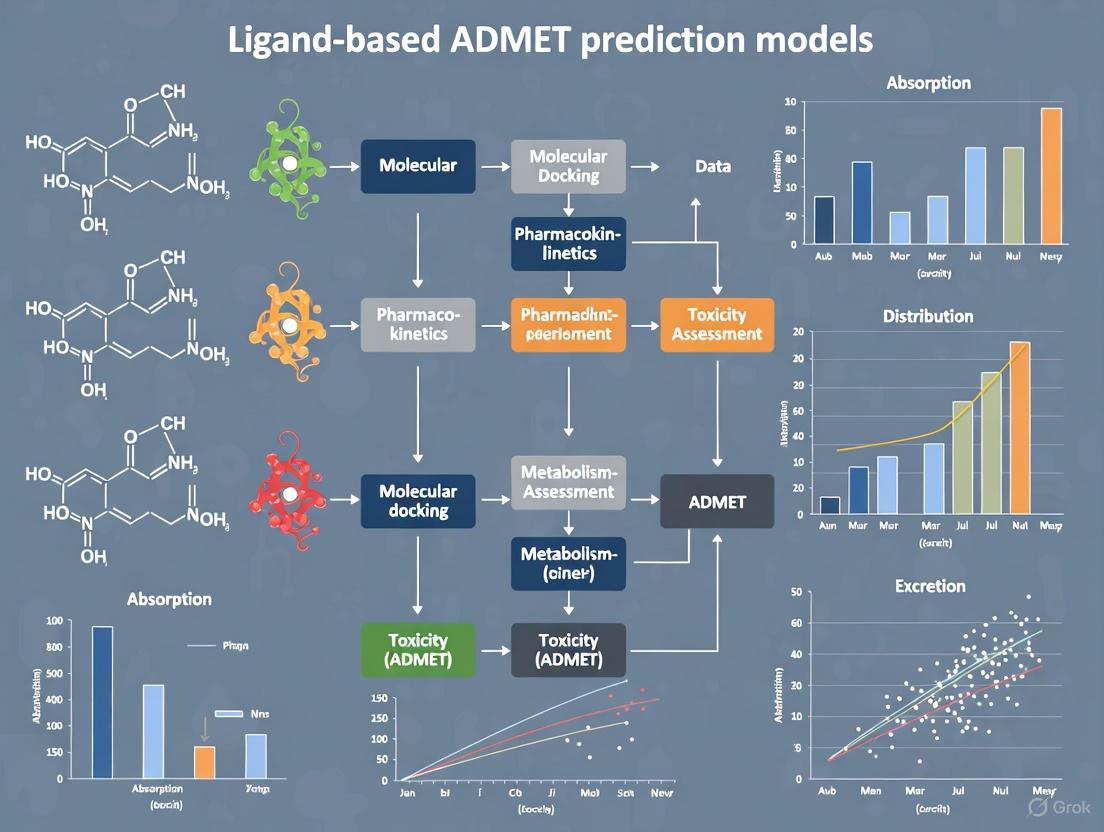
This article provides a thorough exploration of ligand-based models for predicting the Absorption, Distribution, Metabolism, Excretion, and Toxicity (ADMET) of small molecules—a critical component in reducing late-stage drug development failures.
Ligand-Based ADMET Prediction: A Comprehensive Guide to Models, Methods, and Best Practices for Drug Developers
Abstract
This article provides a thorough exploration of ligand-based models for predicting the Absorption, Distribution, Metabolism, Excretion, and Toxicity (ADMET) of small molecules—a critical component in reducing late-stage drug development failures. Tailored for researchers, scientists, and drug development professionals, we cover the foundational principles of these in silico methods, detail the latest machine learning algorithms and feature representations, and offer strategies for troubleshooting and optimizing model performance. A dedicated section on validation and benchmarking discusses robust evaluation techniques, including cross-validation with statistical testing and performance on external datasets, to ensure model reliability. By synthesizing current research and practical applications, this guide aims to equip practitioners with the knowledge to build and deploy more predictive and trustworthy ADMET models.
Understanding ADMET and the Power of Ligand-Based Modeling
The early and accurate prediction of Absorption, Distribution, Metabolism, Excretion, and Toxicity (ADMET) properties is a critical determinant of success in the drug discovery pipeline. Ligand-based computational models, which predict these properties directly from chemical structure information, have emerged as indispensable tools for prioritizing promising drug candidates and reducing late-stage attrition rates. The development and rigorous benchmarking of such models rely fundamentally on access to high-quality, curated experimental data. This application note provides a detailed guide to the primary public data sources and benchmarking platforms essential for research on ligand-based ADMET prediction models. We focus on the Therapeutics Data Commons (TDC) and the ChEMBL database, and further introduce specialized resources like PharmaBench, equipping researchers with the protocols needed to navigate, utilize, and contribute to this evolving landscape [1] [2] [3].
The Therapeutics Data Commons (TDC)
The Therapeutics Data Commons (TDC) is a unifying platform designed to systematically access and evaluate machine learning models across the entire spectrum of therapeutics development [4] [5]. It provides a structured collection of AI-ready datasets and curated benchmarks, with a significant emphasis on ADMET properties. Its three-tiered hierarchical structure—organizing data into problems, tasks, and datasets—facilitates targeted access to relevant data for specific machine learning goals, such as single-instance prediction of molecular properties [4].
A key feature of TDC is its ADMET Benchmark Group, a carefully curated collection of 22 datasets that are central to ligand-based ADMET model development and evaluation [6]. TDC is minimally dependent on external packages, and any dataset can be retrieved with only a few lines of Python code, making it highly accessible for both beginners and experts [4].
ChEMBL Database
ChEMBL is a manually curated database of bioactive molecules with drug-like properties, integrating chemical, bioactivity, and genomic data [3]. It serves as a foundational resource for data mining in drug discovery. For ADMET research, ChEMBL provides a vast repository of experimental results extracted from the scientific literature, including data on metabolic stability, protein binding, and toxicity [1] [7].
A primary challenge with using raw data from ChEMBL and similar sources is the complexity of data annotation. Experimental results for the same compound can vary significantly under different conditions (e.g., pH, measurement technique), and these critical experimental conditions are often embedded within unstructured assay description texts rather than explicit data columns [1]. This necessitates sophisticated data processing and filtering workflows to construct reliable benchmark datasets.
Specialized ADMET Benchmarks: PharmaBench
To address the limitations of existing benchmarks, such as small dataset sizes and poor representation of drug-like compounds, new resources like PharmaBench have been developed. PharmaBench is a comprehensive benchmark set for ADMET properties, comprising eleven datasets and 52,482 entries [1] [7].
Its creation leveraged a multi-agent data mining system based on Large Language Models (LLMs) to efficiently identify and extract experimental conditions from 14,401 bioassays in the ChEMBL database [1]. This innovative approach allows for the merging and standardization of entries from multiple sources based on key experimental parameters, resulting in a larger and more clinically relevant benchmark that is particularly suited for training modern AI models [1] [7].
Table 1: Summary of Key Public Data Sources for ADMET Prediction
| Data Source | Core Focus | Key Features | Notable Use Case |
|---|---|---|---|
| Therapeutics Data Commons (TDC) | Unified ML benchmarks for therapeutics | Hierarchical API, 22 ADMET datasets, leaderboards, ready-to-use data loaders [6] [4] | Benchmarking model performance on standardized ADMET tasks [8] |
| ChEMBL | Manually curated bioactivity data | Integrates chemical, bioactivity, and genomic data from literature [3] | Source of raw experimental data for building new custom datasets [1] |
| PharmaBench | Enhanced ADMET benchmarks | LLM-curated experimental conditions, 52,482 entries, focused on drug-like compounds [1] [7] | Training and evaluating models on a large, condition-aware dataset |
Protocols for Accessing and Utilizing Benchmarks
Protocol 1: Accessing the TDC ADMET Benchmark Group
This protocol details the steps to retrieve a benchmark dataset from the TDC ADMET Group, train a model, and evaluate its performance, which is a prerequisite for submission to the TDC leaderboard [8].
Procedure
- Initialize the Benchmark Group: Import the
admet_groupand initialize the benchmark group object. It is recommended to specify a path to store the data. - Retrieve a Specific Benchmark: Obtain a specific benchmark, for example,
Caco2_Wang. Thegetmethod returns a dictionary containing the benchmark's name, the combined training/validation set (train_val), and the test set (test). - Generate Training and Validation Splits: Use the TDC utility function to split the
train_valdata into training and validation sets using a scaffold split, which groups compounds by their molecular backbone to assess generalization to novel chemotypes. Execute this over multiple seeds (e.g., 1 to 5) to ensure robust performance measurement [8]. - Train Model and Generate Predictions: Within the loop, replace the comment block with your model training code using the
trainandvalidsets. After training, generate predictions (y_pred_test) for the benchmark's test set. - Evaluate Model Performance: After completing the runs, use the TDC evaluator to calculate the average performance and standard deviation across all seeds.
Protocol 2: Data Preprocessing and Cleaning for ADMET Modeling
Public datasets often contain noise and inconsistencies that can severely compromise model performance. This protocol outlines a standardized data cleaning workflow, as emphasized in recent benchmarking studies [9].
Procedure
- Standardize SMILES Representations: Use a tool like the
standardiserby Atkinson et al. to convert SMILES strings into a consistent canonical representation. This includes handling tautomers and neutralizing charges [9]. - Remove Inorganics and Organometallics: Filter out inorganic salts and organometallic compounds that are not relevant for small-molecule drug discovery.
- Extract Parent Organic Compounds: For compounds in salt form, strip the salt components to isolate the parent organic compound, which is typically the entity of interest for property prediction.
- Deduplicate Compounds: Identify and handle duplicate entries based on canonical SMILES.
- For regression tasks, if the reported values for duplicates fall within a pre-defined range (e.g., within 20% of the inter-quartile range), keep the first entry. If the values are highly inconsistent, remove the entire group.
- For classification tasks, keep duplicates only if all labels are identical (all 0 or all 1); otherwise, remove the group [9].
- Address Data Skewness: For regression endpoints with highly skewed distributions (e.g., clearance, volume of distribution), apply a log-transformation to the target values to make the distribution more normal and improve model stability [9].
The Scientist's Toolkit: Research Reagent Solutions
Table 2: Essential Computational Tools for Ligand-based ADMET Modeling
| Tool / Reagent | Type | Function in Research |
|---|---|---|
| RDKit | Cheminformatics Library | Calculates molecular descriptors (e.g., Morgan fingerprints, topological descriptors), handles molecule I/O, and performs substructure searching [9]. |
| OpenAI GPT-4 API | Large Language Model | Powers advanced data curation systems (e.g., multi-agent LLM) to extract experimental conditions from unstructured text in bioassay descriptions [1] [7]. |
| Chemprop | Deep Learning Library | Provides implementations of Message Passing Neural Networks (MPNNs) specifically designed for molecular property prediction [9]. |
| scikit-learn | Machine Learning Library | Offers implementations of classical ML models (e.g., Random Forest, SVM) and utilities for data splitting, hyperparameter tuning, and evaluation [9]. |
Experimental Workflow for ADMET Model Benchmarking
The diagram below illustrates the integrated experimental workflow for building and benchmarking a ligand-based ADMET prediction model, from data acquisition to final evaluation.
ADMET Model Benchmarking Workflow
The reliable prediction of ADMET properties is a cornerstone of modern computational drug discovery. This application note has detailed the protocols and resources necessary to conduct rigorous research in this field. By leveraging structured benchmarking platforms like TDC, foundational data sources like ChEMBL, and emerging, robustly curated resources like PharmaBench, researchers can develop and validate ligand-based models with greater confidence. Adherence to the provided protocols for data access, preprocessing, and model evaluation will promote reproducibility and facilitate meaningful comparisons across different algorithmic approaches, ultimately accelerating the development of safer and more effective therapeutics.
Building and Applying Predictive ADMET Models: From Algorithms to Workflow Integration
The early and accurate prediction of Absorption, Distribution, Metabolism, Excretion, and Toxicity (ADMET) properties is a critical determinant in the success of drug discovery and development [2] [10]. Ligand-based in silico models, which predict these properties directly from chemical structure, have become indispensable tools for prioritizing compounds with optimal pharmacokinetics and minimal toxicity risks [10]. The performance of these models hinges on the choice of machine learning (ML) algorithm and its synergy with molecular feature representations. This Application Note provides a structured, comparative evaluation of four prominent ML algorithms—Random Forests, Support Vector Machines, Gradient Boosting, and Deep Neural Networks—within the context of building robust ligand-based ADMET prediction models. We summarize quantitative benchmarking results, detail experimental protocols for model training and evaluation, and provide a curated toolkit of research reagents to facilitate implementation.
Algorithm Performance Comparison
Evaluating algorithms on benchmark ADMET tasks reveals their relative strengths. The following table synthesizes key performance metrics from recent comparative studies as a guide for initial algorithm selection.
Table 1: Comparative Performance of Machine Learning Algorithms for ADMET Prediction
| Algorithm | Best-suited ADMET Tasks | Reported Accuracy/Performance | Key Strengths | Key Limitations |
|---|---|---|---|---|
| Tree-based Ensemble (RF, LGBM) | Classification & regression on small-molecule datasets [9] [11] | LGBM: 90.33% Accuracy, 97.31% AUROC (Anticancer ligand prediction) [11] | High accuracy, robust to noise, fast training, native feature importance [11] [12] | Struggles with extrapolation beyond chemical space of training data [9] |
| Support Vector Machine (SVM) | Not specified in results | Not specified in results | Effective in high-dimensional spaces [2] | Performance heavily dependent on kernel and hyperparameter choice [9] |
| Gradient Boosting (LGBM, CatBoost) | General ADMET tasks, leaderboard benchmarks [9] | Top performer in structured data benchmarks, outperforming RF and SVM in some studies [9] | State-of-the-art on many tabular benchmarks, handles mixed data types | Can be prone to overfitting without careful tuning [9] |
| Deep Neural Network (DNN/MPNN) | Tasks with complex structure-activity relationships [9] [13] | Highly variable; can outperform on some endpoints, underperform on others vs. trees [9] | Capable of learning features directly from SMILES or graphs (e.g., Chemprop) [9] | High computational cost, requires large data, risk of overfitting on small datasets [9] |
Experimental Protocols for Model Development
Data Acquisition and Curation Protocol
Objective: To gather and standardize a high-quality dataset for model training.
- Step 1: Source Data. Obtain molecular structures (as SMILES strings) and corresponding experimental ADMET endpoint values from public databases such as ChEMBL, PubChem, or specialized benchmarks like PharmaBench [7] and the Therapeutics Data Commons (TDC) [9].
- Step 2: Clean and Standardize.
- Remove Inorganics/Salts: Filter out inorganic salts, organometallic compounds, and extract the organic parent compound from salt forms [9].
- Standardize SMILES: Use toolkits (e.g., from Atkinson et al.) to canonicalize SMILES, adjust tautomers, and remove duplicates. Inconsistent measurements for the same compound should be reconciled by keeping the first entry if values are consistent, or removing the entire group if not [9].
- Step 3: Curate Assay Conditions. For endpoints like solubility, use a multi-agent LLM system to extract critical experimental conditions (e.g., buffer, pH) from assay descriptions to ensure data consistency [7].
- Step 4: Data Splitting. Split the cleaned dataset into training, validation, and test sets using a scaffold split to assess the model's ability to generalize to novel chemical structures [9] [7].
Feature Calculation and Selection Protocol
Objective: To generate informative numerical representations of molecules.
- Step 1: Calculate Molecular Descriptors. Use cheminformatics toolkits like RDKit or PaDEL to compute a comprehensive set of 1D and 2D molecular descriptors and fingerprints (e.g., Morgan fingerprints) [9] [11].
- Step 2: Apply Feature Selection.
- Variance & Correlation Filter: Remove features with near-zero variance (e.g., variance < 0.05) and then eliminate one feature from any pair with a Pearson correlation > 0.85 to reduce multicollinearity [11].
- Boruta Algorithm: Employ this wrapper method with a Random Forest classifier to identify features with statistically significant importance compared to shadow features [11]. The final feature set should consist of the features confirmed by Boruta.
Model Training and Evaluation Protocol
Objective: To train and robustly evaluate the performance of different algorithms.
- Step 1: Implement Algorithms. Use standard libraries:
scikit-learnfor RF and SVM,LightGBMorCatBoostfor gradient boosting, andChempropfor MPNNs. - Step 2: Hyperparameter Optimization. Conduct a dataset-specific hyperparameter search using Bayesian optimization or grid search within a cross-validation loop on the training set.
- Step 3: Validate with Statistical Testing. Perform k-fold cross-validation (k=5 or 10) on the training set and apply statistical hypothesis tests (e.g., paired t-test) to compare the performance distributions of different models or feature sets. This identifies statistically significant improvements [9].
- Step 4: Final Evaluation. Retrain the best model on the entire training set and evaluate its performance on the held-out scaffold-split test set using relevant metrics (e.g., AUC-ROC, RMSE, Accuracy) [9].
Diagram 1: Model development workflow.
The Scientist's Toolkit: Essential Research Reagents
The following table lists key software, data resources, and descriptors required for developing ligand-based ADMET models.
Table 2: Essential Research Reagents for Ligand-based ADMET Modeling
| Reagent / Resource | Type | Function in ADMET Modeling | Key Features |
|---|---|---|---|
| RDKit | Software Library | Calculates molecular descriptors and fingerprints; handles SMILES standardization [9] [11]. | Provides RDKit descriptors, Morgan fingerprints, and basic molecular operations. |
| PaDELPy | Software Library | Computes molecular descriptors and fingerprints from SMILES strings [11]. | Extracts a large set of 1D/2D descriptors and fingerprints for model featurization. |
| Therapeutics Data Commons (TDC) | Data Resource | Provides curated benchmark datasets and leaderboards for ADMET properties [9]. | Standardized datasets for fair model comparison and evaluation. |
| PharmaBench | Data Resource | A comprehensive, recently introduced benchmark set for ADMET properties [7]. | Larger size and greater chemical diversity than previous benchmarks. |
| Mol2Vec | Molecular Representation | Generates vector embeddings of molecular substructures for use with DNNs [13]. | An endpoint-agnostic featurization method that captures substructure context. |
| Scikit-learn | Software Library | Implements classic ML algorithms (RF, SVM) and model evaluation tools [11]. | Provides a unified API for training, tuning, and evaluating traditional models. |
| Chemprop | Software Library | Implements Message Passing Neural Networks (MPNNs) for molecular property prediction [9]. | A state-of-the-art DNN framework that learns directly from molecular graphs. |
| Boruta Algorithm | Feature Selection Method | Identifies statistically significant features from a high-dimensional set [11]. | A robust wrapper method that reduces overfitting and improves model interpretability. |
This Application Note provides a structured framework for selecting and implementing machine learning algorithms in ligand-based ADMET prediction. Quantitative benchmarks and experimental protocols indicate that tree-based ensemble methods like LightGBM often provide a powerful and efficient baseline, while Deep Neural Networks (e.g., MPNNs in Chemprop) offer a compelling alternative for tasks with complex structure-activity relationships, provided sufficient data is available [9] [11]. The critical steps of rigorous data curation, appropriate feature selection, and evaluation using scaffold splits with statistical testing are paramount for developing models that generalize reliably to novel chemical entities. By leveraging the protocols and resources detailed herein, researchers can make informed decisions in their model-building process, ultimately accelerating the identification of viable drug candidates.
Within drug discovery, the assessment of Absorption, Distribution, Metabolism, Excretion, and Toxicity (ADMET) properties is crucial for de-risking candidate molecules. A primary safety concern is drug-induced cardiotoxicity, often resulting from the unintended blockade of the human Ether-à-go-go-Related Gene (hERG) potassium channel. Inhibition of this channel can cause acquired Long QT Syndrome (LQTS), a severe cardiac side effect that has led to the withdrawal of numerous pharmaceuticals from the market [14] [15]. Consequently, the development of robust in silico models to predict hERG liability early in the discovery pipeline is a significant focus within ligand-based ADMET prediction research.
This application note details a structured protocol for building a high-performance, ligand-based classification model for hERG-mediated cardiotoxicity. The framework integrates modern machine learning (ML) techniques with rigorous data curation and validation practices, providing a reliable tool for prioritizing compounds with reduced cardiotoxicity risk [14].
Background and Significance
The hERG potassium channel is vital for the repolarization phase of the cardiac action potential. Its central cavity is notably promiscuous, binding to structurally diverse small molecules, which makes predicting this off-target activity particularly challenging [14] [15]. Regulatory agencies like the FDA and EMA now require thorough hERG liability assessments, making predictive models an indispensable component of the preclinical toolkit [15].
While in vitro assays exist, they are often labor-intensive, low-throughput, and costly. Ligand-based in silico models, which predict activity based solely on chemical structure, offer a scalable and cost-effective alternative for screening large virtual compound libraries before synthesis [14] [16].
The following diagram illustrates the end-to-end computational workflow for developing the hERG cardiotoxicity prediction model.
Materials and Reagents
Research Reagent Solutions
The following table lists the essential computational tools and data resources required to implement the described protocol.
Table 1: Essential Research Reagents and Computational Tools
| Item Name | Function/Application in Protocol | Specific Notes & Variants |
|---|---|---|
| ChEMBL Database | Primary public repository for bioactive molecules with curated hERG assay data. | Used v25 for model training; v28 for temporal validation [14]. |
| PubChem BioAssay | Supplementary source of hERG inhibition data, both HTS and non-HTS. | Used to build larger, more realistic datasets [15]. |
| KNIME Analytics Platform | Open-source platform for data pipelining, curation, and analysis. | Integrates nodes for RDKit, SDF handling, and machine learning [14] [17]. |
| RDKit | Open-source cheminformatics toolkit. | Used for calculating molecular descriptors and fingerprints within KNIME [17]. |
| VSURF Algorithm | Feature selection method to identify the most relevant molecular descriptors. | Reduces overfitting and improves model interpretability [14]. |
| SMOTE Technique | Data sampling method to handle class imbalance by generating synthetic minority-class instances. | Crucial for improving model sensitivity to hERG blockers [14]. |
Methodology
Data Curation and Preparation
Principle: The predictive power of any QSAR model is fundamentally dependent on the quality of its underlying data. A meticulous, multi-stage curation process is therefore imperative [14] [15].
Protocol:
- Data Retrieval: Extract hERG activity data from public repositories like ChEMBL (Target ID: CHEMBL240) and PubChem. Prioritize entries with IC50 values measured against the human channel in direct binding assays [14].
- Standardization:
- Activity Labeling: Binarize continuous IC50 values into "blocker" and "non-blocker" classes. While a threshold of 10 µM is common, a more stringent 1 µM threshold is often more relevant for identifying critical concerns in drug development programs [14].
- Deduplication: Remove duplicate molecules, retaining only the most potent or reliable measurement for each unique chemical structure [17].
Molecular Descriptor Calculation and Feature Selection
Principle: Molecular structures must be translated into a numerical representation (descriptors or fingerprints) that machine learning algorithms can process.
Protocol:
- Descriptor Calculation: Use cheminformatics toolkits like RDKit or alvaDesc to compute a comprehensive set of molecular features. These can include:
- Feature Selection: Apply a feature selection algorithm like VSURF to the initial, high-dimensional descriptor set. This step identifies a reduced subset of descriptors most relevant to hERG binding, which mitigates the "curse of dimensionality," reduces noise, and enhances model interpretability [14].
Model Training with Machine Learning
Principle: Employing a diverse set of ML algorithms and handling class imbalance robustly leads to more generalizable and predictive models.
Protocol:
- Data Splitting: Implement a temporal validation split. Use older data (e.g., from ChEMBL v25) for training and newer, previously unseen data (e.g., from ChEMBL v28) for testing. This approach provides a realistic estimate of a model's performance on future compounds [14].
- Address Class Imbalance: Apply the Synthetic Minority Over-sampling Technique (SMOTE) to the training set only. This technique generates synthetic examples of the minority class (typically hERG blockers) to balance the class distribution, preventing the model from being biased toward the majority class [14].
- Algorithm Selection and Training: Train multiple classifier types on the processed training data. Common high-performing algorithms for this task include [14] [15] [17]:
- Random Forest (RF)
- eXtreme Gradient Boosting (XGBoost)
- Deep Neural Networks (DNN) / Multilayer Perceptron (MLP)
- Support Vector Machine (SVM)
Model Validation and Evaluation
Principle: A rigorous, multi-faceted evaluation strategy is essential to confirm model robustness and predictive power.
Protocol:
- Performance Metrics: Evaluate the model on a held-out test set using a suite of metrics to get a complete picture [14] [16]:
- Balanced Accuracy (BA): Crucial for imbalanced datasets.
- Area Under the ROC Curve (AUC): Measures overall ranking performance.
- Sensitivity (Recall): Ability to correctly identify true hERG blockers.
- Specificity: Ability to correctly identify true non-blockers.
- Matthew's Correlation Coefficient (MCC): A balanced measure considering all confusion matrix categories.
- Benchmarking: Compare the performance of your final model against existing published models (e.g., DeepHIT, CardioTox) using the same external test set to establish its relative advantage [14].
Anticipated Results and Analysis
When the above protocol is executed successfully, one can expect the development of a highly predictive model. For instance, a model based on this workflow achieved a maximum balanced accuracy of 0.91 and an AUC of 0.95 on a robustly curated dataset of ~8,000 compounds [14].
Table 2: Example Performance Metrics for Different Model Types
| Model Type | Balanced Accuracy | AUC | Sensitivity | Specificity | Key Strengths |
|---|---|---|---|---|---|
| Random Forest | 0.89 | 0.94 | 0.85 | 0.93 | High interpretability, robust to noise. |
| XGBoost | 0.91 | 0.95 | 0.87 | 0.95 | High performance, handles complex relationships. |
| Deep Neural Network | 0.90 | 0.94 | 0.88 | 0.92 | Automatic feature learning from raw inputs. |
| Stacking Ensemble (HERGAI) | N/A | N/A | 0.94 (at 1µM) | N/A | State-of-the-art performance; identifies potent blockers [15]. |
Model Interpretation
Beyond mere prediction, understanding the chemical features associated with hERG blockade is critical for medicinal chemists. The model can be interpreted by analyzing:
- Feature Importance: For tree-based models (RF, XGBoost), the built-in feature importance scores can be calculated. This analysis often highlights descriptors related to lipophilicity, molecular size, and the presence of specific hydrophobic or basic nitrogen-containing groups as key determinants of hERG binding [17].
- Applicability Domain (AD): The model's reliability is confined to its AD—the chemical space defined by its training data. Techniques like Isometric Stratified Ensemble (ISE) mapping can be used to estimate the AD and flag compounds for which predictions may be less reliable [17].
Troubleshooting
Table 3: Common Issues and Recommended Solutions
| Problem | Potential Cause | Solution |
|---|---|---|
| Low Sensitivity (missing true blockers) | Severe class imbalance in the training data. | Apply SMOTE or other resampling techniques. Adjust the classification threshold based on the ROC curve. |
| Low Specificity (too many false alarms) | Model is overly complex or training data contains noisy non-blocker labels. | Strengthen data curation. Perform more aggressive feature selection to reduce overfitting. |
| Poor Performance on External Set | Dataset shift; the external set is chemically different from the training set. | Implement temporal validation from the start. Define and check the model's Applicability Domain for new predictions. |
| Model is a "Black Box" | Use of complex algorithms like DNNs without interpretation tools. | Use model-agnostic interpretation tools (e.g., SHAP) or prioritize inherently more interpretable models like Random Forest. |
This application note provides a comprehensive, proven protocol for developing a predictive model for hERG-mediated cardiotoxicity. By emphasizing rigorous data curation, the use of diverse machine learning algorithms, and robust temporal validation, this ligand-based framework delivers a tool with high predictive power. Integrating such a model into early drug discovery workflows enables researchers to proactively identify and mitigate cardiotoxicity risks, thereby accelerating the development of safer therapeutic agents.
The optimization of Absorption, Distribution, Metabolism, Excretion, and Toxicity (ADMET) properties represents a critical challenge in modern drug discovery. The high failure rate of drug candidates in clinical trials due to unfavorable pharmacokinetic and safety profiles has necessitated the early integration of ADMET forecasting into the discovery pipeline [18]. Within the broader context of ligand-based ADMET prediction models research, multi-objective optimization has emerged as a transformative approach, enabling the simultaneous balancing of multiple, often competing, molecular properties. Unlike single-parameter optimization, which may improve one property at the expense of others, multi-objective strategies aim to identify chemical designs that represent the optimal compromise across a full spectrum of ADMET and efficacy criteria [19].
The rise of artificial intelligence (AI) and machine learning (ML) has catalyzed the development of sophisticated computational platforms capable of navigating this complex molecular design space. These tools leverage a variety of ligand-based representations—from classical molecular descriptors and fingerprints to advanced graph neural networks—to predict ADMET endpoints and guide molecular optimization [9] [18]. This application note provides an overview of emerging platforms in this domain, with a specific focus on their application within ligand-based model frameworks. We detail the operational protocols for key tools and benchmark their performance, providing researchers with a practical guide for implementing these technologies in drug discovery workflows.
Several advanced software platforms now integrate multi-objective optimization capabilities for ADMET property design. These systems typically combine high-fidelity predictive models with algorithms that efficiently explore chemical space to identify structures satisfying multiple target profiles.
Table 1: Comparison of Multi-Objective ADMET Optimization Platforms
| Platform Name | Core AI/ML Methodology | Optimization Strategy | Key ADMET Properties Addressed | Model Representation |
|---|---|---|---|---|
| ChemMORT [19] | Deep Learning | Multi-Objective Particle Swarm Optimization (MOPSO) | Poly (ADP-ribose) polymerase-1 inhibitor optimization; Inverse QSAR | Not Specified |
| ADMETboost [20] | Extreme Gradient Boosting (XGBoost) | Ensemble feature learning | 22 ADMET benchmark tasks from TDC (e.g., Caco2 permeability, bioavailability, toxicity) | Fingerprints & Descriptors (MACCS, ECFP, Mordred) |
| ADMET-AI [21] | Graph Neural Network (Chemprop-RDKit) | High-throughput screening and prioritization | 41 ADMET datasets from TDC; BBB penetration, hERG, solubility, ClinTox | Graph-based & RDKit descriptors |
| ADMET Predictor [22] | Proprietary AI/ML | ADMET Risk scoring; "soft" threshold rules | >175 properties; solubility, logD, pKa, CYP metabolism, DILI | Atomic and molecular descriptors |
| ACD/ADME Suite [23] | QSAR and rule-based | Integrated physicochemical modeling | BBB penetration, CYP450, P-gp, bioavailability, Vd, PPB | Structure-based physicochemical |
A critical differentiator among these platforms is their approach to molecular representation. Ligand-based models rely exclusively on chemical structure information, featurizing molecules using either learned representations (e.g., graph neural networks used by ADMET-AI) or predefined feature sets (e.g., the ensemble of fingerprints and descriptors used by ADMETboost) [9] [21] [20]. For instance, ADMETboost employs an ensemble of six distinct featurizers including RDKit descriptors and Mordred descriptors to enable sufficient learning for its XGBoost models, which have achieved top rankings on the Therapeutics Data Commons (TDC) benchmark leaderboard [20].
The optimization algorithms themselves vary. ChemMORT utilizes Multi-Objective Particle Swarm Optimization (MOPSO), a population-based stochastic algorithm that explores chemical space by simulating the social behavior of particles [19]. In contrast, commercial suites like ADMET Predictor implement rule-based systems such as their "ADMET Risk" score, which uses soft thresholds to quantify a molecule's potential liabilities against a profile calibrated from known successful drugs [22].
Experimental Protocols and Workflows
Protocol for Benchmarking ADMET Model Performance
Robust evaluation is fundamental to reliable ADMET prediction. The following protocol, adapted from recent benchmarking studies, outlines a standardized process for training and evaluating ligand-based ADMET models [9] [24].
Data Curation and Standardization
- Compound Standardization: Standardize compound representations using a tool like that from Atkinson et al. [9]. This includes neutralizing salts, removing inorganics and organometallics, adjusting tautomers, and generating canonical SMILES.
- Duplicate Removal: Remove duplicate compounds. For continuous data, average values if the standardized standard deviation is <0.2; otherwise, remove the group. For classification, keep only entries with identical labels [9] [24].
- Outlier Detection: Identify and remove response outliers using Z-score analysis (e.g., |Z-score| > 3) and inter-dataset inconsistencies [24].
Data Splitting
- Use scaffold splitting to partition the dataset into training (80%) and test (20%) sets. This evaluates a model's ability to generalize to structurally novel compounds, simulating a real-world application scenario [20].
Model Training with Hyperparameter Optimization
- For a given model (e.g., XGBoost), perform 5-fold cross-validation on the training set.
- Conduct a randomized grid search to optimize hyperparameters (e.g.,
n_estimators,max_depth,learning_rate). The parameter set with the highest average cross-validation performance is selected for the final model [20].
Model Evaluation and Validation
- Hold-out Test Set: Evaluate the final model on the scaffold-held-out test set.
- Performance Metrics:
- Regression Tasks (e.g., solubility, logD): Use Mean Absolute Error (MAE) and Spearman's correlation coefficient (ρ) [20] [24].
- Classification Tasks (e.g., hERG inhibition, Ames mutagenicity): Use Area Under the Receiver Operating Characteristic Curve (AUROC) and Area Under the Precision-Recall Curve (AUPRC) [20].
- Statistical Significance Testing: Integrate cross-validation with statistical hypothesis testing (e.g., paired t-tests) to confirm the significance of performance differences between model configurations [9].
Protocol for Multi-Objective Optimization with ChemMORT
The ChemMORT platform exemplifies a closed-loop design-make-test-analyze cycle for inverse QSAR, automating the search for novel compounds that meet multiple desired ADMET and activity profiles [19].
Objective Definition
- Define the primary objective, typically a target biological activity (e.g., IC50 for a specific enzyme inhibition).
- Define ADMET constraints, which may include properties like aqueous solubility, hERG channel blocking potential, cytochrome P450 inhibition, and human intestinal absorption. Set acceptable thresholds or desired value ranges for each.
Initial Model Training
- Train a predictive QSAR model for the primary activity objective using a curated dataset of known actives and inactives.
- Train individual ADMET property models or access pre-trained models for the defined constraint endpoints.
Multi-Objective Particle Swarm Optimization (MOPSO)
- Initialization: Generate an initial population of candidate molecular structures.
- Iterative Search:
- Evaluation: Score each candidate molecule in the population using the trained QSAR and ADMET models.
- Fitness Assignment: Calculate a composite fitness score based on the defined multi-objective function (balancing primary activity and ADMET constraints).
- Swarm Update: Update the position and velocity of each "particle" (candidate) in the chemical space based on its own experience and the swarm's best-known positions, exploring new structural analogs.
- Termination: The process iterates until a stopping criterion is met (e.g., a maximum number of iterations or convergence of the fitness score).
Output and Analysis
- The output is a Pareto front of optimized compounds, representing the best possible trade-offs between the primary activity and the ADMET constraints.
- These candidate structures can then be prioritized for synthesis and experimental validation.
The Scientist's Toolkit: Key Research Reagents and Computational Solutions
Successful implementation of multi-objective ADMET optimization relies on a suite of computational "reagents" – software libraries, descriptors, and databases that form the building blocks of the predictive models.
Table 2: Essential Computational Reagents for Ligand-Based ADMET Modeling
| Reagent Category | Specific Tool / Database | Primary Function in Workflow |
|---|---|---|
| Cheminformatics Libraries | RDKit [9] [20] | Core cheminformatics operations: SMILES parsing, descriptor calculation (rdkit_desc), fingerprint generation (Morgan), and molecular standardization. |
| Molecular Descriptors | Mordred Descriptors [20] | Calculates a comprehensive set of ~1,800 2D and 3D chemical descriptors directly from molecular structure. |
| Molecular Fingerprints | Extended Connectivity Fingerprints (ECFP) [20] | Generates circular topological fingerprints that capture molecular substructures and are widely used for similarity searching and ML. |
| Molecular Fingerprints | MACCS Keys [20] | A set of 166 predefined structural binary keys used for substructure screening and molecular representation. |
| Benchmark Data | Therapeutics Data Commons (TDC) [9] [21] [20] | Provides curated, standardized benchmark datasets and splits for fair evaluation of ADMET prediction models across multiple tasks. |
| Machine Learning Framework | XGBoost [20] | A powerful tree-based gradient boosting framework that often achieves state-of-the-art performance on tabular data from fingerprint/descriptor features. |
| Deep Learning Framework | Chemprop [21] | A message-passing neural network specifically designed for molecular property prediction, capable of learning directly from molecular graphs. |
| Reference Drug Database | DrugBank [21] | A database of approved drugs used as a reference set to contextualize ADMET predictions (e.g., percentiles for solubility or toxicity). |
The integration of multi-objective optimization platforms into the drug discovery pipeline marks a significant advancement in the quest for safer and more effective therapeutics. Tools like ChemMORT, ADMETboost, and ADMET-AI provide powerful, AI-driven solutions to the complex challenge of balancing potency with pharmacokinetics and safety [19] [21] [20]. As demonstrated, their effectiveness is underpinned by robust experimental protocols for model benchmarking and optimization, which emphasize data curation, appropriate data splitting, and rigorous statistical validation [9] [24].
The continued evolution of these platforms is inextricably linked to progress in the broader field of ligand-based ADMET prediction models. Future directions point toward the use of even larger and more diverse training datasets, the development of more sophisticated molecular representations, and the tighter integration of these predictive tools with generative AI for de novo molecular design [18]. By leveraging the protocols and resources detailed in this application note, researchers can confidently employ these emerging tools to accelerate the identification of viable drug candidates with optimized ADMET profiles.
Overcoming Challenges: Strategies for Robust and Generalizable ADMET Models
In ligand-based ADMET (Absorption, Distribution, Metabolism, Excretion, and Toxicity) prediction, data quality is not merely a technical concern but a fundamental determinant of model reliability and translational success. Molecular property prediction models are exceptionally vulnerable to data quality issues, where noisy measurements, inconsistencies, and duplicates can significantly distort structure-activity relationships and compromise prediction accuracy [9]. The transformative potential of artificial intelligence in drug discovery remains contingent on addressing these foundational data challenges, as inadequate data quality leads to inaccurate property predictions that can misdirect entire compound optimization campaigns [25].
Research indicates that poor data quality costs organizations an average of $12.9 million annually, with scientific enterprises facing additional costs from misdirected research and development efforts [26]. Within ADMET prediction specifically, public datasets are frequently criticized for data cleanliness issues ranging from inconsistent SMILES representations and duplicate measurements with varying values to inconsistent binary labels for identical compounds [9]. These problems are compounded when models trained on one data source must be applied to different datasets, a common scenario in practical drug discovery settings.
Understanding Data Quality Issues in Scientific Datasets
Taxonomy of Data Quality Problems
Data quality issues in ADMET datasets manifest in several distinct forms, each with particular implications for predictive modeling:
Table 1: Common Data Quality Issues in ADMET Datasets
| Issue Type | Description | Impact on ADMET Prediction |
|---|---|---|
| Noisy Measurements | Experimental variability, measurement errors, or inconsistent assay conditions | Introduces uncertainty in structure-activity relationships, reduces model precision |
| Inconsistent Data | Conflicting values for the same field across systems or inconsistent formats | Creates contradictory learning signals, compromises model reliability |
| Duplicate Data | Multiple entries for the same entity with conflicting or redundant information | Skews dataset representativeness, biases model parameters |
| Incomplete Data | Missing values or entire rows in datasets | Reduces effective dataset size, introduces selection bias |
| Inaccurate Data | Data points that fail to represent real-world values | Misleads model optimization, produces systematically flawed predictions |
| Outdated Data | Information that is no longer current or relevant | Limits model applicability to contemporary chemical space |
| Mislabeled Data | Incorrect assignment of labels or categories | Corrupts fundamental supervised learning process |
These data quality dimensions collectively determine the signal-to-noise ratio in datasets, which directly correlates with model performance ceilings. Research indicates that data processing and cleanup can consume over 30% of analytics teams' time due to poor data quality and availability [27].
Root Causes in ADMET Data Generation
The primary sources of data quality issues in ADMET contexts include:
- Assay variability: Different experimental conditions, measurement techniques, and laboratory protocols introduce systematic inconsistencies [9].
- Data integration problems: Combining data from multiple sources (literature, proprietary assays, public databases) without adequate standardization.
- Human annotation errors: Manual data entry mistakes, misclassification, and subjective interpretation of results.
- Evolving standards: Changes in measurement protocols, reporting requirements, and scientific understanding over time.
- Molecular representation inconsistencies: Variations in SMILES strings, stereochemistry representation, and tautomer handling [9].
Experimental Protocols for Data Quality Assurance
Comprehensive Data Cleaning Protocol for ADMET Datasets
This protocol provides a systematic approach for cleaning ADMET datasets prior to model development, based on established methodologies in cheminformatics [9].
Materials and Software Requirements
Table 2: Essential Tools for ADMET Data Cleaning
| Tool Name | Type | Primary Function | Application in ADMET Context |
|---|---|---|---|
| RDKit | Cheminformatics library | Molecular descriptor calculation, SMILES handling | Standardization of molecular representations, descriptor calculation |
| DataWarrior | Visualization software | Data profiling and visualization | Interactive inspection of molecular datasets, outlier detection |
| Custom standardization scripts | Computational protocol | SMILES canonicalization | Consistent molecular representation across datasets |
| Python/Pandas | Programming environment | Data manipulation and analysis | Implementation of cleaning pipelines, duplicate management |
Step-by-Step Procedure
Remove Inorganic Salts and Organometallic Compounds
- Filter compounds containing non-organic elements (excluding H, C, N, O, F, P, S, Cl, Br, I, B, Si)
- Justification: ADMET properties primarily concern organic molecules; inclusion of organometallics introduces confounding factors
Extract Organic Parent Compounds from Salt Forms
- Identify and separate salt counterions using predefined salt lists
- Retain only the organic parent compound for property prediction
- Exclusion criteria: Omit salt components that can themselves be parent organic compounds (e.g., citrate/citric acid) by excluding components containing two or more carbons
Standardize Tautomeric Representations
- Apply consistent tautomerization rules to ensure identical compounds have identical representations
- Use standardized tools with modified organic element definitions to include boron and silicon
Canonicalize SMILES Strings
- Generate canonical SMILES representations using consistent algorithms
- Ensure stereochemistry is explicitly and consistently represented
Deduplication with Consistency Rules
- Identify duplicate molecular representations
- For consistent duplicates (target values exactly same for binary tasks or within 20% of inter-quartile range for regression tasks): keep first entry
- For inconsistent duplicates: remove entire group to avoid contradictory training signals
Visual Inspection and Validation
- Use DataWarrior for final dataset inspection
- Manually verify ambiguous cases and edge conditions
- Document all cleaning decisions for reproducibility
Quality Control Measures
- Implement automated validation checks for SMILES validity and molecular integrity
- Maintain audit trails of all removed compounds with justifications
- Compare dataset statistics before and after cleaning to identify systematic biases
- For specialized endpoints like solubility: remove all salt complexes as different salts of the same compound may have different properties
Data Quality Assessment Framework
The data quality assessment framework provides quantitative metrics for evaluating dataset integrity across multiple dimensions relevant to ADMET prediction.
Table 3: Data Quality Metrics for ADMET Datasets
| Quality Dimension | Measurement Approach | Acceptance Threshold | Evaluation Frequency |
|---|---|---|---|
| Accuracy | Cross-reference with validated benchmark compounds | ≥ 98% match with reference values | Pre-processing |
| Completeness | Percentage of missing values in critical fields | ≤ 2% missing mandatory fields | Pre-processing & quarterly |
| Consistency | Uniformity of molecular representations and assay values | ≥ 97% consistency across representations | Pre-processing |
| Uniqueness | Proportion of duplicate molecular entries | < 1% duplicate records | Pre-processing |
| Timeliness | Assay date assessment and technology relevance | Appropriate to contemporary discovery practices | Annual review |
| Validity | Conformance to structural and biochemical rules | 100% valid molecular structures | Pre-processing |
Implementation Workflow for Data Quality Management
The following diagram illustrates the comprehensive workflow for addressing data quality issues in ADMET prediction projects:
Integration with Model Development Workflow
The relationship between data quality processes and model development stages is critical for successful ADMET prediction implementation.
Research Reagent Solutions for Data Quality Management
Table 4: Essential Research Reagents for ADMET Data Quality Management
| Tool/Category | Specific Examples | Primary Function | Application Context |
|---|---|---|---|
| Data Quality Tools | Great Expectations, Soda Core, OvalEdge | Automated validation, monitoring | Pipeline data validation, quality dashboards |
| Cheminformatics Libraries | RDKit, Chemprop | Molecular standardization, descriptor calculation | SMILES canonicalization, feature generation |
| Data Profiling Tools | OpenRefine, DataWarrior | Data assessment, visualization | Initial data exploration, outlier identification |
| Workflow Management | Apache Airflow, Nextflow | Pipeline orchestration | Reproducible data processing workflows |
| Molecular Standardization | Custom standardization scripts | Consistent representation | Tautomer normalization, salt stripping |
Systematic approaches to tackling data quality issues—including noisy measurements, inconsistencies, and duplicates—are fundamental to advancing ligand-based ADMET prediction models. The protocols and frameworks presented herein provide researchers with structured methodologies for ensuring data integrity throughout the model development lifecycle. By implementing comprehensive data cleaning procedures, establishing rigorous quality assessment metrics, and maintaining continuous monitoring systems, research teams can significantly enhance the reliability and predictive power of their ADMET models. As the field progresses toward increasingly sophisticated AI-driven approaches, these foundational data quality practices will remain essential for translating computational predictions into successful therapeutic outcomes.
In the field of ligand-based ADMET (Absorption, Distribution, Metabolism, Excretion, and Toxicity) prediction, machine learning (ML) models have become indispensable tools for accelerating drug discovery. However, the performance and reliability of these models are critically dependent on their ability to generalize to new, unseen chemical data. Overfitting represents a fundamental challenge, where a model learns patterns specific to its training data—including noise and outliers—but fails to perform accurately on external test sets or prospective compounds. This Application Note examines how strategic hyperparameter tuning and dataset-specific optimization methodologies can mitigate overfitting, thereby enhancing the predictive robustness of ADMET models. Within the broader thesis of advancing ligand-based ADMET prediction, these practices are not merely procedural but are essential for building trust in computational tools that guide critical decisions in drug development pipelines.
The Overfitting Challenge in ADMET Prediction
The high-dimensional nature of molecular descriptor data, often comprising thousands of fingerprints and physicochemical properties, makes ADMET models particularly susceptible to overfitting. This is exacerbated by the relatively small, noisy, and imbalanced datasets typically available in the domain [9] [2]. The conventional practice of indiscriminately concatenating multiple feature representations without systematic justification can further amplify this risk, leading to models that excel on internal validation but disappoint in practical, external validation scenarios [9]. The consequences are tangible: inaccurate predictions can misdirect medicinal chemistry efforts, contributing to the high attrition rates observed in later stages of drug development [2]. Therefore, a disciplined approach to model construction, emphasizing generalization capacity, is paramount.
Methodologies for Robust Model Development
Data Preprocessing and Feature Selection
A foundational step in preventing overfitting is the curation of high-quality input data. This begins with rigorous data cleaning to remove inconsistent measurements, standardize molecular representations, and eliminate duplicates [9]. Subsequently, strategic feature selection reduces dimensionality, filters out noise, and retains the most informative molecular descriptors.
Protocol: Multistep Feature Selection for Dimensionality Reduction
- Objective: To identify a robust subset of molecular descriptors that contribute meaningfully to the prediction task, thereby reducing model complexity and overfitting potential.
- Materials: A dataset of molecules represented by a high-dimensional vector of molecular descriptors or fingerprints.
- Procedure:
- Variance Threshold Filtering: Calculate the variance of each feature across the dataset. Remove all features with a variance below a predefined threshold (e.g., 0.05), as these low-variance descriptors contribute minimal information [11].
- Correlation Filtering: Compute the Pearson correlation coefficient for all pairs of remaining features. Where pairs exhibit a correlation coefficient exceeding a set threshold (e.g., 0.85), remove one of the features to mitigate multicollinearity [11].
- Wrapper Method (Boruta Algorithm): Employ the Boruta algorithm, a wrapper method built around a Random Forest classifier. This method compares the importance of original features against "shadow features" (randomly permuted versions) to identify descriptors with statistically significant importance scores [11]. Retain only the features confirmed by this analysis.
- Validation: The performance of the selected feature subset should be evaluated using a nested cross-validation strategy to ensure that the selection process itself does not leak information and induce optimism bias.
Hyperparameter Tuning Strategies
Hyperparameters control the learning process itself. Tuning them is essential for finding the optimal balance between bias and variance.
Protocol: Systematic Hyperparameter Optimization
- Objective: To identify the hyperparameter configuration that maximizes a model's generalization performance on unseen data.
- Materials: A cleaned and feature-selected training dataset; a defined ML algorithm (e.g., LightGBM, Random Forest); a search space of hyperparameters.
- Procedure:
- Define Search Space: Identify key hyperparameters to optimize. For tree-based ensembles like LightGBM, these often include
num_leaves(model complexity),learning_rate,feature_fraction(random feature selection per tree), andlambda_l1/lambda_l2(L1 and L2 regularization strengths) [11] [2]. - Select Search Methodology:
- Grid Search: Exhaustively searches over a specified subset of hyperparameters. Best for small, discrete search spaces.
- Random Search: Samples hyperparameter combinations randomly from a defined space. Often more efficient than grid search for high-dimensional spaces.
- Bayesian Optimization: Builds a probabilistic model of the objective function (e.g., validation score) to direct the search towards promising configurations, typically offering superior efficiency [2].
- Implement Nested Cross-Validation: To obtain an unbiased estimate of model performance and mitigate overfitting during tuning, use a nested setup. An inner loop (e.g., 5-fold CV) performs the hyperparameter search on the training fold, while an outer loop (e.g., 5-fold CV) evaluates the best-found model on the held-out validation fold [9].
- Define Search Space: Identify key hyperparameters to optimize. For tree-based ensembles like LightGBM, these often include
- Validation: The final model, configured with the optimized hyperparameters, must be evaluated on a completely held-out test set that was not involved in the tuning process.
Dataset-Specific Model Optimization
The "one-size-fits-all" approach is often suboptimal in ADMET prediction. Dataset-specific optimization involves tailoring the model architecture and representation to the unique characteristics of each endpoint's data.
Protocol: Iterative Representation and Architecture Selection
- Objective: To determine the optimal combination of molecular representation and ML algorithm for a specific ADMET dataset.
- Materials: A cleaned dataset for a specific ADMET endpoint; multiple molecular representations (e.g., RDKit descriptors, Morgan fingerprints, learned embeddings); multiple ML algorithms (e.g., SVM, Random Forest, LightGBM, Neural Networks) [9].
- Procedure:
- Baseline Establishment: Train a simple model (e.g., Random Forest with default parameters) using a standard representation to establish a performance baseline.
- Iterative Representation Testing: Systematically train and evaluate the chosen model architecture using different molecular representations and their reasoned combinations, rather than naive concatenation [9].
- Architecture Comparison: Compare different ML algorithms using the best-performing representation(s) from the previous step.
- Statistical Hypothesis Testing: Apply statistical tests (e.g., paired t-test) on the cross-validation results to determine if the performance improvements from optimization steps are statistically significant [9].
- Validation: The optimized, dataset-specific model should be evaluated on an external test set from a different data source to simulate a practical deployment scenario and truly assess its generalizability [9].
Key Experimental Results and Data
The following tables summarize quantitative findings from recent studies that implement the aforementioned protocols, demonstrating their impact on model performance and robustness.
Table 1: Impact of Feature Selection and Model Tuning on Predictive Performance
| Study / Model | Endpoint(s) | Key Methodology | Result / Performance Impact |
|---|---|---|---|
| ACLPred [11] | Anticancer ligand prediction | Multistep feature selection (Variance, Correlation, Boruta) + LightGBM tuning | Accuracy: 90.33%, AUROC: 97.31% on independent test data. |
| Benchmarking Study [9] | Multiple ADMET properties | Dataset-specific representation selection + hyperparameter tuning + statistical testing | Significant performance improvement over non-optimized models; enhanced generalizability to external data. |
| ChemMORT [28] | Multi-objective ADMET optimization | Latent space representation + Particle Swarm Optimization | Effective optimization of multiple ADMET endpoints while maintaining bioactivity. |
Table 2: Essential Research Reagent Solutions for ADMET Modeling
| Research Reagent / Tool | Type | Function in Experiment |
|---|---|---|
| RDKit [9] [11] | Cheminformatics Library | Calculates molecular descriptors (rdkit_desc), generates Morgan fingerprints, and handles SMILES standardization. |
| PaDELPy [11] | Descriptor Calculation | Computes a comprehensive set of 1D and 2D molecular descriptors and fingerprints. |
| Boruta [11] | Feature Selection Algorithm | Identifies statistically significant features using a Random Forest-based wrapper method. |
| Scikit-learn [11] [2] | ML Library | Provides implementations for variance thresholding, correlation analysis, and various ML algorithms and validation techniques. |
| LightGBM / XGBoost [11] [28] | ML Algorithm | Gradient boosting frameworks known for high performance on structured data; offer built-in regularization to combat overfitting. |
| Therapeutics Data Commons (TDC) [9] [29] | Data Repository | Provides curated public datasets for ADMET-associated properties for benchmarking and model training. |
Workflow and Pathway Visualizations
Comprehensive Model Optimization Workflow
The diagram below outlines the integrated logical workflow for developing a robust, generalizable ADMET prediction model, incorporating the protocols for data preprocessing, feature selection, hyperparameter tuning, and validation discussed in this note.
Hyperparameter Tuning via Nested Cross-Validation
This diagram details the nested cross-validation process, a critical protocol for obtaining unbiased performance estimates during hyperparameter tuning and preventing overfitting to a single validation set.
Within the domain of ligand-based Absorption, Distribution, Metabolism, Excretion, and Toxicity (ADMET) prediction, the reliability of machine learning (ML) models is paramount. A significant challenge that compromises this reliability is the external data dilemma: the sharp performance degradation often observed when models trained on public data sources are applied to proprietary industrial datasets or data from different experimental protocols [30] [31]. This dilemma stems from dataset shifts arising from differences in experimental conditions, measurement techniques, and population biases inherent in data collected from disparate sources [7]. As ADMET models become increasingly integrated into early-stage drug discovery, assessing and mitigating the impact of these shifts is critical for building trust in in silico predictions and avoiding costly late-stage failures. This Application Note addresses this challenge by providing structured protocols for evaluating model performance across different data sources, grounded in the context of ligand-based ADMET prediction research.
Core Challenge: Data Variability and Its Impact on Model Generalization
The core of the external data dilemma lies in the heterogeneity of ADMET data. Public benchmarks, while invaluable, often differ substantially from the compounds encountered in industrial drug discovery pipelines. For instance, the mean molecular weight of compounds in some public solubility datasets is around 204 Dalton, whereas compounds in active drug discovery projects typically range from 300 to 800 Dalton [7]. This represents a fundamental shift in the chemical space being modeled.
Furthermore, experimental results for identical compounds can vary significantly under different conditions. For solubility, factors such as buffer type, pH level, and experimental procedure can lead to different measured values for the same molecule [7]. Similar variability exists for other ADMET endpoints. When a model trained on one source of data, with its specific experimental conditions and compound distributions, is applied to a different source, this dataset shift can lead to a precipitous drop in predictive performance, undermining the model's practical utility [30].
Benchmarking Evidence: Quantifying the Performance Gap
Recent benchmarking studies have quantitatively illustrated the performance gap that emerges in cross-source validation scenarios. The following table summarizes key findings from recent investigations into this external data dilemma.
Table 1: Documented Performance Gaps in Cross-Source Model Validation
| ADMET Endpoint | Training Source | Test Source | Reported Performance Gap | Citation |
|---|---|---|---|---|
| General ADMET Properties | Public TDC Datasets | Internal Pharma Data | Model performance assessed in practical scenario; specific metrics not detailed in excerpt | [30] [32] |
| Caco-2 Permeability | Combined Public Datasets | Shanghai Qilu In-house Dataset | Boosting models "retained a degree of predictive efficacy" on industry data | [31] |
| Multiple ADMET Endpoints | Isolated Proprietary Data | Federated Multi-Pharma Data | Federated models achieved 40-60% reduction in prediction error vs. isolated models | [33] |
| Human Plasma Protein Binding (hPPB) | TDC (ppbr_az) |
Biogen In-house Data | Evaluation of models trained on one source and tested on another for the same property | [30] |
These findings underscore a consistent theme: models optimized for internal validation on a single data source frequently experience a significant drop in performance when faced with data from a new source. This highlights the inadequacy of traditional hold-out validation and necessitates more robust evaluation protocols.
Experimental Protocol for Cross-Source Model Validation
To systematically assess model robustness against the external data dilemma, we propose the following detailed experimental protocol. This workflow is designed to be integrated into the standard model development cycle for ligand-based ADMET predictions.
The diagram below outlines the key stages of the cross-source validation protocol.
Step-by-Step Methodology
Step 1: Data Acquisition and Curation
- Data Collection: Secure datasets for a target ADMET property (e.g., Caco-2 permeability) from at least two distinct sources (e.g., public repositories like TDC [30] and an internal pharmaceutical company dataset [31]).
- Data Cleaning and Standardization: Apply a rigorous cleaning pipeline to all datasets to ensure consistency and minimize noise. This should include:
- SMILES Standardization: Use tools like the standardisation tool by Atkinson et al. to achieve consistent molecular representations, including handling of salts and tautomers [30].
- Duplicate Removal: Identify and remove duplicate compounds. For entries with multiple measurements, retain only those with consistent values (e.g., within 20% of the inter-quartile range for regression tasks) [30] [31].
- Outlier Inspection: Employ visualization tools like DataWarrior for manual inspection of the resultant clean datasets to identify and remove obvious outliers [30].
Step 2: Model Training and Optimization
- Baseline Model Training: Train a set of diverse ML models (e.g., Random Forest, XGBoost, Support Vector Machines, and Message Passing Neural Networks like Chemprop [30]) on the primary training set (e.g., from a public source).
- Feature Representation: Investigate different molecular representations, including classical descriptors (e.g., RDKit 2D descriptors), fingerprints (e.g., Morgan fingerprints), and deep-learned representations [30] [31]. The choice of representation can significantly impact model generalizability.
- Hyperparameter Optimization: Tune model hyperparameters using a validation set split from the primary training data, employing techniques like cross-validation.
Step 3: Cross-Source Validation and Evaluation
- Internal Validation: Evaluate the optimized models on a standard hold-out test set from the same data source as the training set. This establishes a baseline performance metric.
- External Validation: Apply the trained models directly to the entirety of the second, external dataset (e.g., the internal pharmaceutical dataset) without any retraining. This step is crucial for simulating a real-world scenario where a model is deployed on data from a new lab.
- Performance Comparison: Calculate the same performance metrics (e.g., R², RMSE for regression; AUC, accuracy for classification) on both the internal and external test sets. The difference in performance quantifies the impact of the dataset shift.
Step 4: Analysis and Reporting
- Statistical Hypothesis Testing: To move beyond single-score comparisons, integrate cross-validation with statistical hypothesis testing. For example, use a paired t-test or Wilcoxon signed-rank test on the performance distributions from multiple cross-validation runs to determine if the performance drop on the external dataset is statistically significant [30].
- Applicability Domain (AD) Analysis: Assess whether performance degradation on the external set is linked to compounds falling outside the model's applicability domain. Models are typically more reliable for compounds structurally similar to their training data [31].
- Error Analysis: Investigate the characteristics of compounds for which the model makes the largest errors on the external set. This can reveal systematic biases in the training data or the external data.
The following table details key software, databases, and computational tools essential for implementing the described cross-source validation protocols.
Table 2: Key Research Reagents and Computational Tools for Cross-Source Validation
| Tool/Resource Name | Type | Primary Function in Validation | Relevance to External Data Dilemma |
|---|---|---|---|
| Therapeutics Data Commons (TDC) [30] | Data Repository | Provides curated, public benchmark datasets for ADMET properties. | Serves as a standard source of public data for initial model training and benchmarking. |
| RDKit [30] | Cheminformatics Toolkit | Calculates molecular descriptors (e.g., RDKit 2D) and fingerprints (e.g., Morgan). | Enables consistent featurization of molecules from different sources into a common representation space. |
| Chemprop [30] [31] | Deep Learning Library | Implements Message Passing Neural Networks (MPNNs) for molecular property prediction. | Allows training of graph-based models that can learn directly from molecular structure. |
| PharmaBench [7] | Data Benchmark | A comprehensive benchmark set for ADMET properties, created by merging entries from different sources using LLMs. | Provides a larger and more diverse dataset for training, potentially improving model generalizability. |
| Apheris Federated ADMET Network [33] | Modeling Platform | Enables federated learning, allowing models to be trained across distributed proprietary datasets without data centralization. | A cutting-edge solution for increasing the effective chemical space a model learns from, directly addressing data diversity limitations. |
Mitigation Strategies and Future Directions
While rigorous validation identifies the problem, several strategies can mitigate the external data dilemma:
- Federated Learning: This approach allows multiple institutions to collaboratively train a model on their combined data without sharing the underlying data, thus preserving privacy. Federated models have been shown to systematically outperform models trained on isolated datasets, with performance improvements scaling with the number and diversity of participants [33].
- Data Curation and Fusion: Initiatives like PharmaBench use Large Language Models (LLMs) to extract experimental conditions from assay descriptions, enabling a more intelligent fusion of data from different sources by accounting for the context of the experiments [7].
- Utilizing Structured Feature Selection: Moving beyond the common practice of indiscriminately concatenating different molecular representations, a structured approach to feature selection can help identify the most robust and generalizable features for a specific prediction task [30].
The external data dilemma presents a significant barrier to the reliable deployment of ligand-based ADMET models in practical drug discovery. However, by adopting a structured evaluation protocol that incorporates cross-source validation, statistical testing, and applicability domain analysis, researchers can rigorously quantify model limitations and build more robust predictive tools. The integration of emerging strategies like federated learning and advanced data curation holds the promise of developing next-generation ADMET models with truly generalizable predictive power across the diverse chemical and biological space of modern drug discovery.
In the field of drug discovery, ligand-based ADMET prediction models have become indispensable tools for early risk assessment of candidate compounds. However, the transition from traditional machine learning to more complex deep learning architectures has created a critical need for model interpretability—the ability to understand which specific molecular features drive predictions of absorption, distribution, metabolism, excretion, and toxicity. The "black box" nature of many advanced algorithms poses significant challenges for medicinal chemists who require actionable insights to guide molecular design. Model interpretability addresses this gap by revealing the contribution of individual molecular descriptors, fingerprints, and structural motifs to ADMET endpoint predictions, thereby building trust in predictions and providing meaningful directions for chemical optimization [9] [2].
The importance of explainable artificial intelligence (XAI) in ADMET prediction extends beyond mere technical curiosity; it represents a fundamental requirement for effective drug design. By identifying features that positively influence desirable ADMET properties or flag structural alerts associated with toxicity, interpretable models transform predictive outputs into concrete design strategies [11]. This document outlines standardized protocols and application notes for interpreting ligand-based ADMET models, providing researchers with methodologies to extract and validate the molecular features that underpin critical predictions in the drug development pipeline.
Core Concepts and Methodological Frameworks
Molecular Representations and Their Interpretability
The foundation of any interpretable ligand-based model lies in its molecular representation scheme. Different representations offer varying balances between predictive performance and inherent interpretability. Traditional fingerprint-based and descriptor-based approaches provide a transparent mapping between molecular structures and input features, whereas learned representations from graph neural networks or language models often require additional post-processing techniques to elucidate feature importance [34].
Classical Molecular Descriptors numerically encode physicochemical properties (e.g., molecular weight, logP, polar surface area) and topological features of compounds. These descriptors are inherently interpretable as they correspond to well-understood chemical properties that medicinal chemists routinely utilize [11] [2]. Molecular Fingerprints, such as Morgan fingerprints (also known as ECFP), encode the presence of specific substructures or atomic environments within a molecule as bit vectors. While excellent for similarity searching and machine learning, their interpretability requires mapping activated bits back to corresponding chemical substructures [9] [34]. Deep Learning Representations, including embeddings from graph neural networks and transformers, capture complex, high-dimensional patterns but represent the greatest interpretability challenge. Techniques such as attention mechanism analysis and gradient-based feature attribution are typically required to interpret these models [18] [34].
Techniques for Model Interpretation
Interpretability techniques can be broadly categorized as intrinsic (leveraging properties of inherently interpretable models) or post-hoc (applied after model training to explain its behavior). Tree-based models like Random Forest and LightGBM offer intrinsic interpretability through feature importance metrics derived from metrics like Gini impurity or information gain [11]. For more complex models, including deep neural networks, post-hoc methods like SHapley Additive exPlanations (SHAP) and LIME have become standard tools. SHAP in particular provides a unified approach by calculating the marginal contribution of each feature to the prediction based on cooperative game theory, offering both global and local interpretability [11].
Experimental Protocols for Feature Importance Analysis
Protocol 1: Implementing SHAP for Tree-Based ADMET Models
This protocol details the application of SHAP analysis to tree-based ensemble models, such as LightGBM, to interpret ADMET prediction models, following the approach demonstrated in ACLPred for anticancer activity prediction [11].
- Objective: To identify and visualize molecular descriptors that most significantly influence ADMET endpoint predictions.
- Materials: Pre-processed dataset of compounds with calculated molecular descriptors and experimental ADMET values; Trained tree-based model (e.g., LightGBM, Random Forest); Python environment with
shap,pandas, andmatplotliblibraries. - Procedure:
- Model Training: Train a tree-based ensemble model (e.g., LightGBM) on the standardized ADMET dataset using best practices, including cross-validation.
- SHAP Explainer Initialization: Initialize a
TreeExplainerobject from theshaplibrary using the trained model. - SHAP Value Calculation: Calculate SHAP values for all compounds in the validation set or a representative sample using the
shap_valuesmethod. - Global Feature Importance: Generate a summary plot of mean absolute SHAP values to visualize the overall impact of the top molecular descriptors on the model's predictions.
- Local Interpretation: For specific compound predictions, create force plots or waterfall plots to illustrate how each feature contributes to shifting the prediction from the base value.
- Descriptor Analysis: Map the high-impact descriptors back to their chemical meanings (e.g., "Topological Polar Surface Area" influencing permeability) and contextualize findings within medicinal chemistry principles.
Protocol 2: Systematic Feature Selection with Statistical Validation
This protocol outlines a structured approach for feature selection and evaluation, enhancing model performance and interpretability by identifying the most relevant molecular representations, as benchmarked in recent ADMET studies [9].
- Objective: To systematically select optimal feature sets for ADMET prediction and rigorously evaluate performance improvements using statistical testing.
- Materials: Curated ADMET datasets; Multiple molecular representations (e.g., RDKit descriptors, Morgan fingerprints, graph embeddings); Machine learning libraries (e.g., scikit-learn, Chemprop); Computational resources for hyperparameter tuning.
- Procedure:
- Data Cleaning and Preprocessing: Standardize molecular structures, remove duplicates and inorganic salts, and handle missing values as described in benchmarking studies [9].
- Feature Calculation: Compute multiple representation types (descriptors, fingerprints) for all compounds in the dataset.
- Variance and Correlation Filtering:
- Remove features with variance below a threshold (e.g., <0.05).
- Calculate Pearson correlation between all feature pairs and remove one feature from any pair with correlation exceeding 0.85 to reduce multicollinearity [11].
- Wrapper Method Feature Selection: Use the Boruta algorithm, which compares the importance of real features to shadow features created by random permutation, to select a statistically significant feature set [11].
- Model Training with Optimized Features: Train multiple machine learning models (e.g., Random Forest, SVM, LightGBM) using the filtered feature set.
- Statistical Hypothesis Testing: Perform cross-validation combined with statistical tests (e.g., paired t-test or Mann-Whitney U test) to determine if performance improvements from feature optimization are statistically significant [9].
- External Validation: Evaluate the final model on an external test set from a different data source to assess generalizability and practical utility [9].
Workflow Visualization
The following diagram illustrates the integrated workflow for developing and interpreting ligand-based ADMET prediction models, incorporating both feature selection and explainability analysis:
Key Reagents and Computational Tools
Research Reagent Solutions
The following table details essential software tools, libraries, and databases required for implementing interpretable ligand-based ADMET prediction models.
Table 1: Essential Research Reagents and Computational Tools for Interpretable ADMET Modeling
| Tool Name | Type/Function | Specific Application in Interpretability |
|---|---|---|
| RDKit [9] [11] | Cheminformatics Toolkit | Calculates molecular descriptors and fingerprints; maps substructures to interpret model features. |
| SHAP Library [11] | Model Interpretation | Computes Shapley values to explain output of any machine learning model; provides global and local interpretability. |
| PaDELPy [11] | Molecular Descriptor Calculator | Generates comprehensive sets of 1D/2D molecular descriptors for feature-based modeling. |
| scikit-learn [9] [11] | Machine Learning Library | Provides implementations of feature selection methods (VarianceThreshold) and ML algorithms (RF, SVM). |
| Therapeutics Data Commons (TDC) [9] | Benchmarking Datasets | Supplies curated, publicly available ADMET datasets for model training and fair comparison. |
| Chemprop [9] | Message Passing Neural Network | Enables graph-based molecular representation learning; includes interpretation modules for attention weights. |
| Boruta Algorithm [11] | Feature Selection Method | Identifies statistically significant features by comparing with random shadow features. |
Data Presentation and Analysis
Quantitative Benchmarking of Interpretation Methods
The systematic evaluation of different interpretation approaches provides guidance for selecting appropriate methodologies based on specific research needs.
Table 2: Performance Comparison of Interpretation Methods for ADMET Models
| Interpretation Method | Model Compatibility | Interpretability Granularity | Computational Cost | Key Advantages |
|---|---|---|---|---|
| Tree-based Feature Importance [11] | Tree Ensembles (RF, LightGBM) | Global & Local | Low | Fast calculation; intrinsic to model; provides overall feature ranking. |
| SHAP (TreeExplainer) [11] | Tree Ensembles | Global & Local | Medium-High | Unified value framework; consistent explanations; reveals feature interactions. |
| SHAP (KernelExplainer) | Model-agnostic | Global & Local | Very High | Works with any model; no assumptions about model structure. |
| Attention Mechanisms [34] | Graph Neural Networks, Transformers | Local (per prediction) | Medium | Highlights important atoms/bonds; structurally grounded explanations. |
| LIME | Model-agnostic | Local (per prediction) | High | Creates local surrogate models; perturbations around instance. |
Case Study: Interpretability in Anticancer Compound Prediction
A recent study developing ACLPred, a tree-based ensemble model for predicting anticancer ligands, provides an exemplary case of applied interpretability in ligand-based prediction [11]. The researchers employed a multistep feature selection process involving variance thresholding, correlation filtering, and the Boruta algorithm to reduce an initial set of 2536 molecular descriptors to the most meaningful subset. The optimized LightGBM model achieved 90.33% prediction accuracy with AUROC of 97.31%.
Critically, the team implemented SHAP analysis to explain the model's decisions, revealing that topological descriptors made the most substantial contributions to predictions. This interpretability step transformed the model from a black-box predictor into a tool that provides medicinal chemists with specific, actionable insights into which molecular characteristics correlate with anticancer activity. The analysis enabled hypothesis generation about structure-activity relationships, demonstrating how interpretability techniques bridge the gap between predictive modeling and chemical intuition in drug discovery [11].
The integration of robust interpretability and explainability frameworks is no longer optional but essential for the successful deployment of ligand-based ADMET prediction models in drug discovery pipelines. The protocols and methodologies outlined in this document provide researchers with standardized approaches to uncover the molecular features driving ADMET predictions, thereby enabling more informed decision-making in compound design and optimization.
As the field advances, future developments are likely to focus on improving interpretability for complex deep learning architectures, standardizing explanation validation methods, and integrating explainable AI directly into molecular design cycles. By prioritizing model interpretability alongside predictive accuracy, researchers can accelerate the discovery of safer and more effective therapeutics while building greater trust in computational predictions.
The optimization of Absorption, Distribution, Metabolism, Excretion, and Toxicity (ADMET) properties represents a critical challenge in modern drug discovery. While potency optimization is rarely the primary cause of project delays, teams frequently struggle with improving pharmacokinetics and reducing off-target interactions that could cause adverse effects [35]. The fundamental difficulty lies in the inherent trade-offs between different ADMET endpoints, where optimizing one property often compromises another. For instance, increasing lipophilicity to enhance membrane permeability may improve absorption but simultaneously increase metabolic clearance and toxicity risk [36].
This application note addresses these challenges within the context of ligand-based ADMET prediction models, providing structured methodologies for balancing conflicting molecular properties. We present integrated computational and experimental protocols designed to systematically navigate these trade-offs, enabling researchers to make informed decisions during molecular design. By leveraging recent advances in machine learning (ML), feature representation, and multi-parameter optimization, these approaches aim to reduce the frustrating cycle of "whack-a-mole" that frequently occurs in drug discovery projects when unexpected ADMET issues arise [35].
The ADMET Conflict Landscape: Key Property Trade-offs
Understanding common ADMET conflicts requires identifying common molecular properties and structural features that influence multiple endpoints in opposing directions. The table below summarizes the most frequently encountered trade-offs in molecular design.
Table 1: Common Conflicting ADMET Properties and Their Molecular Drivers
| Conflicting Properties | Molecular Drivers | Impact on Property A | Impact on Property B |
|---|---|---|---|
| Permeability vs. Solubility | Increased lipophilicity (LogP) | ↑ Passive diffusion → ↑ Permeability | ↓ Aqueous solubility → ↓ Solubility |
| Metabolic Stability vs. Absorption | Aromatic ring count, Molecular weight | ↑ Bulky substituents → ↓ CYP metabolism → ↑ Stability | ↓ Membrane penetration → ↓ Absorption |
| CNS Penetration vs. Safety | Polar surface area, P-gp substrate liability | ↓ PSA, ↓ P-gp efflux → ↑ BBB penetration | ↑ Off-target binding → ↑ CNS toxicity |
| Plasma Protein Binding vs. Volume of Distribution | Acidic/neutral moieties | ↑ Protein binding → ↑ Half-life | ↓ Tissue penetration → ↓ Vd |
| hERG Inhibition vs. Target Potency | Basic pKa, Aromatic groups | ↑ Cation-π interactions → ↑ hERG binding → ↑ Cardiotoxicity | ↑ Target binding → ↑ Potency |
These property conflicts stem from shared molecular descriptors that exert opposing influences on different ADMET endpoints. For example, lipophilicity enhances membrane permeability for better absorption but simultaneously reduces aqueous solubility and increases metabolic clearance [36]. Similarly, molecular size and polar surface area affect both blood-brain barrier penetration and P-glycoprotein efflux, creating conflicts between central nervous system targeting and peripheral safety profiles [37] [36].
Computational Framework for Multi-Endpoint Optimization
Machine Learning Approaches for ADMET Prediction
Machine learning has revolutionized ADMET prediction by enabling high-throughput screening of compounds before synthesis. Different ML algorithms offer distinct advantages for specific ADMET endpoints:
Table 2: Optimal ML Algorithms and Representations for Key ADMET Endpoints
| ADMET Endpoint | Best-Performing Algorithm | Optimal Molecular Representation | Reported Performance |
|---|---|---|---|
| Human Intestinal Absorption (HIA) | Random Forest [9] [37] | MACCS fingerprints [37] | Accuracy: 0.773-0.782, AUC: 0.831-0.846 [37] |
| P-gp Inhibition | Support Vector Machines [37] | ECFP4 fingerprints [37] | Accuracy: 0.838, AUC: 0.913 [37] |
| Blood-Brain Barrier Penetration | Support Vector Machines [37] | ECFP2 fingerprints [37] | Accuracy: 0.926-0.962, AUC: 0.948-0.975 [37] |
| CYP Inhibition | Support Vector Machines [37] | ECFP4 fingerprints [37] | Accuracy: 0.849-0.867, AUC: 0.899-0.939 [37] |
| Solubility (LogS) | Random Forest [37] | 2D Descriptors [37] | R²: 0.957, RMSE: 0.436 [37] |
| Plasma Protein Binding | Random Forest [37] | 2D Descriptors [37] | R²: 0.682, RMSE: 18.044 [37] |
Recent advances in graph neural networks (GNNs) show particular promise for ADMET prediction as they bypass computationally expensive molecular descriptor calculation by directly processing molecular graph representations derived from SMILES notation [38]. Attention-based GNNs can process information sequentially from substructures to the whole molecule, capturing both local and global features that influence ADMET properties [38].
Feature Representation Selection Protocol
The choice of molecular representation significantly impacts model performance. The following protocol provides a systematic approach to feature selection:
Data Cleaning and Standardization
- Apply standardized SMILES cleaning using tools like that by Atkinson et al. [9]
- Remove inorganic salts and organometallic compounds
- Extract organic parent compounds from salt forms
- Adjust tautomers for consistent functional group representation
- Canonicalize SMILES strings and remove duplicates with inconsistent measurements
Initial Feature Evaluation
- Test individual representation types including:
- RDKit 2D descriptors (
rdkit_desc) - Morgan fingerprints (radius 2 and 3)
- Functional Class Fingerprints (FCFP4)
- Deep neural network representations [9]
- RDKit 2D descriptors (
- Evaluate using baseline Random Forest or GNN model with 5-fold cross-validation
- Test individual representation types including:
Iterative Feature Combination
- Combine top-performing representations systematically
- Avoid indiscriminate concatenation without statistical justification [9]
- Assess combination performance using statistical hypothesis testing with cross-validation
Dataset-Specific Optimization
- Tune hyperparameters for selected model architecture
- Apply cross-validation with statistical hypothesis testing to evaluate significance of optimization steps [9]
- Validate on hold-out test set and external datasets where available
Multi-Task Learning Implementation
Multi-task learning (MTL) leverages correlations between related ADMET endpoints to improve prediction accuracy, especially for endpoints with limited data. The protocol below outlines the MTL implementation process:
Multi-Task Model Architecture
Implementation Steps:
Dataset Preparation
- Collect sparse ADMET datasets with overlapping compounds across endpoints
- Apply consistent data cleaning and splitting protocols
- Use scaffold splitting to ensure generalizability [9]
Model Architecture Selection
- For graph-based models: Use pretrained encoders like KERMT (enhanced GROVER) or KPGT [39]
- Implement shared encoder with task-specific feed-forward networks
- Allow weights of both encoder and task networks to update during fine-tuning
Training Protocol
- Initialize with chemically pretrained weights when available
- Use weighted loss function accounting for dataset size and task difficulty
- Employ early stopping based on composite validation metric
- Benchmark against single-task models to validate performance improvement
Contrary to current hypotheses, recent research shows that the performance improvement from multitask fine-tuning of chemically pretrained models is most significant at larger data sizes (>40,000 compounds) [39]. This suggests that MTL benefits from both chemical diversity and endpoint correlations present in expansive datasets.
Multi-Parameter Optimization (MPO) Framework
Balancing conflicting ADMET properties requires explicit optimization across multiple parameters simultaneously. Probabilistic scoring approaches assess the likelihood of compound success against project-specific criteria:
Multi-Parameter Optimization Workflow
Implementation Protocol:
Property Selection and Weighting
- Select 5-8 critical ADMET endpoints based on target product profile
- Assign relative importance weights based on project priorities (e.g., CNS projects prioritize BBB penetration)
- Define optimal ranges for each property (e.g., target LogP 2-3, tPSA 60-80Ų)
Uncertainty-Informed Scoring
- For each compound, calculate individual property scores (0-1) based on desirability functions
- Incorporate prediction uncertainty (experimental or statistical) into scoring
- Compute composite score as weighted geometric mean of individual scores
Visualization and Interpretation
- Use "Glowing Molecule" depictions to highlight structural features influencing predictions [36]
- Generate radar plots to visualize property balance across multiple endpoints
- Identify structural modifications to improve deficient properties while maintaining others
Experimental Validation Protocol
Cross-Source Model Validation
Robust validation of computational predictions requires testing across multiple experimental sources:
Internal-External Validation
- Train models on data from one source (e.g., publicly available datasets)
- Validate on external data from different sources (e.g., internal assays) [9]
- Assess performance drop to quantify model generalizability
Temporal Splitting
- For internal datasets, use temporal splits where models are trained on older compounds
- Test on recently synthesized compounds to simulate real-world prospective prediction [39]
- This approach better assesses generalization to new chemical space
Blind Challenges
- Participate in community blind challenges like those organized by OpenADMET [35]
- Submit predictions for compounds with undisclosed experimental results
- Compare performance across multiple teams and methodologies
Assay Cascades for Experimental Confirmation
Prioritized compounds from computational screening should undergo experimental validation using tiered assay cascades:
Table 3: Experimental Assay Cascade for ADMET Confirmation
| Tier | Assay Type | Key Endpoints | Throughput | Protocol Notes |
|---|---|---|---|---|
| Tier 1 (Primary) | Biochemical | CYP inhibition, hERG binding | High (96/384-well) | Use recombinant enzymes for CYP assays [36] |
| Tier 2 (Secondary) | Cellular | Caco-2 permeability, P-gp transport, hepatocyte stability | Medium (24/96-well) | Include bidirectional transport for efflux assessment [36] |
| Tier 3 (Tertiary) | Tissue-based | Plasma protein binding, blood-brain barrier penetration | Low (single points) | Use equilibrium dialysis for PPB [36] |
| Tier 4 (Advanced) | In vivo PK | Clearance, volume of distribution, oral bioavailability | Very low (n=3) | Follow FDA guidelines for cassette dosing [10] |
Table 4: Key Research Reagent Solutions for ADMET Studies
| Resource Category | Specific Tools | Function | Access Information |
|---|---|---|---|
| Software Platforms | StarDrop ADME QSAR Module [36] | Multi-parameter optimization with uncertainty quantification | Commercial license |
| Chemprop [9] [39] | Message Passing Neural Networks for molecular property prediction | Open source | |
| ADMETlab [37] | Web-based systematic ADMET evaluation | Free academic access | |
| Databases | Therapeutics Data Commons (TDC) [9] [38] | Curated ADMET benchmarks and leaderboard | Open access |
| OpenADMET [35] | High-quality experimental data for model training | Community initiative | |
| DrugBank [37] | Annotated drug molecules with ADMET information | Free for researchers | |
| Experimental Assay Systems | Caco-2 cell lines [36] | Intestinal permeability prediction | Commercial providers |
| MDCK-MDR1 [36] | P-gp efflux assessment | Commercial providers | |
| Human hepatocytes [36] | Metabolic stability and clearance prediction | Commercial providers |
Balancing conflicting ADMET properties requires an integrated approach combining robust computational predictions with strategic experimental validation. The protocols outlined in this application note provide a systematic framework for navigating these challenges within ligand-based ADMET prediction models. Key success factors include: (1) appropriate feature representation selection guided by statistical significance testing, (2) implementation of multi-task learning, especially with chemically pretrained models on larger datasets, and (3) application of uncertainty-informed multi-parameter optimization to balance trade-offs.
Future advancements in ADMET optimization will likely come from several emerging areas. Increased generation of high-quality, consistently-measured experimental data through initiatives like OpenADMET will provide better training data for ML models [35]. Improved uncertainty quantification will help prioritize predictions with higher confidence, while advances in explainable AI will provide clearer insights into the structural features driving ADMET predictions [36] [10]. Finally, the integration of structural biology data with ligand-based approaches may offer physical context for understanding molecular interactions underlying ADMET properties [35].
By adopting these structured approaches to balancing ADMET properties, researchers can make more informed decisions during molecular design, potentially reducing late-stage attrition and accelerating the development of safer, more effective therapeutics.
Ensuring Reliability: Rigorous Validation, Benchmarking, and Model Comparison
The evaluation of Absorption, Distribution, Metabolism, Excretion, and Toxicity (ADMET) properties represents a critical bottleneck in drug discovery, with poor pharmacokinetic and safety profiles accounting for approximately 40% of clinical phase failures [40] [41]. While machine learning (ML) models for ADMET prediction have demonstrated significant promise in accelerating early-stage drug development, their real-world reliability depends heavily on robust validation methodologies [42] [40]. This Application Note addresses the limitations of conventional hold-out validation by presenting a structured framework that integrates cross-validation with statistical hypothesis testing. This integrated approach provides a more rigorous foundation for model selection, enhances the reliability of performance estimates, and ultimately supports the development of more dependable predictive models for ligand-based ADMET property estimation [42] [43].
Traditional validation of ADMET models often relies on simple hold-out tests, which provide a single, potentially unstable performance estimate that may not generalize across different chemical scaffolds [40]. The noisy and complex nature of ADMET data, characterized by varying experimental conditions and potential assay inconsistencies, demands more robust evaluation protocols [42] [7]. Recent benchmarking studies have highlighted that a structured approach to model evaluation is as crucial as the model architecture itself, with the integration of statistical testing after cross-validation providing a measurable layer of reliability to model assessments [42] [43].
This protocol details a method that goes beyond basic performance reporting, enabling researchers to make statistically sound decisions when comparing models or algorithms. By implementing this framework, scientists can achieve higher confidence in their selected models, which is particularly vital in a domain where predictive errors can lead to costly late-stage failures in drug development [42] [44].
Key Concepts and Rationale
Limitations of Simple Hold-Out Validation
Simple hold-out validation, which involves a single train-test split, suffers from two primary limitations in the context of ADMET prediction:
- High Variance in Performance Estimation: A single train-test split can yield misleading performance metrics due to the specific partitioning of compounds, especially with imbalanced data distributions or diverse chemical scaffolds [40].
- Ignoring Model Stability: It provides no information about how consistently a model performs across different subsets of the available data, which is critical for assessing generalizability to novel chemical entities [42].
Advantages of Integrated Validation
The combination of cross-validation and statistical hypothesis testing addresses these limitations by:
- Generating a Distribution of Performance Metrics: Cross-validation, particularly when implementing scaffold-based splits to ensure distinct chemical structures between folds, produces multiple performance estimates that reflect model consistency [42] [33].
- Providing Statistical Evidence for Model Comparison: Hypothesis tests applied to these performance distributions allow researchers to determine whether observed differences between models are statistically significant rather than attributable to random chance [42] [43].
Experimental Protocol
Comprehensive Workflow for Robust Model Evaluation
The following workflow ensures a standardized and statistically sound approach to evaluating ligand-based ADMET models. This process from data preparation through final model selection typically requires several days to complete, depending on dataset size and model complexity.
Step-by-Step Procedure
Phase 1: Data Preparation
Data Curation and Standardization
- Collect ADMET data from reliable sources such as ChEMBL, PubChem, or specialized benchmarks like PharmaBench [7].
- Apply structured feature selection to molecular descriptors or fingerprints, moving beyond arbitrary combination of representations [42].
- Standardize experimental values and conditions using automated data processing workflows when possible [7].
Scaffold-Based Data Splitting
- Partition the dataset into k folds (typically k=5 or k=10) using Bemis-Murcko scaffolds to ensure distinct core structures are separated between folds.
- This approach tests the model's ability to generalize to novel chemotypes, providing a more realistic assessment of real-world performance [33].
Phase 2: Cross-Validation Execution
- K-Fold Cross-Validation with Multiple Random Seeds
- For each model under evaluation, perform k-fold cross-validation across multiple random seeds (minimum 3-5 seeds recommended).
- For each fold iteration:
- Train the model on k-1 folds.
- Predict the held-out fold.
- Calculate performance metrics (e.g., RMSE, MAE, ROC-AUC, Precision-Recall) for the fold.
- This process generates a distribution of performance metrics (k folds × n seeds) for each model [42].
Phase 3: Statistical Analysis and Decision
Statistical Hypothesis Testing
- Formulate the null hypothesis (H₀): "There is no performance difference between Model A and Model B."
- Select an appropriate statistical test based on the performance metric distribution:
- Paired t-test: For normally distributed metric differences across folds.
- Wilcoxon signed-rank test: Non-parametric alternative when normality assumptions are violated.
- McNemar's test: For paired binary classification results at a specific threshold.
- Execute the test with a predetermined significance level (typically α=0.05) [42] [43].
Model Interpretation and Selection
- Reject the null hypothesis if the p-value < α, indicating a statistically significant performance difference.
- Consider effect size in addition to statistical significance to determine practical importance.
- Select the model that demonstrates both statistical superiority and practical utility for the specific ADMET endpoint.
External Validation (Optional but Recommended)
- Evaluate the final selected model on a completely external dataset from a different source.
- This assesses model transferability and provides insight into real-world performance across different experimental conditions [42].
Statistical Tests for Model Comparison
Table 1: Statistical Tests for Comparing ADMET Model Performance
| Test Name | Data Requirements | Use Case | Assumptions | Interpretation |
|---|---|---|---|---|
| Paired t-test | Paired continuous metrics (e.g., RMSE values from the same CV folds) | Comparing two models on regression tasks | Differences are normally distributed; observations independent | Significant p-value indicates consistent performance difference across folds |
| Wilcoxon Signed-Rank Test | Paired continuous or ordinal data | Non-parametric alternative to paired t-test | Independent pairs; differences can be ranked | Significant p-value indicates one model consistently outperforms the other |
| McNemar's Test | Paired binary classifications (correct/incorrect) | Comparing two classifiers on the same test set | Large sample size; independent pairs | Significant p-value indicates difference in error rates |
| ANOVA with Post-hoc Tests | Multiple model comparisons across same folds | Comparing three or more models simultaneously | Normality; homogeneity of variance; independence | Identifies if at least one model differs, then pairwise comparisons |
Research Reagent Solutions
Table 2: Essential Tools and Resources for ADMET Model Validation
| Resource Category | Specific Tool / Resource | Function in Validation Protocol | Application Notes |
|---|---|---|---|
| Benchmark Datasets | PharmaBench [7] | Provides standardized, large-scale ADMET data for training and evaluation | Contains 52,482 entries across 11 key ADMET properties; includes diverse chemical space relevant to drug discovery |
| Public Data Repositories | ChEMBL, PubChem, BindingDB [7] | Source of experimental data for building custom datasets | Enable creation of specialized test sets for external validation |
| Cheminformatics Libraries | RDKit, OpenBabel | Structure standardization, scaffold analysis, and molecular descriptor calculation | Essential for implementing scaffold-based splitting and feature generation |
| Statistical Analysis Platforms | SciPy, scikit-learn, R | Implementation of statistical tests and performance metric calculation | Provide built-in functions for cross-validation and hypothesis testing |
| Specialized ADMET Tools | ADMETlab 2.0, Zairachem [42] | Baseline models and benchmarking frameworks | Offer pre-trained models for comparison and standardized evaluation pipelines |
| Federated Learning Platforms | Apheris, kMoL [33] | Enable collaborative model training across institutions without data sharing | Useful for accessing diverse chemical space while maintaining data privacy |
Case Study Implementation
Practical Application Scenario
To illustrate the protocol, consider developing a model for predicting human intestinal absorption using the publicly available Abraham dataset (241 compounds) [41]. After implementing the workflow described in Section 3:
- Three different algorithms were compared: Random Forest, Gradient Boosting, and a Deep Neural Network.
- Structured feature selection was performed prior to modeling, focusing on molecular descriptors relevant to permeability [42].
- Scaffold-based splitting (5 folds) with 3 different random seeds generated 15 performance estimates (RMSE values) for each model.
- A one-way repeated measures ANOVA revealed a significant main effect (p < 0.01).
- Post-hoc paired t-tests with Bonferroni correction showed the Gradient Boosting model significantly outperformed Random Forest (p = 0.013) but not the Deep Neural Network (p = 0.087).
- Based on both statistical significance and practical considerations of model interpretability, the Gradient Boosting model was selected for final deployment.
Critical Considerations for Success
- Data Quality Preprocessing: Inconsistent experimental conditions (e.g., pH, buffer composition) in source data can significantly impact model performance and validation reliability. Implement automated data processing workflows, potentially using LLM-based systems for experimental condition extraction, to ensure data consistency [7].
- Multiple Testing Correction: When comparing multiple models, apply corrections such as Bonferroni or Benjamini-Hochberg to control the family-wise error rate.
- Applicability Domain Assessment: Document the chemical space coverage of your training data and acknowledge prediction uncertainties for compounds outside this domain.
Implementing cross-validation with statistical hypothesis testing represents a methodological advancement over simple hold-out tests for validating ligand-based ADMET models. This integrated approach provides researchers with a statistically rigorous framework for model selection, enhancing confidence in predictions and potentially reducing late-stage attrition in drug development pipelines. As the field progresses toward more complex model architectures and larger datasets, these robust validation practices will become increasingly essential for distinguishing meaningful algorithmic improvements from random variations, ultimately contributing to more efficient and reliable drug discovery processes.
Within the broader context of ligand-based ADMET prediction models research, a critical challenge persists: the performance degradation of models when applied to data sources different from their training set. This transferability gap poses a significant obstacle to the reliable deployment of computational tools in real-world drug discovery pipelines, where chemical space and assay conditions frequently diverge from public benchmark data.
Recent studies have systematically quantified this problem, demonstrating that models trained on public data can experience substantial performance drops when evaluated on proprietary industrial compounds or data from different experimental sources [9] [45]. The underlying causes are multifaceted, encompassing differences in chemical space coverage, experimental protocol variations, and label inconsistencies between public and private datasets [7] [35]. This application note establishes standardized protocols for benchmarking model transferability, providing frameworks for assessing practical utility across data sources and guiding model selection for specific discovery contexts.
Experimental Protocols
Cross-Source Validation Protocol
Objective: To quantitatively evaluate the performance of ligand-based ADMET models when trained on one data source and tested on another, simulating real-world application scenarios [9].
Methodology:
- Data Source Identification: Curate datasets for the same ADMET endpoint from at least two distinct sources (e.g., public databases like TDC or ChEMBL and proprietary in-house data from pharmaceutical companies) [7] [45].
- Data Cleaning and Standardization:
- Apply standardized molecular cleaning using tools like the RDKit MolStandardize module to achieve consistent tautomer canonical states and final neutral forms, preserving stereochemistry [45].
- Remove inorganic salts and organometallic compounds. Extract organic parent compounds from salt forms [9].
- Address duplicate compounds: for continuous data, average values if the standard deviation/mean ≤ 0.2; remove entirely if greater. For binary classification, retain only compounds with identical response values [24].
- Model Training: Train multiple model architectures on the complete training set from Source A. Recommended architectures include:
- Transferability Assessment: Evaluate trained models on the entirely separate test set from Source B without any fine-tuning.
- Performance Quantification: Calculate critical metrics for both in-domain (Source A test set) and cross-domain (Source B test set) performance. Report relative performance drop:
Gap = Metric_ID - Metric_OOD[46].
Table 1: Key Metrics for Transferability Assessment
| Task Type | Primary Metrics | Secondary Metrics | Transferability Indicator |
|---|---|---|---|
| Regression | Mean Absolute Error (MAE), R² | Root Mean Squared Error (RMSE) | Increase in MAE, decrease in R² |
| Classification | Area Under ROC (AUROC) | Area Under PRC (AUPRC), Matthews Correlation Coefficient (MCC) | Decrease in AUROC/AUPRC |
| Both | - | - | Gap = Metric_ID - Metric_OOD |
Statistical Significance Testing Protocol
Objective: To determine whether observed performance differences between models or across domains are statistically significant, moving beyond single-point performance estimates [9].
Methodology:
- Stratified Resampling: Implement scaffold-stratified cross-validation (e.g., 10 folds) to ensure representative distribution of chemical scaffolds across splits [9] [46].
- Performance Distribution Generation: For each model, obtain a distribution of performance scores (e.g., MAE, AUROC) across multiple cross-validation folds or bootstrap samples.
- Hypothesis Testing:
- Paired Tests: Use paired statistical tests (e.g., Wilcoxon signed-rank test) to compare performance distributions of different models on the same test sets.
- Threshold for Significance: Establish a predefined minimum effect size (e.g., ΔMAE > 0.1, ΔAUROC > 0.05) combined with p-value < 0.05 for practical significance [9].
- Error Propagation Analysis: Compare model prediction errors to inherent experimental variability in the underlying assay data where available [46].
Figure 1: Cross-Source Validation Workflow
Quantitative Benchmarking Results
Performance Comparison Across Domains
Recent benchmarking studies provide quantitative evidence of the transferability challenge in ADMET prediction. The following table synthesizes key findings from cross-domain evaluations:
Table 2: Model Transferability Performance Across Domains
| ADMET Endpoint | Training Source | Test Source | Best Performing Model | In-Domain Performance | Out-of-Domain Performance | Performance Gap |
|---|---|---|---|---|---|---|
| Caco-2 Permeability | Public Data (5,654 compounds) | Shanghai Qilu In-house (67 compounds) | XGBoost (Morgan + RDKit2D) | R² = 0.81 [45] | R² = 0.63 (est. from study) [45] | ΔR² = ~0.18 |
| Multiple ADMET Properties | TDC Benchmark Datasets | Biogen In-house Assays [9] | Dataset-Dependent [9] | Variable by dataset [9] | Significant performance drops observed [9] | Model-dependent |
| Federated Multi-task Models | Single Organization Data | Multi-Pharma Federated Data | Federated GNNs | Baseline performance [33] | 40-60% error reduction for some endpoints [33] | Negative gap (improvement) |
Impact of Data Representation and Model Architecture
The selection of molecular representation and model architecture significantly influences transferability performance. Systematic comparisons reveal distinct patterns:
Table 3: Model Architecture and Representation Comparison
| Model Architecture | Molecular Representation | In-Domain Performance | Out-of-Domain Generalization | Implementation Considerations |
|---|---|---|---|---|
| XGBoost/RF | Combined Morgan fingerprints + RDKit 2D descriptors [45] | State-of-the-art on many benchmarks [46] [45] | Moderate transferability, benefits from feature combination [45] | Fast training, robust to hyperparameters |
| Graph Neural Networks | Molecular graph (atoms/bonds) [9] [45] | Competitive with top methods [46] | Strong generalization with attention mechanisms (GAT) [46] | Computationally intensive, requires careful regularization |
| Multimodal Models | Graph + molecular image representations [46] | High performance on structured benchmarks | Enhanced robustness to distribution shifts [46] | Increased complexity, data requirements |
| Foundation Models | Pretrained on large chemical libraries [46] | Excellent with sufficient fine-tuning data | Promising for novel scaffold prediction [46] | Computational resources for pretraining |
The Scientist's Toolkit: Research Reagents & Computational Materials
Table 4: Essential Research Tools for Transferability Experiments
| Tool/Category | Specific Implementation Examples | Function in Experimental Protocol |
|---|---|---|
| Cheminformatics Libraries | RDKit [9] [45], descriptastorus [45] | Molecular standardization, descriptor calculation, fingerprint generation |
| Machine Learning Frameworks | XGBoost, Scikit-learn, LightGBM [9] [45] | Implementation of classical ML algorithms |
| Deep Learning Platforms | Chemprop (for MPNN) [9], PyTorch, TensorFlow | Graph neural network implementation |
| Benchmark Data Sources | TDC [9] [46], ChEMBL [7], PharmaBench [7] | Curated public datasets for training and validation |
| Federated Learning Systems | MELLODDY platform [33], kMoL [33] | Cross-organizational model training without data sharing |
| Visualization & Analysis | DataWarrior [9], Matplotlib, Seaborn | Data quality assessment, result visualization |
Technical Notes & Implementation Guidelines
Data Curation Best Practices
High-quality data curation is foundational for meaningful transferability assessment. Implement these specific protocols:
- Molecular Standardization: Apply consistent SMILES standardization using validated tools [9]. Remove salts and inorganic compounds, extract parent organic compounds, and canonicalize tautomers to ensure representation consistency [9].
- Duplicate Handling: For continuous endpoints, calculate standardized standard deviation (standard deviation/mean). Remove compounds with standardized standard deviation > 0.2; average values if lower [24]. For classification, retain only consistently labeled compounds [24].
- Assay Condition Annotation: When available, annotate compounds with experimental conditions (e.g., buffer type, pH, experimental procedure) using structured ontologies or automated extraction tools [7].
Applicability Domain Assessment
Define model applicability domains to interpret transferability results:
- Structural Similarity: Calculate Tanimoto similarity between training and test set compounds using Morgan fingerprints. Report mean and maximum similarity to quantify chemical space overlap.
- Descriptor Range Analysis: For continuous representations (e.g., RDKit 2D descriptors), identify test compounds falling outside the multivariate range of training data.
- Domain-Specific Metrics: Implement task-specific applicability domain measures, particularly for endpoints with known activity cliffs or steep structure-activity relationships.
Figure 2: Model Selection Strategy
Robust evaluation of model transferability across different data sources is essential for advancing ligand-based ADMET prediction from academic benchmarks to practical drug discovery applications. The protocols and benchmarks presented herein demonstrate that:
- Performance Gaps Are Significant: Models consistently exhibit performance degradation when applied to data from different sources, with quantitative gaps observed in critical ADMET endpoints [9] [45].
- Model Architecture Matters: Graph neural networks with attention mechanisms and tree-based models with combined representations currently offer the most favorable transferability profiles [46] [45].
- Data Quality and Diversity Are Foundational: Carefully curated datasets with broad chemical coverage remain the most critical factor for generalizable models [7] [35].
- Emerging Approaches Show Promise: Federated learning frameworks that leverage diverse proprietary datasets without centralization demonstrate potential for substantially improved model generalizability [33].
These findings underscore the necessity of cross-source validation as a standard component of model evaluation in ligand-based ADMET prediction. Future work should focus on developing more sophisticated transfer learning techniques, standardizing assay reporting to minimize domain shifts, and establishing community-wide blind challenges to prospectively validate model performance on novel chemical scaffolds [35].
The reliable prediction of Absorption, Distribution, Metabolism, Excretion, and Toxicity (ADMET) properties represents a critical challenge in modern drug discovery, as these characteristics are major determinants of candidate compound failure [2]. With the recent surge of artificial intelligence frameworks, a pivotal question has emerged: do modern deep learning techniques offer statistically significant improvements over well-established classical machine learning methods for ligand-based ADMET prediction [47]? This application note provides a structured comparative analysis to address this question, synthesizing insights from recent benchmarking studies and computational challenges. We present quantitative performance comparisons, detailed experimental protocols for model development and evaluation, and practical guidance for researchers navigating the complex landscape of computational ADMET prediction tools. The findings aim to equip drug development professionals with evidence-based strategies for selecting and implementing machine learning approaches that align with their specific project requirements, data resources, and accuracy targets.
Performance Comparison: Classical Machine Learning vs. Modern Deep Learning
Quantitative Benchmarking Across ADMET Endpoints
Table 1: Overall performance comparison between classical ML and modern DL approaches across ADMET properties
| ADMET Property Category | Best-Performing Classical Models | Best-Performing Modern DL Models | Performance Differential | Key Insights |
|---|---|---|---|---|
| General ADMET Prediction | Random Forests (RF), LightGBM, CatBoost [9] | Message Passing Neural Networks (MPNN) [9] | DL significantly outperformed traditional ML in aggregated ADME prediction [47] | Optimal model choice is property-dependent; classical methods remain highly competitive for specific endpoints |
| Cytochrome P450 (CYP) Metabolism | Support Vector Machines (SVM) with optimized feature representations [9] | Graph Neural Networks (GNNs), Graph Attention Networks (GATs) [48] | Graph-based models show improved precision for CYP isoform interactions [48] | DL excels at capturing complex structural relationships in metabolic pathways |
| Multitask ADMET Prediction | Ensemble methods with feature selection [9] | Transformer architectures (MSformer-ADMET) [29] | Transformers consistently outperform conventional SMILES-based and graph-based models across 22 TDC tasks [29] [49] | DL architectures better capture long-range dependencies in molecular representations |
| Potency Prediction (pIC50) | Optimized random forests with curated features [47] | Deep neural networks with feature augmentation [47] | Classical methods remain highly competitive for predicting potency [47] | Potency prediction benefits less from DL complexity compared to ADMET endpoints |
Impact of Feature Representation on Model Performance
Table 2: Performance of different molecular representations across machine learning algorithms
| Molecular Representation | Compatible Algorithms | Relative Performance Classical ML | Relative Performance Modern DL | Best Use Cases |
|---|---|---|---|---|
| RDKit Descriptors | RF, SVM, LightGBM, CatBoost [9] | High with proper feature selection [9] | Moderate (as input to fully connected networks) [9] | Low computational budget; interpretability requirements |
| Morgan Fingerprints | RF, SVM, LightGBM [9] | High for specific ADMET endpoints [9] | Moderate | General-purpose screening; established QSAR workflows |
| Deep-learned Representations | Limited compatibility | Lower without specialized adaptation | High with architecture-specific optimization [9] | Data-rich environments; complex property relationships |
| Graph-based Representations | Limited compatibility | Not typically used with classical ML | High (native representation for GNNs/GCNs) [48] | Capturing structural motifs and complex molecular patterns |
| Multiscale Fragment-aware (MSformer) | Not compatible | Not applicable | Superior across wide ADMET endpoints [29] [49] | State-of-the-art prediction; fragment-based interpretability needs |
Experimental Protocols for Model Development and Evaluation
Protocol 1: Data Curation and Preprocessing Workflow
Objective: Establish standardized data cleaning procedures to ensure high-quality training datasets for ADMET prediction models.
Materials and Reagents:
- Molecular Standardization Tool: Open-source tool by Atkinson et al. for consistent SMILES representations [9]
- RDKit Cheminformatics Toolkit: For descriptor calculation, fingerprint generation, and canonicalization [9]
- DataWarrior: For visual inspection and final dataset quality assessment [9]
Procedure:
- Remove inorganic salts and organometallic compounds from raw datasets using predefined elemental filters (Boron and Silicon are considered organic elements) [9]
- Extract organic parent compounds from salt forms using a truncated salt list that excludes components with two or more carbons [9]
- Adjust tautomers to achieve consistent functional group representation across the dataset [9]
- Canonicalize SMILES strings using RDKit to ensure standardized molecular representation [9]
- De-duplicate compounds using the following criteria:
- For binary tasks: Remove entire group if duplicates have inconsistent labels (mixed 0/1 values)
- For regression tasks: Remove entries with values outside 20% of the inter-quartile range [9]
- Apply log-transformation to highly skewed distributions for specific endpoints (clearancemicrosomeaz, halflifeobach, vdss_lombardo) [9]
- Conduct visual inspection of cleaned datasets using DataWarrior to identify potential anomalies [9]
Quality Control:
- Document percentage of compounds removed at each cleaning stage
- Verify consistency of molecular representations across the final dataset
- Ensure standardized distribution of property values for regression tasks
Protocol 2: Classical Machine Learning Implementation with Feature Selection
Objective: Implement and optimize classical machine learning models for ADMET prediction with systematic feature selection.
Materials and Reagents:
- Scikit-learn: For SVM, RF, and preprocessing utilities
- LightGBM & CatBoost: For gradient boosting implementations [9]
- RDKit: For molecular descriptor and fingerprint calculation [9]
Procedure:
- Feature Generation:
- Compute RDKit descriptors (rdkit_desc) and Morgan fingerprints for all compounds [9]
- Apply standardization to descriptors to address varying scales and distributions
Systematic Feature Selection:
- Apply filter methods (correlation-based feature selection) to remove duplicated, correlated, and redundant features [2]
- Implement wrapper methods (recursive feature elimination) to identify optimal feature subsets for specific ADMET endpoints [2]
- Use embedded methods (feature importance from tree-based models) that combine filtering and wrapping techniques [2]
Model Training with Cross-Validation:
- Implement stratified k-fold cross-validation (k=5) with scaffold splitting to assess model generalizability [9]
- Train multiple classical algorithms:
- Random Forests with 100-500 estimators
- Support Vector Machines with RBF kernel
- LightGBM and CatBoost with early stopping [9]
- Perform hyperparameter optimization using Bayesian optimization for each algorithm
Model Evaluation:
- Assess performance on hold-out test sets using multiple metrics (RMSE, MAE, ROC-AUC)
- Apply statistical hypothesis testing (paired t-tests) to compare model performances across cross-validation folds [9]
- Conduct practical scenario testing by evaluating models trained on one data source against test sets from different sources [9]
Quality Control:
- Monitor for data leakage between cross-validation folds
- Validate feature selection stability across different data splits
- Ensure computational efficiency for hyperparameter optimization
Protocol 3: Modern Deep Learning Implementation with Graph-Based Architectures
Objective: Implement and optimize modern deep learning approaches, particularly graph-based architectures, for ADMET prediction.
Materials and Reagents:
- Chemprop: For Message Passing Neural Networks (MPNN) implementation [9]
- PyTorch Geometric: For Graph Neural Networks (GNNs) and Graph Convolutional Networks (GCNs) [48]
- MSformer-ADMET: For transformer-based multiscale fragment-aware pretraining [29] [49]
Procedure:
- Graph Representation Preparation:
- Represent molecules as graphs with atoms as nodes and bonds as edges [48]
- Add molecular features to nodes (atom types, hybridization, etc.) and edges (bond types, conjugation)
- Implement data loaders for batch processing of molecular graphs
Model Architecture Configuration:
- For MPNN (Chemprop): Configure message passing steps (typically 3-6), hidden size (300-600), and aggregation method [9]
- For GNN/GCN: Implement graph convolution layers with attention mechanisms (GAT) for CYP isoform prediction [48]
- For MSformer-ADMET: Utilize pretrained weights on natural product corpus and fine-tune on specific ADMET tasks [29]
Pretraining and Fine-Tuning:
- For MSformer-ADMET: Leverage pretraining on 234 million structural data points [29]
- Fine-tune on target ADMET tasks using transfer learning with task-specific heads
- Employ multi-task learning where appropriate to leverage correlations between related ADMET endpoints
Training with Regularization:
- Implement early stopping with patience of 20-30 epochs based on validation loss
- Use learning rate scheduling (reduce on plateau) with initial rates of 0.001-0.0001
- Apply dropout (0.1-0.3) and weight decay for regularization
Interpretability Analysis:
- For attention-based models: Analyze attention distributions to identify key structural fragments [29]
- For graph-based models: Implement explainable AI (XAI) techniques to highlight important molecular subgraphs [48]
- Generate fragment-to-atom mappings to provide transparent insights into structure-property relationships [29]
Quality Control:
- Monitor training and validation loss curves for signs of overfitting
- Validate model calibration and uncertainty estimation
- Conduct ablation studies to assess contribution of key architectural components [29]
Workflow Visualization
Diagram 1: Comparative workflow for classical ML vs. modern DL in ADMET prediction
Table 3: Key computational tools and resources for ADMET prediction research
| Tool/Resource | Type | Primary Function | Application Context |
|---|---|---|---|
| RDKit | Cheminformatics Toolkit | Molecular descriptor calculation, fingerprint generation, SMILES handling [9] | Fundamental preprocessing for both classical ML and modern DL approaches |
| Therapeutics Data Commons (TDC) | Data Repository | Curated ADMET datasets for benchmarking and model training [9] [29] | Standardized evaluation across 22+ ADMET endpoints |
| Chemprop | Deep Learning Library | Message Passing Neural Networks for molecular property prediction [9] | Modern DL implementation with molecular graph inputs |
| MSformer-ADMET | Transformer Framework | Multiscale fragment-aware pretraining for ADMET prediction [29] [49] | State-of-the-art prediction with interpretable fragment analysis |
| LightGBM/CatBoost | Gradient Boosting Libraries | High-performance classical machine learning implementation [9] | Classical ML baseline with minimal hyperparameter tuning |
| DataWarrior | Visualization Tool | Interactive data visualization and quality assessment [9] | Data cleaning validation and exploratory analysis |
This comparative analysis demonstrates that both classical machine learning and modern deep learning approaches have distinct advantages in ligand-based ADMET prediction. Classical methods, particularly random forests and gradient boosting with carefully selected feature representations, remain highly competitive for specific endpoints including potency prediction [47] [9]. In contrast, modern deep learning approaches, especially graph-based architectures and transformer models, show significant performance advantages for complex ADMET properties, with MSformer-ADMET consistently outperforming baselines across multiple endpoints [29]. The integration of cross-validation with statistical hypothesis testing provides a robust framework for model selection, while practical scenario testing enhances the real-world relevance of performance assessments [9]. For researchers implementing ADMET prediction pipelines, we recommend a hybrid strategy that leverages classical methods for initial screening and resource-constrained environments, while reserving modern deep learning approaches for data-rich scenarios requiring maximum predictive accuracy. Future directions should focus on improving model interpretability, addressing dataset variability challenges, and enhancing generalization to novel chemical spaces [48].
In the realm of ligand-based ADMET (Absorption, Distribution, Metabolism, Excretion, and Toxicity) prediction, the accurate interpretation of model performance metrics is paramount for selecting viable drug candidates. These metrics provide crucial insights into a model's predictive capability, reliability, and applicability to real-world drug discovery challenges. Within the context of a broader thesis on ligand-based ADMET prediction models, this document establishes standardized protocols for evaluating model performance using key metrics including ROC-AUC, accuracy, and other relevant scores. The optimization of ADMET properties plays a pivotal role in drug discovery, directly influencing a drug's efficacy, safety, and ultimate clinical success [7]. Computational approaches provide a fast and cost-effective means for early assessment, with proper metric interpretation being essential for prioritizing compounds with optimal pharmacokinetics and minimal toxicity.
Performance evaluation in ADMET modeling presents unique challenges due to dataset imbalances, noisy biological data, and the need for model generalizability across diverse chemical spaces. Recent research highlights that the conventional practice of combining different molecular representations without systematic reasoning can lead to misleading performance assessments if not properly evaluated [9]. This document provides detailed methodologies for calculating, interpreting, and contextualizing performance metrics within ligand-based ADMET studies, with structured protocols for consistent model evaluation and comparison.
Theoretical Foundations of Key Metrics
ROC-AUC (Receiver Operating Characteristic - Area Under the Curve)
The ROC curve is a fundamental tool for visualizing model performance across all possible classification thresholds, plotting the True Positive Rate (TPR) against the False Positive Rate (FPR) at various threshold settings [50]. In ADMET prediction, where decision thresholds significantly impact compound prioritization, the ROC provides crucial insight into the trade-off between sensitivity and specificity.
The Area Under the ROC Curve (AUC) quantifies the overall ability of the model to distinguish between positive and negative classes [50]. Formally, AUC represents the probability that the model will rank a randomly chosen positive instance higher than a randomly chosen negative instance. For a binary ADMET classifier such as a Pgp-inhibitor prediction model, an AUC of 1.0 indicates perfect separation, meaning the model always assigns higher probabilities to true positives than true negatives. An AUC of 0.5 indicates performance equivalent to random guessing, while an AUC below 0.5 suggests systematic misclassification [50].
The ROC-AUC is particularly valuable in ADMET contexts because it provides threshold-independent assessment of model quality. This is critical when the optimal operational threshold may shift based on evolving project needs, such as balancing the cost of false positives versus false negatives in toxicity prediction [50]. For approximately balanced datasets, AUC serves as an excellent metric for comparing model performance, with the model exhibiting greater AUC generally being preferable [50].
Accuracy and Its Limitations
Accuracy measures the proportion of correct predictions among the total predictions made, calculated as (True Positives + True Negatives) / Total Predictions. While intuitively simple, accuracy can be highly misleading for imbalanced ADMET datasets where one class significantly outnumbers the other, such as in rare toxicity endpoint prediction [50].
In such cases, a naive model predicting the majority class for all instances can achieve high accuracy while failing to identify crucial minority class events like toxic compounds. This limitation necessitates complementary metrics that provide a more nuanced view of model performance, especially for classification tasks with skewed class distributions common in ADMET datasets [50].
Complementary Performance Metrics
Beyond ROC-AUC and accuracy, a comprehensive assessment of ADMET models requires multiple metrics to capture different aspects of performance:
- Precision and Recall: Precision (Positive Predictive Value) measures the proportion of true positives among all predicted positives, while Recall (Sensitivity) measures the proportion of actual positives correctly identified. These metrics are particularly important when the costs of false positives and false negatives are asymmetric, such as in early toxicity screening where false negatives (missed toxic compounds) are considerably more costly than false positives [50].
- Precision-Recall Curves (PRC): For imbalanced datasets common in ADMET tasks (where positive classes like toxic compounds are rare), precision-recall curves often provide a more informative assessment of model performance than ROC curves [50]. The area under the PRC (AUPRC) better reflects model utility when the positive class is the primary interest amid many negatives.
- F1-Score: The harmonic mean of precision and recall provides a single metric that balances both concerns, particularly useful when seeking a compromise between precision and recall for class-imbalanced problems.
Quantitative Benchmarking of ADMET Metrics
Performance Metrics in Recent ADMET Studies
Table 1: Performance metrics reported in recent ADMET benchmarking studies
| Study | Model/Approach | ADMET Endpoints | Reported Metrics | Key Findings |
|---|---|---|---|---|
| Kamuntavičius et al. (2025) [9] | Multiple ML models with ligand-based representations | Various ADMET properties from TDC | Cross-validation performance with statistical testing | Feature representation significantly impacts performance; structured feature selection crucial |
| PharmaBench (2024) [7] | AI models on large-scale benchmark | 11 ADMET properties | AUC, Accuracy for classification; R² for regression | Larger benchmark reveals performance gaps not apparent in smaller datasets |
| Software Benchmarking (2024) [24] | 12 QSAR tools | 17 PC/TK properties | R², Balanced Accuracy | PC property models (R² avg=0.717) outperformed TK property models (R² avg=0.639) |
| MSformer-ADMET (2025) [29] | Transformer with fragment representations | 22 TDC tasks | AUC, Accuracy | Outperformed conventional SMILES-based and graph-based models |
Recent benchmarking efforts highlight the critical importance of metric selection and interpretation in ADMET prediction. Comprehensive evaluations of quantitative structure-activity relationship (QSAR) tools reveal that performance varies significantly across different ADMET properties, with physicochemical (PC) property models generally outperforming toxicokinetic (TK) property models [24]. This performance differential underscores the need for property-specific evaluation standards rather than one-size-fits-all metric thresholds.
The integration of cross-validation with statistical hypothesis testing has emerged as a robust approach for model comparison in noisy ADMET domains [9]. This methodology adds a crucial layer of reliability to model assessments, helping researchers distinguish between meaningfully different approaches versus those with statistically equivalent performance. Such rigorous evaluation is particularly important given the structured approach to feature representation selection that significantly impacts model performance [9].
Metric Interpretation Guidelines for ADMET Tasks
Table 2: Metric interpretation guidelines for different ADMET task types
| ADMET Task Type | Recommended Primary Metrics | Secondary Metrics | Performance Benchmarks | Special Considerations |
|---|---|---|---|---|
| Classification (Balanced) | ROC-AUC, Accuracy | F1-Score, Precision, Recall | AUC >0.9: Excellent; >0.8: Good; >0.7: Acceptable | ROC curves help identify optimal classification thresholds [50] |
| Classification (Imbalanced) | Precision-Recall AUC, F1-Score | Balanced Accuracy, Specificity | Focus on minority class performance | Critical for toxicity endpoints where positive cases are rare [50] |
| Regression Tasks | R², RMSE | MAE, MSE | R² >0.7: Strong; >0.5: Moderate; >0.3: Weak | Dataset-specific acceptable error ranges vary by property [24] |
| Multi-task Evaluation | Composite scores | Task-specific metrics | Consistent performance across endpoints | Avoid models that excel on one endpoint but fail on others |
Interpretation of these metrics must be contextualized within specific ADMET endpoints and their ultimate application in drug discovery pipelines. For example, in toxicity prediction where false negatives (missed toxic compounds) pose significant clinical risk, recall and sensitivity metrics may take precedence over overall accuracy [51]. Conversely, for early-stage absorption screening where resource constraints limit experimental follow-up, precision might be prioritized to ensure efficient resource allocation.
Recent studies demonstrate that the transition from single-endpoint predictions to multi-endpoint joint modeling represents a paradigm shift in ADMET evaluation, requiring more sophisticated metric frameworks that incorporate multimodal features and assess consistency across related properties [51].
Experimental Protocols for Metric Evaluation
Comprehensive Model Validation Protocol
Objective: To establish a standardized methodology for evaluating performance metrics of ligand-based ADMET prediction models that ensures reliable comparison and selection of optimal models for drug discovery applications.
Materials and Equipment:
- Curated ADMET datasets with known experimental values
- Computing environment with Python 3.12.2+ and scientific libraries (pandas, NumPy, scikit-learn, RDKit)
- Access to relevant ADMET prediction platforms or model implementations
- Statistical analysis software for hypothesis testing
Procedure:
Data Preparation and Curation
- Obtain standardized ADMET datasets from reputable sources such as Therapeutics Data Commons (TDC) or PharmaBench [7] [29]
- Apply consistent data cleaning procedures: remove inorganic salts, extract organic parent compounds from salt forms, adjust tautomers, canonicalize SMILES representations, and remove duplicates with inconsistent measurements [9]
- For binary classification tasks, define clear positive/negative thresholds based on physiological relevance (e.g., HIA <30% = negative) [52]
- Implement scaffold splitting or temporal splitting to mimic real-world generalization requirements
Model Training with Cross-Validation
- Implement k-fold cross-validation (typically k=5 or 10) with consistent splitting strategies across compared models
- For each fold, train models using various ligand representations (descriptors, fingerprints, embeddings) [9]
- Apply hyperparameter optimization separately for each fold to prevent data leakage
- Generate predictions for all validation folds to assemble complete out-of-sample predictions
Performance Metric Calculation
- Calculate ROC-AUC by computing TPR and FPR across all possible thresholds and integrating the area under the resulting curve [50]
- Compute accuracy as (TP + TN) / (TP + TN + FP + FN)
- Generate precision-recall curves and calculate AUPRC for imbalanced datasets
- For regression tasks, calculate R², RMSE, and MAE using standard formulas
Statistical Significance Testing
- Perform paired statistical tests (e.g., paired t-test, Wilcoxon signed-rank test) on cross-validation results to determine if performance differences are statistically significant [9]
- Apply correction for multiple testing when comparing multiple models
- Report confidence intervals for key metrics to communicate estimation uncertainty
External Validation
- Evaluate final selected models on completely held-out test sets not used during model development or hyperparameter optimization
- When possible, validate on external datasets from different sources to assess practical applicability [9]
- Compare performance degradation between internal validation and external testing to assess overfitting
Troubleshooting:
- If performance metrics show high variance across cross-validation folds, increase dataset size or reduce model complexity
- If AUC is below 0.5, check for class label inversion in the prediction pipeline [50]
- For imbalanced datasets where accuracy is misleading, focus on precision-recall AUC and F1-score
Protocol for Threshold Selection in Binary Classification
Objective: To establish a systematic approach for selecting optimal classification thresholds in binary ADMET classifiers based on specific drug discovery context and cost-benefit tradeoffs.
Procedure:
- Generate complete ROC curve by calculating TPR and FPR at numerous thresholds between 0 and 1 [50]
- Identify candidate thresholds corresponding to key operational points:
- Validate selected thresholds on validation set, not the same data used for model training
- Document the expected performance metrics at the selected threshold for future reference
Visualization of Model Evaluation Workflows
ADMET Model Evaluation Pathway
ROC Curve Interpretation Guide
Table 3: Essential resources for ADMET model evaluation
| Resource Category | Specific Tools/Platforms | Application in ADMET Evaluation | Key Features |
|---|---|---|---|
| Benchmark Datasets | Therapeutics Data Commons (TDC) [9] [29] | Standardized evaluation across multiple ADMET endpoints | Curated datasets with scaffold splits |
| PharmaBench [7] | Large-scale benchmarking | 52,482 entries across 11 ADMET properties | |
| Cheminformatics Tools | RDKit [9] [24] | Molecular standardization, descriptor calculation | Open-source cheminformatics functionality |
| Scopy [51] | Physicochemical property calculation | Calculates molecular weight, pKa, logP | |
| Machine Learning Frameworks | Scikit-learn [7] | Metric calculation, cross-validation | Standard implementations of ROC-AUC, precision, recall |
| DeepChem [9] | Specialized molecular ML | Scaffold splitting, molecular featurization | |
| Specialized ADMET Platforms | ADMETlab [52] | Systemic ADMET evaluation | Comprehensive platform for multiple endpoints |
| Deep-PK, DeepTox [51] | PK and toxicity prediction | Graph-based descriptors, multitask learning |
The interpretation of key performance metrics including ROC-AUC, accuracy, and complementary scores requires careful consideration of the specific ADMET context, dataset characteristics, and ultimate application in drug discovery. The protocols and guidelines presented herein provide a structured framework for rigorous evaluation of ligand-based ADMET prediction models, facilitating more reliable model selection and deployment. As the field advances toward multi-endpoint joint modeling and integration of multimodal features, the development of more sophisticated metric frameworks will continue to enhance our ability to prioritize compounds with optimal pharmacokinetic and safety profiles early in the drug discovery process, ultimately reducing late-stage attrition and accelerating the development of safer therapeutics.
Within the context of ligand-based ADMET prediction models research, the transition of small molecules from candidates to viable therapeutics hinges upon their Absorption, Distribution, Metabolism, Excretion, and Toxicity (ADMET) properties. Historically, optimization of these properties has been paramount, directly influencing a drug's efficacy, safety, and ultimate clinical success [7]. The high rate of late-stage attrition, with approximately 40–60% of drug failures in clinical trials attributed to poor pharmacokinetics and toxicity [24], has intensified the focus on robust computational forecasting. The advent of public benchmark datasets and machine learning (ML) has catalyzed the development of predictive models, yet the landscape is marked by significant variability in model performance, data quality, and methodological rigor [9] [7]. This application note synthesizes critical findings from recent large-scale benchmarking efforts, distilling them into structured data, actionable protocols, and essential toolkits to guide researchers and scientists in the development of reliable, ligand-based ADMET prediction models.
Key Findings from Recent Benchmarking Studies
Recent large-scale evaluations have systematically assessed the impact of feature representation, model architecture, and data quality on predictive performance. The consolidation of these findings provides a roadmap for effective model development.
Impact of Feature Representations and Model Architectures
A seminal 2025 benchmarking study investigating ligand-based models established that the selection of molecular feature representation is a critical, yet often overlooked, factor influencing model performance. The study highlighted a common but suboptimal practice of indiscriminately concatenating multiple representations without systematic reasoning [9]. Their structured approach to feature selection revealed that the optimal pairing of algorithms and feature representations is frequently dataset-dependent. Counter to prevailing trends, this study found that engineered features paired with classical machine learning methods, such as random forests, often compete with or even outperform more complex deep learning approaches on many QSAR and ADMET datasets [9] [53].
Table 1: Performance Overview of Model Architectures and Feature Representations in ADMET Prediction
| Model Architecture | Typical Feature Representations | Reported Strengths | Considerations |
|---|---|---|---|
| Random Forest (RF) [9] | RDKit descriptors, Morgan fingerprints | Strong overall performance, suitable for many QSAR/ADMET tasks [9] [53] | Optimal performance is feature and dataset dependent |
| Gradient Boosting (LightGBM, CatBoost) [9] | RDKit descriptors, Morgan fingerprints | High performance on structured data, efficient handling of diverse features [9] | Requires careful hyperparameter tuning |
| Message Passing Neural Networks (MPNN) [9] | Molecular graph (atoms as nodes, bonds as edges) | Direct learning from molecular structure; no need for pre-defined features [9] [54] | Performance can vary; may be outperformed by classical ML on some tasks [53] |
| Multi-Task Neural Network [54] | Molecular graph with GNN encoder | Generates universal molecular descriptors; benefits from multi-task learning [54] | Architecture complexity; requires significant, diverse training data |
| Gaussian Process (GP) [9] | Various descriptor and fingerprint types | Provides robust uncertainty estimates, well-calibrated predictions [9] | Computational cost can be higher for large datasets |
The Critical Role of Data Quality and Diversity
Benchmarking initiatives consistently identify data quality as a foundational determinant of model success. Public ADMET datasets are often criticized for issues including inconsistent SMILES representations, duplicate measurements with conflicting values, and the presence of inorganic salts or organometallic compounds [9]. The PharmaBench initiative addressed these limitations by creating a comprehensive benchmark set of 52,482 entries from over 14,401 bioassays, utilizing a large language model (LLM)-based multi-agent system to extract and standardize experimental conditions from public databases [7]. This effort highlights that the size, diversity, and representativeness of training data, particularly the inclusion of compounds relevant to drug discovery projects (typically 300-800 Dalton), are paramount for developing models that generalize well to novel chemical scaffolds [7] [33].
Structured Protocols for Model Benchmarking
Based on consolidated methodologies from recent studies, the following protocols provide a framework for rigorous model development and evaluation.
Protocol 1: Data Curation and Standardization
Objective: To prepare a clean, consistent, and reliable dataset for model training and testing.
- Compound Standardization: Standardize all compound structures using a tool like the one described by Atkinson et al. [9].
- Define organic elements to include H, C, N, O, F, P, S, Cl, Br, I, B, and Si.
- Neutralize salts and extract the organic parent compound. A truncated salt list is recommended, excluding components with two or more carbons (e.g., citrate) to avoid removing meaningful organic molecules.
- Adjust tautomers to ensure consistent functional group representation.
- Generate canonical SMILES strings.
- Data Cleaning:
- Remove inorganic, organometallic compounds, and mixtures.
- Identify and resolve duplicates: for continuous data, average values if the difference is within 20% of the inter-quartile range; otherwise, remove the group. For binary tasks, remove all entries if labels are inconsistent [9].
- Filter out response outliers using Z-score analysis (e.g., |Z-score| > 3) and resolve inter-dataset inconsistencies for the same compound-property pair [24].
- Data Splitting: Implement scaffold splitting using libraries like DeepChem to ensure that training and test sets contain distinct molecular scaffolds, providing a more challenging and realistic assessment of model generalizability [9].
Protocol 2: Systematic Feature Selection and Model Training
Objective: To identify a performant and statistically robust model through a structured evaluation of features and algorithms.
- Feature Generation: Compute a diverse set of molecular representations. Essential types include:
- 2D Descriptors: RDKit topological and physicochemical descriptors.
- Fingerprints: Morgan fingerprints (e.g., ECFP4, FCFP4).
- Deep-Learned Representations: Pre-trained deep neural network embeddings (e.g., Chemprop, BrandNewMol) [9].
- Baseline Model Establishment: Train a baseline model (e.g., Random Forest) using a single, well-understood feature set like Morgan fingerprints.
- Iterative Feature Combination: Systematically combine feature representations and evaluate model performance for each combination using cross-validation. Avoid naive concatenation without reasoning [9].
- Hyperparameter Optimization: Perform dataset-specific hyperparameter tuning for the chosen model architecture.
- Statistical Model Comparison: Integrate cross-validation with statistical hypothesis testing (e.g., paired t-test) to determine if performance improvements from optimization steps are statistically significant, moving beyond simple comparisons of hold-out test set performance [9].
Protocol 3: Practical and External Validation
Objective: To assess model performance in realistic drug discovery scenarios.
- Cross-Source Evaluation: Train a model on data from one source (e.g., public database) and evaluate it on a test set from a different source (e.g., in-house data) for the same property [9].
- Data Augmentation: Investigate the impact of combining external data with internal data by training a model on the merged dataset and evaluating performance on a held-out internal test set [9].
- Applicability Domain Assessment: Evaluate model performance specifically on compounds falling within the model's applicability domain, as this provides a more accurate picture of its real-world utility [24].
Table 2: Key Computational Tools and Datasets for ADMET Model Development
| Resource Name | Type | Function and Application |
|---|---|---|
| RDKit [9] | Software Library | Open-source cheminformatics toolkit for computing molecular descriptors, fingerprints, and structure standardization. |
| Therapeutics Data Commons (TDC) [9] | Data Resource | Provides curated benchmark groups and leaderboards for ADMET-associated properties, facilitating model comparison. |
| PharmaBench [7] | Data Resource | A large, comprehensive benchmark set designed to be more representative of compounds in drug discovery projects. |
| Chemprop [9] | Software Library | A machine learning package specializing in message passing neural networks for molecular property prediction. |
| Apheris Federated ADMET Network [33] | Modeling Platform | Enables collaborative training of models across distributed, proprietary datasets without sharing raw data. |
| kMoL [33] | Software Library | An open-source machine and federated learning library designed for drug discovery applications. |
Workflow Visualization
The following diagram synthesizes the key steps and decision points from the experimental protocols into a unified workflow for reliable ADMET model development.
The collective insights from recent large-scale benchmarking studies underscore a pivotal transition in ligand-based ADMET prediction. The pursuit of model reliability is no longer dominated solely by algorithmic innovation but is increasingly grounded in rigorous data curation, systematic feature selection, and robust evaluation methodologies that include statistical testing and practical validation scenarios [9]. The emergence of large, carefully constructed benchmarks like PharmaBench [7] and the adoption of privacy-preserving technologies like federated learning [33] are expanding the horizons of chemical space that models can effectively learn from. For researchers and drug development professionals, adhering to the structured protocols and leveraging the essential tools outlined in this application note will be crucial for building ADMET prediction models that deliver dependable, actionable insights, thereby de-risking the drug discovery pipeline and enhancing the probability of clinical success.
Conclusion
The strategic implementation of ligand-based ADMET models is no longer optional but a fundamental pillar of modern, efficient drug discovery. This synthesis of current research underscores that success hinges on a holistic approach: a structured methodology for feature selection, the application of robust machine learning algorithms like Random Forests and Gradient Boosting, and, crucially, a rigorous validation framework that includes statistical testing and external dataset evaluation. Future progress will be driven by tackling the challenges of model interpretability and generalizability across diverse chemical space. The integration of these predictive models with generative AI and multi-parameter optimization platforms heralds a new era of de novo drug design, where promising efficacy and optimal ADMET profiles are engineered in tandem from the outset, ultimately accelerating the delivery of safer and more effective therapeutics to patients.
References
- 1. Enhancing ADMET benchmarks with large language models [https://pmc.ncbi.nlm.nih.gov/articles/PMC11387650/]
- 2. Leveraging machine learning models in evaluating ADMET ... [https://pmc.ncbi.nlm.nih.gov/articles/PMC12205928/]
- 3. ChEMBL [https://www.ebi.ac.uk/chembl/]
- 4. mims-harvard/TDC: Therapeutics Commons (TDC) [https://github.com/mims-harvard/TDC]
- 5. Machine Learning Datasets and Tasks for Drug Discovery ... [https://arxiv.org/abs/2102.09548]
- 6. ADMET Benchmark Group - TDC [https://tdcommons.ai/benchmark/admet_group/overview/]
- 7. PharmaBench: Enhancing ADMET benchmarks with large ... [https://www.nature.com/articles/s41597-024-03793-0]
- 8. Leaderboard Guide - TDC [https://tdcommons.ai/benchmark/overview/]
- 9. Benchmarking ML in ADMET predictions: the practical impact ... [https://jcheminf.biomedcentral.com/articles/10.1186/s13321-025-01041-0]
- 10. Machine learning approaches for next-generation ADMET ... [https://www.sciencedirect.com/science/article/abs/pii/S1359644625002004]
- 11. ACLPred: an explainable machine learning and tree-based ... [https://www.nature.com/articles/s41598-025-16575-4]
- 12. Machine Learning-Based Prediction of Rule Violations for ... [https://www.mdpi.com/1422-0067/26/17/8407]
- 13. Advanced ADMET Modeling Using Deep Learning and AI [https://www.technologynetworks.com/drug-discovery/blog/beyond-black-box-models-advances-in-data-driven-admet-modeling-403114]
- 14. Ligand-based prediction of hERG-mediated cardiotoxicity ... [https://www.frontiersin.org/journals/pharmacology/articles/10.3389/fphar.2022.951083/full]
- 15. HERGAI: an artificial intelligence tool for structure-based ... [https://pmc.ncbi.nlm.nih.gov/articles/PMC12291323/]
- 16. Computational determination of hERG-related cardiotoxicity of ... [https://bmcbioinformatics.biomedcentral.com/articles/10.1186/s12859-019-2814-5]
- 17. hERG toxicity prediction in early drug discovery using ... [https://www.nature.com/articles/s41598-025-99766-3]
- 18. Revolutionizing pharmacology: AI-powered approaches in ... [https://www.sciencedirect.com/science/article/pii/S259009862500020X]
- 19. an automatic ADMET optimization platform using deep ... [https://www.semanticscholar.org/paper/ChemMORT%3A-an-automatic-ADMET-optimization-platform-Yi-Yang/8f2a6a5b3293ed2ce2aaaab38d9462ff9d868cbe]
- 20. ADMETboost: A Web Server for Accurate ADMET Prediction [https://pmc.ncbi.nlm.nih.gov/articles/PMC9903341/]
- 21. ADMET-AI [https://admet.ai.greenstonebio.com/]
- 22. ADMET Predictor® Modules [https://www.simulations-plus.com/software/admetpredictor/]
- 23. Predict ADME Properties | ADME Suite [https://www.acdlabs.com/products/percepta-platform/adme-suite/]
- 24. Comprehensive benchmarking of computational tools for ... [https://pmc.ncbi.nlm.nih.gov/articles/PMC11674477/]
- 25. In Search of Beautiful Molecules: A Perspective on Generative ... [https://pmc.ncbi.nlm.nih.gov/articles/PMC12458704/]
- 26. Data Quality Guide: Importance, Challenges, and Solutions [https://www.ewsolutions.com/data-quality-quide/]
- 27. Data Quality Tools 2025: The Complete Buyer's Guide to ... [https://www.ovaledge.com/blog/data-quality-tools/]
- 28. ChemMORT: an automatic ADMET optimization platform using ... [https://pmc.ncbi.nlm.nih.gov/articles/PMC10883642/]
- 29. Advancing ADMET prediction through multiscale fragment ... [https://pmc.ncbi.nlm.nih.gov/articles/PMC12478026/]
- 30. Benchmarking ML in ADMET predictions: the practical impact of feature representations in ligand-based models | Journal of Cheminformatics [https://link.springer.com/article/10.1186/s13321-025-01041-0]
- 31. ADMET evaluation in drug discovery: 21. Application and industrial validation of machine learning algorithms for Caco-2 permeability prediction | Journal of Cheminformatics | Full Text [https://jcheminf.biomedcentral.com/articles/10.1186/s13321-025-00947-z]
- 32. Benchmarking ML in ADMET predictions: the practical ... [https://pmc.ncbi.nlm.nih.gov/articles/PMC12281724/]
- 33. Federated Learning for ADMET Prediction [https://www.apheris.com/resources/blog/federated-learning-for-admet-prediction-expanding-model-applicability]
- 34. Recent advances in molecular representation methods and ... [https://www.nature.com/articles/s44386-025-00017-2]
- 35. Time For a New Adventure - Practical Cheminformatics [https://patwalters.github.io/Time-For-a-New-Adventure/]
- 36. Which ADMET properties are important for me to predict? [https://optibrium.com/knowledge-base/blog-which-admet-properties-are-important-for-me-to-predict/]
- 37. Interpretation-ADMElab: ADMET Prediction [https://admet.scbdd.com/home/interpretation/]
- 38. Predicting ADMET Properties from Molecule SMILE [https://pmc.ncbi.nlm.nih.gov/articles/PMC11207804/]
- 39. Multitask finetuning and acceleration of chemical ... [https://arxiv.org/html/2510.12719v1]
- 40. Leveraging machine learning models in evaluating ADMET ... [https://pubmed.ncbi.nlm.nih.gov/40585410/]
- 41. Chapter 10 Computational Prediction of ADMET Properties [https://www.sciencedirect.com/science/article/abs/pii/S1574140005010108]
- 42. Benchmarking ML in ADMET predictions: the practical ... [https://pubmed.ncbi.nlm.nih.gov/40691635/]
- 43. Benchmarking ML in ADMET predictions: A Focus on ... [https://chemrxiv.org/engage/chemrxiv/article-details/6578c39fbec7913d2774d6e6]
- 44. Benchmarking ML in ADMET predictions: the practical ... [https://juvlabs.com/news/publications/benchmarking-ml-in-admet-predictions-the-practical-impact-of-feature-representations-in-ligand-based-models/]
- 45. ADMET evaluation in drug discovery: 21. Application and ... [https://pmc.ncbi.nlm.nih.gov/articles/PMC11724520/]
- 46. ADMET Benchmark Group [https://www.emergentmind.com/topics/admet-benchmark-group]
- 47. Deep Learning vs Classical Methods in Potency & ADME ... [https://chemrxiv.org/engage/chemrxiv/article-details/6908c359ef936fb4a217c384]
- 48. Advancing ADMET for major CYP450 isoforms... prediction [https://biomedical-engineering-online.biomedcentral.com/articles/10.1186/s12938-025-01412-6]
- 49. Advancing ADMET through multiscale fragment-aware... prediction [https://pubmed.ncbi.nlm.nih.gov/41021261/]
- 50. Classification: ROC and AUC | Machine Learning [https://developers.google.com/machine-learning/crash-course/classification/roc-and-auc]
- 51. Computational toxicology in drug discovery: applications of ... [https://pmc.ncbi.nlm.nih.gov/articles/PMC12499773/]
- 52. Interpretation-ADMElab: ADMET Prediction [https://admet.scbdd.com/home/modeling_process/]
- 53. Benchmarking ML in ADMET predictions: the practical ... [https://www.semanticscholar.org/paper/Benchmarking-ML-in-ADMET-predictions%3A-the-practical-Kamuntavicius-Paquet/a4267dc4394a7116db255291a405ba179bc23170]
- 54. The key for fast and efficient AI-assisted drug discovery [https://www.receptor.ai/news-and-blogs/the-key-for-fast-and-efficient-ai-assisted-drug-discovery-benchmarking-the-receptor-ai-adme-tox-prediction-model]