Lead Compound Identification Strategies: From Foundational Concepts to Advanced AI-Driven Discovery
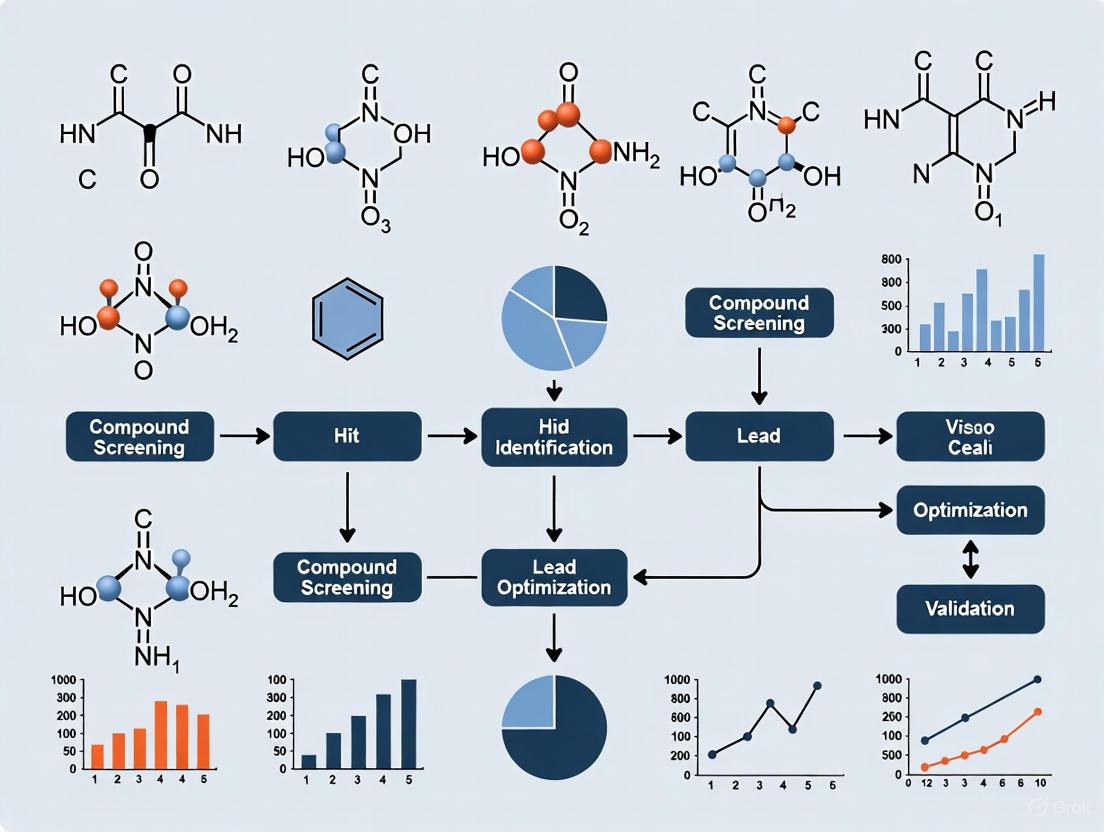
This article provides a comprehensive overview of modern lead compound identification strategies for researchers and drug development professionals.
Lead Compound Identification Strategies: From Foundational Concepts to Advanced AI-Driven Discovery
Abstract
This article provides a comprehensive overview of modern lead compound identification strategies for researchers and drug development professionals. It covers the foundational principles of what constitutes a quality lead, explores established and emerging methodological approaches from HTS to AI-powered data mining, addresses common challenges in optimization and false-positive reduction, and discusses rigorous validation and comparative analysis of techniques. By synthesizing current methodologies and future trends, this review serves as a strategic guide for efficiently navigating the initial, critical phase of the drug discovery pipeline.
What is a Lead Compound? Defining the Cornerstone of Drug Discovery
Definition and Key Characteristics of a Lead Compound
In the context of modern drug discovery, a lead compound is a chemical entity that demonstrates promising pharmacological or biological activity against a specific therapeutic target, serving as a foundational starting point for the development of a drug candidate [1]. It is crucial to distinguish this term from compounds containing the metallic element lead; here, "lead" signifies a "leading" candidate in a research pathway [1]. The identification and selection of a lead compound represent a critical milestone that occurs prior to extensive preclinical and clinical development, positioning it as a key determinant in the efficiency and ultimate success of a drug discovery program [2].
The principal objective after identifying a lead compound is to optimize its chemical structure to improve suboptimal properties, which may include its potency, selectivity, pharmacokinetic parameters, and overall druglikeness [1]. A lead compound offers the prospect of being followed by back-up compounds and provides the initial chemical scaffold upon which extensive medicinal chemistry efforts are focused. Its intrinsic biological activity confirms the therapeutic hypothesis, making the systematic optimization of its structure a central endeavor in translating basic research into a viable clinical candidate [3].
Key Characteristics and Optimization Criteria
A lead compound is evaluated and optimized against a multifaceted set of criteria to ensure it possesses the necessary characteristics to progress through the costly and time-consuming stages of drug development. The transition from a simple "hit" with confirmed activity to a validated "lead" involves rigorous assessment of its physicochemical and biological properties.
Table 1: Key Characteristics of a Lead Compound and Associated Optimization Goals
| Characteristic | Description | Optimization Objective |
|---|---|---|
| Biological Activity & Potency | The inherent ability to modulate a specific drug target (e.g., as an agonist or antagonist) with a measurable effect [1]. | Increase potency and efficacy at the intended target [3]. |
| Selectivity | The compound's ability to interact primarily with the intended target without affecting unrelated biological pathways [1]. | Enhance selectivity to minimize off-target effects and potential side effects [4]. |
| Druglikeness | A profile that aligns with properties known to be conducive for human drugs, often evaluated using guidelines like Lipinski's Rule of Five [1]. | Modify structure to improve solubility, metabolic stability, and permeability [1] [3]. |
| ADMET Profile | The compound's behavior regarding Absorption, Distribution, Metabolism, Excretion, and Toxicity [5] [3]. | Optimize pharmacokinetics and reduce toxicity potential through structural modifications [3]. |
The optimization process, known as lead optimization, aims to maximize the bonded and non-bonded interactions of the compound with the active site of its target to increase selectivity and improve activity while reducing side effects [2]. This phase involves the synthesis and characterization of analog compounds to establish Structure-Activity Relationships (SAR), which guide medicinal chemists in making informed structural changes [3]. Furthermore, factors such as the ease of chemical synthesis and scaling up manufacturing must be considered early on to ensure the feasibility of future development [1].
Methodologies for Lead Compound Discovery
The discovery of a lead compound can be achieved through several well-established experimental and computational strategies. The choice of methodology often depends on the available information about the biological target and the resources of the research organization.
Experimental Discovery Approaches
High-Throughput Screening (HTS): This is a widely used lead discovery method that involves the rapid, automated testing of vast compound libraries (often containing thousands to millions of compounds) for interaction with a target of interest [5] [3]. HTS is characterized by its speed and efficiency, allowing for the assessment of hundreds of thousands of assays per day using ultra-high-throughput screening (UHTS) systems. A key advantage is its ability to process enormous numbers of compounds with reduced sample volumes and human resource requirements, though it may sometimes identify compounds with non-specific binding [5] [3].
Fragment-Based Screening: This approach involves testing smaller, low molecular weight compounds (fragments) for weak but efficient binding to a target [5]. Identified fragment "hits" are then systematically grown or linked together to create more potent lead compounds. This method requires detailed structural information, often obtained from X-ray crystallography or NMR spectroscopy, but offers the advantage of exploring a broader chemical space and often results in leads with high binding efficiency [5].
Affinity-Based Techniques: Techniques such as surface plasmon resonance (SPR), isothermal titration calorimetry (ITC), and bio-layer interferometry (BLI) measure the binding affinity, kinetics, and thermodynamics of interactions between a compound and its target [5]. These methods provide deep insights into the strength and nature of binding, helping researchers prioritize lead candidates with optimal drug-like properties early in the discovery process [5].
Computational Discovery Approaches
Virtual Screening (VS): VS is a computational methodology used to identify hit molecules from vast libraries of small chemical compounds [2]. It employs a cascade of computer filters to automatically evaluate and prioritize compounds against a specific drug target without the need for physical screening. This approach is divided into structure-based virtual screening (which relies on the 3D structure of the target) and ligand-based virtual screening (which uses known active compounds as references) [2] [6].
Molecular Docking and Dynamics Simulations: Molecular docking is used to predict the preferred orientation of a small molecule (ligand) when bound to its target (receptor) [5] [3]. This prediction of the binding pose helps in understanding the molecular basis of activity and in optimizing the lead compound. Molecular dynamics (MD) simulations then study the physical movements of atoms and molecules over time, providing a dynamic view of the ligand-receptor interaction and its stability under near-physiological conditions [5] [7].
Data Mining on Chemical Networks: Advanced data mining approaches are being developed to efficiently navigate the immense scale of available chemical space, which can contain billions of purchasable compounds [6]. One method involves constructing ensemble chemical similarity networks and using network propagation algorithms to prioritize drug candidates that are highly correlated with known active compounds, thereby addressing the challenge of searching extremely large chemical databases [6].
The following workflow diagram illustrates the multi-stage process of lead discovery, integrating both computational and experimental methodologies:
Lead Discovery Workflow
Essential Research Reagents and Tools
The process of lead discovery and optimization relies on a sophisticated toolkit of reagents, databases, and instruments. The table below details key resources essential for conducting research in this field.
Table 2: Essential Research Reagent Solutions for Lead Discovery
| Resource Category | Specific Examples | Function in Research |
|---|---|---|
| Chemical Databases | PubChem, ChEMBL, ZINC [5] [6] | Provide extensive libraries of chemical compounds and their associated biological data for virtual screening and hypothesis generation. |
| Structural Databases | Protein Data Bank (PDB), Cambridge Structural Database (CSD) [5] | Offer 3D structural information of biological macromolecules and small molecules critical for structure-based drug design. |
| Biophysical Assay Tools | Surface Plasmon Resonance (SPR), NMR, Mass Spectrometry [5] [3] | Used for hit validation, studying binding affinity, kinetics, and characterizing molecular structures and interactions. |
| Specialized Screening Libraries | Fragment Libraries, HTS Compound Collections [7] [4] | Curated sets of molecules designed for specific screening methods like FBDD or phenotypic screening. |
The identification and characterization of a lead compound is a foundational and multifaceted stage in the drug discovery pipeline. A lead compound is defined not only by its confirmed biological activity against a therapeutic target but also by a suite of characteristics—including selectivity, druglikeness, and a favorable ADMET profile—that make it a suitable starting point for optimization. The modern researcher has access to a powerful and integrated arsenal of methodologies for lead discovery, ranging from high-throughput experimental screening to sophisticated computational approaches like virtual screening and data mining on chemical networks. The continued evolution of these technologies, especially in navigating ultra-large chemical spaces, holds the promise of delivering higher-quality lead candidates more efficiently, thereby accelerating the development of new therapeutic agents to address unmet medical needs.
The Critical Role of Lead Identification in the Drug Discovery Pipeline
Lead identification represents a foundational and critical stage in the drug discovery pipeline, serving as the gateway between target validation and preclinical development. This comprehensive technical guide examines the methodologies, technologies, and strategic frameworks that define modern lead identification practices. We explore the evolution from traditional empirical screening to integrated computational approaches that leverage artificial intelligence, high-throughput automation, and multidimensional data analysis. The whitepaper details how these advanced paradigms have dramatically accelerated the initial phases of drug discovery while improving success rates through more informed candidate selection. Within the context of broader lead compound identification strategies research, we demonstrate how systematic lead identification establishes the essential chemical starting points that ultimately determine the viability of entire drug development programs. For researchers, scientists, and drug development professionals, this review provides both theoretical foundations and practical frameworks for optimizing lead identification efforts across diverse therapeutic areas.
Lead identification constitutes the systematic process of identifying chemical compounds or molecules with promising biological activity against specific drug targets for downstream discovery processes [3]. These initial active compounds, known as "hits," are filtered based on critical physical properties including solubility, metabolic stability, purity, bioavailability, and aggregation potential [3]. The lead identification phase narrows the vast chemical space—estimated to contain approximately 10^60 potential compounds [8]—to a manageable number of promising candidates worthy of further optimization.
The identification of quality lead compounds marks a pivotal transition in the drug discovery pipeline, moving from theoretical target validation to tangible chemical entities with therapeutic potential. Lead compounds, whether natural or synthetic in origin, possess measurable biological activity against defined drug targets and provide the essential scaffold upon which drugs are built [3]. The quality of these initial leads fundamentally influences all subsequent development stages, with poor lead selection potentially dooming otherwise promising programs to failure after substantial resource investment.
Traditional drug discovery approaches relied heavily on empirical observations, serendipity, and labor-intensive manual screening of natural compounds [5]. These methods offered limited throughput and often failed to provide mechanistic insights into compound-target interactions. The introduction of genomics, molecular biology, and automated screening technologies in the late 20th century revolutionized the field, enabling more systematic and targeted approaches to lead discovery [5]. Today, lead identification sits at the intersection of multiple scientific disciplines, leveraging advances in computational chemistry, structural biology, and data science to navigate the complex landscape of chemical space with unprecedented efficiency.
Core Methodologies in Lead Identification
Experimental Screening Approaches
Traditional high-throughput screening (HTS) remains a widely-used lead discovery method that involves the rapid testing of large compound libraries against targets of interest [5]. Automated systems enable the screening of thousands to millions of compounds, significantly accelerating the identification of leads with potential therapeutic effects. Modern HTS systems can analyze up to 100,000 assays per day using ultra-high-throughput screening (uHTS) methods, detecting hits at micromolar or sub-micromolar levels for development into lead compounds [3]. Key advantages of HTS include enhanced automated operations, reduced human resource requirements, improved sensitivity and accuracy through novel assay methods, lower sample volumes, and significant cost savings in culture media and reagents [3].
Fragment-based screening offers a complementary approach that involves testing smaller, low molecular weight compounds (fragments) for their binding affinity to a target [5]. This method focuses on identifying key molecular fragments that can be subsequently optimized into more potent lead compounds. Although fragment-based screening requires detailed structural information and sophisticated analytical methods such as X-ray crystallography or NMR spectroscopy, it provides access to broader chemical space and often yields leads with improved binding affinities [5]. Fragment approaches are particularly valuable for challenging targets that may be difficult to address with traditional screening methods.
Affinity-based techniques represent a third major experimental approach, identifying lead compounds based on specific interactions with target molecules [5]. Techniques such as surface plasmon resonance (SPR), isothermal titration calorimetry (ITC), and bio-layer interferometry (BLI) measure binding affinity, kinetics, and thermodynamics of molecular interactions. These methods provide invaluable insights into the strength and nature of binding, helping researchers prioritize candidates with optimal drug-like properties early in the discovery process [5].
Table 1: Comparison of Major Experimental Lead Identification Approaches
| Method | Throughput | Information Gained | Key Advantages | Key Limitations |
|---|---|---|---|---|
| High-Throughput Screening (HTS) | High (10,000-100,000 compounds/day) | Biological activity | Broad coverage of chemical space; well-established infrastructure | High false-positive rates; limited mechanistic insight |
| Fragment-Based Screening | Medium (hundreds to thousands of fragments) | Binding sites and key interactions | Efficient exploration of chemical space; high-quality leads | Requires structural biology support; fragments may have weak affinity |
| Affinity-Based Techniques | Low to medium | Binding affinity, kinetics, thermodynamics | Detailed understanding of interactions; low false-positive rate | Lower throughput; requires specialized instrumentation |
Computational and AI-Driven Approaches
Computational methods have transformed lead identification by enabling efficient exploration of vast chemical spaces without the physical constraints of experimental screening. Molecular docking simulations serve as a foundational computational approach, predicting how small molecules interact with target binding sites [3]. These simulations prioritize compounds for experimental testing based on predicted binding affinities and interaction patterns, significantly reducing the number of compounds requiring physical screening.
Virtual screening extends this concept by computationally evaluating massive compound libraries against target structures. Modern AI-driven virtual screening platforms, such as the NVIDIA NIM-based pipeline developed by Innoplexus, can screen 5.8 million small molecules in just 5-8 hours, identifying the top 1% of compounds with high therapeutic potential [8]. These systems employ advanced neural networks for protein target prediction, trained on large-scale datasets of protein sequences, structural information, and molecular interactions [8].
Machine learning and deep learning approaches represent the cutting edge of computational lead identification. These methods systematically explore chemical space to identify potential drug candidates by analyzing large-scale data of known lead compounds [3]. Graph Neural Networks (GNNs) have demonstrated particular promise, achieving up to 99% accuracy in benchmarking studies against specific targets like HER2 [9]. These models process molecular graphs to capture structural relationships and predict biological activity based on complex patterns in the data [9].
Network-based data mining approaches offer another innovative computational framework. These methods perform search operations on ensembles of chemical similarity networks, using multiple fingerprint-based similarity measures to prioritize drug candidates correlated with experimental activity scores such as IC50 [6]. This approach has demonstrated practical utility in case studies, successfully identifying and experimentally validating lead compounds for targets like CLK1 [6].
AI-Driven Lead Identification Workflow
Advanced Technologies and Research Reagents
Essential Research Tools and Platforms
Modern lead identification relies on sophisticated technological platforms and research reagents that enable precise manipulation and analysis of potential drug candidates. The following table details key solutions essential for contemporary lead identification workflows:
Table 2: Key Research Reagent Solutions for Lead Identification
| Research Tool | Function in Lead Identification | Specific Applications |
|---|---|---|
| High-Throughput Screening Robotics | Automated testing of compound libraries | uHTS operations generating >100,000 data points daily; minimizes human resource requirements [3] |
| Nuclear Magnetic Resonance (NMR) | Molecular structure analysis and target interaction | Target druggability assessment, hit validation, pharmacophore identification [3] |
| Mass Spectrometry (LC-MS) | Compound characterization and metabolite identification | Drug metabolism and pharmacokinetics profiling; affinity selection of active compounds [3] [10] |
| Surface Plasmon Resonance (SPR) | Binding affinity and kinetics measurement | Determination of association/dissociation rates for target-compound interactions [5] |
| AlphaFold2 Protein Prediction | 3D protein structure determination from sequence | Accurate prediction of target protein structures for molecular docking [8] |
| Graph Neural Networks (GNN) | Molecular property prediction from structural data | Analysis of molecular graphs to predict biological activity and binding affinity [9] |
| Knowledge Graphs (KGs) | Biological pathway mapping and target analysis | Organization and analysis of complex biological interactions; target prioritization [11] |
AI and Large Quantitative Models
Artificial intelligence has emerged as a transformative force in lead identification, with Large Quantitative Models (LQMs) serving as comprehensive maps through the labyrinth of biological complexity [11]. These models integrate diverse data types—including genomic sequences, protein structures, literature findings, and clinical data—to provide holistic views of target interactions and enable efficient navigation of chemical space [11]. LQMs excel at identifying patterns and networks that would be difficult for researchers to discern using traditional methods alone.
Proteochemometric machine learning models represent a specialized AI approach designed to navigate complex experimental data sources [11]. Supported by automated data curation systems that ensure dataset validity, these models can be trained and evaluated for specific targets, providing researchers with predictive power to prioritize the most promising leads. When combined with physics-based computational chemistry models such as AQFEP (Advanced Quantum Free Energy Perturbation), these approaches offer unprecedented precision in evaluating molecule-target binding [11].
The real-world impact of these AI-driven approaches is demonstrated by their ability to identify novel targets for difficult-to-treat diseases, filter out false positives such as promiscuous binders, and recognize targets missed by traditional experimental screening methods [11]. These advancements not only accelerate the discovery process but significantly increase the likelihood of identifying viable treatment candidates.
Experimental Protocols and Methodologies
AI-Driven Virtual Screening Protocol
The integration of AI in virtual screening has established new standards for throughput and efficiency in lead identification. The following protocol outlines a representative AI-driven screening workflow:
Step 1: Protein Structure Preparation
- Input target protein sequence into AlphaFold2 NIM microservice for 3D structure prediction [8]
- Generate multiple alignment configurations to improve structural accuracy
- Validate predicted structures against known homologous structures when available
Step 2: Compound Library Preparation
- Curate compound libraries from sources such as ZINC, PubChem, or proprietary collections
- Process molecular structures represented as SMILES strings into graph structures using RDKit library [9]
- Calculate molecular descriptors including molecular weight, topological polar surface area (TPSA), and octanol-water partition coefficient (MolLogP)
Step 3: AI-Based Compound Screening
- Implement Graph Neural Network (GNN) models with custom architecture including:
- Train models on known active and inactive compounds for the target family
- Screen 5.8M small molecules within 5-8 hours using NVIDIA H100 GPU clusters [8]
Step 4: Molecular Docking and Pose Prediction
- Process optimized molecules and target protein structure through DiffDock [8]
- Predict binding poses of molecules to the protein target
- Define number of poses and docking constraints for comprehensive analysis
Step 5: ADMET Profiling and Lead Selection
- Screen top 1,000 molecules through proprietary ADMET pipeline [8]
- Predict solubility, permeability, metabolism, and toxicity properties
- Filter and rank molecules based on predicted ADMET properties
- Select most promising candidates for experimental validation
Network Propagation-Based Lead Identification
For targets with limited known active compounds, network propagation approaches offer powerful alternative:
Step 1: Chemical Network Construction
- Compile 14 fingerprint-based similarity networks using diverse compound descriptors [6]
- Calculate compound similarities using Tanimoto similarity and Euclidean distance
- Build ensemble chemical similarity networks to minimize bias from individual similarity measures
Step 2: Initial Candidate Filtering
- Use deep learning-based drug-target interaction (DTI) model to narrow compound candidates [6]
- Address data gap issues through similarity-based associations between characterized and uncharacterized compounds
Step 3: Network Propagation Prioritization
- Implement network propagation algorithm to prioritize drug candidates highly correlated with drug activity scores (e.g., IC50) [6]
- Propagate information from known active compounds through the similarity networks
- Rank compounds based on propagation scores indicating likelihood of activity
Step 4: Experimental Validation
- Select top candidates for synthesis and experimental testing
- Validate binding through biochemical assays such as binding assays or cellular activity tests
- In case study applications, this approach has successfully identified and validated 2 out of 5 synthesizable candidates for CLK1 target [6]
Network Propagation-Based Lead Identification
Current Market Landscape and Future Perspectives
Market Position and Growth Trajectory
The biologics drug discovery market, initially valued at $21.34 billion in 2024, is projected to grow at a compound annual growth rate (CAGR) of 10.38%, reaching $63.07 billion by 2035 [12]. Within this expanding market, lead identification technologies play an increasingly crucial role. The hit generation/validation segment dominated the biologics drug discovery market by method, holding a 28.8% share in 2024 [12]. This segment encompasses critical lead identification activities such as phage display screening and hybridoma screening, which are pivotal in generating and validating high-affinity antibodies.
Geographic analysis reveals that the Asia-Pacific region is expected to witness the highest growth in biologics drug discovery, with a projected CAGR of 11.9% during the forecast period from 2025-2035 [12]. This growth is driven by increasing investment in biotechnology research, enhanced healthcare infrastructure, and growing emphasis on personalized medicine across countries such as China, Japan, India, and South Korea.
Table 3: Lead Identification Market Positioning and Technologies
| Market Segment | 2024 Valuation | Projected CAGR | Key Technologies | Growth Drivers |
|---|---|---|---|---|
| Hit Generation/Validation | 28.8% market share | Not specified | Phage display, hybridoma screening | Demand for precision medicine; complex disease targets [12] |
| Biologics Drug Discovery | $21.34 billion | 10.38% (2025-2035) | AI-driven platforms, high-throughput screening | Rising chronic disease prevalence; targeted therapy demand [12] |
| Asia-Pacific Market | Not specified | 11.9% (2025-2035) | CRISPR, gene editing, cell/gene therapies | Government investment; aging populations; healthcare infrastructure [12] |
Emerging Trends and Strategic Directions
The future of lead identification is being shaped by several converging technological trends. AI integration continues to advance beyond virtual screening to encompass target identification and validation, with Large Quantitative Models (LQMs) increasingly capable of navigating the complex maze of experimental data sources [11]. These models leverage automated data curation systems that ensure dataset validity, enabling more reliable predictions of target-compound interactions.
Automation and miniaturization represent another significant trend, with the development of homogeneous, fluorescence-based assays in miniaturized formats [3]. The introduction of high-density plates with 384 wells, automated dilution processes, and integrated liquid handling systems promise revolutionary improvements in screening efficiency and cost reduction.
Network-based approaches and chemical similarity exploration are gaining traction as effective strategies for addressing the data gap challenge—when only a small number of compounds are known to be active for a target protein [6]. These methods determine associations between compounds with known activities and large numbers of uncharacterized compounds, effectively expanding the utility of limited initial data.
The growing emphasis on academic-industry partnerships reflects the increasing complexity of lead identification technologies and the need for specialized expertise [3]. These collaborations are viewed as valuable mechanisms for addressing persistent challenges in drug discovery and ultimately delivering more effective therapies to patients.
Lead identification remains a critical determinant of success in the drug discovery pipeline, serving as the essential bridge between target validation and candidate optimization. The field has evolved dramatically from its origins in empirical observation and serendipity to become a sophisticated, technology-driven discipline that integrates computational modeling, high-throughput experimentation, and artificial intelligence. Modern lead identification strategies leverage diverse approaches—from fragment-based screening and affinity selection to AI-driven virtual screening and network propagation—to navigate the vastness of chemical space with increasing precision and efficiency.
The continuing transformation of lead identification is evidenced by several key developments: the achievement of 90% accuracy in lead optimization through AI-driven approaches [8], the ability to screen millions of compounds in hours rather than years [8], and the successful application of network-based methods to identify validated leads for challenging targets [6]. These advances collectively address the fundamental challenges of traditional drug discovery—high costs, lengthy timelines, and high attrition rates—while improving the quality of chemical starting points for optimization.
As the field progresses, the integration of increasingly sophisticated AI models, the expansion of chemical and biological databases, and the refinement of experimental screening technologies promise to further accelerate and enhance lead identification. For researchers and drug development professionals, mastering these evolving approaches is essential for maximizing the efficiency and success of therapeutic development programs. Through continued innovation and strategic implementation of these technologies, lead identification will maintain its critical role in bringing novel therapeutics to patients facing diverse medical challenges.
In the high-stakes landscape of drug discovery, the transition from a screening "hit" to a validated "lead" compound represents one of the most critical phases. A quality lead compound must embody three essential properties: efficacy against its intended therapeutic target, selectivity to minimize off-target effects, and optimal ADMET (Absorption, Distribution, Metabolism, Excretion, and Toxicity) characteristics to ensure adequate pharmacokinetics and safety [13] [14]. The pharmaceutical industry's high attrition rates, particularly due to unacceptable safety and toxicity accounting for over half of project failures, underscore the necessity of evaluating these properties early in the discovery process [13] [15]. The "fail early, fail cheap" strategy has consequently been widely adopted, with comprehensive lead profiling becoming indispensable for reducing late-stage failures [15]. This technical guide provides an in-depth examination of these three pillars, offering detailed methodologies and contemporary approaches for identifying and optimizing lead compounds with the greatest potential for successful development.
Efficacy: Establishing Pharmacodynamic Activity
Defining and Measuring Target Engagement
Efficacy refers to a compound's ability to produce a desired biological response by engaging its specific molecular target. This encompasses binding affinity, functional activity (as an agonist or antagonist), and potency. Confirming target engagement and downstream pharmacological effects forms the foundation of lead qualification.
Key Experimental Protocols for Efficacy Assessment:
- In Vitro Binding Assays (e.g., SPR):
- Objective: To measure the direct binding affinity (KD) between the lead compound and its purified target protein.
- Detailed Protocol: The target protein is immobilized on a biosensor chip. Serial dilutions of the lead compound are flowed over the surface. The association and dissociation rates (ka and kd) are measured in real-time via surface plasmon resonance, and the equilibrium dissociation constant (KD) is calculated from these rates [15].
- Key Parameters: KD value, kinetic parameters (ka, kd), stoichiometry.
- Cell-Based Functional Assays:
- Objective: To determine the functional potency (IC50, EC50) of the lead compound in a cellular context.
- Detailed Protocol: Cells expressing the target of interest are treated with a concentration range of the lead compound. The functional output is measured, which may include reporter gene activity, second messenger levels (e.g., cAMP, Ca2+), or phosphorylation status. Data are normalized to controls and fitted to a sigmoidal curve to calculate the EC50/IC50 [16].
- Key Parameters: EC50, IC50, efficacy (% of control), Z'-factor for assay quality.
Table 1: Key In Vitro Experiments for Establishing Lead Compound Efficacy
| Property | Experimental Method | Key Readout | Target Profile |
|---|---|---|---|
| Target Binding | Surface Plasmon Resonance (SPR), Isothermal Titration Calorimetry (ITC) | KD, ka, kd | KD < 100 nM (dependent on target class) |
| Functional Potency | Cell-based reporter assay, enzymatic assay | IC50, EC50 | IC50/EC50 < 100 nM |
| Mechanistic Action | Western blot, immunofluorescence, qPCR | Pathway modulation, target gene expression | Confirmation of hypothesized mechanism |
The Scientist's Toolkit: Reagents for Efficacy Profiling
- Recombinant Target Proteins: Essential for biophysical binding assays (SPR, ITC) to determine direct binding affinity and kinetics without cellular complexity.
- Engineered Cell Lines: Stably or transiently transfected with the target gene of interest, often including a reporter system (e.g., luciferase, GFP) to quantify functional response in a physiologically relevant environment.
- Antibodies (Phospho-Specific & Total Protein): Used in techniques like Western Blot (Immunoblot) and ELISA to detect and quantify specific target proteins and their activation states (e.g., phosphorylation) downstream of compound treatment.
- Fluorescent Dyes & Probes (e.g., Ca2+ indicators, viability dyes): Enable real-time monitoring of cellular responses, ion flux, and cytotoxicity in high-throughput and high-content screening formats.
Selectivity: Minimizing Off-Target Effects
Assessing Selectivity Across the Proteome
Selectivity ensures that a lead compound's primary efficacy is not confounded by activity at off-target sites, which can lead to adverse effects. A selective compound interacts primarily with its intended target while showing minimal affinity for related targets, such as anti-targets and proteins in critical physiological pathways.
Key Experimental Protocols for Selectivity Assessment:
- Panel-Based Profiling (e.g., Kinase or GPCR Panels):
- Objective: To screen the lead compound against a broad panel of structurally or functionally related targets.
- Detailed Protocol: The lead compound is tested at a single concentration (e.g., 1 µM or 10 µM) against a predefined panel of 50-100 kinases, GPCRs, or ion channels in competitive binding or functional assays. The percentage of inhibition or binding for each off-target is calculated relative to controls.
- Key Parameters: % Inhibition at standard concentration; targets showing >50% inhibition are considered potential off-target hits.
- Cellular Phenotypic Profiling:
- Objective: To identify unexpected cellular effects or toxicity indicative of off-target activity.
- Detailed Protocol: Cells are treated with the lead compound and stained with multiplexed fluorescent dyes for various cellular components (nuclei, cytoskeleton, mitochondria). High-content imaging systems capture morphological features, and automated image analysis detects phenotypic changes that can be mapped to specific pathway perturbations [16].
- Key Parameters: Morphological profiling, cytotoxicity indices, mitochondrial health.
Table 2: Standard Selectivity Profiling Assays and Acceptability Criteria
| Selectivity Aspect | Profiling Method | Data Interpretation | Acceptability Benchmark |
|---|---|---|---|
| Anti-Target Activity | Primary assay on anti-target (e.g., hERG) | IC50 on anti-target vs. primary target | Selectivity index (IC50 anti-target / IC50 primary) > 30 |
| Panel Selectivity | Kinase/GPCR panel screening | Number of off-targets with >50% inhibition | <10% of panel members hit at 1 µM |
| Cytotoxicity | Cell viability assay (e.g., MTT, CellTiter-Glo) | CC50 in relevant cell lines | Therapeutic index (CC50 / EC50) > 100 |
The following workflow outlines the strategic process for evaluating and optimizing lead compound selectivity.
ADMET: Optimizing Pharmacokinetics and Safety
Comprehensive ADMET Profiling
ADMET properties are crucial determinants of a lead compound's fate in the body and its potential to become a safe, efficacious drug. Early and systematic evaluation is essential to avoid costly late-stage failures due to poor pharmacokinetics or toxicity [13] [14] [17].
Key Experimental Protocols for Early ADMET Assessment:
- Caco-2 Permeability Assay:
- Objective: To predict human intestinal absorption and assess transporter effects.
- Detailed Protocol: Caco-2 cells are seeded on transwell filters and grown until they form a confluent, differentiated monolayer. The test compound is applied to the apical (A) or basolateral (B) side. Samples are taken from both compartments after a set incubation period, and compound concentration is quantified by LC-MS/MS. Apparent permeability (Papp) and efflux ratio are calculated.
- Key Parameters: Papp (A→B) for absorption potential; Efflux Ratio (Papp (B→A)/Papp (A→B)); values >2 indicate active efflux.
- Metabolic Stability in Liver Microsomes:
- Objective: To determine the in vitro half-life and intrinsic clearance of a compound.
- Detailed Protocol: The lead compound is incubated with human liver microsomes in the presence of NADPH cofactor. Aliquots are taken at multiple time points (e.g., 0, 5, 15, 30, 60 min). The reaction is stopped, and the remaining parent compound is quantified by LC-MS/MS. The natural logarithm of the percent remaining is plotted versus time, and the slope is used to calculate the in vitro half-life (t1/2) and intrinsic clearance (CLint).
- Key Parameters: In vitro t1/2, Intrinsic Clearance (CLint).
- hERG Inhibition Patch-Clamp Assay:
- Objective: To assess the potential for cardiotoxicity via blockade of the hERG potassium channel.
- Detailed Protocol: Cells stably expressing the hERG channel are voltage-clamped. After establishing a stable current, the lead compound is applied in increasing concentrations. The inhibition of the tail current (IKr) is measured at each concentration, and an IC50 value is determined through non-linear regression fitting.
- Key Parameters: IC50 for hERG inhibition; a high IC50 (>10-30 µM, context-dependent) is desirable.
Table 3: Key ADMET Properties and Associated Experimental and In Silico Models
| ADMET Property | Standard In Vitro Assay | Common In Silico Endpoint | Target Profile |
|---|---|---|---|
| Absorption | Caco-2 permeability, PAMPA | Caco-2 model, HIA model [17] | Papp (A-B) > 1x10⁻⁶ cm/s |
| Distribution | Plasma Protein Binding (PPB) | LogD, VDss model [18] [19] | % Free > 1% |
| Metabolism | Microsomal/hepatocyte stability | CYP inhibition/substrate models [20] [17] | CLint < 15 µL/min/mg |
| Toxicity | hERG patch-clamp, Ames test | hERG, Ames, DILI models [18] [19] | hERG IC50 > 10 µM; Ames negative |
In Silico ADMET Prediction and the ADMET-Score
Computational approaches provide a high-throughput, cost-effective means for early ADMET screening, enabling the prioritization of compounds for synthesis and experimental testing [13] [15]. Two primary in silico categories are employed: molecular modeling (based on 3D protein structures, e.g., pharmacophore modeling, molecular docking) and data modeling (based on chemical structure, e.g., QSAR, machine learning) [13] [15]. The pharmaceutical industry now leverages numerous software platforms (e.g., ADMET Predictor, ADMETlab) capable of predicting over 175 ADMET endpoints [19] [17].
To integrate multiple predicted properties into a single, comprehensive metric, the ADMET-score was developed [20]. This scoring function evaluates chemical drug-likeness by integrating 18 critical ADMET endpoints—including Ames mutagenicity, Caco-2 permeability, CYP inhibition, hERG blockade, and human intestinal absorption—each weighted by model accuracy and the endpoint's pharmacokinetic importance [20]. This score has been validated to differ significantly between approved drugs, general chemical compounds, and withdrawn drugs, providing a valuable holistic view of a compound's ADMET profile [20].
The diagram below illustrates the integrated computational and experimental workflow for ADMET risk assessment and mitigation in lead optimization.
The Scientist's Toolkit: Reagents for ADMET Profiling
- Caco-2 Cell Line: A human colon adenocarcinoma cell line that, upon differentiation, expresses relevant transporters and forms a tight monolayer, making it a standard model for predicting intestinal permeability and efflux.
- Liver Microsomes / Hepatocytes: Subcellular fractions (microsomes) or primary cells (hepatocytes) from human and preclinical species, containing the full complement of CYP450 and other metabolic enzymes, used to assess metabolic stability and metabolite identification.
- hERG-Expressing Cell Lines: Engineered cell lines (e.g., HEK293 or CHO cells) that stably express the human ether-à-go-go-related gene potassium channel, which is critical for conducting patch-clamp electrophysiology studies to evaluate cardiotoxicity risk.
- S9 Fraction (for Ames Test): A post-mitochondrial supernatant fraction from rodent liver, containing necessary metabolic enzymes (activating system) used in the bacterial reverse mutation assay (Ames test) to assess the genotoxic potential of compounds.
The rigorous evaluation of efficacy, selectivity, and ADMET properties forms the cornerstone of successful lead identification and optimization. These three pillars are interdependent; a highly efficacious compound is of little therapeutic value if it lacks selectivity or possesses insurmountable ADMET deficiencies. The modern drug discovery paradigm necessitates the parallel, rather than sequential, assessment of these properties. This integrated approach, powered by both high-quality experimental data and sophisticated in silico predictions like the ADMET-score, allows research teams to identify critical flaws early and guide medicinal chemistry efforts more effectively [18] [20] [17]. By adhering to this comprehensive framework, drug discovery scientists can significantly de-risk the development pipeline, increasing the probability that their lead compounds will successfully navigate the arduous journey from the bench to the clinic.
Lead compound identification represents a critical foundation in the drug discovery pipeline, serving as the initial point for developing new therapeutic agents. A lead compound is defined as a chemical entity, whether natural or synthetic, that demonstrates promising biological activity against a therapeutically relevant target and provides a base structure for further optimization [21] [22]. This technical guide examines the three principal sources of lead compounds—natural products, synthetic libraries, and biologics—within the broader context of strategic lead identification. The selection of an appropriate source significantly influences subsequent development stages, impacting factors such as chemical diversity, target selectivity, and eventual clinical success rates. For researchers and drug development professionals, understanding the strategic advantages, limitations, and appropriate methodologies for leveraging each source is paramount for efficient drug discovery. This whitepaper provides a comprehensive technical analysis of these source categories, supported by experimental protocols, quantitative comparisons, and visualization of strategic workflows to guide research planning and execution.
Natural products (NPs) and their derivatives have constituted a rich and historically productive source of lead compounds for various therapeutic areas [23] [24]. These compounds, derived from plants, microbes, and animals, are characterized by their exceptional structural diversity, complex stereochemistry, and evolutionary optimization for biological interaction. It is estimated that approximately 35% of all current medicines originated from natural sources [21]. Major drug classes derived from natural leads include anti-infectives, anticancer agents, and immunosuppressants. The therapeutic significance of natural product-derived drugs is exemplified by landmark compounds such as artemisinin (antimalarial), ivermectin (antiparasitic), morphine (analgesic), and the statins (lipid-lowering agents) [23] [22]. These compounds often serve as structural templates for extensive synthetic modification campaigns to enhance potency, improve pharmacokinetic properties, and reduce toxicity.
Advantages and Limitations
The primary advantage of natural products lies in their structural complexity and broad biological activity, which often translates into novel mechanisms of action and effectiveness against challenging targets [24]. However, several limitations complicate their development. The complexity of composition in crude natural extracts makes identifying active ingredients challenging and requires sophisticated isolation techniques [24]. Issues of sustainable supply can arise for compounds derived from rare or slow-growing organisms [23]. Furthermore, natural products may exhibit unfavorable physicochemical properties or present challenges in synthetic accessibility due to their complex molecular architectures [24]. These constraints necessitate careful evaluation of natural leads early in the discovery pipeline.
Table 1: Natural Product-Derived Drugs and Their Origins
| Natural Product Lead | Source Organism | Therapeutic Area | Optimized Drug Examples |
|---|---|---|---|
| Morphine | Papaver somniferum (Poppy) | Analgesic | Codeine, Hydromorphone, Oxycodone [22] |
| Teprotide | Bothrops jararaca (Viper Venom) | Antihypertensive | Captopril (ACE Inhibitor) [21] [22] |
| Lovastatin | Pleurotus ostreatus (Mushroom) | Lipid-lowering | Atorvastatin, Fluvastatin, Rosuvastatin [22] |
| Artemisinin | Artemisia annua (Sweet Wormwood) | Antimalarial | Artemether, Artesunate [23] [24] |
| Penicillin | Penicillium mold | Antibacterial | Multiple semi-synthetic penicillins, cephalosporins [24] |
Synthetic Compound Libraries
Design and Enumeration Strategies
Synthetic compound libraries represent a cornerstone of modern drug discovery, allowing for the systematic exploration of chemical space through designed collections of compounds. The design and enumeration of these libraries rely heavily on chemoinformatics approaches and reaction-based enumeration using accessible chemical reagents [25]. Key linear notations used in library enumeration include SMILES (Simplified Molecular Input Line System), SMARTS (SMILES Arbitrary Target Specification) for defining reaction rules, and InChI (International Chemical Identifier) for standardized representation [25]. Libraries can be designed using various strategies, including Diversity-Oriented Synthesis (DOS) to maximize structural variety, target-oriented synthesis for specific target classes, and focused libraries built around known privileged scaffolds or reaction schemes [26] [25]. The synthetic feasibility of designed compounds is a critical consideration, with tools like Reactor, DataWarrior, and KNIME enabling enumeration based on pre-validated chemical reactions [25].
Screening Approaches for Lead Identification
Synthetic libraries are primarily evaluated through high-throughput and virtual screening paradigms. High-Throughput Screening (HTS) is an automated process that rapidly tests large compound libraries (hundreds of thousands to millions) for specific biological activity [22] [3]. HTS offers advantages in automated operations, reduced sample volumes, and increased throughput compared to traditional methods, though it requires significant infrastructure investment [3]. Virtual Screening (VS) complements HTS by computationally evaluating compound libraries against three-dimensional target structures [5] [2]. VS approaches include structure-based methods (molecular docking) and ligand-based methods (pharmacophore modeling, QSAR), enabling the prioritization of compounds for experimental testing [5] [2]. Fragment-based screening represents a specialized approach that identifies low molecular weight compounds (typically 150-300 Da) with weak but efficient binding, which are then optimized through fragment linking, evolution, or self-assembly strategies [21].
Table 2: Synthetic Library Design and Screening Methodologies
| Methodology | Key Characteristics | Typical Library Size | Primary Applications |
|---|---|---|---|
| High-Throughput Screening (HTS) | Automated robotic systems, biochemical or cell-based assays, 384-1536 well plates [22] [3] | 500,000 - 1,000,000+ compounds [22] | Primary screening of diverse compound collections |
| Virtual Screening (VS) | Molecular docking, pharmacophore modeling, machine learning approaches [5] [2] | Millions of virtual compounds [2] | Pre-screening to prioritize compounds, difficult targets |
| Fragment-Based Screening | Low molecular weight fragments (<300 Da), biophysical detection (NMR, SPR, X-ray) [21] | 500 - 5,000 fragments | Targets with well-defined binding pockets, novel chemical space |
| Diversity-Oriented Synthesis (DOS) | Build/Couple/Pair strategy, maximizes structural diversity [25] | Varies (typically 10^3 - 10^5) | Exploring novel chemical space, chemical biology |
Characteristics and Therapeutic Applications
Biologics represent a rapidly expanding category of therapeutic agents derived from biological sources, including proteins, antibodies, peptides, and nucleic acids. These compounds differ fundamentally from small molecules in their size, complexity, and mechanisms of action. The rise of biologics is reflected in drug approval statistics; in 2016, biologics (primarily monoclonal antibodies) accounted for 32% of total drug approvals, maintaining a significant presence in subsequent years [24]. Biologics offer several advantages as lead compounds, including high target specificity and potency, which can translate into reduced off-target effects. Approved biologic drugs include antibody-drug conjugates, enzymes, pegylated proteins, and recombinant therapeutic proteins [24]. Peptide-based therapeutics represent a particularly promising category, with over 40 cyclic peptide drugs clinically approved over recent decades, most derived from natural products [24].
Discovery and Engineering Approaches
The discovery of biologic lead compounds employs distinct methodologies compared to small molecules. Hybridoma technology remains foundational for monoclonal antibody discovery, while phage display and yeast display platforms enable the selection of high-affinity binding proteins from diverse libraries [24]. For peptide-based leads, combinatorial library approaches using biological systems permit the screening of vast sequence spaces. Engineering strategies focus on optimizing lead biologics through humanization of non-human antibodies to reduce immunogenicity, affinity maturation to enhance target binding, and Fc engineering to modulate effector functions and serum half-life [24]. Computational methods are increasingly integrated into biologic lead optimization, particularly for predicting immunogenicity, stability, and binding interfaces.
Experimental Protocols for Lead Identification
High-Throughput Screening (HTS) Protocol
HTS represents a cornerstone experimental approach for identifying lead compounds from large synthetic or natural extract libraries. A standardized protocol for enzymatic HTS is detailed below:
Assay Development and Validation:
- Select a homogeneous assay format (e.g., fluorescence-based) compatible with automation and miniaturization [22].
- Optimize biochemical parameters including buffer composition, enzyme concentration, substrate KM determination, and linear reaction range.
- Validate assay robustness using statistical parameters (Z'-factor >0.5) and known controls [22].
Library Preparation:
- Prepare compound libraries in DMSO at standardized concentrations (typically 10 mM).
- Transfer compounds to assay plates (384- or 1536-well format) using automated liquid handlers, maintaining DMSO concentration below 1% [22].
Screening Execution:
- Dispense enzyme solution to assay plates.
- Pre-incubate compounds with enzyme for appropriate time (typically 15-30 minutes).
- Initiate reaction by adding substrate and monitor signal development over time.
- Include controls on each plate (no enzyme, no inhibitor, reference inhibitor) [22].
Data Analysis:
- Calculate percentage inhibition for each compound: % Inhibition = [1 - (Signalcompound - Signalno enzyme)/(Signalno inhibitor - Signalno enzyme)] × 100.
- Identify primary hits based on predetermined threshold (typically >50% inhibition at test concentration).
- Confirm hits through retesting in dose-response to determine IC50 values [22].
Fragment-Based Screening Protocol
Fragment-based screening identifies starting points with optimal ligand efficiency:
Library Design:
- Curate fragment library according to "Rule of Three" (MW <300, HBD ≤3, HBA ≤3, cLogP ≤3, rotatable bonds ≤3) [21].
- Ensure aqueous solubility >1 mM and chemical diversity.
Primary Screening:
- Screen fragments using biophysical methods such as Surface Plasmon Resonance (SPR) or NMR.
- Identify binders showing dose-responsive binding, typically with affinity in high micromolar to millimolar range [21].
Hit Validation:
- Confirm binding using orthogonal techniques (e.g., ITC, X-ray crystallography).
- Determine binding mode and ligand efficiency (LE = ΔG/Nheavy atoms) [21].
Fragment Optimization:
- Employ strategies including fragment linking (joining two proximal fragments), fragment evolution (growing from initial fragment), or fragment self-assembly (designing complementary fragments that anneal in situ) [21].
- Iteratively optimize using structural information to maintain or improve ligand efficiency while increasing potency.
The Scientist's Toolkit: Essential Research Reagents and Solutions
Table 3: Essential Research Reagents for Lead Identification
| Reagent/Technology | Function in Lead Discovery | Key Applications |
|---|---|---|
| Surface Plasmon Resonance (SPR) | Measures biomolecular interactions in real-time without labeling [21] | Fragment screening, binding kinetics (kon/koff), affinity measurements (KD) |
| Nuclear Magnetic Resonance (NMR) | Provides atomic-level structural information on compound-target interactions [3] | Hit validation, pharmacophore identification, binding site mapping |
| Liquid Chromatography-Mass Spectrometry (LC-MS) | Characterizes drug metabolism and pharmacokinetics [3] | Metabolic stability assessment, metabolite identification, purity analysis |
| Assay-Ready Compound Plates | Pre-dispensed compound libraries in microtiter plates [22] | HTS automation, screening reproducibility, dose-response studies |
| 3D Protein Structures (PDB) | Atomic-resolution models of molecular targets [5] | Structure-based drug design, molecular docking, virtual screening |
| CHEMBL/PubChem Databases | Curated chemical and bioactivity databases [5] | Target profiling, lead prioritization, SAR analysis |
| Homogeneous Assay Reagents | "Mix-and-measure" detection systems (e.g., fluorescence, luminescence) [22] | HTS implementation, miniaturized screening (384/1536-well) |
Comparative Analysis and Strategic Integration
Strategic selection of lead sources requires understanding their relative advantages and limitations. The following table provides a comparative analysis of key parameters:
Table 4: Strategic Comparison of Lead Compound Sources
| Parameter | Natural Products | Synthetic Libraries | Biologics |
|---|---|---|---|
| Structural Diversity | High complexity, unique scaffolds [23] [24] | Broad but less complex, design-dependent [26] | Limited to proteinogenic building blocks |
| Success Rate (Historical) | High for anti-infectives, anticancer [23] [24] | Variable across target classes | High for specific targets (e.g., cytokines) |
| Development Timeline | Longer (isolation, characterization) [24] | Shorter (defined structures) | Medium to long (engineering, production) |
| Synthetic Accessibility | Often challenging (complex structures) [23] | High (deliberately designed) | Medium (biological production systems) |
| IP Position | May be constrained by prior art [23] | Strong with novel compositions | Strong with specific sequences/formulations |
| Therapeutic Area Strengths | Anti-infectives, Oncology, CNS [23] [24] | Broad applicability | Immunology, Oncology, Metabolic Diseases |
Integrated Lead Discovery Strategy
An effective lead discovery program often integrates multiple sources to leverage their complementary strengths. The following diagram illustrates a strategic workflow for lead identification that systematically incorporates natural, synthetic, and biologic approaches:
The strategic identification of lead compounds from natural, synthetic, and biologic sources remains fundamental to successful drug discovery. Each source offers distinct advantages: natural products provide unparalleled structural diversity and validated bioactivity; synthetic libraries enable systematic exploration of chemical space with defined properties; and biologics offer high specificity for challenging targets. Contemporary drug discovery increasingly leverages integrated approaches that combine the strengths of each source, guided by computational methods and high-throughput technologies. As drug discovery evolves, the continued strategic integration of these complementary approaches, enhanced by advances in computational prediction, library design, and screening methodologies, will be essential for addressing the challenges of novel target classes and overcoming resistance mechanisms. The optimal lead identification strategy ultimately depends on the specific target, therapeutic area, and resources available, requiring researchers to maintain expertise across all source categories to maximize success in bringing new therapeutics to patients.
The hit-to-lead (H2L) phase represents a critical gateway in the drug discovery pipeline, serving as the foundational process where initial screening hits are transformed into viable lead compounds with demonstrated therapeutic potential. This whitepaper examines the rigorous qualification criteria and experimental methodologies that govern this progression, framed within the broader context of lead compound identification strategies. We present a comprehensive analysis of the multi-parameter optimization framework required to advance compounds through this crucial stage, including detailed experimental protocols, quantitative structure-activity relationship (SAR) establishment, and the integration of computational approaches that enhance the efficiency of lead identification. For research teams navigating the complexities of early drug discovery, mastering the hit-to-lead transition is essential for reducing attrition rates and building a robust pipeline of clinical candidates.
The hit-to-lead stage is defined as the phase in early drug discovery where small molecule hits from initial screening campaigns undergo evaluation and limited optimization to identify promising lead compounds [27]. This process serves as the critical bridge between initial target identification and the more extensive optimization required for clinical candidate selection. The overall drug discovery pipeline follows a defined path: Target Validation → Assay Development → High-Throughput Screening (HTS) → Hit to Lead (H2L) → Lead Optimization (LO) → Preclinical Development → Clinical Development [27].
Within this continuum, the H2L phase specifically focuses on confirming and evaluating initial screening hits, followed by synthesis of analogs through a process known as hit expansion [27]. Typically, initial screening hits display binding affinities for their biological targets in the micromolar range (10−6 M), and through systematic H2L optimization, these affinities are often improved by several orders of magnitude to the nanomolar range (10−9 M) [27]. The process also aims to improve metabolic half-life so compounds can be tested in animal models of disease, while simultaneously enhancing selectivity against other biological targets whose binding may result in undesirable side effects [27].
Defining Hits and Leads: Fundamental Concepts
What Constitutes a "Hit"?
In drug discovery terminology, a hit is a compound that displays desired biological activity toward a drug target and reproduces this activity when retested [28]. Hits are identified through various methods including High-Throughput Screening (HTS), virtual screening (VS), or fragment-based drug discovery (FBDD) [28]. The key characteristics of a qualified hit include:
- Reproducible activity in confirmatory testing
- Demonstrable binding to the intended target
- Reasonable potency (typically micromolar range)
- Chemical structure that allows for further modification
The Transition to "Lead" Compound
A lead compound is defined as a chemical entity within a defined chemical series that has demonstrated robust pharmacological and biological activity on a specific therapeutic target [28]. More specifically, a lead compound is "a new chemical entity that could potentially be developed into a new drug by optimizing its beneficial effects to treat diseases and minimize side effects" [29]. These compounds serve as starting points in drug design, from which new drug entities are developed through optimization of pharmacodynamic and pharmacokinetic properties [29].
The progression from hit to lead involves significant improvement in multiple parameters. While hits may have initial activity, leads must demonstrate:
- Higher affinity for the target (often <1 μM)
- Improved selectivity versus other targets
- Significant efficacy in cellular assays
- Demonstrated drug-like properties
- Acceptable early ADME (Absorption, Distribution, Metabolism, Excretion) properties [28]
The Hit-to-Lead Process: Methodologies and Workflows
Hit Confirmation Protocols
The hit-to-lead process begins with rigorous confirmation and evaluation of initial screening hits through multiple experimental approaches:
Confirmatory Testing: Compounds identified as active against the selected target are re-tested using the same assay conditions employed during the initial screening to verify that activity is reproducible [27].
Dose Response Curve Establishment: Confirmed hits are tested over a range of concentrations to determine the concentration that results in half-maximal binding or activity (represented as IC50 or EC50 values) [27].
Orthogonal Testing: Confirmed hits are assayed using different methods that are typically closer to the target physiological condition or utilize alternative technologies to validate initial findings [27].
Secondary Screening: Confirmed hits are evaluated in functional cellular assays to determine efficacy in more biologically relevant systems [27].
Biophysical Testing: Techniques including nuclear magnetic resonance (NMR), isothermal titration calorimetry (ITC), dynamic light scattering (DLS), surface plasmon resonance (SPR), dual polarisation interferometry (DPI), and microscale thermophoresis (MST) assess whether compounds bind effectively to the target, along with binding kinetics, thermodynamics, and stoichiometry [27].
Hit Ranking and Clustering: Confirmed hit compounds are ranked according to various experimental results and clustered based on structural and functional characteristics [27].
Freedom to Operate Evaluation: Hit structures are examined in specialized databases to determine patentability and intellectual property considerations [27].
Hit Expansion and SAR Development
Following hit confirmation, several compound clusters are selected based on their characteristics in the previously defined tests. The ideal compound cluster contains members possessing the following properties [27]:
- High affinity toward the target (typically less than 1 μM)
- Selectivity versus other targets
- Significant efficacy in cellular assays
- Drug-like characteristics (moderate molecular weight and lipophilicity as estimated by ClogP)
- Low to moderate binding to human serum albumin
- Low interference with P450 enzymes and P-glycoproteins
- Low cytotoxicity
- Metabolic stability
- High cell membrane permeability
- Sufficient water solubility (above 10 μM)
- Chemical stability
- Synthetic tractability
- Patentability
Project teams typically select between three and six compound series for further exploration. The subsequent step involves testing analogous compounds to determine quantitative structure-activity relationships (QSAR). Analogs can be rapidly selected from internal libraries or purchased from commercially available sources in an approach often termed "SAR by catalog" or "SAR by purchase" [27]. Medicinal chemists simultaneously initiate synthesis of related compounds using various methods including combinatorial chemistry, high-throughput chemistry, or classical organic synthesis approaches [27].
The DMTA Cycle: Core Engine of Hit-to-Lead Optimization
The hit-to-lead process operates through iterative Design-Make-Test-Analyze (DMTA) cycles [28]. This systematic approach drives continuous improvement of compound properties:
Design: Based on emerging SAR data and structural information, medicinal chemists design new analogs with predicted improvements in potency, selectivity, or other properties.
Make: The designed compounds are synthesized through appropriate chemical methods, with consideration for scalability and synthetic feasibility.
Test: Newly synthesized compounds undergo comprehensive biological testing to assess potency, selectivity, ADME properties, and初步毒性.
Analyze: Results are analyzed to identify structural trends and inform the next cycle of compound design.
This iterative process continues until compounds meet the predefined lead criteria, typically requiring multiple cycles to achieve sufficient optimization.
Diagram: Hit-to-Lead Workflow with DMTA Cycles. This workflow illustrates the iterative DMTA (Design-Make-Test-Analyze) process that drives hit-to-lead optimization.
Key Qualification Criteria and Experimental Design
Quantitative Progression Metrics
The transition from hit to lead requires compounds to meet specific quantitative benchmarks across multiple parameters. The following table summarizes the key criteria for lead qualification:
Table: Hit versus Lead Qualification Criteria
| Parameter | Hit Compound | Lead Compound | Measurement Methods |
|---|---|---|---|
| Potency | Typically micromolar range (µM) | Nanomolar range (nM), <1 µM | IC₅₀, EC₅₀, Kᵢ determinations [27] |
| Selectivity | Preliminary assessment | Significant selectivity versus related targets | Counter-screening against target family members [27] |
| Cellular Activity | May show limited cellular activity | Demonstrated efficacy in cellular models | Cell-based assays, functional activity measurements [27] |
| Solubility | >10 µM acceptable | >10 µM required | Kinetic and thermodynamic solubility measurements [27] |
| Metabolic Stability | Preliminary assessment | Moderate to high stability in liver microsomes | Microsomal stability assays, hepatocyte incubations [28] |
| Cytotoxicity | Minimal signs of toxicity | Low cytotoxicity at therapeutic concentrations | Cell viability assays (MTT, CellTiter-Glo) [27] |
| Permeability | Preliminary assessment | High cell membrane permeability | Caco-2, PAMPA assays [27] |
| Chemical Stability | Acceptable for initial testing | Demonstrated stability under various conditions | Forced degradation studies [27] |
Experimental Protocols for Lead Qualification
Biochemical Assay Protocol for Potency Assessment
Purpose: To determine the half-maximal inhibitory concentration (IC₅₀) of compounds against the target protein.
Materials:
- Purified target protein
- Test compounds dissolved in DMSO
- Substrate/ligand for the target
- Detection reagents (fluorogenic or chromogenic)
- 384-well assay plates
- Plate reader capable of absorbance/fluorescence detection
Procedure:
- Prepare serial dilutions of test compounds in assay buffer, typically spanning a 10,000-fold concentration range.
- Add target protein to wells followed by compound solutions.
- Incubate for 30 minutes at room temperature to allow compound binding.
- Initiate reaction by adding substrate at Km concentration.
- Monitor reaction progress for 30-60 minutes.
- Calculate percentage inhibition relative to controls (DMSO-only for 0% inhibition, reference inhibitor for 100% inhibition).
- Fit concentration-response data to four-parameter logistic equation to determine IC₅₀ values.
Data Analysis: Compounds with IC₅₀ < 1 µM typically progress to secondary assays. Ligand efficiency (LE) is calculated as LE = (1.37 × pIC₅₀)/number of heavy atoms to identify compounds with efficient binding [27].
Metabolic Stability Assay Protocol
Purpose: To evaluate the metabolic stability of lead candidates in liver microsomes.
Materials:
- Pooled species-specific liver microsomes
- NADPH regenerating system
- Test compounds (10 µM final concentration)
- Acetonitrile for protein precipitation
- LC-MS/MS system for analysis
Procedure:
- Pre-incubate liver microsomes (0.5 mg/mL) with test compounds in phosphate buffer (pH 7.4) for 5 minutes at 37°C.
- Initiate reaction by adding NADPH regenerating system.
- Remove aliquots at 0, 5, 15, 30, and 60 minutes.
- Terminate reaction by adding ice-cold acetonitrile containing internal standard.
- Centrifuge to precipitate proteins and analyze supernatant by LC-MS/MS.
- Monitor parent compound disappearance over time.
Data Analysis: Calculate half-life (t₁/₂) and intrinsic clearance (CLint) using the formula: CLint = (0.693/t₁/₂) × (microsomal incubation volume/microsomal protein). Compounds with low clearance (CLint < 50% of liver blood flow) are preferred [3].
Computational and Advanced Approaches in Lead Identification
Emerging Computational Methods
Modern lead identification increasingly leverages computational approaches to enhance efficiency and success rates:
Machine Learning and Deep Learning: ML and DL approaches systematically explore chemical space to identify potential drug candidates by analyzing large-scale data of lead compounds [3] [6]. These methods offer accurate prediction of lead compound generation and can identify new chemical scaffolds.
Network Propagation-Based Data Mining: Recent approaches use network propagation on chemical similarity networks to prioritize drug candidates that are highly correlated with drug activity scores such as IC₅₀ [6]. This method performs searches on an ensemble of chemical similarity networks to identify unknown compounds with potential activity.
Chemical Similarity Networks: These networks utilize various similarity measures including Tanimoto similarity and Euclidean distance to compare and rank compounds based on structural and chemical properties [6]. By constructing multiple fingerprint-based similarity networks, researchers can comprehensively explore chemical space.
Virtual Screening: Computational techniques such as molecular docking and molecular dynamics simulations predict which compounds within large libraries are likely to bind to a target protein [3] [28]. This approach significantly narrows the candidate pool for experimental testing.
High-Throughput Screening Methodologies
High-Throughput Screening (HTS) remains a cornerstone technology for hit identification, with modern implementations offering significant advantages:
Automated Operations: HTS employs automated robotic systems to analyze thousands to hundreds of thousands of compounds rapidly [3].
Reduced Resource Requirements: Modern HTS requires minimal human intervention while providing improved sensitivity and accuracy through novel assay methods [3].
Miniaturized Formats: Current systems utilize lower sample volumes, resulting in significant cost savings for culture media and reagents [3].
Ultra-High-Throughput Screening (UHTS): Advanced systems can conduct up to 100,000 assays per day, detecting hits at micromolar or sub-micromolar levels for development into lead compounds [3].
Diagram: Lead Identification Strategies. Multiple computational and experimental approaches contribute to modern lead identification.
The Scientist's Toolkit: Essential Research Reagents and Technologies
Table: Essential Research Reagents and Technologies for Hit-to-Lead Studies
| Tool/Technology | Function/Application | Key Characteristics |
|---|---|---|
| Surface Plasmon Resonance (SPR) | Label-free analysis of biomolecular interactions | Provides kinetic parameters (kₒₙ, kₒff), affinity measurements, and binding stoichiometry [27] [28] |
| Nuclear Magnetic Resonance (NMR) | Structural analysis of compounds and target engagement | Determines binding sites, structural changes, and ligand orientation; used in FBDD [3] [28] |
| Isothermal Titration Calorimetry (ITC) | Quantification of binding thermodynamics | Measures binding affinity, enthalpy change (ΔH), and stoichiometry without labeling [27] [28] |
| High-Throughput Mass Spectrometry | Compound characterization and metabolic profiling | Identifies metabolic soft spots, characterizes DMPK properties; used in LC-MS systems [3] |
| Cellular Assay Systems | Functional assessment in biologically relevant contexts | Measures efficacy, cytotoxicity, and permeability in cell-based models [27] |
| Molecular Docking Software | In silico prediction of protein-ligand interactions | Prioritizes compounds for synthesis through virtual screening [3] [6] |
| Chemical Similarity Networks | Data mining of chemical space for lead identification | Uses network propagation to identify compounds with structural similarity to known actives [6] |
The hit-to-lead process represents a methodologically rigorous stage in drug discovery that demands integrated application of multidisciplinary approaches. Successful navigation of this phase requires systematic evaluation of compounds against defined criteria encompassing potency, selectivity, and drug-like properties through iterative DMTA cycles. The continuing integration of computational methods, including machine learning and network-based approaches, with experimental validation provides an powerful framework for enhancing the efficiency of lead identification. By adhering to structured qualification criteria and employing the appropriate experimental and computational tools detailed in this whitepaper, research teams can significantly improve their probability of advancing high-quality lead compounds into subsequent development stages, ultimately increasing the likelihood of clinical success.
Methodologies in Action: A Guide to Modern Lead Identification Techniques
High-Throughput Screening (HTS) is an automated methodology that enables the rapid execution of millions of chemical, genetic, or pharmacological tests, fundamentally transforming the landscape of drug discovery and basic biological research [30]. By leveraging robotics, sophisticated data processing software, liquid handling devices, and sensitive detectors, HTS allows researchers to efficiently identify active compounds, antibodies, or genes that modulate specific biomolecular pathways [30] [31]. This paradigm shift from traditional one-at-a-time experimentation to massive parallel testing provides the foundational technology for modern lead compound identification strategies, serving as the critical initial step in the drug discovery pipeline where promising candidates are selected from vast compound libraries for further development.
The core value proposition of HTS lies in its unparalleled ability to accelerate the discovery process while reducing costs. Traditional methods of compound testing were labor-intensive, time-consuming, and limited in scope, whereas contemporary HTS systems can prepare, incubate, and analyze thousands to hundreds of thousands of compounds per day [30] [31]. This exponential increase in throughput has expanded the explorable chemical space, significantly enhancing the probability of identifying novel therapeutic entities with desired biological activities against validated disease targets [32].
Core Principles and Technical Components of HTS
Essential HTS Infrastructure
The operational efficacy of HTS relies on the seamless integration of several specialized components that work in concert to automate the screening process. At its foundation, HTS utilizes microtiter plates as its primary labware, featuring standardized grids of small wells—typically 96, 384, 1536, or 3456 wells per plate—arranged in multiples of the original 96-well format with 9 mm spacing [30]. These plates serve as miniature reaction vessels where biological entities interact with test compounds under controlled conditions.
The integrated robotic systems form the backbone of HTS automation, transporting assay microplates between specialized stations for sample addition, reagent dispensing, mixing, incubation, and final detection [30]. Modern ultra-high-throughput screening (uHTS) systems can process in excess of 100,000 compounds daily, dramatically accelerating the pace of discovery [30]. This automation extends to liquid handling devices that precisely dispense reagents in volumes ranging from microliters to nanoliters, minimizing reagent consumption while ensuring reproducibility [31]. Complementing these systems, high-sensitivity detectors and plate readers measure assay outcomes through various modalities including fluorescence, luminescence, and absorption, generating the raw data that subsequently undergoes computational analysis [31].
Critical Quality Control Considerations
Robust quality control (QC) measures are indispensable for ensuring the validity of HTS results, as the absence of proper QC can lead to wasted resources and erroneous conclusions [31]. Effective QC encompasses both plate-based controls, which identify technical issues like pipetting errors and edge effects (caused by evaporation from peripheral wells), and sample-based controls, which characterize variability in biological responses [31].
Statistical metrics play a crucial role in HTS quality assessment. The Z-factor has been widely adopted as a quantitative measure of assay quality, while the Strictly Standardized Mean Difference (SSMD) has emerged as a more recent powerful statistical tool for assessing data quality in HTS assays [30]. These metrics help researchers distinguish between true biological signals and experimental noise, ensuring that only the most reliable data informs downstream decisions.
Table 1: Key Quality Control Metrics in High-Throughput Screening
| Metric | Calculation | Interpretation | Application |
|---|---|---|---|
| Z-factor | 1 - (3σₚ + 3σₙ)/|μₚ - μₙ| | >0.5: Excellent assay0.5-0: Marginal assay<0: Poor assay | Measures separation between positive and negative controls |
| SSMD | (μₚ - μₙ)/√(σₚ² + σₙ²) | >3: Strong effect2-3: Moderate effect1-2: Weak effect | Assesses effect size and data quality |
| S/B Ratio | μₚ/μₙ | >2: Generally acceptable | Signal-to-background ratio |
| S/N Ratio | (μₚ - μₙ)/σₙ | >10: Excellent signal detection | Signal-to-noise ratio |
The HTS Workflow: From Library Preparation to Hit Identification
Assay Development and Library Preparation
The HTS process begins with meticulous assay development, where researchers design biological or biochemical tests that can accurately measure interactions between target molecules and potential drug candidates [33]. Assay format selection—whether biochemical, cell-based, or functional—depends on the nature of the target and the desired pharmacological outcome [33]. Parameters including buffer conditions, substrate concentrations, reaction kinetics, and detection methods undergo rigorous optimization to maximize sensitivity, specificity, and reproducibility.
Concurrently, compound libraries are prepared from carefully curated collections of chemical or biological entities. These libraries may originate from in-house synthesis efforts, commercial sources, or natural product extracts [30] [31]. Using automated pipetting stations, samples are transferred from stock plates to assay plates, where each well receives a unique compound destined for testing [31]. This stage benefits tremendously from miniaturization, which reduces reagent consumption and associated costs while maintaining experimental integrity [31].
Screening Execution and Hit Selection
Once prepared, assay plates undergo automated processing where test compounds interact with biological targets under precisely controlled conditions. Following an appropriate incubation period to allow for sufficient interaction, specialized plate readers or detectors measure the assay outcomes across all wells [30]. The resulting data—often comprising thousands to millions of individual data points—undergoes computational analysis to identify "hits": compounds demonstrating desired activity against the target [30] [31].
Hit selection methodologies vary depending on experimental design. For primary screens without replicates, robust statistical approaches like the z-score method or SSMD are employed, as they are less sensitive to outliers that commonly occur in HTS experiments [30]. In confirmatory screens with replicates, researchers can directly estimate variability for each compound, making t-statistics or SSMD more appropriate selection criteria [30]. The selected hits then proceed to validation and optimization phases, where their activity is confirmed through secondary assays and preliminary structure-activity relationships are explored.
Diagram 1: HTS Workflow Overview
Advanced HTS Methodologies and Applications
Quantitative HTS (qHTS) and Specialized Applications
Quantitative HTS (qHTS) represents a significant advancement beyond traditional single-concentration screening by generating complete concentration-response curves for each compound in a library [34]. This approach, pioneered by scientists at the NIH Chemical Genomics Center, enables comprehensive pharmacological profiling through the determination of key parameters including half-maximal effective concentration (EC₅₀), maximal response, and Hill coefficient [30] [34]. The rich datasets produced by qHTS facilitate the assessment of nascent structure-activity relationships early in the discovery process, providing valuable insights for lead optimization [30].
Specialized HTS applications continue to emerge across diverse research domains. In immunology, HTS platforms enable rapid screening of compound libraries for immunomodulatory properties using human peripheral blood mononuclear cells (PBMCs) cultured in autologous plasma [35]. These sophisticated assays measure cytokine secretion profiles via AlphaLISA assays and cell surface activation markers via high-throughput flow cytometry, facilitating the discovery of novel immunomodulators and vaccine adjuvant candidates [35]. In materials science, HTS principles have been adapted for computational-experimental screening of bimetallic catalysts, using electronic density of states patterns as descriptors to identify promising candidates that replace scarce precious metals like palladium [36].
Table 2: HTS Assay Types and Detection Methodologies
| Assay Type | Principle | Detection Methods | Applications |
|---|---|---|---|
| Biochemical | Measures interaction between compound and purified target | Fluorescence, luminescence, absorption, radioactivity | Enzyme activity, receptor binding, protein-protein interactions |
| Cell-Based | Uses living cells to assess compound effects on cellular functions | High-content imaging, viability assays, reporter genes | Functional responses, cytotoxicity, pathway modulation |
| Label-Free | Measures interactions without fluorescent or radioactive labels | Impedance, mass spectrometry, calorimetry | Native condition screening, membrane protein targets |
| High-Content | Multiparametric analysis of cellular phenotypes | Automated microscopy, image analysis | Complex phenotypic responses, systems biology |
Recent Technological Innovations
The field of HTS continues to evolve through technological innovations that enhance throughput, reduce costs, and improve data quality. Recent breakthroughs include drop-based microfluidics, which enables 100 million reactions in 10 hours at one-millionth the cost of conventional techniques by replacing microplate wells with picoliter droplets separated by oil [30]. This approach achieves unprecedented miniaturization while maintaining assay performance, dramatically reducing reagent consumption.
Other notable advances include silicon sheets of lenses that can be placed over microfluidic arrays to simultaneously measure 64 different output channels with a single camera, achieving analysis rates of 200,000 drops per second [30]. Additionally, combinatorial chemistry techniques have synergized with HTS by rapidly generating large libraries of structurally diverse molecules for screening [33]. Methods such as solid-phase synthesis, parallel synthesis, and split-and-mix approaches efficiently produce the chemical diversity necessary to populate HTS compound collections, creating a virtuous cycle of discovery [33].
The Researcher's Toolkit: Essential Reagents and Materials
Successful implementation of HTS requires careful selection of specialized reagents and materials optimized for automated systems and miniaturized formats. The following table details critical components of the HTS research toolkit.
Table 3: Essential Research Reagent Solutions for HTS
| Reagent/Material | Specifications | Function in HTS Workflow |
|---|---|---|
| Microtiter Plates | 96-3456 wells; clear/black/white; treated/untreated | Primary reaction vessel for assays; well density determines throughput |
| Compound Libraries | Small molecules, natural products, FDA-approved drugs; DMSO solutions | Source of chemical diversity; stock plates stored at -80°C |
| Detection Reagents | Fluorescent probes, luminescent substrates, antibody conjugates | Signal generation for quantifying target engagement or cellular responses |
| Cell Culture Media | DMEM, RPMI-1640; with/without phenol red; serum-free options | Maintenance of cellular systems during compound exposure |
| Liquid Handling Tips | Low-retention surfaces; conductive or non-conductive | Accurate nanoliter-to-microliter volume transfers by automated systems |
| Fixation/Permeabilization Buffers | Paraformaldehyde (1-4%), methanol, saponin-based solutions | Cell preservation and intracellular target accessibility for imaging assays |
| AlphaLISA Beads | Acceptor and donor beads; 200-400nm diameter | Bead-based proximity assays for cytokine detection and other soluble factors |
| Flow Cytometry Antibodies | CD markers, intracellular targets; multiple fluorochrome conjugates | Multiplexed cell surface and intracellular marker detection |
Data Analysis and Computational Challenges
The massive datasets generated by HTS present significant computational challenges that require specialized statistical approaches. A primary HTS experiment can easily yield hundreds of thousands of data points, necessitating robust analytical pipelines for quality control, hit identification, and result interpretation [30] [34].
In quantitative HTS, the Hill equation remains the most widely used model for describing concentration-response relationships, estimating parameters including baseline response (E₀), maximal response (E∞), half-maximal effective concentration (AC₅₀), and the shape parameter (h) [34]. However, parameter estimation reliability varies considerably with experimental design; AC₅₀ estimates demonstrate poor repeatability when the tested concentration range fails to establish both asymptotes of the response curve [34]. Increasing replicate number improves parameter estimation precision, but practical constraints often limit implementation [34].
Diagram 2: HTS Data Analysis Pipeline
High-Throughput Screening has established itself as an indispensable technology in modern drug discovery and biological research, providing an automated, systematic approach to identifying active compounds against therapeutic targets. The continued evolution of HTS methodologies—from basic single-concentration screens to sophisticated quantitative HTS and specialized applications—has progressively enhanced its predictive value and efficiency. As miniaturization, automation, and computational analysis capabilities advance, HTS will continue to play a pivotal role in accelerating the identification of lead compounds, ultimately contributing to the development of novel therapeutics for human disease. The integration of HTS with complementary approaches like combinatorial chemistry and computational modeling creates a powerful synergistic platform for biomedical innovation, ensuring its enduring relevance in the researcher's toolkit for years to come.
The process of drug discovery is notoriously complex and time-consuming, often requiring more than a decade of developmental work and substantial financial investment [37]. Within this lengthy pipeline, the identification of a lead compound—a molecule with desirable biological activity and a chemical structure suitable for optimization—is a fundamental step in pre-clinical development [3] [37]. The quality of this lead compound directly influences the eventual success or failure of the entire drug development program. Virtual screening and molecular docking have emerged as pivotal computational tools that underpin modern lead identification strategies. These in silico methods are designed to efficiently prioritize a small number of promising candidate molecules from vast chemical libraries, which can contain millions to billions of compounds, for subsequent experimental testing [6] [38]. By narrowing the focus to the most viable candidates, these techniques significantly reduce the time and cost associated with the initial phases of drug discovery.
The strategic importance of these methods is amplified in the context of contemporary chemical libraries. With the advent of combinatorial chemistry and readily accessible commercial compound databases, the size of screening collections has expanded dramatically; for instance, the ZINC20 database contains over 1.3 billion purchasable compounds [6]. Screening such ultra-large libraries experimentally through traditional high-throughput screening (HTS) is prohibitively expensive and resource-intensive. Virtual screening acts as a powerful triaging mechanism, leveraging computational power to explore this expansive chemical space and identify subsets of compounds with a high probability of success [39] [38]. This approach is a cornerstone of a broader thesis on lead identification, which seeks to enhance the efficiency and success rate of early drug discovery through the intelligent application of computational prediction and data mining.
Core Computational Methodologies
Virtual screening can be broadly classified into two main categories: ligand-based and structure-based approaches. The choice between them depends primarily on the available information about the biological target and its known ligands.
Ligand-Based Virtual Screening
This approach is employed when the three-dimensional structure of the target protein is unknown but a set of known active ligands is available. A key technique within this category is Pharmacophore Modeling. A pharmacophore is an abstract model that defines the essential molecular features—such as hydrogen bond acceptors, hydrogen bond donors, hydrophobic regions, and charged groups—responsible for a ligand's biological activity [40] [41]. These models can be generated from the alignment of active compounds or from protein-ligand complex structures. They are subsequently used as queries to screen large databases for molecules that share the same critical feature arrangement. The performance of a pharmacophore model is typically validated using metrics like the Enrichment Factor (EF) and the area under the Receiver Operating Characteristic curve (AUC), with an EF > 2 and an AUC > 0.7 generally indicating a reliable model [41].
Another foundational ligand-based method is Quantitative Structure-Activity Relationship (QSAR) modeling, particularly three-dimensional QSAR (3D-QSAR). Techniques like Comparative Molecular Field Analysis (CoMFA) establish a correlation between the spatial arrangement of molecular fields (steric and electrostatic) around a set of molecules and their biological activity [3] [42]. The resulting model can predict the activity of new compounds before they are synthesized or tested. For example, a CoMFA model developed for flavonoids as aromatase inhibitors demonstrated a significant cross-validated correlation coefficient (q²) of 0.827, leading to the identification of a flavanone derivative with a predicted 3.5-fold higher inhibitory activity than the lead compound [42].
Structure-Based Virtual Screening (Molecular Docking)
When a 3D structure of the target protein is available, typically from X-ray crystallography, NMR, or cryo-electron microscopy, structure-based approaches become feasible. Molecular Docking is the primary method, which involves predicting the preferred orientation (binding pose) of a small molecule within a target's binding site and estimating its binding affinity [37].
The docking process consists of two main components:
- Conformational Search: The algorithm explores different rotations, translations, and conformations of the ligand within the binding site. This can be classified as:
- Rigid Docking: Neither ligand nor receptor conformations change.
- Semi-flexible Docking: The ligand is flexible while the receptor remains rigid. This is the most common approach for virtual screening.
- Flexible Docking: Both ligand and receptor side-chains (and sometimes the backbone) are allowed to move, providing higher accuracy at a greater computational cost [38] [37].
- Scoring Function: A mathematical function is used to rank the generated poses by predicting the binding affinity. Scoring functions can be broadly categorized as:
- Force-Field Based: Calculate energy terms based on molecular mechanics.
- Empirical: Use parameters derived from experimental binding data.
- Knowledge-Based: Derived from statistical analyses of atom-pair frequencies in known protein-ligand complexes [37].
The following diagram illustrates the logical workflow and decision process for selecting the appropriate virtual screening strategy.
Diagram 1: Decision workflow for virtual screening strategy selection.
Practical Implementation and Protocols
Implementing a successful virtual screening campaign requires careful planning and execution. The following section outlines a detailed, multi-level protocol that integrates various computational techniques to prioritize candidates effectively.
Multi-Level Virtual Screening Protocol
This protocol synthesizes methodologies from recent successful studies [40] [41] [38].
Step 1: Library Preparation and Pre-Filtering
- Source a Compound Library: Begin with a database such as ZINC (over 1.3 billion compounds), PubChem (144 million compounds), ChemDiv, or the National Cancer Institute (NCI) library [40] [6].
- Apply Drug-Likeness Filters: Use rules like Lipinski's Rule of Five and Veber's rules to filter out compounds with poor pharmacokinetic potential [41].
- Perform ADMET Prediction: Use computational tools to predict properties for the remaining compounds. Common filters include:
- Aqueous Solubility (level 3 or better).
- Blood-Brain Barrier Penetration (level 3 or better, depending on the target).
- Cytochrome P450 2D6 Inhibition (non-inhibitor preferred).
- Hepatotoxicity (non-toxic preferred) [41].
- Remove Problematic Compounds: Filter out pan-assay interference compounds (PAINS) and compounds containing undesirable structural alerts to reduce false positives [6].
Step 2: Initial Pharmacophore-Based Screening
- Develop a Pharmacophore Model: Generate a hypothesis from a protein-ligand complex or a set of known active compounds using software like Discovery Studio.
- Screen the Pre-Filtered Library: Use the validated pharmacophore model as a query to identify compounds that match the essential feature arrangement. This rapidly reduces the library size to a manageable number of hits [40] [41].
Step 3: Multi-Level Molecular Docking
- Prepare the Protein Structure: Obtain the target structure from the Protein Data Bank (PDB). Remove water molecules, add hydrogen atoms, assign partial charges, and correct any missing residues.
- Define the Binding Site: Identify the coordinates of the active site, often based on the location of a co-crystallized native ligand.
- Standard Precision Docking: Perform initial docking of the hit compounds from Step 2 using a fast docking program (e.g., AutoDock Vina, rDock) to quickly eliminate very weak binders.
- High-Precision Docking: Subject the top-ranking compounds (e.g., 1,000-10,000) from the previous step to more rigorous and accurate docking protocols. This may involve using software like Glide SP/XP or RosettaVS in high-precision (VSH) mode, which often incorporates receptor flexibility [38]. These programs provide more reliable binding affinity estimates and pose predictions.
Step 4: Post-Docking Analysis and Free Energy Estimation
- Analyze Binding Poses: Visually inspect the top-scoring docking complexes to ensure the ligand forms sensible interactions (e.g., hydrogen bonds, hydrophobic contacts, pi-stacking) with key residues in the binding pocket.
- Estimate Binding Free Energies: Apply more computationally intensive but accurate methods like Molecular Mechanics with Poisson-Boltzmann Surface Area (MM/PBSA) or Molecular Mechanics with Generalized Born Surface Area (MM/GBSA) on molecular dynamics (MD) snapshots to refine the ranking of the top candidates. This step helps to account for solvation and entropy effects not fully captured by standard docking scoring functions [40] [41].
Step 5: Molecular Dynamics (MD) Simulations
- Assess Complex Stability: Run MD simulations (typically 50-200 nanoseconds) for the final shortlisted compounds (e.g., 5-10) and a known reference inhibitor.
- Analyze Trajectories: Calculate root-mean-square deviation (RMSD), root-mean-square fluctuation (RMSF), and radius of gyration (Rg) to evaluate the stability of the protein-ligand complex. A stable ligand pose and a protein complex with low fluctuation indicate a promising candidate [40] [42].
The entire workflow, from the initial compound library to the final validated hits, is visualized in the following diagram.
Diagram 2: High-throughput virtual screening workflow for lead identification.
The Scientist's Toolkit: Essential Research Reagents and Software
The table below details key software tools and computational resources essential for conducting virtual screening and molecular docking studies.
Table 1: Key Research Reagent Solutions for Virtual Screening
| Tool Name | Type/Function | Key Features & Applications |
|---|---|---|
| AutoDock Vina [37] | Molecular Docking Software | Uses an iterated local search algorithm; fast and widely used for virtual screening; open-source. |
| RosettaVS [38] | Molecular Docking Software & Platform | A physics-based method (RosettaGenFF-VS) that models receptor flexibility; shown to have state-of-the-art screening power and docking accuracy. |
| Glide [37] | Molecular Docking Software | Uses a systematic search and a robust empirical scoring function (GlideScore); known for high accuracy but is commercial. |
| GOLD [37] | Molecular Docking Software | Uses a genetic algorithm for conformational search; handles ligand flexibility and partial protein flexibility; commercial. |
| Discovery Studio [41] | Integrated Modeling Suite | Used for pharmacophore generation (Receptor-Ligand Pharmacophore Generation), model validation, and ADMET prediction. |
| KNIME [6] | Data Mining & Analytics Platform | An open-source platform for building workflows for data analysis, including chemical data mining and integration of various cheminformatics tools. |
| ZINC Database [6] | Compound Library | A curated database of over 1.3 billion commercially available compounds for virtual screening. |
| BindingDB [6] | Bioactivity Database | A public database of binding affinities, focusing on protein-ligand interactions; used for model training and validation. |
Advanced Applications and Future Perspectives
The application of these integrated computational strategies is consistently demonstrating success in modern drug discovery campaigns. A prominent example is the discovery of inhibitors for Ketohexokinase-C (KHK-C), a target for metabolic disorders. Researchers employed a comprehensive protocol involving pharmacophore-based virtual screening of 460,000 compounds, multi-level molecular docking, binding free energy estimation (MM/PBSA), and molecular dynamics simulations. This process identified a compound with superior predicted binding affinity (-70.69 kcal/mol) and stability compared to clinical candidates, validating the entire workflow [40]. Similarly, in cancer research, the identification of dual inhibitors for VEGFR-2 and c-Met using analogous techniques yielded two hit compounds with promising binding free energies and stability profiles, highlighting the power of virtual screening for complex, multi-target therapies [41].
The field is rapidly evolving with the integration of Artificial Intelligence (AI) and machine learning. New platforms, such as the AI-accelerated OpenVS, are now capable of screening multi-billion compound libraries in a matter of days by using active learning techniques to guide the docking process [38]. Furthermore, innovative data mining approaches that explicitly use chemical similarity networks are being developed to more effectively explore the vast chemical space and identify lead compounds for poorly characterized targets, thereby addressing the challenge of limited training data [6]. These advancements, coupled with the growing accuracy of physics-based scoring functions and the increasing availability of computational power, are solidifying virtual screening and molecular docking as indispensable tools for efficient and successful lead identification in pharmaceutical research.
Fragment-Based Drug Discovery (FBDD) has emerged as a powerful and complementary approach to traditional high-throughput screening (HTS) for identifying lead compounds in drug development. This methodology involves identifying small, low molecular weight chemical fragments (typically 100-300 Da) that bind weakly to therapeutic targets, then systematically optimizing them into potent, drug-like molecules [43] [44]. Unlike HTS, which screens large libraries of drug-like compounds, FBDD begins with simpler fragments that exhibit high ligand efficiency—a key metric measuring binding energy per heavy atom [44]. This approach provides more efficient starting points for optimization, particularly for challenging targets considered "undruggable" by conventional methods [45].
The foundational principle of FBDD recognizes that while fragments bind with weak affinity (K~D~ ~0.1–1 mM), they form high-quality interactions with their targets [43]. Since the number of possible molecules increases exponentially with molecular size, small fragment libraries allow proportionately greater coverage of chemical space than larger HTS libraries [46] [45]. This efficient sampling, combined with structural insights into binding modes, enables medicinal chemists to build potency through rational design rather than random screening. The impact of FBDD is demonstrated by several approved drugs, including vemurafenib, venetoclax, and sotorasib—the latter targeting KRAS~G12C~, a protein previously considered undruggable [45].
Fundamental Principles and Advantages
Theoretical Foundations
FBDD operates on the concept of molecular complexity, where simpler fragments have higher probabilities of binding to a target than more complex molecules [44]. This occurs because complex molecules have greater potential for suboptimal interactions or steric clashes, while fragments can form optimal, atom-efficient binding interactions [45]. The weak absolute potency of fragments belies their high efficiency as ligands when normalized for molecular size [44].
The rule of three (Ro3) has become a guiding principle for fragment library design, analogous to Lipinski's Rule of Five for drug-like compounds [46] [45]. This heuristic specifies preferred fragment characteristics: molecular weight ≤300 Da, hydrogen bond donors ≤3, hydrogen bond acceptors ≤3, and calculated LogP (cLogP) ≤3 [46]. Additionally, rotatable bonds ≤3 and polar surface area ≤60 Ų are often considered [45]. However, these are not rigid rules, and successful fragments may violate one or more criteria, most commonly having higher hydrogen bond acceptor counts [45].
Advantages Over High-Throughput Screening
FBDD offers several distinct advantages over HTS. First, fragment libraries sample chemical space more efficiently—a library of 1,000-2,000 fragments can explore comparable or greater diversity than HTS libraries containing millions of compounds [45]. Second, fragment hits typically have higher ligand efficiency, providing better starting points for optimization while maintaining favorable physicochemical properties [44]. Third, the structural information obtained during fragment screening enables more rational, structure-guided optimization [44].
Perhaps most significantly, FBDD has proven particularly valuable for targeting difficult protein classes, including protein-protein interactions and allosteric sites [45] [47]. These targets often feature small, shallow binding pockets that are poorly addressed by larger, more complex HTS hits. Fragments can bind to "hot spots" within these challenging sites, providing footholds for developing inhibitors against previously intractable targets [45].
Table 1: Comparison Between FBDD and HTS Approaches
| Parameter | Fragment-Based Drug Discovery | High-Throughput Screening |
|---|---|---|
| Compound Size | Low molecular weight (100-300 Da) | Higher molecular weight (≥350 Da) |
| Library Size | Typically 1,000-2,000 compounds | Often >1,000,000 compounds |
| Binding Affinity | Weak (μM-mM range) | Stronger (nM-μM range) |
| Ligand Efficiency | High | Variable |
| Structural Information | Integral to the process | Often limited or absent |
| Chemical Space Coverage | More efficient with fewer compounds | Less efficient per compound screened |
| Optimization Path | Structure-guided, rational design | Often empirical |
| Success with Challenging Targets | Higher for PPI interfaces, allosteric sites | Lower for these target classes |
Fragment Library Design and Characteristics
Library Design Principles
Designing a high-quality fragment library is crucial for successful FBDD campaigns. The primary goal is to create a collection that maximizes chemical diversity while maintaining favorable physicochemical properties [45]. Diversity ensures broad coverage of potential binding motifs, while adhering to property guidelines enhances the likelihood that fragments can be optimized into drug-like molecules [46]. Although several commercial fragment libraries are available, many institutions develop customized libraries tailored to their specific targets and expertise [45] [47].
Beyond the Rule of Three, several additional considerations guide optimal library design. Solubility is critical since fragment screening often requires high concentrations (up to mM range) to detect weak binding [45]. Some vendors now offer "high solubility" sets specifically designed for these demanding conditions. Structural diversity should encompass varied scaffolds, topologies, and stereochemistries to maximize the probability of finding hits against diverse target types [45]. Additionally, synthetic accessibility should be considered to facilitate efficient optimization of hit fragments [46].
Table 2: Key Properties for Fragment Library Design
| Property | Target Range | Importance |
|---|---|---|
| Molecular Weight | ≤300 Da | Maintains low complexity and high ligand efficiency |
| Hydrogen Bond Donors | ≤3 | Controls polarity and membrane permeability |
| Hydrogen Bond Acceptors | ≤3 | Manages polarity and solvation properties |
| cLogP | ≤3 | Ensures appropriate hydrophobicity/hydrophilicity balance |
| Rotatable Bonds | ≤3 | Limits flexibility, reducing entropic penalty upon binding |
| Polar Surface Area | ≤60 Ų | Influences membrane permeability |
| Solubility | ≥1 mM (preferably higher) | Enables detection at concentrations above K~D~ |
| Structural Complexity | Diverse scaffolds with 3D character | Increases probability of finding unique binders |
Emerging Trends in Library Design
Recent developments in fragment library design address limitations of early libraries. Traditional fragment sets often suffered from high planarity due to abundant aromatic rings, potentially contributing to solubility issues and limited shape diversity [45]. Newer libraries incorporate more sp³-hybridized carbons and three-dimensional character, improving coverage of chemical space and providing better starting points for drug discovery [45]. Additionally, specialized libraries have emerged, including covalent fragment sets that target nucleophilic amino acids, as demonstrated by the successful development of sotorasib [45].
Computational approaches now play an essential role in library design. Virtual screening methods can evaluate potential fragments before acquisition or synthesis, prioritizing compounds with desirable properties and diversity [46]. Machine learning algorithms can analyze existing libraries to identify gaps in chemical space and suggest complementary compounds [45]. These technologies enable more efficient design of targeted libraries for specific protein families or for probing particular types of binding sites.
Experimental Screening Methodologies
Biophysical Screening Techniques
The weak binding affinities of fragments (typically in the μM-mM range) necessitate sensitive biophysical methods for detection, as conventional biochemical assays often lack sufficient sensitivity [43] [45]. Multiple orthogonal techniques are typically employed to validate fragment binding and minimize false positives.
Nuclear Magnetic Resonance (NMR) represents one of the most robust methods for fragment screening. Several NMR techniques are employed, including SAR by NMR, which identifies fragments binding to proximal pockets, and Saturation Transfer Difference (STD) NMR, which detects binding through signal transfer from protein to ligand [43]. NMR provides detailed information on binding location and affinity, but requires significant protein and specialized expertise [48].
Surface Plasmon Resonance (SPR) measures binding in real-time without labeling, providing kinetic parameters (association and dissociation rates) in addition to affinity measurements [43] [47]. SPR's medium-throughput capability and low sample consumption make it valuable for primary screening, though it requires immobilization of the target protein [47].
X-ray Crystallography enables direct visualization of fragment binding modes at atomic resolution [44]. This structural information is invaluable for guiding optimization efforts. While traditionally low-throughput, advances in crystallography have increased its utility in screening, particularly when fragments are soaked into pre-formed crystals [44].
Differential Scanning Fluorimetry (DSF), also known as thermal shift assay, detects binding through changes in protein thermal stability [47]. This medium-to-high throughput method requires only small amounts of protein, making it attractive for initial screening, though it may produce false positives or negatives and requires confirmation by other methods [47].
FBDD Screening Workflow
Biochemical and Virtual Screening Approaches
While biophysical methods dominate FBDD, biochemical assays can play supporting roles, particularly in secondary screening and validation [43]. These assays are most effective when fragments have binding affinities in the 100 μM range or better [43]. Biochemical methods provide functional activity data that complements binding information from biophysical techniques.
Virtual screening has emerged as a powerful computational approach that complements experimental methods [46]. This technique involves computationally docking fragments from virtual libraries into target structures to predict binding poses and affinities [46] [49]. Virtual screening offers several advantages: it can rapidly evaluate extremely large libraries (millions of compounds), requires no physical compounds or protein, and provides structural models of binding modes [46]. Limitations include inaccuracies in scoring function and the need for high-quality target structures [49].
Tethering represents a specialized approach that combines elements of biochemical and fragment-based methods. This technique uses disulfide trapping, where fragments containing thiol groups are screened against engineered proteins containing cysteine residues near binding sites [49]. This method effectively increases local fragment concentration, enhancing detection of weak binders.
The Scientist's Toolkit: Essential Research Reagents and Materials
Table 3: Key Research Reagents and Materials for FBDD
| Reagent/Material | Function in FBDD | Application Notes |
|---|---|---|
| Fragment Libraries | Diverse collections of low MW compounds for screening | Commercial libraries available; often customized in-house; typically 1,000-2,000 compounds [45] |
| NMR Reagents | Detection of fragment binding through chemical shift changes or magnetization transfer | Includes isotopically labeled proteins (^15^N, ^13^C) for protein-observed NMR; requires high protein solubility [43] [47] |
| SPR Chips | Immobilization surfaces for target proteins in SPR experiments | Various chemistries available (amine coupling, nickel chelation for His-tagged proteins) [47] |
| Crystallization Reagents | Solutions for protein crystallization and fragment soaking | Sparse matrix screens commonly used; requires optimized protein crystallization conditions [44] |
| Thermal Shift Dyes | Fluorescent dyes that bind hydrophobic patches exposed upon protein denaturation | SYPRO Orange most commonly used; requires dye compatibility with screening buffers [47] |
| ITC Reagents | High-purity buffers and proteins for isothermal titration calorimetry | Requires significant amounts of high-purity protein; careful buffer matching essential [47] |
Fragment to Lead Optimization Strategies
Optimization Methodologies
Once fragment hits are identified and confirmed, multiple strategies can advance them into lead compounds with drug-like properties. Each approach leverages structural information to systematically improve binding affinity and optimize other pharmaceutical properties.
Fragment Growing involves systematically adding functional groups to a core fragment to increase interactions with adjacent subpockets in the binding site [46]. This strategy benefits from detailed structural information showing vectors for expansion. The key challenge lies in balancing the introduction of favorable interactions while maintaining ligand efficiency and optimal physicochemical properties [46].
Fragment Linking connects two or more fragments that bind to proximal sites within the target binding pocket [46]. This approach can produce substantial gains in potency if the linked fragments maintain their original binding orientations and the linker optimally bridges the separation [44]. The entropic advantage of linking fragments can result in binding affinity greater than the sum of individual fragments [44].
Fragment Merging combines structural features from multiple bound fragments or existing leads into a single, optimized compound [46]. When structural information reveals overlapping binding modes of different fragments, their pharmacophoric elements can be incorporated into a unified scaffold with enhanced properties [46].
Fragment Optimization Strategies
Efficiency Metrics and Property Optimization
Throughout the optimization process, monitoring ligand efficiency (LE) and related metrics ensures that gains in potency do not come at the expense of molecular properties [44]. Ligand efficiency normalizes binding affinity by heavy atom count, helping maintain appropriate size-to-potency ratios [44]. Additional metrics like lipophilic efficiency (LipE) incorporate hydrophobicity, addressing the tendency of increasing potency through excessive hydrophobic interactions [45].
The optimization process must balance multiple parameters simultaneously. Beyond potency, key properties include solubility, metabolic stability, membrane permeability, and selectivity against related targets [45] [50]. This multi-parameter optimization represents the central challenge in advancing fragments to viable leads, requiring iterative design cycles informed by structural data, computational predictions, and experimental profiling [50].
Successful Applications and Case Studies
Approved Drugs from FBDD
The impact of FBDD is demonstrated by several FDA-approved drugs originating from fragment approaches. Vemurafenib (Zelboraf), approved for BRAF-mutant melanoma, was developed from a fragment screen against B-RAF kinase [47]. Venetoclax (Venclexta), a BCL-2 inhibitor for hematological malignancies, exemplifies FBDD success against protein-protein interactions—a challenging target class [45]. Sotorasib (Lumakras), targeting the KRAS~G12C~ oncogene, represents a breakthrough against a target previously considered undruggable [45].
These successes share common elements: starting from efficient fragments with clear binding modes, using structure-based design throughout optimization, and maintaining focus on key efficiency metrics. They demonstrate FBDD's ability to produce drugs against diverse target types, from traditional enzymes to challenging protein-protein interactions and once-intractable oncogenic proteins.
Case Study: NDM-1 Inhibitors
The development of New Delhi metallo-β-lactamase (NDM-1) inhibitors illustrates FBDD against antimicrobial resistance targets [43]. NDM-1 confers resistance to β-lactam antibiotics, and no clinically approved inhibitors exist [43]. Researchers used FBDD approaches, including STD NMR and SPR, to identify fragment hits binding to the zinc-containing active site [43].
One campaign started with iminodiacetic acid (IDA), identified as a metal-binding pharmacophore from the natural product aspergillomarasmine A [43]. Although IDA itself had weak activity (IC~50~ 120 μM), systematic optimization through fragment growing produced compound 2 with significantly improved potency (IC~50~ 8.6 μM, K~i~ 2.6 μM) [43]. Another approach used 8-hydroxyquinolone (8HQ) as a starting point, eventually developing nanomolar inhibitors through structure-guided optimization [43].
These case studies demonstrate FBDD's versatility across target classes, from oncology to infectious disease. They highlight how weak fragment hits can be systematically transformed into potent inhibitors using structural insights and rational design principles.
Fragment-Based Drug Discovery has matured from a specialized approach to a mainstream drug discovery platform that complements traditional HTS. Its ability to efficiently sample chemical space, generate high-quality starting points, and leverage structural information has proven particularly valuable for challenging targets. The growing list of clinical successes, including drugs against previously "undruggable" targets, ensures FBDD's continued importance in the drug discovery landscape.
Future developments will likely focus on several areas. Covalent FBDD is gaining traction, with specialized libraries enabling targeted covalent inhibitor design [45]. Membrane protein FBDD continues to advance, leveraging new stabilization and screening technologies to address difficult targets like GPCRs and ion channels [46]. Artificial intelligence and machine learning are being integrated throughout FBDD, from library design to optimization, accelerating and enhancing decision-making [45]. Finally, technological improvements in biophysical methods, particularly in sensitivity and throughput, will expand FBDD's applicability to more target classes and smaller protein quantities.
As these advances mature, FBDD will continue evolving, strengthening its position as an essential approach in modern drug discovery and contributing to the development of innovative therapeutics for unmet medical needs.
Leveraging AI and Machine Learning for Predictive Lead Discovery
The process of drug discovery is undergoing a profound transformation, moving away from reliance on serendipity and high-cost, low-throughput experimental methods toward a targeted, computationally driven paradigm. At the heart of this shift is the application of artificial intelligence (AI) and machine learning (ML) for predictive lead discovery—the identification of novel chemical entities with desired biological activity against specific drug targets. This transformation is not merely incremental; it represents a fundamental reengineering of the pharmaceutical research and development pipeline. By leveraging AI, researchers can now screen billions of molecular combinations in days rather than years, dramatically accelerating timelines and reducing costs associated with advancing a new molecule to the preclinical stage, with reported savings of up to 30% of the cost and 40% of the time for challenging targets [51].
Framed within the broader context of lead compound identification strategies, AI does not replace the need for robust biological understanding or experimental validation. Instead, it serves as a powerful force multiplier, enabling researchers to make data-driven decisions and prioritize the most promising candidates from an almost infinite chemical space. This technical guide examines the current state of AI-driven predictive lead discovery, detailing the core methodologies, practical implementation strategies, and emerging technologies that are defining the future of pharmaceutical research for an audience of scientists, researchers, and drug development professionals.
Core AI Technologies and Methodologies
Machine Learning for Property Prediction and De Novo Design
Machine learning algorithms form the backbone of modern predictive lead discovery, enabling the analysis of complex structure-activity relationships that are often imperceptible to human researchers. These approaches can be broadly categorized into supervised and unsupervised learning methods, each with distinct applications in the drug discovery pipeline.
Supervised Learning models are trained on existing chemical and biological data to predict key properties of novel compounds. Key applications include:
- Quantitative Structure-Activity Relationship (QSAR) Modeling: These models establish mathematical relationships between chemical structure descriptors (e.g., molecular weight, lipophilicity, electronic properties) and biological activity. Modern 3D-QSAR approaches like Comparative Molecular Field Analysis (CoMFA) and Comparative Molecular Similarity Indices Analysis (CoMSIA) provide enhanced predictive accuracy by incorporating steric and electrostatic field information [3].
- ADMET Prediction: Models trained on pharmacokinetic data can forecast a compound's Absorption, Distribution, Metabolism, Excretion, and Toxicity (ADMET) properties early in the discovery process, helping to eliminate candidates likely to fail in later development stages [52].
- Binding Affinity Prediction: Advanced models like Boltz-2 demonstrate remarkable capability in predicting small molecule binding affinity, achieving Free Energy Perturbation (FEP)-level accuracy with speeds up to 1000 times faster than traditional physics-based simulations [51].
Unsupervised Learning methods identify inherent patterns and groupings within chemical data without predefined labels:
- Clustering Algorithms: Techniques like k-means clustering and self-organizing maps group compounds based on structural similarity, enabling chemical space exploration and library diversity analysis.
- Dimensionality Reduction: Methods such as principal component analysis (PCA) and t-distributed stochastic neighbor embedding (t-SNE) visualize high-dimensional chemical data in two or three dimensions, facilitating hypothesis generation and compound selection.
Generative Models represent a paradigm shift from virtual screening to de novo molecular design:
- Generative Adversarial Networks (GANs): These systems consist of two competing neural networks—a generator that creates new molecular structures and a discriminator that evaluates their authenticity—leading to iterative improvement in generated compound quality [52].
- Transformer Models: Originally developed for natural language processing, transformers treat molecular representations (e.g., SMILES strings) as linguistic sequences, enabling them to "learn" the grammar of chemistry and generate novel, synthetically accessible compounds with optimized properties [52].
- Variational Autoencoders (VAEs): These models encode molecules into a continuous latent space where molecular optimization can be performed through interpolation and perturbation, then decode these representations back into novel chemical structures.
Key AI Platforms and Their Applications
Table 1: Representative AI Platforms and Their Primary Applications in Lead Discovery
| Platform/Model | Type | Primary Application | Key Advantage |
|---|---|---|---|
| AlphaFold 3 [51] | Deep Learning | Protein-Ligand Complex Structure Prediction | Near-atomic accuracy for predicting how drugs interact with their targets |
| MULTICOM4 [51] | Machine Learning System | Protein Complex Structure Prediction | Enhanced performance over AlphaFold for complexes, especially large assemblies |
| Boltz-2 [51] | Deep Learning | Small Molecule Binding Affinity Prediction | FEP-level accuracy with 1000x speed improvement over traditional methods |
| CRISPR-GPT [51] | LLM-powered Multi-Agent System | Gene Editing Experimental Design | Automates guide RNA selection and experimental protocol generation |
| BioMARS [51] | Multi-Agent AI System | Autonomous Laboratory Automation | Integrates LLMs with robotic control for fully automated biological experiments |
| LEADOPT [3] | Computational Tool | Structural Modification of Lead Compounds | Optimizes leads while preserving core scaffold structure |
Quantitative Performance and Impact Assessment
The implementation of AI technologies in lead discovery has yielded measurable improvements across key performance indicators. The following tables summarize representative quantitative findings from the literature, providing insights into the tangible impact of these approaches.
Table 2: Reported Performance Metrics for AI-Driven Lead Discovery Technologies
| Technology/Method | Performance Metric | Traditional Approach | Reference |
|---|---|---|---|
| Generative AI Molecular Design | 18 months for preclinical candidate nomination | 3-6 years conventional methods | [51] |
| AI-Target Discovery & Compound Design | <30 months to Phase 0/1 clinical testing | 4-7 years conventional methods | [51] |
| AI for Challenging Targets | 30% cost reduction, 40% time savings | Baseline conventional methods | [51] |
| Boltz-2 Binding Affinity Prediction | 1000x faster than FEP simulations | Physics-based molecular dynamics | [51] |
| AI-Discovered Drugs | 30% of discovered drugs expected to be AI-derived by 2025 | Minimal AI contribution pre-2020 | [51] |
Table 3: AI Contribution to Drug Discovery Pipeline Efficiency
| Development Stage | AI Impact | Key Technologies Enabling Improvement |
|---|---|---|
| Target Identification | Reduced from 1-2 years to months | Natural language processing of scientific literature, multi-omics data integration |
| Lead Compound Identification | 40% acceleration for challenging targets | Generative molecular design, virtual screening, predictive modeling |
| Preclinical Development | 30% cost reduction | ADMET prediction, toxicity forecasting, synthesis route planning |
| Clinical Trial Design | Improved patient stratification, reduced trial sizes | AI analysis of genetic markers, synthetic control arms |
Experimental Protocols and Workflows
Integrated AI-Driven Lead Discovery Workflow
The following diagram illustrates the comprehensive workflow for AI-driven lead discovery, integrating computational and experimental components:
High-Throughput Screening (HTS) Protocol
High-Throughput Screening remains a cornerstone technology for experimental validation of AI-predicted compounds. The following protocol details a standardized HTS approach for lead identification:
Objective: To rapidly test thousands of compounds against a biological target to identify "hits" with desired activity. Materials and Equipment:
- Microtiter plates (384-well or 1536-well format)
- Automated liquid handling systems
- Robotic plate handlers
- Fluorescence or luminescence plate readers
- Compound libraries (typically 10,000-100,000 compounds)
- Target-specific assay reagents (enzymes, cell lines, antibodies)
Procedure:
- Plate Preparation: Dispense assay buffer and reagents into microtiter plates using automated liquid handlers.
- Compound Addition: Transfer compounds from library stocks to assay plates, typically using pintool transfer techniques.
- Target Incubation: Add target (enzyme, receptor, or cells) to all wells and incubate under optimized conditions (time, temperature, CO₂).
- Detection Reagent Addition: Introduce detection reagents (fluorogenic substrates, luminescent probes, etc.) according to assay design.
- Signal Measurement: Read plates using appropriate detectors (fluorescence, luminescence, absorbance, etc.).
- Data Processing: Analyze raw data to calculate activity values for each compound.
- Hit Identification: Apply statistical thresholds (typically 3σ above background) to identify initial hits.
Data Analysis:
- Calculate Z'-factor to confirm assay quality (>0.5 is acceptable, >0.7 is excellent)
- Normalize data to positive and negative controls
- Apply curve fitting for dose-response studies of confirmed hits
- Use cheminformatic analysis to identify structural patterns among active compounds
This experimental protocol generates the validation data essential for refining AI models and initiating lead optimization campaigns [29] [3].
AI-Enhanced Multi-Agent System for Autonomous Discovery
Emerging AI agent systems represent the cutting edge of autonomous discovery, as demonstrated by platforms like BioMARS:
Workflow Description: The BioMARS system exemplifies the multi-agent approach to autonomous discovery:
- Biologist Agent: Designs experimental protocols based on scientific literature and research objectives [51].
- Technician Agent: Translates protocols into structured instructions compatible with laboratory hardware systems [51].
- Inspector Agent: Monitors experiments using visual and sensor data to detect errors and ensure protocol fidelity [51].
- Feedback Loop: Experimental results inform subsequent protocol adjustments, creating an iterative optimization cycle.
This architecture demonstrates how AI systems can integrate scientific knowledge, robotic automation, and real-time monitoring to execute and optimize discovery workflows with minimal human intervention.
The Scientist's Toolkit: Essential Research Reagents and Solutions
Table 4: Key Research Reagent Solutions for AI-Driven Lead Discovery
| Reagent/Resource | Function | Application Context |
|---|---|---|
| Lead Discovery Premium (Revvity) [53] | Chemical and biological analytics platform | SAR analysis, multi-parameter optimization, candidate scoring |
| MULTICOM4 [51] | Protein complex structure prediction | Enhanced accuracy for complexes with poor multiple sequence alignments |
| Boltz-2 [51] | Small molecule binding affinity prediction | Early-stage in silico screening with FEP-level accuracy |
| CRISPR-GPT [51] | Gene editing experimental design | Guide RNA selection, protocol generation for target validation |
| AlphaFold 3 [51] | Protein-ligand structure prediction | Target-ligand interaction analysis and structure-based design |
| EDTA·2Na Solution [54] | Titration agent for metal ions | Quantitative determination of lead components in experimental samples |
| Hydrogen Peroxide Solution [54] | Redox agent for selective dissolution | Component-specific extraction in analytical methodologies |
Implementation Framework and Best Practices
Data Preparation and Infrastructure Requirements
Successful implementation of AI-driven lead discovery requires meticulous attention to data quality and infrastructure:
Data Audit and Organization:
- Conduct comprehensive review of existing data in CRMs, electronic lab notebooks, and legacy systems
- Identify and rectify data quality issues: missing values, duplicates, inconsistent formatting
- Establish standardized data ontologies and metadata schemas across experimental platforms
- Implement automated data validation and curation pipelines to maintain data integrity
Infrastructure Considerations:
- High-performance computing resources for training complex models (GPU clusters)
- Secure, scalable data storage solutions with appropriate access controls
- Integration frameworks to connect AI platforms with existing laboratory instrumentation
- Version control systems for both code and data to ensure reproducibility
Model Selection and Validation Strategy
Choosing and validating appropriate AI models requires a systematic approach:
Model Selection Criteria:
- Interpretability vs. Performance Balance: While deep learning models may offer superior predictive power, simpler models like random forests or gradient boosting machines often provide better interpretability for regulatory submissions.
- Data Requirements Alignment: Match model complexity to available data quantity and quality, avoiding overfitting with limited datasets.
- Domain Adaptation Capability: Prefer models that can leverage transfer learning from related domains when target-specific data is scarce.
Validation Framework:
- Implement rigorous train-validation-test splits with temporal partitioning when appropriate
- Use external validation sets from different sources or time periods to assess generalizability
- Apply domain-specific evaluation metrics beyond standard statistical measures (e.g., ligand efficiency, synthetic accessibility)
- Establish baseline performance against traditional methods and random selection
Integration with Existing Workflows
Maximizing the impact of AI technologies requires thoughtful integration with established research practices:
Hybrid Workflow Design:
- Deploy AI as a prioritization tool rather than a replacement for expert judgment
- Establish clear handoff points between computational predictions and experimental validation
- Create feedback mechanisms to continuously improve models with new experimental data
- Maintain traditional methods in parallel during initial implementation phases for comparative validation
Change Management:
- Provide targeted training programs to build AI literacy across research teams
- Foster collaboration between computational and experimental scientists through cross-functional teams
- Develop clear communication protocols for model limitations and uncertainty estimates
- Celebrate early successes to build organizational confidence in AI approaches
The integration of AI and machine learning into predictive lead discovery represents a fundamental shift in pharmaceutical research methodology. By combining powerful computational approaches with robust experimental validation, researchers can navigate chemical space with unprecedented efficiency and precision. The technologies and methodologies outlined in this guide—from generative molecular design and predictive modeling to autonomous discovery systems—provide a framework for realizing the full potential of AI-driven discovery.
As these technologies continue to evolve, their impact will extend beyond acceleration of existing processes to enable entirely new approaches to therapeutic development. The organizations that successfully harness these capabilities will be those that not only adopt the technologies themselves but also create the cultural and operational frameworks needed to integrate them seamlessly into their research paradigms. For the scientific community, this represents an extraordinary opportunity to address previously intractable medical challenges and deliver innovative therapies to patients with unprecedented speed and precision.
Within the rigorous process of lead compound identification, hit validation represents a critical gate that determines whether initial screening hits will progress into lead optimization [27]. False positives and promiscuous binders are common in primary high-throughput screening (HTS), necessitating robust secondary validation using biophysical techniques that provide direct evidence of molecular interactions [55]. Among these, Surface Plasmon Resonance (SPR), Isothermal Titration Calorimetry (ITC), and Nuclear Magnetic Resonance (NMR) spectroscopy have emerged as cornerstone methodologies, each providing unique and complementary insights into binding events [56] [55]. This guide details the principles, applications, and experimental protocols for these three key techniques, providing a framework for their strategic implementation in hit validation and assessment within modern drug discovery pipelines.
Technique-Specific Principles and Applications
Surface Plasmon Resonance (SPR)
Principle: SPR is a label-free technology that enables real-time analysis of biomolecular interactions by measuring changes in the refractive index on a sensor surface [57]. When a ligand is immobilized on a gold-coated sensor chip and an analyte is flowed over it, the binding event increases the mass on the surface, altering the refractive index and shifting the resonance angle of reflected light [58] [57]. This shift is measured in resonance units (RU) and plotted over time to generate a sensorgram, providing a detailed visual representation of the binding event's association, steady-state, and dissociation phases [57].
Role in Hit Validation: SPR is exceptionally valuable for hit validation because it directly quantifies binding kinetics (association rate, (k{on}), and dissociation rate, (k{off})) and affinity (equilibrium dissociation constant, (K_D)) without requiring labels [56] [57]. It can distinguish between hits with similar affinities but different kinetic profiles, which is crucial for understanding the mechanism of interaction and for selecting compounds with more favorable drug properties (e.g., slow off-rates for long target engagement) [57].
Isothermal Titration Calorimetry (ITC)
Principle: ITC is a solution-based technique that directly measures the heat released or absorbed during a binding event [59]. In a typical experiment, one binding partner (titrant) is injected in aliquots into a cell containing the other partner. The instrument measures the power required to maintain a constant temperature between the sample cell and a reference cell [59] [60]. By integrating the heat flow per injection, a binding isotherm is generated from which the stoichiometry (N), enthalpy (ΔH), and association constant (K_A) of the interaction can be derived [59]. This data further allows for the calculation of the Gibbs free energy (ΔG) and entropy (ΔS), providing a complete thermodynamic profile [59] [60].
Role in Hit Validation: ITC is the gold standard for obtaining a full thermodynamic characterization of a binding interaction in a single experiment [56] [60]. Since it requires no labeling or immobilization, it offers an unbiased view of the interaction in solution [60]. The stoichiometry parameter is particularly useful for identifying non-specific or promiscuous binders, as a value significantly different from 1:1 can indicate problematic hit behavior [59].
Nuclear Magnetic Resonance (NMR) Spectroscopy
Principle: NMR exploits the magnetic properties of atomic nuclei to provide information on the structure, dynamics, and interaction of molecules at an atomic resolution [61] [62]. In hit validation, two primary approaches are employed:
- Ligand-Based NMR: Detects changes in the properties of the small molecule hit (e.g., relaxation rates, diffusion coefficients) upon binding to a macromolecular target. This does not require isotope-labeled protein [61].
- Protein-Based NMR: Monitors chemical shift perturbations, line broadening, or signal intensity changes in the (^{1}H)-(^{15}N) Heteronuclear Single Quantum Coherence (HSQC) spectrum of a uniformly (^{15}N)-labeled protein upon ligand binding [61]. This method can also map the binding site.
Role in Hit Validation: NMR is highly sensitive for detecting very weak interactions (K_d in the µM to mM range), making it ideal for validating fragment-based hits [61] [55]. It can directly confirm a true binding event and distinguish it from assay interference, providing evidence that the compound interacts with the target in solution [55]. Furthermore, it can identify the binding site and reveal allosteric binding mechanisms [61].
Comparative Analysis of Techniques
The table below summarizes the key parameters, strengths, and limitations of SPR, ITC, and NMR to guide technique selection.
Table 1: Comparative Overview of SPR, ITC, and NMR for Hit Validation
| Parameter | Surface Plasmon Resonance (SPR) | Isothermal Titration Calorimetry (ITC) | Nuclear Magnetic Resonance (NMR) |
|---|---|---|---|
| Key Measured Parameters | Affinity (K_D), Kinetics (kₒₙ, kₒff) | Affinity (K_A), Stoichiometry (N), Enthalpy (ΔH), Entropy (ΔS) | Binding confirmation, Affinity (qualitative/quantitative), Binding site mapping |
| Sample Preparation | Requires immobilization of one binding partner | Both partners in solution; careful buffer matching essential | No immobilization; may require isotope labeling for protein-based methods |
| Throughput | High to medium | Low (0.25 – 2 hours/assay) | Medium to low |
| Sample Consumption | Relatively low [56] | Large quantity required [56] | Moderate to high protein concentration needed [61] |
| Key Advantages | Label-free, real-time kinetics, high sensitivity, and throughput [56] [57] | Label-free, provides full thermodynamic profile and stoichiometry in one experiment [59] [60] | Detects very weak interactions, provides atomic-level structural information, no immobilization needed [61] [62] |
| Key Limitations | Immobilization can affect activity; mass transport limitation possible; steep learning curve [56] | High sample consumption; low throughput; not suitable for very high affinity (K_D < 1 nM) without special approaches [59] [56] | High instrument cost; requires significant expertise; low sensitivity for large proteins [61] |
Experimental Protocols
SPR Experimental Workflow
The following diagram illustrates the key stages of a Surface Plasmon Resonance experiment.
Title: SPR Experimental Workflow
Detailed Protocol:
- Surface Preparation: Select an appropriate sensor chip (e.g., CM5 for carboxymethylated dextran, SA for streptavidin-biotin capture, NTA for His-tagged proteins) [57]. The surface is activated using a mixture of N-ethyl-N'-(3-dimethylaminopropyl)carbodiimide (EDC) and N-hydroxysuccinimide (NHS).
- Ligand Immobilization: The ligand is covalently coupled to the activated dextran matrix or captured via specific tags. It is critical to optimize pH and concentration scouting to achieve a suitable immobilization level (response units, RU) [57].
- Analyte Injection & Data Acquisition: A concentration series of the analyte is flowed over the ligand surface and a reference surface. The binding is monitored in real-time to generate sensorgrams for each concentration [57]. The flow rate must be optimized to minimize mass transport effects [57].
- Surface Regeneration: After each binding cycle, the ligand surface is regenerated using a buffer that disrupts the interaction (e.g., low pH, high salt) without damaging the immobilized ligand. Regeneration conditions must be scouted carefully [57].
- Data Analysis: The resulting sensorgrams are fitted to an appropriate binding model (e.g., 1:1 Langmuir) using the instrument's software to extract the kinetic rate constants ((k{on}), (k{off})) and calculate the equilibrium dissociation constant ((KD = k{off}/k_{on})) [57].
ITC Experimental Workflow
The following diagram outlines the key steps for an Isothermal Titration Calorimetry experiment.
Title: ITC Experimental Workflow
Detailed Protocol:
- Sample and Buffer Preparation: Precisely dialyze both the macromolecule (placed in the sample cell) and the ligand (loaded into the syringe) into the same buffer to avoid heat of dilution artifacts [60]. Determine concentrations accurately, typically aiming for a c-value ((c = nK_AM), where M is the macromolecule concentration) between 1 and 1000 for reliable fitting [59].
- Degassing: Degas all samples and the reference buffer for 5-10 minutes to prevent bubble formation during the experiment, which can cause significant signal noise [60].
- Loading: Fill the sample cell (typically 1.4 mL) with the macromolecule solution and the reference cell with buffer or water. Load the ligand solution into the injection syringe (typically 300 µL) [60]. Care must be taken to avoid introducing bubbles.
- Titration: Set the experimental parameters: temperature, reference power, stirring speed, number of injections, injection volume, and spacing between injections (e.g., 150-300 seconds to allow the signal to return to baseline) [59] [60]. The instrument automatically performs the titration, measuring the heat change with each injection.
- Data Analysis: Integrate the raw heat spikes to obtain the total heat per injection. Subtract the heat of dilution (measured by injecting ligand into buffer). Fit the normalized isotherm to a binding model to determine the association constant (KA), stoichiometry (N), and enthalpy (ΔH). Calculate ΔG and ΔS using the fundamental equations: (ΔG = -RT \ln{KA}) and (ΔG = ΔH - TΔS) [59].
NMR Experimental Workflow (Ligand-Based)
- Sample Preparation: Prepare a sample containing the target protein in a suitable buffer. The hit compound is added in molar excess (e.g., 10-50 fold) to ensure the binding is in fast exchange on the NMR timescale [61]. For protein-observed methods, the protein must be uniformly labeled with (^{15}N) and/or (^{13}C).
- Data Acquisition:
- For ligand-based screening, techniques like T2-filter (e.g., CPMG) or Water-LOGSY are used. The CPMG pulse sequence measures the transverse relaxation rate, which increases for a ligand upon binding to a large protein, leading to signal attenuation in the spectrum [61].
- For protein-observed studies, a (^{1}H)-(^{15}N) HSQC spectrum is acquired in the absence and presence of the hit compound. Binding is indicated by chemical shift perturbations or line broadening of specific protein cross-peaks [61].
- Data Analysis: In ligand-based NMR, a reduction in signal intensity for a compound in the presence of the protein indicates binding. In protein-observed NMR, the pattern of chemical shift perturbations can be used to map the binding site of the hit on the protein surface [61].
The Scientist's Toolkit: Essential Research Reagents and Materials
Table 2: Key Research Reagent Solutions for Biophysical Hit Validation
| Reagent / Material | Function and Importance in Experiments |
|---|---|
| Sensor Chips (e.g., CM5, NTA, SA) [57] | The functionalized surface for SPR experiments. Different chips allow for various immobilization chemistries (amine coupling, metal chelation, biotin capture) to suit different ligand properties. |
| High-Purity Buffers & Salts | Essential for all techniques. Buffer components must be matched exactly in ITC to avoid dilution heats. For NMR, phosphate buffer is often preferred to minimize background proton signals. |
| Spin Labels / Paramagnetic Tags [61] | Used in paramagnetic NMR experiments (e.g., PRE, PCS) to gain long-distance structural restraints and characterize protein-ligand complexes. |
| Stable Isotope-Labeled Nutrients (¹⁵N-NH₄Cl, ¹³C-Glucose) | Required for producing uniformly (^{15}N)- and (^{13}C)-labeled proteins for protein-based NMR spectroscopy, enabling the recording of HSQC spectra. |
| Degassing Station | Critical for ITC to remove dissolved gases from samples prior to loading, preventing bubble formation that disrupts the thermal measurement. |
| Regeneration Solutions (e.g., Glycine pH 2.0-3.0) [57] | Low pH or other specific solutions used in SPR to dissociate tightly bound analyte from the immobilized ligand, allowing the sensor surface to be reused for multiple binding cycles. |
Strategic Integration into the Hit-to-Lead Process
The strategic application of SPR, ITC, and NMR within the hit-to-lead (H2L) phase significantly de-risks the drug discovery pipeline. A typical integrated workflow proceeds as follows:
- Primary and Orthogonal Screening: After an initial HTS, hits are confirmed using orthogonal biochemical or cellular assays [27].
- Hit Validation with Biophysics: Confirmed hits undergo biophysical validation. NMR is often employed first, especially for fragment libraries, to confirm binding and rule out aggregation or non-specific binding due to its sensitivity to weak interactions and ability to work with low protein concentrations [61] [55].
- Affinity and Kinetic Profiling: Validated hits are advanced to SPR for precise quantification of binding affinity and kinetics. This step helps prioritize hits with desirable kinetic profiles (e.g., slow dissociation) and identifies non-specific binders through aberrant binding curves [56] [57].
- Thermodynamic Characterization: The most promising hits are characterized using ITC to understand the driving forces (enthalpy vs. entropy) behind the binding. This thermodynamic profile can guide subsequent medicinal chemistry efforts for lead optimization [59] [60].
This sequential, information-driven approach ensures that only high-quality, well-characterized hits with confirmed binding mechanisms and favorable biophysical properties progress into the more resource-intensive lead optimization stage [27] [3].
Cdc2-like kinase 1 (CLK1) is a dual-specificity protein kinase that plays a crucial regulatory role in pre-mRNA splicing by phosphorylating serine/arginine-rich (SR) proteins, a family of splicing factors [63]. This phosphorylation controls the subcellular localization and activity of SR proteins, thereby regulating alternative splicing patterns for numerous genes [63]. The critical role of CLK1 in cell cycle progression and its overexpression in various cancers have established it as a promising therapeutic target [64] [63] [65]. In gastric cancer, phosphoproteomic analyses have revealed CLK1 as an upstream kinase exhibiting aberrant activity, with inhibition studies demonstrating significant reductions in cancer cell viability, proliferation, invasion, and migration [64] [65]. This case study examines a successful network-based data mining approach that led to the identification and experimental validation of novel CLK1 inhibitors, providing a framework for lead identification strategies in drug discovery.
Methodological Approach: Network Propagation on Chemical Similarity Ensembles
The lead identification strategy for CLK1 employed an innovative computational framework that integrated deep learning with network-based data mining on large chemical databases [6]. This approach was specifically designed to address key challenges in drug discovery: the immense size of chemical space, the limitations of single similarity measures, and the high false-positive rates associated with traditional virtual screening methods [6].
The methodology progressed through three integrated stages, summarized in the table below and visualized in Figure 1.
Table 1: Key Stages in the CLK1 Lead Identification Workflow
| Stage | Primary Objective | Key Components | Output |
|---|---|---|---|
| 1. In Silico Screening | Narrow candidate search space | Deep learning-based DTI model; Dual-boundary chemical space definition | Reduced compound set for evaluation |
| 2. Network Construction & Propagation | Prioritize compounds with high correlation to drug activity | 14 fingerprint-based similarity networks; Network propagation algorithm | Ranked list of candidate compounds |
| 3. Experimental Validation | Confirm binding activity of top candidates | Synthesis of purchasable compounds; Binding assays | Validated lead compounds |
Figure 1: Workflow for CLK1 Lead Identification. The process integrated computational screening with experimental validation, successfully identifying active binders from a large chemical database.
Technical Implementation and Experimental Protocols
Initial Compound Screening Using Deep Learning
The process began with the application of a deep learning-based drug-target interaction (DTI) model to narrow down potential compound candidates from large chemical databases like ZINC [6]. This model was trained on known drug-target interactions and chemical features to predict compounds with potential binding affinity for CLK1. To manage the vast chemical space containing billions of compounds, researchers implemented a "dual-boundary" screening approach that defined specific chemical space parameters to filter out undesirable compounds while retaining promising candidates for further analysis [6].
Ensemble Network Construction
A critical innovation in this approach was the construction of 14 different fingerprint-based similarity networks to mitigate bias associated with any single chemical similarity measure [6]. Each network represented chemical space from different perspectives using various fingerprint types and similarity metrics including Tanimoto similarity and Euclidean distance [6]. This ensemble approach captured complementary aspects of chemical structure that might be relevant for CLK1 binding, creating a more robust foundation for the subsequent analysis.
Network Propagation Algorithm
The core prioritization employed network propagation algorithms that diffused information from known CLK1-interacting compounds through the similarity networks [6]. The algorithm assigned correlation scores to uncharacterized compounds based on their network proximity to known active compounds and their association with desirable drug activity scores such as IC50 values [6]. This method effectively explored the chemical space surrounding established binders while prioritizing compounds with predicted high binding affinity and optimal activity properties.
Key Research Reagents and Experimental Materials
Table 2: Essential Research Reagents for CLK1 Lead Identification and Validation
| Reagent/Technology | Specific Application | Function in Workflow |
|---|---|---|
| BindingDB Database | Source of known CLK1-interacting compounds | Provided verified compound-target interactions for model training and network seeds |
| ZINC Database | Source of purchasable lead-like compounds | Supplied 10 million drug-like compounds for screening and prioritization |
| Fingerprint Algorithms | Chemical similarity network construction | Generated multiple structural representations for ensemble similarity assessment |
| TG003 (CLK1 Inhibitor) | Positive control in validation studies | Served as reference compound for comparing inhibitor efficacy in biological assays |
| CLK1 siRNA | Target validation in gastric cancer models | Confirmed CLK1 role in cancer phenotypes and validated target therapeutic potential |
| Patient-Derived Xenografts | Physiological relevance assessment | Provided clinically relevant models for target validation and therapeutic assessment |
Experimental Validation and Results
In Vitro Binding Assays
The computational approach identified 24 candidate leads for CLK1, from which five synthesizable candidates were selected for experimental validation [6]. Using binding assays that measured direct compound-target interaction strength, researchers confirmed that two of the five candidates (40%) exhibited significant binding activity against CLK1 [6]. This success rate compared favorably to traditional virtual screening methods, which typically achieve only about 12% success rates in top-scoring compounds when validated experimentally [6].
Functional Characterization in Disease Models
Previous functional studies using CLK1 inhibition in gastric cancer models provided the therapeutic rationale for targeting CLK1. These studies demonstrated that CLK1 inhibition using the reference inhibitor TG003 resulted in:
- Decreased Cell Viability: Dose-dependent reduction in viability across multiple gastric cancer cell lines (SNU-1, SNU-5, SNU-16, KATO-III, AGS) with IC50 values in the micromolar range [65]
- Reduced Proliferation: Significant inhibition of cancer cell growth over 96-hour treatment periods [65]
- Suppressed Invasion and Migration: Impaired metastatic potential in transwell invasion assays [65]
- Modulation of SRSF2 Phosphorylation: Confirmed on-target effect on the CLK1 signaling pathway [65]
The biological context of CLK1 signaling and its role in disease is summarized in Figure 2.
Figure 2: CLK1 Signaling Pathway in Cancer. CLK1 overexpression phosphorylates SR splicing factors, leading to aberrant alternative splicing that drives oncogenic phenotypes and cancer progression, establishing the rationale for therapeutic targeting.
Discussion: Implications for Lead Identification Strategies
Advantages of the Network-Based Approach
The successful identification of CLK1 inhibitors through network propagation on chemical similarity ensembles demonstrates several advantages over traditional lead identification methods:
Addressing Chemical Space Complexity: By constructing an ensemble of 14 similarity networks, the method effectively navigated the immense chemical space of purchasable compounds (10 million compounds from ZINC) while reducing reliance on any single similarity measure [6]. This approach directly addressed the "large chemical space" challenge that often hampers conventional screening methods [6].
Leveraging Sparse Data: The network propagation framework proved particularly valuable for exploring compounds with limited known structure-activity relationship data. By determining associations between compounds with known activities and uncharacterized compounds through similarity networks, the method effectively addressed the "data gap" issue common in early drug discovery [6].
Reducing False Positives: Traditional virtual screening methods frequently suffer from high false-positive rates, with one study reporting only 12% success rates in top-scoring compounds [6]. The network-based approach achieved 40% success (2 out of 5 candidates validated), suggesting improved predictive accuracy through its multi-perspective similarity assessment.
Integration with Broader Lead Identification Strategies
This case study exemplifies how modern lead identification integrates computational and experimental approaches. The network-based method aligns with established hit-to-lead (H2L) workflows that progress from target validation through hit confirmation, expansion, and optimization [27]. Furthermore, it demonstrates how data mining approaches can effectively complement traditional lead identification methods like high-throughput screening (HTS), virtual screening, and fragment-based drug discovery [3] [4].
The successful application of this methodology for CLK1 inhibitor identification also highlights the importance of target validation in lead discovery. Prior biological studies establishing CLK1's role in gastric cancer pathogenesis [64] [65] and its function in regulating splicing through SR protein phosphorylation [63] provided the necessary therapeutic rationale to justify the computational investment.
This case study demonstrates a successful lead identification strategy for CLK1 that combined deep learning-based screening with network propagation on ensemble similarity networks. The approach resulted in the identification of two experimentally validated inhibitors from five synthesized candidates, demonstrating the efficacy of this methodology for target-specific lead discovery. The integration of multiple chemical similarity perspectives through ensemble networks proved particularly valuable in navigating complex chemical spaces while maintaining reasonable computational efficiency.
The strategies employed in this CLK1 case study provide a framework for lead identification that can be adapted to other therapeutic targets. By integrating comprehensive target validation, multi-perspective chemical similarity assessment, and rigorous experimental confirmation, this approach addresses key challenges in modern drug discovery and offers a pathway to more efficient therapeutic development.
Navigating Challenges: Strategies for Optimizing Leads and Avoiding Pitfalls
The quest for new therapeutic agents faces a fundamental challenge: the vastness of chemical space. This conceptual space encompasses all possible organic molecules, a domain so large that it is estimated to contain over 10⁶⁰ synthetically feasible compounds, presenting an almost infinite landscape for exploration in lead compound identification [66]. Modern make-on-demand commercial libraries have eclipsed one billion compounds, creating both unprecedented opportunities and significant computational challenges for exhaustive screening [67]. Within this expansive universe, the primary objective for drug discovery researchers is the efficient navigation and intelligent prioritization of compounds to identify promising lead molecules with optimal efficacy, selectivity, and safety profiles.
The pharmaceutical industry has witnessed a paradigm shift from traditional empirical screening methods toward more rational, computationally-driven approaches. This transition is embodied by Computer-Aided Drug Design (CADD), which synthesizes biological complexity with computational predictive power to streamline the drug discovery pipeline [66]. The evolution of high-throughput screening (HTS) technologies and combinatorial chemistry has further intensified the need for sophisticated prioritization strategies that can process thousands to millions of compounds while maintaining chemical diversity and maximizing the probability of identifying viable lead compounds [29]. This whitepaper examines the core methodologies, protocols, and tools enabling researchers to address the fundamental challenge of chemical space exploration within the broader context of lead compound identification strategies.
Computational Strategies for Efficient Chemical Space Exploration
Machine Learning-Enhanced Molecular Docking
Physics-based in silico screening methods like molecular docking face significant computational constraints when applied to billion-compound libraries. Traditional exhaustive docking, where every molecule is independently evaluated, becomes prohibitively expensive. Machine learning-enhanced docking protocols based on active learning principles dramatically increase throughput while maintaining identification accuracy of high-scoring compounds [67].
The core protocol employs a novel selection strategy that balances two critical objectives: identifying the best-scoring compounds while simultaneously exploring large regions of chemical space. This dual approach demonstrates superior performance compared to purely greedy selection methods. When applied to virtual screening campaigns against targets like the D4 dopamine receptor and AMPC, this protocol recovered more than 80% of experimentally confirmed hits with a 14-fold reduction in computational cost, while preserving the diversity of confirmed hit compounds [67]. The methodology follows this workflow:
- Initial Sampling: A representative subset of the chemical library is selected for initial docking.
- Model Training: Machine learning models are trained on the docking results to predict scores for undocked compounds.
- Iterative Selection: The model selects additional compounds for docking based on both predicted score and chemical diversity.
- Validation and Redocking: Top-ranked compounds undergo redocking for verification before experimental testing.
Table 1: Performance Metrics of Machine Learning-Enhanced Docking
| Metric | Traditional Docking | ML-Enhanced Protocol | Improvement |
|---|---|---|---|
| Computational Cost | 100% (Baseline) | ~7% | 14-fold reduction |
| Experimental Hit Recovery | Baseline | >80% | Maintained efficacy |
| Scaffold Diversity Recovery | Baseline | >90% in top 5% predictions | Enhanced diversity |
| Key Application Targets | D4 receptor, AMPC, MT1 | Same targets | Protocol validated |
Compound Acquisition and Diversity-Based Prioritization
A fundamental strategy for managing chemical space involves rational compound acquisition and prioritization to maximize structural diversity within screening libraries. The distance-based selection algorithm using BCUT (Burden CAS University of Texas) descriptors provides a mathematically robust framework for this purpose [68].
BCUT descriptors incorporate comprehensive molecular structure information, including atom properties (partial charge, polarity, hydrogen bond donor/acceptor capability) and topological features into a low-dimensional chemistry space. The compound acquisition protocol follows these computational steps:
- Chemistry Space Definition: A multidimensional BCUT chemistry space is constructed using automatically selected descriptors with correlation coefficients <0.25 between any pair to minimize redundancy.
- Distance Threshold Calculation: The cutoff value (c) is defined as the average nearest-neighbor distance in the existing compound collection: c = (1/N) × Σ(min|xi - xj|) where i,j are compound indices.
- Iterative Compound Acquisition: For each candidate compound (j), the distance to its nearest neighbor in the current collection is calculated: Dj = min|yj - xi|. If Dj > c, the compound is added to the collection.
This approach enhances molecular diversity by preferentially selecting compounds that occupy sparsely populated regions of the chemical descriptor space, effectively filling "void cells" in the multidimensional chemistry space [68]. The method has been validated through weighted linear regression between Euclidean distance in BCUT space and Tanimoto similarity coefficients, demonstrating strong correlation between mathematical distance and chemical dissimilarity.
Diagram 1: Diversity Prioritization Workflow
Advanced Prioritization Frameworks and Methodologies
Structure-Based Virtual Screening and Prioritization
Structure-Based Drug Design (SBDD) leverages three-dimensional structural information of biological targets to prioritize compounds with optimal binding characteristics. This approach requires the 3D structure of the target macromolecule, which can be obtained from experimental methods (X-ray crystallography or NMR) or computational prediction tools like AlphaFold2, MODELLER, or SWISS-MODEL [69] [66].
The virtual screening workflow integrates multiple computational techniques:
- Target Preparation: The protein structure is optimized through hydrogen atom addition, assignment of protonation states, and energy minimization using molecular mechanics force fields (CHARMM, AMBER).
- Binding Site Identification: When binding sites are unknown, programs like Binding Response, FINDSITE, or ConCavity identify putative binding pockets by analyzing geometrical and energetic complementarity to diverse drug-like compounds [69].
- Molecular Docking: Compounds from virtual libraries (e.g., ZINC with ~90 million purchasable compounds) are docked into the binding site using programs like AutoDock Vina, DOCK, or Glide to predict binding orientations and affinities [69] [66].
- Binding Affinity Estimation: Scoring functions evaluate the strength of molecular interactions to prioritize compounds with the highest predicted binding affinities.
Table 2: Structure-Based Virtual Screening Tools Comparison
| Tool | Application | Advantages | Disadvantages |
|---|---|---|---|
| AutoDock Vina | Predicting ligand binding affinities and orientations | Fast, accurate, easy to use | Less accurate for complex systems |
| AutoDock GOLD | Predicting binding especially for flexible ligands | Accurate for flexible ligands | Requires license, expensive |
| Glide | Predicting binding affinities and orientations | Accurate, integrated with Schrödinger suite | Requires expensive software suite |
| DOCK | Docking and virtual screening | Versatile for both applications | Can be slower than other tools |
| SwissDock | Predicting binding affinities and orientations | Easy to use, accessible online | Less accurate for complex systems |
Ligand-Based Prioritization Approaches
When 3D structural information for the target is unavailable, Ligand-Based Drug Design (LBDD) provides powerful alternatives for compound prioritization. These methods analyze known active compounds to establish Structure-Activity Relationships (SAR) that guide the selection of new chemical entities [69].
Quantitative Structure-Activity Relationship (QSAR) modeling represents a cornerstone methodology in ligand-based prioritization. QSAR explores mathematical relationships between chemical structure descriptors and biological activity through statistical methods, enabling prediction of pharmacological activity for new compounds [66]. Key QSAR components include:
- Molecular Descriptor Calculation: Numerical representations of structural features (geometrical, electronic, topological) are computed for a training set of compounds with known activities.
- Model Construction: Multivariate statistical methods (partial least squares, neural networks) correlate descriptors with biological activity.
- Validation and Prediction: Models are rigorously validated before predicting activities of new compounds.
Advanced implementations like Similarity Ensemble Approach (SEA) with k-nearest neighbors (kNN) QSAR models have demonstrated successful prioritization of active compounds for G Protein-Coupled Receptor (GPCR) targets, which represent approximately 34% of all approved drug targets [70] [66].
Risk-Based Prioritization Frameworks
Adapted from environmental contaminant screening, risk-based prioritization schemes provide structured frameworks for ranking compounds based on multiple criteria. The Cadmus Risk Index Approach offers a validated methodology that combines toxicity and exposure parameters to generate a quantitative risk index for prioritization [71].
The risk index (RI) is computed using the equation: RI = W4 × [HR × (W1×PQ + W2×EQ + W3×OW)] where parameters include:
- Production Quantity (PQ): Annual production volume as a proxy for potential exposure
- Exposure Quantity (EQ): Function of quantity released to water and environmental persistence
- Occurrence in Water (OW): Based on detection frequency and maximum concentration
- Human Health Risk (HR): Weighted average of carcinogenic and non-carcinogenic toxicity scores
- W1-W4: Empirically determined weighting factors
This multi-parameter approach ensures compounds are prioritized not only based on intrinsic activity but also considering practical factors relevant to drug development success, including safety profiles and environmental persistence [71].
Experimental Protocols for Validation
High-Throughput Screening (HTS) Validation
Computational prioritization requires experimental validation through rigorously designed HTS protocols. Modern HTS platforms can screen 10,000-100,000 compounds daily against biological targets, providing empirical data to refine computational models [29].
The standardized HTS protocol encompasses:
- Assay Plate Preparation: Microtiter plates (384, 1536, or 3456 wells) are prepared with solvents (typically DMSO with test compounds) and biological components (proteins, cells).
- Control Setup: Designated wells contain pure solvents or reference compounds as controls for normalization and quality assessment.
- Incubation and Reaction: Plates are incubated with fluorophores or dyes (e.g., Almar blue) under controlled conditions.
- Signal Detection: Fluorescence changes are detected using spectroscopy, with additional options including NMR, FTIR, absorption/luminescence measurements.
- Data Analysis: Activity thresholds are established relative to controls, with hit compounds selected for confirmation studies.
HTS applications in lead identification include screening combinatorial libraries, natural products, and focused compound sets derived from computational prioritization efforts [29]. The integration of computational and experimental screening creates a synergistic cycle where HTS results refine in silico models, which in turn generate improved compound sets for subsequent screening rounds.
Diagram 2: HTS Experimental Workflow
Functional Assays for Pathway Elucidation
Beyond simple binding assessments, functional assays provide critical data on how prioritized compounds influence biological pathways. For GPCR targets—particularly prominent in neuropsychiatric, cardiovascular, and metabolic disorders—functional assays measure second messenger levels (cAMP, calcium) or ion channel responses to identify biased agonists that preferentially activate beneficial signaling pathways while minimizing adverse effects [70].
The core protocol for GPCR functional screening includes:
- Cell Line Preparation: Engineered cell lines expressing target GPCRs are cultured under standardized conditions.
- Compound Exposure: Prioritized compounds are applied at varying concentrations.
- Second Messenger Detection: cAMP, calcium flux, or β-arrestin recruitment is quantified using fluorescence, luminescence, or FRET-based detection systems.
- Pathway Analysis: Concentration-response curves are generated to determine efficacy (EC₅₀) and potency values for each signaling pathway.
- Bias Factor Calculation: Signaling bias is quantified relative to reference agonists.
This approach enables identification of compounds with optimized functional profiles, such as inflammation-targeting biased ligands that suppress harmful responses while preserving beneficial signaling pathways [70].
Research Reagent Solutions Toolkit
Table 3: Essential Research Reagents and Materials
| Reagent/Material | Function/Application | Examples/Specifications |
|---|---|---|
| BCUT Descriptors | Chemistry space construction for diversity analysis | Atomic properties: H-bond donor, acceptor, partial charge, polarity [68] |
| Analytical Balances | Precise mass measurement for quantitative analysis | Sensitivity to 0.0001g, draft shield protection [72] |
| Microtiter Plates | High-throughput screening format | 384, 1536, or 3456 wells for parallel processing [29] |
| Molecular Dynamics Software | Simulate behavior of drug-target complexes | GROMACS, NAMD, CHARMM, AMBER, OpenMM [69] [66] |
| Virtual Compound Libraries | Source of screening candidates | ZINC (~90 million compounds), in-house databases [69] |
| Docking Software | Predict ligand-target binding orientations | AutoDock Vina, DOCK, Glide, SwissDock [66] |
| Force Fields | Molecular mechanics energy calculations | CHARMM, AMBER families; CGenFF for small molecules [69] |
| GPCR Screening Assays | Functional characterization of GPCR modulators | Second messenger assays, label-free technologies [70] |
The efficient exploration and prioritization of chemical space represents a critical challenge in modern lead compound identification. Integrating computational methodologies—including machine learning-enhanced docking, diversity-based selection algorithms, and multi-parameter risk assessment—with experimental validation through high-throughput and functional screening creates a powerful framework for navigating this vast chemical landscape. The continued evolution of these strategies, particularly through artificial intelligence and advanced bioinformatics, promises to further accelerate the identification of optimized lead compounds while effectively managing the immense complexity of chemical space. As these technologies mature, the drug discovery pipeline will benefit from increased efficiency, reduced costs, and improved success rates in translating prioritized compounds into viable clinical candidates.
Overcoming Data Gaps and Label Imbalance for Poorly Characterized Targets
In the pursuit of novel therapeutics, researchers increasingly encounter poorly characterized biological targets with limited experimental data. This scarcity creates significant data gaps and label imbalance—a fundamental challenge where confirmed active compounds (positive labels) are vastly outnumbered by inactive or uncharacterized compounds (negative/unknown labels) in screening datasets [6] [73]. This imbalance biases predictive models toward the majority class, potentially causing valuable lead compounds to be overlooked [73]. For poorly characterized targets—including approximately 200 incompletely understood G-protein coupled receptors (GPCRs)—traditional machine learning approaches struggle because they require substantial known active compounds for effective model training [6] [74]. This technical guide examines sophisticated computational and experimental strategies to overcome these limitations, enabling more effective lead identification against promising but poorly validated targets.
Methodological Approaches for Imbalanced Data
Data-Level Techniques: Resampling and Augmentation
Data-level techniques address imbalance by rebalancing dataset class distributions before model training, primarily through resampling and data augmentation methods.
Resampling Techniques involve either increasing minority class samples (oversampling) or reducing majority class samples (undersampling) [73]. The comparative analysis below outlines the performance characteristics of different sampling approaches:
Table 1: Comparison of Sampling Techniques for Imbalanced Chemical Data
| Technique | Mechanism | Best-Suited Scenarios | Advantages | Limitations |
|---|---|---|---|---|
| Random Undersampling (RUS) | Randomly removes majority class instances [75] | Very high imbalance ratios (>100:1); Large-scale data [75] | Reduces computational burden and training time; Effective with severe imbalance [75] | Potential loss of potentially valuable majority class information [73] |
| Synthetic Minority Over-sampling Technique (SMOTE) | Generates synthetic minority samples by interpolating between existing ones [73] | Moderate imbalance; Complex feature spaces [73] | Avoids mere duplication; Expands decision regions for minority class [73] | May introduce noisy samples; Struggles with high-dimensional data [73] |
| Borderline-SMOTE | Focuses on minority samples near class boundaries [73] | When boundary samples are critical for separation [73] | Improves definition of decision boundaries; More strategic than basic SMOTE [73] | Computationally more intensive than basic SMOTE [73] |
| Random Oversampling (ROS) | Randomly duplicates minority class instances [75] | Small datasets with minimal imbalance [75] | Simple to implement; Preserves all majority class information [75] | High risk of overfitting to repeated samples [75] |
Advanced Data Augmentation strategies extend beyond simple resampling. For chemical data, this includes physically-based augmentation that incorporates domain knowledge from quantum mechanics or molecular dynamics to generate plausible new compound representations [73]. Additionally, large language models (LLMs) trained on chemical databases can generate novel molecular structures that respect chemical validity rules while expanding minority class representations [73].
Algorithmic Approaches: Network Propagation and Ensemble Methods
Algorithmic approaches modify learning algorithms themselves to handle imbalanced data more effectively, often proving more sophisticated than simple resampling.
Network Propagation on Chemical Similarity Networks represents a powerful approach that directly leverages compound structural relationships. This method constructs multiple chemical similarity networks using different fingerprinting approaches (e.g., ECFP, MACCS, Graph Kernels) [6]. Each network encodes compound relationships through different similarity metrics, creating an ensemble of network views. Network propagation algorithms then diffuse known activity information from few labeled compounds through these networks to prioritize uncharacterized compounds [6]. This approach effectively addresses data gaps by determining associations between compounds with known activities and a large number of uncharacterized compounds through their similarity relationships [6].
Ensemble and Cost-Sensitive Learning methods include ensemble algorithms that combine multiple models trained on different data balances or subsets, and cost-sensitive learning that assigns higher misclassification penalties to minority class errors [73]. These approaches often integrate with resampling techniques to enhance model robustness against imbalance.
Hybrid and Emerging Approaches
Cutting-edge methodologies combine multiple strategies to address severe imbalance in challenging drug discovery scenarios:
Integrated Pipeline for Poorly Characterized Targets combines deep learning-based drug-target interaction (DTI) prediction with network propagation on ensemble similarity networks [6]. The DTI model first narrows candidate compounds, then network propagation prioritizes candidates based on correlation with drug activity scores (e.g., IC50) [6]. This hybrid approach successfully identified intentionally unlabeled compounds in BindingDB benchmarks and experimentally validated 2 out of 5 synthesizable candidates for CLK1 in case studies [6].
DREADD and Allosteric Modulation Techniques employ Designer Receptors Exclusively Activated by Designer Drugs (DREADD) to study poorly characterized GPCRs [74]. By creating mutant receptors responsive only to synthetic ligands, researchers can probe physiological GPCR functions without confounding endogenous activation [74]. Similarly, targeting allosteric sites rather than orthosteric binding pockets improves selectivity for homologous receptor families, addressing the selectivity problem common with poorly characterized targets [74].
Experimental Protocols and Workflows
Network Propagation Protocol for Lead Identification
This protocol details the implementation of network propagation on ensemble chemical similarity networks for targets with limited known actives.
Step 1: Network Construction
- Collect 14 different fingerprint-based representations for all compounds in databases like ZINC and ChEMBL [6]
- Calculate pairwise similarity matrices for each fingerprint type using appropriate metrics (Tanimoto, Euclidean, etc.)
- Construct individual similarity networks with compounds as nodes and edges weighted by similarity scores
- Apply thresholds to sparsify networks, retaining only significant similarity relationships
Step 2: Propagation Setup
- Select seed nodes corresponding to known active compounds for the target (even if few)
- Initialize label vectors with known activities, setting unknown compounds to neutral values
- Define propagation parameters: restart probability, convergence threshold, and maximum iterations
Step 3: Ensemble Propagation
- Execute network propagation algorithm independently on each similarity network
- Aggregate results across networks using consensus strategies (mean, weighted average, or rank aggregation)
- Rank uncharacterized compounds by their propagated activity scores
- Select top candidates for experimental validation
Network Propagation Workflow for Poorly Characterized Targets
Experimental Validation Framework
Primary Binding Assays
- Implement fluorescence-based assays in 384-well plate format for high-throughput capability [3]
- Use homogeneous assay designs to minimize steps and enable automation
- Include appropriate controls: known actives (positive), inactive compounds (negative), and vehicle-only (background)
- Perform dose-response measurements for confirmed hits to determine IC50/EC50 values
Secondary Pharmacological Profiling
- Conduct selectivity screening against related targets to identify off-target effects
- Perform preliminary ADMET (Absorption, Distribution, Metabolism, Excretion, Toxicity) assessment using in vitro models [3]
- Apply structural biology techniques (X-ray crystallography, NMR) where possible to validate binding modes [74]
Implementation Considerations and Tools
Research Reagent Solutions
Successful implementation of these strategies requires specific research tools and computational resources:
Table 2: Essential Research Reagents and Computational Tools
| Category | Specific Tools/Resources | Function in Research | Key Features |
|---|---|---|---|
| Compound Databases | ZINC20, ChEMBL, PubChem, BindingDB [6] | Source of chemical structures and bioactivity data | Millions to billions of purchasable compounds; Annotated with target information |
| Fingerprinting & Similarity | RDKit, OpenBabel, ChemAxon [6] | Molecular representation and similarity calculation | Multiple fingerprint types; Various similarity metrics |
| Network Analysis | NetworkX, igraph, Cytoscape [6] | Network construction and propagation algorithms | Efficient graph algorithms; Visualization capabilities |
| Stabilization Technologies | Heptares STaR platform [74] | GPCR stabilization for structural studies | Enables crystallization of difficult membrane proteins |
| Allosteric Modulators | Positive/Negative Allosteric Modulators (PAMs/NAMs) [74] | Selective target modulation without orthosteric binding | Preserves temporal and spatial signaling fidelity |
Workflow Integration and Automation
Implementing these approaches effectively requires thoughtful integration of computational and experimental workflows:
Automated Screening Pipelines leverage robotic systems for high-throughput screening (HTS) and ultra-high-throughput screening (UHTS) capable of testing 100,000+ compounds daily [3]. These systems integrate liquid handling, assay incubation, and detection with specialized software for data capture and analysis. Miniaturization to 384-well and 1536-well formats reduces reagent consumption and costs while increasing throughput [3].
Machine Learning Operations (MLOps) for chemistry implement continuous model evaluation and retraining as new experimental data becomes available. This includes automated feature engineering to generate optimal molecular representations and active learning approaches that prioritize compounds for testing which would most improve model performance [73].
Discussion and Future Perspectives
The integration of data-level and algorithmic approaches provides a powerful framework for addressing the fundamental challenge of data gaps and label imbalance in lead identification for poorly characterized targets. Network propagation methods have demonstrated particular promise by directly leveraging chemical similarity relationships to amplify limited signal from known actives [6]. When combined with advanced resampling techniques and emerging technologies like DREADD and allosteric modulators, these approaches enable researchers to explore previously intractable target space.
Future directions point toward increased integration of physical models for data augmentation, incorporating quantum mechanical and molecular dynamics simulations to generate chemically realistic virtual compounds [73]. Additionally, large language models pretrained on extensive chemical corpora show potential for generating novel molecular structures that expand limited activity classes while maintaining synthetic accessibility [73]. As these technologies mature, they will further empower drug discovery researchers to transform poorly characterized targets from scientific curiosities into tractable therapeutic opportunities.
The pursuit of new therapeutic agents is a complex and resource-intensive endeavor, where the initial identification of lead compounds serves as a critical foundation. Within this context, the phenomenon of Pan-Assay Interference Compounds (PAINS) represents a significant challenge that can compromise entire drug discovery campaigns. PAINS are chemical compounds that produce false-positive results in high-throughput screening (HTS) assays through non-specific mechanisms rather than genuine target engagement [76] [77]. These molecular "imposters" react promiscuously in various assay systems, misleading researchers into believing they have discovered a potential drug candidate when no specific biological activity exists [78]. The insidious nature of PAINS lies in their ability to mimic true positive hits through various interference mechanisms, including fluorescence, redox cycling, covalent modification, chelation, and formation of colloidal aggregates [76] [77]. When these compounds are not properly identified and eliminated early in the discovery process, research teams can waste years and substantial resources pursuing dead-end compounds that ultimately fail to develop into viable therapeutics [76] [77].
The clinical and commercial implications of PAINS are substantial. Traditional drug discovery approaches already face high attrition rates, with only one in ten selected lead compounds typically reaching the market [3]. PAINS further exacerbate this problem by diverting resources toward optimizing compounds that are fundamentally flawed from the outset. It is estimated that 5% to 12% of compounds in the screening libraries used by academic institutions for drug discovery consist of PAINS [76]. The financial risks of failure increase dramatically at later clinical stages, making early identification and filtering of these interfering compounds crucial for maintaining efficient and cost-effective drug discovery pipelines [3]. This technical guide examines the core mechanisms of PAINS interference, details robust detection methodologies, and presents integrated strategies for eliminating these false positives within the broader context of lead identification and optimization.
Understanding PAINS: Mechanisms and Common Offenders
PAINS compounds employ diverse biochemical mechanisms to generate false-positive signals in screening assays. Understanding these mechanisms is fundamental to developing effective countermeasures. The primary interference strategies include fluorescence interference, redox cycling, colloidal aggregation, covalent modification, and metal chelation [76] [77]. Fluorescent compounds absorb or emit light at wavelengths used for detection in many assay systems, thereby generating signal that mimics target engagement [77]. Redox cyclers, such as quinones, generate hydrogen peroxide or other reactive oxygen species that can inhibit protein function non-specifically, without the compound directly binding to the target's active site [76] [77]. Colloidal aggregators form submicrometer particles that non-specifically adsorb proteins, potentially inhibiting their function through sequestration or denaturation [76]. Some PAINS covalently modify protein targets through reactive functional groups, while others act as chelators that sequester metal ions required for assay reagents or protein function [77].
Extensive research has identified specific structural classes that frequently exhibit PAINS behavior. Notable offenders include quinones, catechols, and rhodanines [76]. These compounds, along with more than 450 other classified substructures, represent chemical motifs that often interfere with assay systems [77]. However, it is crucial to recognize that not all compounds containing these substructures are necessarily promiscuous interferers; the structural context and assay conditions can significantly influence their behavior [79]. Large-scale analyses of screening data have revealed that the global hit frequency for PAINS is generally low, with median values of only two to five hits even when tested in hundreds of assays [79]. This finding underscores that only confined subsets of PAINS produce abundant hits, and the same PAINS substructure can be found in both consistently inactive and frequently active compounds [79].
Table 1: Major PAINS Mechanisms and Their Characteristics
| Interference Mechanism | Description | Common Structural Alerts | Assay Types Affected |
|---|---|---|---|
| Fluorescence | Compound absorbs/emits light at detection wavelengths | Conjugated systems, aromatic compounds | Fluorescence-based assays, luminescence assays |
| Redox Cycling | Generates reactive oxygen species that inhibit targets | Quinones, catechols | Oxidation-sensitive assays, cell-based assays |
| Colloidal Aggregation | Forms particles that non-specifically adsorb proteins | Amphiphilic compounds with both hydrophilic and hydrophobic regions | Enzyme inhibition assays, binding assays |
| Covalent Modification | Reacts irreversibly with protein targets | Electrophilic groups: epoxides, α,β-unsaturated carbonyls | Time-dependent inhibition assays |
| Metal Chelation | Binds metal ions required for assay reagents or protein function | Hydroxamates, catechols, 2-hydroxyphenyl | Metalloprotein assays, assays requiring metal cofactors |
Integrated Computational and Experimental Detection Methods
Computational Filtering Approaches
Computational methods provide the first line of defense against PAINS in drug discovery campaigns. These approaches typically utilize structural alerts based on known problematic substructures to flag potential interferers before they enter experimental workflows. More than 450 compound classes have been identified and cataloged for use in PAINS filtering [77]. These filters are implemented in various software tools and platforms, such as StarDrop, which allows researchers to screen compound libraries against PAINS substructure databases [78]. The fundamental premise of these filters is that compounds containing specific problematic molecular frameworks should be eliminated from consideration or subjected to additional scrutiny before resource-intensive experimental work begins.
More sophisticated computational approaches have emerged that extend beyond simple substructure matching. Network propagation-based data mining represents an advanced strategy that performs searches on ensembles of chemical similarity networks [6]. This method uses multiple fingerprint-based similarity networks (typically 14 different networks) to prioritize drug candidates based on their correlation with validated drug activity scores such as IC50 values [6]. Another innovative computational protocol employs umbrella sampling (US) and molecular dynamics (MD) simulations to identify membrane PAINS – compounds that interact nonspecifically with lipid bilayers and alter their physicochemical properties [80]. This method calculates the potential of mean force (PMF) energy profiles using a Lennard-Jones probe to evaluate membrane perturbation effects, allowing discrimination between compounds with different membrane PAINS behavior [80]. The inhomogeneous solubility-diffusion model (ISDM) can then be applied to calculate membrane permeability coefficients, confirming distinct membrane PAINS characteristics between different compounds [80].
Table 2: Computational Methods for PAINS Identification
| Computational Method | Underlying Principle | Applications | Advantages | Limitations |
|---|---|---|---|---|
| Structural Alert Filtering | Matches compounds against known problematic substructures | Initial library screening, compound prioritization | Fast, high-throughput, easily implementable | May eliminate valid leads, depends on alert quality |
| Network Propagation | Uses ensemble chemical similarity networks to prioritize candidates | Lead identification from large databases | Considers chemical context, reduces false positives | Computationally intensive, requires known actives |
| Umbrella Sampling/MD Simulations | Calculates PMF profiles to assess membrane perturbation | Identifying membrane PAINS, studying lipid interactions | High molecular detail, mechanistic insights | Extremely computationally demanding, technical expertise required |
| Machine Learning Classification | Trains models on known PAINS/non-PAINS compounds | Virtual screening, compound library design | Can identify novel PAINS patterns, improves with more data | Requires large training datasets, model interpretability challenges |
Experimental Validation Protocols
While computational methods provide valuable initial screening, experimental validation remains essential for confirming true target engagement and eliminating PAINS false positives. Several well-established protocols can identify specific interference mechanisms. For detecting redox cyclers, researchers can test for the presence of hydrogen peroxide in assay mixtures or include antioxidant enzymes such as catalase or superoxide dismutase to see if the apparent activity is abolished [76]. For addressing colloidal aggregation, adding non-ionic detergents like Triton X-100 or Tween-20 to assay buffers can disrupt aggregate formation; if the biological activity disappears upon detergent addition, colloidal aggregation is likely responsible for the false positive [76]. For dealing with fluorescent compounds, researchers can employ assay technologies that do not rely on optical detection, such as radiometric assays, isothermal titration calorimetry (ITC), or surface plasmon resonance (SPR) [76] [77].
Additional orthogonal assays provide further validation of specific target engagement. Cellular target engagement assays using techniques such as cellular thermal shift assays (CETSA) or drug affinity responsive target stability (DARTS) can confirm that compounds interact with their intended targets in physiologically relevant environments [5]. Counter-screening assays specifically designed to detect common interference mechanisms, including assays for redox activity, fluorescence at relevant wavelengths, and aggregation behavior, should be implemented as secondary screens for all initial hits [76]. Time-dependent activity assessments can identify compounds that act through covalent modification, which often show progressive increases in potency with longer pre-incubation times [77]. Dose-response characteristics should also be carefully evaluated, as PAINS compounds often exhibit shallow dose-response curves or incomplete inhibition even at high concentrations due to their non-specific mechanisms of action [77].
Diagram 1: PAINS Filtration Workflow
Effective identification and mitigation of PAINS requires access to specialized databases, software tools, and experimental reagents. This section details essential resources that support robust PAINS filtering strategies.
Table 3: Essential Resources for PAINS Identification and Filtering
| Resource Category | Specific Tools/Reagents | Primary Function | Application Context |
|---|---|---|---|
| Chemical Databases | PubChem, ChEMBL, ZINC | Provide chemical structure information and bioactivity data | Compound sourcing, library design, hit identification [5] [6] |
| Structural Databases | Protein Data Bank (PDB), Cambridge Structural Database (CSD) | Offer 3D structural information for targets and ligands | Structure-based design, binding mode analysis [5] |
| Computational Tools | StarDrop (with PAINS filters), KNIME, Various MD packages (GROMACS) | Implement PAINS substructure filters, data mining, and molecular simulations | Virtual screening, compound prioritization, mechanism study [78] [6] [80] |
| Experimental Reagents | Detergents (Triton X-100, Tween-20), Antioxidant enzymes (catalase, SOD) | Disrupt colloidal aggregates, neutralize reactive oxygen species | Counter-screening assays, mechanism confirmation [76] |
| Alternative Assay Technologies | SPR, ITC, BLI, Radiometric assays | Provide label-free or non-optical detection methods | Orthogonal confirmation, circumventing optical interference [76] [5] |
Hierarchical Screening Framework: A Practical Implementation Guide
Implementing an effective PAINS mitigation strategy requires a systematic, hierarchical approach that integrates both computational and experimental methods at appropriate stages of the drug discovery pipeline. The following framework provides a practical implementation guide:
Stage 1: Pre-screening Computational Triage - Before any experimental resources are invested, conduct comprehensive computational screening of compound libraries using multiple complementary approaches. Begin with substructure-based PAINS filters to identify and remove compounds containing known problematic motifs [78] [77]. Follow this with chemical similarity analysis using network-based methods to flag compounds structurally related to known interferers [6]. For promising candidates that pass initial filters, employ physicochemical property profiling to identify undesirable characteristics such as excessive lipophilicity or structural rigidity that might promote aggregation or non-specific binding [3]. Finally, apply molecular docking studies to assess whether compounds can adopt reasonable binding poses in the target site, which helps eliminate compounds that lack plausible binding modes despite passing other filters [3] [7].
Stage 2: Primary Screening with Built-in Counters Assays - Design primary screening campaigns with integrated interference detection. Implement dual-readout assays that combine the primary assay readout with an interference detection signal, such as fluorescence polarization with total fluorescence intensity measurement [76]. Include control wells without biological target to identify compounds that generate signal independent of the target [77]. Utilize differential assay technologies where feasible, running parallel screens with different detection mechanisms (e.g., fluorescence and luminescence) to identify technology-dependent hits [76]. Incorporate detergent-containing conditions in a subset of wells to identify aggregate-based inhibitors [76].
Stage 3: Hit Confirmation and Orthogonal Validation - Before committing significant resources to hit optimization, subject initial hits to rigorous orthogonal validation. Perform dose-response curves with multiple readouts to assess whether potency and efficacy are consistent across different detection methods [76]. Conduct biophysical characterization using label-free methods such as SPR or ITC to confirm direct binding and quantify interaction kinetics and thermodynamics [5] [7]. Implement cellular target engagement assays such as CETSA to confirm functional target modulation in physiologically relevant environments [5]. Finally, employ high-resolution structural methods such as X-ray crystallography or cryo-EM to visualize compound binding modes directly, providing unambiguous confirmation of specific target engagement [7].
Diagram 2: PAINS in Lead Identification
The pervasiveness of pan-assay interference compounds represents a significant challenge in modern drug discovery, but systematic implementation of computational and experimental filtering strategies can substantially reduce their impact on research outcomes. Effective PAINS mitigation requires a multifaceted approach that begins with computational pre-filtering, incorporates strategic assay design to identify interference mechanisms, and employs orthogonal validation methods to confirm genuine target engagement before committing substantial resources to lead optimization. The development of increasingly sophisticated computational methods, including network-based propagation algorithms and molecular dynamics simulations, provides powerful tools for identifying problematic compounds earlier in the discovery process [80] [6]. Simultaneously, continued refinement of experimental protocols and the growing availability of label-free detection technologies offer robust approaches for confirming specific bioactivity.
As the field advances, the integration of machine learning and artificial intelligence with chemical biology expertise promises to enhance PAINS recognition capabilities further. However, it is crucial to maintain perspective that not all compounds containing PAINS-associated substructures are necessarily promiscuous interferers – structural context and specific assay conditions significantly influence compound behavior [79]. Therefore, the goal of PAINS filtering should not be the mindless elimination of all compounds containing certain structural motifs, but rather the informed prioritization of candidates most likely to exhibit specific target engagement. By embedding comprehensive PAINS assessment protocols throughout the lead identification and optimization pipeline, drug discovery researchers can avoid costly dead-ends and focus their efforts on developing genuine therapeutic candidates with improved prospects for clinical success.
The Role of Structure-Activity Relationship (SAR) in Early Lead Optimization
Structure-Activity Relationship (SAR) analysis represents a fundamental cornerstone in modern drug discovery, serving as the critical bridge between initial lead identification and the development of optimized preclinical candidates. SAR describes the methodical investigation of how modifications to a molecule's chemical structure influence its biological activity and pharmacological properties [81] [82]. Within the context of early lead optimization, SAR studies enable medicinal chemists to systematically modify lead compounds to enhance desirable characteristics while minimizing undesirable ones, thereby progressing from initial hits with micromolar binding affinities to optimized leads with nanomolar potency and improved drug-like properties [27].
The lead optimization phase constitutes the final stage of drug discovery before a compound advances to preclinical development [3] [83]. This process focuses on improving multiple parameters simultaneously, including target selectivity, biological activity, potency, and toxicity potential [3]. SAR analysis provides the rational framework for making these improvements by establishing clear correlations between specific structural features and observed biological outcomes. Through iterative cycles of compound design, synthesis, and testing, researchers can identify which molecular regions are essential for activity (pharmacophores) and which can be modified to improve other properties [84] [82].
The strategic importance of SAR in lead optimization extends beyond simple potency enhancement. By establishing how structural changes affect multiple biological and physicochemical parameters simultaneously, SAR enables a multidimensional optimization process that balances efficacy with safety and developability. This integrated approach is essential for addressing the complex challenges inherent in drug discovery, where improvements in one parameter often come at the expense of another [3]. The systematic nature of SAR analysis allows research teams to navigate this complex optimization landscape efficiently, focusing resources on the most promising chemical series and structural modifications.
Fundamental Principles of SAR Analysis
Key Structural Factors Influencing Biological Activity
SAR analysis operates on the fundamental principle that a compound's biological activity is determined by its molecular structure and how that structure interacts with its biological target [81]. Several key factors govern these structure-activity relationships, each contributing differently to the overall biological profile of a compound. Understanding these factors provides the foundation for rational lead optimization.
Molecular shape and size significantly impact a compound's ability to bind to its biological target through complementary surface interactions [81]. The overall molecular dimensions must conform to the binding site geometry of the target protein, with optimal sizing balancing binding affinity with other drug-like properties. Functional groups—specific groupings of atoms within molecules—dictate the types of chemical interactions possible with the target, including hydrogen bonding, ionic interactions, and hydrophobic effects [81] [82]. The strategic placement of appropriate functional groups is crucial for achieving both potency and selectivity.
Stereochemistry—the three-dimensional arrangement of atoms in space—can profoundly influence biological activity, as enantiomers often display different binding affinities and metabolic profiles [81]. Biological systems are inherently chiral, and this chirality recognition means that stereoisomers may exhibit dramatically different pharmacological effects. Finally, physicochemical properties such as lipophilicity, solubility, pKa, and polar surface area collectively influence a compound's ability to reach its target site in sufficient concentrations [81] [82]. These properties affect absorption, distribution, metabolism, and excretion (ADME) parameters, ultimately determining whether a compound with excellent target affinity will function effectively as a drug in vivo.
Quantitative Structure-Activity Relationship (QSAR)
While traditional SAR analysis provides qualitative relationships between structure and activity, Quantitative Structure-Activity Relationship (QSAR) methods introduce mathematical rigor to this process [82]. QSAR employs statistical modeling to establish correlations between quantitative descriptors of molecular structure and biological activity, enabling predictive optimization of lead compounds.
The general QSAR equation can be represented as: Activity = f(Descriptors) where Activity represents the measured biological response (e.g., IC₅₀, EC₅₀), and Descriptors are numerical representations of structural features that influence this activity [82]. These descriptors can encompass a wide range of molecular properties, including electronic, steric, hydrophobic, and topological parameters.
Common QSAR methodologies include:
- Multiple Linear Regression (MLR): Establishes linear relationships between molecular descriptors and biological activity
- Partial Least Squares (PLS) regression: Handles datasets with correlated variables and more descriptors than compounds
- Artificial Neural Networks (ANNs): Captures non-linear relationships between structure and activity
- Random Forest (RF): Ensemble learning method that builds multiple decision trees for improved prediction [82]
The following diagram illustrates the fundamental factors influencing SAR and their relationship to biological activity:
SAR Methodologies and Experimental Approaches
Computational and Molecular Modeling Techniques
Computational methods have become indispensable tools for SAR analysis, providing time- and cost-efficient approaches for predicting how structural modifications will affect biological activity [85] [86]. These in silico techniques help prioritize which compounds to synthesize and test experimentally, dramatically accelerating the lead optimization process.
Molecular docking simulations predict how small molecules bind to their protein targets by calculating the preferred orientation and conformation of a ligand within a binding site [85] [86]. This approach provides insights into key molecular interactions—such as hydrogen bonds, hydrophobic contacts, and π-π stacking—that drive binding affinity and selectivity. When combined with molecular dynamics simulations, researchers can further investigate the stability of ligand-receptor complexes and the flexibility of binding interactions over time [82]. Pharmacophore modeling identifies and represents the essential steric and electronic features necessary for molecular recognition by a biological target, providing a abstract blueprint for activity that can guide compound design [85] [86].
The successful application of these computational approaches is exemplified by the optimization of quinolone chalcone compounds as tubulin inhibitors targeting the colchicine binding site [84] [87]. In this case, in silico docking studies confirmed that optimized compounds CTR-21 and CTR-32 docked near the colchicine-binding site with favorable energies, helping to explain their potent anti-tubulin activity [84]. This integration of computational predictions with experimental validation represents a powerful paradigm for modern SAR-driven lead optimization.
Experimental SAR Workflows
Experimental SAR analysis follows an iterative workflow that systematically explores the chemical space around a lead compound. The process begins with hit confirmation, where initial active compounds are retested to verify activity, followed by determination of dose-response curves to establish potency (IC₅₀ or EC₅₀ values) [27]. This confirmation phase often includes orthogonal testing using different assay technologies to rule out false positives and secondary screening in functional cellular assays to determine efficacy in more physiologically relevant contexts [27].
Once hits are confirmed, hit expansion involves synthesizing or acquiring analogs to explore initial structure-activity relationships [27]. Project teams typically select three to six promising compound series for further investigation, focusing on chemical scaffolds that balance potency with favorable physicochemical properties and synthetic tractability [27]. The core SAR exploration then proceeds through systematic structural modifications—adding, removing, or changing functional groups; making isosteric replacements; and adjusting ring systems—while monitoring how each change affects biological activity and drug-like properties [3].
The following workflow diagram illustrates this iterative SAR process in early lead optimization:
Case Study: SAR-Driven Optimization of Quinolone Chalcones
Experimental Design and Compound Evaluation
A compelling example of SAR-driven lead optimization comes from the development of novel quinolone chalcone compounds as tubulin polymerization inhibitors targeting the colchicine binding site [84] [87]. Researchers synthesized 17 quinolone-chalcone derivatives based on previously identified compounds CTR-17 and CTR-20, then conducted a systematic SAR study to identify optimal structural features for anticancer activity [84].
The biological evaluation employed the Sulforhodamine B (SRB) assay to measure anti-proliferative activity across multiple cancer cell lines, including cervical cancer (HeLa), breast cancer (MDA-MB231, MDA-MB468, MCF7), and various melanoma cell lines [84]. This comprehensive profiling enabled researchers to determine GI₅₀ values (concentration causing 50% growth inhibition) across different cellular contexts and assess selectivity against normal cells. Additionally, compounds were tested against multi-drug resistant cancer cell lines (MDA-MB231TaxR) to ensure maintained efficacy against resistant phenotypes [84].
Key SAR Findings and Lead Compound Identification
The SAR analysis revealed several critical structural determinants of potency and selectivity. The 2-methoxy group on the phenyl ring was identified as critically important for efficacy, with its removal or repositioning significantly diminishing activity [84]. Interestingly, the introduction of a second methoxy group at the 6-position on the phenyl ring (CTR-25) led to a fourfold increase in GI₅₀ (reduced potency), suggesting potential steric hindrance or adverse interactions when methoxy groups are positioned near the quinolone group [84].
The most significant improvements came from specific modifications to the quinolone ring system. The addition of a 8-methoxy group on the quinolone ring (CTR-21) or a 2-ethoxy substitution on the phenyl ring (CTR-32) resulted in compounds with dramatically enhanced potency, exhibiting GI₅₀ values ranging from 5 to 91 nM across various cancer cell lines [84]. These optimized compounds maintained effectiveness against multi-drug resistant cells and showed a high degree of selectivity for cancer cells over normal cells [84] [87].
The table below summarizes key structure-activity relationships identified in this study:
Table 1: SAR Analysis of Quinolone Chalcone Compounds
| Compound | Quinolone Substituent | Phenyl Substituent | GI₅₀ (nM) | Key Observation |
|---|---|---|---|---|
| CTR-17 | None | 2-methoxy | 464 | Baseline activity |
| CTR-18 | 6-methyl | 2-methoxy | 499 | Minimal improvement |
| CTR-25 | None | 2,6-dimethoxy | 1600 | Reduced potency |
| CTR-26 | 5-methoxy | 2-methoxy | 443 | Similar activity |
| CTR-29 | 5-fluoro | 2-methoxy | 118 | Improved potency |
| CTR-21 | 8-methoxy | 2-methoxy | 5-91 | Significant improvement |
| CTR-32 | None | 2-ethoxy | 5-91 | Significant improvement |
Beyond cellular potency, the lead optimization process also considered metabolic properties, with CTR-21 demonstrating more favorable metabolic stability compared to CTR-32 [84]. Both compounds effectively inhibited tubulin polymerization and caused cell cycle arrest at G2/M phase, confirming their proposed mechanism of action as microtubule-destabilizing agents [84] [87]. The synergistic combination of CTR-21 with ABT-737 (a Bcl-2 inhibitor) further enhanced cancer cell killing, suggesting potential combination therapy strategies [84].
Essential Research Tools and Reagents
SAR-driven lead optimization relies on a diverse toolkit of specialized reagents, assay systems, and instrumentation to comprehensively evaluate compound properties. The selection of appropriate research tools is critical for generating high-quality, reproducible SAR data that reliably informs the optimization process.
Table 2: Essential Research Reagent Solutions for SAR Studies
| Research Tool | Primary Function in SAR | Key Applications |
|---|---|---|
| Nuclear Magnetic Resonance (NMR) | Molecular structure characterization | Hit validation, pharmacophore identification, structure-based drug design [3] |
| Mass Spectrometry (LC-MS) | Compound characterization & metabolite ID | Drug metabolism & pharmacokinetics profiling, metabolite identification [3] |
| Surface Plasmon Resonance (SPR) | Biomolecular interaction analysis | Binding kinetics, affinity measurements, binding stoichiometry [27] |
| High-Throughput Screening Assays | Compound activity profiling | Dose-response curves, orthogonal testing, secondary screening [3] [27] |
| Molecular Docking Software | Computer-aided drug design | Binding mode prediction, virtual screening, structure-based design [85] [86] |
| Zebrafish Model Systems | In vivo efficacy & toxicity testing | Toxicity testing, phenotypic screening, ADMET evaluation [83] |
Cell-based assays form the foundation of biological evaluation in SAR studies, with proliferation assays (like the SRB assay used in the quinolone chalcone study) providing crucial data on compound efficacy in physiologically relevant systems [84]. For target engagement and mechanistic studies, biophysical techniques such as surface plasmon resonance (SPR), isothermal titration calorimetry (ITC), and microscale thermophoresis (MST) provide direct evidence of compound binding to the intended target [27]. These methods yield quantitative data on binding affinity, kinetics, and stoichiometry, helping to validate the mechanism of action.
ADMET profiling tools are equally essential for SAR studies, as they address compound liabilities related to absorption, distribution, metabolism, excretion, and toxicity [3] [83]. In vitro assays measuring metabolic stability, cytochrome P450 inhibition, membrane permeability, and hepatotoxicity help identify structural features associated with undesirable ADMET properties, enabling med chemists to design out these liabilities while maintaining potency [3]. The use of alternative model organisms like zebrafish has emerged as a powerful approach for in vivo toxicity and efficacy assessment during early lead optimization, offering higher throughput than traditional mammalian models while maintaining physiological relevance [83].
Integration with Broader Lead Identification Strategies
SAR analysis does not operate in isolation but rather functions as an integral component of a comprehensive lead identification and optimization strategy. The process typically begins with high-throughput screening (HTS) of compound libraries against a therapeutic target, generating initial "hits" with confirmed activity [3] [27]. These hits then progress through hit-to-lead (H2L) optimization, where limited SAR exploration produces lead compounds with improved affinity (typically nanomolar range) and preliminary ADMET characterization [27].
The transition from hit-to-lead to lead optimization marks a shift in focus from primarily improving potency to multidimensional optimization of all drug-like properties [3] [27]. During this phase, SAR analysis becomes more sophisticated, exploring more subtle structural modifications and employing advanced computational and experimental methods to address specific property limitations. The integration of SAR with other predictive models—such as pharmacokinetic simulation and toxicity prediction—creates a comprehensive framework for compound prioritization [81].
This integrated approach to lead optimization aligns with the broader thesis of modern drug discovery: that successful clinical candidates emerge from systematic, data-driven optimization across multiple parameters simultaneously. By embedding SAR analysis within this larger context, research teams can make more informed decisions about which chemical series to advance and which structural modifications most effectively balance efficacy, safety, and developability requirements. The iterative nature of this process—design, synthesize, test, analyze—ensures continuous refinement of compound properties until a candidate emerges that meets the stringent criteria required for progression to preclinical development [3] [27].
The primary challenge in modern drug discovery is no longer just identifying a potent compound but developing a molecule that successfully balances multiple, often competing, properties. A successful, efficacious, and safe drug must achieve a critical equilibrium, encompassing not only potency against its intended target but also appropriate absorption, distribution, metabolism, and elimination (ADME) properties, alongside an acceptable safety profile [88]. Achieving this balance is a central challenge, as optimizing for one property (e.g., potency) can frequently lead to the detriment of another (e.g., solubility or metabolic stability) [89]. This complex optimization problem has given rise to the strategic application of Multi-Parameter Optimization (MPO), a suite of methods designed to guide the search for and selection of high-quality compounds by simultaneously evaluating and balancing all critical properties [88] [90].
Framed within the broader context of lead compound identification strategies, MPO acts as a crucial decision-making framework that is applied after initial "hit" compounds are identified. It transforms the lead optimization process from a sequential, property-by-property approach into a holistic one. By leveraging MPO, research teams can systematically navigate the vast chemical space to identify compounds with a higher probability of clinical success, thereby reducing the high attrition rates that have long plagued the pharmaceutical industry [89]. This guide provides an in-depth technical overview of MPO methodologies, their practical application, and how they are fundamentally used to derisk the journey from a lead compound to a clinical candidate.
Foundational Concepts and Methodologies in MPO
Multi-Parameter Optimization encompasses a spectrum of methods, ranging from simple heuristic rules to sophisticated computational algorithms. Understanding these foundational methodologies is essential for their effective application.
The Evolution from "Rules of Thumb" to Quantitative Scoring
The initial approaches to balancing drug properties were simple heuristic rules, most notably Lipinski's Rule of Five [88] [89]. These rules provided a valuable, easily applicable filter for assessing oral bioavailability potential. However, their simplicity is also their limitation; they are rigid and do not provide a quantitative measure of compound quality or a way to balance a property that fails a rule against other excellent properties [89]. This led to the development of more nuanced, quantitative scoring approaches.
Desirability Functions: This method transforms each individual property (e.g., potency, solubility, logP) into a "desirability" score between 0 (undesirable) and 1 (fully desirable) [88] [89]. The shape of the desirability function can be defined to reflect the ideal profile for that parameter (e.g., a target value, or a "more-is-better"/"less-is-better" approach). An overall desirability index (D) is then calculated, typically as the geometric mean of all individual scores, providing a single, comparable value that reflects the balance across all properties [89].
Probabilistic Scoring: This advanced method explicitly incorporates the inherent uncertainty and error in drug discovery data, such as predictive model error and experimental variability [88]. Instead of a single value, probabilistic scoring estimates the likelihood that a compound will meet all the desired criteria simultaneously. This results in a probability of success score, which offers a more robust and realistic assessment of compound quality, as it acknowledges that all experimental and predictive data come with a degree of confidence [89].
Advanced Computational MPO Approaches
For highly complex optimization problems, more powerful computational techniques are employed.
Pareto Optimization: This technique identifies a set of "non-dominated" solutions, known as the Pareto front [89]. A compound is part of the Pareto front if it is impossible to improve one of its properties without making another worse. This provides medicinal chemists with a series of optimal trade-offs, rather than a single "best" compound, allowing for strategic choice based on project priorities and risk tolerance [89].
Structure-Activity Relationship (SAR) Directed Optimization: This is a cyclical experimental process involving the synthesis of analog compounds and the establishment of SARs [3]. The approach systematically explores the chemical space around a lead compound to tackle specific challenges related to ADMET and effectiveness without drastically altering the core structure [3].
The following table summarizes and compares these core MPO methodologies.
Table 1: Core Multi-Parameter Optimization (MPO) Methodologies
| Methodology | Core Principle | Key Output | Primary Advantage | Common Use Case |
|---|---|---|---|---|
| Desirability Functions [88] [89] | Transforms individual properties into a unitless score (0-1) which are combined. | A single composite desirability index (D). | Intuitive; provides a single rankable score. | Early-stage compound profiling and prioritization. |
| Probabilistic Scoring [88] [89] | Models the probability of a compound meeting all criteria, given data uncertainty. | A probability of success score. | Incorporates data reliability; more robust decision-making. | Prioritizing compounds for costly experimental phases. |
| Pareto Optimization [89] | Identifies compounds where no property can be improved without degrading another. | A set of optimal trade-offs (Pareto front). | Visualizes the optimal trade-off landscape; no single solution forced. | Exploring design strategies and understanding property conflicts. |
| SAR-Directed Optimization [3] | Systematically makes and tests analog compounds to establish structure-activity relationships. | A refined lead series with improved properties. | Directly links chemical structure to biological and physicochemical outcomes. | Iterative lead optimization in medicinal chemistry. |
Diagram 1: MPO in Lead Optimization Workflow. This diagram illustrates the cyclic process of applying MPO to guide lead optimization, from data input to candidate selection.
Practical Implementation and Strategic Application
Transitioning from theory to practice requires a structured approach to implementing MPO, involving the definition of a scoring profile, data generation, and iterative refinement.
Constructing a Robust MPO Scoring Profile
The first step is to define a project-specific scoring profile that reflects the Target Product Profile (TPP). This involves:
- Selecting Critical Properties: Key properties often include potency (e.g., IC50), lipophilicity (LogD), permeability, metabolic stability, solubility, and off-target toxicity risk [88] [3].
- Assigning Importance Weights: Not all parameters are equally important. Weights should be assigned based on the project's specific goals and the known liabilities of the chemical series or target class. For example, a CNS project would heavily weight blood-brain barrier permeability [90].
- Defining Optimal Ranges and Functions: For each parameter, the desired range and the shape of the desirability function (e.g., more-is-better, less-is-better, target-value) must be established [89]. This can be done based on historical data, literature, or via automated rule induction from successful datasets [90].
Table 2: Example MPO Scoring Profile for an Oral Drug Candidate
| Parameter | Goal | Weight | Desirability Function | Assay Type |
|---|---|---|---|---|
| pIC50 | > 8.0 | High | More-is-Better | Cell-based assay |
| Lipophilicity (cLogP) | < 3 | High | Less-is-Better | Computational / Chromatographic |
| Solubility (pH 7.4) | > 100 µM | Medium | More-is-Better | Kinetic solubility assay |
| Microsomal Stability (% remaining) | > 50% | High | More-is-Better | In vitro incubation with MS detection |
| CYP3A4 Inhibition (IC50) | > 10 µM | Medium | Less-is-Better | Fluorescent probe assay |
| hERG Inhibition (IC50) | > 30 µM | High | Less-is-Better | Binding assay or patch clamp |
Case Study: MPO in Action for a CNS Target
A seminal example of applied MPO is the development of a Central Nervous System Multi-Parameter Optimization (CNS MPO) score [89]. This predefined scoring algorithm combines six key physicochemical and property forecasts relevant to blood-brain barrier penetration and CNS drug-likeness:
- ClogP (lipophilicity)
- ClogD (distribution coefficient)
- Molecular Weight
- Topological Polar Surface Area (TPSA)
- Number of Hydrogen Bond Donors
- pKa of the most basic center
Each property is assigned a score of 0 or 1 based on its alignment with the ideal CNS range, and the scores are summed to give a CNS MPO score between 0 and 6. Compounds with higher scores were demonstrated to have a higher probability of success in penetrating the CNS and achieving desired exposure. This tool allows medicinal chemists to prioritize compounds synthetically and design new analogs with a higher likelihood of success from the outset [89].
Sensitivity Analysis for Robust Decision-Making
A critical step in using any MPO model is to perform a sensitivity analysis [90]. This involves testing how the ranking of top compounds changes when the importance weights or criteria in the scoring profile are slightly varied. If the ranking is highly sensitive to a particular parameter, it indicates that the decision is fragile and more experimental effort should be focused on accurately measuring that property or re-evaluating its assigned weight [90].
The Scientist's Toolkit: Essential Reagents and Assays for MPO
Implementing an MPO strategy is underpinned by high-quality experimental data. The following table details key reagents, technologies, and assays essential for generating the data inputs required for MPO.
Table 3: Essential Research Tools for MPO Data Generation
| Tool / Assay | Function in MPO | Key Output Parameters |
|---|---|---|
| High-Throughput Screening (HTS) [29] [3] | Rapidly tests thousands of compounds from libraries for biological activity against a target. | Primary Potency (IC50/EC50), Hit Identification. |
| Caco-2 Cell Assay [89] | An in vitro model of human intestinal permeability to predict oral absorption. | Apparent Permeability (Papp), Efflux Ratio. |
| Human Liver Microsomes (HLM) [3] | In vitro system to assess metabolic stability and identify major metabolic pathways. | Intrinsic Clearance (CLint), Half-life (t½). |
| Chromogenic/Luminescent CYP450 Assays [3] | Homogeneous assays to screen for inhibition of major cytochrome P450 enzymes. | CYP Inhibition (IC50). |
| hERG Binding Assay [3] | A primary screen for potential cardiotoxicity risk via interaction with the hERG potassium channel. | hERG IC50. |
| Kinetic Solubility Assay [3] | Measures the concentration of a compound in solution under physiological pH conditions. | Solubility (µM). |
| Liquid Chromatography-Mass Spectrometry (LC-MS/MS) [3] | The workhorse analytical tool for quantifying compound concentration in metabolic stability, permeability, and bioanalysis assays. | Concentration, Metabolite Identification. |
| Nuclear Magnetic Resonance (NMR) [3] | Used for structural elucidation of compounds and studying ligand-target interactions (SAR by NMR). | Molecular Structure, Binding Affinity. |
Advanced Topics and Future Directions
As drug discovery tackles more challenging targets, MPO methodologies continue to evolve, integrating with cutting-edge computational approaches.
The Role of Artificial Intelligence and Machine Learning
AI and ML are revolutionizing MPO by enabling the analysis of vastly larger chemical and biological datasets. Machine learning models can now predict ADMET properties and bioactivity with increasing accuracy, feeding these predictions directly into MPO scoring protocols [3]. Furthermore, techniques like the Rule Induction feature in software platforms can automatically derive a scoring profile from a dataset of known active/inactive compounds, uncovering complex, non-obvious relationships between molecular descriptors and biological outcomes [90].
Integrating Quantitative Systems Pharmacology (QSP)
Quantitative Systems Pharmacology (QSP) represents a paradigm shift from a reductionist view to a holistic, systems-level modeling approach [91]. QSP uses mathematical computer models to simulate the mechanisms of disease progression and the pharmacokinetics and pharmacodynamics (PK/PD) of drugs within the full complexity of a biological system [91]. The integration of QSP with MPO is a powerful future direction. A QSP model can simulate the effect of a compound's properties (e.g., potency, clearance) on a clinical endpoint (e.g., reduction in tumor size), thereby providing a mechanistic basis for setting the weights and goals in an MPO scoring profile. This moves MPO from a purely statistical exercise to a mechanism-driven optimization process [91].
Diagram 2: QSP Informs MPO. A QSP model simulates how compound properties propagate through a biological system to a clinical outcome, providing mechanistic insight to refine MPO scoring.
Validation and Selection: Assessing and Comparing Lead Identification Approaches
The initial identification of hit compounds is a critical and resource-intensive stage in the drug discovery pipeline. With the incessant pressure to reduce development costs and timelines, the strategic selection of a hit identification methodology is paramount. Three paradigms have emerged as the foremost approaches: High-Throughput Screening (HTS), Virtual Screening (VS), and Fragment-Based Screening (FBS). Each offers a distinct strategy for traversing the vast chemical space in pursuit of novel chemical matter. HTS involves the experimental testing of vast, physically available libraries of drug-like compounds [92]. Virtual Screening leverages computational power to prioritize compounds from virtual libraries for subsequent experimental testing [93] [92]. Fragment-Based Screening utilizes small, low molecular weight compounds screened using sensitive biophysical methods to identify weak but efficient binders [92] [94]. This whitepaper provides an in-depth technical benchmarking of these three strategies, framing the analysis within the broader thesis of optimizing lead compound identification research. By synthesizing quantitative performance data, detailing experimental protocols, and visualizing workflows, this guide aims to equip researchers with the knowledge to make informed, target-aware decisions in their discovery campaigns.
Quantitative Benchmarking of Screening Methodologies
A critical comparison of HTS, VS, and FBS reveals significant differences in their operational parameters, typical outputs, and resource demands. The data in Table 1 provides a consolidated overview for direct benchmarking.
Table 1: Performance and Characteristic Benchmarking of Screening Methods
| Parameter | High-Throughput Screening (HTS) | Virtual Screening (VS) | Fragment-Based Screening (FBS) |
|---|---|---|---|
| Typical Library Size | 100,000 to several million compounds [92] | 1 million+ compounds (virtual) [92] | 1,000 - 5,000 compounds [92] [94] |
| Compound Molecular Weight | 400 - 650 Da [92] | Drug-like (similar to HTS) [92] | < 300 Da [92] [94] |
| Typical Hit Rate | ~1% [92] | Up to 5% (enriched) [92] | 3 - 10% [94] |
| Initial Hit Potency | Variable, often micromolar [92] | Single-double digit micromolar range [92] | High micromolar to millimolar (high ligand efficiency) [94] |
| Chemical Space Coverage | Can be poor, limited by physical library [94] | High, can probe diverse virtual libraries [92] | High, greater coverage probed with fewer compounds [94] |
| Primary Screening Methodology | Biochemical or cell-based assays [92] | Computational docking or machine learning [93] [95] | Biophysical assays (SPR, MST, DSF) [92] [94] |
| Key Requirement | Physical compound library & HTS infrastructure [92] | Protein structure or ligand knowledge [93] [92] | Well-characterized target, often with crystal structure [92] |
| Optimization Path | Can be difficult due to complex hit structures [92] | Fast-tracking based on predicted properties [92] | Iterative, structure-guided optimization [92] [94] |
The selection of an appropriate hit identification strategy is highly target-dependent [92]. HTS is a broad approach suitable for a wide range of targets, including those without structural characterization. Its main advantages are its untargeted nature and the direct generation of potent hits, though it requires significant infrastructure [92]. Virtual screening offers a computationally driven strategy that excels at efficiently exploring vast chemical spaces at a lower initial cost. It is highly dependent on the quality of the structural or ligand-based models used to guide the screening [93] [92]. Fragment-based screening takes a "bottom-up" approach, starting with small fragments that exhibit high ligand efficiency. While it requires sophisticated biophysics and structural biology support, it often produces high-quality, optimizable hits, particularly for challenging targets like protein-protein interactions [92] [94].
Experimental Protocols and Workflows
A thorough understanding of the experimental and computational workflows is essential for the effective deployment and benchmarking of each screening method.
High-Throughput Screening (HTS) Protocol
The HTS workflow is a大规模 experimental cascade designed to identify active compounds from large libraries.
- Assay Development and Miniaturization: The process begins with the development of a robust, reproducible biochemical or cell-based assay that reports on the target's activity. This assay is miniaturized to formats such as 1536-well plates to enable rapid, low-volume screening (e.g., <10 μl per well) [34].
- Library Management and Automation: Physical compound libraries, often comprising hundreds of thousands of chemically diverse compounds with molecular weights typically between 400-650 Da, are managed using automated storage and retrieval systems [92]. Robotic liquid handlers are used to transfer compounds and reagents in a highly parallelized manner.
- Primary Screening and Hit Calling: Compounds are tested at a single concentration. Hit selection criteria are typically based on statistical analyses (e.g., a set number of standard deviations above the library's mean activity) or a manually set threshold (e.g., percentage inhibition at the screening concentration) [93] [34]. A typical hit rate is around 1% [92].
- Confirmatory and Counter-Screening: Primary hits are retested in dose-response (quantitative HTS, or qHTS) to confirm potency and generate concentration-response curves [34]. Counter-screens are employed to identify and eliminate compounds that act through non-target-specific mechanisms, such as assay interference [93].
- Hit Validation: Confirmed hits may undergo further validation to demonstrate direct binding to the target, using orthogonal assays or biophysical methods [93].
Virtual Screening (VS) Protocol
Virtual Screening is a computational-experimental hybrid workflow that prioritizes compounds for physical testing.
- Virtual Library Curation: The process starts with the assembly of a large virtual library, often containing over one million commercially available compounds [92]. These compounds can be pre-filtered using rules such as Lipinski's Rule of Five to enhance drug-likeness [92].
- Method Selection and Model Preparation: A screening method is chosen based on available information. For structure-based VS, a 3D structure of the target (from X-ray crystallography or a homology model) is prepared. For ligand-based VS, known active compounds are used to create a pharmacophore model or to train a Quantitative Structure-Activity Relationship (QSAR) model using machine learning (e.g., Support Vector Machines, Artificial Neural Networks) [95].
- Computational Screening and Prioritization: The entire virtual library is screened using molecular docking (structure-based) or similarity searching/machine learning prediction (ligand-based). The output is a ranked list of compounds, with the top-ranking candidates (typically 500-1000 compounds) selected for procurement [93] [92].
- Experimental Testing and Validation: The computationally selected compounds are sourced and subjected to experimental assays, following a confirmation path similar to HTS (dose-response, counter-screens). This enriched subset typically yields higher hit rates (~5%) than HTS [92].
Fragment-Based Screening (FBS) Protocol
FBS relies on detecting weak interactions with small molecules and then building them into potent leads.
- Fragment Library Design: A key step is the assembly of a fragment library, typically containing 1,000-3,000 compounds. These fragments adhere to the "Rule of Three" (MW < 300, HBD ≤ 3, HBA ≤ 3, cLogP ≤ 3) to ensure small size and high solubility [92] [94].
- Biophysical Screening: The library is screened using sensitive biophysical techniques capable of detecting weak binding (Kd values in the mM to high μM range). Common methods include Surface Plasmon Resonance (SPR), MicroScale Thermophoresis (MST), and Differential Scanning Fluorimetry (DSF) [92] [94]. Using two orthogonal techniques is often recommended to minimize false positives.
- Hit Validation and Structural Characterization: Confirmed fragment hits are characterized to determine binding affinity and specificity. A critical advantage of FBS is the use of X-ray crystallography or NMR to solve the three-dimensional structure of the fragment bound to the target. This provides an atomic-level understanding of the key binding interactions [92] [94].
- Fragment Optimization: Using the structural information, medicinal chemists systematically grow or merge fragment hits to improve affinity and potency. This is an iterative process of design, synthesis, and testing, often leading to lead compounds with high ligand efficiency and optimal physicochemical properties [92].
The Scientist's Toolkit: Essential Research Reagents and Materials
The successful implementation of each screening strategy relies on a specific set of reagents, tools, and technologies.
Table 2: Key Research Reagent Solutions and Their Functions
| Tool / Reagent | Primary Function | Screening Context |
|---|---|---|
| Target Protein | The purified protein of interest (e.g., enzyme, receptor) used in biochemical or biophysical assays. | Essential for all three methods, but particularly critical for FBS and structure-based VS. |
| Compound Libraries | Curated collections of physical (HTS/FBS) or virtual (VS) small molecules for screening. | HTS: Large, diverse collections. FBS: Small, rule-of-three compliant fragments. VS: Large virtual databases. |
| Biophysical Instruments (SPR, MST) | Measure direct binding between a target and compound by detecting changes in molecular properties. | Core to FBS for detecting weak fragment binding; also used for hit validation in HTS/VS [92] [94]. |
| Crystallography Platform | Determines the 3D atomic structure of a target, often in complex with a bound ligand. | Critical for FBS to guide optimization; foundational for structure-based VS [92] [94]. |
| QSAR/Machine Learning Software | Computationally predicts biological activity based on chemical structure features. | Core to ligand-based virtual screening for ranking compounds from virtual libraries [95]. |
| Validated Assay Kits | Reagent systems for measuring target activity (e.g., fluorescence, luminescence). | Essential for HTS and confirmatory testing in VS; less central to primary FBS. |
HTS, Virtual Screening, and Fragment-Based Screening are not mutually exclusive but are complementary tools in the modern drug discovery arsenal. The choice of method hinges on project-specific factors, including target class, availability of structural information, infrastructure, and desired hit characteristics. HTS remains a powerful, untargeted approach for broad screening, while VS offers a cost-effective method to enrich for actives from vast chemical spaces. FBS provides a efficient, structure-guided path to high-quality leads, especially for challenging targets. Ultimately, the strategic integration of these benchmarking data and protocols empowers research teams to design more efficient and successful lead identification campaigns, thereby accelerating the journey from target to therapeutic.
The transition from in silico predictions to experimentally confirmed biological activity represents a critical juncture in modern drug discovery. This whitepaper delineates a comprehensive technical framework for validating computational hits within the broader context of lead compound identification strategies. As the pharmaceutical industry increasingly relies on computational approaches to navigate vast chemical spaces, robust experimental validation protocols ensure that only the most promising candidates advance through the development pipeline. We detail a multi-faceted validation methodology encompassing in vitro models, key assay types, and essential reagent solutions, providing researchers with a structured approach to confirm target engagement, functional activity, and preliminary toxicity profiles of computational hits.
The identification of lead compounds with desired biological activity and selectivity represents a foundational stage in drug discovery [3]. Integrative computational approaches have emerged as powerful tools for initial compound identification, enabling researchers to efficiently screen extensive chemical libraries and design potential drug candidates through molecular modeling, cheminformatics, and structure-based drug design [5]. These in silico methods generate hypotheses about potential bioactive compounds that must undergo rigorous experimental verification to confirm their biological relevance and therapeutic potential [96]. The validation process serves as a critical bridge between computational prediction and tangible therapeutic development, ensuring that resources are allocated to compounds with genuine biological activity and favorable physicochemical properties.
Computational to Experimental Workflow
The journey from in silico prediction to confirmed biological activity follows a sequential, hierarchical validation pathway. This systematic approach begins with target identification and computational screening, progresses through increasingly complex biological systems, and culminates in lead optimization for promising candidates.
Figure 1.: Hierarchical workflow for validating in silico predictions. The process transitions from computational methods to experimental confirmation and finally to lead optimization.
Core Experimental Methodologies
Target Engagement and Binding Validation
Initial experimental validation focuses on confirming direct interaction between computational hits and their intended biological targets. This phase employs biophysical and biochemical techniques to verify binding affinity, specificity, and mechanism.
Biophysical Binding Assays
Surface Plasmon Resonance (SPR) and Isothermal Titration Calorimetry (ITC) provide direct measurements of binding kinetics and thermodynamics [5]. SPR monitors molecular interactions in real-time without labeling, yielding association (k~on~) and dissociation (k~off~) rates along with equilibrium dissociation constants (K~D~). ITC measures binding enthalpy (ΔH) and entropy (ΔS), enabling comprehensive thermodynamic profiling. These techniques are particularly valuable for understanding the strength and nature of binding interactions identified through molecular docking studies [5].
Functional Activity Assays
Following binding confirmation, functional assays determine whether target engagement translates to biological activity. For enzyme targets, activity modulation is quantified through fluorescence-based or colorimetric readouts. In cellular contexts, functional consequences are measured using reporter gene assays, pathway-specific phosphorylation status via Western blot, or second messenger production (e.g., calcium flux, cAMP levels). A study investigating natural product inhibitors of IKKα demonstrated this approach by testing selected compounds in LPS-stimulated RAW 264.7 cells, where significant reduction in IκBα phosphorylation confirmed functional target inhibition [97].
Cellular Efficacy and Phenotypic Screening
Validated hits advance to cellular models to assess biological activity in more complex, physiologically relevant systems. This stage evaluates membrane permeability, target engagement in cellular environments, and functional consequences on signaling pathways or phenotypic endpoints.
Cell-Based Target Engagement Assays
Cellular thermal shift assays (CETSA) and drug affinity responsive target stability (DARTS) monitor compound-induced changes in target protein stability, providing evidence of intracellular binding. For IKKα inhibitors, cellular efficacy was demonstrated by measuring phosphorylation status of downstream substrates like IκBα in relevant cell models [97]. These approaches confirm that compounds not only bind purified targets but also engage their intended targets in cellular environments.
Pathway Modulation and Functional Consequences
Cellular assays evaluate compound effects on disease-relevant signaling pathways and phenotypic endpoints. For targets within established pathways like NF-κB, downstream phosphorylation events, nuclear translocation, and transcriptional activity of pathway components serve as key metrics [97]. High-content imaging and flow cytometry enable multiplexed readouts of pathway activity, morphological changes, and phenotypic responses at single-cell resolution.
ADMET and Preliminary Safety Assessment
Promising compounds with confirmed target engagement and functional activity undergo evaluation of absorption, distribution, metabolism, excretion, and toxicity (ADMET) properties [3]. Early assessment of these parameters identifies potential development challenges and guides lead optimization.
Table 1: Key ADMET Assays for Early-Stage Hit Validation
| Property Category | Specific Assay | Measurement Output | Target Threshold |
|---|---|---|---|
| Absorption | Caco-2 Permeability | Apparent permeability (P~app~) | P~app~ > 1 × 10^-6^ cm/s |
| PAMPA | Membrane permeability | High permeability | |
| Metabolism | Microsomal Stability | Half-life (t~1/2~), Clearance (CL) | t~1/2~ > 30 min |
| CYP450 Inhibition | IC~50~ for major CYP isoforms | IC~50~ > 10 µM | |
| Toxicity | Ames Test | Mutagenicity | Non-mutagenic |
| hERG Binding | IC~50~ for hERG channel | IC~50~ > 10 µM | |
| Cytotoxicity (MTT/XTT) | CC~50~ in relevant cell lines | CC~50~ > 10 × EC~50~ | |
| Distribution | Plasma Protein Binding | % Compound bound | Moderate binding (80-95%) |
| Blood-to-Plasma Ratio | K~p~ | K~p~ ~ 1 |
The Scientist's Toolkit: Essential Research Reagent Solutions
Successful experimental validation requires specialized reagents and tools designed to accurately measure biological responses to computational hits.
Table 2: Essential Research Reagents for Experimental Validation
| Reagent Category | Specific Examples | Primary Function | Key Considerations |
|---|---|---|---|
| Cell-Based Assay Systems | RAW 264.7 macrophages [97], HEK293, HepG2, primary cells | Provide physiologically relevant screening environments | Species relevance, disease context, pathway representation |
| Pathway Reporting Tools | Phospho-specific antibodies (e.g., anti-pIκBα) [97], luciferase reporters, FRET biosensors | Quantify modulation of specific signaling pathways | Specificity validation, dynamic range, compatibility with model systems |
| Binding Assay Reagents | Biotinylated targets, capture antibodies, reference compounds | Enable quantitative binding measurements in SPR and BLI | Label positioning effects, activity retention after modification |
| Enzymatic Assay Components | Purified recombinant proteins, substrates, cofactors, detection reagents | Measure direct functional effects on enzymatic activity | Cofactor requirements, substrate specificity, linear range |
| ADMET Screening Tools | Liver microsomes, Caco-2 cells, plasma proteins, CYP450 isoforms | Evaluate pharmacokinetic and safety properties | Species relevance (human vs. animal), metabolic competence |
Case Study: IKKα Inhibitor Validation
A recent investigation of natural product IKKα inhibitors exemplifies the integrated computational-experimental approach [97]. Researchers generated a pharmacophore model incorporating six key features derived from the co-crystallized structure of IKKα, then virtually screened 5,540 natural compounds. Molecular docking and dynamics simulations evaluated binding conformations and interaction stability, with end-state free energy calculations (gmx_MMPBSA) further validating interaction strength.
Experimental validation employed LPS-stimulated RAW 264.7 macrophage cells, measuring IκBα phosphorylation reduction as a functional readout of IKKα inhibition [97]. This approach confirmed the computational predictions and identified promising natural compounds as selective IKKα inhibitors for further therapeutic development in cancer and inflammatory diseases.
The experimental validation of in silico hits represents a methodologically complex yet indispensable phase in modern drug discovery. By implementing a structured approach that progresses from biophysical binding confirmation through cellular efficacy assessment to preliminary ADMET profiling, researchers can effectively triage computational predictions and advance only the most promising candidates. The integration of robust experimental protocols with computational predictions creates a powerful framework for identifying genuine lead compounds with therapeutic potential. As computational methods continue to evolve, maintaining rigorous experimental validation standards will remain essential for translating digital discoveries into tangible therapeutic advances.
Analyzing Success Rates and Attrition in Different Lead Discovery Strategies
The process of lead compound identification represents a critical foundation in drug discovery, setting the trajectory for subsequent optimization and clinical development. The strategic approach chosen for this initial phase exerts a profound influence on both the success probability and the properties of resulting drug candidates. Despite widespread adoption of guidelines governing desirable physicochemical properties, key parameters—particularly lipophilicity—of recent clinical candidates and advanced leads significantly diverge from those of historical leads and approved drugs [98]. This discrepancy contributes substantially to compound-related attrition in clinical trials. Evidence suggests this undesirable phenomenon can be traced to the inherent nature of hits derived from predominant screening methods and subsequent hit-to-lead optimization practices [98]. This technical analysis examines the success rates, attrition factors, and physicochemical outcomes associated with major lead discovery strategies, providing a framework for optimizing selection and evolution of lead compounds.
Comparative Analysis of Lead Discovery Strategies
Modern drug discovery employs several core strategies for identifying initial hit compounds, each with distinct mechanisms, advantages, and limitations. High-Throughput Screening (HTS) involves the rapid experimental testing of vast compound libraries against biological targets, while Fragment-Based Screening utilizes smaller, lower molecular weight compounds to identify key binding motifs. Virtual Screening leverages computational power to prioritize compounds from digital libraries through docking and predictive modeling, and Natural Product-Based Screening explores biologically active compounds derived from natural sources [99] [5]. Each methodology offers different pathways for initial hit identification, subsequently influencing the lead optimization trajectory.
Quantitative Success Metrics and Property Analysis
Table 1: Comparative Performance of Lead Discovery Strategies
| Discovery Strategy | Typical Hit Ligand Efficiency (LE) | Primary Efficiency Driver | Lead Lipophilicity Trend | Optimization Challenge |
|---|---|---|---|---|
| High-Throughput Screening (HTS) | Similar to other methods | Primarily via lipophilicity | Significant logP increase during optimization | Maintaining/Reducing logP during progression is highly challenging |
| Fragment-Based Screening | Similar to other methods | Good complementarity and balanced properties | Becomes lipophilic during optimization | Retaining initial balanced properties |
| Natural Product Screening | Similar to other methods | Balanced properties | Becomes lipophilic during optimization | Novel chemical space access |
| Virtual Screening | Variable | Structure-based complementarity | Data suggests lipophilic gain | Target dependence and scoring accuracy |
Table 2: Physicochemical Property Evolution from Hit to Lead
| Property Metric | HTS-Derived Leads | Non-HTS Derived Leads | Historical Leads/Drugs |
|---|---|---|---|
| Average Molecular Mass | Higher | Higher | Lower |
| Average Lipophilicity (logP) | Significantly higher | Becomes higher during optimization | Moderate |
| Chemical Complexity | Higher | Varies | Lower |
| Optimization Efficiency | Lower | Moderate | Higher |
Statistical analysis reveals that although HTS, fragment, and natural product hits demonstrate similar ligand efficiency on average, they achieve this through fundamentally different mechanisms [98]. HTS hits primarily rely on lipophilicity for potency, whereas fragment and natural product hits achieve binding through superior complementarity and inherently balanced molecular properties [98]. This distinction proves crucial during hit-to-lead optimization, where the challenge of progressing HTS hits while maintaining or reducing logP is particularly pronounced. Most gain in potency during optimization is typically achieved through extension with hydrophobic moieties, regardless of the original hit source [98].
Experimental Protocols and Methodologies
Fragment-Based Lead Discovery Protocol
Fragment-based approaches require specialized methodologies to detect the typically weak binding affinities associated with low molecular weight compounds.
Primary Screening Phase: Fragment screening employs biophysical techniques including Surface Plasmon Resonance (SPR), Isothermal Titration Calorimetry (ITC), and bio-layer interferometry (BLI) to detect binding events [5]. These methods measure binding affinity, kinetics, and thermodynamics between potential fragments and the target molecule. X-ray crystallography or NMR spectroscopy are often utilized to obtain detailed structural information on fragment binding modes [5].
Hit Validation and Characterization: Confirmed fragment hits typically exhibit molecular weights between 150-250 Da and ligand efficiencies ≥0.3 kcal/mol per heavy atom. Binding affinity thresholds generally fall in the 100 μM to 10 mM range [5].
Fragment Optimization: Strategies include:
- Fragment Growing: Adding functional groups to expand interaction surfaces
- Fragment Linking: Connecting two fragments that bind to proximal sites
- Fragment Elaboration: Systematic modification of fragment core structures
Virtual Screening and De Novo Design Protocol
Structure-Based Virtual Screening:
- Target Preparation: Obtain high-resolution protein structure (preferably ligand-bound form). Remove the native ligand while retaining associated structural waters and optimizing side-chain conformations.
- Compound Library Preparation: Curate digital compound collections (e.g., ZINC database containing ~2.1 million commercial compounds) [99]. Apply physicochemical filters and generate tautomeric/protonation states.
- Molecular Docking: Utilize programs like Glide with extra-precision (XP) mode for pose prediction and scoring [99].
- Post-Scoring Refinement: Apply MM-GB/SA (Molecular Mechanics with Generalized Born and Surface Area) methods to improve binding affinity prediction [99].
- Experimental Validation: Purchase top-ranked compounds for biological assay.
De Novo Design with BOMB (Biochemical and Organic Model Builder):
- Template Definition: Specify molecular core, topology, and substituent groupings (e.g., 5-membered heterocycles, hydrophobic groups, meta-phenyl derivatives) [99].
- Molecular Growing: Replace up to four hydrogen atoms with new groups from a library of ~700 substituents, building all molecules corresponding to the template [99].
- Conformational Sampling: Perform thorough conformational search for each grown molecule, optimizing dihedral angles, position, and orientation in the binding site using force fields (OPLS-AA for protein, OPLS/CM1A for ligand) [99].
- Scoring and Prioritization: Evaluate lowest-energy conformers with docking-like scoring functions trained on experimental activity data from known complexes [99].
High-Throughput Screening Experimental Workflow
Assay Development Phase:
- Target Validation: Ensure biological relevance and assayability
- Assay Format Selection: Choose biochemical, cell-based, or binding assays optimized for miniaturization and automation
- Quality Control: Establish Z'-factor >0.5 for robust screening, implement control compounds
Primary Screening Execution:
- Automated Screening: Utilize robotic systems to test 10,000-1,000,000+ compounds at single concentration (typically 10 μM)
- Hit Identification: Apply statistical thresholds (typically >3 standard deviations from mean) to identify active compounds
Hit Confirmation:
- Dose-Response Analysis: Retest hits in concentration series to determine IC50/EC50 values
- Counter-Screening: Exclude promiscuous binders and assay artifacts through selectivity assays
- Early ADMET Assessment: Evaluate preliminary physicochemical properties and cytotoxicity
Diagram 1: High-Throughput Screening Workflow
The Scientist's Toolkit: Essential Research Reagents and Materials
Table 3: Key Research Reagent Solutions for Lead Discovery
| Reagent/Material | Function in Lead Discovery | Application Context |
|---|---|---|
| Surface Plasmon Resonance (SPR) | Measures binding kinetics and affinity in real-time without labeling | Fragment screening, hit validation |
| X-ray Crystallography | Provides atomic-resolution structure of ligand-target complexes | Structure-based design, fragment optimization |
| Glide Docking Software | Predicts binding poses and scores compound affinity | Virtual screening, de novo design |
| BOMB (Biochemical and Organic Model Builder) | Grows molecules by adding substituent layers to molecular cores | De novo lead generation |
| MM-GB/SA Methods | Refines binding affinity predictions through implicit solvation | Virtual screening post-processing |
| OPLS-AA Force Field | Calculates molecular mechanics energies for proteins | Conformational sampling, scoring |
| ZINC Database | Provides commercially available compounds for virtual screening | Compound sourcing, library design |
| PubChem/ChEMBL | Offers comprehensive bioactivity and chemical structure data | Hit identification, lead prioritization |
Strategic Implications and Future Directions
The analysis of lead discovery strategies reveals that the benefits of HTS alternatives extend beyond improved lead properties to encompass novel starting points through access to uncharted chemical space [98]. However, fragment-derived leads often resemble those derived from HTS, indicating that the hit-to-lead optimization process itself significantly influences final compound properties [98]. This suggests that a paradigm shift toward allocating greater resources to interdisciplinary hit-to-lead optimization teams may yield more productive hit evolution from discovery through clinical development [98].
Diagram 2: Strategy-Property-Attrition Relationship
Integrative computational approaches have emerged as powerful tools for navigating these challenges, enabling efficient screening of vast chemical spaces and rational design of candidates with optimized properties [5]. These methodologies combine molecular modeling, cheminformatics, structure-based design, molecular dynamics simulations, and ADMET prediction to create a more comprehensive lead discovery framework [5]. The continued evolution of these computational approaches, particularly when integrated with experimental validation, promises to address the fundamental attrition challenges identified across lead discovery strategies.
The identification of lead compounds represents a critical and resource-intensive stage in the drug discovery pipeline. Traditionally reliant on serendipity and high-cost experimental screening, this process is being transformed by the strategic integration of computational and experimental data. This integrative approach leverages the predictive power of in silico methods and the validation strength of experimental assays to navigate the vast chemical space more efficiently. By combining techniques such as molecular modeling, cheminformatics, high-throughput screening, and network-based data mining, researchers can accelerate the discovery of promising therapeutic candidates, reduce attrition rates, and gain deeper mechanistic insights. This whitepaper provides an in-depth technical guide to these methodologies, framed within the context of modern lead identification strategies, and is tailored for researchers, scientists, and drug development professionals.
Lead identification is the process of discovering initial chemical compounds that exhibit promising pharmacological activity against a specific biological target, forming the foundation for subsequent drug development and optimization [100] [5]. The conventional drug discovery process has historically been a laborious, costly, and often unpredictable endeavor, limited by the constraints of empirical screening and a lack of mechanistic insight [5]. The introduction of integrative computational approaches has initiated a paradigm shift, enabling a more systematic, efficient, and target-focused strategy [100].
The core strength of the integrative approach lies in its ability to create a synergistic loop between prediction and validation. Computational models can process enormous chemical libraries in silico to prioritize a manageable number of high-probability candidates for experimental testing. The resulting experimental data then feeds back to refine and improve the computational models, enhancing their predictive accuracy for subsequent cycles [6] [5]. This iterative process is particularly vital for addressing the challenges posed by the immense scale of chemical space, which encompasses hundreds of millions to over a billion compounds in databases like ZINC20 and PubChem [6]. Navigating this expanse through experimental means alone is impractical, making computational triage not just beneficial but essential for modern drug discovery.
Core Principles of Integrative Methodologies
The synergy between computational and experimental domains is governed by several core principles that ensure the effectiveness and reliability of the integrative process.
Iterative Feedback and Model Refinement: The integrative approach is fundamentally cyclical, not linear. Experimental results are used to continuously validate and calibrate computational predictions. This feedback loop is critical for improving the accuracy of models, particularly for challenging targets where initial data may be sparse [6].
Data Quality and Curation: The performance of any computational model is contingent on the quality of the input data. Robust integrative workflows require carefully curated data from reliable biological and chemical databases, such as ChEMBL, PubChem, and the Protein Data Bank (PDB), to train machine learning algorithms and conduct meaningful in silico screens [5].
Multi-scale Data Fusion: Effective integration involves combining data at different levels of complexity, from atomic-level molecular interactions predicted by docking simulations to cellular-level phenotypic readouts from high-throughput screens. Bridging these scales provides a more comprehensive understanding of a compound's potential efficacy and safety profile [100].
Computational Methodologies and Protocols
Computational techniques provide the scaffolding for prioritizing compounds from vast virtual libraries. The following methodologies are central to the integrative framework.
Molecular Modeling and Structure-Based Drug Design
Structure-based drug design (SBDD) relies on the three-dimensional structure of a biological target, typically obtained from the PDB, to identify and optimize lead compounds.
- Molecular Docking Protocol:
- Target Preparation: Obtain the 3D structure of the target protein (e.g., from PDB). Remove water molecules and co-factors, add hydrogen atoms, and assign partial charges using tools like UCSF Chimera or Schrödinger's Protein Preparation Wizard.
- Ligand Preparation: Generate 3D structures of the small molecules from a chemical library (e.g., ZINC). Optimize their geometry and assign appropriate charges.
- Grid Generation: Define a search space (grid box) within the target's active site.
- Docking Execution: Use docking software (e.g., AutoDock Vina, GLIDE) to computationally predict the orientation (pose) and binding affinity (score) of each ligand within the target's active site.
- Post-processing: Analyze the top-scoring poses to examine key interactions (hydrogen bonds, hydrophobic contacts) and select candidates for experimental validation.
Cheminformatics and Ligand-Based Screening
When the structure of the target is unknown, ligand-based approaches utilize known active compounds to search for structurally similar leads.
- Similarity Searching and Network Propagation Protocol: [6]
- Reference Set Compilation: Compile a set of known active compounds ((C_p^+)) for a target protein (p) from databases like BindingDB.
- Network Construction: Represent the chemical space as a similarity network. This involves calculating pairwise structural similarities (e.g., using Tanimoto coefficients on molecular fingerprints) between compounds in a large database ((Q)) and the known actives.
- Propagation: Apply a network propagation algorithm that diffuses information from the known active compounds throughout the network. This algorithm prioritizes uncharacterized compounds in (Q) that are highly interconnected with multiple known actives, not just immediate neighbors.
- Ranking: Rank all compounds in (Q) based on their propagated score. High-ranking compounds are predicted to have a high likelihood of activity against the target (p).
ADMET and Physicochemical Property Prediction
Early assessment of a compound's pharmacokinetic and safety profile is crucial for reducing late-stage attrition.
- In silico ADMET Prediction Protocol:
- Data Collection: Curate a dataset of compounds with known ADMET properties.
- Model Building: Train machine learning classifiers or regression models (e.g., random forest, support vector machines) on molecular descriptors to predict properties like human intestinal absorption (HIA), plasma protein binding, and hERG channel inhibition.
- Profile Generation: Apply the trained models to novel compounds to generate a comprehensive ADMET profile, flagging those with predicted undesirable characteristics.
The following workflow diagram illustrates the sequential and iterative nature of a typical integrative computational process for lead identification.
Integrative Lead Identification Workflow
Experimental Methodologies and Protocols
Computational predictions must be grounded with robust experimental validation. The following are key experimental techniques in the integrative pipeline.
High-Throughput Screening (HTS)
HTS is a well-established workhorse for lead identification, allowing for the rapid experimental testing of large compound libraries.
- HTS Experimental Protocol: [5]
- Assay Development: Design a biochemical or cell-based assay that reliably reports on the activity of the target protein (e.g., fluorescence, luminescence). Optimize the assay for miniaturization into 384- or 1536-well plates.
- Library Preparation: Dispense compounds from the library (which may be computationally pre-filtered) into the assay plates using liquid handling robots.
- Reagent Addition and Incubation: Add the target and relevant reagents to the plates and incubate under controlled conditions to allow the reaction to proceed.
- Signal Detection: Read the assay signal using plate readers equipped with appropriate detectors (e.g., fluorometer, luminometer).
- Data Analysis: Process the raw data to calculate activity values (e.g., % inhibition, IC50) for each compound. Apply statistical thresholds (e.g., Z'-factor > 0.5) to identify "hits" that show significant activity above background noise.
Fragment-Based Screening
This approach identifies low molecular weight fragments that bind weakly to a target, which are then optimized into high-affinity leads.
- Fragment Screening Protocol (using Surface Plasmon Resonance - SPR): [5]
- Target Immobilization: Immobilize the purified target protein on a sensor chip.
- Fragment Library Injection: Flow a library of fragment compounds (typically 150-300 Da) over the chip surface.
- Binding Kinetics Measurement: Monitor the change in the refractive index on the sensor surface in real-time to obtain binding signals (Response Units). This provides data on association and dissociation rates.
- Hit Identification: Identify fragments that show specific, dose-dependent binding, even with weak affinity (mM to µM range).
- Structural Elucidation: Use techniques like X-ray crystallography or NMR to determine the atomic-level structure of the target-fragment complex, guiding the subsequent fragment-to-lead optimization.
Binding Assay Validation
Following initial hits, more detailed binding studies are conducted to confirm and quantify the interaction.
- Isothermal Titration Calorimetry (ITC) Protocol: [5]
- Sample Preparation: Precisely concentrate and buffer-exchange the target protein and ligand into an identical buffer.
- Titration: Load the ligand into the syringe and the protein into the sample cell of the calorimeter. The instrument automatically injects aliquots of the ligand into the protein solution.
- Heat Measurement: The instrument measures the heat released or absorbed with each injection.
- Data Fitting: Integrate the heat peaks and fit the data to a binding model to extract the stoichiometry (N), binding constant (Kd), and thermodynamic parameters (enthalpy ΔH, entropy ΔS).
Data Integration and Analysis Strategies
The true power of the integrative approach is realized when computational and experimental data streams are fused to generate actionable insights.
The Role of Multi-Scale Modeling
Multi-scale computational modeling is advancing drug delivery systems by enabling a deeper understanding of the complex interactions between drugs, delivery systems, and biological environments [100]. This approach integrates data from atomic-level simulations (e.g., molecular dynamics of a drug-polymer interaction) with meso-scale models of nanoparticle behavior in circulation and tissue-level pharmacokinetic models. This holistic view helps in the rational design of targeted treatments with multifunctional nanoparticles.
Tackling Data Gaps and False Positives
A significant challenge in lead identification is the "data gap" for poorly characterized targets, where the number of known active compounds ((C_p^+)) is too small to train robust ML/DL models [6]. Network-based data mining, which utilizes chemical similarity explicitly, has been shown to be an effective strategy in these scenarios, outperforming simple nearest-neighbor methods by propagating information through an ensemble of similarity networks [6]. This method also aids in reducing false positives by prioritizing compounds that are structurally related to multiple confirmed actives, moving beyond single-feature comparisons.
The following table summarizes key quantitative data and parameters relevant to the lead identification process, providing a quick reference for researchers.
Table 1: Key Quantitative Parameters in Lead Identification
| Parameter | Typical Range / Value | Description & Significance |
|---|---|---|
| Tanimoto Similarity | >0.85 (High similarity)0.6-0.85 (Medium) | A measure of structural similarity between two molecules based on fingerprint overlap. Used for similarity searching and network construction [6]. |
| IC50 / EC50 | nM to µM range | The concentration of a compound required to inhibit (IC50) or activate (EC50) a biological process by 50%. A primary measure of compound potency. |
| Ligand Efficiency (LE) | >0.3 kcal/mol per heavy atom | Measures the binding energy per atom. Helps prioritize fragments and leads, ensuring potency is not achieved merely by high molecular weight. |
| Lipinski's Rule of 5 | Max. 1 violation | A set of rules to evaluate drug-likeness (MW ≤ 500, Log P ≤ 5, HBD ≤ 5, HBA ≤ 10). Filters for compounds with a higher probability of oral bioavailability. |
| Contrast Ratio (Text) | 4.5:1 (min)7:1 (enhanced) | For graphical abstracts and figures, the WCAG guideline for contrast between text and background ensures accessibility and legibility [101]. |
| Z'-factor (HTS) | >0.5 (Excellent assay) | A statistical parameter assessing the quality and robustness of an HTS assay. A high Z'-factor indicates a large signal-to-noise window. |
Case Study: Lead Identification for CLK1
A study by [6] serves as a compelling case study for the integrative approach. The researchers aimed to identify novel lead compounds for the kinase CLK1.
- Methodology: The team employed a network propagation-based data mining method on an ensemble of 14 different fingerprint-based chemical similarity networks. This approach was used to prioritize compounds from a large database based on their correlation with drug activity scores (IC50) from BindingDB.
- Experimental Validation: From the computational predictions, five synthesizable candidate leads were selected for experimental validation. In binding assays, two of these five candidates were successfully validated as active binders for CLK1.
- Impact: This case demonstrates the practical power of a sophisticated computational method (network propagation on multiple similarity networks) to identify true active compounds with a high success rate (40% in this validation set), directly addressing the challenge of false positives in virtual screening.
The Scientist's Toolkit: Essential Research Reagents and Materials
The following table details key reagents, databases, and software tools essential for conducting integrative lead identification research.
Table 2: Essential Research Reagents and Resources for Integrative Lead Identification
| Resource / Reagent | Type | Function and Application |
|---|---|---|
| PubChem | Database | A public repository of chemical compounds and their biological activities, essential for cheminformatics and initial compound sourcing [5]. |
| ChEMBL | Database | A manually curated database of bioactive molecules with drug-like properties, containing binding, functional, and ADMET data for model training [5]. |
| Protein Data Bank (PDB) | Database | The single global archive for 3D structural data of proteins and nucleic acids, critical for structure-based drug design [5]. |
| ZINC Database | Database | A curated collection of commercially available chemical compounds, often used for virtual screening [6]. |
| BindingDB | Database | A public database of measured binding affinities for protein-ligand interactions, useful for validation and model building [6]. |
| Surface Plasmon Resonance (SPR) | Instrument | A label-free technology for the detailed study of molecular interactions (kinetics, affinity) between a target and potential ligands [5]. |
| KNIME | Software | An open-source platform for data mining that allows for the creation of workflows integrating various chemical and biological data sources for analysis [6]. |
| Directed MPNN | Software/Model | A type of graph neural network (Message Passing Neural Network) demonstrated to be effective in predicting molecular properties and activities for virtual screening [6]. |
The logical relationships and data flow between these key resources in an integrative study are depicted below.
Integrative Research Data Flow
The integration of computational and experimental data has fundamentally redefined the landscape of lead compound identification. This synergistic paradigm leverages the speed and breadth of in silico screening with the concrete validation of experimental assays, creating a powerful, iterative engine for drug discovery. As computational methods—from AI-driven molecular generation to advanced network propagation algorithms—continue to evolve, and as experimental techniques become ever more sensitive and high-throughput, the potential of this integrative approach will only expand. For researchers and drug development professionals, mastering this combined toolkit is no longer optional but is imperative for driving innovation, improving efficiency, and ultimately delivering novel therapeutics to address unmet medical needs.
Evaluating Cost, Time, and Resource Efficiency Across Different Methodologies
Lead compound identification represents the critical first foothold in the drug discovery ladder, where chemical entities with promising biological activity against specific therapeutic targets are identified [29]. This foundational process has evolved significantly from traditional empirical approaches to increasingly sophisticated computational and artificial intelligence (AI)-driven methodologies [5] [102]. The selection of identification strategy directly impacts project timelines, operational expenditures, and resource allocation throughout the drug development pipeline. This technical evaluation provides a comparative analysis of cost, time, and resource efficiency across predominant methodologies, offering structured data and experimental protocols to inform strategic decision-making for researchers and drug development professionals. By examining traditional high-throughput screening, fragment-based approaches, virtual screening, and emerging AI platforms, this whitepaper establishes a framework for optimizing lead identification within a comprehensive thesis on lead compound identification strategies.
In pharmaceutical development, a lead compound is a chemical entity, either natural or synthetic, that demonstrates promising pharmacological activity against a specific biological target and serves as the foundational starting point for drug development [3] [29]. The process of transforming this initial foothold into a viable drug candidate requires extensive optimization to enhance efficacy, selectivity, and pharmacokinetic properties while minimizing toxicity [3]. Lead identification and subsequent optimization constitute the drug discovery phase, which precedes preclinical and clinical development [27].
The imperative for efficient lead identification stems from the staggering attrition rates in pharmaceutical development. On average, only one in every 5,000 compounds that enters preclinical development becomes an approved drug, with financial risks escalating dramatically at later clinical stages [3] [27]. Conventional formulation development historically relied on costly, unpredictable trial-and-error methods, but the integration of computational approaches and AI is transforming this landscape [100] [102]. This paradigm shift enables researchers to navigate vast chemical spaces more systematically, accelerating the preliminary phases of lead generation while reducing resource consumption [5].
Comparative Efficiency Analysis of Methodologies
The quantitative assessment of lead identification strategies reveals significant disparities in implementation costs, time requirements, and resource utilization. The following comparative analysis synthesizes data across four predominant methodologies.
Quantitative Comparison Table
| Methodology | Implementation Cost | Time Requirements | Personnel Resources | Success Rate | Primary Applications |
|---|---|---|---|---|---|
| High-Throughput Screening (HTS) | Very High ($50,000-$100,000+ per screen) [99] | Weeks to months for screening [3] | Extensive (robotics specialists, assay developers) [3] | 0.01-0.1% hit rate [27] | Broad screening of compound libraries [103] |
| Fragment-Based Screening | Moderate to High | Weeks for initial screening | Moderate (structural biologists, biophysicists) [5] | Moderate (identifies weak binders) [5] | Challenging targets with known structures [5] |
| Virtual Screening | Low (computational infrastructure) [104] | Days to weeks [104] | Minimal (computational chemists) [104] | 5-20% hit rate [104] | Targets with known structure or ligand data [104] |
| AI-Driven Platforms | Variable (platform-dependent) | Days to weeks [102] | Specialized (data scientists, chemists) [102] | 10-30% improvement in prediction accuracy [102] | Large dataset availability, novel chemical space exploration [102] |
Table 1: Comparative efficiency metrics across lead identification methodologies
Methodology-Specific Efficiency Profiles
High-Throughput Screening (HTS)
HTS employs automated robotic systems to rapidly test thousands to millions of compounds against biological targets [3]. While capable of processing up to 100,000 assays daily through ultra-high-throughput screening (UHTS), this methodology demands substantial capital investment in robotic systems, liquid handling equipment, and high-density microtiter plates [3] [29]. The operational costs are amplified by reagent consumption and compound library maintenance. However, HTS remains invaluable for broadly exploring chemical space without prerequisite structural knowledge of the target [103].
Fragment-Based Screening
This approach identifies small, low molecular weight fragments (typically <300 Da) that bind weakly to biological targets, which are subsequently optimized into lead compounds [5] [103]. Fragment-based screening benefits from exploring a greater diversity of chemical space with fewer compounds but requires sophisticated structural biology techniques (X-ray crystallography, NMR, surface plasmon resonance) for fragment detection and characterization [5]. The methodology offers balanced efficiency with moderate resource requirements but depends on target tractability for structural analysis.
Virtual Screening
Leveraging computational power, virtual screening evaluates compound libraries in silico using molecular docking or pharmacophore modeling [104] [103]. This approach demonstrates superior cost-efficiency by eliminating physical reagent and compound requirements, with cloud-based implementations further reducing computational infrastructure costs [104]. Virtual screening excels in rapid candidate triaging, processing billions of compounds computationally before committing to experimental validation [104]. The method achieves hit rates between 5-20%, substantially higher than HTS [104].
AI-Driven Platforms
Artificial intelligence and machine learning represent the frontier of lead identification efficiency. These platforms leverage deep neural networks, quantitative structure-activity relationship (QSAR) modeling, and pattern recognition to predict bioactive compounds from large datasets [102]. AI approaches can reduce clinical trial timelines from 10-12 years to 3-4 months in optimal scenarios by enhancing prediction accuracy of compound properties and binding affinities [102]. While requiring specialized expertise, AI platforms offer unparalleled scalability and continuous improvement through iterative learning.
Experimental Protocols and Workflows
Standardized experimental protocols ensure reproducible evaluation of lead identification methodologies. The following section details essential workflows for implementation and validation.
High-Throughput Screening Protocol
Objective: Identify initial hit compounds with modulatory activity on a specific biological target from large compound libraries.
Materials and Reagents:
- Compound library (diversity-oriented or focused)
- Assay reagents (substrates, buffers, detection reagents)
- Microtiter plates (384-well or 1536-well format)
- Automated liquid handling systems
- High-content screening instrumentation
Procedure:
- Assay Development: Optimize biochemical or cell-based assay for miniaturization and automation, ensuring robust Z-factor statistics.
- Library Preparation: Reformulate compounds in DMSO at standardized concentrations (typically 10mM).
- Automated Screening: Transfer nanoliter volumes of compounds to assay plates using acoustic dispensing or pin tools.
- Reagent Addition: Add biological target and detection reagents via automated liquid handling.
- Incubation and Detection: Incubate plates under controlled conditions and measure signals using appropriate detectors (fluorescence, luminescence, absorbance).
- Hit Selection: Identify compounds exhibiting significant activity (typically >3 standard deviations from mean).
- Hit Confirmation: Retest primary hits in dose-response format to determine IC50/EC50 values.
Validation Methods: Orthogonal assays using different detection technologies, counter-screens against related targets to assess selectivity, and biophysical confirmation (SPR, ITC) of direct binding [27].
Virtual Screening Workflow
Objective: Prioritize compounds for experimental testing from ultra-large chemical libraries using computational methods.
Materials and Software:
- Protein structure (PDB or homology model)
- Chemical library (ZINC, ChEMBL, Enamine)
- Molecular docking software (AutoDock Vina, Glide, DOCK)
- Computing infrastructure (local clusters or cloud computing)
Procedure:
- Target Preparation: Process protein structure by adding hydrogen atoms, optimizing side-chain orientations, and defining binding site coordinates.
- Ligand Library Preparation: Filter purchasable compounds by drug-like properties, generate 3D conformations, and assign partial charges.
- Molecular Docking: Perform high-throughput docking of library compounds into the binding site, sampling multiple conformations and orientations.
- Scoring and Ranking: Evaluate protein-ligand complexes using empirical or knowledge-based scoring functions, ranking compounds by predicted binding affinity.
- Visual Inspection: Manually examine top-ranking compounds for complementary interactions, reasonable binding modes, and synthetic tractability.
- Compound Acquisition: Purchase 50-200 top-ranked compounds for experimental validation.
- Experimental Testing: Evaluate selected compounds in biochemical or biophysical assays.
Validation Methods: Enrichment calculations using known active compounds, comparison of predicted versus experimental binding modes through crystallography, and progressive optimization through structure-activity relationship (SAR) analysis [104].
AI-Driven Lead Identification Protocol
Objective: Leverage machine learning to identify lead compounds with optimized properties from chemical libraries or de novo design.
Materials and Software:
- Curated dataset of compounds with associated biological activities
- AI/ML platform (BOMB, ZairaChem, custom DNN frameworks)
- Feature representation tools (molecular fingerprints, graph representations)
- High-performance computing resources
Procedure:
- Data Curation: Compile training data from public (ChEMBL, PubChem) and proprietary sources, ensuring consistent activity measurements and structural integrity.
- Feature Engineering: Represent compounds using appropriate descriptors (molecular fingerprints, graph networks, 3D pharmacophores).
- Model Training: Implement deep neural networks (multilayer perceptron, graph convolutional networks) or ensemble methods using curated datasets.
- Model Validation: Assess prediction accuracy through cross-validation and external test sets, focusing on relevant metrics (AUC, precision-recall).
- Virtual Screening: Apply trained model to evaluate large compound libraries, prioritizing candidates with highest predicted activity and favorable properties.
- Compound Selection: Choose diverse chemotypes from top predictions for experimental testing.
- Iterative Refinement: Update model with new experimental data to improve predictive performance through active learning.
Validation Methods: Prospective experimental validation of predictions, comparison with random selection to determine enrichment, and assessment of novel chemotype identification beyond training data [102].
Workflow Visualization
The lead identification process follows a structured pathway from initial screening to validated leads, with methodology-specific implementations.
Diagram 1: Unified lead identification workflow showing methodology convergence
Diagram 2: AI-driven screening iterative refinement cycle
Research Reagent Solutions
Successful implementation of lead identification methodologies requires specific reagent systems and computational tools. The following table details essential resources for establishing robust screening platforms.
| Category | Specific Resources | Function | Application Context |
|---|---|---|---|
| Compound Libraries | ZINC [104], ChEMBL [104], Enamine REAL [104] | Source of chemical matter for screening | Virtual screening, purchase for experimental validation |
| Target Information | Protein Data Bank (PDB) [104], AlphaFold DB [104] | Provides 3D structural data for targets | Structure-based design, docking studies |
| Screening Assays | Fluorescence-based assays, SPR, ITC, cellular reporter assays | Detect and quantify compound-target interactions | HTS, fragment screening, hit validation |
| Computational Tools | AutoDock Vina [104], Glide [99], BOMB [99] | Molecular docking, de novo design | Virtual screening, lead optimization |
| AI/ML Platforms | ZairaChem [102], Deep Neural Networks [102] | Predictive modeling of compound activity | AI-driven screening, property prediction |
| Analytical Instruments | NMR, mass spectrometry, X-ray crystallography [3] | Structural characterization of compounds | Fragment screening, binding mode determination |
Table 2: Essential research reagents and resources for lead identification methodologies
Strategic Implementation Guidance
Methodology Selection Framework
Choosing the appropriate lead identification strategy requires systematic evaluation of project constraints and target characteristics. The following decision framework supports methodology selection:
- Target Characterization Level: Targets with high-quality structural information are amenable to structure-based approaches (virtual screening, fragment-based screening), while targets with limited structural data but known ligands benefit from ligand-based methods (AI/ML, pharmacophore screening) [104].
- Resource Allocation: Budget constraints often dictate methodology selection, with virtual screening offering the most cost-efficient approach for well-characterized targets, while HTS requires significant capital investment but provides broad chemical coverage [104] [99].
- Timeline Compression Needs: AI-driven approaches offer the most significant timeline reduction potential, particularly when integrated with automated synthesis and testing workflows [102].
- Chemical Novelty Requirements: Fragment-based screening and AI-driven de novo design excel at identifying novel chemotypes, while HTS typically identifies more established chemical scaffolds [5] [102].
Hybrid Approach Implementation
Integrating multiple methodologies creates synergistic effects that enhance overall efficiency. Strategic combinations include:
- Virtual Screening → HTS Triaging: Applying virtual screening to reduce large compound libraries to manageable subsets for experimental testing, significantly reducing HTS costs and timeline [104].
- Fragment Screening → AI Optimization: Using fragment hits as starting points for AI-driven optimization, leveraging the novelty of fragments with the predictive power of machine learning [102].
- HTS → AI Model Training: Employing HTS results to train more accurate AI models for subsequent screening campaigns, creating a self-improving discovery cycle [102].
These integrated approaches maximize the respective advantages of each methodology while mitigating their individual limitations.
The systematic evaluation of cost, time, and resource efficiency across lead identification methodologies reveals a complex landscape with distinct trade-offs. Traditional HTS offers comprehensive chemical space coverage but at significant financial and temporal cost, while virtual screening provides remarkable efficiency for targets with structural characterization. Fragment-based screening balances novelty and resource requirements, and AI-driven approaches represent a paradigm shift in predictive accuracy and timeline compression.
The optimal methodology selection depends fundamentally on project-specific constraints, target characteristics, and strategic objectives. However, the emerging trend toward hybrid approaches that leverage the complementary strengths of multiple methodologies demonstrates the most promising path forward. By implementing the experimental protocols, workflow visualizations, and reagent solutions detailed in this technical evaluation, research teams can strategically navigate the lead identification landscape to maximize efficiency and success rates in drug discovery pipelines.
As computational power increases and AI algorithms become more sophisticated, the efficiency differential between traditional and innovative methodologies is expected to widen, further accelerating the transition toward computationally enabled lead identification strategies. This evolution promises to enhance the overall productivity of pharmaceutical development, addressing unmet medical needs through more efficient therapeutic discovery.
Conclusion
The landscape of lead compound identification is being transformed by the integration of high-throughput experimental methods with sophisticated computational and AI-driven approaches. A successful strategy no longer relies on a single technique but on a synergistic combination of HTS, virtual screening, fragment-based discovery, and data mining on chemical similarity networks. The future points toward more predictive, AI-enhanced platforms that can efficiently navigate chemical space, address data gaps for novel targets, and significantly reduce false positives. Embracing these integrative and intelligent methodologies will be crucial for accelerating the discovery of novel therapeutics and improving the overall efficiency of the drug development pipeline, ultimately leading to faster delivery of needed treatments to patients.
References
- 1. - Wikipedia Lead compound [https://en.wikipedia.org/wiki/Lead_compound]
- 2. Lead identification and optimization - ScienceDirect [https://www.sciencedirect.com/science/article/abs/pii/B9780128214718000040]
- 3. Lead Optimization in Drug Discovery | Danaher Life Sciences [https://lifesciences.danaher.com/us/en/library/lead-optimization-drug-discovery-guide.html]
- 4. Lead Discovery and Optimization - Creative Biostucture Drug Discovery [https://drug-discovery.creative-biostructure.com/lead-discovery-and-optimization-p19]
- 5. Frontiers | Integrative computational approaches for discovery and evaluation of lead compound for drug design [https://www.frontiersin.org/journals/drug-discovery/articles/10.3389/fddsv.2024.1362456/full]
- 6. Exploring chemical space for lead identification by propagating on chemical similarity network - PMC [https://pmc.ncbi.nlm.nih.gov/articles/PMC10480321/]
- 7. A bottom-up approach to find lead compounds in expansive chemical spaces - PMC [https://pmc.ncbi.nlm.nih.gov/articles/PMC12316891/]
- 8. High Throughput AI-Driven Drug Discovery Pipeline | NVIDIA Technical Blog [https://developer.nvidia.com/blog/high-throughput-ai-driven-drug-discovery-pipeline/]
- 9. Deep learning pipeline for accelerating virtual screening in drug discovery | Scientific Reports [https://www.nature.com/articles/s41598-024-79799-w]
- 10. Affinity Selection and Mass Spectrometry-Based Strategies to Identify ... [https://link.springer.com/article/10.1023/A:1026369729393]
- 11. Navigating the Drug Labyrinth: Large Discovery Models... Quantitative [https://www.sandboxaq.com/post/navigating-the-drug-discovery-labyrinth-large-quantitative-models-as-our-map-in-target-identification]
- 12. Biologics Drug Market - A Global and Regional Analysis... Discovery [https://www.giiresearch.com/report/bis1871069-biologics-drug-discovery-market-global-regional.html]
- 13. Frontiers | Computational Approaches in Preclinical Studies on Drug Discovery and Development [https://www.frontiersin.org/journals/chemistry/articles/10.3389/fchem.2020.00726/full]
- 14. ADMET modeling approaches in drug discovery - ScienceDirect [https://www.sciencedirect.com/science/article/abs/pii/S1359644618303301]
- 15. Computational Approaches in Preclinical Studies on Drug Discovery and Development - PMC [https://pmc.ncbi.nlm.nih.gov/articles/PMC7517894/]
- 16. Frontiers | New strategies to enhance the efficiency and precision of... [https://www.frontiersin.org/journals/pharmacology/articles/10.3389/fphar.2025.1550158/full]
- 17. ADMETlab: a platform for systematic ADMET evaluation based on a comprehensively collected ADMET database | Journal of Cheminformatics | Full Text [https://jcheminf.biomedcentral.com/articles/10.1186/s13321-018-0283-x]
- 18. Predictive Models | AI-Powered ADMET | Aurigene... Drug Discovery [https://www.aurigeneservices.com/blogs/admet-predictive-models-aurigene.ai]
- 19. Predictor® - Simulations Plus - Machine Learning- ADMET ... ADMET [https://www.simulations-plus.com/software/admetpredictor/]
- 20. ADMET-score – a comprehensive scoring function for evaluation of chemical drug-likeness - PMC [https://pmc.ncbi.nlm.nih.gov/articles/PMC6350845/]
- 21. What are Properties of Hit and Lead ? – An Introduction to... Compounds [https://ecampusontario.pressbooks.pub/medicinalchemistry/chapter/what-are-properties-of-hit-and-lead-compounds/]
- 22. Compounds of Lead - an overview | ScienceDirect Topics [https://www.sciencedirect.com/topics/agricultural-and-biological-sciences/compounds-of-lead]
- 23. in antiparasitic drug discovery: advances... Natural products [https://pubs.rsc.org/en/content/articlelanding/2025/np/d5np00007f]
- 24. Lead/Drug Discovery from Natural Resources [https://www.mdpi.com/1420-3049/27/23/8280]
- 25. Chemoinformatics-based enumeration of chemical libraries : a tutorial [https://jcheminf.biomedcentral.com/articles/10.1186/s13321-020-00466-z]
- 26. directions in the evolution of Current compound libraries [https://pubmed.ncbi.nlm.nih.gov/15892244/]
- 27. Hit to lead - Wikipedia [https://en.wikipedia.org/wiki/Hit_to_lead]
- 28. Hit-to-Lead process | Drug Discovery | Oncodesign Services [https://www.oncodesign-services.com/drive-idds/hit-to-lead/]
- 29. _ Lead _and_optimization_.pptx identification [https://www.slideshare.net/slideshow/leadidentificationandoptimizationpptx/267261069]
- 30. - High - Wikipedia throughput screening [https://en.wikipedia.org/wiki/High-throughput_screening]
- 31. An Overview of High | The Scientist Throughput Screening [https://www.the-scientist.com/an-overview-of-high-throughput-screening-71561]
- 32. Discovery Lead [https://www.sigmaaldrich.com/US/en/applications/chemistry-and-synthesis/lead-discovery]
- 33. Combinatorial chemistry and HTS in lead .pdf identification [https://www.slideshare.net/slideshow/combinatorial-chemistry-and-hts-in-lead-identificationpdf/267109377]
- 34. Quantitative high-throughput screening data analysis: challenges and recent advances - PMC [https://www.ncbi.nlm.nih.gov/pmc/articles/PMC4375054/]
- 35. A protocol for high - throughput for immunomodulatory... screening [https://pmc.ncbi.nlm.nih.gov/articles/PMC10365952/]
- 36. - High computational- throughput for... experimental screening protocol [https://www.nature.com/articles/s41524-021-00605-6?error=cookies_not_supported&code=948f8f2a-bb57-4ec9-aad2-24d1a8614359]
- 37. Molecular docking-based computational platform for high-throughput virtual screening - PMC [https://pmc.ncbi.nlm.nih.gov/articles/PMC8754542/]
- 38. An artificial intelligence accelerated virtual platform for drug... screening [https://www.nature.com/articles/s41467-024-52061-7?error=cookies_not_supported&code=9862c916-3d94-4575-a0d8-0c0c265cb767]
- 39. Review Lead compounds discovered from libraries [https://www.sciencedirect.com/science/article/abs/pii/S1367593100002039]
- 40. Frontiers | Pharmacophore-based virtual and screening ... in silico [https://www.frontiersin.org/journals/pharmacology/articles/10.3389/fphar.2025.1531512/full]
- 41. Frontiers | Pharmacophore screening , molecular , and MD... docking [https://www.frontiersin.org/journals/pharmacology/articles/10.3389/fphar.2025.1534707/full]
- 42. Molecular docking and 3D-QSAR-based virtual screening of flavonoids as potential aromatase inhibitors against estrogen-dependent breast cancer - PubMed [https://pubmed.ncbi.nlm.nih.gov/24702656/]
- 43. - Fragment in Antimicrobial Based ... Lead Discovery Strategies Drug [https://pmc.ncbi.nlm.nih.gov/articles/PMC9951956/]
- 44. - Fragment | Nature Reviews based lead discovery Drug Discovery [https://www.nature.com/articles/nrd1467?error=cookies_not_supported&code=e7dbaa4d-e735-4c22-a5d8-da8b7c925915]
- 45. Fragment‐based drug discovery—the importance of high‐quality molecule libraries - PMC [https://pmc.ncbi.nlm.nih.gov/articles/PMC9627785/]
- 46. Computational Fragment-Based Drug Design: Current Trends, Strategies, and Applications - PMC [https://pmc.ncbi.nlm.nih.gov/articles/PMC6618289/]
- 47. Frontiers | Application of Fragment-Based Drug Discovery to Versatile Targets [https://www.frontiersin.org/journals/molecular-biosciences/articles/10.3389/fmolb.2020.00180/full]
- 48. : from Fragment to based ... drug design experimental computational [https://pubmed.ncbi.nlm.nih.gov/22934764/]
- 49. - Computational | SpringerLink Fragment Based Drug Design [https://link.springer.com/protocol/10.1007/7653_2015_51]
- 50. and optimization | Medicinal Chemistry Class Notes Lead discovery [https://fiveable.me/medicinal-chemistry/unit-3/lead-discovery-optimization/study-guide/lf3aU64CT2Pikn48]
- 51. AI in Biotech: 2025 Trends, Discoveries , and Game-Changing... [https://blackthorn.ai/blog/ai-in-biotech-trends-discoveries-and-game-changing-technologies/]
- 52. AI Drug : How Generative AI Is Transforming... - HyScaler Discovery [https://hyscaler.com/insights/ai-drug-discovery/]
- 53. Lead Discovery Premium - Revvity Signals [https://revvitysignals.com/products/research/lead-discovery-premium]
- 54. A Novel Quantitative Analysis Method for Lead Components in Waste Lead Paste [https://www.mdpi.com/2075-4701/13/9/1517]
- 55. Hit-to-Lead: Hit Validation and Assessment - ScienceDirect [https://www.sciencedirect.com/science/article/abs/pii/S0076687918303859]
- 56. Exploring Optimal Interaction Techniques | SPR vs ITC vs MST vs BLI [https://nicoyalife.com/blog/spr-vs-itc-vs-mst-vs-bli/]
- 57. Principle and Protocol of Surface ( Plasmon ) Resonance SPR [https://www.creativebiomart.net/resource/principle-protocol-principle-and-protocol-of-surface-plasmon-resonance-spr-361.htm]
- 58. : Methods and Surface | SpringerLink Plasmon Resonance Protocols [https://link.springer.com/book/10.1007/978-1-60761-670-2]
- 59. - Wikipedia Isothermal titration calorimetry [https://en.wikipedia.org/wiki/Isothermal_titration_calorimetry]
- 60. : A Biophysical Method to... Isothermal Titration Calorimetry [https://pmc.ncbi.nlm.nih.gov/articles/PMC8328675/]
- 61. Current NMR Techniques for Structure-Based Drug Discovery - PMC [https://www.ncbi.nlm.nih.gov/pmc/articles/PMC6017608/]
- 62. NMR Spectroscopy Revolutionizes Drug Discovery | Spectroscopy Online [https://www.spectroscopyonline.com/view/nmr-spectroscopy-revolutionizes-drug-discovery]
- 63. Cdc2-like kinases: structure, biological function and therapeutic targets for diseases | Signal Transduction and Targeted Therapy [https://www.nature.com/articles/s41392-023-01409-4]
- 64. Phosphoproteomic analysis identifies CLK1 as a novel therapeutic target in gastric cancer - PubMed [https://pubmed.ncbi.nlm.nih.gov/32333232/]
- 65. Phosphoproteomic analysis identifies CLK1 as a novel therapeutic target in gastric cancer | Gastric Cancer [https://link.springer.com/article/10.1007/s10120-020-01062-8]
- 66. Computer-Aided Drug Design and Drug Discovery: A Prospective Analysis - PMC [https://pmc.ncbi.nlm.nih.gov/articles/PMC10819513/]
- 67. of Efficient with Docking and Deep... Exploration Chemical Space [https://pubmed.ncbi.nlm.nih.gov/34592101/]
- 68. Compound Acquisition and Prioritization Algorithm for Constructing Structurally Diverse Compound Libraries - PMC [https://pmc.ncbi.nlm.nih.gov/articles/PMC3909521/]
- 69. Computer-Aided Drug Design Methods - PMC [https://pmc.ncbi.nlm.nih.gov/articles/PMC5248982/]
- 70. GPCR Screening Service in the Real World: 5 Uses You'll Actually See... [https://www.linkedin.com/pulse/gpcr-screening-service-real-world-5-uses-youll-e0xjc]
- 71. Review of Existing Chemical Prioritization Schemes - Setting Priorities for Drinking Water Contaminants - NCBI Bookshelf [https://www.ncbi.nlm.nih.gov/books/NBK230528/]
- 72. Quantitative analysis (chemistry) | Research Starters | EBSCO Research [https://www.ebsco.com/research-starters/chemistry/quantitative-analysis-chemistry]
- 73. A review of machine learning methods for imbalanced data challenges in chemistry - PMC [https://pmc.ncbi.nlm.nih.gov/articles/PMC12013631/]
- 74. The Hunt for Poorly GPCRs Characterized [https://www.genengnews.com/insights/the-hunt-for-poorly-characterized-gpcrs/]
- 75. Severely imbalanced Big Data challenges: investigating data sampling approaches | Journal of Big Data | Full Text [https://journalofbigdata.springeropen.com/articles/10.1186/s40537-019-0274-4]
- 76. Discovering new drugs is a long and expensive process [https://www.asbmb.org/asbmb-today/science/050422/compounds-that-dupe-screening-tools]
- 77. What are PAINS? – BIT 479/579 High-throughput Discovery [https://htds.wordpress.ncsu.edu/topics/what-are-pains/]
- 78. Outsmarting false : The PAINS Model to the Rescue in Drug... Positives [https://www.linkedin.com/pulse/pains-gain-how-medicinal-chemists-eliminate-false-patrik-nikolic]
- 79. How Frequently Are Pan - Assay ... | CoLab Interference Compounds [https://colab.ws/articles/10.1021/acs.jmedchem.7b00154]
- 80. Optimization of an in Silico Protocol Using Probe Permeabilities to... [https://pmc.ncbi.nlm.nih.gov/articles/PMC9770580/]
- 81. The Ultimate SAR Guide for Chemists [https://www.numberanalytics.com/blog/ultimate-sar-guide-for-chemists]
- 82. Mastering SAR in Organic Chemistry [https://www.numberanalytics.com/blog/mastering-sar-in-organic-chemistry]
- 83. The Role of Lead Optimization in Drug Discovery | Biobide [https://biobide.com/lead-optimization-in-drug-discovery]
- 84. of novel quinolone chalcone compounds by... Lead optimization [https://www.nature.com/articles/s41598-021-01058-z?error=cookies_not_supported&code=38edd2b2-a145-4ba1-82e5-7fbacfa62bb0]
- 85. Structure-based molecular modeling in SAR analysis and lead optimization - ScienceDirect [https://www.sciencedirect.com/science/article/pii/S2001037021000696]
- 86. Structure-based molecular modeling in SAR analysis and lead optimization - PubMed [https://pubmed.ncbi.nlm.nih.gov/33777339/]
- 87. of novel quinolone chalcone compounds by... Lead optimization [https://pubmed.ncbi.nlm.nih.gov/34732782/]
- 88. - Multi : identifying high quality compounds with... parameter optimization [https://pubmed.ncbi.nlm.nih.gov/22316157/]
- 89. (PDF) Multi - Parameter : Identifying High Quality... Optimization [https://www.academia.edu/14842176/Multi_Parameter_Optimization_Identifying_High_Quality_Compounds_with_a_Balance_of_Properties]
- 90. - Multi - Optibrium parameter optimisation [https://optibrium.com/topic/multi-parameter-optimisation/]
- 91. What is Quantitative Systems Pharmacology (QSP) Modeling? [https://www.news-medical.net/life-sciences/What-is-Quantitative-Systems-Pharmacology-(QSP)-Modeling.aspx]
- 92. How do you choose between HTS , virtual and... | Domainex screening [https://www.domainex.co.uk/news/how-do-you-choose-between-hts-virtual-screening-and-fbdd]
- 93. Hit Identification and Optimization in Virtual : Practical... Screening [https://pmc.ncbi.nlm.nih.gov/articles/PMC3772997/]
- 94. - Fragment (FBS) - Creative Biostucture Drug... based Screening [https://drug-discovery.creative-biostructure.com/fragment-based-screening-fbs-p41]
- 95. Benchmarking Ligand-Based Virtual High-Throughput Screening with the PubChem Database - PMC [https://pmc.ncbi.nlm.nih.gov/articles/PMC3759399/]
- 96. [2502.03478] From In to In Vitro: A Comprehensive Guide to... Silico [https://arxiv.org/abs/2502.03478]
- 97. Investigating Natural Product Inhibitors of IKKα: Insights from... [https://pubmed.ncbi.nlm.nih.gov/40363830/]
- 98. The influence of lead on the properties of drug... discovery strategies [https://www.nature.com/articles/nrd2796?error=cookies_not_supported]
- 99. Efficient Drug Lead and Optimization - PMC Discovery [https://pmc.ncbi.nlm.nih.gov/articles/PMC2727934/]
- 100. approaches in pharmaceuticals: Driving... Integrative computational [https://pubmed.ncbi.nlm.nih.gov/40175049/]
- 101. Text has enhanced contrast | ACT Rule | WAI | W3C [https://www.w3.org/WAI/standards-guidelines/act/rules/09o5cg/]
- 102. Optimizing Lead : The Role of Artificial... | Preprints.org Compounds [https://www.preprints.org/manuscript/202404.0055/v1]
- 103. The Power of Lead in Drug Discovery Compounds [https://www.numberanalytics.com/blog/power-of-lead-compounds-in-drug-discovery]
- 104. Computational Chemistry for the Identification of Lead Compounds for Radiotracer Development [https://www.mdpi.com/1424-8247/16/2/317]