How Machine Learning is Revolutionizing ADMET Prediction in Drug Discovery
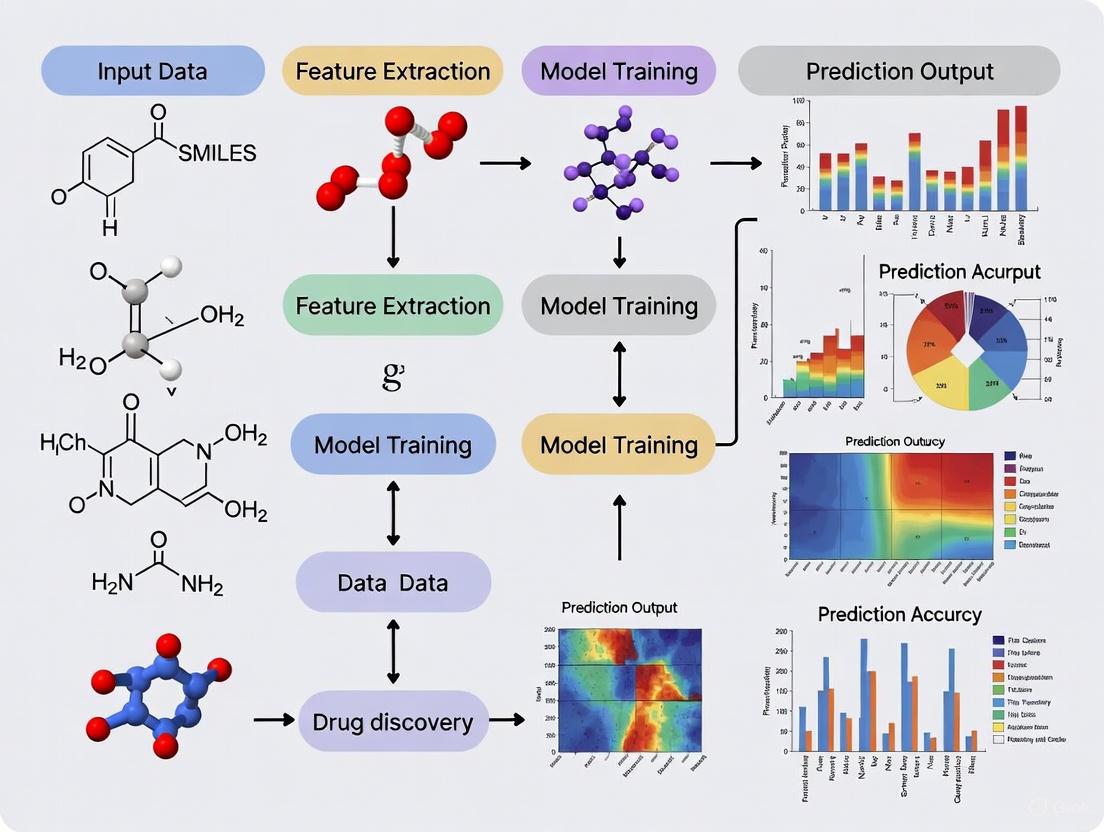
This article explores the transformative impact of machine learning (ML) on predicting the absorption, distribution, metabolism, excretion, and toxicity (ADMET) of drug candidates.
How Machine Learning is Revolutionizing ADMET Prediction in Drug Discovery
Abstract
This article explores the transformative impact of machine learning (ML) on predicting the absorption, distribution, metabolism, excretion, and toxicity (ADMET) of drug candidates. Aimed at researchers, scientists, and drug development professionals, it provides a comprehensive analysis from foundational concepts to real-world applications. It details how advanced ML algorithms like graph neural networks and ensemble methods enhance predictive accuracy and efficiency beyond traditional quantitative structure-activity relationship (QSAR) models. The article further addresses critical challenges such as data quality, model interpretability, and regulatory acceptance, while highlighting validation strategies, emerging trends like federated learning, and the tangible benefits of ML integration in reducing late-stage drug attrition and accelerating the development of safer therapeutics.
The ADMET Prediction Challenge: Why Machine Learning is a Game-Changer
The Critical Role of ADMET Properties in Drug Development Success and Attrition
The journey of a new drug from concept to clinic is a notoriously arduous process, typically spanning 10 to 15 years of rigorous research and testing, with ADMET (Absorption, Distribution, Metabolism, Excretion, and Toxicity) properties representing a critical determinant of its ultimate clinical success [1]. Despite technological advancements, drug development remains plagued by high attrition rates, with suboptimal pharmacokinetic profiles and unforeseen toxicity accounting for a significant proportion of clinical failures [2]. Approximately 40–45% of clinical attrition continues to be attributed to ADMET liabilities, underscoring the profound impact these properties have on the viability of therapeutic candidates [3]. Traditional experimental methods for ADMET evaluation, while reliable, are resource-intensive, time-consuming, and limited in scalability, creating a pressing need for more efficient predictive methodologies [4] [2].
The integration of machine learning (ML) into the drug discovery pipeline represents a paradigm shift in how researchers address the ADMET challenge. By leveraging large-scale compound databases and advanced algorithms, ML approaches provide rapid, cost-effective, and reproducible alternatives that seamlessly integrate with existing workflows [4] [2]. This technical guide examines the transformative role of machine learning in ADMET prediction, detailing the methodologies, applications, and experimental protocols that are reshaping modern drug development. We will explore how ML models decipher complex structure-property relationships, enhance predictive accuracy, and ultimately mitigate late-stage attrition by enabling earlier and more reliable assessment of critical pharmacokinetic and safety parameters.
Fundamental ADMET Properties and Their Impact on Attrition
ADMET properties collectively govern the pharmacokinetics (PK) and safety profile of a compound, directly influencing its bioavailability, therapeutic efficacy, and likelihood of regulatory approval [2]. Absorption determines the rate and extent of drug entry into systemic circulation, with parameters such as permeability, solubility, and interactions with efflux transporters like P-glycoprotein (P-gp) critically influencing this process [2]. Distribution reflects drug dissemination across tissues and organs, affecting both therapeutic targeting and off-target effects. Metabolism describes biotransformation processes, primarily mediated by hepatic enzymes, which influence drug half-life and bioactivity. Excretion facilitates the clearance of drugs and their metabolites, impacting the duration of action and potential accumulation. Finally, toxicity remains a pivotal consideration in evaluating adverse effects and overall human safety [2].
The high failure rate during clinical translation is frequently attributed to suboptimal pharmacokinetic and pharmacodynamic profiles, with poor bioavailability and unforeseen toxicity emerging as major contributors [2]. According to the 2024 FDA approval report, small molecules accounted for 65% of newly approved therapies (30 out of 46), underscoring their continued prominence in modern pharmacotherapy despite the rise of biologics [2]. This statistic highlights the enduring importance of small-molecule drugs and the critical need to optimize their ADMET properties early in the development pipeline. Balancing these properties during molecular design is thus essential for mitigating late-stage failures and improving the overall efficiency of drug development.
Table 1: Key ADMET Properties and Their Impact on Drug Development
| ADMET Property | Key Parameters | Experimental Models | Impact on Attrition |
|---|---|---|---|
| Absorption | Permeability, Solubility, P-gp Substrate | Caco-2 cell lines, PAMPA | Poor oral bioavailability (~40% of candidates) |
| Distribution | Volume of Distribution (Vd), Plasma Protein Binding, Blood-Brain Barrier Permeability | PPB assays, logBB values | Inadequate tissue penetration or excessive sequestration |
| Metabolism | Metabolic Stability, CYP Enzyme Inhibition/Induction, Metabolite Identification | Human liver microsomes, Recombinant CYP enzymes | Unfavorable half-life, drug-drug interactions |
| Excretion | Clearance (Renal/Hepatic) | Hepatocyte assays, Renal transporter studies | Accumulation leading to toxicity |
| Toxicity | Cytotoxicity, Genotoxicity, Organ-Specific Toxicity, hERG Inhibition | Ames test, hERG assay, in vivo toxicology | Unacceptable safety profile (~45% of clinical attrition) |
Machine Learning Revolution in ADMET Prediction
Core Machine Learning Approaches
Machine learning has emerged as a transformative tool in ADMET prediction, offering new opportunities for early risk assessment and compound prioritization [4]. ML methodologies for ADMET prediction can be broadly categorized into several key approaches:
Supervised Learning techniques form the foundation of many ADMET prediction models. These include Support Vector Machines (SVM), Random Forests (RF), decision trees, and neural networks, which are trained using labelled datasets to predict properties based on input attributes like chemical descriptors [1]. These methods have demonstrated significant promise in predicting key ADMET endpoints, outperforming some traditional quantitative structure-activity relationship (QSAR) models [4].
Deep Learning Architectures represent a more advanced approach, with Graph Neural Networks (GNNs) demonstrating particular efficacy in ADMET prediction [2]. By representing molecules as graphs where atoms are nodes and bonds are edges, GNNs apply graph convolutions to these explicit molecular representations, achieving unprecedented accuracy [1]. Other deep learning approaches include Message Passing Neural Networks (MPNN) as implemented by tools like Chemprop [5].
Ensemble and Multitask Learning methods combine multiple models to improve predictive performance and generalization. Multitask learning frameworks are especially valuable in ADMET prediction as they leverage shared information across related properties, enhancing model robustness and clinical relevance [2]. Ensemble methods aggregate predictions from multiple base models to produce more accurate and stable predictions than any single constituent model [2].
Feature Representation and Molecular Descriptors
The selection of appropriate feature representations is crucial for developing effective ADMET prediction models. Molecular descriptors are numerical representations that convey structural and physicochemical attributes of compounds based on their 1D, 2D, or 3D structures [1]. Various software tools are available for calculating these descriptors, facilitating the extraction of relevant features for predictive modeling. These programs offer a wide array of over 5000 descriptors, encompassing constitutional descriptors as well as more intricate 2D and 3D descriptors [1].
Feature engineering approaches have evolved significantly, with recent advancements involving learning task-specific features rather than relying on fixed fingerprint representations [1]. Feature selection methods include filter methods that eliminate duplicated, correlated, and redundant features during pre-processing; wrapper methods that iteratively train algorithms using feature subsets; and embedded methods that integrate feature selection directly into the learning algorithm, combining the strengths of both filter and wrapper techniques [1].
Table 2: Machine Learning Algorithms and Their Applications in ADMET Prediction
| Algorithm Category | Specific Methods | ADMET Applications | Performance Advantages |
|---|---|---|---|
| Supervised Learning | Random Forests, Support Vector Machines, Decision Trees | Solubility, Permeability, Toxicity Classification | Interpretability, Handling of small datasets |
| Deep Learning | Graph Neural Networks (GNNs), Message Passing Neural Networks (MPNNs) | Metabolism Prediction, Toxicity Endpoints | Capturing complex structure-property relationships |
| Ensemble Methods | Gradient Boosting (LightGBM, CatBoost), Stacking | Multi-property Optimization, Lead Optimization | Improved accuracy and robustness |
| Multitask Learning | Hard/Soft Parameter Sharing, Cross-stitch Networks | Simultaneous PK/PD-Toxicity Prediction | Data efficiency, enhanced generalization |
Experimental Protocols and Methodologies
Data Collection and Preprocessing Workflows
The development of robust machine learning models for ADMET predictions begins with raw data collection from publicly available repositories and proprietary sources. Key databases providing pharmacokinetic and physicochemical properties include ChEMBL, PubChem, BindingDB, and specialized resources like PharmaBench [1] [6]. A critical consideration in data collection is the representation of chemical space; many historical benchmarks have limited utility because their compounds differ substantially from those in industrial drug discovery pipelines [6]. For instance, the mean molecular weight of compounds in the ESOL dataset is only 203.9 Dalton, whereas compounds in drug discovery projects typically range from 300 to 800 Dalton [6].
Data preprocessing represents a crucial step in model development, involving cleaning, normalization, and feature selection to improve data quality and reduce irrelevant or redundant information [1]. Essential preprocessing steps include:
- Removing inorganic salts and organometallic compounds from datasets
- Extracting organic parent compounds from their salt forms
- Adjusting tautomers to have consistent functional group representation
- Canonicalizing SMILES strings
- De-duplication with consistency checks (keeping first entry if target values are consistent, or removing entire groups if inconsistent) [5]
For handling imbalanced datasets, combining feature selection and data sampling techniques can significantly improve prediction performance. Empirical results suggest that feature selection based on sampled data outperforms feature selection based on original data [1].
Advanced Data Mining with Large Language Models
Recent innovations in data curation involve using Large Language Models (LLMs) to extract experimental conditions from assay descriptions. This approach addresses the challenge of variability in experimental results, where the same compound might show different values under different conditions [6]. A multi-agent LLM data mining system has been developed for this purpose, consisting of three specialized agents:
- Keyword Extraction Agent (KEA): Summarizes key experimental conditions from various ADMET experiments
- Example Forming Agent (EFA): Generates examples based on experimental results summarized by the KEA
- Data Mining Agent (DMA): Mines through assay descriptions and identifies experimental conditions within these texts [6]
This system enables the creation of more reliable benchmarks like PharmaBench, which comprises eleven ADMET datasets and 52,482 entries with standardized experimental conditions and consistent units [6].
Diagram 1: Machine Learning Workflow for ADMET Prediction. This workflow integrates traditional data processing with innovative LLM-assisted data curation to enhance model reliability.
Model Training and Validation Strategies
Model validation represents a critical phase in developing reliable ADMET predictors. Beyond conventional hold-out validation, advanced approaches integrate cross-validation with statistical hypothesis testing to add a layer of reliability to model assessments [5]. Scaffold-based splitting methods are particularly valuable as they provide a more realistic assessment of a model's ability to generalize to novel chemical structures [5].
For hyperparameter optimization, rigorous tuning is essential for fair comparisons among algorithms. Studies have demonstrated that systematic hyperparameter optimization can significantly alter the relative performance rankings of different ML methods [5]. The implementation of uncertainty estimation, including estimates for both aleatoric and epistemic uncertainty, as well as calibration, has shown superior performance for Gaussian Process (GP) based models in particular [5].
In practical applications, researchers must assess how well models trained on one dataset perform on external data from different sources. This external validation mimics real-world scenarios where models are applied to proprietary compound collections with potentially different structural distributions [5].
Table 3: Essential Research Resources for ML-Driven ADMET Prediction
| Resource Category | Specific Tools/Databases | Primary Function | Application in ADMET |
|---|---|---|---|
| Public Databases | ChEMBL, PubChem, BindingDB, PharmaBench | Source of labeled ADMET data for model training | Provides experimental values for solubility, permeability, toxicity endpoints |
| Descriptor Calculation Software | RDKit, Dragon, MOE | Generate molecular descriptors and fingerprints | Converts chemical structures to numerical representations for ML models |
| Machine Learning Frameworks | Scikit-learn, DeepChem, Chemprop | Implementation of ML algorithms and neural networks | Model development, hyperparameter optimization, validation |
| Specialized Benchmarks | TDC (Therapeutics Data Commons), MoleculeNet | Curated benchmarks for model evaluation | Standardized comparison of different algorithms and representations |
| Federated Learning Platforms | MELLODDY, Apheris Federated ADMET Network | Collaborative training without data sharing | Enhances model generalizability while preserving data privacy |
Advanced Applications and Future Directions
Federated Learning for Enhanced Generalization
A groundbreaking advancement in ADMET prediction is the implementation of federated learning, which enables multiple pharmaceutical organizations to collaboratively train models on distributed proprietary datasets without centralizing sensitive data [3]. This approach systematically addresses the fundamental limitation of isolated modeling efforts, where each organization's assays describe only a small fraction of the relevant chemical space [3].
Key benefits of federated learning in ADMET prediction include:
- Altering the geometry of chemical space that a model can learn from, improving coverage and reducing discontinuities in the learned representation
- Systematically outperforming local baselines, with performance improvements scaling with the number and diversity of participants
- Expanding applicability domains, with models demonstrating increased robustness when predicting across unseen scaffolds and assay modalities
- Persisting benefits across heterogeneous data, as all contributors receive superior models even when assay protocols, compound libraries, or endpoint coverage differ substantially [3]
The MELLODDY project represents one of the largest implementations of federated learning in drug discovery, involving cross-pharma collaboration at unprecedented scale to unlock benefits in QSAR without compromising proprietary information [3].
Diagram 2: Federated Learning Architecture for ADMET Prediction. This distributed approach enables collaborative model improvement while preserving data privacy and intellectual property.
Interpretability and Explainable AI in ADMET Prediction
As ML models grow in complexity, particularly with the adoption of deep learning architectures, model interpretability has emerged as a critical challenge [2]. The "black box" nature of many advanced algorithms impedes mechanistic interpretability, limiting trust and regulatory acceptance [2]. Addressing this challenge requires the integration of Explainable AI (XAI) techniques that provide insights into model decisions and the structural features driving specific ADMET predictions [2].
Recent approaches to enhance interpretability include:
- Attention mechanisms in graph neural networks that highlight molecular substructures contributing to predictions
- SHAP (SHapley Additive exPlanations) values for quantifying feature importance
- Counterfactual explanations that illustrate minimal structural changes that would alter ADMET predictions
- Integrated gradients for attributing predictions to input features [2]
These interpretability methods not only build trust in ML predictions but also provide medicinal chemists with actionable insights for compound optimization, creating a feedback loop between computational predictions and experimental design.
Machine learning has unequivocally transformed the landscape of ADMET prediction, emerging as an indispensable tool in modern drug discovery. By providing rapid, cost-effective, and reproducible alternatives to traditional experimental approaches, ML models have demonstrated significant promise in predicting key ADMET endpoints, outperforming conventional QSAR models in many applications [4]. The integration of advanced techniques such as graph neural networks, ensemble learning, multitask frameworks, and federated learning has enabled unprecedented accuracy in forecasting absorption, distribution, metabolism, excretion, and toxicity properties early in the development pipeline [2].
Despite remarkable progress, challenges remain in ensuring data quality, enhancing model interpretability, and securing regulatory acceptance for ML-driven approaches [4]. The field continues to evolve rapidly, with emerging trends focusing on multimodal data integration, uncertainty quantification, and the application of large language models for enhanced data curation [6]. As these technologies mature and federated learning approaches expand the effective training data available without compromising privacy, ML-driven ADMET prediction will play an increasingly pivotal role in reducing late-stage attrition and accelerating the development of safer, more effective therapeutics [3]. Through continued integration of machine learning with experimental pharmacology, the drug discovery community moves closer to realizing the full potential of computational approaches in mitigating development risks and bringing innovative medicines to patients more efficiently.
Limitations of Traditional Experimental and Computational ADMET Assessment
The evaluation of Absorption, Distribution, Metabolism, Excretion, and Toxicity (ADMET) properties represents a critical gatekeeper in the drug discovery pipeline. For decades, the pharmaceutical industry has relied on established experimental and computational methods to assess these properties, yet they remain a major contributor to clinical attrition rates, with approximately 40–45% of failures attributed to unfavorable ADMET characteristics [1] [3]. Understanding the limitations of these traditional assessment approaches is fundamental to advancing the field. This analysis frames these limitations within the broader thesis that machine learning (ML) methodologies are not merely incremental improvements but are necessary paradigm shifts that address foundational constraints in predictive pharmacology. By systematically examining the bottlenecks in conventional ADMET evaluation, we can precisely identify where and how ML technologies deliver transformative potential.
Fundamental Bottlenecks in Traditional Experimental ADMET Assessment
Traditional experimental approaches to ADMET evaluation, while considered the gold standard, present significant challenges that impede the efficiency and success of modern drug discovery.
Resource Intensity and Lack of Scalability
Conventional in vitro assays and in vivo animal models are notoriously slow, resource-intensive, and difficult to scale for high-throughput workflows [7]. As compound libraries grow from thousands to millions of candidates, these methods become increasingly impractical. The fundamental mismatch between the high-throughput capability of early-stage compound generation and the low-throughput nature of traditional ADMET assessment creates a critical bottleneck.
Key Experimental ADMET Assays and Their Limitations:
| Assay Type | Primary Measurement | Key Limitations |
|---|---|---|
| CYP450 Inhibition [7] | Metabolic interaction potential | Species-specific metabolic differences mask human-relevant toxicities |
| hERG Assays [7] | Cardiotoxicity risk (QT prolongation) | Low-throughput, high cost, limited predictability for human cardiac risk |
| Liver Microsomal Stability (MLM/HLM) [8] | Metabolic clearance rate | Does not capture full in vivo hepatic metabolism |
| Cell-Based Permeability (e.g., MDR1-MDCKII) [8] | Cellular barrier penetration (models BBB) | Oversimplified model of complex biological barriers |
| In Vivo Pharmacokinetics [1] | Comprehensive ADME profile in living organisms | Extremely time-consuming, expensive, ethically challenging, species translation issues |
Species-Specific Discrepancies and Translation Challenges
A critical flaw in traditional assessment lies in the reliance on animal models whose physiological and metabolic pathways differ significantly from humans. Species-specific metabolic differences can obscure human-relevant toxicities and distort predictions for other endpoints [7]. Historical cases like thalidomide and fialuridine underscore the severe limitations of traditional preclinical testing in capturing human-specific risks, leading to tragic consequences or late-stage drug failures [7]. The recent FDA plan to phase out animal testing in certain cases underscores the recognition of this limitation and opens the door for alternative approaches, including AI-based toxicity models [7].
Critical Shortcomings in Traditional Computational ADMET Models
Early computational approaches, particularly Quantitative Structure-Activity Relationship (QSAR)-based models, brought automation to ADMET prediction but introduced their own set of constraints.
Static Representations and Limited Generalizability
Traditional QSAR models typically rely on predefined molecular descriptors and statistical relationships derived from limited datasets. Their static feature sets and narrow scope severely limit scalability and reduce predictive performance for novel, diverse chemical structures [7]. As drug discovery efforts expand into broader, more innovative chemical spaces, these models struggle to generalize, often failing for scaffolds not represented in their training data.
Inadequate Data Utilization and Representation
Traditional models frequently utilize simplified 2D molecular representations, such as fixed fingerprints, which ignore internal molecular substructures and complex, hierarchical chemical information [1]. This oversimplification fails to capture the intricate biological interactions that govern pharmacokinetics and toxicity. Furthermore, these models lack adaptability, being unable to continuously learn from new data generated during the drug discovery process, leading to progressively outdated predictions [7].
The Data Quality Crisis: A Foundational Limitation
Underpinning both experimental and computational limitations is the fundamental challenge of data quality, heterogeneity, and scarcity.
Data Inconsistency and Misalignment
Significant distributional misalignments and inconsistent property annotations exist between different ADMET data sources [9]. These discrepancies arise from variability in experimental protocols, assay conditions, and biological materials across different laboratories. A recent analysis of public half-life and clearance datasets revealed that naive integration of data from different sources often degrades model performance due to these underlying inconsistencies, highlighting that more data is not always beneficial without rigorous consistency assessment [9].
The "Black Box" Problem and Interpretability Deficits
Many advanced computational models, including some early AI approaches, function as "black boxes," generating predictions without clear attribution to specific input features or providing a scientifically interpretable rationale [7]. This opacity stems from the complexity of deep neural network architectures, which obscure the internal logic driving their outputs. In a regulatory context and for scientific validation, where clear insight and reproducibility are essential, this lack of interpretability presents a major barrier to adoption and trust [7] [10].
The following workflow diagram summarizes the traditional ADMET assessment process and its key limitations:
Traditional ADMET Assessment Workflow and Limitations
Essential Research Reagents and Tools for ADMET Studies
The following table details key reagents, software, and databases used in traditional and contemporary ADMET research, highlighting their primary functions and relevance to assessment methodologies.
| Category | Tool/Reagent | Primary Function in ADMET Assessment |
|---|---|---|
| Experimental Assays | Human/Mouse Liver Microsomes (HLM/MLM) [8] | In vitro evaluation of metabolic stability and clearance rates. |
| MDR1-MDCKII Cell Line [8] | Models cellular permeability and blood-brain barrier penetration. | |
| hERG Assay [7] | Assesses cardiotoxicity risk via potassium channel inhibition. | |
| Computational Software | ADMET Predictor [10] | QSAR and machine learning-based prediction of ADMET properties. |
| Chemprop [7] | Message-passing neural network for molecular property prediction. | |
| Data Resources | ChEMBL [10] | Public database of bioactive molecules with drug-like properties. |
| TDC (Therapeutic Data Commons) [9] | Provides standardized benchmarks for ADMET predictive models. | |
| Analysis Tools | AssayInspector [9] | Python package for data consistency assessment across assay sources. |
| RDKit [9] | Open-source cheminformatics for descriptor calculation and fingerprinting. |
Detailed Experimental Protocols for Key ADMET Assays
To illustrate the complexity of generating data for ADMET assessment, below are detailed methodologies for two critical assays often used as benchmarks for computational models.
Human Liver Microsomal (HLM) Stability Assay Protocol
Objective: To measure the metabolic stability of a drug candidate by quantifying its degradation rate upon exposure to human liver microsomes, providing an in vitro estimate of systemic clearance [8].
Methodology:
- Incubation Setup: Prepare a reaction mixture containing 0.1-1 mg/mL HLM protein, test compound (1-10 µM), and an NADPH-regenerating system in a phosphate buffer (pH 7.4).
- Time Course: Initiate the reaction by adding the NADPH-regenerating system. Incubate at 37°C and withdraw aliquots at predetermined time points (e.g., 0, 5, 15, 30, 45, 60 minutes).
- Reaction Termination: Stop the reaction in each aliquot by adding an equal volume of ice-cold acetonitrile or methanol containing an internal standard.
- Sample Analysis: Centrifuge the samples to precipitate proteins. Analyze the supernatant using LC-MS/MS to quantify the remaining parent compound.
- Data Analysis: Plot the natural logarithm of the parent compound concentration remaining versus time. The slope of the linear regression represents the elimination rate constant (k). Intrinsic clearance (CL~int~) is calculated as k / [microsomal protein concentration] and reported in µL/min/mg [8].
Cell-Based Permeability (MDR1-MDCKII) Assay Protocol
Objective: To determine the apparent permeability (P~app~) of a drug candidate across a cell monolayer, modeling its ability to permeate biological barriers like the intestinal epithelium or blood-brain barrier [8].
Methodology:
- Cell Culture: Grow MDCKII cells overexpressing the human MDR1 (P-glycoprotein) transporter on permeable filter supports until a confluent monolayer is formed. Confirm monolayer integrity by measuring Transepithelial Electrical Resistance (TEER).
- Dosing: Add the test compound to the donor compartment (for apical-to-basolateral, A-B; or basolateral-to-apical, B-A transport) in a suitable buffer.
- Incubation and Sampling: Incubate the system at 37°C with gentle agitation. Sample from the receiver compartment at regular intervals (e.g., every 30 minutes for up to 2 hours).
- Quantitative Analysis: Determine the concentration of the compound in the receiver samples using HPLC-MS/MS.
- Data Analysis: Calculate the apparent permeability (P~app~) using the formula: P~app~ = (dQ/dt) / (A × C~0~), where dQ/dt is the transport rate, A is the filter surface area, and C~0~ is the initial donor concentration. The results are typically reported in 10^-6 cm/s [8].
Traditional ADMET assessment methodologies are hamstrung by a confluence of critical limitations: experimental approaches are unscalable and prone to species-specific inaccuracies; early computational models are inflexible and struggle with generalization; and underlying data issues of inconsistency and scarcity undermine predictive robustness. These constraints directly contribute to the high attrition rates that plague drug development. It is precisely against this backdrop that machine learning emerges not as a mere tool for incremental improvement, but as a foundational technology capable of addressing these core limitations. By enabling high-throughput prediction from diverse data, learning complex structure-property relationships directly from molecular representations, and facilitating the integration of heterogeneous data sources through techniques like federated learning, ML provides a coherent framework for overcoming the bottlenecks that have long constrained traditional ADMET science.
How Machine Learning is Redefining Early-Stage Drug Discovery
The process of discovering and developing a new drug is notoriously long, expensive, and prone to failure. A critical bottleneck lies in evaluating a compound's Absorption, Distribution, Metabolism, Excretion, and Toxicity (ADMET) properties, which are fundamental determinants of its clinical success [2]. Traditionally, ADMET assessment has relied on resource-intensive experimental methods that are often low-throughput and struggle to accurately predict human in vivo outcomes [2] [1]. Consequently, poor ADMET profiles have been a major cause of late-stage drug attrition, contributing to the staggering statistic that approximately 90% of clinical drug development fails [2] [3]. This high failure rate underscores an urgent need for more efficient and predictive methodologies.
Machine learning (ML) has emerged as a transformative force in addressing this challenge. By deciphering complex structure-property relationships from large-scale chemical and biological data, ML provides scalable, efficient computational alternatives for ADMET prediction [2]. These approaches have evolved from secondary screening tools to cornerstones of early-stage drug discovery, enabling rapid, cost-effective, and reproducible risk assessment that integrates seamlessly with existing discovery pipelines [1]. This article explores how machine learning is fundamentally redefining early-stage drug discovery by enhancing the accuracy, efficiency, and predictive power of ADMET evaluation.
Machine Learning Methodologies Revolutionizing ADMET Prediction
Key Algorithms and Their Applications
The application of ML in ADMET prediction spans a diverse range of algorithms, each with distinct strengths for handling molecular data and property prediction.
Table 1: Key Machine Learning Algorithms in ADMET Prediction
| Algorithm Category | Specific Models | Key Strengths | Common ADMET Applications |
|---|---|---|---|
| Graph-Based Deep Learning | Graph Neural Networks (GNNs), Message Passing Neural Networks (MPNNs) | Directly learns from molecular graph structure; captures complex structure-activity relationships | Metabolic stability, toxicity endpoints, target binding affinity [2] [5] |
| Ensemble Methods | Random Forests, Gradient Boosting (LightGBM, CatBoost) | High accuracy; robust to noise; provides feature importance | Solubility, permeability, classification tasks (e.g., toxicity) [2] [5] |
| Multitask Learning | Multitask Deep Neural Networks | Leverages related information across multiple endpoints; improved data efficiency | Simultaneous prediction of multiple PK properties [2] [3] |
| Supervised Learning | Support Vector Machines (SVMs) | Effective in high-dimensional spaces; works well with structured data | Binary classification tasks (e.g., P-gp substrate prediction) [1] |
Graph Neural Networks (GNNs) represent one of the most significant recent advancements. By treating molecules as graphs with atoms as nodes and bonds as edges, GNNs learn meaningful representations that capture intricate topological and physicochemical patterns [2]. This approach has demonstrated unprecedented accuracy in predicting various ADMET endpoints, including metabolic stability and toxicity [1]. Ensemble methods like Random Forests remain highly competitive, particularly for structured descriptor data, offering robust performance and interpretability through feature importance scores [5]. Multitask learning frameworks have also gained prominence by enabling models to learn shared representations across related ADMET properties, which enhances generalization, especially for endpoints with limited data [2] [3].
Molecular Representations and Feature Engineering
The performance of ML models in ADMET prediction is profoundly influenced by how molecular structures are converted into numerical representations. The choice of representation significantly impacts the model's ability to capture relevant chemical information.
Table 2: Common Molecular Representations in ADMET Prediction
| Representation Type | Description | Examples | Advantages/Limitations |
|---|---|---|---|
| Molecular Descriptors | Numerical values capturing physicochemical properties (e.g., molecular weight, logP) | RDKit descriptors, constitutional descriptors | Physicochemically interpretable; may require domain knowledge for selection [1] [5] |
| Structural Fingerprints | Binary vectors representing presence/absence of specific substructures | Morgan fingerprints (ECFP), functional class fingerprints (FCFP) | Captures key structural features; fixed-length; may miss complex spatial relationships [1] [5] |
| Learned Representations | Features automatically learned by deep learning models | Graph embeddings, SMILES-based embeddings | Task-specific; requires minimal feature engineering; data-intensive [2] [5] |
Feature engineering plays a crucial role in optimizing model performance. Methods include filter approaches that remove redundant features, wrapper methods that iteratively select feature subsets based on model performance, and embedded methods where feature selection is integrated into the learning algorithm itself [1]. Recent benchmarking studies indicate that the optimal choice of molecular representation is highly dataset-dependent, with no single approach universally outperforming others across all ADMET endpoints [5].
Benchmarking and Performance: Quantitative Advances
Rigorous benchmarking initiatives have provided quantitative evidence of ML's impact on ADMET prediction. The Polaris ADMET Challenge, for instance, demonstrated that multi-task architectures trained on broad, well-curated data can achieve 40-60% reductions in prediction error across critical endpoints including human and mouse liver microsomal clearance, solubility (KSOL), and permeability (MDR1-MDCKII) [3]. These results highlight that data diversity and representativeness are often more critical factors than model architecture alone in driving predictive accuracy.
ML-based models have consistently demonstrated performance that equals or surpasses traditional quantitative structure-activity relationship (QSAR) models [1]. In practical applications, ML models have enabled substantial gains in operational efficiency. For example, Exscientia reports that its AI-driven platform achieves design cycles approximately 70% faster than industry norms while requiring 10 times fewer synthesized compounds [11]. This acceleration is particularly evident in cases like Insilico Medicine's generative-AI-designed idiopathic pulmonary fibrosis drug, which progressed from target discovery to Phase I trials in just 18 months, a fraction of the typical 5-year timeline for traditional discovery [11].
Implementation Workflow: From Data to Deployment
The development of robust ML models for ADMET prediction follows a systematic workflow that emphasizes data quality, appropriate validation, and practical applicability.
Data Collection and Preprocessing
The ML process begins with obtaining suitable datasets from publicly available repositories such as ChEMBL, PubChem, or specialized ADMET databases [1]. Data quality is paramount, as it directly impacts model performance. Essential preprocessing steps include:
- Data Cleaning: Standardizing SMILES representations, removing inorganic salts and organometallic compounds, extracting organic parent compounds from salt forms, adjusting tautomers for consistent functional group representation, and removing duplicates with inconsistent measurements [5].
- Data Splitting: Implementing scaffold-based splits that separate compounds with distinct molecular frameworks, which provides a more realistic assessment of a model's ability to generalize to novel chemotypes compared to random splitting [5].
- Handling Data Imbalance: Applying techniques such as synthetic minority over-sampling or appropriate weighting strategies to address class imbalance in classification tasks [1].
Model Training and Validation Best Practices
Following data preparation, the modeling phase incorporates several critical practices to ensure robust and generalizable performance:
- Cross-Validation with Statistical Testing: Employing k-fold cross-validation combined with statistical hypothesis testing to reliably compare model performance and ensure observed improvements are statistically significant rather than resulting from random variation [5].
- Hyperparameter Optimization: Systematically tuning model hyperparameters using techniques like grid search or Bayesian optimization to maximize predictive performance for specific ADMET endpoints [5].
- External Validation: Assessing model performance on completely external datasets from different sources to evaluate real-world applicability and domain transfer capabilities [5].
- Applicability Domain Assessment: Determining the regions of chemical space where models can provide reliable predictions and flagging compounds that fall outside this domain [2].
Emerging Paradigms and Innovative Approaches
Federated Learning for Expanding Chemical Space Coverage
A significant innovation in the field is the application of federated learning, which enables multiple pharmaceutical organizations to collaboratively train models on distributed proprietary datasets without sharing or centralizing sensitive data [3]. This approach systematically addresses the fundamental limitation of isolated modeling efforts—each organization's assays describe only a small fraction of relevant chemical space. Cross-pharma research initiatives have demonstrated that federated models consistently outperform local baselines, with performance improvements scaling with the number and diversity of participants [3]. Crucially, federated learning expands the models' applicability domain, enhancing their robustness when predicting properties for novel scaffolds and across different assay modalities.
Multimodal Data Integration and Explainable AI
The integration of multimodal data sources represents another frontier in ML-driven ADMET prediction. By combining molecular structure information with complementary data types such as gene expression profiles, pharmacological data, and high-content cellular imaging, models can capture a more comprehensive picture of compound behavior in biological systems [2]. Concurrently, there is growing emphasis on enhancing model interpretability through Explainable AI (XAI) techniques. As ML models, particularly deep learning architectures, are often perceived as "black boxes," methods such as attention mechanisms, SHAP values, and counterfactual explanations are being increasingly employed to provide mechanistic insights and build trust among drug discovery scientists [2] [12].
Successful implementation of ML for ADMET prediction requires access to specialized computational tools, datasets, and software resources.
Table 3: Essential Research Reagents for ML-Driven ADMET Prediction
| Resource Category | Specific Tools/Databases | Primary Function | Key Features |
|---|---|---|---|
| Cheminformatics Tools | RDKit, OpenBabel | Calculation of molecular descriptors and fingerprints | Open-source; comprehensive descriptor calculation; cheminformatics algorithms [1] [5] |
| Public ADMET Databases | TDC (Therapeutics Data Commons), ChEMBL, PubChem | Source of curated ADMET property data | Standardized benchmarks; assay data from diverse sources; pre-defined train/test splits [1] [5] |
| Machine Learning Frameworks | Scikit-learn, DeepChem, Chemprop | Implementation of ML algorithms and neural networks | Specialized architectures for molecular data (e.g., MPNNs); extensive preprocessing capabilities [5] |
| Federated Learning Platforms | Apheris, kMoL | Enable collaborative modeling without data sharing | Privacy-preserving ML; cross-institutional model training; governance controls [3] |
Case Studies: Translational Impact in Drug Discovery
The practical impact of ML-driven ADMET prediction is evidenced by its integration into the pipelines of leading AI-driven drug discovery companies. Exscientia has utilized its AI platform to design eight clinical compounds, achieving development timelines "substantially faster than industry standards" [11]. Similarly, Insilico Medicine's generative-AI-designed drug for idiopathic pulmonary fibrosis progressed from target discovery to Phase I trials in just 18 months, a process that typically requires 4-6 years through conventional approaches [11]. These examples demonstrate how ML-powered ADMET prediction contributes to compressing the early discovery timeline and reducing late-stage attrition.
In preclinical development, companies like Recursion are combining automated phenotypic screening with ML-based ADMET prediction to build extensive datasets linking chemical structures to biological effects and safety profiles [11]. This integrated approach enables more informed candidate selection and optimization decisions. Furthermore, the successful application of federated learning in initiatives such as the MELLODDY project, which involved collaboration across multiple pharmaceutical companies without sharing proprietary data, has demonstrated consistent performance improvements in QSAR predictions, including ADMET endpoints [3].
Challenges and Future Directions
Despite significant progress, several challenges remain in the widespread adoption of ML for ADMET prediction. Data quality and heterogeneity continue to pose obstacles, as experimental ADMET data often comes from diverse assay protocols with varying measurement standards and noise levels [2] [5]. Model interpretability, though improving, still presents a barrier to full regulatory acceptance and scientific trust, particularly for complex deep learning architectures [2]. The regulatory landscape for AI/ML in drug development is still evolving, with agencies like the FDA and EMA developing frameworks for evaluating computational models [11].
Future directions likely to shape the field include increased emphasis on federated learning approaches to leverage distributed datasets while preserving intellectual property [3], development of foundation models pre-trained on extensive chemical libraries that can be fine-tuned for specific ADMET endpoints with limited data, tighter integration with experimental automation platforms to create closed-loop design-make-test-analyze cycles [12], and advancement of causal ML models that move beyond correlation to identify causative factors driving ADMET outcomes.
Machine learning is fundamentally redefining early-stage drug discovery by transforming ADMET prediction from a resource-intensive, sequential experimental process to a data-driven, parallelized computational approach. Through advanced algorithms including graph neural networks, ensemble methods, and multitask learning, ML models can decipher complex structure-property relationships with increasing accuracy, enabling more informed compound prioritization and optimization decisions. The integration of multimodal data, adoption of federated learning, and emphasis on model interpretability are further enhancing the translational relevance of these predictions. While challenges around data quality, model transparency, and regulatory acceptance persist, the continued evolution of ML-driven ADMET prediction holds immense potential to reduce late-stage drug attrition, accelerate the development of safer therapeutics, and ultimately reshape the landscape of modern drug discovery.
The evaluation of Absorption, Distribution, Metabolism, Excretion, and Toxicity (ADMET) properties is fundamental to determining the clinical success of drug candidates [2]. Ideal ADMET characteristics govern the pharmacokinetics (PK) and safety profile of a compound, directly influencing its bioavailability, therapeutic efficacy, and likelihood of regulatory approval [2]. Despite technological advances, drug development remains a highly complex, resource-intensive endeavor with substantial attrition rates [2]. Notably, the high failure rate during clinical translation is often attributed to suboptimal PK and pharmacodynamic (PD) profiles, with poor bioavailability and unforeseen toxicity as major contributors [2]. Challenges related to ADME or unexpected toxicity continue to account for a large proportion of clinical failures, with approximately 40–45% of clinical attrition attributed to ADMET liabilities [3]. Balancing ADMET properties during molecular design is thus critical for mitigating late-stage failures [2].
Traditional ADMET assessment, largely dependent on labor-intensive and costly experimental assays, often struggles to accurately predict human in vivo outcomes [2]. However, recent advancements in machine learning (ML) technologies have catalyzed the development of computational models for ADMET prediction, emerging as indispensable tools in early drug discovery [2]. ML-based approaches, ranging from feature representation learning to deep learning (DL) and ensemble strategies, have demonstrated remarkable capabilities in modeling complex activity landscapes, enabling high-throughput predictions with improved efficiency [2] [1]. This review systematically examines the core ADMET endpoints and demonstrates how ML methodologies are revolutionizing their prediction, ultimately accelerating the development of safer and more effective therapeutics.
Core ADMET Endpoints: Definitions and Methodologies
Absorption and Permeability
Absorption determines the rate and extent of a drug's entry into systemic circulation, while permeability reflects its ability to cross biological membranes [2]. These parameters are critical for predicting the oral bioavailability of candidate drugs [2].
- Key Parameters: Permeability, solubility, and interactions with efflux transporters such as P-glycoprotein (P-gp) all influence the absorption process [2]. Permeability is often evaluated using models like Caco-2 cell lines to predict how effectively a drug can cross intestinal membranes [2].
- Experimental Protocols: The Parallel Artificial Membrane Permeability Assay (PAMPA) is widely used to predict passive transcellular absorption [13]. For example, in a study of fluoroquinolone antibiotics, PAMPA permeability was determined using a 2% (w/v) solution of phosphatidylcholine in dodecane as the artificial membrane, with a permeation time of 16 hours. The apparent intrinsic permeability (log P±/o) calculated from these assays showed a strong correlation with the Area Under the Curve (AUC) in humans, a key pharmacokinetic parameter [13].
- ML Integration: Machine learning models have been developed to predict permeability coefficients. For instance, in Gram-negative bacteria, a scoring function that considers molecular descriptors like net charge, minimal projection area, and dipole moment can predict permeability through porins (e.g., OmpF), showing a 74% linear correlation with whole-cell compound accumulation [14]. Graph neural networks that learn from molecular structures have demonstrated unprecedented accuracy in predicting such absorption-related parameters [1].
Distribution
Distribution describes a drug's dissemination throughout the body, affecting both therapeutic targeting and off-target effects [2].
- Key Parameters: The volume of distribution (Vd) is a primary quantitative parameter that indicates the extent of a drug's distribution outside the systemic circulation. Plasma protein binding is another critical factor, as it influences the fraction of free, pharmacologically active drug available to interact with its target [15].
- Experimental Protocols: Distribution is characterized through in vivo pharmacokinetic studies in animal models, where drug concentrations are measured in plasma and various tissues over time. These data are used to calculate Vd and other PK parameters. Physiologically Based Pharmacokinetic (PBPK) modeling is increasingly used to simulate and predict drug distribution in different tissues and organs [15].
- ML Integration: Multitask deep learning models trained on large, diverse datasets can simultaneously predict distribution-related parameters along with other ADMET endpoints, leveraging shared underlying features to improve overall accuracy [2] [3].
Metabolism
Metabolism describes the biotransformation processes, primarily mediated by hepatic enzymes, that influence a drug's half-life and bioactivity [2]. Understanding metabolism is crucial for predicting drug-drug interactions and optimizing dosing regimens.
- Key Parameters: Metabolic stability, metabolite identification, and enzyme inhibition/induction potential (particularly concerning Cytochrome P450 (CYP) enzymes like CYP3A4) are primary assessment endpoints [2] [15].
- Experimental Protocols: Standard in vitro assays include:
- Liver Microsomal Stability Assays: Incubating the drug candidate with liver microsomes (containing CYP enzymes) and co-factors (e.g., NADPH) to measure its degradation over time.
- Hepatocyte Assays: Using primary hepatocytes to provide a more physiologically relevant model of metabolism, including both Phase I (functionalization) and Phase II (conjugation) reactions.
- CYP Inhibition Assays: Using fluorescent or LC-MS/MS-based methods to determine if a compound inhibits specific CYP isoforms, which is critical for assessing drug-drug interaction risk [15].
- ML Integration: AI-driven algorithms, such as the CFR framework, can now predict the activity of key enzymes like CYP3A4 with remarkable accuracy, enabling precise dose adjustments for patients with genetic polymorphisms (e.g., slow metabolizers) [2]. Quantitative Structure-Activity Relationship (QSAR) models and more complex deep learning architectures use molecular descriptors and structural data to predict sites of metabolism and metabolic stability [1].
Excretion
Excretion is the process by which a drug and its metabolites are eliminated from the body, impacting the duration of action and potential for accumulation [2].
- Key Parameters: The primary parameters are clearance (CL) and half-life (t~1/2~). Clearance can be renal (via kidneys), hepatic (via bile), or occur through other routes [2] [15].
- Experimental Protocols: Excretion is typically assessed in vivo by measuring the concentrations of the parent drug and its metabolites in urine, bile, and feces over time. In vitro models, such as transfected cell lines overexpressing renal transporters (e.g., OATs, OCTs), are used to assess whether a drug is a substrate for active transport processes that influence excretion [15].
- ML Integration: Machine learning models, particularly those employing ensemble methods, integrate structural properties and in vitro data to predict in vivo clearance parameters, helping to prioritize compounds with favorable excretion profiles [2] [1].
Toxicity
Toxicity remains a pivotal consideration in evaluating adverse effects and overall human safety, and is a major cause of drug candidate attrition [2] [16].
- Key Endpoints: Toxicity assessment covers a broad spectrum, including acute toxicity, genotoxicity (e.g., mutagenicity), carcinogenicity, organ-specific toxicity (e.g., hepatotoxicity, cardiotoxicity), and reproductive toxicity [16].
- Experimental Protocols: A tiered approach is used:
- In vitro assays: Cytotoxicity tests (MTT, CCK-8) to measure general cell viability [16]. Specific assays for genotoxicity (e.g., Ames test) and cardiotoxicity (e.g., hERG inhibition binding assays).
- In vivo studies: Repeated-dose toxicity studies in rodents and non-rodents to identify target organ toxicity and no-observed-adverse-effect-levels (NOAELs).
- Clinical data: Post-marketing surveillance systems like the FDA Adverse Event Reporting System (FAERS) provide real-world data on drug toxicity [16].
- ML Integration: AI and ML have profoundly impacted toxicity prediction. Deep learning models can now analyze chemical structures to predict various toxicity endpoints, often outperforming traditional QSAR models [16]. These models are trained on massive, curated toxicity databases such as TOXRIC, ChEMBL, and PubChem, which provide the structured data needed to build robust predictors [16].
The table below summarizes quantitative targets and assay methods for these key ADMET endpoints.
Table 1: Key ADMET Endpoints: Quantitative Targets and Assay Methodologies
| ADMET Endpoint | Key Measured Parameters | Common Experimental Assays | Typical Predictive Targets (for Small Molecules) |
|---|---|---|---|
| Absorption | - Apparent Permeability (P~app~)- Solubility- P-gp Substrate/Inhibition | - Caco-2/ MDCK cell models- PAMPA- Solubility assays (e.g., kinetic, thermodynamic) | - High Caco-2 P~app~ (>10×10⁻⁶ cm/s)- Solubility >100 μg/mL- Not a strong P-gp substrate |
| Distribution | - Volume of Distribution (Vd)- Plasma Protein Binding (PPB, % bound)- Blood-to-Plasma Ratio | - In vivo PK studies- Equilibrium Dialysis/Ultrafiltration- Tissue homogenate binding | - Vd >0.15 L/kg (adequate distribution)- Moderate PPB (not >99%)- Balanced tissue penetration |
| Metabolism | - Intrinsic Clearance (CL~int~)- Metabolic Stability (t~1/2~)- CYP Inhibition (IC~50~)- Metabolite Identification | - Liver microsomes/hepatocytes- CYP enzyme inhibition assays- LC-MS/MS for metabolite profiling | - Low CL~int~- Low potential for CYP inhibition (IC~50~ >10μM)- No reactive metabolites |
| Excretion | - Clearance (CL)- Half-life (t~1/2~)- % Excreted unchanged (Urine/Feces)- Transporter Substrate (e.g., OAT, OCT) | - In vivo bile duct cannulation, urine collection- Transfected cell transporter assays | - Acceptable human t~1/2~ for dosing regimen- Low risk for transporter-mediated DDI |
| Toxicity | - IC~50~ (Cytotoxicity)- hERG IC~50~- Ames Test Result- LD~50~ (Acute Toxicity)- Organ-specific toxicity indicators | - MTT/CCK-8 cell viability- hERG binding/patch clamp- Bacterial reverse mutation test (Ames)- In vivo repeat-dose toxicity studies | - IC~50~ >100 μM (general cytotoxicity)- hERG IC~50~ >30 μM- Negative in Ames test- No significant organ toxicity at therapeutic multiples |
The Machine Learning Revolution in ADMET Prediction
Advanced ML Methodologies
Recent machine learning advances have transformed ADMET prediction by deciphering complex structure–property relationships, providing scalable, efficient alternatives to conventional computational models [2]. Several state-of-the-art methodologies have emerged:
- Graph Neural Networks (GNNs): These deep learning architectures represent molecules as graphs (atoms as nodes, bonds as edges) and learn features directly from the molecular structure. GNNs have achieved unprecedented accuracy in ADMET property prediction by capturing complex topological information [2] [1].
- Ensemble Learning: This approach combines predictions from multiple base models (e.g., random forests, gradient boosting machines) to improve overall accuracy, robustness, and generalizability compared to single models [2]. Ensemble methods have been shown to significantly enhance predictive performance across various ADMET endpoints [2].
- Multitask Learning (MTL): MTL frameworks simultaneously train models on multiple related ADMET endpoints, allowing the model to leverage shared information and correlations between tasks. This approach is particularly beneficial for pharmacokinetic and safety endpoints where overlapping signals amplify one another, and it consistently outperforms single-task models, especially when trained on broad datasets [2] [3].
- Federated Learning: This privacy-preserving technique enables multiple institutions to collaboratively train ML models on distributed proprietary datasets without sharing sensitive data. Federation expands the chemical space a model can learn from, systematically improving performance, expanding applicability domains, and increasing robustness when predicting for novel scaffolds [3]. The MELLODDY project demonstrated that federated models consistently outperform local baselines, with benefits persisting across heterogeneous data [3].
The Model Development Workflow
The development of a robust ML model for ADMET prediction follows a systematic workflow to ensure reliability and predictive power [1].
Diagram 1: ML Model Development Workflow for ADMET Prediction
- Data Collection and Curation: The process begins with obtaining high-quality datasets from public repositories (e.g., ChEMBL, PubChem, DrugBank) or proprietary sources [1] [16]. Data quality is paramount, as it directly impacts model performance.
- Data Preprocessing: Raw data undergoes cleaning, normalization, and curation to ensure consistency and quality before being split into training and testing sets [1].
- Feature Engineering: This crucial step involves creating numerical representations of molecules. While traditional fixed fingerprints are still used, recent advancements focus on learning task-specific features, with GNNs providing state-of-the-art performance [1].
- Model Training and Validation: Various ML algorithms are applied to the training data, followed by rigorous validation using techniques like k-fold cross-validation and testing on independent hold-out sets to evaluate true predictive performance [1].
Overcoming Data Challenges with Federated Learning
A significant limitation in ADMET modeling is that isolated datasets, even from large pharmaceutical companies, capture only limited sections of the relevant chemical and assay space [3]. Federated learning has emerged as a powerful solution to this challenge by enabling collaborative training without data sharing.
Diagram 2: Federated Learning Architecture for ADMET
This approach systematically extends the model's effective domain, an effect that cannot be achieved by expanding isolated internal datasets [3]. Cross-pharma federated learning initiatives have demonstrated consistent performance improvements that scale with the number and diversity of participants, with the largest gains observed in multi-task settings for pharmacokinetic and safety endpoints [3].
Experimental Protocols and Research Toolkit
Key Experimental Protocols for ADMET Assessment
Protocol 1: Parallel Artificial Membrane Permeability Assay (PAMPA) for Absorption Prediction
- Purpose: To measure the passive transcellular permeability of drug candidates through an artificial membrane [13].
- Methodology:
- Prepare a 2% (w/v) solution of phosphatidylcholine in dodecane to form the artificial lipid membrane.
- Add the drug solution (typically at 100-500 µM in pH 7.4 buffer) to the donor plate.
- Place the membrane on the donor plate and assemble the acceptor plate containing blank buffer (pH 7.4).
- Incubate for a predetermined time (e.g., 4-16 hours) under controlled temperature.
- Analyze the drug concentration in both donor and acceptor compartments using UV spectroscopy or HPLC.
- Calculate the apparent permeability (P~app~) using the formula: P~app~ = (V~A~ / (Area × Time)) × (C~A~ / C~D,initial~), where V~A~ is acceptor volume, Area is membrane area, and C~A~ and C~D,initial~ are concentrations in acceptor and initial donor, respectively [13].
Protocol 2: Liver Microsomal Stability Assay for Metabolic Clearance
- Purpose: To evaluate the metabolic stability of compounds and estimate their intrinsic clearance [15].
- Methodology:
- Prepare liver microsomes (human or species-specific) in phosphate buffer (pH 7.4) containing MgCl₂.
- Pre-incubate the microsomal suspension with the test compound (typically 1 µM) for 5 minutes at 37°C.
- Initiate the reaction by adding NADPH regenerating system.
- Aliquot samples at multiple time points (e.g., 0, 5, 15, 30, 45, 60 minutes) and quench the reaction with cold acetonitrile containing internal standard.
- Centrifuge to precipitate proteins and analyze the supernatant using LC-MS/MS to determine the parent compound concentration.
- Calculate the half-life (t~1/2~) and intrinsic clearance (CL~int~) using the equations: t~1/2~ = 0.693 / k, where k is the elimination rate constant, and CL~int~ = (0.693 / t~1/2~) × (Volume of incubation / Protein amount) [15].
Protocol 3: MTT Cytotoxicity Assay
- Purpose: To assess compound cytotoxicity by measuring cell metabolic activity [16].
- Methodology:
- Seed cells in 96-well plates at an appropriate density and culture for 24 hours.
- Treat cells with a range of compound concentrations for the desired exposure time.
- Prepare MTT solution (5 mg/mL in PBS) and add to each well.
- Incubate for 2-4 hours at 37°C to allow formazan crystal formation.
- Carefully remove the medium and dissolve the formazan crystals in DMSO.
- Measure the absorbance at 570 nm using a microplate reader.
- Calculate the percentage of cell viability relative to untreated controls and determine the IC~50~ value using appropriate curve-fitting software [16].
Table 2: Key Research Reagents and Computational Resources for ADMET Research
| Resource Category | Specific Examples | Function and Application |
|---|---|---|
| In Vitro Assay Systems | - Caco-2/MDCK cells- Liver microsomes/ hepatocytes- hERG-transfected cells- PAMPA plates | - Measure permeability, metabolic stability, cardiotoxicity risk, and passive absorption potential. |
| Analytical Instruments | - LC-MS/MS systems- HPLC-UV systems- Plate readers | - Quantify drug and metabolite concentrations in biological matrices and assay solutions. |
| Cellular Assay Kits | - MTT/CCK-8 assay kits- CYP inhibition assay kits- Ames test kits | - Standardized reagents for high-throughput screening of cytotoxicity, enzyme inhibition, and genotoxicity. |
| Public Databases | - ChEMBL [16]- PubChem [16]- DrugBank [16]- TOXRIC [16] | - Provide chemical, bioactivity, ADMET, and toxicity data for model training and validation. |
| Software & Tools | - PaDEL descriptor calculator [17]- Graph neural network frameworks (e.g., kMoL) [3]- PBPK modeling platforms | - Compute molecular descriptors, build predictive ML models, and simulate physiological pharmacokinetics. |
Machine learning has fundamentally transformed the paradigm of ADMET prediction in drug discovery. By leveraging advanced algorithms such as graph neural networks, ensemble methods, and multitask learning, researchers can now decipher complex structure-property relationships with unprecedented accuracy [2]. The integration of multimodal data sources and privacy-preserving approaches like federated learning further enhances model robustness and clinical relevance, expanding the applicable chemical space beyond what any single organization could achieve [2] [3]. While challenges remain—particularly in model interpretability and seamless integration of in silico and experimental data—the systematic application of ML-driven ADMET prediction is unequivocally reducing late-stage drug attrition, supporting preclinical decision-making, and expediting the development of safer, more efficacious therapeutics [2]. As these technologies continue to evolve and incorporate ever more diverse and high-quality data, their role in reshaping modern drug discovery and development will only become more pronounced and indispensable.
Core Machine Learning Techniques and Their Application in ADMET Modeling
The evaluation of Absorption, Distribution, Metabolism, Excretion, and Toxicity (ADMET) properties constitutes a critical determinant of clinical success for drug candidates, with poor ADMET profiles representing a primary cause of late-stage drug attrition [2] [1]. Traditional experimental methods for ADMET assessment, while reliable, are notoriously resource-intensive, time-consuming, and low-throughput, creating a significant bottleneck in early-stage drug discovery [2] [7]. Conventional computational models, such as quantitative structure-activity relationship (QSAR) approaches, have historically struggled with robustness and generalizability due to their inability to capture the complex, nonlinear relationships between chemical structures and biological properties [2] [1]. The advent of advanced machine learning (ML) algorithms has fundamentally transformed this landscape by providing scalable, efficient alternatives capable of deciphering intricate structure-property relationships from large-scale compound databases [2].
Machine learning is now poised to play an increasingly pivotal role in pharmaceutical development by enhancing the efficiency of predicting drug properties and streamlining various stages of the development pipeline [2]. Among the most significant algorithmic advances are graph neural networks (GNNs), ensemble methods, and multitask learning frameworks, which have demonstrated remarkable capabilities in overcoming previous limitations in ADMET prediction [2]. These approaches leverage large-scale compound databases to enable high-throughput predictions with improved accuracy, thereby mitigating late-stage attrition, supporting preclinical decision-making, and expediting the development of safer, more efficacious therapeutics [2]. This technical guide examines the transformative impact of these advanced algorithms on ADMET prediction research, providing detailed methodological insights and performance comparisons to guide their implementation in modern drug discovery workflows.
Algorithmic Foundations and Methodologies
Graph Neural Networks (GNNs) for Molecular Representation
Graph neural networks have emerged as a particularly powerful architecture for ADMET prediction because they naturally represent molecules as graphs, with atoms as nodes and bonds as edges [1]. This representation preserves the inherent topological structure of molecules, allowing GNNs to learn meaningful features directly from the raw graph representation without relying on pre-defined molecular descriptors [2] [18]. Unlike traditional approaches that rely on fixed fingerprint representations that ignore internal substructures, GNNs apply graph convolutions to these explicit molecular representations, achieving unprecedented accuracy in ADMET property prediction [1].
Several specialized GNN architectures have been developed specifically for chemical modeling. Message Passing Neural Networks (MPNNs), as implemented in tools like Chemprop, operate by iteratively passing messages between adjacent atoms and updating atom representations based on these messages and the molecular structure [5]. More recently, chemical pretrained models, sometimes referred to as foundation models, have gained considerable interest for drug discovery applications [19]. Models such as KERMT (an enhanced version of GROVER) and KGPT (Knowledge-guided Pre-training of Graph Transformer) leverage self-supervised training on large unlabeled chemical databases to extract general chemical knowledge that can be transferred to ADMET prediction tasks with limited labeled data [19]. These pretrained models demonstrate that enabling multitasking during fine-tuning significantly improves performance over non-pretrained graph neural network models, with surprisingly the most substantial improvements observed at larger data sizes [19].
Multitask Learning Frameworks
Multitask learning (MTL) represents a paradigm shift from traditional single-task modeling by simultaneously learning multiple related tasks, thereby sharing information across tasks to increase the number of effectively usable samples for each prediction [2] [18]. This approach is particularly valuable in ADMET prediction, where individual endpoints often have limited experimental data, but collectively, they share underlying chemical and biological principles [18]. By learning shared representations across tasks, MTL models can achieve better generalization and improved performance, especially for tasks with sparse data [2].
Recent research has produced sophisticated MTL architectures specifically designed for ADMET endpoints. The Multi-Task Adaptive Network (MTAN-ADMET) leverages pretrained continuous molecular embeddings and incorporates adaptive learning techniques—including task-specific learning rates, gradient noise perturbation, and dynamic loss scheduling—to effectively balance regression and classification tasks within a unified framework [20]. This architecture operates directly from SMILES representations without requiring molecular graph preprocessing or extensive feature engineering [20]. Similarly, Receptor.AI's ADMET model implements a multi-task framework that combines graph-based molecular embeddings (Mol2Vec) with curated chemical descriptors, processed through multilayer perceptrons to predict multiple human-specific ADMET endpoints simultaneously [7]. The model includes a separate LLM-based rescoring component that generates a consensus score for each compound by integrating signals across all ADMET endpoints, capturing broader interdependencies that simpler systems often miss [7].
Ensemble Learning Strategies
Ensemble methods leverage the collective predictive power of multiple diverse models to achieve superior performance and robustness compared to individual models [2]. These approaches operate on the principle that different algorithms may capture complementary aspects of the complex structure-activity relationships underlying ADMET properties, and their strategic combination can mitigate individual model weaknesses [2]. Ensemble techniques are particularly valuable in ADMET prediction due to the noisy, high-dimensional nature of biological data and the complex, nonlinear relationships between molecular structures and properties [2].
The practical implementation of ensemble methods encompasses several strategic approaches. Algorithmic diversity combines fundamentally different model architectures—such as random forests, support vector machines, and neural networks—each with different inductive biases [5]. Feature-based diversity utilizes multiple molecular representations—including molecular descriptors, fingerprints, and graph embeddings—to capture complementary chemical information [5]. Data-based diversity employs techniques like bagging and boosting to create multiple training data subsets, enhancing model stability and reducing variance [2]. Benchmarking studies have demonstrated that carefully constructed ensembles consistently outperform individual models across diverse ADMET endpoints, with the performance advantage becoming particularly pronounced on challenging prediction tasks such as toxicity and metabolic stability [5].
Table 1: Performance Comparison of Advanced Algorithms on ADMET Endpoints
| Algorithm Category | Key Variants | Strengths | Limitations | Representative Performance |
|---|---|---|---|---|
| Graph Neural Networks | MPNN, KERMT, KGPT | Learns molecular representations directly from structure; Captures complex topological features | Computationally intensive; Requires large data for optimal performance | Outperforms conventional methods on 7/10 ADMET parameters [18] |
| Multitask Learning | MTAN-ADMET, Receptor.AI model | Shares information across tasks; Improves data efficiency | Complex training dynamics; Task interference risk | 40-60% error reduction in Polaris ADMET Challenge [3] |
| Ensemble Methods | Random Forest, Gradient Boosting, Custom ensembles | Robust to noise; Reduces overfitting; High predictive accuracy | Limited interpretability; Computational cost | Superior performance in benchmark studies across multiple endpoints [5] |
Experimental Protocols and Implementation
Data Preparation and Preprocessing
The development of robust ML models for ADMET prediction begins with rigorous data collection and curation from publicly available repositories and proprietary sources [1]. Essential to this process is comprehensive data cleaning to address common issues including inconsistent SMILES representations, duplicate measurements with varying values, and inconsistent binary labels across datasets [5]. Standardized preprocessing protocols should include: removal of inorganic salts and organometallic compounds; extraction of organic parent compounds from salt forms; tautomer standardization to ensure consistent functional group representation; canonicalization of SMILES strings; and de-duplication with careful handling of inconsistent measurements [5].
For assays such as solubility, special consideration is needed as different salts of the same compound may exhibit different properties depending on the salt component [5]. In such cases, all records pertaining to salt complexes should be removed from the dataset. The standardization tool by Atkinson et al. provides a robust foundation for these cleaning procedures, though modifications may be necessary—for instance, adding boron and silicon to the list of organic elements and creating a truncated salt list that omits components that can themselves be parent organic compounds (e.g., citrate/citric acid) [5]. For endpoints with highly skewed distributions, appropriate transformations (typically log-transformation) should be applied to normalize the data distribution before model training [5].
Model Training and Optimization
The training of advanced ML models for ADMET prediction requires careful architecture selection and hyperparameter optimization [5]. For graph neural networks, key architectural decisions include: the number of message passing layers (typically 3-6); the dimension of hidden representations (commonly 300-600 units); and the choice of readout function (sum, mean, or attention-based) to aggregate atom representations into molecular representations [5]. For multitask models, critical considerations include the sharing mechanism between tasks (hard parameter sharing vs. soft attention-based sharing) and loss weighting strategies to balance contributions from different endpoints [20].
Rigorous model evaluation protocols are essential for accurate performance assessment. These should extend beyond conventional hold-out testing to include: scaffold-based splitting to evaluate generalization to novel chemotypes; nested cross-validation with multiple random seeds to account for variability; and statistical hypothesis testing to distinguish genuine performance differences from random fluctuations [5]. For models intended for real-world deployment, external validation on datasets from different sources than the training data provides the most realistic assessment of practical utility [5]. The integration of cross-validation with statistical hypothesis testing adds a crucial layer of reliability to model assessments, enabling more confident selection of optimal models for ADMET prediction tasks [5].
Diagram 1: Machine Learning Workflow for ADMET Prediction. This workflow outlines the comprehensive process from data collection to model deployment, highlighting key decision points and methodology options.
Performance Benchmarking and Comparative Analysis
Rigorous benchmarking studies provide critical insights into the relative performance and practical utility of different algorithmic approaches for ADMET prediction. Recent comprehensive evaluations have systematically compared classical machine learning methods, graph neural networks, and multitask learning frameworks across diverse ADMET endpoints [5]. These studies reveal that the optimal algorithm and feature representation choices are highly dataset-dependent, with no single approach dominating across all endpoints [5]. However, certain consistent patterns emerge from these comparative analyses.
Graph neural networks, particularly pretrained models fine-tuned in a multitask manner, demonstrate superior performance for complex endpoints with sufficient training data, achieving up to 40-60% reductions in prediction error for critical parameters including human and mouse liver microsomal clearance, solubility (KSOL), and permeability (MDR1-MDCKII) [3]. The performance advantage of these advanced approaches becomes increasingly pronounced with larger dataset sizes, highlighting the data-hungry nature of deep learning architectures [19]. For smaller datasets, carefully optimized classical methods like random forests and gradient boosting machines remain competitive, particularly when combined with informative feature representations [5]. Ensemble methods consistently deliver robust performance across diverse endpoints, mitigating the risk of poor performance on novel chemotypes that can plague individual models [2].
Table 2: Experimental Results from Benchmarking Studies
| ADMET Endpoint | Best Performing Algorithm | Key Metric | Performance Advantage | Data Characteristics |
|---|---|---|---|---|
| Human Liver Microsomal Stability | Multitask GNN (KERMT) | RMSE | 40-60% error reduction [3] | Large dataset (>10,000 compounds) |
| Solubility (KSOL) | Ensemble (RF + GBDT) | R² | ~15% improvement over baseline [5] | Medium dataset (~5,000 compounds) |
| Permeability (MDR1-MDCKII) | Multitask GNN | AUC | ~10% improvement over single-task [3] | Sparse, imbalanced data |
| Cytochrome P450 Inhibition | MTAN-ADMET | Balanced Accuracy | Superior on difficult toxicity endpoints [20] | Multiple isoforms, heterogeneous data |
| Toxicity (Cardiotoxicity) | GNN with Attention | F1-score | ~20% improvement over QSAR [18] | Highly imbalanced data |
Successful implementation of advanced algorithms for ADMET prediction requires access to curated datasets, specialized software libraries, and computational infrastructure. This toolkit encompasses both experimental data resources for model training and validation, as well as software frameworks for algorithm development and deployment.
Table 3: Essential Resources for ADMET Machine Learning Research
| Resource Category | Specific Tools/Databases | Primary Function | Application in ADMET Research |
|---|---|---|---|
| Cheminformatics Libraries | RDKit, Mordred | Molecular descriptor calculation and fingerprint generation | Feature engineering for classical ML models [5] [7] |
| Deep Learning Frameworks | Chemprop, DeepChem | Graph neural network implementation | Message passing neural networks for molecular property prediction [5] |
| Public Data Repositories | TDC (Therapeutics Data Commons), ChEMBL, PubChem | Curated ADMET datasets for training and benchmarking | Model development and comparative evaluation [5] |
| Pretrained Models | KERMT, KGPT, Mol2Vec | Transfer learning from large unlabeled chemical databases | Leveraging chemical knowledge for data-limited endpoints [19] [7] |
| Federated Learning Platforms | Apheris, kMoL | Collaborative training without data sharing | Addressing data scarcity while preserving intellectual property [3] |
Future Directions and Emerging Trends
The field of machine learning for ADMET prediction is rapidly evolving, with several emerging trends poised to further enhance predictive capabilities. Federated learning represents a particularly promising approach for addressing the data scarcity challenge without compromising intellectual property or data privacy [3]. This technique enables multiple pharmaceutical organizations to collaboratively train models on their distributed proprietary datasets without centralizing sensitive data, systematically expanding the chemical space covered by the models and improving their robustness when predicting across unseen scaffolds and assay modalities [3]. Cross-pharma research initiatives have demonstrated that federated models consistently outperform local baselines, with performance improvements scaling with the number and diversity of participants [3].
Other significant developments include the growing emphasis on model interpretability and explainability through techniques such as integrated gradients (IG), which quantify and interpret each input feature's contribution to predicted ADME values [18]. Visualization of the changes in chemical structures before and after lead optimization has demonstrated that these explanations align well with established chemical insights, providing medicinal chemists with actionable guidance for molecular design [18]. Additionally, the integration of multimodal data sources—including molecular structures, pharmacological profiles, and gene expression datasets—is emerging as a powerful strategy for enhancing model robustness and clinical relevance [2]. As regulatory agencies such as the FDA and EMA increasingly recognize the potential of AI in ADMET prediction, the development of transparent, well-validated models that can support regulatory submissions will become increasingly important [7].
Advanced machine learning algorithms—particularly graph neural networks, ensemble methods, and multitask learning frameworks—are fundamentally reshaping the landscape of ADMET prediction in drug discovery. These approaches have demonstrated superior performance compared to traditional computational methods across multiple critical endpoints, enabling more accurate early assessment of drug candidate viability [2] [18] [5]. By leveraging large-scale chemical data and capturing complex structure-property relationships, these algorithms provide scalable, efficient alternatives to resource-intensive experimental methods, helping to mitigate the high attrition rates that have long plagued pharmaceutical development [2].
The successful implementation of these advanced algorithms requires careful attention to data quality, model architecture selection, and rigorous validation protocols [5]. As the field continues to evolve, emerging approaches such as federated learning and explainable AI promise to further enhance the utility and adoption of ML-driven ADMET prediction in both industrial and regulatory contexts [3] [7]. Through continued methodological innovation and collaborative efforts to address challenges around data scarcity, model interpretability, and generalizability, machine learning is poised to play an increasingly transformative role in accelerating the development of safer, more effective therapeutics [2].
The process of modern drug discovery relies heavily on computational methods to predict the behavior of candidate molecules, particularly their Absorption, Distribution, Metabolism, Excretion, and Toxicity (ADMET) properties. These properties are fundamental determinants of clinical success, with poor ADMET profiles being a major contributor to the high attrition rates in late-stage drug development [2]. At the heart of these computational approaches lies the critical challenge of molecular representation – how to translate chemical structures into a format that computers can process and from which machine learning (ML) models can extract meaningful patterns [21]. Molecular representation serves as the foundational bridge between chemical structures and their predicted biological activities and properties, enabling efficient navigation of chemical space and accelerating the identification of viable lead compounds [21] [22].
The evolution of these representations mirrors advances in both computing technology and artificial intelligence. Early representations were designed for human interpretability and computational efficiency within well-established quantitative structure-activity relationship (QSAR) paradigms [23]. The advent of deep learning has catalyzed a shift toward learned, data-driven embeddings that capture complex structure-property relationships directly from molecular data [21] [23]. This transition is particularly transformative for ADMET prediction, where the relationship between molecular structure and pharmacological behavior is notoriously complex, high-dimensional, and non-linear [2]. By systematically examining this evolution from classical descriptors to modern learned embeddings, this review aims to provide researchers and drug development professionals with a comprehensive technical framework for selecting, implementing, and innovating molecular representations to advance predictive ADMET modeling.
Classical Molecular Representations: Foundations and Applications
Traditional molecular representation methods laid the essential groundwork for computational chemistry and cheminformatics. These approaches primarily rely on predefined, rule-based feature extraction to create numerical representations of molecules that can be consumed by statistical and early machine learning models. They can be broadly categorized into several distinct types, each with specific strengths and limitations.
String-based representations provide a compact format for encoding molecular structure. The most prominent of these is the Simplified Molecular-Input Line-Entry System (SMILES), which represents molecular graphs as linear strings of characters denoting atoms, bonds, and branching patterns [21] [23]. For example, the popular drug acetaminophen is represented in SMILES as "CC(=O)Nc1ccc(O)cc1" [23]. While SMILES is human-readable (with practice) and computationally efficient, it has inherent limitations, including the existence of multiple valid SMILES strings for the same molecule and sensitivity to minor syntactic variations [21]. The International Chemical Identifier (InChI) offers a standardized, hierarchical alternative designed to produce a unique representation for each molecule, though it is less human-interpretable than SMILES [23].
Molecular descriptors constitute another fundamental category, quantifying specific physicochemical or structural properties through predefined calculations. These range from simple constitutional descriptors (e.g., molecular weight, atom counts) to more complex topological indices and electronic descriptors that capture aspects of molecular shape and electronic distribution [1] [23]. Thousands of molecular descriptors have been developed, with software packages like RDKit, Chemistry Development Kit (CDK), and Mordred capable of generating hundreds to thousands of these features automatically from molecular structures [23].
Molecular fingerprints provide a different approach, encoding molecular structure as fixed-length bit arrays that indicate the presence or absence of specific structural patterns or substructures. Extended-Connectivity Fingerprints (ECFPs) are among the most widely used, employing a hashing procedure to capture circular atom environments up to a specified bond radius [21] [23]. These fingerprints excel at molecular similarity assessment and have been extensively used in virtual screening and QSAR modeling [21].
Table 1: Classical Molecular Representation Methods and Their Characteristics
| Representation Type | Examples | Key Characteristics | Primary Applications in ADMET |
|---|---|---|---|
| String-Based | SMILES, InChI | Compact, human-readable, captures connectivity | Data storage, exchange, initial input for learned representations |
| Molecular Descriptors | RDKit descriptors, topological indices, physicochemical properties | Interpretable, based on established chemistry principles | QSAR models, rule-based filters (e.g., Lipinski's Rule of 5) |
| Molecular Fingerprints | ECFP, FCFP, MACCS keys | Fixed-length, binary or integer vectors, captures substructures | Similarity searching, virtual screening, random forest models |
The application of these classical representations in ADMET prediction has yielded significant successes but also faces inherent limitations. Simple physicochemical descriptors underpin established medicinal chemistry rules of thumb, such as Lipinski's Rule of 5 for predicting oral bioavailability [23]. Fingerprint-based similarity methods enable rapid identification of compounds with potentially similar ADMET profiles to known references. However, these representations often struggle to capture complex, non-linear relationships between structure and properties, and their hand-crafted nature may omit features critical for predicting specific biological endpoints [21]. Furthermore, the fixed nature of these representations limits their adaptability to new data or novel chemical spaces without returning to the feature engineering stage.
The Shift to AI-Driven Learned Representations
The limitations of classical representations, coupled with advances in deep learning and the increasing availability of large chemical datasets, have catalyzed the development of learned molecular representations. These approaches leverage neural networks to automatically discover relevant features directly from data, moving beyond predefined rules and manual feature engineering [21]. This paradigm shift enables models to capture subtle structural patterns and complex non-linear relationships that often elude traditional methods, particularly for challenging ADMET endpoints [2].
Graph-based representations have emerged as particularly powerful for molecular modeling. These approaches explicitly represent molecules as graphs with atoms as nodes and bonds as edges, preserving the innate topology of molecular structures [22]. Graph Neural Networks (GNNs), including Message Passing Neural Networks (MPNNs), operate directly on these graph structures by iteratively updating atom representations based on information from neighboring atoms and bonds [5]. This allows the model to learn hierarchical feature representations that capture both local atomic environments and global molecular structure, making them exceptionally well-suited for property prediction tasks where such contextual information is critical [2] [22].
Language model-based representations adapt techniques from natural language processing (NLP) to molecular design by treating SMILES strings as a specialized chemical language [21]. Models such as Transformers and BERT employ self-attention mechanisms to learn contextual relationships between tokens (atoms or substructures) in SMILES sequences [21]. These approaches can capture complex syntactic and semantic patterns in chemical structures, enabling the model to learn meaningful representations without explicit structural featurization. Pre-trained on large unlabeled chemical databases, these models can then be fine-tuned for specific ADMET prediction tasks with relatively small labeled datasets [21].
Multimodal and contrastive learning frameworks represent the cutting edge of learned representations. These approaches integrate multiple views of molecular data (e.g., structural, physicochemical, and biological information) to create more comprehensive and robust representations [21]. Contrastive learning techniques further enhance these representations by training models to recognize similar and dissimilar pairs of molecules in latent space, creating embeddings that better capture meaningful chemical relationships [21]. For ADMET prediction, where properties often depend on complex interactions between multiple structural factors, these integrated representations have demonstrated superior performance compared to single-modality approaches [2].
Table 2: Modern AI-Driven Molecular Representation Approaches
| Representation Type | Core Methodology | Key Advantages | Example Architectures |
|---|---|---|---|
| Graph-Based | Direct learning from molecular graphs | Preserves molecular topology, captures local and global structure | GNN, MPNN, Chemprop |
| Language Model-Based | Treats SMILES as sequential data | Leverages NLP advances, captures syntactic patterns | SMILES-BERT, SMILES-Transformer |
| Multimodal | Integrates multiple representation types | Comprehensive molecular view, improved robustness | Mol2Vec + descriptors, GNN + fingerprint hybrids |
The performance advantages of these learned representations are particularly evident in benchmark studies. In the 2025 ASAP-Polaris-OpenADMET Antiviral Challenge, modern deep learning algorithms significantly outperformed traditional machine learning methods in ADME prediction tasks [24]. Similarly, rigorous benchmarking studies have found that while classical methods remain competitive for some tasks, learned representations consistently achieve state-of-the-art performance across diverse ADMET endpoints, especially when data quality and quantity are sufficient [5].
Experimental Protocols and Benchmarking Methodologies
Robust experimental design is crucial for developing and evaluating molecular representations for ADMET prediction. This section outlines standardized protocols and methodologies derived from recent benchmarking initiatives and research publications.
Data Sourcing and Curation Protocols
High-quality datasets form the foundation of reliable ADMET models. Key public data sources include the Therapeutics Data Commons (TDC), ChEMBL, PubChem, and specialized datasets from organizations like the NIH and Biogen [5]. The data curation process must address several critical challenges:
- Standardization: Consistent SMILES representation using tools like the standardisation tool by Atkinson et al. with modifications to handle organic elements and salt forms appropriately [5].
- Salt Removal: Elimination of salt complexes and extraction of parent organic compounds, particularly crucial for solubility prediction where different salts of the same compound may exhibit different properties [5].
- Tautomer Standardization: Adjustment of tautomers to ensure consistent functional group representation across datasets [5].
- Deduplication: Removal of duplicate entries, retaining the first entry if target values are consistent, or removing the entire group if inconsistencies exist. Consistency is defined as identical values for classification tasks and within 20% of the inter-quartile range for regression tasks [5].
Feature Generation and Selection Methods
Comprehensive feature engineering involves generating multiple representation types:
- Classical Descriptors: RDKit descriptors (208 descriptors), Mordred descriptors (over 1600 descriptors), and physicochemical property sets [23] [5].
- Fingerprints: Morgan fingerprints (ECFPs), functional class fingerprints (FCFPs), and path-based fingerprints with various parameters [5].
- Learned Embeddings: Graph-based embeddings from MPNNs and language model embeddings from SMILES transformers [5].
Systematic feature selection approaches include:
- Filter Methods: Correlation-based feature selection (CFS) to identify fundamental molecular descriptors with minimal redundancy [1].
- Wrapper Methods: Iterative feature subset selection based on model performance, though computationally intensive [1].
- Embedded Methods: Integration of feature selection within the learning algorithm, as exemplified by LightGBM and random forest variable importance [1].
Model Training and Evaluation Frameworks
Rigorous benchmarking requires standardized evaluation protocols:
- Data Splitting: Scaffold-based splits that separate structurally distinct molecules to assess generalization capability, as opposed to random splits which may overestimate performance [5].
- Model Selection: Comprehensive evaluation of algorithms including Random Forests, Gradient Boosting methods (LightGBM, CatBoost), Support Vector Machines, and Message Passing Neural Networks [5].
- Statistical Validation: Integration of cross-validation with statistical hypothesis testing (e.g., paired t-tests) to ensure performance differences are statistically significant rather than random variations [5].
- External Validation: Evaluation of models trained on one data source against test sets from different sources to simulate real-world application scenarios [5].
ADMET Model Development Workflow
Successful implementation of molecular representation strategies requires familiarity with key software tools, datasets, and computational resources. This section details essential components of the modern computational chemist's toolkit for ADMET prediction.
Table 3: Essential Research Resources for Molecular Representation and ADMET Modeling
| Resource Category | Specific Tools & Resources | Primary Function | Application Context |
|---|---|---|---|
| Cheminformatics Libraries | RDKit, Chemistry Development Kit (CDK), Mordred | Molecular descriptor calculation, fingerprint generation, basic molecular operations | Feature engineering, data preprocessing, molecular standardization |
| Machine Learning Frameworks | Scikit-learn, LightGBM, CatBoost, PyTorch, TensorFlow | Implementation of ML algorithms, neural network architectures | Model training, hyperparameter optimization, custom architecture development |
| Specialized Drug Discovery Platforms | Chemprop, DeepMol, TDC, ADMETlab | End-to-end ADMET prediction pipelines, benchmark datasets | Rapid prototyping, benchmarking, production model deployment |
| Public Data Resources | TDC, ChEMBL, PubChem, DrugBank, Biogen Dataset | Curated ADMET property data, bioactivity data, compound information | Model training, external validation, transfer learning |
| Representation-Specific Tools | SMILES Tokenizers, Graph Neural Network Libraries, Molecular Transformer Models | Generation of learned representations from raw molecular data | Advanced representation learning, multimodal integration |
The selection of appropriate tools depends heavily on the specific research context. For traditional QSAR approaches, RDKit combined with scikit-learn provides a robust foundation [23]. For graph-based learned representations, Chemprop offers a specialized implementation of message-passing neural networks optimized molecular property prediction [5]. The Therapeutics Data Commons (TDC) serves as a valuable meta-resource, providing curated benchmark datasets and leaderboards for comparing model performance across standardized ADMET prediction tasks [5].
Recent advances have also seen the emergence of federated learning frameworks that enable collaborative model training across multiple institutions without sharing proprietary data. Systems like the Apheris Federated ADMET Network allow pharmaceutical organizations to jointly train models on diverse chemical data while maintaining data privacy, addressing the critical challenge of data scarcity in specialized ADMET domains [3].
Impact on ADMET Prediction: Quantitative Benchmarks and Performance
The transition from classical descriptors to learned embeddings has produced measurable improvements in ADMET prediction accuracy, though the extent of these gains varies across specific endpoints and data conditions. This section synthesizes key quantitative findings from recent benchmarking studies and large-scale challenges.
In the comprehensive benchmarking study by Green et al., the optimal model and feature choices for ADMET prediction were found to be highly dataset-dependent, with no single approach dominating across all endpoints [5]. However, certain patterns emerged clearly: ensemble methods like random forests and gradient boosting maintained strong performance with classical representations, particularly on smaller datasets, while deep learning approaches excelled on larger, more complex endpoints where their capacity to learn relevant features provided significant advantages [5].
The 2025 ASAP-Polaris-OpenADMET Antiviral Challenge provided particularly insightful evidence regarding representation performance. This blind challenge involved over 65 teams worldwide and revealed that while classical methods remained highly competitive for predicting compound potency (pIC50), modern deep learning algorithms significantly outperformed traditional machine learning in ADME prediction tasks [24]. This performance differential highlights how learned representations particularly excel at capturing the complex, multi-factor relationships that govern pharmacokinetic behavior compared to more targeted potency endpoints.
Recent studies have also quantified the benefits of representation fusion and multimodal approaches. Research by Receptor.AI demonstrated that combining Mol2Vec embeddings with curated molecular descriptors achieved superior performance compared to either representation alone across 38 human-specific ADMET endpoints [7]. Similarly, the FP-BERT model employed a substructure masking pre-training strategy on extended-connectivity fingerprints to derive high-dimensional molecular representations that captured non-linear relationships beyond manual descriptors [21].
Multimodal Representation Learning for ADMET
Federated learning initiatives have demonstrated another dimension of performance improvement: scaling benefits with data diversity. The MELLODDY project, involving cross-pharma federated learning at unprecedented scale, demonstrated systematic performance improvements in QSAR models as more partners joined the federation, with benefits persisting across heterogeneous data sources and assay protocols [3]. This suggests that the advantages of learned representations compound with increased data diversity, addressing a fundamental limitation of isolated modeling efforts.
The field of molecular representation continues to evolve rapidly, with several emerging trends poised to further transform ADMET prediction. Federated learning represents a paradigm shift in how models can be trained across distributed proprietary datasets without centralizing sensitive data, systematically expanding the chemical space a model can learn from and improving coverage of learned representations [3]. Explainable AI approaches are addressing the "black box" nature of complex deep learning models, with techniques like attention mechanisms and SHAP analysis providing insights into which structural features drive specific ADMET predictions [2] [7]. Geometric deep learning extends representation learning to incorporate 3D molecular structure and conformational dynamics, capturing aspects of molecular shape and flexibility that are critical for certain ADMET endpoints but poorly represented by 2D approaches [23].
The integration of multimodal biological data represents another frontier, where molecular representations are combined with complementary biological information such as gene expression profiles, protein interaction data, and clinical parameters to create more comprehensive models of drug behavior in complex biological systems [2]. This approach is particularly promising for toxicity prediction, where adverse effects often emerge from complex interactions between compounds and biological pathways rather than from molecular structure alone.
In conclusion, the evolution from classical descriptors to learned embeddings has fundamentally enhanced our ability to predict ADMET properties computationally. Classical representations remain valuable for interpretable models and established QSAR applications, while learned representations offer superior performance for complex endpoints and novel chemical spaces. The optimal approach depends on multiple factors including data availability, endpoint complexity, and interpretability requirements. As molecular representation techniques continue to advance, they will play an increasingly central role in reducing late-stage drug attrition and accelerating the development of safer, more effective therapeutics. Future progress will likely come not from a single representation strategy but from the thoughtful integration of multiple perspectives, combining the interpretability of classical approaches with the power of learned representations within frameworks that explicitly address the practical constraints of drug discovery workflows.
Data Sourcing, Curation, and Preprocessing for Robust Model Development
The integration of machine learning (ML) into absorption, distribution, metabolism, excretion, and toxicity (ADMET) prediction represents a paradigm shift in drug discovery. While algorithmic advances frequently capture attention, the foundation of any robust predictive model lies in the quality, diversity, and relevance of its training data. It is widely recognized that model performance is increasingly limited by data rather than algorithms, with the field often focusing disproportionately on algorithmic improvements despite data being the most critical component [25]. The central thesis of modern ADMET research is that ML improves prediction not merely through sophisticated algorithms, but through systematic approaches to data sourcing, curation, and preprocessing that enable models to learn complex structure-property relationships from diverse, high-quality experimental data. This whitepaper provides an in-depth technical examination of these foundational processes, framing them within the broader context of advancing predictive accuracy and reducing late-stage drug attrition.
Data Sourcing: Strategies and Repositories
The standard methodology for developing ML models begins with obtaining suitable datasets, often from publicly available repositories specifically tailored for drug discovery [26]. These repositories provide essential pharmacokinetic and physicochemical properties that enable robust model training and validation. Commonly utilized sources include ChEMBL, PubChem, and BindingDB, which collectively contain millions of experimentally derived data points [27]. The PharmaBench initiative, for instance, compiled over 150,000 entries from public data sources to construct a comprehensive benchmark for ADMET properties [27].
However, significant concerns exist regarding these public benchmarks. Most contain only a small fraction of the publicly available bioassay data. For example, while PubChem contains more than 14,000 relevant entries for solubility alone, the widely used ESOL dataset within MoleculeNet provides water solubility data for only 1,128 compounds [27]. Furthermore, the chemical space represented in these benchmarks often differs substantially from compounds used in industrial drug discovery pipelines. The mean molecular weight of compounds in the ESOL dataset is only 203.9 Dalton, whereas compounds in drug discovery projects typically range from 300 to 800 Dalton [27]. This representation gap limits the utility of these datasets for real-world drug discovery applications.
Experimental Data Variability and Standardization Challenges
A fundamental challenge in ADMET data sourcing stems from the heterogeneity of experimental protocols across sources. Experimental results for identical compounds can vary significantly under different conditions, even within the same type of experiment [27]. For aqueous solubility, factors such as buffer composition, pH levels, and experimental procedures can profoundly influence measured values [27]. A recent analysis comparing cases where the same compounds were tested in the "same" assay by different groups found almost no correlation between the reported values from different papers [25]. This variability poses significant challenges for data integration and model training, necessitating sophisticated curation approaches.
Table 1: Key Public Data Sources for ADMET Model Development
| Data Source | Data Content | Entry Count | Primary Use Cases |
|---|---|---|---|
| ChEMBL | SAR and physicochemical property data | 14,401 bioassays used in PharmaBench | Broad ADMET prediction |
| PubChem | Bioassay results | >14,000 solubility entries | Solubility, permeability |
| BindingDB | Protein-ligand binding data | Not specified in sources | Target engagement |
| PharmaBench | Curated ADMET properties | 52,482 entries | Benchmark development |
Emerging Approaches: Federated Learning and Targeted Data Generation
To address data limitations while preserving intellectual property, federated learning has emerged as a transformative approach for increasing data diversity without centralizing sensitive information [3]. This technique enables model training across distributed proprietary datasets, systematically expanding the model's effective domain by altering the geometry of chemical space it can learn from [3]. Cross-pharma research consortia have demonstrated that federated models consistently outperform local baselines, with performance improvements scaling with the number and diversity of participants [3].
Complementary to these computational approaches, targeted data generation initiatives are addressing quality concerns in existing public data. Organizations like OpenADMET are generating consistent, high-quality experimental data specifically for ML model development using standardized assays with compounds similar to those synthesized in drug discovery projects [25]. This represents a shift from relying on low-quality literature data curated from dozens of publications with different experimental protocols.
Data Curation Methodologies
Multi-Agent LLM Systems for Experimental Condition Extraction
Recent advances in large language models (LLMs) have enabled sophisticated approaches to extracting experimental conditions from unstructured assay descriptions. The PharmaBench project implemented a multi-agent LLM system that effectively identifies experimental conditions within 14,401 bioassays to facilitate merging entries from different sources [27]. This system consists of three specialized agents working in coordination:
The Keyword Extraction Agent (KEA) identifies and summarizes key experimental conditions from various ADMET experiments by analyzing assay descriptions [27]. The Example Forming Agent (EFA) generates structured examples based on the experimental conditions summarized by the KEA [27]. The Data Mining Agent (DMA) processes all assay descriptions to identify experimental conditions within these texts using the examples generated by the EFA [27].
This multi-agent approach allows for efficient processing of unstructured experimental data at scale, addressing a critical bottleneck in ADMET data curation.
Data Standardization and Filtering Protocols
Following data extraction, rigorous standardization and filtering protocols are essential for creating robust datasets. The PharmaBench workflow includes multiple validation steps to confirm data quality, molecular properties, and modeling capabilities [27]. Key standardization procedures include:
- Unit Conversion: Ensuring experimental results are reported in consistent units across all entries
- Condition Standardization: Normalizing experimental conditions to enable meaningful comparisons
- Drug-Likeness Filtering: Applying rules such as molecular weight thresholds (300-800 Dalton) to align with drug discovery compounds [27]
- Value Range Filtering: Removing outliers and biologically implausible measurements
This workflow eliminates inconsistent or contradictory experimental results for the same compounds, enabling researchers to effectively construct datasets from public data sources [27].
Handling Data Imbalance and Representation Gaps
Data imbalance presents significant challenges in ADMET model development, particularly for toxicity endpoints where positive hits are rare. When dealing with imbalanced datasets, combining feature selection and data sampling techniques can significantly improve prediction performance [26]. Empirical results suggest that feature selection based on sampled data outperforms feature selection based on original data [26]. Additionally, scaffold-based analysis ensures adequate representation of diverse chemical structures in both training and test sets, addressing representation gaps in public datasets.
Data Preprocessing Workflows
Molecular Standardization and Featurization
Data preprocessing begins with molecular standardization to ensure consistent representation of chemical structures. This includes salt stripping, neutralization, and tautomer standardization to create canonical representations [28]. Following standardization, multiple featurization approaches transform these structures into numerical representations suitable for machine learning:
Traditional molecular descriptors include engineered features such as molecular weight, logP, polar surface area, and hydrogen bond donors/acceptors [7]. The Mordred descriptor library provides a comprehensive set of 2,200+ 2D molecular descriptors commonly used in ADMET modeling [7]. Graph-based representations treat molecules as graphs with atoms as nodes and bonds as edges, enabling direct processing by graph neural networks [29]. Learned embeddings such as Mol2Vec generate dense vector representations that capture semantic relationships between molecular substructures [7].
Table 2: Data Preprocessing Techniques for ADMET Modeling
| Processing Stage | Techniques | Impact on Model Performance |
|---|---|---|
| Molecular Standardization | Salt stripping, neutralization, tautomer standardization | Reduces noise from equivalent structures |
| Feature Engineering | Molecular descriptors, fingerprints, graph representations | Determines model's capacity to capture relevant chemistry |
| Data Splitting | Random, scaffold, perimeter splits | Affects generalization to novel chemotypes |
| Feature Selection | Correlation analysis, domain knowledge, statistical filtering | Improves performance with non-redundant features |
Data Splitting Strategies for Robust Validation
A critical aspect of evaluating model generalization is the data splitting strategy. To rigorously test models and simulate real-world scenarios where models must predict on novel chemical matter, several splitting methods beyond simple random splits are employed [30]:
Random Split serves as the baseline approach where data is partitioned randomly, testing a model's general interpolation ability [30]. Scaffold Split separates molecules based on their core chemical structure, with all molecules sharing the same scaffold placed in the same set [30]. This is crucial for testing a model's ability to generalize to new chemical scaffolds, representing a more realistic and challenging task. Perimeter Split creates scenarios where the test set is intentionally dissimilar from the training set, testing the model's extrapolation capabilities using advanced methods like those proposed by Tossou et al. (2024) [30].
This multi-faceted splitting approach ensures thorough and robust comparison of different ADMET predictors by assessing performance across interpolation, scaffold generalization, and out-of-distribution extrapolation tasks.
Feature Selection and Data Quality Assessment
Feature quality has been shown to be more important than feature quantity, with models trained on non-redundant data achieving higher accuracy (>80%) compared to those trained on all features [26]. The "roughness index" – including variants such as MODI, SARI, and ROGI – provides quantitative measures of dataset difficulty and embedding smoothness [30]. By analyzing the relationship between roughness indices and model performance, researchers can identify particularly challenging ADMET endpoints and focus modeling efforts accordingly.
Experimental Protocols for Model Evaluation
Benchmarking Frameworks and Metrics
Rigorous benchmarking frameworks are essential for evaluating ADMET prediction models. The Polaris ADMET Challenge established standardized protocols that revealed multi-task architectures trained on broader and better-curated data consistently outperformed single-task or non-ADMET pre-trained models, achieving 40-60% reductions in prediction error across endpoints including human and mouse liver microsomal clearance, solubility, and permeability [3]. These benchmarks implement comprehensive evaluation metrics including:
- Regression Metrics: Mean squared error (MSE), root mean squared error (RMSE), and Pearson correlation coefficients for continuous properties
- Classification Metrics: Area under the receiver operating characteristic curve (AUROC), precision-recall curves, and F1 scores for categorical endpoints
- Ranking Metrics: Spearman correlation for assessing model performance in prioritizing compounds
These metrics are applied across multiple data splits to comprehensively assess model performance in interpolation, scaffold generalization, and out-of-distribution prediction scenarios.
Blind Challenges for Prospective Validation
While high-quality datasets provide a solid foundation for ML models, prospective validation on compounds the model has not previously seen represents the most rigorous evaluation approach [25]. Blind challenges, where teams receive a dataset and submit predictions for comparison against ground truth data, have proven highly effective for this purpose [25]. The OpenADMET team, in collaboration with the ASAP Initiative and Polaris, has organized blind challenges focused on activity, structure prediction, and ADMET endpoints to enable rigorous prospective validation [25].
The Scientist's Toolkit: Essential Research Reagents
Table 3: Essential Tools for ADMET Data Curation and Modeling
| Tool Category | Specific Tools | Function | Application in ADMET |
|---|---|---|---|
| Data Sources | ChEMBL, PubChem, BindingDB | Provide experimental ADMET data | Foundation for model training |
| Curation Tools | Multi-agent LLM systems, RDKit | Extract and standardize experimental conditions | Address variability in assay protocols |
| Featurization | Mordred, RDKit fingerprints, Mol2Vec | Generate molecular representations | Convert structures to model inputs |
| Modeling | Chemprop, Random Forest, GNNs | Train predictive models | Learn structure-property relationships |
| Validation | Scaffold split implementations, Uncertainty quantification | Assess model performance | Evaluate real-world applicability |
Data sourcing, curation, and preprocessing constitute the critical foundation enabling machine learning to advance ADMET prediction research. Through systematic approaches to addressing data variability, representation gaps, and standardization challenges, the field has progressed from relying on fragmented, low-quality datasets to developing robust, chemically diverse benchmarks that better reflect real-world drug discovery needs. The integration of novel approaches such as multi-agent LLM systems for data extraction, federated learning for expanding chemical diversity, and rigorous scaffold-based validation methodologies has transformed the data landscape for ADMET modeling. These advances in data-centric methodologies – more than any specific algorithmic innovation – underlie the demonstrated improvements in prediction accuracy that are currently reshaping early drug discovery. As these practices continue to evolve and standardization increases, the community moves closer to developing ADMET models with truly generalizable predictive power across the chemical and biological diversity encountered in modern therapeutic development.
The evaluation of Absorption, Distribution, Metabolism, Excretion, and Toxicity (ADMET) properties represents a critical bottleneck in the drug discovery and development pipeline, contributing significantly to the high attrition rate of drug candidates [4] [1]. Traditional experimental approaches for assessing these properties are often time-consuming, cost-intensive, and limited in scalability, creating an imperative for more efficient solutions [4]. Machine learning (ML) has emerged as a transformative tool that addresses these challenges by providing rapid, cost-effective, and reproducible alternatives that seamlessly integrate with existing drug discovery workflows [4] [31].
This technical guide examines how ML methodologies are revolutionizing ADMET prediction by enhancing accuracy, reducing experimental burden, and accelerating decision-making during early-stage drug development [1]. We present specific case studies and data demonstrating successful deployments of ML models for predicting key endpoints including solubility, intestinal permeability (using Caco-2 cell models as a surrogate), and toxicity – three properties that fundamentally influence a compound's viability as a drug candidate [4] [32] [33]. The integration of these computational approaches enables earlier risk assessment and more informed compound prioritization, potentially substantially improving drug development efficiency and reducing late-stage failures [1].
Core ML Methodologies in ADMET Prediction
Fundamental Machine Learning Approaches
The development of robust ML models for ADMET predictions typically employs both traditional and advanced algorithms, selected based on dataset characteristics and the specific prediction task [1]. Supervised learning methods dominate this landscape, utilizing labeled datasets to train models that can predict properties for new chemical entities [1].
Common algorithms include Support Vector Machines (SVM), Random Forests (RF), Gradient Boosting Machines (GBM), and various neural network architectures [1] [33]. For molecular representation, approaches range from traditional molecular descriptors and fingerprints to more advanced graph-based representations where atoms are nodes and bonds are edges, allowing graph convolutional networks to achieve unprecedented accuracy in ADMET property prediction [1].
Model Development Workflow
The standard methodology for creating reliable ADMET prediction models follows a systematic workflow illustrated below:
Figure 1: Standard workflow for developing machine learning models in ADMET prediction, from data collection to optimized model generation [1].
This process begins with obtaining suitable datasets, often from publicly available repositories tailored for drug discovery [1]. The quality of data is crucial for successful ML tasks, as it directly impacts model performance [1]. Data preprocessing, including cleaning, normalization, and feature selection, is essential for improving data quality and reducing irrelevant or redundant information [1]. Feature selection methods can be categorized as:
- Filter Methods: Employed during pre-processing to select features without relying on specific ML algorithms, efficiently eliminating duplicated, correlated, and redundant features [1].
- Wrapper Methods: Iteratively train algorithms using feature subsets, dynamically adding and removing features based on insights from previous training iterations [1].
- Embedded Methods: Integrate feature selection directly into the learning algorithm, combining the strengths of filter and wrapper techniques [1].
Case Study: ML-Driven Prediction of Caco-2 Permeability
Background and Experimental Challenge
The assessment of intestinal permeability is crucial for predicting oral bioavailability, with the Caco-2 cell line serving as the "gold standard" for in vitro prediction of intestinal drug permeability and absorption [32]. However, this biological assay presents significant challenges: long culture periods (21-24 days), high experimental variability, and limited throughput [32] [33]. These limitations render traditional Caco-2 assays impractical for the high-throughput screening required in early drug discovery stages when thousands of compounds need evaluation [32].
This case study examines two successful implementations of ML approaches for predicting Caco-2 permeability, demonstrating how computational models can overcome these limitations while maintaining predictive accuracy.
Large-Scale QSPR Modeling with Robust Validation
A comprehensive study developed a Quantitative Structure-Property Relationship (QSPR) model using a structurally diverse dataset of over 4,900 molecules [32]. The research employed a rigorous methodology to address the known variability in Caco-2 permeability measurements resulting from differences in experimental protocols and cell line heterogeneity [32].
Experimental Protocol and Methodology:
- Data Curation and Preprocessing: Experimental Caco-2 permeability values were collected from three publicly available datasets containing 1,272, 1,827, and 4,464 compounds respectively [32]. All permeability measurements were converted to consistent units (cm/s × 10⁻⁶) and transformed to a base 10 logarithmic scale [32]. To minimize uncertainty and evaluate experimental variability, researchers calculated the mean value and standard deviation for repeated entries, using compounds with low variability (STD ≤ 0.5) to form a reliable validation set [32].
- Feature Selection and Model Development: The team implemented a recursive variable selection algorithm using random forest supervised recursive algorithms to identify the most relevant molecular descriptors while eliminating correlated and uninformative features [32]. The final model was developed as a conditional consensus model based on regional and global regression random forest [32].
- Platform and Implementation: The entire workflow was developed on the KNIME Analytics Platform, using RDKit plugins for descriptor and fingerprint calculation [32]. The resulting automated prediction platform is freely available, enabling virtual screening of Caco-2 permeability in large compound libraries [32].
Key Results and Performance Metrics:
| Model Component | Description | Performance |
|---|---|---|
| Dataset Size | Over 4,900 molecules | Structurally diverse |
| Model Type | Conditional consensus model | RMSE: 0.43-0.51 (validation sets) |
| Validation | 32 ICH-recommended drugs | Successful blind prediction |
| Application | BCS/BDDCS classification | Provisional classification capability |
Table 1: Key components and performance metrics of the large-scale Caco-2 permeability QSPR model [32].
Natural Product Permeability Prediction with Ensemble Modeling
A separate study focused specifically on predicting Caco-2 permeability for natural products from Peru's biodiversity, developing six different QSPR models and comparing their performance [33].
Experimental Protocol and Methodology:
- Dataset and Chemical Space: The research utilized a dataset of 1,817 unique compounds with experimental log Papp values [33]. Diversity was evaluated based on standard physicochemical properties including molecular weight, logP, hydrogen acceptors/donors, topological surface area (TPSA), and rotatable bonds [33].
- Feature Selection Approach: The team employed a combination of Recursive Feature Elimination (RFE) and Genetic Algorithms (GA) to identify 41 optimal molecular descriptors from an initial set of 523 predictors [33].
- Model Development and Comparison: Six different QSPR models were constructed: Multiple Linear Regression (MLR), Partial Least Squares (PLS), Support Vector Machine (SVM), Random Forest (RF), Gradient Boosting Machine (GBM), and an ensemble SVM-RF-GBM model [33].
Performance Comparison of Different Algorithm Approaches:
| Algorithm | RMSE (Test Set) | R² (Test Set) | Relative Performance |
|---|---|---|---|
| MLR | 0.47 | 0.63 | Lowest |
| PLS | 0.47 | 0.63 | Lowest |
| SVM | 0.39-0.40 | 0.73-0.74 | Moderate |
| RF | 0.39-0.40 | 0.73-0.74 | Moderate |
| GBM | 0.39-0.40 | 0.73-0.74 | Moderate |
| SVM-RF-GBM Ensemble | 0.38 | 0.76 | Highest |
Table 2: Performance comparison of different machine learning algorithms for predicting Caco-2 permeability of natural products [33].
The ensemble model demonstrated superior performance, successfully predicting log Papp values for 502 natural products within the applicability domain, with 68.9% (n = 346) showing high permeability, suggesting potential for intestinal absorption [33].
Advanced ML Applications in Solubility and Toxicity Prediction
Federated Learning for Enhanced Model Generalizability
A significant challenge in ADMET prediction arises from the limited diversity and representativeness of available training data, which often captures only limited sections of chemical and assay space [3]. This limitation frequently causes model performance to degrade when predictions are made for novel scaffolds or compounds outside the training data distribution [3].
Federated learning has emerged as a powerful technique to address this challenge by enabling collaborative model training across distributed proprietary datasets without centralizing sensitive data or compromising intellectual property [3]. This approach systematically extends a model's effective domain in ways that cannot be achieved by expanding isolated internal datasets [3].
Key benefits demonstrated in cross-pharma federated learning initiatives include:
- Systematic outperformance of local baselines, with performance improvements scaling with the number and diversity of participants [3]
- Expanded applicability domains, with models demonstrating increased robustness when predicting across unseen scaffolds and assay modalities [3]
- Persistent benefits across heterogeneous data, where all contributors receive superior models even when assay protocols, compound libraries, or endpoint coverage differ substantially [3]
- Largest gains in multi-task settings, particularly for pharmacokinetic and safety endpoints where overlapping signals amplify one another [3]
Recent benchmarking initiatives such as the Polaris ADMET Challenge have demonstrated that multi-task architectures trained on broader and better-curated data consistently outperform single-task or non-ADMET pre-trained models, achieving 40-60% reductions in prediction error across endpoints including solubility and permeability [3].
Deep Learning Platforms for Toxicity and Pharmacokinetic Prediction
Advanced deep learning platforms have been developed specifically for toxicity and pharmacokinetic prediction, leveraging graph-based descriptors and multitask learning to achieve superior performance [31]. Platforms such as DeepTox and Deep-PK exemplify this trend, utilizing sophisticated neural network architectures that automatically learn relevant features from molecular structures without relying exclusively on pre-defined descriptors [31].
These approaches have demonstrated particular success in addressing the complex, nonlinear relationships that characterize toxicity endpoints, where traditional QSAR models often reach performance limitations [31]. By representing molecules as graphs and applying graph convolutional operations, these models capture intricate structure-activity relationships that elude simpler descriptor-based approaches [31].
Implementation Framework and Research Toolkit
Essential Research Reagent Solutions
Successful implementation of ML approaches for ADMET prediction requires specific computational tools and resources. The following table details key components of the research "toolkit" referenced in the case studies:
| Resource Category | Specific Tools/Solutions | Function & Application |
|---|---|---|
| Analytics Platforms | KNIME Analytics Platform [32] | Workflow development, data analysis, and visualization |
| Cheminformatics | RDKit [32] | Calculation of molecular descriptors and fingerprints |
| Descriptor Software | Dragon, MOE, PaDEL [1] | Generation of molecular descriptors for model development |
| Public Databases | ChEMBL, PubChem, DrugBank [1] | Sources of experimental ADMET data for model training |
| Federated Learning | Apheris, kMoL [3] | Platforms for collaborative modeling without data sharing |
Table 3: Essential research reagents and computational solutions for implementing ML-based ADMET prediction.
Implementation Workflow for ML-Based ADMET Prediction
The successful deployment of ML models for ADMET prediction follows a structured pathway that integrates data, modeling, and validation components:
Figure 2: Implementation workflow for deploying machine learning models in ADMET prediction.
Emerging Trends and Development
The field of ML-based ADMET prediction continues to evolve rapidly, with several emerging trends shaping its future trajectory. Hybrid AI-quantum frameworks represent a promising frontier, potentially enabling more accurate simulation of molecular interactions and properties [31]. Additionally, the integration of multi-omics data with traditional chemical descriptors may further enhance model accuracy and biological relevance [31].
As noted in recent reviews, the convergence of AI with quantum chemistry and density functional theory (DFT) is already producing advances through surrogate modeling and reaction mechanism prediction [31]. These developments suggest a future where ML models not only predict ADMET properties but also provide deeper insights into the fundamental biochemical processes underlying these properties.
The case studies presented in this technical guide demonstrate that machine learning has matured into an essential component of modern ADMET prediction research [4] [1]. Through specific applications in solubility, Caco-2 permeability, and toxicity prediction, ML models have consistently demonstrated their ability to provide rapid, cost-effective, and reproducible alternatives to traditional experimental approaches [4].
While challenges remain in areas of data quality, model interpretability, and regulatory acceptance, the continued integration of machine learning with experimental pharmacology holds the potential to substantially improve drug development efficiency and reduce late-stage failures [4] [1]. As federated learning and other collaborative approaches overcome the limitations of isolated datasets, the field moves closer to developing models with truly generalizable predictive power across the chemical and biological diversity encountered in modern drug discovery [3]. This progress represents a fundamental shift in pharmacological research, enabling earlier and more reliable assessment of compound viability while reducing the resource burden associated with traditional experimental approaches.
The integration of Machine Learning (ML) for predicting Absorption, Distribution, Metabolism, Excretion, and Toxicity (ADMET) properties represents a paradigm shift in pharmaceutical research and development. Accurate ADMET profiling is fundamental to determining a drug candidate's clinical success, as suboptimal pharmacokinetics and unforeseen toxicity remain major contributors to the high failure rates in late-stage development [2]. Traditional experimental methods, while reliable, are resource-intensive and low-throughput, creating a significant bottleneck in the drug discovery pipeline [2] [1]. The application of ML technologies addresses this critical challenge by providing scalable, efficient, and predictive computational alternatives that seamlessly integrate into established workflows. By leveraging large-scale compound databases and advanced algorithms, ML-driven ADMET prediction enhances the efficiency of early property assessment, mitigates late-stage attrition, and supports data-driven preclinical decision-making, ultimately accelerating the development of safer and more efficacious therapeutics [2] [34].
This technical guide examines the core methodologies, practical implementation, and impactful applications of ML for ADMET prediction within the context of lead optimization and preclinical studies. It provides researchers and drug development professionals with a comprehensive framework for deploying these tools to prioritize compound candidates, de-risk development pipelines, and streamline the journey from hit identification to clinical candidate selection.
Core ML Concepts and Methodologies in ADMET Prediction
The application of ML in ADMET prediction encompasses a diverse set of algorithms and data representation strategies, each suited to particular types of data and prediction tasks.
Machine Learning Paradigms
ML approaches in drug discovery are broadly categorized into supervised and unsupervised learning. Supervised learning models are trained on labeled datasets to predict specific ADMET endpoints, such as permeability, metabolic stability, or hERG inhibition [1]. Common algorithms include Support Vector Machines (SVM), Random Forests (RF), and gradient-boosting frameworks like LightGBM and CatBoost [5]. These models learn the complex, nonlinear relationships between molecular structures and their biological properties. Unsupervised learning, in contrast, identifies inherent patterns, structures, or relationships within datasets without pre-defined labels, often used for clustering compounds or reducing feature dimensionality [1].
Deep Learning (DL), a subset of ML, utilizes multi-layered neural networks to model highly complex structure-property relationships. Transfer learning and few-shot learning are particularly valuable in scenarios with limited datasets, as they leverage knowledge from pre-trained models on large, related tasks [34]. Federated learning has emerged as a powerful technique for collaborative model training across multiple institutions without centralizing sensitive proprietary data, thereby expanding the effective chemical space a model can learn from and systematically improving predictive performance and robustness [3].
Molecular Representations and Feature Engineering
The choice of molecular representation is a critical factor governing model performance. The table below summarizes the primary representation schemes used in ML-driven ADMET prediction.
Table 1: Molecular Representations for ML-Based ADMET Prediction
| Representation Type | Description | Key Examples | Advantages & Limitations |
|---|---|---|---|
| Molecular Descriptors | Numerical representations of physicochemical & structural attributes [1]. | RDKit descriptors, constitutional descriptors, 3D descriptors [5]. | Physicochemically interpretable; May require expert knowledge and lack structural granularity. |
| Molecular Fingerprints | Binary vectors indicating presence/absence of structural patterns [35]. | MACCS, Extended-Connectivity FPs (ECFPs) [35] [5]. | Fast computation and comparison; Limited to pre-defined or circular substructures. |
| Graph Representations | Atoms as nodes, chemical bonds as edges in a graph [35] [36]. | Graph Neural Networks (GNNs), Attentive FP [2] [35]. | Naturally preserves structural information; enables identification of salient functional groups [35]. |
| Learned Representations | Features learned automatically by deep learning models. | Message Passing Neural Networks (MPNN) as in Chemprop [5]. | Task-specific and high-performing; Requires large data and computational resources. |
Feature engineering strategies include filter, wrapper, and embedded methods to select the most relevant features, alleviating the need for time-consuming experimental assessments and improving model accuracy [1].
Practical Implementation: An Integrated Workflow for Lead Optimization
Integrating ML-driven ADMET prediction into lead optimization requires a structured workflow that combines generative design, predictive modeling, and experimental validation.
The Generate-Filter-Score-Prune Cycle
A robust framework for iterative molecular optimization, such as the Generative Therapeutics Design (GTD) application, employs a cyclical process [37]:
- Generate: New molecules are created based on enumeration schemes or molecular transformations of initial input molecules (e.g., project leads). Users can specify fixed substructures and limit possibilities at specific attachment points to guide the exploration of chemical space.
- Filter: Generated molecules are filtered using calculable constraints (e.g., molecular weight, hydrogen bond donors/acceptors) and desired chemical space criteria.
- Score: The filtered molecules are scored using predictive ML models for a suite of properties, including biological activity, ADMET endpoints, and synthetic feasibility.
- Prune: The highest-scoring molecules are retained to inform the next design cycle, while unproductive avenues are pruned away. This evolutionary pressure refines the chemical library toward compounds with balanced efficacy and ADMET profiles [37].
This cycle can be enhanced by incorporating 3D structural information of ligand-protein interactions as pharmacophoric constraints during the generation phase, which is particularly valuable when predictive ML models for biological activity are lacking [37].
Workflow Visualization
The following diagram illustrates the integrated, iterative workflow for ML-driven lead optimization, from initial compound generation to preclinical candidate selection.
Integrated ML-Driven Lead Optimization Workflow
Quantitative Performance of ADMET Prediction Models
The predictive performance of ML models varies across different ADMET endpoints. The following table summarizes the reported accuracy for key properties, which is critical for assessing model utility in decision-making.
Table 2: Exemplary Performance of ML Models on Key ADMET Endpoints [38]
| ADMET Endpoint | Model Accuracy | Data Imbalance (Positive/Negative) |
|---|---|---|
| Human Intestinal Absorption (HIA) | 0.965 | 500 / 78 |
| Ames Mutagenicity | 0.843 | 4866 / 3482 |
| hERG Inhibition | 0.804 | 717 / 261 |
| Caco-2 Permeability | 0.768 | 303 / 371 |
| CYP2D6 Inhibition | 0.855 | 3060 / 11681 |
| CYP3A4 Inhibition | 0.645 | 6707 / 11854 |
| P-glycoprotein Inhibitor | 0.861 | 1172 / 771 |
These metrics highlight that while models for many endpoints are highly accurate (e.g., HIA), others, like CYP3A4 inhibition, present greater challenges, often due to data imbalance or the inherent complexity of the endpoint [38]. This underscores the need for continuous model refinement and careful interpretation of predictions.
Successful deployment of ML-driven ADMET prediction requires a combination of software tools, data resources, and computational platforms.
Table 3: Essential Research Reagent Solutions for ML-Driven ADMET
| Tool/Resource | Type | Function & Application |
|---|---|---|
| admetSAR | Web Server / Database | A comprehensive platform for predicting chemical ADMET properties; useful for initial screening and benchmarking [38]. |
| Therapeutics Data Commons (TDC) | Public Benchmark | Provides curated datasets and benchmarks for ADMET properties, enabling model training and comparative evaluation [5]. |
| RDKit | Cheminformatics Toolkit | Open-source software for calculating molecular descriptors, fingerprints, and handling cheminformatics tasks; fundamental for feature engineering [5]. |
| Chemprop | Deep Learning Framework | Implements Message Passing Neural Networks (MPNNs) for molecular property prediction; suited for advanced, graph-based modeling [5]. |
| Generative Therapeutics Design (GTD) | Generative AI Platform | Enables iterative molecule optimization using evolutionary algorithms, 2D/3D constraints, and ML models for multi-parameter optimization [37]. |
| Apheris Federated ADMET Network | Federated Learning Platform | Enables secure, collaborative model training across distributed proprietary datasets, expanding chemical coverage and model robustness [3]. |
| Tamarind Bio (ADMET-AI) | No-Code Platform | Provides a user-friendly, web-based interface for running large-scale ADMET predictions, democratizing access for non-programmers [39]. |
Impact on Preclinical Decision-Making and Clinical Translation
The integration of ML-driven ADMET tools directly addresses major causes of clinical attrition by enabling earlier and more reliable risk assessment.
ML models have evolved from secondary screening tools to cornerstones in clinical precision medicine. For instance, AI-driven algorithms can predict the activity of metabolic enzymes like CYP3A4 with high accuracy, enabling personalized dosing for patients with genetic polymorphisms (e.g., slow metabolizers) and preventing adverse drug reactions [2]. This enhances therapeutic safety and efficacy in special patient populations.
Furthermore, comprehensive scoring functions like the ADMET-score provide a unified metric to evaluate the overall drug-likeness of a compound by integrating predictions from 18 key ADMET properties [38]. This holistic score, which has been validated against approved drugs, withdrawn drugs, and large chemical libraries, allows research teams to rank candidates effectively and select those with the highest probability of clinical success. The calculation of this score involves weighting each property based on model accuracy, endpoint importance in pharmacokinetics, and a usefulness index, as visualized below.
ADMET-Score Calculation Logic
Machine learning has fundamentally transformed ADMET prediction from a bottleneck into a strategic accelerator within drug discovery workflows. By systematically integrating advanced methodologies—including graph neural networks, ensemble learning, federated learning, and generative models—into the lead optimization and preclinical decision-making pipeline, researchers can now more effectively balance potency with favorable pharmacokinetics and safety. This integration enables a proactive approach to de-risking drug candidates, prioritizing resources on the most promising molecules, and ultimately reducing late-stage attrition. As these models continue to evolve through access to richer and more diverse data, their predictive accuracy and translational relevance will further increase, solidifying ML-driven ADMET prediction as an indispensable pillar of modern, efficient drug development.
Overcoming Hurdles: Data, Interpretability, and Model Generalization
Addressing Data Quality, Heterogeneity, and Imbalance in ADMET Datasets
The integration of machine learning (ML) into Absorption, Distribution, Metabolism, Excretion, and Toxicity (ADMET) prediction represents a paradigm shift in drug discovery, offering the potential to significantly reduce late-stage attrition rates by identifying problematic compounds early in the development pipeline [31] [1]. However, the performance and reliability of these ML models are fundamentally constrained by the quality, consistency, and balance of the underlying training data [40] [25]. Issues such as experimental variability, dataset misalignments, and class imbalance directly compromise model accuracy and generalizability, presenting critical bottlenecks in computational ADMET profiling [6] [40]. This technical guide examines the core data-centric challenges plaguing ADMET prediction and outlines systematic methodologies for developing robust, reliable ML models that can truly accelerate drug discovery.
The Data Quality Challenge in ADMET Prediction
The foundation of any successful ML model is high-quality, representative training data. In ADMET prediction, data quality issues manifest in several distinct forms that collectively undermine model performance.
Data heterogeneity stems from multiple sources within experimental ADMET workflows. A primary concern is experimental protocol variability, where identical compounds tested under different conditions yield significantly different results [6]. For instance, aqueous solubility measurements can vary substantially based on buffer composition, pH levels, and experimental procedures [6]. This variability introduces substantial noise into datasets compiled from multiple sources.
Another significant challenge is chemical space misalignment, where publicly available benchmark datasets often fail to represent compounds relevant to industrial drug discovery. Analyses reveal that common benchmarks like ESOL contain compounds with mean molecular weights of only 203.9 Dalton, whereas typical drug discovery compounds range from 300-800 Dalton [6]. This representation gap creates models that perform well on benchmark tests but fail when applied to real-world drug candidates.
Table 1: Common Data Quality Issues in ADMET Datasets
| Issue Category | Specific Manifestations | Impact on Model Performance |
|---|---|---|
| Experimental Heterogeneity | Varied buffer conditions, pH levels, assay protocols, species-specific differences [6] [7] | Reduced predictive accuracy, model inconsistency across experimental conditions |
| Chemical Space Misalignment | Public benchmarks underrepresent drug-like compounds (MW 300-800 Da) [6] | Poor generalization to real-world drug discovery compounds |
| Data Inconsistency | Contradictory experimental results for same compounds across sources [40] | Introduces noise, degrades model performance despite data aggregation |
| Annotation Variability | Inconsistent property annotations between gold-standard and benchmark sources [40] | Compromises model training and validation reliability |
Quantitative Evidence of Data Quality Issues
Recent systematic analyses provide quantitative evidence of these data challenges. The PharmaBench initiative revealed significant misalignments and inconsistent property annotations between gold-standard sources and popular benchmarks such as Therapeutic Data Commons [6] [40]. Crucially, their research demonstrated that simply standardizing and aggregating datasets does not necessarily improve predictive performance, highlighting the necessity of rigorous data consistency assessment prior to modeling [40].
A striking example comes from comparative analyses of IC50 values from different research groups, where "almost no correlation between the reported values from different papers" was observed for the same compounds tested in the "same" assay [25]. This lack of reproducibility underscores the fundamental data quality challenges that must be addressed before model architecture optimization can yield meaningful improvements.
Methodologies for Data Standardization and Curation
Addressing data heterogeneity requires systematic approaches to standardize and curate ADMET datasets. Several methodologies have emerged as best practices for creating robust, model-ready data.
LLM-Powered Data Extraction and Standardization
The application of Large Language Models (LLMs) has revolutionized the extraction and standardization of experimental conditions from unstructured assay descriptions. The PharmaBench consortium developed a multi-agent LLM system that processes bioassay data from sources like ChEMBL, which contains over 14,401 bioassays and 97,609 raw entries [6].
This system employs three specialized agents working in sequence:
- Keyword Extraction Agent (KEA): Identifies and summarizes key experimental conditions from assay descriptions
- Example Forming Agent (EFA): Generates structured examples based on the experimental conditions identified by the KEA
- Data Mining Agent (DMA): Extracts experimental conditions from all assay descriptions using the generated examples [6]
This workflow enables the creation of consistently annotated datasets where experimental results are standardized into consistent units and conditions, facilitating the merging of entries from different sources while eliminating inconsistent or contradictory results for the same compounds [6].
Figure 1: Multi-agent LLM System for Data Standardization
Data Consistency Assessment Frameworks
Beyond initial standardization, ongoing data consistency assessment (DCA) is critical for maintaining dataset quality. Tools like AssayInspector provide model-agnostic packages that leverage statistics, visualizations, and diagnostic summaries to identify outliers, batch effects, and discrepancies across heterogeneous data sources [40].
The DCA process involves:
- Comparative analysis of property annotations between gold-standard and benchmark sources
- Identification of distributional misalignments that introduce noise and degrade model performance
- Batch effect detection across different experimental runs or laboratories
- Outlier identification that may represent experimental errors or truly anomalous compounds
This systematic assessment is particularly valuable in federated learning scenarios, enabling effective transfer learning across heterogeneous data sources and supporting reliable integration across diverse scientific domains [40].
Technical Approaches for Handling Data Imbalance
Imbalanced datasets, where certain classes or property values are underrepresented, present significant challenges for ML models in ADMET prediction. Several technical approaches have proven effective in addressing this issue.
Data-Level Techniques
At the data level, strategic approaches include:
Combined Feature Selection and Data Sampling: Empirical results demonstrate that combining feature selection with data sampling techniques significantly improves prediction performance for imbalanced datasets. Feature selection based on sampled data has been shown to outperform feature selection based on original data [1].
Scaffold-Based Data Splitting: Rather than random splitting, scaffold-based approaches group compounds by their core molecular frameworks, ensuring that structurally similar compounds are not distributed across both training and test sets. This approach provides a more realistic assessment of model generalizability to novel chemical scaffolds [6] [25].
Strategic Data Generation: Targeted generation of experimental data for underrepresented chemical spaces, as pursued by initiatives like OpenADMET, directly addresses fundamental data gaps rather than relying on algorithmic workarounds [25].
Algorithm-Level Approaches
At the algorithm level, several techniques mitigate imbalance effects:
Multitask Learning: Models trained simultaneously on multiple related endpoints (e.g., various toxicity measures) can leverage shared representations and implicit data augmentation, achieving 40-60% reductions in prediction error across endpoints including human and mouse liver microsomal clearance, solubility (KSOL), and permeability (MDR1-MDCKII) [3].
Federated Learning: This approach enables model training across distributed proprietary datasets without centralizing sensitive data, systematically expanding the chemical space a model can learn from and improving coverage while reducing discontinuities in the learned representation [3]. Federated models consistently outperform local baselines, with performance improvements scaling with the number and diversity of participants [3].
Figure 2: Federated Learning for Expanded Data Diversity
Experimental Protocols and Validation Frameworks
Rigorous experimental protocols and validation frameworks are essential for establishing reliable ADMET prediction models.
Data Processing Workflow
A robust data processing workflow should include:
Data Collection and Sourcing: Gathering data from diverse sources including public databases (ChEMBL, PubChem, BindingDB) and proprietary collections, with explicit documentation of source-specific experimental protocols [6] [41].
Data Preprocessing: Handling missing values, standardizing molecular representations (SMILES strings, molecular graphs), and calculating molecular descriptors (molecular weight, clogP, rotatable bonds) [1] [41].
Feature Engineering: Employing filter methods, wrapper methods, or embedded methods for feature selection. Correlation-based feature selection (CFS) has successfully identified fundamental molecular descriptors for predicting oral bioavailability, with 47 of 247 physicochemical descriptors found as major contributors confirmed by logistic algorithm with predictive accuracy exceeding 71% [1].
Quality Control Checks: Implementing sanity checks, assay consistency verification, and normalization procedures to ensure data reliability [3].
Model Validation and Benchmarking
Comprehensive validation should include:
Scaffold-Based Cross-Validation: Evaluating model performance across multiple seeds and folds, assessing the full distribution of results rather than single scores [3].
Prospective Validation: Testing models on truly novel compounds through blind challenges, similar to the Critical Assessment of Protein Structure Prediction (CASP) challenges that were instrumental in advancing protein structure prediction [25].
Benchmarking Against Null Models: Applying appropriate statistical tests to separate real performance gains from random noise, comparing against various null models and noise ceilings [3].
Table 2: Essential Research Reagents and Computational Tools for ADMET Data Processing
| Tool Category | Representative Examples | Primary Function | Application Context |
|---|---|---|---|
| Data Curation Tools | AssayInspector [40], Multi-agent LLM System [6] | Identify outliers, batch effects, and dataset discrepancies | Data consistency assessment, experimental condition extraction |
| Molecular Descriptor Software | Mordred, RDKit [7] | Calculate 2D/3D molecular descriptors from chemical structures | Feature engineering for traditional ML models |
| Benchmark Datasets | PharmaBench [6], Tox21 [41] | Provide standardized datasets for model training and validation | Model benchmarking, comparative performance assessment |
| Federated Learning Platforms | Apheris Federated ADMET Network [3] | Enable collaborative training without data sharing | Cross-institutional model improvement while preserving data privacy |
| Model Validation Frameworks | Polaris ADMET Challenge framework [3] | Standardized model evaluation protocols | Performance benchmarking, identification of best practices |
Future Directions and Emerging Solutions
The evolving landscape of ADMET data quality management points toward several promising directions:
Community-Wide Data Generation Initiatives: Efforts like OpenADMET are generating consistently measured experimental data specifically for ML model development, moving beyond retrospective literature curation [25].
Standardized Blind Challenges: Regular community challenges using high-quality, newly generated data will enable rigorous prospective validation of models and establish performance baselines [25].
Enhanced Molecular Representations: Moving beyond traditional chemical fingerprints toward more expressive representations that can better capture structure-property relationships [25].
Uncertainty Quantification: Developing robust methods to estimate prediction confidence, particularly important for decision-making in drug discovery pipelines [25].
Systematic Applicability Domain Definition: Creating standardized approaches to identify where models are likely to succeed or fail based on chemical space coverage [25].
These approaches collectively address the fundamental realization that "data quality, feature selection, and handling of imbalanced datasets in ML tasks" are paramount for achieving optimal model performance [1]. By focusing on these data-centric challenges, the field can overcome current limitations and realize the full potential of ML in ADMET prediction.
Data quality, heterogeneity, and imbalance represent fundamental challenges that must be addressed to advance ML-powered ADMET prediction. Through systematic data standardization approaches like LLM-powered extraction, rigorous consistency assessment with tools like AssayInspector, and innovative solutions like federated learning, the field is developing robust methodologies to overcome these limitations. The continued development of high-quality, consistently generated datasets through initiatives like OpenADMET and PharmaBench, combined with rigorous validation frameworks, will enable the development of more reliable, generalizable ML models that can truly transform drug discovery by accurately predicting ADMET properties early in the development pipeline.
Strategies for Enhancing Model Interpretability and Transparency (XAI)
The integration of Artificial Intelligence (AI) and Machine Learning (ML) has revolutionized Absorption, Distribution, Metabolism, Excretion, and Toxicity (ADMET) prediction research, enabling more rapid and cost-effective assessment of drug candidates during early development stages [31] [1]. ML models, particularly deep learning architectures, have demonstrated remarkable capabilities in deciphering complex structure-property relationships, outperforming traditional quantitative structure-activity relationship (QSAR) models in predicting key ADMET endpoints [1] [2]. However, the inherent opacity of these advanced algorithms poses a significant "black-box" problem, limiting interpretability and acceptance among pharmaceutical researchers and regulatory agencies [42]. Explainable Artificial Intelligence (XAI) has emerged as a crucial solution for enhancing transparency, trust, and reliability by clarifying the decision-making mechanisms that underpin AI predictions [42]. This technical guide examines core strategies for implementing XAI within ADMET prediction workflows, providing researchers with methodologies to bridge the gap between computational predictions and practical pharmaceutical applications.
Fundamental XAI Methodologies for ADMET Prediction
Core Interpretation Techniques
XAI methodologies for ADMET prediction can be broadly categorized into model-specific and model-agnostic approaches. Model-specific interpretability methods are intrinsically tied to particular algorithm architectures, such as attention mechanisms in graph neural networks that highlight relevant molecular substructures [42] [2]. Model-agnostic approaches, including SHapley Additive exPlanations (SHAP) and Local Interpretable Model-agnostic Explanations (LIME), can be applied post-hoc to any ML model to explain individual predictions [42]. These techniques estimate the marginal contribution of each feature to the model's output, enabling researchers to identify which molecular descriptors or substructures most significantly influence predicted ADMET properties [42].
Molecular Representation for Interpretability
The choice of molecular representation significantly impacts both model performance and interpretability. While traditional fixed-length fingerprints and descriptors provide transparent input features, learned representations from graph neural networks can capture complex structural patterns but require additional interpretation layers [5]. Recent approaches represent molecules as graphs, where atoms are nodes and bonds are edges, applying graph convolutions to achieve unprecedented accuracy in ADMET property prediction while maintaining structural interpretability [1]. Structured feature selection processes that combine statistical testing with domain knowledge help identify the most relevant molecular descriptors for specific ADMET classification or regression tasks, alleviating the need for time-consuming experimental assessments [5].
Table 1: Comparison of Major XAI Techniques in ADMET Prediction
| Technique | Mechanism | Advantages | Limitations | Best-Suited ADMET Tasks |
|---|---|---|---|---|
| SHAP | Game theory-based feature importance | Global and local interpretability; Consistent predictions | Computationally intensive for large datasets | Metabolic stability, Toxicity prediction |
| LIME | Local surrogate models | Intuitive explanations; Model-agnostic | May not capture global behavior; Sensitive to parameters | Solubility, Permeability classification |
| Attention Mechanisms | Learned weighting of input features | Intrinsic to model architecture; No separate explainer needed | Limited to specific model architectures | Structure-based toxicity assessment |
| Partial Dependence Plots | Marginal effect visualization | Intuitive visualization of feature relationships | Assumes feature independence | Physicochemical property analysis |
Experimental Protocols for Implementing XAI in ADMET Workflows
Model Development with Integrated Interpretability
The development of interpretable ML models for ADMET prediction follows a structured workflow that prioritizes transparency at each stage. Beginning with data collection and cleaning, researchers must address inconsistencies in public ADMET datasets, including duplicate measurements with varying values and inconsistent binary labels [5]. Standardization of SMILES representations and removal of salt complexes are essential preprocessing steps for ensuring data quality [5]. Following data preparation, feature selection methods should be implemented to identify the most relevant molecular descriptors:
- Filter Methods: Applied during preprocessing to swiftly eliminate duplicated, correlated, and redundant features using statistical measures [1].
- Wrapper Methods: Iteratively train algorithms using feature subsets, dynamically adding and removing features based on model performance [1].
- Embedded Methods: Integrate feature selection directly into the learning algorithm, combining the strengths of filter and wrapper approaches [1].
After feature selection, model training should incorporate interpretability constraints, such as regularization techniques that promote sparse feature weights or attention mechanisms that highlight relevant molecular substructures [42] [2]. The optimized model then undergoes rigorous validation using both quantitative metrics and qualitative interpretability assessments.
Validation Frameworks for XAI Methods
Robust validation of XAI methodologies requires going beyond conventional performance metrics to assess explanation quality and reliability. Cross-validation with statistical hypothesis testing provides more reliable model comparisons than simple hold-out test set evaluations [5]. Prospective validation through blind challenges, where models predict compounds they haven't previously encountered, offers the most rigorous assessment of real-world performance [25]. Additionally, domain expert evaluation should be incorporated to assess whether model explanations align with established pharmacological principles [42]. This multi-faceted validation approach ensures that both predictive accuracy and explanatory value are thoroughly assessed before deployment in drug discovery pipelines.
Table 2: Quantitative Performance Comparison of ML Models with XAI Integration
| Model Architecture | ADMET Endpoint | Traditional Accuracy | With XAI Enhancement | Key Interpretability Features |
|---|---|---|---|---|
| Graph Neural Networks | HepG2 Hepatotoxicity | 0.82 AUC-ROC | 0.79 AUC-ROC | Attention weights highlight toxicophores |
| Random Forest | Caco-2 Permeability | 0.76 Accuracy | 0.75 Accuracy | Feature importance identifies structural drivers |
| Support Vector Machines | hERG Inhibition | 0.84 Accuracy | 0.83 Accuracy | Support vectors define decision boundaries |
| Multitask Deep Learning | Intrinsic Clearance | 0.81 R² | 0.80 R² | Shared representations reveal property relationships |
Visualization Techniques for Explaining ADMET Predictions
Effective visualization is crucial for making XAI outputs accessible to drug discovery researchers with varying levels of computational expertise. For graph-based molecular representations, node and edge highlighting techniques can visualize the substructures most influential in ADMET predictions [42]. Feature importance plots, such as those generated by SHAP, provide intuitive graphical representations of how different molecular descriptors contribute to specific property predictions [42]. For complex multi-parameter optimization scenarios, parallel coordinate plots can illustrate trade-offs between different ADMET properties and how structural modifications affect overall drug-likeness [2]. These visualization strategies help bridge the communication gap between computational chemists and medicinal chemists, facilitating more collaborative compound optimization.
Diagram 1: XAI Workflow in ADMET Prediction - This diagram illustrates the integration of explainable AI methods within the ADMET prediction pipeline, showing how interpretations are generated from model predictions.
Implementation of effective XAI strategies requires specialized tools and resources. The following table catalogs essential research reagents and computational solutions for developing interpretable ADMET prediction models:
Table 3: Essential Research Reagent Solutions for XAI in ADMET Studies
| Tool/Resource | Type | Primary Function | Application in XAI for ADMET |
|---|---|---|---|
| SHAP Library | Software Library | Model explanation | Quantifies feature importance for any ML model; identifies critical molecular descriptors |
| LIME Package | Software Library | Local interpretation | Explains individual predictions by approximating complex models with interpretable local models |
| RDKit | Cheminformatics Toolkit | Molecular descriptor calculation | Generates 5000+ molecular descriptors for model input and interpretation |
| Chemprop | Deep Learning Framework | Message Passing Neural Networks | Provides built-in interpretation methods for molecular property prediction |
| PharmaBench | Benchmark Dataset | Model training and validation | Large-scale, curated ADMET data with standardized experimental conditions |
| AIDDISON | Software Platform | Proprietary ADMET prediction | Incorporates explainable models trained on consistent internal experimental data |
| Therapeutics Data Commons (TDC) | Data Resource | Benchmark datasets | Provides curated ADMET datasets for model development and comparison |
Case Studies: Successful Implementation of XAI in ADMET Optimization
Toxicity Prediction with Structural Interpretability
In hepatotoxicity prediction, graph neural networks with integrated attention mechanisms have successfully identified toxicophores while maintaining high predictive accuracy [2]. The attention weights highlight specific molecular substructures associated with liver toxicity, providing medicinal chemists with actionable insights for structural modification. In one documented implementation, models achieved 0.82 AUC-ROC for HepG2 hepatotoxicity prediction while simultaneously identifying known toxic structural motifs [2]. This dual capability of accurate prediction and mechanistic interpretation demonstrates the practical value of XAI in de-risking drug candidates.
Multi-Parameter Optimization with Trade-off Analysis
Lead optimization requires balancing multiple ADMET properties simultaneously, often involving complex trade-offs between permeability, metabolic stability, and toxicity [2] [43]. XAI approaches have enabled more informed decision-making in this space by quantifying how structural modifications impact multiple properties concurrently [42]. SHAP dependency plots reveal non-linear relationships between molecular descriptors and different ADMET endpoints, helping chemists identify structural changes that improve one property without adversely affecting others [42]. This capability is particularly valuable in the hit-to-lead and lead optimization phases, where comprehensive ADMET profiling guides compound prioritization [43].
Future Directions and Challenges in XAI for ADMET Prediction
Despite significant advances, several challenges remain in the widespread implementation of XAI for ADMET prediction. Model generalizability across diverse chemical spaces continues to present difficulties, particularly for proprietary chemical series with limited public analogs [5] [43]. The tension between model complexity and interpretability persists, with the most accurate models often being the most difficult to interpret [42]. Additionally, regulatory acceptance of AI-driven decisions requires further development of validation frameworks that establish standardized criteria for explanation adequacy [42].
Future research directions include the development of hybrid AI-quantum computing frameworks for enhanced molecular modeling, multi-omics integration for more comprehensive ADMET profiling, and federated learning approaches that enable collaborative model development while preserving proprietary data [31] [2]. As the field progresses, the integration of XAI into ADMET prediction platforms is expected to grow, with continued innovation playing a key role in maximizing their impact on drug discovery efficiency and success rates [43].
Expanding Applicability Domains and Improving Generalization to Novel Compounds
The accurate prediction of Absorption, Distribution, Metabolism, Excretion, and Toxicity (ADMET) properties is fundamental to determining the clinical success of drug candidates [2]. Traditional experimental methods for ADMET evaluation, while reliable, are resource-intensive, and conventional computational models often lack the robustness and generalizability required for modern drug discovery pipelines [2]. A central challenge in the development of in silico ADMET models is their frequent failure to generalize effectively to novel chemical structures that fall outside their training data's chemical space, a concept formally known as the "applicability domain" [44].
Machine learning (ML) has transformed ADMET prediction by deciphering complex structure-property relationships, offering scalable and efficient alternatives [2] [45]. However, the true translational impact of these models hinges on their ability to make reliable predictions for diverse and previously unseen compounds. This technical guide examines state-of-the-art methodologies and emerging strategies designed explicitly to expand the applicability domains and enhance the generalization capabilities of ML-driven ADMET models. By mitigating late-stage attrition and supporting preclinical decision-making, these advanced models exemplify the transformative role of artificial intelligence in reshaping modern drug discovery [2].
Core Methodologies for Expanding Applicability Domains
Advanced Machine Learning Architectures
The choice of ML architecture plays a pivotal role in a model's ability to capture underlying patterns in chemical data that generalize to new structural classes.
Graph Neural Networks (GNNs): GNNs, particularly those using message-passing mechanisms, directly operate on molecular graph structures, learning representations from atomic and bond features. This inductive bias allows them to extrapolate more effectively to novel scaffolds compared to traditional fingerprint-based methods [2]. For instance, the ADMET-AI platform employs a graph neural network architecture called Chemprop-RDKit, which has demonstrated superior performance on benchmark datasets [46].
Ensemble Learning: Ensemble methods, such as Random Forest, combine predictions from multiple base models (e.g., decision trees) to improve robustness and reduce overfitting. These are multiple classifier systems that handle high-dimensionality issues and unbalanced datasets common in ADMET data [2] [44]. By aggregating predictions, ensembles effectively broaden their applicability domain and achieve more reliable performance on diverse compounds [2].
Multitask Learning (MTL): MTL frameworks train a single model to predict multiple ADMET endpoints simultaneously. By sharing representations across related tasks, the model learns more generalized features that capture broader biochemical principles, leading to improved performance on data-sparse tasks and novel compounds [2].
Data-Centric Strategies
The quality, quantity, and diversity of training data are critical factors influencing model generalizability.
Large-Scale, Curated Benchmark Datasets: The development of comprehensive benchmarks like PharmaBench addresses a key limitation of earlier, smaller datasets [6]. PharmaBench integrates 156,618 raw entries from diverse public sources and uses a multi-agent LLM system to standardize experimental conditions from 14,401 bioassays, resulting in a high-quality dataset of 52,482 entries across eleven ADMET properties [6].
Multimodal Data Integration: Enhancing model input with diverse data types, such as gene expression profiles or pharmacological data, alongside structural information, provides a more holistic view of a compound's interaction with biological systems. This integration builds more robust models with enhanced clinical relevance [2].
Explicit Applicability Domain Characterization: Defining the model's applicability domain using techniques such as distance-based methods (e.g., similarity to training set) or range-based methods (e.g., coverage of molecular descriptor ranges) allows for the quantification of prediction uncertainty for novel compounds [44].
Table 1: Summary of Core Methodologies for Expanding Applicability Domains
| Methodology | Key Mechanism | Advantages for Generalization |
|---|---|---|
| Graph Neural Networks (GNNs) | Direct learning from molecular graph structures | Captures fundamental chemistry, better extrapolation to novel scaffolds [2] [46] |
| Ensemble Learning | Aggregates predictions from multiple base models | Reduces overfitting, improves robustness and reliability [2] [44] |
| Multitask Learning (MTL) | Shares representations across related prediction tasks | Learns generalized features, improves performance on data-sparse tasks [2] |
| Large-Scale Benchmark Data | Utilizes extensive, diverse, and standardized datasets | Broader chemical space coverage, reduces bias [6] |
| Multimodal Data Integration | Incorporates multiple data types (e.g., structural, biological) | Creates a more holistic and clinically relevant model [2] |
Experimental Protocols for Validation
Rigorous validation is essential to credibly assess a model's performance on novel compounds. The following protocols provide a framework for such evaluation.
Data Sourcing and Curation
- Protocol: Utilize large-scale, publicly available data sources such as ChEMBL, PubChem, and BindingDB [6]. For critical ADMET properties, leverage recently compiled benchmarks like PharmaBench or the Therapeutics Data Commons (TDC) [6].
- Preprocessing:
- Standardization: Convert all compounds to canonical SMILES representations and standardize chemical structures (e.g., neutralize charges, remove salts) [38] [6].
- Deduplication: Remove duplicate molecules and, if necessary, cluster compounds to ensure non-redundant training and test sets [38].
- Experimental Condition Harmonization: For data merged from multiple sources, implement a workflow to identify and standardize experimental conditions (e.g., buffer type, pH, assay type) that significantly influence the recorded endpoint. The multi-agent LLM system described in PharmaBench provides a template for this complex task [6].
Dataset Splitting Strategies
The method used to split data into training and test sets is crucial for evaluating generalizability.
- Random Splitting: Compounds are randomly assigned to training and test sets. This assesses model performance on compounds that are chemically similar to those in the training data but does not rigorously test generalization to novel scaffolds [6].
- Scaffold Splitting: The dataset is partitioned based on molecular scaffolds (core ring systems). This ensures that the test set contains compounds with distinct chemical backbones not present in the training set. This is the gold standard for simulating the challenge of predicting properties for truly novel chemotypes and is the recommended method for evaluating applicability domain expansion [6].
Model Training and Evaluation Metrics
- Training Protocol: For GNNs like Chemprop-RDKit, use the Adam optimizer with a defined learning rate and early stopping based on a validation set to prevent overfitting [46]. For ensemble methods like Random Forest, optimize hyperparameters (e.g., number of trees, maximum depth) via cross-validation [44].
- Evaluation Metrics:
- For Classification Tasks (e.g., hERG inhibition, CYP450 inhibition): Report Area Under the Receiver Operating Characteristic Curve (AUC-ROC), Precision, and Recall [38] [44].
- For Regression Tasks (e.g., solubility, half-life): Report Root Mean Square Error (RMSE), Mean Absolute Error (MAE), and the coefficient of determination (R²) [46].
- Comparative Analysis: Always benchmark the performance of the proposed model (e.g., GNN, ensemble) against traditional methods like QSAR or simpler algorithms (e.g., SVM, k-NN) on the same scaffold-split test set to demonstrate improved generalization [44].
Diagram 1: Scaffold Splitting for Validation
Visualization of Key Workflows
Understanding the logical flow of data curation and model application is vital for implementation. The following diagram illustrates the multi-agent LLM system used for creating high-quality datasets and the pathway for making predictions with uncertainty quantification.
Diagram 2: Key Workflows for Data and Prediction
The Scientist's Toolkit: Research Reagent Solutions
The following table details essential computational tools, datasets, and platforms that form the modern toolkit for researchers working on generalizable ADMET models.
Table 2: Essential Research Tools for Generalizable ADMET Modeling
| Tool/Resource | Type | Primary Function | Relevance to Generalization |
|---|---|---|---|
| admetSAR 2.0 [38] | Web Server / Predictive Tool | Predicts 18+ ADMET endpoints using models like SVM and RF. | Provides a comprehensive scoring function (ADMET-score) to evaluate overall drug-likeness [38]. |
| ADMET-AI [46] | Web Platform / Predictive Tool | Predicts 41 ADMET properties using a GNN (Chemprop-RDKit). | Offers fast, accurate predictions and benchmarks results against approved drugs (DrugBank), providing context for novel compounds [46]. |
| PharmaBench [6] | Benchmark Dataset | A curated set of 52,482 entries across 11 ADMET properties. | Provides a large-scale, diverse dataset for training and rigorously testing model generalizability via scaffold splitting [6]. |
| Therapeutics Data Commons (TDC) [6] | Benchmark Dataset / Framework | A collection of 28+ ADMET-related datasets for ML. | Facilitates standardized evaluation and comparison of new models, supporting multi-task learning and transfer learning [6]. |
| Multi-Agent LLM System [6] | Data Curation Methodology | Automates extraction of experimental conditions from assay descriptions. | Critical for creating high-quality, consistent training data from heterogeneous public sources, improving model robustness [6]. |
| SHAP/LIME [47] | Model Interpretability Library | Explains predictions of complex ML models. | Helps identify features driving predictions for novel compounds, increasing trust and providing biochemical insights [47]. |
Expanding the applicability domains of ADMET prediction models is no longer an ancillary goal but a central objective for their successful integration into drug discovery. The convergence of advanced ML architectures like GNNs, data-centric strategies employing large-scale curated benchmarks, and rigorous scaffold-based validation protocols provides a robust pathway to achieve this. The ongoing development of comprehensive web platforms and interpretability tools further empowers researchers to make more reliable predictions for novel compounds. By adopting these methodologies, the field moves closer to realizing the full potential of AI in de-risking drug development and accelerating the delivery of safer, more effective therapeutics.
Leveraging Federated Learning to Collaborate and Enrich Data Diversity Without Sharing
The accurate prediction of a drug candidate's absorption, distribution, metabolism, excretion, and toxicity (ADMET) properties remains a fundamental challenge in modern drug discovery, with approximately 40–45% of clinical attrition still attributed to ADMET liabilities. [3] While machine learning (ML) has emerged as a transformative tool for ADMET prediction, even the most advanced models are constrained by the data on which they are trained. Experimental assays are heterogeneous and often low-throughput, and available datasets typically capture only limited sections of the relevant chemical and assay space. [3] [2] Consequently, model performance frequently degrades when predictions are made for novel molecular scaffolds or compounds outside the distribution of the training data. [3]
Federated learning (FL) presents a paradigm shift, enabling a data-centric collaboration that addresses this core limitation without compromising data privacy or intellectual property. Introduced by Google in 2016, FL is a machine learning technique that trains an algorithm across multiple decentralized edge devices or servers holding local data samples, without exchanging them. [48] [49] This approach is particularly powerful in sensitive domains like healthcare and pharmaceutical research, where data cannot be easily centralized due to privacy regulations and proprietary concerns. [48] By allowing model training across distributed proprietary datasets, FL systematically extends the model's effective domain and enhances its generalizability—an effect that cannot be achieved merely by expanding isolated internal datasets. [3] This technical guide explores how federated learning is being leveraged to enrich data diversity and collaboratively build more robust ADMET prediction models, thereby accelerating drug discovery and development.
Federated Learning Fundamentals and Workflow
Core Concepts and Definitions
Federated learning operates on a simple yet powerful principle: instead of bringing data to the model, the model is brought to the data. The key components of an FL system include:
- Clients: These are the participating entities (e.g., pharmaceutical companies, research institutions) that possess the local, private data on which the model is trained. Each client remains the owner of its data, which never leaves its control. [48]
- Central Server: This entity orchestrates the learning process. It is responsible for initializing the global model, distributing it to clients, aggregating the model updates received from them, and generating an improved global model. [48]
- Global Model: The shared model that the federation aims to optimize collaboratively.
- Local Training: The process where each client computes an update to the model based on its own private dataset.
- Aggregation: The algorithm (e.g., Federated Averaging) used by the central server to combine the updates from the clients into a single, improved global model. [48]
The Federated Learning Process
The technical workflow of federated learning occurs in repeated communication rounds, comprising several sequential steps, as illustrated in the diagram below.
Figure 1: Federated Learning Workflow for ADMET Prediction
- Initialization & Distribution: The central server initializes a global ML model (e.g., a graph neural network for molecular property prediction) and distributes it to all participating clients. [48]
- Local Training: Each participating client trains the received model on its own local, private ADMET dataset. This training uses the client's proprietary molecular structures and associated assay results. [3] [48]
- Update Transmission: After local training, each client sends the model updates (e.g., gradients, weights) back to the central server. Crucially, only the model parameters are shared; the raw training data remains securely on the client's premises. [48]
- Aggregation: The central server aggregates these local updates using a chosen algorithm, such as Federated Averaging, which typically computes a weighted average of the parameters based on the number of data points each client used. This creates a new, improved global model. [48]
- Iteration: Steps 1 through 4 are repeated for multiple communication rounds until the global model converges to a satisfactory level of performance. [48]
This process allows the global model to learn from the collective knowledge embedded in all distributed datasets while providing a privacy-preserving mechanism that aligns with data protection regulations like GDPR and HIPAA. [48] [49]
Quantitative Evidence of Performance Gains in ADMET
The application of federated learning in drug discovery, particularly for ADMET prediction, has demonstrated significant and quantifiable benefits. Cross-pharma collaborations have provided a consistent picture of these advantages, which are summarized in the table below.
Table 1: Documented Benefits of Federated Learning in Drug Discovery
| Benefit Area | Key Findings | Validating Study/Initiative |
|---|---|---|
| Predictive Accuracy | Up to 40-60% reduction in prediction error for endpoints like solubility (KSOL), permeability (MDR1), and metabolic clearance. [3] Multi-task settings yield the largest gains. [3] | MELLODDY Consortium [3] |
| Data Diversity & Generalization | Federation alters the geometry of the chemical space a model can learn from, improving coverage and reducing discontinuities in the learned representation. [3] Models demonstrate increased robustness on unseen scaffolds. [3] | Heyndrickx et al., JCIM 2023 [3] |
| Collaborative Scale | Systematic performance improvements that scale with the number and diversity of participants. [3] | Oldenhopf et al., AAAI 2023 [3] |
| Performance under Heterogeneity | Benefits persist across heterogeneous data; all contributors receive superior models even when assay protocols or compound libraries differ. [3] | Zhu et al., Nat. Commun. 2022; Cozac et al., J. Cheminf. 2025 [3] |
These performance gains are not merely architectural but are fundamentally driven by the increased diversity and representativeness of the training data achieved through federation. For instance, the MELLODDY consortium, one of the largest cross-pharma FL initiatives, demonstrated that federated models systematically outperform local baselines trained on single-company data. [3] This collaborative effort unlocked the value of proprietary data silos, leading to enhanced quantitative structure-activity relationship (QSAR) models without compromising the confidentiality of any participant's data. [3]
Technical Implementation and Experimental Protocols
Key Federated Learning Architectures for ADMET
Several FL architectures have been developed and tailored to the specific needs of molecular property prediction:
- Standard Federated Averaging (FedAvg): This is the foundational algorithm where the server averages the model weights received from clients. It is effective but can struggle with non-IID (Independently and Identically Distributed) data, a common challenge when different pharmaceutical companies possess distinct chemical libraries. [50]
- Federated Distillation (FD): This approach, exemplified by the FLuID (Federated Learning using Information Distillation) framework, addresses communication bottlenecks and statistical heterogeneity. Instead of sharing model parameters, clients share knowledge via softened output probabilities (logits) or other distilled representations on a consensus dataset. This method has been validated in a real-world collaboration between eight pharmaceutical companies. [50]
- Clustered Federated Learning: This technique groups clients with similar data distributions to create more personalized models. The MolCFL framework uses this approach for de novo molecular design, employing a Generative Adversarial Network (GAN) where a Multi-Layer Perceptron acts as the generator and a Graph Convolutional Network as the discriminator. By clustering compound data with high similarity, it enhances personalization and privacy, showing superior performance on non-IID data. [51]
A Protocol for Federated ADMET Model Training
The following provides a detailed methodology for establishing a federated learning pipeline for ADMET property prediction, based on best practices from large-scale implementations. [3]
Phase 1: Pre-Training Setup and Data Curation
- Step 1: Data Validation and Sanity Checks: Each participant locally performs sanity checks on their ADMET datasets. This includes verifying assay consistency, identifying activity cliffs, and normalizing endpoint values where necessary. [3]
- Step 2: Scaffold-Based Data Slicing: Data is sliced by molecular scaffold to assess the "modelability" of the dataset and to inform the creation of training and validation splits that ensure generalization to novel chemotypes. [3]
- Step 3: Feature Generation: Molecular structures are converted into a suitable feature representation, such as Extended-Connectivity Fingerprints (ECFPs) or graph representations for deep learning models. [52]
Phase 2: Federated Training Cycle
- Step 4: Model Initialization: The central server initializes a model architecture suitable for the task (e.g., a multi-task deep neural network or Graph Neural Network) and shares the initial weights with all clients.
- Step 5: Local Training Round: Each client
ktrains the model on its local datasetD_kfor a predetermined number of epochsEwith a local batch sizeB. - Step 6: Model Update and Transmission: Each client computes the model update (delta of weights,
Δw_k) and sends this update, along with the number of training samplesn_kused, to the server. - Step 7: Federated Averaging: The server aggregates the updates using the formula:
w_{t+1} = Σ_{k=1}^K (n_k / n) * w_{t+1}^kwherenis the total number of samples across all participating clients, andw_{t+1}^kis the updated model from clientk. [48] - Step 8: Evaluation and Iteration: The server distributes the new global model
w_{t+1}. Clients evaluate it on their local hold-out validation sets, and the process repeats from Step 5 until convergence.
Phase 3: Post-Training Validation
- Step 9: Rigorous Benchmarking: The final federated model is benchmarked against various null models and noise ceilings. Performance is evaluated using scaffold-based cross-validation across multiple seeds and folds to ensure robustness. [3]
- Step 10: Impact Assessment: Partners work together to assess how the performance improvement translates to improved molecule prioritization in their respective pipelines. [3]
The Scientist's Toolkit: Essential Research Reagents and Solutions
Implementing a successful federated learning project for ADMET prediction requires a suite of computational tools and frameworks.
Table 2: Key Research Reagents and Tools for Federated ADMET Research
| Tool / Framework | Type | Primary Function in Federated ADMET Research |
|---|---|---|
| NVIDIA FLARE [52] | Software Framework | Provides the underlying infrastructure for orchestrating federated learning workflows, including secure communication and aggregation. |
| kMoL [3] | Machine Learning Library | An open-source machine and federated learning library specifically designed for drug discovery tasks. |
| RDKit [52] [53] | Cheminformatics Library | Used for computing molecular descriptors (e.g., ECFP fingerprints), generating Murcko scaffolds, and handling chemical data. |
| AssayInspector [53] | Data Analysis Tool | A model-agnostic package for Data Consistency Assessment (DCA) prior to modeling, crucial for understanding dataset misalignments in FL. |
| Fed-kMeans, Fed-PCA, Fed-LSH [52] | Federated Algorithms | Algorithms for performing clustering and dimensionality reduction on distributed molecular data without centralizing it. |
| MolCFL [51] | Specialized Framework | A framework for personalized and privacy-preserving drug discovery based on generative clustered federated learning. |
Addressing Key Challenges and Future Directions
Despite its promise, the implementation of federated learning in ADMET prediction faces several challenges that require careful consideration and active research.
Data Heterogeneity and Quality: A primary challenge is the non-IID nature of data across pharmaceutical companies. Differences in experimental protocols, assay conditions, and chemical space coverage can introduce noise and bias. [53] Tools like AssayInspector are vital for pre-FL data consistency assessment to identify and mitigate these discrepancies. [53] Furthermore, techniques like clustered FL and federated distillation are designed to be more robust to such heterogeneity. [50] [51]
Privacy and Security Guarantees: While FL provides a level of privacy by not sharing raw data, advanced privacy techniques such as Differential Privacy (DP) and Secure Multi-Party Computation (SMPC) can be integrated to provide mathematical guarantees against information leakage from the shared model updates. [48]
Technical and Communication Overhead: Coordinating training across multiple institutions can lead to significant communication costs and complexities related to node dropout and synchronous updates. Strategies to mitigate this include gradient compression, asynchronous aggregation, and adaptive communication rounds. [49]
Model Interpretability and Fairness: The "black-box" nature of complex ML models is compounded in a federated setting. Ensuring model decisions are transparent and that the model does not perpetuate biases present in the combined data is crucial for regulatory acceptance and clinical trust. [54] [2] Initiatives like STANDING Together advocate for the collection of diverse demographic and data provenance information to help detect and correct biases. [54]
The future of federated learning in ADMET research is moving towards more sophisticated and scalable implementations. The integration of foundation models pre-trained on public molecular data, which are then fine-tuned in a federated manner on proprietary data, is a promising direction. [3] Furthermore, the application of generative federated learning, as seen in MolCFL, opens avenues for collaborative de novo molecular design, creating novel drug candidates with optimized ADMET properties by learning from the collective chemical intelligence of multiple organizations without sharing the underlying structures. [51]
Federated learning represents a foundational shift in how the pharmaceutical industry can approach collaborative AI. By enabling privacy-preserving access to a vastly more diverse and representative pool of ADMET data, it directly addresses the core limitation of current predictive models: their dependence on limited and often non-generalizable training sets. The quantitative evidence from large-scale consortia confirms that federation systematically extends the model's applicability domain, leading to significant improvements in predictive accuracy and robustness for critical endpoints like solubility, permeability, and metabolic clearance.
While challenges related to data heterogeneity, communication efficiency, and model interpretability remain active areas of research, the technical frameworks and methodologies outlined in this guide provide a clear pathway for implementation. As the field matures, the integration of federated learning with other advanced AI paradigms will further solidify its role as a cornerstone technology, ultimately accelerating the development of safer and more effective therapeutics by leveraging collective knowledge without sharing proprietary data.
Best Practices for Feature Selection, Hyperparameter Tuning, and Continuous Model Retraining
The evaluation of Absorption, Distribution, Metabolism, Excretion, and Toxicity (ADMET) properties remains a critical bottleneck in drug discovery and development, contributing significantly to the high attrition rate of drug candidates [1]. Traditional experimental approaches are often time-consuming, cost-intensive, and limited in scalability, with the typical drug development process spanning 10-15 years [1]. Machine learning (ML) has emerged as a transformative tool in ADMET prediction, revolutionizing early risk assessment and compound prioritization by providing rapid, cost-effective, and reproducible alternatives that integrate seamlessly with existing drug discovery pipelines [1] [2].
ML technologies offer the potential to substantially reduce drug development costs by leveraging compounds with known pharmacokinetic characteristics to generate predictive models [2]. These approaches have demonstrated significant promise in predicting key ADMET endpoints, outperforming some traditional quantitative structure-activity relationship (QSAR) models [1]. Recent advances in graph neural networks, ensemble learning, and multitask frameworks have further enhanced predictive accuracy and scalability, enabling more reliable assessment of pharmacokinetic and safety profiles during early-stage drug development [2]. This technical guide examines best practices for implementing robust ML workflows in ADMET prediction, with particular focus on feature selection, hyperparameter optimization, and continuous model retraining strategies.
Feature Selection Strategies for ADMET Endpoints
Feature engineering plays a crucial role in improving ADMET prediction accuracy by identifying the most relevant molecular descriptors and eliminating redundant information that can degrade model performance [1]. The selection of appropriate feature representations significantly impacts model accuracy, interpretability, and generalizability across diverse ADMET endpoints.
Molecular Representations and Descriptors
Molecular descriptors are numerical representations that convey structural and physicochemical attributes of compounds based on their 1D, 2D, or 3D structures [1]. These descriptors can be categorized into several types, each with distinct advantages for specific ADMET prediction tasks.
Table 1: Molecular Feature Representations for ADMET Prediction
| Feature Type | Description | Common Implementations | Best Use Cases |
|---|---|---|---|
| 2D Descriptors | Numerical representations of molecular structure and properties | RDKit descriptors, MOE descriptors | General ADMET profiling, solubility, permeability |
| Molecular Fingerprints | Binary vectors representing structural patterns | Morgan fingerprints, Functional Class Fingerprints (FCFP) | Metabolic stability, toxicity prediction |
| 3D Descriptors | Spatial molecular properties | Molecular shape, surface area, volume | Protein-ligand binding, distribution |
| Graph Representations | Atomic nodes with bond edges | Graph Neural Networks (GNNs) | Multi-task ADMET learning, complex endpoint prediction |
| Fragment-Based Representations | Interpretable structural fragments | MSformer-ADMET meta-structures [55] | Mechanistic interpretability, toxicity alerts |
Feature Selection Methodologies
Systematic feature selection is essential for optimizing model performance and interpretability. Three principal methodologies have demonstrated effectiveness in ADMET modeling contexts:
Filter Methods: These approaches select features during pre-processing without relying on specific ML algorithms, efficiently eliminating duplicated, correlated, and redundant features [1]. While computationally efficient, filter methods may not capture performance enhancements achievable through feature combinations and struggle with multicollinearity. Correlation-based feature selection (CFS) has successfully identified fundamental molecular descriptors for predicting oral bioavailability, with one study identifying 47 major contributors from 247 physicochemical descriptors [1].
Wrapper Methods: These iterative algorithms dynamically add and remove features based on insights gained during previous model training iterations [1]. Although computationally intensive, wrapper methods typically provide optimal feature subsets for model training, leading to superior accuracy compared to filter methods. Common implementations include recursive feature elimination and forward selection approaches.
Embedded Methods: These integrate feature selection directly within the learning algorithm, combining the strengths of filter and wrapper techniques while mitigating their respective drawbacks [1]. Embedded methods maintain the speed of filter approaches while achieving superior accuracy through algorithm-specific feature importance measurement, such as Gini importance in Random Forests or L1 regularization in linear models.
Experimental Protocol for Feature Selection
Benchmarking studies have established robust protocols for evaluating feature representation impact on ADMET prediction performance [5]. The following methodology provides a systematic approach for feature selection:
Data Cleaning and Standardization: Apply standardized cleaning procedures to ensure consistent molecular representations. Remove inorganic salts and organometallic compounds, extract organic parent compounds from salt forms, adjust tautomers for consistent functional group representation, canonicalize SMILES strings, and de-duplicate entries with inconsistent measurements [5].
Multi-Representation Generation: Calculate diverse feature sets including RDKit descriptors, Morgan fingerprints, functional connectivity fingerprints (FCFP), and deep-learned molecular representations.
Iterative Feature Combination: Systematically combine feature representations, evaluating performance gains through cross-validation with statistical hypothesis testing [5].
Dataset-Specific Optimization: Identify optimal feature combinations for specific ADMET endpoints, as optimal representations vary significantly across different prediction tasks [5].
External Validation: Assess model performance on external datasets from different sources to evaluate generalizability and real-world applicability [5].
Hyperparameter Tuning Methodologies
Hyperparameter optimization is critical for maximizing model performance in ADMET prediction. The complex, high-dimensional nature of biological systems and nonlinear structure-property relationships necessitate careful algorithmic configuration [2].
Optimization Techniques
Several hyperparameter optimization strategies have demonstrated effectiveness in ADMET modeling contexts:
Grid Search: Comprehensive exploration of predefined hyperparameter spaces through exhaustive combinatorial evaluation. While computationally intensive, grid search guarantees identification of optimal configurations within the search space and is particularly valuable for models with limited hyperparameters.
Random Search: Stochastic sampling of hyperparameter combinations from defined distributions. This approach often outperforms grid search in efficiency, especially when some hyperparameters have minimal impact on model performance [5].
Bayesian Optimization: Sequential model-based optimization using Gaussian processes or tree-structured Parzen estimators. This method builds a probability model of the objective function and uses it to select the most promising hyperparameters to evaluate, typically achieving superior performance with fewer iterations [5].
Population-Based Methods: Evolutionary algorithms and genetic programming that maintain and iteratively improve populations of hyperparameter configurations. These approaches are particularly effective for complex optimization landscapes with multiple local minima.
Cross-Validation with Statistical Testing
Rigorous model evaluation requires integrating cross-validation with statistical hypothesis testing to ensure performance differences are statistically significant rather than resulting from random variations [5]. The recommended protocol includes:
Stratified K-Fold Cross-Validation: Partition data into K folds while preserving the distribution of target variables, particularly crucial for imbalanced ADMET datasets.
Performance Metric Calculation: Compute relevant metrics (AUC-ROC, RMSE, MAE, etc.) for each fold and hyperparameter combination.
Statistical Hypothesis Testing: Apply paired t-tests or non-parametric alternatives like Wilcoxon signed-rank tests to compare model configurations across folds.
Holistic Model Selection: Consider both statistical significance and practical performance differences when selecting final hyperparameters.
Experimental Protocol for Hyperparameter Tuning
Recent benchmarking studies recommend the following comprehensive protocol for hyperparameter optimization in ADMET prediction [5]:
Architecture Selection: Establish baseline performance with standard model architectures (Random Forests, Gradient Boosting, GNNs) and default hyperparameters.
Search Space Definition: Define appropriate hyperparameter ranges based on model architecture:
- Tree-based models: number of trees, maximum depth, learning rate
- Neural networks: layer sizes, dropout rates, learning rate schedules
- Ensemble methods: voting schemes, weighting approaches
Structured Optimization: Execute optimization using selected techniques (Bayesian methods recommended for complex models), tracking performance across cross-validation folds.
Statistical Validation: Apply hypothesis testing to confirm significant performance improvements from optimized hyperparameters.
Final Evaluation: Assess tuned model on held-out test set to estimate real-world performance.
Hyperparameter Tuning Workflow
Continuous Model Retraining Strategies
The dynamic nature of drug discovery pipelines, with constantly expanding experimental data, necessitates continuous model retraining to maintain prediction accuracy and relevance. Traditional static models rapidly become obsolete as new chemical space is explored and additional ADMET measurements are accumulated.
Retraining Frameworks and Considerations
Effective continuous learning systems for ADMET prediction must address several critical aspects:
Data Drift Monitoring: Implement automated detection of distribution shifts between training data and newly acquired compounds, triggering retraining when significant deviations are identified. This is particularly important as drug discovery projects often explore specific chemical subspaces with properties distinct from general screening libraries.
Version Control and Model Governance: Maintain comprehensive records of model versions, training data, hyperparameters, and performance metrics to ensure reproducibility and regulatory compliance [56]. This is essential for models used in decision-making processes with significant resource implications.
Transfer Learning Approaches: Leverage pretrained molecular representations on large chemical databases (e.g., 234 million compounds in MSformer-ADMET [55]) followed by task-specific fine-tuning on ADMET endpoints. This strategy is particularly valuable for endpoints with limited experimental data.
Multi-Task and Meta-Learning: Develop frameworks that share knowledge across related ADMET properties while preserving task-specific performance [2]. These approaches improve data efficiency and model generalizability, especially for rare endpoints with sparse measurements.
Experimental Protocol for Model Retraining
Establish systematic retraining protocols to maintain model performance as new data becomes available:
Performance Degradation Monitoring: Track model accuracy on newly acquired experimental data, establishing thresholds for performance degradation that trigger retraining.
Incremental vs. Full Retraining: Evaluate whether incremental learning with recent data or complete retraining with all accumulated data provides superior performance for specific ADMET endpoints.
Temporal Validation: Assess model performance on data collected after model development to simulate real-world deployment conditions and evaluate temporal generalizability [5].
External Dataset Validation: Periodically evaluate models on external datasets from different sources (e.g., Biogen in vitro ADME data [5]) to assess broader applicability and identify potential limitations.
Combined Data Training: Experiment with training models on combined internal and external data sources to enhance robustness and predictive accuracy across diverse chemical spaces [5].
Integrated Workflow and Research Toolkit
Successful implementation of ML in ADMET prediction requires integrating feature selection, hyperparameter tuning, and continuous retraining into a cohesive workflow supported by appropriate research tools and platforms.
End-to-End Experimental Workflow
ADMET Model Development Pipeline
Essential Research Reagents and Computational Tools
Table 2: Research Toolkit for ML-Driven ADMET Prediction
| Tool Category | Specific Solutions | Function | Application Context |
|---|---|---|---|
| Cheminformatics Libraries | RDKit, OpenBabel | Molecular descriptor calculation, fingerprint generation, structural standardization | Feature engineering, data preprocessing |
| Deep Learning Frameworks | PyTorch, TensorFlow, Chemprop [5] | Graph neural network implementation, message passing, model training | Complex endpoint prediction, structure-property modeling |
| Hyperparameter Optimization | Optuna, Scikit-Optimize | Bayesian optimization, search space management | Model performance maximization |
| Molecular Representation | MSformer-ADMET [55], Morgan Fingerprints | Fragment-based embeddings, structural representations | Interpretable prediction, meta-structure analysis |
| ADMET-Specific Platforms | TDC (Therapeutics Data Commons) [55] [5], ADMETlab 2.0 | Benchmark datasets, performance evaluation, standardized metrics | Model comparison, external validation |
| Automated Workflow Tools | DeepChem, KNIME | Pipeline orchestration, reproducible experimentation | End-to-end model development |
Machine learning has fundamentally transformed ADMET prediction, enabling more efficient and accurate assessment of drug candidate properties during early development stages. By implementing systematic approaches to feature selection, hyperparameter tuning, and continuous model retraining, researchers can develop robust predictive models that significantly reduce late-stage attrition rates.
The field continues to evolve rapidly, with several emerging trends shaping future development:
Interpretable AI: Advanced visualization techniques and attention mechanisms (e.g., fragment-to-atom mappings in MSformer-ADMET [55]) that provide transparent insights into structure-property relationships, addressing the "black box" limitations of complex models.
Multimodal Data Integration: Combining molecular structure information with bioactivity profiles, gene expression data, and clinical outcomes to enhance model robustness and clinical relevance [2].
Federated Learning: Privacy-preserving collaborative modeling across multiple institutions without sharing proprietary chemical structures or experimental data.
Regulatory Acceptance: Evolving frameworks for qualifying ML models in regulatory decision-making, with increasing emphasis on model interpretability, robustness, and reproducibility [56].
As these advancements mature, ML-driven ADMET prediction will become increasingly integral to drug discovery workflows, accelerating the development of safer, more effective therapeutics while reducing development costs and late-stage failures. The implementation of robust feature selection, hyperparameter optimization, and continuous learning practices will be essential for realizing this potential.
Benchmarking Performance and Real-World Validation of ML Models
The application of machine learning (ML) to predict Absorption, Distribution, Metabolism, Excretion, and Toxicity (ADMET) properties represents a transformative advancement in drug discovery, where approximately 40–45% of clinical attrition continues to be attributed to ADMET liabilities [3]. While ML algorithms offer unprecedented capability to decipher complex structure-property relationships, their real-world impact hinges on the implementation of rigorous model evaluation frameworks that ensure predictive reliability and biological relevance [2]. Traditional validation approaches often prove inadequate for the high-stakes environment of pharmaceutical development, where model failures can lead to costly late-stage compound failures.
The noisy, high-dimensional nature of ADMET data presents unique challenges that demand evaluation strategies beyond conventional hold-out testing [5]. This technical guide examines how advanced evaluation methodologies—specifically cross-validation protocols, statistical hypothesis testing, and standardized benchmarking—are addressing these challenges to provide more dependable and informative model assessments. By implementing these rigorous approaches, researchers can significantly boost confidence in selected models, which is crucial in a domain where decisions directly impact drug development pipelines and patient safety [5].
Core Methodologies for Robust Model Assessment
Integrated Cross-Validation and Statistical Hypothesis Testing
A structured approach to model evaluation integrates cross-validation with statistical hypothesis testing to add a layer of reliability to model assessments [5]. This methodology addresses the key challenge of model selection in noisy ADMET domains by providing a statistically rigorous framework for comparing model performance across multiple validation cycles rather than relying on single performance metrics.
The experimental protocol for implementing this integrated approach involves:
- Stratified Data Splitting: Implementing scaffold-based splits to ensure distinct chemical structures between training and validation sets, thus testing generalization capability to novel chemotypes [5] [3].
- Multiple Cross-Validation Cycles: Performing k-fold cross-validation (typically 5-10 folds) across multiple random seeds to generate a distribution of performance metrics rather than single-point estimates [3].
- Performance Metric Calculation: Computing appropriate task-specific metrics (AUC-ROC for classification, MAE/R² for regression) for each validation fold.
- Statistical Testing Application: Employing appropriate statistical tests (e.g., paired t-tests, Wilcoxon signed-rank tests) to compare performance distributions between different models or feature representations [5].
- Significance Determination: Establishing whether observed performance differences are statistically significant (typically p < 0.05) rather than potentially arising by chance.
This combined approach enables researchers to separate real performance gains from random noise, providing a more reliable basis for model selection in critical ADMET prediction tasks [5] [3].
Standardized Benchmarking Frameworks
Standardized benchmarking provides an objective basis for comparing model architectures, feature representations, and algorithmic approaches across consistent experimental conditions. The Therapeutics Data Commons (TDC) ADMET leaderboard has emerged as a key community resource, showcasing a wide variety of models, features, and processing methods with standardized datasets and evaluation protocols [5].
Effective benchmarking protocols incorporate several critical elements:
- Diverse Endpoint Coverage: Evaluation across multiple ADMET endpoints including solubility, permeability, metabolic stability, toxicity, and drug-drug interaction potential [46].
- Multiple Data Splitting Strategies: Implementing random splits, scaffold splits, and temporal splits to assess different aspects of model generalization [5].
- Reference Comparisons: Including performance comparisons to approved drugs (e.g., using DrugBank references) to provide clinically relevant context for prediction outcomes [46].
- Practical Scenario Testing: Assessing how well models trained on one data source perform on test sets from different sources for the same property, mimicking real-world application challenges [5].
The emergence of federated learning approaches has further expanded benchmarking possibilities by enabling model training across distributed proprietary datasets without centralizing sensitive data, systematically extending the model's effective domain [3].
Advanced Feature Selection and Representation Evaluation
Rigorous evaluation extends beyond algorithmic comparison to include systematic assessment of feature representations, moving beyond the conventional practice of combining different representations without systematic reasoning [5]. A structured approach to feature selection involves:
- Multi-step Feature Selection: Implementing variance thresholds, correlation filters, and advanced algorithms like Boruta to identify statistically significant features [57].
- Representation Comparison: Evaluating how deep neural network (DNN) compound representations compare to more classical descriptors and fingerprints in the ADMET domain [5].
- Iterative Feature Combination: Systematically combining features iteratively until the best-performing combinations are identified, rather than concatenating all available representations at the onset [5].
Studies implementing these approaches have found that the optimal model and feature choices are highly dataset-dependent for ADMET endpoints, reinforcing the need for dataset-specific, statistically significant compound representation choices rather than one-size-fits-all approaches [5].
Experimental Protocols and Workflows
Comprehensive Model Evaluation Workflow
The complete workflow for rigorous ML model evaluation in ADMET prediction integrates data preparation, model training, statistical validation, and practical assessment phases. The following Graphviz diagram illustrates this comprehensive process:
Diagram Title: Comprehensive ADMET Model Evaluation Workflow
This workflow emphasizes the sequential yet interconnected nature of rigorous model evaluation, where outputs from earlier phases inform subsequent validation steps. The process begins with comprehensive data preparation, recognizing that data quality fundamentally limits model performance [5] [1]. The model training phase incorporates both feature optimization and algorithmic tuning, followed by a multi-faceted validation approach that progresses from internal statistical validation to external practical assessment.
Cross-Validation with Statistical Testing Protocol
The integration of cross-validation with statistical hypothesis testing represents a particularly advanced evaluation methodology. The following Graphviz diagram details this specific protocol:
Diagram Title: Cross-Validation Statistical Testing Protocol
This protocol generates a performance metric distribution through multiple cross-validation cycles, enabling statistical comparison between models rather than relying on single performance metrics [5]. The iterative nature of this process allows researchers to return to additional validation cycles when differences are non-significant, preventing premature model selection based on potentially random variations.
Federated Learning for Expanded Model Applicability
Federated learning addresses a fundamental limitation in ADMET prediction: the restricted chemical space covered by any single organization's data. The following Graphviz diagram illustrates how this approach enables more robust model evaluation across distributed data sources:
Diagram Title: Federated Learning Evaluation Framework
This federated approach systematically alters the geometry of chemical space a model can learn from, improving coverage and reducing discontinuities in the learned representation [3]. Cross-pharma research has demonstrated that federated models consistently outperform local baselines, with performance improvements scaling with the number and diversity of participants [3].
Quantitative Benchmarking Results
Performance Metrics Across ADMET Endpoints
Rigorous evaluation requires quantitative comparison across multiple ADMET endpoints. The following table summarizes reported performance metrics from recent studies implementing advanced evaluation methodologies:
Table 1: ADMET Prediction Performance Across Evaluation Methods
| ADMET Endpoint | Best-Performing Algorithm | Performance Metric | Evaluation Method | Key Finding |
|---|---|---|---|---|
| Anticancer Ligand Prediction | Light Gradient Boosting Machine (LGBM) | Accuracy: 90.33%, AUROC: 97.31% [57] | Independent test + external datasets | Tree-based ensemble models excel with optimized feature selection |
| Multiple ADMET Properties | Chemprop-RDKit (GNN) | Highest average rank on TDC leaderboard [46] | TDC benchmark group evaluation | Graph neural networks with RDKit features show robust performance |
| Human/Mouse Clearance, Solubility | Multi-task Federated Models | 40-60% error reduction [3] | Cross-pharma federated benchmarking | Data diversity drives performance more than architecture alone |
| General ADMET Tasks | Random Forest | Generally best performing [5] | Cross-validation with statistical testing | Fixed representations often outperform learned representations |
These quantitative results demonstrate that while optimal algorithm choice is endpoint-dependent, methodologies that incorporate rigorous evaluation consistently identify best-performing approaches. The reported performance gains from federated learning are particularly significant, highlighting the importance of data diversity in model generalization.
Research Reagent Solutions for ADMET Model Evaluation
Implementing rigorous evaluation requires specific computational tools and resources. The following table details essential research reagents and platforms used in advanced ADMET model assessment:
Table 2: Essential Research Reagents and Platforms for ADMET Evaluation
| Research Reagent/Platform | Type | Primary Function in Evaluation | Key Features |
|---|---|---|---|
| Therapeutics Data Commons (TDC) | Benchmarking Platform | Standardized ADMET datasets and leaderboard [5] | Curated datasets, scaffold splits, benchmark group evaluation |
| Chemprop-RDKit | Graph Neural Network | High-performance baseline model [46] | Message-passing neural networks, integration with RDKit descriptors |
| RDKit | Cheminformatics Toolkit | Molecular descriptor and fingerprint calculation [5] [57] | RDKit descriptors, Morgan fingerprints, SMILES standardization |
| Boruta Algorithm | Feature Selection Method | Identify statistically significant features [57] | Random forest-based, compares original vs. shadow features |
| ADMET-AI | Prediction Platform | Rapid benchmarking and DrugBank comparison [46] | Chemprop-RDKit models, percentile rankings vs. approved drugs |
| Polaris ADMET Challenge | Benchmarking Initiative | Independent model performance assessment [3] | Rigorous benchmarks across multiple endpoints |
| Federated Learning Networks | Distributed Learning Framework | Cross-organizational model training [3] | Privacy-preserving, expanded chemical space coverage |
These research reagents collectively enable the implementation of comprehensive evaluation protocols, from initial feature calculation and selection to final benchmark comparison against state-of-the-art models and reference compounds.
Impact on ADMET Prediction Research
The implementation of rigorous evaluation methodologies is fundamentally advancing ADMET prediction research by replacing heuristic model selection with statistically grounded approaches. Cross-validation with statistical hypothesis testing provides quantifiable confidence in model performance differences, particularly crucial in a noisy domain like ADMET prediction [5]. This represents a significant evolution beyond conventional practices where model and representation selection were often justified with limited scope.
Standardized benchmarking through initiatives like the TDC leaderboard has created a common framework for objective comparison, accelerating methodological progress by enabling researchers to identify truly impactful innovations versus incremental changes [5]. The emergence of federated learning approaches addresses the fundamental limitation of data scarcity and narrow chemical space coverage, with demonstrated 40-60% error reductions across key ADMET endpoints including human and mouse liver microsomal clearance, solubility, and permeability [3].
Perhaps most significantly, these rigorous evaluation approaches enhance the translational relevance of ADMET models by testing performance in practical scenarios where models trained on one data source are evaluated on different sources for the same property [5]. This real-world validation is crucial for building trust in ML predictions among drug discovery practitioners and regulatory agencies, potentially reducing the approximately 40-45% of clinical attrition currently attributed to ADMET liabilities [3].
Rigorous model evaluation through integrated cross-validation, statistical testing, and comprehensive benchmarking represents a critical advancement in machine learning for ADMET prediction. These methodologies provide the statistical foundation necessary for reliable model selection in the high-stakes environment of drug discovery. As the field progresses, the convergence of these evaluation approaches with emerging technologies like federated learning and explainable AI will further enhance the reliability, transparency, and practical utility of ADMET prediction models. By implementing these rigorous evaluation frameworks, researchers can significantly boost confidence in selected models, ultimately contributing to more efficient drug discovery and reduced late-stage attrition.
The evaluation of Absorption, Distribution, Metabolism, Excretion, and Toxicity (ADMET) properties remains a critical determinant of clinical success for drug candidates, with poor pharmacokinetic and safety profiles contributing significantly to the high attrition rates in drug development [2] [4]. Traditional experimental methods for ADMET assessment, while reliable, are resource-intensive, time-consuming, and limited in scalability [2] [4]. Concurrently, conventional Quantitative Structure-Activity Relationship (QSAR) models often lack robustness and generalizability when applied to diverse chemical spaces [58] [59].
Recent advances in machine learning (ML) have catalyzed a paradigm shift in predictive ADMET modeling. ML approaches, including deep neural networks (DNNs), graph neural networks, and ensemble methods, demonstrate a remarkable capability to decipher complex structure-property relationships from large-scale chemical data [2] [45]. This technical review provides a comprehensive performance comparison between modern ML models, traditional QSAR methods, and experimental approaches, contextualized within the broader thesis that machine learning significantly enhances the accuracy, efficiency, and translational relevance of ADMET prediction in drug discovery.
Performance Benchmarking: Quantitative Comparisons
Virtual Screening Efficiency
A seminal study published in Nature systematically compared deep neural networks (DNNs) and random forest (RF) against traditional QSAR methods like partial least squares (PLS) and multiple linear regression (MLR) for virtual screening [58]. Using a dataset of 7,130 molecules with reported inhibitory activities, researchers evaluated model performance using R-squared (r²) values across different training set sizes.
Table 1: Model Performance Comparison Across Different Training Set Sizes
| Training Set Size | DNN | Random Forest | PLS | MLR |
|---|---|---|---|---|
| 6,069 compounds | ~0.90 | ~0.90 | ~0.65 | ~0.65 |
| 3,035 compounds | ~0.94 | ~0.84 | ~0.24 | ~0.24 |
| 303 compounds | ~0.94 | ~0.84 | ~0.24 | ~0.24 |
The results demonstrated that machine learning methods consistently outperformed traditional QSAR approaches, particularly with limited training data. Notably, with only 303 training compounds, DNN and RF maintained high predictive performance (r² = 0.84-0.94), while traditional QSAR methods showed significant performance degradation (r² = 0.24) [58]. This highlights ML's advantage in scenarios with limited experimental data, a common challenge in early-stage drug discovery.
Predictive Accuracy in Toxicity Assessment
A 2024 study developed QSAR models for predicting lung surfactant inhibition using various machine learning algorithms [59]. The models were evaluated on a panel of 43 low molecular weight chemicals using fivefold cross-validation with 10 random seeds.
Table 2: Model Performance for Lung Surfactant Inhibition Prediction
| Model | Accuracy | Precision | Recall | F1 Score |
|---|---|---|---|---|
| Multilayer Perceptron | 96% | - | - | 0.97 |
| Support Vector Machine | - | - | - | - |
| Logistic Regression | - | - | - | - |
| Random Forest | - | - | - | - |
| Gradient Boosted Trees | - | - | - | - |
The multilayer perceptron (MLP) demonstrated superior performance with 96% accuracy and an F1 score of 0.97, indicating strong balanced performance in classification tasks [59]. Support vector machines and logistic regression also performed well with lower computational costs, providing efficient alternatives for resource-constrained environments.
ADMET Prediction at Scale
Large-scale benchmarking initiatives like the Polaris ADMET Challenge have demonstrated that multi-task architectures trained on diverse datasets achieve 40-60% reductions in prediction error across critical endpoints including human and mouse liver microsomal clearance, solubility (KSOL), and permeability (MDR1-MDCKII) [3]. These improvements highlight that data diversity and representativeness, coupled with advanced ML architectures, are dominant factors driving predictive accuracy and generalization beyond what traditional QSAR models can achieve.
Experimental Protocols and Methodologies
Comparative Model Validation Framework
The groundbreaking comparative study between deep learning and QSAR approaches established a robust methodological framework for model validation [58]:
Data Curation and Preparation
- Collected 7,130 molecules with MDA-MB-231 inhibitory activities from ChEMBL
- Randomly separated compounds into training (6,069) and test sets (1,061)
- Implemented extended connectivity fingerprints (ECFPs) and functional-class fingerprints (FCFPs) as molecular descriptors
- Generated a total of 613 descriptors combining AlogP_count, ECFP, and FCFP features
Model Training Protocol
- For DNN: Implemented mathematical methods mimicking human brain neurons with multiple hidden layers allowing progressive feature recognition
- For Random Forest: Employed ensemble learning with Bagging method to generate multiple decision trees for voting
- For traditional QSAR: Used PLS and MLR methods to generate linear correlation equations between features and bioactivities
- Conducted systematic comparisons using three different training set sizes (6,069, 3,035, and 303 compounds) against a fixed test set
Performance Validation
- Quantified model efficiency using R-square values for both training and test sets
- Evaluated prediction accuracy through experimental confirmation of top-ranked compounds
- Applied trained models to novel discovery tasks (GPCR agonist identification) to assess generalizability
Lung Surfactant Inhibition Screening Protocol
The machine learning QSAR study for lung surfactant inhibition established a specialized experimental protocol for model development and validation [59]:
Data Acquisition and Labeling
- Curated 43 small-molecule chemicals from previous studies (Liu et al. and Da Silva et al.)
- Tested all chemicals using a constrained drop surfactometer (CDS)
- Labeled compounds as surfactant inhibitors if average minimum surface tension increased beyond 10 mN m⁻¹ (clinically relevant threshold)
Molecular Descriptor Calculation
- Encoded chemical structures using Simplified Molecular Input Line Entry System (SMILES)
- Calculated 1,826 molecular descriptors using RDKit with Mordred extension
- Included simplistic, 2D, and 3D descriptors suitable for QSAR construction
Data Processing Pipeline
- Handled missing values through deletion or median imputation using SimpleImputer
- Scaled features using MinMaxScaler from scikit-learn
- Investigated dimensionality reduction using Principal Component Analysis (43 components)
- Addressed class imbalance through oversampling of positive class using imblearn
Model Training and Evaluation
- Implemented classical ML models (LR, SVM, RF, GBT) with hyperparameter optimization
- Developed deep learning models (PFN, MLP) using PyTorch and Lightning frameworks
- Conducted fivefold cross-validation across 10 random seeds
- Evaluated using multiple metrics: accuracy, precision, recall, F1 score, and runtime
Diagram 1: Experimental Workflow for Model Comparison
Table 3: Key Research Reagents and Computational Tools for ADMET Model Development
| Resource/Tool | Type | Function | Example Sources/Implementation |
|---|---|---|---|
| ChEMBL Database | Data Resource | Provides curated bioactivity data for model training and validation | [58] |
| RDKit with Mordred | Software | Calculates molecular descriptors from chemical structures | [59] |
| Constrained Drop Surfactometer | Laboratory Equipment | Measures lung surfactant inhibition for experimental validation | BioSurface Instruments, LLC [59] |
| scikit-learn | Software Library | Implements classical ML algorithms and data preprocessing utilities | [59] |
| PyTorch & Lightning | Software Library | Enables deep learning model development and training | [59] |
| Extended Connectivity Fingerprints | Molecular Representation | Encodes circular topological structures for machine learning | [58] |
| TabPFN | Software Library | Provides pretrained transformer for small tabular data sets | [59] |
| Apheris Federated Network | Platform | Enables collaborative model training across distributed datasets | [3] |
Advanced Methodologies: Federated Learning and Meta-Learning
Federated Learning for Enhanced Generalizability
A significant innovation in ML-based ADMET prediction is the application of federated learning, which enables multiple pharmaceutical organizations to collaboratively train models on distributed proprietary datasets without centralizing sensitive data [3]. The MELLODDY project, involving cross-pharma federated learning at unprecedented scale, has demonstrated systematic performance improvements in QSAR modeling without compromising proprietary information [3].
Key findings from federated learning implementations:
- Federation alters the geometry of chemical space a model can learn from, improving coverage and reducing discontinuities in learned representations
- Federated models consistently outperform local baselines, with performance improvements scaling with the number and diversity of participants
- Applicability domains expand, with models demonstrating increased robustness when predicting across unseen scaffolds and assay modalities
- Benefits persist across heterogeneous data, with all contributors receiving superior models even when assay protocols or compound libraries differ substantially
Diagram 2: Federated Learning Architecture for ADMET Prediction
Meta-Active Machine Learning
Research has explored meta-active machine learning (MAML) approaches that combine active learning with meta-learning principles to maximize model utility with minimal manual labeling [60]. This method focuses on learning optimal initialization parameters that can be rapidly adapted to new tasks with limited data, addressing the challenge of scarce labeled data in specialized ADMET endpoints.
The MAML framework:
- Randomly samples data subsets and divides them into even samples
- Uses optimized machine learning methods with loss functions for training
- Outputs and records parameters during training processes
- Employs these parameters as training data for meta-learning
- Generates optimal initial values enabling rapid convergence to good extreme points
Statistical Comparison Framework
Significance Testing for Model Comparison
When comparing machine learning models, it is essential to employ proper statistical testing beyond simple accuracy comparisons [61]. A comprehensive approach includes:
Hypothesis Testing Framework
- H0: No statistically significant difference between two models
- H1: There is a statistically significant difference between model accuracies
- Test Statistic Selection: Choose between parametric (e.g., paired samples t-test) or non-parametric tests (e.g., Wilcoxon signed rank test) based on data distribution assumptions
- P-value Interpretation: Measures evidence against H0, with smaller values indicating stronger evidence
Practical vs. Statistical Significance
- Statistical significance refers to the unlikelihood that observed differences occurred due to sampling error
- Practical significance assesses whether the difference is large enough to be valuable in practical applications
- Effect size measurement quantifies the magnitude of differences, complementing p-values
- Sample size considerations: Large samples may detect trivial differences as statistically significant, emphasizing the need for effect size analysis
The comprehensive performance comparison between machine learning models, traditional QSAR methods, and experimental approaches demonstrates ML's transformative potential in ADMET prediction. Deep learning architectures, particularly DNNs and multilayer perceptrons, consistently outperform traditional QSAR methods in prediction accuracy, especially with limited training data [58] [59]. The integration of advanced approaches like federated learning and meta-active learning further enhances model generalizability and applicability across diverse chemical spaces [60] [3].
Machine learning's capacity to decipher complex structure-property relationships from large-scale datasets directly addresses the critical bottleneck of high attrition rates in drug development, with ML-driven ADMET prediction offering substantial improvements in efficiency, cost-reduction, and predictive power [2] [4]. As the field progresses, the continued integration of machine learning with experimental pharmacology, coupled with rigorous methodological standards and collaborative frameworks, promises to substantially improve drug development efficiency and reduce late-stage failures, ultimately accelerating the delivery of safer and more effective therapeutics.
The application of machine learning (ML) to predict Absorption, Distribution, Metabolism, Excretion, and Toxicity (ADMET) properties has emerged as a transformative force in drug discovery, offering the potential to significantly reduce late-stage attrition by identifying problematic compounds earlier in the development pipeline [1]. ML models, particularly those leveraging deep learning architectures, have demonstrated remarkable accuracy in predicting key ADMET endpoints, outperforming traditional quantitative structure-activity relationship (QSAR) models in many applications [7]. However, a critical challenge persists: models trained on public datasets often experience significant performance degradation when applied to proprietary industrial chemical spaces, creating a transferability gap that undermines their utility in real-world drug discovery settings [62] [3].
This transferability challenge stems from fundamental differences between public and proprietary data domains. Public ADMET datasets, while valuable, often capture only limited sections of the relevant chemical and assay space, leading to models that struggle with novel scaffolds or compounds outside their training distribution [3]. Furthermore, experimental ADMET data is inherently heterogeneous, with variations in assay protocols, measurement techniques, and reporting standards across different sources [62] [7]. When models trained on these diverse public sources are applied to internal pharmaceutical company data, the domain shift can result in unreliable predictions, potentially misguiding compound optimization and selection.
The implications of this transferability problem are substantial. Approximately 40-45% of clinical attrition continues to be attributed to ADMET liabilities, highlighting the critical need for accurate prediction tools [3]. Without robust validation of public models on proprietary datasets, organizations face significant risks in relying on these predictions for decision-making. This whitepaper provides a comprehensive technical framework for assessing the transferability of public ADMET models to industrial settings, offering detailed methodologies, metrics, and mitigation strategies to bridge this critical gap.
Foundations of ADMET Prediction Models
Core Machine Learning Approaches
Current ML approaches for ADMET prediction span a diverse range of algorithms, each with distinct strengths for handling chemical data. Supervised learning methods, including Support Vector Machines (SVM), Random Forests (RF), and Gradient Boosting Machines (GBM) such as XGBoost, have demonstrated strong performance on various ADMET endpoints [62] [1]. These traditional ML methods typically operate on fixed molecular representations such as fingerprints and descriptors. More recently, deep learning architectures have shown exceptional capability in capturing complex structure-property relationships. Graph Neural Networks (GNNs), particularly message-passing neural networks that operate directly on molecular graphs, have achieved unprecedented accuracy by learning task-specific features from atomic representations [46] [7]. Hybrid approaches that combine multiple representation methods, such as Mol2Vec embeddings augmented with curated molecular descriptors, have further enhanced predictive performance [7].
Table 1: Core Machine Learning Algorithms for ADMET Prediction
| Algorithm Type | Key Variants | Strengths | Common Applications |
|---|---|---|---|
| Tree-Based Ensembles | Random Forest, XGBoost, GBM | Handles non-linear relationships, robust to outliers | Caco-2 permeability, solubility, metabolic stability |
| Deep Learning | DMPNN, CombinedNet, Chemprop-RDKit | Automatic feature learning, high accuracy on large datasets | Multi-task ADMET prediction, toxicity endpoints |
| Kernel Methods | Support Vector Machines (SVM) | Effective in high-dimensional spaces | Classification tasks (e.g., hERG inhibition) |
| Hybrid Approaches | Mol2Vec+Descriptors, CNN-RF ensembles | Combines strengths of multiple representations | Comprehensive ADMET profiling |
Molecular Representations and Feature Engineering
The representation of chemical structures fundamentally influences model performance and transferability. Common molecular representations include:
- Molecular Fingerprints: Fixed-length bit vectors encoding molecular substructures, such as Morgan fingerprints (ECFP) with a radius of 2 and 1024 bits [62]. These provide efficient similarity searching but may ignore internal substructure relationships.
- RDKit 2D Descriptors: Numeric representations of physicochemical properties (molecular weight, logP, polar surface area) and topological features [62]. These are computationally efficient but require careful normalization.
- Molecular Graphs: Representations where atoms constitute nodes and bonds constitute edges, preserving the complete connectivity information of molecules [62] [46]. Graph-based representations have proven particularly powerful for GNN architectures.
- Learned Representations: Embeddings such as Mol2Vec that capture chemical context by analyzing substructure patterns across large compound libraries [7].
Feature selection methods play a crucial role in enhancing model transferability. Filter methods rapidly eliminate correlated and redundant features, wrapper methods iteratively train algorithms on feature subsets, and embedded methods integrate feature selection directly into the learning algorithm [1]. Studies have demonstrated that models trained on non-redundant, selected features can achieve accuracy exceeding 80%, outperforming models using all available descriptors [1].
Methodology for Assessing Model Transferability
Experimental Design for Transferability Evaluation
Rigorous assessment of model transferability requires a structured experimental framework that evaluates performance across multiple dimensions. The cornerstone of this approach is the careful partitioning of data to simulate real-world scenarios where models encounter chemically distinct compounds. A recommended protocol includes:
- Scaffold-Based Splitting: Partitioning datasets based on molecular scaffolds to ensure that training and test sets contain structurally distinct compounds, providing a more realistic assessment of performance on novel chemotypes [3].
- Temporal Splitting: Organizing data based on collection dates to simulate real-world progression where models predict properties for newly synthesized compounds.
- Multi-Tier Validation: Implementing multiple validation tiers including hold-out validation, k-fold cross-validation (with k=10 recommended [62]), and complete external validation using proprietary datasets never seen during model development.
Table 2: Key Validation Techniques for Transferability Assessment
| Validation Technique | Implementation | Advantages | Limitations |
|---|---|---|---|
| K-Fold Cross-Validation | Partition data into K subsets; use each as validation | Reduces variance in performance estimation | May overestimate performance if data is not properly shuffled |
| Stratified K-Fold | Maintains class distribution in each fold | Preserves imbalanced class ratios | Complex implementation for multi-class problems |
| Leave-One-Out (LOOCV) | Each compound serves as validation set once | Maximizes training data usage | Computationally intensive for large datasets |
| Holdout Validation | Reserve portion of data exclusively for testing | Provides unbiased performance estimate | Reduced training data; sensitive to data partitioning |
| Scaffold-Based Splitting | Split based on Bemis-Murcko scaffolds | Tests generalization to novel chemotypes | May create artificially difficult test sets |
Experimental Workflow for Transferability Assessment
Critical Performance Metrics and Statistical Tests
Comprehensive assessment of transferability requires multiple performance metrics that capture different aspects of model behavior:
- Regression Metrics: For continuous ADMET properties (e.g., permeability, solubility), use Root Mean Square Error (RMSE), Mean Absolute Error (MAE), and coefficient of determination (R²) [62]. Studies have reported RMSE values ranging from 0.31 to 0.51 for high-quality Caco-2 permeability models on public data, with increases of 30-50% when applied to proprietary datasets indicating transferability issues [62].
- Classification Metrics: For categorical endpoints (e.g., hERG inhibition, toxicity), employ precision, recall, F1-score, and ROC-AUC [63]. The F1-score is particularly valuable for imbalanced datasets common in ADMET applications.
- Statistical Significance Testing: Apply appropriate statistical tests (e.g., paired t-tests, McNemar's test) to determine whether performance differences between public and proprietary datasets are statistically significant rather than random variations [3].
- Benchmarking Against Null Models: Compare performance against simple baseline models (e.g., random guessing, mean predictor) to ensure the model provides genuine value [3].
The Y-randomization test is particularly valuable for assessing model robustness, where the response variable is randomly shuffled to confirm the model fails appropriately, validating that learned relationships are not spurious [62].
Case Study: Caco-2 Permeability Model Transferability
Experimental Protocol and Dataset Composition
A recent comprehensive study evaluated the transferability of Caco-2 permeability models, providing a robust framework for assessment [62]. The experimental protocol involved:
- Data Collection and Curation: 7,861 Caco-2 permeability measurements were collected from three public datasets, followed by rigorous curation including duplicate removal (retaining only entries with standard deviation ≤ 0.3), molecular standardization using RDKit's MolStandardize, and log-transformation of permeability values [62]. This resulted in 5,654 high-quality, non-redundant records for model training.
- Model Training: Multiple ML algorithms including XGBoost, Random Forest, GBM, SVM, and deep learning models (DMPNN and CombinedNet) were trained using diverse molecular representations (Morgan fingerprints, RDKit 2D descriptors, and molecular graphs) [62]. The dataset was partitioned using 10 different random seeds with 8:1:1 splits for training, validation, and testing to ensure robustness against partitioning variability.
- Transferability Assessment: The trained models were evaluated on an external validation set of 67 compounds from Shanghai Qilu's in-house collection, representing a realistic industrial scenario with distinct chemical space coverage [62].
Table 3: Performance Comparison of Caco-2 Permeability Models
| Algorithm | Molecular Representation | Public Test Set (R²) | Industrial Set (R²) | Performance Drop |
|---|---|---|---|---|
| XGBoost | Morgan + RDKit2D | 0.81 | 0.68 | 16% |
| Random Forest | Morgan + RDKit2D | 0.79 | 0.64 | 19% |
| DMPNN | Molecular Graph | 0.77 | 0.60 | 22% |
| SVM | Morgan + RDKit2D | 0.75 | 0.58 | 23% |
| CombinedNet | Graph + Morgan | 0.78 | 0.62 | 21% |
Key Findings and Implications
The study revealed several critical insights regarding model transferability:
- Algorithm Performance Consistency: XGBoost consistently demonstrated superior transferability with the smallest performance drop (16%) when applied to the industrial dataset, suggesting that boosting algorithms may generalize more effectively across domains [62].
- Representation Impact: Models utilizing hybrid representations (Morgan fingerprints combined with RDKit 2D descriptors) generally maintained better performance on proprietary data compared to single-representation models, highlighting the value of diverse feature types [62].
- Applicability Domain Limitations: Analysis confirmed that performance degradation primarily occurred for compounds outside the applicability domain of the public training data, particularly those with novel scaffolds or unusual physicochemical properties [62].
Addressing Transferability Challenges: Technical Solutions
Applicability Domain Analysis
Defining and respecting the model's applicability domain (AD) is crucial for reliable industrial deployment. The AD represents the chemical space region where the model makes reliable predictions, and compounds outside this domain should be flagged as less reliable. Key techniques for AD analysis include:
- Leverage-Based Methods: Using Hat matrix and Williams plots to identify compounds with high influence on the model that may represent extrapolation risks [62].
- Distance-Based Approaches: Calculating similarity distances (e.g., Euclidean, Mahalanobis) to training set compounds and setting threshold values for acceptable similarity [62].
- Consensus Methods: Combining multiple AD definitions to create a more robust applicability domain assessment.
Implementation of AD analysis in the Caco-2 permeability study enabled identification of 22% of industrial compounds that fell outside the model's reliable prediction domain, allowing for appropriate risk qualification in the decision-making process [62].
Advanced Techniques for Enhancing Transferability
Several advanced methodologies have shown promise in addressing the transferability gap:
- Federated Learning: This approach enables model training across distributed proprietary datasets without centralizing sensitive data, systematically expanding the model's effective chemical domain [3]. Cross-pharma research has demonstrated that federated models consistently outperform local baselines, with performance improvements scaling with the number and diversity of participants [3].
- Transfer Learning: Fine-tuning public models on limited proprietary data can significantly enhance performance on the target chemical space while retaining knowledge from public sources.
- Multi-Task Learning: Training models on multiple related ADMET endpoints simultaneously has been shown to improve generalizability and transferability, with studies reporting that multi-task settings yield the largest gains for pharmacokinetic and safety endpoints [3].
- Matched Molecular Pair Analysis (MMPA): Extracting chemical transformation rules from public data helps identify structural modifications that consistently improve or worsen ADMET properties, providing interpretable guidance for compound optimization in industrial settings [62].
Technical Solutions for Transferability Challenges
Implementation Framework for Industrial Settings
The Scientist's Toolkit: Essential Research Reagents
Successful implementation of transferable ADMET models requires careful selection of tools, platforms, and methodologies:
Table 4: Essential Research Reagents for Transferability Assessment
| Tool/Category | Specific Examples | Function in Transferability Assessment |
|---|---|---|
| ML Platforms | Scikit-learn, TensorFlow, PyTorch | Provide built-in validation functions and model evaluation APIs |
| Specialized ADMET Tools | ADMET-AI, Chemprop, Receptor.AI | Offer pre-trained models and domain-specific validation protocols |
| Federated Learning Frameworks | kMoL, MELLODDY | Enable cross-organizational model training without data sharing |
| Cheminformatics Libraries | RDKit, Mordred | Calculate molecular descriptors and fingerprints for similarity assessment |
| Visualization Tools | Galileo, TensorBoard | Facilitate performance monitoring and error analysis |
| Statistical Analysis Packages | SciPy, StatsModels | Conduct significance testing and confidence interval estimation |
Organizational Best Practices
Establishing organizational processes for model validation is essential for maintaining predictive reliability:
- Continuous Monitoring: Implement automated systems to track model performance degradation over time, detecting data drift and concept drift that may necessitate model retraining [64] [63].
- Model Documentation Standards: Maintain comprehensive documentation following regulatory guidelines such as SR 11-7 and OCC 2011-12, ensuring that model limitations, assumptions, and performance characteristics are clearly communicated [64].
- Cross-Functional Validation Teams: Include subject matter experts (medicinal chemists, toxicologists, DMPK scientists) in the validation process to provide domain context and interpret performance metrics in relation to business impact [64] [63].
- Staged Deployment: Implement models initially in parallel with existing methods, allowing for controlled comparison and risk assessment before full integration into critical workflows.
The transferability of public ADMET models to proprietary industrial datasets remains a significant challenge, but systematic assessment and mitigation strategies can substantially enhance their utility in drug discovery. Through rigorous experimental design, comprehensive performance metrics, and advanced techniques such as federated learning and applicability domain analysis, organizations can bridge the gap between public and proprietary chemical spaces. As the field evolves, approaches that prioritize data diversity and representativeness over architectural complexity alone will drive the development of more robust, transferable ADMET models [3]. By implementing the framework outlined in this whitepaper, research organizations can leverage public models more effectively while maintaining the scientific rigor necessary for informed decision-making in drug development.
In modern drug discovery, approximately 40–45% of clinical attrition is attributed to unfavorable pharmacokinetics and toxicity (ADMET) profiles [3]. The Caco-2 cell permeability assay, derived from human colorectal adenocarcinoma cells, has emerged as the gold standard for assessing intestinal absorption of orally administered drug candidates due to its morphological and functional similarity to human enterocytes [62] [65]. Despite its predictive value, the traditional Caco-2 assay is time-consuming, requiring 7-21 days for full cell differentiation, and poses challenges for high-throughput screening [62] [33].
Machine learning (ML) approaches have demonstrated remarkable potential to overcome these limitations by establishing quantitative structure-property relationship (QSPR) models that correlate molecular features with apparent permeability (Papp) [33] [66]. However, developing models with robust generalizability and industrial applicability remains challenging due to heterogeneous data sources, assay variability, and limited transferability to novel chemical scaffolds [62] [3]. This case study examines the comprehensive validation of an ML-based Caco-2 permeability prediction model, highlighting methodological rigor, performance benchmarks, and practical considerations for deployment in pharmaceutical research settings.
Materials and Methods
Data Collection and Curation
A high-quality dataset is fundamental for developing reliable prediction models. The model development process utilized an augmented dataset of 5,654 non-redundant Caco-2 permeability records compiled from three publicly available sources [62] [65]. The curation process employed rigorous standardization protocols:
- Unit Conversion: Permeability measurements were converted to cm/s × 10–6 and transformed logarithmically (base 10) for modeling [62].
- Duplicate Handling: Mean values and standard deviations were calculated for duplicate entries. Only entries with a standard deviation ≤ 0.3 were retained, ensuring data consistency [62].
- Molecular Standardization: The RDKit module MolStandardize was employed for molecular standardization to achieve consistent tautomer canonical states and final neutral forms while preserving stereochemistry [62].
- Data Partitioning: Records were randomly divided into training, validation, and test sets in an 8:1:1 ratio, with identical distribution across datasets. To enhance robustness against partitioning variability, the dataset underwent 10 splits using different random seeds [62].
For external validation, an additional set of 67 compounds from Shanghai Qilu's in-house collection was utilized to evaluate model transferability to pharmaceutical industry data [62] [65].
Molecular Representations
Comprehensive molecular representations capturing both global and local chemical information were employed to depict structural features:
- Morgan Fingerprints: Implemented with a radius of 2 and 1024 bits using RDKit [62].
- RDKit 2D Descriptors: Normalized descriptors from descriptastorus, which wraps the RDKit implementation and normalizes values using a cumulative density function from Novartis' compound catalog [62].
- Molecular Graphs: For message-passing neural networks, molecular graphs (G=(V,E)) served as foundational representations, where (V) represents atoms (nodes) and (E) represents bonds (edges), implemented using the ChemProp package [62] [67].
- Hybrid Representations: A combination of Morgan fingerprints and RDKit 2D normalized descriptors was employed for most methods, while CombinedNet utilized a hybrid approach combining Morgan fingerprints and molecular graphs [62].
Machine Learning Algorithms and Model Training
A diverse range of machine learning and deep learning algorithms was evaluated for quantitative prediction of Caco-2 permeability:
- Traditional Machine Learning: Random Forest (RF), Extreme Gradient Boosting (XGBoost), Support Vector Machine (SVM), and Gradient Boosting Machine (GBM) [62] [33].
- Deep Learning: Directed Message Passing Neural Networks (D-MPNN) and CombinedNet [62].
- Advanced Architectures: Atom-attention Message Passing Neural Networks (AA-MPNN) combined with contrastive learning to enhance molecular representations and predictive accuracy [67].
Model validation incorporated Y-randomization tests to assess robustness and applicability domain analysis to evaluate model generalizability [62] [65]. Additionally, Matched Molecular Pair Analysis (MMPA) was utilized to extract chemical transformation rules that influence Caco-2 permeability [62] [65].
Table 1: Key Computational Tools and Resources for Caco-2 Model Development
| Tool Name | Type | Primary Function | Application in Study |
|---|---|---|---|
| RDKit | Open-source Cheminformatics | Molecular standardization, fingerprint generation, descriptor calculation | Molecular standardization, Morgan fingerprint generation [62] |
| Chemistry Development Kit (CDK) | Open-source Java Library | Molecular descriptor calculation | Alternative descriptor generation in QSPR models [66] |
| ChemProp | Deep Learning Package | Message-passing neural networks for molecular property prediction | D-MPNN implementation for molecular graph processing [62] [68] |
| Descriptastorus | Python Library | High-performance descriptor calculation | Providing normalized RDKit 2D descriptors [62] |
| Enalos Cloud Platform | Web-based Service | Cloud-based molecular property prediction | Providing accessible AA-MPNN with contrastive learning models [67] |
Experimental Validation Protocols
Caco-2 Intrinsic Permeability Assay
The experimental protocol for measuring intrinsic Caco-2 permeability followed established methodologies [68]:
- Cell Culture: Caco-2 cells were cultured for 21-24 days to achieve full differentiation into enterocyte-like monolayers [33].
- Assay Conditions: Permeability measurements were conducted in the presence of inhibitors for key efflux transporters (P-gp, BCRP, MRP1) to isolate passive diffusion. A pH gradient was maintained (apical pH 6.5, basolateral pH 7.4) to mimic the intestinal environment [68].
- Measurement: Compounds were added to the apical side, with concentrations on both sides measured after 45 and 120 minutes. Apparent permeability (Papp) was calculated and expressed in 1 × 10⁻⁶ cm/s [68].
- Quality Control: Recovery calculations ensured mass balance, and values exceeding quantifiable ranges were appropriately handled [68].
Efflux Ratio Assessment
Efflux ratios were determined in multiple cell lines to characterize active transport mechanisms:
- Caco-2 Efflux: Measures combined influence of multiple human transporters (P-gp, BCRP, MRP1) [68].
- MDCK-MDR1 Efflux: Utilized MDCK cells transfected with human MDR1 gene to specifically assess P-glycoprotein interaction [68].
- Protocol: Permeability measured in both apical-to-basolateral (a-b) and basolateral-to-apical (b-a) directions without inhibitors at pH 7.4 on both sides. Efflux ratio calculated as ER = Papp (b-a)/Papp (a-b) [68].
Results and Discussion
Model Performance Benchmarking
Comprehensive evaluation of various machine learning algorithms revealed significant performance differences across validation sets. The ensemble method XGBoost consistently demonstrated superior performance compared to other algorithms [62] [65].
Table 2: Comparative Performance of Machine Learning Models for Caco-2 Permeability Prediction
| Model | Molecular Representation | Test Set RMSE | Test Set R² | External Validation Notes |
|---|---|---|---|---|
| XGBoost | Morgan fingerprints + RDKit 2D descriptors | 0.31 [62] | 0.81 [62] | Retained predictive efficacy on industrial dataset [62] |
| Gradient Boosting | MOE 2D/3D descriptors | 0.31 [62] | 0.81 [62] | Not specified |
| Support Vector Machine (SVM) | CDK descriptors | Not reported | 0.85 (test set) [66] | Based on H-bond donors and molecular surface area [66] |
| Random Forest | Feature selection (41 descriptors) | 0.39-0.40 [33] | 0.73-0.74 [33] | Applied to natural products [33] |
| SVM-RF-GBM Ensemble | Feature selection (41 descriptors) | 0.38 [33] | 0.76 [33] | Superior performance on natural products dataset [33] |
| Multitask MPNN (Chemprop) | Molecular graphs + predicted LogD/pKa | Not reported | Improved over single-task | Leveraged shared information across permeability endpoints [68] |
| Atom-Attention MPNN with CL | Molecular graphs | Not reported | Significant improvement | Enhanced accuracy and interpretability [67] |
Beyond traditional metrics, model evaluation included applicability domain analysis and Y-randomization testing to ensure robustness. The Y-randomization test confirmed that model performance was not due to chance correlation, while applicability domain analysis defined the chemical space boundaries for reliable predictions [62] [65].
Industrial Validation and Transferability
A critical aspect of this case study involved evaluating model transferability from publicly available data to proprietary pharmaceutical industry settings. When validated against Shanghai Qilu's in-house dataset, boosting models (particularly XGBoost) retained a significant degree of predictive efficacy, demonstrating practical utility in real-world drug discovery environments [62] [65].
The integration of multitask learning approaches further enhanced model generalizability. Models trained simultaneously on multiple permeability-related endpoints (Caco-2 Papp, MDCK-MDR1 efflux ratio) demonstrated superior performance compared to single-task models by leveraging shared information across related tasks [68]. This approach was particularly valuable for predicting properties of complex molecular modalities, including macrocycles, peptides, and PROTACs, which often exhibit performance degradation in single-task models [68].
Model Interpretability and Structural Insights
Beyond predictive accuracy, model interpretability provides valuable insights for medicinal chemists. The atom-attention MPNN architecture incorporated self-attention mechanisms to identify critical substructures within molecules that influence permeability [67]. This capability enables visualization of atomic contributions to permeability predictions, transforming models from black-box predictors to hypothesis-generation tools.
Matched Molecular Pair Analysis (MMPA) further complemented interpretability by extracting chemical transformation rules that systematically impact Caco-2 permeability [62] [65]. These rules provide practical guidance for lead optimization, enabling medicinal chemists to make informed structural modifications to improve permeability while maintaining other desirable properties.
Caco-2 Model Development and Validation Workflow
Broader Implications for ADMET Prediction Research
The validation strategies and findings from this Caco-2 permeability case study offer valuable insights for the broader field of machine learning-powered ADMET prediction:
Data Quality over Algorithm Complexity: The study demonstrated that rigorous data curation and standardization were equally important as algorithm selection for model performance [62]. This principle applies across ADMET endpoints, where inconsistent experimental protocols and data quality often limit model generalizability.
Multitask Learning for Enhanced Generalization: The success of multitask learning in permeability prediction [68] suggests a promising pathway for other ADMET endpoints. By leveraging shared information across related properties, multitask architectures can improve data efficiency and model robustness, particularly for endpoints with limited training data.
Federated Learning for Data Diversity: Recent advances in federated learning enable collaborative model training across distributed proprietary datasets without sharing sensitive data [3]. This approach systematically expands the chemical space covered by models, addressing a fundamental limitation of isolated modeling efforts and leading to improved robustness when predicting novel scaffolds [3].
Interpretability for Regulatory Acceptance: As regulatory agencies like the FDA and EMA increasingly consider AI/ML approaches for safety assessment [7], model interpretability becomes crucial. Attention mechanisms and matched molecular pair analysis provide transparent insights into prediction rationale, facilitating regulatory review and building trust in ML-based predictions.
Integration with Experimental Workflows: Rather than replacing experimental approaches, validated ML models serve as prioritization tools that guide compound selection and optimization [68] [7]. This synergistic approach streamlines resource allocation in early drug discovery while maintaining rigorous experimental validation for candidate compounds.
This industrial case study demonstrates that rigorously validated machine learning models for Caco-2 permeability prediction can achieve performance levels sufficient for practical application in drug discovery settings. The integration of comprehensive molecular representations, robust validation protocols, and interpretability features enables these models to provide valuable insights for lead optimization while maintaining generalizability to novel chemical space.
The successful transferability of models trained on public data to industrial datasets highlights the maturing capabilities of ML approaches in pharmaceutical research. As the field advances, emerging paradigms including federated learning, multitask architectures, and explainable AI will further enhance the reliability and applicability of ADMET prediction models, ultimately contributing to reduced clinical attrition and more efficient drug development pipelines.
Table 3: Key Performance Metrics Across Validation Stages
| Validation Stage | Dataset Size | Key Metrics | Primary Outcome |
|---|---|---|---|
| Training/Validation | 5,654 compounds (public data) | RMSE: 0.31-0.40R²: 0.73-0.85 | XGBoost and ensemble methods showed superior performance [62] [33] [66] |
| External Test Set | 23-30% of total data | Correlation coefficient: 0.85 | Confirmed model generalizability to unseen compounds [66] |
| Industrial Validation | 67 compounds (proprietary) | Retention of predictive efficacy | Demonstrated practical utility in pharmaceutical setting [62] |
| Specialized Applications | 502 natural products | 68.9% predicted as highly permeable | Successfully applied to novel chemical space [33] |
Progress Toward Regulatory Acceptance and Use in Clinical Trial Design
The integration of machine learning (ML) into the prediction of absorption, distribution, metabolism, excretion, and toxicity (ADMET) properties represents a paradigm shift in modern drug discovery. This transition is driven by a critical need to address the high attrition rates in clinical development, where suboptimal pharmacokinetic profiles and unforeseen toxicity remain leading causes of failure [2]. Regulatory agencies worldwide, including the U.S. Food and Drug Administration (FDA) and the European Medicines Agency (EMA), recognize the potential of AI and ML to enhance the drug evaluation process. These tools are increasingly viewed as essential for providing more predictive, human-relevant safety assessments, a shift underscored by the FDA's plan to phase out animal testing requirements in certain cases and formally include AI-based toxicity models under its New Approach Methodologies (NAM) framework [7]. The overarching goal is to build a more efficient and predictive pipeline that reduces late-stage failures, accelerates the development of safer therapeutics, and ultimately gains regulatory endorsement for use in clinical trial design [2] [69]. This section outlines the foundational role of ML in ADMET prediction and the evolving regulatory landscape that is shaping its application in clinical development.
Current Regulatory Landscape for AI/ML in ADMET
Regulatory bodies are actively adapting to the emergence of AI/ML tools in drug development. The FDA and EMA now recognize that AI can play a crucial role in prioritizing endpoints and selecting compounds during preclinical stages [7]. This recognition is formalized in the FDA's recent roadmap, which includes pilot programs and defined qualification steps to guide the adoption of AI models and other NAMs in Investigational New Drug (IND) and Biologics License Application (BLA) submissions [7]. The core regulatory expectation is not the replacement of traditional evaluations, but the addition of a robust predictive layer that can streamline regulatory submissions and strengthen safety assessments.
For an ML-driven ADMET model to achieve regulatory acceptance, it must overcome several key challenges. Interpretability is paramount; models that function as "black boxes" hinder scientific validation and regulatory trust [2] [7]. Emerging solutions, such as SHAP (SHapley Additive exPlanations) values, are being employed to elucidate the contribution of various input features to a model's prediction, thereby enhancing transparency [70] [69]. Data quality and standardization are also critical, as models trained on sparse, inconsistent, or biased data lack the robustness required for regulatory decision-making [1] [7]. Furthermore, there is a pressing need for model validation through rigorous techniques like cross-validation, external validation, and benchmarking against traditional methods to ensure generalizability and reliability [71]. Finally, the ability to provide human-specific predictions is a significant advantage, mitigating the risks associated with cross-species extrapolation from animal models and aligning with the regulatory goal of better predicting human outcomes [69] [7] [71]. The successful navigation of these challenges is a prerequisite for the use of ML-based ADMET predictions in designing safer and more informative clinical trials.
Quantitative Evidence: Performance of ML Models in ADMET Prediction
The advancement of ML models in ADMET is supported by demonstrable improvements in predictive accuracy across key pharmacokinetic and toxicological endpoints. The following table summarizes the capabilities and performance of state-of-the-art methodologies as evidenced by recent research and platform development.
Table 1: Machine Learning Performance on Key ADMET Endpoints
| ADMET Category | Specific Endpoint | ML Model/Platform | Reported Performance or Capability |
|---|---|---|---|
| Absorption | Permeability, Solubility, P-gp substrates [2] | Graph Neural Networks (GNNs), Multitask Learning [2] | Outperforms traditional QSAR and experimental methods in scalability and accuracy [2] [1] |
| Distribution | Volume of Distribution (VDss), Blood-Brain Barrier (BBB) Penetration [69] | Multitask Deep Learning [7] | Predicts continuous parameters (e.g., VDss) and discrete indicators (e.g., BBB permeability) [69] |
| Metabolism | CYP450 Inhibition [2] [7] | Ensemble Learning, GNNs [2] | High accuracy in predicting critical drug-drug interaction risks [2] |
| Excretion | Clearance (CL), Half-Life (t1/2) [69] | Random Forests, Support Vector Machines [69] | Regression models predict key excretion parameters [69] |
| Toxicity | hERG Inhibition, Hepatotoxicity [69] [7] | Deep Learning, GNNs [69] [71] | Identifies cardiotoxicity and liver safety risks with accuracy approaching traditional assays [69] [71] |
| Integrated Prediction | Multi-endpoint Consensus Score [7] | LLM-assisted rescoring of multiple model outputs [7] | Provides a final consensus score by integrating signals across all ADMET endpoints [7] |
A critical innovation is the move from single-endpoint predictions to multi-endpoint joint modeling [69]. This approach leverages the inherent relationships between different ADMET properties, leading to models with enhanced robustness and clinical relevance. For instance, the Receptor.AI platform exemplifies this by employing a multi-task deep learning architecture that predicts 38 human-specific ADMET endpoints simultaneously, followed by a large language model (LLM)-based consensus scoring system to integrate signals and improve predictive reliability [7]. This holistic view is essential for clinical trial design, as it provides a more comprehensive safety and pharmacokinetic profile of a candidate drug prior to human testing.
Methodological Deep Dive: Protocols for Robust ML Model Development
The development of a regulatory-grade ML model for ADMET prediction requires a rigorous, systematic workflow. The process, from data acquisition to validated model deployment, involves several critical stages to ensure reliability and accuracy.
Data Acquisition and Preprocessing
The foundation of any robust ML model is high-quality, curated data. Standard practice begins with obtaining suitable datasets from public repositories such as ChEMBL, PubChem, ACToR, and Tox21/ToxCast [1] [72]. The quality of this data directly impacts model performance, necessitating a preprocessing stage that includes data cleaning, normalization, and feature selection to reduce irrelevant or redundant information [1]. Studies show that feature quality is more important than quantity, with models trained on non-redundant data achieving significantly higher accuracy (>80%) [1].
Feature Engineering and Molecular Representation
Feature engineering is crucial for translating chemical structures into a form that ML algorithms can process. Traditional methods use fixed molecular fingerprints, but recent advancements employ more sophisticated techniques:
- Graph-Based Representations: Molecules are represented as graphs where atoms are nodes and bonds are edges. Graph neural networks (GNNs) applied to these representations have achieved unprecedented accuracy in ADMET prediction [1].
- Descriptor Augmentation: Models like Receptor.AI's combine learned molecular embeddings (e.g., Mol2Vec) with curated sets of high-performing molecular descriptors (e.g., molecular weight, logP) to enhance predictive performance [7].
- Feature Selection: Methods like filter, wrapper, and embedded techniques are used to identify the most relevant molecular descriptors for a specific prediction task, improving model efficiency and accuracy [1].
Model Training, Validation, and Interpretation
The processed data is used to train a variety of ML algorithms. Common supervised methods include Support Vector Machines (SVM), Random Forests (RF), and Deep Neural Networks (DNN) [1]. Multi-task learning, where a single model is trained to predict multiple related endpoints simultaneously, has proven particularly effective as it improves model generalizability by leveraging shared information across tasks [2] [7].
Validation is a critical step for regulatory acceptance. This involves:
- K-Fold Cross-Validation: To ensure the model is not overfitting to the training data.
- External Validation: Testing the model on a completely independent dataset not used during training or initial validation.
- Benchmarking: Comparing the model's performance against traditional methods and established benchmarks [71].
Finally, model interpretability is addressed using frameworks like SHAP to explain the contribution of input features to the model's predictions, moving beyond the "black box" and building regulatory trust [70] [69].
The Scientist's Toolkit: Essential Research Reagents and Databases
The development and validation of ML-driven ADMET models rely on a suite of computational tools, software, and data resources. The following table catalogues key reagents and databases that form the backbone of this research field.
Table 2: Essential Computational Tools and Databases for ML-based ADMET Research
| Category | Item Name | Function and Application in ADMET Research |
|---|---|---|
| Software & Libraries | RDKit [69] [7] | Open-source cheminformatics software used for calculating fundamental physicochemical properties and generating molecular descriptors. |
| Chemprop [7] | A deep learning package that uses message-passing neural networks for molecular property prediction, effective in multitask settings. | |
| Toxicology Databases | Tox21/ToxCast [69] [72] | A high-throughput screening database providing a large volume of in vitro toxicity data for model training and validation. |
| ChEMBL [1] [72] | A manually curated database of bioactive molecules with drug-like properties, containing ADMET-related bioactivity data. | |
| ACToR [72] | The US EPA's Aggregated Computational Toxicology Resource, a collection of data from thousands of sources on environmental chemicals. | |
| Model Validation Tools | SHAP [70] | A game theoretic approach used to explain the output of any ML model, critical for interpreting ADMET predictions and ensuring transparency. |
| Specialized Platforms | ADMETlab 3.0 [7] | A web-based platform that uses machine learning for toxicity and pharmacokinetic endpoint prediction, incorporating partial multi-task learning. |
Pathway to Clinical Trial Design: Integration and Workflow
The ultimate value of advanced ADMET prediction is realized when it is effectively integrated into the clinical trial design process. The following diagram maps the workflow of how ML-derived ADMET insights inform and optimize critical decisions in the development of clinical trials.
This workflow demonstrates how in silico ADMET predictions are transitioning from a supportive tool to a cornerstone of strategic clinical planning. By leveraging a more accurate, human-specific ADMET profile early in development, researchers can design smarter, safer, and more efficient clinical trials. This includes making data-driven decisions on the starting dose and dosing regimen, which are traditionally derived from animal studies that may poorly translate to humans [2] [7]. Furthermore, predictive models flag potential toxicity risks (e.g., hepatotoxicity, cardiotoxicity), enabling the creation of a targeted safety monitoring plan with specific biomarkers and assessment schedules for the trial [69] [71]. For drugs with known metabolic pathways, predictions of CYP450 activity can help in selecting and stratifying patient populations, such as excluding poor metabolizers where a drug may accumulate to toxic levels, thereby enhancing patient safety and trial success rates [2] [69]. This integrated, predictive approach provides a compelling evidence package that supports regulatory submissions like the IND/CTA, building regulator confidence and paving the way for the formal acceptance of these methodologies in clinical development [7].
Conclusion
Machine learning has unequivocally transformed ADMET prediction from a bottleneck into a powerful, integrative component of modern drug discovery. By leveraging sophisticated algorithms and diverse data, ML models provide unprecedented accuracy and efficiency in forecasting critical pharmacokinetic and safety properties, thereby mitigating late-stage attrition. Key advancements in graph-based models, multitask learning, and federated frameworks are systematically addressing challenges of data scarcity and model interpretability. Looking ahead, the continued evolution of ML in ADMET promises more predictive, human-relevant models, greater regulatory alignment, and a profound acceleration in the delivery of effective and safe therapeutics to patients. The future lies in the seamless fusion of robust computational predictions with experimental validation, paving the way for a more efficient and successful drug development paradigm.
References
- 1. Leveraging machine learning models in evaluating ADMET ... [https://pmc.ncbi.nlm.nih.gov/articles/PMC12205928/]
- 2. Machine learning approaches for next-generation ADMET ... [https://www.sciencedirect.com/science/article/abs/pii/S1359644625002004]
- 3. Federated Learning for ADMET Prediction [https://www.apheris.com/resources/blog/federated-learning-for-admet-prediction-expanding-model-applicability]
- 4. Leveraging machine learning models in evaluating ADMET ... [https://pubmed.ncbi.nlm.nih.gov/40585410/]
- 5. Benchmarking ML in ADMET predictions: the practical impact ... [https://jcheminf.biomedcentral.com/articles/10.1186/s13321-025-01041-0]
- 6. PharmaBench: Enhancing ADMET benchmarks with large ... [https://www.nature.com/articles/s41597-024-03793-0]
- 7. Advanced ADMET Modeling Using Deep Learning and AI [https://www.technologynetworks.com/drug-discovery/blog/beyond-black-box-models-advances-in-data-driven-admet-modeling-403114]
- 8. antiviral-admet-2025 [https://polarishub.io/competitions/asap-discovery/antiviral-admet-2025]
- 9. Enhancing molecular property prediction through data ... [https://pmc.ncbi.nlm.nih.gov/articles/PMC12574261/]
- 10. opportunities for innovation in drug discovery - PubMed Central [https://pmc.ncbi.nlm.nih.gov/articles/PMC12641420/]
- 11. Leading AI-Driven Drug Discovery Platforms [https://www.sciencedirect.com/science/article/abs/pii/S0031699725075118]
- 12. Inside ELRIG's Drug Discovery 2025 [https://www.drugtargetreview.com/article/190237/inside-elrigs-drug-discovery-2025/]
- 13. Predicting the exposure and antibacterial activity of ... [https://www.sciencedirect.com/science/article/abs/pii/S0928098712001911]
- 14. The Influence of Permeability through Bacterial Porins in ... [https://pmc.ncbi.nlm.nih.gov/articles/PMC8226570/]
- 15. Why Integrating DMPK with Biomarker Strategies Improves ... [https://blog.crownbio.com/why-integrating-dmpk-with-biomarker-strategies-improves-predictive-power]
- 16. Artificial Intelligence-Driven Drug Toxicity Prediction [https://pmc.ncbi.nlm.nih.gov/articles/PMC12299075/]
- 17. Machine Learning Prediction of Mycobacterial Cell Wall ... [https://www.mdpi.com/1420-3049/28/2/633]
- 18. Improving ADME Prediction with Multitask Graph Neural ... [https://chemrxiv.org/engage/chemrxiv/article-details/68d60081f2aff16770a09ee9]
- 19. Multitask finetuning and acceleration of chemical ... [https://arxiv.org/abs/2510.12719]
- 20. MTAN-ADMET: A Multi-Task Adaptive Neural Network for ... [https://chemrxiv.org/engage/chemrxiv/article-details/689783f5fc5f0acb528af495]
- 21. Recent advances in molecular representation methods and ... [https://www.nature.com/articles/s44386-025-00017-2]
- 22. Molecular representations in AI-driven drug discovery [https://jcheminf.biomedcentral.com/articles/10.1186/s13321-020-00460-5]
- 23. evolution of small molecule representations in drug discovery [https://pmc.ncbi.nlm.nih.gov/articles/PMC10689004/]
- 24. Deep Learning vs Classical Methods in Potency & ADME ... [https://chemrxiv.org/engage/chemrxiv/article-details/6908c359ef936fb4a217c384]
- 25. Time For a New Adventure - Practical Cheminformatics [https://patwalters.github.io/Time-For-a-New-Adventure/]
- 26. Leveraging machine models in evaluating learning properties... ADMET [https://hrcak.srce.hr/332827]
- 27. PharmaBench: Enhancing ADMET benchmarks with large language... [https://www.nature.com/articles/s41597-024-03793-0?error=cookies_not_supported&code=2ca57654-2884-4752-8680-8cd35150413a]
- 28. ® - Simulations Plus - ADMET - Predictor ... Machine Learning ADMET [https://www.simulations-plus.com/software/admetpredictor/]
- 29. Advancing ADMET for major CYP450 isoforms... prediction [https://biomedical-engineering-online.biomedcentral.com/articles/10.1186/s12938-025-01412-6]
- 30. GitHub - DonghaiZHAO-ZJU/Benchmark- ADMET - 2025 [https://github.com/DonghaiZHAO-ZJU/Benchmark-ADMET-2025]
- 31. Revolutionizing pharmacology: AI-powered approaches in ... [https://www.sciencedirect.com/science/article/pii/S259009862500020X]
- 32. Reliable Prediction of Caco-2 Permeability by Supervised ... [https://pmc.ncbi.nlm.nih.gov/articles/PMC9610902/]
- 33. A Machine Learning Approach for Predicting Caco-2 Cell ... [https://www.mdpi.com/1424-8247/17/6/750]
- 34. Advances in machine learning for optimizing ... [https://www.sciencedirect.com/science/article/pii/S1570164625000153]
- 35. Drug discovery and mechanism prediction with explainable ... [https://www.nature.com/articles/s41598-024-83090-3]
- 36. Graph neural networks driven acceleration in drug discovery [https://www.sciencedirect.com/science/article/pii/S2211383525006884]
- 37. Enhanced utility of AI/ML methods during lead optimization ... [https://www.frontiersin.org/journals/drug-discovery/articles/10.3389/fddsv.2022.1074797/full]
- 38. ADMET-score – a comprehensive scoring function for ... [https://pmc.ncbi.nlm.nih.gov/articles/PMC6350845/]
- 39. How to use ADMET online [https://www.tamarind.bio/tools/admet]
- 40. Enhancing molecular property prediction through data ... [https://pubmed.ncbi.nlm.nih.gov/41163219/]
- 41. Recent advances in AI-based toxicity prediction for drug ... [https://www.frontiersin.org/journals/chemistry/articles/10.3389/fchem.2025.1632046/full]
- 42. Explainable Artificial Intelligence: A Perspective on Drug ... [https://pmc.ncbi.nlm.nih.gov/articles/PMC12472777/]
- 43. Predict ADMET Properties with Proprietary Data [https://www.digitalchemistry.ai/resources/white-papers/predict-admet-properties-with-proprietary-data/]
- 44. ADMET modeling approaches in drug discovery [https://www.sciencedirect.com/science/article/abs/pii/S1359644618303301]
- 45. Bridging data and drug development: Machine learning ... [https://pubmed.ncbi.nlm.nih.gov/41052751/]
- 46. ADMET-AI [https://admet.ai.greenstonebio.com/]
- 47. Data Visualizations for Machine Learning [https://cycle.io/learn/data-visualization-for-machine-learning]
- 48. Federated learning: a privacy-preserving approach to data- ... [https://www.frontiersin.org/journals/drug-safety-and-regulation/articles/10.3389/fdsfr.2025.1579922/full]
- 49. Federated Learning in 2025: What You Need to Know [https://dev.to/lofcz/federated-learning-in-2025-what-you-need-to-know-3k2j]
- 50. Data-driven federated learning in drug discovery with ... [https://www.nature.com/articles/s42256-025-00991-2]
- 51. MolCFL: A personalized and privacy-preserving drug ... [https://www.sciencedirect.com/science/article/pii/S1532046424001308]
- 52. Federated Data Diversity Analysis on Molecular Data [https://arxiv.org/html/2510.19535v1]
- 53. Enhancing molecular property prediction through data ... [https://jcheminf.biomedcentral.com/articles/10.1186/s13321-025-01103-3]
- 54. Federated learning: a step in the right direction to improve ... [https://pmc.ncbi.nlm.nih.gov/articles/PMC11306304/]
- 55. Advancing ADMET prediction through multiscale fragment ... [https://pmc.ncbi.nlm.nih.gov/articles/PMC12478026/]
- 56. Artificial Intelligence in Drug & Biological Product Development [https://ctti-clinicaltrials.org/2025-ai-in-drug-biological-product-development/]
- 57. ACLPred: an explainable machine learning and tree-based ... [https://www.nature.com/articles/s41598-025-16575-4]
- 58. Comparative study between deep learning and QSAR ... [https://www.nature.com/articles/s41598-020-73681-1]
- 59. Evaluation of Machine Learning Based QSAR Models for ... [https://pmc.ncbi.nlm.nih.gov/articles/PMC11667287/]
- 60. Comparison of the Meta-Active Machine Learning Model ... [https://pmc.ncbi.nlm.nih.gov/articles/PMC8687783/]
- 61. Comparing Machine Learning Models: Statistical vs. ... [https://medium.com/data-science/comparing-machine-learning-models-statistical-vs-practical-significance-de345c38b42a]
- 62. ADMET evaluation in drug discovery: 21. Application and ... [https://jcheminf.biomedcentral.com/articles/10.1186/s13321-025-00947-z]
- 63. AI Model Validation: Best Practices for Accuracy & Reliability [https://galileo.ai/blog/best-practices-for-ai-model-validation-in-machine-learning]
- 64. Validation of Machine Learning Models: Challenges and ... [https://www.protiviti.com/gl-en/blogs/validation-machine-learning-models-challenges-and-alternatives]
- 65. ADMET evaluation in drug discovery: 21. Application and industrial... [https://pubmed.ncbi.nlm.nih.gov/39794857/]
- 66. - Predicting Using Support Vector Caco and... 2 Permeability Machine [https://sites.ualberta.ca/~csps/JPPS9_2/Dr_Guangli/MS_538.htm]
- 67. Prediction of blood–brain barrier and Caco-2 permeability ... [https://jcheminf.biomedcentral.com/articles/10.1186/s13321-025-01007-2]
- 68. Prediction of Permeability and Efflux Using Multitask ... [https://pmc.ncbi.nlm.nih.gov/articles/PMC12631307/]
- 69. Computational toxicology in drug discovery: applications of ... [https://pmc.ncbi.nlm.nih.gov/articles/PMC12499773/]
- 70. Quantifying architectural color Quality: A Machine learning ... [https://www.sciencedirect.com/science/article/pii/S1470160X23013791]
- 71. The role of machine learning in predictive toxicology [https://www.sciencedirect.com/science/article/pii/S0024320525004564]
- 72. The future of large language models in toxicological risk ... [https://www.publichealthtoxicology.com/The-future-of-large-language-models-in-toxicological-risk-assessment-Opportunities,202241,0,2.html]