Hit to Lead (H2L) in 2025: A Strategic Guide to Accelerating Drug Discovery
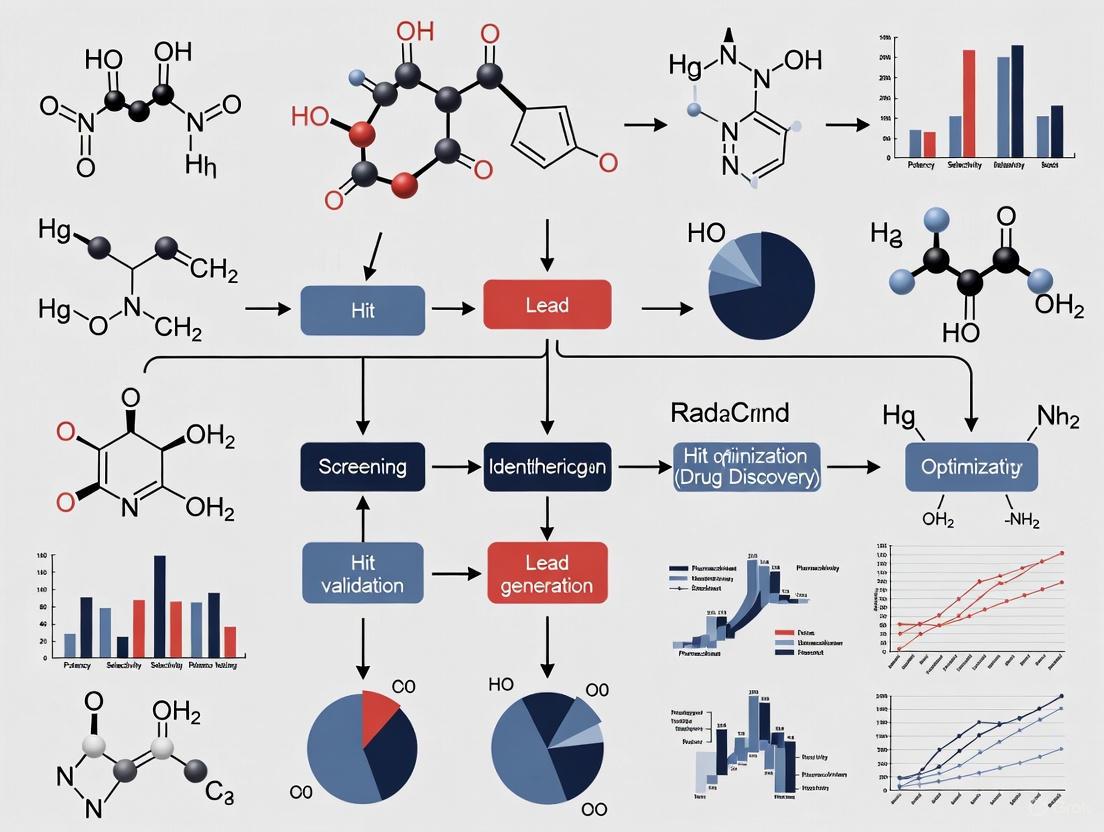
This article provides a comprehensive overview of the Hit-to-Lead (H2L) process in modern drug discovery, tailored for researchers, scientists, and development professionals.
Hit to Lead (H2L) in 2025: A Strategic Guide to Accelerating Drug Discovery
Abstract
This article provides a comprehensive overview of the Hit-to-Lead (H2L) process in modern drug discovery, tailored for researchers, scientists, and development professionals. It explores the foundational principles of H2L, details cutting-edge methodological applications including AI and automation, addresses common optimization challenges, and outlines rigorous validation techniques. By synthesizing current trends and data, this guide aims to equip teams with the knowledge to compress H2L timelines, improve lead compound quality, and strengthen the bridge to successful lead optimization.
What is Hit to Lead? Establishing the Bedrock of Early Drug Discovery
The hit-to-lead (H2L) stage is a critical, defined gateway in the early drug discovery process, serving as a strategic bridge between initial screening activities and the development of a optimized lead compound [1] [2]. This phase focuses on the transformation of preliminary "hits" – compounds showing desired biological activity – into refined "leads" that possess robust pharmacological profiles and are suitable for the more resource-intensive lead optimization phase [3] [4]. The overarching goal of H2L is to identify the most promising chemical series and select the best candidates based on a multi-parameter analysis that encompasses potency, selectivity, and early developability properties [2]. In the contemporary landscape, this process is being radically accelerated through the integration of artificial intelligence, computational modeling, and high-throughput experimentation, compressing traditional timelines from months to weeks [5]. The efficiency and rigor applied during H2L are paramount, as only one in every 5,000 compounds that enter drug discovery reaches the stage of becoming an approved drug [1].
Defining Hits and Leads: Core Concepts and Characteristics
What is a Hit?
In the lexicon of drug discovery, a hit is a compound identified through a primary screen that displays a reproducible and desired biological activity against a specific therapeutic target [2] [4]. Hits are the initial starting points, but they are typically rudimentary, often exhibiting suboptimal properties such as low potency (affinities in the micromolar range), poor selectivity, or unfavorable pharmacokinetics [1] [4]. They can be discovered through several methodological approaches:
- High-Throughput Screening (HTS): This involves testing vast libraries of compounds against a target protein (biochemical) or in a cell-based (phenotypic) assay using automated technologies to rapidly identify modulators of activity [2].
- Virtual Screening (VS): A computational approach that leverages techniques like molecular docking and dynamics simulations to predict which compounds from a large library are likely to bind to the target protein [2] [5].
- Fragment-Based Drug Discovery (FBDD): This method identifies very small molecular fragments that bind weakly to the target. These fragments then serve as starting points for growing or linking into more potent and selective compounds [2].
What is a Lead?
A lead compound represents a significant advancement from a hit. It is a chemically optimized molecule within a defined chemical series that has demonstrated a robust pharmacological activity profile on the specific therapeutic target [2]. A lead compound possesses improved biological activity and better pharmacological properties, making it a viable candidate for further, extensive optimization [4]. The transition from a hit to a lead involves strategic chemical modifications and rigorous testing to enhance its efficacy, selectivity, and safety profile, ensuring it is a suitable starting point for the subsequent lead optimization (LO) phase [3] [4].
Table 1: Key Characteristics Differentiating a Hit from a Lead
| Parameter | Hit Compound | Lead Compound |
|---|---|---|
| Potency (Affinity) | Typically micromolar (µM) range [1] | Improved to nanomolar (nM) range [1] |
| Selectivity | Often poor or unconfirmed | Improved selectivity against related targets and anti-targets [1] [2] |
| Cellular Efficacy | May not show efficacy in cellular models | Demonstrated efficacy in a functional cellular assay [1] [2] |
| SAR Understanding | Preliminary or non-existent | Initial Structure-Activity Relationship (SAR) is established [1] [4] |
| ADME Properties | Usually unoptimized | Favorable early in vitro ADME properties (e.g., metabolic stability, permeability) [2] [4] |
| Primary Role | Starting point, proof-of-concept | Candidate for full-scale optimization [3] |
The hit-to-lead process is a systematic, multi-stage endeavor designed to validate, expand, and triage initial hits into promising lead series. The following workflow diagram encapsulates the key stages and decision gates in this process.
Stage 1: Hit Confirmation
The initial stage involves validating the authenticity and reproducibility of the primary screening hits [1]. This critical step eliminates false positives and establishes a reliable foundation for further investment. Key experimental protocols in this phase include:
- Confirmatory Testing: Re-testing the compound using the original assay conditions to ensure the initial activity is reproducible [1].
- Dose-Response Curves: Testing the compound over a range of concentrations to determine the half-maximal inhibitory/effective concentration (IC₅₀ or EC₅₀), which quantifies potency [1].
- Orthogonal Testing: Assessing confirmed hits using a different assay technology or one that more closely mimics the physiological condition to rule out assay-specific artifacts [1].
- Biophysical Testing: Employing techniques such as Surface Plasmon Resonance (SPR), Nuclear Magnetic Resonance (NMR), or Isothermal Titration Calorimetry (ITC) to confirm direct binding to the target and understand the kinetics and thermodynamics of the interaction [1] [2].
Stage 2: Hit Expansion
Following confirmation, multiple analogs of the validated hit compounds are generated and tested to establish an initial understanding of the Structure-Activity Relationship (SAR) [1]. This helps identify the core chemical features necessary for activity.
- Objective: To explore the chemical space around the initial hit and identify a "compound cluster" or "series" with improved properties [1].
- Methodologies:
- Key Properties Assessed: During this expansion, compounds are evaluated against a wider panel of parameters, including affinity (goal: <1 µM), selectivity, efficacy in a cellular assay, and early ADME (Absorption, Distribution, Metabolism, Excretion) properties like metabolic stability and membrane permeability [1] [2].
Stage 3: Lead Identification and Series Selection
This stage involves a thorough, multi-parameter optimization (MPO) of the most promising hit series. The project team, typically comprising medicinal chemists, biologists, and DMPK scientists, executes iterative DMTA (Design-Make-Test-Analyze) cycles [2]. The objective is to synthesize new analogs with improved potency, reduced off-target activities, and physiochemical properties predictive of reasonable in vivo pharmacokinetics [1] [4]. The process is highly data-driven, leveraging SAR and often structure-based design [1]. The final output is a comparative assessment of all explored series, leading to the selection of typically two to three chemically distinct lead series that best meet the pre-defined lead criteria for progression into the Lead Optimization phase [2]. This strategy of having backup series increases the overall probability of success in downstream development [2].
Table 2: Quantitative Profile of an Ideal Lead Compound Series
| Property | Target Value/Range | Measurement Protocol |
|---|---|---|
| Potency | < 1 µM (goal: nanomolar) [1] | IC₅₀/EC₅₀ from dose-response curves in biochemical and cellular assays [1] |
| Selectivity | > 30-fold against related targets [1] | Secondary screening against a panel of related targets and anti-targets [1] |
| Ligand Efficiency (LE) | > 0.3 kcal/mol per heavy atom | Calculated from potency and non-hydrogen atom count [1] |
| Molecular Weight | Moderate (e.g., <400 Da) [1] | — |
| Lipophilicity (clogP) | Moderate (e.g., <3) [1] | Calculated Log P [1] |
| Metabolic Stability | Moderate to high (e.g., low hepatic clearance) | In vitro incubation with liver microsomes or hepatocytes [2] [4] |
| Membrane Permeability | High | Caco-2 or PAMPA assay [2] |
| Solubility | > 10 µM [1] | Kinetic or thermodynamic solubility measurement in aqueous buffer [1] |
| Cytotoxicity | Low (high therapeutic index) | Cytotoxicity assay in relevant cell lines (e.g., HEK293) [2] |
The Scientist's Toolkit: Essential Research Reagents and Solutions
The experimental rigor of the H2L phase is supported by a suite of specialized reagents, assays, and technologies.
Table 3: Key Research Reagent Solutions for Hit-to-Lead
| Reagent/Assay System | Function in H2L |
|---|---|
| SPR (Surface Plasmon Resonance) Biosensors | A biophysical technique used to confirm target binding and quantify association/dissociation kinetics (on/off rates) without labels [1] [2]. |
| Liver Microsomes / Hepatocytes | In vitro systems used to assess metabolic stability and identify major metabolites of the compound, predicting its in vivo clearance [4]. |
| Caco-2 Cell Line | A model of the human intestinal epithelium used to predict oral absorption and permeability of compounds [2]. |
| Target-Specific Biochemical Assays | Validated, robust enzymatic or binding assays used for primary screening and SAR determination during DMTA cycles [1] [3]. |
| Cell-Based Phenotypic Assays | Functional assays in a physiologically relevant cellular context to confirm efficacy and mechanism of action [1] [2]. |
| CETSA (Cellular Thermal Shift Assay) | A platform for confirming direct target engagement in intact cells or complex biological systems, bridging the gap between biochemical potency and cellular efficacy [5]. |
| Panels of Off-Target Proteins | Used in secondary screening to evaluate compound selectivity and identify potential off-target liabilities that could lead to side effects [1] [4]. |
The hit-to-lead process is a disciplined, gate-driven stage in drug discovery that transforms initial screening outcomes into qualified starting points for development. By applying a rigorous, multi-parameter optimization strategy—powered by iterative DMTA cycles and a comprehensive toolkit of biochemical, cellular, and DMPK assays—research teams can significantly de-risk the pipeline. The precise definition of hits and leads, coupled with systematic evaluation against a well-defined candidate drug target profile, is fundamental for selecting the optimal chemical series to advance into lead optimization, thereby increasing the likelihood of delivering successful new therapeutics to patients.
The Strategic Position of H2L in the Drug Discovery Pipeline
The hit-to-lead (H2L) stage represents a pivotal and strategic phase in the drug discovery pipeline, serving as an essential bridge between initial screening activities and the rigorous optimization of preclinical candidate compounds [6]. This phase is systematically designed to address the high attrition rates that plague the pharmaceutical industry by transforming preliminary "hits"—compounds identified through high-throughput screening (HTS) that show initial activity against a biological target—into refined "lead" compounds with enhanced potency, selectivity, and drug-like properties [1] [7]. The strategic positioning of H2L occurs after target validation and HTS but before lead optimization and preclinical development, making it a critical gatekeeper that determines which chemical series warrant significant further investment [6] [1].
The fundamental objective of the H2L phase is the multiparametric optimization of multiple properties simultaneously to identify chemical series with the highest potential for successful development into therapeutics [7]. This process involves intensive structure-activity relationship (SAR) investigations, preliminary absorption, distribution, metabolism, excretion, and toxicity (ADMET) profiling, and the establishment of synthetic tractability for promising compounds [6]. By focusing on these crucial parameters early in the discovery process, H2L aims to mitigate downstream failures and provide a solid foundation for the subsequent lead optimization phase, where compounds undergo further refinement for in vivo efficacy and safety testing [1]. The strategic importance of H2L has grown significantly in recent years as pharmaceutical companies face increasing pressure to reduce development timelines and costs while maintaining rigorous scientific standards for candidate selection.
Defining the H2L Process: From Hits to Leads
Conceptual Framework and Definitions
In the context of drug discovery, precise definitions distinguish "hits" from "leads" and establish clear objectives for the H2L process. A hit is typically defined as a compound that exhibits reproducible activity against a specific biological target in primary assays, usually with binding affinity or inhibitory concentration (IC50) in the micromolar range (typically 1-10 μM) [6] [7]. These initial hits are characterized by their potential for optimization rather than fully developed drug-like properties. In contrast, a lead compound represents a more advanced molecule that has undergone preliminary optimization during H2L to achieve improved potency (typically IC50 < 1 μM), demonstrated selectivity against related off-targets, and possesses preliminary evidence of acceptable ADMET properties suitable for further progression [6] [1].
The H2L process serves as the critical transition between these two states through systematic chemical optimization and biological characterization [7]. This phase typically commences 3-6 months after project initiation and lasts approximately 6-9 months, culminating in the selection of 1-5 lead series for advancement into full lead optimization [6]. The primary goals of H2L include confirming the biological relevance of initial screening hits, establishing preliminary structure-activity relationships (SAR), improving potency by several orders of magnitude (often from micromolar to nanomolar range), and ensuring compounds meet minimum criteria for drug-likeness based on established parameters such as Lipinski's Rule of Five [6] [1]. This strategic positioning enables medicinal chemists and pharmacologists to identify and address potential development liabilities early, thereby reducing the likelihood of costly late-stage failures.
Quantitative Benchmarks for Hit and Lead Compounds
The progression from hit to lead is guided by well-established quantitative benchmarks that reflect the compound's potential for successful development. The table below summarizes the key distinguishing characteristics between hits and leads based on standard industry criteria:
Table 1: Quantitative Benchmarks Differentiating Hits from Leads
| Parameter | Hit Compound | Lead Compound |
|---|---|---|
| Potency (IC50) | 100 nM - 10 μM [6] [1] | < 1 μM (submicromolar to nanomolar range) [6] [1] |
| Molecular Weight | < 500 Da [6] | < 500 Da (ideal range) [6] |
| clogP/LogD | Variable, often high | 1-3 (LogD at pH 7.4) [6] |
| Ligand Efficiency (LE) | Preliminary assessment | > 0.3 kcal/mol per heavy atom [1] |
| Lipophilic Efficiency (LipE) | Preliminary assessment | > 5 [1] |
| Solubility | > 10 μM [1] | > 100 μM [6] |
| Selectivity | Preliminary assessment | > 10-fold against related targets [6] |
| Cellular Activity | Confirmed in secondary assays | Demonstrated efficacy in functional cellular assays [1] |
These quantitative parameters provide a framework for objective assessment of compounds throughout the H2L process. The transition from hit to lead requires significant improvement in multiple parameters simultaneously, particularly potency, which often must improve by several orders of magnitude (from micromolar to nanomolar range) while maintaining or enhancing other drug-like properties [1]. Efficiency metrics such as ligand efficiency and lipophilic efficiency have become increasingly important in contemporary H2L campaigns as they help optimize potency without excessive increases in molecular size or lipophilicity, which can negatively impact solubility and overall developability [7].
Strategic Position in the Drug Discovery Pipeline
The Integrated Drug Discovery Workflow
The H2L phase occupies a strategic position within the broader drug discovery pipeline, serving as the crucial connection between exploratory research and development-focused activities. The complete drug discovery workflow follows a sequential path: Target Validation (TV) → Assay Development → High-Throughput Screening (HTS) → Hit to Lead (H2L) → Lead Optimization (LO) → Preclinical Development → Clinical Development [1]. This positioning is significant because H2L represents the first stage where promising but unoptimized screening outputs undergo systematic transformation into compounds with genuine therapeutic potential.
The schematic workflow below illustrates the strategic position and key decision points of the H2L stage within the broader drug discovery pipeline:
The H2L phase typically begins immediately following the identification of confirmed hits from HTS campaigns and involves multiple iterative cycles of design, synthesis, and testing [6]. This stage is characterized by parallel exploration of multiple chemical series rather than focused optimization of single compounds, allowing research teams to maintain diverse options until sufficient data accumulates to prioritize the most promising scaffolds [6] [1]. The output of a successful H2L campaign is the identification of 1-5 lead series that meet predefined criteria for potency, selectivity, and developability, which then progress into the more resource-intensive lead optimization phase [6].
Gatekeeping Function and Attrition Management
The strategic importance of the H2L phase is magnified by its function as a key attrition management gate in the drug discovery pipeline. With only approximately one in every 5,000 compounds that enter drug discovery ultimately achieving regulatory approval, early and rigorous candidate selection is crucial for resource allocation and portfolio management [1]. The H2L phase addresses this challenge by implementing multi-parameter optimization (MPO) approaches that balance potency, selectivity, and drug-like properties through weighted scoring systems, typically aggregating multiple parameters on a 0-1 scale to rank compounds holistically [6].
This gatekeeping function is further enhanced by the implementation of quality filters throughout the H2L process, including assessments for hERG channel affinity to prevent cardiac toxicity risks, synthetic accessibility for scalable production, and freedom-to-operate evaluations to ensure patentability [6] [1]. By applying these rigorous criteria early in the discovery process, organizations can avoid investing significant resources into chemical series with fundamental limitations that would likely result in failure during later, more expensive development stages. The strategic positioning of H2L thus serves as a crucial risk mitigation step, enabling organizations to focus their efforts on chemical matter with the highest probability of ultimately becoming successful therapeutics.
Core Methodologies and Experimental Protocols
Hit Confirmation and Validation
The initial stage of the H2L process involves rigorous confirmation and validation of screening hits to eliminate false positives and identify compounds with genuine biological activity. This systematic approach employs orthogonal assay techniques to build confidence in the chemical series before committing significant resources to their optimization. The hit confirmation workflow involves multiple experimental methodologies:
Table 2: Experimental Protocols for Hit Confirmation
| Methodology | Experimental Protocol | Key Output Parameters |
|---|---|---|
| Confirmatory Testing | Re-testing compounds using original HTS assay conditions with freshly prepared samples [1] | Reproducibility of activity; elimination of artifacts from compound degradation or precipitation [6] |
| Dose-Response Analysis | Testing compounds across a concentration range (typically 8-12 points in serial dilution) to generate full dose-response curves [1] | IC50/EC50 values; curve characteristics (Hill slope, R²) to confirm appropriate pharmacology [6] |
| Orthogonal Assays | Testing confirmed hits in different assay formats (e.g., switching from fluorescence to luminescence readouts) or more physiologically relevant systems [1] | Confirmation of target engagement independent of assay technology; elimination of technology-specific artifacts [6] |
| Counter-Screening | Assessing activity against known nuisance targets (e.g., redox activity, aggregation) and promiscuous binders using specialized assays [6] | Identification of pan-assay interference compounds (PAINS); specificity assessment [6] |
| Biophysical Characterization | Using techniques like SPR, ITC, NMR, or DLS to confirm binding and characterize interaction kinetics and stoichiometry [1] | Direct binding confirmation; measurement of KD, Kon, Koff; elimination of aggregators [6] |
The implementation of these orthogonal confirmation protocols is essential for establishing a validated starting point for H2L optimization. Recent advances in this area include the integration of artificial intelligence and machine learning for predicting assay interferences such as PAINS or aggregation, thereby accelerating validation workflows and improving decision-making [6]. Furthermore, the application of cellular target engagement assays such as CETSA (Cellular Thermal Shift Assay) has emerged as a powerful approach for confirming direct target binding in physiologically relevant environments, helping to bridge the gap between biochemical potency and cellular efficacy [5].
Hit Expansion and SAR Exploration
Following hit confirmation, the H2L process advances into hit expansion and systematic exploration of structure-activity relationships (SAR). This phase aims to identify analog compounds that define initial SAR trends and improve key properties through limited chemical optimization. The primary objectives include establishing the relationship between chemical structure and biological activity, identifying key pharmacophoric elements, and improving potency while maintaining favorable physicochemical properties.
The experimental approach to hit expansion typically involves multiple parallel strategies:
SAR by Catalog: Rapid identification and testing of structurally related analogs from internal compound collections or commercial sources to establish preliminary SAR without requiring de novo synthesis [1].
Focused Library Design: Synthesis of targeted analog libraries around the hit scaffold to systematically explore key regions of the molecule and identify critical positions for modification [6].
Multi-Parameter Optimization: Concurrent assessment of multiple properties including potency, selectivity, solubility, metabolic stability, and permeability to build a comprehensive understanding of the structure-property relationships [7].
The hit expansion phase typically involves the synthesis or acquisition of 50-200 analogs per chemical series to establish robust SAR [6]. This systematic exploration enables medicinal chemists to identify positions tolerant of substitution for property optimization, regions critical for maintaining potency, and opportunities to remove structural alerts or undesirable functionality. The output of this phase is the selection of 3-6 compound series that demonstrate the most favorable balance of properties for further progression into lead identification [1].
Quantitative Data Analysis and Decision Metrics
Key Efficiency Metrics and Property Optimization
The transition from hits to leads requires careful balancing of multiple physicochemical and pharmacological parameters. Several key efficiency metrics have been developed to guide this optimization process and ensure that improvements in potency are not achieved at the expense of molecular properties associated with good developability. The most widely applied metrics in contemporary H2L campaigns include:
Table 3: Key Efficiency Metrics for Hit-to-Lead Optimization
| Metric | Calculation | Target Value | Strategic Importance |
|---|---|---|---|
| Ligand Efficiency (LE) | ΔG / NHA ≈ 1.37 × pIC50 / NHA [1] | > 0.3 kcal/mol per heavy atom [1] | Normalizes potency by molecular size; ensures binding efficiency [7] |
| Lipophilic Efficiency (LipE) | pIC50 - logP (or logD) [1] | > 5 [1] | Balances potency against lipophilicity; predictor of compound quality [7] |
| Ligand Lipophilicity Efficiency (LLE) | pIC50 - logP (or logD) [7] | > 5 [7] | Similar to LipE; indicates whether sufficient potency is achieved without excessive lipophilicity [7] |
| Solubility | Measured kinetic or thermodynamic solubility in aqueous buffer [6] | > 100 μM [6] | Ensures adequate concentration for in vitro and in vivo testing [6] |
| Molecular Weight | Sum of atomic masses [6] | < 500 Da [6] | Maintains drug-likeness; correlates with absorption and permeability [6] |
These efficiency metrics have become fundamental tools in modern H2L campaigns as they provide a framework for evaluating compound quality beyond simple potency measurements. By monitoring these parameters throughout the optimization process, medicinal chemists can make informed decisions that balance multiple properties simultaneously and avoid the introduction of development liabilities early in the optimization process. The application of these metrics is particularly important given the common challenge of optimizing one property (such as absorption) without compromising another (such as potency) during H2L [7].
Multi-Parameter Optimization and Lead Selection Criteria
The culmination of the H2L process involves the integrated assessment of all data to select lead compounds for progression into full lead optimization. This decision-making process typically employs multi-parameter optimization (MPO) scoring systems that weight and combine multiple critical parameters into a single composite score [6]. A typical MPO approach might incorporate parameters such as potency, selectivity, solubility, metabolic stability, permeability, and cytochrome P450 inhibition profile, with each parameter normalized to a 0-1 scale based on desired thresholds [6].
The quantitative criteria for lead selection vary depending on the target class and therapeutic area but generally include the following benchmarks:
- Potency: IC50 < 1 μM (submicromolar to nanomolar range) in functional cellular assays [6] [1]
- Selectivity: >10-100 fold against related targets or anti-targets [6]
- Solubility: >100 μM in physiologically relevant buffers [6]
- Metabolic Stability: >30-60% remaining after incubation with hepatocytes or liver microsomes [6]
- Permeability: Demonstrated cellular permeability in models such as Caco-2 or MDCK [1]
- Cytotoxicity: Minimal effects on cell viability at relevant concentrations (>10-100× IC50) [1]
- Ligand Efficiency: >0.3 kcal/mol per heavy atom [1]
Compounds that meet these integrated criteria are designated as lead compounds and progress into the lead optimization phase, where they undergo more extensive refinement of their pharmacological and pharmaceutical properties before selection of a preclinical candidate [6] [1].
Emerging Trends and Innovative Approaches
AI-Enabled Hit-to-Lead Acceleration
The H2L process is undergoing rapid transformation through the integration of artificial intelligence and machine learning approaches that accelerate and enhance decision-making. AI has evolved from a disruptive concept to a foundational capability in modern drug discovery, with machine learning models now routinely informing target prediction, compound prioritization, pharmacokinetic property estimation, and virtual screening strategies [5]. Recent advances demonstrate the significant impact of these technologies on H2L efficiency, with one 2025 study showing that integrating pharmacophoric features with protein-ligand interaction data can boost hit enrichment rates by more than 50-fold compared to traditional methods [5].
The application of deep graph networks and other AI-driven approaches has demonstrated remarkable potential for accelerating the traditionally lengthy H2L phase. In a notable 2025 case study, researchers utilized deep graph networks to generate over 26,000 virtual analogs, resulting in the identification of sub-nanomolar inhibitors with over 4,500-fold potency improvement over initial hits [5]. These AI-enabled approaches are compressing discovery timelines from months to weeks by enabling rapid design-make-test-analyze (DMTA) cycles and providing richer data for optimization decisions [5]. The integration of AI with experimental data creates a virtuous cycle of improvement, where each iteration generates higher-quality data that further refines the predictive models.
Integrated Cross-Disciplinary Platforms
Contemporary H2L campaigns increasingly rely on integrated cross-disciplinary platforms that combine expertise from computational chemistry, structural biology, pharmacology, and data science [5]. This convergence enables the development of predictive frameworks that combine molecular modeling, mechanistic assays, and translational insight to support more confident go/no-go decisions [5]. The organizations leading the field are those that can effectively combine in silico foresight with robust experimental validation, creating seamless workflows that maintain mechanistic fidelity throughout the optimization process [5].
These integrated approaches are particularly evident in the growing emphasis on physiologically relevant assay systems that better predict in vivo efficacy. Cellular target engagement assays such as CETSA have emerged as critical tools for confirming direct target binding in intact cells and tissues, thereby closing the gap between biochemical potency and cellular efficacy [5]. Recent work has applied CETSA in combination with high-resolution mass spectrometry to quantify drug-target engagement in complex biological systems, confirming dose- and temperature-dependent stabilization ex vivo and in vivo [5]. These advanced approaches provide quantitative, system-level validation that enhances decision-making confidence and reduces late-stage attrition due to inadequate target engagement.
The Scientist's Toolkit: Essential Research Reagents and Technologies
The successful execution of H2L campaigns relies on a comprehensive toolkit of research reagents, technologies, and methodologies that enable the multiparametric optimization required for lead identification. The table below details key solutions essential for contemporary H2L operations:
Table 4: Essential Research Reagent Solutions for Hit-to-Lead Programs
| Technology/Reagent | Application in H2L | Key Function |
|---|---|---|
| CETSA (Cellular Thermal Shift Assay) | Target engagement validation [5] | Confirms direct binding to cellular target in physiologically relevant environment [5] |
| Surface Plasmon Resonance (SPR) | Binding kinetics characterization [1] | Measures binding affinity (KD), association (kon), and dissociation (koff) rates [1] |
| High-Content Screening Systems | Cellular phenotype assessment [1] | Multiparametric analysis of cellular responses including efficacy and toxicity [1] |
| Metabolic Stability Assays | Hepatic clearance prediction [6] | Measures compound half-life in liver microsomes or hepatocytes [6] |
| Parallel Artificial Membrane Permeability Assay (PAMPA) | Passive permeability screening [6] | Predicts membrane penetration potential [6] |
| CYP Inhibition Assays | Drug-drug interaction potential [1] | Identifies compounds that inhibit major cytochrome P450 enzymes [1] |
| Compound Management Systems | Sample storage and distribution [6] | Maintains compound integrity and enables efficient screening [6] |
| AI-Guided Design Platforms | Compound prioritization and design [5] | Predicts properties and activity of proposed analogs before synthesis [5] |
This comprehensive toolkit enables the multiparametric optimization essential for successful H2L outcomes. The integration of these technologies into streamlined workflows allows research teams to efficiently profile compounds across multiple parameters simultaneously, generating the comprehensive data sets required for informed lead selection. As H2L approaches continue to evolve, the strategic combination of experimental and computational tools will further enhance the efficiency and success rates of this critical drug discovery phase.
The hit-to-lead (H2L) phase represents a critical juncture in drug discovery, where initial screening hits are transformed into viable lead compounds with the potential for clinical success. The primary objective during this stage is the simultaneous optimization of multiple, often competing, properties: potency at the intended biological target, selectivity against off-targets to minimize toxicity, and favorable absorption, distribution, metabolism, excretion, and toxicity (ADMET) profiles to ensure adequate safety and pharmacokinetics [8]. Failure to adequately balance these properties early in the discovery process remains a major contributor to late-stage attrition, making integrated optimization strategies essential for improving the efficiency and success rates of modern drug development pipelines [5].
This technical guide examines contemporary frameworks and methodologies for achieving this crucial balance, with a focus on the integration of artificial intelligence (AI), advanced in silico tools, and high-throughput experimental data. We position this discussion within the broader thesis that a deliberate, data-driven approach to multiparameter optimization (MPO) during the H2L phase is fundamental to generating what experienced drug hunters term "beautiful molecules" – those that are therapeutically aligned, synthetically feasible, and bring value beyond traditional approaches [8].
The Multiparameter Optimization (MPO) Framework
The ultimate goal of generative chemistry and lead optimization is not merely to generate novel molecules, but to produce candidates that holistically integrate synthetic practicality, molecular function, and disease-modifying capabilities [8]. This requires a robust MPO framework that moves beyond simple potency metrics.
Defining the "Beautiful Molecule" in H2L
A molecule's "beauty" is context-dependent, shaped by program objectives that evolve with emerging data and shifting priorities [8]. The essential considerations for a successful H2L outcome include:
- Chemical Synthesizability: Accounting for practical time and cost constraints for procurement [8].
- Favorable ADMET Properties: Ensuring a high probability of acceptable pharmacokinetics and safety [8] [9].
- Target-Specific Binding: Effective modulation of the intended biological mechanism with sufficient selectivity [8].
- The Construction of Appropriate MPO Functions: Quantitative functions to drive AI and design efforts toward project-specific objectives [8].
- Indispensable Human Feedback: The nuanced judgment of experienced drug hunters remains irreplaceable in guiding the optimization process [8].
The Role of AI and Generative Models
AI and generative models have evolved from disruptive concepts to foundational capabilities in modern R&D [5]. These tools now routinely inform target prediction, compound prioritization, and property estimation. For instance, Terray Therapeutics' EMMI platform employs a full-stack AI system where generative models design property-optimized molecules using latent diffusion and reinforcement learning, while predictive models profile ADMET properties and potency across the proteome [10]. This approach allows for the exploration of vast chemical spaces while simultaneously optimizing for multiple parameters.
Table 1: Key AI-Generated Efficiency Metrics in Hit-to-Lead Optimization
| Company/Platform | Reported Efficiency | Key Achievement |
|---|---|---|
| Exscientia [11] | ~70% faster design cycles; 10x fewer compounds synthesized | Clinical candidate achieved after synthesizing only 136 compounds |
| Terray Therapeutics (EMMI) [10] | Database of over 13 billion precise binding measurements | Exploration of "dark areas" of chemical space with custom-built focus libraries |
| AI-Guided Workflow [5] | Hit enrichment rates boosted by >50-fold | Integration of pharmacophoric features with protein-ligand interaction data |
Methodologies for Individual Parameter Assessment
Assessing and Optimizing Potency
Potency optimization requires a multi-faceted approach that combines computational and experimental techniques.
- Ultra-High-Throughput Screening: Platforms like Terray's ultra-dense microarrays enable the measurement of interactions between millions of small molecules and targets of interest, generating billions of data points to inform potency optimization [10].
- In Silico Potency Modeling: A two-tiered computational approach is emerging as a best practice. First, an ultra-fast sequence-only model evaluates thousands of generated molecules cheaply and quickly. The most promising subset is then profiled with a more accurate, structure-based multi-modal potency model [10].
- Cellular Target Engagement: Technologies like the Cellular Thermal Shift Assay (CETSA) provide direct, quantitative validation of target engagement in intact cells, confirming dose-dependent stabilization and closing the gap between biochemical potency and cellular efficacy [5].
Ensuring Selectivity
Selectivity is crucial for minimizing off-target toxicity and ensuring a sufficient therapeutic index.
- Proteome-Wide Binding Predictions: Advanced AI models predict binding affinity and potential off-target interactions across large panels of proteins, flagging compounds with potential selectivity issues early in the design process [10].
- Structural Modeling: Leveraging crystal structures and homology models to understand key binding interactions that drive selectivity, then designing molecules to exploit subtle differences between target and off-target binding sites.
- Experimental Selectivity Screening: Testing compounds against panels of related targets (e.g., kinase panels, GPCR panels) to empirically confirm computational selectivity predictions.
Early ADMET Profiling
The accurate prediction of ADMET properties remains a significant challenge, yet early identification of liabilities is critical for reducing late-stage attrition [8] [9].
- In Silico ADMET Prediction: Tools like SwissADME and ADMET Predictor are routinely deployed to filter for drug-likeness and predict key properties such as solubility, LogD, permeability, and metabolic stability before synthesis [5] [9].
- Physiologically-Based Pharmacokinetic (PBPK) Modeling: PBPK modeling bridges discovery and development by predicting human pharmacokinetics, assisting in understanding distribution, oral absorption, formulation, and drug-drug interaction potential [9].
- High-Throughput Experimental ADME: Automated, miniaturized in vitro assays for metabolic stability, plasma protein binding, and permeability enable rapid profiling of compound libraries [9]. Advances in microsampling and accelerator mass spectrometry (AMS) further support the acquisition of high-quality PK data with minimal resource expenditure [9].
Table 2: Key Experimental ADMET Assays and Their Applications in H2L
| Assay Type | Primary Function | Strategic Application in H2L |
|---|---|---|
| Metabolic Stability (e.g., microsomes/hepatocytes) [9] | Measures compound half-life in liver fractions | Prioritizes compounds with lower clearance; supports IVIVE for human PK prediction |
| Plasma Protein Binding [9] | Quantifies fraction of compound bound to plasma proteins | Informs free drug concentration estimates for efficacy and toxicity |
| Caco-2/PAMPA Permeability [5] | Predicts intestinal absorption and brain penetration | Filters compounds with poor membrane permeability |
| CYP Inhibition [9] | Identifies potential for drug-drug interactions | Flags compounds with high DDI risk early in optimization |
| hERG Binding | Assesses potential for cardiac toxicity | Early de-risking of cardiovascular safety liabilities |
Integrated Workflows for Balanced Optimization
Successful H2L campaigns require the tight integration of design, synthesis, and testing within a continuous feedback loop.
The Design-Make-Test-Analyze (DMTA) Cycle
The DMTA cycle forms the backbone of modern lead optimization, and its acceleration is key to compressing H2L timelines [5] [10].
- Design: AI-driven generative models propose novel molecular structures optimized for multiple parameters simultaneously. Reinforcement learning with human feedback (RLHF) helps align the AI's proposals with medicinal chemists' intuition and project objectives [8].
- Make: Advances in automated synthesis, including robotics-mediated chemistry and high-throughput parallel synthesis, enable the rapid production of AI-designed compounds [11] [10].
- Test: Ultra-high-throughput screening technologies and automated bioassays generate precise, high-quality data for potency, selectivity, and early ADMET properties [10].
- Analyze: Data analysis feeds back into AI models, refining their predictions and initiating the next design cycle. The entire process is becoming increasingly closed-loop, with minimal human intervention required for routine iterations [11] [10].
The following diagram illustrates this continuous, AI-integrated workflow:
The Scientist's Toolkit: Essential Research Reagents and Platforms
Table 3: Key Research Reagent Solutions for Hit-to-Lead Optimization
| Tool / Reagent | Function in H2L | Application Context |
|---|---|---|
| Ultra-Dense Microarrays (Terray) [10] | Measures millions of target-molecule interactions | Primary hit finding and SAR expansion |
| CETSA Kits [5] | Confirms target engagement in intact cells | Mechanistic validation of cellular potency |
| Human Liver Microsomes/Hepatocytes [9] | Evaluates metabolic stability and metabolite ID | Early ADME profiling; IVIVE for human clearance prediction |
| Transfected Cell Lines | Expresses specific human enzymes or transporters | Assessment of transporter-mediated DDI potential |
| PBPK/PD Modeling Software [9] | Simulates human PK and dose-response | Strategic candidate selection and human dose prediction |
| AI Foundation Models (e.g., COATI) [10] | Encodes molecules in invertible mathematical space | Generative molecular design and property prediction |
Balancing potency, selectivity, and early ADMET properties during the hit-to-lead process is a complex, multi-dimensional challenge that defines the success of subsequent drug development stages. The most effective strategies leverage integrated, AI-driven platforms that combine high-quality proprietary data, predictive modeling, and automated experimentation within a tight DMTA cycle [8] [10]. The emerging paradigm emphasizes "closing the loop" between computational design and experimental validation, while still leveraging the irreplaceable nuanced judgment of experienced drug hunters through RLHF [8].
Future progress will depend on continued improvements in the accuracy of property prediction models, particularly for complex ADMET endpoints and target-specific bioactivity [8]. Furthermore, the adoption of Model-Informed Drug Development (MIDD) principles, as outlined in emerging regulatory guidelines like ICH M15, will further solidify the role of quantitative modeling in strategic decision-making from the earliest stages of discovery [12]. By embracing these advanced frameworks and technologies, research teams can systematically navigate the vast chemical space to discover not just novel molecules, but truly "beautiful" lead compounds optimized for therapeutic success.
In the rigorous pathway of drug discovery, the hit-to-lead (H2L) phase represents a critical gateway designed to transition from initial screening outcomes to viable lead compounds [1]. This stage begins with a list of active compounds, or "hits," typically identified from a high-throughput screen (HTS) of large compound libraries [1]. The primary objective of hit confirmation is to subject these initial hits to a series of stringent tests to validate their biological activity and specificity, thereby eliminating false positives and laying a solid foundation for subsequent optimization [13] [14]. A confirmed hit is not merely active; it is a reproducible, dose-dependent, and specific modulator of the intended target, exhibiting early indicators of drug-like potential [15].
The process of hit confirmation serves as a crucial quality control checkpoint. Without it, resource-intensive lead optimization efforts risk being wasted on compounds that are artifacts of the assay technology rather than genuine bioactive entities [13]. The core pillars of this triage process are reproducibility testing, dose-response analysis, and orthogonal assay validation, which together provide a multi-faceted assessment of hit quality [13] [1]. This guide details the experimental strategies and methodologies essential for effective hit confirmation, providing a technical roadmap for researchers and drug development professionals navigating this foundational stage of early drug discovery.
Core Pillars of Hit Confirmation
Reproducibility and Confirmatory Testing
The first and most fundamental step in hit confirmation is to verify that the observed activity is real and reproducible. This process begins with confirmatory testing, which involves re-testing the initial hits using the same assay conditions and protocol as the primary screen [1]. The goal is to eliminate hits whose activity was a result of random chance, transient system fluctuations, or compound handling errors (e.g., pipetting inaccuracies, plate placement effects) [13].
A key requirement for a robust confirmatory assay is its pharmacological importance and quality, ensuring it is reproducible across assay plates and screening days, and that the pharmacology of standard control compounds falls within predefined limits [15]. Furthermore, the assay must not be sensitive to the concentrations of solvents like DMSO used to store and dilute the compound library [15]. Compounds that fail to show significant activity in this retesting phase are typically discarded immediately, conserving valuable resources for more promising candidates.
Dose-Response Curves and Hit Characterization
Once reproducible activity is confirmed, the next step is to quantify the potency and efficacy of the hit compounds. This is achieved by generating dose-response curves, where each hit is tested over a range of concentrations (typically from nanomolar to high micromolar) to determine the concentration that results in half-maximal activity (EC50) or binding (IC50) [1] [13].
The shape of the dose-response curve provides critical information about the compound's behavior [13]:
- Steep curves may indicate potential toxicity or cooperative binding.
- Shallow or bell-shaped curves can signal poor compound solubility, aggregation, or interference with the assay detection method.
- Compounds that fail to produce a reproducible sigmoidal dose-response relationship are generally discarded due to a lack of reliable activity [13].
Beyond simple potency, this stage allows for the calculation of ligand efficiency (LE), a metric that normalizes the binding affinity to the molecular size of the compound [16]. This helps prioritize smaller hits that make more efficient use of their atoms to bind to the target, which is particularly valuable for fragment-based approaches [16].
Orthogonal Assays: Confirming Biological Relevance
Orthogonal assays are perhaps the most powerful tool for distinguishing true bioactive compounds from assay-specific artifacts. The purpose of an orthogonal assay is to confirm the bioactivity of a hit using a different readout technology or under assay conditions that are closer to the target's physiological environment [13] [1]. This step is vital because a compound that produces the same biological outcome via two distinct measurement techniques is unlikely to be a false positive.
Table 1: Common Orthogonal Assay Technologies for Hit Confirmation
| Primary Screening Readout | Orthogonal Readout Technologies | Key Applications |
|---|---|---|
| Fluorescence-based | Luminescence- or Absorbance-based readouts | Biochemical or cell-based assays; avoids fluorescent compound interference [13] |
| Bulk-readout (Plate reader) | Microscopy imaging & High-content analysis | Cell-based assays; inspects single-cell effects vs. population averages [13] |
| Biochemical Assay | Biophysical binding assays (SPR, ITC, MST, TSA, NMR) | Target-based approaches; confirms binding, measures affinity & kinetics [13] [1] |
| Immortalized Cell Line (2D) | Different cell models (3D, primary cells) | Phenotypic screening; validates hits in more disease-relevant settings [13] |
The selection of an orthogonal assay depends on the nature of the primary screen. For target-based campaigns, biophysical assays like Surface Plasmon Resonance (SPR) or Isothermal Titration Calorimetry (ITC) provide direct evidence of target engagement and can yield detailed information on binding kinetics and stoichiometry [13] [1]. In phenotypic screening, employing different cell models or high-content imaging that examines specific cellular features (e.g., morphology, translocation) can confirm the biological phenotype while offering deeper mechanistic insights [13].
Advanced Triage: Counterscreens and Selectivity Profiling
After establishing reproducible, potent, and orthogonal activity, the focus shifts to assessing a hit's specificity. Counter screens are specifically designed to identify and eliminate compounds that act through general assay interference mechanisms rather than specific target modulation [13]. These assays test for common artifact-causing behaviors by bypassing the actual biological reaction and measuring only the compound's effect on the detection technology itself [13].
Prevalent interference mechanisms and corresponding counter-assays include:
- Autofluorescence or Signal Quenching: Testing compounds in control cells or assay systems devoid of the target [13].
- Compound Aggregation: Using detergents like Triton X-100 in the assay buffer to disrupt aggregate-based inhibition [13].
- Chemical Reactivity: Assessing promiscuous inhibition in unrelated enzyme assays.
- Chelation: Testing activity in the presence of excess divalent cations like Mg²⁺ or Zn²⁺.
Furthermore, selectivity profiling is conducted through secondary screening against related targets (e.g., other kinases in a kinase inhibitor program) or anti-targets to identify and deprioritize promiscuous hits [1]. This step is crucial for predicting potential off-target side effects early in the process.
The Hit Confirmation Workflow
The following diagram illustrates the sequential and iterative process of hit confirmation, from initial retesting to the final selection of triaged hits ready for the hit-to-lead phase.
Essential Research Reagents and Tools
A successful hit confirmation campaign relies on a suite of specialized reagents and assay technologies. The following table details key solutions used throughout the process.
Table 2: Key Research Reagent Solutions for Hit Confirmation
| Reagent/Assay Type | Function in Hit Confirmation | Specific Examples |
|---|---|---|
| Cell Viability Assays | Assess cellular fitness and rule out general toxicity as a cause for activity [13]. | CellTiter-Glo (ATP quantitation), MTT assay (Metabolic activity) [13]. |
| Cytotoxicity Assays | Measure compound-induced cell damage and membrane integrity [13]. | Lactate Dehydrogenase (LDH) assay, CytoTox-Glo, CellTox Green [13]. |
| High-Content Staining Dyes | Enable multiplexed analysis of cellular morphology and health via microscopy [13]. | DAPI/Hoechst (Nuclei), MitoTracker (Mitochondria), TO-PRO-3 (Membrane integrity) [13]. |
| Biophysical Assay Platforms | Confirm direct target binding and quantify affinity/kinetics [13] [1]. | Surface Plasmon Resonance (SPR), Isothermal Titration Calorimetry (ITC) [13]. |
| Serum Albumin | Evaluate protein binding, which can influence compound potency and availability [1]. | Human Serum Albumin (HSA) binding assays. |
| Detergents & Additives | Mitigate compound aggregation and nonspecific binding in biochemical assays [13]. | Bovine Serum Albumin (BSA), Triton X-100, Tween-20 [13]. |
Integrating Hit Confirmation into the Broader Hit-to-Lead Pipeline
Hit confirmation is not the final goal but a critical filtering mechanism within the larger hit-to-lead (H2L) pipeline. The output of a successful confirmation process is a collection of triaged hit series that demonstrate confirmed bioactivity, acceptable potency (typically < 1 μM), and initial signs of specificity and drug-likeness [1]. These qualified hits become the input for the hit expansion phase, where medicinal chemists generate analogs to establish a robust Structure-Activity Relationship (SAR) and to further improve properties [1] [17].
The criteria assessed during hit confirmation directly inform the objectives of the subsequent H2L stage. For instance, a confirmed hit with moderate potency but excellent selectivity and clean ancillary pharmacology is often a more attractive starting point than a highly potent but promiscuous compound. The rigorous experimental strategies outlined in this guide—ensuring reproducibility, quantifying response, and verifying specificity—are therefore indispensable for de-risking drug discovery projects. By investing in a thorough hit confirmation workflow, research teams can confidently allocate resources to the most promising chemical series, thereby increasing the probability of successfully delivering a development candidate with a strong foundation for preclinical and clinical success.
In the drug discovery pipeline, the hit-to-lead (H2L) stage serves as a critical gateway where initial screening hits are transformed into promising lead compounds [1]. Within this phase, hit expansion represents a systematic and multidisciplinary process aimed at exploring the structure-activity relationship (SAR) around a confirmed hit to develop a robust compound series [1] [18]. This expansion is not merely about generating numerous analogs; it is a deliberate strategy to understand which structural features correlate with desired biological activity and physicochemical properties [19]. When a single compound shows activity against a therapeutic target, it represents merely a starting point. The fundamental goal of hit expansion is to rapidly build a chemical series that allows researchers to identify key trends, mitigate potential development risks, and ultimately select the most viable lead candidates for the subsequent, more resource-intensive lead optimization phase [1] [20]. This guide details the core principles, methodologies, and experimental protocols that enable scientists to navigate this complex process efficiently.
Conceptual Foundation: From a Hit to a Series
Defining the Starting Point: The Confirmed Hit
Before expansion can begin, the initial screening hit must be rigorously validated. A confirmed hit is a compound whose activity against the biological target is reproducible and validated through a series of controlled experiments [1]. The hit confirmation process typically involves:
- Confirmatory Testing: Re-testing the compound using the original assay conditions to ensure activity is reproducible [1].
- Dose-Response Analysis: Determining the concentration that results in half-maximal binding or activity (IC50 or EC50) to establish potency [1].
- Orthogonal Testing: Assessing compound activity using a different assay technology or one that more closely mirrors physiological conditions [1].
- Secondary Screening: Evaluating efficacy in a functional cellular assay to confirm biological relevance [1].
- Biophysical Testing: Using techniques like surface plasmon resonance (SPR) or nuclear magnetic resonance (NMR) to confirm direct binding to the target [1].
The Objectives of Hit Expansion
Hit expansion aims to rapidly generate a compound series that elucidates the SAR, thereby reducing uncertainty and guiding subsequent optimization. The primary objectives include:
- SAR Elucidation: Understanding how structural modifications affect potency, selectivity, and other key properties [1] [19].
- Improving Potency: Enhancing affinity for the target, often from micromolar (10−6 M) to nanomolar (10−9 M) range [1].
- Property Optimization: Addressing drug-like properties such as metabolic stability, solubility, and membrane permeability early in the process [1] [20].
- Risk Mitigation: Identifying and overcoming potential development challenges such as cytotoxicity, poor selectivity, or chemical instability [20].
- Securing Patentability: Expanding the structural scope to establish a strong intellectual property position [1].
Strategic Methodologies for Hit Expansion
Traditional and Modern Approaches
Several strategic approaches can be employed for hit expansion, each with distinct advantages and applications.
SAR by Catalog: This approach involves identifying and purchasing structurally analogous compounds from commercial sources to quickly generate initial SAR trends without synthetic effort [1]. It is a rapid and cost-effective method for the early exploration of structural diversity around the hit.
SAR by Synthesis: Medicinal chemists design and synthesize analogs based on the original hit structure [1]. This approach allows for greater control over the structural modifications and access to novel, proprietary chemical space not available commercially.
SAR by Space: A modern computational approach that leverages vast virtual chemical spaces, such as the REAL Space (containing over 11 billion tangible compounds), to identify synthetically accessible analogs [18]. Navigation through these spaces uses algorithms like Feature Trees (FTrees), which compute similarity based on physicochemical properties, enabling the efficient selection of compounds for synthesis that are likely to be active [18].
Cross-Structure-Activity Relationship (C-SAR): An emerging methodology that analyzes pharmacophoric substituents and their substitution patterns across diverse chemotypes targeting the same biological entity [21]. This approach can accelerate SAR expansion by applying learned principles from one chemotype to another, effectively "hopping" between different structural classes.
Quantitative Analysis of Hit Expansion
The following table summarizes key metrics and criteria used to evaluate compounds during hit expansion, compiled from industry analyses and case studies [1] [16] [18].
Table 1: Key Property Targets and Analytical Metrics During Hit Expansion
| Property Category | Specific Metric | Typical Target Range | Analysis Method |
|---|---|---|---|
| Potency | Affinity (Ki/Kd/IC50) | < 1 μM → nanomolar range [1] | Dose-response curves, TR-FRET [1] [18] |
| Ligand Efficiency | LE (Ligand Efficiency) | ≥ 0.3 kcal/mol/HA [16] | Calculated from potency and heavy atom (HA) count [16] |
| Selectivity | Activity vs. related targets | >10-100 fold selectivity [20] | Counter-screening against target panels [20] |
| Cellular Activity | Efficacy in cell-based assay | Significant activity at <10 μM [1] | Secondary functional cellular assays [1] |
| Solubility | Aqueous Solubility | > 10 μM [1] | Thermodynamic solubility measurements |
| Microsomal Stability | Metabolic Half-life | Sufficient for in vivo models [1] | In vitro incubation with liver microsomes |
| Cytotoxicity | Selectivity over general toxicity | Low cytotoxicity at therapeutic concentrations [1] | Cell viability assays (e.g., MTT, CellTiter-Glo) |
The success of a hit expansion campaign is often measured by the resulting ligand efficiency (LE), which normalizes potency by molecular size, and the successful establishment of a clear structure-activity relationship (SAR) [16]. A successful campaign will typically yield multiple compound clusters or series with improved properties, from which the project team will select between three and six for further exploration [1].
Experimental Protocols and Workflows
The Integrated Hit Expansion Workflow
A typical hit expansion workflow is cyclical, involving design, synthesis, testing, and data analysis to inform the next cycle. The diagram below illustrates this integrated process.
Diagram 1: Hit Expansion Workflow
Detailed Methodologies for Key Experiments
Biochemical Potency and Mechanism of Action Assays
Objective: To quantify the direct interaction between the analog and the target, and to understand its mechanism of inhibition [20].
Protocol:
- Assay Format: Use homogeneous, mix-and-read assays like Transcreener, Fluorescence Polarization (FP), or Time-Resolved FRET (TR-FRET) for efficiency and scalability [20].
- Dose-Response Curves: Test compounds over a range of concentrations (typically from 10 µM to 0.1 nM in a 3- or 10-fold dilution series) in duplicate or triplicate.
- Data Analysis: Fit the dose-response data to a four-parameter logistic (4PL) Hill equation to determine the IC50 value [16].
- Mechanistic Studies: For enzymes, vary substrate concentrations in the presence of fixed inhibitor concentrations to determine the mode of inhibition (e.g., competitive, non-competitive) [20].
Cellular Target Engagement and Functional Assays
Objective: To confirm that the compound engages the target and produces the desired functional effect in a physiologically relevant cellular environment [5].
Protocol (Cellular Thermal Shift Assay - CETSA):
- Cell Treatment: Incubate cells (e.g., primary cells or relevant cell lines) with the test compound or vehicle control for a predetermined time.
- Heat Challenge: Aliquot the cell suspension, heat each aliquot to a different temperature (e.g., from 45°C to 65°C) for a fixed time (e.g., 3 minutes).
- Cell Lysis and Fractionation: Lyse the cells and separate the soluble protein fraction by centrifugation.
- Detection: Quantify the remaining soluble target protein in each fraction using Western blot or, for higher throughput, an immunoassay like TR-FRET [5].
- Data Analysis: Plot the fraction of intact protein versus temperature. A rightward shift in the melting curve (increased ΔTm) for the compound-treated sample indicates target stabilization and successful engagement [5].
In Vitro ADME and Physicochemical Profiling
Objective: To assess key developability properties of the analogs early in the process [1] [20].
Protocol (Metabolic Stability in Liver Microsomes):
- Incubation: Combine test compound (typically 1 µM), liver microsomes (e.g., 0.5 mg/mL protein), and NADPH-regenerating system in potassium phosphate buffer.
- Time Course: Incubate at 37°C and remove aliquots at multiple time points (e.g., 0, 5, 15, 30, 60 minutes).
- Reaction Termination: Stop the reaction by adding an equal volume of ice-cold acetonitrile containing an internal standard.
- Analysis: Remove precipitated protein by centrifugation and analyze the supernatant using LC-MS/MS to determine the parent compound concentration remaining at each time point.
- Data Analysis: Plot the natural logarithm of the compound concentration versus time. The slope of the linear regression is used to calculate the in vitro half-life (t1/2) and intrinsic clearance (CLint).
The Scientist's Toolkit: Essential Reagents and Materials
Successful hit expansion relies on a suite of specialized reagents, assay platforms, and computational tools. The following table details key solutions used in the process.
Table 2: Research Reagent Solutions for Hit Expansion
| Tool Category | Specific Solution | Function & Application |
|---|---|---|
| Biochemical Assays | Transcreener Assays [20] | Homogeneous, high-throughput measurement of enzyme activity (e.g., kinases, GTPases). |
| Cellular Assays | CETSA (Cellular Thermal Shift Assay) [5] | Quantifies target engagement and binding in intact cells under physiological conditions. |
| Computational Platforms | Schrödinger Suite [22] | Provides in silico tools for FEP+ binding affinity prediction, de novo design, and property prediction. |
| Chemical Spaces | REAL Database & REAL Space [18] | Vast collections of commercially available and virtually accessible, synthetically feasible compounds for analog sourcing. |
| Data Analysis & Collaboration | LiveDesign [22] | A cloud-native platform for sharing, revising, and testing design ideas with team members in real-time. |
Advanced Topics and Future Directions
Leveraging Large Chemical Spaces
The concept of "SAR by Space" represents a paradigm shift in hit expansion [18]. Instead of being limited to enumerated compound libraries, researchers can now navigate combinatorial chemical spaces containing billions of virtual molecules that are readily synthesizable from validated building blocks. For instance, the REAL Space, built from over 130,000 building blocks and 106 validated reactions, contained 647 million molecules in its first version and has since grown to over 11 billion [18]. Navigation is accomplished using tree-based molecular descriptors (FTrees) and dynamic programming, allowing for the identification of close neighbors with improved properties within weeks, as demonstrated by the discovery of novel, potent BRD4 inhibitors [18].
The Role of AI and Automation
Artificial intelligence (AI) and automation are rapidly compressing hit expansion timelines. AI-driven analysis can now predict off-target interactions and suggest optimal synthetic routes [5]. In a 2025 case study, deep graph networks were used to generate over 26,000 virtual analogs, leading to the identification of sub-nanomolar inhibitors of MAGL with a 4,500-fold potency improvement over the initial hit [5]. When combined with high-throughput automated synthesis and miniaturized assay platforms, these technologies enable ultra-rapid design-make-test-analyze (DMTA) cycles, reducing what was once a multi-month process to a matter of weeks [5].
Cross-Structure-Activity Relationship (C-SAR)
The C-SAR approach is a novel methodology that accelerates structural development by extracting SAR data from a diverse library of molecules with different parent structures (chemotypes) that all target the same protein [21]. By analyzing Matched Molecular Pairs (MMPs)—pairs of compounds that differ only by a single defined structural change—across multiple chemotypes, researchers can identify "activity cliffs" and derive general rules about which pharmacophoric substitutions positively or negatively influence activity [21]. This allows for the intelligent transformation of inactive compounds into active ones, even when moving between different chemical scaffolds, thereby expanding the utility of SAR data beyond a single chemical series [21].
The Modern H2L Toolkit: AI, Automation, and Integrated Workflows
The Central Role of Artificial Intelligence in Target Prediction and Virtual Screening
The hit-to-lead process represents a critical, early-stage bottleneck in drug discovery, characterized by the resource-intensive task of transforming initial "hit" compounds from screening into validated "lead" candidates with confirmed activity and optimized properties. Artificial Intelligence (AI) has emerged as a transformative force in this domain, compressing timelines and improving success rates. Traditional drug discovery is a lengthy and costly endeavor, often requiring over 12 years and exceeding $2.5 billion from initial compound identification to regulatory approval, with high attrition rates where clinical trial success probabilities decline from Phase I (52%) to an overall success rate of merely 8.1% [23]. AI addresses these inefficiencies by enabling effectively extract molecular structural features, perform in-depth analysis of drug–target interactions (DTI), and systematically model the complex relationships among drugs, targets, and diseases [23]. This technical guide explores the integral role of AI in reshaping target prediction and virtual screening within the hit-to-lead framework, providing detailed methodologies and resource toolkits for research implementation.
AI-Driven Target Prediction
Target prediction involves identifying and validating the biological macromolecules, typically proteins, most likely to respond to therapeutic intervention for a specific disease. AI leverages massive heterogeneous datasets to illuminate novel, previously overlooked targets.
Data Integration and Analysis
AI platforms integrate diverse biological data sources to build a comprehensive understanding of disease mechanisms. PandaOmics (Insilico Medicine) exemplifies this approach, combining multi-omics data (genomics, transcriptomics), biological network analysis, and natural language processing (NLP) of scientific literature and patents to rank potential drug targets [24]. This system identified TNIK, a kinase not previously studied in idiopathic pulmonary fibrosis, as a top-ranking novel target, later validated in preclinical studies [24]. Another approach, utilized by Recursion Pharmaceuticals, involves generating high-content cellular images and single-cell genomics data to map human biology at scale. Their "Operating System" uses this massive phenomic dataset to continuously train machine learning (ML) models, enabling the rapid identification of novel biological pathways and druggable targets [24].
Machine Learning Methodologies
Target prediction employs several ML paradigms, each suited to different data environments and prediction goals, as detailed in the table below.
Table 1: Machine Learning Paradigms for Target Prediction
| ML Paradigm | Primary Function | Key Algorithms | Application in Target Prediction |
|---|---|---|---|
| Supervised Learning | Classification, Regression | Support Vector Machines (SVM), Random Forests (RF) [23] | Building predictive models from labeled data to classify target-disease associations or predict target druggability. |
| Unsupervised Learning | Clustering, Dimensionality Reduction | Principal Component Analysis (PCA), K-means Clustering [23] | Identifying latent patterns and structures in unlabeled omics data to reveal novel disease subtypes and associated targets. |
| Semi-Supervised Learning | Leveraging labeled & unlabeled data | Model collaboration, simulated data generation [23] | Enhancing prediction reliability when labeled data is scarce by incorporating a large pool of unlabeled data. |
| Reinforcement Learning | Optimization via decision processes | Markov decision processes [23] | Iteratively refining policies to explore and optimize target selection strategies against multi-parameter reward functions. |
The following diagram illustrates the typical AI-driven workflow for target identification, from data integration to final target prioritization.
AI-Enhanced Virtual Screening
Virtual screening (VS) computationally evaluates vast molecular libraries to identify structures most likely to bind a target. AI has revolutionized VS, enabling the screening of ultra-large chemical libraries far beyond the capacity of traditional physical methods [24].
Key Methodologies: SBVS and LBVS
Two primary computational strategies dominate the field, both augmented by AI:
- Structure-Based Virtual Screening (SBVS): This method relies on the 3D structural information of the target protein. AI enhances SBVS through tools like AlphaFold, which predicts protein structures with near-experimental accuracy, providing models for targets with unknown structures [25]. Deep learning models can then predict molecular binding affinities by learning from known receptor-ligand complexes, significantly outperforming classical docking scoring functions [24]. This allows for the screening of billions of compounds in silico [26].
- Ligand-Based Virtual Screening (LBVS): When 3D structural data is unavailable, LBVS uses the chemical structures of known active compounds to identify new molecules with similar bioactivity. Machine learning models are trained on chemical fingerprints of active and inactive compounds to recognize latent patterns associated with activity, enabling the prediction of novel bioactive molecules [26]. DeepChem is a popular open-source tool that democratizes the use of deep learning for such tasks in drug discovery [27].
The TAME-VS Platform: An Integrated Workflow
The TArget-driven Machine learning-Enabled VS (TAME-VS) platform provides a flexible, publicly accessible framework for early-stage hit identification [26]. Its workflow, which can be initiated with a single protein UniProt ID, is modular and automated. The platform's methodology offers a robust protocol for AI-enabled virtual screening.
Table 2: Experimental Protocol for ML-Enabled Virtual Screening (Based on TAME-VS)
| Step | Module | Protocol Description | Key Parameters & Tools |
|---|---|---|---|
| 1 | Target Expansion | Perform a global protein sequence homology search using BLAST (BLASTp). Expands the target list to proteins with high sequence similarity. | Tool: Biopython package. Parameter: Default sequence similarity cutoff = 40% (user-configurable). |
| 2 | Compound Retrieval | Extract reported active/inactive ligands for the expanded target list from the ChEMBL database via an API. | Tool: chembl_webresource_client Python package. Parameter: Default activity cutoff = 1,000 nM (for Ki, IC50, EC50); 50% for % inhibition. |
| 3 | Vectorization | Compute molecular fingerprints for extracted compounds, converting structures into a numerical format for ML. | Tools: RDKit. Fingerprint Types: Morgan, AtomPair, TopologicalTorsion, MACCS keys. |
| 4 | ML Model Training | Train supervised ML classification models to distinguish between active and inactive compounds. | Default Algorithms: Random Forest (RF), Multilayer Perceptron (MLP). Data: Labeled datasets from Step 2 and 3. |
| 5 | Virtual Screening | Apply trained ML models to screen user-defined compound collections (e.g., Enamine diversity 50K library). | Output: Compounds ranked by predicted activity scores. |
| 6 | Post-VS Analysis | Evaluate drug-likeness and key physicochemical properties of the top-ranked virtual hits. | Metrics: Quantitative Drug-likeness (QED), solubility, metabolic stability, etc. |
The following workflow diagram maps the sequence of these modules from input to final hit nomination.
The Scientist's Toolkit: Essential Research Reagents & Platforms
Successful implementation of AI-driven hit-to-lead campaigns relies on a suite of computational tools, data resources, and experimental platforms. The following table details key solutions and their functions.
Table 3: Essential Research Reagent Solutions for AI-Driven Hit Identification
| Category | Tool/Platform | Primary Function | Key Features |
|---|---|---|---|
| Open-Source Software | DeepChem [27] | Open-source deep learning toolkit for drug discovery, materials science, and biology. | Democratizes access to deep learning models; compatible with Amazon SageMaker for scalable computing. |
| RDKit [26] | Cheminformatics software and library. | Calculates molecular descriptors and fingerprints (e.g., Morgan, AtomPair); used for compound vectorization. | |
| Public Data Resources | ChEMBL [26] | Manually curated database of bioactive molecules with drug-like properties. | Source of experimentally validated active and inactive compounds for model training; contains 2.3M+ compounds. |
| UniProt [26] | Comprehensive resource for protein sequence and functional information. | Provides canonical protein sequences for Target Expansion via BLAST. | |
| Commercial AI Platforms | Chemistry42 (Insilico) [24] | Generative chemistry engine for de novo molecule design. | Uses 500+ ML models (transformers, GANs) to generate novel chemical structures optimized for a target. |
| PandaOmics (Insilico) [24] | AI-powered target discovery platform. | Integrates multi-omics data and NLP for identification and prioritization of novel drug targets. | |
| Computing Infrastructure | Amazon SageMaker [27] | Fully managed machine learning service. | Provides environment to build, train, and deploy ML models (e.g., for running DeepChem). |
The integration of artificial intelligence into target prediction and virtual screening has fundamentally redefined the hit-to-lead process in drug discovery. By leveraging machine learning to analyze complex biological and chemical data, researchers can now identify novel therapeutic targets with greater confidence and screen ultra-large chemical libraries with unprecedented efficiency and speed. Platforms like TAME-VS provide accessible, modular workflows that exemplify this integrated approach, compressing discovery timelines from years to months and significantly reducing the costs associated with traditional trial-and-error methods. As these AI technologies continue to evolve, their predictive power and integration into the broader drug discovery pipeline will undoubtedly accelerate the delivery of novel, life-saving therapies to patients.
The integration of in silico screening methodologies has become a transformative force in the hit-to-lead (H2L) optimization phase of drug discovery. This whitepaper details the core computational techniques—molecular docking and ADMET (Absorption, Distribution, Metabolism, Excretion, and Toxicity) prediction—that are critical for prioritizing and optimizing lead compounds. By leveraging artificial intelligence (AI) and machine learning (ML), these methods enable researchers to predict biological activity and pharmacokinetic profiles with unprecedented speed and accuracy, significantly reducing the high costs and prolonged timelines traditionally associated with early drug development [28] [5]. This guide provides a technical framework for employing these tools to enhance the efficiency and success rate of the H2L process.
The hit-to-lead process is a critical stage in drug discovery where initial "hit" compounds, which show weak but measurable activity against a biological target, are optimized into "lead" compounds with improved affinity, selectivity, and drug-like properties [29]. This phase has traditionally been a major bottleneck, characterized by iterative cycles of chemical synthesis and biological testing. In silico screening now plays a pivotal role in streamlining this workflow by using computational models to triage and design compounds before they enter the resource-intensive wet-lab pipeline [5] [30].
The core of this approach rests on two pillars: molecular docking, which predicts how a small molecule interacts with a protein target at the atomic level, and ADMET prediction, which forecasts the compound's behavior in a biological system [31]. The convergence of these methodologies allows for a more holistic assessment of a compound's potential, ensuring that leads are not only potent but also possess favorable pharmacokinetic and safety profiles early in the development process [32] [33]. This paradigm shift, powered by AI, is compressing discovery timelines from years to months and is poised to drive the global in silico drug discovery market to over USD 10 billion by 2034 [34].
Molecular Docking: Predicting Target Engagement
Molecular docking is a computational technique that predicts the preferred orientation and binding affinity of a small molecule (ligand) when bound to a target macromolecule (receptor) [29]. Its primary objectives in the H2L phase are to predict the binding conformation of the ligand and to identify hits from large chemical databases [29].
Core Components and Algorithms
A docking program consists of two fundamental components: a conformational search algorithm and a scoring function [29] [35].
Conformational Search Methods
These algorithms explore the possible orientations and conformations of the ligand within the binding site. The main classes are summarized below.
Table 1: Conformational Search Algorithms in Molecular Docking
| Method Class | Key Principle | Representative Docking Programs |
|---|---|---|
| Systematic Search | Systematically rotates all rotatable bonds by a fixed interval to exhaustively explore conformational space [29]. | Glide [29], FRED [29] |
| Incremental Construction | Fragments the molecule, docks rigid fragments into sub-pockets, and systematically rebuilds the linker [29]. | FlexX [29], DOCK [29] |
| Stochastic Methods | Uses random sampling and probabilistic rules to explore conformational space [29]. | AutoDock (Genetic Algorithm) [29], GOLD (Genetic Algorithm) [29], Glide (Monte Carlo) [29] |
Scoring Functions
Scoring functions are designed to reproduce binding thermodynamics by estimating the binding free energy (ΔGbinding) of a given protein-ligand complex [29]. They are used to rank different poses of a single ligand and to rank different ligands against each other in virtual screening.
AI-Enhanced Docking: A New Paradigm
Deep learning (DL) is revolutionizing molecular docking by introducing innovative strategies that overcome limitations of traditional physics-based methods [28] [35]. AI techniques enhance traditional docking by improving both conformational sampling and scoring.
- Improved Sampling and Scoring: AI models, such as graph neural networks and geometric deep learning models, can incorporate spatial features of interacting atoms to improve the description of binding pockets and ligand poses [29] [35]. For instance, models like IGModel leverage these networks to achieve superior accuracy [29].
- Network-Based Approaches: Tools like AI-Bind combine network science with unsupervised learning to identify protein-ligand pairs and predict binding sites from amino acid sequences alone, mitigating issues of over-fitting and data imbalance [29].
A comprehensive 2025 study benchmarked various docking methods, revealing a performance hierarchy and highlighting the specific strengths of different AI approaches [35]. The results below guide tool selection for specific project needs.
Table 2: Performance Benchmark of Docking Methods (Adapted from Li et al. 2025) [35]
| Method Type | Representative Example(s) | Pose Accuracy (RMSD ≤ 2 Å) | Physical Validity (PB-Valid Rate) | Key Strengths |
|---|---|---|---|---|
| Generative Diffusion | SurfDock | High (e.g., 91.8% on Astex set) | Moderate (e.g., 63.5% on Astex set) | Superior pose generation accuracy [35] |
| Traditional Physics-Based | Glide SP | Moderate | Excellent (e.g., >94% across datasets) | High physical plausibility and robustness [35] |
| Hybrid (AI Scoring) | Interformer | Good | Good | Best balanced performance [35] |
| Regression-Based | KarmaDock, QuickBind | Low to Moderate | Poor (often produce invalid structures) | Computational speed [35] |
Experimental Protocol for Molecular Docking
The following workflow outlines a standardized protocol for performing molecular docking to yield biologically relevant and reproducible results [29].
Diagram 1: Molecular Docking Workflow
1. Target Preparation:
- Obtain the three-dimensional structure of the target protein from a protein data bank (PDB) or through AI-based prediction tools like AlphaFold [29].
- Preprocess the structure: remove water molecules (except functionally critical ones), add hydrogen atoms, and assign appropriate partial charges using tools like PyMOL or Maestro.
2. Ligand Preparation:
- Generate 3D structures of small molecules from their SMILES strings or 2D formats using tools like RDKit or Open Babel.
- Perform energy minimization to ensure realistic geometry and assign correct protonation states at biological pH.
3. Docking Execution:
- Select a docking program (e.g., AutoDock Vina, Glide, GOLD) and a suitable conformational search algorithm (see Table 1).
- Define the binding site using coordinates from a known crystallographic ligand or through binding site prediction software.
- Run the docking simulation, generating a predetermined number of poses per ligand (e.g., 10-50).
4. Post-Processing and Analysis:
- Cluster the resulting poses based on root-mean-square deviation (RMSD) to identify representative binding modes.
- Analyze key protein-ligand interactions (hydrogen bonds, pi-pi stacking, hydrophobic contacts) for the top-ranked poses.
- Use the PoseBusters toolkit to check for physical plausibility, including bond lengths, angles, and steric clashes [35].
- Refine top-ranked poses using molecular dynamics (MD) simulations to account for protein flexibility and solvation effects [29].
ADMET Prediction: Optimizing Pharmacokinetics and Safety
While potency is crucial, a compound's failure in later stages is often due to poor ADMET properties [32] [33]. Predicting these properties in silico during the H2L phase is therefore essential for reducing attrition rates.
Key ADMET Endpoints and AI-Driven Modeling
AI and ML models have demonstrated remarkable capabilities in modeling the complex, non-linear relationships between chemical structure and ADMET endpoints [32] [33].
- Absorption: Models predict parameters like Caco-2 permeability and P-glycoprotein (P-gp) substrate activity, which influence oral bioavailability [33]. A 2025 study highlights that integrating pharmacophoric features with protein-ligand interaction data can boost hit enrichment by more than 50-fold [5].
- Distribution: Volume of distribution (VD) and plasma protein binding are predicted to understand tissue penetration and half-life [33].
- Metabolism: Cytochrome P450 (CYP) enzyme inhibition and substrate models are critical for predicting drug-drug interactions and metabolic stability [32] [33].
- Excretion: Models are being developed to predict clearance pathways, a key determinant of dosing frequency [33].
- Toxicity: Predictions for hERG channel blockade (cardiotoxicity), hepatotoxicity, and mutagenicity are now standard in early screening [32].
Modern platforms like Receptor.AI's ADMET model utilize multi-task deep learning, combining Mol2Vec substructure embeddings with curated molecular descriptors to predict over 38 human-specific endpoints [32]. This approach captures interdependencies between endpoints, improving predictive reliability and providing a consensus score for each compound.
Quantitative Endpoints for Lead Prioritization
The following table outlines critical ADMET parameters and their desirable ranges for lead compounds, which can be used to filter virtual libraries.
Table 3: Key ADMET Endpoints for Lead Optimization [32] [33]
| Property Category | Specific Endpoint | Desirable Range/Profile for an Oral Drug | Common Predictive Models |
|---|---|---|---|
| Absorption | Caco-2 Permeability | > 5 x 10⁻⁶ cm/s (High) [33] | PBPK Modeling, ML Classifiers |
| P-gp Substrate | Non-substrate preferred [33] | SVM, Random Forest | |
| Distribution | Plasma Protein Binding (PPB) | Moderate to high (but can affect free concentration) [33] | QSAR, Graph Neural Networks |
| Metabolism | CYP3A4 Inhibition | Non-inhibitor preferred [32] | DL-based multi-task models |
| Toxicity | hERG Inhibition | IC50 > 10 μM (Low risk) [32] | Patched-Clamp Assay & ML |
| Hepatotoxicity | Non-toxic prediction [32] | Deep Learning on histology data | |
| Physicochemical | LogP | ~1-3 (Optimal for permeability/solubility) [33] | Mordred Descriptors + ML |
Experimental Protocol for ADMET Prediction
Implementing a robust ADMET prediction workflow involves several key steps, from data collection to model interpretation.
Diagram 2: ADMET Prediction Workflow
1. Data Curation and Input:
- Compound structures are provided as SMILES strings or SDF files.
- Standardize the molecular representation: neutralize charges, remove salts, and generate canonical tautomers to ensure data consistency [32].
2. Molecular Featurization:
- Convert structures into numerical representations that ML models can process. This can include:
- Traditional descriptors: Physicochemical properties (e.g., molecular weight, logP, topological surface area) calculated using RDKit or Mordred.
- Fingerprints: Binary vectors representing molecular substructures (e.g., ECFP, Morgan fingerprints).
- Learned embeddings: Modern approaches like Mol2Vec generate continuous vector representations of molecules by learning from large chemical corpora, capturing richer semantic information about functional groups [32].
3. Model Selection and Prediction:
- Select a validated predictive model for the relevant endpoints (e.g., using platforms like ADMETlab, pkCSM, or proprietary models).
- For high-accuracy scenarios, use models that employ descriptor augmentation, which combines multiple featurization methods for improved performance [32].
4. Interpretation and Decision-Making:
- Use consensus scoring to integrate predictions across all ADMET endpoints, providing a holistic profile for each compound [32].
- Employ model interpretability techniques (e.g., SHAP, LIME) to identify substructural features contributing to poor predicted properties, thus guiding structural optimization [32] [33].
- Prioritize compounds that meet the desired criteria outlined in Table 3 for synthesis and experimental validation.
The Scientist's Toolkit: Essential Research Reagent Solutions
The following table catalogs key software tools, databases, and platforms that are essential for implementing the described in silico screening protocols.
Table 4: Essential In Silico Tools for Hit-to-Lead Optimization
| Tool Category | Example Software/Platform | Primary Function in H2L |
|---|---|---|
| Molecular Docking | AutoDock Vina [29], Glide [29] [35], GOLD [29] | Pose prediction and virtual screening |
| AI-Enhanced Docking | SurfDock [35], DiffBindFR [35], AI-Bind [29] | Improved pose accuracy and binding site prediction |
| Structure Preparation | PyMOL, Maestro (Schrödinger) | Protein and ligand structure preprocessing |
| ADMET Prediction | Receptor.AI [32], ADMETlab 3.0 [32], pkCSM [32] | Multi-endpoint pharmacokinetic and toxicity profiling |
| Cheminformatics | RDKit, Open Babel | Molecular descriptor calculation, fingerprint generation, file format conversion |
| Virtual Compound Libraries | Enamine "make-on-demand" [30], OTAVA [30] | Access to billions of synthesizable compounds for virtual screening |
The strategic integration of molecular docking and ADMET prediction constitutes a cornerstone of modern hit-to-lead optimization. By providing deep insights into both target engagement and compound disposition early in the discovery pipeline, these in silico methods empower researchers to make data-driven decisions, significantly de-risking the lead optimization process. As AI and ML technologies continue to evolve, their deepening integration into these computational frameworks promises to further accelerate the delivery of safer, more effective therapeutics to patients.
Advanced Biophysical Methods for Target Engagement (e.g., CETSA, SPR)
In modern drug discovery, the hit-to-lead (H2L) phase represents a critical juncture where initial bioactive compounds ("hits") are transformed into promising "lead" candidates with optimized properties. A cornerstone of this process is confirming target engagement—the direct physical interaction between a small molecule and its intended protein target within a biologically relevant context. Without robust evidence of engagement, projects risk progressing with compounds that produce phenotypic effects through off-target mechanisms, leading to late-stage failures and costly attrition. Advanced biophysical methods, particularly the Cellular Thermal Shift Assay (CETSA), have emerged as indispensable tools for providing this confirmation directly in native cellular environments, thereby de-risking the H2L pipeline and enhancing translational predictivity.
The integration of these label-free, mechanistic tools early in discovery aligns with a broader industry shift toward data-driven decision-making. By quantifying drug-target interactions under physiological conditions, CETSA enables researchers to prioritize compounds based on direct binding evidence rather than indirect downstream effects. This approach is particularly valuable for targeting complex protein classes such as kinases, GTPases, and membrane proteins, where maintaining native conformation and cellular context is crucial for accurate binding assessment. The following sections provide a comprehensive technical guide to implementing CETSA, detailing its principles, methodological variants, experimental protocols, and strategic application within the hit-to-lead framework.
Scientific Principles of CETSA
Core Mechanism and Theoretical Foundation
The Cellular Thermal Shift Assay (CETSA) is founded on the well-established biophysical principle of ligand-induced thermal stabilization [36]. When a small molecule ligand binds to its target protein, it often reduces the protein's conformational flexibility, resulting in a measurable increase in its thermal stability. This stabilization alters the protein's denaturation profile, making it more resistant to heat-induced aggregation. In a standard CETSA workflow, cells, tissues, or lysates are treated with either a test compound or a control vehicle, then subjected to a gradient of elevated temperatures in a thermal cycler or water bath [37]. During this heating phase, unbound proteins denature and precipitate, while ligand-bound proteins remain soluble. The soluble fraction is subsequently separated from aggregates via centrifugation or filtration and quantified using techniques such as Western blotting or mass spectrometry [37] [36].
This ligand-induced stabilization provides a direct, label-free readout of drug-target engagement without requiring genetic modification or artificial labeling of the protein or compound [36]. The key measurable parameter is the protein melting temperature (Tm), defined as the temperature at which 50% of the protein is denatured. A positive shift in Tm (ΔTm) between compound-treated and vehicle-control samples serves as conclusive evidence of direct binding. The magnitude of this shift correlates with the binding affinity and occupancy of the compound, providing a quantitative basis for comparing different hits during lead optimization [37].
Key Advantages in Hit-to-Lead Screening
CETSA offers several distinct advantages over traditional biochemical assays for evaluating target engagement during the H2L phase, making it particularly valuable for decision-making in early discovery.
- Native Cellular Context: Unlike purified protein systems, CETSA operates in intact cells or tissue samples, preserving physiological conditions such as native protein folding, post-translational modifications, cellular compartmentalization, and the presence of competing endogenous ligands. This context ensures that observed binding events are biologically relevant [36].
- Label-Free Approach: CETSA requires no chemical modification of the compound or protein, eliminating a potential source of artifactual binding and preserving natural binding kinetics and affinities. This contrasts with methods like affinity-based protein profiling (AfBPP), which require introducing affinity tags that may alter the compound's biological activity [37] [36].
- Broad Applicability: The method can be applied to virtually any soluble protein, regardless of its functional class, including non-enzymatic targets like protein-protein interaction interfaces, structural proteins, and regulatory proteins [36].
- Direct Binding Measurement: CETSA directly measures the physical consequence of ligand binding (thermal stabilization) rather than inferring binding from downstream functional effects, such as enzymatic inhibition or reporter gene expression. This direct readout provides higher confidence in mechanism of action [36].
Figure 1: CETSA Workflow Principle. The diagram illustrates the key steps in a Cellular Thermal Shift Assay, from compound treatment through thermal challenge to final analysis showing differential behavior between bound and unbound proteins.
CETSA Methodologies and Experimental Protocols
Core CETSA Protocol
The fundamental CETSA protocol consists of a series of standardized steps designed to detect ligand-induced thermal stabilization while maintaining cellular relevance.
Sample Preparation
- Intact Cells: Culture cells in appropriate media and treat with test compound or vehicle control for a predetermined time (typically 30 minutes to several hours) to allow cellular penetration and target engagement. Use approximately 1-5 million cells per condition [37].
- Cell Lysates: For screening against intracellular targets that require cell disruption, harvest cells and lyse using freeze-thaw cycles (rapid freezing in liquid nitrogen followed by thawing at 37°C) or mechanical homogenization. Centrifuge at 20,000 × g for 20 minutes to remove insoluble debris [37].
- Tissue Samples: Flash-freeze tissue samples in liquid nitrogen and pulverize using a mortar and pestle or specialized tissue homogenizer. Resuspend powder in appropriate buffer for compound treatment [37].
Heat Challenge and Protein Separation
- Temperature Gradient Setup: Aliquot compound-treated and control samples into PCR strips or microplates. For thermal melting (Tm) determination, subject samples to a temperature gradient (typically 37-65°C in 2-3°C increments). For isothermal dose-response, use a single temperature near the protein's predicted Tm [37].
- Heating Incubation: Heat samples for 3-5 minutes using a precision thermal cycler or water bath, then hold at 25°C for 3 minutes to allow denatured proteins to aggregate.
- Protein Solubility Separation: For intact cells, lyse using multiple freeze-thaw cycles (flash-freeze in liquid nitrogen, then thaw at room temperature). Centrifuge all samples at 20,000 × g for 20 minutes at 4°C to separate soluble protein (supernatant) from aggregates (pellet) [37].
Detection and Quantification
- Western Blot (WB-CETSA): Separate soluble proteins by SDS-PAGE, transfer to PVDF membrane, and probe with target-specific antibodies. Quantify band intensity using chemiluminescence and imaging software [37].
- Mass Spectrometry (MS-CETSA): Digest soluble proteins with trypsin, desalt peptides, and analyze by LC-MS/MS. Use label-free or isobaric tagging methods for quantification across temperature or dose gradients [37].
Advanced CETSA Variants
Several advanced CETSA methodologies have been developed to address specific research questions and increase throughput for H2L screening.
Isothermal Dose-Response CETSA (ITDR-CETSA) ITDR-CETSA measures the compound concentration required for half-maximal stabilization (EC50) at a fixed temperature near the protein's Tm. This approach provides quantitative data on binding affinity and cellular potency under physiological conditions [37]. Prepare a dilution series of the test compound (e.g., 0.1 nM to 100 μM) and treat samples for equal duration. Heat all samples at a single temperature (typically the Tm determined from initial melting experiments), then quantify remaining soluble target protein. Plot normalized protein abundance against compound concentration and fit to a sigmoidal curve to determine EC50 [37].
Mass Spectrometry CETSA (MS-CETSA) and Thermal Proteome Profiling (TPP) MS-CETSA extends the assay to proteome-wide scale by combining the thermal shift principle with quantitative mass spectrometry. This unbiased approach enables comprehensive identification of on-target and off-target interactions across thousands of proteins simultaneously [37]. For TPP, divide compound-treated and control samples into 10-12 temperature points (e.g., 37-67°C). After heating and centrifugation, digest soluble fractions with trypsin, label with tandem mass tags (TMT), pool samples, and analyze by LC-MS/MS. Calculate melting curves for each identified protein by fitting normalized protein abundance ratios against temperature [37].
Two-Dimensional TPP (2D-TPP) 2D-TPP combines temperature and compound concentration gradients in a single experiment, providing a high-resolution view of binding dynamics. This method simultaneously assesses thermal stability shifts across both dimensions, offering superior resolution for detecting ligand interactions, including weak binders [37]. Prepare samples across a matrix of temperature points (e.g., 8 points) and compound concentrations (e.g., 6 dilutions). Process samples using standard TPP methodology and analyze by LC-MS/MS. Use specialized software (e.g, TPPeR) to fit three-dimensional models and identify significant stabilizations across both temperature and concentration axes [37].
Table 1: Comparison of CETSA Methodologies and Applications
| Method | Throughput | Key Applications in Hit-to-Lead | Detection Method | Key Readout | Advantages | Limitations |
|---|---|---|---|---|---|---|
| WB-CETSA | Medium | Target validation, compound ranking | Western Blot | Tm shift | Simple implementation, antibody specificity | Limited to single targets, antibody-dependent |
| ITDR-CETSA | Medium | Cellular potency (EC50) determination | Western Blot or MS | EC50 | Quantitative affinity assessment | Requires preliminary Tm data |
| MS-CETSA/TPP | Low (per experiment) | Proteome-wide target deconvolution, off-target identification | Mass Spectrometry | Tm curves for thousands of proteins | Unbiased, comprehensive | Resource-intensive, complex data analysis |
| 2D-TPP | Low (per experiment) | High-resolution binding dynamics, weak binder detection | Mass Spectrometry | Stabilization across temperature and concentration | Superior resolution for complex interactions | Highly resource-intensive |
Research Reagents and Essential Materials
Successful implementation of CETSA requires specific reagents and instrumentation tailored to preserve protein integrity and ensure reproducible thermal challenge.
Table 2: Essential Research Reagents and Materials for CETSA
| Category | Specific Items | Function/Application | Technical Considerations |
|---|---|---|---|
| Biological Samples | Cell lines (adherent or suspension), Primary cells, Tissue samples | Source of target protein in physiological context | Use early-passage cells; flash-freeze tissues in liquid nitrogen |
| Compound Handling | DMSO, Compound library stocks, Dilution buffers | Treatment of biological samples | Keep final DMSO concentration consistent (<0.5-1%) across samples |
| Sample Preparation | PBS (phosphate-buffered saline), Lysis buffer, Protease inhibitor cocktail, EDTA | Maintain protein stability during processing | Include protease inhibitors in all buffers; avoid strong detergents |
| Thermal Challenge | PCR strips/tubes, 96/384-well microplates, Thermal cycler with heated lid | Precise temperature control during heat challenge | Use thin-wall plates for efficient heat transfer; calibrate thermal block |
| Separation & Detection | Centrifuges, Filtration plates (for HTS), Specific antibodies (for WB), Trypsin (for MS), Tandem mass tags (for TPP) | Isolation of soluble protein and quantification | Pre-clear lysates by centrifugation; validate antibody specificity |
| Data Analysis | ImageLab (WB quantification), MaxQuant (MS data), TPPeR/TPP-R (thermal profiling) | Thermal shift calculation and curve fitting | Normalize to loading controls; use appropriate curve-fitting algorithms |
The transition to high-density microplates has been particularly important for applying CETSA in systematic drug discovery settings. Modern implementations utilize 384-well formats with homogeneous detection methods, enabling significantly higher throughput for compound screening during the H2L phase [38]. This miniaturization conserves valuable compounds and cellular materials while generating the rich datasets needed for structure-activity relationship (SAR) analysis.
CETSA in Hit-to-Lead Optimization
Strategic Integration and Workflow Applications
The hit-to-lead phase demands rigorous compound triaging to identify promising leads with the highest probability of success. CETSA provides critical data points at multiple stages of this process, enabling evidence-based decision-making and risk mitigation.
Mechanistic Target Validation Before committing significant resources to lead optimization, CETSA confirms that observed phenotypic effects result from engagement with the intended target rather than off-target mechanisms. This is particularly valuable for phenotypic screening hits where the molecular target may be unknown or uncertain. MS-CETSA enables unbiased target deconvolution by identifying proteins whose thermal stability shifts upon compound treatment, directly linking cellular activity to specific target engagement [37].
Cellular Potency Assessment and Compound Ranking ITDR-CETSA provides EC50 values derived from direct target engagement in cells, offering a more physiologically relevant measure of compound potency than traditional biochemical IC50 values. This cellular potency metric helps prioritize compounds for further optimization and provides critical data for building robust SAR [37]. By correlating cellular target engagement with functional responses, researchers can establish pharmacological relationships early in the H2L process.
Off-Target Profiling and Selectivity Assessment The proteome-wide capability of MS-CETSA allows comprehensive identification of off-target engagements that may contribute to toxicity or unwanted side effects. By comparing thermal stability profiles across thousands of proteins between treated and control samples, researchers can detect potential off-target interactions even for structurally unrelated proteins, providing an early warning system for compound-specific liabilities [37].
Mechanism of Action Studies CETSA can elucidate mechanisms of action for complex therapeutic modalities, including protein degraders (e.g., PROTACs), covalent inhibitors, and allosteric modulators. For example, protein degraders often cause thermal destabilization of their targets rather than stabilization, providing a distinctive signature in CETSA profiles [37]. Similarly, covalent inhibitors may produce time-dependent stabilization patterns that reflect their irreversible binding mechanism.
Data Interpretation and Integration
Effective application of CETSA data in H2L decision-making requires careful interpretation of thermal shift results within the broader compound optimization context.
Quantifying Thermal Shifts A statistically significant thermal shift (ΔTm) of ≥1.5°C generally indicates meaningful target engagement, though the magnitude varies with compound affinity, binding mode, and target protein characteristics [37]. For ITDR-CETSA, the EC50 should correlate with functional potency measures; significant discrepancies may suggest non-mechanism-based activity or complex binding kinetics.
Contextualizing with Complementary Data CETSA data should be integrated with orthogonal measures, including functional cellular assays, pharmacokinetic properties, and structural biology data. This multidimensional analysis provides a comprehensive compound profile and helps resolve ambiguous results. For instance, a compound showing good CETSA stabilization but poor functional activity might engage the target without modulating its function (e.g., binding to an allosteric site without functional consequences).
Advancing Compounds with Confidence Compounds demonstrating concentration-dependent target engagement in CETSA, correlation with functional activity, and minimal off-target interactions represent high-quality leads with reduced mechanistic risk. These candidates merit progression to more resource-intensive optimization cycles, including medicinal chemistry refinement and advanced preclinical profiling.
Figure 2: CETSA in Hit-to-Lead Workflow. Strategic integration points for CETSA methodologies throughout the hit-to-lead optimization process, creating a data-driven feedback loop for compound advancement decisions.
CETSA has established itself as a transformative biophysical method for directly quantifying target engagement in physiologically relevant systems, making it particularly valuable for de-risking the hit-to-lead phase of drug discovery. Its label-free nature, applicability to native cellular environments, and versatility across multiple detection formats position it as a cornerstone of modern mechanistic pharmacology. When strategically integrated with complementary approaches, CETSA provides the critical link between biochemical potency and cellular efficacy, enabling more informed compound triaging and prioritization decisions. As drug discovery continues to embrace complex target classes and novel therapeutic modalities, the ability to directly confirm and quantify target engagement in situ will remain essential for reducing attrition and delivering high-quality clinical candidates.
The hit-to-lead (H2L) process represents one of the most critical stages in drug discovery, where initial "hit" compounds from high-throughput screening (HTS) are evaluated and optimized into promising "lead" candidates with confirmed activity, selectivity, and drug-like properties [39]. Traditionally, this phase has been characterized by labor-intensive, sequential experimentation often requiring synthesis and testing of thousands of analogs over several years. However, the convergence of artificial intelligence (AI) with high-throughput experimentation (HTE) is fundamentally reshaping this landscape, compressing timelines from years to months and significantly improving the quality of resulting clinical candidates [24] [11].
This transformation is driven by the synergistic combination of AI's predictive power with HTE's ability to generate rich, standardized datasets at unprecedented scale. AI models, particularly generative architectures and machine learning (ML) algorithms, leverage HTE-generated data to propose novel molecular structures and optimize synthetic pathways. In return, HTE provides the experimental validation necessary to refine AI models, creating a virtuous cycle of continuous improvement [40] [41]. This integrated approach is enabling research teams to navigate complex chemical and biological spaces more efficiently than ever before, systematically derisking candidates earlier in the development process and increasing the probability of technical success in later clinical stages [11].
AI Architectures for Molecular Design and Optimization
Generative AI Models for De Novo Molecular Design
Generative artificial intelligence (GenAI) models have emerged as transformative tools for addressing the complex challenges of molecular design in the hit-to-lead phase. These models enable the design of structurally diverse, chemically valid, and functionally relevant molecules by learning the underlying patterns and relationships in existing chemical data [42]. Several key architectures have demonstrated particular utility:
Variational Autoencoders (VAEs) encode input molecular structures into a lower-dimensional latent representation and reconstruct them from sampled points, ensuring a smooth latent space that enables realistic data generation and exploration [42]. For example, Gómez-Bombarelli et al. demonstrated the integration of Bayesian optimization with VAEs to perform efficient optimization in the learned latent space, leading to more effective exploration of chemical space [40] [42].
Generative Adversarial Networks (GANs) employ two competing networks—a generator that creates synthetic molecular structures and a discriminator that distinguishes them from real compounds—in an iterative training process that progressively improves the quality and validity of generated structures [42].
Transformer-based Models, originally developed for natural language processing, have been adapted for molecular design by treating Simplified Molecular-Input Line-Entry System (SMILES) strings or other molecular representations as linguistic sequences. These models excel at capturing long-range dependencies in molecular data and can generate novel structures through sequence prediction tasks [24] [42].
Diffusion Models generate molecular structures by progressively adding noise to training data and learning to reverse this process through denoising. Frameworks like Guided Diffusion for Inverse Molecular Design (GaUDI) combine equivariant graph neural networks for property prediction with generative diffusion models, achieving remarkable validity rates while optimizing for single or multiple objectives [42].
Optimization Strategies for Molecular Design
Generating chemically valid and functionally relevant molecules requires sophisticated optimization strategies that guide generative models toward specific target properties. These strategies refine the molecular generation process, improve model performance and accuracy, and enhance the overall quality of predicted molecular structures [42].
Property-Guided Generation incorporates specific physicochemical or biological properties as objectives during the generation process. For instance, the GaUDI framework combines an equivariant graph neural network for property prediction with a generative diffusion model, demonstrating significant efficacy in designing molecules for organic electronic applications while achieving 100% validity in generated structures [42].
Reinforcement Learning (RL) trains an agent to navigate through chemical space by modifying molecular structures and receiving rewards based on desired properties. Models like MolDQN modify molecules iteratively using rewards that integrate drug-likeness, binding affinity, and synthetic accessibility [42]. The Graph Convolutional Policy Network (GCPN) uses RL to sequentially add atoms and bonds, constructing novel molecules with targeted properties while ensuring high chemical validity [42].
Bayesian Optimization (BO) is particularly valuable when dealing with expensive-to-evaluate objective functions, such as docking simulations or quantum chemical calculations. BO develops a probabilistic model of the objective function and uses it to make informed decisions about which candidate molecules to evaluate next, often operating in the latent space of VAEs to propose latent vectors that decode into desirable molecular structures [42].
Table 1: AI Model Architectures and Their Applications in Hit-to-Lead Optimization
| Model Architecture | Key Mechanism | Hit-to-Lead Applications | Advantages |
|---|---|---|---|
| Variational Autoencoders (VAEs) | Encodes molecules into continuous latent space for sampling and optimization | Latent space exploration, multi-property optimization | Smooth latent space enables interpolation between structures |
| Generative Adversarial Networks (GANs) | Adversarial training between generator and discriminator networks | De novo molecular design, library generation | Capable of generating diverse, novel structures |
| Transformers | Self-attention mechanisms processing molecular sequences | Structure-activity relationship (SAR) learning, R-group optimization | Excels at capturing complex, long-range dependencies in molecular data |
| Diffusion Models | Progressive denoising of random noise to generate structures | High-fidelity molecular generation, property-guided design | Demonstrates state-of-the-art performance in generating valid structures |
| Reinforcement Learning (RL) | Agent learns through rewards based on molecular properties | Multi-parameter optimization, scaffold hopping | Effective for complex optimization landscapes with multiple constraints |
High-Throughput Experimentation in Hit-to-Lead
Core HTE Components and Workflows
High-throughput experimentation (HTE) provides the essential empirical foundation for modern hit-to-lead optimization, enabling rapid parallel synthesis and testing of compound libraries. The integration of HTE with AI creates a powerful feedback loop where experimental data continuously refines computational models [41]. A typical HTE workflow for hit-to-lead optimization encompasses several critical components:
Automated Synthesis Platforms utilize robotic liquid handlers, automated reactors, and flow chemistry systems to execute thousands of chemical reactions in parallel with minimal human intervention. These systems enable rapid exploration of synthetic routes and efficient preparation of analog libraries for structure-activity relationship (SAR) studies [41].
High-Throughput Screening (HTS) Assays form the backbone of hit validation and lead optimization. Unlike initial HTS campaigns focused on simple activity confirmation, hit-to-lead assays emphasize depth and detail, measuring potency, selectivity, mechanism of action, and preliminary ADME properties [39]. These include biochemical assays (e.g., enzyme activity assays using fluorescence polarization or TR-FRET), cell-based assays (e.g., reporter gene assays, signal transduction pathway modulation), and profiling assays for selectivity assessment [39].
Analytical Characterization employs techniques such as high-throughput LC-MS, NMR spectroscopy, and chromatography to rapidly verify compound identity, purity, and structural integrity across large compound collections [43].
Data Management Infrastructure handles the enormous volumes of structural and biological data generated by HTE platforms, ensuring standardized data formatting, storage, and retrieval for model training and analysis [40] [43].
The synergy between these components creates an integrated workflow where AI-designed compounds are rapidly synthesized and tested, with results feeding back to improve subsequent design cycles. This closed-loop system dramatically accelerates the traditional design-make-test-analyze cycle, reducing iteration times from weeks to days [41].
Essential Research Reagent Solutions
Table 2: Key Research Reagent Solutions for AI-Guided Hit-to-Lead Experiments
| Reagent/Category | Function in Workflow | Specific Application Examples |
|---|---|---|
| Biochemical Assay Kits | Measure direct interaction with molecular targets | Enzyme activity assays (kinases, ATPases, helicases, GTPases); Binding assays (fluorescence polarization, TR-FRET) [39] |
| Cell-Based Assay Systems | Evaluate compound effects in physiological environments | Reporter gene assays; Signal transduction pathway modulation; Cell proliferation or cytotoxicity assays [39] |
| Fragment Libraries | Provide starting points for structure-based design | Diverse chemical scaffolds for targeting novel binding sites; SPR-ready fragments for binding affinity determination |
| Protéomics Tools | Characterize target engagement and mechanism | Phospho-specific antibodies for pathway analysis; Protein degradation assays for PROTAC characterization [44] |
| ADME/Tox Screening Panels | Assess drug-like properties and safety | Metabolic stability assays (microsomal, hepatocyte); Cytochrome P450 inhibition panels; hERG liability screening [24] [39] |
Integrated AI-HT E Workflows: Experimental Protocols
Protocol: AI-Driven Virtual Screening and HTE Validation
This integrated protocol leverages AI for rapid virtual screening followed by experimental validation to accelerate hit identification and confirmation.
Step 1: Target Preparation and Compound Library Curation
- Prepare the target protein structure through crystallography, homology modeling, or AI-predicted structures (e.g., using AlphaFold predictions [24])
- Curate diverse chemical libraries (10^6-10^9 compounds) from commercial sources and proprietary collections, standardizing structures and removing duplicates [24]
- Calculate molecular descriptors and fingerprints for all compounds to enable similarity searching and machine learning
Step 2: AI-Powered Virtual Screening
- Implement a multi-step screening cascade beginning with rapid filter-based methods (e.g., physicochemical property filters, PAINS removal)
- Apply deep-learning QSAR models to predict binding affinity and selectivity profiles [24]
- Use neural-network scoring functions to prioritize compounds with favorable binding characteristics and drug-like properties [24]
- Select top 1,000-5,000 virtual hits for subsequent experimental testing
Step 3: HTE Screening Cascade
- Conduct primary screening at single concentration (typically 10 μM) in duplicate using biochemical assays
- Confirm hits through dose-response curves (8-12 point dilution series) to determine IC50/EC50 values
- Assess selectivity against related targets (e.g., kinase panel for kinase targets) using counter-screening assays [39]
- Evaluate cellular activity in relevant disease models to confirm target engagement in physiological environments
Step 4: Data Integration and Model Retraining
- Compile screening results and compound structures into standardized data formats
- Retrain AI models with new experimental data to improve prediction accuracy for subsequent iterations
- Identify structural patterns and SAR trends to guide further optimization
Protocol: Generative Molecular Design with Multi-Objective Optimization
This protocol employs generative AI for de novo molecular design followed by HTE synthesis and testing to rapidly explore chemical space around promising hit compounds.
Step 1: Define Target Product Profile
- Establish quantitative criteria for potency (e.g., IC50 < 100 nM), selectivity (e.g., >50-fold vs. related targets), and physicochemical properties (e.g., lipophilicity, molecular weight) [42]
- Define multi-parameter optimization objectives with relative weighting for each parameter
- Set thresholds for chemical feasibility and synthetic accessibility
Step 2: Generative Molecular Design
- Implement property-guided generation using frameworks like GaUDI or conditional VAEs to generate structures satisfying target criteria [42]
- Apply reinforcement learning approaches (e.g., GCPN, MolDQN) to optimize molecules against multiple objectives simultaneously [42]
- Utilize Bayesian optimization in latent space to efficiently navigate chemical space and identify promising regions [42]
- Generate 10,000-100,000 virtual structures and filter based on predicted properties
Step 3: HTE Synthesis and Purification
- Design miniaturized synthesis protocols compatible with automated liquid handling systems
- Execute parallel synthesis using pre-arrayed building blocks and automated reactors [41]
- Purify compounds using high-throughput flash chromatography or prep-LCMS systems
- Verify compound identity and purity (>95%) through analytical LCMS and NMR
Step 4: Multi-Parameter Profiling
- Determine biochemical potency against primary target and related off-targets
- Assess cellular activity in disease-relevant models
- Evaluate early ADME properties including metabolic stability, permeability, and solubility
- Analyze SAR trends to inform subsequent design cycles
Workflow Visualization
AI-HT E Integration in Hit-to-Lead
Quantitative Performance Metrics
The integration of AI with HTE is delivering measurable improvements across key hit-to-lead metrics, significantly enhancing efficiency and success rates.
Table 3: Performance Metrics for AI-Guided Hit-to-Lead Optimization
| Performance Metric | Traditional Approach | AI-HT E Integrated Approach | Improvement |
|---|---|---|---|
| Timeline Compression | 2-3 years | 6-18 months | 50-75% reduction [24] [11] |
| Compounds Synthesized | 2,500-5,000 compounds | 136-500 compounds [11] | 10x reduction [11] |
| Design Cycle Time | 3-6 months per cycle | 2-4 weeks per cycle | ~70% faster [11] |
| Candidate Success Rate | <10% progress to lead optimization | ~30% progress to lead optimization | 3x improvement [24] |
| ADME/Tox Attrition | 40% failure in preclinical | <20% failure in preclinical | 50% reduction [24] |
Case Studies and Clinical Validation
Exscientia: AI-Driven Lead Optimization
Exscientia's platform exemplifies the transformative potential of AI-guided hit-to-lead optimization. In one notable example, the company achieved a clinical candidate after synthesizing only 136 compounds, compared to industry standards that often require thousands of analogs [11]. This represents an order-of-magnitude improvement in synthetic efficiency, dramatically reducing both time and resource requirements.
The company's "Centaur Chemist" approach strategically integrates AI capabilities with human domain expertise, creating an iterative design-make-test-learn cycle that continuously improves candidate quality [11]. By incorporating patient-derived biology into its discovery workflow—including the acquisition of Allcyte to enable high-content phenotypic screening of AI-designed compounds on real patient tumor samples—Exscientia ensures that candidate drugs demonstrate efficacy in biologically relevant systems, improving their translational potential [11].
Insilico Medicine: Generative AI for Novel Target and Molecule Design
Insilico Medicine has demonstrated the power of generative AI across the entire early discovery pipeline, from target identification to lead optimization. The company's PandaOmics platform combines multi-omics data analysis, network biology, and natural language processing to identify novel drug targets, while its Chemistry42 engine employs multiple generative algorithms to design optimized molecular structures [24].
In a landmark case, Insilico identified TNIK—a kinase not previously studied in idiopathic pulmonary fibrosis—as a promising target, then used its generative AI platform to design a novel small-molecule inhibitor [24]. This integrated approach enabled the company to progress from target discovery to Phase I clinical trials in approximately 18 months, a fraction of the typical 5-year timeline for conventional approaches [24] [11]. This case exemplifies how AI can simultaneously expand the druggable genome while dramatically accelerating the hit-to-lead process.
The integration of AI with high-throughput experimentation represents a paradigm shift in hit-to-lead optimization, transforming it from a largely empirical process to a predictive, data-driven science. As these technologies continue to evolve, several emerging trends promise to further accelerate and enhance drug discovery:
Autonomous Discovery Systems combine AI planning with robotic execution to create self-driving laboratories that can independently propose, execute, and analyze experiments [40] [41]. These systems leverage continuous learning to rapidly optimize experimental conditions and compound properties with minimal human intervention.
Multi-Modal Data Integration enables more comprehensive molecular optimization by simultaneously processing diverse data types—including chemical structures, omics profiles, cellular imaging, and clinical data—to build more predictive models of compound behavior in complex biological systems [24] [43].
Explainable AI (XAI) addresses the "black box" nature of many deep learning models by providing interpretable insights into molecular design decisions, building trust among medicinal chemists and facilitating collaboration between computational and experimental teams [24] [42].
The convergence of AI and HTE is fundamentally reshaping the hit-to-lead process, enabling research teams to navigate increasingly complex chemical and biological spaces with unprecedented efficiency. By creating tight iterative loops between computational prediction and experimental validation, this integrated approach systematically derisks candidates earlier in the development process, increasing the probability of technical success in later clinical stages. As these technologies mature and democratize, they promise to accelerate the delivery of innovative therapeutics to patients while reducing the overall cost of drug development.
The Power of Multi-Parameter Optimization and Efficiency Metrics (LE, LipE)
The hit-to-lead (H2L) phase represents one of the most critical junctures in the drug discovery pipeline, where initial screening hits are transformed into promising lead compounds with robust therapeutic potential. This process demands careful evaluation of multiple chemical and biological parameters to de-risk compounds before substantial resources are committed to lead optimization. In this context, Multi-Parameter Optimization (MPO) has emerged as an indispensable framework, enabling research teams to systematically balance often competing compound properties to identify viable drug candidates [45].
Central to the MPO approach are ligand efficiency metrics, which provide crucial insights into how effectively a compound utilizes its molecular properties to achieve binding affinity. These metrics, particularly Ligand Efficiency (LE) and Lipophilic Efficiency (LipE), have become fundamental tools for guiding medicinal chemistry efforts toward high-quality chemical space [46]. When strategically applied within hit-to-lead campaigns, these approaches significantly increase the probability of advancing compounds with optimal physicochemical profiles, adequate safety margins, and favorable pharmacokinetic properties [47].
This technical guide examines the integrated application of MPO and efficiency metrics within hit-to-lead processes, providing researchers with practical methodologies, experimental protocols, and decision-making frameworks to accelerate the development of clinical-quality compounds.
Theoretical Foundations: Efficiency Metrics and Their Physicochemical Basis
Defining Core Efficiency Metrics
Efficiency metrics provide normalized assessments of compound performance by relating biological activity to fundamental molecular properties. The most widely adopted metrics include:
Ligand Efficiency (LE) quantifies binding energy per heavy atom and is calculated using the formula: [ LE = \frac{{-ΔG}}{N} ≈ \frac{{1.37 × pIC_{50}}}{N} ] where ΔG represents the binding free energy, pIC₅₀ is the negative logarithm of the half-maximal inhibitory concentration, and N is the number of non-hydrogen atoms [46]. LE helps identify compounds that achieve potent binding without excessive molecular size.
Lipophilic Efficiency (LipE) balances potency against lipophilicity and is defined as: [ LipE = pIC_{50} - \log D ] where log D represents the partition coefficient at physiological pH (typically 7.4) [48]. LipE powerfully predicts selectivity and developability, as excessive lipophilicity often correlates with poor solubility, increased metabolic clearance, and higher promiscuity risk.
An advanced derivative, Lipophilic Metabolic Efficiency (LipMetE), further incorporates metabolic stability data: [ LipMetE = pIC_{50} - \log D + \text{metabolic stability component} ] This metric simultaneously optimizes for potency, lipophilicity, and metabolic resistance [48].
The Molecular Logic Underlying Efficiency Metrics
Efficiency metrics function as effective optimization tools because they encode fundamental relationships between molecular properties and compound behavior in biological systems. High lipophilicity directly influences several downstream developability challenges:
- Increased metabolic clearance due to enhanced susceptibility to cytochrome P450 oxidation
- Reduced aqueous solubility, limiting formulation options and oral bioavailability
- Membrane permeation issues from excessive phospholipid binding
- Promiscuous target interactions leading to off-target toxicity [48]
Similarly, molecular size impacts beyond binding entropy includes:
- Limited passive permeability due to increased molecular cross-section
- Decreased solubility from enhanced crystal lattice energy
- Complex molecular recognition that challenges synthetic feasibility [46]
Efficiency metrics thus serve as early warning systems for these potential developability challenges, enabling proactive optimization during hit-to-lead rather than reactive fixes during later stages.
Table 1: Key Efficiency Metrics in Hit-to-Lead Optimization
| Metric | Calculation | Optimal Range | Primary Utility |
|---|---|---|---|
| Ligand Efficiency (LE) | 1.37 × pIC₅₀ / N | >0.3 kcal/mol/HA | Identifies compounds achieving potency without excessive size |
| Lipophilic Efficiency (LipE) | pIC₅₀ - log D | >5 | Balances potency against lipophilicity; predicts selectivity |
| Lipophilic Metabolic Efficiency (LipMetE) | pIC₅₀ - log D + metabolic component | Series-dependent | Simultaneously optimizes potency, lipophilicity, and metabolic stability |
Figure 1: Relationship between compound properties, efficiency metrics, and developability outcomes. Efficiency metrics integrate multiple physicochemical properties to predict downstream developability challenges.
Integrated MPO Framework for Hit-to-Lead Optimization
The MPO Paradigm: Beyond Single-Parameter Optimization
Multi-Parameter Optimization represents a fundamental shift from traditional sequential optimization approaches, where chemists might first maximize potency before addressing ancillary properties. MPO instead acknowledges the interconnected nature of molecular properties and employs simultaneous optimization against a weighted profile of key characteristics [45]. This approach is particularly valuable in hit-to-lead for several reasons:
First, MPO frameworks enable proactive property management by establishing acceptable ranges for critical parameters early in the optimization cascade. According to EFMC Best Practice guidelines, lead series should demonstrate clear structure-activity relationships (SAR) with established trends in potency, selectivity, and preliminary DMPK properties [47].
Second, MPO supports informed trade-off decisions when ideal combinations of properties prove elusive. By quantifying the overall desirability of different property combinations, MPO algorithms can identify compounds that represent the best possible compromises between competing objectives [45].
Third, properly implemented MPO creates objective progression criteria that help teams prioritize among multiple chemical series and make defensible decisions about which compounds to advance. This is especially valuable in resource-constrained environments where not all series can be pursued simultaneously.
Key Parameters in Hit-to-Lead MPO
A robust MPO framework for hit-to-lead optimization typically incorporates the following parameters with suggested target ranges:
- Potency (IC₅₀/EC₅₀): <100 nM for primary target
- Selectivity: >30-fold against related targets
- Lipophilicity (log D): 1-3
- Ligand Efficiency (LE): >0.3 kcal/mol/heavy atom
- Lipophilic Efficiency (LipE): >5
- Molecular Weight: <400 Da
- Solubility: >50 μM in physiologically relevant media
- Metabolic Stability: >30% remaining after 30 minutes in hepatocytes
- Plasma Protein Binding: Moderate (<99%)
- CYP Inhibition: IC₅₀ >10 μM for major CYPs [48] [47]
The relative weighting of these parameters should reflect the specific target class, intended route of administration, and therapeutic area requirements.
Table 2: Multi-Parameter Optimization Framework for Hit-to-Lead
| Parameter Category | Specific Assays | H2L Target Range | Progression Criteria |
|---|---|---|---|
| Potency & Mechanism | Biochemical IC₅₀, Cell-based EC₅₀, MOA studies | <100 nM (biochemical), <1 μM (cellular) | Clear SAR with >10-fold potency range |
| Selectivity | Counter-screening against related targets, phenotypic panels | >30-fold selectivity versus anti-targets | No concerning off-target activity at 10 μM |
| Physicochemical Properties | log D, solubility, permeability (PAMPA), pKa | log D 1-3, solubility >50 μM | Metrics consistent with lead-like space |
| Efficiency Metrics | LE, LipE, LipMetE | LE >0.3, LipE >5 | Demonstrable improvement over initial hit |
| Early DMPK | Metabolic stability (microsomes/hepatocytes), CYP inhibition, plasma protein binding | >30% hepatocyte stability, CYP IC₅₀ >10 μM | Acceptable stability and low inhibition risk |
| Preliminary Safety | hERG binding, cytotoxicity, genotoxicity alerts | hERG IC₅₀ >10 μM, cytotoxicity SI >100 | No critical safety liabilities identified |
Experimental Protocols: Implementing MPO in Hit-to-Lead Workflows
Tiered Screening Cascade for Efficiency-Driven Optimization
A structured screening cascade ensures efficient resource allocation while gathering critical MPO data. The following tiered approach enables rapid compound triaging:
Primary Screening Tier:
- Biochemical Potency Assay: Determine IC₅₀ against primary target using robust homogenous assays (e.g., TR-FRET, FP, or fluorescence polarization)
- Cellular Activity Assay: Measure functional activity in physiologically relevant cell systems
- Rapid Physicochemical Profiling: Determine log D (shake-flask or UPLC-based methods) and aqueous solubility (kinetic solubility in PBS)
Secondary Profiling Tier:
- Selectivity Panel: Screen against minimum 3-5 related targets to establish selectivity index
- Metabolic Stability: Incubate with liver microsomes or hepatocytes (human and relevant species)
- CYP Inhibition: Screen against major CYP enzymes (3A4, 2D6, 2C9)
- Permeability Assessment: Perform PAMPA or Caco-2 assays to estimate membrane penetration
Advanced Characterization Tier:
- Plasma Protein Binding: Determine free fraction using equilibrium dialysis
- In vivo PK Screening: Conduct cassette dosing in rodent models to estimate clearance and exposure
- Preliminary Safety Assessment: Screen against hERG channel and general cytotoxicity panels [49] [17]
Figure 2: Tiered screening cascade for hit-to-lead optimization. This structured approach enables efficient resource allocation while gathering critical MPO data for decision-making.
Protocol: Determination of Key Efficiency Metrics
Objective: Establish standardized protocols for determining LipE and related efficiency metrics.
LipE Determination Protocol:
- Potency Measurement:
- Conduct 10-point dose-response curves in biochemical assay (minimum n=3)
- Use DMSO concentration <1% to avoid solvent effects
- Include reference control compound in each plate
- Calculate pIC₅₀ as -log₁₀(IC₅₀ in moles/L)
Lipophilicity Assessment (Shake-flask method):
- Prepare compound solution in phosphate buffer (pH 7.4) and n-octanol
- Equilibrate with shaking for 4 hours at 25°C
- Separate phases by centrifugation and quantify concentration in each phase using HPLC-UV
- Calculate log D as log₁₀(Coctanol/Cbuffer)
LipE Calculation:
- Compute LipE = pIC₅₀ - log D
- Document values alongside control compounds with known profiles
Advanced LipMetE Protocol:
- Metabolic Stability Assessment:
- Incubate compound (1 μM) with liver microsomes (0.5 mg protein/mL) in NADPH-regenerating system
- Sample at 0, 10, 20, and 30 minutes
- Determine half-life and calculate intrinsic clearance
- Convert to stability score: 0 (high clearance) to 1 (low clearance)
- LipMetE Calculation:
- Apply formula: LipMetE = pIC₅₀ - log D + (metabolic stability score × 2)
- Use normalized stability score to weight metabolic contribution [48]
The Scientist's Toolkit: Essential Research Reagents and Platforms
Successful implementation of MPO and efficiency metrics requires specialized reagents, assay systems, and computational tools. The following toolkit represents essential resources for hit-to-lead teams:
Table 3: Research Reagent Solutions for Hit-to-Lead MPO
| Tool Category | Specific Solutions | Key Function | Application Notes |
|---|---|---|---|
| Target Engagement | CETSA Cellular Assays | Confirm target binding in physiologically relevant environments | Provides quantitative, system-level validation of direct target engagement [5] |
| Biochemical Screening | Transcreener HTS Assays | Measure enzyme activity (kinases, GTPases, helicases) | Homogeneous, mix-and-read format ideal for potency and mechanistic studies [49] |
| Computational MPO | ALOHA Probability Fusion | Score multi-parameter drug-likeness during lead optimization | Effectively discriminates between members of the same chemical series [45] |
| In silico ADMET | SwissADME, OptADMET | Predict absorption, distribution, metabolism, excretion, and toxicity | Web-based platforms leveraging prior experimental data for lead optimization [5] [45] |
| Metabolic Stability | Pooled Liver Microsomes, Hepatocytes | Evaluate compound stability and metabolite identification | Species-specific reagents (human, rat, mouse) for extrapolation to in vivo |
| Selectivity Panels | Kinase Profiling Services, Receptor Panels | Assess selectivity against structurally related targets | Commercial services provide cost-effective access to broad profiling |
Case Studies and Applications
Efficiency-Driven Optimization: MAGL Inhibitor Development
A recent publication demonstrates the power of efficiency-focused optimization in developing potent monoacylglycerol lipase (MAGL) inhibitors. Researchers employed deep graph networks to generate over 26,000 virtual analogs, with LipE and LipMetE serving as key optimization parameters [5].
The campaign achieved a remarkable 4,500-fold potency improvement from initial hits to final leads, with LipE values increasing from ~3 to >7. This improvement translated directly to enhanced selectivity, reduced metabolic clearance, and improved in vivo efficacy. The team attributed their success to maintaining focus on efficiency metrics throughout the optimization process, resisting the common tendency to add lipophilicity to gain potency [5].
MPO in Practice: Kinase Inhibitor Lead Selection
A case study from EFMC Best Practices illustrates MPO application in kinase inhibitor development. The team established a weighted desirability function incorporating potency (40% weighting), selectivity (25%), LipE (20%), and solubility (15%). Each compound received a composite score from 0-1, with progression requiring a minimum score of 0.7 [47].
This quantitative framework enabled objective comparison of three distinct chemical series that displayed different property combinations. Series A showed high potency but moderate selectivity, Series B exhibited excellent selectivity but suboptimal solubility, while Series C demonstrated balanced properties with strong LipE. The MPO analysis clearly identified Series C as the optimal starting point for lead optimization, despite its slightly lower potency than Series A [47].
Emerging Trends and Future Directions
AI-Enhanced MPO and Predictive Modeling
Artificial intelligence is revolutionizing MPO implementation through enhanced prediction and prioritization capabilities. Recent advances include:
- Transformer-based ADMET prediction: Graph neural network models achieving state-of-the-art performance on public benchmarks like TDC (Therapeutics Data Commons) [45]
- Generative molecular design: AI systems that propose novel compounds optimized for multiple parameters simultaneously, as demonstrated by the discovery of a potent and selective RIPK1 inhibitor with a novel scaffold [45]
- Virtual patient simulations: Quantitative systems pharmacology (QSP) models that predict clinical outcomes from preclinical data, enabling "what-if" experiments for dosing regimens and combination therapies [50]
These technologies are increasingly integrated into automated design-make-test-analyze (DMTA) cycles, dramatically compressing hit-to-lead timelines from months to weeks [5].
Expanding the Efficiency Metric Toolkit
While LE and LipE remain foundational, the metric landscape continues to evolve:
- Ligand Lipophilicity Index (LLE) and related metrics that incorporate different measures of lipophilicity
- Ligand Efficiency-Dependent Lipophilicity (LELP) that combines size and lipophilicity considerations
- QED-based metrics that quantify overall drug-likeness based on multiple physicochemical parameters
- Target-class-specific metrics that account for unique challenges of different target families (e.g., CNS targets requiring blood-brain barrier penetration)
The field is moving toward increasingly sophisticated composite metrics that better capture the complex relationships between molecular structure and compound behavior across diverse biological systems [46] [45].
Multi-Parameter Optimization and efficiency metrics represent powerful conceptual and practical frameworks for enhancing lead quality during hit-to-lead campaigns. When implemented systematically, these approaches enable research teams to:
- Identify optimal starting points with balanced property profiles
- Guide medicinal chemistry efforts toward chemical space with higher probability of success
- Make data-driven decisions using objective criteria rather than subjective judgment
- Reduce late-stage attrition by addressing developability concerns early
The most successful drug discovery organizations are those that integrate these methodologies into standardized workflows, supported by appropriate computational tools and experimental capabilities. As the field continues to evolve with advances in AI and predictive modeling, the strategic application of MPO and efficiency metrics will remain essential for discovering high-quality clinical candidates with maximum efficiency.
Navigating H2L Challenges: Strategies for Efficiency and Compound Quality
The hit-to-lead (H2L) phase represents one of the most critical junctures in the drug discovery pipeline, where initial "hit" compounds, identified for their activity against a therapeutic target, are evolved into promising "lead" candidates. A fundamental challenge dominates this process: the inherent trade-off between biological potency and drug-like physicochemical properties. A compound may demonstrate exquisite potency at its target site yet fail as a viable drug candidate due to poor solubility, inadequate metabolic stability, insufficient absorption, or unacceptable toxicity profiles. Conversely, a molecule with ideal drug-like properties may lack the necessary potency to elicit a therapeutic effect at a practical dose.
This challenge is amplified by the fact that optimizing for one property often comes at the expense of another. For instance, increasing molecular hydrophobicity might enhance membrane permeability but simultaneously reduce aqueous solubility and increase the risk of off-target toxicity [51]. Traditionally, this has been a sequential and often siloed process, leading to high attrition rates and extended development timelines. This technical guide explores modern, integrated strategies—centered on constrained multi-objective optimization (CMOO)—that allow researchers to balance these competing demands systematically, thereby de-risking the H2L process and accelerating the development of high-quality clinical candidates [52] [51].
The Computational Framework: Constrained Multi-Objective Optimization
Constrained multi-objective optimization provides a powerful mathematical framework for addressing the molecular optimization trade-off. In this context, the problem is formulated with the goal of simultaneously optimizing multiple molecular properties—such as potency, selectivity, and solubility—while treating stringent, non-negotiable drug-like criteria as hard constraints.
Problem Formulation
Mathematically, a constrained molecular multi-property optimization problem can be expressed as shown in the equation below, where a molecule (x) is evaluated against multiple objective functions (f(x)) that need to be minimized or maximized, subject to a set of equality (h) and inequality (g) constraints that must be satisfied [52].
The Constraint Violation (CV) function is a key metric, aggregating the degree to which a molecule adheres to all defined constraints. A CV of zero indicates a feasible molecule that satisfies all constraints, paving the way for its consideration as a lead candidate [52].
Dynamic Optimization Strategies
Advanced computational frameworks like the Constrained Molecular Multi-objective Optimization (CMOMO) platform address this complexity through a staged, dynamic process [52]:
- Population Initialization: Beginning with a lead molecule, a library of similar, high-property molecules is assembled. Their structures are embedded into a continuous latent space using a pre-trained encoder, and a high-quality initial population is generated via linear crossover in this latent space [52].
- Dynamic Cooperative Optimization: The process is divided into two cooperative stages:
- Stage 1 - Unconstrained Scenario: Focuses on exploring the chemical space to find molecules with superior property values, temporarily ignoring constraints.
- Stage 2 - Constrained Scenario: Shifts focus to identifying molecules from the high-performing candidates that also strictly adhere to the drug-like constraints. This two-stage approach, supported by a latent vector fragmentation-based evolutionary reproduction strategy, effectively balances the drive for improved properties with the necessity of constraint compliance [52].
Quantitative Benchmarks and Success Metrics
Establishing clear, quantitative benchmarks is essential for evaluating the success of hit optimization. Data from historical virtual screening campaigns provide valuable reference points for realistic hit criteria and optimization targets.
Table 1: Virtual Screening Hit Criteria and Outcomes (2007-2011 Analysis)
| Metric | Observed Range / Value | Significance in Hit-to-Lead |
|---|---|---|
| Typical Hit Potency (IC50/Ki) | 1 - 100 μM | Provides a starting point with clear structure-activity relationship (SAR) potential. |
| Hit Rate (from VS) | <1% - ≥25% | Varies widely with library size, target, and screening method. |
| Ligand Efficiency (LE) | ≥ 0.3 kcal/mol/HA | Recommended for evaluating fragment-like hits; ensures potency is not solely from high MW. |
| Size-Targeted Ligand Efficiency | Not widely used (circa 2011) | Now a key metric to normalize potency by molecular size or lipophilicity. |
A critical analysis of over 400 virtual screening studies published between 2007 and 2011 revealed that the majority defined hit compounds with activity in the low to mid-micromolar range (1-50 μM), which is considered a realistic and optimizable starting point [16]. Notably, ligand efficiency (LE), which normalizes binding affinity by the number of heavy atoms, was underutilized as a hit-selection criterion despite its importance in identifying optimal starting points for further chemistry [16].
The success of modern multi-objective approaches is demonstrated by tangible outcomes. For example, in a practical inhibitor optimization task for Glycogen Synthase Kinase-3 (GSK3), the CMOMO framework achieved a two-fold improvement in the success rate compared to previous methods, successfully identifying molecules with favorable bioactivity, drug-likeness, and synthetic accessibility while adhering to structural constraints [52].
Experimental Protocols for Integrated Optimization
Translating computational strategies into practical success requires robust experimental protocols that generate high-quality, mechanistically insightful data.
The Hit-to-Lead Assay Cascade
A well-designed H2L assay cascade moves from primary confirmation to in-depth profiling, providing the data needed for multi-parameter optimization [53]:
- Biochemical Assays: Cell-free systems (e.g., enzyme activity assays using TR-FRET or fluorescence polarization) confirm direct target engagement and measure initial potency (IC50/Ki) [53].
- Cell-Based Assays: Introduce physiological relevance by measuring functional activity in a cellular environment (e.g., reporter gene assays, pathway modulation, cytotoxicity) [53].
- Profiling & Counter-Screening Assays: Assess selectivity against panels of related targets (e.g., kinases, CYPs) and screen for undesirable off-target interactions (e.g., hERG binding) [53].
- Early ADMET Profiling: Evaluate fundamental developability properties, including metabolic stability in liver microsomes, passive permeability (e.g., PAMPA), and aqueous solubility [51].
A Protocol for Automated In Silico Evolution
The Auto In Silico Ligand Directing Evolution (AILDE) protocol exemplifies the tight integration of computation and experiment for H2L optimization. This virtual screening strategy automates ligand modification based on free energy calculations [54].
Step-by-Step Method Details [54]:
- Input Structure Preparation: Obtain the 3D structure of the protein-hit complex from the PDB. Pre-process the file (e.g., remove irrelevant chains, standardize residue names, add TER records) using molecular visualization software like Chimera.
- Fragment Library Construction: Create or source a library of molecular fragments. For each fragment, generate 3D structures, perform conformational optimization, and prepare them in PDB format, ensuring all hydrogens except the linking point atom are deleted.
- Molecular Dynamics (MD) Simulation: Perform MD simulation on the protein-hit complex using a tool like AMBER to generate an equilibrated conformational ensemble for robust sampling.
- Ligand Modification via Fragment Growing: Systematically modify the hit ligand in each sampled conformation by growing or linking fragments from the library at designated attachment points.
- Binding Free Energy Prediction: Calculate the binding free energy change (ΔΔG) between the original protein-hit complex and the new hit analog complexes using methods like MM-PBSA or one-step free energy perturbation (FEP).
- Lead Determination: Rank the newly generated hit analogs based on the predicted improvement in binding affinity and other computed properties to select the most promising leads for synthesis and experimental validation.
Visualization of Workflows and Logical Pathways
Visualizing the complex, multi-stage workflows involved in modern molecular optimization is key to understanding the logical flow and decision points.
Constrained Multi-Objective Optimization Workflow
The following diagram illustrates the core two-stage workflow of the CMOMO framework, showing the dynamic interplay between property optimization and constraint satisfaction.
The Pareto-Optimality Principle
In multi-objective optimization, there is rarely a single "best" solution that dominates all others in every property. Instead, a set of Pareto-optimal solutions is identified. A solution is Pareto-optimal if it is impossible to improve one objective without worsening at least one other. These solutions represent the optimal trade-offs between conflicting goals, such as potency and solubility, providing chemists with a range of viable options for further development [51].
Success in modern hit-to-lead campaigns relies on a suite of computational and experimental tools.
Table 2: Key Research Reagent Solutions for Hit-to-Lead Optimization
| Category | Tool / Resource | Function & Application in H2L |
|---|---|---|
| Computational Databases | RCSB Protein Data Bank (PDB) | Source of 3D protein structures for structure-based design and molecular docking [54]. |
| ZINC / FDB-17 / PADFrag | Public databases for obtaining purchasable compounds or molecular fragments for virtual library construction [54]. | |
| Software & Algorithms | CMOMO Framework | Performs constrained multi-objective molecular optimization using a deep evolutionary algorithm [52]. |
| AILDE Protocol | Automates in silico ligand evolution via fragment growing and free energy prediction [54]. | |
| Molecular Dynamics (AMBER) | Simulates the dynamic behavior of protein-ligand complexes for conformational sampling [54]. | |
| Experimental Assays | CETSA (Cellular Thermal Shift Assay) | Validates target engagement in a physiologically relevant cellular context, bridging biochemical and cellular efficacy [5]. |
| Transcreener Assays | Homogeneous, high-throughput biochemical assays for measuring enzyme activity (e.g., kinases, GTPases) in primary and counter-screens [53]. |
Overcoming the historical trade-off between potency and properties is no longer an insurmountable challenge but a manageable process. The integration of constrained multi-objective optimization frameworks like CMOMO, guided by robust experimental data from focused H2L assay cascades and powered by automated in silico protocols like AILDE, provides a clear roadmap. By simultaneously balancing multiple desired properties against essential drug-like constraints, drug discovery researchers can systematically navigate the complex chemical landscape. This integrated approach de-risks the hit-to-lead journey, enhances the quality of lead candidates, and ultimately accelerates the delivery of more effective and developable therapeutics to patients.
Identifying and Mitigating Pharmacokinetic and Toxicity Risks Early
The hit-to-lead (H2L) phase represents a critical juncture in early drug discovery, where initial screening "hits" are evaluated and optimized into promising "lead" compounds with robust pharmacological activity and drug-like properties [6] [2]. Historically, the primary focus of H2L was enhancing biological potency against the therapeutic target. However, high attrition rates in later development stages, frequently caused by inadequate pharmacokinetics (PK) or unacceptable toxicity, prompted a paradigm shift [55] [56]. It is now widely recognized that mitigating pharmacokinetic and toxicity (PK/tox) risks must begin proactively during the H2L phase [56].
Integrating PK and toxicity profiling early creates a more holistic and efficient discovery process [56]. This strategy enables researchers to identify and eliminate compounds with suboptimal ADME (Absorption, Distribution, Metabolism, and Excretion) properties or safety red flags before significant resources are invested in lead optimization [6] [56]. By ensuring that lead compounds balance potency with favorable developability, this integrated approach significantly increases the likelihood of success in preclinical and clinical development [6].
Key Pharmacokinetic and Toxicity Parameters for H2L Evaluation
During H2L, compounds are systematically profiled against a suite of in vitro and in vivo assays designed to predict human PK behavior and identify potential toxicity liabilities. The following parameters are essential components of this early screening cascade.
Core Pharmacokinetic (PK) and ADME Properties
Table 1: Key PK/ADME Parameters and Their Target Ranges in H2L
| Parameter | Description | Typical H2L Target Range | Primary Assay/Model |
|---|---|---|---|
| Solubility | Ability to dissolve in aqueous solution, critical for absorption | >100 µM [6] | Kinetic solubility in aqueous buffer (e.g., PBS) |
| Metabolic Stability | Resistance to degradation by liver enzymes | Half-life >60 minutes [6] | Incubation with liver microsomes or hepatocytes |
| Permeability | Ability to cross biological membranes (e.g., gut lining) | Moderate to high permeability | Caco-2 cell monolayer assay [56] |
| Plasma Protein Binding (PPB) | Degree of compound binding to plasma proteins, affecting free concentration | Not excessively high [56] | Equilibrium dialysis or ultrafiltration |
| hERG Inhibition | Potential for cardiac toxicity via potassium channel blockade | IC50 >10-30 µM (low risk) [6] | hERG channel binding or functional assay |
| Cytotoxicity | General cell toxicity liability | Low to no toxicity | MTT or CellTiter-Glo assay on mammalian cell lines [6] |
| Lipophilicity | Measure of compound fat solubility, influencing multiple PK properties | Log D (pH 7.4) 0-3 [6] | Shake-flask or chromatographic (e.g., HPLC) Log D determination |
| Oral Bioavailability | Fraction of orally administered dose reaching systemic circulation | >20% (in animal models) [6] | In vivo PK studies in rodents |
Early Toxicity and Safety Endpoints
Beyond the specific liabilities listed in Table 1, early safety assessment expands to include:
- Selectivity Profiling: Screening against panels of secondary targets (e.g., GPCRs, kinases) to identify and minimize off-target effects that could lead to side effects [6] [1].
- Genotoxicity Screening: Assessment of DNA damage potential using assays like the Ames test, often required for regulatory submission [2].
- Mechanistic Toxicity: Evaluation for specific liabilities such as phospholipidosis, mitochondrial toxicity, and bile salt export pump (BSEP) inhibition [57].
Experimental Protocols for Integrated PK and Toxicity Screening
A multi-parametric screening cascade is deployed to evaluate these properties efficiently. The following workflows represent standard methodologies cited in the literature.
In Vitro Screening Cascade Workflow
The screening process typically follows a sequential, tiered approach to triage compounds effectively. The following diagram illustrates this integrated experimental workflow.
Detailed Methodologies for Key Assays
1. Metabolic Stability Assay (Liver Microsomes)
- Objective: To predict the in vivo clearance of a compound by measuring its degradation rate in liver enzymes [56].
- Protocol:
- Incubate test compound (1 µM) with pooled liver microsomes (0.5 mg/mL) in the presence of NADPH regenerating system.
- Aliquot reactions are quenched with acetonitrile at predetermined time points (e.g., 0, 5, 15, 30, 45, 60 min).
- Concentrations of the parent compound are determined using LC-MS/MS.
- The in vitro half-life (T1/2) and intrinsic clearance (CLint) are calculated from the slope of the concentration-time plot [56].
2. Caco-2 Permeability Assay
- Objective: To predict human intestinal absorption and assess a compound's potential for oral bioavailability [56].
- Protocol:
- Culture Caco-2 cells on semi-permeable membranes for 21 days to form differentiated, confluent monolayers.
- Apply test compound to the apical (A) or basolateral (B) chamber. Transport buffer is typically HBSS at pH 7.4.
- Sample from the receiving chamber at set time points (e.g., 30, 60, 90, 120 min).
- Analyze samples by HPLC-MS/MS to determine the apparent permeability coefficient (Papp). Papp (A to B) > 1-2 x 10⁻⁶ cm/s suggests good absorption potential [56].
3. hERG Inhibition Assay
- Objective: To identify compounds with a potential risk of causing Long QT syndrome and cardiac arrhythmia [6].
- Protocol:
- A cell line (e.g., CHO or HEK293) stably expressing the hERG potassium channel is used.
- Cells are voltage-clamped, and the tail current amplitude upon repolarization is measured.
- The compound is applied in increasing concentrations, and the concentration that inhibits 50% of the current (IC50) is determined. An IC50 > 10-30 µM is typically considered low risk in early H2L [6].
The Scientist's Toolkit: Essential Research Reagents and Solutions
Table 2: Key Research Reagent Solutions for PK/Tox Screening
| Reagent/Assay Kit | Function in H2L |
|---|---|
| Pooled Liver Microsomes (Human/Rat) | In vitro model for Phase I oxidative metabolism; used to determine metabolic stability and identify metabolites [56]. |
| Caco-2 Cell Line | In vitro model of the human intestinal epithelium; the gold-standard assay for predicting oral absorption and permeability [56]. |
| hERG Assay Kit | A standardized kit (may include cells, buffers, and controls) for reliably screening compounds for inhibition of the hERG potassium channel [6]. |
| Plasma (Human/Mouse/Rat) | Used for plasma protein binding assays and to assess compound stability in blood [56]. |
| LC-MS/MS System | High-performance liquid chromatography coupled with tandem mass spectrometry; the essential analytical platform for quantifying compounds and metabolites in biological matrices [56]. |
| CYP450 Inhibition Assay Kits | Fluorescent or luminescent kits for high-throughput screening of compounds against major Cytochrome P450 enzymes (e.g., CYP3A4, 2D6) to predict drug-drug interaction potential [56]. |
Data-Driven Optimization: The DMTA Cycle
The H2L process is fundamentally iterative, driven by the Design-Make-Test-Analyze (DMTA) cycle [2]. PK and toxicity data are not merely for filtering out bad compounds; they provide critical feedback to guide chemical design.
- Design: Medicinal chemists design new analogs based on evolving Structure-Activity Relationships (SAR) for both potency and ADME properties. In silico models may predict properties like LogP and metabolic soft spots [6] [3].
- Make: Compounds are synthesized, often leveraging high-throughput chemistry approaches to generate analogs rapidly [1].
- Test: Newly synthesized compounds enter the screening cascade to determine their potency, selectivity, and PK/tox profile (as detailed in Section 3) [2].
- Analyze: Data from all tests are integrated and analyzed using Multi-Parameter Optimization (MPO). MPO scoring provides a holistic view, balancing multiple criteria to rank compounds and inform the next design cycle [6] [2].
For example, if the "Test" phase reveals rapid microsomal clearance, the "Analyze" step would pinpoint this as a critical liability. The "Design" phase would then focus on introducing metabolically stable groups (e.g., replacing a labile methyl ester with a stable amide) or reducing lipophilicity to lower clearance [56].
The integration of pharmacokinetic and toxicity risk mitigation into the hit-to-lead process is a cornerstone of modern drug discovery. By establishing a robust, multi-parametric screening cascade and embedding it within an iterative DMTA cycle, research teams can generate high-quality lead compounds with a balanced profile of potency, selectivity, and drug-like properties. This proactive, data-driven strategy de-risks the costly later stages of development and significantly accelerates the path to delivering viable clinical candidates.
The hit-to-lead process represents a critical stage in drug discovery where initial bioactive compounds ("hits") are refined and evaluated to identify promising "lead" candidates worthy of further development. This phase bridges early target identification and late-stage preclinical development, serving as a strategic funnel where numerous potential compounds are assessed against multiple parameters to select the few with optimal drug-like properties. Parallel optimization has emerged as a transformative strategy that simultaneously evaluates multiple compound characteristics rather than using traditional sequential approaches, thereby accelerating timeline and improving candidate quality [58].
This multiparametric approach acknowledges the complex interplay between various drug properties—including efficacy, safety, and developability—and seeks to balance these factors from the earliest stages of lead selection. By employing integrated screening strategies and advanced technological platforms, researchers can now make more informed decisions that de-risk the subsequent development path [58] [59]. The paradigm shift toward parallel assessment represents a fundamental change in lead selection philosophy, moving from singular focus on potency to a more holistic evaluation of what constitutes a viable drug candidate.
Theoretical Foundations of Multiparametric Optimization
Core Principles and Strategic Framework
Multiparameter optimization (MPO) in drug discovery operates on the principle that successful lead candidates must simultaneously satisfy multiple criteria beyond mere target affinity. This integrated approach requires careful balancing of diverse molecular properties that often present competing optimization challenges. The theoretical foundation rests on establishing a holistic compound assessment framework that evaluates the entirety of a molecule's characteristics rather than optimizing single parameters in isolation [60].
The strategic implementation of MPO involves defining a property weighting system where critical parameters are prioritized based on their impact on clinical success. This framework acknowledges that exceptional performance in one area cannot compensate for critical deficiencies in another. For example, a compound with exquisite potency but poor solubility or metabolic stability has little chance of becoming a viable drug. Advanced MPO methods incorporate computational scoring algorithms that integrate multiple parameters into unified metrics, enabling quantitative comparison of lead candidates across diverse property spectra [60] [61].
Key Parameters in Lead Optimization
The multiparametric approach to lead selection typically focuses on four fundamental property categories that collectively determine a compound's likelihood of success:
- Specificity and Potency: Ensures the molecule binds with high affinity to its intended target while minimizing off-target interactions. This includes assessing activity against different genetic variants and comparing to competitor drugs where relevant [58].
- ADMET Properties: Encompasses absorption, distribution, metabolism, excretion, and toxicity characteristics that determine pharmacokinetic and safety profiles. These properties are increasingly predicted early using computational tools [60].
- Developability: Includes physicochemical properties such as solubility, chemical stability, and synthetic tractability that impact manufacturing feasibility [58].
- Safety Profile: Evaluates potential adverse effects including immunogenicity, organ toxicity, and other undesirable biological interactions that could preclude clinical advancement [58].
Table 1: Key Parameters in Multiparametric Lead Optimization
| Parameter Category | Specific Properties | Impact on Development |
|---|---|---|
| Potency & Specificity | Target affinity, selectivity, functional activity | Determines therapeutic efficacy and potential side effects |
| ADMET Properties | Metabolic stability, membrane permeability, protein binding, cytochrome P450 inhibition | Affects dosing regimen, bioavailability, and drug-drug interactions |
| Physicochemical Properties | Solubility, lipophilicity (LogP/LogD), molecular weight, pKa | Influences formulation strategy and absorption characteristics |
| Safety & Toxicology | Genotoxicity, hepatotoxicity, cardiovascular effects, immunogenicity | Impacts clinical trial design and eventual product labeling |
| Developability | Chemical stability, synthetic complexity, crystal form, purification feasibility | Affects manufacturing cost, scalability, and intellectual property position |
Implementation Strategies and Methodologies
Integrated Experimental Approaches
Implementing a successful parallel optimization strategy requires specialized methodologies capable of generating multiparametric data streams. Advanced high-throughput screening platforms now enable simultaneous assessment of dozens of parameters across hundreds of candidates, providing rich datasets for informed decision-making. These systems leverage miniaturized automation to conduct complex experimental matrices with minimal resource requirements [59].
A prominent example involves using automated microbioreactor arrays for parallel cell line evaluation. These systems, such as the ambr 15 and ambr 250 platforms, provide controlled bioreactor conditions (pH, dissolved oxygen, temperature) at microscale volumes (10-15 mL), enabling simultaneous testing of multiple clones under different process conditions. This approach allows researchers to collect data on titer, growth characteristics, and product quality attributes in parallel rather than sequentially, reducing clone selection timelines from several months to approximately four weeks [59].
Table 2: Experimental Platforms for Parallel Optimization
| Platform Technology | Key Features | Applications in Lead Selection |
|---|---|---|
| Automated Microbioreactors | 24-48 parallel reactors, independent control of pH/DO/temperature, impeller-based mixing | Clone selection, media optimization, process parameter screening |
| DNA-Encoded Libraries (DELs) | Millions to billions of compounds, DNA-barcoded synthesis and screening, affinity-based selection | Hit identification, structure-activity relationship analysis, off-target profiling |
| High-Content Screening | Automated microscopy, multi-parameter imaging, subcellular resolution, phenotypic readouts | Mechanism of action studies, cytotoxicity assessment, functional efficacy |
| Computer-Aided Drug Design | Structure-based virtual screening, molecular dynamics simulations, AI/ML-based prediction | Virtual compound screening, binding affinity prediction, de novo molecule design |
| Click Chemistry | Modular synthesis, high-yield reactions, bioorthogonal chemistry, rapid library generation | Lead optimization, library synthesis, PROTAC development, bioconjugation |
Computational and AI-Enabled Methods
The exponential growth in computing power and algorithmic sophistication has positioned computational approaches as central enablers of parallel optimization strategies. Structure-based virtual screening now allows researchers to evaluate billions of compounds in silico, identifying those with optimal interaction profiles before any synthetic effort is undertaken [62]. These methods have been successfully applied to target classes previously considered challenging, including G protein-coupled receptors (GPCRs) and ion channels [62].
Recent advances in artificial intelligence and machine learning have further accelerated multiparametric optimization. Deep learning models can predict compound properties and target activities without explicit structural information, enabling rapid triaging of candidate molecules [62] [63]. The integration of generative models allows for the de novo design of molecules optimized against multiple parameters simultaneously, creating chemical matter that balances potency, selectivity, and developability characteristics from inception [62].
Experimental Protocols for Multiparametric Assessment
Parallel Clone Selection and Feed Optimization Protocol
Objective: Simultaneously evaluate multiple clonal cell lines under different feeding strategies to identify optimal clone-process pairs for biopharmaceutical production [59].
Materials and Methods:
- Cell Lines: Recombinant CHO-S cells expressing a monoclonal antibody (clones 1-8)
- Culture System: ambr15 automated microbioreactor system with 24 or 48 independent bioreactors
- Feed Strategies: Three proprietary feed formulations (A, B, C)
- Analytical Methods: Protein A HPLC for titer measurement, Cedex cell counter for viability, metabolite analyzers
Procedure:
- Inoculum Preparation: Thaw vial of each clone and expand in shake flasks for 3-4 days
- Bioreactor Inoculation: Automatically inoculate 24 microbioreactors at 0.3 × 10^6 cells/mL in 10-15 mL working volume
- Process Application: Apply different feed strategies to each clone group according to experimental design
- Process Monitoring: Monitor and control pH (6.8-7.4), DO (30%), temperature (36.5°C) for each bioreactor independently
- Automated Sampling: Collect daily samples for cell count, metabolite, and titer analysis
- Harvest: Terminate cultures at day 12-14 based on viability criteria
- Stability Assessment: Passage selected clones to generation 40, evaluating expression and product quality at generations 0, 20, and 40
Data Analysis:
- Calculate integrated viable cell density and specific productivity for each clone-feed combination
- Rank clones based on titer, stability, and product quality attributes
- Select top performers for scale-up verification in bench-top bioreactors
In Silico Multiparameter Optimization Protocol
Objective: Virtually screen and optimize lead compounds using computational MPO tools to prioritize synthesis candidates [60].
Materials and Methods:
- Compound Libraries: Virtual libraries of commercially available compounds or corporate collections
- Software Tools: Molecular modeling packages with MPO capabilities (e.g., Schrödinger, OpenEye)
- Property Prediction: ADMET prediction algorithms, physicochemical property calculators
Procedure:
- Library Preparation: Prepare 2D/3D structures of compounds to be evaluated
- Property Calculation: Compute key molecular descriptors including:
- Lipophilicity (LogP/LogD)
- Molecular weight and polar surface area
- Hydrogen bond donors/acceptors
- Predicted solubility and permeability
- Activity Prediction: Perform docking or pharmacophore screening against target structure
- Selectivity Assessment: Screen against anti-targets or related targets to assess selectivity
- MPO Scoring: Apply multi-parameter optimization algorithm to integrate properties into unified score
- Compound Selection: Prioritize compounds with balanced property profiles for synthesis or purchase
Data Analysis:
- Generate radar plots visualizing multiple parameters simultaneously
- Apply desirability functions to transform individual parameters to common scale
- Calculate composite MPO scores for ranking and decision-making
Workflow Visualization
Multiparametric Lead Selection Workflow
Research Reagent Solutions
Table 3: Essential Research Reagents for Multiparametric Optimization
| Reagent / Technology | Function in Multiparametric Optimization | Example Applications |
|---|---|---|
| Automated Microbioreactor Systems (ambr) | Parallel cell culture with controlled parameters | Clone selection, media optimization, process development [59] |
| DNA-Encoded Libraries | Ultra-high-throughput screening of compound libraries | Hit identification, affinity-based selection, SAR analysis [63] |
| Click Chemistry Reagents (Azides, Alkynes, Cu Catalysts) | Modular compound assembly via bioorthogonal reactions | Library synthesis, PROTAC development, bioconjugation [63] |
| Predictive ADMET Assays | In vitro assessment of absorption, distribution, metabolism, excretion, toxicity | Early risk assessment, compound prioritization, property optimization [60] |
| High-Content Screening Platforms | Multiparametric cellular imaging with subcellular resolution | Mechanism of action studies, phenotypic screening, toxicity assessment |
| Computer-Aided Drug Design Software | In silico prediction of binding and properties | Virtual screening, de novo design, MPO scoring [62] [60] |
Case Studies and Applications
Biologics Lead Selection
Abzena's integrated hit-to-lead platform demonstrates the practical application of parallel optimization for biologic therapeutics. Their approach employs a multiparametric evaluation covering specificity, functionality, safety, and manufacturability simultaneously rather than sequentially. This strategy leverages specialized technologies like Mabqi's LiteMab Antibody Discovery Studio for hit screening and characterization, combined with Abzena's developability assessment capabilities [58]. The implementation of this parallel assessment framework has demonstrated significant reductions in development timelines while improving the quality of selected lead candidates.
Case study data reveals that this multiparametric approach enables identification of lead candidates with reduced immunogenicity risk and improved developability characteristics. By applying parallel multiparametric evaluation, researchers can identify potential liabilities early and select molecules with the optimal balance of properties for clinical development [58]. The integration of developability assessment including stability, viscosity, and aggregation propensity measurements ensures that candidates selected for advancement have a higher probability of technical success during manufacturing process development.
Oncology Target Stratification
Recent research in blast-phase chronic myelomonocytic leukemia (BP-CMML) demonstrates the power of integrative multiparametric approaches for stratifying difficult targets. Researchers employed transcriptomic profiling of blast cells from 42 patients combined with clinical, immunophenotype, and machine learning approaches to identify distinct disease subtypes [64]. This multiparametric stratification revealed differential therapeutic vulnerabilities across subtypes, enabling more targeted drug selection.
The Random Forest unsupervised clustering analysis integrated multiple data types to distinguish immature and mature subtypes characterized by differential expression of transcriptional modules, oncogenes, apoptotic regulators, and surface markers [64]. The resulting classification structure comprised five subtypes along a maturation spectrum that predicted response to novel agents including receptor tyrosine kinase (RTK), cyclin-dependent kinase (CDK), and mTOR inhibitors. This approach demonstrates how multiparametric data integration can reveal personalized treatment opportunities even in complex, heterogeneous diseases.
Parallel optimization through multiparametric approaches represents a fundamental advancement in lead selection strategy that directly addresses the complexity of modern drug discovery. By simultaneously evaluating multiple critical parameters rather than optimizing properties sequentially, researchers can make more informed decisions that balance efficacy, safety, and developability from the earliest stages. The integration of advanced technological platforms—including automated microbioreactors, computational prediction tools, and high-throughput screening methods—enables comprehensive characterization of lead candidates while significantly reducing development timelines.
The continued evolution of multiparametric approaches, particularly through artificial intelligence and machine learning applications, promises to further enhance the efficiency and success rate of lead selection. As these methodologies become more sophisticated and widely adopted, they have the potential to transform the hit-to-lead process from a potential bottleneck into a strategic advantage in the drug development pipeline. The future of lead selection lies in the intelligent integration of diverse data streams to build holistic understanding of compound properties, enabling selection of candidates with the greatest likelihood of clinical success.
Leveraging 'SAR by Catalog' and Focused Libraries for Rapid Iteration
In the competitive landscape of drug discovery, the hit-to-lead (H2L) phase represents a critical bottleneck where promising initial hits are transformed into viable lead compounds with optimized properties. The primary goal of H2L research is to identify a few hit series that each demonstrate the promise of producing a drug candidate after focused lead-optimisation efforts [65]. This process explores the chemical space around each hit-series of compounds and narrows it down to more 'clinic-ready' lead structures, with typical optimization parameters including potency, selectivity, solubility, permeability, metabolic stability, and low Cytochrome P450 (CYP) inhibition [65].
Two complementary strategies have emerged as powerful enablers for compressing H2L timelines: 'SAR by Catalog' and focused screening libraries. 'SAR by Catalog' refers to the practice of rapidly expanding structure-activity relationship understanding by purchasing and screening commercially available analogs of initial hit compounds [65]. Focused libraries provide pre-selected compounds designed around specific target classes or chemotypes. When strategically integrated, these approaches enable medicinal chemists to rapidly iterate on initial hits, significantly accelerating the traditional H2L workflow while conserving valuable synthetic resources.
'SAR by Catalog': Foundations and Methodologies
Core Principles and Definitions
'SAR by Catalog' represents a pragmatic approach to early-stage SAR exploration that leverages existing chemical inventories to bypass de novo synthesis. The methodology involves identifying commercially available compounds structurally similar to confirmed HTS hits through rapid 2D similarity searching of commercial compound repositories [66]. This approach is particularly valuable for conducting initial SAR exploration without committing to resource-intensive synthetic campaigns.
The underlying premise of 'SAR by Catalog' rests on the ability to quickly access 30-50 commercially available compounds that are structurally related to initial hits [65]. This strategy helps identify 'flat' SAR regions where no activity improvements occur with structural changes, or where all modifications eliminate activity—valuable information that prevents futile synthetic efforts. The approach is especially powerful when combined with computational filtering to prioritize compounds with favorable drug-like properties.
Implementation Workflow
The standard 'SAR by Catalog' workflow encompasses several well-defined stages, as visualized below:
Diagram 1: SAR by Catalog Workflow
The process begins with confirmed screening hits serving as query structures for similarity searching against commercial compound databases. Typical implementations retrieve thousands of similar molecules using 2D fingerprint-based methods, which are computationally efficient and systematically productive across diverse activity classes [66]. Following duplicate removal and application of drug-like filters, a manageable set of 30-50 compounds is selected for purchase and biological evaluation.
The biological assessment phase typically involves dose-response curves in primary assays, counter-screens for selectivity, and early ADMET profiling. Results are analyzed to identify promising regions of chemical space for further exploration and to determine whether the series merits progression into dedicated medicinal chemistry efforts.
Focused Libraries: Targeted Chemical Space Exploration
Library Design and Curation
Focused libraries represent pre-curated collections of compounds designed to target specific protein families or biological mechanisms. Unlike 'SAR by Catalog' which reacts to screening results, focused libraries proactively constrain chemical space to regions with higher probabilities of success against particular target classes. Modern focused libraries increasingly employ AI/ML-driven selection processes, such as the MatchMaker tool used to design E3 ligase-focused libraries based on predicted binding pairs to protein targets [67].
These libraries are carefully filtered to exclude Pan-Assay Interference Compounds (PAINS) and other undesirable functionalities, ensuring that screening hits represent genuine starting points for optimization [67]. A key advantage of libraries built from platforms like Enamine's REAL Space is the immediate access to follow-up compounds for SAR expansion, as all compounds originate from synthesizable chemical space with available building blocks [67].
Specialized Library Examples
Contemporary focused libraries target increasingly specific biological mechanisms, as exemplified by several specialized collections:
Table 1: Examples of Focused E3 Ligase Libraries
| Library Name | Compound Count | Target Family | Key Applications |
|---|---|---|---|
| CRL E3 Library | 1,600 | Cullin-RING Ligases | Tumor suppression, oncogenesis pathways |
| HECT E3 Library | 1,520 | HECT Ligases | Protein homeostasis, antiviral strategies |
| RBR E3 Library | 1,520 | RBR Ligases | Parkinson's, Alzheimer's, mitochondrial quality control |
These targeted libraries enable researchers to rapidly interrogate specific biological mechanisms without screening massive compound collections, significantly increasing hit rates against challenging targets [67]. The E3 ligase libraries exemplify how modern focused libraries address specific drug discovery paradigms—in this case, targeted protein degradation—with tailored chemical matter.
Integrated Approaches: Combining Strategies for Maximum Impact
Sequential Virtual Screening Strategies
The most impactful results emerge from strategically combining 'SAR by Catalog' with focused screening approaches in integrated virtual screening workflows. Sequential approaches that begin with 2D similarity searching to reduce chemical space, followed by more computationally intensive structure-based methods, have proven successful across multiple target classes [66].
A powerful variant—reverse sequential screening—employs structure-based virtual screening to identify initial active compounds, then uses 2D similarity searching to expand these hits through 'SAR by Catalog' [66]. This hybrid approach leverages the novelty of structure-based methods with the efficiency of similarity-based expansion, as demonstrated in the identification of glycogen synthase kinase-3β inhibitors where 14 hits with IC~50~ values ranging from 0.71–18.2 μM were discovered [66].
Case Study: BRD4 Inhibitor Development
The power of integrated approaches is exemplified by a recent BRD4 inhibitor campaign that combined 'SAR by Catalog' with focused library design [18]. Researchers used the REAL Space—containing over 11 billion tangible compounds—to mine analogs of 14 initial weak actives. Through feature tree-based similarity searching and docking constraints, they selected 32 compounds for synthesis, all of which were successfully prepared [18].
The campaign identified 12 hits across two structural series within three weeks, with five compounds demonstrating measurable IC~50~ values [18]. This success highlights how virtual 'SAR by Catalog' from vast chemical spaces, followed by focused synthesis, can rapidly advance projects while maintaining high synthetic success rates through careful building block selection and validated reactions.
Experimental Protocols and Methodologies
Virtual Screening Protocol
Integrated screening approaches employ standardized protocols to ensure reproducibility:
2D Similarity Searching Protocol:
- Fingerprint Generation: Calculate 2D molecular fingerprints (e.g., ECFP4, MACCS) for all query compounds and database molecules
- Similarity Calculation: Compute Tanimoto coefficients between query and database compounds
- Threshold Application: Retain compounds exceeding similarity threshold (typically 0.4-0.7 depending on scaffold)
- Diversity Filtering: Apply maximum common substructure or clustering analysis to ensure structural diversity
- Property Filtering: Remove compounds violating drug-like criteria (e.g., MW >500, cLogP >5)
Structure-Based Filtering Protocol:
- Pharmacophore Constraints: Define essential interaction features from known actives or protein structures
- Molecular Docking: Perform rigid or flexible docking against protein structures
- Consensus Scoring: Apply multiple scoring functions to rank potential binders
- Interaction Analysis: Manually inspect predicted binding modes for key interactions
Experimental Validation Workflow
Following virtual screening, experimental validation follows a standardized cascade:
Diagram 2: Experimental Validation Workflow
This multi-tiered approach ensures comprehensive characterization of promising compounds while rapidly eliminating suboptimal hits. The integration of early ADMET profiling prevents late-stage attrition due to unfavorable pharmacokinetic or toxicity properties.
The Scientist's Toolkit: Essential Research Reagents
Successful implementation of integrated 'SAR by Catalog' and focused library approaches requires access to specialized reagents and resources:
Table 2: Essential Research Reagents and Resources
| Resource Category | Specific Examples | Function & Application |
|---|---|---|
| Commercial Compound Catalogs | ZINC, SPECS, Enamine REAL Database | Source for 'SAR by Catalog' compound acquisition |
| Focused Screening Libraries | E3 Ligase Libraries (CRL, HECT, RBR) [67] | Target-class specific screening collections |
| Chemical Space Navigation Tools | FTrees-FS [18] | Similarity searching in vast chemical spaces |
| Building Block Collections | Enamine Building Blocks (54,548 well-validated) [18] | Rapid synthesis of focused library analogs |
| Virtual Screening Platforms | GUSAR, VEGA, EPI Suite [68] [69] | QSAR prediction and compound prioritization |
| ADMET Screening Tools | PAMPA, Microsomal Stability, CYP Inhibition Assays | Early pharmacokinetic and toxicity assessment |
The strategic integration of 'SAR by Catalog' and focused library approaches represents a paradigm shift in hit-to-lead optimization, enabling unprecedented efficiency in early drug discovery. By leveraging commercially available compounds for initial SAR exploration and targeted libraries for specific biological mechanisms, research teams can rapidly advance promising hits while minimizing resource investment in dead-end series.
Future developments will likely see increased integration of AI/ML methods for library design and compound prioritization, as exemplified by the MatchMaker tool used for E3 ligase libraries [67]. The growing availability of vast synthesizable chemical spaces, such as the REAL Space with 11 billion compounds, will further empower 'SAR by Catalog' approaches by providing access to increasingly diverse analog series [18]. As these methodologies mature, they will continue to compress hit-to-lead timelines and increase the success rates of early drug discovery campaigns.
In the high-stakes landscape of drug discovery, Go/No-Go decisions function as critical gatekeepers, determining the allocation of increasingly substantial resources as a compound progresses from early discovery through clinical development [70]. Within the hit-to-lead process, these decisions are particularly vital, as they guide the selection of lead compounds that will undergo extensive and costly optimization. The fundamental challenge in central nervous system (CNS) drug development, and indeed across many therapeutic areas, is that traditional efficacy-based approaches have yielded diminishing returns, with many costly studies failing to produce interpretable results on a compound's therapeutic potential [70]. A paradigm shift is therefore underway, moving away from decisions based on intuition or isolated data points and toward a rigorous, data-driven decision-making (DDDM) framework.
DDDM is an approach that emphasizes using facts, metrics, and data, rather than intuition alone, to guide strategic business decisions [71] [72]. In the context of hit-to-lead, this means establishing a pre-specified, quantitative chain of evidence that a compound interacts with its presumed molecular target and produces a functional biological consequence [70]. This strategy allows project teams to more quickly rule out ineffective mechanisms and focus resources on the most promising leads. The core objective is to ensure that every "Go" decision to advance a compound is supported by a compelling, multi-faceted data package, thereby increasing the probability of technical success and avoiding costly late-stage failures.
Foundational Principles of a Data-Driven Framework
Implementing a robust DDDM process requires more than just collecting data; it necessitates a structured framework and a cultural commitment. The following principles are foundational.
The Data-Driven Decision-Making Cycle
A systematic, cyclical process ensures decisions are consistent, transparent, and repeatable. The following diagram illustrates this continuous cycle.
Figure 1: The Data-Driven Decision-Making Cycle for Hit-to-Lead.
This cycle involves several key stages, which must be tailored to the hit-to-lead context [71] [73] [72]:
- Define Objectives and Criteria: Before any experiment, clearly articulate the project's goals and establish quantitative Go/No-Go criteria for critical attributes like potency, selectivity, and early ADMET (Absorption, Distribution, Metabolism, Excretion, Toxicity). These criteria form the basis of the decision hypothesis [73].
- Collect and Prepare Data: Implement a standardized process for gathering data from confirmatory assays, secondary screens, and in-vitro ADMET profiling. Data quality is paramount; results must be reproducible and from validated sources [1] [17].
- Analyze and Visualize: Use statistical analysis and visualization tools to explore data, identify trends and outliers, and compare results against the pre-defined criteria. This transforms raw data into interpretable information [72].
- Draw Conclusions: Review the analyzed data in the context of the project objectives and the broader scientific hypothesis. This step generates actionable insights and recommendations for the project team [71].
- Make Go/No-Go Decision: The project team makes a collaborative decision based on the evidence presented, choosing to advance a lead series ("Go"), terminate it ("No-Go"), or design new experiments to address key uncertainties.
- Implement and Monitor: For "Go" decisions, the lead series progresses to the next stage, and its performance is continuously monitored against new data, creating a feedback loop that refines future criteria [73].
Fostering a Data-Driven Culture
A DDDM framework cannot succeed without an organizational culture that supports it. This requires commitment from senior leadership to champion data-driven behaviors and values [74]. Furthermore, it demands data proficiency across the research team, empowering scientists to access, analyze, and communicate data effectively in their roles [72]. Investing in training and providing access to self-service analytics tools are critical steps in building this capability.
Defining Go/No-Go Criteria for the Hit-to-Lead Phase
The hit-to-lead (H2L) stage is a critical early drug discovery phase where small molecule "hits" from high-throughput screening (HTS) are evaluated and undergo limited optimization to identify promising "lead" compounds [1] [3]. The key objective is to rapidly assess several hit clusters to identify the 2 or 3 hit series with the best potential to develop into drug-like leads for the subsequent lead optimization phase [17]. This process involves confirming a true structure-activity relationship (SAR) and conducting an early assessment of in-vitro ADMET properties [17].
Quantitative Go/No-Go criteria must be established for multiple parameters to enable objective decision-making. The following table summarizes typical criteria for a lead series at the conclusion of the H2L phase.
Table 1: Exemplary Quantitative Go/No-Go Criteria for Hit-to-Lead Progression
| Parameter Category | Specific Metric | Typical "Go" Criteria Threshold | Key Experimental Method(s) |
|---|---|---|---|
| Biological Activity | Target Potency (e.g., IC50, EC50) | < 1 µM [1] [3] | Dose-response curves, secondary functional cellular assays [1] |
| Efficacy in Cellular Assay | Significant activity [1] | Cell-based phenotypic or functional assays | |
| Selectivity | Selectivity over related targets | > 10-100 fold selectivity | Counter-screening against related target panels |
| Physicochemical & ADMET | Metabolic Stability (e.g., Microsomal) | Moderate to high stability [17] | In-vitro liver microsomal stability assays [17] |
| Cell Membrane Permeability | High permeability [1] | Caco-2 or PAMPA assays | |
| Aqueous Solubility | > 10 µM [1] | Kinetic or thermodynamic solubility measurements | |
| Cytochrome P450 Inhibition | Low to moderate binding [1] | CYP450 inhibition screening | |
| Cytotoxicity | Low cytotoxicity [1] | Cell viability assays (e.g., against HEK293, HepG2) | |
| Drug-likeness | Ligand Efficiency (LE) | > 0.3 kcal/mol per heavy atom | Calculated from potency and molecular size [1] |
| Lipophilic Efficiency (LiPE) | > 5 | Calculated from potency and lipophilicity [1] |
Experimental Protocols for Data Generation
Rigorous and standardized experimental protocols are the engines of data generation. The following workflows detail key methodologies cited for evaluating hits and leads.
Hit Confirmation and Potency Assessment
The initial step after identifying HTS hits is a robust confirmation and characterization process, as outlined in the workflow below.
Figure 2: Workflow for Hit Confirmation and Characterization.
The corresponding experimental protocols are:
- Confirmatory Testing: The compound is re-tested using the same assay conditions as the primary HTS to ensure the initial activity is reproducible and not an artifact [1].
- Dose-Response Curve (IC50/EC50): The confirmed hit is tested over a range of concentrations (typically from 10 µM down to low nM) to determine the concentration that results in half-maximal inhibition (IC50) or response (EC50). This quantifies compound potency [1].
- Orthogonal Testing: The compound is assayed using a different technology or an assay configured to be closer to the target physiological condition. This verifies activity and rules out technology-specific interference [1].
- Secondary Screening: The hit is tested in a functional cellular assay to determine its efficacy in a more biologically complex system [1].
- Biophysical Testing: Techniques such as Surface Plasmon Resonance (SPR), Isothermal Titration Calorimetry (ITC), or Nuclear Magnetic Resonance (NMR) are used to independently confirm that the compound binds directly to the target and to characterize the kinetics, thermodynamics, and stoichiometry of the interaction [1].
In-vitro ADMET Profiling
Early assessment of ADMET properties is crucial for identifying compounds with a higher likelihood of success. A standard profiling cascade includes the following key experiments:
- Metabolic Stability Assay: Test compound is incubated with liver microsomes (human and relevant preclinical species) or hepatocytes. Samples are taken at time points (e.g., 0, 15, 30, 60 minutes), and the remaining parent compound is quantified using LC-MS/MS. The in-vitro half-life and intrinsic clearance are calculated to predict in-vivo metabolic stability [17].
- Cell Membrane Permeability Assay: Using a cell monolayer model like Caco-2, the apparent permeability (Papp) of the compound is measured in both apical-to-basolateral (A-B) and basolateral-to-apical (B-A) directions. This assesses the compound's ability to passively diffuse across membranes and can also indicate active efflux by transporters like P-glycoprotein [1].
- Solubility Measurement: The kinetic solubility is determined by adding a DMSO stock solution of the compound to a pH-buffered aqueous solution (e.g., PBS). The solution is incubated and then filtered, and the concentration of the compound in the supernatant is quantified by HPLC-UV to determine the maximum soluble concentration [1].
- Cytotoxicity Screening: Representative mammalian cell lines (e.g., HEK293) are exposed to a range of compound concentrations for 24-72 hours. Cell viability is measured using assays like ATP-lite (luminescence) or MTT (absorbance), and a CC50 (concentration that kills 50% of cells) is determined to identify general cellular toxicity [1].
The Scientist's Toolkit: Essential Research Reagents and Materials
Table 2: Key Research Reagent Solutions for Hit-to-Lead Experiments
| Reagent / Material | Function in Experiment |
|---|---|
| Recombinant Protein Target | The purified biological target used in biochemical assays to measure direct binding and inhibitory activity. |
| Cell Lines (Engineered) | Cells engineered to overexpress the target protein or with a reporter gene (luciferase, GFP) for cellular efficacy and functional screening. |
| Liver Microsomes (Human/Rat) | Subcellular fractions containing cytochrome P450 enzymes; used for in-vitro metabolic stability assays. |
| Caco-2 Cell Line | A human colon adenocarcinoma cell line that, when cultured, forms a polarized monolayer used to model intestinal permeability. |
| SPR Chips (e.g., CM5) | Sensor chips used in Surface Plasmon Resonance instruments to immobilize the target protein and measure binding kinetics of compounds. |
| LC-MS/MS System | Liquid Chromatography with Tandem Mass Spectrometry; essential for quantifying compound concentration in metabolic stability, solubility, and permeability assays. |
Advanced Modeling and Informatics Tools
Beyond traditional experiments, advanced computational and modeling tools are becoming indispensable for DDDM in modern drug discovery.
Quantitative Structure-Activity Relationship (QSAR)
During hit expansion, medicinal chemists synthesize and test analogous compounds to determine a quantitative structure-activity relationship (QSAR) [1]. This involves using computational models to correlate variations in chemical structure with changes in biological activity or ADMET properties. These models help predict the properties of new analogs before synthesis, prioritizing compounds most likely to improve key parameters [3].
Quantitative Systems Pharmacology (QSP)
Quantitative Systems Pharmacology (QSP) is a growing discipline focused on developing mechanistic, mathematical models of biological and physiological processes to integrate knowledge and data into a predictive framework [75]. In the context of hit-to-lead, a QSP model of the disease pathway can help contextualize the level of target inhibition or modulation required to produce a therapeutic effect (i.e., target engagement thresholds), thereby providing a more mechanistic basis for setting potency criteria [75].
Large Quantitative Models (LQMs) and AI
Emerging Large Quantitative Models (LQMs) and AI technologies are being applied to the complex problem of target identification and validation, which directly informs the strategic Go/No-Go decisions for entire discovery programs [76]. These models integrate diverse, multimodal data (genomic, proteomic, structural, clinical) to form a holistic view of biological targets and their interactions with small molecules. They can predict the likelihood of target-ligand interactions and even identify potential off-targets and associated toxicities early in the process, providing a powerful data layer for decision-making [76].
Implementing a rigorous, data-driven framework for Go/No-Go decisions in the hit-to-lead process is no longer a luxury but a necessity for improving R&D productivity. This requires a systematic approach that integrates clearly defined quantitative criteria, robust experimental protocols, and advanced computational modeling. By adhering to this framework, research organizations can transform their decision-making from a subjective, experience-based exercise into an objective, evidence-based process. This will more efficiently eliminate ineffective compounds and mechanistic dead-ends, allowing teams to focus their resources on lead series with the highest probability of ultimately delivering safe and effective medicines to patients.
From Candidate to Confident Lead: Validation, Profiling, and Success Metrics
Establishing Robust In-Cell and Functional Assays for Efficacy
In the drug discovery pipeline, the hit-to-lead (H2L) stage serves as a critical gateway where initial screening hits are evaluated and undergo limited optimization to identify promising lead compounds [1]. This phase starts with confirmation and evaluation of initial high-throughput screening (HTS) hits and is followed by synthesis of analogs in a process known as hit expansion [1]. During this crucial stage, robust in-cell and functional assays provide the essential data bridge between target-based screening and candidate selection, enabling researchers to prioritize compounds with the highest potential for therapeutic success. These assays move beyond simple binding measurements to reveal a compound's functional impact on living systems, laying the groundwork for subsequent lead optimization and preclinical development [77] [78].
The primary objectives for deploying functional assays during hit-to-lead include: confirming biological activity in physiologically relevant systems, establishing preliminary structure-activity relationships (SAR), evaluating selectivity against related targets, and identifying early toxicity signals [1]. Through appropriate assay design and validation, researchers can effectively triage compound series, focusing resources on chemical matter most likely to succeed in more complex and costly in vivo models [77].
Fundamental Assay Design Principles
Analytical, Clinical, and General Considerations
Assay selection and design must balance multiple competing factors to ensure generated data effectively guides compound optimization. Key considerations span analytical, biological, and practical dimensions [77]:
Analytical Considerations: Include detection sensitivity, data reproducibility, ability to multiplex, reagent stability, and the number of cells required per sample [77]. These parameters directly impact data quality and must be optimized for each assay format.
Clinical Considerations: Encompass the biological relevance of the cell line(s) used, the therapeutic modality (small molecules, antibodies, CAR-T cells), and the mechanism of action of the candidate therapeutic [77]. The assay system should capture key aspects of the human pathophysiology being targeted.
General Considerations: Include time, cost, ease of use, and instrument availability [77]. While often practical in nature, these factors significantly influence assay throughput and implementation in a screening environment.
Assay Validation Fundamentals
For assays employed in HTS and lead optimization projects, rigorous validation is essential for both biological relevance and robustness of performance [79]. The statistical validation requirements vary depending on the assay's prior history, with new assays requiring full validation while established assays transferred between laboratories may undergo modified validation [79].
Plate uniformity studies assess signal consistency across plates and over multiple days, establishing that the assay performs reproducibly under screening conditions [79]. These studies typically evaluate three critical signals:
- "Max" signal: The maximum assay response, representing untreated controls in inhibition assays or maximal agonist response in activation assays.
- "Min" signal: The background or minimum assay response, representing fully inhibited controls in inhibition assays or basal signals in activation assays.
- "Mid" signal: An intermediate response point, typically generated using EC~50~ or IC~50~ concentrations of control compounds [79].
Additional validation elements include reagent stability assessments under storage and assay conditions, DMSO compatibility testing (typically keeping final DMSO concentrations under 1% for cell-based assays), and determination of reaction stability over the projected assay timeline [79].
Key Assay Methodologies for Efficacy Assessment
Cell Viability and Proliferation Assays
Cellular viability and proliferation assays represent fundamental tools for assessing compound effects on cell health and growth, particularly for cytostatic and cytotoxic agents [77]. These assays quantify the number of healthy cells in a population and/or the rate of population growth by measuring markers of cell activity, including metabolic activity, ATP production, or DNA synthesis [77]. Distinguishing between cytotoxicity (cell killing) and cytostasis (growth arrest) often requires specialized approaches such as the adenine triphosphate-based tumor chemosensitivity assay (ATP-TCA) or laser scanning cytometry [77].
Table 1: Common Cell Viability and Proliferation Assays
| Assay Type | Measurement Principle | Key Advantages | Common Readouts |
|---|---|---|---|
| Metabolic Activity (Colorimetric) | Reduction of tetrazolium salts (MTT, MTS, XTT) or resazurin via mitochondrial dehydrogenase activity [77] | Easy to use, cost-effective, high-throughput compatible | Absorbance, fluorescence |
| ATP Quantification | Luciferase conversion of luciferin to oxyluciferin in an ATP-dependent reaction [77] | Highly sensitive, directly correlates with viable cell number | Luminescence |
| Neutral Red Uptake | Viable cells incorporate neutral red dye into lysosomes [77] | Rapid, sensitive, simple protocol | Absorbance |
| Cell Enumeration | Direct counting of cells using fluorescent or luminescent probes [78] | Direct measurement of cell number | Fluorescence, luminescence |
Mechanistic and Pathway-Specific Assays
For targeted therapies, assays measuring specific cellular responses provide crucial information about compound mechanism and pharmacological effectiveness.
Apoptosis and Cell Death Assays: When a drug is expected to induce programmed cell death, multiple assay formats can detect apoptotic signals and distinguish them from necrotic pathways [78]. These include caspase activity assays, phosphatidylserine externalization measurements (Annexin V staining), mitochondrial membrane potential assessments, and DNA fragmentation analyses. These assays typically employ plate readers, flow cytometers, or western blotting platforms [78].
Cell Signaling and Pathway Modulation: For drugs targeting specific signaling nodes, downstream pathway activation or inhibition can be monitored using phospho-specific antibodies, reporter gene assays, or second messenger measurements. These functional readouts confirm target engagement and biological consequence in a cellular context.
Invasion and Migration Assays: For oncology and other disease applications, compound effects on cell motility and invasion can be assessed using Boyden chamber assays, wound healing models, or 3D invasion platforms. These assays provide insights into potential anti-metastatic properties [77].
Advanced Model Systems: 3D Culture and Spheroids
Three-dimensional (3D) tumor spheroid models represent a more physiologically relevant platform for efficacy assessment compared to traditional 2D cultures [77]. These models recapitulate key aspects of the tumor microenvironment, including nutrient and oxygen gradients, cell-cell interactions, and drug penetration barriers. While requiring additional time and cost, 3D systems often demonstrate better predictive value for in vivo efficacy [77].
Experimental Protocols for Key Assays
ATP-Based Viability Assay Protocol
The ATP production bioluminescence assay provides a sensitive method for quantifying viable cells based on ATP content, which correlates directly with metabolic activity and cell health [77].
Materials and Reagents:
- Test compounds in DMSO
- Appropriate cell line
- Cell culture medium and supplements
- White, opaque-walled multiwell plates
- ATP detection reagent containing luciferase and luciferin
- Cell lysis buffer (if using separate lysis step)
Procedure:
- Cell Seeding: Plate cells in white, opaque-walled 96- or 384-well plates at optimized density (typically 1,000-10,000 cells/well depending on cell type and growth rate). Incubate for 24 hours to allow cell attachment and recovery.
- Compound Treatment: Prepare serial dilutions of test compounds in culture medium, ensuring final DMSO concentration remains below 1% (as validated in DMSO compatibility studies). Add compound solutions to cells, including appropriate controls (vehicle-only for max signal, cytotoxic agent for min signal).
- Incubation: Incubate compound-treated cells for predetermined exposure period (typically 24-72 hours) at 37°C, 5% CO~2~.
- ATP Detection: Equilibrate ATP detection reagent to room temperature. Add equal volume of detection reagent to each well (or replace medium with reagent, depending on manufacturer's instructions).
- Signal Measurement: Incubate plate for 10-15 minutes to stabilize luminescent signal. Measure luminescence using plate reader with appropriate integration time.
- Data Analysis: Calculate percent viability relative to vehicle-treated controls (100% viability) and background (0% viability). Generate dose-response curves and determine IC~50~ values using appropriate nonlinear regression models.
Plate Uniformity Assessment Protocol
Plate uniformity studies establish assay performance characteristics and identify potential spatial biases within assay plates [79].
Materials and Reagents:
- "Max," "Min," and "Mid" signal controls (as defined in Section 2.2)
- Assay-specific reagents and cell lines
- Appropriate multiwell plates (96-, 384-, or 1536-well format)
Procedure:
- Plate Layout: Utilize interleaved-signal format with systematic distribution of "Max," "Min," and "Mid" signals across each plate.
- Plate Preparation: Prepare plates according to validated assay protocol, including all three signal types on each plate.
- Assay Execution: Run uniformity study over multiple days (typically 3 days for new assays, 2 days for transferred assays) using independently prepared reagents each day.
- Data Analysis: Calculate Z'-factor, signal-to-background ratio, and coefficient of variation for each signal type across plates and days. Acceptable assays typically demonstrate Z'-factor >0.5, indicating robust separation between "Max" and "Min" signals.
Table 2: Key Performance Metrics for Assay Validation
| Performance Metric | Calculation Formula | Acceptance Criterion | Interpretation | ||
|---|---|---|---|---|---|
| Z'-Factor | 1 - (3 × σ~max~ + 3 × σ~min~) / | μ~max~ - μ~min~ | [79] | > 0.5 | Excellent separation between max and min signals |
| Signal-to-Background Ratio | μ~max~ / μ~min~ [79] | > 2-fold (depending on assay type) | Adequate signal window | ||
| Coefficient of Variation (CV) | (σ / μ) × 100% [79] | < 10-20% (depending on assay type) | Acceptable well-to-well variability | ||
| Signal-to-Noise Ratio | (μ~max~ - μ~min~) / √(σ~max~² + σ~min~²) [79] | > 3 | Sufficient discrimination power |
Workflow Integration and Data Analysis
Integration within the Hit-to-Lead Workflow
Functional assays provide critical data streams at multiple decision points throughout the hit-to-lead process. The following workflow illustrates how these assays integrate into the broader compound optimization pathway:
Data Analysis and Interpretation
Effective data analysis transforms raw assay readouts into meaningful pharmacological parameters that guide compound optimization:
Dose-Response Analysis: Fit concentration-response data using four-parameter logistic equations to determine IC~50~, EC~50~, and Hill slope values. These parameters enable quantitative comparison of compound potency across chemical series.
Structure-Activity Relationships (SAR): Correlate compound structures with functional activity to identify key chemical features driving efficacy. This analysis guides subsequent analog synthesis and optimization efforts [1].
Selectivity Profiling: Compare compound activity against primary target with effects on related targets or counter-screens to assess selectivity. Therapeutic windows are estimated early through these comparisons.
The Scientist's Toolkit: Essential Research Reagents and Materials
Table 3: Key Research Reagent Solutions for Functional Assays
| Reagent/Material | Function | Application Examples | Key Considerations |
|---|---|---|---|
| Immortalized Cell Lines | Provide consistent, renewable cell source for screening [77] [78] | Proliferation assays, mechanism of action studies | Genomic stability, physiological relevance |
| Primary Cells | Offer more physiologically relevant responses [78] | Target validation, specialized functional assays | Limited lifespan, donor variability |
| Tetrazolium Salts (MTT, MTS, XTT) | Measure metabolic activity via mitochondrial dehydrogenase reduction [77] | Viability and cytotoxicity screening | Solubility requirements, detection method |
| ATP Detection Reagents | Quantify ATP content via luciferase-luciferin reaction [77] | Sensitive viability and cytotoxicity assays | Linear range, reagent stability |
| Apoptosis Detection Kits | Identify programmed cell death through caspase activity or membrane markers [78] | Mechanism of action studies, toxicity assessment | Multiplexing capability, flow cytometry compatibility |
| 3D Culture Matrices | Support three-dimensional cell growth for spheroid formation [77] | Physiologically relevant efficacy models | Matrix composition, diffusion characteristics |
| Validated Control Compounds | Provide reference responses for assay validation and normalization [79] | Plate controls, assay qualification | Potency stability, solvent compatibility |
Assay Validation and Quality Control Workflow
Robust assay performance requires systematic validation and ongoing quality control measures. The following workflow outlines key stages in establishing and maintaining assay quality:
Well-designed and properly validated in-cell and functional assays form the cornerstone of effective hit-to-lead optimization, providing the critical data needed to triage chemical matter and advance the most promising candidates. By implementing robust assay systems that balance physiological relevance with practical screening requirements, researchers can significantly enhance their ability to identify clinical candidates with a higher probability of success in subsequent development stages. As drug discovery continues to evolve, further advancements in 3D culture systems, stem cell technologies, and high-content imaging will likely expand the capabilities of functional assessment during these crucial early stages of the drug discovery pipeline.
The Critical Role of Cellular Target Engagement Validation (e.g., CETSA)
In the drug discovery pipeline, the transition from initial "hit" compounds to promising "lead" candidates is a critical phase with a high attrition rate. A fundamental reason for this attrition is the advancement of compounds that lack genuine target engagement in a physiological environment. False positives can arise from various factors, including compound aggregation, non-specific binding, and assay interference, leading to wasted resources and stalled projects [80]. Confirming that a drug candidate binds to its intended protein target within a cellular context is therefore not merely a supplementary check but a cornerstone of modern drug discovery [81] [82].
The Cellular Thermal Shift Assay (CETSA) has emerged as a powerful, label-free method for studying protein-compound interactions directly in living cells or tissue samples. Unlike traditional biochemical assays that use purified recombinant proteins, CETSA assesses target engagement by measuring ligand-induced changes in the thermal stability of proteins within their native cellular environment [83]. This provides researchers and drug development professionals with heightened confidence that observed phenotypic effects are a direct consequence of binding to the intended target, thereby strengthening the target validation hypothesis and guiding more efficient lead optimization [82] [83].
The CETSA Principle and Methodology
Fundamental Biophysical Principle
CETSA is rooted in the biophysical principle that a protein's thermal stability can be altered upon ligand binding. When a small molecule binds to its target protein, it often stabilizes the protein's three-dimensional structure, making it more resistant to heat-induced denaturation. This ligand-induced stabilization (or, in some cases, destabilization) causes a shift in the protein's melt curve, which is detectable and quantifiable [83] [84].
The key differentiator of CETSA from classical thermal shift assays (TSA) is the sample matrix. While TSA is performed on individual purified recombinant proteins, CETSA utilizes whole cells or cell lysates, thereby preserving the protein in its native microenvironment with intact protein-protein interactions, post-translational modifications, and the presence of natural co-factors [81]. This is crucial because a compound's ability to engage a target in a test tube does not guarantee it can permeate the cell membrane or bind effectively amidst the complex intracellular milieu [80].
Core Experimental Workflow
A standard CETSA protocol consists of four key steps, regardless of the specific detection format used [83]:
- Compound Incubation: Live cells or cell lysates are treated with the compound of interest or a vehicle control.
- Heat Challenge: The samples are subjected to a transient heat shock at a specific temperature or across a temperature gradient.
- Protein Separation: Heated samples are cooled and centrifuged. Denatured, aggregated proteins are pelleted, while remaining soluble, folded proteins are contained in the supernatant.
- Protein Detection & Quantification: The soluble target protein is quantified using a detection method appropriate for the CETSA format (e.g., Western blot, antibody-based proximity assay, or mass spectrometry).
The following diagram illustrates the logical workflow and decision points for implementing CETSA in the hit-to-lead process.
CETSA Assay Formats and Applications
The versatility of CETSA allows it to be adapted into various formats, each tailored to different stages of the hit-to-lead process, from proteome-wide screening to focused compound validation.
Comparison of CETSA Formats
The choice of CETSA format depends on the project's specific needs, including the number of compounds to be tested, the number of proteins to be investigated, and the available resources [83].
| Format | Detection Method | Number of Compounds | Number of Targets | Key Advantages | Primary Applications |
|---|---|---|---|---|---|
| CETSA Classic [83] | Western Blot | 1-10 | Single | - Unlabeled target protein- Transferable between matrices | - Target engagement assessments- In vivo target engagement |
| CETSA HT (High-Throughput) [82] [85] [83] | Dual-antibody proximity assays (e.g., AlphaScreen) | >100,000 | Single | - Unlabeled target protein- Automatable & high-throughput- High sensitivity | - Primary screening- Hit confirmation- Lead optimization (SAR) |
| Split Reporter System (e.g., BiTSA) [81] [83] | Split luciferase system | >100,000 | Single | - No detection antibodies needed- High sensitivity & throughput | - Primary screening- Hit confirmation- Tool finding |
| CETSA MS / TPP (Thermal Proteome Profiling) [81] [86] [83] | Mass Spectrometry | 1-10 | >7,000 (Proteome-wide) | - Unbiased, proteome-wide- No pre-selection of targets | - Target identification/deconvolution- Selectivity profiling- Mode of action studies |
CETSA Applications in the Hit-to-Lead Process
Hit Confirmation and Validation: Following high-throughput screening (HTS), CETSA HT is ideally suited for confirming that initial hits engage the target in cells. It provides direct evidence of binding, minimizing the risk of advancing false positives caused by assay interference or compound aggregation [80] [85]. For example, CETSA was used to validate potent PARP1 binders by distinguishing active inhibitors from "silent binders," an advantage over traditional biochemical assays [80].
Primary Screening and Tool Finding: CETSA HT can be deployed as a primary screening tool to identify novel chemical starting points from medium-sized compound libraries. A screen of a kinase-focused library against p38α, for instance, resulted in a 1% hit rate, including novel binders [82]. This approach instantly confirms a compound's cellular permeability and target engagement during the screening process.
Structure-Activity Relationship (SAR) Analysis: Integrating CETSA HT into the lead optimization phase generates highly relevant cellular SAR data. By determining the CETSA EC50 value—a measure of apparent intracellular potency—for a series of analogs, medicinal chemists can prioritize compounds based on their cellular target engagement rather than just biochemical potency [82] [85]. This EC50 incorporates factors like cell permeability and intracellular metabolism, providing a more holistic view of compound performance [83].
Target Identification and Deconvolution: For hits originating from phenotypic screens, CETSA MS (TPP) is a powerful tool for target deconvolution. This method can systematically identify the protein targets of a compound by monitoring thermal stability shifts across the entire proteome, often revealing both intended and off-target interactions [81] [82] [83].
Selectivity Profiling: CETSA MS enables unbiased selectivity profiling by assessing a compound's interaction with thousands of endogenous proteins simultaneously. This proteome-wide assessment helps identify off-target liabilities early in the discovery process, informing the design of safer, more selective lead compounds [87].
Detailed Experimental Protocols
To ensure robust and reproducible results, careful execution of CETSA protocols is essential. Below are detailed methodologies for key CETSA experiments.
CETSA HT Protocol for Screening (Based on B-Raf and PARP1)
This protocol outlines the steps for a high-throughput screen to identify compounds that engage B-Raf or PARP1 in cells [85].
- Key Research Reagent Solutions:
| Reagent / Material | Function / Role in the Experiment |
|---|---|
| A375 or MDA-MB-436 Cells [85] | Relevant cell lines endogenously expressing the target proteins B-Raf and PARP1, respectively. |
| Anti-B-Raf / Anti-PARP1 Antibodies [85] | Antibody pairs for the specific detection of the soluble, folded target protein via AlphaScreen. |
| AlphaScreen Donor and Acceptor Beads [85] | Beads that generate a chemiluminescent signal when the target protein is present and the antibodies are in proximity. |
| 384-well PCR Plates [85] | Plates designed to withstand rapid thermal cycling for the heat challenge step. |
| SureFire Lysis Buffer [85] | A buffer used to lyse cells after heating, releasing the soluble protein fraction for detection. |
- Step-by-Step Workflow:
- Compound Dispensing: Test compounds are acoustically dispensed into 384-well PCR plates. DMSO is backfilled to standardize volumes [85].
- Cell Seeding: A375 cells (for B-Raf) are harvested and seeded into the compound plates at a density of 1.5 × 10^7 cells/mL in complete media [85].
- Incubation: Plates are centrifuged and incubated under tissue culture conditions (37°C, 5% CO2) for 1-2 hours to allow compound uptake and target engagement [85].
- Heat Challenge: Plates are heatshocked at a predetermined temperature (e.g., 49°C for B-Raf) for 3 minutes using a thermal cycler [85].
- Cell Lysis: After heating, 2× SureFire Lysis Buffer is added to lyse the cells and the lysate is mixed [85].
- Target Detection: A portion of the lysate is transferred to a ProxiPlate. A mixture containing anti-target antibodies and AlphaScreen beads is added. The signal is developed overnight and read using a plate reader [85].
The following workflow diagram details the specific steps and reagents used in a CETSA HT screening assay.
Data Analysis: Melt Curves and Isothermal Dose-Response
Two primary types of analyses are performed with CETSA data: melt curves and isothermal dose-response curves (ITDR) [81].
Melt Curve Experiment: A sample is treated with a saturating concentration of a ligand and aliquoted. Each aliquot is subjected to a different temperature in a heat gradient. The amount of soluble protein at each temperature is quantified and plotted to generate a melt curve. A leftward or rightward shift in this curve indicates ligand-induced destabilization or stabilization, respectively [81]. This experiment confirms an interaction but does not directly indicate compound potency.
Isothermal Dose-Response (ITDR) Experiment: The sample is aliquoted and treated with a concentration series of the test compound. All aliquots are then heated at a single, pre-determined temperature (often informed by the melt curve). The resulting data, plotted as soluble protein versus compound concentration, yields an EC50 value, which represents the apparent potency of target engagement in the cellular context [81].
Advanced data analysis packages, such as the IMPRINTS.CETSA R package and its accompanying Shiny app (IMPRINTS.CETSA.app), have been developed to streamline the processing, normalization, and visualization of complex CETSA data, particularly from MS-based formats [86]. Automated data analysis workflows are also being developed to integrate CETSA into routine high-throughput screening by incorporating quality control and outlier detection [88].
Advanced Applications and Future Perspectives
The application of CETSA continues to expand beyond simple target engagement confirmation. It is now being used to investigate more complex biological questions and novel therapeutic modalities.
Studying Protein-Protein Interactions (PPIs): The Thermal Proximity Co-aggregation (TPCA) method, an extension of CETSA MS, is based on the observation that interacting proteins often exhibit correlated melt curves. This allows for the proteome-wide study of protein complex dynamics in situ [86] [89].
Profiling Novel Therapeutic Modalities: CETSA has proven valuable for profiling emerging drug classes such as PROTACs (Proteolysis Targeting Chimeras) and molecular glue degraders. For these degraders, CETSA can confirm engagement with both the target protein and the E3 ligase, while downstream degradation can be monitored in parallel experiments [83].
Computational Predictions: To overcome the resource-intensive nature of MS-CETSA, computational approaches are being developed. For instance, deep learning models like CycleDNN aim to predict CETSA features across different cell lines, which could significantly reduce the experimental burden in the future [89].
The integration of Cellular Target Engagement Validation, specifically through CETSA, into the hit-to-lead process represents a paradigm shift in early drug discovery. By providing a direct, label-free readout of compound binding in a physiologically relevant context, CETSA empowers researchers to make more informed decisions. It de-risks the pipeline by filtering out false positives, guides medicinal chemistry with physiologically relevant SAR, and uncovers novel insights through proteome-wide applications. As the technology continues to evolve and become more accessible, its role as a critical enabler for discovering safer and more efficacious therapeutics is set to grow even further.
The hit-to-lead process represents a critical phase in drug discovery where initial screening hits are transformed into viable lead compounds with confirmed activity, selectivity, and favorable physicochemical properties. Within this context, rigorous benchmarking of affinity, selectivity, and solubility against industry standards separates promising candidates from those likely to fail in later development stages. The high costs and failure rates in drug discovery—with estimates reaching over $2 billion per approved drug—make robust benchmarking protocols essential for minimizing attrition and maximizing resource efficiency [90] [91].
Benchmarking in modern drug discovery has evolved from simple potency measurements to sophisticated multiparameter optimization (MPO) frameworks that balance competing molecular attributes. As noted in a 2025 perspective on generative AI, the ultimate goal is not merely to generate "new" molecules but to create "beautiful" molecules—those that are therapeutically aligned with program objectives and bring value beyond traditional approaches [8]. This review provides technical guidance on establishing and implementing industry-standard benchmarking practices for the three cornerstone properties in hit-to-lead optimization: binding affinity, target selectivity, and aqueous solubility.
Benchmarking Binding Affinity
Industry Standards and Methodologies
Binding affinity quantification forms the foundation of hit validation and prioritization. Industry standards encompass both experimental and computational approaches, each with specific applications and limitations throughout the hit-to-lead journey.
Table 1: Experimental Techniques for Binding Affinity Benchmarking
| Technique | Throughput | Information Gained | Optimal Use Case |
|---|---|---|---|
| Surface Plasmon Resonance (SPR) | Medium | Kinetic parameters (KD, kon, koff) | Primary characterization of hit binding mechanics |
| Affinity Chromatography | Medium-high | Binding confirmation & competition studies [92] | Secondary validation and early selectivity assessment |
| Isothermal Titration Calorimetry (ITC) | Low | Thermodynamic profile (ΔG, ΔH, ΔS) | Mechanism of action studies for lead candidates |
| Zonal Elution/Frontal Analysis | High | Quantitative binding parameters [92] | Early screening of compound libraries |
For virtual affinity assessment, recent advances have integrated previously separate tasks. The 2025 introduction of LigUnity, a foundation model for affinity prediction, exemplifies this trend by jointly embedding ligands and pockets into a shared space [93]. This approach demonstrates >50% improvement in virtual screening over previous methods and achieves state-of-the-art performance in hit-to-lead optimization across multiple benchmarking scenarios, emerging as a cost-efficient alternative to free energy perturbation calculations [93].
Experimental Protocols for Affinity Determination
Protocol 1: Frontal Affinity Chromatography with Mass Spectrometry (FAC-MS)
- Immobilization: Covalently immobilize the purified target protein onto a solid chromatography support using standard amine-coupling chemistry [92].
- Column Preparation: Pack the immobilized protein into a suitable HPLC column; condition with appropriate buffer.
- Sample Infusion: Continuously infuse compound mixtures (typically 5-10 compounds per run) dissolved in binding buffer.
- Detection & Analysis: Monitor elution by mass spectrometry; compare retention times of test compounds to non-interacting controls.
- Data Interpretation: Later elution times indicate stronger binding; competitive experiments can be performed by adding known inhibitors to the mobile phase.
This method enables medium-throughput screening of compound mixtures against immobilized targets, providing both qualitative binding confirmation and quantitative affinity rankings [92].
Protocol 2: Surface Plasmon Resonance (SPR) for Kinetic Characterization
- Surface Preparation: Immobilize target protein on a CM5 sensor chip via standard amine coupling to achieve 5-10 kDa immobilization level.
- System Equilibration: Prime system with running buffer until stable baseline is achieved.
- Compound Injection: Inject compound solutions at multiple concentrations (typically 5 concentrations, 3-fold serial dilutions) using a contact time of 60-120 seconds.
- Dissociation Monitoring: Monitor dissociation phase for 120-300 seconds.
- Data Processing: Subtract reference cell signals; fit resulting sensograms to 1:1 binding model to determine kon, koff, and KD values.
Benchmarking Selectivity
Defining and Quantifying Selectivity
Selectivity benchmarking ensures that compound activity is specific to the intended target, minimizing potential off-target effects. The industry standard involves profiling compounds against panels of related targets (e.g., kinase families, GPCR subtypes) and antitargets (e.g., hERG, CYP450 enzymes).
Table 2: Selectivity Profiling Methods in Hit-to-Lead
| Method | Key Features | Throughput | Data Output |
|---|---|---|---|
| Panel Screening | Functional assays across target families | Low-medium | Selectivity ratios & heatmaps |
| Affinity Selection-MS | Detects binding to multiple immobilized targets [94] | High | Binary binding data for diverse targets |
| SPR Selectivity Chips | Multiple targets immobilized on single chip | Medium | Kinetic selectivity indices |
| Computational Predictors | Machine learning models trained on structural data | Very High | Predicted off-target interactions |
The emergence of platform technologies like the automated ligand identification system (ALIS) has enabled selectivity assessment early in the discovery process. This system separates protein-ligand complexes from non-binding components, with detection via mass spectrometry, allowing screening of multi-thousand compound mixtures against multiple targets [94].
Experimental Protocols for Selectivity Assessment
Protocol 3: Affinity Selection Mass Spectrometry (ASMS) for Selectivity Profiling
- Target Preparation: Incubate individual protein targets (5-10 related proteins) with compound mixtures in separate reactions.
- Complex Separation: Use size-exclusion chromatography or filtration to separate protein-bound compounds from unbound compounds.
- Complex Disruption: Dissociate compounds from protein complexes using organic solvent.
- Compound Identification: Analyze released compounds via LC-MS/MS; identify binders by mass and retention time.
- Selectivity Scoring: Generate selectivity heatmaps by comparing binding signals across different targets; calculate selectivity indices.
This approach was successfully applied to Bcl-XL inhibitors, identifying 29 binders with affinities below 100 μM from 263,382 screened compounds [94].
Protocol 4: Computational Selectivity Prediction Using Shared Embedding Spaces
- Model Selection: Implement foundation models like LigUnity that learn shared pocket-ligand representations [93].
- Input Preparation: Generate structural data for targets and compounds of interest.
- Embedding Generation: Process inputs through the model to generate joint embeddings in the shared space.
- Affinity Prediction: Calculate binding affinities based on distance metrics in the shared space.
- Selectivity Assessment: Compare predicted affinities across related targets to identify potential selectivity issues.
This method enables early identification of selectivity concerns before synthesis and testing, with demonstrated efficacy on tyrosine kinase 2 (TYK2) and other target families [93].
Benchmarking Solubility
Solubility Measurement and Prediction
Accurate solubility benchmarking remains challenging due to multiple solubility definitions and measurement approaches. Thermodynamic solubility represents the gold standard for hit-to-lead progression, though kinetic solubility is often used for early screening due to higher throughput.
Table 3: Solubility Benchmarking Methods and Considerations
| Method | Solubility Type | Key Considerations | Relevance to Hit-to-Lead |
|---|---|---|---|
| Shake-Flask (OECD 105) | Thermodynamic | Gold standard; requires equilibrium [95] | Lead candidate characterization |
| CheqSol | Intrinsic/Kinetic | Chasing equilibrium method [95] | Ionizable compound optimization |
| Kinetic Solubility | Kinetic | High-throughput; uses DMSO stocks [95] | Early triage of screening hits |
| QSAR Prediction | Computational | Limited accuracy for novel chemotypes [95] | Prioritization before synthesis |
Recent analyses of solubility prediction models reveal significant challenges in accuracy when applied prospectively. A 2024 assessment of state-of-the-art models demonstrated poor performance on novel curated datasets, highlighting issues with data quality, applicability domains, and insufficient distinction between solubility types in training data [95].
Experimental Protocols for Solubility Determination
Protocol 5: Thermodynamic Solubility via Shake-Flask Method
- Sample Preparation: Add excess solid compound (crystalline form characterized by XRD) to aqueous buffer in a sealed vessel.
- Equilibration: Agitate continuously at constant temperature (typically 25°C or 37°C) for 24-72 hours to reach equilibrium.
- Phase Separation: Separate solid from solution by filtration (0.45μm membrane) or centrifugation.
- Quantification: Analyze solute concentration in supernatant by validated HPLC-UV method.
- Data Reporting: Report result as mean ± standard deviation of at least three independent determinations; include pH measurement of saturated solution.
This method aligns with OECD Guideline 105 and provides the definitive solubility measurement for regulatory purposes [95].
Protocol 6: Kinetic Solubility Determination
- Stock Solution Preparation: Prepare concentrated DMSO stock solutions (typically 10-100 mM) of test compounds.
- Aqueous Dilution: Dilute stock solutions into aqueous buffer (typically PBS pH 7.4) to final test concentration (e.g., 50-200 μM); maintain DMSO concentration ≤1%.
- Incubation: Allow solutions to stand for predetermined time (typically 1-24 hours) at constant temperature.
- Turbidity Detection: Measure solution turbidity by nephelometry or UV absorbance; alternatively, use direct quantification of dissolved compound by LC-MS/MS.
- Data Interpretation: Report kinetic solubility as the concentration where precipitation is first detected; note this is method-dependent.
Integrated Workflows and Data Analysis
Multi-Parameter Optimization Frameworks
Successful hit-to-lead optimization requires balancing affinity, selectivity, and solubility alongside other drug-like properties. Multi-parameter optimization (MPO) frameworks enable quantitative comparison and prioritization of compounds across multiple dimensions.
The integration of human feedback through reinforcement learning with human feedback (RLHF) shows promise for capturing the nuanced judgment of experienced drug hunters that cannot yet be fully encoded in algorithmic MPO functions [8]. This approach mirrors successful strategies in other AI domains and addresses the context-dependent nature of "molecular beauty" in drug discovery.
Visual Workflow for Hit-to-Lead Benchmarking
The Scientist's Toolkit: Essential Research Reagents and Platforms
Table 4: Key Research Reagent Solutions for Benchmarking Experiments
| Reagent/Platform | Function | Application Context |
|---|---|---|
| CM5 Sensor Chips | SPR surface functionalized with carboxyl groups | Target immobilization for kinetic characterization |
| HPLC Columns with Immobilized Targets | Stationary phases with covalently attached proteins | Affinity chromatography studies [92] |
| CHEQSol Buffer System | Proprietary buffers for solubility titration | Determination of intrinsic solubility via chasing equilibrium method [95] |
| ALIS Platform Components | Affinity selection and mass detection system | High-throughput screening of compound mixtures [94] |
| LigUnity Model | Foundation model for affinity prediction | Virtual screening and hit-to-lead optimization [93] |
| Curated Solubility Datasets | Quality-controlled experimental solubility measurements | Training and validating QSAR models [95] |
Benchmarking affinity, selectivity, and solubility against industry standards provides the critical foundation for informed decision-making in hit-to-lead optimization. While traditional experimental methods remain essential for definitive characterization, integrated computational approaches like LigUnity for affinity prediction and MPO frameworks for multi-parameter assessment are increasingly enabling data-driven prioritization [93]. The ongoing challenges in accurate solubility prediction highlight the continued importance of experimental validation, particularly as compounds advance toward lead qualification [95].
Successful implementation of these benchmarking strategies requires understanding both the capabilities and limitations of each method, selecting appropriate techniques for each stage of the hit-to-lead process, and integrating data across multiple dimensions to identify compounds with the optimal balance of properties for progression to lead optimization. As AI and automation continue to transform drug discovery, the fundamental importance of rigorous, standardized benchmarking of these key properties remains constant in identifying high-quality leads with increased likelihood of clinical success.
Assessing Synthetic Tractability and Patentability for Viable Leads
In the hit-to-lead (H2L) phase of drug discovery, the transformation of initial screening hits into viable lead compounds represents a critical juncture that determines downstream success or failure. This stage serves as a pivotal bridge between preliminary screening results and robust candidate molecules, focusing on chemical series rather than isolated compounds [6]. Among the numerous criteria evaluated during H2L optimization, two factors emerge as particularly crucial gatekeepers: synthetic tractability and patentability. These elements form the foundation upon which commercially viable therapeutic candidates are built, ensuring that promising chemical matter can be practically manufactured and legally protected.
Synthetic tractability encompasses the practical feasibility of synthesizing a compound and its analogs, with considerations for scalability, cost, and time investment. Simultaneously, patentability assessment determines whether a novel compound meets the legal requirements for intellectual property protection, safeguarding the substantial investment required for further development [1]. Within the broader context of the drug discovery pipeline—progressing from target validation and assay development through high-throughput screening (HTS), hit-to-lead, lead optimization, and ultimately to clinical development—the H2L phase specifically addresses the systematic optimization of initial "hit" compounds into "leads" with improved potency, selectivity, and drug-like properties [6] [1].
This technical guide provides researchers and drug development professionals with comprehensive methodologies for evaluating these essential parameters, incorporating current best practices and emerging approaches that integrate artificial intelligence and computational tools to enhance assessment accuracy and efficiency.
Core Concepts and Definitions
Defining Key Parameters in Lead Assessment
Synthetic Tractability: A compound's synthetic tractability refers to the ease with which it can be synthesized and structurally modified using available chemical methodologies, with reasonable resources, time, and cost. This evaluation includes assessment of synthetic route complexity, availability of starting materials and reagents, number of synthetic steps, purification requirements, and feasibility of scale-up for preclinical and clinical studies [6] [65]. Highly tractable compounds typically feature synthetic routes with ≤5 steps and reasonable yields, particularly for infectious disease programs [6].
Patentability: Patentability represents the legal novelty of a chemical structure and its ability to meet statutory requirements for intellectual property protection. For a compound to be patentable, it must demonstrate novelty, non-obviousness, and utility [1] [96]. In pharmaceutical contexts, this requires that the compound is not previously disclosed in the prior art, would not be considered obvious to a person skilled in the art (addressed by the "lead compound" doctrine in patent challenges [97]), and has a specific, substantial, and credible utility [96].
Viable Lead: A viable lead compound demonstrates balanced optimization of multiple parameters, including sufficient potency (typically IC50 < 1 μM), selectivity, favorable pharmacokinetic properties, clean preliminary toxicity profiles, and both synthetic tractability and patentability [6] [1]. Such compounds are suitable for advancement into the more resource-intensive lead optimization phase [65].
The Role of Tractability and Patentability in the H2L Process
Within the H2L workflow, assessment of synthetic tractability and patentability occurs alongside biological and physicochemical profiling. These evaluations inform iterative chemical design and synthesis cycles, ensuring that emerging lead series possess both practical manufacturability and commercial protectability [6]. The hit-to-lead phase typically commences 3 to 6 months after project initiation and lasts 6 to 9 months, culminating in the selection of 1 to 5 lead series based on multi-parameter optimization scores that balance potency, selectivity, and drug-like properties [6].
Table 1: Key Distinctions Between Hits and Leads in Drug Discovery
| Parameter | Hit Compound | Viable Lead Compound |
|---|---|---|
| Potency | Typically 100 nM - 5 μM [6] | Improved potency, often <1 μM [6] [1] |
| Synthetic Tractability | Preliminary assessment | Scalable synthesis with ≤5 steps established [6] |
| Patentability | Preliminary freedom-to-operate [1] | Comprehensive FTO and novel composition established [96] |
| Chemical Optimization | Limited SAR exploration | Extensive SAR established [6] |
| ADMET Profile | Preliminary screening | Promising in vitro ADMET profile [65] |
Assessing Synthetic Tractability
Key Metrics and Experimental Protocols
Evaluation of synthetic tractability incorporates both computational predictions and experimental validation across multiple dimensions:
Synthetic Route Feasibility Assessment
- Retrosynthetic Analysis: Perform systematic deconstruction of the target molecule to commercially available or readily synthesized building blocks using retrosynthetic analysis software [96]. Evaluate alternative synthetic pathways for comparative assessment.
- Route Scouting: Initiate small-scale (50-100 mg) synthesis of target compounds via 2-3 alternative routes to evaluate practical feasibility [65]. Record reaction yields, purification challenges, and time requirements for each route.
- Complexity Evaluation: Quantify molecular complexity using parameters such as bond-forming steps, stereochemical complexity, and presence of unusual structural features that may complicate synthesis [6].
Scalability and Process Chemistry Considerations
- Preliminary Scale-up: Execute gram-scale synthesis of lead compounds to identify potential challenges in larger-scale production, including exothermic reactions, intermediate stability, and purification limitations [65].
- Cost Analysis: Calculate cost-of-goods (COG) for synthesis at 100g scale, including raw materials, specialized reagents, purification costs, and equipment requirements [6].
- Green Chemistry Metrics: Evaluate synthetic routes using green chemistry principles, including process mass intensity (PMI), E-factor (kg waste/kg product), and solvent environmental impact [65].
Table 2: Synthetic Tractability Scoring System
| Assessment Category | High Tractability (Score 0) | Medium Tractability (Score 1) | Low Tractability (Score 2) |
|---|---|---|---|
| Number of Linear Steps | ≤5 steps | 6-8 steps | >8 steps |
| Overall Yield | >20% | 10-20% | <10% |
| Chiral Centers | None or readily available | 1-2 centers with controlled stereochemistry | >2 centers or complex stereochemistry |
| Specialized Conditions | Standard ambient conditions | Moderate conditions (low T, mild pressure) | Extreme conditions (high T/P, air-free) |
| Starting Material Availability | Commercially available, low cost | Requires 1-2 synthesis steps | Requires complex multi-step synthesis |
| Purification Requirements | Standard extraction/crystallization | Flash chromatography | Specialized techniques (HPLC, prep-TLC) |
Practical Workflow for Tractability Assessment
The following workflow provides a systematic approach to synthetic tractability evaluation:
Diagram 1: Synthetic tractability assessment workflow.
Assessing Patentability
Patentability Criteria and Search Methodologies
Establishing Novelty Through Prior Art Searches
- Chemical Structure Search: Conduct exact, substructure, and similarity searches using specialized chemical structure search tools (e.g., SciFinder, Reaxys, PatBase) to identify previously disclosed compounds [96]. These tools eliminate nomenclature problems by finding compounds based on molecular topology rather than names, identifying prior art regardless of how inventors describe molecules [96].
- Markush Structure Analysis: Perform comprehensive analysis of generic structures in patent claims using specialized algorithms that enumerate and analyze these structures to determine if specific molecules fall within claim scope [96]. Advanced systems provide probability assessments of whether specific structures fall within claim scope, accounting for chemical reasonableness [96].
- Keyword and Classification Search: Supplement structure searches with keyword-based queries using International Patent Classification (IPC) codes for chemical compounds and pharmaceutical compositions [1].
Evaluating Non-Obviousness
- Lead Compound Analysis: Apply the "lead compound" doctrine framework to assess whether a person of ordinary skill in the art would have selected a particular prior art compound as a lead compound for further development with a reasonable expectation of success [97]. This framework is particularly relevant in pharmaceutical patent obviousness challenges [97].
- Unexpected Properties Demonstration: Document unexpected or superior properties of the claimed compounds compared to prior art, such as enhanced potency, improved selectivity, better metabolic stability, or unexpected therapeutic effects [1]. Quantitative data demonstrating these unexpected properties strengthens non-obviousness arguments.
- Structure-Activity Relationship (SAR) Analysis: Establish that the claimed compounds exhibit unpredictable SAR that would not have been obvious from prior art teachings [6].
Freedom-to-Operate (FTO) Analysis
Comprehensive FTO Assessment Protocol
- Identify Relevant Patents: Compile patents with claims encompassing the chemical scaffold, therapeutic use, formulation, or synthesis methods [96]. Focus on in-force patents in key commercial markets with remaining patent term.
- Claim Mapping: Analyze patent claims to determine whether lead compounds fall within their scope, paying particular attention to Markush structures that may generically cover the lead series [96].
- Design-Around Strategies: Develop chemical design strategies to create novel compounds outside the scope of third-party patent claims while maintaining biological activity [96].
Table 3: Patent Search Tools and Their Applications
| Tool Name | Best For | Key Features | Chemical Database Size |
|---|---|---|---|
| SciFinder (CAS) [96] | Comprehensive, expertly curated chemical structure search | MARPAT Markush system, human-verified coding, retrosynthetic analysis | 200M+ unique chemical substances |
| Patsnap [96] | Integrated structure searching and competitive intelligence | AI-enhanced structure search, automated landscape analytics, API integration | 200M+ patents across 170+ jurisdictions |
| Reaxys [96] | Medicinal chemists requiring integrated patent searching and synthesis planning | Reaction database with 50M+ reactions, synthesis planning with IP constraints | 150M+ compounds from patents |
| PatBase [96] | Patent law firms and mid-sized chemical companies | Integrated text and structure queries, Markush search with enumeration | Global patent databases with structure extraction |
| STN [96] | Expert searchers requiring maximum precision | Command-based structure searching, CAS Registry integration, multiple specialized databases | Multiple chemistry databases including CAS Registry |
| PubChem [96] | Academic researchers and preliminary searches | Free access, patent linkage data, bioassay data integration | 110M+ chemical compounds |
Integrated Assessment Strategies
Multi-Parameter Optimization (MPO) Frameworks
Successful lead selection requires balanced optimization of multiple parameters, including synthetic tractability and patentability alongside traditional medicinal chemistry concerns:
Traffic Light Scoring System Implement a multi-parameter traffic light (TL) approach that categorizes compounds as good (0), warning (+1), or bad (+2) across key parameters including [65]:
- Synthetic tractability (number of steps, yield, complexity)
- Patentability (novelty, FTO position)
- Potency (IC50, Ki values)
- Selectivity (against related targets)
- Physicochemical properties (LogP, TPSA, solubility)
- Early ADMET parameters (microsomal stability, CYP inhibition)
Compounds receive aggregate scores across all parameters, with lower scores indicating more balanced profiles [65]. This approach helps teams avoid over-optimizing single parameters at the expense of others.
Lead Progression Criteria Before advancing hit series to lead optimization, establish minimum criteria including [65]:
- Synthetic route established with ≤5 linear steps and overall yield >10%
- Clear FTO position with patentable novel compounds
- Potency <1 μM in primary assay
- Selectivity >10-fold against anti-targets
- Ligand efficiency >0.3 kcal/mol/heavy atom
- Solubility >10 μM in physiological buffer
- Metabolic stability >30% remaining after 30 min in liver microsomes
Intellectual Property Strategy in Hit-to-Lead
Proactive IP Management
- Patent Portfolio Planning: Develop a comprehensive IP strategy that includes composition-of-matter, method-of-use, formulation, and synthesis patents [96]. File initial patent applications prior to public disclosure of compound structures.
- Competitive Intelligence: Continuously monitor competitor patent filings and academic publications in relevant chemical space using AI-powered landscape analytics tools [96]. This monitoring informs design strategies to maintain competitive advantage.
- Global Protection Strategy: Prioritize key markets (US, EU, Japan, China) for patent protection based on commercial considerations and development timeline [96].
The Scientist's Toolkit: Essential Research Reagents and Solutions
Table 4: Key Research Reagent Solutions for Tractability and Patentability Assessment
| Reagent/Tool Category | Specific Examples | Function in Assessment | Key Considerations |
|---|---|---|---|
| Chemical Structure Search Platforms | SciFinder, Reaxys, PatBase [96] | Prior art identification, novelty assessment, FTO analysis | Database size, update frequency, Markush search capabilities |
| Retrosynthetic Analysis Software | CAS SciFinder, Synthia | Synthetic route design, tractability evaluation | Reaction database breadth, prediction accuracy |
| Metabolic Stability Assays | Liver microsomes, hepatocytes | Early ADMET assessment, informing patentable improvements | Species relevance (human vs. rodent), incubation conditions |
| Selectivity Screening Panels | Kinase panels, GPCR panels, safety panel | Selectivity profiling, identifying off-target liabilities | Panel breadth, relevance to therapeutic area |
| Physical Property Measurement | HPLC for purity, LC-MS for identity | Compound characterization, supporting patent applications | Method validation, reproducibility |
| IP Management Platforms | Patsnap, Anaqua, FoundationIP | Portfolio management, competitive monitoring | Integration with chemical search, alert capabilities |
The systematic assessment of synthetic tractability and patentability represents a critical component of hit-to-lead optimization that directly impacts downstream success. By implementing robust evaluation protocols for these parameters alongside traditional biological and physicochemical profiling, research teams can significantly de-risk lead series before committing substantial resources to lead optimization. The integrated frameworks and practical methodologies outlined in this guide provide scientists and drug development professionals with actionable approaches to these essential assessments, supporting the selection of viable leads with optimal potential for successful development as commercially viable therapeutics.
The evolving landscape of drug discovery continues to introduce new technologies and approaches, with artificial intelligence and machine learning increasingly enhancing both synthetic planning and patent analysis [98] [96]. Staying abreast of these developments while maintaining rigorous application of fundamental assessment principles will continue to optimize the identification and advancement of high-quality lead compounds in targeted therapeutic development.
In the drug discovery pipeline, the hit-to-lead (H2L) stage serves as a critical gateway where initial screening hits are transformed into viable lead compounds worthy of extensive optimization. This phase focuses on confirming reproducible activity, establishing early structure-activity relationships (SAR), and optimizing key physicochemical and pharmacokinetic properties to improve drug-likeness. A "successful lead" possesses a balanced profile of target potency, selectivity, preliminary ADMET (absorption, distribution, metabolism, excretion, and toxicity) suitability, and synthetic tractability. Advances in computational tools, including artificial intelligence (AI) and machine learning (ML), are revolutionizing this stage by enabling more predictive property analysis and rapid virtual screening, significantly accelerating the identification of promising clinical candidates [99] [1] [23].
The hit-to-lead process is a defined stage in early drug discovery following high-throughput screening (HTS) where small molecule hits—compounds with initial activity against a biological target—are evaluated and undergo limited optimization to identify promising lead compounds [1]. This stage precedes the more intensive lead optimization (LO) phase. The primary objective of H2L is to identify compound series with not only improved affinity but also foundational drug-like properties, ensuring they are suitable for the costly and resource-intensive optimization process that follows [99] [1].
A "successful lead" is therefore not defined by a single characteristic but by a multi-faceted profile that de-risks the compound for subsequent development. Establishing clear, quantitative criteria at this stage is paramount, as only approximately one in 5,000 compounds that enter drug discovery reaches preclinical development as an approved drug [1]. This document details the essential criteria and experimental methodologies that define a successful lead compound, serving as the crucial gateway to lead optimization.
Defining a Successful Lead: A Multi-Faceted Profile
A successful lead compound must satisfy a suite of criteria spanning biological activity, physicochemical properties, and practical developability. The following tables summarize the core quantitative and qualitative benchmarks.
Table 1: Quantitative Criteria for a Successful Lead Compound
| Criterion | Target Range for a Lead | Measurement/Description |
|---|---|---|
| Biological Potency | < 1 μM (IC₅₀ or EC₅₀) | Concentration for half-maximal inhibition or effect; often improved to nanomolar (10⁻⁹ M) range during H2L [1]. |
| Selectivity | >10-100x vs. related targets | Demonstrated against related targets or anti-targets to minimize off-target effects [1]. |
| Cytotoxicity | Minimal up to ~10x efficacy concentration | Assessed in relevant cell lines to ensure activity is not due to general toxicity [1]. |
| Metabolic Stability | Moderate to high (e.g., <50% clearance) | Evaluated in liver microsome or hepatocyte assays [99] [1]. |
| Solubility | >10 μM (physiological buffer) | Critical for oral bioavailability and accurate in vitro testing [1]. |
| Permeability | Moderate to high (e.g., Caco-2 assay) | Indicator of intestinal absorption and/or blood-brain barrier penetration potential [1]. |
| Plasma Protein Binding | Low to moderate | High binding to human serum albumin can reduce free drug concentration [1]. |
| Ligand Efficiency (LE) | >0.3 kcal/mol/heavy atom | Measures binding energy per atom; ensures potency is not solely from high molecular weight [1]. |
| Lipophilic Efficiency (LiPE) | >5 | Balances potency against lipophilicity (often measured as cLogP) [1]. |
Table 2: Qualitative and Developability Criteria
| Criterion | Description | Assessment Method |
|---|---|---|
| Selectivity & Secondary Pharmacology | Profile against a panel of secondary targets (e.g., GPCRs, kinases, ion channels) to identify off-target activities [1]. | Secondary screening panels; orthogonal assays. |
| Synthetic Tractability | Ease of synthesis and potential for up-scaling; complexity impacts cost and timeline [1]. | Evaluation by medicinal chemists. |
| Chemical Stability | Stability under various conditions (e.g., pH, light) to ensure compound integrity during storage and testing [1]. | Forced degradation studies. |
| Freedom to Operate (Patentability) | Assessment of the novel compound's patentability to ensure commercial viability [1]. | Search in specialized chemical and patent databases. |
The Centrality of ADMET Properties
A core function of the H2L stage is the preliminary assessment of a compound's Absorption, Distribution, Metabolism, Excretion, and Toxicity (ADMET) properties [99]. Early evaluation of these properties is crucial to avoid advancing compounds with inherent liabilities. Key profiling includes:
- In vitro ADMET: Assays for metabolic stability (e.g., in liver microsomes), membrane permeability (e.g., Caco-2 models), and inhibition of key cytochrome P450 enzymes to predict drug-drug interactions [99] [1].
- Early Toxicity Screening: Tests such as the Ames test for genotoxicity and Irwin's test for general neurological and physiological toxicity in animals are employed to flag significant safety concerns early [99].
Core Experimental Protocols for Lead Characterization
Rigorous experimental validation is required to assess a compound against the criteria listed above. The following workflows detail key methodologies.
Hit Confirmation and Potency Assessment
This protocol confirms that initial HTS hits display reproducible and concentration-dependent activity.
Workflow Overview: Hit Confirmation and Potency Assessment
Detailed Methodology:
- Confirmatory Testing: Re-test the compound using the same assay conditions as the original HTS to confirm the initial activity is reproducible and not an artifact [1].
- Dose-Response Curve: Test the confirmed hit over a range of concentrations (typically from nanomolar to micromolar) to determine the half-maximal inhibitory/effective concentration (IC₅₀ or EC₅₀). This quantifies potency and provides critical data for calculating ligand efficiency metrics [1].
- Orthogonal Testing: Assay the compound using a different technology or under conditions closer to the physiological state (e.g., a different detection method). This verifies activity and rules out technology-specific interference [1].
- Secondary (Cellular) Screening: Test the compound in a functional cell-based assay to demonstrate efficacy in a more complex, physiologically relevant system [1].
Biophysical and In Vitro ADMET Profiling
This protocol confirms binding to the intended target and evaluates preliminary pharmacokinetic and safety properties.
Workflow Overview: Biophysical & ADMET Profiling
Detailed Methodology:
- Biophysical Binding Assays:
- Purpose: To confirm direct binding to the target protein and understand the kinetics, thermodynamics, and stoichiometry of the interaction. This helps rule out promiscuous binders or aggregation-based artifacts [1].
- Techniques: Surface Plasmon Resonance (SPR), Nuclear Magnetic Resonance (NMR), Isothermal Titration Calorimetry (ITC), and Microscale Thermophoresis (MST) are commonly used [1].
- In Vitro ADME Profiling:
- Metabolic Stability: Incubate the compound with liver microsomes or hepatocytes and measure the parent compound's disappearance over time to estimate clearance [99] [1].
- Permeability: Use cell monolayers (e.g., Caco-2) to model intestinal absorption [1].
- Solubility: Determine kinetic and thermodynamic solubility in physiologically relevant buffers [1].
- Early Toxicity Screening:
- Cytotoxicity: Assess in mammalian cell lines (e.g., HEK293, HepG2) to ensure the primary activity is not due to general cell death [1].
- Genotoxicity: The Ames test uses bacterial strains to detect mutagenic compounds [99].
- Cardiotoxicity Risk: Screen for inhibition of the hERG potassium channel, a common predictor of arrhythmia risk.
The Scientist's Toolkit: Essential Reagents and Solutions
Table 3: Key Research Reagents and Platforms for Hit-to-Lead
| Reagent / Platform | Function in Hit-to-Lead |
|---|---|
| Target Protein (Recombinant) | Used in biochemical, biophysical, and crystallographic studies for binding affinity and structural characterization [99] [100]. |
| Liver Microsomes (Human/Rat) | In vitro system for predicting Phase I metabolic stability and clearance [99] [1]. |
| Caco-2 Cell Line | Model of human intestinal permeability for predicting oral absorption [1]. |
| DNA-Encoded Libraries (DEL) | Technology for screening vast chemical space (billions of compounds) against a target to identify novel hit matter [101]. |
| Fragment Libraries | Collections of low molecular weight compounds used in Fragment-Based Drug Discovery (FBDD) to identify efficient starting points for optimization [101]. |
| CETSA (Cellular Thermal Shift Assay) | Method for confirming direct target engagement of a compound within intact cells, providing physiologically relevant binding data [5]. |
| AI/ML Drug Discovery Platforms | Computational tools (e.g., from Exscientia, Insilico Medicine) for de novo molecular design, virtual screening, and ADMET prediction [23] [11]. |
The Growing Impact of AI and Computational Tools
Artificial Intelligence (AI) and Machine Learning (ML) are revolutionizing the H2L phase by providing powerful in silico prediction and design capabilities. These tools systematically explore chemical space and optimize lead compounds with unprecedented speed [99] [23].
- Generative Chemistry: AI platforms can design de novo molecular structures optimized for multiple parameters simultaneously, including potency, selectivity, and ADMET properties. For example, Exscientia reported designing a clinical candidate for a CDK7 inhibitor after synthesizing only 136 compounds, a fraction of what traditional medicinal chemistry would require [11].
- Predictive Modeling: ML models trained on large chemical and biological datasets can accurately predict ADMET properties, bioactivity, and synthetic accessibility, enabling better prioritization of compounds for synthesis and testing [23] [5].
- Protocol Support: Computational protocols like the Site Identification and Next Choice (SINCHO) protocol use 3D structural information of a protein-hit complex to suggest optimal sites on the hit molecule for adding functional groups, thereby guiding medicinal chemists in lead optimization strategies [100].
Defining a successful lead through a rigorous set of multi-parametric criteria is a foundational step in modern drug discovery. The hit-to-lead process systematically filters and optimizes initial screening hits based on a balanced profile of biological potency, selectivity, drug-like properties (ADMET), and developability potential. The integration of robust experimental protocols—spanning biophysical, biochemical, and cellular assays—with cutting-edge computational and AI-driven tools creates a powerful framework for de-risking candidates before they enter the costly lead optimization phase. By adhering to these comprehensive criteria, research scientists can effectively select the most promising leads, maximizing the probability of clinical success and ultimately delivering new therapies to patients.
Conclusion
The Hit-to-Lead process is undergoing a profound transformation, becoming a strategic, data-rich phase powered by AI and integrated workflows. The key takeaway is that success in 2025 hinges on the concurrent optimization of multiple compound properties, rigorous in-system target validation, and the ability to make rapid, informed decisions. The methodologies outlined—from AI-driven design to cellular engagement assays—are crucial for de-risking projects early and compressing development timelines. Looking forward, the continued adoption of these technologies and cross-disciplinary approaches will further accelerate the delivery of high-quality lead compounds into preclinical development, ultimately improving the probability of clinical success and bringing new medicines to patients faster.
References
- 1. Hit to lead [https://en.wikipedia.org/wiki/Hit_to_lead]
- 2. Hit-to-Lead process | Drug Discovery [https://www.oncodesign-services.com/drive-idds/hit-to-lead/]
- 3. What is hit to lead stage in drug discovery? [https://www.dotmatics.com/faqs/what-is-hit-to-lead-stage-in-drug-discovery]
- 4. What is the hit to lead process in drug discovery? [https://synapse.patsnap.com/article/what-is-the-hit-to-lead-process-in-drug-discovery]
- 5. Top 5 Drug Discovery Trends 2025 Driving Breakthroughs [https://www.pelagobio.com/cetsa-drug-discovery-resources/blog/drug-discovery-trends-2025/]
- 6. Hit to lead [https://grokipedia.com/page/Hit_to_lead]
- 7. Hit to Lead (H2L) Process in Drug Discovery [https://www.azolifesciences.com/article/Hit-to-Lead-(H2L)-Process-in-Drug-Discovery.aspx]
- 8. In Search of Beautiful Molecules: A Perspective on Generative ... [https://pmc.ncbi.nlm.nih.gov/articles/PMC12458704/]
- 9. ADME Optimisation 2025 | Accelerate Drug Development [https://www.pharmaron.com/pharmaron-stories/adme-optimisation-2025/]
- 10. Introducing EMMI: Where Experimentation Meets Machine ... [https://www.terraytx.com/insights/introducing-emmi-where-experimentation-meets-machine-intelligence]
- 11. Leading AI-Driven Drug Discovery Platforms [https://www.sciencedirect.com/science/article/abs/pii/S0031699725075118]
- 12. Scoping review of the role of pharmacometrics in model- ... [https://pmc.ncbi.nlm.nih.gov/articles/PMC12528282/]
- 13. Brief Guide: Experimental Strategies for High-Quality Hit ... [https://pmc.ncbi.nlm.nih.gov/articles/PMC8293735/]
- 14. Hit-synthesis-lead optimization - Axial - Substack [https://axial.substack.com/p/hit-synthesis-lead-optimization]
- 15. Hit Discovery & Confirmation for Early Drug Discovery [https://www.sigmaaldrich.com/US/en/technical-documents/technical-article/research-and-disease-areas/pharmacology-and-drug-discovery-research/hit-discovery-and-confirmation-for-early-drug-discovery?srsltid=AfmBOooaJXkX1uWznPUaRwuWA2YxKdgKCbhFlBLRsKaTvWxx1MGNwO44]
- 16. Hit Identification and Optimization in Virtual Screening [https://pmc.ncbi.nlm.nih.gov/articles/PMC3772997/]
- 17. Hit-To-Lead | Drug Discovery [https://www.sygnaturediscovery.com/drug-discovery/integrated-drug-discovery/hit-to-lead/]
- 18. SAR by Space: Enriching Hit Sets from the Chemical ... - PMC [https://pmc.ncbi.nlm.nih.gov/articles/PMC6749418/]
- 19. SAR | Structure Activity Relationships [https://www.collaborativedrug.com/cdd-blog/what-is-sar]
- 20. Hit to Lead Assays: Accelerating Early Drug Discovery [https://bellbrooklabs.com/hit-to-lead-assays/?srsltid=AfmBOooWlWeWOCshsKn7RM2U_vdO6Q5msJBgw9DhGQp0igo6A5C9fnMI]
- 21. A new computational cross-structure-activity relationship (C ... [https://www.sciencedirect.com/science/article/abs/pii/S0010482525005207]
- 22. Hit-to-Lead & Lead Optimization | Schrödinger [https://www.schrodinger.com/life-science/solutions/hit-to-lead-and-lead-optimization/]
- 23. Progress of AI-Driven Drug–Target Interaction Prediction and ... [https://pmc.ncbi.nlm.nih.gov/articles/PMC12563295/]
- 24. The Future of Drug Discovery: Why AI Is More Than Just a ... [https://www.gmp-journal.com/current-articles/details/the-future-of-drug-discovery-why-ai-is-more-than-just-a-buzzword.html]
- 25. Transformative Role of Artificial Intelligence in Drug ... [https://pmc.ncbi.nlm.nih.gov/articles/PMC12406033/]
- 26. Target-driven machine learning-enabled virtual screening ... [https://pmc.ncbi.nlm.nih.gov/articles/PMC10040869/]
- 27. Using DeepChem with Amazon SageMaker for virtual ... [https://aws.amazon.com/blogs/machine-learning/using-deepchem-with-amazon-sagemaker-for-virtual-screening/]
- 28. Revolutionizing pharmacology: AI-powered approaches in ... [https://www.sciencedirect.com/science/article/pii/S259009862500020X]
- 29. Ten quick tips to perform meaningful and reproducible ... [https://pmc.ncbi.nlm.nih.gov/articles/PMC12064015/]
- 30. From Patterns to Pills: How Informatics Is Shaping Medicinal ... [https://pmc.ncbi.nlm.nih.gov/articles/PMC12114992/]
- 31. Enhancing drug discovery through structure-based design ... [https://www.frontiersin.org/journals/drug-discovery/articles/10.3389/fddsv.2025.1632015/full]
- 32. Advanced ADMET Modeling Using Deep Learning and AI [https://www.technologynetworks.com/drug-discovery/blog/beyond-black-box-models-advances-in-data-driven-admet-modeling-403114]
- 33. Machine learning approaches for next-generation ADMET ... [https://www.sciencedirect.com/science/article/abs/pii/S1359644625002004]
- 34. In-Silico Drug Discovery Market Size 2025 to 2034 [https://www.precedenceresearch.com/in-silico-drug-discovery-market]
- 35. Decoding the limits of deep learning in molecular docking for ... [https://pubs.rsc.org/en/content/articlehtml/2025/sc/d5sc05395a]
- 36. Principle of CETSA [https://www.pelagobio.com/about-cetsa/our-core-technology/]
- 37. Applications of the Cellular Thermal Shift Assay to Drug ... [https://pmc.ncbi.nlm.nih.gov/articles/PMC12072176/]
- 38. Early Perspective: Microplate Applications of the Cellular ... [https://www.sciencedirect.com/science/article/pii/S247255522207160X]
- 39. Hit to Lead Assays: Accelerating Early Drug Discovery [https://bellbrooklabs.com/hit-to-lead-assays/?srsltid=AfmBOoqWxiDg8SBPX2AEnb7uo2HC0-ONA5gCdP9e8O80TT3muE9e5Od_]
- 40. Artificial Intelligence for Autonomous Molecular Design [https://pmc.ncbi.nlm.nih.gov/articles/PMC8619999/]
- 41. Synergy of Machine Learning and High-Throughput ... [https://pubmed.ncbi.nlm.nih.gov/40874323/]
- 42. Generative artificial intelligence based models optimization ... [https://jcheminf.biomedcentral.com/articles/10.1186/s13321-025-01059-4]
- 43. High Throughput Chemistry and Chemical Biology [https://www.grc.org/high-throughput-chemistry-and-chemical-biology-conference/2025/]
- 44. The latest trends in drug discovery [https://www.cas.org/resources/cas-insights/2025-drug-discovery-trends]
- 45. Advances in multiparameter optimization methods for de ... [https://www.semanticscholar.org/paper/58f418806e79a3c2424257312b7222c118781100]
- 46. The role of ligand efficiency metrics in drug discovery. [https://www.lifescience.net/publications/1612272/the-role-of-ligand-efficiency-metrics-in-drug-disc/]
- 47. The European Federation for Medicinal Chemistry and ... [https://pubmed.ncbi.nlm.nih.gov/39957306]
- 48. An update on lipophilic efficiency as an important metric in ... [https://pubmed.ncbi.nlm.nih.gov/38919130/]
- 49. Hit to Lead Assays: Accelerating Early Drug Discovery [https://bellbrooklabs.com/hit-to-lead-assays/?srsltid=AfmBOopZhK_Z1Y1Mej9jdKRKRCZMMpJJkcvqkFeXq0ADVtnnl57rlJR6]
- 50. Applying quantitative and systems pharmacology to drug ... [https://pmc.ncbi.nlm.nih.gov/articles/PMC11483046/]
- 51. Evolving molecules using multi-objective optimization [https://www.sciencedirect.com/science/article/abs/pii/S1359644610001467]
- 52. CMOMO: a deep multi-objective optimization framework for ... [https://pmc.ncbi.nlm.nih.gov/articles/PMC12240737/]
- 53. Hit to Lead Assays: Accelerating Early Drug Discovery [https://bellbrooklabs.com/hit-to-lead-assays/?srsltid=AfmBOoqc_CBFWHEcCp4dv1D792Yj7LO-mh3H3mrgwgp-eFddConvfUss]
- 54. Protocol for hit-to-lead optimization of compounds by auto in ... [https://pmc.ncbi.nlm.nih.gov/articles/PMC7856476/]
- 55. Principles of early drug discovery - PMC - PubMed Central [https://pmc.ncbi.nlm.nih.gov/articles/PMC3058157/]
- 56. Integrating Hit-to-Lead Optimization with Pharmacokinetics ... [https://secureblitz.com/integrating-hit-to-lead-optimization/]
- 57. From Hit to Human: The Evolving Science of Drug Discovery [https://pharmafeatures.com/from-hit-to-human-the-evolving-science-of-drug-discovery/]
- 58. Biologics Hit-to-Lead Candidate [https://abzena.com/biologics/hit-to-lead-candidate/]
- 59. Multiparametric Clone-Selection and Feed-Optimization ... [https://www.bioprocessintl.com/cell-culture-media/reducing-timelines-in-early-process-development-using-a-multiparametric-clone-selection-and-feed-optimization-strategy]
- 60. Advances in multiparameter optimization methods for de ... [https://www.semanticscholar.org/paper/Advances-in-multiparameter-optimization-methods-for-Segall/58f418806e79a3c2424257312b7222c118781100]
- 61. Multiple-parameter Optimization in Drug Discovery [https://pubmed.ncbi.nlm.nih.gov/27870241/]
- 62. Computational approaches streamlining drug discovery [https://www.nature.com/articles/s41586-023-05905-z]
- 63. New strategies to enhance the efficiency and precision of ... [https://www.frontiersin.org/journals/pharmacology/articles/10.3389/fphar.2025.1550158/full]
- 64. An integrative multiparametric approach stratifies putative ... [https://pmc.ncbi.nlm.nih.gov/articles/PMC11866517/]
- 65. Hit-to-lead in drug discovery [https://www.drugtargetreview.com/article/33018/hit-to-lead-in-drug-discovery/]
- 66. Rapid Identification of Potential Drug Candidates from Multi ... [https://pmc.ncbi.nlm.nih.gov/articles/PMC8468386/]
- 67. Focused E3 Ligase Libraries powered by MatchMaker [https://enamine.net/compound-libraries/ai-enabled-libraries/focused-e3-ligase-libraries-powered-by-matchmaker]
- 68. Comparison of Quantitative and Qualitative (Q)SAR Models ... [https://pmc.ncbi.nlm.nih.gov/articles/PMC6192375/]
- 69. Comparative Study of (Q)SAR Models for Predicting the ... [https://www.sciencedirect.com/science/article/pii/S3050620425000491]
- 70. Optimizing Early “Go/No Go” Decisions in CNS Drug ... [https://pmc.ncbi.nlm.nih.gov/articles/PMC4648539/]
- 71. What Is Data-Driven Decision-Making? [https://www.ibm.com/think/topics/data-driven-decision-making]
- 72. A Guide To Data-Driven Decision Making [https://www.tableau.com/learn/articles/data-driven-decision-making]
- 73. 6 key steps form a data-driven decision-making framework [https://www.techtarget.com/searchbusinessanalytics/tip/Key-steps-form-a-data-driven-decision-making-framework]
- 74. Tools and Frameworks for Data-Driven Decision Making ... [https://www.linkedin.com/advice/0/what-tools-frameworks-you-use-data-driven]
- 75. A Survey of Software Tool Utilization and Capabilities for ... [https://pmc.ncbi.nlm.nih.gov/articles/PMC6389347/]
- 76. Large Quantitative Models as Our Map in Target Identification [https://www.sandboxaq.com/post/navigating-the-drug-discovery-labyrinth-large-quantitative-models-as-our-map-in-target-identification]
- 77. Cell-Based Methods for Determination of Efficacy ... [https://pmc.ncbi.nlm.nih.gov/articles/PMC6313784/]
- 78. The Use of Cell-Based Assays for Translational Medicine ... [https://www.bioagilytix.com/blog/the-use-of-cell-based-assays-for-translational-medicine-studies/]
- 79. HTS Assay Validation - NCBI [https://www.ncbi.nlm.nih.gov/books/NBK83783/]
- 80. Validating Drug Discovery Hits with CETSA® Technology [https://www.pelagobio.com/cetsa-drug-discovery-resources/blog/hit-validation-drug-discovery/]
- 81. Current Advances in CETSA - PMC [https://pmc.ncbi.nlm.nih.gov/articles/PMC9218591/]
- 82. CETSA-Guided Medicinal Chemistry and Lead Generation [https://pmc.ncbi.nlm.nih.gov/articles/PMC6511951/]
- 83. Cellular Thermal Shift Assay-Enabled Drug Discovery [https://pmc.ncbi.nlm.nih.gov/articles/PMC10108388/]
- 84. Thermal shift assays in drug discovery [https://www.sciencedirect.com/science/article/abs/pii/S1056871925008007]
- 85. Positioning High-Throughput CETSA in Early Drug ... [https://pmc.ncbi.nlm.nih.gov/articles/PMC6484527/]
- 86. IMPRINTS.CETSA and IMPRINTS.CETSA.app: an R package ... [https://pmc.ncbi.nlm.nih.gov/articles/PMC10982947/]
- 87. CETSA Selectivity Profiling: Powerful Drug Discovery Insights [https://www.pelagobio.com/cetsa-drug-discovery-resources/blog/cetsa-selectivity-profiling/]
- 88. A robust CETSA data analysis automation workflow for ... [https://www.sciencedirect.com/science/article/pii/S2472555224000340]
- 89. Deep learning based CETSA feature prediction cross ... [https://www.nature.com/articles/s41598-024-51193-6]
- 90. Strategies for robust, accurate, and generalizable ... [https://pmc.ncbi.nlm.nih.gov/articles/PMC12607264/]
- 91. Advancing QSAR models in drug discovery for best ... [https://www.sciencedirect.com/science/article/abs/pii/S0169743925002291]
- 92. Studies and Analysis of Drug-Target Interactions by Affinity ... [https://www.sciencedirect.com/science/article/pii/S2095177925002242]
- 93. Hierarchical affinity landscape navigation through learning ... [https://pubmed.ncbi.nlm.nih.gov/41142909/]
- 94. Improving success rates for lead generation using affinity ... [https://pmc.ncbi.nlm.nih.gov/articles/PMC7126921/]
- 95. Will we ever be able to accurately predict solubility? [https://www.nature.com/articles/s41597-024-03105-6]
- 96. Chemical Structure Patent Search Tools: Top 6 for 2025 [https://www.patsnap.com/resources/blog/articles/chemical-structure-patent-search-tools-2025/]
- 97. The 'Lead Compound' Rule: Problems and More Problems [https://ipwatchdog.com/2023/11/08/the-lead-compound-rule-problems-and-more-problems/]
- 98. The Missing Ingredient: Why Patent Data Is the Key to ... [https://www.drugpatentwatch.com/blog/the-missing-ingredient-why-patent-data-is-the-key-to-unlocking-ai-powered-drug-discovery/?srsltid=AfmBOorkL14SjQopdOYuCTgL7USYC7Mw-OimvSNcC8i3Kgc38nDgQ2y3]
- 99. Lead Optimization in Drug Discovery | Danaher Life Sciences [https://lifesciences.danaher.com/us/en/library/lead-optimization-drug-discovery-guide.html]
- 100. Site Identification and Next Choice Protocol for Hit-to-Lead ... [https://pmc.ncbi.nlm.nih.gov/articles/PMC11167593/]
- 101. Lead Generation Strategies | 11-12 November 2025 [https://www.drugdiscoverychemistry.com/europe/lead-generation-strategies]