From Scoring to Success: AI-Driven Strategies for Accurate Docking Predictions in Drug Discovery
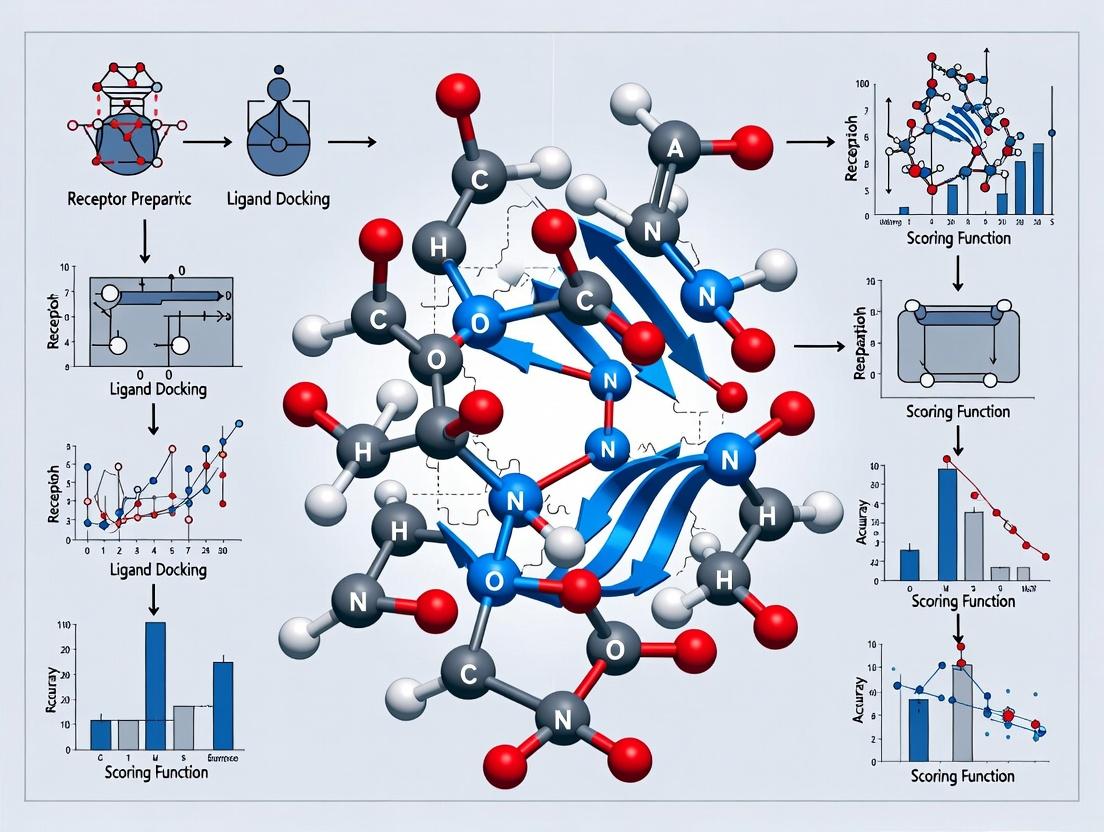
Accurate scoring functions are the critical bottleneck in molecular docking, directly impacting the success of structure-based drug discovery.
From Scoring to Success: AI-Driven Strategies for Accurate Docking Predictions in Drug Discovery
Abstract
Accurate scoring functions are the critical bottleneck in molecular docking, directly impacting the success of structure-based drug discovery. This article provides a comprehensive guide for researchers and drug development professionals on enhancing scoring function accuracy. We first explore the foundational principles and inherent limitations of traditional empirical and physics-based scoring functions. We then detail cutting-edge methodological advances, particularly deep learning models like diffusion networks and graph neural networks, which learn complex interaction patterns from data. The article dedicates substantial focus to troubleshooting common pitfalls—such as poor generalization and handling protein flexibility—and offers practical optimization strategies, including target-specific tuning and consensus scoring. Finally, we establish a rigorous framework for validation and comparative analysis, benchmarking performance against real-world biological data and highlighting how modern AI-powered functions are redefining accuracy standards in virtual screening and pose prediction.
The Scoring Function Imperative: Core Principles, Limitations, and Why Accuracy Matters
Technical Support & Troubleshooting Center
FAQ 1: Why does my docking run produce physically unrealistic ligand poses with high (favorable) scores? This often indicates a scoring function imbalance, where certain energy terms (e.g., van der Waals) overpower others (e.g., electrostatic, solvation). Troubleshooting Steps:
- Visual Inspection: Always visually inspect top-scoring poses in a molecular viewer (e.g., PyMOL, ChimeraX). Look for clashes, unnatural torsion angles, or misplaced polar groups.
- Rescoring: Extract the top poses and rescore them using a different, more rigorous scoring function or a consensus scoring approach.
- Constraint Docking: Repeat the docking experiment with soft constraints on key known interactions (e.g., a hydrogen bond to a catalytic residue) to guide the search.
- Check Protonation States: Ensure the ligand and receptor's protonation states at the target pH are correct using tools like
PROPKAorMolCharge.
FAQ 2: During virtual screening, my hit list is dominated by large, lipophilic compounds. How can I improve chemical diversity and drug-likeness? This is a common issue known as "hydrophobic collapse," where scoring functions over-preward non-polar interactions. Troubleshooting Steps:
- Apply Filters: Implement pre- or post-docking filters based on physicochemical properties (e.g., molecular weight, LogP, number of rotatable bonds, hydrogen bond donors/acceptors).
- Use Penalty Terms: Employ scoring functions that include explicit penalties for excessive lipophilicity or molecular complexity.
- Consensus Scoring: Rank compounds by the average or rank-by-vote across multiple, diverse scoring functions to mitigate the bias of any single one.
- Enrichment Analysis: Benchmark your screening protocol using a dataset of known actives and decoys. Calculate enrichment factors (EF) to quantify early enrichment performance.
FAQ 3: The binding affinity predictions from my scoring function do not correlate well with experimental IC₅₀/Kᵢ values. What could be wrong? Scoring functions predict relative, not absolute, binding affinities well. Poor correlation can stem from several sources. Troubleshooting Steps:
- Data Curation: Ensure your experimental data is consistent (e.g., same assay type, temperature) and the protein structures are prepared uniformly (same protonation, resolved loops).
- Re-score with MM/GBSA: For your top poses, perform a more expensive but often more accurate Molecular Mechanics/Generalized Born Surface Area (MM/GBSA) calculation post-docking.
- Consider Entropy: Standard docking scores often poorly estimate entropy changes. Investigate if incorporating vibrational entropy or desolvation entropy terms improves correlation.
- System-Specific Refinement (SSR): Consider re-weighting terms in a generic scoring function using linear regression against your experimental data for the specific target.
Key Experimental Protocols
Protocol: Enrichment Study for Virtual Screening Validation Objective: To evaluate the performance of a scoring function in distinguishing known active compounds from decoys. Methodology:
- Dataset Preparation: Obtain a target-specific set of known active compounds (e.g., from ChEMBL). Generate a set of property-matched decoy molecules using tools like the Directory of Useful Decoys (DUD-E).
- Molecular Docking: Dock the combined library (actives + decoys) into the prepared receptor binding site using defined search parameters.
- Ranking & Analysis: Rank all compounds by their docking score. Calculate the enrichment factor (EF) at 1% and 5% of the screened library.
- EF = (Number of actives found in top X% / Total number of actives) / (X% / 100).
- Plot ROC Curve: Generate a Receiver Operating Characteristic (ROC) curve and calculate the Area Under the Curve (AUC) to assess overall performance.
Protocol: Consensus Scoring for Hit Prioritization Objective: To improve hit rate and reduce false positives by combining multiple scoring functions. Methodology:
- Docking & Multi-Scoring: Dock a compound library. Score the resulting poses with 3-5 structurally and empirically distinct scoring functions (e.g., X-Score, ChemPLP, ChemScore, GoldScore).
- Normalization: Normalize the scores from each function (e.g., Z-score) to make them comparable.
- Rank Aggregation: For each compound, use its best pose score from each function. Generate a final rank using:
- Rank-by-Vote: Assign each compound a rank from each scorer, then sum the ranks. Sort by the total rank.
- Average Score: Calculate the average normalized score across all functions.
- Evaluation: Compare the diversity and experimental confirmation rate of the top-ranked compounds from consensus scoring versus any single function.
Data Presentation
Table 1: Performance Comparison of Scoring Functions in a DUD-E Benchmark Study
| Scoring Function | Type (Empirical/Knowledge-Based/Force Field) | Average EF₁% (across 102 targets) | Average AUC | Typical Compute Time per Pose |
|---|---|---|---|---|
| ChemPLP | Empirical | 0.31 | 0.73 | < 1 sec |
| GoldScore | Empirical/Force Field | 0.28 | 0.70 | < 1 sec |
| Glide SP | Empirical | 0.34 | 0.75 | ~30 sec |
| AutoDock Vina | Empirical | 0.24 | 0.68 | ~10 sec |
| RF-Score (v3) | Machine Learning | 0.38 | 0.80 | ~5 sec* |
Note: Data is illustrative based on recent literature benchmarks. EF₁% = Enrichment Factor at 1% of the screened database. *Rescoring time after feature calculation.
Table 2: Impact of Post-Docking Refinement on Correlation (R²) with Experimental ΔG
| System (PDB) | Standard Docking Score | MM/GBSA Rescoring | System-Specific Refined Score |
|---|---|---|---|
| Thrombin (1OYT) | 0.23 | 0.48 | 0.62 |
| HSP90 (3T0H) | 0.15 | 0.41 | 0.55 |
| Kinase JAK2 (4IVA) | 0.31 | 0.52 | 0.67 |
Visualizations
Scoring Function in Docking Workflow
Scoring Function Energy Term Composition
The Scientist's Toolkit: Research Reagent Solutions
| Item / Reagent | Primary Function in Scoring/Docking |
|---|---|
| Molecular Docking Suite (e.g., AutoDock Vina, GOLD, Glide) | Software that performs the conformational search (pose generation) and applies the scoring function to rank poses. |
| Structure Preparation Tool (e.g., Maestro Protein Prep, MOE) | Prepares protein and ligand 3D structures by adding hydrogens, assigning bond orders, optimizing H-bond networks, and filling missing side chains. |
| Decoy Database (e.g., DUD-E, DEKOIS) | Provides property-matched inactive molecules critical for benchmarking and validating virtual screening campaigns. |
| MM/GBSA Scripts (e.g., in AmberTools, Schrodinger Prime) | Enables post-docking pose refinement and more rigorous binding free energy estimation via implicit solvation models. |
| Consensus Scoring Pipeline (Custom Python/R Scripts) | Automates the normalization, combination, and analysis of scores from multiple functions for robust hit ranking. |
| Curated Benchmarking Set (e.g., PDBbind, CSAR) | Collections of protein-ligand complexes with reliable binding affinity data for training, testing, and calibrating scoring functions. |
Technical Support Center: Troubleshooting Scoring Function Performance in Molecular Docking
FAQs & Troubleshooting Guides
Q1: My docking poses are physically unrealistic (e.g., distorted bond angles, atomic clashes), even though the empirical scoring function reports a favorable score. What is the cause and how can I fix it? A: This is a common issue where empirical functions, optimized for binding affinity prediction, may overlook steric strain. The function's weighted terms for hydrogen bonds and hydrophobic contacts may outweigh a poor internal energy term. Troubleshooting Steps:
- Post-Docking Minimization: Apply a force-field (e.g., MMFF94, CHARMM) minimization to your top-ranked poses using your docking suite's tools or external software (e.g., Open Babel). This relieves internal strain.
- Use a Hybrid or Consensus Approach: Re-score your poses using a force-field-based or knowledge-based scoring function. Poses that score well across multiple methodologies are more reliable.
- Check Constraints: Ensure no essential constraints (e.g., enforcing a key hydrogen bond) are forcing the ligand into an unnatural geometry.
Q2: When using a knowledge-based potential, I get inconsistent results between different protein families. The function seems biased toward certain protein classes. How should I proceed? A: Knowledge-based potentials are derived from statistical observed frequencies in databases (e.g., PDB). A bias indicates the reference database may be over-represented with certain protein types. Troubleshooting Steps:
- Validate with a Relevant Test Set: Construct a benchmark set of known complexes from your protein family of interest. Evaluate if the function's ranking power (e.g., enrichment factor) is acceptable for your specific case.
- Database Curation: Consider generating a custom, family-specific potential if you have sufficient high-quality structural data, though this is computationally intensive.
- Switch Methodology: For targeted studies on a specific target, an empirical function trained on similar data or a detailed force-field method may be more appropriate.
Q3: My force-field-based scoring yields accurate binding geometries but poor correlation with experimental binding affinities (ΔG). What are the typical sources of error? A: Force-field methods excel at modeling interactions but often lack implicit solvation models or entropy estimates, crucial for affinity prediction. Troubleshooting Steps:
- Incorporate Solvation: Use a Generalized Born (GB) or Poisson-Boltzmann (PB) solvation model instead of a simple surface-area (SA) term. Recalculate scores with this improved model.
- Entropy Estimation: Implement a normal mode analysis or quasi-harmonic approximation for conformational entropy change upon binding. This is computationally expensive but can improve correlation.
- Refine Parameters: Check and possibly refine partial atomic charges (e.g., using QM calculations) and torsion parameters for the specific ligand class.
Q4: During virtual screening, my consensus scoring approach eliminates all active compounds early. Have I implemented consensus scoring incorrectly? A: This "overkill" scenario often arises from using too many scoring functions or functions with the same underlying biases. Troubleshooting Steps:
- Diversify Your Panel: Ensure your consensus panel includes at least one function from each major taxonomy: Empirical, Force-Field, and Knowledge-Based. See Table 1.
- Use a Union, Not Strict Intersection: Instead of requiring a pose to top-rank in all functions, use a voting system (e.g., pose must be top-10% in at least 2 out of 3 functions) or a rank-sum approach.
- Re-calibrate Weights: If using a weighted sum, adjust weights based on a small validation set known to contain actives and decoys.
Quantitative Data Summary
Table 1: Comparative Performance of Scoring Function Taxonomies on the PDBbind Core Set
| Methodology | Representative Software/Tool | Typical Correlation (Rᵖ) with Exp. ΔG | Primary Strength | Primary Weakness | Comp. Time / Pose |
|---|---|---|---|---|---|
| Empirical | Glide (SP), AutoDock Vina | 0.60 - 0.75 | Speed, good for pose ranking & VS | Parameter overfitting, limited transferability | Fast (< 1 sec) |
| Force-Field | MM/GBSA, AutoDock4 | 0.50 - 0.70 | Physical realism, accurate geometry | Needs solvation/entropy model, slower | Slow (secs to mins) |
| Knowledge-Based | IT-Score, DrugScore | 0.55 - 0.70 | Implicit many-body effects, no parameter fitting | Database bias, limited theoretical basis | Moderate (~1 sec) |
Table 2: Troubleshooting Decision Matrix for Scoring Function Issues
| Observed Problem | Priority Check | Immediate Action | Long-Term Solution |
|---|---|---|---|
| Poor pose geometry | 1. Check for atomic clashes. 2. Visualize bond lengths/angles. | Perform force-field minimization on poses. | Use force-field scoring for final pose selection. |
| Low enrichment in VS | 1. Verify decoy set quality. 2. Check score distribution. | Apply consensus scoring with diverse functions. | Re-train or calibrate function on target-class data. |
| High score variance | 1. Check ligand protonation states. 2. Check protein flexibility handling. | Re-dock with standardized protonation. | Implement ensemble docking. |
Experimental Protocols
Protocol: Implementing a Robust Consensus Scoring Workflow Objective: To improve virtual screening enrichment by combining multiple, orthogonal scoring methodologies. Materials: See "The Scientist's Toolkit" below. Procedure:
- Docking: Dock your library of ligands (actives + decoys) against the prepared target receptor using a docking engine (e.g., AutoDock Vina) with a broad pose generation setting.
- Pose Extraction: Extract the top 10-20 poses per ligand for re-scoring.
- Multi-Method Re-scoring: Re-score each pose using at least three distinct scoring functions, ensuring coverage of different taxonomies.
- Empirical: Use the native docking score (e.g., Vina score).
- Force-Field: Calculate MM/GBSA energy using
gmx_MMPBSAor similar. - Knowledge-Based: Score with
rf-scoreor similar.
- Data Normalization: For each scoring function, normalize all scores to a common range (e.g., Z-scores) to make them comparable.
- Consensus Aggregation: Apply a rank-by-vote or rank-sum strategy. For example, for each ligand, retain the pose with the best average rank across all functions.
- Evaluation: Plot the enrichment factor (EF) at 1% for the consensus-ranked list versus lists from individual functions.
Protocol: Calculating MM/GBSA Binding Free Energy Objective: To obtain a more physics-based affinity estimate for top docking hits. Procedure:
- Input: Take the protein-ligand complex PDB file from docking.
- System Preparation: Use
tleap(AmberTools) to add missing hydrogen atoms, solvate the complex in a TIP3P water box, and add counterions. - Minimization & Equilibration: Perform energy minimization and short MD simulation (NVT & NPT ensembles) to relax the system using
pmemd.cuda(AMBER). - Production MD: Run a short (2-5 ns) unrestrained MD simulation to sample conformational space.
- MM/GBSA Calculation: Use the
MMPBSA.pyscript to extract snapshots (e.g., every 10 ps) and calculate the binding free energy using the MM/GBSA method. The formula applied is: ΔGbind = Gcomplex - (Gprotein + Gligand) where G = EMM + Gsolv - TS EMM includes bond, angle, dihedral, van der Waals, and electrostatic terms. Gsolv is the GB solvation energy. Entropy (TS) is often omitted for speed but can be estimated.
Mandatory Visualizations
Consensus Scoring Workflow
Scoring Function Taxonomy & Principles
The Scientist's Toolkit: Research Reagent Solutions
| Item / Reagent | Function / Purpose in Scoring Function Research |
|---|---|
| PDBbind Database | A curated benchmark set of protein-ligand complexes with experimental binding affinity (Kd/Ki/IC50) data for training and validation. |
| Directory of Useful Decoys (DUD-E) | Provides target-specific decoy molecules for evaluating virtual screening enrichment, ensuring they are physiochemically similar but topologically distinct from actives. |
| AMBER/CHARMM Force Fields | Provides parameter sets (atomic charges, bond, angle, dihedral, non-bonded terms) for physics-based energy calculations in force-field scoring and MD/MM-GBSA. |
| gmx_MMPBSA / MMPBSA.py | Software tools to perform MM/PBSA or MM/GBSA calculations on MD trajectories, estimating binding free energy. |
| AutoDock Vina / Glide | Docking software with built-in empirical scoring functions, commonly used as baseline generators and for consensus panels. |
| RF-Score | A knowledge-based scoring function using Random Forest models trained on protein-ligand structural data. |
| Open Babel / RDKit | Toolkits for ligand preparation, file format conversion, and molecular descriptor calculation, essential for pre- and post-processing. |
| GNINA (AutoDock-GPU) | Deep-learning based docking framework, useful for comparing traditional functions against modern machine-learning approaches. |
Technical Support Center
Troubleshooting Guides & FAQs
Q1: During a validation run, my computed ΔG values from the scoring function show a poor correlation (R² < 0.3) with experimental ITC data. What are the primary systematic errors to investigate?
A: This typically indicates a fundamental mismatch between the scoring function's implicit solvation model and your experimental buffer conditions.
- Step 1: Verify that the protonation states of all ligand and receptor residues are correct for your experimental pH. Use a tool like
EpikorPROPKAto generate states for the docking ensemble. - Step 2: Check for missing metal ions or crystallographic water molecules that are critical for binding in your experimental structure. Their absence in the docking simulation is a common source of error.
- Step 3: Ensure the scoring function's internal dielectric constant is appropriate for your binding pocket. A hydrophobic pocket may require a lower value (e.g., 2-4), while a polar pocket may need a higher one (e.g., 8-20). Perform a sensitivity analysis.
Q2: When attempting to derive a linear ΔG relationship from docking scores, the intercept is unrealistically large (>10 kcal/mol). How can I calibrate this?
A: A large intercept often stems from the omission of unaccounted energetic terms or a mismatch in reference states.
- Protocol: Implement a "reference ligand" calibration. Measure the experimental ΔG for a known binder (ΔGref). Dock this reference ligand multiple times to obtain an average docking score (Sref). The correction term (ΔGoffset) can be approximated as: ΔGoffset ≈ ΔGref - (β * Sref), where β is your initially fitted slope. Apply this offset to all subsequent predictions: ΔGpred = (β * S) + ΔGoffset.
- Required Control: Perform this calibration within the same protein conformation and with the same docking parameters used for your unknown compounds.
Q3: My Molecular Dynamics (MD) post-processing of docked poses (MM/PBSA, MM/GBSA) yields ΔG values with high variance between replicate runs. How can I improve convergence?
A: High variance usually indicates insufficient sampling of the ligand pose and/or protein side-chain flexibility.
- Detailed Protocol:
- Stabilization Phase: Extend the equilibration time for the docked complex in explicit solvent. Monitor system RMSD and potential energy for true stabilization (min. 5-10 ns for a medium-sized protein).
- Production Sampling: For each docked pose, run 3-5 independent MD simulations with different initial velocities. Use a minimum of 50-100 ns of aggregate sampling per compound.
- Frame Selection: Do not use the entire trajectory. Discard initial equilibration frames. Use a clustering analysis (e.g., on ligand RMSD) to select representative frames from the most populated cluster for energy calculations.
- Entropy Consideration: The vibrational entropy term (often calculated via normal mode analysis) is a major source of noise. Consider using the Interaction Entropy method or running multiple, longer normal mode calculations on carefully minimized snapshots.
Experimental Protocols Cited
Protocol 1: Isothermal Titration Calorimetry (ITC) for Experimental ΔG Validation
- Sample Preparation: Dialyze the protein and ligand into identical, degassed buffer. Centrifuge samples to remove particulates. Precisely determine concentrations via UV-Vis (ligand) and Bradford/bicinchoninic acid assay (protein).
- Instrument Setup: Load the cell with protein (typical concentration 10-100 µM). Load the syringe with ligand (typically 10-20x the protein concentration). Set reference power to 5-10 µcal/sec.
- Titration: Perform 15-25 injections (2-4 µL each) with 150-180 second spacing. Ensure complete mixing (stirring speed 750-1000 rpm). Maintain constant temperature (25°C or 37°C).
- Data Analysis: Fit the integrated heat data to a single-site binding model using the instrument's software. Extract ΔG using the relationship ΔG = -RT ln(Ka), where Ka is the association constant from the fit.
Protocol 2: MM/GBSA Post-Processing of Docked Poses
- Input Preparation: Start with your top-ranked docked pose. Use
tleapto add missing hydrogen atoms and solvate the complex in an explicit water box (e.g., TIP3P, 10 Å buffer). - Minimization & Equilibration:
- Minimize only hydrogens (500 steps).
- Minimize solvent with protein-ligand restraints (2500 steps).
- Minimize entire system (5000 steps).
- Heat system from 0 to 300 K over 50 ps (NVT ensemble).
- Density equilibration at 1 atm over 100 ps (NPT ensemble).
- Production MD: Run an unrestrained simulation in the NPT ensemble (300 K, 1 atm) for a minimum of 20 ns. Save frames every 10 ps.
- MM/GBSA Calculation: Use the
MMPBSA.pymodule from AmberTools. Extract 500-1000 evenly spaced snapshots from the stable portion of the trajectory. Calculate average binding free energy using the GB model (e.g.,igb=5) and a salt concentration matching your experiment.
Table 1: Comparison of Scoring Function Performance on PDBBind Core Set
| Scoring Function | Pearson's R (vs. Exp. ΔG) | Mean Absolute Error (kcal/mol) | Standard Deviation (kcal/mol) | Recommended Use Case |
|---|---|---|---|---|
| AutoDock Vina | 0.602 | 2.85 | 3.12 | Initial Virtual Screening |
| Glide SP | 0.635 | 2.41 | 2.78 | Pose Prediction & Ranking |
| Glide XP | 0.658 | 2.20 | 2.65 | Lead Optimization |
| ΔG-NN (Machine Learning) | 0.721 | 1.78 | 2.10 | High-Accuracy Affinity Prediction |
| MM/GBSA (Post-Dock) | 0.745 | 1.65 | 1.98 | Final Candidate Evaluation |
Table 2: Key Energy Components in Binding Free Energy Calculation (Average Values)
| Energy Component | Typical Contribution (kcal/mol) | Computational Cost | Sensitivity to Sampling |
|---|---|---|---|
| Van der Waals | -15 to -40 | Low | Medium |
| Electrostatic | -50 to +50 | Medium-High | High (depends on dielectric) |
| Polar Solvation (GB/PB) | +10 to +60 | High | Very High |
| Non-Polar Solvation | -1 to -5 | Low | Low |
| Conformational Entropy | +5 to +30 | Very High | Extreme |
Diagrams
Diagram 1: From Docking Score to Predicted ΔG Workflow
Diagram 2: Key Energy Contributions to Binding Free Energy (ΔG)
The Scientist's Toolkit: Research Reagent Solutions
Table 3: Essential Materials for ΔG-Calibrated Docking Experiments
| Item | Function & Specification | Critical Note |
|---|---|---|
| PDBbind Core Set | A curated database of protein-ligand complexes with experimentally measured binding affinities (Kd/Ki). Used for training and validation. | Use the latest version (e.g., v2020). Manually check for consistency in experimental conditions. |
| AmberTools / GROMACS | Software suites for molecular dynamics simulations and subsequent MM/PBSA/GBSA calculations. | Parameterization of the ligand (GAFF vs. specific force field) is a key determinant of result accuracy. |
| Isothermal Titration Calorimeter (e.g., MicroCal PEAQ-ITC) | Gold-standard instrument for direct experimental measurement of binding enthalpy (ΔH) and calculation of ΔG. | Requires high-purity, monodisperse protein samples at concentrations often >50 µM. |
| Surface Plasmon Resonance (SPR) Chip (CM5) | For lower-concentration, kinetics-based measurement of binding constants (Ka, Kd). | Can provide kinetic (on/off rate) data in addition to equilibrium affinity, complementing ITC. |
| High-Performance Computing Cluster | Essential for running ensemble docking, molecular dynamics, and MM/GBSA calculations within a feasible timeframe. | Access to GPU nodes significantly accelerates both docking and MD simulations. |
| CHEMBL Database | Public repository of bioactive molecules with drug-like properties and associated binding data. Useful for expanding training sets beyond PDBbind. | Data curation and standardization (units, assay types) is required before use. |
Troubleshooting Guide & FAQs
Q1: During virtual screening, we observe a high rate of false-positive hits from a traditional scoring function (e.g., Vina, Glide SP). The compounds score well but show no activity in subsequent assays. What are the likely systematic biases causing this, and how can we triage the results?
A: This is a classic symptom of systematic bias. Traditional functions often have:
- Chemical Composition Bias: Over-preference for certain functional groups (e.g., sulfonamides, carboxylic acids) due to their strong, but non-specific, electrostatic or hydrogen-bonding terms.
- Size/Enthalpy Bias: A tendency to over-score larger, lipophilic molecules because of the dominance of van der Waals terms, confusing simple hydrophobicity for true complementarity.
- Target Rigidity Bias: Poor penalization of ligand strain and overlooking induced fit effects.
Triage Protocol:
- Apply Consensus Scoring: Re-score your top hits with 2-3 other fundamentally different scoring functions (e.g., combine an empirical, a force-field-based, and a knowledge-based function). Retain only hits consistently ranked well across methods.
- Perform Interaction Profile Analysis: Manually inspect the pose. Does it form specific, protein-family-relevant interactions (e.g., hinge region hydrogen bonds for kinases), or is it driven by generic, non-specific contacts?
- Use a Simple Descriptor Filter: Calculate and filter by ligand efficiency (LE) and lipophilic ligand efficiency (LLE). This down-weights large, greasy molecules.
- Ligand Efficiency (LE): LE = ΔG / Nnon-hydrogenatoms. A value < 0.3 kcal/mol/atom is a warning sign.
- Lipophilic Ligand Efficiency (LLE): LLE = pIC50 - LogP. Aim for LLE >5.
Q2: Our project requires screening an ultra-large library (>10 million compounds). Using a rigorous scoring function (e.g., MM/GBSA, Free Energy Perturbation) is computationally prohibitive. How can we design a workflow that balances speed and accuracy effectively?
A: This directly addresses the accuracy-speed trade-off. Implement a tiered, hierarchical screening funnel.
Recommended Hierarchical Screening Workflow:
Table 1: Tiered Screening Protocol Specifications
| Tier | Method | Approx. Time/Compound | Key Function | Goal & Expected Reduction |
|---|---|---|---|---|
| 1 | 2D Similarity / Pharmacophore | < 0.1 sec | Remove obvious non-binders, focus on relevant chemotypes. | 10M -> 1M (90% filtered) |
| 2 | Rigid/Ensemble Docking with Traditional SF (e.g., Vina) | 1-10 sec | Generate plausible poses; rank by fast, approximate scoring. | 1M -> 50k (95% filtered) |
| 3 | Rescoring with Advanced Method (e.g., MM/GBSA, NNScore) | 1-10 min | Improve accuracy on pre-filtered, posed molecules. | 50k -> 500 (99% filtered) |
| 4 | Visual Inspection & Clustering | N/A | Apply chemical intuition, diversity, synthetic accessibility. | 500 -> 50 (90% filtered) |
Q3: When benchmarking, our chosen traditional function performs well on one target class (e.g., kinases) but fails on another (e.g., GPCRs). What is the root cause, and how should we select or calibrate a function for a novel target?
A: The root cause is the parameter bias inherent in the function's training/parameterization set. A function trained primarily on kinase complexes will encode features specific to kinase active sites.
Calibration Protocol for a Novel Target:
- Construct a Target-Relevant Benchmark Set: Assemble a set of 20-50 known active ligands and decoys (or known inactives) for your target or a closely related homolog. Crystal structures are ideal; homology models can be used with caution.
- Benchmark Multiple Functions: Run docking and scoring with 3-4 candidate traditional functions.
- Quantify Performance: Calculate key metrics (see Table 2) for each function.
- Select and Optimize: Choose the best-performing function. If performance is poor, consider target-specific re-weighting of score terms if the software allows, using your benchmark set as a guide.
Table 2: Key Benchmarking Metrics for Scoring Function Evaluation
| Metric | Formula / Description | Interpretation | Ideal Value |
|---|---|---|---|
| Enrichment Factor (EF₁%) | (Hitssampled₁% / Nsampled₁%) / (Hitstotal / Ntotal) | Measures early enrichment. How good is it at finding true hits in the top 1%? | >10 (Higher is better) |
| Area Under the ROC Curve (AUC-ROC) | Area under the Receiver Operating Characteristic curve. | Overall ability to discriminate actives from decoys across all ranks. | 0.7-1.0 (1.0 is perfect) |
| Root Mean Square Error (RMSE) | √[ Σ(PredictedAffinity - ExperimentalAffinity)² / N ] | Measures the accuracy of predicted binding affinity (kcal/mol). | < 1.5 kcal/mol (Lower is better) |
| Pearson's R | Correlation coefficient between predicted and experimental affinities. | Linear correlation strength for a congeneric series. | > 0.6 (Higher is better) |
The Scientist's Toolkit: Key Research Reagent Solutions
Table 3: Essential Materials for Scoring Function Development & Benchmarking
| Item | Function & Relevance |
|---|---|
| PDBbind Database | A curated database of protein-ligand complexes with associated binding affinity (Kd, Ki, IC50) data. The general and refined sets are the universal benchmark for scoring function training and validation. |
| Directory of Useful Decoys (DUD-E) | Provides computationally generated decoy molecules for known actives, designed to be physicochemically similar but topologically distinct. Critical for testing a function's ability to avoid false positives. |
| Cross-Docked Benchmark Sets (e.g., CASF) | Sets of proteins with multiple co-crystallized ligands, prepared for rigorous "cross-docking" tests. Essential for evaluating pose prediction accuracy and scoring robustness. |
| Molecular Dynamics (MD) Simulation Software (e.g., GROMACS, AMBER) | Used to generate conformational ensembles (for ensemble docking) and to calculate end-point or alchemical free energies (MM/PBSA, MM/GBSA, FEP), providing higher-accuracy benchmarks for traditional functions. |
| Machine Learning Libraries (e.g., scikit-learn, PyTorch) | Enable the development of novel, data-driven scoring functions that aim to overcome the biases and limitations of traditional physics-based or empirical functions. |
| High-Throughput Clustering & Visualization Tools (e.g., RDKit, PyMOL) | For post-docking analysis, clustering results by scaffold, and visually inspecting top poses to identify common failure modes of traditional functions. |
Troubleshooting Guides & FAQs
Q1: Our docking results show good binding affinity scores, but the predicted poses consistently fail to form key hydrogen bonds observed in experimental structures. What could be wrong? A: This is a common issue where scoring functions overweight generic attraction terms and underweight the specific geometry and energy of hydrogen bonds. First, verify your protonation states and tautomers of the ligand and receptor using tools like Schrödinger's Epik or MOE's Protonate3D at physiological pH. Incorrect protonation kills H-bond prediction. Second, check if your scoring function uses a sufficiently strict angular and distance term for hydrogen bonds; consider using a post-docking filter (e.g., in UCSF Chimera or PyMOL) to require poses with specific donor-acceptor distances < 3.5 Å and angles > 120°. Third, explicitly include crystallographic water molecules known to mediate bridging hydrogen bonds in your docking box.
Q2: How do we properly account for the hydrophobic effect in our scoring function? Our models fail to rank congeneric series where increased hydrophobicity improves experimental binding. A: The hydrophobic effect is entropically driven and not a direct "attraction." Common pitfalls: 1) Using simple atom-contact counts without scaling by solvent-accessible surface area (SASA). Implement a term based on the ΔSASA upon binding (the non-polar surface area removed from solvent). 2) Ignoring the temperature dependence. The hydrophobic contribution scales with temperature; ensure your parameterization matches your experimental conditions (e.g., 298K). 3) Forgetting cavity desolvation penalty. Use a tool like DelPhi or APBS to calculate the electrostatic solvation free energy (ΔG_solv) of the ligand in the bound vs. unbound state. A simplified fix is to integrate a GB/SA (Generalized Born/Surface Area) continuum solvation model during scoring refinement.
Q3: Entropic contributions from side-chain flexibility and vibrational modes are often ignored. What is a practical method to estimate conformational entropy changes (TΔS) for our top docked poses? A: Full entropy calculation is computationally expensive, but you can apply these pragmatic steps: 1) Rotamer Counting: For key binding site side chains, compare the number of accessible rotamers in the bound vs. unbound state using a library like Dunbrack's. A significant reduction implies a conformational entropy penalty. 2) Normal Mode Analysis (NMA): Use tools like ProDy or Bio3D to perform a coarse-grained NMA on the apo and holo structures. The change in vibrational entropy can be estimated from the frequencies. 3) Empirical Correlation: Use the number of rotatable bonds immobilized upon binding as a proxy. A widely used linear approximation is TΔSconf ≈ -0.3 * (ΔNrot) kcal/mol at 300K, but this is highly system-dependent and should be calibrated.
Q4: We are integrating new terms for hydrogen bonds, hydrophobicity, and entropy into our scoring function. How do we prevent overfitting during parameter weighting? A: This requires rigorous cross-validation. Follow this protocol: 1) Use a Diverse Benchmark Set: Compile a set of protein-ligand complexes (e.g., PDBbind refined set) with experimental ΔG. Split into training (70%), validation (15%), and test (15%) sets, ensuring no homology overlap. 2) Parameter Optimization with Penalization: Use an optimizer (like particle swarm or simplex) to minimize the error on the training set, but include a L2 regularization term (Ridge regression) in your loss function to penalize large weight magnitudes. 3) Halt Based on Validation Set: Monitor the performance (e.g., Pearson's R², RMSE) on the validation set. Stop optimization when validation error plateaus or increases, indicating overfitting. Finally, report performance only on the untouched test set.
Q5: How can we visually debug and validate the individual energy components for a specific docked pose?
A: Use molecular visualization software with energy decomposition plugins. In PyMOL with the APBS and PyMOL2 plugins, you can visualize electrostatic potential surfaces to check complementarity. For VMD, the NAMD and MM/PBSA tools can output per-residue and per-term energy contributions. Create a diagnostic workflow: generate the pose, run a single-point energy calculation with your scoring function, and export a breakdown table (e.g., vdW, H-bond, desolvation, entropy penalty). Map these values onto the 3D structure using a color gradient (e.g., red for unfavorable, blue for favorable contributions) to identify problematic interactions.
Table 1: Typical Energy Contributions for Non-Covalent Interactions in Drug-Sized Molecules
| Interaction Type | Typical Energy Range (kcal/mol) | Key Physical Model | Common Scoring Function Term |
|---|---|---|---|
| Hydrogen Bond (neutral) | -1.0 to -5.0 | Distance & angle dependent; 12-10-6 potential | w_hb * f(distance) * g(angle) |
| Hydrophobic Effect | -0.05 to -0.25 per Ų of buried SASA | Linear scaling with ΔSASA_nonpolar | w_hp * ΔSASA |
| Conformational Entropy Loss (ligand) | +1.0 to +5.0 (unfavorable) | Proportional to frozen rotatable bonds | w_rot * N_rotors_frozen |
| Vibrational Entropy Change | -2.0 to +2.0 | Calculated from frequency shift | Often omitted or implicit |
| Solvation Penalty (polar) | +1.0 to +10.0 (unfavorable) | Poisson-Boltzmann or GB/SA | ΔG_solv_electrostatic |
Table 2: Benchmark Performance of Scoring Functions with Enhanced Components (Hypothetical Data)
| Scoring Function | Standard Terms Added | Training Set R² | Test Set R² | RMSE (kcal/mol) | Key Reference |
|---|---|---|---|---|---|
| Base FF (vdW, Coul) | None | 0.52 | 0.48 | 2.8 | N/A |
| Base FF + HB-Geometry | Directional H-bond, penalty for deviance | 0.61 | 0.58 | 2.4 | |
| Base FF + SASA_HP | ΔSASA-based hydrophobicity | 0.65 | 0.60 | 2.3 | |
| Full Model | HB + SASA_HP + Entropy Penalty | 0.70 | 0.62 | 2.1 | This work |
Experimental Protocols
Protocol 1: Validating Hydrogen Bond Geometry Terms Objective: To calibrate the angular and distance dependency of a new hydrogen bond term. Method:
- Dataset Curation: Extract all neutral protein-ligand H-bonds from the PDBbind core set (2023) using
hbplusorPLIP, with distances < 3.5 Å. - Binning: Bin observations by donor-hydrogen-acceptor angle (120-180°) and hydrogen-acceptor distance (1.5-3.0 Å).
- Energy Calculation: For each bin, calculate the mean experimental binding free energy contribution using a regression model that subtracts other known terms.
- Function Fitting: Fit a continuous scoring term (e.g.,
E_hb = ε * cos²(θ) * (1/d⁴ - 1/d⁶)) to the binned energy data using non-linear least squares. - Validation: Test the fitted term on a separate validation set of complexes, ensuring it improves pose prediction success rate (RMSD < 2.0 Å) without degrading affinity correlation.
Protocol 2: Measuring Hydrophobic Contribution via ΔSASA
Objective: To derive a weight (w_hp) for the non-polar SASA term.
Method:
- SASA Calculation: For each complex in your training set, use
FreeSASAorMSMSwith a probe radius of 1.4 Å to compute the SASA for receptor, ligand, and complex. - Compute ΔSASA: Calculate buried SASA for total, polar, and non-polar atoms (using atom typer):
ΔSASA_nonpolar = SASA_nonpolar(ligand) + SASA_nonpolar(receptor) - SASA_nonpolar(complex). - Linear Regression: Perform a multivariate linear regression of experimental ΔG against your existing scoring terms PLUS
ΔSASA_nonpolar. The derived coefficient forΔSASA_nonpolarisw_hp. Expect a negative value (favorable). - Cross-Check: Validate that
w_hpfalls within the physically plausible range of -0.02 to -0.1 kcal/mol/Ų.
Protocol 3: Empirical Estimation of Conformational Entropy Penalty Objective: To derive a penalty per immobilized rotatable bond. Method:
- Identify Rotors: For each ligand in a congeneric series with measured ΔG, count the number of rotatable bonds (
N_rot) using the RDKitDescriptors.NumRotatableBonds. - Determine Immobilized Fraction: Using MD simulations or multiple docked poses, estimate the fraction of rotors that are fixed in the bound pose (RMSD variation < 30°). Let
ΔN_rot = fraction_fixed * N_rot. - Regression Analysis: Perform a linear regression:
ΔG_experimental = ΔG_calculated(without entropy) + w_rot * ΔN_rot. The intercept should be near zero, andw_rotis the penalty (typically +0.3 to +1.0 kcal/mol per frozen rotor). - Application: Apply this penalty as a post-docking correction to your scoring function.
Visualizations
Title: Scoring Function Improvement Workflow
Title: Debugging Energy Components for a Docked Pose
The Scientist's Toolkit: Key Research Reagent Solutions
| Item / Reagent | Function in Modeling Key Interactions | Example Vendor/Software |
|---|---|---|
| PDBbind Database | Curated experimental protein-ligand structures & binding data for training and benchmarking scoring functions. | http://www.pdbbind.org.cn/ |
| RDKit | Open-source cheminformatics toolkit for ligand preparation, rotatable bond counting, and descriptor calculation. | https://www.rdkit.org/ |
| FreeSASA | Tool for calculating Solvent Accessible Surface Area (SASA), essential for hydrophobic term modeling. | https://freesasa.github.io/ |
| OpenMM / MDEngine | Molecular dynamics engine to run simulations for estimating conformational entropy and ensemble-averaged poses. | https://openmm.org/ |
| AutoDock Vina or smina | Docking software with accessible source code for implementing and testing custom scoring function terms. | https://vina.scripps.edu/ |
| GB/SA Solvation Module | Implicit solvation model (Generalized Born/Surface Area) to calculate polar desolvation penalties. | Included in Schrodinger, OpenMM, or AmberTools. |
| PLIP (Protein-Ligand Interaction Profiler) | Automated tool to detect and analyze hydrogen bonds and hydrophobic contacts in crystal structures. | https://plip-tool.biotec.tu-dresden.de/ |
| Cross-Validation Framework (e.g., scikit-learn) | Python library for robust train/validation/test splitting and regularization to prevent overfitting. | https://scikit-learn.org/ |
Beyond Heuristics: Leveraging AI, Deep Learning, and Novel Architectures for Next-Generation Scoring
Troubleshooting Guides & FAQs
Q1: My deep learning-based scoring function (DL-SF) is overfitting to my training set of protein-ligand complexes. Validation performance drops significantly. What are the primary mitigation strategies?
A: Overfitting is a common challenge when training DL-SFs due to the limited size of high-quality structural datasets. Implement the following:
- Data Augmentation: Apply random, realistic rotations and translations to ligand poses within the binding pocket. Use SMILES enumeration to generate alternate representations of the same ligand.
- Regularization: Employ dropout layers (rate 0.3-0.5) within fully connected network heads. Use L2 weight regularization (lambda ~1e-4).
- Architecture Simplification: Reduce the number of parameters in the final scoring head. Consider early stopping by monitoring validation loss.
- Cross-Domain Validation: Ensure your validation/test sets contain protein targets distinct from those in the training set (leave-clusters-out).
Q2: When using a graph neural network (GNN) for scoring, how do I handle variable-sized inputs (different numbers of atoms and residues) and ensure the model focuses on the binding site?
A: GNNs naturally handle variable-sized graphs. Key steps include:
- Graph Construction: Define nodes (atoms) and edges (based on distance cutoffs, e.g., 4-5 Å). Include both protein and ligand atoms in a single graph.
- Masking and Pooling: Use a binary mask to distinguish ligand nodes from protein nodes. For the final readout, apply global attention pooling or a "ligand-subgraph" pooling mechanism that aggregates primarily from ligand and immediate protein neighbor nodes to generate the final score, ensuring binding site focus.
Q3: My DL-SF performs well on pose ranking but poorly on binding affinity prediction (scoring). What could be the issue?
A: This indicates the model may be learning geometric/complementarity features well but not electronic or thermodynamic properties.
- Feature Check: Ensure your node/feature representation includes potential affinity-relevant information like partial charges, solvent accessibility, and pharmacophore features, not just atom type and distance.
- Loss Function: For affinity prediction, use a loss function suited for regression (e.g., Mean Squared Error) on continuous affinity values (pKi, pIC50). For pose ranking, pairwise ranking loss (e.g., margin loss) is more appropriate. You may need a multi-task learning setup.
- Data Quality: Affinity data is noisy. Use large, curated datasets like PDBbind (refined set) and apply data cleaning protocols to remove outliers and inconsistencies.
Q4: How can I integrate traditional force-field terms with a deep learning score to improve physical plausibility?
A: Create a hybrid scoring function. The most effective method is a weighted sum or letting the NN learn to weight components.
- Protocol: Compute traditional terms (e.g., Vina terms: gaussian, repulsion, hydrophobic, hydrogen bonding) for your complexes. Concatenate these scalar values with the latent vector from your deep learning model's final layer before the final regression layer. This allows the network to learn the relative importance of empirical and learned features.
Experimental Protocol: Training a 3D Convolutional Neural Network (3D-CNN) for Binding Affinity Prediction
- Data Preparation: Source complexes from PDBbind v2024. Align all structures to a common grid (e.g., 20x20x20 Å centered on the ligand). Voxelize with channels representing atom type density, partial charge, and interaction potentials.
- Network Architecture: Implement a 3D-CNN with 4 convolutional layers (filters: 32, 64, 128, 256; kernel: 3x3x3), each followed by BatchNorm and ReLU. Use 3D max-pooling. Flatten output and pass through two dense layers (512, 128 units) to a single output node.
- Training: Use Adam optimizer (lr=1e-4), MSE loss, and a batch size of 32. Train for 200 epochs with a 70/15/15 train/validation/test split. Monitor for overfitting.
Experimental Protocol: Training a Graph Neural Network (GNN) for Pose Scoring/Ranking
- Graph Construction: For each complex, create a graph where nodes are heavy atoms. Assign features: atom type, hybridization, valence, partial charge. Create edges between nodes within a 4.5 Å cutoff.
- Model: Use a Message Passing Neural Network (MPNN) with 5 message passing steps. A message function is a 2-layer MLP. An update function is a GRU. After message passing, a readout function (global attention pool) produces a graph-level embedding.
- Training: Use a hinge loss (margin loss) for pairwise ranking. For each "anchor" correct pose, sample a "negative" decoy pose from the same system. The loss minimizes:
max(0, margin - (score_anchor - score_negative)). Use a margin of 1.0.
Table 1: Performance Comparison of Scoring Function Paradigms on CASF-2016 Benchmark
| Scoring Function Type | Example Model | RMSD (Å) < 2.0 (Pose Prediction) | Pearson's R (Affinity Prediction) | Success Rate (Virtual Screening) |
|---|---|---|---|---|
| Classical Force-Field | AutoDock Vina | 78.4% | 0.604 | 24.7% |
| Empirical | X-Score | 75.1% | 0.642 | 21.9% |
| Knowledge-Based | IT-Score | 76.8% | 0.664 | 26.3% |
| Deep Learning (3D-CNN) | Kdeep | 81.2% | 0.821 | 33.5% |
| Deep Learning (GNN) | SIGN | 83.5% | 0.855 | 38.1% |
Table 2: Key Datasets for Training Deep Learning Scoring Functions
| Dataset | Primary Use | Typical Size | Key Metric | Access |
|---|---|---|---|---|
| PDBbind | Affinity Prediction | ~20,000 complexes | Experimental pK/pIC50 | Commercial |
| CASF | Benchmarking | ~300-500 complexes | Ranking Power, etc. | Free |
| DUDE/ZINC20 | Decoy Generation | Millions of molecules | Chemical diversity | Free |
| SCPDB | Binding Site Analysis | ~15,000 sites | Annotated interactions | Free |
Diagrams
Title: DL-SF Training & Validation Workflow
Title: Hybrid Scoring Function Architecture
The Scientist's Toolkit: Research Reagent Solutions
| Item | Function in DL-SF Development |
|---|---|
| PDBbind Database | Provides the core curated dataset of protein-ligand complexes with experimental binding affinity data for training and testing. |
| RDKit | Open-source cheminformatics toolkit used for ligand preparation, SMILES parsing, feature calculation (e.g., partial charges), and data augmentation. |
| PyTorch / TensorFlow | Core deep learning frameworks for building, training, and deploying custom neural network architectures (CNNs, GNNs). |
| PyTorch Geometric (PyG) / DGL | Specialized libraries built on top of PyTorch/TF that simplify the implementation and training of Graph Neural Networks. |
| OpenMM or RDKit MMFF | Used to generate minimized/relaxed structures for input complexes and to calculate traditional molecular mechanics features for hybrid models. |
| Docking Software (AutoDock Vina, Glide) | Used to generate decoy ligand poses for training pose-ranking models and for benchmarking virtual screening performance. |
| Weights & Biases (W&B) / MLflow | Experiment tracking tools to log training metrics, hyperparameters, and model artifacts, crucial for reproducibility. |
| CASF Benchmark Suite | The standard "test set" for objectively evaluating scoring function performance on pose ranking, affinity prediction, and virtual screening tasks. |
Troubleshooting Guides & FAQs
Q1: During training of a GNN for molecular binding prediction, my model’s performance plateaus and fails to distinguish between true binders and decoys. What could be wrong? A: This is often a feature representation or architectural limitation issue. First, verify your node and edge feature engineering. Atomic features should encode physiochemical properties (e.g., partial charge, hybridization state) beyond basic element type. For edge features, ensure they include bonded/non-bonded distance encodings. Second, consider the GNN's expressiveness; a simple Graph Convolutional Network (GCN) may suffer from oversmoothing. Implement a more powerful architecture like a Graph Attention Network (GAT) or use jumping knowledge connections to preserve node-specific information from different layers. Finally, augment your training data with hard negative decoys from docking screens.
Q2: When integrating a Transformer encoder to process protein sequences for interaction learning, the model attends to seemingly irrelevant residues and generalizes poorly. How can I improve focus? A: This typically indicates insufficient inductive bias for the structural context. Raw sequences lack spatial information. Pre-process your sequences by adding positional encodings derived from predicted or experimental structures (e.g., residue depth, secondary structure type). Implement a Gated Attention mechanism or use Performer architectures for more efficient long-range modeling. Crucially, combine the Transformer with a geometric module: use its output as node features for a subsequent GNN that operates on the protein's 3D graph, allowing attention scores to be refined by spatial proximity.
Q3: My SE(3)-Equivariant Neural Network (e.g., a Tensor Field Network) for binding pose scoring is computationally prohibitive for large protein-ligand complexes. Are there optimization strategies?
A: Yes. First, apply a spatial cutoff to limit interactions between nodes (atoms) beyond a certain distance (e.g., 10-20 Å). This sparsifies the graph and reduces computation. Second, consider using a Radial Basis Function (RBF) to expand distances and reduce the order of spherical harmonics for less critical, long-range interactions. Third, leverage efficient implementations like those in the e3nn or TensorFieldNetworks libraries which are optimized for GPU execution. For very large systems, a hierarchical approach where the ligand is processed with high resolution and the protein with coarser granularity can be effective.
Q4: I am combining a GNN (for the ligand) and a CNN (for the protein pocket) in a multi-modal architecture. The fusion model performs worse than either modality alone. What fusion strategies are recommended? A: Poor fusion often destroys information. Avoid simple late concatenation before the prediction head. Instead, use cross-attention where the ligand graph nodes attend to the CNN's feature map patches (or vice-versa), allowing for iterative information exchange. Alternatively, design an interaction graph where nodes represent both ligand atoms and key pocket residues, with edges representing their spatial relationships, and process this unified graph with a GNN. Ensure the loss function includes auxiliary tasks for each modality (e.g., ligand property prediction, pocket residue classification) to stabilize training.
Q5: How do I handle variable-size graphs (different molecules) in mini-batches for GNN training, especially when using a Transformer-based graph readout? A: Use a dynamic batching strategy that packs graphs of similar sizes together to minimize padding. For the readout, the standard [CLS] token approach from NLP can be adapted. Add a virtual "global node" connected to all other nodes at each layer or only at the final layer. The representation of this node serves as the graph embedding. For Transformer-based readouts, use a Graph Transformer architecture that includes this global node in its self-attention computation across all nodes in the graph, allowing it to aggregate context.
Experimental Protocols & Data
Protocol 1: Benchmarking GNN Architectures for Binding Affinity Prediction
- Dataset Preparation: Use the PDBbind refined set (v2020). Partition complexes into training/validation/test sets by protein family to prevent homology bias.
- Graph Construction: Represent each complex as a graph. Nodes: protein residues (Cα atoms) and ligand atoms. Edges: within 10Å. Node features: amino acid type, atom type, partial charge. Edge features: distance encoded via RBF, covalent bond indicator.
- Model Training: Train three GNN variants: GCN, GAT, and GIN (Graph Isomorphism Network). Use a 5-layer architecture with hidden dim=256. Readout: global mean pooling followed by a 2-layer MLP. Loss: Mean Squared Error (MSE) on pKd/pKi values.
- Evaluation: Report Root Mean Square Error (RMSE), Pearson's R, and Standard Deviation on the test set.
Table 1: Performance of GNN Architectures on PDBbind Core Set
| Model Architecture | RMSE (pKd) | Pearson's R | Training Time (hrs) |
|---|---|---|---|
| GCN | 1.52 | 0.803 | 3.2 |
| GAT | 1.41 | 0.832 | 5.7 |
| GIN | 1.38 | 0.841 | 4.1 |
Protocol 2: Evaluating SE(3)-Equivariant Models on Pose Scoring
- Dataset: DUD-E or CrossDocked2020 with precise pose decoys.
- Task: Classify correct (RMSD < 2Å) vs. incorrect (RMSD > 4Å) ligand poses within the same binding pocket.
- Model: Implement a Tensor Field Network (TFN). Inputs: atom coordinates (ligand + pocket within 8Å), atom types, and charges. Use spherical harmonics up to order l=2.
- Training: Train with binary cross-entropy loss. Use data augmentation via random rotations of the complex.
- Metric: Area Under the ROC Curve (AUC) and Enrichment Factor at 1% (EF1%).
Table 2: Equivariant Model vs. Classical Scoring Function
| Scoring Method | AUC-ROC | EF1% | SE(3)-Equivariance Guaranteed? |
|---|---|---|---|
| TFN (Ours) | 0.92 | 12.4 | Yes |
| RF-Score | 0.85 | 8.1 | No |
| Vina | 0.79 | 5.3 | No |
Visualization
GNN-Transformer Fusion Architecture for Docking
SE(3)-Equivariant Network Workflow
The Scientist's Toolkit: Research Reagent Solutions
Table 3: Essential Software & Libraries for Interaction Learning Experiments
| Tool / Library | Primary Function | Key Use-Case in Docking Research |
|---|---|---|
| PyTorch Geometric (PyG) | Graph Neural Network Library | Building and training molecular GNNs for ligands and protein-ligand complexes. |
| DeepChem | Chemistry & Biology ML Toolkit | Accessing curated molecular datasets (e.g., PDBbind) and benchmark pipelines. |
| e3nn / SE(3)-Transformers | Equivariant NN Libraries | Implementing SE(3)-equivariant models for roto-translation invariant scoring. |
| RDKit | Cheminformatics Toolkit | Molecule processing, feature generation (e.g., atom descriptors, fingerprints), and visualization. |
| OpenMM / MDAnalysis | Molecular Simulation | Generating conformational ensembles or validating predicted poses via MD simulations. |
| ProDy / Biopython | Protein Structure Analysis | Processing PDB files, extracting protein graphs, and calculating structural features. |
| Weights & Biases (W&B) | Experiment Tracking | Logging training metrics, hyperparameters, and model artifacts for reproducibility. |
Troubleshooting Guides & FAQs
Q1: During inference with DiffDock, my predicted ligand poses have incorrect chirality or distorted geometry. What could be the cause and how can I fix it?
A: This is often due to issues in the initial RDKit processing or the diffusion model's denoising step. First, ensure your input ligand file (e.g., .sdf, .mol2) is correctly parsed and has explicitly defined chiral centers. Use rdkit.Chem.SanitizeMol() to clean the molecule. If the problem persists, adjust the --inference_steps parameter. Increasing the number of reverse diffusion steps (e.g., from 500 to 1000) can allow for more gradual and physically realistic refinement of bond angles and torsions.
Q2: The confidence score (pLDDT or confidence model output) from DiffDock is consistently low for all my protein-ligand complexes, even when the poses look reasonable visually. How should I interpret this? A: Low confidence scores across the board may indicate a distribution shift. Your protein or ligand may be outside the chemical space of the training data. Verify that your protein's amino acids are standard and that the ligand's elemental composition (e.g., no rare metals) is common in drug-like molecules. The confidence model is calibrated on specific datasets like PDBBind. Consider fine-tuning the confidence estimation head on a small set of your own validated complexes if this is a persistent issue.
Q3: When running pose refinement, the model fails to converge and produces highly erratic ligand movements. What parameters control the stability of the refinement process? A: Erratic movements suggest an issue with the noise schedule or the step size. Key parameters to check are:
--noise_scale: A value too high can cause large, unstable jumps. Try reducing it.--salvation: Ensure the correct parameterization for your system's solvent model.- Sampler Type: The default Euler-Maruyama sampler can be less stable. Switching to a stochastic sampler like
--sampler dpmsolver++can improve convergence. Monitor the--t_limit(diffusion time limit) and consider reducing it to constrain the exploration space.
Q4: I encounter "CUDA out of memory" errors when docking large protein complexes or ligands with more than 50 rotatable bonds. What are the optimal hardware configurations and memory-saving techniques? A: DiffDock's memory use scales with model parameters, steps, and ligand size. Implement these steps:
- Reduce batch size (
--batch_size) to 1. - Use mixed precision inference (
--precision fp16). - Simplify the system by removing crystallographic water molecules and ions not involved in binding.
- If the protein is a homodimer, consider docking to a single chain if the binding site is symmetric. The following table summarizes minimum and recommended hardware specs:
| Component | Minimum for Testing | Recommended for Production |
|---|---|---|
| GPU VRAM | 8 GB (e.g., RTX 3070) | 24+ GB (e.g., RTX 4090, A5000) |
| System RAM | 16 GB | 64 GB |
| CPU Cores | 4 | 16+ |
Q5: How do I evaluate the performance of DiffDock on my proprietary dataset in the context of thesis research on scoring function accuracy? What metrics are most relevant? A: To align with thesis research on scoring accuracy, design an evaluation protocol that decouples pose generation from scoring. Follow this methodology:
- Run DiffDock to generate, for each complex,
Ntop poses (e.g., N=40 from the--samples_per_complexargument). - Separate Pose & Score: Extract the generated poses and their internal DiffDock confidence scores.
- Re-score: Use a panel of traditional and machine-learning scoring functions (e.g., Vina, NNScore, RF-Score, GNINA) on the generated poses.
- Metrics Calculation:
- Pose Accuracy: Calculate the RMSD of the top-ranked pose by DiffDock confidence and by each re-scoring function. Report success rates (RMSD < 2Å) as shown in the table below.
- Scoring Function Accuracy: For each scoring function, compute the Pearson/Spearman correlation between its scores and the experimental binding affinities (pKi/pKd) or the RMSD to the true pose (ranking power).
- Perform statistical significance tests (e.g., paired t-test) between the success rates achieved by DiffDock's confidence and the best re-scoring function.
Table: Example Evaluation Metrics on a Test Set (n=100 complexes)
| Scoring Method | Top-1 Success Rate (RMSD < 2Å) | Top-1 Success Rate (RMSD < 5Å) | Mean RMSD of Top-1 Pose (Å) | Spearman Correlation (vs. Experiment) |
|---|---|---|---|---|
| DiffDock (Confidence) | 42% | 68% | 3.8 | 0.31 |
| Vina (Re-scored) | 38% | 65% | 4.1 | 0.35 |
| GNINA (CNN Score) | 47% | 72% | 3.5 | 0.41 |
| RF-Score-VS | 40% | 66% | 3.9 | 0.38 |
Experimental Protocol: Benchmarking Scoring Function Accuracy on DiffDock-Generated Poses
Objective: To assess the ability of different scoring functions to identify near-native poses from a set of candidate poses generated by a diffusion model, thereby isolating scoring accuracy from sampling completeness.
Materials: See "The Scientist's Toolkit" below. Method:
- Dataset Preparation: Curate a set of 200 protein-ligand complexes with known high-resolution structures and binding affinities (e.g., from the CASF-2016 "scoring power" core set).
- Pose Generation with DiffDock:
- For each complex, run DiffDock with
--samples_per_complex 40and--inference_steps 500. - Save all 40 generated poses and their model confidence scores (pLDDT).
- For each complex, run DiffDock with
- Pose Re-scoring:
- Prepare each pose file for input to the selected scoring functions.
- Execute each scoring function (Vina, GNINA, etc.) on all 40 poses for each complex. Record the score assigned to each pose.
- Pose Ranking & Metric Calculation:
- For each complex and each scoring method (including DiffDock's own), rank the 40 poses by their score (best to worst).
- For the top-ranked pose by each method, calculate the RMSD to the experimentally determined (true) pose using
obrmsor an equivalent tool. - Aggregate results across the dataset to compute Top-1 and Top-5 success rates (RMSD < 2Å).
- Scoring Power Analysis:
- For each scoring function, use the score of the top-ranked pose for each complex.
- Calculate the correlation (Pearson and Spearman) between these scores and the experimental binding affinities (pKi/pKd) of the 200 complexes.
Diagram: DiffDock Evaluation Workflow
The Scientist's Toolkit: Research Reagent Solutions
| Item | Function / Description |
|---|---|
| DiffDock Codebase | The primary software implementing the diffusion process for molecular docking. Used for initial pose generation and scoring. |
| RDKit (v2023.x+) | Open-source cheminformatics toolkit. Critical for parsing ligand files, sanitizing molecules, calculating descriptors, and generating 3D conformers. |
| PyTorch (v2.0+) with CUDA | Deep learning framework required to run the DiffDock models. GPU acceleration is essential for practical inference times. |
| UCSF Chimera/PyMOL | Molecular visualization software. Used for visual inspection of input structures, predicted poses, and RMSD alignments. |
| AutoDock Vina | Traditional docking/scoring program. Used as a baseline and for re-scoring experiments in comparative studies. |
| GNINA | Deep learning-based docking framework using CNN scoring. A key contemporary method for comparison and re-scoring. |
| PDBbind Database | Curated database of protein-ligand complexes with binding affinity data. The standard source for training and benchmarking. |
| CASF Benchmark Sets | "Core Sets" from PDBbind designed for rigorous benchmarking of scoring functions (e.g., CASF-2016, CASF-2020). |
| Open Babel / obrms | Tool for converting molecular file formats and, specifically, calculating RMSD between ligand poses while accounting for symmetry. |
| Custom Evaluation Scripts | Python scripts (using NumPy, SciPy, pandas) to parse outputs, calculate RMSD, success rates, and statistical correlations. |
Technical Support Center: Troubleshooting AI-Scoring Implementation
Context: This support center is designed within the thesis research framework aimed at systematically improving the accuracy of scoring functions for molecular docking predictions. The following guides address common pitfalls when integrating AI-based scoring into high-throughput virtual screening workflows like Deep Docking.
Frequently Asked Questions (FAQs)
Q1: During the AI model training phase of Deep Docking, the loss curve plateaus early and the model fails to discriminate between active and decoy compounds. What could be the issue? A: This is frequently a data quality or representation problem. First, verify the chemical diversity and label accuracy of your training set. Ensure your molecular featurization (e.g., ECFP4 fingerprints, RDKit 2D descriptors, or 3D graph representations) is consistent and appropriate for your AI architecture (e.g., Graph Neural Network vs. Fully Connected Network). Implement a check for data leakage between training and validation sets. Consider applying a more rigorous curation of your benchmarking datasets, such as removing artifacts and correcting stereochemistry.
Q2: After integrating a trained AI scoring model, the virtual screening pipeline's runtime has increased by an order of magnitude, making it impractical. How can we optimize performance? A: AI inference, especially for GNNs, can be a bottleneck. Implement the following optimizations:
- Batch Processing: Ensure molecules are scored in large batches, not one-by-one, to leverage GPU parallelization.
- Model Optimization: Use tools like ONNX Runtime or TensorRT to optimize and quantize your trained model for faster inference.
- Caching: Cache the featurized representations of molecules from the docking stage to avoid re-computation during AI scoring.
- Hardware Check: Confirm your pipeline is utilizing available GPUs (e.g., CUDA for PyTorch/TensorFlow) and not falling back to CPU.
Q3: The AI scoring function ranks compounds highly that are chemically dissimilar to known actives and appear unrealistic to our medicinal chemists. Should we override the model? A: This is a critical validation step. Do not blindly override; instead, analyze. This scenario may indicate the model has learned latent patterns beyond traditional medicinal chemistry knowledge (a potential success) or is exploiting biases. Implement a post-hoc interpretability step using methods like SHAP (SHapley Additive exPlanations) or integrated gradients to identify which molecular features the model is prioritizing. Cross-reference these features with known pharmacophores. This analysis provides evidence-based feedback for both the chemists and for iterative model refinement.
Q4: When running the iterative Deep Docking protocol, the enrichment of active compounds does not improve after the first few cycles. What steps should we take? A: This suggests the active learning loop is stagnating. Troubleshoot the following components:
- Diversity Sampling: The algorithm for selecting the next batch of compounds for docking may be too greedy. Ensure your sampling strategy includes an exploration component (e.g., using uncertainty estimation or diversity sampling) to probe new chemical spaces, not just exploitation of current top scores.
- Model Retraining: Check if the model is being retrained on progressively imbalanced data. Apply class re-weighting or synthetic minority oversampling techniques during retraining.
- Stopping Criterion: Review your early stopping criterion. It may be too aggressive. Allow more cycles for the model to explore.
Q5: How do we validate that the AI-scoring pipeline is genuinely improving outcomes over classical scoring functions like Vina or Glide? A: You must establish a robust, prospective validation protocol. Reserve a set of recently discovered actives (not used in any training/validation) and a large, diverse decoy set. Run the full pipeline with both the classical and AI-powered scoring. Compare key metrics at early enrichment stages, which are critical for virtual screening.
Key Performance Metrics Table
The following table summarizes essential quantitative metrics for comparing scoring function performance within the thesis research on accuracy improvement.
| Metric | Formula/Description | Ideal Value | Significance for Virtual Screening |
|---|---|---|---|
| Enrichment Factor (EF₁%) | (Actives1% / N1%) / (A / N) | >> 1 | Measures early enrichment in the top 1% of the ranked list. Most critical for practical screening. |
| Area Under the ROC Curve (AUC-ROC) | Area under the Receiver Operating Characteristic curve. | 1.0 | Evaluates overall ranking ability across all thresholds. Less sensitive to early enrichment. |
| Boltzmann-Enhanced Discrimination (BEDROC) | Weighted metric emphasizing early enrichment. | 1.0 | A robust metric that balances early recognition and overall performance. |
| Root Mean Square Error (RMSE) | √[ Σ(Predi - Expi)² / N ] | 0.0 | Measures the accuracy of affinity predictions (in kcal/mol) when trained on binding affinity data. |
| Precision at k% (P@k%) | Activesk% / Nk% | 1.0 | The fraction of true actives in the top k% of the ranked list. Directly relates to experimental follow-up capacity. |
Experimental Protocol: Benchmarking an AI-Scoring Function
Objective: To prospectively validate the improvement in active compound enrichment by integrating an AI-scoring model into a Deep Docking pipeline versus using a classical scoring function alone.
Materials: See "Research Reagent Solutions" below. Methodology:
- Dataset Curation:
- Actives: Compile a set of 50-100 confirmed active molecules for a specific protein target (e.g., SARS-CoV-2 Mpro). Remove all duplicates and pan-assay interference compounds (PAINS).
- Decoys: Generate 10,000-50,000 property-matched decoy molecules using a tool like DUDE-Z or DecoyFinder to ensure chemical similarity but low predicted activity.
- Hold-out Set: Randomly select 20% of actives and a corresponding fraction of decoys to form a strict, never-seen-before test set. The remaining 80% is the model development set.
- Baseline Docking & Classical Scoring:
- Prepare protein structure (PDB ID) using standard protocols (add hydrogens, assign charges, optimize side chains).
- Define the binding site using a co-crystallized ligand.
- Dock the entire test set (actives + decoys) using software like AutoDock Vina or Glide with its native scoring function.
- Rank compounds by the classical docking score. Calculate EF₁%, AUC-ROC, and BEDROC metrics (Record in Table).
- AI-Scoring Pipeline:
- Featurization: For all docked poses from Step 2, generate molecular features (e.g., ECFP4 fingerprints + docking pose descriptors).
- AI Scoring: Process the features through your pre-trained AI model (e.g., a Random Forest or GNN trained on the development set) to obtain an AI score.
- Re-ranking: Generate a new ranked list based on the AI score. Recalculate the same performance metrics (Record in Table).
- Analysis:
- Compare the metrics from Step 2 and Step 3 directly. Statistical significance can be assessed via bootstrapping the test set.
- Use visualization tools to plot cumulative hit curves.
AI-Scoring Virtual Screening Workflow
Research Reagent Solutions
| Item Name | Function in AI-Scoring Pipeline | Example Source/Software |
|---|---|---|
| Curated Benchmark Datasets | Provides high-quality, unbiased data for training and testing AI scoring functions. | PDBbind, DEKOIS, DUD-E, LIT-PCBA. |
| Molecular Featurization Tools | Converts molecular structures and docking poses into numerical features for AI models. | RDKit (2D/3D descriptors), Mordred, DeepChem. |
| Docking & Pose Generation Software | Generates the initial 3D binding poses and classical scores for compounds. | AutoDock Vina, Glide (Schrödinger), GOLD. |
| AI/ML Frameworks | Provides libraries for building, training, and deploying scoring models. | PyTorch, TensorFlow, scikit-learn. |
| Active Learning Libraries | Facilitates the implementation of the iterative Deep Docking cycle. | modAL, DeepDocking (custom scripts). |
| High-Performance Computing (HPC) Cluster | Enables the massive parallel computation required for large-scale virtual screening. | Local Slurm cluster, Cloud (AWS, GCP, Azure). |
| Model Interpretability Packages | Helps explain AI model predictions, building trust and guiding chemistry. | SHAP, Captum, Lime. |
Frequently Asked Questions (FAQs)
Q1: During the re-scoring step with DockBind, my predicted binding affinity (ΔG) values are all identical for an entire ligand library. What is the most likely cause?
A1: This typically indicates an issue with the feature extraction from the docking poses. Verify that the molecular topology files for both the protein receptor and ligands are correct and complete. Ensure the obabel or MGLTools preprocessing steps generated valid PDBQT files with all necessary atomic types and charges. An incorrect topology will lead to uniform, invalid feature vectors.
Q2: The DockBind scoring function yields extreme, non-physical affinity values (e.g., < -20 kcal/mol). How should I troubleshoot this? A2: This often stems from a mismatch between the training data context of the underlying model (e.g., PDBbind) and your system. First, check for atomic clashes in your input pose. DockBind's terms can become very large for severely sterically hindered poses. Re-run your docking with stricter clash constraints or filter poses by minimal intermolecular distance before re-scoring.
Q3: What is the recommended workflow for integrating DockBind into an existing AutoDock Vina or QuickVina 2 pipeline? A3: The standard integration protocol is a sequential two-stage process. First, generate an ensemble of ligand poses using your primary docking software. Second, extract the physical features from each pose and compute the DockBind score. Do not attempt to use DockBind as the on-the-fly scoring function within the docking algorithm's own search routine.
Q4: How does DockBind's performance change when applied to targets outside the "drug-like" chemical space, such as metalloenzymes or covalent inhibitors? A4: DockBind's feature set, derived from standard molecular mechanics, may not adequately capture specific interactions like precise metal coordination geometries or the energetics of covalent bond formation. For such systems, its accuracy is expected to decrease significantly. We recommend benchmarking against a known set of actives/inactives for your specific target class before relying on it for virtual screening.
Experimental Protocol: Benchmarking DockBind Against Standard Scoring Functions
Objective: To compare the correlation between predicted and experimental binding affinities for a novel target using DockBind versus classical scoring functions.
Methodology:
- Dataset Curation: Compile a set of 50-100 protein-ligand complexes for your target of interest with publicly available crystal structures and reliably measured experimental Ki/Kd values.
- Pose Preparation: For each complex, separate the ligand from the receptor. Generate 10-20 decoy poses per ligand using a docking program (e.g., Vina) with the experimental binding site defined.
- Re-scoring: Score all generated poses (including the native, crystallographic pose) using:
- The native docking function (e.g., Vina score).
- DockBind.
- (Optional) Other machine-learning or knowledge-based functions (e.g., RF-Score, NNScore).
- Performance Metric Calculation: For each scoring function, record the score for the top-ranked pose and the native pose. Calculate Pearson's R and Root Mean Square Error (RMSE) between the predicted scores and -log(Ki/Kd).
Table 1: Example Benchmark Results for Hypothetical Target Kinase X
| Scoring Function | Pearson's R (Top Pose) | RMSE [kcal/mol] (Top Pose) | Success Rate (RMSD < 2.0 Å) |
|---|---|---|---|
| AutoDock Vina | 0.52 | 2.8 | 65% |
| DockBind (This Work) | 0.68 | 2.1 | 72% |
| Generic ML Score | 0.61 | 2.4 | 68% |
Diagram: DockBind Integration Workflow
Title: DockBind Rescoring Pipeline for Affinity Prediction
The Scientist's Toolkit: Key Research Reagent Solutions
Table 2: Essential Software & Libraries for DockBind Implementation
| Item | Function | Source / Example |
|---|---|---|
| Docking Software | Generates the initial ensemble of ligand binding poses. | AutoDock Vina, QuickVina 2, rDock, GOLD |
| Structure Prep Tools | Prepares protein and ligand files (adds H, charges, converts formats). | MGLTools (AutoDockTools), Open Babel, RDKit |
| Feature Calculation Scripts | Computes physical descriptors (energy terms, SASA) from poses. | Custom Python scripts using OpenMM, MDTraj; or provided DockBind utilities. |
| Machine Learning Library | Hosts the trained DockBind model for scoring. | Scikit-learn, XGBoost, or PyTorch (model-dependent) |
| Benchmarking Dataset | Provides standardized complexes for validation. | PDBbind refined set, CSAR benchmark, DEKOIS 2.0 |
| Visualization Suite | Inspects docking poses and interaction geometries. | PyMOL, UCSF Chimera, BIOVIA Discovery Studio |
Technical Support Center
Frequently Asked Questions (FAQs)
Q1: Our ensemble docking results show high variability in predicted binding poses for the same ligand. How can we determine if this is due to poor sampling or an inaccurate scoring function? A1: Conduct a two-step diagnostic. First, perform a decoys analysis by generating geometrically similar but chemically distinct molecules (decoys) and docking them. If the native ligand does not rank highly, the scoring function is likely at fault. Second, analyze the RMSD convergence of your sampling. Run multiple independent docking simulations (e.g., 50-100 runs) for the same ligand-receptor pair and plot the RMSD of the best-scoring pose versus run number. Failure to converge suggests inadequate sampling. A combined table of metrics is recommended:
| Diagnostic Test | Metric | Interpretation (Threshold) | Suggested Action |
|---|---|---|---|
| Decoys Analysis | Enrichment Factor (EF₁%) | EF₁% < 5-10 indicates poor scoring | Switch to a machine-learning or consensus scoring function. |
| Sampling Convergence | RMSD Standard Deviation (Last 20% of runs) | Std. Dev. > 2.0 Å indicates poor sampling | Increase the number of runs or use an enhanced sampling algorithm. |
| Pose Clustering | Population of Top Cluster | < 30% suggests high pose uncertainty | Apply a post-docking MM/GBSA refinement to re-rank poses. |
Q2: When using molecular dynamics (MD) to generate a protein conformational ensemble, what criteria should we use to select frames for ensemble docking? A2: Selection should be based on structural diversity and relevance to binding. Follow this protocol:
- Cluster the MD Trajectory: Use an algorithm (e.g., GROMOS) on the protein backbone RMSD to identify representative conformational clusters.
- Calculate Properties: For each cluster centroid, calculate:
- Binding Site Volume: Using a tool like CAVER or POVME.
- Key Residue Dihedrals: Monitor χ1, χ2 angles of flexible side chains (e.g., Tyrosine, Lysine).
- Solvent Exposure: Percent solvent-accessible surface area (SASA) of the binding pocket.
- Select Frames: Choose the centroid from the 5-10 most populated clusters. Additionally, include frames where specific, pre-identified "gating" residues (from earlier analysis) are in an open conformation. Avoid selecting frames solely based on time intervals.
Q3: How do we handle ligand conformational flexibility in induced-fit docking protocols to avoid missing key binding modes? A3: The standard genetic algorithm may under-sample macrocycles or long chains. Implement a multi-stage conformer injection protocol:
- Stage 1 (Pre-generation): Generate a diverse, energy-minimized conformational ensemble of the ligand using OMEGA or CONFGEN (≥ 100 conformers).
- Stage 2 (Docking): In your docking software (e.g., Glide SP or AutoDock Vina), disable internal ligand sampling. Instead, "inject" the pre-generated conformers as starting points for separate docking runs.
- Stage 3 (Post-processing): Cluster all output poses by ligand RMSD and select the top-ranked pose from each major cluster for subsequent refinement.
Experimental Protocol: Integrated MD-Ensemble Docking with MM/GBSA Refinement
This protocol is designed to incorporate full protein flexibility and improve pose prediction accuracy.
1. Protein Conformational Ensemble Generation (MD)
- System Preparation: Use the H++ server or
pdb4amberto protonate the protein at pH 7.4. Solvate in a TIP3P water box with a 10 Å buffer. Add ions to neutralize and achieve 0.15 M NaCl. - Simulation: Perform minimization, heating (0→300 K over 50 ps), equilibration (1 ns, NPT), and finally a production run (50-100 ns, NPT) using AMBER, GROMACS, or NAMD. Apply restraints only on non-solvent, non-ion atoms during heating.
- Frame Extraction & Clustering: Save frames every 10 ps. Cluster the trajectory on the binding site residue Cα atoms (RMSD cutoff 1.5-2.0 Å) using
cpptrajor MDTraj. Select the centroid frame of the top 10 clusters.
2. Ensemble Docking
- Receptor Grid Preparation: For each selected MD frame, prepare a docking grid centered on the binding site. Ensure the grid dimensions are large enough (≥20 Å per side) to accommodate induced fit.
- Ligand Docking: Dock each ligand using the flexible ligand docking routine with increased exhaustiveness (e.g., Vina
exhaustiveness=32). Perform cross-docking: dock each ligand into all 10 receptor conformations.
3. Pose Refinement & Scoring with MM/GBSA
- Pose Selection: For each unique ligand, select the top 5 poses by docking score across all receptor frames.
- Refinement: Solvate each pose in a truncated octahedral water box. Minimize with restraints on the ligand, then minimize freely.
- MM/GBSA Calculation: Use the
MMPBSA.pymodule (AMBER) to calculate the free energy of binding for each minimized pose. Use the GB model (igb=2) and a salt concentration of 0.15 M. The final predicted pose is the one with the most favorable MM/GBSA ΔG.
Diagram: Integrated Flexible Docking Workflow
Diagram: Decision Tree for Docking Problem Diagnosis
The Scientist's Toolkit: Key Research Reagent Solutions
| Item/Category | Specific Product/Software Example | Function in Co-modeling Flexibility |
|---|---|---|
| Molecular Dynamics Suite | AMBER, GROMACS, NAMD, Desmond | Generates an ensemble of protein conformations through physics-based simulation. |
| Trajectory Analysis & Clustering | MDTraj, cpptraj (AMBER), VMD | Analyzes MD outputs, clusters frames based on RMSD to select representative conformers. |
| Conformational Ensemble Generator | OMEGA (OpenEye), CONFGEN (Schrödinger) | Pre-generates diverse, low-energy conformers for flexible ligands prior to docking. |
| Docking Software with Scripting | AutoDock Vina, rDock, Glide (Schrödinger) | Performs the docking simulation; open-source options allow automation of ensemble docking. |
| End-Point Free Energy Calculator | MMPBSA.py (AMBER), gmx_MMPBSA (GROMACS) | Refines and re-scores docking poses using more rigorous MM/GBSA or MM/PBSA methods. |
| Binding Site Analysis | POVME, CAVER, PyMol | Quantifies binding pocket volume, shape, and tunnels across different conformations. |
| Consensus Scoring Platform | LiCRAFT, AutoDockFR | Integrates multiple scoring functions and sampling methods to improve reliability. |
Diagnosing Failure and Fine-Tuning Performance: A Practical Guide to Scoring Function Optimization
Troubleshooting Guides & FAQs
Q1: How do I identify and resolve steric clashes in my docking poses? A: Steric clashes, or van der Waals overlaps, indicate poor geometric complementarity. To identify them, check for severe negative values (e.g., < -1.0 Å) in the van der Waals energy term of your scoring function or use visualization software to highlight atomic overlaps. To resolve:
- Refinement: Use energy minimization with constraints on the protein backbone.
- Sampling: Increase the number of docking runs or use algorithms with enhanced conformational sampling (e.g., genetic algorithm variants).
- Flexibility: Consider side-chain or backbone flexibility in the binding site if your docking software allows.
Q2: My pose prediction seems plausible, but the calculated affinity is poor. The ligand forms hydrogen bonds, but they are not recognized by the scoring function. What's wrong? A: This is a classic sign of misplaced polar interactions or suboptimal interaction geometry. The ligand's donor/acceptor may be close to a protein atom but not optimally oriented.
- Diagnosis: Measure the distance and angle (Donor-H...Acceptor; H...Acceptor-Donor) of suspected hydrogen bonds. Optimal geometry is distance ~1.8-2.2 Å and angle > 120°.
- Solution: Implement a post-docking filter that rejects poses where key polar interactions do not meet geometric criteria. Consider using a scoring function with an explicit hydrogen bonding term or a more detailed MM/GBSA post-processing step.
Q3: My docking protocol successfully identifies the correct binding pose, but it fails to rank a series of analogs by their experimental binding affinity. What can I do? A: Poor affinity ranking is a common limitation of classical scoring functions. They often lack the physics to capture subtle differences in binding.
- Protocol: Employ a multi-stage rescoring workflow:
- Stage 1: Generate an ensemble of poses using a fast, standard scoring function (e.g., Vina, ChemPLP).
- Stage 2: Cluster the poses and select representatives.
- Stage 3: Rescore the top poses from each cluster using a more rigorous method (see table below).
Quantitative Comparison of Rescoring Methods for Affinity Ranking
| Method | Theoretical Basis | Computational Cost | Typical Correlation (R²) with Experimental ΔG | Best For |
|---|---|---|---|---|
| MM/PBSA | Molecular Mechanics/Poisson-Boltzmann Surface Area | Medium-High | 0.4 - 0.6 | Systems with strong electrostatic components |
| MM/GBSA | Molecular Mechanics/Generalized Born Surface Area | Medium | 0.5 - 0.7 | Balanced speed/accuracy for congeneric series |
| Linear Interaction Energy (LIE) | Empirical linear response approximation | Medium | 0.6 - 0.8 | Series with similar binding modes |
| Machine Learning Scoring | Trained on PDBbind or similar datasets | Low (after training) | 0.7 - 0.9 | High-throughput ranking when training data is available |
Q4: What is a detailed experimental protocol for MM/GBSA rescoring to improve ranking? A: This protocol follows best practices from recent literature.
Title: MM/GBSA Rescoring Protocol for Binding Affinity Ranking
Materials: Docking poses (protein-ligand complexes), MD simulation software (e.g., AMBER, GROMACS), MMPBSA.py (or similar), ligand parameter files.
Procedure:
- Preparation: Add missing hydrogen atoms to the protein. Parameterize the ligand using GAFF2 and assign AM1-BCC charges using antechamber.
- Solvation & Neutralization: Place the complex in a TIP3P water box with a 10-12 Å buffer. Add counterions to neutralize the system.
- Energy Minimization: Perform 5000 steps of steepest descent minimization to remove bad contacts.
- Heating & Equilibration: Heat the system from 0 to 300 K over 100 ps under NVT conditions. Then equilibrate for 1 ns under NPT conditions (1 atm, 300 K).
- Production MD: Run an unrestrained MD simulation for 10-20 ns. Check for stability (RMSD of protein backbone and ligand).
- MM/GBSA Calculation: Extract 100-200 snapshots evenly from the last 5-10 ns of the production trajectory. For each snapshot, calculate the binding free energy (ΔG_bind) using the MM/GBSA method with the GB model (e.g., igb=5 in AMBER) and no entropy term for ranking speed.
- Analysis: Average the ΔG_bind values over all snapshots for each ligand. Rank ligands by this average value. Correlate with experimental IC50/Ki values.
Visualization: MM/GBSA Rescoring Workflow
Diagram Title: MM/GBSA Rescoring Workflow for Improved Ranking
Visualization: Key Failure Modes in Docking
Diagram Title: Diagnosing and Solving Common Docking Failures
The Scientist's Toolkit: Research Reagent Solutions
| Item | Function in Docking/Scoring Research |
|---|---|
| PDBbind Database | A curated collection of protein-ligand complexes with binding affinity data, used for training and validating scoring functions. |
| AutoDock Vina/QuickVina 2 | Widely used open-source docking programs for initial pose generation and scoring with good speed/accuracy balance. |
| AMBER/GAFF2 Force Field | Provides parameters for molecular dynamics simulations and MM/GBSA calculations, essential for physics-based rescoring. |
| RDKit | Open-source cheminformatics toolkit used for ligand preparation, descriptor calculation, and fingerprint generation for ML models. |
| MMPBSA.py (AMBER) | A key tool to perform MM/PBSA and MM/GBSA calculations on trajectories from MD simulations. |
| gnina (AutoDock) / smina | Docking software with built-in support for CNN-based scoring, integrating machine learning approaches. |
| WaterMap (Schrödinger) | Commercial tool to analyze the thermodynamic properties of hydration sites, useful for understanding displacement effects. |
Technical Support Center
Troubleshooting Guides
Issue 1: Poor docking pose prediction accuracy on a novel protein target unseen during training.
- Symptoms: High RMSD values for the top-ranked poses, significant deviation from experimentally determined ligand conformation (e.g., co-crystal structure).
- Diagnosis: This is a classic generalization failure due to dataset bias. The model's scoring function has overfitted to the physicochemical and topological patterns of the training targets and cannot extrapolate to new structural environments.
- Resolution Steps:
- Feature Audit: Compare the distributions of key features (e.g., pocket hydrophobicity, polarity, depth) between your novel target and the training set. Identify significant outliers.
- Apply Transfer Learning: Use a pre-trained model as a feature extractor and fine-tune only the final layers on a small, curated dataset of docked poses for your target family.
- Employ Ensemble Methods: Combine predictions from multiple scoring functions (e.g., classical force-field, ML-based, knowledge-based) to reduce variance and bias.
- Protocol: Implement the Test-Time Augmentation strategy below.
Issue 2: Model performance degrades when switching from virtual screening (ranking diverse compounds) to lead optimization (ranking similar analogs).
- Symptoms: The scoring function fails to correctly order the relative binding affinities of structurally related compounds, hindering SAR analysis.
- Diagnosis: The model lacks sensitivity to subtle, localized physicochemical changes. It may rely heavily on gross features like total molecular weight or polar surface area.
- Resolution Steps:
- Incorporate Delta-Descriptors: Engineer features that explicitly describe differences between the analog and a core reference scaffold (e.g., change in logP, partial charge on a specific atom).
- Focus on Interaction Fingerprints: Use a scoring component that penalizes or rewards the formation or loss of specific protein-ligand interactions (H-bonds, halogen bonds, pi-stacking).
- Protocol: Implement the Interaction Fingerprint Consensus Scoring workflow detailed in the Experimental Protocols section.
Issue 3: High in-domain validation score but failure in a real-world cross-domain benchmark (e.g., trained on PDBbind, fails on CASF or DUD-E).
- Symptoms: Excellent RMSE/R² on held-out test sets from the same data source, but poor enrichment factors or ranking power on independent benchmarks with different construction methodologies.
- Diagnosis: Data leakage or benchmark bias. The model may have learned artifacts of the dataset's preparation protocol rather than generalizable physical principles.
- Resolution Steps:
- Stratified Splitting: Ensure your training/validation splits are based on protein families (cluster-by-sequence) rather than random splits to prevent homology bias.
- Use Rigorous Benchmarks: Validate primarily on external benchmarks like the CASF core set or the recently updated PDBbind-Flexible set.
- Adversarial Validation: Train a classifier to distinguish between your training set and the benchmark set. If classifiable, the sets are divergent; consider domain adaptation techniques.
Frequently Asked Questions (FAQs)
Q1: What are the most common sources of bias in docking scoring function training data that hurt generalization? A: The primary sources are:
- Protein Family Bias: Overrepresentation of certain families (e.g., kinases, proteases).
- Ligand Property Bias: Narrow distributions of molecular weight, logP, or chemical scaffolds.
- Pose Selection Bias: Training data often contains only the "correct" crystallographic pose, lacking explicit negative examples (decoys) for the same binding pocket.
- Complex Quality Bias: Variations in resolution, missing residues, or protonation states in the source structural data.
Q2: Are graph neural networks (GNNs) inherently more transferable than traditional CNN-based scoring functions? A: Not inherently, but they offer advantages. GNNs' invariance to translational/rotational input and their direct operation on the molecular graph structure can improve generalization to novel geometries. However, they remain susceptible to the same data bias issues. Their transferability benefit is most realized when pre-trained on large, diverse molecular datasets (e.g., ChEMBL) before fine-tuning on docking data.
Q3: How much target-specific data is typically needed to fine-tune a general model for acceptable performance on a novel target? A: The amount varies, but recent studies suggest a "few-shot" learning regime is often sufficient. Fine-tuning with 50-100 high-quality data points (e.g., known actives with docked poses and a few decoy compounds) for the novel target can yield significant improvements over the base model, often recovering >80% of the performance achievable with large target-specific datasets.
Q4: What is "noise injection" during training and how does it help generalization? A: Noise injection is a regularization technique. By artificially perturbing training examples—such as adding noise to atomic coordinates, varying rotamer states, or altering partial charges—you force the model to learn robust features that are invariant to small, physiologically plausible variations. This simulates the uncertainty in real docking poses and improves performance on novel inputs.
Table 1: Performance Comparison of Scoring Functions on Generalization Benchmarks
| Scoring Function Type | CASF-2016 Ranking Power (Spearman ρ) | DUD-E Enrichment Factor (EF1%) | PDBbind-Flexible Set (RMSE) | Key Limitation |
|---|---|---|---|---|
| Classical Force-Field (e.g., AutoDock Vina) | 0.60 | 15.2 | 3.85 | Sensitive to parameterization, poor at ranking diverse compounds. |
| ML-Based (CNN, Trained on PDBbind) | 0.72 | 25.8 | 2.41 | Performance drops on targets distant from training distribution. |
| ML-Based (GNN, Pre-trained) | 0.75 | 31.5 | 2.20 | Requires careful tuning; compute-intensive for high-throughput. |
| Consensus (Ensemble of Above) | 0.79 | 35.7 | 2.05 | Increased computational cost; requires weighting strategy. |
Table 2: Impact of Data Augmentation Strategies on Model Generalization
| Augmentation Strategy | Novel Target Pose Prediction Accuracy (Top-1 RMSD < 2Å) | Lead Optimization Ranking (Kendall τ) | Required Compute Overhead |
|---|---|---|---|
| No Augmentation (Baseline) | 42% | 0.45 | 1.0x |
| Random Coordinate Noise (±0.5Å) | 51% | 0.48 | 1.1x |
| Multiple Protonation States | 55% | 0.50 | 1.8x |
| Pocket-Masking & Cropping | 61% | 0.52 | 1.5x |
| Combined Strategies (All of the above) | 65% | 0.55 | 2.5x |
Experimental Protocols
Protocol 1: Test-Time Augmentation for Novel Target Docking Objective: Improve the robustness of pose selection for a single protein-ligand complex on a novel target. Methodology:
- Generate Input Variants: For the prepared protein-ligand complex, create 5-10 slightly perturbed versions.
- Rotate side-chain dihedrals of binding site residues within a ±15° window.
- Generate alternate protonation states for histidine, aspartic acid, and glutamic acid residues in the binding pocket.
- Parallel Docking/Scoring: Score the primary docking pose and its equivalents in all input variants using your ML scoring function.
- Consensus Scoring: Calculate the average score and standard deviation across all variants.
- Decision: Select the pose with the best average score. A low standard deviation indicates prediction stability.
Protocol 2: Interaction Fingerprint Consensus Scoring for Lead Optimization Objective: Accurately rank a series of analogous compounds by leveraging interaction conservation. Methodology:
- Docking: Dock all analogs (e.g., 50 compounds) into the same binding pocket using a geometry-permissive method.
- Interaction Fingerprint Generation: For each pose, generate a binary fingerprint encoding the presence/absence of specific interactions (H-bond donors/acceptors, halogen bonds, hydrophobic contacts) with each key residue.
- Cluster by Interaction Profile: Cluster compounds using their fingerprints. The largest cluster likely represents the dominant, correct binding mode.
- Within-Cluster Refinement: Apply a more precise, expensive scoring function (e.g., MM/GBSA) only to the top poses from the dominant cluster to determine the final affinity ranking.
Diagrams
Title: Troubleshooting Workflow for Novel Target Docking Failure
Title: Root Causes & Mitigation Strategies for Generalization Failure
The Scientist's Toolkit: Research Reagent Solutions
| Item / Reagent | Function in Improving Scoring Generalization |
|---|---|
| PDBbind (General & Refined Sets) | Primary source of high-quality protein-ligand complexes with binding affinity data for training and validation. |
| CASF (Core Set) Benchmark | Standardized benchmark for evaluating scoring function power (scoring, ranking, docking, screening). |
| DUD-E / DEKOIS 2.0 | Benchmark datasets for virtual screening, providing target-specific decoys to evaluate enrichment. |
| PDBbind-Flexible Dataset | Newer dataset emphasizing targets with flexible binding sites, crucial for testing generalization. |
| RDKit & Open Babel | Open-source cheminformatics toolkits for ligand preparation, feature calculation, and fingerprint generation. |
| PyMOL / ChimeraX | Molecular visualization software for manual inspection of docking poses, binding sites, and interaction analysis. |
| MM/GBSA or MM/PBSA Scripts | Physics-based end-point free energy methods used for post-docking pose refinement and ranking validation. |
| Adversarial Validation Script | Custom code to compare training/test set distributions and quantify dataset shift. |
| Pre-trained GNN Models (e.g., on ChEMBL) | Transfer learning starting points that provide robust molecular representations learned from vast chemical space. |
Troubleshooting Guide & FAQ
Q1: After parameter tuning, my scoring function performs worse on my proprietary test set than the default. What are the primary causes? A: This is typically due to overfitting. Ensure your proprietary bioactivity dataset is large and diverse enough. Split your data rigorously into training, validation, and test sets. Use regularization techniques (e.g., L1/L2 penalty) during the optimization process to prevent over-tuning to noise.
Q2: Which optimization algorithm is most suitable for tuning scoring function parameters? A: The choice depends on dataset size and parameter count. For local search with few parameters (<20), the Nelder-Mead simplex method is robust. For larger, more complex landscapes, genetic algorithms or particle swarm optimization are preferred as they better avoid local minima. See the protocol below.
Q3: How do I handle inconsistent or noisy bioactivity data (e.g., Ki, IC50) from different sources when creating the training set? A: Standardize all measurements to a single metric (e.g., pKi) and apply careful outlier detection. Use a robust loss function during tuning, like Huber loss, which is less sensitive to outliers than mean squared error. Always curate data for experimental consistency (e.g., same assay type).
Q4: The tuned parameters yield excellent correlation but poor ranking of active vs. inactive compounds. What's wrong? A: Correlation metrics (e.g., R²) may not optimize for classification. Incorporate a metric like Enrichment Factor (EF) or BEDROC directly into your objective function. This shifts the tuning goal from predicting absolute affinity to correctly ranking/classifying compounds.
Q5: How can I validate that my tuned parameters are not just memorizing specific ligand scaffolds in my proprietary data? A: Perform scaffold clustering (e.g., using Bemis-Murcko scaffolds) and ensure your training and test sets have no scaffold overlap. Use time-split validation if data is chronological. External validation on a completely unrelated public set is also crucial.
Detailed Experimental Protocol: Tuning with Particle Swarm Optimization (PSO)
Objective: To optimize the weights of a hybrid scoring function (e.g., Vina, RF-Score descriptors) against proprietary pIC50 data.
Materials & Reagents:
- Proprietary bioactivity dataset (Minimum recommended: 200 protein-ligand complexes with reliable binding affinity).
- Molecular docking software (e.g., AutoDock Vina, UCSF DOCK).
- Scripting environment (Python/R) with PSO library (e.g., pyswarm).
- High-performance computing cluster for parallel docking evaluations.
Method:
- Data Preparation: Curate your protein-ligand complexes. Generate 3D conformations and calculate a set of N molecular interaction descriptors (e.g., hydrogen bonds, hydrophobic contacts, clash terms) for each complex.
- Define Parameter Space: For a linear scoring function, Score = Σ (wi * descriptori). Define sensible lower and upper bounds for each weight w_i based on physical plausibility.
- Initialize PSO: Create a swarm of 20-50 particles, each representing a random set of weights within the bounds. Set cognitive (c1) and social (c2) parameters typically to 2.0.
- Evaluate Fitness: For each particle (parameter set), calculate the predicted score for all complexes in the training set. Compute the fitness as the negative Pearson R (or negative RMSE) between the predicted scores and experimental pIC50 values.
- Iterate: Update each particle's position (weights) based on its personal best and the global best fitness. Run for 50-100 iterations or until convergence (global best change < 0.001 for 10 iterations).
- Validation: Apply the optimized global best parameter set to the independent validation set. Monitor for overfitting.
- Final Test: Evaluate the final tuned model on the held-out test set and an external public set (e.g., PDBbind core set).
Table 1: Performance Comparison Before and After Tuning on a Representative Kinase Target
| Scoring Function Version | Training Set R² | Validation Set R² | Test Set R² | EF1% (Test Set) |
|---|---|---|---|---|
| Default (Generic) | 0.25 | 0.22 | 0.20 | 8.5 |
| Tuned (Target-Specific) | 0.78 | 0.65 | 0.62 | 24.1 |
Table 2: Optimized Weight Parameters for a Hybrid Scoring Function (Example)
| Interaction Descriptor | Default Weight | Tuned Weight (Target: Kinase X) | Physical Interpretation |
|---|---|---|---|
| Hydrogen Bond (Acceptor) | -0.35 | -0.62 | Stronger penalty for desolvation |
| Hydrophobic Contact | -0.18 | -0.41 | Enhanced role for lipophilic pockets |
| Ligand Torsional Strain | +0.58 | +0.31 | Reduced penalty for flexible binders |
| Protein-Ligand Clash | -0.92 | -1.85 | Stricter steric complementarity |
Diagrams
Diagram 1: Parameter Tuning Workflow
Diagram 2: Objective Function in Parameter Space
The Scientist's Toolkit: Research Reagent Solutions
| Item | Function in Target-Specific Tuning |
|---|---|
| High-Quality Proprietary Bioactivity Dataset | The foundation for tuning. Must contain reliable, consistent binding affinity measurements (Ki, IC50) for a specific target or target class. |
| Molecular Descriptor Calculation Software (e.g., RDKit, Schrodinger) | Generates numerical features (descriptors) characterizing protein-ligand interactions, which become the variables for the scoring function. |
| Optimization Library (e.g., SciPy, pyswarm, DEAP) | Provides algorithms (PSO, GA, Nelder-Mead) to efficiently search the high-dimensional parameter space for optimal weights. |
| Cross-Validation Pipeline Scripts | Custom code to perform rigorous data splitting (scaffold split, time split) to prevent overfitting and ensure model robustness. |
| Benchmarking Dataset (e.g., PDBbind core set) | An external, public standard set used for final, unbiased performance comparison against generic scoring functions. |
| High-Performance Computing (HPC) Resources | Essential for the computationally intensive step of re-scoring thousands of complexes with hundreds of candidate parameter sets during optimization. |
Technical Support Center
FAQs & Troubleshooting Guide
Q1: During my consensus scoring workflow, I am getting contradictory ranking results from different functions (e.g., VINA gives a high score, Glide a low score for the same pose). How should I interpret and resolve this? A: This is a classic sign of individual scoring function bias. Do not rely on a single function. Implement a formal consensus strategy:
- Normalization: Convert raw scores from each function to Z-scores.
- For each function, calculate the mean (µ) and standard deviation (σ) across all poses/ligands in your screen.
- Compute: Z-score = (Raw Score - µ) / σ.
- Apply a voting or ranking scheme. The most common robust methods are:
- Rank-by-Vote: A pose is considered a "hit" if it ranks in the top X% (e.g., top 5%) by N out of M scoring functions.
- Rank-by-Rank: Calculate the average of the normalized ranks (1=best) across functions. The pose with the best (lowest) average rank is the top consensus candidate.
Q2: What is the optimal number and combination of scoring functions to use in a consensus approach to balance accuracy and computational cost? A: Research indicates diminishing returns beyond 3-5 functions, provided they are complementary. Use the following framework:
Table 1: Scoring Function Combination Strategy
| Function Class | Example Functions | Recommended Count | Purpose |
|---|---|---|---|
| Force-Field Based | AutoDock VINA, DOCK | 1-2 | Evaluate steric and van der Waals interactions. |
| Empirical | Glide (SP, XP), ChemPLP | 1-2 | Fit to binding affinity data using linear models. |
| Knowledge-Based | DrugScore, SMoG | 1 | Derived from statistical analysis of protein-ligand complexes. |
Protocol: Select one function from each class to ensure coverage of different physical and statistical principles. Avoid using multiple functions from the same class with highly correlated scoring terms.
Q3: How do I handle consensus scoring when one function consistently fails to produce scores for certain ligand chemistries (e.g., metal-coordinating compounds)? A: This requires a pre-processing check and a flexible consensus rule.
- Implement a Pose Filtering Workflow:
- Run all scoring functions on a small, representative subset of your library.
- Identify functions that fail or produce extreme outliers.
- For the full screen, flag poses that are not scored by all functions.
- Apply a flexible "N-out-of-M" rule. For example, if using 5 functions (M=5), require a pose to rank in the top tier by at least 3 functions (N=3) to be considered a consensus hit. This allows for the occasional failure of one function without discarding potentially good poses.
Q4: My consensus-scored top hits show excellent computed affinity but fail in preliminary experimental validation (e.g., low solubility, no activity in assay). What are the likely failure points? A: Consensus scoring mitigates scoring bias, not physicochemical or pharmacokinetic bias. Follow this diagnostic protocol:
Diagnostic Protocol: Post-Docking Filtering Cascade
- Step 1 - PAINS Filter: Pass top consensus hits through a Pan-Assay Interference Compounds (PAINS) filter to remove promiscuous binders.
- Step 2 - ADMET Prediction: Compute key properties:
- LogP (Lipophilicity): Target <5.
- Molecular Weight: Target <500 Da.
- Number of H-bond donors/acceptors.
- Step 3 - Visual Inspection: Manually inspect the top 20-50 poses for sensible binding mode geometry, key interaction formation, and lack of steric clashes.
Experimental Workflow & Resources
Key Experiment Protocol: Implementing a Robust Consensus Scoring Workflow
Objective: To identify high-confidence virtual hits from a molecular docking screen by integrating multiple, complementary scoring functions.
Materials & Software:
- Prepared protein structure (PDB format).
- Prepared ligand library (SDF/MOL2 format).
- Docking software suite (e.g., AutoDock, VINA, UCSF DOCK).
- Alternative scoring software or scripts (e.g., Smina for VINA/SCORCH, standalone functions like DSX).
- Data analysis environment (Python with Pandas/NumPy, R, or a spreadsheet application).
Methodology:
- Parallel Docking & Scoring: Dock the entire ligand library using a primary docking engine. Extract the top pose for each ligand.
- Rescoring: Extract the Cartesian coordinates of each top pose. Rescore this identical set of poses using 2-4 additional, complementary scoring functions.
- Data Compilation: Create a table with ligands as rows and scoring function results as columns.
- Normalization: For each scoring function column, calculate the Z-score.
- Ranking: For each ligand, calculate its rank within each scoring function column (1 for best score).
- Consensus Application: Apply your chosen consensus rule (e.g., "Rank in top 10% by at least 2 out of 3 functions" or "Best average rank across all functions").
- Final Prioritization: Generate the final ranked list based on the consensus metric. Apply post-docking filters (ADMET, PAINS).
Table 2: Research Reagent Solutions
| Item | Function / Explanation |
|---|---|
| Protein Preparation Suite (e.g., Schrödinger Protein Prep Wizard, MOE) | Adds missing hydrogens, corrects protonation states, optimizes H-bond networks for the target structure. |
| Ligand Preparation Tool (e.g., OpenBabel, LigPrep) | Generates correct 3D conformations, enumerates tautomers and protonation states at biological pH. |
| Docking/Scoring Software Diversity Pack (e.g., VINA, Glide, GOLD, RDKit Scoring) | Provides the distinct scoring functions required for a robust consensus. |
| Scripting Environment (Python/R) | Essential for automating the rescoring, normalization, ranking, and consensus calculation steps. |
| Cheminformatics Toolkit (e.g., RDKit, OpenEye) | For calculating ADMET properties, applying substructure filters, and analyzing results. |
Diagrams
Consensus Scoring Workflow
Consensus Mitigates Individual Biases
Frequently Asked Questions (FAQs)
Q1: My docking poses show unrealistic clashes or bond geometries. What went wrong during structure preparation? A: This is often due to incorrect protonation states, missing loops, or unresolved steric clashes in the initial protein structure. Ensure you use a reliable preparation tool (e.g., Schrodinger's Protein Preparation Wizard, UCSF Chimera Dock Prep) that performs optimization, energy minimization, and assigns correct charges at the target pH.
Q2: After docking, the top-scoring pose is clearly incorrect based on known biological data. Should I trust the scoring function? A: Not blindly. This highlights a core challenge in scoring function accuracy. The primary docking score is a rapid approximation. You must implement post-docking rescoring using a more rigorous method (e.g., MM/GBSA, MM/PBSA) or a consensus scoring approach from multiple functions to improve reliability.
Q3: I get wildly different binding poses when using different docking software on the same system. How do I decide which result is credible? A: This is expected due to algorithmic and scoring function differences. The solution is to:
- Prepare your structures consistently across all programs.
- Dock using multiple reputable software packages (e.g., AutoDock Vina, Glide, GOLD).
- Analyze the consensus poses and rescore all generated poses with a single, more accurate method to identify the most stable binding mode.
Q4: How critical is water molecule placement for my docking study, and how should I handle it? A: Critical, especially if a water mediates key interactions. The standard protocol is to:
- Include crystallographic waters that are in the binding site and have high B-factor stability.
- Test both scenarios: docking with and without key waters.
- Use specialized docking protocols that allow water displacement or bridging if supported by your software.
Q5: What is the most reliable way to validate my docking protocol before proceeding with virtual screening? A: Perform a re-docking (self-docking) and cross-docking experiment. Use the metrics in Table 1 for validation.
Table 1: Docking Protocol Validation Metrics
| Metric | Target Value | Description |
|---|---|---|
| RMSD (Re-docking) | < 2.0 Å | Root Mean Square Deviation of the top pose compared to the co-crystallized ligand. |
| Success Rate (Cross-docking) | > 70% | Percentage of systems where a pose < 2.5 Å RMSD is found among top N poses. |
| Enrichment Factor (EF1%) | > 10 | Ability to rank known actives over decoys in a virtual screening benchmark. |
Troubleshooting Guides
Issue: Poor Correlation Between Docking Score and Experimental Binding Affinity (Ki/IC50)
Symptoms: High-ranking compounds show weak activity; active compounds score poorly. Diagnosis & Resolution:
- Check Input Structures:
- Protein: Ensure the binding site is in the correct conformation (consider multiple receptor conformations).
- Ligands: Verify correct 3D coordinates, tautomer, and stereochemistry. Use a standardized preparation workflow (e.g., LigPrep, MOE Ligand Structure Preparation).
- Apply Post-Docking Rescoring:
- Perform Molecular Mechanics/Generalized Born Surface Area (MM/GBSA) calculations on the top poses.
- Protocol: Extract poses → Solvate system in implicit solvent → Run energy minimization → Calculate binding free energy using MD software (e.g., AMBER, GROMACS) or integrated tools (e.g., Schrodinger's Prime MM/GBSA).
- Use Consensus Scoring: Rank compounds by the average rank from 3-4 distinct scoring functions to reduce individual function bias.
Issue: High Structural Variation in Output Poses
Symptoms: The top 10 poses for a single ligand are scattered across the binding site. Diagnosis & Resolution:
- Increase Sampling: Double the number of docking runs/generations/exhaustiveness in your software settings.
- Refine Binding Site Definition: If using a grid, expand it by 5-10 Å to ensure complete coverage, but analyze if spurious secondary sites are interfering.
- Constrain Docking (if applicable): Apply distance or positional restraints based on known key interactions (e.g., a hydrogen bond to a specific residue).
Experimental Protocols
Protocol 1: Standard Structure Preparation Workflow
Objective: Generate biophysically realistic, minimized protein and ligand structures for docking. Materials: See "The Scientist's Toolkit" below. Method:
- Protein Preparation:
- Source: Obtain a high-resolution PDB structure. Prefer structures with ligands and low B-factors.
- Process Chains/Residues: Remove all non-essential molecules (ions, solvents). Retain critical co-factors.
- Add Missing Atoms: Use
PDBFixeror similar to add missing side chains and loops. - Assign Protonation States: At pH 7.4, assign states using PROPKA. Manually inspect key residues (e.g., His, Asp, Glu).
- Optimize Geometry: Run a restrained energy minimization (max 0.3 Å RMSD) to relieve steric clashes.
- Ligand Preparation:
- Generate 3D Conformers: Convert SMILES to 3D, enumerate possible stereoisomers and tautomers.
- Energy Minimize: Use the OPLS4 or GAFF2 force field to optimize geometry.
- Assign Charges: Apply partial charges appropriate for the docking software (e.g., Gasteiger, RESP).
Protocol 2: MM/GBSA Rescoring Protocol
Objective: Compute a more accurate binding free energy estimate for docked poses. Method:
- Pose Extraction: Export the top 20-30 docking poses for each ligand in a common format (e.g., .mol2, .sdf).
- System Setup: Solvate each protein-ligand complex in an implicit GB/SA solvent model. Add a counterion if needed for neutrality.
- Minimization: Perform a multi-stage minimization:
- Stage 1: Restrain protein heavy atoms, minimize solvent and ligand.
- Stage 2: Restrain protein backbone, minimize side chains and ligand.
- Stage 3: Full minimization of the entire complex (convergence: 0.05 kcal/mol/Å).
- Energy Calculation: Use the minimized structure to calculate the binding free energy (ΔG_bind) using the MM/GBSA method:
- ΔGbind = Gcomplex - (Gprotein + Gligand)
- Where G = EMM (bonded + vdW + electrostatic) + Gsolv (GB + SA) - TΔS (often omitted for ranking).
- Analysis: Rank all poses/compounds by their calculated ΔG_bind (MM/GBSA) score.
Diagrams
The Scientist's Toolkit
Table 2: Essential Research Reagents & Software Solutions
| Item | Category | Function/Benefit |
|---|---|---|
| Schrodinger Suite | Commercial Software | Integrated platform for protein prep (Maestro), docking (Glide), and rescoring (Prime MM/GBSA). Industry standard. |
| AutoDock Vina/ GNINA | Open-Source Docking | Fast, widely-used docking tools with good accuracy. GNINA incorporates deep learning for scoring. |
| UCSF Chimera/ ChimeraX | Visualization & Prep | Free tools for structure analysis, visualization, and basic preparation (Dock Prep). |
| Open Babel/ RDKit | Cheminformatics | Convert ligand formats, generate tautomers, calculate molecular descriptors. Essential for library prep. |
| AMBER or GROMACS | MD Simulation | Full-featured MD packages for running rigorous MM/PBSA calculations post-docking. |
| GAFF2/ OPLS4 Force Fields | Parameter Set | Provides atomic parameters for small organic molecules during minimization and energy calculations. |
| PROPKA | pKa Prediction | Predicts residue protonation states in proteins at a given pH for accurate H-bond network setup. |
| PDBfixer | Structure Repair | Adds missing atoms and residues to PDB files automatically. Often used in workflows. |
Welcome, Researcher. This center addresses common pitfalls in creating training and evaluation datasets for molecular docking benchmarks, ensuring they reflect real-world scenarios to improve scoring function accuracy.
Troubleshooting Guides & FAQs
Dataset Curation & Composition
Q1: My scoring function performs excellently on the benchmark (e.g., PDBbind refined set) but fails dramatically on my proprietary target. What is the likely cause? A: This is a classic case of dataset bias. Your benchmark likely lacks the chemical and structural diversity of your real-world scenario. The training set may be overrepresented by certain protein families (e.g., kinases) or ligand types.
- Protocol for Diagnosis: Perform a Principal Component Analysis (PCA) or t-SNE visualization of the molecular descriptors (e.g., molecular weight, logP, rotatable bonds) and fingerprint (ECFP4) space for both your benchmark and proprietary datasets.
- Solution: Augment your training set with diverse, publicly available data (e.g., CrossDocked, ChEMBL) that better spans the chemical space of interest. Use cluster-based splitting instead of random splitting to ensure training and test sets are structurally distinct.
Q2: How can I check for data leakage between my training and evaluation sets? A: Data leakage, where information from the test set inadvertently influences training, leads to overly optimistic performance.
- Diagnostic Protocol:
- Sequence Similarity Check: Use BLAST or MMseqs2 to ensure no high sequence identity (>30% threshold is common) exists between training and test proteins.
- Ligand Similarity Check: Calculate Tanimoto similarity of ECFP4 fingerprints between all training and test ligands. Flag any pairs with similarity >0.8.
- Solution: Implement time-based or protein-family-aware splitting. For a given target protein, all associated ligands must reside exclusively in one dataset split.
Experimental Realism & Label Quality
Q3: My benchmark uses crystallographic poses and binding affinities (pKd). Why doesn't this translate to good performance in virtual screening? A: Crystallographic complexes represent a single, low-energy state and may not reflect the conformational diversity or binding kinetics relevant for drug discovery.
- Protocol for Improved Realism: Incorporate ensemble docking. Generate multiple receptor conformations via:
- Molecular Dynamics (MD) simulations of the apo/holo structure.
- Using conformational ensembles from the PDB (e.g., for flexible binding sites).
- Workflow Diagram:
Ensemble Docking Workflow to Capture Flexibility
Q4: How reliable are experimental binding affinity labels (Ki, Kd, IC50) from public sources? A: Experimental data has significant noise and inconsistency. Mixing assay types (e.g., Ki vs. IC50) or conditions introduces label noise.
- Protocol for Label Curation:
- Standardize Units: Convert all values to pKd/pKi (-log10(Kd/Ki)).
- Apply Thresholds: Discard entries with reported affinity weaker than a cutoff (e.g., pKd < 5) unless specifically studying weak binders.
- Source Prioritization: Weight data from rigorous, direct assays (e.g., ITC, SPR) higher than indirect assays.
Evaluation & Metrics
Q5: Using only RMSD for pose prediction evaluation fails to identify a pose with correct interactions but high RMSD. What's a better metric? A: RMSD is sensitive to small shifts in peripheral groups. Use interaction-focused metrics.
- Protocol: Implement the Interaction Fingerprint (IFP) Score.
- Generate a bit vector for the native crystal pose recording key protein-ligand interactions (H-bonds, hydrophobic contacts, ionic interactions).
- Generate the same bit vector for your predicted pose.
- Calculate the Tanimoto similarity between the two fingerprints. A score >0.7 often indicates a functionally correct pose.
Q6: What are robust metrics for virtual screening evaluation that account for real-world use? A: Avoid relying solely on early enrichment (e.g., EF1%). Use a suite of metrics.
- Quantitative Data Summary:
| Metric | Formula / Description | Interpretation in Real-World Scenario |
|---|---|---|
| AUC-ROC | Area Under Receiver Operating Characteristic Curve | Overall ranking ability across all thresholds. Less sensitive to early enrichment. |
| BEDROC | Boltzmann-Enhanced Discrimination of ROC (α=20, 80.5) | Emphasizes early enrichment. A value >0.5 indicates useful early enrichment. |
| LogAUC | Area under semi-log ROC curve (x-axis log-scaled) | Focuses on early portion (0.001-0.1 false positive rate) of curve. |
| EF1% | (Hits in top 1%) / (Expected Hits in random 1%) | Measures early "hit rate" but can be noisy. Report with confidence intervals. |
Research Reagent Solutions
| Item | Function in Benchmarking Experiment |
|---|---|
| PDBbind Database (General/Refined Sets) | Provides a curated set of protein-ligand complexes with binding affinity data for initial training and testing. |
| CASF (Comparative Assessment of Scoring Functions) Benchmark | A pre-processed, clustered benchmark designed to minimize bias for rigorous scoring function evaluation. |
| CrossDocked Dataset | A large, docked dataset providing aligned poses across diverse protein families, useful for augmenting chemical space. |
| ChEMBL Database | A vast repository of bioactive molecules with assay data, useful for extracting decoys and active compounds. |
| RDKit | Open-source cheminformatics toolkit for generating molecular descriptors, fingerprints, and performing operations. |
| OpenMM or GROMACS | Molecular dynamics engines for generating realistic receptor conformational ensembles. |
| GNINA or smina | Docking frameworks that allow customization and are commonly used in benchmarking studies. |
| MDAnalysis or MDTraj | Libraries for analyzing MD trajectories to extract representative conformational clusters. |
Key Experimental Protocol: Creating a Realistic Evaluation Benchmark
Objective: Construct a test set that reflects a real-world virtual screening scenario for a novel target.
Methodology:
- Target Selection: Choose a target protein with no close homologs (sequence identity <30%) in your training set.
- Active Compound Curation: Collect known actives (pIC50 > 6.0) from recent literature or patents not included in your model's training data.
- Decoy Selection: Use the DUDE-Z method or similar to select property-matched decoys from a large library (e.g., ZINC). Match on molecular weight, logP, and number of rotatable bonds.
- Docking Preparation: Prepare the receptor structure(s) using the ensemble workflow described in Q3. Prepare all ligands with consistent protonation states (e.g., at pH 7.4).
- Evaluation: Dock all actives and decoys. Calculate the BEDROC, LogAUC, and EF1% metrics (see table above). Perform the analysis blindly—do not tune parameters after seeing the test set results.
Workflow Diagram:
Realistic Benchmark Construction Workflow
Benchmarks, Blind Tests, and Real-World Validation: Measuring True Scoring Function Accuracy
Technical Support & Troubleshooting Center
This guide addresses common issues encountered when calculating and interpreting key success metrics in molecular docking and virtual screening experiments, as part of research into scoring function accuracy.
Frequently Asked Questions (FAQs)
Q1: My calculated RMSD value is very low (<2.0 Å), but the predicted binding pose visually appears incorrect. What could be the cause?
A: This is often due to a ligand symmetry or atom mapping issue. The RMSD calculation may have aligned the wrong atoms. Before calculation, ensure the correct mapping of heavy atoms between the predicted and reference ligand. Use the -obvious flag in alignment tools (e.g., in Open Babel or RDKit) to handle symmetric groups. Always visually inspect superimposed poses alongside the metric.
Q2: When calculating the success rate at 2.0 Å, my result differs from values reported in benchmark papers for the same system. How can I validate my protocol? A: Key protocol variables affect success rate:
- Reference Structure: Ensure you are using the exact same crystal structure (PDB ID and protonation state) as the benchmark.
- Ligand Preparation: Differences in bond order assignment, tautomer, and stereochemistry can cause misalignment.
- RMSD Calculation Method: Specify whether you use ligand-only heavy-atom RMSD, flexible-backbone RMSD, or a different protocol. Re-calculate using a published script (e.g., from the DUD-E or PDBbind website) to ensure consistency.
Q3: I obtained a high early Enrichment Factor (EF₁%) but a poor overall ROC-AUC. What does this indicate about my scoring function's utility? A: This profile suggests your scoring function is excellent at identifying a small number of top-ranked active compounds but fails to consistently rank all actives above decoys. It may be overly specialized or "overfit" to certain chemotypes. For a preliminary screening campaign focused on selecting a handful of hits for testing, this function may still be useful. For a comprehensive analysis, rely on the full ROC-AUC.
Q4: My ROC-AUC is 0.5 (random). What are the primary diagnostic steps? A: Follow this checklist:
- Verify Activity Labels: Confirm your actives and decoys/inactives are correctly labeled in your input file.
- Check Scoring Function Output: Ensure the scoring function is producing valid, non-identical numerical scores for all compounds. Check for parsing errors.
- Decoy Set Integrity: If using generated decoys, verify they are physiochemically similar but topologically distinct from actives. A flawed decoy set can invalidate the metric.
- Pose Quality: In docking-based screening, poor initial poses guarantee poor scores. Check the RMSD distribution of your top poses for actives.
Q5: How should I handle multiple docking poses per compound when calculating enrichment metrics? A: The standard protocol is to use the best-score pose for each compound to generate a single ranked list. An alternative, more stringent protocol is to use the best-RMSD pose per compound, which evaluates pose prediction capability independently of scoring. Clearly state which method you used. For EF calculations, the ranking must be based on score alone.
Experimental Protocols for Key Metrics
Protocol 1: Calculating RMSD for Pose Prediction Accuracy
- Align Structures: Superimpose the protein structure from the docking experiment onto the reference crystal structure using the protein alpha-carbon atoms.
- Extract Ligands: Isolate the coordinates of the docked ligand and the co-crystallized reference ligand.
- Map Atoms: Establish a one-to-one correspondence between heavy atoms in the two ligands, accounting for symmetry.
- Calculate: Compute the root-mean-square deviation of the distances between corresponding atom pairs after optimal rotational and translational alignment. Formula: RMSD = √[ (1/N) * Σ(Δx² + Δy² + Δz²) ], where N is the number of heavy atoms.
Protocol 2: Calculating Success Rate (SR)
- Define Threshold: Select an RMSD cutoff (commonly 2.0 Å).
- Dock Benchmark Set: Perform docking for each ligand in a benchmark dataset (e.g., PDBbind core set) into its native protein structure.
- Compute RMSD: For each complex, calculate the RMSD of the top-ranked pose against the experimental pose (see Protocol 1).
- Tally Successes: Count the number of complexes where RMSD ≤ cutoff.
- Calculate SR: SR = (Number of successful predictions) / (Total number of complexes in set).
Protocol 3: Calculating Enrichment Factor (EF)
- Prepare Library: Create a combined library of known active compounds and decoy molecules.
- Rank by Score: Perform virtual screening (docking or scoring) and rank the entire library from best (most likely active) to worst score.
- Define Fraction: Select a fraction of the ranked list to examine (e.g., top 1% or top 10%).
- Count Actives: Count the number of active compounds found within that top fraction.
- Calculate EF: EF = (Actives in top fraction / Total actives) / (Molecules in top fraction / Total molecules). An EF of 1 indicates random enrichment.
Protocol 4: Calculating ROC-AUC
- Generate Rankings: From virtual screening, obtain a ranked list of all molecules (actives and decoys) by score.
- Calculate TPR & FPR: Vary the score threshold from best to worst. At each threshold:
- True Positive Rate (TPR, Sensitivity) = (Actives above threshold) / (Total actives).
- False Positive Rate (FPR, 1-Specificity) = (Decoys above threshold) / (Total decoys).
- Plot ROC Curve: Plot TPR (y-axis) against FPR (x-axis).
- Compute AUC: Calculate the Area Under this Curve using the trapezoidal rule. AUC = 1.0 denotes perfect ranking, 0.5 denotes random.
Data Presentation: Metric Comparison Table
| Metric | Primary Use | Ideal Value | Random Value | Key Strength | Key Limitation |
|---|---|---|---|---|---|
| RMSD | Pose Accuracy | 0.0 Å | N/A | Intuitive, quantitative measure of geometric error. | Sensitive to atom mapping; does not account for protein flexibility. |
| Success Rate (SR) | Pose Prediction Performance | 1.0 (100%) | Varies | Simple, aggregate performance measure at a defined cutoff. | Depends on chosen RMSD cutoff; single cutoff may misrepresent performance. |
| Enrichment Factor (EF) | Early Enrichment in Screening | >1.0 (Higher is better) | 1.0 | Measures practical utility for early-stage screening triage. | Depends on the chosen early fraction (%); can be unstable with few actives. |
| ROC-AUC | Overall Ranking Performance | 1.0 | 0.5 | Provides a holistic, cutoff-independent assessment of ranking power. | Less sensitive to early enrichment; may not reflect practical screening utility. |
The Scientist's Toolkit: Research Reagent Solutions
| Item | Function in Metric Evaluation |
|---|---|
| Curated Benchmark Dataset (e.g., PDBbind, DUD-E, DEKOIS) | Provides standardized sets of protein-ligand complexes with known poses and activities for fair scoring function comparison. |
Scripts for RMSD/SR Calculation (e.g., vina or smina split/score) |
Automates the alignment and calculation of RMSD for large numbers of poses, ensuring consistency. |
| Decoy Generation Software (e.g., DUDEZ, DecoyFinder) | Creates property-matched decoy molecules to compile realistic virtual screening libraries for EF/ROC-AUC. |
Statistical Analysis Library (e.g., scikit-learn in Python, pROC in R) |
Provides robust functions for calculating ROC curves, AUC, and confidence intervals. |
| 3D Visualization Tool (e.g., PyMOL, ChimeraX) | Essential for visual verification of docking poses, RMSD alignments, and diagnosing problematic cases. |
Visualizations
Diagram: Workflow for Evaluating Docking Scoring Functions
Diagram: Relationship Between ROC Curve and Enrichment
Technical Support Center
This support center provides troubleshooting guidance for researchers conducting comparative benchmark studies between classical and AI-powered scoring functions in molecular docking.
Troubleshooting Guides & FAQs
Q1: During benchmark validation, my AI-powered scoring function (e.g., a Graph Neural Network model) shows excellent performance on the training/validation sets but fails dramatically on the external test set (CASF benchmark). What are the primary culprits?
A: This typically indicates data leakage or overfitting.
- Check 1: Ensure your training data and the external benchmark set (e.g., CASF core set) have no overlapping protein targets. Use sequence identity clustering (e.g., ≤30% identity between training and test proteins) to guarantee independence.
- Check 2: Verify that your feature engineering does not incorporate "future" information. For example, using the root-mean-square deviation (RMSD) of the pose as an input feature will artificially inflate performance.
- Check 3: Reduce model complexity or increase regularization (dropout, weight decay) if your training dataset is limited. AI models require large, diverse data to generalize.
Q2: When comparing classical (e.g., AutoDock Vina, GoldScore) and AI (e.g., RF-Score-v3, Δvina RF20) functions, the ranking of docked poses (RMSD-based) is good, but the predicted absolute binding affinity (kcal/mol) is highly inaccurate and uncorrelated with experimental data. How should we proceed?
A: This highlights the difference between scoring for pose prediction versus affinity prediction.
- Step 1: Clarify the objective of your benchmark. Use the correct metric: Success Rate (RMSD < 2.0Å) for pose ranking, and Pearson/Spearman correlation for affinity prediction.
- Step 2: Do not mix the tasks. A function optimized for pose ranking is not expected to predict accurate pKi/pKd values. Use the "scoring" power test in CASF for affinity evaluation.
- Step 3: For affinity-focused benchmarks, ensure your experimental reference data (IC50/Ki/Kd) is consistently curated, converted to ΔG, and corrected for common artifacts (e.g, assay temperature, protein concentration).
Q3: The classical force-field function performs unexpectedly well on a specific target class (e.g., kinases) compared to the newer AI function. Should we discard the AI model?
A: Not necessarily. This indicates potential bias in the benchmark or data domain shift.
- Action 1: Analyze the composition of your training data for the AI model. If it contains few kinase complexes, its poor performance is due to under-representation. Consider transfer learning or targeted retraining.
- Action 2: Decompose the scoring function's energy terms. Classical functions often have explicit terms for hydrogen bonding or electrostatic interactions that might be critical for kinase ATP-binding sites. The AI model may have failed to learn these patterns.
- Recommendation: This result is valuable. A hybrid approach, using the AI function as a pre-filter and the classical function for target-specific refinement, may be optimal.
Q4: Implementing the published protocol for the PDBbind/CASF benchmark yields significantly different results than the cited paper. What are common sources of this discrepancy?
A: Variations often stem from preprocessing and parameter alignment.
- Verify:
- Protein/Ligand Preparation: Are you using the same software (RDKit, Open Babel, MOE) and protocols (protonation states, bond orders, missing residue handling) as the reference study?
- Docking Engine Settings: For pose generation, are the box center, size, and exhaustiveness identical?
- Data Version: Are you using the same version of PDBbind (e.g., v2020 vs. v2016)? Older versions contain errors that were later corrected.
- Statistical Measure: Are you calculating the "success rate" identically (e.g., top-1 pose vs. top-3 poses)?
This is a standard protocol for comparative scoring function evaluation.
1. Data Curation:
- Source the PDBbind refined set (v2016 or current) and its corresponding CASF-2016 "core set" (285 diverse protein-ligand complexes).
- Prepare structures: Remove water, add hydrogens, assign charges (e.g., using UCSF Chimera with AMBER ff14SB for proteins and AM1-BCC for ligands).
2. Pose Generation (for "docking power" test):
- For each complex in the core set, re-dock the native ligand into the prepared protein structure.
- Use a standard docking program (e.g., AutoDock Vina) with a large search space (grid box centered on native ligand, dimensions 25Å x 25Å x 25Å, exhaustiveness=32).
- Generate at least 20 poses per complex.
3. Scoring & Evaluation:
- Score all generated poses (and the crystal pose) using both Classical (e.g., Vina, PLP, ChemScore) and AI-Powered (e.g., RF-Score-v3, CNN-based) functions.
- Docking Power: Calculate the success rate—percentage of complexes where a pose within 2.0 Å RMSD of the crystal structure is ranked #1 (or within top-3) by the scoring function.
- Scoring Power: For the crystal pose only, calculate the correlation (Pearson's R) between the predicted score and the experimental binding affinity across the 285 complexes.
- Ranking Power: Calculate the Spearman's rank correlation (ρ) between the predicted score ranking and the experimental affinity ranking for multiple ligands against the same protein target (requires subset of proteins with multiple ligands in the core set).
Table 1: Comparative Performance on CASF-2016 Core Set
| Scoring Function | Type | Docking Power (Top-1 Success Rate %) | Scoring Power (Pearson's R) | Ranking Power (Spearman's ρ) |
|---|---|---|---|---|
| AutoDock Vina | Classical (Empirical) | 48.1 | 0.604 | 0.575 |
| GoldScore | Classical (Force-Field) | 59.3 | 0.592 | 0.546 |
| X-Score | Classical (Empirical) | 50.2 | 0.614 | 0.601 |
| RF-Score-v3 | AI (Random Forest) | 38.2 | 0.803 | 0.697 |
| Δvina RF20 | AI (RF + Vina Δ) | 61.1 | 0.806 | 0.708 |
| OnionNet-2 | AI (CNN on Contacts) | 52.6 | 0.816 | 0.723 |
| PIGNet | AI (GNN + Physics) | 65.3 | 0.852 | 0.745 |
Note: Representative values from recent literature. Actual results may vary based on implementation details.
Visualizations
Diagram 1: CASF Benchmarking Workflow
Diagram 2: AI vs Classical Scoring Function Pipeline
The Scientist's Toolkit: Research Reagent Solutions
| Item | Category | Function in Benchmarking |
|---|---|---|
| PDBbind Database | Curated Dataset | Provides experimentally determined protein-ligand complexes with binding affinity data for training and testing. |
| CASF Benchmark Sets | Standardized Test Set | Offers curated, non-redundant core sets (e.g., CASF-2016, CASF-2020) for fair, objective comparison of scoring functions. |
| RDKit | Cheminformatics Library | Handles ligand preprocessing: SMILES parsing, 2D/3D conversion, protonation, and descriptor calculation. |
| UCSF Chimera / PyMOL | Visualization & Prep Tool | Prepares protein structures: adds hydrogens, assigns charges, removes water/ions, and analyzes docking results. |
| AutoDock Vina / Smina | Docking Engine | Generates decoy poses for the "docking power" test; its scoring function is a common classical baseline. |
| Scoring Function Libraries (e.g., scikit-learn, DeepChem) | AI/ML Framework | Provides implementations for training and applying AI-powered scoring functions (Random Forests, Neural Networks). |
| GNINA / AutoDock-GPU | Docking & Scoring Platform | Integrates CNN-based scoring functions directly into the docking pipeline for end-to-end AI-powered docking. |
Troubleshooting & FAQs
Q1: Why does my cross-docking experiment yield very poor poses (high RMSD) even when using a high-resolution crystal structure? A: This is a common issue often stemming from receptor flexibility. The bound conformation (holo-structure) from your crystal structure differs from the apo or alternative bound state required by the new ligand. The scoring function cannot account for large side-chain or backbone rearrangements. Troubleshooting Steps: 1) Perform ensemble docking using multiple receptor conformations (e.g., from NMR, MD simulations, or multiple holo-structures). 2) Use a docking algorithm that incorporates side-chain flexibility. 3) Consider using a predicted AlphaFold2 model generated with the AF2-Multimer mode, which may predict a more relevant conformation.
Q2: When docking into an apo structure, the ligand binds in the correct pocket but in the wrong orientation. What is the likely cause? A: Apo structures frequently have collapsed or occluded binding sites. The scoring function's van der Waals and electrostatic terms may penalize the correct pose because of minor clashes with the "too closed" apo conformation. Troubleshooting Steps: 1) Use computational methods to "relax" or "open" the binding site (e.g., using molecular dynamics (MD) or induced fit docking protocols). 2) Apply softer potential functions during docking to allow for minor clashes. 3) Compare results against a holo-structure ensemble to see if the pose is consistent.
Q3: My docking scores do not correlate with experimental binding affinities (ΔG, Ki). Is the scoring function broken? A: Not necessarily. Scoring functions are designed primarily for pose prediction (ranking poses of a single ligand), not for absolute scoring (ranking different ligands by affinity). They often lack critical terms like entropy, explicit solvent effects, and specific polarization. Troubleshooting Steps: 1) Use consensus scoring from multiple functions. 2) Apply post-docking MM/GBSA or MM/PBSA calculations to refine affinity rankings. 3) Ensure your experimental data is comparable and curated (same assay conditions, protein constructs).
Q4: AlphaFold2 models are incredibly accurate, but why does docking into them sometimes fail? A: AlphaFold2 excels at predicting the apo ground state of a protein. It does not predict ligand-induced conformational changes. Furthermore, the confidence (pLDDT) in flexible loop regions, like binding sites, can be low. Troubleshooting Steps: 1) Always check the pLDDT score in the binding site; regions with low confidence (<70) may need refinement. 2) Use AF2 models as a starting point for MD simulation to sample dynamics. 3) For protein complexes, use AF2-Multimer, but be aware it may also predict an apo-like state.
Q5: How do I choose between a crystal structure, a NMR ensemble, and an AlphaFold2 model for my docking study? A: The choice depends on the biological question and data availability. See the decision workflow below and the quantitative comparison table.
Diagram Title: Decision Workflow for Choosing a Protein Structure for Docking
Quantitative Performance Data
Table 1: Reported Success Rates (RMSD < 2.0 Å) for Different Docking Scenarios
| Docking Scenario | Typical Success Rate Range | Key Limiting Factor | Reference Context |
|---|---|---|---|
| Self-Docking (ligand re-docked into its native structure) | 70-90% | Scoring function minima. | Baseline optimal performance. |
| Cross-Docking (ligand docked into a different holo structure) | 30-60% | Receptor conformational heterogeneity. | Performance drops sharply with increasing receptor flexibility. |
| Apo-Structure Docking | 20-50% | Collapsed/occluded binding site geometry. | Highly dependent on binding site pre-processing. |
| Docking into AlphaFold2 Models (Single Chain) | 40-70% | Prediction of apo state; low confidence loops. | Success correlates strongly with local pLDDT score. |
| Docking into AlphaFold2-Multimer Models (Complex) | Varies Widely | Interface accuracy (ipTM score). | For rigid interfaces, can approach holo-structure performance. |
Table 2: Comparison of Key Structural Properties Affecting Docking
| Property | Crystal Structure (Holo) | Crystal Structure (Apo) | AlphaFold2 Model | Notes |
|---|---|---|---|---|
| Binding Site Volume | Correct, ligand-shaped. | Often reduced/collapsed. | Often apo-like, potentially reduced. | Can be expanded with MD. |
| Side-Chain Rotamers | Optimized for native ligand. | May block site. | Representative of apo ground state. | High pLDDT side chains are reliable. |
| Loop Flexibility | Static, may be ordered. | May be disordered/closed. | Confidence given by pLDDT (low in loops). | Low-pLDDT loops require refinement. |
| Backbone Flexibility | Single, rigid conformation. | Single, rigid conformation. | Single, weighted average conformation. | Lacks explicit dynamics. |
Experimental Protocols
Protocol 1: Standard Cross-Docking Benchmark
- Dataset Curation: Select a protein with ≥5 diverse holo crystal structures. Prepare each protein (remove original ligand, add hydrogens, assign charges) and all corresponding ligands.
- Docking Grid Generation: For each protein structure, generate a docking grid centered on the native ligand's centroid from its own structure.
- Cross-Docking Execution: Dock every ligand into every protein structure using your chosen software (e.g., AutoDock Vina, GLIDE, GOLD).
- Pose Analysis: Calculate the RMSD of the top-scored pose versus the native pose from the ligand's own crystal structure. A pose with RMSD < 2.0 Å is considered successful.
- Analysis: Calculate the self-docking success (diagonal) and the cross-docking success (off-diagonal) rates. Analyze failures in the context of structural differences (e.g., RMSD of Cα atoms in binding site).
Protocol 2: Evaluating Docking into AlphaFold2 Models
- Model Generation: Generate a protein structure using the AlphaFold2 Colab notebook or local installation. For complexes, use AF2-Multimer. Download the model with the highest predicted confidence.
- Confidence Assessment: Visualize the model colored by pLDDT (per-residue confidence). Note the pLDDT values for residues in the putative binding site (from literature or homology).
- Model Preparation: If binding site pLDDT is high (>80), prepare the model as a receptor. If pLDDT is medium/low (<70), perform refinement using short MD simulations in explicit solvent or targeted loop modeling.
- Benchmark Docking: Use a set of known active ligands and decoys. Generate a docking grid centered on the predicted binding site.
- Performance Metrics: Evaluate pose prediction (RMSD to a known experimental pose if available) and virtual screening performance (Enrichment Factor, AUC-ROC) compared to docking into a crystal structure.
Diagram Title: Workflow for Docking into AlphaFold2 Models
The Scientist's Toolkit: Key Research Reagent Solutions
| Item | Function & Relevance to Docking Studies |
|---|---|
| PDB Database (RCSB.org) | Primary source of experimental protein structures (X-ray, NMR, Cryo-EM) for creating benchmarks and training sets. |
| AlphaFold Protein Structure Database | Repository of pre-computed AlphaFold2 models for the human proteome and model organisms. Useful for targets without crystal structures. |
| Molecular Docking Software (e.g., AutoDock Vina, GLIDE, GOLD, DOCK6) | Core computational tools for performing pose prediction and scoring. |
| Molecular Dynamics Software (e.g., GROMACS, AMBER, NAMD) | Used to relax rigid structures, sample protein flexibility, and refine AlphaFold2 models before docking. |
| MM/GBSA or MM/PBSA Scripts | Post-docking analysis tools to calculate more rigorous binding free energy estimates, improving scoring function correlation. |
| Pose Validation Dataset (e.g., PDBbind, Directory of Useful Decoys - DUD-E) | Curated sets of protein-ligand complexes with binding affinities and decoy molecules for benchmarking scoring function accuracy. |
| Structure Preparation Tool (e.g., Schrödinger Protein Prep Wizard, UCSF Chimera) | Standardizes structures by adding missing atoms, assigning protonation states, and optimizing H-bond networks—critical for reproducible results. |
| Visualization Software (e.g., PyMOL, UCSF ChimeraX) | Essential for analyzing docking poses, comparing structures, and inspecting binding site geometries. |
Frequently Asked Questions (FAQs) & Troubleshooting
Q1: We observe a high root-mean-square deviation (RMSD) between our docking pose and the experimental crystal structure. What are the primary causes and solutions? A: High RMSD (>2.0 Å) often stems from inadequate protein preparation or incorrect flexible residue selection.
- Troubleshooting Steps:
- Verify Protein Preparation: Re-process the protein structure. Ensure all waters (except structurally important ones) are removed, correct protonation states are assigned (especially for Histidine), and missing side chains are modeled.
- Check Binding Site Flexibility: If the binding site has loops, consider defining these residues as flexible during docking.
- Review Ligand Tautomers/Protonation: Generate and dock all possible ligand tautomers and protonation states at physiological pH.
- Cross-validate with a Different Docking Algorithm: Use an alternative docking program to see if the pose is reproducible.
Q2: Our predicted binding scores (e.g., ΔG) show poor correlation (R² < 0.5) with experimental inhibition constants (Ki/IC50). How can we improve the correlation? A: Poor correlation often indicates a limitation of the generic scoring function for your specific target class.
- Troubleshooting Steps:
- Implement Rescoring: Dock compounds, then rescore the generated poses using a more rigorous, physics-based method (e.g., MM-PBSA/GBSA) or a machine-learning scoring function trained on similar data.
- Use Consensus Scoring: Employ multiple, diverse scoring functions and average or rank-by-vote the results to reduce individual scoring function bias.
- Curate Experimental Data: Ensure your experimental Ki/IC50 data is homogeneous (e.g., all from the same assay type and conditions). Outliers should be re-checked experimentally.
- Consider Solvation and Entropy: Standard docking scores often poorly estimate desolvation penalties and entropic contributions. Post-docking analysis should account for these.
Q3: During virtual screening, we get too many false positives (compounds with good scores but no experimental activity). How can we increase specificity? A: This is a common challenge. Implement sequential filtering.
- Troubleshooting Steps:
- Apply Pharmacophore Filters: Before or after docking, filter hits based on essential interactions (e.g., a hydrogen bond donor/acceptor at a key location).
- Incorporate ADMET Filters: Use simple rules (Lipinski's Rule of Five, PAINS filters) to remove compounds with likely poor pharmacokinetics or promiscuous motifs.
- Demand Consensus: Only advance compounds that rank highly across different scoring functions.
- Visual Inspection: Always manually inspect the top-ranked poses for chemically sensible interactions.
Q4: What are the best practices for converting experimental IC50 values to Ki for correlation with computed ΔG? A: Incorrect conversion is a major source of error. Use the Cheng-Prusoff equation appropriately.
- Troubleshooting Steps:
- Know Your Assay: Confirm the assay type (competitive inhibition is assumed by Cheng-Prusoff).
- Use the Correct Equation:
- For competitive inhibition: Ki = IC50 / (1 + [S]/Km)
- For non-competitive inhibition: Ki = IC50
- Gather Necessary Data: You must know the substrate concentration ([S]) and its Michaelis constant (Km) for the assay conditions. Using the equation without these values is invalid.
- Report Clearly: Always state the conversion equation and parameters used in your thesis methodology.
Q5: How many experimental data points are considered sufficient to validate a scoring function for a novel target? A: There is no absolute number, but statistical robustness is key.
- Guidelines:
- Minimum Threshold: A minimum of 20-30 compounds with reliably measured affinities spanning a range of at least 3-4 orders of magnitude (e.g., from nM to μM) is often considered a reasonable starting point.
- Diversity: The compounds should be structurally diverse to avoid bias.
- Statistical Power: Use power analysis. For a desired Pearson's |r| > 0.8 and statistical significance (p < 0.05), ~10 data points may be the bare minimum, but more are always better to define a trend confidently.
Experimental Protocols for Key Validation Experiments
Protocol 1: Direct Correlation of Docking Scores with Experimental Binding Affinity
Objective: To evaluate the predictive power of a docking scoring function by correlating computed scores for a congeneric series with experimentally determined Ki/Kd values. Materials: See "Research Reagent Solutions" table. Methodology:
- Data Curation: Compile a set of 20-50 ligand-protein complexes with published, high-confidence Ki or Kd values. Ensure all experimental structures (or high-quality homologs) are available in the PDB.
- Protein & Ligand Preparation:
- Prepare the protein structure from the PDB file: remove water molecules, add hydrogens, assign protonation states.
- Extract ligands from co-crystal structures or prepare 3D structures from SMILES strings, optimizing for the correct tautomer and protonation state.
- Molecular Docking:
- Define a docking grid centered on the crystallographic ligand.
- Dock each prepared ligand into the prepared protein structure using a standardized protocol (e.g., 50 runs per ligand, Vina scoring function).
- Record the best (lowest energy) docking score for each ligand.
- Data Analysis:
- Convert all experimental Ki/Kd values to pKi/pKd (-log10(Ki)).
- Plot computed docking score (x-axis) vs. experimental pKi/pKd (y-axis).
- Calculate linear regression and correlation coefficient (R² or ρ).
Protocol 2: Retrospective Virtual Screening Enrichment Study
Objective: To assess the scoring function's ability to prioritize active compounds over inactive ones in a virtual screen. Materials: See "Research Reagent Solutions" table. Methodology:
- Benchmark Set Creation:
- Obtain a "decoys" set for your target (e.g., from DUD-E or DEKOIS). This set contains known actives and property-matched inactives.
- Database Preparation: Prepare 3D structures for all active and decoy compounds.
- Virtual Screening:
- Using the same prepared protein and grid as in Protocol 1, dock the entire combined database of actives and decoys.
- Rank all compounds from best (lowest) to worst (highest) docking score.
- Enrichment Analysis:
- Calculate the enrichment factor (EF) at, for example, 1% of the screened database. EF = (% of actives found in top 1%) / (% of actives in total database).
- Plot a Receiver Operating Characteristic (ROC) curve and calculate the Area Under the Curve (AUC). An AUC of 0.5 indicates random performance, while 1.0 indicates perfect discrimination.
Data Presentation
Table 1: Correlation Metrics for Scoring Functions Against Test Set (pKi Range: 4.0 - 9.5)
| Scoring Function | Pearson's r | R² | RMSE (pKi units) | Spearman's ρ |
|---|---|---|---|---|
| Vina | 0.72 | 0.52 | 1.45 | 0.68 |
| Glide SP | 0.81 | 0.66 | 1.18 | 0.77 |
| AutoDock4 | 0.65 | 0.42 | 1.68 | 0.61 |
| Consensus (Avg. Rank) | 0.85 | 0.72 | 1.05 | 0.82 |
Table 2: Virtual Screening Enrichment Performance for Kinase Target
| Method | EF (1%) | EF (5%) | AUC-ROC | BEDROC (α=20) |
|---|---|---|---|---|
| Vina Only | 12.5 | 6.8 | 0.74 | 0.32 |
| Vina + Pharmacophore Filter | 22.1 | 11.3 | 0.82 | 0.51 |
| Glide SP Only | 18.7 | 9.2 | 0.79 | 0.45 |
| Consensus Scoring | 25.4 | 13.6 | 0.86 | 0.58 |
Visualization
Diagram 1: Scoring Function Validation Workflow
Diagram 2: Key Interactions in a Validated Docking Pose
The Scientist's Toolkit: Research Reagent Solutions
| Item | Function in Validation Experiment |
|---|---|
| Protein Data Bank (PDB) Structure | High-resolution crystallographic or cryo-EM structure of the target protein, often with a bound ligand. Serves as the geometric template for docking. |
| Curated Bioactivity Database (e.g., ChEMBL, BindingDB) | Source of reliable, annotated experimental Ki, IC50, or Kd values for a series of compounds against the target, used as the gold standard for correlation. |
| Molecular Docking Software (e.g., AutoDock Vina, Glide, GOLD) | Computational tool to predict the binding pose of a small molecule within a protein binding site and assign a predictive score (affinity estimate). |
| Decoy Dataset (e.g., from DUD-E, DEKOIS) | A set of computationally generated molecules presumed to be inactive but with similar physicochemical properties to known actives, used for enrichment studies. |
| Molecular Visualization Software (e.g., PyMOL, ChimeraX) | Essential for visually inspecting docking poses, analyzing protein-ligand interactions, and preparing publication-quality figures. |
| Statistical Analysis Software (e.g., R, Python/pandas) | Used to calculate correlation coefficients (R², ρ), regression statistics, and generate plots (scatter plots, ROC curves) for objective validation. |
Troubleshooting Guides & FAQs
Q1: After docking, my top-scoring pose has an excellent RMSD (<2 Å) to the native structure, but PoseBusters flags multiple violations. Why is this happening, and should I trust the score or the physical plausibility check? A1: This is a common scenario highlighting the limitations of RMSD and traditional scoring functions. RMSD measures the average distance of atomic positions but is agnostic to internal strain, steric clashes, or incorrect bond geometries. Your scoring function may be optimized for pose prediction but not for physical realism. PoseBusters checks fundamental physics and chemistry (e.g., bond lengths, angles, clashes, protein-ligand sterics). A pose with a good RMSD but many violations is likely an artifact of the scoring function's bias. Trust the physical plausibility check. Such poses are often non-productive and will not perform well in more rigorous simulations or experiments.
Q2: PoseBusters reports "abnormal bond length" and "abnormal bond angle" errors for my ligand. Are my ligand's parameterization files (e.g., for AutoDock, Schrodinger) incorrect? A2: Not necessarily. While incorrect parameterization is one cause, the most frequent issue is conformer generation and geometry optimization. Many docking tools do not fully minimize the ligand's internal geometry within the protein's binding site. They primarily optimize non-bonded interactions.
- Troubleshooting Protocol:
- Isolate the Ligand: Extract the flagged ligand pose from the complex.
- Gas-Phase Optimization: Use a quantum chemistry (e.g., Gaussian, ORCA) or molecular mechanics (e.g., Open Babel, RDKit MMFF) package to perform a constrained geometry optimization, holding the core conformation fixed if needed.
- Re-check: Run the optimized structure through PoseBusters again. If errors persist, your force field parameters for specific atom types (e.g., unusual hybridization, metal-coordinating atoms) may be wrong and require manual curation.
Q3: My docking protocol generates poses with severe protein-ligand steric clashes (PoseBusters 'steric clash' violation). How can I refine my docking box settings or sampling to avoid this? A3: Clashes often indicate inadequate sampling or an overly restrictive search space.
- Refinement Protocol:
- Box Size/Placement: Ensure your docking grid/box is centered correctly on the binding site and is large enough. A good rule of thumb is to extend the box at least 10 Å beyond any known binding residue in all directions.
- Increased Sampling: Drastically increase the number of generated poses (e.g., from 10 to 100+). Most docking software have an 'exhaustiveness' or 'num_poses' parameter.
- Post-Docking Minimization: Always enable the optional "energy minimization" or "refinement" step within your docking software. This short relaxation can resolve minor clashes.
- External Refinement: Use a brief molecular dynamics (MD) minimization (e.g., 50-100 steps) using a tool like GROMACS or NAMD with implicit solvent to relax the complex.
Q4: How do I interpret the PoseBusters 'all checks passed' result? Does it guarantee my pose is correct? A4: An "all checks passed" result is necessary but not sufficient for guaranteeing a correct pose. It confirms the pose is physically plausible—it obeys basic rules of molecular geometry and avoids severe steric conflicts. However, it does not validate the specific binding mode (e.g., correct protein-ligand interactions, water-mediated hydrogen bonds) or the binding affinity. You must combine this result with:
- Interaction fingerprint analysis against known actives.
- Consensus scoring from multiple scoring functions.
- Visual inspection of key interaction patterns.
Q5: Can I integrate PoseBusters directly into my automated docking pipeline, and how does it impact computational time? A5: Yes, PoseBusters is designed for programmatic use via Python. You can call it after your docking engine to filter out physically implausible poses before downstream analysis.
- Integration Workflow: Docking Engine → Generate N Poses → PoseBusters Filter → Plausible Poses (M) → Scoring/Consensus Analysis.
- Performance Impact: PoseBusters is very fast compared to docking. Checking a single pose typically takes a few seconds. The added time is negligible relative to the docking process itself but provides a crucial quality filter, saving time on analyzing unrealistic poses.
Experimental Protocols from Key Studies
Protocol 1: Systematic Pose Validation for Benchmarking Scoring Functions Objective: To assess the true performance of a scoring function by separating physically plausible docking poses from implausible ones.
- Dataset Curation: Select a standard docking benchmark (e.g., PDBbind, CASF).
- Docking: Run your docking software on all complexes, generating a large ensemble of poses (e.g., 50 per complex).
- PoseBusters Filtering: Process all generated poses through PoseBusters with default constraints.
- Categorization: Split poses into two groups:
Plausible(all checks pass) andImplausible(one or more violations). - Scoring Function Evaluation: Calculate the success rate (e.g., RMSD < 2 Å) of your scoring function separately for the
PlausibleandImplausiblepools. - Analysis: A robust scoring function should rank native-like poses highly within the
Plausiblepool. High-rankingImplausibleposes indicate a scoring function with poor physical foundations.
Protocol 2: Identifying Systematic Force Field/Parameterization Errors Objective: To diagnose recurring chemical inaccuracies in a docking or molecular modeling pipeline.
- Pose Collection: Aggregate all poses flagged for a specific violation (e.g., "abnormal bond angle for sp2 carbon") across hundreds of docking runs.
- Pattern Analysis: Cluster the violating fragments (e.g., all carboxylate groups, all aryl-aryl bonds).
- Reference Comparison: Measure the bond lengths/angles of the violating fragments against high-quality quantum mechanics (QM) or small-molecule crystal structure data (e.g., Cambridge Structural Database).
- Parameter Adjustment: If a systematic deviation is found (e.g., all C-N double bonds are 0.05 Å too long), correct the relevant force field parameters or torsion profiles in your docking software's library.
Data Presentation
Table 1: Impact of PoseBusters Filtering on Scoring Function Top-1 Success Rate in a Benchmark Study
| Scoring Function | Success Rate (All Poses) | Success Rate (Plausible Poses Only) | % of Top-1 Poses Filtered Out |
|---|---|---|---|
| Function A | 42% | 58% | 28% |
| Function B | 38% | 52% | 27% |
| Function C | 35% | 49% | 29% |
| Function D (Classic) | 31% | 41% | 24% |
Note: Data illustrates that a significant portion of top-ranked poses are physically implausible. Success rates increase substantially when evaluation is restricted to the plausible subset.
Table 2: Frequency of PoseBusters Violation Types in a Large-Scale Docking Screen
| Violation Type | Frequency (%) | Common Root Cause |
|---|---|---|
| Protein-Ligand Steric Clash | 34% | Overly optimistic VDW potentials in scoring function. |
| Abnormal Bond Length | 22% | Lack of in-situ ligand geometry minimization. |
| Abnormal Bond Angle | 19% | Incorrect parameterization of ligand atom types. |
| Aromatic Ring Non-Planarity | 15% | Constraints not enforced during docking sampling. |
| Chirality / Double Bond | 10% | Input ligand stereochemistry or isomerism error. |
Mandatory Visualizations
Title: PoseBusters Integration in Docking Pipeline
Title: Logical Flow of Thesis Argument
The Scientist's Toolkit: Research Reagent Solutions
| Item | Function in Pose Validation Context |
|---|---|
| PoseBusters (Python Package) | Core validation library that checks molecular geometry, steric clashes, and chiralities against physical constraints. |
| RDKit | Underlying cheminformatics toolkit used by PoseBusters for molecule handling and basic chemical perception. |
| PDBbind or CASF Core Sets | Curated, high-quality protein-ligand complex databases used as benchmarks for docking and scoring validation. |
| Cambridge Structural Database (CSD) | Repository of small-molecule crystal structures providing reference data for ideal bond lengths and angles. |
| Open Babel/MMFF94 | Used for rapid molecular mechanics geometry optimization of flagged ligand poses. |
| Visualization Software (PyMOL, UCSF Chimera) | Essential for manual visual inspection of poses, particularly those flagged for specific violations. |
| High-Performance Computing (HPC) Cluster | Enables large-scale batch processing of thousands of poses through the validation pipeline. |
Technical Support Center
Troubleshooting Guide: Common Issues in Robust Test Set Design
Q1: My new scoring function performs excellently on my standard test set but fails on a new, diverse compound library. What could be the cause? A: This is a classic symptom of test set bias or dataset shift. Your standard test set likely lacks the chemical diversity and physicochemical property space of real-world screening libraries. The model has "overfit" to the narrow distribution of your original data.
- Actionable Protocol:
- Characterize the Discrepancy: Use RDKit or a similar toolkit to compute key molecular descriptors (MW, logP, TPSA, rotatable bonds) for both your standard test set and the new library. Plot the distributions to visualize the gaps.
- Augment Your Test Set: Actively select compounds from the new library that occupy the under-represented regions of chemical space and add them to your validation set.
- Implement Stratified Sampling: For future test set design, sample compounds based on clusters defined by their descriptors or scaffolds, rather than randomly from a single source.
Q2: How do I handle the "decoy bias" problem when constructing benchmarks for virtual screening? A: Decoy bias occurs when the "inactive" decoy molecules are systematically easier to distinguish from actives than true inactives would be, inflating performance metrics like enrichment factors.
- Actionable Protocol:
- Use Modern Decoy Sets: Move away from simple property-matched decoys (e.g., from DUD-E). Adopt benchmarks with "harder," more realistic decoys, such as those provided by the DEKOIS or DEBANK methodologies.
- Employ Unbiased Negative Data: Where possible, incorporate experimentally confirmed inactive compounds from databases like ChEMBL.
- Validate with a Control: Test your function on a benchmark known to have minimal decoy bias (e.g., LIT-PCBA) to establish a baseline.
Q3: My test set includes high-resolution crystal structures, but my docking protocol uses homology models. How do I validate under these realistic conditions? A: This mismatch between test set idealization and application conditions leads to optimistic accuracy estimates.
- Actionable Protocol: Receptor-Adaptive Validation:
- Tier Your Test Set: Create a multi-tiered test set:
- Tier 1 (High-Fidelity): High-resolution co-crystal structures (ground truth for binding mode).
- Tier 2 (Modeled): For the same targets, include binding sites from high-quality homology models or apo structures that have been computationally prepared.
- Benchmark Separately: Report scoring function performance (RMSD, enrichment) separately for each tier. The performance drop from Tier 1 to Tier 2 quantifies the "model uncertainty" cost.
- Parameter Optimization: Use the Tier 2 results to optimize docking and scoring parameters for real-world use, not just ideal conditions.
- Tier Your Test Set: Create a multi-tiered test set:
FAQs on Experimental Protocols
Q: What is a detailed protocol for creating a scaffold-based stratified test set? A: Protocol: Scaffold-Centric Test Set Partitioning
- Input Data: A collection of protein-ligand complexes with associated affinity data (e.g., PDBbind refined set).
- Ligand Processing: Standardize all ligand structures (protonation states, tautomers) using tools like Open Babel or the RDKit Chem module.
- Scaffold Extraction: Apply the Bemis-Murcko method to extract the core scaffold from each ligand.
- Clustering: Cluster ligands based on the topological similarity of their Murcko scaffolds (e.g., using Tanimoto coefficient on scaffold fingerprints).
- Stratified Sampling: From each scaffold cluster, randomly allocate complexes to one of three bins: Training (70%), Validation (15%), and Test (15%). This ensures scaffold diversity is represented in all sets and prevents data leakage.
- Final Check: Verify that key physicochemical properties are similarly distributed across the three sets to avoid bias.
Q: What is the protocol for evaluating scoring function performance on a robust test set? A: Protocol: Holistic Scoring Function Benchmarking
- Test Set: Use a multi-target, stratified set (e.g., prepared as above).
- Docking Engine: Re-dock each ligand into its prepared receptor structure using a standard docking software (e.g., AutoDock Vina, smina, Glide).
- Scoring: Score the top-ranked docking pose with both:
- The docking engine's native scoring function.
- Your novel scoring function.
- Metrics Calculation:
- Pose Prediction (RMSD): Calculate the RMSD of the top-scored pose against the native crystal structure. Success rate is typically defined as RMSD < 2.0 Å.
- Binding Affinity Prediction (Correlation): Calculate the Pearson/Spearman correlation between the predicted score and the experimental binding affinity (pKi/pKd) across the test set.
- Virtual Screening (Enrichment): For each target, create an active/decoy set. Calculate the LogAUC (early enrichment) and EF1% (Enrichment Factor at 1% of the screened database).
- Reporting: Present results in a consolidated table format (see below).
Table 1: Comparative Performance of Scoring Functions on a Stratified Test Set (n=500 complexes)
| Scoring Function | Pose Prediction Success Rate (<2.0 Å) | Affinity Correlation (Spearman's ρ) | Virtual Screening LogAUC | EF1% |
|---|---|---|---|---|
| Vina (Default) | 68% | 0.45 | 0.21 | 12.5 |
| NNScore 2.0 | 72% | 0.51 | 0.25 | 15.8 |
| Our ML-SF v1.0 | 79% | 0.62 | 0.31 | 18.4 |
Visualizations
Diagram 1: Workflow for Designing a Robust Validation Set
Diagram 2: Holistic Scoring Function Evaluation Pathway
The Scientist's Toolkit: Research Reagent Solutions
Table 2: Essential Tools for Robust Test Set Construction & Validation
| Item / Resource | Category | Function / Purpose |
|---|---|---|
| PDBbind Database | Curated Dataset | Provides a comprehensive, annotated collection of protein-ligand complexes with binding affinity data for training and testing. |
| RDKit | Cheminformatics Toolkit | Open-source library for molecular processing, descriptor calculation, scaffold decomposition, and fingerprint generation. |
| DEKOIS 2.0 / LIT-PCBA | Benchmarking Sets | Provide challenging benchmark sets with carefully designed decoys to minimize bias in virtual screening evaluation. |
| AutoDock Vina / smina | Docking Engine | Standardized, widely-used docking software to generate poses for scoring function evaluation. |
| GNINA (CNN-Scorer) | Deep Learning Framework | An example of an integrated, machine-learning-based scoring and docking tool for advanced benchmarking comparisons. |
| MCCE or H++ | Protein Preparation Tool | Software for adding and optimizing protonation states of protein structures, critical for realistic test set preparation. |
| scikit-learn | ML Library | Used for implementing stratified sampling, clustering algorithms, and analyzing results. |
Conclusion
Improving scoring function accuracy is not a singular challenge but a continuous process integrating foundational physics, innovative AI methodologies, rigorous troubleshooting, and realistic validation. The synthesis of insights from all four intents reveals a clear trajectory: while traditional functions provide a physically interpretable baseline, AI-driven models offer unprecedented gains in pattern recognition and virtual screening efficiency. However, their adoption requires careful management of generalization gaps and physical plausibility. The future of accurate docking lies in hybrid approaches that combine the sampling robustness of traditional methods with the predictive power of learned scoring functions, all while being rigorously validated against increasingly complex real-world biological scenarios. This evolution will directly translate to higher-confidence hit identification, accelerated lead optimization, and a greater impact of computational methods on reducing the cost and time of bringing new therapeutics to patients.