Fragment-Based Drug Discovery: Methods, Applications, and Future Directions for Challenging Targets
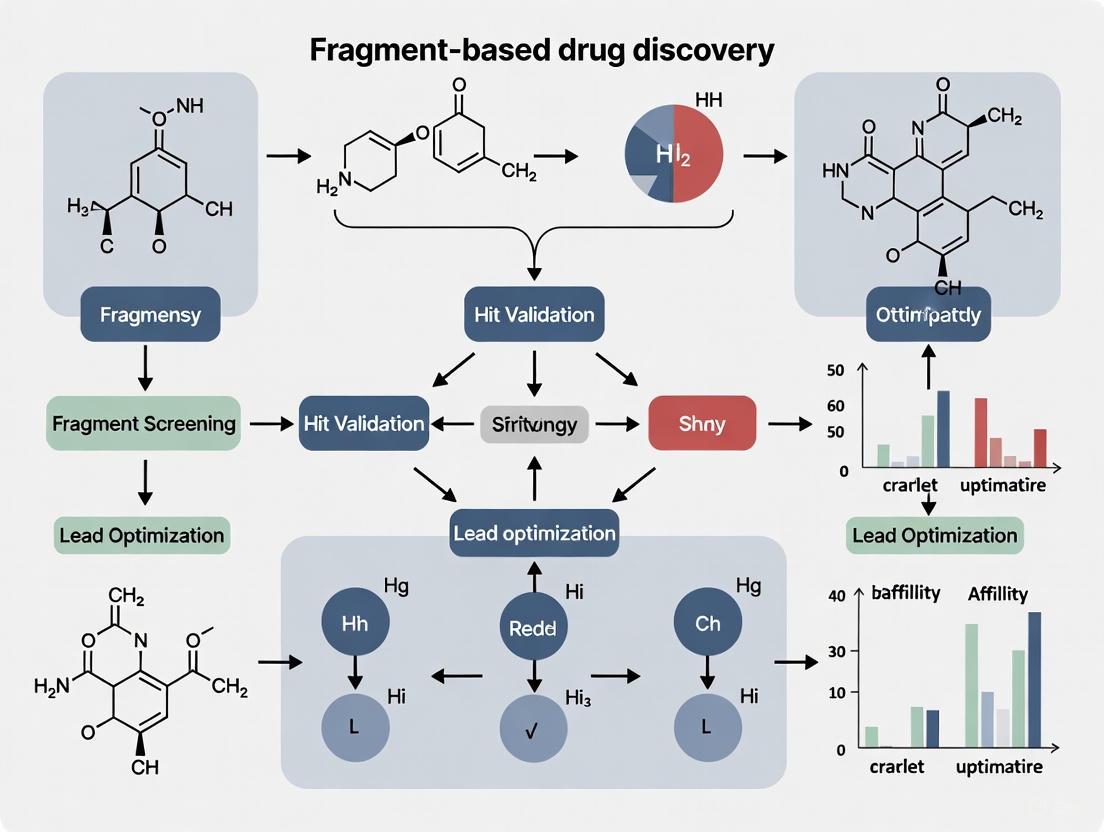
This article provides a comprehensive overview of Fragment-Based Drug Discovery (FBDD), a powerful strategy for identifying novel therapeutic agents.
Fragment-Based Drug Discovery: Methods, Applications, and Future Directions for Challenging Targets
Abstract
This article provides a comprehensive overview of Fragment-Based Drug Discovery (FBDD), a powerful strategy for identifying novel therapeutic agents. Tailored for researchers and drug development professionals, it explores the foundational principles of FBDD, detailing the biophysical and computational methods used for fragment screening and hit validation. The scope extends to practical applications for challenging targets like protein-protein interactions, optimization strategies for progressing fragments into leads, and a comparative analysis of FBDD's success against traditional high-throughput screening. With several FDA-approved drugs originating from FBDD, this review synthesizes current methodologies and emerging trends shaping the future of drug discovery.
The Foundations of FBDD: From Basic Principles to Overcoming HTS Limitations
Fragment-based drug discovery (FBDD) has matured into a powerful strategy for identifying novel therapeutic agents, particularly for challenging targets where traditional high-throughput screening (HTS) often fails [1]. This approach identifies low molecular weight (MW) fragments that bind weakly to a target protein, which are then optimized into potent leads through structure-guided strategies [1]. The fundamental premise of FBDD lies in its efficient sampling of chemical space; smaller fragments provide better coverage of chemical diversity with fewer compounds, often yielding higher hit rates and more efficient starting points for optimization compared to HTS [2] [3]. The success of this methodology is demonstrated by numerous fragment-derived compounds that have entered clinical development, including FDA-approved drugs such as Vemurafenib and Venetoclax [1].
Central to the FBDD paradigm are three interlinked concepts: strict size parameters (typically MW < 300 Da), adherence to the "Rule of Three" (RO3) for library design, and the critical use of ligand efficiency (LE) metrics for hit selection and optimization [4] [5]. These principles collectively ensure that initial fragment hits possess optimal physicochemical properties for efficient elaboration into drug-like leads. This application note details the quantitative definitions, experimental protocols, and analytical frameworks essential for the effective application of these concepts in a modern drug discovery setting, providing researchers with practical methodologies for implementation.
Quantitative Definitions and Theoretical Framework
The Rule of Three and Molecular Weight Criteria
The "Rule of Three" (RO3) serves as a key guideline for designing fragment libraries and characterizing fragment hits. Originally proposed over a decade ago, the RO3 has been widely adopted, though its application has evolved with experience [4]. The criteria are designed to select fragments with simple, low-complexity structures that have a high probability of binding and can be efficiently optimized.
Table 1: The Rule of Three Parameters for Fragment Definition
| Parameter | Target Value | Rationale |
|---|---|---|
| Molecular Weight (MW) | < 300 Da | Limits size to ensure high ligand efficiency and efficient exploration of chemical space [4] [6]. |
| cLogP | ≤ 3 | Controls lipophilicity to maintain adequate solubility and reduce metabolic instability [2] [7]. |
| Hydrogen Bond Donors | ≤ 3 | Prevents overly polar molecules, balancing permeability and solubility [2]. |
| Hydrogen Bond Acceptors | ≤ 3 | Limits polarity and ensures favorable physicochemical properties [2]. |
| Rotatable Bonds | ≤ 3 | Promotes fragment rigidity, which improves binding efficiency and reduces entropy loss upon binding [2] [7]. |
While the RO3 provides valuable guidance, it is not applied rigidly. A sophisticated understanding has emerged, recognizing that some deviations can be productive if justified by high-quality structural data or exceptional ligand efficiency [4]. The primary goal is to select fragments that are small and simple, serving as optimal starting points for chemical optimization.
Ligand Efficiency Metrics
Ligand Efficiency (LE) is a crucial metric that normalizes binding affinity against the size of the molecule. It is based on the observation that the binding free energy of a ligand is roughly proportional to the number of its non-hydrogen atoms [3]. This concept is vital for evaluating fragment hits and guiding their optimization.
The fundamental Ligand Efficiency (LE) is calculated as: [ LE = \frac{ΔG}{N{Heavy Atoms}} \approx \frac{-RT \ln(IC{50} \text{ or } KD)}{N{Heavy Atoms}} ] where (ΔG) is the binding free energy, (R) is the gas constant, (T) is the temperature, and (N_{Heavy Atoms}) is the number of non-hydrogen atoms [3] [5]. For a typical fragment with 10-15 heavy atoms, an LE of ≥ 0.3 kcal/mol per heavy atom is generally considered a high-quality starting point [3].
Table 2: Key Ligand Efficiency Metrics for Fragment Hit Assessment
| Metric | Formula | Application in FBDD |
|---|---|---|
| Ligand Efficiency (LE) | (\frac{ΔG}{N_{Heavy Atoms}}) | Primary metric for initial hit selection. Identifies fragments that make efficient use of their size to generate binding affinity [5]. |
| Binding Efficiency Index (BEI) | (\frac{pIC{50} \text{ or } pKD}{MW \text{ (in kDa)}}) | Normalizes potency by molecular weight, useful for comparing fragments of different sizes [7]. |
| Lipophilic Efficiency (LipE/LLE) | (pIC_{50} - cLogP) | Measures the balance between potency and lipophilicity. Helps prioritize hits with lower lipophilicity, which is correlated with better developability [7]. |
| Size-Independent Ligand Efficiency (SILE) | (\frac{LE \times \sqrt{N_{Heavy Atoms}}}{Constant}) | Adjusts LE for molecular size, enabling comparison of ligands across different size ranges [7]. |
These metrics should be used collectively, not in isolation, to guide the selection of the most promising fragment hits and to monitor optimization campaigns, ensuring that increases in potency are not achieved at the expense of poor physicochemical properties [5].
Experimental Protocols and Workflow
Integrated Fragment Screening and Characterization Workflow
The following protocol outlines a comprehensive workflow for screening a fragment library, identifying hits, and characterizing them based on the Rule of Three and ligand efficiency principles.
Protocol 1: Primary Screening and Hit Identification
Library Preparation:
- Utilize a curated fragment library of 500-2000 compounds designed according to the Rule of Three [2]. Ensure compounds have high aqueous solubility for screening at concentrations up to 1-2 mM.
- Positive Control: Include a known binder or substrate analog for the target as a control.
- Negative Control: Include a non-binding compound (e.g., DMSO) to establish baseline signals.
Biophysical Screening:
- Employ a orthogonal biophysical techniques to detect weak binding (typical K_D values in μM to mM range) [2] [6].
- Surface Plasmon Resonance (SPR): Immobilize the purified, stable target protein on a sensor chip. Screen fragments in single-cycle kinetics mode at a high concentration (e.g., 0.5-1 mM). A significant response unit (RU) shift indicates binding [2].
- Ligand-Observed NMR: Use methods like Saturation Transfer Difference (STD) or Water-LOGSY. A fragment concentration of 100-500 μM is typical. Binding is indicated by signal attenuation in STD or sign inversion in Water-LOGSY [6].
- Thermal Shift Assay (DSF/TSA): Use a real-time PCR instrument. Run assays in a 96- or 384-well format with a final fragment concentration of 1 mM. A positive hit will show a significant shift (ΔT_m > 1.0°C) in the protein's melting temperature compared to a DMSO control [2].
Data Analysis:
- Identify initial hits as compounds that produce a significant signal above the negative control baseline in at least two independent techniques.
Protocol 2: Hit Validation and Affinity Measurement
Affinity Determination:
- For hits from Protocol 1, determine accurate binding affinities (K_D).
- Isothermal Titration Calorimetry (ITC): Titrate the fragment (from a 10-20 mM stock) into the target protein solution. This provides the K_D, stoichiometry (n), and thermodynamic profile (ΔH, ΔS). This is considered the gold standard for label-free binding characterization [2].
- SPR Kinetics: Perform multi-cycle kinetics with a series of dilutions for each confirmed hit to determine KD, and kinetic rate constants (kon, k_off) [2].
Ligand Efficiency Calculation:
Protocol 3: Structural Characterization and Optimization
Structural Elucidation:
- X-ray Crystallography (Gold Standard): Generate co-crystals of the protein with high-LE fragments. Soaking or co-crystallization can be used. This provides an atomic-resolution structure of the protein-fragment complex, revealing the precise binding mode, key interactions (H-bonds, hydrophobic contacts), and identifies unoccupied sub-pockets for growth [1] [2].
- Protein-Observed NMR: For targets resistant to crystallization, 1H-15N HSQC can map the fragment binding site by identifying residues with significant chemical shift perturbations upon fragment binding [6] [3].
Initiation of Optimization:
- Use the structural data to plan chemical synthesis for fragment optimization via:
- Fragment Growing: Systematically adding functional groups to the core fragment to extend into adjacent unoccupied pockets [2] [7].
- Fragment Linking: Covalently joining two fragments that bind to adjacent sub-pockets [7].
- Fragment Merging: Combining structural features of two overlapping fragments into a single, more potent scaffold [2].
- Use the structural data to plan chemical synthesis for fragment optimization via:
The Scientist's Toolkit: Essential Research Reagents and Solutions
Successful implementation of the protocols requires specific reagents and instrumentation. The following table details key solutions for a robust FBDD pipeline.
Table 3: Essential Research Reagent Solutions for Fragment-Based Screening
| Category / Solution | Specific Examples / Techniques | Function in FBDD Workflow |
|---|---|---|
| Curated Fragment Libraries | RO3-compliant libraries (e.g., DSPL), Covalent fragment libraries | Provides the foundational set of low-MW compounds for screening, ensuring maximum chemical diversity and optimal starting properties [2] [8]. |
| Biophysical Screening Platforms | SPR (e.g., Biacore systems), NMR Spectrometers, MST (e.g., Monolith) | Detects weak fragment-target interactions (K_D from μM to mM) that are undetectable by conventional biochemical assays [2] [6]. |
| Affinity & Thermodynamics Characterization | ITC (e.g., MicroCal PEAQ-ITC), SPR Kinetics | Provides quantitative binding constants (K_D) and thermodynamic profiles (ΔH, ΔS) essential for calculating ligand efficiency and understanding binding drivers [2] [6]. |
| Structural Biology Solutions | X-ray Crystallography, Cryo-EM, Protein-Observed NMR | Delivers atomic-resolution binding modes of fragments, which is critical for rational design and optimization strategies like growing and linking [1] [2] [9]. |
| Computational & Modeling Software | Molecular Docking (e.g., GOLD, Glide), MD simulations (e.g., GROMACS), FEP calculations | Guides fragment optimization by predicting binding poses, exploring chemical space virtually, and accurately predicting the affinity of proposed analogues before synthesis [1] [9]. |
The rigorous application of the principles outlined in this document—molecular weight thresholds, the Rule of Three, and ligand efficiency metrics—provides a systematic framework for advancing fragments into viable drug candidates. By integrating these quantitative definitions with robust experimental protocols and modern research tools, scientists can de-risk the early stages of drug discovery. This approach is particularly powerful for tackling the growing number of challenging targets, such as protein-protein interactions, ensuring that initial fragment hits possess the optimal characteristics for efficient optimization into novel therapeutics.
Efficiently Sampling Chemical Space with Smaller Libraries
Fragment-Based Drug Discovery (FBDD) represents a paradigm shift in early-stage drug discovery, offering a powerful strategy for generating novel leads against challenging therapeutic targets [1]. This approach utilizes small, low molecular weight chemical fragments (typically <300 Da) that bind weakly to a target protein, which are then optimized into potent leads through structure-guided strategies [2]. The core philosophy of FBDD centers on the superior efficiency with which these small fragments sample vast chemical spaces compared to traditional High-Throughput Screening (HTS) approaches, enabling effective exploration with significantly smaller compound libraries [10] [11]. This application note details the principles, methodologies, and protocols for implementing FBDD to maximize chemical space coverage while maintaining practical library sizes.
Core Principles of Chemical Space Sampling with Fragments
The Theoretical Foundation
The theoretical foundation of FBDD rests upon the efficient sampling properties of low molecular weight fragments. Small fragments achieve significantly better coverage of chemical space because chemical space grows exponentially with molecular size [10]. A relatively small collection of fragments can thus represent a much larger number of potential drug-like compounds when combined through fragment linking or merging strategies [11]. This approach allows researchers to probe binding sites more thoroughly with fewer compounds, as fragments access cryptic binding pockets that larger molecules cannot reach [2].
Library Design Strategies
Defining Chemical Space
Successful FBDD campaigns begin with meticulous fragment library design. Most libraries employ the "Rule of 3" as guiding criteria: molecular weight <300 Da, cLogP ≤3, hydrogen bond donors ≤3, hydrogen bond acceptors ≤3, and rotatable bonds ≤3 [2]. These rules limit structural complexity, ensuring fragments make only one or two efficient interactions with the protein target, which improves ligand efficiency [11]. Additionally, libraries prioritize chemical tractability and availability of analogues to enable rapid follow-up chemistry, creating what are termed "social fragments" – those with straightforward synthetic pathways for elaboration [11].
Sampling Strategies
Traditional library design emphasizes structural diversity, typically achieved through molecular fingerprints (ECFP, MACCS, USRCAT) and maximin-derived algorithms like the RDKit MaxMin picker [11]. However, emerging research demonstrates that structural diversity does not necessarily correlate with functional diversity [11]. Structurally diverse fragments often make overlapping interactions with protein targets, while structurally similar fragments can exhibit diverse functional activity [11]. This revelation has led to innovative library design approaches focusing on functional diversity – selecting fragments based on the novel interactions they form with protein targets rather than their structural dissimilarity [11].
Table 1: Key Properties for Fragment Library Design
| Property | Target Value | Rationale |
|---|---|---|
| Molecular Weight | <300 Da | Ensures fragments are small enough for efficient chemical space sampling |
| cLogP | ≤3 | Maintains appropriate hydrophobicity for solubility |
| Hydrogen Bond Donors/Acceptors | ≤3 each | Controls polarity and binding specificity |
| Rotatable Bonds | ≤3 | Limits flexibility to maintain binding entropy |
| Heavy Atoms | <20 | Controls complexity and ligand efficiency |
| Synthetic Tractability | High | Enables efficient fragment-to-lead optimization |
Experimental Protocols for FBDD Implementation
Fragment Screening Workflow
The following diagram illustrates the integrated FBDD workflow from library design to lead generation:
Biophysical Screening Methods
Initial fragment hits are identified through highly sensitive biophysical methods capable of detecting weak binding affinities (typically in the μM-mM range) [2]. These methods provide direct, label-free detection of binding events:
Surface Plasmon Resonance (SPR)
- Principle: Measures changes in refractive index at a sensor surface as fragments bind to immobilized target protein
- Protocol:
- Immobilize purified target protein on sensor chip
- Inject fragment libraries at varying concentrations
- Monitor association and dissociation in real-time
- Determine binding affinity (KD), association (kon), and dissociation (koff) rates
- Data Analysis: Fit sensorgrams to appropriate binding models to extract kinetic parameters
MicroScale Thermophoresis (MST)
- Principle: Measures directed movement of molecules in microscopic temperature gradients upon ligand binding
- Protocol:
- Label target protein with fluorescent dye
- Prepare serial dilutions of fragments
- Mix protein with fragments and load into capillaries
- Apply IR-laser to create temperature gradient
- Measure fluorescence changes along temperature gradient
- Advantages: Minimal sample consumption, performed directly in solution
Nuclear Magnetic Resonance (NMR) Spectroscopy
- Protocol:
- Prepare 15N-labeled protein or fragment mixtures
- Collect 1H-15N HSQC spectra for protein-observed experiments
- For ligand-observed experiments (STD NMR):
- Saturate protein resonances
- Transfer magnetization to bound ligands
- Detect signal enhancement in fragment protons
- Map binding sites through chemical shift perturbations
Thermal Shift Assay (TSA)
- Protocol:
- Mix protein with fragments in multi-well plates
- Add fluorescent dye that binds hydrophobic patches
- Perform temperature ramp while monitoring fluorescence
- Calculate melting temperature (Tm) shifts
- Identify stabilizers showing significant ΔTm
Table 2: Biophysical Screening Methods Comparison
| Method | Sample Consumption | Throughput | Information Gained | Key Applications |
|---|---|---|---|---|
| Surface Plasmon Resonance | Medium | Medium-high | Binding kinetics (KD, kon, koff) | Primary screening, hit validation |
| MicroScale Thermophoresis | Low | Medium | Binding affinity (KD) | Low-abundance targets, solution-based screening |
| NMR Spectroscopy | High | Low-medium | Binding site mapping, binding constants | Binding site identification, weak affinity detection |
| Thermal Shift Assay | Very low | High | Thermal stabilization (ΔTm) | Rapid primary screening, membrane proteins |
| Isothermal Titration Calorimetry | High | Low | Thermodynamics (ΔG, ΔH, ΔS) | Mechanistic studies, hit validation |
Structural Elucidation Protocols
X-ray Crystallography (Gold Standard)
- Protein Crystallization Protocol:
- Purify target protein to homogeneity
- Screen crystallization conditions using commercial screens
- Optimize hit conditions for diffraction quality
- Soak fragments into crystals or co-crystallize
- Data Collection and Analysis:
- Collect diffraction data at synchrotron source
- Solve structure by molecular replacement
- Identify electron density for bound fragments
- Model fragments and refine structure
- Analyze protein-fragment interactions
Cryo-Electron Microscopy (for Challenging Targets)
- Protocol:
- Prepare vitrified grids of protein-fragment complexes
- Collect micrographs using Cryo-EM
- Reconstruct 3D density maps
- Build atomic models into density
- Identify fragment binding sites
Fragment to Lead Optimization Strategies
Structure-Guided Optimization Approaches
With precise structural information from X-ray crystallography or Cryo-EM, initial fragment hits are optimized into potent leads through several strategies:
Fragment Growing
- Protocol:
- Identify adjacent unoccupied subpockets from structural data
- Design chemical moieties to extend into these pockets
- Synthesize analogues through systematic derivatization
- Evaluate binding affinity and ligand efficiency
- Iterate based on new structural information
Fragment Linking
- Protocol:
- Identify two fragments binding to proximal sites
- Design linker to connect fragments while maintaining binding poses
- Synthesize linked compound
- Evaluate affinity enhancement (expect multiplicative effect)
Fragment Merging
- Protocol:
- Identify overlapping fragments from different screening hits
- Design hybrid scaffold incorporating key binding elements
- Synthesize merged compounds
- Evaluate affinity and selectivity profiles
Computational Integration in Optimization
Computational methods play increasingly vital roles throughout FBDD workflows:
Molecular Dynamics Simulations
- Protocol:
- Prepare protein-fragment complex from crystal structure
- Solvate system in explicit water
- Run production MD simulation (100ns-1μs)
- Analyze trajectory for stable interactions and conformational changes
Free Energy Perturbation (FEP)
- Protocol:
- Design congeneric series around fragment hit
- Set up transformation pathways between analogues
- Run FEP simulations to calculate relative binding affinities
- Prioritize synthetic targets based on predictions
Virtual Library Screening
- Protocol:
- Enumerate synthetically accessible derivatives around fragment core
- Dock virtual compounds into binding site
- Score and rank compounds based on predicted affinity
- Select top candidates for synthesis and testing
Research Reagent Solutions
Table 3: Essential Research Reagents and Tools for FBDD
| Reagent/Technology | Function | Application Notes |
|---|---|---|
| Fragment Libraries (≤300 Da) | Primary screening material | Design for functional diversity over structural diversity [11] |
| SPR Instrumentation | Label-free binding kinetics | Detect weak fragment interactions (μM-mM range) |
| X-ray Crystallography Platform | Atomic-resolution structure determination | Essential for determining binding modes |
| NMR Spectrometers | Binding site mapping and validation | Particularly 1H-15N HSQC for protein-observed |
| Molecular Modeling Software | Structure-based design | Docking, MD simulations, and FEP calculations |
| High-Throughput Chemistry Resources | Rapid analogue synthesis | Enable quick SAR exploration around hits |
| Protein Production Systems | Target protein expression and purification | Require high-purity, monodisperse protein |
Case Studies and Applications
Successful FBDD-Derived Drugs
The power of FBDD is demonstrated through several FDA-approved drugs:
Vemurafenib
- Origin: Fragment-derived inhibitor of BRAF V600E kinase
- Development Path: Initial fragment hits optimized through structure-based design
- Indication: Metastatic melanoma
Venetoclax
- Origin: Fragment-based discovery targeting BCL-2
- Development Path: Fragment screening followed by structure-guided optimization
- Indication: Chronic lymphocytic leukemia
Functional Diversity Case Study
A recent study analyzed 520 fragments screened against 10 unrelated protein targets, revealing that structurally diverse libraries do not necessarily provide more functional diversity than randomly selected libraries [11]. By selecting fragments based on the novel interactions they form with proteins (functional diversity), researchers designed small libraries that recovered significantly more information about new protein targets than similarly sized structurally diverse libraries [11]. This approach demonstrates that covering more functional space enables generation of more diverse sets of drug leads from smaller screening efforts.
Fragment-Based Drug Discovery represents a mature and powerful strategy for efficient exploration of chemical space using smaller compound libraries. By leveraging small fragments with high ligand efficiency, employing sensitive biophysical screening methods, and utilizing structure-guided optimization strategies, FBDD enables effective sampling of chemical space that would be prohibitively large for traditional HTS approaches. The emerging emphasis on functional diversity over structural diversity in library design promises to further enhance the efficiency and success rates of FBDD campaigns, particularly for challenging therapeutic targets previously considered "undruggable."
Fragment-based drug discovery (FBDD) has matured into a powerful strategy for generating novel leads, offering distinct advantages for challenging or previously "undruggable" targets where traditional screening methods often fail [1]. The approach identifies low molecular weight fragments (typically < 300 Da) that bind weakly to a target, which are then optimized into potent leads through structure-guided strategies [1] [12]. The core strength of FBDD lies in the critical advantage of high atom efficiency and quality binding interactions - fragments achieve binding through optimal, energetically favorable interactions with protein hot spots, making them more efficient starting points for drug development compared to larger, more complex molecules identified through high-throughput screening (HTS) [12].
Contrary to HTS where large libraries of drug-like molecules are screened, FBDD involves smaller, less complex molecules that, despite low affinity to protein targets, display more 'atom-efficient' binding interactions than larger molecules [12]. Since the number of possible molecules increases exponentially with molecular size, small fragment libraries allow for proportionately greater coverage of their respective chemical space compared with larger HTS libraries [12]. This fundamental efficiency enables FBDD to sample chemical space more effectively, resulting in numerous successful clinical candidates and approved drugs including Vemurafenib, Venetoclax, and Sotorasib [1] [12].
Quantitative Advantages of Fragment Approaches
The efficiency of FBDD can be quantitatively demonstrated through direct comparison with alternative screening methodologies. The strategic value of fragments becomes evident when examining key performance metrics across different discovery platforms.
Table 1: Quantitative Comparison of Screening Methodologies
| Aspect | Fragment-Based Screening | DNA-Encoded Libraries (DEL) | High-Throughput Screening (HTS) |
|---|---|---|---|
| Library Size | 1,000-2,000 compounds [13] | 100-500 million members [13] | 100,000-2,000,000 compounds |
| Hit Affinity Range | mM-high-µM [13] | nM-low-µM [13] | nM-µM range |
| Chemical Space Coverage | High coverage with small libraries [12] | Massive diversity [13] | Limited by library size |
| Molecular Weight | ≤ 300 Da [12] [13] | 300-600 Da (including DNA linker) [13] | Drug-like (typically > 350 Da) |
| Atom Efficiency | High - "atom-efficient" binding [12] | Variable | Lower - often suboptimal interactions |
| Protein Requirement | mg quantities [13] | 10-50 µg [13] | Moderate to high |
The data reveal FBDD's strategic positioning: while initial hits are less potent, they provide superior starting points for optimization due to their efficient binding characteristics. The smaller size and complexity of fragments enable them to sample binding hot-spots that larger molecules may miss, accessing cryptic or allosteric sites that are often crucial for targeting challenging protein classes [13].
Experimental Protocols for Fragment Screening and Optimization
Core Biophysical Screening Workflow
The detection of fragment binding requires highly sensitive biophysical methods due to the weak affinities (typical KD values in µM-mM range) involved [1] [12]. The following protocol outlines a standardized approach for primary fragment screening:
Protocol 1: Primary Fragment Screening Using Orthogonal Biophysical Methods
- Objective: Identify validated fragment hits binding to the target protein.
- Materials:
- Purified target protein (>95% purity)
- Fragment library (1,000-2,000 compounds)
- Screening buffers compatible with multiple detection methods
- Nuclear Magnetic Resonance (NMR) spectrometer, Surface Plasmon Resonance (SPR) instrument, or Thermal Shift assay equipment
- Procedure:
- Sample Preparation: Prepare protein samples at optimal concentration for each method (e.g., 10-50 µM for NMR; may require immobilization for SPR).
- Primary Screening: Screen fragment library against target using one primary method (typically NMR or SPR).
- Hit Confirmation: Confirm hits from primary screen using at least one orthogonal method (e.g., X-ray crystallography or Thermal Shift).
- Dose-Response Analysis: For confirmed hits, determine dissociation constants (KD) using concentration series.
- Artifact Filtering: Eliminate false positives using control experiments and counter-screens.
- Key Considerations: "Fragments bind weakly (µM–mM), but because they are so small they often sample binding hot-spots that large molecules miss" [13]. Orthogonal validation is crucial due to the weak nature of fragment interactions.
Structure-Guided Fragment Optimization
Once validated fragment hits are identified, they undergo systematic optimization using structure-guided design strategies:
Protocol 2: Structure-Guided Fragment Optimization
- Objective: Optimize fragment hits into lead compounds with improved potency and properties.
- Materials:
- Co-crystal structures of fragment-protein complexes
- 3D molecular modeling software
- Chemical reagents for synthetic chemistry
- Assays for evaluating binding affinity and functional activity
- Procedure:
- Structural Characterization: Obtain high-resolution co-crystal structures of fragment hits bound to the target protein.
- Growth Vector Analysis: Identify optimal vectors for fragment elaboration based on structural data.
- Fragment Growing: Systematically add functional groups to enhance interactions with adjacent subpockets.
- Fragment Linking: For fragments binding to proximal sites, design linkers to connect them into a single molecule.
- Fragment Merging: Combine structural features of multiple fragments binding in overlapping regions.
- Iterative Optimization: Cycle through design, synthesis, and testing to improve potency and drug-like properties.
- Key Considerations: "Fragment hits can, therefore, serve as a more efficient start point for subsequent optimisation, particularly for hard-to-druggable targets" [12]. The optimization process should maintain the atom efficiency of the original fragment while improving affinity.
Diagram 1: FBDD Workflow - This diagram illustrates the standard fragment-based drug discovery workflow from initial screening to lead compound generation, highlighting the iterative structure-guided optimization process.
The Scientist's Toolkit: Essential Research Reagents and Materials
Successful FBDD campaigns require specialized reagents and instrumentation to detect and optimize the weak binding interactions characteristic of fragments. The following table details essential resources for establishing FBDD capabilities.
Table 2: Research Reagent Solutions for Fragment-Based Discovery
| Category | Specific Items | Function & Application |
|---|---|---|
| Fragment Libraries | Rule of Three compliant libraries, Diverse chemical scaffolds, Target-class focused sets | Provides starting points with optimal physicochemical properties for efficient binding and growth [12] [13] |
| Structural Biology Tools | Crystallization screens, Cryo-protectants, Crystal harvesting tools | Enables determination of high-resolution fragment-bound structures for structure-guided design [1] [9] |
| Biophysical Screening Instruments | NMR spectrometers, SPR systems, Thermal shift instruments, ITC calorimeters | Detects weak fragment binding (µM-mM range) through orthogonal biophysical methods [1] [12] [13] |
| Computational Resources | Molecular docking software, Free energy perturbation (FEP) tools, AI/ML platforms | Guides fragment growth and optimization; complements experimental screens and speeds up optimization [1] [12] [9] |
| Chemical Synthesis Resources | Building block collections, Diverse linker chemistries, High-throughput synthesis equipment | Enables rapid analog synthesis for structure-activity relationship (SAR) exploration during optimization |
Case Studies Demonstrating Atom Efficiency in Approved Drugs
The impact of FBDD's atom-efficient approach is demonstrated through several FDA-approved drugs that originated from fragment screens. These case studies highlight how small, efficient fragments were optimized into transformative medicines.
Table 3: Fragment-Derived Approved Drugs Showcasing Atom Efficiency
| Drug Name | Target | Therapeutic Area | Fragment Starting Point |
|---|---|---|---|
| Vemurafenib | BRAF V600E | Oncology | Simple phenyl derivative [1] |
| Venetoclax | BCL-2 | Oncology | Low-affinity fragment targeting protein-protein interaction [1] [12] |
| Sotorasib | KRAS G12C | Oncology | Covalent fragment targeting previously "undruggable" oncogene [12] |
| Erdafitinib | FGFR | Oncology | Fragment screening hit optimized through structure-based design [12] |
These case studies exemplify the core principle of FBDD: "fragments tend to make more 'atom-efficient' binding interactions than larger molecules" [12]. For instance, Venetoclax represents one of the first drugs to target a protein-protein interaction (PPI) interface, while Sotorasib targets the KRAS G12C mutant previously considered undruggable - both achievements made possible by the ability of small fragments to access and engage challenging binding sites [12].
Advanced Computational Protocols
Virtual Fragment Screening Protocol
Computational approaches complement experimental FBDD by enabling virtual screening of larger fragment libraries:
Protocol 3: Virtual Fragment Screening Using FRAGSITE
- Objective: Identify potential fragment binders through computational screening.
- Materials:
- Target protein structure (experimental or homology model)
- Virtual fragment library
- FRAGSITE web server or similar computational tools
- High-performance computing resources
- Procedure:
- Target Preparation: Prepare protein structure by adding hydrogen atoms and optimizing side-chain orientations.
- Library Preparation: Curate fragment library with appropriate physicochemical descriptors.
- Pocket Identification: Detect potential binding sites using pocket prediction algorithms.
- Fragment Docking: Perform molecular docking of fragments to identified binding sites.
- Scoring & Ranking: Use FRAGSITE or similar scoring functions to rank fragments by predicted binding affinity.
- Hit Selection: Select top-ranked fragments for experimental validation.
- Key Considerations: "FRAGSITE exploits our observation that ligand fragments, e.g., rings, tend to interact with stereochemically conserved protein subpockets that also occur in evolutionarily unrelated proteins" [14]. This approach is particularly valuable for targets with limited protein availability.
Advanced Sampling with GCNCMC
Recent advancements in sampling algorithms address the limitations of traditional molecular dynamics for fragment binding:
Protocol 4: Fragment Binding Site Mapping with GCNCMC
- Objective: Identify fragment binding sites and modes using enhanced sampling.
- Materials:
- Atomic-resolution protein structure
- Grand Canonical Nonequilibrium Candidate Monte Carlo (GCNCMC) software
- Molecular dynamics simulation package
- Procedure:
- System Setup: Prepare solvated protein system with appropriate boundary conditions.
- Parameterization: Define fragment chemical potential and simulation parameters.
- GCNCMC Simulation: Perform simulations allowing fragment insertion/deletion moves.
- Binding Site Analysis: Identify regions with high fragment occupancy.
- Binding Mode Clustering: Group similar binding poses to characterize predominant interaction patterns.
- Affinity Estimation: Calculate relative binding strengths from occupancy statistics.
- Key Considerations: "GCNCMC attempts the insertion and deletion of fragments to, or from, a region of interest; each proposed move is subject to a rigorous acceptance test based on the thermodynamic properties of the system" [9]. This method efficiently finds occluded fragment binding sites and accurately samples multiple binding modes.
Diagram 2: GCNCMC Sampling Process - This diagram outlines the workflow for Grand Canonical Nonequilibrium Candidate Monte Carlo simulations used to map fragment binding sites and estimate binding affinities.
The critical advantage of high atom-efficiency and quality binding interactions positions FBDD as a powerful strategy for addressing challenging targets in drug discovery. By starting with small fragments that make optimal use of limited atoms to form specific interactions with protein hot spots, FBDD provides efficient starting points that can be systematically optimized into potent therapeutics. The continued integration of advanced biophysical methods, structural biology, and computational approaches like AI/ML and enhanced sampling algorithms will further expand the capabilities of FBDD [1] [9]. As demonstrated by numerous approved drugs and clinical candidates, this atom-efficient approach continues to deliver transformative medicines for previously undruggable targets, validating FBDD as an essential component of modern drug discovery pipelines.
Fragment-based drug discovery (FBDD) has evolved into a mature and powerful strategy for generating novel leads against targets that have historically resisted conventional drug discovery approaches [1]. Unlike traditional high-throughput screening (HTS) that employs large, drug-like libraries, FBDD utilizes low molecular weight fragments (typically <300 Da) that bind weakly to biological targets [12]. These initial fragment hits serve as efficient starting points that can be systematically optimized into potent leads through structure-guided strategies, making FBDD particularly valuable for challenging targets such as protein-protein interactions (PPIs) and previously "undruggable" oncogenic drivers like KRAS [1] [12].
The fundamental advantage of FBDD lies in its efficient sampling of chemical space. A library of 1,000-2,000 small fragments can sample a proportionally greater coverage of chemical space compared to much larger HTS libraries comprising larger molecules [12]. Fragments, due to their simplicity and smaller size, exhibit more 'atom-efficient' binding interactions and are more likely to access cryptic binding pockets that larger molecules cannot reach [12] [2]. This approach has demonstrated remarkable success, yielding over 50 fragment-derived compounds in clinical development and multiple approved drugs, including Vemurafenib, Venetoclax, Sotorasib, and Asciminib [1] [12].
FBDD Workflow and Key Methodologies
The FBDD workflow follows a systematic, iterative process that integrates experimental and computational methods to transform weak fragment hits into potent drug candidates. The standardized workflow encompasses library design, biophysical screening, structural elucidation, and fragment optimization.
Core FBDD Workflow
The diagram below illustrates the integrated, cyclical nature of the FBDD process:
Fragment Library Design Principles
The foundation of any successful FBDD campaign lies in the careful design of the fragment library. Quality and diversity are more critical than size, with libraries typically containing 1,000-2,000 compounds that ensure broad coverage of chemical space [12] [2].
Table: Fragment Library Design Criteria Based on Rule of Three
| Parameter | Target Value | Rationale |
|---|---|---|
| Molecular Weight | ≤300 Da | Ensures small size for efficient binding |
| cLogP | ≤3 | Maintains good aqueous solubility |
| Hydrogen Bond Donors | ≤3 | Controls polarity |
| Hydrogen Bond Acceptors | ≤3 | Manages polarity and desolvation penalty |
| Rotatable Bonds | ≤3 | Limits flexibility for efficient binding |
| Polar Surface Area | ≤60 Ų | Ensures adequate membrane permeability |
While the Rule of Three provides general guidance, successful fragments may strategically violate one or more parameters while maintaining favorable physicochemical properties [12]. Modern library design also emphasizes "growth vectors" – synthetically tractable sites that enable systematic fragment elaboration without disrupting the initial binding interaction [2]. Additionally, contemporary libraries are addressing historical limitations by incorporating greater three-dimensional (sp3) character and structural diversity beyond flat, aromatic systems [12].
Biophysical Screening and Hit Validation Methods
Detecting the weak binding affinities (typically in the μM-mM range) characteristic of fragments requires highly sensitive biophysical techniques [12]. The following table summarizes the primary methods employed in fragment screening:
Table: Key Biophysical Screening Methods in FBDD
| Method | Detection Principle | Information Provided | Throughput | Sample Consumption |
|---|---|---|---|---|
| Surface Plasmon Resonance (SPR) | Optical measurement of refractive index changes | Binding affinity (KD), kinetics (kon, koff) | Medium-high | Low-moderate |
| Nuclear Magnetic Resonance (NMR) | Chemical shift perturbations | Binding site identification, binding constants | Low-medium | High |
| Thermal Shift Assay (TSA) | Protein thermal stability upon ligand binding | Apparent binding affinity | High | Low |
| Isothermal Titration Calorimetry (ITC) | Heat changes during binding | Thermodynamic profile (KD, ΔH, ΔS) | Low | High |
| MicroScale Thermophoresis (MST) | Temperature-induced molecular movement | Binding affinity, solution-based measurement | Medium | Very low |
Given the weak affinities involved, orthogonal validation using two complementary methods is considered best practice to eliminate false positives and confirm genuine binding events [12] [2]. Technological advances are continuously enhancing these methodologies; for instance, next-generation SPR systems now enable parallel fragment screening across large target arrays, dramatically reducing screening timelines from years to days while providing valuable selectivity information [8].
Experimental Protocols
Protocol: Surface Plasmon Resonance (SPR) Fragment Screening
Purpose: To identify and characterize fragment binding to target proteins through real-time, label-free detection.
Materials:
- Biacore series SPR instrument (or equivalent)
- CM5 sensor chips
- Target protein (>95% purity)
- Fragment library (prepared as 1-10 mM stock solutions in DMSO)
- Running buffer: HBS-EP (10 mM HEPES, 150 mM NaCl, 3 mM EDTA, 0.05% v/v surfactant P20, pH 7.4)
- Regeneration solutions (varies by target; typically mild acidic/basic conditions or high salt)
Procedure:
- Surface Preparation: Immobilize target protein on CM5 sensor chip using standard amine coupling chemistry to achieve 5-15 kDa immobilization level.
- Experimental Design: Include reference surface for double-referencing and solvent correction cycles.
- Screening Setup: Prepare fragment samples at 100-500 μM in running buffer with constant DMSO concentration (typically 1-2%).
- Binding Measurements: Inject fragments over target and reference surfaces for 30-60 seconds contact time, followed by 60-120 seconds dissociation.
- Regeneration: Apply regeneration solution between cycles to ensure complete fragment removal.
- Data Analysis: Process sensorgrams using Biacore Insight Software or equivalent. Identify hits based on significant response units (RU) above background and concentration-dependent binding.
Notes: Include solvent correction cycles to account for DMSO effects. For weak binders, extended dissociation times may be required. Perform kinetic analysis only for fragments with adequate signal-to-noise ratio [2] [8].
Protocol: X-ray Crystallography for Fragment Binding Mode Determination
Purpose: To determine atomic-resolution structure of fragment bound to target protein for structure-based optimization.
Materials:
- Crystallization robot (e.g., Mosquito)
- Sitting drop vapor diffusion plates
- Purified target protein at high concentration (10-50 mg/mL)
- Fragment hits (100 mM stock in DMSO)
- Crystallization screening kits
- Cryoprotectant solutions
- High-brilliance synchrotron or home-source X-ray generator
Procedure:
- Soaking Preparation: Grow native protein crystals using vapor diffusion method optimized for target.
- Fragment Soaking: Transfer single crystal to stabilizing solution containing 1-10 mM fragment (≤5% DMSO). Soak for 2 hours to several days.
- Cryoprotection: Transfer crystal to cryoprotectant solution (e.g., mother liquor with 20-25% glycerol) and flash-cool in liquid nitrogen.
- Data Collection: Collect X-ray diffraction data at 100K, achieving resolution better than 2.5 Å.
- Structure Solution: Solve structure by molecular replacement using apo protein coordinates.
- Electron Density Analysis: Examine |Fobs| - |Fcalc| difference density maps for unambiguous fragment density.
- Model Building: Build fragment into continuous electron density, refining coordinates and B-factors.
Notes: For difficult soakings, co-crystallization may be preferable. Multiple binding modes may be observed for weak binders. Resolution better than 2.2 Å is desirable for reliable water structure determination [2].
Protocol: TWN-FS Method for Computational Fragment Screening
Purpose: To identify potential fragment binding sites through analysis of topological water networks in protein binding sites.
Materials:
- Protein Data Bank (PDB) structure of target protein
- TWN-FS software package (available at https://github.com/pkj0421/TWN-FS)
- Fragment library in appropriate chemical format (SMILES/SDF)
- Molecular docking software (e.g., AutoDock, GOLD)
- Molecular dynamics simulation package (e.g., GROMACS, AMBER)
Procedure:
- Hydration Site Analysis: Identify conserved water molecules in binding site from crystal structures or MD simulations.
- Water Network Mapping: Characterize hydrogen-bonded cyclic water-ring networks (TWNs) using graph theory.
- Hotspot Identification: Determine high-occupancy hydration sites with favorable displacement energies.
- Fragment Docking: Screen fragment library against identified hotspots using molecular docking.
- Binding Energy Calculation: Score fragment poses using free energy perturbation or MM/PBSA methods.
- Experimental Validation: Prioritize top-ranking fragments for experimental testing.
Notes: This method is particularly valuable for identifying cryptic binding pockets and predicting optimal fragment size and shape for specific hydration sites [15].
Case Studies: FBDD Success Against Challenging Targets
KRAS G12C: Targeting a Previously "Undruggable" Oncogene
The KRAS G12C oncogene represents a paradigm shift in targeting previously intractable targets. Sotorasib, approved in 2021, originated from fragment screening that identified compounds binding to a previously unrecognized pocket adjacent to the switch II region [12]. The initial fragment hits exhibited weak affinity (KD ~ mM) but provided a starting point for structure-based optimization into a potent, covalent inhibitor that traps KRAS G12C in its inactive state [12]. This case demonstrates FBDD's ability to identify allosteric sites on seemingly featureless targets.
Venetoclax: Addressing Protein-Protein Interactions
Venetoclax, a BCL-2 inhibitor, exemplifies FBDD's utility in targeting PPIs. The discovery campaign began with NMR-based screening that identified fragments binding to the BH3-binding groove of BCL-2 [1] [12]. Through iterative structure-based design, initial fragments were evolved into nanomolar inhibitors that disrupt the BCL-2-BIM PPI interface [1]. This represented one of the first successful targeting of a PPI interface and validated FBDD for this challenging target class.
Allosteric WRN Inhibitors: Fragment Screening Reveals Novel Pockets
Recent work on Werner Syndrome helicase (WRN) demonstrates FBDD's power in identifying novel allosteric sites. Fragment screening against this dynamic helicase revealed binders to a previously unknown allosteric pocket, providing starting points for targeting WRN in mismatch repair-deficient cancers [8]. This case highlights how fragments can identify and validate novel pharmacological sites on complex biological targets.
The Scientist's Toolkit: Essential Research Reagent Solutions
Table: Key Reagents and Resources for FBDD Implementation
| Resource Category | Specific Examples | Application and Utility |
|---|---|---|
| Commercial Fragment Libraries | Life Technologies, Maybridge, Enamine | Provide pre-curated, diverse fragment sets with verified purity and solubility |
| Structural Biology Reagents | Crystallization screening kits (Hampton Research), Cryoprotectants | Enable structure determination of fragment-protein complexes |
| Biophysical Instrumentation | Biacore SPR systems, NMR spectrometers, Microcal ITC | Detect and characterize weak fragment binding interactions |
| Computational Tools | Schrödinger Suite, MOE, RDKit, TWN-FS package | Facilitate virtual screening, library design, and binding pose prediction |
| Chemical Synthesis Resources | Building block libraries, Parallel synthesis equipment | Enable rapid fragment optimization and analog generation |
Emerging Technologies and Future Directions
FBDD continues to evolve with technological advancements that enhance its efficiency and scope. Several emerging areas show particular promise:
Covalent FBDD: The strategic integration of covalent warheads into fragments enables targeting of previously inaccessible sites and provides kinetic advantages. This approach has proven valuable for challenging targets like KRAS G12C and is being systematically explored using cysteine-focused fragment libraries [8].
AI and Machine Learning Integration: Generative pre-trained transformers and other AI approaches are being applied to molecular fragmentation and fragment-based compound generation [16]. These methods can extract semantic relationships between compound substructures, enhancing the computer's understanding of chemical space and enabling more intelligent fragment selection and optimization [16].
Advanced Computational Methods: Free Energy Perturbation calculations provide quantitative predictions of binding affinity changes during optimization [1] [2]. Functional-group Symmetry-Adapted Perturbation Theory offers unprecedented insights into protein-ligand interactions by decomposing interaction energies into fundamental components [8].
Targeted Protein Degradation: FBDD approaches are being adapted for proteolysis-targeting chimeras and molecular glues, expanding applications beyond traditional inhibition [8]. Fragments can serve as starting points for recruiting E3 ligases or designing degraders against challenging targets.
Fragment-based drug discovery has fundamentally transformed the approach to addressing biologically validated but chemically intractable targets. By starting small and building complexity in a structure-guided manner, FBDD provides a systematic pathway to drug candidates against target classes once considered "undruggable." The continued integration of advanced biophysical methods, structural biology, computational approaches, and emerging AI technologies positions FBDD as a cornerstone methodology for the next generation of therapeutic development. As the field advances, FBDD will undoubtedly play an increasingly pivotal role in expanding the druggable proteome and delivering transformative medicines for challenging diseases.
Fragment-Based Drug Discovery (FBDD) has emerged as a transformative strategy in pharmaceutical research, revolutionizing the identification and optimization of therapeutic agents. This methodology utilizes small, low-molecular-weight fragments as starting points, enabling efficient exploration of chemical space and targeting of challenging protein interfaces. Unlike traditional high-throughput screening (HTS), which tests millions of complex compounds, FBDD begins with simpler molecules that typically exhibit higher hit rates and more optimal ligand efficiency [17]. The approach has proven particularly valuable for targeting "undruggable" targets, including protein-protein interactions and featureless binding sites that often elude conventional discovery methods [8] [17].
The conceptual foundation of FBDD rests on the principle that small fragments can access binding pockets more effectively than larger, more complex molecules. These initial fragment hits, while weak in affinity, provide crucial starting points for structural elaboration into potent, drug-like compounds [9]. Over the past two decades, FBDD has evolved from an experimental concept to a mainstream approach responsible for numerous clinical candidates and approved drugs, with significant concentrations in oncology therapeutics [17] [18]. This document traces this methodological evolution, provides detailed experimental protocols, and highlights key research tools essential for successful FBDD campaigns.
Historical Progression and Key Milestones
The development of FBDD represents a paradigm shift in early drug discovery, marked by several critical advances that established its credibility and utility.
Foundational Work and Early Successes
Initial industry skepticism toward FBDD was overcome through pioneering work at Abbott Laboratories (now AbbVie) in the 1990s. Researchers employed Structure-Activity Relationship by Nuclear Magnetic Resonance (SAR by NMR) to identify fragment binders for Matrix Metalloproteinases (MMPs), targets linked to arthritis and cancer metastasis [17]. This approach successfully identified acetohydroxamate (Kd = 17 mM) and biaryl fragments (Kd = 0.02 mM) that bound to distinct MMP3 sites, demonstrating that connecting these fragments could yield compounds with nanomolar affinity [17]. This work provided crucial proof-of-concept that weak-binding fragments could be evolved into potent inhibitors.
Concurrently, FBDD demonstrated its capability against challenging targets like B-cell lymphoma 2 (Bcl-2) proteins, key regulators of apoptosis. Early fragment hits against Bcl-2 proteins exhibited millimolar affinities yet served as valuable starting points for structure-based design campaigns that ultimately produced venetoclax, a potent and selective Bcl-2 inhibitor approved for certain leukemias [17]. These early successes established FBDD as a powerful approach for targets resistant to traditional screening methods.
Technological Expansion and Mainstream Adoption
As FBDD matured, its methodology expanded beyond NMR to include a diverse array of biophysical techniques. Surface Plasmon Resonance (SPR) gained prominence for its ability to detect weak interactions and provide kinetic data [8]. X-ray crystallography became indispensable for elucidating precise binding modes and guiding structure-based optimization, even as it faced challenges with protein targets resistant to crystallization [9]. The development of specialized fragment libraries containing 1,000-10,000 compounds optimized for small size, solubility, and structural diversity enabled more efficient screening campaigns [17].
The period from 2015 to 2022 witnessed 180 published fragment-to-lead studies, with FBDD accounting for 7% of all clinical candidates reported in the Journal of Medicinal Chemistry between 2018 and 2021 [9]. This growth was fueled by cumulative successes and methodological refinements that improved the efficiency and success rate of fragment-to-lead optimization.
Current Impact: Approved Therapeutics
The most compelling validation of FBDD comes from its growing list of FDA-approved drugs. As of 2025, at least seven fragment-derived oncology drugs have reached the market, with recent additions including capivasertib [17] [18]. The approach continues to yield investigational drugs across multiple therapeutic areas, as evidenced by numerous 2025 FDA approvals derived from fragment-based approaches, such as Voyxact (sibeprenlimab-szsi) for IgA nephropathy and Komzifti (ziftomenib) for NPM1-mutant acute myeloid leukemia [19].
Table 1: Selected FDA-Approved Drugs Derived from Fragment-Based Discovery
| Drug Name | Approval Year | Target/Indication | Key Fragment Origin |
|---|---|---|---|
| Capivasertib | 2024* | Oncology (multiple targets) | Fragment screening and optimization [17] |
| Venetoclax | 2016 | Bcl-2/Chronic Lymphocytic Leukemia | NMR-based fragment screening [17] |
| Vemurafenib | 2011 | BRAF V600E/Metastatic Melanoma | Fragment-based scaffold design |
| Additional FDA-approved fragment-derived drugs | Various | Oncology | Fragment-based screening campaigns [18] |
Note: Specific approval year for capivasertib not provided in sources, but 2024-2025 context indicated [17] [18].
Core Experimental Protocols
Successful FBDD campaigns follow a structured workflow from initial screening to lead optimization, with each stage employing specialized methodologies.
Protocol 1: Library Design and Fragment Screening
Objective: To design a diverse fragment library and identify initial hits against a protein target.
Materials:
- Purified protein target (>95% purity)
- Fragment library (1,000-5,000 compounds)
- Assay buffers optimized for target stability
- Equipment: SPR instrument, NMR spectrometer, X-ray crystallography setup, or thermal shift instrument
Procedure:
Library Curation: Select fragments meeting the "rule of three" guidelines (MW <300, cLogP ≤3, HBD ≤3, HBA ≤3, rotatable bonds ≤3). Ensure chemical diversity and representation of multiple scaffold types [17].
Primary Screening: Perform multi-technique screening using:
- SPR Screening: Immobilize target protein on chip surface. Inject fragments at high concentration (0.1-1 mM) in single-cycle kinetics mode. Identify hits showing reproducible binding signals above background noise [8].
- Ligand-Observed NMR: Conduct saturation transfer difference (STD) or WaterLOGSY experiments. Fragment hits exhibit signal attenuation in STD spectra or sign inversion in WaterLOGSY [17].
- Differential Scanning Fluorimetry (DSF): Monitor protein thermal stability shifts (±1°C significance) in presence of fragments [17].
Hit Validation: Subject primary hits to dose-response analysis to determine apparent affinity (KD). Confirm binding through orthogonal methods (e.g., validate SPR hits by NMR) [17].
Critical Parameters:
- Maintain protein stability and functionality throughout screening process
- Use appropriate controls (DMSO, known binders/inhibitors) to eliminate false positives
- Implement stringent hit criteria while acknowledging weak fragment affinities (typically μM-mM range)
Protocol 2: Fragment to Lead Optimization
Objective: To evolve validated fragment hits into lead compounds with improved potency and drug-like properties.
Materials:
- Protein crystals (for X-ray crystallography)
- Structure determination software (PHASER, REFMAC, Coot)
- Medicinal chemistry resources for compound synthesis
- Cellular assay systems for functional validation
Procedure:
Structure Elucidation: Soak fragment hits into protein crystals or co-crystallize fragment-protein complexes. Determine high-resolution structures (typically <2.5Å) to identify binding mode and potential growth vectors [9].
Fragment Growing: Design analogues that extend into adjacent subpockets while maintaining key fragment-target interactions. Prioritize synthetic feasibility and maintain favorable physicochemical properties [17].
Fragment Linking: When multiple fragments bind in proximal sites, design linkers to connect them into a single molecule, potentially achieving additive binding energy [17].
Affinity Optimization: Iterate between structure-based design and synthesis to improve potency. Monitor ligand efficiency (LE) and lipophilic ligand efficiency (LLE) to maintain compound quality [17].
Cellular Validation: Evaluate optimized compounds in cell-based assays for target engagement, functional activity, and preliminary cytotoxicity.
Critical Parameters:
- Maintain or improve ligand efficiency throughout optimization
- Monitor developing ADMET properties early
- Balance potency gains with maintenance of favorable physicochemical properties
Visualization of FBDD Workflows
Diagram Title: FBDD Process Overview
Advanced Computational Methods
Diagram Title: Computational FBDD Methods
The Scientist's Toolkit: Essential Research Reagents and Solutions
Successful FBDD implementation requires specialized tools and platforms. The following table details key resources for establishing a robust FBDD pipeline.
Table 2: Essential Research Reagents and Solutions for FBDD
| Category | Specific Tool/Platform | Function in FBDD | Key Features |
|---|---|---|---|
| Fragment Libraries | Customized fragment sets | Primary screening material | Rule of 3 compliance, 1,000-5,000 compounds, maximum diversity [17] |
| Biophysical Screening | Surface Plasmon Resonance (SPR) | Detect fragment binding | High sensitivity for weak interactions (mM-μM), kinetic information [8] |
| Structural Biology | X-ray Crystallography | Determine atomic-level binding modes | High-resolution structures for structure-based design [9] |
| Computational Tools | GCNCMC (Grand Canonical NCMC) | Identify binding sites and modes | Samples fragment binding without prior knowledge of site [9] |
| Chemical Informatics | F-SAPT (Functional-group SAPT) | Quantify protein-ligand interactions | Quantum chemistry method explaining interaction components [8] |
| Target Engagement | Cellular target engagement assays | Validate functional activity in cells | Confirms target modulation in physiological environment [17] |
Fragment-Based Drug Discovery has evolved from a conceptual approach to a well-established methodology that continues to deliver clinically impactful therapeutics. Its strength lies in efficiently exploring chemical space and addressing challenging biological targets through structure-guided optimization of simple molecular starting points. Recent advances in computational methods, particularly enhanced sampling techniques like GCNCMC, promise to further accelerate the FBDD pipeline by improving binding site identification and affinity prediction [9]. As fragment libraries diversify and screening technologies become more sensitive, FBDD is positioned to maintain its critical role in addressing unmet medical needs through innovative therapeutic design. The continued output of FDA-approved drugs originating from fragment screens, especially in oncology, underscores the maturity and productivity of this discovery paradigm [19] [17] [18].
FBDD in Action: Screening Techniques, Library Design, and Real-World Case Studies
::: {.callout-tip}
This document provides detailed application notes and standard protocols for four core biophysical techniques—Surface Plasmon Resonance (SPR), Nuclear Magnetic Resonance (NMR), X-ray Crystallography, and Microscale Thermophoresis (MST)—within the context of Fragment-Based Drug Discovery (FBDD). The information is designed to enable researchers to select, implement, and interpret these methods effectively for identifying and validating fragment binders, even those with weak affinity. :::
Fragment-Based Drug Discovery (FBDD) has established itself as a powerful complement to High-Throughput Screening (HTS) for identifying lead compounds. Unlike HTS, which screens large libraries of drug-like molecules, FBDD utilizes smaller, less complex chemical fragments. These fragments, despite having low affinity (typically in the µM to mM range), display more efficient binding interactions and provide superior coverage of chemical space with smaller library sizes [12]. A cornerstone of FBDD's success is the use of sensitive biophysical methods to detect these weak, yet critical, binding events directly [20]. Confirming target engagement through biophysical techniques is essential for validating hits from primary screens and enriching for higher-quality starting points for medicinal chemistry [21]. This document details the application of four key "workhorse" techniques—SPR, NMR, X-ray Crystallography, and MST—that provide the robust, information-rich data required to advance fragment hits into lead compounds.
Principles and Quantitative Comparison
The following table summarizes the fundamental principles and key performance metrics of the four biophysical techniques discussed.
Table 1: Core Principles and Quantitative Metrics of Biophysical Techniques
| Technique | Core Measurement Principle | Primary Observable(s) | Approximate Throughput (samples/day) | Minimum Sample Purity | Typical Sample Consumption |
|---|---|---|---|---|---|
| SPR | Mass change on a biosensor surface | Resonance angle shift (Response Units, RU) | Medium-High (100s-1000s) [22] | High (>95%) | Low (µg scale) |
| NMR | Magnetic properties of atomic nuclei | Chemical Shift Perturbation, Line Broadening, Signal Intensity | Low-Medium (10s-100s) [20] | High (>95%) | High (mg scale) |
| X-ray Crystallography | Scattering of X-rays by protein crystals | Electron density map | Low (10s for fragments) [23] | Very High (homogeneous) | Varies (single crystals) |
| MST | Movement of molecules in a temperature gradient | Fluorescence change due to thermophoresis | Medium-High (100s) | High (>95%) | Very Low (nL volumes) |
The selection of a technique or a combination thereof depends on the project goals, target properties, and available resources. SPR is highly sensitive to binding kinetics and affinity, making it excellent for primary screening and hit validation [22]. NMR is unparalleled for detecting very weak binders and mapping the binding site, even in the absence of a 3D structure [20]. X-ray Crystallography provides the ultimate structural validation by revealing the atomic-level binding mode, which is invaluable for structure-based drug design [23]. MST offers a unique solution-based method with minimal consumption of both protein and compound, advantageous for scarce or expensive targets [20].
Detailed Experimental Protocols
Surface Plasmon Resonance (SPR) for Fragment Screening
Objective: To identify and kinetically characterize fragment binding to an immobilized protein target in real-time, without labels.
Reagent Solutions:
- Running Buffer: HBS-EP+ (10 mM HEPES, 150 mM NaCl, 3 mM EDTA, 0.05% v/v Surfactant P20), pH 7.4, filtered and degassed.
- Ligand: Purified target protein (>95% purity).
- Analytes: Fragment library dissolved in 100% DMSO, then diluted in running buffer (final DMSO ≤1%).
- Regeneration Solution: 10-50 mM NaOH or glycine pH 2.0-3.0 (condition-specific).
- Biosensor Chip: CM5 (carboxymethylated dextran) or related series.
Protocol:
- Surface Preparation: Immobilize the target protein on a CMS sensor chip via standard amine coupling to achieve a density of 5,000-15,000 Response Units (RU).
- Experimental Setup: Dilute fragment library stocks in running buffer to a final concentration of 0.1-1 mM. Include a DMSO solvent correction curve.
- Data Acquisition: Inject fragments over the protein and reference surfaces using multi-cycle or single-cycle kinetics. Use a contact time of 30-60 seconds and a dissociation time of 60-120 seconds.
- Regeneration: Inject a regeneration solution for 30 seconds to remove bound fragments and regenerate the surface.
- Data Analysis: Subtract the reference and buffer control signals. Identify hits based on significant binding responses above the noise level. For confirmed hits, determine the association (k~on~) and dissociation (k~off~) rate constants by fitting the sensorgrams to a 1:1 binding model. Calculate the equilibrium dissociation constant, K~D~ = k~off~/k~on~.
Ligand-Observed Nuclear Magnetic Resonance (NMR)
Objective: To detect direct binding of fragments to a protein target by monitoring changes in the NMR properties of the fragments.
Reagent Solutions:
- NMR Buffer: 20-50 mM phosphate or HEPES, pH 6.5-7.5, in D~2~O or with 5-10% D~2~O for lock. Low salt concentration (<100 mM) is preferred.
- Protein: Purified target protein in NMR buffer. For larger proteins, perdeuteration may be necessary.
- Fragments: Library compounds dissolved in d~6~-DMSO or NMR buffer.
Protocol:
- Sample Preparation: Prepare a mixture of the protein (0.5-10 µM) with a single fragment or a small fragment pool (100-500 µM each) in NMR buffer. Include a reference sample with fragment only.
- Data Acquisition:
- Saturation Transfer Difference (STD): Collect NMR spectra with selective saturation of protein resonances (on-resonance) and at a reference frequency (off-resonance). The difference spectrum (on-resonance minus off-resonance) reveals fragments that bind to the protein.
- Water-LOGSY: Acquire spectra with a water-selective pulse. Bound fragments show inverted signals compared to non-binders.
- ^19^F NMR: If fragments contain fluorine, simple 1D ^19^F NMR spectra can be acquired. Binding is indicated by chemical shift changes or line broadening.
- Data Analysis: For STD, identify hits as fragments showing strong STD signals. For ^19^F NMR, hits are identified by significant changes in the chemical shift or line width upon protein addition.
X-ray Crystallography for Fragment Screening
Objective: To determine the high-resolution three-dimensional structure of a protein in complex with a bound fragment, revealing the precise binding mode and interactions.
Reagent Solutions:
- Protein: Highly purified and homogeneous protein at >10 mg/mL concentration.
- Crystallization Reagents: Commercially available screens (e.g., from Hampton Research, Molecular Dimensions).
- Fragments: Library compounds dissolved in 100% DMSO for soaking.
Protocol:
- Crystal Growth: Grow native protein crystals using vapor diffusion (hanging or sitting drop) methods. Optimize initial hits to produce large, well-ordered crystals.
- Fragment Soaking: Transfer a single crystal into a stabilizing solution containing the fragment (typically 5-50 mM). Soak for a period of 1 hour to several days.
- Cryo-cooling: After soaking, cryo-protect the crystal (e.g., with Paratone-N or glycerol) and flash-cool it in liquid nitrogen.
- Data Collection: Collect X-ray diffraction data at a synchrotron beamline. A complete dataset consists of a series of images collected as the crystal is rotated.
- Data Processing and Analysis:
- Indexing and Integration: Use software like XDS or DIALS to process diffraction images and determine the intensities of reflection spots.
- Phasing: Solve the phase problem, often by Molecular Replacement using a known protein structure as a search model.
- Refinement and Modeling: Compute an electron density map. Build and refine the protein model, then identify positive difference density (F~o~ - F~c~ map) corresponding to the bound fragment. Build the fragment into this density and refine the complex.
Microscale Thermophoresis (MST)
Objective: To quantify fragment binding affinity by measuring the directed movement of molecules in a microscopic temperature gradient.
Reagent Solutions:
- Assay Buffer: Compatible with fluorescence and target activity (e.g., PBS with 0.05% Tween-20).
- Labeled Protein: Target protein labeled with a red or blue fluorescent dye according to manufacturer's protocol.
- Fragments: Serially diluted in assay buffer to create a concentration series.
Protocol:
- Sample Preparation: Mix a constant concentration of fluorescently labeled protein (e.g., 10 nM) with each concentration of the fragment. Include a protein-only control.
- Loading: Pipette the samples into premium coated capillaries.
- Data Acquisition: Place capillaries in the MST instrument. The instrument uses an IR-laser to create a localized temperature gradient and a fluorescence detector to monitor the movement of molecules. Record fluorescence before, during, and after the IR-laser is turned on.
- Data Analysis: The instrument software calculates the normalized fluorescence F~norm~ = F~hot~/F~cold~. Plot F~norm~ or the change in thermophoresis (ΔF~norm~) against the fragment concentration. Fit the dose-response curve to determine the binding K~D~.
Workflow Visualization and Strategic Implementation
The following diagrams illustrate the strategic integration of these techniques into a cohesive FBDD screening cascade.
Diagram 1: A strategic screening cascade for FBDD. Techniques are used orthogonally to validate and characterize fragment hits, increasing confidence before committing to resource-intensive steps like crystallography or medicinal chemistry [21].
Diagram 2: A decision tree for selecting the appropriate biophysical technique based on the primary screening objective and target properties [20] [23].
Essential Research Reagent Solutions
Table 2: Key Reagents and Materials for Biophysical Screening
| Category | Specific Item | Function in Screening |
|---|---|---|
| Core Assay Components | Purified Target Protein | The biological macromolecule of interest; requires high purity and stability [12]. |
| Fragment Library | A collection of 500-2000 small, rule-of-three compliant molecules for screening [12]. | |
| SPR-Specific | Biosensor Chip (e.g., CM5) | The surface for immobilizing the target protein [20]. |
| Running & Regeneration Buffers | Maintain assay conditions and regenerate the sensor surface between cycles. | |
| NMR-Specific | Isotope-Labeled Protein (^15^N, ^13^C) | Required for protein-observed NMR to resolve and assign signals [23]. |
| Deuterated Solvents (D~2~O, d~6~-DMSO) | Provides the lock signal for the NMR spectrometer. | |
| X-ray Specific | Crystallization Screening Kits | Sparse matrix screens to identify initial protein crystallization conditions [23]. |
| Cryo-protectants (e.g., Glycerol) | Prevents ice crystal formation during flash-cooling for data collection. | |
| MST-Specific | Fluorescent Dye (e.g., NT-647) | For covalent labeling of the target protein to enable detection. |
| Premium Coated Capillaries | Sample holders with low background fluorescence and minimal adhesion. |
Fragment-Based Drug Discovery (FBDD) has evolved into a mature and powerful strategy for generating novel leads, particularly for challenging or "undruggable" targets where traditional high-throughput screening often fails [1]. The approach identifies low molecular weight fragments (typically < 300 Da) that bind weakly to a target using highly sensitive biophysical methods, then optimizes them into potent leads through structure-guided strategies [1]. As of 2025, FBDD has produced eight approved drugs and over 59 clinical candidates, demonstrating its significant impact on pharmaceutical development [24] [8].
The design of fragment libraries represents a critical foundation for FBDD success. Because fragment libraries are typically limited to 1000-2000 compounds, careful design is essential to generate high-quality starting points for drug discovery programs [24]. This application note examines current principles and protocols for constructing fragment libraries with optimal diversity, complexity, and three-dimensional character, providing researchers with practical frameworks for library design and implementation.
Core Design Principles for Fragment Libraries
Traditional Criteria: The Rule of Three
The foundational guidelines for fragment library design have historically been governed by the "Rule of Three" (Ro3), which specifies that fragments should possess:
- Molecular weight < 300 Da
- clogP ≤ 3
- Hydrogen bond donors ≤ 3
- Hydrogen bond acceptors ≤ 3 [24]
These criteria help ensure appropriate physicochemical properties for efficient screening and optimization. The Ro3 maintains fragments with low complexity, increasing the probability of binding and providing adequate room for optimization during lead development.
The Critical Importance of 3D Shape Diversity
Early fragment libraries predominantly featured sp²-rich compounds with planar aromatic systems, but there is increasing recognition that incorporating three-dimensional fragments significantly enhances library quality [24]. The strategic inclusion of 3D fragments provides several key advantages:
- Improved chemical space and pharmacophore coverage
- Broader range of biological activities
- Enhanced success against non-traditional targets
- Potentially greater solubility than planar counterparts
- Reduced promiscuous binding behavior [24]
Research indicates that 3D fragments may access different biological binding sites and engage targets through diverse interaction modes that are underrepresented in flat, aromatic-rich collections.
Assessing Three-Dimensional Character
Proper assessment of three-dimensionality requires robust computational methods that go beyond simple metrics:
Table 1: Methods for Assessing Molecular Shape Diversity
| Method | Description | Advantages | Limitations |
|---|---|---|---|
| Principal Moments of Inertia (PMI) | Analyzes spatial distribution of mass through normalized principal moments | Captures overall molecular shape; enables comparison across diverse scaffolds | Does not account for conformational flexibility alone |
| Plane-of-Best-Fit | Calculates the best-fit plane through all heavy atoms and measures deviation | Intuitive interpretation; directly measures planarity vs. three-dimensionality | Less effective for comparing different molecular frameworks |
| Conformational Diversity Analysis | Considers all conformations within 1.5 kcal mol⁻¹ of global minimum | Accounts for molecular flexibility; provides dynamic shape assessment | Computationally intensive |
Notably, research has demonstrated little to no correlation between the fraction of sp³ carbons (Fsp³) and three-dimensionality as measured by PMI analysis [24]. Similarly, studies have noted a lack of correlation between plane-of-best-fit and Fsp³ for medicinally relevant compounds [24]. Therefore, Fsp³ should not be used as a primary metric for 3D character assessment in fragment library design.
Designing a Shape-Diverse 3D Fragment Library: A Case Study
Design Strategy and Criteria
A recent research initiative at the University of York established a comprehensive framework for designing shape-diverse 3D fragments [24]. This work addressed limitations of earlier 3D fragment libraries, which exhibited low hit rates potentially due to oversimplified structures lacking aromatic functionality that limited productive protein interactions [24]. The design criteria for this second-generation collection included:
- Scaffold Requirements: Cyclic scaffolds (cyclopentane, pyrrolidine, piperidine, tetrahydrofuran, or tetrahydropyran) with one aromatic or heteroaromatic ring
- Physicochemical Properties: Compliance with Ro3 fragment space (MW < 300 Da, clogP < 3)
- Synthetic Accessibility: Implementation of robust, modular methods to expedite synthesis and subsequent elaboration
- Shape Diversity Evaluation: PMI analysis to ensure exploration of new areas of 3D space
- Conformational Diversity: Assessment of 3D shape for all conformations within 1.5 kcal mol⁻¹ of the global minimum energy conformer [24]
This approach specifically addressed "fragment sociability" – the ease of fragment elaboration during optimization, which has been identified as a significant bottleneck in the fragment-to-lead stage [24].
Synthetic Implementation
The library construction utilized just three modular synthetic methodologies to introduce aryl and heteroaryl functionality, ensuring both rapid initial synthesis and straightforward follow-up elaboration [24]. This strategic limitation to a small set of robust methodologies specifically enabled "sociable" fragments that facilitate efficient optimization campaigns [24]. The resulting collection comprised 58 shape-diverse 3D fragments, most of which were chiral and screened as racemic mixtures [24].
Table 2: Cyclic Scaffolds for 3D Fragment Libraries
| Scaffold Type | Examples | Synthetic Accessibility | Structural Features |
|---|---|---|---|
| Saturated Carbocycles | Cyclopentane | Moderate to high | High spatial diversity, defined stereochemistry |
| Saturated Nitrogen Heterocycles | Pyrrolidine, Piperidine | High | Hydrogen bonding capability, structural mimicry |
| Saturated Oxygen Heterocycles | Tetrahydrofuran, Tetrahydropyran | Moderate | Electron-rich, water solubility |
Experimental Validation and Hit Rates
The modular, shape-diverse 3D fragment collection demonstrated substantial utility across multiple target classes [24]. Fragments from the library were successfully crystallographically validated in several therapeutically relevant systems:
- SARS-CoV-2 main protease (Mpro)
- SARS-CoV-2 nonstructural protein 3 (Nsp3) Mac1 domain
- Human glycosyltransferase MGAT1, a key enzyme in mammalian N-glycosylation and promoter of aggressive metastatic cancers [24]
These successful applications across diverse biological targets underscore the value of incorporating 3D shape diversity into fragment library design, particularly for exploring broad biological space.
Experimental Protocols
Protocol 1: Principal Moments of Inertia (PMI) Analysis for 3D Shape Assessment
Purpose: To quantify and visualize the three-dimensional shape characteristics of fragment candidates for library selection.
Materials and Reagents:
- Chemical structures in SMILES or SDF format
- Computational chemistry software (OpenEye, Schrödinger, or Open Babel)
- Conformational sampling tool (OMEGA, CONFGEN)
- Semi-empirical quantum mechanics package (MOPAC, Gaussian)
Procedure:
- Conformational Sampling: Generate comprehensive conformational ensemble for each fragment using OMEGA with default settings and energy window of 10 kcal/mol initially.
- Geometry Optimization: Optimize each conformer at the semi-empirical level (PM7 method in MOPAC) to refine geometries and energy rankings.
- Energy Filtering: Filter conformers to include only those within 1.5 kcal mol⁻¹ of the global minimum energy conformer for shape analysis [24].
- Inertia Tensor Calculation: For each qualifying conformer, calculate the inertia tensor using the following approach:
- Translate molecular coordinates to center of mass
- Calculate second moments of mass distribution
- Diagonalize the inertia tensor to obtain principal moments I₁ ≤ I₂ ≤ I₃
- Normalization: Normalize principal moments as I₁/I₃ and I₂/I₃ to enable shape comparison independent of molecular size.
- PMI Plotting: Plot normalized values on a triangular graph with vertices representing rod-shaped (1,1), disk-shaped (0.5,0.5), and spherical (0.33,0.33) shapes.
Validation: Compare PMI values of new fragments against existing library to ensure exploration of underrepresented shape space.
Protocol 2: Surface Plasmon Resonance (SPR) Fragment Screening
Purpose: To identify fragment binding against challenging drug targets using multiplexed SPR biosensor strategies.
Materials and Reagents:
- Biacore series SPR instrument or equivalent
- CMS sensor chips
- Amine coupling kit (N-ethyl-N'-(3-dimethylaminopropyl)carbodiimide (EDC), N-hydroxysuccinimide (NHS))
- Target protein (>90% purity, concentration >0.5 mg/mL)
- HBS-EP running buffer (10 mM HEPES, 150 mM NaCl, 3 mM EDTA, 0.05% v/v surfactant P20, pH 7.4)
- Fragment library in 100% DMSO
- Regeneration solutions (varies by target)
Procedure:
- Surface Preparation:
- Activate CMS chip surface with EDC/NHS mixture (1:1 ratio, 7-minute injection, 10 μL/min)
- Immobilize target protein in 10 mM sodium acetate buffer (pH 4.0-5.5) via amine coupling to achieve response of 5,000-15,000 RU
- Block remaining activated groups with 1 M ethanolamine-HCl (pH 8.5)
- Prepare reference surface similarly without protein
Screen Design:
- Prepare fragment solutions at 100-500 μM in running buffer with ≤1% DMSO
- Include control compounds and blank injections for double-referencing
- Implement multiplexed surfaces when screening challenging targets:
- Large, dynamic targets: Use multiple conformational states if available
- Multi-protein complexes: Screen against individual components and complex
- Structurally variable targets: Include homologs with different conformations
- Targets with disordered regions: Compare full-length and truncated constructs
- Aggregation-prone proteins: Include fresh preparations with different storage conditions [25]
Binding Measurements:
- Inject fragments for 30-60 seconds at 30 μL/min flow rate
- Monitor association and dissociation for 60-120 seconds each
- Regenerate surface with appropriate solution (e.g., 10-100 mM NaOH, HCl, or high salt)
- Maintain constant temperature (25°C recommended)
Data Analysis:
- Reference-subtract and solvent-correct sensorgrams
- Identify hits based on significant response (>3× standard deviation of reference)
- Cluster hits by binding kinetics and selectivity across target panels [25]
Troubleshooting: For low-affinity fragments, consider avidity-aided approaches using multivalent presentation to stabilize weak interactions [8].
Visualization of Workflows
Fragment Library Design and Screening Workflow
Diagram 1: Fragment Library Design and Screening Workflow
3D Shape Analysis Methodology
Diagram 2: 3D Shape Analysis Methodology
The Scientist's Toolkit: Essential Research Reagents and Solutions
Table 3: Key Research Reagent Solutions for FBDD
| Reagent/Resource | Function/Application | Specifications | Example Vendors/Platforms |
|---|---|---|---|
| 3D Fragment Libraries | Provide shape-diverse starting points for screening | 50-1000 compounds; Ro3 compliance; PMI-verified 3D character | York 3D Collection; Life Chemicals 3D; ChemDiv 3D FL; Enamine 3D Shape Diverse [24] |
| SPR Biosensors | Detect fragment binding in real-time without labels | Flow-based systems; multi-channel detection; high sensitivity | Biacore systems; Carterra LSA [25] |
| X-ray Crystallography Platforms | Determine atomic-level fragment-protein structures | High-throughput capability; micro-crystallography support | Diamond XChem facility [24] |
| F-SAPT Computational Method | Quantify intermolecular interaction components in protein-ligand complexes | Quantum chemistry-based; functional-group resolution | Promethium platform [8] |
| Covalent Fragment Libraries | Target cysteine and other nucleophilic residues in proteins | Electrophile-containing fragments; reactivity-balanced | Commercial and custom collections [8] |
The strategic design of fragment libraries with emphasis on three-dimensional shape diversity represents a significant advancement in FBDD methodology. By implementing robust assessment techniques like PMI analysis with conformational sampling, employing modular synthetic approaches to ensure "sociable" fragments, and utilizing multiplexed screening strategies for challenging targets, researchers can significantly enhance the success rate of fragment screening campaigns. The integration of these principles—demonstrated by the validated hits across diverse biological systems including viral proteins, human enzymes, and challenging drug targets—provides a robust framework for constructing next-generation fragment libraries capable of addressing the most difficult problems in modern drug discovery.
Computer-aided drug discovery (CADD) approaches have become a key driving force for drug discovery in both academia and industry, offering the potential to accelerate the process in terms of time, labor, and costs [26]. These in silico methods are particularly integral to fragment-based drug discovery (FBDD), a mature and powerful strategy for generating novel leads against challenging targets [1]. This application note details established and emerging computational protocols within the FBDD paradigm, focusing on virtual screening and de novo design to efficiently navigate the vast chemical space and identify novel therapeutic agents.
Quantitative Landscape of Computational Drug Discovery
The global drug discovery market is experiencing significant growth, with computational approaches playing an increasingly substantial role. The table below summarizes the market valuation and key trends.
Table 1: Global Drug Discovery Market Overview
| Aspect | 2016 Valuation | 2025 Forecast | Key Trends |
|---|---|---|---|
| Total Market | 35.2 billion USD [27] | 71 billion USD [27] | Market value expected to double over nine years. |
| Largest Segment | Small molecule drug discovery [27] | Small molecule drug discovery (48 billion USD) [27] | Continues to dominate the market landscape. |
| Industry R&D | High spending by Roche, Johnson & Johnson, Novartis [27] | Top R&D spenders: Johnson & Johnson, Roche, Merck & Co. [27] | Despite increased spending, returns on R&D investment are decreasing [27]. |
| Strategic Shift | Traditional high-throughput screening (HTS) [2] | Growth of FBDD and computational methods; outsourcing of R&D [2] [27] | FBDD offers higher hit rates and novel scaffolds compared to HTS [2]. |
Core Computational Methodologies and Protocols
Virtual Screening in FBDD
Virtual screening computationally evaluates large libraries of compounds to identify those most likely to bind to a protein target. In FBDD, this is applied to fragment libraries, which are smaller and more meticulously curated than traditional HTS libraries.
Protocol: Fragment Library Design and Virtual Screening
Objective: To design a diverse, soluble, and synthetically tractable fragment library and identify initial hits via virtual screening.
Materials & Software:
- Compound databases (e.g., ZINC, Enamine)
- Cheminformatics software (e.g., RDKit, OpenBabel)
- Molecular docking software (e.g., AutoDock VINA, GOLD, Glide)
- High-performance computing (HPC) cluster
Procedure:
- Library Curation:
- Filter databases using the "Rule of 3" (molecular weight <300 Da, cLogP <3, hydrogen bond donors/acceptors <3, rotatable bonds <3) to ensure fragment-like properties [2].
- Apply computational methods, such as fingerprint-based approaches (e.g., Morgan fingerprints), to maximize chemical diversity and shape coverage [2].
- Select fragments with defined "growth vectors"—synthetically accessible functional groups for future optimization [2].
Structure Preparation:
- Obtain the target protein's 3D structure from the Protein Data Bank (PDB) or via homology modeling.
- Prepare the protein by adding hydrogen atoms, assigning protonation states, and optimizing side-chain orientations using software like MOE or Schrödinger's Protein Preparation Wizard.
- Define the binding site, often a known active site or a region of interest identified from previous studies.
Virtual Screening via Docking:
- Generate multiple conformers for each fragment in the library.
- Use docking software to sample possible binding poses (orientations and conformations) of each fragment within the defined binding site.
- Score each pose using a scoring function to estimate binding affinity.
- Rank all fragments based on their best docking score.
Hit Analysis:
- Visually inspect the top-ranking fragments to analyze key protein-ligand interactions (e.g., hydrogen bonds, hydrophobic contacts, pi-stacking).
- Cluster fragments based on chemical scaffold and binding mode to prioritize diverse chemotypes for experimental validation.
Advanced Method: Grand Canonical Monte Carlo for Fragment Screening
Objective: To overcome sampling limitations of classical molecular dynamics (MD) and identify fragment binding sites and modes without prior knowledge of the binding site.
Principle: Grand Canonical nonequilibrium candidate Monte Carlo (GCNCMC) allows the number of fragment molecules in the system to fluctuate, attempting insertion and deletion moves into a region of interest (e.g., the entire protein surface) [9]. Each move is subject to a rigorous Monte Carlo acceptance test based on the system's thermodynamics [9].
Protocol:
- System Setup: Solvate the protein target in a water box with ions.
- GCNCMC Simulation: Run MD simulations integrated with GCNCMC moves. The protocol involves:
- Propagation: Short periods of standard MD to propagate system dynamics.
- Monte Carlo Moves: Attempts to insert or delete a fragment from a pre-defined fragment library at a random position within the region of interest. These moves occur gradually over alchemical steps, allowing for an induced fit response from the protein [9].
- Acceptance/Rejection: The proposed move is accepted or rejected based on its thermodynamic consistency.
- Analysis: Post-simulation, analyze trajectories to identify:
- Binding Sites: Regions with high fragment occupancy.
- Binding Modes: Stable poses and interactions of fragments.
- Binding Affinities: Calculated directly from the simulation statistics without the need for restraints [9].
De Novo Drug Design
De novo design involves the computational generation of novel, synthetically accessible molecules tailored to a specific target, often starting from fragment hits.
Protocol: Two-Stage Optimization for Lead Generation (FDSL-DD)
Objective: To efficiently assemble and optimize fragments into high-affinity, drug-like lead compounds [28].
Materials & Software:
- Pre-screened fragment library with attributes (from FDSL-DD or similar pipeline)
- Software for molecular assembly and optimization (e.g., custom Python scripts with RDKit)
- Molecular docking software
- Multi-objective optimization algorithms
Procedure: This protocol uses the Fragments from Screened Ligands Drug Discovery (FDSL-DD) pipeline, which leverages information from an initial virtual screen of a large ligand library [28]. The top-performing ligands are computationally fragmented, and these fragments retain attributes like predicted binding affinity and interaction fingerprints [28].
Stage 1: Evolutionary Assembly
- Input: Use fragments derived from high-affinity prescreened ligands as building blocks [28].
- Process: Employ a genetic algorithm to guide fragment assembly.
- Representation: Encode molecules as graphs or SMILES strings.
- Initialization: Create a population of molecules by randomly connecting compatible fragments.
- Evaluation: Score each molecule in the population using a fitness function (e.g., predicted binding affinity from docking).
- Selection, Crossover, and Mutation: Select the fittest molecules to "reproduce." Create new molecules by combining fragments from parents (crossover) and introducing small random changes (mutation) [28].
- Output: A population of larger, assembled compounds with improved binding affinity.
Stage 2: Iterative Refinement
- Input: The best compounds from Stage 1.
- Process: Perform iterative cycles of "growing" by adding small chemical moieties to the core structure.
- For each compound, generate a set of derivatives by attaching small fragments to available growth vectors.
- Evaluate the bioactivity (e.g., via docking score) of all derivatives.
- Select the top-performing derivatives for the next round of growth [28].
- Output: A set of refined candidate ligands with significantly enhanced bioactivity and drug-like properties.
The following diagram illustrates the FDSL-DD two-stage optimization workflow:
Diagram 1: FDSL-DD two-stage optimization workflow for de novo design.
Advanced Method: AI-Driven De Novo Design
Objective: To generate novel, optimized molecular structures using generative artificial intelligence models.
Protocols:
- Conditional Transformer Models: Models like TRACER integrate molecular property optimization with synthetic pathway generation, ensuring the designed molecules are synthetically accessible [26]. The model is trained on reaction data and conditioned on desired properties (e.g., target activity) to generate novel structures.
- 3D Molecule Generation: Models such as the Pocket-guided Molecule Generation with Dual Diffusion Model (PMDM) generate 3D molecular structures directly conditioned on the 3D geometry of a target protein pocket, leading to more rational bioactive molecules [26].
- Fragment-based Generative AI: Models can be designed to start from a core fragment and suggest optimizations. For instance, a genotype-to-drug diffusion model can design drug-like compounds based on specific cancer genotypes [26].
The Scientist's Toolkit: Essential Research Reagents and Computational Solutions
Table 2: Key Research Reagent Solutions for Computational FBDD
| Category | Item/Software | Function in Protocol |
|---|---|---|
| Commercial Software Suites | Schrödinger Suite, MOE (Molecular Operating Environment) | Integrated platforms for protein preparation, molecular docking, virtual screening, and free energy calculations. |
| Docking & Screening | AutoDock VINA, GOLD, Glide, FRED | Perform molecular docking and virtual screening to predict binding poses and affinities of fragments/compounds [28]. |
| Molecular Dynamics & Sampling | GROMACS, AMBER, OpenMM, BLUES, GCNCMC | Simulate protein-ligand dynamics, identify binding modes, and calculate binding affinities using enhanced sampling methods [9]. |
| Free Energy Calculations | FEP+, PMX, Absolute Binding Free Energy (ABFE) methods | Accurately rank ligand binding affinities using alchemical perturbation methods [9]. |
| Cheminformatics & Library Design | RDKit, Knime, Chemical Computing Group (CCG) Software | Handle chemical data, curate fragment libraries, analyze structure-activity relationships (SAR), and apply QSAR models [29]. |
| Generative AI & De Novo Design | TRACER, PMDM, FragVAE, t-SMILES, ChemLM | Generate novel molecular structures optimized for target binding and synthetic accessibility [26]. |
| Fragment Libraries | Commercially available fragment libraries (e.g., Enamine, Life Chemicals) | Pre-designed, physically available libraries for experimental validation of computational hits, designed with "Rule of 3" compliance [2]. |
Integrated Workflow for Practical Application
A modern, integrated computational FBDD workflow combines the aforementioned protocols into a cohesive structure. The following diagram outlines this workflow from target selection to lead candidate, highlighting the cyclical nature of design, synthesis, and testing.
Diagram 2: Integrated computational and experimental FBDD workflow.
Fragment-Based Drug Discovery (FBDD) has established itself as a powerful methodology in early drug development for identifying lead compounds. Unlike High-Throughput Screening (HTS), which screens millions of higher molecular weight compounds, FBDD utilizes small, low molecular weight fragments (typically 200-300 Da) that bind weakly to biological targets [6]. These fragments, while exhibiting only millimolar to micromolar binding affinities, provide efficient starting points due to their high ligand efficiency and superior coverage of chemical space [30]. The subsequent process of optimizing these fragment hits into viable lead compounds relies on three core strategies: fragment growing, fragment linking, and fragment merging [31] [32]. This Application Note provides detailed protocols and strategic frameworks for implementing these strategies effectively within the hit-to-lead optimization phase, a critical stage where initial hits are evaluated and optimized to identify promising lead compounds for further development [33].
The selection of an appropriate optimization strategy is guided by the nature of the fragment hits and the structural information available for the target. The following table summarizes the key characteristics, advantages, and challenges of each approach.
Table 1: Core Fragment Optimization Strategies
| Strategy | Description | Typical Starting Affinity | Key Advantages | Primary Challenges |
|---|---|---|---|---|
| Fragment Growing | Expanding a single fragment by adding functional groups into adjacent binding pockets [31]. | µM–mM [30] | Efficient exploration of chemical space; Structure-guided optimization; Higher ligand efficiency [31]. | Determining optimal growth direction; Maintaining drug-like properties; Ensuring synthetic accessibility [31]. |
| Fragment Linking | Connecting two distinct fragments that bind to adjacent pockets with a chemical linker [31]. | µM–mM (per fragment) [30] | High potency gains from additive binding energy; Access to novel chemical scaffolds [6] [31]. | Geometric constraints of linker; Entropic penalty upon linking; Design of synthetically feasible linkers [31]. |
| Fragment Merging | Integrating two or more overlapping fragments that share a common substructure into a single molecule [31]. | µM–mM (per fragment) [30] | Preserves favorable interactions from multiple hits; Can yield more optimized core scaffolds [31]. | Requires precise pharmacophore alignment; Often dependent on high-resolution structural data [31]. |
Experimental Protocols & Application Notes
Protocol 1: Fragment Growing via Structure-Based Design
This protocol is initiated when a single fragment hit with promising ligand efficiency is identified in a well-characterized binding site.
I. Required Materials & Reagents Table 2: Key Research Reagent Solutions for Fragment Growing
| Reagent / Solution | Function / Application |
|---|---|
| Target Protein (≥95% purity) | Protein construct for crystallography, SPR, and ITC experiments. |
| Fragment Hit (High Solubility) | The starting fragment for optimization; high solubility is critical for testing at high concentrations [6]. |
| Analog & Building Block Libraries | Commercial or in-house collections of small molecules for synthesizing grown analogs. |
| Crystallization Screening Kits | For obtaining protein-fragment co-crystals to guide structure-based design. |
II. Step-by-Step Workflow
- Structural Characterization: Obtain a high-resolution co-crystal structure of the initial fragment bound to the target protein. This is crucial for identifying adjacent sub-pockets and understanding vector trajectories for growth [31].
- Design of Grown Analogs: Using computational modeling software (e.g., StarDrop, SeeSAR [34]), design analogs by adding functional groups from the building block libraries to the core fragment. Focus on vectors that project into unoccupied, proximal binding areas.
- Synthesis & Characterization: Synthesize or procure the designed analogs. Confirm compound identity and purity using standard analytical techniques (NMR, LC-MS).
- Affinity Assessment: Determine the binding affinity (e.g., K(d), IC({50})) of the new analogs using a primary biophysical method such as Surface Plasmon Resonance (SPR) or Isothermal Titration Calorimetry (ITC) [6] [33].
- Efficiency Analysis: Calculate the Ligand Efficiency (LE) and Lipophilic Efficiency (LiPE) for each analog to ensure that gains in potency are not achieved at the expense of poor physicochemical properties [35].
- Iterative Optimization: Repeat steps 1-5 using the structural and affinity data from the best-performing analogs to guide further cycles of optimization.
Protocol 2: Fragment Linking with AI-Driven Linker Design
This protocol is applied when two or more fragments are found to bind in proximal pockets of the target.
I. Required Materials & Reagents Table 3: Key Research Reagent Solutions for Fragment Linking
| Reagent / Solution | Function / Application |
|---|---|
| Linked-Fragment Co-Crystal Structures | Structures of individual fragments bound to the target, essential for defining linker geometry. |
| AI/Generative Modeling Software | Tools like FragmentGPT [31] or DiffLinker [31] for generating chemically viable linkers. |
| Biophysical Validation Assays | Orthogonal assays (e.g., MST, NMR [6] [30]) to confirm binding of the linked compound. |
| SPR Sensor Chips | For quantifying the binding kinetics and affinity of the final linked compound. |
II. Step-by-Step Workflow
- Pocket Mapping: Obtain co-crystal structures or high-confidence docking poses for each fragment to define the spatial relationship and distance between the fragments' attachment points.
- Linker Generation: Use a generative AI model (e.g., FragmentGPT [31]) conditioned on the fragment pair and the protein pocket geometry to propose a diverse set of potential linkers. The model should optimize for synthetic accessibility, desired physicochemical properties, and pocket compatibility.
- In-silico Ranking: Rank the generated linked compounds using a multi-parameter scoring function that includes predicted binding affinity, drug-likeness (QED, LogP), and linker properties (e.g., flexibility, number of rotatable bonds).
- Synthesis: Prioritize the top-ranked compounds for synthesis. Consider employing modular synthesis strategies to efficiently access the target molecules.
- Binding Validation: Test the synthesized linked compounds using a sensitive biophysical technique like Microscale Thermophoresis (MST) [6] or NMR to confirm binding.
- Affinity & Specificity Profiling: For confirmed binders, perform detailed kinetic analysis using SPR and assess selectivity against related anti-targets.
Protocol 3: Fragment Merging for Scaffold Optimization
This protocol is used when multiple hit fragments share a common substructure or overlapping binding motifs.
I. Required Materials & Reagents Table 4: Key Research Reagent Solutions for Fragment Merging
| Reagent / Solution | Function / Application |
|---|---|
| Overlapping Fragment Structures | Structural data for all fragments to be merged, highlighting the common pharmacophore. |
| Medicinal Chemistry Intelligence Tools | Software with bioisostere databases (e.g., BIOSTER [34]) to suggest scaffold replacements. |
| Metabolic Stability Assays | In vitro systems (e.g., microsomes, hepatocytes) to profile the stability of merged compounds. |
| Cellular Efficacy Assays | Cell-based assays to confirm functional activity of the optimized, merged scaffold [33]. |
II. Step-by-Step Workflow
- Pharmacophore Overlay: Superimpose the structures of the overlapping fragments based on their co-crystal structures or computational docking to define the common binding pharmacophore and identify regions for incorporation from each fragment.
- Scaffold Design: Design a unified scaffold that incorporates key interaction elements from the original fragments. Tools like the Fragment Network can suggest merges beyond simple similarity [31].
- Property Prediction: Evaluate the designed merged scaffolds in-silico for physicochemical properties, potential metabolic liabilities (e.g., using StarDrop's Metabolism module [34]), and synthetic complexity.
- Synthesis & Profiling: Synthesize the merged scaffolds and test them in a primary binding assay.
- Cellular Activity Assessment: Move the most potent merged compounds into a secondary, cell-based functional assay to confirm target engagement and efficacy in a more physiologically relevant context [33].
- SAR Expansion: Use the merged scaffold as a new core for generating analogs to establish a robust Structure-Activity Relationship (SAR) and further refine potency and properties.
Essential Tools and Data Management for Success
Effective implementation of FBDD strategies relies on robust computational and data management tools.
- Multi-Parameter Optimization (MPO): Platforms like StarDrop's MPO Explorer enable the development of scoring functions that balance multiple, often conflicting objectives (e.g., potency, lipophilicity, metabolic stability) during optimization [34]. This is superior to optimizing for potency alone.
- Data Visualization and Management: Integrated software solutions (e.g., CDD Vault [36]) are critical for visualizing complex SAR, filtering large datasets, and facilitating collaboration across teams. Features like interactive graphing and calculated properties help in rapidly identifying promising leads.
- AI-Powered Generative Chemistry: The emergence of unified AI models like FragmentGPT represents a significant advancement. These models integrate growing, linking, and merging capabilities and can be fine-tuned with reinforcement learning to generate molecules optimized for multiple pharmaceutical goals simultaneously [31].
The hit-to-lead journey in FBDD is a multiparametric optimization challenge. The strategic application of fragment growing, linking, and merging, supported by robust experimental protocols and advanced computational tools, provides a powerful framework for transforming weak fragment hits into promising lead compounds. The integration of AI and generative models is poised to further enhance the efficiency and success of this process, enabling the exploration of vast chemical spaces in a goal-directed manner and accelerating the discovery of novel therapeutics.
Fragment-based drug discovery (FBDD) has evolved into a mature and powerful strategy for generating novel leads, particularly for challenging or previously "undruggable" targets where traditional high-throughput screening (HTS) often fails [1]. This approach identifies low molecular weight fragments (MW < 300 Da) that bind weakly to a target, which are then optimized into potent leads through structure-guided strategies [1] [37]. The efficiency of FBDD lies in its ability to sample chemical space more effectively with smaller compound libraries, resulting in higher hit rates and more atom-efficient binding interactions compared to HTS [12]. To date, FBDD has delivered multiple FDA-approved drugs and over 50 clinical candidates, validating its versatility across diverse target classes including kinases, protein-protein interactions, and other challenging target spaces [1] [38].
Approved Drugs from FBDD
The impact of FBDD is demonstrated by several clinically significant drugs that originated from fragment starting points. These success stories highlight the potential of FBDD to produce transformative medicines for various diseases, particularly in oncology.
Table 1: FDA-Approved Drugs Derived from Fragment-Based Drug Discovery
| Drug Name | Primary Target | Indication | Key Discovery Context |
|---|---|---|---|
| Vemurafenib (Zelboraf) | BRAF V600E Kinase | Melanoma | First FDA-approved FBDD-derived drug; targets oncogenic BRAF [18] [38]. |
| Venetoclax (Venclexta) | BCL-2 | Chronic Lymphocytic Leukemia (CLL) | One of the first drugs to target a protein-protein interaction interface [12] [38]. |
| Erdafitinib (Balversa) | FGFR | Bladder Cancer | Targets fibroblast growth factor receptors [12]. |
| Sotorasib (Lumakras) | KRAS G12C | Non-Small Cell Lung Cancer (NSCLC) | Targets a previously "undruggable" oncogenic mutant [12] [38]. |
| Asciminib (Scemblix) | BCR-ABL | Chronic Myeloid Leukemia (CML) | Binds to the myristoyl pocket of BCR-ABL, an allosteric site [12]. |
| Pexidartinib (Turalio) | CSF1R, KIT, FLT3 | Tenosynovial Giant Cell Tumor | Targets colony stimulating factor 1 receptor [12]. |
| Capivasertib (Truqap) | AKT (Protein Kinase B) | Breast Cancer | An oral ATP-competitive Akt inhibitor developed from a hinge-binding fragment [18] [38]. |
Case Study: Vemurafenib (Zelboraf)
Vemurafenib, an inhibitor of the oncogenic BRAF V600E kinase, holds the distinction of being the first FDA-approved drug derived from FBDD [18] [38]. Its discovery validated FBDD as a viable and powerful approach for generating first-in-class therapeutics. The drug's development demonstrated the potential of FBDD to efficiently progress from a simple fragment to a life-changing medicine for melanoma patients, establishing a roadmap for future FBDD campaigns.
Case Study: Sotorasib (Lumakras) and Targeting "Undruggable" Targets
The approval of Sotorasib, a KRAS G12C inhibitor, represents a landmark achievement for FBDD and for oncology drug discovery as a whole [12]. The KRAS oncogene had been considered "undruggable" for decades due to its smooth protein surface and picomolar affinity for GTP. FBDD succeeded where other methods failed by identifying fragments that bound to a specific pocket adjacent to the mutated cysteine residue, enabling the development of a covalent inhibitor that effectively targets this once-elusive driver of cancer [12].
Key Experimental Methodologies in FBDD
The identification and optimization of fragment hits relies on specialized biophysical and structural techniques capable of detecting weak binding interactions and providing detailed structural information to guide chemistry efforts.
Table 2: Key Experimental Methods for Fragment Screening and Validation
| Method | Core Function | Key Advantage | Typical Application in FBDD Workflow |
|---|---|---|---|
| Nuclear Magnetic Resonance (NMR) | Detects binding by monitoring chemical shift perturbations or signal transfer. | Provides information on binding site and ligand conformation [37]. | Primary screening and hit validation [37] [39]. |
| Surface Plasmon Resonance (SPR) | Measures binding affinity and kinetics in real-time by detecting mass changes on a sensor chip. | Determines association/dissociation rate constants; requires low sample amount [37]. | Primary screening and affinity ranking [37] [40]. |
| X-ray Crystallography (XRC) | Provides atomic-resolution 3D structure of fragment bound to target protein. | Elucidates exact binding mode and informs structure-based design [1] [9]. | Hit validation and optimization guidance [1]. |
| Differential Scanning Fluorimetry (DSF) | Detects binding by measuring ligand-induced changes in protein thermal stability (Tm shift). | Medium-to-high throughput; requires low protein concentration [37]. | Primary screening [37]. |
| Isothermal Titration Calorimetry (ITC) | Measures heat change during binding to determine affinity, stoichiometry, and thermodynamics. | Provides full thermodynamic profile [37]. | Hit validation and characterization. |
Fragment Screening Workflow
The following diagram illustrates a generalized FBDD screening workflow, integrating both experimental and computational methods:
Fragment Optimization Strategies
Once a fragment hit is identified and its binding mode characterized, several structure-guided strategies can be employed to optimize it into a potent lead compound.
Fragment Growing, Linking, and Merging
Fragment Growing: This most common strategy involves elaborating a single fragment by adding functional groups into adjacent sub-pockets of the binding site, guided by structural information [1] [38]. A notable example is the development of capivasertib (AZD5363), which started from a small hinge-binding pyrrolopyrimidine fragment and was systematically built into a potent AKT inhibitor using crystal structures to guide each modification [38]. The primary advantage of this approach is efficient exploration of chemical space through incremental expansion while maintaining high ligand efficiency.
Fragment Linking: This approach connects two distinct fragments that bind to adjacent pockets on the target using a chemical linker [38]. Although conceptually powerful, it presents significant challenges in practice, as the linker must be designed to maintain optimal positioning of both fragments without introducing excessive rigidity or entropic penalties. Recent advances in machine learning, such as DiffLinker, have shown promise in generating chemically valid and pocket-compatible linkers [38].
Fragment Merging: This strategy integrates two or more overlapping fragments that share common structural or binding features into a single, more potent molecule [38]. Successful examples include trypanothione reductase inhibitors and HSP90 inhibitors, where adjacent fragments sharing common moieties were combined [38]. Computational tools like the Fragment Network can suggest merge strategies by searching large catalogues of existing compounds [38].
The Scientist's Toolkit: Essential Research Reagents and Solutions
Table 3: Key Research Reagent Solutions for FBDD Campaigns
| Reagent / Material | Critical Function | Application Notes |
|---|---|---|
| Curated Fragment Library | Diverse collection of low MW compounds (<300 Da) for screening. | Follows "Rule of 3" guidelines; ensures high solubility and chemical tractability [12]. |
| Stable, Purified Target Protein | The biological target for fragment screening. | Requires high purity and stability for biophysical assays; mg quantities typically needed [40]. |
| Crystallization Reagents | Enables growth of protein crystals for X-ray studies. | Sparse matrix screens identify initial conditions; optimization required for co-crystallization [9]. |
| Biosensor Chips (e.g., CM5, NTA) | Immobilization surface for SPR-based screening. | Choice depends on protein properties; NTA chips suitable for His-tagged proteins [37]. |
| NMR Isotope-Labeled Proteins | For protein-observed NMR screening. | Requires 15N/13C-labeled protein; enables mapping of fragment binding sites [37] [39]. |
| Synpro Orange Dye | Fluorescent dye for thermal shift assays. | Binds hydrophobic regions exposed upon protein denaturation [37]. |
Emerging Technologies and Future Directions
FBDD continues to evolve with innovations in screening technologies, computational methods, and library design that promise to accelerate and enhance the discovery process.
Advanced Computational Approaches
Molecular Dynamics and Free Energy Calculations: Advanced simulation techniques are increasingly applied to FBDD. Methods such as Molecular Mechanics/Poisson-Boltzmann Surface Area (MM/PBSA) and free energy perturbation (FEP) can help prioritize fragments and predict binding affinities [40]. Recent developments like Grand Canonical nonequilibrium candidate Monte Carlo (GCNCMC) attempt to overcome sampling limitations by allowing fragment insertion and deletion moves during simulations, potentially identifying occluded binding sites and multiple binding modes [9].
Artificial Intelligence and Machine Learning: AI/ML is transforming multiple aspects of FBDD. FragmentGPT represents a novel approach that unifies fragment growing, linking, and merging within a single GPT-based framework [38]. The model employs a chemically-aware pre-training strategy and multi-objective optimization to generate chemically valid molecules tailored for specific drug discovery tasks [38]. These tools can significantly accelerate the optimization cycle by suggesting synthetic routes and predicting key pharmaceutical properties.
Targeting Challenging Protein Classes
FBDD has proven particularly effective against target classes that have been difficult to address with traditional methods. The success of venetoclax in targeting the BCL-2 protein-protein interaction and sotorasib against KRAS G12C demonstrates the power of FBDD for "undruggable" targets [12] [38]. The approach is also being applied to other challenging targets such as RNA-binding proteins, membrane proteins, and allosteric sites [1] [38].
Fragment-based drug discovery has firmly established itself as a robust and productive approach for generating novel therapeutics. With multiple FDA-approved drugs—particularly in oncology—and an expanding pipeline of clinical candidates, FBDD has demonstrated its value for both conventional and challenging targets. The continued integration of sensitive biophysical methods, structural biology, and advanced computational approaches like AI and molecular simulations promises to further enhance the efficiency and success of FBDD campaigns. As the methodology evolves with emerging technologies, its potential to address unmet therapeutic needs and deliver groundbreaking medicines across various disease areas continues to grow.
Fragment-based drug discovery (FBDD) has emerged as a powerful strategy for targeting challenging biological targets that are resistant to conventional drug discovery approaches, particularly protein-protein interactions (PPIs) and allosteric sites [1] [41]. This methodology identifies low molecular weight compounds (typically <300 Da) that bind weakly to target proteins, then systematically optimizes them into potent, drug-like molecules using structure-guided design [42]. FBDD offers distinct advantages for tackling "undruggable" targets because smaller fragments sample chemical space more efficiently and can access cryptic binding pockets that larger molecules cannot [43] [44]. The success of this approach is demonstrated by FDA-approved drugs such as venetoclax (BCL-2 inhibitor), sotorasib (KRAS-G12C inhibitor), and asciminib (allosteric BCR-ABL1 inhibitor), all of which originated from fragment screens [42].
The fundamental challenge of targeting PPIs lies in their structural characteristics: they typically feature large, flat interaction interfaces (800-3000 Ų) compared to conventional drug binding sites (300-1000 Ų) [45]. Similarly, allosteric sites often involve subtle protein dynamics and conformational changes that are difficult to target rationally [43]. FBDD addresses these challenges by identifying fragment binders that target critical "hot spot" regions on PPI interfaces or stabilize specific allosteric states, providing starting points for developing selective inhibitors [41] [45]. This application note details the experimental protocols, key findings, and methodological considerations for applying FBDD to these challenging targets, framed within the broader context of advancing therapeutic discovery.
Experimental Protocols and Methodologies
Fragment Library Design and Screening Cascade
Fragment Library Design Principles: Specialized fragment libraries for PPIs and allosteric sites often contain compounds with properties that differ from standard fragment libraries. A comparative analysis reveals that fragments targeting PPIs tend to be larger, more lipophilic, and contain more polar functionality, though they show little difference in three-dimensional character [45]. Key design principles include:
- Molecular Weight: Strict adherence to the "rule of three" (MW < 300, ≤3 hydrogen bond donors, ≤3 hydrogen bond acceptors, cLogP ≤ 3) for initial libraries [42]
- Chemical Diversity: Emphasis on structural diversity and three-dimensional character to maximize interface coverage [44]
- Specialized Libraries: Inclusion of covalent fragments, natural product-like fragments, and targeted libraries for specific PPI classes [41] [44]
- Physicochemical Properties: Balanced solubility and lipophilicity to enable screening at high concentrations (typically 0.1-10 mM) [42]
Screening Cascade and Hit Validation: A typical screening cascade employs multiple orthogonal biophysical techniques to detect and validate weak fragment binding (affinity range: μM to mM) [42]:
Table 1: Primary Screening Techniques for Fragment Binding Detection
| Technique | Key Application | Throughput | Information Obtained | Key Limitations |
|---|---|---|---|---|
| X-ray Crystallography | Direct visualization of binding mode and protein conformational changes | Medium | High-resolution structural data | Requires crystallizable protein; cannot indicate binding specificity alone [43] |
| NMR Spectroscopy | Detection of binding events and mapping of binding sites | Medium-High | Binding specificity; protein dynamics | Requires stable, soluble protein with suitable molecular weight [42] |
| Surface Plasmon Resonance (SPR) | Real-time binding kinetics and affinity measurements | High | Binding kinetics (kon/koff); affinity | Requires target immobilization; may not suit all target classes [42] |
| Thermal Shift Assay (TSA) | Detection of binding-induced thermal stabilization | High | Thermal stabilization (ΔTm) | Indirect binding measurement; false positives/negatives possible [42] |
| Microscale Thermophoresis (MST) | Quantification of binding affinity in solution | Medium | Binding affinity (Kd) | Sensitivity to buffer composition and fluorescence interference [44] |
Structural Characterization of Fragment Binding
X-ray Crystallography Protocol:
- Protein Crystallization: Optimize crystallization conditions to obtain robust, reproducible crystals. Consider multiple crystal forms to access different conformational states [43].
- Fragment Soaking: Co-crystallization or crystal soaking with fragment libraries (typically 10-100 mM stock solutions). Include appropriate controls (DMSO-only soaks).
- Data Collection: High-throughput data collection at synchrotron facilities (e.g., Diamond Light Source XChem, ESRF/EMBL Grenoble) enables screening of hundreds of fragments daily [43].
- Data Processing: Utilize automated pipelines (e.g., Fragalysis Cloud) for rapid electron density map calculation and model building [43].
- Density Analysis: Employ algorithms like RINGER and qFit to identify low-occupancy conformations and alternative binding modes that might be missed in conventional analysis [43].
NMR Spectroscopy Protocol:
- Sample Preparation: Uniformly 15N-labeled protein (≥0.1 mM) in appropriate buffer. Maintain identical conditions for all experiments.
- 2D 1H-15N HSQC: Collect reference spectrum of apo protein. Then collect spectra with fragments (typically 0.1-5 mM). Monitor chemical shift perturbations (CSPs).
- Hit Identification: Significant CSPs (>mean + 1σ) indicate binding. Mapping CSPs to protein structure localizes binding site.
- Titration Experiments: For validated hits, perform titrations to estimate binding affinity (Kd) from CSPs as function of fragment concentration.
- Competition Experiments: For binding site mapping, use known ligands to compete with fragment binding.
Computational Approaches for Site Identification and Validation
Hot Spot Identification:
- In Silico Alanine Scanning: Computational mutagenesis to identify residues contributing significantly to binding energy (>2 kcal/mol) [45].
- Structural Analysis: Utilize databases (ASEdb, HotRegion, FTMap) and computational tools to flag potential hot spot regions [45].
- MD Simulations: Molecular dynamics simulations to explore protein flexibility and identify transient pockets [46].
Druggability Assessment:
- Pocket Detection: Apply cavity detection algorithms (LigSite, PASS, Fpocket) to identify potential binding sites [45].
- Fragment Docking: Virtual screening of fragment libraries to assess ligandability of identified sites.
- Conservation Analysis: Evaluate sequence conservation of potential binding sites to predict selectivity opportunities.
Key Research Findings and Data Analysis
Fragment-Based Targeting of Protein-Protein Interactions
FBDD has demonstrated remarkable success in targeting PPIs, with multiple compounds advancing to clinical trials and two FDA-approved drugs (venetoclax and sotorasib) originating from fragment approaches [42]. Quantitative analysis of PPI-targeting fragments reveals distinct physicochemical profiles compared to standard fragments:
Table 2: Comparison of Standard Fragments vs. PPI-Targeting Fragments
| Parameter | Standard Fragments | PPI-Targeting Fragments | Optimized PPI Inhibitors |
|---|---|---|---|
| Molecular Weight (Da) | <300 | Often larger | Frequently >500 |
| clogP | ≤3 | Generally higher | Often outside drug-like space |
| Polar Functionality | Balanced | Increased acidic/basic groups | Variable |
| 3D Character | Moderate | Similar to standard fragments | Depends on target |
| Aromatic Rings | 1-2 | Often 2-3 | Frequently multiple |
The effectiveness of FBDD for PPIs stems from the "hot spot" concept, where binding energy is not uniformly distributed across the large PPI interface but concentrated in small regions (typically ~600 Ų) that can be targeted by fragments [45]. These hot spots are enriched with specific amino acids (tryptophan, tyrosine, arginine, isoleucine) and often cluster at the center of interfaces [45]. Fragments tend to bind precisely at these energetically critical regions, providing ideal starting points for inhibitor development [41].
Allosteric Site Targeting and Validation
Allosteric sites present unique opportunities for developing selective modulators with novel mechanisms of action [43]. Crystallographic fragment screening has proven particularly valuable for identifying and characterizing allosteric sites because it directly visualizes binding events across the entire protein surface [43]. Key findings include:
- Allosteric binding pockets are often less conserved than orthosteric sites, enabling development of more selective inhibitors [43]
- Proteins retain significant dynamics even in crystal lattice, allowing detection of ligand-induced conformational changes [43]
- Fragment binding to allosteric sites can stabilize unique protein conformations not observed in apo structures [43]
Recent technological advances have enhanced allosteric site characterization:
- Multi-temperature crystallography reliably maps allosteric networks by modeling conformational changes across temperature gradients [43]
- Electric field perturbation studies monitor time-dependent structural changes [43]
- Centralized facilities for crystallographic fragment screening (e.g., Diamond Light Source XChem) enable comprehensive mapping of allosteric surfaces [43]
Market Analysis and Adoption Trends
The fragment-based drug discovery market reflects the growing importance of these approaches for challenging targets. Market analysis indicates robust growth and specific technological preferences:
Table 3: Fragment-Based Drug Discovery Market Analysis and Technique Adoption
| Parameter | Current Value | Projected Trend | Regional Analysis |
|---|---|---|---|
| Market Size (2024) | US $1.1 Billion | CAGR of 10.6% (2025-2035) | North America dominated in 2024 [44] |
| Leading Technique | Biophysical Methods | Continued dominance with tech integration | Well-capitalized research institutions in North America and Europe [44] |
| Key Application Areas | Oncology, CNS Disorders, Infectious Diseases | Expansion to novel target classes | Strong academic-industrial networks in North America [44] |
| Technology Adoption | X-ray Crystallography, NMR, SPR | Cryo-EM, Native MS, Computational Integration | Supportive funding environments in North America and Europe [44] |
Visualization of Experimental Workflows and Signaling Pathways
FBDD Workflow for PPI and Allosteric Site Targeting
Diagram 1: FBDD Workflow for Challenging Targets. This workflow illustrates the sequential process from target selection to lead compound generation, highlighting the critical role of structural characterization in optimizing fragments targeting PPIs and allosteric sites.
PPI Inhibition Mechanisms and Hot Spot Targeting
Diagram 2: PPI Inhibition Strategies. This diagram illustrates the two primary strategies for inhibiting PPIs - orthosteric competition and allosteric modulation - both relying on initial fragment binding to hot spot regions.
Research Reagent Solutions and Essential Materials
Table 4: Essential Research Reagents and Platforms for FBDD Applications
| Category | Specific Solutions | Key Function | Application Notes |
|---|---|---|---|
| Fragment Libraries | Rule of 3 compliant libraries, Covalent fragments, PPI-focused libraries, 3D-shaped fragments | Provide diverse starting points for screening | PPI-focused libraries often contain larger, more lipophilic fragments [45] |
| Biophysical Instruments | High-field NMR, Surface Plasmon Resonance, Isothermal Titcalorimetry, Microscale Thermophoresis | Detect and validate weak fragment binding | Orthogonal techniques essential for hit confirmation [42] [44] |
| Structural Biology Platforms | X-ray crystallography robots, Cryo-EM, Serial crystallography, Automated data processing | Determine high-resolution structures of fragment complexes | Centralized facilities (XChem, FragMAX) enable high-throughput screening [43] |
| Computational Tools | Molecular docking software, MD simulation packages, Free energy perturbation, AI/ML platforms | Predict binding, optimize fragments, and model allostery | Physics-informed scoring and water thermodynamics gaining importance [46] [44] |
| Specialized Chemical Tools | Covalent tethering kits, Fragment merging templates, Phase transfer catalysts, Parallel synthesis kits | Enable efficient fragment optimization | Covalent fragments expanding target range [41] [44] |
Fragment-based drug discovery has fundamentally transformed our approach to challenging therapeutic targets, particularly protein-protein interactions and allosteric sites. The methodologies and applications detailed in this document provide a roadmap for researchers targeting these complex systems. The integration of advanced structural techniques, computational methods, and specialized fragment libraries has created a powerful platform for drug discovery against targets previously considered "undruggable."
Future developments in the field are likely to focus on several key areas: increased integration of artificial intelligence and machine learning for fragment selection and optimization [1] [44]; expansion of covalent fragment approaches for targeting challenging residues [41] [44]; application of time-resolved structural methods to capture dynamic binding events [43]; and extension of FBDD principles to novel target classes including RNA structures and molecular glues [44]. As these technologies mature, FBDD will continue to push the boundaries of the druggable proteome, enabling therapeutic intervention in disease pathways previously beyond the reach of small molecule therapeutics.
The success of FBDD for PPIs and allosteric sites underscores the importance of fundamental research into protein structure and dynamics. By leveraging the unique advantages of fragments as molecular probes of protein function, researchers can continue to develop innovative therapeutics for some of medicine's most challenging targets.
Optimizing the FBDD Workflow: Overcoming Pitfalls and Enhancing Efficiency
Fragment-based drug discovery (FBDD) has emerged as a powerful methodology for identifying novel therapeutic compounds, particularly for challenging or previously "undruggable" targets where traditional high-throughput screening often fails [1]. The approach begins with the identification of low molecular weight fragments (typically <300 Da) that bind weakly to a target, with dissociation constants (Kd) typically in the millimolar to high micromolar range [12]. These initial fragment hits, despite their weak affinity, provide efficient starting points for optimization into potent leads through structure-guided strategies [1].
The fundamental challenge in FBDD lies in the reliable detection and validation of these weak, millimolar binders. Their transient interactions with target proteins produce minimal signals that often hover at the detection limits of conventional biochemical assays [47]. This application note details robust experimental strategies and protocols for navigating these challenges, providing researchers with a framework for successful identification and characterization of fragment binders in the early stages of drug discovery.
Detection Technologies for Millimolar Binders
Biophysical Screening Methods
Detecting millimolar binders requires highly sensitive biophysical techniques capable of measuring weak interactions. The following table summarizes the key technologies employed in fragment screening:
Table 1: Biophysical Methods for Detecting Millimolar Bindings
| Method | Detection Principle | Affinity Range | Key Advantages | Sample Consumption | Throughput |
|---|---|---|---|---|---|
| NMR [37] | Chemical shift, relaxation, or saturation transfer changes | µM - mM | Provides structural information; solution-based | Medium (10-100 mg) | Medium |
| SPR [37] | Changes in refractive index near sensor surface | nM - mM | Real-time kinetics; low sample consumption | Low (<1 mg) | High |
| X-ray Crystallography [1] | Electron density in protein crystal structures | µM - mM | Atomic-resolution structural data | High (>100 mg) | Medium |
| ITC [37] | Direct measurement of heat changes during binding | nM - µM | Direct thermodynamic parameters (ΔH, ΔS) | High (>100 mg) | Low |
| DSF [37] | Thermal stabilization of protein upon ligand binding | µM - mM | Low cost; medium throughput | Low (<1 mg) | High |
| AS-MS [48] | Mass spectrometric detection of target-ligand complexes | nM - µM | Label-free; direct compound identification | Low | High |
Advanced Computational Approaches
Computational methods have emerged as powerful complements to experimental techniques for identifying fragment binding sites and predicting binding affinities. Grand Canonical nonequilibrium candidate Monte Carlo (GCNCMC) represents a recent advancement that addresses sampling limitations in molecular dynamics simulations [9]. This method allows the insertion and deletion of fragments within a region of interest through a series of alchemical states, enabling an induced fit mechanism where the system can respond to proposed moves. GCNCMC efficiently identifies occluded fragment binding sites and accurately samples multiple binding modes, facilitating the prediction of binding affinities without the need for restraints or symmetry corrections [9].
Experimental Protocols
NMR-Based R2KD Assay for Kd Determination
Principle: This quantitative ligand-observed NMR assay determines Kd values of fragments in the affinity range of low µM to low mM using transverse relaxation rate (R2) as the observable parameter [47]. When a fragment interacts with a protein, its R2 value increases due to slower tumbling, providing a measurable parameter for binding.
Protocol:
Sample Preparation:
- Prepare four aqueous stock solutions in Eppendorf Safe-Lock tubes:
- Ligand stock: 50 mM ligand DMSO-d6 solution in aqueous buffer
- DMSO control: Same volume of DMSO-d6 in aqueous buffer
- Protein stock: Protein solution in aqueous buffer
- Aqueous buffer: Assay buffer alone
- Use automated liquid handling (e.g., Bruker SamplePro-Tube) to mix different volumes of the four stocks in 96-well microplates
- Transfer to 3 mm NMR tubes
- Prepare 10 samples:
- Samples 1-8: Increasing ligand concentration with constant protein concentration
- Samples 9-10: Ligand-only controls at two concentrations (protein absent)
- Maintain identical DMSO-d6 percentage across all samples [47]
- Prepare four aqueous stock solutions in Eppendorf Safe-Lock tubes:
Data Acquisition:
- Use a routine Carr–Purcell–Meiboom–Gill (CPMG) pulse sequence to experimentally measure R2 values
- Acquire data at varying ligand concentrations (LT) with constant protein concentration (PT)
- Ensure ligand-to-protein ratio (LT/PT) >> 1 to satisfy the Swift-Connick approximation [47]
Data Analysis and Kd Calculation:
- Measure R2,obs (observed transverse relaxation rate) experimentally
- Measure R2F (transverse relaxation rate of free ligand) from control samples
- Use the following equation for nonlinear regression curve fitting in GraphPad Prism: where α is a fitted parameter representing the product of (R2B - R2F) and the fraction of bound ligand [47]
- Obtain Kd values from the fitted curve
This protocol provides a reproducible, accurate method for triaging fragment hits and obtaining quantitative affinity data for weak binders [47].
NMR R2KD Assay Workflow
Crystallographic Fragment Screening Workflow
Principle: X-ray crystallography provides atomic-resolution structural information on fragment binding, even for weak millimolar binders [1]. Advanced platforms like FragMAXapp manage the high-throughput data analysis required for crystallographic screening campaigns [49].
Protocol:
Experimental Design and Sample Preparation:
- Generate reproducible, high-quality crystals of the target protein
- Soak crystals in fragment solutions or co-crystallize with fragments
- Utilize automated crystal harvesting systems (e.g., acoustic harvesting) to increase throughput [49]
Data Collection:
- Leverage high-throughput beamlines at synchrotron facilities (e.g., BioMAX at MAX IV Laboratory)
- Employ automated sample handling and data collection protocols
- Collect complete datasets rapidly (typically <40 seconds per crystal) [49]
Data Processing and Analysis:
- Utilize high-performance computing infrastructure for parallel data processing
- Process data through multiple pipelines (DIALS, XDS, autoPROC, XDSAPP)
- Perform automated structure refinement (DIMPLE, BUSTER, fspipeline)
- Execute ligand finding steps (Rhofit, Phenix LigandFit, PanDDA) [49]
- Manage results through web applications (FragMAXapp) for accessibility [49]
This integrated approach shifts the bottleneck from data collection to data analysis, requiring sophisticated computational solutions for handling the massive volume of structural data generated in screening experiments [49].
Research Reagent Solutions
Table 2: Essential Research Reagents and Materials
| Category | Specific Examples | Function/Application |
|---|---|---|
| Fragment Libraries [12] | Commercial libraries (e.g., Life Chemicals, Enamine), Rule of Three compliant compounds (<300 MW, ≤3 HBD, ≤3 HBA) | Provide diverse chemical starting points optimized for FBDD |
| NMR Consumables [47] | DMSO-d6, Eppendorf Safe-Lock tubes, Greiner 96-well microplates, 3 mm NMR tubes | Sample preparation and data acquisition for NMR-based screening |
| Crystallography Supplies [49] | Crystallization plates, Cryoprotectants, Sample loops | Protein crystallization and X-ray data collection |
| SPR Consumables [37] | CMS sensor chips, Amine coupling kits, Regeneration solutions | Immobilization of protein targets and binding measurements |
| Liquid Handling [47] | Bruker SamplePro-Tube, Acoustic dispensers | Automated sample preparation for high-throughput screening |
| Data Processing Software [49] | FragMAXapp, XChemExplorer, DIALS, autoPROC, BUSTER | Data analysis, structure refinement, and project management |
Validation Strategies
Orthogonal Validation Approach
Confirming true binding events among initial fragment hits requires a multi-technique approach:
Primary and Secondary Screening:
- Utilize two orthogonal biophysical methods for primary screening and hit confirmation
- Common combinations include NMR + SPR or DSF + X-ray crystallography [37]
Dose-Response Measurements:
- Perform quantitative Kd measurements using validated methods (e.g., R2KD assay, ITC, SPR)
- Establish correlation between observed signal and binding affinity [47]
Structural Validation:
- Pursue X-ray crystal structures of key fragment complexes
- Provides atomic-level insight into binding modes and growth vectors [1]
Hit Prioritization Framework
Prioritize fragment hits based on multiple criteria:
- Ligand Efficiency (LE): Calculate using the formula LE = ΔG / HAC, where ΔG = -RT ln(Kd) and HAC is heavy atom count [12]
- Binding Mode: Prefer fragments making high-quality interactions with the target
- Chemical Tractability: Prioritize fragments with clear growth vectors and synthetic accessibility
- Selectivity: Assess binding against related proteins or anti-targets where possible
Fragment Hit Validation and Prioritization
Successful detection and validation of millimolar binders in FBDD requires a integrated approach combining sensitive biophysical techniques, robust experimental protocols, and computational methods. The strategies outlined in this application note provide researchers with a framework for navigating the challenges of weak affinity measurements, enabling the identification of promising fragment starting points for drug discovery campaigns against diverse therapeutic targets. As FBDD continues to evolve with emerging technologies such as hybrid screening platforms and AI/ML approaches, the ability to reliably work with millimolar binders will remain fundamental to unlocking challenging targets and developing transformative medicines [1].
In Fragment-Based Drug Discovery (FBDD), the initial identification of fragment hits is merely the first step in a demanding journey. The true challenge lies in distinguishing genuine, developable hits from deceptive artifacts caused by compound reactivity, aggregation, and pan-assay interference compounds (PAINS). These pitfalls can lead research teams down unproductive optimization paths, wasting precious resources and time. This Application Note provides detailed protocols and strategic frameworks for identifying and mitigating these common pitfalls, ensuring that FBDD campaigns progress on a foundation of validated chemical matter.
The fundamental vulnerability of FBDD to these artifacts stems from the nature of fragment binding itself. Initial fragments bind with weak affinities (typically in the µM to mM range), and the sensitive biophysical methods required to detect these interactions—such as Surface Plasmon Resonance (SPR) and Nuclear Magnetic Resonance (NMR)—are also susceptible to various interference mechanisms [1] [37]. A rigorous, multi-technique validation strategy is therefore not a luxury but a necessity for success.
Understanding the Pitfalls: Mechanisms and Chemical Motifs
A systematic understanding of the mechanisms behind false positives is the first line of defense. The major categories of interference are summarized in Table 1.
Table 1: Major Categories of Interference Compounds in FBDD
| Interference Type | Mechanism of Action | Exemplary Chemotypes/Causes |
|---|---|---|
| Covalent Reactivity | Covalently binds to various amino acid side chains (e.g., Cys, Lys), often irreversibly [50]. | Quinones, rhodanines, alkylidene barbiturates, Michael acceptors (e.g., enones, acrylamides) [51] [50]. |
| Colloidal Aggregation | Forms small, non-specific aggregates that sequester and inhibit the target protein [51]. | High hydrophobicity and molecular flexibility; compounds like trifluralin and staurosporine aglycone [51]. |
| Redox Cycling | Generates reactive oxygen species (ROS) under assay conditions, indirectly inhibiting protein function [51]. | Quinones, catechols, phenol-sulphonamides, pyrimidotriazinediones [51]. |
| Ion Chelation | Binds metal ions crucial for protein function or assay reagents, causing indirect inhibition [51]. | Hydroxyphenyl hydrazones, catechols, rhodanines, 2-hydroxybenzylamine [51]. |
| Assay Fluorescence/ Spectral Interference | Intrinsic fluorophoric properties or colorimetry interfere with spectroscopic readouts [51]. | Compounds like daunomycin, riboflavin, and quinoxalin-imidazolium substructures [51]. |
PAINS suspects are small molecule substructures that are frequently associated with these interference mechanisms. Publicly available PAINS filters are a useful initial screen, but they are not infallible. Over-reliance on in silico filtering can lead to the inappropriate labeling of a valuable scaffold as "bad," potentially discarding promising chemical matter [51]. A "Fair Trial Strategy" is recommended, where suspects are rigorously investigated through experimental follow-up rather than being automatically discarded [51].
Experimental Protocols for Hit Validation
The following section provides detailed methodologies for key experiments to validate fragment hits and diagnose common pitfalls.
Protocol: Detecting Colloidal Aggregation
Principle: Many artifactual inhibitors form colloidal aggregates in aqueous buffer, which non-specifically sequester proteins. This protocol uses a non-ionic detergent to disrupt these aggregates, thereby abolishing the non-specific inhibition.
Materials:
- Test Compound(s): Putative hit fragments in DMSO.
- Positive Control: A known aggregator (e.g., tetraiodophenolphthalein).
- Negative Control: A known specific inhibitor of the target (if available).
- Assay Buffer: Standard biochemical assay buffer.
- Detergent Solution: 0.01-0.1% v/v Triton X-100 or Tween-20 in assay buffer.
- Equipment: Microplate reader, pipettes, and microplates.
Procedure:
- Prepare Assay Plates: Set up two identical plates for your standard biochemical activity assay (e.g., an enzymatic assay).
- Add Detergent: To one plate, add the detergent solution to a final concentration of 0.01% Triton X-100. The second plate serves as the no-detergent control.
- Run Assay: Perform the biochemical assay on both plates in parallel.
- Data Analysis:
- Calculate the % inhibition for each compound in both conditions.
- A compound whose inhibitory activity is significantly reduced or abolished in the presence of detergent is likely acting through colloidal aggregation.
- Specific, genuine inhibitors will typically retain their activity in the presence of detergent.
Protocol: Assessing Covalent Reactivity with Glutathione (GSH) Assay
Principle: This kinetics-based assay measures a compound's reactivity with the biological nucleophile glutathione, serving as a proxy for its potential to cause off-target covalent modification.
Materials:
- Test Compound(s): Putative hit fragments in DMSO or acetonitrile.
- Glutathione (GSH): 1 mM stock solution in PBS buffer (pH 7.4).
- Internal Standard: A stable, non-reactive compound compatible with LC-MS (e.g., propafenone).
- LC-MS System: Equipped with a C18 reverse-phase column.
Procedure:
- Reaction Setup: In a low-binding microtube, mix the test compound (final concentration 10-50 µM) with GSH (final concentration 1 mM) in PBS buffer. Include the internal standard.
- Incubation and Sampling: Incubate the reaction at room temperature or 37°C. Remove aliquots at multiple time points (e.g., 0, 15, 30, 60, 120 minutes).
- Analysis: Quench each aliquot and analyze by LC-MS. Monitor the disappearance of the parent test compound and the appearance of the GSH adduct, relative to the internal standard.
- Data Analysis:
- Plot the natural log of the remaining parent compound concentration versus time.
- The slope of the linear fit gives the pseudo-first-order rate constant (kobs).
- Calculate the half-life (t½) of the compound using: t½ = ln(2) / kobs.
- A short half-life (e.g., < 60 minutes) indicates high thiol-reactivity and a significant risk of promiscuous covalent binding [50].
Protocol: Orthogonal Binding Assay for PAINS Confirmation
Principle: A genuine binder will produce a signal across multiple, structurally diverse biophysical techniques. PAINS and other artifacts often give technique-specific signals.
Materials:
- Purified Target Protein: In a suitable buffer.
- Test Compound(s): Validated hits from a primary screen (e.g., by SPR).
- Equipment: SPR instrument, NMR spectrometer, or ITC calorimeter.
Procedure:
- Primary Screen: Conduct your initial fragment screen using a sensitive, high-throughput method like SPR or DSF.
- Secondary Validation: Subject all primary hits to a biophysical method based on a different physical principle. For example:
- If the primary screen was SPR (which measures mass change), use Ligand-Observed NMR (which measures ligand behavior) or ITC (which measures heat change) for validation.
- If the primary screen was DSF (which measures protein stability), use SPR or NMR for validation.
- Data Analysis:
- Correlate the results from the primary and secondary assays.
- Compounds that confirm as binders in the orthogonal assay are high-priority hits.
- Compounds that are active only in the primary assay should be treated as high-risk suspects and investigated further using the aggregation and reactivity protocols above.
The Scientist's Toolkit: Essential Reagents & Materials
Table 2: Key Research Reagents for Hit Validation
| Reagent / Material | Function / Application | Key Considerations |
|---|---|---|
| Triton X-100 / Tween-20 | Non-ionic detergent used to disrupt colloidal aggregates in biochemical assays [51]. | Use at low final concentrations (0.01-0.1%) to avoid denaturing the target protein. |
| Reduced Glutathione (GSH) | Biological nucleophile used to assess the covalent reactivity (thiol-reactivity) of electrophilic compounds [50]. | Prepare fresh solutions in neutral buffer (pH 7.4) to maintain the reduced state of the thiol. |
| Synpro Orange Dye | Fluorescent dye used in Differential Scanning Fluorimetry (DSF) to monitor protein thermal stability [37]. | The dye binds hydrophobic patches exposed upon protein unfolding. |
| Biacore Sensor Chips | Gold-coated chips with a dextran matrix for immobilizing proteins in Surface Plasmon Resonance (SPR) studies [8]. | Chip type (e.g., CM5 for amine coupling, NTA for His-tagged proteins) must match the immobilization strategy. |
| Covalent Fragment Library | A curated collection of low molecular weight compounds bearing mild, tunable electrophilic warheads (e.g., acrylamides, sulfonyl fluorides) [50]. | Focus on fragments with "lead-like" reactivity to minimize off-target effects. Warhead reactivity can be tuned by adjacent substituents. |
Integrated Workflow for a Robust FBDD Campaign
A strategic, multi-stage workflow is essential to efficiently triage fragment hits and advance only the highest-quality leads. The following diagram synthesizes the protocols and strategies outlined in this document into a coherent, actionable process.
Integrated FBDD Hit Triage Workflow: This workflow ensures that only fragments passing orthogonal binding, PAINS filtering, and specific artifact assays are advanced to structural elucidation and lead optimization.
Vigilance against compound reactivity, aggregation, and PAINS is a cornerstone of a successful FBDD program. By integrating the computational filters, experimental protocols, and strategic workflow outlined in this Application Note, researchers can significantly de-risk the early stages of drug discovery. This disciplined approach ensures that optimization efforts are invested in genuine, developable chemical matter, ultimately accelerating the delivery of novel therapeutics for challenging targets.
Fragment-based drug discovery (FBDD) has evolved into a mature and powerful strategy for generating novel leads, particularly for challenging targets where traditional high-throughput screening often fails [1]. The approach identifies low molecular weight fragments (MW < 300 Da) that bind weakly to a target using highly sensitive biophysical methods, then optimizes these hits into potent leads through structure-guided strategies [1]. While conventional FBDD has produced several FDA-approved drugs including Vemurafenib and Venetoclax, recent advancements have focused on two specialized approaches: covalent fragment libraries and three-dimensional, sp3-rich scaffolds [1] [42]. These advanced designs specifically address the fundamental challenge in drug discovery: that approximately 98% of known disease-modifying proteins are currently considered "undruggable" with conventional approaches [52]. By incorporating targeted covalent chemistry and improved three-dimensionality, modern fragment libraries can probe transient allosteric sites, target shallow protein-protein interaction interfaces, and engage previously inaccessible targets through unique binding modalities. This application note details the design principles, screening methodologies, and practical implementation protocols for these advanced fragment libraries within comprehensive drug discovery workflows.
Library Design Principles and Specifications
Covalent Fragment Library Design
Covalent inhibitors represent a powerful drug modality, forming irreversible or reversible covalent bonds with nucleophilic residues on target proteins (e.g., cysteine, lysine), offering high potency and prolonged duration of action [52]. A well-designed covalent fragment library must balance warhead diversity with favorable physicochemical properties to ensure productive hit identification and tractable lead optimization.
Table 1: Covalent Fragment Library Design Specifications
| Design Parameter | Specification | Rationale |
|---|---|---|
| Library Size | ~1,000 synthesized fragments + access to 7,000 commercial compounds | Balances diversity with practical screening capacity [53] |
| Warhead Diversity | Broad range targeting Cys, Lys, His; both reversible and irreversible mechanisms | Enables engagement across diverse amino acid residues and flexibility in screening strategy [53] |
| Molecular Weight | <300 Da | Maintains fragment-like properties [1] |
| Reactivity Profile | Moderate intrinsic reactivity; filtered via thiol/GSH reactivity assays | Minimizes off-target binding while maintaining effective target engagement [53] |
| Stability | High chemical stability in PBS (pH 7.4) | Ensures physiological relevance during screening [53] |
| Synthetic Accessibility | 78% synthesized, 22% acquired compounds | Ensures tractability for hit-to-lead optimization [53] |
sp3-Rich Fragment Library Design
The predominance of sp2-rich, planar aromatic systems in traditional fragment libraries has limited exploration of three-dimensional chemical space. Incorporating sp3-rich fragments enhances pharmacophore coverage, improves solubility, and provides better-starting points for lead generation [54]. These "3D fragments" feature compact, conformationally-restricted scaffolds with high shape diversity.
Table 2: sp3-Rich Fragment Library Specifications
| Design Parameter | Specification | Performance Metric |
|---|---|---|
| Library Size | 700+ in-stock fragments | Comprehensive coverage of 3D shape space [54] |
| Shape Diversity | Wide distribution across principal moments of inertia (PMI) plot | Demonstrates coverage of rod-like, disk-like, and spherical shapes [54] |
| Scaffold Complexity | Compact conformationally-restricted scaffolds | Enhances binding specificity and metabolic stability [54] |
| Exit Vectors | Diverse functionalities introduced for hit expansion | Enables rapid SAR development [54] |
| Synthetic Tractability | Close analogs readily available | Accelerates hit validation and optimization [54] |
Experimental Protocols
Covalent Fragment Screening Workflow
The following protocol describes a comprehensive covalent fragment screening approach that integrates biophysical and analytical techniques to identify and validate covalent binders.
Protocol 1: Multi-step Covalent Fragment Screening
Step 1: Enzymatic Activity Screening
- Incubate fragment libraries with target protein at physiologically relevant concentration (typically 1-10 μM)
- Perform time-dependent activity measurements (0-24 hours) to confirm time-dependent inhibition
- Confirm covalent mechanism through wash-out experiments comparing reversible controls
- Acceptance Criteria: >50% inhibition with time-dependence indicates potential covalent modification [53]
Step 2: Reactivity Profiling
- Incubate hit fragments with glutathione (GSH, 1 mM) and L-cysteine (1 mM) in PBS (pH 7.4)
- Monitor adduct formation via LC-MS at 0, 2, 4, 8, and 24-hour timepoints
- Calculate second-order rate constants (kGSH) for thiol reactivity
- Acceptance Criteria: kGSH < 1000 M⁻¹s⁻¹ to exclude promiscuous binders [53]
Step 3: Intact Mass Spectrometry Analysis
- Prepare protein-fragment complexes at 10 μM concentration in ammonium acetate buffer (100 mM, pH 7.0)
- Analyze using LC-ESI-MS with positive ion mode detection
- Measure mass shift corresponding to covalent adduct formation
- Calculate apparent Kinact/KI values to rank warhead efficiency
- Acceptance Criteria: Clear mass shift consistent with covalent modification; Kinact/KI > 10 M⁻¹s⁻¹ indicates efficient warhead [52] [53]
Step 4: Peptide Mapping for Site Identification
- Digest modified proteins with trypsin (1:20 w/w) overnight at 37°C
- Analyze peptides using LC-MS/MS with data-dependent acquisition
- Identify modified peptides through mass shift of +fragment mass on specific residues
- Acceptance Criteria: Sequence coverage >80%; unambiguous residue assignment [52] [53]
Advanced Mass Spectrometry-Based Screening
For comprehensive proteome-wide screening of covalent fragments, Activity-Based Protein Profiling (ABPP) provides enhanced sensitivity and cellular context.
Protocol 2: High-Throughput ABPP (HT-ABPP)
- Culture human cell lines in SILAC (Stable Isotope Labeling by Amino Acids in Cell Culture) media for metabolic labeling
- Incubate isotope-labeled cells with fragment libraries (typically 10-100 μM) for 4 hours
- Harvest cells, lyse, and prepare samples for mass spectrometry analysis
- Analyze using Data-Independent Acquisition (DIA)-MS with 4-20 m/z isolation windows
- Process data using specialized software to identify modified peptides and quantify site occupancy
- Throughput: Up to 60 samples per day [52]
- Coverage: Maps >70,000 reactive cysteine sites on 14,000+ unique proteins and 12,000+ reactive lysine sites on 3,500+ unique proteins [52]
Synthetic Methodology for sp3-Rich Fragment Elaboration
The hit-to-lead phase frequently encounters bottlenecks in analog synthesis, particularly when incorporating C(sp3)-rich fragments. The following protocol describes a robust method for fragment coupling.
Protocol 3: Redox-Neutral, Nickel-Catalyzed Radical Cross-Coupling
- Prepare sulfonyl hydrazide reagents (15 available) from accessible precursors
- Set up reaction: Heteroaryl halide (1.0 equiv), sulfonyl hydrazide (1.2-2.0 equiv), NiCl₂·glyme (10 mol%), 4,4'-di-tert-butyl-2,2'-dipyridyl (20 mol%) in DMF:THF (3:1)
- React at 60°C for 12-16 hours under inert atmosphere
- Quench with aqueous Na₂CO₃ solution and extract with ethyl acetate
- Purify via flash chromatography
- Typical Yields: 40-85% for incorporation of fragments including methyl, cyclopropyl, oxetanyl, and cyclobutyl groups [55] [56]
- Advantages: Bench-stable reagents, no precious metals, mild conditions, exceptional functional group tolerance
Computational Integration and Workflow Design
Grand Canonical Monte Carlo for Binding Site Identification
Computational methods enhance fragment-based discovery by identifying binding sites and predicting affinities. Grand Canonical Nonequilibrium Candidate Monte Carlo (GCNCMC) efficiently samples fragment binding, particularly for occluded sites.
Protocol 4: GCNCMC Simulation for Fragment Binding
- Prepare protein structure using standard molecular dynamics preparation protocols
- Define simulation region of interest around potential binding pockets
- Parameterize fragments using standard force fields (GAFF2 recommended)
- Run GCNCMC simulations with attempted insertion/deletion moves every 100-1000 MD steps
- Use thermodynamic properties to accept/reject moves based on binding energetics
- Analyze trajectory to identify stable binding modes and calculate binding affinities
- Advantages: Does not require restraints, handles multiple binding modes, no symmetry corrections needed [9]
Workflow Visualization
The following diagrams illustrate the integrated experimental and computational workflows for advanced fragment screening.
Covalent Fragment Screening Workflow
sp3-Rich Fragment Screening Workflow
The Scientist's Toolkit: Essential Research Reagents and Materials
Table 3: Essential Reagents for Advanced Fragment Screening
| Reagent/Material | Function | Specifications |
|---|---|---|
| Sulfonyl Hydrazide Reagents [55] [56] | Redox-neutral coupling of C(sp3) fragments | Toolbox of 15 reagents for 14 distinct fragments; bench-stable, crystalline |
| Nickel Catalysis System [55] [56] | Enables radical cross-coupling | NiCl₂·glyme (10 mol%) with 4,4'-di-tert-butyl-2,2'-dipyridyl (20 mol%) |
| SILAC Labeling Kits [52] | Metabolic labeling for quantitative proteomics | Complete media kits for stable isotope labeling in human cell lines |
| Activity-Based Probes [52] | Comprehensive proteome mapping | Residue-based chemical probes (RBPs) with fluorescent/affinity tags |
| Fragment Libraries [53] [54] | Core screening collections | 1,000+ covalent fragments; 700+ sp3-rich fragments with high shape diversity |
| Warhead Diversity Set [53] | Targeting multiple nucleophilic residues | Irreversible and reversible warheads for Cys, Lys, His residues |
Case Studies and Applications
Successful Applications of Covalent FBDD
The power of covalent fragment approaches is demonstrated through several success stories. Frontier Medicines has applied covalent FBDD to validate a novel E3 ligase and discover leads against other challenging targets [8]. At AbbVie, optimization of a fragment hit yielded ABBV-973, a potent, pan-allele small molecule STING agonist advanced for intravenous administration [8]. Researchers at Merck identified and developed fragment-derived chemical matter targeting previously unknown allosteric sites of WRN, a helicase critical for targeting mismatch repair deficiency in cancer cells [8].
Advancing RNA-Targeted Therapeutics
Beyond traditional protein targets, fragment-based approaches are expanding to novel target classes. A streamlined fragment-based discovery platform has been developed for targeting structured RNAs, employing low molecular weight fragments appended with a diazirine reactive moiety and an alkyne tag [57]. This platform successfully identified binders to the r(CUG) repeat expansion implicated in myotonic dystrophy type 1, guiding the design of homodimeric compounds with enhanced affinity and proximity-induced covalent binding for prolonged target occupancy [57].
Advanced fragment library design incorporating covalent fragments and sp3-rich scaffolds represents a significant evolution in FBDD capability. These approaches enable researchers to address previously intractable targets through strategic engagement of unique binding sites and enhanced exploration of three-dimensional chemical space. The integrated experimental and computational protocols detailed in this application note provide a roadmap for implementation, from initial library design through hit validation and optimization. As FBDD continues to mature, these specialized fragment classes will play an increasingly important role in expanding the druggable proteome and delivering transformative medicines for challenging disease targets.
In the field of fragment-based drug discovery (FBDD), the initial hits identified are low molecular weight compounds with weak binding affinities, typically in the micromolar to millimolar range [1] [12]. Relying on a single assay to identify and validate these hits carries a significant risk of false positives from promiscuous binders or assay-specific interference compounds [21] [58]. Integrating orthogonal assays—methods that detect target engagement through different physical principles—is therefore a critical strategy for confirming genuine fragment binding and laying a solid foundation for lead optimization [59] [21].
This application note provides detailed protocols for establishing a robust workflow that combines biophysical and biochemical data to triage fragment hits confidently. We focus on practical methodologies for key biophysical techniques, provide a framework for data integration, and highlight how this orthogonal approach enriches for higher-quality starting points in the drug discovery pipeline.
The Orthogonal Assay Toolkit for FBDD
Orthogonal verification in FBDD involves using two or more independent techniques to measure the same phenomenon—in this case, fragment binding. This multi-method approach mitigates the limitations and potential artifacts inherent in any single assay [59]. The following table summarizes the primary biophysical techniques used in orthogonal FBDD screening, their core principles, and key performance metrics.
Table 1: Key Biophysical Techniques for Orthogonal Fragment Screening
| Technique | Detection Principle | Key Measured Parameters | Typical Throughput | Sample Consumption |
|---|---|---|---|---|
| Surface Plasmon Resonance (SPR) [2] [58] | Real-time monitoring of refractive index changes near a sensor surface | Binding affinity (KD), kinetics (kon, koff) | Medium to High | Low |
| MicroScale Thermophoresis (MST) [2] | Movement of molecules in a microscopic temperature gradient | Binding affinity (KD), apparent particle size | Medium | Very Low |
| Thermal Shift Assay (TSA) [2] [21] | Ligand-induced change in protein thermal stability | Melting temperature shift (ΔTm) | High | Low |
| Nuclear Magnetic Resonance (NMR) [1] [58] | Change in magnetic properties of protein or ligand nuclei | Binding confirmation, binding site mapping (epitope) | Low to Medium | Medium to High |
| Isothermal Titration Calorimetry (ITC) [2] [58] | Direct measurement of heat released or absorbed during binding | Binding affinity (KD), stoichiometry (n), enthalpy (ΔH), entropy (ΔS) | Low | High |
The power of these techniques lies in their complementarity. For instance, a hit identified in a high-throughput TSA screen can be validated using SPR, which provides kinetic information, and further characterized by ITC for a full thermodynamic profile [21]. This layered confirmation provides a high degree of confidence in the hit's authenticity and quality.
Recommended Integrated Workflow and Protocols
Based on an analysis of multiple screening campaigns, a strategic workflow that progresses from primary screening to structural validation has been shown to effectively confirm target engagement and enrich for higher-quality hits [21]. The following diagram illustrates this integrated, orthogonal pathway.
Protocol 1: Primary Screening via Thermal Shift Assay (TSA)
Objective: To identify initial fragment hits that stabilize the target protein against thermal denaturation [2] [21].
Materials:
- Purified target protein (>90% purity)
- Fragment library (pre-dissolved in DMSO or assay buffer)
- SYPRO Orange protein stain (or equivalent)
- Real-time PCR instrument or dedicated thermal shift instrument
- 96-well or 384-well PCR plates
Method:
- Solution Preparation: Dilute the target protein in an appropriate assay buffer (e.g., PBS, 20 mM HEPES, pH 7.5) to a final concentration of 1-5 µM. Include a final concentration of 1X SYPRO Orange dye.
- Plate Setup: In each well of a PCR plate, combine:
- 18 µL of protein-dye solution.
- 2 µL of fragment solution (final fragment concentration typically 0.5-1 mM) or DMSO vehicle control (for the baseline). Note: Each fragment should be tested in duplicate or triplicate.
- Run Thermal Denaturation:
- Seal the plate with an optical film.
- Place the plate in the real-time PCR instrument.
- Program the thermal ramp: from 25°C to 95°C with a gradual ramp rate of 0.5-1.0°C per minute, continuously monitoring fluorescence (λex ~470 nm, λem ~570 nm).
- Data Analysis:
- Determine the protein melting temperature (Tm) for each well by identifying the inflection point of the fluorescence curve.
- Calculate the ΔTm for each fragment by subtracting the average Tm of the DMSO control wells.
- A significant positive ΔTm (e.g., >1.0°C) is indicative of potential binding and stabilization.
Protocol 2: Secondary Validation via Surface Plasmon Resonance (SPR)
Objective: To orthogonally confirm binding of TSA hits and obtain kinetic data [2] [21].
Materials:
- Biacore or equivalent SPR instrument
- CMS Series S sensor chip
- Purified target protein for immobilization
- HBS-EP+ buffer (10 mM HEPES, 150 mM NaCl, 3 mM EDTA, 0.05% v/v Surfactant P20, pH 7.4)
- Fragment hits from TSA screen (in DMSO)
Method:
- Surface Preparation:
- Activate the carboxymethylated dextran matrix on the sensor chip surface with a standard EDC/NHS injection.
- Immobilize the target protein in sodium acetate buffer (pH 4.0-5.0) via amine coupling to achieve a target density of 5-10 kRU.
- Block remaining activated groups with ethanolamine.
- A reference flow cell should be prepared similarly but without protein immobilization.
- Binding Experiment:
- Prepare a dilution series of each fragment hit in HBS-EP+ buffer. The final DMSO concentration must be consistent across all samples (typically ≤1%).
- Inject fragments over the protein and reference surfaces at a flow rate of 30 µL/min for a 60-120 second association phase, followed by a 120-300 second dissociation phase in running buffer.
- Data Analysis:
- Subtract the reference flow cell sensorgram from the active flow cell sensorgram.
- Fit the double-referenced data to a 1:1 binding model to determine the association rate (kon), dissociation rate (koff), and equilibrium dissociation constant (KD).
- Genuine binders will display concentration-dependent binding responses and sensical kinetic parameters.
Protocol 3: Binding Mode Elucidation via X-ray Crystallography
Objective: To obtain atomic-level structural information on the fragment-protein complex to guide rational optimization [1] [2].
Materials:
- Crystals of the target protein
- Fragment hit (lyophilized powder)
- Co-crystallization or soaking buffer
Method:
- Fragment Soaking:
- Prepare a concentrated stock solution of the fragment in 100% DMSO.
- Transfer a single protein crystal to a drop of stabilizing mother liquor containing a high concentration of the fragment (typically 5-20 mM) for a defined soaking period (minutes to hours). Alternative: Co-crystallize the protein in the presence of the fragment.
- Cryo-protection and Freezing:
- After soaking, transfer the crystal briefly to a cryo-protectant solution (e.g., mother liquor with 20-25% glycerol).
- Flash-cool the crystal in liquid nitrogen.
- Data Collection and Processing:
- Collect X-ray diffraction data at a synchrotron beamline or home source.
- Index, integrate, and scale the diffraction data.
- Structure Solution:
- Solve the structure by molecular replacement using the apo protein structure as a model.
- Generate an initial |Fo| - |Fc| difference electron density map. A positive difference density (mFo-DFc map) contoured at 3σ will reveal the bound fragment's location.
- Build the fragment into the electron density and refine the structure cyclically.
Impact of Orthogonal Workflows on Hit Quality
Implementing a TSA/SPR orthogonal workflow not only confirms target engagement but also enriches for hits with superior drug-like properties. A comparative analysis of confirmed versus unconfirmed hits from multiple campaigns demonstrated that orthogonally validated hits consistently exhibited more favorable properties across several key metrics [21].
Table 2: Comparative Analysis of Hit Quality Metrics in Orthogonal Workflows
| Compound Quality Metric | Biophysically Confirmed Hits | Unconfirmed Hits |
|---|---|---|
| Quantitative Estimate of Drug-likeness (QED) | Higher scores, indicating better overall drug-likeness | Lower scores |
| PAINS (Pan-Assay Interference Compounds) Alerts | Fewer alerts, indicating lower propensity for assay interference | More frequent alerts |
| Promiscuity | Lower, indicating more specific target binding | Higher, suggesting non-specific binding |
| Aqueous Solubility | Generally higher, supporting testing at high concentrations | Often lower, posing practical screening challenges |
The Scientist's Toolkit: Essential Research Reagents
A successful orthogonal assay workflow depends on high-quality reagents and materials. The following table details key solutions required for the protocols described in this note.
Table 3: Essential Research Reagent Solutions for Orthogonal Assays
| Reagent / Material | Function / Application | Key Considerations |
|---|---|---|
| Fragment Library [2] [12] | A curated collection of low molecular weight compounds for primary screening. | Designed per "Rule of 3" guidelines (MW <300, cLogP ≤3, HBD/HBA ≤3); requires high aqueous solubility (≥1 mM). |
| Stabilized Protein | The purified, active target for all binding assays. | High purity (>90%), stable under assay conditions, functional activity verified. |
| SYPRO Orange Dye | A fluorescent dye used in TSA that binds to hydrophobic protein patches exposed upon denaturation. | Compatible with standard real-time PCR instruments; requires optimization of protein-to-dye ratio. |
| CMS Sensor Chip | The gold-coated SPR sensor chip with a carboxymethylated dextran matrix for protein immobilization. | Standard for amine coupling; other chip surfaces (e.g., nitrilotriacetic acid for his-tagged proteins) are available. |
| HBS-EP+ Buffer | The standard running buffer for SPR assays. | Provides a consistent pH and ionic strength; surfactant minimizes non-specific binding. |
Integrating orthogonal assays is not merely a best practice but a necessity in FBDD to distinguish true fragment binders from false positives. The structured workflow presented here—progressing from TSA-based primary screening to SPR validation and culminating in structural elucidation via X-ray crystallography—provides a robust, reproducible framework for identifying high-quality starting points. This approach ensures that resource-intensive lead optimization efforts are invested in genuine hits with validated binding mechanisms and favorable physicochemical properties, ultimately increasing the efficiency and success rate of fragment-based drug discovery programs.
Fragment-based drug discovery (FBDD) has evolved into a premier strategy for identifying novel chemical starting points, particularly for challenging therapeutic targets. This approach utilizes small, low-molecular-weight chemical fragments (typically <300 Da) that bind weakly to a target protein but offer high ligand efficiency and access to cryptic binding pockets. The integration of advanced structural biology techniques with sophisticated computational modeling has dramatically accelerated the traditional FBDD workflow, transforming what was once a slow, empirical process into a rapid, predictive engine for lead generation [60] [2]. These technologies provide an atomic-level roadmap, guiding the systematic optimization of fragment hits into potent, drug-like candidates. This article details the specific methodologies and protocols through which this synergistic integration is achieved, providing application notes for research scientists and development professionals.
Integrated Methodologies for Accelerated FBDD
The modern FBDD workflow is a tightly coupled cycle of experimental structural biology and computational modeling, where data from one phase directly informs and refines the next.
Key Structural Biology Techniques and Protocols
Structural biology provides the essential, empirical foundation for understanding fragment-target interactions. The following table summarizes the core biophysical techniques employed in contemporary FBDD campaigns.
Table 1: Key Biophysical Screening Techniques in FBDD
| Technique | Key Measured Parameters | Primary Application in FBDD | Sample Protocol Highlights |
|---|---|---|---|
| Surface Plasmon Resonance (SPR) | Binding affinity (KD), association (kon), and dissociation (koff) rates [2]. | Label-free, real-time detection of weak fragment binding; kinetic profiling [8]. | Target immobilization on sensor chip; multi-cycle injection of fragments; data fitting to 1:1 binding model. |
| X-ray Crystallography (XRC) | Atomic-resolution 3D structure of protein-fragment complex; specific interactions (H-bonds, hydrophobic contacts) [2]. | Unambiguous binding mode elucidation; identification of unoccupied 'hotspots' for growth [9] [2]. | Co-crystallization of protein with fragment; X-ray diffraction; model building and refinement (e.g., with PHENIX). |
| Isothermal Titration Calorimetry (ITC) | Binding affinity (KD), enthalpy (ΔH), entropy (ΔS), and stoichiometry (N) [2]. | Gold standard for complete thermodynamic characterization of binding [2]. | Sequential injections of fragment solution into protein cell; measurement of heat change; integrated data analysis. |
| Nuclear Magnetic Resonance (NMR) | Chemical shift perturbations; binding site mapping [2]. | Identifying binders in mixtures; detecting conformational changes and multiple binding poses [2]. | Ligand-observed (e.g., STD) or protein-observed (e.g., HSQC) experiments; analysis of chemical shift perturbations. |
Protocol: High-Throughput X-ray Crystallography for Fragment Screening
- Protein Crystallization: Prepare crystals of the target protein using optimized conditions. For membrane proteins or other difficult targets, consider lipidic cubic phase (LCP) or microcrystalline cryo-electron microscopy (cryo-EM) as alternatives [2].
- Fragment Soaking: Transfer crystals to a solution containing the fragment of interest at a high concentration (e.g., 10-100 mM) to facilitate binding despite weak affinity. Include a low percentage of DMSO (e.g., 1-5%) to improve fragment solubility.
- Cryo-Cooling: After a defined incubation period, cryo-cool the crystals in liquid nitrogen using a cryoprotectant solution to preserve diffraction quality.
- Data Collection and Processing: Collect X-ray diffraction data at a synchrotron source or with a home-source diffractometer. Process the data (indexing, integration, and scaling) using software like XDS or DIALS.
- Structure Solution and Analysis: Solve the structure by molecular replacement using the apo protein model. Calculate |Fo| - |Fc| and 2|Fo| - |Fc| electron density maps to identify positive density for the bound fragment. Model the fragment and refine the structure. Analyze the binding interactions, including hydrogen bonds, hydrophobic contacts, and any protein conformational changes.
Advanced Computational Modeling and AI Integration
Computational methods leverage structural data to explore chemical space efficiently and predictively. Key approaches include:
- Grand Canonical Nonequilibrium Candidate Monte Carlo (GCNCMC): This advanced simulation method overcomes sampling limitations of standard molecular dynamics (MD) by attempting the insertion and deletion of fragments into a binding site. Each move is subjected to a rigorous Monte Carlo acceptance test based on thermodynamic properties. GCNCMC efficiently finds occluded binding sites and accurately samples multiple binding modes without the need for symmetry corrections or restraints in affinity calculations [9].
- Free Energy Perturbation (FEP): An alchemical method that provides accurate predictions of the relative binding affinities of closely related fragment analogs. By simulating the transformation of one molecule into another within the binding site, FEP quantitatively predicts the impact of small chemical modifications, significantly accelerating lead optimization [2].
- Generative AI and Flow Matching: Emerging generative models, particularly those based on flow matching and stochastic interpolants, are being trained to create novel molecular fragments conditioned on known substructures. These models generate new 3D molecular poses with reduced strain energies and favorable docking scores, exploring regions of chemical space beyond existing fragment libraries [61].
- Molecular Docking and Dynamics (MD): Docking quickly generates bound configurations, while MD simulations provide dynamic insights into protein-ligand complex behavior, revealing transient interactions and the role of water molecules over time [2].
Protocol: Fragment Binding Site Exploration using GCNCMC
- System Setup: Prepare the protein structure in an explicit solvent box. Define the region of interest (e.g., a known binding pocket or a protein surface patch) where fragment insertions and deletions will be attempted.
- Parameterization: Define the chemical potential (μ) for the fragment of interest, which governs its concentration in the simulation. Set the parameters for the nonequilibrium switching protocol, including the number of steps for alchemically coupling/decoupling the fragment.
- Simulation Run: Execute the GCNCMC simulation within an MD engine that supports the method (e.g., OpenMM). The simulation will interleave:
- Standard MD steps to propagate the system.
- GCNCMC move attempts: random insertion of a fragment into the region of interest or deletion of an existing fragment, each followed by a nonequilibrium switching process and a Monte Carlo acceptance/rejection step [9].
- Trajectory Analysis: Analyze the simulation trajectory to identify stable fragment binding poses, residence times, and relative occupancy of different binding sites. Calculate binding affinities from the insertion/deletion statistics.
The Scientist's Toolkit: Essential Research Reagent Solutions
Table 2: Key Research Reagents and Materials for an Integrated FBDD Workflow
| Item / Reagent | Function & Application |
|---|---|
| Curated Fragment Library | A purpose-built collection of 500-2000 rule-of-3 compliant compounds with high structural diversity and defined growth vectors [2] [62]. |
| Stabilized Target Protein | High-purity, conformationally stable protein for biophysical assays and crystallization. For membrane proteins, this may require specific lipids or detergents. |
| Crystallization Reagents | Sparse matrix screens and optimization kits for generating high-quality protein crystals amenable to fragment soaking. |
| SPR Sensor Chips | Functionalized chips (e.g., CM5, NTA) for immobilizing the target protein for kinetic screening. |
| AI-Enhanced Software Platforms | Tools like F-SAPT for quantum chemistry insights into interactions, SeeSAR for interactive design, and Promethium for cloud-based quantum mechanics calculations [8] [61]. |
Visualizing the Integrated FBDD Workflow
The synergy between structural biology and computational modeling creates a continuous, accelerated cycle for fragment discovery and optimization, as illustrated in the following workflow.
Diagram 1: Integrated FBDD Workflow. This diagram shows the synergistic cycle where structural biology data feeds computational design, which in turn generates new compounds for experimental testing, creating an accelerated feedback loop. GCNCMC = Grand Canonical Nonequilibrium Candidate Monte Carlo; FEP = Free Energy Perturbation.
The convergence of high-resolution structural biology and predictive computational modeling has fundamentally enhanced the pace and success of fragment-based drug discovery. Protocols such as GCNCMC simulations and AI-driven generative design are no longer auxiliary tools but are central to a new, unified workflow. This integrated approach enables researchers to move with unprecedented speed and precision from initial fragment hits to optimized lead candidates, effectively "accelerating the cycles" of design, synthesis, and testing. As these technologies continue to evolve, their combined impact will be crucial for tackling the next generation of challenging and previously "undruggable" therapeutic targets.
Fragment-based drug discovery (FBDD) has evolved into a mature strategy for generating novel leads, particularly for challenging targets where traditional methods like high-throughput screening often fail [1]. The approach identifies low molecular weight fragments (MW < 300 Da) using sensitive biophysical methods and optimizes them into potent leads through structure-guided strategies [1]. This document details the integration of three transformative technologies—cryo-electron microscopy (cryo-EM), artificial intelligence (AI), and targeted protein degradation (TPD)—into modern FBDD workflows. These technologies enhance our ability to probe "undruggable" targets, accelerate lead optimization, and create new therapeutic modalities, pushing the boundaries of drug discovery.
Cryo-Electron Microscopy in FBDD
Application Notes
Cryo-EM has emerged as a powerful tool for structural biology, capable of determining high-resolution structures of biomacromolecules without crystallization [63]. Its application in FBDD is particularly valuable for membrane proteins, large complexes, and highly dynamic targets that are difficult to crystallize. Recent technical advances have pushed cryo-EM resolutions into the atomic range (as high as 1.2 Å), making it suitable for structure-based drug design [63]. The method requires relatively small amounts of protein and can capture multiple conformational states in solution, providing insights into protein dynamics that inform drug design [63]. Case studies demonstrate successful fragment screening against β-galactosidase and the oncology target pyruvate kinase 2 (PKM2) using cryo-EM [64].
Table 1: Key Considerations for Cryo-EM in FBDD
| Aspect | Consideration | Benefit in FBDD |
|---|---|---|
| Sample Size | Optimal for proteins >100 kDa; success with smaller proteins increasing [63] | Enables FBDD for large complexes and membrane proteins [63] |
| Sample Consumption | Requires relatively small amounts of protein [63] | Beneficial for targets with low expression yields |
| Throughput | Lower than SPR but improving; supports fragment screening campaigns [64] | Allows direct visualization of fragment binding [64] |
| Native State | Analyzes proteins in solution without crystallization [63] | Captures native conformations and dynamics for better design |
Experimental Protocol: Cryo-EM Fragment Screening
Objective: To identify and validate fragment binding to a target protein using single-particle cryo-EM.
Workflow:
Sample Preparation:
- Purify the target protein to high homogeneity.
- Incubate the protein with individual fragments or a fragment library. Typical fragment concentrations are in the mM range due to weak binding affinities [65].
- Prepare cryo-EM grids by applying 3-4 µL of protein-fragment complex to a grid, blotting away excess liquid, and plunge-freezing in liquid ethane.
Data Collection:
- Screen grids using a cryo-electron microscope to assess ice quality and particle distribution.
- Collect a large dataset of micrographs (typically thousands to tens of thousands) using a direct electron detector at a nominal magnification yielding a pixel size corresponding to ~1 Å or better at the specimen level.
Data Processing and Map Reconstruction:
- Pre-processing: Perform beam-induced motion correction and contrast transfer function (CTF) estimation on the collected micrographs.
- Particle Picking: Automatically select particle images from the micrographs.
- 2D Classification: Generate class averages to remove non-particle images and junk particles.
- Ab Initio Reconstruction and 3D Classification: Generate an initial 3D model without a reference and perform classifications to isolate homogeneous populations.
- Refinement: Perform non-uniform and local refinement to obtain a high-resolution 3D reconstruction map.
Model Building and Ligand Fitting:
- Build an atomic model of the protein de novo or by flexibly fitting an existing model into the cryo-EM density map.
- Identify additional, unmodeled density in the map that corresponds to a bound fragment.
- Fit the fragment structure into this density, refine the model, and validate the fit against the map (e.g., using real-space correlation).
Research Reagent Solutions for Cryo-EM
Table 2: Essential Reagents for Cryo-EM in FBDD
| Reagent / Material | Function | Example Use Case |
|---|---|---|
| Target Protein | The macromolecule of interest for fragment screening. | Purified, monodisperse protein sample at ~0.5-3 mg/mL concentration [63]. |
| Fragment Library | A collection of low molecular weight compounds (~150-300 Da). | A curated library following rules-of-three or similar principles [65]. |
| Cryo-EM Grids | Supports (e.g., gold or copper) with a holey carbon film. | Sample application and vitrification for imaging in the electron microscope. |
| Vitrification Agent | Liquid ethane (or propane). | Rapid plunge-freezing to preserve sample in a vitreous ice layer. |
Artificial Intelligence in FBDD
Application Notes
AI and machine learning (ML) are revolutionizing FBDD by accelerating and enhancing the processes of fragment screening, hit prioritization, and lead optimization [1] [32]. AI models can predict binding affinities, optimize molecular structures, and explore vast chemical spaces more efficiently than traditional methods. Key applications include fragment growing, merging, and linker design [32]. Generative AI models, such as Generative Pre-trained Transformers (GPT), are being adapted for molecular design by treating chemical structures as a language, where fragments act as linguistic units [16]. The U.S. FDA has released a draft guidance outlining a risk-based framework for establishing the credibility of AI models used to support regulatory decision-making in drug development [66] [67]. This framework involves seven key steps: defining the question of interest and context of use, assessing model risk, developing and executing a credibility plan, documenting results, and determining model adequacy [68].
Table 3: AI/ML Applications in Key FBDD Stages
| FBDD Stage | AI/ML Application | Impact |
|---|---|---|
| Fragment Growing | VAE, Reinforcement Learning, SE(3)-equivariant models optimize the addition of functional groups to a core fragment [32]. | Enables precise exploration of chemical space and optimization of binding interactions. |
| Fragment Merging | Diffusion models, language models, and 3D CNNs combine features of two or more fragments [32]. | Creates novel lead compounds with improved potency and properties. |
| Linker Optimization | Reinforcement learning and generative models design optimal linkers for fragment linking [32]. | Critical for developing effective bivalent compounds and PROTACs. |
Experimental Protocol: AI-Guided Fragment to Lead Optimization
Objective: To use AI models to optimize an initial fragment hit into a lead compound with improved binding affinity and drug-like properties.
Workflow:
Data Preparation and Featurization:
- Compile a dataset of known binders and non-binders for the target, including structural data (e.g., from X-ray, cryo-EM, or docking poses) and experimental activity data (e.g., IC50, Kd).
- Fragmentize the molecular structures using a non-expertise-dependent method (e.g., via the RDKit package or a learned fragmentation algorithm) to generate a vocabulary of chemical substructures [16] [68].
- Convert molecules and fragments into numerical representations (featurization) suitable for AI models, such as molecular fingerprints, graph representations, or SMILES/SELFIES strings.
Model Training and Validation:
- Define Context of Use (COU): Clearly state the AI model's purpose (e.g., "to predict the binding affinity of novel compounds derived from fragment X") as per FDA guidance [66] [68].
- Select an appropriate model architecture (e.g., Graph Neural Network, Transformer, 3D-CNN) for the task (e.g., affinity prediction, generative design).
- Train the model on the prepared dataset, using a separate validation set to tune hyperparameters.
- Risk Assessment: Evaluate the model's risk level based on its influence and the consequence of decisions based on its output [68].
- Credibility Assessment: Establish the model's credibility by testing its performance on a held-out test set and, if possible, through prospective experimental validation.
AI-Driven Molecular Design:
- Use generative AI models (e.g., VAEs, language models) to propose new molecules by growing or merging the initial fragment hit.
- Use predictive AI models (e.g., activity predictors) to virtually screen and rank the generated molecules.
- Iterate the generation and prediction steps in a closed-loop optimization cycle (e.g., using reinforcement learning) to evolve compounds toward desired properties.
Experimental Validation:
- Synthesize or procure the top-ranked AI-designed compounds.
- Test the compounds in biochemical and biophysical assays (e.g., SPR, DSF) to validate the model predictions and refine the AI models with new data.
Research Reagent Solutions for AI
Table 4: Essential Tools for AI in FBDD
| Tool / Resource | Function | Example Use Case |
|---|---|---|
| Fragment Library (Digital) | A digital catalog of fragments with associated chemical descriptors and properties. | Provides the chemical space for virtual screening and AI training [16]. |
| Structural Data | Experimental (X-ray, cryo-EM) or computational (docking) structures of protein-ligand complexes. | Used to train AI models on the structural determinants of binding [32]. |
| AI/ML Software | Software packages and platforms for model development and training (e.g., PyTorch, TensorFlow). | Building custom models for prediction and generation. |
| High-Performance Computing (HPC) | CPU/GPU clusters for intensive model training and molecular simulations. | Enables processing of large datasets and complex model architectures. |
Targeted Protein Degradation
Application Notes
Targeted protein degradation (TPD), exemplified by proteolysis-targeting chimeras (PROTACs), represents a paradigm shift in drug discovery. TPD molecules are heterobifunctional ligands that recruit a target protein to an E3 ubiquitin ligase, leading to its ubiquitination and degradation by the proteasome [8] [63]. FBDD is exceptionally well-suited for TPD development because it can independently yield ligands for two distinct binding events: one on the target protein and another on the E3 ligase [8]. These fragments can then be linked together. Covalent fragment screening is particularly powerful for identifying ligands that engage novel E3 ligases or target shallow, featureless surfaces on pathogenic proteins [8]. Cryo-EM is increasingly used to visualize the ternary complex structure (target-PROTAC-E3 ligase), which is crucial for rational optimization of degradation efficiency and selectivity [63].
Experimental Protocol: FBDD for PROTAC Development
Objective: To develop a heterobifunctional PROTAC degrader using fragments identified for a target protein and an E3 ubiquitin ligase.
Workflow:
Identify Target-Binding Fragment:
- Perform a fragment screen (e.g., using SPR, cryo-EM, or NMR) against the protein target of interest.
- Confirm hits with orthogonal biophysical methods.
- Determine the binding mode and affinity of the fragment.
Identify E3 Ligase-Binding Fragment:
- Perform a parallel or dedicated fragment screen against a selected E3 ubiquitin ligase (e.g., VHL, CRBN).
- Covalent fragment libraries can be deployed to discover novel, irreversible E3 ligase binders [8].
- Confirm hits and determine their binding mode and affinity.
Design and Synthesize PROTACs:
- Use structure-guided design (leveraging cryo-EM or X-ray structures of the binary complexes) to select fragments for linking.
- Design a linker that connects the two fragments while allowing them to simultaneously engage their respective proteins in the ternary complex.
- AI and computational models can be employed to predict optimal linker length and composition [32].
- Synthesize a series of PROTAC molecules.
Evaluate Degradation Activity:
- Test the synthesized PROTACs in cellular assays to measure degradation of the target protein (e.g., by western blot or immunofluorescence).
- Assess selectivity and cytotoxicity.
- Use biophysical methods (e.g., SPR) and structural biology (e.g., cryo-EM) to characterize ternary complex formation and affinity.
Iterative Optimization:
- Use cellular degradation data and structural insights to refine the linker and optimize the fragments, iterating through the design-synthesize-test cycle.
Research Reagent Solutions for TPD
Table 5: Essential Reagents for TPD Applications in FBDD
| Reagent / Material | Function | Example Use Case |
|---|---|---|
| Target Protein | The disease-relevant protein to be degraded. | Purified for initial fragment screening and ternary complex structural studies. |
| E3 Ubiquitin Ligase | A component of the ubiquitination machinery (e.g., VHL, CRBN). | Purified for fragment screening to identify recruiting ligands [8]. |
| Covalent Fragment Library | A library of low molecular weight compounds with reactive electrophiles. | Used to discover irreversible binders to novel E3 ligases or challenging targets [8]. |
| Cell-Based Assay System | A relevant cell line for testing PROTAC activity. | Measures target protein degradation, selectivity, and phenotypic outcomes. |
Validating Success: Comparing FBDD with HTS and Measuring Impact
Within the framework of a broader thesis on fragment-based drug discovery (FBDD) methods, this application note provides a direct, data-driven comparison between FBDD and High-Throughput Screening (HTS). For researchers and drug development professionals, the choice of initial hit-finding strategy is critical for project success, resource allocation, and timeline management. This document summarizes quantitative data on hit rates and chemical space, details experimental protocols, and evaluates the quality of resulting lead compounds, providing a foundational resource for strategic decision-making in early drug discovery.
Quantitative Comparison: FBDD vs. HTS
The core operational differences between FBDD and HTS lead to distinct performance outcomes in hit identification. The table below summarizes a direct, quantitative comparison of these approaches.
Table 1: Direct Quantitative Comparison of FBDD and HTS
| Parameter | High-Throughput Screening (HTS) | Fragment-Based Drug Discovery (FBDD) |
|---|---|---|
| Typical Library Size | Hundreds of thousands to millions of compounds [69] | 1,000 to 3,000 compounds [69] [2] |
| Molecular Weight (MW) | ~400-650 Da [69] | <300 Da [69] [2] |
| Physicochemical Rules | Rule of 5 [69] | Rule of 3 (MW <300, cLogP ≤3, HBD ≤3, HBA ≤3) [69] [2] |
| Primary Screening Method | Biochemical assays [69] | Biophysical methods (SPR, NMR, MST, ITC, DSF) [69] [2] |
| Typical Hit Rate | ~1% [69] | Higher hit rates than HTS; virtual screening can yield ~5% [69] [2] |
| Initial Affinity (Potency) | Varies; aims for high potency | Weak (μM-mM range), but high ligand efficiency [69] [2] |
| Chemical Space Coverage | Lower efficiency per compound screened | More efficient sampling of chemical space [2] [70] |
| Key Advantage | Agnostic approach, makes no initial assumptions [69] | Access to cryptic binding pockets; ideal for "undruggable" targets [1] [2] |
| Key Disadvantage | High infrastructure cost; significant reagent consumption; ~1% hit rate [69] | Requires high protein crystallography and sensitive biophysical detection [69] |
| Approved Drugs | Numerous traditional drugs | Eight FDA-approved drugs (e.g., Vemurafenib, Venetoclax), >50 in clinical stages [1] [18] [70] |
Experimental Protocols & Workflows
FBDD Workflow Protocol
The FBDD process is a structured, iterative cycle involving specific experimental techniques.
Protocol 1: Fragment-Based Drug Discovery
- Fragment Library Design:
- Objective: Curate a small, diverse library of low-molecular-weight fragments.
- Procedure: Select 1,000-3,000 compounds adhering to the "Rule of 3" (MW <300 Da, cLogP ≤3, HBD ≤3, HBA ≤3, rotatable bonds ≤3) [69] [2]. Ensure broad coverage of molecular shapes and key chemical functionalities (e.g., HBD, HBA, hydrophobic centers). Fragments should contain synthetically tractable "growth vectors" [2].
- Biophysical Screening:
- Objective: Identify initial fragment hits that bind weakly to the target protein.
- Procedure:
- Surface Plasmon Resonance (SPR): Immobilize the target protein on a sensor chip. Inject fragments at high concentrations (e.g., 0.1-1 mM). Monitor real-time binding sensograms to determine affinity (KD) and kinetics (kon, koff) [2] [70].
- Nuclear Magnetic Resonance (NMR): Use ligand-observed (e.g., STD) or protein-observed methods to detect binding and map interaction sites, even for very weak binders (KD >1 mM) [2] [71].
- Microscale Thermophoresis (MST): Measure fragment-induced changes in the movement of fluorescently labeled protein through a microscopic temperature gradient. Suitable for solution-based assays with low sample consumption [2].
- Differential Scanning Fluorimetry (DSF): Monitor the increase in protein thermal stability (ΔT_m) upon fragment binding using a fluorescent dye [69] [2].
- Hit Validation and Structural Elucidation:
- Objective: Confirm binding and obtain atomic-level structural data on fragment-protein interactions.
- Procedure: Validate initial hits using orthogonal biophysical methods (e.g., confirm SPR hits with MST or ITC). Pursue X-ray Crystallography to obtain a high-resolution co-crystal structure of the fragment bound to the target. This reveals the precise binding mode and identifies adjacent pockets for fragment growing [69] [2]. For difficult-to-crystallize targets, Cryo-EM is an emerging alternative [2].
- Fragment-to-Lead Optimization:
- Objective: Evolve weak fragments into potent, drug-like leads.
- Procedure: Use structural data to guide medicinal chemistry.
- Fragment Growing: Systematically add chemical moieties to the core fragment to extend into unoccupied pockets [1] [2].
- Fragment Linking: Covalently join two fragments that bind to adjacent sites for a synergistic affinity boost [1] [2].
- Fragment Merging: Combine key features of two overlapping fragments into a single, more complex scaffold [2].
- Computational Guidance: Use molecular docking, molecular dynamics (MD), and Free Energy Perturbation (FEP) to simulate and prioritize proposed chemical modifications before synthesis [1] [2].
HTS Workflow Protocol
The HTS process is a linear, high-capacity screening funnel.
Protocol 2: High-Throughput Screening
- Assay Development and Library Management:
- Objective: Develop a robust, miniaturized biochemical assay and prepare a large compound library.
- Procedure: Design a biochemical reaction (e.g., enzyme inhibition) that produces a quantifiable signal (e.g., fluorescence, luminescence). Miniaturize the assay to 1536-well or 3456-well formats. Automate liquid handling and plate reading. Curate a library of 100,000 to over 1,000,000 diverse, drug-like compounds (MW ~400-650 Da) [69].
- Primary Screening:
- Objective: Test every compound in the library at a single concentration.
- Procedure: Dispense assay reagents and compounds into microtiter plates using automated systems. Incubate and measure the signal. Compounds showing activity above a predefined threshold (e.g., >50% inhibition/activation) are designated as "primary hits." Typical hit rates are around 1% [69].
- Hit Confirmation and Counterscreening:
- Objective: Confirm the activity of primary hits and eliminate false positives.
- Procedure: Retest primary hits in dose-response to determine IC50/EC50 values. Employ counterscreens to identify compounds that interfere with the assay technology itself (e.g., fluorescent compounds, aggregators). This step is critical due to the significant false-positive rates inherent in HTS [69] [72].
- Hit Triaging and Lead Identification:
- Objective: Prioritize confirmed hits for entry into hit-to-lead optimization.
- Procedure: Analyze hit clusters based on chemical structure to identify promising scaffolds. Evaluate selected hits for early ADMET properties, chemical tractability, and novelty. The output is a small number of chemically attractive starting points for medicinal chemistry [69].
The Scientist's Toolkit: Essential Research Reagents and Materials
The execution of FBDD and HTS campaigns relies on specialized reagents, instruments, and computational tools.
Table 2: Key Research Reagent Solutions for FBDD and HTS
| Category | Item | Function and Application in FBDD/HTS |
|---|---|---|
| Fragment Libraries | Rule-of-3 Compliant Libraries (e.g., Domainex, o2h) | Pre-designed, curated collections of 1,000-3,000 small fragments; the foundation of any FBDD campaign [69] [70]. |
| HTS Libraries | Diverse Drug-like Compound Collections | Large libraries (10^5-10^6 compounds) of larger, more complex molecules for diversity-based screening in HTS [69]. |
| Biophysical Instruments | SPR Instrument (e.g., Biacore T200) | Label-free, real-time detection of fragment binding, providing kinetic and affinity data (KD, kon, k_off) [2] [70]. |
| NMR Spectrometer | Detects very weak fragment binding and maps binding sites; highly sensitive for FBDD [2] [71]. | |
| Microscale Thermophoresis (MST) | Measures binding in solution with low sample consumption; used for validation in FBDD [2]. | |
| Structural Biology | Crystallization Screens & Reagents | Commercial kits and reagents to identify conditions for growing protein and protein-fragment co-crystals for X-ray analysis [2]. |
| Assay Reagents | Biochemical Assay Kits (e.g., Kinase, Protease) | Optimized reagent kits for developing robust, high-signal assays for specific target classes in HTS. |
| Fluorescent Dyes (e.g., for DSF/TSA) | Environment-sensitive dyes (e.g., SYPRO Orange) that report protein unfolding and stabilize upon ligand binding in DSF [69] [2]. | |
| Computational Resources | Molecular Docking Software (e.g., AutoDock, GOLD) | Predicts the binding pose and affinity of fragments or HTS hits within a protein's active site; used for virtual screening and rational design [69] [2]. |
| Free Energy Perturbation (FEP) Software | Advanced computational method to accurately predict the binding affinity changes for proposed compound modifications, guiding lead optimization [1] [2]. |
Discussion on Lead Quality and Strategic Outlook
The fundamental differences in starting points between FBDD and HTS directly influence the quality and characteristics of the resulting lead compounds.
- Ligand Efficiency and Optimizability: FBDD starts with small, efficient binders. The resulting lead compounds often exhibit high ligand efficiency, meaning each atom contributes significantly to binding. This provides more "chemical space" for optimization to improve potency and drug-like properties without resulting in excessively large molecules [2] [70]. HTS hits, being larger and more complex, may already occupy much of the binding pocket, leaving fewer options for optimization without compromising other properties.
- Novelty and Scaffold Innovation: FBDD is particularly powerful for discovering novel chemical scaffolds that access cryptic or allosteric pockets, making it the preferred strategy for historically "undruggable" targets like protein-protein interactions [1] [18]. HTS, while capable of finding novel chemotypes, is limited by the diversity and inherent biases of the pre-existing compound library [69].
- Integration and Hybrid Approaches: The distinction between FBDD and HTS is not always rigid. Fragment-Assisted Drug Discovery demonstrates how information from fragment screens can be used to triage and prioritize HTS output, even without structural data [72]. Furthermore, advances in AI and machine learning are revolutionizing both fields. AI can design optimal fragment libraries, perform ultra-large virtual screening, and identify "informacophores"—minimal structural features essential for bioactivity—thus accelerating the optimization process for both FBDD and HTS-derived hits [73] [74] [16].
In conclusion, FBDD offers a more efficient and rational path to high-quality leads for novel targets, albeit with a dependency on structural and biophysical techniques. HTS remains a powerful, agnostic approach for well-precedented targets where high infrastructure costs are justifiable. The evolving drug discovery landscape increasingly favors the integration of both approaches, powered by computational and AI tools, to de-risk campaigns and enhance the probability of clinical success.
Fragment-Based Drug Discovery (FBDD) has matured into a powerful strategy for generating novel leads, particularly for challenging targets where traditional high-throughput screening often fails [1]. This approach identifies low molecular weight (MW < 300 Da) fragments binding weakly to a target using highly sensitive biophysical methods, which are then optimized into potent leads through structure-guided strategies [1]. In this landscape, ligand efficiency (LE) and binding thermodynamics have emerged as critical, complementary metrics. They guide the selection and optimization of fragment hits, ensuring the development of potent, high-quality drug candidates with improved prospects for clinical success [75] [76]. This application note details the practical application of these metrics within a unified FBDD workflow, providing researchers with structured protocols and data interpretation guidelines.
Core Concepts and Quantitative Metrics
Ligand Efficiency and Its Evolution
Ligand efficiency was introduced to normalize a compound's binding affinity by its molecular size, addressing the historical overemphasis on potency alone [77] [78]. The most fundamental metric, Ligand Efficiency (LE), calculates the average binding free energy per heavy atom and is crucial for comparing initial fragments [77] [78].
As FBDD workflows evolved, more sophisticated metrics were developed. Group Efficiency (GE) measures the affinity contribution of a specific atom group added to a core fragment, which is vital for guiding fragment optimization [78]. Newer models like the Relative Group Contribution (RGC) predict the efficiency of a drug-sized compound from its component fragments. This allows a "rescue" effect, where a fragment with a lower LE can still be valuable if combined with other high-LE fragments [78].
Table 1: Key Ligand Efficiency Metrics in FBDD
| Metric | Formula | Application | Interpretation |
|---|---|---|---|
| Ligand Efficiency (LE) | ( LE = \frac{ΔG}{N} ) where ΔG = -RTlnKd, N = Heavy Atom Count [78] | Fragment hit selection and initial prioritization [77]. | Higher LE indicates a more efficient fragment. A useful initial filter. |
| Group Efficiency (GE) | ( GE = \frac{ΔΔG}{ΔN} ) where ΔΔG is the binding energy difference between molecules B and A, and ΔN is the difference in their heavy atom counts [78] | Evaluating the contribution of specific chemical groups during fragment growing [78]. | Guides optimization by highlighting which additions yield the greatest affinity gain per atom. |
| Fit Quality (FQ) | A size-independent efficiency score [75] [77] | Comparing ligands of differing molecular weights; tends to improve upon fragment optimization [75] [77]. | More robust than LE for tracking progress from a small fragment to a larger lead. |
| Enthalpic Efficiency (EE) | ( EE = \frac{ΔH}{N} ) where ΔH is the enthalpy change upon binding [79] | Hit selection to identify fragments with binding driven by specific, high-quality interactions [76] [79]. | A high EE suggests binding is driven by specific interactions (e.g., H-bonds), which may improve selectivity. |
The Thermodynamic Dimension of Binding
Binding affinity (ΔG) is determined by both enthalpy (ΔH) and entropy (ΔS), related by the fundamental equation ( ΔG = ΔH - TΔS ) [79]. Analyzing these components provides deep insight into the driving forces of ligand binding.
Enthalpy (ΔH) is associated with direct, specific binding forces such as hydrogen bonds, van der Waals forces, and π-π interactions. An enthalpically driven binding profile is often linked to high specificity and optimal interactions [76] [79]. Entropy (ΔS) is associated with the hydrophobic effect and changes in conformational freedom. While entropic optimization (e.g., adding hydrophobic groups) is often synthetically straightforward, an over-reliance can lead to poorly soluble compounds with reduced selectivity [79].
A powerful strategy is to begin with a fragment whose binding is enthalpically driven and then optimize it by adding groups that also contribute favorably to entropy, thereby achieving a balanced and high-affinity lead [79].
Experimental Protocols
Protocol: Determining Binding Affinity and Ligand Efficiency
This protocol outlines the steps to characterize a fragment's binding and calculate its ligand efficiency metrics.
I. Research Reagent Solutions & Essential Materials Table 2: Key Reagents for Binding and Thermodynamic Analysis
| Item | Function/Explanation |
|---|---|
| Target Protein | Purified, stable protein preparation. Purity and monodispersity are critical for reliable data. |
| Fragment Library | A curated library of 500-5000 compounds, typically following the "Rule of 3" (MW <300, cLogP≤3, HBD/ HBA ≤3, rotatable bonds ≤3) [2]. |
| SPR Biosensor System | A label-free technique (e.g., Biacore) for determining binding affinity (KD) and kinetics (kon, k_off) [79] [2]. |
| Isothermal Titration Calorimetry (ITC) | The gold standard for directly measuring the thermodynamics of binding (K_D, ΔG, ΔH, ΔS) in a single experiment [79] [2]. |
| MicroScale Thermophoresis (MST) | A sensitive solution-based technique requiring minimal sample consumption, suitable for a wide range of targets to determine K_D [2]. |
II. Step-by-Step Workflow
- Primary Screening: Perform a biophysical screen (e.g., using SPR or MST) to identify initial fragment hits that bind to the target protein [2].
- KD Determination: For confirmed hits, perform detailed titrations using SPR, ITC, or MST to determine the accurate dissociation constant (KD). For weak fragments (K_D > 100 μM), ITC may require competition experiments [79].
- Calculate ΔG: Convert the KD to the Gibbs free energy change using the formula: ( ΔG = RTlnKd ), where R is the gas constant and T is the temperature in Kelvin.
- Calculate Ligand Efficiency Metrics:
- LE: Compute using ( LE = ΔG / N ), where N is the number of non-hydrogen atoms.
- For optimization, calculate GE for any proposed chemical modification using ( GE = ΔΔG / ΔN ).
The following workflow diagram illustrates the logical process of fragment evaluation from hit identification to lead candidate selection.
Protocol: Thermodynamic Profiling with ITC
Isothermal Titration Calorimetry (ITC) is the premier method for obtaining a complete thermodynamic profile of a fragment-protein interaction.
I. Step-by-Step Procedure
- Sample Preparation:
- Protein: Dialyze or desalt the protein into a suitable assay buffer. The protein and fragment solutions must be matched in buffer composition to avoid heats of dilution from mismatches.
- Ligand: Prepare a fragment solution in the same buffer as the protein. Typically, the fragment is in the syringe at a concentration 10-20 times higher than the protein in the cell.
- Instrument Setup:
- Load the degassed protein and fragment solutions into the cell and syringe, respectively.
- Set the experimental temperature (commonly 25°C or 37°C).
- Configure the titration parameters: number of injections, injection volume, and spacing between injections.
- Data Acquisition: Run the titration. The instrument will inject the fragment into the protein solution and measure the heat change (μcal/sec) for each injection.
- Data Analysis:
- Integrate the peak areas for each injection to obtain the heat per mole of injectant.
- Fit the binding isotherm (heat vs. molar ratio) to a suitable binding model (e.g., one-site binding).
- From the fit, the software will directly provide the binding constant (KA = 1/KD), the stoichiometry (n), the enthalpy change (ΔH), and the free energy change (ΔG).
- Calculate the entropy change (ΔS) using the relationship: ( ΔS = (ΔH - ΔG)/T ).
- Calculate Enthalpic Efficiency: Compute EE using ( EE = ΔH / N ).
II. Data Interpretation
- Enthalpically-Driven Binding: A favorable (negative) ΔH and unfavorable (negative) ΔS suggest binding is driven by specific, direct interactions. This is a positive indicator for a fragment [76] [79].
- Entropically-Driven Binding: A favorable (positive) ΔS and unfavorable (positive) ΔH suggest binding is driven by hydrophobic effects and solvent reorganization.
- Use EE alongside LE for a more comprehensive fragment assessment.
Data Integration in the FBDD Workflow
The true power of these metrics is realized when they are integrated into a cyclical, structure-guided optimization process. The following diagram maps the application of ligand efficiency and thermodynamics at each critical stage of the FBDD pipeline.
Hit Selection: Following primary screening, validated hits are ranked using LE and EE. Fragments with high LE and a favorable enthalpic component are prioritized as starting points [5] [79].
Optimization Monitoring: During fragment growing, linking, or merging, GE is calculated for each synthetic iteration to ensure that added atoms contribute meaningfully to binding affinity. Thermodynamic profiling at key stages helps track if optimization maintains a balanced enthalpic-entropic profile, avoiding over-reliance on hydrophobic interactions that can degrade physicochemical properties [79] [78].
Advanced and Computational Applications
Computational methods are increasingly integral to applying these metrics at scale. Free Energy Perturbation (FEP) calculations can predict the relative binding affinities (ΔΔG) of closely related fragments or growing ideas, providing a computational estimate of GE before synthesis [1] [2]. Advanced methods like Grand Canonical Monte Carlo (GCMC) and its variants can sample fragment binding modes and predict absolute binding affinities, helping to identify promising fragments and their binding poses in silico [9]. Furthermore, the Relative Group Contribution (RGC) model uses the known LE of some fragments to predict the overall LE of a combined, drug-sized molecule, facilitating the virtual screening of optimal fragment combinations [78].
Table 3: Case Study - Thermodynamic Optimization
| Parameter | Initial Fragment | Optimized Lead | Interpretation |
|---|---|---|---|
| K_D | 200 μM | 10 nM | Affinity improved by 20,000-fold. |
| LE (kcal/mol per HA) | 0.48 | 0.39 | LE decreases, which is common as size increases. |
| Fit Quality | 0.7 | 0.9 | Fit quality improves, indicating superior optimization [75]. |
| ΔH (kcal/mol) | -8.5 | -12.0 | Binding becomes more enthalpically driven. |
| -TΔS (kcal/mol) | -1.5 | +1.0 | Entropic penalty increases, likely due to rigidification. |
| EE (kcal/mol per HA) | -0.42 | -0.30 | EE decreases but remains highly favorable. |
Ligand efficiency and binding thermodynamics are not merely retrospective analytical tools but are essential guiding principles in modern FBDD. By systematically applying LE, GE, and thermodynamic profiling throughout the discovery workflow—from initial library design and hit selection to lead optimization—researchers can make data-driven decisions. This disciplined approach maximizes the likelihood of efficiently transforming simple fragments into high-quality, potent drug candidates with optimal physicochemical properties, thereby de-risking the path to clinical development.
Fragment-based drug discovery (FBDD) has evolved from a niche approach to a mature, powerful strategy for generating novel therapeutics, particularly for challenging targets where traditional high-throughput screening (HTS) often fails [1]. This methodology identifies low molecular weight fragments (MW < 300 Da) that bind weakly to a target using highly sensitive biophysical methods, then optimizes them into potent leads through structure-guided strategies [1] [2]. The proof of its utility lies squarely in its output: a growing pipeline of marketed drugs and clinical candidates that address previously "undruggable" targets. FBDD offers distinct advantages, including more efficient sampling of chemical space with smaller, more diverse libraries (typically 1,000–2,000 compounds) and higher ligand efficiency, enabling access to cryptic binding pockets [42] [2]. This application note reviews the clinical success of FBDD, detailing the marketed drugs it has produced and the experimental protocols that make such discoveries possible.
Marketed Drugs and Clinical Impact
FBDD has demonstrably translated into clinical success, contributing significantly to modern drug development. To date, this approach has led to the approval of eight FDA-approved drugs and more than 50 FBDD-derived compounds have advanced into clinical development [1] [42]. This track record underscores the translational impact and broad applicability of the FBDD approach.
Table 1: FDA-Approved Drugs Originating from Fragment-Based Drug Discovery
| Drug Name (Year Approved) | Primary Target | Therapeutic Area | Key Fragment Optimization Strategy |
|---|---|---|---|
| Vemurafenib (2011) | BRAF kinase | Oncology | Fragment growing [1] |
| Pexidartinib (2015) | CSF-1R | Oncology | Not Specified in Search Results |
| Venetoclax (2016) | Bcl-2 | Oncology | Not Specified in Search Results |
| Erdafitinib (2019) | FGFR | Oncology | Not Specified in Search Results |
| Berotralstat (2020) | Serine Protease | Not Specified | Not Specified in Search Results |
| Sotorasib (2021) | KRAS-G12C | Oncology | Demonstrates utility for "undruggable" targets [42] |
| Asciminib (2021) | BCR-ABL1 (allosteric) | Oncology | Allosteric inhibitor [42] |
| Capivasertib (2023) | AKT kinase | Oncology | Not Specified in Search Results |
The success of drugs like Vemurafenib and Venetoclax, which progressed from simple fragments to transformative medicines, exemplifies the power of the FBDD approach [1]. Notably, while many approved drugs target kinases, the success of Venetoclax (targeting Bcl-2) and Sotorasib (targeting the historically challenging KRAS-G12C mutant) demonstrates the potential of FBDD to tackle protein–protein interactions and other targets once considered "undruggable" [42].
Quantitative Analysis of the FBDD Landscape
Bibliometric analysis of the field from 2015 to 2024 reveals a dynamic and growing area of research. A total of 1,301 articles were published in this period, with an average of 3.011 citations per year per article, indicating robust academic engagement [42]. The research output has shown fluctuating growth, peaking at 170 publications in 2022 [42]. Globally, the United States and China are the lead contributors, with 889 and 719 publications, respectively, and international collaborations are a significant feature (34.82% of authors) [42]. This quantitative data confirms that FBDD continues to attract substantial global academic and industrial attention.
Table 2: Key Bibliometric Findings in FBDD Research (2015-2024)
| Metric | Finding | Significance |
|---|---|---|
| Annual Growth Rate | 1.42% | Stable, fluctuating growth in research output [42] |
| Total Publications | 1,301 articles | Substantial body of literature supporting the field [42] |
| Leading Countries | USA (889) and China (719) publications | Two nations drive global research efforts [42] |
| International Collaboration | 34.82% of authors | High level of global cooperation [42] |
| Prominent Institutions | CNRS, University of Cambridge, Chinese Academy of Sciences | Leading academic research centers [42] |
| High-Impact Journals | Journal of Medicinal Chemistry, Journal of Chemical Information and Modeling | Key venues for disseminating FBDD research [42] |
From a market perspective, the global FBDD industry was valued at US$ 1.1 billion in 2024 and is projected to grow at a compound annual growth rate (CAGR) of 10.6% from 2025 to 2035, crossing US$ 3.2 billion by 2035 [44]. This strong growth is driven by the high efficiency and versatility of FBDD, its ability to resupply drug pipelines against increasing incidences of oncology, CNS, and immunology diseases, and continuous innovation in fragment libraries and screening technologies [44].
Core Experimental Protocols in FBDD
The successful application of FBDD relies on a well-established, multi-stage workflow. The following protocols detail the key experimental phases.
Protocol: Rational Fragment Library Design
The foundation of a successful FBDD campaign is a meticulously curated fragment library.
- Principle: Unlike vast HTS libraries, FBDD libraries are smaller (hundreds to a few thousand compounds) and are designed for maximum efficiency and chemical diversity [2].
- Procedure:
- Apply the "Rule of 3": Filter compounds based on molecular weight <300 Da, cLogP <3, hydrogen bond donors and acceptors <3, and rotatable bonds <3. This ensures good aqueous solubility, stability, and synthetic tractability [2].
- Ensure Broad Functional Coverage: Select fragments that represent a broad spectrum of key chemical functionalities (e.g., hydrogen bond donors/acceptors, hydrophobic centers, aromatic rings, ionizable groups) to probe diverse interaction types [2].
- Incorporate "Growth Vectors": Prioritize fragments with specific, synthetically tractable functional groups that can be readily elaborated in subsequent optimization steps without disrupting the initial binding interaction [2].
- Utilize Computational Design: Employ fingerprint-based computational methods to analyze and ensure broad coverage of chemical space in terms of molecular shape and physicochemical properties [2]. Modern innovations also include specialized libraries (covalent fragments, RNA-targeted, natural product-like) and AI/ML-designed libraries [44].
Protocol: High-Throughput Biophysical Screening
Initial fragment hits are identified using highly sensitive, label-free biophysical methods capable of detecting weak interactions (affinities typically in the µM to mM range) [42] [2].
- Principle: To directly detect fragment binding to an immobilized or solution-phase target protein, providing data on affinity and binding kinetics.
- Materials:
- Target protein (purified, >95% purity)
- Fragment library (in DMSO, typically at high concentrations for screening)
- Biophysical Instrumentation (e.g., SPR, NMR, MST, ITC)
- Procedure:
- Surface Plasmon Resonance (SPR):
- Immobilize the target protein on a sensor chip.
- Inject fragments over the surface and monitor changes in refractive index in real-time.
- Analyze sensorgrams to determine binding affinity (KD), and association (kon) and dissociation (koff) rates [2].
- MicroScale Thermophoresis (MST):
- Label the target protein with a fluorescent dye.
- Create a microscopic temperature gradient and measure the directed movement of molecules, which changes upon ligand binding.
- Perform the assay in solution with minimal sample consumption [2].
- Ligand-Observed NMR Spectroscopy:
- Thermal Shift Assay (TSA):
- Surface Plasmon Resonance (SPR):
Protocol: Structural Elucidation of Fragment Binding
Following hit identification, atomic-level structural characterization is paramount for rational optimization.
- Principle: To obtain a high-resolution three-dimensional structure of the fragment bound to its target protein, revealing specific interactions and identifying unoccupied pockets for growth.
- Materials:
- Protein-fragment complex
- Crystallization screens or cryo-EM grids
- X-ray source or Cryo-Electron Microscope
- Procedure:
- X-ray Crystallography (Gold Standard):
- Co-crystallize the target protein with the bound fragment.
- Collect X-ray diffraction data and solve the structure.
- Analyze the electron density map to unambiguously determine the fragment's binding mode, including specific interactions (hydrogen bonds, hydrophobic contacts) and the geometry of adjacent, unoccupied pockets [42] [2].
- Cryo-Electron Microscopy (Cryo-EM):
- For targets difficult to crystallize (e.g., large complexes, membrane proteins), prepare a frozen-hydrated sample of the protein-fragment complex on an EM grid.
- Collect thousands of micrographs and use single-particle analysis to reconstruct a 3D density map.
- Fit the protein and fragment structures into the map to determine the binding pose. Advances in resolution are making this increasingly viable for smaller protein-ligand complexes [44] [2].
- X-ray Crystallography (Gold Standard):
Protocol: Fragment-to-Lead Optimization
This iterative phase transforms weak fragment hits into potent, drug-like lead compounds using structure-guided design.
- Principle: To improve affinity, selectivity, and pharmacological properties through systematic modification of the initial fragment hit.
- Procedure:
- Fragment Growing:
- Based on the structural data, systematically add chemical moieties to the initial fragment core, extending into adjacent, unoccupied pockets identified in the binding site.
- Aim to form new interactions (e.g., hydrogen bonds, van der Waals contacts) while maintaining the original fragment's binding mode [2].
- Fragment Linking:
- If two distinct fragments are found to bind to separate but adjacent sites, design a linker to covalently join them into a single molecule.
- This can result in a synergistic, super-additive increase in binding affinity [2].
- Fragment Merging:
- When two fragments bind to overlapping regions of the binding site, design a new, single scaffold that incorporates the key binding features of both initial fragments [2].
- Iterative Design-Make-Test-Analyze Cycles:
- For all strategies, conduct cycles of: (a) designing new compounds based on the latest structural and SAR data; (b) synthesizing the compounds; (c) testing them in biochemical and biophysical assays; and (d) obtaining new structural data on promising leads to inform the next design cycle [2].
- Fragment Growing:
Visualizing the FBDD Workflow
The following diagram illustrates the unified, iterative workflow of a modern FBDD campaign, from library design to clinical candidates.
The Scientist's Toolkit: Essential Research Reagents and Solutions
Table 3: Key Research Reagent Solutions for FBDD Campaigns
| Reagent / Material | Function / Application | Key Characteristics |
|---|---|---|
| Curated Fragment Library | Starting point for screening; provides diverse chemical scaffolds for target engagement. | Rule of 3 compliance; high chemical diversity; known "growth vectors"; good aqueous solubility [2]. |
| Purified Target Protein | The biological target for fragment binding experiments. | High purity (>95%); stable and soluble at concentrations required for screening; native conformation and activity [2]. |
| SPR Sensor Chips | Immobilization surface for target protein in Surface Plasmon Resonance screening. | Various surface chemistries (e.g., CM5 for amine coupling, NTA for His-tagged proteins) [2]. |
| NMR Screening Kits | For ligand-observed NMR (e.g., STD NMR) to detect binding in solution. | Includes buffer components and reference standards; compatible with high-concentration protein and fragment samples [42] [2]. |
| Crystallization Screening Kits | To identify conditions for growing protein-fragment co-crystals for X-ray analysis. | Sparse matrix screens covering a wide range of precipitants, buffers, and salts [2]. |
| Cryo-EM Grids | Sample support for Cryo-Electron Microscopy structural studies. | Ultrathin carbon on holy grids (e.g., Quantifoil); optimized for vitrification and data collection [44]. |
Fragment-based drug discovery has unequivocally proven its value through a robust and growing pipeline of marketed drugs and clinical candidates. The structured workflow—encompassing rational library design, sensitive biophysical screening, high-resolution structural elucidation, and iterative, computationally informed optimization—provides a systematic and efficient path to novel therapeutics. As the field continues to evolve with innovations in computational simulation, AI/ML, and specialized fragment libraries, FBDD is poised to maintain its critical role in pushing the boundaries of drug discovery against increasingly challenging targets. The proof, as detailed in these application notes and protocols, is firmly established in the clinical pipeline.
Fragment-based drug discovery (FBDD) has emerged as a mature and powerful strategy for generating novel therapeutic leads, offering distinct advantages in economic and temporal efficiency over traditional screening methods like high-throughput screening (HTS) [1]. This approach identifies low molecular weight fragments (typically <300 Da) that bind weakly to a biological target using highly sensitive biophysical methods, then optimizes these fragments into potent leads through structure-guided strategies [2] [1]. The pharmaceutical industry's adoption of FBDD continues to accelerate, with the global FBDD market projected to grow from USD 1.35 billion in 2025 to USD 2.95 billion by 2032, representing a compound annual growth rate (CAGR) of 11.8% [80]. This significant growth is largely attributed to FBDD's demonstrated ability to improve hit rates, reduce late-stage attrition, and ultimately deliver clinical candidates for challenging targets more efficiently than conventional approaches.
Economic Efficiency in FBDD
Quantitative Economic Advantages
The economic efficiency of FBDD manifests primarily through higher initial hit rates, more efficient exploration of chemical space, and reduced compound attrition in later development stages. While traditional HTS typically achieves hit rates of approximately 1%, fragment screens consistently demonstrate success rates of 10-15% [80]. This order-of-magnitude improvement in initial hit identification significantly reduces the resource allocation required for the early discovery phase. Furthermore, the smaller, less complex nature of fragments (molecular weight <300 Da) enables more productive sampling of chemical space with smaller library sizes, typically ranging from hundreds to a few thousand compounds compared to the millions required for HTS [2] [80].
Table 1: Economic Efficiency Comparison: FBDD vs. Traditional HTS
| Parameter | Fragment-Based Drug Discovery | Traditional HTS |
|---|---|---|
| Typical Library Size | Hundreds to few thousand compounds [2] | Millions of compounds [81] |
| Average Hit Rate | 10-15% [80] | ~1% [80] |
| Chemical Space Sampling | More efficient with smaller fragments [80] | Less efficient with drug-like molecules [80] |
| Lead Chemical Quality | Higher ligand efficiency, better optimization potential [2] | Variable, often lower ligand efficiency [2] |
| Development Cost per Drug | >USD 2 billion (shared challenge with HTS) [80] | >USD 2 billion [80] |
Cost Drivers and Mitigation Strategies
Despite its efficiencies, FBDD faces significant economic challenges, primarily driven by the sophisticated biophysical techniques required for detection and characterization. Techniques such as X-ray crystallography, nuclear magnetic resonance (NMR) spectroscopy, and surface plasmon resonance (SPR) represent substantial capital investments and require specialized expertise [80]. The complete development of a new drug using FBDD is estimated to exceed USD 2 billion, a cost barrier that particularly challenges small pharmaceutical and biotechnology companies [80]. The industry has addressed these challenges through several strategic approaches:
- Collaboration and Partnership: Companies extensively partner with research institutes, pharma/biotech companies, and contract research organizations to share resources and expertise [80].
- Technology Enhancement: Leading players invest significantly in enhancing capabilities in biophysics, computational chemistry, and structure-based drug design [80].
- Focus on High-Value Therapeutics: Concentrating FBDD efforts on complex, high-value targets in oncology and neuroscience where traditional approaches have limitations [80].
Temporal Efficiency and Workflow Optimization
FBDD Workflow and Timeline Considerations
The FBDD workflow follows a systematic, iterative process that emphasizes structural information and rational design throughout. This structured approach, while sometimes lengthy in specific stages, ultimately reduces timeline uncertainties in later development by generating higher-quality lead candidates with optimized properties.
Diagram 1: Core FBDD Workflow. This diagram illustrates the iterative, structure-guided process central to fragment-based drug discovery.
Protocol: Integrated Biophysical Screening for Hit Identification
Objective: To identify and validate fragment hits binding to a target protein using a cascade of biophysical techniques.
Materials:
- Purified target protein (>95% purity)
- Fragment library (500-2000 compounds)
- SPR instrument and chips
- NMR spectrometer
- MST instrument
- Microcalorimeter (ITC)
- qPCR instrument (for DSF/TSA)
Procedure:
Primary Screening (Weeks 1-2):
- Perform initial screening using high-throughput methods like Differential Scanning Fluorimetry (DSF) or Surface Plasmon Resonance (SPR).
- DSF Protocol: Prepare protein-fragment mixtures in 96-well plates, heat from 25°C to 95°C at 1°C/minute, monitor fluorescence. Calculate ΔTm (shift in melting temperature) for each fragment.
- Identify initial hits showing thermal stabilization ≥1°C or SPR binding response above noise threshold.
Hit Confirmation (Weeks 3-4):
- Validate primary hits using orthogonal techniques:
- NMR Spectroscopy: Perform ligand-observed experiments (STD, WaterLOGSY) to confirm binding and assess binding site.
- Microscale Thermophoresis: Titrate protein against fixed fragment concentration, measure movement in temperature gradient.
Affinity and Thermodynamics (Weeks 5-6):
- Determine binding affinity (KD) for confirmed hits using SPR with multi-cycle kinetics.
- Characterize thermodynamics of high-priority hits using Isothermal Titration Calorimetry (ITC).
- ITC Protocol: Perform 19 injections of fragment into protein solution, measure heat changes, fit data to binding model.
Hit Prioritization:
- Rank fragments based on ligand efficiency (LE = (-ΔG)/(heavy atom count)), where ΔG = -RTln(KD).
- Apply "Rule of 3" filters: MW <300, cLogP <3, HBD <3, HBA <3, rotatable bonds <3 [2].
- Select fragments with clear growth vectors for structural characterization.
Resource Allocation and Strategic Implementation
Research Reagent Solutions
Table 2: Essential Research Reagents for FBDD Campaigns
| Reagent/Resource | Function in FBDD | Key Characteristics |
|---|---|---|
| Fragment Libraries | Starting points for screening [2] | 500-2000 compounds; MW <300; Rule of 3 compliance; diverse shapes & pharmacophores [2] |
| Biophysical Instruments | Detect weak fragment binding [2] [80] | SPR, NMR, MST, ITC; high sensitivity for low-affinity interactions (KD mM-μM range) [2] |
| Crystallography Resources | Determine atomic-level binding modes [2] | High-throughput crystallization platforms; cryo-protectants; synchrotron beamline access [2] |
| Computational Tools | Virtual screening & optimization [2] [1] | Molecular docking; MD simulations; FEP calculations; AI/ML for design [2] [1] |
Protocol: Structure-Guided Fragment Optimization
Objective: To optimize validated fragment hits into potent lead compounds using structural biology and computational chemistry.
Materials:
- Co-crystal structure of fragment-protein complex
- Structure-based design software (molecular docking, FEP)
- Synthetic chemistry resources
- Biophysical validation instruments
Procedure:
Structural Analysis (Week 1):
- Obtain high-resolution (≤2.5Å) co-crystal structure of fragment bound to target.
- Map binding interactions: hydrogen bonds, hydrophobic contacts, π-stacking.
- Identify unoccupied subpockets and potential growth vectors.
Computational Design (Weeks 2-3):
- Perform molecular docking of fragment analogs and virtual libraries.
- Use Free Energy Perturbation (FEP) calculations to predict affinity changes for proposed modifications.
- Employ de novo design algorithms to generate novel structures optimizing target interactions.
Synthetic Elucidation (Weeks 4-8):
- Prioritize synthetic targets based on computational predictions and synthetic accessibility.
- Execute parallel synthesis around growth vectors, maintaining fragment core.
- Apply structure-activity relationship (SAR) analysis to guide subsequent rounds.
Iterative Optimization (Ongoing):
- Determine structures of optimized compounds bound to target.
- Use structural insights to guide further optimization.
- Continue cycles of design-synthesis-testing until potency and properties meet lead criteria.
Diagram 2: Fragment Optimization Pathways. The three primary strategies for evolving weak fragments into potent leads.
Case Studies and Clinical Validation
The economic and temporal efficiency of FBDD is demonstrated through multiple FDA-approved drugs and clinical candidates. Vemurafenib (Zelboraf) and Venetoclax (Venclexta) originated from fragment screens and represent transformative medicines for melanoma and leukemia, respectively [1]. These success stories highlight FBDD's ability to target challenging proteins; Vemurafenib targets BRAF V600E mutant kinase, while Venetoclax inhibits BCL-2, a protein-protein interaction target previously considered "undruggable" [1]. The optimization of Venetoclax from an initial fragment hit exemplifies the efficient resource allocation in FBDD - starting from a fragment with μM affinity, researchers used structure-based design to achieve nanomolar potency through systematic optimization of key binding interactions [1].
The temporal aspect of FBDD is evidenced by the continuous pipeline of candidates entering clinical development, with over 50 fragment-derived compounds having reached clinical trials [1]. Major pharmaceutical companies have increasingly adopted FBDD as a core discovery platform, with companies like Astex Pharmaceuticals reporting screening of over 350,000 fragments to identify leads for multiple oncology targets [80]. This extensive screening infrastructure, while requiring significant initial investment, generates valuable intellectual property and pipeline assets across multiple therapeutic programs, distributing costs and enhancing overall economic efficiency.
Fragment-based drug discovery represents a paradigm shift in early-stage drug discovery, offering demonstrated advantages in both economic and temporal efficiency. The method's higher hit rates, more efficient chemical space sampling, and structure-guided optimization pathways directly address the resource allocation challenges that plague traditional screening approaches. While the requirement for sophisticated biophysical and structural biology capabilities presents significant economic barriers, strategic implementation through collaborations, technology investments, and focus on high-value targets has enabled successful adoption across the industry. As FBDD continues to evolve with advancements in computational methods, artificial intelligence, and hybrid screening platforms, its role in improving the efficiency of drug discovery is poised to expand further, particularly for challenging targets that have historically consumed disproportionate resources with limited success.
Fragment-Based Drug Discovery (FBDD) has evolved from a niche approach to a mainstream strategy for generating novel leads against challenging therapeutic targets. By identifying low molecular weight fragments (typically <300 Da) that bind weakly to biological targets and subsequently optimizing them into potent drug candidates, FBDD offers distinct advantages for target classes where traditional high-throughput screening (HTS) often fails [1]. This approach efficiently samples chemical space with smaller compound libraries and produces lead compounds with high ligand efficiency, providing critical starting points for difficult-to-drug target classes [12].
The validation of FBDD across diverse target classes represents a significant advancement in drug discovery. This document details the experimental protocols, key successes, and strategic methodologies for applying FBDD to three particularly challenging target categories: kinases, protein-protein interactions (PPIs), and targets requiring Beyond-Rule-of-Five (bRo5) chemical space. Through case studies and quantitative analysis, we demonstrate how FBDD has enabled drug discovery for targets previously considered "undruggable" [41].
FBDD Fundamentals and Workflow
Core Principles and Advantages
FBDD operates on the principle that small, low-complexity fragments can efficiently probe the structural morphology of biological targets, revealing key binding interactions that serve as starting points for lead development [82]. Compared to HTS, FBDD offers several distinct advantages:
- Enhanced Chemical Space Coverage: Fragment libraries (typically 1,000-2,000 compounds) sample chemical space more efficiently than larger HTS libraries because fewer small compounds are required to cover the same diversity [12].
- Higher Ligand Efficiency: Fragments make more "atom-efficient" binding interactions than larger molecules, providing better starting points for optimization [12].
- Access to Challenging Targets: The ability of fragments to bind to "hot spots" makes FBDD particularly suitable for targets with flat, featureless interfaces like PPIs [41].
Standard FBDD Workflow
The following diagram illustrates the core iterative process of Fragment-Based Drug Discovery:
Figure 1: Core FBDD Workflow. The process begins with target selection and proceeds through screening, validation, and iterative optimization using structural insights to guide fragment evolution.
FBDD Success in Kinase Targets
Kinases as FBDD Targets
Kinases represent one of the most successful therapeutic target classes for FBDD, with multiple approved drugs and clinical candidates originating from fragment approaches. The well-defined ATP-binding pocket and adjacent allosteric sites in kinases provide ideal environments for fragment binding and optimization [41].
Case Study: KRAS Inhibitors
The KRAS oncogene was long considered "undruggable" due to its smooth surface and high affinity for GTP/GDP. FBDD successfully addressed this challenge through several approaches:
Sotorasib Discovery: A fragment-based approach identified compounds binding to a previously unrecognized pocket adjacent to the Switch II region of KRAS^G12C^. Optimization of these fragments led to sotorasib, the first FDA-approved KRAS inhibitor for non-small cell lung cancer [12] [1].
Pan-RAS Inhibitors: Fragment screens against RAS proteins identified binders to the Switch I/II pocket, which were optimized into macrocyclic compounds that inhibit RAS-RAF interaction and downstream ERK phosphorylation [8].
Table 1: FDA-Approved Fragment-Derived Kinase Inhibitors
| Drug Name | Target | Indication | Year Approved | FBDD Approach |
|---|---|---|---|---|
| Vemurafenib | BRAF V600E | Melanoma | 2011 | Fragment optimization |
| Pexidartinib | CSF-1R | Tenosynovial giant cell tumor | 2015 | Fragment screening |
| Erdafitinib | FGFR | Urothelial carcinoma | 2019 | Fragment-based design |
| Sotorasib | KRAS G12C | NSCLC | 2021 | Fragment to lead |
| Asciminib | BCR-ABL1 | CML | 2021 | Allosteric fragment screening |
| Capivasertib | AKT | Breast cancer | 2023 | Fragment-based discovery |
Experimental Protocol: Kinase Fragment Screening
Objective: Identify fragment hits binding to kinase targets using orthogonal biophysical methods.
Materials:
- Purified kinase protein (catalytic domain with necessary constructs for crystallization)
- Fragment library (1,000-2,000 compounds compliant with Rule of Three)
- Screening buffers optimized for each technique
Procedure:
Primary Screening by SPR
- Immobilize kinase target on CMS sensor chip using standard amine coupling
- Screen fragment library at 0.5-1 mM concentration in single-cycle kinetics
- Identify hits with significant response units (>10 RU) and fast on/off kinetics
- Exclude promiscuous binders by counter-screening against reference protein
Validation by NMR
- Prepare 15N-labeled kinase protein at 50-100 μM concentration
- Acquire 2D 1H-15N HSQC spectra of protein alone and with fragments (1-2 mM)
- Identify chemical shift perturbations indicating binding
- Map binding site using chemical shift perturbation analysis
Structural Characterization by X-ray Crystallography
- Co-crystallize kinase with validated fragment hits
- Soak fragments (50-100 mM) into pre-formed kinase crystals
- Collect diffraction data and solve structures
- Identify binding mode and interactions for optimization
Hit Prioritization
- Calculate ligand efficiency: LE = (-ΔG)/(HA) ≈ (-RT ln Ki)/(HA)
- Select fragments with LE > 0.3 kcal/mol/HA for further optimization
- Assess chemical tractability and potential for growth vectors
FBDD for Protein-Protein Interactions
Challenges and Opportunities in PPIs
Protein-protein interactions represent particularly challenging targets due to their large, flat, and often featureless interfaces. Traditional drug discovery approaches have struggled with PPIs, but FBDD has emerged as a powerful strategy for this target class [41]. Key advantages of FBDD for PPIs include:
- Hot Spot Targeting: Fragments tend to bind at "hot spots" - small regions of the PPI interface that contribute disproportionately to binding energy [41].
- Allosteric Modulation: Fragments can identify allosteric sites distant from the primary interface that regulate the PPI.
- Molecular Glues: FBDD can discover "molecular glues" that stabilize rather than inhibit PPIs [83].
Case Study: BCL-2 Family Inhibitors
The development of venetoclax represents a landmark achievement for FBDD in targeting PPIs:
Initial Fragment Screening: NMR-based screening identified low-affinity fragments binding to the BH3-binding groove of BCL-2, a key PPI interface in apoptosis regulation [41].
Structure-Guided Optimization: X-ray structures of fragment-bound BCL-2 revealed critical interactions with hot spot residues. Iterative optimization through fragment growing and merging dramatically improved affinity while maintaining ligand efficiency.
Clinical Success: The resulting drug, venetoclax, became the first FDA-approved BCL-2 inhibitor for chronic lymphocytic leukemia and demonstrated that PPIs could be effectively targeted with small molecules [42] [84].
Case Study: 14-3-3/client PPIs Stabilizers
Recent work has expanded beyond PPI inhibition to PPI stabilization using molecular glues:
Fragment Screening Approach: Disulfide tethering technology identified cysteine-reactive fragments binding at the 14-3-3/client protein interface [83].
Selective Stabilizer Development: Starting from a fragment that stabilized two 14-3-3 clients (ERα and C-RAF), structure-guided design created cell-active molecular glues selective for ERα, demonstrating that native PPIs can be selectively stabilized [83].
Cellular Validation: Proximity-based NanoBRET assays confirmed that optimized stabilizers enhanced 14-3-3/ERα interactions in living cells, providing a new approach to targeting transcription factor networks [83].
Mechanisms of PPI Modulation
The following diagram illustrates how fragment-derived compounds can modulate protein-protein interactions through different mechanisms:
Figure 2: Mechanisms of PPI Modulation by Fragment-Derived Compounds. Fragment hits can be optimized into compounds that either inhibit or stabilize PPIs through different mechanisms, each with distinct binding modes and functional outcomes.
Beyond-Rule-of-Five Space Applications
Expanding Chemical Space with bRo5 Compounds
The "Rule of Five" (Ro5) has long guided medicinal chemistry for oral drugs, but many challenging targets require venturing into beyond-Rule-of-Five (bRo5) chemical space [85]. FBDD provides a strategic approach to this expansion:
Fragment Efficiency: Starting with efficient fragments (high ligand efficiency) provides "headroom" for molecular weight increase during optimization while maintaining adequate drug-like properties [85].
Property-Based Design: Successful bRo5 compounds often balance increased molecular weight with controlled lipophilicity and incorporation of polar atoms to maintain solubility [85].
Target-Adapted Properties: Some target classes, particularly PPIs and protein-RNA complexes, inherently require larger surface coverage, making bRo5 compounds necessary rather than undesirable [41].
Case Study: CNS-Targeted FBDD
Central Nervous System (CNS) drug discovery presents unique challenges due to the blood-brain barrier (BBB). FBDD offers advantages for CNS targets:
Strategic Library Design: Fragment libraries for CNS targets can be pre-filtered for properties associated with BBB penetration, including lower molecular weight, controlled lipophilicity, and reduced hydrogen bonding [82].
Efficient Optimization: Starting with fragments having high ligand efficiency allows optimization toward potency while preserving CNS drug-like properties, in contrast to HTS hits that often require molecular weight reduction [82].
Case Example: FBDD campaigns targeting CNS proteins like 5-HT1A and DRD2 receptors have generated lead compounds with improved brain exposure compared to traditional screening hits [82].
Quantitative Analysis of FBDD Success
The impact of FBDD across target classes is demonstrated by both approved drugs and the pipeline of clinical candidates. Bibliometric analysis of publications between 2015-2024 reveals the growing influence of FBDD in drug discovery [42].
Table 2: FBDD Output and Impact (2015-2024)
| Metric | Value | Significance |
|---|---|---|
| Total Publications | 1,301 articles | Steady research output |
| Annual Growth Rate | 1.42% | Consistent field expansion |
| International Collaborations | 34.82% of publications | Highly collaborative field |
| Average Citations/Article | 16-17 | Strong academic impact |
| Leading Countries | USA (889), China (719) publications | Global research activity |
Table 3: Fragment-Derived Drugs in Clinical Development
| Drug/Candidate | Target | Indication | Development Stage | Target Class |
|---|---|---|---|---|
| Venetoclax | BCL-2 | CLL, AML | Approved (2016) | PPI |
| Sotorasib | KRAS G12C | NSCLC | Approved (2021) | Kinase |
| Asciminib | BCR-ABL1 | CML | Approved (2021) | Kinase (Allosteric) |
| Capivasertib | AKT | Breast Cancer | Approved (2023) | Kinase |
| ABBV-973 | STING | Cancer | Clinical Trials | Immuno-oncology |
| Multiple Candidates | RIP2 Kinase | Inflammatory diseases | Clinical Trials | Kinase |
| Multiple Candidates | WRN | MSI-H Cancer | Preclinical | Helicase |
Essential Research Tools and Reagents
Successful implementation of FBDD requires specialized reagents and instrumentation. The following table details key solutions for FBDD campaigns:
Table 4: Research Reagent Solutions for FBDD
| Reagent/Technology | Function | Application Notes |
|---|---|---|
| Fragment Libraries (Ro3-compliant) | Primary screening compounds | 1,000-2,000 compounds; MW ≤300 Da; cLogP ≤3; HBD/HBA ≤3 |
| Covalent Fragment Libraries | Identify irreversible binders | Contains weak electrophiles (e.g., acrylamides) for cysteine targeting |
| SPR Instrumentation (Biacore) | Label-free binding kinetics | High-sensitivity detection of weak fragment interactions (Kd mM-μM) |
| NMR Spectrometers | Solution-state binding studies | Protein-observed (2D 1H-15N HSQC) and ligand-observed methods |
| X-ray Crystallography | Structural characterization | Determines binding mode at atomic resolution for optimization |
| - Cryo-EM Facilities | Structural biology for large complexes | Increasingly used for challenging targets that resist crystallization |
| - Molecular Glue Screening Platforms | Identify PPI stabilizers | Includes disulfide tethering, MS-based assays, and cellular NanoBRET |
Emerging Technologies and Future Directions
Integrated AI and Computational Approaches
Machine learning and artificial intelligence are transforming FBDD through:
Virtual Fragment Screening: AI-powered docking and binding prediction enable pre-screening of large virtual fragment libraries before experimental testing [12].
Generative Chemistry: Deep learning models suggest optimal fragment growth vectors and novel chemotypes based on structural information [12].
Binding Affinity Prediction: Free energy perturbation (FEP) calculations provide more accurate affinity predictions for fragment optimization [12].
Covalent FBDD Strategies
Covalent fragment approaches are expanding the scope of FBDD:
Tethering Strategies: Disulfide tethering identifies fragments binding near engineered cysteines, providing structural information for optimization [83].
Electrophilic Fragment Libraries: Libraries containing weak electrophiles (e.g., acrylamides) enable targeting of non-catalytic cysteines in challenging targets [8].
Targeted Protein Degradation
FBDD is increasingly applied to targeted protein degradation (TPD):
Molecular Glue Discovery: Fragment screens identify compounds that enhance interactions between E3 ligases and target proteins [8].
PROTAC Design: Fragments binding to target proteins of interest can be linked to E3 ligase binders to create proteolysis-targeting chimeras [82].
Target class validation across kinases, PPIs, and bRo5 space has firmly established FBDD as a powerful approach for modern drug discovery. The success stories outlined in this document—from KRAS inhibitors overcoming "undruggability" to venetoclax cracking the challenging BCL-2 PPI interface—demonstrate how fragment-based approaches provide solutions to longstanding challenges in medicinal chemistry.
As FBDD continues to evolve with emerging technologies including covalent screening, AI-guided optimization, and targeted protein degradation applications, its impact across additional target classes is expected to grow. The systematic protocols and case studies presented here provide a framework for researchers to implement FBDD strategies for their most challenging therapeutic targets.
The continued integration of FBDD with structural biology, computational methods, and innovative screening technologies will further expand the boundaries of druggability, enabling therapeutic intervention against targets previously considered beyond the reach of small molecule drugs.
Fragment-based drug discovery (FBDD) has matured into a powerful and robust strategy for generating novel leads, offering distinct advantages for challenging or previously "undruggable" targets where traditional high-throughput screening (HTS) often fails [1]. This approach identifies low molecular weight (MW) fragments (typically <300 Da) that bind weakly to a target (affinity range from μM to mM), which are then optimized into potent leads through structure-guided strategies [86] [65]. The global FBDD market, valued at US$1.1 billion in 2024, is projected to expand to US$3.2 billion by 2035, reflecting its growing influence in pharmaceutical R&D [87]. This application note details the protocols and strategic frameworks for integrating FBDD into modern drug discovery portfolios, emphasizing the synergy between advanced biophysical screening and computational methods to enhance efficiency and success rates.
Fragment-based drug discovery represents a paradigm shift from traditional HTS by focusing on small, simple chemical fragments that provide more efficient coverage of chemical space [86]. A key advantage is the high ligand efficiency of fragments, which bind effectively to protein targets even with weak affinities, offering superior starting points for optimization, particularly for challenging targets like protein-protein interactions and allosteric sites [87]. Over three decades after its introduction, FBDD has proven its value, delivering FDA-approved drugs such as Vemurafenib (an oncogenic B-RAF kinase inhibitor) and Venetoclax, and has more than 50 fragment-derived compounds in clinical development [65] [1]. Success depends on accounting for the features of both the target and the chemical library, purposely designing screening experiments for identification and validation of hits with desired specificity and mode-of-action, and the availability of orthogonal confirmation methods [25].
Key Technologies and Quantitative Landscape
The FBDD workflow relies on highly sensitive biophysical techniques to detect weak fragment binding, followed by structural biology and computational chemistry to guide optimization.
Table 1: Core Biophysical Screening Techniques in FBDD
| Technique | Key Measured Parameters | Typical Fragment Affinity Range | Key Advantages | Inherent Limitations |
|---|---|---|---|---|
| Surface Plasmon Resonance (SPR) [25] [65] | Binding specificity, affinity (KD), thermodynamic parameters, dissociation (koff) and association (kon) rate constants. | μM to mM | Real-time, label-free analysis; low sample requirement; re-usable sensor chips. | Immobilization of samples on biosensor chips is a critical step. |
| Nuclear Magnetic Resonance (NMR) [65] [87] | Protein-fragment interaction, binding site. | μM to mM | Provides structural information; can detect very weak binders. | Expensive; requires specialized expertise and infrastructure. |
| X-Ray Crystallography [86] [87] | High-resolution 3D structure of the ligand-protein complex. | μM to mM (but often requires higher affinity) | Provides atomic-level structural information for optimization. | Requires crystallizable protein; can be slow and low-throughput. |
| Differential Scanning Fluorimetry (DSF) [65] | Shift in protein thermal melting temperature (ΔTm). | μM to mM | Medium to high throughput; low protein consumption. | Hit confirmation required via orthogonal methods; false positives/negatives possible. |
| Isothermal Titration Calorimetry (ITC) [65] | Binding affinity (KD), stoichiometry (n), enthalpy (ΔH). | Typically sub-μM to μM | Provides full thermodynamic profile. | Low throughput; large protein sample requirement; not ideal for very weak binders. |
Table 2: Characteristics of Fragment Libraries
| Library Characteristic | Canonical "Rule of 3" [65] | Modern & Customized Libraries [65] |
|---|---|---|
| Molecular Weight (MW) | < 300 Da | 100 - 350 Da |
| ClogP | ≤ 3 | Up to 3.5 |
| Number of H-bond Donors | ≤ 3 | Up to 4 |
| Number of H-bond Acceptors | ≤ 3 | Not strictly defined |
| Library Size | A few hundred to a few thousand compounds. | Up to 20,000 compounds. |
| Additional Notes | Focus on ligand efficiency. | Includes diverse, scaffold-like compounds; may exclude reactive or aggregation-prone molecules. |
Experimental Protocols for FBDD
This section provides detailed methodologies for key experiments in the FBDD pipeline.
Protocol: Multiplexed Fragment Screening Using SPR Biosensors
This protocol is designed for challenging targets (e.g., large dynamic proteins, multi-protein complexes, aggregation-prone proteins) where tool compounds may not be available [25].
1. Principle Surface Plasmon Resonance (SPR) is a label-free technique that measures biomolecular interactions in real-time by detecting changes in the refractive index on a sensor surface [65]. Multiplexed strategies using multiple complementary surfaces or experimental conditions expand the range of amenable targets and libraries [25].
2. Materials
- Instrument: Flow-based SPR biosensor system (e.g., Biacore series).
- Sensor Chips: A variety of chips (e.g., CM5 for amine coupling, NTA for his-tagged protein capture).
- Running Buffer: HBS-EP (10 mM HEPES, 150 mM NaCl, 3 mM EDTA, 0.05% v/v Surfactant P20, pH 7.4).
- Regeneration Solutions: Varied based on target; common agents include 10-50 mM NaOH, 1-5 M NaCl, or mild acidic buffers.
- Fragment Library: A validated library of 90-1056 compounds, dissolved in 100% DMSO.
- Target Protein: Purified and quantified protein, stable under running buffer conditions.
3. Procedure A. Target Immobilization:
- Method 1 (Direct Covalent Coupling): Activate a CM5 sensor chip surface with a mixture of EDC and NHS. Dilute the target protein to 10-50 μg/mL in 10 mM sodium acetate buffer (pH 4.0-5.0) and inject over the activated surface until the desired immobilization level (Response Units, RU) is achieved. Deactivate any remaining active esters with ethanolamine.
- Method 2 (Capture Coupling): For his-tagged proteins, charge an NTA chip with NiCl₂. Inject the his-tagged target protein at a low concentration (5-10 μg/mL) to achieve a stable capture level. This method allows for surface regeneration and replenishment.
B. Fragment Screening:
- Dilute fragments from DMSO stock into running buffer to a final concentration of 10-500 μM, keeping DMSO concentration constant (typically ≤1%).
- Set the instrument temperature to 25°C.
- In a single cycle, inject the fragment sample over the target surface and a reference surface for 30-60 seconds at a flow rate of 30 μL/min.
- Monitor the association phase, followed by a dissociation phase in running buffer for 60-120 seconds.
- Regenerate the target surface with a short pulse (15-30 seconds) of an appropriate regeneration solution to remove any persistently bound fragments without denaturing the protein.
- Include solvent correction and blank (buffer-only) injections to control for bulk refractive index changes and instrument noise.
C. Data Analysis:
- Reference and solvent-correct the sensorgrams.
- Identify hits based on a significant binding response exceeding the noise level (typically >3 times the standard deviation of the blank injections).
- For confirmed hits, perform steady-state affinity analysis or kinetic analysis (if the data quality permits) to determine the dissociation constant (KD) and binding kinetics (kon, koff).
Protocol: Binding Site Identification via Mixed-Solvent Molecular Dynamics (MSMD)
This computational protocol identifies and characterizes druggable binding sites and hotspots on the target surface, including cryptic pockets [86].
1. Principle Mixed-solvent MD simulations (eMSMD) use a set of chemically diverse, low-molecular-weight molecular probes (e.g., acetonitrile, isopropanol, acetone) in an aqueous solution to map the interactivity nature of the protein surface. Probes cluster in regions favorable for binding, revealing hotspots [86].
2. Materials
- Software: Molecular dynamics software (e.g., GROMACS, AMBER, NAMD).
- Force Field: A classical molecular mechanics force field (e.g., CHARMM, AMBER).
- Protein Structure: A high-resolution 3D structure of the target (e.g., from PDB).
- Probe Molecules: 3-5 different organic solvent molecules representing diverse chemical functionalities.
3. Procedure A. System Setup:
- Place the protein in the center of a cubic simulation box.
- Solvate the system with a water model (e.g., TIP3P) and replace a portion of the water molecules (e.g., 10-25%) with the probe molecules. The SILCS approach uses unphysical, near-saturation concentrations but requires a repulsive potential between probes to prevent aggregation [86].
- Add ions to neutralize the system.
B. Simulation Run:
- Energy-minimize the system to remove steric clashes.
- Equilibrate the system first with positional restraints on the protein backbone (NVT and NPT ensembles for 100-500 ps each), then without restraints.
- Run a production MD simulation for 50-100 ns per replicate. Multiple independent replicates are recommended for convergence.
- Maintain a constant temperature (e.g., 300 K) and pressure (1 bar) using standard thermostats and barostats.
- Use a 2 fs integration time step, applying constraints to bonds involving hydrogen atoms.
C. Data Analysis:
- Trajectories are analyzed to extrapolate solvent occupancy maps.
- The 3D occupancy grids for each probe type are generated, showing regions where probes preferentially bind.
- These maps identify the location, physicochemical character (hydrophobic, H-bond donor/acceptor), and relative "hotness" of binding sites [86].
- Platforms like CrypticScout on the PlayMolecule webserver can automate this process [86].
Protocol: Hit Validation and Characterization by X-Ray Crystallography
1. Principle X-ray crystallography provides atomic-resolution 3D information about the fragment-bound protein complex, which is crucial for confirming the binding mode and guiding the subsequent fragment-to-lead optimization [86] [1].
2. Materials
- Protein: Highly pure, monodisperse protein at high concentrations (>10 mg/mL) that forms reproducible, well-diffracting crystals.
- Fragment Hits: High-purity compounds from initial screening, dissolved in DMSO or a compatible buffer.
- Equipment: Access to a synchrotron or in-house X-ray source.
3. Procedure
- Soaking: Add the fragment hit to the mother liquor containing pre-grown native protein crystals. Typical fragment concentrations are 5-100 mM, with DMSO concentrations <5%. Incubate for several hours to days.
- Co-crystallization: Set up new crystallization trials by mixing the protein with the fragment hit before the crystallization process begins.
- Data Collection and Processing: Flash-cool the crystal in liquid nitrogen. Collect X-ray diffraction data. Index, integrate, and scale the diffraction data.
- Structure Solution and Refinement: Solve the structure by molecular replacement using the apo protein structure as a model. Calculate |Fo| - |Fc| difference maps (omit maps) to clearly identify electron density for the bound fragment. Model the fragment into the density and refine the structure.
The FBDD Workflow: From Fragments to Leads
The following diagram illustrates the integrated, iterative pipeline of modern FBDD, highlighting the critical role of structural and computational biology.
The Scientist's Toolkit: Essential Research Reagent Solutions
Table 3: Key Reagents and Materials for FBDD Campaigns
| Item | Function/Application | Representative Examples & Notes |
|---|---|---|
| Fragment Libraries | A curated collection of low-MW compounds for screening. | Customized libraries [65]; specialized collections (covalent, RNA-targeted) [87]. |
| SPR Biosensor Chips | Solid supports for immobilizing the target protein. | CM5 (carboxymethylated dextran), NTA (nitrilotriacetic acid) chips [25]. |
| NMR Isotopes | Stable isotopes for protein labeling in NMR studies. | ¹⁵N- and ¹³C-labeled isotopes for producing labeled proteins. |
| Crystallization Kits | Sparse matrix screens for initial crystal condition identification. | Commercial screens (e.g., from Hampton Research, Molecular Dimensions). |
| Probe Molecules for MSMD | Small organic molecules for computational binding site mapping. | Acetonitrile, isopropanol, acetone [86]. |
| Cryo-EM Grids | Supports for preparing vitrified samples for Cryo-EM. | UltrAuFoil grids, Quantifoil grids. |
Case Studies and Future Outlook
The power of FBDD is demonstrated by approved drugs such as Vemurafenib and Venetoclax, which progressed from simple fragments to transformative medicines [1]. The future of FBDD is closely tied to the industry's shift toward mechanism-driven drug design. Key trends include the integration of artificial intelligence and machine learning for virtual fragment screening and hit prioritization, the rise of specialized fragment libraries (e.g., covalent, RNA-targeted), and the application of FBDD to new frontiers like molecular glues and degrader discovery [87] [1]. These advances, coupled with hybrid platforms that combine biophysical and AI/ML methods, are positioned to reduce early-stage attrition rates and shorten the time-to-market for innovative therapeutics [87] [1].
Conclusion
Fragment-Based Drug Discovery has unequivocally evolved from a niche approach to a mainstream, indispensable strategy in modern drug discovery. Its core strength lies in efficiently exploring vast chemical spaces with small libraries, yielding high-quality starting points with superior ligand efficiency, particularly for targets once deemed 'undruggable.' The continued integration of advanced biophysical techniques, sophisticated computational tools, and novel chemical libraries—including covalent and 3D fragments—is pushing the boundaries of FBDD. Future directions will see FBDD principles further applied to intractable targets like RNA, drive the discovery of molecular glues and degraders, and be accelerated by AI and machine learning. For researchers and drug developers, mastering FBDD methodologies is no longer optional but essential for building robust pipelines and delivering the next generation of breakthrough therapeutics.
References
- 1. Fragment-based drug discovery: A graphical review [https://www.sciencedirect.com/science/article/pii/S2590257125000215]
- 2. Fragment-based drug discovery: A unified workflow for ... [https://www.ddw-online.com/fragment-based-drug-discovery-a-unified-workflow-for-efficient-lead-generation-38290-202510/]
- 3. Lessons from hot spot analysis for fragment-based drug ... [https://pmc.ncbi.nlm.nih.gov/articles/PMC4640985/]
- 4. The 'rule of three' for fragment-based drug discovery [https://www.nature.com/articles/nrd3926-c1]
- 5. Ligand efficiency as a guide in fragment hit selection and ... [https://www.sciencedirect.com/science/article/pii/S1740674910000363]
- 6. Fragment-based lead discovery [https://en.wikipedia.org/wiki/Fragment-based_lead_discovery]
- 7. Fragment-Based Drug Discovery: A Comprehensive ... [https://pharmafeatures.com/fragment-based-drug-discovery-a-comprehensive-overview/]
- 8. Fragment-Based Drug Discovery | April 15-16, 2025 [https://www.drugdiscoverychemistry.com/25/fragment-based-drug-discovery]
- 9. Accelerating fragment-based drug discovery using grand ... [https://www.nature.com/articles/s41467-025-60561-3]
- 10. exploration of Efficient by chemical - space screening fragment based [https://pubmed.ncbi.nlm.nih.gov/25268064/]
- 11. Fragment Libraries Designed to Be Functionally Diverse ... [https://pmc.ncbi.nlm.nih.gov/articles/PMC9421645/]
- 12. Fragment‐based drug discovery—the importance of high ... [https://pmc.ncbi.nlm.nih.gov/articles/PMC9627785/]
- 13. DNA-Encoded Libraries vs. Fragment-Based Screening [https://www.vipergen.com/dna-encoded-libraries-vs-fragment-based-screening-pros-and-cons/]
- 14. A Fragment-Based Approach for Virtual Ligand Screening [https://pmc.ncbi.nlm.nih.gov/articles/PMC8243409/]
- 15. A novel fragment screening method for drug discovery [https://www.sciencedirect.com/science/article/pii/S2001037023003495]
- 16. Molecular fragmentation as a crucial step in the AI-based ... [https://www.nature.com/articles/s42004-024-01109-2]
- 17. Review Article Fragment-Based Drug Discovery: Small ... [https://www.sciencedirect.com/science/article/abs/pii/S004520682500077X]
- 18. Fragment-Based Drug Discovery: Small Fragments, Big ... [https://pubmed.ncbi.nlm.nih.gov/39879825/]
- 19. Novel Drug Approvals for 2025 [https://www.fda.gov/drugs/novel-drug-approvals-fda/novel-drug-approvals-2025]
- 20. Biophysical Screening for the Discovery of Small-Molecule ... [https://pmc.ncbi.nlm.nih.gov/articles/PMC4441727/]
- 21. Creating a more strategic small molecule biophysical hit ... [https://www.sciencedirect.com/science/article/pii/S2472555224000212]
- 22. Fragment-based drug discovery : Novel methods and ... [http://www.diva-portal.org/smash/record.jsf?pid=diva2:1514625]
- 23. Comparison Of Structural Techniques: X - ray , NMR ... | Peak Proteins [https://peakproteins.com/a-comparison-of-the-structural-techniques-used-at-sygnature-discovery-x-ray-crystallography-nmr-and-cryo-em/]
- 24. Design, modular synthesis and screening of 58 shape-diverse ... [https://pubs.rsc.org/en/content/articlehtml/2025/sc/d5sc05819h]
- 25. Multiplexed experimental strategies for fragment library ... [https://www.sciencedirect.com/science/article/pii/S2472555223000679]
- 26. methodology for Computational drug discovery [https://www.nature.com/collections/dhcgiaigac?error=cookies_not_supported&code=f669d8c5-ddfd-48c9-8f11-690ab7d318a4]
- 27. Drug discovery market worldwide by segment 2025 forecast [https://www.statista.com/statistics/765535/drug-discovery-market-worldwide-by-segment-globally/?srsltid=AfmBOoqg0JIqLxXBIb0DUYTxW2n9XEXFHzkPlht6oRBWNkhOkBE9dk2l]
- 28. Streamlining Computational - Fragment ... Based Drug Discovery [https://pmc.ncbi.nlm.nih.gov/articles/PMC11197033/]
- 29. CCG | MedChem by Design | Agenda 2025 [https://www.chemcomp.com/en/MedChem-2025-North_America.htm]
- 30. Concepts and Core Principles of Fragment-Based Drug Design [https://pmc.ncbi.nlm.nih.gov/articles/PMC6930586/]
- 31. A Unified GPT Model for Fragment Growing, Linking, and ... [https://arxiv.org/html/2509.11044v1]
- 32. AI-driven progress in fragment-based drug discovery [https://www.sciencedirect.com/science/article/pii/S0959440X25000132]
- 33. Hit to lead [https://en.wikipedia.org/wiki/Hit_to_lead]
- 34. StarDrop Small Molecule Drug Discovery & Data ... [https://optibrium.com/products/stardrop/]
- 35. Strategies and tactics for optimizing the Hit-to-Lead ... [https://www.sciencedirect.com/science/article/pii/S135964460700459X]
- 36. Scientific Data Visualization Software [https://www.collaborativedrug.com/scientific-data-visualization-software]
- 37. Application of Fragment-Based Drug Discovery to Versatile ... [https://www.frontiersin.org/journals/molecular-biosciences/articles/10.3389/fmolb.2020.00180/full]
- 38. A Unified GPT Model for Fragment Growing, Linking, and ... [https://arxiv.org/html/2509.11044v2]
- 39. Fragment-Based Lead Discovery Strategies in ... [https://www.mdpi.com/2079-6382/12/2/315]
- 40. Fragment-based drug discovery using a multi-domain, parallel ... [https://pmc.ncbi.nlm.nih.gov/articles/PMC3752004/]
- 41. Fragment-based drug discovery supports ... [https://www.sciencedirect.com/science/article/abs/pii/S0968000423000324]
- 42. Bibliometrics Analysis and Knowledge Mapping of Fragment ... [https://pmc.ncbi.nlm.nih.gov/articles/PMC12106911/]
- 43. Discovery of allosteric binding sites by crystallographic ... [https://pmc.ncbi.nlm.nih.gov/articles/PMC10979522/]
- 44. Fragment Based Drug Discovery Market [https://www.transparencymarketresearch.com/fragment-based-drug-discovery-market.html]
- 45. Fragment-based drug discovery and protein– ... [https://www.dovepress.com/fragment-based-drug-discovery-and-proteinndashprotein-interactions-peer-reviewed-fulltext-article-RRBC]
- 46. The rise of molecular simulations in fragment-based drug ... [https://www.sciencedirect.com/science/article/pii/S1359644620302518]
- 47. Determination of Ligand-Binding Affinity (Kd) Using ... [https://pmc.ncbi.nlm.nih.gov/articles/PMC10424183/]
- 48. Affinity selection mass spectrometry speeding drug discovery [https://www.sciencedirect.com/science/article/abs/pii/S1359644623002763]
- 49. FragMAXapp: crystallographic fragment-screening data ... [https://pmc.ncbi.nlm.nih.gov/articles/PMC8171072/]
- 50. Reactivity of Covalent Fragments and Their Role in ... [https://www.mdpi.com/1424-8247/15/11/1366]
- 51. Gains from no real PAINS: Where 'Fair Trial Strategy' stands in ... [https://pmc.ncbi.nlm.nih.gov/articles/PMC8642439/]
- 52. Advancing Drug Discovery With Covalent Fragment ... [https://www.evotec.com/sciencepool/advancing-drug-discovery-with-covalent-fragment-screening-evotec]
- 53. Optimized Covalent Fragment Library for Drug Discovery [https://www.irbm.com/news/optimizing-covalent-hit-discovery-a-practical-approach-to-fragment-screening/]
- 54. Fragment Library [https://spirochem.com/discovery/compound-collections/fragment-library]
- 55. A C(sp3)-Rich Fragment Toolbox for Redox-Neutral Cross ... [https://pubmed.ncbi.nlm.nih.gov/41211646/]
- 56. A C(sp3)-rich Fragment Toolbox for Redox-Neutral Cross- ... [https://chemrxiv.org/engage/chemrxiv/article-details/681bdabb50018ac7c5dcc6c3]
- 57. Streamlined Fragment-Based Discovery Platform for ... [https://pubmed.ncbi.nlm.nih.gov/40879339/]
- 58. Going Small: Using Biophysical Screening to Implement ... [https://www.intechopen.com/chapters/53039]
- 59. Enhancing therapeutic antibody profiling: orthogonal ... [https://pmc.ncbi.nlm.nih.gov/articles/PMC12510943/]
- 60. Fragment-Based Drug Design: From Then until Now, and ... [https://pubmed.ncbi.nlm.nih.gov/39992814/]
- 61. Coupled Fragment-Based Generative Modeling with ... [https://chemrxiv.org/engage/chemrxiv/article-details/68fb61eb5dd091524f3b1cbb]
- 62. Fragment-Based Drug Discovery [https://selvita.com/drug-discovery/small-molecules/expertise-areas/protein-sciences/fragment-based-drug-discovery]
- 63. Applications and prospects of cryo-EM in drug discovery [https://mmrjournal.biomedcentral.com/articles/10.1186/s40779-023-00446-y]
- 64. Fragment-based drug discovery using cryo-EM [https://www.sciencedirect.com/science/article/pii/S1359644619304659]
- 65. Application of Fragment-Based Drug Discovery to Versatile ... [https://pmc.ncbi.nlm.nih.gov/articles/PMC7419598/]
- 66. Considerations for the Use of Artificial Intelligence [https://www.fda.gov/regulatory-information/search-fda-guidance-documents/considerations-use-artificial-intelligence-support-regulatory-decision-making-drug-and-biological]
- 67. Artificial Intelligence for Drug Development [https://www.fda.gov/about-fda/center-drug-evaluation-and-research-cder/artificial-intelligence-drug-development]
- 68. The FDA's AI Guidance and its Seven Steps into the Future ... [https://mmsholdings.com/regulatory/the-fdas-ai-guidance-and-its-seven-steps-into-the-future-of-drug-development/]
- 69. How do you choose between HTS, virtual screening and FBDD? | Domainex [https://www.domainex.co.uk/news/how-do-you-choose-between-hts-virtual-screening-and-fbdd]
- 70. Fragment-Based Drug Discovery (FBDD): Workflow, Benefits ... [https://obn.org.uk/news/fragment-based-drug-discovery-fbdd-workflow-benefits-and-how-its-shaping-the-future-of-drug-research/]
- 71. Target immobilization as a strategy for NMR-based fragment screening: comparison of TINS, STD, and SPR for fragment hit identification - PubMed [https://pubmed.ncbi.nlm.nih.gov/20817886/]
- 72. Fragment-assisted hit investigation involving integrated HTS and fragment screening: Application to the identification of phosphodiesterase 10A (PDE10A) inhibitors - PubMed [https://pubmed.ncbi.nlm.nih.gov/26597534/]
- 73. From Patterns to Pills: How Informatics Is Shaping Medicinal ... [https://pmc.ncbi.nlm.nih.gov/articles/PMC12114992/]
- 74. A Critical Step in AI Drug Development: Molecular ... [https://ai.creative-biolabs.com/blog/a-critical-step-in-ai-drug-development-molecular-fragmentation/]
- 75. Ligand efficiency and fragment-based drug discovery [https://pubmed.ncbi.nlm.nih.gov/19073276/]
- 76. a thermodynamic description of fragment-based drug ... [https://pubmed.ncbi.nlm.nih.gov/27916639/]
- 77. Ligand efficiency and fragment-based drug discovery [https://www.sciencedirect.com/science/article/abs/pii/S1359644608004029]
- 78. Pushing the Ligand Efficiency Metrics: Relative Group ... [https://pmc.ncbi.nlm.nih.gov/articles/PMC6710606/]
- 79. thermodynamic analysis in fragment-based drug discovery [https://www.sciencedirect.com/science/article/abs/pii/S1740674910000533]
- 80. Global Fragment Based Drug Discovery Market Size [https://www.coherentmi.com/industry-reports/global-fragment-based-drug-discovery-market]
- 81. Quantitative Methods in System-Based Drug Discovery [https://www.intechopen.com/chapters/53186]
- 82. Fragment-based drug discovery for disorders of the central ... [https://www.frontiersin.org/journals/chemistry/articles/10.3389/fchem.2024.1379518/full]
- 83. Stabilization of Native Protein–Protein Interactions with ... [https://pmc.ncbi.nlm.nih.gov/articles/PMC12444995/]
- 84. Modulators approved or in clinical trials for cancer treatment [https://www.sciencedirect.com/science/article/pii/S1043661824004894]
- 85. Ligand efficiency beyond the rule of 5 [http://fbdd-lit.blogspot.com/2016/03/ligand-efficiency-beyond-rule-of-5.html]
- 86. The rise of molecular simulations in fragment-based drug ... [https://pmc.ncbi.nlm.nih.gov/articles/PMC7314695/]
- 87. Fragment-Based Drug Discovery Market to Reach USD 3.2 Billion by 2035, Driven by Structural Biology Advancements and Expansion of Fragment Libraries | TMR [https://www.openpr.com/news/4264620/fragment-based-drug-discovery-market-to-reach-usd-3-2-billion]