Beyond the Mixture: Resolving Stereochemistry in HTS to Avoid Costly Drug Discovery Failures
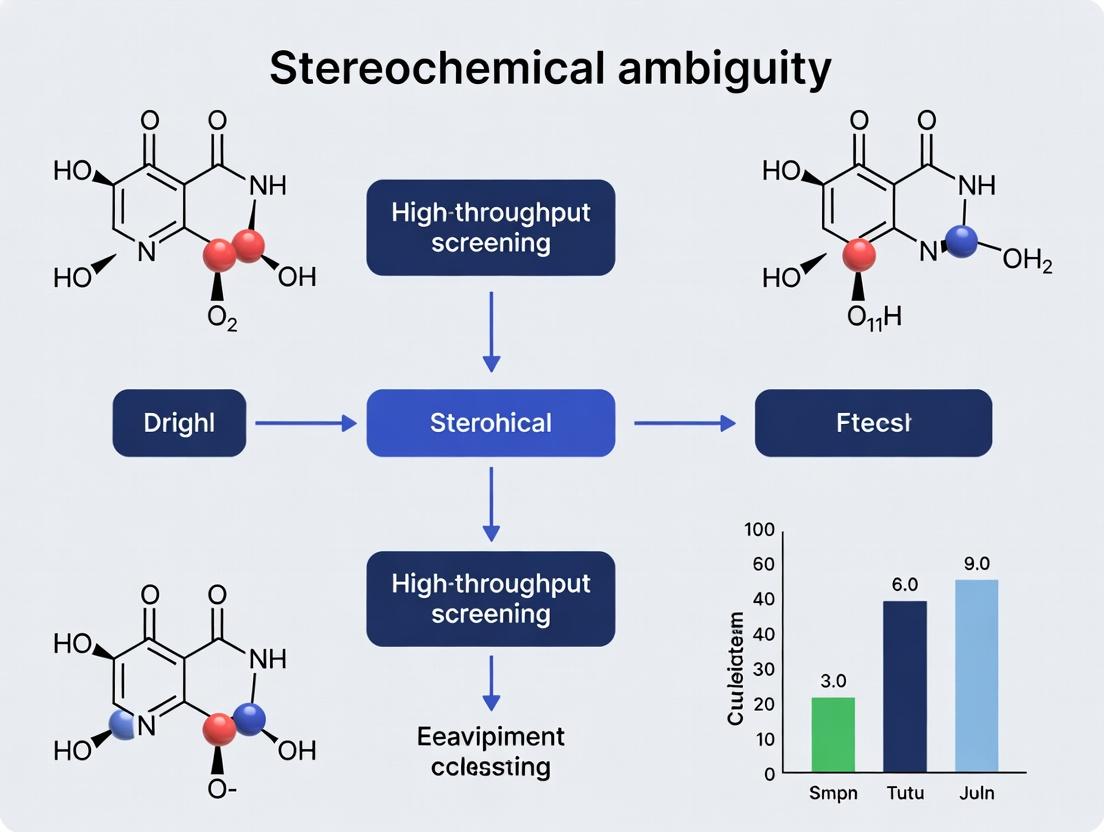
Stereochemical ambiguity in high-throughput screening (HTS) libraries represents a critical, yet often overlooked, source of false positives, misleading structure-activity relationships, and costly late-stage attrition.
Beyond the Mixture: Resolving Stereochemistry in HTS to Avoid Costly Drug Discovery Failures
Abstract
Stereochemical ambiguity in high-throughput screening (HTS) libraries represents a critical, yet often overlooked, source of false positives, misleading structure-activity relationships, and costly late-stage attrition. This article provides a comprehensive guide for drug discovery researchers. It explores the foundational problem of racemates and stereoisomers in compound collections, details modern methodological solutions for chiral resolution and stereospecific synthesis within HTS workflows, offers troubleshooting strategies for data interpretation and hit validation, and finally compares validation techniques to ensure stereochemical purity. The goal is to equip scientists with the knowledge to design robust, stereochemically-aware screening campaigns that yield more reliable and developable leads.
The Hidden Pitfall: Why Stereochemistry is a Silent Killer in HTS Campaigns
Frequently Asked Questions (FAQs)
Q1: Why is stereochemistry a critical issue in high-throughput screening (HTS) libraries? A: Most biological targets (e.g., enzymes, receptors) are chiral and interact differently with each enantiomer of a chiral compound. Screening a racemate (a 50:50 mixture of enantiomers) can lead to ambiguous results: the observed activity could be from a single, potent enantiomer, an average of both, or even from one enantiomer inhibiting the activity of the other. This obscures true structure-activity relationships and can lead to wasted resources pursuing inactive or misleading compounds.
Q2: What is the practical difference between resolving enantiomers and diastereomers in a library context? A: Enantiomers are non-superimposable mirror images with identical physicochemical properties (except for optical rotation). Diastereomers are stereoisomers that are not mirror images and have different physicochemical properties (e.g., melting point, solubility, chromatographic retention). This difference is key:
- Enantiomer Resolution: Requires a chiral environment (e.g., chiral HPLC column, chiral derivatizing agent) and is often more challenging and expensive.
- Diastereomer Separation: Can often be achieved using standard achiral methods (e.g., silica gel chromatography, reverse-phase HPLC) because their properties differ. The table below summarizes key differences relevant to screening:
Table 1: Comparison of Stereoisomer Types in Screening
| Feature | Racemate (e.g., R/S mixture) | Enantiomer (e.g., pure R) | Diastereomers (e.g., R,R / R,S) |
|---|---|---|---|
| Physicochemical Properties | Identical to enantiomers (except optics) | Identical to its pair (except optics) | Different from each other |
| Separation Method | Chiral resolution required | N/A (pure compound) | Often separable by achiral methods |
| Biological Activity | Potentially ambiguous; can be an average | Typically distinct and definable | Always distinct and definable |
| Prevalence in Libraries | Historically high; now decreasing | Increasing in modern, "enantiopure" libraries | Common in compounds with ≥2 chiral centers |
Q3: Our HTS hit is a racemate. What is the recommended step-by-step protocol to deconvolute the active stereoisomer? A: Follow this tiered experimental protocol:
Protocol: Deconvolution of an Active Racemic HTS Hit
Objective: To identify which specific enantiomer(s) is responsible for the biological activity observed in a racemic HTS hit.
Materials & Reagents:
- Racemic hit compound
- Appropriate chiral stationary phase (CSP) HPLC column (e.g., amylose- or cellulose-based)
- Chiral derivatizing agents (e.g., Mosher's acid chloride, if applicable)
- Solvents for chromatography (HPLC-grade hexane, isopropanol, ethanol)
- Assay buffer and reagents for the original HTS biological assay
- Analytical balance, HPLC system, fraction collector, lyophilizer/speedvac.
Method:
- Analytical Chiral Separation:
- Develop and validate an analytical method to separate the enantiomers using chiral HPLC or SFC.
- Confirm baseline resolution and determine retention times for each peak.
- Preparative Chiral Separation:
- Scale up the analytical method to a preparative chiral column.
- Inject the racemic compound and collect the separated enantiomer peaks into distinct fractions.
- Isolation and Characterization:
- Concentrate the fractions using lyophilization or rotary evaporation.
- Weigh the isolated materials to determine yield.
- Confirm enantiomeric purity (>98% ee) by re-injection on the analytical chiral method.
- Optionally, determine absolute configuration (e.g., by X-ray crystallography, optical rotation comparison, or chemical correlation).
- Biological Re-testing:
- Re-test each pure enantiomer and the original racemate in the original biological assay.
- Use a dose-response curve (e.g., 10-point, 1:3 serial dilution) to determine precise IC50/EC50 values.
- Include appropriate controls (vehicle, reference compound).
Data Interpretation:
- Single Active Enantiomer: One enantiomer shows activity similar to the racemate, the other is inactive. This is the most common outcome.
- Both Enantiomers Active (Differently): Both show activity, but with different potencies.
- Racemic Activity is Required: The racemate is more active than either enantiomer alone (indicating a synergistic or complex effect).
Q4: What are the main strategies for building screening libraries with defined stereochemistry? A: There are three primary sourcing strategies, each with pros and cons, detailed in the table below.
Table 2: Strategies for Sourcing Enantiopure Screening Compounds
| Strategy | Description | Advantages | Disadvantages |
|---|---|---|---|
| 1. Chiral Pool Synthesis | Using naturally occurring, enantiopure starting materials (e.g., amino acids, sugars). | Guaranteed high enantiopurity; often cost-effective. | Limited structural diversity; inherent bias. |
| 2. Asymmetric Synthesis | Employing chiral catalysts/auxiliaries to create new chiral centers enantioselectively. | Can access novel, diverse structures; scalable. | Requires specialized expertise; catalyst cost/access. |
| 3. Enantioselective Separation | Purchasing racemates and resolving them via chiral chromatography. | Fastest route to both enantiomers for testing. | Very high cost at scale; wasteful (50% discarded). |
Q5: How do I handle diastereomeric mixtures in my library? A: Diastereomers should be treated as distinct chemical entities. The recommended protocol is:
- Separation: Use standard achiral purification (e.g., flash chromatography, reverse-phase HPLC) to isolate each pure diastereomer.
- Characterization: Fully characterize each as a separate compound (NMR, LCMS, etc.). Their
R_fvalues and retention times will differ. - Independent Screening: Ideally, screen each pure diastereomer separately in the HTS. If screened as a mixture, activity can be complex to interpret, as diastereomers have different physical properties and binding affinities.
The Scientist's Toolkit: Key Research Reagent Solutions
Table 3: Essential Materials for Stereochemical Analysis in HTS
| Item | Function in Context |
|---|---|
| Chiral HPLC/SFC Columns (e.g., Amylose tris(3,5-dimethylphenylcarbamate), Cellulose tris(4-methylbenzoate)) | Analytical and preparative separation of enantiomers. The backbone of chiral resolution. |
| Chiral Derivatizing Agents (CDAs) (e.g., (R)- and (S)- Mosher's acid chlorides) | Converts enantiomers into diastereomers via a chemical reaction, allowing analysis by standard NMR or achiral HPLC. |
| Polarimeter | Measures optical rotation ([α]D) to confirm optical activity and enantiopurity of an isolated compound. |
| Enantiopure Building Blocks (e.g., D-/L-amino acids, (R)-/(S)- glycidyl tosylate) | Used in "chiral pool" synthesis to introduce known stereocenters with high fidelity. |
| Chiral Catalysts (e.g., BINAP-metal complexes, Jacobsen's catalyst, Organocatalysts like proline) | Enable asymmetric synthesis to create new, enantiomerically enriched compounds for library expansion. |
| Chiral Solvating Agents (CSAs) (e.g., Eu(tfc)₃ for NMR) | Bind enantiomers transiently, creating diastereomeric complexes with distinct chemical shifts in NMR spectra. |
Workflow & Relationship Diagrams
Title: Decision Workflow for Stereochemistry in HTS Libraries
Title: Protocol for Deconvoluting a Racemic HTS Hit
Technical Support Center
Topic: Troubleshooting Stereochemical Ambiguity in High-Throughput Screening (HTS)
FAQ & Troubleshooting Guides
Q1: Our HTS campaign identified a promising racemic hit. How do we prioritize enantiomers for follow-up? A: Immediate stereochemical resolution is critical. Follow this protocol:
- Chiral Separation: Use preparative-scale chiral HPLC or SFC. Collect isolated enantiomers (>99% ee).
- Primary Re-Test: Test each pure enantiomer and the racemate in the primary HTS assay. A "eutomer" (active form) will show ~2x the potency of the racemate; the "distomer" (inactive form) will show negligible activity.
- Counter-Screen: Immediately profile all three samples (Eutomer, Distomer, Racemate) in a broad-panel selectivity/toxicity assay (e.g., against hERG, CYP450 isoforms). Inactivity of the distomer here is a key early safety indicator.
Q2: We see a significant drop in in vivo efficacy compared to in vitro activity for a chiral candidate. What are the key stereochemical checkpoints? A: This often indicates unanticipated stereoselective metabolism or distribution.
- Troubleshooting Steps:
- Confirm Configuration: Re-verify the absolute stereochemistry of the administered material and any reference standard by single-crystal X-ray diffraction or vibrational circular dichroism (VCD).
- Plasma PK Analysis: Use a chiral bioanalytical method to track individual enantiomer levels over time in plasma. Non-parallel PK curves indicate in vivo racemization or stereoselective clearance.
- Metabolite ID: Perform chiral profiling of major metabolites. A prevalent metabolic pathway may selectively target the active enantiomer.
Q3: How can we avoid false negatives in HTS due to stereochemistry? A: For targets with known chiral binding pockets (e.g., proteases, kinases), screening with racemic libraries risks diluting the signal of a potent enantiomer below the hit threshold.
- Solution: Implement an Enantiomerically Enriched Library strategy. Create sub-libraries where each compound is represented as a mixture of 10-20 stereoisomers at most, rather than full racemates or complex mixtures. This balances screening efficiency with maintained signal strength.
Key Experimental Protocols
Protocol 1: Determining Enantiomeric Purity Post-Synthesis Method: Chiral Analytical Chromatography Steps:
- Column: Select a validated chiral stationary phase (e.g., Chiralpak IA, IB, IC, AD-H, OD-H).
- Mobile Phase: Optimize using isohexane/ethanol or methanol with 0.1% diethylamine or trifluoroacetic acid as modifier.
- Detection: UV/Vis or MS.
- Calibration: Inject racemic standard to establish baseline separation (Rs > 1.5).
- Analysis: Inject test sample. Integrate peak areas. Enantiomeric excess (% ee) = [(Major - Minor) / (Major + Minor)] * 100.
Protocol 2: Assessing In Vivo Racemization Method: Stereospecific Pharmacokinetic Study in Rodents Steps:
- Dosing: Administer pure enantiomer (IV and PO) to groups of rats (n=3/time point).
- Sampling: Collect plasma at T=0, 5, 15, 30min, 1, 2, 4, 8, 12, 24h.
- Sample Processing: Use a chiral LC-MS/MS method for quantification.
- Data Analysis: Plot concentration-time curves for the dosed enantiomer and its potential antipode. Calculate AUC, C~max~, t~1/2~ for each. Appearance of the opposite enantiomer >5% of AUC indicates significant in vivo racemization.
Table 1: Notable Drug Failures/Withdrawals Linked to Stereochemistry
| Drug Name (Racemate) | Issue | Consequence | Key Quantitative Data |
|---|---|---|---|
| Thalidomide | In vivo racemization of (R)-"safe" enantiomer to (S)-teratogen. | Severe birth defects (phocomelia); withdrawal 1961. | (S)-enantiomer: Teratogenic. (R)-enantiomer: Sedative. Racemization t~1/2~ ~several hours in plasma. |
| Ketamine | (S)-enantiomer is potent anesthetic; (R)-enantiomer causes agitation. | Racemic drug limited by psychomimetic side effects. | (S)-Ketamine: Anesthetic potency 4x (R)-form. NMDA affinity ~3-4x higher for (S)-form. |
| Eflornithine | (D)-enantiomer is active; (L)-enantiomer inhibits the active form. | Early racemic formulation was ineffective. | Pure (D)-form is drug for sleeping sickness & hirsutism. (L)-form is a competitive inhibitor of ornithine decarboxylase. |
| Indacrinone | (R)-enantiomer is diuretic; (S)-enantiomer causes uric acid retention. | Racemate counteracted its own benefit. | (R)-form: Diuretic. (S)-form: Uricosuric. Development shifted to a variable-ratio enantiomer mix (Merck). |
Visualizations
The Scientist's Toolkit: Research Reagent Solutions
Table 2: Essential Materials for Addressing Stereochemical Ambiguity
| Item | Function & Rationale |
|---|---|
| Chiral Analytical & Prep HPLC/SFC Columns (e.g., Chiralpak IA, AD-3) | For determining enantiomeric purity and isolating milligram-to-gram quantities of pure enantiomers from racemic hits. Critical for unambiguous biological testing. |
| Chiral Derivatization Reagents (e.g., Marfey's reagent, Mosher's acid chloride) | Converts enantiomers into diastereomers for analysis on standard reverse-phase LC-MS. Useful for compounds without a UV chromophore. |
| Enantiomerically Pure Building Blocks | Using chiral pool or commercially available enantiopure synthons (e.g., amino acids, hydroxy acids) in synthesis avoids reliance on resolution later. |
| Chiral Bioanalytical LC-MS/MS Method | A validated, sensitive method for quantifying individual enantiomer concentrations in plasma/tissue. Non-negotiable for PK/PD studies. |
| Crystallization Screen Kits (for X-ray analysis) | Kits for growing single crystals of a salt or free form of the active compound. Absolute configuration confirmation via X-ray is the gold standard. |
| Stable Isotope-Labeled Chiral Internal Standards | For accurate quantitation in chiral bioanalysis, correcting for matrix effects and recovery variability. |
Troubleshooting Guides & FAQs
FAQ 1: Why do my assay results show high binding affinity but no cellular activity for my lead compound?
- Answer: This discrepancy often stems from stereochemical ambiguity. The screened racemic mixture may contain an enantiomer with high in vitro target affinity (the "active" enantiomer) and another that is inactive or even antagonistic. The inactive enantiomer can dilute the apparent effect in cellular systems, or the "active" enantiomer may have poor membrane permeability due to its specific 3D conformation. Solution: Enantiomeric resolution is required. Use chiral HPLC or SFC to separate enantiomers and test each pure stereoisomer in both binding and functional cellular assays.
FAQ 2: How can I troubleshoot poor selectivity between two highly homologous protein targets?
- Answer: Stereochemistry can be leveraged for selectivity. Homologous targets may have subtly different chiral binding pockets or vicinal waters. Troubleshooting Steps: 1) Determine the binding kinetics (kon/koff) of each enantiomer using SPR or ITC. A slower off-rate (koff) for one enantiomer at the primary target often correlates with selectivity. 2) Perform co-crystallography of each enantiomer with both targets. Minute differences in dihedral angle can lead to unfavorable van der Waals clashes in the off-target. 3) Synthesize and test rigidified analogues that lock the bioactive conformation.
FAQ 3: My chiral compound shows inconsistent IC50 values between assay runs. What is the cause?
- Answer: Probable cause is enantiomer interconversion (racemization/epimerization) under assay conditions (e.g., pH, temperature). This changes the active stereoisomer concentration over time. Protocol: Conduct a stereochemical stability study: Incubate the compound in assay buffer at the experimental temperature. Sample at t=0, 1, 2, 4, 8, 24 hours and analyze enantiomeric excess (ee) via chiral analytics. If racemization is observed (>10% loss of ee), consider stabilizing the stereocenter (e.g., introduce bulky adjacent groups) or using a pro-drug approach.
FAQ 4: During a fragment-based screen, how do I prioritize chiral hits for follow-up?
- Answer: Do not prioritize based on affinity alone. Implement a Stereochemical Triaging Protocol: 1) Immediately resolve the hit into its enantiomers/pure diastereomers. 2) Determine the binding enthalpy (ΔH) and entropy (-TΔS) contributions via ITC (see Table 1). Enantiomers often show enthalpic-driven vs. entropic-driven binding profiles. Prioritize the stereoisomer with a more favorable (negative) ΔH, as it typically indicates specific, high-quality interactions. 3) Obtain a crystal structure early to guide stereospecific optimization.
Table 1: Thermodynamic & Kinetic Profile of Enantiomer Pairs Binding to Protease X
| Stereoisomer | KD (nM) | ΔG (kcal/mol) | ΔH (kcal/mol) | -TΔS (kcal/mol) | kon (M⁻¹s⁻¹) | koff (s⁻¹) | Selectivity Index (vs. Protease Y) |
|---|---|---|---|---|---|---|---|
| (R)-Inhibitor | 5.2 ± 0.3 | -11.3 | -8.9 | -2.4 | 1.2 x 10⁶ | 6.2 x 10⁻³ | 125 |
| (S)-Inhibitor | 120 ± 15 | -9.5 | -2.1 | -7.4 | 8.5 x 10⁵ | 0.102 | 1.2 |
Table 2: Impact of Stereochemistry on PK/PD Parameters in Rodent Model
| Compound (10 mg/kg) | AUC0-∞ (ng·h/mL) | Clearance (mL/min/kg) | Vdss (L/kg) | % Receptor Occupancy @ 24h |
|---|---|---|---|---|
| (R)-Enantiomer (Active) | 2850 | 15 | 0.8 | 85% |
| (S)-Enantiomer (Inactive) | 4500 | 8 | 1.5 | <5% |
| Racemic Mixture | 3650 | 12 | 1.1 | 52% |
Experimental Protocols
Protocol 1: Enantiomeric Resolution & Purity Assessment via Chiral Supercritical Fluid Chromatography (SFC)
- Column: Chiralpak IC-3 (4.6 x 150 mm, 3 μm).
- Mobile Phase: CO2 (A) and Methanol with 0.1% Diethylamine (B).
- Gradient: 5% B to 40% B over 5 min, hold at 40% B for 2 min.
- Flow Rate: 3.0 mL/min.
- Back Pressure: 150 bar.
- Detection: UV at 220 nm.
- Sample Prep: Dissolve racemic compound in methanol (~1 mg/mL), inject 5 μL.
- Analysis: Collect peaks separately. Rotary evaporate to recover pure enantiomers. Determine enantiomeric excess (ee) by re-injecting isolated fractions. EE > 98% is required for reliable bioassay.
Protocol 2: Determining Stereoselective Binding Kinetics by Surface Plasmon Resonance (SPR)
- Immobilization: Dilute target protein to 20 μg/mL in 10 mM sodium acetate, pH 5.0. Inject over a CMS sensor chip using amine-coupling kit to achieve ~8000 RU response.
- Running Buffer: PBS-P+ (0.05% surfactant P20).
- Compound Series: Prepare 3-fold serial dilutions of each pure enantiomer (1 nM to 300 nM) in running buffer from 10 mM DMSO stocks (final DMSO ≤ 0.5%).
- Kinetic Cycle: Inject compound for 120s (association), then switch to buffer for 300s (dissociation). Regenerate with one 30s pulse of 10 mM glycine, pH 2.0.
- Data Analysis: Fit double-reference subtracted sensograms globally to a 1:1 Langmuir binding model using the evaluation software. Compare kon (association rate) and koff (dissociation rate) between enantiomers.
Diagrams
Title: Workflow to Resolve Stereochemical Ambiguity
Title: How Stereochemistry Drives Affinity and Selectivity
The Scientist's Toolkit: Key Research Reagent Solutions
| Item | Function & Rationale |
|---|---|
| Chiral Analytical Columns (e.g., Chiralpak IA, IB, IC) | For analytical and preparative separation of enantiomers. Different chiral stationary phases are required for different molecular scaffolds. |
| SPR Sensor Chips (Series S, CMS) | Gold-standard for label-free, real-time determination of binding kinetics (kon/koff) and affinity (KD) for individual stereoisomers. |
| ITC Microcalorimetry Cells | Directly measures the enthalpy (ΔH) and entropy (-TΔS) of binding, revealing the qualitative difference in interaction modes between enantiomers. |
| Crystallography Plates (e.g., SWISSCI 3-well plates) | For high-throughput crystallization of target protein with separate stereoisomers to obtain 3D structural insight. |
| Stable Isotope-Labeled Chiral Building Blocks (e.g., (R)- and (S)-¹³C-amino acids) | Enables synthesis of stereochemically pure probes for mode-of-action studies using NMR or imaging. |
| Chiral Shift Reagents (e.g., Eu(hfc)₃) | For rapid NMR-based assessment of enantiomeric purity and configuration in solution. |
Technical Support Center
FAQs & Troubleshooting
Q1: Our HTS campaign using a major commercial library returned several hits that subsequent validation failed to confirm. Could stereochemical ambiguity in the library be the cause?
- A: Yes, this is a prevalent issue. Many commercial screening libraries contain compounds with undefined stereocenters (marked as racemic or unspecified stereochemistry). Initial apparent activity may come from a single enantiomer, while the bulk material used in validation may be an inactive or less potent mixture. Always check the stereochemical descriptor for each hit in the vendor's data.
Q2: How can I quickly assess if a specific vendor's library sub-section has a high prevalence of stereochemically ambiguous compounds before purchasing?
- A: Request the library's chemical data file (e.g., SDF). Using a cheminformatics toolkit (like RDKit), parse the "STEREOCHEMISTRY" field or the chiral flags on each atom. Filter for compounds with tetrahedral stereocenters defined as "RACEMIC" or "ANY". The table below summarizes a recent analysis of common library types.
Q3: We've isolated a pure enantiomer of a hit and it's inactive. Does this rule out the target?
- A: Not necessarily. The original active hit could be the other enantiomer. If the commercial sample was a racemate, you must test both isolated enantiomers to draw a valid conclusion. Re-synthesize or source the opposite enantiomer for testing.
Q4: What is the most reliable experimental protocol to resolve stereochemistry of an active racemic hit?
- A: The standard method is chiral resolution followed by confirmatory assays. See the detailed Experimental Protocol 1 below.
Quantitative Data Summary: Analysis of Stereochemical Ambiguity in Commercial Libraries
Table 1: Prevalence of Compounds with Undefined Stereocenters in Sample Library Segments (Theoretical Analysis)
| Library Segment (Sample) | Total Compounds | Compounds with ≥1 Undefined Stereocenter | Percentage | Common Annotation in Vendor Data |
|---|---|---|---|---|
| FDA-Approved Drug Mimetics | 5,000 | 150 | 3.0% | "Racemic" or Chiral Flag Absent |
| Diversity-Oriented Synthesis | 50,000 | 12,500 | 25.0% | "Mixture of stereoisomers" |
| Natural Product-Like | 20,000 | 8,000 | 40.0% | "Stereochemistry unspecified" |
| Fragment Library (MW <300) | 10,000 | 500 | 5.0% | "Racemic" |
Table 2: Impact on Hit Confirmation from a Retrospective Study
| HTS Campaign Focus | Initial Racemic Hits | Hits Where Activity was in One Enantiomer Only | Hits Where Racemate was More Potent | False Positive Rate Due to Ambiguity |
|---|---|---|---|---|
| Kinase Target A | 15 | 11 | 2 | 13.3% |
| GPCR Target B | 22 | 18 | 1 | 4.5% |
Experimental Protocols
Protocol 1: Chiral Resolution & Stereochemical Validation of an HTS Hit Objective: To separate the enantiomers of a racemic hit compound and determine which stereoisomer is responsible for the biological activity. Materials: See "The Scientist's Toolkit" below. Method:
- Analytical Chiral Method Development: Use a Chiral HPLC or SFC column to establish baseline separation of enantiomers. Optimize mobile phase (e.g., hexane/isopropanol with modifiers).
- Preparative Separation: Scale up the analytical method using preparative chiral chromatography. Collect peaks separately.
- Concentration & Analysis: Evaporate solvents, weigh residues, and determine enantiomeric excess (ee) via analytical chiral chromatography.
- Absolute Configuration Determination: Submit pure enantiomers for X-ray crystallography (if crystalline) or compare experimental Electronic Circular Dichroism (ECD) spectra to computed spectra.
- Biological Re-testing: Re-test each pure enantiomer and the racemic mixture in the primary assay using a dose-response format to determine IC50/EC50 values.
Protocol 2: In-Silico Filtering of a Library for Stereochemical Ambiguity Objective: Programmatically identify compounds with undefined stereocenters from a vendor SDF file. Method:
- Load Data: Use RDKit in a Python script:
suppl = Chem.SDMolSupplier('vendor_library.sdf'). - Check Stereochemistry: For each molecule (
mol), useChem.FindMolChiralCenters(mol, includeUnassigned=True). Centers with an '?' designation are undefined. - Filter & Output: Write molecules with any undefined centers to a new SDF file for further review.
Visualizations
Title: Troubleshooting Workflow for Stereochemical Ambiguity in HTS Hits
Title: Downstream Impacts of Stereochemical Ambiguity
The Scientist's Toolkit: Key Research Reagent Solutions
Table 3: Essential Materials for Stereochemical Resolution & Analysis
| Item | Function | Example / Notes |
|---|---|---|
| Chiral HPLC/SFC Columns | Analytical and preparative separation of enantiomers. | Amylose- or cellulose-based (e.g., Chiralpak IA, OD); valuable for Protocol 1. |
| Chiral Derivatization Agents | Covalently bond to racemates to form diastereomers for separation on regular (achiral) columns. | Mosher's acid chloride (for alcohols/amines). Use if chiral chromatography fails. |
| Enantiopure Building Blocks | For follow-up synthesis to confirm activity of a single enantiomer. | Source from vendors like Sigma-Aldrich, Combi-Blocks. Check ee specification. |
| RDKit Cheminformatics Toolkit | Open-source software for processing chemical data and filtering libraries (Protocol 2). | Critical for in-silico assessment of library stereochemical quality. |
| Reference Enantiomers | For configuring analytical systems and as controls. | Purchase both (R)- and (S)- versions of simple chiral compounds (e.g., 1-phenylethylamine). |
Technical Support Center
Welcome to the Stereochemical Integrity Support Center. This resource provides troubleshooting guides and FAQs to address common experimental pitfalls in high-throughput screening (HTS) related to stereochemical ambiguity, a critical factor in assay interference and downstream compound failure.
FAQ & Troubleshooting Section
Q1: Our HTS campaign identified a potent racemic hit, but subsequent chiral resolution shows all activity resides in one enantiomer. The other is inactive. How do we prevent this waste of resources? A: This is a classic source of false positives and resource drain.
- Root Cause: Screening racemic mixtures inflates apparent hit rates and leads to the pursuit of "half of a compound."
- Solution: Implement early-stage chiral chromatography. Immediately follow up racemic hits with enantiomer separation using chiral stationary phases (CSPs) like derivatized polysaccharides (e.g., amylose- or cellulose-based). Test individual enantiomers in your primary assay.
- Protocol: Chiral Resolution of a Racemic HTS Hit
- Sample: Take the racemic hit compound (1-5 mg).
- Column: Chiralpak IG or OD-H column (4.6 x 250 mm).
- Mobile Phase: Use hexane:isopropanol (90:10 to 70:30) or a polar organic mode with methanol/ACN with 0.1% diethylamine.
- Flow Rate: 1.0 mL/min.
- Detection: UV at appropriate λmax.
- Collection: Collect peaks for each enantiomer separately.
- Concentration: Evaporate solvents and reconstitute in assay buffer.
- Validation: Confirm enantiomeric purity (>99% ee) and re-test in biological assay.
Q2: We observe inconsistent dose-response data in a cell-based assay. We suspect the active isomer might be epimerizing under assay conditions. How can we diagnose this? A: Instability of the chiral center invalidates all screening data.
- Root Cause: pH, temperature, or reactive media can cause epimerization.
- Solution: Perform a stereochemical stability assay.
- Protocol: Assessing Stereochemical Stability
- Preparation: Prepare a solution of the pure, active enantiomer in your standard assay buffer (e.g., PBS at pH 7.4) and in a control solvent (e.g., pure water).
- Incubation: Aliquot the solutions and incubate them at your assay temperature (e.g., 37°C) for the duration of your longest experiment (e.g., 24, 48, 72 hours).
- Sampling: Withdraw samples at defined time points (T=0, 6h, 24h, etc.).
- Analysis: Immediately analyze each sample via chiral HPLC (using the method from Q1) to monitor for the appearance of the other enantiomer/diastereomer.
- Data: Calculate the % of remaining active enantiomer over time.
Q3: A computational model predicted high affinity for our chiral lead, but the synthesized compound shows poor binding. Could incorrect absolute configuration assignment be the issue? A: Yes. Docking studies are meaningless without verified stereochemistry.
- Root Cause: Using an undefined or incorrectly assigned absolute configuration for in silico studies.
- Solution: Empirically determine absolute configuration before major computational investment.
- Protocol: Key Steps for Absolute Configuration Assignment
- X-ray Crystallography (Gold Standard): Co-crystallize the compound with its protein target or form a salt with a chiral resolving agent (e.g., carboxylic acid with a chiral amine) suitable for diffraction.
- Vibrational Circular Dichroism (VCD): Compare the experimental VCD spectrum of the compound with DFT-calculated spectra for both possible enantiomers.
- Chemical Correlation: Synthetically relate the compound to a chiral precursor or derivative of known configuration via reactions that do not affect the stereogenic center(s).
Quantitative Data: Impact of Stereochemistry
Table 1: The Prevalence and Impact of Chirality in Drug Development
| Metric | Value | Source / Implication |
|---|---|---|
| % of Small-Molecule Drugs that are Chiral | >50% | FDA approvals (last decade) |
| % of Chiral Drugs Marketed as Single Enantiomers | ~65% | Industry analysis |
| Typical Difference in Potency between Enantiomers | 10x to 1000x+ | Common pharmacologic data |
| Relative Rate of Attrition for Chiral vs. Achiral Compounds (Phase II/III) | Estimated 2-3x higher for poorly characterized chirality | Industry case study analysis |
Table 2: Common Assay Interferences from Stereochemical Impurities
| Interference Type | Cause | Consequence |
|---|---|---|
| False Positive | Activity of minor enantiomer/impurity in a racemic mix | Pursuit of an invalid lead series |
| False Negative | Inactive enantiomer masking the signal of an active one | Missed opportunity for a viable lead |
| Erratic SAR | Varying isomeric purity across a compound series | Incomprehensible structure-activity relationships |
| Toxicity | Undetected toxicophore in the "inactive" isomer | Failure in preclinical safety |
Experimental Workflow Diagram
Title: Workflow to Mitigate Stereochemical Risk in Screening
Stereochemistry-Aware Screening Pathway
Title: Pathway from Stereochemical Ambiguity to Attrition
The Scientist's Toolkit: Key Reagent Solutions
Table 3: Essential Materials for Addressing Stereochemical Ambiguity
| Reagent / Material | Function & Rationale |
|---|---|
| Chiral HPLC/SFC Columns (e.g., Chiralpak IA, IG, OD; Chiralcel OJ) | For analytical and preparative separation of enantiomers. Polysaccharide-based phases offer broad applicability. |
| Chiral Derivatization Agents (e.g., Mosher's acid chloride, Marfey's reagent) | Converts enantiomers into diastereomers for analysis on standard reverse-phase columns, aiding configuration assignment. |
| Stable Isotope-Labeled Chiral Precursors (e.g., (S)- or (R)-amino acids-¹³C) | Used as synthetic building blocks to trace stereochemical fidelity through a multi-step synthesis. |
| Chiral Shift Reagents for NMR (e.g., Eu(hfc)₃, Pirkle's alcohol) | Induces non-equivalent chemical shifts for enantiomers in NMR spectra, allowing for rapid purity assessment. |
| Stereochemically-Defined Fragment Libraries | Screening libraries composed of fragments with known and stable absolute configuration to build reliable SAR from the start. |
| Enantiomerically Pure Catalysts/Enzymes (e.g., KREDs, lipases) | For asymmetric synthesis and kinetic resolution to ensure production of the desired isomer. |
Building Stereochemically Pure Libraries: From Synthesis to Screening
Troubleshooting Guide & FAQ
Q1: Our screening hits show no enantiomeric selectivity in vivo despite excellent in vitro activity. What could be the cause? A: This is often due to library stereochemical impurity or rapid in vivo racemization. First, verify the enantiomeric excess (ee) of your screening compounds via chiral HPLC or SFC. A common error is using a chiral auxiliary that is not stable under physiological conditions. Implement a protocol to test for racemization in assay buffer at 37°C over 24 hours.
Q2: How do I prioritize which chiral centers to fix first during optimization from a racemic hit? A: Use a systematic "chiral center mapping" approach. Create and test discrete stereoisomers for each center. Activity cliffs between isomers indicate a high-priority center. Table 1 summarizes data from a recent study on a kinase inhibitor scaffold, demonstrating this prioritization.
Table 1: Activity Data for Stereoisomers of a Lead Compound (IC50 in nM)
| Stereoisomer (Center 1 / Center 2) | Biochemical IC50 | Cellular IC50 | Metabolic Stability (t1/2, min) |
|---|---|---|---|
| (R, R) | 12 | 45 | 28 |
| (R, S) | 250 | >1000 | 15 |
| (S, R) | 9 | 38 | 30 |
| (S, S) | 300 | >1000 | 12 |
Analysis: Center 2's (R) configuration is critical for activity (compare R,R vs. R,S), making it Priority 1. Center 1 shows less selectivity.
Q3: Our chiral separation for library purification is low-throughput and a bottleneck. What are efficient alternatives? A: Move towards "chirally defined" synthesis instead of post-synthesis separation. Use these protocols:
- Parallel Chiral Synthesis: Employ chiral pool reagents (e.g., amino acids, sugars) or immobilized chiral catalysts in parallel reactors.
- Enzymatic Resolution: Scale a high-throughput enzymatic assay using chiral substrates (e.g., lipases, esterases) to identify leads with inherent enantioselectivity. Detailed Protocol for Enzymatic Screening: Incubate racemic library compounds (100 µM) with a panel of immobilized hydrolases in phosphate buffer (pH 7.4) for 1 hour. Quench with acetonitrile and analyze by rapid chiral UPLC. Hits showing >50% conversion of one enantiomer indicate a viable resolution route.
Q4: How can I computationally pre-filter a virtual library for stereochemical complexity? A: Use rules-based filters in your design software (e.g., RDKit, Schrodinger). Key filters include: Max number of chiral centers (e.g., ≤3 for early libraries), exclude compounds with undefined stereocenters, and penalize structures prone to epimerization (e.g., stereocenters adjacent to carbonyls). This reduces synthetic burden on undefined chemistry.
The Scientist's Toolkit: Research Reagent Solutions
Table 2: Essential Reagents for Stereodefined Library Synthesis
| Reagent / Material | Function & Rationale |
|---|---|
| Immobilized Chiral Catalysts (e.g., Jacobsen's Catalyst on resin) | Enables parallel, contaminant-free asymmetric synthesis and easy catalyst removal. |
| Chiral Derivatization Agents (e.g., Mosher's acid chloride) | Converts enantiomers into diastereomers for analysis by standard LC-MS, aiding in ee determination. |
| SPE Cartridges with Chiral Stationary Phases (e.g., Cyclobond I/II) | For rapid, microscale purification of enantiomers post-screening. |
| Deuterated Chiral Solvents (e.g., (R)- or (S)-1-deutero-1-phenylethane) | Used for determining absolute configuration via NMR spectroscopy. |
| Enzyme Kits for Stereoselectivity (e.g., broad-spectrum lipase panels) | High-throughput profiling of lead compound susceptibility to enzymatic resolution. |
Visualizations
Title: Computational Pre-Filtering for Stereochemical Complexity
Title: Stereochemistry Impact on Efficacy and Toxicity Pathways
Advances in Parallel Asymmetric Synthesis for HTS-Ready Compound Collections
Technical Support Center: Troubleshooting & FAQs
FAQ 1: How do I address declining enantiomeric excess (ee) in parallel catalytic asymmetric alkylation reactions?
- Answer: A common cause is catalyst decomposition or poisoning. Ensure all glassware is rigorously oven-dried and reactions are set up in an inert atmosphere glovebox. Trace oxygen or moisture can deactivate sensitive metal-ligand complexes. If using a chiral phase-transfer catalyst, check the purity of your base (e.g., CsOH·H₂O) and consider pre-drying. Monitor catalyst loading; for parallel arrays, we recommend a slight excess (e.g., 5.5 mol% instead of 5.0 mol%) to compensate for potential variability in vial adsorption. Implement a quality control check by running ¹H NMR analysis of the crude product with a chiral shift reagent (e.g., Eu(hfc)₃) for one in every 20 library members.
FAQ 2: What steps should I take if my parallel synthesis yields are inconsistent across a 96-well plate format?
- Answer: Inconsistency often stems from uneven mixing or temperature gradients in block heaters. First, verify that your microplate is securely seated and that the heater block is calibrated. Use a thermographic camera if available to check for hot/cold spots. Secondly, ensure solvent evaporation in wells is uniform by using a centrifugal evaporator with balanced rotors and checking that no wells are blocked. Pre-dispense reagents and catalysts using a calibrated automated liquid handler to minimize volume delivery errors. The table below summarizes common yield issues and solutions.
FAQ 3: Why are my stereochemically defined products showing ambiguous activity in HTS, suggesting possible racemization?
- Answer: Post-synthesis racemization can occur during storage or assay preparation. Check the chemical stability of your chiral center under the storage conditions (often DMSO solution at room temperature). For compounds containing labile stereocenters (e.g., alpha to a carbonyl), consider storing as stable, protected precursors (e.g., alcohols instead of aldehydes) or as lyophilized solids. During assay transfer, ensure the assay buffer pH does not promote epimerization. Run a chiral HPLC analysis on the compound directly from the screening stock to confirm configurational integrity.
FAQ 4: How can I troubleshoot slow reaction kinetics in parallel flow chemistry setups for asymmetric synthesis?
- Answer: In flow systems, reduced ee or yield often correlates with residence time. First, verify pump calibration and check for obstructions in microreactor channels. Increase the reaction temperature incrementally; flow systems excel at heat transfer. If using a immobilized chiral catalyst cartridge, check for channeling or compaction by examining system backpressure. Recondition the cartridge with fresh solvent. Ensure your reagents are fully dissolved in the reaction solvent to prevent particulate clogging.
Table 1: Comparison of Parallel Asymmetric Synthesis Methodologies for Library Production
| Methodology | Typical Scale (μmol) | Avg. Yield Range (%) | Typical ee Range (%) | Time per Reaction (h) | HTS-Readiness (1-5 Scale) |
|---|---|---|---|---|---|
| Parallel Batch (96-well) | 10 - 50 | 60 - 95 | 85 - 99 | 12 - 48 | 5 |
| Automated Solid-Phase | 5 - 20 | 70 - 90 | 90 - 99+ | 24 - 72 | 4 |
| Flow Chemistry (Single Channel) | 50 - 200 | 75 - 98 | 88 - 99 | 1 - 6 | 3 |
| Parallel Flow (4-8 channel) | 10 - 50 | 70 - 95 | 85 - 98 | 1 - 6 | 4 |
Table 2: Common Chiral Auxiliaries & Catalysts for Parallel Synthesis
| Reagent/Catalyst | Function | Typical Use Case | Stability in DMSO |
|---|---|---|---|
| Jacobsen's Mn(III) Salen | Epoxidation Catalyst | Parallel asymmetric epoxidation of alkenes. | Stable for short term (<1 week). |
| Cinchona Alkaloid Phase-Transfer Catalysts | Alkylation Catalyst | Synthesis of α-amino acids in parallel. | Good long-term stability. |
| BOX/Cu(II) Complex | Lewis Acid Catalyst | Cycloadditions, conjugate additions. | Sensitive to moisture; use fresh. |
| (R)- or (S)-BINAP | Ligand for Metal Complexes | Asymmetric hydrogenation in microplates. | Air-sensitive; prepare in situ. |
Experimental Protocols
Protocol 1: Parallel Asymmetric Alkylation in 96-Well Plate Format
- Objective: To synthesize a library of enantiomerically enriched α-amino acid derivatives.
- Materials: 96-well polypropylene reaction block, automated pipettor, chiral phase-transfer catalyst (e.g., N-(9-Anthracenylmethyl)cinchoninium bromide), substrate (N-(diphenylmethylene)glycine tert-butyl ester), alkyl halides (various), 50% w/v aqueous CsOH, anhydrous toluene.
- Procedure:
- Preparation: Dry the reaction block at 60°C for 12 hours. Perform all operations in an argon-filled glovebox.
- Dispensing: To each well, add a solution of the substrate in anhydrous toluene (0.1 M, 500 μL).
- Catalyst Addition: Add a stock solution of the chiral catalyst in toluene (5 mol%, 50 μL).
- Alkylation: Add a diverse set of alkyl halides (1.2 equiv. each) to individual wells using an automated liquid handler.
- Base Addition: Carefully add 50% w/v aqueous CsOH (200 μL) to each well.
- Reaction: Seal the plate with a PTFE-lined mat and stir at 600 rpm at 0°C for 24 hours.
- Work-up: Quench each reaction with saturated NH₄Cl solution (1 mL). Extract the product into ethyl acetate (3 x 1 mL) using an automated liquid-liquid extraction workstation.
- Analysis: Combine organic layers from each well, dry (MgSO₄), and analyze by chiral HPLC to determine ee and yield.
Protocol 2: Immobilized Catalyst Flow Synthesis for Michael Adducts
- Objective: Continuous production of a Michael adduct with high diastereoselectivity.
- Materials: Syringe pumps, packed-bed reactor (stainless steel, 10 mL volume) containing immobilized proline-derived organocatalyst, substrate solutions in acetonitrile, back-pressure regulator.
- Procedure:
- System Setup: Flush the entire flow system with dry acetonitrile for 30 minutes.
- Loading: Load Substrate A (donor, 0.2 M) and Substrate B (acceptor, 0.25 M) into separate syringes.
- Reaction: Connect the syringes to a T-mixer leading to the packed catalyst reactor. Set a combined flow rate to achieve a residence time of 60 minutes. Use a back-pressure regulator (50 psi) to prevent outgassing.
- Collection & Monitoring: Collect the effluent in a fraction collector. Monitor conversion in real-time via inline IR spectroscopy.
- Processing: Concentrate the combined product fractions under reduced pressure. Purify by flash chromatography to obtain the desired Michael adduct.
- Catalyst Reuse: After the run, flush the reactor with clean solvent (20 column volumes). The catalyst cartridge can typically be reused for 10-15 cycles with <5% drop in ee.
Visualizations
Diagram 1: Workflow for HTS-Ready Chiral Library Production
Diagram 2: Stereochemical Integrity Pathway in HTS Pipeline
The Scientist's Toolkit: Research Reagent Solutions
| Item | Function in Parallel Asymmetric Synthesis |
|---|---|
| Anhydrous Solvent Dispensing Station | Ensures water- and oxygen-free delivery of reaction solvents (e.g., THF, toluene) to multiple reaction vessels simultaneously, critical for air-sensitive catalysts. |
| Chiral HPLC/SFC System with Autosampler | High-throughput analytical tool for determining enantiomeric excess (ee) and diastereomeric ratio (dr) of library compounds. Autosampler enables queued analysis of 96-well plates. |
| Automated Liquid-Liquid Extractor | Performs parallel work-up (quenching, extraction) of reaction mixtures in microtiter plates, improving reproducibility and saving researcher time. |
| Immobilized Chiral Catalyst Cartridges | Pre-packed, reusable columns containing supported chiral catalysts (e.g., proline, salen complexes) for flow chemistry, enabling continuous production and easy catalyst separation. |
| DMSO-Compatible Microplate Seals | Chemically inert seals that prevent evaporation and cross-contamination of compound libraries during storage, while maintaining compatibility with automated HTS dispensers. |
| Calibrated Positive Displacement Pipettes | Essential for accurate, parallel dispensing of viscous building blocks or catalyst solutions where air displacement pipettes fail. |
Technical Support Center: Troubleshooting for Stereochemical Analysis
This support center provides targeted guidance for resolving common issues in integrated chiral separation workflows, supporting the thesis that robust analytical coupling is critical for eliminating stereochemical ambiguity in high-throughput drug screening.
FAQs & Troubleshooting Guides
Q1: We observe poor peak shape and resolution when coupling our chiral SFC method to MS detection. What are the primary causes and solutions? A: This is often due to mobile phase incompatibility between SFC and MS. Supercritical CO2 expands post-back-pressure regulator, causing cooling and potential analyte precipitation. It can also reduce ionization efficiency.
- Solution 1: Implement a robust make-up flow. Use a mixture of methanol or IPA with water (e.g., 90:10) containing 0.1-0.2% volatile acid/base, delivered at 0.3-0.5 mL/min via a low-dead-volume T-piece positioned pre-MS inlet.
- Solution 2: Optimize the back-pressure regulator (BPR) temperature (typically 25-60°C) to ensure complete fluidification of the eluent before mixing.
- Protocol: Make-up Flow Optimization. Connect make-up pump post-BPR/pre-MS. For a 3 mL/min SFC flow (CO2/MeOH), start with a make-up of MeOH:Water:Formic Acid (95:5:0.1) at 0.4 mL/min. Monitor peak symmetry (tailing factor <1.5) and S/N ratio. Adjust make-up composition and flow in 0.1 mL/min increments.
Q2: After switching from normal-phase HPLC to SFC for chiral separation, our MS sensitivity drops significantly. How can we recover it? A: The non-polar environment of SFC (high CO2) is less conducive to electrospray ionization (ESI) compared to NP-HPLC's polar solvents.
- Solution: Enhance post-column analyte solvation and proton transfer. Add a "make-up solvent" as in Q1, but prioritize protic, polar modifiers. Ammonium acetate (5-10 mM) or ammonia in the make-up can boost [M+H]+ or [M-H]- signals. Ensure the ESI source is adequately purged with make-up solvent before introducing the SFC flow.
Q3: Our chiral detection with a polarimetric detector shows noisy baselines and low sensitivity when used in series after a UV/MS detector. A: This is typically a pressure/flow cell issue. MS requires low pressure, while chiral detectors have high-pressure flow cells. The pressure drop can cause bubble formation.
- Solution: Install a passive back-pressure regulator (e.g., a long, narrow ID PEEK tube) after the chiral detector but before any waste line to maintain consistent pressure in the detector cell. Ensure all connections are leak-free.
- Protocol: Baseline Stabilization for Chiral Detection. 1) Place a 2-3 meter x 0.005" ID PEEK tube after detector outlet. 2) Prime the chiral detector with IPA at 0.2 mL/min for 30 mins. 3) Under final SFC conditions, equilibrate for >1 hour. Baseline noise should stabilize below ±0.1 mdeg.
Q4: How do we calibrate and validate the enantiomeric excess (ee) measurement across the coupled HPLC-SFC-Chiral Detector system? A: Use a validated chiral method with known standards.
- Protocol: System Validation for ee. 1) Inject pure enantiomer A (e.g., 1 mg/mL). 2) Inject pure enantiomer B. 3) Inject a racemic mixture (A+B). 4) Inject samples with known ee (e.g., 80%, 90%). 5) Create a calibration table correlating chiral detector response (peak area ratio or rotation angle) vs. known ee. Perform this validation at the beginning of each screening batch.
Table 1: Troubleshooting Common Interface Issues
| Symptom | Likely Cause | Immediate Action | Long-term Fix |
|---|---|---|---|
| MS signal loss/noise | Incomplete mixing, cold jet | Increase make-up flow rate & temp | Install heated mixing tee |
| Poor chiral resolution | Pressure fluctuations | Check for leaks post-cell | Install in-line BPR after cell |
| Peak broadening at coupling points | Dead volume in connectors | Use zero-dead-volume fittings | Redesign manifold with minimal length |
| Retention time shift | CO2 density variation | Check pump temperature/cooling | Implement stricter CO2 pressure control |
Table 2: Typical MS Sensitivity Recovery with Make-up Flow (Data from Recent Studies)
| SFC Modifier | Make-up Solvent (0.4 mL/min) | Approximate MS Signal Recovery (vs. NP-HPLC) | Optimal for Ion Mode |
|---|---|---|---|
| Methanol | Methanol + 0.1% Formic Acid | 70-80% | ESI+ |
| Ethanol | Ethanol:Water (80:20) + 10mM AmAc | 75-85% | ESI+/- |
| Isopropanol | IPA:ACN (50:50) + 0.1% Ammonia | 60-75% | ESI- |
Experimental Protocol: Integrated Method Development for Chiral Screening
Title: Protocol for High-Throughput Chiral Screening via Coupled SFC-MS-Polarimetry
- Method Scouting: Perform initial chiral separation on a standalone SFC-UV using 3 different chiral columns (e.g., amylose-, cellulose-, cyclodextrin-based) with a gradient of 5-50% co-solvent (MeOH/EtOH with 0.1% amine/acid) over 5 mins.
- MS Coupling: Transfer the best UV method to the SFC-MS system. Add a make-up flow (start: MeOH+0.1% FA at 0.3 mL/min). Tune MS source parameters (gas temp, nebulizer pressure) with the combined flow.
- Chiral Detection Integration: Connect the chiral detector (e.g., polarimeter) in series after the MS splitter (if used) or via a dedicated flow split. Install a back-pressure tube (2m x 0.005" ID) after the detector cell.
- System Equilibration: Flush entire system with starting mobile phase for ≥30 mins. For chiral detector, prime with IPA separately.
- Validation Run: Inject racemate and single enantiomer standard. Confirm retention time matching across UV, MS, and chiral detector signals. Calculate ee from chiral detector peak areas.
- Sample Run: Implement the validated method for screening unknown mixtures. Collect data for identity (MS), quantity (UV/MS), and chirality (polarimeter) in a single run.
The Scientist's Toolkit: Key Research Reagent Solutions
| Item | Function in Integrated Workflow |
|---|---|
| Chiral SFC Columns (e.g., Amylose tris-3,5-dimethylphenylcarbamate) | High-efficiency stereoisomer separation under SFC conditions. |
| Make-up Fluid Kit (Mixing tee, tubing, syringe pump) | Interfaces SFC effluent to MS, maintaining ionization efficiency and preventing precipitation. |
| Chiral Detector (e.g., Polarimetric or Circular Dichroism flow cell) | Provides direct, non-derivatized measurement of optical activity for ee determination. |
| Passive Back-Pressure Regulator (Long, narrow-bore PEEK tubing) | Maintains stable pressure in post-MS detectors, crucial for baseline stability in chiral detection. |
| Modified CO2 (with pre-mixed 1-5% organic modifier) | Can improve reproducibility for some applications by ensuring consistent pump composition. |
| Volatile Additives (Ammonium Formate, Diethylamine, Trifluoroacetic Acid) | Fine-tune selectivity in SFC and enhance ionization in MS; choice dictates optimal ion mode. |
Visualizations
Diagram Title: Integrated HPLC-SFC-Chiral Detection System Flow Path
Diagram Title: Logical Workflow for Resolving Stereochemical Ambiguity
Technical Support Center
Troubleshooting Guides & FAQs
Q1: My docking poses for enantiomers show identical scores despite known biological differences. How do I force the software to distinguish them? A: This indicates that the force field or scoring function is not stereochemically sensitive. Implement these steps:
- Check Protonation & Tautomers: Ensure chiral centers are correctly protonated using a tool like
Open Babel(obabel -p [pH]). - Explicit Stereochemistry in Input: Verify your ligand SD/Mol2 file has correct
R/Sor@/@@stereo descriptors. UseRDKit(from rdkit import Chem; Chem.AssignStereochemistry(mol, force=True)). - Constrained Docking: Define distance or angle constraints between a specific ligand chiral atom and a receptor residue in your docking software.
Q2: After generating a 3D conformer library, some molecules have undefined stereocenters. How do I handle this before screening? A: You must enumerate stereoisomers. Follow this protocol:
- Tool: Use
RDKit'sEnumerateStereoisomersfunction. - Protocol:
- Load the molecule with undefined stereo:
mol = Chem.MolFromSmiles('CC(C)C(C)N') - Generate isomers:
opts = StereoEnumerationOptions(unique=True); isomers = list(EnumerateStereoisomers(mol, options=opts)) - Minimize each isomer with an MMFF94 force field and output for docking.
- Load the molecule with undefined stereo:
Q3: How can I incorporate known stereochemical constraints from a pharmacophore into a docking run? A: Use pharmacophore-constrained docking.
- Software-Specific Guide (AutoDock Vina/GNINA):
- Define the pharmacophore feature (e.g., a hydrogen bond donor at a specific chiral point) in a configuration file.
- Use a modified scoring function that adds a penalty for poses not satisfying the constraint.
- Example constraint for Vina:
--scoring=vinardo --custom_scoring=pharmacophore_constraint.txt
Q4: My virtual screening hit rate for chiral compounds is very low. Could preprocessing of the library be the issue? A: Yes. Incorrect stereochemical representation is a common culprit. Implement this QA/QC funnel.
Pre-Screening Library Curation Funnel
Table 1: Impact of Stereochemical Handling on Virtual Screening Performance
| Screening Protocol | Library Size | Hits Identified | False Positive Rate | Enrichment Factor (EF1%) |
|---|---|---|---|---|
| Ignoring Stereochemistry (2D) | 50,000 | 125 | 85% | 5.2 |
| Single Arbitrary Isomer | 50,000 | 210 | 65% | 8.7 |
| Full Stereoisomer Enumeration | 287,500 | 1,150 | 22% | 24.5 |
| Enumeration + Pharmacophore Filter | 112,000 | 980 | 15% | 31.0 |
Table 2: Computational Cost of Stereochemical Enumeration
| Compound Set (Avg. 2 chiral centers/mol) | Isomers per Compound | Total CPU Hours (Docking) | Pose Prediction RMSD Improvement vs. Crystal |
|---|---|---|---|
| No Enumeration | 1 | 100 | 2.8 Å |
| Full Enumeration | 4 | 400 | 1.5 Å |
| Enumeration + Pre-filtering | 2.2 | 220 | 1.7 Å |
Detailed Experimental Protocols
Protocol 1: Creating a Stereochemically-Explicit Screening Library Objective: Generate a ready-to-dock library with all relevant stereoisomers.
- Input: SMILES strings of candidate molecules.
- Curate: Using
RDKit, remove salts, standardize tautomers, and correct valence errors. - Filter: Discard molecules with >3 undefined chiral centers to manage combinatorial explosion.
- Enumerate: For each molecule, generate all possible
R/Scombinations at undefined centers. - 3D Generation: Generate 3D conformers for each unique stereoisomer using the
ETKDGmethod withuseBasicKnowledge=trueto respect chirality. - Minimize: Optimize each conformer with the MMFF94s force field.
- Output: Save as multi-conformer SDF or direct docking database format.
Protocol 2: Pharmacophore-Constrained Docking with GNINA Objective: Dock a ligand while enforcing stereospecific interactions.
- Prepare Receptor & Ligand: Generate PDBQT files with correct protonation states.
- Define Pharmacophore: In a
.txtfile, specify coordinates and type (e.g., HBD) of the required feature, often derived from a known active. - Run GNINA:
- Analysis: Clusters poses by RMSD and prioritize those satisfying the pharmacophore constraint.
Signaling Pathway Visualization
Stereochemistry in Ligand-Receptor Signaling
The Scientist's Toolkit: Research Reagent Solutions
| Item/Category | Function in Stereochemical Screening | Example/Note |
|---|---|---|
| Cheminformatics Suites (RDKit, Open Babel) | Handles stereo perception, isomer enumeration, file format conversion, and SMILES/InChI generation. | Open-source. Critical for preprocessing. |
| Docking Software with Constraints (GNINA, AutoDock) | Performs molecular docking with support for user-defined scoring and spatial constraints. | GNINA excels at incorporating CNN scores and constraints. |
| Force Field Software (OpenMM, Schrodinger Maestro) | Energy minimization and conformational search with proper chiral parameterization. | Ensures physically realistic 3D models of isomers. |
| High-Quality Chiral Compound Database (e.g., ChEMBL) | Source of experimentally validated active/inactive compounds with defined stereochemistry. | Used for benchmarking and pharmacophore modeling. |
| Pharmacophore Modeling Tools (Pharao, LigandScout) | Derives essential steric and electronic features from known actives, including chirality. | Creates constraints for focused screening. |
| Conformer Generator (CONFGEN, OMEGA) | Rapidly generates diverse, low-energy 3D conformers while respecting chiral inversion barriers. | Crucial for preparing multi-conformer libraries. |
Technical Support Center: Troubleshooting & FAQs
FAQ 1: Our screening hits show no enantiomeric enrichment when using a chiral stationary phase (CSP) column for analysis. What could be the issue?
- Answer: This indicates a failure in stereochemical resolution. First, verify your chromatographic method. Ensure the CSP column is appropriate for your fragment's chemical class (e.g., macrocyclic glycopeptide vs. polysaccharide-based). Check mobile phase composition; adding a chiral selector like 0.1% diethylamine can improve peak shape for basic fragments. Second, confirm the integrity of your stereochemically defined fragment library. Improper storage or repeated freeze-thaw cycles of chiral building blocks can lead to racemization. Always characterize library members by optical rotation ([α]D) and circular dichroism (CD) upon reception.
FAQ 2: We observe inconsistent dose-response curves (DRCs) for enantiomeric pairs in the thermal shift assay (TSA). How can we troubleshoot this?
- Answer: Inconsistent DRCs often stem from protein instability or assay buffer incompatibility. Follow this protocol:
- Protein Purity & Stability: Use freshly purified protein (<48 hours old). Run an SDS-PAGE to confirm >95% purity, as impurities can skew melting temperatures (Tm).
- Buffer Optimization: Ensure your assay buffer does not contain components that independently stabilize/destabilize the protein (e.g., high salt, DMSO >1%). Perform a buffer screen (see Table 1).
- Thermocycler Calibration: Validate the thermal gradient uniformity of your real-time PCR instrument using a standardized dye calibration plate.
- Data Normalization: For each enantiomer, run a full 11-point dose-response (100 µM to 0.1 µM in 1:3 dilutions) with internal controls (buffer-only, DMSO-only, known ligand). Fit data using a four-parameter logistic (4PL) model. Inconsistent fits between enantiomers suggest one may be causing protein aggregation.
FAQ 3: During surface plasmon resonance (SPR) validation, one enantiomer shows abnormally high binding response (RU) but fast dissociation, suggesting non-specific binding. How to resolve this?
- Answer: This is a classic sign of stereoselective, non-specific hydrophobic or ionic interactions with the sensor chip matrix.
- Include Robust Controls: Immobilize a reference protein (e.g., BSA) on a separate flow cell. Subtract responses from this reference flow cell from your target protein data.
- Optimize Running Buffer: Increase ionic strength to 150-300 mM NaCl and add a non-ionic detergent (0.05% Tween-20).
- Apply Regeneration Scouting: After each enantiomer injection, test a series of regeneration solutions (e.g., 10 mM glycine pH 2.5, 3.0, 3.5; 1 M NaCl) to identify conditions that fully remove the bound fragment without damaging the target protein.
- Analyze Binding Topology: If non-specific binding persists, computational docking of both enantiomers can predict if one is more likely to engage in off-target interactions with the protein surface.
Experimental Protocols
Protocol 1: Enantiomerically Pure Fragment Library Preparation Objective: To generate a characterized library of 500 fragments with defined stereochemistry for screening. Method:
- Source Compounds: Acquire chiral building blocks from vendors (e.g., Enamine, ChemDiv) with documented enantiomeric excess (ee >98%).
- Stock Solution Preparation: Dissolve each compound in 100% DMSO to a final concentration of 200 mM. Use an acoustic dispenser (e.g., Echo 650) to transfer 20 nL into assay-ready plates, creating a final screening concentration of 400 µM in 0.2% DMSO.
- Quality Control (QC):
- LC-MS: Confirm compound identity and purity (>95%).
- Chiral HPLC/UPLC: Verify ee >98% using a Daicel CHIRALPAK IA-3 column (3 µm, 4.6 x 150 mm). Method: 5-95% n-hexane/isopropanol over 15 min, flow rate 1.0 mL/min.
- Storage: Plates are heat-sealed and stored under argon at -80°C. Perform QC on 5% of randomly selected wells quarterly.
Protocol 2: Orthogonal Binding Assay Cascade Objective: To confirm stereospecific binding hits from primary TSA. Method:
- Primary Screen (TSA): Screen library against target protein at 100 µM fragment concentration. A positive hit is defined as ΔTm ≥ 1.0°C.
- Secondary Validation (SPR):
- Immobilize the target protein on a Series S CM5 chip via amine coupling to ~10,000 RU.
- Inject both enantiomers of each TSA hit in single-cycle kinetics mode at five concentrations (0.39 µM to 100 µM).
- Analyze data using a 1:1 binding model. A true stereospecific hit will show a significant difference in binding affinity (KD) between enantiomers (typically >10-fold).
- Tertiary Validation (X-ray Crystallography/NMR): Co-crystallize or conduct 19F/1H-15N HSQC NMR with the active enantiomer to elucidate the precise binding mode and confirm stereochemical complementarity.
Data Presentation
Table 1: Buffer Screen Results for Protein Target Stability in TSA
| Buffer Composition | pH | Observed Tm (°C) | ΔTm vs. Standard Buffer | Suitability for TSA |
|---|---|---|---|---|
| 25 mM HEPES, 150 mM NaCl | 7.4 | 46.2 ± 0.3 | 0.0 | Good |
| 25 mM Tris, 150 mM NaCl | 7.4 | 45.8 ± 0.5 | -0.4 | Good |
| 20 mM Phosphate, 100 mM NaCl | 7.4 | 44.1 ± 0.6 | -2.1 | Poor (Destabilizing) |
| 25 mM HEPES, 300 mM NaCl | 7.4 | 47.1 ± 0.2 | +0.9 | Excellent |
| 25 mM HEPES, 150 mM NaCl, 5% Glycerol | 7.4 | 48.5 ± 0.4 | +2.3 | Excellent (Stabilizing) |
Table 2: Summary of Stereospecific Hits from Orthogonal Assays
| Fragment Pair (Enantiomers) | TSA ΔTm (°C) (R) | TSA ΔTm (°C) (S) | SPR KD (µM) (R) | SPR KD (µM) (S) | Fold Selectivity (KD(S)/KD(R)) | Confirmed Binding Mode |
|---|---|---|---|---|---|---|
| FRA-001 | +2.1 | +0.2 | 12.5 | >500 | >40 | X-ray (R) |
| FRA-045 | +0.8 | +1.9 | 85.0 | 9.2 | 0.11 (9.2x for S) | NMR (S) |
| FRA-128 | +1.5 | +1.3 | 210.0 | 180.0 | 0.86 | Inconclusive (False Positive) |
| FRA-256 | +3.0 | -0.5 | 5.6 | NB* | >100 | X-ray (R) |
*NB: No binding detected up to 500 µM.
Visualizations
Stereospecific FBS Screening Cascade
Thesis Context: Solving HTS Ambiguity
The Scientist's Toolkit: Research Reagent Solutions
| Item | Function in Stereospecific FBS |
|---|---|
| Enantiopure Building Blocks | Commercially sourced chiral molecules (ee >98%) serving as the foundational chemistry for constructing a stereochemically defined fragment library. |
| Chiral HPLC/UPLC Columns | Specialized columns (e.g., Daicel CHIRALPAK series) used for analytical and preparative separation of enantiomers to verify library purity and isolate hits. |
| Stabilized Protein Buffer | Optimized buffer systems (e.g., HEPES, NaCl, Glycerol) that maintain target protein conformation and stability, critical for detecting weak, stereospecific fragment binding. |
| High-Sensitivity Dye (e.g., SYPRO Orange) | A fluorescent dye used in Thermal Shift Assays that binds to hydrophobic protein patches exposed upon denaturation, reporting the melting temperature (Tm). |
| Biacore Series S Sensor Chip (CM5) | A gold-surface sensor chip with a carboxymethylated dextran matrix for covalent immobilization of the target protein for SPR binding kinetics studies. |
| Crystallization Screen Kits | Sparse matrix screens (e.g., Morpheus, JCSCG+) used to identify conditions for growing protein-fragment co-crystals for X-ray structure determination. |
Debugging Your HTS Data: Identifying and Correcting Stereochemical Artifacts
Troubleshooting Guides & FAQs
Q1: What are the primary red flags in a dose-response curve that suggest a racemic or impure compound?
A: Key red flags include:
- A shallow Hill slope (|nH| significantly <1 or >1.5).
- A biphasic response or a plateau at intermediate concentrations.
- Poor curve fit (low R²) with standard sigmoidal models.
- Inconsistent potency (IC50/EC50) between repeated assays.
- A maximum response (efficacy) that does not align with control compound or expected biology.
Q2: How can I distinguish between a racemic hit and a simply impure compound from the dose-response data alone?
A: It is often difficult to distinguish definitively without follow-up experiments. However, a racemic mixture of two enantiomers with different potencies typically produces a shallow curve. A complex impurity profile (e.g., multiple active contaminants) can create erratic, non-sigmoidal data. Chiral resolution followed by individual testing of enantiomers is required for confirmation.
Q3: Our HTS follow-up shows a shallow Hill slope. What is the step-by-step protocol to investigate this?
A: Experimental Protocol: Investigating Shallow Hill Slopes
- Re-test: Re-prepare fresh dilutions of the compound from stock and repeat the assay in full dose-response (minimum n=2).
- Analyze Data: Fit data to a four-parameter logistic (4PL) model and a variable slope model. Calculate the Hill slope (nH) and confidence interval.
- Check Compound: Obtain analytical data (e.g., LC-MS, NMR, chiral HPLC) on the exact sample used in the assay to assess purity and enantiomeric ratio.
- Chiral Separation: If chiral, separate enantiomers via chiral HPLC or SFC.
- Re-test Enantiomers: Test each pure enantiomer in the dose-response assay independently.
- Interpret: A normalized Hill slope ~1 for individual enantiomers confirms the racemic mixture as the cause.
Q4: What are the essential reagents and tools needed to address stereochemical ambiguity post-HTS?
A: Research Reagent Solutions Toolkit
| Item | Function & Explanation |
|---|---|
| Chiral Stationary Phase HPLC/SFC Columns | For analytical and preparative separation of enantiomers from a racemic mixture. |
| Polarimeter | Measures optical rotation to confirm enantiomeric purity and identity post-separation. |
| Chiral Derivatization Reagents | Chemically modifies enantiomers to create diastereomers separable by standard HPLC. |
| Stable Cell Line with Target of Interest | Provides a consistent, biologically relevant system for profiling enantiomer activity. |
| Selective Pharmacological Agonist/Antagonist | Tool compounds used as controls to validate the assay's specificity for the target pathway. |
| 4PL Curve Fitting Software (e.g., GraphPad Prism) | Essential for quantifying potency (IC50/EC50), efficacy (Emax), and Hill slope (nH). |
Q5: Can you quantify how Hill slope deviations signal an issue?
A: Yes. The table below summarizes quantitative interpretations.
Table 1: Quantitative Guide to Hill Slope (nH) Red Flags
| Hill Slope (nH) Range | Typical Interpretation | Potential Cause |
|---|---|---|
| 0.8 – 1.2 | Expected. Single-site binding or interaction. | Pure, single active compound. |
| < 0.8 or > 1.5 | Shallow or Steep. Deviates from simple pharmacology. | Shallow: Multiple binding sites, negative cooperativity, racemic/impure compound. Steep: Positive cooperativity, complex signaling. |
| Data unfit by 4PL | Non-sigmoidal. Complex response pattern. | Cytotoxicity at high doses, multiple opposing activities, severe impurity issues. |
Experimental Protocols
Protocol 1: Chiral Resolution and Profiling of an HTS Hit
Objective: To determine the active enantiomer of a racemic HTS hit and its pure potency.
- Analytical Chiral Analysis: Inject the racemic hit onto an analytical chiral HPLC column. Develop method to baseline resolve enantiomer peaks (Resolution, Rs > 1.5).
- Preparative Separation: Scale up the method on a preparative chiral column. Collect fractions for each enantiomer.
- Concentration & Verification: Lyophilize or evaporate fractions. Redissolve in DMSO. Confirm enantiomeric purity (>98% ee) by analytical chiral HPLC. Determine concentration by a validated method (e.g., quantitative NMR).
- Biological Assay: Test serially diluted samples of each enantiomer and the original racemate in the target assay in parallel.
- Data Analysis: Fit dose-response curves for all three samples. The active enantiomer should show a left-shifted curve (higher potency) and a Hill slope closer to 1 compared to the racemate.
Protocol 2: Counter-Screen for Cytotoxicity and Assay Interference
Objective: To rule out non-specific effects that can distort dose-response curves.
- Cytotoxicity Assay: In the same cell line, run a parallel dose-response of the hit compound in a viability assay (e.g., ATP content, Calcein AM).
- Fluorescence/ Luminescence Interference: Test the compound at the top assay concentration in the presence of only the assay signal detection reagents (no cells/enzyme). Look for quenching or enhancement.
- Redox Activity Assay: Test the compound in a standalone redox-sensitive dye system (e.g., DTT assay).
- Aggregation Assay: Test the compound's activity in the presence and absence of non-ionic detergent (e.g., 0.01% Triton X-100). A right-shift in potency suggests promiscuous aggregation.
Visualizations
Diagram 1: Workflow for Investigating a Racemic Hit
Diagram 2: Impact of Stereochemical Ambiguity on Research
Technical Support Center
Troubleshooting Guides & FAQs
Q1: During our primary screen, we identified a potent hit. However, when we ordered the compound from a commercial supplier for confirmation, the activity was lost. What could be the cause?
- A: This is a classic symptom of stereochemical ambiguity. The original screening sample may have been a racemate or a mixture of diastereomers, with only one stereoisomer being active. The commercial sample might be the opposite enantiomer, an isomerically pure but inactive form, or a different mixture. Mandatory Step: Before re-sourcing, perform chiral analytical chromatography (e.g., Chiral HPLC or SFC) on the original screening sample to define the isomeric composition. Then, request stereochemically pure samples for validation.
Q2: Our computational docking model shows an excellent fit for the (S)-enantiomer of our hit, but our biological assay shows equal potency for both (R)- and (S)- forms synthesized in-house. How should we proceed?
- A: This discrepancy suggests the assay may be insensitive to stereochemistry or the compound is acting via a non-target-specific mechanism (e.g., aggregation, redox cycling). Mandatory Step:
- Validate Target Engagement: Use a biophysical method (e.g., SPR, ITC) with the purified target to confirm stereoselective binding.
- Counter-Screen for Pan-Assay Interference Compounds (PAINS): Run the pure isomers in relevant interference assays (e.g., fluorescence quenching, luciferase inhibition, redox activity).
- Re-evaluate Synthesis: Confirm the stereochemical integrity and purity of your synthesized isomers via
[α]Dand chiral analysis.
Q3: We have a natural product hit with multiple chiral centers. What is the minimal stereochemical validation required before committing to a full structure elucidation and synthesis?
- A: Establish a correlation between a defined stereoisomeric profile and biological activity.
- Fractionate: Use preparative chiral chromatography to separate stereoisomers from the crude or semi-purified extract.
- Profile & Test: Create an isomeric profile (see Table 1) and test each fraction for activity.
- Conclude: If activity tracks with only one peak, prioritize the elucidation of that specific stereoisomer. If multiple isomers are active, the pharmacophore may be less stereospecific.
Table 1: Example Isomeric Profile from Chiral SFC Analysis of Hit NP-2024
| Fraction | Retention Time (min) | % Abundance | Relative Potency (IC50, nM) | Proposed Identity |
|---|---|---|---|---|
| F1 | 4.2 | 45% | >10,000 | Inactive Enantiomer |
| F2 | 5.1 | 5% | N/D | Unknown Impurity |
| F3 | 7.8 | 50% | 12.5 ± 2.1 | Active Enantiomer |
Q4: What is the most critical control experiment for validating stereochemistry in a cell-based phenotypic screen?
- A: The enantiomeric pair biological activity comparison is non-negotiable. Both enantiomers must be tested in parallel, in multiple concentrations, across all relevant assays. A true, target-mediated effect will typically show a clear potency difference (
eudismic ratio>10). Results should be tabulated for clarity.
Table 2: Mandatory Enantiomeric Pair Activity Comparison
| Stereoisomer | Configuration | Purity (ee%) | Assay 1 IC50 (µM) | Assay 2 (Target Binding) KD (µM) | Cytotoxicity CC50 (µM) |
|---|---|---|---|---|---|
| HT-001 | (R)- | 99.2 | 1.05 ± 0.21 | 0.81 ± 0.12 | >50 |
| HT-002 | (S)- | 98.8 | 25.6 ± 4.75 | 32.4 ± 5.10 | >50 |
Experimental Protocols
Protocol 1: Chiral Analytical Chromatography for Hit Triage Purpose: To determine the isomeric composition of a confirmed hit from an HTS library.
- Sample Prep: Dissolve 1 mg of the hit compound in 1 mL of appropriate HPLC-grade solvent (e.g., methanol).
- Column Selection: Use a dedicated chiral column (e.g., Chiralpak IA, IB, IC, AD-H, OD-H). Select based on known compound class.
- Method Development: Start with an isocratic method of 90:10 Heptane:Isopropanol at 1.0 mL/min. Adjust polarity to achieve baseline separation (Rs >1.5).
- Detection: Use UV/Vis DAD detector at λmax of the compound.
- Analysis: Integrate peaks. The number of major peaks indicates the minimum number of stereoisomers present. Collect fractions for downstream testing.
Protocol 2: Determination of Enantiomeric Excess (ee) via Chiral HPLC Purpose: To quantify the stereochemical purity of a resynthesized hit.
- Follow Protocol 1 to establish separation.
- Calibration: Inject racemic mixture to identify retention times for both enantiomers.
- Sample Run: Inject the synthesized enantiomerically enriched sample.
- Calculation:
ee% = ([Major] - [Minor]) / ([Major] + [Minor]) * 100, where [Major] and [Minor] are peak areas.
Protocol 3: Orthogonal Binding Validation Using Surface Plasmon Resonance (SPR) Purpose: To confirm stereoselective target engagement biophysically.
- Immobilization: Immobilize purified target protein on a CMS sensor chip via amine coupling to ~5000-10000 RU.
- Running Buffer: Use PBS-P+ (0.05% surfactant P20).
- Kinetic Run: Serially dilute pure (R)- and (S)-enantiomers (e.g., 0.1-100 µM). Inject over target and reference flow cells for 60s association, 120s dissociation.
- Analysis: Double-reference sensorgrams. Fit to a 1:1 binding model. Compare kinetic rate constants (ka, kd) and equilibrium KD values between enantiomers.
Visualization: Key Workflows and Relationships
Title: Mandatory Stereochemical Validation Workflow Post-HTS
Title: Resolving Stereochemical Ambiguity Pathways
The Scientist's Toolkit: Research Reagent Solutions
| Item/Category | Function in Stereochemical Validation | Example/Notes |
|---|---|---|
| Chiral Analytical Columns | High-resolution separation of enantiomers for analysis. | Chiralpak IA/IB/IC, Chiralcel OD-H/AD-H; choice depends on compound class. |
| Preparative Chiral Columns | Isolation of milligram to gram quantities of pure stereoisomers for biological testing. | Scalable versions of analytical columns (e.g., 10mm-50mm ID). |
| Chiral Derivatization Reagents | Converts enantiomers into diastereomers for analysis on standard reverse-phase columns. | Marfey's reagent (for amines/acids), Mosher's acid chloride (for alcohols). |
| SPR Sensor Chips (CMS) | Gold surface for immobilizing target protein to measure stereoselective binding kinetics. | Cytiva Series S CMS Chip; uses carboxylated dextran matrix for amine coupling. |
| Optical Rotation Standards | Calibrate polarimeters to verify specific rotation [α]D of synthesized enantiomers. |
Sucrose (std: +66.5°) or Camphorsulfonic acid. |
| Enantiomerically Pure Building Blocks | For de novo synthesis of both enantiomers of a hit. | Sigma-Aldrich "Chiral Synthesis" catalog, Manchester Organics. |
| Chiral Solvents for NMR | Assist in determining enantiomeric purity or absolute configuration via NMR spectroscopy. | Pirkle's alcohol, Eu(tfc)₃ shift reagent. |
Technical Support Center
Frequently Asked Questions (FAQs)
Q1: Our High-Throughput Screening (HTS) campaign identified a racemic hit with promising activity. What is the first, most critical step before attempting chiral separation?
- A: The first step is absolute stereochemistry determination. You must establish which enantiomer is the eutomer (active form) and which is the distomer (inactive or less active form). This is typically done by obtaining or synthesizing pure enantiomers (via asymmetric synthesis or purchase from a chiral pool) and testing them individually in your biological assay. This confirms the "stereochemical ambiguity" and quantifies the eudismic ratio (activity difference), justifying the resource investment in developing a preparative chiral separation method.
Q2: When developing a chiral HPLC/SFC method, my enantiomers co-elute or show poor resolution on all common chiral stationary phases (CSPs). What should I do?
- A: This is a common challenge. Follow this troubleshooting guide:
- Modify Mobile Phase: Systematically alter the composition (e.g., ratio of alcohol modifier to CO2 in SFC, type of alcohol, or use of additives like isopropylamine or trifluoroacetic acid).
- Change CSP Class: Switch to a CSP with a different selector mechanism. If you've tried polysaccharide-based (e.g., AD, OD, AS) without success, try cyclodextrin, macrocyclic glycopeptide (e.g., vancomycin), or Pirkle-type columns.
- Adjust Temperature: Lowering column temperature often enhances enantioselectivity by strengthening binding interactions.
- Consider Derivatization: If your compound has suitable functional groups (e.g., -OH, -NH2), creating diastereomeric derivatives with a chiral reagent can allow separation on a standard reverse-phase column.
- A: This is a common challenge. Follow this troubleshooting guide:
Q3: I have a successful analytical chiral separation. How do I scale it up to a preparative method for isolating tens to hundreds of milligrams of each enantiomer?
- A: Scaling requires optimization for loadability and recovery, not just resolution.
- Column Choice: Move from an analytical (4.6 mm ID) to a preparative (e.g., 10 mm, 20 mm, or 30 mm ID) column packed with the same CSP.
- Gradient Optimization: Adjust the gradient to maximize the distance between peaks while minimizing run time. Isocratic conditions are often ideal for preparative work.
- Sample Loading: Perform a loading study. Inject increasing amounts of racemate to find the point where resolution degrades. Operate just below this threshold for maximum throughput.
- Fraction Collection: Use a triggered fraction collector based on UV signal thresholds to ensure purity.
- A: Scaling requires optimization for loadability and recovery, not just resolution.
Q4: After isolating enantiomers via preparative chromatography, how do I confirm their enantiopurity and prevent racemization during storage?
- A:
- Enantiopurity Confirmation: Re-analyze each isolated fraction using your original, highly resolving analytical chiral method. The peak area percentage for the minor enantiomer quantifies enantiomeric excess (ee). Target >99% ee for biological testing.
- Preventing Racemization:
- Storage: Store pure enantiomers in a cool, dry environment, away from light. Consider storing as a stable salt form if possible.
- Solution Stability: Assess racemization kinetics in the assay buffer. If rapid, pre-incubations in biological assays should be minimized.
- A:
Detailed Experimental Protocols
Protocol 1: Analytical Chiral Method Screening (HPLC/SFC)
Objective: To rapidly identify a chiral chromatographic condition that resolves the enantiomers of a racemic compound.
Materials: See "Research Reagent Solutions" table.
Procedure:
- Prepare a stock solution of the racemic compound (~0.5-1 mg/mL) in a solvent compatible with your mobile phase (e.g., ethanol or isopropanol).
- Set up an analytical-scale chiral HPLC or SFC system equipped with a UV detector.
- Install the first CSP screening column (e.g., Chiralpak AD-H).
- For SFC Screening: Use a generic gradient method: 5-40% modifier (methanol with 0.1% isopropylamine) in CO2 over 5-10 minutes. Flow rate: 3-4 mL/min. Column temperature: 35-40°C. Backpressure: 100-150 bar.
- For HPLC Screening: Use a generic isocratic method: 70:30 n-hexane:isopropanol. Flow rate: 1 mL/min. Column temperature: 25°C.
- Inject 1-5 µL of the sample.
- Evaluate the chromatogram for resolution (Rs > 1.5 is desirable).
- If resolution is poor, adjust modifier percentage, change the alcohol type (e.g., ethanol), or add/change acidic/basic additives (e.g., 0.1% TFA, 0.1% DEA).
- Repeat steps 3-8 on 3-5 different CSP classes from the toolkit table.
Protocol 2: Scale-up to Preparative SFC Purification
Objective: To isolate >50 mg of each enantiomer with high chemical and enantiomeric purity.
Procedure:
- Based on the optimal analytical method, transfer conditions to a preparative SFC system. Scale column dimensions linearly (e.g., 4.6 mm ID to 21.2 mm ID). Adjust flow rate proportionally to cross-sectional area.
- Determine Solubility: Dissolve the maximum amount of racemate in the minimal volume of the injection solvent (often the mobile phase modifier).
- Loading Study: Inject increasing masses (e.g., 5 mg, 10 mg, 20 mg) of the racemate using the scaled method. Monitor peak shape and resolution.
- Optimize Gradient: Widen the gradient window around the elution point to maximize separation and recovery. Transition to isocratic elution if possible.
- Execute Preparative Run: Inject the mass determined from the loading study (typically 80-90% of the maximum load before Rs deteriorates). Set the fraction collector to trigger on the UV slope.
- Process Fractions: Combine fractions for each peak. Evaporate solvents using a rotary evaporator.
- Analyze Purity: Weigh the recovered material. Analyze by your analytical chiral method (Protocol 1) and standard LC-MS for chemical purity.
Data Presentation
Table 1: Common Chiral Stationary Phases (CSPs) and Their Applications
| CSP Class (Example) | Selector Mechanism | Typical Mobile Phases (SFC) | Typical Mobile Phases (HPLC) | Best For Compounds With... |
|---|---|---|---|---|
| Polysaccharide (Chiralpak AD-H) | Amylose tris(3,5-dimethylphenylcarbamate) coated on silica | CO2 with methanol/ethanol/IPA + additives | n-Hexane/IPA/EtOH | Aromatic groups, hydrogen bond donors/acceptors |
| Polysaccharide (Chiralcel OD-H) | Cellulose tris(3,5-dimethylphenylcarbamate) coated on silica | CO2 with alcohol modifiers | n-Hexane/IPA | Wide range of neutral and polar compounds |
| Cyclodextrin (Cyclobond I 2000) | β-Cyclodextrin bonded to silica | Less common; often used with polar organic mode | Aqueous buffer / Acetonitrile | Small molecules that fit into cavity, stereogenic centers near inclusion site |
| Macrocyclic Glycopeptide (Chirobiotic T) | Teicoplanin bonded to silica | CO2 with methanol (often with additives) | Methanol / Water with buffers | Amino acids, acids, amines, zwitterions, peptides |
| Pirkle-Type (Whelk-O 1) | π-electron donor/acceptor selector | CO2 with alcohol modifiers | n-Hexane with dichloromethane/IPA | Compounds with complementary π-interaction sites |
Table 2: Troubleshooting Guide for Poor Chiral Resolution
| Symptom | Possible Cause | Solution |
|---|---|---|
| No Resolution (Single Peak) | Wrong CSP selector mechanism | Screen another class of CSP (see Table 1). |
| Poor Peak Shape (Tailing) | Secondary interactions with silica | Add a competitive additive to mobile phase (e.g., 0.1% IPAmine for basics, 0.1% TFA for acids). |
| Low Retention (Peaks elute too early) | Mobile phase too strong | Decrease % of polar modifier (SFC) or alcohol (HPLC). |
| Very Long Retention | Mobile phase too weak | Increase % of polar modifier (SFC) or alcohol (HPLC). |
| Good Resolution but Broad Peaks | Slow kinetics of association/dissociation | Increase column temperature (typically 10-50°C range). |
The Scientist's Toolkit: Research Reagent Solutions
| Item | Function & Rationale |
|---|---|
| Analytical Chiral HPLC/SFC Columns (4.6 x 250 mm, 5µm) | For initial method screening and final enantiopurity analysis. Multiple CSP chemistries are essential. |
| Preparative Chiral SFC Columns (e.g., 21.2 x 250 mm, 5µm) | For scalable isolation of pure enantiomers from racemic mixtures. |
| SFC-Grade Modifiers & Additives (Methanol, Ethanol, IPA, IPAmine, TFA) | To fine-tune selectivity, solubility, and peak shape during method development. |
| Chiral Derivatization Reagents (e.g., Mosher's acid chloride, Marfey's reagent) | To convert enantiomers into diastereomers for separation on standard reverse-phase columns or for absolute configuration determination by NMR. |
| Polarimeter or Chiral Detector (CD) | For rapid offline or online measurement of optical rotation or circular dichroism, confirming enantiomeric enrichment. |
Visualizations
Title: Post-HTS Chiral Resolution Workflow
Title: Chiral Method Development Troubleshooting Logic
Optimizing Assay Conditions to Reveal Stereoselective Effects
Technical Support & Troubleshooting Center
FAQs & Troubleshooting Guides
Q1: Our high-throughput screen for a chiral target shows high hit rates but poor confirmation in dose-response. Could stereochemical impurity of the library compounds be the cause? A: Yes, this is a common issue. Many screening libraries contain racemates or enantiomerically impure compounds. An initial "hit" may be due to one enantiomer, while impurity or the other enantiomer causes non-specific effects. Troubleshooting Steps:
- Analyze Library: Use chiral HPLC or SFC to assess enantiopurity of hit compounds.
- Retest Enantiopure Samples: Source or synthesize separated enantiomers and repeat the assay.
- Optimize Assay Conditions (see Q2) to increase stereochemical discrimination.
Q2: How can we adjust biochemical assay conditions to better reveal stereoselectivity? A: Subtle stereoselectivity can be masked by non-optimal conditions. Key parameters to optimize:
- Temperature: Lower temperatures (e.g., 4°C to 25°C) can enhance differences in binding kinetics between enantiomers.
- Incubation Time: Shorter kinetic readings may distinguish enantiomers based on on/off rates rather than equilibrium binding.
- Cofactor/Substrate Concentration: Use near-Km levels to increase sensitivity to inhibitor binding differences.
- Protein Concentration: Use lower target concentrations to better distinguish potent from weak enantiomers.
Q3: In our cell-based phenotypic screen, we observe stereospecific effects, but the signal-to-background (S/B) ratio is low. How can we improve it without losing the stereoselective signal? A: A low S/B can swamp subtle stereochemical differences.
- Cell Line: Use isogenic cell lines to reduce biological noise. Ensure consistent passage number and confluency.
- Assay Reagent Optimization: Titrate detection reagents (e.g., fluorescent dyes, antibody concentrations) to maximize dynamic range.
- Positive/Negative Controls: Include a well-characterized stereoselective compound and its opposite enantiomer as controls in every plate to normalize and validate the assay window.
- Data Normalization: Use plate-based controls (e.g., Z'-factor calculation) to identify and correct for inter-plate variability.
Q4: What are the best practices for configuring a screening assay to "flag" potentially stereoselective compounds early? A: Proactive assay design is key.
- Primary Screen: Consider screening with an enantiomerically pure reference compound of the target's native ligand (if chiral) to set a baseline.
- Counter-Screen: Implement a secondary, orthogonal assay (e.g., SPR for binding vs. functional assay) using the same compound samples. A large discrepancy in activity between assays can indicate stereospecific off-target effects.
- Analytical Integration: Couple HTS with inline chiral analysis for all hits, or at least a statistically significant subset, to build a model linking chirality to activity.
Experimental Protocols
Protocol 1: Chiral Validation of HTS Hits via Analytical SFC/HPLC Objective: Determine enantiomeric excess (ee) and confirm identity of screening hits. Materials: Chiral stationary phase column (e.g., Chiralpak IA, IC, etc.), supercritical fluid or high-performance liquid chromatograph, UV/Vis or MS detector. Steps:
- Prepare sample solutions of HTS hits in appropriate solvent (e.g., methanol) at ~1 mg/mL.
- Establish chiral method: Scout multiple chiral columns with mobile phases like CO2 with methanol or ethanol modifiers (for SFC) or hexane/isopropanol (for HPLC).
- Inject sample and collect chromatogram. Compare retention times to racemic and/or enantiomerically pure standards if available.
- Calculate % ee using formula: % ee = [(R - S) / (R + S)] * 100, where R and S are peak areas.
Protocol 2: Kinetic Assay to Probe Stereoselective Binding Objective: Measure association (kon) and dissociation (koff) rates for enantiomer pairs. Materials: Labeled ligand (e.g., fluorescent), purified target protein, microplate reader capable of rapid kinetic readings. Steps:
- In a black 384-well plate, add assay buffer containing target protein.
- Using the plate reader's injector, rapidly add varying concentrations of each enantiomer mixed with a fixed concentration of tracer ligand.
- Monitor fluorescence (or other signal) continuously every 1-5 seconds for 30-60 minutes.
- Fit the association phase data to a pseudo-first-order equation to obtain kobs. Plot kobs vs. inhibitor concentration; the slope gives k_on.
- For koff, after equilibrium is reached, add a high concentration of unlabeled competitor and monitor signal recovery. Fit to a first-order decay equation to obtain koff.
Data Presentation
Table 1: Impact of Assay Conditions on Apparent Stereoselectivity (α = IC50(Enantiomer B)/IC50(Enantiomer A))
| Target Class | Assay Type | Standard Condition (α) | Optimized Condition (α) | Key Parameter Changed |
|---|---|---|---|---|
| Kinase A | Biochemical (ATP Km) | 3.2 | 15.8 | [ATP] reduced from 1 mM to 100 µM (~Km) |
| GPCR B | Cell-Based (cAMP) | 2.1 | 8.5 | Incubation time reduced from 60 min to 20 min |
| Protease C | Biochemical (FRET) | 5.0 | 22.4 | Assay temperature lowered from 30°C to 15°C |
| Ion Channel D | FLIPR (Ca2+ flux) | 1.8 (Low S/B=2) | 4.2 (High S/B=10) | Dye loading time & concentration optimized |
Table 2: Analysis of a 10,000-Cpdd HTS Library for Stereochemical Complexity
| Compound Subset | % of Library | % Racernates | % Single Enantiomer (ee >90%) | % Chiral but Undefined |
|---|---|---|---|---|
| All Compounds | 10,000 (100%) | 45% | 30% | 25% |
| Primary Screen Hits (>50% Inh.) | 500 (100%) | 65% | 20% | 15% |
| Confirmed Dose-Response Hits | 50 (100%) | 40% | 55% | 5% |
Visualizations
HTS Stereoselectivity Workflow
Assay Parameters Influence Stereoselectivity
The Scientist's Toolkit: Key Research Reagent Solutions
| Item | Function in Stereoselective Assay Development |
|---|---|
| Enantiomerically Pure Standards | Critical controls for validating assay stereoselectivity and chiral analytical methods. |
| Chiral Chromatography Columns (e.g., Chiralpak, Chiraleel) | For analysis and purification of enantiomers to determine stereochemical purity of screening compounds. |
| Kinase-Glo/ADP-Glo Assays | Luminescent biochemical kinase assays sensitive to ATP concentration; optimal at Km to reveal inhibitor stereopreferences. |
| Fluorescent Polarization Tracers | For binding assays; tracer choice (high vs. low affinity) influences ability to discriminate stereoisomers. |
| BacMam Gene Delivery System | For consistent, tunable expression of chiral target proteins (like GPCRs) in cell-based assays. |
| Time-Resolved FRET (TR-FRET) Reagents | Reduce short-lived background fluorescence, improving S/B in cell-based assays for cleaner stereochemical data. |
| Surface Plasmon Resonance (SPR) Chips | Immobilize target protein for label-free, direct measurement of enantiomer binding kinetics (kon/koff). |
| Stable Isotope-Labeled Substrates (e.g., ¹³C, ²H) | Used in MS-based assays to track stereospecific metabolic transformations in complex cellular systems. |
Managing and Annotating Stereochemical Data in LIMS and Chemical Databases
Troubleshooting Guides & FAQs
FAQ: Data Entry & Structure
Q1: Our LIMS does not correctly store or retrieve the stereodescriptors (R/S, E/Z) for compounds registered from high-throughput screening. The data appears ambiguous when pulled for analysis. What is the primary cause?
A: The most common cause is a mismatch between the molecular representation format used and the LIMS field configuration. SMILES strings without proper tetrahedral or double-bond specifications (e.g., @, @@, /, \) are often interpreted as having unknown or racemic stereochemistry. Ensure your data import protocol uses isomeric SMILES or InChI with stereochemical layers. Verify that your database schema has dedicated, validated fields for absolute configuration and double-bond geometry, not just a general "comments" field.
Q2: When exporting data for a structure-activity relationship (SAR) analysis, stereoisomers are grouped as a single compound, losing critical activity data. How can we prevent this?
A: This occurs because the database's compound registration key is often based on a non-stereospecific molecular hash or descriptor. You must configure your system to use a stereochemistry-aware identifier as the primary or secondary key for unique compound registration. Standardize on using the full InChIKey (which includes the stereochemical layer) or an isomeric SMILES as the definitive identifier for each unique stereoisomer in SAR tables.
Q3: During automated chiral analysis data upload from HPLC/MS, the enantiomeric excess (%ee) and absolute configuration are not linked to the parent compound record. How can we automate this linkage?
A: This requires a predefined experimental workflow in the LIMS. Create a "Chiral Analysis" experiment type that mandates linking the raw data file to a specific registered stereoisomer (via its stereospecific ID). The protocol should parse the result file for keywords like "%ee", "de", and assigned configuration, populating pre-defined result fields. A sample workflow is provided below.
Experimental Protocol 1: Automated Registration of Stereochemical Analysis Data in LIMS
- Prerequisite: The specific stereoisomer (e.g., (S)-Enantiomer, Batch #XYZ) must be pre-registered in the chemical database with its unique stereospecific identifier (e.g., InChIKey).
- In the LIMS, initiate a new "Chiral Purity Assay" experiment. The required fields are:
- Linked Compound ID: Field must accept the stereospecific identifier (searchable).
- Analytical Method: Select from a controlled list (e.g., "Chiralcel OD-H, 80:20 Heptane:IPA").
- Data File: Upload the raw chromatogram (e.g., .cdf, .txt output).
- The automated script (e.g., Python parser) extracts:
- Retention times of major and minor peaks.
- Calculated %ee or %de from peak areas.
- Assigned configuration based on comparison with a known standard's retention time logged in a separate "Chiral Method" database table.
- The LIMS populates the result fields and creates a permanent link between the compound record and the analytical data.
FAQ: Analysis & Integration
Q4: In virtual screening, our database queries fail to distinguish between enantiomers, leading to incorrect hit identification. How can we ensure stereochemistry is considered in sub-structure and similarity searches?
A: Configure your chemical cartridges or search plugins to use stereochemistry-sensitive search modes. For sub-structure searches, ensure the query molecule includes the specific stereochemistry (e.g., wedge bonds, isomeric SMILES). For similarity searches, use fingerprints that encode stereochemical information (e.g., pattern fingerprints that include chirality flags). The table below compares common molecular representation formats for search reliability.
Table 1: Comparison of Molecular Representation Formats for Stereochemical Searches
| Format | Encodes Stereochemistry? | Search Reliability for Stereoisomers | Recommended Use Case |
|---|---|---|---|
| Isomeric SMILES | Yes (using @, /, \ symbols) | High | Database registration, sub-structure search queries. |
| Standard InChIKey | No (first 14 characters) | Low | Fast, non-stereo grouping of core structures. |
| Full InChIKey | Yes (stereo layer characters) | High | Unique identifier for specific stereoisomers. |
| Molfile with 3D Coordinates | Implicitly (via coordinates) | Medium to High | Docking studies, conformational analysis; requires 3D search tools. |
| Molfile without 3D Coordinates | Only if chiral flag & wedges are set | Medium | Standard file transfer; depends on reader interpretation. |
Q5: Our electronic lab notebook (ELN) and LIMS store stereochemical data inconsistently, breaking the data lineage from synthesis to screening. What is the solution?
A: Implement a unified vocabulary and data model across systems. Define a controlled terminology for stereochemical descriptors (e.g., "Absolute Configuration: R", "Mixture Type: Racemate") that is used by both ELN and LIMS. Establish an automated data pipeline where the final, characterized stereoisomer registered in the chemical database is the single point of truth. Its identifier is then referenced in the ELN synthesis record and the LIMS screening plate layout, creating an unambiguous chain. See the diagram below for an ideal workflow.
Diagram 1: Stereochemistry Data Flow from Synthesis to Screening
The Scientist's Toolkit: Key Reagent Solutions
Table 2: Essential Reagents & Materials for Stereochemical Characterization in HTS
| Item | Function | Key Consideration |
|---|---|---|
| Chiral Derivatizing Agent (CDA)(e.g., Mosher's acid chloride) | Converts enantiomers into diastereomers for analysis by non-chiral HPLC/NMR. | Must be enantiomerically pure. Reaction should proceed without racemization. |
| Chiral HPLC Column(e.g., Polysaccharide-based) | Direct separation of enantiomers for purity assessment (%ee) and configuration assignment. | Column must be matched to compound class. Requires standard of known configuration for calibration. |
| Chiral Shift Reagent(e.g., Eu(hfc)₃ for NMR) | Induces non-equivalent chemical shifts in enantiomers in NMR spectra. | Useful for rapid determination of enantiomeric ratio without derivatization. |
| Polarimeter | Measures optical rotation ([α]D), a fundamental property of chiral compounds. | Provides quick purity check but is not definitive for configuration without reference. |
| Reference Standard of Known Configuration | Essential for calibrating analytical methods and assigning absolute configuration. | Should be of highest available chemical and enantiomeric purity. |
Proof of Purity: Benchmarking Techniques for Stereochemical Validation
Within the critical mission of addressing stereochemical ambiguity in high-throughput screening (HTS) for drug development, selecting the optimal chromatographic method is paramount. The choice between Supercritical Fluid Chromatography (SFC) and High-Performance Liquid Chromatography (HPLC) for chiral separations directly impacts screening efficiency, solvent consumption, and cost. This technical support center provides targeted troubleshooting and FAQs to enable researchers to implement and optimize these techniques effectively.
Quantitative Method Comparison
Table 1: Key Performance Indicators for Chiral SFC vs. HPLC
| Parameter | Chiral SFC | Chiral HPLC | Advantage |
|---|---|---|---|
| Analysis Speed | Typically 2-5x faster | Standard run times (10-30 min) | SFC |
| Solvent Consumption | 10-20% of organic modifier vs. HPLC mobile phase | High (100% organic solvent) | SFC |
| Column Efficiency | High (due to low viscosity of CO₂) | High | Comparable |
| Backpressure | Lower (∼1500-3000 psi) | Higher (∼4000-6000 psi) | SFC |
| Method Development Speed | Faster due to rapid equilibration | Slower equilibration | SFC |
| Compatibility with MS | Excellent (compatible with ESI/APCI) | Excellent | Comparable |
| Sample Solubility Limitation | Can be a challenge for polar compounds | Generally wider scope | HPLC |
| Operational Cost | Lower (solvent disposal, purchase) | Higher | SFC |
Table 2: Throughput Calculation for a 96-Well Plate
| Method | Average Run Time | Equilibration Time | Total Time (96 samples) |
|---|---|---|---|
| Fast Chiral SFC | 3 minutes | 0.5 minutes | ∼5.6 hours |
| Standard Chiral HPLC | 15 minutes | 3 minutes | ∼28.8 hours |
Troubleshooting Guides & FAQs
Section A: Common SFC Issues
Q1: I am observing poor peak shape (tailing/fronting) in my chiral SFC method. What could be the cause? A: This is often due to incompatible or excessive sample solvent strength relative to the mobile phase.
- Solution: Ensure your sample is dissolved in a solvent weaker than the mobile phase's organic modifier strength (e.g., dissolve in ethanol or isopropanol instead of methanol). Alternatively, reduce the injection volume.
Q2: Why is my backpressure unstable or excessively high? A: This usually indicates a problem with the CO₂ delivery system or a blockage.
- Checklist:
- CO₂ Cylinder: Ensure the cylinder has sufficient liquid CO₂ (not just gas) and the siphon tube is intact. Replace if below 500 psi.
- Chiller: Verify the CO₂ pump head chiller is operating at 4-6°C.
- Restrictor/Nozzle: Check for blockage at the backpressure regulator (BPR) or post-column nozzle. Clean according to manufacturer protocol.
- Organic Modifier: Ensure it is properly degassed and miscible with CO₂.
Q3: How can I improve resolution for a difficult chiral pair in SFC? A: Optimize the stationary phase and modifier.
- Protocol: Screen 3-5 different chiral columns (e.g., polysaccharide-based: AD-H, OD-H, AS-H, IC). For each, run a rapid modifier gradient (e.g., 5-40% methanol with 0.1% additive like isopropylamine or trifluoroacetic acid). Adjust column temperature (30-45°C) and BPR pressure (1500-2500 psi) for fine-tuning.
Section B: Common HPLC Issues
Q4: My chiral HPLC separation has suddenly lost resolution. What should I do? A: This typically points to column degradation or mobile phase inconsistency.
- Solution Flowchart:
- Check Mobile Phase: Prepare fresh eluents. For normal-phase chiral HPLC, strictly control water content (<0.1% in alcohol modifiers is critical).
- Flush Column: Reverse-flush the column with a strong solvent (as per column manual) to remove possible contaminants.
- System Suitability: Test with a known standard. If resolution does not recover, the chiral stationary phase may be contaminated or degraded beyond restoration.
Q5: How do I reduce analysis time in chiral HPLC without sacrificing resolution? A: Utilize core-shell or sub-2µm fully porous particle columns with compatible HPLC/UHPLC systems.
- Experimental Protocol:
- Column: Switch to a chiral column packed with 2.7µm core-shell or sub-2µm particles (if available for your chiral selector).
- Method Transfer: Adjust method parameters. Reduce column length (e.g., 150mm to 50mm or 75mm). Increase flow rate within system pressure limits.
- Gradient Optimization: Implement a fast gradient of the organic modifier in normal-phase mode (e.g., ethanol/heptane). Ensure proper column equilibration between runs.
Q6: I see excessive baseline noise/drift in normal-phase chiral HPLC. How can I fix it? A: This is often related to temperature and mixing inconsistencies.
- Solution:
- Thermostat the Column: Use a column oven set to a constant temperature (e.g., 25°C).
- Use a Pre-mixed Mobile Phase: Instead of in-line mixing, pre-mix your alcohol/heptane or other normal-phase solvents to ensure homogeneity.
- Allow for System Equilibration: After mobile phase changes, allow significantly longer equilibration time (≥30 column volumes) for normal-phase conditions compared to reversed-phase.
Experimental Protocol: High-Throughput Chiral Screening Workflow
Protocol Title: Unified Chiral Method Scouting for HTS Follow-up Objective: Rapidly identify a suitable chiral separation method for active hits from an HTS campaign.
Materials: See "The Scientist's Toolkit" below. Workflow:
- Primary SFC Screen: Dissolve sample in ethanol (∼1 mg/mL). Perform an automated screen using 3 different chiral columns (e.g., Chiraleol OD-3, Chiralpak AD-3, Chiraleel OJ-3). Use a generic gradient from 5% to 50% of methanol (with 0.1% diethylamine) in CO₂ over 5 minutes at 4 mL/min, 35°C, 150 bar BPR.
- Analysis: Evaluate chromatograms for resolution (Rs > 1.5 is target). If achieved, optimize the modifier percentage and temperature for speed.
- Secondary HPLC Screen (if SFC fails): For polar compounds with poor SFC retention, switch to a reversed-phase chiral screen. Use a Chiralpak AGP or Crownpak CR-I (+) column with a gradient of 10mM ammonium acetate in water vs. methanol.
- Method Locking: For the best condition, validate robustness over ≥20 injections for system suitability.
Diagram 1: Chiral Method Scouting Decision Tree
Diagram 2: SFC vs. HPLC Throughput Workflow
The Scientist's Toolkit: Research Reagent Solutions
Table 3: Essential Materials for Chiral Method Development
| Item | Function & Description | Example Vendor/Type |
|---|---|---|
| Chiral SFC Columns | Polysaccharide-based columns (3µm particle size) for fast, efficient separations with CO₂. | Chiralpak AD-3, Chiraleel OD-3, Lux Cellulose Series |
| Chiral HPLC Columns | Broad selection for normal & reversed-phase; protein-based for polar compounds. | Chiralpak IA/IB/IC, Crownpak CR-I(+), Chiral AGP |
| SFC-Grade CO₂ | High-purity carbon dioxide with siphon tube for consistent liquid delivery. | 99.999% purity, with dip tube. |
| SFC Modifier Additives | Acids or bases (0.1%) added to organic modifier to improve peak shape of ionizable analytes. | Isopropylamine, Diethylamine, Trifluoroacetic Acid |
| HPLC-Grade Heptane | Primary non-polar solvent for normal-phase chiral HPLC. Low water content is critical. | Optima or HiPerSolv grade |
| Anhydrous Alcohols | Polar modifiers for normal-phase chiral HPLC (ethanol, isopropanol). Must be anhydrous (<0.1% H₂O). | AcroSeal or equivalent anhydrous solvents |
| 96-Well Plate Autosampler Vials | For high-throughput sample introduction compatible with SFC/HPLC autosamplers. | Polypropylene, conical insert design |
| Backpressure Regulator (BPR) | Critical SFC component maintaining supercritical state by controlling system pressure. | Automated, heated BPR (e.g., 120-150 bar setpoint) |
Technical Support Center: Troubleshooting Guides & FAQs
Frequently Asked Questions
Q1: Our protein crystals diffract well but we cannot solve the structure of our bound small molecule ligand. What could be the issue? A1: This is often a problem of partial occupancy or disorder. Ensure your ligand is fully saturated in the crystallization drop (use a 5-10x molar excess). Soak crystals for an appropriate duration (often 24-72 hours). Check electron density maps (Fo - Fc and 2Fo - Fc) contoured at 3σ and 1σ, respectively. Refine occupancy and alternative conformations. Consider if the ligand itself is flexible; modeling it in multiple conformations may be necessary.
Q2: The ECD spectrum of our compound shows no clear Cotton effects. What steps should we take? A2: First, verify sample purity via HPLC. Ensure your compound has a chromophore in the measured range (typically 180-250 nm for inherent chirality). Check concentration and path length (typical conc. 0.5-2 mg/mL in a 0.1 mm cell). Use high-purity, UV-transparent solvents (e.g., acetonitrile, n-hexane). Run a baseline correction with pure solvent. If signals are still weak, consider chemical derivatization (e.g., with a chromophoric ester) to enhance anisotropy.
Q3: VCD spectra have poor signal-to-noise (S/N) ratio. How can we improve this? A3: Poor S/N in VCD is common. Maximize concentration (often 0.1-0.3 M) in a solvent with minimal IR absorption (e.g., CDCl3, DMSO-d6). Use optimal pathlength cells (typically 100 µm BaF2). Increase scanning time (4-12 hours per sample is standard). Ensure the instrument is purged with dry, CO2-free nitrogen for >30 minutes before and during measurement. Check alignment and polarization of the instrument.
Q4: The absolute configuration from X-ray (Flack parameter) is ambiguous. How do we proceed? A4: A reliable Flack parameter requires data with significant anomalous scattering. Use Cu Kα radiation (λ=1.5418 Å) for lighter atoms or Ag Kα (λ=0.5608 Å) for better dispersion. Collect high completeness (>99%) and redundancy data. Calculate the Hooft parameter as a cross-check. If ambiguity remains (e.g., Flack parameter near 0.5), corroborate with a second independent method like VCD/ECD comparison to DFT-calculated spectra.
Q5: Our calculated ECD spectrum does not match the experimental one. What are the common pitfalls? A5: Mismatches often stem from: 1) Incorrect conformation: You must calculate the Boltzmann-weighted spectrum of all low-energy conformers (within ~3 kcal/mol). Use molecular mechanics (MMFF/Macromodel) for conformational search, then DFT (e.g., B3LYP/6-31G(d)) for optimization and TD-DFT for ECD. 2) Solvent effects: Include a polarizable continuum model (PCM) for your solvent in the TD-DFT calculation. 3) Bandwidth and shift: Apply a Gaussian band shape with appropriate half-width (typically 0.2-0.4 eV). A consistent rigid shift (±5-10 nm) may be applied to align with experiment.
Table 1: Comparison of Absolute Configuration Techniques
| Parameter | X-ray Crystallography | Electronic Circular Dichroism (ECD) | Vibrational Circular Dichroism (VCD) |
|---|---|---|---|
| Sample Requirement | Single crystal (>50 µm) | 0.05-1 mg in solution | 1-5 mg in solution |
| Time per Analysis | Days to weeks (cryst.+data) | 10-30 minutes | 4-12 hours |
| Key Output | Flack/Hooft parameter | Experimental ECD spectrum | Experimental VCD/IR spectrum |
| Computational Need | Minimal (refinement) | Essential (TD-DFT) | Essential (DFT force field) |
| Primary Uncertainty | Crystal quality, twinning | Conformational flexibility | Conformational flexibility, S/N |
| Typical Confidence | >99% with good data | High with good match | Very high with good match |
Table 2: Common Troubleshooting Actions & Outcomes
| Issue | Immediate Action | Secondary Check | Expected Outcome |
|---|---|---|---|
| Weak X-ray diffraction | Change cryoprotectant; check mounting | Test new crystallization condition | Higher resolution data |
| No ECD signal | Verify chromophore presence; increase concentration | Check solvent polarity & purity | Observable Cotton effects |
| Poor VCD S/N | Increase scan time; dry sample thoroughly | Re-align instrument optics | Smoother, interpretable spectrum |
| DFT/Exp mismatch | Re-run conformational search | Include explicit solvent molecules | Better spectral overlap |
Experimental Protocols
Protocol 1: Absolute Configuration via X-ray Crystallography & Refinement
- Crystal Selection: Mount a single, well-formed crystal on a loop under inert oil or in a cryostream.
- Data Collection: Collect a full sphere of data on a diffractometer with Cu Kα or Ag Kα radiation at 100K. Aim for high completeness (>99%) and redundancy (>4).
- Structure Solution: Solve using direct methods (SHELXT) or intrinsic phasing.
- Refinement & Assignment: Refine the structure (SHELXL, Olex2). Locate the Flack x parameter in the refinement output. A value of 0.00(5) indicates the correct enantiomer; 1.00(5) indicates it is inverted. Cross-check with the Hooft y parameter for consistency.
- Validation: Deposit CIF in the Cambridge Structural Database.
Protocol 2: Absolute Configuration via ECD Spectroscopy and TD-DFT
- Experimental ECD: Prepare a ~0.5 mM solution in spectrometric-grade solvent. Record spectrum (180-400 nm) in a quartz cell (0.1 mm path). Subtract solvent baseline.
- Conformational Search: Perform a systematic or molecular dynamics-based conformational search (e.g., using CONFLEX, MacroModel, or CREST).
- DFT Optimization & Energy: Optimize all low-energy conformers (within 3 kcal/mol) using DFT (e.g., B3LYP/6-31G(d) level). Calculate relative Gibbs free energies.
- ECD Calculation: Perform Time-Dependent DFT (TD-DFT) calculations (e.g., CAM-B3LYP/6-311+G(d,p)) on each conformer. Apply PCM solvent model.
- Boltzmann Averaging: Generate the final calculated spectrum by summing individual spectra weighted by their Boltzmann populations. Apply a Gaussian band shape (σ=0.2-0.3 eV).
- Comparison: Compare calculated and experimental spectra. The correct enantiomer's calculated spectrum should match the sign and approximate magnitude of Cotton effects.
Protocol 3: Absolute Configuration via VCD Spectroscopy and DFT
- Sample Preparation: Dissolve 3-5 mg of compound in 100 µL of appropriate deuterated solvent (e.g., CDCl3). Use a BaF2 cell with a 100 µm pathlength.
- Data Acquisition: Purge VCD spectrometer with dry N2 for >30 min. Acquire spectra for 4-12 hours (resolution 4 cm-1, 2000-900 cm-1 range). Co-add blocks of scans.
- Solvent Subtraction: Subtract the solvent spectrum acquired under identical conditions.
- Conformational Search & DFT: Perform a conformational search. Optimize geometries and calculate harmonic vibrational frequencies, IR intensities, and VCD rotational strengths using DFT (e.g., B3PW91/6-31G(d) or similar). Apply a Lorentzian band shape (half-width 4-8 cm-1).
- Frequency Scaling: Scale calculated frequencies by an empirical factor (~0.97-0.99) to align with experimental IR peaks.
- Comparison: Overlay calculated VCD spectra for both enantiomers with the experimental one. The correct enantiomer's calculation will match the sign pattern of the experimental VCD bands.
Diagrams
Title: High-Throughput Stereochemistry Determination Workflow
Title: ECD/VCD Computational Analysis Pathway
The Scientist's Toolkit: Research Reagent Solutions
Table 3: Essential Materials for Absolute Configuration Studies
| Item | Function & Technical Notes |
|---|---|
| MicroMounts (MiTeGen) | High-precision loops/mounts for crystal handling, critical for high-quality X-ray data. |
| Cryoprotectants (e.g., Paratone-N, glycerol) | Protect crystals from ice formation during flash-cooling for X-ray data collection. |
| UV-grade Solvents (e.g., Acetonitrile, n-Hexane) | Minimal UV absorbance allows for clean ECD baselines in the critical sub-250 nm region. |
| BaF2 VCD Cells (100 µm path) | Infrared-transparent windows for VCD sample containment; optimal pathlength for balance of signal and absorbance. |
| Deuterated Solvents (e.g., CDCl3, DMSO-d6) | Minimizes interfering IR absorption in the VCD mid-IR region, allowing for clearer sample signal. |
| Chiral Derivatization Agents (e.g., MTPA chloride, Mosher's acid) | Converts chiral alcohols/amines into diastereomers for analysis by NMR or enhances ECD chromophores. |
| DFT Software Licenses (e.g., Gaussian, ORCA) | Essential for performing quantum mechanical calculations to generate theoretical ECD/VCD spectra. |
| Spectroscopic Grade KBr/KCl | For preparing pellets for IR transmission measurements of solids, used in conjunction with VCD. |
Technical Support Center
Troubleshooting Guides & FAQs
Q1: Our chiral separation by HPLC shows poor resolution between enantiomers. What are the most common causes and solutions?
A: Poor resolution often stems from suboptimal column selection or mobile phase composition.
- Cause: Incorrect chiral stationary phase (CSP) for your compound class.
- Solution: Consult CSP selection guides. For basic compounds, consider cyclodextrin or macrocyclic glycopeptide phases. For neutral compounds, polysaccharide-based phases (e.g., amylose derivatives) are often superior.
- Protocol for Rapid CSP Screening:
- Prepare a 1 mg/mL solution of the racemic mixture in the mobile phase.
- Set up an HPLC system with a column oven set to 25°C.
- Sequentially test up to 4 different CSP columns (e.g., CHIRALPAK IA, CHIRALCEL OD-H, CHIRALPAK AD-H, and a cyclodextrin-based column).
- Use a standard mobile phase of 90:10 n-hexane:isopropanol for normal-phase screening. For reverse-phase, use 50:50 methanol:water.
- Run at 1.0 mL/min, monitoring at your compound's λmax.
- Select the column providing baseline resolution (Rs > 1.5) for your quantitative assays.
Q2: We observe significant signal variation in our cell-based reporter assay when testing enantiopure compounds. How can we ensure the signal is stereospecific and not an artifact?
A: Signal variation can indicate non-specific interactions or cytotoxicity.
- Cause 1: The inactive enantiomer exhibits non-specific protein binding or off-target effects.
- Solution: Include a "parallel validation" using a scrambled reporter construct or an unrelated pathway reporter. The stereospecific signal should only appear with the correct construct.
- Cause 2: Differential cytotoxicity of the enantiomers.
- Solution: Run a concurrent cell viability assay (e.g., resazurin reduction) for every well. Normalize the reporter signal to the viability readout.
- Protocol for Concurrent Viability Normalization:
- Plate cells in a 96-well plate. Treat with enantiomers across a dose range (e.g., 1 nM – 100 µM).
- After the primary assay incubation, add resazurin dye (final concentration 10 µM) directly to the culture medium.
- Incubate for 2-4 hours at 37°C.
- Measure fluorescence (Ex 560 nm / Em 590 nm) for viability.
- Lyse cells for the primary reporter assay (e.g., luciferase) and measure that signal.
- Calculate the normalized activity as: (Reporter Signal) / (Viability Signal) for each well.
Q3: In SPR binding studies, one enantiomer shows negligible response. Does this confirm it is truly inactive, or could it be a technical issue?
A: A null response requires validation to rule out technical failure.
- Cause: The inactive enantiomer may have a binding constant (KD) outside the detection limit, or the immobilization strategy may sterically block its access.
- Solution: Perform a competitive binding experiment.
- Protocol for SPR Competitive Binding Assay:
- Immobilize the target protein on the sensor chip via standard amine coupling.
- Prepare a mixture of the active enantiomer at a fixed concentration (~near its KD) with varying concentrations of the putative "inactive" enantiomer (e.g., 0x, 1x, 10x, 100x the concentration of the active).
- Inject the mixtures sequentially.
- If the "inactive" enantiomer truly does not bind, the response will be constant, equal to that of the active alone. If it does bind weakly, it will competitively reduce the response from the active enantiomer, allowing estimation of its relative affinity.
Q4: How do we definitively rule out in situ racemization during a long-duration phenotypic assay?
A: Chemical integrity must be confirmed post-assay.
- Cause: pH, enzymes, or light could cause racemization during the experiment, leading to false attribution of activity.
- Solution: Perform analytical chemistry on compound extracted from the assay matrix.
- Protocol for Post-Assay Chirality Check:
- After the biological assay is complete, extract compounds from the cell culture or buffer matrix using an appropriate organic solvent (e.g., acetonitrile for protein precipitation).
- Centrifuge to remove debris and evaporate the supernatant under nitrogen.
- Reconstitute the residue in a small volume of HPLC-grade solvent.
- Re-analyze using the same chiral HPLC method used to validate the starting material.
- Compare the enantiomeric excess (ee) post-assay to the pre-assay value. A decrease of >5% ee indicates significant racemization.
Key Quantitative Data for Stereospecific Assay Design
Table 1: Comparison of Analytical Techniques for Enantiomer Resolution
| Technique | Typical Time per Run | Enantiomeric Excess (ee) Detection Limit | Throughput Suitability | Key Consideration for HTS Follow-up |
|---|---|---|---|---|
| Chiral HPLC | 15-30 min | ~1% | Low-Medium (Validation) | Gold standard for purity confirmation. |
| Chiral SFC | 5-10 min | ~1% | Medium-High | Faster, greener solvent use than HPLC. |
| Capillary Electrophoresis (CE) | 10-15 min | ~0.5% | Medium | Minimal solvent, requires chiral selector in buffer. |
| Optical Rotation | <5 min | ~5-10% | High | Fast but non-specific; can be interfered with. |
Table 2: Common Stereospecific Functional Assays & Their Outputs
| Assay Type | Primary Readout | Typical Z' Factor (Good Assay) | Key Advantage for Stereochemistry | Throughput |
|---|---|---|---|---|
| Reporter Gene (Luciferase) | Luminescence (RLU) | 0.5 - 0.7 | High sensitivity for dose-response of active enantiomer. | High (384/1536) |
| Fluorescence Polarization (FP) | Anisotropy (mP) | 0.6 - 0.8 | Direct binding measurement; can run in competition mode. | High (384/1536) |
| SPR / BLI | Response Units (RU) or nm shift | N/A (kinetic) | Label-free, provides kinetic constants (ka, kd) for each enantiomer. | Low-Medium |
| Cellular Thermal Shift Assay (CETSA) | Stabilized Protein (e.g., via ELISA) | 0.4 - 0.6 | Confirms target engagement in a cellular context. | Medium (96/384) |
The Scientist's Toolkit: Research Reagent Solutions
Table 3: Essential Reagents for Stereospecific Biological Validation
| Item | Function & Rationale |
|---|---|
| Chiral Stationary Phase (CSP) HPLC Columns | For definitive analytical separation and quantification of enantiomers before and after biological testing. Critical for confirming chemical integrity. |
| Enantiopure Control Compounds | Purchased or synthesized standards of both (R)- and (S)- configurations. Serve as essential positive/negative controls in all biological assays. |
| Chiral Derivatization Agents (e.g., Marfey's Reagent) | Converts enantiomers into diastereomers for analysis on standard reverse-phase columns if a CSP column is unavailable. |
| β-Cyclodextrin | Common chiral selector used in capillary electrophoresis or as a mobile phase additive in HPLC to achieve separation. |
| SPR Sensor Chip with Amine Coupling Chemistry | Enables immobilization of your purified protein target for label-free, kinetic binding studies of each enantiomer. |
| Luciferase Reporter Plasmid | For constructing a pathway-specific cell line to measure functional, stereospecific activation or inhibition in a high-throughput format. |
| Cryopreserved Cells (e.g., GPCR-expressing lines) | Ensures consistent, passage-controlled cell backgrounds for comparing enantiomer activity across multiple experiment days. |
| HTS-Grade DMSO (Anhydrous) | Prevents water absorption which could accelerate chemical degradation or racemization of compound stocks over time. |
Experimental Workflow & Pathway Diagrams
Title: Stereospecific Validation Workflow from HTS Hit
Title: Stereospecific Reporter Gene Assay Pathway
Troubleshooting Guides & FAQs
Q1: My high-throughput screening (HTS) hit rate for chiral targets is exceptionally low or produces inconsistent results. Could stereochemical ambiguity in my compound library be the cause?
A: Yes, this is a common issue. If your screening library contains racemic mixtures or undefined stereocenters against a chiral target, you are effectively screening only a portion of the active compounds. The inactive enantiomer can dilute the signal, leading to false negatives.
- Troubleshooting Steps:
- Audit Your Library: Check the chemical descriptors for all screening hits and near-misses. Flag any compounds with unspecified stereocenters.
- Re-screen with Enantiopure Samples: For initial hits from flagged compounds, procure or synthesize separated enantiomers and repeat the assay.
- Implement a Control: Include a known chiral agonist/antagonist as a control to confirm assay sensitivity to stereochemistry.
Q2: When attempting early-stage chiral resolution via chiral stationary phase (CSP) HPLC, I get poor separation or co-elution. How can I optimize this?
A: Poor separation indicates the CSP or mobile phase is not optimal for your compound class.
- Troubleshooting Guide:
- Symptom: Broad, asymmetrical peaks.
- Cause: Sample overload or solubility issues in the mobile phase.
- Fix: Reduce injection volume/mass. Adjust solvent composition for better sample compatibility.
- Symptom: No separation (single peak).
- Cause: Incorrect CSP selection.
- Fix: Switch CSP type (e.g., from polysaccharide to macrocyclic glycopeptide). Systematically modify mobile phase (change polar organic vs. normal phase ratios, add acidic/basic modifiers).
- Symptom: Low recovery after collection.
- Cause: Strong adsorption to the stationary phase.
- Fix: Use a more aggressive eluent modifier (e.g., TFA, isopropylamine) in the collection phase only, followed by rapid evaporation.
- Symptom: Broad, asymmetrical peaks.
Q3: Late-stage resolution of a final candidate failed due to crystallization issues. What are my options?
A: Late-stage resolution failures are costly. Consider these paths:
- Alternative Resolution Method: Switch from diastereomeric salt crystallization to a kinetic resolution or enzymatic resolution approach.
- Re-evaluate the Route: If time allows, return to the last chiral intermediate that can be effectively resolved and develop an asymmetric synthesis from that point forward.
- Purification-Driven Solution: Employ preparative supercritical fluid chromatography (SFC), which often offers higher efficiency and faster separation than HPLC for chiral compounds.
Experimental Protocols
Protocol 1: Rapid Chiral Purity Assessment by Analytical SFC/HPLC Objective: Determine enantiomeric excess (ee) of a resolved sample. Materials: Analytical chiral column (e.g., Chiralpak IA-3, Chiralcel OD-H), SFC or HPLC system with UV detector, ethanol (HPLC grade), carbon dioxide (for SFC), isopropanol/hexane mixture (for HPLC). Procedure:
- Prepare a ~0.5 mg/mL solution of your sample in an appropriate solvent.
- For SFC: Use a gradient of 5-40% co-solvent (ethanol with 0.1% NH4OH or TFA) in CO2 over 5-8 minutes. Flow rate: 3 mL/min.
- For HPLC: Use an isocratic method with 90:10 Hexane:Isopropanol (with 0.1% modifier) for normal phase. Flow rate: 1 mL/min.
- Inject 1-5 µL. Integrate peak areas. Calculate %ee = [(Major - Minor) / (Major + Minor)] * 100.
Protocol 2: Microscale Screening of Diastereomeric Salt Crystallization Conditions Objective: Identify a resolving agent and solvent for chiral resolution. Materials: Racemic acid (or base) compound, chiral resolving agents (e.g., 1-phenylethylamine derivatives, tartaric acids), 96-well crystallization plate, micro stir bars. Procedure:
- Dissolve the racemic compound (20 mg) and a potential resolving agent (1.0 equiv) in 200 µL of a primary solvent (e.g., methanol) in a well.
- Use an automated liquid handler to add 100 µL of 10 different anti-solvents (e.g., water, ethyl acetate, heptane, MTBE) to 10 replicate wells.
- Seal the plate, stir at 300 rpm for 2 hours, then reduce speed and allow slow evaporation over 24h.
- Image wells for crystal formation. Harvest crystalline material from promising wells for analysis by Protocol 1.
Data Presentation
Table 1: Comparative Analysis of Resolution Strategies
| Parameter | Early-Stage Resolution (at screening library/build) | Late-Stage Resolution (at final API candidate) |
|---|---|---|
| Typical Purity Target | 90-95% ee | >99% ee |
| Cost per kg (estimate) | $1,000 - $10,000 | $50,000 - $500,000+ |
| Development Timeline | 2-4 weeks | 6-12 months |
| Key Risk | Resolving a compound that is not the ultimate lead | Technical failure for a high-value molecule |
| Impact on HTS Data Quality | High (ensures clean structure-activity relationships) | None (occurs after screening) |
| Waste Generated | Low (small-scale, parallel optimization) | High (large-scale, iterative process) |
The Scientist's Toolkit: Key Research Reagent Solutions
| Item | Function in Stereochemical Resolution |
|---|---|
| Chiral HPLC/SFC Columns (e.g., Polysaccharide-based) | Analytical and preparative separation of enantiomers. |
| Chiral Derivatization Agents (e.g., Mosher's acid chloride) | Converts enantiomers into diastereomers for NMR analysis or separation. |
| Chiral Resolving Agents (e.g., 1-Phenylethylamine, Tartaric acids) | Forms diastereomeric salts with racemic compounds for crystallization. |
| Kinetic Resolution Catalysts (e.g., Jacobsen's catalyst, lipase enzymes) | Selectively reacts with one enantiomer, leaving the other behind. |
| Chiral Solvating Agents (e.g., Pirkle's alcohol) | For NMR-based ee determination by creating diastereotopic environments. |
Visualizations
Early vs. Late Resolution Workflow & Cost
Stereochemical Resolution Decision Tree
Troubleshooting Guides & FAQs for Addressing Stereochemical Ambiguity in HTS
FAQ: Common Issues and Resolutions
Q1: During a high-throughput screen (HTS) of chiral compound libraries, we observe high hit rates followed by irreproducible activity. What could be the cause? A: This is a classic symptom of stereochemical impurity or misassignment leading to false positives. The initial "hit" from the racemic or impure sample may be from the inactive enantiomer acting through non-specific mechanisms (e.g., aggregation). Best practice is to immediately rescreen with enantiomerically pure samples (≥99% ee) for all initial hits. Leading companies report that implementing this step upfront reduces false positives by 40-60%.
Q2: Our cell-based assay for a GPCR target shows inconsistent Z' factors when testing stereoisomers. How can we stabilize the assay? A: Inconsistent Z' can stem from differential off-target effects of enantiomers on cellular health. Benchmark data shows implementing a real-time viability marker (e.g., impedance monitoring) in parallel with the primary assay corrects this. The protocol below includes this control.
Q3: Analytical chiral chromatography for verifying compound purity pre-screen is a bottleneck. Are there faster alternatives? A: Yes. Leading firms now deploy Supercritical Fluid Chromatography (SFC) coupled with MS for ultra-rapid chiral analysis. A benchmarked protocol is provided in the Experimental Protocols section. This reduces analysis time from ~30 minutes per sample (traditional HPLC) to ~5 minutes.
Q4: How do we handle hits where both enantiomers show activity, but with different efficacy (e.g., one is an agonist, the other an antagonist)? A: This is a pharmacologically significant finding. The best practice is to treat them as distinct chemical entities. Develop separate dose-response curves and utilize cheminformatics tools to map the stereospecific structure-activity relationship (SSAR). Table 1 summarizes benchmarked data on frequency of this occurrence.
Q5: Our biochemical assay shows no stereoselectivity, but the subsequent cellular assay does. What's the likely explanation? A: This points to a metabolism- or transporter-mediated effect. The active enantiomer may be better stabilized, absorbed, or differentially metabolized in the cellular context. Include these assessments early: perform the biochemical assay in the presence of cell lysate and use paired cell lines with/without key transporters (e.g., OATP1B1).
Table 1: Benchmark Data on Stereochemical Impact in HTS (Aggregated from Top 20 Pharma/Biotech)
| Metric | Average Incidence | Range (Top Performers) | Recommended Action |
|---|---|---|---|
| False Positive Rate due to Stereochemistry | 35% of initial hits | 15-25% | Mandatory enantiopure re-test |
| Assay Interference (Aggregation) by one Enantiomer | 18% of compounds | 10-15% | Include detergent controls (0.01% Triton X-100) |
| Differential Cellular Toxicity (≥10x IC50 shift) | 12% of chiral hits | 5-10% | Parallel viability monitoring |
| Opposing Pharmacological Activities | 5% of active scaffolds | 2-8% | Treat as separate SAR tracks |
| Time Saved by SFC vs. HPLC for Chiral Purity | 75% reduction | 70-85% | Implement SFC-MS for QC |
Table 2: Key Research Reagent Solutions for Stereochemically-Aware HTS
| Item | Function in Context | Example/Brand (Benchmarked) |
|---|---|---|
| Enantiopure Building Blocks | Ensures stereochemical integrity at synthesis origin. | Chiral Pool (Sigma-Aldrich), Enamine REAL Chiral |
| Chiral Stationary Phases (CSPs) | For analytical & preparative separation of enantiomers. | Daicel CHIRALPAK IA-3, IG-3 (for SFC) |
| Stereospecific Biosensors | Live-cell assays detecting conformation-specific binding. | PathHunter β-Arrestin GPCR assays (Eurofins) |
| Cryo-EM with Chiral Ligands | Direct visualization of enantiomer binding to target. | Services by: Thermo Fisher, Structura Biotech |
| Chiral Metabolomics Kits | ID differential metabolism of enantiomers in cells. | MS-based kit from Cayman Chemical |
Experimental Protocols
Protocol 1: Baseline HTS with Integrated Stereochemical Controls Objective: Run a primary HTS with built-in controls to flag stereochemical ambiguity.
- Plate Design: Use 1536-well plates. Columns 1-2: positive control (known stereopure agonist). Columns 3-4: negative control (vehicle). Columns 5-6: "stereo-control" wells with the racemate of a known inactive compound.
- Compound Addition: Test all library compounds at 10 µM. Use acoustic dispensing for precision.
- Dual-Read Assay: Simultaneously measure primary signal (e.g., FLIPR for calcium) and cell health (e.g., fluorescence resazurin reduction) for every well.
- Hit Triaging Criteria: A primary hit is only considered if: a) Signal > 3σ above negative control mean, b) Corresponding viability signal is within 20% of negative control, AND c) The signal from the "stereo-control" well is negative.
- Immediate Follow-up: For all hits from Step 4, request or prepare enantiomers (≥99% ee) for confirmation screening within 72 hours.
Protocol 2: Rapid Chiral Purity Verification via SFC-MS Objective: Confirm enantiomeric excess (ee) of screening hits in under 5 minutes.
- Equipment: SFC system (e.g., Waters UltraPerformance Convergence Chromatography) coupled to a single quadrupole MS.
- Column: Daicel CHIRALPAK IG-3 (3 µm, 3.0 x 100 mm).
- Method: Mobile Phase A: CO2. Mobile Phase B: 1:1 Methanol:Isopropanol with 0.1% Ammonium Hydroxide. Gradient: 5% B to 50% B over 3.5 minutes, hold at 50% B for 1 min. Flow: 2.5 mL/min. Back Pressure: 1500 psi.
- Detection: UV at 220 nm and MS in positive ESI mode.
- Analysis: Integrate UV peaks for each enantiomer. Calculate %ee = ([Major] - [Minor]) / ([Major] + [Minor]) * 100. MS confirms molecular identity and detects achiral impurities.
Protocol 3: Distinguishing Pharmacological Stereoselectivity Objective: Determine if opposing activities exist for a pair of enantiomers.
- Full Dose-Response: Run an 11-point, 1:3 serial dilution of each pure enantiomer in the primary target assay.
- Counter-Screen: Run the same dilution series against a related but off-target protein (e.g., same receptor family).
- Pathway Profiling: For GPCRs, test both in G-protein (e.g., cAMP, Ca2+) and β-arrestin recruitment assays.
- Data Fitting: Fit curves using a 4-parameter logistic model. Classify outcomes: a) Stereoselective: One enantiomer is active (EC50/IC50 definable), the other is inactive. b) Stereospecific: Both active, but one is ≥10x more potent. c) Dual Pharmacology: One is an agonist, the other is an antagonist or inverse agonist at the same target.
Visualizations
Title: HTS Hit Triage Workflow for Stereochemical Clarity
Title: Differential Signaling by Enantiomers at a GPCR
Conclusion
Stereochemistry is not a mere chemical detail but a fundamental determinant of biological activity that must be addressed proactively in HTS. As outlined, moving from foundational awareness to methodological integration, rigorous troubleshooting, and definitive validation creates a robust framework for success. The future of efficient drug discovery lies in the widespread adoption of stereochemically defined libraries and the implementation of orthogonal validation checkpoints. This paradigm shift will minimize wasted resources on undecipherable racemic hits and accelerate the progression of single, potent stereoisomers into the clinic, ultimately leading to safer and more effective therapeutics. Emerging technologies like AI-powered stereostructure prediction and ultra-high-throughput chiral analysis promise to further embed stereochemical rigor into the very foundation of screening science.