Beyond Rigid Locks: A Practical Guide to Flexible vs. Rigid Docking Protocols for Modern Drug Discovery
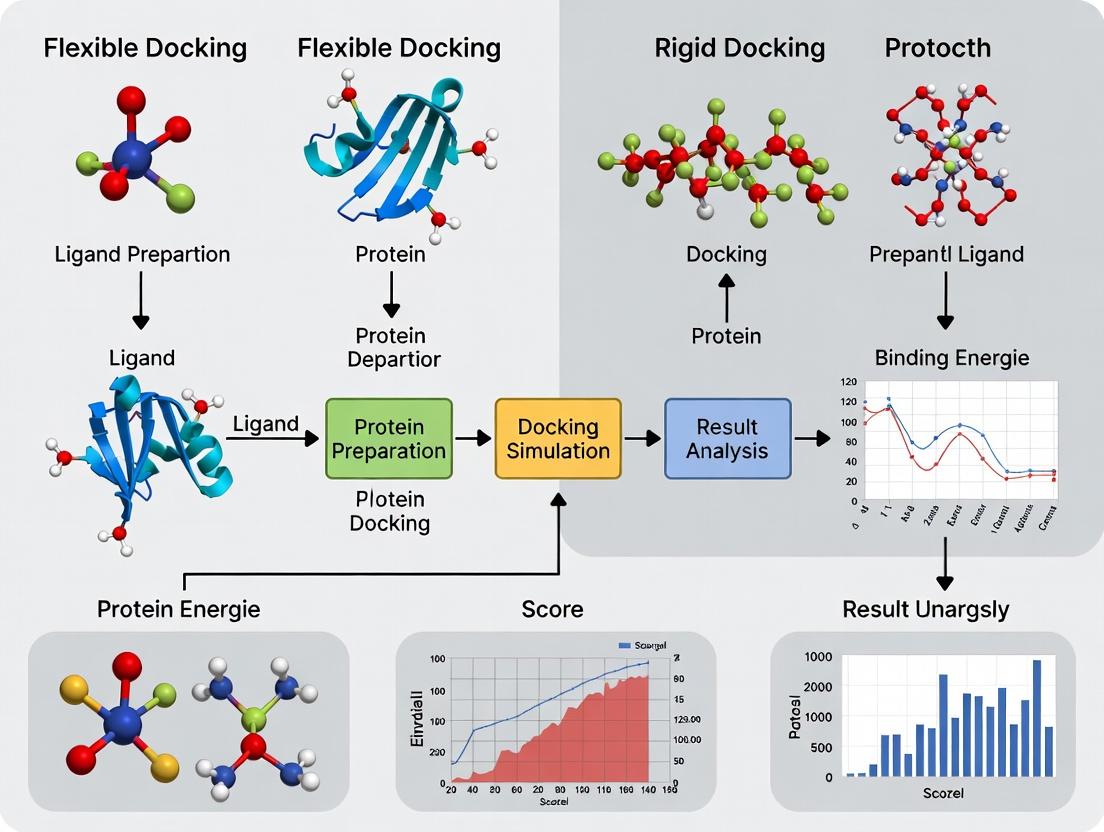
This article provides a comprehensive guide for researchers and drug development professionals on selecting and applying flexible versus rigid molecular docking protocols.
Beyond Rigid Locks: A Practical Guide to Flexible vs. Rigid Docking Protocols for Modern Drug Discovery
Abstract
This article provides a comprehensive guide for researchers and drug development professionals on selecting and applying flexible versus rigid molecular docking protocols. It explores the foundational principles of molecular recognition, compares traditional and modern deep learning-based methodological approaches, offers troubleshooting strategies for common challenges like sampling and scoring, and synthesizes recent validation benchmarks. The goal is to equip practitioners with the knowledge to choose the optimal protocol, balancing accuracy, computational cost, and biological realism for their specific drug discovery project, from virtual screening to lead optimization.
From Lock-and-Key to Induced Fit: Understanding the Physics and Tasks of Molecular Docking
Application Notes: The Role of Non-Covalent Forces in Docking Paradigms
The accurate prediction of protein-ligand binding modes and affinities is central to structure-based drug design. The choice between rigid and flexible docking protocols is fundamentally governed by the treatment of the non-covalent forces that govern molecular recognition. These forces are the physical basis for binding.
- Rigid Docking Protocols: Treat both the protein receptor and the ligand as static, pre-defined shapes. This method relies on geometric and chemical complementarity, evaluating interactions like shape matching, static hydrogen bond donors/acceptors, and coarse electrostatic surfaces. It is computationally efficient but fails when binding induces significant conformational changes. It is most applicable for evaluating ligands highly similar to a known co-crystallized reference or for initial, high-throughput virtual screening against a single, well-validated protein conformation.
- Flexible Docking Protocols: Explicitly account for ligand flexibility and, to varying degrees, protein side-chain or backbone flexibility. These methods dynamically model the formation of non-covalent interactions during the simulation. They are essential for understanding induced-fit binding, where the binding site rearranges to accommodate the ligand, and for accurately ranking ligands with diverse scaffolds. The trade-off is significantly increased computational cost and the risk of overfitting or generating unrealistic conformations without proper constraints.
Table 1: Quantitative Contribution of Non-Covalent Forces to Protein-Ligand Binding
| Force Type | Energy Range (kcal/mol) | Role in Rigid Docking | Role in Flexible Docking | Key Physical Determinants |
|---|---|---|---|---|
| Van der Waals | -0.5 to -4.0 per atom pair | Pre-computed via steric grids; primary driver of shape complementarity. | Explicitly calculated during conformational sampling; critical for packing. | Atomic polarizability, contact surface area, distance (r⁻⁶ dependence). |
| Hydrogen Bonds | -1.0 to -8.0 per bond | Static matching of donor/acceptor points and angles. | Geometry (distance, angle) can be optimized; may include desolvation penalty. | Donor/acceptor strength, solvation state, bond linearity. |
| Electrostatic | -1.0 to -10.0+ per interaction | Implicit via Coulomb potential or coarse partial charge matching. | Explicit calculation of charge-charge, dipole-dipole, and ion-π interactions. | Partial atomic charges, dielectric constant, solvent accessibility. |
| Hydrophobic Effect | ~ -0.7 per Ų buried | Implicitly modeled via non-polar surface area burial terms. | Explicitly driven by the displacement of ordered water molecules from apolar surfaces. | Solvent-accessible surface area (SASA) burial, release of ordered water. |
| π-π Stacking | -0.5 to -4.0 | Rarely explicitly modeled; part of aromatic grid potentials. | Explicit geometry-dependent scoring (offset parallel, T-shaped). | Aromatic ring quadrupoles, offset distance. |
| Cation-π | -2.0 to -8.0 | Treated as a strong, directional electrostatic interaction. | Explicit optimization of cationic group orientation over aromatic ring. | Cation charge density, aromatic quadrupole. |
Experimental Protocols for Characterizing Non-Covalent Interactions
Protocol 1: Isothermal Titration Calorimetry (ITC) for Binding Thermodynamics Objective: To directly measure the binding affinity (KD), stoichiometry (n), enthalpy (ΔH), and entropy (ΔS) of a protein-ligand interaction, decomposing the free energy into its enthalpic (e.g., H-bonds, electrostatics) and entropic (e.g., hydrophobic effect, conformational change) components. Materials: See "Research Reagent Solutions" below. Procedure:
- Sample Preparation: Precisely dialyze the purified protein (>95% purity) into a degassed, matched buffer. Dissolve the lyophilized ligand in the final dialysis buffer from the protein preparation to avoid heat of dilution artifacts.
- Instrument Setup: Load the protein solution (~50-200 µM) into the sample cell (typically 200 µL). Fill the syringe with the ligand solution at a concentration 10-20 times higher than the protein. Set temperature (typically 25°C or 37°C) and stirring speed (750 rpm).
- Titration: Program an automated titration of 15-25 injections (2-10 µL each) with 120-180 second intervals between injections.
- Data Collection: The instrument measures the differential power (µcal/sec) required to maintain the sample cell at the same temperature as the reference cell after each injection of ligand.
- Data Analysis: Fit the raw heat data (µcal/injection vs. molar ratio) to a suitable binding model (e.g., one-set-of-sites) using the instrument's software. The fit yields n, KD (and thus ΔG), and ΔH. Calculate ΔS using the equation: ΔG = ΔH - TΔS.
Protocol 2: Surface Plasmon Resonance (SPR) for Kinetic Profiling Objective: To determine the association (kon) and dissociation (koff) rate constants, in addition to the equilibrium binding affinity (KD = koff/kon), providing insight into the dynamics of complex formation and stability. Materials: See "Research Reagent Solutions" below. Procedure:
- Sensor Chip Functionalization: Immobilize the target protein on a CM5 dextran chip using standard amine-coupling chemistry. Achieve an optimal ligand density (50-150 Response Units for small molecules) to minimize mass-transport limitations.
- Binding Experiment Setup: Prepare a dilution series of the analyte (ligand) in running buffer (HBS-EP+ is common). Use a flow rate of 30-100 µL/min.
- Cycle Execution: For each analyte concentration, run a 60-120 second association phase, followed by a 120-300 second dissociation phase in running buffer. Regenerate the surface with a mild pulse (e.g., 10-50 mM NaOH or glycine pH 2.0) to remove bound analyte.
- Reference Subtraction: Subtract the signal from a reference flow cell (no protein immobilized) from the active flow cell data to account for bulk refractive index shift and non-specific binding.
- Kinetic Analysis: Fit the resulting sensograms (Response Units vs. Time) globally to a 1:1 Langmuir binding model using the instrument software. The global fit provides the kinetic constants kon and koff, and the equilibrium KD.
Visualizations
Decision Logic for Docking Protocol Selection
Isothermal Titration Calorimetry (ITC) Protocol Flow
The Scientist's Toolkit: Research Reagent Solutions
Table 2: Essential Materials for Key Protocols
| Item | Function & Relevance to Non-Covalent Forces |
|---|---|
| High-Purity, Monodisperse Protein | Essential for ITC/SPR. Aggregates or impurities can cause nonspecific binding, obscuring the true thermodynamic or kinetic signature of the specific interaction. |
| ITC-Matched Buffer Systems | The protein and ligand must be in identical buffer compositions (pH, salts, DMSO%) to prevent artifactual heats of dilution, ensuring measured ΔH reflects only binding. |
| SPR Sensor Chips (e.g., CM5) | Gold surfaces with a carboxymethylated dextran matrix for covalent protein immobilization, creating a biophysical interface for real-time kinetic monitoring. |
| Running Buffer with Surfactant (e.g., HBS-EP+) | Standard SPR running buffer (HEPES, NaCl, EDTA) includes a polysorbate surfactant (P20) to minimize non-specific hydrophobic adsorption of analytes to the chip. |
| Co-crystallization Screening Kits | Sparse matrix kits screen diverse conditions to find those promoting the formation of well-ordered crystals of the protein-ligand complex for X-ray analysis of forces. |
| Molecular Dynamics (MD) Simulation Software (e.g., GROMACS, AMBER) | Allows explicit simulation of solvent and full flexibility to study the dynamic formation and breaking of non-covalent bonds over time, beyond static docking. |
| Water Displacement Analysis Software (e.g., WaterMap) | Identifies and evaluates the thermodynamic profile of individual water molecules in the binding site, informing on the hydrophobic effect and displacement energy. |
Within the framework of a broader thesis comparing flexible versus rigid docking protocols for protein-ligand research, understanding the underlying biophysical models of molecular recognition is paramount. Rigid docking algorithms are founded on the century-old Lock-and-Key hypothesis, treating proteins and ligands as static structures. In contrast, modern flexible docking paradigms incorporate dynamic models—namely Induced Fit and Conformational Selection—which acknowledge the inherent flexibility of biomolecules. This article details the application of these models through specific experimental protocols and analyses, providing a practical guide for researchers in structural biology and drug discovery.
Core Models and Quantitative Comparison
Table 1: Comparison of Molecular Recognition Models
| Feature | Lock-and-Key (Rigid) | Induced Fit | Conformational Selection |
|---|---|---|---|
| Core Principle | Perfect, static complementarity | Ligand induces active site fit | Ligand selects pre-existing conformer |
| Protein Flexibility | None | High (local/global changes) | Moderate (selection from ensemble) |
| Ligand Role | Passive key | Inducer | Selector |
| Kinetic Mechanism | Single-step binding | Two-step: binding then conformation change | Two-step: conformation change then binding |
| Dominant Docking Protocol | Rigid/static docking | Flexible side-chain/backbone docking | Ensemble docking |
| Typical RMSD upon binding | < 1.0 Å | 1.0 - 2.5 Å (local) | Varies across ensemble |
| Computational Cost | Low | Very High | Moderate to High |
Table 2: Experimental Evidence for Model Discrimination
| Experimental Technique | Data Output | Lock-and-Key Evidence | Induced Fit Evidence | Conformational Selection Evidence |
|---|---|---|---|---|
| X-ray Crystallography | Static structures | High ligand density in single conformation | Poor ligand density without analogs; shifted residues | Multiple protein conformers in crystal |
| NMR Spectroscopy | Chemical shifts, R₂ relaxation | Minimal shift perturbation upon binding | Progressive shift changes during titration | Shifts consistent with pre-existing minor state |
| Stopped-Flow Fluorescence | Binding kinetics (kₒₙ, kₒff) | Single exponential phase | Biphasic kinetics | Ligand concentration-dependent kₒₙ |
| Hydrogen-Deuterium Exchange (HDX-MS) | Solvent accessibility dynamics | No change in binding region deuteration | Protection only after ligand addition | Protection pattern matches an apo ensemble state |
| Single-Molecule FRET | Distance distributions | Single FRET state | FRET state change after mixing | Ligand stabilizes a low-population FRET state |
Experimental Protocols
Protocol 1: Distinguishing Models via Stopped-Flow Fluorescence Kinetics
Objective: To determine if binding kinetics are monophasic (Lock-and-Key) or biphasic (Induced Fit/Conformational Selection).
Materials: Purified target protein with intrinsic tryptophan fluorescence or labeled with an environmentally sensitive fluorophore (e.g., ANS). Ligand solution in matching buffer.
Procedure:
- Prepare protein and ligand solutions in identical assay buffer (e.g., 20 mM HEPES, 150 mM NaCl, pH 7.4). Degas if necessary.
- Load syringes: Syringe A with protein, Syringe B with ligand. Use ligand concentration at least 10x above estimated Kd for pseudo-first-order conditions.
- Set fluorometer to excitation 280 nm (for Trp) or appropriate wavelength, and emission at 340 nm (or λmax).
- Rapidly mix equal volumes (typically 50-100 µL each) and record fluorescence intensity change over time (0.001 to 10 s).
- Fit data to kinetic models:
- Single exponential: F(t) = Aexp(-kₒbst) + C (supports Lock-and-Key).
- Double exponential: F(t) = A₁exp(-k₁t) + A₂exp(-k₂t) + C (suggests multi-step process).
- Repeat at multiple ligand concentrations. If the observed rate (kₒbs) plateaus at high [Ligand], it indicates a conformational change step after binding (Induced Fit). If kₒbs increases linearly, it suggests a change before binding (Conformational Selection).
Protocol 2: HDX-MS to Probe Binding-Induced Flexibility
Objective: To map regions of the protein that become structured/protected upon ligand binding, indicating the recognition mechanism.
Procedure:
- Sample Preparation: Prepare four conditions: (i) Apo protein, (ii) Protein + saturating ligand, (iii) Apo protein deuterated for reference, (iv) Protein-ligand complex deuterated.
- Deuterium Labeling: Initiate HDX by diluting 5 µL of protein/complex into 45 µL of D₂O-based buffer. Incubate at 4°C for various time points (10 s to 2 hours).
- Quenching: Add 50 µL of quench solution (pre-chilled to 0°C, low pH, e.g., 0.1% formic acid, 2 M guanidine-HCl) to reduce pH to ~2.5 and minimize back-exchange.
- Digestion & Analysis: Rapidly inject onto a chilled LC-MS system with an immobilized pepsin column for online digestion. Separate peptides using a C18 column (5 min gradient) and analyze with a high-resolution mass spectrometer.
- Data Processing: Use software (e.g., HDExaminer) to identify peptides and calculate deuterium uptake for each time point.
- Interpretation: Compare deuteration maps. Protection seen only in the ligand-bound state indicates Induced Fit. Protection patterns in the bound state that match a minor population seen in the apo state (via analysis of exchange rates) support Conformational Selection.
Protocol 3: Ensemble Docking for Conformational Selection
Objective: To perform a flexible docking simulation that accounts for receptor conformational heterogeneity.
Procedure:
- Ensemble Generation:
- Source multiple receptor structures from: PDB (apo/holo forms), Molecular Dynamics (MD) simulation snapshots, or NMR models.
- Align all structures to a common reference frame.
- Receptor Preparation (per structure):
- Add hydrogens, assign protonation states (e.g., using Epik).
- Generate receptor grids for docking (e.g., using Glide's Receptor Grid Generation). Define a consistent binding site centroid.
- Ligand Preparation: Prepare 3D ligand structures, generate tautomers/ionization states at target pH (e.g., using LigPrep).
- Docking Execution:
- Dock each prepared ligand into every receptor conformer in the ensemble using a standard precision (SP) or high-throughput virtual screening (HTVS) protocol.
- Use software like Glide, AutoDock Vina, or UCSF DOCK.
- Post-Processing & Analysis:
- For each ligand, collect all poses and scores across the ensemble.
- Select the top pose based on a combination of docking score and interaction analysis.
- Key Analysis: Identify which receptor conformer(s) yielded the best poses. If the best poses originate from low-population apo states, it is strong computational evidence for Conformational Selection.
Visualizations
Title: Molecular Recognition Pathways
Title: Docking Protocol Workflow Decision
The Scientist's Toolkit
Table 3: Essential Research Reagents and Materials
| Item | Function / Application | Example Product / Specification |
|---|---|---|
| Recombinant Protein | Purified, functional target for biophysical assays. >95% purity, validated activity. | His-tagged kinase domain in storage buffer. |
| Fluorescent Probe | For stopped-flow or FP assays to monitor binding in real-time. | Tryptophan mutant or extrinsic dye (e.g., ANS). |
| HDX-MS Buffer (D₂O) | Enables deuterium labeling to measure hydrogen exchange kinetics. | 99.9% D₂O, pD corrected (pD = pHread + 0.4). |
| Quench Solution | Stops HDX exchange and denatures protein for digestion. | 0.1% Formic Acid, 2M Guanidine-HCl, 0°C. |
| Immobilized Pepsin Column | Rapid, reproducible digestion of protein for HDX-MS peptide analysis. | Poroszyme immobilized pepsin cartridge. |
| Molecular Dynamics Software | Generates an ensemble of protein conformations for flexible docking. | GROMACS, AMBER, or Desmond. |
| Ensemble Docking Suite | Software capable of docking against multiple receptor structures. | Schrodinger Glide, AutoDockFR. |
| Cryo-EM Grids | For high-resolution structure determination of flexible complexes. | Quantifoil R1.2/1.3 Au 300 mesh. |
Within the thesis on flexible versus rigid docking protocols for protein-ligand research, a critical first step is to define the specific computational challenge. The performance and appropriateness of docking methodologies—ranging from rigid-body algorithms to those incorporating full ligand and protein flexibility—are highly dependent on the task context. This article provides a taxonomy of four fundamental docking tasks, detailing their unique challenges, applications, and experimental protocols within drug discovery pipelines.
Taxonomy of Docking Tasks: Definitions and Context
The table below summarizes the core definitions, objectives, and methodological implications of each docking task for flexible vs. rigid docking studies.
Table 1: Taxonomy of Core Docking Tasks
| Task Name | Primary Objective | Key Challenge | Implication for Docking Protocol |
|---|---|---|---|
| Re-docking | Validation: Reproduce the known pose of a ligand from a co-crystal structure. | Scoring function accuracy, local minimization. | Rigid or limited flexible docking often sufficient. Baseline for method validation. |
| Cross-docking | Assess robustness: Dock a ligand into a protein structure crystallized with a different ligand. | Accounting for subtle induced-fit sidechain or backbone movements. | Demands sidechain flexibility or ensemble docking; tests protocol transferability. |
| Apo-docking | Prospective prediction: Dock a ligand into an unbound (apo) protein structure. | Handling large-scale conformational differences between apo and bound forms. | Requires explicit protein flexibility (backbone/sidechain) or ensemble methods. |
| Blind Docking | Binding site identification: Dock a ligand without specifying a binding site, searching the entire protein surface. | Computational cost, false positives, ranking poses across diverse regions. | Efficient global search algorithms crucial; often paired with rigid or semi-flexible initial scans. |
Experimental Protocols & Application Notes
Protocol 1: Re-docking for Scoring Function and Algorithm Validation
Purpose: To establish the baseline accuracy of a docking program's scoring function and pose prediction algorithm. Materials: Co-crystal structure of protein-ligand complex (from PDB). Procedure:
- Structure Preparation: Using a toolkit like UCSF Chimera or Schrödinger's Protein Preparation Wizard, remove the crystallographic ligand. Prepare the protein by adding hydrogens, assigning correct protonation states, and optimizing hydrogen-bonding networks.
- Grid Generation: Define the docking search space (grid) centered on the crystallographic ligand's centroid. A typical grid box size is 20-25 Å per side.
- Ligand Preparation: Extract the original ligand. Generate 3D coordinates, assign correct bond orders, and optimize geometry using tools like Open Babel or LigPrep.
- Docking Execution: Perform docking with the prepared ligand back into the prepared protein grid. Use a rigid-receptor protocol initially.
- Analysis: Measure the Root Mean Square Deviation (RMSD) between the top-ranked docked pose and the crystallographic pose. An RMSD ≤ 2.0 Å is typically considered a successful prediction.
Protocol 2: Cross-docking for Evaluating Induced-Fit Handling
Purpose: To evaluate a docking protocol's ability to handle minor protein conformational changes induced by different ligands. Materials: Multiple co-crystal structures of the same target protein with different ligands. Procedure:
- Structure Set Preparation: Prepare each protein structure from the set as in Protocol 1.
- Ligand Set Preparation: Prepare all corresponding ligands.
- Cross-docking Matrix: Systematically dock each ligand into every protein structure in the set.
- Performance Metric: Calculate success rates (RMSD ≤ 2.0 Å) for self-docking (diagonal) and cross-docking (off-diagonal). A significant drop in off-diagonal success indicates sensitivity to specific conformational states.
- Protocol Refinement: Implement flexible sidechains (e.g., in Glide SP or AutoDock4) or use an ensemble docking approach, repeating steps 3-4 to assess improvement.
Protocol 3: Apo-docking with Flexible Receptor Protocols
Purpose: To prospectively predict ligand binding poses using only an unbound protein structure, simulating a real drug discovery scenario. Materials: High-resolution apo (unbound) protein structure. Procedure:
- Apo Structure Preparation: Prepare the apo structure thoroughly, paying special attention to modeling missing loops if necessary.
- Binding Site Definition: Identify the putative binding site using either prior knowledge, cavity detection software (e.g., fpocket), or by aligning the apo structure to a bound homolog.
- Flexible Docking Setup:
- Ensemble Docking: Generate an ensemble of protein conformations via molecular dynamics (MD) simulations or normal mode analysis. Dock the ligand into each conformation and pool/rank results.
- On-the-fly Flexibility: Use a docking program like AutoDockFR, RosettaLigand, or Schrödinger's Induced Fit Docking (IFD) that allows for specified protein sidechain or backbone flexibility during the docking simulation.
- Validation: If a bound structure becomes available later, use it for retrospective validation via RMSD calculation.
Protocol 4: Blind Docking for Binding Site Discovery
Purpose: To identify novel allosteric or cryptic binding sites without prior knowledge. Materials: Protein structure of interest. Procedure:
- Global Grid Generation: Define a docking grid that encompasses the entire solvent-accessible surface of the protein.
- Coarse-Grained Screening: Perform a rapid, rigid-body or semi-flexible ligand docking run with a high number of poses (e.g., 100-200 output poses).
- Pose Clustering: Cluster all generated poses based on spatial coordinates (e.g., using a clustering algorithm in the docking software).
- Site Identification: Analyze clusters to identify regions of the protein surface with high pose density. The centroid of each major cluster represents a potential binding site.
- Refinement: Select the most promising cluster(s) based on energetic or geometric criteria. Perform a focused, more precise flexible docking in a smaller grid centered on that region.
Visualization of Docking Task Workflows and Relationships
Docking Task Decision Workflow
The Scientist's Toolkit: Research Reagent Solutions
Table 2: Essential Computational Tools for Docking Studies
| Tool/Reagent | Type/Purpose | Key Function in Docking Workflow |
|---|---|---|
| PDB (Protein Data Bank) | Data Repository | Source of experimental protein (apo/holo) structures for preparation and validation. |
| UCSF Chimera / PyMOL | Visualization & Prep | Structure visualization, analysis, and basic preparation (hydrogens, charges). |
| Schrödinger Suite / MOE | Commercial Software | Integrated platforms for advanced protein/ligand preparation, docking (Glide, Induced Fit), and scoring. |
| AutoDock/ AutoDock Vina | Docking Engine | Widely-used open-source programs for rigid, semi-flexible, and ensemble docking. |
| Open Babel / RDKit | Cheminformatics | Toolkits for ligand file format conversion, 3D generation, and descriptor calculation. |
| GROMACS / AMBER | MD Simulation Suite | Generate conformational ensembles for flexible docking via molecular dynamics. |
| fpocket / SiteMap | Cavity Detection | Identify potential binding pockets for grid definition in apo or blind docking. |
In the broader thesis comparing flexible and rigid docking protocols for protein-ligand research, understanding the core algorithmic components is paramount. Rigid docking, which treats both receptor and ligand as static entities, relies heavily on rapid search algorithms and simplistic scoring to sample limited conformational space. In contrast, modern flexible docking protocols, which account for ligand and/or receptor flexibility, require more sophisticated search strategies to explore a vastly larger conformational landscape and more nuanced, physics-based scoring functions to accurately evaluate these complex interactions. This document details these two pillars—search algorithms and scoring functions—that fundamentally differentiate these protocols and dictate their applicability and success.
Search Algorithms: Navigating Conformational Space
Search algorithms are responsible for generating plausible poses of the ligand within the binding site of the protein. The complexity of the algorithm scales with the degree of flexibility allowed.
Common Search Algorithms
Systematic Search: Explores conformational space in a deterministic manner (e.g., grid-based, fragment-based). Often used in rigid docking and for ligand conformational sampling. Stochastic Search: Uses random elements to explore the energy landscape (e.g., Genetic Algorithms, Monte Carlo, Particle Swarm). Essential for flexible docking to escape local minima. Simulation-Based Methods: Utilizes molecular dynamics or simulated annealing to sample poses with temporal continuity. Used in advanced flexible docking and refinement.
Protocol: Implementing a Stochastic Genetic Algorithm (GA) for Flexible Ligand Docking
This protocol outlines a standard GA approach as implemented in software like AutoDock and GOLD.
Objective: To find the optimal binding pose and conformation of a flexible ligand within a defined protein binding site.
Materials & Software:
- Protein structure file (prepared PDBQT or similar format).
- Ligand structure file (with defined rotatable bonds).
- Docking software with GA capabilities (e.g., AutoDock Vina, GOLD).
- High-performance computing cluster or workstation.
Procedure:
- System Preparation:
- Define the 3D search space (grid box) centered on the binding site. For a typical protein, a box of 20x20x20 Å with 0.375 Å grid spacing is common.
- Assign the ligand's rotatable bonds. Typically, rings and amide bonds are kept rigid.
- Initialization:
- Generate an initial population of random ligand poses (individuals) within the search space. Population size is typically 50-150 individuals.
- Each individual's "genome" encodes translational (x,y,z), rotational (quaternion or Euler angles), and torsional (for each rotatable bond) coordinates.
- Evaluation:
- Score each pose in the population using a scoring function (see Section 2). This "fitness" determines survival.
- Genetic Operations (Performed for a set number of generations, e.g., 10,000-27,000):
- Selection: Select pairs of high-fitness individuals as parents. Use tournament selection or roulette wheel selection.
- Crossover: Create a child pose by mixing the translational, rotational, and torsional genes from two parents. A standard two-point crossover rate is ~80%.
- Mutation: Randomly alter a gene in the child (e.g., change a torsion angle) with a defined probability (mutation rate ~2%).
- Termination:
- The algorithm terminates after a maximum number of generations or when convergence (no improvement in best fitness) is reached.
- Output:
- Cluster the final population of poses based on RMSD (e.g., 2.0 Å cutoff) and rank clusters by average scoring function value. Report the top-ranked poses.
Scoring Functions: Evaluating Pose Quality
Scoring functions are mathematical models used to predict the binding affinity (ΔG) of a protein-ligand complex. They are the critical filter that distinguishes correct from incorrect poses generated by the search algorithm.
Types of Scoring Functions
Force Field-Based: Calculate binding energy using molecular mechanics terms (van der Waals, electrostatic, internal strain). Require explicit assignment of partial charges and atom types. More common in detailed flexible docking post-processing (MM/GBSA, MM/PBSA). Empirical: Fit a linear equation of weighted energy terms (e.g., hydrogen bonds, hydrophobic contact, rotatable bond penalty) to experimental binding affinity data. Fast and widely used in both rigid and flexible docking (e.g., X-Score, ChemScore). Knowledge-Based: Derive potentials of mean force from statistical analysis of atom-pair frequencies in known protein-ligand complexes (e.g., PMF, DrugScore). Effective at capturing subtle steric and chemical complementarity.
Protocol: Calculating a Consensus Score for Pose Ranking
Objective: To improve the reliability of pose prediction by mitigating the biases of any single scoring function.
Materials & Software:
- A set of candidate ligand poses from a docking run.
- At least three distinct docking/scoring programs (e.g., AutoDock Vina, DOCK, Glide, or standalone scorers like X-Score).
- Scripting environment (Python, Perl) for data aggregation.
Procedure:
- Rescore Poses: For each candidate pose, calculate the score using three different scoring functions (SF1, SF2, SF3).
- Normalize Scores: For each scoring function, normalize the scores across all poses to a common scale (e.g., Z-score or 0-1 range) to ensure comparability.
Z-score = (Raw_Score - Mean) / Standard Deviation
- Calculate Consensus: For each pose, compute the average of its normalized scores from the three functions.
Consensus_Score_Pose_A = (Z_SF1_A + Z_SF2_A + Z_SF3_A) / 3
- Rank Poses: Rank all poses by their consensus score in ascending order (if lower score indicates better binding) or descending order (if higher score indicates better binding).
- Validation: Visually inspect the top 3-5 consensus-ranked poses for chemical rationality (e.g., correct formation of key hydrogen bonds, placement of hydrophobic groups in hydrophobic pockets).
Quantitative Comparison of Scoring Function Performance
Table 1: Performance Metrics of Common Scoring Function Types on the PDBbind Core Set.
| Scoring Function Type | Typical Spearman R (Pose Prediction) | Typical Pearson R (Affinity Prediction) | Computational Cost | Primary Use Case |
|---|---|---|---|---|
| Empirical (e.g., ChemPLP) | 0.65 - 0.75 | 0.55 - 0.65 | Low | Primary scoring in flexible docking |
| Knowledge-Based (e.g., IT-Score) | 0.60 - 0.70 | 0.50 - 0.60 | Very Low | Pose ranking, consensus scoring |
| Force Field-Based (MM/GBSA) | 0.55 - 0.65 | 0.60 - 0.70 | Very High | Post-docking refinement & affinity estimation |
Visualization: Search & Score Workflow in Flexible Docking
Flexible Docking Core Workflow: Search & Score.
Scoring Function Types & Their Energy Components.
The Scientist's Toolkit: Essential Reagents & Materials for Docking Experiments
Table 2: Key Research Reagent Solutions for Computational Docking Studies.
| Item | Function & Purpose | Example/Format |
|---|---|---|
| Protein Structure Database | Source of experimentally solved 3D structures for use as docking receptors. | RCSB Protein Data Bank (PDB), PDB format. |
| Ligand Structure Database | Source of small molecule structures for virtual screening or as known binders for validation. | ZINC, PubChem, SDF or MOL2 format. |
| Structure Preparation Suite | Software to add hydrogens, assign charges, correct protonation states, and minimize structures. | Schrödinger Maestro, UCSF Chimera, OpenBabel. |
| Docking Software Suite | Integrated environment containing search algorithms and scoring functions. | AutoDock Vina, GOLD, Glide (Schrödinger), DOCK. |
| Scoring Function Library | Collection of standalone or integrated scoring functions for evaluation or consensus. | X-Score, RF-Score, Vinardo, embedded functions. |
| Validation Dataset | Curated set of protein-ligand complexes with known binding poses and affinities for method benchmarking. | PDBbind Core Set, Directory of Useful Decoys (DUD-E). |
| High-Performance Computing (HPC) Resources | CPU/GPU clusters necessary for computationally intensive flexible docking and virtual screening. | Local cluster, cloud computing (AWS, Azure). |
| Visualization & Analysis Software | Tool for visually inspecting docking poses, analyzing interactions (H-bonds, pi-stacking). | PyMOL, UCSF ChimeraX, BIOVIA Discovery Studio. |
Protein flexibility is not an exception but a fundamental biological reality governing molecular recognition, allostery, and catalysis. In computational drug discovery, the historical dominance of rigid docking protocols, which treat the protein as a static receptor, fails to capture this dynamic essence. This article, framed within a thesis comparing flexible versus rigid docking, details the experimental evidence for conformational change and provides protocols for integrating flexibility into docking workflows. The limitations of rigid docking become apparent when confronted with induced-fit binding and allosteric modulation, where ligand binding is coupled to precise protein rearrangements.
Quantitative Evidence for Conformational Change
The following table summarizes key experimental data quantifying protein flexibility and its impact on ligand binding, underscoring the necessity for flexible docking approaches.
Table 1: Quantitative Evidence of Protein Flexibility and Its Impact on Docking
| Experimental Observation | Quantitative Metric | Implication for Docking |
|---|---|---|
| Side-Chain Rotameric States | A single residue (e.g., Phe) can have >10 common rotamers; backbone shift of 1-2 Å enables new rotameric ensembles. | Rigid docking selects a single static rotamer, potentially mis-scoring ligands that require alternative states. |
| Backbone Movement upon Binding | Loop regions can shift >5 Å RMSD; domain motions can exceed 10 Å. | Rigid docking to a single conformation may completely miss the binding site for ligands that induce large shifts. |
| Binding Affinity (ΔG) Variance | Energy penalties for freezing flexible residues can range from 2 to 5 kcal/mol, equating to a 30- to 2000-fold loss in predicted binding affinity. | Rigid docking scores may be severely inaccurate, leading to false negatives for true binders. |
| Ligand Pose Prediction Error | RMSD of top-ranked pose increases by 1-3 Å for rigid vs. flexible protocols in benchmark studies. | Reduced predictive accuracy in structure-based drug design. |
| Success Rate in Virtual Screening | Flexible docking can improve enrichment factors (EF) by 20-50% compared to rigid docking for targets with known induced-fit motion. | Higher likelihood of identifying true active compounds in screening campaigns. |
Experimental Protocols for Characterizing Flexibility
Protocol 3.1: Detecting Conformational Change via Crystallography
Objective: To obtain high-resolution structural snapshots of apo and holo protein states, providing atomic-level evidence of induced-fit movement.
Materials & Workflow:
- Protein Purification: Express and purify the target protein to >95% homogeneity.
- Crystallization: Screen for crystallization conditions for the apo protein using commercial sparse-matrix screens.
- Complex Formation:
- Co-crystallization: Incubate protein with a 2-5 molar excess of ligand prior to crystallization setup.
- Soaking: Transfer apo protein crystals into a cryo-protectant solution containing a high concentration (e.g., 10-50 mM) of the ligand.
- Data Collection & Analysis: Collect X-ray diffraction data at a synchrotron source. Solve structures by molecular replacement. Align apo and holo structures and calculate RMSD for binding site residues.
Protocol 3.2: Molecular Dynamics (MD) Simulation for Ensemble Generation
Objective: To generate a thermodynamic ensemble of protein conformations for use in ensemble docking.
Methodology:
- System Preparation: Solvate the protein structure in a periodic water box (e.g., TIP3P). Add ions to neutralize the system charge.
- Energy Minimization: Perform 5,000 steps of steepest descent minimization to remove steric clashes.
- Equilibration: Run a 100-ps simulation under NVT conditions (constant Number of particles, Volume, Temperature) followed by 100-ps under NPT conditions (constant Number, Pressure, Temperature) to stabilize temperature (~300 K) and pressure (1 bar).
- Production MD: Run an unrestrained MD simulation for 50-100 ns using a 2-fs integration step. Save frames every 10-100 ps.
- Cluster Analysis: Cluster the saved frames (e.g., using the RMSD of binding site residues) to identify representative conformational states. Select the central structure from each major cluster for the docking ensemble.
Protocol 3.3: Flexible Docking Using an Ensemble of Structures
Objective: To perform molecular docking against multiple protein conformations to account for flexibility.
Software: Schrödinger's Glide, AutoDock Vina, or UCSF DOCK. Procedure:
- Ensemble Preparation: Prepare the protein structures from MD or multiple crystal structures (from Protocol 3.1 & 3.2) using standard preparation tools (e.g., correct bond orders, add hydrogens, optimize H-bond networks).
- Grid Generation: Generate a docking grid for each protein conformation. Define the grid center consistently across all structures (e.g., centroid of a reference ligand or key binding site residue).
- Docking Execution: Dock the ligand library against each conformational receptor in the ensemble independently.
- Post-Processing & Consensus Scoring: Rank ligand poses using a consensus of scores across the ensemble (e.g., average docking score, minimum score, or a weighted average based on cluster population). Analyze the best pose for its specific interactions with the conformation it docked into.
Visualizing Pathways and Workflows
Title: Induced-Fit Binding vs. Rigid Docking Failure
Title: Flexible Docking via MD Ensemble Workflow
The Scientist's Toolkit: Research Reagent Solutions
Table 2: Essential Reagents and Tools for Protein Flexibility Research
| Reagent/Tool | Function & Application |
|---|---|
| Protein Expression Systems (e.g., HEK293, Sf9, E. coli) | To produce sufficient quantities of pure, functional protein for structural and biophysical studies. |
| Crystallization Screening Kits (e.g., from Hampton Research, Molecular Dimensions) | To empirically identify conditions for growing diffraction-quality crystals of apo and ligand-bound protein complexes. |
| Cryo-Protectants (e.g., Glycerol, Ethylene Glycol) | To flash-cool crystals for cryo-crystallography, preserving the native conformational state. |
| Molecular Dynamics Software (e.g., GROMACS, AMBER, Desmond) | To simulate the physical movements of atoms in a protein over time, generating conformational ensembles. |
| Flexible Docking Software (e.g., Schrödinger Suite, AutoDockFR, RosettaLigand) | Computational tools specifically designed to accommodate protein side-chain or full backbone flexibility during docking simulations. |
| Analysis Suites (e.g., PyMOL, VMD, ChimeraX) | To visualize, align, and measure conformational differences between protein structures (RMSD, surface analysis). |
Algorithm Deep Dive: From Rigid-Body and Flexible Ligand Docking to Full System Flexibility
In the continuum of molecular docking methodologies for protein-ligand research, a fundamental trade-off exists between computational speed and conformational accuracy. Rigid receptor docking protocols represent the high-speed, high-throughput pole of this spectrum. The underlying thesis posits that while flexible docking methods (accounting for side-chain or backbone movement) are essential for accurate binding mode prediction in induced-fit scenarios, rigid-body approaches are indispensable for initial virtual screening campaigns, scaffold hopping, and systems where the receptor's active site is known to be relatively static. This document details application notes and protocols for speed-optimized rigid docking, focusing on the computationally efficient paradigms of shape matching and Fast Fourier Transform (FFT) correlation techniques.
Core Protocols & Application Notes
Shape Matching (Geometric Hashing) Protocol
Principle: Ligand poses are generated by matching the 3D shape and chemical feature points (donors, acceptors, hydrophobes) of a molecule to a complementary site on the rigid receptor surface.
Detailed Protocol:
Receptor Preparation:
- Obtain the 3D structure of the target protein (e.g., from PDB: 1TPX).
- Remove water molecules, cofactors, and original ligands.
- Add hydrogen atoms using Protonate3D or similar tool at pH 7.4.
- Calculate and assign partial atomic charges (e.g., Gasteiger charges).
- Generate a molecular surface (e.g., Connolly surface) and encode its properties (electrostatic potential, hydrophobicity) into a grid.
Ligand Preparation:
- Generate plausible 3D conformers for each query ligand using OMEGA or CORINA.
- For each conformer, identify key pharmacophore feature points.
Shape Matching & Alignment:
- Using software like ROCS (Rapid Overlay of Chemical Structures):
- The pre-aligned receptor site surface (or a reference ligand) serves as the shape query.
- For each ligand conformer, the algorithm performs a Gaussian description of molecular volume.
- It computes the overlap (Tanimoto Combo score) between the ligand's shape/feature volume and the query volume by optimizing rotational and translational degrees of freedom.
- Retain top N poses (e.g., top 50) per ligand based on shape similarity score.
- Using software like ROCS (Rapid Overlay of Chemical Structures):
Pose Refinement & Scoring:
- Subject the top shape-matched poses to a rapid energy minimization (50 steps of steepest descent) while keeping the receptor rigid to relieve minor clashes.
- Re-score the refined poses using a more rigorous scoring function (e.g., Chemgauss4, PLP) to rank final predictions.
Application Notes: Best suited for scaffold hopping and rapid similarity search where the shape of a known active is used as a query. Less accurate for polar interactions requiring specific directional matching.
Fast Fourier Transform (FFT) Based Correlation Protocol
Principle: The search for optimal ligand translation is accelerated by expressing the scoring function as a correlation of 3D grids, which can be computed efficiently in Fourier space.
Detailed Protocol (Inspired by AutoDock Vina & FRED):
System Setup & Grid Calculation:
- Define a search box encompassing the rigid receptor's binding site.
- Discretize the box into a 3D grid with a defined spacing (typically 0.375 Å to 1.0 Å).
- Pre-calculate multiple affinity grids on this same lattice for the receptor:
- Gaussian Steric (repulsion/attraction) grid.
- Hydrogen-bonding (directional) grids for donor and acceptor features.
- Hydrophobic complementarity grid.
- Electrostatic potential grid.
Ligand Representation:
- Prepare a multi-conformer library for the ligand.
- For each conformer, represent its atomic coordinates and interaction types (C, O, N, H-donor, etc.) relative to its center.
FFT-Based Global Search:
- For each ligand conformer and at each rotational orientation sampled on a spherical grid:
- The interaction energy is a sum of correlations between the ligand's atoms and each precomputed receptor grid.
- The translational correlation for each grid is computed via FFT, reducing complexity from O(N⁶) to O(N³ log N).
- The algorithm identifies the translation yielding the best correlation score for that orientation.
- For each ligand conformer and at each rotational orientation sampled on a spherical grid:
Pose Clustering & Output:
- Collect the top-scoring poses from all conformers and rotations.
- Cluster poses by root-mean-square deviation (RMSD) to remove redundancies.
- Output the best representative pose from each major cluster for visual inspection.
Application Notes: Provides a systematic, global search of translational/rotational space. Highly efficient for screening thousands of compounds against a single, rigid receptor conformation. Accuracy is heavily dependent on the quality and granularity of the precomputed affinity grids.
Table 1: Performance Comparison of Speed-Oriented Rigid Docking Methods
| Method (Software Example) | Computational Speed (Ligands/Day)* | Typical Use Case | Accuracy (RMSD < 2.0 Å)† | Key Strength |
|---|---|---|---|---|
| Shape Matching (ROCS) | 100,000 - 1,000,000 | Scaffold hopping, shape similarity screening | ~50-70% (if cognate shape is known) | Extremely fast; excellent for apolar, shape-driven binding. |
| FFT-Based Correlation (AutoDock Vina) | 10,000 - 100,000 | High-throughput virtual screening (HTVS) | ~60-80% (for rigid binding sites) | Optimal balance of speed and scoring granularity. |
| Geometric Hashing (eHiTS) | 50,000 - 200,000 | Fragment docking, pose prediction | ~65-75% | Efficient fragmentation and re-assembly of ligands. |
*Benchmark on a single modern CPU core. †Approximate success rates on standard benchmarks like PDBbind core set for well-defined, rigid binding sites.
Table 2: Key Parameters for Protocol Optimization
| Parameter | Shape Matching | FFT-Based Docking | Recommended Starting Value |
|---|---|---|---|
| Conformers per Ligand | Critical | Important | 100 - 250 |
| Grid Spacing (Å) | N/A (surface-based) | Critical | 0.375 (high res) / 0.75 (fast) |
| Rotational Sampling | Continuous optimization | Increment (degrees) | 15° (coarse) / 5° (fine) |
| Scoring Function | Shape Tanimoto + Color Score | Sum of correlated grids (Vina, ChemScore) | Composite score (shape+chem) / Vina |
| Post-Processing | Minimization in fixed field | Local optimization (BFGS) | Essential for both |
The Scientist's Toolkit: Research Reagent Solutions
Table 3: Essential Materials & Software for Rigid Receptor Docking
| Item Name | Function & Rationale |
|---|---|
| Protein Data Bank (PDB) Structure | The starting 3D atomic coordinates of the rigid receptor. Requires careful curation (cleaning, protonation). |
| Ligand Conformer Library (e.g., from OMEGA) | A pre-generated ensemble of 3D conformations for each query molecule, essential for exploring ligand flexibility within a rigid receptor. |
| Precomputed Affinity Grids | Pre-calculated spatial maps of the receptor's interaction potential (steric, H-bond, hydrophobic) that enable rapid FFT-based scoring. |
| High-Performance Computing (HPC) Cluster | Enables parallel processing of thousands of compounds, making large-scale virtual screening feasible within days. |
| Pose Clustering Script (e.g., in RDKit) | Used post-docking to group geometrically similar poses and select representatives, avoiding result redundancy. |
| Visualization Software (PyMOL, ChimeraX) | Critical for manual inspection and validation of top-ranked docking poses against the experimental or reference structure. |
Visualization of Workflows
Title: FFT-Based Rigid Docking Protocol Workflow
Title: Rigid vs Flexible Docking in Research Context
Within the broader thesis comparing flexible and rigid protein-ligand docking, this document details the advanced computational protocols required for modeling ligand flexibility. While rigid docking assumes a static ligand conformation, flexible docking methods simulate the ligand's ability to rotate bonds and adjust its shape to fit within a protein's binding site, dramatically improving the accuracy of binding mode prediction and affinity estimation. This is critical for virtual screening and structure-based drug design. The core challenge lies in efficiently exploring the vast conformational and orientational (pose) space of the ligand. Three mainstream search strategy paradigms have emerged: Systematic, Stochastic, and Incremental.
Mainstream Search Strategies: Protocols and Application Notes
Systematic Search (or Conformational Ensemble)
This strategy involves pre-generating a diverse library of ligand conformers prior to the docking simulation. During docking, each pre-computed conformation is treated as a rigid body and positioned within the binding site.
Detailed Experimental Protocol:
- Conformer Generation: Use software like OMEGA (OpenEye), CONFGEN (Schrödinger), or the ETKDG method in RDKit to generate a low-energy conformational ensemble of the ligand.
- Key Parameters: Set maximum number of conformers (e.g., 200), energy window cutoff (e.g., 10-15 kcal/mol above the global minimum), and root-mean-square deviation (RMSD) cutoff for clustering (e.g., 1.0 Å) to ensure diversity.
- Rigid Docking Phase: Each generated conformer is independently docked using a rigid-body docking algorithm (e.g., using FRED from OpenEye or Glide SP in rigid mode).
- Key Parameters: Define a precise search box (grid) centered on the binding site. Use standard scoring functions (e.g., ChemScore, PLP) to evaluate poses.
- Pose Scoring & Selection: All poses from all docked conformers are pooled and re-scored. The top-ranked pose(s) based on the docking score are selected as the final prediction.
Application Note: Systematic search is computationally efficient per docking run but can fail if the correct conformation was not pre-generated. It is most effective for ligands with a limited number of rotatable bonds (e.g., <10).
Stochastic Search
This strategy uses random or semi-random moves (translations, rotations, torsion adjustments) to explore the ligand's pose space. It relies on iterative sampling and evaluation, often guided by algorithms like Monte Carlo (MC) or Genetic Algorithms (GA).
Detailed Experimental Protocol (Monte Carlo with Metropolis Criterion):
- Initialization: A random ligand conformation and orientation (pose) is generated within the binding site box. Its energy (E_initial) is calculated using the chosen scoring function.
- Perturbation Cycle: For a defined number of iterations (e.g., 10,000): a. Random Move: Apply a random change to the current pose (e.g., rotate a random bond by a random angle, translate/rotate the whole ligand). b. Energy Evaluation: Calculate the new energy (Enew). c. Acceptance/Rejection: Apply the Metropolis criterion: * If Enew < Einitial, accept the new pose. * If Enew >= Einitial, accept the new pose with a probability P = exp(-(Enew - E_initial) / kT), where kT is a temperature-like parameter controlling acceptability of uphill moves. * If the move is rejected, revert to the previous pose.
- Pose Mining: After the cycle, low-energy poses from the trajectory are clustered (e.g., by RMSD) to identify representative binding modes. The lowest-scoring pose from the largest cluster is often selected.
Application Note: Stochastic methods are powerful for exploring complex landscapes but may require long run times to ensure convergence. Parameters like "temperature" and number of iterations must be optimized.
Incremental Construction (IC)
This strategy, pioneered by software like DOCK and FlexX, builds the ligand pose inside the binding site one fragment at a time. A core "base fragment" is placed first, followed by the sequential addition of the remaining fragments.
Detailed Experimental Protocol:
- Ligand Fragmentation: The ligand is fragmented into rigid segments connected by rotatable bonds. The largest rigid fragment is typically chosen as the base.
- Placement of Base Fragment: Multiple orientations/conformations of the base fragment are placed within the binding site using geometric matching (e.g., matching hydrogen bond donors/acceptors to complementary protein features) or random placement.
- Incremental Growth: The remaining fragments are added back sequentially: a. For each placed base pose, the next connected fragment is attached. b. Its rotatable bond is sampled in increments (e.g., every 10-30 degrees). c. Only fragment conformations that avoid severe steric clashes are retained.
- Completion & Optimization: Once the full ligand is reconstructed, the final pose may undergo a limited energy minimization or rigid-body optimization to relieve minor clashes.
Application Note: IC is highly efficient as it reduces the search dimensionality. However, its performance can be sensitive to the initial choice of the base fragment and the order of fragment addition. It may struggle with highly symmetric or cyclic ligands.
Table 1: Comparison of Mainstream Flexible Docking Search Strategies
| Feature / Strategy | Systematic Search | Stochastic Search | Incremental Construction |
|---|---|---|---|
| Core Principle | Dock pre-generated conformers rigidly | Random perturbations guided by scoring | Build ligand pose fragment-by-fragment |
| Search Algorithm | Conformer enumeration + Rigid docking | Monte Carlo, Genetic Algorithms | Tree search, geometric matching |
| Ligand Handling | Ensemble of rigid molecules | Fully flexible during search | Flexible bonds built sequentially |
| Computational Speed | Fast per conformer, but scales with ensemble size | Moderate to Slow (requires many iterations) | Typically Fast |
| Best Suited For | Ligands with low to medium flexibility (≤10 rotatable bonds) | Highly flexible ligands, macrocycles | Medium flexibility, fragment-like ligands |
| Key Strength | Exhaustive within generated ensemble; reproducible | Broad exploration of conformational space | Efficient reduction of search space |
| Key Limitation | Dependent on initial conformer generation quality | Risk of non-convergence; parameter sensitive | Base fragment dependency; may miss poses |
| Representative Software | FRED (OMEGA conformers), Glide (rigid mode) | AutoDock Vina, GOLD, MOE-Dock | FlexX, DOCK (IC mode), Surflex |
Table 2: Typical Performance Metrics on Standard Benchmark Sets (e.g., PDBbind, DUD-E)
| Strategy (Implementation) | Avg. Success Rate* (Top Pose, RMSD ≤ 2.0 Å) | Avg. Docking Time (CPU seconds/ligand) | Key Influencing Parameters |
|---|---|---|---|
| Systematic (FRED/OMEGA) | ~60-75% | 30-120 | Conformer count, Energy window, Clustering RMSD |
| Stochastic (AutoDock Vina) | ~70-80% | 60-300 | Exhaustiveness, Energy range, Search box size |
| Incremental (FlexX) | ~65-75% | 20-90 | Base fragment selection, Torsion increment, Scoring |
*Success rates are approximate and highly dependent on the protein target class, ligand properties, and specific protocol tuning.
Visualization of Workflows
Flexible Docking Strategy Decision Workflow
Ligand Analysis to Strategy Selection
The Scientist's Toolkit: Research Reagent Solutions
Table 3: Essential Software & Computational Tools for Flexible Docking
| Item Name (Vendor/Project) | Category | Primary Function in Flexible Docking |
|---|---|---|
| Schrödinger Suite (Glide) | Integrated Software | Provides robust systematic/stochastic hybrid protocols, extensive scoring functions, and high-throughput virtual screening workflows. |
| AutoDock Vina & AutoDock-GPU | Docking Engine | Open-source, widely-used stochastic search (Monte Carlo) based docking tools known for good speed and accuracy. |
| OpenEye Toolkits (OMEGA, FRED) | Conformer Gen. & Docking | Industry-standard for systematic search: OMEGA generates conformers, FRED performs rapid rigid docking of ensembles. |
| RDKit | Cheminformatics Library | Open-source toolkit for ligand preparation, conformer generation (ETKDG method), and molecule manipulation. |
| Cyrus Bench (formerly FlexX) | Docking Engine | Implements the classic incremental construction algorithm for flexible ligand docking. |
| GOLD (CCDC) | Docking Engine | Uses a genetic algorithm (stochastic) for full ligand and partial protein flexibility exploration. |
| Rosetta Ligand | Modeling Suite | Uses a Monte Carlo minimization protocol for high-resolution flexible docking and protein-ligand refinement. |
| PDBbind Database | Benchmark Dataset | Curated database of protein-ligand complexes with binding affinity data, essential for method validation and parameter tuning. |
| GNINA (Open Source) | Deep Learning Docking | Utilizes convolutional neural networks as scoring functions within a stochastic search framework, improving pose prediction. |
| GPU Computing Cluster | Hardware | Essential for performing large-scale virtual screens or exhaustive sampling with stochastic/incremental methods in a feasible time. |
The central thesis of modern computational drug discovery critically evaluates flexible docking protocols against traditional rigid docking. While rigid docking, treating the protein as a static receptor, offers computational speed, it often fails to accurately predict binding modes for ligands that induce significant conformational changes in the target. This article details two advanced methodologies—Induced Fit Docking (IFD) and Ensemble Docking—that explicitly incorporate protein flexibility. These protocols address the limitations of rigid docking by accounting for side-chain rearrangements, backbone movements, and binding site plasticity, thereby providing more physiologically relevant and often more accurate predictions for protein-ligand interactions in structure-based drug design.
Induced Fit Docking (IFD) is a sequential protocol that allows both ligand and protein side-chains (and sometimes backbone) to adjust mutually during the docking simulation. It is particularly suited for systems where ligand binding causes local conformational changes.
Ensemble Docking involves docking a ligand into multiple pre-generated conformations (an ensemble) of the same protein target. This ensemble captures the intrinsic flexibility and alternative binding site geometries of the protein, often derived from NMR structures, molecular dynamics (MD) snapshots, or multiple crystal structures.
Table 1: Qualitative Comparison of Docking Protocols
| Protocol | Protein Treatment | Key Strength | Key Limitation | Ideal Use Case |
|---|---|---|---|---|
| Rigid Docking | Static, single conformation. | High computational speed, simplicity. | Cannot model receptor flexibility, poor accuracy for induced-fit systems. | Initial high-throughput screening (HTS) against well-defined, rigid binding sites. |
| Induced Fit Docking (IFD) | Flexible side-chains/backbone in response to the ligand. | Models mutual adaptation, more accurate binding pose prediction. | Computationally expensive, risk of overfitting. | Lead optimization for targets with known or suspected local induced-fit behavior. |
| Ensemble Docking | Multiple static conformations sampled independently. | Captures intrinsic protein flexibility, improves virtual screening enrichment. | Does not model simultaneous mutual adaptation, ensemble generation is critical. | Virtual screening against flexible targets with known multiple conformational states. |
Application Notes & Detailed Protocols
Induced Fit Docking (IFD) Protocol
A generalized IFD workflow, as implemented in platforms like Schrödinger's Suite or using hybrid tools, is described below.
Research Reagent Solutions & Essential Materials
| Item | Function in Protocol |
|---|---|
| Protein Preparation Suite (e.g., Maestro, MOE) | Processes the initial protein structure: adds missing residues/side chains, assigns protonation states, optimizes H-bond networks. |
| Ligand Preparation Tool (e.g., LigPrep, Open Babel) | Generates 3D ligand conformations, corrects bond orders, assigns formal charges, and generates possible tautomers/protonation states at target pH. |
| Glide (or similar docking engine) | Performs the initial rigid docking and the final refined docking steps. |
| Prime (or similar protein structure prediction engine) | Performs side-chain and backbone refinement of the protein binding site around the docked poses. |
| Molecular Dynamics (MD) Software (e.g., GROMACS, AMBER) | Alternative/Complementary: Can be used to generate pre-docking relaxed structures or post-docking validate stability. |
Detailed Stepwise Protocol:
System Preparation:
- Protein: Prepare the initial protein structure from a PDB file. Remove water molecules (except crucial structural waters), add missing hydrogen atoms, and optimize the H-bond network. Define the binding site using a centroid (e.g., from a co-crystallized ligand or known active site residues).
- Ligand: Prepare the ligand(s) of interest. Generate low-energy 3D conformations, determine correct ionization states at physiological pH (e.g., 7.4), and generate possible stereoisomers.
Initial Rigid Receptor Docking:
- Dock the prepared ligand into the rigid, prepared protein structure using a standard docking algorithm (e.g., Glide SP). The purpose is to generate a diverse set of plausible initial poses.
- Critical Parameter: Retain a larger-than-usual number of top poses (e.g., 20-80) for the refinement step to ensure the correct binding mode is within the sampled set.
Protein Refinement:
- For each retained ligand pose, refine the protein structure. This typically involves:
- Side-chain optimization: Residues within a defined radius (e.g., 5-8 Å) of the ligand pose are allowed to move.
- Backbone optimization (optional but recommended): A subset of residues (often the same shell) may have their backbone ϕ/ψ angles minimized to allow for larger conformational changes.
- A constrained energy minimization is run on the protein-ligand complex for each pose.
- For each retained ligand pose, refine the protein structure. This typically involves:
Refined Docking:
- Redock the ligand into each uniquely refined protein structure generated in Step 3.
- Use standard precision (SP) or higher precision (e.g., Glide XP) settings for this final docking step.
Scoring & Pose Selection:
- Rank the final poses based on the docking score (e.g., GlideScore) and the Prime refinement energy.
- The pose with the most favorable composite score is typically selected as the predicted induced-fit complex. Visual inspection for key interactions is crucial.
Title: Induced Fit Docking (IFD) Workflow
Ensemble Docking Protocol
This protocol uses multiple protein structures to account for conformational diversity.
Research Reagent Solutions & Essential Materials
| Item | Function in Protocol |
|---|---|
| Conformational Ensemble | Set of protein structures (PDB files) from NMR, MD simulations, or multiple X-ray structures with different ligands/apo form. |
| Clustering Tool (e.g., GROMACS, MOE) | Identifies representative, distinct conformations from a large set (e.g., MD trajectories) to reduce redundancy. |
| Protein Alignment Tool | Superimposes all ensemble members onto a common reference frame for consistent docking grid definition. |
| Virtual Screening Workflow (e.g., DOCK, AutoDock Vina, Glide) | Performs docking calculations consistently across all members of the ensemble. |
| Consensus Scoring Script | Analyzes results across the ensemble to generate a consensus score or rank for each ligand. |
Detailed Stepwise Protocol:
Ensemble Generation & Curation:
- Source multiple experimental structures (e.g., from PDB) of the target protein. Alternatively, generate conformations via Molecular Dynamics (MD) simulations or normal mode analysis.
- If using MD, run an unbiased simulation of the apo protein or a holo reference, then cluster the trajectory to obtain representative snapshots (e.g., 10-50 distinct structures).
- Superimpose all structures onto a common reference frame based on conserved core residues.
Consistent System Preparation:
- Prepare each protein structure in the ensemble identically (same protonation states, residue naming, etc.) using the same protein preparation protocol.
Docking Grid Generation:
- Define the binding site. Two common approaches:
- Grid-based: Generate a docking grid for each ensemble member centered on the same defined centroid.
- Site-based: Use a defined set of residues; the grid will adjust slightly for each conformation.
- Define the binding site. Two common approaches:
Docking Execution:
- Dock the library of ligands into each prepared protein conformation in the ensemble using the same docking parameters.
- This step is inherently parallelizable.
Results Integration & Consensus Scoring:
- For each ligand, collect all docking scores (e.g., one per protein conformation).
- Apply a consensus strategy to select the final prediction:
- Best Score: Take the most favorable (lowest) docking score across the ensemble.
- Average Score: Use the mean score across all conformations.
- Weighted Average: Weight scores by the population or energy of the conformation.
- The chosen pose is the one corresponding to the selected score.
Title: Ensemble Docking Workflow
Performance Data & Practical Considerations
Table 2: Quantitative Performance Comparison (Representative Studies)
| Study & Target | Protocol Tested | Key Metric | Result (Flexible vs. Rigid) | Note |
|---|---|---|---|---|
| Kinases (e.g., CDK2) [Cit.] | IFD vs Rigid Docking | RMSD of predicted pose vs crystal (<2.0 Å success) | IFD: 85-95% success. Rigid: 40-60%. | IFD crucial for accurate pose prediction of ligands inducing DFG-loop movement. |
| Nuclear Receptors (e.g., PPARγ) [Cit.] | Ensemble (from MD) vs Single Structure | Enrichment Factor (EF) in virtual screening | Ensemble: EF₁% = 25-35. Single: EF₁% = 10-15. | Ensemble docking significantly improves identification of active compounds. |
| Broad Benchmark (e.g., DUD-E) | IFD/Ensemble vs Rigid | Area Under Curve (AUC) | Improvements of 0.05 - 0.15 in AUC common for flexible targets. | Computational cost increases 5-50x over rigid docking depending on protocol. |
Critical Implementation Notes:
- Computational Cost: IFD and Ensemble Docking are significantly more expensive than rigid docking. This trade-off between accuracy and resources must be managed.
- Validation: Always validate flexible docking protocols by testing their ability to reproduce known crystallographic poses (pose prediction) and to rank active compounds above inactives in a decoy set (virtual screening validation).
- Hybrid Approaches: State-of-the-art workflows often combine these methods, e.g., using an ensemble of structures as starting points for IFD, or using short MD simulations to refine IFD-generated poses.
Application Notes
The emergence of deep learning models for molecular pose prediction represents a paradigm shift in computational drug discovery. Within the thesis context of flexible docking versus rigid docking, these models offer distinct advantages by implicitly learning protein flexibility and ligand conformational changes from vast structural datasets, rather than relying on explicit physical simulations or predefined conformational ensembles.
Key Advancements:
- Generative Models (e.g., DiffDock): Treat docking as a generative task, learning to produce plausible ligand poses by modeling the data distribution. They often outperform traditional methods in pose prediction accuracy, especially for novel targets, by iteratively refining poses in a diffusion process.
- Regression Models (e.g., EquiBind): Treat docking as a regression task, directly predicting the ligand's binding pose and location (binding pocket) in a single, fast forward pass. They offer orders-of-magnitude speed improvements, enabling ultra-high-throughput screening.
Comparative Performance in Thesis Context: The following table summarizes quantitative benchmarks comparing deep learning and traditional docking protocols, highlighting the flexible docking capabilities inherent in learned models.
Table 1: Quantitative Comparison of Docking Protocol Performance
| Model / Software (Protocol Type) | CASF-2016 Benchmark (Top-1 Success Rate %) | PDBBind Test Set (RMSD < 2Å %) | Average Runtime (Seconds/Ligand) | Explicit Flexibility Handling |
|---|---|---|---|---|
| EquiBind (DL Regression) | 21.8% | 22.0% | 0.07 | Implicit, via training data |
| DiffDock (DL Generative) | 50.7% | 51.4% | 8.5 | Implicit, via diffusion process |
| GNINA (Traditional, Rigid) | 36.1% | 38.5% | 45 | Limited (Side-chain) |
| AutoDock Vina (Traditional, Rigid) | 30.3% | 31.2% | 35 | No |
| Glide SP (Traditional, Rigid) | 49.4% | N/A | ~120 | No |
| RosettaLigand (Traditional, Flexible) | 41.0% | N/A | ~3600 | Yes (Backbone & Side-chain) |
Note: Success rates are typically defined as the percentage of predictions where the Root-Mean-Square Deviation (RMSD) of the predicted ligand pose from the experimental crystal structure is less than 2.0 Å. DL = Deep Learning.
Experimental Protocols
Protocol 2.1: Pose Prediction Using DiffDock
Objective: To generate high-accuracy ligand binding poses using a diffusion-based generative model.
Materials:
- Pre-trained DiffDock model (
DiffDock.ptweights). - Target protein structure file (
.pdbformat). - Ligand molecular file (
.sdfor.mol2format). - Computing environment with Python 3.9+, PyTorch, and required dependencies (RDKit, PyTorch Geometric, biopython).
Procedure:
- Data Preprocessing:
- Clean the protein
.pdbfile: remove water molecules, heteroatoms (non-ligand), and alternate conformations. Ensure correct protonation states. - For the ligand, generate a 3D conformation if not present, using RDKit's
EmbedMoleculefunction.
- Clean the protein
- Model Inference:
- Load the pre-trained DiffDock model.
- Run the inference script, providing paths to the protein and ligand files:
- The model performs a multi-step reverse diffusion process, starting from noise and progressively refining the ligand's translation, rotation, and torsion angles conditioned on the protein pocket.
- Post-processing:
- DiffDock outputs multiple candidate poses (default: 40) ranked by confidence score.
- Select the top-ranked pose for analysis.
- Optionally, perform a brief energy minimization of the complex using an MD force field (e.g., UFF via RDKit) to relieve minor steric clashes.
Workflow Diagram:
Title: DiffDock Generative Pose Prediction Workflow
Protocol 2.2: Ultra-Fast Binding Prediction Using EquiBind
Objective: To predict a ligand's binding pose and location in an extremely fast, single-forward-pass manner.
Materials:
- Pre-trained EquiBind model (
equibind.ptweights). - Target protein structure file (
.pdbor.pdbqt). - Ligand molecular file (
.sdfor.smi). - Computing environment with Python, PyTorch, and required libraries (RDKit, PyTorch Geometric, openbabel).
Procedure:
- Input Preparation:
- Process the protein file using the model's parsing script to generate geometric and chemical features.
- For the ligand, if starting from a SMILES string, use RDKit to generate a 3D conformation.
- Model Inference:
- Load the pre-trained EquiBind model.
- Execute the prediction script:
- EquiBind, an SE(3)-equivariant graph neural network, processes the inputs in one pass. It predicts: a) A rigid transformation (rotation & translation) of the initial ligand conformation. b) Optional torsional adjustments for rotatable bonds to accommodate the binding site.
- Pose Extraction:
- The model outputs the predicted protein-ligand complex directly. Extract the ligand coordinates into a separate file for validation.
Workflow Diagram:
Title: EquiBind Single-Pass Regression Workflow
The Scientist's Toolkit: Research Reagent Solutions
Table 2: Essential Materials and Tools for Deep Learning-Based Docking
| Item Name | Function / Purpose | Example/Format |
|---|---|---|
| Pre-processed Structural Datasets | Provide high-quality, curated training and benchmarking data for model development and validation. | PDBBind, CrossDocked2020, CASF benchmark sets. |
| 3D Conformer Generator | Generates initial 3D coordinates for ligands provided as SMILES strings or 2D formats. | RDKit (EmbedMolecule), OMEGA, Balloon. |
| Deep Learning Framework | Platform for building, training, and running neural network models. | PyTorch (preferred), PyTorch Geometric, TensorFlow. |
| Equivariant Neural Network Layers | Model layers that respect geometric symmetries (rotation, translation), critical for spatial tasks. | e3nn, SE(3)-Transformer, Tensor Field Networks. |
| Diffusion Model Scheduler | Defines the noise addition and sampling schedule for generative diffusion models. | Linear, Cosine, or learned noise schedules (as in DiffDock). |
| Molecular Force Field | Used for post-prediction energy minimization to relieve atomic clashes. | Universal Force Field (UFF), Merck Molecular Force Field (MMFF94). |
| Pose Evaluation Metrics | Quantify the accuracy of predicted poses against a known reference structure. | Root-Mean-Square Deviation (RMSD), Interface RMSD (I-RMSD), Ligand RMSD (L-RMSD). |
| High-Performance Computing (HPC) Resources | Accelerate model training and inference, especially for large datasets or generative sampling. | GPUs (NVIDIA A100/V100), Cloud compute instances (AWS, GCP). |
Application Notes
Within the broader thesis investigating flexible vs. rigid docking protocols for protein-ligand research, the integration of Machine Learning (ML) represents a paradigm shift. Rigid docking, while computationally efficient, often fails to account for critical conformational changes. Fully flexible docking, though more physically accurate, is computationally prohibitive and suffers from the "search space explosion" problem. Hybrid ML approaches bridge this gap by intelligently guiding and optimizing the docking protocol.
Key Applications:
- ML for Pose Prediction & Scoring: Deep learning models (e.g., 3D convolutional neural networks, graph neural networks) are trained on structural data to directly predict binding poses and affinity, bypassing traditional scoring functions and their inherent biases.
- Active Learning for Enhanced Sampling: ML models iteratively select the most informative ligand or protein conformations for expensive free energy calculations, optimizing the trade-off between exploration and exploitation in conformational space.
- Hyperparameter Optimization for Docking Engines: Bayesian optimization or reinforcement learning agents are used to automate the selection of critical docking parameters (e.g., search exhaustiveness, energy grid spacing, ligand flexibility parameters), tailoring the protocol to a specific target class.
- Ensemble Docking Prioritization: ML classifiers analyze protein features to rank or filter members of a structural ensemble (from MD simulations or experimental structures), directing computational resources to the most relevant conformations for docking, thus enhancing virtual screening success rates.
Quantitative Data Summary:
Table 1: Performance Comparison of Traditional vs. ML-Enhanced Docking Protocols
| Protocol Type | Average RMSD (Å)* | Enrichment Factor (EF1%)* | Computational Time (Ligand Hour) | Key Limitation Addressed |
|---|---|---|---|---|
| Standard Rigid Docking | 3.5 - 5.0 | 5 - 15 | 0.1 - 1 | Poor handling of receptor flexibility |
| Standard Flexible Docking | 2.0 - 3.5 | 10 - 25 | 5 - 50 | High computational cost, parameter sensitivity |
| ML-Augmented Hybrid Docking | 1.5 - 2.5 | 20 - 40 | 2 - 20 | Balances accuracy and throughput |
| ML-Only (Direct Prediction) | 1.0 - 2.0 | N/A | < 0.1 | Requires extensive training data, generalization |
Representative values from recent literature; actual performance is system-dependent.
Experimental Protocols
Protocol 1: Active Learning-Guided Ensemble Docking for Flexible Binding Site Characterization
Objective: To identify high-affinity ligands for a flexible protein target by optimally selecting receptor conformations for docking from a molecular dynamics (MD) ensemble.
Materials: See "The Scientist's Toolkit" below.
Methodology:
- Ensemble Generation: Perform a 100ns MD simulation of the apo protein. Cluster the trajectories to generate a representative ensemble of 100 distinct conformations.
- Initial Seed Docking: Randomly select 5 conformations from the ensemble. Dock a diverse library of 1,000 ligands (including known actives and decoys) into each using a standard protocol.
- Model Training & Prediction: Train a Gaussian Process (GP) regressor on the docking scores from the initial seed. Use the GP model to predict the mean and variance of potential scores for all remaining 95 conformations.
- Active Learning Query: Select the next conformation for docking using an acquisition function (e.g., Upper Confidence Bound - UCB) that balances predicted high scores (exploitation) and high uncertainty (exploration).
- Iterative Loop: Dock the full library to the selected conformation. Add the new (conformation, score) data to the training set. Retrain the GP model and repeat steps 4-5 for a fixed number of iterations (e.g., 15 cycles).
- Final Analysis: Consolidate results from all docked conformations. Identify top-ranking ligands that bind consistently well across multiple, ML-selected conformations of the flexible target.
Protocol 2: Bayesian Optimization of Flexible Docking Hyperparameters
Objective: To systematically identify the optimal parameters for a flexible docking program (e.g., AutoDock Vina, Glide) for a specific protein family.
Methodology:
- Define Search Space: Identify critical hyperparameters (e.g.,
number_of_modes,energy_range,exhaustivenessfor Vina;precisionfor Glide). Set realistic bounds for each. - Prepare Benchmark Set: Curate a dataset of 50 protein-ligand complexes with known crystallographic poses and diverse binding affinities for the target family.
- Objective Function: Define the objective to maximize: a composite metric = (Average Pose RMSD < 2.0 Å %) + (Pearson's R of predicted vs. experimental ΔG).
- Optimization Loop: a. Initialize a Bayesian Optimization (BO) algorithm (e.g., using a tree-structured Parzen estimator) with 5 random parameter sets. b. For each parameter set, run docking on the entire benchmark set and compute the objective function score. c. The BO algorithm uses the observed history to build a surrogate probabilistic model of the objective function and selects the next parameter set to evaluate by maximizing the expected improvement. d. Repeat for 50-100 iterations.
- Validation: Apply the optimized parameter set to a held-out test set of complexes not used during optimization. Compare performance against the default software parameters.
Visualization
Active Learning Ensemble Docking Workflow
Hybrid Docking Decision Logic
The Scientist's Toolkit
Table 2: Essential Research Reagent Solutions for ML-Enhanced Docking
| Item Name / Category | Function & Relevance in Protocol |
|---|---|
| Molecular Dynamics Suite(e.g., GROMACS, AMBER, NAMD) | Generates ensembles of flexible protein conformations for ensemble docking and provides data for training ML models on dynamic behavior. |
| Docking Software with API/Scripting(e.g., AutoDock Vina, Schrodinger Glide, DOCK6) | Performs the core docking calculations. Scriptable interfaces allow for batch processing and integration into automated ML optimization loops. |
| Machine Learning Libraries(e.g., scikit-learn, PyTorch, TensorFlow, DeepChem) | Provides algorithms for creating regression/classification models (Gaussian Processes, Neural Networks) for scoring, prediction, and active learning. |
| Bayesian Optimization Frameworks(e.g., Ax, scikit-optimize, BayesianOptimization) | Automates the efficient search of high-dimensional hyperparameter spaces (e.g., docking parameters) to maximize a target metric. |
| Structural Biology Databanks(PDB, BindingDB, CSAR) | Sources of high-quality protein-ligand complex structures and binding data essential for creating benchmark sets and training ML models. |
| High-Performance Computing (HPC) Cluster | Provides the necessary computational power for generating MD ensembles, running large-scale docking jobs, and training complex ML models. |
| Ligand Preparation Suite(e.g., OpenBabel, RDKit, LigPrep) | Prepares and standardizes ligand libraries (protonation states, tautomers, 3D conformers) ensuring consistency before docking. |
| Protein Preparation Workflow(e.g., PDBFixer, MolProbity, Protein Preparation Wizard) | Prepares protein structures (adding missing atoms, optimizing H-bonds, assigning charges) to ensure input quality for both MD and docking. |
Navigating Practical Pitfalls: Optimization Strategies for Docking Accuracy and Efficiency
1. Introduction Within the thesis comparing flexible and rigid docking protocols, the quality of the initial structural preparation is paramount. While rigid docking treats both receptor and ligand as static, flexible docking incorporates degrees of freedom, demanding even more rigorous preparatory steps to define permissible motion and avoid artifacts. Errors introduced during preparation, such as incorrect protonation states, missing residues, or improper ligand geometry, propagate through the docking simulation, leading to unreliable binding poses and affinity predictions. This protocol details the critical, standardized steps for preparing protein and ligand structures, forming the essential foundation for subsequent comparative docking analyses.
2. Protein Structure Preparation: A Standardized Protocol The goal is to generate a clean, chemically reasonable, and energetically stable protein structure.
Step 1: Source and Initial Assessment. Obtain the 3D structure from the Protein Data Bank (PDB). Critically assess the structure resolution (preferably <2.5 Å for reliable docking), the presence of the desired ligand in the binding site, and the absence of large unresolved loops in critical regions.
Step 2: Processing with Molecular Modeling Suites. Import the PDB file into a suite like Schrodinger's Protein Preparation Wizard, UCSF Chimera, or MOE.
- Remove Extraneous Molecules: Delete all non-essential water molecules, ions, and co-crystallized ligands not relevant to the study. Some tightly bound, structural waters may be retained.
- Add Missing Components: Add missing hydrogen atoms. Model missing side chains and short loops using built-in algorithms. For long missing loops, consider homology modeling.
- Determine Protonation States: Assign correct protonation states and tautomers for residues (e.g., His, Asp, Glu, Lys) at the target pH (typically 7.4). This is critical for hydrogen bonding and electrostatic interactions. Tools use empirical pKa prediction (e.g., PROPKA) to assign states.
Step 3: Structural Optimization and Validation.
- Energy Minimization: Perform a constrained minimization (typically on hydrogen atoms only or heavy atoms restrained to their original positions) to relieve steric clashes and optimize hydrogen bond networks. This step is crucial for crystal structures that may have minor atomic overlaps.
- Validation: Check the final structure for steric clashes, Ramachandran plot outliers, and overall geometry using tools like MolProbity.
3. Ligand Structure Preparation: A Standardized Protocol The goal is to generate an accurate, energetically minimized, and dock-ready 3D ligand model with correct stereochemistry.
Step 1: Compound Sourcing and 2D-to-3D Conversion. Obtain the ligand's 2D structure (SDF or SMILES) from databases like PubChem or ZINC. Convert the 2D representation into a 3D model using tools like Open Babel, Corina, or LigPrep. Ensure correct stereochemistry is defined.
Step 2: Geometry Optimization and Tautomer/Protomer Enumeration.
- Energy Minimization: Perform a conformational search and geometry optimization using molecular mechanics (e.g., MMFF94 or OPLS4 force fields) to obtain the lowest-energy 3D conformation.
- Generate States: At the target pH, generate possible ionization states (protonation/deprotonation), tautomers, and stereoisomers. This is especially vital for flexible docking protocols that may sample ligand conformations but not chemical states. For rigid docking, the correct state must be selected a priori.
Step 3: File Format Preparation. Export the final, optimized ligand structure in a docking-compatible format (e.g., MOL2, SDF, PDBQT), ensuring partial atomic charges are correctly assigned (e.g., Gasteiger charges).
4. Data Presentation: Comparison of Preparation Parameters for Docking Modalities
Table 1: Impact of Preparation Rigor on Rigid vs. Flexible Docking Protocols
| Preparation Parameter | Rigid Docking Implication | Flexible Docking Implication | Recommended Handling |
|---|---|---|---|
| Protein Side-chain Flexibility | Not accounted for. Static conformation is critical. | Partially or fully sampled. Starting conformation is a reference. | Use the highest-resolution crystal structure. For apo structures, consider a homology model or induced-fit starting point. |
| Ligand Ionization/Tautomer State | Must be absolutely correct. No sampling. | May be sampled in advanced protocols, but not typically. | Enumerate probable states at physiological pH; dock each separately or select the most prevalent state using pKa prediction. |
| Protein Protonation States | Critical for electrostatic complementarity. | Equally critical, as it guides flexible sampling. | Use computational pKa prediction (e.g., PROPKA) to assign states of key binding site residues. |
| Structural Water Molecules | Decision to keep or remove is final. | Can be treated as flexible or displaceable. | Retain crystallographic waters with high occupancy and good H-bond networks in the binding site. Test preparation with/without key waters. |
| Energy Minimization | Essential to remove crystal packing clashes. | More essential, as minor clashes can bias conformational sampling. | Perform restrained minimization to optimize H-bonds while keeping the overall fold near the experimental coordinates. |
5. Visualizing the Pre-docking Preparation Workflow
Diagram Title: Comprehensive Protein and Ligand Pre-docking Preparation Workflow
6. The Scientist's Toolkit: Essential Research Reagent Solutions
Table 2: Key Software and Resources for Structure Preparation
| Item Name | Category | Primary Function in Preparation |
|---|---|---|
| Protein Data Bank (PDB) | Database | Primary repository for experimentally determined 3D structures of proteins and nucleic acids. |
| Schrodinger Suite (Protein Prep Wizard) | Commercial Software | Integrated workflow for protein prep: adding H's, assigning bond orders, fixing missing atoms, optimizing H-bonds, and restrained minimization. |
| UCSF Chimera / ChimeraX | Free Software | Visualization and analysis. Tools for structure editing, adding hydrogens, energy minimization, and MD/energy prep. |
| Open Babel | Free Tool | Command-line tool for converting chemical file formats and generating 3D coordinates for ligands. |
| PROPKA | Algorithm/Service | Predicts pKa values of ionizable residues in proteins to determine protonation states at a given pH. |
| Avogadro / PyMOL | Free Software | Ligand editing and minimization (Avogadro) and high-quality visualization/rendering of prepared structures (PyMOL). |
| Molecular Operating Environment (MOE) | Commercial Software | Integrated suite for protein and ligand preparation, visualization, and computational chemistry. |
| RDKit | Cheminformatics Library | Open-source toolkit for ligand preparation, descriptor calculation, and conformer generation via Python scripts. |
Introduction Within the debate on flexible versus rigid docking for protein-ligand interactions, sampling is the central computational challenge. Rigid docking, which treats both receptor and ligand as static, often fails when binding induces conformational changes. Flexible docking aims to account for this but introduces the dual risk of false negatives (missing the true binding pose due to inadequate sampling) and insufficient conformational coverage. This application note details protocols to mitigate these issues, emphasizing a hybrid approach that strategically combines sampling techniques.
Key Sampling Metrics and Comparative Data Effective sampling is quantified by its ability to reproduce known binding poses (success rate) and explore a diverse conformational space. The table below summarizes core metrics and typical performance of different sampling strategies.
Table 1: Comparative Performance of Docking Sampling Strategies
| Sampling Method | Typical Application | Success Rate (Range) | Computational Cost | Key Limitation |
|---|---|---|---|---|
| Systematic (Grid-based) | Ligand conformational search | 60-80% (rigid receptor) | Low to Moderate | Exponential scaling with rotatable bonds |
| Stochastic (Genetic Algorithm) | Full flexible docking | 70-85% | Moderate | Risk of premature convergence, pseudo-negatives |
| Molecular Dynamics (MD) | Explicit solvent refinement, pathway sampling | N/A (Refinement) | Very High | Limited by simulation timescale (µs-ms) |
| Monte Carlo (MC) | Side-chain/ligand sampling | 65-75% | Moderate | Requires careful energy evaluation |
| Hybrid (MC/MD or GA/MD) | High-accuracy pose prediction | 80-95% | High | Protocol complexity, parameter tuning |
Protocol 1: Enhanced Conformational Sampling for Flexible Docking Objective: To generate a comprehensive ensemble of ligand conformations and protein binding site states prior to docking, minimizing false negatives from inadequate starting states. Materials:
- Protein structure (PDB format).
- Ligand molecule (SMILES or SDF format).
- Software: Open Babel, RDKit, or OMEGA for ligand conformer generation; MODELLER or Rosetta for protein loop modeling; GROMACS or AMBER for MD simulations.
Procedure:
- Ligand Conformer Generation:
- Input the ligand SMILES string into RDKit (
rdkit.Chem.rdDistGeom.EmbedMultipleConfs). - Use the ETKDGv3 method. Set
numConfs=100andpruneRmsThresh=0.5Å to ensure diversity. - Optimize conformers with the MMFF94 force field. Output in SDF format.
- Input the ligand SMILES string into RDKit (
- Binding Site Ensemble Preparation:
- From the apo protein structure, identify flexible binding site residues (e.g., via B-factor analysis or literature).
- Generate alternative side-chain rotamers using SCWRL4 or RosettaFixBB.
- For backbone flexibility, perform short (50-100 ns) explicit-solvent MD simulation of the binding site region. Cluster the trajectories (e.g., using gromos method) to extract 5-10 representative receptor snapshots.
- Docking with Ensemble:
- Perform docking (e.g., using AutoDock Vina or UCSF DOCK6) of each ligand conformer against each receptor snapshot.
- Use softened potential (if available) in the first round to encourage exploration.
- Consolidate all output poses for analysis.
Protocol 2: Iterative Refinement to Rescue False Negatives Objective: To identify and rescue potentially false negative results from an initial rigid or flexible docking screen through targeted resampling. Materials:
- Initial docking results (list of top-scoring poses).
- List of "missed" known actives or suspiciously poor-scoring compounds.
- Software: PyMOL or PyMol for visual analysis; scripting environment (Python/bash) to automate workflows.
Procedure:
- Pose Cluster Analysis and Void Identification:
- Cluster all top-ranked poses from the initial screen by heavy-atom RMSD (2.0 Å cutoff).
- Visually inspect the binding site to identify sub-pockets unexploited by any high-ranking pose.
- Focused Resampling:
- For compounds that did not yield poses in a key sub-pocket, apply a distance restraint or attraction potential to guide sampling towards that region.
- Increase the number of sampling runs (e.g., Vina
exhaustiveness=64) specifically for these ligands. - For protein flexibility, locally relax the receptor residues around the vacant sub-pocket using a short Monte Carlo minimization run before redocking.
- Consensus Scoring and Validation:
- Rescore all new and original poses from the resampled set using a consensus of 3-4 scoring functions (e.g., Vina, PLP, ChemScore).
- Validate the protocol by its ability to recover known active poses that were missed in the first pass.
Visualization of Workflows
Title: Flexible Docking & Refinement Workflow
The Scientist's Toolkit: Essential Research Reagents & Solutions
Table 2: Key Reagents and Computational Tools
| Item | Function/Description | Example Vendor/Software |
|---|---|---|
| Force Field Parameters | Defines energy terms for bonds, angles, and non-bonded interactions; critical for accurate conformational sampling. | CHARMM36, AMBER ff19SB, OPLS4 |
| Explicit Solvent Model | Mimics aqueous environment in MD simulations, crucial for modeling solvent-mediated interactions and protein dynamics. | TIP3P, TIP4P-Ew, SPC/E water models |
| Conformer Generation Engine | Rapidly explores ligand's intrinsic torsional space to produce a representative set of 3D structures. | OpenEye OMEGA, RDKit ETKDG, CONFAB |
| Trajectory Analysis Suite | Processes MD output for clustering, RMSD calculation, and visualization of conformational changes. | MDTraj, PyTraj, GROMACS tools, VMD |
| Scoring Function Library | Diverse set of mathematical functions to rank protein-ligand poses; consensus mitigates individual function bias. | AutoDock Vina, RF-Score, PLP, GlideScore |
| Protein Preparation Suite | Adds missing residues/atoms, optimizes hydrogen bonds, and assigns protonation states for docking. | Schrödinger Protein Prep, PDB2PQR, H++ server |
| High-Performance Computing (HPC) Cluster | Provides necessary parallel processing for ensemble generation, MD, and large-scale virtual screening. | Local Slurm/OpenPBS cluster, Cloud (AWS, GCP, Azure) |
Application Notes: Context in Flexible vs. Rigid Docking
Within the spectrum of protein-ligand docking methodologies, the fundamental challenge lies in accurately scoring computational predictions. Rigid docking, which treats the receptor as static, excels in speed but often fails when binding induces conformational change. Flexible docking, which accounts for side-chain or full-backbone movement, aims for higher pose accuracy but introduces complexity that exacerbates scoring challenges. The primary scoring challenges are two-fold: 1) Pose Prediction (Distinguishing the Native Pose): Correctly identifying the crystallographically observed binding mode among a set of decoys. 2) Affinity Prediction (Ranking by Binding Energy): Accurately correlating the computed score with experimental binding affinities (e.g., pIC50, Ki). These tasks are distinct; a scoring function proficient in one may perform poorly in the other.
The integration of machine learning (ML) with physics-based and knowledge-based potentials is a dominant trend for addressing these challenges. ML scoring functions, trained on large datasets of protein-ligand complexes, learn intricate patterns that traditional functions may miss.
Table 1: Performance Comparison of Scoring Function Types on Benchmark Sets
| Scoring Function Type | Representative Example | Pose Prediction Success Rate (Top-1, %) | Affinity Prediction (Pearson's R) | Key Advantage | Key Limitation |
|---|---|---|---|---|---|
| Force Field-Based | AutoDock Vina, DOCK | ~50-60 | 0.30-0.45 | Physically interpretable terms | Implicit solvation, fixed partial charges |
| Empirical | GlideScore, ChemPLP | ~70-80 | 0.40-0.55 | Optimized for binding data | Parameterization depends on training set |
| Knowledge-Based | IT-Score, DrugScore | ~65-75 | 0.35-0.50 | Derived from structural statistics | Less predictive for novel chemotypes |
| Machine Learning-Based | RF-Score, Gnina (CNN), ΔVina | ~80-90 | 0.55-0.70 | Captures complex interactions | Requires large training data; risk of overfitting |
Detailed Experimental Protocols
Protocol 2.1: Benchmarking Pose Prediction Using the PDBbind Core Set Objective: Evaluate a scoring function's ability to identify native-like poses.
- Dataset Preparation: Download the PDBbind "Core Set" (e.g., version 2020, ~290 complexes). For each complex, generate a set of decoy poses (e.g., 100 decoys) using a docking program with a different scoring function to avoid bias.
- Pose Scoring: Score the native crystal structure and all decoy poses using the scoring function under evaluation (e.g., an ML-based function like
gnina). - Success Criteria Calculation: For each complex, determine if the RMSD of the top-ranked pose relative to the crystal structure is ≤ 2.0 Å. Calculate the overall success rate as (#Successful Complexes / Total Complexes) * 100%.
- Analysis: Plot the success rate as a function of RMSD threshold. Compare results against baseline functions (e.g., Vina, GlideScore).
Protocol 2.2: Evaluating Binding Affinity Prediction Objective: Assess the correlation between predicted scores and experimental binding data.
- Data Curation: Use the refined PDBbind general set (~5,000 complexes) with associated Kd/Ki values. Convert affinities to pKd/pKi (-log10(Kd/Ki)).
- Structure Preparation: Standardize all protein-ligand structures: add hydrogens, assign protonation states, and minimize clashes while preserving the crystal pose.
- Scoring & Feature Extraction: For ML-based protocols, compute descriptors or interaction fingerprints for each complex. For traditional functions, record the raw score.
- Model Training/Validation: (For ML approaches) Perform an 80/20 train-test split. Train a regression model (e.g., Gradient Boosting, Random Forest, or CNN) on the training set to predict pKd from features. (For standalone functions) Directly correlate the score with pKd.
- Performance Metrics: Calculate Pearson's correlation coefficient (R), root-mean-square error (RMSE), and mean absolute error (MAE) on the independent test set.
Visualization: Pathways and Workflows
Title: Dual Outputs of a Docking & Scoring Workflow
Title: ML Scoring Function Development Pipeline
The Scientist's Toolkit: Key Reagent Solutions
Table 2: Essential Resources for Docking & Scoring Research
| Item / Solution | Function / Purpose | Example / Note |
|---|---|---|
| Curated Benchmark Datasets | Provide standardized data for training and fair comparison of scoring functions. | PDBbind: General and core sets for affinity/pose prediction. CASF: Designed specifically for scoring function benchmarking. |
| Docking & Scoring Software Suites | Generate ligand poses and compute binding scores using diverse algorithms. | AutoDock Vina/GNINA: Fast, open-source; GNINA includes CNN scoring. Schrödinger Glide: Industry-standard with empirical scoring. Rosetta: Advanced flexible and de novo docking. |
| Machine Learning Libraries | Enable development and deployment of custom ML scoring functions. | scikit-learn: For RF, GBDT models. TensorFlow/PyTorch: For deep learning (CNN, GNN) models. |
| Molecular Feature Generators | Calculate descriptors and interaction fingerprints for ML model input. | RDKit: Open-source cheminformatics toolkit. Open Babel: Molecular format conversion and descriptor calculation. |
| Molecular Visualization & Analysis Tools | Visualize poses, analyze interactions, and calculate RMSD. | PyMOL: Standard for high-quality visualization. UCSF Chimera/ChimeraX: For analysis and structural biology workflows. |
| High-Performance Computing (HPC) / Cloud | Provide necessary computational power for large-scale docking and ML training. | Local clusters, or cloud services (AWS, Google Cloud, Azure) with GPU instances for deep learning. |
Within the broader thesis comparing flexible versus rigid docking protocols for protein-ligand research, managing computational cost is paramount. Flexible docking, while offering superior accuracy in capturing ligand and receptor adaptability, incurs significantly higher computational expense. This protocol focuses on tuning two critical parameters—Box Size and Exhaustiveness—in AutoDock Vina and similar tools to optimize the trade-off between docking accuracy and computational cost for large-scale virtual screening (VS) campaigns. Effective tuning is essential to make flexible docking protocols feasible for screening libraries containing millions of compounds.
Core Parameters: Definitions & Impact on Cost
- Box Size (Search Space Volume): Defines the 3D Cartesian dimensions (Å) of the docking search space centered on a target site. Larger boxes increase the conformational search space cubically, leading to exponential increases in computation time.
- Exhaustiveness: A heuristic parameter controlling the depth of the stochastic global search. Higher values increase the number of random starts and local optimizations, improving result reproducibility and potential accuracy at a linear (or greater) cost in time.
Table 1: Quantitative Impact of Parameter Scaling on Computational Cost
| Parameter | Typical Range | Cost Scaling Relationship | Effect on Accuracy (Flexible Docking) |
|---|---|---|---|
| Box Size (X,Y,Z) | 15–30 Å (per side) | ~O(n³) with volume increase | Critical: Too small may miss poses; too large increases noise/false positives. |
| Exhaustiveness | 8–256 (default=8) | ~Linear to super-linear increase | Improves pose prediction reliability and scoring convergence. Diminishing returns post threshold. |
Application Notes & Tuning Protocols
Protocol 3.1: Defining Optimal Box Size
Objective: To identify the minimal search space that comprehensively encompasses the binding site of interest without unnecessary volume. Materials: Protein structure (PDB format), Site identification tool (e.g., FTMap, DoGSiteScorer), Visualization software (PyMOL, Chimera). Procedure:
- Prepare the Receptor: Remove water molecules and heteroatoms. Add polar hydrogens and compute charges.
- Identify Binding Site:
- Primary Site: Use known co-crystallized ligand coordinates.
- Novel/Allosteric Site: Run computational site detection (e.g., FTMap for cryptic pockets) and analyze consensus regions.
- Define Initial Box: Center the box on the geometric center of the reference ligand or predicted site residues.
- Set Box Dimensions: Expand box sides by at least 6–8 Å beyond the extreme coordinates of all known binding residues/ligand atoms to accommodate ligand flexibility.
- Validation Step: Dock a known active ligand. A successful pose (RMSD < 2.0 Å to crystal structure) confirms adequate box size. Iteratively reduce size to find minimal successful volume.
Protocol 3.2: Calibrating Exhaustiveness for Large-Scale VS
Objective: Determine the exhaustiveness value that yields reproducible results with optimal computational efficiency for screening >100,000 compounds. Materials: Docking software (AutoDock Vina, QuickVina 2, smina), Benchmark set of 10-20 known actives and decoys, High-Performance Computing (HPC) cluster. Procedure:
- Create Benchmark Set: Compose a small, representative library of known binders and non-binders.
- Docking Run Series: Dock the benchmark set using a fixed, optimized box size while varying exhaustiveness (e.g., values = 8, 16, 32, 64, 128).
- Measure Outcomes: Record for each run:
- Average docking time per ligand.
- Pose reproducibility across repeated runs (RMSD between top poses).
- Enrichment Factor (EF) at 1% (ability to rank actives over decoys).
- Identify Cost-Accuracy Plateau: Plot exhaustiveness vs. EF and computation time. Select the value where EF plateaus and further increases yield diminishing returns disproportionate to time cost. For most VS, an exhaustiveness of 16-32 provides the best compromise.
Workflow & Decision Pathway
Title: Workflow for Tuning Box Size and Exhaustiveness
The Scientist's Toolkit: Research Reagent Solutions
Table 2: Essential Materials & Software for Cost-Effective Docking
| Item | Category | Function in Protocol |
|---|---|---|
| AutoDock Vina/QuickVina 2 | Docking Software | Core docking engine for flexible ligand docking. QuickVina 2 offers speed enhancements. |
| PyMOL/ChimeraX | Visualization & Analysis | Critical for protein prep, binding site visualization, and result analysis (pose RMSD). |
| FTMap/DoGSiteScorer | Binding Site Detection | Identifies potential binding pockets, especially for targets without known ligands. |
| RDKit | Cheminformatics Toolkit | Used to prepare ligand libraries (generate 3D conformers, optimize structures). |
| HPC Cluster (SLURM/SGE) | Computing Infrastructure | Enables parallelized docking of large compound libraries across hundreds of cores. |
| Benchmark Dataset | Validation Set | Curated set of known actives/inactives for parameter validation and enrichment analysis. |
Within the critical thesis of flexible versus rigid protein-ligand docking, the physical plausibility of the resulting complexes is paramount. Rigid docking protocols, while computationally efficient, often produce poses with severe steric clashes (atomic overlap) and unrealistic bond geometries. Flexible docking, which accounts for side-chain or backbone movement, improves sampling but can still generate energetically strained conformations if not properly constrained. This document provides application notes and protocols for identifying and rectifying such physical inaccuracies, a necessary post-docking step to ensure biologically relevant outcomes for drug discovery.
Quantitative Analysis of Plausibility Issues
Table 1: Prevalence of Steric Clashes in Docking Poses
| Docking Protocol Type | Average # of Severe Clashes (>0.4 Å overlap) per Pose | % of Poses with Torsional Angle Outliers |
|---|---|---|
| Rigid (Lock-and-Key) | 4.2 - 7.8 | 35-60% |
| Flexible Side-Chain | 1.5 - 3.1 | 15-25% |
| Flexible Backbone & Ligand | 0.8 - 2.4 | 10-30% |
Data compiled from recent benchmarking studies (PDBbind, CASF). Severe clashes are defined as interatomic distances less than 80% of the sum of van der Waals radii.
Table 2: Software Tools for Plausibility Assessment
| Tool Name | Primary Function | Clash Detection | Geometry Validation | Key Metric |
|---|---|---|---|---|
| MolProbity | All-atom contact analysis | Yes | Yes (Bonds/Angles/Torsions) | Clashscore, Rotamer Outliers |
| UCSF Chimera | Visual inspection & modeling | Yes | Basic | Interatomic Distance |
| RDKit | Cheminformatics toolkit | Yes | Yes (Ligand Conformers) | RMSD to Ideal Geometry |
| Schrodinger's Protein Prep Wizard | Comprehensive preprocessing | Yes | Yes (H-bond optimization) | Torsion Strain Energy |
Protocols for Identification and Remediation
Protocol 1: Systematic Post-Docking Pose Validation
Objective: To systematically identify steric clashes and geometric outliers in a set of docking poses.
Materials: Docking pose file (e.g., .sdf, .pdb), validation software (e.g., MolProbity, Open Babel), high-performance computing (HPC) or local workstation.
Methodology:
- Pose Preparation: Combine all ligand poses and the prepared receptor structure into a single PDB file. Ensure correct atom and residue naming.
- Steric Clash Analysis:
- Submit the complex to the MolProbity server (or run locally).
- In the results, note the "Clashscore," which is the number of serious steric overlaps (>0.4 Å) per 1000 atoms.
- Generate a list of specific clashing atom pairs (e.g., ligand atom X with receptor residue Y atom Z).
- Ligand Geometry Validation:
- Extract ligand poses into a separate SD file.
- Using RDKit (Python script), calculate the RMS deviation of each ligand's bond lengths and angles from standard benchmark values (e.g., C-C bond ~1.54 Å).
- Flag poses where RMSD > 3σ from the mean of a known conformer dataset.
- Torsional Strain Assessment:
- For each ligand pose, calculate the internal torsion energy contribution using a molecular mechanics force field (e.g., MMFF94 in Open Babel). Compare to the energy of a known crystal structure conformation.
Protocol 2: Minimization-Driven Clash Resolution
Objective: To refine docking poses using constrained energy minimization to remove clashes while retaining the core binding mode.
Materials: Docking poses with identified clashes, molecular dynamics simulation software (e.g., GROMACS, AMBER) or dedicated minimization tool (e.g., Schrodinger's Prime).
Methodology:
- System Setup: Embed the protein-ligand complex in a simple implicit solvent model (e.g., Generalized Born) and assign a standard force field (e.g., OPLS4, ff19SB).
- Constraint Application: Apply positional restraints with a high force constant (e.g., 500 kJ/mol/nm²) to the protein backbone alpha-carbons and the ligand's core scaffold (defined by SMARTS pattern) to preserve the overall docking pose.
- Minimization Run: Perform a two-stage energy minimization:
- Stage 1: Steepest descent algorithm for 1000 steps, focusing on removing severe clashes.
- Stage 2: Conjugate gradient algorithm for up to 5000 steps until the maximum force is < 10.0 kJ/mol/nm.
- Post-Minimization Validation: Re-run the clash and geometry analysis from Protocol 1. Accept the refined pose if the Clashscore improves by >50% and the ligand heavy-atom RMSD from the original pose is < 2.0 Å.
Visualizing the Plausibility Assessment Workflow
Diagram Title: Post-Docking Plausibility Check Workflow (93 chars)
The Scientist's Toolkit: Essential Reagents & Software
Table 3: Research Reagent Solutions for Geometry Fixing
| Item Name | Function/Description | Example Vendor/Software |
|---|---|---|
| Force Field Parameters | Defines energy terms for bonds, angles, torsions, and non-bonded interactions for minimization. | OPLS4 (Schrodinger), ff19SB (AMBER), CHARMM36 |
| Implicit Solvent Model | Approximates solvation effects without explicit water molecules, speeding up minimization. | GBSA (Generalized Born), PBSA (Poisson-Boltzmann) |
| Hydrogen Bonding Network Optimizer | Corrects unrealistic protonation states and orientates polar groups (e.g., His, Asn, Gln). | PropKa (for pKa prediction), H++ server |
| Ligand Topology Generator | Creates force field-compatible parameter files for novel small molecules. | CGenFF (CHARMM), ACPYPE (AMBER), SwissParam |
| Conformer Generation Library | Provides an ensemble of low-energy ligand conformers for re-docking or comparison. | RDKit ETKDG, OMEGA (OpenEye), ConfGen (Schrodinger) |
Benchmarking Performance: A Comparative Analysis of Docking Protocols Across Key Metrics
Application Notes
In the comparative analysis of flexible versus rigid protein-ligand docking protocols, the selection of evaluation metrics is critical for defining success. These metrics quantify not just the geometric accuracy of the predicted pose but also the biological relevance and predictive utility of the docking method within a drug discovery pipeline.
Key Metric Interpretations:
- Root-Mean-Square Deviation (RMSD): The primary metric for pose prediction accuracy. It measures the spatial difference (in Ångströms) between the coordinates of heavy atoms in the docked ligand pose and a reference structure (typically the crystallographic pose). In rigid docking, a low RMSD is only achievable if the protein conformation closely matches the target state. Flexible docking protocols aim to achieve low RMSD even when starting from an apo or divergent structure, by sampling protein side-chain or backbone movements. A traditional threshold for a "successful" dock is RMSD ≤ 2.0 Å.
- Pharmacophore-Validation (PB-valid): A binary or fractional metric assessing whether the docked pose recovers key interactions defined by a pharmacophore model (e.g., hydrogen bonds, hydrophobic contacts, ionic interactions). This metric moves beyond geometry to evaluate chemical correctness. It is crucial for validating flexible docking protocols where the goal is to predict novel binding modes or identify allosteric sites absent in the rigid receptor structure.
- Interaction Recovery (IR): A more granular measure than PB-valid, often expressed as a percentage or score (e.g., F1-score). It quantifies the docking method's ability to recapitulate specific, atomic-level interactions observed in the reference complex (e.g., a hydrogen bond with a particular backbone amide). Flexible docking is expected to outperform rigid docking in IR when the binding site undergoes conformational rearrangement.
- Enrichment Factor (EF): The central metric for virtual screening performance. It evaluates the method's ability to rank known active molecules above decoys or inactive compounds. Typically calculated at a fraction of the screened database (e.g., EF1% or EF10%). A robust docking protocol, whether flexible or rigid, must show high early enrichment to be useful for lead identification.
Comparative Summary Table: Table 1: Characteristics and Application Context of Key Docking Evaluation Metrics
| Metric | Primary Use | Ideal Outcome | Relevance to Flexible vs. Rigid Docking Comparison |
|---|---|---|---|
| RMSD | Pose Accuracy Assessment | ≤ 2.0 Å | Rigid: Baseline performance on holo structures. Flexible: Critical for evaluating success on apo or diverse conformations. |
| PB-valid | Interaction Pharmacophore Assessment | 1.0 (True) | Tests if predicted pose is chemically plausible. Flexible docking must maintain high PB-valid despite conformational changes. |
| Interaction Recovery (IR) | Atomic Interaction Fidelity | High % or F1-score | Directly measures the biological realism of the pose. Flexible docking aims for higher IR when binding site flexibility is key. |
| Enrichment Factor (EF) | Virtual Screening Utility | High early enrichment (EF1%) | The ultimate practical test. Determines if the added cost of flexible docking translates to better lead discovery. |
Experimental Protocols
Protocol 1: Benchmarking Pose Prediction (RMSD & Interaction Recovery)
Objective: To systematically compare the geometric and interaction accuracy of flexible and rigid docking protocols on a curated benchmark set of protein-ligand complexes.
Materials:
- Benchmark Dataset: (e.g., PDBbind refined set, CSAR NRC-HiQ set). Must include apo/holo pairs for flexible docking evaluation.
- Docking Software: Rigid receptor module and flexible receptor module (e.g., induced fit, side-chain flexibility).
- Reference Structure: Experimentally determined (X-ray/cryo-EM) ligand pose for each complex.
- Computing Environment: High-performance computing cluster.
- Analysis Scripts: For RMSD calculation (e.g.,
obrmsfrom Open Babel, RDKit) and interaction fingerprint analysis (e.g., PLIP, Schrödinger's Interaction Fingerprint).
Procedure:
- Dataset Preparation: Prepare protein structures (remove water, add hydrogens, assign bond orders) and ligand structures (extract from complex, optimize geometry). For rigid docking, use the holo protein. For flexible docking, use the corresponding apo structure or an alternative conformation.
- Binding Site Definition: Define the docking grid centered on the native ligand's centroid from the reference holo structure. Use identical grid parameters for both protocols.
- Docking Execution: a. Rigid Protocol: Dock each ligand into the fixed, holo receptor structure. Generate a predefined number of poses (e.g., 50). b. Flexible Protocol: Dock each ligand allowing for predefined protein flexibility (e.g., side-chain rotamer sampling, backbone movements in a defined region).
- Pose Selection & RMSD Calculation: For each docked complex, select the top-ranked pose according to the docking scoring function. Align the protein backbone of the docked complex to the reference complex. Calculate the RMSD of the heavy atoms of the ligand after alignment.
- Interaction Fingerprint Generation: Use an interaction analysis tool (e.g., PLIP) to generate binary interaction fingerprints for both the reference pose and the top-ranked docked pose from each protocol.
- Interaction Recovery Calculation: Compute the Tanimoto coefficient or F1-score between the reference and docked interaction fingerprints. This quantifies the Interaction Recovery.
Protocol 2: Virtual Screening Validation (Enrichment Factor)
Objective: To evaluate the utility of flexible vs. rigid docking in a realistic virtual screening scenario by measuring the enrichment of known active compounds in a decoy database.
Materials:
- Active Compounds: A set of known, validated actives for a target (e.g., from ChEMBL).
- Decoy Database: A set of property-matched, presumed inactive molecules (e.g., from DUD-E or DEKOIS 2.0).
- Prepared Receptor Structures: As in Protocol 1.
- Docking Software & Computing Environment: As in Protocol 1.
Procedure:
- Library Preparation: Combine the active and decoy compounds into a single screening library. Prepare all ligand structures (3D conversion, protonation at target pH, energy minimization).
- Docking Screen: Dock every compound in the library using both the rigid and flexible receptor protocols. Use the same grid definition for both.
- Ranking: Rank all docked compounds based on the docking score (e.g., most negative to least negative).
- Enrichment Calculation:
a. Calculate the cumulative number of active compounds found (hits) as a function of the percentage or rank of the screened database.
b. Calculate the Enrichment Factor at x% (EFx%) using the formula:
EFx% = (Hits_x% / N_x%) / (A / T)whereHits_x%is the number of actives in the top x% of the ranked list,N_x%is the total number of compounds in the top x%,Ais the total number of actives, andTis the total number of compounds in the database. c. Plot the receiver operating characteristic (ROC) curve and calculate the area under the curve (AUC).
Visualization
Title: Docking Evaluation Metrics Workflow
The Scientist's Toolkit
Table 2: Essential Research Reagents & Materials for Docking Evaluation
| Item | Function in Evaluation | Example/Specification |
|---|---|---|
| Curated Benchmark Dataset | Provides standardized, high-quality protein-ligand complexes with known experimental poses for method validation. | PDBbind, CSAR, CASF-2016. Should include apo/holo pairs. |
| Decoy Database for Enrichment | Provides property-matched but topologically distinct inactive molecules to test virtual screening specificity. | DUD-E, DEKOIS 2.0, MUV. |
| Molecular Preparation Software | Prepares protein and ligand structures for docking (adds H, corrects bonds, assigns charges, minimizes). | Schrödinger's Protein Prep Wizard & LigPrep, Open Babel, RDKit. |
| Docking Software Suite | Core engine for performing both rigid and flexible docking simulations. | AutoDock Vina, Glide, GOLD, FRED, RosettaLigand. |
| Interaction Fingerprint Tool | Analyzes and encodes non-covalent interactions in a pose for quantitative comparison (IR, PB-valid). | PLIP (Protein-Ligand Interaction Profiler), Schrödinger's IFP, IChem. |
| Scripting & Analysis Environment | Enables automation of docking workflows, batch analysis, and calculation of metrics (RMSD, EF). | Python (with RDKit, MDAnalysis), R, Bash scripting, KNIME. |
| High-Performance Computing (HPC) Cluster | Provides the computational power required for large-scale flexible docking and virtual screening studies. | CPU/GPU nodes with sufficient memory and parallel processing capabilities. |
This application note provides a multi-dimensional performance comparison of traditional machine learning (ML) and deep learning (DL) methodologies within the specific context of computational drug discovery. The analysis is framed by a broader thesis investigating flexible docking versus rigid docking protocols for protein-ligand interactions. Traditional ML methods (e.g., Random Forest, SVM) often rely on hand-crafted molecular descriptors and are used to score rigid docking poses. In contrast, DL approaches (e.g., Graph Neural Networks, 3D CNNs) can directly learn from complex structural data, potentially modeling protein flexibility and inducing fit more effectively. This document details experimental protocols, comparative data, and reagent solutions to guide researchers in selecting appropriate tools for their docking workflows.
The following tables summarize key performance metrics from recent literature, contextualized for docking applications.
Table 1: Accuracy & Generalization Performance on Benchmark Datasets (e.g., PDBbind, DUD-E)
| Method Category | Specific Model/Algorithm | Average RMSD (Å) / Pose Prediction | AUC-ROC (Virtual Screening) | ΔG Prediction RMSE (kcal/mol) | Key Strengths & Limitations for Docking |
|---|---|---|---|---|---|
| Traditional ML | Random Forest (RF) on RDKit descriptors | 2.1 - 3.5 | 0.70 - 0.80 | 1.8 - 2.5 | Strength: Fast training, interpretable, robust on small datasets. Limitation: Struggles with novel scaffolds, limited capacity for raw 3D data. |
| Traditional ML | Support Vector Machine (SVM) on energy terms | 1.9 - 3.2 | 0.72 - 0.82 | 1.7 - 2.3 | Strength: Effective in high-dimensional descriptor spaces. Limitation: Kernel choice critical; poor scalability to very large data. |
| Deep Learning | 3D Convolutional Neural Network (3D-CNN) | 1.5 - 2.4 | 0.85 - 0.92 | 1.2 - 1.8 | Strength: Learns spatial features directly from grids; good for binding affinity. Limitation: Requires precise alignment; high computational cost for training. |
| Deep Learning | Graph Neural Network (GNN) | 1.4 - 2.2 | 0.87 - 0.95 | 1.1 - 1.6 | Strength: Handles molecular graphs natively; invariant to rotation; generalizes to novel structures. Limitation: Can be data-hungry; complex model tuning. |
| Deep Learning | SE(3)-Equivariant Network | 1.2 - 1.9 | 0.89 - 0.96 | 1.0 - 1.5 | Strength: State-of-the-art for flexible pose scoring; inherently models roto-translational equivariance. Limitation: Highest computational complexity; nascent tooling. |
Table 2: Computational Speed & Resource Requirements
| Method Category | Training Time (Hours, on 10k complexes) | Inference Time per Ligand Pose (Seconds) | Typical Hardware Requirement | Data Efficiency (Samples for robust performance) |
|---|---|---|---|---|
| Traditional ML (RF/SVM) | 0.1 - 2 | 0.01 - 0.1 | Multi-core CPU (16-32 GB RAM) | Low-Medium (1k - 10k) |
| Deep Learning (3D-CNN) | 24 - 72 | 0.1 - 0.5 | High-end GPU (e.g., NVIDIA V100/A100) | High (>50k) |
| Deep Learning (GNN) | 12 - 48 | 0.05 - 0.2 | High-end GPU | Medium-High (10k - 50k) |
Detailed Experimental Protocols
Protocol 3.1: Benchmarking for Rigid vs. Flexible Docking Scoring
Aim: To compare the ability of traditional ML and DL scoring functions to discriminate native-like poses from decoys in both rigid and flexible docking scenarios.
Materials: See Scientist's Toolkit (Section 5). Procedure:
- Dataset Curation: Extract protein-ligand complexes from the PDBbind refined set (v2020). For the rigid benchmark, use the crystal structure. For the flexible benchmark, generate an ensemble of receptor conformations using molecular dynamics (MD) simulation or conformational sampling tools.
- Pose Generation: For each complex, generate 100 decoy poses using a docking program (e.g., AutoDock Vina) in rigid mode. For the flexible benchmark, dock against each receptor conformation in the ensemble.
- Feature/Representation Preparation:
- Traditional ML Path: Calculate a set of physicochemical and energy-based descriptors (e.g., X-Score, Vina terms, RDKit descriptors) for each pose.
- DL Path: Prepare input representations:
- For 3D-CNN: Generate 3D electron-density or atomic-type grids centered on the binding pocket.
- For GNN: Construct molecular graphs with nodes (atoms) and edges (bonds + spatial proximities).
- Model Training & Validation:
- Split data into training/validation/test sets (70/15/15) by protein family to assess generalization.
- Train a Random Forest (scikit-learn) and a GNN model (PyTorch Geometric) to classify poses as "native-like" (RMSD < 2.0 Å) or "decoy".
- Evaluation: Calculate AUC-ROC, Enrichment Factors (EF1%, EF10%), and inference latency on the held-out test set for both rigid and flexible benchmarks.
Protocol 3.2: Binding Affinity (ΔG/IC50) Prediction Workflow
Aim: To assess the accuracy and generalization error of ML and DL models in predicting binding affinity across diverse protein targets.
Procedure:
- Data Source: Use the curated PDBbind core set and Kinase inhibitor datasets (e.g., KIBA) for cross-target generalization tests.
- Stratified Splitting: Split data by (a) random split, and (b) cold-target split (proteins not seen in training) to measure generalization.
- Model Training:
- Baseline (Traditional ML): Train a Kernel Ridge Regression model on a concatenated vector of protein (e.g., sequence) and ligand (e.g., Morgan fingerprints) features.
- DL Model: Train a multimodal network (e.g., DeepDTAF) that processes protein sequences via 1D-CNN and ligand SMILES via graph layers, followed by a fusion network.
- Metrics: Evaluate using Pearson's R, RMSE, and Mean Absolute Error (MAE) on the test sets.
Visualizations
Diagram 1: Decision Flow for Choosing a Docking Scoring Method
Diagram 2: Multi-Modal DL Model for Affinity Prediction
The Scientist's Toolkit: Research Reagent Solutions
| Item Name / Category | Function in Docking/Scoring Workflow | Example Product/Software (for reference) |
|---|---|---|
| Molecular Docking Suites | Generate ligand poses within a protein binding site. Essential for creating data for scoring function training. | AutoDock Vina, GOLD, Glide, rDock |
| Molecular Dynamics Engines | Generate flexible receptor ensembles for flexible docking benchmarks and advanced DL training data. | GROMACS, AMBER, NAMD, OpenMM |
| Traditional ML Libraries | Implement Random Forest, SVM, and other models for descriptor-based scoring. | scikit-learn, XGBoost, LIBSVM |
| Deep Learning Frameworks | Build, train, and deploy neural network models (GNNs, CNNs). | PyTorch (PyTorch Geometric), TensorFlow (DeepChem), JAX |
| Molecular Descriptor Calculators | Compute hand-crafted features (physicochemical, topological) for traditional ML. | RDKit, Mordred, Open Babel |
| 3D Grid Generators | Convert protein-ligand complexes into 3D voxelized grids for CNN input. | Gnina (CNN scoring), DeepChem utilities |
| Graph Representation Tools | Convert molecules into graph representations for GNNs (nodes=atoms, edges=bonds). | RDKit, PyTorch Geometric's torch_geometric.data.Molecule |
| Benchmark Datasets | Curated, high-quality protein-ligand data for training and fair comparison. | PDBbind, DUD-E, LIT-PCBA, MOSES |
| High-Performance Computing (HPC) | GPU clusters for training large DL models and running large-scale docking/MD simulations. | NVIDIA DGX systems, Cloud GPUs (AWS, GCP), SLURM clusters |
This application note details a computational benchmarking study evaluating the performance of multiple molecular docking programs in predicting binding modes and affinities for cyclooxygenase (COX-1 and COX-2) inhibitors. Framed within a broader thesis investigating flexible versus rigid receptor docking protocols, this study provides quantitative metrics, reproducible protocols, and reagent resources for researchers in structural biology and drug discovery.
The cyclooxygenase (COX) enzymes, COX-1 and COX-2, are primary targets for non-steroidal anti-inflammatory drugs (NSAIDs). Accurately predicting ligand binding to these isoforms is crucial for developing selective inhibitors with reduced side effects. This case study benchmarks popular docking software, assessing their performance in pose prediction (RMSD) and scoring (enrichment, correlation) against a curated dataset of COX-1/2 co-crystal structures. The core experimental variable is the docking protocol flexibility—comparing rigid receptor docking (RRD) versus flexible docking (FD) incorporating side-chain or binding pocket flexibility.
Experimental Dataset & Preparation
A curated dataset of 32 high-resolution X-ray co-crystal structures (resolution ≤ 2.2 Å) was assembled from the Protein Data Bank (PDB). The set includes 15 COX-1 and 17 COX-2 complexes with diverse inhibitor chemotypes (e.g., celecoxib, rofecoxib, ibuprofen, SC-558). Ligands were extracted and structures prepared using a standardized workflow.
Protocol 2.1: Protein and Ligand Preparation
- Protein Preparation: For each PDB entry, remove water molecules and heteroatoms not part of the binding site. Add missing hydrogen atoms and assign protonation states at pH 7.4 using the
PROPKAmodule. For rigid docking protocols, minimize the protein using the OPLS4 forcefield with heavy atoms restrained. For flexible docking protocols, define key binding site residues (e.g., Arg120, Tyr355, Ser530, Arg513) as flexible. - Ligand Preparation: Extract the ligand from the PDB. Generate likely tautomers and protonation states at pH 7.4 ± 2.0 using
LigPrep. Perform a conformational search usingConfGento generate a representative low-energy ensemble. - Grid Generation: Define the docking grid box centered on the native ligand's centroid. Use a consistent box size of 15 Å x 15 Å x 15 Å for all programs to ensure comparability.
Docking Software & Benchmarking Protocols
Three docking programs were benchmarked, each run in RRD and FD mode.
Protocol 3.1: Docking Execution
- Software A (Glide, SP & XP): Use the
Glidemodule. For RRD, useStandard Precision(SP) mode. For FD, useExtra Precision(XP) mode with sampling of nitrogen inversions and ring conformations, and apply scaling factor to van der Waals radii for non-polar receptor atoms (0.80). - Software B (AutoDock Vina): Use command-line
vina. For RRD, use default parameters. For FD, define flexible side chains in the configuration file and enable local optimization (local_onlyflag). Exhaustiveness set to 32. - Software C (rDock): Use the
rDockworkflow. For RRD, use therbcavityandrbdockwith default protocol. For FD, enable theFlexprotocol during cavity definition to allow side-chain sampling.
Protocol 3.2: Pose Prediction & Scoring Metric Calculation
- Pose Prediction Accuracy: For each docked ligand, calculate the root-mean-square deviation (RMSD) of all heavy atoms between the top-scored docked pose and the experimental co-crystal pose. An RMSD ≤ 2.0 Å is considered a successful prediction.
- Scoring Function Assessment: To evaluate virtual screening capability, create a decoy set for each active ligand using the
DUD-Emethodology. Perform an enrichment calculation; report the LogAUC (early enrichment) and the EF1% (enrichment factor at 1% of the database). - Affinity Correlation: For the set of known inhibitors with published experimental Ki/IC50 values, calculate the Spearman's rank correlation coefficient (ρ) between the docking score and the negative log of the experimental value (pKi/pIC50).
Results & Data Presentation
Table 1: Pose Prediction Success Rates (RMSD ≤ 2.0 Å)
| Docking Program | Protocol | COX-1 Success Rate (%) | COX-2 Success Rate (%) | Overall Success Rate (%) |
|---|---|---|---|---|
| Software A (Glide) | RRD (SP) | 80.0 | 82.4 | 81.3 |
| FD (XP) | 86.7 | 88.2 | 87.5 | |
| Software B (Vina) | RRD | 66.7 | 70.6 | 68.8 |
| FD | 73.3 | 76.5 | 75.0 | |
| Software C (rDock) | RRD | 73.3 | 76.5 | 75.0 |
| FD | 80.0 | 82.4 | 81.3 |
Table 2: Virtual Screening Enrichment Performance (COX-2 Dataset)
| Docking Program | Protocol | LogAUC | EF1% |
|---|---|---|---|
| Software A (Glide) | RRD (SP) | 22.1 | 18.5 |
| FD (XP) | 26.8 | 24.0 | |
| Software B (Vina) | RRD | 18.7 | 15.2 |
| FD | 21.4 | 18.9 | |
| Software C (rDock) | RRD | 19.9 | 16.8 |
| FD | 23.5 | 20.1 |
Table 3: Scoring Correlation with Experimental pKi (Spearman's ρ)
| Docking Program | Protocol | COX-1 (ρ) | COX-2 (ρ) |
|---|---|---|---|
| Software A (Glide) | RRD (SP) | 0.65 | 0.71 |
| FD (XP) | 0.72 | 0.79 | |
| Software B (Vina) | RRD | 0.58 | 0.62 |
| FD | 0.64 | 0.68 | |
| Software C (rDock) | RRD | 0.61 | 0.66 |
| FD | 0.67 | 0.73 |
Visualizations
Title: Docking Benchmarking Experimental Workflow
Title: COX-2 Signaling and Inhibitor Action
The Scientist's Toolkit: Research Reagent Solutions
Table 4: Essential Materials & Computational Tools
| Item | Function/Description | Example Vendor/Software |
|---|---|---|
| Protein Structures | High-resolution experimental structures for method validation and system building. | RCSB Protein Data Bank (PDB) |
| Ligand Structure Files | Prepared, energetically minimized 3D ligand structures for docking. | PubChem, Zinc Database |
| Structure Preparation Suite | Software for adding hydrogens, assigning charges, and optimizing protein/ligand structures. | Schrödinger Maestro, UCSF Chimera |
| Molecular Docking Software | Core programs for performing rigid and flexible ligand-receptor docking simulations. | Glide, AutoDock Vina, rDock |
| Force Field | Set of parameters for calculating potential energy and forces in molecular systems. | OPLS4, AMBER FF14SB |
| Decoy Molecule Database | A set of presumed non-binding molecules to assess virtual screening enrichment. | DUD-E, DEKOIS 2.0 |
| High-Performance Computing (HPC) Cluster | Computational resource for running multiple docking jobs in parallel. | Local/Cloud-based Linux Cluster |
| Visualization & Analysis Software | For inspecting poses, analyzing interactions, and plotting results. | PyMOL, Maestro, R/ggplot2 |
Within the ongoing evaluation of flexible docking versus rigid docking protocols for protein-ligand research, a critical challenge is the generalization gap. This refers to the significant drop in docking performance—typically measured by pose prediction accuracy or virtual screening enrichment—when algorithms are applied to realistic, challenging scenarios beyond the curated benchmark sets. This article details application notes and protocols for assessing this gap, focusing on three key challenges: novel binding pockets not seen in training, apo protein structures (without bound ligand), and cross-docking tasks (docking a ligand into a protein structure crystallized with a different ligand).
Table 1: Generalization Gap in Docking Performance (Pose Prediction Success Rate ≤ 2.0 Å RMSD)
| Docking Scenario / Benchmark | Typical Rigid Docking Performance | Typical Flexible Docking (Side-chain) | Advanced Flexible (Backbone+Side-chain) | Key Insights |
|---|---|---|---|---|
| Standard Benchmark (Native Complex) | 70-80% | 75-85% | 75-85% | Baseline performance on idealized, holo structures. |
| Cross-Docking (within same family) | 30-50% | 40-60% | 50-70% | Performance drops sharply; flexibility handling is crucial. |
| Apo Structure Docking | 20-40% | 35-55% | 45-65% | Pocket often too closed in apo forms; backbone flexibility critical. |
| Novel/Unseen Pockets | 10-30% | 25-45% | 35-55% | Greatest challenge; requires methods that generalize without prior pocket-specific data. |
| Virtual Screening Enrichment (EF1%) | Varies Widely | Moderate Improvement | Highest Potential Improvement | Flexible protocols show more consistent enrichment across diverse targets. |
Data synthesized from recent evaluations (2023-2024) on benchmarks like PDBbind, CASF, and the CrossDocked dataset.
Detailed Experimental Protocols
Protocol 3.1: Assessing the Cross-Docking Generalization Gap
Objective: To evaluate a docking protocol's ability to correctly predict ligand pose when the protein structure comes from a complex with a different ligand.
Materials:
- Dataset: Curated cross-docking set (e.g., from PDBbind core set, ensuring protein structures are from different ligand complexes but share high sequence identity).
- Software: Docking software (e.g., AutoDock Vina, Glide, GOLD, RosettaLigand), scripting environment (Python/Bash).
- Hardware: High-performance computing cluster.
Procedure:
- Dataset Preparation:
- Select a protein target with multiple co-crystal structures with diverse ligands.
- For each ligand i, prepare its 3D structure and correct protonation states.
- For each protein structure j (holo, from ligand j's complex), prepare the receptor file: remove ligand j, add hydrogens, assign partial charges.
- Docking Grid Definition:
- Define the docking grid centered on the centroid of the cognate ligand (j) in the protein structure j. Use a consistent grid size (e.g., 25x25x25 Å) for all runs.
- Cross-Docking Execution:
- For every ligand i, dock it into every protein structure j where i ≠ j.
- Execute both rigid receptor and flexible receptor (if supported) protocols. For flexible docking, define key side-chains within 5-8 Å of the grid center as flexible.
- Pose Prediction Analysis:
- For each ligand i docked into structure j, compute the RMSD of the top-scored predicted pose against the ligand i's experimentally observed pose (from its own complex).
- A pose with RMSD ≤ 2.0 Å is considered successful.
- Metric Calculation:
- Calculate the overall success rate across all i, j pairs.
- Compare the success rate for "self-docking" (i into its own structure) vs. "cross-docking" (i into a different structure).
Protocol 3.2: Evaluating Performance on Apo Structures
Objective: To quantify docking performance degradation when using apo (unbound) protein structures and assess mitigation strategies.
Materials:
- Dataset: Paired apo-holo structure sets for the same protein (from PDB).
- Software: Molecular dynamics (MD) simulation software (e.g., GROMACS, NAMD) or conformational ensemble generation tool (e.g., FTMAP, TRAPP), docking software.
Procedure:
- Structure Preparation:
- Obtain the apo and holo crystal structures for a target.
- Align them structurally to observe conformational differences in the binding site.
- Rigid Docking Baseline:
- Dock a set of known binders into the rigid apo structure using the grid defined from the holo ligand's position.
- Record pose prediction success rates.
- Ensemble Docking Approach:
- Generate an ensemble: Use short MD simulations of the apo protein or perturbation methods to generate multiple receptor conformations.
- Cluster conformations: Cluster the simulated trajectories based on binding site residue RMSD to identify representative conformations.
- Dock into ensemble: Dock each ligand into each representative conformation from the ensemble.
- Score fusion: Use the best score or average score across the ensemble to rank ligands.
- Analysis:
- Compare virtual screening enrichment factors (EF1%) and pose success rates for rigid apo docking vs. ensemble docking from apo vs. standard holo docking.
Protocol 3.3: Testing on Novel Binding Pockets
Objective: To assess model generalization to protein pockets or target classes not represented during method training/parameterization.
Materials:
- Dataset: Hold-out test set of protein-ligand complexes from a recently released or structurally distinct protein family (e.g., from PDB release after 2023).
- Software: Machine learning-based docking tools (e.g., DiffDock, EquiBind) and traditional physics-based tools.
Procedure:
- Strict Dataset Splitting:
- Ensure no protein in the test set shares >30% sequence identity with any protein in the training/validation set used to develop the docking method.
- Blind Evaluation:
- Prepare the novel protein structures and ligand sets as per standard protocol.
- Run the docking methods without any target-specific parameter tuning.
- Performance Benchmarking:
- Measure standard metrics (RMSD, success rate).
- Key Comparison: Contrast the performance drop from the method's reported benchmark performance to its performance on this novel set. This delta quantifies the generalization gap.
- Failure Mode Analysis:
- Analyze cases of high RMSD failure to determine if cause is due to pocket flexibility, specific chemical motifs, or water-mediated interactions not modeled.
Diagrams
Title: Experimental Workflow for Quantifying Generalization Gap
Title: Protocol Response to Docking Challenges
The Scientist's Toolkit: Research Reagent Solutions
Table 2: Essential Materials & Tools for Generalization Gap Studies
| Item / Reagent / Software | Category | Function in Protocol |
|---|---|---|
| PDBbind Database | Curated Dataset | Provides a standardized, cleaned set of protein-ligand complexes for creating cross-docking and hold-out test sets. |
| CrossDocked Dataset | Benchmark Dataset | A pre-processed, aligned dataset for machine learning and systematic cross-docking evaluations. |
| AutoDock Vina / GNINA | Docking Engine | Open-source tools for performing both rigid and flexible (side-chain) docking; baseline for comparison. |
| RosettaLigand | Docking & Modeling Suite | Enables advanced flexible docking with full backbone and side-chain flexibility for challenging cases. |
| GROMACS | Molecular Dynamics Software | Used to generate conformational ensembles from apo starting structures for ensemble docking protocols. |
| FTMAP / TRAPP | Binding Site Analysis | Identifies key binding hotspots and can be used to generate perturbed receptor conformations for docking. |
| RDKit | Cheminformatics Toolkit | Used for ligand preparation (tautomer generation, protonation, 3D conformer generation) in Python pipelines. |
| MGLTools / ChimeraX | Structure Preparation GUI | Graphical tools for protein preparation (adding H, charges), defining flexible residues, and visualizing results. |
| DiffDock | ML-based Docking Tool | State-of-the-art method to test generalization on novel pockets using diffusion models. |
| High-Performance Computing (HPC) Cluster | Hardware | Essential for running large-scale cross-docking screens, MD simulations, and ML model inferences. |
Within the broader thesis investigating flexible docking versus rigid docking protocols for protein-ligand research, the selection of an appropriate computational strategy is not arbitrary. The choice must be guided by the project's stage (e.g., early virtual screening vs. late-stage lead optimization) and the characteristics of the target protein (e.g., rigid binding site vs. flexible loop regions). This document provides consensus guidelines and detailed application notes to inform this critical decision-making process, ensuring computational resources are applied efficiently to maximize the probability of success in drug discovery pipelines.
Protocol Selection Guidelines Table
The following table synthesizes quantitative benchmarking data and qualitative best practices to recommend docking protocols based on project parameters.
Table 1: Protocol Selection Guidelines Based on Project Stage and Target Characteristics
| Project Stage | Primary Goal | Target Characterization | Recommended Protocol | Approx. Computational Cost (CPU-hr/1k cmpds) | Expected Enrichment (EF1%†) | Key Rationale |
|---|---|---|---|---|---|---|
| Early: Large Library Virtual Screening (VS) | Hit Identification | Rigid, well-defined pocket (e.g., kinase ATP site) | Rigid Docking (Glide SP, AutoDock Vina) | 5 - 20 | 10 - 25 | Speed is critical. Rigid protocols effectively sample chemical space when target flexibility is minimal. |
| Early: Focused VS | Hit Identification | Moderate flexibility (side-chain rotations) | Ensemble Docking (to multiple receptor conformations) | 50 - 200 | 15 - 30 | Accounts for discrete conformational states without the cost of full flexibility. |
| Mid-Stage: Hit-to-Lead | SAR Exploration, Selectivity | Known flexible loops or induced-fit pocket | Flexible Side-Chain Docking (Glide XP, FRED) | 100 - 500 | N/A (R² ~0.6-0.8 vs. exp. ΔG) | Incorporates limited, local flexibility crucial for predicting binding modes and relative affinities within congeneric series. |
| Late: Lead Optimization | High-Accuracy Affinity Prediction, Scaffold Optimization | High flexibility, cryptic pockets, allostery | Full Flexible Docking / Induced Fit Docking (IFD) | 500 - 5000+ | N/A (Focus on ΔΔG prediction) | Explicitly models coupled ligand-protein motion, essential for accurate ranking of subtle modifications and novel scaffolds. |
| Special Case: Covalent Inhibitors | Reaction mechanism & non-covalent recognition | Nucleophilic residue (Cys, Ser, Lys) | Covalent Docking Protocols (e.g., CovDock) | 200 - 1000 | Varies widely | Incorporates reaction coordinate and correct bonding geometry, which is non-negotiable for this class. |
† EF1%: Enrichment Factor at 1% of the screened database, a common metric for VS performance.
Detailed Experimental Protocols
Protocol 3.1: Standard Rigid Docking for Initial Virtual Screening
- Objective: Rapidly screen >1 million compounds against a single, high-resolution protein structure.
- Software: AutoDock Vina 1.2.x or UCSF DOCK 3.8.
- Methodology:
- Protein Preparation: Obtain a crystal structure (e.g., from PDB). Remove water molecules and heteroatoms not part of the binding site. Add hydrogens, assign partial charges (using Gasteiger or AMBER/CHARMM forcefields), and define protonation states for titratable residues (e.g., His, Asp) at physiological pH using tools like
PDB2PQRorPropKa. - Ligand Preparation: Prepare ligand library in
.sdfor.mol2format. Generate likely tautomers and protonation states at pH 7.4 ± 0.5 (usingLigPrep,MOE, orOpen Babel). Apply energy minimization with MMFF94s forcefield. - Binding Site Definition: Define a search box centered on the co-crystallized ligand or known binding site residues. Typical box dimensions: 20Å x 20Å x 20Å.
- Docking Execution: Run Vina with default parameters (
exhaustiveness=8). For DOCK3.8, usesphere_selectorto generate negative image of the site andgridto pre-calculate scoring grids. - Post-Processing: Cluster docking poses by RMSD (2.0Å cutoff). Rank compounds by best docking score. Apply simple pharmacophore or property filters (e.g., MW <500, RotB <10) to remove undesirable hits.
- Protein Preparation: Obtain a crystal structure (e.g., from PDB). Remove water molecules and heteroatoms not part of the binding site. Add hydrogens, assign partial charges (using Gasteiger or AMBER/CHARMM forcefields), and define protonation states for titratable residues (e.g., His, Asp) at physiological pH using tools like
Protocol 3.2: Induced Fit Docking (IFD) for Lead Optimization
- Objective: Accurately model ligand-induced conformational changes in the protein binding site.
- Software: Schrödinger's Induced Fit Docking suite or RosettaLigand.
- Methodology (Schrödinger Suite):
- Initial Preparation: Prepare protein and ligand(s) using the
Protein Preparation WizardandLigPrepmodules, as in Protocol 3.1, but with OPLS4 forcefield. - Initial Glide Docking: Perform rigid receptor docking (Glide SP) with a softened potential (van der Waals radii scaling of 0.5 for non-polar receptor atoms). Retain a specified number of top poses per ligand (e.g., 20-40).
- Prime Refinement: For each retained pose, refine the surrounding protein structure (typically residues within 5-8Å of the ligand) using the
Primemodule. This step optimizes side-chain and backbone conformations. - Glide Redocking: Re-dock the ligand into each refined protein structure using standard Glide SP or XP settings.
- Scoring & Analysis: Rank final complexes by a composite score (e.g., IFDScore = GlideScore + Prime energy). Visually inspect key interactions (H-bonds, pi-stacking, hydrophobic contacts) and conformational changes relative to the apo structure.
- Initial Preparation: Prepare protein and ligand(s) using the
Visualization Diagrams
Title: Decision Workflow for Docking Protocol Selection
Title: Induced Fit Docking (IFD) Protocol Workflow
The Scientist's Toolkit: Key Research Reagent Solutions
Table 2: Essential Computational Tools & Resources for Protein-Ligand Docking
| Item / Software | Category | Primary Function in Docking Workflow |
|---|---|---|
| PDB Database (www.rcsb.org) | Data Source | Repository of experimentally solved protein structures; source of initial coordinates for the target. |
| Protein Preparation Wizard (Schrödinger) | Pre-processing | Automates critical steps: adding hydrogens, assigning bond orders, correcting missing residues/sidechains, optimizing H-bond networks, and minimizing structure. |
| LigPrep (Schrödinger) / Open Babel | Pre-processing | Generates 3D ligand conformations, corrects geometries, and enumerates likely tautomers and ionization states at a specified pH. |
| Glide (Schrödinger) | Docking Engine | Performs rigid, flexible side-chain, and induced-fit docking with rigorous sampling and scoring (SP, XP modes). |
| AutoDock Vina / GNINA | Docking Engine | Open-source, fast docking tools suitable for large-scale virtual screening with good accuracy. |
| RosettaLigand | Docking Engine | A suite for flexible backbone docking using Monte Carlo and minimization techniques; high accuracy but high computational cost. |
| PyMOL / Maestro Visualizer | Analysis & Visualization | Critical software for visualizing docking poses, analyzing protein-ligand interactions (H-bonds, pi-stacks), and preparing publication-quality images. |
| MM/GBSA or MM/PBSA Scripts | Post-docking Analysis | Calculates approximate binding free energies by combining molecular mechanics energies with implicit solvation models, often used for re-ranking docking poses. |
Conclusion
The choice between flexible and rigid docking protocols is not binary but contextual, dictated by the specific task, available structural information, and computational resources. Rigid and flexible ligand docking remain robust, interpretable workhorses, especially when protein flexibility is minimal or manageable via ensemble methods. Emerging deep learning methods offer transformative speed and, in some cases, superior pose accuracy but currently grapple with challenges in physical realism, generalization, and biological interaction recovery. The future lies in hybrid strategies that leverage the predictive power of AI for rapid pose generation and pocket identification, combined with the physical rigor and refinement capabilities of traditional methods for validation and lead optimization. Success in modern drug discovery will depend on a pragmatic, multi-protocol approach, guided by systematic benchmarking and a clear understanding of the strengths and limitations inherent to each docking philosophy.