The Molecular Thermometer: How Tiny Probe Ions are Revolutionizing SALDI-MS
Discover how thermometer ions are transforming Surface-Assisted Laser Desorption/Ionization Mass Spectrometry, improving reproducibility and enabling precise molecular detection across scientific fields.
Article Navigation
The Promise of SALDI-MS: A Revolution in Molecular Analysis
Imagine being able to detect minuscule amounts of a dangerous environmental pollutant in a water sample, identify an early-stage disease biomarker from a single drop of blood, or study the complex surface chemistry of a battery electrode—all with unprecedented speed and accuracy.
This is the revolutionary potential of Surface-Assisted Laser Desorption/Ionization Mass Spectrometry (SALDI-MS), an analytical technique that has been steadily transforming chemical analysis over the past decade.
Key Advantages
- Reduced background interference
- Enhanced sensitivity for small molecules
- Superior reproducibility
- Quantitative capability
At its core, SALDI-MS represents an evolution beyond its predecessor, Matrix-Assisted Laser Desorption/Ionization (MALDI). While MALDI revolutionized the analysis of large biomolecules like proteins, it faced significant limitations when studying smaller molecules. The chemical "matrix" used in MALDI often created interfering signals in the low mass range, essentially drowning out the crucial data needed for small molecule analysis 1 .
SALDI-MS elegantly solves this problem by replacing the organic matrix with engineered nanostructured surfaces that assist in the desorption and ionization process 2 . These sophisticated surfaces, often crafted from metallic nanostructures or specialized nanomaterials, allow researchers to detect a vast range of compounds without the interference issues that plagued earlier methods 3 .
How SALDI-MS Works: The Nuts and Bolts
To appreciate the breakthrough that thermometer ions represent, we must first understand the fundamental principles of SALDI-MS. The technique builds on the basic concept of laser desorption/ionization mass spectrometry, where a laser beam strikes a sample placed on a target plate, causing desorption and ionization of the analyte molecules 1 .
These ionized molecules then travel through a time-of-flight (TOF) mass analyzer, which separates them based on their mass-to-charge ratio, ultimately producing a spectrum that reveals the sample's molecular composition 4 .
The SALDI-MS Process
Sample Preparation
Analyte molecules are deposited onto specially engineered nanostructured surfaces instead of traditional chemical matrices.
Laser Desorption
A laser pulse strikes the surface, causing rapid heating and desorption of analyte molecules.
Ionization
The nanostructured surface facilitates efficient ionization of the desorbed molecules.
Mass Analysis
Ionized molecules are separated by mass-to-charge ratio in the mass spectrometer.
Detection
A detector records the abundance of ions at each mass-to-charge ratio, generating a mass spectrum.
The Reproducibility Challenge: The Achilles' Heel of SALDI-MS
Despite its considerable advantages, SALDI-MS faced a significant hurdle that limited its reliability for critical applications: inconsistent results. Researchers discovered that seemingly minor variations could dramatically affect analytical outcomes, raising concerns about the technique's dependability for clinical or regulatory purposes.
Sources of Variability
Surface Heterogeneity
Variations in nanostructured surfaces across production batches
Laser Fluctuation
Inconsistencies in laser intensity and spatial profile
Environmental Factors
Temperature, humidity, and vacuum quality variations
Sample Preparation
Differences in deposition techniques and procedures
Impact of Variability on Results
Comparison of relative standard deviation (RSD%) across different analytical conditions without standardization.
Thermometer Ions: The Molecular Thermometers
The concept of thermometer ions represents a brilliantly simple solution to SALDI-MS's reproducibility problem. Just as a conventional thermometer measures temperature by tracking the expansion of mercury, molecular thermometer ions gauge the internal energy transferred during the laser desorption/ionization process by monitoring their characteristic fragmentation patterns.
Thermometer ions are specially designed organic compounds with known fragmentation pathways. A particularly effective class of these molecular probes are substituted benzylpyridinium salts 5 . These compounds fragment through predictable pathways when they absorb energy during the SALDI process, breaking at specific chemical bonds to produce characteristic fragment ions.
How Thermometer Ions Work
Parent Ion → Energy Transfer → Fragment Ions
The ratio between fragment ions and parent ions indicates the internal energy transferred during ionization.
Internal Standardization
Added directly to samples for real-time monitoring of each analysis
Multi-Parameter Assessment
Different ions probe various aspects of the ionization process
Instrument Diagnostics
Distinguish between surface and instrument performance issues
A Key Experiment: Thermometer Ions in Action
To understand how researchers implement thermometer ions in SALDI-MS optimization, let's examine a representative experimental approach based on pioneering work in the field. This experiment demonstrates how substituted benzylpyridinium salts can be used to monitor and control reproducibility in mass spectral analysis.
Experimental Methodology
-
Thermometer Ion SelectionSelection of benzylpyridinium salts with varying fragmentation energies
-
Surface PreparationFabrication of nanostructured SALDI surfaces
-
Sample PreparationApplication of thermometer ions to SALDI surfaces
-
Data AcquisitionMass spectra collection under varied conditions
-
Data AnalysisCalculation of fragmentation ratios and correlations
Fragmentation Ratios vs. Laser Fluence
Experimental Findings
| Laser Fluence (arbitrary units) | Benzylpyridinium Ion | Fragment-to-Parent Ratio | Estimated Internal Energy (eV) |
|---|---|---|---|
| Low (25) | 4-methoxy | 0.15 | 1.8 |
| Low (25) | 4-methyl | 0.08 | 1.5 |
| Medium (35) | 4-methoxy | 0.38 | 2.4 |
| Medium (35) | 4-methyl | 0.22 | 2.1 |
| High (45) | 4-methoxy | 0.72 | 3.2 |
| High (45) | 4-methyl | 0.51 | 2.8 |
Performance Improvement with Thermometer Ions
Key Experimental Insights
- Clear correlation between laser fluence and fragmentation ratios
- Surface-specific energy transfer characteristics identified
- Significant inter-instrument differences quantified
- Optimal energy window for robust ionization established
The Scientist's Toolkit: Essential Tools for SALDI-MS Research
Cutting-edge SALDI-MS research relies on a sophisticated array of materials and reagents. Here are some of the essential components that enable this advanced analytical technique:
| Reagent/Material | Function | Application Example |
|---|---|---|
| Benzylpyridinium Salts | Serve as thermometer ions to probe internal energy distribution | Monitoring laser energy transfer efficiency during method development 5 |
| Silicon Nanopost Arrays | Provide nanostructured surface for matrix-free LDI | High-throughput analysis of small molecules in pharmaceutical screening 2 |
| Metallic Nanostructures | Enhance desorption/ionization through plasmonic effects | Increasing detection sensitivity for trace environmental pollutants 3 |
| Functionalized Surfaces | Selective capture of target analytes from complex mixtures | Enrichment of low-abundance metabolites from biological fluids 4 |
| Microfluidic Chips | Integrate sample preparation with SALDI analysis | Automated processing of clinical samples for biomarker discovery 1 |

Advanced Instrumentation
Modern SALDI-MS systems integrate sophisticated laser systems, high-resolution mass analyzers, and automated sample handling.

Nanostructured Surfaces
Engineered surfaces with precise nanoscale features enable efficient desorption and ionization without matrix interference.
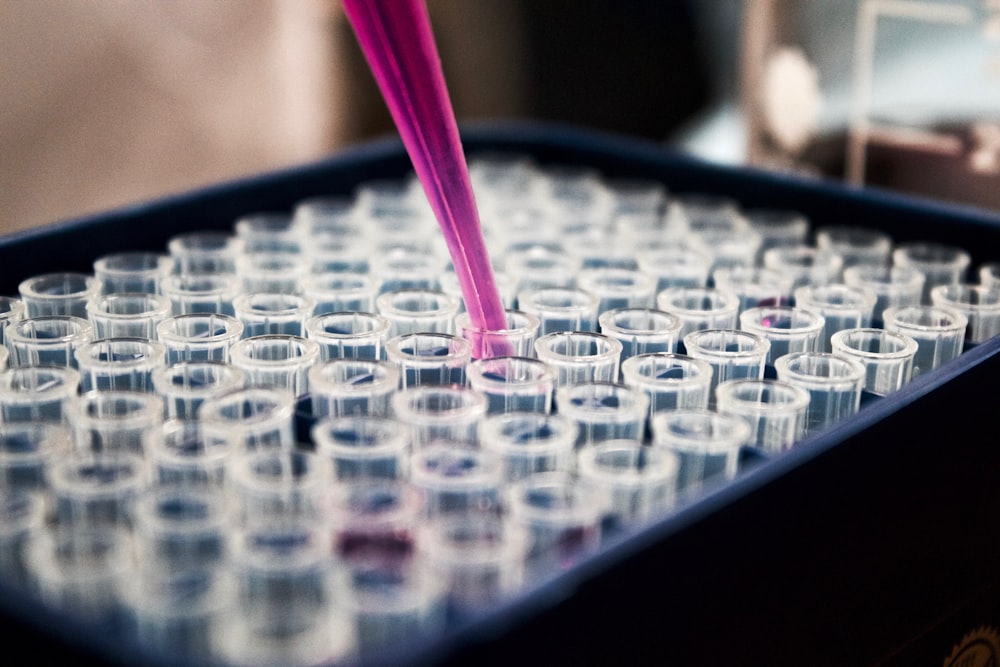
Specialized Reagents
Thermometer ions and other specialized compounds provide internal standards for calibration and quality control.
Future Applications and Concluding Perspectives
The integration of thermometer ions into SALDI-MS workflows has opened exciting new possibilities for this already versatile analytical technique. As research progresses, several emerging applications are particularly promising:
Pharmaceutical Research
Accelerating drug discovery and monitoring drug distribution within tissues with unprecedented spatial resolution 1 .
Battery Technology
Analyzing complex chemical processes at electrode-electrolyte interfaces in next-generation energy storage systems 6 .
The Path Forward
The journey to optimize surface-assisted laser desorption/ionization mass spectrometry through thermometer ions exemplifies how creative solutions to fundamental challenges can unlock the potential of transformative technologies. What began as a clever method for monitoring energy transfer has evolved into a comprehensive approach for standardizing and enhancing analytical performance.
As this molecular thermometer approach continues to be refined and adopted, it brings us closer to the "holy grail" of analytical chemistry: a technique that combines comprehensive molecular analysis with uncompromising reliability and precision. In the ongoing quest to understand the molecular world around us, tools like SALDI-MS—calibrated and optimized through ingenious molecular probes—are providing increasingly powerful windows into the chemical complexity that underpins everything from human health to advanced technology.